Autologous vs. Allogeneic Stem Cells: A Strategic Guide for Therapeutic Development and Personalized Applications
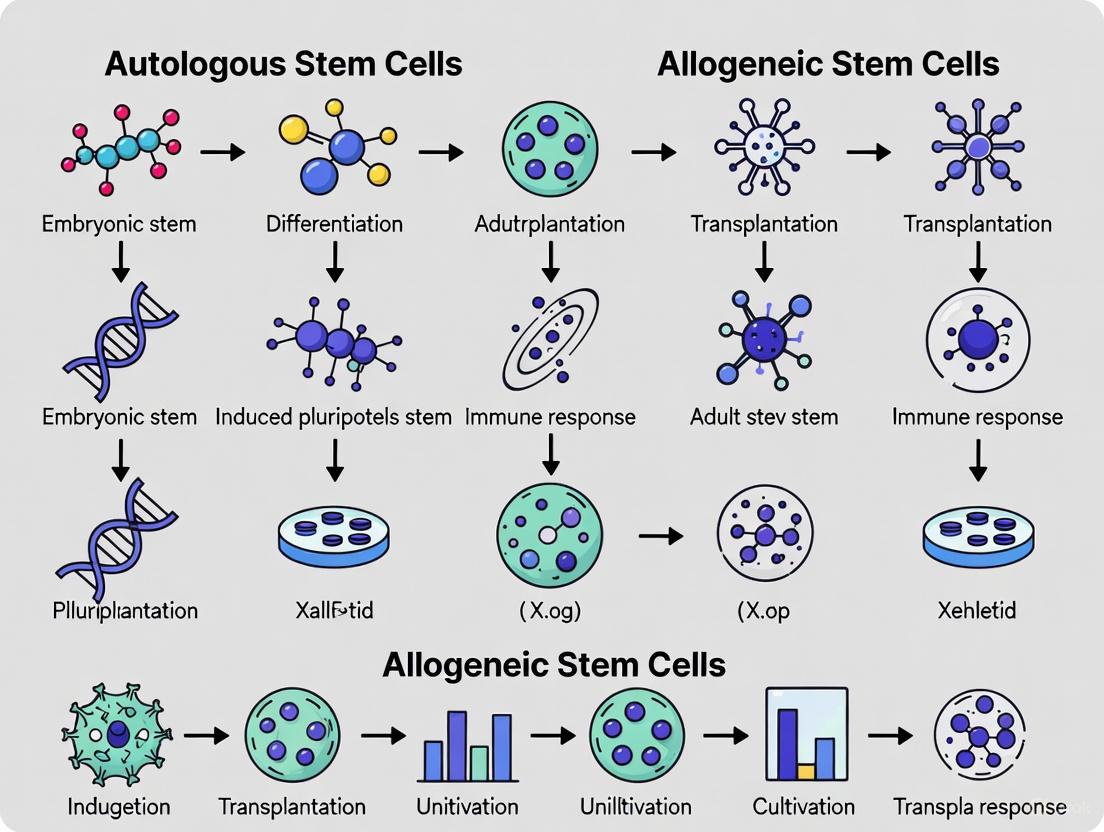
This article provides a comprehensive analysis of autologous and allogeneic stem cell sources, tailored for researchers, scientists, and drug development professionals.
Autologous vs. Allogeneic Stem Cells: A Strategic Guide for Therapeutic Development and Personalized Applications
Abstract
This article provides a comprehensive analysis of autologous and allogeneic stem cell sources, tailored for researchers, scientists, and drug development professionals. It explores the fundamental biological principles and therapeutic mechanisms of each approach, examines current methodologies and clinical applications across diverse medical fields, addresses critical challenges in manufacturing, safety, and immune compatibility, and offers a validated comparative framework for strategic decision-making. By synthesizing the latest regulatory milestones, clinical trial data, and technological advancements from 2023-2025, this guide aims to inform the development of effective and scalable personalized regenerative therapies.
Core Principles and Therapeutic Mechanisms of Stem Cell Sources
Cell therapy represents a transformative approach in modern medicine, harnessing living cells to repair, replace, or regenerate damaged tissues and organs. Current therapeutic strategies primarily fall into two distinct paradigms: autologous and allogeneic transplantation. The autologous approach involves the extraction, manipulation, and reinfusion of a patient's own cells, while the allogeneic approach utilizes cells derived from a healthy donor. These paradigms differ fundamentally in their biological foundations, immunological implications, manufacturing processes, and clinical applications. Understanding these key distinctions is crucial for researchers and drug development professionals working to advance personalized medical interventions for diseases that are difficult or impossible to treat with traditional methods, including various cancers, genetic disorders, and degenerative conditions [1] [2].
The selection between autologous and allogeneic sources represents a critical decision point in therapeutic development, impacting everything from initial cell collection and manufacturing scalability to immunological compatibility and long-term patient outcomes. This technical guide examines the core biological distinctions between these paradigms, providing a comprehensive framework for researchers navigating this complex landscape.
Core Biological Distinctions: A Comparative Analysis
The biological differences between autologous and allogeneic approaches extend beyond mere cell source to encompass fundamental variations in immunological behavior, therapeutic mechanisms, and clinical safety profiles. The table below summarizes the key biological distinctions.
Table 1: Key Biological Distinctions Between Autologous and Allogeneic Paradigms
| Biological Parameter | Autologous Paradigm | Allogeneic Paradigm |
|---|---|---|
| Cell Source | Patient's own cells [1] [3] | Healthy donor (related or unrelated) [1] [3] |
| Genetic Identity | Identical to patient [2] | Allogeneic (different genetic background) [2] |
| Major Histocompatibility Complex (MHC) Compatibility | Fully matched [2] | Requires HLA matching [4] [3] |
| Primary Immunological Risk | Low rejection risk; potential for immune response against modified cells [1] | Graft-versus-Host Disease (GvHD) and host-mediated rejection [1] [4] |
| Graft-versus-Tumor (GvT) Effect | Absent [4] | Present; donor immune cells can attack residual tumor cells [4] [5] |
| Therapeutic Mechanism | Primarily high-dose chemotherapy support [3] | Immune reconstitution plus GvT effect [4] [5] |
| Need for Immunosuppression | Not required [1] | Required to prevent rejection and GvHD [1] [2] |
Immunological Mechanisms and Implications
The immunological interactions between graft and host represent the most significant biological distinction between the two paradigms. Autologous therapies, being self-derived, are inherently compatible with the host immune system, eliminating the risk of GvHD—a potentially life-threatening condition where donor immune cells attack recipient tissues [1] [4]. This compatibility eliminates the need for long-term immunosuppressive therapy, which can increase susceptibility to infections and cause organ toxicity [1].
In contrast, allogeneic therapies introduce foreign cells that are recognized by the host immune system, creating a bidirectional immunological reaction. The donor immune cells may attack host tissues (GvHD), while the host immune system may reject the donor cells [1]. However, this alloreactivity also provides a beneficial graft-versus-leukemia (GvL) or graft-versus-tumor (GvT) effect, where donor-derived immune cells recognize and eliminate residual malignant cells, contributing to long-term disease control and potentially curing certain blood cancers [4] [5]. Managing this balance between therapeutic GvL and detrimental GvHD remains a central challenge in allogeneic transplantation [1].
Manufacturing and Logistics: Operational Divergence
The manufacturing workflows for autologous and allogeneic therapies differ substantially, impacting production timelines, scalability, and cost structures. The following diagram illustrates the distinct operational pathways for each paradigm.
Diagram 1: Manufacturing Workflow Comparison
Process Complexities and Scalability
The autologous process follows a patient-specific, circular supply chain where cells are collected from an individual patient, processed, and returned to the same patient [1] [2]. This approach is inherently complex logistically, requiring meticulous chain-of-identity management and tight coordination between cell collection, manufacturing, and clinical administration. Each product is a unique batch, leading to significant variability and challenging quality control standardization [1]. The time-sensitive nature of these products (with ex vivo half-lives as short as a few hours) necessitates manufacturing facilities in close proximity to clinical environments [1].
Conversely, the allogeneic paradigm employs a linear, scalable supply chain where cells from a single healthy donor can be expanded to create a master cell bank, enabling production of thousands of doses [1] [2]. This "off-the-shelf" approach allows for bulk processing, standardized quality control, and on-demand availability, significantly reducing the vein-to-vein time (the time from cell collection to patient infusion) [1] [6]. This scalability makes allogeneic therapies particularly attractive for treating common conditions and enables more complex genetic manipulations in controlled manufacturing environments [1].
Clinical Translation: Efficacy and Safety Profiles
Clinical outcomes between autologous and allogeneic approaches vary significantly based on disease indication, patient factors, and treatment goals. The following table summarizes key clinical outcome metrics from recent studies.
Table 2: Comparative Clinical Outcome Metrics in Hematologic Malignancies
| Clinical Parameter | Autologous Approach | Allogeneic Approach | Context and Notes |
|---|---|---|---|
| Treatment-Related Mortality | Lower (e.g., 4-12% in multiple myeloma studies) [7] | Higher (e.g., 15-45% in multiple myeloma studies) [7] | Varies with conditioning intensity and patient age |
| Relapse Incidence | Higher (e.g., 56% in BCP-ALL at 5 years) [8] | Lower due to GvL effect [4] | GvL effect reduces relapse in allogeneic transplants |
| GvHD Incidence | None [1] | Significant (acute and chronic forms) [1] [7] | Major complication unique to allogeneic transplants |
| Immune Reconstitution | Faster recovery of innate immunity [4] | Slower, requires thymic education [4] | Impacts infection risk post-transplant |
| Long-Term Survival | Varies by disease; superior in multiple myeloma post-relapse [7] | Can offer curative potential for leukemia [5] | Myeloma: auto-SCT showed better OS than allo-SCT [7] |
| Disease-Specific 5-year LFS (Ph- ALL) | 52% (TCP-ALL) vs 38% (BCP-ALL) [8] | Varies by donor match and conditioning | T-cell phenotype predicts better autologous outcomes [8] |
Application-Specific Clinical Considerations
Clinical decision-making between these paradigms involves careful weighing of risks and benefits specific to the disease being treated. For certain malignancies like multiple myeloma and lymphoma, autologous transplantation often serves as the standard of care, offering lower treatment-related mortality and faster hematopoietic recovery [7] [4]. The absence of GvHD risk is a significant advantage, though the lack of GvT effect may result in higher relapse rates for some indications [4].
Allogeneic transplantation remains a potentially curative option for various leukemias, myelodysplastic syndromes, and other life-threatening hematologic disorders, where the GvL effect provides a crucial immunologic defense against residual disease [5] [3]. However, this benefit comes with substantially higher risks of treatment-related complications, including GvHD, infections from prolonged immunosuppression, and organ toxicity [1] [7]. Recent meta-analyses in multiple myeloma have surprisingly demonstrated superior overall and progression-free survival with autologous transplantation compared to allogeneic approaches after relapse from first-line auto-transplantation, challenging previous assumptions about allogeneic superiority for this disease [7].
Experimental Methodology: Key Research Approaches
Protocol for Comparative Outcome Analysis in Hematologic Malignancies
To evaluate the therapeutic efficacy of autologous versus allogeneic approaches in clinical research settings, the following methodological framework can be employed, adapted from recent registry analyses [7] [8]:
Study Design and Patient Selection:
- Implement a retrospective, registry-based design using databases such as the Center for International Blood & Marrow Transplant Research (CIBMTR) or EBMT registry [7] [8].
- Include adult patients (≥18 years) with specific hematologic malignancies (e.g., Ph- ALL, multiple myeloma) undergoing first transplantation in complete remission [8].
- Stratify patients by disease subtype (e.g., B-cell precursor ALL vs. T-cell precursor ALL), age, disease risk index, and remission status [8].
Conditioning and Transplant Procedures:
- For autologous arms: Utilize mobilization with granulocyte colony-stimulating factor (G-CSF), followed by high-dose chemotherapy (e.g., melphalan-based regimens for myeloma) [7] [4].
- For allogeneic arms: Apply myeloablative or reduced-intensity conditioning based on patient age and comorbidities, followed by infusion of matched related or unrelated donor grafts [7] [3].
- Employ standard GvHD prophylaxis for allogeneic recipients (e.g., calcineurin inhibitors with methotrexate or post-transplant cyclophosphamide) [5].
Outcome Assessment and Statistical Analysis:
- Primary endpoints: Overall survival (OS) and progression-free survival (PFS)/leukemia-free survival (LFS) calculated from transplantation date [7] [8].
- Secondary endpoints: Relapse incidence (RI), non-relapse mortality (NRM), and rates of acute/chronic GvHD [8].
- Statistical methodology: Use Kaplan-Meier method for survival analysis, cumulative incidence functions for competing risks (relapse vs. NRM), and Cox proportional-hazards models for multivariate analysis adjusting for potential confounders [8].
The Scientist's Toolkit: Essential Research Reagents
Table 3: Key Research Reagents for Cell Therapy Investigations
| Research Reagent | Primary Function | Application Context |
|---|---|---|
| HLA Typing Kits | Determine human leukocyte antigen profiles for donor-recipient matching [4] [3] | Critical for allogeneic donor selection and GvHD risk assessment |
| G-CSF (Granulocyte Colony-Stimulating Factor) | Mobilize stem cells from bone marrow to peripheral blood for collection [4] | Used in both autologous and allogeneic stem cell harvesting |
| Cryopreservation Media | Preserve cell viability during frozen storage [2] | Essential for autologous product storage and allogeneic cell banking |
| Immunosuppressants (CNIs, ATG, MMF) | Prevent graft rejection and modulate GvHD [5] | Allogeneic transplantation requiring immune suppression |
| Flow Cytometry Panels | Characterize cell surface markers, chimerism, and immune reconstitution [8] | Quality control and post-transplant monitoring for both paradigms |
| MRD Detection Assays | Detect minimal residual disease at high sensitivity [8] | Prognostic stratification and treatment response assessment |
| Cytokine Analysis Kits | Quantify inflammatory and regulatory cytokines [1] | GvHD and immune reconstitution monitoring |
The biological distinctions between autologous and allogeneic paradigms continue to shape their application in personalized medicine research. While autologous therapies offer the advantage of immunological compatibility and reduced complication profiles, allogeneic approaches provide scalability, off-the-shelf availability, and the potential benefit of graft-versus-tumor effects [1] [4]. Future research directions include optimizing donor selection strategies, developing novel GvHD prophylaxis regimens, enhancing genetic engineering approaches to reduce alloreactivity, and establishing improved biomarkers for predicting treatment response and complications [5] [6].
The evolving landscape of cell therapy continues to blur the traditional boundaries between these paradigms, with emerging approaches such as allogeneic CAR-T therapies attempting to combine the scalability of allogeneic products with the precision of autologous approaches [6]. As research advances, a deeper understanding of the fundamental biological distinctions outlined in this guide will enable researchers and drug development professionals to better navigate the complex trade-offs between these therapeutic paradigms, ultimately accelerating the development of more effective and accessible personalized cell therapies.
The field of stem cell therapy has evolved beyond the initial paradigm of cellular replacement, expanding to encompass a complex spectrum of therapeutic action mechanisms. Understanding these mechanisms—from direct differentiation to paracrine signaling—is fundamental for optimizing therapeutic outcomes and selecting the appropriate cell source for personalized applications. The choice between autologous (self-derived) and allogeneic (donor-derived) cell sources is not merely logistical but profoundly influences the biological interplay between transplanted cells and the host environment [1]. Autologous therapies, derived from a patient's own cells, offer inherent immunological compatibility but face challenges of manufacturing scalability and variable cell quality due to patient-specific factors like age and disease status [1]. In contrast, allogeneic therapies provide an "off-the-shelf" alternative from healthy, screened donors, enabling standardized product quality and immediate availability, albeit with risks of immunological rejection and graft-versus-host disease (GvHD) that may require immunosuppression [1] [9]. This technical guide delineates the core mechanisms of stem cell action and frames them within the critical context of source selection for research and drug development.
Core Therapeutic Mechanisms of Stem Cells
Direct Differentiation and Cell Replacement
The foundational mechanism of stem cell therapy involves the engraftment and direct differentiation of transplanted cells to replace damaged or lost tissues.
- Mechanism Overview: Pluripotent or multipotent stem cells are delivered to the target site, where they integrate into the host tissue, undergo site-specific differentiation, and mature into functional cell types [10]. This process aims to structurally and functionally restore the damaged organ.
- Cell Types and Evidence:
- Embryonic Stem Cells (ESCs): Their pluripotency enables differentiation into any somatic cell type, making them a versatile tool for tissue regeneration [11] [12].
- Cardiac Stem Cells (CSCs): In landmark studies, CSCs injected into infarcted murine hearts regenerated functional cardiac tissue that integrated with the native myocardium [10].
- Bone Marrow-Derived Cells: Early work suggested that bone marrow-derived stem cells could transdifferentiate into cardiomyocytes and vascular lineage cells, contributing directly to heart repair [10].
- Therapeutic Context: The direct differentiation mechanism is particularly relevant for disorders involving significant cell loss, such as myocardial infarction, neurodegenerative diseases, and spinal cord injuries. However, the frequency of permanent engraftment and functional transdifferentiation observed in many studies is often low, suggesting this is not the sole reparative mechanism [10].
Paracrine Signaling and Its Multifactorial Actions
A substantial body of evidence now indicates that the therapeutic benefits of stem cells are largely mediated through paracrine actions—the secretion of bioactive factors that modulate the host environment.
- Paradigm Shift: Research has shown that significant functional improvement can occur even with low rates of cell engraftment, leading to the hypothesis that secreted factors act in a paracrine fashion to mediate repair [10]. This is supported by experiments where administration of conditioned medium (CM) from stem cells recapitulated the therapeutic benefits of the cells themselves [10].
- Key Paracrine Mechanisms: The secreted factors exert multifaceted effects, detailed in the table below.
Table 1: Key Paracrine Factors and Their Functions
| Secreted Factor | Abbreviation | Primary Proposed Functions |
|---|---|---|
| Vascular Endothelial Growth Factor | VEGF | Cytoprotection, proliferation, migration, angiogenesis [10] |
| Hepatocyte Growth Factor | HGF | Cytoprotection, angiogenesis, cell migration [10] |
| Insulin-like Growth Factor-1 | IGF-1 | Cytoprotection, cell migration, improved contractility [10] |
| Fibroblast Growth Factor-2 | FGF2 | Cell proliferation and migration [10] |
| Stem cell-derived factor-1 | SDF-1 | Progenitor cell homing [10] |
| Monocyte chemoattractant protein-1 | MCP-1 | Monocyte migration [10] |
The following diagram illustrates the coordinated multilevel impact of this paracrine signaling on an injured organ, such as the heart.
Figure 1: Multilevel Impact of Stem Cell Paracrine Signaling
Immune Modulation
A critical component of paracrine signaling, particularly for Mesenchymal Stem Cells (MSCs), is immune modulation. This mechanism is central to the rationale for using allogeneic cells.
- Mechanism of Action: MSCs evade and actively suppress the immune system through multiple pathways: they express moderate levels of HLA class I but lack HLA class II and costimulatory molecules (B7, CD40), making them immunoprivileged [9]. Furthermore, they secrete factors that suppress T-cell and B-cell proliferation, inhibit NK cell activation, and block dendritic cell maturation [9].
- Therapeutic Application: This potent immunosuppressive capacity allows allogeneic MSCs to be administered without matching or concomitant immunosuppression in many clinical scenarios, forming the basis for their "off-the-shelf" potential [9].
Direct Cell-Cell Contact and Trophic Support
Beyond soluble factor secretion, stem cells can influence the host environment through direct cell-cell contact and the transfer of cellular components.
- Microvesicles and Exosomes: Cells release exosomes and other microvesicles that carry proteins, lipids, and nucleic acids (e.g., mRNA, miRNA). These vesicles can be internalized by recipient cells, transferring functional cargo and modifying their behavior [9].
- Tunneling Nanotubes: Some studies show that stem cells can form thin, connecting conduits with host cells to directly transfer organelles and other cellular materials, facilitating rescue of damaged cells.
The choice between autologous and allogeneic cell sources carries significant implications for the therapeutic mechanisms, efficacy, and practical development of stem cell therapies.
Table 2: Comparative Analysis: Autologous vs. Allogeneic Cell Therapies
| Parameter | Autologous Therapy | Allogeneic Therapy |
|---|---|---|
| Cell Source | Patient's own cells [1] | Healthy donor [1] |
| Key Immunological Consideration | Minimal risk of immune rejection; no GvHD [1] | Risk of immune rejection & GvHD; may require immunosuppression [1] |
| Impact on Therapeutic Mechanism | Avoids immune-mediated clearance, potentially allowing longer duration of action [1]. | Immune modulation is a primary mechanism; rejection can limit engraftment and paracrine signaling duration [1] [9]. |
| Cell Quality/Potency | Variable; influenced by patient's age, comorbidities, and disease status [1]. | Consistent; cells sourced from young, healthy donors with high potency [1]. |
| Manufacturing & Logistics | Complex, patient-specific "service-based" model; time-consuming (weeks) [1]. | Scalable, standardized "off-the-shelf" model; readily available [1] [9]. |
| Cost Structure | High cost per individualized batch [1] | Lower cost per dose at scale [1] |
Experimental Methodologies for Mechanistic Studies
In Vitro Assays for Paracrine Effects
Conditioned Medium (CM) Collection:
- Culture Stem Cells: Grow the stem cell type of interest (e.g., MSCs, CSCs) to 70-80% confluence.
- Serum Starvation: Replace growth medium with a minimal, serum-free medium to avoid confounding factors.
- Hypoxic Conditioning (Optional): For disease-mimicking conditions, culture cells in a hypoxic chamber (e.g., 1% O₂) for 24-48 hours, as hypoxia can enhance the secretion of therapeutic factors [10].
- Collect CM: Harvest the medium after 24-48 hours. Centrifuge to remove cells and debris, and filter-sterilize (0.22 µm). CM can be used immediately or stored at -80°C.
CM Functional Assays:
- Cardiomyocyte Protection Assay: Isolate primary cardiomyocytes or use a cardiomyocyte cell line. Induce apoptosis with hypoxia or H₂O₂. Treat with CM and quantify cell viability (MTT assay) and apoptosis (TUNEL staining, caspase-3 activity) [10].
- Tube Formation Assay: Seed human umbilical vein endothelial cells (HUVECs) on a Matrigel matrix. Treat with CM and quantify the number of tubules and nodes after 4-8 hours to assess pro-angiogenic activity [10].
In Vivo Tracking and Fate Mapping
- Cell Labeling and Imaging: Label cells with a reporter gene (e.g., GFP, Luciferase) or a fluorescent dye (e.g., DiI) prior to transplantation. This allows for tracking of cell localization, survival, and engraftment over time using bioluminescence imaging (BLI) or fluorescence microscopy.
- Genetic Barcoding and Color-Coding: Innovative tools employ genetic barcodes or combinatorial fluorescent proteins (e.g., Zebrabow system) to uniquely tag individual stem cell clones [13]. This enables the tracking of clonal dynamics and contributions in vivo, providing insights into which clones expand and are therapeutically active [13].
The following diagram outlines a core workflow for establishing a paracrine mechanism of action.
Figure 2: Experimental Workflow for Validating Paracrine Mechanisms
The Scientist's Toolkit: Essential Research Reagents and Materials
Table 3: Key Reagents and Materials for Stem Cell Mechanism Research
| Reagent/Material | Function/Application | Specific Examples |
|---|---|---|
| Serum-Free Media | Used for collecting Conditioned Medium (CM) to avoid contamination with serum-derived growth factors. | X-VIVO, StemPro SFM |
| Hypoxia Chambers | To mimic the ischemic microenvironment of diseased tissues and study its effect on stem cell paracrine secretion. | Coy Laboratory Products, Billups-Rothenberg modules |
| Antibody Arrays / Proteomic Kits | To identify and quantify the portfolio of proteins and cytokines secreted by stem cells into the CM. | Proteome Profiler Arrays, MSD Multi-Spot Assays |
| Recombinant Proteins & Neutralizing Antibodies | To functionally validate the role of specific identified paracrine factors. | Recombinant VEGF, IGF-1; Anti-VEGF, Anti-SDF-1 neutralizing antibodies |
| Cell Lineage Tracking Tools | To label, track, and quantify stem cell survival, engraftment, and differentiation in vivo. | Lentiviral GFP/Luciferase vectors, PKH26/67 dyes, Zebrabow system [13] |
| cGMP-Grade Cell Culture Reagents | For the translation of research findings into clinically compliant manufacturing processes for both autologous and allogeneic therapies. | cGMP-grade FBS, cytokines, and trypsin |
The therapeutic action of stem cells is a multifactorial process involving a dynamic interplay between direct differentiation, broad-spectrum paracrine signaling, and immune modulation. The choice between autologous and allogeneic cell sources is a critical determinant that influences which mechanisms predominate and the ultimate success of a therapy. Autologous cells leverage immunological self-tolerance for potential long-term engraftment, while allogeneic cells offer a scalable, potent, and standardized product whose mechanisms may hinge on powerful, albeit potentially transient, paracrine and immunomodulatory effects. Future research must continue to deconstruct these complex mechanisms, identify the most potent cell sources and subpopulations, and rigorously correlate specific mechanisms with clinical outcomes in well-defined patient populations. This refined understanding will enable the full potential of personalized regenerative medicine, whether through optimized autologous treatments or precisely matched allogeneic "off-the-shelf" products.
Stem cell research represents a revolutionary frontier in modern medicine, offering unprecedented potential to address a wide range of debilitating diseases and injuries through regenerative approaches [11]. For researchers and drug development professionals, understanding the distinct properties of major stem cell types—Embryonic Stem Cells (ESCs), Mesenchymal Stem Cells (MSCs), Induced Pluripotent Stem Cells (iPSCs), and Hematopoietic Stem Cells (HSCs)—is fundamental to designing effective therapies. This landscape is further defined by the critical choice between autologous (patient-derived) and allogeneic (donor-derived) cell sources, each presenting unique advantages and challenges for clinical translation [1] [14]. The selection of a specific stem cell type and source directly impacts therapeutic strategy, influencing factors such as scalability, immunocompatibility, and regulatory pathway. This technical guide provides a comprehensive overview of these core stem cell classes, framed within the practical context of developing personalized applications, to inform strategic decision-making in research and therapeutic development.
Stem Cell Types: Characteristics and Technical Specifications
Stem cells are classified based on their origin and differentiation potential, which directly dictate their appropriate research and clinical applications. The following sections detail the defining characteristics of ESCs, MSCs, iPSCs, and HSCs.
Embryonic Stem Cells (ESCs)
Characteristics: ESCs are pluripotent cells derived from the inner cell mass of a blastocyst stage embryo [15] [11]. They possess the dual defining properties of stem cells: the ability to self-renew indefinitely in culture and the potential to differentiate into any cell type from the three embryonic germ layers—ectoderm, mesoderm, and endoderm [16] [17].
Key Considerations: Their use is associated with significant ethical concerns due to the destruction of human embryos [16] [17]. Furthermore, their clinical application is challenged by the risks of immune rejection upon transplantation and tumorigenicity, including the potential formation of teratomas [11].
Mesenchymal Stem Cells (MSCs)
Characteristics: MSCs are multipotent stromal cells that can be isolated from various adult tissues, including bone marrow, adipose tissue, and umbilical cord blood [15]. Their therapeutic effect is primarily attributed not to extensive differentiation but to their potent immunomodulatory properties and paracrine signaling that promotes tissue repair and modulates inflammation [15] [16].
Key Considerations: MSCs are increasingly used in allogeneic settings due to their immune-privileged status, which may allow for transplantation without a perfect HLA match [1]. In December 2024, Ryoncil (remestemcel-L) became the first FDA-approved MSC therapy for pediatric steroid-refractory acute graft-versus-host disease (SR-aGVHD) [18].
Induced Pluripotent Stem Cells (iPSCs)
Characteristics: iPSCs are adult somatic cells (e.g., skin fibroblasts) that have been genetically reprogrammed to an embryonic-like pluripotent state [15] [11]. This breakthrough technology, pioneered by Shinya Yamanaka, provides a source of patient-specific pluripotent cells without the ethical constraints of ESCs.
Key Considerations: iPSCs enable the creation of autologous pluripotent cell therapies, eliminating the risk of immune rejection [1]. They are powerful tools for disease modeling and drug screening [17]. However, they share the tumorigenicity risk with ESCs, and the reprogramming process can have low efficiency [15]. As of December 2024, over 1,200 patients have been dosed in global iPSC clinical trials with no class-wide safety concerns [18].
Hematopoietic Stem Cells (HSCs)
Characteristics: HSCs are multipotent stem cells found in bone marrow, peripheral blood, and umbilical cord blood [15]. They are responsible for the lifelong reconstitution of all cells of the blood and immune system, including red blood cells, white blood cells, and platelets [15] [11].
Key Considerations: Allogeneic HSC transplantation (allo-SCT) is a well-established curative therapy for hematologic malignancies but carries risks of graft-versus-host disease (GvHD) and requires immunosuppression [1] [7]. Autologous HSC transplantation (auto-SCT) uses a patient's own cells, avoiding GvHD, but carries a risk of re-introducing malignant cells [14].
Table 1: Comparative Overview of Key Stem Cell Types
| Characteristic | ESC | MSC | iPSC | HSC |
|---|---|---|---|---|
| Pluripotency/Multipotency | Pluripotent | Multipotent | Pluripotent | Multipotent |
| Primary Source | Blastocyst inner cell mass | Bone Marrow, Adipose Tissue, Umbilical Cord | Reprogrammed Somatic Cells (e.g., fibroblasts) | Bone Marrow, Peripheral Blood, Umbilical Cord Blood |
| Key Differentiation Potential | All three germ layers | Osteoblasts, Chondrocytes, Adipocytes, Stromal Cells | All three germ layers | All blood and immune cell lineages |
| Primary Therapeutic Mechanism | Cell replacement | Immunomodulation, Paracrine signaling | Cell replacement, Disease modeling | Reconstitution of hematopoietic system |
| Autologous Use | No | Yes | Yes (by definition) | Yes |
| Allogeneic Use | Yes (with immunosuppression) | Yes (often immune-privileged) | Yes (with engineering) | Yes (standard of care, with immunosuppression) |
| Key Risks/Challenges | Ethical concerns, Teratoma formation, Immune rejection | Variable potency, Heterogeneous populations | Teratoma formation, Genetic instability | Graft-versus-host disease (allogeneic), Graft failure |
The Autologous vs. Allogeneic Framework for Therapeutic Development
The choice between autologous (self-derived) and allogeneic (donor-derived) cell sources is a fundamental strategic decision in therapy development, impacting manufacturing, clinical use, and commercial viability [1].
Autologous Cell Therapies
Autologous therapies involve harvesting a patient's own cells, which may be manipulated, expanded, or genetically engineered ex vivo before being re-infused into the same patient [1] [14].
Advantages:
Challenges:
- Manufacturing Complexity: A separate, personalized product batch must be manufactured for each patient, creating a complex, costly, and time-consuming "service-based" model [1].
- Product Variability: Cell quality and potency can be highly variable due to the patient's age, disease state, or prior treatments [1] [14].
- Logistical Burden: Requires a tightly coordinated and timed chain of identity and custody from cell collection to re-infusion, often with limited shelf life [1].
- Treatment Delay: The multi-week manufacturing process can delay treatment, which is unsuitable for acute conditions [1] [14].
Allogeneic Cell Therapies
Allogeneic therapies use cells from a healthy donor to create an "off-the-shelf" product that can be manufactured in large batches, stored, and made readily available for multiple patients [1] [14].
Advantages:
- Immediate Availability: Cryopreserved products are available on demand, eliminating manufacturing delays for patients [1] [14].
- Scalability & Standardization: Enables large-scale, consistent production from a single donor source, reducing per-dose costs and improving quality control [1].
- Donor Selection: Cells can be sourced from young, healthy donors for optimal potency and quality [1].
Challenges:
- Immune Rejection: Donor cells are recognized as foreign and can be attacked and eliminated by the host immune system, potentially requiring immunosuppression [1].
- Graft-versus-Host Disease (GvHD): Immune cells within the graft can attack the patient's tissues [1] [7].
- Limited Persistence: The cell therapy may be cleared by the immune system before delivering its full therapeutic benefit [1].
Table 2: Strategic Comparison of Autologous vs. Allogeneic Approaches
| Factor | Autologous | Allogeneic |
|---|---|---|
| Cell Source | Patient | Healthy Donor |
| Manufacturing Model | Personalized, patient-specific batch | "Off-the-shelf," batch production for multiple patients |
| Key Immunological Risk | Minimal (self) | GvHD and Host vs. Graft rejection |
| Typical Immunosuppression | Not required | Often required |
| Production Turnaround | Weeks (variable) | Immediate (from inventory) |
| Scalability | Low (service-based) | High (industrial) |
| Product Consistency | Variable (depends on patient health) | High (controlled donor selection) |
| Cost Structure | High per-patient cost | Lower per-dose cost at scale |
Experimental Workflows and Research Reagents
Translating stem cell research into therapies requires robust, standardized experimental protocols. Below are detailed methodologies for core research activities.
Protocol 1: Generation of Human Induced Pluripotent Stem Cells (iPSCs)
Objective: To reprogram human somatic cells into a pluripotent state. Principle: Ectopic expression of defined transcription factors (e.g., OCT4, SOX2, KLF4, c-MYC - the "Yamanaka factors") resets the epigenetic landscape of a somatic cell to an embryonic-like state [11].
Materials:
- Source Cells: Human dermal fibroblasts or peripheral blood mononuclear cells (PBMCs).
- Reprogramming Vectors: Integration-free Sendai virus vectors or episomal plasmids encoding OCT4, SOX2, KLF4, c-MYC.
- Culture Vessels: 6-well tissue culture plates coated with Matrigel or recombinant vitronectin.
- Media:
- Fibroblast Medium: DMEM + 10% FBS + 1x GlutaMAX.
- Feeder-Free iPSC Medium: Essential 8 (E8) Medium or mTeSR Plus.
- Other Reagents: Dulbecco's Phosphate Buffered Saline (DPBS) without Ca2+/Mg2+, Accutase or EDTA for passaging.
Methodology:
- Cell Seeding and Culture: Culture source cells until ~70-80% confluent.
- Transduction/Transfection: Infect/transfect cells with reprogramming vectors per manufacturer's instructions.
- Media Change & Monitoring: 24 hours post-transduction, replace medium with fresh fibroblast medium. Change medium every other day.
- Transition to iPSC Medium: On day 7 post-transduction, dissociate cells and re-seed them onto Matrigel-coated plates in fibroblast medium supplemented with 10µM ROCK inhibitor (Y-27632). Switch to feeder-free iPSC medium 24 hours later.
- Colony Picking and Expansion: After ~21-28 days, mechanically pick or selectively dissociate emerging iPSC colonies with distinct, compact morphology. Transfer to new wells for expansion.
- Characterization: Validate pluripotency via immunocytochemistry (OCT4, NANOG, SSEA-4), flow cytometry, and/or PluriTest. Confirm trilineage differentiation potential in vitro.
Protocol 2: In Vitro Differentiation of iPSCs to Hematopoietic Stem/Progenitor Cells (HSPCs)
Objective: To generate hematopoietic progenitors from iPSCs using a defined, serum-free protocol. Principle: This protocol mimics embryonic hematopoiesis by sequentially specifying mesoderm, hemogenic endothelium, and finally hematopoietic cells through cytokine exposure [11].
Materials:
- Starting Cells: High-quality, >80% confluent iPSCs cultured in E8 medium.
- Basal Media: StemPro-34 SFM or similar serum-free medium.
- Key Cytokines/Growth Factors: BMP4, bFGF, VEGF, SCF, TPO, FLT-3L, IL-3, IL-6.
- Small Molecules: CHIR99021 (GSK-3 inhibitor).
- Culture Vessels: Low-attachment 6-well plates for embryoid body (EB) formation.
Methodology:
- iPSC Dissociation: Harvest iPSCs using EDTA or Accutase to create a single-cell suspension.
- Mesoderm Induction (Days 0-3): Seed cells in low-attachment plates in basal medium supplemented with BMP4 (10-50 ng/mL), VEGF (10-50 ng/mL), and CHIR99021 (1-5 µM). This promotes formation of EBs and specifies mesodermal lineage.
- Hemogenic Endothelium Specification (Days 4-7): Transfer EBs to Matrigel-coated plates or continue in suspension. Change to fresh basal medium supplemented with VEGF, bFGF, SCF, and TPO.
- Hematopoietic Progenitor Emergence (Days 8-14): Continue culture with cytokines supporting hematopoiesis (SCF, TPO, FLT-3L, IL-3, IL-6). Observe the emergence of floating, round hematopoietic cells.
- Harvest and Analysis: Collect floating cells and dissociate EBs. Analyze for HSPC markers (CD34, CD45, CD43) via flow cytometry. Functionally validate using colony-forming unit (CFU) assays in methylcellulose.
Table 3: The Scientist's Toolkit - Essential Research Reagents
| Reagent/Category | Example Products | Primary Function in Research |
|---|---|---|
| Cell Culture Media | mTeSR Plus, Essential 8 (E8) Medium, StemPro-34 SFM | Supports the growth and maintenance of pluripotent stem cells or specific differentiated progeny under defined, xeno-free conditions. |
| Extracellular Matrices | Geltrex, Matrigel, Recombinant Vitronectin | Provides a substrate that mimics the natural basement membrane, facilitating cell attachment, survival, and organized growth. |
| Cell Dissociation Agents | Accutase, ReLeSR, EDTA | Enzymatically or non-enzymatically dissociates stem cell colonies into single cells or small clumps for passaging or differentiation initiation. |
| Small Molecule Inhibitors/Activators | CHIR99021 (Wnt activator), Y-27632 (ROCK inhibitor), SB431542 (TGF-β inhibitor) | Precisely controls key signaling pathways (Wnt, TGF-β) to direct differentiation or enhance cell survival after passaging. |
| Cytokines & Growth Factors | BMP4, bFGF, VEGF, SCF, TPO | Acts as morphogens to sequentially pattern stem cells through developmental stages (e.g., mesoderm, hemogenic endothelium). |
| Characterization Antibodies | Anti-OCT4, Anti-NANOG, Anti-SSEA-4, Anti-CD34, Anti-CD45 | Validates stem cell identity (pluripotency markers) or successful differentiation (lineage-specific markers) via flow cytometry or immunostaining. |
Clinical Translation and Regulatory Landscape
The path from laboratory research to clinically approved stem cell therapies is complex and heavily regulated to ensure safety and efficacy.
Regulatory Framework and Recent Approvals
Stem cell-based products are regulated as biological drugs. In the United States, the Food and Drug Administration (FDA) requires an Investigational New Drug (IND) application to begin clinical trials and a Biologics License Application (BLA) for market approval [18]. Key regulatory designations like Regenerative Medicine Advanced Therapy (RMAT) can expedite development [18]. Recent FDA approvals highlight the growing maturity of the field:
- Ryoncil (remestemcel-L): Approved in December 2024, this is the first allogeneic bone marrow-derived MSC therapy for pediatric steroid-refractory acute GvHD [18].
- Omisirge (omidubicel-onlv): Approved in April 2023, this is a nicotinamide-modified umbilical cord blood-derived hematopoietic progenitor cell therapy to accelerate neutrophil recovery in patients with hematologic malignancies [18].
- Lyfgenia (lovotibeglogene autotemcel): An autologous cell-based gene therapy approved in 2023 for sickle cell disease, using the patient's own HSCs genetically modified to produce functional hemoglobin [18].
Clinical Trial Landscape and Therapeutic Applications
The clinical application of stem cells is expanding rapidly. As of December 2024, a major review identified 115 global clinical trials involving 83 distinct pluripotent stem cell (PSC)-derived products, with over 1,200 patients dosed and no significant class-wide safety concerns reported [18]. The leading therapeutic areas are:
- Ophthalmology: Trials for conditions like retinitis pigmentosa and age-related macular degeneration benefit from the eye's immune-privileged status [16] [18].
- Neurology: iPSC-derived dopaminergic neurons are being transplanted in patients with Parkinson's disease, with early trials showing evidence of dopaminergic repair and motor improvement [16] [18].
- Oncology: Allogeneic HSC transplantation remains a cornerstone treatment, while iPSC-derived "off-the-shelf" natural killer (NK) cell therapies (e.g., FT536) are entering trials [18].
- Cardiovascular Medicine: Clinical trials are investigating stem cell injections to repair damaged myocardium in heart failure patients, with studies reporting improvements in heart function and reduced scar size [16].
Table 4: Key Therapeutic Applications and Mechanisms of Action
| Therapeutic Area | Stem Cell Type | Proposed Mechanism of Action | Development Stage |
|---|---|---|---|
| Steroid-Refractory aGvHD | Allogeneic MSCs (Ryoncil) | Immunomodulation, reducing inflammation via paracrine signaling | FDA Approved (2024) [18] |
| Hematologic Malignancies | Allogeneic HSCs (Omisirge) | Hematopoietic reconstitution after myeloablative conditioning | FDA Approved (2023) [18] |
| Parkinson's Disease | iPSC-derived dopaminergic neurons | Cell replacement to restore dopamine production in the brain | Phase I/II Trials [16] [18] |
| Spinal Cord Injury | MSCs, Oligodendrocyte Progenitors | Paracrine signaling, immunomodulation, and re-myelination | Clinical Trials [16] [17] |
| Heart Failure | MSCs, iPSC-derived cardiomyocytes | Paracrine-mediated repair, reduction of scar size, direct muscle replacement | Clinical Trials [16] |
| Osteoarthritis | MSCs | Immunomodulation, anti-inflammatory effects, promotion of cartilage regeneration | Clinical Trials [15] [16] |
| Diabetes | iPSC-derived β-cells | Cell replacement to restore glucose-responsive insulin production | Preclinical/Early Clinical [16] |
The stem cell landscape is dynamic, with ESCs, MSCs, iPSCs, and HSCs each offering distinct pathways for personalized regenerative medicine. The strategic choice between autologous and allogeneic sourcing is pivotal, balancing the personalized, immune-compatible nature of autologous therapies against the scalable, off-the-shelf potential of allogeneic products [1]. Recent FDA approvals signal a turning point, moving stem cell therapies from research concepts to clinical reality [18].
Future progress will be driven by several key technological frontiers. Precision gene editing using technologies like CRISPR/Cas9 is being applied to create "hypoimmune" universal donor iPSC lines, which could overcome the immune rejection barriers of allogeneic therapies [11] [14]. The use of iPSC-derived MSCs (iMSCs) promises enhanced consistency and scalability over primary MSCs, and are already entering clinical trials [18]. Furthermore, the convergence of stem cell biology with bioengineering —including 3D bioprinting and advanced organoid systems—will enable the creation of more complex and functional tissues for transplantation and disease modeling [11]. As these innovations mature, they will continue to refine the strategic balance between autologous and allogeneic paradigms, ultimately expanding the scope and accessibility of stem cell-based treatments for a broad range of incurable diseases.
The period from 2023 to 2025 represents a pivotal era in the evolution of cell and gene therapies, marked by significant regulatory milestones that reflect the growing maturity of this therapeutic sector. The U.S. Food and Drug Administration (FDA) has approved numerous innovative treatments, providing a rich dataset for analyzing trends in therapeutic design, particularly the strategic use of autologous (patient-derived) versus allogeneic (donor-derived) cell sources. This whitepaper provides a comprehensive technical analysis of these approvals, detailed experimental methodologies for key therapies, and essential research tools that have enabled these advances. The data reveal a strategic balance between personalized autologous approaches capable of delivering durable responses without graft-versus-host disease concerns, and scalable allogeneic platforms offering immediate availability and standardized manufacturing. This analysis equips researchers and drug development professionals with critical insights for strategic planning in the rapidly advancing field of regenerative medicine.
The FDA's Office of Therapeutic Products (OTP) has maintained a selective yet expanding list of approved cellular and gene therapy products, with the current portfolio encompassing diverse technological platforms [19]. Between 2023 and 2025, the regulatory landscape witnessed accelerated activity, with multiple transformative therapies receiving approval across oncology, genetic disorders, and other therapeutic areas [18]. This period is particularly notable for the first FDA approval of a mesenchymal stem cell (MSC) therapy, Ryoncil (remestemcel-L), in December 2024 for pediatric steroid-refractory acute graft versus host disease (SR-aGVHD) [18]. Additionally, the field saw the first CRISPR-based therapeutic approval (Casgevy) in 2023, marking a watershed moment for genome editing technologies [18] [20].
A critical evolution in this period has been the regulatory clarification of distinctions between FDA-authorized investigational studies and fully approved products. An Investigational New Drug (IND) application authorization permits clinical trials to proceed, while full marketing approval requires successful trial completion and submission of a Biologics License Application (BLA) that comprehensively demonstrates a product's safety, purity, and potency [18]. This distinction is essential for researchers to understand when evaluating the developmental stage of various therapeutic platforms.
Comprehensive Analysis of FDA Approvals (2023-2025)
The FDA approved a substantial number of cell and gene therapies during the 2023-2025 period, with several products representing first-in-class mechanisms of action. The data reveals a consistent pattern of innovation, with approvals spanning CAR-T therapies, hematopoietic stem cell-based treatments, gene therapies, and other regenerative medicine products [19] [21].
Table 1: FDA-Approved Cell and Gene Therapies (2023-2025)
| Product Name | Approval Date | Cell Source | Therapeutic Category | Indication |
|---|---|---|---|---|
| Ryoncil (remestemcel-L) | Dec 2024 | Allogeneic (MSC) | Cell Therapy | Pediatric steroid-refractory acute GVHD [18] |
| Omisirge (omidubicel-onlv) | Apr 2023 | Allogeneic (Cord Blood) | Cell Therapy | Hematologic malignancies (post-transplant reconstitution) [18] |
| Lyfgenia (lovotibeglogene autotemcel) | Dec 2023 | Autologous (HSC) | Cell-based Gene Therapy | Sickle cell disease [18] |
| Casgevy (exagamglogene autotemcel) | Dec 2023 | Autologous (HSC) | Cell-based Gene Therapy | Sickle cell disease [20] |
| Lantidra (donislecel) | 2023 | Allogeneic (Pancreatic Islets) | Cell Therapy | Type 1 diabetes [21] |
| Amtagvi (lifileucel) | 2024 | Autologous (T cells) | Cell Therapy | Metastatic melanoma [21] |
| Encelto (revakinagene taroretcel-lwey) | 2025 | N/A | Gene Therapy | Macular telangiectasia type 2 [20] |
| Papzimeos (zopapogene imadenovec-drba) | 2025 | N/A | Gene Therapy | Not specified [20] |
| Zevaskyn (prademagene zamikeracel) | 2025 | N/A | Gene Therapy | Dystrophic epidermolysis bullosa [20] |
Autologous vs. Allogeneic Approvals Analysis
The balance between autologous and allogeneic approaches reflects strategic decisions in therapeutic development. Autologous therapies leverage the patient's own cells, avoiding immune rejection but requiring complex patient-specific manufacturing. Allogeneic products offer an "off-the-shelf" model with greater scalability but necessitate immune compatibility management [18].
Table 2: Autologous vs. Allogeneic Therapy Comparison (2023-2025 Approvals)
| Characteristic | Autologous Therapies | Allogeneic Therapies |
|---|---|---|
| Examples | Casgevy, Lyfgenia, Amtagvi [20] | Ryoncil, Omisirge, Lantidra [18] [21] |
| Key Advantages | No graft-versus-host disease risk, no immune matching required [18] | Immediate "off-the-shelf" availability, standardized manufacturing [18] |
| Manufacturing Complexity | High (patient-specific processes) | Lower (batch production) |
| Therapeutic Categories | CAR-T, gene-modified HSCs, tumor-infiltrating lymphocytes | MSCs, cord blood HSCs, pancreatic islets, processed tissues |
| Typical Administration | Single infusion following lymphodepletion | Multiple doses possible (e.g., Ryoncil) |
Detailed Experimental Protocols for Key Approved Therapies
Protocol 1: CRISPR-Edited Hematopoietic Stem Cells (Casgevy)
Therapeutic Principle: CD34+ hematopoietic stem cells are genetically modified using CRISPR-Cas9 genome editing to disrupt the BCL11A gene, a repressor of fetal hemoglobin production. This elevation of fetal hemoglobin compensates for the defective adult hemoglobin in sickle cell disease [21] [20].
Manufacturing Workflow:
- HSC Collection: Mobilization and apheresis collection of CD34+ hematopoietic stem/progenitor cells from the patient [20].
- Cell Processing: Isolation and enrichment of CD34+ cells using immunomagnetic selection.
- CRISPR-Cas9 Electroporation: Delivery of CRISPR-Cas9 ribonucleoprotein (RNP) complexes targeting the BCL11A gene enhancer via electroporation [21].
- Quality Control Assessment:
- Vector Copy Number (VCN): Confirmation of appropriate editing efficiency without excessive multiplexing.
- Viability and Potency: Assessment of cell viability and differentiation potential.
- Sterility Testing: Comprehensive microbial testing including endotoxin, mycoplasma, and sterility tests.
- Cryopreservation: Cryopreservation of the final cellular product in liquid nitrogen vapor phase.
- Patient Conditioning: Myeloablative busulfan conditioning to eliminate residual bone marrow cells.
- Product Infusion: Intravenous infusion of the thawed genetically modified CD34+ cells.
CRISPR-Edited HSC Manufacturing Workflow
Protocol 2: Allogeneic Mesenchymal Stem Cell Therapy (Ryoncil)
Therapeutic Principle: Bone marrow-derived mesenchymal stem cells (MSCs) from healthy donors are expanded to modulate the immune response and mitigate inflammation in steroid-refractory acute graft-versus-host disease (SR-aGVHD) [18].
Manufacturing Workflow:
- Donor Selection: Comprehensive screening of healthy adult donors according to FDA eligibility requirements.
- Bone Marrow Aspiration: Collection of bone marrow from eligible donors under sterile conditions.
- MSC Isolation and Expansion:
- Density gradient centrifugation to isolate mononuclear cells.
- Plastic adherence selection and expansion of MSCs in serum-free media.
- Sequential passaging to achieve therapeutic cell numbers.
- Quality Control Assessment:
- Identity: Flow cytometry confirmation of CD73, CD90, CD105 positivity and CD34, CD45, CD11b negativity.
- Viability: Trypan blue exclusion confirming >70% viability.
- Potency: In vitro inhibition of T-cell proliferation in response to mitogenic stimulation.
- Safety: Sterility, mycoplasma, and endotoxin testing.
- Cryopreservation: Formulation in cryoprotectant solution and freezing in liquid nitrogen.
- Dosing and Administration: Weekly intravenous infusions of 2×10^6 cells per kilogram body weight over 4 weeks.
Protocol 3: Stem Cell Mobilization for Transplant (Aphexda)
Therapeutic Principle: Motixafortide (Aphexda), a CXCR4 inhibitor, is administered with filgrastim (G-CSF) to disrupt the CXCR4/CXCL12 axis and enhance hematopoietic stem cell mobilization from bone marrow to peripheral blood for collection in multiple myeloma patients [22].
Clinical Administration Protocol:
- Filgrastim Priming: Daily administration of filgrastim (10 μg/kg) for 4 days.
- Motixafortide Administration: Single subcutaneous dose of motixafortide (1.25 mg/kg) on evening of day 4, 10-14 hours before apheresis initiation.
- Premedication Regimen: Administration of H1 antihistamine, H2 blocker, and leukotriene inhibitor 30-60 minutes before motixafortide to prevent hypersensitivity reactions.
- Apheresis Initiation: Commencement of apheresis approximately 11 hours after motixafortide administration.
- Additional Dosing: If needed, a second dose of motixafortide can be administered 10-14 hours before a third apheresis session.
Stem Cell Mobilization Clinical Protocol
The Scientist's Toolkit: Essential Research Reagents and Materials
Successful development of advanced therapies requires specialized reagents and materials throughout the research, development, and manufacturing pipeline. The following table details critical components used in the featured protocols and their functional significance.
Table 3: Essential Research Reagents for Cell and Gene Therapy Development
| Reagent/Material | Function | Application Examples |
|---|---|---|
| CRISPR-Cas9 RNP Complexes | Precise genome editing through targeted DNA double-strand breaks | Casgevy: BCL11A enhancer editing in HSCs [21] |
| Lentiviral Vectors | Stable gene integration for long-term transgene expression | Lyfgenia: HbAT87Q globin gene delivery to HSCs [21] |
| Serum-Free Cell Culture Media | Xeno-free expansion of therapeutic cells under defined conditions | Ryoncil: MSC expansion; All HSC culture platforms [18] |
| Immunomagnetic Cell Selection Reagents | Isolation of target cell populations with high purity | CD34+ selection for HSC therapies; CD3+ selection for CAR-T [21] [20] |
| Cryopreservation Solutions | Maintain cell viability during frozen storage | All cellular therapy products pre-infusion [18] |
| Cytokines and Growth Factors | Direct cell differentiation, expansion, and mobilization | Filgrastim for HSC mobilization; Expansion cytokines [22] |
Emerging Trends and Future Directions
The 2023-2025 approval window reveals several transformative trends that will shape future therapeutic development. The emergence of induced pluripotent stem cell (iPSC)-derived therapies represents a particularly significant advancement, with multiple programs receiving IND clearance to proceed to clinical trials [18]. iPSC-derived MSCs (iMSCs) offer enhanced consistency and scalability compared to primary MSCs, addressing key manufacturing challenges [18]. The February 2025 FDA IND clearance for Fertilo, the first iPSC-based therapy to enter U.S. Phase III trials, marks a pivotal moment for pluripotent stem cell platforms [18].
The regulatory landscape has similarly evolved to support these innovations. The FDA has issued numerous guidance documents specifically addressing cell and gene therapy development, including "Human Gene Therapy Products Incorporating Human Genome Editing" (January 2024) and "Considerations for the Development of Chimeric Antigen Receptor (CAR) T Cell Products" (January 2024) [23]. Additional draft guidances on "Expedited Programs for Regenerative Medicine Therapies for Serious Conditions" and "Innovative Designs for Clinical Trials of Cellular and Gene Therapy Products in Small Populations" (September 2025) further demonstrate the agency's commitment to creating appropriate regulatory pathways for these complex therapies [23].
Clinical trial designs have also advanced to address the unique challenges of cell and gene therapies. The use of expedited FDA designations such as Regenerative Medicine Advanced Therapy (RMAT) and Fast Track has become increasingly common, helping to streamline development pathways for promising candidates [18]. These regulatory mechanisms facilitate earlier and more frequent interactions between sponsors and the FDA, potentially accelerating the delivery of transformative therapies to patients with serious conditions.
The 2023-2025 period has solidified cell and gene therapies as a mainstream therapeutic modality with an expanding regulatory approval footprint. The strategic balance between autologous and allogeneic approaches reflects a maturing understanding of their complementary strengths—personalized medicine versus scalable manufacturing. The documented success of diverse technological platforms, from CRISPR-edited hematopoietic stem cells to allogeneic mesenchymal stem cells, provides multiple validated paths forward for therapeutic developers. As the field continues to evolve, emerging platforms such as iPSC-derived therapies and increasingly sophisticated regulatory frameworks will further accelerate innovation. Researchers and drug development professionals can leverage these insights, methodologies, and reagent frameworks to advance the next generation of transformative therapies for patients with limited treatment options.
The field of regenerative medicine is increasingly shifting from traditional cell-based therapies toward more refined, cell-free alternatives and precisely differentiated cell products [24]. Among these, induced Mesenchymal Stem Cells (iMSCs) derived from induced Pluripotent Stem Cells (iPSCs) have emerged as a leading platform, combining the therapeutic potential of MSCs with the scalability and engineering advantages of iPSCs [24] [25]. Understanding iMSCs requires framing them within the critical paradigm of autologous versus allogeneic cell sources. Autologous therapies are derived from a patient's own cells, while allogeneic therapies come from a donor [1].
iPSCs, discovered by Shinya Yamanaka in 2006, are produced by reprogramming adult somatic cells back to a pluripotent state using transcription factors [26]. iMSCs are then generated by differentiating these iPSCs in vitro, resulting in a cell type that possesses the familiar immunomodulatory and regenerative properties of primary MSCs but with superior scalability and consistency [24] [25]. This positions iMSCs as a powerful tool for both autologous (patient-specific) and allogeneic (off-the-shelf) therapeutic strategies, each with distinct advantages and challenges for personalized applications [1].
Biological Foundation and Therapeutic Advantages of iMSCs
Overcoming the Limitations of Primary MSCs
Primary MSCs, sourced from tissues like bone marrow or adipose tissue, are hampered by significant limitations for clinical translation. These include their low number in adult tissues, donor-to-donor variability, reduced proliferative capacity, and a tendency toward cellular senescence in in vitro cultures [25]. These factors negatively impact their therapeutic potential and make standardized, large-scale manufacturing difficult [25].
iMSCs effectively overcome these hurdles. They offer an essentially unlimited source of starting material, as the parent iPSC line can be propagated indefinitely [24] [25]. This enables the creation of large, well-characterized master cell banks, ensuring batch-to-batch consistency and overcoming the challenges of donor heterogeneity [24]. Furthermore, iMSCs have demonstrated a robust therapeutic profile, in some cases outperforming primary MSCs. For instance, one study found that iMSC-derived exosomes achieved a greater therapeutic effect in an osteoarthritis model than exosomes from synovial membrane MSCs [24].
Key Therapeutic Mechanisms
The therapeutic potential of iMSCs is rooted in their multifaceted mechanisms of action, which mirror and enhance those of primary MSCs:
- Immunomodulation: iMSCs can suppress the proliferation of immune cells (T cells, B cells, natural killer cells) and induce regulatory T cells, thereby mitigating inflammation and creating a pro-regenerative microenvironment [25].
- Tissue Repair and Regeneration: They enhance tissue repair by modulating recipient cell behavior, delivering regenerative factors and genetic material, and promoting angiogenesis [24] [25].
- Trophic Support: Through paracrine signaling, often mediated by secreted exosomes, iMSCs stimulate resident stem and progenitor cells to promote endogenous repair processes [24].
The following diagram illustrates the logical pathway from cell source to clinical application, highlighting the key differentiators of the iMSC platform.
Autologous vs. Allogeneic iMSCs: A Strategic Comparison
The choice between autologous and allogeneic iMSCs is fundamental, impacting everything from development and manufacturing to clinical use and commercial viability. The following table provides a detailed comparison of the two approaches, with specific considerations for iMSC therapies [1].
Table 1: Strategic Comparison of Autologous and Allogeneic iMSC Therapies
| Feature | Autologous iMSCs (Patient-Specific) | Allogeneic iMSCs (Off-the-Shelf) |
|---|---|---|
| Definition | Derived from the patient's own somatic cells, reprogrammed to iPSCs, and differentiated into iMSCs. | Derived from a healthy donor's cells, manufactured as a standardized product for multiple patients. |
| Immunological Profile | High immune compatibility; negligible risk of immune rejection or GvHD; typically does not require immunosuppression [1]. | Risk of immune rejection and GvHD; may require immunosuppression or genetic engineering (e.g., HLA editing) to evade immune detection [1]. |
| Manufacturing & Logistics | Complex, patient-specific logistics with a short ex vivo cell half-life; high per-dose cost; challenging to scale ("service-based model") [1]. | Centralized, scalable manufacturing; potential for large-scale bioreactors; lower cost per dose; easier quality control and standardization [24] [1]. |
| Product Consistency | High batch-to-batch variability due to patient-specific factors (age, health, genetics) [1]. | High consistency and reproducibility from well-characterized master cell banks [24]. |
| Therapeutic Readiness | Significant turnaround time (weeks to months) to generate the final product, which may not be suitable for acute conditions [1]. | Immediate "off-the-shelf" availability, crucial for treating acute diseases [1]. |
| Ideal Use Cases | Treatment of chronic, non-life-threatening conditions where long-term engraftment is critical, and immunosuppression is undesirable. | Treatment of acute conditions and widespread diseases; applications where rapid, scalable deployment is a priority. |
Manufacturing and Quality Control of iMSCs
Translating iMSC biology into a reliable therapeutic requires robust, scalable manufacturing processes under stringent quality control. While research-scale methods often rely on 2D flask cultures and purification via ultracentrifugation, these are inadequate for Good Manufacturing Practice (GMP)-grade production [24].
The transition to industrial-scale production necessitates a move to closed-system bioreactors and purification using methods like tangential flow filtration (TFF) to ensure control, reproducibility, and minimize contamination risk [24]. Rigorous analytics are required to characterize the final product, assessing key parameters such as particle size/concentration, identity (via surface markers like CD73, CD90, CD105), purity, and potency.
The workflow below outlines the key stages in the development and manufacturing of iMSC therapies, from research to clinical application.
Current Clinical and Market Landscape
Clinical Trial Progress
The clinical translation of iMSC therapies is advancing rapidly, with several key trials demonstrating safety and efficacy.
- Cynata Therapeutics: A Phase 3 trial is underway using Cynata’s iPSC-derived MSC product (CYP-004) in 440 patients with osteoarthritis. This represents the world’s first Phase 3 clinical trial for an iPSC-derived cell therapeutic [27].
- CYP-001: Cynata's iMSC product has also shown positive safety and efficacy data for the treatment of steroid-resistant acute Graft-versus-Host Disease (GvHD) and is being advanced in other indications [27].
- U.S. FDA-approved Trials: An FDA-approved clinical trial is ongoing in the U.S. for the treatment of High-Risk Acute Graft-Versus-Host Disease with Cymerus iMSCs (CYP-001), in combination with corticosteroids (clinicaltrials.gov/NCT05643638) [18].
Quantitative Market Data
The commercial and research potential of the underlying iPSC technology is reflected in robust market growth projections, as shown in the table below.
Table 2: Global iPSC Market Size and Growth Projections (2024-2033)
| Market Segment | 2024 Value (USD Billion) | 2033 Projected Value (USD Billion) | CAGR (%) | Key Drivers |
|---|---|---|---|---|
| Overall iPSC Market [28] | 2.01 | 4.69 | 9.86% | Demand for regenerative medicine, drug discovery, and toxicity testing. |
| iPSC Production Market [29] | 1.75 | 4.34 | 9.5% | Advancements in reprogramming, automation, and GMP-grade manufacturing. |
This market growth is fueled by rising investments, strategic collaborations, and technological advancements in reprogramming and differentiation protocols [28].
The Scientist's Toolkit: Essential Reagents for iMSC Research
Establishing a robust iMSC research program requires a suite of specialized reagents and tools. The following table details essential components for reprogramming, differentiating, and characterizing iMSCs.
Table 3: Key Research Reagent Solutions for iMSC Workflows
| Reagent / Tool | Function in iMSC Workflow | Examples & Notes |
|---|---|---|
| Reprogramming Vectors | Introduces transcription factors to convert somatic cells into iPSCs. | Non-integrating episomal plasmids, Sendai virus vectors, or synthetic mRNA [26]. |
| GMP-Grade iPSC Lines | Provides a standardized, clinically relevant starting cell source. | REPROCELL StemRNA Clinical iPSC Seed Clones (have an FDA-submitted Drug Master File) [18]. |
| Directed Differentiation Kits | Provides optimized media and factors to differentiate iPSCs into iMSCs. | Commercial kits available for consistent mesodermal lineage specification. |
| Cell Culture Media | Supports the expansion and maintenance of iMSCs. | Xeno-free, chemically defined media are essential for clinical translation. |
| Characterization Antibodies | Confirms iMSC identity by flow cytometry or immunocytochemistry. | Positive markers: CD73, CD90, CD105. Negative markers: CD34, CD45, CD11b [25]. |
| Differentiation Media | Confirms iMSC multipotency by inducing trilineage differentiation. | Media to promote adipogenesis, osteogenesis, and chondrogenesis [25]. |
| Bioreactor Systems | Enables scalable, 3D expansion of cells for manufacturing. | Closed-system stirred-tank or vertical-wheel bioreactors [24]. |
iMSCs represent a paradigm shift in regenerative medicine, effectively bridging the gap between the potent biology of primary MSCs and the industrial, clinical requirements of modern therapeutics. By leveraging the iPSC platform, iMSCs overcome the critical limitations of sourcing, scalability, and consistency that have long hampered traditional MSC therapies. The strategic choice between autologous and allogeneic approaches allows for tailoring treatments to specific clinical needs, from personalized interventions for chronic diseases to readily available off-the-shelf solutions for acute conditions. As manufacturing science matures and clinical trials progress, iMSCs are poised to become a cornerstone of cell-based therapies, offering reproducible, efficacious, and scalable treatments for a wide spectrum of diseases.
Clinical Translation and Therapeutic Applications in Practice
Autologous stem cell transplantation (ASCT) represents a cornerstone of personalized cellular therapy, wherein a patient's own stem cells are harvested, processed, and reinfused to rescue bone marrow function after high-dose myeloablative therapy. This process is fundamentally distinct from allogeneic transplantation, which utilizes stem cells from a donor, as it eliminates the risk of graft-versus-host disease (GVHD) and does not require immunosuppression for graft rejection prevention [30] [31]. The autologous approach is predicated on the use of the patient's own hematopoietic stem cells (HSCs) to reconstitute the hematopoietic system, making it a powerful modality for treating various hematologic malignancies, including multiple myeloma, Hodgkin lymphoma, and non-Hodgkin lymphoma [31] [32]. The complete workflow, from patient qualification to engraftment confirmation, is a multi-stage process requiring precise coordination and stringent quality control to ensure successful hematopoietic recovery and patient outcomes.
Autologous Process Workflow: A Stage-by-Stage Analysis
The autologous stem cell transplant process is a sequential pathway involving several critical stages. The following diagram provides a high-level overview of the entire workflow, from patient preparation to long-term recovery.
Stage 1: Stem Cell Mobilization and Harvesting
The initial phase involves stimulating the bone marrow to produce and release hematopoietic stem cells into the peripheral blood for collection.
Mobilization Strategies: The primary method for mobilizing stem cells from the bone marrow niche into the peripheral blood involves the administration of granulocyte colony-stimulating factor (G-CSF) [33] [31]. This growth factor promotes the proliferation and differentiation of neutrophil precursors and facilitates the release of HSCs. In cases of predicted poor mobilization—often associated with factors like advanced age, extensive prior chemotherapy, or prior radiation therapy—a dual approach incorporating both G-CSF and plerixafor may be employed [34]. Plerixafor is a CXCR4 chemokine receptor antagonist that disrupts the CXCR4/SDF-1α binding, inhibiting the retention of stem cells within the bone marrow and thereby enhancing egress into the bloodstream.
Harvesting via Leukapheresis: Stem cell collection is performed via leukapheresis, a procedure where blood is drawn from one arm vein, circulated through an apheresis machine that separates components based on density, and the remaining blood is returned to the patient through the other arm [31]. The critical quality metric during collection is the CD34+ cell count, as the infused CD34+ cell dose is the most important factor associated with timely hematopoietic reconstitution [34]. The traditional strategy processes a standard blood volume (e.g., 2-3 times total blood volume). However, recent evidence supports a "Custom-Tailored" (CT) approach, where the processed volume is dynamically adjusted based on the patient's pre-apheresis peripheral blood CD34+ count and collection target. This personalized method has been shown to improve CD34+ cell yield, particularly in poor mobilizers (pre-collection CD34+ <20/µL), and reduces the number of apheresis sessions required [34].
Stage 2: Stem Cell Processing and Cryopreservation
Post-collection, the apheresis product undergoes processing for long-term storage.
Processing and Cryopreservation: After collection, a preservative like dimethyl sulfoxide (DMSO) is added to the stem cell product to prevent ice crystal formation during freezing [32]. The product is then controlled-rate frozen and stored in liquid nitrogen vapor phase at temperatures below -150°C [33]. This cryopreservation process maintains cell viability for extended periods, allowing for flexibility in the timing of the transplant. Quality control measures, including post-thaw viable CD34+ cell counts and colony-forming unit-granulocyte macrophage (CFU-GM) assays, are critical predictors of successful engraftment [34].
Stage 3: Conditioning and Re-infusion
This stage involves preparing the patient for transplant and administering the stem cell product.
Myeloablative Conditioning: While the stem cells are in cryostorage, the patient undergoes a conditioning regimen, which typically involves high-dose chemotherapy (e.g., high-dose melphalan for multiple myeloma) with or without radiation therapy [30] [31]. The dual purpose of conditioning is to eradicate the underlying malignant disease and to create marrow "space" and immunosuppression to facilitate the engraftment of the infused stem cells. This therapy is profoundly myeloablative, completely destroying the remaining bone marrow, and renders the patient pancytopenic and highly susceptible to infection.
Re-infusion (Transplant): After conditioning is complete, the cryopreserved stem cell bag is rapidly thawed at the bedside and infused intravenously through a central venous catheter, similar to a blood transfusion [31] [32]. Patients are closely monitored during infusion for potential adverse reactions, which can include fever, chills, nausea, or rarely, cardiac events related to the DMSO preservative.
Stage 4: Engraftment and Reconstitution
The final phase involves patient recovery and monitoring for successful transplant take.
Engraftment Monitoring: Following re-infusion, the stem cells homing to the bone marrow niches begin proliferating and differentiating—a process known as engraftment. Neutrophil engraftment (typically defined as an absolute neutrophil count >500/µL for three consecutive days) usually occurs within 10-14 days, while platelet engraftment (>20,000/µL without transfusion) may take slightly longer [31]. Patients often receive G-CSF post-transplant to accelerate neutrophil recovery. During this period of profound cytopenia, patients require intensive supportive care, including prophylactic antibiotics, antifungal and antiviral medications, and transfusion of red blood cells and platelets [33].
Immune Reconstitution: Full immune system recovery is a prolonged process, taking 6-12 months or longer [31]. The recovery of a diverse T-cell and B-cell repertoire occurs gradually. Patients lose immunity from previous vaccinations and must be re-vaccinated according to a defined schedule post-transplant under the guidance of their medical team.
Key Quantitative Parameters in Autologous Transplantation
Successful autologous transplantation depends on carefully monitored quantitative parameters throughout the process. The following table summarizes the critical metrics from mobilization through engraftment.
Table 1: Key Quantitative Parameters in Autologous Stem Cell Transplantation
| Process Stage | Key Parameter | Typical Target/Value | Clinical Significance |
|---|---|---|---|
| Mobilization | Pre-apheresis CD34+ in peripheral blood | >20 cells/µL [34] | Predicts successful collection; values <10-20 cells/µL indicate poor mobilization |
| Harvesting | Total CD34+ cell yield | ≥2-5 x 10^6 CD34+ cells/kg (patient weight) [34] | Minimum dose for one transplant; higher doses (≥5-6 x 10^6 CD34+ cells/kg) allow for multiple transplants or faster engraftment |
| Engraftment | Time to Neutrophil Engraftment | ~10-14 days post-infusion [31] | Indicator of initial transplant success; delayed engraftment increases infection risk |
| Time to Platelet Engraftment | ~15-28 days post-infusion [31] | Indicator of megakaryocyte recovery; delayed engraftment increases bleeding risk |
Research Reagent Solutions for Autologous Workflow
The execution of the autologous workflow relies on a suite of specialized reagents and materials. The following table details essential tools for researchers and clinicians in the field.
Table 2: Essential Research Reagents and Materials for Autologous Workflow
| Reagent/Material | Primary Function | Application in Workflow |
|---|---|---|
| Granulocyte Colony-Stimulating Factor (G-CSF) | Mobilizing agent that stimulates bone marrow to produce and release HSCs into peripheral blood [31] [32] | Stem Cell Mobilization |
| Plerixafor | CXCR4 antagonist that inhibits stem cell retention in bone marrow, synergizing with G-CSF [34] | Stem Cell Mobilization (for poor mobilizers) |
| Anticoagulant Citrate Dextrose Solution A (ACD-A) | Anticoagulant that prevents clotting during apheresis procedures [34] | Leukapheresis Collection |
| CD34+ Microbeads & Antibodies | Immunomagnetic cell separation and flow cytometry reagents for identifying and quantifying HSCs [34] | Quality Control & Processing |
| Dimethyl Sulfoxide (DMSO) | Cryoprotectant that prevents intracellular ice crystal formation, preserving cell viability during freezing [32] | Cryopreservation |
| Lactated Ringer's / IV Fluids | Hydration and vehicle for administering medications; used to pre-hydrate and flush lines during infusion [33] | Re-infusion |
Critical Considerations for Research and Clinical Translation
The autologous process, while established, presents several critical considerations for optimization and research.
Personalized Harvesting Models: Emerging data strongly supports moving away from a "one-size-fits-all" (OSFA) apheresis model. Implementing a Custom-Tailored (CT) approach that uses prediction algorithms based on pre-apheresis CD34+ counts, patient blood volume, and target cell yield can significantly improve efficiency. This strategy has been shown to increase CD34+ yield in poor mobilizers and reduce the number of apheresis sessions required, from 31% of cycles needing 3 apheresis sessions (OSFA) down to 14% (CT), without increasing adverse events [34]. This enhances patient comfort and optimizes resource utilization.
Safety and Efficacy Profile: A primary advantage of ASCT is the absence of GVHD, a major cause of morbidity and mortality in allogeneic transplants [30]. However, the procedure carries significant risks, primarily related to the period of profound pancytopenia following conditioning, which predisposes patients to severe infections and bleeding complications [31]. Other risks include organ toxicity from the conditioning regimen and potential long-term effects such as infertility, secondary cancers, and organ damage [31]. Recent meta-analyses have confirmed that for multiple myeloma patients relapsing after first-line ASCT, a second autologous transplant provides superior overall and progression-free survival compared to allogeneic transplant, which is associated with higher non-relapse mortality [7].
Regulatory and Ethical Framework: Autologous stem cell therapies must adhere to rigorous ethical and regulatory standards. The International Society for Stem Cell Research (ISSCR) guidelines emphasize the necessity of integrity, transparency, and primacy of patient welfare [35]. The clinical application of stem cell-based interventions should occur only after rigorous evaluation of safety and efficacy and appropriate regulatory approval. Providing unproven interventions outside of a formal clinical trial framework is considered a breach of professional medical ethics [35].
The field of regenerative medicine stands at a pivotal juncture, balancing between personalized autologous treatments and scalable allogeneic solutions. While autologous therapies utilize a patient's own cells, minimizing immunogenic risks, they present significant challenges in scalability, manufacturing complexity, and cost [2] [1]. In contrast, the allogeneic "off-the-shelf" model utilizes cells derived from healthy donors, engineered and expanded to create standardized, readily available therapeutic products [2]. This approach promises to transform cell therapy from a bespoke service into a scalable, widely accessible treatment modality. The global allogeneic cell therapy market, valued at USD 528.65 million in 2025, is projected to grow at a remarkable CAGR of 27.43%, reaching approximately USD 5,968.77 million by 2035 [36]. This growth is fueled by the pressing need to address the limitations of autologous approaches, particularly for conditions requiring immediate intervention and for widespread clinical application.
The fundamental distinction between these models lies in their core architecture. Autologous therapies, such as most currently approved CAR-T treatments, involve a circular supply chain where cells are harvested from the patient, manufactured, and reinfused into the same individual [2] [37]. This process is inherently patient-specific, creating substantial logistical challenges and variable production timelines. Allogeneic therapies, however, employ a linear supply chain where cells from a single donor can be manufactured in large batches, extensively characterized, cryopreserved, and made available for immediate use by multiple patients [2] [38]. This whitepaper examines the scientific, manufacturing, and regulatory foundations enabling the scaling of allogeneic models for widespread clinical use, positioning them within the broader context of stem cell source selection for personalized applications.
Comparative Analysis: Autologous vs. Allogeneic Approaches
A comprehensive understanding of the operational and clinical distinctions between autologous and allogeneic cell therapies is fundamental for researchers and developers. The table below summarizes the key differentiating factors.
Table 1: Key Differences Between Autologous and Allogeneic Cell Therapy Models
| Characteristic | Autologous Model | Allogeneic Model |
|---|---|---|
| Cell Source | Patient's own cells [2] | Healthy donor(s) [2] |
| Immunological Compatibility | High; minimal rejection risk [1] | Lower; requires management of GvHD and host rejection [2] [38] |
| Manufacturing Paradigm | Customized, patient-specific batches [2] | Standardized, large-scale batches from single donor [2] |
| Supply Chain | Complex, circular logistics [2] [37] | More linear, bulk processing and storage [2] |
| Scalability | Low; scale-out via multiple parallel lines [2] | High; scale-up for mass production [2] |
| Typical Vein-to-Vein Time | Weeks (variable and patient-dependent) [1] | Immediate, "off-the-shelf" availability [2] [1] |
| Cost Structure | High cost per dose due to customization [2] [37] | Lower potential cost per dose due to economies of scale [2] [1] |
| Product Consistency | High variability between patient batches [2] [1] | High batch-to-batch consistency possible [2] |
| Key Technical Challenges | Cell quality variability, complex logistics, high cost [37] [1] | Immune rejection (GvHD), donor cell variability, ensuring persistence [2] [38] |
Key Technical Hurdles in Scaling Allogeneic Therapies
Immune Rejection and Host vs. Graft Response
A primary biological barrier to the persistence and efficacy of allogeneic cells is immune-mediated rejection. The host immune system can recognize donor cells as foreign through two major pathways: Host-versus-Graft (HvG) rejection, where recipient immune cells attack the donor cells, and Graft-versus-Host Disease (GvHD), where donor T cells within the product attack recipient tissues [2] [38]. Even with mesenchymal stem/stromal cells (MSCs), which were initially considered immune-privileged, allogeneic MSCs can transition to an immunogenic state after in vivo differentiation or upon repeated administration, leading to their elimination by the recipient's immune system [39]. Overcoming these responses is critical for achieving durable therapeutic effects.
Manufacturing and Product Consistency
Achieving industrial-scale manufacturing requires moving from a process-focused model to a product-focused one. A significant challenge is batch-to-batch variability stemming from donor-to-donor heterogeneity in genetics, immune status, and overall cell quality [38]. Furthermore, the functional plasticity and heterogeneity of stem cells, even from the same donor, can be influenced by culture conditions and subpopulation selection, introducing potential uncertainty in their safety and efficacy profiles [39]. Optimizing manufacturing is not merely a scaling exercise; it requires a deep understanding of how expansion protocols and culture conditions impact critical quality attributes (CQAs) like cell persistence, potency, and functionality post-infusion [37].
Regulatory and Characterization Hurdles
The unique proliferative and regenerative nature of stem cells presents regulatory authorities with challenges not always anticipated within existing frameworks [40]. A core requirement is ensuring the integrity, function, and safety of cells during processing and manufacture. Prolonged passage in cell culture carries the risk of accumulating mutations and genomic/epigenetic instabilities that could lead to altered function or malignancy [40]. Therefore, developing optimized standard operating procedures (SOPs), robust characterization protocols, and universally accepted release criteria for potency, purity, and identity remains a critical, evolving task for the field, especially for novel derivatives like iPSC-based therapies [40] [37].
Engineering Solutions and Experimental Protocols
Genetic Engineering to Overcome Immune Rejection
Advanced gene-editing technologies are central to creating universal allogeneic cell products. The experimental workflow typically involves simultaneous disruption of key immune recognition genes and insertion of therapeutic transgenes.
Table 2: Key Genetic Modifications for Allogeneic Cell Therapies
| Target/Modification | Technology Used | Functional Purpose |
|---|---|---|
| TCR Knockout (e.g., TRAC locus) | CRISPR-Cas9 or TALENs [38] | Prevents Graft-versus-Host Disease (GvHD) by eliminating T-cell receptor recognition of host tissues. |
| HLA Class I/II Knockout | CRISPR-Cas9 [38] | Reduces Host-versus-Graft rejection by minimizing the host T-cell recognition of "non-self" HLA molecules. |
| CAR Integration into TRAC Locus | CRISPR-Cas9 with HDR donor template [38] | Ensures uniform and stable expression of the Chimeric Antigen Receptor (CAR); can leverage endogenous T-cell regulatory elements. |
| Expression of HLA-E or CD47 | Viral vector transduction or knock-in [38] | Enhances immune evasion by engaging inhibitory receptors on host NK cells and macrophages, respectively. |
| Safety Switch (e.g., RQR8, iCas9) | Viral vector transduction [38] | Provides a controlled mechanism to eliminate the engineered cells in case of adverse events. |
Diagram 1: Genetic Engineering Workflow for Allogeneic Cells
Detailed Protocol: Generation of TCR-Deficient CAR-T Cells from iPSCs
- Reprogramming and Clonal Selection: Generate a clinical-grade iPSC master cell bank from a healthy, thoroughly screened donor. Perform comprehensive characterization, including karyotyping, pluripotency marker analysis, and genomic stability assessment [40] [38].
- Genetic Engineering: Electroporate iPSCs with CRISPR-Cas9 ribonucleoproteins (RNPs) targeting the T-cell receptor alpha constant (TRAC) locus. Co-electroporate with a homologous directed repair (HDR) donor template containing the CAR construct, often with a reporter gene (e.g., truncated EGFR) for purification [38].
- Clonal Isolation and Validation: Isolate single-cell clones and expand them. Validate clones via PCR, sequencing, and flow cytometry for successful TRAC knockout and site-specific CAR integration. Screen for off-target edits using GUIDE-seq or similar methods [38].
- T Cell Differentiation: Differentiate the engineered iPSC clone into T cells using a established, GMP-compliant protocol. This typically involves co-culture with OP9 stromal cells expressing the Notch ligand Delta-like 1 (OP9-DL1) to direct T-cell lineage commitment over 4-5 weeks [38].
- Functional Potency Assay: Challenge the final iPSC-derived CAR-T product with target antigen-positive tumor cells in a co-culture assay. Measure specific lysis (e.g., via luciferase-based cytotoxicity assay) and cytokine production (e.g., IFN-γ via ELISA) to confirm therapeutic function [38].
iPSC Platforms for Standardized Production
Induced Pluripotent Stem Cells (iPSCs) represent a paradigm shift for allogeneic therapy scaling. They provide a renewable, standardized source capable of differentiating into any cell type, including CAR-T cells, NK cells, neural progenitors, and cardiomyocytes [18] [38]. A single, well-characterized iPSC clone can be used to produce a massive, homogeneous cell bank, eliminating the inherent variability of primary donor cells [38]. This platform enables complex genetic engineering to be performed once on a clonal population, with the resulting edited line serving as a master cell line for continuous production of uniform therapeutic doses [38]. As of December 2024, over 1,200 patients have been dosed in global PSC clinical trials, with no class-wide safety concerns reported, underscoring the platform's viability [18].
The Scientist's Toolkit: Essential Research Reagents
Successful development of allogeneic therapies relies on a suite of specialized reagents and materials. The table below details key components for a typical R&D workflow.
Table 3: Essential Research Reagents for Allogeneic Cell Therapy Development
| Reagent/Material | Function/Purpose | Key Considerations |
|---|---|---|
| GMP-Grade iPSC Seed Clones [18] | A standardized, well-characterized starting cell source for reproducible differentiation. | Donor screening, genomic stability, pluripotency, and absence of adventitious agents. Documentation via a Drug Master File (DMF) is advantageous [18]. |
| Gene Editing System (e.g., CRISPR-Cas9) [38] | Precise genetic modification for knocking out immune genes and inserting therapeutic transgenes. | Electroporation reagents, Cas9 nuclease (mRNA or protein), gRNAs, HDR donor templates. Purity and activity are critical. |
| Stem Cell Differentiation Kits & Media [38] [41] | Directs pluripotent stem cells toward specific lineages (e.g., T cells, NK cells, cardiomyocytes). | Defined, xeno-free formulations are preferred for clinical translation. Includes cytokines and growth factors (e.g., SCF, FLT3-L, IL-7 for T-cell differentiation) [38]. |
| Cell Culture Supplements | Supports cell growth, viability, and maintains desired phenotype during expansion. | Serum-free media, insulin, lipids, and antioxidants. Quality control is essential to ensure consistency and prevent introducing contaminants [40]. |
| Characterization Antibodies | Flow cytometry and ICC analysis of cell identity, purity, and potency markers. | Antibodies against target antigens (e.g., CD19 for CAR-T), lineage markers (e.g., CD3 for T cells), and pluripotency/differentiation markers. |
| Analytical Assay Kits | Assesses product safety, functionality, and quality. | Kits for sterility, mycoplasma, endotoxin, cytokine release (ELISA/ Luminex), and cytotoxicity. |
Scaling and Manufacturing: From Concept to Clinic
Scaling allogeneic therapies requires a strategic shift from the scale-out model of autologous therapies to a scale-up strategy focused on producing larger quantities from a single batch that can be aliquoted into thousands of individual doses [2]. This necessitates a move towards closed, automated bioreactor systems (e.g., hollow-fiber reactors or stirred-tank systems) to ensure consistent quality, minimize operator intervention, and reduce contamination risks during large-scale production [2] [37]. A critical challenge lies in understanding how manufacturing conditions impact therapeutic efficacy. As Dr. Blythe Duke Sather notes, "While we can grow large numbers of CAR-T cells, maintaining their stemness and preventing exhaustion during manufacturing remains difficult, directly impacting patient outcomes" [37].
Diagram 2: Allogeneic Manufacturing and Quality Control
Key to this scale-up is rigorous quality control at every stage. All reagents and processes must be subject to quality control systems and SOPs to ensure reagent quality and protocol consistency [40]. Manufacturing should be performed under Good Manufacturing Practice (GMP) conditions, which may be introduced in a phase-appropriate manner during early clinical trials [40]. The oversight and review of cell processing and manufacturing protocols must be rigorous, considering the manipulation of the cells, their source, intended use, and the research subjects who will be exposed to them [40]. The implementation of advanced analytics and characterization tools is required to enable process control and quality monitoring, with the goal of shortening the production workflow, simplifying steps, and providing a rapid path to automation [37].
Regulatory and Commercial Pathway
Navigating the Regulatory Landscape
Regulatory bodies like the FDA and EMA classify substantially manipulated allogeneic cells or those used in a non-homologous manner as drugs, biologics, or Advanced Therapy Medicinal Products (ATMPs) [40]. These products must be thoroughly tested in preclinical and clinical studies and evaluated by regulators before marketing [40]. A critical first step is Investigational New Drug (IND) application authorization, which permits human trials. Full approval requires a successful clinical trial program and submission of a Biologics License Application (BLA) that demonstrates the product is safe, pure, and potent for its intended use [18]. Given the unique challenges of stem cell-based products, early and continuous dialogue with regulators is essential to align on CQAs, manufacturing changes, and appropriate clinical trial endpoints.
Market Outlook and Viability
The commercial landscape for allogeneic therapies is expanding rapidly. Stem cell therapies, a major segment of this market, are projected to grow from USD 18.61 billion in 2025 to USD 78.39 billion by 2032, at a CAGR of 22.8% [42]. A key driver is the therapeutic expansion beyond oncology. While allogeneic cell therapies like hematopoietic stem cell transplants and CAR-Ts have a strong foundation in hematology [36], the pipeline now includes investigational therapies for dermatological disorders, autoimmune diseases (e.g., FT819 for lupus), and neurodegenerative conditions (e.g., iPSC-based therapies for Parkinson's disease) [36] [18]. This diversification, coupled with regulatory milestones like the first FDA approval of an allogeneic MSC product (Ryoncil) in 2024 [18], signals a maturation of the field and its growing acceptance as a viable therapeutic modality.
The choice between autologous (using a patient's own cells) and allogeneic (using cells from a donor) sources is a fundamental consideration in advancing personalized therapies for complex diseases. This framework is central to developing next-generation treatments in oncology, neurology, and autoimmune diseases. These three therapeutic areas represent a significant portion of the global disease burden, driving intensive research and development efforts. In 2025, the American Cancer Society estimates there will be 2,041,910 new cancer cases and 618,120 cancer deaths in the United States alone [43]. Simultaneously, neurological conditions are the leading cause of ill health and disability worldwide, affecting over 3 billion people globally in 2021 [44]. Autoimmune diseases, comprising over 100 different conditions, affect approximately 1 in 15 people in the U.S., with recent data suggesting rising global incidence rates [45] [46]. This whitepaper provides a technical guide for researchers and drug development professionals, exploring the application of autologous versus allogeneic approaches across these leading indications, supported by experimental protocols, quantitative data comparisons, and visualization of critical workflows.
Oncology: Cell Therapies and Immuno-Oncology
Current Landscape and Disease Burden
Oncology remains at the forefront of advanced therapy development, with significant clinical progress in cell-based immunotherapies. The first half of 2025 has seen numerous innovations, including 12 immunotherapy drug approvals out of a total of 28 FDA oncology approvals announced so far [43]. Precision medicine approaches now leverage genomic technologies like Next-Generation Sequencing (NGS) and biomarker analyses to identify actionable targets, with AI-driven tools like DeepHRD demonstrating up to three times greater accuracy in detecting homologous recombination deficiency (HRD) characteristics compared to current genomic tests [43].
Autologous vs. Allogeneic Applications in Oncology
Table 1: Comparison of Autologous vs. Allogeneic Stem Cell Transplantation in Oncology
| Parameter | Autologous Transplantation | Allogeneic Transplantation |
|---|---|---|
| Cell Source | Patient's own stem cells [3] | Donor's stem cells (related or unrelated) [3] |
| Primary Use Cases | Solid tumors, lymphoma, myeloma [47] | Leukemias, myelodysplastic syndromes [47] |
| Key Advantages | No graft-versus-host disease (GvHD), no need for HLA-matched donor, lower treatment-related mortality (<5%), faster immune reconstitution [47] | Graft is tumor-free, graft-versus-malignancy (GVM) effect, lower relapse rates for certain malignancies [47] |
| Major Challenges | Graft contamination with tumor cells, no GVM effect, higher relapse rates in some malignancies, risk of myelodysplasia post-transplant [47] | GvHD, need for immunosuppression, slower immune reconstitution, higher treatment-related mortality, limited donor availability [47] |
| Manufacturing Considerations | Patient-specific "service-based" model, complex logistics, time-sensitive (short ex vivo half-life) [1] | "Off-the-shelf" potential, more consistent product quality, easier to scale [1] |
| Immunological Considerations | No immune rejection concerns, but may contain genetically predisposed cells [1] | Risk of host rejection and GvHD, may require immunosuppressants or genetic engineering of donor cells [1] |
Experimental Protocol: CAR T-Cell Therapy Manufacturing
Objective: To generate chimeric antigen receptor (CAR) T-cells for adoptive cellular immunotherapy against hematological malignancies.
Materials and Methods:
- Leukapheresis: Isolate peripheral blood mononuclear cells (PBMCs) from either the patient (autologous) or a healthy donor (allogeneic).
- T-Cell Activation: Activate T-cells using anti-CD3/CD28 magnetic beads or artificial antigen-presenting cells (aAPCs).
- Genetic Modification: Transduce activated T-cells with a lentiviral or retroviral vector encoding the CAR construct. The CAR typically consists of an extracellular antigen-recognition domain (e.g., anti-CD19 scFv), a transmembrane domain, and intracellular signaling domains (e.g., CD3ζ plus co-stimulatory domains CD28 or 4-1BB).
- Ex Vivo Expansion: Culture transduced T-cells in a bioreactor with appropriate cytokines (e.g., IL-2) for 7-14 days to achieve therapeutic cell numbers (typically (1-5 \times 10^8) CAR+ T-cells/kg patient weight).
- Quality Control: Test for sterility, potency, CAR expression (by flow cytometry), and vector copy number. For allogeneic products, additional steps to remove endogenous αβ T-cell receptor (TCR) using gene editing (e.g., CRISPR-Cas9) are critical to minimize GvHD risk.
- Cryopreservation and Infusion: Cryopreserve the final product in liquid nitrogen. After patient lymphodepletion with fludarabine and cyclophosphamide, thaw and infuse the CAR T-cell product.
Diagram Title: CAR T-Cell Manufacturing Workflow
Recent Clinical Advances in Oncology Immunotherapy (2025)
Table 2: Select FDA Oncology Approvals in Late 2025
| Drug (Brand) | Indication | Approval Date | Therapy Type |
|---|---|---|---|
| Durvalumab (Imfinzi) | Resectable gastric or gastroesophageal junction adenocarcinoma | November 25, 2025 | Immune checkpoint inhibitor [48] |
| Tarlatamab-dlle (Imdelltra) | Extensive stage small cell lung cancer (ES-SCLC) with disease progression post-platinum chemotherapy | November 19, 2025 | Bispecific T-cell engager [48] |
| Sevabertinib (Hyrnuo) | Non-squamous NSCLC with HER2 (ERBB2) TKD activating mutations | November 19, 2025 | Kinase inhibitor [48] |
| Ziftomenib (Komzifti) | Relapsed or refractory AML with NPM1 mutation | November 13, 2025 | Menin inhibitor [48] |
| Epcoritamab-bysp (Epkinly) | Relapsed or refractory follicular lymphoma (FL) | November 18, 2025 | Bispecific antibody [48] |
Neurology: Addressing the Nervous System
Current Landscape and Disease Burden
Neurological conditions represent the leading cause of global disability, with over 3 billion people affected worldwide according to a 2024 study in The Lancet Neurology [44]. The top ten neurological conditions contributing to health loss in 2021 were stroke, neonatal encephalopathy, migraine, dementia, diabetic neuropathy, meningitis, epilepsy, neurological complications from preterm birth, autism spectrum disorder, and nervous system cancers [44]. Diabetic neuropathy is the fastest-growing neurological condition, with cases more than tripling globally since 1990 to 206 million in 2021 [44].
Autologous vs. Allogeneic Applications in Neurology
While stem cell applications in neurology are largely investigational compared to oncology, both autologous and allogeneic approaches show promise. Autologous induced pluripotent stem cells (iPSCs) are being explored for Parkinson's disease through differentiation into midbrain dopamine neurons for engraftment [1]. This approach offers the advantage of avoiding immune rejection without immunosuppression. Allogeneic mesenchymal stem cells (MSCs) are particularly attractive for neurological applications due to their immune-privileged status, potentially surviving for extended periods without acute rejection [1]. Allogeneic approaches benefit from "off-the-shelf" availability, which is crucial for acute conditions like stroke.
Key Research Areas:
- Parkinson's Disease: Characterized by deterioration of dopamine-producing brain cells, causing muscle control, balance, and movement issues [49].
- Alzheimer's Disease: A progressive neurological disorder causing deteriorating memory, cognitive abilities, and organizational skills [49].
- Multiple Sclerosis: A chronic autoimmune disorder where the immune system attacks myelin sheaths in the central nervous system [49].
- Stroke: A medical emergency where brain blood supply is interrupted, causing brain cell death [49].
Experimental Protocol: Differentiation of iPSCs into Neural Lineages
Objective: To differentiate human induced pluripotent stem cells (iPSCs) into specific neural cell types for disease modeling or therapeutic application.
Materials and Methods:
- iPSC Culture Maintenance: Culture autologous or allogeneic iPSCs on Matrigel or recombinant laminin-521 in mTeSR or Essential 8 medium. Passage using EDTA or ReLeSR.
- Neural Induction: Transition to neural induction medium (e.g., N2B27) with dual SMAD inhibition using small molecules (e.g., LDN-193189 for BMP pathway, SB431542 for TGF-β pathway) for 7-12 days to form neural ectoderm.
- Neural Progenitor Cell (NPC) Expansion: Dissociate neural rosettes and plate cells on poly-ornithine/laminin-coated surfaces in NPC medium containing bFGF and EGF.
- Terminal Differentiation:
- Motor Neurons: Pattern NPCs with retinoic acid (RA) and a Smoothened agonist (SAG) for 2-3 weeks.
- Dopaminergic Neurons: Pattern NPCs with SHH and FGF8, followed by exposure to BDNF, GDNF, and ascorbic acid for 3-4 weeks.
- Astrocytes: Differentiate NPCs in BMP-4 or CNTF-containing medium for 4-5 weeks.
- Characterization: Analyze by immunocytochemistry (βIII-tubulin, MAP2 for neurons; GFAP for astrocytes; TH for dopaminergic neurons) and/or RNA sequencing.
Diagram Title: Neural Differentiation from iPSCs
Autoimmune Diseases: Immune System Dysregulation
Current Landscape and Disease Burden
Autoimmune diseases occur when the immune system mistakenly attacks healthy cells, tissues, and organs, with over 80 recognized conditions affecting approximately 50 million Americans (8% of the U.S. population) [46]. These conditions are chronic and have no cure, requiring lifelong management [45]. Current epidemiological studies show a concerning rise in incidence, with global autoimmune diseases increasing yearly by 19.1%, and rheumatological diseases like Sjögren's and lupus rising 7.1% per year [46]. A significant gender disparity exists, with women comprising approximately 80% of autoimmune disease cases [46].
Disease Mechanisms and Research Models
Autoimmune diseases involve complex interactions between genetic predisposition and environmental triggers. In conditions like Sjögren's, both innate and adaptive immune responses become dysregulated. The adaptive immune response, controlled by B and T cells, is particularly important, with activated T cells producing inflammatory signaling that causes B-cell dysregulation, potentially leading to autoimmune diseases and B-cell lymphoma [46]. Potential triggers include viral infections (Epstein-Barr virus, COVID-19), sex hormone dysregulation, and environmental factors [46].
Table 3: Common Autoimmune Diseases and Characteristics
| Disease | Primary Target | Key Pathological Features |
|---|---|---|
| Rheumatoid Arthritis [45] | Joints | Joint pain, swelling, stiffness, inflammation |
| Multiple Sclerosis [45] [49] | Central Nervous System | Demyelination, vision problems, muscle weakness, numbness, cognitive impairment |
| Type 1 Diabetes [45] | Pancreatic β-cells | High blood sugar, destruction of insulin-producing cells |
| Lupus (SLE) [50] [46] | Systemic | Inflammation affecting multiple organ systems, autoantibody production |
| Sjögren's Syndrome [46] | Exocrine glands | Lymphocytic infiltration in salivary and lacrimal glands, dry eyes, dry mouth |
Autologous vs. Allogeneic Applications in Autoimmunity
The application of cell therapy in autoimmune diseases presents unique challenges and opportunities. Autologous hematopoietic stem cell transplantation (HSCT) has been used for severe, treatment-resistant autoimmune diseases like multiple sclerosis and systemic sclerosis. The procedure involves resetting the immune system using the patient's own stem cells, aiming to eliminate autoreactive immune cells [47]. However, the risk remains that the reinfused graft may contain genetically predisposed cells that could re-establish the autoimmune condition.
Allogeneic approaches are investigational but offer the potential for a complete immune system reset without autoreactive cells. The major challenge is graft-versus-host disease (GvHD), which can be particularly problematic in patients with pre-existing immune dysregulation [47] [1]. Mesenchymal stem cells (MSCs), particularly from allogeneic sources, are being explored for their immunomodulatory properties in conditions like Crohn's disease and lupus, leveraging their ability to suppress aberrant immune responses [1].
Experimental Protocol: Investigating Molecular Mimicry in Autoimmunity
Objective: To establish an in vitro model for investigating viral triggers (e.g., Epstein-Barr Virus) in Sjögren's syndrome via molecular mimicry.
Materials and Methods:
- Cell Culture: Maintain human peripheral blood mononuclear cells (PBMCs) from Sjögren's patients and healthy controls in RPMI-1640 with 10% FBS. Culture human salivary gland (HSG) cells in DMEM with 10% FBS.
- Antigen Exposure:
- Group 1: PBMCs + EBV-derived EBNA-2 peptide (10μg/mL)
- Group 2: PBMCs + SSA/Ro60 autoantigen peptide (10μg/mL)
- Group 3: PBMCs + unrelated control peptide (10μg/mL)
- Co-culture for 72 hours.
- T-Cell Activation Assay: Analyze T-cell activation by flow cytometry measuring CD69 and CD25 surface expression on CD3+ T-cells.
- Cytokine Profiling: Collect supernatants and measure IFN-γ, IL-17, IL-6, and TNF-α using multiplex ELISA.
- Cross-Reactivity Testing: Isulate T-cell clones reactive to EBNA-2. Test their reactivity against HSG cells expressing SSA/Ro60 using an IFN-γ ELISpot assay.
- Molecular Modeling: Perform computational structural alignment of EBNA-2 and SSA/Ro60 peptides to identify regions of homology.
The Scientist's Toolkit: Essential Research Reagents
Table 4: Key Research Reagent Solutions for Cell Therapy Development
| Reagent/Category | Function | Example Applications |
|---|---|---|
| Lentiviral Vectors | Stable gene delivery for CAR or TCR expression | Engineering CAR-T cells for oncology [43] [1] |
| CRISPR-Cas9 System | Gene editing for TCR or HLA knockout | Creating universal allogeneic cell products [1] |
| Matrigel/Laminin-521 | Extracellular matrix for pluripotent stem cell culture | Maintaining iPSCs for neurology and autoimmunity research [1] |
| Cytokines (IL-2, IL-7, IL-15) | T-cell expansion and survival ex vivo | CAR-T cell manufacturing and expansion [43] |
| Small Molecule Inhibitors (LDN-193189, SB431542) | Directed differentiation via pathway inhibition | Neural induction from pluripotent stem cells [1] |
| Magnetic Cell Separation Beads | Cell isolation and activation (e.g., CD3/CD28) | T-cell selection and activation for immunotherapy [1] |
| Flow Cytometry Antibodies | Cell phenotyping and characterization | Immune monitoring, CAR expression detection [43] |
The strategic selection between autologous and allogeneic cell sources represents a critical decision point in developing advanced therapies for oncology, neurology, and autoimmune diseases. Each approach presents distinct advantages and challenges that must be weighed against therapeutic objectives, disease pathophysiology, and practical manufacturing considerations. Autologous therapies offer personalized solutions with reduced immunological risks, while allogeneic approaches provide opportunities for scalable, "off-the-shelf" treatments. The continued evolution of gene editing technologies, manufacturing processes, and immunological understanding will further refine these paradigms, ultimately enabling more effective personalized treatments across these three critical therapeutic areas. As research advances, the interplay between autologous and allogeneic strategies will likely yield hybrid approaches that maximize efficacy while minimizing limitations, pushing the boundaries of personalized medicine.
The selection of stem cell source—autologous (derived from the patient) or allogeneic (derived from a healthy donor)—represents a fundamental strategic decision in developing personalized regenerative medicines. This dichotomy balances the personalized compatibility of autologous approaches against the off-the-shelf scalability of allogeneic products. The therapeutic landscape is rapidly evolving, marked by significant regulatory milestones and sophisticated clinical trials that directly compare these paradigms across various disease contexts. This whitepaper provides an in-depth analysis of recent clinical trials and newly approved therapies, focusing on their technical methodologies, comparative outcomes, and implications for future research. The evidence indicates a nuanced picture: while allogeneic therapies offer logistical advantages and a potent graft-versus-tumor effect in oncology, autologous approaches are demonstrating strong efficacy in specific relapsed settings, and new induced pluripotent stem cell (iPSC) platforms are blurring the traditional lines between these sources [18] [51].
Current Regulatory and Product Landscape
The U.S. Food and Drug Administration (FDA) maintains a selective and curated list of approved cellular and gene therapy products, reflecting a rigorous evaluation process [19]. Recent approvals provide critical insights into the regulatory pathway success for both autologous and allogeneic modalities.
Table 1: Recently FDA-Approved Stem Cell-Based Therapies (2023-2025)
| Product Name | Therapeutic Type | Cell Source | Indication | Key Approval Data |
|---|---|---|---|---|
| Ryoncil (remestemcel-L) [18] | Allogeneic Mesenchymal Stem Cell (MSC) | Donor Bone Marrow | Pediatric steroid-refractory acute Graft versus Host Disease (SR-aGVHD) | Approved December 2024 |
| Omisirge (omidubicel-onlv) [18] | Allogeneic Cord Blood-Derived Hematopoietic Progenitor | Umbilical Cord Blood | Hematologic malignancies (post-cord blood transplant) | Approved April 2023 |
| Lyfgenia (lovotibeglogene autotemcel) [18] | Autologous Cell-Based Gene Therapy | Patient's own Hematopoietic Stem Cells | Sickle cell disease (age ≥12) | Approved December 2023 |
| CASGEVY (exagamglogene autotemcel) [19] | Autologous Cell-Based Gene Therapy (CRISPR/Cas9) | Patient's own CD34+ cells | Sickle cell disease; Transfusion-dependent beta thalassemia | Approved 2024 |
The approval of Ryoncil in December 2024 is particularly notable as the first FDA-approved MSC therapy, representing a significant advance for allogeneic cell-based therapy. It utilizes bone marrow-derived MSCs from a healthy donor to modulate the immune response in SR-aGVHD, a life-threatening complication of transplantation [18]. Conversely, the approvals of Lyfgenia and CASGEVY for sickle cell disease highlight the maturity and success of personalized autologous approaches where a patient's own cells are genetically modified and reinfused [18] [19].
Beyond these approved products, the clinical pipeline is robust, with over 115 global clinical trials involving 83 distinct pluripotent stem cell (PSC)-derived products. As of December 2024, more than 1,200 patients have been dosed in these trials with no class-wide safety concerns, indicating a maturing and scalable technology platform [18].
Analysis of Recent Clinical Trials: Autologous vs. Allogeneic
Case Study: Multiple Myeloma in Relapse
A critical, ongoing area of research directly compares the efficacy of allogeneic versus autologous stem cell transplantation (allo-SCT vs. auto-SCT) in patients with relapsed multiple myeloma. The evidence from recent studies reveals a complex risk-benefit profile.
Table 2: Summary of Key Clinical Trial Findings in Multiple Myeloma
| Study / Trial | Design | Therapeutic Comparison | Primary Endpoint | Key Findings |
|---|---|---|---|---|
| Ludwig et al. (2025) Meta-Analysis [52] | Systematic Review & Meta-Analysis | Allo-SCT vs. second Auto-SCT post-relapse | Overall Survival (OS) & Progression-Free Survival (PFS) | Superior OS and PFS for auto-SCT. Allo-SCT not recommended in this setting. |
| AlloRelapseMM Phase III Trial [53] | National, Multicenter, Randomized (Ongoing) | Allo-SCT vs. conventional triplet therapy post-relapse | Overall Survival at 5 years | Trial ongoing (LPFV: Sept 2027). Aims to demonstrate superiority of allo-SCT. |
The 2025 meta-analysis by Ludwig et al., which incorporated individual patient data from 815 patients, concluded that allo-SCT after relapse from a first-line auto-SCT resulted in inferior overall survival (OS) and progression-free survival (PFS) compared to a second auto-SCT. This finding challenges the historical assumption that the graft-versus-myeloma effect of allo-SCT would be superior, suggesting that the higher treatment-related mortality and morbidity, including graft-versus-host disease (GvHD), may outweigh the potential benefit in this patient population [52].
In contrast, the design of the ongoing AlloRelapseMM Phase III trial (NCT05675319) reflects a continued hypothesis that allo-SCT could be a curative treatment. This trial randomizes patients who have responded to salvage therapy to either receive an allo-SCT or continue conventional therapy. The primary endpoint is overall survival at five years, with an estimated study completion in 2033. This prospective, randomized trial is urgently needed to provide higher-quality evidence, as previous donor-versus-no-donor comparisons may be subject to selection bias [53].
Detailed Experimental Protocol: AlloRelapseMM Trial
The methodology of the AlloRelapseMM trial provides a template for a rigorous, modern clinical trial comparing complex cell therapies.
- Study Population: Patients (≥18 years) with confirmed diagnosis of relapsed or progressed multiple myeloma after first-line autologous stem cell transplantation, requiring treatment per SLiM-CRAB criteria [53].
- Treatment Phase 1 (Salvage Therapy): All enrolled patients receive 3 cycles of a salvage therapy regimen using one of the currently approved triplet combinations. Remission status (at least stable disease, partial, or complete remission) is assessed post-cycles [53].
- Randomization: Eligible patients with an identified HLA-compatible donor are randomized in a 1:1 ratio to the interventional or control arm.
- Interventional Arm (Arm A: Allo-SCT): Patients undergo allogeneic stem cell transplantation following a reduced-intensity conditioning regimen. GvHD prophylaxis is administered per institutional standards.
- Control Arm (Arm B: Conventional Therapy): Patients continue the conventional salvage therapy (triplet regimen) without transplantation.
- Endpoint Assessment: Patients are followed for a maximum of 67 months. The primary endpoint is OS at 5 years post-randomization. Secondary endpoints include PFS, non-relapse mortality, incidence of acute/chronic GvHD, toxicity (time to first grade 3-5 infection), and quality of life (using EORTC QLQ-C30 and MY20 questionnaires) [53].
- Data Monitoring: An independent Data Safety Monitoring Board (DSMB) performs continuous benefit-risk assessments, with all Serious Adverse Events (SAEs) reported within 24 hours of awareness [53].
The Emergence of iPSC-Derived Therapies
A significant trend is the advancement of clinical trials for therapies derived from induced pluripotent stem cells (iPSCs), which can be configured in either an autologous or allogeneic manner. The year 2025 has been described as a "turning point" for this technology [18].
- Fertilo: In February 2025, this iPSC-derived therapy for supporting ex vivo oocyte maturation became the first of its kind to receive FDA IND clearance to enter a U.S. Phase III trial [18].
- OpCT-001: An iPSC-derived therapy targeting retinal degeneration (e.g., retinitis pigmentosa) received FDA IND clearance in September 2024 for a Phase I/IIa trial [18].
- FT819: An off-the-shelf, iPSC-derived CAR T-cell therapy for systemic lupus erythematosus was granted an FDA RMAT designation in April 2025 [18].
- Neurodegenerative Diseases: In June 2025, three iPSC-based therapies targeting Parkinson’s disease, spinal cord injury, and ALS received FDA IND clearance, representing a significant expansion of this platform into scalable, allogeneic treatments for chronic conditions [18].
The manufacturing workflow for these therapies, particularly the allogeneic "off-the-shelf" products, follows a standardized pathway that leverages the scalability of iPSCs.
Diagram 1: Allogeneic iPSC Therapy Workflow.
The Scientist's Toolkit: Essential Research Reagents and Materials
The development and quality control of stem cell therapies rely on a specific set of reagents, tools, and regulatory documentation.
Table 3: Key Research Reagent Solutions for Stem Cell Therapy Development
| Reagent / Material | Function & Application | Technical Considerations |
|---|---|---|
| StemRNA Clinical Seed iPSCs [18] | GMP-compliant, master iPSC clones serving as a standardized starting material for therapy development. | Availability of a submitted Drug Master File (DMF) with the FDA streamlines referencing in IND applications. |
| Cell Separation & Purification Kits | Isolation of target cell populations (e.g., CD54+ muscle progenitors, CD34+ hematopoietic cells) from differentiated cultures. | Critical for ensuring product purity and potency; must be GMP-grade for clinical use. |
| Directed Differentiation Media | Chemically defined media formulations to drive iPSC differentiation into specific lineages (dopaminergic neurons, retinal cells, etc.). | Batch-to-batch consistency and absence of animal-derived components (xeno-free) are essential for regulatory approval. |
| Cryopreservation Media | Long-term storage of final cell therapy products and intermediate cell banks. | Formulations must maintain high post-thaw viability and functionality; often contain DMSO. |
The regulatory documentation, particularly the Drug Master File (DMF), has become an essential component of the toolkit. As reported in July 2025, the submission of a Type II DMF for a commercially available clinical-grade iPSC seed clone provides comprehensive manufacturing and quality control data, allowing therapy developers to reference this information in their own IND filings, thereby streamlining the regulatory submission process [18].
Critical Considerations for Therapy Development
Donor Selection and Product Variability
The choice between autologous and allogeneic sources is only the first step. For allogeneic therapies, particularly those using MSCs, donor characteristics significantly impact product efficacy. Studies indicate that factors including donor age, sex, and biological source (e.g., bone marrow vs. adipose tissue) can have a profound effect on the immunomodulatory properties and potency of the final cell product. This raises the critical question of how to select the optimal "universal donor" versus developing a more personalized approach [54].
Regulatory and Safety Frameworks
The global regulatory landscape for stem cell therapies is diverse, impacting the pace of innovation. A comparative analysis shows that the United States adopts a more flexible stance, utilizing a prior notification model for clinical trials and permitting Accelerated Approval, which has facilitated rapid development. In contrast, the European Union and Switzerland maintain more rigorous regulations, requiring prior authorization for trials and adhering to stricter ethical frameworks, which can prioritize safety but potentially slow innovation. Japan and South Korea strike a balance between these approaches [51]. Furthermore, while the safety profile of iPSC-based trials to date is "encouraging," long-term surveillance remains necessary to monitor for risks such as tumorigenicity [18].
The following diagram outlines the key decision points and technical considerations when choosing between autologous and allogeneic development paths.
Diagram 2: Stem Cell Source Decision Pathway.
The analysis of recent clinical trials and approved therapies reveals that the choice between autologous and allogeneic stem cell sources is highly context-dependent, influenced by the target disease, patient population, and manufacturing capabilities. The recent approval of allogeneic MSCs (Ryoncil) confirms the viability of donor-derived cells for immunomodulation, while successful autologous therapies (Lyfgenia, CASGEVY) and recent meta-analysis in myeloma [52] underscore the power of personalized, engineered cell products. The most transformative trend is the rise of allogeneic iPSC-derived therapies, which aim to combine the scalability and standardization of allogeneic products with the pluripotent flexibility of embryonic stem cells, effectively creating a new, engineered "cell source" category. For researchers and drug development professionals, success will depend on a deep understanding of the associated technical protocols, regulatory requirements, and the critical reagents that ensure product quality and consistency as this dynamic field continues to evolve.
The emergence of induced pluripotent stem cell (iPSC) technology has catalyzed the development of novel therapeutic platforms across regenerative medicine and oncology. These platforms primarily leverage two distinct sourcing strategies: autologous approaches, which use a patient's own cells to minimize immunogenicity, and allogeneic approaches, which utilize donor-derived cells to enable "off-the-shelf" availability [14]. This technical guide explores two cutting-edge applications of this technology: the derivation of dopaminergic neurons for neurodegenerative disorders like Parkinson's disease, and the engineering of chimeric antigen receptor T-cells (CAR-T) for cancer immunotherapy. We examine the core methodologies, quantitative outcomes, and strategic considerations in selecting between autologous and allogeneic paradigms, providing researchers with a comprehensive framework for therapeutic development.
The fundamental distinction between these approaches lies in their immunological and manufacturing implications. Autologous therapies, employing the patient's own cells, significantly reduce the risk of immune rejection and eliminate the need for immunosuppression [14] [1]. Conversely, allogeneic therapies, derived from healthy donors, offer scalable, immediately available treatments but carry risks of graft-versus-host disease (GVHD) and host immune rejection, often necessitating immunosuppressive regimens [14] [1]. iPSC technology strategically interfaces with both approaches; patient-specific iPSCs can be generated for autologous transplantation, or master donor iPSC lines can be established for allogeneic, off-the-shelf applications [55].
iPSC-Derived Dopaminergic Neurons for Parkinson's Disease
Technical Foundations and Differentiation Methodology
The derivation of midbrain dopaminergic (mDA) neurons from human iPSCs aims to replace lost neurons in Parkinson's disease patients, restoring dopamine production and motor function. The differentiation process recapitulates developmental signaling pathways to direct pluripotent cells toward a ventral midbrain fate [56].
Key Steps in the Differentiation Protocol:
- Neural Induction: iPSC colonies are transitioned to neural ectoderm using dual SMAD signaling inhibition. Cells are treated with small molecule inhibitors (e.g., LDN-193189 for BMP inhibition and SB-431542 for TGF-β inhibition) for 7-10 days to suppress mesodermal and endodermal fates, promoting neural progenitor cell (NPC) formation [56] [55].
- Patterning to Midbrain Floor Plate Progenitors: NPCs are patterned toward a midbrain fate using sequential activation of key developmental pathways. This involves:
- Sonic Hedgehog (SHH) Activation: Treatment with purmorphamine or recombinant SHH to ventralize the neural tube.
- WNT Activation: Treatment with CHIR99021 (a GSK-3β inhibitor) to stabilize β-catenin, promoting posterior midbrain identity.
- FGF8 Signaling: Application of recombinant FGF8 to further specify the midbrain domain [56]. This combination, typically applied over 10-14 days, induces a floor plate progenitor state characterized by expression of transcription factors FOXA2 and LMX1A.
- Terminal Differentiation and Maturation: Patterned progenitors are differentiated into mature mDA neurons by withdrawing mitogens and adding trophic support, including:
- Brain-derived neurotrophic factor (BDNF)
- Glial cell line-derived neurotrophic factor (GDNF)
- Ascorbic acid (AA)
- Dibutyryl-cAMP (db-cAMP) This maturation phase requires 4-6 weeks to generate neurons expressing tyrosine hydroxylase (TH), the rate-limiting enzyme in dopamine synthesis, alongside other markers like GIRK2 and PITX3 [56].
The entire process, from iPSC to functionally mature mDA neurons, typically spans 60-80 days [56]. The critical signaling pathway governing this differentiation is summarized below.
Diagram 1: Signaling pathway for dopaminergic neuron differentiation from iPSCs.
Preclinical and Clinical Outcomes
Recent clinical translations demonstrate the therapeutic potential of iPSC-derived dopaminergic neurons. Key quantitative outcomes from preclinical and clinical studies are summarized in the table below.
Table 1: Efficacy and Safety Outcomes of iPSC-Derived Dopaminergic Neuron Therapies
| Study Model | Cell Source / Type | Key Efficacy Outcomes | Safety Findings | Source |
|---|---|---|---|---|
| Clinical Trial (Phase I/II) | Allogeneic iPSC-derived dopaminergic progenitors | – Survived transplantation & produced dopamine– Improved motor function scores | – No tumor formation (teratoma) reported– Well-tolerated with immunosuppression | [55] |
| Clinical Trial (Ongoing) | Autologous iPSC-derived dopamine neurons (blood-derived iPSCs) | – Assessment ongoing (primary: safety, engraftment) | – No immune suppression required– Preliminary data indicates feasibility | [55] |
| Non-Human Primate | iPSC-derived dopaminergic neuron patches | – Improved cardiac performance in model | – Induced transient arrhythmias, highlighting a key safety challenge for scalable applications | [55] |
iPSC-Derived CAR-T Cells for Cancer Immunotherapy
Engineering "Off-the-Shelf" CAR-T Cells from iPSCs
The development of allogeneic, iPSC-derived CAR-T cells aims to overcome critical limitations of autologous CAR-T therapy, including manufacturing complexity, high costs, variable product quality, and treatment delays [14] [57]. The standard process for generating autologous CAR-T cells involves harvesting T cells from a patient, genetically engineering them to express a chimeric antigen receptor (CAR) targeting a specific tumor antigen (e.g., CD19), expanding the modified cells ex vivo, and reinfusing them into the patient [14]. While potent against hematological malignancies, this patient-specific model is logistically challenging.
The iPSC-based platform introduces a scalable alternative. The foundational process involves reprogramming donor T cells or other somatic cells into iPSCs, enabling the creation of a master cell bank [57]. These iPSCs are then genetically edited—using CRISPR/Cas9 or other methods—to introduce a CAR construct targeting specific tumor antigens (e.g., BCMA for multiple myeloma) and, crucially, to disrupt endogenous T-cell receptor (TCR) genes to prevent graft-versus-host disease (GVHD) in allogeneic settings [57]. The edited, clonal iPSCs are subsequently differentiated into functional, homogeneous CAR-T cells.
Key Steps in the Differentiation Protocol:
- Induction of Hematopoietic Progenitors: iPSCs are co-cultured with stromal cells (e.g., OP9) or in feeder-free systems with cytokines to drive hematopoietic differentiation. Key cytokines include BMP4, VEGF, and SCF to generate hemogenic endothelium and hematopoietic stem/progenitor cells (HSPCs) over 7-12 days.
- T-cell Specification and Expansion: Hematopoietic progenitors are transferred to a culture system that supports T-cell lineage commitment, typically involving co-culture with notch ligand-expressing cells (e.g., DLL4) and the cytokines IL-7 and FLT3-ligand. This stage, lasting 3-5 weeks, produces CD4+/CD8+ double-positive T-cell progenitors.
- Functional Maturation: Progenitors are stimulated with CD3/CD28 antibodies and cytokines (e.g., IL-2, IL-15) to promote terminal maturation into functional, CD8+ cytotoxic T cells or CD4+ helper T cells expressing the engineered CAR over 1-2 weeks [57].
This process generates a renewable, standardized source of CAR-T cells, as illustrated in the workflow below.
Diagram 2: Workflow for generating allogeneic iPSC-derived CAR-T cells.
Comparative Performance of iPSC-CAR-T Platforms
The iPSC-derived CAR-T platform offers several potential advantages over conventional autologous CAR-T, as detailed in the table below.
Table 2: Comparison of Autologous vs. Allogeneic iPSC-Derived CAR-T Cell Platforms
| Parameter | Conventional Autologous CAR-T | Allogeneic iPSC-Derived CAR-T |
|---|---|---|
| Source Material | Patient's own T cells | Master-engineered iPSC bank |
| Manufacturing Time | Several weeks [14] | Pre-manufactured, "off-the-shelf" |
| Product Homogeneity | High variability between batches [14] [1] | Highly uniform and reproducible |
| Scalability & Cost | Complex, patient-specific, high cost [1] | Scalable, lower cost per dose [14] [57] |
| Key Engineering Steps | CAR introduction into patient T cells | 1. CAR introduction in iPSCs2. TCR knockout to prevent GVHD |
| Major Challenges | – Manufacturing delays– T-cell fitness variability (due to patient disease/prior therapy) [14] | – Risk of host immune rejection– Ensuring complete functional maturation in vitro [57] |
The Scientist's Toolkit: Essential Reagents and Methodologies
Successful implementation of these platforms relies on a standardized set of high-quality reagents and tools. The following table catalogs essential components for the core workflows described.
Table 3: Essential Research Reagents for iPSC-Dopaminergic Neuron and CAR-T Cell Platforms
| Reagent Category | Specific Examples | Function in Protocol |
|---|---|---|
| Reprogramming Factors | Oct3/4, Sox2, Klf4, c-Myc (OSKM) [58] [55] | Reprogramming somatic cells to a pluripotent state (iPSC generation) |
| Non-Integrating Vectors | Sendai virus vectors, episomal plasmids [59] [55] | Safe delivery of reprogramming factors without genomic integration |
| Neural Induction Agents | LDN-193189 (BMP inhibitor), SB-431542 (TGF-β inhibitor) [56] [55] | Dual SMAD inhibition to direct iPSC differentiation toward neural ectoderm |
| Midbrain Patterning Molecules | Purmorphamine (SHH agonist), CHIR99021 (WNT agonist), FGF8 [56] | Specify ventral midbrain identity in neural progenitor cells |
| T-cell Differentiation Factors | Recombinant DLL4, IL-7, FLT3-ligand, IL-2, IL-15 [57] | Promote hematopoietic commitment, T-cell specification, and functional maturation |
| Gene Editing Tools | CRISPR/Cas9 system [55] [57] | Precise genomic modification (e.g., CAR insertion, TCR knockout) |
| Critical Characterization Antibodies | Anti-FOXA2, Anti-LMX1A (for progenitors), Anti-Tyrosine Hydroxylase (for mDA neurons), Anti-CD3, Anti-CD8, Anti-CAR (for CAR-T cells) | Validation of cell identity and differentiation efficiency via flow cytometry or immunocytochemistry |
The parallel development of iPSC-derived dopaminergic neurons and CAR-T cells exemplifies the dual-path strategy in advanced therapeutics: autologous for personalized, immune-compatible treatments, and allogeneic for standardized, scalable interventions. The choice between these platforms involves a critical trade-off between immunological safety and manufacturing pragmatism [14] [1].
For Parkinson's disease, early clinical data with allogeneic iPSC-derived dopaminergic progenitors show promise regarding survival and safety with immunosuppression [55], while autologous approaches seek to eliminate the need for such regimens entirely. In oncology, iPSC-derived CAR-T cells aim to democratize access to potent immunotherapy by creating off-the-shelf products, contingent on solving the challenges of immune rejection and ensuring robust in vivo persistence [57].
Future progress hinges on key technological innovations. These include refining non-integrating reprogramming methods [59] [55] and genetic safety switches to enhance safety profiles; applying CRISPR/Cas9 gene editing to create hypoimmune universal donor cells that evade host detection [14] [55]; and leveraging AI-guided differentiation and quality control to improve the reproducibility and fidelity of differentiated cell products [55]. As these platforms mature, they will undoubtedly deepen our understanding of disease mechanisms and significantly expand the arsenal of available regenerative and immunotherapeutic treatments.
Addressing Key Challenges in Safety, Manufacturing, and Efficacy
The therapeutic application of stem cells represents a frontier in personalized medicine, hinging on the critical choice between autologous (patient-derived) and allogeneic (donor-derived) cell sources. This decision fundamentally dictates the landscape of immune responses that clinicians and researchers must manage. Autologous therapies, which use a patient's own cells, primarily circumvent the risk of graft-versus-host disease (GvHD) but face challenges related to immune rejection of modified cells and the functional competence of patient-derived material [1]. In contrast, allogeneic therapies offer the advantage of "off-the-shelf" availability and robust cell quality from healthy donors but introduce the significant risk of GvHD and host-mediated rejection [2] [1]. GvHD is a potentially life-threatening condition where donor immune cells attack the recipient's tissues and remains a major cause of morbidity and mortality following allogeneic hematopoietic stem cell transplantation (HSCT) [60] [61]. This technical guide explores the mechanisms underlying these immune challenges and details the evolving strategies to mitigate them, thereby enabling the safer application of both autologous and allogeneic stem cell therapies.
Pathophysiology of Graft-versus-Host Disease (GvHD)
Graft-versus-Host Disease is the most serious complication of allogeneic hematopoietic stem cell transplantation (HSCT), significantly impacting non-relapse mortality [60]. Based on the timeframe and organ involvement, GvHD is characterized as either acute or chronic. The pathophysiology of acute GvHD can be conceptualized in three phases: (1) tissue damage from the conditioning regimen (chemotherapy or radiation), which releases inflammatory cytokines and activates host antigen-presenting cells (APCs); (2) donor T cell activation, wherein host APCs present alloantigens to donor T cells, leading to their proliferation and differentiation; and (3) a cellular and inflammatory effector phase, characterized by cytotoxic T lymphocytes and natural killer cells directly damaging host tissues, amplified by pro-inflammatory cytokines such as TNF-α [60].
Chronic GvHD has a more complex and less understood pathophysiology, involving both alloreactive and autoreactive immune responses that lead to fibrosis and organ dysfunction. It traditionally relied heavily on systemic corticosteroids for first-line treatment, but newer targeted therapies are changing the management landscape [61]. Crucially, the beneficial Graft-versus-Leukaemia (GvL) effect, where donor immune cells eradicate residual malignant cells, is intimately linked with GvHD pathology. A primary goal of modern immunosuppressive strategies is therefore to uncouple GvHD from the GvL effect [62].
Table: Key Characteristics of Acute and Chronic GvHD
| Feature | Acute GvHD | Chronic GvHD |
|---|---|---|
| Typical Onset | Within 100 days of transplant | Beyond 100 days of transplant |
| Primary Pathophysiology | Inflammatory tissue damage | Autoimmune-like response and fibrosis |
| Common Organ Involvement | Skin, Gastrointestinal tract, Liver | Skin, Mouth, Eyes, Lungs, Liver, Joints |
| Histological Hallmark | Epithelial cell apoptosis and necrosis | Fibrosis and sclerotic changes |
| Relationship to GvL | Closely linked | More dissociable |
Standard Pharmacologic Immunosuppression Strategies
Prophylaxis against GvHD has been a cornerstone of allogeneic HSCT since the mid-1980s with the introduction of calcineurin inhibitor (CNI)-based regimens. Despite their long-standing use, standard prophylaxis still fails in 40-60% of recipients, underscoring the need for continued improvement [60].
Calcineurin Inhibitors
Cyclosporine and tacrolimus form the backbone of most prophylactic regimens. They inhibit T-cell activation by forming complexes with cytosolic proteins (cyclophilin and FKBP12, respectively), which then bind to and inhibit calcineurin [60]. This blockade prevents the dephosphorylation and nuclear translocation of the Nuclear Factor of Activated T-cells (NFAT), a critical transcription factor for IL-2 and other T-cell activation cytokines [60]. The combination of a CNI with methotrexate or mycophenolate mofetil (MMF) demonstrates synergistic activity and is widely employed [60].
Adjunctive Agents
- Methotrexate: A cytotoxic drug that, at low doses, attenuates T-cell activation and provides anti-inflammatory effects. It is typically administered as a short course on days 1, 3, 6, and 11 post-transplant [60].
- Mycophenolate Mofetil (MMF): An anti-metabolite that selectively inhibits inosine monophosphate dehydrogenase in T and B cells. The CNI/MMF combination is particularly widely used after nonmyeloablative and cord blood transplants [60].
- Post-Transplantation Cyclophosphamide (PTCy): A novel strategy that has gained prominence, particularly in haploidentical transplants. PTCy is administered post-graft infusion to selectively control the expansion of alloreactive T cells. The BMT CTN 1703 trial demonstrated that PTCy was superior to the traditional tacrolimus/methotrexate combination in the reduced-intensity setting, establishing it as a new standard of care [61].
Table: Standard Pharmacologic Prophylaxis for GvHD
| Drug Class | Example Agents | Mechanism of Action | Common Regimen |
|---|---|---|---|
| Calcineurin Inhibitors | Cyclosporine, Tacrolimus | Inhibits calcineurin, blocking NFAT translocation and IL-2 production | Combined with Methotrexate or MMF |
| Antimetabolites | Methotrexate | Attenuates T-cell activation; cytotoxic at high doses | Short course on days 1, 3, 6, 11 post-HSCT |
| Inosine Monophosphate Dehydrogenase Inhibitor | Mycophenolate Mofetil (MMF) | Inhibits lymphocyte proliferation | Combined with a CNI |
| Alkylating Agent | Cyclophosphamide (PTCy) | Selectively depletes alloreactive T cells post-infusion | Given on days +3 and +4 post-transplant |
Emerging and Targeted Immunomodulatory Approaches
Building on the foundation of standard pharmacotherapy, recent research has yielded several targeted agents and cellular therapies that offer more precise control over the immune system.
Targeted Molecular Agents
The past few years have seen the approval of three novel agents for steroid-refractory chronic GvHD, all with quality-of-life benefits [61]:
- Ibrutinib: A Bruton's tyrosine kinase (BTK) inhibitor, approved in 2017, with a response rate of nearly 70% in inflammatory cGvHD [61].
- Belumosudil: A ROCK2 inhibitor developed specifically for cGvHD, achieving response rates of 74-77% in patients who had failed two or more prior lines of therapy [61].
- Ruxolitinib: A JAK1/2 inhibitor, approved for both acute and chronic steroid-refractory GvHD based on the REACH3 trial, which showed significant improvement in response rates compared to best supportive care [61].
- Axatilimab (in development): A monoclonal antibody against the CSF1 receptor on monocytes/macrophages, which demonstrated impressive response rates and low toxicity in the AGAVE-201 trial [61].
Cellular Therapies and T-cell Manipulation
- Regulatory T-cell (Treg) Therapy: Adoptive transfer of Tregs is a promising strategy to restore immune tolerance without broad immunosuppression. Tregs can be isolated from the donor (nTregs) or induced in vitro (iTregs) and are infused to suppress aberrant immune responses [62]. Clinical trials have shown this approach to be feasible and safe, with ongoing phase III trials evaluating efficacy for GvHD prevention [62].
- T-cell Depletion: Depleting T cells from the donor graft is the most effective method for GvHD prevention but is offset by increased risks of infection, graft failure, and disease relapse [60]. Anti-thymocyte globulin (ATG), a polyclonal antibody that causes T-cell lysis, is used in some centers for unrelated or mismatched donor HCTs to prevent GvHD [60].
Experimental Protocols for Immune Monitoring and Management
Protocol: Establishing an Immune Monitoring Program
The International Society for Cell & Gene Therapy (ISCT) recommends a structured approach to immune monitoring after cell therapy and HSCT to predict relapse and toxicity [63].
- Specimen Collection: Utilize minimally invasive liquid biopsies (peripheral blood) collected at standardized time points (e.g., pre-transplant, days +30, +100, +180, +365 post-transplant).
- Immune Reconstitution Profiling:
- Flow Cytometry: Track immune cell subsets (CD4+, CD8+, Tregs, B cells, NK cells). A key metric is the CD4+:CD8+ ratio and the absolute count of Tregs.
- Cytokine Analysis: Use multiplex ELISA or Luminex assays to quantify plasma levels of key cytokines (e.g., IL-6, TNF-α, IL-10).
- T-cell Receptor (TCR) Repertoire Sequencing: Assess the diversity of the TCR repertoire as a marker of immune reconstitution breadth.
- Data Integration: Correlate immune profiling data with clinical outcomes (GvHD incidence, relapse, infection) to identify predictive biomarkers.
Protocol: Post-Transplantation Cyclophosphamide (PTCy) for GvHD Prophylaxis
This protocol is central to modern haploidentical and matched donor transplants [61].
- Stem Cell Infusion: Administer an unmanipulated graft containing allogeneic hematopoietic stem cells and T cells.
- Drug Administration:
- Day +3: Administer cyclophosphamide intravenously at 50 mg/kg.
- Day +4: Repeat cyclophosphamide at 50 mg/kg.
- Supportive Care: Administer mesna and vigorous hydration for uroprotection.
- Maintenance Immunosuppression: Initiate a CNI (tacrolimus) and MMF starting on day +5 to control residual alloreactivity.
Protocol: Manufacturing and Infusion of Regulatory T-cells (Tregs)
Adoptive Treg transfer is an advanced cellular therapy to induce tolerance [62].
- Cell Source and Isolation:
- Leukapheresis: Collect peripheral blood mononuclear cells (PBMCs) from the stem cell donor.
- Cell Sorting: Isulate CD4+CD25+CD127- Tregs using GMP-compliant flow cytometry or immunomagnetic selection.
- In Vitro Expansion (Optional):
- Culture purified Tregs with anti-CD3/CD28 antibody-coated beads and high-dose IL-2 (300-1000 IU/mL) for 14-21 days.
- Perform quality control checks for phenotype stability (FOXP3 expression), purity, and lack of proliferation in response to alloantigen.
- Product Formulation and Infusion:
- Formulate the final Treg product in sterile saline/albumin.
- Infuse the Tregs into the patient before or alongside the conventional T cell graft, following a predefined dosing schedule (e.g., 1-10 x 10^6 cells/kg).
The Scientist's Toolkit: Research Reagent Solutions
Table: Essential Reagents for Investigating Stem Cell Immune Responses
| Reagent Category | Specific Examples | Research Application |
|---|---|---|
| Immunosuppressive Compounds | Cyclosporine, Tacrolimus, Mycophenolate Mofetil, Ruxolitinib, Belumosudil | In vitro and in vivo inhibition of specific immune activation pathways to model prophylaxis/therapy. |
| Flow Cytometry Antibodies | Anti-human CD3, CD4, CD8, CD25, CD127, FOXP3, HLA-DR, CD19, CD56 | Phenotypic characterization of immune cell populations, Treg identification, and activation status monitoring. |
| Cytokine Detection Assays | ELISA/Luminex for IL-2, IL-6, TNF-α, IL-10, IFN-γ | Quantifying inflammatory and immunomodulatory cytokine profiles in cell culture supernatants or patient serum. |
| T-cell Activation Tools | Anti-CD3/CD28 antibodies, Phytohemagglutinin (PHA), Mixed Lymphocyte Reaction (MLR) | Polyclonal and alloantigen-specific T-cell activation for functional assays and potency testing. |
| Cell Isolation Kits | CD4+ T cell isolation kit, CD14+ Monocyte isolation kit, Pan T cell isolation kit | Isolation of specific immune cell subsets for functional co-culture studies with MSCs or other stem cells. |
The management of immune responses remains the pivotal challenge in broadening the application of both autologous and allogeneic stem cell therapies. The field is moving decisively away from non-specific, broad immunosuppression toward a new paradigm of precision immunomodulation. This is exemplified by the adoption of targeted agents like belumosudil and ruxolitinib, sophisticated cellular products like Tregs, and optimized protocols like PTCy [61] [62]. The future of the field lies in further personalizing these approaches, guided by advanced immune monitoring, to achieve the ultimate goal: harnessing the power of stem cell transplants and therapies while selectively inhibiting detrimental immune responses like GvHD, without compromising the beneficial GvL effect or protective immunity against infection.
The therapeutic application of human pluripotent stem cells (hPSCs), including both embryonic stem cells (ESCs) and induced pluripotent stem cells (iPSCs), represents a transformative approach in regenerative medicine for conditions ranging from hematologic disorders to ischemic heart disease [64] [65]. However, the very properties that make these cells therapeutically promising—their capacity for self-renewal and differentiation—also pose significant safety risks, primarily the potential for tumorigenicity following transplantation. The formation of teratomas, benign tumors containing derivatives of all three germ layers, constitutes a major limitation hindering the clinical development of hPSC-based therapies [64] [66] [67]. This risk originates from the persistence of even small numbers of undifferentiated hPSCs within differentiated cell populations destined for transplantation [64] [68]. Studies have demonstrated that the injection of as few as 10,000 undifferentiated human induced pluripotent stem cells (hiPSCs) can lead to teratoma formation in immune-deficient mouse models [68]. Within the context of autologous versus allogeneic stem cell sources, this risk profile remains a critical consideration, as autologous iPSCs bypass immune rejection concerns but still carry intrinsic tumorigenic potential that must be mitigated [64].
Beyond teratoma formation, additional safety concerns include the development of unwanted tissues or the potential for more malignant tumor types if the cells acquire genetic abnormalities during culture [68]. This technical guide examines the current strategies and methodologies for addressing these tumorigenicity risks, providing researchers with a framework for developing safer stem cell-based therapeutic applications.
Quantitative Risk Assessment: Establishing the Teratoma Formation Baseline
Accurately assessing the teratoma risk associated with hPSC-derived cell therapy products (CTPs) requires sensitive detection methodologies. The table below summarizes the key quantitative findings and detection thresholds from recent studies:
Table 1: Quantitative Assessment of Teratoma Risk and Detection Capabilities
| Risk Parameter | Quantitative Finding | Experimental Model | Citation |
|---|---|---|---|
| Minimum Teratoma-Forming Cell Dose | ~10,000 undifferentiated hPSCs | Immune-deficient mice | [68] |
| Required Purging Efficiency for a Billion-Cell Product | >5-log (100,000-fold) depletion of hPSCs | In vitro calculation | [68] |
| Detection Sensitivity of In Vitro Assays (digital PCR, culture assays) | Superior sensitivity compared to in vivo assays | Assay comparison | [66] |
| Systemic Injection Teratoma Onset | Multisite teratomas within 5 weeks | IV injection in NSG mice | [64] |
| NANOG-iCaspase9 Purging Efficiency | 1.75 × 10^6-fold depletion of hPSCs | In vitro treatment with AP20187 | [68] |
These quantitative benchmarks highlight the extreme sensitivity required for safety testing. The field is increasingly moving toward highly sensitive in vitro assays, such as digital PCR for hPSC-specific RNA and highly efficient culture assays, which can offer superior detection sensitivity over conventional in vivo tumorigenicity assays in immunocompromised mice [66]. This shift is crucial for quality control in manufacturing hPSC-derived therapies, where the maximum feasible dose for in vivo testing may be several orders of magnitude lower than the intended human clinical dose [66].
Strategic Approaches to Mitigate Tumorigenicity
Multiple strategic approaches have been developed to mitigate the risk of teratoma formation from hPSCs. These can be broadly categorized into pre-transplantation purification, genetic "safeguard" systems, and pharmacological intervention.
Pre-Transplantation Purging and Cell Sorting
The most straightforward strategy involves removing residual undifferentiated hPSCs from the differentiated cell product before transplantation.
- Surface Marker-Based Depletion: This method uses antibodies against pluripotency-specific cell surface antigens like SSEA-4, TRA-1-60, and PODXL for flow cytometry-based sorting or immunodepletion [64] [67]. However, a significant limitation is that many of these markers are not entirely specific to pluripotent cells and can be expressed at low levels on some differentiated lineages, potentially leading to loss of therapeutic cells [68] [67].
- Pharmacological Inhibition: Small molecules that selectively target undifferentiated hPSCs offer a scalable purging solution. The survivin inhibitor YM155 has proven highly effective, demonstrating efficient killing of hiPSCs without toxicity to therapeutic hematopoietic CD34+ cells in vitro and in adoptive transfers in immune-deficient mice [64]. This specificity is critical, as other proposed agents like the iCaspase-9 prodrug AP20187 have shown non-specific toxicity on CD34+ cells, compromising hematopoietic repopulation capability [64].
Genetically Engineered Safeguard Systems
Genetic engineering provides a powerful approach to introduce "safety switches" directly into the hPSC genome, offering high specificity and controllability.
Pluripotency-Specific Suicide Genes: This strategy involves inserting a suicide gene into a genetic locus that is highly and specifically expressed in pluripotent cells. The NANOG locus has been successfully used for this purpose due to its rapid downregulation upon differentiation [68] [67]. Two primary suicide gene/prodrug systems have been employed:
- Herpes Simplex Virus Thymidine Kinase (TK): TK renders cells sensitive to the prodrug ganciclovir (GCV) [67].
- Inducible Caspase-9 (iCaspase-9): iCaspase-9 induces apoptosis upon addition of the dimerizing drug AP20187 [64] [68].
A key advancement is the development of a biallelic NANOG-iCaspase9-YFP knock-in system. This system achieved a remarkable 1.75 million-fold depletion of undifferentiated hPSCs upon AP20187 treatment in vitro, far exceeding the 5-log reduction considered necessary for clinical safety [68].
Orthogonal Safeguards for Differentiated Cells: To address risks from the entire transplanted cell population (e.g., malignant transformation), a second safeguard can be engineered using a ubiquitously expressed promoter. Systems like ACTB-iCaspase9 (driven by the β-actin promoter) allow for the elimination of all hPSC-derived cells, regardless of their differentiation status, providing a crucial fail-safe mechanism [68].
The following diagram illustrates the logical relationship and application of these different safeguard strategies.
Experimental Protocols for Validating Mitigation Strategies
Rigorous preclinical validation is essential for any tumorigenicity mitigation strategy. Below are detailed protocols for key experiments cited in this field.
Protocol: Validating a Pharmacological Purging Agent
This protocol is adapted from studies investigating the survivin inhibitor YM155 for eliminating residual hiPSCs [64].
Preparation of Co-culture:
- Establish a co-culture model containing a known number of hiPSCs (e.g., 1-10%) mixed with the target therapeutic cell type (e.g., human CD34+ hematopoietic stem cells or differentiated cardiomyocytes).
- The hiPSCs can express a reporter gene like luciferase for sensitive tracking.
Drug Treatment:
- Treat the co-culture with a range of YM155 concentrations (e.g., 0.1 nM to 100 nM) for a defined period (e.g., 24-72 hours).
- Include control groups treated with vehicle only.
Assessment of Purging Efficacy and Specificity:
- Viability Assay: Use flow cytometry to quantify the percentage of dead cells in both the hiPSC (reporter-positive) and therapeutic cell (reporter-negative) populations.
- Clonogenic Assay: Plate the treated cells in conditions permissive for hiPSC growth (e.g., on feeder layers with pluripotency media). Count the number of hiPSC colonies that form after 1-2 weeks to determine the log-fold depletion.
- Functional Assay for Therapeutic Cells: For hematopoietic CD34+ cells, perform colony-forming unit (CFU) assays in vitro or transplant the treated cells into immunodeficient NSG mice to assess long-term repopulation capacity [64].
In Vivo Teratoma Assay:
- Transplant the purified cell product (after YM155 treatment) into immunocompromised mice (e.g., NSG or SCID mice) via a clinically relevant route (e.g., systemic injection for hematopoietic cells) [64].
- Monitor the mice for teratoma formation over several months using in vivo bioimaging if the residual hiPSCs express luciferase.
Protocol: Testing a NANOG-iCaspase9 Suicide Gene System
This protocol is based on the orthogonal safeguard system described by [68].
In Vitro Specificity and Potency Testing:
- Cell Line: Use hPSCs with a biallelic NANOG-iCaspase9 knock-in.
- Specificity Test: Differentiate the NANOG-iCaspase9 hPSCs into target lineages (e.g., forebrain progenitors, liver progenitors, bone progenitors). Treat both undifferentiated and differentiated cultures with 1 nM AP20187 for 24 hours. Assess cell death via flow cytometry for Annexin V/Propidium Iodide. The system is specific if it kills >99.9% of undifferentiated cells but spares >95% of differentiated cells [68].
- Potency Test: Perform a limiting dilution assay with undifferentiated NANOG-iCaspase9 hPSCs in the presence of a range of AP20187 concentrations (e.g., 0.01 nM to 10 nM) to calculate the IC~50~ and the log-fold depletion.
In Vivo Teratoma Prevention Assay:
- Pre-treatment Model: Mix a small number of NANOG-iCaspase9 hPSCs (e.g., 10,000) with a large number of differentiated cells. Treat the mixture with 1 nM AP20187 in vitro for 24 hours. Transplant the resulting cells into immunocompromised mice and monitor for teratoma formation.
- Positive Control: Transplant the same cell mixture without AP20187 treatment.
- Expected Outcome: The AP20187-treated group should show no teratoma formation, while the control group should form teratomas [68].
Kill-Switch Activation After Teratoma Formation:
- Inject NANOG-iCaspase9 hPSCs into mice and allow teratomas to establish.
- Once tumors are palpable, administer AP20187 to the mice (e.g., intraperitoneal injection).
- Monitor tumor regression via imaging and confirm apoptosis within the tumor via histology (TUNEL assay) [67].
The Scientist's Toolkit: Essential Reagents and Models
Table 2: Key Research Reagents and Models for Tumorigenicity Mitigation Studies
| Category | Reagent / Model | Key Function / Application | Citation |
|---|---|---|---|
| Small Molecule Inhibitors | YM155 (Survivin Inhibitor) | Selective killing of undifferentiated hPSCs; pharmacological purging. | [64] |
| AP20187 (Dimerizing Drug) | Activates iCaspase9 suicide gene system; induces apoptosis in safeguard-equipped cells. | [68] | |
| Ganciclovir (GCV) | Prodrug activated by Thymidine Kinase (TK) suicide gene; induces cell death. | [67] | |
| Genetic Engineering Tools | iCaspase9 (Inducible Caspase 9) | Suicide gene for rapid, irreversible apoptosis upon drug induction. | [64] [68] |
| HSV-Thymidine Kinase (TK) | Suicide gene for prodrug-mediated cell elimination. | [67] | |
| Cell Lines & Markers | NANOG-iCaspase9 knock-in hPSCs | Validated model for pluripotency-specific cell ablation studies. | [68] |
| Antibodies (SSEA-4, TRA-1-60) | Immunodepletion or FACS sorting of residual pluripotent cells. | [64] [67] | |
| In Vivo Models | NOD/SCID/IL2Rγ null (NSG) Mice | Gold-standard immunodeficient model for in vivo teratoma formation assays. | [64] [66] |
Mitigating the tumorigenicity of hPSC-derived products is a critical and surmountable challenge on the path to clinical application. A multi-pronged strategy is emerging as the most robust approach. This includes implementing high-sensitivity in vitro assays for quality control, employing pharmacological purging with specific agents like YM155 for scalable manufacturing, and engineering orthogonal genetic safeguards to provide controllable, fail-safe elimination of both residual pluripotent cells and the entire therapeutic graft if necessary [64] [66] [68]. The choice between autologous and allogeneic sources must be informed by a thorough risk-benefit analysis that incorporates these mitigation strategies. As the field progresses, the integration of these safety measures will be paramount for building the confidence of researchers, clinicians, and regulators, ultimately fulfilling the promise of safe and effective pluripotent stem cell-based regenerative medicine.
The advancement of cell and gene therapies, particularly those based on autologous (patient-specific) and allogeneic (donor-derived) stem cell sources, represents a paradigm shift in personalized medicine. While scientific innovation continues to accelerate, the transformative potential of these therapies is contingent upon overcoming formidable manufacturing and logistical challenges. The cryopreservation of cellular starting materials and final products, coupled with an unwavering maintenance of the chain of identity, forms the backbone of a robust supply chain. This technical guide examines current practices, regulatory considerations, and experimental protocols essential for ensuring that cellular therapies maintain their critical quality attributes from donor to patient. Within the broader context of autologous versus allogeneic source selection, these logistical elements directly influence product viability, therapeutic efficacy, and ultimately, the feasibility of delivering personalized applications on a global scale [69] [70].
The choice between autologous and allogeneic cell sources dictates the entire workflow, from collection to administration. Autologous therapies, such as Chimeric Antigen Receptor T-cell (CAR-T) therapy, use a patient's own cells, thereby eliminating the risk of graft-versus-host disease (GvHD) and simplifying donor matching. However, they create a complex, personalized logistics chain for each individual patient. In contrast, allogeneic therapies use cells from healthy donors to create "off-the-shelf" products, which simplify the supply chain and enable treatment on demand, but require stringent donor matching and carry risks of GvHD and immune rejection [7] [69].
Recent clinical evidence has begun to refine the applications for each approach. A 2025 meta-analysis of patients with multiple myeloma relapsing after first-line autologous stem cell transplant found that a second autologous transplant resulted in significantly superior overall and progression-free survival compared to allogeneic transplantation [7]. This highlights that for some conditions, the logistical advantages of autologous therapy (e.g., no donor search, no GvHD prophylaxis) may be aligned with superior patient outcomes.
Table 1: Comparative Analysis of Autologous vs. Allogeneic Cell Therapy Logistics
| Feature | Autologous Therapy | Allogeneic Therapy |
|---|---|---|
| Cell Source | Patient's own cells (e.g., leukapheresis material) [70] | Healthy donor (e.g., cord blood, mobilized peripheral blood) [71] |
| Supply Chain Model | Decentralized, patient-specific logistics [70] | Centralized, batch-based manufacturing |
| Key Logistical Challenge | Managing viability and identity for a single patient's product across the entire chain [70] | Scalability and ensuring consistent quality across multiple doses from a single donor [72] |
| Donor Matching | Not required | Critical (Human Leukocyte Antigen - HLA typing); success rate heavily dependent on match level [71] |
| Regulatory Focus | Chain of Identity, patient-specific validation [70] | Standardized manufacturing, characterization of master cell banks |
| Typical Clinical Use | Personalized oncology therapies (e.g., CAR-T) [70] | Treatment of blood cancers, inherited disorders [71] |
Cryopreservation: A Cornerstone of Cellular Logistics
Cryopreservation is a critical enabling technology that stabilizes cellular materials, providing scheduling flexibility, mitigating logistical delays, and allowing for comprehensive quality testing before product release [70]. For autologous therapies, it permits leukapheresis to be performed at the optimal point in a patient's disease course, potentially leading to enhanced therapy outcomes [70].
Key Technical Considerations in Cryopreservation
The field currently employs two primary freezing methodologies, each with distinct advantages and limitations.
Table 2: Comparison of Controlled-Rate Freezing vs. Passive Freezing
| Aspect | Controlled-Rate Freezing (CRF) | Passive Freezing |
|---|---|---|
| Principle | Precisely controls cooling rate within a product's tolerance [72] | Relies on placing vials/bags in a pre-cooled mechanical freezer or liquid nitrogen vapor [72] |
| Control Over Process | High; allows definition of cooling rate before/after nucleation, nucleation temperature, and final temperature [72] | Low; lacks control over critical process parameters [72] |
| Impact on Critical Quality Attributes (CQAs) | Can control CQAs like cytokine release and intracellular ice formation [72] | Advanced pre-freeze technology may be required to mitigate freezing damage [72] |
| Infrastructure & Cost | High-cost, high-consumable infrastructure; requires specialized expertise [72] | Low-cost, low-consumable infrastructure; low technical barrier [72] |
| Scalability | Can be a bottleneck for batch scale-up [72] | Simple to scale [72] |
| Prevalence | High (87% of survey respondents); especially for late-stage and commercial products [72] | Lower (13%); mostly for products in early clinical stages (up to phase II) [72] |
A 2025 survey by the ISCT Cold Chain Management & Logistics Working Group revealed a key industry challenge: a lack of consensus on qualifying controlled-rate freezers. Nearly 30% of respondents rely on vendors for system qualification, which may not be representative of the final use case. A robust qualification should include a range of mass, container configurations, and temperature profiles, such as full versus empty temperature mapping and freeze curve mapping across different container types [72].
The survey also found that the industry dedicates significant resources to cryopreservation and post-thaw analytics, which are areas facing the most challenges. The thawing process is equally critical; non-controlled thawing can cause osmotic stress, intracellular ice crystal formation, and prolonged exposure to cryoprotectants like DMSO, leading to poor cell viability and recovery [72].
Experimental Protocol: Qualification of a Controlled-Rate Freezer
Objective: To qualify a controlled-rate freezer (CRF) for the cryopreservation of a specific cell type in its final container closure system, ensuring consistent and reproducible freezing profiles that maintain cell viability and critical quality attributes.
Materials:
- Controlled-rate freezer (CRF)
- Validated temperature monitoring system (e.g., thermocouples, data logger)
- Primary container (e.g., cryobags, vials) filled with cryopreservation medium
- Load configurations representative of manufacturing (full, partial, mixed container types)
Methodology:
- Temperature Mapping: Place temperature probes in multiple locations within the CRF chamber, including the geometric center and corners, and within representative containers filled with cryopreservation medium [72].
- Profile Execution: Run the intended freezing profile(s) for the product. A commonly used default profile may be sufficient, but sensitive cells (e.g., iPSCs, CAR-T cells) may require an optimized profile [72].
- Data Collection: Record temperature data throughout the entire cycle, from initiation to transfer temperature. The resulting "freeze curves" are critical for understanding system performance [72].
- Analysis: Analyze the data to ensure the following:
- Uniformity: Temperature variation across the chamber and within containers is within predefined limits (e.g., ±2°C).
- Profile Adherence: The actual cooling rate conforms to the setpoint throughout critical phases.
- Reproducibility: Repeat the qualification across multiple runs to demonstrate consistency.
Note: This qualification should be performed for every supported load configuration. Freeze curves should be monitored during production as part of manufacturing controls to identify deviations in CRF performance, even if they are not typically used for product batch release [72].
CRF Qualification Workflow: This diagram outlines the process for qualifying a Controlled-Rate Freezer, from initial temperature mapping to final approval for use.
The Chain of Identity: Ensuring Patient-Product Fidelity
The chain of identity is the unbroken documentation trail that uniquely links a cellular product to its donor/recipient throughout its lifecycle. For autologous therapies, a single break can render a life-saving product unusable. Regulatory frameworks in the US (21CFR1271), Europe (EU Annex 1, 1394/2007), and Asia-Pacific emphasize end-to-end custody and identity prevention of cross-contamination [70].
Implementing a Robust Chain of Identity System
A robust system integrates people, processes, and technology:
- Procedural Controls: Standardized Operating Procedures for sample handling, labeling, and verification at every transfer point.
- Physical Labels: Barcodes or RFID tags that withstand cryogenic conditions.
- Electronic Systems: A centralized database that logs every manipulation, storage step, and transport event, requiring electronic signatures for critical steps.
Chain of Identity in Cell Therapy: This diagram illustrates how a centralized electronic identity system tracks a cellular product from donor/patient through every step of the supply chain to final infusion.
Regulatory and Geographic Considerations in a Global Landscape
Regulatory approaches to cryopreservation, particularly for starting materials, vary across regions, impacting logistics and cost. A 2025 review highlighted key distinctions in the Asia-Pacific region [70]:
- United States & European Union: Cryopreservation is generally considered a "minimal manipulation" unless it alters the biological characteristics of the cells, and is subject to specific regulations (21CFR1271 in the US, EU Annex 1) [70].
- Japan: The health authority determines if starting material cryopreservation must follow Good Gene, Cellular, and Tissue-based Products Manufacturing Practice based on scientific data regarding the impact on product quality and safety [70].
- Australia and South Korea: Similar to the US/EU, these regions generally consider formulation and cryopreservation as minimal manipulation, especially when performed in a closed system [70].
A critical best practice is the use of closed systems for apheresis formulation and cryopreservation. Using sterile tubing welders to connect devices maintains sterility and allows processes to be executed in a controlled, non-classified space, significantly optimizing costs associated with cleanroom environmental control [70].
The Scientist's Toolkit: Essential Reagents and Materials
Table 3: Key Research Reagent Solutions for Cryopreservation and Identity Management
| Item | Function | Technical Considerations |
|---|---|---|
| Cryopreservation Media | Protects cells from freezing damage; typically contains a cryoprotectant (e.g., DMSO) and a base medium [72]. | Animal-origin-free (AOF) synthetic compositions (e.g., PluriFreeze) reduce contamination risk and support automation due to low viscosity [73]. |
| Controlled-Rate Freezer | Precisely controls cooling rate to minimize intracellular ice formation and osmotic stress [72]. | Qualification is critical. Default profiles may work, but sensitive cells (iPSCs, CAR-T) often need optimized profiles [72]. |
| Cryogenic Storage Vials/Bags | Primary container for frozen cell storage. | Must be chemically compatible with DMSO and withstand cryogenic temperatures. New aseptic micro-connectors integrate directly with freeze cassettes [73]. |
| Electronic Chain of Identity System | Software and hardware (e.g., barcode scanners) to track product identity from donor to patient [70]. | Must be validated, 21 CFR Part 11 compliant, and integrate with manufacturing execution systems. |
| Temperature Monitoring Devices | Log temperature history during transport and storage. | Critical for quality control and investigating deviations. Used in CRF qualification mapping [72]. |
| Closed System Processing Kits | Sterile, single-use sets for cell processing, formulation, and fill. | Enable minimal manipulation in a lower-grade cleanroom by preventing environmental exposure [70]. |
The successful translation of stem cell research into reliable, commercially viable therapies hinges on the meticulous optimization of manufacturing and logistics. As this guide has detailed, the intertwined disciplines of cryopreservation and chain of identity management are not merely supportive functions but are critical determinants of product quality and patient safety. The choice between autologous and allogeneic sources dictates distinct logistical pathways, each with its own challenges in scaling and quality control. Future progress will depend on collaborative efforts to standardize protocols, embrace closed-system technologies, and harmonize regulatory approaches. By rigorously applying these principles, researchers, scientists, and drug development professionals can ensure that the promising field of personalized cellular medicine can deliver safe, effective, and accessible treatments to patients worldwide.
The development of stem cell therapies represents a revolutionary frontier in modern medicine, offering unprecedented potential to treat a wide range of debilitating diseases and injuries [11]. However, the inherent biological variability of living cells as starting materials presents a fundamental challenge for clinical translation. Donor heterogeneity and batch consistency are critical hurdles that must be systematically addressed to ensure the safety, efficacy, and quality of both autologous (patient-derived) and allogeneic (donor-derived) stem cell products [1] [74]. The personalized nature of these therapies, while offering the promise of individualized treatment, introduces substantial complexity in manufacturing and quality control that differs significantly from traditional pharmaceutical development [75].
Within the context of personalized medicine, understanding the distinctions between autologous and allogeneic approaches is essential for developing appropriate quality management strategies. Autologous therapies leverage a patient's own cells, minimizing immunological complications but facing challenges related to product consistency and manufacturing scalability. Allogeneic therapies, derived from healthy donors, offer the potential for "off-the-shelf" availability but require careful donor selection and management of immune responses [1]. This technical guide examines the sources of variability and provides evidence-based strategies to overcome these challenges, ensuring that stem cell products meet the rigorous standards required for clinical application.
Understanding Variability: Autologous versus Allogeneic Paradigms
The inherent variability in stem cell products manifests differently across autologous and allogeneic manufacturing paradigms. A comprehensive understanding of these distinctions is fundamental to developing targeted quality control strategies.
Autologous Cell Therapies: The Patient-Driven Variability Challenge
Autologous cell therapies are manufactured from a patient's own cells, which eliminates the risk of graft-versus-host disease (GvHD) but introduces significant product variability [1]. The primary source of heterogeneity stems from the patient's biological status at the time of cell collection. Factors including patient demographics, clinical indication, prior treatment history, and disease stage collectively influence the quality and composition of the starting material [74]. For example, in CAR-T cell manufacturing, patients with chronic lymphocytic leukemia (CLL) often exhibit lymphocytosis, while those with lymphoma typically present with lymphopenia, directly impacting the mononuclear cell product obtained through apheresis [74].
The manufacturing logistics for autologous products present additional challenges. Each patient's therapy constitutes an individual manufacturing batch, requiring complex coordination from collection through final administration. The limited ex vivo half-life of these cellular products (as short as a few hours) creates time-sensitive manufacturing pressures, while the potential for cellular aging or senescence during processing can further impact final product quality [1]. This "service-based" manufacturing model faces substantial hurdles in scaling production while maintaining consistent quality attributes across individually manufactured treatments [1].
Allogeneic Cell Therapies: Donor Screening and Process Consistency
Allogeneic cell therapies, derived from healthy donors, offer the advantage of "off-the-shelf" availability and the potential for standardized manufacturing processes [1]. However, they introduce distinct variability challenges related to donor-to-donor biological differences. While starting material from healthy donors typically demonstrates improved quality compared to patient-derived cells (which may be compromised by disease or prior treatments), significant biological variation persists between individual donors [1] [74].
The primary challenge for allogeneic products is immunological compatibility. Donor cells must be carefully matched to recipients to minimize the risk of immune rejection, while simultaneously implementing strategies to prevent GvHD [1]. Additionally, the creation of sustainable cell banks requires meticulous donor screening and characterization to ensure consistent product quality across multiple manufacturing batches and over extended timeframes [76]. Unlike autologous therapies where variability is patient-driven, allogeneic approaches must control for donor-related factors while implementing robust processes that can deliver consistent products from a limited donor pool to a broad patient population [1] [76].
Table 1: Comparative Analysis of Variability Sources in Autologous vs. Allogeneic Therapies
| Variability Factor | Autologous Therapies | Allogeneic Therapies |
|---|---|---|
| Source of Cells | Patient (potentially compromised health) | Healthy donor (prescreened) |
| Primary Variability Source | Patient disease status, treatment history, age | Donor-to-donor biological differences |
| Immunological Concerns | Minimal rejection risk, no GvHD | Requires immunosuppression or genetic engineering to prevent rejection and GvHD |
| Manufacturing Model | Individualized, service-based | Batch production, "off-the-shelf" |
| Scalability Challenges | High (each product is unique) | Moderate (limited by donor availability) |
| Batch Consistency | Low (inherent patient variability) | High (with proper donor screening and banking) |
| Key Quality Control Focus | Process control, potency assurance | Donor qualification, characterization, immunomodulation |
Quantitative Assessment of Variability and Impact
A critical component of quality management involves quantifying variability and understanding its impact on critical quality attributes (CQAs) and therapeutic outcomes.
Donor-Dependent Variability in Cell Composition and Function
Research has demonstrated substantial variability in the composition of mononuclear cell products obtained through apheresis, directly correlating with patient clinical status. Studies comparing patients with different hematological malignancies found that mononuclear cell products from CLL and ALL patients tended to have high total mononuclear cell counts, whereas products from lymphoma patients had much lower counts [74]. Flow cytometry analysis further revealed that the percentage of CD3-positive T cells (essential for CAR-T manufacturing) in mononuclear cell products from ALL and lymphoma patients "varied widely" [74]. This variability directly impacts manufacturing success rates, with the "lowest success rate associated with manufacturing products from cells from lymphoma patients" [74].
The functional consequences of donor variability extend to stem cell differentiation capacity and therapeutic potency. A 2025 study investigating induced pluripotent stem cell-derived mesenchymal stromal cells (iMSCs) found "batch-to-batch variability in differentiation and EV biological properties" across three different batches (SD1, SD2, SD3) generated from the same iPSC line [77]. While iMSCs demonstrated advantages over primary MSCs in prolonged expansion without senescence, the observed functional variability between batches presents significant challenges for therapeutic reliability [77].
Impact on Manufacturing Success and Therapeutic Efficacy
The cumulative effect of variability sources directly impacts both manufacturing success rates and therapeutic outcomes. In autologous therapies, extended turnaround times (often several weeks from cell isolation to re-infusion) can reduce therapeutic efficacy as patient-derived cells may degrade in quality over time due to cellular aging or senescence [1]. Furthermore, the heterogeneity between production batches creates difficulties in maintaining consistent quality attributes, including cellular integrity and phenotype, ultimately reducing the safety and efficacy of treatments [1].
For allogeneic products, the challenges of immunological rejection and elimination pose significant barriers to consistent therapeutic efficacy. The cell therapy may be cleared by the recipient's immune system before delivering therapeutic benefits, and "an ongoing immune response may also lead to immunological memory against the allogeneic cells, making redosing less effective after the initial treatment" [1]. These challenges necessitate additional interventions, such as immunosuppressant therapies or genetic engineering of donor cells, which introduce their own variability and safety concerns [1].
Table 2: Analytical Methods for Characterizing Variability in Stem Cell Products
| Analytical Method | Parameter Measured | Impact on Quality |
|---|---|---|
| Flow Cytometry | Surface marker expression, cell population distribution | Determines product identity and purity |
| STR Profiling | Cell source identification, cross-contamination | Ensures correct cell origin and authenticity |
| Population Doubling Time | Growth kinetics, proliferative capacity | Indicates cellular health and expansion potential |
| Senescence-Associated β-galactosidase | Cellular senescence | Predicts in vivo persistence and functionality |
| Trilineage Differentiation | Multipotency and differentiation potential | Assesses functional potency |
| Cytokine Secretion Profile | Paracrine factor production | Evaluates immunomodulatory capacity |
| Microbial Testing | Sterility, endotoxin contamination | Ensures product safety |
| Tumorigenicity Assays | Teratoma formation, soft agar analysis | Assesses safety risk from undifferentiated cells |
Experimental Protocols for Assessing and Controlling Variability
Protocol for Characterization of Donor-Derived Cell Populations
Objective: To comprehensively characterize the composition and functional properties of donor-derived cell populations to establish baseline variability and identify critical quality attributes.
Materials and Reagents:
- MSC Phenotyping Cocktail Kit (Miltenyi Biosciences): For standardized surface marker analysis via flow cytometry [77]
- Senescence β-Galactosidase Staining Kit (Cell Signaling Technology): To quantify cellular senescence [77]
- Trilineage differentiation media: Specifically formulated adipogenic, osteogenic, and chondrogenic induction media [77]
- Flow cytometry antibodies: CD73, CD90, CD105 (positive markers); CD34, CD45, HLA-DR (negative markers) [78] [77]
- Cell culture reagents: Alpha-MEM-GlutaMAX, xeno-free supplement (XFS), penicillin/streptomycin [77]
Methodology:
- Cell Isolation and Culture: Isolate MSCs from bone marrow aspirates using density gradient centrifugation. Culture in xeno-free medium supplemented with XFS at 37°C, 5% CO₂ [77].
- Growth Kinetics Analysis: Seed cells at standardized densities (5×10³ cells/cm² for MSCs). Harvest at confluence using TrypLE Select enzyme. Calculate population doubling time using the formula: Number of doublings = log₂ (final cell count / initial cell count). Perform analysis across multiple passages (P2-P10) [77].
- Senescence Assessment: Perform senescence-associated β-galactosidase staining according to manufacturer's instructions. Capture images using inverted microscopy and quantify positive cells using ImageJ software. Compare senescence levels at early (P2), middle (P5), and late (P10) passages [77].
- Surface Marker Characterization: Detach cells using Triple Select Enzyme. Stain with MSC phenotyping cocktail following manufacturer's guidelines. Analyze via flow cytometry using established MSC markers (CD73, CD90, CD105 ≥95% positive; CD34, CD45, HLA-DR ≤2% positive) [77].
- Functional Potency Assay: Culture cells in trilineage differentiation media for 14-21 days. Assess adipogenesis with Oil Red O staining, osteogenesis with Alizarin Red staining, and chondrogenesis with Alcian Blue staining. Quantify differentiation efficiency through image analysis or dye extraction methods [77].
Protocol for Batch Consistency Monitoring in Allogeneic Cell Banks
Objective: To establish consistency across multiple batches of allogeneic cell products through comprehensive quality attribute monitoring and in-process controls.
Materials and Reagents:
- GMP-grade reagents: All raw materials meeting Good Manufacturing Practice standards [79] [80]
- BacT/Alert 3D automated culture system: For rapid sterility testing [80]
- Mycoplasma detection kit: PCR-based or culture-based methods
- Endotoxin testing reagents: Limulus Amebocyte Lysate (LAL) assay
- Lentiviral vector systems: For genetic modification if required [76]
- Cryopreservation solutions: Defined cryoprotectant formulations [80]
Methodology:
- Donor Screening and Qualification: Implement a rigorous donor screening protocol evaluating 125+ potential donors initially, narrowing to 10, then down to 5 final donors based on comprehensive characterization [76]. Establish master peripheral blood mononuclear cell (PBMC) banks from qualified donors with detailed annotation of donor attributes [76].
- In-Process Control Monitoring: Implement bioburden testing at critical manufacturing steps, particularly for open or semi-closed systems. Monitor genetic stability of cells throughout expansion process. Test for specific adventitious viruses and cross-contamination of cell types [80].
- Comprehensive Quality Testing:
- Identity: Perform STR analysis at multiple loci to verify cell source and exclude cross-contamination [80].
- Purity and Impurities: Quantify non-target cells including feeder cells, fibroblasts, dead cells, and residual undifferentiated stem cells through flow cytometry and morphological assessment [80].
- Potency: Establish mechanism-of-action relevant potency assays, which may include in vitro differentiation potential, functional protein expression, cytokine secretion profiling, or physiological activity assays [80].
- Safety: Conduct tumorigenicity assessment through teratoma formation analysis in immunocompromised mice or soft agar colony formation assays [80].
- Stability Studies: Conduct real-time and accelerated stability studies covering all manufacturing stages including donor tissue preservation, cell bank storage, intermediate products, and final formulation. Establish expiration dating based on stability data [80].
Diagram 1: Comprehensive Quality Control Workflow for Stem Cell Products. This diagram illustrates the integrated approach to quality management from donor screening through final product administration, highlighting critical control points for managing variability.
Strategic Framework for Mitigating Variability
Donor and Starting Material Management
Effective management of donor-related variability begins with rigorous donor screening and selection. For allogeneic therapies, this involves comprehensive evaluation of potential donors, progressing from an initial large pool (e.g., 125+ donors) down to a carefully selected group (e.g., 5 donors) based on detailed characterization of cellular attributes and functionality [76]. Establishing well-characterized master cell banks from qualified donors ensures a consistent starting material for multiple manufacturing batches [76] [80].
For autologous therapies, where donor selection is not possible, comprehensive characterization of incoming apheresis material is essential. Requesting complete blood count (CBC) data from collection centers prior to leukapheresis allows manufacturers to understand the hematological composition of the starting material and anticipate potential variability in manufacturing outcomes [76]. Standardizing apheresis procedures across collection sites further reduces introduction of variability at this critical initial stage [76].
Process Standardization and Automation
Manufacturing process consistency is paramount for controlling batch-to-batch variability. Implementation of standardized, automated processes at various manufacturing stages significantly reduces variability introduced by manual operations [79] [76]. Early integration of automation technologies is recommended, as "the more manual processes involved in production, the more deviations" occur [76].
Adoption of defined culture systems utilizing xeno-free media and GMP-grade reagents minimizes lot-to-lot variation in critical raw materials [79] [77]. Removing animal-derived components eliminates biological contaminants and supports clinical translation [79]. Additionally, implementing in-process analytical assays monitoring cell counts, population doublings, and metabolic parameters allows for real-time process adjustments based on growth kinetics and cellular health [76].
Analytical and Quality Control Strategies
A robust quality control strategy requires comprehensive characterization of stem cell products throughout development and manufacturing. This includes establishing identity tests (morphology, marker detection, STR profiling), purity assessments (non-target cell quantification), potency assays (mechanism-of-action relevant functional tests), and safety testing (sterility, mycoplasma, endotoxin) [80].
Quality by Design (QbD) principles should be applied to identify critical quality attributes (CQAs) that correlate with clinical response or final batch yield [76]. Understanding these relationships enables forward engineering of production processes to minimize material-driven variability. Additionally, implementing rapid sterility testing methods such as the BacT/Alert 3D automated culture system decreases incubation time while maintaining safety standards [80].
Diagram 2: Strategic Framework for Managing Variability in Stem Cell Products. This conceptual diagram illustrates the relationship between variability sources, mitigation strategies, and resulting quality outcomes, providing a systematic approach to quality management.
The Scientist's Toolkit: Essential Reagents and Materials
Table 3: Essential Research Reagent Solutions for Managing Stem Cell Variability
| Reagent/Material | Function | Quality Consideration |
|---|---|---|
| Xeno-free Culture Medium | Supports cell growth without animal-derived components | Eliminates lot-to-lot variability from serum; enhances clinical compatibility [79] [77] |
| GMP-grade Cytokines/Growth Factors | Directs stem cell differentiation and maintenance | Ensures batch-to-batch consistency; reduces impurity introduction [80] |
| Defined Matrix Coatings | Provides substrate for cell attachment and growth | Replaces variable feeder layers; enhances reproducibility [79] |
| Flow Cytometry Antibody Panels | Characterizes cell surface marker expression | Validated antibodies ensure accurate phenotyping; critical for identity testing [77] [80] |
| CRISPR/Cas9 Gene Editing Systems | Genetic modification for research or therapeutic enhancement | Enables genetic correction; requires careful control of editing efficiency [11] [81] |
| Lentiviral Vector Systems | Genetic modification of cells for therapeutic applications | Critical quality attributes include titer, infectivity, and safety [76] [80] |
| Senescence Detection Kits | Identifies cellular aging in culture | Quality indicator for cell health and expansion potential [77] |
| Trilineage Differentiation Kits | Assesses multipotency and differentiation capacity | Standardized formulations enable consistent potency assessment [77] [80] |
| Rapid Sterility Testing Systems | Detects microbial contamination | Automated systems (e.g., BacT/Alert) provide faster results for time-sensitive products [80] |
The successful clinical translation of stem cell therapies depends on effectively managing the inherent tension between biological variability and manufacturing consistency. For autologous therapies, this requires implementing robust processes that can accommodate patient-specific variations while maintaining critical quality attributes. For allogeneic approaches, it necessitates rigorous donor management and comprehensive characterization to create standardized products suitable for broader patient populations. In both cases, addressing donor heterogeneity and batch consistency is not merely a technical challenge but a fundamental requirement for delivering safe and effective stem cell-based treatments [1] [80].
The path forward involves continued advancement in several key areas: First, enhanced analytical methods for characterizing cell products and identifying critical quality attributes that correlate with clinical outcomes. Second, increased process automation to reduce operator-dependent variability and improve manufacturing consistency. Third, standardized quality control frameworks developed through international collaboration and consensus among regulatory bodies, research institutions, and industry stakeholders [79] [80]. By systematically implementing these strategies, the field can advance toward a future where personalized stem cell therapies deliver on their transformative potential while meeting the rigorous quality standards required for widespread clinical application.
The choice between autologous (from self) and allogeneic (from donor) stem cell sources presents a fundamental paradigm in personalized regenerative medicine and cell-based therapies. While autologous transplants circumvent the challenges of immune rejection, they carry the risk of contamination by malignant cells in the context of hematologic cancers. Allogeneic transplants, though offering a clean graft, introduce the risks of Graft-versus-Host Disease (GvHD) and transplant rejection. Advanced gene-editing technologies and sophisticated purging techniques are therefore critical engineering solutions designed to overcome these bottlenecks, enabling the creation of safer, more effective, and more widely accessible stem cell therapies [11] [82]. This whitepaper provides an in-depth technical guide to the core methodologies driving this field, detailing experimental protocols and the essential toolkit for research and development.
Quantitative Landscape of Stem Cell Transplantation
Recent large-scale meta-analyses and registry data provide a clear quantitative backdrop for the application of engineering solutions in stem cell transplantation. The following table summarizes key outcomes from a 2025 comprehensive literature review comparing allogeneic (allo-SCT) and autologous stem cell transplantation (auto-SCT) in patients with multiple myeloma relapsing after first-line auto-SCT [7].
Table 1: Comparative Outcomes of Allo-SCT vs. Auto-SCT in Relapsed Multiple Myeloma
| Study / Data Source | Transplant Type | Number of Patients | Non-Relapse Mortality (NRM) | Overall Survival (OS) | Progression-Free Survival (PFS) |
|---|---|---|---|---|---|
| Freytes 2014 (CIBMTR) | Auto-SCT | 137 | 4% | 29% at 5 years | 4% at 5 years |
| Allo-SCT | 152 | 15% | 9% at 5 years | 2% at 5 years | |
| Mehta 1998 | Auto-SCT | 42 | 10% | 54% at 3 years | NA |
| Allo-SCT | 42 | 43% | 29% at 3 years | NA | |
| Ikeda 2019 (Japanese Registry) | Auto-SCT | 334 | 12% | 33.7% at 5 years | NA |
| Allo-SCT | 192 | 32% | 23.8% at 5 years | NA | |
| Meta-analysis Conclusion | Auto-SCT | - | Significantly Lower | Significantly Superior | Significantly Superior |
The data unequivocally demonstrates the superior survival and lower non-relapse mortality of auto-SCT in this specific clinical scenario, highlighting the critical need to ensure the purity and safety of the autologous graft [7]. Concurrently, the regulatory landscape for advanced therapies is expanding. The table below outlines recent FDA-approved stem cell products, underscoring the clinical translation of complex cellular therapies [18].
Table 2: Recently FDA-Approved Stem Cell and Gene-Modified Cell Therapies (2023-2025)
| Product Name | Approval Date | Cell Type / Therapy | Indication | Key Clinical Outcome |
|---|---|---|---|---|
| Omisirge (omidubicel-onlv) | April 17, 2023 | Nicotinamide-modified Cord Blood HPCs | Hematologic malignancies | Accelerates neutrophil recovery, reduces infection risk post-transplant [18] |
| Lyfgenia (lovo-cel) | December 8, 2023 | Autologous Gene-modified HSCs | Sickle cell disease | 88% of patients achieved complete resolution of vaso-occlusive events (6-18 months post-treatment) [18] |
| Ryoncil (remestemcel-L) | December 18, 2024 | Allogeneic Bone Marrow-derived MSCs | Pediatric Steroid-Refractory aGVHD | First MSC therapy approved for SR-aGVHD, modulates immune response [18] |
Advanced Gene-Editing Technologies
Precision Editing with CRISPR and Prime Editors
The evolution from early gene-editing systems to modern CRISPR-based tools has been marked by significant gains in precision and flexibility. Prime editing, a versatile CRISPR-derived technology, allows for targeted insertions, deletions, and all 12 possible base-to-base conversions without requiring double-strand DNA breaks or donor templates [83]. Despite its precision, a key challenge has been the potential for off-target integration of the edited DNA flap.
Recent research has made substantial progress in mitigating this risk. A 2025 study from MIT detailed the development of a variant Prime Editor (vPE). The methodology involved [83]:
- Identifying Cas9 Mutations: Screening for mutated versions of the Cas9 protein that relax the precise cutting location, leading to destabilization and degradation of the old DNA strand.
- Protein Engineering: Combining pairs of these beneficial mutations to create a novel Cas9 protein with synergistic effects on error reduction.
- System Stabilization: Incorporating the engineered Cas9 into a prime editing system with an RNA-binding protein that stabilizes the ends of the RNA template, further enhancing fidelity.
This vPE system achieved a dramatic reduction in error rates, from approximately 1 in 7 edits with previous systems to 1 in 101 edits for the most common editing mode, and down to 1 in 543 edits for a high-precision mode [83]. The workflow and key improvement of this high-fidelity system are illustrated below.
Transgene-Free Editing for Plant Biotechnology
In plant biotechnology, a significant regulatory hurdle is the classification of gene-edited plants as Genetically Modified Organisms (GMOs) if they contain foreign DNA (transgenes). A novel transgene-free editing method addresses this by ensuring no foreign DNA integrates into the plant genome [84].
The experimental protocol for this approach is as follows [84]:
- Agrobacterium-Mediated Transient Transformation: Use Agrobacterium tumefaciens to deliver CRISPR/Cas9 genes into plant cells. The key is to rely on transient expression, where the editing machinery is active but does not integrate into the plant chromosome.
- Selection with Kanamycin: Treat the transformed plant cells with kanamycin for a short duration (3-4 days). Resistance to kanamycin is linked to the temporary expression of the CRISPR genes.
- Isolation of Edited Cells: The antibiotic treatment prevents the growth of non-transformed, unedited cells, allowing successfully edited cells to proliferate without competition.
- Regeneration of Plants: The purified population of edited cells is then induced to regenerate into whole, transgene-free plants.
This method, refined in 2025 using citrus plants, resulted in a 17-fold increase in efficiency for producing genome-edited plants compared to earlier versions, demonstrating its practical utility for crop improvement while potentially bypassing GMO regulations [84].
Engineering Solutions for CAR-T Cell Therapy in T-Cell Malignancies
Chimeric Antigen Receptor T-cell (CAR-T) therapy has revolutionized the treatment of B-cell malignancies, but its application to T-cell malignancies (TCMs) faces unique biological challenges. Gene editing is instrumental in overcoming these bottlenecks, as summarized in the table below [82].
Table 3: Key Bottlenecks in CAR-T Therapy for T-Cell Malignancies and Corresponding Gene-Editing Solutions
| Bottleneck | Description of Challenge | Gene-Editing Solution |
|---|---|---|
| Fratricide | CAR-T cells target each other because they express the same T-cell antigens (e.g., CD7) as the malignant cells. | Disrupt the gene encoding the target antigen (e.g., CD7) in the CAR-T cells to make them resistant to self-destruction [82]. |
| T-cell Aplasia | Targeting pan-T-cell antigens eliminates both malignant and healthy T-cells, causing severe immunodeficiency. | Develop "off-the-shelf" allogeneic CAR-T from healthy donors to reconstitute immunity, or use editing to spare specific T-cell subsets. |
| Product Contamination | During autologous CAR-T manufacturing, the starting T-cell population can be contaminated with malignant cells. | Use allogeneic T-cells from healthy donors. Employ gene editing to create universal CAR-T cells by knocking out endogenous T-Cell Receptor (TCR) to prevent GvHD [82]. |
| Treatment Toxicity | Risks of Cytokine Release Syndrome (CRS) and Immune Effector Cell-Associated Neurotoxicity Syndrome (ICANS). | Incorporate "safety switches" (e.g., suicide genes) via gene editing, allowing for selective elimination of CAR-T cells if toxicity becomes severe [82]. |
The logical flow of applying gene editing to create allogeneic, fratricide-resistant CAR-T cells for TCMs involves a multi-step engineering process, as depicted in the following diagram.
Experimental Protocol for Generating Genome-Edited CAR-T Cells
A detailed methodology for creating allogeneic, fratricide-resistant CAR-T cells, as explored in clinical trials, is outlined below [82]:
- T-cell Isolation and Activation: Isolate CD3+ T cells from a healthy donor's leukapheresis product using density gradient centrifugation or magnetic bead selection. Activate the T cells using anti-CD3/CD28 antibodies.
- Electroporation for RNP Delivery: Transfect the activated T cells via electroporation with a ribonucleoprotein (RNP) complex. This complex consists of a CRISPR/Cas9 nuclease (or another editor like a base editor) pre-complexed with a synthetic guide RNA (gRNA) targeting the gene of interest (e.g., CD7 for fratricide resistance, TRAC for preventing GvHD).
- Viral Transduction for CAR Delivery: Transduce the gene-edited T cells with a lentiviral or retroviral vector encoding the desired CAR construct (e.g., an anti-CD7 CAR).
- Ex Vivo Expansion: Culture the edited and transduced T cells in a bioreactor with appropriate cytokines (e.g., IL-2) for 7-14 days to expand the population to a clinically relevant dose.
- Quality Control and Validation:
- Flow Cytometry: Confirm the knockout efficiency of CD7 and TCR.
- Functional Assays: Validate CAR-T cell function and specificity through co-culture assays with CD7-positive tumor cell lines, measuring cytokine production (IFN-γ, IL-2) and cytotoxic killing.
- Safety Testing: Perform sterility, mycoplasma, and endotoxin testing before infusion.
The Scientist's Toolkit: Essential Research Reagents
The successful implementation of the protocols described above relies on a suite of specialized reagents and tools. The following table details key components of the research toolkit for advanced cell engineering [84] [83] [82].
Table 4: Research Reagent Solutions for Gene Editing and Cell Purging
| Research Reagent / Tool | Function and Application |
|---|---|
| CRISPR-Cas9 Ribonucleoprotein (RNP) | A pre-formed complex of Cas9 protein and guide RNA (gRNA). Allows for highly efficient, transient gene editing with reduced off-target effects compared to plasmid-based delivery. Essential for knocking out genes like CD7 and TRAC [82]. |
| Prime Editor (vPE) System | A refined editing system incorporating engineered Cas9 proteins (e.g., from MIT's vPE) and stabilized RNA templates. Used for high-fidelity base conversions and small edits without double-strand breaks [83]. |
| Lentiviral / Retroviral Vectors | Viral vectors used for stable integration of large genetic payloads, such as CAR constructs, into the genome of target cells (e.g., T cells). |
| Agrobacterium tumefaciens | A natural genetic engineering tool used in plant biology for the transient or stable delivery of gene-editing constructs into plant cells, enabling transgene-free editing [84]. |
| Guide RNA (gRNA) Libraries | Collections of thousands of designed gRNAs targeting specific genes or whole genomes. Used for functional genetic screens to identify key genes involved in disease or therapy resistance. |
| Cytokines (e.g., IL-2, IL-7, IL-15) | Signaling proteins critical for the ex vivo expansion, survival, and maintenance of stem cells and engineered T-cells during the manufacturing process. |
| Magnetic Cell Separation Beads | Antibody-conjugated magnetic beads for the positive selection (isolation) or negative selection (purging) of specific cell populations. For example, CD34+ beads for selecting hematopoietic stem cells. |
The integration of advanced gene-editing technologies and sophisticated purging techniques is fundamentally reshaping the landscape of stem cell research and therapy. By providing precise solutions to the inherent challenges of both autologous and allogeneic approaches—such as tumor contamination, fratricide, and GvHD—these engineering strategies are accelerating the development of next-generation personalized medicines. As the precision, efficiency, and safety of tools like prime editors and CRISPR-based knockout systems continue to advance, their role in translating basic research into clinically viable, "off-the-shelf" or optimally purged autologous therapies will become increasingly central, ultimately expanding treatment options for patients with a wide range of diseases.
Strategic Decision-Making: A Comparative Framework for Therapy Development
The selection between autologous (self-derived) and allogeneic (donor-derived) stem cell sources represents a critical strategic decision in the development of personalized cellular therapies. For researchers and drug development professionals, this choice dictates experimental design, manufacturing complexity, clinical applicability, and ultimately, therapeutic potential. This whitepaper provides a technical guide for the scientific community, synthesizing current evidence and methodologies to inform preclinical and clinical research planning. The core of this analysis lies in a direct comparison of these two cellular sources across the pivotal axes of efficacy, safety, and speed to treatment, framing them within the context of personalized applications research.
Autologous cell therapies are derived from a patient's own cells, thereby eliminating the risk of immune rejection but introducing significant logistical and manufacturing challenges related to personalized production. In contrast, allogeneic therapies utilize cells from healthy donors, creating the potential for scalable, "off-the-shelf" products but risking immune-mediated complications such as graft-versus-host disease (GvHD) and host rejection [1]. Understanding the nuanced trade-offs between these platforms is essential for advancing the field of regenerative medicine and cellular immunotherapy.
Quantitative Efficacy Comparison
The therapeutic efficacy of autologous versus allogeneic stem cell transplantation is highly context-dependent, varying significantly with the target disease, patient population, and treatment protocol. The following tables summarize key efficacy outcomes from recent clinical studies and real-world analyses.
Table 1: Comparative Efficacy in Hematologic Cancers
| Disease Context | Therapeutic Modality | Key Efficacy Metrics | Reported Outcome | Citation/Study Context |
|---|---|---|---|---|
| Multiple Myeloma (post-first line auto-SCT relapse) | Allo-SCT vs. Second Auto-SCT | Overall Survival (OS) & Progression-Free Survival (PFS) | Significantly superior OS and PFS for auto-SCT | Individual patient data meta-analysis (n=815) [7] |
| T-Lymphoblastic Lymphoma (T-LBL) | Allo-HSCT vs. ASCT | 3-Year Progression-Free Survival (PFS) | 60.5% (Allo) vs. 52.6% (Auto) at 3 years; Allo superior in 1.5-3y landmark analysis | Multicenter real-world study (n=163) [85] |
| General Blood Cancers (e.g., Leukemia, Lymphoma) | Stem Cell Transplant | Success Rate | 60-70% success rate for stem cell transplant in blood cancers [86] |
Table 2: Efficacy in Non-Oncologic and Regenerative Applications
| Disease Context | Therapeutic Modality | Key Efficacy Metrics | Reported Outcome | Citation/Study Context |
|---|---|---|---|---|
| Severe Systemic Sclerosis | Autologous HCT | Overall Survival, mRSS Improvement | 94.2% OS at median 9.1 yrs; mRSS improved from 31 to 7 | Single-center study (n=17) [87] |
| Joint Repair & Autoimmune/Inflammatory Conditions | Stem Cell Therapy (Various) | Treatment Success Rate | Approximately 80% success rate [88] | |
| Steroid-Refractory Acute GvHD | Allogeneic MSCs (Ryoncil) | Treatment Response | FDA-approved; modulates immune response and mitigates inflammation [18] |
Analysis of Efficacy Data
The data reveals a clear lack of universal superiority for either platform. In multiple myeloma, a second autologous transplant demonstrated a significant survival advantage over allogeneic transplantation for patients relapsing after first-line therapy, a finding that challenges previous assumptions about the curative potential of the graft-versus-myeloma effect in this setting [7]. Conversely, for adult T-LBL, allogeneic transplantation showed a superior progression-free survival in the longer-term (1.5 to 3 years), suggesting a beneficial graft-versus-lymphoma effect that may outweigh its associated risks for this specific malignancy [85]. In non-malignant conditions like severe systemic sclerosis, autologous HCT has demonstrated remarkable long-term efficacy and disease modification, establishing it as a viable intervention for selected patients with refractory disease [87].
Safety and Toxicity Profiles
The safety considerations for autologous and allogeneic therapies are fundamentally distinct, primarily revolving around immunogenicity. A thorough biosafety assessment is required for any cell therapy, covering toxicity, oncogenicity, immunogenicity, and biodistribution [89].
Autologous Therapy Safety
The primary safety advantage of autologous therapies is immunological compatibility. Using a patient's own cells virtually eliminates the risk of GvHD and reduces the need for long-term, intensive immunosuppression [1]. Key risks include:
- Product Quality Variability: The quality of the starting cellular material can be compromised by the patient's disease status, prior therapies (e.g., chemotherapy), or age-related cellular senescence [1].
- Malignant Cell Contamination: In autologous transplants for hematologic cancers, a key risk is the inadvertent re-infusion of malignant cells that were not purged during the manufacturing process, potentially leading to disease relapse [1].
- Treatment-Related Toxicity: The conditioning regimens (e.g., high-dose chemotherapy) required to ablate the bone marrow remain associated with significant risks of infection, organ toxicity, and mortality, as seen in the 5.8% treatment-related mortality reported in the systemic sclerosis trial [87].
Allogeneic Therapy Safety
The major challenges for allogeneic therapies are intrinsically linked to the immune response.
- Graft-versus-Host Disease (GvHD): This is a life-threatening condition where donor immune cells attack the recipient's tissues. It remains a leading cause of non-relapse mortality. The risk and severity are influenced by the degree of HLA matching [7] [1].
- Host versus Graft Rejection: The recipient's immune system may recognize the donor cells as foreign and eliminate them, leading to graft failure [1].
- Non-Relapse Mortality (NRM): Allo-SCT is consistently associated with higher NRM. For instance, in multiple myeloma, NRM was 15% for allo-SCT versus 4% for auto-SCT in one registry study [7]. In T-LBL, the 3-year NRM was 14.6% for allo-HSCT versus 7.1% for ASCT [85].
- Management Strategies: To mitigate these risks, researchers employ rigorous HLA matching, T-cell depletion from the graft, and the use of immunosuppressive drugs, each of which carries its own trade-offs in terms of efficacy and susceptibility to infections [1] [89].
Speed to Treatment and Manufacturing Logistics
The timelines and logistical frameworks for delivering autologous versus allogeneic therapies differ drastically, impacting their applicability for acute conditions and scalability.
Autologous Process: A Patient-Specific Service Model
The autologous workflow is a complex, patient-specific endeavor. The process involves leukapheresis for cell collection, shipment to a manufacturing facility, ex vivo processing (which may include genetic modification, expansion, and cryopreservation), and shipment back for re-infusion. This entire chain is time-sensitive due to the short ex-vivo half-life of some cell types and the deteriorating health of waiting patients [1]. The "vein-to-vein" time can span several weeks, making it unsuitable for rapidly progressing diseases. This model is inherently difficult to scale, as each product is bespoke, leading to high costs and significant logistical challenges in maintaining chain of identity and custody [1].
Allogeneic Process: An Off-the-Shelf Product Model
Allogeneic therapies follow a more traditional pharmaceutical model. Cells are harvested from a healthy donor and can undergo extensive genetic engineering, expansion, and quality control in a controlled, centralized facility. The final products are cryopreserved and stored in cell banks, creating an inventory of "off-the-shelf" therapies [1] [6]. This allows for immediate treatment availability, which is a critical advantage for acute conditions. Furthermore, batch production from a single donor source enables better standardization, improved quality control, and significantly lower per-dose costs, making it a more scalable and financially attractive model for the industry [1] [6].
Experimental Protocols for Comparative Research
For researchers designing studies to directly compare autologous and allogeneic systems, robust and standardized protocols are essential. Below is a detailed methodology for a preclinical in vivo study.
Preclinical In Vivo Efficacy and Safety Study
Objective: To compare the engraftment, therapeutic efficacy, and safety profiles of autologous versus allogeneic cell products in an immunocompetent animal model of disease.
Materials and Reagents:
- Animal Model: Immunocompetent mice (e.g., C57BL/6) or a disease-specific model.
- Cell Sources: Syngeneic cells (for autologous mimic) and allogeneic cells (e.g., from BALB/c mice) [89].
- Conditioning Regimen: Cyclophosphamide (50 mg/kg/d for 4 days) or sublethal irradiation [87].
- Immunosuppressants: Anti-thymocyte globulin (ATG, 2.5 mg/kg/d for 3 days) or Cyclosporine A for the allogeneic group [87].
- Flow Cytometry Antibodies: For immune profiling (e.g., CD3, CD4, CD8, CD19, NK1.1) and donor/recipient chimerism analysis (e.g., H-2Kb vs. H-2Kd) [89].
- Histology Reagents: Formalin, paraffin, H&E stain, and antibodies for immunohistochemistry.
Procedure:
- Cell Harvesting and Preparation:
- Harvest bone marrow or specific stem cells from donor mice (syngeneic and allogeneic).
- For autologous group, cells are harvested, processed, and transplanted back into the same mouse strain.
- For allogeneic group, cells from BALB/c mice are transplanted into conditioned C57BL/6 mice.
- Quality Control: Assess cell viability, sterility, and potency before infusion [89].
Recipient Conditioning and Transplantation:
- Administer the conditioning regimen (e.g., cyclophosphamide) to recipient mice to enable engraftment.
- Intravenously infuse the prepared cell product via the tail vein. The target cell dose should be standardized (e.g., 4x10^6 CD34+ cells) [87].
Post-Transplant Monitoring and Endpoint Analysis:
- Engraftment: Monitor daily for survival and signs of graft failure. Perform weekly peripheral blood counts to track hematopoietic recovery.
- Chimerism: At defined intervals (e.g., 4, 8, 12 weeks), analyze peripheral blood or bone marrow by flow cytometry to quantify the percentage of donor-derived cells.
- GvHD Assessment: Monitor recipients for clinical signs of GvHD (weight loss, posture, activity, fur texture). Score consistently using a standardized scale. For terminal analysis, perform histopathology of classic target organs (skin, liver, small intestine) to confirm GvHD [89].
- Therapeutic Effect: In disease models, track relevant clinical or biochemical markers of disease improvement.
- Biodistribution/Tumorigenicity: At study terminus, harvest major organs (bone marrow, spleen, liver, lungs, brain). Use quantitative PCR (qPCR) or imaging techniques to assess biodistribution. Perform histopathological analysis on all organs to check for ectopic tissue formation or tumors [89].
In Vitro Immunogenicity Assay
Objective: To quantify the intrinsic immunogenicity of allogeneic cells and the potency of recipient T-cell responses.
Procedure:
- Mixed Lymphocyte Reaction (MLR): Isolate T-cells from a recipient mouse (C57BL/6). Irradiate donor-derived cells (from BALB/c mice) to arrest their proliferation, then co-culture them with the recipient T-cells.
- Controls: Include syngeneic co-cultures (C57BL/6 T-cells + C57BL/6 antigen-presenting cells) as a negative control.
- Readout: After 5-7 days, measure T-cell proliferation using a dye dilution assay (e.g., CFSE) or by quantifying ATP levels. Analyze culture supernatants for inflammatory cytokines (e.g., IFN-γ, IL-2, TNF-α) via ELISA or multiplex assays [89].
Visualization of Workflows and Decision Pathways
The following diagrams, generated using Graphviz DOT language, illustrate the core workflows and strategic decision-making processes involved in autologous and allogeneic therapy development.
Core Manufacturing and Treatment Workflows
Strategic Decision Pathway for Researchers
The Scientist's Toolkit: Key Research Reagents and Materials
The following table details essential reagents and their applications for conducting comparative research on autologous and allogeneic cell therapies.
Table 3: Essential Research Reagents for Comparative Studies
| Reagent / Material | Primary Function in Research | Key Considerations |
|---|---|---|
| Anti-Thymocyte Globulin (ATG) | In vivo T-cell depletion; part of conditioning regimens to prevent GvHD and graft rejection in allogeneic models [87]. | Dose and timing are critical for efficacy and toxicity. |
| Recombinant G-CSF (Granulocyte Colony-Stimulating Factor) | Mobilizes hematopoietic stem cells from bone marrow to peripheral blood for collection via apheresis/leukapheresis [87]. | Standard for both autologous and allogeneic donor cell harvesting. |
| Flow Cytometry Antibodies (e.g., CD34, CD3, CD4, CD8, HLA markers) | Cell phenotyping, purity assessment, immune profiling, and tracking donor/recipient chimerism post-transplant [89]. | Requires panels tailored to species (human/mouse) and specific cell populations. |
| Conditioning Agents (e.g., Cyclophosphamide) | Myeloablative/immunoablative agent used to create "space" in the bone marrow and suppress the host immune system to allow engraftment [87]. | Highly toxic; requires careful dose optimization in preclinical models. |
| qPCR Reagents & Imaging Agents (for PET, MRI) | Critical for biodistribution studies. qPCR detects human-specific DNA sequences in tissues; imaging tracks labeled cells in vivo over time [89]. | Requires sensitive and specific probes/labels. |
| Cytokine Detection Kits (ELISA/Multiplex) | Quantify cytokine release (e.g., in MLR assays) to assess the strength of allogeneic immune responses and monitor for cytokine release syndrome [89]. | Multiplex panels provide a broader profile from a small sample volume. |
| StemRNA Clinical Seed iPSC Clones | Provide a standardized, GMP-compliant, and scalable starting material for deriving consistent allogeneic cell products for research and development [18]. | Helps reduce batch-to-batch variability in allogeneic therapy development. |
The direct comparative analysis of autologous and allogeneic stem cell sources reveals a landscape defined by trade-offs, not absolutes. The "right" choice is dictated by the specific clinical and research context. Autologous therapies offer the key advantage of immune compatibility, making them a robust choice for non-malignant diseases and scenarios where the patient's cells are viable, as evidenced by their superior performance in multiple myeloma and severe autoimmune disorders. Their primary limitations are logistical, relating to the complex, time-consuming, and costly patient-specific manufacturing process.
Conversely, allogeneic therapies present a path toward scalable, off-the-shelf treatments, crucial for acute conditions and widespread application. Their potential is amplified by the graft-versus-tumor effect in hematologic malignancies like T-LBL. However, these benefits are counterbalanced by significant safety challenges, primarily GvHD and host rejection, which necessitate sophisticated immunosuppression and precise donor matching. For researchers, the strategic pathway forward involves a disease-first rationale. The decision-making framework must weigh the need for speed and scalability against the imperatives of safety and the specific mechanism of action required. Future progress hinges on overcoming the inherent limitations of each platform: for autologous therapies, this means streamlining manufacturing and reducing vein-to-vein time; for allogeneic, it necessitates innovating in immune compatibility through advanced gene editing and cell engineering to mitigate immune-mediated complications. Both pathways continue to be essential and complementary in the advancement of personalized cellular applications.
The development of cell-based therapies represents a frontier in modern medicine, hinging on the critical choice between autologous (patient-specific) and allogeneic (donor-derived, "off-the-shelf") manufacturing paradigms. This decision fundamentally dictates the economic viability, scalability, and ultimate clinical accessibility of these advanced therapeutic medicinal products (ATMPs). Autologous therapies, which involve harvesting a patient's own cells, genetically modifying them ex vivo, and reinfusing them, offer a personalized approach with reduced risk of immune rejection [1]. In contrast, allogeneic therapies are manufactured from healthy donor cells in large, scalable batches, offering the potential for immediate "off-the-shelf" availability [38]. The global stem cell therapy market, valued at US$ 16.44 billion in 2024 and projected to reach US$ 45.69 billion by 2033, is a testament to the rapid growth and significant financial stakes in this sector [90]. This review provides a technical and economic assessment of the cost models and production feasibility underlying these two distinct approaches, providing researchers and drug development professionals with a data-driven framework for strategic decision-making.
Market Context and Economic Drivers
The stem cell therapy market is experiencing robust growth, driven by rising incidences of chronic diseases, increased investment in regenerative medicine, and significant technological advancements [90] [91]. Market intelligence reveals a complex landscape where autologous therapies currently dominate but allogeneic approaches are gaining rapid traction.
Market Size, Growth, and Segmentation
Table 1: Global Stem Cell Therapy Market Overview
| Metric | 2024 Value | 2033/2034 Projection | CAGR | Source |
|---|---|---|---|---|
| Total Market Size | US$ 16.44 billion [90] | US$ 45.69 billion [90] | 12.7% (2025-2033) [90] | Data Intelligence |
| Total Market Size | USD 18.65 billion [91] | USD 64.84 billion [91] | 13.27% (2025-2034) [91] | Nova one advisor |
| Autologous & Non-Stem Cell Market | US$ 5.15 billion [92] | US$ 82.32 billion [92] | 32.26% (2025-2034) [92] | Towards Healthcare |
Geographically, North America holds the largest market share, a position attributed to its advanced healthcare infrastructure, high R&D investment (exceeding $12 billion in 2023), and a supportive regulatory framework including the FDA's Regenerative Medicine Advanced Therapy (RMAT) designation [90] [91]. However, the Asia-Pacific region is expected to witness the fastest growth, fueled by expanding healthcare access, rising medical tourism, and increasing government support for regenerative medicine [92] [91].
The market is segmented by therapy type, with the autologous segment currently dominating. This is largely due to its superior safety profile, as using a patient's own cells eliminates the risk of graft-versus-host disease (GvHD) and reduces the need for immunosuppression [1] [91]. Nonetheless, the allogeneic segment is forecasted to grow at the highest compound annual growth rate (CAGR), driven by its scalability and off-the-shelf convenience [90] [91].
Key Market Trends and Drivers
- Rising Investment in Cell Therapies: Significant capital is flowing into the sector, particularly into high-potential areas like CAR-T cell therapies. For instance, AvenCell Therapeutics secured $112 million in Series B funding in 2024 to develop autologous and allogeneic switchable CAR-Ts [92].
- Integration of Advanced Technologies: Automation, artificial intelligence (AI), and machine learning are being integrated into manufacturing and R&D. AI accelerates drug discovery by optimizing stem cell differentiation conditions and ensures manufacturing consistency through real-time monitoring and predictive analytics [92] [91].
- Expansion of Clinical Applications: The scope of stem cell therapies is rapidly expanding beyond oncology into orthopedic and sports medicine, autoimmune diseases, and neurodegenerative disorders, creating new economic opportunities [92] [93].
Comparative Cost Models and Pricing Analysis
The cost structures for autologous and allogeneic therapies are fundamentally different, influencing their pricing, reimbursement, and commercial viability.
Therapy Cost Analysis for Patients
Stem cell therapy costs are highly variable, influenced by the type of cells, the condition being treated, the clinic's location, and the complexity of the protocol. For patients, these costs are largely out-of-pocket, as most insurance companies classify these therapies as experimental [94] [95] [96].
Table 2: Comparative Patient Costs for Stem Cell Therapies
| Therapy Characteristic | Cost Range (USD) | Common Applications & Notes |
|---|---|---|
| General Range | $5,000 - $50,000+ [94] [95] | Highly dependent on condition and cell type. |
| Orthopedic Conditions | $5,000 - $10,000 [93] | Knee osteoarthritis, rotator cuff injuries; typically lower cell doses [94]. |
| Systemic / Complex Conditions | $20,000 - $50,000+ [95] [93] | Multiple Sclerosis, Crohn's, neurodegenerative diseases; often requires IV administration and higher cell counts [94]. |
| Autologous (from patient) | $5,000 - $15,000 [93] | Bone marrow or adipose-derived; avoids rejection [1]. |
| Allogeneic (from donor) | >$20,000 [93] | Higher cost due to donor screening, banking, and compatibility testing. |
| CAR-T Cell Therapy | ~$300,000 - $500,000 [38] | High cost reflects complex, personalized manufacturing of approved autologous products. |
Manufacturing and Operational Cost Structures
The underlying cost drivers for autologous and allogeneic models are diametrically opposed.
Autologous Model (High-Variable-Cost Model): This is a "service-based" model where each patient's treatment is a separate, individualized batch [1]. Costs are dominated by:
- Logistics: Cryogenic shipping of apheresis material and final product under strict chain-of-identity and chain-of-custody protocols [1].
- Labor: Highly skilled personnel are required for multiple, small-batch manufacturing runs [96].
- Quality Control (QC): Each individual batch requires full and rigorous release testing, making QC a recurring, significant expense [1].
Allogeneic Model (High-Fixed-Cost Model): This model operates on a traditional biopharmaceutical "product-based" paradigm. The primary costs are upfront capital investments [38]:
- Donor Bank Development: Sourcing, screening, and master cell bank development from healthy donors or iPSCs [38].
- Large-Scale Bioreactors: Investment in infrastructure for mass cell culture.
- Centralized GMP Facilities: Building and validating large, centralized manufacturing plants. Once established, the cost per dose can be dramatically lower, as a single, large, validated batch can be used to treat hundreds or thousands of patients [38].
Production Workflows and Scalability
The manufacturing workflows for autologous and allogeneic therapies differ significantly, directly impacting their scalability and production feasibility.
Autologous Cell Therapy Workflow
The autologous process is decentralized and patient-specific, creating inherent scalability challenges.
Figure 1: Autologous Cell Therapy Manufacturing Workflow. This patient-specific process involves complex logistics and is constrained by variable starting material and short product shelf-life [1].
Allogeneic Cell Therapy Workflow
The allogeneic process is centralized and designed for large-scale production, offering superior scalability.
Figure 2: Allogeneic Cell Therapy Manufacturing Workflow. This process enables mass production from a single donor source, creating an "off-the-shelf" product with simplified logistics [38].
Key Technical Challenges and Experimental Solutions
Overcoming the inherent technical hurdles of each model is an active area of research and process development.
Autologous Therapy Challenges and Protocols
Challenge 1: Process Variability and Product Quality
- Problem: The quality of the starting cellular material is highly variable, influenced by the patient's age, disease status, and prior treatments, leading to batch-to-batch heterogeneity [1].
- Experimental Solution: Implementing advanced donor eligibility screening and pre-enrichment protocols. For example, researchers use CliniMACS or Elutra systems for CD34+ or CD4+/CD8+ T-cell selection to standardize the input cell population before activation and transduction.
Challenge 2: Manufacturing Turnaround Time
- Problem: The entire process from apheresis to infusion can take several weeks, which is often too long for patients with rapidly progressing diseases [1].
- Experimental Solution: Developing rapid expansion protocols. This involves optimizing cytokine cocktails (e.g., IL-2, IL-7, IL-15) and using gas-permeable rapid expansion culture devices like the G-Rex to reduce ex vivo culture time from 2-3 weeks to 7-9 days while maintaining cell quality.
Allogeneic Therapy Challenges and Protocols
Challenge 1: Host versus Graft Rejection (Immunogenicity)
- Problem: Donor-derived cells are recognized as foreign and eliminated by the host immune system, limiting persistence and efficacy [1] [38].
- Experimental Solution: Genetic engineering to create immune-evasive cells. The core protocol involves:
- TCR Disruption: Using CRISPR-Cas9 or TALENs to knockout the T-cell receptor alpha constant (TRAC) locus to prevent GvHD [38].
- HLA Manipulation: Knocking out β2-microglobulin (B2M) to eliminate surface expression of HLA class I, reducing recognition by host T-cells [97] [38].
- "HLA Camouflage": Introducing genes for non-classical HLA molecules like HLA-E or HLA-G to inhibit host NK cell activity [38].
Challenge 2: Batch-to-Batch Variability from Donor Heterogeneity
- Problem: Genetic and phenotypic differences between donors lead to inconsistent final products [38].
- Experimental Solution: Utilizing induced Pluripotent Stem Cells (iPSCs). The methodology involves:
- Reprogramming somatic cells from a single, well-characterized donor to create a master iPSC line.
- Performing all necessary genetic modifications (e.g., CAR insertion, TCR/ HLA knockout) on this clonal line.
- Differentiating the engineered iPSCs into the desired therapeutic cell type (e.g., CAR-T, NK cells) using standardized protocols involving specific cytokine gradients and stromal co-culture [38]. This ensures an unlimited, homogeneous, and standardized cell source.
The Scientist's Toolkit: Key Research Reagent Solutions
Advancing the production feasibility of cell therapies relies on a suite of specialized reagents and platforms.
Table 3: Essential Research Reagents for Cell Therapy Development
| Reagent / Solution Category | Specific Examples | Function in R&D |
|---|---|---|
| Gene Editing Tools | CRISPR-Cas9, TALENs, AAVs | Knocking out endogenous TCR/HLA; site-specific integration of CAR transgenes; creating immune-evasive allogeneic cells [38]. |
| Cell Culture & Expansion | IL-2, IL-7, IL-15, IL-21; Anti-CD3/CD28 beads; Serum-free media; Automated bioreactors | T-cell activation, expansion, and differentiation; directing cells toward memory phenotypes; scaling up production [38]. |
| Cell Separation & Analysis | CliniMACS/ MACSibeads; Flow cytometry antibodies (CD3, CD4, CD8, CD56, CD34); Viability dyes (7-AAD) | Isolation of specific cell subsets from apheresis product; monitoring cell phenotype, transduction efficiency, and purity throughout manufacturing [1]. |
| Cell Engineering & Delivery | CellPore Transfection System [90]; Lentiviral/ Retroviral vectors; Electroporation systems | Efficient and low-toxicity delivery of genetic cargo (e.g., CAR constructs, editing machinery) into primary immune cells. |
| Characterization & QC | IFN-γ ELISpot; Cytotoxicity assays (Incucyte); LC-MS/MS | Assessing functional potency of the final cell product; detecting residual contaminants; ensuring batch-to-batch consistency. |
The economic and scalability assessment of autologous versus allogeneic cell therapies reveals a clear, yet complex, trade-off. The autologous model currently offers a clinically proven, personalized approach with a superior immunological safety profile but is fundamentally constrained by high costs, logistical complexity, and limited scalability. In contrast, the allogeneic model promises a scalable, cost-effective, "off-the-shelf" paradigm but requires sophisticated and potentially risky genetic engineering to overcome immunogenic rejection and must demonstrate long-term efficacy comparable to autologous products.
Future progress will be driven by several key factors:
- Standardization and Automation: The development of standardized protocols and closed, automated manufacturing systems (e.g., from companies like STEMCELL Technologies [90]) will be crucial for reducing variability and costs for both models [91].
- Advanced Engineering: Continued innovation in gene editing (e.g., more precise CRISPR systems) and iPSC differentiation protocols will enhance the safety and efficacy of allogeneic products [38].
- Regulatory Evolution: As more data accumulates, regulatory pathways for both autologous and allogeneic therapies are expected to become more streamlined, accelerating time to market [90] [91].
While the autologous approach will likely remain the gold standard for certain indications in the near term, the long-term commercial and clinical future of cell therapy lies in solving the immunological puzzles of the allogeneic platform, thereby unlocking the potential for widespread, affordable access to these transformative medicines.
The selection between autologous (self-derived) and allogeneic (donor-derived) stem cells represents a foundational decision in developing personalized regenerative therapies. This choice directly influences therapeutic efficacy, safety profiles, and clinical feasibility [98] [12]. Within the context of personalized applications research, matching the appropriate cell source to specific patient factors is not merely logistical but fundamental to achieving successful clinical outcomes.
Autologous therapies utilize the patient's own cells, typically harvested from tissues such as bone marrow or adipose tissue, thereby eliminating the risk of immune rejection and the need for immunosuppressive drugs [12]. Conversely, allogeneic therapies involve cells from healthy donors, which can be manufactured in large, standardized batches, offering "off-the-shelf" availability crucial for treating acute conditions [99] [100]. The core thesis of modern regenerative medicine posits that neither source is universally superior; instead, the optimal risk-benefit profile emerges from a careful alignment of cell source characteristics with specific patient diseases, clinical circumstances, and biological factors [99] [7]. This guide provides a technical framework for researchers and drug development professionals to navigate this critical alignment.
Critical Patient-Specific and Disease Factors Influencing Cell Source Selection
The efficacy of stem cell therapies is significantly modulated by a constellation of patient-specific and disease-specific variables. A systematic approach to profiling these factors is a prerequisite for rational cell source selection.
Donor and Patient Biological Characteristics
Key biological characteristics of both the donor (for allogeneic) and patient introduce inherent variability that must be quantified and managed.
- Age and Sex: The age of the donor directly impacts cellular potency. Mesenchymal stem cells (MSCs) from young, healthy donors exhibit superior regenerative capacity compared to those from older individuals or patients with chronic diseases [99]. Furthermore, the sex of both donor and patient has been identified as a factor that can impact the efficacy of MSC therapies, although the mechanisms are still under intensive investigation [99].
- Health and Disease Status: The underlying health status of the donor is a critical variable. For autologous therapies, this presents a particular challenge, as cells are derived from the patient who is themselves affected by a disease, which may compromise the cells' therapeutic function [99]. The specific disease process and genetics of the patient also determine the pathophysiological microenvironment that the administered cells must navigate and overcome to be effective [99].
Disease-Specific Clinical Considerations
The nature and stage of the target disease create distinct constraints and objectives for therapy.
- Disease Stage and Acuity: For chronic, non-malignant degenerative diseases (e.g., heart failure, osteoarthritis), autologous cells may be suitable, allowing time for cell harvesting, expansion, and re-implantation [12]. In contrast, for acute conditions or rapidly progressing malignancies, the immediate "off-the-shelf" availability of allogeneic cells provides a decisive logistical advantage [100].
- Therapeutic Mechanism of Action: The primary goal of therapy dictates source selection. If the mechanism is primarily immunomodulation or paracrine signaling, allogeneic MSCs, which are largely immunoevasive, can be highly effective [99] [12]. If the mechanism requires direct cell engraftment and long-term tissue integration, autologous cells may be preferred to ensure lasting survival without immune rejection [98].
Table 1: Key Patient and Disease Factors and Their Impact on Cell Source Selection
| Factor Category | Specific Variable | Consideration for Autologous Source | Consideration for Allogeneic Source |
|---|---|---|---|
| Biological | Patient Age | Cells from older patients may have reduced potency [99]. | Can select young, healthy donors for optimal cell quality [99]. |
| Underlying Disease | Disease may compromise cell function at source [99]. | Cell product is independent of patient's disease status. | |
| Clinical | Disease Acuity | Logistically challenging for acute treatment due to manufacturing time. | Ideal for acute indications due to immediate "off-the-shelf" availability [100]. |
| Immune Status | Avoids risk of rejection; no immunosuppression needed [12]. | Requires immunosuppression or use of immunoprivileged cells (e.g., MSCs) [7]. | |
| Manufacturing | Scalability | Limited, patient-specific batch production. | Highly scalable, large-batch production for broad distribution. |
| Quality Control | Variable product; must be tailored to each patient [99]. | Potential for standardized, well-characterized cell banks [99]. |
A comprehensive understanding of the risk-benefit profiles for each cell source is fundamental to matching them to patient-specific factors. This analysis must extend beyond simple efficacy to encompass safety, logistics, and economic variables.
Efficacy and Safety Profiles
Clinical data across multiple indications reveals a nuanced trade-off between the safety of autologous cells and the potential for enhanced efficacy from allogeneic cells.
- Therapeutic Efficacy: Evidence suggests that allogeneic cells can, in some contexts, demonstrate superior functional outcomes. In trials for cardiomyopathy, allogeneic MSCs derived from young, healthy donors led to greater improvements in cardiac ejection fraction compared to autologous MSCs [99]. This is attributed to the more robust paracrine activity and differentiation potential of cells from optimal donors.
- Safety and Toxicity: The principal risks diverge significantly. For autologous therapies, the risk of immunogenic rejection is minimal, fostering a strong safety profile [12]. The primary risk for allogeneic therapies is Graft-versus-Host Disease (GvHD), where donor immune cells attack recipient tissues [7]. This is a major concern in hematopoietic stem cell transplantation but less so with MSCs due to their immunomodulatory properties. A significant meta-analysis in multiple myeloma found that a second autologous transplant after relapse from a first-line autologous transplant resulted in superior overall and progression-free survival compared to allogeneic transplantation, largely due to the high treatment-related mortality associated with allogeneic SCT [7].
Logistical and Manufacturing Considerations
The practical path from lab to clinic is fundamentally different for the two sources and must be part of the risk-benefit assessment.
- Manufacturing and Standardization: Allogeneic products offer a clear path to standardization and rigorous quality control. Cells can be manufactured in large, well-characterized batches from a single donor, ensuring consistency [99] [100]. Autologous therapies, being patient-specific, are inherently more variable, presenting challenges for standardization and regulatory approval [99].
- Logistics and "Vein-to-Vein" Time: Autologous therapies require a complex process of patient-specific harvest, manufacturing, and re-implantation, leading to a lengthy "vein-to-vein" time that is unsuitable for acute conditions. Allogeneic products are cryopreserved and banked, enabling immediate treatment initiation—a critical advantage in acute care settings [100].
Table 2: Comprehensive Risk-Benefit Profile of Autologous vs. Allogeneic Cell Sources
| Profile Dimension | Autologous Source | Allogeneic Source |
|---|---|---|
| Efficacy | Variable Potency: Potency depends on patient's health, which can be compromised [99]. | Consistent Potency: Sourced from selected healthy donors; can show superior efficacy [99]. |
| Safety | Low Immunogenicity: Negligible risk of immune rejection; no need for immunosuppression [12]. | Immunogenic Risk: Risk of GvHD or rejection; may require immunosuppression [7]. |
| Manufacturing | High Variability: Patient-specific batches, difficult to standardize [99]. | High Standardization: Large, reproducible batches from master cell banks [99]. |
| Logistics & Cost | High Cost/Complex Logistics: Patient-specific process, not scalable, long vein-to-vein time. | Scalable & "Off-the-Shelf": Lower cost per dose, readily available, ideal for acute care [100]. |
| Tumorigenicity | Very Low Risk: No risk of transmitting donor-derived malignancies. | Theoretical Risk: Requires rigorous donor screening and cell quality control. |
Technical and Experimental Protocols for Cell Source Evaluation
Robust preclinical and clinical evaluation frameworks are essential for generating the data required to match cell sources to patient populations. The following protocols provide a methodological foundation for this research.
Preclinical In Vitro Potency and Immunogenicity Assays
Before in vivo studies, in vitro assays characterize the fundamental biological properties of the cell product.
- Protocol: T-Cell Proliferation Assay (Mixed Lymphocyte Reaction - MLR)
- Objective: To evaluate the immunomodulatory capacity of allogeneic MSCs and the baseline immunogenicity of the cell product.
- Methodology:
- Isolate peripheral blood mononuclear cells (PBMCs) from a representative set of healthy donors.
- Label PBMCs with a cell proliferation dye (e.g., CFSE).
- Co-culture the labeled PBMCs (responder cells) with irradiated allogeneic PBMCs (stimulator cells) to create an immune-reactive environment.
- Introduce the candidate therapeutic MSCs (autologous or allogeneic) into the co-culture system.
- After 5-7 days, analyze by flow cytometry to measure the suppression of T-cell proliferation in the presence of MSCs compared to a control without MSCs.
- Data Interpretation: A significant reduction in the percentage of proliferated CFSElow T cells indicates strong immunomodulatory potency, a key desirable property for allogeneic cell products [12].
Clinical Trial Design for Evaluating Patient-Specific Outcomes
Clinical trials must be strategically designed to capture how patient factors influence treatment response.
- Protocol: Stratified and Enrichment Trial Design
- Objective: To determine if specific patient subgroups, defined by biomarkers or clinical characteristics, derive differential benefit from autologous versus allogeneic therapy.
- Methodology:
- Prospective Stratification: In a randomized controlled trial (RCT) comparing autologous and allogeneic cells, pre-define stratification factors based on hypothesized relevant variables (e.g., age, disease severity, inflammatory biomarker levels).
- Endpoint Selection: Move beyond a single primary endpoint. Utilize a composite ordinal endpoint that captures the overall risk-benefit profile, including morbidity, mortality, and toxicity events over a specific time period [101]. For example, an 8-category ordinal outcome can range from "alive with no hospitalization" (best) to "early cardiovascular death" (worst) [101].
- Statistical Analysis: Employ inverse probability of censoring weighting (IPCW) to handle administrative censoring in the ordinal endpoint analysis. Use the first piece of a split dataset for model building via cross-validation and the holdout sample for making inferences about treatment differences across patient subgroups defined by baseline covariates [101].
- Data Interpretation: This design allows researchers to identify which patient subpopulations have a significantly higher probability of achieving a better outcome category with one cell source over the other, enabling personalized treatment recommendations.
Research Reagent Solutions for Cell Source Studies
A standardized toolkit is vital for generating reproducible and comparable data in stem cell research. The following table details essential reagents and their applications in characterizing autologous and allogeneic cell therapies.
Table 3: Essential Research Reagent Solutions for Cell Source Evaluation
| Research Reagent / Tool | Primary Function in Research | Application Context |
|---|---|---|
| Flow Cytometry Antibodies (e.g., CD105, CD45, HLA-DR) | Cell product purity and identity verification [99]. | Quality control for both autologous and allogeneic manufacturing; critical for MSC characterization per ISCT standards [99] [12]. |
| Yamanaka Factor Plasmids/Virus (OCT4, SOX2, KLF4, c-MYC) | Reprogramming somatic cells to induced Pluripotent Stem Cells (iPSCs) [100]. | Generation of patient-specific iPSCs for autologous therapy; creation of disease models for drug screening. |
| scRNA-Seq Kits (Single-Cell RNA Sequencing) | Unbiased characterization of cellular heterogeneity and differentiation states [11]. | Profiling the composition of cell therapy products; identifying critical subpopulations linked to efficacy or instability. |
| CRISPR-Cas9 Systems | Precise genome editing for functional studies or cell engineering [11]. | Knocking out genes to study mechanism of action; engineering allogeneic cells to enhance persistence or reduce immunogenicity (e.g., knocking out HLA molecules). |
| Inflammatory Cytokine Panels (e.g., IL-6, TNF-α) | Quantifying secretory and immunomodulatory activity of cells [88]. | In vitro potency assays; monitoring patient immune response and therapeutic effect in vivo via biomarker changes. |
Decision Framework and Future Directions
Integrating the aforementioned factors into a coherent decision pathway is the final step in personalizing cell source selection. The diagram below outlines a logical framework for matching patient-specific factors to the optimal stem cell source.
The field is rapidly evolving towards more sophisticated solutions that will further refine this decision matrix. Key future directions include:
- Induced Pluripotent Stem Cells (iPSCs): iPSC technology offers a powerful convergence of autologous and allogeneic advantages. It enables the creation of personalized autologous therapies from a patient's own somatic cells, bypassing both immune rejection and ethical concerns with ESCs [100]. Simultaneously, the establishment of "master iPSC cell banks" from HLA-haplotyped donors promises a sustainable, standardized, and economically viable source of allogeneic cells with reduced immunogenicity for broad populations [100].
- Gene Editing and Bioengineering: The integration of tools like CRISPR-Cas9 allows for the precise engineering of allogeneic cells to enhance their therapeutic properties. This includes knocking out genes responsible for immune recognition (e.g., HLA) to create universal donor cells, or inserting therapeutic transgenes to augment potency [11].
- Advanced Biomarkers and Monitoring: The development and validation of predictive biomarkers, such as the iBox score for kidney graft survival, are crucial for translating trial results to clinical practice [102]. These tools will enable researchers to pre-identify patients who are most likely to benefit from a specific cell source, truly ushering in an era of personalized regenerative medicine.
This technical guide provides a comprehensive analysis of the United States regulatory pathways for stem cell-based therapies, focusing on the critical distinction between Investigational New Drug (IND) authorization and full Biologics License Application (BLA) approval. Within the framework of personalized medicine, we examine how these pathways apply differently to autologous and allogeneic stem cell products. The content incorporates current regulatory requirements as of 2025, including recent FDA developments, standardized experimental protocols, and visualization of complex regulatory workflows to assist researchers and drug development professionals in navigating the approval process for innovative cellular therapies.
The development of stem cell-based therapies represents a frontier in personalized medicine, offering potential treatments for degenerative diseases, genetic disorders, and tissue damage. The U.S. Food and Drug Administration (FDA) regulates these complex biological products through a structured pathway designed to ensure safety and efficacy while accommodating rapid scientific advancement. The regulatory journey begins with Investigational New Drug (IND) authorization and culminates in Biologics License Application (BLA) approval for commercial marketing [103]. Understanding this pathway is particularly crucial for developers of personalized stem cell therapies, where the choice between autologous (patient-specific) and allogeneic (donor-derived) approaches introduces distinct regulatory considerations.
The Center for Biologics Evaluation and Research (CBER) oversees cellular therapy products under both the Public Health Service Act and the Federal Food, Drug, and Cosmetic Act [103]. The regulatory framework has evolved significantly in recent years, with 2025 marking a turning point in the clinical development of stem cell therapeutics as several programs reach significant regulatory and clinical milestones [18]. This progress has been enabled by structured Phase I-III trials and supported by expedited FDA designations such as Regenerative Medicine Advanced Therapy (RMAT) and Fast Track.
IND Authorization: Initiating Clinical Investigation
Definition and Purpose
An Investigational New Drug (IND) application is the formal request to the FDA for permission to begin human clinical trials with an unapproved biological product [104]. It is important to emphasize that IND authorization permits clinical investigation but does not constitute approval for commercial marketing. The primary purpose of the IND is to ensure subject safety by providing the FDA with sufficient information to assess whether proposed human trials are reasonably safe to proceed.
IND authorization takes effect 30 days after FDA receipt unless the agency places the application on clinical hold [18] [104]. This "authorization" mechanism differs fundamentally from "approval" – once the IND is active and the clinical study protocol has been approved by an Institutional Review Board (IRB), sponsors may proceed with proposed clinical investigations while remaining responsible for ongoing safety reporting and regulatory compliance [104].
Content Requirements and Submission Components
IND applications must contain comprehensive information across multiple domains as specified in 21 CFR Part 312. The complete content requirements are systematized in Table 1 below.
Table 1: Comprehensive IND Application Content Requirements
| Section | Description | Key Elements |
|---|---|---|
| Cover Sheet & Administrative Documents | Formal application forms | Form FDA 1571, Form FDA 3674 (ClinicalTrials.gov certification) |
| Introductory Statement & General Investigational Plan | Overview of investigational product and clinical development strategy | Drug substance summary, research rationale, indication scope |
| Protocols | Detailed clinical study plans | Phase 1 safety focus; Phase 2/3 safety & effectiveness; Investigator's brochure |
| Chemistry, Manufacturing, and Controls (CMC) | Comprehensive manufacturing information | Manufacturing process, quality control, storage, final formulation, reagent list |
| Pharmacology and Toxicology Information | Preclinical data | Proof-of-concept, efficacy studies, GLP toxicology, tumorigenicity assessment |
| Previous Human Experience | Relevant historical data | Prior clinical experience with similar products or same product in other regions |
| Additional Information | Supplemental relevant data | Dependence potential, radioactive components, other relevant information |
| Investigator Information | Principal investigator credentials | Statement of Investigator (Form FDA 1572) |
For stem cell products, the CMC section presents particular challenges, requiring detailed documentation of donor tissue source, reprogramming methods (for iPSCs), differentiation protocols, and comprehensive characterization of the cellular product [105]. The manufacturing process must demonstrate appropriate quality controls, with validated analytical methods ensuring batch-to-batch consistency – a particular challenge for autologous therapies where each patient batch represents a unique manufacturing run [105].
IND Maintenance and Reporting Obligations
Once an IND is active, sponsors assume ongoing responsibilities for safety monitoring and regulatory compliance. These include:
- Safety Reporting: Prompt review and submission of safety information from any source, including domestic and foreign clinical data, epidemiological investigations, animal studies, scientific literature, and reports from foreign regulatory authorities [104].
- Annual Reports: Submission of brief progress reports within 60 days of the IND anniversary date, summarizing ongoing and recently completed preclinical and clinical investigations [104].
- Protocol Amendments: Submission of changes to clinical investigation protocols to ensure alignment with the approved IND application [104].
- Information Amendments: Submission of significant new information beyond the scope of other reporting categories [104].
Full BLA Approval: Commercial Marketing Authorization
Definition and Legal Basis
A Biologics License Application (BLA) represents the formal request for permission to commercially market a biological product in the United States [106] [107]. Unlike IND authorization which permits only investigation, BLA approval grants full commercial marketing rights under Section 351 of the Public Health Service Act [107]. This distinction is crucial – while an IND-authorized therapy can only be used in clinical trials, a BLA-approved product can be prescribed broadly in clinical practice.
The legal standard for BLA approval requires demonstration that the biological product is "safe, pure, and potent" for its intended use [18] [107]. All stem cell therapies must receive BLA approval before commercial marketing, as they are classified as biological products under the Biologics Price Competition and Innovation Act (BPCI Act) [107].
BLA Content and Review Requirements
BLA submissions require substantially more comprehensive evidence than IND applications, particularly in demonstrating product efficacy, consistency, and long-term safety. Key components include:
- Clinical Data: Robust safety and efficacy results from Phase I-III trials, with statistically significant evidence of therapeutic benefit [106].
- Chemistry, Manufacturing, and Controls (CMC): Detailed manufacturing process descriptions, facility information, release specifications, and stability data demonstrating GMP compliance [106].
- Preclinical Data: Complete nonclinical safety data from animal studies and proof-of-concept investigations [105].
- Labeling: Draft prescribing information, including indications, contraindications, warnings, and dosage instructions [107].
- Pharmacovigilance: Comprehensive post-marketing surveillance plans and long-term follow-up strategies, particularly important for stem cell therapies with potential tumorigenicity concerns [106].
For stem cell products, additional specialized requirements include comparability data demonstrating batch consistency, thorough characterization of cellular components, and long-term follow-up plans (often up to 15 years) to monitor delayed adverse events such as insertional mutagenesis [106].
BLA Review Timelines and Process
The FDA maintains distinct review timelines for BLAs:
- Standard Review: 10 months from submission [106]
- Priority Review: 6 months for products addressing serious conditions with unmet needs [106]
The review process typically includes a pre-license inspection of manufacturing facilities, which is generally required for biological products due to manufacturing complexities [107]. For high-profile or first-in-class stem cell therapies, the FDA may convene an Advisory Committee (AdComm) meeting to obtain external expert input [106].
Comparative Analysis: IND vs. BLA
Key Regulatory Distinctions
The transition from IND to BLA represents a progression from investigation to commercialization, with fundamental differences in regulatory standards and requirements. Table 2 systematizes these critical distinctions.
Table 2: Comparative Analysis of IND Authorization vs. BLA Approval
| Parameter | IND Authorization | BLA Approval |
|---|---|---|
| Legal Status | Investigational use only | Commercial marketing authorization |
| Legal Basis | FD&C Act, 21 CFR Part 312 | PHS Act Section 351 + FD&C Act |
| Primary Focus | Subject safety, trial design rationale | Comprehensive safety & efficacy, product quality |
| Evidence Standard | Reasonable safety for human testing | Substantial evidence of safety, purity, and potency |
| Manufacturing Requirements | Process description, preliminary controls | Validated process, GMP compliance, commercial-scale consistency |
| Review Timeline | 30 days to effective status | 6-10 months to approval decision |
| Post-Authorization Requirements | Safety reporting, annual reports, protocol amendments | Post-marketing surveillance, long-term follow-up, potential REMS |
| Applicability | Required for clinical trial initiation | Required for commercial distribution |
Regulatory Pathway Visualization
The complete regulatory pathway from preclinical development through commercial approval involves multiple stages with specific milestones and decision points. The following diagram illustrates this comprehensive journey for stem cell therapies, highlighting the parallel progression of scientific development and regulatory requirements.
Regulatory Pathway from IND to BLA
Personalized Medicine Context: Autologous vs. Allogeneic Approaches
Distinct Regulatory Considerations
The choice between autologous (patient-specific) and allogeneic (donor-derived) stem cell sources introduces fundamentally different regulatory considerations throughout the development pathway. These differences impact manufacturing, characterization, preclinical testing, and clinical trial design.
Table 3: Autologous vs. Allogeneic Stem Cell Therapy Regulatory Considerations
| Parameter | Autologous Therapies | Allogeneic Therapies |
|---|---|---|
| Manufacturing Paradigm | Multiple patient-specific batches | Single master cell bank for all patients |
| Product Characterization | High inter-batch variability | Consistent, well-characterized product |
| CMC Strategy | Process validation over product consistency | Product consistency across batches |
| Preclinical Testing | Limited product-specific testing | Extensive characterization of master cell bank |
| Immunological Considerations | Minimal immune rejection concerns | Requires immunosuppression or immune evasion strategies |
| Clinical Trial Design | N-of-1 potential, complex controls | Traditional parallel group designs |
| Commercial Viability | High per-patient cost, complex logistics | Scalable, lower per-patient cost |
Autologous iPSC-based therapies represent the ultimate personalized medicine approach, where a patient's own cells are reprogrammed, potentially genetically modified, differentiated, and reintroduced [105]. While this approach minimizes immune rejection concerns, it creates significant regulatory challenges in demonstrating product consistency across multiple patient-specific batches [105]. The manufacturing process must be rigorously validated since the product itself varies with each manufacturing run.
Allogeneic therapies derived from donor stem cells or established iPSC lines offer advantages in manufacturing scalability and characterization but require management of immune rejection risks [18] [105]. These products typically employ immunosuppression protocols or genetic modification to evade immune detection, introducing additional safety considerations that must be addressed throughout the regulatory pathway.
IND to BLA Transition Strategies
Successful navigation from IND to BLA requires strategic planning that accounts for the distinctive aspects of stem cell products:
- Early Regulatory Engagement: Pre-IND meetings with CBER's Office of Therapeutic Products (OTP) are critical for aligning on development plans, particularly for novel approaches [106] [105].
- CMC Strategy: Bridging IND-to-BLA manufacturing gaps requires careful planning, with particular attention to process changes during development [106].
- Comparability Protocols: Implementing rigorous comparability studies to demonstrate consistency between clinical and commercial manufacturing [106].
- Expedited Program Designations: Utilizing RMAT, Fast Track, and Breakthrough Therapy designations where appropriate to enhance regulatory interaction and potentially accelerate development [18] [106].
Experimental Protocols and Methodologies
Standardized Manufacturing Workflow
The manufacturing of stem cell therapies for regulatory submissions follows a standardized workflow with specific quality control checkpoints. The following diagram illustrates a comprehensive manufacturing and testing workflow applicable to both autologous and allogeneic approaches, with emphasis on critical quality control stages.
Stem Cell Therapy Manufacturing Workflow
Essential Research Reagent Solutions
The development of stem cell therapies requires specialized reagents and materials that meet regulatory standards for quality and documentation. Table 4 details critical research reagent solutions essential for regulatory-compliant stem cell therapy development.
Table 4: Essential Research Reagent Solutions for Stem Cell Therapy Development
| Reagent Category | Specific Examples | Function & Regulatory Considerations |
|---|---|---|
| Reprogramming Systems | mRNA vectors, episomal plasmids, Sendai virus | Induction of pluripotency; FDA prefers integration-free methods for reduced tumorigenicity risk [105] |
| Cell Culture Media | Defined, xeno-free culture media, GMP-grade supplements | Cell maintenance and expansion; must comply with GMP standards with documented sourcing [105] |
| Differentiation Kits | Directed differentiation kits, GMP-grade growth factors | Lineage-specific differentiation; require validation and lot-to-lot consistency [105] |
| Characterization Reagents | Flow cytometry antibodies, PCR assays, karyotyping kits | Identity, purity, and potency assessment; require validation for regulatory submissions [105] |
| Cell Separation Systems | Magnetic-activated cell sorting (MACS), FACS reagents | Purification of target cell populations; critical for product consistency [18] |
| Cryopreservation Media | GMP-grade cryoprotectants, controlled-rate freezing systems | Product storage and shipping; must maintain cell viability and function [105] |
Recent Regulatory Developments and Case Studies
2023-2025 FDA Approval Landscape
The period from 2023-2025 has witnessed significant milestones in stem cell therapy approvals, demonstrating the successful navigation of the IND to BLA pathway for diverse product types:
- Omisirge (omidubicel-onlv): Approved April 17, 2023, for hematologic malignancies, representing a cord blood-derived hematopoietic progenitor cell product [18].
- Lyfgenia (lovotibeglogene autotemcel): Approved December 8, 2023, as an autologous cell-based gene therapy for sickle cell disease [18].
- Ryoncil (remestemcel-L): Approved December 18, 2024, as the first MSC therapy for pediatric steroid-refractory acute graft versus host disease [18].
These approvals demonstrate the FDA's willingness to license complex cellular products when the indication, delivery, and endpoints are well-established [18]. The Ryoncil approval is particularly significant as it represents the first FDA-approved MSC therapy, establishing a regulatory precedent for other mesenchymal stem cell products.
Emerging Regulatory Trends
Several emerging trends are shaping the regulatory landscape for stem cell therapies in 2025:
- iPSC-Derived Products Gaining Momentum: iPSC-derived therapies are advancing through clinical trials, with Fertilo becoming the first iPSC-based therapy to enter U.S. Phase III trials in February 2025 [18]. Multiple other iPSC-based programs have received IND clearance for conditions including Parkinson's disease, spinal cord injury, ALS, and retinal degeneration [18].
- Increased Regulatory Scrutiny of Manufacturing: The FDA is placing greater emphasis on manufacturing consistency and scalability, particularly for allogeneic products [18] [106].
- Expedited Pathway Utilization: RMAT designation continues to provide important regulatory support for promising regenerative medicine products, offering intensive FDA guidance and potential accelerated approval [18] [106].
- FDA Organizational Changes: Recent workforce reductions at the FDA have created challenges in regulatory predictability and communication, potentially affecting review timelines and informal guidance availability [108]. Sponsors should anticipate potential delays in meeting scheduling and application reviews.
The regulatory pathway from IND authorization to BLA approval represents a progressive journey from investigation to commercialization for stem cell therapies. Understanding the distinct requirements at each stage is essential for successful development, particularly within the context of personalized medicine where autologous and allogeneic approaches present unique regulatory considerations. As the field advances through 2025, researchers and developers must maintain awareness of evolving regulatory expectations, particularly in manufacturing consistency, characterization, and long-term safety monitoring. Strategic planning, early regulatory engagement, and robust scientific development provide the foundation for successfully navigating this complex pathway and bringing innovative stem cell therapies to patients in need.
The field of stem cell research is undergoing a profound transformation, driven by rapid advancements in gene editing, automation, and bioengineering. These technologies are not only accelerating basic research but are also critically shaping the therapeutic application of stem cells by addressing the fundamental choice between autologous (patient-specific) and allogeneic (donor-derived) cell sources. Autologous therapies, which use a patient's own cells, eliminate the risk of immune rejection but are often costly, time-consuming, and variable in quality. Allogeneic therapies, derived from universal donors, offer the promise of "off-the-shelf" availability but have historically been limited by immune rejection and graft-versus-host disease [7].
The integration of CRISPR-Cas9 gene editing is now overcoming these historical limitations. By precisely modifying the genomes of allogeneic cells, researchers can create universally compatible cell products, thereby blurring the traditional lines between autologous and allogeneic approaches [109]. Simultaneously, automation and sophisticated bioengineering—including 3D bioprinting and the creation of complex organoids—are providing the scalable manufacturing and physiologically relevant environments needed to bring these next-generation therapies to the clinic [110] [111]. This whitepaper provides a technical guide to these converging technologies, detailing their impact on stem cell source selection and their trajectory in shaping the future of regenerative medicine.
The strategic decision to use autologous or allogeneic stem cells is central to therapeutic development, with each approach presenting a distinct profile of advantages and challenges. Recent clinical and market trends are refining this balance.
Clinical Outcomes and Economic Drivers
A 2025 comprehensive literature review and meta-analysis comparing allogeneic stem cell transplantation (allo-SCT) with autologous stem cell transplantation (auto-SCT) in patients with multiple myeloma relapsing after first-line therapy revealed a clear clinical preference. The analysis of individual patient data from 815 patients showed that autologous SCT resulted in significantly longer overall survival (OS) and superior progression-free survival (PFS) compared to allogeneic transplantation [7]. This superiority is largely attributed to the complications associated with allogeneic approaches, notably treatment-related mortality and graft-versus-host disease (GVHD) [7].
Economically, the scalability of allogeneic products makes them highly attractive despite these clinical hurdles. The gene editing market, a key enabler for allogeneic therapies, is projected to surpass $13 billion USD by 2025, with a compound annual growth rate (CAGR) of 17.2%, underscoring the significant investment and commercial interest in this area [112].
Table 1: Comparative Analysis of Autologous vs. Allogeneic Stem Cell Sources
| Feature | Autologous (Patient-Specific) | Allogeneic (Donor-Derived) |
|---|---|---|
| Source | Patient's own cells (e.g., bone marrow, iPSCs) | Healthy donor (e.g., bone marrow, iPSC bank) |
| Key Advantage | No immune rejection; personalized product | "Off-the-shelf" availability; scalable manufacturing |
| Primary Limitation | High cost, long manufacturing time, variable quality | Immune rejection, Graft-versus-Host Disease (GVHD), limited donor matching |
| 2025 Clinical Evidence | Superior survival in relapsed multiple myeloma [7] | Treatment-related mortality remains a challenge [7] |
| Role of Gene Editing | Correct patient-specific mutations (e.g., sickle cell disease) | Knock out genes to evade immune detection (e.g., create universal cells) |
Advanced Gene Editing Technologies and Workflows
Gene editing, particularly with CRISPR-based systems, is the cornerstone of modern stem cell engineering, enabling precise modifications to overcome the inherent limitations of both autologous and allogeneic cell sources.
Key Gene Editing Platforms
The technology landscape has expanded beyond standard CRISPR-Cas9 to include more precise and versatile tools, as exemplified by leading companies in the space [109]:
- Base Editing (Beam Therapeutics): Allows for the conversion of a single DNA base pair into another without making double-strand breaks, significantly reducing the risk of unwanted insertions, deletions, and chromosomal rearrangements. Beam's lead program, BEAM-101, aims to treat sickle cell disease and beta-thalassemia by making single-nucleotide edits in hematopoietic stem cells to upregulate fetal hemoglobin [109].
- Epigenetic Editing (nChroma Bio, formerly Chroma Medicine): Instead of changing the underlying DNA sequence, this platform modifies gene expression by writing or erasing epigenetic marks (e.g., methylation), effectively turning genes on or off. This approach avoids DNA breakage entirely and allows for multiplexed gene regulation [109].
- Ultra-Compact Systems (Mammoth Biosciences): Utilizes smaller Cas proteins (e.g., Cas14, CasΦ) that are easier to deliver into a wider range of cell types and tissues, overcoming a major limitation of the larger, more common Cas9 protein [109].
Quantitative Outcomes of In Vivo and Ex Vivo Editing
Clinical trials in 2025 have demonstrated the potent efficacy of these platforms. In vivo delivery of CRISPR therapies via lipid nanoparticles (LNPs) to the liver has shown deep and durable protein knockdown. For instance, Intellia Therapeutics' therapy for hereditary transthyretin amyloidosis (hATTR) resulted in an average of ~90% reduction in disease-causing TTR protein levels, sustained over two years [113]. Similarly, their treatment for hereditary angioedema (HAE) led to an 86% reduction in kallikrein protein and a significant reduction in attacks, with 8 of 11 participants in the high-dose group being attack-free for 16 weeks [113].
A landmark case also highlighted the potential for personalized in vivo CRISPR. An infant with a rare genetic liver disease, CPS1 deficiency, was treated with a bespoke LNP-delivered CRISPR therapy developed in just six months. The patient safely received multiple doses, showing improvement with each, thus establishing a precedent for the redosing potential of LNP-based in vivo therapies [113].
Table 2: Key Gene Editing Technologies and 2025 Clinical Status
| Technology | Editing Mechanism | Key Advantage | Example Company | 2025 Clinical Status |
|---|---|---|---|---|
| CRISPR-Cas9 | Creates double-strand breaks in DNA | High efficiency; well-established | Intellia Therapeutics | Phase 3 for HAE (lonvoguran ziclumeran) [109] |
| Base Editing | Chemically converts one DNA base to another | Avoids double-strand breaks; highly precise | Beam Therapeutics | Phase 1/2 for SCD/Beta-thal (BEAM-101) [109] |
| Prime Editing | Uses a reverse transcriptase to "write" new DNA | Highly versatile; can make all types of edits | Not specified in results | Preclinical dominance |
| Epigenetic Editing | Modifies gene expression (on/off) without altering DNA sequence | Reversible and tunable regulation; enhanced safety | nChroma Bio | Preclinical (lead program: CRMA-1001 for hepatitis) [109] |
Experimental Protocol: Generating a Gene-Edited Allogeneic CAR-T Cell Product
The following workflow details a standard protocol for creating universal, "off-the-shelf" CAR-T cells from allogeneic donor T cells using CRISPR-Cas9.
Step 1: T Cell Isolation and Activation
- Procedure: Isolate peripheral blood mononuclear cells (PBMCs) from a healthy donor via leukapheresis. Enrich T cells using negative selection magnetic-activated cell sorting (MACS). Activate the T cells using anti-CD3/CD28 antibodies in a culture medium supplemented with IL-2.
- Reagent Solution: Human T Cell MACS Kit (e.g., from Miltenyi Biotec) for high-purity isolation.
Step 2: Electroporation for CRISPR Delivery
- Procedure: Electroporate the activated T cells with a ribonucleoprotein (RNP) complex. The complex consists of a purified Cas9 protein pre-complexed with a synthetic guide RNA (sgRNA) targeting the TRAC (T Cell Receptor Alpha Constant) locus and a second sgRNA targeting B2M (Beta-2-Microglobulin).
- Reagent Solution: Synthetic sgRNA (chemically modified) for enhanced stability and reduced immunogenicity.
Step 3: Viral Transduction for CAR Integration
- Procedure: 24 hours post-electroporation, transduce the cells with a lentiviral vector encoding the chimeric antigen receptor (CAR) of interest (e.g., anti-CD19 CAR).
- Reagent Solution: Lentiviral Vector pseudotyped with VSV-G envelope for broad tropism and high titer.
Step 4: Expansion and Formulation
- Procedure: Culture the transduced cells in a bioreactor with media containing IL-2 and IL-15 for 10-14 days to expand the edited CAR-T population. Harvest the cells and formulate them into a cryopreserved final product for infusion.
- Reagent Solution: GMP-grade IL-2 and IL-15 for ex vivo T cell expansion and persistence.
Diagram 1: Allogeneic CAR-T Cell Manufacturing Workflow.
The Scientist's Toolkit: Key Research Reagent Solutions
The successful implementation of the above protocols relies on a suite of critical reagents and tools.
Table 3: Essential Reagents for Stem Cell Bioengineering
| Research Reagent / Tool | Function | Application Example |
|---|---|---|
| CRISPR Ribonucleoprotein (RNP) | Pre-complexed Cas9 protein and guide RNA; enables precise, transient gene editing with reduced off-target effects. | Knocking out B2M in T cells to prevent host immune rejection [109]. |
| Lipid Nanoparticles (LNPs) | Non-viral delivery vehicle for in vivo transport of CRISPR components; targets liver and allows for re-dosing. | Systemic delivery of CRISPR machinery for hATTR and HAE therapy [113]. |
| Magnetic-Activated Cell Sorting (MACS) | High-purity cell separation based on magnetic beads conjugated to antibodies. | Isolation of specific stem cell or immune cell populations from heterogeneous mixtures. |
| Lentiviral Vectors | Viral vector capable of stably integrating genetic cargo (e.g., a CAR) into the host genome of dividing and non-dividing cells. | Engineering T cells to express a Chimeric Antigen Receptor (CAR) [109]. |
| GMP-grade Cytokines | Recombinant, clinical-grade signaling proteins that direct cell growth, differentiation, and survival. | Ex vivo expansion and maintenance of T cells (IL-2) and stem cells (SCF, FGF). |
Automation and Bioengineering in Stem Cell Manufacturing
To translate edited stem cells into viable therapies, scalable and reproducible manufacturing platforms are essential. Automation and bioengineering are critical to this transition.
Automated Bioreactors and 3D Culture Systems
Automated, closed-system bioreactors are replacing manual flask-based culture to ensure consistency, minimize contamination, and scale up production. These systems precisely control parameters like pH, dissolved oxygen, and nutrient delivery for robust expansion of stem cells and their derivatives [110]. Furthermore, research has moved beyond two-dimensional cultures to more physiologically relevant 3D organoids and synthetic embryo models (SEMs). These self-organizing structures, derived from pluripotent stem cells, replicate key aspects of human organ development and disease, providing unparalleled platforms for drug screening and disease modeling [111]. For example, patient-derived induced pluripotent stem cells (iPSCs) can be used to generate brain organoids that recapitulate features of Alzheimer's disease, such as Aβ plaque formation and tau tangles [114].
3D Bioprinting and Advanced Delivery Scaffolds
3D bioprinting allows for the precise layer-by-layer deposition of stem cells, biomaterials, and growth factors to create complex, functional tissue constructs. This technology is being used to engineer tissues for transplantation and to create high-fidelity in vitro models for research [110]. Complementary to this, advanced biomaterial scaffolds are being developed to enhance the survival and integration of transplanted stem cells. For instance, the APOs@BP nanosystem demonstrates a transfection efficiency of ~73.9% in serum-containing environments and can be loaded with neural differentiation factors like miR-124 to direct stem cell fate in situ [114].
Diagram 2: Integrated Workflow for Personalized Tissue Engineering.
The future of stem cell-based therapies lies in the seamless integration of gene editing, automation, and bioengineering. These technologies are collectively overcoming the historic trade-offs between autologous and allogeneic approaches. Gene editing is engineering allogeneic cells to be immunologically invisible, making "off-the-shelf" cell therapy a tangible reality, while also enabling the precise correction of autologous cells for truly personalized medicine [109]. Automation and quality control are ensuring these advanced therapies can be manufactured reliably and at scale [110]. Finally, bioengineering is providing the structural and functional context—through 3D bioprinting and organoid technology—that is essential for the in vivo success of these engineered tissues [111].
As these fields continue to converge, they will unlock a new era of regenerative medicine characterized by safer, more effective, and more widely accessible stem cell therapies. The focus for researchers and drug development professionals must now be on optimizing these integrated workflows, navigating the evolving regulatory landscape, and validating these promising technologies in rigorous clinical trials.
Conclusion
The choice between autologous and allogeneic stem cell sources is not a one-size-fits-all decision but a strategic one, hinging on a complex interplay of therapeutic goals, disease pathology, manufacturing capabilities, and economic considerations. Autologous therapies offer immune compatibility and lasting persistence but face logistical and scalability hurdles. Allogeneic 'off-the-shelf' products provide immediate availability and scalable production but require careful management of immune rejection. The future of regenerative medicine lies in leveraging the strengths of both paradigms, driven by advancements in iPSC technology, precision gene editing, and automated manufacturing. For researchers and drug developers, success will depend on a nuanced understanding of these trade-offs to effectively navigate the path from laboratory innovation to clinically viable, personalized therapeutic applications.
References
- 1. Autologous vs. Allogeneic Cell Therapies: Promises & ... [https://www.genedata.com/resources/learn/details/blog/autologous-allogeneic-cell-therapies]
- 2. Differences Between Autologous and Allogeneic Cell ... [https://www.patheon.com/us/en/insights-resources/blog/differences-between-autologous-and-allogeneic-cell-therapies.html]
- 3. Autologous vs. Allogeneic Stem Cell Transplants [https://blog.dana-farber.org/insight/2017/03/autologous-vs-allogenic-stem-cell-transplants-whats-the-difference/]
- 4. Autologous vs Allogeneic: 7 Key Differences in Transplant ... [https://int.livhospital.com/autologous-vs-allogeneic/]
- 5. Similarities and Differences Between Allogeneic ... [https://pmc.ncbi.nlm.nih.gov/articles/PMC12525906/]
- 6. Emerging trends in clinical allogeneic CAR cell therapy [https://www.sciencedirect.com/science/article/pii/S2666634025001047]
- 7. Allogeneic versus autologous stem cell transplantation ... [https://pmc.ncbi.nlm.nih.gov/articles/PMC12057802/]
- 8. Autologous stem cell transplantation for adults ... - BMC Cancer [https://bmccancer.biomedcentral.com/articles/10.1186/s12885-025-14126-8]
- 9. Allogeneic Cell Therapy: A New Paradigm in Therapeutics [https://pmc.ncbi.nlm.nih.gov/articles/PMC4411634/]
- 10. Paracrine mechanisms in adult stem cell signaling and ... [https://pmc.ncbi.nlm.nih.gov/articles/PMC2667788/]
- 11. recent developments and future prospects in stem-cell therapy [https://pmc.ncbi.nlm.nih.gov/articles/PMC11634165/]
- 12. Stem cell-based therapy for human diseases [https://www.nature.com/articles/s41392-022-01134-4]
- 13. Color-Coded Stem Cells | Harvard Medical School [https://hms.harvard.edu/news/color-coded-stem-cells]
- 14. Autologous vs allogenic cell therapy: key differences and ... [https://greenelephantbiotech.com/blog/autologous-vs-allogenic-cell-therapy-key-differences-and-applications/]
- 15. Types of Stem Cells: Explained (2025) [https://www.dvcstem.com/post/different-types-of-stem-cells-and-their-functions]
- 16. Stem cells as biological drugs for incurable diseases - PMC [https://pmc.ncbi.nlm.nih.gov/articles/PMC12505543/]
- 17. Stem Cell Research: The Future of Regenerative Medicine ... [https://www.dvcstem.com/post/stem-cell-research]
- 18. Current Landscape of FDA Stem Cell Approvals and Trials ... [https://www.reprocell.com/blog/current-landscape-of-fda-stem-cell-approvals-and-trials-2023-2025]
- 19. Approved Cellular and Gene Therapy Products [https://www.fda.gov/vaccines-blood-biologics/cellular-gene-therapy-products/approved-cellular-and-gene-therapy-products]
- 20. List of U.S. FDA Approved Cell and Gene Therapy ... [https://bioinformant.com/u-s-fda-approved-cell-and-gene-therapies/]
- 21. Current FDA Approved Cell & Gene Therapies [https://www.mirusbio.com/fda-approved-gene-cell-therapies/?srsltid=AfmBOorNhCzjWN9bWctfI3tbDEf4XzMkZP4SBvmfk9mQq15pjN0-_t7J]
- 22. FDA Approves Aphexda, in Combination With Filgrastim, to ... [https://oncpracticemanagement.com/issues/2023/november-2023-vol-13-no-11/fda-approves-aphexda-in-combination-with-filgrastim-to-mobilize-stem-cells-for-transplant-in-patients-with-multiple-myeloma]
- 23. Cellular & Gene Therapy Guidances [https://www.fda.gov/vaccines-blood-biologics/biologics-guidances/cellular-gene-therapy-guidances]
- 24. iPSC-, MSC- and iMSC-Derived Exosome Therapeutics [https://www.reprocell.com/blog/ipsc-msc-and-imsc-derived-exosome-therapeutics-the-cell-free-future-of-regenerative-medicine]
- 25. Induced Mesenchymal Stem Cells: An Emerging Source for ... [https://pmc.ncbi.nlm.nih.gov/articles/PMC11943107/]
- 26. Clinical translation of human iPSC technologies [https://pmc.ncbi.nlm.nih.gov/articles/PMC12498231/]
- 27. Induced Pluripotent Stem Cell (iPSC) Industry Trends for ... [https://bioinformant.com/ipsc-industry-trends/]
- 28. Induced Pluripotent Stem Cells (iPSCs) Market Prospects ... [https://www.businesswire.com/news/home/20251111238841/en/Induced-Pluripotent-Stem-Cells-iPSCs-Market-Prospects-2025-2033-Industry-Gains-Traction-with-Rising-Investments-and-Collaborations---ResearchAndMarkets.com]
- 29. [Latest] Global Induced Pluripotent Stem Cells Production [https://www.globenewswire.com/news-release/2025/08/21/3137499/0/en/Latest-Global-Induced-Pluripotent-Stem-Cells-Production-Market-Size-Share-Worth-USD-4-34-Billion-by-2034-at-a-9-5-CAGR-Custom-Market-Insights-Analysis-Outlook-Leaders-Report-Trends.html]
- 30. Understanding Autologous Stem Cell Transplant for Myeloma [https://www.myeloma.org/autologous-stem-cell-transplant]
- 31. Autologous Stem Cell Transplant [https://my.clevelandclinic.org/health/procedures/autologous-stem-cell-transplant]
- 32. Autologous stem cell transplant - Type [https://www.mayoclinic.org/tests-procedures/autologous-stem-cell-transplant/pyc-20384859]
- 33. Autologous Stem Cell Transplant: A Guide for Patients & ... [https://www.mskcc.org/cancer-care/patient-education/autologous-stem-cell-transplant-guide-patients-caregivers]
- 34. Personalized autologous stem cell harvesting improves ... [https://www.sciencedirect.com/science/article/abs/pii/S1246782024000661]
- 35. Guidelines — International Society for Stem Cell Research [https://www.isscr.org/guidelines]
- 36. Allogeneic Cell Therapy Market Size Report, 2026-2035 [https://www.novaoneadvisor.com/report/allogeneic-cell-therapy-market]
- 37. 2025 cell and gene challenges: Scalability, supply chain ... [https://www.cellgenetherapyreview.com/3975-Featured-Articles/617533-2025-cell-and-gene-challenges-Scalability-supply-chain-and-manufacturing/]
- 38. Engineering the next generation of allogeneic CAR cells [https://pmc.ncbi.nlm.nih.gov/articles/PMC12277817/]
- 39. Allogeneic vs. autologous mesenchymal stem/stromal cells ... [https://pmc.ncbi.nlm.nih.gov/articles/PMC8561357/]
- 40. 3. Clinical Translation of Stem Cell-based Interventions [https://www.isscr.org/guidelines/clinical-translation-of-stem-cell-based-interventions]
- 41. Current status and new horizons in stem cell therapy in ... [https://pmc.ncbi.nlm.nih.gov/articles/PMC12406451/]
- 42. Stem Cell Therapy Market Size to Hit USD 78.39 Billion by ... [https://www.biospace.com/press-releases/stem-cell-therapy-market-size-to-hit-usd-78-39-billion-by-2032-growing-at-a-cagr-of-22-8-from-2025-to-2032-coherent-market-insights]
- 43. Top Oncology Innovations That Shaped the First Half of 2025 [https://binaytara.org/cancernews/article/top-oncology-innovations-that-shaped-the-first-half-of-2025]
- 44. Over 1 in 3 people affected by neurological conditions, the ... [https://www.who.int/news/item/14-03-2024-over-1-in-3-people-affected-by-neurological-conditions--the-leading-cause-of-illness-and-disability-worldwide]
- 45. Autoimmune Diseases: Types, Symptoms & Treatments [https://my.clevelandclinic.org/health/diseases/21624-autoimmune-diseases]
- 46. The Rise of Autoimmune Diseases [https://sjogrens.org/blog/2025/the-rise-of-autoimmune-diseases]
- 47. Selection of Autologous or Allogeneic Transplantation - NCBI [https://www.ncbi.nlm.nih.gov/books/NBK12844/]
- 48. Oncology (Cancer)/Hematologic Malignancies Approval ... [https://www.fda.gov/drugs/resources-information-approved-drugs/oncology-cancerhematologic-malignancies-approval-notifications]
- 49. Top Most Common Neurological Disorders in 2024 [https://www.michiganneurologyassociates.com/blog/top-most-common-neurological-disorders-in-2024]
- 50. Autoimmune Diseases [https://www.niehs.nih.gov/health/topics/conditions/autoimmune]
- 51. Comparative analysis of regulations and studies on stem cell ... [https://stemcellres.biomedcentral.com/articles/10.1186/s13287-024-04065-9]
- 52. Allogeneic versus autologous stem cell transplantation ... [https://pubmed.ncbi.nlm.nih.gov/40334055/]
- 53. allogeneic stem cell transplantation as a potential curative ... [https://bmccancer.biomedcentral.com/articles/10.1186/s12885-025-13503-7]
- 54. Universal or Personalized Mesenchymal Stem Cell Therapies [https://pubmed.ncbi.nlm.nih.gov/35805161/]
- 55. Clinical translation of human iPSC technologies: advances ... [https://www.frontiersin.org/journals/cell-and-developmental-biology/articles/10.3389/fcell.2025.1627149/full]
- 56. iPSC-based cell replacement therapy: from basic research ... [https://www.sciencedirect.com/science/article/pii/S1465324925000532]
- 57. iPSC-based Gene Therapy Applications And Challenges [https://www.cellandgene.com/doc/ipsc-based-gene-therapy-applications-and-challenges-0001]
- 58. Induced pluripotent stem cells (iPSCs) [https://www.nature.com/articles/s41392-024-01809-0]
- 59. The Challenges to Advancing Induced Pluripotent Stem ... [https://pmc.ncbi.nlm.nih.gov/articles/PMC10768945/]
- 60. Current and emerging strategies for the prevention of graft ... [https://pmc.ncbi.nlm.nih.gov/articles/PMC4151470/]
- 61. What's New in Prevention and Treatment of Chronic GVHD [https://www.dana-farber.org/for-physicians/clinical-resources/hematologic-malignancies/advances-newsletter/2024-issue-19/chronic-gvhd]
- 62. Regulatory T cell therapy for Graft-versus-Host Disease [https://www.nature.com/articles/s41409-025-02553-x]
- 63. Immune Monitoring after Cell Therapy and Hematopoietic ... [https://www.sciencedirect.com/science/article/pii/S1465324925006905]
- 64. Preventing Pluripotent Cell Teratoma in Regenerative ... [https://pmc.ncbi.nlm.nih.gov/articles/PMC5442801/]
- 65. The Current Dilemma and Breakthrough of Stem Cell ... [https://www.frontiersin.org/journals/cell-and-developmental-biology/articles/10.3389/fcell.2021.636136/full]
- 66. Evaluating teratoma formation risk of pluripotent stem cell- ... [https://www.sciencedirect.com/science/article/pii/S146532492500684X]
- 67. A Scalable Approach to Prevent Teratoma Formation of ... [https://pmc.ncbi.nlm.nih.gov/articles/PMC3463330/]
- 68. Improving the safety of human pluripotent stem cell ... [https://www.nature.com/articles/s41467-020-16455-7]
- 69. Human Stem Cells in Disease Modelling and Treatment [https://pmc.ncbi.nlm.nih.gov/articles/PMC12467989/]
- 70. Practice of Cryopreservation of Cellular Starting Materials from ... [https://pmc.ncbi.nlm.nih.gov/articles/PMC12446400/]
- 71. Allogeneic Stem Cell Transplant Success Rate: 7 Key ... [https://int.livhospital.com/allogeneic-stem-cell-transplant-success-rate/]
- 72. Cryopreservation - Key Survey Findings from the ISCT ... [https://www.isctglobal.org/telegrafthub/blogs/ken-ip1/2025/05/28/cryopreservation-key-survey-findings-from-the-isct]
- 73. Stem Cell Cryopreservation Market Size & Growth to 2030 [https://www.mordorintelligence.com/industry-reports/stem-cell-cryopreservation-market]
- 74. Addressing Variability in Donor Tissues and Cells - NCBI - NIH [https://www.ncbi.nlm.nih.gov/books/NBK544028/]
- 75. Personalizing Stem Cell Research and Therapy [https://pmc.ncbi.nlm.nih.gov/articles/PMC2886988/]
- 76. How To Promote Batch-To-Batch Consistency In CAR-T ... [https://www.cellandgene.com/doc/how-to-promote-batch-to-batch-consistency-in-car-t-therapies-0001]
- 77. Batch variability and anti-inflammatory effects of iPSC ... [https://www.frontiersin.org/journals/bioengineering-and-biotechnology/articles/10.3389/fbioe.2025.1536843/full]
- 78. Review: progression and heterogeneity of multiple sources of ... [https://pmc.ncbi.nlm.nih.gov/articles/PMC12239375/]
- 79. Stem cells in tissue engineering: Why standardization ... [https://www.abcam.com/en-us/stories/articles/stem-cells-in-tissue-engineering]
- 80. Considerations on chemistry, manufacturing, and control of ... [https://www.sciencedirect.com/science/article/abs/pii/S1045105620301196]
- 81. Applications of Stem Cells in Personalised Medicine [https://oxfordglobal.com/nextgen-biomed/resources/applications-of-stem-cells-in-personalised-medicine]
- 82. Harnessing the potential of gene-editing technology to ... [https://www.sciencedirect.com/science/article/pii/S0301472X25000530]
- 83. A more precise way to edit the genome [https://news.mit.edu/2025/more-precise-way-edit-genome-0917]
- 84. New Method Makes Transgene-Free Gene Editing Even More ... [https://today.uconn.edu/2025/11/new-method-makes-transgene-free-gene-editing-even-more-promising/]
- 85. Allogeneic versus autologous hematopoietic stem cell ... [https://www.sciencedirect.com/science/article/abs/pii/S0304383525002307]
- 86. Success Rates of Stem Cell Therapy: Evaluated (2025) [https://auragens.com/success-rates-of-stem-cell-therapy-evaluated-2025/]
- 87. Safety and long-term efficacy of autologous hematopoietic cell ... [https://pmc.ncbi.nlm.nih.gov/articles/PMC12301330/]
- 88. Stem Cell Success Rate: Evaluated (2025) [https://www.dvcstem.com/post/stem-cell-success-rate]
- 89. Safety Assessment of Stem Cell-Based Therapies [https://www.mdpi.com/2073-4409/14/21/1660]
- 90. Stem Cell Therapy Market Size, Share, Growth Report ... [https://www.datamintelligence.com/research-report/stem-cell-therapy-market]
- 91. Stem Cell Therapy Market Size, Price, Trends [https://www.novaoneadvisor.com/report/stem-cell-therapy-market]
- 92. Autologous Stem Cell & Non-stem Cell Therapies Market to ... [https://www.towardshealthcare.com/insights/autologous-stem-cell-and-non-stem-cell-therapies-market-sizing]
- 93. How Much Does Stem Cell Therapy Cost in 2025 [https://www.startstemcells.com/stem-cell-therapy-cost.html]
- 94. Stem Cell Therapy Cost (2025 Update) [https://www.dvcstem.com/post/stem-cell-therapy-cost-2020]
- 95. The Cost Of Stem Cell Therapy in 2026 [https://bioinformant.com/cost-of-stem-cell-therapy/]
- 96. Exploring the Price of Stem Cell Therapy [https://cnsorthopedics.com/exploring-the-price-of-stem-cell-therapy/]
- 97. Progress and challenges in developing allogeneic cell ... [https://www.sciencedirect.com/science/article/pii/S1934590925000943]
- 98. Stem cells: What they are and what they do [https://www.mayoclinic.org/tests-procedures/bone-marrow-transplant/in-depth/stem-cells/art-20048117]
- 99. Sources of Variability Associated with Regenerative Therapies [https://www.ncbi.nlm.nih.gov/books/NBK544023/]
- 100. A new kind of stem cell is revolutionizing regenerative ... [https://www.asbmb.org/asbmb-today/science/040125/stem-cells-revolutionize-regenerative-medicine]
- 101. Treatment selections using risk–benefit profiles based on ... [https://pmc.ncbi.nlm.nih.gov/articles/PMC4263228/]
- 102. Demonstrating Benefit-Risk Profiles of Novel Therapeutic ... [https://pmc.ncbi.nlm.nih.gov/articles/PMC9110654/]
- 103. Cellular & Gene Therapy Products [https://www.fda.gov/vaccines-blood-biologics/cellular-gene-therapy-products]
- 104. Investigational Cellular Therapies [https://www.aabb.org/regulatory-and-advocacy/regulatory-affairs/regulatory-for-cellular-therapies/investigational-cellular-therapies]
- 105. Regulatory considerations for developing a phase I ... [https://pmc.ncbi.nlm.nih.gov/articles/PMC7848308/]
- 106. BLA Filing Process for Gene Therapy Products: 2025 Guide [https://insights.forgebiologics.com/bla-filing-process-for-gene-therapy-products-2025-guide]
- 107. BLA vs NDA: Regulatory Differences For Market Approval [https://www.allucent.com/resources/blog/what-are-regulatory-differences-between-nda-and-bla]
- 108. How will FDA changes reshape drug approval in 2025 and ... [https://cen.acs.org/pharmaceuticals/drug-development/FDA-changes-reshape-drug-approval/103/web/2025/05]
- 109. Ten CRISPR companies to watch in 2025 [https://www.labiotech.eu/best-biotech/crispr-companies/]
- 110. Stem cells in regenerative medicine: Unlocking therapeutic ... [https://www.sciencedirect.com/science/article/pii/S2667099225000283]
- 111. Stem Cell and Synthetic Embryo Models [https://pmc.ncbi.nlm.nih.gov/articles/PMC12356733/]
- 112. Global Gene Editing Market 2025 Growth Top Leaders [https://www.intellectualmarketinsights.com/blogs/global-gene-editing-market-2025-growth-top-leaders]
- 113. CRISPR Clinical Trials: A 2025 Update [https://innovativegenomics.org/news/crispr-clinical-trials-2025/]
- 114. Stem cell and CRISPR/Cas9 gene editing technology in ... [https://www.frontiersin.org/journals/genome-editing/articles/10.3389/fgeed.2025.1612868/abstract]