Comparative Analysis of Stem Cell Immunomodulatory Properties: Mechanisms, Applications, and Clinical Translation
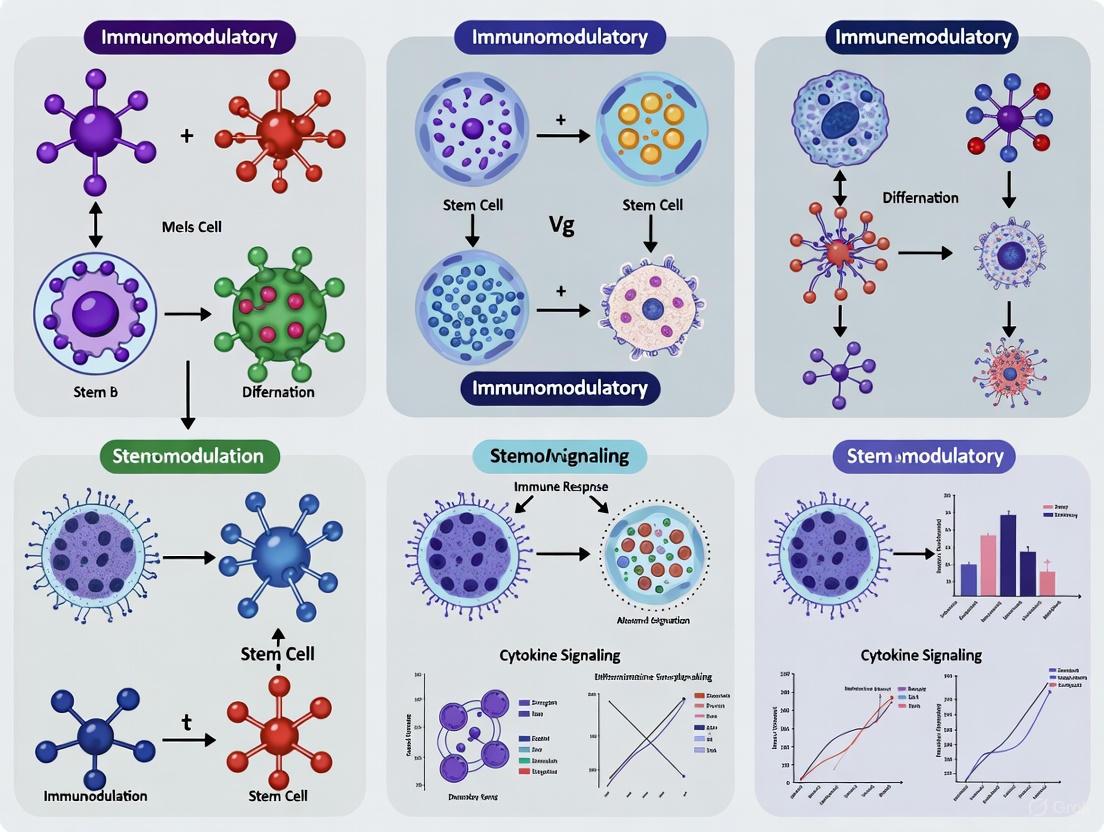
This article provides a comprehensive comparative analysis of the immunomodulatory properties of mesenchymal stem cells (MSCs) from diverse tissue sources.
Comparative Analysis of Stem Cell Immunomodulatory Properties: Mechanisms, Applications, and Clinical Translation
Abstract
This article provides a comprehensive comparative analysis of the immunomodulatory properties of mesenchymal stem cells (MSCs) from diverse tissue sources. Tailored for researchers and drug development professionals, it explores fundamental mechanisms, methodological approaches for therapeutic enhancement, strategies to overcome clinical challenges, and validation through comparative efficacy studies. The synthesis covers cellular mechanisms, tissue-specific variations, biomaterial delivery systems, clinical trial progress, and future directions for MSC-based immunotherapy, addressing critical gaps between preclinical promise and clinical application.
Unraveling the Core Mechanisms: How Stem Cells Modulate Immune Responses
Mesenchymal stromal cells (MSCs) have emerged as one of the most promising tools in regenerative medicine and immunotherapy due to their potent immunomodulatory capabilities [1] [2]. These multipotent cells, which can be isolated from various tissues including bone marrow, adipose tissue, and dental pulp, possess the unique ability to modulate the activity of both innate and adaptive immune cells [1] [3]. The therapeutic potential of MSCs extends to treating autoimmune diseases, graft-versus-host disease, and inflammatory disorders, positioning them as valuable candidates for cellular therapies [1] [3] [2].
The immunomodulatory functions of MSCs are primarily executed through two fundamental mechanisms: direct cell-cell contact and paracrine signaling [3]. These mechanisms work in concert to suppress excessive immune responses, promote tolerance, and facilitate tissue repair. While paracrine signaling involves the secretion of soluble factors that act on neighboring cells, contact-mediated immunomodulation requires physical interaction between MSCs and immune cells [4] [1]. Understanding the relative contributions, strengths, and limitations of each mechanism is essential for optimizing MSC-based therapies and developing novel treatment strategies for immune-mediated diseases.
This comparison guide provides a comprehensive analysis of these two fundamental immunomodulatory mechanisms, offering experimental data, methodological protocols, and visualization tools to support researchers and drug development professionals in their work.
Comparative Mechanisms of Action
Cell-Cell Contact-Mediated Immunomodulation
Direct cell-cell contact represents a sophisticated mechanism through which MSCs exert precise immunomodulatory effects on adjacent immune cells. This mechanism involves physical interactions between surface molecules on MSCs and receptors on target immune cells, triggering intracellular signaling pathways that alter immune cell function [1] [3].
Key Molecular Interactions:
- PD-1/PD-L1 Pathway: MSCs express programmed death-ligand 1 (PD-L1) which engages with programmed death-1 (PD-1) receptors on activated T-cells. This interaction delivers inhibitory signals that suppress T-cell proliferation and effector functions while promoting the differentiation of regulatory T-cells (Tregs) [1] [3]. The expression of PD-L1 is significantly upregulated in MSCs pretreated with interferon-gamma (IFN-γ), TNF-α, and interleukin-1 beta (IL-1β), enhancing their immunosuppressive capacity [3].
- Adhesion Molecule Engagement: MSCs upregulate intercellular adhesion molecule-1 (ICAM-1) and vascular cell adhesion molecule-1 (VCAM-1), which are critical for T-cell activation and recruitment to inflammation sites [1]. These adhesion molecules facilitate stable interactions between MSCs and immune cells, allowing for sustained immunomodulatory signaling.
- Mitochondrial Transfer: A remarkable feature of contact-mediated immunomodulation is the transfer of active mitochondria and plasma membrane segments from MSCs to T-cells. This transfer enhances the immunosuppressive activity of Tregs and suppresses Th1 responses in activated CD4+ T-cells [3].
- Notch Signaling Activation: Direct contact between MSCs and CD4+ T-cells activates the Notch1/forkhead box P3 (FOXP3) pathway, increasing the percentage of CD4+CD25+FOXP3+ regulatory T-cells [1]. This pathway plays a crucial role in establishing immune tolerance.
Cellular Targets and Effects:
- T-cells: Contact with MSCs inhibits naive and memory T-cell responses, suppresses T-cell proliferation, and promotes Treg differentiation [1] [3].
- B-cells: Direct contact arrests the B-cell cycle in the G0/G1 phase by activating p38 mitogen-activated protein kinase (MAPK) pathways and inhibits Caspase 3-mediated apoptosis through upregulation of vascular endothelial growth factor (VEGF) [1] [3].
- NK Cells: MSC contact suppresses granule polarization in natural killer cells, modulating their cytotoxic activity [1].
- Monocytes/Macrophages: Phagocytosis of MSCs by monocytes induces phenotypical and functional changes, facilitating the distribution of immunomodulatory effects [1].
Paracrine-Mediated Immunomodulation
Paracrine signaling represents a versatile, distance-independent immunomodulatory mechanism wherein MSCs secrete soluble factors that influence immune cells both locally and systemically [5] [6]. This mechanism allows MSCs to modulate immune responses without direct physical contact with target cells.
Key Soluble Mediators:
- Anti-inflammatory Factors: MSCs secrete interleukin-10 (IL-10), prostaglandin E2 (PGE2), transforming growth factor-β (TGF-β), and hepatocyte growth factor (HGF), which collectively inhibit the release of proinflammatory factors and exert anti-inflammatory effects [5].
- Enzymatic Immunomodulators: Indoleamine-2,3-dioxygenase (IDO) catalyzes the degradation of tryptophan, an essential amino acid for T-cell proliferation, thereby suppressing T-cell responses [4] [1]. Similarly, tumor necrosis factor-inducible gene 6 protein (TSG-6) inhibits NF-κB transcriptional activity, reducing the release of proinflammatory factors such as IL-1β and TNF-α [4] [5].
- Extracellular Vesicles: MSC-derived exosomes and microvesicles contain miRNAs, cytokines, and growth factors that modulate immune cell function. For instance, MSC exosomes inhibit the release of inflammatory factors through the lncRNA-KLF3-AS1/miR-206/GIT1 axis, promoting proliferation and inhibiting apoptosis in osteoarthritis chondrocytes [5].
Cellular Targets and Effects:
- T-cells: Paracrine factors inhibit T helper 17 cell (Th17) differentiation by inducing IL-10 and PGE2 production while inhibiting IL-17, IL-22, and IFN-γ [1]. IDO induces Tregs responsible for kidney allograft tolerance [1].
- Macrophages: MSC-secreted PGE2 and IDO induce polarization of proinflammatory M1 macrophages to anti-inflammatory M2 phenotypes, stimulating M2 macrophages to express IL-10, thereby alleviating inflammation and promoting tissue regeneration [5].
- Dendritic Cells: Paracrine factors inhibit dendritic cell maturation and antigen-presenting capacity, reducing T-cell activation [3].
Table 1: Comparative Analysis of Immunomodulatory Mechanisms
| Feature | Cell-Cell Contact | Paracrine Signaling |
|---|---|---|
| Primary Mechanisms | PD-1/PD-L1 interaction, adhesion molecules, mitochondrial transfer, Notch signaling | Soluble factor secretion (cytokines, growth factors), extracellular vesicles, enzymes |
| Key Molecular Players | PD-L1, ICAM-1, VCAM-1, Galectin-1, Notch1 | IDO, PGE2, TSG-6, TGF-β, IL-10, HGF, exosomes |
| Spatial Range | Direct proximity required (juxtacrine) | Local to systemic influence (paracrine/endocrine) |
| Inflammatory Environment Dependence | Enhanced by IFN-γ, TNF-α, IL-1β [4] | Enhanced by TNF-α, IL-1β [4] |
| Major Immune Cell Targets | T-cells, B-cells, NK cells, monocytes | T-cells, macrophages, dendritic cells, neutrophils |
Quantitative Experimental Data
Comparative Efficacy in Immune Cell Modulation
Recent studies have directly compared the efficacy of cell-cell contact versus paracrine signaling in immunomodulation using sophisticated co-culture systems. The quantitative data below illustrate the relative potency of each mechanism across different immune cell populations and functional assays.
Table 2: Quantitative Comparison of Immunomodulatory Effects
| Immune Cell Parameter | Cell-Cell Contact Effect | Paracrine Effect | Experimental System |
|---|---|---|---|
| CD4+ T-cell Proliferation | 70-80% inhibition [4] | 40-50% inhibition [4] | hPDL-MSCs + CD4+ T-cells (5 days) |
| CD4+ T-cell Viability | Significant decrease with high cell death rate [4] | Moderate decrease [4] | hPDL-MSCs + CD4+ T-cells (5 days) |
| Treg Induction | ~3-fold increase (PD-L1 dependent) [3] | ~2-fold increase (IDO mediated) [1] | MSC-T-cell co-culture |
| Th17 Differentiation | Inhibition via mitochondrial transfer [3] | Inhibition via IL-10/PGE2 induction [1] | MSC-T-cell co-culture |
| B-cell Proliferation | G0/G1 cell cycle arrest (p38 MAPK) [1] | Moderate inhibition | MSC-B-cell co-culture |
| Macrophage Polarization | M1 to M2 switch (CD200 dependent) [3] | M1 to M2 switch (PGE2/IDO) [5] | MSC-macrophage co-culture |
| Pro-inflammatory Cytokine Secretion | Significant reduction (TNF-α, IL-1β, IL-6) [4] | Moderate reduction (TNF-α, IL-1β, IL-6) [4] | hPDL-MSCs + CD4+ T-cells with IL-1β |
Inflammatory Context Dependence
The immunomodulatory effects of both cell-cell contact and paracrine mechanisms are significantly influenced by the inflammatory microenvironment. Cytokine priming alters the potency and possibly the mechanism of MSC-mediated immunomodulation [4].
Table 3: Inflammatory Conditioning Effects on Immunomodulation
| Conditioning Cytokine | Effect on Cell-Cell Contact | Effect on Paracrine Signaling |
|---|---|---|
| IL-1β | Substantial enhancement of anti-proliferative effects [4] | Enhanced secretion of anti-inflammatory factors [4] |
| TNF-α | Moderate enhancement of immunomodulatory function [4] | Increased TSG-6 production [4] [5] |
| IFN-γ | Upregulation of PD-L1 expression [3] | Significant induction of IDO activity [1] |
| Combined Cytokines | Synergistic enhancement of immunomodulatory potency | Synergistic enhancement of soluble factor secretion |
Experimental Protocols
Standardized Co-culture Systems for Mechanism Discrimination
To dissect the relative contributions of contact-mediated and paracrine immunomodulatory mechanisms, researchers have developed standardized co-culture systems that allow for controlled interaction between MSCs and immune cells.
Direct Contact Co-culture Protocol:
- Cell Preparation: Isolate and expand MSCs from tissue sources (e.g., bone marrow, periodontal ligament, Wharton's jelly) following standard protocols. Confirm MSC phenotype through surface marker expression (CD73+, CD90+, CD105+, CD14-, CD34-, CD45-) and trilineage differentiation potential [4] [2]. Isolate target immune cells (e.g., CD4+ T-cells) from peripheral blood mononuclear cells (PBMCs) using negative immunomagnetic selection [4].
- Co-culture Establishment: Seed MSCs in standard culture plates at a density of 2×10^4 cells/cm² and allow adherence for 24 hours. Activate MSCs with pro-inflammatory cytokines (IFN-γ, TNF-α, or IL-1β) if studying preconditioning effects. Add mitogen-activated immune cells directly to MSC monolayers at optimized ratios (typically 1:1 to 1:10 MSC:immune cell) [4] [7].
- Incubation and Analysis: Co-culture cells for 3-5 days in appropriate medium. Assess immune cell proliferation using CFSE dilution or BrdU incorporation, viability through Annexin V/PI staining, and cytokine secretion via ELISA or multiplex assays [4].
Transwell Paracrine-Only Protocol:
- System Setup: Utilize transwell plates with permeable membrane inserts (0.4 μm pore size) that allow free passage of soluble factors but prevent cell contact [4] [7].
- Cell Culture: Seed MSCs in the lower chamber and immune cells in the upper chamber, or vice versa. Maintain the same cell densities and ratios as in direct contact systems to enable direct comparison [4].
- Analysis: Assess the same parameters as in direct contact systems to quantify paracrine effects independently [4] [7].
Modified Direct Contact with Insert Protocol:
- Specialized Setup: For more nuanced studies, a modified direct contact system can be used where MSCs are attached to the bottom side of a porous membrane and immune cells are added directly into the insert, allowing limited cell interaction through membrane pores [4].
- Application: This system enables assessment of the contribution of limited, pore-restricted contact while maintaining some physical separation between cell populations [4].
Analytical Methods for Immunomodulatory Assessment
Immune Cell Functional Assays:
- Proliferation Assessment: Use CFSE labeling followed by flow cytometric analysis to track division history of immune cells [4]. Alternative methods include BrdU/EdU incorporation assays.
- Viability and Apoptosis: Employ Annexin V/propidium iodide staining with flow cytometry to quantify apoptotic and necrotic cell populations [4].
- Cytokine Profiling: Collect supernatant at various time points and analyze using ELISA or multiplex bead-based arrays for comprehensive cytokine secretion profiles [4] [7].
- Immune Cell Phenotyping: Use fluorochrome-conjugated antibodies and flow cytometry to characterize differentiation and activation states of immune cells (e.g., Treg, Th1, Th2, Th17 subsets) [3].
MSC Characterization assays:
- Gene Expression Analysis: Perform qRT-PCR to quantify expression of immunomodulatory genes (IDO, PD-L1, TSG-6, COX-2) in MSCs after co-culture [4].
- Protein Expression Assessment: Use Western blot, flow cytometry, or immunocytochemistry to validate protein-level expression of immunomodulatory factors [7].
- Secretome Analysis: Collect conditioned medium from MSC cultures and analyze soluble factor composition using proteomic approaches [5].
Signaling Pathways and Experimental Workflows
Immunomodulatory Signaling Pathways
The following diagrams illustrate key signaling pathways involved in cell-cell contact and paracrine immunomodulatory mechanisms, providing visual references for the molecular interactions described in this guide.
Diagram 1: Cell-Cell Contact Signaling Pathways
Diagram 2: Paracrine Signaling Pathways
Experimental Workflow for Mechanism Comparison
The following diagram outlines a standardized experimental approach for comparing cell-cell contact and paracrine immunomodulatory mechanisms, integrating the protocols described in section 4.1.
Diagram 3: Experimental Workflow for Mechanism Comparison
The Scientist's Toolkit: Essential Research Reagents
Table 4: Essential Research Reagents for Immunomodulation Studies
| Reagent Category | Specific Examples | Research Application | Key Functions |
|---|---|---|---|
| Cell Isolation Kits | CD4+ T-cell enrichment kit (negative selection) [4], Ficoll-Paque for PBMC isolation [4] | Isolation of specific immune cell populations from blood or tissues | Obtain pure cell populations for co-culture experiments |
| Cell Culture Systems | Transwell plates (0.4μm pore) [4], Standard tissue culture plates | Establish direct contact vs. paracrine-only co-culture conditions | Mechanism discrimination through physical separation |
| Cytokines & Activators | Recombinant IL-1β, TNF-α, IFN-γ [4], Phytohemagglutinin (PHA) [7] | MSC preconditioning and immune cell activation | Enhance immunomodulatory potency and simulate inflammatory conditions |
| Flow Cytometry Reagents | CFSE, Anti-CD4, CD25, FOXP3 antibodies [3], Annexin V/Propidium iodide [4] | Immune cell phenotyping, proliferation, and viability assessment | Quantify immunomodulatory effects on target cells |
| Molecular Biology Tools | qPCR primers for IDO, PD-L1, TSG-6 [4] [7], ELISA kits for cytokine quantification [4] | Analysis of gene and protein expression in MSCs and immune cells | Measure molecular responses to co-culture conditions |
| Inhibition Reagents | Anti-PD-L1 neutralizing antibodies [3], IDO inhibitors (1-MT) [1] | Mechanism-specific blockade to confirm pathways | Validate specific molecular mechanisms of immunomodulation |
The comparative analysis presented in this guide demonstrates that both cell-cell contact and paracrine signaling represent fundamental, non-mutually exclusive mechanisms through which MSCs exert their immunomodulatory effects. The experimental evidence indicates that contact-dependent mechanisms generally yield more potent immunosuppressive outcomes, particularly for T-cell proliferation inhibition and viability reduction [4]. However, paracrine signaling provides a versatile, distance-independent modulatory capacity that can influence broader cellular networks and tissue environments [5] [6].
The relative contribution of each mechanism is highly context-dependent, influenced by factors including the inflammatory milieu, specific immune cell targets, and spatial organization of cells within tissues [4]. Rather than operating in isolation, these mechanisms likely work in concert, with paracrine factors potentially priming immune cells for more efficient contact-mediated regulation, or vice versa.
For researchers and drug development professionals, these insights have significant implications. The development of MSC-based therapies should consider optimizing both mechanisms through appropriate inflammatory preconditioning [4]. Additionally, the growing understanding of paracrine mechanisms supports the exploration of cell-free therapies utilizing MSC-derived extracellular vesicles and conditioned media [5], which may offer safety and practical advantages over whole-cell therapies while retaining significant therapeutic potential.
As the field advances, further research is needed to elucidate the precise temporal and contextual coordination between these mechanisms and to develop strategies for selectively enhancing specific immunomodulatory pathways for different clinical applications.
Mesenchymal Stem Cells (MSCs) have emerged as a cornerstone of regenerative medicine and immunomodulatory therapy, with their therapeutic effects primarily mediated through paracrine secretion of bioactive molecules rather than direct cell replacement [8]. These soluble factors enable MSCs to sense and switch inflammatory responses, positioning them as master regulators of the immune microenvironment [9]. Among the extensive repertoire of molecules secreted by MSCs, five key factors—Indoleamine 2,3-dioxygenase (IDO), Prostaglandin E2 (PGE2), Transforming Growth Factor-β (TGF-β), TNF-α-Stimulated Gene 6 (TSG-6), and Human Leukocyte Antigen G5 (HLA-G5)—play particularly pivotal roles in mediating immunomodulation across various pathological conditions. This comparative guide provides an objective analysis of these factors' performance characteristics, secretion profiles, and mechanisms of action to inform research and drug development decisions.
Comparative Analysis of Key Soluble Factors
Table 1: Comprehensive Comparison of Key Immunomodulatory Factors Secreted by MSCs
| Soluble Factor | Primary Cellular Sources | Key Inducing Signals | Major Immune Cells Targeted | Primary Immunomodulatory Functions | Experimental Evidence |
|---|---|---|---|---|---|
| IDO | BM-MSCs, AT-MSCs, UC-MSCs [10] [11] | IFN-γ, TNF-α [10] [11] | T cells, NK cells, DCs [10] [11] | Depletes tryptophan; increases kynurenine; inhibits T cell proliferation; suppresses Th17 differentiation; promotes Treg induction; inhibits NK cell cytotoxicity and DC maturation [10] [11] | T-MSCs show higher IDO secretion than N-MSCs; IDO blockade reverses immunosuppressive effects [12] [11] |
| PGE2 | Equine MSCs, BM-MSCs, AT-MSCs [13] [11] | TNF-α, IFN-γ [10] [11] | Macrophages, T cells, NK cells, DCs [10] [14] [11] | Promotes M2 macrophage polarization; inhibits T cell proliferation; enhances IL-10 production; induces FoxP3+ Tregs; suppresses NK cell function; inhibits monocyte differentiation to DCs [10] [14] [11] | Stimulated equine MSCs significantly increase PGE2 secretion; PGE2 blockers partially reverse immunomodulation [13] [11] |
| TGF-β | MSCs from multiple sources [12] [11] | Inflammatory microenvironment [11] | T cells, macrophages, B cells [12] [14] [11] | Inhibits T cell activation and proliferation; induces Treg differentiation; promotes Th17 suppression; mediates immunomodulation via Smad2/3 phosphorylation [12] [14] [11] | T-MSCs secrete higher TGF-β than N-MSCs; TGF-β1 implicated in T cell receptor signaling inhibition [12] [14] |
| TSG-6 | MSCs, neutrophils, macrophages, monocytes [11] | TNF-α [10] [11] | Macrophages, neutrophils [10] [11] | Inhibits neutrophil migration; suppresses inflammatory signaling; promotes M2 macrophage polarization; modulates extracellular matrix organization; interacts with CD44 on macrophages [10] [11] | MSC-derived TSG-6 reduces neutrophil extracellular traps; TSG-6 knockdown diminishes anti-inflammatory effects [11] |
| HLA-G5 | MSCs from various sources [11] | Inflammatory cytokines [11] | NK cells, T cells [10] [11] | Inhibits NK cell cytotoxicity and IFN-γ secretion; suppresses T cell proliferation; induces regulatory immune cells [10] [11] | HLA-G5 recognition by inhibitory receptors on NK cells suppresses IFN-γ production and cytotoxicity [10] |
Table 2: Quantitative Secretion Profiles and Functional Potency of MSC Soluble Factors
| Soluble Factor | Secretion Levels | Species-Specific Variations | Tissue-Source Variations | Key Signaling Pathways | Therapeutic Applications |
|---|---|---|---|---|---|
| IDO | Increased upon inflammatory stimulation [10] | Not detected in equine MSCs [13] | Higher in T-MSCs vs N-MSCs [12] | Tryptophan depletion; Kynurenine accumulation; AHR activation [11] | GvHD, autoimmune diseases, allergic rhinitis [10] [14] |
| PGE2 | Constitutively secreted; increased with stimulation [13] [11] | Produced by all equine MSC sources [13] | Similar across tissue sources when stimulated [13] | Binds EP2/EP4 receptors; cAMP signaling; IL-10 induction [10] [11] | Inflammatory lesions, Crohn's disease, lung injury [10] [8] |
| TGF-β | Constitutively secreted by quiescent MSCs [13] | Produced by equine MSCs [13] | Higher in tumor-educated MSCs [12] | TGF-βRII/RI activation; Smad2/3 phosphorylation; FoxP3 induction [14] [11] | Fibrosis suppression, Treg induction, tissue repair [12] [8] |
| TSG-6 | 35-38 kDa protein; induced by inflammation [11] | Conservation across species [11] | Varies with tissue source and inflammation level [11] | CD44 interaction; NF-κβ inhibition; matrix modulation [10] [11] | Myocardial ischemia-reperfusion, incision injury, inflammatory disorders [10] [11] |
| HLA-G5 | Induced by inflammatory signals [11] | Human-specific [10] | Varies with MSC tissue source [10] | Binding to inhibitory receptors (ILT2, KIR2DL4) [10] | GvHD, transplantation tolerance, autoimmune conditions [10] [11] |
Experimental Protocols for Analyzing Soluble Factors
MSC Isolation and Characterization Protocol
Primary MSC Isolation Method: MSCs can be isolated from various tissues using the explant culture method [12]. For tumor-derived MSCs (T-MSCs) and normal adipose-derived MSCs (N-MSCs), tissues are surgically removed, washed with PBS, and minced into 1-3 mm pieces. The tissue fragments are cultured in DMEM supplemented with 10% FBS and 1% penicillin/streptomycin. After 7-10 days of incubation at 37°C with 5% CO₂, explant tissues are discarded and outgrown cells are cultured to confluence (P0) [12].
Flow Cytometry Characterization: MSCs at passage 3 are harvested using trypsin-EDTA, washed with PBS containing 2% FBS, and stained with antihuman antibodies against characteristic surface markers. Positive markers include CD73, CD90, CD105, CD44, and CD29, while negative markers include CD34, CD45, CD14, CD19, CD11b, and HLA-DR. Cells are analyzed using a flow cytometer with approximately 10,000 events counted [12] [15].
Trilineage Differentiation Capacity:
- Adipogenic Differentiation: Culture confluent MSCs in complete medium supplemented with 0.5 mM 3-isobutyl-1-methylxanthine, 200 mM indomethacin, 1 mM dexamethasone, and 10 mg/mL insulin for 18 days. Evaluate differentiation by staining lipid droplets with Oil Red O [12].
- Osteogenic Differentiation: Culture cells in complete medium supplemented with 10 mM β-glycerophosphate, 0.1 mM dexamethasone, and 0.2 mM ascorbic acid for 18 days. Assess mineralization by Alizarin Red S staining [12].
Soluble Factor Detection and Quantification Methods
Enzyme-Linked Immunosorbent Assay (ELISA): To quantify soluble factor secretion, culture MSC conditioned media under basal or stimulated conditions (e.g., with IFN-γ or TNF-α). Concentrations of TGF-β, PGE2, IDO (through kynurenine measurement), TSG-6, and HLA-G5 can be determined using specific ELISA kits according to manufacturers' protocols [12] [13].
Lymphocyte Proliferation Assay: Peripheral blood lymphocytes (PBLs) are co-cultured with MSC conditioned media or in direct contact with MSCs. Assess lymphocyte proliferation using BrdU assay or mixed leukocyte reaction. Soluble factor-specific contributions can be determined using inhibitory antibodies or pharmacological blockers [12] [13].
Regulatory T Cell Induction Assay: Co-culture MSCs with peripheral blood mononuclear cells (PBMCs) for 5-7 days. Analyze Treg populations (CD4+CD25+FoxP3+) using flow cytometry. Determine the role of specific factors using neutralizing antibodies (anti-TGF-β, anti-PGE2) or enzyme inhibitors (IDO inhibitors) [12] [14].
Signaling Pathways and Mechanisms of Action
Diagram 1: Immunomodulatory Network of MSC Soluble Factors. This diagram illustrates how inflammatory signals induce MSC secretion of key soluble factors, which target specific immune cells to generate immunosuppressive outcomes.
Diagram 2: Molecular Mechanisms of MSC Soluble Factors. This diagram details the specific molecular pathways through which each soluble factor exerts its immunomodulatory effects on target cells.
The Scientist's Toolkit: Essential Research Reagents
Table 3: Essential Research Reagents for Studying MSC Immunomodulatory Factors
| Reagent Category | Specific Examples | Research Applications | Technical Considerations |
|---|---|---|---|
| MSC Culture Media | DMEM/F12 with 10-20% FBS [12] [15] | Primary MSC isolation and expansion | Batch-to-batch FBS variation affects MSC properties; consider serum-free alternatives for clinical applications |
| Inflammatory Inducers | Recombinant IFN-γ, TNF-α, LPS [10] [11] | Activate MSCs to enhance factor secretion | Concentration and timing critical; typically 10-50 ng/mL for 24-48 hours |
| Differentiation Kits | Adipogenic: IBMX, indomethacin, dexamethasone, insulin [12]; Osteogenic: β-glycerophosphate, dexamethasone, ascorbic acid [12] | MSC characterization and potency assessment | Differentiation capacity varies with MSC source and donor age |
| Flow Cytometry Antibodies | CD73, CD90, CD105 (positive); CD34, CD45, CD14 (negative) [12] [15] | MSC phenotype verification | Include appropriate isotype controls; ≥95% positive for CD73, CD90, CD105 |
| ELISA Kits | TGF-β, PGE2, IDO (via kynurenine), TSG-6, HLA-G5 specific kits [12] [13] | Quantifying soluble factor secretion | Measure both constitutive and stimulated secretion; use conditioned media concentrated 10-20× |
| Neutralizing Antibodies/Inhibitors | Anti-TGF-β, anti-PGE2, IDO inhibitor (1-MT), COX inhibitors [13] [11] | Determining specific factor contributions | Use multiple concentrations; assess effects on functional readouts (T cell suppression) |
| Functional Assay Reagents | BrdU/CFSE, FoxP3 staining kits, cytokine multiplex panels [12] [14] | Assessing immunomodulatory functionality | Include appropriate controls (MSC-only, immune cell-only) for coculture experiments |
The comparative analysis of IDO, PGE2, TGF-β, TSG-6, and HLA-G5 reveals a sophisticated immunomodulatory network where each factor contributes unique yet complementary functions. While TGF-β and IDO predominantly target adaptive immune cells, PGE2 and TSG-6 exhibit broader effects on innate immunity, and HLA-G5 provides specialized regulation of NK cell responses. The experimental data demonstrates that factor secretion profiles vary significantly based on MSC tissue source, inflammatory priming, and species-specific considerations—critical factors for designing MSC-based therapies. The redundancy in this system, where multiple factors can achieve similar immunomodulatory outcomes, provides robustness while complicating mechanistic studies. Future research should focus on precisely understanding how temporal secretion patterns and factor combinations influence therapeutic efficacy across different disease contexts, particularly through standardized experimental approaches that enable direct comparison between studies.
Extracellular vesicles (EVs), including exosomes, are nanoscale, lipid bilayer-enclosed particles released by virtually all cell types that play a crucial role in intercellular communication by transferring bioactive molecules such as proteins, lipids, and nucleic acids between cells [16]. Among EVs, exosomes (typically 30-150 nm in diameter) and microvesicles (100-1,000 nm) represent the most extensively studied subtypes for their immunomodulatory functions [17] [18]. The therapeutic potential of stem cell-derived EVs, particularly from mesenchymal stem cells (MSCs), has garnered significant scientific interest due to their ability to replicate the immunomodulatory, anti-inflammatory, and regenerative properties of their parent cells while offering advantages such as lower immunogenicity, no risk of tumorigenesis or thrombosis, and enhanced stability [19] [17]. These vesicles act as natural delivery systems, facilitating the transfer of functional cargo to recipient cells, thereby modulating immune responses, regulating inflammation, and contributing to tissue repair processes [20] [18]. This comparative analysis examines the immunomodulatory capacities of EVs from different cellular sources, their therapeutic mechanisms, and the experimental frameworks essential for evaluating their potential in treating immune-related pathologies.
MSC-Derived EVs from Different Tissue Origins
The immunomodulatory potency of MSC-EVs varies significantly depending on their tissue of origin, with umbilical cord, adipose tissue, bone marrow, and placental MSCs representing the most extensively studied sources. A meta-analysis of experimental psoriasis models revealed that human umbilical cord MSC-derived exosomes (hUCMSC-Exos) demonstrated superior improvement in clinical severity scores compared to other MSC sources (p=0.030) [21]. Both human placenta MSC (hPMSC) and hUCMSC exosomes significantly reduced epidermal thickness and skin tissue cytokines in imiquimod-induced psoriatic models, though no significant difference was observed between these two specific sources [21]. Comparative studies between induced MSC-EVs (iMSC-EVs) from induced pluripotent stem cells and adipose-derived MSC-EVs (ADMSC-EVs) revealed that iMSC-EVs exhibited a larger particle size (approximately 1.5-fold) and significantly enhanced ADMSC migration (p<0.0001) compared to ADMSC-EVs, suggesting potential functional differences based on cellular origin [22].
Table 1: Comparative Immunomodulatory Effects of MSC-EVs from Different Sources
| EV Source | Key Immunomodulatory Effects | Experimental Models | Efficacy Highlights |
|---|---|---|---|
| Umbilical Cord MSC-EVs | Reduction of clinical severity scores, epidermal hyperplasia, TNF-α and IL-17A levels | Imiquimod-induced psoriasis murine model [21] | Superior clinical score improvement in meta-analysis (p=0.030) [21] |
| Placental MSC-EVs | Reduction of epidermal thickness, skin tissue cytokines | Imiquimod-induced psoriasis murine model [21] | Significant reduction in disease parameters, comparable to hUCMSC-EVs [21] |
| Adipose Tissue MSC-EVs | Increased cell viability, reduced apoptosis, enhanced migration | Human dermal fibroblasts and ADMSC in vitro models [22] | Significantly increased HDF viability at 48/72h (p≤0.01, p≤0.05), reduced apoptosis (p≤0.01) [22] |
| Induced MSC-EVs (from iPSCs) | Enhanced cell migration, increased cell viability, reduced apoptosis | Human dermal fibroblasts and ADMSC in vitro models [22] | Significantly enhanced ADMSC migration (p<0.0001) compared to ADMSC-EVs [22] |
| Bone Marrow MSC-EVs | T-cell proliferation inhibition, macrophage polarization to M2 phenotype | In vitro immunomodulation assays [23] | Large apoptotic bodies (~700nm) showed superior immunomodulation over smaller ones [23] |
EVs from Pluripotent versus Multipotent Stem Cells
Beyond tissue-specific variations, the developmental potential of parent cells significantly influences EV characteristics and functionality. Exosomes derived from human mesenchymal stem cells (hMSCs), human induced pluripotent stem cells (hiPSCs), and human embryonic stem cells (hESCs) represent distinct therapeutic profiles with varying advantages [24]. hMSC-derived exosomes contain anti-inflammatory and pro-angiogenic molecules such as TGF-β, IL-10, and VEGF, contributing to their exceptional potential in immune modulation and tissue repair [24]. In contrast, both hESC and hiPSC-derived exosomes carry common pluripotent factors (OCT4, SOX2, and NANOG) that promote cell proliferation and tissue regeneration, with hiPSCs offering the additional advantage of enabling autologous treatments without ethical concerns [24]. The diversity of exosomes from hMSCs is further shaped by their tissue source (bone marrow, adipose tissue, umbilical cord), while exosomes derived from pluripotent stem cells may offer greater consistency due to their clonal origin [24].
Table 2: Functional Comparison of Stem Cell-Derived EV Sources
| Parameter | MSC-Derived EVs | iPSC-Derived EVs | ESC-Derived EVs |
|---|---|---|---|
| Key Molecular Cargo | TGF-β, IL-10, VEGF [24] | OCT4, SOX2, NANOG [24] | OCT4, SOX2, NANOG [24] |
| Primary Immunomodulatory Functions | Anti-inflammatory polarization of macrophages, T-cell regulation, tissue repair [20] [24] | Cell proliferation, tissue regeneration, immunomodulation [22] [24] | Cell proliferation, tissue regeneration, immunomodulation [24] |
| Therapeutic Advantages | Readily available, free of ethical issues, diverse tissue sources, high secretion capacity [24] | Unlimited expansion, low tumorigenicity, autologous potential, no ethical concerns [22] [24] | Pluripotent differentiation capacity, consistent quality [24] |
| Limitations & Challenges | Donor variability, tissue source-dependent heterogeneity [20] | Standardization of reprogramming and differentiation protocols [22] | Ethical concerns, limited research availability, regulatory restrictions [24] |
| Clinical Translation Status | Most advanced (multiple clinical trials) [19] [21] | Emerging pre-clinical evidence [22] | Limited studies due to ethical restrictions [24] |
Therapeutic Applications and Mechanisms of Action
Neurodegenerative Disorders
In neurodegenerative diseases, MSC-EVs demonstrate remarkable dual functionality as both immunomodulators and drug delivery vehicles [20]. Their therapeutic mechanism primarily involves shifting immune cells toward anti-inflammatory states, a critical process for slowing disease progression in conditions like Alzheimer's and Parkinson's disease [20]. MSC-EVs modulate neuroinflammation by regulating the activation and function of microglia and astrocytes, reducing pro-inflammatory cytokine secretion, and promoting an anti-inflammatory microenvironment [20]. Additionally, their ability to cross the blood-brain barrier enables targeted delivery of therapeutic molecules to the central nervous system, highlighting their potential for treating neurologica disorders where conventional drug delivery is challenging [20].
Inflammatory Skin Diseases
Recent evidence has highlighted the significant potential of MSC-derived exosomes in managing psoriasis, a chronic immune-mediated inflammatory skin condition [21]. MSC exosomes effectively reduce clinical severity scores and epidermal hyperplasia in imiquimod-induced psoriasis models, with meta-analysis confirming significant improvements in both parameters [21]. The therapeutic mechanism involves downregulation of key inflammatory mediators in the IL-23/IL-17A pathway, with studies demonstrating significant reductions in tumor necrosis factor-α mRNA (SMD: -0.880; 95% CI: -1.623 to -0.136) and interleukin-17A protein levels (SMD: -2.390; 95% CI: -4.522 to -0.258) following MSC exosome treatment [21]. These findings position MSC exosomes as promising therapeutic agents for modulating the aberrant immune responses characteristic of psoriasis.
Respiratory Diseases
Clinical trials have identified aerosolized inhalation as a particularly efficient administration route for EV-based therapies in respiratory diseases, achieving therapeutic effects at substantially lower doses (approximately 10^8 particles) compared to intravenous routes [19]. This delivery method leverages the natural biodistribution of EVs to target lung tissue directly, offering enhanced efficacy for conditions such as COVID-19-associated acute respiratory distress syndrome and other inflammatory lung injuries [19] [16]. The immunomodulatory properties of MSC-EVs in respiratory diseases include reducing neutrophil infiltration, decreasing pro-inflammatory cytokine levels, and promoting tissue repair through transfer of anti-inflammatory miRNAs and proteins [19].
Experimental Protocols and Methodologies
EV Isolation and Characterization Techniques
Standardized protocols for isolating and characterizing EVs are critical for ensuring reproducible research outcomes and therapeutic applications. The most common isolation methods include differential ultracentrifugation, size-exclusion chromatography (SEC), polymer-based precipitation, and immunoaffinity capture [16] [24]. For large-scale clinical production, tangential flow filtration (TFF) combined with SEC is increasingly adopted due to its scalability, higher purity, and maintenance of EV integrity [24]. Ultracentrifugation remains the most widely used technique in research settings, involving sequential centrifugation steps: initial low-speed centrifugation (300-2,000 × g) to remove cells and debris, medium-speed centrifugation (10,000-20,000 × g) to pellet larger EVs, and high-speed ultracentrifugation (100,000 × g or higher) to sediment exosomes [21] [24].
Comprehensive characterization of isolated EVs requires multiple complementary approaches to validate isolation effectiveness and vesicle integrity [16]. Standard characterization includes nanoparticle tracking analysis (NTA) for determining size distribution and concentration [22] [21], transmission electron microscopy (TEM) for morphological assessment [22] [21], and immunoblotting for detection of marker proteins (CD9, CD63, CD81, ALIX, TSG101) while assessing purity through absence of negative markers like calnexin [21]. Advanced characterization may also include flow cytometry for surface marker analysis and omics methodologies (proteomics, genomics, lipidomics) for detailed cargo profiling [16].
Diagram 1: Experimental Workflow for EV Isolation, Characterization, and Functional Analysis. This comprehensive workflow outlines the key steps from cell culture to functional validation of EV immunomodulatory properties, highlighting major technical approaches at each stage.
Functional Assays for Immunomodulatory Assessment
Robust evaluation of EV immunomodulatory capacity requires well-established functional assays that measure specific immune parameters. Standardized assays include:
T-cell Proliferation Assays: Measuring the inhibition of T-cell proliferation in response to mitogen stimulation or allogeneic mixed lymphocyte reactions, typically using CFSE dilution or BrdU incorporation methods [23]. Large apoptotic bodies from human bone marrow MSCs demonstrated superior immunomodulatory capacity, significantly inhibiting human and murine T-cell proliferation in vitro [23].
Macrophage Polarization Assays: Evaluating the ability of EVs to shift macrophage polarization from pro-inflammatory M1 to anti-inflammatory M2 phenotypes through flow cytometric analysis of surface markers (CD206, CD163) and cytokine secretion profiles [23]. Studies indicate that large apoptotic bodies promote macrophage polarization to the M2 anti-inflammatory type more effectively than smaller vesicles [23].
Cell Viability and Apoptosis Assays: Assessing the protective effects of EVs on cell viability using MTT or WST assays, and quantifying apoptosis reduction through Annexin V/propidium iodide staining [22]. Both iMSC- and ADMSC-derived EVs significantly increased human dermal fibroblast viability at 48 and 72 hours (p≤0.01, p≤0.05) and reduced apoptosis levels (p≤0.01) [22].
Migration Assays: Evaluating the enhancement of cell migration through scratch/wound healing assays or transwell migration systems [22]. iMSC-EVs significantly enhanced ADMSC migration (p<0.0001) compared to ADMSC-EVs, indicating their potential for promoting tissue repair processes [22].
Cytokine Profiling: Quantifying inflammatory and anti-inflammatory cytokine levels (TNF-α, IL-1β, IL-6, IL-10, TGF-β) using ELISA or multiplex immunoassays in conditioned media or tissue homogenates [21].
EV Biogenesis, Cargo Sorting, and Signaling Pathways
The biogenesis of exosomes involves a sophisticated multi-step process regulated by specific molecular mechanisms. The pathway initiates with the formation of early endosomes through inward budding of the plasma membrane, a process regulated by caveolin-1, clathrin, and GTP-binding Rab proteins [18]. Early endosomes then mature into late endosomes and subsequently form multivesicular bodies (MVBs) containing intraluminal vesicles (ILVs) through inward budding of the endosomal membrane [18] [24]. This critical step is regulated by both endosomal sorting complex required for transport (ESCRT)-dependent and ESCRT-independent mechanisms involving neutral sphingomyelinase 2, tetraspanins, and lipid components [18]. Finally, MVBs are transported to and fuse with the plasma membrane, releasing ILVs as exosomes into the extracellular space, a process mediated by Rab GTPases and SNARE complexes [18] [24]. Alternative MVB fate involves fusion with lysosomes for degradation, thereby inhibiting exosome release [18].
Diagram 2: Exosome Biogenesis Pathway and Regulatory Mechanisms. This diagram illustrates the key steps in exosome formation, from initial endocytosis to final release or degradation, highlighting major regulatory components at each stage.
The molecular cargo of EVs is selectively sorted during biogenesis, ultimately determining their immunomodulatory functions. MSC-EVs contain specific miRNAs, cytokines, and growth factors that coordinate their therapeutic effects, including anti-inflammatory miRNAs (e.g., miR-21, miR-146a, miR-let7), immunomodulatory proteins (TGF-β, IL-10), and pro-angiogenic factors (VEGF) [20] [24]. Following release, EVs interact with recipient cells through receptor-ligand interactions, membrane fusion, or endocytosis, delivering their functional cargo that subsequently modulates key signaling pathways such as NF-κB, STAT, and SMAD, ultimately leading to altered gene expression and functional responses in target immune cells [20] [18].
The Scientist's Toolkit: Essential Research Reagents and Materials
Table 3: Essential Research Reagents for EV Immunomodulation Studies
| Reagent Category | Specific Examples | Research Application | Technical Notes |
|---|---|---|---|
| Cell Culture Media | αMEM, DMEM/F12, mTeSR (for iPSCs) [22] [24] | Expansion of MSC and pluripotent stem cell sources | Supplement with 15% FBS (EV-depleted) or use serum-free conditions for EV production [22] |
| EV Isolation Reagents | Ultracentrifugation buffers, Size-exclusion columns, Polyethylene glycol (PEG) [16] [24] | Isolation and purification of EVs from conditioned media | Combination of TFF and SEC recommended for large-scale, high-purity production [24] |
| Characterization Antibodies | Anti-CD9, Anti-CD63, Anti-CD81, Anti-ALIX, Anti-TSG101, Anti-Calnexin [16] [21] | Detection of EV markers and assessment of purity by immunoblotting | Calnexin absence confirms minimal cellular contamination [21] |
| Cell Assay Kits | MTT/WST viability kits, Annexin V apoptosis kits, CFSE proliferation kits [22] [23] | Functional assessment of EV immunomodulatory effects | Standardize EV dosage by particle number (e.g., particles/cell) [22] |
| Cytokine Analysis | ELISA kits (TNF-α, IL-17A, IL-10, TGF-β), Multiplex immunoassay panels [23] [21] | Quantification of inflammatory and anti-inflammatory mediators | Critical for evaluating macrophage polarization and T-cell responses [23] [21] |
Clinical Translation and Regulatory Considerations
The transition of EV-based therapies from preclinical research to clinical applications faces several challenges, including lack of standardized protocols, dose optimization strategies, and undefined potency assays [19] [17]. Current clinical trials demonstrate that administration route significantly influences therapeutic efficacy, with aerosolized inhalation achieving effects at substantially lower doses (approximately 10^8 particles) compared to intravenous routes [19]. This route-dependent efficacy highlights the importance of considering biodistribution and delivery efficiency in clinical trial design.
Global clinical trials registered between 2014 and 2024 reveal diverse applications of MSC-EVs across multiple disease areas, with respiratory, neurological, and autoimmune conditions representing prominent targets [19]. The most common MSC sources in clinical trials are bone marrow, adipose tissue, and umbilical cord, though significant variations in EV characterization methods, dose units, and outcome measures complicate cross-trial comparisons [19]. Regulatory agencies have yet to issue specific technical guidelines for EV-based drugs, creating additional challenges for clinical translation [17]. Nevertheless, the continued expansion of clinical research in this field, coupled with advancing engineering approaches to enhance targeting and drug loading, promises to accelerate the development of EV-based immunomodulatory therapies [17] [20].
The therapeutic potential of mesenchymal stem cells (MSCs) extends far beyond their capacity for tissue repair, positioning them as powerful modulators of the immune system. Through direct cell-cell contact and paracrine signaling, MSCs engage with both innate and adaptive immune cells, including T cells, B cells, macrophages, and dendritic cells (DCs), to suppress pathological inflammation and promote tissue homeostasis [2] [25]. This intricate crosstalk is governed by specific molecular pathways and is highly influenced by the inflammatory microenvironment. The immunomodulatory properties of MSCs are not constitutive but are rather licensed by inflammatory cytokines such as tumor necrosis factor-α (TNF-α) and interferon-γ (IFN-γ) present in diseased tissues [25]. This review provides a comparative analysis of how MSCs interact with different immune cell populations, summarizing key experimental data and methodologies to guide therapeutic development for researchers and drug development professionals.
Comparative Analysis of MSC-Mediated Immune Cell Modulation
Table 1: Comparative Effects of MSCs on Major Immune Cell Populations
| Immune Cell Target | Key Soluble Mediators | Primary Functional Outcomes | Documented Phenotypic Changes |
|---|---|---|---|
| T-cells | PGE2, IDO, TGF-β, HLA-G5 [2] [25] | Suppression of proliferation; Inhibition of pro-inflammatory Th1 and Th17 responses; Promotion of Treg differentiation [2] [25] [26] | ↓ IFN-γ (Th1), ↓ IL-17 (Th17), ↑ FOXP3+ Tregs [2] [26] |
| B-cells | Not specified in search results | Not specified in search results | Not specified in search results |
| Macrophages | PGE2, TSG-6 [25] | Polarization from pro-inflammatory M1 to anti-inflammatory M2 phenotype; Reduced recruitment [25] | ↑ IL-10, ↑ IL-4, ↑ CD206 [25] |
| Dendritic Cells (DCs) | Not specified in search results | Inhibition of maturation and antigen-presenting capacity [2] | ↓ CD80, ↓ CD86, ↓ MHC-II [2] |
Table 2: Experimental Models and Evidence Supporting MSC Immunomodulation
| Immune Cell | Experimental Models | Key Readouts & Metrics | References |
|---|---|---|---|
| T-cells | • Mixed lymphocyte reactions (MLR)• T-cell proliferation assays (e.g., CFSE dilution)• In vivo inflammatory disease models (e.g., GvHD) [2] | • % Inhibition of T-cell proliferation |
[2] [26] |
| Macrophages | • Co-culture of MSCs with polarized macrophages• In vivo models of inflammation and tissue injury [25] | • M1/M2 marker expression (CD80, CD86, CD206)• Phagocytic activity assays• Cytokine secretion profile (IL-10, IL-12, TNF-α) [25] | [25] |
| Dendritic Cells | • Co-culture of MSCs with monocyte-derived DCs• DC maturation assays with LPS [2] | • Surface maturation markers (CD80, CD86, MHC-II)• T-cell activation capacity in MLR• Cytokine production (IL-12) [2] | [2] |
Detailed Mechanistic Insights by Cell Type
T-Cells
MSCs exert profound suppression on T-cell responses, primarily by secreting soluble factors that modulate T-cell function and differentiation. A key mechanism involves the enzyme indoleamine 2,3-dioxygenase (IDO), which is upregulated in MSCs in response to inflammatory signals like IFN-γ [25]. IDO catalyzes the degradation of the essential amino acid tryptophan into kynurenines, creating a local microenvironment that inhibits T-cell proliferation and promotes their apoptosis [25]. Furthermore, MSC-derived prostaglandin E2 (PGE2) plays a pivotal role in shifting the balance from pro-inflammatory T-helper 1 (Th1) and Th17 cells towards anti-inflammatory regulatory T (Treg) cells [25]. This is evidenced by decreased production of IFN-γ and IL-17 and an increase in FOXP3+ Treg populations [2] [26]. The metabolic reprogramming of T-cells and the alteration of their differentiation landscape are central to the MSC-mediated restoration of immune tolerance.
Macrophages
MSCs significantly reprogram macrophage function, driving a phenotypic switch from a pro-inflammatory (M1) to an anti-inflammatory, tissue-repair (M2) state. This transition is largely mediated by PGE2 and TNF-α-stimulated gene 6 (TSG-6) [25]. In experimental settings, co-culture with MSCs leads to macrophages exhibiting increased expression of classic M2 markers like CD206 and elevated production of the anti-inflammatory cytokine IL-10, while suppressing pro-inflammatory factors such as TNF-α and IL-12 [25]. This MSC-educated macrophage population demonstrates enhanced phagocytic activity and contributes to the resolution of inflammation and tissue repair processes in vivo.
Dendritic Cells (DCs)
MSCs interfere with the life cycle and function of dendritic cells, the professional antigen-presenting cells critical for initiating adaptive immunity. When exposed to MSCs, DCs show impaired maturation, characterized by reduced surface expression of co-stimulatory molecules (CD80 and CD86) and MHC class II proteins [2]. Consequently, these DCs possess a diminished capacity to activate naïve T-cells, thereby dampening the overall immune response. This effect helps to maintain an immune-suppressive environment and prevents excessive immune activation.
Experimental Protocols for Assessing MSC Immunomodulation
Standardized T-Cell Suppression Assay
Objective: To quantify the suppressive capacity of MSCs on T-cell proliferation. Materials:
- Isolated Human T-cells: From peripheral blood mononuclear cells (PBMCs) of healthy donors.
- Test MSCs: Bone marrow-derived (BM-MSCs) or adipose-derived (AD-MSCs) at passages 4-6.
- Activation Stimulus: Anti-CD3/CD28 beads or mitogens like phytohemagglutinin (PHA).
- Culture Vessels: 96-well round-bottom plates for co-culture.
- Proliferation Dye: Carboxyfluorescein succinimidyl ester (CFSE) or similar cell tracing dye.
- Readout Instrument: Flow cytometer.
Methodology:
- T-cell Preparation: Isolate CD3+ T-cells from PBMCs using negative selection kits. Label T-cells with CFSE (e.g., 1-5 µM) according to manufacturer's protocol.
- Co-culture Setup: Seed irradiated (to prevent proliferation) or mitomycin-C-treated MSCs in plates. After adherence, add CFSE-labeled T-cells at varying MSC:T-cell ratios (e.g., 1:5, 1:10, 1:100) along with the T-cell activation stimulus. Include controls for maximum T-cell proliferation (T-cells + stimulus alone) and background proliferation (T-cells alone).
- Culture and Harvest: Incubate co-cultures for 3-5 days in a standard CO₂ incubator.
- Flow Cytometric Analysis: Harvest cells and analyze CFSE dilution on a flow cytometer. Gate on live T-cells and quantify the percentage of proliferated (CFSE-low) cells in each condition.
- Data Analysis: Calculate the percentage of suppression using the formula: % Suppression = [1 - (% Proliferation in Co-culture / % Proliferation in T-cell alone control)] × 100
Macrophage Polarization Assay
Objective: To evaluate the effect of MSCs on macrophage polarization from M1 to M2 phenotype. Materials:
- Human Monocytes: Isolated from PBMCs (e.g., CD14+ selection).
- Macrophage Differentiation/Polarization Cytokines: GM-CSF (for M1), M-CSF (for M2), IFN-γ + LPS (for M1 activation).
- Test MSCs: Cultured in a transwell system or in conditioned medium experiments.
- Antibodies for Flow Cytometry: Anti-CD80 (M1 marker), anti-CD206 (M2 marker).
- ELISA Kits: For TNF-α, IL-12p70 (M1 cytokines), IL-10 (M2 cytokine).
Methodology:
- Macrophage Generation: Differentiate CD14+ monocytes into M0 macrophages by culturing with M-CSF (50 ng/mL) for 6 days.
- M1 Polarization & MSC Co-culture: Polarize M0 macrophages to M1 phenotype by treatment with IFN-γ (20 ng/mL) and LPS (100 ng/mL). Simultaneously, introduce MSCs in a transwell insert (to allow factor exchange without direct contact) or treat with MSC-conditioned medium.
- Incubation: Maintain co-cultures for 24-48 hours.
- Analysis:
- Flow Cytometry: Detach macrophages and stain for surface markers CD80 and CD206. Analyze the shift in median fluorescence intensity (MFI) and the percentage of CD206+ cells.
- Cytokine Measurement: Collect culture supernatants and quantify TNF-α, IL-12p70, and IL-10 levels by ELISA.
Signaling Pathways in MSC-Mediated Immunomodulation
The following diagrams illustrate the core molecular mechanisms by which MSCs interact with and modulate different immune cells.
MSC Modulation of T-cells and Macrophages
Diagram Title: MSC Immunomodulation of T-cells and Macrophages
Experimental Workflow for T-cell Suppression Assay
Diagram Title: T-cell Suppression Assay Workflow
The Scientist's Toolkit: Key Research Reagents
Table 3: Essential Reagents for MSC-Immune Cell Interaction Studies
| Reagent / Solution | Supplier Examples | Primary Function in Experiments |
|---|---|---|
| Anti-CD3/CD28 Activator | Thermo Fisher, Miltenyi Biotec | Polyclonal activation of T-cells to measure MSC-mediated suppression. |
| CFSE Cell Tracer | Thermo Fisher | Fluorescent dye to track and quantify T-cell proliferation via flow cytometry. |
| Recombinant Human IFN-γ & TNF-α | PeproTech, R&D Systems | To pre-license or prime MSCs to enhance their immunomodulatory activity. |
| Collagen Hydrogels | Koken, Advanced BioMatrix | To provide a 3D scaffold for MSC culture, improving viability and function. |
| Transwell Inserts | Corning, Greiner Bio-One | To separate MSCs from immune cells while allowing soluble factor exchange. |
| CD14+ MicroBeads | Miltenyi Biotec | For isolation of human monocytes from PBMCs for macrophage studies. |
| ELISA Kits (PGE2, IDO, Cytokines) | R&D Systems, BioLegend | To quantify the levels of immunomodulatory factors in supernatants. |
| Flow Antibodies (CD4, CD25, FOXP3, CD80, CD206) | BioLegend, BD Biosciences | To characterize immune cell phenotypes and subsets. |
The comparative analysis presented herein elucidates the multi-faceted and cell-type-specific immunomodulatory mechanisms employed by MSCs. The experimental data and protocols provide a robust framework for researchers to systematically evaluate the potency of MSC-based therapies. The efficacy of MSC immunomodulation is profoundly influenced by the inflammatory context and the specific disease microenvironment. Future research and drug development must focus on optimizing MSC delivery, such as the use of 3D collagen hydrogels to enhance cell survival and function [25], and on precisely defining the timing and dosage for therapeutic application. A deep understanding of these interactions is paramount for harnessing the full clinical potential of MSCs in treating immune-mediated diseases.
Mesenchymal stem cells (MSCs) possess a unique capacity to function as a "sensor and switcher" of the immune system, dynamically responding to inflammatory signals within their microenvironment [27]. This immunoplasticity enables MSCs to transition between pro-inflammatory and anti-inflammatory phenotypes, making them powerful mediators of immune homeostasis [27] [28]. In the presence of an inflammatory microenvironment, specific cytokine signals "license" MSCs, activating their immunomodulatory functions and enhancing their therapeutic potential for treating immune-mediated inflammatory diseases (IMIDs) [1] [28]. This review provides a comparative analysis of how different inflammatory cues license MSCs, detailing the underlying mechanisms, experimental protocols for studying these phenomena, and the key research tools essential for this field.
The licensing process is primarily driven by pro-inflammatory cytokines, particularly interferon-gamma (IFN-γ) and tumor necrosis factor-alpha (TNF-α), which synergistically activate intracellular signaling pathways to induce a potent immunosuppressive MSC phenotype [27] [28]. When properly licensed, MSCs exert their effects through multiple mechanisms including direct cell-to-cell contact with immune cells and paracrine activity via secreted bioactive molecules [1]. The complexity of MSC-immune cell interactions necessitates rigorous comparative studies to optimize therapeutic applications, particularly as research progresses toward clinical translation for conditions such as graft-versus-host disease (GVHD), Crohn's disease, and allergic rhinitis [27] [29] [30].
Table 1: Core Immunomodulatory Mechanisms of Licensed MSCs
| Mechanism Category | Key Effector Molecules | Target Immune Cells | Immunomodulatory Outcome |
|---|---|---|---|
| Soluble Mediators | IDO, PGE2, TGF-β, IL-10, HGF, HLA-G [27] | T cells, macrophages, dendritic cells | T cell suppression, Treg induction, macrophage polarization to M2 phenotype [27] [30] |
| Cell Surface Molecules | PD-L1, PD-L2, ICAM-1, VCAM-1 [27] [1] | T cells, B cells, monocytes | Inhibition of T-cell proliferation, enhanced immune cell recruitment and adhesion [1] |
| Metabolic Disruption | IDO (tryptophan depletion), CD39/CD73 (adenosine production) [27] [31] | T cells, NK cells | T cell cycle arrest, suppression of effector immune cell functions [27] |
| Novel Mechanisms | Mitochondrial transfer via tunneling nanotubes [30] | Damaged epithelial cells, cardiomyocytes | Restoration of cellular bioenergetics, reduced oxidative stress in injured tissues [30] |
Comparative Analysis of Licensing Cytokines and Strategies
Cytokine-Specific Licensing Effects
The inflammatory microenvironment contains a complex mixture of signals that differentially influence MSC immunomodulatory potency. Research systematically comparing licensing strategies has revealed that IFN-γ is the most crucial cytokine for inducing MSC immunosuppressive capabilities, primarily through STAT1-dependent pathways that upregulate indoleamine 2,3-dioxygenase (IDO) and programmed death-ligand 1 (PD-L1) [27] [28]. TNF-α complements this effect by activating NF-κB signaling, which further enhances adhesion molecule expression such as intercellular adhesion molecule-1 (ICAM-1) and vascular cell adhesion molecule-1 (VCAM-1), facilitating MSC-immune cell interactions [28]. The combination of IFN-γ and TNF-α produces a synergistic effect that significantly enhances the immunomodulatory secretome beyond what either cytokine can achieve alone [28].
The concentration and timing of cytokine exposure critically determine the resulting MSC phenotype. Low levels of IFN-γ and TNF-α may support antigen presentation, while high concentrations drive a strongly immunosuppressive phenotype [27] [28]. Furthermore, the type of Toll-like receptor (TLR) activation can skew MSC polarization, with TLR3 activation generally inducing an anti-inflammatory phenotype (MSC2), while TLR4 activation tends to promote a pro-inflammatory phenotype (MSC1) [27]. This nuanced response enables MSCs to precisely calibrate their immunomodulatory output based on specific environmental cues.
Table 2: Comparative Efficacy of MSC Licensing Strategies
| Licensing Strategy | Key Signaling Pathways | Key Upregulated Factors | Functional Outcomes on Immune Cells |
|---|---|---|---|
| IFN-γ alone | JAK/STAT1 [28] | IDO, PD-L1 [27] [28] | Suppresses T-cell proliferation, induces Tregs [27] |
| TNF-α alone | NF-κB [28] | ICAM-1, VCAM-1 [28] | Enhances immune cell adhesion and recruitment [1] |
| IFN-γ + TNF-α combination | STAT1 + NF-κB (synergistic) [28] | IDO, PGE2, HLA-G, IL-6 [28] | Potent suppression of T-cell proliferation, enhanced monocyte modulation [28] |
| TLR3 activation | TRIF/IRF3 [27] | Anti-inflammatory mediators [27] | Promotes anti-inflammatory phenotype (MSC2) [27] |
| TLR4 activation | MyD88/NF-κB [27] | Pro-inflammatory chemokines [27] | Promotes pro-inflammatory phenotype (MSC1) [27] |
Optimized Licensing Protocols
Recent systematic investigations have established optimized protocols for biochemical licensing of MSCs. The most potent immunomodulatory phenotype is achieved through overnight licensing with a 1:1 ratio of IFN-γ and TNF-α at 60 ng/mL total concentration, followed by 48 hours of incubation at 90% cellular confluence for secretome collection [28]. This optimized protocol yields a conditioned media with significantly enhanced immunomodulatory properties, capable of inhibiting human peripheral blood mononuclear cell (PBMC) activation with more than twice the effectiveness of suboptimal protocols [28].
The duration of cytokine exposure represents another critical parameter. Prolonged exposure to high cytokine concentrations can induce autophagy or apoptosis in MSCs, highlighting the need to balance therapeutic efficacy with cell viability [28]. Furthermore, the cellular confluence during secretome production significantly influences the composition and potency of the resulting conditioned media, with 90% confluence demonstrating superior immunomodulatory activity compared to lower densities [28]. These optimized parameters provide a standardized approach for generating consistently potent MSC therapies for research and clinical applications.
Experimental Models and Methodologies for Evaluating Licensed MSCs
Standardized In Vitro Functional Assays
Robust assessment of MSC immunomodulatory capacity requires standardized in vitro functional assays that quantitatively measure interactions with immune cells. The most widely utilized assay evaluates the suppression of activated T-cell proliferation, typically using peripheral blood mononuclear cells (PBMCs) labeled with carboxyfluorescein succinimidyl ester (CFSE) and stimulated with anti-CD3/CD28 antibodies or phytohemagglutinin (PHA) [28] [23]. The percentage proliferation inhibition is calculated by comparing fluorescence dilution in PBMCs cocultured with licensed MSCs versus controls.
Macrophage polarization assays provide another essential functional readout, wherein MSCs are cocultured with M1-polarized macrophages (induced by IFN-γ and lipopolysaccharide). The resulting macrophage phenotype is assessed through flow cytometry analysis of surface markers (CD80/CD86 for M1; CD163/CD206 for M2) and cytokine secretion profiles (decreased TNF-α/IL-12; increased IL-10/TGF-β) [23]. Additional functional assays evaluate MSC effects on dendritic cell maturation, B-cell antibody production, and natural killer cell cytotoxicity, collectively providing a comprehensive profile of immunomodulatory capacity [1].
Figure 1: Signaling Pathways in MSC Licensing. This diagram illustrates the core signaling pathways activated when MSCs are licensed with IFN-γ and TNF-α, leading to their immunomodulatory functions.
Advanced 3D Culture Systems
Traditional two-dimensional (2D) culture systems fail to recapitulate the three-dimensional (3D) microenvironment that MSCs encounter in vivo, potentially limiting the translational relevance of findings. Recent advances have established 3D collagen matrices as superior platforms for maintaining MSC viability and function [32]. These biomimetic hydrogels support MSC retention and prevent anoikis (detachment-induced cell death), which commonly plagues transplanted cells in clinical applications [32].
The mechanical and structural properties of 3D collagen matrices significantly influence MSC immunomodulatory behavior. Studies systematically varying collagen concentration and cell density have demonstrated that lower collagen concentrations (3.0 mg/mL) and higher MSC seeding densities (5×10^6 cells/mL) enhance immunomodulatory gene expression and promote greater hydrogel contraction [32]. However, these parameters must be balanced against cell viability, as high cell density in soft gels can reduce survival rates. The 3D culture environment also influences the mechanical properties of the matrices, such as stiffness and viscoelasticity, which regulate MSC behavior through mechanotransduction pathways [32].
Table 3: 3D Culture Parameters and Their Effects on MSC Immunomodulation
| Culture Parameter | Experimental Range | Optimal Value for Immunomodulation | Impact on MSC Function |
|---|---|---|---|
| Collagen Concentration | 3.0 - 4.0 mg/mL [32] | 3.0 mg/mL (softer gel) [32] | Enhanced immunomodulatory gene expression, increased matrix contraction [32] |
| Cell Seeding Density | 1-7 × 10^6 cells/mL [32] | 5 × 10^6 cells/mL (high density) [32] | Improved immunomodulatory potential, though may reduce viability in soft gels [32] |
| Matrix Stiffness | Varies with collagen concentration [32] | Lower stiffness (3.0 mg/mL) [32] | Influences mechanotransduction pathways regulating immunomodulation [32] |
| Inflammatory Priming | TNF-α (10 ng/mL) + IFN-γ (25 ng/mL) [32] | 5 days exposure [32] | Enhances secretion of PGE2, TSG6, IDO, and VEGF [32] |
The Scientist's Toolkit: Essential Research Reagents and Materials
The standardized experimental protocols for investigating MSC immunomodulation require specific, high-quality research reagents. The following table details essential materials and their applications in this field.
Table 4: Essential Research Reagents for MSC Immunomodulation Studies
| Reagent Category | Specific Examples | Research Application | Functional Role |
|---|---|---|---|
| Licensing Cytokines | Recombinant human IFN-γ, TNF-α [28] [32] | MSC preconditioning | Induce immunomodulatory phenotype via STAT1 and NF-κB pathways [28] |
| 3D Culture Matrices | Bovine dermis-derived atelocollagen (e.g., AteloCell IPC-50) [32] | 3D MSC culture | Mimics native ECM, improves MSC retention and viability post-transplantation [32] |
| Cell Viability Assays | Cell Counting Kit-8 (CCK-8), calcein-AM/PI staining [32] | Assessment of cell health | Quantifies metabolic activity and distinguishes live/dead cells in 3D constructs [32] |
| Immunomodulation Assays | Anti-CD3/CD28 antibodies, CFSE, PHA [28] [23] | T-cell suppression assays | Measures MSC-mediated inhibition of T-cell proliferation [23] |
| Macrophage Polarization Reagents | LPS, IFN-γ, IL-4 [23] | Macrophage modulation assays | Induces M1/M2 polarization for coculture studies with licensed MSCs [23] |
| Flow Cytometry Antibodies | CD73, CD90, CD105, CD45, CD34, CD14, HLA-DR [2] [30] | MSC characterization | Verifies MSC identity according to ISCT criteria [2] [30] |
| Apoptosis Inducers | Staurosporine [23] | Apoptotic body studies | Generates MSC-derived apoptotic bodies for immunomodulation research [23] |
Figure 2: Experimental Workflow for MSC Immunomodulation Studies. This diagram outlines a standardized experimental pipeline from MSC isolation through functional characterization of immunomodulatory capacity.
Emerging Concepts and Future Directions
Novel Mechanisms: Mitochondrial Transfer and Apoptotic Bodies
Recent research has uncovered novel mechanisms through which MSCs exert immunomodulatory effects beyond traditional paracrine signaling. Mitochondrial transfer via tunneling nanotubes represents a groundbreaking discovery, wherein MSCs donate healthy mitochondria to damaged cells, restoring bioenergetic function in conditions such as acute respiratory distress syndrome (ARDS) and myocardial ischemia [30]. This mechanism demonstrates particular promise for treating diseases characterized by mitochondrial dysfunction.
Another emerging concept involves the immunomodulatory capacity of MSC-derived apoptotic bodies (ApoBDs). Interestingly, larger ApoBDs (approximately 700 nm) demonstrate superior immunomodulatory properties compared to their smaller counterparts (approximately 500 nm), exhibiting enhanced suppression of T-cell proliferation and more effective polarization of macrophages toward an M2 anti-inflammatory phenotype [23]. This size-dependent effect suggests that not all apoptotic bodies are functionally equivalent, with implications for developing standardized MSC-derived therapeutic products.
Metabolic Regulation of MSC Immunomodulation
Cellular metabolism plays a critical role in governing the immunomodulatory properties of MSCs, with inflammatory licensing inducing a shift toward aerobic glycolysis to meet the energetic and biosynthetic demands of immunosuppressive factor production [31]. This metabolic reprogramming not only provides energy and building blocks but also participates in signaling pathway regulation that controls the immune functions of MSCs.
Beyond glucose metabolism, inflammatory stimuli alter the lipid molecular profile of MSCs and modulate amino acid metabolism pathways, particularly tryptophan-kynurenine metabolism via IDO and arginine metabolism [31]. These metabolic pathways collectively contribute to the immune regulatory functions of MSCs by depleting essential nutrients from the microenvironment and generating immunosuppressive metabolites. Furthermore, licensed MSCs can influence the metabolism of immune cells, thereby determining their behavior and functional polarization [31].
The inflammatory microenvironment serves as both activator and guide for MSC immunomodulatory functions, with specific cytokine combinations—particularly IFN-γ and TNF-α—triggering distinct signaling pathways that confer potent immunosuppressive capabilities. The comparative analysis presented herein demonstrates that optimized licensing protocols, advanced 3D culture systems, and standardized functional assays are essential for generating consistently therapeutic MSCs. As research progresses, emerging mechanisms including mitochondrial transfer and metabolic regulation offer promising avenues for enhancing MSC therapeutic efficacy. The ongoing challenge lies in translating these mechanistic insights into robust, standardized manufacturing protocols that ensure predictable clinical outcomes across diverse immune-mediated diseases.
Translating Mechanisms into Therapies: Engineering and Delivery Strategies
Collagen Type I (Coll-I) hydrogels have emerged as one of the most prevalent scaffolds for three-dimensional (3D) cell culture in tissue engineering and regenerative medicine. [33] [34] Their prominence stems from an exceptional capacity to mimic the native extracellular matrix (ECM), providing a physiologically relevant microenvironment that is both highly biocompatible and biodegradable. [33] [34] For mesenchymal stem cells (MSCs), which demonstrate significant therapeutic potential for treating inflammatory and immune-related diseases, this supportive niche is particularly critical. [25] [1] The clinical application of MSCs is often limited by poor survival and function post-transplantation; when delivered in suspension, cells face harsh conditions leading to anoikis and significant cell loss, with less than 5% remaining at the target site within hours. [25] Collagen hydrogels directly address this limitation by acting as a protective and supportive delivery vehicle, thereby enhancing MSC retention and therapeutic performance. [25]
The efficacy of hydrogel-based therapies is tightly regulated by the interplay between material properties and cellular responses. This guide provides a comparative analysis of collagen hydrogels against other biomaterial platforms, focusing on their performance in supporting MSC viability, immunomodulatory function, and integration within tissue engineering strategies. We summarize key experimental data and methodologies to offer researchers a clear, evidence-based resource for selecting and optimizing biomaterial encapsulation systems.
Comparative Performance Analysis of Biomaterial Platforms
The following tables consolidate experimental data from recent studies, enabling a direct comparison of collagen hydrogels with alternative material strategies.
Table 1: Impact of Collagen Hydrogel Formulation on MSC Immunomodulation and Viability. This table summarizes key findings from a study investigating how collagen concentration and MSC seeding density within 3D collagen matrices affect cell behavior under inflammatory conditions. [25]
| Parameter | Experimental Conditions | Key Findings | Implications for MSC Therapy |
|---|---|---|---|
| Collagen Concentration | 3.0, 3.5, and 4.0 mg/mL | Softer gels (lower collagen concentration) enhanced immunomodulatory gene expression but reduced cell viability at high seeding densities. [25] | Lower collagen concentrations (e.g., 3.0 mg/mL) may prime MSCs for a more potent immunomodulatory response, but viability must be monitored. |
| Cell Seeding Density | 1x10^6 to 7x10^6 cells/mL | Higher seeding densities enhanced immunomodulatory gene expression and increased hydrogel contraction. [25] | A high initial cell density (e.g., 5x10^6 cells/mL) can boost paracrine signaling and matrix remodeling, crucial for therapeutic effects. |
| Matrix Contraction | Measured as % reduction in surface area | Higher cell densities and lower collagen concentrations led to increased contraction. Contraction correlated with enhanced immunomodulation. [25] | Contraction is a visible indicator of cell-matrix interaction and mechanotransduction, which is linked to MSC immunomodulatory function. |
| Cell Viability | Assessed at 24 hours and 5 days | High cell density reduced viability in softer gels. Softer gels showed higher viability at lower densities. [25] | Optimizing the trade-off between density and matrix stiffness is essential for maintaining a viable, functional MSC population. |
Table 2: Comparative Analysis of Biomaterial Scaffolds for Bone Regeneration. This table compares the in vivo performance of macroporous microribbon (µRB) scaffolds with different compositions in a critical-sized bone defect model, highlighting the role of immune-stem cell crosstalk. [35]
| Scaffold Material Composition | Key Material Properties | In Vivo Bone Regeneration (Week 6) | Key Cellular Responses |
|---|---|---|---|
| 100% Gelatin (Gel100) | Denatured collagen, macroporous structure. [35] | Minimal bone formation. [35] | Standard cell infiltration, insufficient signaling to drive robust healing. [35] |
| 100% Chondroitin Sulfate (CS100) | High compressive modulus (stiff). [35] | Minimal bone formation. [35] | Significant increase in pro-inflammatory M1 macrophages, inhibiting osteogenesis. [35] |
| 50% Gelatin, 50% Chondroitin Sulfate (Gel50_CS50) | Balanced composition, maintained macroporosity. [35] | Majority of defect refilled with mineralized bone. [35] | Enhanced early CD90+ MSC recruitment, vascularization, and pro-regenerative immune-stem cell crosstalk. [35] |
Table 3: Optimization of Recombinant Collagen Hydrogel Formulation. This table presents data from a machine learning-driven study to identify the optimal culture conditions for preparing recombinant collagen hydrogels with a target elastic modulus. [36]
| Influencing Factor | Tested Range | Effect on Elastic Modulus | Optimal Condition |
|---|---|---|---|
| Substrate Concentration | 4% to 12% (W/V) | Significant increase with concentration (1237 Pa at 4% to 21,960 Pa at 12%). [36] | 15% (W/V) (Predicted) [36] |
| Reaction Temperature | 4°C, 15°C, 25°C | Notable decrease with increasing temperature (13,963 Pa at 4°C to 1392 Pa at 25°C). [36] | 4°C [36] |
| pH Level | 5.0 to 9.0 | Peak modulus (~11,275 Pa) observed at pH 6.0, declining at higher pH. [36] | pH 7.0 (Theoretical optimum for biocompatibility) [36] |
| Reaction Time | Not Specified | Not Detailed in Snippet | 12 hours [36] |
| Predicted Elastic Modulus at Optimum | - | 15,340 Pa (approaching natural elastic cartilage). [36] | - |
Detailed Experimental Protocols for Key Studies
Protocol: Evaluating MSC Immunomodulation in 3D Collagen Hydrogels
This methodology is adapted from studies investigating how collagen concentration and cell density modulate MSC immunomodulatory behavior. [25]
- 1. Collagen Hydrogel Preparation:
- Source: Use bovine or recombinant human atelocollagen to minimize immune responses. [25] [34]
- Neutralization: Mix the acidic collagen solution with 10x DMEM, 7.5% NaHCO₃, and 1M NaOH to achieve a physiologically neutral pH. [25]
- Concentration Variation: Prepare neutralized collagen solutions at final concentrations of 3.0, 3.5, and 4.0 mg/mL. [25]
- 2. Cell Encapsulation:
- Cell Source: Human bone marrow-derived MSCs (e.g., Lonza PT-2501) at passage 6. [25]
- Mixing: Gently mix MSCs with the neutralized collagen solution on ice to achieve final densities of 1x10^6, 3x10^6, 5x10^6, and 7x10^6 cells/mL. Avoid bubble formation.
- Gelation: Dispense the collagen-cell mixture into tissue culture plates (e.g., 100 µL/well in a 96-well plate) and incubate at 37°C in a humidified incubator for 1 hour to initiate polymerization. [25]
- 3. Inflammatory Stimulation and Culture:
- 4. Outcome Assessment (Harvest at 24 hours and 5 days):
- Hydrogel Contraction: Image hydrogels digitally on days 1, 3, 5, and 7. Quantify the top-view surface area using image analysis software (e.g., ImageJ) and calculate the percentage reduction from the initial area. [25]
- Cell Viability: Assess using a Cell Counting Kit-8 (CCK-8) according to manufacturer instructions or via live/dead staining (e.g., calcein-AM/propidium iodide). [25]
- Gene Expression Analysis: Isolve total RNA from hydrogels and perform RT-qPCR to analyze the expression of immunomodulatory genes (e.g., IDO, TSG-6, PGE2). [25]
Protocol: In Vivo Evaluation of Scaffold-Mediated Bone Regeneration
This protocol describes the evaluation of biomaterial scaffolds in a critical-sized bone defect model, focusing on the critical role of immune-stem cell crosstalk. [35]
- 1. Scaffold Fabrication (Macroporous Microribbons):
- Composition: Fabricate µRB scaffolds with varying ratios of gelatin (Gel) and chondroitin sulfate (CS), such as 100:0 (Gel100), 50:50 (Gel50_CS50), and 0:100 (CS100) using a wet-spinning technique. [35]
- Crosslinking: Crosslink scaffolds to ensure stability and maintain a macroporous structure, confirmed by scanning electron microscopy (SEM). [35]
- Sterilization: Sterilize scaffolds prior to implantation using gamma irradiation or ethylene oxide.
- 2. Animal Model and Implantation:
- Model: Utilize a critical-sized cranial bone defect model (e.g., in mice or rats), where the defect size is too large to heal spontaneously. [35]
- Surgery: Create a standardized, critical-sized defect in the calvaria. Implant the pre-formed scaffold into the defect site without exogenous cells or growth factors. [35]
- Groups: Include groups for each scaffold composition and an empty defect as a negative control.
- 3. Outcome Assessment:
- Micro-Computed Tomography (Micro-CT): Scan explanted calvaria at multiple time points (e.g., weeks 2, 4, and 6) to quantitatively analyze new bone volume and mineral density within the defect. [35]
- Histological Analysis: Process and section the regenerated tissue for H&E, trichrome, and immunohistochemical staining (e.g., for CD31 to mark endothelial cells and α-SMA for mature vessels) to assess tissue morphology, collagen deposition, and vascularization. [35]
- Flow Cytometry: Dissociate cells from the scaffold at an early time point (e.g., day 7 post-implantation) and analyze by flow cytometry to quantify the infiltration of specific cell populations (e.g., CD90+ MSCs, macrophages). [35]
The Scientist's Toolkit: Essential Research Reagents and Materials
Table 4: Key Reagents for 3D Collagen Hydrogel and MSC Research.
| Item | Function/Application | Example & Notes |
|---|---|---|
| Atelocollagen | Core polymer for hydrogel formation; reduced immunogenicity due to removal of telopeptides. [25] [34] | Bovine dermis-derived (e.g., AteloCell IPC-50) or recombinant human collagen. [25] |
| Transglutaminase | Enzyme for crosslinking collagen fibrils; increases hydrogel stability and mechanical strength. [36] | Used in recombinant collagen hydrogel preparation; activity is sensitive to temperature and pH. [36] |
| Pro-inflammatory Cytokines | To simulate an inflammatory microenvironment and stimulate MSC immunomodulatory responses. [25] | TNF-α and IFN-γ, typically used at 10 ng/mL and 25 ng/mL, respectively. [25] |
| Cell Viability Assay Kits | To quantify metabolic activity or distinguish live/dead cells within 3D constructs. | CCK-8 for metabolic activity; Calcein-AM/PI for live/dead fluorescence staining. [25] |
| Gelatin & Chondroitin Sulfate | ECM components for creating composite or blended hydrogels to tune mechanical and biochemical cues. [35] | Gelatin provides cell-adhesion motifs; CS glycosaminoglycan influences macrophage polarization. [35] |
Signaling Pathways and Experimental Workflows
MSC Immunomodulation Signaling Pathway
The following diagram illustrates key signaling pathways through which MSCs encapsulated in collagen hydrogels exert their immunomodulatory effects, primarily via paracrine activity. [25] [1]
Workflow for Optimizing Hydrogel Formulation
This diagram outlines an integrated experimental and computational workflow for optimizing hydrogel culture conditions, as demonstrated in recombinant collagen studies. [36]
Mesenchymal stromal/stem cells (MSCs) have emerged as a cornerstone of regenerative medicine and immunotherapy due to their multipotent differentiation capacity, tropism to injury sites, and potent immunomodulatory properties [1]. These plastic-adherent cells, characterized by surface markers CD73, CD90, and CD105, with minimal expression of hematopoietic markers, exert therapeutic effects through direct cell-to-cell contact and paracrine secretion of bioactive molecules [1] [37]. Their mechanisms include modulating T-cell, B-cell, natural killer (NK) cell, macrophage, monocyte, dendritic cell, and neutrophil functions, making them attractive for treating conditions ranging from graft-versus-host disease (GVHD) and autoimmune disorders to myocardial infarction and stroke [1].
However, the clinical application of native MSCs faces significant challenges, including inconsistent therapeutic efficacy, poor survival and engraftment after transplantation, and vulnerability to host immune rejection in allogeneic settings [38] [39]. The inherent heterogeneity of MSC populations derived from different tissue sources and donors further complicates standardized treatment outcomes [37]. Genetic engineering has thus emerged as a transformative strategy to overcome these limitations by enhancing specific therapeutic attributes, standardizing cell products, and creating "off-the-shelf" therapies with improved potency and functionality [38] [39].
Genetic Engineering Tools for MSC Modification
The genetic modification of MSCs utilizes either viral or non-viral vectors to introduce genetic material that enhances their therapeutic properties. The choice of vector depends on the desired application, considering factors such as transduction efficiency, duration of transgene expression, safety profile, and ease of production [39].
Table 1: Comparison of Genetic Engineering Methods for MSCs
| Method | Mechanism | Transduction Efficiency | Transgene Expression | Key Advantages | Major Limitations |
|---|---|---|---|---|---|
| Lentiviral Vectors | Viral integration into host genome | High (~90%) | Stable, long-term | Transduces dividing and quiescent cells; high efficiency | Risk of insertional mutagenesis; high production cost [39] |
| Adenoviral Vectors | Episomal replication without integration | High | Transient | High titer production; low cytotoxicity in packaging cells | High immunogenicity; transient expression limits clinical use [39] |
| Adeno-Associated Viruses (AAV) | Episomal replication | Variable | Long-term but non-integrated | Low immunogenicity and pathogenicity | Neutralizing antibodies in population reduce in vivo efficacy [39] |
| CRISPR/Cas9 | Precise gene editing via guide RNA and Cas nuclease | High with viral delivery | Stable, genomic integration | Site-specific gene knockout/knock-in; high precision | Off-target effects; delivery optimization challenges [38] |
| Non-Viral Methods (Electroporation, Nucleofection) | Physical membrane disruption for DNA entry | Low to moderate | Transient | Large-scale manufacture; low immunogenicity | Impairs cell viability; low efficiency [39] |
Among these tools, the CRISPR/Cas9 system has revolutionized MSC engineering by enabling precise genomic modifications. This system utilizes a guide RNA (gRNA) to direct the Cas9 nuclease to specific genomic locations, facilitating targeted gene knockout, knock-in, or expression modulation [38]. The system's versatility is further expanded by engineered variants such as catalytically dead Cas9 (dCas9) for transcriptional regulation without DNA cleavage, and Cas13 for RNA targeting [38].
Targeted Modifications to Enhance Immunomodulatory Potency
Engineering Immune Evasion for Allogeneic Therapies
A primary application of genetic engineering involves creating "immune stealth" MSCs to evade host rejection in allogeneic transplantation. A prominent strategy involves CRISPR-mediated knockout of beta-2 microglobulin (β2M), the essential light chain of the Major Histocompatibility Complex Class I (MHC-I) [38]. This approach significantly reduces HLA class I surface expression, rendering MSCs less recognizable to alloreactive CD8+ T-cells.
Experimental Protocol: Generation of HLA-I Knockout MSCs
- Guide RNA Design: Design sgRNAs targeting the exon regions of the β2M gene or polymorphic HLA-A, B, and C alleles.
- Vector Delivery: Package sgRNA and Cas9 into a lentiviral vector for efficient delivery into target MSCs.
- Cell Transduction: Transduce umbilical cord-derived MSCs (UMSCs) or induced pluripotent stem cell-derived MSCs (iMSCs) with the lentiviral construct.
- Selection and Validation: Isulate successfully transduced cells using antibiotic selection or fluorescence-activated cell sorting (FACS). Validate knockout efficiency via flow cytometry for HLA-I surface expression and genomic sequencing.
- Functional Assays: Co-culture β2M-knockout MSCs with allogeneic peripheral blood mononuclear cells (PBMCs) to assess T-cell proliferation suppression compared to wild-type MSCs [38].
Studies demonstrate that β2M-deleted UMSCs effectively suppress CD8+ T-cell activation and infiltration, reduce pro-inflammatory mediators like IFN-γ and TNF-α, and enhance stem cell survival and engraftment in cardiac repair models [38]. Similarly, HLA class I knockout iMSCs (KO iMSCs) evade both T-cell and NK cell-mediated cytotoxicity, representing a promising "off-the-shelf" product [38].
Enhancing Immunomodulatory Functions
Beyond immune evasion, genetic engineering can amplify MSCs' native immunomodulatory capacities. Strategies include overexpression of anti-inflammatory mediators such as IL-10, TNF-alpha stimulated gene/protein 6 (TSG-6), and indoleamine-pyrrole 2,3-dioxygenase (IDO), or disruption of pro-inflammatory pathways like TLR4/NF-κB [38].
Experimental Protocol: Evaluating Enhanced Immunomodulation
- Genetic Modification: Engineer MSCs to overexpress IL-10 using lentiviral vectors or to knockout TLR4 using CRISPR/Cas9.
- Macrophage Polarization Assay: Co-culture engineered MSCs with M1-like inflammatory macrophages (induced by IFN-γ and LPS) for 48-72 hours.
- Flow Cytometry Analysis: Analyze macrophage phenotype using surface markers CD80 (M1) and CD163 (M2). Engineered MSCs should demonstrate enhanced ability to polarize macrophages toward M2 anti-inflammatory phenotype [23] [38].
- T-cell Suppression Assay: Co-culture engineered MSCs with CFSE-labeled human T-cells activated by CD3/CD28 stimulation. After 3-5 days, measure T-cell proliferation via flow cytometry. Effective engineered MSCs will show superior suppression of T-cell proliferation compared to naive MSCs [23].
- Cytokine Profiling: Quantify secreted cytokines (e.g., IFN-γ, TNF-α, IL-10, PGE2) in co-culture supernatants using multiplex ELISA to confirm mechanistic pathways [1] [38].
Table 2: Quantitative Effects of Genetic Modifications on MSC Immunomodulation
| Genetic Modification | Target Immune Cell | Quantitative Change | Experimental Model | Key Outcome Measures |
|---|---|---|---|---|
| β2M Knockout [38] | CD8+ T-cells | >70% reduction in HLA-I expression | Cardiac repair model | ↓ CD8+ T-cell infiltration; ↑ cell survival & engraftment |
| IL-10 Overexpression [38] | Macrophages | 2-3 fold increase in IL-10 secretion | Macrophage co-culture | ↑ M2 polarization (CD163+); ↓ pro-inflammatory cytokines |
| IDO Overexpression [1] | T-cells | Significant increase in kynurenine production | T-cell proliferation assay | ↑ Treg induction; ↓ Th17 differentiation |
| Large Apoptotic Bodies (~700nm) [23] | T-cells & Macrophages | Superior to small ApoBDs | In vitro PBMC assay | ↑ T-cell suppression; ↑ M2 macrophage polarization |
MSC Source Comparison and Engineering Implications
MSCs are isolated from various tissues, each with distinct immunological properties that influence their engineering potential. Bone marrow-derived MSCs (BM-MSCs) were the first established source but have limitations in cell yield and proliferative capacity [37]. Adipose tissue-derived MSCs (A-MSCs) demonstrate more potent immunomodulatory effects in some studies, while umbilical cord-derived MSCs (UC-MSCs) show minimal risk of initiating allogeneic immune responses and have ease of collection [1] [37].
Direct comparisons reveal that A-MSCs may exert superior immunomodulatory effects compared to BM-MSCs, though findings vary based on specific experimental conditions and donor variability [37]. Birth-associated tissues like umbilical cord typically yield MSCs with higher proliferative potential and lower senescence than adult sources [37]. These inherent differences necessitate source-specific engineering approaches - for instance, UC-MSCs might require less extensive immune evasion modifications compared to adult-derived MSCs for allogeneic applications.
The Scientist's Toolkit: Essential Research Reagents
Table 3: Key Research Reagents for MSC Engineering and Potency Assessment
| Reagent/Category | Specific Examples | Research Function | Application Context |
|---|---|---|---|
| Gene Editing Tools | CRISPR/Cas9 systems (SpCas9), sgRNAs targeting β2M/CIITA, Lentiviral packaging plasmids | Enables precise genomic modifications | Creating immune-evasive MSCs (β2M KO); enhancing anti-inflammatory functions [38] |
| Cell Culture Media | MSC expansion media, Differentiation media (adiopogenic, chondrogenic, osteogenic), Serum-free formulations | Maintains MSC phenotype and multipotency during expansion; supports directed differentiation | In vitro culture post-genetic modification; quality control assessment [1] [38] |
| Flow Cytometry Antibodies | CD73, CD90, CD105, CD45, CD34, HLA-DR, HLA-I, CD4, CD8, CD163, CD80 | Characterizes MSC surface marker profile; analyzes immune cell populations in functional assays | Phenotypic validation of MSCs; assessing immunomodulatory effects on target immune cells [1] [23] |
| Immunoassay Kits | IFN-γ, TNF-α, IL-10, IL-17, PGE2 ELISA kits; Multiplex cytokine arrays | Quantifies soluble immunomodulatory factors | Mechanistic studies of MSC function; potency assessment [1] [38] |
| Apoptosis Inducers | Staurosporine | Generates apoptotic bodies (ApoBDs) from MSCs | Studying non-viable MSC fractions with immunomodulatory potential [23] |
Genetic engineering represents a paradigm shift in MSC-based therapies, addressing fundamental limitations of native MSCs through precise immunological enhancements. The strategies discussed—from CRISPR-mediated immune evasion to amplification of anti-inflammatory pathways—demonstrate significant promise for creating more potent, reliable, and universally applicable MSC products.
The clinical translation of engineered MSCs is advancing, with the first FDA-approved MSC therapy (Ryoncil) emerging in 2024 for pediatric steroid-refractory acute GVHD [40]. Meanwhile, iPSC-derived MSCs (iMSCs) are gaining momentum in clinical trials, offering enhanced consistency and scalability compared to primary MSCs [40]. As the field progresses, regulatory frameworks for these complex products continue to evolve, with agencies emphasizing the need for quantitative, functional potency assays that reflect the mechanism of action [41].
Future directions will likely focus on optimizing delivery systems, enhancing specificity through inducible expression systems, and conducting rigorous comparative studies to establish the most effective engineering approaches for specific clinical indications. As genetic engineering technologies mature, they will undoubtedly unlock the full therapeutic potential of MSCs, paving the way for transformative treatments for inflammatory, autoimmune, and degenerative diseases.
Mesenchymal stromal cells (MSCs) have emerged as a highly promising therapeutic tool in regenerative medicine and immunotherapy due to their immunomodulatory properties, trophic factor secretion, and ability to differentiate into multiple cell lineages [2]. These cells can be isolated from various tissues including bone marrow (BM), adipose tissue (AT), and umbilical cord (UC) [42] [2]. However, the transition from preclinical studies to clinical applications has revealed significant challenges, including variable therapeutic outcomes and substantial donor-dependent heterogeneity [43] [44]. This variability has been observed in clinical trials for conditions such as graft-versus-host disease (GvHD), Crohn's disease, and rheumatoid arthritis, where MSC efficacy has been inconsistent despite promising preliminary data [43] [44].
To address these limitations, researchers have developed preconditioning strategies designed to enhance MSC potency and consistency. Among these approaches, priming with inflammatory cytokines has shown particular promise by mimicking the natural "licensing" process that occurs when MSCs encounter inflammatory environments in vivo [43] [45]. This comprehensive review compares the primary cytokine priming strategies, examining their effects on MSC immunomodulatory function, secretory profile, and therapeutic efficacy across different disease models.
Comparative Analysis of Cytokine Priming Strategies
Individual vs. Combinatorial Cytokine Approaches
Table 1: Comparison of Cytokine Priming Strategies for MSCs
| Priming Strategy | Key Cytokines | Concentration & Duration | Major Functional Enhancements | Key Upregulated Factors | Documented Effects on Immune Cells |
|---|---|---|---|---|---|
| IFN-γ Priming | IFN-γ | 20ng/mL, 24-72 hours [45] | Enhanced immunosuppression, reduced NK cell activation [45] | IDO, PGE2, HLA-G5, PD-L1, CXCL9/10/11 [45] | Inhibits T-cell proliferation and Th17 differentiation; suppresses NK cell function [45] |
| Triple Cytokine Cocktail | IFN-γ, TNF-α, IL-1β | IFN-γ (20ng/mL), TNF-α (10ng/mL), IL-1β (20ng/mL), 24 hours [43] [44] | Enhanced immunomodulation against NK and dendritic cells; reduced donor variability [43] [44] | IDO, TGF-β1, PGE2, IL-6, IL-10, HLA-G [43] | Decreases T-lymphocyte and NK cell proliferation; inhibits dendritic cell differentiation; promotes immunosuppressive monocytes [43] |
| IL-17 Priming | IL-17 | Concentration NS, 5 days [46] | Improved skin allotransplant survival [46] | Data not fully characterized | Enhanced survival in skin allotransplantation models [46] |
| TGF-β Priming | TGF-β | 72 hours [46] | Improved corneal allotransplant outcomes [46] | Data not fully characterized | Promoted tolerance in corneal transplantation [46] |
Effects of Cytokine Priming on MSC Immunomodulatory Potential
The immunomodulatory effects of primed MSCs extend across both innate and adaptive immune systems. cytokine-primed MSCs (CK-MSCs) demonstrate enhanced suppression of T-lymphocyte and NK cell proliferation while maintaining their capacity to inhibit dendritic cell differentiation and promote the generation of immunosuppressive monocytes [43]. Specifically, priming with the triple cytokine cocktail (IFN-γ, TNF-α, and IL-1β) significantly enhances the anti-inflammatory and immunomodulatory properties of MSCs against NK and dendritic cells while maintaining the same T cell immunomodulatory capacity as unstimulated MSCs [43] [44].
A critical advantage of cytokine priming is its ability to reduce donor-dependent heterogeneity, a major challenge in MSC therapeutics [43] [44]. The transcriptomic profile of CK-MSCs shows consistent upregulation of immunomodulatory genes across different donors, leading to more predictable therapeutic responses [43]. Furthermore, the effects of proinflammatory priming appear to be sustained over time and persist even after a secondary inflammatory stimulus, suggesting that priming creates a stable enhanced phenotype [43] [44].
Experimental Protocols for MSC Priming
Standardized Priming Methodology
Figure 1: Experimental Workflow for Cytokine Priming of MSCs
The experimental workflow for cytokine priming begins with MSC isolation from source tissues (e.g., bone marrow or adipose tissue) and expansion through serial passaging [43] [44]. For the priming process itself, researchers typically seed 5×10^5 MSCs and allow them to adhere for 24 hours [43] [44]. The priming cocktail—consisting of IFN-γ (20ng/ml), TNF-α (10ng/ml), and IL-1β (20ng/ml)—is then added to the culture medium for a 24-hour incubation period [43] [44]. Following priming, cells are washed and either used immediately for experimentation or analyzed for enhanced functionality.
Quality Assessment and Characterization
Post-priming assessment includes evaluation of cell viability, immunophenotype, and differentiation capacity to ensure priming does not adversely affect fundamental MSC properties [43]. Studies confirm that cytokine priming does not modify the differentiation capacity of MSCs, nor their immunophenotype and viability [43]. Additionally, transcriptomic analysis through RNA sequencing reveals significant changes in the genetic profile of CK-MSCs, with upregulation of immunomodulatory genes and pathways [43] [44].
Functional validation typically involves co-culture experiments with immune cells to assess the enhanced immunomodulatory capacity. These assays demonstrate that CK-MSCs more effectively suppress T-cell proliferation, inhibit NK cell activation, and promote regulatory T-cell formation compared to unprimed MSCs [43] [47].
Molecular Mechanisms of Priming-Induced Enhancement
Signaling Pathways Activated by Cytokine Priming
Figure 2: Signaling Pathways in Cytokine-Primed MSCs
Cytokine priming activates multiple intracellular signaling pathways that collectively enhance the immunomodulatory capacity of MSCs. The JAK-STAT pathway is primarily activated by IFN-γ, leading to STAT1 phosphorylation and subsequent upregulation of indoleamine-2,3-dioxygenase (IDO), a key immunomodulatory enzyme [45]. Simultaneously, TNF-α and IL-1β engage the NF-κB and MAPK pathways, respectively, resulting in increased production of prostaglandin E2 (PGE2), interleukin-10 (IL-10), and other anti-inflammatory mediators [43] [48].
Genetic modification approaches have further elucidated these mechanisms. For instance, IL-1 receptor antagonist (IL-1Ra) overexpression in MSCs upregulates HtrA serine peptidase 3 (HtrA3) expression through inhibition of the JNK-c-Jun pathway and activation of the ERK-Egr-1 pathway [48]. This modification enhances MSC migration to inflamed tissues and strengthens their anti-inflammatory effects, demonstrating how cytokine priming mimics natural inflammatory signaling to enhance therapeutic potential.
Secretory Profile Modifications
The secretome of cytokine-primed MSCs undergoes significant modification, characterized by increased production of immunomodulatory factors including IDO, PGE2, TGF-β1, IL-6, IL-10, and HLA-G [43] [44]. This enhanced secretory profile enables more potent suppression of immune cell activation and proliferation. Specifically, primed MSCs more effectively inhibit T-cell proliferation, suppress NK cell function, and promote the differentiation of anti-inflammatory macrophage phenotypes [43] [47].
The Scientist's Toolkit: Essential Research Reagents
Table 2: Key Research Reagents for MSC Cytokine Priming Studies
| Reagent Category | Specific Examples | Function in Priming Protocols | Commercial Sources (Examples) |
|---|---|---|---|
| Proinflammatory Cytokines | IFN-γ, TNF-α, IL-1β | Primary priming agents to enhance immunomodulatory capacity | PeproTech [43] [44] |
| MSC Culture Media | DMEM, α-MEM | Base media for MSC expansion and maintenance | Gibco/Thermo Fisher [43] [44] |
| Culture Supplements | Platelet lysate, FBS, bFGF | Support MSC growth and viability during expansion | Cook Medical, Thermo Fisher [43] [44] |
| Cell Isolation Kits | Pan T cell isolation kit | Isolation of immune cells for functional co-culture assays | Miltenyi Biotec [49] |
| Analysis Reagents | Ficoll-Paque, CFSE dye, MTS assay kits | Assessment of immune cell proliferation and function | GE Healthcare, BD, Abcam [43] [49] |
| Lentiviral Vectors | GV367 vector (Ubi-MCS-SV40-EGFP-IRES-puromycin) | Genetic modification of MSCs for mechanistic studies | Shanghai GeneChem [48] |
Cytokine priming represents a powerful strategy to enhance the therapeutic profile of MSCs by boosting their immunomodulatory capacities while reducing donor-dependent variability. The triple cytokine cocktail of IFN-γ, TNF-α, and IL-1β has demonstrated particularly promising results, creating MSCs with enhanced suppressive effects on innate and adaptive immune cells [43] [44]. The persistence of priming effects over time and after secondary inflammatory challenges suggests this approach may yield durable therapeutic benefits [43].
For researchers and drug development professionals, these findings indicate that standardized priming protocols could significantly improve the consistency and efficacy of MSC-based therapies. The molecular insights gained from priming studies not only advance our understanding of MSC biology but also provide opportunities for further optimization through genetic engineering or combination with other preconditioning approaches [48] [45]. As the field progresses toward more refined cellular therapeutics, cytokine priming stands as a valuable tool to enhance MSC potency and reliability for clinical applications.
Extracellular Vesicles as Cell-Free Therapeutic Alternatives
The field of regenerative and immunomodulatory medicine is undergoing a significant transformation, moving from whole-cell therapies toward refined cell-free alternatives. Mesenchymal stem cells (MSCs) have long been recognized for their therapeutic potential in treating inflammatory diseases, facilitating tissue repair, and modulating immune responses [2]. However, growing evidence indicates that many of these benefits are mediated through paracrine signaling rather than direct cell replacement [50]. Extracellular vesicles (EVs)—nanoscale lipid-bilayer particles released by cells—have emerged as pivotal mediators of this intercellular communication, carrying bioactive cargo including proteins, lipids, and nucleic acids [22]. These EVs offer comparable therapeutic potential to their parent cells while presenting distinct advantages, including lower immunogenicity, reduced risk of tumorigenicity, and enhanced biocompatibility [50]. This review comprehensively compares the therapeutic performance of EVs derived from various cellular sources, providing experimental data and methodologies to guide researchers and drug development professionals in leveraging these promising cell-free therapeutics.
EV Biogenesis, Classification, and Isolation
EV Subtypes and Characteristics
EVs represent a heterogeneous population of membrane-enclosed particles broadly categorized based on their biogenesis, size, and composition [50]. The table below outlines the primary EV subtypes:
Table 1: Classification of Extracellular Vesicles
| EV Type | Size Range | Origin | Key Markers |
|---|---|---|---|
| Exosomes | 30-150 nm | Endosomal pathway; released upon fusion of Multivesicular Bodies (MVBs) with plasma membrane | CD63, CD81, CD9, TSG101, Alix [50] [16] |
| Microvesicles (MVs) | 100-1000 nm | Direct budding from the plasma membrane | Integrins, selectins [50] |
| Apoptotic Bodies | 50-5000 nm | Released during programmed cell death | Histones, fragmented DNA [50] |
Standardized Isolation and Characterization Methods
Reproducible EV research requires standardized isolation and characterization protocols. Common isolation techniques include differential ultracentrifugation, size-exclusion chromatography (SEC), polymeric precipitation, and immunoaffinity capture [16]. Isolated EVs require comprehensive characterization using multiple orthogonal methods:
- Biophysical Analysis: Nanoparticle Tracking Analysis (NTA) and Dynamic Light Scattering (DLS) determine particle size and concentration [16].
- Marker Detection: Western blot or flow cytometry detect surface markers (e.g., CD63, CD9, CD81) and luminal proteins (TSG101, ALIX) [16].
- Imaging: Electron microscopy confirms cup-shaped morphology [16].
- Cargo Profiling: Omics methodologies characterize molecular contents [16].
Figure 1: EV Biogenesis Pathways and Characterization Methods
Functional Efficacy in Preclinical Models
MSCs can be isolated from various tissues, including bone marrow (BM), adipose tissue (AD), umbilical cord (UC), and dental pulp [2]. EVs derived from these sources inherit distinct biological properties from their parent cells. The following table summarizes key experimental findings comparing EVs from different MSC sources:
Table 2: Functional Comparison of EVs from Different MSC Sources
| MSC Source | Key Experimental Findings | Model System | Reference |
|---|---|---|---|
| Induced MSCs (iMSCs) | ~1.5x larger particle size than AD-MSC-EVs; significantly enhanced ADMSC migration (p<0.0001); increased HDF viability at 48/72h (p≤0.01, p≤0.05); reduced apoptosis (p≤0.01) | In vitro (HDFs, ADMSCs) | [22] |
| Adipose-Derived MSCs (AD-MSCs) | Contained miR-223 and miR-146b; promoted shift from M1 to M2 macrophages; recovered granulocyte respiratory burst | In vitro (immune cells) | [51] |
| Bone Marrow-MSCs (BM-MSCs) | miR-146a impaired DC maturation and IL-12 production; PGE2 and TGF-β decreased Th17, increased Tregs | In vitro (immune cells) | [51] |
| Umbilical Cord-MSCs (UC-MSCs) | let-7b targeting TLR4/NF-κB/STAT3/AKT increased macrophage plasticity; multiple miRs shifted M1 to M2 via PI3K-AKT pathway | In vitro (macrophages) | [51] |
| Dental Follicle Stem Cells (DFSCs) | Apoptotic EVs (apoSEVs) enhanced PBMC proliferation; inhibited Th1, Th17, Treg cells; reduced IFN-γ and TNF-α | In vitro (PBMCs) | [52] |
Immunomodulatory Mechanisms and Signaling Pathways
MSC-EVs modulate both innate and adaptive immune responses through distinct molecular mechanisms. The following diagram illustrates key immunomodulatory pathways:
Figure 2: Immunomodulatory Pathways of MSC-EVs
Experimental Protocols for EV Functional Analysis
Protocol 1: Assessing Effects on Cellular Viability and Apoptosis
Objective: To evaluate the impact of MSC-EVs on recipient cell viability and apoptosis suppression [22].
Materials:
- Test Cells: Human dermal fibroblasts (HDFs) or ADMSCs
- EV Preparation: Isolated EVs from MSC culture supernatant
- Culture Medium: Minimum Essential Medium Eagle-Alpha Modification (α-MEM) supplemented with 15% FBS [22]
- Assay Kits: MTT/XTT cell viability assay, Annexin V apoptosis detection kit
Methodology:
- Seed HDFs or ADMSCs in 96-well plates at optimal density (e.g., 5×10³ cells/well)
- After 24 hours, replace medium with EV-containing medium (dose range: 10-100 μg/mL EV protein)
- Incubate for 48-72 hours under standard conditions (37°C, 5% CO₂)
- Assess viability using MTT/XTT assay according to manufacturer's protocol
- For apoptosis analysis: harvest cells, stain with Annexin V/PI, and analyze via flow cytometry
- Include untreated controls and MSC-conditioned medium for comparison
Data Analysis: Compare viability and apoptosis rates between EV-treated and control groups using Student's t-test or ANOVA with appropriate post-hoc tests.
Protocol 2: Cell Migration Assay
Objective: To determine the effect of MSC-EVs on cell migration capacity [22].
Materials:
- Cell Culture Inserts: Transwell plates with porous membranes (8 μm pore size)
- Migration Assay Medium: Serum-free medium with EV preparations
- Staining Solution: Crystal violet or calcein-AM
- Imaging System: Fluorescence microscope or plate reader
Methodology:
- Seed ADMSCs in serum-free medium in the upper chamber of Transwell inserts
- Add EV-containing medium to the lower chamber as a chemoattractant
- Incubate for 6-24 hours to allow migration
- Remove non-migrated cells from the upper membrane surface
- Fix and stain migrated cells on the lower membrane surface
- Quantify migrated cells by counting in multiple fields or using fluorescence measurement
Data Analysis: Express migration as fold-change compared to control-treated cells; statistical significance determined using appropriate tests.
The Scientist's Toolkit: Essential Research Reagents
Table 3: Key Research Reagents for EV Studies
| Reagent/Category | Specific Examples | Function/Application |
|---|---|---|
| Cell Culture Media | mTeSR (for iPSCs), α-MEM with 15% FBS (for MSCs) | Cell expansion and maintenance prior to EV collection [22] |
| EV Isolation Kits | Polymeric precipitation kits, Size-exclusion chromatography columns | Isolation of EVs from conditioned media or biofluids [16] |
| Characterization Antibodies | Anti-CD63, CD81, CD9, TSG101, Alix | Detection of EV markers via Western blot or flow cytometry [50] [16] |
| Cell Function Assays | MTT/XTT, Annexin V apoptosis detection, Transwell migration plates | Assessment of EV functional effects on recipient cells [22] |
| MSC Surface Marker Panels | CD90, CD105, CD73, CD44 positive; CD34, CD45, CD11b negative | Validation of MSC phenotype according to ISCT criteria [22] [2] |
Clinical Translation and Regulatory Considerations
The transition of EV-based therapies from research to clinical application is rapidly advancing. Currently, more than 200 clinical trials investigating EVs are registered in the US-NIH clinical trial database [16]. Notable advancements include the ExoDx Prostate IntelliScore (EPI) test, which received FDA Breakthrough Device Designation, demonstrating the diagnostic potential of EV-based technologies [16]. For therapeutic applications, MSC-EVs show particular promise in treating neurodegenerative disorders [20], fibrotic diseases [50], and various inflammatory conditions [51]. However, clinical translation faces challenges including manufacturing scalability, quality control standardization, and the absence of specific regulatory guidelines for EV-based products [17]. Addressing these hurdles through improved bioreactor systems, characterization standards, and engineered EVs for enhanced targeting will be crucial for realizing the full clinical potential of EV-based therapeutics.
Stem cell-based therapies represent a paradigm shift in the treatment of complex diseases by leveraging the innate immunomodulatory and regenerative capacities of various stem cell types. Within comparative immunomodulatory research, two major therapeutic arenas have emerged: the application of stem cells for recalibrating the dysregulated immune responses in autoimmune diseases, and their engineering for targeted immune activation in cancer immunotherapy. While both applications exploit the fundamental properties of stem cells—including their plasticity, homing capabilities, and secretory functions—they diverge significantly in their mechanistic endpoints. Autoimmune therapies primarily seek to induce immune tolerance and suppress pathological inflammation, whereas cancer immunotherapies aim to enhance immune recognition and amplify cytotoxic responses against malignant cells. This guide provides a comparative analysis of the clinical applications, experimental data, and research methodologies defining these two fields, offering a structured resource for researchers and drug development professionals engaged in stem cell technology.
Clinical Applications and Therapeutic Mechanisms
Stem Cell Therapies for Autoimmune Diseases
In autoimmune diseases, the therapeutic goal is to reset or suppress the aberrant immune system attack on self-tissues. The leading stem cell strategies include hematopoietic stem cell transplantation (HSCT) for immune system reset, and mesenchymal stromal cell (MSC) infusion for immunomodulation and tissue repair.
Hematopoietic Stem Cell Transplantation (HSCT): This approach involves the use of high-dose immunosuppression or chemotherapy to ablate the patient's dysfunctional immune system, followed by infusion of hematopoietic stem cells (HSCs) to reconstitute a new, self-tolerant immune system. It is considered a "reset" of the immune system and is typically reserved for severe, treatment-refractory cases due to associated risks like infection and graft-versus-host disease (GVHD) [53]. As of 2020, approximately 3,000 patients with autoimmune diseases had been treated with HSCT, with the American Society for Blood and Marrow Transplantation endorsing it as a standard of care for certain forms of multiple sclerosis [53].
Mesenchymal Stromal Cell (MSC) Therapy: MSCs exert their effects primarily through potent paracrine signaling and cell-to-cell contact. They secrete a wide array of bioactive molecules—including TGF-β, PGE2, IDO, and IL-10—that suppress pro-inflammatory T cells (Th1, Th17), promote the expansion of regulatory T cells (Tregs), and inhibit the maturation of dendritic cells [2] [14] [54]. Their ability to home to sites of inflammation makes them ideal for targeted immunomodulation. Clinical trials have extensively explored MSCs for Crohn's disease, systemic lupus erythematosus (SLE), and rheumatoid arthritis (RA) [55] [54].
Engineered MSC Therapies: Emerging strategies involve enhancing MSC potency through genetic modification. For instance, engineering MSCs to express chimeric antigen receptors (CARs) creates a platform for "designer therapy" that can target specific inflammatory pathways in autoimmune diseases [53].
Stem Cell-Based Cancer Immunotherapy
In oncology, stem cells are leveraged as a source for generating immune effector cells or as sophisticated drug-delivery vehicles to overcome the immunosuppressive tumor microenvironment (TME).
Engineered Immune Cell Generation: Hematopoietic stem cells (HSCs) and induced pluripotent stem cells (iPSCs) serve as renewable sources for producing anti-tumor immune cells, such as CAR-T cells and natural killer (NK) cells [56]. This approach enables the creation of standardized, "off-the-shelf" cell products, overcoming limitations of patient-derived cells [56].
Stem Cells as Delivery Vehicles: MSCs possess a innate tropism for tumors. This property is harnessed to use them as Trojan horses to deliver anti-cancer agents, such as oncolytic viruses or immunomodulatory proteins, directly to the tumor site, thereby minimizing off-target effects [56].
Targeting the Tumor Microenvironment (TME): MSCs can be employed to modify the TME, making it less supportive of tumor growth and more susceptible to immune attack. They can deliver therapeutic agents that suppress cancer-promoting factors and alter the stromal composition [56].
CRISPR-Enhanced Therapies: The integration of CRISPR-Cas9 gene editing has improved the precision and safety of stem cell-based immunotherapies. It allows for the efficient generation of more potent and persistent CAR-T cells and can be used to knock out genes that limit anti-tumor efficacy [56].
Table 1: Comparative Analysis of Stem Cell Clinical Applications in Autoimmunity vs. Cancer
| Feature | Autoimmune Disease Applications | Cancer Immunotherapy Applications |
|---|---|---|
| Primary Therapeutic Goal | Induce immune tolerance, suppress inflammation, and promote tissue repair [53] [55] [54]. | Enhance immune recognition, activate cytotoxic responses, and directly kill tumor cells [56] [57]. |
| Key Stem Cell Types | Hematopoietic Stem Cells (HSCs), Mesenchymal Stromal Cells (MSCs) [53] [55]. | Hematopoietic Stem Cells (HSCs), Induced Pluripotent Stem Cells (iPSCs), MSCs [56]. |
| Dominant Mechanisms | Immune system "resetting" (HSCT); Paracrine suppression of effector T cells, promotion of Tregs, macrophage polarization to M2 phenotype (MSCs) [53] [14] [54]. | Generation of engineered immune cells (CAR-T, CAR-NK); Targeted delivery of oncolytic viruses/drugs; Reprogramming the tumor microenvironment [56]. |
| Representative Diseases | Crohn's Disease, Systemic Lupus Erythematosus (SLE), Multiple Sclerosis, Rheumatoid Arthritis, Scleroderma [55]. | Blood cancers (via CAR-T), Solid tumors (via MSC-delivered therapies) [56]. |
| Clinical Trial Focus (Volume) | 244 global trials meeting strict inclusion criteria (2006-2025); Most in Phase I-II; Leading conditions: Crohn's disease (n=85), SLE (n=36) [55]. | A groundbreaking and rapidly advancing modality; Extensive research on CAR-T and MSC-based delivery systems [56]. |
Quantitative Clinical Outcomes Data
A systematic analysis of global clinical trials provides critical insight into the efficacy and current state of stem cell therapies.
Table 2: Clinical Trial Efficacy Outcomes for Select Autoimmune Diseases [55]
| Autoimmune Disease | Therapeutic Cell Type | Clinical Remission Rate | Remission Rate Category |
|---|---|---|---|
| Crohn's Disease (CD) | Mesenchymal Stem Cells (MSCs) | >75% | High |
| Systemic Lupus Erythematosus (SLE) | Mesenchymal Stem Cells (MSCs) | >75% | High |
| Scleroderma | Hematopoietic Stem Cells (HSCs) | >50% and ≤75% | Middle |
| Rheumatoid Arthritis (RA) | Adipose-Derived MSCs (AD-MSCs) | ≤50% | Low |
Table 3: Analysis of 244 Global Clinical Trials in Autoimmunity (2006-2025) [55]
| Trial Characteristic | Distribution |
|---|---|
| By Phase | 83.6% in Phase I-II |
| By Geography | U.S. and China are leaders in trial numbers |
| By Funding Source | 49.2% funded by Academic Institutions |
| Leading Diseases | Crohn's Disease (n=85), SLE (n=36), Scleroderma (n=32) |
Experimental Protocols and Methodologies
Protocol: Assessing MSC Immunomodulation in Rheumatoid Arthritis
This protocol is used to evaluate the potency and mechanism of action of MSCs in modulating the dysregulated immune response in RA.
- Cell Source and Culture: Isolate human MSCs from bone marrow (BM-MSCs) or adipose tissue (AD-MSCs). Culture in standard media (e.g., DMEM with 10% FBS) and characterize by flow cytometry for positive (CD73, CD90, CD105) and negative (CD34, CD45, HLA-DR) markers [2] [54].
- Co-culture with Immune Cells: Co-culture MSCs with peripheral blood mononuclear cells (PBMCs) isolated from RA patients. Use a transwell system to distinguish between effects requiring cell-to-cell contact and those mediated by soluble factors [14] [54].
- Flow Cytometry Analysis: After several days of co-culture, analyze T-cell populations by flow cytometry. Key parameters include:
- Th17/Treg Balance: Measure the frequency of CD4+IL-17A+ (Th17) and CD4+CD25+FoxP3+ (Treg) cells. An effective MSC preparation should decrease the Th17/Treg ratio [54].
- Macrophage Polarization: Differentiate monocytes into M1 macrophages, then co-culture with MSCs. Analyze for a shift to the M2 phenotype (e.g., CD206+ cells) via flow cytometry and reduction in pro-inflammatory cytokines (TNF-α, IL-1β) [14] [54].
- Cytokine Profiling: Quantify cytokine levels in the co-culture supernatant using ELISA or multiplex immunoassays. Assess for a decrease in pro-inflammatory cytokines (IL-17, IFN-γ, TNF-α) and an increase in anti-inflammatory cytokines (IL-10, TGF-β) [14] [54].
- In Vivo Validation: Administer MSCs to a collagen-induced arthritis (CIA) mouse model. Monitor disease progression by clinical scoring (paw swelling, joint inflammation) and perform post-mortem histopathological analysis of joint tissues to assess inflammation and bone erosion [54].
Protocol: Generating iPSC-Derived CAR-NK Cells for Cancer
This protocol outlines the creation of "off-the-shelf" natural killer cells with chimeric antigen receptors for targeted cancer therapy.
- iPSC Generation and Maintenance: Generate iPSCs from donor somatic cells (e.g., fibroblasts) using non-integrating reprogramming methods. Maintain iPSCs in feeder-free conditions using defined media to ensure pluripotency [56].
- CRISPR-Cas9 Gene Editing: Use CRISPR-Cas9 to genetically engineer the iPSCs. This may involve knocking in a CAR construct targeting a specific tumor antigen (e.g., CD19 for B-cell malignancies) into a safe harbor locus (e.g., AAVS1) to ensure stable expression [56].
- Directed Differentiation to NK Cells: Differentiate the engineered iPSCs into functional NK cells using a staged, cytokine-driven protocol.
- Stage 1: Hematopoietic Specification: Form embryoid bodies and culture with BMP4, VEGF, and SCF to induce mesoderm and hemogenic endothelium.
- Stage 2: Hematopoietic Progenitor Cell (HPC) Generation: Support the emergence of CD34+ HPCs with cytokines like FGF, TPO, and IL-6.
- Stage 3: NK Cell Differentiation: Co-culture HPCs on feeder cells (e.g., irradiated EL08-1D2) with IL-15, IL-7, and SCF to promote NK cell maturation. Validate by the expression of CD56, CD16, and NKG2D [56].
- Functional Potency Assays:
- Cytotoxicity Assay: Co-culture iPSC-CAR-NK cells with labeled tumor cell lines expressing the target antigen. Measure specific lysis using a real-time cell analyzer (e.g., xCelligence) or flow cytometry-based killing assay.
- Cytokine Release: Measure IFN-γ and Granzyme B secretion upon tumor cell encounter via ELISA.
- In Vivo Efficacy: Test the ability of iPSC-CAR-NK cells to control tumor growth and prolong survival in immunodeficient mice xenografted with human tumors [56].
Signaling Pathways and Logical Workflows
The following diagrams, defined in the DOT language, illustrate key signaling pathways and experimental workflows central to stem cell immunomodulation.
MSC Immunomodulation via TGF-β/Smad Pathway
Workflow for iPSC-Derived CAR-NK Cell Therapy
The Scientist's Toolkit: Key Research Reagents & Materials
Table 4: Essential Reagents for Stem Cell Immunotherapy Research
| Research Reagent / Material | Primary Function in Experimental Protocols |
|---|---|
| Fetal Bovine Serum (FBS) | Critical supplement for basal cell culture media to support the growth and expansion of MSCs and other stem cells [2] [54]. |
| Cytokine Cocktails (e.g., IL-2, IL-15, IL-7, SCF) | Essential for the directed differentiation of iPSCs into hematopoietic progenitors and their maturation into functional immune effector cells like NK cells and T cells [56]. |
| CRISPR-Cas9 System | Enables precise gene editing in stem cells (e.g., iPSCs, HSCs) for knocking in CAR constructs or knocking out genes that limit therapeutic efficacy (e.g., PD-1) [56]. |
| Flow Cytometry Antibodies (e.g., CD73, CD90, CD105, CD34, CD45, CD56) | Used for the identification, characterization, and purification of specific cell types (MSCs, HSCs, NK cells) based on surface marker expression [2] [54]. |
| Collagen-Induced Arthritis (CIA) Model | A standard mouse model for in vivo validation of therapeutic candidates for rheumatoid arthritis, allowing assessment of clinical and histopathological improvement [54]. |
| Transwell Co-culture Systems | Permits the physical separation of different cell types (e.g., MSCs and immune cells) to dissect the contribution of soluble factors versus direct cell contact in immunomodulation [14]. |
| ELISA/Multiplex Immunoassay Kits | For quantitative measurement of cytokine secretion profiles (e.g., IFN-γ, IL-10, TGF-β) in cell culture supernatants to assess immune cell activity and polarization [14] [54]. |
| Oncolytic Viruses (e.g., engineered Adenovirus) | Used in conjunction with MSCs, which act as delivery vehicles to transport these tumor-lytic viruses directly to the tumor site while evading pre-existing immune neutralization [56]. |
Overcoming Clinical Hurdles: Viability, Standardization, and Safety
Addressing Poor Post-Transplantation Survival and Engraftment
A critical challenge in regenerative medicine is the poor post-transplantation survival and engraftment of therapeutic cells, which significantly limits the clinical efficacy of stem cell-based treatments. Overcoming this hurdle is essential for realizing the full potential of cell therapies for inflammatory diseases, autoimmune disorders, and hematological conditions. This guide provides a comparative analysis of three advanced strategies designed to enhance cell viability and integration: genetic engineering of mesenchymal stromal cells (MSCs) to overexpress integrin alpha 2 (ITGA2), selection of optimal MSC tissue sources, and computational modeling to optimize transplant protocols. Each approach targets distinct aspects of the engraftment process, from initial cell adhesion and retention to long-term functional survival within the host microenvironment. We present experimental data and methodologies to enable researchers to objectively evaluate these strategies for their specific applications, with a focus on leveraging inherent immunomodulatory properties to improve therapeutic outcomes.
Strategic Comparison: Mechanisms and Applications
The table below summarizes the core characteristics, primary mechanisms, and research applications of the three compared strategies.
Table 1: Comparison of Strategies to Enhance Transplantation Survival and Engraftment
| Strategy | Core Mechanism | Key Experimental Findings | Model System | Best-Suited Applications |
|---|---|---|---|---|
| ITGA2 Priming of MSCs [58] | Enhances vascular adhesion and tissue retention via integrin-mediated binding. | 35% reduction in lung injury score; Significant lowering of blood IL-6 [58]. | Mouse model of LPS-induced Acute Lung Injury (ALI) [58]. | Inflammatory tissue injury (e.g., ALI, ARDS); therapies requiring robust initial vascular adhesion. |
| MSC Source Selection [59] | Leverages inherent superior engraftment and paracrine activity of specific MSC types. | UCB-MSCs showed greatest improvement in right ventricular function and reduction in wall thickness vs. BM/AD-MSCs [59]. | Rat monocrotaline-induced pulmonary hypertension model [59]. | Allogeneic transplantation; cardiovascular and pulmonary regenerative applications. |
| Computational Modeling [60] | Informs optimal graft composition and patient-specific dosing to improve engraftment dynamics. | Models indicated that fewer transplanted HSCs per kg may increase donor-derived clonal expansion [60]. | Analysis of clonal dynamics post-allogeneic HSCT [60]. | Hematopoietic Stem Cell Transplantation (HSCT); protocol optimization for complex graft systems. |
Detailed Experimental Protocols
Protocol 1: ITGA2 Overexpression in Human MSCs
This protocol details the methodology for enhancing MSC adhesion and survival through ITGA2 genetic modification, as utilized in recent acute lung injury research [58].
Key Research Reagent Solutions:
- Cells: Human bone marrow-derived MSCs (commercially sourced from AllCells) [58].
- Culture Medium: MEM-α, supplemented with 20% FBS and 1% penicillin/streptomycin [58].
- Transfection Vector: mEmerry-ITGA2 construct (available from Addgene) [58].
- Transfection Reagent: FuGENE 6 (Promega) [58].
Step-by-Step Workflow:
- Cell Seeding: Plate human bone marrow-derived MSCs at a density of 4 × 10⁴ cells per well in a 6-well plate to achieve 60–70% confluence for transfection the following day [58].
- Complex Formation: Mix the mEmerald-integrin-alpha-2 plasmid construct with FuGENE 6 transfection reagent in Opti-MEM medium. Incubate the mixture for 20 minutes at room temperature to allow complex formation [58].
- Transfection: Add the DNA-FuGENE 6 complexes to the plated MSCs.
- Incubation and Validation: Incubate the cells for 48 hours. Confirm successful ITGA2 overexpression using quantitative real-time PCR (qRT-PCR) to assess transfection efficiency [58].
- In Vivo Administration: Harvest the ITGA2-MSCs and administer via intravenous injection (e.g., into mouse models of disease at a specified time point, such as 6 hours post-ALI induction) [58].
ITGA2-MSC Preparation Workflow
This protocol outlines the head-to-head comparison of MSCs from different tissue sources in a disease model, a critical step for identifying the most effective cell population for therapy [59].
Key Research Reagent Solutions:
- MSC Types: Adipose tissue (AD)-, bone marrow (BM)-, and umbilical cord blood (UCB)-derived MSCs [59].
- Characterization Reagents: Antibodies for MSC-positive (CD44, CD90) and negative (CD34) markers for purity validation [59].
- Animal Model: Rat monocrotaline (MCT)-induced pulmonary hypertension model [59].
Step-by-Step Workflow:
- MSC Culture and Purity Validation: Culture AD-, BM-, and UCB-MSCs under standard conditions. Validate purity using flow cytometry to confirm high expression of positive markers (CD44, CD90) and absence of negative markers (CD34) [59].
- Disease Model Induction: Induce pulmonary hypertension in rats via monocrotaline injection [59].
- Cell Administration: At a predetermined time post-induction (e.g., 2 weeks), intravenously inject a standardized number (e.g., 1 × 10⁶) of each MSC type into the model animals [59].
- Engraftment Quantification: At specified time points post-injection (e.g., days 1, 3, 5, 7, 14), harvest lung tissue. Quantify engrafted human MSCs by measuring the mRNA levels of human-specific markers (e.g., CD44, CD90, CD29, human nuclear antigen (HNA), human Arthrobacter luteus (Alu)) [59].
- Therapeutic Efficacy Assessment: Evaluate functional outcomes (e.g., echocardiography for heart function) and histological changes (e.g., medial wall thickness, perivascular fibrosis) in the target tissues [59].
Quantitative Data Analysis
Engraftment and Therapeutic Efficacy
The following table consolidates key quantitative findings from the cited studies, providing a basis for direct comparison of the strategies' performance.
Table 2: Comparative Quantitative Outcomes of Enhancement Strategies
| Strategy | Engraftment / Survival Metric | Therapeutic Outcome | Reference |
|---|---|---|---|
| ITGA2-MSCs | Enhanced in vivo survival and adaptability (via IVIS imaging) [58]. | Blood IL-6 levels; CD206+ M2 macrophages; ameliorated lung tissue injury [58]. | [58] |
| UCB-MSCs | Highest mRNA levels of human markers in lungs at days 3 & 5 post-injection vs. AD/BM-MSCs [59]. | Greatest improvement in right ventricular function & reduction in medial wall thickness [59]. | [59] |
| Optimized Graft (Model) | Fewer transplanted HSCs/kg predicted to increase clonal expansion [60]. | Improved long-term chimerism and potential for reduced relapse [60]. | [60] |
Impact on Key Immunomodulatory Pathways
A critical mechanism by which enhanced engraftment exerts therapeutic effects is through amplified immunomodulation. The following diagram and table summarize the key immune pathways affected by these strategies.
Immunomodulation Pathway Post-Engraftment
Table 3: Effects on Specific Immune Pathways and Cell Types
| Strategy | Immune Cell Modulation | Cytokine/Pathway Alteration | Reference |
|---|---|---|---|
| ITGA2-MSCs | Promotes M2 macrophage polarization [58]. | Reduces IL-6; modulates local inflammatory milieu [58]. | [58] |
| UCB-MSCs | Strongest attenuation of innate/adaptive immunity; reduces M1/M2 macrophages, T & B cell infiltration [59]. | Lowest levels of TNF-α, TGF-β, IL-8; normalizes classical PAH pathways [59]. | [59] |
| MSCs (General) | Interacts with T cells, B cells, dendritic cells, macrophages [2]. | Releases immunoregulatory molecules (TGF-β, PGE2, IDO); secretes exosomes with regulatory miRNAs [55]. | [55] [2] |
The Scientist's Toolkit
Table 4: Essential Reagents and Resources for Engraftment Research
| Item / Reagent | Critical Function | Example from Research |
|---|---|---|
| mEmerald-ITGA2 Vector | Enables ectopic overexpression of integrin alpha 2 for enhanced adhesion studies [58]. | Addgene vector # (Used in ITGA2 priming protocol) [58]. |
| FuGENE 6 Transfection Reagent | Facilitates efficient, low-toxicity plasmid delivery into primary MSCs [58]. | Used for transfecting human BM-MSCs with ITGA2 construct [58]. |
| Human-Specific Molecular Markers | Allows precise quantification of human cell engraftment in animal models. | qRT-PCR for human CD44, CD90, Alu sequences, Human Nuclear Antigen (HNA) [59]. |
| Plerixafor (Mozobil) | CXCR4 antagonist used in G-CSF-based stem cell mobilization protocols [61]. | Component of G-CSF±PLER mobilization, showing prognostic advantages post-ASCT in myeloma [61]. |
| Post-Transplant Cyclophosphamide (PTCy) | Prevents graft-versus-host disease (GVHD) in mismatched donor transplants, widening donor pool [62]. | Key part of GVHD prophylaxis in haploidentical and mismatched unrelated donor HCT [62]. |
The comparative analysis of ITGA2 priming, MSC source selection, and computational modeling reveals a multifaceted landscape for addressing the persistent challenge of poor post-transplantation survival and engraftment. ITGA2-engineered MSCs offer a targeted molecular approach to boost initial vascular adhesion and retention, showing particular promise in inflammatory disease models like ALI. The selection of UCB-MSCs emerges as a potent strategy based on superior inherent engraftment and immunomodulatory capacity. Meanwhile, computational modeling provides a powerful tool for personalizing transplant procedures, especially in the complex context of HSCT. The choice of strategy is not mutually exclusive; future directions may involve synergistic combinations, such as engineering the most potent cell sources (e.g., UCB-MSCs) with adhesion-enhancing molecules like ITGA2, with protocols optimized via in silico modeling. This integrated approach, firmly grounded in the comparative data and methodologies presented, paves the way for developing more robust and clinically effective stem cell therapies.
Optimizing Cell Seeding Density and Matrix Properties in 3D Culture
In the rapidly advancing field of regenerative medicine, mesenchymal stem cells (MSCs) have emerged as a cornerstone for therapeutic applications due to their multipotent differentiation capacity and potent immunomodulatory properties [2]. While conventional two-dimensional (2D) monolayer cultures have been instrumental in early research, they fail to recapitulate the complex three-dimensional (3D) microenvironment that cells experience in vivo [63]. The transition to 3D culture systems represents a paradigm shift, offering a more physiologically relevant context for studying stem cell behavior, drug responses, and cell-cell interactions [64].
Optimizing 3D culture systems requires careful consideration of two fundamental parameters: cell seeding density and matrix physical properties. These factors profoundly influence cellular processes including viability, proliferation, differentiation, and secretory activity [65] [32]. For researchers aiming to develop predictive in vitro models or therapeutic cell products, understanding the interplay between cell density and matrix characteristics is essential for achieving reproducible and clinically relevant outcomes. This guide provides a comprehensive comparison of current methodologies and optimization strategies based on recent experimental findings.
The Critical Role of Cell Seeding Density
Cell seeding density establishes the foundation for proper cell-cell communication and tissue development in 3D cultures. Recent investigations have revealed that density significantly impacts stemness maintenance, metabolic activity, and therapeutic potential of cultured cells.
Density-Dependent Effects on Stem Cell Behavior
In a seminal study focusing on epithelial differentiation of adipose-derived stem cells (ASCs) within bioengineered composite scaffolds, researchers systematically evaluated total seeding densities of 5×10⁵, 1×10⁶, 2.5×10⁶, and 5×10⁶ cells cm⁻² [65]. The findings demonstrated that the highest density (5×10⁶ cells cm⁻²) yielded the optimal epithelial differentiation, underscoring the importance of sufficient cell-cell contact for lineage commitment.
Similarly, in 3D collagen matrices, MSC densities ranging from 1×10⁶ to 7×10⁶ cells/mL were investigated for their effects on immunomodulatory function [32]. The research revealed that higher seeding densities (5×10⁶ cells/mL) significantly enhanced the expression of key immunomodulatory genes and promoted greater matrix contraction, although this came at the cost of reduced cell viability in softer gels.
Table 1: Comparative Analysis of Optimal Seeding Densities Across Cell Types and Applications
| Cell Type | Application | Optimal Density | Key Findings | Source |
|---|---|---|---|---|
| Adipose-derived Stem Cells (ASCs) | Epithelial differentiation on composite scaffolds | 5×10⁶ cells cm⁻² | Highest expression of epithelial markers; best differentiation potential | [65] |
| Bone Marrow MSCs | Immunomodulation in collagen hydrogels | 5×10⁶ cells/mL | Enhanced immunomodulatory gene expression; increased matrix contraction | [32] |
| MSCs (General) | 3D spheroid culture & therapeutic efficacy | Not specified | Reduced proliferation, enhanced stemness, distinct metabolic adaptations | [63] |
| CD3+ T-cells | Co-culture with MSC-conditioned media | 5×10⁶ cells/mL | Optimal for immunomodulation studies with 50% CCM concentration | [49] |
Metabolic and Functional Adaptations to Density
Comparative metabolomic and transcriptomic analyses of MSCs in 2D versus 3D cultures have revealed profound density-mediated adaptations [63]. Cells in high-density 3D spheroids exhibit reduced proliferation rates, enhanced stemness properties, and distinct metabolic reprogramming toward increased glycolysis and altered nutrient metabolism. These adaptations promote a more quiescent, reservoir-like state that may better mirror native stem cell niches and enhance therapeutic potential for tissue repair and immune modulation.
Matrix Composition and Properties in 3D Culture
The extracellular matrix provides not only physical scaffolding but also critical biochemical and biophysical cues that direct cell fate. The choice of matrix material significantly influences experimental outcomes and requires careful consideration.
Comparative Analysis of Scaffold Materials
Recent research has systematically evaluated various scaffold options, including naturally derived matrices (Matrigel, collagen, fibrin) and synthetic alternatives (nanofibrillar cellulose - NFC) [66] [67].
Table 2: Comparison of 3D Culture Scaffold Properties and Applications
| Scaffold Material | Source | Key Advantages | Limitations | Optimal Applications |
|---|---|---|---|---|
| Matrigel/BME | Mouse sarcoma (EHS) | Rich in ECM proteins and growth factors; supports robust spheroid formation | Undefined composition; batch variability; animal-derived | Organoid development; differentiation studies [66] [67] |
| Collagen I | Animal tissues (rat tail, bovine) | Biocompatible; tunable mechanical properties; defined composition | Variable sources; possible immunogenicity | Immunomodulation studies; mechanotransduction research [32] [68] |
| Fibrin Sealant | Human plasma | Clinical applications; serves as cell delivery vehicle | Potential lot-to-lot variability | Surgical models; vascularized constructs [65] |
| Nanofibrillar Cellulose (NFC) | Plant-based (birch trees) | Chemically defined; consistent lots; preserves T-cell function | Higher stiffness; less established protocols | Immunotherapy testing; CAR-T cell studies [67] |
| Agarose/Methylcellulose | Synthetic polymers | Low cost; defined composition; minimal batch effects | Limited biological cues; primarily physical support | Spheroid formation; high-throughput screening [64] |
Matrix Mechanical Properties and Cellular Response
The mechanical properties of 3D matrices, particularly stiffness and viscoelasticity, profoundly influence cell behavior through mechanotransduction pathways [32]. In collagen hydrogels, varying collagen concentration directly modulates matrix stiffness, with significant consequences for MSC immunomodulation. Lower collagen concentrations (softer gels) enhanced immunomodulatory gene expression but presented challenges for cell viability at high seeding densities.
A striking example of matrix-dependent cellular behavior was observed in T-cell cultures, where Matrigel and BME promoted regulatory T-cell (Treg) differentiation, while the synthetic NFC hydrogel maintained effector T-cell phenotypes [67]. This finding has profound implications for immunotherapy research, as matrix choice can inadvertently skew experimental outcomes.
Experimental Protocols and Methodologies
Optimizing Seeding Density for Epithelial Differentiation
Protocol based on Tchoukalova et al. (2025) [65]:
- Scaffold Preparation: Combine porous polyethylene (Medpor) with fibrin sealant (Tisseel) as a bioengineered composite scaffold.
- Cell Seeding: Seed adipose-derived stem cells (ASCs) at total densities of 5×10⁵, 1×10⁶, 2.5×10⁶, and 5×10⁶ cells cm⁻².
- Culture Conditions: Maintain constructs under submerged conditions for 11 days in epithelial differentiation medium.
- Air-Liquid Interface (ALI) Transition: For mature differentiation, transfer constructs to ALI conditions for additional 10-21 days.
- Assessment: Evaluate gene expression of epithelial markers (basal, secretory, ciliated) via qPCR and validate with immunohistochemistry.
3D Collagen Hydrogel Preparation for Immunomodulation Studies
Protocol based on collagen matrix research [32]:
- Hydrogel Formation: Mix bovine dermis-derived atelocollagen with 10× DMEM, 7.5% NaHCO₃, 1M NaOH, and ultrapure water to achieve neutral pH.
- Cell Encapsulation: Combine neutralized collagen solution (3.0-4.0 mg/mL) with MSCs at densities ranging from 1×10⁶ to 7×10⁶ cells/mL.
- Gelation: Dispense collagen-cell mixtures into tissue culture plates (100 μL/well for 96-well plates) and incubate at 37°C for 1 hour.
- Culture Conditions: Maintain constructs in low-glucose DMEM with 1% FBS, with or without proinflammatory cytokines (10 ng/mL TNF-α, 25 ng/mL IFN-γ).
- Analysis: Assess hydrogel contraction, cell viability (CCK-8 assay), and immunomodulatory gene expression at 24 hours and 5 days.
Diagram 1: Experimental workflow for optimizing 3D culture parameters, highlighting the interplay between seeding density, matrix selection, and culture conditions in determining functional outcomes.
Signaling Pathways and Mechanotransduction in 3D Environments
The biochemical and mechanical properties of 3D matrices activate specific signaling pathways that regulate cell behavior. Understanding these pathways is essential for rational design of 3D culture systems.
Diagram 2: Signaling pathways activated by 3D culture environments, showing how mechanical and biochemical cues from the matrix and seeding density converge to influence cell fate and function through specific signaling pathways.
The Scientist's Toolkit: Essential Research Reagents
Table 3: Key Research Reagents for 3D Culture Optimization
| Reagent/Category | Specific Examples | Function/Application | Considerations |
|---|---|---|---|
| Scaffold Matrices | Matrigel, Collagen I, Fibrin sealant, Nanofibrillar cellulose | Provide 3D structural support and biochemical cues | Batch variability (Matrigel) vs. defined composition (NFC) [66] [67] |
| Cell Culture Supplements | Bovine pituitary extract, bFGF, TNF-α, IFN-γ | Direct differentiation and modulate immunomodulation | Concentration-dependent effects; preconditioning enhances potency [65] [49] |
| Analysis Kits | Cell Counting Kit-8 (CCK-8), Calcein-AM/PI staining | Assess cell viability and proliferation in 3D constructs | 3D culture may require protocol adjustments for penetration [32] |
| Cell Isolation Kits | Pan T cell isolation kit, Ficoll density gradient | Isolate specific cell populations for co-culture studies | Purity critical for reproducible co-culture outcomes [49] |
Optimizing cell seeding density and matrix properties represents a critical frontier in advancing 3D culture systems for stem cell research and therapeutic applications. The evidence consistently demonstrates that higher seeding densities (typically 5×10⁶ cells/mL or cm⁻²) promote enhanced differentiation potential and immunomodulatory function across multiple cell types and scaffold materials. Furthermore, matrix selection directly influences cellular responses through both biochemical composition and mechanical properties, with natural matrices providing robust biological cues while defined synthetic alternatives offer greater experimental reproducibility.
The interplay between density and matrix creates a complex optimization landscape where parameters must be tailored to specific research objectives. As the field progresses toward more predictive human disease models and effective cell-based therapies, systematic optimization of these fundamental parameters will remain essential for achieving physiologically relevant and therapeutically potent 3D culture systems.
The field of mesenchymal stem cell (MSC) research has witnessed substantial growth over the past decades, with mounting evidence supporting their therapeutic potential for diverse conditions ranging from autoimmune diseases to tissue regeneration [69] [70] [2]. MSCs, defined by their plastic-adherence, specific surface marker expression, and multipotent differentiation capacity, have emerged as one of the most clinically feasible cellular therapeutic options [2] [71]. However, the translation of promising preclinical findings into consistent clinical outcomes has been hampered by two fundamental standardization challenges: inherent donor variability and inconsistent production protocols [69] [72] [71].
These challenges directly impact the biological attributes and therapeutic potency of MSC products, creating significant obstacles in the path toward regulatory approval and widespread clinical adoption [69] [73]. This guide objectively examines the experimental evidence documenting how donor characteristics and manufacturing processes influence MSC properties, providing researchers and drug development professionals with comparative data essential for advancing standardized, reproducible MSC-based therapies.
Impact of Donor-Related Variability on MSC Properties
Donor-related factors introduce substantial heterogeneity in MSC characteristics, affecting both their basic biological properties and therapeutic efficacy. This variability stems from multiple sources, including tissue origin, donor health status, and demographic factors.
Tissue Source Variations
The tissue source from which MSCs are isolated significantly influences their functional properties and therapeutic potential, as demonstrated by comparative studies.
Table 1: Comparative Analysis of MSC Sources from Experimental Studies
| Tissue Source | Proliferation Capacity | Immunomodulatory Potency | Key Experimental Findings | Reference Model |
|---|---|---|---|---|
| Umbilical Cord Blood (UCB) | High | Superior | Greatest improvement in right ventricular function (35.08% reduction in TR max PG); most significant reduction in medial wall thickness and perivascular fibrosis | Rat monocrotaline-induced pulmonary hypertension model [59] |
| Bone Marrow (BM) | Moderate | Strong | 28.96% reduction in TR max PG; significant but less pronounced effects on vascular remodeling compared to UCB-MSCs | Rat monocrotaline-induced pulmonary hypertension model [59] |
| Adipose Tissue (AD) | Moderate | Moderate | 13.73% reduction in TR max PG; weakest restorative effect on hemodynamic parameters among the three sources tested | Rat monocrotaline-induced pulmonary hypertension model [59] |
The superior performance of UCB-MSCs in the pulmonary hypertension model was linked to their enhanced engraftment efficiency and more potent immunomodulatory effects, resulting in greater attenuation of both innate and adaptive immune responses [59]. Gene expression profiling further confirmed that UCB-MSCs treatment produced the most significant normalization across all three classical pathological pathways in pulmonary arterial hypertension [59].
Donor Health and Disease Status
The health status of donors directly impacts the quality and functionality of isolated MSCs, creating challenges for standardized product manufacturing:
- Disease-Specific Variations: In CAR T-cell manufacturing, mononuclear cell products from patients with chronic lymphocytic leukemia (CLL) exhibited lymphocytosis (increased lymphocytes), while products from lymphoma patients showed lymphopenia (low lymphocyte levels) [72]. These inherent differences in starting materials directly affected manufacturing success rates, with the lowest success associated with products derived from lymphoma patients [72].
- Prior Treatment Effects: Patients with years of cytotoxic chemotherapy history may yield MSCs with suboptimal functionality, affecting proliferation capacity and therapeutic potential [72].
- Age-Related Declines: MSC potency and vitality have been observed to decline with increasing donor age, though the specific experimental data on age-related impacts were not detailed in the search results [71].
Effects of Production Protocols on MSC Product Attributes
Manufacturing processes introduce significant variability in MSC characteristics, impacting both cell composition and therapeutic potential. Comparative studies of production methodologies reveal how protocol choices affect critical quality attributes.
Inter-Center Manufacturing Variability
A retrospective analysis of 364 clinical-grade stromal vascular fraction (SVF) batches from two independent GMP-compliant facilities revealed substantial differences in product attributes based on manufacturing protocols [73].
Table 2: Inter-Center Comparison of SVF Batches from GMP-Compliant Facilities
| Quality Parameter | Swiss Stem Cell Foundation (SSCF) | Marseille University Hospitals (AP-HM) | Proposed Harmonized Release Criteria |
|---|---|---|---|
| Viability | 89.33% ± 4.30% | 84.20% ± 5.96% | ≥80% |
| Recovery Yield (VNCs/mL adipose tissue) | 2.54 × 10⁵ ± 1.22 × 10⁵ | 2.25 × 10⁵ ± 1.11 × 10⁵ | ≥1.50 × 10⁵ |
| Microbiological Contamination | 74.15% sterile batches | 95.71% sterile batches | Sterile |
| Proportion of Adipose-derived Stromal Cells | Not specified | Not specified | ≥20% |
| Proportion of Leukocytes | Lower | Higher | <50% |
The observed differences in cell subset distribution between the two centers—specifically the higher proportion of endothelial cells and lower proportion of leukocytes and pericytes in the SSCF cohort—highlight how manufacturing processes can alter the cellular composition of final products, potentially influencing their biological activity [73].
Process-Induced Variability
Multiple aspects of the manufacturing workflow contribute to product heterogeneity:
- Enzymatic Digestion Considerations: The choice of enzymatic cocktail affects cell recovery and viability. The SSCF used Liberase MNP-S (a mix of collagenase I and II and neutral proteases) with 45-minute digestion, while AP-HM employed Celase enzyme cocktail via an automated system [73].
- Transport and Processing Conditions: The time between tissue collection and processing varied between facilities (within 24 hours for SSCF versus immediate processing for AP-HM), potentially impacting cell viability [73].
- Post-thaw Recovery Considerations: Cryopreservation protocols significantly influence MSC functionality, with post-thaw recovery affected by pre-freeze processing and storage conditions. Characterization of cells post-thaw is essential, including accounting for cells lost to lysis [72].
Detailed Experimental Protocols for Assessing MSC Properties
Standardized assessment methodologies are crucial for comparing MSC characteristics across different studies and production facilities. The following experimental protocols represent key approaches used in the cited research.
Protocol 1: Flow Cytometry Analysis of SVF Cell Subsets
This protocol details the standardized approach for characterizing cellular composition of stromal vascular fraction, adapted from the inter-center comparison study [73].
Methodology:
- Sample Preparation: Isolate 500,000 viable nucleated cells (VNCs) and centrifuge at 400g for 5 minutes.
- Resuspension: Resuspend pellet in 220 μL of DPBS without calcium/magnesium supplemented with 1% human serum.
- Antibody Staining: Distribute 100 μL cell suspension into two test tubes. Stain with viability marker (7AAD) and antibody mix including CD146-PE, CD45-KRO, and CD34-APCA750.
- Incubation: Incubate for 20 minutes at room temperature protected from light.
- Erythrocyte Lysis: Add 2 mL of ammonium chloride solution, incubate for 10 minutes, and centrifuge at 400g for 5 minutes.
- Analysis: Resuspend in 300 μL of DPBS and analyze using a Navios cytometer (Beckman Coulter) with isotype controls for compensation.
Key Considerations: A multiparameter gating strategy is recommended for standardized analysis across facilities. The proposed release criteria include ≥20% adipose-derived stromal cells and <50% leukocytes [73].
Protocol 2: In-Vivo Assessment of MSC Therapeutic Efficacy
This protocol outlines the methodology for comparing MSC efficacy in disease models, derived from the pulmonary hypertension study [59].
Methodology:
- Disease Model Induction: Establish monocrotaline-induced pulmonary hypertension in rat models via single injection.
- MSC Administration: At 2 weeks post-disease induction, intravenously inject 1×10⁶ cultured MSCs via tail vein.
- Functional Assessment: At 2 weeks post-MSC injection, assess right ventricular function using echocardiography parameters:
- Tricuspid regurgitation maximal pressure gradient (TR max PG)
- Pulmonary velocity acceleration time (PVAT)
- Tricuspid annular plane systolic excursion (TAPSE)
- Right ventricular fractional area contraction (RV FAC)
- Histological Analysis: Harvest lung tissues for assessment of:
- Medial wall thickness (H&E staining)
- Perivascular fibrosis (Masson's trichrome staining)
- Vascular cell proliferation (PCNA immunohistochemistry)
- Engraftment Evaluation: Quantify human MSC markers (CD44, CD90, CD29, HNA, Alu) in lung tissues at days 1, 3, 5, 7, and 14 post-injection using qPCR.
- Immune Response Profiling: Analyze innate and adaptive immune cell recruitment via immunohistochemistry and cytokine expression profiling.
Visualizing Standardization Challenges and MSC Mechanisms
The following diagrams illustrate key relationships and mechanisms relevant to understanding standardization challenges in MSC therapeutics.
MSC Standardization Challenge Workflow
MSC Immunomodulatory Mechanisms
Essential Research Reagent Solutions for MSC Studies
The following table outlines key reagents and materials essential for standardized MSC research, derived from the experimental protocols in the cited studies.
Table 3: Essential Research Reagent Solutions for MSC Studies
| Reagent/Material | Specific Examples | Research Application | Function in Experimental Protocols |
|---|---|---|---|
| Enzymatic Digestion Cocktails | Liberase MNP-S (Roche), Celase (Worthington) | Tissue processing and cell isolation | Dissociation of tissues to isolate viable MSCs while preserving surface markers [73] |
| Cell Culture Supplements | Human Serum Albumin (HSA), Dulbecco's PBS | Cell culture and maintenance | Provides essential nutrients and attachment factors for MSC expansion [73] |
| Flow Cytometry Antibodies | CD73, CD90, CD105, CD34, CD45, HLA-DR, CD146 | Cell characterization and quality control | Verification of MSC identity and purity per ISCT criteria [2] [73] |
| Viability Assessment Tools | NucleoCounter NC-100, 7AAD viability marker | Product quality assessment | Determination of cell viability for release criteria [73] |
| Microbiological Testing Systems | Bact/Alert culture bottles (Biomerieux) | Sterility testing | Detection of aerobic and anaerobic microorganisms in final products [73] |
| Cryopreservation Media | Clinical grade HSA with cryoprotectants | Cell storage and preservation | Maintenance of cell viability and functionality during long-term storage [72] |
The comprehensive analysis of experimental evidence confirms that both donor variability and production protocols significantly impact the characteristics and therapeutic efficacy of MSC products. The comparative data presented in this guide underscores the necessity for robust standardization approaches to advance the field of MSC-based therapies.
Future directions should focus on the development of more precise potency assays, implementation of advanced manufacturing technologies, and establishment of international standards for quality control. The integration of artificial intelligence and machine learning approaches may help identify critical quality attributes that predict in vivo efficacy, ultimately enabling the production of more consistent and effective MSC therapeutics despite inherent biological variations [69]. As the field progresses, addressing these standardization challenges will be paramount for realizing the full clinical potential of MSC-based treatments across diverse medical applications.
Strategies to Mitigate Rapid Clearance and Anoikis
For researchers and drug development professionals working with mesenchymal stem cells (MSCs), two significant biological barriers impede therapeutic efficacy: rapid clearance post-transplantation and anoikis, a form of programmed cell death triggered by detachment from the native extracellular matrix (ECM). Anoikis, meaning "homelessness" in Greek, is an apoptotic process activated when cells lose survival signals derived from proper matrix attachment [74] [75]. While anoikis acts as a crucial physiological barrier against metastasis in oncology, it becomes a major obstacle in regenerative medicine, where harvested MSCs are deliberately detached from their niche for expansion and administration [76] [77].
The hostile microenvironment of a transplantation site—characterized by inflammatory cytokines, nutrient deprivation, and hypoxia—further induces oxidative stress and disrupts survival signaling, culminating in massive anoikis-mediated cell death [78]. Consequently, a critical focus in translational MSC research is developing strategies to confer anoikis resistance, thereby enhancing cell survival, retention, and ultimately, therapeutic outcomes. This guide provides a comparative analysis of current experimental approaches to mitigate these challenges, presenting objective data and standardized protocols to inform research design.
Comparative Analysis of Engineering Strategies
Multiple engineering strategies have been developed to combat rapid clearance and anoikis. The table below objectively compares the core methodologies, their primary mechanisms of action, and their quantified efficacy based on recent experimental data.
Table 1: Comparative Analysis of Strategies to Mitigate Rapid Clearance and Anoikis
| Strategy | Key Mechanism of Action | Reported Efficacy | Key Experimental Findings |
|---|---|---|---|
| Biomaterial Scaffolds/Hydrogels | Provides 3D structural support mimicking native ECM, restoring integrin signaling and preventing death receptor activation. | ~50-70% increase in cell survival post-transplantation [78]. | Creates a hydrated, supportive microenvironment; enhances retention of secreted cytokines; facilitates direct cell-matrix interactions to suppress caspase-8 activation [77] [78]. |
| Pharmacological Preconditioning | Upregulates pro-survival pathways (e.g., PI3K/Akt) and antioxidant defenses via pre-treatment with chemical agents. | ~40-60% reduction in anoikis; ~2-fold increase in engraftment [78]. | Caffeic acid pre-conditioning upregulates VEGF/SDF-1 under hypoxia; α-ketoglutarate enhances antioxidant capacity and improves survival in burn models [78]. |
| Cytokine Preconditioning | Primes cells to withstand inflammatory stress and enhances migratory capacity through cytokine exposure. | Significantly enhances migration and M2 macrophage polarization [78]. | IFN-γ & TNF-α co-treatment boosts CCL2/IL-6 secretion; TGF-β1 preconditioning improves post-transplantation survival and reduces wound healing time in murine models [78]. |
| Hypoxic Preconditioning | Activates hypoxia-inducible factors (HIFs) that regulate metabolism, survival, and angiogenesis. | Enhances self-renewal, proliferation, and migratory capacity [78]. | Mimics the physiological low-oxygen stem cell niche, improving MSC resilience to the ischemic wound microenvironment [78]. |
| Genetic Modification | Overexpression of specific anti-apoptotic or pro-adhesion genes (e.g., Bcl-2, activated integrins). | Highly variable; dependent on transduction efficiency and gene selection. | Overexpression of anti-apoptotic proteins like Bcl-2 and Bcl-xL can directly inhibit the mitochondrial apoptotic pathway initiated by detachment [76] [77]. |
Integrated Engineering Approaches
Emerging evidence suggests that a combination of these strategies yields superior results. For instance, seeding pharmacologically preconditioned MSCs onto biomaterial scaffolds can synergistically enhance overall survival and function, addressing both the intrinsic susceptibility to anoikis and the extrinsic hostility of the transplantation site [78].
Detailed Experimental Protocols
To ensure reproducibility and facilitate direct comparison across studies, here are detailed methodologies for key experiments cited in this guide.
Protocol 1: Assessing Anoikis In Vitro via Poly-HEMA Assay
This foundational protocol is used to quantify the inherent susceptibility of cells to anoikis by enforcing cell detachment [76] [77].
- Coating Preparation: Prepare a 10 mg/mL solution of poly(2-hydroxyethyl methacrylate) (Poly-HEMA) in 95% ethanol. Piper this solution into culture plates to cover the surface (e.g., 0.5-1 mL for a 35 mm dish).
- Coating Execution: Allow the plates to dry uncovered in a sterile laminar flow hood until the ethanol completely evaporates and a clear, non-sticky film forms. Sterilize the coated plates under UV light for 30 minutes before use.
- Cell Seeding & Detachment: Harvest the target cells (e.g., MSCs) using standard trypsinization. After quenching and centrifugation, resuspend the cell pellet in full culture medium. Seed the cell suspension onto the Poly-HEMA-coated plates at the desired density. The non-adhesive surface will prevent cell attachment, forcing them to remain in suspension.
- Incubation & Harvest: Incubate the cells under standard conditions (37°C, 5% CO₂) for a predetermined period (typically 24-96 hours). To harvest cells and any floating apoptotic bodies, gently pipet the medium and combine it with a PBS wash of the plate surface. Centrifuge the collected suspension to pellet the cells.
- Viability Analysis:
- Flow Cytometry: Resuspend the cell pellet in Annexin V binding buffer. Stain with FITC-conjugated Annexin V and Propidium Iodide (PI) for 15-20 minutes in the dark. Analyze using flow cytometry to distinguish live (Annexin V-/PI-), early apoptotic (Annexin V+/PI-), and late apoptotic/necrotic (Annexin V+/PI+) populations.
- Caspase Activity Assay: Use commercial luminescent or fluorescent caspase-3/7 activity kits according to the manufacturer's instructions on the cell lysates to quantify executioner caspase activation.
Protocol 2: Pharmacological Preconditioning with Caffeic Acid
This protocol details the pre-treatment of MSCs to enhance their resistance to hypoxic stress, a common trigger of anoikis post-transplantation [78].
- Cell Culture: Culture human umbilical cord MSCs (HUC-MSCs) in standard growth medium until they reach 70-80% confluence.
- Preconditioning Intervention: Replace the standard medium with fresh growth medium containing a sub-toxic, optimized concentration of caffeic acid (e.g., 10-50 µM, requires dose optimization via MTT assay). A control group should receive standard medium without caffeic acid.
- Incubation Period: Incubate the cells with the preconditioning medium for 24-48 hours under normal culture conditions.
- Post-Treatment Analysis:
- Hypoxic Challenge: To validate efficacy, trypsinize the preconditioned and control cells and reseed them on Poly-HEMA-coated plates or standard plates placed in a hypoxic chamber (1% O₂) for 24-48 hours. Assess viability using the Annexin V/PI protocol described above.
- Secretory Profile: Analyze the conditioned medium from preconditioned cells using ELISA to quantify the upregulation of pro-angiogenic factors like VEGF and SDF-1.
Signaling Pathways in Anoikis and Intervention Strategies
The following diagram illustrates the core signaling pathways that lead to anoikis upon cell detachment, and highlights the points of intervention for the engineering strategies discussed.
Diagram 1: Anoikis signaling and intervention points. The diagram shows how ECM detachment inactivates pro-survival pathways (like FAK/Src and PI3K/Akt) and promotes metabolic stress, leading to caspase activation and anoikis. Green dashed lines indicate how engineering strategies intervene to block this cascade.
The Scientist's Toolkit: Essential Research Reagents
Successful research into anoikis mitigation relies on a core set of reagents and tools. The following table details these essential items and their functions.
Table 2: Key Research Reagent Solutions for Anoikis Studies
| Research Reagent / Tool | Function in Experimental Design |
|---|---|
| Poly-HEMA | A non-adhesive polymer used to coat culture vessels, preventing cell attachment and enabling the study of anoikis in suspension. |
| Annexin V / Propidium Iodide (PI) | Fluorescent dyes used in flow cytometry to distinguish between live, early apoptotic (Annexin V+/PI-), and late apoptotic/necrotic (Annexin V+/PI+) cell populations. |
| Caspase-3/7 Activity Assay Kits | Luminescent or fluorescent kits to quantitatively measure the activity of executioner caspases, a key biochemical marker of ongoing apoptosis. |
| Recombinant Cytokines (e.g., IFN-γ, TNF-α, TGF-β1) | Used for cytokine preconditioning protocols to prime MSCs, enhancing their immunomodulatory function and resistance to inflammatory stress. |
| Specific Chemical Preconditioning Agents (e.g., Caffeic Acid, α-Ketoglutarate) | Pharmacological tools used to upregulate endogenous cytoprotective pathways, improving MSC survival under subsequent stressful conditions like hypoxia. |
| Hydrogels / Biomaterial Scaffolds (e.g., Collagen, Fibrin) | Provide a tunable, three-dimensional ECM-mimetic environment for cells, used to test the effect of mechanical and biochemical support on preventing anoikis. |
| Antibodies for Flow/Western Blot (e.g., p-Akt, Bcl-2, BAX, cleaved Caspase-3) | Essential for validating the molecular mechanisms of anoikis resistance by analyzing key proteins in survival and apoptotic pathways. |
| Hypoxia Chamber / Workstation | Creates a controlled, low-oxygen environment to mimic the ischemic conditions of transplantation sites and study hypoxic preconditioning. |
The strategic mitigation of rapid clearance and anoikis is paramount for advancing the clinical translation of MSC-based therapies. As this comparative guide illustrates, no single strategy is a panacea. The choice of method—whether biomaterial support, pharmacological preconditioning, or genetic manipulation—depends on the specific clinical application, cell source, and risk-benefit profile. The most promising results increasingly point toward integrated approaches that combine multiple strategies, such as employing preconditioned cells within protective scaffolds, to create a synergistic effect [78]. For researchers, the continued systematic comparison and refinement of these protocols, underpinned by a deep understanding of the anoikis signaling pathway, are essential for developing the next generation of robust and effective regenerative therapies.
Stem cell therapy has emerged as a transformative approach in regenerative medicine, offering potential treatments for conditions previously considered untreatable, from autoimmune diseases to degenerative disorders [79] [2]. The fundamental properties of stem cells—including self-renewal, pluripotency, and immunomodulatory capacity—underpin their therapeutic promise but also introduce significant safety challenges [80] [2]. Among these challenges, tumorigenicity and immunological rejection represent the most critical barriers to clinical translation, capable of undermining therapeutic efficacy and patient safety.
Tumorigenic risk primarily emanates from the potential for uncontrolled proliferation, malignant transformation, or the presence of residual undifferentiated pluripotent stem cells in cell therapy products [81]. Immunological rejection, conversely, involves complex host-versus-graft responses that can lead to graft destruction or necessitate lifelong immunosuppression with its associated complications [79] [82]. A comprehensive understanding of these interconnected risks is essential for researchers, scientists, and drug development professionals working to advance the field toward safer clinical applications.
This review systematically compares tumorigenicity and immunological rejection profiles across major stem cell types, summarizes current methodologies for risk assessment and mitigation, and provides experimental protocols for safety evaluation. By framing these safety considerations within the broader context of stem cell immunomodulatory properties, we aim to inform the development of safer therapeutic strategies and more robust safety assessment frameworks.
Tumorigenicity Risks Across Stem Cell Types
The tumorigenic potential of stem cell therapies varies significantly depending on cell source, differentiation status, and manipulation history. Understanding these differences is crucial for selecting appropriate cell types for specific therapeutic applications and implementing targeted safety measures.
Table 1: Comparative Tumorigenicity Profiles of Major Stem Cell Types
| Stem Cell Type | Major Tumorigenicity Risks | Underlying Mechanisms | Reported Incidence in Models |
|---|---|---|---|
| Embryonic Stem Cells (ESCs) | Teratoma formation, malignant transformation | Residual undifferentiated cells, chromosomal abnormalities | High (teratomas in 50-100% of immunodeficient mice with undifferentiated cells) [81] |
| Induced Pluripotent Stem Cells (iPSCs) | Teratoma, epigenetic abnormalities, insertional mutagenesis | Reprogramming-induced mutations, viral vector integration, incomplete differentiation | Variable (depends on reprogramming method and differentiation efficiency) [40] [81] |
| Mesenchymal Stem Cells (MSCs) | Ectopic tissue formation, spontaneous transformation (debated) | Long-term culture adaptations, donor-specific factors | Low in early passages; increases with extensive expansion [79] [2] |
| Hematopoietic Stem Cells (HSCs) | Graft-derived malignancies | Preexisting mutations in donor cells, transmission of occult malignancy | Very low with proper screening [79] |
Pluripotent stem cells (PSCs), including both ESCs and iPSCs, present the most significant tumorigenicity concerns due to their inherent self-renewal capacity and differentiation potential. The presence of even small numbers of residual undifferentiated PSCs in differentiated cell products can lead to teratoma formation—benign tumors containing derivatives of all three germ layers [81]. While teratomas themselves are typically benign, they can cause significant morbidity depending on their location, and they demonstrate the potential for more malignant transformation. Current research indicates that over 100 clinical trials have employed hPSC-derived products, making the elimination of tumorigenic PSCs a critical step toward ensuring safe cell therapy [81].
In contrast, multipotent mesenchymal stem cells exhibit lower inherent tumorigenicity, though risks increase with extensive in vitro expansion. Studies have reported that MSCs can undergo spontaneous transformation after long-term culture, though this remains a contested area [79]. The relative safety profile of MSCs contributes to their prominence in clinical applications, with over 80% of global stem cell trials for autoimmune diseases utilizing MSCs [55].
Immunological Rejection Risks
Immunological rejection represents a formidable challenge for allogeneic stem cell therapies, where donor cells are recognized as foreign and eliminated by the host immune system. The rejection process involves both innate and adaptive immune responses, with specific mechanisms varying across different stem cell types.
Mechanisms of Immune Recognition and Rejection
The initial trigger for immune rejection is the recognition of foreign human leukocyte antigen (HLA) molecules on transplanted cells by the recipient's T cells [82]. HLA class I molecules (HLA-A, -B, -C) are expressed on virtually all nucleated cells and are recognized by CD8+ cytotoxic T cells, while HLA class II molecules (HLA-DR, -DP, -DQ) are typically expressed on professional antigen-presenting cells but can be induced on other cell types, including pancreatic beta cells, under inflammatory conditions [82]. The high polymorphism of HLA genes creates significant barriers to matching, with approximately 40,000 different alleles reported in human populations [82].
Natural killer (NK) cells provide a second layer of immune surveillance, attacking cells with abnormal or absent HLA class I expression through "missing self" recognition [82]. This creates a particular challenge for strategies that involve HLA knockdown to evade T cell recognition, as the modified cells may become vulnerable to NK cell-mediated killing.
Table 2: Immunological Properties and Rejection Risks of Stem Cell Types
| Stem Cell Type | Immunogenicity | Key Immune Evasion Mechanisms | Clinical Rejection Incidence |
|---|---|---|---|
| Autologous Cells | Very Low (self) | Native immune tolerance | Minimal [40] |
| Allogeneic MSCs | Low to Moderate | Paracrine immunomodulation, limited MHC-II expression | Variable; reported in 10-30% cases without immunosuppression [55] [2] |
| Allogeneic PSC-Derived Cells | High | Dependent on differentiation status and engineering | High without intervention [82] |
| Hematopoietic Stem Cells | High | Requires HLA matching or immunosuppression | Graft rejection in 5-15% with mismatches [79] |
Immune Privilege and Immunomodulatory Properties
Certain stem cell types, particularly MSCs, possess inherent immunomodulatory properties that can mitigate rejection risks. MSCs can suppress T-cell proliferation, modulate dendritic cell maturation, and promote regulatory T-cell expansion through both cell-cell contact and paracrine signaling [80] [2]. These immunomodulatory functions are mediated through the release of soluble factors including prostaglandin E2 (PGE2), transforming growth factor-β (TGF-β), HLA-G5, interleukin-10 (IL-10), hepatocyte growth factor (HGF), galectins, and enzymes such as CD73 and CD39 [80] [2].
The immunomodulatory capacity of MSCs has led to their characterization as "immune modulatory stem cells" (IMSCs) [80]. However, this immune privilege is not absolute, as demonstrated by studies showing immune rejection of MSC transplants [80]. The functional model proposed in recent research suggests that the limited numbers of IMSCs in tissues and their quiescent state represent an evolutionary adaptation that allows localized immune suppression without compromising systemic immune protection [80].
Assessment Methodologies and Experimental Protocols
Rigorous safety assessment protocols are essential for characterizing tumorigenicity and immunogenicity risks during stem cell therapy development. Standardized experimental approaches enable meaningful comparisons across different cell products and facilitate regulatory evaluation.
Tumorigenicity Assessment Protocols
Teratoma Assay: The gold standard for assessing pluripotent stem cell contamination involves transplanting cell products into immunodeficient mice (e.g., NOD/SCID mice) and monitoring for tumor formation over 12-20 weeks [79] [81]. Histopathological examination of resulting tumors confirms teratoma formation by identifying tissues derived from all three germ layers.
In Vitro Transformation Assays: These include soft agar colony formation assays to assess anchorage-independent growth (a hallmark of transformation) and long-term culture monitoring for spontaneous morphological changes, accelerated proliferation, or loss of contact inhibition [79].
Genetic Stability Assessment: Karyotyping and comparative genomic hybridization are employed to detect chromosomal abnormalities that may arise during cell culture and expansion. Whole-genome sequencing provides the most comprehensive assessment of genetic integrity [79] [81].
Immunogenicity Testing Protocols
Mixed Lymphocyte Reaction (MLR): This standard assay co-cultures stem cells with allogeneic peripheral blood mononuclear cells (PBMCs) and measures T-cell proliferation responses using 3H-thymidine incorporation or CFSE dilution assays [79] [2].
Cytokine Profiling: Multiplex ELISA or Luminex arrays quantify secretion of immunomodulatory factors (e.g., PGE2, TGF-β, IL-10) and inflammatory cytokines (e.g., IFN-γ, TNF-α) in response to inflammatory stimuli like interferon-gamma [79] [2].
HLA Typing and Expression Analysis: Flow cytometry assesses surface expression of HLA class I and II molecules, while PCR-based methods determine HLA haplotype. Immunohistochemistry evaluates HLA expression in transplanted tissues [82].
The following diagram illustrates the integrated safety assessment workflow for tumorigenicity and immunogenicity testing:
Risk Mitigation Strategies
Tumorigenicity Mitigation
Multiple approaches have been developed to eliminate residual undifferentiated PSCs from differentiated cell products. These strategies largely target PSC-specific markers or vulnerabilities:
Pharmacological Methods: Small molecule inhibitors targeting pluripotency pathways or PSC-specific vulnerabilities can selectively eliminate undifferentiated cells. Examples include targeting stearoyl-CoA desaturase-1 (SCD1) or using lysosome-specific inhibitors that exploit differential metabolic states between PSCs and differentiated cells [81].
Immunological Methods: Antibodies or cytotoxic immune cells targeting PSC-specific surface markers (e.g., TRA-1-60, SSEA-4, SSEA-5) can mediate complement-dependent cytotoxicity or antibody-dependent cellular cytotoxicity [81].
Genetic Methods: Introducing "suicide genes" under the control of pluripotency-specific promoters (e.g., OCT4, NANOG) enables selective elimination of undifferentiated cells upon administration of a prodrug [81].
Physical Methods: Cell sorting using PSC-specific surface markers or microfluidic devices can physically separate undifferentiated cells from differentiated populations [81].
Immunological Rejection Mitigation
Hypoimmunogenic Engineering: Genetic engineering approaches can modify stem cells to reduce immunogenicity. These include: (1) Knocking out β2-microglobulin (B2M) to eliminate HLA class I expression and evade CD8+ T cell recognition; (2) Knocking out CIITA to prevent HLA class II expression; (3) Overexpressing immunomodulatory molecules such as CD47, PD-L1, and HLA-G to inhibit NK cell and T cell responses [82].
Encapsulation Devices: Physical barriers made from semipermeable materials can protect transplanted cells from immune attack while allowing nutrient exchange and secretory function. These devices permit oxygen, glucose, and insulin passage but exclude immune cells and antibodies [82].
Tolerogenic Protocols: Regimens that create mixed chimerism can induce immune tolerance. Recent research demonstrates that a "gentle" pre-conditioning regimen with immune-targeting antibodies and low-dose radiation, followed by combined blood stem cell and islet transplantation, creates a hybrid immune system that accepts allogeneic grafts without chronic immunosuppression [83] [84].
The following diagram illustrates the molecular approaches for creating hypoimmunogenic stem cells:
The Scientist's Toolkit: Essential Research Reagents
Table 3: Key Research Reagents for Safety Assessment
| Reagent/Category | Specific Examples | Research Application | Safety Assessment Function |
|---|---|---|---|
| Cell Sorting Antibodies | Anti-TRA-1-60, Anti-SSEA-4, Anti-CD73, Anti-CD105 | Identification and isolation of specific cell populations | Removal of undifferentiated PSCs; characterization of cell product identity [2] [81] |
| Cytokine Assays | Multiplex cytokine panels, ELISA for TGF-β, PGE2, IL-10 | Quantification of secreted immunomodulatory factors | Assessment of immunomodulatory capacity; monitoring of immune responses [79] [2] |
| Genetic Engineering Tools | CRISPR/Cas9 systems, B2M gRNA, CIITA gRNA, CD47 expression vectors | Genetic modification of stem cells | Creation of hypoimmunogenic cell lines; mechanistic studies [82] |
| Animal Models | NOD/SCID mice, humanized immune system mice, non-human primates | In vivo safety and efficacy testing | Tumorigenicity assessment; immune rejection monitoring [79] [82] |
| Cell Culture Media | Defined differentiation media, selective culture conditions | Maintenance and differentiation of stem cells | Promotion of homogeneous differentiation; elimination of undifferentiated cells [81] |
The clinical translation of stem cell therapies requires meticulous attention to tumorigenicity and immunological rejection risks. Pluripotent stem cells present significant tumorigenic concerns that must be addressed through rigorous purification and monitoring strategies, while multipotent mesenchymal stem cells offer more favorable safety profiles but still require careful evaluation. Immunological rejection remains a complex challenge, particularly for allogeneic applications, though emerging engineering approaches and tolerogenic protocols show significant promise.
Future directions in the field include the development of more sensitive detection methods for residual undifferentiated cells, improved predictive models for human immune responses, and combination strategies that simultaneously address multiple safety concerns. The ongoing clinical evaluation of hypoimmunogenic cells and the refinement of conditioning regimens for tolerance induction will likely play pivotal roles in advancing the field toward safer, more effective stem cell therapies. As these technologies mature, balanced risk-benefit assessments that consider both therapeutic potential and safety considerations will be essential for responsible clinical translation.
Source-to-Source Efficacy: Benchmarking Immunomodulatory Potency
Mesenchymal stem cells (MSCs) have emerged as a highly promising tool in regenerative medicine and immunotherapy due to their self-renewal capacity, multi-lineage differentiation potential, and immunomodulatory properties [2]. Initially discovered in bone marrow, MSCs have since been isolated from various tissue sources, with bone marrow, adipose tissue, and placental tissue representing three of the most clinically relevant sources [37] [85]. The therapeutic potential of MSCs extends across a broad spectrum of human diseases, including autoimmune disorders, inflammatory conditions, neurodegenerative diseases, and orthopedic injuries [2]. While MSCs from different sources share fundamental characteristics, growing evidence suggests that their biological properties and functional capacities exhibit source-dependent variations that may significantly influence their clinical efficacy for specific applications [37] [86]. This comparative analysis aims to provide a systematic evaluation of MSCs derived from bone marrow, adipose tissue, and placental tissue, with a particular focus on their immunomodulatory properties, to inform source selection for specific research and therapeutic applications.
Defining Features and Isolation Methods
According to the International Society for Cellular Therapy (ISCT), MSCs must meet three key criteria: (1) adherence to plastic under standard culture conditions; (2) expression of specific surface markers (CD73, CD90, and CD105 ≥95%) while lacking expression of hematopoietic markers (CD34, CD45, CD14/CD11b, CD79α/CD19, HLA-DR ≤2%); and (3) capacity for in vitro differentiation into osteoblasts, chondrocytes, and adipocytes [2] [85] [86]. While MSCs from all three sources meet these minimum criteria, they exhibit distinct biological characteristics influenced by their tissue of origin.
Bone marrow-derived MSCs (BM-MSCs) were the first established and remain the most extensively studied population [37]. They are typically obtained through invasive bone marrow aspiration, with limited cell numbers (approximately 0.001-0.01% of nucleated cells in bone marrow) that require substantial in vitro expansion to achieve clinically relevant doses [85]. Adipose tissue-derived MSCs (AT-MSCs) are isolated from lipoaspirate tissue through enzymatic digestion and centrifugation to obtain the stromal vascular fraction [87]. AT-MSCs offer the advantage of abundant tissue availability, with up to 1 billion cells potentially generated from 300g of adipose tissue [85]. Placental-derived MSCs (P-MSCs) represent a more heterogeneous category, as the placenta contains multiple MSC populations from both fetal and maternal origins [88]. The amniotic membrane (AM), chorionic plate (CP), decidua parietalis (DP), and umbilical cord (UC) all serve as sources within placental tissue, each with distinct characteristics [88].
Growth Characteristics and Proliferative Capacity
Significant differences exist in the proliferative capacity of MSCs from different sources, which has important implications for their clinical scalability:
Table 1: Comparative Growth Characteristics of MSCs from Different Sources
| MSC Source | Proliferation Potential | Population Doubling Time | Isolation Efficiency | References |
|---|---|---|---|---|
| Bone Marrow | Low to moderate | ~35-48 hours | Low (requires expansion) | [37] [87] [88] |
| Adipose Tissue | High | ~28-35 hours | High (abundant tissue) | [37] [87] [85] |
| Placental Tissue | Variable (fetal > maternal) | ~28-48 hours (source-dependent) | Moderate to high | [85] [88] |
Multiple comparative studies have demonstrated that AT-MSCs generally exhibit greater proliferative potential than BM-MSCs [37] [87]. Among placental sources, significant variation exists based on tissue origin, with fetal-derived MSCs (from umbilical cord, amniotic membrane, and chorionic plate) showing significantly higher expansion capacity than maternal-derived MSCs (from decidua parietalis) [88]. The proliferation rate from fastest to slowest typically follows this order: UC-MSCs > AT-MSCs > AM-MSCs > CP-MSCs > BM-MSCs > DP-MSCs [37] [88].
Differentiation Potential
While all MSC sources possess tri-lineage differentiation capacity (osteogenic, chondrogenic, adipogenic), their efficiency for specific lineages varies:
Table 2: Differentiation Potential Across MSC Sources
| Differentiation Pathway | Bone Marrow MSCs | Adipose Tissue MSCs | Placental MSCs | References |
|---|---|---|---|---|
| Osteogenic | High | Moderate | Variable (source-dependent) | [87] [89] |
| Chondrogenic | High | Low to moderate | Moderate | [87] [89] |
| Adipogenic | Moderate | High | Low to moderate | [87] [89] [88] |
BM-MSCs consistently demonstrate superior osteogenic and chondrogenic differentiation potential compared to AT-MSCs and P-MSCs [87]. In contrast, AT-MSCs exhibit particularly strong adipogenic differentiation capacity, consistent with their tissue of origin [87]. Placental MSCs show variable differentiation potential depending on the specific tissue source, with some populations demonstrating limited adipogenic capacity, particularly AM-MSCs [88].
Immunomodulatory Properties: Comparative Analysis
Mechanisms of Immunomodulation
MSCs exert immunomodulatory effects through both direct cell-cell contact and secretion of soluble factors, influencing various immune cells including T lymphocytes, B lymphocytes, dendritic cells, and macrophages [37] [2]. The immunomodulatory functions are not constitutive but are rather activated by inflammatory cytokines such as IFN-γ and TNF-α in the microenvironment [37]. Key mechanisms include:
- Soluble Factor Secretion: MSCs produce various immunomodulatory molecules including prostaglandin E2 (PGE2), indoleamine 2,3-dioxygenase (IDO), transforming growth factor-β1 (TGF-β1), hepatocyte growth factor (HGF), interleukin-10 (IL-10), and human leukocyte antigen-G5 (HLA-G5) [37] [88].
- T Cell Modulation: MSCs suppress proliferation and activation of T cells and promote expansion of regulatory T cells (Tregs) [37].
- Antigen-Presenting Cell Regulation: MSCs inhibit maturation and function of dendritic cells and modulate macrophage polarization toward anti-inflammatory M2 phenotypes [37].
- B Cell Effects: MSCs can suppress B cell proliferation, differentiation, and antibody production [37].
Source-Dependent Variations in Immunomodulatory Potency
Direct comparative studies reveal significant differences in the immunomodulatory capacity of MSCs from different tissue sources:
Table 3: Comparative Immunomodulatory Properties of MSCs
| Immunomodulatory Parameter | Bone Marrow MSCs | Adipose Tissue MSCs | Placental MSCs | References |
|---|---|---|---|---|
| T cell suppression | Moderate to high | High | Variable | [37] [87] [89] |
| Monocyte/macrophage modulation | Moderate | High | High (especially CP-MSCs) | [37] |
| B cell inhibition | Present | Present | Limited | [37] |
| Treg induction | Moderate | High | Moderate to high | [37] |
| Soluble factor profile | High TGF-β1, HGF | High PGE2, IGF-I | Source-dependent: High PGE2, TGF-β1 (AM), High HGF, VCAM-1 (CP) | [37] [87] [88] |
Multiple studies have demonstrated that AT-MSCs often exhibit more potent immunomodulatory effects compared to BM-MSCs, particularly in their capacity to suppress T cell proliferation and modulate macrophage function [37] [87]. Placental MSCs show considerable variation in their immunomodulatory properties depending on the specific tissue source, with chorionic plate MSCs (CP-MSCs) demonstrating particularly strong immunomodulatory activity associated with high expression of CD106 (VCAM-1) [88]. BM-MSCs have been shown to significantly inhibit allogeneic T cell proliferation, possibly through high levels of immunosuppressive cytokines IL-10 and TGF-β1 [89].
Secretory Profiles and Paracrine Effects
The secretory profiles of MSCs, often referred to as their "secretome," play a crucial role in their immunomodulatory and therapeutic effects [2] [71]. Comparative analyses reveal distinct secretome profiles across different MSC sources:
- AT-MSCs secrete higher levels of basic fibroblast growth factor (bFGF), interferon-γ (IFN-γ), and insulin-like growth factor-1 (IGF-I) [87].
- BM-MSCs demonstrate higher secretion of stem cell-derived factor-1 (SDF-1) and hepatocyte growth factor (HGF) [87].
- P-MSCs show source-dependent variation, with AM-MSCs secreting high levels of PGE2 and TGF-β1, CP-MSCs secreting high HGF and VCAM-1, and DP-MSCs secreting high angiopoietin-1 (Ang-1) and vascular endothelial growth factor (VEGF) [88].
These differences in secretory profiles contribute to the varying therapeutic potentials of different MSC sources for specific applications.
Experimental Methodologies for MSC Characterization
Standardized Isolation and Culture Protocols
To ensure valid comparative analyses, standardized methodologies for MSC isolation and characterization are essential:
Isolation Methods:
- BM-MSCs: Bone marrow aspirates are layered over a density gradient (e.g., Ficoll-Hypaque) and centrifuged. Mononuclear cells are collected, washed, and plated in culture flasks. Non-adherent cells are removed after 2-3 days, and adherent cells are maintained and expanded [87] [89].
- AT-MSCs: Lipoaspirate tissues are washed with PBS, digested with collagenase (typically 0.2% collagenase type IV) at 37°C for 30-60 minutes, and centrifuged to obtain the stromal vascular fraction. Cells are plated and cultured similarly to BM-MSCs [87] [90].
- P-MSCs: Placental tissues are washed, minced into small pieces, and digested with collagenase (0.2% collagenase II) for 1-2 hours at 37°C. The cell suspension is filtered, centrifuged, and plated for culture [88] [90].
Culture Conditions: For clinical applications, human platelet lysate (hPL) has emerged as a safe alternative to fetal bovine serum (FBS), eliminating xenogeneic contamination risks [87]. Cells are typically cultured in Dulbecco's Modified Eagle Medium (DMEM) or Iscove's Modified Dulbecco's Medium (IMDM) supplemented with 2-10% hPL or FBS and 1% penicillin-streptomycin at 37°C with 5% CO2 [87] [88].
Assessment of Immunomodulatory Properties
Several standardized experimental approaches are used to evaluate MSC immunomodulatory capacity:
T Cell Proliferation Assays:
- Mixed Lymphocyte Reaction (MLR): MSCs are cocultured with allogeneic peripheral blood mononuclear cells (PBMCs) from two different donors. T cell proliferation is measured using 3H-thymidine incorporation or CFSE dilution assays [37].
- Mitogen-induced Proliferation: PBMCs or purified T cells are stimulated with mitogens (e.g., PHA) or anti-CD3/CD28 antibodies in the presence or absence of MSCs. Proliferation is quantified after 3-5 days [37] [89].
Immunophenotype Analysis: Flow cytometry is used to assess surface marker expression (CD73, CD90, CD105, CD34, CD45, HLA-DR) and characterize immune cell populations (T cells, B cells, monocytes, dendritic cells) following coculture with MSCs [87] [89] [88].
Cytokine Secretion Profiling: ELISA or multiplex immunoassays are employed to quantify secreted immunomodulatory factors (PGE2, IDO, TGF-β1, HGF, IL-10) in MSC-conditioned media or coculture supernatants [37] [88].
The following workflow diagram illustrates a standardized experimental approach for comparing immunomodulatory properties across MSC sources:
Diagram 1: Experimental workflow for comparative analysis of MSC immunomodulatory properties
The Scientist's Toolkit: Essential Research Reagents
Table 4: Essential Research Reagents for MSC Characterization
| Reagent/Category | Specific Examples | Research Application | Function in Experiments |
|---|---|---|---|
| Culture Media | DMEM, IMDM, α-MEM | Cell expansion and maintenance | Provide nutritional support for MSC growth |
| Culture Supplements | Fetal Bovine Serum (FBS), Human Platelet Lysate (hPL), Penicillin-Streptomycin | Cell culture | Support growth, replace FBS for clinical applications, prevent contamination |
| Isolation Reagents | Collagenase Type IV, Ficoll-Hypaque, PBS | MSC isolation from tissues | Tissue digestion, density gradient separation, washing |
| Differentiation Kits | Osteogenic: Ascorbic acid, Dexamethasone, β-glycerophosphateAdipogenic: Insulin, Indomethacin, IBMXChondrogenic: TGF-β, BMP-6, ITS | Multi-lineage differentiation assessment | Induce differentiation toward specific lineages |
| Flow Cytometry Antibodies | CD73, CD90, CD105, CD34, CD45, HLA-DR, CD14, CD19 | Immunophenotyping | Confirm MSC identity per ISCT criteria |
| Immunoassay Kits | ELISA for PGE2, IDO, TGF-β1, HGF, IL-10 | Cytokine secretion profiling | Quantify immunomodulatory factors |
| Cell Proliferation Assays | CFSE, ³H-thymidine, MTT | Functional assessment of immunomodulation | Measure T cell proliferation and MSC viability |
Molecular Signatures and Signaling Pathways
Gene expression analyses reveal distinct molecular signatures across different MSC sources. BM-MSCs and AT-MSCs share similar gene expression profiles for stemness-related genes (OCT4, SOX2, NANOG) and lineage-related genes (RUNX2, PPARG) [89]. However, variations in specific markers exist, with DLX5 expression appearing associated with osteogenic potential, and B4GALNT1 serving as a potential marker for distinguishing MSCs from different sources [89].
The immunomodulatory functions of MSCs are regulated through multiple signaling pathways, with the IFN-γ pathway playing a particularly crucial role in licensing MSCs for immunosuppression [37]. Following IFN-γ stimulation, MSCs upregulate immunomodulatory molecules such as IDO and PGE2, which mediate T cell suppression through tryptophan depletion and modulation of prostaglandin signaling, respectively [37]. The following diagram illustrates the key immunomodulatory pathways activated in MSCs:
Diagram 2: Key immunomodulatory pathways in licensed MSCs
Clinical Implications and Source Selection
The source-dependent variations in MSC properties have significant implications for clinical applications. BM-MSCs, with their strong osteogenic and chondrogenic potential, may be preferable for orthopedic applications, while their potent immunomodulatory effects supported by high TGF-β1 and IL-10 secretion make them suitable for immune-mediated disorders like graft-versus-host disease [37] [89]. AT-MSCs, with their high proliferative capacity, strong immunomodulatory properties, and pro-angiogenic secretome, may be advantageous for wound healing and cardiovascular applications [87] [91]. Placental MSCs, particularly those from fetal origins, offer high expansion capacity and potent immunomodulation with the additional advantage of lower immunogenicity, making them promising for allogeneic applications [85] [88].
When selecting MSC sources for specific applications, researchers should consider multiple factors including proliferative capacity, differentiation potential, immunomodulatory strength, secretome profile, and practical considerations related to isolation efficiency and scalability. The heterogeneity of MSCs, influenced by donor age, health status, culture conditions, and tissue source, necessitates comprehensive characterization of any MSC population before clinical application [86].
This comparative analysis demonstrates that while MSCs from bone marrow, adipose tissue, and placental tissue share fundamental characteristics, they exhibit distinct biological properties and functional capacities that influence their therapeutic potential. BM-MSCs show strong osteochondral differentiation and consistent immunomodulation, AT-MSCs offer high proliferative capacity and potent T cell suppression, and placental MSCs provide unique secretome profiles with potentially lower immunogenicity. The selection of an optimal MSC source should be guided by the specific requirements of the intended application, considering the trade-offs between expansion potential, differentiation capacity, immunomodulatory strength, and practical considerations. As MSC research advances, further refinement of source selection criteria will enhance the efficacy and reliability of MSC-based therapies across diverse clinical applications.
The therapeutic efficacy of mesenchymal stem cells (MSCs) is largely attributed to their paracrine secretion of immunomodulatory factors, rather than their direct differentiation potential [92] [32]. Evaluating this efficacy requires a rigorous analysis of two core metrics: the cytokine secretion profile, which defines the molecular language of immune communication, and the functional capacity for immune cell suppression. These metrics are critically influenced by the MSC tissue source and the specific experimental or physiological microenvironment [92]. This guide provides a comparative overview of these efficacy metrics across different MSC types, detailing standardized experimental protocols for their quantification, to support informed decision-making in research and therapeutic development.
Comparative Profiling of MSC Immunomodulatory Efficacy
The immunomodulatory potency of MSCs varies significantly depending on their tissue of origin. The following tables provide a comparative summary of key cytokine expression and functional suppression capabilities.
Table 1: Comparative Cytokine Secretion Profiles of Major MSC Types
| MSC Tissue Source | Key Upregulated Immunomodulatory Factors | Reported Functions of the Secretome | Reference Assay |
|---|---|---|---|
| Bone Marrow (BM-MSC) | Prostaglandin E2 (PGE2), TSG-6, IDO, IL-10, TGF-β | Modulates macrophage polarization to M2 anti-inflammatory type; suppresses T-cell and NK cell proliferation. | Multiplex ELISA [92] [32] |
| Adipose Tissue (AD-MSC) | PGE2, TSG-6, IDO (Similar to BM-MSCs) | Exhibits immunomodulatory functions comparable to BM-MSCs, with potential for higher yield. | Multiplex ELISA [92] |
| Umbilical Cord (UC-MSC) | PGE2, TSG-6, IDO, IL-10, TGF-β | Demonstrates strong immunomodulatory properties, often with higher proliferation rates than adult MSCs. | Multiplex ELISA [92] |
| Dental Pulp (DP-MSC) | Not Specified in Search Results | High proliferative and regenerative capacity, particularly for neural-like cells and odontoblasts. | Information Missing |
| 3D-Cultured MSC (e.g., in Collagen Hydrogels) | Enhanced IDO, PGE2, TSG-6 expression under TNF-α/IFN-γ stimulation | Lower collagen concentration and higher cell density enhance immunomodulatory gene expression and matrix contraction. | qPCR, ELISA [32] |
Table 2: Comparative Functional Immune Cell Suppression by MSC-Derived Components
| MSC Product / Component | Target Immune Cell | Reported Suppressive Effect & Mechanism | Reference Assay |
|---|---|---|---|
| Large Apoptotic Bodies (∼700 nm) | T-cells (Human & Murine) | Superior inhibition of allogeneic T-cell proliferation compared to small ApoBDs. | CFSE-based T-cell Proliferation Assay [23] |
| Large Apoptotic Bodies (∼700 nm) | Macrophages | More effective polarization of M1 macrophages toward an M2-like phenotype (upregulating CD163). | Macrophage Co-culture, Flow Cytometry (CD163) [23] |
| Small Apoptotic Bodies (∼500 nm) | T-cells (Human & Murine) | Inhibits T-cell proliferation, but less effectively than large ApoBDs. | CFSE-based T-cell Proliferation Assay [23] |
| Small Apoptotic Bodies (∼500 nm) | Macrophages | Polarizes M1 macrophages toward an M2-like phenotype. | Macrophage Co-culture, Flow Cytometry [23] |
| Bone Marrow MSC Secretome | Macrophages | Promotes polarization toward anti-inflammatory M2 phenotype. | Macrophage Co-culture, Cytokine Profiling [92] |
| Bone Marrow MSC Secretome | T-cells | Suppresses T-cell proliferation and promotes regulatory T cell (Treg) differentiation. | T-cell Co-culture, Flow Cytometry (Treg markers) [92] |
Detailed Experimental Protocols for Key Assays
Protocol 1: Multiplex ELISA for Cytokine Profiling
Objective: To simultaneously quantify the concentration of multiple cytokines (e.g., IL-4, IL-5, IL-6, IL-10, IL-1β, IL-17A, IFN-γ, TNF-α) in MSC-conditioned medium or plasma [93].
Workflow Diagram: Cytokine Profiling via Multiplex ELISA
Materials:
- Customized Multiplex ELISA Kit (e.g., Bio‐Plex Pro Human Cytokine 27‐plex Assay or similar) [93].
- Conditioned Medium (CM) from MSC cultures. Protocol: Seed MSCs (e.g., 4x10³ cells/cm²) in complete medium. After 3 days, replace half the medium. On day 6, collect CM, centrifuge (300 g, 3 min), and filter (0.22 μm) to remove debris [94].
- Luminex MAGPIX System or comparable analyzer.
Procedure:
- Preparation: Bring all reagents and samples to room temperature.
- Assay Setup: Add standards and samples to the wells containing magnetic beads coupled to capture antibodies.
- Incubation: Incubate the plate for 30 minutes to 2 hours with shaking. Wash.
- Detection: Add biotinylated detection antibodies to the wells and incubate. Wash.
- Signal Amplification: Add Streptavidin-Phycoerythrin (SA-PE). Streptavidin binds with high affinity to biotin, and PE provides a fluorescent signal for detection.
- Reading: Analyze the plate on the Luminex instrument. The system identifies each bead (and thus the specific cytokine) by its internal fluorescent signature and quantifies the bound analyte by the PE fluorescence intensity.
- Analysis: Calculate cytokine concentrations from standard curves using the instrument's software.
Protocol 2: CFSE-based T-cell Proliferation Assay
Objective: To evaluate the suppressive capacity of MSCs or their derivatives (e.g., apoptotic bodies) on the proliferation of T-cells [23].
Workflow Diagram: T-cell Suppression Assay
Materials:
- Peripheral Blood Mononuclear Cells (PBMCs) from healthy donors.
- CFSE (Carboxyfluorescein succinimidyl ester): A cell-permanent fluorescent dye that covalently binds intracellular proteins. Upon cell division, the dye is partitioned equally between daughter cells, resulting in a halving of fluorescence intensity that can be tracked by flow cytometry.
- T-cell Activator: e.g., anti-CD3/CD28 antibodies or mitogens like Concanavalin A.
- MSC product for testing: e.g., MSCs themselves, their secretome, or isolated apoptotic bodies.
- Flow Cytometer.
Procedure:
- PBMC Isolation & Labeling: Isolate PBMCs from buffy coats using a density gradient medium (e.g., Lymphoprep). Label PBMCs with CFSE according to the manufacturer's protocol.
- Co-culture: Seed CFSE-labeled PBMCs in a culture plate. Add the MSC-derived product (e.g., apoptotic bodies) at the desired ratio. Stimulate T-cell proliferation by adding a T-cell activator.
- Incubation: Incubate the co-culture for 3-5 days.
- Harvest and Stain: Harvest the cells and stain them with a fluorochrome-conjugated antibody against a T-cell marker (e.g., CD3) for identification.
- Flow Cytometry: Analyze the cells on a flow cytometer. Gate on the live CD3+ T-cells and analyze the CFSE fluorescence intensity.
- Analysis: A high-intensity, single peak indicates suppression of proliferation (no division). Multiple peaks of decreasing fluorescence intensity indicate successive rounds of cell division. The suppressive capacity is calculated by comparing the proliferation in test wells to control wells (PBMCs + activator only).
Protocol 3: Macrophage Polarization Assay
Objective: To assess the ability of MSCs or their secretome to polarize macrophages from a pro-inflammatory M1 phenotype toward an anti-inflammatory M2 phenotype [23].
Materials:
- Human Monocytes: Isolated from PBMCs by positive selection using CD14+ microbeads.
- M1 Polarizing Cytokines: IFN-γ and LPS.
- MSC Product: Conditioned medium or co-culture with MSCs.
- Flow Cytometry Antibodies: Against M2 markers (e.g., CD163, CD206).
Procedure:
- Macrophage Differentiation: Differentiate isolated CD14+ monocytes into macrophages by culturing them with M-CSF (Macrophage Colony-Stimulating Factor) for several days.
- M1 Polarization: Polarize the resulting macrophages toward an M1 phenotype by stimulating them with IFN-γ and LPS.
- Test Intervention: Treat the M1 macrophages with MSC-conditioned medium or co-culture them with MSCs.
- Analysis: After incubation (e.g., 48 hours), analyze the macrophages for M2 markers (CD163, CD206) via flow cytometry or measure the secretion of M2-associated cytokines (e.g., IL-10) via ELISA. An increase in these markers indicates successful polarization toward an M2-like phenotype.
The Scientist's Toolkit: Key Research Reagent Solutions
Table 3: Essential Reagents and Kits for Immunomodulatory Profiling
| Research Reagent / Kit | Primary Function in Analysis | Key Application in MSC Research |
|---|---|---|
| Multiplex ELISA Kits (e.g., Bio-Plex Pro) | Simultaneous quantification of up to 50+ cytokines/chemokines from a single small sample. | Profiling the comprehensive cytokine secretome of different MSC types under various conditions [94] [93]. |
| Luminex MAGPIX System | Analyzer for multiplex assays using magnetic bead technology. | High-throughput, reproducible quantification of multiplex ELISA results [93]. |
| CD14+ Microbead Kits | Rapid isolation of highly pure monocytes from human PBMCs via magnetic-activated cell sorting (MACS). | Sourcing primary human monocytes for macrophage polarization assays [94]. |
| CFSE Cell Division Tracker | Fluorescent dye to track and quantify cell proliferation over multiple generations. | Measuring the suppressive effect of MSCs on T-cell proliferation in co-culture assays [23]. |
| Collagen Hydrogels (e.g., AteloCell) | Biocompatible, tunable 3D matrices for cell culture. | Studying MSC immunomodulation in a more physiologically relevant 3D microenvironment [32]. |
| Flow Cytometer (e.g., BD FACS Lyric) | Multi-parameter analysis of cell surface and intracellular markers at single-cell resolution. | Immune phenotyping (e.g., M1/M2 macrophages, T-cell subsets) after interaction with MSCs [95] [23]. |
A rigorous, multi-faceted approach is essential for accurately evaluating the immunomodulatory efficacy of MSCs. The data and protocols presented herein demonstrate that efficacy is not a single property but a variable function of the MSC source, the form of the therapeutic product (whole cells, secretome, or apoptotic bodies), and the culture environment. Researchers must select efficacy metrics and experimental protocols that are most relevant to their specific therapeutic hypothesis. Standardized application of the detailed protocols for cytokine profiling, T-cell suppression, and macrophage polarization will enable direct and meaningful comparisons between studies, ultimately accelerating the rational development of MSC-based immunotherapies.
The therapeutic application of mesenchymal stem cells (MSCs) has emerged as a cornerstone of regenerative medicine and immunomodulatory therapy. These adult stem cells, characterized by their capacity for self-renewal, multilineage differentiation, and potent immunomodulatory functions, present a promising platform for treating a diverse spectrum of human diseases [2]. Originally identified in bone marrow, MSCs have since been isolated from numerous tissue sources, including adipose tissue, umbilical cord, dental pulp, and placental tissues [92] [2]. The fundamental biological properties of MSCs remain consistent across sources—they are defined by their plastic-adherence, specific surface marker expression (CD73, CD90, CD105), and lack of hematopoietic markers (CD34, CD45, HLA-DR), alongside their ability to differentiate into osteogenic, chondrogenic, and adipogenic lineages in vitro [2]. However, the tissue of origin significantly influences their proliferation rates, differentiation potential, paracrine secretion profiles, and ultimately, their clinical efficacy [92] [54]. This comparative guide systematically analyzes experimental data and clinical trial outcomes for MSCs derived from different tissue sources, providing researchers and drug development professionals with evidence-based insights for therapeutic selection and development.
MSCs from different tissue sources exhibit distinct phenotypic and functional characteristics that directly impact their therapeutic performance. The following section provides a detailed, data-driven comparison of the primary MSC types under clinical investigation.
Table 1: Characteristics and Therapeutic Applications of Different MSC Types
| MSC Source | Key Characteristics | Differentiation Potential | Primary Clinical Applications | Advantages & Limitations |
|---|---|---|---|---|
| Bone Marrow (BM-MSC) | High proliferative capacity, strong immunomodulatory properties [92] | Osteoblasts, chondrocytes, adipocytes [92] | Bone/cartilage injuries, immune modulation, graft-versus-host disease (GVHD) [92] [2] | Advantages: Gold standard, well-characterized [2].Limitations: Invasive harvest, yield decreases with age [92]. |
| Adipose Tissue (AD-MSC) | Similar differentiation potential to BM-MSCs, higher yield, lower donor site morbidity [92] | Adipocytes, osteoblasts, chondrocytes [92] | Cosmetic/reconstructive surgery, wound healing, degenerative diseases [92] | Advantages: Abundant, easily accessible [92] [2].Limitations: Variable quality based on donor BMI/health. |
| Umbilical Cord (UC-MSC) | High proliferation rates, strong immunomodulatory properties, less invasive collection [92] | Osteogenic, chondrogenic, adipogenic lineages [92] | Neonatal/pediatric therapies, immune-related disorders, tissue engineering [92] [2] | Advantages: Immune-privileged, non-invasive collection, high proliferation [92] [2].Limitations: Limited donor availability, ethical considerations. |
| Dental Pulp (DP-MSC) | High proliferative and differentiation potential, particularly into neural-like cells [92] | Odontoblasts, neural-like cells, adipocytes [92] | Dental tissue engineering, neuroregeneration, craniofacial reconstruction [92] | Advantages: High neural differentiation potential, accessible from medical waste.Limitations: Limited source material, specific application focus. |
| Amniotic Fluid (AF-MSC) | High plasticity, immunoprivileged status, minimal ethical concerns [92] | Multilineage potential (osteogenic, chondrogenic, adipogenic) [92] | Prenatal diagnostics, congenital anomalies, regenerative medicine [92] | Advantages: Fetal-like plasticity, low immunogenicity.Limitations: Complex isolation, limited availability. |
Clinical Trial Outcomes by Disease Area
The therapeutic efficacy of MSCs varies significantly based on both the tissue source and the specific disease indication. Analysis of clinical trial data reveals distinct performance patterns across medical disciplines.
Table 2: Clinical Trial Outcomes by Disease Area and MSC Source
| Disease Area | MSC Source | Reported Outcomes | Trial Phase & Context |
|---|---|---|---|
| Rheumatoid Arthritis (RA) | Adipose Tissue (AD-MSC) | Single intravenous infusion safe and effective in improving joint function over 52 weeks [54] | Phase I/IIa non-randomized open-label study [54] |
| Crohn's Disease | Not Specified | Among the most studied conditions (n=85 trials) [55] | 244 global trials analyzed (2006-2025); 83.6% in Phase I-II [55] |
| Systemic Lupus Erythematosus (SLE) | Not Specified | Among the most studied conditions (n=36 trials) [55] | 244 global trials analyzed (2006-2025); 83.6% in Phase I-II [55] |
| Scleroderma | Not Specified | Among the most studied conditions (n=32 trials) [55] | 244 global trials analyzed (2006-2025); 83.6% in Phase I-II [55] |
| Autoimmune Diseases | Various | Clinical remission rates categorized as low (≤50%), middle (>50-75%), or high (>75%) across trials [55] | Analysis of global clinical trial data (2006-2025) [55] |
| Orthopedic Applications | Various | Success rates up to 80% for joint regeneration; up to 90% for tendon/ligament injuries in sports medicine [96] | Analysis of regenerative medicine success rates [96] |
Experimental Protocols and Methodologies
Standardized MSC Characterization and Culture
The International Society for Cellular Therapy (ISCT) has established minimum criteria for defining MSCs, which serve as the foundation for experimental protocols across the field [2]. Adherence to plastic under standard culture conditions is a fundamental property, with most protocols utilizing Dulbecco's Modified Eagle Medium (DMEM)-low glucose supplemented with 10% fetal bovine serum (FBS), 1% penicillin-streptomycin, and 1 ng/mL basic fibroblast growth factor (bFGF) to promote proliferation [32]. Cells are maintained at 37°C in a humidified atmosphere with 5% CO₂, with medium replacement every 3-4 days until 70-80% confluency is reached [32]. For experimental consistency, MSCs at passage 4-6 are typically used to avoid senescence-related changes [32]. The immunophenotype must be verified through flow cytometry analysis for positive markers (CD73, CD90, CD105 ≥95% expression) and negative markers (CD34, CD45, CD14, CD19, HLA-DR ≤2% expression) [2]. Trilineage differentiation potential is confirmed through in vitro induction using specific differentiation media: osteogenic (ascorbic acid, β-glycerophosphate, dexamethasone), adipogenic (insulin, indomethacin, IBMX, dexamethasone), and chondrogenic (TGF-β, ascorbic acid, proline) [2].
3D Collagen Matrix Immunomodulatory Assay
Recent advancements in MSC delivery systems have highlighted the importance of three-dimensional culture environments for predicting in vivo therapeutic efficacy. A standardized protocol for evaluating MSC immunomodulatory capacity within 3D collagen matrices involves several critical steps [32]:
- Hydrogel Preparation: Bovine dermis-derived atelocollagen is neutralized by mixing with 10× DMEM, 7.5% NaHCO₃ solution, 1M NaOH, and ultrapure water to achieve a physiologically neutral collagen solution.
- Cell Incorporation: Neutralized collagen solutions at concentrations of 3.0-4.0 mg/mL are mixed with MSCs at densities ranging from 1×10⁶ to 7×10⁶ cells/mL.
- Gelation: The collagen-MSC mixture is dispensed into tissue culture plates (100 μL/well for 96-well plates) and incubated at 37°C for 1 hour to allow complete gelation.
- Inflammatory Stimulation: Following gelation, constructs are cultured in low-glucose DMEM with 1% FBS and stimulated with proinflammatory cytokines (10 ng/mL TNF-α and 25 ng/mL IFN-γ) to mimic an inflammatory environment.
- Assessment: After 24 hours and 5 days of culture, constructs are analyzed for gene expression changes (IDO, TSG-6, PGE2), hydrogel contraction, and cell viability via CCK-8 assay or calcein-PI staining.
This protocol demonstrates that lower collagen concentrations (3.0 mg/mL) and higher seeding densities (5×10⁶ cells/mL) enhance MSC immunomodulatory gene expression and matrix contraction, providing optimized parameters for therapeutic applications [32].
Immune Cell Co-culture Protocols
To evaluate the immunomodulatory properties of MSCs from different sources, standardized co-culture systems with immune cells are employed:
- T-cell Suppression Assay: Peripheral blood mononuclear cells (PBMCs) are isolated from healthy donors and activated with mitogens (e.g., phytohemagglutinin) or anti-CD3/CD28 antibodies. MSCs are seeded at varying ratios (typically 1:10 to 1:100 MSC:PBMC) and T-cell proliferation is measured after 3-5 days via ³H-thymidine incorporation or CFSE dilution [92] [54].
- Macrophage Polarization Assay: Primary monocytes are differentiated into macrophages with M-CSF, then polarized toward an M1 phenotype with IFN-γ and LPS. MSCs are introduced via transwell systems or direct contact, and macrophage phenotype is assessed after 48-72 hours through surface marker analysis (CD80, CD86 for M1; CD206, CD163 for M2) and cytokine secretion profiles (TNF-α, IL-12 vs. IL-10, TGF-β) [92] [54].
- Treg Induction Assay: CD4⁺CD25⁻ T cells are isolated and co-cultured with MSCs in the presence of T-cell receptor stimulation. After 5-7 days, Treg generation (CD4⁺CD25⁺FoxP3⁺) is quantified via flow cytometry, and suppressor function is validated in secondary suppression assays [54].
Signaling Pathways and Mechanisms of Action
The therapeutic effects of MSCs are primarily mediated through complex paracrine signaling and cell-to-cell interactions that modulate immune responses and promote tissue repair. The core immunomodulatory pathways are activated in response to inflammatory cues from the microenvironment.
The immunomodulatory actions of MSCs occur through multiple interconnected mechanisms. When exposed to inflammatory signals such as TNF-α and IFN-γ from resident macrophages, MSCs are activated to release potent anti-inflammatory factors including TNF-stimulated gene 6 protein (TSG-6), indoleamine 2,3-dioxygenase (IDO), and prostaglandin E2 (PGE2) [92] [32]. TSG-6 modifies the pro-inflammatory cytokine pathway by reducing nuclear factor-κB (NF-κB) signaling within resident macrophages, thereby decreasing their inflammatory activity [92]. IDO catalyzes the degradation of tryptophan, which suppresses T-cell proliferation and promotes regulatory T-cell (Treg) differentiation [55] [32]. PGE2 facilitates macrophage polarization toward an anti-inflammatory M2 phenotype while simultaneously inhibiting T-cell activation and proliferation [54] [32]. These coordinated actions create a negative feedback loop that dampens excessive inflammation and promotes an anti-inflammatory microenvironment conducive to tissue repair [92] [54].
Research Reagent Solutions Toolkit
Table 3: Essential Research Reagents for MSC Characterization and Functional Assays
| Reagent/Category | Specific Examples | Research Function | Application Context |
|---|---|---|---|
| Culture Media | DMEM-low glucose, α-MEM | Basic cell culture and expansion | Maintenance of MSC viability and proliferation [32] |
| Growth Supplements | Fetal Bovine Serum (FBS), bFGF | Promote MSC proliferation and maintain stemness | Standard culture conditions, enhancing expansion capacity [32] |
| Surface Markers | CD73, CD90, CD105, CD34, CD45, HLA-DR | MSC characterization and purity verification | Flow cytometry immunophenotyping per ISCT criteria [2] |
| Differentiation Kits | Osteo-, Chondro-, Adipo-induction media | Trilineage differentiation potential assessment | In vitro differentiation assays for functional validation [2] |
| Proinflammatory Cytokines | TNF-α, IFN-γ | Mimic inflammatory microenvironment | Activation of MSC immunomodulatory functions [32] |
| 3D Matrix Materials | Bovine dermis-derived atelocollagen | 3D culture systems and delivery scaffolds | Creating physiological relevant environments for MSC studies [32] |
| Cell Viability Assays | CCK-8, Calcein-AM/PI staining | Quantification of cell viability and proliferation | Assessment of MSC survival in various conditions [32] |
The comprehensive analysis of clinical trial outcomes across different MSC tissue sources reveals a complex landscape where anatomical origin significantly influences therapeutic performance. While all MSCs share core biological properties, sources such as umbilical cord and adipose tissue offer practical advantages in proliferation and accessibility, whereas bone marrow-derived cells remain the best characterized for certain orthopedic applications. The emerging recognition that MSCs function primarily through paracrine mechanisms rather than differentiation and engraftment has shifted focus toward optimizing delivery systems and culture conditions to enhance their secretory profile and survival. The ongoing challenge of heterogeneity in efficacy underscores the need for standardized characterization protocols and perhaps a personalized approach to MSC source selection based on specific disease pathophysiology. As the field progresses, the integration of biomaterial science with advanced cell culture methodologies, coupled with robust clinical trial designs, will be crucial for unlocking the full therapeutic potential of different MSC sources across the spectrum of immune-mediated and degenerative diseases.
The therapeutic potential of mesenchymal stem cells (MSCs) is largely attributed to their immunomodulatory properties, which are mediated through a complex interplay of cell surface molecules and soluble factors. The expression of Human Leukocyte Antigen (HLA) molecules and the production of immunoregulatory cytokines represent two critical mechanisms through which MSCs interact with and modulate the host immune system. These features, however, are not uniform across MSCs from different tissue sources. This guide provides a systematic comparison of the tissue-specific advantages in HLA expression patterns and cytokine production profiles among various MSC types, offering objective experimental data to inform selection for research and therapeutic applications.
HLA Expression Profiles Across MSC Types
HLA molecules are essential for immune recognition. The classical HLA class I molecules (HLA-A, -B, -C) present intracellular peptides to CD8+ T cells, while HLA class II molecules (such as HLA-DR, -DQ, -DP) present exogenous peptides to CD4+ T cells [97]. The level of HLA expression on MSCs directly influences their immunogenicity and survival in allogeneic transplantation settings.
Basal HLA Expression and Immunogenicity
MSCs are defined by a characteristic surface marker profile that includes the absence of HLA class II (HLA-DR) under standard culture conditions [2]. This low immunogenic profile is a cornerstone of their potential for allogeneic use. However, this baseline can be significantly altered by inflammatory stimuli.
Table 1: Basal Immunogenic Profile of MSCs from Different Tissues
| MSC Source | HLA Class I Expression | HLA Class II (HLA-DR) Expression | Key Surface Markers (Positive) | Key Surface Markers (Negative) |
|---|---|---|---|---|
| Bone Marrow (BM-MSC) | Low/Moderate | Negative (≤2%) [2] | CD73, CD90, CD105 [2] | CD34, CD45, CD14/CD11b, CD19, HLA-DR [2] |
| Adipose Tissue (AD-MSC) | Low/Moderate | Negative (≤2%) [2] | CD73, CD90, CD105 [2] | CD34, CD45, CD14/CD11b, CD19, HLA-DR [2] |
| Umbilical Cord (UC-MSC) | Low | Negative (≤2%) [2] | CD73, CD90, CD105 [2] | CD34, CD45, CD14/CD11b, CD19, HLA-DR [2] |
HLA Expression in Response to Inflammatory Stimuli
A critical differentiator among MSC types is their response to the inflammatory microenvironment, particularly the upregulation of HLA and other immunomodulatory ligands upon exposure to pro-inflammatory cytokines like interferon-gamma (IFN-γ).
- Stem cells from Human Exfoliated Deciduous Teeth (SHED): When stimulated with a cytokine cocktail (TNF-α, IL-1β, and IFN-γ), SHED demonstrate a significant upregulation of PD-L1, an critical immune checkpoint molecule [98]. This induced expression plays a direct functional role in their immunosuppressive capacity, as blocking the PD-1/PD-L1 pathway partially restores immune cell proliferation [98].
- Oral Tissue-Derived MSCs (Comparative Analysis): A direct comparison of MSCs from alveolar bone (aBMSCs), dental pulp (DPSCs), and gingiva (GMSCs) revealed that, while all originate from the oral cavity, they possess distinct transcriptomes and immunoregulatory properties [99]. This suggests underlying differences in their regulatory networks, including potential variations in their response to inflammatory signals and subsequent HLA or checkpoint molecule expression.
- Engineered HLA Modulation: To overcome allogeneic rejection, genetic engineering strategies are being employed. CRISPR-Cas9-mediated knockout of B2M eliminates HLA class I expression, while knockout of CIITA ablates HLA class II expression [100]. Furthermore, to protect these HLA-negative cells from natural killer (NK) cell-mediated "missing-self" killing, a fusion gene of HLA-E and B2M can be introduced, providing a universal inhibitory signal to NK cells [101] [100].
Table 2: Induced Immunomodulatory Molecule Expression in MSCs
| MSC Source | Inflammatory Stimuli | Induced HLA/Checkpoint Expression | Functional Outcome |
|---|---|---|---|
| SHED | TNF-α, IL-1β, IFN-γ [98] | Significant ↑ PD-L1 [98] | Enhanced suppression of PBMC proliferation; effect partially reversible with anti-PD-L1 antibody [98] |
| Bone Marrow (BM-MSC) | IFN-γ (Inferred) | ↑ HLA Class I, ↑ Indoleamine 2,3-dioxygenase (IDO) [2] | Induction of immunosuppressive state via tryptophan depletion and other pathways [2] |
| Engineered NK/CAR-T Cells | N/A (Genetic Modification) | Knockdown of HLA-ABC via shRNA; Expression of PD-L1 and/or HLA-E [101] | Evasion of host CD8+ T cell and NK cell-mediated rejection; enhanced persistence [101] |
Cytokine and Immunomodulatory Factor Production
The paracrine secretion of a diverse array of soluble factors is a primary mechanism by which MSCs mediate their therapeutic effects. The profile and quantity of these secreted factors vary by tissue source and are strongly influenced by the local inflammatory environment.
Soluble Factor Secretion Profiles
Different MSC types exhibit distinct "secretomes," which directly correlate with their immunosuppressive potency.
- SHED vs. BM-MSC: Upon cytokine stimulation (TNF-α, IL-1β, IFN-γ), SHED not only upregulated PD-L1 but also secreted higher levels of immunomodulatory factors such as prostaglandin E2 (PGE2) compared to BM-MSCs [98]. This enhanced secretome contributed to a stronger suppression of peripheral blood mononuclear cell (PBMC) proliferation and protection of target cells from cytotoxicity.
- Oral Tissue MSCs (aBMSCs, DPSCs, GMSCs): A comparative transcriptome and protein analysis revealed that DPSCs secreted significantly less osteopontin—a multifunctional cytokine involved in immune regulation—than aBMSCs and GMSCs [99]. Consistent with this finding, DPSCs also demonstrated a less potent immunosuppressive effect on THP-1 human monocytic cells compared to aBMSCs and GMSCs [99].
- General MSC Mechanisms: Across various sources, MSCs are known to secrete a range of potent immunomodulatory molecules in response to inflammatory cues. These include TNF-α stimulated gene 6 (TSG-6), which reduces monocyte and macrophage recruitment, indoleamine 2,3-dioxygenase (IDO), which suppresses T-cell proliferation, and PGE2, which promotes macrophage polarization toward an anti-inflammatory M2 phenotype [25] [2].
The Impact of 3D Culture and Mechanical Environment
The biochemical secretome is not the only factor determining MSC immunomodulation; the physical microenvironment is equally crucial.
- 3D Collagen Hydrogels: Culture within three-dimensional collagen matrices significantly influences MSC immunomodulatory behavior. Softer hydrogels (lower collagen concentration) and higher cell seeding densities were found to enhance the expression of immunomodulatory genes in MSCs [25]. This process is regulated by mechanotransduction pathways, where the mechanical properties of the matrix (stiffness, viscoelasticity) are converted into biochemical signals that direct cell function [25].
- Functional Outcome: MSCs in these optimized 3D environments also exhibited enhanced matrix contraction [25]. This physical remodeling is indicative of an active, functional state that correlates with a more potent immunomodulatory phenotype.
Table 3: Key Immunomodulatory Factors Secreted by MSCs
| Soluble Factor | Primary Function in Immunomodulation | MSC Sources with Notable Production |
|---|---|---|
| Prostaglandin E2 (PGE2) | Polarizes macrophages to M2 phenotype; inhibits NK cell activity; enhances Treg differentiation [25] [2]. | SHED (high after stimulation) [98], BM-MSC [2]. |
| Indoleamine 2,3-dioxygenase (IDO) | Depletes local tryptophan to suppress T cell proliferation [25] [2]. | BM-MSC (IFN-γ induced) [2]. |
| TNF-α stimulated gene 6 (TSG-6) | Reduces monocyte and macrophage recruitment and activation [25]. | BM-MSC, UC-MSC [2]. |
| Osteopontin | Multifunctional cytokine regulating immune cell activity and inflammation [99]. | aBMSC, GMSC (higher than DPSC) [99]. |
| Vascular Endothelial Growth Factor (VEGF) | Promotes angiogenesis and endothelial cell function [25]. | Widely produced across MSC sources [2]. |
Experimental Protocols for Key Analyses
To ensure reproducible comparison of MSC immunomodulatory properties, standardized experimental protocols are essential. Below are detailed methodologies for key assays cited in this guide.
Protocol: In Vitro Immunosuppression Assay
This standard co-culture assay quantifies the ability of MSCs to suppress the proliferation of immune cells [100] [98].
- PBMC Isolation and Labeling: Isolate peripheral blood mononuclear cells (PBMCs) from healthy human donors using density gradient centrifugation (e.g., Ficoll-Paque). Label the PBMCs with a fluorescent cell proliferation dye such as carboxyfluorescein succinimidyl ester (CFSE) [98].
- T Cell Activation: Activate the labeled PBMCs using a mitogen like phytohemagglutinin (PHA) or anti-CD3/CD28 antibodies to induce proliferation.
- Co-culture Setup: Seed MSCs (the test cells) in a culture plate and allow them to adhere. Culture the activated PBMCs either:
- Directly with the MSCs.
- Indirectly using a transwell system, which allows for the exchange of soluble factors but prevents cell-to-cell contact [98].
- Control Groups: Include a control of activated PBMCs alone (without MSCs) to establish baseline proliferation.
- Incubation and Analysis: After several days (typically 3-5), harvest the PBMCs and analyze CFSE fluorescence intensity by flow cytometry. The suppression of proliferation is calculated by comparing the percentage of proliferated cells in the co-culture group to the control group.
Protocol: Analysis of HLA and Checkpoint Molecule Expression
Flow cytometry is the primary method for quantifying cell surface expression of HLA and proteins like PD-L1 [101] [98].
- Stimulation (Optional): Treat MSCs with a pro-inflammatory cytokine mix (e.g., 10 ng/mL TNF-α, 25 ng/mL IFN-γ) for 24-48 hours to induce expression [25] [98].
- Cell Harvesting: Detach MSCs using a non-enzymatic cell dissociation solution or trypsin-EDTA to preserve surface antigens.
- Antibody Staining: Resuspend the cell pellet in a buffer containing fluorochrome-conjugated antibodies specific for target molecules (e.g., anti-HLA-ABC, anti-HLA-DR, anti-PD-L1). Include appropriate isotype control antibodies.
- Incubation and Washing: Incubate the cells in the dark for 20-30 minutes at 4°C, then wash to remove unbound antibody.
- Flow Cytometric Acquisition: Resuspend the cells in buffer and analyze using a flow cytometer. The level of expression is quantified based on the median fluorescence intensity (MFI) of the stained sample compared to the isotype control [101].
Signaling Pathways and Molecular Mechanisms
The immunomodulatory functions of MSCs are coordinated by an integrated network of signaling pathways that respond to environmental cues. The following diagram synthesizes these mechanisms, highlighting the central role of inflammatory sensing.
Diagram Title: MSC Immunomodulation Integrated Pathways
The Scientist's Toolkit: Essential Research Reagents
To conduct research in this field, a standard set of reagents and tools is required for the isolation, characterization, and functional testing of MSCs.
Table 4: Key Research Reagent Solutions for MSC Immunomodulation Studies
| Research Reagent / Tool | Function and Application |
|---|---|
| Pro-inflammatory Cytokine Cocktail (TNF-α, IFN-γ, IL-1β) | Used to mimic an inflammatory microenvironment and induce the immunomodulatory phenotype of MSCs in vitro [25] [98]. |
| Fluorochrome-conjugated Antibodies (anti-HLA-ABC, HLA-DR, PD-L1, CD73, CD90, CD105) | Essential for flow cytometry-based characterization of MSC surface marker expression and induced checkpoint molecule expression [2] [98]. |
| CFSE (Carboxyfluorescein succinimidyl ester) | A fluorescent cell proliferation dye used to track and quantify immune cell (e.g., PBMC) division in suppression assays [98]. |
| Transwell Co-culture System | A multi-well plate with permeable inserts that allows for the co-culture of MSCs and immune cells in a shared soluble medium without direct cell contact, used to distinguish paracrine effects from contact-dependent mechanisms [98]. |
| 3D Collagen Hydrogels | Biocompatible scaffolds used to culture MSCs in a three-dimensional environment, enabling the study of mechanotransduction and its impact on immunomodulatory function [25]. |
| CRISPR-Cas9 / shRNA Systems | Genetic engineering tools used to knock out (e.g., B2M, CIITA) or knock down (via shRNA) specific genes to create hypoimmunogenic MSC or cell therapy products [101] [100]. |
| ELISA Kits (for PGE2, IDO, TSG-6, etc.) | Used to quantitatively measure the concentration of specific immunomodulatory factors secreted into the cell culture supernatant [98]. |
The comparative data presented in this guide unequivocally demonstrates that tissue-specific origins dictate functional specializations in MSCs regarding their HLA expression dynamics and cytokine production profiles. SHED and other dental MSCs show a potent inducible response, marked by high PD-L1 expression and PGE2 secretion. BM-MSCs remain a well-characterized standard with robust paracrine activity, while UC-MSCs offer a low-immunogenicity profile favorable for allogeneic use. Furthermore, the immunomodulatory output is not solely biochemical but is also profoundly shaped by biophysical cues from 3D cultures. The choice of MSC source must therefore be strategically aligned with the specific therapeutic goal, whether it requires potent, inflammation-driven immunosuppression or a inherently stealthy cell product for universal application. Advances in genetic engineering and biomaterials now provide the tools to further augment these native tissue-specific advantages.
This guide provides a comparative analysis of therapeutic efficacy and underlying immunomodulatory mechanisms for three distinct immune-mediated conditions: Graft-versus-Host Disease (GVHD), Crohn's Disease (CD), and Allergic Rhinitis (AR). Within the broader context of stem cell immunomodulatory properties research, this analysis examines both conventional and emerging treatments, with a specific focus on the role of mesenchymal stem cells (MSCs) and other biologic therapies. The objective data presentation and experimental protocols detailed herein are designed to assist researchers, scientists, and drug development professionals in evaluating current treatment landscapes and identifying future research directions in immune modulation.
Efficacy Comparison Tables
Chronic Graft-versus-Host Disease (cGvHD) Treatments
Table 1: Efficacy of Belumosudil in cGvHD Across Clinical Studies
| Study Name/Type | Patient Population | 6-Month ORR | 1-Year FFS | Key Findings |
|---|---|---|---|---|
| ROCKreal Study [102] | Patients aged ≥12 years, 2-5 prior LOTs (n=196) | 38.7% (BEL) vs 26.8% (BAT) | 61.2% (BEL) vs 47.8% (BAT) | 44.2% improvement in ORR with BEL (p=0.031); lower AE rate (41.19% vs 51.32%) |
| Canadian Retrospective [102] | Heavily pre-treated sR-cGvHD (median 5 prior lines) (n=36) | 69% | 71.9% | Mean mLSS decreased by 7.8 points within 6 months; muscle/joint, skin, eye/mouth most improved |
| French Compassionate Use [102] | Heavily pretreated cGvHD (median 3 prior LOTs) (n=68) | 45.6% | 80.4% (12-month) | Best ORR 57.3%; highest organ response in liver (72.7%) and mouth (70.4%) |
ORR: Overall Response Rate; FFS: Failure-Free Survival; BAT: Best Available Therapy; mLSS: modified Lee Symptom Scale; sR-cGvHD: steroid-refractory chronic GvHD; LOT: Line of Therapy
Crohn's Disease Advanced Therapies
Table 2: Comparative Efficacy of Advanced Therapies in Crohn's Disease
| Treatment [103] | Mechanism | Patient Population | Clinical Remission Rate | Key Comparative Findings |
|---|---|---|---|---|
| Infliximab 5mg/kg [103] | Anti-TNF | Biologic-naïve | Most effective in network meta-analysis | Superior for induction & maintenance in naïve patients |
| Adalimumab [103] | Anti-TNF | Biologic-naïve (SEAVUE trial) | 61% at week 52 | Similar efficacy to ustekinumab; cheaper option |
| Ustekinumab [103] | IL-12/23 inhibitor | Biologic-naïve (SEAVUE trial) | 65% at week 52 | Similar efficacy to adalimumab; different mechanism |
| Risankizumab 600mg [103] | IL-23 inhibitor | Anti-TNF experienced (SEQUENCE trial) | 57.1% at week 24 | Superior to ustekinumab (40.6%) in anti-TNF failures |
| Tulisokibart [104] | Anti-TL1A mAb | Moderate-severe CD (Phase II-A) | ~50% at 12 weeks | Targets fibrosis; rapid inflammatory marker reduction |
Allergic Rhinitis Immunotherapies
Table 3: Efficacy of Allergen Immunotherapy (AIT) for Allergic Rhinitis
| Therapy Type | Population | Efficacy Outcome | Evidence Quality | Key Findings |
|---|---|---|---|---|
| SLIT (5-year study) [105] | Children with AR & atopic cough (n=103) | Sustained symptom reduction post-treatment | Moderate (real-world) | Significant TNSS reduction during & after 3-year treatment; superior to symptomatic medication |
| AIT (9-year study) [106] | Children with AR ± asthma (n=11,036) | Additional 9% AR medication reduction beyond 61% in controls | Moderate (large-scale RWE) | Additional 21% asthma medication reduction; more pronounced effects in younger children (0-11 years) |
| SLIT/SCIT [107] | Various (Umbrella Review) | Effective across adults, children, allergens | Low to Moderate | Active and effective treatments for AR |
| Cluster SCIT/ILIT [107] | Various (Umbrella Review) | No significant efficacy vs placebo | Low to Very Low | Insufficient evidence for efficacy recommendation |
SLIT: Sublingual Immunotherapy; SCIT: Subcutaneous Immunotherapy; ILIT: Intralymphatic Immunotherapy; TNSS: Total Nasal Symptom Score; RWE: Real-World Evidence
Experimental Protocols and Methodologies
cGvHD Efficacy Studies (Belumosudil)
ROCKreal Study Protocol [102]:
- Study Design: Non-interventional, retrospective cohort study emulating a phase 3 RCT using causal inference methodology
- Population: 196 patients across 8 US sites with cGvHD who failed 2-5 prior lines of therapy
- Data Collection Period: March 1, 2015 - March 27, 2024
- Statistical Analysis: Targeted maximum likelihood estimation to adjust for biases and correlations among multiple LOTs from the same patient
- Outcome Measures: Primary - 6-month ORR; Secondary - 1-year FFS, adverse event rates per 100 LOT-years
- Response Assessment: Based on NIH consensus criteria for cGvHD
Immune Monitoring Protocol [102]:
- Sample Collection: Blood samples collected at baseline, 6, and 12 months from 35 patients with steroid-refractory cGvHD
- Flow Cytometry Analysis: T- and B-cell subpopulation characterization including activated T cells (CD8+CTLA4+, CD8+HLA-DR+), B-cell subsets (CD19+CD27low, CD19+CD24highCD38high)
- Response Definition: Treatment response defined as responders or nonresponders at 6 months based on NIH criteria
Crohn's Disease Trial Methodologies
Network Meta-Analysis Protocol [103]:
- Data Sources: 26 clinical trials including both induction and maintenance phases
- Population Stratification: Biologic-naïve versus anti-TNF experienced patients
- Comparison Methodology: Direct and indirect comparisons via placebo groups using Bayesian network meta-analysis
- Outcome Measures: Clinical remission at induction and maintenance; endoscopic response
SEAVUE Trial Design [103]:
- Study Type: Head-to-head randomized controlled trial
- Population: 386 biologic-naïve patients with moderate-to-severe CD
- Intervention Comparison: Ustekinumab versus adalimumab
- Primary Endpoint: Clinical remission at week 52
- Key Design Feature: No treatment escalation allowed in either group
SEQUENCE Trial Methodology [103]:
- Study Type: Phase 3b head-to-head trial
- Population: Patients with prior anti-TNF failure
- Interventions: Risankizumab versus ustekinumab
- Primary Endpoints: Clinical remission at week 24 and endoscopic response at week 48
Allergic Rhinitis Immunotherapy Assessment
Umbrella Review Methodology [107]:
- Search Strategy: Comprehensive search of PubMed, Web of Science, Embase, and Cochrane Library until October 2024
- Inclusion Criteria: Systematic reviews or meta-analyses evaluating AIT efficacy for AR
- Quality Assessment: AMSTAR 2 for methodological quality; GRADE system for evidence quality
- Overlap Assessment: Corrected coverage area (CCA) calculation using GROOVE tool
- Efficacy Measures: Symptom scores and medication scores as primary outcomes
5-Year Real-World Surveillance Protocol [105]:
- Study Design: Retrospective cohort with 55 children in SLIT group versus 48 controls
- Intervention: 3-year course of HDM-SLIT
- Assessment Points: Annual follow-up from 2019-2024 (including post-discontinuation period)
- Outcome Measures: TNSS, daytime/nighttime CSS, CET score, TMS, VAS score
- Safety Assessment: Documentation of adverse events
Immunomodulatory Mechanisms and Signaling Pathways
MSC Immunomodulation in Allergic Rhinitis
Diagram 1: MSC Immunomodulatory Mechanisms in Allergic Rhinitis [108]
Belumosudil Mechanism in cGvHD
Diagram 2: Belumosudil Mechanism in cGvHD Treatment [102]
Cytokine-Targeted Therapies in Crohn's Disease
Diagram 3: Cytokine Targets in Crohn's Disease Therapies [103] [104]
The Scientist's Toolkit: Research Reagent Solutions
Table 4: Essential Research Reagents for Immunomodulatory Studies
| Reagent/Category | Specific Examples | Research Application | Key Functions |
|---|---|---|---|
| Flow Cytometry Antibodies [102] | CD3, CD8+CTLA4+, CD8+HLA-DR+, CD19+CD27low, CD19+CD24highCD38high | Immune monitoring in cGvHD | T- and B-cell subpopulation characterization; response prediction |
| Cytokine Detection Assays [103] [108] | TGF-β, IL-4, IL-5, IL-13, IL-17, TNF-α | Mechanism of action studies | Quantification of inflammatory and regulatory cytokines; Th1/Th2 balance assessment |
| MSC Characterization Markers [108] | CD73, CD90, CD105, CD34-, CD45-, CD14/CD11b- | Stem cell therapy quality control | MSC identification, purity assessment, and differentiation potential verification |
| Immunohistochemistry Reagents | IgE staining, eosinophil markers | AR pathology and treatment studies | Tissue inflammation assessment, eosinophil infiltration quantification |
| qPCR Systems | miRNA assays (miR-146a-5p) | MSC exosome studies | Molecular mechanism analysis of immunomodulation |
| Cell Culture Media | MSC expansion media, T-cell culture systems | In vitro immunomodulation assays | Immune cell differentiation and function studies |
| Animal Disease Models | AR mouse models, cGvHD murine models | Preclinical efficacy testing | In vivo therapeutic efficacy and safety assessment |
Comparative Analysis and Future Directions
The immunomodulatory approaches across these three conditions demonstrate both shared mechanisms and disease-specific adaptations. MSCs employ broad-spectrum immunomodulation through cell contact-dependent mechanisms and soluble factors, making them theoretically suitable for all three conditions, though clinical evidence varies substantially [108] [109]. In contrast, targeted biologic therapies like belumosudil (ROCK2 inhibition) and cytokine-specific agents (anti-TNF, anti-IL-23) offer more specific pathway interventions with established efficacy in their respective indications [102] [103].
The experimental data reveals interesting patterns in treatment response assessment. In cGvHD, immune monitoring of specific T- and B-cell subsets shows promise for predicting treatment response to belumosudil [102]. In Crohn's disease, treatment sequencing based on prior biologic exposure significantly impacts outcomes, with IL-23 inhibitors showing superior efficacy in anti-TNF experienced patients [103]. For AR, AIT demonstrates disease-modifying potential with sustained benefits after treatment discontinuation, particularly when initiated early [106] [105].
Future research directions should focus on several key areas: (1) standardization of MSC protocols and resolution of long-term safety concerns for clinical translation [108] [109]; (2) validation of biomarker-driven treatment selection across all three conditions; (3) exploration of combination therapies leveraging complementary mechanisms of action; and (4) development of novel delivery systems such as MSC-derived exosomes and hydrogel-encapsulated formulations to improve targeting and safety profiles [29] [108]. The ongoing phase III trials of tulisokibart in Crohn's disease and larger-scale MSC clinical trials will provide crucial evidence for the next generation of immunomodulatory therapies [104] [109].
Conclusion
This comparative analysis demonstrates that mesenchymal stem cells from various sources possess distinct yet potent immunomodulatory capabilities mediated through both contact-dependent and paracrine mechanisms. While foundational research has elucidated key molecular pathways, successful clinical translation requires optimized delivery systems like collagen hydrogels, strategic preconditioning, and careful source selection based on specific disease contexts. Future directions must prioritize standardized production protocols, engineered MSC products with enhanced potency, combination strategies utilizing extracellular vesicles, and well-designed clinical trials to establish efficacy across different pathological conditions. The convergence of biomaterial science, genetic engineering, and immunology will ultimately unlock the full therapeutic potential of MSC immunomodulation for treating immune-related diseases.
References
- 1. Mesenchymal Stem Cell Immunomodulation: Mechanisms ... [https://pmc.ncbi.nlm.nih.gov/articles/PMC7751844/]
- 2. Mesenchymal stem cells in treating human diseases [https://www.nature.com/articles/s41392-025-02313-9]
- 3. Recent advances in the role of mesenchymal stem cells as ... [https://pmc.ncbi.nlm.nih.gov/articles/PMC11695405/]
- 4. Paracrine- and cell-contact-mediated immunomodulatory ... [https://stemcellres.biomedcentral.com/articles/10.1186/s13287-024-03759-4]
- 5. Immunoregulatory paracrine effect of mesenchymal stem ... [https://www.frontiersin.org/journals/cell-and-developmental-biology/articles/10.3389/fcell.2024.1411507/full]
- 6. Paracrine Signalling - an overview [https://www.sciencedirect.com/topics/immunology-and-microbiology/paracrine-signalling]
- 7. Exploration of immunomodulatory mechanism of caprine ... [https://www.sciencedirect.com/science/article/abs/pii/S0008874924000820]
- 8. Mesenchymal stromal cell therapies: immunomodulatory ... [https://stemcellres.biomedcentral.com/articles/10.1186/s13287-020-01855-9]
- 9. Mesenchymal Stromal Cells: Sensors and Switchers of ... [https://www.sciencedirect.com/science/article/pii/S1934590913004062]
- 10. Immunomodulatory Mechanisms of Mesenchymal Stem ... [https://pmc.ncbi.nlm.nih.gov/articles/PMC9456387/]
- 11. Mesenchymal stem cells—the master immunomodulators [https://www.explorationpub.com/Journals/ei/Article/100392]
- 12. Comparative immunomodulatory properties of mesenchymal ... [https://pmc.ncbi.nlm.nih.gov/articles/PMC11027656/]
- 13. Comparative Analysis of the Immunomodulatory Properties of ... [https://pubmed.ncbi.nlm.nih.gov/23152950/]
- 14. The Immunomodulatory mechanism and research progress of ... [https://pmc.ncbi.nlm.nih.gov/articles/PMC12008879/]
- 15. Comparison of Mesenchymal Stem Cell Markers in Multiple ... [https://pmc.ncbi.nlm.nih.gov/articles/PMC4249894/]
- 16. Clinical applications of extracellular vesicles [https://www.frontiersin.org/journals/bioengineering-and-biotechnology/articles/10.3389/fbioe.2025.1671963/full]
- 17. Extracellular vesicle-based drug overview [https://www.nature.com/articles/s41392-025-02312-w]
- 18. The role of exosomes in immunopathology and potential ... [https://www.nature.com/articles/s41423-025-01323-5]
- 19. Trends in mesenchymal stem cell-derived extracellular ... [https://pmc.ncbi.nlm.nih.gov/articles/PMC12488731/]
- 20. Mesenchymal stromal cell extracellular vesicles as immune ... [https://www.sciencedirect.com/science/article/pii/S0166223625001948]
- 21. A Murine Study and Meta-Analysis of Experimental Studies [https://pmc.ncbi.nlm.nih.gov/articles/PMC12467663/]
- 22. Comparative analysis of extracellular vesicles from ... [https://pmc.ncbi.nlm.nih.gov/articles/PMC12136449/]
- 23. Comparison of in-vitro immunomodulatory capacity ... [https://www.sciencedirect.com/science/article/pii/S1567576925004709]
- 24. Stem cell derived exosome trilogy: an epic comparison of ... [https://stemcellres.biomedcentral.com/articles/10.1186/s13287-025-04440-0]
- 25. Immunomodulatory properties of mesenchymal stem cells ... [https://pmc.ncbi.nlm.nih.gov/articles/PMC12628475/]
- 26. Beyond T-cell subsets: stemness and adaptation redefining ... [https://www.nature.com/articles/s41423-025-01321-7]
- 27. Immune modulation by mesenchymal stem cells - PMC [https://pmc.ncbi.nlm.nih.gov/articles/PMC6985662/]
- 28. Fine-tuning licensing strategies to boost MSC-based ... [https://stemcellres.biomedcentral.com/articles/10.1186/s13287-025-04315-4]
- 29. The Immunomodulatory mechanism and research progress ... [https://pubmed.ncbi.nlm.nih.gov/40251675/]
- 30. From bench to bedside: translating mesenchymal stem cell ... [https://pmc.ncbi.nlm.nih.gov/articles/PMC12344367/]
- 31. Immunomodulatory properties of mesenchymal stromal ... [https://www.sciencedirect.com/science/article/pii/S2090123222001254]
- 32. Immunomodulatory properties of mesenchymal stem cells ... [https://link.springer.com/article/10.1007/s11626-025-01109-z]
- 33. An overview of bio-actuation in collagen hydrogels [https://pmc.ncbi.nlm.nih.gov/articles/PMC8214648/]
- 34. Review of collagen type I-based hydrogels: focus on ... [https://www.nature.com/articles/s44385-025-00018-w]
- 35. Modulating immune-stem cell crosstalk enables robust ... [https://www.nature.com/articles/s41536-025-00421-2]
- 36. The Optimization of Culture Conditions for Injectable ... [https://pmc.ncbi.nlm.nih.gov/articles/PMC11855032/]
- 37. Comparing the Immunomodulatory Properties of Bone ... [https://pmc.ncbi.nlm.nih.gov/articles/PMC4630659/]
- 38. CRISPR-mediated engineering of mesenchymal stromal/stem ... [https://stemcellres.biomedcentral.com/articles/10.1186/s13287-025-04723-6]
- 39. Genetic Engineering as a Strategy to Improve the ... [https://www.frontiersin.org/journals/cell-and-developmental-biology/articles/10.3389/fcell.2020.00737/full]
- 40. Current Landscape of FDA Stem Cell Approvals and Trials ... [https://www.reprocell.com/blog/current-landscape-of-fda-stem-cell-approvals-and-trials-2023-2025]
- 41. Potency testing of cell and gene therapy products - PMC [https://pmc.ncbi.nlm.nih.gov/articles/PMC10196484/]
- 42. Mesenchymal Stromal Cells Preconditioning: A New Strategy ... [https://pmc.ncbi.nlm.nih.gov/articles/PMC8878691/]
- 43. Improving the therapeutic profile of MSCs: Cytokine ... [https://www.frontiersin.org/journals/immunology/articles/10.3389/fimmu.2025.1473788/full]
- 44. Improving the therapeutic profile of MSCs: Cytokine ... [https://pmc.ncbi.nlm.nih.gov/articles/PMC11872697/]
- 45. Priming approaches to improve the efficacy of mesenchymal ... [https://stemcellres.biomedcentral.com/articles/10.1186/s13287-019-1224-y]
- 46. Preconditioned Mesenchymal Stromal Cells to Improve ... [https://pmc.ncbi.nlm.nih.gov/articles/PMC8469056/]
- 47. Immunomodulation by Mesenchymal Stem Cells (MSCs) [https://pmc.ncbi.nlm.nih.gov/articles/PMC6557979/]
- 48. Interleukin-1 receptor antagonist overexpression in ... [https://stemcellres.biomedcentral.com/articles/10.1186/s13287-025-04443-x]
- 49. Dose-response immunomodulatory effects of ... [https://pmc.ncbi.nlm.nih.gov/articles/PMC12546888/]
- 50. Mesenchymal stem cell-derived extracellular vesicles for ... [https://www.nature.com/articles/s41419-022-05034-x]
- 51. Immunomodulatory potential of mesenchymal stem cell ... [https://pmc.ncbi.nlm.nih.gov/articles/PMC9968735/]
- 52. Comparative Analysis of the Immunomodulatory Functions ... [https://pubmed.ncbi.nlm.nih.gov/40756128/]
- 53. Stem Cell Therapy for Autoimmune Disease [https://www.autoimmuneinstitute.org/articles/stem-cell-therapy-for-autoimmune-disease]
- 54. Review: progression and heterogeneity of multiple sources of ... [https://stemcellres.biomedcentral.com/articles/10.1186/s13287-025-04515-y]
- 55. Global clinical trials on stem cell therapy for autoimmune ... [https://pmc.ncbi.nlm.nih.gov/articles/PMC12328461/]
- 56. Stem Cell for Cancer Immunotherapy: Current Approaches ... [https://pmc.ncbi.nlm.nih.gov/articles/PMC12408727/]
- 57. Cancer Stem Cells Connecting to Immunotherapy [https://www.mdpi.com/2072-6694/17/13/2100]
- 58. Enhanced engraftment and immunomodulatory effects of ... [https://pmc.ncbi.nlm.nih.gov/articles/PMC12135379/]
- 59. Comparative analysis on the anti-inflammatory/immune ... [https://www.nature.com/articles/s41598-021-81244-1]
- 60. Editorial: Improving stem cell transplantation delivery using ... [https://pmc.ncbi.nlm.nih.gov/articles/PMC11931077/]
- 61. Comparison of stem cell mobilization methods in multiple ... [https://www.sciencedirect.com/science/article/abs/pii/S1465324925008485]
- 62. Indications for haematopoietic cell transplantation and ... [https://www.nature.com/articles/s41409-025-02701-3]
- 63. Comparative metabolomic and transcriptomic analysis of ... [https://pubmed.ncbi.nlm.nih.gov/40955118/]
- 64. Comparative analysis of 3D-culture techniques for ... [https://www.nature.com/articles/s41598-025-13588-x]
- 65. Optimization of seeding cell density for differentiation of ... [https://www.sciencedirect.com/science/article/abs/pii/S0301468125000374]
- 66. Comparative Analysis of 3D Culture Methodologies in ... [https://pmc.ncbi.nlm.nih.gov/articles/PMC11952452/]
- 67. Impact of 3D cell culture hydrogels derived from basement ... [https://pmc.ncbi.nlm.nih.gov/articles/PMC12362413/]
- 68. Comparison of three-dimensional cell culture techniques ... [https://www.frontiersin.org/journals/cell-and-developmental-biology/articles/10.3389/fcell.2024.1362696/full]
- 69. Challenges and advances in clinical applications of ... [https://pmc.ncbi.nlm.nih.gov/articles/PMC7880217/]
- 70. Global scientific trends on the immunomodulation of ... [https://pmc.ncbi.nlm.nih.gov/articles/PMC9449834/]
- 71. Mesenchymal Stem Cell-Based Therapies: Challenges ... [https://link.springer.com/article/10.1007/s12013-025-01895-z]
- 72. Addressing Variability in Donor Tissues and Cells - NCBI - NIH [https://www.ncbi.nlm.nih.gov/books/NBK544028/]
- 73. Inter-center comparison of good manufacturing practices ... [https://stemcellres.biomedcentral.com/articles/10.1186/s13287-021-02445-z]
- 74. Anoikis resistance and cancer - PMC [https://pmc.ncbi.nlm.nih.gov/articles/PMC12619527/]
- 75. Anoikis resistance in gastric cancer: a comprehensive review [https://www.nature.com/articles/s41419-025-07860-1]
- 76. Mechanisms for Modulating Anoikis Resistance in Cancer and ... [https://pmc.ncbi.nlm.nih.gov/articles/PMC8039382/]
- 77. Anoikis resistance in Cancer: Mechanisms, therapeutic ... [https://www.sciencedirect.com/science/article/abs/pii/S0304383525003167]
- 78. Engineering strategies to enhance the research progress of ... [https://stemcellres.biomedcentral.com/articles/10.1186/s13287-025-04471-7]
- 79. Safety Assessment of Stem Cell-Based Therapies [https://pmc.ncbi.nlm.nih.gov/articles/PMC12609812/]
- 80. Immune modulatory stem cells represent a significant ... [https://pmc.ncbi.nlm.nih.gov/articles/PMC11911480/]
- 81. Elimination of tumorigenic pluripotent stem cells from their ... [https://www.sciencedirect.com/science/article/pii/S221367112500147X]
- 82. Hypoimmune stem cells and islets: hype or a true ... [https://pmc.ncbi.nlm.nih.gov/articles/PMC12492583/]
- 83. Type 1 diabetes cured in mice with gentle blood stem-cell and ... [https://med.stanford.edu/news/all-news/2025/11/type-1-diabetes-cure.html]
- 84. Stanford's new cell therapy cures type 1 diabetes in mice [https://www.sciencedaily.com/releases/2025/11/251126095018.htm]
- 85. Mesenchymal stem cells: opening a new chapter in the ... [https://pmc.ncbi.nlm.nih.gov/articles/PMC12465317/]
- 86. The heterogeneity of mesenchymal stem cells: an important ... [https://stemcellres.biomedcentral.com/articles/10.1186/s13287-023-03587-y]
- 87. Comparative analysis of human mesenchymal stem cells from ... [https://stemcellres.biomedcentral.com/articles/10.1186/s13287-015-0066-5]
- 88. Comparison of the Biological Characteristics ... [https://www.nature.com/articles/s41598-018-23396-1]
- 89. International Journal of Molecular Medicine [https://www.spandidos-publications.com/10.3892/ijmm.2015.2413]
- 90. The Comparison of Adipose Stem Cell and Placental ... [https://pmc.ncbi.nlm.nih.gov/articles/PMC4761676/]
- 91. Comparative analysis of mouse bone marrow and adipose ... [https://stemcellres.biomedcentral.com/articles/10.1186/s13287-020-02110-x]
- 92. Immunomodulatory Functions of Mesenchymal Stem Cells ... [https://pmc.ncbi.nlm.nih.gov/articles/PMC12572674/]
- 93. Comparative Analysis of Cytokine Expression Profiles in ... [https://pmc.ncbi.nlm.nih.gov/articles/PMC12109277/]
- 94. Chemoresistant tumor cell secretome potentiates immune ... [https://pmc.ncbi.nlm.nih.gov/articles/PMC12257726/]
- 95. Differences in immune function and cytokine levels among ... [https://www.nature.com/articles/s41598-025-24238-7]
- 96. Success Rates of Stem Cell Therapy: Evaluated (2025) [https://auragens.com/success-rates-of-stem-cell-therapy-evaluated-2025/]
- 97. HLA allele-specific expression: Methods, disease ... [https://www.frontiersin.org/journals/immunology/articles/10.3389/fimmu.2022.1007425/full]
- 98. Increased production of humoral factor and PD-L1 ... [https://www.sciencedirect.com/science/article/pii/S2405580825003826]
- 99. Immunomodulatory differences between mesenchymal ... [https://www.sciencedirect.com/science/article/pii/S2405844023105251]
- 100. HLA matching or CRISPR editing of HLA class I/II enables ... [https://pmc.ncbi.nlm.nih.gov/articles/PMC12518618/]
- 101. Selective HLA knockdown and PD-L1 expression prevent ... [https://www.nature.com/articles/s41467-025-63863-8]
- 102. The Congress Connection: cGvHD and Transplant Key ... [https://pro.campus.sanofi/sa/chronic-graft-versus-host-disease-cgvhd/articles/the-congress-connection-cgvhd-and-transplant-key-takeaways-in-2025]
- 103. Making Treatment Decisions for Crohn's Disease in 2025— ... [https://pmc.ncbi.nlm.nih.gov/articles/PMC12524403/]
- 104. Study: Crohn's Disease Investigational Treatment Shows ... [https://www.cedars-sinai.org/newsroom/study-crohns-disease-investigational-treatment-shows-potential-for-achieving-remission/]
- 105. Clinical efficacy of sublingual immunotherapy for allergic ... [https://www.sciencedirect.com/science/article/pii/S0196070925000274]
- 106. Long-Term, Real-World Effectiveness of Allergen ... [https://pubmed.ncbi.nlm.nih.gov/41031547/]
- 107. Efficacy of different allergen-specific immunotherapies for ... [https://www.frontiersin.org/journals/immunology/articles/10.3389/fimmu.2025.1658826/full]
- 108. The Immunomodulatory mechanism and research ... [https://stemcellres.biomedcentral.com/articles/10.1186/s13287-025-04333-2]
- 109. Global clinical trials on stem cell therapy for autoimmune ... [https://www.frontiersin.org/journals/immunology/articles/10.3389/fimmu.2025.1616231/full]