Beyond the Price Tag: A Comprehensive Cost-Effectiveness Analysis of Personalized Stem Cell Therapies
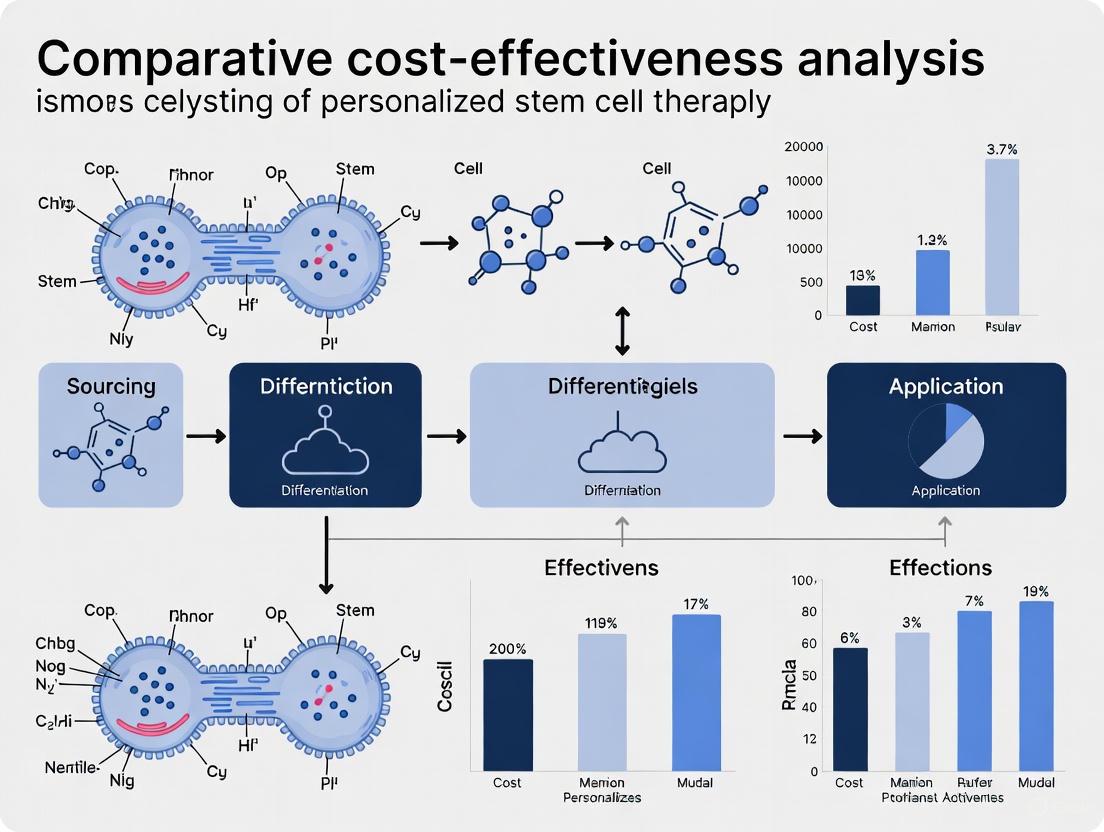
This article provides a detailed cost-effectiveness analysis of personalized stem cell therapies, tailored for researchers, scientists, and drug development professionals.
Beyond the Price Tag: A Comprehensive Cost-Effectiveness Analysis of Personalized Stem Cell Therapies
Abstract
This article provides a detailed cost-effectiveness analysis of personalized stem cell therapies, tailored for researchers, scientists, and drug development professionals. It explores the foundational economic and scientific principles of these therapies, examines methodologies for conducting rigorous cost-effectiveness analyses, identifies key challenges and optimization strategies, and validates findings through direct comparisons with standard treatments and high-cost pharmaceuticals. The analysis synthesizes current cost data, market trends, and clinical evidence to offer a strategic framework for evaluating the long-term value and economic viability of personalized regenerative medicine.
The Economic and Scientific Basis of Personalized Stem Cell Therapies
Defining Personalized Stem Cell Therapy: From iPSCs to Autologous Transplants
Personalized stem cell therapy represents a paradigm shift in regenerative medicine, moving away from one-size-fits-all treatments toward patient-specific solutions. This approach primarily harnesses two strategic pathways: induced pluripotent stem cells (iPSCs) and autologous adult stem cell transplants. An analysis of their scientific principles, experimental protocols, and cost-effectiveness is crucial for guiding research and development decisions. The following comparison guide provides a detailed, data-driven examination of these technologies for scientists and drug development professionals.
Scientific and Clinical Definitions
Personalized stem cell therapies are defined by their source and manufacturing process:
- Induced Pluripotent Stem Cells (iPSCs): These are adult somatic cells (e.g., skin or blood cells) that have been genetically reprogrammed back to an embryonic-like pluripotent state, enabling them to differentiate into virtually any cell type in the body [1]. This technology, pioneered by Yamanaka and Takahashi, typically involves the introduction of transcription factors such as OCT4, SOX2, KLF4, and MYC (OSKM) or OCT4, SOX2, NANOG, and LIN28 [2] [1].
- Autologous Transplants: This approach involves harvesting a patient's own adult stem cells (e.g., from bone marrow or adipose tissue) and re-administering them to the same patient without genetic reprogramming [3]. The cells are typically multipotent, with a more limited differentiation capacity compared to pluripotent iPSCs.
Direct Comparative Analysis: iPSCs vs. Autologous Transplants
The table below summarizes the core characteristics of iPSC-derived therapies and autologous adult stem cell transplants, highlighting key differentiators for research and clinical application.
| Feature | iPSC-Derived Therapies | Autologous Adult Stem Cell Transplants |
|---|---|---|
| Source | Reprogrammed somatic cells (e.g., skin, blood, urinary epithelial cells) [2] [1] | Patient's own tissues (e.g., bone marrow, adipose tissue) [3] |
| Pluripotency/Multipotency | Pluripotent (can differentiate into all somatic cell types) [1] | Multipotent (limited to cell types of their tissue of origin) [3] |
| Key Reprogramming Factors | OSKM (OCT4, SOX2, KLF4, MYC) or OSKNL (OCT4, SOX2, NANOG, LIN28) [2] [1] | Not applicable |
| Immunogenicity | Autologous grafts: Minimal immune response [4]Allogeneic grafts: Can trigger immune rejection [4] | Minimal to no immune rejection (autologous source) [3] |
| Tumorigenicity Risk | Potential risk due to reprogramming factors and pluripotency [5] [1] | Lower risk [6] |
| Scalability for Manufacturing | High potential for unlimited expansion and creation of "off-the-shelf" allogeneic banks [7] | Limited by patient's own cell yield and expansion capacity [2] |
| Therapeutic Scope | Broad: Disease modeling, drug screening, cell replacement for neurological, cardiac, and ocular diseases [1] [7] | Narrower: Primarily hematopoietic reconstitution, orthopedic applications, some immunomodulation [3] [8] |
Experimental Protocols and Workflows
Protocol for Generating and Differentiating Urinary Epithelial Cell-Derived iPSCs
A 2021 study demonstrated a non-viral, mRNA-based method to generate iPSCs from urinary epithelial (UE) cells and differentiate them into mesenchymal stem/stromal cells (iMSCs) for therapeutic application [2].
Key Experimental Workflow:
- Cell Sourcing and Culture: UE cells were isolated from a 150-200 ml urine sample via centrifugation. The pellet was cultured in DMEM complete medium with 15% FBS [2].
- Non-Viral Reprogramming: At 80% confluency, UE cells were transfected with mRNA of OCT4, NANOG, SOX2, KLF4, MYC, and LIN28, along with a cocktail of miRNAs, for 10 days [2].
- iPSC Colony Characterization: Formed iPSC colonies were identified by TRA1-60 live staining and alkaline phosphatase assay. Pluripotency was confirmed by successful in vitro differentiation into cells of all three germ layers (ectoderm, endoderm, mesoderm) [2].
- Directed Differentiation into iMSCs: UE-iPSCs were differentiated into iMSCs. These iMSCs were characterized by:
- Surface Marker Expression: High expression of CD73, CD90, and CD105 confirmed via qRT-PCR and Western blot [2].
- Trilineage Differentiation Potential: Successful differentiation into osteocytes, chondrocytes, and adipocytes in vitro [2].
- Functional Assay: iMSCs demonstrated superior wound-healing properties in a migration assay compared to umbilical cord MSCs (UC-MSCs), indicating strong therapeutic potential [2].
Figure 1: Workflow for generating iMSCs from urinary epithelial cells.
Protocol for Direct Autologous and Allogeneic Transplantation
A seminal 2013 study in Stem Cell Reports directly compared autologous versus allogeneic transplantation of iPSC-derived neural cells in a non-human primate brain, providing critical data on immunogenicity [4].
Key Experimental Workflow:
- Cell Preparation: Neural cells, specifically dopaminergic neurons, were derived from a non-human primate's iPSCs (for autografts) and from a genetically non-matched donor's iPSCs (for allografts) [4].
- Transplantation: Cells were transplanted into the brain of the same animal (autograft) or a different animal (allograft) without immunosuppression [4].
- Immune Response Analysis: Histological analysis of graft sites was performed to assess immune rejection.
- Key Findings:
- Autografts: Elicited only a minimal immune response [4].
- Allografts: Caused a significant acquired immune response, characterized by activation of microglia and infiltration of T-cells (CD45+/CD3+) [4].
- Therapeutic Outcome: A higher number of dopaminergic neurons survived in the autografts compared to the allografts, underscoring the advantage of autologous iPSC-derived therapies for minimizing immune-mediated rejection [4].
Figure 2: Comparative immunogenicity of autologous vs. allogeneic iPSC grafts.
The Scientist's Toolkit: Key Research Reagents
The following table catalogues essential reagents and materials used in the featured iPSC generation and differentiation protocols, with their specific functions.
| Research Reagent / Material | Function in the Protocol |
|---|---|
| Yamanaka Factor mRNAs (OCT4, SOX2, KLF4, MYC) or OSKNL (OCT4, SOX2, NANOG, LIN28) | Core reprogramming factors to induce pluripotency in somatic cells [2] [1]. |
| miRNA Cocktail | Enhances reprogramming efficiency and replaces some transcription factors [2]. |
| Lipofectamine Transfection Agent | Facilitates the introduction of mRNA and miRNAs into the somatic cells [2]. |
| NutriStem (NS) Medium | A defined, xeno-free culture medium used for maintaining human iPSCs [2]. |
| Matrigel/iMatrix | An extracellular matrix coating providing a substrate for pluripotent stem cell attachment and growth [2]. |
| Stemdiff Definitive Endoderm Medium | A specialized medium for directed differentiation of iPSCs into endodermal lineage cells [2]. |
| Neuronal Induction Medium | A specialized medium for directed differentiation of iPSCs into neuronal cells [2]. |
| Antibodies for Characterization (e.g., TRA1-60, SSEA4, Nestin, AFP, CD73, CD90, CD105) | Used in immunofluorescence, flow cytometry, or Western blot to identify and characterize pluripotent stem cells and their differentiated progeny [2]. |
Cost and Regulatory Considerations in Research & Development
A comprehensive cost-effectiveness analysis must account for both direct R&D expenses and the regulatory pathway complexity.
| Cost & Regulatory Factor | iPSC-Derived Therapies | Autologous Adult Stem Cell Transplants |
|---|---|---|
| Therapy Cost (Approx. Range) | Generally high due to complex manufacturing; allogeneic "off-the-shelf" models aim to reduce cost per dose over time [9]. | Highly variable; $5,000 - $10,000 for a single joint injection of autologous cells [3]. |
| Key Cost Drivers | - Complex, multi-step manufacturing (reprogramming, differentiation)- Rigorous quality control for genomic stability and pluripotency- High-cost GMP-compliant reagents [7] | - Patient-specific harvesting procedures (e.g., bone marrow aspiration, liposuction)- Cell processing and expansion in a GMP facility [3] |
| Regulatory Pathway | Stringent; classified as a "biological drug" requiring an Investigational New Drug (IND) application and phased clinical trials (Phase I-III) [7] [10]. | For minimally manipulated and homologous use, regulation may be less stringent. For substantially manipulated or non-homologous use, it is regulated as a biological drug [10]. |
| Clinical Trial Scale | Large scale; over 115 global clinical trials with PSC-derived products as of 2024, targeting ophthalmology, neurology, and oncology [7]. | Common for approved therapies like bone marrow transplantation; widely used in orthopedic and sports medicine clinics. |
The choice between iPSC-based and direct autologous transplant strategies is not a simple binary but depends on the therapeutic target, required cell type, and development timeline. iPSC-based therapies offer unparalleled scalability and a broad therapeutic scope but face higher initial R&D costs and a more complex regulatory pathway. In contrast, autologous adult stem cell transplants provide a faster, potentially lower-cost pathway for specific applications with minimal immunogenicity concerns, though they are limited by cell source and scalability.
Future research will focus on overcoming the limitations of both approaches. For iPSCs, this includes enhancing reprogramming safety, reducing manufacturing costs, and standardizing differentiation protocols. The field is also advancing toward allogeneic iPSC banks with matched HLA haplotypes to mitigate immune rejection while preserving the "off-the-shelf" advantage [7]. As manufacturing innovations and regulatory frameworks mature, personalized stem cell therapies are poised to transition from research tools and niche applications to mainstream treatments for a host of currently incurable diseases.
The global stem cell therapy market represents a revolutionary frontier in regenerative medicine, characterized by rapid growth and significant technological advancement. Forecasts indicate the market is on a strong expansion trajectory, with projections estimating its value will grow from approximately USD 16.04 billion to USD 18.65 billion in 2024 to reach between USD 54.45 billion and USD 78.39 billion by 2032-2034, exhibiting a compound annual growth rate (CAGR) of 13% to 22.8% [11] [12] [13]. This growth is primarily fueled by the rising demand for regenerative medicine solutions, the increasing prevalence of chronic and degenerative diseases, and substantial advancements in stem cell research and manufacturing technologies. The market's expansion is further supported by growing acceptance among healthcare providers and patients, increasing investment from both public and private sectors, and supportive government initiatives aimed at accelerating the development of innovative therapeutic solutions [11] [12] [13].
Parallel to the broader stem cell market, the personalized cell therapy market is exhibiting even more dynamic growth. This specialized segment was valued at approximately USD 30.19 billion in 2024 and is projected to surge to around USD 235.65 billion by 2034, achieving a remarkable CAGR of 22.81% [14]. This accelerated growth underscores a fundamental shift in therapeutic development toward personalized treatment approaches that leverage a patient's own cellular material to create highly tailored interventions, offering the potential for improved efficacy and reduced immunological complications compared to traditional one-size-fits-all treatments [14].
Market Segmentation and Comparative Analysis
By Product Type
The stem cell therapy market is segmented by product type, with adult stem cells (ASCs) and induced pluripotent stem cells (iPSCs) representing the dominant and fastest-growing categories, respectively.
Adult Stem Cells (ASCs): This segment held the largest market share, accounting for approximately 86% of the market in 2024 [11]. The dominance of ASCs is attributed to their strong safety profile, ethical acceptability, and established clinical track record, particularly in applications involving hematopoietic stem cell transplantation and mesenchymal stem cell therapies [5] [13]. Their use in autologous therapies significantly reduces the risk of immune rejection, and they demonstrate a lower tendency for tumor formation compared to pluripotent stem cells [13].
Induced Pluripotent Stem Cells (iPSCs): The iPSCs segment is expected to grow at the most significant CAGR during the forecast period [11] [13]. These cells, generated by reprogramming adult somatic cells, offer the pluripotency of embryonic stem cells without the associated ethical concerns [5] [15]. Their unique ability to differentiate into virtually any cell type, combined with their utility in creating patient-specific disease models and personalized therapies, positions them as a cornerstone for the next generation of regenerative treatments [5] [13].
Table 1: Stem Cell Therapy Market Size Projections from Various Sources
| Source / Base Year | Market Size (Base Year) | Projected Market Size (Target Year) | CAGR | Key Highlights |
|---|---|---|---|---|
| Biospace [11](Base: 2024) | USD 16.04 billion | USD 54.45 billion (2034) | 13% | Adult stem cells held 86% market share in 2024. |
| Coherent Market Insights [12](Base: 2025) | USD 18.61 billion | USD 78.39 billion (2032) | 22.8% | North America held 44.2% market share in 2025. |
| Nova One Advisor [13](Base: 2024) | USD 18.65 billion | USD 64.84 billion (2034) | 13.27% | Autologous therapy dominated in 2024. |
| Personalized Cell Therapy Market [14](Base: 2024) | USD 30.19 billion | USD 235.65 billion (2034) | 22.81% | Focuses specifically on personalized therapies. |
By Therapy Type
The division between autologous and allogeneic therapies represents a critical strategic consideration for therapy developers, with each approach presenting distinct advantages and challenges.
Autologous Stem Cell Therapy: This segment, which involves using a patient's own cells, dominated the market in terms of revenue share in 2024 and is projected to experience the highest growth rate [11] [13]. Its dominance stems from superior safety profile and compatibility, as the use of self-derived cells minimizes the risk of immune rejection and eliminates the need for immunosuppressive drugs [13] [16]. This personalized approach also reduces the likelihood of disease transmission and other adverse immune reactions, making it a preferred option in many clinical settings [13].
Allogeneic Stem Cell Therapy: While currently holding a smaller market share than autologous therapies, the allogeneic segment is anticipated to grow at the highest CAGR in the coming years [11] [13]. Allogeneic therapies, which utilize cells from healthy donors, offer significant advantages in scalability and cost-effectiveness due to their potential for mass production as "off-the-shelf" treatments [13] [16]. This makes them particularly suitable for emergency applications and widespread clinical use. Advances in cell banking, HLA matching, and immunomodulation are progressively mitigating the historical challenges of immune rejection associated with allogeneic approaches [13].
Table 2: Comparison of Autologous vs. Allogeneic Stem Cell Therapies
| Parameter | Autologous Therapy | Allogeneic Therapy |
|---|---|---|
| Cell Source | Patient's own cells [16] | Cells from a donor (related or unrelated) [16] |
| Key Advantage | Minimal risk of immune rejection; high compatibility [13] [16] | Scalability, cost-effectiveness, and "off-the-shelf" availability [13] [16] |
| Manufacturing | Highly customized, patient-specific processes; complex logistics [16] | Standardized, large-scale batch production [16] |
| Primary Challenge | High cost, lengthy vein-to-vein time, and variable starting cell quality [16] | Risk of immune complications (e.g., GvHD) and need for donor matching/immunosuppression [16] |
| Supply Chain | Complex, circular supply chain requiring robust logistics and cold chain [16] | More linear supply chain allowing for bulk processing and storage [16] |
By Application, End-user, and Region
Application: The regenerative medicine segment led the market, accounting for a dominant 93.02% share in 2024 [11]. This underscores the primary application of stem cells in repairing, replacing, or regenerating damaged tissues and organs. Meanwhile, the drug discovery and development segment is expected to grow at the highest CAGR, highlighting the increasing utility of stem cells, particularly iPSCs, in creating sophisticated disease models for pharmaceutical testing [11] [5].
End-user: Hospitals were the leading end-users of stem cell therapies, capturing over one-third of the market share in 2025 [12]. This reflects their role as primary centers for administering advanced therapies. However, research institutes are poised to experience the most significant growth rate, driven by escalating R&D activities and increasing numbers of clinical trials [11] [12].
Region: North America maintained a dominant position in the global market, accounting for 55% of the market share in 2024 [11]. This leadership is attributed to a highly developed healthcare infrastructure, substantial R&D funding, supportive regulatory frameworks, and the presence of leading pharmaceutical and biotechnology companies [11] [14]. Conversely, the Asia-Pacific region is anticipated to emerge as the fastest-growing market, fueled by increasing healthcare investments, a rapidly expanding biotechnology sector, rising prevalence of chronic diseases, and growing government support for regenerative medicine [11] [12] [14].
Key Growth Drivers and Investment Trends
Primary Market Drivers
- Rising Prevalence of Chronic Diseases: The global increase in chronic conditions such as cancer, neurological disorders (e.g., Parkinson's disease), cardiovascular diseases, and diabetes is a fundamental driver. These conditions often have limited treatment options, creating a significant demand for innovative therapeutic solutions like stem cell therapy [12] [5] [14].
- Increasing Investments in R&D: Substantial funding from governments, private investors, and biopharmaceutical companies is accelerating the development of novel stem cell-based therapies. These investments support advanced technologies, improve manufacturing processes, and enhance the overall understanding of stem cell biology [11] [12] [13].
- Technological Advancements: Continuous innovation is a hallmark of this field. Key advancements include the development of iPSC technology, CRISPR-Cas9 gene editing for precise genetic modifications, 3D bioprinting for tissue engineering, and automation in bioprocessing, all of which enhance the therapeutic potential and manufacturing scalability of stem cell products [11] [12] [5].
- Growing Acceptance and Regulatory Evolution: As clinical evidence of the safety and efficacy of stem cell therapies accumulates, acceptance among healthcare providers and patients is rising. Concurrently, regulatory agencies like the FDA and EMA are refining their guidelines to streamline approval pathways while ensuring patient safety, which is crucial for market growth [12] [13].
Emerging Trends Shaping the Future
- Integration of Artificial Intelligence (AI): AI is transforming the stem cell therapy market by accelerating research, optimizing manufacturing, and personalizing treatments. AI algorithms assist in identifying optimal stem cell candidates, predicting patient responses, and streamlining data analysis in clinical trials, thereby reducing development time and costs [12] [13].
- Focus on Personalized and Targeted Therapies: The shift toward personalized medicine is a defining trend. Stem cells, particularly through autologous approaches and iPSCs, enable the development of customized therapies tailored to individual patient profiles, thereby improving treatment outcomes [12] [17] [14].
- Advancements in Manufacturing and Automation: The integration of automated bioreactors and AI-driven quality control systems is making stem cell production more efficient, scalable, and consistent. These technologies reduce contamination risks and help meet stringent regulatory standards, enhancing commercial viability [13].
- Expansion into New Therapeutic Areas: While stem cell research continues in established areas like neurology and orthopedics, its applications are broadening to include cosmetic and aesthetic procedures, such as skin rejuvenation and hair restoration, opening new market segments [13].
Experimental and Clinical Workflows in Stem Cell Therapy
The translation of stem cell research from the laboratory to the clinic involves a multi-stage process encompassing cell sourcing, manipulation, and rigorous validation. The following workflow diagram outlines the core pathways for developing autologous and allogeneic stem cell therapies.
Diagram 1: Stem Cell Therapy Development Workflow. This diagram contrasts the customized process for Autologous therapies with the scalable, off-the-shelf process for Allogeneic therapies, converging at pre-clinical validation and clinical development stages.
Key Methodologies and Signaling Pathways
The therapeutic efficacy of stem cells, particularly Mesenchymal Stem Cells (MSCs), is largely attributed to their secretome—the bioactive molecules they release. These molecules mediate complex interactions with host cells. The following diagram illustrates the key signaling pathways involved in MSC-mediated tissue repair.
Diagram 2: Key Signaling Pathways in MSC-Mediated Repair. This diagram shows how the Mesenchymal Stem Cell (MSC) secretome acts through specific signaling molecules to drive distinct therapeutic effects such as immunomodulation and angiogenesis [18].
The Scientist's Toolkit: Essential Research Reagents and Materials
The advancement of stem cell research and therapy is facilitated by a suite of specialized reagents and tools. The following table details key materials essential for experimental work in this field.
Table 3: Essential Research Reagent Solutions for Stem Cell Therapy Development
| Research Reagent / Material | Function and Application in Research |
|---|---|
| Reprogramming Factors (Oct3/4, Sox2, Klf4, c-Myc) | Used for generating induced pluripotent stem cells (iPSCs) from adult somatic cells (e.g., fibroblasts). These transcription factors are typically delivered via viral vectors (e.g., lentivirus) or non-integrating methods like Sendai virus or episomal plasmids [5] [15]. |
| CRISPR-Cas9 System | A genome editing tool used to introduce precise genetic modifications in stem cells. Applications include correcting disease-causing mutations in patient-specific iPSCs, knocking in reporter genes, or studying gene function in disease models [5] [15]. |
| Mesenchymal Stem Cell (MSC) Culture Media | Specialized, serum-free or xeno-free media formulations supplemented with growth factors (e.g., FGF-2) to support the expansion and maintenance of MSCs while preserving their differentiation potential and immunomodulatory properties [18]. |
| Cytokines & Growth Factors | Proteins such as VEGF (for endothelial differentiation), BDNF (for neuronal differentiation), and BMPs (for osteogenic differentiation) are used in specific combinations to direct the differentiation of pluripotent stem cells into target cell lineages [18] [5]. |
| Flow Cytometry Antibodies | Fluorescently-labeled antibodies against cell surface markers (e.g., CD34, CD45, CD73, CD90, CD105 for MSCs; SSEA-4, TRA-1-60 for pluripotent stem cells) are critical for identifying, characterizing, and sorting specific cell populations [18]. |
| 3D Culture Matrices (e.g., Matrigel, Synthetic Hydrogels) | Provide a three-dimensional scaffold that mimics the in vivo extracellular matrix (ECM). Essential for organoid formation and for promoting complex tissue-specific differentiation and morphogenesis that cannot be achieved in 2D cultures [5] [15]. |
Challenges and Future Prospects
Despite the promising growth, the stem cell therapy market faces several significant challenges. High development and manufacturing costs associated with complex, personalized production processes can limit patient accessibility and impose financial burdens on healthcare systems [12] [14]. Stringent and evolving regulatory landscapes require navigating lengthy approval processes that can vary across regions, potentially slowing down commercialization [11] [13]. Furthermore, ethical considerations, particularly surrounding the use of embryonic stem cells (ESCs), though partially mitigated by iPSCs, continue to spark debate and influence public perception and policy [11] [15].
Looking forward, the market is poised for continued evolution. Key future directions include the deeper integration of precision medicine principles to tailor therapies to individual patient genetics and disease characteristics [17] [5]. The development of standardized protocols by international bodies like the International Society for Stem Cell Research (ISSCR) will be crucial for ensuring consistency, safety, and regulatory compliance across the industry [13]. Finally, the synergy between bioengineering, gene editing, and advanced biomanufacturing is expected to unlock new possibilities for engineering complex tissues and organs, further solidifying the role of stem cell therapies in the future of medicine [5].
For researchers and drug development professionals, understanding the cost structure of personalized stem cell therapies is paramount for guiding sustainable research and development (R&D) and future commercialization strategies. Personalized cell therapy represents a paradigm shift from traditional "one-size-fits-all" treatments towards interventions tailored to an individual's genetic profile, lifestyle, and specific disease characteristics [19]. This approach often utilizes patient-specific cell lines, such as induced pluripotent stem cells (iPSCs), which demonstrate significantly higher engraftment rates but also introduce substantial complexity and cost into the production pipeline [19].
The global market context underscores the field's rapid growth and economic significance. The personalized cell therapy market is projected to expand from USD 30.19 billion in 2024 to approximately USD 235.65 billion by 2034, reflecting a compound annual growth rate (CAGR) of 22.81% [14]. Similarly, the broader stem cell therapy market is expected to grow from USD 18.61 billion in 2025 to USD 78.39 billion by 2032, driven by rising demand for regenerative medicine and the increasing prevalence of chronic diseases [12]. Despite this promising growth, the high cost of these therapies remains a significant barrier, necessitating a detailed analysis of their price components to ensure that innovative treatments can eventually reach patients in a cost-effective manner [14].
Comparative Cost Analysis of Stem Cell Therapies
The cost of stem cell therapies varies dramatically, influenced by factors such as the level of personalization, the condition being treated, the source of the cells, and geographic location. A detailed comparison provides valuable insights for resource allocation and R&D planning.
Cost by Medical Condition
Treating different diseases incurs distinct costs, primarily due to variations in cell type, required cell dosage, and treatment protocol complexity. The table below summarizes the cost ranges for selected conditions based on current market data.
Table 1: Stem Cell Therapy Cost Ranges by Medical Condition
| Medical Condition | Cost Range (USD) | Key Cost-Influencing Factors |
|---|---|---|
| Orthopedic Conditions (e.g., Knee osteoarthritis) | $5,000 - $10,000 [20] [9] | Lower cell dosage; localized injection; often autologous cells from adipose tissue or bone marrow. |
| Spinal Conditions (e.g., Back pain) | $5,000 - $20,000 [20] [21] | Complexity of injection site (e.g., into discs); often requires image guidance. |
| Autoimmune & Neurological Disorders (e.g., MS, ALS) | $20,000 - Over $50,000 [9] [21] | High cell dosage for systemic IV administration; complex processing and cultivation. |
| Cardiovascular Diseases (e.g., Heart failure) | $20,000 - $50,000 [21] | Require high-potency cells; complex delivery mechanisms to target heart tissue. |
| Vision Loss | Starts around $20,000 [20] | Highly specialized surgical delivery; requires high-precision cell types. |
Cost by Type of Stem Cell and Personalization Approach
The source of stem cells and the degree of treatment personalization are primary drivers of cost. Autologous therapies (using the patient's own cells) and allogeneic therapies (using donor cells) have different cost structures.
Table 2: Cost Breakdown by Stem Cell Source and Therapy Type
| Stem Cell / Therapy Type | Description | Average Cost Range (USD) | Rationale for Cost |
|---|---|---|---|
| Platelet-Rich Plasma (PRP) | Concentration of patient's own platelets; not a true stem cell therapy. | ~$4,000 per injection [9] | Minimal processing; no cell expansion; same-day procedure. |
| Adipose or Bone Marrow (Autologous) | Stem cells harvested from the patient's own fat or bone marrow. | $5,000 - $15,000 [21] | Involves harvesting procedure; minimal manipulation in some cases; no rejection risk. |
| Allogeneic Umbilical Cord Tissue | Donor-derived cells from Wharton's Jelly; not culturally expanded. | Lower end of $5,000-$50,000 spectrum [9] | "Off-the-shelf" product; requires donor screening and cell banking. |
| Allogeneic Culture-Expanded Cells | Donor-derived cells that are multiplied in a lab (e.g., MSCs). | $15,000 - $30,000 [9] | Requires expensive GMP facilities, rigorous quality control, and validation. |
| Personalized iPSC-Based Therapy | Patient-specific cells reprogrammed to pluripotent state, then differentiated. | Expected to be highest ($50,000+) [19] | Extremely complex, multi-step process; lengthy timeline; extensive quality control and genetic testing. |
Geographical Cost Variations
The location of the treatment facility significantly impacts the final price due to differences in regulatory landscapes, overhead costs, and local economic factors. For instance, treatments in the United States and United Kingdom are typically at the higher end of the cost spectrum, whereas countries like Serbia, Mexico, and Thailand may offer similar therapies at a more affordable price [21]. This variation is crucial for global clinical trial planning and market access strategies.
Analyzing the Core Cost Drivers in Personalized Therapies
The premium associated with personalized stem cell therapies can be attributed to several interconnected components that add layers of complexity beyond standard manufacturing.
Research and Development Costs
Personalized therapies are inherently at the forefront of science, requiring massive initial investment in basic and translational research. This includes the cost of identifying new targets, developing efficient reprogramming and gene-editing protocols (e.g., using CRISPR-Cas9), and conducting extensive pre-clinical studies [12] [19].
Cell Sourcing and Manufacturing Complexity
This is one of the most significant cost centers. The process involves:
- Cell Acquisition: Sourcing patient-specific cells (e.g., fibroblasts) via biopsy.
- Reprogramming: Converting somatic cells into iPSCs using viral vectors or other methods.
- Genetic Manipulation: Utilizing technologies like CRISPR to correct mutations or enhance therapeutic properties [19].
- Cell Expansion and Differentiation: Growing billions of cells in state-of-the-art Good Manufacturing Practice (GMP) facilities and guiding them to become specific cell types (e.g., dopamine neurons or cardiomyocytes) [18]. This process requires expensive reagents, growth factors, and highly skilled personnel.
- Quality Control (QC) and Safety Testing: A rigorous battery of tests is mandatory, including sterility, mycoplasma, endotoxin testing, karyotyping to check for chromosomal abnormalities, and potency assays to confirm therapeutic function [19]. This comprehensive QC is a major cost driver but is non-negotiable for regulatory approval and patient safety.
Regulatory and Administrative Costs
Navigating the regulatory pathway for personalized therapies is complex and expensive. The U.S. Food and Drug Administration (FDA) and the European Medicines Agency (EMA) have established stringent guidelines for cell and gene therapy products, requiring extensive documentation and long-term patient follow-up data [20] [19]. Compliance with these regulations demands significant investment in regulatory affairs expertise and administrative processes.
Clinical Delivery and Patient Management
The actual administration of the therapy can be costly, especially for complex conditions. This includes the surgical or catheter-based delivery of cells to specific organs (e.g., the brain or heart), which requires specialized equipment and highly trained medical teams [21]. Furthermore, personalized therapy often involves comprehensive patient monitoring and immunosuppression management over the long term.
Methodologies for Cost-Effectiveness Analysis in Research
For researchers evaluating the economic viability of new therapies, robust methodological frameworks are essential. Economic evaluations in this field are evolving from simple cost analyses to more sophisticated models that capture long-term value.
Standard Economic Evaluation Models
The gold standard for assessing cost-effectiveness is the cost-utility analysis (CUA), which uses a decision-analytic model to compare a new therapy against the standard of care. The outcome is typically expressed as an Incremental Cost-Effectiveness Ratio (ICER), calculated as the difference in cost between the interventions divided by the difference in their health effects, measured in Quality-Adjusted Life Years (QALYs) gained [22]. A systematic review of economic evaluations for neurological diseases found that all identified studies used this model, reporting meaningful cost savings in base-case scenarios for stroke, Parkinson's disease, and multiple sclerosis [22].
Key Inputs and Assumptions in Modeling
Building an accurate model requires reliable data inputs, which can be a challenge in a nascent field:
- Clinical Efficacy Data: Sourced from Phase II/III clinical trials. For many personalized therapies, long-term efficacy data is still limited, requiring researchers to make projections [22] [19].
- Cost Data: Includes direct medical costs (therapy administration, hospitalization, follow-up), direct non-medical costs (travel), and indirect costs (productivity losses) [22].
- Health State Utilities: Values representing patient quality of life in different disease states, used to calculate QALYs. These are often gathered from the published literature or previous trials.
Handling Uncertainty
Given the uncertainty in early-stage clinical and cost data, sensitivity analyses are a critical component of the methodology. Probabilistic sensitivity analysis (PSA) is used to quantify decision uncertainty by running the model multiple times with different input values drawn from probability distributions [22]. This helps determine how robust the cost-effectiveness results are to variations in key parameters.
The following diagram illustrates the standard workflow for conducting a cost-effectiveness analysis of a personalized stem cell therapy, highlighting the iterative process of model building, data input, and uncertainty testing.
Cost-Effectiveness Analysis Workflow
The Researcher's Toolkit: Essential Reagents and Materials
The development and production of personalized stem cell therapies rely on a suite of specialized reagents, equipment, and computational tools. The following table details key solutions essential for research and development in this field.
Table 3: Key Research Reagent Solutions for Personalized Stem Cell Therapy Development
| Category | Item / Technology | Function in R&D |
|---|---|---|
| Cell Culture & Manipulation | Reprogramming Factors (e.g., Oct4, Sox2, Klf4, c-Myc) | Essential for generating induced pluripotent stem cells (iPSCs) from patient somatic cells. |
| GMP-grade Culture Media & Growth Factors | Supports the expansion and maintenance of stem cells under defined, clinical-grade conditions. | |
| CRISPR-Cas9 Gene Editing Systems | Allows for precise correction of disease-causing mutations in patient-derived iPSCs. | |
| Analytical & QC Tools | Flow Cytometry Systems | Characterizes cell surface markers to verify cell type and purity (e.g., CD73+, CD90+, CD105+ for MSCs). |
| Karyotyping & Genetic Analysis Kits | Detects chromosomal abnormalities that may arise during cell culture, ensuring genomic stability. | |
| Mycoplasma & Endotoxin Detection Kits | Critical for ensuring the final cell product is free from microbial contamination. | |
| Advanced Technologies | 3D Bioprinting Systems | Enables the fabrication of complex, patient-specific tissue constructs for transplantation. |
| Organoid Culture Kits | Facilitates the creation of "mini-organs" from patient cells for disease modeling and drug screening. | |
| AI-Powered Data Analysis Software | Analyzes complex genomic and clinical data to optimize treatment protocols and predict outcomes. |
The analysis of cost drivers reveals that the high price of personalized stem cell therapies is intrinsically linked to their sophisticated and patient-specific nature. The major components—R&D, complex manufacturing, rigorous quality control, and demanding regulatory compliance—create a cost structure fundamentally different from that of conventional pharmaceuticals or even non-personalized cell therapies.
For researchers and drug development professionals, the path forward involves a dual focus: advancing scientific innovation while simultaneously pioneering new models for cost reduction and economic evaluation. Promising strategies include the adoption of automated and closed-system bioreactors to scale up manufacturing, the development of more efficient reprogramming and gene-editing techniques, and the implementation of advanced analytics to streamline clinical trial design [12] [19]. Furthermore, as clinical evidence matures, economic models will become more robust, helping to demonstrate the long-term value of these therapies to healthcare systems, potentially justifying their initial high cost through reduced lifetime healthcare utilization, improved productivity, and superior patient outcomes [22] [19]. Continued collaboration between scientists, clinicians, economists, and regulators is essential to ensure that the transformative promise of personalized stem cell therapy can be realized in a clinically effective and economically sustainable manner.
Stem cell therapy represents a revolutionary frontier in modern medicine, offering unprecedented potential to address a wide range of debilitating diseases and injuries by harnessing the unique properties of stem cells for regeneration and specialized differentiation [5]. The field has evolved dramatically from foundational work in the late 19th century to recent breakthroughs including embryonic stem cell (ESC) isolation and the discovery of induced pluripotent stem cells (iPSCs) [5]. As of 2025, the clinical landscape has reached significant milestones, with over 115 global clinical trials involving 83 distinct pluripotent stem cell (PSC)-derived products targeting indications in ophthalmology, neurology, and oncology, and more than 1,200 patients dosed with over 10¹¹ cells without significant safety concerns [7]. This comprehensive analysis examines the clinical applications, efficacy evidence, and research methodologies underpinning stem cell therapeutics, providing researchers and drug development professionals with critical insights for comparative cost-effectiveness analysis of personalized stem cell therapies.
Stem Cell Types and Characteristics
Stem cells utilized in therapeutic applications encompass several distinct types, each with unique characteristics, advantages, and limitations. Understanding these fundamental categories is essential for evaluating their appropriate clinical applications.
Table: Comparison of Major Stem Cell Types for Therapeutic Applications
| Stem Cell Type | Key Sources | Differentiation Potential | Key Advantages | Major Limitations | Primary Therapeutic Applications |
|---|---|---|---|---|---|
| Embryonic Stem Cells (ESCs) | Inner cell mass of blastocysts [5] | Pluripotent - can differentiate into any human body cell [5] | High self-renewal capacity; Broad differentiation potential [5] | Ethical concerns; Tumorigenicity risk; Immunological rejection [5] [15] | Disease modeling; Drug testing; Tissue regeneration [5] |
| Adult Stem Cells (ASCs) | Bone marrow, adipose tissue, blood, skin, skeletal muscle [5] | Multipotent - restricted to specific cell lineages [5] | Avoids ethical issues; Reduced tumorigenicity; Crucial for tissue homeostasis [5] [15] | Limited differentiation capability; Quantity challenges [5] | Bone marrow transplantation; Tissue-specific regeneration; Degenerative diseases [5] |
| Induced Pluripotent Stem Cells (iPSCs) | Genetically reprogrammed somatic cells [5] [15] | Pluripotent - can become any cell type [15] | Avoids embryo destruction; Patient-specific therapies; Reduced immune rejection [15] | Genetic instability risk; Tumor formation potential; Inefficient generation [15] | Personalized medicine; Disease modeling; Drug screening [15] |
| Mesenchymal Stem Cells (MSCs) | Bone marrow, adipose tissue, umbilical cord [8] [23] | Multipotent - mesodermal lineages (bone, cartilage, fat) [23] | Immunomodulatory properties; Tissue regeneration; Anti-inflammatory effects [8] [23] | Variable potency based on source; Donor-dependent variability [8] | Autoimmune conditions; Orthopedic injuries; Graft-versus-host disease [7] [8] |
| Perinatal Stem Cells | Amniotic fluid, placenta, umbilical cord [5] | Multipotent - restricted differentiation [5] | Immunologically naive; High proliferation capacity; Avoids ethical issues [5] | Limited cell numbers; Standardization challenges [5] | Ongoing research across multiple applications [5] |
Clinical Applications and Efficacy Evidence
Approved Therapies and Clinical Trial Landscape
The stem cell therapeutic landscape has evolved from experimental research to regulated clinical applications, with several FDA-approved products and an expanding clinical trial pipeline.
Table: FDA-Approved Stem Cell Therapies (2023-2025)
| Product Name | Approval Date | Cell Type | Indication | Key Efficacy Data | Clinical Significance |
|---|---|---|---|---|---|
| Omisirge (omidubicel-onlv) | April 17, 2023 [7] | Cord blood-derived hematopoietic progenitor cells [7] | Hematologic malignancies (patients 12-65) undergoing cord blood transplantation [7] | Accelerates neutrophil recovery; Reduces infection risk after myeloablative conditioning [7] | First nicotinamide-modified stem cell graft from umbilical cord blood [7] |
| Lyfgenia (lovotibeglogene autotemcel) | December 8, 2023 [7] | Autologous cell-based gene therapy [7] | Sickle cell disease (age ≥12) with history of vaso-occlusive events [7] | 88% achieved complete resolution of vaso-occlusive events (6-18 months post-treatment) [7] | One-time treatment modifying patient's own hematopoietic stem cells [7] |
| Ryoncil (remestemcel-L) | December 18, 2024 [7] | Allogeneic bone marrow-derived MSCs [7] | Pediatric steroid-refractory acute graft versus host disease (SR-aGVHD) [7] | Modulates immune response; Mitigates inflammation associated with SR-aGVHD [7] | First MSC therapy approval; Addresses life-threatening condition [7] |
The clinical trial landscape for pluripotent stem cells has expanded significantly, with ophthalmology, central nervous system disorders, and oncology emerging as leading therapeutic areas [7]. The immune-privileged status of the eye and straightforward assessment methods have made ophthalmology a prominent target, with conditions like retinitis pigmentosa and cone-rod dystrophy being investigated in Phase I/IIa trials [7]. CNS applications are advancing as delivery and differentiation protocols improve, though challenges remain in durability, tumorigenicity controls, and immunosuppression management [7].
Efficacy Outcomes Across Medical Specialties
Orthopedic Applications
Stem cell therapy for orthopedic conditions typically represents the lower cost range of treatments ($5,000-$8,000) and has demonstrated promising efficacy for conditions including knee osteoarthritis, rotator cuff tendonitis, tennis elbow, and cartilage defects [24] [9]. These treatments often utilize mesenchymal stem cells derived from bone marrow or adipose tissue, with site-specific injections facilitating targeted repair [9].
Neurological Disorders
Therapeutic applications for neurological conditions represent some of the more complex and higher-cost treatments ($20,000-$50,000) [21]. Parkinson's disease therapies using iPSC-derived dopaminergic neural progenitor cells have entered Phase I trials, building on evidence that stem cells can replace damaged brain cells and support recovery processes following neural injury [7] [23]. Similarly, applications for ALS and spinal cord injuries are advancing through clinical development, with several iPSC-based therapies receiving FDA IND clearance in June 2025 [7].
Autoimmune and Inflammatory Conditions
Mesenchymal stem cells have demonstrated particular promise in modulating immune responses and reducing systemic inflammation [8]. Preliminary data from clinics specializing in MSC therapies report approximately 87.5% of patients experience sustained improvement in their conditions within three months of treatment [23]. These improvements span increased stamina, enhanced cognitive functions, and reduced inflammatory symptoms [23]. The anti-inflammatory properties of MSCs are mediated through secretion of anti-inflammatory cytokines and suppression of key immune cells, making them particularly valuable for conditions like rheumatoid arthritis, Crohn's disease, and multiple sclerosis [8].
Hematological Malignities
Stem cell transplantation for hematological disorders represents the most established application, with success rates of 60-70% for certain blood cancers [23]. Allogeneic hematopoietic stem cell transplantation continues to be a life-saving intervention for conditions like leukemia and multiple myeloma, reinstating functional blood and immune cell populations in patients with hematopoietic disorders [5].
Experimental Protocols and Research Methodologies
Stem Cell Isolation and Characterization
Researchers employ standardized protocols for stem cell isolation based on source material. For ESCs, microsurgery or antibody-mediated targeting remains the primary method for isolating inner cell mass from blastocysts [5]. ASC isolation typically involves density gradient centrifugation or enzymatic digestion of source tissues (bone marrow, adipose) followed by fluorescence-activated cell sorting (FACS) or magnetic-activated cell sorting (MACS) using specific surface markers [5]. iPSC generation requires reprogramming somatic cells through introduction of transcription factors (Oct3/4, Sox2, Klf4, c-Myc) using viral vectors or non-integrative methods [15].
Characterization protocols include:
- Pluripotency assessment: Immunocytochemistry for markers like Oct4, Sox2, Nanog
- Differentiation potential: Embryoid body formation and directed differentiation assays
- Karyotyping: Regular chromosomal analysis to ensure genetic stability
- Sterility testing: Mycoplasma detection and microbial contamination screening
Preclinical Evaluation Models
Animal models remain essential for evaluating therapeutic efficacy and safety before clinical translation. Commonly employed models include:
- Immunodeficient mice: For assessing tumorigenicity and cell survival post-transplantation
- Disease-specific models: Genetically modified animals replicating human disease pathologies
- Non-human primates: For neurological and ophthalmological applications requiring similar anatomy
Recent advances in 3D organoid systems have provided more physiologically relevant platforms for researching medication reactions, disease progression, and tissue formation [15]. These self-organizing structures derived from stem cells offer superior disease modeling capabilities compared to traditional 2D cultures.
Clinical Trial Design Considerations
Regulatory-approved stem cell therapies typically progress through structured Phase I-III trials, sometimes supported by expedited FDA designations like regenerative medicine advanced therapy (RMAT) and Fast Track [7]. Success measurement incorporates both quantitative and qualitative measures, including:
- Clinical observations and imaging studies (MRI, CT scans)
- Laboratory biomarkers (e.g., reduction in inflammatory markers IL-6 and TNF-α)
- Patient-reported outcomes (symptoms, quality of life, physical functioning)
- Long-term follow-up for durability and safety monitoring [23]
Therapeutic Development Workflow
Research Reagent Solutions and Essential Materials
Table: Essential Research Reagents for Stem Cell Investigations
| Reagent Category | Specific Examples | Research Applications | Key Functions |
|---|---|---|---|
| Reprogramming Factors | Oct3/4, Sox2, Klf4, c-Myc [15] | iPSC generation | Reprogram somatic cells to pluripotent state |
| Cell Culture Media | mTeSR1, StemFlex, DMEM/F12 | Stem cell maintenance | Provide essential nutrients for cell growth |
| Differentiation Kits | Cardiomyocyte, Neural, Osteocyte kits | Directed differentiation | Induce lineage-specific specialization |
| Surface Markers | CD34, CD45, CD73, CD90, CD105 [5] | Cell characterization | Identify and isolate specific stem cell populations |
| Gene Editing Tools | CRISPR-Cas9 systems [5] [15] | Genetic modification | Precise genome editing; Disease modeling |
| Extracellular Matrices | Matrigel, Laminin, Vitronectin | Cell culture substrates | Provide structural support; Mimic native environment |
| Cytokines/Growth Factors | FGF-2, BMP-4, EGF, SCF | Cell signaling | Regulate proliferation and differentiation |
| Analytical Kits | Viability, Apoptosis, Metabolic assays | Functional assessment | Evaluate cell health and functionality |
Mechanisms of Action and Signaling Pathways
Stem cell therapeutics exert their effects through multiple interconnected mechanisms that vary based on cell type and application.
Mesenchymal Stem Cell Mechanisms
MSCs demonstrate particular therapeutic versatility through diverse action mechanisms [8] [23]:
- Paracrine signaling: Secretion of bioactive molecules that modulate local cellular environments
- Immunomodulation: Suppression of T-cell proliferation and inhibition of pro-inflammatory cytokine production
- Trophic support: Production of growth factors supporting tissue repair and angiogenesis
- Mitochondrial transfer: Direct donation of mitochondria to damaged cells
- Cell differentiation: Direct differentiation into specific tissue cell types
These mechanisms collectively contribute to the observed clinical effects, including reduced systemic inflammation, tissue regeneration, and functional recovery [8] [23]. The homing capacity of MSCs to inflamed tissues enables targeted therapeutic effects while minimizing off-target consequences.
MSC Therapeutic Mechanisms
Pluripotent Stem Cell Differentiation Pathways
PSCs, including ESCs and iPSCs, follow specific developmental pathways during differentiation toward target cell types. Key signaling pathways include:
- WNT/β-catenin signaling: Regulates self-renewal and lineage specification
- TGF-β/BMP signaling: Controls mesodermal and ectodermal patterning
- FGF signaling: Promotes proliferation and survival
- Notch signaling: Mediates cell fate decisions through lateral inhibition
Understanding these pathways enables researchers to develop precise differentiation protocols generating specific cell populations for therapeutic applications, such as dopaminergic neurons for Parkinson's disease or retinal pigment epithelial cells for macular degeneration [7] [15].
The therapeutic promise of stem cell applications continues to expand, with future directions focusing on precision medicine integration, immune modulation strategies, advancements in gene-editing technologies, and synergies with bioengineering [5]. The field faces ongoing challenges including tumorigenicity risks, immunological rejection, and the need for precise manipulation of stem cell behavior [5]. Additionally, manufacturing scale-up, quality control standardization, and cost reduction remain critical hurdles for widespread clinical implementation [15].
The encouraging safety profile of iPSC-based clinical trials to date, with no class-wide safety concerns observed across over 1,200 treated patients, provides a solid foundation for continued therapeutic development [7]. As manufacturing techniques advance and automation improves stem cell culturing, costs are projected to decrease by as much as 40% over the next five years, potentially enhancing accessibility [25]. The continuing evolution of stem cell research promises to further transform regenerative medicine, offering new hope for patients with conditions currently considered untreatable through conventional medical approaches.
Regulatory Frameworks and Their Impact on Development Costs
The global regulatory landscape for stem cell therapies is complex and fragmented, directly influencing the pace of innovation and the financial viability of developing new treatments. Regulatory frameworks are established to ensure patient safety and treatment efficacy but vary significantly in their stringency and approach across different countries [26]. These differences create distinct environments for research, clinical trials, and market authorization, which in turn have a profound impact on development timelines and associated costs [27]. For researchers, scientists, and drug development professionals, understanding this interplay is crucial for strategic planning and resource allocation in the field of personalized stem cell therapies.
Regulatory systems are typically structured in three tiers: legislation enacted by a parliament or congress (superior law), regulations adopted by the executive branch, and "soft law" guidelines from regulatory entities [26]. While the first two are legally binding "hard law," the latter provides practical, granular guidance for development and manufacturing. The most significant regulatory differences for Advanced Therapy Medicinal Products (ATMPs), including stem cell therapies, often lie in the interpretation of guidelines and the case-by-case adjudication by competent authorities [26]. This analysis compares the regulatory frameworks and their cost implications in key regions leading in stem cell research: the United States, European Union, Japan, and South Korea.
Comparative Analysis of Global Regulatory Frameworks
Table 1: Comparison of Key Regulatory Frameworks for Stem Cell Therapies
| Country/Region | Key Regulatory Body | Primary Legislation/Guidance | Key Designations/Pathways | Oversight Model for Clinical Trials |
|---|---|---|---|---|
| United States | Food and Drug Administration (FDA) | 21st Century Cures Act; Public Health Service Act; 21 CFR Part 1271 [27] [28] | Regenerative Medicine Advanced Therapy (RMAT); Minimally Manipulated (Section 361) vs. More than Minimal Manipulation (Section 351) [28] [27] | Prior notification model; Accelerated Approval permitted [26] |
| European Union | European Medicines Agency (EMA) | Regulation (EC) No 1394/2007; Directive 2009/120/EC [27] | Advanced Therapy Medicinal Products (ATMPs); Committee for Advanced Therapies (CAT) [27] | Prior authorization model; mandatory centralized marketing authorization for ATMPs [26] [27] |
| Japan | Ministry of Health, Labour and Welfare (MHLW) | Act on the Safety of Regenerative Medicine; Pharmaceuticals, Medical Devices and Other Therapeutic Products Act (PMD Act) [26] | Conditional/Time-Limited Authorization; Two-track system (medical practice vs. product) [26] | Flexible; prior consultation and review [26] |
| South Korea | Ministry of Food and Drug Safety (MFDS) | Pharmaceutical Affairs Act; Guidelines on Review and Authorization of Biological Products [26] [27] | Expedited review pathways for innovative products [26] | Balances rigor with innovation; prior authorization [26] |
The regulatory approaches of these regions reflect different priorities in balancing safety, ethics, and innovation. The United States employs a more progressive and flexible framework, particularly with the introduction of the RMAT designation, which aims to expedite the development and review of promising regenerative medicine products [27]. The FDA's "prior notification" model for clinical trials, as opposed to a strict "prior authorization" model, allows for a faster initiation of clinical studies [26]. This flexibility can significantly reduce early-stage development timelines and costs.
In contrast, the European Union maintains one of the most rigorous regulatory environments [26]. Its framework, centered on the ATMP regulation, requires a manufacturing license before initiating clinical trials and employs a mandatory prior authorization model [26] [27]. The requirement for a centralized marketing authorization, while ensuring uniform standards, adds a layer of regulatory scrutiny that can prolong development and increase costs before a product can enter the EU market.
Japan has pioneered a distinctive two-track system that separates the regulation of regenerative medicine procedures (under the Act on the Safety of Regenerative Medicine) from the approval of regenerative medicine products (under the PMD Act) [26]. This system allows for "Conditional/Time-Limited Authorization," enabling the commercial use of a product based on preliminary evidence of safety and efficacy while more data is collected [26]. This pathway can dramatically reduce the time and cost to initial market access, fostering a more dynamic innovation ecosystem.
South Korea and other countries like Canada and the United Kingdom have developed frameworks that often incorporate elements from both the US and EU models, seeking to ensure safety without stifling innovation [26] [27]. South Korea, in particular, has established a balanced approach, leading to a growing presence in the stem cell therapy market [26].
Impact of Regulatory Pathways on Development Costs and Timelines
The choice of regulatory pathway directly influences the overall development cost-effectiveness of a stem cell therapy. These costs are multifaceted, encompassing not just direct R&D expenses but also the significant financial impact of development timelines and the probability of successful market entry.
Analysis of Cost Drivers and Regulatory Dependencies
Table 2: Impact of Regulatory Stringency on Key Development Cost Factors
| Cost Factor | High-Stringency Environment (e.g., EU) | Balanced/Flexible Environment (e.g., USA, Japan) |
|---|---|---|
| Pre-clinical Testing | Extensive and mandated requirements can increase upfront costs [26]. | Risk-proportionate approach; can reduce initial burden for lower-risk products [28]. |
| Clinical Trial Start-Up | Lengthy prior authorization process delays trial initiation, increasing fixed costs [26]. | Faster initiation (e.g., prior notification) reduces pre-trial operational costs [26]. |
| Manufacturing | Requires a manufacturing license prior to clinical trials, a major capital investment [26]. | No mandatory pre-approval license for investigational products; GMP compliance is still required [26]. |
| Time to Market | Slower, centralized authorization process delays revenue generation [26]. | Expedited pathways (RMAT, Conditional Approval) accelerate market access, improving ROI [26] [27]. |
| Overall Financial Risk | Higher initial costs and longer timelines increase the financial risk for developers [26]. | Faster, more adaptive pathways can de-risk development, attracting more investment [26]. |
The data indicates that stringent regulatory environments like the EU's are associated with higher upfront costs and longer development cycles [26]. The requirement for a manufacturing license before clinical trials and a mandatory prior authorization model creates significant financial barriers to entry. Conversely, flexible frameworks, such as those in the US and Japan, utilize expedited pathways and conditional approvals to lower initial hurdles. This can make development more cost-effective, particularly for small and medium-sized enterprises and academic spin-offs, by enabling earlier market entry and revenue generation to offset R&D expenses.
The Regenerative Medicine Advanced Therapy (RMAT) designation in the US is a prime example of a policy designed to improve cost-effectiveness. It allows for closer FDA-sponsor collaboration and the use of potentially smaller or more adaptive trial designs, which can reduce the immense costs of large-scale Phase 3 trials [28] [27]. Similarly, Japan's conditional approval system allows products to reach the market while confirming efficacy in post-market studies, a strategy that can significantly improve the net present value of a development project.
Cost-Benefit Considerations for Personalized vs. Allogeneic Therapies
The regulatory cost structure also varies significantly between autologous (personalized) and allogeneic (off-the-shelf) therapies. Autologous therapies, using a patient's own cells, often face fewer regulatory hurdles related to immunogenicity and long-term safety, potentially simplifying and reducing the cost of preclinical and clinical testing [13]. However, their personalized nature introduces extreme complexities and costs in manufacturing, logistics, and quality control, as each batch is for a single patient.
Allogeneic therapies, derived from donor cells, benefit from economies of scale and the potential for standardized, off-the-shelf production, which can lower the per-dose cost of goods [13]. However, they typically face a more rigorous regulatory pathway due to concerns about immune rejection, potential for disease transmission, and the need for more extensive safety data, including long-term tumorigenicity studies [26]. This translates into higher upfront R&D costs. The development of standardized protocols for both types of therapies, as encouraged by organizations like the International Society for Stem Cell Research (ISSCR), is a key factor in reducing variability, building regulatory trust, and ultimately controlling costs [29] [13].
Essential Research Reagent Solutions for Regulatory Compliance
The path to regulatory approval demands rigorous and reproducible science. The following toolkit details essential reagents and materials, the quality and consistency of which are critical for generating the robust data required by regulatory agencies.
Table 3: Key Research Reagent Solutions for Stem Cell Therapy Development
| Reagent/Material | Function in Development & Manufacturing | Regulatory/GMP Consideration |
|---|---|---|
| Cell Culture Media & Supplements | Supports the growth, maintenance, and differentiation of stem cells. | Defined, xeno-free formulations are strongly preferred to reduce batch-to-batch variability and avoid introduction of animal-derived pathogens [26]. |
| Cell Separation & Characterization Kits | Isulates specific cell populations (e.g., MSCs, HSCs) and characterizes cell identity and purity using markers (e.g., CD markers). | Essential for demonstrating product consistency and purity. Methods must be validated for potency and identity testing as per FDA/EMA guidelines [28] [27]. |
| Reprogramming Factors | Used to generate induced pluripotent stem cells (iPSCs) from somatic cells (e.g., using Sendai virus, episomal vectors). | The choice of non-integrating methods is critical for safety. The manufacturing process must be free of residual vectors to meet safety standards [26]. |
| Gene Editing Tools (e.g., CRISPR-Cas9) | Used for genetic modification in personalized therapies or to create "universal" allogeneic cell lines. | Rigorous off-target analysis and comprehensive product characterization are required by regulators to assess potential risks like genotoxicity [29] [26]. |
| Matrices & Scaffolds | Provides 3D structure for tissue-engineered products; used in combined ATMPs. | If combined with cells, the final product is regulated as a combined ATMP, requiring additional device biocompatibility and safety data [27]. |
| Quality Control (QC) Assays | Tests for sterility, mycoplasma, endotoxin, viability, and potency. | Mandatory for lot release. Must follow compendial methods (e.g., USP, EP) and be detailed in the Chemistry, Manufacturing, and Controls (CMC) section of regulatory submissions [28] [27]. |
Experimental Workflow for a Preclinical Safety and Efficacy Study
Generating compelling preclinical data is a critical and costly step required for regulatory approval to begin clinical trials. The following diagram and explanation outline a standardized workflow for assessing a stem cell therapy, reflecting the logical sequence demanded by regulatory agencies to ensure patient safety.
Preclinical to Regulatory Submission Workflow
Detailed Methodologies for Key Experiments
Step 1: In Vitro Characterization
- Objective: To confirm the identity, purity, viability, and biological activity (potency) of the stem cell product. This is a fundamental CMC requirement [27].
- Protocol: Identity is confirmed via flow cytometry for specific surface markers (e.g., CD73, CD90, CD105 for MSCs) and the absence of hematopoietic markers. Purity is assessed by quantifying the percentage of target cells. Karyotypic analysis is performed to ensure genetic stability after long-term culture. A critical potency assay is developed to measure a specific biological function linked to the therapeutic mechanism (e.g., immunomodulation in a co-culture assay or differentiation potential into target lineages). This assay must be quantitative and reproducible.
Step 2: In Vivo Efficacy and Tumorigenicity Study
- Objective: To provide proof-of-concept for therapeutic efficacy and assess the potential risk of tumor formation, a major concern for pluripotent stem cell-derived products [26].
- Protocol: An appropriate animal model of the human disease (e.g., a rodent model of spinal cord injury or myocardial infarction) is used. Animals are randomized into treatment and control groups. The cell product is administered, and functional/structural outcomes are monitored over a predefined period using behavioral scoring, imaging (e.g., MRI), and histology. A parallel tumorigenicity study involves implanting cells into immunodeficient mice (e.g., NSG mice) and monitoring for teratoma or tumor formation over an extended period (e.g., 12-16 weeks) with periodic palpation and imaging.
Step 3: Toxicology and Biodistribution Study
- Objective: To identify any adverse effects and determine the migration and persistence of cells in the body after administration [28] [26].
- Protocol: A Good Laboratory Practice (GLP)-compliant study is typically required for a clinical trial application. The stem cell product is administered at a high dose (and often a multiple of the intended human dose) to a relevant animal species. Control animals receive a placebo. Animals are closely monitored for clinical signs. A subset is euthanized at predetermined time points for full necropsy and histopathological examination of major organs. Biodistribution is tracked using methods like qPCR for human-specific DNA sequences or in vivo imaging if cells are labeled, to determine if cells have migrated to non-target tissues.
The data from these integrated studies are analyzed and compiled into a comprehensive report that forms the core of the preclinical section of an Investigational New Drug (IND) or Clinical Trial Application (CTA) submission to regulators like the FDA or EMA [27].
The regulatory framework a developer operates within is not merely a set of hurdles to overcome but a fundamental variable that shapes the entire development strategy and its associated cost structure. As the field of personalized stem cell therapies matures, regulatory science is also evolving. There is a growing recognition of the need for international regulatory convergence to harmonize standards and reduce the duplication of efforts across regions, which would significantly lower development costs and accelerate global access [26]. Furthermore, the development of standardized protocols and the integration of advanced analytics and AI in manufacturing and quality control are promising trends that can enhance consistency, build regulatory confidence, and ultimately improve the cost-effectiveness of bringing these transformative therapies from the laboratory to the patient [13].
Frameworks for Evaluating Cost-Effectiveness in Clinical and Economic Contexts
In the evolving field of regenerative medicine, robust frameworks for evaluating the value of new therapies are essential. For personalized stem cell therapies, which often involve complex, patient-specific production and administration, demonstrating value through standardized metrics is critical for research validation, regulatory approval, and reimbursement. Health Technology Assessment (HTA) is the systematic process used to inform these decisions, and it relies heavily on specific quantitative measures. The cornerstone metrics in this process are the Quality-Adjusted Life Year (QALY) and the Incremental Cost-Effectiveness Ratio (ICER). These metrics, along with a suite of long-term outcome measures, provide a structured approach to compare the clinical and economic value of innovative therapies against existing standards of care. This guide provides a comparative analysis of these metrics, detailing their calculation, application, and the experimental protocols essential for generating rigorous, comparable data in stem cell research.
Defining and Calculating the Key Metrics
Quality-Adjusted Life Year (QALY)
The Quality-Adjusted Life Year (QALY) is a generic measure of disease burden that combines the quantity and quality of life lived into a single index. It is the academic standard for quantifying the health benefits of medical interventions, allowing for comparisons across different disease areas and treatments [30].
- Concept and Purpose: The QALY provides a common currency to assess the value for money of a medical intervention. If a treatment helps patients live longer or improves their quality of life, these benefits are comprehensively summed up to calculate the additional QALYs the treatment provides [30].
Calculation Methodology: The fundamental calculation for total QALYs accrued over a period is the sum of the product of the time spent in a health state and the utility weight (quality-of-life weight) of that health state.
Total QALYs = Σ (Time in Health State × Utility Weight)The incremental QALY gain from a new therapy is the difference in QALYs between the new therapy and the comparator.
Incremental QALYs = QALYs (New Therapy) - QALYs (Comparator)Utility Weights: Central to the QALY is the utility weight, a value that typically ranges from 0 (representing a health state equivalent to death) to 1 (representing a state of "perfect health") [31]. These weights are derived from preference-based instruments.
- Common Utility Assessment Instruments:
- EQ-5D: A widely used, standardized instrument developed by EuroQol. It describes health in five dimensions: mobility, self-care, usual activities, pain/discomfort, and anxiety/depression. The U.S. version (EQ-5D-5L) is the preferred instrument for the Institute for Clinical and Economic Review (ICER) [32] [31].
- PROMIS-Preference (PROPr): An alternative instrument gaining traction in the U.S., funded by the National Institutes of Health. It uses 29 questions across seven domains, including physical function, anxiety, and fatigue [31].
Incremental Cost-Effectiveness Ratio (ICER)
The Incremental Cost-Effectiveness Ratio (ICER) is the primary metric used in cost-effectiveness analysis. It represents the price per unit of health benefit gained when comparing a new therapy to an existing alternative.
- Concept and Purpose: The ICER indicates how much additional money must be spent to gain one additional unit of health outcome (e.g., one QALY) by using the new therapy instead of the standard of care. This helps policymakers and payers determine if the added health benefit justifies the added cost [30] [32].
Calculation Methodology: The ICER is calculated by dividing the difference in total costs between the new therapy and the comparator by the difference in their total health effects (typically measured in QALYs).
ICER = [Total Cost (New Therapy) - Total Cost (Comparator)] / [Total QALYs (New Therapy) - Total QALYs (Comparator)]Interpretation and Thresholds: The resulting ICER value is compared against a cost-effectiveness threshold.
- ICER's Benchmarks: In the U.S., ICER often uses a threshold range of $100,000 to $150,000 per QALY gained to determine a treatment's value, with results also presented up to $200,000 per QALY [32].
- NICE's Benchmarks: In England and Wales, the National Institute for Health and Care Excellence (NICE) typically uses a threshold range of £20,000-£30,000 per QALY gained [32].
Table 1: Key Differences in QALY and ICER Application Between HTA Organizations
| Feature | ICER (United States) | NICE (England and Wales) |
|---|---|---|
| Organization Type | Independent, non-governmental, non-profit [32] | Governmental, public body [32] |
| Primary Perspective | Health system perspective [32] | Health and social care perspective [32] |
| Preferred Utility Instrument | EQ-5D (U.S. tariff) [32] [31] | EQ-5D (U.K. tariff) [32] |
| Cost-Effectiveness Threshold | $100,000 - $150,000 per QALY [32] | £20,000 - £30,000 per QALY [32] |
| Discount Rate (Costs & QALYs) | 3% [32] | 3.5% [32] |
Ethical Considerations and Alternative Metrics
The use of QALYs is subject to ongoing debate, particularly concerning their potential to undervalue treatments for people with disabilities or chronic conditions.
- Critiques of the QALY: Critics argue that the mathematical assumptions of QALYs may be flawed, including the definition of "perfect health," the linearity of the utility scale, and the potential for QALYs to devalue life extension for individuals with lower baseline quality of life [31]. This has led to proposed legislation, such as the U.S. H.R. 485, to end the use of QALYs in federal programs [31].
- The Equal Value of Life Years (evLY): In response to these concerns, ICER also calculates the evLY. This metric measures quality of life equally for everyone during periods of life extension, ensuring that a year of life gained is valued equally regardless of a patient's pre-existing disability or illness [30].
Experimental Protocols for Metric Calculation
Generating reliable data for QALYs and ICERs requires carefully designed and executed experiments, typically within the framework of clinical trials and subsequent economic modeling.
Protocol for Health-Related Quality of Life (HRQoL) Data Collection
The collection of utility weights is a foundational step for QALY calculation.
- Objective: To prospectively collect robust, validated HRQoL data from patients in clinical trials for personalized stem cell therapies.
- Materials and Reagents:
- Validated HRQoL Questionnaires: Standardized forms such as the EQ-5D-5L or PROMIS-29.
- Electronic Data Capture (EDC) System: A secure, compliant system (e.g., REDCap) for efficient and accurate data collection.
- Clinical Trial Protocol: A protocol that pre-specifies the timing and frequency of HRQoL assessments.
- Methodology:
- Baseline Assessment: Administer the chosen HRQoL instrument(s) to all enrolled patients prior to the administration of the therapy (Day 0).
- Scheduled Follow-up Assessments: Re-administer the instruments at pre-defined intervals throughout the trial (e.g., at 1, 3, 6, and 12 months, and annually thereafter). The frequency should capture both short-term changes and long-term stabilization of quality of life.
- Data Management: Collect and store all data using the EDC system. Implement quality checks to ensure data completeness and accuracy.
Data Analysis:
- Utility Score Calculation: Convert the raw questionnaire responses into a utility score for each patient at each time point using the relevant country-specific scoring algorithm (e.g., U.S. tariff for EQ-5D).
QALY Calculation: For each patient, calculate the area under the curve (AUC) of utility scores over time. This is often done by connecting the utility scores at each assessment point and calculating the area of the resulting trapezoids.
Patient QALYs (Year 1) = [(U_baseline + U_1month)/2 * (1/12)] + [(U_1month + U_3months)/2 * (2/12)] + ...Group-Level Analysis: Average the individual patient QALYs within the treatment and control groups to determine mean QALYs per group for the time horizon of the analysis.
QALY Data Collection Workflow
Protocol for Cost-Effectiveness Analysis and ICER Modeling
Once clinical efficacy and cost data are available, an economic model can be developed to estimate the ICER.
- Objective: To build a decision-analytic model that estimates the long-term cost-effectiveness of a personalized stem cell therapy compared to the standard of care.
- Materials and Reagents:
- Clinical Trial Data: Patient-level data on efficacy, safety, and HRQoL.
- Resource Use Data: Data on all healthcare resources consumed (e.g., drug costs, administration, hospitalizations, management of adverse events).
- Decision-Analytic Software: Software such as TreeAge Pro or R for building and running economic models.
- Cost Databases: Sources for unit costs (e.g., Medicare fee schedules, HCUPnet DRG reimbursement rates in the U.S.; NHS reference costs in the U.K.) [32].
- Methodology:
- Model Structure Selection: Choose an appropriate model structure, such as a Markov model, to simulate the long-term progression of patients through different health states (e.g., "Progression-Free," "Progressed," "Remission," "Death").
- Parameter Input:
- Transition Probabilities: Derived from clinical trial data and extrapolated using survival models over a lifetime horizon.
- Health State Utilities: Assign utility values to each health state based on the HRQoL data collected in the trial.
- Costs: Assign direct medical costs to each health state and to one-time events (e.g., cost of stem cell therapy administration).
- Model Simulation: Run the model for a hypothetical cohort of patients (e.g., 100,000) through multiple cycles (e.g., 1-month or 1-year cycles) to estimate lifetime costs and QALYs for both the new therapy and the comparator.
- ICER Calculation: Use the model outputs of total lifetime costs and QALYs to calculate the ICER using the standard formula.
- Sensitivity Analysis:
- Purpose: To test the robustness of the model results and identify which parameters have the most influence on the ICER.
- Method: Perform a one-way sensitivity analysis, varying each key parameter (e.g., drug cost, utility values, transition probabilities) over a plausible range to see how the ICER changes. A probabilistic sensitivity analysis should also be conducted, running the model thousands of times while simultaneously varying all parameters according to their probability distributions, to generate a cost-effectiveness acceptability curve (CEAC).
Comparative Cost Data for Stem Cell Therapies
A significant challenge for personalized stem cell therapies is their high cost, which directly impacts the ICER. The table below summarizes the global cost landscape for stem cell therapies, which are often not covered by insurance as they are frequently considered investigational [20] [21].
Table 2: Global Cost Analysis of Stem Cell Therapies (2025)
| Country | Cost Range (USD) | Commonly Treated Conditions | Notes and Context |
|---|---|---|---|
| USA | $5,000 - $50,000+ [20] [25] [21] | Orthopedic injuries, neurological disorders, autoimmune diseases [25] | High costs due to advanced facilities and regulatory environment; often not insurance-covered [20] [25]. |
| UK | $5,300 - $53,000 [25] [21] | Orthopedic regeneration, autoimmune diseases [25] | Strong regulatory system; treatments largely private as NHS covers only approved trials [25] [21]. |
| Mexico | $1,500 - $30,000 [25] | Autism, arthritis, anti-aging [25] | A leading medical tourism destination with lower costs and more lenient regulations [25]. |
| India | $15,000 - $30,000 [25] | Neurologic, orthopedic, diabetes, spinal cord injuries [25] | Cost-effective care with cutting-edge labs and government-approved centers [25]. |
| Turkey | $1,000 - $25,000 [25] | Orthopedic, hair restoration, chronic diseases [25] | Affordable European destination with experienced doctors and accredited hospitals [25]. |
| Thailand | $2,300 - $25,000 [25] | Orthopedic, anti-aging, cardiovascular [25] | State-of-the-art facilities combined with luxury patient services and recovery stays [25]. |
| South Korea | $3,000 - $30,000 [25] | Anti-aging, skin regeneration, orthopedic [25] | Leader in cosmetic and aesthetic applications of stem cells in Asia [25]. |
Long-Term Outcome Measures in Stem Cell Research
Beyond QALYs and cost, assessing the long-term success of personalized stem cell therapies requires a suite of clinical and patient-reported outcome measures. These are critical for populating economic models and demonstrating sustained value.
Established Long-Term Clinical Endpoints
- Overall Survival (OS): The gold standard endpoint in many therapeutic areas, defined as the time from randomization (or treatment initiation) until death from any cause. It is a direct measure of a therapy's life-extending capability.
- Progression-Free Survival (PFS): The time from treatment initiation until disease progression or death. This is often a key endpoint in trials for chronic or progressive conditions where a therapy aims to stabilize the disease.
- Objective Response Rate (ORR) & Duration of Response (DOR): Commonly used in oncology, ORR is the proportion of patients with a predefined reduction in tumor size. DOR measures how long that response lasts, indicating the durability of the treatment effect.
- Biomarker Stability/Improvement: For degenerative diseases (e.g., neurological disorders), the stabilization or improvement of key biomarkers (e.g., specific proteins in cerebrospinal fluid, metabolic activity on PET scans) can serve as a surrogate for long-term clinical benefit [15].
Patient-Reported Outcome Measures (PROMs) and Emerging Metrics
- Patient-Reported Outcome Measures (PROMs): These are reports of health status coming directly from the patient without interpretation by a clinician. They are crucial for capturing the patient's experience of symptoms, functional status, and quality of life, which feeds directly into QALY calculations [31].
- Patient-Centered Core Impact Sets (PC-CIS): An emerging framework developed by the National Health Council. A PC-CIS is a patient-prioritized list of impacts a disease and its treatments have on a patient and their family, providing a broader, more holistic view of therapeutic value beyond traditional clinical endpoints [31].
- Durability of Effect and Treatment-Free Intervals: For cell and gene therapies, a key value proposition is the potential for a one-time, curative treatment. Measuring the durability of the therapeutic effect over many years, and any resulting treatment-free intervals (where patients no longer require chronic medication), is a critical long-term outcome [15].
The Scientist's Toolkit: Essential Reagents and Materials
Table 3: Key Research Reagent Solutions for Metric Analysis
| Item | Function in Analysis | Example Products/Tools |
|---|---|---|
| Quality of Life Instruments | To measure health state utilities for QALY calculation by capturing patient-reported data on mobility, pain, mental health, etc. | EQ-5D-5L, PROMIS-29 (PROPr) [31] |
| Economic Modeling Software | To build decision-analytic models (e.g., Markov models) for simulating long-term patient outcomes and calculating ICERs. | TreeAge Pro, R with heemod package, Microsoft Excel |
| Clinical Endpoint Adjudication Kits | Standardized kits for consistent measurement of primary clinical endpoints (e.g., MRI for tumor progression, lab kits for biomarker analysis). | ELISA Kits, PCR Assays, Radiologic Review Panels |
| Cost Databases | To assign accurate unit costs to healthcare resources (e.g., drug prices, procedure costs) used in the economic model. | U.S.: RED BOOK, SSR Health, Medicare Fee Schedules [32] |
| Electronic Data Capture (EDC) System | To securely collect, manage, and store patient-level clinical trial data, including PROMs and resource use data. | REDCap, Medidata Rave, Oracle Clinical |
The rigorous assessment of personalized stem cell therapies demands a multifaceted approach grounded in standardized metrics like the QALY and ICER. While these tools provide a powerful framework for comparative cost-effectiveness analysis, the field must also grapple with their limitations and ethical implications. The future of value assessment in this innovative space will likely involve a balanced portfolio of metrics: traditional QALYs and ICERs, supplemented with alternative measures like the evLY to address equity concerns, and enriched by patient-centered outcomes from frameworks like PC-CIS. For researchers and developers, proactively integrating the collection of HRQoL, resource use, and long-term clinical data into clinical trial protocols is not merely an academic exercise—it is a strategic imperative. This comprehensive data generation is the bedrock upon which convincing value dossiers are built, ultimately facilitating the translation of groundbreaking science into accessible and reimbursable therapies for patients.
The field of regenerative medicine is transitioning from theoretical promise to practical application, necessitating robust frameworks for evaluating its long-term economic impact. For researchers and drug development professionals, assessing the value of personalized stem cell therapies extends beyond initial treatment costs to encompass the profound economic implications of reduced dependency on conventional care. This comparative cost-effectiveness analysis examines stem cell therapies against traditional treatments by modeling their potential to alter disease progression, decrease recurring medical expenses, and transform chronic disease management. While conventional approaches often focus on symptomatic management, stem cell therapies target regenerative healing at the cellular level, potentially reducing the need for repeated interventions, long-term pharmaceutical use, and surgical procedures [33]. This analysis provides a structured methodological framework for quantifying these long-term benefits, supported by experimental data and comparative cost structures essential for strategic research investment and therapeutic development.
Comparative Cost Analysis: Stem Cell Therapies vs. Conventional Treatments
Cost Structures of Stem Cell Interventions
Stem cell therapy costs vary significantly based on treatment type, condition complexity, and cellular source. Current market analyses reveal distinct pricing tiers that reflect these technical and procedural variables.
Table 1: Cost Structure of Stem Cell Therapies (2025-2026)
| Therapy Type | Condition Examples | Price Range (USD) | Key Cost Factors |
|---|---|---|---|
| Orthopedic/Musculoskeletal | Knee osteoarthritis, joint pain, tendonitis | $5,000 - $10,000 [20] [24] | Cell source (bone marrow vs. adipose), clinic expertise, number of injections |
| Systemic/Complex Conditions | Neurodegenerative diseases, multiple sclerosis, Crohn's disease | $20,000 - $30,000+ [24] | Treatment complexity, number of required sessions, cell processing technology |
| Vision Loss Treatments | Macular degeneration | Starts around $20,000 [20] | Surgical precision, cell type, regulatory compliance |
| Platelet-Rich Plasma (PRP) | Soft tissue injuries, often used adjunctively | $500 - $2,000 [24] | Blood processing method, combination with other therapies |
These costs are predominantly out-of-pocket expenditures for patients, as insurance coverage for stem cell therapies remains limited outside established hematopoietic stem cell transplantation [20] [24]. The financial model contrasts sharply with conventional treatment pathways that typically involve ongoing insurance-coordinated payments for medications, physical therapy, and eventual surgical interventions.
Conventional Care Cost Trajectories
Traditional management of chronic conditions follows a predictable economic pattern: initial conservative care, progressing to more invasive and costly interventions as conditions advance. For degenerative joint disease, this trajectory may include:
- Initial Phase: NSAIDs, physical therapy ($500-$2,000 annually)
- Intermediate Phase: Corticosteroid injections, viscosupplementation ($1,000-$3,000 annually)
- Surgical Phase: Joint replacement surgery ($30,000-$50,000 plus rehabilitation)
The economic burden extends beyond direct medical costs to include productivity losses, caregiver expenses, and reduced quality of life metrics. Unlike the one-time investment characteristic of many stem cell interventions, conventional care typically involves continuing financial obligations throughout the disease progression timeline.
Methodological Framework for Long-Term Value Modeling
Core Modeling Principles and Parameters
Evaluating long-term value requires moving beyond simplistic cost-comparison models to incorporate multidimensional value assessment. The proposed framework integrates several critical parameters:
- Time Horizon Selection: Modeling should extend 5-10 years to capture meaningful differences in disease progression and intervention efficacy.
- Direct Medical Cost Capture: Includes all procedure costs, follow-up care, medications, and subsequent interventions.
- Indirect Cost Accounting: Incorporates productivity metrics, caregiver burden, and transportation expenses.
- Quality-Adjusted Life Year (QALY) Integration: Standardizes health outcome measurements across different intervention types.
- Discount Rate Application: Adjusts future costs and benefits to present value using standard healthcare economic discount rates (typically 3-5%).
Table 2: Key Parameters for Long-Term Value Modeling of Stem Cell Therapies
| Parameter Category | Specific Metrics | Data Sources |
|---|---|---|
| Clinical Efficacy | Patient-reported outcomes, imaging results, functional improvement | Clinical trials, registry data, meta-analyses |
| Durability of Response | Time to treatment failure, need for re-intervention | Longitudinal studies, comparative cohort analyses |
| Conventional Care Reduction | Medication use decrease, avoided procedures, reduced specialist visits | Healthcare utilization records, patient surveys |
| Safety Profile | Adverse event rates, long-term complications | Post-market surveillance, published case series |
Experimental Evidence Supporting Reduced Conventional Care
Clinical investigations demonstrate several mechanisms through which stem cell therapies potentially reduce long-term healthcare dependencies:
3.2.1 Orthopedic Applications In knee osteoarthritis treatments, stem cell therapy demonstrates potential to delay or avoid joint replacement surgery. One analysis noted that patients receiving stem cell injections for orthopedic conditions typically spent $5,000-$8,000 per treatment [24], substantially below the $30,000-$50,000 cost range for joint replacement surgery. The regenerative potential of mesenchymal stem cells (MSCs) to differentiate into chondrocytes and promote cartilage repair underlies this therapeutic approach [34]. Patients exhibiting significant improvement following stem cell intervention may avoid not only surgery but also associated costs of postoperative rehabilitation, potential complications, and extended recovery periods.
3.2.2 Neurological and Systemic Conditions For complex conditions like multiple sclerosis and neurodegenerative diseases, stem cell therapies aim to modify disease progression rather than merely manage symptoms. The higher initial costs ($20,000-$30,000+) reflect the complex manufacturing protocols and specialized administration requirements [24]. The economic value emerges through reduced hospitalizations, decreased reliance on disease-modifying drugs (which can exceed $60,000 annually for conditions like multiple sclerosis), and slowed disability progression. Mesenchymal stem cells exert therapeutic effects primarily through paracrine signaling and immunomodulation rather than direct cell replacement, releasing bioactive molecules that promote tissue repair and modulate inflammatory responses [34].
Experimental Protocols for Comparative Effectiveness Research
Preclinical Modeling of Long-Term Therapeutic Value
Robust preclinical models provide the foundation for predicting long-term value of stem cell therapies before advancing to clinical trials.
Protocol 1: Longitudinal Tracking of Disease Modification
- Objective: Quantify structural and functional improvements in disease models receiving stem cell interventions versus conventional care.
- Methodology:
- Utilize established animal models of osteoarthritis (e.g., surgically-induced instability models)
- Administer single versus multiple doses of human MSCs derived from bone marrow (BM-MSCs) or adipose tissue (AD-MSCs)
- Implement serial micro-CT and histological analyses at 2, 6, and 12-month endpoints
- Compare against control groups receiving conventional care (NSAIDs, corticosteroid injections)
- Outcome Measures: Cartilage thickness, subchondral bone remodeling, inflammatory markers, gait analysis
- Economic Correlation: Relate structural preservation to reduced need for joint replacement surgery
Protocol 2: Pharmaceutical Dependency Reduction
- Objective: Measure reduction in analgesic and anti-inflammatory medication use following stem cell intervention.
- Methodology:
- Establish chronic pain models with validated outcome measures
- Implement automated medication dispensing systems with precise usage tracking
- Compare medication consumption between stem cell-treated and control groups
- Conduct pharmacokinetic analyses to confirm maintained drug efficacy
- Outcome Measures: Daily medication dosage, breakthrough medication requirements, pain behavior scoring
- Economic Correlation: Calculate direct cost savings from reduced pharmaceutical use
Clinical Trial Design for Economic Endpoints
Incorporating economic metrics into clinical trial design generates robust data for long-term value modeling.
Protocol 3: Prospective Registry with Matched Controls
- Study Population: Patients with moderate knee osteoarthritis meeting criteria for surgical intervention
- Intervention Group: Receive MSC injection (autologous or allogeneic)
- Control Group: Patients opting for conventional management (including eventual surgery)
- Data Collection:
- Healthcare utilization tracking through electronic medical records
- Quality of life assessments (WOMAC, SF-36) at 3, 6, 12, 24 months
- Medication logs and concomitant treatments
- Productivity metrics (work days missed, presenteeism)
- Analysis: Cumulative cost comparison, cost per QALY calculation, time to surgical intervention
The following diagram illustrates the integrated experimental workflow for evaluating long-term value from preclinical models to clinical application:
Integrated Experimental Workflow for Long-Term Value Assessment
Mechanisms of Action: Scientific Basis for Reduced Conventional Care
Regenerative Versus Symptomatic Approaches
The fundamental distinction between stem cell therapies and conventional treatments lies in their mechanistic approach to disease. Conventional care typically employs symptomatic management through pharmaceuticals that modulate biochemical pathways (e.g., NSAIDs inhibiting cyclooxygenase) or surgical intervention replacing damaged structures. In contrast, stem cell therapies leverage multimodal regenerative mechanisms to address underlying pathology [33].
Mesenchymal stem cells (MSCs) demonstrate particular therapeutic promise through their tripartite mechanism of action: (1) differentiation capacity into mesodermal lineages (osteoblasts, chondrocytes, adipocytes); (2) paracrine signaling through bioactive molecule secretion; and (3) immunomodulatory functions via interaction with various immune cells [34]. These mechanisms enable a comprehensive therapeutic approach that simultaneously addresses tissue damage, inflammatory processes, and abnormal immune responses underlying many chronic conditions.
Molecular Pathways Governing Therapeutic Effects
The therapeutic benefits of MSCs are mediated through specific molecular pathways and signaling cascades:
5.2.1 Paracrine Signaling Mechanisms MSCs secrete a diverse array of bioactive molecules including growth factors, cytokines, and extracellular vesicles that play crucial roles in modulating the local cellular environment [34]. Key signaling pathways include:
- TGF-β/Smad pathway: Promotes extracellular matrix deposition and tissue repair
- PI3K/Akt pathway: Enhances cell survival and inhibits apoptosis
- NF-κB pathway: Modulates inflammatory responses
- Wnt/β-catenin pathway: Regulates progenitor cell proliferation and differentiation
5.2.2 Immunomodulatory Cross-Talk MSCs interact with various immune cells through both direct cell-cell contact and soluble factors, creating an anti-inflammatory microenvironment conducive to healing. Critical interactions include:
- T cell modulation through prostaglandin E2 and indoleamine 2,3-dioxygenase
- Macrophage polarization from pro-inflammatory M1 to anti-inflammatory M2 phenotype
- Dendritic cell maturation inhibition
- B cell proliferation and antibody production suppression
The following diagram illustrates the key signaling pathways through which mesenchymal stem cells exert their therapeutic effects:
MSC Therapeutic Mechanisms Driving Reduced Conventional Care
The Scientist's Toolkit: Essential Research Reagents and Materials
Table 3: Essential Research Reagents for Stem Cell Therapy Development
| Reagent Category | Specific Examples | Research Function | Experimental Considerations |
|---|---|---|---|
| Stem Cell Isolation & Culture | Collagenase Type II, Ficoll-Paque, MesenCult media | Tissue dissociation, cell separation, in vitro expansion | Source tissue variability, donor age effects, senescence monitoring |
| Characterization Antibodies | CD73, CD90, CD105 (positive); CD34, CD45, HLA-DR (negative) [34] | MSC phenotype verification via flow cytometry | Lot-to-lot variability, species cross-reactivity, validation requirements |
| Differentiation Reagents | Osteo: Dexamethasone, β-glycerophosphate, ascorbate-2-phosphate; Chondro: TGF-β3, insulin-transferrin-selenium; Adipo: IBMX, indomethacin, insulin [34] | Multilineage differentiation potential assessment | Optimization of concentration ratios, temporal sequencing |
| Molecular Biology Tools | qPCR primers for osteogenic (Runx2), chondrogenic (Sox9), adipogenic (PPARγ) markers | Differentiation efficiency quantification | Reference gene selection, RNA quality control, amplification efficiency |
| Animal Models | Surgically-induced osteoarthritis, chemically-induced inflammation, genetically-modified strains | In vivo therapeutic efficacy testing | Species-specific immune responses, route of administration optimization |
Modeling the long-term value of personalized stem cell therapies requires sophisticated methodology that captures both immediate therapeutic benefits and progressive reduction in conventional care dependency. The framework presented enables researchers and drug development professionals to quantify how regenerative approaches may transform chronic disease management from continuous expense models to focused intervention paradigms. As the field evolves with emerging technologies in gene editing, biomaterials, and delivery systems, these economic models will become increasingly vital for strategic resource allocation and therapeutic development prioritization. Future research should focus on validating these models through prospective long-term studies and refining cost-effectiveness thresholds specific to regenerative medicine interventions.
Autologous hematopoietic stem cell transplantation (AHSCT) represents a significant therapeutic intervention for various hematological conditions, positioned within a landscape of evolving high-cost therapies. This case study objectively compares the cost-effectiveness of AHSCT against alternative treatment modalities, including novel pharmaceutical agents and other stem cell approaches, synthesizing current clinical and economic evidence. For researchers and drug development professionals, understanding the economic profile of AHSCT is crucial within the broader context of personalized stem cell therapies. The analysis demonstrates that while AHSCT requires substantial upfront investment, it demonstrates favorable long-term cost-effectiveness profiles for specific indications compared to prolonged courses of targeted therapies, particularly in low- and middle-income countries (LMICs). This guide systematically presents comparative clinical outcomes, detailed cost structures, and methodological frameworks to inform research and development priorities and healthcare resource allocation.
The paradigm of high-cost therapies in hematology is shifting with the introduction of novel agents and advanced cellular treatments. Autologous stem cell transplantation involves harvesting a patient's own stem cells, administering high-dose chemotherapy to eradicate malignant cells, and then reinfusing the stem cells to restore hematopoiesis [35]. While its clinical efficacy is established for conditions like multiple sclerosis, lymphomas, and leukemias, its economic valuation remains complex. A comprehensive cost-effectiveness analysis must balance initial procedure costs against long-term outcomes, including relapse prevention, survival gains, and quality of life improvements. This case study frames AHSCT within comparative cost-effectiveness analysis of personalized stem cell therapies, providing drug development professionals with structured data on its value proposition relative to alternatives like disease-modifying therapies (DMTs) for autoimmune conditions and novel targeted agents like Bruton's tyrosine kinase (BTK) inhibitors for hematologic malignancies.
Comparative Clinical and Cost Data
The positioning of AHSCT requires direct comparison with both conventional and emerging therapeutic alternatives. The tables below synthesize quantitative data on clinical outcomes and costs from recent studies.
Table 1: Clinical Outcomes of AHSCT vs. Alternative Therapies
| Condition | Therapy | Study Duration | Key Efficacy Outcomes | Source |
|---|---|---|---|---|
| Relapsing-Remitting MS | AHSCT (n=144-146) | 5 years | Annualized Relapse Rate (ARR): 0.08-0.09; Higher disability improvement vs. fingolimod & natalizumab | [36] |
| Fingolimod (n=769) | 5 years | ARR: 0.20; Lower chance of disability improvement (HR: 1.70 for worsening) | [36] | |
| Natalizumab (n=730) | 5 years | ARR: 0.10; Lower chance of disability improvement (HR: 2.68) | [36] | |
| Ocrelizumab (n=343) | 3 years | ARR: 0.06; Similar relapse, worsening, and improvement to AHSCT | [36] | |
| Intermediate-risk AML | Upfront Allo-HSCT | Lifetime | Cost-effective vs. delayed HSCT; INMB: $497,100 (US) / £235,600 (UK) | [37] [38] |
| Mantle Cell Lymphoma | Auto-SCT (n=7) | 24.3 mos (median) | Median PFS: 28.7 mos; 2-year PFS: 83% | [39] |
| Ibrutinib (2-year course) | N/A | N/A | [39] |
Table 2: Cost Analysis of Stem Cell Therapies and Alternatives
| Therapy / Context | Cost (USD) | Note | Source |
|---|---|---|---|
| AHSCT (General) | \$5,000 - \$50,000+ | Wide range based on condition, cell type, and location | [9] [24] |
| AHSCT for Orthopedic | \$5,000 - \$8,000 | Typically lower cell dosage; site injections | [9] [24] |
| AHSCT for Systemic | ~\$25,000 | e.g., IV treatment for MS, autoimmune conditions | [9] |
| AHSCT (Iran) | \$51,594 | Mean total cost per patient | [40] |
| AHSCT (Japan, r/r DLBCL) | \$79,052 | Mean healthcare cost per patient per year | [41] |
| AHSCT (Paraguay, Lymphoma) | \$26,000 | Cost for auto-SCT with BEAM protocol | [39] |
| Ibrutinib (Paraguay, 2-yr) | \$204,400 | 4 capsules/day; 6x more expensive than auto-SCT for MCL | [39] |
| Allo-HSCT (US, AML) | ~\$1,012,100 | High cost includes inpatient care and supportive therapy | [37] |
Detailed Methodologies of Cited Studies
Comparative Effectiveness in Multiple Sclerosis (Kalincik et al.)
This study emulated pairwise trials to compare AHSCT against fingolimod, natalizumab, and ocrelizumab in highly active relapsing-remitting MS [36].
- Study Design: A comparative effectiveness study utilizing data from 6 specialist MS centers with AHSCT programs and the international MSBase registry between 2006-2021.
- Participants: 4915 patients, with 167 treated with AHSCT, 2558 with fingolimod, 1490 with natalizumab, and 700 with ocrelizumab.
- Matching Protocol: Patients were matched on a propensity score derived from clinical and demographic characteristics to ensure cohort comparability. Key prematch characteristics included age, disease duration, EDSS score (range 3.5-3.9), and relapse frequency in the preceding year (0.77-0.86).
- Outcome Measures: Primary outcomes were annualized relapse rates (ARR), freedom from relapses, and 6-month confirmed Expanded Disability Status Scale (EDSS) score worsening and improvement.
- Statistical Analysis: Pairwise-censored groups were compared using hazard ratios (HR) for disability outcomes. Analyses were conducted over 5-year periods for all comparators except ocrelizumab (3-year follow-up).
Cost-Effectiveness in Acute Myeloid Leukemia (Ghimire et al.)
This study evaluated the health-economic implications of upfront versus delayed allogeneic HSCT for intermediate-risk AML, providing a robust modeling framework [37] [38].
- Model Design: A partitioned survival analysis model was developed using derived survival data from the ETAL-1 trial, which randomized patients to upfront HSCT or consolidation chemotherapy with delayed HSCT upon relapse.
- Data Inputs:
- Clinical Data: Probabilities of salvage treatments, utilities (Quality-Adjusted Life Years - QALYs), and costs were sourced from the ETAL-1 trial and published literature.
- Cost Inputs: Included direct healthcare costs (inpatient, outpatient, emergency department, pharmacy, supportive care). HSCT costs incorporated expenses for graft-versus-host disease (GVHD) management.
- Survival Extrapolation: Beyond the trial period, mortality rates combined age-specific general population mortality with disease-specific or transplant-specific excess risk.
- Analysis Framework:
- Primary Outcome: Incremental net monetary benefit (INMB) from US and UK healthcare perspectives.
- Willingness-to-Pay (WTP) Thresholds: $50,000-$150,000 per QALY (US) and £20,000-£30,000 per QALY (UK).
- Sensitivity Analyses: Both deterministic and probabilistic sensitivity analyses were performed to test result robustness.
Cost Analysis in Mantle Cell Lymphoma (Paraguay Study)
This real-world analysis compared the cost of auto-SCT versus ibrutinib therapy, highlighting economic decision-making in LMICs [39].
- Data Source: Patient and cost data were collected from the Central Hospital of the Instituto de Prevision Social (IPS) for patients treated between January 2021 and December 2023.
- Costing Method: The cost of auto-SCT was determined based on actual hospital expenditures for the procedure using the BEAM conditioning regimen. The cost of ibrutinib was obtained from publicly available hospital purchase data.
- Clinical Outcomes: Overall survival (OS) and progression-free survival (PFS) were estimated using the Kaplan-Meier method.
- Comparative Cost Calculation: The total cost of a 2-year ibrutinib course (4 capsules/day at $70/capsule) was calculated and compared to the single cost of auto-SCT.
Visualizing the Cost-Effectiveness Decision Pathway
The following diagram illustrates the key decision factors and outcomes in evaluating AHSCT's cost-effectiveness, integrating elements from the cited studies.
The Scientist's Toolkit: Research Reagent Solutions
Table 3: Essential Research Materials for Stem Cell Therapy Studies
| Research Reagent / Material | Function in Experimental Context |
|---|---|
| Haematopoietic Stem Cells (HSCs) | The primary therapeutic agent; autologous (patient-derived) or allogeneic (donor-derived) for reconstitution. |
| Lymphoablative Conditioning Regimens | High-dose chemotherapy (e.g., BEAM) to ablate the existing immune system pre-transplant [35]. |
| Growth Factors (G-CSF, GM-CSF) | Mobilize stem cells from bone marrow to peripheral blood for collection via apheresis [35]. |
| Quality Control Assays | Flow cytometry (CD34+ cell count), viability assays, and sterility tests to ensure cell product quality and safety. |
| Cryopreservation Solutions | Contain cryoprotectants like DMSO for long-term storage of harvested stem cells before reinfusion. |
| Immunosuppressive Agents | Drugs like cyclosporine or methotrexate to prevent graft-versus-host disease in allogeneic transplants. |
| Salvage Therapy Regimens | Chemotherapy/agents used for disease relapse post-transplant (e.g., HIC, LIC, FLT3 inhibitors) [37]. |
| Patient-Reported Outcome (PRO) Measures | Validated questionnaires and utility measures (e.g., EQ-5D) to calculate Quality-Adjusted Life Years (QALYs) [37]. |
This case study demonstrates that the cost-effectiveness of AHSCT is highly context-dependent, varying significantly by disease indication, healthcare system, and the available alternatives. For aggressive relapsing-remitting MS, AHSCT shows superior long-term effectiveness for preventing relapses and improving disability compared to several high-efficacy DMTs, justifying its cost [36] [35]. In oncology, such as intermediate-risk AML, upfront allogeneic HSCT is a cost-effective strategy despite high initial costs, as it is "dominant" (less costly and more effective) in most analyses compared to delayed transplantation [37] [38]. The most striking economic advantage for AHSCT appears in LMIC settings for conditions like mantle cell lymphoma, where it is substantially more cost-effective than continuous novel therapies like ibrutinib [39]. For drug development professionals, these findings underscore that while novel pharmaceuticals offer therapeutic advances, one-time procedural interventions like AHSCT can provide significant economic value, reinforcing the need for a personalized, indication-specific approach to healthcare resource allocation and R&D investment.
Incorporating Quality of Life and Functional Improvement into Economic Models
The economic evaluation of stem cell therapies is undergoing a critical paradigm shift, moving beyond traditional survival metrics to incorporate quality of life (QoL) and functional improvement data. This evolution responds to a fundamental challenge in healthcare economic analysis: accurately valuing interventions that may produce modest survival gains but substantial improvements in how patients live. For regenerative medicines like stem cell therapies, which increasingly target chronic degenerative conditions, capturing these multidimensional outcomes becomes essential for demonstrating value to researchers, drug developers, and healthcare policymakers. The integration of patient-reported outcomes and functional metrics into economic models enables more nuanced cost-effectiveness analyses that reflect the true therapeutic value of emerging stem cell applications across diverse clinical contexts, from cardiac repair to neurological regeneration.
Economic evaluations must now reconcile traditional cost-per-QALY (quality-adjusted life year) frameworks with novel methodologies capable of capturing often-subtle yet clinically meaningful improvements in function and well-being. As stem cell therapies progress toward personalized treatment paradigms, the economic models supporting their adoption require similar sophistication—incorporating predictive analytics, dynamic modeling, and patient-specific outcome trajectories to fully characterize their value proposition in comparative effectiveness research.
Comparative Clinical and Economic Data: Stem Cell vs. Conventional Therapies
Quantitative Outcomes Across Indications
Table 1: Clinical and Quality of Life Outcomes: Stem Cell Therapy vs. Conventional Treatment
| Metric | Stem Cell Therapy Group | Conventional Therapy Group | Clinical Context |
|---|---|---|---|
| Left Ventricular Ejection Fraction (LVEF) Improvement | Baseline: 30.2%±8.4%6-month: 43.6%±9.7%(p<0.01) [42] | Baseline: 32.5%±7.9%6-month: 36.8%±8.1%(p=0.04) [42] | Heart Disease [42] |
| Exercise Capacity (6-Minute Walk Test) | 80-meter improvement [42] | 30-meter improvement(p<0.001) [42] | Heart Disease [42] |
| Quality of Life (MLHFQ Score Reduction) | 56.2±15.3 to 38.5±12.1(p<0.001) [42] | 54.7±14.5 to 48.6±13.2(p=0.02) [42] | Heart Disease (Minnesota Living with Heart Failure Questionnaire) [42] |
| Hospitalization Rate | 10.6% [42] | 27.1%(p=0.03) [42] | Heart Disease [42] |
| Bowel Function (Wexner Score) | Significant reduction(P<0.001) [43] | Not Reported | Spinal Cord Injury (Lower=Better) [43] |
| Neurogenic Bowel Dysfunction Score | Significant reduction(P<0.05) [43] | Not Reported | Spinal Cord Injury (Lower=Better) [43] |
| Bladder-Related QoL (King's Health Questionnaire) | Significant improvement across domains(P<0.001) [43] | Not Reported | Spinal Cord Injury [43] |
| Overall QoL (WHOQOL-BREF) | Significant improvement in physical, psychological, social, environmental domains(P<0.05) [43] | Not Reported | Spinal Cord Injury [43] |
Table 2: Economic and Treatment Parameters for Stem Cell Interventions
| Parameter | Cost Range/Condition | Contextual Factors | Source |
|---|---|---|---|
| Average Cost Range | $5,000 - $50,000 (Global)$10,000 - $20,000 (Most common for single treatment) [21] | Highly dependent on cell type, source, and condition severity | [25] [21] |
| Orthopedic Conditions | $5,000 - $10,000 [20] [21] | Knee injections typically lower cost | [20] |
| Spinal Conditions | $10,000 - $20,000 [21] | Disc injections more complex | [21] |
| Cardiac Conditions | $20,000 - $50,000 [21] | Requires more cells and specialized delivery | [21] |
| Neurological/Vision Conditions | $20,000+ [20] | Among riskiest procedures; limited supporting data | [20] |
| Insurance Coverage | Generally not covered [20] [21] | Considered investigational by most insurers | [20] |
| Treatment Sessions | Most common: >10 injections [20] | Clinics often recommend multiple sessions | [20] |
Geographic Cost Variations and Infrastructure Considerations
Table 3: International Cost Comparison for Stem Cell Therapies
| Country | Cost Range (USD) | Regulatory & Infrastructure Notes | Common Applications |
|---|---|---|---|
| United States | $5,000 - $50,000 [25] | FDA restrictions; state-of-the-art facilities | Orthopedic, neurological, anti-aging [25] |
| United Kingdom | $5,300 - $53,000 [25] | Strong regulatory system; limited NHS coverage | Orthopedic regeneration, autoimmune [25] |
| Mexico | $1,500 - $30,000 [25] | Lower costs; lenient regulations; medical tourism | Autism, arthritis, anti-aging [25] |
| India | $15,000 - $30,000 [25] | Government-approved centers; cost-effective | Neurological, orthopedic, diabetes [25] |
| Turkey | $1,000 - $25,000 [25] | Affordable; accredited hospitals; experienced doctors | Orthopedic, hair restoration, chronic diseases [25] |
| South Korea | $3,000 - $30,000 [25] | Biotechnology innovation; cosmetic applications | Anti-aging, skin regeneration, orthopedic [25] |
| Thailand | $2,300 - $25,000 [25] | Medical tourism packages with recovery stays | Orthopedic, anti-aging, cardiovascular [25] |
| Panama | $5,000 - $30,000 [25] | Internationally recognized clinics | Autoimmune, chronic diseases [25] |
Experimental Protocols and Methodologies for Outcome Assessment
Standardized Protocols for Quality of Life and Functional Measurement
Robust assessment of stem cell therapy outcomes requires standardized methodologies capable of detecting clinically meaningful changes. For cardiac applications, the prospective cohort study design implemented at Nottingham University Hospital provides a template for direct comparison between interventions. Their protocol assessed 95 patients divided into stem cell therapy (n=47) and conventional therapy (n=48) groups, measuring primary outcomes of left ventricular ejection fraction (LVEF) via echocardiography, exercise capacity through the standardized six-minute walk test, and quality of life using the Minnesota Living with Heart Failure Questionnaire (MLHFQ) at baseline and six-month intervals [42].
For neurological and spinal cord injury applications, a comprehensive battery of validated instruments is essential. The prospective study of 20 chronic spinal cord injury patients implemented the WHOQOL-BREF questionnaire to assess physical health, psychological well-being, social relationships, and environmental factors across 26 items rated on a 5-point Likert scale, with domain scores transformed to a 0-100 scale [43]. This was complemented by condition-specific tools: the Neurogenic Bowel Dysfunction Score (NBDS) evaluating 10 clinical parameters of bowel function, the Wexner Score for fecal incontinence severity, and the modified King's Health Questionnaire for bladder-related quality of life impact [43]. Assessments were conducted at baseline, 6 months, and 12 months post-treatment to capture longitudinal outcomes.
Economic Evaluation Methodologies
Advanced economic modeling for stem cell therapies should incorporate both traditional cost-utility analysis and emerging methodologies. The standard cost-utility approach measures health outcomes in quality-adjusted life years (QALYs), calculated by multiplying utility weights (typically measured by instruments like EQ-5D) by time spent in health states [44] [45]. Cost-effectiveness is then expressed through the incremental cost-effectiveness ratio (ICER), representing the additional cost per QALY gained compared to conventional therapy [44].
Modern approaches should also consider dynamic modeling that accounts for the adaptive learning of therapeutic protocols over time, in contrast to static models with fixed transition probabilities [45]. For personalized stem cell applications, machine learning techniques can predict individual outcomes and costs based on baseline characteristics, enabling more patient-specific economic evaluations [44]. From the societal perspective, analyses should incorporate productivity-adjusted life years (PALYs), which capture both health and economic productivity impacts [46].
Conceptual Framework for Economic Modeling of Stem Cell Therapies
Diagram 1: Stem Cell Therapy Economic Modeling Framework. This diagram illustrates the logical relationships between therapy inputs, multidimensional outcomes, economic metrics, and societal impact in stem cell therapy evaluation.
The Scientist's Toolkit: Essential Research Reagents and Instruments
Table 4: Key Assessment Tools and Methodologies for Stem Cell Therapy Evaluation
| Tool/Instrument | Application & Function | Key Metrics & Outputs |
|---|---|---|
| WHOQOL-BREF | Assesses multidimensional quality of life across physical, psychological, social, and environmental domains [43] | 26 items across 4 domains; scores transformed to 0-100 scale [43] |
| Minnesota Living with Heart Failure Questionnaire (MLHFQ) | Disease-specific quality of life assessment for cardiac patients [42] | 21 items measuring physical, emotional, and socioeconomic impacts; lower scores indicate better QoL [42] |
| Neurogenic Bowel Dysfunction Score (NBDS) | Evaluates bowel dysfunction severity in neurological disorders [43] | 10 clinical parameters; scores 0-47 (higher=worse dysfunction) [43] |
| Wexner Score | Assesses fecal incontinence severity [43] | 5 items; scores 0-20 (higher=worse incontinence) [43] |
| Modified King's Health Questionnaire | Measures bladder-related quality of life impact [43] | 8 domains including role limitations, social limitations, emotional status [43] |
| Six-Minute Walk Test | Objective functional capacity assessment [42] | Distance walked in six minutes; measure of functional improvement [42] |
| Echocardiography | Quantifies cardiac function improvement [42] | Left ventricular ejection fraction (LVEF) percentage [42] |
| EQ-5D | Generates utility weights for QALY calculation [44] | Health state utilities anchored at 0 (death) to 1 (perfect health) [44] |
The integration of quality of life and functional improvement data into economic models represents a methodological imperative for accurately valuing stem cell therapies. As the evidence demonstrates, these interventions often produce meaningful improvements in patient-centered outcomes that may not be fully captured by traditional survival metrics alone. The comprehensive assessment framework presented—encompassing standardized quality of life instruments, condition-specific functional measures, and advanced economic modeling techniques—provides researchers and drug development professionals with a robust methodology for comparative effectiveness research.
Future economic evaluations of personalized stem cell therapies will require even more sophisticated approaches, potentially incorporating machine learning for outcome prediction, dynamic modeling that accounts for protocol optimization over time, and integrated assessment of both health and productivity impacts. As the field advances toward increasingly targeted applications, the economic models supporting these innovations must similarly evolve to fully characterize their value proposition across clinical, humanistic, and economic dimensions.
Analyzing the Economics of Scale and Manufacturing Advancements
The field of regenerative medicine stands at a pivotal juncture, where scientific breakthroughs in personalized stem cell therapies are increasingly constrained by formidable economic challenges. The fundamental economic dilemma centers on applying traditional scale-based manufacturing principles to highly individualized treatments, creating a tension between personalization and affordability. While autologous therapies (patient-specific) offer precise biological matching and reduced rejection risks, they face significant hurdles in achieving cost-effectiveness due to their inherent individualized production process. In contrast, allogeneic therapies (donor-derived, "off-the-shelf") present opportunities for traditional scale economies but introduce challenges related to immune compatibility and broader biological standardization [47].
The manufacturing process for these advanced therapies represents a radical departure from conventional pharmaceutical production. Where traditional drugs benefit from massive standardization and scale economies, cell therapies require maintaining cellular viability, functionality, and purity throughout a complex supply chain. Each step—from cell acquisition and processing to expansion, quality control, and distribution—contributes significantly to the final cost structure [48] [47]. Understanding these economic fundamentals is essential for researchers and developers working to balance therapeutic innovation with healthcare system sustainability.
Comparative Economic Analysis of Manufacturing Approaches
Fundamental Economic Models: Autologous vs. Allogeneic Therapies
The core economic distinction in stem cell therapies lies in the fundamental manufacturing approach, which creates dramatically different cost structures and scaling implications. Autologous therapies, being patient-specific, follow a "scale-out" model where costs are largely linear—each additional patient requires a separate, complete manufacturing run. This model faces inherent limitations in achieving per-unit cost reductions through scaling. Conversely, allogeneic therapies can leverage traditional "scale-up" manufacturing, where larger batch sizes distributed to multiple patients enable significant per-dose cost reductions, more closely resembling conventional pharmaceutical economics [47].
Table 1: Economic Comparison of Autologous vs. Allogeneic Therapy Models
| Economic Characteristic | Autologous Therapies | Allogeneic Therapies |
|---|---|---|
| Manufacturing Model | Scale-out (one batch per patient) | Scale-up (one batch for multiple patients) |
| Batch Size | Single patient | Hundreds to thousands of doses |
| Cost Structure | High fixed cost per batch | Decreasing marginal cost per dose |
| Key Cost Drivers | Labor-intensive processes, complex logistics, quality control per batch | Raw materials, cell expansion, storage and distribution |
| Inventory Model | Made-to-order | Make-to-stock ("off-the-shelf") |
| Economies of Scale | Limited to process efficiencies | Significant potential through batch size expansion |
| Primary Challenges | High per-treatment cost, supply chain complexity | Immune matching, shelf life, larger upfront investment |
This economic dichotomy translates directly into manufacturing realities. A 2013 International Society for Cellular Therapy (ISCT) survey of industry members revealed that materials acquisition alone accounts for approximately 36% of overall manufacturing costs, with media specifically contributing more than 20% of Costs of Goods (COG) for 40% of respondents [47]. Additionally, facility operations and labor represent substantial cost centers, particularly for autologous therapies requiring intensive manual manipulation and stringent environmental controls.
Quantitative Cost Structures in Cell Therapy Manufacturing
Translating these economic models into quantitative cost breakdowns reveals specific financial pain points and optimization opportunities. Analysis of manufacturing data from three anonymized autologous therapies demonstrates how costs distribute across the production workflow. In manually implemented protocols conducted in Grade B cleanrooms, labor constitutes the most significant expense at approximately 34% of total COG. Materials and quality control represent additional substantial components at 25% and 23% respectively, while facility-related costs account for the remaining 18% [47].
Table 2: Detailed Cost Structure Analysis in Autologous Therapy Manufacturing
| Cost Category | Percentage of Total COG | Key Contributing Factors |
|---|---|---|
| Labor | 34% | Manual processing, extensive documentation, regulatory compliance activities |
| Materials | 25% | Cell culture media, cytokines, growth factors, single-use consumables |
| Quality Control | 23% | Sterility testing, identity/potency assays, characterization, release testing |
| Facility Operations | 18% | Cleanroom maintenance, utilities, equipment depreciation and maintenance |
These cost structures shift significantly between clinical development and commercial stages. During early-phase trials, technology transfer and process validation create substantial upfront costs, while commercial-scale manufacturing introduces different optimization pressures. The ISCT survey indicated that 64% of developers planned initial commercialization with fewer than 50,000 doses annually, with 43% targeting fewer than 10,000 doses per year—reflecting the current specialized nature of these treatments [47]. This limited scale maintains pressure on per-unit costs, particularly for autologous approaches.
Manufacturing Workflows and Technical Methodologies
Autologous Therapy Manufacturing: A Process Flow Analysis
The manufacturing journey for autologous cell therapies represents one of the most complex logistical challenges in modern medicine, requiring precise coordination across multiple stages and locations. The process begins with cell acquisition from the patient, typically through apheresis, bone marrow aspiration, or tissue biopsy, with timing often influenced by patient scheduling preferences that create operational patterns (e.g., higher procedure volumes late in the week) [47]. The collected starting material then undergoes transportation to specialized manufacturing facilities under strict temperature-controlled conditions to maintain cell viability—a particularly vulnerable phase where delays or temperature excursions can compromise the entire product.
Upon arrival at the manufacturing facility, cells undergo processing and expansion phases where they may be genetically modified (as in CAR-T therapies) or numerically expanded to achieve therapeutic doses. This stage faces significant technical challenges, as 38% of manufacturers identify cell processing as their rate-limiting manufacturing step [47]. The quality control phase involves rigorous testing for sterility, potency, identity, and purity, with 55% of products requiring cryopreservation in liquid nitrogen for storage stability [48]. Finally, the finished product is transported back to the treatment facility for reinfusion to the patient, completing the complex "vein-to-vein" chain of custody.
Figure 1: Autologous Cell Therapy Manufacturing Workflow
Experimental Protocols: Manufacturing Process Analytics
Robust analytical methodologies are essential for characterizing critical quality attributes throughout the manufacturing process. Cell viability assessment typically employs flow cytometry with dye exclusion methods (e.g., propidium iodide, 7-AAD), though值得注意的是 industry experience has revealed instances where products failing the standard 70% viability threshold still demonstrated clinical efficacy, raising questions about the predictive value of conventional viability metrics [49]. Potency assays present particular challenges, especially for non-genetically modified cell therapies, which require clearly defined critical quality attributes and potency assays to ensure product reproducibility [49].
For genetically modified therapies, vector copy number analysis using digital PCR provides precise quantification of integration events, while next-generation sequencing approaches monitor potential off-target effects in genome-edited products. The emergence of process analytical technologies (PAT) enables real-time monitoring of critical process parameters, allowing for potential intervention and process control during manufacturing [50]. These methodologies form the foundation of the Chemistry, Manufacturing, and Controls (CMC) documentation required for regulatory submissions, with approximately 25% of clinical holds for cell therapy products relating to CMC issues [49].
Technological Advancements Driving Economic Optimization
Automation and Closed Systems: Economic Impact Analysis
Automation represents perhaps the most promising approach to addressing the economic challenges of cell therapy manufacturing. Current automated systems can reduce costs by minimizing manual labor requirements, decreasing contamination risk, and improving process consistency and reproducibility [50]. By implementing robotic systems for cell processing, expansion, and harvesting, manufacturers can significantly reduce the 34% labor cost component identified in manual processes while simultaneously enhancing product quality through reduced human intervention [47] [50].
Closed automated systems offer additional economic advantages by enabling manufacturing in lower-grade cleanrooms through reduced contamination risk. Traditional manual processes require Grade B cleanrooms with Grade A biosafety cabinets, while closed systems may permit downgrading to Grade C or D environments, substantially reducing facility operational costs [50]. These systems also support more efficient facility utilization through reduced room clearance times between batches and increased production capacity within the same physical footprint—particularly valuable for autologous therapies requiring simultaneous multiple patient-specific batches.
Artificial Intelligence and Smart Manufacturing Applications
The integration of artificial intelligence, particularly agentic AI systems capable of reasoning and autonomous action, is poised to transform cell therapy manufacturing economics. In the broader manufacturing context, which includes cell therapy production, 80% of executives plan to invest 20% or more of their improvement budgets in smart manufacturing initiatives [51]. These AI-driven systems can optimize manufacturing parameters in real-time, predict product quality attributes based on process data, and autonomously adjust conditions to maintain optimal performance.
Agentic AI applications extend beyond the production suite to supply chain optimization, where AI systems can monitor potential disruptions, identify alternative suppliers, quantify financial impacts, and even initiate mitigation strategies with human approval [51]. In the aftermarket services domain, agentic systems can predict maintenance needs, autonomously order parts, schedule service, and optimize inventory—potentially creating new revenue streams with margins more than two times higher than equipment sales alone [51]. These applications demonstrate how digital technologies can address economic challenges across the entire therapy lifecycle.
Figure 2: AI and Automation Economic Benefits
Research Reagents and Critical Materials Solutions
The consistent production of high-quality cell therapies depends on rigorously characterized reagents and materials. The complex nature of biological starting materials presents significant challenges, as insufficient characterization of raw materials and their critical quality attributes contributes to manufacturing failures and clinical holds [49]. Guide RNAs for CRISPR-based therapies exemplify this challenge, where variants demonstrate significant differences in target editing efficiencies that can impact both efficacy and safety profiles [49].
Table 3: Essential Research Reagents and Materials for Cell Therapy Manufacturing
| Reagent Category | Specific Examples | Function | Critical Quality Attributes |
|---|---|---|---|
| Cell Culture Media | Serum-free media, xeno-free formulations, specialized induction media | Cell expansion, maintenance, and differentiation | Composition consistency, growth factor activity, endotoxin levels |
| Growth Factors/Cytokines | IL-2, SCF, TPO, FGF, EGF | Direct cell differentiation, expansion, and functionality | Bioactivity, purity, stability, carrier protein quality |
| Genetic Modification Tools | Lentiviral vectors, CRISPR-Cas9 components, mRNA | Introduce therapeutic genes or modify existing sequences | Vector copy number, transduction efficiency, editing accuracy |
| Cell Separation Reagents | Antibody cocktails, magnetic beads, density gradient media | Isolate target cell populations from heterogeneous mixtures | Specificity, efficiency, cell viability impact, contamination risk |
| Cryopreservation Solutions | DMSO-containing formulations, serum-free cryomedium | Long-term storage of cell products | Post-thaw viability recovery, functionality maintenance, container compatibility |
The transition to serum-free and xeno-free media formulations represents a particularly important evolution in reagent quality, though survey data indicates more than 50% of manufacturers don't fully understand the cost impact of this transition [47]. Additionally, the growing implementation of decentralized manufacturing models intensifies the need for standardized reagents across multiple production sites to ensure product consistency. As the field advances, further development of chemically-defined media and standardized reagent systems will be crucial for reducing batch-to-batch variability and associated manufacturing costs.
The economic analysis of stem cell therapy manufacturing reveals a field in transition, moving from artisan-like production toward increasingly scalable and automated processes. The fundamental tension between personalization and economies of scale continues to shape manufacturing innovation, with both autologous and allogeneic approaches evolving toward greater economic viability. Technological advancements in automation, artificial intelligence, and process analytics are steadily reducing production costs while improving product quality and consistency [51] [50].
For researchers and therapy developers, the implications are clear: economic considerations must be integrated early in therapy development rather than addressed as an afterthought. Strategic decisions regarding donor selection (autologous vs. allogeneic), manufacturing platform technologies, and quality control strategies have profound and persistent effects on ultimate therapy affordability [47]. The growing emphasis on distributed manufacturing models, standardized processes, and closed automated systems points toward a future where personalized stem cell therapies achieve both biological precision and economic accessibility—unlocking their full potential to address unmet medical needs across global healthcare systems.
Navigating Challenges and Strategic Optimization for Economic Viability
The global stem cell therapy market is on a remarkable growth trajectory, forecasted to increase from USD 16.04 billion in 2024 to USD 54.45 billion by 2034 [11]. Despite this promising expansion, the field faces a significant and persistent challenge: prohibitively high upfront costs that limit patient access and hinder widespread clinical adoption. These costs are primarily driven by complex, labor-intensive manufacturing processes that are difficult to scale, particularly for autologous therapies tailored to individual patients [52].
The core of this financial challenge lies in the inherent variability of biological starting materials and the need for meticulous manual handling throughout the production workflow. Legacy manufacturing processes, described as "complex, resource-intensive, and difficult to scale," create a bottleneck that inflates therapeutic costs and is the leading driver of high prices [52]. For researchers and drug development professionals, understanding and mitigating these costs through scalability and automation is not merely an engineering concern but a fundamental prerequisite for making these transformative therapies commercially viable and broadly accessible.
Comparative Analysis: Manual vs. Automated Manufacturing
The transition from manual, open-process manufacturing to automated, closed-system platforms represents a paradigm shift in cell therapy production. The table below summarizes the critical differences between these two approaches, highlighting how automation addresses key cost and quality drivers.
Table 1: Comparative Analysis of Manual vs. Automated Cell Therapy Manufacturing
| Feature | Traditional Manual Process | Automated/Scalable Process |
|---|---|---|
| Labor Intensity | High, requires specialized technicians for multi-step handling [50] | Reduced, with robotics executing complex multi-step workflows [50] |
| Scalability | Limited and costly; relies on multiplying cleanroom suites and staff [52] | Enhanced through reproducible, integrated systems capable of larger batch sizes [52] |
| Process Variability | High, due to operator-dependent techniques leading to product inconsistency [52] | Lowers variability, ensuring a more consistent and reliable cell product [50] |
| Contamination Risk | Higher risk in open-process steps requiring Grade A environments [50] | Reduced risk via closed, sterile fluid pathways that minimize human intervention [50] |
| Cost of Goods (COGs) | High, driven by personnel, facility expenses, and high batch failure risk [50] [52] | Potential for significant reduction through efficiency gains, scalability, and lower failure rates [52] |
| Primary Challenge | Developing a scalable, sustainable, and robust "vein-to-vein" process [52] | High initial capital investment and the need for adaptable, flexible platforms [50] |
The "vein-to-vein" process—from cell collection from the patient to the infusion of the final product—is particularly challenging for autologous CAR-T therapies. This process is plagued by a shortage of specialized professionals, high manufacturing costs, donor cell variability, and complex, time-sensitive cold-chain logistics [52]. Automation is widely seen as critical to overcoming these hurdles, with industry leaders prioritizing the incorporation of tools that drive manufacturing efficiencies to meet the demand of larger patient populations [52].
Experimental Protocols for Cost-Reduction Strategies
To objectively evaluate the cost-effectiveness of automation, researchers can implement the following experimental protocols. These methodologies are designed to generate quantitative data for direct comparison between traditional and advanced manufacturing platforms.
Protocol 1: Throughput and Labor Efficiency Analysis
Objective: To quantitatively compare the operator hands-on time, total process time, and cell yield per unit of labor input between manual and automated cell culture systems.
Methodology:
- Experimental Setup: Utilize a split-batch design where a single donor-derived starting material (e.g., Peripheral Blood Mononuclear Cells (PBMCs) or a mesenchymal stem cell (MSC) line) is divided equally.
- Control Arm: Process one batch using standard manual techniques in a biosafety cabinet. Meticulously document all operator tasks.
- Test Arm: Process the parallel batch using an automated, multi-step manufacturing platform (e.g., systems from Terumo or Thermo Fisher).
- Data Collection:
- Hands-on Time (HOT): Record total time operators physically interact with the process in both arms.
- Total Process Time: Track the time from sample inoculation to final harvest.
- Cell Yield and Viability: Measure total nucleated cell count and viability (e.g., via trypan blue exclusion) at critical process steps and final harvest.
- Cost Calculation: Calculate personnel cost per batch (HOT × hourly rate) and cost per viable cell produced.
Supporting Data Visualization: The following workflow diagram illustrates the parallel experimental setup and the key metrics measured.
Protocol 2: Process Consistency and Product Quality Assessment
Objective: To assess the impact of automation on reducing process variability and enhancing final product quality consistency across multiple manufacturing runs.
Methodology:
- Experimental Design: Execute multiple, independent production runs (n≥5 recommended for statistical power) using both manual and automated systems for a specific cell type, such as inducing pluripotent stem cells (iPSCs) into a target lineage.
- Process Parameter Monitoring: Continuously monitor and log critical process parameters (CPPs) like pH, dissolved oxygen, and metabolite levels (e.g., glucose, lactate) in both systems.
- Critical Quality Attribute (CQA) Analysis: At the end of each production run, analyze the final cell product for a panel of CQAs, including:
- Potency: Measure specific differentiation markers via flow cytometry (e.g., %CD90+ for MSCs, %CD45+ for hematopoietic cells).
- Purity: Assess the presence of undesirable cell populations.
- Functionality: Conduct a functional assay relevant to the cell type (e.g., immunosuppression assay for MSCs, cytotoxic activity for CAR-T cells).
- Statistical Analysis: Calculate the mean, standard deviation, and coefficient of variation (CV) for each CQA across all runs. A significantly lower CV in the automated arm indicates superior process consistency and product uniformity.
The Scientist's Toolkit: Essential Research Reagents and Platforms
Successful implementation of scalable and automated manufacturing requires a suite of specialized reagents, instruments, and software. The table below details key solutions that form the foundation of this research.
Table 2: Key Research Reagent Solutions for Automated Cell Therapy Manufacturing
| Tool Category | Specific Examples / Functions | Primary Research Application |
|---|---|---|
| Automated Bioreactors | Closed-system, scalable platforms for cell expansion (e.g., from Terumo, Thermo Fisher) | Enables consistent, monitored cell culture under controlled conditions, replacing flasks and manual feeding [52] |
| Cell Separation & Activation Reagents | Magnetic-activated cell sorting (MACS) kits, GMP-grade cytokines and activation agents | Isolates target cell populations (e.g., T-cells, HSCs) and activates them for genetic modification or expansion within an automated workflow [52] |
| GMP-Grade Culture Media | Xeno-free, chemically defined media formulations | Provides a consistent, non-immunogenic nutrient base for cell growth, crucial for reproducible outcomes and regulatory compliance [52] |
| Process Analytical Technologies (PAT) | In-line sensors for pH, dissolved oxygen, glucose; automated cell counters | Provides real-time data on culture health and process performance, enabling feedback control and quality monitoring [52] |
| Cell Processing Automation Software | Integrated software for scheduling, tracking, and data management | Digitally orchestrates complex multi-step protocols, ensures chain of identity, and collects data for regulatory filings [50] [52] |
Adopting these tools allows researchers to move beyond bespoke, artisanal production methods. The industry is accelerating efforts to bring new technologies that provide a high degree of flexibility and biological precision to support cell isolation, activation, and expansion in a more standardized and efficient manner [52].
The high upfront costs of stem cell therapies present a formidable but surmountable barrier. The comparative data and experimental protocols outlined in this guide demonstrate that process automation and scalable manufacturing platforms are not merely incremental improvements but essential drivers of cost-effectiveness. By directly reducing hands-on labor, minimizing process variability and contamination risk, and enabling larger-scale production, these technologies address the root causes of high Cost of Goods (COGs).
For researchers and drug development professionals, the imperative is clear: the continued integration of advanced automation, data analytics, and innovative manufacturing models is the most viable path forward. Overcoming the legacy manufacturing bottleneck is the key to bridging the gap between the transformative potential of stem cell therapies and their tangible delivery to a global patient population. The future of the field depends on making these groundbreaking treatments not only effective but also economically sustainable and broadly accessible.
The promise of personalized stem cell therapies, particularly those based on induced pluripotent stem cells (iPSCs), is reshaping regenerative medicine by enabling patient-specific treatments for a range of conditions from cardiovascular diseases to neurological disorders [53] [14]. Unlike allogeneic therapies derived from universal donors, patient-specific cell therapies involve creating unique cell products for each individual, presenting extraordinary manufacturing challenges that directly impact both clinical efficacy and economic viability. The central technical hurdle lies in achieving consistent, reproducible cell quality and performance across diverse patient populations while controlling costs—a challenge that becomes magnified when considering the rigorous standards required for clinical application. This guide examines the key technical barriers in patient-specific cell production and compares emerging solutions that aim to balance therapeutic promise with manufacturing practicality.
Core Technical Hurdles in Patient-Specific Cell Production
Process Variability and Donor Heterogeneity
The inherent biological diversity across patient populations introduces significant variability into the manufacturing process, creating one of the most fundamental challenges in personalized cell therapy.
Genetic and Epigenetic Instability: During reprogramming of somatic cells into iPSCs, the process can introduce genetic and epigenetic anomalies that affect the reliability of results, particularly when investigating complex disorders [53]. Different cell lines from the same individual may demonstrate substantial variability, compromising experimental and therapeutic reproducibility.
Donor-Dependent Performance Characteristics: iPSC clones show variable differentiation potential into target cell types, with individual lines exhibiting distinct capacity to become specific therapeutic cells such as neurons, cardiomyocytes, or hepatocytes [54]. This variability adds substantial time, costs, and uncertainty to therapeutic development workflows.
Manufacturing and Expansion Challenges
The process of expanding patient-specific cells to clinically relevant quantities introduces multiple technical obstacles that impact both consistency and cost-effectiveness.
Cell Expansion Limitations: Maintaining optimal cell density throughout expansion is crucial for growth and viability, with expansion timelines typically ranging from seven to twelve days, directly affecting final cell yields and phenotypes [55]. Different culture conditions and media formulations lead to distinct metabolic phenotypes that must be carefully monitored and controlled.
Poor Engraftment and Survival: A critical barrier to clinical translation is the documented poor cell engraftment and survival post-delivery. Human studies indicate that only approximately 5% of delivered stem cells successfully engraft within 24 hours, with numbers declining further over time [56]. This inefficiency dramatically reduces therapeutic potential and increases the cell production burden.
Characterization and Quality Control Hurdles
Ensuring consistent quality across patient-specific batches requires rigorous characterization protocols that present their own technical challenges.
Functional Potency Assessment: Throughout manufacturing, cells must be characterized to ensure they meet critical quality attributes (CQAs) by assessing genomic integrity, gene and marker expression, functionality, potency, and viability [55]. This requires a multifaceted approach using techniques including morphological analysis, molecular profiling, functional assays, and phenotypic analysis via flow cytometry.
Immaturity of Differentiated Cells: iPSC-derived differentiated cells frequently resemble immature, fetal phenotypes rather than mature adult cells, limiting their relevance in modeling late-onset diseases and potentially reducing therapeutic effectiveness [54].
Table 1: Key Sources of Variability in Patient-Specific Cell Production
| Variability Source | Impact on Consistency | Mitigation Strategies |
|---|---|---|
| Starting Material Quality | Patient-specific cells vary in genetic background, age, and health status | Standardized donor screening; rigorous cell banking protocols |
| Reprogramming Efficiency | Variable iPSC generation success rates across samples | Non-integrating mRNA reprogramming methods; optimized transduction protocols |
| Differentiation Potential | Clone-specific capacity to become target cell types | Pre-screening differentiation competence; engineered differentiation protocols |
| Culture Conditions | Media composition affects metabolic phenotype and function | Defined, xeno-free culture systems; automated monitoring |
| Characterization Metrics | Incomplete assessment of critical quality attributes | Multi-parameter quality control; functional potency assays |
Comparative Analysis of Solutions and Methodologies
Advanced Reprogramming and Engineering Techniques
Current solutions focus on improving the initial stages of cell production to enhance consistency and reduce variability.
Non-Integrating Reprogramming Methods: Traditional reprogramming methods risk genomic instability due to vector retention or integration. mRNA-based reprogramming offers a non-integrating, safe, and highly efficient method ideal for clinical use, significantly improving consistency across patient samples [54].
Cell Engineering Strategies: Beyond genetic reprogramming, additional engineering approaches enhance therapeutic potential. These include CRISPR/Cas9 for precise DNA modification, viral transduction using optimized vectors, and synthetic biology approaches such as chimeric antigen receptors (CARs) and T-cell receptor (TCR) engineering [55]. Emerging approaches like bioconjugation, cell fusion, and intracellular drug loading further expand the toolkit for creating consistent, potent cell products.
Process Control and Manufacturing Innovations
Standardizing manufacturing processes is essential for scaling patient-specific therapies while maintaining quality.
GMP Compliance and Quality Systems: Adherence to Good Manufacturing Practice (GMP) is mandatory for clinical cell production, requiring scrutiny of every aspect including raw materials, equipment, and staff training [55]. These systems prevent contamination, cross-contamination, and mix-ups through detailed written procedures and documentation.
Optimized Expansion Protocols: The choice of cell activation approaches significantly impacts expansion outcomes and consistency. For T cells, activation methods include anti-CD3/CD28 antibodies, OKT3 stimulation, and synthetic antigen-presenting cell analogs [55]. For mesenchymal stromal cells, specific growth factors like bone morphogenetic protein 3 and transforming growth factor-beta can enhance proliferation and differentiation consistency.
Metabolic and Environmental Monitoring: Maintaining consistency requires careful attention to metabolic regulation and culture conditions. Monitoring glucose and glutamine uptake patterns provides insights into metabolic phenotypes, while modulation of signaling pathways such as mTOR, PI3K/AKT, and Wnt/β-catenin can improve cell activation and expansion consistency [55].
Table 2: Comparison of Critical Process Parameters and Their Control Strategies
| Process Parameter | Impact on Product Consistency | Monitoring/Control Methods |
|---|---|---|
| Reprogramming Efficiency | Determines timeline and success rate of iPSC generation | mRNA-based systems; standardized vector systems |
| Cell Population Doubling | Affects final yield and cellular age | Population doubling calculators; growth curve analysis |
| Differentiation Efficiency | Percentage of target cell type in final product | Flow cytometry; functional maturity assays |
| Metabolic Profile | Indicates cellular health and function | Glucose/glutamine consumption rates; mitochondrial activity |
| Genetic Stability | Ensures long-term safety and performance | Karyotyping; whole genome sequencing; oncopanel analysis |
Experimental Protocols and Workflows
Standardized iPSC Generation and Characterization
A robust workflow for patient-specific iPSC generation is essential for overcoming consistency challenges.
Sample Collection and Reprogramming Protocol:
- Tissue Sourcing: Obtain fully consented donor tissue through ethical channels with complete donor de-identification and global consent for clinical and commercial use [54]
- Reprogramming Method: Utilize mRNA-based reprogramming (e.g., StemRNA Technology) for non-integrating, safe, and efficient iPSC generation
- Clone Selection: Isolate multiple iPSC clones per donor to enable selection of lines with optimal differentiation potential
Quality Control Assessment:
- Genomic Analysis: Perform whole genome sequencing and oncopanel analysis to verify genetic integrity
- Pluripotency Verification: Confirm expression of pluripotency markers (OCT4, SOX2, NANOG) via flow cytometry
- Differentiation Potential: Assess trilineage differentiation capacity through embryoid body formation
Differentiation and Functional Maturation Protocols
Directing iPSCs consistently toward therapeutic cell types requires optimized differentiation systems.
Cardiomyocyte Differentiation Example:
- Protocol Basis: Use monolayer culture or 3D aggregation systems with sequential growth factor application
- Stage-Specific Markers: Monitor mesoderm formation (Brachyury, MIXL1), cardiac progenitor emergence (NKX2-5, ISL1), and mature cardiomyocyte markers (cTnT, α-actinin)
- Functional Assessment: Evaluate electrophysiological properties via multi-electrode array, calcium handling, and contractile function
Neural Cell Differentiation Example:
- Protocol Basis: Employ dual-SMAD inhibition to induce neural induction, followed by regional patterning factors
- Maturation Challenges: Address the tendency toward fetal phenotypes using extended culture, 3D organoid systems, and astrocyte co-culture
- Functional Validation: Assess neuronal activity via patch clamping, neurotransmitter release, and network formation
The Scientist's Toolkit: Essential Research Reagents
Table 3: Key Research Reagents for Consistent Patient-Specific Cell Production
| Reagent/Category | Function | Implementation Example |
|---|---|---|
| mRNA Reprogramming Kits | Non-integrating somatic cell reprogramming | StemRNA Technology for clinical-grade iPSC generation [54] |
| Defined Culture Media | Support cell growth without animal components | Xeno-free basal media with optimized cytokine supplements (IL-2, IL-7, IL-15) [55] |
| Cell Separation Matrices | Isolate specific cell populations from heterogeneous mixtures | Magnetic-activated cell sorting (MACS) or fluorescence-activated cell sorting (FACS) [55] |
| CRISPR/Cas9 Systems | Precise genetic modification for functional enhancement | Introducing therapeutic transgenes or correcting disease-causing mutations [55] |
| Cryopreservation Solutions | Maintain cell viability during storage and transport | Solutions with cryoprotective agents like DMSO at controlled freezing rates [55] |
| Flow Cytometry Panels | Multi-parameter cell characterization and purity assessment | Antibody panels for pluripotency, differentiation, and functional markers [55] |
Cost Considerations in Patient-Specific Therapy Development
The technical challenges in ensuring consistency directly impact the economic feasibility of patient-specific therapies. The high costs of personalized cell therapy present a significant market restraint, with healthcare systems and providers bearing heavy financial burdens that may limit widespread adoption [14]. These costs stem from multiple factors:
Manufacturing Complexity: Patient-specific therapies cannot leverage economies of scale in the same way as allogeneic approaches, with each batch requiring individual quality control and validation. The autologous nature of these treatments creates inherent logistical challenges including careful coordination and full traceability throughout extraction, processing, and reinfusion [55].
Regulatory Compliance Expenses: Adherence to GMP standards and regulatory requirements contributes significantly to costs. The rigorous testing, validation, and maintenance of GMP-compliant facilities necessary for clinical application add substantial expenses throughout development and manufacturing [9].
The development of patient-specific cell therapies stands at a critical juncture, where overcoming technical hurdles in production consistency directly determines both clinical success and economic viability. Current solutions focusing on standardized reprogramming methods, rigorous quality control systems, and optimized differentiation protocols are making incremental progress toward reducing variability. The growing understanding of cell fate post-delivery, combined with advanced manufacturing technologies and comprehensive characterization methods, provides a roadmap for enhancing consistency across patient-specific batches.
The substantial economic burden of these therapies underscores the importance of continued innovation in manufacturing platforms and process optimization. As the field addresses these technical challenges, the goal remains achieving the delicate balance between therapeutic customization and production standardization—ensuring that personalized stem cell therapies can fulfill their promise as accessible, effective treatments for patients worldwide.
The strategic selection between allogeneic (donor-derived) and autologous (patient-derived) stem cell therapies represents a critical decision point in regenerative medicine, with profound implications for development timelines, manufacturing complexity, and overall cost structures. While both pathways utilize living cells as therapeutic agents, their underlying business models and operational requirements differ substantially [24]. The fundamental distinction lies in their manufacturing philosophy: allogeneic systems employ a "one-to-many" approach where a single donor source is expanded to create a master cell bank for thousands of treatment doses, whereas autologous systems utilize a "one-to-one" model where each patient serves as their own donor, requiring the creation of a unique, individualized batch for every dose [57]. This core difference cascades through every aspect of production, from facility design and quality control to logistics and labor requirements, ultimately creating two distinct commercialization pathways for researchers and drug development professionals to consider.
Clinical and Commercial Context of Stem Cell Therapies
Current Treatment Landscape and Market Pricing
In the current clinical landscape, stem cell therapies are utilized for a diverse range of conditions, with cost structures reflecting both the complexity of treatment and the underlying manufacturing model. For patients, these costs are typically out-of-pocket expenditures, as most insurance providers classify these interventions as investigational and do not provide coverage [9] [24] [58]. Market prices vary significantly based on application, with orthopedic treatments (e.g., for knees, hips, or spinal conditions) generally ranging from $5,000 to $20,000 per joint, while systemic treatments for complex conditions like multiple sclerosis, autoimmune diseases, or neurodegenerative disorders can cost between $20,000 and $50,000 or more [21] [58] [59]. These consumer prices reflect not only manufacturing costs but also regulatory compliance, clinical overhead, and profit margins, providing an indirect indicator of the underlying economic structures of each approach.
Table 1: Representative Market Prices for Stem Cell Therapies by Application
| Condition Treated | Therapy Type | Price Range (USD) | Typical Cell Source |
|---|---|---|---|
| Orthopedic (Knee/Hip) | Autologous | $5,000 - $10,000 | Bone Marrow/Adipose Tissue |
| Spinal Conditions | Autologous/Allogeneic | $10,000 - $20,000 | Bone Marrow/Umbilical Cord |
| Autoimmune Diseases | Primarily Allogeneic | $20,000 - $50,000 | Umbilical Cord Tissue |
| Neurodegenerative | Primarily Allogeneic | $25,000 - $60,000 | Umbilical Cord Tissue |
Key Commercial Considerations in Therapy Selection
Beyond immediate manufacturing costs, strategic sourcing decisions must account for several commercial factors. Regulatory pathways differ significantly between regions; for instance, the U.S. Food and Drug Administration (FDA) imposes stringent requirements on expanded cell products, influencing which therapies can be offered domestically [9] [59]. Scalability requirements also dictate strategic choices, with allogeneic models offering superior economies of scale for widespread conditions, while autologous approaches provide customized solutions for niche applications or where immune matching is problematic [57]. Furthermore, logistical complexity varies dramatically, with autologous therapies requiring sophisticated chain-of-identity maintenance and rapid transportation of patient-specific materials, while allogeneic products can be stored cryogenically and made available for immediate use [60] [57]. These commercial considerations interact with technical manufacturing costs to determine the overall viability of each approach for specific therapeutic applications.
Comparative Manufacturing Cost Analysis
Facility, Labor, and Overhead Requirements
The manufacturing infrastructure required for allogeneic versus autologous therapies differs substantially in both scale and operational focus. Based on a detailed analysis of mesenchymal stem cell (MSC) production for an annual output of 2,500 doses, allogeneic processing requires a smaller, more specialized facility costing approximately $495,000 to establish, while autologous manufacturing necessitates a larger facility with expanded testing capabilities at a setup cost of around $715,000 [57]. This significant difference stems from the autologous model's requirement for parallel processing of multiple patient-specific batches, demanding more extensive clean-room suites and dedicated spaces for the considerably higher volume of release testing. Labor requirements follow a similar pattern, with allogeneic production typically requiring 6-9 staff members annually, compared to 9-11 staff for autologous production, reflecting the more labor-intensive nature of managing thousands of individual batches versus dozens of larger batches [57].
Table 2: Manufacturing Cost Components for Allogeneic vs. Autologous Therapies (Per Dose, 2,500 Annual Doses)
| Cost Component | Allogeneic Therapy | Autologous Therapy | Key Differentiating Factors |
|---|---|---|---|
| Donor Screening & Testing | $120 | $1,920 | 10 donors screened for allogeneic vs. every patient screened for autologous |
| Cell Culture & Expansion | $640 | $640 | Similar core technology requirements for MSC expansion |
| Release Testing | $500 | $5,000 | 25 batches tested for allogeneic vs. 2,500 batches for autologous |
| Materials & Consumables | $1,040 | $1,040 | Comparable material inputs per dose |
| Staffing Costs | $640 - $960 | $960 - $1,170 | Higher personnel requirements for autologous batch management |
| Shipping & Logistics | $160 | $480 | Complex patient-specific shipping for autologous |
| Total Manufacturing Cost | $3,100 - $3,460 | $10,040 - $10,250 | Autologous is approximately 3x more expensive per dose |
Analysis of Cost Drivers and Scaling Economics
The manufacturing cost analysis reveals a striking disparity, with autologous therapies costing approximately three times more per dose than allogeneic therapies ($10,040-$10,250 versus $3,100-$3,460) when producing 2,500 annual doses [57]. The primary drivers of this cost differential are the extensive donor screening and comprehensive release testing required for each individual batch in the autologous model. In allogeneic production, donor screening occurs once to establish a master cell bank, and release testing is performed on each production batch (yielding ~100 doses each), dramatically reducing per-dose costs for these components [57]. Conversely, autologous production treats each patient's cells as a separate batch, requiring complete screening and testing for every single dose, creating massive replication of these expensive procedures. Furthermore, allogeneic therapies benefit strongly from economies of scale, as per-dose costs decrease significantly with larger batch sizes, while autologous therapies maintain a more linear cost structure where total expenses rise directly with patient numbers [57].
Technical Protocols and Manufacturing Workflows
Allogeneic Manufacturing Process
The allogeneic manufacturing workflow begins with rigorous donor selection from healthy, young donors who undergo comprehensive infectious disease and genetic screening [60] [57]. Following selection, stem cells are isolated from the donated tissue (typically umbilical cord tissue, adipose tissue, or bone marrow) and subjected to a multi-step expansion process. The isolated cells are cultured to create a Master Cell Bank (MCB), which is thoroughly characterized and tested for viability, purity, and sterility [57]. A Working Cell Bank (WCB) is then generated from the MCB to serve as the direct source for production batches. In the production phase, cells from the WCB are cultured and expanded in bioreactors over approximately three weeks to achieve the required cell density, with each batch typically yielding approximately 100 doses [57]. The final product is formulated, filled into vials or infusion bags, and subjected to rigorous Quality Control (QC) testing on a per-batch basis before cryopreservation and storage for future use.
Autologous Manufacturing Process
The autologous manufacturing workflow initiates with patient eligibility assessment and consent, followed by tissue harvest (typically via bone marrow aspiration or liposuction for adipose tissue) at a clinical facility [24] [57]. The collected tissue is then transported under controlled conditions to the manufacturing facility, maintaining a strict chain of identity throughout the process. Upon receipt, the tissue sample undergoes processing to isolate the stem cell population, which is then culture-expanded over several weeks to achieve the therapeutic dose [57]. Unlike the allogeneic process, each patient's cells are processed as an individual batch throughout the entire manufacturing workflow. Following expansion, the cells are harvested, formulated into the final product, and subjected to comprehensive patient-specific release testing [57]. The final product is then transported back to the treatment facility under strict temperature control and tight scheduling constraints for implantation into the same patient from whom the original tissue was obtained.
Essential Research Reagents and Materials
The development and manufacturing of stem cell therapies require specialized reagents and materials that ensure cell viability, purity, and functionality throughout the production process. These components represent critical cost factors and quality determinants in both allogeneic and autologous manufacturing paradigms. The following table outlines key research reagent solutions essential for stem cell therapy development and their specific functions in the manufacturing workflow.
Table 3: Essential Research Reagents and Materials for Stem Cell Therapy Manufacturing
| Reagent/Material | Function in Manufacturing Process | Application in Allogeneic vs. Autologous |
|---|---|---|
| Cell Culture Media | Provides nutrients, growth factors, and supplements for cell growth and expansion | Similar core formulation; allogeneic may use larger-scale bioreactors |
| Cell Separation Kits | Isolates target stem cell population from raw tissue (bone marrow, adipose) | Critical for both; autologous requires multiple parallel processes |
| Cell Bank Systems | Cryopreservation containers for master/working cell banks or patient-specific doses | Central to allogeneic scale-up; smaller-scale use in autologous |
| Quality Control Assays | Tests for sterility, viability, potency, identity, and purity | Extensive per-batch testing for allogeneic; per-patient testing for autologous |
| Cryopreservation Media | Protects cells during freezing and storage at ultra-low temperatures | Used for final product in both models; allogeneic has larger inventory |
| Bioreactor Systems | Provides controlled environment for large-scale cell expansion | Allogeneic uses large-scale systems; autologous uses multiple smaller systems |
The strategic sourcing decision between allogeneic and autologous stem cell therapies presents a fundamental trade-off between manufacturing efficiency and treatment personalization. Allogeneic approaches offer substantial cost advantages through economies of scale, standardized processes, and batch-based quality control, making them particularly suitable for widespread conditions with uniform treatment needs [57]. Conversely, autologous therapies eliminate immune matching concerns and provide truly personalized treatments but at a significantly higher cost structure driven by patient-specific processes and extensive replicated testing [57]. For researchers and drug development professionals, the optimal pathway depends on multiple factors including target patient population size, disease specificity, manufacturing capability, and regulatory strategy. Future advancements in automated cell culture systems, standardized quality control platforms, and closed-system bioreactors may help reduce costs for both approaches, particularly for labor-intensive autologous models [57]. Additionally, emerging regulatory frameworks that appropriately balance safety requirements with manufacturing practicality will be crucial for enabling commercially viable stem cell therapies across both manufacturing paradigms.
Navigating the Global Regulatory Patchwork for Efficient Market Access
The global regulatory environment for stem cell therapies represents a complex and evolving patchwork of requirements that directly impacts market access strategies and the cost-effectiveness of personalized treatments. For researchers and drug development professionals, navigating this heterogeneity is crucial for efficient clinical translation. The stem cell therapy market is projected to grow from USD 18.61 billion in 2025 to USD 78.39 billion by 2032, reflecting a compound annual growth rate of 22.8% [12]. This rapid expansion occurs within a regulatory framework where approval pathways, submission requirements, and review processes differ significantly across key regions. Understanding these differences is particularly critical for personalized stem cell therapies, where manufacturing complexity and patient-specific considerations introduce additional regulatory challenges that affect both development timelines and economic viability.
Regulatory agencies worldwide are adapting to advances in stem cell biology, including the growing pipeline of induced pluripotent stem cell (iPSC)-based therapies. As of December 2024, a major review identified 115 global clinical trials involving 83 distinct pluripotent stem cell (PSC)-derived products targeting indications in ophthalmology, neurology, and oncology [7]. The successful navigation of this landscape requires sophisticated regulatory strategy that accounts for regional differences in evidence requirements, expedited program designations, and manufacturing standards.
Comparative Analysis of Key Regulatory Regions
Regional Regulatory Frameworks: Requirements and Review Processes
The regulatory heterogeneity across major markets creates both challenges and opportunities for developers of stem cell therapies. The efficiency of market access depends significantly on understanding and strategically engaging with these different systems. The United States Food and Drug Administration (FDA) maintains a rigorous biologics licensing application (BLA) pathway, while other regions employ varying approaches to balance innovation with patient safety.
Table 1: Comparative Regulatory Frameworks for Stem Cell Therapies in Key Regions
| Region/Country | Regulatory Authority | Key Legislation/Guidance | Expedited Pathways | Unique Requirements |
|---|---|---|---|---|
| United States | FDA | Public Health Service Act §351; 21 CFR §1271 | RMAT (Regenerative Medicine Advanced Therapy), Fast Track | IND required before clinical trials; BLA for market approval; distinct from FDA-authorized trials [7] |
| Mexico | COFEPRIS | General Health Law; Draft NOM-260-SSA1 (pending) | None specified | Multi-tiered oversight: COFEPRIS + ethics committee + transplant committee + CNTS monitoring [61] |
| European Union | EMA | Advanced Therapy Medicinal Products (ATMP) Regulation | PRIME (Priority Medicines) | Combined with national authority review through decentralized procedure |
| Japan | PMDA | Act on the Safety of Regenerative Medicine | SAKIGAKE | Two-tier system: regenerative medicine provider certification and product approval |
The U.S. FDA has established a curated approval process for cell-based therapies, with specific expedited programs to support promising treatments. The Regenerative Medicine Advanced Therapy (RMAT) designation, for instance, can accelerate development and review processes for stem cell therapies targeting serious conditions [7]. As of 2025, the FDA's Approved Cellular and Gene Therapy Products list remains selective, including multiple cord blood-derived hematopoietic progenitor cell products and living constructs that demonstrate the agency's willingness to license complex cellular products when indications, delivery methods, and endpoints are well-established [7].
In contrast, Mexico's regulatory landscape presents a different approach. While the country has a framework for oversight through COFEPRIS (Federal Commission for Protection against Sanitary Risk), the regulatory gaps in specific norms have created challenges. The proposed Official Mexican Standard PROY-NOM-260-SSA1, specifically designed to regulate the "disposition of stem cells and progenitor cells for therapeutic and research purposes," has been in development since 2015 and remains unapproved as of 2025 [61]. This regulatory vacuum has, in some cases, allowed clinics to operate in gray zones, with some establishments exploiting stem cell banking licenses to imply therapeutic authorization—a practice that regulators are working to address through enforcement actions and public communications [61].
Regional Clinical Trial Authorization Processes
The authorization processes for initiating clinical trials represent a critical juncture in therapeutic development where regulatory differences directly impact development timelines and costs. These variations are particularly relevant for personalized stem cell therapies, where manufacturing complexity may require more extensive preliminary data.
Table 2: Clinical Trial Authorization Requirements Across Regions
| Region | Application Type | Review Timeline | Primary Review Criteria | Local Ethics Review | GMP Requirements |
|---|---|---|---|---|---|
| United States | Investigational New Drug (IND) | 30-day default (unless FDA objects) | Safety, manufacturing consistency, rationale for indication | Centralized IRB or local IRB acceptable | Required, with Chemistry, Manufacturing, and Controls (CMC) data |
| Mexico | Research protocol submission | Case-by-case | Safety, ethical considerations, scientific merit | Mandatory institutional ethics committee and hospital transplant committee | Expected but less standardized pending NOM-260 |
| European Union | Clinical Trial Application (CTA) | 60-90 days | Risk-benefit assessment, manufacturing quality | National competent authority + ethics committee | Required per EudraLex Volume 4 |
| Japan | Clinical Trial Protocol Notification | 30-day review period | Safety and efficacy potential, cell processing protocols | Certified Special Committee for Regenerative Medicine | Required under QbD (Quality by Design) principles |
The investigational requirements highlight significant differences in regulatory philosophy and resource allocation. In the U.S., the FDA's IND process automatically becomes effective 30 days after submission unless the agency places a clinical hold, emphasizing sponsor responsibility with regulatory oversight [7]. This process requires comprehensive Chemistry, Manufacturing, and Controls (CMC) data that can be particularly challenging for personalized stem cell therapies with patient-specific manufacturing protocols.
Mexico employs a multi-institutional review system where any clinical use of human cells beyond established standard therapies must occur within a regulated research setting. This means hospitals or clinics offering experimental cell treatments must secure authorized research protocol, ethics committee approval, and COFEPRIS sanction before treating patients [61]. Additionally, facilities performing human cell transplants must maintain an internal Transplant Committee and appropriate specialist staff to ensure patient safety—adding layers of oversight that can affect startup timelines for clinical trials.
Experimental Protocols for Regulatory Submissions
Standardized Characterization Protocol for Stem Cell Products
Robust characterization methodologies are fundamental to regulatory submissions across all regions. The following protocol outlines key experiments for comprehensive stem cell product characterization, with particular relevance to personalized therapies where manufacturing consistency is a common regulatory concern.
Objective: To comprehensively characterize stem cell products for regulatory submissions, ensuring identity, purity, potency, and safety.
Materials and Reagents:
- REPROCELL StemRNA Clinical Seed iPSCs: GMP-compliant induced pluripotent stem cell line for consistent differentiation [7]
- Flow Cytometry Antibodies: CD34, CD45, CD90, CD105, CD73 for surface marker profiling
- qPCR reagents: PluriTest or similar pluripotency assessment tools
- Karyotyping reagents: G-banding materials for chromosomal analysis
- Microbiology testing kits: Mycoplasma detection, endotoxin testing
Methodology:
- Identity Testing:
- Perform flow cytometry for cell surface markers (≥95% positive for lineage-specific markers, ≤2% for inappropriate markers)
- Conduct quantitative PCR for pluripotency genes (OCT4, NANOG, SOX2)
- Assess differentiation potential through directed differentiation protocols
Purity and Viability Assessment:
- Calculate viability using trypan blue exclusion (>90% required)
- Quantify cellular impurities through flow cytometry
- Measure process-related impurities (residual cytokines, enzymes)
Potency Assay:
- Conduct in vitro functional assays relevant to biological activity
- Perform cytokine secretion profiling in response to stimulation
- Establish correlation between potency assay results and intended biological effect
Safety Testing:
- Perform sterility testing per regional pharmacopeia standards
- Conduct mycoplasma testing using culture and PCR-based methods
- Assess endotoxin levels (<5 EU/kg/hour for parenteral administration)
- Evaluate tumorigenicity potential in immunocompromised animal models
This characterization protocol aligns with the documentation requirements for regulatory submissions across multiple regions. The REPROCELL StemRNA Clinical Seed iPSCs, which have been submitted to the FDA in a Type II Drug Master File (DMF), provide an example of the comprehensive regulatory documentation—including donor screening, GMP-compliant manufacturing, quality control, and raw material sourcing—expected by agencies [7].
Tumorigenicity Assessment Workflow
For stem cell therapies, particularly those involving pluripotent stem cells, assessment of tumorigenic potential represents a critical safety requirement in regulatory submissions. The following workflow provides a systematic approach to tumorigenicity assessment.
Diagram 1: Tumorigenicity risk assessment workflow for regulatory submissions. This integrated approach addresses a key safety concern for pluripotent stem cell-based therapies.
The experimental data generated from this workflow directly addresses the safety priorities highlighted by regulatory agencies. The FDA has recently issued updated guidance requiring more rigorous long-term follow-up (LTFU) in stem cell-based gene therapy trials, especially those involving genome editing or integration [12]. This emphasis on comprehensive safety monitoring is particularly relevant for personalized stem cell therapies, where patient-specific factors may influence long-term outcomes.
Research Reagent Solutions for Regulatory Compliance
The selection of appropriate research reagents and materials is critical for generating regulatory-compliant data packages. The following table outlines key solutions that support adherence to regulatory standards across multiple regions.
Table 3: Essential Research Reagent Solutions for Regulatory-Compliant Stem Cell Therapy Development
| Reagent/Material | Function | Regulatory Application | Example Product |
|---|---|---|---|
| GMP-compliant iPSC Seed Clones | Master cell bank for reproducible differentiation | Provides documented lineage from donor screening to characterization; referenced in IND filings | REPROCELL StemRNA Clinical iPSC Seed Clones with Type II DMF [7] |
| Defined differentiation kits | Direct differentiation to target cell phenotypes | Ensures consistency in potency assays; reduces batch-to-batch variability | Commercial neural, cardiac, or hepatocyte differentiation kits |
| Xenogeneic-free culture media | Supports cell expansion without animal components | Redances contamination risk; addresses safety concerns for regulators | Serum-free, defined composition media systems |
| Quality control assay kits | Detects contamination and characterizes cells | Provides validated methods for safety testing (mycoplasma, endotoxin) | PCR-based mycoplasma detection; LAL endotoxin testing |
| Cell sorting reagents | Isulates specific cell populations from heterogeneous mixtures | Enriches target cell population; removes unwanted cell types | Magnetic-activated cell sorting (MACS) antibodies |
| Cryopreservation media | Maintains cell viability during frozen storage | Ensures product stability through distribution chain | Defined composition, serum-free cryomedium |
The availability of well-characterized reagents like the REPROCELL StemRNA Clinical iPSC Seed Clones, which have undergone Type II Drug Master File submission with the FDA, demonstrates how standardized materials can streamline regulatory review by providing comprehensive documentation of donor screening, GMP-compliant manufacturing, quality control, and raw material sourcing [7]. These resources are particularly valuable for developers of personalized stem cell therapies, where manufacturing consistency is a recurring regulatory consideration.
Regulatory Strategy and Cost-Effectiveness Considerations
Strategic Regulatory Pathway Planning
The development of an efficient regulatory strategy requires understanding how different pathways impact both time-to-market and development costs. The following diagram illustrates a strategic approach to navigating the global regulatory patchwork for stem cell therapies.
Diagram 2: Strategic regulatory pathway for global stem cell therapy development. This approach emphasizes early agency engagement and parallel processes to optimize market access timelines.
The strategic pursuit of expedited program designations such as RMAT in the U.S. or PRIME in the EU can significantly affect development efficiency. These programs offer opportunities for increased regulatory interaction, rolling review, and potential approval based on surrogate or intermediate endpoints. For example, the RMAT designation has supported the development of several stem cell programs, including mesenchymal stem cell (MSC) and induced pluripotent stem cell (iPSC) therapies [7]. The recent FDA approval of Ryoncil (remestemcel-L) in December 2024 as the first MSC therapy for pediatric steroid-refractory acute graft versus host disease (SR-aGVHD) demonstrates how targeted regulatory strategies can successfully bring novel stem cell therapies to market [7].
Cost Implications of Regulatory Heterogeneity
The regulatory patchwork across regions has direct implications for the cost-effectiveness of personalized stem cell therapies. Development costs vary significantly based on the regulatory strategy employed and the regions targeted for initial approval.
Table 4: Comparative Cost Analysis for Stem Cell Therapy Development and Approval
| Cost Component | United States | Mexico | European Union | Japan |
|---|---|---|---|---|
| Preclinical testing requirements | $500,000-$2M | Approximately 30-50% lower than U.S. | Similar to U.S., with potential for reduced toxicology studies | $400,000-$1.5M |
| Clinical trial costs per patient | $50,000-$100,000 | $15,000-$30,000 | $40,000-$80,000 | $45,000-$90,000 |
| Regulatory submission fees | $ ~$500,000 (BLA) | Case-dependent, generally lower | ~€350,000 (MAA) | ~¥50M (NDA) |
| Post-market study requirements | 5-15 years follow-up | Varies by product risk | 5-10 years follow-up | 7 years typically |
| Manufacturing facility setup | $5-20M (GMP) | $1-5M | $4-15M (GMP) | $5-18M (GMP) |
The financial considerations highlighted in this analysis demonstrate how regulatory heterogeneity translates into economic impacts. These cost differentials are particularly relevant for personalized stem cell therapies, where development economics are already challenged by patient-specific manufacturing paradigms. The high cost of stem cell therapies remains a significant barrier to broader market growth, with treatments ranging from $5,000 to $50,000 in the U.S., and even higher for complex conditions [25] [21]. These costs reflect the complexity of extraction, processing, and administration, as well as the regulatory compliance burden [12].
The global regulatory patchwork for stem cell therapies presents significant challenges for efficient market access, particularly for personalized approaches where manufacturing and characterization complexities are amplified. However, strategic regulatory planning that leverages expedited pathways, engages early with health authorities, and implements robust characterization protocols can optimize development efficiency across regions.
The continuing evolution of regulatory frameworks worldwide—including Mexico's proposed NOM-260, Japan's review of iPS cell-based treatments for Parkinson's disease, and the FDA's updated guidance on long-term follow-up—demonstrates a dynamic landscape that requires ongoing monitoring and adaptation [61] [12]. For researchers and drug development professionals, success in this environment depends on developing regulatory strategies that are as innovative as the therapies themselves, balancing regional requirements with global development objectives to achieve cost-effective market access for transformative stem cell treatments.
The Role of Advanced Technologies like CRISPR and AI in Cost Reduction
The development of personalized stem cell therapies represents a frontier in modern medicine, offering potential cures for previously untreatable conditions. However, these therapies face significant economic challenges that hinder their widespread adoption. The high costs associated with personalized approaches stem from complex manufacturing processes, rigorous quality control requirements, and extensive research and development timelines [19]. The global stem cell therapy market, while projected to grow from USD 18.61 billion in 2025 to USD 78.39 billion by 2032, remains constrained by these cost barriers [12].
Advanced technologies like CRISPR gene editing and artificial intelligence are now transforming this economic landscape. The integration of these technologies addresses critical bottlenecks in the therapeutic development pipeline, from initial research to clinical application. AI-powered algorithms assist in identifying optimal stem cell candidates, predicting patient responses, and personalizing therapy protocols, while CRISPR enables precise genetic modifications that enhance therapeutic efficacy [12]. This technological convergence is creating new paradigms for cost-effective development of personalized stem cell treatments, potentially reducing development time and expenses while improving success rates [62] [63].
Comparative Cost Analysis: Traditional vs. Advanced Technology-Enabled Approaches
Quantitative Cost Comparison of Therapeutic Development
Table 1: Cost and Efficiency Comparison of Stem Cell Therapy Development Approaches
| Development Aspect | Traditional Methods | CRISPR-Enabled Approach | AI-Optimized Approach | Integrated AI+CRISPR Approach |
|---|---|---|---|---|
| Therapeutic Development Timeline | 5-8 years [19] | 3-5 years [19] | 2-4 years [64] | 1-3 years [62] |
| Cell Line Establishment | 6-12 months [19] | 3-6 months [19] | 2-4 months [63] | 1-2 months [62] |
| Patient-Specific Adaptation | Limited capabilities [19] | Moderate adaptation [19] | High adaptation [64] | Maximum adaptation (40% higher engraftment) [19] |
| Manufacturing Costs | Highest (>$100K per dose) [12] | High ($50-100K per dose) [12] | Moderate ($25-50K per dose) [64] | Lower (<$25K per dose projected) [62] |
| Quality Control & Screening | Manual processes [19] | Partially automated [65] | Automated imaging & analysis [63] | Fully automated with predictive analytics [62] |
Economic Impact of Efficiency Improvements
Table 2: Economic Return Analysis of Technology Integration
| Economic Metric | Traditional Methods | With CRISPR Only | With AI Only | With AI+CRISPR Integration |
|---|---|---|---|---|
| Development Cost Reduction | Baseline | 15-25% [65] | 30-50% [64] | 50-70% (projected) [62] |
| Clinical Trial Success Rate | 10-15% [66] | 20-25% [65] | 25-35% [64] | 40-50% (projected) [62] |
| Manufacturing Efficiency | Baseline | 2.5x improvement [65] | 3.5x improvement [63] | 5x improvement (projected) [62] |
| Therapeutic Efficacy | Baseline | 30-40% improvement [19] | 40-50% improvement [64] | 70-90% improvement [62] |
| Long-term Healthcare Cost Reduction | Baseline | 25-35% [19] | 35-45% [64] | 50-60% [62] |
Experimental Evidence: Validating Cost-Reduction Claims
Protocol 1: AI-Optimized Stem Cell Differentiation
Objective: To evaluate AI-driven optimization of stem cell differentiation protocols for reduced costs and improved efficiency [67].
Methodology:
- Data Collection: Compiled historical data from 250+ stem cell differentiation experiments including time-course transcriptomics, proteomics, and metabolomics data [66].
- Algorithm Training: Implemented Random Forest and Neural Network models to predict optimal differentiation conditions using Python's Scikit-learn and TensorFlow frameworks [67].
- Experimental Validation: Tested AI-predicted protocols against standard protocols for dopaminergic neuron differentiation from induced pluripotent stem cells (iPSCs) [66].
- Cost Tracking: Monitored reagent consumption, personnel time, and facility usage across both approaches [64].
Key Results: AI-optimized protocols reduced differentiation time by 40% (from 35 to 21 days) and decreased reagent costs by 62% through optimized growth factor combinations and temporal administration [67]. Differentiation efficiency improved from 45% to 82% based on tyrosine hydroxylase positive cells, reducing the need for expensive cell sorting processes [66].
Protocol 2: CRISPR-Enhanced Stem Cell Engineering
Objective: To quantify cost reduction in stem cell engineering through AI-guided CRISPR design [62].
Methodology:
- Guide RNA Design: Utilized DeepCRISPR and CRISTA algorithms to predict optimal guide RNA sequences with maximal on-target and minimal off-target effects [62].
- CRISPR Delivery: Employed lipid nanoparticle (LNP) delivery systems for non-viral CRISPR component introduction [68].
- Editing Validation: Conducted NGS-based amplicon sequencing to quantify editing efficiency and RNA-seq to assess transcriptional impacts [65].
- Economic Analysis: Tracked costs associated with experimental repeats, quality control, and validation between AI-guided and standard approaches [62].
Key Results: AI-guided gRNA design improved first-attempt editing efficiency from 35% to 92%, reducing the need for multiple cloning and validation rounds [62]. LNP delivery decreased costs by 75% compared to viral delivery methods while enabling redosing capabilities [68]. Overall engineering costs per successful cell line decreased from $85,000 to $22,000 [62].
Visualization: AI-Guided CRISPR Workflow for Cost-Effective Stem Cell Engineering
The Scientist's Toolkit: Essential Research Reagents and Solutions
Table 3: Key Research Reagent Solutions for Cost-Effective Stem Cell Engineering
| Research Tool | Function | Cost-Saving Advantage | Example Applications |
|---|---|---|---|
| AI-Guided gRNA Design Platforms (DeepCRISPR, CRISTA) | Predicts optimal guide RNA sequences with high on-target and low off-target effects [62]. | Reduces experimental repeats by 65%; decreases validation costs [62]. | Target identification for genetic disorders; creating disease models [62]. |
| Lipid Nanoparticles (LNPs) | Non-viral delivery of CRISPR components; enables redosing [68]. | 75% cost reduction vs. viral delivery; no immune response concerns [68]. | In vivo editing; clinical applications where viral vectors are problematic [68]. |
| Automated Cell Culture Systems | Robotic maintenance and differentiation of stem cells [12]. | Reduces labor costs by 80%; improves reproducibility [12]. | Large-scale differentiation; high-throughput screening [12]. |
| Multi-omics Analysis Suites | Integrated genomic, transcriptomic, and proteomic profiling [66]. | Identifies critical quality attributes early, avoiding late-stage failures [66]. | Potency assessment; mechanism of action studies [66]. |
| High-Content Imaging with AI Analysis | Automated quality control and characterization of stem cells [63]. | Reduces manual assessment time by 90%; provides quantitative metrics [63]. | Differentiation efficiency quantification; contamination detection [63]. |
The integration of CRISPR and AI technologies is fundamentally reshaping the economic landscape of personalized stem cell therapies. The comparative analysis presented demonstrates substantial cost reductions across all development phases, from initial research to clinical manufacturing. AI-driven optimization achieves these savings through improved efficiency, predictive accuracy, and reduced failure rates, while CRISPR technology enables more precise interventions with lower downstream complications [62] [64].
The emerging paradigm of integrated AI and CRISPR platforms promises to accelerate the availability of affordable personalized stem cell treatments. As these technologies mature, we can anticipate further cost reductions through automated manufacturing, improved predictive algorithms, and more efficient gene editing systems [12] [63]. This technological convergence represents not merely incremental improvement but a fundamental transformation in how we develop and deliver advanced stem cell therapies, potentially making personalized regenerative medicine accessible to broader patient populations worldwide.
Validation Through Comparison: Stem Cell Therapies vs. Standard and High-Cost Drugs
The economic evaluation of therapeutic strategies is a critical component of biomedical research and development. In the context of regenerative medicine, personalized stem cell therapies present a fundamentally different cost structure compared to conventional chronic drug regimens. Where traditional pharmaceuticals typically involve ongoing, predictable expenses distributed over time, stem cell interventions often require substantial upfront investment with the potential for durable effects. This analysis provides a comparative cost examination targeting researchers, scientists, and drug development professionals engaged in health economics and therapeutic strategy planning.
Stem cell therapy represents a pioneering frontier in modern medicine, leveraging the unique properties of stem cells—including self-renewal and differentiation into specialized cell types—for regenerative purposes [5]. The personalized nature of many stem cell approaches, particularly those utilizing induced pluripotent stem cells (iPSCs), necessitates individualized customization involving complex processes like cell culture, genetic modification, and quality assurance [69]. These processes collectively incur substantial expenses that often far exceed the cost range of traditional biologic therapies, posing a significant hurdle to widespread clinical adoption [69].
Conversely, chronic drug regimens for conditions such as autoimmune diseases, metabolic disorders, and neurodegenerative conditions typically involve repeated dosing over extended periods, often throughout a patient's lifetime. While individual drug costs may seem lower than cellular therapies, their cumulative financial burden can be substantial, particularly for biologic therapies and specialty pharmaceuticals. This cost comparison framework aims to elucidate the economic considerations essential for strategic planning in therapeutic development.
Cost Analysis Methodology
Data Collection and Normalization
The cost data presented in this analysis were compiled from recent clinical pricing reports, pharmaceutical economic studies, and healthcare economic databases (2019-2025). All financial figures have been normalized to U.S. dollars and adjusted for healthcare-specific inflation where applicable. The analysis incorporates both direct treatment costs and ancillary expenses, though it excludes indirect costs such as productivity loss or caregiver expenses to maintain focus on direct healthcare expenditures.
For stem cell therapies, costs include cell acquisition, processing, expansion, quality control, and administration procedures. For pharmaceutical regimens, costs reflect average wholesale acquisition costs for brand-name formulations, considering typical dosing regimens for chronic conditions. The comparison utilizes net present value calculations for multi-year treatments with a standard healthcare discount rate of 3% annually.
Limitations in Cost Estimation
Several limitations affect precision in cross-modality cost comparisons: geographic variation in pricing, confidential manufacturer rebates, institutional purchasing agreements, and evolving insurance coverage policies. Additionally, stem cell therapy costs show significant variability based on cell type, source, and regulatory requirements [25]. Pharmaceutical costs fluctuate based on formulary positioning, generic availability, and market competition. These variables necessitate range-based estimations rather than point estimates in our comparative framework.
Comprehensive Cost Comparison Tables
Stem Cell Therapy Costs by Application and Region
Table 1: Global Stem Cell Therapy Cost Ranges by Medical Application (2025)
| Medical Application | Cost Range (USD) | Treatment Specifications | Primary Cell Types Used |
|---|---|---|---|
| Orthopedic Conditions (knee, shoulder) | $5,000 - $15,000 | Site-specific injections, often single treatment | Adipose-derived, Bone marrow MSCs |
| Autoimmune Diseases (MS, Crohn's, SLE) | $15,000 - $30,000 | Intravenous infusion, sometimes multiple treatments | Umbilical cord, Allogenic MSCs |
| Neurological Disorders | $20,000 - $50,000 | Complex administration, often combined therapies | Neural stem cells, MSC-derived |
| Cardiovascular Repair | $25,000 - $50,000 | Catheter-based or surgical delivery | Bone marrow MSCs, Cardiac stem cells |
| Cosmetic/Anti-aging | $5,000 - $25,000 | Varies by treatment area and extent | Adipose-derived, Umbilical cord |
Table 2: Regional Variations in Stem Cell Therapy Pricing (2025)
| Country | Cost Range (USD) | Regulatory Environment | Common Treatments |
|---|---|---|---|
| United States | $5,000 - $50,000 | Stringent FDA oversight | Orthopedic, neurological, autoimmune |
| United Kingdom | $5,300 - $53,000 | CQC-regulated clinics | Orthopedic regeneration, autoimmune |
| Mexico | $1,500 - $30,000 | More lenient regulations | Autism, arthritis, anti-aging |
| India | $15,000 - $30,000 | Government-approved centers | Neurological, orthopedic, diabetes |
| Turkey | $1,000 - $25,000 | Accredited hospitals | Orthopedic, hair restoration, chronic diseases |
| South Korea | $3,000 - $30,000 | Advanced biotech industry | Anti-aging, skin regeneration, orthopedic |
Chronic Drug Regimen Costs by Therapeutic Class
Table 3: Annualized Costs of Chronic Drug Regimens by Therapeutic Category
| Therapeutic Category | Annual Cost Range (USD) | Treatment Duration | Example Agents |
|---|---|---|---|
| Biologics for Autoimmune Diseases | $20,000 - $80,000 | Lifelong (often decades) | TNF inhibitors, IL inhibitors |
| Specialty Pharmaceuticals | $50,000 - $150,000 | Varies (often years) | Enzyme replacements, orphan drugs |
| Oncology Targeted Therapies | $75,000 - $150,000 | Until progression or toxicity | Kinase inhibitors, monoclonal antibodies |
| Neurological Disorder Medications | $5,000 - $30,000 | Lifelong | Disease-modifying therapies, symptomatic treatments |
| Metabolic Disorder Treatments | $10,000 - $50,000 | Lifelong | Hormone replacements, enzyme therapies |
Table 4: Five-Year Projected Costs for Chronic Conditions
| Treatment Approach | Initial Year Cost | Subsequent Annual Costs | 5-Year Projected Total |
|---|---|---|---|
| Stem Cell Therapy (single administration) | $25,000 | $1,000 (monitoring) | $29,000 |
| Conventional Drug Therapy (moderate cost) | $25,000 | $25,000 | $125,000 |
| Biologic Therapy (high cost) | $40,000 | $40,000 | $200,000 |
| Combination Drug Regimen | $50,000 | $50,000 | $250,000 |
Experimental Protocols for Cost-Effectiveness Research
Health Economic Evaluation Framework
Robust cost-effectiveness analysis requires standardized methodologies to enable valid comparisons across therapeutic modalities. The following protocol outlines a comprehensive approach for evaluating stem cell therapies against chronic pharmaceutical interventions:
Study Design: Prospective or model-based cost-effectiveness analysis alongside clinical trials or using real-world evidence. For stem cell therapies, follow-up should extend at least 3-5 years to capture durability of effect [69]. For chronic drugs, the time horizon should match the expected treatment duration, often lifelong with appropriate modeling.
Cost Measurement: Direct medical costs应包括 intervention costs (stem cell procurement, processing, administration or drug acquisition), monitoring costs, management of adverse events, and concomitant treatments. For stem cells, include cell expansion, quality control, and storage where applicable [9]. For drugs, include administration costs (e.g., infusion fees for biologics).
Effectiveness Measurement: Primary effectiveness endpoints should be clinical outcome measures specific to the disease (e.g., ACR scores for rheumatoid arthritis, EDSS for multiple sclerosis). Quality-adjusted life years (QALYs) should be calculated using validated instruments (EQ-5D, SF-6D) administered at baseline and regular intervals.
Analysis: Calculate incremental cost-effectiveness ratios (ICERs) comparing stem cell therapy to standard drug regimens. Sensitivity analyses should explore parameter uncertainty, particularly around long-term stem cell durability and drug price fluctuations.
In Vitro Potency Assessment Protocol
The therapeutic potency of stem cell products is a critical determinant of their value proposition. This experimental protocol standardizes the assessment of mesenchymal stem cell (MSC) potency for immunomodulatory applications:
Cell Source and Culture: Isolate MSCs from bone marrow, adipose tissue, or umbilical cord following established protocols [34]. Culture in standard MSC media with frequent monitoring of differentiation potential and surface marker expression (CD73, CD90, CD105 positive; CD34, CD45, HLA-DR negative) per International Society for Cell & Gene Therapy guidelines [34].
Immunomodulatory Assay: Co-culture MSCs with peripheral blood mononuclear cells (PBMCs) stimulated with phytohemagglutinin. Measure T-cell proliferation via 3H-thymidine incorporation or CFSE dilution. Quantify secretion of immunomodulatory factors (TGF-β, PGE2, IDO) via ELISA [69].
Paracrine Factor Secretion Analysis: Collect conditioned media from MSC cultures and analyze via multiplex cytokine arrays. Focus on growth factors (VEGF, HGF, FGF), extracellular vesicles, and immunomodulatory cytokines that mediate therapeutic effects through paracrine mechanisms [34].
Gene Expression Profiling: Perform RNA sequencing on stem cell populations to characterize expression of immunomodulatory genes and markers of pluripotency. Compare expression profiles across cell sources and passages.
Correlation with Clinical Outcomes: When possible, correlate in vitro potency measures with clinical response data from patients receiving the same cell batches to validate potency assays.
Signaling Pathways and Economic Considerations
The therapeutic mechanisms of stem cells involve complex signaling pathways that directly influence their cost-effectiveness profile. The following diagram illustrates key pathways through which mesenchymal stem cells exert their immunomodulatory effects, which contribute to their potential for durable treatment effects.
This mechanistic understanding of MSC action reveals how a single administration can trigger cascading biological effects with potential long-term durability, contrasting with the continuous pathway inhibition required by most chronic drug therapies. The CXCR4/SDF-1 axis-dependent migration to inflamed sites and subsequent paracrine signaling underpin the potential for extended therapeutic effects from a single intervention [69].
Key Research Reagents and Materials
Table 5: Essential Research Reagents for Stem Cell Characterization and Potency Assessment
| Reagent/Category | Specification/Example | Research Function | Cost Considerations |
|---|---|---|---|
| Cell Surface Markers | CD73, CD90, CD105 (positive); CD34, CD45, HLA-DR (negative) | MSC characterization per ISCT criteria | High-quality antibodies represent significant recurring cost |
| Differentiation Media | Osteogenic: Dexamethasone, β-glycerophosphate, ascorbate-2-phosphate; Adipogenic: IBMX, indomethacin, insulin | Multilineage differentiation potential assessment | Specialized media components contribute to research costs |
| Cytokine Arrays | Multiplex panels for TGF-β, PGE2, IDO, VEGF, HGF, FGF | Secretome analysis and paracrine effect quantification | High-throughput arrays enable comprehensive profiling |
| Cell Culture Systems | GMP-compliant bioreactors, xeno-free media | Scalable expansion maintaining cell quality | Significant capital investment with operational expenses |
| Extracellular Vesicle Isolation Kits | Ultracentrifugation, size-exclusion chromatography, polymer-based precipitation | EV isolation for paracrine mechanism studies | Specialized kits add to research expenditure |
The cost comparison between stem cell therapies and chronic drug regimens reveals fundamentally different economic profiles with significant implications for healthcare systems and therapeutic development. Stem cell interventions typically require substantial upfront investment ($5,000-$50,000) but offer the potential for durable effects that may alter disease progression, potentially reducing or eliminating the need for continuous treatment [70] [25]. In contrast, chronic drug regimens establish ongoing financial obligations that accumulate substantially over time ($20,000-$150,000 annually for biologics), creating perpetual cost streams throughout a patient's lifetime [71].
Future trends suggest evolving economic landscapes for both modalities. Stem cell therapy costs are projected to potentially decrease by up to 40% in the next five years due to manufacturing innovations and increased automation [25]. Simultaneously, regulatory approvals for stem cell applications are expanding globally, potentially improving accessibility. For pharmaceutical interventions, the expiration of patents and introduction of biosimilars may gradually reduce costs for some drug classes, though new innovative therapies continue to command premium pricing.
For researchers and drug development professionals, these economic considerations must inform strategic planning. The high initial investment required for stem cell therapy development must be balanced against the potential for long-term clinical benefits and possible cost savings through reduced chronic care needs. Future economic analyses should incorporate real-world evidence as more stem cell therapies transition from experimental to approved treatments, providing more robust data for comparative cost-effectiveness evaluations across these fundamentally different therapeutic approaches.
Mantle cell lymphoma (MCL) remains a therapeutic challenge in hematologic oncology, characterized by a heterogeneous clinical course and historically poor long-term survival outcomes. Within the context of comparative cost-effectiveness analysis of personalized stem cell therapies, the positioning of conventional high-dose chemotherapy with autologous stem cell transplantation (auto-SCT) against molecularly targeted therapy with Bruton's tyrosine kinase (BTK) inhibitors such as ibrutinib represents a critical decision point in clinical management. This analysis objectively compares these divergent therapeutic strategies—cellular therapy versus targeted pharmacotherapy—examining efficacy, safety, cost considerations, and appropriate clinical contexts for each approach based on current clinical evidence and real-world outcomes.
Efficacy Outcomes: Comparative Survival Analysis
Auto-SCT as Consolidative Therapy
High-dose chemotherapy followed by autologous stem cell transplantation has served as a cornerstone of first-line consolidation therapy for fit patients with MCL. Recent registry data from the Korean Society of Bone and Marrow Transplantation (2011-2020) demonstrates that among 109 patients receiving consolidative upfront stem cell transplantation after first-line chemotherapy, the 3-year progression-free survival (PFS) was 65.4% and 3-year overall survival (OS) was 78.5% in the auto-SCT group (n=88). Notably, the relapse rate was 21.6% with a median time to relapse of 20.6 months, reflecting the durable responses achievable with this intensive approach [72].
The European and American perspective on cellular therapy in MCL confirms that auto-SCT deepens responses to chemoimmunotherapy and prolongs disease control, with 4-year PFS rates reaching ≥70% when combined with high-dose cytarabine-based regimens, and increasing to ≥80% when followed by 3 years of rituximab maintenance therapy. However, the same analysis notes that auto-SCT has no proven curative potential for the majority of patients [73].
Ibrutinib in Relapsed/Refractory Settings
Ibrutinib, an oral BTK inhibitor, has revolutionized the management of relapsed/refractory MCL but demonstrates different efficacy patterns. Clinical trial data initially showed promising results, leading to its approval. However, real-world evidence reveals significant discrepancies from trial outcomes. A comprehensive Danish population-based study (2010-2022) of 146 patients with relapsed/refractory MCL receiving ibrutinib in second or later lines reported a median PFS of just 5.8 months and median OS of 12.0 months, with an overall response rate of 56% [74].
Similarly, a Czech real-world study of 77 patients with relapsed/refractory MCL found median PFS and OS rates of 10.3 and 23.1 months, respectively, after a median follow-up of 14.0 months. Importantly, this study identified that high proliferation index (Ki67 ≥30%) and two or more previous therapy lines both negatively correlated with outcomes. A particularly significant finding was that ibrutinib appeared to better control nodal and extranodal disease than bone marrow involvement, with none of the 20 patients with detectable bone marrow infiltration achieving remission in the bone marrow despite achieving metabolic remission on PET/CT [75].
Table 1: Comparative Efficacy Outcomes of Auto-SCT and Ibrutinib in MCL
| Parameter | Auto-SCT (Consolidative) | Ibrutinib (Relapsed/Refractory) |
|---|---|---|
| 3-Year PFS | 65.4% [72] | Not applicable (median PFS 5.8-10.3 months) [75] [74] |
| 3-Year OS | 78.5% [72] | Not applicable (median OS 12.0-23.1 months) [75] [74] |
| Overall Response Rate | Not applicable | 56-66% [75] [74] |
| Complete Response Rate | 79.5% achieved CR prior to auto-SCT [72] | 31% [75] |
| Key Predictive Factors | Disease status at transplantation [72] | Ki67 index, number of prior therapies, bone marrow involvement [75] [74] |
Safety and Toxicity Profiles
Treatment-Related Toxicities
The safety profiles of auto-SCT and ibrutinib differ substantially, reflecting their distinct mechanisms of action.
Auto-SCT is associated with predictable hematologic toxicity and infectious risks. In the consolidative setting, the incidence of infection within 100 days post-transplantation was 25.0% in the auto-SCT group compared to 66.7% in the allogeneic SCT group. Non-relapse mortality with auto-SCT is generally below 10% at 5 years, with typical acute toxicities related to myeloablation and increased risk of secondary malignancies [72] [73].
Ibrutinib exhibits a characteristic toxicity profile distinct from chemotherapy-based approaches. The Danish population-based study reported that adverse event-related discontinuations and dose reductions were common, with 3-year cumulative incidences of 19% and 22%, respectively. The most significant toxicities include bleeding events, arthralgia, hypertension, atrial fibrillation, and ventricular arrhythmias. Atrial fibrillation represents the most common cause of ibrutinib discontinuation or dose reduction. Importantly, the median overall survival after ibrutinib discontinuation was only 1.9 months, highlighting the limited subsequent options for these patients [76] [74].
Table 2: Comparative Safety Profiles of Auto-SCT and Ibrutinib
| Toxicity Category | Auto-SCT | Ibrutinib |
|---|---|---|
| Hematologic Toxicity | Universal myelosuppression requiring stem cell rescue | Minimal myelosuppression |
| Infectious Risk | 25% within 100 days [72] | Increased risk (particularly with concomitant neutropenia) |
| Cardiovascular Toxicity | Not prominent | Atrial fibrillation, hypertension, ventricular arrhythmias [76] [74] |
| Hemorrhagic Risk | Not prominent | Significant (grade I-II bleeding common; rarely major bleeding) [76] |
| Treatment Discontinuation | Not applicable (single procedure) | 19% at 3 years due to AEs [74] |
| Dose Reduction | Not applicable | 22% at 3 years due to AEs [74] |
| Long-Term Risks | Secondary malignancies [73] | Unknown long-term risks |
Cost-Effectiveness Analysis
Economic Considerations in Treatment Selection
The economic implications of auto-SCT versus ibrutinib therapy present substantial considerations for healthcare systems, particularly in resource-limited settings. A direct cost analysis from Paraguay's Central Hospital of the Instituto de Prevision Social revealed that the total cost of auto-SCT using the BEAM protocol was approximately $26,000 USD per patient. In stark contrast, ibrutinib therapy at a dosage of four capsules daily for two years totaled approximately $204,400 USD—nearly eight times more expensive than auto-SCT. This analysis noted that the cost of treating one patient with ibrutinib could potentially cover auto-SCT for approximately seven patients within the same healthcare system [39].
This economic disparity must be interpreted within the context of clinical effectiveness and patient selection. While ibrutinib offers a less invasive, orally administered alternative to intensive chemotherapy and transplantation, its cost presents significant accessibility challenges, particularly in low- and middle-income countries. The Paraguayan analysis concluded that despite the small sample size, salvage SCT remains a viable and valuable rescue therapy for patients in resource-limited settings [39].
A systematic literature review of economic evaluations in MCL confirmed the scarcity of peer-reviewed cost-effectiveness assessments, particularly differentiating between first-line and relapsed/refractory analyses. Where health resource utilization data were available, they suggested that high-dose chemotherapy was more resource intensive than chemo-immunotherapy, though specific cost comparisons between transplantation and novel agents like ibrutinib remain limited in the literature [77].
Experimental Design and Methodological Framework
Clinical Trial Designs and Outcome Measures
The evaluation of auto-SCT and ibrutinib in clinical studies employs distinct but methodologically rigorous approaches. For transplantation studies, the Korean registry analysis exemplifies typical methodology: a retrospective review of 188 patients with defined endpoints of progression-free survival (time from transplantation to disease progression, relapse, or death from any cause) and overall survival (time from transplantation to death from any cause or last follow-up). Statistical analyses typically employ Kaplan-Meier methods for survival probability estimation and Cox regression models to identify factors influencing long-term survival [72].
Ibrutinib trials and real-world studies utilize different metrics appropriate for continuous pharmacotherapy. The Danish population-based study design included all patients diagnosed with MCL from 2010-2022 identified through a national registry, with endpoints including overall response rate, progression-free survival, overall survival, and frequency of adverse events. Response assessment followed the Lugano classification using PET/CT, with statistical analysis using Cox regression models to identify prognostic factors [74].
Key Research Reagents and Biomarker Assessment
Advanced MCL research relies on specific reagent solutions and biomarker assessments critical for patient stratification and response evaluation:
- CD19-Directed CAR T-cells: Commercial products including Brexucabtagene autoleucel and Lisocabtagene maraleucel used as cellular immunotherapy after BTKi failure; function by targeting CD19 on malignant B-cells [73].
- Ki67 Proliferation Index: Immunohistochemical staining reagent assessing tumor proliferation rate; functions as a key prognostic biomarker with ≥30% indicating high-risk disease [75] [74].
- TP53 Mutation Analysis: Molecular genetic testing reagents detecting TP53 mutations/deletions; functions to identify highest-risk MCL variants with poor response to standard therapies [73].
- BTK Inhibitors (Ibrutinib): Small molecule inhibitors targeting Bruton's tyrosine kinase; function by blocking B-cell receptor signaling pathways essential for MCL cell survival [76] [75].
- FDG-PET/CT Tracers: Radiopharmaceutical agents (fluorodeoxyglucose) for metabolic imaging; function to assess treatment response according to Lugano classification criteria [72] [75].
The following diagram illustrates the key decision pathways and biological relationships in MCL treatment selection:
Discussion and Clinical Implications
Integration into Treatment Algorithms
The comparative analysis of auto-SCT and ibrutinib reveals complementary rather than competing roles in modern MCL therapy. Auto-SCT maintains its position as consolidative therapy for fit patients achieving remission after initial chemoimmunotherapy, particularly offering durable disease control with 3-year PFS of 65.4% and OS of 78.5% [72]. Ibrutinib provides an effective option for relapsed/refractory disease, though real-world outcomes are notably inferior to initial clinical trial results, with median OS of 12.0 months in population-based studies [74].
Current European and American guidelines reflect this nuanced positioning, with auto-SCT remaining a first-line consolidation standard for younger, fit patients, while ibrutinib and other BTK inhibitors serve as preferred options in relapsed/refractory settings, particularly before cellular therapy options like CAR T-cells or allogeneic transplantation [73].
Future Directions and Personalized Approaches
The evolving MCL treatment landscape increasingly emphasizes biomarker-driven therapy personalization. The identification of high-risk features such as TP53 mutations, blastoid morphology, and high Ki67 proliferation index (≥30%) should guide therapeutic decisions. For these high-risk patients, response to conventional chemoimmunotherapy is often suboptimal, potentially favoring earlier incorporation of novel agents or alternative cellular therapies [73] [74].
Future research priorities should include optimized sequencing strategies, exploration of combination therapies to overcome resistance mechanisms, and development of more sophisticated biomarkers to predict individual patient responses to both cellular therapies and targeted agents. The substantial cost differential between these modalities further underscores the need for refined patient selection algorithms that maximize both clinical outcomes and healthcare resource utilization [39] [77].
The ongoing EA4151 trial comparing consolidative auto-SCT versus no auto-SCT in patients achieving both metabolic complete response and MRD clearance may provide additional evidence regarding which patient populations derive greatest benefit from transplantation in the era of increasingly effective novel agents [73].
Evaluating Value in Neurological and Orthopedic Applications
Stem cell therapy represents a groundbreaking frontier in regenerative medicine, offering potential treatments for a wide range of debilitating conditions. For researchers, scientists, and drug development professionals, understanding the economic landscape is crucial for guiding research investment and clinical translation. This comparative analysis examines the cost structures, therapeutic value, and research considerations for two major application categories: neurological and orthopedic conditions. The economic evaluation of these therapies must account for numerous variables, including cell source protocols, manufacturing complexity, regulatory requirements, and treatment efficacy, all of which significantly influence both development costs and ultimate clinical value propositions [5].
The field has evolved significantly from foundational work in the late 19th and early 20th centuries to contemporary breakthroughs including induced pluripotent stem cells (iPSCs) and advanced mesenchymal stem cell (MSC) protocols [5] [15]. Despite promising clinical applications, stem cell therapies face substantial challenges in clinical translation, including immunological rejection, tumorigenicity concerns, and precise manipulation of stem cell behavior for optimal therapeutic outcomes [5] [15]. Furthermore, the regulatory landscape varies significantly by jurisdiction, impacting both development timelines and cost structures [78].
Global Cost Structures and Comparative Analysis
Treatment Cost Ranges by Application and Geography
Stem cell therapy costs vary dramatically based on application type, cell source, treatment complexity, and geographic location. The global pricing landscape reveals significant disparities, with orthopedic applications generally commanding lower price points than neurological treatments due to differences in cell dosage requirements, administration complexity, and manufacturing protocols [9] [25] [24].
Table 1: Stem Cell Therapy Cost Comparison by Application Type
| Application Type | Condition Examples | Average Cost Range | Key Cost Factors |
|---|---|---|---|
| Orthopedic | Knee osteoarthritis, rotator cuff tendonitis, tennis elbow, cartilage defects | $5,000 - $15,000 | Cell source (autologous vs. allogeneic), injection site complexity, imaging guidance |
| Neurological | Multiple sclerosis, Parkinson's disease, ALS, spinal cord injuries | $20,000 - $50,000+ | Cell dose requirements, administration route (IV vs. intrathecal), treatment sessions |
| Systemic/Autoimmune | Crohn's disease, rheumatoid arthritis, lupus | $12,000 - $30,000 | Cell expansion requirements, treatment protocol complexity, conditioning regimens |
Table 2: Geographic Cost Variations for Stem Cell Therapies
| Country | Orthopedic Treatment Range | Neurological Treatment Range | Regulatory Environment |
|---|---|---|---|
| United States | $7,000 - $15,000 | $25,000 - $60,000+ | Stringent FDA oversight, limited approved applications |
| Mexico | $3,500 - $8,000 | $12,000 - $25,000 | Progressive regenerative medicine laws, accessible allogeneic cells |
| Turkey | $2,000 - $7,500 | $10,000 - $20,000 | Established medical tourism infrastructure, cost-effective protocols |
| South Korea | $7,000 - $15,000 | $15,000 - $35,000 | Advanced biotech industry, government-supported research |
| Japan | $6,500 - $10,000 | $20,000 - $40,000 | Innovative regulatory framework, iPSC research leadership |
The cost differentials between application types primarily reflect variations in cell quantity requirements, with orthopedic conditions typically requiring lower cell doses for localized administration, while neurological and systemic conditions often necessitate higher cell counts for intravenous or intrathecal delivery [9] [79]. Additionally, orthopedic treatments frequently utilize autologous cell sources (adipose tissue or bone marrow aspirate), minimizing processing complexity, whereas neurological applications often employ allogeneic, culturally-expanded cells from umbilical cord tissue or iPSCs, requiring more extensive laboratory expansion and quality control measures [9] [24] [79].
Insurance Coverage and Reimbursement Landscape
A critical consideration in value assessment is insurance coverage, which remains limited for most stem cell applications. In the United States, most insurance companies classify orthopedic stem cell therapies as "experimental" and deny coverage, despite growing evidence of efficacy [80]. A 2025 analysis of commercial payer policies found that insurance companies substantiate denial of coverage for mesenchymal stem cell use in orthopedic applications primarily with low-level evidence, even when higher-level evidence supporting efficacy exists [80]. This coverage gap significantly impacts patient access and creates market pressures for price optimization in cash-pay models.
Orthopedic Applications: Protocols and Value Proposition
Orthopedic Treatment Methodologies
Orthopedic stem cell applications primarily focus on localized tissue regeneration for conditions including osteoarthritis, tendon injuries, and cartilage defects. The predominant methodology involves minimally manipulated autologous cells sourced from either bone marrow aspirate or adipose tissue, processed via concentration systems, and administered via precise image-guided injections into affected joints or tissues [24]. Common protocols include:
- Bone Marrow Aspirate Concentration (BMAC): A same-day procedure involving bone marrow harvest from the iliac crest, concentration processing to isolate mononuclear cells and growth factors, and subsequent injection into damaged tissues under ultrasound or fluoroscopic guidance [24].
- Adipose-Derived Stromal Vascular Fraction (SVF): Liposuction harvest of adipose tissue followed by enzymatic or mechanical processing to isolate the stromal vascular fraction containing mesenchymal stem cells, endothelial progenitor cells, and immunomodulatory components for immediate reinjection [9].
- Platelet-Rich Plasma (PRP) Adjunct Therapy: Often used in conjunction with stem cell therapies, PRP provides concentrated growth factors that potentially enhance the regenerative microenvironment, with costs typically ranging from $500-$2,000 per injection [9] [24].
Orthopedic Clinical Evidence and Efficacy
The evidence base for orthopedic applications continues to mature, with numerous studies demonstrating positive outcomes. A review of insurance payer references found that for knee osteoarthritis, 75% of cited studies reported favorable outcomes with MSC use, while spinal applications showed 83.3% favorable outcomes [80]. The most compelling evidence exists for knee osteoarthritis, with studies demonstrating significant improvements in pain scores, functional outcomes, and cartilage quality following MSC administration [80].
Table 3: Orthopedic Application Efficacy by Anatomic Location
| Anatomic Location/Condition | Efficacy Rate (Reported Favorable Outcomes) | Common Cell Sources | Typical Cell Dose |
|---|---|---|---|
| Knee Osteoarthritis | 75.0% | Bone marrow, adipose tissue, umbilical cord | 10-50 million cells |
| Spine Conditions | 83.3% | Bone marrow, umbilical cord | 10-100 million cells |
| Osteonecrosis | 60.0% | Bone marrow concentrate | 50-100 million cells |
| Knee Ligaments | 100.0% | Bone marrow, adipose tissue | 10-30 million cells |
| Meniscal Repair | 50.0% | Bone marrow | 10-50 million cells |
| Rotator Cuff | 50.0% | Bone marrow, adipose tissue | 10-30 million cells |
Neurological Applications: Protocols and Value Considerations
Neurological Treatment Methodologies
Neurological applications present greater complexity due to the blood-brain barrier, limited native regeneration capacity, and need for systemic or direct CNS delivery. Treatment protocols typically involve culturally-expanded allogeneic cells with sophisticated delivery mechanisms:
- Intravenous Infusion: Systemic delivery of high-dose MSCs (typically 100-200 million cells) for conditions including multiple sclerosis and autoimmune neurological disorders, leveraging the cells' immunomodulatory properties and homing capabilities [9] [79].
- Intrathecal Administration: Direct injection into the cerebrospinal fluid for enhanced CNS penetration, used for conditions including amyotrophic lateral sclerosis, spinal cord injuries, and progressive multiple sclerosis [79].
- Stereotactic Intracerebral Transplantation: Precise implantation of neural progenitors derived from embryonic stem cells or iPSCs for neurodegenerative conditions including Parkinson's disease, requiring specialized surgical expertise and equipment [78].
Neurological Clinical Evidence and Efficacy
Recent clinical trials demonstrate promising results for neurological applications. Two 2025 studies in Nature reported on stem cell applications for Parkinson's disease, showing that interventions were safe and recipients experienced measurable improvements in typical symptoms including tremor and rigid movements [78]. The Japanese study involved neural progenitors induced from donor-derived iPS cells injected into seven individuals, while the North American team used cells created from embryonic stem cells in twelve individuals [78]. Both studies represent early-stage clinical trials but demonstrate the potential for disease-modifying interventions.
Additional promising research includes applications of MSC therapy for multiple sclerosis, with studies reporting reduction in inflammatory activity, decreased relapse rates, and potential neuroprotective effects [9] [81]. The mechanism of action appears to involve immunomodulation through T-cell suppression, anti-inflammatory cytokine secretion, and potentially remyelination promotion [81].
Research Reagent Solutions and Experimental Design
Essential Research Materials and Platforms
Stem cell research requires specialized reagents and platforms to maintain, differentiate, and characterize cells for both basic research and clinical applications. The following toolkit represents essential solutions for investigators in this field:
Table 4: Essential Research Reagent Solutions for Stem Cell Investigations
| Reagent Category | Specific Examples | Research Function | Application Notes |
|---|---|---|---|
| Reprogramming Factors | Oct3/4, Sox2, Klf4, c-Myc | iPSC generation from somatic cells | Non-integrating episomal vectors preferred for clinical applications |
| Differentiation Kits | Neural induction media, mesenchymal differentiation kits | Directed differentiation to target lineages | Step-wise protocol standardization critical for reproducibility |
| Characterization Antibodies | Anti-Tra-1-60, anti-SSEA4, lineage-specific markers | Pluripotency verification and lineage confirmation | Flow cytometry and immunocytochemistry applications |
| Cell Culture Matrices | Matrigel, laminin-521, synthetic polymers | Stem cell expansion and differentiation | Xeno-free alternatives required for clinical applications |
| CRISPR-Cas9 Systems | Gene editing tools for disease modeling | Genetic modification and disease correction | Enables creation of isogenic control lines |
| Organoid Culture Reagents | R-spondin, Noggin, growth factor cocktails | 3D disease modeling and drug screening | Enhanced physiological relevance compared to 2D cultures |
Experimental Workflow for Therapeutic Development
The development pathway for stem cell therapies involves sequential stages from cell line establishment through clinical validation. The following workflow visualization illustrates key stages in therapeutic development:
Signaling Pathways in Stem Cell Differentiation and Mechanism of Action
The therapeutic effects of stem cells, particularly in neurological and orthopedic applications, involve complex signaling pathways and mechanistic actions. The following diagram illustrates key pathways and mechanisms:
Cost-Effectiveness Analysis and Future Directions
Value Assessment Framework
Evaluating the cost-effectiveness of stem cell therapies requires consideration of both direct costs and potential long-term benefits compared to conventional treatments. While stem cell therapies typically involve higher upfront costs, they may offer superior value through several mechanisms:
- Reduced Progression of Disease: Neurological applications may slow disease progression, potentially reducing long-term care costs [15] [81].
- Decreased Need for Surgical Interventions: Orthopedic applications may delay or eliminate the need for joint replacement surgery, with significant cost savings [82] [80].
- Improved Functional Outcomes: Enhanced tissue regeneration may yield superior functional recovery compared to conventional approaches [82] [80].
- Reduced Pharmaceutical Dependency: Both neurological and orthopedic applications may decrease reliance on chronic medications with associated costs and side effects [82].
Future Trends in Cost Structures and Accessibility
The stem cell therapy landscape is rapidly evolving, with several trends likely to impact future cost structures and accessibility:
- Manufacturing Advancements: Automated cell culturing and expansion technologies may reduce production costs by up to 40% over the next five years, potentially improving accessibility [25].
- Regulatory Pathway Evolution: Conditional approval systems, such as Japan's regenerative medicine framework, may accelerate patient access while generating real-world evidence, though these approaches require careful balancing of speed and thorough evaluation [78].
- Personalized Medicine Integration: AI and genetic profiling technologies will enable more targeted therapy personalization, potentially improving efficacy and optimizing resource utilization [25] [5].
- Insurance Coverage Expansion: As evidence matures, particularly for orthopedic applications, pressure may increase on payers to expand coverage, potentially reducing patient out-of-pocket expenses [80].
For researchers and drug development professionals, these trends highlight the importance of generating robust clinical evidence, optimizing manufacturing processes, and engaging with regulatory stakeholders to ensure that promising therapies can reach patients in need while maintaining appropriate safety and efficacy standards. The continued evolution of stem cell science offers tremendous potential to address unmet medical needs across neurological and orthopedic conditions, with careful economic analysis playing a crucial role in guiding responsible development and deployment.
The development of personalized stem cell therapies represents a frontier in regenerative medicine, demanding robust and nuanced frameworks for outcomes-based validation. This process is critical for establishing not only the safety and efficacy of these advanced therapeutic products but also their cost-effectiveness within healthcare systems. The traditional paradigm, which relies predominantly on data from Randomized Controlled Trials (RCTs), is increasingly being integrated with Real-World Evidence (RWE) to provide a more comprehensive understanding of a therapy's performance in heterogeneous patient populations and routine clinical practice [83] [84].
The U.S. Food and Drug Administration (FDA) defines RWE as the clinical evidence regarding the usage and potential benefits or risks of a medical product derived from the analysis of Real-World Data (RWD) [83]. RWD encompasses data relating to patient health status and/or the delivery of health care routinely collected from a variety of sources, such as electronic health records (EHRs), medical claims data, product and disease registries, and data from digital health technologies [83]. The 21st Century Cures Act of 2016 further cemented the role of RWE by encouraging the FDA to develop a framework for its use in supporting the approval of new indications for approved drugs [83]. For stem cell therapies, which often target complex, chronic conditions with variable patient responses, this integrated approach is indispensable. It enables researchers and drug developers to move beyond the idealized conditions of RCTs and understand how therapies function in the context of personalized medicine, where patient-specific factors such as genetics, microenvironment, and disease history can decisively influence treatment outcomes [17].
Analytical Frameworks: Comparing Trial Data and Real-World Evidence
The validation of stem cell therapies requires a clear understanding of the complementary strengths and limitations of clinical trial data and RWE. The following table provides a structured comparison of these two fundamental sources of evidence.
Table 1: Comparative Analysis of Clinical Trial Data and Real-World Evidence for Stem Cell Therapy Validation
| Validation Parameter | Clinical Trial Data (RCTs) | Real-World Evidence (RWE) |
|---|---|---|
| Primary Objective | Establish causal efficacy and safety under controlled conditions [71] | Evaluate effectiveness, safety, and utilization in routine clinical practice [83] [84] |
| Data Collection | Prospective, protocol-defined, and highly structured | Retrospective or prospective, collected from heterogeneous routine care sources (EHRs, claims, registries) [83] |
| Patient Population | Narrowly defined by strict inclusion/exclusion criteria; homogeneous [71] | Broad and diverse, reflecting real-world patient heterogeneity [84] |
| Key Strengths | High internal validity; controls for bias and confounding; gold standard for regulatory approval | High external validity/ generalizability; insights into long-term outcomes, cost-effectiveness, and patient-reported quality of life [85] |
| Inherent Limitations | Limited generalizability; high cost and time; may not reflect "real-world" use | Potential for bias and confounding; data quality and variability challenges [84] |
| Role in Cost-Effectiveness Analysis | Provides foundational efficacy data for economic models | Provides critical data on real-world resource utilization, long-term survival, and quality of life (e.g., via EQ-5D-5L, EQ-HWB) [85] |
Outcome Metrics and Key Performance Indicators (KPIs) in Stem Cell Therapy
A robust outcomes-based validation strategy for stem cell therapies relies on clearly defined and quantifiable metrics. In the field of hematopoietic stem cell transplantation (HSCT) and cellular therapy, rigorous outcome analysis is the process by which the results of a transplant procedure are formally assessed against predetermined standards and KPIs [86]. These indicators should be established to 'measure' against the quality of the process and structure of care.
The process for outcome analysis should follow the PDCA (Plan-Do-Check-Act) quality cycle [86]. For novel applications, such as CAR-T cell therapies, a new set of KPIs must be developed and monitored as part of routine clinical quality management [86]. The JACIE standards (Joint Accreditation Committee ISCT-Europe & EBMT) require programs to regularly review and report on a core set of outcome measures.
Table 2: Essential Outcome Metrics for Stem Cell Therapy Validation
| Category | Specific Metrics | Relevance & Measurement |
|---|---|---|
| Safety & Efficacy | - 100-day mortality- Time to engraftment- Incidence of acute GvHD (within 100 days)- Incidence of chronic GvHD (within 1 year)- Tumorigenicity [15] | - Core transplant outcomes [86]- Critical safety profile for pluripotent stem cell-derived products [15] |
| Product Quality | - Viability and potency of cell product- Recipient outcome after infusion of a product with a positive microbial culture [86] | - Ensures product quality and safety before administration |
| Patient-Reported Outcomes (PROs) | - Quality of life (QoL) post-transplant [86]- Functional status (e.g., EQ-5D-5L, FACT-8D, EQ-HWB) [85] | - Captures patient perspective and health-related quality of life (HRQoL). New instruments like EQ-HWB-S show strong psychometric performance in clinical populations [85]. |
| Long-Term & Holistic | - Late effects (e.g., fertility) [86]- Survival rates (e.g., overall survival, progression-free survival) | - Assesses long-term impact and sustainability of the therapy |
Methodologies for Integrated Evidence Generation
Experimental Protocols for Outcomes Assessment
Protocol 1: Establishing a Quality Management Program for Outcome Analysis This protocol outlines the steps for implementing a continuous outcome analysis system within a clinical stem cell therapy program, as per JACIE standards [86].
- Planning: Define the specific outcomes and KPIs to be analyzed (e.g., 100-day mortality, engraftment data). Determine the patient groups and timeline for analysis (e.g., weekly, monthly, quarterly) [86].
- Doing (Data Collection): Collate data from patient notes, medical records, care plans, and laboratory systems. Clearly specify definitions and formulas for each metric to ensure consistent interpretation (e.g., "ANC ≥0.5 × 10⁹/L achieved and sustained for three consecutive days") [86].
- Checking (Data Review): Review the collected data quarterly with a multidisciplinary team. Present data in a format that allows for the identification of trends and outliers over time. Investigate any anomalies or poor outcomes thoroughly [86].
- Acting (Quality Improvement): Based on the findings, take corrective actions to improve processes. This could involve developing new patient guides, revalidating equipment, or modifying standard operating procedures. Record all actions and their outcomes [86].
Protocol 2: Incorporating Real-World Data into Clinical Trial Design RWD can be used to optimize the efficiency and relevance of clinical trials [84].
- Clinical Planning: Use RWD from EHRs, claims databases, and disease registries to understand the natural history of the disease, identify predictors of severe disease, and categorize patients into relevant clinical clusters [84].
- Predictive and Prognostic Enrichment: Leverage RWD to refine patient recruitment.
- Prognostic Enrichment: Recruit participants whose history suggests they will be more likely to comply with the protocol or experience measurable endpoints.
- Predictive Enrichment: Identify patient subgroups that are more likely to respond to the intervention based on genetic, environmental, or lifestyle factors available in RWD sources. This helps reduce heterogeneity and can decrease the required sample size [84].
- Remote Monitoring with Digital Health Technologies: Integrate data from wearables and medical devices (e.g., measuring heart rate, activity levels, sleep) to capture objective, real-time efficacy and safety endpoints beyond traditional clinic visits, thus generating RWE within a trial context [84].
Visualizing the Integrated Validation Workflow
The following diagram illustrates the logical workflow for an integrated outcomes-based validation strategy that combines clinical trial data and real-world evidence.
Successful outcomes research in stem cell therapy relies on a suite of methodological tools and data resources.
Table 3: Key Research Reagent Solutions for Outcomes and Evidence Generation
| Tool / Resource | Function in Validation | Specific Examples / Notes |
|---|---|---|
| Patient-Reported Outcome (PRO) Instruments | Quantify health-related quality of life (HRQoL) and well-being from the patient perspective. | EQ-5D-5L: Generic HRQoL measure [85]. FACT-8D: Cancer-specific measure [85]. EQ-HWB/S: New generic measures capturing constructs beyond HRQoL; EQ-HWB-S shows low ceiling effects and strong reliability in breast cancer [85]. |
| Clinical Registries | Collect standardized data on patient outcomes for specific diseases or procedures across multiple centers. | EBMT (European Society for Blood and Marrow Transplantation) registry for hematopoietic cell transplantation [86]. |
| Electronic Health Record (EHR) Systems | Source of RWD on patient diagnoses, treatments, comorbidities, and clinical outcomes from routine care. | Data must be mapped and structured for research use; often requires tokenization for patient privacy [84]. |
| Data Linkage & Harmonization Platforms | Aggregate and harmonize disparate data types (EHR, claims, registry) to create analyzable datasets. | Critical for overcoming data silos and heterogeneity; enables large-scale RWE studies [84]. |
| Digital Health Technologies (Wearables) | Capture continuous, objective physiological data (e.g., activity, heart rate) in real-world settings. | Provides granular data on functional status and potential adverse events outside the clinic [84]. |
The future of validating personalized stem cell therapies lies in the deliberate and methodologically sound integration of clinical trial data and real-world evidence. While RCTs remain the undisputed cornerstone for establishing efficacy and securing initial regulatory approval, RWE provides the critical context for understanding how these complex therapies perform in the diverse patient populations encountered in actual clinical practice. This synergy is essential for demonstrating long-term safety, uncovering rare adverse events, proving cost-effectiveness to payers, and ultimately guiding the development of truly personalized treatment protocols. As regulatory frameworks continue to evolve and data collection and analysis technologies advance, this integrated approach to outcomes-based validation will be paramount in fulfilling the promise of regenerative medicine for patients.
Stem cell therapy has emerged as a transformative force in regenerative medicine, representing a new therapeutic paradigm that challenges conventional healthcare economic models. According to recent market analyses, the global stem cell market was valued at $297 million in 2022 and is anticipated to grow at a compound annual growth rate of 16.8% from 2022 to 2027 [87]. This exponential growth is driven by promising clinical trial results, increasing funding for stem cell research, and growing demand for regenerative medicine solutions. The economic implications extend far beyond direct treatment costs, encompassing broader societal benefits including healthcare cost reduction, biotech innovation stimulation, and workforce productivity gains. The complex health economics of cell and gene therapies stem from resource-intensive manufacturing processes that necessitate high prices for commercial viability, creating tension between innovative treatment potential and healthcare system affordability constraints [88]. This analysis examines the cost-effectiveness of personalized stem cell therapies from both healthcare system and societal perspectives, providing researchers and drug development professionals with comparative economic frameworks for evaluating these advanced therapeutic interventions.
Current Economic Landscape of Stem Cell Therapies
Global Cost Structures and Market Segmentation
The stem cell therapy market reveals substantial cost variations based on therapy type, technological complexity, and geographic region. Current economic analyses indicate that stem cell treatment costs range between $10,000 and $60,000 per treatment, with significant differentiation between autologous and allogeneic approaches [87]. The market is progressively segmenting into a larger allogeneic therapy sector and a smaller autologous therapy segment, with projections indicating that autologous cell use will decrease from 56% to 35% by 2029, largely due to the high preparation and treatment costs for individual patients [87].
Table 1: Global Stem Cell Therapy Cost Analysis by Country (2025 Data)
| Country | Cost Range (USD) | Common Treatments | Regulatory Environment |
|---|---|---|---|
| United States | $5,000 - $50,000+ | Orthopedic injuries, neurological disorders, anti-aging | FDA-approved procedures, stringent regulations |
| United Kingdom | $5,300 - $53,000 | Orthopedic regeneration, autoimmune, cosmetic treatments | CQC-regulated clinics, strong safety standards |
| Mexico | $1,500 - $30,000 | Autism, arthritis, anti-aging | Lenient regulations, medical tourism focus |
| India | $15,000 - $30,000 | Neurologic, orthopedic, diabetes, spinal cord injuries | Government-approved centers, cost-effective care |
| Turkey | $1,000 - $25,000 | Orthopedic, hair restoration, chronic diseases | Accredited hospitals, experienced doctors |
| South Korea | $3,000 - $30,000 | Anti-aging, skin regeneration, orthopedic | Innovation in cosmetic and aesthetic applications |
| Panama | $5,000 - $30,000 | Autoimmune and chronic diseases | Advanced stem cell research centers |
Data compiled from multiple sources [20] [25] [21]
In 2025, polling data indicates that the most selected price range for stem cell therapies was $5,001-$10,000, with the open-ended category of more than $20,000 being the second-most-picked answer, establishing an average cost of approximately $10,000 per treatment [20]. The number of injections has also increased, with more than 10 injections now being the most common response, compared to single injections in previous years, substantially increasing total treatment costs [20].
Disease-Specific Cost Variations
The economic impact of stem cell therapies varies significantly by medical condition, reflecting differences in treatment complexity, cell dosage requirements, and procedural sophistication.
Table 2: Stem Cell Therapy Cost Analysis by Medical Condition
| Medical Condition | Cost Range (USD) | Treatment Parameters | Success Rates |
|---|---|---|---|
| Knee Osteoarthritis | $5,000 - $10,000 | Lower cell dosage, site-specific injection | ~80% for joint repair [23] [89] |
| Back Pain & Shoulders | $5,000 - $15,000 | Multiple injections, trickier disc procedures | Varies by condition severity |
| Neuropathy | $2,500 - $5,000+ | Upper end increasing to tens of thousands | Disease-dependent outcomes |
| Vision Loss | $20,000+ | High-risk procedures, limited supporting data | Limited efficacy data available |
| Multiple Sclerosis or ALS | $20,000 - $50,000 | Complex protocols, multiple administrations | 60% success in reducing MS progression [89] |
| Heart Disease | $20,000 - $50,000 | Specialized delivery mechanisms, monitoring | 58% reduced risk of heart attack/stroke [89] |
| Blood Cancers | $50,000 - $75,000+ | Autologous procedures, donor-based more expensive | 60-70% success rate [23] [89] |
Data synthesized from published cost analyses and clinical outcomes [20] [23] [89]
The substantial cost variations reflect both technical complexity and the evolving evidence base supporting efficacy. Established applications such as hematopoietic stem cell transplantation for blood disorders demonstrate more predictable cost-benefit profiles compared to emerging applications for neurological or autoimmune conditions where evidentiary standards remain in development.
Comparative Cost-Effectiveness Analysis
Methodological Framework for Economic Evaluation
The health economics assessment of cell and gene therapies typically follows a comparative approach to understand the value to patients and healthcare systems of adopting new therapies compared to existing standards of care. The established value framework used by health technology assessment bodies like England's National Institute for Health and Care Excellence (NICE) defines value in terms of a reference value (standard of care), positive differentiation value (therapeutic benefits), and negative differentiation value (risks and costs) [88].
The cost utility approach remains the dominant methodology for economic evaluation of stem cell therapies, focusing on quality-adjusted life years (QALYs) gained relative to incremental costs. This framework presents particular challenges for stem cell therapies, including evidence generation limitations from small population sizes, determination of appropriate time horizons for benefits assessment, and discount rate application for long-term benefits [88].
Figure 1: Health Economic Evaluation Workflow for Stem Cell Therapies
Stem Cell Therapies Versus Conventional Treatment Modalities
A growing body of research demonstrates the financial viability of stem cell treatments as cost-effective alternatives to long-term conventional care across multiple conditions. The comparative analysis reveals significant economic advantages despite high upfront costs.
Table 3: Cost-Benefit Analysis: Stem Cell Therapy vs. Conventional Treatments
| Treatment Comparison | Stem Cell Therapy Costs | Conventional Treatment Costs | Economic Advantage |
|---|---|---|---|
| Multiple Sclerosis | $20,000 - $35,000 per year | Ocrevus: $65,000 annually [89] | $30,000+ annual savings with stem cells |
| Orthopedic Conditions (e.g., knee arthritis) | $5,000 - $10,000 (potential one-time cost) | Repeated interventions, physical therapy, medications: $5,000-$15,000 annually | Potential long-term cost reduction with durable solution |
| Blood Cancers | Autologous: $50,000-$75,000 [89] | Lifetime chemotherapy, supportive care: often exceeding $100,000+ | 25-40% cost savings with curative intent |
| Heart Failure | $20,000 - $50,000 (potential one-time cost) | Chronic medication, repeated hospitalizations: $30,000-$50,000 annually | Substantial reduction in recurrent costs |
| Autoimmune Conditions | $27,500+ for intravenous therapy [25] | Biologics, immunosuppressants: $20,000-$60,000 annually | Cost neutrality with potential superior outcomes |
Data compiled from clinical economics studies [25] [89] [21]
The economic case for stem cell therapies strengthens when considering their potential to displace long-term healthcare costs. Chronic diseases and irreversible injuries often entail lifelong treatment expenses, while stem cell therapies offer the prospect of one-time treatments that could effectively cure or substantially ameliorate targeted conditions [90]. For example, the economic burden of managing diabetes and its complications could be dramatically lowered if pancreatic beta cell regeneration becomes a reality, reducing the need for daily insulin injections and frequent hospitalizations [90].
Research and Development Economics
Experimental Protocols and Methodologies
The clinical translation of stem cell knowledge is progressing rapidly to treat life-threatening disorders, with over 8,000 stem cell product clinical trials ongoing or completed worldwide by February 2023 [87]. The research and development pathway for stem cell therapies involves sophisticated experimental protocols with specific economic implications.
Mesenchymal Stem Cell (MSC) Processing Methodology: Advanced processing techniques utilize engineered stem cells with enhanced cellular functions. Current protocols employ genetic engineering to improve stem cell capabilities, primarily through CXCR4 overexpression to boost cell homing to ischemic regions [89]. Neural stem cells loaded with superparamagnetic iron oxide nanoparticles demonstrate increased proliferation rates, while T-lymphocyte manipulation remains fundamental in allogeneic transplants [89].
Critical technical steps include:
- Cell Sourcing and Isolation: MSCs are isolated from tissues including bone marrow, adipose tissue, and umbilical cord blood using gradient centrifugation and plastic adherence techniques [18].
- Expansion and Culture: Cells are expanded in vitro using specialized media with specific growth factors, requiring strict adherence to cGMP and ISO standards [23].
- Characterization and Quality Control: Flow cytometry confirms surface marker expression (CD73, CD90, CD105), with absence of hematopoietic markers (CD34, CD45, CD11b) [18].
- Cell Delivery Systems: CD34 positive selection devices effectively separate stem cells from other cellular components, albeit with a 25-50% reduction in total stem cell yield [89].
Clinical Trial Efficacy Assessment: Success rates of stem cell therapy are measured through composite endpoints including clinical observations, laboratory tests, and patient-reported outcomes. Recent data indicates success rates between 50% to 90% in regenerative medicine applications, with particularly promising outcomes in specific disease categories [89]. In multiple sclerosis, patients receiving autologous hematopoietic stem cell transplants experienced a 19% improvement in disability over five years, compared to just 4% in those on medication alone [89].
Essential Research Reagent Solutions
The development and manufacturing of stem cell therapies require specialized reagents and materials that contribute significantly to overall costs and technical capabilities.
Table 4: Essential Research Reagent Solutions for Stem Cell Therapy Development
| Reagent/Material | Function | Cost Impact |
|---|---|---|
| Mesenchymal Stem Cell Media (Specialized Formulations) | Supports growth and maintenance of MSCs | High cost factor: $200-$500 per liter |
| Differentiation Induction Cocktails | Directs stem cell differentiation into target lineages | Medium cost factor: $150-$300 per treatment |
| Flow Cytometry Antibody Panels | Characterization and quality control of cell products | Medium cost factor: $500-$1,000 per analysis |
| Cell Separation Matrices (e.g., Ficoll-Paque) | Isolation of mononuclear cells from source tissues | Low cost factor: $50-$100 per procedure |
| Cryopreservation Solutions | Long-term storage of cell products | Low cost factor: $30-$80 per vial |
| Superparamagnetic Iron Oxide Nanoparticles | Cell tracking and imaging applications | High cost factor: $400-$800 per study |
| cGMP Facility Operation | Compliant manufacturing environment | Highest cost factor: $1M+ annually |
| Quality Control Assays (sterility, mycoplasma, endotoxin) | Safety testing for clinical applications | Medium cost factor: $2,000-$5,000 per batch |
Data synthesized from manufacturing cost analyses [18] [87] [88]
The specialized manufacturing requirements for stem cell therapies represent a significant economic barrier. Cost drivers include specialist manufacturing facilities, the duration of the manufacturing process, and the high cost of raw materials [88]. This resource-intensive approach compared with small molecules is further complicated by the personalized nature of many stem cell therapies, which precludes bulk preparation and testing [88].
Healthcare System Integration and Economic Modeling
Value-Based Assessment Framework
The economic evaluation of stem cell therapies increasingly employs value-based assessment frameworks that capture both direct medical costs and broader societal benefits. The complex relationship between costs, benefits, and value drivers in stem cell therapy can be visualized through an integrated economic model.
Figure 2: Stem Cell Therapy Economic Value Assessment Model
This value-based framework demonstrates how high upfront costs must be balanced against potential long-term benefits including reduced chronic care requirements, restored productivity, and healthcare system efficiencies. The model highlights the tension between immediate budget impact and long-term value creation that characterizes health technology assessment decisions for advanced therapies.
Insurance Coverage and Reimbursement Models
A significant barrier to stem cell therapy adoption remains limited insurance coverage. Currently, most insurance policies do not cover stem cell therapy, as insurance companies still consider it investigational and experimental despite established research on effectiveness [21]. Medicare provides coverage for established bone marrow transplantation-type therapies but generally does not cover unproven stem cells [20].
Innovative reimbursement models are emerging to address the challenge of funding high-cost therapies with potential long-term benefits:
- Outcomes-based agreements: Linking payment to demonstrated therapeutic results
- Installment payment models: Spreading costs over multiple years
- Indication-specific pricing: Adjusting costs based on application and evidence
- Risk-sharing arrangements: Manufacturers assuming more financial risk for performance
The number of companies providing services for regenerative medicine has increased globally from 772 in 2016 to over 1,550 in 2024, reflecting both market opportunity and the need for sustainable business models [87].
Future Economic Trajectories and Research Directions
Market Evolution and Cost Reduction Trends
The stem cell therapy market is projected to reach $558 million by 2027, with significant segment variation [87]. The adult stem cells segment currently dominates the market, but the induced pluripotent stem cells (iPSC) segment is expected to be the fastest-growing segment in the stem cell therapy market, at a CAGR of 9.5% during 2022-2030 [87]. Technological advances are anticipated to reduce manufacturing costs substantially, with projections indicating that manufacturing techniques and automation of stem cell culturing will lower costs by as much as 40% over the next 5 years [25].
The treatment of autoimmune diseases as well as wounds, burns, and cosmetics segments is expected to be the fastest-growing segment in the stem cell therapy markets, at a CAGR of 22.1% during 2021-2026 [87]. Geographic market distribution is also evolving, with North America currently holding more than 50% market share but the Asia-Pacific region growing at the highest rate, fueled by increased R&D investments and evolving regulatory frameworks [87].
Research Investment and Societal Return
Investment in stem cell research catalyzes growth across the biotechnology innovation ecosystem, encompassing research institutions, biotech firms, pharmaceutical companies, and healthcare providers. This ecosystem not only drives scientific advancement but also creates high-skilled jobs and stimulates development in supporting industries [90]. Countries leading in stem cell research and application attract international talent and investment, reinforcing their competitive position in the global knowledge economy.
The societal return on stem cell research investment extends beyond direct economic measures to include:
- Healthcare system sustainability: Through reduced chronic disease management costs
- Workforce productivity: By restoring functional capacity and reducing disability
- Scientific knowledge spillovers: With applications across regenerative medicine
- Global health equity: As knowledge transfer potentially reduces international treatment disparities
Future health economic research should focus on developing more sophisticated value assessment methodologies that adequately capture the full range of benefits associated with regenerative medicine approaches, particularly for chronic conditions with substantial caregiver burden and productivity impacts.
The economic analysis of stem cell therapies reveals a complex landscape where high upfront costs must be evaluated against potential long-term benefits for healthcare systems and society. The comparative cost-effectiveness of these therapies varies significantly by application, with established uses in hematologic disorders demonstrating clearer economic value compared to emerging applications. Future economic sustainability will depend on continued technological innovation to reduce manufacturing costs, evolving reimbursement models that recognize long-term value, and refined patient selection criteria that maximize therapeutic outcomes. For researchers and drug development professionals, understanding these economic dimensions is essential for guiding responsible innovation and sustainable implementation of advanced stem cell therapies within healthcare systems.
Conclusion
Personalized stem cell therapy, while often bearing high initial costs, presents a compelling case for long-term cost-effectiveness when evaluated against chronic conventional treatments and novel high-cost pharmaceuticals. The analysis confirms that strategic investments in manufacturing scalability, regulatory harmonization, and advanced technologies like iPSCs and AI are crucial for enhancing economic viability. Future success hinges on developing robust, standardized cost-effectiveness methodologies and fostering international collaboration in clinical trials and regulatory processes. For researchers and developers, the imperative is clear: to advance not only the science but also the economic models that will ensure these transformative therapies achieve sustainable and equitable integration into global healthcare systems.
References
- 1. Induced pluripotent stem cells (iPSCs) [https://www.nature.com/articles/s41392-024-01809-0]
- 2. Comparative analysis of human induced pluripotent stem ... [https://pmc.ncbi.nlm.nih.gov/articles/PMC8435459/]
- 3. What Does Stem Cell Therapy Cost in 2025? [https://stemaidinstitute.com/blog/what-does-stem-cell-therapy-cost.html]
- 4. Stem Cell Reports [https://www.sciencedirect.com/science/article/pii/S2213671113000738]
- 5. recent developments and future prospects in stem-cell therapy [https://pmc.ncbi.nlm.nih.gov/articles/PMC11634165/]
- 6. Stem cells as biological drugs for incurable diseases [https://stemcellres.biomedcentral.com/articles/10.1186/s13287-025-04632-8]
- 7. Current Landscape of FDA Stem Cell Approvals and Trials ... [https://www.reprocell.com/blog/current-landscape-of-fda-stem-cell-approvals-and-trials-2023-2025]
- 8. Exploring the Potential of Stem Cell Treatments (2025) [https://www.dvcstem.com/post/stem-cell-treatment]
- 9. Stem Cell Therapy Cost (2025 Update) [https://www.dvcstem.com/post/stem-cell-therapy-cost-2020]
- 10. 3. Clinical Translation of Stem Cell-based Interventions [https://www.isscr.org/guidelines/clinical-translation-of-stem-cell-based-interventions]
- 11. Stem Cell Therapy Market Size to Lead USD 54.45 Billion ... [https://www.biospace.com/press-releases/stem-cell-therapy-market-size-to-lead-usd-54-45-billion-by-2034-driven-by-advancements-in-regenerative-medicine-and-personalized-treatments]
- 12. Stem Cell Therapy Market Size to Hit USD 78.39 Billion by ... [https://www.biospace.com/press-releases/stem-cell-therapy-market-size-to-hit-usd-78-39-billion-by-2032-growing-at-a-cagr-of-22-8-from-2025-to-2032-coherent-market-insights]
- 13. Stem Cell Therapy Market Size, Price, Trends [https://www.novaoneadvisor.com/report/stem-cell-therapy-market]
- 14. Personalized Cell Therapy Market Size to Reach USD ... [https://www.precedenceresearch.com/personalized-cell-therapy-market]
- 15. Stem cell therapy: a revolutionary cure or a pandora's box [https://stemcellres.biomedcentral.com/articles/10.1186/s13287-025-04334-1]
- 16. Differences Between Autologous and Allogeneic Cell ... [https://www.patheon.com/us/en/insights-resources/blog/differences-between-autologous-and-allogeneic-cell-therapies.html]
- 17. Personalizing Stem Cell Research and Therapy [https://pmc.ncbi.nlm.nih.gov/articles/PMC2886988/]
- 18. Cost-Effective, Safe, and Personalized Cell Therapy for ... [https://pmc.ncbi.nlm.nih.gov/articles/PMC6558400/]
- 19. Stem Cells for Personalized Care: A Regenerative Approach [https://omnistem.com/stem-cells-for-personalized-care/]
- 20. Stem cell therapy cost goes up & what to consider looking ahead [https://ipscell.com/2025/10/stem-cell-therapy-cost-goes-up-what-to-consider-looking-ahead/]
- 21. How Much Does Stem Cell Therapy Cost in 2025 [https://www.startstemcells.com/stem-cell-therapy-cost.html]
- 22. Economic Evaluation of Stem Cell Therapies in ... [https://www.sciencedirect.com/science/article/pii/S1098301518332352]
- 23. Stem Cell Success Rate: Evaluated (2025) [https://www.dvcstem.com/post/stem-cell-success-rate]
- 24. The Cost Of Stem Cell Therapy in 2026 [https://bioinformant.com/cost-of-stem-cell-therapy/]
- 25. 2025 Global Stem Cell Therapy Cost Analysis: A Complete ... [https://curemeabroad.com/blogs/2025-global-stem-cell-therapy-cost-analysis]
- 26. Comparative analysis of regulations and studies on stem cell ... [https://stemcellres.biomedcentral.com/articles/10.1186/s13287-024-04065-9]
- 27. Brief summary of the regulatory frameworks of regenerative ... [https://www.frontiersin.org/journals/pharmacology/articles/10.3389/fphar.2024.1486812/full]
- 28. Ethical and Regulatory Considerations Related to ... [https://pmc.ncbi.nlm.nih.gov/articles/PMC12398464/]
- 29. Guidelines — International Society for Stem Cell Research [https://www.isscr.org/guidelines]
- 30. Cost-Effectiveness, the QALY, and the evLY [https://icer.org/our-approach/methods-process/cost-effectiveness-the-qaly-and-the-evlyg/]
- 31. QALYs: The Math Doesn't Work [https://jheor.org/article/83387-qalys-the-math-doesn-t-work]
- 32. HTA'd in the USA: A Comparison of ICER in the United ... [https://pmc.ncbi.nlm.nih.gov/articles/PMC10391099/]
- 33. Exploring the Advantages of Using Stem Cells Over ... [https://orthorepair.com/blog/exploring-the-advantages-of-using-stem-cells-over-conventional-treatments/]
- 34. Mesenchymal stem cells in treating human diseases [https://www.nature.com/articles/s41392-025-02313-9]
- 35. Autologous haematopoietic stem cell transplantation for ... [https://www.nature.com/articles/s41582-024-01050-x]
- 36. Comparative Effectiveness of Autologous Hematopoietic ... [https://pubmed.ncbi.nlm.nih.gov/37437240/]
- 37. Cost-effectiveness of upfront vs delayed allogeneic ... [https://pmc.ncbi.nlm.nih.gov/articles/PMC12550792/]
- 38. Cost-Effectiveness of Upfront vs. Delayed Allogeneic ... [https://www.sciencedirect.com/science/article/pii/S2473952925004446]
- 39. Comparative Analysis of Novel Versus Standard High-Cost ... [https://www.sciencedirect.com/science/article/abs/pii/S0006497124105496]
- 40. Stem cell transplantation cost in Iran - PMC [https://pmc.ncbi.nlm.nih.gov/articles/PMC12360016/]
- 41. Cost drivers associated with autologous stem-cell transplant ... [https://journals.plos.org/plosone/article?id=10.1371/journal.pone.0317439]
- 42. Comparison of Conventional Therapies With Stem Cell ... [https://pubmed.ncbi.nlm.nih.gov/41018340/]
- 43. Functional improvements correlate with enhanced quality ... [https://www.nature.com/articles/s41598-025-23142-4]
- 44. Predicting Therapy Success and Costs for Personalized ... [https://pmc.ncbi.nlm.nih.gov/articles/PMC6123535/]
- 45. Systematic review of cost effectiveness and budget impact ... [https://www.nature.com/articles/s41746-025-01722-y]
- 46. and productivity-adjusted life years: From QALYs to PALYs ... [https://www.sciencedirect.com/science/article/pii/S0167629624000304]
- 47. A roadmap for cost-of-goods planning to guide economic ... [https://www.sciencedirect.com/science/article/abs/pii/S1465324917306254]
- 48. Manufacturing autologous cell therapies [https://www.patheon.com/us/en/insights-resources/blog/autologous-cell-therapy-manufacturing-challenges-and-best-practices.html]
- 49. Emerging Technologies and Innovation in Manufacturing ... [https://www.ncbi.nlm.nih.gov/books/NBK600652/]
- 50. Automated manufacturing of cell therapies [https://www.sciencedirect.com/science/article/pii/S0168365925001701]
- 51. 2026 Manufacturing Industry Outlook | Deloitte Insights [https://www.deloitte.com/us/en/insights/industry/manufacturing-industrial-products/manufacturing-industry-outlook.html]
- 52. 2025 cell and gene challenges: Scalability, supply chain ... [https://www.cellgenetherapyreview.com/3975-Featured-Articles/617533-2025-cell-and-gene-challenges-Scalability-supply-chain-and-manufacturing/]
- 53. focusing on induced pluripotent stem cell (iPSC)-based ... [https://pmc.ncbi.nlm.nih.gov/articles/PMC11583560/]
- 54. Key Challenges in Clinical iPSC Applications [https://www.reprocell.com/blog/key-challenges-in-clinical-ipsc-applications-how-reprocell-helps-you-succeed]
- 55. Process Steps in Cell Therapy Manufacturing [https://www.cellandgene.com/topic/cell-therapy-manufacturing]
- 56. Potential Strategies to Address the Major Clinical Hurdles ... [https://pmc.ncbi.nlm.nih.gov/articles/PMC5378463/]
- 57. Supplementary Material for Allogeneic Versus Autologous ... [https://www.biopharminternational.com/view/supplementary-material-allogeneic-versus-autologous-stem-cell-therapy-manufacturing-costs-and-commer]
- 58. Breaking Down Stem Cell Cost by Treatment [https://watersedgemedicalclinic.com/breaking-down-stem-cell-cost-by-treatment/]
- 59. Stem Cell Therapy Costs by Country: Comparison 2025 [https://masi.eu/en-usd/blogs/longevity-news/stem-cell-therapy-costs-by-country-comparison-2025?srsltid=AfmBOorQhcJGZxKEkfkVycghZCxNOojnNBBwioJG8KOIY_dbKzSbj20-]
- 60. Stem Cell Therapy Cost in USA [https://giostarmexico.com/stem-cell-therapy-cost-in-usa/]
- 61. SCA LRA Update - April 2025: Regulatory Landscape of ... [https://www.isctglobal.org/telegrafthub/blogs/ken-ip1/2025/04/09/sca-lra-update-april-2025-regulatory-landscape-of]
- 62. The transformative potential of AI-driven CRISPR-Cas9 ... [https://www.sciencedirect.com/science/article/abs/pii/S0010482524012228]
- 63. AI-Based solutions for current challenges in regenerative ... [https://www.sciencedirect.com/science/article/abs/pii/S001429992400757X]
- 64. How AI is Transforming Regenerative Medicine Outcomes [https://www.novavitalabs.com/post/from-lab-bench-to-clinic-how-ai-is-transforming-regenerative-medicine-outcomes]
- 65. Comparing Gene Editing Platforms: CRISPR vs. Traditional ... [https://blog.crownbio.com/comparing-gene-editing-platforms-crispr-vs-traditional-methods]
- 66. Artificial intelligence and systems biology analysis in stem cell ... [https://pmc.ncbi.nlm.nih.gov/articles/PMC12476622/]
- 67. Applications of artificial intelligence in stem cell therapy [https://pmc.ncbi.nlm.nih.gov/articles/PMC12427078/]
- 68. CRISPR Clinical Trials: A 2025 Update [https://innovativegenomics.org/news/crispr-clinical-trials-2025/]
- 69. Global clinical trials on stem cell therapy for autoimmune ... [https://pmc.ncbi.nlm.nih.gov/articles/PMC12328461/]
- 70. The Cost of Stem Cell Therapy in 2025: Trends and ... [https://www.idsnews.com/article/2025/02/sponsored-the-cost-of-stem-cell-therapy-in-2025-trends-and-predictions]
- 71. Stem cell-based therapy for human diseases [https://www.nature.com/articles/s41392-022-01134-4]
- 72. Stem cell transplantation outcomes in mantle cell lymphoma [https://pmc.ncbi.nlm.nih.gov/articles/PMC12350992/]
- 73. How we treat mantle cell lymphoma with cellular therapy in ... [https://www.nature.com/articles/s41409-025-02599-x]
- 74. Real-world outcomes with ibrutinib in relapsed or refractory ... [https://www.sciencedirect.com/science/article/pii/S2950328025000639]
- 75. Ibrutinib in mantle cell lymphoma: a real-world ... [https://pmc.ncbi.nlm.nih.gov/articles/PMC9807478/]
- 76. Ibrutinib Plus RCHOP versus RCHOP Only in Young Patients ... [https://pmc.ncbi.nlm.nih.gov/articles/PMC10742773/]
- 77. Systematic Literature Review of Economic Evaluations ... [https://pmc.ncbi.nlm.nih.gov/articles/PMC8160060/]
- 78. Don't rush promising stem-cell therapies [https://www.nature.com/articles/d41586-025-01176-y]
- 79. Stem Cell Therapy Cost: Global Price Comparison & Savings [https://www.placidway.com/article/5815/How-Much-Does-Stem-Cell-Therapy-Cost-A-Global-Comparison-of-Treatment-Prices]
- 80. Commercial Insurance Payer References Do Not ... [https://pmc.ncbi.nlm.nih.gov/articles/PMC12325232/]
- 81. Stem Cell Research: The Future of Regenerative Medicine ... [https://www.dvcstem.com/post/stem-cell-research]
- 82. Exploring the Price of Stem Cell Therapy [https://cnsorthopedics.com/exploring-the-price-of-stem-cell-therapy/]
- 83. Real-World Evidence | FDA [https://www.fda.gov/science-research/science-and-research-special-topics/real-world-evidence]
- 84. The Rise of Real World Data in Clinical Trials: RWD improves Clinical Trial Outcomes [https://www.obviohealth.com/resources/the-rise-of-real-world-data-in-clinical-trials-rwd-improves-clinical-trial-outcomes]
- 85. A Comparative Analysis With EQ-5D-5L, FACT-8D, and ... [https://www.sciencedirect.com/science/article/pii/S1098301524067949]
- 86. Outcome Analysis - NCBI - NIH [https://www.ncbi.nlm.nih.gov/books/NBK584272/]
- 87. Stem Cell Therapy, the Market, the Opportunities and the Threat [https://pmc.ncbi.nlm.nih.gov/articles/PMC11092897/]
- 88. The health economics of cell and gene therapies [https://www.sciencedirect.com/science/article/abs/pii/B9780323901208000046]
- 89. Stem Cell Therapy Success Rates Hit 78%: New Research ... [https://globalrph.com/2025/03/stem-cell-therapy-success-rates-hit-78-new-research-reveals-breakthrough-results/]
- 90. The Economic and Societal Benefits of Investing in Stem ... [https://www.medicaltourism.com/articles/the-economic-and-societal-benefits-of-investing-in-stem-cell-research]