Blastocyst to Breakthrough: Harnessing the Inner Cell Mass for Advanced Research and Therapeutics
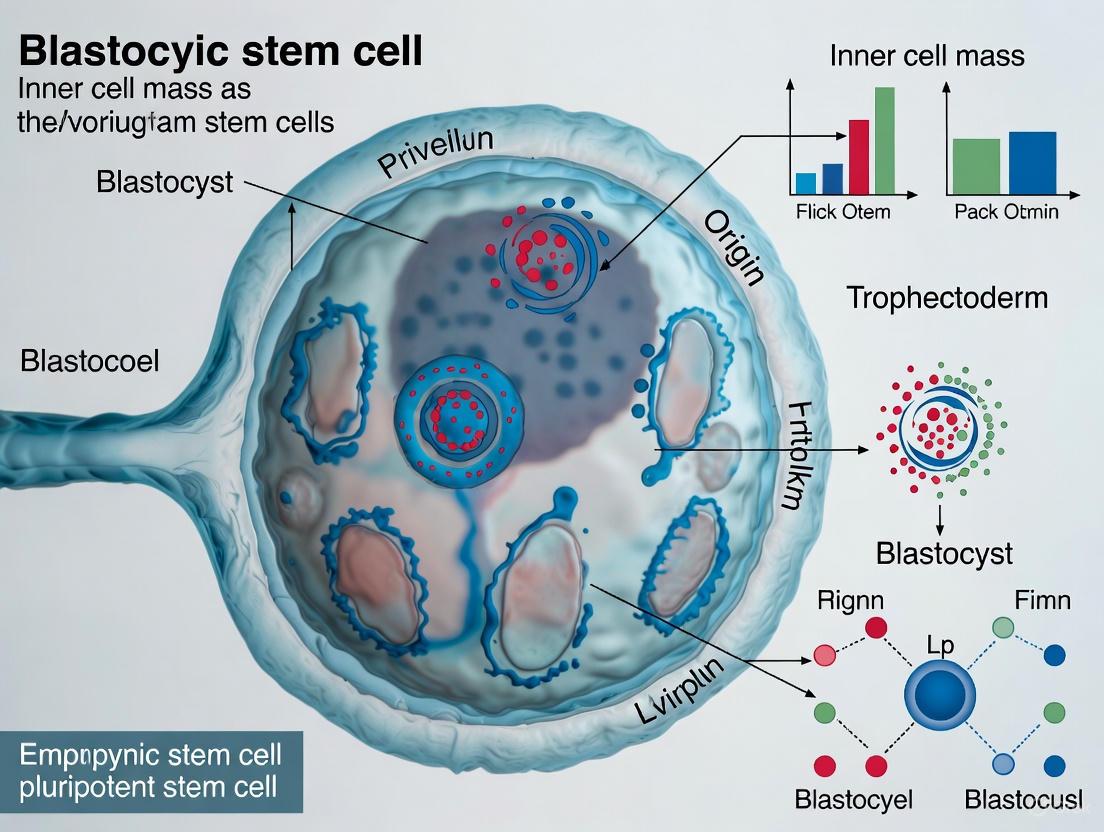
This article provides a comprehensive resource for researchers and drug development professionals on human embryonic stem cells (hESCs) derived from the blastocyst's inner cell mass (ICM).
Blastocyst to Breakthrough: Harnessing the Inner Cell Mass for Advanced Research and Therapeutics
Abstract
This article provides a comprehensive resource for researchers and drug development professionals on human embryonic stem cells (hESCs) derived from the blastocyst's inner cell mass (ICM). It covers the foundational biology of ICM specification and hESC pluripotency, details current methodologies for xeno-free derivation and culture, and addresses key challenges in quality control and experimental reproducibility. Furthermore, it offers a comparative analysis of hESCs against induced pluripotent stem cells (iPSCs) and other pluripotent platforms, evaluating their respective roles in disease modeling, drug discovery, and the evolving regulatory landscape for clinical translation.
The Biological Blueprint: Understanding Blastocyst Development and Pluripotency
The mammalian blastocyst represents a pivotal stage in early embryogenesis, constituting the first structure characterized by distinct, differentiated cell lineages. Its architecture is built around two fundamental populations of cells: the inner cell mass (ICM), which is the progenitor of the embryo proper, and the trophectoderm (TE), an extra-embryonic tissue that gives rise to the fetal portion of the placenta. The precise segregation and subsequent development of the ICM and TE are not only critical for successful implantation and pregnancy but also form the foundational context for embryonic stem cell (ESC) research. ESCs are derived from the ICM of the pre-implantation blastocyst, making a deep understanding of their origin, niche, and the signaling events that govern their establishment and maintenance paramount for regenerative medicine and developmental biology [1] [2]. This guide provides an in-depth technical analysis of blastocyst architecture, focusing on the defining characteristics, lineage specification mechanisms, and state-of-the-art methodologies used to study the ICM and TE.
Defining the Core Lineages: ICM and Trophectoderm
Inner Cell Mass (ICM): The Origin of Embryonic Stem Cells
The Inner Cell Mass (ICM) is a compact, pluripotent cell cluster located inside the blastocyst, adhering to one region of the trophectoderm wall. The ICM is the precursor to the entire fetus and is the source from which embryonic stem cells (ESCs) are isolated. Its formation and quality are therefore of direct relevance to ESC research.
- Developmental Fate: The ICM gives rise to the epiblast, which forms the future embryo proper, and the hypoblast (also called primitive endoderm), which contributes to extra-embryonic structures like the yolk sac [2].
- Morphological Characteristics: Traditionally assessed by standard morphological grading, a high-quality ICM (Grade A) is described as having "a prominent, well-compacted, and easily identifiable group of cells" that are "numerous, tightly packed, and cohesive" [3]. Advances in 3D morphological analysis have introduced quantitative parameters for a more objective assessment, including ICM volume, ICM surface area, and the ICM shape factor (where a value closer to 1 indicates a shape more like a perfect sphere) [4].
- Functional Significance in ESC Research: The pluripotent state of ESCs mirrors the naive state of the ICM cells in the pre-implantation embryo. Understanding the signaling pathways and transcriptional networks that maintain the ICM is directly analogous to understanding how to maintain ESC pluripotency in culture.
Trophectoderm (TE): The Engine of Implantation
The Trophectoderm (TE) is a polarized, transporting epithelium that forms the outer layer of the blastocyst. It is the first lineage to differentiate and is essential for the embryo to interact with and implant into the maternal endometrium.
- Developmental Fate: The TE is exclusively extra-embryonic. Following implantation, it proliferates and differentiates to form the fetal components of the placenta, including proliferating cytotrophoblasts, the invasive extravillous cytotrophoblasts, and the multinucleated syncytiotrophoblast, which is responsible for hormone production and nutrient exchange [1].
- Morphological Characteristics: Morphologically, a high-quality TE (Grade A) consists of "many identical small cells forming a tightly knit continuous epithelium" [3]. Quantitative 3D metrics include TE surface area, TE volume, TE cell number, and TE density (TE cell number per unit of blastocyst surface area) [4].
- Clinical Predictive Value: A growing body of evidence suggests that TE morphology is a superior predictor of blastocyst viability and live birth outcomes compared to ICM grading. One clinical study of 1,546 single blastocyst transfers found that "trophectoderm is more predictive of live births than inner cell mass," and that on the same day of development, a blastocyst with TE grade A and ICM grade B (BA) should be preferred over one with ICM grade A and TE grade B (AB) [3].
Table 1: Summary of Key Lineage Characteristics
| Characteristic | Inner Cell Mass (ICM) | Trophectoderm (TE) |
|---|---|---|
| Primary Fate | Embryo proper (Epiblast) and hypoblast | Fetal placenta (Cytotrophoblast, Syncytiotrophoblast) |
| Lineage Type | Embryonic | Extra-embryonic |
| Location in Blastocyst | Internal, adhered to the TE wall | External, epithelial monolayer |
| Key Transcription Factors | OCT4, NANOG, SOX2 | CDX2, EOMES, GATA3 |
| Relevance to ESC Research | Direct origin of Embryonic Stem Cells | Not a source for ESCs; critical for modeling placental development |
Molecular Mechanisms of Lineage Specification
The separation of the ICM and TE lineages is a meticulously regulated process involving transcription factors, cell signaling pathways, and epigenetic modifications. The current model suggests that symmetry breaking begins with molecular asymmetries as early as the 2- and 4-cell stages, which are later amplified to guide cell fate [5] [6].
The Role of Transcription Factors
A core transcriptional network governs the segregation of the ICM and TE lineages.
- TEAD4 and CDX2: The transcription factor TEAD4 acts upstream and is critical for initiating TE specification. A key downstream target of TEAD4 is Cdx2, a homeobox transcription factor considered a master regulator of trophectoderm fate. While initial studies suggested Cdx2 was essential for TE initiation, subsequent research, including studies that effectively eliminated both maternal and zygotic Cdx2 transcripts, showed that TE differentiation and blastocyst formation could still be initiated without it, though the TE was dysfunctional and failed to implant. This indicates that Cdx2 is indispensable for the maintenance and proper function of the TE lineage rather than its initial specification [7].
- OCT4 and NANOG: In the emerging ICM, the transcription factors OCT4 (encoded by Pou5f1) and NANOG promote pluripotency and suppress the TE fate. The reciprocal repression between Cdx2 and Oct4 is a fundamental mechanism ensuring a clear boundary between the two lineages; high Cdx2 represses Oct4 in the TE, while high Oct4 represses Cdx2 in the ICM [6].
Cell Polarization and Asymmetric Division
The onset of lineage specification is tightly coupled with the morphological process of compaction and cell polarization at the 8-cell stage.
- Compaction: At the 8-cell stage, blastomeres flatten against each other to maximize cell-cell contact, forming a compacted morula. This is mediated by the formation of adherens junctions, with E-cadherin playing a critical role [6].
- Asynchronous Polarization: Recent high-resolution live imaging challenges the view that all cells polarize simultaneously. Instead, polarization occurs asynchronously, with some cells polarizing early and others later. This timing difference influences ultimate cell fate: early polarizing cells are biased to form the TE, while late polarizing cells are more likely to contribute to the ICM [5].
- Mechanistic Link to Early Heterogeneity: This asynchrony is mechanistically linked to differences in the enzyme CARM1 at the 4-cell stage. Cells with lower CARM1 activity are predisposed to polarize earlier. Reduced CARM1 increases levels of a chromatin regulator, BAF155, which boosts keratin expression. This stabilizes the polarity cap and biases the cell toward an outer, TE fate upon division [5].
Advanced Methodologies for 3D Blastocyst Analysis
Traditional 2D morphological assessment of blastocysts is subjective and limited. A novel, non-invasive method that uses time-lapse (TL) imaging systems to reconstruct 3D blastocyst structures has been developed, providing objective and quantitative morphological parameters [4].
3D Reconstruction Workflow from Time-Lapse Imaging
This methodology is fully compatible with standard clinical embryo culture workflows and requires no embryologist intervention, making it highly suitable for both clinical and research applications.
Quantitative 3D Parameters and Their Clinical Correlations
This AI-driven 3D reconstruction model quantitatively computes 20 distinct 3D morphological parameters. The following table summarizes key parameters that have shown significant associations with clinical outcomes such as clinical pregnancy and live birth [4].
Table 2: Key 3D Morphological Parameters and Associations with Clinical Outcomes
| Parameter Category | Specific Parameter | Definition | Association with Positive Outcomes |
|---|---|---|---|
| Overall Blastocyst | Blastocyst Volume | Total volume of the blastocyst | Larger volume associated with higher pregnancy/live birth rates (P < 0.001) [4] |
| Blastocyst Surface Area/Volume Ratio | Ratio of surface area to volume | Smaller ratio associated with higher pregnancy/live birth rates (P < 0.001) [4] | |
| Trophectoderm (TE) | TE Surface Area | Surface area of the TE facing the blastocyst cavity | Larger area associated with higher pregnancy/live birth rates (P < 0.001) [4] |
| TE Cell Number | Number of cells in the TE | Higher count associated with higher pregnancy/live birth rates (P < 0.001) [4] | |
| TE Density | TE cell number per unit blastocyst surface area | Higher density associated with higher pregnancy/live birth rates (P < 0.001) [4] | |
| Inner Cell Mass (ICM) | ICM Shape Factor | Measure of sphericity (closer to 1.0 is more spherical) | Smaller factor (more spherical) associated with higher pregnancy/live birth rates (P < 0.05) [4] |
| ICM Surface Area/Volume | Ratio of surface area to volume for the ICM | Not significantly associated with pregnancy/live birth in initial analysis [4] | |
| ICM-TE Spatial Relationship | Spatial Distance between ICM and TE | Physical distance between ICM and TE cell nuclei | Larger distance associated with higher pregnancy rates (P < 0.05) [4] |
Experimental Validation: The accuracy of this TL-based 3D reconstruction method was verified against the gold standard of fluorescence staining and reconstruction using Imaris software. The method achieved a low relative error for key parameters: blastocyst surface area (2.13% ± 1.63%), blastocyst volume (4.03% ± 2.24%), and blastocyst diameter (1.98% ± 1.32%) [4].
The Scientist's Toolkit: Essential Research Reagents and Models
This section details key reagents, models, and methodologies used in advanced blastocyst research, as cited in the literature.
Table 3: Research Reagent Solutions for Blastocyst Lineage Studies
| Item / Reagent | Function / Application | Example from Literature |
|---|---|---|
| Cdx2 siRNA/siRNA duplex | Knockdown of Cdx2 expression to study its role in TE specification and function. | Microinjection into zygotes/MII oocytes to eliminate maternal and zygotic Cdx2; resulted in TE formation but failure to hatch and implant [7]. |
| Fluorescence Staining & 3D Reconstruction (Imaris) | Gold standard for validating 3D morphology; cell nucleus, trophoblast, cell membrane, and ICM can be stained. | Used to obtain "true values" of 20 blastocyst 3D morphological parameters and calculate relative error of TL-based reconstruction methods [4]. |
| Time-Lapse (TL) Incubators with Multi-Focal Imaging | Non-invasive capture of multi-focal plane images for 3D reconstruction without disrupting culture. | Source of 22,275 images used to reconstruct 3D models for 2025 blastocysts in a clinical study [4]. |
| Trophectoderm Stem Cells (TSCs) | In vitro model for studying TE differentiation, invasion, and function. | Isolated from mouse blastocysts; maintained with FGF signaling. Human equivalent is more challenging to isolate [1]. |
| Human Embryonic Stem Cells (hESCs) | Model for studying early human development and trophoblast differentiation. | hESCs can be induced to form trophoblast cells with BMP4, providing a model for human placental development [1]. |
| Knockout/Antibody Studies (E-cadherin) | Investigating the role of adhesion molecules in compaction and lineage formation. | Embryos deprived of maternal E-cadherin fail to compact at the 8-cell stage, demonstrating its critical role [6]. |
The inner cell mass (ICM) of the blastocyst-stage embryo harbors a population of pluripotent cells characterized by their dual capacity for unlimited self-renewal and differentiation into any somatic cell type. The maintenance of this pluripotent state is governed by a core transcriptional network of key markers—OCT4, SOX2, and NANOG—and is finely tuned by extrinsic signaling pathways, notably the TGF-β and FGF pathways. This whitepaper provides an in-depth technical guide to the mechanisms of action, interactions, and experimental analysis of these core components. Framed within the context of embryonic stem cell (ESC) research, this review synthesizes current knowledge to serve as a resource for researchers and drug development professionals aiming to manipulate pluripotency for regenerative medicine and disease modeling.
Following fertilization, the zygote undergoes a series of cleavage divisions to form a morula, which subsequently develops into a blastocyst. The blastocyst consists of three distinct lineages: an outer layer of trophectoderm (TE), which will form extra-embryonic structures like the placenta; a fluid-filled cavity called the blastocoel; and an inner cell mass (ICM) [8] [9]. The epiblast, which is derived from the ICM, is the source of embryonic stem cells (ESCs) and is the foundation of the entire fetus [8]. Pluripotent ESCs, first isolated from the ICM, are defined by their ability to differentiate into derivatives of all three primary germ layers (ectoderm, mesoderm, and endoderm)—a property known as pluripotency—and to self-renew indefinitely in culture [10] [8] [11]. The molecular underpinnings of these defining characteristics are the focus of intense research, driven by their immense potential in therapeutics, developmental biology, and drug discovery.
The Core Pluripotency Transcription Factor Network
The ground state of pluripotency is maintained by an intricate core network of transcription factors, primarily OCT4, SOX2, and NANOG. These factors function in a collaborative, auto-regulatory manner to activate genes necessary for the undifferentiated state while simultaneously repressing genes involved in differentiation [10] [8].
Table 1: Core Pluripotency Transcription Factors
| Transcription Factor | Gene Family | Expression in Development | Key Function in Pluripotency | Consequence of Dysregulation |
|---|---|---|---|---|
| OCT4 (POU5F1) | POU-homeodomain | First expressed at the 4-cell stage; maintained in the ICM, germ cells, and epiblast [10]. | Master regulator of pluripotency; forms a heterodimer with SOX2 to co-regulate thousands of target genes, including NANOG [10] [12]. | A 50% deviation from its normal expression level induces differentiation [10]. |
| SOX2 | SRY-related HMG-box | Expressed in the ICM and epiblast [10]. | Synergizes with OCT4; crucial for stabilizing the pluripotency network and maintaining appropriate OCT4 expression levels [10]. | Repression, in concert with OCT4, is required for neuroectodermal lineage commitment [10]. |
| NANOG | Homeodomain | Expressed in the ICM; heterogeneous expression in ESCs and primitive endodermal cells [10]. | Suppresses differentiation genes and reinforces the pluripotent state; a direct target of the OCT4/SOX2 complex [10]. | Loss leads to ESC differentiation into primitive endoderm; overexpression can sustain pluripotency without LIF [10]. |
This core trio forms interconnected autoregulatory and feedforward loops that ensure the stability of the pluripotent network. For instance, OCT4 and SOX2 co-occupy each other's promoters to maintain their own expression and jointly activate NANOG [10] [8]. In turn, NANOG helps to stabilize this circuit. This network does not operate in isolation; it poises the ESC genome for multi-lineage differentiation by co-occupying chromatin with intermediaries from key signaling pathways such as TGF-β and Wnt, thereby integrating extrinsic signals with the intrinsic transcriptional program [8].
Dynamic Nuclear Organization
Advanced live-cell imaging studies have revealed that the organization of these transcription factors within the nucleus is dynamic and functionally significant. In mouse ESCs, both OCT4 and SOX2 partition between the nucleoplasm and a small number of brighter, chromatin-dense nuclear foci [13]. These foci are not static; they undergo a dramatic reorganization during the early stages of differentiation, preceding the downregulation of the proteins themselves. Within 12-24 hours of inducing differentiation by 2i/LIF withdrawal, OCT4 redistributes, forming more and brighter foci, a process quantified by an increase in the coefficient of variation and relative focus intensity [13]. Fluorescence correlation spectroscopy has shown that this reorganization involves modifications in TF-chromatin interactions, with OCT4 showing a specific impairment in its chromatin binding during early differentiation [13]. This spatial reorganization represents a previously underappreciated layer of regulation in the exit from pluripotency.
Key Signaling Pathways Regulating Pluripotency
The self-renewal and pluripotent identity of ESCs are exquisitely sensitive to signals from their microenvironment. The TGF-β family and Fibroblast Growth Factor (FGF) signaling are two of the most critical pathways in this extrinsic regulation.
The TGF-β Family Signaling Pathway
The TGF-β superfamily is a large group of secreted morphogens that includes TGF-β proper, Nodal, Activin, Bone Morphogenetic Proteins (BMPs), and Lefty [8] [14]. They signal through transmembrane serine/threonine kinase receptors. Upon ligand binding, type II receptors phosphorylate type I receptors (also known as ALKs), which then phosphorylate receptor-regulated Smads (R-Smads) [14].
Table 2: Key TGF-β Family Ligands in Pluripotency
| Ligand Branch | Example Ligands | Type I Receptor | R-Smad | Primary Role in ESCs |
|---|---|---|---|---|
| Activin/Nodal/TGF-β | Nodal, Activin, TGF-β | ALK4, ALK5, ALK7 | Smad2/3 | Maintains pluripotency in hESCs and mouse EpiSCs; directly induces NANOG and OCT4 expression [8] [14]. |
| BMP | BMP4 | ALK2, ALK3, ALK6 | Smad1/5/8 | Supports self-renewal in mESCs in concert with LIF; inhibits neural differentiation (default pathway) [8] [14]. |
The role of TGF-β signaling is species-context dependent. In mouse ESCs, BMP4 works in synergy with LIF to sustain self-renewal by inducing Id (inhibitor of differentiation) proteins and suppressing ERK/p38 MAPK signaling [14]. Conversely, in human ESCs, the Activin/Nodal branch is paramount for maintaining pluripotency. Activin/Nodal signaling, transduced via phosphorylated Smad2/3, promotes self-renewal by directly binding to and activating the NANOG promoter [14]. Nuclear localized pSmad2 is a hallmark of undifferentiated hESCs and its inhibition leads to differentiation [14]. Lefty, an inhibitor of Nodal signaling, is itself a highly expressed TGF-β family member in ESCs and is directly regulated by the core pluripotency factors OCT4, SOX2, and KLF4, forming a delicate feedback loop [14].
Fibroblast Growth Factor (FGF) Signaling
The FGF signaling pathway is another critical regulator, with 22 FGFs and 5 FGF Receptors (FGFRs) playing crucial roles in proliferation, migration, differentiation, and metabolism [15]. In ESCs, FGF signaling works in concert with other pathways. Basic FGF (bFGF or FGF2) is a key component of the culture medium for hESCs, helping to maintain their undifferentiated state [11]. FGF signaling contributes to the maintenance of pluripotency by supporting the expression of core transcription factors like OCT4 and SOX2 [11]. Recent research also highlights its role in cellular reprogramming and in the intricate balance between self-renewal and lineage commitment, often through interactions with other pathways like BMP and Wnt [15].
Experimental Protocols for Investigating Pluripotency
This section outlines key methodologies used to study the core pluripotency network and its regulatory pathways.
Protocol: Investigating Transcription Factor Dynamics via Live-Cell Imaging
This protocol, adapted from [13], details how to analyze the dynamic nuclear organization of OCT4 and Sox2 during early differentiation.
- Cell Line Generation: Generate mouse ES cell lines with doxycycline (Dox)-inducible expression of OCT4 or SOX2 fused to the fluorescent protein YPet using a lentiviral system.
- Validation: Validate clones by:
- Fluorescence-Activated Cell Sorting (FACS): Select YPet-positive cells after Dox induction (e.g., 5 µg/ml for 48 hours).
- Immunofluorescence (IF) and Western Blot: Confirm normal expression of pluripotency markers (OCT4, SOX2, NANOG, SSEA-1) and that the fusion protein's subcellular distribution matches the endogenous TF.
- qRT-PCR: Verify that Dox induction does not drastically alter the mRNA levels of key pluripotency genes like Nanog.
- Differentiation Induction: Culture validated ES cell lines in standard medium with LIF and 2i (to maintain the naïve pluripotent state). Induce differentiation by withdrawing 2i and LIF from the culture medium.
- Image Acquisition: Acquire confocal images of live cells expressing OCT4-YPet or SOX2-YPet at multiple time points (e.g., 0, 12, 24, 48 hours) after differentiation induction. Maintain constant imaging conditions.
- Quantitative Image Analysis: For each time point, quantify the following parameters from the nuclear fluorescence signals:
- Coefficient of Variation (CVTF): Measures the heterogeneity of the TF distribution within the nucleus.
- Mean Number of Foci per Nucleus (NTF): Counts the distinct, bright foci.
- Relative Foci Intensity (ITF/Inucleus): Calculates the intensity of foci relative to the mean nuclear intensity.
- Data Interpretation: An increase in CV, N, and I for OCT4 at 12-24 hours indicates a reorganization and concentration of the TF into specific nuclear foci, an early event in differentiation preceding its downregulation [13].
Protocol: Assessing TGF-β Pathway Function in Pluripotency Maintenance
This protocol outlines how to test the requirement for Activin/Nodal signaling in human ESC pluripotency.
- Cell Culture: Maintain hESCs on a feeder layer of mouse embryonic fibroblasts (MEFs) or in a feeder-free system with appropriate matrices.
- Inhibitor Treatment: Treat hESCs with a specific inhibitor of the ALK4/5/7 receptors, such as SB-431542 (e.g., 10 µM), added to the culture medium. A control group should receive a vehicle (e.g., DMSO) only.
- Sample Collection: Harvest cells from both treated and control groups at defined time points (e.g., 24, 48, 72 hours) for downstream analysis.
- Downstream Analysis:
- Immunofluorescence/Immunocytochemistry (ICC): Stain for pluripotency markers (OCT4, NANOG, SSEA-4) and differentiation markers. A decrease in pluripotency marker expression and an increase in differentiation markers (e.g., for neuroectoderm) is expected with SB-431542 treatment [14].
- Western Blot: Probe for levels of pluripotency proteins (OCT4, NANOG) and the phosphorylation status of the pathway's downstream effector, Smad2. Successful inhibition will show reduced pSmad2.
- qRT-PCR: Quantify mRNA levels of pluripotency genes (OCT4, NANOG, SOX2) and known TGF-β/Activin target genes. Expect downregulation of these genes upon inhibitor treatment [14].
The Scientist's Toolkit: Key Research Reagents
Table 3: Essential Reagents for Pluripotency Research
| Reagent / Tool | Function / Specificity | Example Application |
|---|---|---|
| SB-431542 | Small-molecule inhibitor of TGF-β type I receptors ALK4, ALK5, and ALK7. | To inhibit Activin/Nodal signaling and study its role in hESC pluripotency maintenance and differentiation [14]. |
| Recombinant BMP4 | Recombinant Bone Morphogenetic Protein 4, a ligand of the BMP branch of the TGF-β family. | To support self-renewal of mESCs in combination with LIF; to study mesodermal or epidermal differentiation [14]. |
| Doxycycline (Dox) | Antibiotic used in inducible gene expression systems. | To induce the expression of genes (e.g., fluorescently tagged TFs) in a time-controlled manner in engineered ESC lines [13]. |
| Anti-OCT4 Antibody | Antibody targeting the OCT4 transcription factor. | For immunostaining and Western Blot to identify and quantify OCT4 protein in pluripotent cells [12] [13]. |
| Anti-NANOG Antibody | Antibody targeting the NANOG transcription factor. | For immunostaining to confirm the presence of ground-state pluripotent cells [12]. |
| Anti-Phospho-Smad2/3 Antibody | Antibody specifically recognizing the active, phosphorylated form of Smad2/3. | To assess the activity status of the Activin/Nodal/TGF-β signaling pathway in ESCs via ICC or Western Blot [14]. |
| LIF (Leukemia Inhibitory Factor) | Cytokine that activates JAK-STAT signaling. | Essential for maintaining self-renewal and pluripotency of mouse ESCs in culture [14]. |
| bFGF (FGF2) | Basic Fibroblast Growth Factor. | A key component of the culture medium for maintaining undifferentiated human ESCs [11]. |
The sophisticated interplay between the core transcription factors OCT4, SOX2, and NANOG and the extrinsic signals from the TGF-β and FGF pathways constitutes the very foundation of the pluripotent state originating from the blastocyst's ICM. Understanding this regulatory circuitry is not merely an academic exercise; it is fundamental for advancing controlled differentiation protocols for regenerative medicine, improving cellular reprogramming techniques for disease modeling, and comprehending the earliest stages of human development. As research progresses, particularly with the advent of sophisticated stem cell-based embryo models [9], our ability to dissect these mechanisms with greater precision will undoubtedly unlock new therapeutic avenues and deepen our understanding of life's beginnings.
The journey from a single-celled zygote to a complex organism is governed by a precise and progressive restriction of developmental potency. This technical guide delineates the fundamental transition from totipotent to pluripotent cellular states, a cornerstone of mammalian embryonic development. Framed within the context of inner cell mass (ICM) research, we detail the functional, molecular, and epigenetic hallmarks defining each state, supported by quantitative data and experimental methodologies essential for researchers and drug development professionals. The content underscores how understanding these mechanisms is critical for advancing stem cell biology, embryo model development, and regenerative medicine applications.
Defining Potency: From Totipotency to Pluripotency
Cell potency describes a cell's capacity to differentiate into other cell types. The earliest stages of mammalian embryonic development are characterized by a rapid transition from a state of broad developmental potential to a more restricted one.
- Totipotency represents the pinnacle of developmental potential. A totipotent cell can give rise to all the cell types of an organism, including both the embryonic tissues and the extraembryonic tissues (such as the placenta) that support development. In vivo, this potential is naturally limited to the blastomeres of the very early embryo, specifically from the zygote up to the early 4-cell stage [16] [17] [18]. The zygote is the ultimate totipotent cell, as it can autonomously form a complete organism.
- Pluripotency emerges as development proceeds. Pluripotent cells can generate all the cell types of the embryo proper (derived from the three primary germ layers—ectoderm, mesoderm, and endoderm) but have lost the ability to form functional extraembryonic tissues like the placenta. These cells are found in the inner cell mass (ICM) of the pre-implantation blastocyst [16] [19] [18]. The transition from totipotency to pluripotency is believed to be regulated by factors such as microRNA, which suppresses the ability of cells to produce extraembryonic tissues [17].
Table 1: Core Characteristics of Totipotent and Pluripotent Cells
| Feature | Totipotent Cell (e.g., Zygote, early blastomere) | Pluripotent Cell (e.g., ICM/Embryonic Stem Cell) |
|---|---|---|
| Developmental Potential | Can form a complete organism, including all embryonic and extraembryonic tissues. | Can form all embryonic tissues (ectoderm, mesoderm, endoderm) but not extraembryonic tissues like the placenta. |
| In Vivo Source | Fertilized egg (zygote) up to the early 4-cell stage. | Inner Cell Mass (ICM) of the blastocyst. |
| Defining Functional Assay | Generation of a live organism via tetraploid complementation (for totipotent-like cells). | Chimera formation; Teratoma assay with three germ layer differentiation. |
| Key Molecular Markers | MuERV-L, ZSCAN4, TPRN, OOEP [20]. | OCT4, SOX2, NANOG [16] [21] [18]. |
The Developmental Trajectory and Key Transitions
The transition from totipotency to pluripotency is not an abrupt switch but a gradual process of cell fate restriction coupled with embryonic structural organization.
- Fertilization and Cleavage: The journey begins with the fertilization of an oocyte by a sperm cell, forming a totipotent zygote [17]. The zygote undergoes a series of cleavage divisions, producing totipotent blastomeres.
- Formation of the Blastocyst: By approximately the 100-cell stage in mice and humans, the embryo forms a structure called the blastocyst. The blastocyst comprises three distinct lineages:
- Trophectoderm (TE): The outer cell layer that will form the placenta and other extraembryonic structures.
- Inner Cell Mass (ICM): A cluster of cells inside the blastocyst that are pluripotent and will give rise to the entire fetus [19].
- Specification within the ICM: The ICM itself undergoes further specification, giving rise to the epiblast (Epi), which will form the embryo proper, and the primitive endoderm (PrE), which contributes to extraembryonic structures like the yolk sac [22]. This refinement establishes the foundation for gastrulation and the formation of the three germ layers.
The following diagram illustrates the key developmental stages and the corresponding restriction of cell potency during early embryogenesis.
Molecular Hallmarks and Functional Assessment
Distinguishing between totipotent and pluripotent states requires a combination of molecular profiling and rigorous functional assays.
Molecular and Transcriptional Signatures
- Totipotency-Associated Genes: True totipotent cells in vivo and in vitro totipotent-like models exhibit a distinct transcriptional profile. Key markers include the expression of Zscan4 and endogenous retroviruses such as MuERV-L, which are highly active during the 2-cell stage in mouse embryos in a process known as zygotic genome activation (ZGA) [22] [20]. Single-cell RNA sequencing of totipotent-like cells reveals subpopulations that transcriptionally align with early, middle, and late 2-cell stage blastomeres [20].
- Pluripotency-Associated Genes: The core regulatory network maintaining pluripotency revolves around transcription factors like OCT4, SOX2, and NANOG [16] [18]. These factors promote self-renewal and suppress differentiation. However, pluripotent stem cells (PSCs) can exist in different substates (e.g., naïve, formative, primed), each with subtle variations in their transcriptional and epigenetic landscapes [16].
Key Functional Assays for Developmental Potency
Table 2: Key Functional Assays for Assessing Cell Potency
| Assay Name | Description | Interpretation of Results |
|---|---|---|
| Chimera Formation | Injection of test cells into a host embryo (e.g., morula or blastocyst), which is then transferred to a surrogate. The contribution of the test cells to the resulting offspring is measured. | Pluripotent cells will contribute to all fetal tissues. Totipotent cells can contribute to both embryonic and extraembryonic (e.g., placenta) tissues [22] [20]. |
| Tetraploid Complementation (Gold Standard) | Test cells are combined with tetraploid (4n) embryos, which can only form the placenta. The resulting fetus is derived entirely from the test cells. | The generation of a full-term, fertile mouse demonstrates that the test cells are functionally totipotent or possess maximum pluripotent potential [16]. |
| Teratoma Assay | Test cells are injected into an immunocompromised mouse, where they form a benign tumor (a teratoma). | The formation of a teratoma containing differentiated tissues from all three germ layers (ectoderm, mesoderm, endoderm) confirms pluripotency [18]. |
| In Vitro Differentiation | Pluripotent cells are cultured under conditions that promote spontaneous or directed differentiation. | The derivation of cell types representative of the three germ layers confirms the pluripotent nature of the starting population [19] [18]. |
Experimental Protocols: Isolating and Characterizing Potency
Protocol: Single-Cell Quantitative RT-PCR for Profiling Pluripotency
This protocol is used to analyze gene expression heterogeneity within a stem cell population, such as the ICM or cultured ESCs, at the single-cell level [21].
- Cell Preparation and Lysis: Single cells are sorted by Fluorescence-Activated Cell Sorting (FACS) (e.g., from an OCT4::GFP reporter line) into individual wells of a 96-well PCR plate containing a cell lysis buffer and DNase.
- Reverse Transcription: The lysate is used for reverse transcription with a template-switching oligonucleotide (e.g., SMA-T15) to generate full-length cDNA.
- cDNA Amplification: The resulting cDNA is treated with ExoSAP-IT to remove excess primers and nucleotides, followed by PCR amplification (e.g., 18-20 cycles) using a primer (e.g., SMA-p2) to generate sufficient material for analysis.
- qRT-PCR Performance: The amplified cDNA is used as a template for quantitative PCR with SYBR Green and gene-specific primers (e.g., for OCT4, NANOG, GAPDH). Each reaction should be performed in duplicate to control for technical errors.
- Data Analysis: Cycle threshold (Ct) values are analyzed. A homogeneous population will show consistent expression of core pluripotency factors like OCT4. Heterogeneity can be revealed by variable expression of other markers like NANOG [21].
Protocol: Assessing Functional Potency via Chimera Assay
This assay tests the ability of stem cells to integrate into and contribute to a developing embryo [22].
- Donor Cell Preparation: ESCs or totipotent-like cells are cultured and prepared as a single-cell suspension. The genetic background is often chosen for hybrid vigor (e.g., F1 129S2;C57BL/6N) to enhance chimera efficiency.
- Embryo Collection and Injection: Host embryos (morulae or blastocysts) are collected from a donor strain with a distinguishable coat color. Using a micromanipulator, ~10-15 cells are injected into the blastocoel of a blastocyst, or a single cell can be injected into a morula or 2-cell embryo to test high-level potency.
- Embryo Transfer: The injected embryos are surgically transferred into the uterus of a pseudopregnant female mouse.
- Analysis of Contribution: The resulting pups are assessed for chimerism based on coat color contribution. High-level chimeras, especially those derived from single cells, indicate high functional potency. Further analysis can include germline transmission and contribution to extraembryonic tissues to assess totipotent-like potential [22].
The Impact of Culture Conditions on Pluripotent State
Research shows that the culture environment profoundly influences the developmental state of embryonic stem cells. ESCs are not a monolithic entity but can be maintained in states that resemble different developmental stages [22].
- Serum/LIF Culture: ESCs cultured in serum exhibit a transcriptional profile similar to the late blastocyst (E4.5), a stage where cells are more specified and restricted [22]. These cultures are highly heterogeneous.
- 2i/LIF Culture: The "2i" system uses small-molecule inhibitors (MEKi and GSK3i) with LIF to maintain a more homogeneous population of ESCs. These cells show a transcriptional correlation with early pre-implantation embryos (E1.5–E3.5), have an enhanced capacity to contribute to development from the 2-cell stage, and can generate high-level chimeras from single cells [22] [16]. This state is often referred to as "naïve" pluripotency.
- KOSR/LIF Culture: Culture with knockout serum replacement (KOSR) also supports a state with enhanced single-cell potency, similar to 2i-cultured cells, and may resemble primitive endoderm [22].
Table 3: Influence of Culture Conditions on Embryonic Stem Cell State
| Culture Condition | Transcriptional Correlation | Functional Potency (Single-Cell Chimera) | Notable Characteristics |
|---|---|---|---|
| Serum + LIF | Late blastocyst (E4.5) ICM | Low / Not capable [22] | Heterogeneous, metastable state [22] [16]. |
| 2i/LIF | Early pre-implantation embryo (E1.5-E3.5) | High [22] | Homogeneous, "naïve" pluripotency, but prolonged culture can cause epigenetic instability [22] [16]. |
| KOSR/LIF | Early embryo and primitive endoderm | High [22] | Resembles primitive endoderm; supports robust single-cell potency [22]. |
The signaling pathways targeted by these culture conditions are critical for maintaining the pluripotent state, as summarized below.
The Scientist's Toolkit: Essential Research Reagents
Table 4: Key Reagent Solutions for Stem Cell and Developmental Potency Research
| Reagent / Tool | Function / Application | Example |
|---|---|---|
| Small Molecule Inhibitors (2i) | Maintains naïve pluripotency by blocking differentiation signals. | PD0325901 (MEKi): Inhibits FGF/ERK signaling. CHIR99021 (GSK3i): Activates WNT/β-catenin signaling [22] [16]. |
| Cytokines & Growth Factors | Supports self-renewal and proliferation of stem cells. | LIF (Leukemia Inhibitory Factor): Activates the JAK-STAT pathway to maintain pluripotency in mouse ESCs [22] [16]. |
| Reporter Cell Lines | Enables visualization, tracking, and isolation of specific cell populations based on gene expression. | OCT4::GFP: Fluorescent reporter for pluripotent cells, used for FACS purification [21]. MuERV-L Reporter: Reporter for 2-cell-like/totipotent-like state [20]. |
| Single-Cell Analysis Platforms | Characterizes transcriptional heterogeneity and identifies subpopulations within stem cell cultures. | Single-Cell qRT-PCR: Quantifies expression of a predefined gene set [21]. Single-Cell RNA-Sequencing: Provides an unbiased, genome-wide transcriptomic profile [20] [23]. |
| Chemically Defined Media | Provides a consistent, serum-free environment to control cell fate and reduce experimental variability. | KOSR (Knockout Serum Replacement): Used to support pluripotent states with high functional potency [22]. Various base media for naïve and primed pluripotency. |
The delineation of developmental potency from a totipotent zygote to a pluripotent ICM cell is more than a descriptive hierarchy; it is a dynamic process governed by precise molecular and epigenetic regulation. Modern research, utilizing advanced culture conditions and single-cell technologies, has revealed that these states are not fixed but can be modulated and even partially captured in vitro. The ability to derive and maintain pluripotent stem cells from the ICM has been revolutionary for biological research, enabling disease modeling, drug screening, and insights into developmental mechanisms. The ongoing development of totipotent-like stem cells and sophisticated embryo models promises to further illuminate the enigmatic early stages of life [20]. Understanding the fundamental principles of developmental potency remains essential for harnessing the full potential of stem cells in both basic science and clinical applications.
Ethical and Regulatory Frameworks for hESC Research
Human embryonic stem cell (hESC) research, which involves the derivation of pluripotent cells from the inner cell mass of blastocyst-stage embryos, represents a frontier of biomedical science with transformative potential for human health. This research domain operates within a complex framework of ethical considerations and regulatory requirements that balance scientific promise with profound moral questions. The blastocyst, typically at the 6-8 day development stage consisting of 180-200 cells, contains the inner cell mass from which hESCs are derived—a process that necessitates the destruction of the embryo [24]. This fundamental biological reality underpins the ongoing ethical and policy debates that researchers must navigate. The International Society for Stem Cell Research (ISSCR) notes that these guidelines "build on a set of widely shared ethical principles in science, research with human subjects, and medicine" while addressing "sensitivities surrounding research activities that involve the use of human embryos" [25]. This technical guide examines the current ethical and regulatory landscape for hESC research within the context of inner cell mass investigation, providing researchers, scientists, and drug development professionals with the frameworks necessary to conduct scientifically rigorous and ethically sound research.
Core Ethical Principles and Debates
Foundational Ethical Frameworks
The ethical landscape for hESC research is guided by several core principles that govern responsible research conduct. The ISSCR outlines five fundamental principles that form the bedrock of ethical stem cell research: integrity of the research enterprise, primacy of patient/participant welfare, respect for patients and research subjects, transparency, and social and distributive justice [25]. These principles collectively ensure that research maintains scientific rigor while respecting the ethical boundaries of society.
The integrity principle demands that research be "overseen by qualified investigators and conducted in a manner that maintains public confidence," with key processes including "independent peer review and oversight, replication, institutional oversight, and accountability at each stage of research" [25]. The primacy of welfare principle establishes that physicians and researchers must "never excessively place vulnerable patients or research subjects at risk" and that "clinical testing should never allow promise for future patients to override the welfare of current research subjects" [25]. Respect for persons requires that researchers "empower potential human research participants to exercise valid informed consent where they have adequate decision-making capacity," with accurate information about risks and current evidence [25]. The transparency principle mandates timely exchange of scientific information, communication with public groups, and sharing of both positive and negative results [25]. Finally, social justice considerations require that "the benefits of clinical translation efforts should be distributed justly and globally, with particular emphasis on addressing unmet medical and public health needs" [25].
The Moral Status of the Embryo Debate
The central ethical controversy in hESC research concerns the moral status of the human embryo. The debate typically positions two contrasting viewpoints against each other, with significant implications for research practices and policies.
Table: Contrasting Ethical Viewpoints on Embryonic Moral Status
| Aspect | Personhood at Conception View | Developmental View |
|---|---|---|
| Moral Status | Blastocyst is a human being with full moral status equivalent to a person [24] | Blastocyst is a potential person, with moral status that develops gradually [24] |
| Research Implications | Destroying embryos for research is morally equivalent to killing a person [24] | Distinction between potential and actual person makes a moral difference [24] |
| Policy Position | Should be banned or severely restricted [24] | Permissible with appropriate oversight and consent [24] |
| Biological Perspective | Every human being began as an embryo; no non-arbitrary line marks personhood emergence [24] | Developmental continuity exists, but embryos and human beings differ similarly to acorns and oak trees [24] |
Proponents of the personhood view argue that "the unimplanted human embryo is already a human being, morally equivalent to a person," and consequently, "destroying the blastocyst, an unimplanted human embryo at the sixth to eighth day of development" constitutes the "taking of innocent human life" [24]. This position maintains that "every human being—each one of us—began life as an embryo" and "unless we can point to a definitive moment in the passage from conception to birth that marks the emergence of the human person, we must regard embryos as possessing the same inviolability as fully developed human beings" [24].
The developmental view challenges this position by noting that "a human embryo is 'human life' in the biological sense that it is living rather than dead, and human rather than, say, bovine," but that "this biological fact does not establish that the blastocyst is a human being, or a person" [24]. This perspective emphasizes that "sentient creatures make claims on us that nonsentient ones do not; beings capable of experience and consciousness make higher claims still" and that "human life develops by degrees" [24].
Ethical Framework Diagram
Regulatory Frameworks and Oversight Mechanisms
International Regulatory Landscape
The global regulatory environment for hESC research demonstrates significant variation, reflecting diverse cultural, political, and ethical perspectives. The ISSCR Guidelines serve as an international benchmark, addressing "the international diversity of cultural, political, legal, and ethical issues associated with stem cell research and its translation to medicine" [26]. These guidelines maintain "widely shared principles in science that call for rigor, oversight, and transparency in all areas of practice" and are regularly updated to reflect scientific advances, with the most recent 2025 update focusing specifically on stem cell-based embryo models [26] [27].
Table: International Regulatory Approaches to hESC Research
| Country/Region | Regulatory Status | Key Features and Restrictions |
|---|---|---|
| United States | Legal with funding restrictions [28] | Federal funding prohibited for creation/destruction of embryos; state-level variations; private funding permitted [28] |
| European Union | Variable by member state [28] | Permitted in Sweden, Spain, Finland, Belgium, Greece, Britain, Denmark, Netherlands; illegal in Germany, Austria, Italy, Portugal [28] |
| United Kingdom | Legal with oversight [28] | 14-day limit for embryo research; pioneer in establishing regulatory standards [28] |
| Asia | Generally supportive [28] | Japan, India, Iran, Israel, South Korea, and China have supportive regulatory environments [28] |
The ISSCR Guidelines specifically "do not supersede local laws and regulations" but rather "complement existing legal frameworks and can inform the interpretation and development of laws applicable to stem cell research as well as provide guidance for research practices not covered by legislation" [25]. This approach allows for international harmonization of standards while respecting regional legal differences.
United States Regulatory Framework
The U.S. regulatory landscape for hESC research is characterized by a complex interplay of federal funding restrictions, state-level variations, and evolving policy positions. The foundational federal regulation is the Dickey-Wicker Amendment, passed in 1996, which "prohibits the use of federal funds for the creation of human embryos for research purposes or for research in which human embryos are destroyed" [28]. This means that while embryonic stem cell research is not illegal at the federal level, it cannot be federally funded if it involves the creation or destruction of embryos.
Federal policy has shifted significantly across administrations:
- President George W. Bush (2001): Implemented restrictions limiting federal funding to research on a limited number of existing embryonic stem cell lines [28].
- President Barack Obama (2009): Signed Executive Order 13505, "removing barriers to responsible research involving human stem cells and reversing President Bush's moratorium on the use of federal funds for hESC research" [28]. This allowed "funding for research using additional embryonic stem cell lines, as long as the embryos were originally created for reproductive purposes and were donated by the individuals who sought reproductive treatment" [28].
- Recent developments: Concerns have emerged about potential future restrictions, with reports suggesting that "NIH fetal tissue research ban unfolding; hESC work next?" though the future of hESC research funding remains uncertain [29].
The Food and Drug Administration (FDA) plays a crucial role in regulating stem cell-based therapies through its authority over human cells, tissues, and cellular and tissue-based products (HCT/Ps) as outlined in 21 CFR Part 1271 [30]. The FDA regulates HCT/Ps based on key criteria:
- Minimally manipulated: Products that are minimally manipulated, intended for homologous use, and not combined with another article are regulated under Section 361 of the Public Health Service Act [30].
- More than minimal manipulation: Products that undergo more than minimal manipulation, intended for non-homologous use, or combined with another article are regulated as drugs or biologics, requiring Investigational New Drug (IND) application and eventual Biologics License Application (BLA) [30].
At the state level, significant variation exists, with "states such as California, Connecticut, Illinois, and Massachusetts, showing interest in providing their own funding support for embryonic and adult stem cell research," while other states impose greater restrictions [28].
Regulatory Pathway Diagram
Research Oversight and Compliance Protocols
Institutional Oversight Mechanisms
Effective oversight of hESC research requires multiple layers of institutional review and compliance monitoring. The ISSCR emphasizes that research "should be overseen by qualified investigators and conducted in a manner that maintains public confidence" through processes including "independent peer review and oversight, replication, institutional oversight, and accountability at each stage of research" [25]. Key oversight mechanisms include:
Stem Cell Research Oversight (SCRO) Committees: Specialized committees that review the ethical implications of hESC research protocols, particularly those involving human embryos, blastocysts, and stem cell-derived embryo models. These committees typically include scientific experts, ethicists, legal scholars, and community representatives.
Institutional Review Boards (IRBs): Standard research ethics committees that review protocols to ensure protection of human subjects, particularly when research involves donation of embryos or gametes, or when collecting data from donors.
Institutional Biosafety Committees (IBCs): Review and approve research involving potential biohazards, including certain genetic modifications of hESCs.
The 2025 ISSCR Guidelines update specifically addresses oversight for stem cell-based embryo models (SCBEMs), recommending that "all 3D SCBEMs have a clear scientific rationale, have a defined endpoint, and be subject to an appropriate oversight mechanism" [27]. The guidelines also reiterate that "human SCBEMs are in vitro models and must not be transplanted to the uterus of a living animal or human host" and include "a new recommendation that prohibits the ex vivo culture of SCBEMS to the point of potential viability—so called ectogenesis" [27].
Informed Consent Protocols
Informed consent represents a critical ethical and regulatory requirement in hESC research, particularly when research involves donation of human embryos or gametes. The ISSCR Guidelines emphasize that "researchers, clinical practitioners, and healthcare institutions should empower potential human research participants to exercise valid informed consent where they have adequate decision-making capacity" [25]. Valid informed consent for embryo donation must include several key elements:
Comprehensive Information: Potential donors must receive "accurate information about risks and the current state of evidence for novel stem cell-based interventions" [25]. This includes clear explanation of the research purposes, procedures, alternatives, risks, and benefits.
Voluntariness: Consent must be given voluntarily without coercion or undue influence, with adequate time for consideration and opportunity to ask questions.
Understanding: Researchers must ensure donors comprehend key information, particularly that the research will involve destruction of the embryo, that lines may be maintained indefinitely, and that commercial applications may result.
Specificity of Consent: Donors should specify permitted uses, including whether lines can be used for particular types of research (e.g., genetic modification, chimera formation, reproductive purposes) and whether commercialization is permitted.
Special considerations apply when working with vulnerable populations or individuals with limited decision-making capacity, where "surrogate consent should be obtained from lawfully authorized representatives" [25]. The informed consent process should be documented rigorously and reviewed regularly by oversight committees.
Compliance Monitoring and Documentation
Robust documentation and monitoring systems are essential for regulatory compliance in hESC research. Key compliance requirements include:
Stem Cell Line Registries: Maintenance of detailed records documenting the provenance of hESC lines, including donor consent forms, ethical approval documents, and methodological details of cell line derivation. The NIH maintains a registry of hESC lines eligible for federal funding [31].
Material Transfer Agreements (MTAs): Legal contracts governing the transfer of research materials between institutions, specifying permitted uses, ownership rights, publication rights, and liability arrangements.
Data Management Plans: Systematic approaches to data collection, storage, sharing, and preservation that ensure research integrity and transparency while protecting confidential information.
Regulatory compliance also necessitates awareness of evolving policy landscapes. Researchers should monitor potential policy shifts, such as discussed concerns that "NIH fetal tissue research ban unfolding; hESC work next?" which could impact future funding availability [29]. The scientific community, through organizations like ISSCR, advocates for "evidence-based biomedical science" and urges funders "to reject political pressure to discontinue research with HFT and instead reaffirm its role as a champion of evidence-based biomedical science" [29].
Research Reagent Solutions and Essential Materials
Critical Research Materials for hESC Studies
Table: Essential Research Reagents for hESC Research
| Reagent/Material Category | Specific Examples | Function in Research | Regulatory Considerations |
|---|---|---|---|
| hESC Lines | NIH-registered lines, commercially available lines (e.g., H1, H9), disease-specific lines | Fundamental research material for studying pluripotency, differentiation, disease modeling | Documentation of ethical provenance, consent status, eligibility for federal funding [31] |
| Reprogramming Factors | Yamanaka factors (OCT4, SOX2, KLF4, c-MYC) for iPSC generation | Reprogram somatic cells to pluripotent state, creating alternative to hESCs | Less ethically contentious than hESCs; still require careful genomic stability monitoring [30] |
| Culture Media and Supplements | Defined culture media, serum-free formulations, growth factors (bFGF, TGF-β), small molecule inhibitors | Maintain hESC pluripotency or direct differentiation toward specific lineages | Quality control essential; GMP-grade required for clinical applications [30] |
| Extracellular Matrices | Matrigel, recombinant laminin, vitronectin, synthetic polymers | Provide substrate for hESC attachment and growth, influence cell behavior | Batch-to-batch variability concerns; defined matrices preferred for reproducibility [30] |
| Differentiation Inducers | Small molecules, growth factors, morphogens (RA, BMP, WNT agonists/antagonists) | Direct hESC differentiation toward specific cell types (neuronal, cardiac, hepatic, etc.) | Concentration- and timing-dependent effects require optimization [30] |
| Characterization Tools | Flow cytometry antibodies (OCT4, NANOG, SSEA-4), karyotyping kits, PCR panels | Verify pluripotency, genetic stability, differentiation efficiency | Standardized characterization essential for comparing results across labs [30] |
Quality Control and Documentation Standards
Maintaining rigorous quality control and documentation standards is essential for reproducible hESC research. Key considerations include:
Authentication and Characterization: Regular verification of hESC line identity through short tandem repeat (STR) profiling, karyotyping to detect chromosomal abnormalities, and pluripotency marker expression analysis.
Mycoplasma Testing: Frequent screening for mycoplasma contamination, which can alter cell behavior without causing visible culture changes.
Batch Documentation: Meticulous recording of reagent lot numbers, preparation dates, and quality control results to enable troubleshooting and ensure experimental reproducibility.
Regulatory Compliance: Adherence to Good Laboratory Practice (GLP) guidelines for basic research and Good Manufacturing Practice (GMP) standards for clinically-applied work, with particular attention to documentation requirements for FDA submissions under IND applications [30] [32].
The field is moving toward increasingly defined culture systems, with "iPSC-derived MSCs (iMSCs) gaining momentum" as they "offer enhanced consistency, and scalability compared to primary MSCs" [32]. Similarly, commercial providers are offering standardized starting materials, such as "REPROCELL StemRNA Clinical iPSC Seed Clones" with submitted Drug Master Files (DMF) that "provide comprehensive regulatory documentation—including donor screening, GMP-compliant manufacturing, quality control, and raw material sourcing" [32].
The ethical and regulatory frameworks governing hESC research continue to evolve in response to scientific advances and societal values. The ongoing development of stem cell-based embryo models (SCBEMs) represents both a scientific opportunity and an ethical challenge, with the ISSCR recently updating guidelines to address these emerging technologies [27]. The research community maintains that "stem cell science is at a pivotal moment, and decades of research have the potential to transform human health" [33], but realizing this potential requires maintaining public trust through rigorous ethical practice and regulatory compliance.
Future developments in hESC research ethics will likely focus on several key areas: enhanced oversight mechanisms for increasingly complex embryo models, international harmonization of regulatory standards, addressing justice considerations in access to resulting therapies, and navigating the ethical implications of emerging gene editing technologies in combination with hESC research. Throughout these developments, the core ethical principles of integrity, welfare, respect, transparency, and justice will continue to provide the foundation for responsible research practices that enable scientific progress while maintaining societal trust.
For researchers working with inner cell mass-derived hESCs, maintaining awareness of both the ethical underpinnings and specific regulatory requirements of their work is not merely a compliance issue but an essential component of scientific excellence. By integrating these considerations into research design and practice from the outset, scientists can advance this promising field while honoring its profound ethical dimensions.
From ICM to In Vitro Models: Derivation, Culture, and Translational Applications
The inner cell mass (ICM) is a critical structure within the mammalian blastocyst, comprising a small group of cells that give rise to the entire embryo proper. The isolation of the ICM is a fundamental prerequisite for establishing embryonic stem cell (ESC) lines, which hold immense potential for studying developmental biology, disease modeling, and regenerative medicine [34] [35]. The first human embryonic stem cell (hESC) line, derived in 1998, was generated by culturing ICM cells isolated from human blastocysts [34]. Since then, the techniques for ICM isolation have evolved, aiming to improve efficiency, purity, and suitability for clinical applications. The core challenge lies in cleanly separating the pluripotent ICM from the surrounding trophectoderm (TE), the outer cell layer destined to form extra-embryonic tissues like the placenta [34] [36]. This whitepaper provides an in-depth technical guide to the three primary ICM isolation techniques—immunosurgery, mechanical dissection, and laser dissection—framed within the context of advanced embryonic stem cell research.
Technical Comparison of ICM Isolation Techniques
The following table summarizes the key characteristics of the three main ICM isolation methods, providing researchers with a clear, comparative overview to inform protocol selection.
Table 1: Technical Comparison of Primary ICM Isolation Techniques
| Feature | Immunosurgery | Mechanical Dissection | Laser Dissection |
|---|---|---|---|
| Basic Principle | Selective antibody-mediated lysis of trophectoderm cells [34] [35]. | Physical separation of ICM using fine microtools [34] [37]. | Precise ablation of trophectoderm cells using a focused laser beam [36] [37]. |
| Procedure Duration | Longer (includes multiple incubation steps) [34] | Relatively fast [37] | Very fast (3-4 minutes per blastocyst) [36] |
| Technical Skill Level | Moderate | High (requires skilled micromanipulation) [34] | High (requires operation of laser system) [37] |
| Xeno-Free Compatibility | No (uses animal-derived antibodies and complement) [34] | Yes [34] [35] | Yes [35] |
| Purity of ICM Isolate | High | Variable, risk of trophectoderm contamination [34] | Very high (90.9% pure isolation rate) [36] |
| Cell Viability | Risk of complement toxicity to ICM | High, if performed skillfully [35] | High [35] |
| Key Advantage | Effective removal of trophectoderm. | Avoids exposure to animal components and chemicals [34] [35]. | High precision, speed, and consistency [36]. |
| Primary Disadvantage | Unsuitable for clinical-grade hESC derivation due to animal components [34]. | Low derivation efficiency and technically demanding [34]. | Requires specialized, expensive equipment [35]. |
| Typical Derivation Efficiency | Varies, generally less than 50% [34] | Varies, generally less than 50% [34] | Not explicitly quantified for hESC derivation, but enables highly pure isolation [36] |
Detailed Experimental Protocols
Immunosurgery Protocol
Immunosurgery is a biochemical method for selectively removing the TE layer. The following protocol is adapted from standard methodologies used in hESC derivation [34] [35].
- Zona Pellucida Removal: Incubate the blastocyst in a solution of 0.1% (w/v) pronase for approximately 5 minutes until the zona pellucida dissolves. Wash the zona-free embryo in a balanced salt solution or culture medium like NutriStem [34].
- Antibody Sensitization: Transfer the embryo to a drop of antiserum (e.g., anti-human serum) for 30 minutes at 37°C. This allows antibodies to bind to surface antigens on the trophectoderm cells.
- Washing: Rinse the embryo thoroughly through several drops of culture medium to remove unbound antibodies.
- Complement Lysis: Incubate the embryo in a drop of complement solution (e.g., Guinea pig complement) for another 30 minutes at 37°C. The complement binds to the antibodies on the trophectoderm, forming a membrane attack complex that lyses these outer cells.
- ICM Washing and Plating: Following lysis, gently pipette the embryo to dislodge the lysed trophectoderm debris. The intact ICM is then washed and transferred to a culture plate containing a feeder layer of human foreskin fibroblasts (HFFs) or onto a feeder-free matrix for outgrowth [34].
Mechanical ICM Dissection (MID) Protocol
Mechanical isolation is a physical method that avoids exposure to animal-derived components [34] [37].
- Blastocyst Preparation: Remove the zona pellucida as described in the immunosurgery protocol [34].
- Micromanipulator Setup: Transfer the zona-free embryo to a micro-drop of culture medium (e.g., NutriStem) on a micromanipulation system.
- ICM Positioning: Use a holding pipette to secure the embryo, and orient it so the ICM is at the 12 o'clock position.
- Dissection: Press a fine glass needle onto the region of the embryo directly beneath the ICM. While applying pressure, move the holding pipette and needle back and forth with a tearing motion to separate the ICM from the surrounding TE cells.
- Isolation and Culture: Once freed, aspirate the isolated ICM clump with a pipette and transfer it onto a feeder layer or a feeder-free culture system for subsequent derivation [34].
Laser-Assisted Dissection Protocol
Laser dissection offers a high-precision, contact-free alternative for ICM isolation [36] [35].
- System Setup: Place the blastocyst into a holding pipette on a laser-equipped micromanipulation system. The system often integrates an infrared laser and pulsed dye laser.
- Targeting: Visually identify the ICM and the surrounding TE cells targeted for ablation.
- Laser Ablation: Apply targeted laser pulses to create a controlled split in the TE layer. The laser energy is focused on a small spot (≈1 µm) to precisely ablate cellular material without generating significant heat that could damage the ICM.
- ICM Extraction: Use a biopsy pipette, which can be inserted directly into the blastocoel, to apply gentle suction and remove the isolated ICM sample. The entire process can be completed in 3-4 minutes per blastocyst [36].
- Validation: Purity of the isolated ICM can be confirmed using techniques like single-cell RT-PCR for trophectoderm-specific markers such as keratin 18 (KRT18), which should be absent in a pure ICM sample [36].
The Scientist's Toolkit: Essential Research Reagents
Successful ICM isolation and subsequent ESC derivation rely on a suite of critical reagents and materials.
Table 2: Essential Reagents and Materials for ICM Isolation and ESC Derivation
| Item | Function/Application | Specific Examples |
|---|---|---|
| Pronase | Enzyme for removal of the zona pellucida [34]. | 0.1% (w/v) pronase solution [34]. |
| Antibodies & Complement | Selective lysis of trophectoderm in immunosurgery. | Anti-human serum, Guinea pig complement [34] [35]. |
| Culture Medium | Supports embryo survival and ESC outgrowth. | NutriStem medium [34]. |
| Feeder Cells | Provide a supportive substrate and secrete essential growth factors for ESC pluripotency. | Mouse Embryonic Fibroblasts (MEFs), Human Foreskin Fibroblasts (HFFs) [34] [38]. |
| Feeder-Free Matrix | Defined, xeno-free substrate for clinical-grade hESC derivation. | CELLstart, Matrigel, synthetic matrices [34] [38]. |
| Micromanipulation System | Platform for performing mechanical and laser dissection. | Includes holding and biopsy pipettes, micromanipulators [34] [36]. |
| Laser System | Precision ablation of trophectoderm cells. | Integrated laser on a micromanipulation workstation [36] [35]. |
Workflow and Signaling Context
The isolation of the ICM is not an end in itself but a gateway to understanding pluripotency and early development. The diagram below illustrates the standard workflow from blastocyst to validated ESC line, while also contextualizing the critical signaling environment that maintains pluripotency in the derived cells.
Figure 1: The journey from blastocyst to a validated embryonic stem cell (ESC) line involves key steps of zona pellucida removal and inner cell mass (ICM) isolation, achievable via one of three primary techniques. The successful culture of derived ESCs depends on a network of critical signaling pathways that maintain the pluripotent state, including LIF, FGF, and TGF-β signaling [38].
Discussion and Future Perspectives in Blastocyst Origin Research
The choice of ICM isolation technique is pivotal and is influenced by the research goals. While immunosurgery is effective, its use of animal-derived components makes it unsuitable for deriving clinical-grade hESCs [34]. Mechanical dissection is xeno-free but has low efficiency and is technically demanding, often requiring a large number of human embryos to derive a single line [34]. Laser dissection emerges as a promising method due to its precision, speed, and high purity, making it ideal for sensitive applications like preimplantation genetic diagnosis where normal gene expression patterns must be preserved [36].
Recent advancements focus on improving derivation efficiency. The Minimized Trophoblast Proliferation (MTP) technique, for instance, cultures the ICM in a feeder-free system for a few days before transferring to feeders, effectively suppressing competing TE growth and boosting derivation efficiency to over 50% [34]. Furthermore, the field is expanding beyond simple ICM isolation. Isolated ESCs are now used to construct complex stem cell-based embryo models that recapitulate aspects of post-implantation development [9] [38]. These models, which can include both embryonic (from ESCs) and extra-embryonic (from trophoblast stem cells) lineages, provide unprecedented tools for studying the "black box" period of human development inaccessible with natural embryos [9]. The continuous refinement of ICM isolation techniques thus remains a cornerstone for both fundamental research into the origins of life and the applied development of regenerative therapies.
Human embryonic stem cells (hESCs), derived from the inner cell mass (ICM) of blastocyst-stage embryos, hold transformative potential for regenerative medicine, disease modeling, and developmental biology research [11] [19]. These pluripotent cells can differentiate into any cell type of the three embryonic germ layers—ectoderm, mesoderm, and endoderm [11]. The isolation of hESCs involves the inner cell mass of a blastocyst, which typically forms around five days after fertilization and consists of approximately 150 cells [11] [19]. This inner cell mass is composed of undifferentiated, pluripotent cells that would normally give rise to the entire body [19].
The in vitro maintenance of these pluripotent properties is critically dependent on the culture environment. Traditional hESC culture systems relied on feeder layers of mouse embryonic fibroblasts (MEFs) and media containing animal-derived components [39] [40]. While these supported hESC growth, they risk introducing animal pathogens and immunogens, limiting their clinical applicability [39]. This review provides an in-depth technical analysis of advanced culture systems, comparing feeder versus feeder-free and xeno-free conditions, specifically framed within research on hESCs of blastocyst inner cell mass origin.
Culture System Fundamentals: Feeder, Feeder-Free, and Xeno-Free Defined
Feeder-Dependent Culture Systems
In feeder-dependent systems, hESCs are co-cultured with a layer of mitotically-inactivated fibroblasts [40]. These feeders, typically MEFs or human foreskin fibroblasts (HFFs), provide a supportive substrate for cell attachment and secrete factors into the medium that help maintain pluripotency [40]. The feeders are inactivated via irradiation or treatment with mitomycin C to prevent overgrowth while allowing them to continue metabolizing and conditioning the medium [40]. A significant drawback is the potential for transmission of animal pathogens with MEFs and the labor-intensive preparation process [40].
Feeder-Free and Xeno-Free Culture Systems
Feeder-free systems replace living feeder cells with extracellular matrices (ECM) that provide physical support and biochemical cues [40]. These systems offer greater reproducibility, scalability, and eliminate mixed cultures of stem cells and feeders [40].
Xeno-free conditions take this further by eliminating all animal-derived components, using only human-sourced or recombinant materials throughout the culture process [39] [41]. This is essential for clinical applications to minimize risks from animal-derived pathogens and immunogens [39] [42]. The ideal medium for hPSCs should be feeder-free, xeno-free, and chemically defined [41].
Technical Comparison of Culture Systems
Systematic Comparison of Culture Platforms
Table 1: Comparative Analysis of hESC Culture Systems
| Culture System | Key Components | Advantages | Limitations | Research Applications |
|---|---|---|---|---|
| Feeder-Dependent (Xeno-contained) | Mouse Embryonic Fibroblasts (MEFs), Serum-Containing Media [39] [40] | Proven support for pluripotency, Extensive historical data [40] | Risk of animal pathogen transmission, Labor intensive, Mixed cell cultures [40] | Basic research, hESC derivation [40] |
| Feeder-Free (Xeno-contained) | Matrigel, Geltrex, Defined Media Supplements [40] | More reproducible, Scalable, Pure hESC cultures [40] | Contains animal-derived components (e.g., Matrigel from mouse tumors) [39] | Disease modeling, Drug screening [43] [40] |
| Xeno-Free & Feeder-Free | Recombinant Vitronectin, Laminin-511, Human Umbilical Cord Blood Serum (UCBS) Matrix, Chemically Defined Media [44] [43] [41] | Clinically relevant, No animal components, Defined composition [39] [41] | More demanding growth conditions, Potential for chromosomal abnormalities [39] | Clinical-grade cell derivation, Cell therapy [44] [39] |
Performance Metrics Across Culture Systems
Table 2: Experimental Outcomes in Different Culture Conditions
| Parameter | Conventional Feeder System (MEFs/KSR) | Xeno-Free Feeder System (XF-HFF/HS) | Feeder-Free & Xeno-Free System (XF-HFF/CDM) |
|---|---|---|---|
| Pluripotency Marker Expression | Maintained [40] | Maintained [39] | High expression of OCT3/4, hTERT, SOX2, Nanog [39] |
| Genetic Stability | Karyotype generally maintained [40] | Stable karyotype [39] | Stable karyotype over >10 passages [41] |
| Typical Morphology | Undifferentiated colonies [40] | Typical undifferentiated morphology [39] | Round colonies with tightly packed cells, sharp edges [39] [40] |
| Differentiation Potential | Teratoma formation in vivo [39] | Teratoma formation in vivo [39] | Teratoma formation in vivo, differentiation into three germ layers [39] [41] |
| Growth Rate/Proficiency | Good [40] | Good [39] | High proliferation rate [41] - Better than XF-HFF/HS [39] |
Advanced Methodologies and Protocols
Derivation and Culture of hESCs Under Xeno-Free Conditions
The derivation of new hESC lines under xeno-free conditions requires meticulous protocol adaptation. Ilic et al. successfully derived normal and specific mutation-carrying hESC lines under xeno-free, feeder-free conditions [44]. A similar system using human umbilical cord blood serum (UCBS) matrix combined with xeno-free medium supplemented with high concentrations of bFGF and Fibronectin has also been used to derive new hESC lines from discarded day 3 embryos [41].
Key steps in xeno-free derivation and culture include:
- Preparation of human-derived substrates: Coating culture plates with UCBS matrix [41], PCM-DM (pericellular matrix of decidua derived mesenchymal cells) [42], or recombinant human proteins like Vitronectin (VTN-N) or Laminin-511 [43] [42].
- Formulation of xeno-free media: Using conventional serum-free hESC medium supplemented with high concentrations of bFGF (20 ng/mL) and Fibronectin (10 μg/mL), or commercial xeno-free media like HEScGRO [39] [41].
- Enzymatic passaging: Using animal-free enzymes like TrypLE Select for cell dissociation [39].
- ROCK inhibition: Incorporating Y-27632 ROCK inhibitor during passaging to improve cell survival after single-cell dissociation [41].
Workflow for Feeder-Free and Xeno-Free Culture
The following diagram illustrates the general workflow for establishing and maintaining hESCs in feeder-free, xeno-free conditions:
Retinal Cell Differentiation in Xeno-Free Conditions
For differentiation applications, Goureau and colleagues described a protocol to generate retinal organoids and retinal pigmented epithelium (RPE) from human iPSCs in xeno-free and feeder-free conditions [43]. This method involves:
- Shutting down self-renewal using a basal induction (Bi) medium to encourage spontaneous differentiation.
- Guiding differentiation by complementing Bi medium with an N2 supplement to direct cells toward neural and retinal lineages.
- Generating neuroretinal buds within approximately 28 days, which can be isolated for further maturation in floating culture conditions.
- Cryopreserving retinal organoids and RPE cells for long-term storage [43].
This protocol is compatible with Good Manufacturing Practice (GMP) processes, enabling large-scale production of specialized retinal cells for therapeutic applications [43].
Essential Reagents and Research Solutions
The Scientist's Toolkit: Key Research Reagents
Table 3: Essential Reagents for Feeder-Free, Xeno-Free hESC Culture
| Reagent Category | Specific Examples | Function & Importance |
|---|---|---|
| Culture Matrices | Recombinant Vitronectin (VTN-N), Laminin-511, UCBS Matrix, PCM-DM, Cell Basement Membrane [43] [41] [40] | Provides human-derived attachment surface mimicking natural extracellular matrix; supports pluripotency |
| Culture Media | Essential 8 Medium, HEScGRO, Chemically Defined Medium (CDM), Pluripotent Stem Cell SFM XF/FF [39] [43] [40] | Xeno-free, defined formulations with essential nutrients and growth factors |
| Growth Factors | basic Fibroblast Growth Factor (bFGF), Fibronectin [39] [41] | Critical signaling molecules for maintaining self-renewal and pluripotency |
| Dissociation Reagents | TrypLE Select, Gentle Cell Dissociation Reagent [39] [43] [40] | Animal-free enzymes for passaging cells while maintaining viability |
| Small Molecule Inhibitors | ROCK Inhibitor (Y-27632) [41] [40] | Enhances single-cell survival after passaging by inhibiting apoptosis |
| Supplemental Additives | N-2 Supplement, B-27 Supplement, CTS Versions [43] | Chemically defined replacements for serum; support specialized differentiation |
Signaling Pathways in Feeder-Free Culture Maintenance
The following diagram illustrates the key signaling pathways involved in maintaining hESC pluripotency in feeder-free, xeno-free culture systems:
These signaling pathways maintain hESCs in a pluripotent state by activating core transcription factors including OCT4, SOX2, and Nanog [11] [39]. Basic FGF (bFGF) emerges as a particularly critical component in xeno-free media formulations, often required at higher concentrations (e.g., 20 ng/mL) compared to feeder-containing systems to sufficiently support self-renewal [39] [41].
The evolution of hESC culture systems from feeder-dependent to feeder-free and xeno-free conditions represents significant progress toward clinical applications. These advanced systems provide more defined, reproducible environments for studying the fundamental biology of inner cell mass-derived cells while minimizing risks associated with animal-derived components.
Current research continues to refine these systems, addressing challenges such as genetic instability in long-term culture and developing more robust differentiation protocols [39]. The integration of stem cell-based human embryo models promises to further illuminate early developmental processes, including implantation and gastrulation, using these defined culture platforms [9] [45]. As these technologies mature, they will undoubtedly accelerate both basic research and the translation of hESC-based therapies into clinical practice.
The inner cell mass (ICM) of the pre-implantation blastocyst gives rise to all embryonic tissues in vivo and serves as the developmental blueprint for directed differentiation in vitro [46]. Embryonic stem cells (ESCs), first successfully derived from the mouse ICM by Evans and Kaufman and later from human blastocysts by Thomson, are characterized by their dual capabilities of self-renewal and pluripotency [46]. These pluripotent stem cells (PSCs) exist in distinct metabolic and transcriptional states that mirror developmental stages: the naïve state, representative of the pre-implantation ICM, and the primed state, representative of the post-implantation epiblast [46]. Understanding this developmental continuum is fundamental to directed differentiation, as it dictates the specific signaling cues required to steer these cells toward specific lineages. The ability to generate patient-specific induced pluripotent stem cells (iPSCs) has further expanded the relevance of this field, enabling the creation of human disease models and advancing prospects for personalized cellular therapies [47] [48].
Directed differentiation is the process of applying a temporally defined set of external factors and culture conditions to PSCs to produce a cell population enriched for a desired lineage [48]. This approach systematically recapitulates embryonic developmental pathways in cell culture, transforming pluripotent progenitors into specific terminally differentiated cell populations [47]. The power of this technique lies in its ability to model human development and disease, providing an unlimited supply of human-derived cells for research and potential clinical application [47].
Principles of Lineage Specification
The strategic manipulation of PSCs hinges upon mimicking the signaling environment of the developing embryo. This involves the sequential application of specific morphogens and growth factors to guide cells through intermediate developmental stages toward a terminal fate.
Pluripotency States as a Starting Point
The initial state of PSCs profoundly influences their differentiation competence. Naïve PSCs, derived from the pre-implantation ICM, exhibit a more unrestricted differentiation potential, enabling them to contribute to both embryonic and extraembryonic tissues [46]. In contrast, primed PSCs, derived from the post-implantation epiblast, exhibit a more restricted differentiation potential, predominantly contributing to embryonic components [46]. The establishment of naïve human ESCs, achieved by modulating pathways like FGF/ERK and TGF-β/Activin/Nodal while activating LIF/STAT3, has been a significant advancement, offering a potent starting material for differentiation protocols [46].
Key Signaling Pathways in Early Patterning
The first step in most differentiation protocols is the exit from pluripotency and specification into one of the three primary germ layers—ectoderm, mesoderm, or endoderm. This is achieved by activating or inhibiting evolutionarily conserved signaling pathways that pattern the embryo.
- Activin/Nodal Signaling: This pathway, acting through SMAD2/3, is critical for the specification of mesendodermal fates and is paramount for generating definitive endoderm [47] [46].
- WNT/β-Catenin Signaling: WNT signaling promotes the formation of primitive streak-like populations, facilitating the emergence of mesodermal and endodermal lineages.
- BMP (Bone Morphogenetic Protein) Signaling: BMP4, in combination with FGF-2, is instrumental in patterning the definitive endoderm toward a hepatic lineage and in promoting mesodermal differentiation [47].
- FGF (Fibroblast Growth Factor) Signaling: The FGF/ERK pathway is a key regulator of the primed pluripotent state and is involved in the specification of numerous lineages, including hepatic and neural fates [47] [46].
- Retinoic Acid Signaling: A powerful morphogen used in the differentiation of many neuronal subtypes, as well as in pancreatic and hepatic maturation.
The following diagram illustrates the core signaling logic that governs the initial stages of lineage specification from pluripotent cells.
Experimental Protocols: A Hepatic Differentiation Case Study
The stepwise differentiation of human iPSCs into functional hepatic cells exemplifies the application of developmental principles. This protocol, which can achieve >90% efficiency, generates cells that are functionally similar to fetal hepatocytes and can model human liver diseases such as alpha-1 antitrypsin deficiency [47].
Detailed Stepwise Methodology
The following workflow details the key stages and critical actions in the hepatic differentiation protocol, starting from pluripotent cells.
Protocol Notes:
- Pre-differentiation Culture: Human iPSC lines should be maintained for at least one week prior to differentiation. For feeder-free cultures, cells are grown on Matrigel-coated plates in mTeSR1 media. For cultures on feeders, cells are maintained on MEF-feeder plates [47].
- Hypoxic Conditions: The entire differentiation protocol is carried out in a 5% O2 hypoxic incubator, which better mimics the physiological oxygen environment and can enhance differentiation efficiency [47].
- Cell Passaging: For feeder-free starts, cells are passaged using Gentle Cell Dissociation Reagent to create a single-cell suspension. When starting from feeders, cells are passaged as clumps using collagenase [47].
Key Research Reagent Solutions
The successful execution of directed differentiation protocols is dependent on a defined set of reagents. The table below catalogs the essential materials used in the featured hepatic differentiation protocol, along with their specific functions.
Table 1: Essential Research Reagents for iPSC to Hepatic Differentiation
| Reagent Category | Specific Examples | Function in Protocol |
|---|---|---|
| Maintenance Media | mTeSR1 | Maintains pluripotent stem cells in an undifferentiated state prior to differentiation [47]. |
| Extracellular Matrix | Matrigel | Provides a defined, bioactive substrate for feeder-free cell culture and differentiation [47]. |
| Definitive Endoderm Induction | Activin A (Nodal analogue) | Primary morphogen for specifying definitive endoderm from pluripotent cells [47]. |
| Hepatic Specification | BMP-4, FGF-2 | Growth factors that pattern definitive endoderm toward a hepatic lineage [47]. |
| Hepatic Maturation | HGF, Oncostatin M, Gamma Secretase Inhibitor | Promotes functional maturation of hepatic progenitor cells into hepatocyte-like cells [47]. |
| Cell Dissociation | Gentle Cell Dissociation Reagent, Collagenase Type IV | Enzymatic solutions for passaging cells while maintaining viability [47]. |
| Supplements | ROCK inhibitor (Y-27632) | Improves survival of single pluripotent stem cells after passaging [47]. |
Quantitative Data and Protocol Efficiencies
Directed differentiation protocols have been established for a wide range of cell types. The efficiency and duration of these protocols vary significantly depending on the target lineage.
Table 2: Comparison of Directed Differentiation Protocols for Various Cell Lineages
| Target Cell Type | Starting Cell Type | Key Morphogens/Signals | Protocol Duration (Days) | Reported Efficiency (%) | References |
|---|---|---|---|---|---|
| iPSC-Hepatic Cells | iPSCs | Activin A, BMP4, FGF2, HGF, Oncostatin M | 25 | >90 (AAT+/FOXA1+) | [47] |
| Cortical Neurons | iPSCs | Small molecules (Noggin, SB431542, etc.) | ~100 | Information Missing | [48] |
| Dopaminergic Neurons | hESCs | Small molecules | 25 | Information Missing | [48] |
| Motor Neurons | iPSCs/ESCs | NeuroG1–3, NeuroD1–3 | 14 | ~94 | [48] |
| Serotonergic Neurons | iPSC/ESC | Shh, Fgf4 | 28 | ~50 | [48] |
| Myeloid Cells | PSCs | Cytokines (SCF, IL-3, etc.) | Information Missing | Information Missing | [48] |
| Retinal Cells | PSCs | Information Missing | Information Missing | Information Missing | [48] |
Challenges and Future Directions in the Field
Despite significant progress, the field of directed differentiation faces several challenges. A primary concern is the functional maturation of in vitro-derived cells, which often more closely resemble fetal rather than adult phenotypes [47] [48]. Protocol efficiency and reproducibility remain variable across cell types, and there is a persistent risk of teratoma formation if pluripotent cells contaminate the final differentiated population [48]. Furthermore, there is a significant unmet need for robust differentiation protocols for a broader set of tissues, including breast, prostate, and ovarian cell types [48].
Future directions involve refining protocols to enhance maturation, often through the use of 3D organoid culture systems that better mimic the in vivo tissue microenvironment, including stromal and immune components [46] [48]. The integration of bioengineering approaches, such as synthetic scaffolds and bioreactors, and the application of single-cell RNA sequencing to quality-control differentiated populations, will further advance the field toward its ultimate goals: high-fidelity disease modeling, drug screening, and safe, effective cell-based therapies.
Human embryonic stem cells (hESCs), derived from the inner cell mass (ICM) of the blastocyst, possess a primed state of pluripotency that closely mirrors the post-implantation epiblast [49]. This developmental position makes them uniquely valuable for drug discovery, as they represent a critical window of human development and tissue specification. Unlike induced pluripotent stem cells (iPSCs), which are reprogrammed from somatic cells, hESCs originate directly from the blastocyst stage embryo, providing a gold standard for pluripotency and differentiation potential [49]. The derivation of hESCs from single blastomeres of eight-cell embryos has revealed that these cells exhibit higher expression of naïve markers and enhanced single-cell clonogenicity compared to blastocyst-derived hESCs, positioning them slightly closer to the naïve end of the pluripotency continuum while maintaining primed characteristics [49]. This unique property enhances their utility for disease modeling and high-throughput screening (HTS) applications, as they may offer greater developmental flexibility while maintaining the stability associated with primed pluripotency.
The field of stem cell research is increasingly transitioning from basic biology to translational applications, with hESCs playing a pivotal role in this transformation [50]. As drug discovery faces challenges with traditional models, including species-specific differences in animal models and poor predictive value of conventional 2D cell cultures, hESCs offer a human-relevant alternative that more accurately reflects human physiology and disease mechanisms [50] [51]. The emergence of organoid technology and advanced differentiation protocols has further expanded the potential of hESCs to model human diseases and test therapeutic compounds with unprecedented fidelity [50].
Biological Foundation: Blastocyst Derivation and Pluripotency States
Developmental Origins of hESCs
The developmental journey of hESCs begins with the blastocyst, a structure formed approximately 5-6 days after fertilization. The blastocyst consists of three distinct lineages: the epiblast (which gives rise to the embryo proper), the trophectoderm (which forms placental tissues), and the primitive endoderm (which contributes to the yolk sac) [9]. hESCs are traditionally derived from the ICM, which contains the epiblast cells that subsequently develop into the three germ layers of the human body [49]. Recent advances have enabled the derivation of hESCs from single blastomeres of eight-cell embryos, which progress through a post-inner cell mass intermediate (PICMI) before establishing stable cell lines [49].
Table 1: Comparison of hESC Derivation Methods
| Derivation Method | Developmental Stage | Pluripotency State | Key Characteristics | Research Applications |
|---|---|---|---|---|
| Blastocyst ICM | Day 5-6 embryo | Primed pluripotency | Gold standard, stable lines | Disease modeling, differentiation studies |
| Single blastomere | 8-cell embryo | Primed (closer to naïve) | Higher naïve markers, enhanced clonogenicity | High-throughput screening, regenerative medicine |
| Primed hPSC-derived blastocyst-like aggregates | In vitro differentiation | Partial lineage specification | Recapitulates key morphological features | Early development studies, implantation research |
Pluripotency States and Their Implications
The pluripotency state of hESCs significantly influences their application in drug discovery. While mouse ESCs typically exhibit a naïve pluripotency state resembling the pre-implantation epiblast, conventional hESCs display a primed state analogous to the post-implantation epiblast [49]. This distinction is crucial for drug screening applications, as primed hESCs more closely represent the developmental stage at which many tissue-specific differentiation processes occur. Research has shown that blastomere-derived hESCs (bm-hESCs) demonstrate increased single-cell clonogenicity and higher expression of naïve pluripotency markers at early passages compared to blastocyst-derived hESCs (bc-hESCs), though both ultimately stabilize in a primed state [49]. Transcriptomic analysis reveals that bc-hESCs overexpress genes related to the post-implantational epiblast, confirming their primed characterization [49].
Adaptation of hESCs to High-Throughput Screening
Technical Foundations of hESC-HTS Platforms
The adaptation of hESCs to high-throughput screening (HTS) requires addressing multiple technical challenges, including scalability, reproducibility, and compatibility with automated systems [52]. A robust protocol for this adaptation involves the culture expansion of hESCs, their systematic adaptation to high-density microplates, compound addition, and automated data acquisition and processing [52]. This process has been optimized for 384-well plates, with the cell plating density and culture conditions specifically tailored for 7-day assays that assess effects on hESC self-renewal and differentiation [52].
The miniaturization of HTS systems has progressed significantly, with 96-well plates now largely replaced by 384-well and 1586-well formats [53]. These ultra-high density microplates typically operate with working volumes of 2.5-10 μL, enabling the screening of up to 100,000 compounds per day through Ultra High-Throughput Screening (UHTS) systems [53]. This miniaturization reduces costs and enables screening with minimal compound quantities (1-3 mg), making hESC-based screening feasible even with limited compound libraries [53].
Key Assay Types and Readout Methodologies
hESC-based HTS assays can be broadly categorized into heterogeneous and homogeneous formats. Heterogeneous assays involve multiple steps including filtration, centrifugation, fluid addition, incubation, and reading, offering greater sensitivity but increased complexity [53]. Homogeneous assays, conversely, are simpler and more cost-effective, making them preferable for primary screening campaigns [54].
Advanced detection methods have been successfully applied to hESC-HTS, including fluorescence resonance energy transfer (FRET) and homogeneous time-resolved fluorescence (HTRF) [53]. These techniques enable real-time monitoring of cellular responses and protein interactions in live cells, providing dynamic information about compound effects. Furthermore, the development of reporter cell lines, such as K1-OCT4-EGFP hESCs with enhanced green fluorescent protein driven by the OCT4 promoter, enables direct visualization of pluripotency status during screening [55] [54].
Table 2: Quantitative Parameters for hESC Adaptation to HTS
| Screening Parameter | Standardized Conditions | Advanced/UHTS Formats | Measurement Techniques |
|---|---|---|---|
| Plate Format | 384-well plates | 1586-well plates | Microplate readers |
| Working Volume | 5-10 μL per well | 1-2 μL per well | Precision liquid handlers |
| Screening Capacity | 10,000 compounds/day | 100,000 compounds/day | Automated robotics |
| Assay Duration | 7-day standard protocol | Variable (1-14 days) | Time-lapse imaging |
| Cell Plating Density | Optimized for 7-day growth | Ultra-miniaturized formats | Cell counting assays |
| Data Points | Multiple reads per well | High-content imaging | Automated analysis |
Experimental Protocols for hESC-Based Screening
Core Protocol for hESC Adaptation to HTS
The following methodology outlines the standardized approach for adapting hESCs to high-throughput screening conditions, based on established protocols [52]:
Culture Expansion: Maintain hESCs on Matrigel-coated plates in mTeSR medium supplemented with 10 μM Y27632 ROCK inhibitor for 48 hours after passaging to prevent apoptosis. Culture at 37°C with 5% CO₂.
Cell Preparation: Upon reaching 80% confluency, dissociate cells with TrypLE Express incubated for 3 minutes at 37°C. Centrifuge at 150×g for 3 minutes and resuspend in DMEM High Glucose supplemented with 10% FBS, 1% penicillin/streptomycin, 1% N-acetyl-l-cysteine, and 10 μM Y27632.
Plate Seeding: Prepare AggreWell 400 24-well plates by rinsing with anti-adhesion solution and centrifuging at 150×g for 15 minutes. Seed cell suspension at 1.2 × 10⁶ cells/well and incubate for 24 hours at 37°C with 5% CO₂.
Aggregate Formation: Collect cell aggregates after 24 hours and resuspend in hydrogel solution (DMEM High Glucose with 10% w/v PNIPAAm-β-PEG hydrogel). Transfer to ultra-low attachment 24-well plates with DMEM FBS + Y medium.
Screening Preparation: Culture aggregates for 4 days with daily medium changes, then collect using ice-cold PBS with 0.04% BSA. Count and quantify blastocyst-like aggregates based on size (50-300 μm diameter) and cyst occupancy (>50%).
Differentiation and Compound Screening Workflow
The subsequent protocol enables quantitative screening of compounds affecting hESC self-renewal and differentiation [54] [52]:
Assay Setup: Plate hESCs in 384-well plates at optimized density for HTS compatibility. Include controls for pluripotency (OCT4-EGFP expression) and spontaneous differentiation.
Compound Addition: After 24 hours, add small molecules or test compounds from screening libraries. Include DMSO controls and reference compounds with known effects on hESC fate.
Culture Maintenance: Culture cells for 7 days with periodic medium changes, maintaining precise environmental control (37°C, 5% CO₂).
Endpoint Analysis: Fix cells and stain for key markers of pluripotency (OCT4, NANOG, SOX2) and early lineage commitment (ectoderm: PAX6, SOX1; mesoderm: BRA, T; endoderm: SOX17, FOXA2).
Data Acquisition: Utilize high-content imaging systems to capture multiple fields per well. Quantify fluorescence intensity, cell morphology, and marker colocalization.
Hit Identification: Apply automated image analysis algorithms to identify compounds that significantly alter the balance between self-renewal and differentiation compared to controls.
Diagram 1: hESC High-Throughput Screening Workflow. This diagram illustrates the sequential steps for adapting human embryonic stem cells to high-throughput screening platforms, from culture expansion through hit identification.
Disease Modeling Using hESC-Derived Systems
Two-Dimensional versus Three-Dimensional Models
hESC-based disease modeling has evolved from simple two-dimensional cultures to complex three-dimensional systems that better recapitulate tissue architecture and function. Two-dimensional micropatterned colonies (MP colonies) represent a intermediate approach, where hESCs form circular patterns on extracellular matrix-coated disks [9]. Upon BMP4 treatment, these systems develop self-organized radial patterns with an ectodermal center, surrounded by mesodermal and endodermal rings, mimicking aspects of gastrulation [9]. While highly reproducible and compatible with high-content screening, these 2D models lack the tissue-level complexity and bilateral symmetry of native development.
Three-dimensional organoid systems represent a significant advancement in disease modeling. Cardiovascular organoids derived from pluripotent stem cells enable study of cardiac development, congenital heart disease, and drug-induced cardiotoxicity [50]. Similarly, kidney organoids have been used to model autosomal dominant polycystic kidney disease (ADPKD), with organoids carrying PKD1 or PKD2 mutations displaying cyst formation reminiscent of patient pathology [50]. These 3D models provide valuable platforms for mechanistic studies and therapeutic screening, though challenges remain in vascularization and structural maturation [50].
Integration with Blastocyst Models and Developmental Studies
The development of blastocyst-like structures from primed hPSCs provides innovative platforms for studying early human development and disease [55]. These blastocyst-like cell aggregates recapitulate key morphological features of human blastocysts, including cyst formation and spatial expression of epiblast, trophectoderm, and primitive endoderm markers [55]. Single-cell RNA sequencing has demonstrated that a subset of cells within these aggregates shows transcriptional profiles resembling the three founding lineages, though a substantial proportion remain undifferentiated [55].
Functionally, these blastocyst-like aggregates demonstrate implantation potential in vitro, with trophoblast differentiation and secretion of human chorionic gonadotropin (hCG) [55]. This technology enables investigation of early developmental events that were previously inaccessible, providing insights into congenital disorders and developmental toxicology. The use of thermoresponsive hydrogels for generating these aggregates from primed hPSCs offers a more accessible platform than naïve cell-based protocols, broadening utility for investigating early development and associated diseases [55].
The Scientist's Toolkit: Essential Research Reagents
Table 3: Essential Research Reagents for hESC-Based Drug Discovery
| Reagent Category | Specific Products | Function in hESC Research | Application Examples |
|---|---|---|---|
| Culture Media | mTeSR, DMEM/F12 | Maintain pluripotency or support differentiation | Routine hESC culture, directed differentiation |
| Extracellular Matrices | Matrigel, Geltrex | Provide substrate for cell attachment and signaling | Coating culture vessels, supporting 3D growth |
| Enzymatic Dissociation Agents | TrypLE Express, Accutase | Gentle cell dissociation for passaging | Subculturing hESCs, preparing single-cell suspensions |
| Small Molecule Inhibitors/Activators | Y27632 (ROCK inhibitor), CHIR99021 (GSK3 inhibitor) | Enhance survival, direct differentiation | Improving single-cell survival, priming differentiation |
| Lineage Markers | OCT4, NANOG, SOX2 (pluripotency); PAX6, SOX1 (ectoderm); BRA, T (mesoderm); SOX17, FOXA2 (endoderm) | Characterize cell states and differentiation efficiency | Immunocytochemistry, flow cytometry, quality control |
| Specialized Hydrogels | PNIPAAm-β-PEG hydrogel | Support 3D aggregate formation | Generating blastocyst-like aggregates, organoid culture |
Signaling Pathways in hESC Maintenance and Differentiation
The molecular pathways regulating hESC pluripotency and lineage specification form the mechanistic foundation for their application in drug discovery. The core pluripotency network centered on OCT4, SOX2, and NANOG maintains hESCs in their primed state through autoregulatory loops and activation of self-renewal genes [49]. GSK3β and ROCK signaling play crucial roles in hESC derivation and maintenance, with inhibitors of these pathways enhancing efficiency of establishment from single blastomeres [49].
During differentiation, BMP4 signaling induces formation of mesodermal and endodermal lineages in micropatterned colonies, while WNT and Nodal/Activin signaling regulate primitive streak formation and germ layer patterning [9]. In blastocyst-like aggregates, coordinated signaling between the three embryonic lineages enables self-organization and spatial patterning, with Hippo signaling components regulating lineage specification and cavity formation [55].
Diagram 2: Key Signaling Pathways Regulating hESC Fate. This diagram illustrates the major signaling pathways that maintain hESCs in a primed pluripotent state (green) or drive their differentiation toward specialized lineages (red).
Applications in Safety Pharmacology and Toxicological Screening
hESC-derived models have become invaluable tools for safety pharmacology and toxicological screening, addressing a critical bottleneck in drug development. Traditional animal models often fail to predict human-specific toxicities due to species differences in physiology, metabolism, and drug response [51] [56]. hESC-derived cardiomyocytes, for example, have been successfully utilized to detect cardiotoxic effects of chemotherapeutics such as doxorubicin, which may not be readily observed in non-human systems [51]. Similarly, hESC-derived hepatocytes enable assessment of drug metabolism and liver toxicity, two of the most common causes of drug attrition [51].
The implementation of hESC-based toxicological screening in HTS formats allows for early identification of potential safety issues, reducing late-stage drug failures [53]. Cellular microarrays in 96- or 384-well microtiter plates with 2D cell monolayer cultures provide platforms for high-throughput toxicity assessment [53]. More advanced systems incorporate human liver metabolism components alongside cytotoxicity evaluation, enabling more comprehensive safety profiling [53]. These approaches align with the ethical principles of the 3Rs (replacement, reduction, and refinement) by reducing reliance on animal experimentation while providing more human-relevant safety data [51].
Current Challenges and Future Directions
Despite significant progress, several challenges remain in the full implementation of hESCs in drug discovery. The lack of standardization in differentiation protocols between laboratories leads to inconsistent results and limits reproducibility [50]. hESC-derived systems frequently exhibit developmental immaturity, displaying fetal-like gene expression profiles, electrophysiological activity, or metabolic states that may not fully recapitulate adult tissue function [50]. This immaturity affects their ability to respond to stimuli in a manner comparable to adult tissues, potentially limiting their predictive value for late-onset diseases or adult-specific pharmacological responses.
Safety concerns also present barriers to clinical application, including risks of genomic instability during prolonged culture and potential immune responses even to autologous cell derivatives [50]. Scalability and manufacturing obstacles further complicate translation to widespread clinical use, as current differentiation workflows are often labor-intensive and difficult to scale [50].
Future directions focus on addressing these limitations through technological innovations. Bioengineering strategies such as microfluidic platforms, electrical stimulation, and advanced biomaterials promise to enhance physiological fidelity of hESC-derived models [50]. Automation and closed culture systems will improve reproducibility and scalability, while integration with multi-omics technologies and artificial intelligence will enhance data extraction and predictive capabilities [51]. Collaborative efforts to establish harmonized quality standards and regulatory frameworks will be essential to fully realize the potential of hESCs in drug discovery and development [50].
As the field progresses, hESCs continue to provide invaluable insights into human development and disease mechanisms, serving as a bridge between traditional cell culture and in vivo experimentation. Their unique developmental origin from the blastocyst inner cell mass positions them as an essential tool for understanding human biology and developing safer, more effective therapeutics.
Navigating Research Hurdles: Quality Control, Heterogeneity, and Reproducibility
The derivation of embryonic stem cells (ESCs) from the inner cell mass (ICM) of the blastocyst represents a cornerstone of regenerative medicine. These pluripotent cells possess the remarkable capacity to differentiate into any cell type in the human body, offering unprecedented potential for disease modeling and cell-based therapies [57]. However, this potential is contingent upon the maintenance of a stable genome. It is well-established that human pluripotent stem cells (hPSCs), including ESCs, can acquire genetic and epigenetic changes during in vitro culture, mirroring alterations observed in embryonal carcinoma cells [58] [59]. These changes, such as gains of chromosomes 12, 17, and X, or specific copy number variations (CNVs) like the recurrent microduplication on 20q11.21, can confer a growth advantage and lead to culture adaptation [59]. Consequently, rigorous and systematic genetic integrity assessment is not merely a quality control step but a fundamental prerequisite for ensuring the safety and efficacy of any downstream research or clinical application derived from blastocyst ICM-originated ESCs.
Key Assays for Assessing Genetic Integrity
A multi-faceted approach is essential for a comprehensive evaluation of the genomic stability of hESC lines. The following assays provide complementary layers of resolution and information.
Classical Cytogenetics: Karyotyping
G-banded karyotyping has long been the gold standard for cytogenetic analysis in prenatal diagnostics and stem cell biology. It provides a genome-wide, low-resolution view of the chromosome complement.
- Methodology: Cells are arrested in metaphase, when chromosomes are most condensed. After hypotonic treatment and fixation, the chromosomes are spread on a glass slide, stained with Giemsa stain to produce a characteristic banding pattern, and analyzed under a microscope. A minimum of 20 metaphase cells are typically analyzed at a resolution of at least 550 bands [60].
- Detection Capabilities: This technique can identify numerical abnormalities (aneuploidy) and large structural rearrangements (deletions, duplications, translocations, inversions) larger than approximately 5-10 Mb.
- Limitations: Its resolution is limited, and it cannot detect small CNVs, single nucleotide variations (SNVs), or copy-neutral loss of heterozygosity (CN-LOH).
Molecular Karyotyping: SNP and Microarray Analysis
To overcome the resolution limitations of classical karyotyping, molecular techniques such as Single Nucleotide Polymorphism (SNP) arrays are employed.
- Methodology: This high-throughput technique uses microarrays to genotype hundreds of thousands of SNPs across the genome. The data is analyzed using software (e.g., GenomeStudio, KaryoStudio) to identify regions with aberrant copy number or allelic intensity [59].
- Detection Capabilities: SNP arrays can detect CNVs down to a size of ~75-100 kb and can also identify CN-LOH regions larger than 1 Mb [59]. This allows for the identification of well-known culture-adapted changes, such as the duplication on 20q11.21 containing the anti-apoptotic gene BCL2L1.
- Application in Clinical-Grade hESCs: A study of 25 clinical-grade hESC lines using the Illumina HumanCytoSNP-12 array found 15 unique CNVs >100 kb and 3 CN-LOH regions >1 Mb. The majority of these variants were also present in databases of healthy populations (e.g., the Database of Genomic Variants), suggesting they are likely parent-of-origin rather than culture-acquired [59].
Next-Generation Sequencing (NGS) and Live-Cell Imaging
Advanced technologies are pushing the boundaries of resolution and dynamic analysis.
- Next-Generation Sequencing (NGS): As utilized in genomic instability studies, NGS can comprehensively profile SNVs and small indels. Whole-genome or whole-exome sequencing provides the highest resolution for identifying point mutations that arise during reprogramming and passaging [61].
- Live-Cell Karyotyping with FAST CHIMP: A groundbreaking method called FAST CHIMP (Facilitated Segmentation and Tracking of Chromosomes in Mitosis Pipeline) combines time-lapse super-resolution microscopy with deep learning. It tracks all human chromosomes with high temporal resolution (8 seconds) from prophase to telophase in live cells, enabling karyotyping and the study of chromosome dynamics without fixation [62].
Table 1: Comparison of Key Genomic Stability Assays for hESC Characterization
| Assay | Resolution | Key Detected Anomalies | Throughput | Primary Application |
|---|---|---|---|---|
| G-banded Karyotyping | ~5-10 Mb | Aneuploidy, large translocations, deletions/duplications | Low | Initial screening, gold standard for numerical and large structural changes |
| SNP Array (Molecular Karyotyping) | ~75-100 kb | CNVs, CN-LOH | High | High-resolution screening for recurrent culture-adapted changes (e.g., 20q11.21) |
| Next-Generation Sequencing (NGS) | Single nucleotide | SNVs, small indels, CNVs | High | Comprehensive profiling of all mutation types for in-depth characterization |
| FAST CHIMP (Live-Cell) | Single chromosome | Chromosome mis-segregation, dynamic positioning, aneuploidy | Medium | Dynamic studies of mitotic defects and chromosome behavior in live cells |
Experimental Protocols for Key Assays
Protocol: G-Banded Karyotyping of hESCs
This protocol outlines the standard procedure for cytogenetic analysis of hESC lines [60].
- Cell Culture and Mitotic Arrest: Culture hESCs to ~70% confluence. Add a mitotic spindle inhibitor, such as Colcemid (final concentration 0.1 µg/mL), to the culture medium for 1-4 hours. This arrests cells in metaphase.
- Harvesting: Dissociate cells into a single-cell suspension using a gentle enzyme (e.g., Accutase). Collect the cell suspension and centrifuge to form a pellet.
- Hypotonic Treatment: Resuspend the cell pellet in a pre-warmed hypotonic solution (e.g., 0.075 M KCl) and incubate at 37°C for 15-20 minutes. This causes the cells to swell, separating the chromosomes.
- Fixation: Centrifuge the cells and carefully remove the hypotonic solution. Gently resuspend the pellet in a fresh, cold fixative solution (3:1 methanol:glacial acetic acid). Repeat this fixation step 2-3 times to ensure clean metaphase spreads.
- Slide Preparation: Place a few drops of the fixed cell suspension onto a clean, wet glass microscope slide and allow it to air-dry. This creates metaphase spreads.
- Staining and Banding: Stain the slides with Giemsa stain following standard trypsin-Giemsa (G-banding) protocols to produce the characteristic light and dark bands.
- Microscopy and Analysis: Analyze at least 20 metaphase spreads under a light microscope at high resolution (100x oil immersion objective). Capture digital images and arrange the chromosomes into a karyogram using specialized software (e.g., Astraia). The karyotype is described according to the International System for Human Cytogenomic Nomenclature (ISCN).
Protocol: Genomic Instability Analysis During Differentiation
This protocol is derived from a study tracing genomic instability from induced pluripotent stem (iPS) cells to differentiated mesenchymal stromal/stem (MS) cells [61].
Cell Line Generation and Differentiation:
- Generate iPS cells from human fibroblasts using non-integrating methods (e.g., Sendai virus or episomal vectors).
- Differentiate the iPS cells into iPS-derived MS (iMS) cells using a defined differentiation protocol.
- Maintain and passage both iPS and iMS cells, collecting samples at key phases: reprogramming, differentiation, and multiple passaging timepoints (e.g., early, middle, late passage).
Genomic DNA Extraction: At each timepoint, extract high-quality genomic DNA from cell pellets using a commercial kit.
Multi-Modal Genomic Analysis:
- Chromosomal Microarray Analysis (CMA): Use a platform like the Illumina HumanCytoSNP-12 array to identify CNVs. Analyze data with KaryoStudio software.
- Next-Generation Sequencing (NGS): Perform whole-genome or whole-exome sequencing to identify SNVs. Align sequences to a reference genome and call variants using bioinformatics pipelines.
- Conventional Chromosome Analysis: Perform G-banded karyotyping in parallel as a baseline.
Gene Expression Analysis: Isolve RNA and perform quantitative PCR (qPCR) or RNA-Seq to analyze the expression of chromosomal instability-related genes (e.g., genes involved in DNA damage repair, cell cycle checkpoints).
Data Integration: Integrate data from all platforms to map the acquisition of CNVs and SNVs across the entire process, from reprogramming to differentiated cell passaging.
The Scientist's Toolkit: Research Reagent Solutions
Successful genetic integrity assessment relies on a suite of specialized reagents and tools.
Table 2: Essential Research Reagents for Karyotyping and Genomic Stability Assays
| Reagent / Tool | Function | Example Use Case |
|---|---|---|
| Mitotic Spindle Inhibitor (e.g., Colcemid) | Arrests cells in metaphase for chromosome analysis. | Essential for G-banded karyotyping to obtain analyzable metaphase spreads. |
| Hypotonic Solution (e.g., 0.075 M KCl) | Swells cells, separating chromosomes for clearer spreading. | Used in the harvesting step of karyotyping protocol prior to fixation. |
| Fixative (Methanol:Acetic Acid, 3:1) | Preserves chromosome morphology and fixes cells to slides. | Critical step after hypotonic treatment to prepare stable metaphase spreads. |
| SNP Microarray Kit (e.g., Illumina HumanCytoSNP-12) | High-resolution genotyping to detect CNVs and CN-LOH. | Molecular karyotyping of clinical-grade hESC lines to identify sub-karyotypic anomalies [59]. |
| NGS Library Prep Kits | Prepares genomic DNA for high-throughput sequencing. | Whole-genome sequencing of iPS cells to identify SNVs acquired during reprogramming and passaging [61]. |
| Fluorescently Labeled Histone (e.g., H2B-mCherry) | Live-cell labeling of chromatin for dynamic imaging. | Essential for FAST CHIMP pipeline to track chromosome dynamics in live cells [62]. |
Data Interpretation and Clinical Translation
Interpreting the data from genomic stability assays requires careful consideration. A study of 25 clinical-grade hESC lines found that 72% harbored CNVs >100 kb, a frequency similar to that in the general healthy population [59]. This highlights the importance of distinguishing between naturally occurring, parent-of-origin variants and culture-acquired adaptations. Resources like the Database of Genomic Variants (DGV) are crucial for this determination.
The path to clinical application demands stringent quality control. Regulatory bodies require rigorous genetic testing, often guided by standards from the International Society for Stem Cell Research (ISSCR) [26]. The genetic integrity of the starting hESC line is paramount, as genomic instability can compromise the safety and functionality of differentiated cell products. For instance, oligodendrocytes derived from hESCs have already progressed to clinical trials for spinal cord injury, and retinal pigment epithelium cells are being trialed for age-related macular degeneration [57]. In these contexts, ensuring the absence of oncogenic variants in the final cell product is a critical safety checkpoint.
Table 3: Quantitative Summary of Genomic Alterations in Stem Cell Studies
| Study Context | Cell Type Analyzed | Key Quantitative Findings | Reference |
|---|---|---|---|
| iPS to MS Cell Differentiation | iPS cells & derived MS cells | 10 CNAs and 5 SNVs observed during reprogramming, differentiation, and passaging. Sendai-virus iPS cells showed higher instability (100% with CNAs) vs. episomal (40% with CNAs). | [61] |
| Clinical-Grade hESC Biobank | 25 hESC lines | 15 unique CNVs >100 kb and 3 CN-LOH regions >1 Mb identified. 72% of lines had a CNV >100 kb, consistent with population frequency. | [59] |
| Live-Cell Karyotyping | hTERT-RPE-1 (near-diploid) | FAST CHIMP successfully tracked and identified 46 chromosomes in single cells, correctly identifying a known abnormal X homologue translocation. | [62] |
The journey from a single cell of the blastocyst ICM to a stable, clinically applicable hESC line is fraught with risks to genomic integrity. A robust and multi-layered approach—combining the established power of classical karyotyping with the high resolution of SNP arrays and NGS, and the dynamic insights of live-cell imaging—is non-negotiable. As the field advances towards more widespread clinical trials and therapies, the protocols and considerations outlined here will form the bedrock of quality control, ensuring that the immense therapeutic potential of human embryonic stem cells is realized safely and effectively.
In the field of embryonic stem cell (ESC) research, controlling culture heterogeneity represents a fundamental challenge for both basic developmental biology and translational applications. ESCs are derived from the inner cell mass (ICM) of the blastocyst-stage embryo, a transient structure of approximately 10-20 undifferentiated cells that will give rise to the entire fetus [63] [19]. The pluripotent nature of ICM cells provides ESCs with their remarkable capacity to differentiate into any somatic cell type, but also presents significant challenges for maintaining homogeneous, undifferentiated cultures in vitro. Traditional two-dimensional (2D) monolayer systems, while simple and reproducible, introduce substantial artificial pressures that alter cellular morphology, signaling, and function [64] [65]. The shift to three-dimensional (3D) organoid cultures represents a paradigm shift aimed at better recapitulating the architectural and signaling context of early embryonic development, thereby reducing culture-induced heterogeneity and improving the physiological relevance of research findings.
This technical guide examines the core differences between 2D and 3D culture systems within the specific context of ESC research, with particular focus on how each system either contributes to or helps combat culture heterogeneity. We provide quantitative comparisons, detailed methodologies, and analytical frameworks to assist researchers in selecting appropriate model systems for investigating ICM biology and leveraging ESC potential for regenerative medicine.
Fundamental Differences Between 2D and 3D Culture Environments
The microenvironment surrounding cells in culture profoundly influences their behavior, signaling, and differentiation potential. For ESCs derived from the ICM, this environment should ideally mimic key aspects of the early embryonic niche to maintain pluripotency and reduce heterogeneous responses.
Physical and Architectural Constraints
In 2D monolayer systems, cells are forced into an unnatural flattened morphology on rigid plastic or glass surfaces, typically resulting in distorted cytoskeletal organization and altered nuclear shape [65]. This supraphysiological mechanical environment triggers adhesion-mediated signaling pathways that can conflict with pluripotency networks. The continuous, flat surface provides unencumbered adhesion and spreading, fundamentally changing how cells interact with their substrate and each other [65].
In contrast, 3D organoid systems enable cells to establish more natural cell-cell and cell-ECM interactions in all dimensions, recreating the physical environment similar to the ICM within the blastocyst [64] [65]. Cells in 3D culture exhibit more in vivo-like morphology, with appropriate polarization and tissue organization emerging spontaneously. The stiffness of 3D matrices is typically tunable to better match the soft tissue environment (comparable to Jell-O or cream cheese) that cells experience in vivo, reducing mechanical stress and associated artifacts [65].
Nutrient and Signaling Gradients
In traditional 2D cultures, cells experience uniform exposure to nutrients, oxygen, and signaling molecules in the culture medium, which fails to replicate the gradient-driven patterning essential for embryonic development [65]. This homogeneous environment lacks the spatial cues that guide cell fate decisions in the developing embryo.
3D organoid cultures naturally establish physiologically relevant gradients of soluble factors, nutrients, and oxygen based on diffusion through the cell aggregates or surrounding matrix [66] [65]. These microgradients create distinct microniches within the culture that influence cellular behavior and fate decisions in a manner more analogous to early embryonic development, including the formation of hypoxic cores and proliferative peripheries similar to in vivo tissues [66].
Table 1: Core Differences Between 2D and 3D Culture Systems
| Parameter | 2D Monolayer Culture | 3D Organoid Culture | Biological Significance |
|---|---|---|---|
| Cell Morphology | Flattened, stretched morphology | Natural, in vivo-like 3D shape | Altered morphology affects nuclear shape, gene expression, and differentiation potential [64] [65] |
| Cell Polarity | Automatic apical-basal polarization on 2D surface | Embedded cells generate apical-basal polarity autonomously | Proper polarization essential for tissue function and stem cell maintenance [64] |
| Mechanical Environment | High stiffness surfaces (plastic/glass) | Tunable, physiologically soft stiffness | Supraphysiological stiffness alters adhesion, migration, and differentiation [65] |
| Soluble Gradients | Uniform exposure without microfluidics | Natural gradients of nutrients, oxygen, signaling molecules | Gradients drive embryonic patterning and stem cell niche maintenance [66] [65] |
| Cell-Cell Interactions | Limited to lateral contacts in monolayer | Complex 3D interactions in all dimensions | Critical for self-organization and tissue architecture development [64] |
| Access to Nutrients | Unlimited access to medium components | Variable access based on position in structure | Mimics in vivo heterogeneity of nutrient availability in tissues [64] [66] |
| Gene Expression | Altered expression profiles | In vivo-like expression patterns | More accurate modeling of developmental processes and disease states [64] [67] |
Quantitative Comparison: Molecular and Functional Outcomes
Recent technological advances have enabled rigorous quantitative comparisons between 2D and 3D culture systems, revealing profound differences at the molecular level that directly impact their utility for ESC research and applications.
Transcriptomic and Epigenetic Landscapes
Comprehensive transcriptomic analyses reveal significant differences in gene expression profiles between 2D and 3D cultures. A 2023 study on colorectal cancer models demonstrated significant dissimilarity in gene expression profiles between 2D and 3D cultures involving thousands of genes across multiple pathways for each cell line examined [67]. Importantly, this study found that 3D cultures and FFPE (formalin-fixed paraffin-embedded) patient samples shared the same methylation pattern and microRNA expression, while 2D cells showed elevated methylation rates and altered microRNA expression, indicating that 3D systems better preserve epigenomic fidelity [67].
In the context of ESC biology, key pluripotency factors such as OCT4, NANOG, and SOX2 function within complex regulatory networks that are particularly sensitive to culture conditions [63]. The proper maintenance of these networks is essential for preventing heterogeneous differentiation and maintaining culture homogeneity. Studies indicate that 3D environments better support the balanced expression of these factors, potentially through improved recapitulation of ICM cell-cell signaling dynamics.
Proteomic and Phosphoproteomic Profiles
Quantitative proteomic and phosphoproteomic analyses provide further evidence of fundamental differences between culture systems. A SILAC-based mass spectrometry study comparing 2D and 3D cultures of HT-29 colon carcinoma cells identified notable differences in both the proteome and phosphoproteome [68]. The investigation quantified 5,867 protein groups, 2,523 phosphoprotein groups, and 8,733 phosphopeptides, revealing that 3D cultures exhibited enrichment in oxidative phosphorylation pathways, metabolic pathways, peroxisome pathways, and biosynthesis of amino acids [68].
Furthermore, phosphoproteomic analysis indicated that 3D cultures have decreased phosphorylation correlating with slower growth rates and lower cell-to-ECM interactions [68]. This reduced proliferation rate aligns more closely with in vivo tissue growth patterns and may contribute to reduced heterogeneity by minimizing culture-induced selective pressures.
Metabolic Differences
Metabolic profiling reveals another dimension of difference between culture systems. A 2025 tumor-on-chip study demonstrated that 3D cultures showed distinct metabolic profiles, including elevated glutamine consumption under glucose restriction and higher lactate production, indicating an enhanced Warburg effect [66]. Interestingly, the microfluidic monitoring enabled by this platform revealed increased per-cell glucose consumption in 3D models, highlighting the presence of fewer but more metabolically active cells than in 2D cultures [66].
Table 2: Quantitative Molecular Differences Between 2D and 3D Cultures
| Molecular Feature | 2D Monolayer | 3D Organoid | Analytical Method | Biological Implications |
|---|---|---|---|---|
| Proliferation Rate | Higher proliferation | Reduced proliferation rates [66] | MTS assay, cell counting [67] | Better mimics in vivo growth patterns in 3D [66] |
| Glucose Consumption | Uniform per-cell consumption | Increased per-cell consumption, heterogeneous [66] | Microfluidic metabolite monitoring [66] | Metabolic heterogeneity in 3D mirrors in vivo tumors [66] |
| Lactate Production | Lower per cell | Higher lactate production [66] | Metabolite analysis [66] | Enhanced Warburg effect in 3D cultures [66] |
| Gene Expression Diversity | Significant differential expression vs. in vivo | Closer match to in vivo expression patterns [67] | RNA sequencing [67] | More physiologically relevant signaling in 3D [67] |
| DNA Methylation | Elevated methylation rate | Matches patient tissue patterns [67] | Methylation array analysis [67] | Better epigenetic fidelity in 3D systems [67] |
| Protein Expression | Altered pathway activation | Enriched oxidative phosphorylation [68] | Quantitative proteomics [68] | Improved metabolic maturity in 3D [68] |
| Phosphorylation States | Hyperphosphorylation | Decreased phosphorylation [68] | Phosphoproteomics [68] | Slower growth rate signaling in 3D [68] |
Signaling Pathways in Pluripotency and Differentiation
The maintenance of pluripotency in ESCs and their controlled differentiation into specific lineages is governed by complex signaling networks that are exquisitely sensitive to culture environment. Understanding how these pathways function in 2D versus 3D contexts is essential for controlling culture heterogeneity.
Core Pluripotency Signaling Networks
The core transcriptional network governing pluripotency centers on OCT4, NANOG, and SOX2, which form an autoregulatory loop that maintains the undifferentiated state [63]. In the developing embryo, the physical and functional separation of the ICM from the trophectoderm represents the first cell lineage specification event, with OCT4 and NANOG reinforcing ICM identity while CDX2 promotes trophectoderm differentiation [63].
In 2D cultures, the stiff substrate and homogeneous environment create aberrant signaling inputs that can disrupt this delicate balance, potentially leading to heterogeneous cultures with mixed populations of undifferentiated and spontaneously differentiated cells. The figure below illustrates how these pathways operate in 3D organoid systems compared to 2D monolayers:
Diagram 1: Signaling pathway differences between 3D and 2D culture systems. 3D cultures provide appropriate contextual signals that maintain core pluripotency networks, while 2D cultures generate aberrant signaling that promotes heterogeneity.
Notch Signaling in Culture Systems
Notch signaling represents a particularly instructive example of how culture dimensionality affects pathway activity. As a cell-cell contact-dependent signaling mechanism, Notch is exquisitely sensitive to spatial organization [69]. In 3D organoid cultures, Notch signaling functions more physiologically, with proper ligand-receptor orientation and downstream outcomes.
Research on head and neck squamous cell carcinoma models has demonstrated that 3D co-culture systems reveal complex interactions between Notch signaling and chemotherapeutic resistance that are not apparent in 2D systems [69]. Specifically, elevated NOTCH1 and NOTCH3 protein levels were consistently correlated with reduced cisplatin sensitivity and increased cell survival in 3D cultures, and the presence of cancer-associated fibroblasts further modulated these effects in ways that could only be observed in 3D contexts [69].
For ESC research, this has important implications for differentiation protocols, as Notch signaling plays crucial roles in numerous fate decisions during embryonic development. The more physiological operation of this pathway in 3D systems likely contributes to more homogeneous and reproducible differentiation outcomes.
Experimental Protocols for 3D Organoid Culture
Establishing robust 3D organoid cultures requires specific methodologies tailored to preserve the pluripotent properties of ESCs while enabling appropriate self-organization. Below we detail key protocols for generating and maintaining ESC-derived organoids.
3D Spheroid Formation from ESCs
The formation of 3D spheroids from ESCs can be achieved through several approaches, each with distinct advantages and limitations for managing culture heterogeneity:
Hanging Drop Method:
- Prepare ESC suspension at appropriate density (typically 5,000-10,000 cells/mL) in culture medium containing necessary pluripotency maintenance factors (e.g., LIF for mouse ESCs) [70]
- Pipette 20-30 μL droplets of cell suspension onto the lid of a culture dish
- Invert lid and place over dish containing PBS to maintain humidity
- Culture for 2-3 days at 37°C with 5% CO₂ until spheroids form
- Transfer formed spheroids to low-attachment plates for further culture [66]
Low-Attachment Plates with U-Bottom:
- Prepare single-cell ESC suspension using gentle accutase dissociation
- Seed 5,000-10,000 cells per well in 100-200 μL of appropriate medium
- Centrifuge plates at 300-500 × g for 5 minutes to encourage cell aggregation
- Maintain in culture with minimal disturbance for 2-3 days to allow spheroid formation [67]
- Change 50-75% of medium every 2-3 days using careful pipetting to avoid disrupting spheroids
ECM-Embedded Culture:
- Prepare ice-cold ECM solution (e.g., Matrigel, collagen, or synthetic hydrogel)
- Mix with ESC suspension to achieve final density of 5,000-20,000 cells/mL
- Plate ECM-cell mixture in pre-warmed culture plates and incubate at 37°C for 30 minutes to allow polymerization
- Overlay with appropriate culture medium
- Refresh medium every 2-3 days, preserving the ECM layer [65] [69]
Monitoring and Quality Control
Regular assessment of organoid characteristics is essential for maintaining culture homogeneity and experimental reproducibility:
Morphological Assessment:
- Daily brightfield microscopy to monitor spheroid size, shape, and integrity
- Measurement of spheroid diameter using calibrated imaging software
- Documentation of any structural abnormalities or heterogeneous morphologies
Viability and Proliferation Monitoring:
- Metabolic assays (e.g., Alamar Blue, MTS) adapted for 3D cultures [66] [67]
- Assessment of apoptosis markers (Annexin V, caspase activation) specifically optimized for 3D contexts [67]
- DNA content analysis following careful dissociation of spheroids
Pluripotency Status Evaluation:
- Immunofluorescence for core pluripotency factors (OCT4, NANOG, SOX2) on sectioned organoids
- Flow cytometric analysis of dissociation-resistant surface markers (SSEA-1, SSEA-4, TRA-1-60, TRA-1-81)
- qRT-PCR for pluripotency gene expression compared to standard 2D cultures
The workflow below illustrates a comprehensive approach to establishing and characterizing ESC-derived organoids:
Diagram 2: Workflow for establishing and quality-controlling ESC-derived 3D organoid cultures, highlighting key steps to ensure culture homogeneity and experimental reproducibility.
The Scientist's Toolkit: Essential Research Reagents
Successful implementation of 3D organoid cultures requires specific reagents and materials tailored to support the unique requirements of these systems while minimizing technical variability.
Table 3: Essential Research Reagents for 3D Organoid Culture
| Reagent Category | Specific Examples | Function | Considerations for ESC Research |
|---|---|---|---|
| ECM Matrices | Matrigel, collagen I, laminin, synthetic PEG hydrogels | Provide 3D scaffold mimicking native extracellular environment | Matrigel lot variability affects reproducibility; defined synthetic hydrogels preferred for therapeutic applications [65] |
| Specialized Cultureware | Low-attachment U-bottom plates, hanging drop systems, microfluidic chips | Enable spheroid formation and maintenance | U-bottom plates facilitate uniform spheroid formation; microfluidic chips enable gradient generation and real-time monitoring [66] [67] |
| Pluripotency Maintenance Factors | LIF (for mouse ESCs), small molecule inhibitors (2i, 3i), FGF2 (for human ESCs) | Maintain undifferentiated state in culture | Concentration optimization critical in 3D; diffusion limitations may require adjusted dosing [70] [19] |
| Dissociation Reagents | Accutase, gentle cell dissociation reagents, collagenase/dispase | Break down ECM and cell-cell contacts for passaging | Over-digestion damages surface markers; gentle dissociation preserves viability in 3D cultures [67] |
| Analysis Kits | 3D-optimized viability assays (Alamar Blue, MTS), apoptosis detection kits | Assess cell health and function in 3D structures | Standard assays require adaptation for 3D; penetration issues may affect accuracy [67] |
| Imaging Tools | Confocal microscopy, light-sheet microscopy, label-free tracking methods | Visualize internal structure and dynamics of organoids | LabelFreeTracker enables visualization without fluorescent markers, reducing phototoxicity [71] |
The selection between 2D monolayer and 3D organoid culture systems represents a critical strategic decision in ESC research that directly impacts culture heterogeneity and physiological relevance. While 2D systems offer technical simplicity and reproducibility for certain applications, their fundamental limitations in recapitulating the architectural context of the ICM and early embryonic development introduce significant sources of heterogeneity and biological artifact.
3D organoid systems, though technically more challenging, provide superior platforms for maintaining ESC pluripotency, directing homogeneous differentiation, and modeling developmental processes in vitro. The enhanced cell-cell interactions, physiologically relevant mechanical environments, and natural gradient formation in 3D cultures collectively contribute to reduced heterogeneity and improved biological fidelity.
As the field advances, further refinement of 3D culture protocols alongside the development of standardized quality metrics will be essential for maximizing the potential of these systems. Particularly for translational applications aiming to leverage the developmental potential of ESCs derived from the ICM, embracing 3D culture paradigms offers the most promising path toward reducing culture-induced heterogeneity and generating clinically relevant insights.
Preventing Spontaneous Differentiation and Teratoma Formation
Embryonic stem cells (ESCs), derived from the inner cell mass (ICM) of the blastocyst, hold immense promise for regenerative medicine and developmental research due to their pluripotent nature [11] [72]. The blastocyst ICM consists of a cluster of cells that give rise to the embryonic disc and eventual embryo proper, serving as the primary source of pluripotent embryonic stem cells capable of yielding many, but not all, cell types in a developing organism [72]. However, two significant technical hurdles impede their clinical translation: spontaneous differentiation and teratoma formation. Spontaneous differentiation occurs when ESCs prematurely differentiate into various cell types under suboptimal culture conditions, leading to heterogeneous cell populations unsuitable for therapeutic use. The intrinsic tumorigenic potential of undifferentiated human pluripotent stem cells (hPSCs) poses a more severe risk, as they can form teratomas—benign tumors containing tissues from all three germ layers—upon transplantation [73]. This technical guide examines the molecular mechanisms underlying these challenges and details contemporary strategies to mitigate them, providing researchers with actionable methodologies to enhance the safety profile of ESC-based applications.
Molecular Mechanisms and Risk Factors
Origins of Tumorigenicity and Differentiation Instability
The pluripotency of ESCs, while therapeutically valuable, is intrinsically linked to their tumorigenic potential. Teratoma formation risk directly correlates with the presence of residual undifferentiated hPSCs in cell therapy products (CTPs) [73]. Even a small number of undifferentiated cells can lead to teratoma formation in vivo; studies have demonstrated that as few as 245 undifferentiated hESCs can form teratomas in immunodeficient mice [74].
Spontaneous differentiation often results from inconsistencies in the cellular microenvironment. Recent research on human trophoblast stem cells (hTSCs) provides insights into how environmental factors like oxygen tension regulate differentiation. Under low oxygen conditions (∼1%-2% O₂), hTSCs maintain self-renewal while their differentiation into syncytiotrophoblast (STB) and extravillous trophoblast (EVT) is inhibited. This hypoxic environment downregulates the critical transcription factor GCM1 (glial cell missing transcription factor 1), which is essential for proper trophoblast differentiation [75]. Similarly, the loss of GCM1 expression impairs differentiation and disrupts contact inhibition by downregulating the cell cycle inhibitor CDKN1C, enabling uncontrolled proliferation [75].
Key Signaling Pathways Governing Pluripotency and Differentiation
The balance between self-renewal and differentiation is tightly regulated by core signaling pathways. Understanding these pathways provides opportunities for pharmacological intervention to maintain stable cultures and prevent spontaneous differentiation.
Table 1: Key Signaling Pathways in Stem Cell Pluripotency and Differentiation
| Pathway | Primary Role in Stem Cells | Key Molecular Components | Effect of Inhibition/Activation |
|---|---|---|---|
| LIF/STAT3 | Maintains naive pluripotency | LIF, STAT3, SHP-2 | Inhibition promotes differentiation [76] |
| TGF-β/SMAD | Supports self-renewal in primed pluripotent states | TGF-β, Activin A, Nodal, SMAD2/3 | Disruption leads to defective growth [77] |
| BMP | Promotes differentiation; supports self-renewal with LIF | BMP-4, SMAD1/5/8 | Context-dependent effects on pluripotency [77] |
| PI3K | Regulates GCM1 stability and differentiation | PI3K, GCM1 | Inhibition impairs differentiation [75] |
| Wnt/β-catenin | Regulates tissue homeostasis and differentiation | β-catenin, GSK-3β | Essential for stem cell function [77] |
The LIF/STAT3 pathway is particularly critical for maintaining mouse ESC self-renewal. Leukemia Inhibitory Factor (LIF) activates STAT3, which promotes pluripotency, while SHP-2 phosphatase inhibits STAT3 phosphorylation, facilitating differentiation [76]. The TGF-β superfamily, including TGF-β, Activin A, and Nodal, works alongside BMP signaling branches (SMAD1/5/8) to maintain both naive and primed pluripotent states while directing differentiation into various lineages [77].
Diagram 1: Signaling network regulating stem cell fate. Environmental cues and signaling pathways converge on key effectors to balance pluripotency, self-renewal, and differentiation. Dysregulation can lead to teratoma formation.
Assessing Pluripotency and Teratoma Risk: Established and Novel Methods
The Teratoma Assay: Gold Standard and Its Limitations
The teratoma xenograft assay has long been considered the gold standard for assessing pluripotency and tumorigenic risk [78]. This in vivo assay involves implanting undifferentiated PSCs into immunocompromised mice (typically subcutaneous or renal capsule locations) and monitoring for teratoma formation over 8-20 weeks. The assay is considered successful when the resulting tumor contains complex, mature, morphologically identifiable tissues derived from all three germ layers [78].
Despite its established role, the teratoma assay faces significant limitations:
- Time-consuming and expensive (requires extensive animal care and maintenance)
- Primarily qualitative morphological data with inter-tumor heterogeneity
- Protocol variation between laboratories affecting results and reproducibility
- Ethical concerns regarding animal use [78]
AdvancedIn VitroAlternatives for Safety Assessment
Recent advancements have led to more sensitive in vitro methods for detecting residual undifferentiated PSCs:
Table 2: Methods for Assessing Teratoma Formation Risk
| Method | Detection Target | Sensitivity | Time Required | Key Advantage |
|---|---|---|---|---|
| Digital PCR (dPCR) | hPSC-specific RNA | Superior sensitivity | 1-2 days | Quantitative, highly sensitive [73] |
| Highly Efficient Culture (HEC) Assay | Undifferentiated hPSC outgrowth | Superior sensitivity | 1-2 weeks | Functional assessment of pluripotency [73] |
| Flow Cytometry | Pluripotency surface markers (SSEA-4, TRA-1-60) | Moderate | Hours | Rapid, quantitative population data [78] |
| Soft Agar Colony Formation (SACF) | Anchorage-independent growth | Moderate | 2-3 weeks | Assesses malignant potential [73] |
Digital PCR (dPCR) offers superior sensitivity for detecting residual undifferentiated PSCs by quantifying hPSC-specific RNA transcripts. The Highly Efficient Culture (HEC) Assay provides functional assessment by creating optimal conditions for any residual undifferentiated cells to proliferate and form colonies, effectively measuring pluripotent capacity in vitro [73]. These methods are increasingly recognized by regulatory bodies like the European Medicines Agency (EMA) as valid alternatives to animal testing for quality control of hPSC-derived cell therapy products [73].
Diagram 2: Methodologies for teratoma risk assessment, showing the transition from in vivo to sensitive in vitro alternatives for cell therapy product safety testing.
Strategic Approaches for Risk Mitigation
Pharmacological and Nanomaterial-Based Interventions
Small molecules and nanomaterials offer promising approaches to maintain pluripotency while reducing tumorigenic risks:
Nanomaterial Strategies: Innovative approaches using metal-organic polyhedra (MOPs) have demonstrated efficacy in maintaining ESC self-renewal and pluripotency. Specifically, amino-modified vanadium-based MOP (MOP-1) exhibits excellent biocompatibility and stability while providing similar or superior biological functions compared to commercial LIF. MOP-1 maintains pluripotency by specifically interacting with SHP-2 phosphatase, inhibiting its activity and subsequently promoting STAT3 phosphorylation, which supports the pluripotent state [76]. This approach significantly reduces costs, simplifies preparation, and enhances stability compared to protein-based supplements.
Pharmacological Modulation: Small molecules can precisely regulate signaling pathways to direct stem cell fate. PI3K inhibitors have been shown to reduce GCM1 protein levels, counteracting spontaneous or directed differentiation in trophoblast stem cells [75]. Additionally, targeting pathways like Hedgehog, Wnt, and Notch provides multiple pharmacological entry points to fine-tune stem cell behavior for therapeutic purposes [77].
Antibody-Based and Immune-Mediated Elimination of Undifferentiated Cells
Monoclonal Antibody Approaches: The chimerised monoclonal antibody ch2448 specifically targets undifferentiated hESCs but not differentiated progenitors. Its target antigen is Annexin A2, an oncofetal antigen expressed on both embryonic and cancer cells. ch2448 eliminates hESCs through two mechanisms:
- Antibody-Dependent Cell-mediated Cytotoxicity (ADCC) - recruiting immune cells to kill target cells
- Antibody-Drug Conjugate (ADC) - delivering cytotoxic payloads directly to undifferentiated cells [74]
Treatment with ch2448 post-transplantation eliminates circulating undifferentiated cells and prevents or delays teratoma formation, adding a crucial safety layer for PSC-derived therapies [74].
Natural Killer (NK) Cell Surveillance: Autologous NK cells play a critical role in preventing teratoma formation in vivo. Studies using humanized mouse models have demonstrated that hiPSCs fail to form teratomas in the presence of NK cells. However, teratomas readily form in NK-cell depleted models or in humanized mice lacking functional NK cells [79]. This native immune surveillance mechanism suggests that autologous hiPSC-derived therapies are unlikely to form teratomas in the presence of functional NK cells.
Optimization of Culture Conditions and Differentiation Protocols
Maintaining homogeneous, undifferentiated ESC cultures requires precise control of the cellular microenvironment. Key parameters include:
- Oxygen tension: Low oxygen (∼1%-2% O₂) promotes self-renewal but inhibits differentiation in some stem cell types [75]
- Growth factor supplementation: LIF, TGF-β, and FGF signaling pathways must be carefully balanced to maintain pluripotency without spontaneous differentiation [11] [77]
- Physical culture parameters: Cell density, extracellular matrix composition, and mechanical properties all influence differentiation propensity
Complete differentiation of ESCs into the desired cell lineage before transplantation is the most direct approach to prevent teratoma formation. Rigorous purification of differentiated cell populations to eliminate residual undifferentiated cells through techniques like fluorescence-activated cell sorting (FACS) or magnetic-activated cell sorting (MACS) is essential before clinical application.
The Scientist's Toolkit: Essential Research Reagents
Table 3: Key Research Reagents for Preventing Spontaneous Differentiation and Teratoma Formation
| Reagent/Category | Specific Examples | Primary Function | Application Context |
|---|---|---|---|
| Pluripotency Maintenance | Metal-organic polyhedra (MOP-1), LIF, TGF-β/Activin A | Maintain self-renewal and pluripotent state under defined conditions | ESC culture, expansion [76] [77] |
| Differentiation Inducers | BMP4, PI3K inhibitors, Small molecule regulators | Direct lineage-specific differentiation or inhibit spontaneous differentiation | Directed differentiation protocols [75] [77] |
| Cell Surface Markers | Anti-SSEA-4, Anti-TRA-1-60, Anti-Annexin A2 (ch2448) | Identify and separate undifferentiated cells; target for elimination | FACS/MACS purification; safety depletion [78] [74] |
| Teratoma Detection | dPCR assays, HEC media, Pluripotency panel RNAs | Detect residual undifferentiated PSCs in differentiated products | Quality control, lot release testing [73] |
| Immune Effectors | Natural Killer (NK) cells, ADCC-compatible antibodies | Eliminate undifferentiated cells via immune surveillance | In vivo safety strategy; potency assessment [79] [74] |
Experimental Protocols for Safety Assessment
Highly Efficient Culture (HEC) Assay for Detecting Residual Undifferentiated Cells
Purpose: To detect and quantify residual undifferentiated PSCs in differentiated cell populations with high sensitivity.
Materials:
- Test cell population (differentiated PSC-derived product)
- HEC medium (optimized for PSC growth, typically containing bFGF, TGF-β, and Rho kinase inhibitor)
- Geltrex or Matrigel-coated plates
- Appropriate positive (undifferentiated PSCs) and negative controls (fully differentiated cells)
Procedure:
- Prepare single-cell suspension from test population and count viable cells.
- Plate cells at multiple densities (e.g., 10³, 10⁴, 10⁵ cells/well) in Geltrex-coated plates with HEC medium.
- Culture for 7-14 days with medium changes every other day.
- Fix and stain colonies for pluripotency markers (OCT4, NANOG, SSEA-4).
- Quantify the number and size of pluripotent colonies.
- Calculate the frequency of residual undifferentiated cells using limiting dilution analysis.
Validation: Compare results with teratoma assays in immunodeficient mice to establish correlation [73].
NK Cell Co-culture Teratoma Prevention Assay
Purpose: To evaluate the capacity of NK cells to eliminate teratoma-forming cells in vitro.
Materials:
- Undifferentiated iPSCs/ESCs
- NK cells isolated from peripheral blood (negative selection recommended)
- K562 cells (positive control for NK activation)
- Flow cytometry antibodies: CD107a/b, CD56, CD3, 7-AAD
- PKH26 cell tracker dye
Procedure:
- Label target cells (iPSCs/ESCs) with PKH26 according to manufacturer's protocol.
- Co-culture target cells with NK cells at various effector:target ratios (1:1 to 5:1) for 4 hours.
- Include K562 cells as positive control for NK cell activity.
- For degranulation assay, add CD107a/b antibodies at the start of co-culture, add monensin after 1 hour, and incubate for additional 3 hours.
- Analyze by flow cytometry:
- Assess NK cell degranulation (CD3⁻/CD56⁺/CD107⁺)
- Measure target cell killing (PKH26⁺/7-AAD⁺)
- Compare killing efficiency against undifferentiated versus differentiated cells [79].
Preventing spontaneous differentiation and teratoma formation requires a multi-faceted approach combining optimized culture conditions, rigorous safety monitoring, and strategic elimination of residual undifferentiated cells. The field is moving toward sensitive in vitro assays like digital PCR and HEC to replace animal-based teratoma assays for quality control. Emerging strategies including NK cell surveillance, antibody-based targeting, and nanomaterial-based culture systems offer promising avenues to enhance the safety profile of ESC-derived therapies. As research on blastocyst inner cell mass biology continues to advance, increasingly sophisticated approaches will emerge to harness the therapeutic potential of ESCs while minimizing risks, ultimately enabling their successful clinical translation for a wide range of degenerative diseases.
Standardization and Scalability for Robust Experimental Outcomes
The derivation of human embryonic stem cells (hESCs) from the inner cell mass (ICM) of the blastocyst represents a cornerstone of modern regenerative medicine and developmental biology research. These pluripotent cells possess the unparalleled capacity to differentiate into any cell type in the body, making them invaluable for studying early human development, disease modeling, and developing cell-based therapies [11]. However, the inherent biological complexity and sensitivity of hESCs present significant challenges for achieving consistent, reproducible experimental outcomes across different laboratories and scales. The journey from a single, characterized hESC line to a robust, scalable bioprocess demands rigorous standardization at every step to ensure that the cellular output remains predictable, homogeneous, and suitable for its intended application, whether in basic research or clinical translation.
The imperative for standardization is particularly acute because variations in the critical quality attributes (CQAs) of the starting cell population—such as pluripotency marker expression, genetic stability, and metabolic profile—directly propagate into and amplify variability in downstream differentiation protocols and experimental results [80]. This document provides an in-depth technical guide to the principles and practices of standardizing and scaling hESC cultures, with a specific focus on maintaining the integrity of ICM-originating cells for robust and reproducible science.
Foundational Principles of hESC Culture
Core Characteristics and Sensitivity to Culture Conditions
hESCs derived from the blastocyst ICM are defined by their pluripotency and capacity for self-renewal [11]. Maintaining these properties in vitro requires meticulous attention to the cellular microenvironment. These cells are exquisitely sensitive to culture conditions, and even minor deviations can trigger spontaneous differentiation, lead to the accumulation of genetic abnormalities, or alter cellular metabolism [11] [80]. Key characteristics that must be preserved include:
- Expression of Pluripotency Markers: High levels of transcription factors such as Oct4, Nanog, and Sox2 are non-negotiable indicators of an undifferentiated state [11].
- Genetic Stability: The maintenance of a normal karyotype is essential for the safe and predictable use of hESC lines [11].
- Proliferative Capacity: The ability to self-renew indefinitely is a hallmark of hESCs, but this must be achieved without compromising genetic or phenotypic stability [81].
The Impact of Seeding Density and Feeding Regimes
Research has quantitatively demonstrated that seeding density and feeding regimes are Critical Process Parameters (CPPs) that directly impact CQAs. A defined study on the clinically relevant H9 hESC line revealed that these parameters significantly influence the Specific Growth Rate (SGR), cell viability, and phenotype [80].
Table 1: Impact of Seeding Density on H9 hESC Culture Outcomes
| Seeding Density (cells/cm²) | Specific Growth Rate (hour⁻¹) | Cell Viability | Key Phenotypic Observations |
|---|---|---|---|
| 10,000 | Not Reported | Not Reported | Likely sub-optimal growth |
| 20,000 | ~0.018 | ≥95% | High expression of Oct3/4 (>99%) and Ki-67 (>99%) |
| 30,000 | Not Reported | Not Reported | Potential over-confluence |
Source: Adapted from [80]
The same study established that a 100% medium exchange after 48 hours in a four-day culture protocol, or a three-day culture following a recovery passage from cryopreservation, was optimal for maintaining cell quality. In contrast, cultures subjected to a single medium exchange over seven days exhibited growth inhibition due to nutrient depletion and waste product accumulation, underscoring the importance of defined feeding schedules [80].
Quantitative Modeling for Predictive Culturing
Understanding and predicting the behavior of individual hESCs is a powerful tool for standardization. Studies have shown that single hESCs and cell pairs, when sufficiently spaced, migrate according to a diffusive random walk pattern [81]. This kinematic behavior can be described mathematically, allowing researchers to model and optimize seeding strategies proactively.
The motion of a cell undergoing a diffusive random walk is characterized by its diffusivity (D), a single parameter that quantifies the rate of cell spreading. The mean squared displacement (MSD) of the cell over time (t) is given by MSD ~ 4Dt. This model holds for at least the first 7 hours of culture before cell division or interactions dominate behavior [81].
Table 2: Quantitative Kinematic Parameters of Single hESCs
| Parameter | Value (without Cell Tracer) | Impact of Cell Tracer |
|---|---|---|
| Migration Model | Diffusive Random Walk | Model holds, but parameters are reduced |
| Typical Diffusivity (D) | Quantified in specific conditions [81] | Significantly reduced |
| Survival Rate | Higher | Lower |
| Time to First Division | Shorter | Longer |
Source: Adapted from [81]
The practical application of this model allows for the prognostic estimation of the seeding density required to minimize the formation of colonies arising from more than one founder cell, thereby enhancing clonal purity. It also helps define the minimal cell number needed for successful colony formation, optimizing resource use and improving experimental reproducibility [81].
Experimental Protocols for Standardized Culture
Defined Protocol for H9 hESC Expansion
Based on the investigation of CPPs, the following protocol is recommended for standardizing the culture of H9 hESCs to ensure consistent input material for experiments [80]:
- Culture Surface Coating: Use Biolaminin-521-coated tissue culture plastic at a concentration of 0.5 μg/cm².
- Culture Medium: Use StemMACS iPS-Brew XF, supplemented with 2.0% (vol/vol) of its corresponding supplement.
- Seeding Density: Seed cells at 20,000 cells/cm².
- ROCK Inhibitor: Supplement the medium with 10 μM Y-27632 during cell seeding and passaging to improve single-cell survival.
- Passaging: Dissociate cells using EDTA (75 μL/cm² for 7 minutes at 37°C, 5% CO₂).
- Culture Duration & Feeding: A four-day culture cycle is optimal. Perform a 100% medium exchange after 48 hours. For cells immediately post-thaw, a three-day culture cycle is sufficient.
- Quality Benchmarks: Expect a Specific Growth Rate of ~0.018 hour⁻¹ and cell viabilities ≥95%, with resulting cells showing >99% positivity for Oct3/4 and Ki-67 [80].
Scaling Up hPSC Cultures: 2D vs. 3D Approaches
Transitioning from small-scale research to industrial or clinical applications requires scalable culture systems. Two primary methodologies exist: 2D monolayer scale-up and 3D suspension scale-up [82].
- Scaling Up in 2D Monolayer: This involves expanding cells as an adherent culture in vessels with progressively larger surface areas, such as cell stacks. It is generally faster, more straightforward, and less expensive to implement than 3D systems. It is ideal for workflows that are familiar with 2D culture and do not require billions of cells. A 1- to 10-chamber cell stack can generate from 10 million to 3 billion cells [82].
- Scaling Up in 3D Suspension: This involves expanding cells as aggregates in a volume of media, typically in flasks or bioreactors. While requiring more training and process development, it is necessary for generating the largest quantities of cells (e.g., up to 160 billion cells in an 80 L bioreactor) and is often better suited for downstream 3D differentiation protocols. Using media specifically optimized for 3D culture, such as TeSR 3D, with fed-batch feeding strategies is critical for success [82].
The Scientist's Toolkit: Essential Reagents and Materials
Table 3: Research Reagent Solutions for Standardized hESC Culture
| Item Category | Specific Examples | Critical Function |
|---|---|---|
| Culture Medium | StemMACS iPS-Brew XF [80]; TeSR family of media [81] | Provides defined nutrients and factors to maintain pluripotency and support self-renewal. |
| Extracellular Matrix | Biolaminin-521 [80]; Matrigel [81] | Mimics the native basement membrane, providing a substrate for cell adhesion and signaling. |
| Dissociation Reagent | EDTA [80]; diluted StemPro Accutase [81] | Gentle detachment of cells for passaging while maintaining high viability. |
| Cell Survival Supplement | ROCK inhibitor (Y-27632) [80] [81] | Significantly improves the survival of single hESCs after passaging or thawing. |
| Characterization Antibodies | Antibodies against Oct3/4, Nanog, Sox2 [11] | Essential tools for quality control, confirming the pluripotent state of the culture via immunostaining or flow cytometry. |
Ethical and Regulatory Oversight
All research involving human embryonic stem cells must be conducted within a robust framework of ethical and regulatory oversight. The International Society for Stem Cell Research (ISSCR) provides comprehensive guidelines that are widely adopted by the scientific community. Key principles include [26]:
- Integrity of the Research Enterprise: Research must be overseen by qualified investigators and subject to independent peer review to ensure information is trustworthy and reliable.
- Informed Consent: The use of donated human embryos for research must be preceded by informed consent from the donors [11] [26].
- Oversight of Embryo Models: Research involving stem cell-based embryo models (SCBEMs) requires a clear scientific rationale, a defined endpoint, and appropriate oversight. The transplantation of any human SCBEM to a uterus is strictly prohibited [26] [9].
Adherence to these guidelines, along with local laws and regulations, is fundamental to maintaining public trust and ensuring the responsible progression of the field.
Achieving robust and reproducible experimental outcomes in blastocyst ICM-originating research is fundamentally dependent on standardization and a deep understanding of scalability. By defining and controlling Critical Process Parameters like seeding density and feeding regimes, researchers can consistently produce cells with the desired Critical Quality Attributes. The integration of quantitative modeling provides a predictive framework for optimizing culture conditions, while clear protocols and a defined toolkit offer a practical path to implementation. As the field advances toward clinical applications, adhering to these principles of standardization and rigorous ethical oversight will be paramount in translating the immense potential of hESC research into safe and effective therapies.
Diagram: hESC Standardization and Scale-Up Workflow
The following diagram summarizes the key stages and decision points in the standardized culture and scale-up of human embryonic stem cells.
Benchmarking Pluripotent Platforms: hESCs vs. iPSCs in Research and Development
The field of regenerative medicine is profoundly shaped by the capabilities of two cornerstone cell types: human Embryonic Stem Cells (hESCs) and human induced Pluripotent Stem Cells (iPSCs). hESCs, derived from the inner cell mass (ICM) of the blastocyst, represent the gold standard for pluripotency [83] [11]. In contrast, iPSCs, generated by reprogramming adult somatic cells, offer a patient-specific alternative that circumvents the ethical concerns associated with hESCs [84] [85]. A critical question in both basic research and clinical translation is how these two cell types compare in their fundamental properties—their inherent pluripotency and their efficiency in differentiating into specific target lineages. Understanding these nuances is essential for selecting the optimal cell source for disease modeling, drug screening, and cell-based therapies, particularly within the foundational context of embryonic development originating from the blastocyst's ICM. This review provides a comparative analysis of the molecular underpinnings of pluripotency and differentiation efficiency in hESCs and iPSCs, synthesizing current protocols and quantitative data to inform researcher decisions.
Molecular and Functional Hallmarks of Pluripotency
The pluripotent state, characterized by the capacity for self-renewal and the ability to differentiate into all derivatives of the three primary germ layers, is governed by a core molecular network. While both hESCs and iPSCs are classified as pluripotent, their origins can impart subtle but significant differences in their molecular and functional characteristics.
The Pluripotency Gene Network
The core pluripotency circuitry in both hESC and iPSC is maintained by key transcription factors, including OCT4, SOX2, and NANOG [83] [86]. These factors operate in a synergistic network to sustain the undifferentiated state by activating self-renewal genes and repressing those involved in differentiation. The expression of these markers is a standard criterion for defining pluripotent cells [83].
- hESCs: As a direct derivative of the ICM, hESCs are considered to exhibit a "primed" state of pluripotency, which is characteristic of the post-implantation epiblast [49]. Recent research on hESCs derived from single blastomeres of eight-cell embryos (bm-hESCs) suggests they may reside slightly closer to the "naïve" state (a more basal pluripotent state) on the pluripotency continuum compared to those derived from whole blastocysts (bc-hESCs), as indicated by higher expression of naïve markers and increased single-cell clonogenicity [49].
- iPSCs: The reprogramming process, typically mediated by the forced expression of transcription factors like OCT4, SOX2, KLF4, and c-MYC (OSKM), aims to reconstitute this core pluripotency network in a somatic cell [85]. The efficiency and fidelity of this reconstitution can be variable. The process involves extensive epigenetic remodeling to erase somatic memory and establish a pluripotent epigenome, which is not always complete [85]. Consequently, some iPSC lines may retain an epigenetic memory of their tissue of origin, which can bias their differentiation potential [84].
Signaling Pathways Governing Self-Renewal
The maintenance of pluripotency is exquisitely dependent on specific signaling pathways and growth factors present in the culture medium.
Table 1: Key Signaling Pathways and Growth Factors in Pluripotency
| Pathway/Factor | Role in Pluripotency | Presence in Culture Media |
|---|---|---|
| TGF-β/Activin A | Supports self-renewal and pluripotency in hESCs and iPSCs [87]. | Essential component in media like Essential 8 [88] [87]. |
| FGF2 (bFGF) | Critical for maintaining the primed pluripotent state; suppresses spontaneous differentiation [83] [87]. | Ubiquitous in hESC/iPSC culture media (e.g., StemFit, mTeSR) [88] [87]. |
| BMP4 | Plays a dual role; can support self-renewal in coordination with other factors but is also a potent inducer of differentiation [83]. | Carefully regulated; often omitted or used in specific differentiation protocols [89]. |
| Wnt/β-catenin | Promotes self-renewal; its modulation is critical for directed differentiation [89]. | Often manipulated using agonists (CHIR99021) or inhibitors [89]. |
The following diagram illustrates the core transcriptional network and key external signaling pathways that maintain human pluripotent stem cells in their undifferentiated state.
Quantitative Comparison of Differentiation Efficiency
While both cell types are pluripotent, their practical utility hinges on the efficiency and robustness with which they can be directed to form specific, functional cell types. The differentiation efficiency can vary significantly based on the target lineage, the protocol used, and the intrinsic properties of the starting cell population.
Cardiac Differentiation
The generation of cardiomyocytes is a major focus for modeling heart disease and developing regenerative therapies. Recent studies highlight how protocol optimization, particularly the preconditioning of iPSCs, can dramatically influence outcomes.
Table 2: Efficiency in Cardiac Differentiation
| Cell Type | Pre-culture Medium | Differentiation Efficiency (cTnT+) | Key Markers Assessed | Citation |
|---|---|---|---|---|
| iPSC | StemFit AK03 (Standard) | 84% | cTnT, MLC2v, MLC2a | [88] |
| iPSC | Similar to E8 medium | 89-91% | cTnT, ANP, proBNP | [88] |
| iPSC | Similar to EB Formation medium | 95% | cTnT | [88] |
A 2025 study demonstrated that altering the pre-culture medium for iPSCs before cardiac induction significantly impacted the resulting cardiac troponin T (cTnT) positivity, a key marker for cardiomyocytes. Media that more closely resembled those used for embryoid body (EB) formation yielded the highest efficiency, at 95% cTnT+ cells, suggesting that preconditioning cells in a less primitive state may enhance mesodermal/cardiac lineage specification [88]. Furthermore, the study successfully used the expression of cardiac-secreted hormones ANP and BNP as additional markers to assess the maturation and regional identity of the formed cardiac tissues [88].
Hematopoietic Differentiation
The in vitro generation of engraftable hematopoietic stem cells (HSCs) has been a long-standing challenge. A landmark 2025 study established a robust protocol for differentiating iPSCs into long-term engrafting multilineage hematopoietic cells (iHSCs).
Key Experimental Protocol for iHSC Differentiation [89]:
- Embryoid Body (EB) Formation: iPSCs are dissociated and formed into EBs in a defined medium on a rotating platform.
- Mesoderm Induction & Patterning (Days 0-3): Treatment with a Wnt agonist (CHIR99201) and BMP4 induces mesoderm. A critical step is patterning this mesoderm toward an AGM-like (aorta-gonad-mesonephros), HOXA-positive state using a pulse of retinyl acetate (RETA), which is essential for subsequent multilineage engraftment potential.
- Hemogenic Endothelium Specification (Days 3-7): Culture with BMP4 and VEGF specifies the mesoderm into hemogenic endothelium.
- Endothelial-to-Hematopoietic Transition (Days 7+): Removal of VEGF facilitates the production of CD34+ blood cells, which are shed into the culture medium.
- Harvest and Transplantation: CD34+ cells are harvested from days 14-16, cryopreserved, and subsequently transplanted into immunodeficient mice (NBSGW). This protocol resulted in multilineage engraftment in 25-50% of recipient mice, with human cell chimerism in bone marrow reaching over 80% in some cases [89].
This protocol underscores the importance of precisely recapitulating embryonic developmental cues, such as retinoid signaling, to unlock the full differentiation potential of iPSCs.
Neural Differentiation
Neural differentiation is another area where both hESCs and iPSCs have been extensively applied, particularly for modeling neurodegenerative diseases like Parkinson's disease.
Experimental Protocol for Dopaminergic Neuron Differentiation [84] [86]:
- Neural Induction: iPSCs or hESCs are directed toward a neural fate using dual SMAD inhibition (inhibitors for BMP and TGF-β pathways) to suppress mesendodermal lineages and promote ectodermal specification.
- Patterning: The resulting neural progenitor cells (NPCs) are patterned toward a midbrain dopaminergic phenotype using specific morphogens like SHH (Sonic Hedgehog) and FGF8.
- Terminal Differentiation: NPCs are matured into dopaminergic neurons in media containing neurotrophic factors (BDNF, GDNF, ascorbic acid).
- Clinical Translation: Multiple clinical trials are ongoing using iPSC-derived dopaminergic progenitors for Parkinson's disease. A 2025 Phase I/II trial reported that allogeneic iPSC-derived cells survived transplantation, produced dopamine, and did not form tumors in patients [84].
The Scientist's Toolkit: Essential Reagents for PSC Research
The experimental workflow for maintaining and differentiating pluripotent stem cells relies on a suite of specialized reagents and tools designed to ensure reproducibility, efficiency, and scalability.
Table 3: Key Research Reagent Solutions
| Reagent Category | Specific Examples | Function & Application |
|---|---|---|
| Base Media | Essential 8 Medium, StemFlex Medium | Defined, xeno-free media optimized for the feeder-free culture and maintenance of hESCs and iPSCs [87]. |
| Extracellular Matrices | Geltrex, iMatrix-511, Laminin-521 | Synthetic or purified matrices that provide the necessary adhesion signals for pluripotent cell attachment and growth, replacing mouse feeder cells [88] [87]. |
| Reprogramming Kits | Sendai Virus Vectors, Episomal Plasmids | Non-integrating, virus-free systems for the safe and efficient generation of clinical-grade iPSCs from somatic cells [84] [86] [85]. |
| Differentiation Kits | PSC Neural Induction Medium, Cardiomyocyte Differentiation Kits | Streamlined, predefined media and supplement systems for the directed differentiation of PSCs into specific lineages like neurons or cardiomyocytes [87]. |
| Small Molecule Inhibitors/Agonists | CHIR99021 (GSK-3 inhibitor), SB431542 (TGF-β inhibitor), Y-27632 (ROCK inhibitor) | Critical tools for modulating key signaling pathways during reprogramming (Y-27632 to enhance survival) or directed differentiation (CHIR for mesendoderm induction; dual SMAD inhibition for neural induction) [88] [89]. |
The following workflow diagram outlines the key stages and critical factors involved in the differentiation of pluripotent stem cells, integrating the reagents and pathways discussed.
The comparative analysis of hESCs and iPSCs reveals a landscape of complementary strengths and considerations. hESCs, by virtue of their origin from the ICM, remain the definitive benchmark for the "primed" pluripotent state and can exhibit high differentiation efficiencies across lineages [83] [49]. However, their use is accompanied by ethical constraints and the potential for immune rejection upon allogeneic transplantation.
iPSCs present a transformative alternative, offering the possibility of autologous therapies that avoid immune rejection and bypass ethical controversies [84]. While early concerns regarding genomic instability, epigenetic memory, and tumorigenic risk were valid, the field has made significant strides in addressing them. The development of non-integrating reprogramming methods (e.g., Sendai virus, mRNA transfection) and improved characterization techniques have enhanced the safety profile of iPSCs [86] [85]. Furthermore, as evidenced by the advanced cardiac and hematopoietic protocols, meticulous optimization of differentiation conditions can yield efficiencies that meet or exceed those observed with hESCs [88] [89].
In conclusion, the choice between hESCs and iPSCs is increasingly context-dependent. For fundamental studies of early human development directly linked to the blastocyst ICM, hESCs are indispensable. For personalized disease modeling, drug screening, and the future of clinical regenerative medicine, iPSCs offer unparalleled flexibility. The ongoing refinement of differentiation protocols, coupled with advances in gene editing (e.g., CRISPR-Cas9) and quality control (e.g., AI-based morphology assessment), will continue to blur the functional distinctions between these two powerful cell types, driving the entire field toward more effective and reliable clinical applications [84] [86].
The functional assessment of pluripotency is a cornerstone of stem cell biology, directly tracing its rationale to the properties of the inner cell mass (ICM) of the blastocyst. The ICM is a transient structure in the early mammalian embryo, comprising a small cluster of approximately 10–20 undifferentiated and unspecialized cells that will give rise to the entire fetus [63] [19]. The cells of the ICM are pluripotent, meaning they possess the fundamental capacity to differentiate into derivatives of all three primary embryonic germ layers: ectoderm, endoderm, and mesoderm [19] [90]. This developmental potential is the defining functional characteristic that researchers aim to capture and quantify in pluripotent stem cells (PSCs), whether they are embryonic stem cells (ESCs) derived directly from the ICM or induced pluripotent stem cells (iPSCs) [63] [19].
The teratoma formation assay and in vitro differentiation tests serve as proxy measures for this innate developmental potential. When researchers inject PSCs into an immunodeficient mouse, they are essentially testing the cells' ability to recapitulate, in a disorganized manner, the complex differentiation events normally orchestrated by the ICM within the developing embryo [91] [92]. Similarly, in vitro differentiation protocols, such as embryoid body (EB) formation, aim to mimic the early stages of embryonic differentiation in a culture dish [19] [93]. Thus, these functional assays are indispensable for validating that a stem cell line has retained the core property of the ICM from which the concept of pluripotency is derived.
The Teratoma Formation Assay: A Gold Standard In Vivo Test
The teratoma formation assay is widely regarded as the gold standard in vivo method for assessing the pluripotency of human PSCs [91] [92]. This assay tests the functional capacity of stem cells to differentiate spontaneously into mature tissues derived from all three germ layers.
Experimental Protocol
A standard teratoma formation protocol involves several key steps [94] [92]:
- Cell Preparation: Human PSC colonies from two confluent 100 mm dishes are harvested, typically using an enzyme like StemPro Accutase. The cells are then pelleted and suspended in a small volume (e.g., 300 μL) of an extracellular matrix material like Matrigel, which supports cell survival and organization.
- Injection: The cell suspension is injected into an immunodeficient mouse (e.g., nude mouse). Common injection sites include subcutaneous, intramuscular, or under the kidney capsule.
- Tumor Formation: The injected cells proliferate and differentiate over 6 to 8 weeks, forming a solid tumor known as a teratoma.
- Histological Analysis: The teratomas are dissected, fixed overnight in formalin, embedded in paraffin, and sectioned. The sections are stained with hematoxylin and eosin (H&E) and examined by an experienced histologist for the presence of complex, morphologically identifiable tissues from all three germ layers [94] [93].
Figure 1: Teratoma Formation Assay Workflow. Pluripotent stem cells are injected into an immunodeficient mouse, leading to teratoma formation. Histological analysis confirms differentiation into tissues from all three embryonic germ layers.
Quantitative and Standardization Challenges
Despite its status as a gold standard, the teratoma assay faces significant challenges. A major systematic review analyzing over 400 publications from 1998 to 2021 found that reporting of the assay has not improved, with methods remaining unstandardized and malignancy examined in only a small percentage of studies [92]. Key variables like the number of cells injected, site of injection, and mouse strain used often differ across laboratories, questioning the assay's reproducibility [92].
To address the qualitative nature of traditional histology, quantitative gene expression-based methods like TeratoScore have been developed [91]. This algorithm uses a predefined scorecard of 100 genes representing tissues from all three germ layers and extraembryonic tissues to analyze teratoma composition. It translates the differentiation potency of the initiating cells into a single numerical score, distinguishing pluripotent stem cell-derived teratomas from malignant tumors with high specificity [91].
Table 1: Key Challenges and Emerging Solutions for the Teratoma Assay
| Challenge | Implication | Emerging Solution |
|---|---|---|
| Qualitative Histology | Subjective, non-quantitative assessment [91] | TeratoScore algorithm for quantitative gene expression profiling [91] |
| Lack of Standardization | Poor reproducibility between labs [92] | Systematic reviews to identify reporting gaps and promote standardization [92] |
| Animal Use | Ethical concerns and high cost [92] [93] | Development of advanced 3D in vitro models as potential alternatives [93] |
| Malignancy Assessment | Not routinely performed, safety risk [92] | TeratoScore can help identify malignant components [91] |
In Vitro Differentiation Potency Assays
In vitro assays provide a controlled, animal-free alternative for the initial assessment of a cell line's differentiation potential. The most common among these is embryoid body (EB) formation [19] [93].
Embryoid Body (EB) Formation
When PSCs are cultured in suspension, they aggregate to form three-dimensional spherical structures known as EBs. Within EBs, cells undergo spontaneous differentiation into cell types representative of the three germ layers [19]. However, a significant limitation of traditional EB culture is the development of a central core of cell death as the EB size increases, driven by diffusion limitations that prevent adequate nutrient and oxygen supply to the center [93].
Advanced 3D culture techniques are being developed to overcome these limitations. For instance, seeding EBs onto porous polystyrene scaffold membranes can improve viability by reducing diffusion distances. This approach allows for prolonged culture and the formation of more complex, mature tissue structures that are comparable to those found in teratoma xenografts, providing a promising animal-free alternative for assessing pluripotency [93].
Bioinformatic Assessment: ScoreCard and PluriTest
Bioinformatic tools offer a high-throughput, molecular approach to assess pluripotency and differentiation:
- PluriTest: This assay uses the transcriptome (global gene expression profile) of an undifferentiated stem cell line and compares it to a vast reference database of known pluripotent and non-pluripotent cell profiles. It assesses the "pluripotency score" of the cell line without the need for in vivo or in vitro differentiation [91] [92].
- ScoreCard: This tool quantitatively measures the differentiation efficiency of a PSC line. Following spontaneous or directed differentiation (e.g., via EB formation), the cells' transcriptome is analyzed against a panel of germ layer-specific genes. It provides a quantitative readout of the representation of each germ layer, effectively scoring the differentiation outcome [91] [92].
Despite the availability of these in vitro alternatives, their adoption has not decreased the use of the in vivo teratoma assay, which remains required by regulatory authorities for the safety assessment of hPSC-derived medicinal products to simultaneously evaluate both pluripotency and the potential for malignancy [92].
The Researcher's Toolkit: Essential Reagents and Models
Table 2: Key Reagents and Models for Pluripotency Assays
| Item | Function/Description | Example Use |
|---|---|---|
| StemPro Accutase | Enzyme solution for gentle cell detachment and generation of single-cell suspensions from adherent PSC cultures. | Harvesting PSC colonies for injection in teratoma assays [94]. |
| Matrigel | A basement membrane matrix extract used to support cell growth, organization, and differentiation in 3D. | Suspending PSCs prior to injection to support teratoma formation [94]. |
| Immunodeficient Mice | Mouse models (e.g., nude mice) with compromised immune systems that do not reject transplanted human cells. | Host animals for the in vivo teratoma formation assay [94] [92]. |
| Porous Scaffold Membranes | Inert, porous membranes that improve nutrient and oxygen exchange in 3D cultures. | Enhancing EB viability and complexity for advanced in vitro differentiation [93]. |
| TeratoScore Algorithm | A bioinformatic platform that provides a quantitative pluripotency score based on teratoma gene expression. | Quantitatively analyzing teratoma composition and distinguishing them from malignant tumors [91]. |
Current Landscape and Regulatory Context
The field of stem cell therapeutics is rapidly advancing, with an increasing number of therapies entering clinical trials. As of late 2024, a major review identified 115 global clinical trials involving 83 distinct pluripotent stem cell-derived products, primarily targeting ophthalmology, neurology, and oncology [32]. Over 1,200 patients have been dosed, with no class-wide safety concerns reported, underscoring the critical importance of robust pluripotency and safety testing during development [32].
The path from research to clinical application is guided by stringent regulatory frameworks. The International Society for Stem Cell Research (ISSCR) has released "Best Practices for the Development of Pluripotent Stem Cell-Derived Therapies," a comprehensive resource designed to accelerate the translation of these therapies into the clinic. This guidance covers key principles from PSC line selection and raw material use to preclinical studies and regulatory considerations across multiple jurisdictions [95].
A crucial regulatory distinction is between an FDA-authorized Investigational New Drug (IND) application, which permits a clinical trial to begin, and full FDA approval of a product via a Biologics License Application (BLA) [32]. While the teratoma assay is a regulatory requirement for the safety assessment of cell products destined for clinical use, there is a recognized need for the development of in vitro assays that can equally test for malignancy to reduce reliance on animal testing [92].
Figure 2: Assay Workflow from Research to Clinical Translation. Both in vivo and in vitro assays are used to characterize PSCs, but the teratoma assay remains a regulatory requirement for clinical safety assessment, guided by frameworks from bodies like the ISSCR and FDA.
Functional assays for teratoma formation and in vitro differentiation potency are fundamental to the field of stem cell research, providing a direct link to the developmental potential of the blastocyst's inner cell mass. While the teratoma assay remains the definitive gold standard for validating pluripotency and assessing tumorigenicity, it is hampered by qualitative reporting, a lack of standardization, and ethical concerns regarding animal use. The development of quantitative genomic tools like TeratoScore and advanced 3D in vitro models represents significant progress toward more rigorous, reproducible, and animal-free testing methodologies. As PSC-derived therapies continue to advance through clinical trials, the integration of these evolving functional assays with clear regulatory best practices will be paramount for ensuring the development of safe and effective stem cell-based medicines.
hESCs as a Gold Standard for Validating New iPSC Lines and Protocols
Human embryonic stem cells (hESCs), derived from the inner cell mass (ICM) of the blastocyst, represent the definitive benchmark of pluripotency in mammalian development [19]. These cells are pluripotent, possessing the unique capacity to differentiate into derivatives of all three embryonic germ layers—ectoderm, mesoderm, and endoderm—while demonstrating robust self-renewal [11] [19]. The isolation of hESCs from the pre-implantation embryo provides a direct window into the molecular and functional characteristics of the earliest human progenitor cells [9]. Consequently, hESCs serve as an indispensable biological reference against which the fidelity of induced pluripotent stem cell (iPSC) lines and differentiation protocols must be evaluated.
The rationale for this benchmarking is rooted in fundamental developmental biology. The blastocyst stage embryo, from which hESCs are sourced, consists of a trophectoderm surrounding the ICM. The ICM-derived cells are naturally pluripotent and will form the entire fetus [19]. Any in vitro model claiming to recapitulate developmental potential or generate clinically relevant cell types must, therefore, demonstrate equivalence to this gold standard. This guide details the experimental frameworks and methodologies for using hESCs to validate new iPSC lines and the protocols for their differentiation, ensuring scientific rigor and translational relevance in stem cell research.
The Biological and Technical Rationale for hESCs as a Gold Standard
Ontogenic Purity and Developmental Fidelity
hESCs offer a state of "ontogenic purity" that is not recapitulated through cellular reprogramming. They are the direct, unmodified progeny of the ICM and their gene expression networks, epigenetic landscape, and differentiation potential are a direct reflection of in vivo human development [9]. In contrast, the process of generating iPSCs from somatic cells involves profound epigenetic remodeling, which can result in incomplete reprogramming, retention of an epigenetic memory of the tissue of origin, and the introduction of genetic and epigenetic anomalies [11]. Using hESCs as a comparator allows researchers to identify these deviations and assess the true pluripotent quality of an iPSC line.
Key Comparative Parameters for Validation
The validation of new iPSC lines against an hESC benchmark involves a multi-parameter assessment. The table below summarizes the core characteristics that must be evaluated side-by-side.
Table 1: Key Parameters for Validating iPSCs Against hESC Gold Standards
| Parameter | hESC Benchmark | iPSC Validation Metrics |
|---|---|---|
| Morphology | Compact colonies with high nucleus-to-cytoplasm ratio and prominent nucleoli [11]. | Colony morphology visually indistinguishable from hESC benchmarks. |
| Molecular Markers | Expression of core pluripotency transcription factors (OCT4, NANOG, SOX2) and specific surface markers (e.g., SSEA-3, SSEA-4, TRA-1-60, TRA-1-81) [11]. | Quantitative equivalence in protein and gene expression levels of core pluripotency factors. |
| Functional Pluripotency: In Vitro | Formation of embryoid bodies (EBs) containing cells of all three germ layers [11]. | EB formation capacity and robust differentiation into ectoderm, mesoderm, and endoderm lineages confirmed by germ layer-specific markers. |
| Functional Pluripotency: In Vivo | Teratoma formation upon injection into immunodeficient mice, with tissues from all three germ layers [11]. | Teratoma formation with similar efficiency and diversity of differentiated tissues as hESCs. |
| Karyotype | Stable, normal karyotype maintained over long-term culture [11]. | Maintenance of a normal karyotype post-reprogramming and through necessary passages. |
| Epigenetic Status | Baseline epigenetic state of a pre-implantation epiblast cell, including specific DNA methylation and histone modification patterns. | Global methylation and histone modification patterns that closely mirror the hESC profile, with minimal residual somatic memory. |
Experimental Methodologies for Validation
A rigorous validation strategy employs a suite of complementary experiments, progressing from molecular characterization to functional assessment.
Core Pluripotency Assessment
The initial validation step involves confirming the expression of established pluripotency markers.
- Protocol: Immunocytochemistry and Flow Cytometry
- Methodology: Cells are fixed and stained for key pluripotency-associated proteins (OCT4, NANOG, SOX2) and surface markers (SSEA-4, TRA-1-60). Analysis via fluorescence microscopy confirms intracellular localization, while flow cytometry provides quantitative data on the percentage of positive cells in a population [11]. A validated iPSC line should show >95% positive expression for these markers, matching hESC controls.
- Quantitative PCR (qPCR): RNA is extracted from hESCs and candidate iPSCs. qPCR assays for pluripotency genes (e.g., POUSF1 (OCT4), NANOG, SOX2) are run. Expression levels in iPSCs are normalized to hESC levels, with a acceptable range of 0.8 to 1.2-fold difference typically indicating equivalence.
Functional Validation: Directed Differentiation and Embryoid Body Formation
The true test of pluripotency is the ability to differentiate into diverse somatic cell types. A powerful approach is to subject both hESCs and iPSCs to established, controlled differentiation protocols and compare the outcomes.
- Protocol: Embryoid Body (EB)-Mediated Spontaneous Differentiation
- Methodology: hESCs and iPSCs are dissociated into small clumps and cultured in low-attachment plates in media permissive for differentiation. Over 7-14 days, EBs form and spontaneously differentiate. The resulting EBs are analyzed via qPCR or immunostaining for markers of the three germ layers (e.g., β-III-tubulin for ectoderm, α-smooth muscle actin for mesoderm, AFP for endoderm) [11]. The efficiency and heterogeneity of differentiation should be comparable between iPSC and hESC-derived EBs.
The following workflow diagram illustrates the key stages of a comparative validation study between hESCs and a new iPSC line.
Diagram 1: iPSC Validation Workflow. This flowchart outlines the key experimental stages for comparing a new iPSC line against an hESC gold standard, from source material to final validation report.
Advanced Validation: Lineage-Specific Differentiation Protocols
For iPSC lines destined for specific applications, validation against hESCs must include directed differentiation into the target lineage. A contemporary example is the differentiation into surface epithelium and keratinocytes.
- Protocol for Validating Keratinocyte Differentiation [96]
- Background: This protocol leverages the developmental principles of surface epithelium (SE) formation from the embryonic ectoderm.
- Methodology:
- SE Induction: hESCs and iPSCs are subjected to defined media conditions (often involving BMP and TGF-β pathway modulation) to specify surface epithelium. Success is validated by the emergence of KRT18+/ITGB4+ progenitor cells.
- Keratinocyte Progenitor Expansion: The SE cells are transitioned to a specialized medium to expand keratinocyte progenitors, which express markers like KRT14 and KRT5.
- Terminal Differentiation: Progenitors are terminally differentiated using high-calcium media or, more physiologically, by employing a 3D air-liquid interface (ALI) culture system. The ALI system recapitulates epidermal stratification and cornification, producing a fully differentiated, multi-layered epithelium [96].
- Validation Metrics: The entire process is run in parallel with hESCs and the new iPSC line. Key metrics for comparison include:
- Efficiency of SE and keratinocyte progenitor generation (flow cytometry).
- Gene expression dynamics of key markers (KRT14, KRT10, IVL) during differentiation (qPCR).
- Structural integrity and stratification in 3D ALI cultures (histology, immunostaining for terminal differentiation markers).
Table 2: Essential Reagents for Directed Differentiation to Keratinocytes
| Research Reagent | Function in Protocol |
|---|---|
| Defined Basal Media (e.g., DMEM/F12) | A nutrient-rich base medium supporting the step-wise differentiation process. |
| Growth Factors (e.g., BMP4, FGF, EGF) | Precisely control cell fate decisions by activating signaling pathways that drive SE induction and keratinocyte maturation [96]. |
| Small Molecule Inhibitors | Used to selectively inhibit pathways like TGF-β or Rho-associated kinase (ROCK) to enhance specification and survival. |
| Extracellular Matrix (e.g., Collagen IV, Matrigel) | Provides a physiological substrate for cell adhesion, migration, and polarization, critical for epithelial tissue formation. |
| Calcium Chloride (Ca²⁺) | A key mediator of keratinocyte terminal differentiation; used at high concentrations to induce stratification and cornification [96]. |
Modern Tools and Future Perspectives
The Role of Advanced Lineage Tracing
Modern lineage tracing technologies are revolutionizing the ability to validate iPSC differentiation protocols with clonal resolution. These methods allow researchers to track the progeny of a single progenitor cell, providing an unbiased and quantitative assessment of a cell line's differentiation potential and the heterogeneity of its output.
- Technology Overview: While classical methods used fluorescent reporters, next-generation techniques employ synthetic DNA barcodes (e.g., Polylox, CRISPR barcodes) that can be read out by single-cell sequencing [97] [98]. This allows for the simultaneous tracing of lineage relationships and transcriptional profiling of thousands of individual cells.
- Application in Validation: In the context of validating a keratinocyte differentiation protocol, a pooled population of hESCs or iPSCs, each with a unique heritable DNA barcode, can be differentiated. Subsequent scRNA-seq analysis reveals which clones gave rise to the target keratinocyte population, the diversity of other cell types produced, and whether any clones contributed disproportionately—a sign of heterogeneity or incomplete reprogramming in the iPSC line. Direct comparison of hESC and iPSC barcoding data provides a powerful, high-resolution validation metric [98].
Regulatory and Ethical Considerations
The use of hESCs is governed by international guidelines that ensure ethical rigor. The International Society for Stem Cell Research (ISSCR) regularly updates its guidelines, which are essential for institutional oversight. Key points relevant to their use as a gold standard include [26]:
- Oversight: Research with pre-existing hESC lines requires approval and ongoing review by a specialized oversight body (e.g., an Embryonic Stem Cell Research Oversight, or ESCRO, committee).
- Informed Consent: The blastocysts from which hESC lines are derived must have been donated with full informed consent, and the lines should be listed on official registries where applicable.
- Prohibitions: The ISSCR strictly prohibits the culture of stem cell-based embryo models (SCBEMs) to the point of potential viability or their transfer to a human or animal uterus [26]. These guidelines provide the essential ethical framework within which hESC research operates, ensuring its scientific value is realized responsibly.
hESCs, by virtue of their unique developmental origin in the blastocyst ICM, remain the indispensable biological reference for the stem cell field. Their use in validating new iPSC lines and differentiation protocols—through a combination of molecular profiling, functional pluripotency assays, and direct comparison in lineage-specific protocols—is critical for ensuring data quality, reproducibility, and ultimately, the safety and efficacy of cell-based therapies. As the field advances with technologies like sophisticated lineage tracing and complex 3D organoid models, the hESC gold standard will continue to provide the foundational benchmark against which the promise of iPSC technology is rigorously and ethically measured.
The foundation of pluripotent stem cell research is intrinsically linked to the human blastocyst. Human embryonic stem cells (hESCs) are directly isolated from the inner cell mass (ICM) of pre-implantation embryos, serving as the gold standard for pluripotency [99] [100]. In contrast, induced pluripotent stem cells (iPSCs) are generated by reprogramming somatic cells to an embryonic-like state, mimicking the ICM-derived pluripotency without using embryos [85] [99]. The strategic selection between these cell types is paramount for project success, influencing experimental outcomes, clinical applicability, and ethical compliance. This guide provides an in-depth technical framework for researchers and drug development professionals to make evidence-based decisions, contextualized within the fundamental biology of blastocyst-derived pluripotency.
Understanding the embryonic origin of these cells is critical. The ICM of the blastocyst gives rise to the entire organism, and its quality is a strong predictor of developmental potential. Studies of over 768 euploid embryo transfers have demonstrated that ICM quality is significantly associated with live birth outcomes, emphasizing the biological importance of the ICM in developmental success [101]. This inherent characteristic of the ICM underpins the fundamental properties of both hESCs and the pluripotent state that iPSCs strive to recapitulate.
Core Characteristics of Pluripotent Cell Types
Embryonic Stem Cells (hESCs): The Gold Standard
hESCs are directly derived from the ICM of blastocysts and represent the definitive benchmark for pluripotency. They are characterized by their capacity for unlimited self-renewal and ability to differentiate into all three germ layers [99] [100]. The proteome of hESCs establishes the reference molecular profile for the pluripotent state, with characteristic expression of pluripotency transcription factors including OCT4, SOX2, and NANOG [85] [99]. These cells maintain a specific metabolic profile reliant on glycolysis for energy generation and exhibit a defined protein content that reflects their physiological growth rates [100].
Induced Pluripotent Stem Cells (iPSCs): The Engineered Alternative
iPSCs are generated through the reprogramming of somatic cells by enforced expression of specific transcription factors. The original Yamanaka factors (OCT4, SOX2, KLF4, c-MYC) or the Thomson factors (OCT4, SOX2, NANOG, LIN28) remain the foundational cocktails for inducing pluripotency [85] [99]. The reprogramming process involves profound epigenetic remodeling that erases somatic cell memory and establishes a pluripotent epigenetic landscape, effectively reversing the Waddington epigenetic landscape to recreate a ICM-like state [99]. This process occurs in distinct phases: an early stochastic phase where somatic genes are silenced and early pluripotency genes activated, followed by a more deterministic phase where late pluripotency genes are established [99]. Despite high similarity to hESCs, iPSCs retain molecular vestiges of their somatic cell origin that can influence their differentiation preferences and functional characteristics.
Table 1: Fundamental Comparison of hESCs and iPSCs
| Characteristic | Human Embryonic Stem Cells (hESCs) | Induced Pluripotent Stem Cells (iPSCs) |
|---|---|---|
| Origin | Inner Cell Mass (ICM) of blastocyst [99] [100] | Reprogrammed somatic cells (e.g., fibroblasts, blood cells) [85] [102] |
| Reprogramming Method | Natural embryonic development | Viral (retroviral, lentiviral) and non-viral (mRNA, Sendai virus, episomal vectors) delivery of transcription factors [85] [86] |
| Key Pluripotency Factors | Endogenous OCT4, SOX2, NANOG [99] | Ectopically expressed OCT4, SOX2, KLF4, c-MYC (OSKM) or OCT4, SOX2, NANOG, LIN28 (OSNL) [85] [99] |
| Ethical Considerations | Involves destruction of human embryos [99] [100] | Avoids embryo destruction; uses somatic cells [85] [100] |
| Regulatory Status | Stringent restrictions in many countries [99] | Fewer ethical restrictions; more widely accessible [85] |
| Immunogenicity | Allogeneic; potential immune rejection upon transplantation | Autologous possible; minimal immune rejection [85] [86] |
Quantitative Molecular and Functional Differences
Recent high-resolution proteomic analyses reveal that while hESCs and iPSCs express a nearly identical set of proteins, they display consistent quantitative differences in abundance levels for specific protein subsets [100]. iPSCs demonstrate approximately 50% higher total protein content while maintaining comparable cell cycle profiles to hESCs. This increased protein burden in iPSCs particularly affects cytoplasmic and mitochondrial proteins, including:
- Enhanced nutrient transporters (e.g., glutamine transporters)
- Elevated metabolic enzymes supporting growth
- Increased mitochondrial proteins correlating with higher mitochondrial potential
- Heightened secretion of ECM components and growth factors, some with tumorigenic properties [100]
These molecular differences translate to functional phenotypes, with iPSCs exhibiting increased metabolic rates, higher lipid droplet formation, and elevated growth factor secretion compared to hESCs [100]. The nuclear proteome, however, is effectively restored to an hESC-like state during reprogramming, indicating that cytoplasmic and mitochondrial differences may persist despite nuclear reprogramming.
Table 2: Quantitative Proteomic and Functional Differences Between hESCs and iPSCs
| Parameter | hESCs | iPSCs | Functional Implications |
|---|---|---|---|
| Total Protein Content | Baseline reference [100] | >50% higher [100] | Increased biosynthetic demand in iPSCs |
| Mitochondrial Metabolism | Standard potential [100] | Enhanced mitochondrial potential [100] | Higher energy production capacity in iPSCs |
| Metabolic Profile | Glycolysis-dependent [100] | Hypermetabolic with increased nutrient uptake [100] | Differential nutrient requirements in culture |
| Secretory Protein Production | Physiological levels [100] | Elevated secretion of ECM and growth factors [100] | Potential paracrine signaling differences |
| Lipid Accumulation | Standard levels [100] | Increased lipid droplet formation [100] | Altered metabolic storage in iPSCs |
| Growth Rate | Characteristic proliferation [100] | Sustained high growth despite comparable cell cycle [100] | Potentially shorter culture expansion times |
Decision Framework: Selecting the Appropriate Cell Type for Your Research Goals
Criteria for Strategic Selection
Choosing between hESCs and iPSCs requires careful consideration of multiple scientific and practical factors:
*Disease Modeling Applications*: iPSCs excel particularly for autologous disease modeling and patient-specific applications. The ability to generate patient-specific iPSCs enables creation of "disease-in-a-dish" models that capture individual genetic backgrounds, making them ideal for studying genetic disorders, personalized drug screening, and investigating disease mechanisms in a human genetic context [85] [102] [99]. For example, iPSCs derived from patients with neurological disorders can be differentiated into neurons to study disease-specific phenotypes and screen therapeutic compounds [86].
*Drug Discovery and Toxicology*: iPSC-derived cells have become valuable tools for high-throughput drug screening and toxicity testing. The FDA Modernization Act 2.0 now permits cell-based assays as alternatives to animal testing for drug applications, accelerating the adoption of iPSC platforms [102]. iPSCs can be differentiated into cardiomyocytes for cardiotoxicity testing, hepatocytes for liver toxicity assessment, and neurons for neurotoxicity evaluation, providing human-relevant systems for safety pharmacology [103] [102].
*Regenerative Medicine and Cell Therapy*: Both cell types hold promise, but iPSCs offer distinct advantages for autologous transplantation that avoids immune rejection [85] [99]. However, allogeneic approaches using HLA-matched iPSC banks are emerging as a practical alternative. The Kyoto University iPSC Research and Application Center is developing a bank where 75 lines could cover 80% of the Japanese population through HLA matching [85]. Both hESC and iPSC derivatives are currently in clinical trials for conditions including macular degeneration, Parkinson's disease, and spinal cord injuries [85] [102].
*Genetic Engineering Applications*: iPSCs provide superior flexibility for CRISPR-Cas9 genome editing and genetic manipulation. The ability to precisely modify the genome of patient-specific iPSCs enables disease modeling through introduction of mutations, genetic correction for therapeutic applications, and creation of reporter lines for tracking differentiation [86]. For example, dystrophin gene correction in Duchenne muscular dystrophy patient-derived iPSCs demonstrates the potential for autologous cell therapy [86].
*Practical and Ethical Considerations*: hESCs remain burdened by ethical concerns and regulatory restrictions that limit their use in many institutions [99] [100]. iPSCs avoid these ethical issues but may face challenges related to reprogramming efficiency, genomic instability, and incomplete reprogramming [85] [99]. The choice may also be influenced by resource availability, as iPSC generation and validation requires specialized expertise and infrastructure.
Experimental Protocols for Cell Characterization
Proteomic Characterization Using Mass Spectrometry
For rigorous comparison between pluripotent cell lines, quantitative proteomics provides comprehensive molecular profiling:
- Sample Preparation: Culture hESC and iPSC lines under identical conditions. Extract proteins using lysis buffer compatible with mass spectrometry (e.g., RIPA buffer with protease inhibitors).
- Protein Digestion and Labeling: Digest proteins with trypsin and label with tandem mass tags (TMT) within a single 10-plex experiment to minimize batch effects [100].
- Mass Spectrometry Analysis: Perform MS3-based synchronous precursor selection (SPS) to enhance quantification accuracy. Allocate samples to specific isobaric tags to minimize cross-population reporter ion interference [100].
- Data Analysis: Identify proteins detected at 1% FDR. Focus on proteins with at least 2 unique peptides for reliable quantification. Estimate protein copy numbers via the "proteomic ruler" approach to assess absolute abundance differences [100].
- Validation: Confirm key findings using orthogonal methods such as Western blotting, immunocytochemistry, or functional assays for metabolic activity.
Population Balance Equation (PBE) Modeling for Stem Cell Heterogeneity
To quantify and model heterogeneity in pluripotent cell populations:
- Experimental Setup: Culture human embryonic and induced pluripotent stem cells. Analyze distributions for newborn and dividing cells using multiplex flow cytometry [104].
- Cell Cycle Analysis: Determine G2/M phase length by mitotically arresting cells with colcemid after a 60-min pulse of EdU. Analyze temporal evolution of EdU+ cells by flow cytometry [104].
- Subpopulation Identification: Harvest cells at different time points, fix, and stain with Hoechst 33342 and antibodies for phosphorylated histone H3 (pHH3) and pluripotency markers (OCT4) [104].
- Distribution Extraction: Gate EdU+ cells with 1x DNA content (newborn cells) and pHH3+ cells with 2x DNA content (dividing cells) from flow cytometry data to extract OCT4 distributions [104].
- PBE Model Solution: Implement interval-of-quiescence techniques to solve PBE model and derive physiological state functions (PSFs) representing distributions of cellular content change, division, and differentiation rates [104].
The Scientist's Toolkit: Essential Research Reagents
Table 3: Key Research Reagents for Pluripotent Stem Cell Research
| Reagent/Category | Specific Examples | Function/Application |
|---|---|---|
| Reprogramming Factors | OCT4, SOX2, KLF4, c-MYC (OSKM); OCT4, SOX2, NANOG, LIN28 (OSNL) [85] [99] | Conversion of somatic cells to iPSCs; maintenance of pluripotency |
| Reprogramming Delivery Systems | Sendai virus, mRNA transfection, episomal vectors [86] | Non-integrating methods for clinical-grade iPSC generation |
| Pluripotency Markers | Antibodies against OCT4, SOX2, NANOG, SSEA-4, TRA-1-60 [104] [100] | Validation of pluripotent state through immunocytochemistry and flow cytometry |
| Culture Media | StemMACS iPS-Brew XF, mTeSR, Essential 8 [104] | Maintenance of pluripotency and self-renewal |
| Extracellular Matrices | Matrigel, laminin, vitronectin [104] | Substrate for feeder-free culture of pluripotent cells |
| Differentiation Inducers | Growth factors (BMP, FGF, WNT, TGF-β), small molecules [86] | Directed differentiation into specific lineages |
| Gene Editing Tools | CRISPR-Cas9, base editors, prime editors [86] | Genetic modification for disease modeling and therapeutic correction |
| Metabolic Assays | Seahorse extracellular flux analyzers, fluorescent glucose/glutamine probes [100] | Assessment of metabolic properties and mitochondrial function |
Visualization of Experimental Workflows and Signaling Pathways
Pluripotent Cell Characterization Workflow
Pluripotency Signaling Network
The field of pluripotent stem cell research continues to evolve rapidly, with emerging technologies enhancing both hESC and iPSC applications. Advanced reprogramming methods using non-integrating approaches such as mRNA transfection and Sendai virus delivery are reducing genomic alteration risks in iPSCs [86]. The integration of CRISPR-Cas9 gene editing with iPSC technology enables precise genetic correction for therapeutic applications and creation of sophisticated disease models [86]. Furthermore, the development of 3D organoid models from both hESCs and iPSCs is generating more physiologically relevant systems for studying human development and disease [86].
For researchers working within the context of embryonic stem cell blastocyst ICM research, understanding the fundamental embryonic origins of pluripotency remains essential. The ICM of the blastocyst not only provides the original source of hESCs but also establishes the biological standard that iPSCs must meet. As single-cell technologies advance, our understanding of ICM heterogeneity and its influence on pluripotent cell behavior will continue to refine selection criteria.
In conclusion, strategic selection between hESCs and iPSCs requires multidimensional assessment of research goals, technical requirements, and practical constraints. hESCs remain the gold standard reference for pluripotency, while iPSCs offer unprecedented flexibility for disease modeling, drug screening, and personalized therapeutic applications. By applying the rigorous characterization protocols and decision framework outlined in this guide, researchers can make informed choices that optimize project success and contribute to the advancing field of pluripotent stem cell research.
Conclusion
Human embryonic stem cells derived from the blastocyst inner cell mass remain a foundational pillar in regenerative medicine and drug discovery. Their precise origin confers a benchmark status for pluripotency, essential for validating emerging technologies like iPSCs. Future progress hinges on overcoming challenges in differentiation control, tumorigenicity risk, and manufacturing scalability. Adherence to evolving international guidelines [citation:3] and the strategic integration of hESCs with patient-specific iPSC models will accelerate the development of safe, effective cell-based therapies and sophisticated drug screening platforms, ultimately bridging the gap between pioneering laboratory research and clinical application.
References
- 1. Embryonic stem cell-derived trophoblast differentiation [https://pmc.ncbi.nlm.nih.gov/articles/PMC3809013/]
- 2. Comparative analysis of human and mouse development [https://www.sciencedirect.com/science/article/abs/pii/S0070215319300778]
- 3. Trophectoderm, Inner Cell Mass, and Expansion Status for ... [https://www.mdpi.com/2075-1729/14/11/1360]
- 4. Timelapse-based 3D reconstruction of blastocysts reveals ... [https://www.nature.com/articles/s41746-025-02028-9]
- 5. Tracing cell fates in embryos - PMC [https://pmc.ncbi.nlm.nih.gov/articles/PMC12488185/]
- 6. Making the first decision: lessons from the mouse - PMC [https://pmc.ncbi.nlm.nih.gov/articles/PMC5715835/]
- 7. Initiation of trophectoderm lineage specification in mouse ... [https://pmc.ncbi.nlm.nih.gov/articles/PMC2990207/]
- 8. TGF-β Family Signaling in Embryonic and Somatic Stem-Cell ... [https://pmc.ncbi.nlm.nih.gov/articles/PMC5495062/]
- 9. Stem cell-based human embryo models: current knowledge ... [https://stemcellres.biomedcentral.com/articles/10.1186/s13287-025-04581-2]
- 10. SOX2, OCT4 and NANOG: The core embryonic stem cell ... [https://pmc.ncbi.nlm.nih.gov/articles/PMC7802841/]
- 11. Embryonic Stem Cells: Controversy, Mechanisms, and ... [https://www.dvcstem.com/post/embryonic-stem-cells]
- 12. Embryonic Stem Cells Markers SOX2, OCT4 and Nanog ... [https://journals.plos.org/plosone/article?id=10.1371/journal.pone.0056324]
- 13. Dynamical reorganization of the pluripotency transcription ... [https://www.nature.com/articles/s41598-020-62235-0]
- 14. TGF-beta Family Signaling in Embryonic Stem Cells - PMC [https://pmc.ncbi.nlm.nih.gov/articles/PMC3840975/]
- 15. Fibroblast Growth Factor Signalling in Development ... [https://www.fusion-conferences.com/conference/195]
- 16. Hallmarks of Totipotent and Pluripotent Stem Cell States [https://pmc.ncbi.nlm.nih.gov/articles/PMC10939785/]
- 17. | Research Starters | EBSCO Research Cell potency [https://www.ebsco.com/research-starters/science/cell-potency]
- 18. Frontiers | Describing the Stem : The Various Methods of... Cell Potency [https://www.frontiersin.org/journals/cell-and-developmental-biology/articles/10.3389/fcell.2016.00134/full]
- 19. Embryonic stem cells: where do they come from and what ... [https://www.eurogct.org/embryonic-stem-cells-where-do-they-come-and-what-can-they-do-0]
- 20. A continuous totipotent-like cell-based embryo model ... [https://www.nature.com/articles/s41556-025-01793-9]
- 21. Profiling Individual Human Embryonic Stem Cells by ... [https://pmc.ncbi.nlm.nih.gov/articles/PMC4209783/]
- 22. Culture Conditions Support Distinct States... Embryonic Stem Cell [https://pmc.ncbi.nlm.nih.gov/articles/PMC4983099/]
- 23. Quantitative Single-Cell Approaches to Stem Cell Research [https://www.sciencedirect.com/science/article/pii/S1934590914004664]
- 24. Examining the ethics of embryonic stem cell research [https://www.hsci.harvard.edu/examining-ethics-embryonic-stem-cell-research]
- 25. 1. Fundamental Ethical Principles [https://www.isscr.org/guidelines/fundamental-ethical-principles]
- 26. Guidelines — International Society for Stem Cell Research [https://www.isscr.org/guidelines]
- 27. The ISSCR Releases Targeted Update to the Guidelines ... [https://www.isscr.org/isscr-news/the-isscr-releases-targeted-update-to-the-guidelines-for-stem-cell-research-and-clinical-translation]
- 28. Is Stem Cell Research Legal? Explained (2025) [https://www.dvcstem.com/post/is-stem-cell-research-legal]
- 29. NIH fetal tissue research ban unfolding; hESC work next? [https://ipscell.com/2025/09/nih-fetal-tissue-research-ban-unfolding-hesc-work-next/]
- 30. Ethical and Regulatory Considerations Related to ... [https://pmc.ncbi.nlm.nih.gov/articles/PMC12398464/]
- 31. An update on the NIH guidelines - Harvard Stem Cell Institute [https://www.hsci.harvard.edu/update-nih-guidelines]
- 32. Current Landscape of FDA Stem Cell Approvals and Trials ... [https://www.reprocell.com/blog/current-landscape-of-fda-stem-cell-approvals-and-trials-2023-2025]
- 33. Shared responsibility and global progress in stem cell ... [https://www.nature.com/articles/s41591-025-03997-w]
- 34. High-efficiency derivation of human embryonic stem cell lines ... [https://pmc.ncbi.nlm.nih.gov/articles/PMC5948903/]
- 35. The role of embryonic stem cells in modern science [https://www.abcam.com/en-us/knowledge-center/stem-cells/embryonic-stem-cells]
- 36. A simple and effective method for the isolation of inner cell ... [https://pubmed.ncbi.nlm.nih.gov/24263978/]
- 37. Stem Cell Isolation Techniques - Danaher Life Sciences [https://lifesciences.danaher.com/us/en/library/stem-cell-isolation-techniques.html]
- 38. The building blocks of embryo models: embryonic and ... [https://www.nature.com/articles/s41421-025-00780-6]
- 39. of a xeno- Comparison and serum- free system for human... free culture [https://stemcellres.biomedcentral.com/articles/10.1186/s13287-016-0347-7]
- 40. Stem Cell Culture Guide | ATCC [https://www.atcc.org/resources/culture-guides/stem-cell-culture-guide]
- 41. - Feeder and xeno- free of human pluripotent stem cells... free culture [https://pubmed.ncbi.nlm.nih.gov/25939663/]
- 42. - Feeder Generation and Long-Term Free of... | PLOS One Culture [https://journals.plos.org/plosone/article?id=10.1371/journal.pone.0055226]
- 43. Defined Xeno- free and Feeder - free for the... Culture Conditions [https://app.jove.com/t/57795/defined-xeno-free-feeder-free-culture-conditions-for-generation-human]
- 44. Derivation and feeder - free propagation of human embryonic stem cells... [https://pubmed.ncbi.nlm.nih.gov/22029654/]
- 45. Review Stem cell models of human embryo implantation ... [https://www.sciencedirect.com/science/article/pii/S0959437X25000498]
- 46. A new era of stem cell and developmental biology [https://www.nature.com/articles/s12276-023-01097-8]
- 47. Protocol for Directed Differentiation of Human Induced ... [https://pmc.ncbi.nlm.nih.gov/articles/PMC7252494/]
- 48. Directed Differentiation - an overview [https://www.sciencedirect.com/topics/biochemistry-genetics-and-molecular-biology/directed-differentiation]
- 49. The pluripotency state of human embryonic stem cells ... [https://www.sciencedirect.com/science/article/pii/S2667290124000366]
- 50. Human Stem Cells in Disease Modelling and Treatment [https://pmc.ncbi.nlm.nih.gov/articles/PMC12467989/]
- 51. Stem Cells and Organoids: A Paradigm Shift in Preclinical ... [https://pmc.ncbi.nlm.nih.gov/articles/PMC12299584/]
- 52. Adapting human pluripotent stem cells to high-throughput and ... [https://pubmed.ncbi.nlm.nih.gov/23257981/]
- 53. Adaptation of High-Throughput Screening in Drug ... [https://www.mdpi.com/1422-0067/13/1/427]
- 54. High-Throughput Screening Assay for the Identification of ... [https://www.sciencedirect.com/science/article/pii/S1934590908002245]
- 55. Primed human pluripotent stem cell-derived blastocyst-like ... [https://pmc.ncbi.nlm.nih.gov/articles/PMC12550238/]
- 56. How Human iPSCs are Revolutionizing Drug Discovery in ... [https://bioinformant.com/ipsc-drug-discovery/]
- 57. Human embryonic stem cells [https://www.sciencedirect.com/science/article/abs/pii/S1521693415001546]
- 58. The consequences of recurrent genetic and epigenetic ... [https://www.sciencedirect.com/science/article/pii/S1934590922004532]
- 59. The Molecular Karyotype of 25 Clinical-Grade Human ... [https://www.nature.com/articles/srep17258]
- 60. Fetal karyotyping in adolescent pregnancies: a population- ... [https://www.frontiersin.org/journals/genetics/articles/10.3389/fgene.2025.1581249/full]
- 61. Tracing genomic instability in induced mesenchymal ... [https://pmc.ncbi.nlm.nih.gov/articles/PMC12046023/]
- 62. Supra-second tracking and live-cell karyotyping reveal ... [https://www.nature.com/articles/s41556-025-01637-6]
- 63. Inner cell mass [https://en.wikipedia.org/wiki/Inner_cell_mass]
- 64. 2D and 3D cell cultures – a comparison of different types of ... [https://pmc.ncbi.nlm.nih.gov/articles/PMC6040128/]
- 65. 3D vs 2D Cell Culture: Key Insights and Advantages [https://www.mimetas.com/en/blogs/345/3d-cell-culture-vs--traditional-2d-cell-culture-explained.html]
- 66. 2D versus 3D tumor-on-chip models to study the impact of ... [https://www.nature.com/articles/s41598-025-03504-8]
- 67. Comparative analysis between 2D and 3D colorectal ... [https://www.nature.com/articles/s41598-023-45144-w]
- 68. Quantitative Proteomic and Phosphoproteomic ... [https://pmc.ncbi.nlm.nih.gov/articles/PMC5334570/]
- 69. Optimization of a Three-Dimensional Culturing Method for ... [https://pmc.ncbi.nlm.nih.gov/articles/PMC10670464/]
- 70. Embryonic Stem Cells - NCBI - NIH [https://www.ncbi.nlm.nih.gov/books/NBK223690/]
- 71. Label-free cell imaging and tracking in 3D organoids [https://www.sciencedirect.com/science/article/pii/S2666386425001213]
- 72. Blastocyst Inner Cell Mass - MeSH Browser - NIH [https://meshb.nlm.nih.gov/record/ui?ui=D053624]
- 73. Evaluating teratoma formation risk of pluripotent stem cell- ... [https://www.sciencedirect.com/science/article/pii/S146532492500684X]
- 74. In vivo surveillance and elimination of teratoma‐forming ... [https://pmc.ncbi.nlm.nih.gov/articles/PMC6790577/]
- 75. Hypoxia and loss of GCM1 expression prevent ... [https://pubmed.ncbi.nlm.nih.gov/40280139/]
- 76. Metal-organic polyhedra maintain the self-renewal of ... [https://www.nature.com/articles/s41467-025-63811-6]
- 77. Pharmacological modulation of stem cells signaling pathway ... [https://stemcellres.biomedcentral.com/articles/10.1186/s13287-025-04438-8]
- 78. Evaluating Strategies to Assess the Differentiation Potential of ... [https://pmc.ncbi.nlm.nih.gov/articles/PMC11762643/]
- 79. Natural Killer Cells Prevent the Formation of Teratomas ... [https://www.frontiersin.org/journals/immunology/articles/10.3389/fimmu.2019.02580/full]
- 80. Understanding cell culture dynamics: a tool for defining ... [https://pmc.ncbi.nlm.nih.gov/articles/PMC8806349/]
- 81. Dynamics of single human embryonic stem cells and their ... [https://www.nature.com/articles/s41598-017-00648-0]
- 82. Tips to Optimize Your hPSC Scale-Up Workflows [https://www.isctglobal.org/telegrafthub/blogs/lauren-reville/2023/10/12/tips-to-optimize-your-hpsc-scale-up-workflows]
- 83. Human embryonic stem cells: Distinct molecular ... [https://pmc.ncbi.nlm.nih.gov/articles/PMC6850663/]
- 84. Clinical translation of human iPSC technologies: advances ... [https://www.frontiersin.org/journals/cell-and-developmental-biology/articles/10.3389/fcell.2025.1627149/full]
- 85. A comprehensive analysis of induced pluripotent stem cell ... [https://www.frontiersin.org/journals/cell-and-developmental-biology/articles/10.3389/fcell.2025.1593207/full]
- 86. Pluripotent Stem Cells: Recent Advances and Emerging ... [https://pmc.ncbi.nlm.nih.gov/articles/PMC12025069/]
- 87. Pluripotent Stem Cell (PSC) Protocols [https://www.thermofisher.com/us/en/home/references/protocols/cell-culture/stem-cell-protocols/ipsc-protocols.html]
- 88. Effect of iPS cell culture medium on the differentiation ... [https://www.nature.com/articles/s41598-025-13259-x]
- 89. Long-term engrafting multilineage hematopoietic cells ... [https://www.nature.com/articles/s41587-024-02360-7]
- 90. Stem Cell Basics [https://www.unmc.edu/stemcells/stemcells/basics.html]
- 91. TeratoScore: Assessing the Differentiation Potential of Human ... [https://pmc.ncbi.nlm.nih.gov/articles/PMC4471824/]
- 92. Teratoma Assay for Testing Pluripotency and Malignancy ... [https://www.mdpi.com/1422-0067/24/4/3879]
- 93. Using Advanced Cell Culture Techniques to Differentiate ... [https://www.frontiersin.org/journals/cell-and-developmental-biology/articles/10.3389/fcell.2021.667246/full]
- 94. Teratoma formation assay [https://bio-protocol.org/exchange/minidetail?id=19073255&type=30]
- 95. The ISSCR Launches Roadmap for Developing Pluripotent ... [https://www.isscr.org/isscr-news/the-isscr-launches-best-practices]
- 96. Protocol for differentiation of human embryonic stem cells ... [https://www.sciencedirect.com/science/article/pii/S2666166725003259]
- 97. Next generation lineage tracing and its applications ... [https://www.nature.com/articles/s41540-025-00542-w]
- 98. Single-cell lineage tracing techniques in hematology [https://translational-medicine.biomedcentral.com/articles/10.1186/s12967-025-06318-4]
- 99. Induced pluripotent stem cells (iPSCs) [https://www.nature.com/articles/s41392-024-01809-0]
- 100. Proteomic and functional comparison between human ... [https://elifesciences.org/reviewed-preprints/92025v1/pdf]
- 101. Inner Cell Mass Grade and Earlier Blastulation Are ... [https://link.springer.com/article/10.1007/s43032-025-01971-y]
- 102. Induced Pluripotent Stem Cell (iPSC) Industry Trends for ... [https://bioinformant.com/ipsc-industry-trends/]
- 103. Induced Pluripotent Stem Cells (iPSCs) Market Prospects ... [https://www.businesswire.com/news/home/20251111238841/en/Induced-Pluripotent-Stem-Cells-iPSCs-Market-Prospects-2025-2033-Industry-Gains-Traction-with-Rising-Investments-and-Collaborations---ResearchAndMarkets.com]
- 104. Quantifying human pluripotent stem cell attributes with ... [https://pmc.ncbi.nlm.nih.gov/articles/PMC12522491/]