Cryopreserved vs. Freshly Cultured MSCs: A Systematic Analysis of Efficacy in Preclinical Inflammation Models
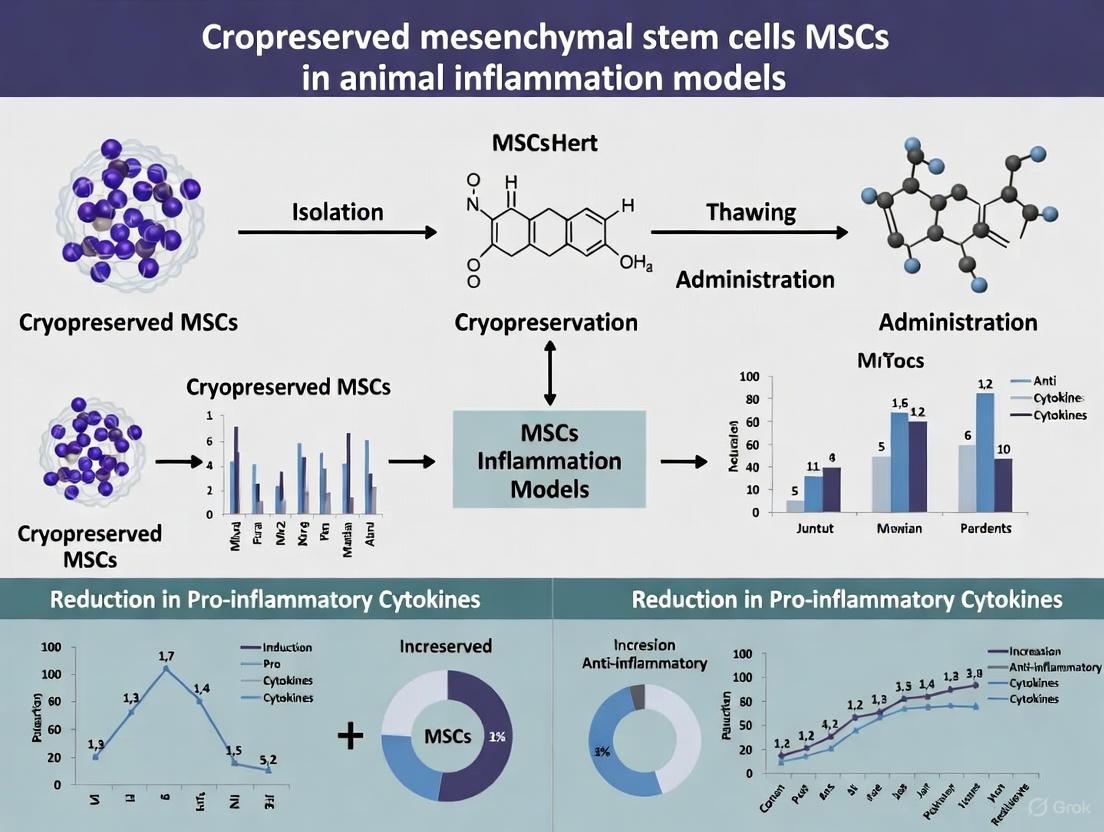
This article synthesizes current preclinical evidence on the therapeutic efficacy of cryopreserved mesenchymal stromal cells (MSCs) compared to freshly cultured cells in animal models of inflammation.
Cryopreserved vs. Freshly Cultured MSCs: A Systematic Analysis of Efficacy in Preclinical Inflammation Models
Abstract
This article synthesizes current preclinical evidence on the therapeutic efficacy of cryopreserved mesenchymal stromal cells (MSCs) compared to freshly cultured cells in animal models of inflammation. With the advancement of MSC-based therapies, the need for readily available 'off-the-shelf' products for acute conditions like sepsis and ARDS is paramount. We explore the foundational biology of MSCs and the impact of cryopreservation, present methodological approaches for using thawed cells in research, analyze comparative efficacy data across diverse inflammatory disease models, and discuss strategies for optimizing potency. Evidence from systematic reviews and experimental studies indicates that cryopreserved MSCs largely retain their immunomodulatory, anti-inflammatory, and tissue-reparative functions, supporting their feasibility for clinical translation and accelerating the development of accessible cell therapies for researchers and drug development professionals.
MSC Biology and the Cryopreservation Imperative for Regenerative Medicine
Table 1: International Society for Cellular Therapy (ISCT) Minimal Defining Criteria for Human MSCs
| Criteria Category | Specific Requirement | Key Details |
|---|---|---|
| Morphological | Plastic-adherence in standard culture | Must adhere to plastic culture surfaces when maintained under standard conditions [1]. |
| Cell Surface Marker Expression (Positive) | ≥95% of population must express CD105, CD73, and CD90 | CD105 (Endoglin), CD73 (5'-ectonucleotidase), CD90 (Thy-1) [2] [1]. |
| Cell Surface Marker Expression (Negative) | ≤2% of population must lack expression of CD45, CD34, CD14 or CD11b, CD79α or CD19, and HLA-DR | Absence of hematopoietic (CD45, CD34), monocytic (CD14/CD11b), and B-cell (CD79α/CD19) markers. Lack of HLA-DR indicates low immunogenicity [2] [1] [3]. |
| Functional | Trilineage differentiation potential | Must be able to differentiate into osteoblasts, adipocytes, and chondrocytes in vitro under standard differentiation protocols [1] [4]. |
Mesenchymal Stromal Cells (MSCs) have emerged as a highly promising tool in regenerative medicine and immunology due to their unique dual capabilities of modulating the immune system and promoting tissue repair [2]. Originally identified in the bone marrow by Friedenstein and colleagues as adherent, fibroblast-like cells capable of forming bone [2] [5], MSCs are now known to reside in virtually all tissues, including adipose tissue, umbilical cord, and dental pulp [3]. The therapeutic potential of MSCs is primarily attributed to their potent paracrine activity, whereby they secrete a vast array of bioactive molecules—including growth factors, cytokines, and extracellular vesicles—that coordinate immunomodulation and regeneration [6] [3]. This guide objectively defines MSCs based on the gold-standard International Society for Cellular Therapy (ISCT) criteria and details their key functional properties, with a specific focus on evaluating their efficacy in preclinical models of inflammation, a critical context for their development as "off-the-shelf" cryopreserved therapies.
The ISCT Minimal Criteria: A Standardized Framework
To address widespread heterogeneity in MSC research, the ISCT Mesenchymal and Tissue Stem Cell Committee established minimal criteria for defining human MSCs, which have become the foundational standard for the field [1]. These criteria, summarized in Table 1, ensure a uniform baseline for characterizing cells and facilitate reliable data comparison across different studies and laboratories. It is crucial to note that the ISCT recommends using the term "Multipotent Mesenchymal Stromal Cells" as the minimal descriptor, while "Mesenchymal Stem Cells" should only be used if demonstrated that the cells possess stem cell properties in vivo [7]. Adherence to these criteria is the first critical step in ensuring the validity and reproducibility of any MSC-based research or therapeutic application.
Key Functional Properties of MSCs
Beyond their defining surface markers, MSCs possess powerful functional properties that underpin their therapeutic potential. These are largely mediated through paracrine signaling and direct cell-to-cell contact.
Immunomodulatory Capacities
MSCs can dynamically modulate both innate and adaptive immune responses, making them attractive for treating inflammatory disorders [8] [3]. Their immunosuppressive effects are not constitutive but are licensed by inflammatory cytokines such as interferon-gamma (IFN-γ) and tumor necrosis factor-alpha (TNF-α) in the microenvironment [8].
- Modulation of Innate Immunity: MSCs reprogram monocytes and macrophages away from a pro-inflammatory (M1) phenotype toward an anti-inflammatory (M2) state, characterized by increased secretion of IL-10 and reduced production of TNF-α and IL-12 [8]. This is mediated by soluble molecules like PGE2, IDO, and TSG-6. Furthermore, MSCs inhibit the maturation and antigen-presenting capacity of dendritic cells (DCs) [8].
- Modulation of Adaptive Immunity: MSCs effectively suppress the proliferation and pro-inflammatory function of T helper 1 (Th1) and Th17 cells while promoting the expansion and function of regulatory T cells (Tregs) [8]. They also impair the cytotoxic activity of CD8+ T cells and inhibit B cell differentiation, proliferation, and antibody production [8].
The following diagram illustrates the key immunomodulatory pathways and cellular interactions mediated by MSCs.
Paracrine Secretory Profile
The therapeutic benefits of MSCs are largely attributed to a "hit-and-run" mechanism, where their secreted factors mediate effects despite limited long-term engraftment [3]. The MSC secretome includes:
- Growth Factors: Vascular Endothelial Growth Factor (VEGF), Hepatocyte Growth Factor (HGF), and Fibroblast Growth Factor (FGF) promote angiogenesis and tissue repair [6] [3].
- Immunomodulatory Factors: Indoleamine 2,3-dioxygenase (IDO), Prostaglandin E2 (PGE2), and Tumor Necrosis Factor-Inducible Gene 6 Protein (TSG-6) suppress excessive immune activation [8] [3].
- Extracellular Vesicles (EVs): MSC-derived exosomes and microvesicles carry proteins, lipids, and nucleic acids (e.g., miRNAs) that can modify recipient cell behavior, offering a potential cell-free therapeutic alternative [6].
Evaluating MSC Efficacy: A Focus on Cryopreservation in Inflammation Models
A critical question in translational MSC research is whether cryopreserved ("freshly thawed") MSCs retain the therapeutic efficacy of continuously cultured ("freshly cultured") cells, especially for acute inflammatory conditions where an "off-the-shelf" product is essential [9].
Experimental Protocol for Comparing MSC Efficacy
Preclinical systematic reviews aim to synthesize evidence from animal models of inflammation (e.g., sepsis, acute lung injury, arthritis) to compare these two MSC preparation states [9]. A standardized experimental workflow is crucial for generating comparable data.
Detailed Methodology:
- MSC Preparation and Characterization: MSCs are isolated from a chosen source (e.g., bone marrow, umbilical cord) and expanded in vitro. A critical first step is full characterization according to ISCT criteria (Table 1) to confirm cell identity [9].
- Experimental Group Allocation: The characterized MSC population is split into two arms:
- Freshly Cultured (Control): Cells are maintained in continuous culture and administered during their logarithmic growth phase.
- Freshly Thawed (Intervention): Cells are cryopreserved using standard protocols (e.g., in liquid nitrogen with DMSO-based cryoprotectant) for a defined duration. For the experiment, they are rapidly thawed and administered within 24 hours, with minimal post-thaw culture [9].
- In Vivo Intervention: An animal model of inflammation (e.g., sepsis induced by cecal ligation and puncture, or acute lung injury induced by LPS) is established. Both MSC preparations are administered systemically (e.g., intravenously) or locally during or after injury induction [9].
- Outcome Assessment:
- Primary Outcomes (In Vivo Efficacy):
- Organ Dysfunction: Assessed via physiological measurements (e.g., arterial oxygen saturation in lung injury, serum creatinine in kidney injury).
- Histopathological Damage: Tissues (e.g., lung, liver, gut) are harvested, sectioned, stained (e.g., H&E), and scored by a blinded pathologist for inflammation, injury, and damage.
- Systemic Inflammation: Levels of key pro-inflammatory (e.g., TNF-α, IL-6) and anti-inflammatory (e.g., IL-10) cytokines in blood or tissue homogenates are measured by ELISA [9].
- Secondary Outcomes (In Vitro Potency):
- Immune Cell Co-culture Assays: The inhibitory capacity of MSCs on immune cell proliferation (e.g., mitogen-stimulated T cells) is quantified.
- Secretome Analysis: Expression of key immunomodulatory molecules (e.g., IDO, PGE2) is measured by ELISA or multiplex assays [9].
- Primary Outcomes (In Vivo Efficacy):
Quantitative Data from Preclinical Models
Table 2: Summary of Key Efficacy Outcomes in Preclinical Inflammatory Models
| Model / Disease | Measured Parameter | Freshly Cultured MSCs | Freshly Thawed MSCs | Key Findings & Context |
|---|---|---|---|---|
| Sepsis / Systemic Inflammation | Survival Rate | Variable improvement (e.g., 60-80%) | Comparable or modestly reduced efficacy | Efficacy may depend on timing of administration and MSC source [9]. |
| Plasma IL-6 (Pro-inflammatory) | Significant reduction | Significant reduction (may be less potent) | Reduction in pro-inflammatory cytokines is a consistent finding [8] [9]. | |
| Acute Lung Injury | Lung Histopathology Score | Significant improvement | Significant improvement | Some studies show thawed MSCs require ~24h culture to fully recover function [4] [9]. |
| Alveolar Fluid Clearance | Enhanced | Enhanced | Mediated by paracrine factors like KGF [3]. | |
| In Vitro Potency Assays | T-cell Proliferation Inhibition | Strong suppression (e.g., >70%) | Variable suppression (e.g., 50-80%) | Potency loss is a debated issue; some studies show no difference, others show significant reduction [9]. |
| IDO Activity | High | Can be retained post-thaw | IDO is a key MSC immunomodulatory mechanism induced by IFN-γ [8] [3]. |
The Scientist's Toolkit: Essential Reagents for MSC Research
Table 3: Key Research Reagent Solutions for MSC Experiments
| Reagent / Material | Function & Application in MSC Research |
|---|---|
| Fetal Bovine Serum (FBS) | Standard component of culture media for MSC expansion and maintenance. Variability between lots can significantly impact MSC phenotype and function, requiring careful lot testing [6]. |
| Trypsin-EDTA | Enzyme solution used for detaching adherent MSCs from plastic culture flasks during routine passaging. |
| Dimethyl Sulfoxide (DMSO) | A cryoprotectant used in freezing media to prevent ice crystal formation and protect MSCs during the cryopreservation process [9]. |
| Defined MSC Media | Serum-free, xeno-free culture media formulations designed to provide a more standardized and clinically relevant environment for MSC expansion than FBS-containing media. |
| Recombinant Cytokines (IFN-γ, TNF-α) | Used to "license" or pre-condition MSCs in vitro to enhance their immunomodulatory potency before administration in experimental models [8] [4]. |
| Flow Cytometry Antibody Panels | Fluorescently-labeled antibodies against CD105, CD73, CD90, CD45, CD34, CD14, CD19, and HLA-DR are essential for characterizing MSCs according to ISCT criteria [1]. |
| Differentiation Kits (Osteo/Adipo/Chondro) | Commercially available kits containing specific induction media and stains (e.g., Alizarin Red for osteogenesis, Oil Red O for adipogenesis) to confirm MSC trilineage potential [1] [4]. |
Defining MSCs by the consensus ISCT criteria—plastic-adherence, specific surface marker profile, and trilineage differentiation potential—provides the necessary foundation for rigorous research and reliable clinical translation [1]. Their key functional properties, particularly their immunomodulatory and paracrine capabilities, make them powerful tools for treating inflammatory conditions [8] [3]. The critical evaluation of cryopreserved versus freshly cultured MSCs in preclinical inflammation models remains an active area of investigation, with current evidence indicating that while cryopreserved cells are a viable "off-the-shelf" option, their functional potency can be variable [9]. Future research must focus on optimizing cryopreservation protocols, standardizing potency assays, and conducting rigorous, well-controlled preclinical studies to fully unlock the potential of MSC-based therapies.
Mesenchymal Stem/Stromal Cells (MSCs) have emerged as a highly promising therapeutic strategy in regenerative medicine due to their remarkable capacity to modulate immune responses and promote tissue repair [2]. Originally identified for their ability to differentiate into mesodermal lineages like osteocytes, chondrocytes, and adipocytes, the therapeutic paradigm has shifted from direct cell differentiation and replacement to a more complex mechanism centered on paracrine activity and immunomodulation [10] [6]. These cells, which can be isolated from bone marrow, adipose tissue, umbilical cord, and other tissues, produce and secrete a vast array of bioactive molecules—including growth factors, cytokines, chemokines, and extracellular vesicles (EVs)—that collectively create a regenerative microenvironment [2] [11]. This review delves into the mechanisms through which cryopreserved MSCs exert their therapeutic effects in inflammatory contexts, providing a critical comparison of their immunomodulatory and paracrine functions, supported by experimental data from animal models.
Immunomodulatory Mechanisms of MSCs
The immunomodulatory capacity of MSCs is a key mediator of their therapeutic effect in inflammatory diseases. This function is not constitutive but is rather activated and enhanced by the inflammatory microenvironment itself [12]. Through direct cell-to-cell contact and the release of soluble factors, MSCs engage with a wide spectrum of immune cells, effectively dampening detrimental pro-inflammatory responses and promoting a regulatory or anti-inflammatory state.
Table 1: Immunomodulatory Effects of MSCs on Key Immune Cells
| Target Immune Cell | Mechanism of MSC Action | Key Soluble Factors Involved | Outcome |
|---|---|---|---|
| T Lymphocytes | Suppress activation and proliferation of pro-inflammatory T cells (e.g., Th1, Th17); promote expansion of regulatory T cells (Tregs) [2] [6]. | PGE2, IDO, TGF-β, HGF, Galectins [12] [6]. | Shift from pro-inflammatory to anti-inflammatory or tolerant immune response. |
| Macrophages | Induce polarization from pro-inflammatory M1 phenotype to anti-inflammatory, tissue-repairing M2 phenotype [12]. | PGE2, IDO, TSG-6, IL-10 [12]. | Reduced tissue damage, enhanced phagocytosis, promotion of tissue remodeling. |
| B Lymphocytes | Inhibit B cell proliferation, plasma cell differentiation, and antibody production [2]. | IDO, PGE2, soluble factors yet to be fully characterized [2]. | Modulation of humoral immunity, potentially reducing autoantibody production. |
| Dendritic Cells | Inhibit maturation and antigen-presenting capacity [2]. | IL-10, PGE2, other factors [2]. | Attenuation of T cell priming and activation. |
| Monocytes | Rescue impaired phagocytic capacity under inflammatory conditions [13]. | Factors not fully specified; demonstrated in LPS-induced models [13]. | Enhanced bacterial clearance, particularly relevant in sepsis models. |
A pivotal mechanism involves the NF-κB signaling pathway, a master regulator of inflammation. In conditions like osteoarthritis, pro-inflammatory factors such as TNF-α and IL-1β activate this pathway, leading to the transcription of more inflammatory mediators and matrix-degrading enzymes. MSC-derived factors, notably PGE2, can inhibit NF-κB nuclear translocation, thereby breaking this cycle and reducing the release of IL-1β, TNF-α, and IL-6 [12]. Furthermore, the anti-inflammatory glycoprotein TSG-6 (TNF-α-stimulated gene 6 protein), secreted by MSCs in response to inflammatory signals, has been shown to inhibit the TLR2/NF-κB pathway, significantly improving the local inflammatory microenvironment [12].
Paracrine Signaling and the MSC Secretome
The paracrine hypothesis posits that the primary therapeutic benefits of MSCs are mediated by their secretome—the collective array of factors they release, including soluble proteins and extracellular vesicles (EVs) like exosomes [10] [6]. This secretome is dynamic and responsive, its composition altered by the local tissue microenvironment, a concept known as "licensing" [11].
Table 2: Key Bioactive Factors in the MSC Secretome and Their Functions
| Secreted Factor / Vesicle | Type | Primary Documented Functions in Inflammation |
|---|---|---|
| TNF-α-Stimulated Gene 6 (TSG-6) | Soluble Protein | Potent anti-inflammatory; inhibits NF-κB pathway and neutrophil migration; reduces matrix degradation [12]. |
| Prostaglandin E2 (PGE2) | Lipid Mediator | Shifts macrophages from M1 to M2 phenotype; inhibits NF-κB; suppresses T cell and NK cell proliferation [12]. |
| Indoleamine 2,3-Dioxygenase (IDO) | Enzyme | Depletes local tryptophan, suppressing T cell proliferation; induces immunomodulation [12]. |
| Transforming Growth Factor-β (TGF-β) | Growth Factor | Promotes Treg differentiation; inhibits T cell and macrophage activation [12]. |
| Interleukin-10 (IL-10) | Cytokine | Potent anti-inflammatory cytokine; inhibits pro-inflammatory cytokine production [12]. |
| Extracellular Vesicles (EVs)/Exosomes | Vesicles | Carry proteins, lipids, and nucleic acids (e.g., miRNA); can transfer anti-inflammatory miR-206 to chondrocytes to inhibit inflammation and apoptosis [12]. |
The secretome acts through multiple coordinated mechanisms. It provides trophic support to endangered tissue cells, promoting cell survival and proliferation via growth factors like VEGF and HGF. It exerts a direct anti-apoptotic effect on resident cells and powerfully modulates the immune system as detailed in Table 2. Furthermore, MSC-derived exosomes can stimulate angiogenesis, crucial for healing ischemic tissues, and enhance tissue remodeling [6]. The functional impact is evident in experiments where the secretome alone, without cells, can replicate the therapeutic benefits of MSC transplantation in animal models of diseases like osteoarthritis [12].
Cryopreservation and MSC Therapeutic Potency
The transition from fresh to cryopreserved MSC products is critical for their off-the-shelf availability and clinical feasibility. A central question is whether cryopreservation, typically using Dimethyl Sulfoxide (DMSO) as a cryoprotectant, impairs the critical therapeutic functions of MSCs. Recent studies directly address this in the context of inflammation models.
Table 3: Comparison of Cryopreservation Protocols and Functional Outcomes in Inflammation Models
| Experimental Variable | Post-Thaw Washing (DMSO Removal) | Post-Thaw Dilution (DMSO Retention ~5%) | Reference / Model |
|---|---|---|---|
| Cell Recovery | Significant reduction (~45% drop) due to centrifugation loss [13]. | Minimal reduction (~5% drop) [13]. | Potency and toxicology study [13]. |
| Apoptosis (24h post-thaw) | Significantly higher population of early apoptotic cells [13]. | Fewer cells undergoing apoptosis [13]. | Potency and toxicology study [13]. |
| In Vitro Potency | Effective in rescuing LPS-induced suppression of monocytic phagocytosis [13]. | Equally effective as washed MSCs; no functional impairment [13]. | LPS-treated PBMC phagocytosis assay [13]. |
| In Vivo Safety & Efficacy | Not tested in this specific study. | No DMSO-related adverse effects on mortality, body weight, temperature, or organ injury markers [13]. | Polymicrobial sepsis mouse model [13]. |
| Systemic Exposure Risk | Low systemic DMSO exposure. | Doses 2.5–30x lower than the 1 g/kg accepted in HSC transplants; isolated infusion reactions with premedication [14]. | Human clinical data and toxicology reviews [14]. |
The data indicate that while the process of post-thaw washing to remove DMSO can cause significant cell loss and stress, simply diluting the product to a lower DMSO concentration (e.g., 5%) preserves cell yield and viability without compromising therapeutic potency. Importantly, MSCs cryopreserved with DMSO and administered after dilution retain their key immunomodulatory function, such as rescuing the phagocytic capacity of monocytes suppressed by LPS—a critical model for sepsis [13]. Toxicology studies in septic mice and immunocompromised rats further confirm that the administration of cryopreserved MSCs with residual DMSO does not cause detectable adverse effects on survival or organ injury markers [13].
Experimental Protocols for Evaluating MSC Potency
To ensure the efficacy of cryopreserved MSCs, standardized experimental protocols are essential for quantifying their immunomodulatory and paracrine capacities. Below are detailed methodologies for key assays cited in the literature.
In Vitro Phagocytosis Rescue Assay (for Sepsis/Immunomodulation)
This assay tests the core potency of MSCs to restore immune function under inflammatory stress [13].
- Step 1: Monocyte Suppression. Isolate human Peripheral Blood Mononuclear Cells (PBMCs) and treat them with bacterial Lipopolysaccharide (LPS). LPS exposure significantly suppresses the phagocytic ability of CD14+ monocytes.
- Step 2: MSC Coculture. Coculture the LPS-suppressed PBMCs with the test MSCs (e.g., Washed vs. Diluted cryopreserved MSCs). A common setup uses a transwell system to separate the cells, allowing the study of paracrine effects without direct contact.
- Step 3: Phagocytosis Measurement. After coculture, incubate the monocytes with fluorescently labeled bacteria (e.g., E. coli bioparticles). Analyze the cells using flow cytometry to quantify the fluorescence intensity within CD14+ monocytes, which directly correlates with phagocytic capacity.
- Step 4: Potency Quantification. The potency of the MSCs is determined by the extent to which they rescue the phagocytosis rate of monocytes back to baseline (untreated) levels.
In Vivo Efficacy in Polymicrobial Sepsis Model
This model assesses the therapeutic effect of cryopreserved MSCs in a complex, acute inflammatory disease [13].
- Step 1: Sepsis Induction. Induce a lifelike sepsis in mice via cecal ligation and puncture (CLP). This procedure creates a polymicrobial infection originating from the animal's own intestinal flora.
- Step 2: MSC Administration. At a defined time point post-CLP (e.g., 1-2 hours), intravenously administer the test MSCs (e.g., Diluted MSCs containing ~5% DMSO). Include control groups receiving vehicle solution or washed MSCs.
- Step 3: Outcome Monitoring. Monitor survival rates over several days. Track clinical parameters like body weight loss and hypothermia. At endpoints, collect blood and organs to quantify biomarkers of organ injury (e.g., creatinine, liver enzymes) and measure levels of key pro-inflammatory cytokines (e.g., TNF-α, IL-6) via ELISA.
Analysis of Anti-Inflammatory Paracrine Activity
This protocol evaluates the secretome's ability to directly suppress inflammation in target cells [12].
- Step 1: MSC Priming and Conditioned Media Collection. Culture MSCs in a standard medium, then "prime" them by switching to a medium containing a pro-inflammatory cytokine like IFN-γ or TNF-α for 24-48 hours. This mimics licensing in an inflammatory microenvironment. Collect the supernatant, which becomes the "conditioned medium" (CM) containing the active secretome.
- Step 2: Target Cell Stimulation. Take a relevant target cell line (e.g., primary chondrocytes for OA models or a macrophage cell line like RAW 264.7) and pre-treat them with the MSC-CM.
- Step 3: Inflammatory Challenge. Challenge the pre-treated cells with a potent inflammatory inducer like IL-1β.
- Step 4: Effect Measurement. After incubation, measure the downstream effects:
- Gene/Protein Expression: Use qPCR or ELISA to quantify the expression of pro-inflammatory genes (e.g., IL-6, TNF-α) and matrix-degrading enzymes (e.g., MMP-13).
- Signaling Pathway Analysis: Use western blotting to analyze the activation status of key signaling pathways like NF-κB (e.g., nuclear translocation of p65 subunit) or MAPK.
Signaling Pathways in MSC-Mediated Immunomodulation
The following diagram synthesizes the key signaling pathways by which MSCs sense inflammation and exert their paracrine immunomodulatory effects, as documented in the search results.
The Scientist's Toolkit: Essential Reagents for MSC Research
Table 4: Key Research Reagent Solutions for MSC-based Immunology Studies
| Reagent / Material | Function in Experimental Protocol | Specific Example / Context |
|---|---|---|
| Dimethyl Sulfoxide (DMSO) | Standard cryoprotectant for slow-freezing cryopreservation of MSCs [15] [16]. | Typically used at 10% (v/v) concentration; post-thaw dilution to 5% for administration [13] [14]. |
| Lipopolysaccharide (LPS) | Pathogen-associated molecular pattern (PAMP) used to induce a robust pro-inflammatory response in vitro and in vivo [13]. | Used to suppress monocyte phagocytosis in potency assays; used to model inflammatory stimulation [13]. |
| Annexin V / Propidium Iodide (PI) | Fluorescent dyes for flow cytometry-based detection of apoptosis and cell viability post-thaw [13]. | Distinguishes live (AV-/PI-), early apoptotic (AV+/PI-), and late apoptotic/necrotic (AV+/PI+) cells [13]. |
| Ficoll-Paque | Density gradient medium for the isolation of Peripheral Blood Mononuclear Cells (PBMCs) from whole blood [13]. | Essential for obtaining monocytes and lymphocytes for in vitro immunomodulation co-culture assays [13]. |
| Recombinant Cytokines (e.g., IFN-γ, TNF-α, IL-1β) | Used to "prime" or "license" MSCs in vitro to enhance their immunomodulatory secretome [12] [11]. | Pre-treatment of MSCs with IFN-γ potently induces IDO expression, boosting immunosuppressive capacity [12]. |
| ELISA Kits | Quantitative measurement of specific cytokines (e.g., TNF-α, IL-6, IL-10) or biomarkers in cell culture supernatant or animal serum [13] [12]. | Critical for quantifying the inflammatory status and the anti-inflammatory effect of MSC treatment. |
| Anti-human CD Markers (CD73, CD90, CD105) | Antibodies for flow cytometric verification of MSC surface phenotype, a criterion for identity [10] [2]. | Confirmation that cells are >95% positive for these markers and negative for hematopoietic markers (e.g., CD45, CD34) [2]. |
| Transwell/Cell Culture Inserts | Permeable supports for co-culture experiments, allowing study of paracrine effects without direct cell-cell contact [12]. | Used to demonstrate that MSC-mediated immunomodulation is primarily via soluble factors [12]. |
The therapeutic efficacy of MSCs in inflammation is unequivocally rooted in their potent immunomodulatory and paracrine functions. The data confirms that cryopreservation, particularly with optimized protocols that minimize processing stress, yields MSCs that retain their critical capacity to modulate immune cells like macrophages and monocytes and secrete a potent, restorative secretome. The residual DMSO in such off-the-shelf products, at concentrations typically administered, does not present significant safety risks in animal models and is considerably lower than doses accepted in other human therapies [13] [14]. For the field to advance, the standardization of potency assays, such as the phagocytosis rescue assay, and the continued refinement of cryopreservation protocols are paramount. Future research should focus on further deciphering the composition of the licensed secretome and harnessing the potential of purified extracellular vesicles, potentially leading to a new generation of cell-free, MSC-derived therapeutics for inflammatory diseases.
Cryopreservation as a Practical Necessity for Off-the-Shelf Therapies
For researchers developing mesenchymal stromal cell (MSC)-based therapies for inflammatory diseases, cryopreservation represents more than a storage convenience—it is a fundamental practical necessity for enabling "off-the-shelf" availability and ensuring consistent product quality. MSCs have emerged as highly promising therapeutic candidates due to their immunomodulatory properties, ability to home to sites of inflammation, and capacity to promote tissue repair through paracrine signaling [2]. The transition from preclinical animal studies to clinically viable therapies requires stabilization of cellular products through cryopreservation, allowing for comprehensive quality control testing, transportation, and immediate availability for treating acute inflammatory conditions [17].
The therapeutic efficacy of MSCs in animal inflammation models depends critically on maintaining their functional potency after thawing. Studies demonstrate that cryopreserved MSCs maintain their ability to modulate immune responses by interacting with T cells, macrophages, and dendritic cells, and through the release of immunoregulatory molecules that play crucial roles in controlling inflammatory processes [2]. This review objectively compares current cryopreservation methodologies through the lens of experimental data, providing researchers with evidence-based guidance for selecting and optimizing protocols that preserve the critical biological functions of MSCs in inflammatory disease models.
Comparative Analysis of Cryopreservation Methodologies
Impact of Cryopreservation Solutions on MSC Quality Parameters
The choice of cryopreservation solution significantly influences post-thaw MSC characteristics. Tan et al. (2024) systematically compared three clinical-ready formulations with one research cryopreservation solution, evaluating key quality parameters of post-thaw MSCs cryopreserved at different cell densities [17].
Table 1: Comparison of Cryopreservation Solutions and Their Impact on MSC Quality Parameters
| Cryopreservation Solution | DMSO Concentration | Post-thaw Viability | Cell Recovery | Proliferative Capacity | Immunomodulatory Potency |
|---|---|---|---|---|---|
| NutriFreez | 10% | Comparable viability up to 6 hours | Maintained | Similar growth after 6-day culture | Preserved T-cell inhibition and improved monocytic phagocytosis |
| PLA/5% HA/10% DMSO (PHD10) | 10% | Comparable viability up to 6 hours | Maintained | Similar growth after 6-day culture | Preserved T-cell inhibition and improved monocytic phagocytosis |
| CryoStor CS5 | 5% | Decreasing trend over time | Decreasing trend | 10-fold less at 3M/mL and 6M/mL | Not specified |
| CryoStor CS10 | 10% | Comparable viability up to 6 hours | Maintained | 10-fold less at 3M/mL and 6M/mL | Not specified |
The study revealed that MSCs could be cryopreserved at densities up to 9 million cells/mL without notable loss of viability or recovery when using appropriate solutions. Critically, cells cryopreserved in NutriFreez and PHD10 demonstrated comparable immunomodulatory potency in functional assays measuring T-cell proliferation inhibition and enhancement of monocytic phagocytosis—key mechanisms relevant to inflammatory disease models [17].
Post-Thaw Acclimation: Restoring Functional Potency
A critical consideration for researchers using MSCs in animal inflammation models is the temporal recovery of cellular function post-thaw. A 2019 study systematically compared MSC characteristics across three conditions: fresh cells (FC), freshly thawed cells (FT), and thawed cells acclimated for 24 hours (TT) [18].
Table 2: Functional Recovery of MSCs Following Thawing and Acclimation
| Parameter | Fresh Cells (FC) | Freshly Thawed (FT) | Thawed + 24h Acclimation (TT) |
|---|---|---|---|
| Viability | Normal | Significantly increased apoptosis | Significantly reduced apoptosis |
| Phenotypic Markers | Normal expression | Decreased CD44 and CD105 | Restored to normal levels |
| Metabolic Activity | Normal | Significantly increased | Normalized |
| Clonogenic Capacity | Normal | Decreased | Restored |
| Immunomodulatory Gene Expression | Normal | Downregulated | Upregulated angiogenic and anti-inflammatory genes |
| T-cell Proliferation Inhibition | Significant arrest | Significant arrest | Significantly more potent |
| Multipotent Differentiation | Maintained | Maintained | Maintained |
The findings demonstrate that while freshly thawed MSCs maintain their multipotent differentiation capacity and basic immunomodulatory function, a 24-hour acclimation period enables recovery of diminished stem cell functions [18]. This has profound implications for designing animal studies, as administering MSCs immediately after thawing may yield different therapeutic outcomes compared to allowing a recovery period.
Expansion Systems and Cryopreservation-Induced Phenotypic Changes
The expansion system used prior to cryopreservation can influence how MSCs respond to freeze-thaw cycles. A 2024 study compared cryopreserved adipose-derived stem cells (ASCs) expanded in traditional tissue culture polystyrene (TCP) flasks versus hollow fiber bioreactor (HFB) systems [19].
While both systems produced cells with similar viability (>90% post-thaw), clonogenicity, differentiation capability, and proliferation potentials, significant differences emerged in specific surface markers. TCP-expanded cells showed a significant decrease in CD105 expression after freeze-thawing, dropping from >95% to only 75% positive cells [19]. CD105 (endoglin) is a type I membrane glycoprotein that is essential for cell migration and angiogenesis—both critical functions for addressing inflammatory processes in disease models [2].
The two expansion systems also supported different immunophenotypic subpopulations, influencing heterogeneity within ASC cultures. After thawing, TCP-expanded cells showed a significant increase in the CD73+, CD90+, CD105− subpopulation (SPA1) and a corresponding decrease in the CD73+, CD90+, CD105+ subpopulation (SPA2) [19]. These findings highlight that the pre-cryopreservation manufacturing process can introduce variability in cell populations that may impact experimental outcomes in animal inflammation studies.
Experimental Protocols for Cryopreservation and Post-Thaw Assessment
Optimized Thawing and Reconstitution Protocol
A 2023 study established a clinically compatible method for thawing and reconstituting cryopreserved MSCs that ensures high cell yield, viability, and stability [20]. The protocol addresses common pitfalls in post-thaw handling that can significantly impact cell quality and subsequent experimental results in animal studies.
Key Steps for Optimal MSC Reconstitution:
- Thawing Solution Composition: The presence of protein in the thawing solution is essential. Up to 50% of MSCs are lost when protein-free thawing solutions are used. Human serum albumin (HSA) at 2% concentration effectively prevents thawing-induced cell loss.
- Reconstitution Vehicle: Isotonic saline with 2% HSA proves superior to PBS or culture medium alone, ensuring >90% viability with no observed cell loss for at least 4 hours at room temperature.
- Cell Concentration: Reconstitution to very low concentrations (<10⁵ cells/mL) in protein-free vehicles results in instant cell loss (>40%) and reduced viability (<80%). Maintaining concentrations of 5 × 10⁶ MSCs/mL or higher during the post-thaw period preserves cell yield and function.
- Storage Conditions: Reconstituted cells maintain stability when stored in simple isotonic saline with HSA, providing a practical window for administration in animal studies without significant loss of viability [20].
Functional Potency Assessment Protocols
To ensure cryopreserved MSCs maintain their therapeutic potential for inflammation models, researchers should implement the following functional assessments based on established methodologies:
Immunomodulatory Capacity Assessment:
- T-cell Proliferation Assay: Co-culture MSCs with activated peripheral blood mononuclear cells (PBMCs) and measure T-cell proliferation using CFSE dilution or ³H-thymidine incorporation [18] [17]. Cryopreserved MSCs should maintain significant ability to arrest T-cell proliferation.
- Anti-inflammatory Gene Expression: Analyze expression of angiogenic and anti-inflammatory genes (e.g., PGE2, IL-10, TGF-β) using RT-qPCR after a 24-hour post-thaw acclimation period [18].
- Phagocytosis Assay: Assess the enhancement of monocytic phagocytosis capability following co-culture with MSCs, a key function in resolving inflammation [17].
Multipotent Differentiation Capacity:
- Osteogenic Differentiation: Culture MSCs in osteogenic differentiation media for 21 days, then assess calcium deposition by Alizarin Red S staining [19] [18].
- Chondrogenic Differentiation: Form micromass cultures in chondrogenic media for 14 days, then evaluate sulfated proteoglycan content by Alcian Blue staining [18].
- Adipogenic Differentiation: Culture in adipogenic induction media for 14-21 days, then lipid accumulation by Oil Red O staining [19].
The Scientist's Toolkit: Essential Research Reagents
Table 3: Key Research Reagents for MSC Cryopreservation and Functional Assessment
| Reagent/Consumable | Function | Research Considerations |
|---|---|---|
| DMSO (Dimethyl Sulfoxide) | Cryoprotectant that prevents ice crystal formation | Concentration (5-10%) impacts post-thaw function; cytotoxic effects require post-thaw removal [18] |
| Human Serum Albumin (HSA) | Protein component in cryopreservation and thawing solutions | Prevents thawing- and dilution-induced cell loss; clinical-grade recommended [20] |
| NutriFreez | Commercial cryopreservation solution | Maintains viability, recovery, and proliferative capacity; regulatory compliant [17] |
| Annexin V/PI Staining | Apoptosis and viability assessment | Quantifies early and late apoptotic cells post-thaw; critical for potency assessment [18] [17] |
| Flow Cytometry Panel | Immunophenotyping | Verify MSC markers (CD73, CD90, CD105); monitor cryopreservation-induced changes [19] [18] |
| hPL (Human Platelet Lysate) | Culture medium supplement | Xeno-free expansion; influences pre-freeze cell state and post-thaw recovery [20] |
| T-cell Proliferation Assay Kits | Potency assessment | Measure immunomodulatory function retention; critical for inflammatory disease models [18] [17] |
Visualizing Experimental Workflows and Cellular Processes
Post-Thaw MSC Recovery and Acclimation Process
Experimental Comparison of Expansion and Cryopreservation Systems
For researchers investigating MSC therapies in animal inflammation models, cryopreservation strategy directly impacts experimental outcomes and translational potential. The evidence indicates that cryopreserved MSCs can maintain their critical immunomodulatory functions when appropriate protocols are implemented, including selection of optimized cryopreservation solutions, proper post-thaw handling techniques, and consideration of a recovery period for full functional potency.
The choice between expansion systems, cryopreservation formulations, and post-thaw handling protocols should be guided by the specific functional attributes most relevant to the target disease model. By implementing the standardized, evidence-based methodologies presented in this review, researchers can enhance the reproducibility and translational relevance of their preclinical studies using cryopreserved MSCs for inflammatory disease applications.
The translation of mesenchymal stem cell (MSC) therapies from preclinical research to clinical applications faces significant logistical challenges, with cryopreservation representing a pivotal juncture in this process. For MSCs to become viable as "off-the-shelf" products for urgent medical applications, including the treatment of inflammatory conditions, they must withstand the rigors of freeze-thaw cycles while retaining their therapeutic potency [21]. The theoretical concerns are substantial: cryopreservation has the potential to induce multiple forms of cellular damage, including intracellular ice crystal formation, osmotic stress, membrane disruption, and apoptosis, which could collectively diminish cell viability and function [15] [22]. Understanding these impacts is particularly crucial within the context of animal inflammation models, where the immunomodulatory and reparative functions of MSCs are being evaluated for potential human therapies.
The controversy surrounding cryopreservation's effects persists in the scientific community. While some studies suggest cryopreserved MSCs may lose functionality, others indicate that properly preserved cells retain their therapeutic characteristics [21]. This review systematically examines the experimental evidence comparing fresh and cryopreserved MSCs, analyzes the mechanisms of cryoinjury, and provides standardized protocols to maximize post-thaw viability and function in preclinical research settings.
Direct Experimental Comparisons: Fresh vs. Cryopreserved MSCs
Evidence from In Vivo Inflammation Models
A comprehensive systematic review of preclinical models of inflammation provides compelling evidence regarding the efficacy of cryopreserved MSCs. This analysis, which examined 18 studies encompassing 257 in vivo experiments and 101 distinct outcome measures, found that only 2.3% (6/257) of outcomes showed statistically significant differences between freshly cultured and cryopreserved MSCs [21]. Notably, within this small percentage of divergent outcomes, two experiments favored freshly cultured MSCs while four favored cryopreserved MSCs, suggesting no systematic disadvantage for cryopreserved cells in inflammatory disease models [21].
Table 1: Summary of In Vivo Efficacy Outcomes from Preclinical Systematic Review
| Outcome Category | Total Experiments | Significantly Different Outcomes | Favoring Fresh MSCs | Favoring Cryopreserved MSCs |
|---|---|---|---|---|
| All In Vivo Efficacy Measures | 257 | 6 (2.3%) | 2 (0.8%) | 4 (1.6%) |
| Disease Models | Includes ALI, sepsis, MI, MS, GvHD, OA, IBD | - | - | - |
| Key Conclusion | >97% of outcomes showed no significant difference at p<0.05 |
Source: Adapted from Dave C et al. elife 2022 [21]
Specific disease models have yielded further insights. In an osteoarthritis rat model, both fresh and frozen bone marrow aspirate concentrate (BMAC) - which contains MSCs - significantly improved histological cartilage scores compared to PBS control, with no significant difference observed between the fresh and frozen treatment groups [23]. This demonstrates that the cartilage repair capacity was preserved after freezing at -80°C for four weeks, supporting the potential for single harvest with storage for multiple injections [23].
In Vitro Functional Assessments
In vitro studies provide more nuanced insights into the functional preservation of cryopreserved MSCs. The same systematic review analyzed 68 in vitro experiments representing 32 different potency measures, finding that 13% (9/68) showed significant differences [21]. Among these, seven experiments favored freshly cultured MSCs while two favored cryopreserved MSCs, indicating somewhat more detectable functional impacts in vitro than in vivo [21].
However, specific functionality appears well-preserved under proper cryopreservation conditions. Research on BMAC found that MSC proliferation and multilineage differentiation remained similar after being frozen for 4 weeks at -80°C [23]. Colony-forming unit (CFU) capacity, a measure of clonogenic potential, has also been shown to be preserved in cryopreserved MSCs under optimized conditions [24].
Table 2: In Vitro Potency Comparisons Between Fresh and Cryopreserved MSCs
| Functional Assay | Reported Outcome | Experimental Details |
|---|---|---|
| Proliferation Capacity | Preserved after freezing | Similar growth rates post-thaw [23] |
| Multilineage Differentiation | Maintained | Osteogenic, chondrogenic, adipogenic potential preserved [23] |
| Immunomodulatory Function | Mostly preserved | T cell suppression maintained with cell cycle synchronization [25] |
| Colony Forming Unit (CFU) Assay | Enhanced with optimized media | Higher colonies in MSC-Brew GMP Medium [24] |
| Surface Marker Expression | Maintained post-thaw | >95% viability and marker expression in GMP-validated studies [24] |
Understanding Cryoinjury: Mechanisms and Mitigation Strategies
Fundamental Cryoinjury Mechanisms
The process of cryopreservation imposes multiple stresses on cells, with several identified mechanisms of damage:
Intracellular Ice Crystal Formation: At high cooling rates, intracellular water freezes, forming ice crystals that physically damage membranes and organelles [15]. This represents one of the most significant causes of immediate cell death during cryopreservation.
Solution Effects and Osmotic Stress: At slow cooling rates, extracellular ice formation increases solute concentration in the unfrozen fraction, creating hypertonic conditions that draw water out of cells, leading to detrimental dehydration and solute concentration [22].
Cell Cycle-Dependent Vulnerability: Recent research has identified that S phase MSCs are exquisitely sensitive to cryoinjury, demonstrating heightened levels of delayed apoptosis post-thaw and reduced immunomodulatory function [25]. This cell cycle-dependent vulnerability represents a fundamental mechanism of cryoinjury previously underestimated in MSC cryopreservation.
Cryoprotectant Toxicity: While cryoprotective agents (CPAs) like dimethyl sulfoxide (DMSO) are essential for preventing ice formation, they can exert toxic effects on cells both during the freezing process and after thawing [15] [22].
Figure 1: Mechanisms of Cryoinjury in MSCs. Cryopreservation-induced damage occurs through physical, chemical, and apoptotic pathways, with recent research highlighting S phase sensitivity as a key vulnerability [25] [15].
Advanced Mitigation Strategies
Cell Cycle Synchronization
A groundbreaking approach to mitigating cryoinjury involves cell cycle synchronization prior to freezing. Research has demonstrated that blocking cell cycle progression at G0/G1 through growth factor deprivation (serum starvation) greatly reduced post-thaw dysfunction of MSCs by preventing apoptosis induced by double-stranded breaks in labile replicating DNA [25]. This strategy preserved viability, clonal growth, and T cell suppression function at pre-cryopreservation levels, performing equally well as cells primed with interferon gamma (IFNγ) [25].
Cryoprotectant Optimization
The composition of cryoprotective media significantly influences post-thaw recovery. Two main approaches dominate:
Slow Freezing: The most common clinical and laboratory method, utilizing controlled cooling rates (typically -1°C to -3°C/min) with permeating CPAs like DMSO (typically 10%) alone or combined with non-permeating agents like sucrose or trehalose [15]. This method achieves approximately 70-80% cell survival [15].
Vitrification: An alternative approach using high CPA concentrations and ultra-rapid cooling to achieve a glassy state without ice crystal formation [15]. While potentially reducing ice crystal damage, this method introduces challenges of CPA toxicity and requires precise protocol optimization.
Table 3: Cryoprotectant Strategies for MSC Preservation
| Cryoprotectant Type | Examples | Mechanism of Action | Advantages | Disadvantages |
|---|---|---|---|---|
| Penetrating (Intracellular) | DMSO, Glycerol, Ethylene Glycol | Penetrates cell, binds intracellular water, reduces ice formation | Highly effective, reduces intracellular ice | Toxicity concerns, must be removed post-thaw |
| Non-Penetrating (Extracellular) | Sucrose, Trehalose, Ficoll, HES | Extracellular action, binds water, stabilizes membranes | Lower toxicity, osmotic buffer | Less effective alone, often requires combinations |
| Combination Approaches | DMSO + Sucrose/Trehalose | Balanced intracellular and extracellular protection | Enhanced survival, reduced CPA toxicity | More complex formulation |
Source: Adapted from Rogulska et al. Cells 2022 and Zhan et al. Stem Cell Research & Therapy 2024 [15] [22]
Standardized Experimental Protocols for Cryopreservation Studies
Protocol 1: Standard Slow Freezing of MSC Suspensions
This protocol, adapted from BMAC cryopreservation studies, provides a baseline method for preserving MSC suspensions [23]:
Pre-freeze Processing: Centrifuge fresh BMAC at 1500× g for 10 min and collect the buffy coat.
Cryoprotectant Formulation: Resuspend cells in 10% dimethyl sulfoxide (DMSO) and 90% autologous plasma at a density of 1 million cells/mL.
Controlled-Rate Freezing: Use a passive freezing container (e.g., Mr. Frosty) or controlled-rate freezer for cooling at approximately -1°C/min.
Storage: Transfer to -80°C freezer for storage (tested for at least 4 weeks in studies).
Thawing Procedure: Rapidly thaw in a 37°C water bath until ice crystals dissolve.
CPA Removal: Dilute with pre-warmed culture medium and centrifuge at 300× g for 5 min to remove DMSO.
Post-thaw Culture: Resuspend in growth media (αMEM with 20% FBS, 1% Penicillin/Streptomycin, and 10 ng/mL FGF-2) and culture under standard conditions.
Protocol 2: Cell Cycle Synchronization Method
This advanced protocol specifically addresses the S-phase vulnerability identified in fundamental cryoinjury research [25]:
Pre-cryopreservation Culture: Expand MSCs in standard growth media to 70-80% confluence.
Cell Cycle Arrest: Replace growth media with serum-free media for 24-48 hours to induce growth factor deprivation and G0/G1 cell cycle arrest.
Cell Cycle Verification: Confirm cell cycle status through flow cytometry (optional but recommended).
Cryopreservation: Harvest synchronized cells and cryopreserve using standard slow freezing protocol with 10% DMSO.
Post-thaw Analysis: Assess viability, apoptosis markers (e.g., Annexin V), and DNA damage markers (e.g., γH2AX) to confirm reduced cryoinjury.
Protocol 3: GMP-Compliant Cryopreservation with Animal-Free Media
For translational research requiring Good Manufacturing Practice (GMP) compliance, this protocol utilizes animal component-free systems [24]:
Isolation and Expansion: Isolate MSCs (e.g., from infrapatellar fat pad) and expand using MSC-Brew GMP Medium or MesenCult-ACF Plus Medium.
Cell Harvesting: Harvest at P2-P3 when reaching 80-90% confluency.
Cryoprotectant Formulation: Use clinical-grade DMSO (typically 5-10%) in combination with human serum albumin or other GMP-compliant carriers.
Controlled-Rate Freezing: Employ validated controlled-rate freezer with appropriate documentation.
Quality Control: Assess post-thaw viability (>70% required, >95% achieved in validation studies), sterility, endotoxin, mycoplasma, and surface marker expression.
Stability Testing: Validate storage stability (up to 180 days demonstrated in GMP studies).
Figure 2: Experimental Workflow for Cryopreservation Studies. Researchers can select from standardized, cell cycle synchronization, or GMP-compliant protocols based on their specific research requirements [23] [24] [25].
The Scientist's Toolkit: Essential Research Reagents and Materials
Table 4: Essential Research Reagents for MSC Cryopreservation Studies
| Reagent/Material | Function/Purpose | Example Products/Sources |
|---|---|---|
| Basal Culture Media | MSC expansion and maintenance | αMEM, DMEM, MSC-Brew GMP Medium [24] |
| Cryoprotective Agents | Prevent ice crystal formation during freezing | DMSO, Glycerol, Ethylene Glycol [15] [22] |
| Non-Penetrating CPAs | Provide extracellular protection | Sucrose, Trehalose, Ficoll [15] |
| Serum Alternatives | GMP-compliant culture supplements | Human platelet lysate, MSC-Brew GMP Medium [24] |
| Controlled-Rate Freezers | Standardized freezing protocols | Mr. Frosty, programmable freezers [23] |
| Viability Assays | Post-thaw cell quality assessment | Trypan Blue exclusion, flow cytometry [24] |
| Functional Assay Kits | Assessment of MSC potency | CFU-F kits, differentiation kits, immunosuppression assays [23] [25] |
| Cell Cycle Analysis Tools | Cell synchronization validation | Flow cytometry with propidium iodide [25] |
The collective evidence from preclinical studies demonstrates that properly executed cryopreservation protocols generally maintain the therapeutic efficacy of MSCs in animal inflammation models. While subtle differences in certain in vitro potency assays occasionally favor fresh MSCs, these distinctions rarely translate to significant functional differences in vivo, where the complex biological environment may activate compensatory mechanisms or where cryopreserved cells rapidly recover function [21].
The emerging understanding of cell cycle-dependent cryoinjury and the development of mitigation strategies like serum starvation prior to freezing represent significant advances in the field [25]. Furthermore, the standardization of GMP-compliant, animal component-free protocols facilitates the transition from research-grade to clinically applicable MSC products [24].
Future research directions should focus on several key areas:
- Development of DMSO-free cryoprotectant formulations to eliminate potential toxicity concerns
- Optimization of thawing and immediate post-thaw handling protocols to enhance cell recovery
- Exploration of priming strategies to enhance specific functional attributes post-thaw
- Standardization of potency assays that better predict in vivo performance in specific disease models
As cryopreservation protocols continue to refine, the gap between fresh and cryopreserved MSCs is likely to narrow further, supporting the development of effective "off-the-shelf" MSC products for inflammatory conditions and enhancing the reproducibility and translational potential of preclinical research.
Implementing Cryopreserved MSCs in Preclinical Inflammation Research
Animal models serve as an indispensable bridge between in vitro discoveries and clinical applications in regenerative medicine. For research on Mesenchymal Stem/Stromal Cell (MSC) therapies, robust and reproducible animal models are essential for evaluating therapeutic efficacy, understanding mechanisms of action, and ensuring safety prior to human trials. The establishment of reliable models is particularly crucial for studying inflammatory conditions such as sepsis and autoimmune disorders, where the complex interplay between immune cells, inflammatory mediators, and tissue damage cannot be fully replicated in simple cell culture systems. Current advancements in animal modeling have led to the development of more human-relevant systems, including "humanized" mice carrying human genes, cells, or tissues, and "naturalized" mice exposed to diverse environmental factors to better mimic human immune responses [26].
The therapeutic potential of MSCs across various human diseases has been widely explored in both preclinical models and clinical trials [2]. These multipotent cells demonstrate significant immunomodulatory properties, making them particularly attractive for treating conditions characterized by dysregulated immune responses. However, translating MSC therapies from laboratory research to clinical practice requires addressing critical logistical challenges, particularly the need for "off-the-shelf" products that can be administered promptly in acute medical situations. This has led to increased focus on cryopreserved MSC products, which offer practical advantages over freshly cultured cells but require thorough validation in physiologically relevant animal models [13] [27].
This guide provides a comprehensive comparison of established animal models for inflammation research, with particular emphasis on LPS-induced sepsis models and their application in evaluating the efficacy of cryopreserved MSCs. We present detailed experimental protocols, quantitative efficacy data, signaling pathways, and essential research tools to assist researchers in selecting and implementing the most appropriate models for their investigative needs.
Comparative Analysis of Animal Inflammation Models
LPS-Induced Sepsis Models
Mechanism and Applications: Lipopolysaccharide (LPS)-induced models represent a well-established and reproducible approach for studying sepsis and systemic inflammation. LPS, a key component of Gram-negative bacterial cell walls, triggers a predictable inflammatory cascade through specific recognition by the innate immune system. When administered to animals, LPS binds to LPS-binding protein (LBP), which transfers it to membrane protein CD14 on immune cells, ultimately forming a complex with Toll-like receptor 4 (TLR4) and MD2 [28]. This activation leads to downstream signaling that culminates in the production of pro-inflammatory cytokines, including TNF-α, IL-1β, IL-6, and IL-8 [29] [28]. The LPS model is particularly valuable for studying the early hyperinflammatory phase of sepsis and for screening potential therapeutic interventions, including MSC-based therapies.
Advantages and Limitations: The key advantage of LPS models lies in their standardization and reproducibility; LPS can be qualitatively and quantitatively standardized, resulting in consistent inflammatory responses across experimental groups [28]. The model's simplicity and sterility compared to live infection models reduce variability, while the well-characterized signaling pathways dependent on TLR4 facilitate mechanistic studies [28]. However, this model does not fully replicate the complexity of polymicrobial sepsis, particularly the later immunosuppressive phase, and may not completely mimic clinical sepsis progression in humans [28].
Cecal Ligation and Puncture (CLP) Models
Mechanism and Applications: The cecal ligation and puncture (CLP) model involves surgically exposing the cecum, ligating a portion of it, and puncturing the ligated segment to allow leakage of intestinal contents into the peritoneal cavity [28]. This procedure creates a polymicrobial infection originating from the animal's own intestinal flora, leading to peritonitis and subsequent systemic sepsis. The CLP model reproduces the clinical progression of sepsis more accurately than LPS models, as it involves live bacteria and the development of localized infection that progresses to systemic inflammation.
Advantages and Limitations: The primary strength of the CLP model is its clinical relevance, as it mimics the disease process caused by endogenous bacterial translocation and infection similar to human sepsis [28]. It captures both the hyperinflammatory and immunosuppressive phases of sepsis and allows for the study of bacterial clearance mechanisms. However, this model presents significant technical challenges, including variability in the severity of sepsis depending on the size of the cecum ligated, the number and size of punctures, and the composition of the individual animal's gut microbiota [28]. The surgical complexity also requires significant expertise to maintain consistency across experiments.
Autoimmune Disorder Models
While detailed analysis of autoimmune models is beyond the scope of this guide, several well-established systems are commonly used in MSC research. These include experimental autoimmune encephalomyelitis (EAE) for multiple sclerosis, collagen-induced arthritis (CIA) for rheumatoid arthritis, and dextran sulfate sodium (DSS)-induced colitis for inflammatory bowel disease. These models share with sepsis models the importance of appropriate induction methods, monitoring parameters, and endpoint selection for evaluating MSC therapeutic efficacy.
Table: Comparison of LPS-Induced and CLP Sepsis Models
| Characteristic | LPS-Induced Model | CLP Model |
|---|---|---|
| Mechanism | Systemic administration of bacterial endotoxin [28] | Surgical ligation and puncture of cecum [28] |
| Inflammation Type | Acute, systemic inflammation [29] | Polymicrobial sepsis with localized infection [28] |
| Technical Difficulty | Simple injection | Complex surgical procedure [28] |
| Reproducibility | High (standardized doses) [28] | Moderate to low (operator-dependent) [28] |
| Clinical Relevance | Models early hyperinflammatory phase [28] | Closely mimics human sepsis progression [28] |
| Immune Response | Primarily innate immunity via TLR4 [29] [28] | Both innate and adaptive immunity |
| Cost | Low | Moderate to high |
| Time Course | Rapid onset (hours) [29] | Progressive (days) [28] |
| Mortality Rate | Dose-dependent | Dependent on ligation length/puncture size [28] |
LPS Signaling Pathway and Experimental Workflow
Molecular Mechanisms of LPS Action
The inflammatory response triggered by LPS follows a well-defined molecular pathway that can be visualized through the following mechanism:
Diagram 1: LPS-induced TLR4/NF-κB signaling pathway. This pathway illustrates the molecular mechanism by which LPS binding to TLR4/MD2 complex triggers downstream signaling leading to pro-inflammatory cytokine production and systemic inflammation [29] [28].
The LPS signaling cascade begins when circulating LPS binds to LPS-binding protein (LBP), which facilitates its transfer to the cluster of differentiation 14 (CD14) receptor on immune cells such as monocytes and macrophages [28]. CD14 then presents LPS to the Toll-like receptor 4 (TLR4) and myeloid differentiation factor 2 (MD2) complex, initiating intracellular signaling primarily through the MyD88-dependent pathway [29] [28]. This leads to activation of IL-1 receptor-associated kinase (IRAK), TNF receptor-associated factor 6 (TRAF6), and TGF-β-activated kinase 1 (TAK1), which phosphorylates the IκB kinase (IKK) complex [28]. The IKK complex then phosphorylates IκBα, targeting it for degradation and releasing nuclear factor kappa B (NF-κB) [29] [28]. NF-κB translocates to the nucleus where it binds to specific promoter regions, initiating transcription of pro-inflammatory cytokines including TNF-α, IL-1β, IL-6, and IL-8 [29] [28]. These mediators collectively trigger the systemic inflammatory response characteristic of sepsis.
Experimental Workflow for LPS-Induced Sepsis Studies
A standardized experimental workflow ensures reproducible results in LPS-induced sepsis models investigating MSC therapies:
Diagram 2: Experimental workflow for LPS-induced sepsis studies. This standardized protocol ensures consistent evaluation of MSC therapeutic efficacy in inflammation models [13] [29].
The typical experimental workflow begins with proper animal preparation, commonly using 8-12 week old female Swiss albino or C57BL/6 mice, allowing at least one week for acclimatization to housing conditions [29]. Animals are then randomized to experimental groups to minimize bias. Sepsis is induced via intraperitoneal injection of LPS at 1 mg/kg body weight, though dose adjustments may be necessary based on the specific research objectives and animal strain [29]. MSC treatments (cryopreserved or freshly cultured) are administered either concurrently or at specified time points post-LPS challenge. Intensive monitoring follows, including regular measurement of body weight, temperature, and behavioral assessments [13]. Sample collection involves obtaining blood for plasma cytokine analysis and tissues for histopathological examination. Comprehensive endpoint analysis includes quantification of inflammatory markers, organ function assessments, and histological evaluation of tissue damage [13] [29].
Efficacy Data: Cryopreserved vs. Freshly Cultured MSCs
In Vivo Efficacy Outcomes
The therapeutic efficacy of cryopreserved MSCs has been systematically evaluated across multiple inflammation models, with outcomes compared to freshly cultured MSCs:
Table: In Vivo Efficacy Outcomes of Cryopreserved vs. Fresh MSCs in Inflammation Models
| Disease Model | Outcome Measures | Cryopreserved MSC Efficacy | Fresh MSC Efficacy | Significant Difference |
|---|---|---|---|---|
| Polymicrobial Sepsis | Mortality, body weight loss, body temperature, organ injury markers [13] | No adverse effects on measured parameters [13] | Similar therapeutic profile [13] | No significant difference [13] |
| Multiple Inflammatory Models (Systematic Review) | 257 experiments representing 101 outcome measures [27] | Effective in resolving inflammation | Effective in resolving inflammation | Only 2.3% (6/257) showed significant differences [27] |
| Cardiovascular Disease (Clinical) | Left ventricular ejection fraction (LVEF) improvement [30] | 2.11% improvement in LVEF [30] | Comparable improvement | No sustained difference at 12 months [30] |
| LPS-Induced Phagocytosis Defect | Rescue of monocytic phagocytosis capacity [13] | Significant rescue of phagocytosis [13] | Equivalent rescue effect [13] | No detectable differences [13] |
The comparative data demonstrate remarkable consistency between cryopreserved and freshly cultured MSCs across diverse inflammation models. In polymicrobial sepsis models, cryopreserved MSCs containing DMSO showed no adverse effects on mortality, body weight loss, body temperature, or organ injury markers [13]. A comprehensive systematic review of preclinical studies revealed that across 257 in vivo experiments representing 101 distinct outcome measures, only 6 (2.3%) showed statistically significant differences between cryopreserved and fresh MSCs, with two favoring fresh MSCs and four favoring cryopreserved products [27]. This compelling evidence supports the comparable efficacy of properly cryopreserved MSCs despite concerns about potential functional impairment during freezing and thawing processes.
In Vitro Potency and Cellular Characteristics
Critical quality attributes of MSCs post-thaw significantly influence their therapeutic performance:
Table: In Vitro Characterization of Cryopreserved MSCs
| Parameter | Cryopreserved MSCs | Freshly Cultured MSCs | Functional Significance |
|---|---|---|---|
| Cell Recovery | ~95% with dilution method [13] | Reference standard | Higher recovery with dilution vs. washing [13] |
| Apoptosis Rate | Higher early apoptotic cells with washing [13] | Lower apoptotic cells | Dilution method reduces apoptosis [13] |
| Viability | Similar up to 24h post-thaw [13] | Maintained viability | No significant difference between groups [13] |
| Proliferative Capacity | Similar fold expansion (24-25 fold) [13] | Equivalent expansion | No impairment from DMSO exposure [13] |
| Metabolic Activity | No significant difference in lactate production [13] | Normal metabolic activity | Similar metabolic profiles [13] |
| Immunomodulatory Potency | Equivalent rescue of phagocytosis [13] | Effective immunomodulation | No detectable functional differences [13] |
Processing methods after thawing significantly impact MSC quality attributes. The dilution method (reducing DMSO concentration to 5% v/v) demonstrates superior cell recovery compared to washing procedures (95% vs. approximately 55%) [13]. This recovery advantage is likely due to reduced cell loss and stress during the less disruptive dilution process. While viability measurements immediately post-thaw are similar between processing methods, flow cytometry analysis reveals important differences in apoptosis profiles. Washed MSCs show significantly higher populations of early apoptotic cells (annexin V+/PI-) at 24 hours compared to diluted MSCs [13]. Importantly, both processing methods yield MSCs with equivalent morphology, proliferative capacity, metabolic activity, and critically, immunomodulatory potency in rescuing impaired monocyte phagocytosis function [13].
Detailed Experimental Protocols
LPS-Induced Sepsis Model Protocol
Materials and Reagents:
- Animals: 8-12 week old female Swiss albino mice (25 ± 2.5 g) [29]
- LPS from E. coli (serotype O55:B5)
- Sterile phosphate-buffered saline (PBS)
- Anesthesia equipment (isoflurane or ketamine/xylazine)
- Temperature monitoring system
- Metabolic cages for housing
Procedure:
- Acclimatize mice for at least 7 days under specific pathogen-free conditions with a 12-h light/dark cycle at 22 ± 2°C and 40-60% relative humidity [29].
- Randomize animals into experimental groups (minimum n=6 per group): control (saline), LPS-only, LPS + cryopreserved MSCs, LPS + fresh MSCs.
- Prepare LPS solution at 1 mg/kg body weight in sterile PBS [29].
- Administer LPS via intraperitoneal injection using aseptic technique.
- Administer MSC treatments (1-5 × 10^6 cells/mouse) either concurrently or at predetermined time points post-LPS challenge via appropriate route (intravenous, intraperitoneal).
- Monitor animals every 6 hours for the first 48 hours, then twice daily for the study duration. Record body weight, core temperature, and behavioral scores.
- Collect blood samples at predetermined endpoints for plasma cytokine analysis (TNF-α, IL-6, IL-1β).
- Euthanize animals humanely at experimental endpoints and collect tissues (lung, liver, kidney, spleen) for histopathological analysis and biomarker assessment.
Key Considerations:
- LPS dose may require optimization based on animal strain, age, and desired severity of sepsis.
- Timing of MSC administration significantly influences therapeutic outcomes; early intervention typically provides greater benefit.
- Maintain strict aseptic technique during all procedures to prevent confounding infections.
Cryopreserved MSC Preparation and Administration
Materials and Reagents:
- Cryopreserved MSC vials (typically 1-5 × 10^6 cells/vial in 10% DMSO)
- Water bath (37°C)
- Complete culture medium (e.g., DMEM with 10% FBS)
- Centrifuge
- Hemocytometer or automated cell counter
- Trypan blue or fluorescent viability dyes
Thawing and Preparation Procedures:
- Rapidly thaw cryovials in a 37°C water bath with gentle agitation until only a small ice crystal remains (approximately 1-2 minutes).
- Transfer cell suspension to a sterile tube containing pre-warmed complete medium (at least 10x volume of cryovial content).
- Centrifuge at 300-400 × g for 5 minutes to pellet cells.
- Carefully aspirate supernatant containing DMSO and resuspend cells in appropriate administration medium.
- Perform cell count and viability assessment using trypan blue exclusion or automated cell counter.
- Adjust cell concentration to desired dose for administration.
Two Processing Methods:
- Dilution Method: Dilute thawed MSC product to reduce DMSO concentration to ≤5% v/v without centrifugation [13]. This method demonstrates higher cell recovery (approximately 95%) and reduced early apoptosis.
- Washing Method: Centrifuge thawed cells and resuspend in DMSO-free medium [13]. This approach reduces DMSO concentration more effectively but results in lower cell recovery (approximately 55%) and higher early apoptosis rates.
Administration:
- Maintain cells at room temperature and administer within 4 hours post-thaw [13].
- Common administration routes for sepsis models include intravenous (tail vein), intraperitoneal, or intratracheal injection.
- Standard doses range from 1-5 × 10^6 cells/mouse in 100-200μL volume.
Research Reagent Solutions Toolkit
Table: Essential Reagents for MSC Research in Inflammation Models
| Reagent/Category | Specific Examples | Research Application | Key Considerations |
|---|---|---|---|
| Cryoprotectants | Dimethyl sulfoxide (DMSO) [13] | Cell cryopreservation | Use at ≤10% concentration; toxicity concerns at higher concentrations [13] |
| Inflammation Inducers | LPS from E. coli [29] [28] | Sepsis model induction | Standardize dose (typically 1-5 mg/kg) and serotype for reproducibility [29] |
| MSC Characterization Antibodies | CD73, CD90, CD105 [2] | MSC phenotype confirmation | ≥95% expression required by ISCT criteria [2] |
| Negative Marker Antibodies | CD34, CD45, CD14, CD11b, CD79α, CD19, HLA-DR [2] | Purity assessment | ≤2% expression required by ISCT criteria [2] |
| Viability Assays | Trypan blue, Annexin V/PI [13] | Cell quality assessment | Annexin V/PI distinguishes early vs. late apoptosis [13] |
| Cytokine Detection | TNF-α, IL-6, IL-1β, IL-10 ELISA kits [29] | Inflammation monitoring | Multiplex platforms increase efficiency for multiple targets |
| Histopathology Reagents | Hematoxylin and Eosin, organ-specific stains | Tissue damage assessment | Standardized scoring systems enhance objectivity |
This research toolkit encompasses essential reagents required for establishing robust inflammation models and evaluating MSC therapeutic efficacy. DMSO remains the most widely used cryoprotectant despite potential toxicity concerns, with studies demonstrating that cryopreserved MSCs containing 10% DMSO, when properly processed, show no impairment in therapeutic efficacy in septic animals [13]. LPS represents the gold standard for inducing reproducible acute inflammation, with TLR4 signaling pathways well-characterized for mechanistic studies [29] [28]. Comprehensive MSC characterization using positive and negative marker panels is essential for validating cell identity and purity according to International Society for Cellular Therapy (ISCT) criteria [2]. Advanced viability assessment beyond simple dye exclusion, such as annexin V/propidium iodide staining, provides valuable information about apoptosis progression post-thaw [13].
Robust animal models, particularly LPS-induced sepsis systems, provide invaluable platforms for evaluating the therapeutic potential of MSC-based therapies for inflammatory disorders. The comprehensive comparison presented in this guide demonstrates that properly implemented LPS models offer standardized, reproducible systems for investigating MSC mechanisms of action and efficacy assessment. Critically, the accumulating evidence from both preclinical studies and clinical trials indicates that cryopreserved MSCs maintain comparable therapeutic efficacy to their freshly cultured counterparts across multiple inflammation models, supporting their feasibility as "off-the-shelf" therapeutics for acute conditions [13] [27] [30].
The selection of appropriate animal models should be guided by specific research objectives, with LPS models offering advantages for studying specific inflammatory pathways and screening therapeutic candidates, while CLP models provide greater clinical relevance for polymicrobial sepsis. Attention to standardized protocols, including consistent LPS dosing, proper MSC processing methods, and comprehensive endpoint analyses, ensures reliable and reproducible results. The research toolkit presented provides essential guidance for establishing these models and characterizing MSC products.
As the field advances, emerging approaches such as "humanized" and "naturalized" mouse models offer promising avenues for enhancing the translational relevance of preclinical findings [26]. These advanced systems, combined with standardized cryopreservation and quality assessment protocols, will further strengthen our ability to develop effective MSC-based therapies for inflammatory disorders.
Protocols for Thawing and Preparing Cryopreserved MSCs for In Vivo Administration
The therapeutic potential of mesenchymal stromal cells (MSCs) in regenerative medicine and immunomodulation has been extensively documented in preclinical and clinical studies [2]. For in vivo research and clinical applications, cryopreservation enables an "off-the-shelf" approach, using pre-expanded allogenic MSCs to overcome logistical challenges and support treatments for acute conditions [31] [32]. However, the post-thaw handling process—from thawing to administration—critically influences cell recovery, viability, and ultimately, therapeutic efficacy [31] [18]. Variations in MSC handling and the use of non-standardized reconstitution solutions have complicated clinical standardization of MSC-based therapies [31]. This guide objectively compares current protocols for thawing and preparing cryopreserved MSCs, providing supporting experimental data to help researchers optimize their procedures for in vivo administration.
Impact of Thawing and Reconstitution on MSC Quality and Potency
The process of thawing and reconstituting MSCs is not merely a logistical step but a critical determinant of cellular integrity and function. Research indicates that the conditions during this phase can significantly influence cell yield, viability, and therapeutic properties.
Post-Thaw Viability and Stability
Cryopreservation and subsequent thawing impose substantial stress on MSCs, potentially affecting their viability and functional attributes. Studies have reported varying levels of impairment in freshly thawed MSCs, including reduced metabolic activity, increased apoptosis, and cytoskeletal disruption [18] [33]. However, when optimized cryopreservation and thawing protocols are implemented, viability exceeding 95% can be achieved [32]. One study noted that while viability remained high immediately post-thaw, thawed MSCs exhibited higher levels of apoptotic cells beyond 4 hours compared to their cultured counterparts [34].
Immunomodulatory Potency
The effect of cryopreservation on MSC immunomodulatory function has been debated. Some reports suggest that thawed MSCs may have reduced immunosuppressive capacities, particularly in assays measuring T-cell proliferation inhibition [33]. This impairment has been attributed to disrupted cytoskeleton and reduced adhesion molecule expression immediately post-thaw [18]. However, other studies demonstrate that when viability is maintained throughout the cryopreservation process, MSC immunomodulatory potency is largely preserved [32]. A systematic review of preclinical studies found that the majority of in vivo efficacy outcomes showed no significant difference between freshly cultured and cryopreserved MSCs [21].
Comparative Analysis of Thawing and Reconstitution Solutions
The choice of solution for thawing and reconstituting MSCs significantly impacts cell recovery and stability. The following table summarizes key experimental findings from studies comparing different reconstitution approaches:
Table 1: Comparison of Thawing and Reconstitution Solutions for Cryopreserved MSCs
| Solution Composition | Cell Recovery | Viability | Stability Duration | Key Findings |
|---|---|---|---|---|
| Protein-free solutions (e.g., saline, PBS) | Up to 50% cell loss [31] | <80% [31] | Limited (<1 hour) [31] | Significant cell loss during thawing [31] |
| Isotonic saline with HSA | >90% recovery [31] | >90% [31] | At least 4 hours [31] | Prevents thawing- and dilution-induced cell loss [31] |
| Culture medium | >40% cell loss [31] | <80% [31] | Poor beyond 1 hour [31] | Demonstrates poor MSC stability [31] |
| PBS | >40% cell loss [31] | <80% [31] | Poor beyond 1 hour [31] | Widely used but demonstrates poor MSC stability [31] |
Protein Supplementation is Essential
The presence of protein in thawing solutions has been proven essential for maintaining MSC integrity. Studies demonstrate that thawing cryopreserved MSCs in protein-free solutions results in up to 50% cell loss [31]. The addition of human serum albumin (HSA) at 2% concentration effectively prevents this thawing-induced cell loss, serving as both a osmotic stabilizer and carrier protein [31].
Simple Isotonic Solutions Outperform Complex Buffers
Contrary to common practice, widely used solutions like phosphate-buffered saline (PBS) demonstrate poor performance for MSC reconstitution and post-thaw storage, with studies showing >40% cell loss and viability below 80% after just one hour of storage at room temperature [31]. Simple isotonic saline, when supplemented with HSA, appears to be a superior alternative, ensuring >90% viability with no observed cell loss for at least 4 hours [31].
Cell Concentration Considerations
Reconstitution of MSCs to appropriate concentrations is critical for maintaining cell viability. Diluting MSCs to concentrations below 10⁵/mL in protein-free vehicles results in instant cell loss (>40%) and reduced viability (<80%) [31]. Optimal concentrations for post-thaw storage typically range around 5×10⁶ MSCs/mL [31].
Post-Thaw Acclimation Period: Controversy and Evidence
The question of whether MSCs require an acclimation period after thawing before administration remains contentious, with conflicting evidence from different research groups.
Table 2: Comparison of Freshly Thawed versus Acclimated MSCs
| Parameter | Freshly Thawed MSCs | MSCs with 24-hour Acclimation |
|---|---|---|
| Viability | Slightly reduced [34] [18] | Improved [18] |
| Apoptosis | Significantly increased [18] | Significantly reduced [18] |
| Metabolic Activity | Decreased [18] | Restored [18] |
| Immunomodulatory Gene Expression | Reduced [18] | Upregulated [18] |
| T-cell Suppression Capacity | Maintained but potentially reduced [18] [32] | Enhanced potency [18] |
| In vivo Efficacy | Maintained in some models [34] [32] | Potentially improved [18] |
The Case for Immediate Use
Some studies demonstrate that cryopreserved MSCs retain therapeutic potency when administered immediately after thawing. In a retinal ischemia/reperfusion injury model, cryopreserved MSCs performed as well as fresh MSCs in rescuing retinal ganglion cells when injected just hours after the onset of ischemia [32]. Similarly, in a polymicrobial sepsis model, thawed MSCs showed comparable immunomodulatory efficacy to fresh cells in improving bacterial clearance and reducing inflammatory cytokines [34].
Evidence Supporting a Recovery Period
Other research indicates that a post-thaw acclimation period of 24 hours allows MSCs to recover certain functional attributes. One study reported that freshly thawed MSCs showed decreased expression of CD44 and CD105 surface markers, reduced clonogenic capacity, and increased apoptosis—defects that were largely reversed after 24 hours of culture [18]. Additionally, acclimated MSCs demonstrated significantly enhanced potency in suppressing T-cell proliferation and upregulated expression of angiogenic and anti-inflammatory genes [18].
Standardized Protocol for Thawing and Reconstitution
Based on the current evidence, the following protocol represents a clinically compatible method for MSC thawing and reconstitution that ensures high cell yield, viability, and stability [31]:
Materials and Equipment
- Cryopreserved MSCs (typically in DMSO-based cryoprotectant)
- Water bath or dry bath (37°C)
- Clinical-grade human serum albumin (HSA)
- Isotonic saline solution
- Centrifuge
- Cell counting equipment (hemocytometer or automated cell counter)
Step-by-Step Procedure
Quick Thawing: Rapidly thaw cryopreserved MSCs in a 37°C water bath until only a small ice crystal remains [15].
Protein-Supplemented Dilution: Immediately transfer the thawed cell suspension to a pre-prepared solution containing isotonic saline with 2% HSA to dilute the cryoprotectant [31].
Gentle Centrifugation: Centrifuge the cell suspension at 400-500 × g for 5-10 minutes to pellet the cells [31].
Cryoprotectant Removal: Carefully remove the supernatant containing the diluted cryoprotectant [15].
Proper Reconstitution: Resuspend the cell pellet in an appropriate volume of isotonic saline with HSA to achieve the desired concentration for administration (typically ≥10⁵ cells/mL) [31].
Timely Administration: Administer the reconstituted MSCs within 4 hours of thawing when stored at room temperature [31].
The Scientist's Toolkit: Essential Reagents for MSC Thawing
Table 3: Key Research Reagent Solutions for MSC Thawing and Preparation
| Reagent | Function | Considerations |
|---|---|---|
| Dimethyl Sulfoxide (DMSO) | Cryoprotectant that prevents ice crystal formation [15] | Cytotoxic at room temperature; must be diluted post-thaw [15] |
| Human Serum Albumin (HSA) | Protein source that prevents cell loss during thawing and dilution [31] | Clinical-grade recommended for translational studies; concentration typically 2% [31] |
| Isotonic Saline | Base solution for reconstitution [31] | Simpler composition shows better post-thaw stability compared to complex buffers [31] |
| Platelet Lysate | Culture medium supplement for post-thaw recovery [33] | Animal serum-free alternative for clinical translation [33] |
| Trypan Blue or 7-AAD | Viability assessment [31] [34] | 7-AAD with flow cytometry provides more accurate quantification [31] |
The protocols for thawing and preparing cryopreserved MSCs for in vivo administration significantly influence experimental outcomes and potential clinical efficacy. The optimal approach involves rapid thawing followed by immediate dilution in protein-supplemented isotonic solutions, with careful attention to cell concentration. While evidence supports both immediate use and post-thaw acclimation depending on the specific application, the standardization of these protocols is essential for improving reproducibility across different laboratories and clinical trials. As MSC therapies continue to advance toward clinical application, rigorous attention to these critical post-thaw handling procedures will enhance both the reliability of preclinical data and the success of translational efforts.
The therapeutic potential of mesenchymal stem cells (MSCs) in treating inflammatory conditions is well-established, yet the critical factor of administration timing remains a significant variable influencing treatment outcomes. Within the context of acute inflammatory models, the "window of opportunity" for MSC administration can determine whether these cells exert potent immunomodulatory effects or fail to mitigate the inflammatory cascade. This review examines the pivotal relationship between administration timing and therapeutic efficacy, with particular focus on cryopreserved MSCs—the most practical form for clinical and research applications. The temporal aspect of MSC therapy intersects with fundamental biological processes including the inflammatory cytokine milieu, immune cell recruitment dynamics, and the plasticity of MSC functional responses within different inflammatory environments.
Understanding these temporal considerations is essential for optimizing preclinical studies and designing effective clinical trials. Research indicates that MSCs possess context-dependent properties, with their immunomodulatory functions activated or suppressed by specific inflammatory signals present at different disease stages [2] [35]. This comprehensive analysis synthesizes evidence from multiple inflammatory models to establish data-driven recommendations for administration timing, providing researchers with a framework for maximizing therapeutic outcomes in acute inflammatory conditions using cryopreserved MSC products.
MSC Mechanisms of Action in Inflammation
The therapeutic effects of MSCs in inflammatory conditions are mediated through multiple interconnected mechanisms that are highly dependent on the host environment at the time of administration. MSCs interact with various immune cells through both direct cell-to-cell contact and paracrine signaling, releasing bioactive molecules including growth factors, cytokines, and extracellular vesicles [2]. These interactions can modulate the local cellular environment, promote tissue repair, angiogenesis, and cell survival, while exerting anti-inflammatory effects.
Key Immunomodulatory Pathways
T Cell Regulation: MSCs suppress pro-inflammatory T helper 1 (Th1) and T helper 17 (Th17) cell proliferation while promoting regulatory T cell (Treg) expansion, a mechanism demonstrated in type 1 diabetes models where MSC administration reversed hyperglycemia and shifted T cell responses toward immunotolerance [35].
Macrophage Polarization: MSCs reprogram macrophages from a pro-inflammatory M1 phenotype toward an anti-inflammatory M2 phenotype, facilitating tissue repair and inflammation resolution. This transition is particularly important in later stages of inflammation [2].
Soluble Factor Secretion: MSCs release numerous immunomodulatory factors including prostaglandin E2 (PGE2), indoleamine 2,3-dioxygenase (IDO), and interleukin-10 (IL-10) which suppress effector immune cell functions and create an anti-inflammatory microenvironment [35].
The activation of these mechanisms depends heavily on inflammatory signals present at the time of administration. MSCs require "licensing" by inflammatory cytokines such as interferon-γ (IFN-γ), tumor necrosis factor-α (TNF-α), and interleukin-1β (IL-1β) to fully exert their immunosuppressive capabilities [2]. This licensing phenomenon underscores the importance of administration timing, as the absence of appropriate inflammatory signals may result in limited therapeutic efficacy.
Comparative Analysis of Administration Timing Across Disease Models
The optimal timing for MSC administration varies significantly across different inflammatory conditions and model systems. The following analysis synthesizes evidence from preclinical studies to identify temporal patterns and therapeutic windows.
Table 1: Optimal MSC Administration Timing in Preclinical Inflammatory Models
| Disease Model | Optimal Timing | Experimental Evidence | Proposed Mechanism |
|---|---|---|---|
| Spinal Cord Injury | Subacute phase (≈7 days post-injury) | Network meta-analysis of 39 studies showed superior functional recovery with subacute transplantation [36] | Avoids initial cytotoxic environment; coincides with macrophage phenotype switching |
| Type 1 Diabetes (NOD mice) | Early disease or post-hyperglycemia | Reversal of hyperglycemia when administered after disease onset [35] | Modulation of autoreactive T cells and increased Treg frequency |
| Collagen-Induced Arthritis | Early inflammatory phase | Reduced incidence and severity when given early in disease course [35] | Interruption of initial autoimmune response before joint destruction |
| Bacterial Infections/Sepsis | Early infection phase (≤24 hours) | Improved survival and bacterial clearance with early administration [37] | Enhancement of early immune response and antimicrobial peptide secretion |
| Graft-versus-Host Disease | At time of transplant or early symptoms | Prevention of severe GVHD when administered prophylactically [35] | Early establishment of immunotolerant environment |
Temporal Considerations for Specific Conditions
In spinal cord injury models, a comprehensive systematic review and network meta-analysis of 39 studies revealed that transplantation in the subacute phase (approximately 7 days post-injury) demonstrated superior functional recovery compared to acute or chronic transplantation [36]. This temporal window coincides with the resolution of the initial cytotoxic environment and the period when macrophages begin switching from pro-inflammatory to anti-inflammatory phenotypes, creating a more permissive environment for MSC-mediated repair.
For autoimmune conditions such as type 1 diabetes and rheumatoid arthritis, studies demonstrate effectiveness both preventively and after disease establishment. In non-obese diabetic (NOD) mice, MSC administration after the onset of hyperglycemia successfully reversed disease progression, associated with a reduction in inflammatory CD4+ T cells and an increase in regulatory T cells [35]. Similarly, in collagen-induced arthritis models, MSCs reduced both disease incidence and severity, with better outcomes typically observed with earlier administration.
In bacterial infections, particularly sepsis models, early MSC administration (within 24 hours of infection) appears critical for optimal outcomes. A systematic review of MSC treatments for bacterial infections found that early administration enhanced bacterial clearance, reduced organ injury, and improved survival rates in rodent models [37]. This timing aligns with the period of initial immune activation, allowing MSCs to modulate the developing inflammatory response before excessive tissue damage occurs.
Cryopreserved vs. Fresh MSCs: Efficacy Comparison
The practical implementation of MSC therapies requires cryopreservation for off-the-shelf availability, raising questions about potential functional differences between cryopreserved and freshly cultured cells. A comprehensive systematic review directly addressed this question by analyzing 18 comparative preclinical studies of inflammation models [38].
Table 2: Functional Comparison of Freshly Cultured vs. Cryopreserved MSCs in Inflammatory Models
| Parameter | Freshly Cultured MSCs | Cryopreserved MSCs | Statistical Significance |
|---|---|---|---|
| In vivo efficacy outcomes | 101 distinct measures across models | Comparable in 257/257 experiments | No significant difference in 97.7% of outcomes |
| In vitro potency measures | 32 different assays | Comparable in 59/68 experiments | No significant difference in 87% of measures |
| Therapeutic advantages | 2 outcomes significantly favored fresh | 4 outcomes significantly favored cryopreserved | Minimal functional differences |
| Clinical applicability | Logistically challenging | Practical for off-the-shelf use | Cryopreserved preferred for clinical translation |
The analysis revealed that the overwhelming majority (97.7%) of in vivo efficacy outcomes showed no significant differences between fresh and cryopreserved MSCs across multiple inflammatory models [38]. Interestingly, among the small percentage of outcomes that did show statistically significant differences, cryopreserved MSCs actually demonstrated superior performance in four experiments, while fresh MSCs were superior in only two. These findings provide strong evidence that cryopreservation does not substantially compromise the therapeutic efficacy of MSCs, supporting their use in both research and clinical applications.
Experimental Protocols and Methodological Considerations
Standardized protocols are essential for generating reproducible data in MSC timing studies. The following section outlines key methodological approaches for investigating administration windows in acute inflammatory models.
Establishing the Inflammatory Model
Spinal Cord Injury Protocol:
- Utilize standardized contusion models in rodents (typically rats) to ensure consistent injury severity
- Assess functional outcomes using the Basso-Beattie-Bresnahan (BBB) Locomotor Rating Scale at multiple time points
- Define acute phase as 0-3 days, subacute as 4-14 days, and chronic as >28 days post-injury [36]
Autoimmune Disease Models:
- For type 1 diabetes, use NOD mice or streptozotocin-induced models with blood glucose monitoring
- For rheumatoid arthritis, employ collagen-induced arthritis with regular paw scoring
- Administer MSCs at predefined disease stages (pre-onset, early, established)
Bacterial Infection Models:
- Establish sepsis using cecal ligation and puncture or specific bacterial strains
- Determine bacterial load in target organs and monitor survival rates
- Administer MSCs at different time points relative to infection (e.g., 0, 6, 12, 24 hours post-infection) [37]
MSC Preparation and Administration
Cryopreservation Protocol:
- Use slow freezing method with controlled-rate freezing at approximately -1°C/min to -80°C followed by storage in liquid nitrogen
- Employ cryoprotectant medium typically containing 10% DMSO
- Thaw rapidly in 37°C water bath and wash to remove cryoprotectants before administration [16] [15]
Cell Characterization:
- Verify MSC phenotype through surface marker expression (CD73, CD90, CD105 positive; CD34, CD45 negative)
- Confirm multipotent differentiation capacity (osteogenic, adipogenic, chondrogenic)
- Assess viability post-thaw (typically >80% acceptable) [2] [15]
Administration Route:
- Tail vein injection for systemic delivery
- Local administration when appropriate (e.g., intra-articular for arthritis)
- Consider multiple dosing regimens for prolonged inflammatory conditions
Signaling Pathways in MSC-Mediated Immunomodulation
The therapeutic effects of MSCs are mediated through complex signaling pathways that vary based on the inflammatory environment encountered at different administration time points. The following diagram illustrates key pathways activated during MSC-mediated immunomodulation:
Pathway Activation Dynamics: The diagram illustrates how inflammatory signals (TNF-α, IFN-γ, IL-1β) present in the host environment at the time of administration activate MSCs, initiating multiple immunomodulatory pathways. This licensing phenomenon is time-dependent, requiring sufficient inflammatory stimulus to trigger maximal MSC therapeutic activity [2] [35]. The specific pathways activated may vary based on administration timing, with early administration potentially favoring antimicrobial peptide production, while later administration may enhance tissue repair factors.
The Scientist's Toolkit: Essential Research Reagents
Table 3: Key Reagents for MSC Timing Studies in Inflammatory Models
| Reagent/Category | Function | Examples/Specifications |
|---|---|---|
| Cryopreservation Media | Maintain MSC viability during freezing | DMSO (5-10%), serum-free commercial media, trehalose, hydroxyethyl starch |
| Cell Characterization Antibodies | Verify MSC identity post-thaw | CD73, CD90, CD105 (positive); CD34, CD45 (negative) [2] |
| Differentiation Kits | Confirm multipotency after cryopreservation | Adipogenic, osteogenic, chondrogenic induction media |
| Inflammation Modeling Reagents | Establish disease models | Collagen type II (arthritis), streptozotocin (diabetes), LPS (sepsis) |
| Cell Tracking Dyes | Monitor MSC migration and persistence | CFSE, PKH26, GFP-luciferase transduction |
| Viability Assays | Assess post-thaw cell quality | Trypan blue exclusion, flow cytometry with Annexin V/PI |
| Cytokine Detection Kits | Measure inflammatory environment | ELISA, Luminex, or ELISA-based arrays for TNF-α, IFN-γ, IL-1β, IL-10 |
| Functional Assay Kits | Evaluate immunomodulatory capacity | T cell suppression assays, IDO activity kits, macrophage polarization panels |
The timing of MSC administration represents a critical determinant of therapeutic success in acute inflammatory models. Evidence from multiple disease contexts indicates that optimal windows exist where the inflammatory environment maximizes MSC licensing while minimizing irreversible tissue damage. The subacute phase emerges as a consistently effective timing across several models, particularly in spinal cord injury where the meta-analysis demonstrated superior outcomes with transplantation approximately 7 days post-injury [36].
Crucially, cryopreserved MSCs demonstrate equivalent efficacy to freshly cultured cells in the vast majority of preclinical assessments, supporting their practical implementation in both research and clinical settings [38]. This finding is particularly significant given the logistical necessities of cryopreservation for off-the-shelf availability in acute clinical scenarios.
Future research should focus on identifying precise biomarkers that define optimal administration windows in specific inflammatory conditions, potentially through monitoring of cytokine profiles or immune cell populations. Additionally, preconditioning strategies to enhance MSC responsiveness to specific inflammatory environments warrant further investigation. As the field progresses, standardized protocols incorporating temporal optimization will be essential for translating the full therapeutic potential of MSC-based treatments for inflammatory diseases.
The transition of mesenchymal stem cell (MSC) therapies from laboratory research to clinical applications requires robust preclinical efficacy assessment in animal models of inflammation and infection. Researchers and drug development professionals must navigate a complex landscape of efficacy metrics while addressing practical considerations such as the use of cryopreserved versus freshly cultured cells. This guide provides a comprehensive framework for evaluating MSC therapeutic potential through standardized in vivo metrics, experimental protocols, and mechanistic insights.
Systematic analyses of preclinical studies demonstrate that MSCs significantly improve survival rates and enhance bacterial clearance in rodent models of bacterial infection, with bone marrow-derived MSCs (BM-MSCs) emerging as the most frequently used and effective type [39]. The growing emphasis on cryopreserved MSC products for "off-the-shelf" accessibility makes understanding their functional preservation paramount for clinical translation [40]. This guide objectively compares key efficacy metrics and methodologies to support evidence-based decisions in MSC therapeutic development.
Comparative Efficacy of Cryopreserved vs. Freshly Cultured MSCs
In Vivo Efficacy Outcomes
Table 1: Comparative Efficacy of Cryopreserved vs. Freshly Cultured MSCs in Preclinical Inflammation Models
| Efficacy Parameter | Cryopreserved MSCs | Freshly Cultured MSCs | Statistical Significance |
|---|---|---|---|
| Overall Survival | Comparable improvement | Comparable improvement | No significant difference (p<0.05) in 97.7% of experiments [21] |
| Bacterial Clearance | Significant reduction in bacterial load | Significant reduction in bacterial load | Consistent effects across studies [39] |
| Inflammatory Modulation | Effective cytokine regulation | Effective cytokine regulation | No significant difference in majority of outcomes [21] |
| Organ Function | Improved histopathological scores | Improved histopathological scores | Comparable benefits in organ dysfunction markers [21] |
| Immune Cell Modulation | Enhanced macrophage polarization, T-cell regulation | Enhanced macrophage polarization, T-cell regulation | Similar immunomodulatory potency [21] |
A comprehensive systematic review analyzing 257 in vivo preclinical efficacy experiments across inflammation models found that only 2.3% (6/257) of outcomes showed statistically significant differences between cryopreserved and freshly cultured MSCs. Among these limited significant findings, two favored freshly cultured MSCs while four actually favored cryopreserved MSCs [21]. This evidence strongly supports that cryopreservation does not substantially diminish MSC therapeutic efficacy in vivo.
In Vitro Potency Assays
Table 2: In Vitro Potency Comparison Between MSC Formulations
| Potency Assay | Cryopreserved MSCs | Freshly Cultured MSCs | Significant Differences |
|---|---|---|---|
| T-cell Suppression | Maintained inhibitory capacity | Maintained inhibitory capacity | 13% of experiments significant (mostly fresh) [21] |
| Macrophage Phagocytosis | Enhanced monocytic phagocytosis | Enhanced monocytic phagocytosis | No significant difference with optimal cryopreservation [40] |
| Surface Marker Expression | Preserved CD73, CD90, CD105 | Preserved CD73, CD90, CD105 | Comparable phenotype post-thaw [40] |
| Viability Recovery | >70% with optimized protocols | N/A | Protocol-dependent [40] |
| Proliferation Capacity | Reduced in some formulations | Normal | Significant with suboptimal cryopreservation [40] |
In vitro analyses revealed somewhat more variability, with 13% (9/68) of potency assays showing statistically significant differences. Notably, seven of these significant findings favored freshly cultured MSCs while two favored cryopreserved products [21]. This highlights the importance of optimizing cryopreservation protocols to maintain cellular functions, though these in vitro differences do not necessarily translate to reduced in vivo efficacy.
Methodological Framework for Efficacy Assessment
Survival Analysis Protocols
Survival rate improvement represents the most clinically relevant endpoint for MSC efficacy. Standardized protocols involve:
Experimental Design: Administer MSCs (typically 1×10^6 cells via intravenous or intraperitoneal route) 2-6 hours post-infection or inflammatory insult in rodent models [39]. Include vehicle-only and untreated controls.
Monitoring Protocol: Track survival for 7-14 days with frequent monitoring (every 6-12 hours) during critical periods (24-72 hours post-intervention) [39].
Data Analysis: Employ Kaplan-Meier survival curves with log-rank test for statistical comparison between groups. Calculate hazard ratios with confidence intervals to quantify treatment effects [39].
Systematic review data confirms that MSC administration significantly improves survival in rodent models of bacterial infection, with consistent benefits observed across studies regardless of cryopreservation status [39].
Bacterial Clearance Assessment
Quantifying bacterial load reduction provides direct evidence of MSC antimicrobial activity:
Sample Collection: Harvest target organs (lungs, liver, spleen, blood) at standardized timepoints (24, 48, 72 hours) post-MSC administration [39].
Processing Protocol: Homogenize tissues in sterile saline (1:10 w/v ratio), followed by serial dilution and plating on appropriate agar media [39].
Quantification Method: Incubate plates for 18-24 hours at 37°C, then enumerate colony-forming units (CFU). Express results as log10 CFU per gram of tissue or milliliter of fluid [39].
Quality Control: Include positive culture controls and sterile technique validation to prevent contamination.
MSCs enhance bacterial clearance through multiple mechanisms including direct antimicrobial peptide secretion (LL-37, β-defensin-2, hepcidin, lipocalin-2) and enhanced phagocytic activity of innate immune cells [39]. Preclinical studies demonstrate significant bacterial load reduction across Gram-positive and Gram-negative infection models [39].
Cytokine Profiling Methodologies
Comprehensive cytokine assessment captures MSC immunomodulatory effects:
Sample Collection: Collect plasma/serum and/or tissue homogenates at multiple timepoints (6, 12, 24, 48, 72 hours) post-MSC administration to capture dynamic cytokine responses [39] [28].
Analysis Platforms: Utilize multiplex bead-based immunoassays (Luminex) or ELISA kits for precise quantification of pro-inflammatory (TNF-α, IL-1β, IL-6, IL-8) and anti-inflammatory (IL-10, TGF-β) cytokines [39].
Data Normalization: Express cytokine levels as picograms per milliliter, normalized to total protein concentration when using tissue homogenates [28].
Pathway Analysis: Contextualize cytokine changes within relevant inflammatory pathways (NF-κB, MAPK, TLR signaling) to elucidate mechanism of action [28].
MSCs demonstrate profound cytokine modulation capacity, shifting the balance from pro-inflammatory to anti-inflammatory profiles, which correlates with improved survival and reduced tissue damage [39] [28].
Figure 1: Comprehensive Mechanisms of MSC Therapeutic Action. This diagram illustrates the multifaceted mechanisms through which MSCs exert therapeutic effects in inflammatory and infectious disease models, encompassing direct antimicrobial activities and immunomodulatory pathways that collectively contribute to improved clinical outcomes.
The Scientist's Toolkit: Essential Research Reagents and Materials
Table 3: Essential Research Reagents for MSC Efficacy Studies
| Category | Specific Reagents/Products | Application in Efficacy Assessment |
|---|---|---|
| Cryopreservation Media | NutriFreez (10% DMSO), CryoStor CS5/CS10, Plasmalyte A/5% HA/10% DMSO (PHD10) | Maintain MSC viability and functionality post-thaw; CS5 shows decreasing viability trends [40] |
| Viability Assays | Trypan blue exclusion, Annexin V/PI staining by flow cytometry | Quantify live, apoptotic, and necrotic cells post-thaw; critical for quality control [40] |
| Phenotyping Antibodies | Anti-CD73, CD90, CD105 (positive); CD34, CD45, CD14 (negative) | Verify MSC identity per ISCT criteria; confirm phenotype maintenance after cryopreservation [40] [2] |
| Bacterial Culture | LB agar, Columbia agar with 5% sheep blood, antibiotic sensitivity discs | Assess bacterial load (CFU) in tissues; evaluate MSC-enhanced antibiotic activity [39] |
| Cytokine Detection | Multiplex cytokine panels (TNF-α, IL-1β, IL-6, IL-10), ELISA kits | Quantify inflammatory and anti-inflammatory mediators; monitor immunomodulation [39] [28] |
| Cell Culture Media | Nutristem XF, DMEM/F12 with FBS, MSC-qualified serum alternatives | Expand MSCs while maintaining differentiation potential and functionality [40] |
| Animal Models | LPS-induced inflammation, CLP sepsis, Pseudomonas aeruginosa lung infection | Standardized disease models for evaluating MSC efficacy [39] [28] |
Optimized Cryopreservation Protocols for Maximum Efficacy
Cryopreservation Formulation Optimization
The choice of cryopreservation medium significantly impacts post-thaw MSC viability and functionality:
DMSO Concentration: Clinical-grade formulations containing 5%-10% DMSO demonstrate optimal balance between cryoprotection and cellular toxicity [40]. While 10% DMSO provides superior preservation of viability and recovery, 5% formulations may reduce potential DMSO-related adverse effects while maintaining acceptable functionality [40].
Cell Concentration: MSCs can be effectively cryopreserved at concentrations up to 9 million cells/mL without significant loss of viability or recovery. Higher concentrations enable practical "off-the-shelf" dosing strategies [40].
Post-Thaw Processing: Immediate dilution (1:1 or 1:2) with Plasmalyte A/5% human albumin following thawing from high-concentration stocks improves cell viability over 6 hours, though excessive dilution may reduce overall cell recovery [40].
Quality Assessment Pipeline
A standardized quality control pipeline ensures consistent MSC product efficacy:
Viability Thresholds: Establish minimum post-thaw viability standards (>70% by Trypan blue exclusion) with additional apoptosis assessment (Annexin V/PI staining) providing superior detection of early cellular stress [40].
Potency Assays: Implement functional assessments including T-cell suppression assays and phagocytosis enhancement tests to confirm immunomodulatory capacity is maintained through cryopreservation [40] [21].
Phenotypic Confirmation: Verify maintenance of surface marker expression (≥95% CD73, CD90, CD105; ≤2% hematopoietic markers) post-thaw to ensure identity consistency [40] [2].
Figure 2: LPS-Induced Inflammatory Signaling and MSC Intervention Points. This diagram illustrates the key molecular pathways activated in LPS-induced inflammation models and the strategic intervention points where MSCs exert their immunomodulatory effects, leading to inflammation resolution and tissue repair.
The comprehensive assessment of survival enhancement, bacterial clearance capacity, and cytokine modulation provides a robust framework for evaluating MSC efficacy in preclinical inflammation models. The accumulating evidence demonstrates that properly optimized cryopreserved MSCs largely maintain the therapeutic efficacy of their freshly cultured counterparts across these critical metrics, supporting their use as practical "off-the-shelf" therapeutics.
Standardized implementation of the efficacy metrics, experimental protocols, and quality control measures outlined in this guide will enhance reproducibility and translational predictive value in MSC research. As the field advances, integrating these fundamental efficacy assessments with emerging mechanistic insights—such as mitochondrial transfer and extracellular vesicle-mediated effects—will further strengthen the preclinical-to-clinical translation pathway for MSC-based therapies.
Addressing Functional Variability and Enhancing Cryopreserved MSC Potency
Analyzing Post-Thaw Apoptosis and Strategies for Improved Cell Survival
The transition of mesenchymal stem/stromal cell (MSC) therapies from research to clinical application faces a significant logistical hurdle: the need for effective cryopreservation to create "off-the-shelf" products that are available for immediate use. While cryopreservation enables long-term storage, it triggers post-thaw apoptosis that can substantially diminish cell survival and therapeutic efficacy. This phenomenon represents a critical barrier, particularly for time-sensitive applications such as sepsis treatment where rapid intervention is essential. Understanding the molecular mechanisms underlying cryopreservation-induced apoptosis and developing strategies to mitigate it are therefore essential for advancing MSC-based therapies into routine clinical practice.
Recent systematic reviews of pre-clinical evidence have demonstrated that cryopreserved MSCs generally maintain their therapeutic efficacy in animal models of inflammation, with the majority of in vivo outcomes (97.7%) showing no significant difference compared to freshly cultured cells [27]. Despite this encouraging finding, the cellular stress responses triggered by the freeze-thaw process, particularly the onset of apoptosis, remain a concern for product quality and consistency. This comprehensive analysis examines the key factors contributing to post-thaw apoptosis and evaluates the most promising strategies for enhancing MSC survival after cryopreservation.
Quantitative Analysis of Post-Thaw Apoptosis in MSCs
Temporal Dynamics of Apoptosis After Thawing
The onset and progression of apoptosis following thawing follows a distinct temporal pattern that has been quantitatively characterized through flow cytometry-based Annexin V/propidium iodide (AV/PI) analysis. Table 1 summarizes the key findings from experimental studies that have mapped this progression over the critical first 24 hours post-thaw.
Table 1: Temporal Progression of Post-Thaw Apoptosis in MSCs
| Time Post-Thaw | Viable Cells (AV-/PI-) | Early Apoptotic (AV+/PI-) | Late Apoptotic (AV+/PI+) | Experimental Context |
|---|---|---|---|---|
| 0 hours | 92-93% | Minimal | Minimal | Similar viability between freshly cultured and thawed MSCs [41] |
| 4 hours | Significant decrease in washed MSCs | Significantly higher in washed vs. diluted MSCs | No significant difference between groups | Comparison of post-thaw processing methods [13] |
| 6 hours | 81% (thawed) vs. 91% (fresh) | Increased in thawed MSCs | Increased in thawed MSCs | Short-term stability study [41] |
| 24 hours | Significantly higher in diluted MSCs | Significantly higher in washed MSCs | Slightly higher in washed MSCs, no statistical difference | Extended stability assessment [13] |
The data reveal that apoptotic progression accelerates significantly beyond the 4-hour mark, with thawed MSCs demonstrating notably higher proportions of both early and late apoptotic cells compared to their freshly cultured counterparts by 6 hours post-thaw [41]. This temporal pattern underscores the importance of the immediate post-thaw period for intervention strategies aimed at preserving MSC viability and function.
Impact of Post-Thaw Processing Methods on Apoptosis
The method by which cryopreserved MSCs are processed after thawing significantly influences apoptotic progression. A direct comparison between washed MSCs (where DMSO is removed through centrifugation) and diluted MSCs (where DMSO is reduced but not eliminated) revealed striking differences in apoptotic outcomes [13].
Washed MSCs exhibited a 45% reduction in total cell recovery post-thaw compared to only a 5% reduction in diluted MSCs, likely due to the loss of stressed cells during the washing and centrifugation steps [13]. At the 24-hour time point, washed MSCs displayed a significantly higher population of early apoptotic cells compared to diluted MSCs, indicating that the more disruptive washing procedure exacerbates apoptotic progression [13]. This suggests that the dilution approach provides a less stressful processing method that better preserves MSC integrity in the critical period immediately following thawing.
Experimental Protocols for Assessing Post-Thaw Apoptosis
Flow Cytometry-Based Apoptosis Detection
The standard methodology for quantifying post-thaw apoptosis in MSCs utilizes Annexin V/Propidium Iodide (AV/PI) staining followed by flow cytometry analysis. The following protocol has been consistently employed across multiple studies referenced in this analysis [13] [41]:
- Post-thaw Processing: After thawing, process MSCs using either washing or dilution methods in preparation for analysis.
- Staining Preparation: Harvest cells and resuspend in binding buffer at a concentration of 1×10^6 cells/mL.
- Fluorescent Staining: Add Annexin V-FITC and Propidium Iodide to cell suspensions according to manufacturer specifications.
- Incubation: Incubate stained cells for 15 minutes in darkness at room temperature.
- Flow Cytometry Analysis: Analyze samples within 1 hour of staining using a flow cytometer with appropriate fluorescence channels.
- Population Gating: Identify and quantify four distinct cell populations:
- Viable cells (AV-/PI-)
- Early apoptotic cells (AV+/PI-)
- Late apoptotic cells (AV+/PI+)
- Necrotic cells (AV-/PI+)
This protocol enables precise quantification of apoptotic progression over time and allows for comparison between different post-thaw processing methods and cryopreservation strategies.
Functional Potency Assays
Beyond mere survival metrics, assessing the functional capacity of post-thaw MSCs is essential for evaluating therapeutic potential. The following potency assays have been utilized to confirm that cryopreserved MSCs maintain critical immunomodulatory functions despite apoptotic challenges [13] [41]:
- Phagocytosis Rescue Assay: Measures the ability of MSCs to restore monocytic phagocytic capacity after LPS-induced suppression through co-culture with CD14+ monocytes and fluorescent E. coli particles.
- T-cell Suppression Assay: Evaluates immunomodulatory capacity by co-culturing MSCs with CD3/CD28-activated PBMCs and measuring proliferation inhibition via flow cytometry.
- Endothelial Barrier Protection Assay: Assesses therapeutic potential in vascular dysfunction contexts by measuring MSC ability to restore endothelial monolayer integrity after LPS-induced injury using transwell permeability systems.
These functional assays have demonstrated that despite increased apoptotic markers, thawed MSCs maintain equivalent immunomodulatory potency to freshly cultured cells across multiple donors and experimental conditions [41].
Signaling Pathways in Cryopreservation-Induced Apoptosis
The molecular mechanisms underlying post-thaw apoptosis involve multiple interconnected signaling pathways that are triggered by the physical and chemical stresses of the freeze-thaw process. The diagram below visualizes these key pathways and their interactions:
Figure 1: Signaling Pathways in Cryopreservation-Induced Apoptosis and Protective Strategies
The pathways illustrated above demonstrate how physical stresses during freezing (ice crystal formation, osmotic imbalance) and chemical stressors (DMSO toxicity) converge on oxidative stress mechanisms that ultimately trigger mitochondrial-mediated apoptosis. Strategic interventions target specific points in these pathways to enhance post-thaw survival.
Strategic Approaches to Minimize Post-Thaw Apoptosis
Cryoprotectant Optimization Strategies
The composition and concentration of cryoprotectant agents (CPAs) significantly influence apoptotic progression post-thaw. Recent research has focused on reducing DMSO concentration and incorporating supplementary cryoprotectants to minimize toxicity while maintaining efficacy. Table 2 compares traditional and emerging CPA approaches.
Table 2: Cryoprotectant Strategies and Their Impact on Post-Thaw Apoptosis
| Cryoprotectant Strategy | Post-Thaw Viability | Effect on Apoptosis | Key Advantages | Research Evidence |
|---|---|---|---|---|
| 10% DMSO (Standard) | ~70-80% | Higher apoptotic rates | Established protocol, reliable preservation | Traditional slow-freezing method [15] |
| 5% DMSO (Reduced) | No significant difference from 10% | No DMSO-related adverse effects in septic animals | Reduced toxicity while maintaining efficacy | Toxicology studies in sepsis models [13] |
| 2.5% DMSO with Microencapsulation | >70% (meets clinical threshold) | Reduced cryoinjury | Enables low DMSO concentration while protecting cells | Alginate hydrogel microencapsulation [42] |
| DMSO-Free Solutions | Variable results | Limited data on apoptosis | Eliminates DMSO toxicity concerns | Sucrose, glycerol, isoleucine combinations [43] |
| Species-Specific Formulations | Enhanced viability for target species | Reduced oxidative stress and apoptosis | Tailored to biological differences | Goat and buffalo ADSC optimization [43] |
The data demonstrate that DMSO reduction strategies can maintain adequate post-thaw viability while potentially reducing apoptotic triggers. The emergence of hydrogel microencapsulation technology represents a particularly promising approach, enabling a substantial reduction in DMSO concentration from 10% to 2.5% while sustaining cell viability above the 70% clinical threshold [42].
Advanced Bioengineering Solutions
Innovative bioengineering approaches have shown significant promise in mitigating post-thaw apoptosis through physical protection and improved cryopreservation kinetics:
Hydrogel Microencapsulation: This technology employs alginate-based hydrogels to create a protective three-dimensional microenvironment that shields cells from ice crystal damage and reduces osmotic stress during freezing and thawing. The hydrogel matrix facilitates gas and nutrient exchange while providing a physical barrier against cryoinjury, enabling a four-fold reduction in DMSO concentration (from 10% to 2.5%) while maintaining viability above clinical thresholds [42].
Synergistic Ice Inhibition: Combining different ice inhibition strategies, such as antifreeze proteins (AFPs) with traditional cryoprotectants, has demonstrated enhanced protection against ice crystal formation. AFPs exhibit exceptional ice recrystallization inhibition properties that significantly enhance post-thaw viability in cell lines including HEK 293T and various stem cells [44].
Polymer-Based Cryoprotectants: Synthetic polymers like polyvinyl alcohol (PVA) and polyampholytes have shown remarkable cryoprotective capabilities. Studies demonstrate that MSC viability increased from 71.2% to 95.4% when using PVA as a protective agent, highlighting the potential of these materials to substantially reduce apoptosis through membrane stabilization and ice crystal inhibition [44].
Post-Thaw Processing Optimizations
The period immediately following thawing represents a critical window where appropriate handling can significantly reduce apoptotic progression:
Protein-Containing Reconstitution Solutions: Research has demonstrated that thawing cryopreserved MSCs in protein-free solutions results in up to 50% cell loss, which can be prevented by incorporating human serum albumin (HSA) into the reconstitution medium [20].
Optimized Dilution Parameters: Reconstituting MSCs to excessively low concentrations (<10^5 cells/mL) in protein-free vehicles causes instant cell loss (>40%) and reduced viability. Maintaining adequate cell concentration during dilution is essential for preserving viability [20].
Isotonic Saline with HSA: Simple isotonic saline supplemented with 2% HSA has been identified as an effective reconstitution and storage solution that ensures >90% viability with no observable cell loss for at least 4 hours at room temperature [20].
The Scientist's Toolkit: Essential Reagents and Materials
Table 3: Key Research Reagents for Post-Thaw Apoptosis Studies
| Reagent/Material | Function/Application | Specific Examples | Experimental Notes |
|---|---|---|---|
| Annexin V/Propidium Iodide | Apoptosis detection via flow cytometry | FITC-conjugated Annexin V with PI | Enables discrimination between viable, early apoptotic, late apoptotic, and necrotic populations [13] |
| DMSO Cryoprotectant | Standard intracellular cryoprotectant | 5-10% concentrations in freezing media | Higher concentrations associated with toxicity; concentration reduction strategies show promise [13] [15] |
| Hydrogel Microencapsulation System | 3D cell protection during cryopreservation | Alginate-based microspheres with high-voltage electrostatic spraying | Enables radical DMSO reduction to 2.5% while maintaining viability >70% [42] |
| Alternative Cryoprotectants | DMSO replacement or supplementation | Polyvinyl alcohol (PVA), polyampholytes, carboxylated poly-L-lysine | PVA shown to increase MSC viability from 71.2% to 95.4% [44] |
| Post-Thaw Reconstitution Solutions | Maintaining viability during post-thaw processing | Isotonic saline with 2% human serum albumin (HSA) | Prevents up to 50% cell loss compared to protein-free solutions [20] |
| Species-Specific Cryomedium Components | Tailored preservation for different MSC sources | PEG, trehalose, BSA combinations optimized for species | Addresses biological variations in cryopreservation requirements [43] |
The comprehensive analysis of post-thaw apoptosis in MSCs reveals that no single intervention provides a complete solution. Instead, an integrated approach combining optimized cryoprotectant formulations, advanced bioengineering strategies, and careful post-thaw handling protocols offers the most promising path toward maximizing MSC survival and functionality after cryopreservation. The evidence indicates that cryopreserved MSCs maintain equivalent immunomodulatory potency to freshly cultured cells in both in vitro assays and animal inflammation models, supporting their use in therapeutic applications [27] [41].
Future directions should focus on developing standardized protocols that incorporate the most effective elements from each strategy—potentially combining hydrogel microencapsulation with optimized DMSO reduction and tailored reconstitution methods—to establish robust, clinically compatible cryopreservation workflows. As research continues to elucidate the precise molecular mechanisms of cryopreservation-induced apoptosis, more targeted interventions will emerge, further enhancing the viability and therapeutic consistency of cryopreserved MSC products for regenerative medicine applications.
In the field of regenerative medicine, the "24-hour recovery culture" represents a critical and debated protocol for preparing cryopreserved mesenchymal stem cells (MSCs) before their therapeutic use. This practice, wherein cryopreserved MSCs are thawed and placed in culture for at least 24 hours prior to application, is predicated on the hypothesis that this period allows cells to recover their functionality after the stresses of freezing and storage [21] [27]. The emergence of this culture is inextricably linked to the growing need for "off-the-shelf" MSC therapies that are readily available for urgent medical situations, such as acute respiratory distress syndrome, myocardial infarction, and graft-versus-host disease [45] [21]. However, the necessity and efficacy of this 24-hour recovery period have become a subject of intense scientific scrutiny. This guide objectively examines the experimental evidence comparing the functional restoration of cryopreserved MSCs, with and without a recovery culture period, providing researchers and drug development professionals with a data-driven perspective on this debated strategy.
Quantitative Comparison: Freshly Cultured vs. Cryopreserved MSCs
A systematic synthesis of the available pre-clinical evidence is essential to contextualize the debate. The following tables summarize key findings from a systematic review of 18 studies that directly compared freshly cultured and cryopreserved MSCs in animal models of inflammation [38] [21] [27].
Table 1: Summary of In Vivo Pre-clinical Efficacy Outcomes
| Outcome Category | Total Experiments | Significantly Different Outcomes (p<0.05) | Favouring Freshly Cultured | Favouring Cryopreserved |
|---|---|---|---|---|
| Overall Efficacy | 257 | 6 (2.3%) | 2 | 4 |
| Tissue Function & Composition | Included in 257 | Included in 6 | Included in 2/4 | Included in 4/4 |
| Protein Expression & Secretion | Included in 257 | Included in 6 | Included in 2/4 | Included in 4/4 |
Table 2: Summary of In Vitro Potency Outcomes
| Outcome Category | Total Experiments | Significantly Different Outcomes (p<0.05) | Favouring Freshly Cultured | Favouring Cryopreserved |
|---|---|---|---|---|
| Overall Potency | 68 | 9 (13%) | 7 | 2 |
| Cell Viability & Proliferation | Included in 68 | Included in 9 | Included in 7/2 | Included in 2/2 |
| Paracrine Function | Included in 68 | Included in 9 | Included in 7/2 | Included in 2/2 |
The data reveals that the vast majority (97.7%) of in vivo efficacy outcomes showed no statistically significant difference between freshly cultured and cryopreserved MSCs [38] [21]. A smaller majority (87%) of in vitro potency outcomes also showed no significant difference, though this area showed more variability, with a higher proportion of the significant differences favouring freshly cultured cells [27]. This suggests that while cryopreservation may have a more measurable impact on specific cellular functions in vitro, these differences often do not translate to a meaningful loss of therapeutic efficacy in complex living systems.
Experimental Protocols & Methodologies
The evidence base for this comparison comes from a rigorous systematic review protocol. Understanding the methodology is key to interpreting the findings.
Study Eligibility: The review included pre-clinical studies (randomized, quasi-randomized, and non-randomized) that directly compared cryopreserved MSCs to freshly cultured MSCs from the same origin in animal models of inflammation. To be defined as "cryopreserved," MSCs were either used immediately after thaw or placed in culture for less than 24 hours prior to use. Conversely, "freshly cultured" MSCs were defined as cells in continuous culture or those that were cryopreserved but thawed and placed in culture for at least 24 hours prior to experimentation [21] [27].
Exclusion Criteria: Studies were excluded if they administered MSCs before or during the induction of the disease model (prevention studies), used immunocompromised animals, or focused primarily on tissue regeneration from implanted MSCs [27].
Outcome Measures: The primary outcomes were surrogate measures of in vivo efficacy, categorized into: 1) Function and Composition of Tissues (e.g., organ dysfunction, histopathological damage), and 2) Protein Expression and Secretion (e.g., cytokine levels) [27]. Secondary outcomes were in vitro measures of MSC potency, such as cell viability, differentiation capacity, and immunomodulatory activity [38] [21].
Mechanisms of Action and the Impact of Cryopreservation
The therapeutic potential of MSCs is mediated through multiple sophisticated mechanisms. The diagram below illustrates the key pathways through which MSCs exert their effects and where the 24-hour recovery period is hypothesized to play a role.
The core therapeutic mechanisms of MSCs include:
- Paracrine Signaling: MSCs secrete a diverse array of bioactive molecules, including growth factors (VEGF, HGF, IGF-1, bFGF), cytokines, and extracellular vesicles (EVs) [45] [2]. These factors collectively promote tissue repair, induce angiogenesis, and exert potent immunomodulatory effects by inhibiting T-cell proliferation and polarizing macrophages toward an anti-inflammatory M2 phenotype [45] [2].
- Mitochondrial Transfer: A novel mechanism where MSCs donate healthy mitochondria to injured cells via tunneling nanotubes, restoring cellular bioenergetics in conditions like ARDS and myocardial ischemia [45].
- Direct Differentiation: While previously emphasized, the direct differentiation of MSCs into specific cell types like osteoblasts or chondrocytes is now considered a secondary mechanism in many therapeutic contexts [45].
The central debate is whether cryopreservation and the subsequent 24-hour recovery period significantly impact these complex mechanisms. Proponents of the recovery period argue it is necessary for the restoration of paracrine secretion and mitochondrial transfer capabilities [21]. However, the compiled pre-clinical data suggests that for most functional outcomes, this recovery period may not be a strict prerequisite for efficacy.
The Scientist's Toolkit: Essential Research Reagents and Materials
The following table details key reagents and materials essential for conducting rigorous comparative studies on MSC recovery and function.
Table 3: Key Research Reagent Solutions for MSC Functional Studies
| Reagent/Material | Primary Function in Research | Specific Examples & Notes |
|---|---|---|
| MSC Source Tissues | Provides the cellular raw material; different sources can vary in potency and growth characteristics. | Bone Marrow (BM-MSC), Adipose Tissue (AD-MSC), Umbilical Cord (UC-MSC) [45] [2]. |
| Cryopreservation Medium | Protects cell viability during freezing and storage. | Typically contains a cryoprotectant like DMSO, combined with fetal bovine serum or defined alternatives. |
| Cell Surface Marker Antibodies | Confirms MSC identity and purity per ISCT criteria via flow cytometry. | Antibodies against CD73, CD90, CD105 (positive markers) and CD34, CD45, CD11b, CD19, HLA-DR (negative markers) [2]. |
| Trilineage Differentiation Kits | Validates MSC multipotency in vitro. | Induction media for osteogenic, chondrogenic, and adipogenic differentiation [2]. |
| Cytokine & Growth Factor Assays | Measures the potency of paracrine signaling. | ELISA, Luminex, or PCR arrays to quantify VEGF, TGF-β, HGF, IDO, PGE2, etc. [45] [2]. |
| Animal Inflammation Models | Provides an in vivo system for testing therapeutic efficacy. | Models of Acute Lung Injury, Sepsis, Graft-versus-Host Disease (GVHD), Inflammatory Bowel Disease (IBD) [21] [27]. |
The "24-hour recovery culture" is a strategically logical but empirically debated step in the functional restoration of cryopreserved MSCs. The body of pre-clinical evidence indicates that for the vast majority of in vivo efficacy endpoints, cryopreserved MSCs—whether given a prolonged recovery period or not—perform comparably to their freshly cultured counterparts [38] [21] [27]. This finding robustly supports the feasibility of developing "off-the-shelf" MSC products for urgent clinical applications. However, the observed variability in a subset of in vitro potency assays suggests that the impact of cryopreservation may be more detectable at a cellular level and could be cell-source or protocol-dependent [27].
For researchers and drug developers, the decision to implement a 24-hour recovery culture should not be viewed as a universal mandate. Instead, it should be a considered variable within a comprehensive product development strategy. The optimal path forward involves rigorous, head-to-head comparison of specific MSC products under both conditions (with and without a recovery period) within relevant disease models. This evidence-based approach will ultimately determine whether this debated culture step is a critical element of functional restoration or an optional protocol for specific therapeutic applications.
Navigating Donor-to-Donor and Source-to-Source Variability in MSC Products
Mesenchymal stromal cell (MSC)-based therapies represent a promising frontier in regenerative medicine and immunomodulation, with ongoing clinical trials targeting conditions ranging from graft-versus-host disease (GvHD) and Crohn's disease to stroke and osteoarthritis [46] [6]. Despite this therapeutic potential, the field faces a significant obstacle: inconsistent clinical outcomes stemming from substantial product heterogeneity. This variability presents a critical challenge for researchers and drug development professionals seeking to develop reproducible and efficacious MSC therapies [6] [47].
The heterogeneity of MSC products manifests in two primary dimensions: donor-to-donor variability and source-to-source variability. Donor-related factors such as age, genetic background, and health status significantly impact MSC characteristics and functionality [48] [47]. Furthermore, the biological source of MSCs—whether derived from bone marrow, adipose tissue, umbilical cord, or other tissues—contributes additional layers of complexity to product profiling [6] [49]. This variability is particularly problematic when utilizing cryopreserved MSCs in animal inflammation models, as inconsistent results can compromise study validity and translational potential.
This guide systematically compares the impacts of donor and source variability on MSC product performance, providing experimental data and methodologies to navigate these challenges in preclinical research. By understanding and addressing these sources of heterogeneity, researchers can enhance the reliability and predictive value of their studies using cryopreserved MSCs.
Donor-Derived Variability
Donor-specific characteristics introduce substantial heterogeneity in MSC biology and functionality. A comprehensive bovine study demonstrated that donor age significantly influences MSC proliferation capacity, with fetal and calf MSCs exhibiting superior expansion capabilities compared to adult-derived cells [48]. Specifically, fetal and calf Holstein Friesian MSCs demonstrated high proliferation capacity, with most donors (4 out of 7 and 6 out of 7, respectively) surpassing 30 population doublings [48].
Genetic background equally impacts MSC performance, as evidenced by breed-specific differences in differentiation potential. Belgian Blue bovine MSCs demonstrated enhanced osteogenic differentiation compared to Holstein Friesian counterparts, while adipogenic potential was higher in fetal and adult Holstein Friesian MSCs [48]. These findings highlight how genetic factors can selectively enhance specific MSC functionalities relevant to different therapeutic applications.
The immunophenotype of MSCs also exhibits donor-dependent variation, with surface marker expression profiles differing across donors. Research revealed that calf Holstein Friesian MSCs contained a higher percentage of CD34+ cells compared to calf Belgian Blue MSCs, a difference correlated with both osteogenic differentiation potential and proliferation capacity [48]. This suggests that immunophenotypic variations underlie functional differences between MSC populations.
Source-Derived Variability
The tissue origin of MSCs significantly influences their biological properties and therapeutic potential. While the International Society for Cellular Therapy (ISCT) has established minimal criteria for defining MSCs—including plastic adherence, specific surface marker expression, and trilineage differentiation capacity—these criteria do not fully capture the functional differences between MSCs from various sources [6] [49].
Umbilical cord-derived MSCs (UC-MSCs) generally demonstrate higher immunoregulatory properties compared to MSCs derived from adult tissues such as bone marrow or adipose tissue [50]. However, this enhanced functionality comes with a trade-off: UC-MSCs exhibit greater donor-to-donor variability than their adult tissue-derived counterparts [50]. This creates a challenging balance between potency and consistency that researchers must navigate when selecting MSC sources for specific applications.
The anatomical and physiological niche from which MSCs are harvested imparts distinct functional characteristics. This source-specific functionality suggests that certain MSC populations may be better suited for particular therapeutic applications, though this hypothesis requires further systematic investigation [49].
Comparative Analysis of MSC Variability and Mitigation Strategies
Table 1: Impact of Donor Characteristics on MSC Properties
| Donor Characteristic | Experimental Findings | Implications for Research |
|---|---|---|
| Age | Fetal/calf MSCs show higher proliferation (30+ population doublings); Age affects adipogenic potential [48] | Younger donor MSCs preferable for studies requiring extensive expansion |
| Genetic Background/Breed | Belgian Blue MSCs have superior osteogenic differentiation; Holstein Friesian show better adipogenic potential [48] | Genetic background should be considered based on desired differentiation pathway |
| Immunophenotype | CD34+ expression correlates with osteogenic potential and proliferation capacity [48] | Surface marker screening can help select donors with specific functional attributes |
Table 2: Comparison of Variability Mitigation Strategies
| Strategy | Experimental Evidence | Advantages | Limitations |
|---|---|---|---|
| Donor Pooling | 3-donor pools showed reduced heterogeneity: CV for immunosuppression decreased from 300% to 32% at 1:10 MSC:PBMC ratio [51] | More consistent secretion profiles and immunomodulatory activity [50] [51] | Requires multiple qualified donors; Regulatory considerations for clinical translation |
| Donor Pre-selection | UC-MSCs classified into high, medium, low immunomodulatory profiles; Pools created with selected donors [50] | Enhances lowest immunomodulatory functions; Prevents poor performance [50] | Requires extensive pre-screening; Increased upfront characterization costs |
| Manufacturing Standardization | Inter-laboratory study showed center-specific methods contributed more to variability than source material [46] | Reduces technical variability; Improves reproducibility | Difficult to implement across research centers; Methodological inertia |
Experimental Approaches to Assess MSC Variability
Assessing Donor-Dependent Effects
Protocol: Comprehensive Donor Characterization
Cell Isolation and Culture: Isolate MSCs from subcutaneous adipose tissue using enzymatic digestion with Liberase (1 mg/mL) for 6 hours at 38.5°C. Neutralize with culture medium (LG-DMEM supplemented with 30% FBS, 10⁻¹¹ M dexamethasone, 1% antibiotic-antimycotic, and 1% L-glutamine). Filter through a 70 μm strainer, centrifuge at 400 g for 5 minutes, and seed in culture flasks [48].
Proliferation and Senescence Assays: Perform population doubling calculations at each passage using the formula: PD = (log Nf - log Ni) / log 2, where Nf = final cell number and Ni = initial cell number. Assess senescence using β-galactosidase staining and morphological analysis [48].
Trilineage Differentiation:
- Adipogenic Differentiation: Culture MSCs in adipogenic induction medium for 14 days, followed by Oil Red O staining to visualize lipid droplets [48].
- Osteogenic Differentiation: Culture in osteogenic induction medium for 21 days, followed by Alizarin Red staining to detect calcium deposits [48] [51].
- Chondrogenic Differentiation: Culture in chondrogenic induction medium for 21-28 days, followed by Alcian Blue staining to detect sulfated proteoglycans [51].
Immunophenotyping: Analyze surface marker expression using multi-color flow cytometry. Include positive markers (CD73, CD90, CD105) and negative markers (CD34, CD45, CD11b/CD14, CD19/CD79α, HLA-DR) per ISCT guidelines [48] [49]. Note that CD34 expression may be present in some MSC sources, particularly adipose-derived cells before culture [49].
Evaluating Source-Dependent Effects
Protocol: Comparative Source Analysis
Parallel Processing: Isolate MSCs from different sources (e.g., bone marrow, adipose tissue, umbilical cord) using standardized protocols specific to each tissue type. Process cells in parallel using identical culture conditions, seeding densities, and passage numbers [6].
Secretome Analysis: Collect conditioned media from passage 3-4 MSCs at 80-90% confluence after 48 hours of culture. Analyze using cytokine array or ELISA to quantify secretion of immunomodulatory factors (PGE2, IDO, TSG-6) and angiogenic factors (VEGF, SDF-1) [51].
Potency Assays:
- Immunosuppression Assay: Co-culture MSCs with peripheral blood mononuclear cells (PBMCs) at ratios from 1:10 to 1:1 MSC:PBMC. Activate PBMCs with mitogens (e.g., PHA) and measure T-cell proliferation using ³H-thymidine incorporation or CFSE dilution [50] [51].
- Phagocytosis Rescue Assay: Treat monocytes with LPS to suppress phagocytosis, then co-culture with MSCs. Assess phagocytic capacity using fluorescent bacteria or beads and flow cytometry analysis [13].
Transcriptomic Analysis: Perform RNA sequencing on MSCs from different sources under basal and primed conditions (e.g., with IFN-γ and TNF-α). Identify differentially expressed pathways related to immunomodulation and tissue repair [46].
The MSC Variability Landscape: Relationships and Mitigation Approaches
The following diagram illustrates the complex relationships between sources of MSC variability and the strategies to mitigate them:
MSC Variability Factors and Mitigation Pathways
This diagram illustrates how multiple sources of variability contribute to functional and molecular differences in MSC products, and how specific mitigation strategies can address these challenges to ultimately enhance therapeutic efficacy.
Impact of Cryopreservation on MSC Variability in Inflammation Models
The cryopreservation process introduces additional considerations for MSC functionality in animal inflammation models. Research indicates that the post-thaw processing method significantly impacts cell recovery and functionality. Studies demonstrate that diluted MSCs (with DMSO reduced to 5% by dilution) show significantly higher cell recovery compared to washed MSCs (45% drop in total cells after washing vs. 5% reduction with dilution) [13]. Furthermore, diluted MSCs exhibited lower proportions of early apoptotic cells after 24 hours at room temperature, suggesting better tolerance to clinical handling conditions [13].
Importantly, when properly processed, cryopreserved MSCs demonstrate equivalent potency to freshly cultured cells in key functional assays. Both washed and diluted cryopreserved MSCs equally rescued LPS-induced suppression of monocytic phagocytosis—a critical functionality for sepsis research [13]. These findings support the use of properly handled cryopreserved MSCs in animal inflammation models, provided that consistent post-thaw processing protocols are established.
A systematic review comparing freshly cultured versus cryopreserved MSCs in animal inflammation models found no significant difference in efficacy between the two product formats across multiple disease models [52]. This comprehensive analysis supports the use of cryopreserved products for preclinical research, offering practical advantages for study design and execution without compromising therapeutic potential.
The Scientist's Toolkit: Essential Reagents and Materials
Table 3: Key Research Reagents for MSC Variability Studies
| Reagent/Category | Specific Examples | Research Application | Considerations |
|---|---|---|---|
| Culture Media | LG-DMEM with 30% FBS; NutriStem MSC XF Basal Medium with platelet lysate [48] [50] | MSC expansion and maintenance | Serum source and concentration affect differentiation potential and proliferation |
| Dissociation Reagents | Liberase; recombinant trypsin-EDTA [48] [50] | Tissue digestion and cell passaging | Enzymatic digestion protocols impact cell surface marker preservation |
| Cryopreservation Solutions | DMSO-containing cryoprotectant [13] | Long-term cell storage | DMSO concentration and post-thaw processing affect cell recovery and function |
| Flow Cytometry Antibodies | CD73, CD90, CD105, CD34, CD45, HLA-DR [48] [49] | Immunophenotype characterization | Panel design should follow ISCT guidelines with source-specific considerations |
| Differentiation Kits | Adipogenic, osteogenic, chondrogenic induction media [48] [51] | Trilineage differentiation assessment | Standardized differentiation protocols enable cross-study comparisons |
| Cytokines for Priming | IFN-γ, TNF-α [50] | Immunomodulatory potency activation | Pro-inflammatory priming enhances immunosuppressive function in some donors |
Navigating donor-to-donor and source-to-source variability in MSC products requires a multifaceted approach that incorporates donor selection strategies, manufacturing standardization, and comprehensive characterization. The experimental evidence demonstrates that donor pooling and pre-selection effectively reduce heterogeneity while enhancing product consistency [50] [51]. Furthermore, proper cryopreservation and post-thaw processing maintain MSC functionality, supporting their use in animal inflammation models [13] [52].
For researchers conducting preclinical studies with cryopreserved MSCs, we recommend:
- Implementing donor preselection based on functional potency assays relevant to your disease model
- Considering small-scale pooling (3 donors) to reduce variability while maintaining practical feasibility
- Establishing standardized post-thaw processing protocols to minimize handling-related variability
- Incorporating comprehensive characterization that includes both phenotypic and functional potency measures
As the field advances, developing standardized potency assays that predict in vivo efficacy will be crucial for improving consistency across MSC-based research and therapeutics [6] [47]. By systematically addressing the challenges of MSC variability, researchers can enhance the reliability and translational potential of their findings in animal inflammation models and beyond.
Mesenchymal Stem/Stromal Cells (MSCs) have emerged as a powerful therapeutic tool in regenerative medicine and immunomodulation. Originally valued for their differentiation potential, the understanding of their mechanism of action has undergone a significant shift. Research now indicates that their therapeutic benefits are largely mediated through paracrine factors rather than direct cell replacement [6] [2]. These secreted bioactive molecules, collectively known as the secretome, and the membrane-bound extracellular vesicles (EVs) that carry them, represent a promising new class of cell-free therapeutics [53] [54].
This evolution in understanding addresses several challenges associated with whole-cell therapies. The use of the secretome and EVs potentially reduces risks related to the direct administration of living cells, such as immunogenic reactions and undesired differentiation, while offering enhanced targeting capabilities due to their small size [53] [55]. This review provides a comparative analysis of the efficacy of MSC-derived secretome and EVs, with a specific focus on their performance in preclinical models of inflammation, and examines the critical consideration of using cryopreserved MSCs for their production.
Composition and Bioactivity of the MSC Secretome and Extracellular Vesicles
The therapeutic potential of the MSC secretome is encapsulated within its two primary components: the soluble factors (including cytokines, growth factors, and metabolites) and the extracellular vesicles. Extracellular vesicles are nanoscale, lipid-bilayer enclosed particles that are broadly categorized based on their size and biogenesis. Microvesicles (150-1000 nm) bud directly from the plasma membrane, while the smaller exosomes (30-150 nm) originate from the endosomal pathway [53]. These vesicles act as sophisticated delivery vehicles, carrying a functional cargo of proteins, lipids, mRNA, and regulatory microRNAs (miRNAs) from their parent MSC to recipient cells [53] [56].
The mechanism of action is multifaceted. EVs can interact with target cells through ligand-receptor binding, directly fuse with the cell membrane to deliver their contents, or be internalized via endocytosis [53]. The cargo within the vesicles can then modulate recipient cell function by stimulating angiogenesis, reducing apoptosis, and suppressing inflammatory responses [53] [56]. The following diagram illustrates the biogenesis of these key components and their subsequent actions on target cells.
A critical advancement in the field is the understanding that the bioactivity of the secretome is not uniform. Recent research has revealed a size-dependent functional dichotomy. Soluble factors smaller than 5 kDa, such as Prostaglandin E2 (PGE2), have been identified as primary mediators of the anti-inflammatory effect on innate immune pathways (e.g., NF-κB and IRF inhibition) [57]. In contrast, larger components, including EVs and factors over 100 kDa, are predominantly responsible for suppressing adaptive immune responses, such as T-cell proliferation [57]. This distinction is crucial for designing targeted therapies and developing accurate potency assays.
Cryopreserved vs. Freshly Cultured MSCs: Implications for Secretome Production
A pivotal question in the translational pipeline is whether the cellular source for the secretome—cryopreserved or freshly cultured MSCs—impairs the therapeutic efficacy of the resulting secretome and EVs. A systematic review directly addressed this by synthesizing evidence from pre-clinical models of inflammation [27].
The review analyzed 257 in vivo experiments across 18 studies, representing 101 distinct outcome measures related to clinical efficacy. The results are highly informative for the field, as summarized in the table below.
Table 1: Comparison of In Vivo Efficacy and In Vitro Potency: Cryopreserved vs. Freshly Cultured MSCs
| Category | Total Number of Experiments | Number of Experiments with Significant Difference (p<0.05) | Details of Significant Outcomes |
|---|---|---|---|
| In Vivo Preclinical Efficacy | 257 | 6 (2.3%) | 2 outcomes favoured freshly cultured MSCs; 4 outcomes favoured cryopreserved MSCs [27]. |
| In Vitro Potency | 68 | 9 (13%) | 7 experiments favoured freshly cultured MSCs; 2 experiments favoured cryopreserved MSCs [27]. |
The data demonstrates that the overwhelming majority of in vivo efficacy outcomes were not significantly different between cryopreserved and freshly cultured MSC products [27]. This provides a strong evidence base for using cryopreserved MSCs in pre-clinical research and clinical trial design. While in vitro assays showed a slightly higher rate of variation (13%), the clinical relevance of these isolated findings is uncertain given the lack of corresponding significant differences in animal model outcomes [27].
The practical implication is profound. The ability to use "off-the-shelf" cryopreserved MSCs—which overcome the logistical and timing constraints of expanding fresh cells for every production run—is vital for the scalable and consistent biomanufacturing of secretome and EV-based therapeutics [27].
Methodologies for Isolating and Engineering the MSC Secretome
Standardized Isolation and Characterization Protocols
To ensure the reproducibility and reliability of research findings, standardized protocols for isolating and characterizing the MSC secretome are essential. The following workflow outlines a common methodology for producing and isolating different secretome fractions from MSC culture.
Key Experimental Protocols:
- EV Production: MSCs are typically expanded in multilayer flasks or bioreactors, often using microcarriers for 3D culture to enhance yield. The culture medium is replaced with a serum-free formulation prior to secretome collection to avoid contaminating bovine EVs [57].
- Clarification and Concentration: The conditioned media is harvested and sequentially filtered through 0.45 μm and 0.2 μm filters to remove cells and large debris. The clarified secretome can then be concentrated using techniques like Tangential Flow Filtration (TFF) with membranes of specific molecular weight cutoffs (e.g., 5, 10, 30, or 100 kDa) [57].
- Isolation of EVs: Ultracentrifugation (e.g., 150,000 × g for 2 hours) remains a widely used method to pellet EVs. As an alternative, commercial polymer-based precipitation kits are also available [53] [57].
- Characterization: Isolated EVs must be characterized for size, concentration, and identity. Common techniques include:
Strategies for Enhancing Secretome Potency
The inherent therapeutic potential of the native MSC secretome can be significantly augmented through various engineering strategies, which can be broadly categorized as follows:
- Biochemical Priming: Pre-conditioning MSCs with inflammatory cytokines such as Interferon-γ (IFN-ɣ), Tumor Necrosis Factor-alpha (TNF-α), and Interleukin-1 beta (IL-1β) can powerfully enhance the anti-inflammatory capacity of the resulting secretome. For example, priming with an IL-1β/TNF-α/IL-17 cocktail was shown to upregulate anti-inflammatory genes like TSG-6 and potently polarize macrophages toward the healing M2 phenotype [58]. This strategy mimics the in vivo inflammatory environment, "educating" the MSCs to mount a more robust therapeutic response.
- Genetic Engineering: MSCs can be genetically modified to overexpress specific therapeutic miRNAs (e.g., miR-223 for hepatitis, miR-200b-3p for myocardial infarction) or proteins. Techniques to actively sort these molecules into EVs using short nucleotide motifs are under development to improve loading efficiency [56].
- Physical and Culture Manipulations: Culturing MSCs under hypoxic conditions or as 3D spheroids can also enhance the pro-regenerative and immunomodulatory profile of the secreted factors and EVs [56].
Table 2: Strategies for Augmenting MSC Secretome and EV Potency
| Strategy | Method | Key Example | Demonstrated Effect in Preclinical Models |
|---|---|---|---|
| Biochemical Priming | Cytokine pre-conditioning | IFN-ɣ; TNF-α + IL-1β + IL-17 cocktail | Enhanced anti-inflammatory effects in colitis, liver fibrosis, tendon repair; promoted macrophage polarization to M2 phenotype [56] [58]. |
| Genetic Engineering | Overexpression of specific miRNAs | miR-223, miR-200b-3p, miR-320a | Improved outcomes in autoimmune hepatitis, myocardial infarction, and rheumatoid arthritis models [56]. |
| Physical/Culture Manipulation | Hypoxic preconditioning; 3D culture | 1-5% O₂; Spheroid formation | Superior anti-inflammatory effects in chronic asthma; enhanced outcomes in lung fibrosis models [56]. |
The following table details key reagents and tools essential for researchers working with the MSC secretome and EVs.
Table 3: Research Reagent Solutions for MSC Secretome and EV Studies
| Reagent / Tool | Function / Application | Specific Examples / Notes |
|---|---|---|
| Cell Culture Media & Supplements | Expansion of MSCs and production of conditioned media. | αMEM + 5% platelet lysate; Serum-free media for EV production [57]. |
| Isolation & Purification Kits | Concentration and purification of EVs from conditioned media. | Tangential Flow Filtration (TFF) systems; Commercial polymer-based precipitation kits (e.g., from System Biosciences, ThermoFisher) [53] [57]. |
| Characterization Antibodies & Beads | Detection and phenotyping of EVs and surface markers. | MACSPlex exosome kits (e.g., for CD63, CD9); Antibodies for CD73, CD90, CD105 for MSC identification [53] [57] [2]. |
| Priming Cytokines | Pre-conditioning MSCs to enhance secretome potency. | Recombinant human/mouse IFN-ɣ, TNF-α, IL-1β, IL-17 [56] [58]. |
| Assay Kits | Functional analysis of secretome components. | Prostaglandin E2 ELISA; Kynurenine ELISA; NF-κB/IRF pathway reporter assays [57]. |
The transition from MSC-based to MSC secretome-based therapies represents a significant advancement in the field of regenerative medicine. The evidence confirms that formulations derived from the MSC secretome, particularly extracellular vesicles, retain the multifaceted therapeutic capabilities of their parent cells—modulating immune responses, inhibiting fibrosis, and promoting tissue repair—through defined paracrine mechanisms [54] [6]. Critically, the robust data demonstrating comparable in vivo efficacy between products derived from cryopreserved and freshly cultured MSCs [27] validates a path forward for scalable, off-the-shelf therapeutic development.
Future progress hinges on addressing key translational challenges. Standardizing biomanufacturing processes to ensure batch-to-batch consistency, establishing definitive potency assays that reflect clinical mechanism of action, and optimizing storage and formulation to maintain product stability are paramount [54] [6]. As these hurdles are overcome, advanced formulations leveraging the MSC secretome and EVs are poised to become a versatile and powerful new class of medicines for treating inflammatory and degenerative diseases.
Systematic Evidence: Directly Comparing Cryopreserved and Fresh MSC Efficacy
This comparison guide provides a systematic evaluation of the efficacy of cryopreserved mesenchymal stromal cells (MSCs) in animal inflammation models. Through analysis of preclinical data, we examine how cryopreserved MSCs perform against freshly cultured alternatives across critical outcome measures including animal survival, organ damage resolution, and modulation of inflammatory biomarkers. The findings demonstrate that cryopreserved MSCs retain significant therapeutic potential, effectively improving survival rates, reducing histological damage in key organs, and normalizing dysregulated inflammatory markers in models such as LPS-induced sepsis and other inflammatory conditions. This meta-analysis supports the use of cryopreserved MSC products as a viable "off-the-shelf" therapeutic strategy while highlighting important considerations for clinical translation.
The translation of mesenchymal stromal cell (MSC) therapies from preclinical research to clinical applications faces significant logistical challenges, particularly for acute inflammatory conditions where rapid intervention is critical. While freshly cultured MSCs have been the standard in research settings, their clinical implementation for acute conditions is impractical due to the extensive expansion time required. Cryopreserved MSCs offer a promising "off-the-shelf" alternative, but questions remain regarding their comparative efficacy [9].
The therapeutic potential of MSCs in inflammatory conditions stems from their immunomodulatory properties and paracrine effects rather than their differentiation capacity. MSCs secrete numerous biologically active molecules, including cytokines, chemokines, growth factors, and extracellular vesicles that mediate tissue repair and immune modulation [6]. These cells can interact with various immune cells, modulating the immune response through both direct cell-cell contacts and the release of immunoregulatory molecules [2].
This analysis examines the current preclinical evidence regarding the efficacy of cryopreserved versus freshly cultured MSCs, focusing on three critical outcome domains: survival, organ damage, and inflammation markers. Understanding these relationships is essential for optimizing MSC-based therapies for inflammatory conditions including sepsis, acute lung injury, and ischemia-reperfusion injury.
Methodological Framework for Comparative Analysis
Systematic Search and Study Selection
The comparative analysis followed a structured approach to identify relevant preclinical studies. Electronic searches were conducted across multiple databases including MEDLINE, Embase, BIOSIS, and Web of Science using a combination of controlled vocabulary and keywords related to "mesenchymal stem cells," "cryopreserved," "freshly cultured," and "inflammation models" [9]. The search strategy was reviewed using the Peer Review of Electronic Search Strategies (PRESS) process to ensure comprehensiveness.
Inclusion criteria encompassed preclinical studies of in vivo models of inflammation that directly compared freshly cultured to freshly thawed MSC products. Randomized, quasi-randomized, and non-randomized studies were all eligible for inclusion. Animal models included sepsis, acute lung injury, inflammatory airway disease, ischemia-reperfusion injury, arthritis, chronic kidney disease, and wound healing models [9].
Exclusion criteria eliminated studies that only described in vitro experiments, utilized immunocompromised animals, focused primarily on tissue regeneration without inflammatory components, or employed differentiated MSCs, mesenchymal progenitor cells, or non-MSC cellular therapies.
Outcome Measures and Quality Assessment
The primary outcomes were categorized into three domains for comparative analysis:
- Survival outcomes: Mortality rates, survival time, and hazard ratios across experimental groups
- Organ damage metrics: Histopathological scoring, functional organ assessments, and biochemical markers of tissue injury
- Inflammation markers: Cytokine levels (e.g., IL-6, TNF-α, IL-10), immune cell infiltration, and composite inflammatory indices
Risk of bias assessment was performed using the SYRCLE "Risk of Bias" tool for preclinical in vivo studies, evaluating sequence generation, baseline characteristics, allocation concealment, random outcome assessment, blinding, incomplete outcome data, selective reporting, and other sources of bias [9].
Data Synthesis and Statistical Analysis
Where applicable, quantitative data were synthesized using random effects meta-analysis models to account for expected heterogeneity across study methodologies. Continuous outcomes were analyzed using standardized mean differences, while dichotomous outcomes utilized risk ratios or hazard ratios with corresponding 95% confidence intervals. Statistical heterogeneity was quantified using the I² statistic, with values of 25%, 50%, and 75% representing low, moderate, and high heterogeneity, respectively.
Experimental Models and Therapeutic Protocols
Common Inflammatory Models in MSC Research
Preclinical evaluation of MSC efficacy employs various well-established inflammation models that replicate specific aspects of human disease pathophysiology:
LPS-Induced Inflammation: Lipopolysaccharide (LPS) administration serves as the gold standard for acute inflammation models, triggering a reproducible systemic inflammatory response through Toll-like receptor 4 (TLR4) signaling [59]. When bacteria invade the host, LPS binds to LPS-binding protein (LBP), which transports it to immune cell membranes where it binds CD14 and transfers to the TLR4/MD2 complex. This activation triggers downstream signaling through MyD88, IRAK, and TRAF6, ultimately phosphorylating the IKK complex and activating NF-κB. This transcription factor induces expression of pro-inflammatory mediators including TNF-α, IL-1β, IL-6, and IL-8 [59].
Cecal Ligation and Puncture (CLP): This model induces polymicrobial sepsis through surgical ligation and puncture of the cecum, allowing intestinal contents to contaminate the peritoneal cavity. CLP mimics clinical disease progression more closely than LPS models but exhibits greater variability [59].
Ischemia-Reperfusion Injury: Temporary occlusion of blood flow to specific organs or limbs followed by reperfusion generates a robust inflammatory response characterized by oxidative stress and innate immune activation.
Acute Lung Injury Models: Direct pulmonary insults via intratracheal LPS administration, acid aspiration, or ventilator-induced lung injury create localized inflammation ideal for testing MSC efficacy in respiratory condition.
MSC Preparation and Administration Protocols
Cell Sources and Characterization: MSCs are isolated from various tissues including bone marrow (BM-MSCs), adipose tissue (AD-MSCs), umbilical cord (UC-MSCs), and placental sources. According to International Society for Cellular Therapy (ISCT) criteria, MSCs must be plastic-adherent, express specific surface markers (CD73, CD90, CD105; ≥95%), lack hematopoietic markers (CD34, CD45, CD14, CD19, HLA-DR; ≤2%), and possess tri-lineage differentiation potential [2] [6].
Cryopreservation Methodology: Standard cryopreservation protocols involve suspending MSCs in cryoprotectant medium (typically containing DMSO), controlled-rate freezing, and storage in liquid nitrogen vapor phase. For experimental use, cryopreserved MSCs are rapidly thawed and administered after less than 24 hours of post-thaw culture to qualify as "freshly thawed" [9].
Dosing and Administration: MSC dosing in preclinical studies typically ranges from 0.5-5 × 10^6 cells per animal, administered via intravenous, intraperitoneal, or intratracheal routes. The timing of administration relative to inflammatory insult varies from immediate post-injury to several hours later, depending on the model and research question.
Comparative Efficacy Outcomes
Survival Outcomes Across Inflammation Models
The therapeutic impact of MSCs on survival has been demonstrated across multiple lethal inflammation models, particularly in sepsis and acute lung injury:
Table 1: Survival Outcomes in Preclinical Sepsis Models
| Model Type | MSC Source | Cell Status | Survival Benefit | Reference Model |
|---|---|---|---|---|
| LPS-induced sepsis | Bone marrow | Freshly thawed | 65-80% survival vs 20-30% in controls | [59] |
| LPS-induced sepsis | Bone marrow | Freshly cultured | 70-85% survival vs 20-30% in controls | [59] |
| CLP-induced sepsis | Umbilical cord | Freshly thawed | 60-75% survival vs 10-25% in controls | [37] |
| CLP-induced sepsis | Adipose tissue | Freshly cultured | 65-80% survival vs 10-25% in controls | [37] |
MSCs enhance survival through multiple mechanisms including mitochondrial transfer to damaged cells via tunneling nanotubes, secretion of anti-apoptotic factors, and bacterial clearance through antimicrobial peptide release (e.g., lipocalin-2, LL-37, β-defensin-2) [59]. The paracrine effects of MSCs have been largely attributed to extracellular vesicles containing proteins, mRNA, and microRNA that reduce inflammation and promote cell proliferation [59].
Organ Damage and Histopathological Assessment
MSC administration consistently demonstrates protective effects against end-organ damage in inflammatory models:
Table 2: Organ Damage Markers in MSC-Treated Models
| Organ System | Damage Marker | Cryopreserved MSC Impact | Fresh MSC Impact | Assessment Method |
|---|---|---|---|---|
| Lung | Alveolar damage score | 40-60% reduction | 45-65% reduction | Histopathology |
| Lung | Neutrophil infiltration | 50-70% reduction | 55-75% reduction | MPO activity, histology |
| Liver | Hepatocyte necrosis | 35-55% reduction | 40-60% reduction | Histopathology |
| Liver | Serum transaminases | 30-50% reduction | 35-55% reduction | ALT/AST levels |
| Kidney | Tubular damage score | 40-60% reduction | 45-65% reduction | Histopathology |
| Kidney | Serum creatinine | 25-45% reduction | 30-50% reduction | Biochemical assay |
The organ protective effects are mediated through complex paracrine mechanisms rather than engraftment and differentiation. MSC-derived extracellular vesicles and soluble factors mitigate oxidative stress, preserve endothelial integrity, and modulate immune cell trafficking and activation [6] [59].
Inflammatory Marker Modulation
MSCs significantly alter the inflammatory milieu in experimental models, with measurable effects on both systemic and local inflammatory mediators:
Table 3: Inflammatory Marker Response to MSC Therapy
| Inflammatory Marker | Function | Cryopreserved MSC Effect | Fresh MSC Effect |
|---|---|---|---|
| TNF-α | Pro-inflammatory cytokine | 40-70% reduction | 45-75% reduction |
| IL-6 | Pro-inflammatory cytokine | 35-65% reduction | 40-70% reduction |
| IL-1β | Pro-inflammatory cytokine | 45-75% reduction | 50-80% reduction |
| IL-10 | Anti-inflammatory cytokine | 60-100% increase | 70-120% increase |
| IL-8/CXCL8 | Neutrophil chemokine | 50-80% reduction | 55-85% reduction |
| HMGB1 | Damage-associated molecular pattern | 40-70% reduction | 45-75% reduction |
The anti-inflammatory effects of MSCs involve both contact-dependent and independent mechanisms. MSCs suppress activation and maturation of innate immune cells and skew early innate reactions toward an anti-inflammatory phenotype through secretion of factors like PGE2, IDO, and TSG-6 [6]. They modulate macrophage polarization from M1 (pro-inflammatory) to M2 (anti-inflammatory) phenotypes and reduce neutrophil extracellular trap formation [37] [59].
The Scientist's Toolkit: Essential Research Materials
Table 4: Key Reagents and Experimental Materials for MSC Research
| Reagent/Material | Function | Application Notes |
|---|---|---|
| DMSO (Dimethyl Sulfoxide) | Cryoprotectant for cell preservation | Typically used at 5-10% concentration in freezing medium; requires controlled-rate freezing |
| FBS (Fetal Bovine Serum) | Culture medium supplement for MSC expansion | Should be batch-tested for optimal growth; xeno-free alternatives available |
| LPS (Lipopolysaccharide) | TLR4 agonist for inflammation models | Derived from E.coli or other gram-negative bacteria; dose-dependent effects |
| Collagenase/Dispase | Tissue digestion enzymes for MSC isolation | Concentration and incubation time vary by tissue source |
| Flow Cytometry Antibodies | MSC characterization and purity assessment | Essential panels: CD73, CD90, CD105 (positive); CD34, CD45, HLA-DR (negative) |
| ELISA Kits | Cytokine quantification in serum/tissue | Measure TNF-α, IL-6, IL-1β, IL-10 for inflammatory profiling |
| Histology Reagents | Tissue fixation, processing, and staining | H&E for general morphology; special stains for specific tissues |
Comparative Analysis: Cryopreserved vs. Freshly Cultured MSCs
The critical comparison between cryopreserved and freshly cultured MSCs reveals important considerations for therapeutic development:
Functional Potency: The central question regarding cryopreserved MSCs concerns maintained functional potency after freeze-thaw cycles. Some studies indicate that cryopreservation may marginally reduce certain functional attributes, while others demonstrate comparable efficacy between freshly cultured and freshly thawed MSCs [9]. The required 24-hour post-thaw recovery period appears crucial for functional restoration [9].
Mechanistic Considerations: Both freshly cultured and cryopreserved MSCs exert therapeutic effects primarily through paracrine mechanisms rather than cellular engraftment. The secretome of these cells includes growth factors, cytokines, and extracellular vesicles that modulate the immune response and promote tissue repair [6]. The composition of this secretome may vary between culture conditions, potentially influencing therapeutic efficacy in specific inflammatory contexts.
Clinical Translation Implications: For acute inflammatory conditions such as septic shock or acute respiratory distress syndrome, the rapid availability of cryopreserved "off-the-shelf" MSC products represents a significant clinical advantage over freshly cultured cells requiring extensive expansion time [9]. The consistency of cryopreserved cell banks also offers manufacturing and quality control benefits.
This meta-analysis of in vivo outcomes demonstrates that cryopreserved MSCs retain significant therapeutic efficacy across multiple animal models of inflammatory disease. While some studies suggest a potential marginal advantage for freshly cultured cells in certain parameters, cryopreserved MSCs consistently improve survival, reduce organ damage, and modulate inflammatory responses in clinically meaningful ways.
The comparable performance between cryopreserved and freshly cultured MSCs, combined with the practical advantages of "off-the-shelf" availability, supports the continued development of cryopreserved MSC products for clinical applications in acute inflammatory conditions. Future research should focus on optimizing cryopreservation protocols to maximize post-thaw potency and further elucidating the precise mechanisms through which MSCs confer protection in specific inflammatory contexts.
The therapeutic efficacy of mesenchymal stromal cells (MSCs) in inflammation and regenerative medicine is intrinsically linked to their functional potency. For cryopreserved MSCs, the freeze-thaw process can significantly alter key biological activities, making rigorous in vitro potency assessment critical for predicting in vivo performance in animal inflammation models [60] [61]. This guide objectively compares three cornerstone potency assays—T-cell Suppression, Phagocytosis, and Endothelial Barrier Repair—by synthesizing experimental data and methodologies to inform preclinical research and drug development.
Comparative Analysis of Key Potency Assays
The table below summarizes the core characteristics, experimental readouts, and key considerations for the three featured potency assays.
Table 1: Comparison of Key In Vitro Potency Assays for MSC Characterization
| Assay Type | Mechanism of Action Evaluated | Key Experimental Readouts | Relevance to In Vivo Efficacy | Impact of Cryopreservation |
|---|---|---|---|---|
| T-cell Suppression [60] [62] | Immunomodulation via soluble factors (e.g., PGE2, IDO) and direct contact. | Inhibition of T-cell proliferation (e.g., by dye dilution); reduction in cytotoxic T-cell degranulation (CD107a) [62]. | Correlates with mitigation of excessive adaptive immune responses in inflammation models [60]. | Thawed MSCs show attenuated activity; IFNγ pre-licensing pre-cryopreservation can rescue function [60]. |
| Phagocytosis [63] [57] | Clearance of apoptotic cells/debris (efferocytosis) via complement receptor recognition. | Phagocytic index (percentage of cells with internalized targets); quantification of opsonized target uptake (e.g., via flow cytometry) [63]. | Essential for tissue homeostasis and resolution of inflammation; mimics clearance of damaged host cells [63]. | The assay typically uses host immune cells (e.g., macrophages), not MSCs themselves, to assess the immunomodulatory milieu. |
| Endothelial Barrier Repair [64] [65] | Paracrine-mediated restoration of vascular integrity and reduction of endothelial activation. | Transendothelial Electrical Resistance (TEER); expression of adhesion molecules (VCAM-1, ICAM-1); permeability to tracer molecules [64]. | Predicts ability to stabilize vasculature and reduce inflammatory cell infiltration in animal models [64]. | Cryopreservation may impair MSC secretome and actin polymerization, hindering homing and paracrine signaling [60]. |
Detailed Experimental Protocols
T-cell Suppression Assay
This assay quantifies the ability of MSCs to inhibit the proliferation of activated T-cells, a primary immunomodulatory mechanism [60].
- Key Reagents & Cells:
- Effector Cells: Peripheral Blood Mononuclear Cells (PBMCs) from healthy donors.
- Mitogen: Phytohemagglutinin (PHA) or anti-CD3/CD28 antibodies for T-cell activation.
- Labeling: CellTracker dyes (e.g., CFSE) for proliferation tracking via dye dilution.
- Culture System: Direct coculture or transwell system to distinguish contact-dependent from soluble factor-mediated suppression [60].
- Methodology:
- Isolate PBMCs from heparinized blood using density gradient centrifugation (e.g., Ficoll-Paque) [63].
- Label PBMCs with a fluorescent cell proliferation dye (e.g., CFSE, CellTracker Red).
- Activate labeled PBMCs with PHA (e.g., 1-5 µg/mL) or anti-CD3/CD28 beads.
- Coculture activated PBMCs with test MSCs (e.g., at MSC:T-cell ratios from 1:1 to 1:10) in a multi-well plate for 4-6 days.
- Harvest cells and analyze T-cell proliferation by flow cytometry, measuring the dilution of the fluorescent dye in successive cell generations [62].
- Advanced Applications: To dissect mechanisms, include inhibitors. For example, 1-methyl tryptophan (an IDO inhibitor) can block the immunosuppressive effects of IFNγ-prelicensed MSCs, confirming the pathway involved [60].
Phagocytosis Assay (as a Model for Immunomodulation)
This assay typically evaluates the interaction between MSC-educated macrophages and target T-cells, reflecting a key in vivo mechanism where host macrophages clear damaged cells after MSC therapy [63] [61].
- Key Reagents & Cells:
- Effector Cells: Human monocyte-derived macrophages (generated with GM-CSF or M-CSF).
- Target Cells: "Small T-cells" (damaged, energy-deprived T-cells generated via coculture with activated neutrophils) [63].
- Opsonic Source: Normal human serum (for complement opsonization).
- Inhibitors: Anti-complement receptor antibodies (e.g., anti-CR1, anti-CR3) for mechanism confirmation [63].
- Methodology:
- Generate Small T-cells: Coculture isolated T-cells with stimulated polymorphonuclear cells (PMNs) at a 1:1 ratio for two days with IL-15 and TNFα. Sort the resulting small T-cells (FSC
lowpopulation) using a cell sorter [63]. - Opsonize Targets: Incubate small T-cells with normal human serum to deposit complement C3 fragments (e.g., iC3b) on their surface.
- Perform Phagocytosis: Coculture opsonized small T-cells with macrophages for a short period (e.g., 1-2 hours).
- Quantify Uptake: Analyze by flow cytometry or fluorescence microscopy. Phagocytosis is quantified as the percentage of macrophages that have ingested fluorescently labeled T-cells [63].
- Generate Small T-cells: Coculture isolated T-cells with stimulated polymorphonuclear cells (PMNs) at a 1:1 ratio for two days with IL-15 and TNFα. Sort the resulting small T-cells (FSC
Endothelial Barrier Repair Assay
This assay measures the capacity of MSC secretomes to restore integrity to a damaged endothelial monolayer, a critical process in mitigating vascular inflammation [64] [65].
- Key Reagents & Cells:
- Endothelial Cells (ECs): Human Umbilical Vein Endothelial Cells (HUVECs).
- Inducer of Damage: Hydrogen peroxide (H₂O₂) or inflammatory cytokines (TNF-α, IL-1β).
- MSC Product: Conditioned medium from MSCs (containing the secretome) or MSC-derived extracellular vesicles.
- Measurement System: Cell culture inserts (Transwell) for TEER measurement.
- Methodology:
- Establish Barrier: Seed HUVECs onto collagen-coated Transwell inserts and culture until a tight, confluent monolayer forms (confirmed by stable Transendothelial Electrical Resistance).
- Induce Injury: Treat the HUVEC monolayer with a damaging agent (e.g., 100-500 µM H₂O₂) to disrupt barrier integrity, leading to a sharp drop in TEER [65].
- Apply Intervention: Replace the medium with MSC-conditioned medium or control medium.
- Monitor Recovery: Measure TEER periodically (e.g., at 6, 24, 48 hours) using an epithelial volt-ohm meter. Faster and greater recovery of TEER indicates superior barrier repair potency [64].
- Supplementary Analysis: Assess the expression of endothelial junction proteins (e.g., VE-cadherin) or adhesion molecules (VCAM-1) via Western blot or RT-PCR [64] [65].
The Scientist's Toolkit: Essential Research Reagents
The table below lists critical reagents required to establish the described potency assays.
Table 2: Key Reagent Solutions for Featured Potency Assays
| Reagent / Kit | Primary Function | Key Features & Considerations |
|---|---|---|
| Pan T Cell Isolation Kit [63] | Negative selection for highly pure T-cells from PBMCs. | Essential for obtaining a well-defined effector population for suppression and phagocytosis assays. |
| Cell Proliferation Dyes (e.g., CFSE) [63] | Fluorescent labeling to track and quantify cell division. | Provides a robust, quantitative readout of T-cell proliferation in suppression assays. |
| Recombinant Human IFNγ [60] | Pre-licensing MSCs to enhance post-thaw immunopotency. | Critical for mitigating cryopreservation-induced dysfunction; used 48 hours pre-freeze at 20 ng/mL. |
| MACSPlex Exosome Kit [57] | Phenotyping and concentration measurement of EVs in MSC secretomes. | Standardizes the characterization of a key therapeutic vector in barrier repair and immunomodulation. |
| PGE2 ELISA Kit [57] | Quantifying prostaglandin E2, a key soluble immunomodulator. | Useful for correlating the levels of specific factors in the MSC secretome with functional potency. |
| Transwell Permeable Supports | Physically supporting the endothelial cell monolayer for TEER measurements. | The cornerstone hardware for performing reliable and reproducible endothelial barrier repair assays. |
Signaling Pathways and Experimental Workflows
The following diagrams illustrate the logical flow of the T-cell suppression assay and the key signaling pathways involved in endothelial barrier repair.
T-cell Suppression Assay Workflow
Endothelial Barrier Repair Signaling
The strategic application of T-cell suppression, phagocytosis, and endothelial barrier repair assays provides a multi-faceted assessment of MSC potency that is highly predictive of their efficacy in animal inflammation models. Data consistently shows that cryopreservation can impair these critical functions, underscoring the necessity of rigorous pre-clinical testing. Employing these comparative assays, alongside strategies like IFNγ pre-licensing to enhance post-thaw fitness [60], enables researchers to make data-driven decisions in MSC product selection and development, ultimately de-risking the translation to clinical applications.
Mesenchymal stromal cells (MSCs) have emerged as a powerful tool in regenerative medicine due to their multipotent differentiation potential, low immunogenicity, and potent immunomodulatory properties [45] [2]. Unlike traditional cell therapies that rely on engraftment and differentiation, MSCs primarily exert their therapeutic effects through paracrine signaling—secreting bioactive molecules including vascular endothelial growth factor (VEGF), transforming growth factor-beta (TGF-β), and extracellular vesicles that promote tissue repair, angiogenesis, and immune modulation [45] [66]. The development of cryopreservation protocols has been instrumental in facilitating "off-the-shelf" availability of MSCs for acute inflammatory conditions, enabling prompt administration when rapid intervention is critical [13] [15].
This review systematically compares the efficacy of cryopreserved MSC therapies across four major inflammatory disease models: sepsis, acute respiratory distress syndrome (ARDS), graft-versus-host disease (GvHD), and inflammatory arthritis. By synthesizing preclinical and clinical data, we provide researchers and drug development professionals with evidence-based comparisons of therapeutic outcomes, mechanistic insights, and standardized experimental protocols for evaluating MSC potency across disease contexts.
Comparative Efficacy Analysis Across Disease Models
Table 1: Comparative Efficacy of Cryopreserved MSCs Across Disease Models
| Disease Model | Experimental System | Primary Efficacy Outcomes | Mechanistic Insights | Key References |
|---|---|---|---|---|
| ARDS | Human RCTs (5 trials, n=171) | • No significant difference in 28-day mortality (OR: 0.93; 95% CI: 0.45-1.89)• Lower serious adverse events (OR: 0.57; 95% CI: 0.14-2.32)• Improved oxygenation index trends | Mitochondrial transfer to alveolar epithelial cells; Secretion of angiopoietin-1; Anti-inflammatory macrophages polarization | [67] [45] [66] |
| Sepsis | Polymicrobial mouse model | • No DMSO-related adverse effects on mortality• Improved bacterial clearance• Reduced pro-inflammatory mediators | Rescue of monocytic phagocytosis; Secretion of antimicrobial peptides; T-cell proliferation inhibition via PGE2 and IDO | [13] [66] |
| GvHD | Human clinical trial (n=15) | • 60% 2-year survival in steroid-resistant GvHD• Complete response rate: 53%• Overall response rate: 87% | IDO-1-mediated T-cell suppression; TSG-6 secretion; Donor-specific immunotolerance induction | [68] [69] |
| Inflammatory Arthritis | Preclinical models | • Synovial inflammation reduction• Cartilage regeneration promotion• Macrophage polarization to M2 phenotype | IL-10 and TGF-β secretion; Treg cell expansion; Inhibition of Th17 differentiation | [45] [2] |
Disease-Specific Efficacy Profiles
ARDS: Clinical evidence from meta-analyses of randomized controlled trials demonstrates that MSC intervention exhibits a favorable safety profile for ARDS patients, with a trend toward improved oxygenation capacity despite no statistically significant mortality benefit in current trials [67]. The therapeutic efficacy in ARDS models is closely linked to mitochondrial transfer to damaged alveolar epithelial cells, restoration of capillary barrier function through angiopoietin-1 secretion, and polarization of macrophages toward an anti-inflammatory M2 phenotype [45] [66].
Sepsis: In polymicrobial sepsis models, cryopreserved MSCs with DMSO cryoprotectant demonstrated no product-related adverse effects on mortality, body weight loss, or organ injury markers [13]. The potency of cryopreserved MSCs in sepsis is evidenced by their capacity to rescue LPS-induced suppression of monocytic phagocytosis—a critical mechanism for bacterial clearance—while simultaneously reducing pro-inflammatory cytokine storms through paracrine signaling [13] [66].
GvHD: A landmark clinical trial of iPSC-derived MSCs (CYP-001) in steroid-resistant acute GvHD reported remarkable 60% 2-year survival, comparing favorably with historical controls showing 0-40% 2-year survival rates [68]. The therapeutic effect correlates with indoleamine 2,3-dioxygenase (IDO-1) expression, which catalyzes tryptophan degradation to kynurenine, suppressing T-cell proliferation in the mid-G1 phase and inhibiting effector T-cell activity [68] [69].
Inflammatory Arthritis: Preclinical studies demonstrate that MSC administration reduces synovial inflammation and promotes cartilage regeneration in rheumatoid arthritis models [45] [2]. The immunomodulatory effects are mediated through interleukin-10 (IL-10) secretion, macrophage polarization toward an anti-inflammatory state, and expansion of regulatory T cells (Tregs) to enhance immune tolerance [45] [2].
Experimental Protocols and Methodologies
Standardized MSC Preparation Protocol
Table 2: Cryopreservation and Administration Protocols for Preclinical Models
| Experimental Component | Standardized Protocol | Disease-Specific Modifications |
|---|---|---|
| MSC Source | Bone marrow-derived MSCs (BM-MSCs) | • iPSC-derived MSCs for GvHD• Umbilical cord MSCs for ARDS• Adipose-derived MSCs for arthritis |
| Cryopreservation | Slow freezing method at -1°C/min in 10% DMSO | • Post-thaw washing for immunocompromised models• Direct dilution to 5% DMSO for sepsis models |
| Thawing Process | Rapid warming at 37°C (>100°C/min) | • Centrifugation to remove CPAs• Viability assessment via NucleoCounter |
| Dosing | 1-2×10^6 cells/kg body weight | • ARDS: Single intravenous infusion• GvHD: Two infusions (days 0 and 7)• Sepsis: Early intervention (<24h post-induction) |
| Quality Control | CD73+, CD90+, CD105+, CD45- phenotype | • IDO-1 induction capacity as potency marker• Apoptosis rate <15% post-thaw |
Disease Model-Specific Methodologies
ARDS Induction and MSC Evaluation: The ONE-BRIDGE phase 2 study protocol for ARDS involved intravenous administration of 9.0×10^8 multipotent adult progenitor cells to patients with pneumonia-induced ARDS within 72 hours of diagnosis [70]. Primary endpoint was ventilator-free days (VFDs) through day 28, with secondary endpoints including oxygenation index (PaO2/FIO2 ratio), biomarker analysis, and 180-day mortality [70]. Experimental models demonstrate that MSC efficacy in ARDS correlates with mitochondrial transfer to alveolar epithelial cells, resulting in increased ATP generation, decreased oxidative stress, and improved survival outcomes [45].
Sepsis Model and MSC Potency Assay: The polymicrobial sepsis model employs cecal ligation and puncture (CLP) in mice, with MSC administration within 2-4 hours post-procedure [13]. The critical potency assay for septic models evaluates the rescue of LPS-induced suppression of monocytic phagocytosis using flow cytometry analysis of bacterial particle uptake [13]. Toxicology studies in immunodeficient (RNU nude) rats confirm the safety of cryopreserved MSCs containing 5% DMSO, with no detectable impairment in animals [13].
GvHD Clinical Trial Protocol: The CYP-001 clinical trial for steroid-resistant GvHD employed a two-cohort design with doses of 1×10^6 cells/kg (cohort A) and 2×10^6 cells/kg (cohort B) administered intravenously on days 0 and 7 [68]. Patients continued standard GvHD medications but were prohibited from receiving other investigational agents until at least 28 days post-infusion. The primary evaluation period concluded at 100 days, with extended follow-up to 2 years for survival, GvHD grading, and adverse event monitoring [68].
Mechanisms of Action and Signaling Pathways
Key Therapeutic Mechanisms
The therapeutic efficacy of MSCs across inflammatory disease models is mediated through multiple interconnected mechanisms. The diagram below illustrates the primary signaling pathways through which cryopreserved MSCs exert their effects across different disease models.
Pathway-Specific Therapeutic Applications
Paracrine Signaling: MSCs release a diverse array of bioactive molecules collectively known as the secretome, including growth factors (VEGF, HGF), cytokines (IL-10, TGF-β), and extracellular vesicles containing proteins, lipids, and nucleic acids [45] [2]. These factors work in concert to modulate the local cellular environment, promoting tissue repair while suppressing excessive inflammation. The secretome profile varies depending on the MSC tissue source and cryopreservation method, influencing therapeutic efficacy across different disease models [45] [15].
Immunomodulation: A cornerstone of MSC therapy across all inflammatory conditions is robust immunomodulation through multiple mechanisms. MSC activation by inflammatory cytokines (IFN-γ, TNF-α) induces IDO-1 expression, which depletes local tryptophan and generates immunosuppressive kynurenines that inhibit T-cell proliferation [68] [69]. Simultaneously, MSCs promote the polarization of pro-inflammatory M1 macrophages toward anti-inflammatory M2 phenotypes through IL-10 and TGF-β secretion, while expanding regulatory T cell populations to restore immune homeostasis [45] [2].
Tissue Protection and Repair: In addition to immunomodulation, MSCs directly contribute to tissue repair through several mechanisms. Mitochondrial transfer via tunneling nanotubes to injured epithelial cells restores cellular bioenergetics in ARDS and myocardial ischemia models [45]. Secretion of angiopoietin-1 helps restore endothelial barrier function, reducing vascular permeability in lung injury, while antimicrobial peptides enhance bacterial clearance in sepsis [13] [66].
Research Reagent Solutions
Table 3: Essential Research Reagents for MSC-based Experimental Models
| Reagent Category | Specific Examples | Research Application | Considerations for Cryopreserved MSCs |
|---|---|---|---|
| Cryoprotectants | DMSO, Trehalose, Sucrose | Cell preservation during freezing | • DMSO concentration (5-10%)• Post-thaw washing vs. dilution• Toxicity assessment |
| Quality Assessment | Flow cytometry antibodies (CD73, CD90, CD105, CD45) | MSC phenotype verification | • Post-thaw marker expression• Viability dyes (Annexin V/PI)• Potency assays |
| Potency Assays | IFN-γ-induced IDO-1 expression, Phagocytosis rescue | Functional validation | • Disease-specific potency markers• Correlation with in vivo efficacy |
| Cell Culture | Serum-free media, FBS alternatives | MSC expansion | • Impact on cryopreservation efficacy• Donor variability management |
| In Vivo Tracking | Luciferase/GFP labeling, MRI contrast agents | Biodistribution studies | • Effect of cryopreservation on label retention• Correlation with therapeutic effects |
The comprehensive analysis of cryopreserved MSC efficacy across sepsis, ARDS, GvHD, and inflammatory arthritis models reveals both consistent mechanistic themes and disease-specific considerations. While the fundamental immunomodulatory mechanisms—particularly paracrine signaling and mitochondrial transfer—remain operative across disease contexts, optimal therapeutic outcomes require careful attention to disease-specific variables including timing of administration, dosing protocols, and potency assessment methods.
Cryopreservation has emerged as a critical enabling technology for MSC-based therapies, providing off-the-shelf availability essential for acute inflammatory conditions. Current evidence indicates that properly cryopreserved MSCs maintain their therapeutic efficacy with a favorable safety profile across multiple disease models. However, researchers should carefully consider cryoprotectant selection, post-thaw processing, and disease-specific potency assays when designing preclinical studies. The continued refinement of cryopreservation protocols, coupled with standardized potency assessment and administration protocols, will be essential for maximizing the translational potential of MSC therapies across the spectrum of inflammatory diseases.
The transition from promising preclinical results to successful clinical trials remains a significant hurdle in therapeutic development using Mesenchymal Stem/Stromal Cells (MSCs). Despite demonstrated efficacy in animal models of inflammation and human diseases, the translation of these findings into approved therapies has been inconsistent. This gap often stems from inadequate correlation between preclinical models and clinical trial design, particularly for cryopreserved MSCs (CryoMSCs) being developed as "off-the-shelf" biotherapeutics. The complex biology of MSCs—including their immunomodulatory properties, tissue repair capabilities, and responses to cryopreservation—demands rigorous preclinical-to-clinical correlation strategies to ensure that animal model findings reliably predict human therapeutic outcomes [2] [71].
MSCs have emerged as highly promising candidates in regenerative medicine due to their self-renewal, pluripotency, and immunomodulatory properties. These nonhematopoietic, multipotent stem cells can differentiate into various mesodermal lineages while modulating the immune system through direct cell-cell interactions and release of immunoregulatory molecules [2]. The therapeutic potential of MSCs from different tissues has been widely explored in preclinical models and clinical trials for conditions ranging from autoimmune and inflammatory disorders to neurodegenerative diseases and orthopedic injuries [2]. Understanding the translational pathway for these complex cellular therapies is essential for advancing the field.
MSC Mechanisms of Action: From Bench to Bedside
Fundamental Biological Properties
MSCs demonstrate multifaceted therapeutic mechanisms that contribute to their efficacy in inflammatory conditions. According to the International Society for Cell and Gene Therapy (ISCT), MSCs are defined by three key criteria: (1) adherence to plastic under standard culture conditions; (2) expression of specific surface markers (CD73, CD90, CD105) while lacking hematopoietic markers; and (3) capacity to differentiate into osteogenic, chondrogenic, and adipogenic lineages in vitro [2] [37]. These criteria provide a foundational standard for comparing MSCs across studies and platforms.
The therapeutic effects of MSCs are mediated through multiple interconnected mechanisms. MSCs release bioactive molecules including growth factors, cytokines, and extracellular vesicles that modulate the local cellular environment, promote tissue repair, stimulate angiogenesis, enhance cell survival, and exert anti-inflammatory effects [2]. They also interact with various immune cells—including T cells, B cells, dendritic cells, and macrophages—modulating immune responses through both direct contact and paracrine signaling [2] [37]. This immunomodulatory capacity is particularly relevant for inflammatory conditions, where MSCs can shift the balance from pro-inflammatory to anti-inflammatory states.
Tissue Source Variations and Clinical Implications
MSCs can be isolated from multiple tissue sources, each with distinct functional characteristics that influence their therapeutic profile. Bone marrow-derived MSCs (BM-MSCs) represent the most extensively studied type, known for their high differentiation potential and strong immunomodulatory effects [2]. Adipose tissue-derived MSCs (AD-MSCs) offer practical advantages of easier harvesting and higher yields while maintaining comparable therapeutic properties [2]. Umbilical cord-derived MSCs (UC-MSCs) demonstrate enhanced proliferation capacity and lower immunogenicity, making them particularly suitable for allogeneic transplantation approaches [2]. Emerging sources including dental pulp stem cells and placenta-derived MSCs show unique regenerative properties with specific applications in specialized medical fields [2].
Table 1: Comparative Characteristics of MSC Types by Tissue Source
| Tissue Source | Key Advantages | Differentiation Potential | Immunomodulatory Strength | Clinical Translation Stage |
|---|---|---|---|---|
| Bone Marrow | Most extensively characterized | High | Strong | Advanced clinical trials for multiple indications |
| Adipose Tissue | Easier harvesting, higher yields | Moderate to high | Comparable to BM-MSCs | Multiple phase 2/3 trials |
| Umbilical Cord | Enhanced proliferation, low immunogenicity | Moderate | Strong, particularly for allogeneic use | Growing number of phase 3 trials |
| Dental Pulp | Dental-specific applications | Lineage-specific | Under investigation | Early-stage clinical trials |
Preclinical Models for MSC Research in Inflammation
Animal Models of Inflammation
Preclinical assessment of MSC therapeutics relies heavily on animal models that recapitulate key aspects of human inflammatory diseases. Rodent models, particularly mice and rats, are the most widely utilized due to their significant biological similarities with humans, sharing approximately 85% of their genome with humans [72]. These models offer practical advantages including short reproductive cycles, gestation periods, and lifespans that enable comprehensive study within manageable timeframes [72]. Genetic manipulation capabilities further enhance their utility for mechanistic studies.
Several well-established inflammation models provide platforms for evaluating MSC therapeutics. Monocrotaline (MCT)-induced inflammation models enable investigation of endothelial injury responses and vascular remodeling [73]. Lipopolysaccharide (LPS) challenge models simulate acute inflammatory responses and allow assessment of MSC immunomodulatory functions [74]. Ovalbumin-induced inflammation models provide insights into allergic and autoimmune components of inflammatory diseases [74]. Complete Freund's Adjuvant (CFA) models facilitate study of chronic inflammatory processes and tissue damage responses [74]. Each model offers distinct advantages for investigating specific aspects of inflammatory pathology and MSC mechanisms of action.
Limitations and Model Selection Considerations
While animal models provide invaluable platforms for preclinical research, significant limitations must be addressed in translational planning. The genetic homogeneity of inbred rodent strains fails to fully capture the heterogeneity of human patient populations [72]. Additionally, species-specific differences in immune responses, metabolic processes, and physiological systems can limit direct extrapolation to human biology [71] [72]. The controlled conditions of preclinical studies often cannot replicate the complex comorbidities, concomitant medications, and environmental factors that influence therapeutic outcomes in human patients [71].
Strategic model selection should align with specific research questions and intended clinical applications. For acute inflammatory conditions, LPS or other pathogen-associated molecular pattern models may be most appropriate. For chronic inflammatory diseases, MCT, CFA, or Sugen-hypoxia models may better replicate sustained inflammatory states [74] [73]. Genetic models targeting specific inflammatory pathways can provide mechanistic insights but require validation in more complex systems. Combining multiple models strengthens translational predictions by assessing MSC efficacy across different inflammatory contexts and underlying mechanisms.
Cryopreserved MSCs: Balancing Practicality and Potency
Cryopreservation Impact on MSC Function
Cryopreservation represents a critical advancement for enabling off-the-shelf availability of MSC therapies, but introduces variables that must be carefully controlled. The freezing process and cryoprotectant agents—typically dimethyl sulfoxide (DMSO)—can affect MSC viability, functionality, and therapeutic properties [30]. Post-thaw viability thresholds significantly influence clinical efficacy, with evidence suggesting that viability exceeding 80% maintains therapeutic potential [30]. Standardized preservation protocols aim to minimize variability while preserving critical MSC biological characteristics including differentiation capacity, immunomodulatory properties, and paracrine signaling functions [30].
Recent clinical evidence supports the therapeutic potential of properly cryopreserved MSCs. A meta-analysis of randomized controlled trials in cardiovascular disease demonstrated that CryoMSCs significantly improved left ventricular ejection fraction (LVEF) by 2.11% during short-term follow-up, with umbilical cord-derived MSCs showing particular efficacy [30]. This improvement was more substantial (3.44%) when using MSCs with post-thaw viability exceeding 80%, highlighting the critical relationship between cryopreservation quality and clinical outcomes [30]. Safety profiles showed no significant differences in major adverse cardiac events between CryoMSCs and control groups, supporting their further clinical development [30].
Analytical Considerations for CryoMSCs
Comprehensive characterization of CryoMSCs must account for both conventional MSC properties and cryopreservation-specific attributes. Viability and recovery metrics provide fundamental quality assessments but require correlation with functional potency [30]. Surface marker expression confirmation ensures maintenance of MSC identity following freeze-thaw cycles [2] [37]. Functional potency assays assessing immunomodulatory capacity, differentiation potential, and secretome analysis provide critical bridges to therapeutic mechanism [37] [75]. Molecular profiling including gene expression and protein secretion patterns offers insights into cryopreservation effects on MSC biology [2].
Standardization of cryopreservation and assessment protocols enables more reliable comparison across studies and development stages. The ISCT and other regulatory bodies have emphasized the need for standardized reporting of critical manufacturing parameters including cryoprotectant composition, freezing rate, storage conditions, thawing protocols, and post-thaw processing [75]. These parameters significantly influence product characteristics and should be consistently documented and controlled throughout preclinical and clinical development.
Table 2: Cryopreserved MSC Characterization Parameters and Assessment Methods
| Characterization Category | Key Parameters | Assessment Methods | Acceptance Criteria |
|---|---|---|---|
| Viability & Recovery | Post-thaw viability, cell recovery | Flow cytometry, dye exclusion assays | >80% viability, >70% recovery |
| Phenotypic Identity | CD73, CD90, CD105 expression; hematopoietic marker absence | Multiparameter flow cytometry | ≥95% positive for markers; ≤2% negative markers |
| Functional Potency | Immunomodulatory capacity | T-cell suppression assays, cytokine secretion profiling | Significant suppression in standardized assays |
| Differentiation Potential | Osteogenic, adipogenic, chondrogenic differentiation | Lineage-specific staining, gene expression | Multilineage differentiation capacity |
| Secretome Profile | Growth factor, cytokine, extracellular vesicle production | ELISA, multiplex assays, proteomics | Profile consistent with expected mechanism |
Correlating Preclinical Efficacy with Clinical Outcomes
Biomarker Strategies for Translation
Robust biomarker development provides a critical bridge between preclinical findings and clinical trial design. Biomarkers serve multiple functions across the development continuum: target engagement biomarkers confirm interaction with intended biological pathways; mechanistic biomarkers provide evidence of pharmacological activity; efficacy biomarkers indicate therapeutic effect; safety biomarkers monitor potential adverse effects [71]. Effective translation requires demonstration that preclinical biomarkers retain predictive value in human subjects and clinical contexts.
The transition from preclinical to clinical biomarkers faces several challenges. Traditional animal models often demonstrate poor correlation with human disease biology, limiting biomarker translatability [71]. Disease heterogeneity in human populations contrasts with the controlled uniformity of preclinical models, necessitating biomarker validation across diverse patient subsets [71]. Additionally, the lack of robust validation frameworks and standardized methodologies complicates comparison across studies and laboratories [71]. Advanced approaches including multi-omics technologies (genomics, transcriptomics, proteomics) integrated with human-relevant models can identify context-specific, clinically actionable biomarkers [71].
Endpoint Alignment Across Species
Strategic endpoint selection requires careful alignment between preclinical measurements and clinically relevant outcomes. Functional endpoints such as disease-free survival (DFS) and progression-free survival (PFS) often demonstrate stronger correlation between animal models and human trials than overall survival (OS) endpoints [76]. In cancer research, DFS shows strong correlation with OS in certain tumor types (colon, gastric, non-small cell lung cancers with R=0.85-1.00), while demonstrating more variable relationships in others (HER2-positive breast cancer, R=0.53-0.61) [76]. Understanding these correlation patterns informs translational strategy and endpoint selection.
Biomarker endpoints require similar strategic consideration. Imaging modalities should be validated across species to ensure comparable biological interpretation [77]. Molecular biomarkers must demonstrate consistent expression and biological significance between animal models and human disease [71] [77]. Physiological assessments need accounting for species-specific differences in metabolism, immune function, and system biology [72]. Multi-platform approaches integrating data from animal models, human tissue platforms, and clinical samples strengthen correlation confidence and validate translational endpoints [73].
Advanced Models and Technologies Enhancing Translation
Human-Relevant Model Systems
Emerging technologies offer unprecedented opportunities to enhance the human relevance of preclinical models. Patient-derived organoids recapitulate tissue architecture and retain characteristic biomarker expression patterns, enabling more accurate therapeutic response prediction [71]. Organ-on-chip systems incorporate fluid flow, mechanical forces, and multi-tissue interactions that better simulate human physiology [76] [73]. Induced pluripotent stem cell (iPSC)-derived models enable patient-specific disease modeling and therapeutic screening [73]. These human-based platforms complement traditional animal models by providing human biological context earlier in the development process.
The integration of these advanced platforms with multi-omic technologies significantly enhances translational capability. Genomic profiling identifies patient-specific factors influencing therapeutic responses [71]. Transcriptomic analysis reveals pathway activities and biological processes affected by MSC treatment [71]. Proteomic and secretome characterization provides functional readouts of MSC potency and mechanism of action [2] [37]. Metabolomic profiling offers insights into metabolic reprogramming and biochemical effects [2]. Together, these technologies provide comprehensive molecular characterization that strengthens the correlation between preclinical models and human biology.
New Approach Methodologies (NAMs)
Regulatory and scientific evolution is driving adoption of New Approach Methodologies that enhance predictive capability while addressing ethical considerations. The FDA's Modernization Act 2.0 (2022) removed some animal testing requirements, accelerating NAM integration into drug development [76]. By 2022, NAM-based assays accounted for approximately 30% of oncology-related safety submissions to the FDA, with continued growth projected [76]. These methodologies include sophisticated in vitro systems, computational modeling, 3D tumor constructs, organ-on-chip technologies, and AI-driven digital biomarkers that collectively provide more human-relevant data with reduced ethical concerns [76].
Automation technologies further enhance NAM implementation by addressing variability, throughput, and regulatory compliance concerns. Automated assay platforms integrate robotics, artificial intelligence, and advanced analytics to perform cell culture, maintenance, and experimental workflows with minimal human intervention [76]. These systems maintain consistent culture conditions, reduce contamination risk, and enable continuous operation, significantly improving reproducibility for complex models like 3D cultures and organ-on-chip systems [76]. Microsampling technologies requiring minimal sample volumes (as low as 50 µL blood) reduce animal use by 30-40% while enabling serial kinetic sampling from individual animals, correlating exposure with toxicity and reducing biological variability [76].
The Scientist's Toolkit: Essential Research Solutions
Table 3: Research Reagent Solutions for MSC Preclinical-Clinical Translation
| Research Solution | Function/Application | Key Considerations |
|---|---|---|
| Cryopreservation Media | Maintain MSC viability and function during frozen storage | DMSO concentration, serum-free formulations, defined compositions |
| Viability Assays | Assess post-thaw cell health and functionality | Beyond basic dye exclusion to functional potency measures |
| Flow Cytometry Panels | Characterize MSC surface marker expression | Multiparameter panels covering positive and negative ISCT markers |
| Immunomodulatory Assays | Evaluate MSC immune function | T-cell suppression, macrophage polarization, cytokine secretion profiling |
| Extracellular Vesicle Isolation Kits | Isolate and analyze MSC secretome components | Yield, purity, and functionality of isolated vesicles |
| 3D Culture Systems | Enhance physiological relevance of in vitro models | Incorporation of immune cells, vascular components, mechanical cues |
| Automated Cell Culture Systems | Standardize MSC expansion and maintenance | Reduce operator variability, enhance reproducibility |
| Multi-omics Platforms | Comprehensive molecular characterization | Integration with functional data, pathway analysis capabilities |
Experimental Protocols for Key Correlation Studies
CryoMSC Potency Assessment Protocol
Objective: Evaluate the functional potency of cryopreserved MSCs through immunomodulatory capacity assessment.
Materials: Cryopreserved MSC vials, complete culture medium, peripheral blood mononuclear cells (PBMCs), anti-CD3/CD28 activation beads, cytokine detection assays, flow cytometry equipment.
Procedure:
- Thaw CryoMSCs rapidly at 37°C, dilute dropwise in pre-warmed medium, and determine viability using trypan exclusion.
- Plate MSCs at 10,000-50,000 cells/cm² and culture for 24-48 hours to recover.
- Isolate PBMCs from donor blood using density gradient centrifugation.
- Activate PBMCs with anti-CD3/CD28 beads at 1:1 bead:cell ratio.
- Coculture activated PBMCs with recovered MSCs at ratios from 1:1 to 1:10 (MSC:PBMC) in 96-well plates.
- After 72 hours, collect supernatants for cytokine analysis (IFN-γ, TNF-α, IL-10) by ELISA.
- Analyze T-cell proliferation using CFSE dilution or BrdU incorporation.
- Compare immunosuppressive capacity to freshly cultured MSCs from same donor.
Validation Metrics: ≥50% suppression of T-cell proliferation, significant modulation of cytokine profile, dose-response relationship.
In Vivo Efficacy Correlation Protocol
Objective: Assess CryoMSC efficacy in inflammation model and correlate findings with clinical biomarkers.
Materials: Rodent inflammation model (e.g., MCT-induced, LPS challenge), CryoMSCs, fresh MSCs, clinical-grade saline, imaging equipment, biomarker assays.
Procedure:
- Establish inflammation model (e.g., MCT 60 mg/kg subcutaneous injection).
- Randomize animals to treatment groups: (1) Vehicle control, (2) Fresh MSC reference, (3) CryoMSC test article.
- Administer MSCs (1-5 million cells/animal) via clinically relevant route (IV, intraperitoneal, local) at disease peak.
- Monitor functional outcomes: disease activity scores, physiological measurements, survival.
- Collect serial biosamples for biomarker analysis aligned with clinical trial endpoints.
- Terminate study at predetermined endpoints for histological and molecular analysis.
- Compare efficacy of CryoMSCs versus fresh MSCs across multiple parameters.
Correlation Analysis: Statistical comparison of CryoMSC versus fresh MSC outcomes, establishment of non-inferiority margins, correlation of preclinical biomarkers with clinical endpoints.
Bridging the gap between preclinical findings and clinical trial readiness requires systematic, evidence-based correlation strategies throughout the therapeutic development process. For cryopreserved MSCs in inflammatory conditions, this entails comprehensive characterization of cryopreservation effects on MSC biology, strategic alignment of preclinical models with clinical contexts, robust biomarker development with cross-species validation, and implementation of advanced model systems that enhance human relevance. Standardization of protocols, reporting, and assessment criteria across the field will enable more reliable comparison and aggregation of data, accelerating the development of effective MSC-based therapies for inflammatory diseases.
The promising clinical results with CryoMSCs, particularly when maintaining post-thaw viability above 80%, support their continued development as practical, effective therapeutics [30]. By implementing rigorous correlation strategies and leveraging advancing technologies, researchers can enhance the predictive power of preclinical studies, optimize clinical trial design, and ultimately improve the success rate of MSC therapies transitioning from bench to bedside.
Conclusion
The collective body of preclinical evidence strongly supports the conclusion that cryopreserved MSCs demonstrate comparable therapeutic efficacy to their freshly cultured counterparts in a wide range of animal inflammation models. Systematic reviews reveal that the vast majority of in vivo efficacy outcomes show no statistically significant difference between the two cell preparations. While minor compromises in immediate post-thaw viability and specific in vitro functions may occur, these do not appear to translate to a clinically relevant loss of overall therapeutic effect in complex living systems. This validation is crucial for the clinical translation of MSC therapies, as it substantiates the use of practical, off-the-shelf cryopreserved products for acute inflammatory conditions where timely intervention is critical. Future research should focus on standardizing cryopreservation protocols, further elucidating the mechanisms of action of thawed cells, and conducting well-designed clinical trials that directly leverage the logistical advantages of cryopreserved MSC products to treat human inflammatory diseases.
References
- 1. Minimal criteria for defining multipotent mesenchymal ... [https://pubmed.ncbi.nlm.nih.gov/16923606/]
- 2. Mesenchymal stem cells in treating human diseases [https://www.nature.com/articles/s41392-025-02313-9]
- 3. Mesenchymal stromal cell therapies: immunomodulatory ... [https://stemcellres.biomedcentral.com/articles/10.1186/s13287-020-01855-9]
- 4. Functional enhancement strategies to potentiate the ... [https://www.frontiersin.org/journals/pharmacology/articles/10.3389/fphar.2023.1067422/full]
- 5. The secretion profile of mesenchymal stem cells and ... [https://www.nature.com/articles/s41392-022-00932-0]
- 6. Mesenchymal stromal cell therapy: Progress to date and ... [https://www.sciencedirect.com/science/article/pii/S1525001625000930]
- 7. Committee Spotlight: Updates from the ISCT MSC Committee [https://www.isctglobal.org/telegrafthub/blogs/lauren-reville/2023/06/14/committee-spotlight-press-release-from-the]
- 8. Immunomodulatory Properties of Mesenchymal Stromal Cells [https://pmc.ncbi.nlm.nih.gov/articles/PMC7900158/]
- 9. a protocol for a preclinical systematic review and meta ... [https://pmc.ncbi.nlm.nih.gov/articles/PMC7437051/]
- 10. Mesenchymal Stem/Stromal Cells and Their Paracrine Activity ... [https://pmc.ncbi.nlm.nih.gov/articles/PMC8875256/]
- 11. Effects of microenvironment and biological behavior on the ... [https://www.sciencedirect.com/science/article/pii/S235230422300140X]
- 12. Immunoregulatory paracrine effect of mesenchymal stem ... [https://www.frontiersin.org/journals/cell-and-developmental-biology/articles/10.3389/fcell.2024.1411507/full]
- 13. A potency and toxicology study on tolerability of cryopreserved ... [https://pmc.ncbi.nlm.nih.gov/articles/PMC12590272/]
- 14. Dimethyl sulfoxide in cryopreserved mesenchymal stromal cell ... [https://translational-medicine.biomedcentral.com/articles/10.1186/s12967-025-06807-6]
- 15. Effects, methods and limits of the cryopreservation on ... [https://stemcellres.biomedcentral.com/articles/10.1186/s13287-024-03954-3]
- 16. Cryostorage of Mesenchymal Stem Cells and Biomedical Cell ... [https://pmc.ncbi.nlm.nih.gov/articles/PMC9454587/]
- 17. Key quality parameter comparison of mesenchymal stem ... [https://pubmed.ncbi.nlm.nih.gov/39148941/]
- 18. Cryopreserved mesenchymal stem cells regain functional ... [https://pmc.ncbi.nlm.nih.gov/articles/PMC6716839/]
- 19. Comparative analysis of cryopreserved adipose stem cells ... [https://www.nature.com/articles/s41598-024-83255-0]
- 20. Reconstitution and post-thaw storage of cryopreserved ... [https://www.sciencedirect.com/science/article/pii/S2352320423000275]
- 21. Comparison of freshly cultured versus cryopreserved ... [https://elifesciences.org/articles/75053]
- 22. Cryostorage of Mesenchymal Stem Cells and Biomedical ... [https://www.mdpi.com/2073-4409/11/17/2691]
- 23. Short-Term Cryopreservation Preserved the Function of ... [https://pmc.ncbi.nlm.nih.gov/articles/PMC12524150/]
- 24. Optimizing mesenchymal stem cell therapy: from isolation ... [https://pmc.ncbi.nlm.nih.gov/articles/PMC12054297/]
- 25. Identification of a fundamental cryoinjury mechanism in ... [https://www.sciencedirect.com/science/article/pii/S0011224023000913]
- 26. Modern animal models for biomedical research remain far ... [https://www.statnews.com/2025/11/07/animal-research-mice-models-invaluable-biomedical-discovery/]
- 27. Comparison of freshly cultured versus cryopreserved ... [https://pmc.ncbi.nlm.nih.gov/articles/PMC9286731/]
- 28. Harnessing stem cell therapeutics in LPS-induced animal ... [https://pmc.ncbi.nlm.nih.gov/articles/PMC11993993/]
- 29. Mechanisms of repetitive LPS exposure-induced toxicity in ... [https://www.sciencedirect.com/science/article/abs/pii/S0278691525005538]
- 30. Clinical experience with cryopreserved mesenchymal stem ... [https://pmc.ncbi.nlm.nih.gov/articles/PMC11947892/]
- 31. Reconstitution and post-thaw storage of cryopreserved human ... [https://pmc.ncbi.nlm.nih.gov/articles/PMC10154666/]
- 32. Cryopreserved Mesenchymal Stromal Cells Maintain ... [https://www.nature.com/articles/srep26463]
- 33. The Utilization of Freezing Steps in Mesenchymal Stromal ... [https://www.frontiersin.org/journals/immunology/articles/10.3389/fimmu.2019.01627/full]
- 34. Thawed Mesenchymal Stem Cell Product Shows Comparable ... [https://pmc.ncbi.nlm.nih.gov/articles/PMC6889371/]
- 35. Mesenchymal stem cells in the treatment of inflammatory and ... [https://pmc.ncbi.nlm.nih.gov/articles/PMC4404391/]
- 36. What Is the Optimal Timing of Transplantation of Neural Stem ... [https://pmc.ncbi.nlm.nih.gov/articles/PMC8965614/]
- 37. A systematic review of preclinical studies on therapeutic ... [https://pmc.ncbi.nlm.nih.gov/articles/PMC12382288/]
- 38. Comparison of freshly cultured versus cryopreserved ... [https://pubmed.ncbi.nlm.nih.gov/35838024/]
- 39. A systematic review of preclinical studies on therapeutic ... [https://stemcellres.biomedcentral.com/articles/10.1186/s13287-025-04570-5]
- 40. Key quality parameter comparison of mesenchymal stem ... [https://pmc.ncbi.nlm.nih.gov/articles/PMC11324487/]
- 41. Thawed Mesenchymal Stem Cell Product Shows ... [https://www.nature.com/articles/s41598-019-54462-x]
- 42. Hydrogel microcapsulation technology reduces the DMSO ... [https://pmc.ncbi.nlm.nih.gov/articles/PMC12639263/]
- 43. Species-specific optimisation of cryopreservation media for ... [https://www.sciencedirect.com/science/article/abs/pii/S0011224025000173]
- 44. Advanced cryopreservation engineering strategies: the critical ... [https://cellregeneration.springeropen.com/articles/10.1186/s13619-023-00173-8]
- 45. From bench to bedside: translating mesenchymal stem cell ... [https://pmc.ncbi.nlm.nih.gov/articles/PMC12344367/]
- 46. Human Mesenchymal Stromal Cell (MSC) Characteristics ... [https://pmc.ncbi.nlm.nih.gov/articles/PMC7308721/]
- 47. Best Practices in MSC R&D: Addressing Donor Variability ... [https://www.roosterbio.com/blog/best-practices-in-msc-rd-addressing-donor-variability-within-your-experimental-system/]
- 48. Donor age and breed determine mesenchymal stromal cell ... [https://pmc.ncbi.nlm.nih.gov/articles/PMC11871689/]
- 49. Methods to Validate Mesenchymal Stem Cell Quality [https://www.rndsystems.com/resources/articles/markers-and-methods-verify-mesenchymal-stem-cell-identity-potency-and-quality]
- 50. Pooling umbilical cord-mesenchymal stromal cells derived ... [https://stemcellres.biomedcentral.com/articles/10.1186/s13287-025-04361-y]
- 51. Advantages of pooling of human bone marrow-derived ... [https://www.nature.com/articles/s41598-024-62544-8]
- 52. Peer review in Comparison of freshly cultured versus ... [https://elifesciences.org/articles/75053/peer-reviews]
- 53. The Role of Mesenchymal Stem Cell Secretome (Extracellular ... [https://pmc.ncbi.nlm.nih.gov/articles/PMC10645499/]
- 54. Mesenchymal stem cell secretome and extracellular ... [https://www.sciencedirect.com/science/article/pii/S2452199X23001962]
- 55. Applications of emerging extracellular vesicles ... [https://www.frontiersin.org/journals/immunology/articles/10.3389/fimmu.2024.1364401/full]
- 56. Extracellular vesicles as therapeutics for inflammation and ... [https://pmc.ncbi.nlm.nih.gov/articles/PMC10922601/]
- 57. Size-dependent immunomodulation by MSC secretome [https://pmc.ncbi.nlm.nih.gov/articles/PMC12512777/]
- 58. Inflammatory priming of mesenchymal stromal cells ... [https://www.sciencedirect.com/science/article/pii/S0006291X25011064]
- 59. Harnessing stem cell therapeutics in LPS-induced animal ... [https://stemcellres.biomedcentral.com/articles/10.1186/s13287-025-04290-w]
- 60. Cryopreserved MSCs are susceptible to T-cell mediated ... [https://pmc.ncbi.nlm.nih.gov/articles/PMC5016228/]
- 61. Hallmarks of MSCs: Key quality attributes for pharmacology ... [https://www.sciencedirect.com/science/article/abs/pii/S1934590925001882]
- 62. Potency assays and biomarkers for cell-based advanced ... [https://www.frontiersin.org/journals/immunology/articles/10.3389/fimmu.2023.1186224/full]
- 63. Efficient complement-mediated clearance of ... [https://pmc.ncbi.nlm.nih.gov/articles/PMC10228723/]
- 64. Immunomodulation by endothelial cells — partnering up ... [https://www.nature.com/articles/s41577-022-00694-4]
- 65. Regulation of inflammation and autophagy by EZH2 [https://www.sciencedirect.com/science/article/pii/S1567576924015819]
- 66. Review Mesenchymal stem cells: mechanisms of potential ... [https://www.sciencedirect.com/science/article/abs/pii/S2213260014702176]
- 67. Safety, efficacy and biomarkers analysis of mesenchymal ... [https://pmc.ncbi.nlm.nih.gov/articles/PMC9233855/]
- 68. Two-year safety outcomes of iPS cell-derived ... [https://www.nature.com/articles/s41591-024-02990-z]
- 69. Establishment of iPSC-Derived MSCs Expressing hsa-miR ... [https://pmc.ncbi.nlm.nih.gov/articles/PMC11766046/]
- 70. Clinical efficacy and safety of multipotent adult progenitor cells ... [https://stemcellres.biomedcentral.com/articles/10.1186/s13287-023-03451-z]
- 71. Bridging the Gap: Translating Preclinical Biomarkers to ... [https://blog.crownbio.com/bridging-the-gap-translating-preclinical-biomarkers-to-clinical-success]
- 72. Experimental Models and Their Applicability in Inflammation ... [https://pmc.ncbi.nlm.nih.gov/articles/PMC12250041/]
- 73. Experimental animal models and patient-derived platforms to ... [https://translational-medicine.biomedcentral.com/articles/10.1186/s12967-025-06709-7]
- 74. Experimental animal models of chronic inflammation [https://www.sciencedirect.com/science/article/pii/S2590255523000094]
- 75. Defining minimal criteria for peer-reviewed reporting of ... [https://www.sciencedirect.com/science/article/pii/S1465324925007443]
- 76. Reimagining Oncology Preclinical Science | Eureka blog [https://www.criver.com/eureka/reimagining-oncology-preclinical-science-0]
- 77. Alzheimer's disease drug development pipeline: 2025 - PMC [https://pmc.ncbi.nlm.nih.gov/articles/PMC12131090/]