DMSO-Free Cryopreservation of Mesenchymal Stem Cells: Protocols, Validation, and Clinical Translation
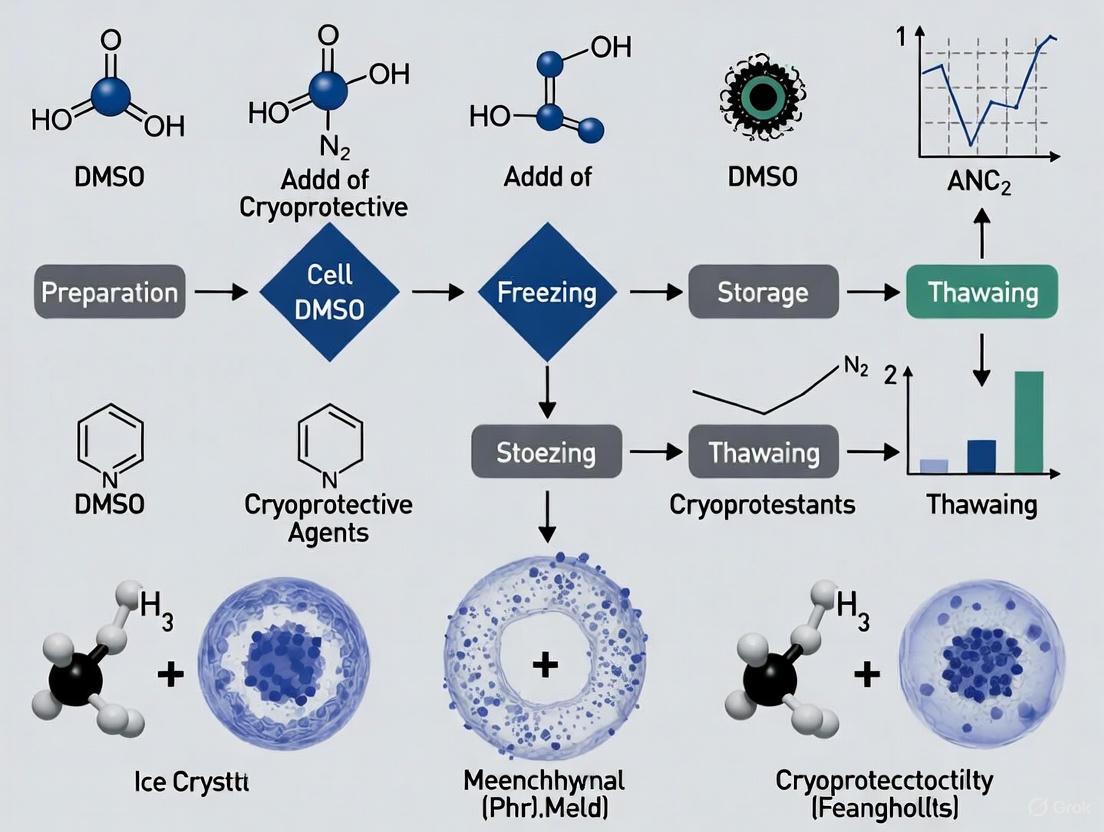
The move to DMSO-free cryopreservation is a critical advancement for the safety and efficacy of mesenchymal stem cell (MSC) therapies.
DMSO-Free Cryopreservation of Mesenchymal Stem Cells: Protocols, Validation, and Clinical Translation
Abstract
The move to DMSO-free cryopreservation is a critical advancement for the safety and efficacy of mesenchymal stem cell (MSC) therapies. This article provides a comprehensive resource for researchers and drug development professionals, covering the rationale for replacing dimethyl sulfoxide (DMSO), detailed methodologies using alternative cryoprotectants, strategies for troubleshooting and optimization, and rigorous validation against traditional DMSO-based protocols. We synthesize recent multicenter study data and emerging technologies, such as hydrogel microencapsulation, that enable high cell viability and functionality while mitigating the patient safety risks associated with DMSO.
Why Move Beyond DMSO? The Rationale for DMSO-Free MSC Cryopreservation
Dimethyl sulfoxide (DMSO) is the predominant cryoprotectant used for the cryopreservation of mesenchymal stromal cells (MSCs) and other advanced therapy medicinal products [1]. While its cryoprotective efficacy is well-established, concerns persist regarding its potential toxicity to both patients and the cellular products themselves. For researchers and drug development professionals working towards the commercialization of MSC therapies, understanding these risks is crucial for product development, regulatory approval, and ensuring patient safety. This application note provides a comprehensive analysis of DMSO-associated risks, synthesizing current evidence to inform laboratory practice and therapeutic decision-making. The content is framed within the broader objective of developing safer, DMSO-free cryopreservation protocols without compromising cell quality and function.
Clinical Safety Profile of DMSO in MSC Therapies
Systemic Toxicity After Intravenous Administration
The most comprehensive recent analysis of DMSO safety in MSC therapies reviewed data from 1,173 patients who received 1–24 intravenous infusions of DMSO-containing MSC products [1]. The analysis concluded that the DMSO doses delivered via these MSC products were 2.5–30 times lower than the widely accepted dose of 1 g DMSO/kg body weight used in hematopoietic stem cell (HSC) transplantation [1]. With appropriate premedication, only isolated infusion-related reactions were reported, suggesting a favorable safety profile for intravenous MSC products at these exposure levels.
The metabolism and excretion of DMSO following intravenous administration are well-characterized. DMSO is rapidly distributed to various organs and tissues within 10 minutes of administration [1]. It is metabolized by oxidation to dimethyl sulfone (the predominant urinary metabolite) or by reduction to dimethyl sulfide, which is eliminated through breath and associated with a characteristic "garlic-like" odor [1]. After intravenous injection of 2.0 g of DMSO in humans, the elimination half-life was approximately 4 days, with 80% eliminated in the urine within one week [1].
Table 1: DMSO Safety Thresholds in Different Clinical Contexts
| Clinical Context | Accepted DMSO Dose | Reported Adverse Effects | Safety Considerations |
|---|---|---|---|
| HSC Transplantation | 1 g/kg body weight [1] | Chills, gastrointestinal reactions, cardiopulmonary effects, neurologic reactions [1] | Effects difficult to isolate from conditioning regimen toxicity [1] |
| Intravenous MSC Therapy | 2.5-30 times lower than HSC dose [1] | Isolated infusion-related reactions with premedication [1] | Doses typically much lower than HSC threshold [1] |
| Topical MSC Therapy | Approximately 55 times lower systemic exposure than 1 g/kg (worst-case scenario) [1] | Unlikely to cause significant local adverse effects based on wound healing data [1] | Assumes 100% transdermal absorption from large wound [1] |
| Direct IV Infusion (Therapeutic) | Up to 1.12 g/kg [1] | Transient mild headache or moderate chills at high concentrations [1] | Concentration in infusion solution critical; 10% (v/v) better tolerated than 40% [1] |
Concentration-Dependent Effects and Infusion Strategies
The concentration of DMSO in infusion solutions significantly impacts tolerability and safety. Hematological disturbances including hemolysis, hemoglobinuria, and prolonged bleeding time have been reported following administration of 40% (v/v) DMSO solutions, but were not observed when the concentration was reduced to 10% (v/v) [1]. Another study reported that infusion of a 28% (v/v) DMSO solution was not associated with adverse effects at a comparatively low DMSO dose of 0.56 g/kg [1].
Unlike DMSO dosing, there are no universal consensus or regulatory recommendations regarding infusion rates for DMSO-containing products [1]. In clinical practice, it is generally recommended to start the infusion slowly to monitor for potential complications and increase the rate as tolerated by the patient [1]. For hematopoietic stem cell products, there is an incentive to infuse as quickly as possible to minimize the contact time between thawed cells and DMSO, which can adversely affect cell viability and functionality [1].
Impact of DMSO on Cellular Integrity and Function
Molecular and Epigenetic Alterations
Recent high-throughput omics technologies have revealed that DMSO induces significant molecular changes even at low concentrations (0.1%) commonly used in cell culture assays [2]. Exposing 3D cardiac and hepatic microtissues to 0.1% DMSO demonstrated substantial effects on the cellular transcriptome, epigenome, and proteome.
Transcriptome analysis detected >2,000 differentially expressed genes in both cardiac and hepatic microtissues, with the most significantly affected pathways being "metabolism" and "vesicle-mediated transport" [2]. In hepatic microtissues, profound effects were observed in "citric acid cycle and respiratory electron transport" (63 differentially expressed genes out of 171, 76.2% downregulated) and "glucose metabolism" (36 out of 77 genes, 80.5% downregulated) [2]. These findings indicate that DMSO cannot be considered biologically inert, even at low concentrations.
Perhaps more concerning are the effects of DMSO on the epigenetic landscape. Genome-wide methylation profiling of cardiac microtissues suggested disruption of DNA methylation mechanisms leading to genome-wide changes [2]. Furthermore, microRNA sequencing revealed large-scale deregulations of cardiac microRNAs, with smaller but still substantial effects in hepatic microtissues [2]. These epigenetic alterations raise particular concern for cryopreservation of embryos and oocytes, where DMSO exposure might impact embryonic development.
Mechanisms of Cellular Toxicity
DMSO induces concentration- and temperature-dependent toxicities at the cellular level [3]. It causes mitochondrial damage to astrocytes and negatively impacts cellular membrane and cytoskeleton structure and integrity by interacting with proteins and dehydrating lipids [3]. This is evident in the increased membrane permeability of erythrocytes and altered chromatin conformation in fibroblasts [3].
Furthermore, repeated DMSO exposure at sub-toxic levels can affect cellular epigenetic profiles, resulting in undesirable phenotypic disturbances [3]. DMSO interferes with DNA methyltransferases and histone modification enzymes in human pluripotent stem cells, causing epigenetic variations and reduction in pluripotency [3]. Murine embryonic stem cells similarly display disrupted mRNA expression levels of several markers following DMSO treatment [3].
Figure 1: DMSO Impact on Cellular and Molecular Pathways. This diagram illustrates the multifaceted effects of DMSO exposure on cellular systems, from molecular alterations to functional consequences. DEGs: Differentially Expressed Genes.
Emerging DMSO-Free Cryopreservation Strategies
Current DMSO-Free Formulations and Their Efficacy
Several DMSO-free cryopreservation strategies have been developed and tested for human MSCs [1]. An international multicenter PACT/BEST collaborative study compared a novel DMSO-free solution containing sucrose, glycerol, and isoleucine (SGI) in a base of Plasmalyte A with traditional DMSO-containing solutions [4]. The results demonstrated that MSCs cryopreserved in the SGI solution had slightly lower cell viability (decrease of 11.4% versus 4.5% for DMSO-based solutions), but better recovery of viable cells (92.9% for SGI versus lower by 5.6% for DMSO solutions) [4]. Critically, MSCs cryopreserved in both solutions maintained expected expression levels of characteristic surface markers (CD45, CD73, CD90, CD105) with no significant difference in global gene expression profiles [4].
Table 2: Comparison of DMSO-Based vs. DMSO-Free Cryopreservation for MSCs
| Parameter | DMSO-Based Cryopreservation | DMSO-Free Cryopreservation (SGI Solution) | Clinical Implications |
|---|---|---|---|
| Post-thaw Viability | Decrease of 4.5% from fresh [4] | Decrease of 11.4% from fresh [4] | Both above 80% threshold; clinically acceptable [4] |
| Recovery of Viable Cells | Lower by 5.6% compared to SGI [4] | 92.9% recovery [4] | Better cell yield with SGI formulation [4] |
| Immunophenotype | Normal CD73, CD90, CD105 expression [4] | Normal CD73, CD90, CD105 expression [4] | Both maintain MSC identity [4] |
| Global Gene Expression | Reference profile [4] | No significant difference [4] | Genetic stability maintained [4] |
| Patient Safety | Potential infusion reactions [1] | Eliminates DMSO-related toxicity concerns [4] | Significant safety advantage |
| Regulatory Status | Established use [1] | Under investigation [4] | Higher barrier for initial approval |
Advanced Technologies for DMSO Reduction
Innovative technologies are being developed to reduce or eliminate DMSO requirements in cryopreservation. Hydrogel microencapsulation technology has demonstrated particular promise, enabling effective cryopreservation of MSCs with as low as 2.5% DMSO while sustaining cell viability above the 70% clinical threshold [5]. This approach utilizes alginate-based hydrogels to create a protective three-dimensional environment that shields cells from cryoinjury [5].
The cryopreservation process for microencapsulated MSCs involves encapsulating cells in sodium alginate microcapsules using high-voltage electrostatic coaxial spraying devices, followed by slow freezing with reduced DMSO concentrations [5]. The resulting cryopreserved microencapsulated MSCs retain their multidifferentiation potential, and the 3D culture environment can enhance the expression of stemness genes [5]. This technology facilitates long-term cryopreservation of MSCs without compromising viability, representing a promising strategy for clinical applications.
Other advanced approaches include:
- Electroporation-assisted delivery of non-penetrating cryoprotectants like trehalose [3]
- Nanoparticle-mediated intracellular delivery of cryoprotectants [3]
- Vitrification techniques using combinations of non-toxic cryoprotectants [3]
- Deep eutectic solvents (DES) as less toxic cryoprotective alternatives [6]
Experimental Protocols for DMSO-Free Cryopreservation
SGI Cryopreservation Protocol for MSCs
Based on the successful international multicenter trial [4], the following protocol details the preparation and use of the sucrose-glycerol-isoleucine (SGI) DMSO-free cryopreservation solution:
Materials:
- Plasmalyte A base solution
- Sucrose (ultra-pure, pharmaceutical grade)
- Glycerol (cell culture tested)
- L-Isoleucine (cell culture tested)
- Sterile filtration unit (0.22 µm)
Formulation:
Prepare the SGI solution in a base of Plasmalyte A with final concentrations of:
- 30 mM sucrose
- 5% glycerol
- 7.5 mM L-isoleucine [4]
Cryopreservation Procedure:
- Harvesting: Detach MSCs at 80-90% confluence using standard enzymatic dissociation.
- Washing: Centrifuge cell suspension and resuspend in appropriate culture medium.
- Formulation: Centrifuge again and resuspend cells in ice-cold SGI solution at desired concentration (typically 1-5 × 10^6 cells/mL).
- Aliquoting: Dispense cell suspension into pre-cooled cryovials (1-2 mL per vial).
- Freezing: Place vials in controlled-rate freezer and cool at approximately 1°C/min to -80°C.
- Storage: Transfer vials to liquid nitrogen vapor phase for long-term storage.
Quality Control Assessment:
- Viability: Assess using trypan blue exclusion or flow cytometry with viability dyes.
- Recovery: Calculate percentage of viable cells recovered post-thaw relative to pre-freeze count.
- Phenotype: Verify MSC marker expression (CD73, CD90, CD105) and absence of hematopoietic markers (CD45) by flow cytometry.
- Functionality: Evaluate differentiation potential (osteogenic, adipogenic, chondrogenic) and metabolic activity.
Figure 2: SGI DMSO-Free Cryopreservation Workflow. This diagram outlines the key steps in the sucrose-glycerol-isoleucine (SGI) cryopreservation protocol for mesenchymal stromal cells.
Hydrogel Microencapsulation Protocol with Reduced DMSO
This protocol enables a significant reduction in DMSO concentration while maintaining high cell viability, combining biomaterial science with cryopreservation technology [5]:
Materials:
- Sodium alginate (ultrapure, pharmaceutical grade)
- Calcium chloride solution (6% w/v)
- Core solution: 0.68 g mannitol + 0.15 g hydroxypropyl methylcellulose in 15 mL sterile water
- High-voltage electrostatic spraying device with coaxial needle assembly
Microencapsulation Procedure:
- Cell Preparation: Harvest MSCs at approximately 80% confluence and prepare single-cell suspension.
- Core Solution Preparation: On ice, mix 0.1 mol/L NaOH solution, 5 mg/mL Type I collagen, core solution, and sterile water in appropriate proportions.
- Cell Resuspension: Resuspend MSC pellet in the core solution to form the microsphere core.
- Encapsulation Setup:
- Draw cell-containing core solution into 3 mL syringe connected to inner lumen of coaxial needle
- Fill another syringe with sodium alginate shell solution connected to outer lumen
- Place beaker with calcium chloride solution below needle assembly (adjust distance to surface)
- Set voltage to 6 kV for electrostatic spraying
- Microsphere Generation:
- Set core solution flow rate to 25 µL/min
- Set shell solution flow rate to 75 µL/min
- Collect microdroplets in calcium chloride solution for gelation
- Collection: Centrifuge microspheres at 600 rpm for 5 min, discard supernatant.
- Cryopreservation: Resuspend microspheres in freezing medium containing 2.5% DMSO and follow standard controlled-rate freezing protocol.
The Scientist's Toolkit: Essential Reagents and Materials
Table 3: Research Reagent Solutions for DMSO-Free Cryopreservation Studies
| Reagent/Category | Specific Examples | Function/Application | Considerations |
|---|---|---|---|
| DMSO-Free Formulations | Sucrose-Glycerol-Isoleucine (SGI) [4] | Penetrating/non-penetrating CPA combination | Maintains phenotype and gene expression profiles [4] |
| Commercial Media | CryoStor CS10, NutriFreez D10 [7] | Serum-free, defined DMSO-containing alternatives | Maintain PBMC viability/functionality over 2 years [7] |
| Biomaterials | Alginate hydrogels [5] | 3D microenvironments for cryoprotection | Enables reduction to 2.5% DMSO [5] |
| Technical Equipment | Controlled-rate freezers [4] | Standardized cooling protocols | Essential for protocol reproducibility |
| Assessment Tools | Flow cytometry panels (CD73, CD90, CD105) [4] | Post-thaw phenotype verification | Critical for quality control |
| Functional Assays | Trilineage differentiation kits [4] | Functional potency assessment | Confirms maintained MSC functionality |
The evidence presented in this application note demonstrates that while DMSO remains a effective cryoprotectant with a manageable safety profile in clinical MSC therapy, concerns regarding both patient toxicity and cellular impacts warrant serious consideration. The emergence of robust DMSO-free cryopreservation strategies, particularly SGI formulations and hydrogel encapsulation technologies, offers promising alternatives that maintain cell viability, phenotype, and functionality while eliminating DMSO-associated risks. For researchers and drug development professionals, investing in the optimization and validation of these DMSO-free approaches represents a critical step toward safer, more standardized cell therapies. As the field advances, continued innovation in cryopreservation science will likely yield further improvements, ultimately enabling the widespread clinical application of MSC therapies with enhanced safety profiles.
The advancement of mesenchymal stromal cell (MSC) therapies faces a critical challenge at the intersection of production logistics and patient safety: the administration of the cryoprotectant dimethyl sulfoxide (DMSO). As the field progresses toward off-the-shelf, cryopreserved cell products, the potential toxicity of DMSO administered alongside therapeutic cells has become a matter of intense debate [1]. While DMSO remains the gold standard cryoprotectant for maintaining cell viability during freezing, its association with adverse patient reactions poses a significant barrier to clinical translation [8] [9]. This Application Note examines the documented safety concerns related to DMSO in cell therapy administration and provides a comprehensive overview of emerging DMSO-free cryopreservation protocols that promise to mitigate these risks while maintaining product efficacy.
Safety Profile of DMSO in Clinical Administration
Documented Adverse Effects
DMSO demonstrates a well-characterized profile of concentration-dependent toxicity affecting both patients and cellular products. Clinical administration of DMSO-cryopreserved cell therapies has been associated with various adverse reactions, which are summarized in Table 1 below.
Table 1: Documented Adverse Effects of DMSO in Clinical Cell Therapy Administration
| System Affected | Reported Adverse Reactions | Typical Onset & Frequency |
|---|---|---|
| Systemic Infusion Reactions | Nausea, vomiting, abdominal cramps, hypertension, hypotension, chills [1] [9] | Common; typically during or shortly after infusion |
| Cardiovascular | Bradycardia, tachycardia, arrhythmias [1] [9] | Less common; can be serious |
| Neurological | Headaches, seizures, encephalopathy, cerebral infarction [1] | Rare but potentially severe |
| Respiratory | Cough, dyspnea [1] | Frequency varies |
| Hematological | Hemolysis, hemoglobinuria [1] [9] | Concentration-dependent; more common with >10% DMSO |
| Other | Characteristic garlic-like odor due to dimethyl sulfide exhalation [1] | Very common; considered benign but distressing |
The severity and frequency of these reactions are influenced by several factors, including the total DMSO dose, its concentration in the infusion solution, and the infusion rate [1]. Notably, hematological disturbances including hemolysis and hemoglobinuria have been reported following administration of 40% (v/v) DMSO solutions, but not with more diluted 10% (v/v) solutions [1].
Underlying Mechanisms of Toxicity
The toxicological profile of DMSO arises from multiple mechanisms:
- Histamine Release: Many infusion-related reactions are attributed to DMSO-induced histamine release, leading to characteristic symptoms like flushing, chills, and gastrointestinal discomfort [1].
- Cell Membrane & Cytoskeleton Disruption: DMSO interacts with proteins and dehydrates lipids, compromising membrane integrity and increasing permeability [10]. This effect is evident in erythrocytes, where DMSO can cause significant hemolysis [9].
- Mitochondrial Dysfunction & Oxidative Stress: DMSO compromises mitochondrial respiration and induces oxidative stress, particularly damaging during the vulnerable post-thaw period [9].
- Epigenetic & Transcriptional Perturbations: Repeated DMSO exposure, even at sub-toxic levels, can alter cellular epigenetic profiles, leading to undesirable phenotypic disturbances and reduced pluripotency in stem cells [10].
Risk-Benefit Considerations in Current Practice
Despite these risks, DMSO remains in clinical use due to its effective cryoprotection, with a maximum dose of 1 g/kg body weight considered acceptable in hematopoietic stem cell transplantation [1]. Fortunately, the doses delivered via intravenous administration of MSC products are typically 2.5–30 times lower than this threshold [1]. With adequate premedication and monitoring, severe reactions to DMSO in MSC therapy remain relatively isolated events [1]. Nevertheless, the impetus to eliminate DMSO entirely is driven by the desire to improve patient safety, simplify administration protocols, and enhance product consistency.
Emerging DMSO-Free Cryopreservation Solutions
The development of DMSO-free cryopreservation protocols represents an active area of research with several promising approaches. The performance of these alternatives is quantified in Table 2 below.
Table 2: Quantitative Performance of DMSO-Free Cryopreservation Solutions for MSCs
| Cryopreservation Solution/Strategy | Reported Post-Thaw Viability | Reported Viable Cell Recovery | Key Findings |
|---|---|---|---|
| Sucrose-Glycerol-Isoleucine (SGI) Solution [4] | ~82.9% (average) | 92.9% (average) | Viability slightly lower than DMSO controls, but recovery was better. Immunophenotype and gene expression profiles were comparable to DMSO. |
| Hydrogel Microencapsulation + 2.5% DMSO [5] | >70% (meets clinical threshold) | N/R | Enabled 75% reduction in DMSO concentration while maintaining clinical minimum viability. Preserved differentiation potential and stemness. |
| Ultrasound + Microbubbles + Trehalose [11] | Preserved viability and multipotency | N/R | Successful intracellular delivery of trehalose; achieved cryoprotection without DMSO-associated cytotoxicity. |
| Commercial PRIME-XV FreezIS DMSO-Free [12] | Similar to DMSO controls | Similar to DMSO controls | No loss in post-thaw proliferative capacity; demonstrated non-toxic profile in nonclinical animal trials. |
| Commercial NB-KUL DF [13] | Superior to some DMSO-free competitors, equivalent to CryoStor CS5 | Superior to some DMSO-free competitors | Chemically-defined; eliminates need for post-thaw washing steps, streamlining manufacturing. |
N/R: Not explicitly reported in the reviewed literature
These DMSO-free strategies can be broadly categorized as follows:
- Multi-Agent Osmolyte Solutions: Combinations of non-penetrating cryoprotectants like sucrose, trehalose, glycerol, and amino acids (e.g., isoleucine) work synergistically to provide cryoprotection through membrane stabilization, osmotic control, and reduction of ice crystal formation [4] [10].
- Biomaterial-Assisted Strategies: Hydrogel microencapsulation, particularly using alginate, creates a protective three-dimensional environment that shields cells from cryoinjury, dramatically reducing the DMSO concentration required [5].
- Physical Delivery Methods: Techniques like ultrasonication in the presence of microbubbles facilitate the intracellular delivery of non-penetrating cryoprotectants like trehalose, enabling effective vitrification without DMSO [11].
- Commercially Available Formulations: Ready-to-use, chemically-defined DMSO-free media (e.g., PRIME-XV FreezIS, NB-KUL DF, StemCell Keep) offer standardized, regulatory-compliant solutions that integrate seamlessly into GMP workflows [12] [13] [10].
Experimental Protocols for DMSO-Free Cryopreservation
Protocol 1: Cryopreservation of MSCs Using SGI Solution
This protocol is adapted from an international multicenter study that validated a DMSO-free solution containing Sucrose, Glycerol, and Isoleucine (SGI) in Plasmalyte A [4].
Workflow: MSC Cryopreservation with SGI Solution
Materials:
- SGI Solution: Sucrose, Glycerol, Isoleucine in base of Plasmalyte A [4]
- Culture-Expanded MSCs: From bone marrow or adipose tissue
- Controlled-Rate Freezer
- Cryogenic Storage Vials or Bags
Procedure:
- Cell Preparation: Culture-expand MSCs according to standard protocols. Harvest cells at 80-90% confluency using trypsin/EDTA. Perform cell count and viability assessment on the fresh sample.
- Solution Preparation: Prepare the SGI cryopreservation solution. The exact formulation is proprietary but is based on a combination of sucrose, glycerol, and isoleucine in Plasmalyte A [4].
- Cell Resuspension: Centrifuge the harvested cell suspension and carefully decant the supernatant. Resuspend the cell pellet in the pre-chilled SGI solution to achieve a final concentration of 5-20 × 10^6 cells/mL.
- Aliquoting and Freezing: Transfer the cell suspension into cryogenic vials or bags (e.g., 1 mL/vial). Place the sealed vials/bags in a controlled-rate freezer. Initiate the freezing program: -1°C/min to -80°C.
- Long-Term Storage: After completing the freezing cycle, immediately transfer the vials/bags to a liquid nitrogen storage tank (-135°C to -196°C) for long-term preservation.
- Thawing and Assessment: For thawing, rapidly agitate the vial in a 37°C water bath until only a small ice crystal remains. Immediately transfer the cell suspension to pre-warmed culture medium. Centrifuge to remove the cryoprotectant solution and resuspend in fresh medium for subsequent analysis or use.
- Post-Thaw Analysis: Determine cell viability (e.g., via trypan blue exclusion), percent recovery, and immunophenotype (CD73+, CD90+, CD105+, CD45-). Assess functionality through multilineage differentiation potential (osteogenic, adipogenic, chondrogenic).
Protocol 2: Hydrogel Microencapsulation for Low-CPA Cryopreservation
This protocol leverages alginate hydrogel microcapsules to protect MSCs, enabling a substantial reduction in DMSO concentration [5].
Workflow: Hydrogel Microencapsulation Cryopreservation
Materials:
- Sodium Alginate Solution (for shell): 0.2g sodium alginate, 0.46g mannitol in sterile water [5]
- Core Solution: 0.68g mannitol, 0.15g hydroxypropyl methylcellulose, Type I collagen, NaOH in sterile water [5]
- Crosslinking Solution: 6.0g Calcium Chloride in sterile water [5]
- High-Voltage Electrostatic Spraying System with coaxial needle assembly
- Low-DMSO Cryomedium: Standard cryomedium with DMSO concentration reduced to 2.5% (v/v)
Procedure:
- Cell Preparation: Harvest and concentrate MSCs as described in Protocol 1.
- Solution Preparation: Prepare the sodium alginate shell solution and the core solution containing mannitol, hydroxypropyl methylcellulose, and collagen. Filter-sterilize all solutions.
- Cell Encapsulation: Resuspend the MSC pellet in the core solution. Load the core solution (with cells) and the alginate shell solution into separate syringes connected to a coaxial needle assembly. Use an infusion pump with the core solution flow rate at 25 μL/min and the shell solution at 75 μL/min. Apply a high voltage (e.g., 6 kV) for electrostatic spraying, allowing droplets to fall into the calcium chloride crosslinking solution to form gelated microcapsules.
- Post-Encapsulation Culture: Collect the microcapsules by gentle centrifugation (600 rpm for 5 min). Resuspend in complete culture medium and culture for 24-48 hours if desired.
- Cryopreservation: Resuspend the microcapsules in a cryomedium containing a low concentration of DMSO (e.g., 2.5%). Transfer to cryovials and freeze using a standard slow freezing protocol (-1°C/min). Store in liquid nitrogen.
- Thawing and Analysis: Thaw microcapsules rapidly at 37°C. The microcapsules can be directly assessed for cell viability within the alginate matrix or dissolved for cell release and subsequent analysis of phenotype, stemness gene expression, and differentiation potential [5].
The Scientist's Toolkit: Essential Reagents for DMSO-Free Research
Table 3: Key Research Reagent Solutions for DMSO-Free Cryopreservation
| Reagent / Material | Function / Application | Example Formulation / Product |
|---|---|---|
| Sucrose-Glycerol-Isoleucine (SGI) Solution | DMSO-free cryoprotectant base; provides osmotic support and membrane stabilization [4] | Sucrose, Glycerol, Isoleucine in Plasmalyte A [4] |
| Alginate Hydrogel | Biomaterial for cell microencapsulation; provides a 3D protective microenvironment that reduces cryoinjury [5] | Sodium Alginate solution crosslinked with Calcium Chloride [5] |
| Trehalose | Non-penetrating disaccharide; acts as an osmoprotectant and stabilizes membranes by replacing water molecules [11] | 50-1000 mM solution in culture medium, often requiring assisted delivery (e.g., ultrasonication) [11] |
| Polyampholyte-Based Solutions | Synthetic polymers providing cryoprotection by adsorbing to the cell membrane; often used in vitrification protocols [10] | StemCell Keep [10] |
| Chemically-Defined Commercial Media | Ready-to-use, xeno-free, DMSO-free cryopreservation media for standardized, GMP-compliant workflows [12] [13] | PRIME-XV FreezIS DMSO-Free [12], NB-KUL DF [13] |
| Controlled-Rate Freezer | Equipment for standardizing the slow freezing process; critical for protocol reproducibility and optimization [4] | N/A |
The transition to DMSO-free cryopreservation protocols is a critical step in enhancing the safety profile of administrated MSC therapies. While DMSO-containing products can be administered with manageable risk, the cumulative evidence of DMSO's cytotoxicity and potential for adverse clinical reactions provides a compelling rationale for change. The promising results from SGI solutions, hydrogel microencapsulation, and other emerging technologies demonstrate that effective cryopreservation does not require DMSO. By adopting these standardized DMSO-free protocols, researchers and therapy developers can mitigate a significant clinical safety concern, streamline manufacturing by eliminating post-thaw washing steps, and ultimately advance more reliable and safer cell-based therapeutics for patients.
Dimethyl sulfoxide (DMSO) is extensively employed as a standard cryoprotectant in the preservation of mesenchymal stem cells (MSCs) for regenerative medicine and research applications. While its cryoprotective efficacy is well-established, a growing body of evidence indicates that DMSO exerts significant biological effects on MSCs that extend beyond its cryoprotective function and conventional cellular toxicity. Recent findings demonstrate that DMSO can directly influence MSC lineage commitment, shifting the balance between adipogenic and osteogenic differentiation pathways [14] [15]. These functional alterations persist even after DMSO removal, suggesting potential long-term impacts on the therapeutic efficacy of cryopreserved MSCs. This application note synthesizes current research quantifying DMSO's effects on MSC differentiation and provides detailed methodologies for investigators to account for these variables in experimental design, particularly within the context of developing DMSO-free cryopreservation protocols.
Quantitative Effects of DMSO on MSC Differentiation
Recent investigations have systematically quantified the concentration-dependent effects of DMSO on human bone marrow-derived MSC (hBM-MSC) differentiation. The data reveal a dual mechanism whereby DMSO simultaneously promotes adipogenesis while suppressing osteogenesis, fundamentally altering the differentiation equilibrium.
Table 1: Concentration-Dependent Effects of DMSO on Adipogenic Differentiation in hBM-MSCs
| DMSO Concentration | Lipid Accumulation (Fold Change vs. Control) | ADIPOQ Gene Expression | FABP4 Gene Expression | Adiponectin Secretion |
|---|---|---|---|---|
| 0.18% (12.5 mM) | No significant change | No significant change | No significant change | Not reported |
| 0.32% (25 mM) | 1.30-fold increase | Significantly increased | Significantly increased | Not reported |
| 0.72% (50 mM) | 1.64-fold increase | Significantly increased | Significantly increased | Significantly increased |
Table 2: DMSO-Mediated Inhibition of Osteogenic Differentiation in hBM-MSCs
| DMSO Concentration | Mineralization | RUNX2 Expression | ALPL Expression | Osteoprotegerin Production |
|---|---|---|---|---|
| <0.32% (25 mM) | Mild suppression | Not reported | Not reported | Not reported |
| ≥0.32% (25 mM) | Significant suppression | Downregulated | Downregulated | Significantly reduced |
The pro-adipogenic effects manifest at concentrations as low as 0.32% (25 mM), with statistically significant increases in both adipogenic gene expression markers (ADIPOQ and FABP4) and functional lipid accumulation [15]. At 0.72% (50 mM) DMSO, adiponectin protein secretion is markedly elevated, confirming enhanced adipogenic maturation at the protein level [15]. Concurrently, DMSO suppresses osteogenic capacity in a concentration-dependent manner, with notable reductions in mineralization and downregulation of key osteogenic markers including RUNX2 and ALPL [14] [15]. These findings demonstrate that DMSO directly influences MSC lineage commitment, shifting the balance toward adipogenesis at the expense of osteogenesis.
Experimental Protocols for Assessing DMSO Effects
Protocol: Evaluating DMSO Effects on Adipogenic Differentiation
Objective: To quantify the adipogenesis-promoting effects of DMSO in hBM-MSCs under standardized differentiation conditions.
Materials:
- Human bone marrow-derived MSCs (Lonza)
- Adipogenic differentiation medium: High-glucose DMEM supplemented with 10 μg/mL insulin, 500 nM dexamethasone, 0.5 mM 3-isobutyl-1-methylxanthine (IDX), and 10% FBS
- DMSO (cell culture grade)
- Oil Red O staining solution
- Fixation solution: 4% formaldehyde in PBS
- Quantikine ELISA kit for adiponectin (R&D Systems)
- RNA extraction kit (Trizol reagent)
- cDNA synthesis kit
- TB Green Premix Ex Taq II for Q-RT-PCR
Methodology:
- Cell Culture: Maintain hBM-MSCs in growth medium (low-glucose DMEM with 10% FBS, 1% Glutamax, and 1% penicillin-streptomycin) at 37°C with 5% CO₂.
- Experimental Groups: Plate MSCs at 1×10⁴ cells/cm² and establish the following treatment conditions upon confluence:
- Negative control: Maintenance medium only
- Adipogenic control: Adipogenic differentiation medium
- Experimental groups: Adipogenic differentiation medium + DMSO (0.18%, 0.32%, 0.72% v/v)
- Differentiation Induction: Replace medium every 2-3 days for 14 days total differentiation period.
- Oil Red O Staining:
- On day 14, wash cells twice with PBS and fix with 4% formaldehyde for 15 minutes.
- Wash with distilled water, then incubate with 60% isopropanol for 5 minutes.
- Stain with freshly prepared Oil Red O working solution for 15 minutes.
- Wash extensively with distilled water until runoff is clear.
- Counterstain nuclei with hematoxylin for 1-2 minutes.
- Quantify lipid accumulation by eluting stained Oil Red O with 100% isopropanol and measuring absorbance at 520 nm, or analyze stained areas using ImageJ software.
- Gene Expression Analysis:
- Extract total RNA using Trizol reagent according to manufacturer's protocol.
- Synthesize cDNA using reverse transcription kit.
- Perform quantitative RT-PCR using primer sets for ADIPOQ (F: 5'-TGCTGGGAGCTGTTCTACTG-3', R: 5'-TACTCCGGTTTCACCGATGTC-3') and FABP4 (F: 5'-ACTGGGCCAGGAATTTGACG-3', R: 5'-CTCGTGGAAGTGACGCCTT-3').
- Normalize expression to GAPDH using the Pfaffl method.
- Protein Secretion Analysis:
- Collect culture supernatants on day 14 of differentiation.
- Quantify adiponectin levels using ELISA according to manufacturer's protocol.
Note: Include cell viability assessment (CCK-8 assay) to confirm DMSO concentrations used are non-cytotoxic [15].
Protocol: Assessing DMSO Inhibition of Osteogenesis
Objective: To evaluate the suppressive effects of DMSO on osteogenic differentiation of hBM-MSCs.
Materials:
- Osteogenic differentiation medium: Low-glucose DMEM with 100 nM dexamethasone, 50 μM ascorbic acid, 10 mM β-glycerol phosphate (DAG), and 10% FBS
- Von Kossa staining kit (Abcam)
- Alkaline phosphatase (ALPL) activity assay kit
- RNA extraction and Q-RT-PCR reagents as above
- Primer sets for RUNX2 (F: 5'-TGGTTACTGTCATGGCGGGTA-3', R: 5'-TCTCAGATCGTTGAACCTTGCTA-3') and ALPL (F: 5'-ACTGGTACTCAGACAACGAGAT-3', R: 5'-ACGTCAATGTCCCTGATGTTATG-3')
Methodology:
- Cell Culture and Experimental Setup: Plate MSCs as described in Protocol 3.1 and establish parallel treatment conditions using osteogenic differentiation medium supplemented with DMSO (0.18%, 0.32%, 0.72% v/v).
- Differentiation Timeline: Maintain cells in osteogenic conditions for 21 days, with medium changes every 2-3 days.
- Mineralization Assessment (Von Kossa Staining):
- On day 21, wash cells with PBS and fix with 4% formaldehyde for 15 minutes.
- Incubate with 5% silver nitrate solution under UV light for 60 minutes.
- Wash with distilled water and develop with 5% sodium thiosulfate for 5 minutes.
- Counterstain with nuclear fast red for 10 minutes.
- Visualize and quantify mineralized nodules using brightfield microscopy and ImageJ analysis.
- Gene Expression Analysis: Perform Q-RT-PCR for osteogenic markers RUNX2 and ALPL as described in Protocol 3.1.
- Alkaline Phosphatase Activity:
- Assess ALP activity on day 7 and 14 of differentiation using commercial kit according to manufacturer's instructions.
- Normalize activity to total protein content.
Expected Outcomes: DMSO concentrations ≥0.32% should demonstrate significant reduction in mineralization, ALP activity, and osteogenic marker expression compared to osteogenic control without DMSO [14] [15].
Signaling Pathways and Mechanisms
The molecular mechanisms underlying DMSO-mediated shifts in MSC differentiation involve complex signaling network interactions. Current evidence suggests DMSO influences multiple pathways governing lineage commitment.
Diagram 1: DMSO Effects on MSC Differentiation Pathways (Title: DMSO Differentiation Signaling)
The precise molecular mechanisms through which DMSO influences lineage commitment are an active area of investigation. Physical property alterations, particularly changes in membrane fluidity, may initiate intracellular signaling cascades. Research indicates that DMSO increases membrane fluidity in certain cell types, potentially facilitating influx of DMSO itself and other signaling molecules, with subsequent reactive oxygen species (ROS) generation contributing to altered gene expression patterns [16]. The net effect is transcriptional activation of adipogenic programs coupled with suppression of osteogenic pathways, effectively shifting MSC differentiation equilibrium toward adipogenesis.
DMSO-Free Cryopreservation Alternatives
The functional impacts of DMSO on MSC differentiation have accelerated development of DMSO-free cryopreservation strategies. Several promising approaches have emerged with efficacy comparable to traditional DMSO-containing methods.
Table 3: DMSO-Free Cryoprotectant Formulations for MSC Preservation
| Cryoprotectant Formulation | Post-Thaw Viability | Viable Cell Recovery | Immunophenotype | Multilineage Differentiation |
|---|---|---|---|---|
| 5-10% DMSO (Standard) | 89.8% | 87.3% | Preserved | Maintained (with DMSO effects) |
| Sucrose-Glycerol-Isoleucine (SGI) | 82.9% | 92.9% | Preserved | Maintained (reduced bias) |
| Hydrogel Microencapsulation + 2.5% DMSO | >70% | Not reported | Preserved | Maintained |
International multicenter studies demonstrate that a novel DMSO-free solution containing sucrose, glycerol, and isoleucine (SGI) in Plasmalyte A base provides post-thaw viable cell recovery comparable to conventional DMSO-containing cryoprotectants [4]. While absolute viability with SGI (82.9%) is moderately lower than with DMSO controls (89.8%), the recovery of viable cells is actually superior (92.9% vs. 87.3%), with preserved immunophenotype and global gene expression profiles [4]. Advanced biomaterial approaches utilizing hydrogel microencapsulation enable substantial DMSO reduction, maintaining viability above the 70% clinical threshold with only 2.5% DMSO while preserving differentiation potential [17].
The Scientist's Toolkit: Essential Research Reagents
Table 4: Key Reagents for Investigating DMSO Effects on MSCs
| Reagent/Category | Specific Examples | Function/Application |
|---|---|---|
| Cell Culture Media | Low-glucose DMEM, α-MEM, FBS | MSC expansion and maintenance |
| Differentiation Kits | Adipogenic: Insulin, Dexamethasone, IBMX; Osteogenic: Ascorbic acid, β-glycerol phosphate, Dexamethasone | Induce lineage-specific differentiation |
| Cryopreservation Media | CryoStor CS10, Sucrose-Glycerol-Isoleucine (SGI) formulation, 5-10% DMSO in FBS | Cell freezing and preservation |
| Assessment Reagents | Oil Red O solution, Von Kossa staining kit, Quantikine ELISA kits (Adiponectin, Osteoprotegerin) | Visualize and quantify differentiation outcomes |
| Molecular Biology Tools | Trizol reagent, cDNA synthesis kits, Q-PCR primer sets (ADIPOQ, FABP4, RUNX2, ALPL) | Gene expression analysis |
| Viability Assays | Cell Counting Kit-8 (CCK-8), SYTOX blue, Caspase-3/7 assay | Assess cell health and cytotoxicity |
DMSO significantly influences MSC biology at concentrations routinely employed for cryopreservation, preferentially promoting adipogenic differentiation while suppressing osteogenesis. These effects manifest at concentrations as low as 0.32% (25 mM), well below the 5-10% typically used in cryopreservation protocols. The recognition of DMSO's functional impacts on MSC differentiation necessitates careful consideration in research design and clinical therapeutic development. The availability of effective DMSO-free cryopreservation solutions, such as the Sucrose-Glycerol-Isoleucine formulation, provides researchers with viable alternatives that minimize confounding differentiation biases while maintaining post-thaw cell quality. Future studies investigating the molecular mechanisms underlying DMSO's lineage-shifting effects will further illuminate fundamental aspects of MSC biology and support the development of optimized preservation strategies for regenerative medicine applications.
Regulatory and Logistical Drivers for DMSO-Free Formulations
The advancement of mesenchymal stem cell (MSC) therapies relies heavily on effective cryopreservation protocols to ensure cell viability and functionality from manufacturing to patient administration. For decades, dimethyl sulfoxide (DMSO) has been the cornerstone cryoprotectant agent (CPA) for cellular therapies. However, growing regulatory concerns and complex logistical challenges associated with DMSO toxicity are driving the transition toward DMSO-free formulations [1] [18]. While DMSO's cryoprotective efficacy is well-established, its potential to cause adverse patient reactions—ranging from mild symptoms to severe cardiovascular and neurological events—and its detrimental effects on cell phenotype and function post-thaw necessitate this shift [4] [19]. This application note examines the key drivers compelling this transition and provides detailed protocols for implementing DMSO-free cryopreservation strategies, framed within the context of a broader thesis on standardizing DMSO-free cryopreservation for MSC research and therapy.
Regulatory & Safety Drivers
Patient Safety and Toxicity Concerns
The administration of DMSO-cryopreserved cell products carries inherent risks of adverse reactions in patients. These reactions are attributed to DMSO-induced histamine release and can manifest as chills, gastrointestinal distress, cardiopulmonary complications, and neurologic events [1]. Although the DMSO doses delivered via MSC infusions are typically 2.5–30 times lower than the 1 g/kg limit accepted in hematopoietic stem cell transplantation, the risk profile remains a significant consideration for regulatory bodies and clinicians [1]. Furthermore, beyond acute infusion reactions, DMSO exposure can impact the MSC product itself, potentially causing phenotypic changes and impairing cellular function [19].
Regulatory Expectations and Product Quality
Regulatory authorities increasingly emphasize the principles of Quality by Design (QbD), which encourage the reduction of components that pose potential safety risks. The presence of DMSO in a final cellular product is viewed as a liability. Consequently, there is a strong regulatory impetus to either eliminate DMSO entirely or reduce its concentration to the absolute minimum necessary for cell viability [18] [19]. The Food and Drug Administration (FDA) and other global regulators expect the highest quality grade of raw materials to be selected and qualified for clinical manufacture [20]. This includes cryoprotectants, where the objective is to ensure final therapeutic product quality, performance, and patient safety. Demonstrating a robust, DMSO-free process can significantly streamline the path to regulatory approval by proactively addressing these safety concerns.
Logistical & Commercial Drivers
Simplifying the "Last Mile" in Clinical Administration
The "last mile" preparation of cell therapies immediately before patient infusion is a critical and vulnerable step. When products are cryopreserved with DMSO, post-thaw washing steps are often required to remove the toxic CPA, adding significant complexity, cost, and risk [18]. These procedures are labor-intensive, require specialized equipment, and pose a risk of cell damage, loss, and contamination, ultimately affecting product variability and potency [1] [18]. DMSO-free formulations that eliminate or minimize the need for post-thaw washing directly address these logistical challenges. They simplify the workflow for healthcare providers, reduce the burden on specialized clinical staff, and minimize the risk of human error, thereby enhancing the reliability and scalability of cell therapy administration [21] [18].
Market Shift and Commercial Viability
The biopharmaceutical market is responding to these technical and regulatory drivers. The United States DMSO Freezing Culture Media Market is anticipated to grow at a compound annual growth rate of 8.53%, reflecting increased adoption across industrial and clinical segments [22]. This growth is fueled by rising investments in regenerative medicine and the growing number of clinical trials for cell-based therapies. The availability of commercial, cGMP-grade DMSO-free media, such as CaseCryo NON-DMSO, which is chemically defined, animal component-free, and protein-free, provides researchers with standardized, high-quality tools to facilitate this transition [23]. Adopting these commercially viable and scalable solutions early in therapy development is becoming a strategic imperative for success.
Quantitative Data on DMSO-Free Formulations
The following table summarizes key performance metrics of emerging DMSO-free and low-DMSO cryopreservation strategies for MSCs, as validated in recent studies.
Table 1: Performance Comparison of DMSO-Free and Low-DMSO Cryopreservation Strategies for MSCs
| Strategy | Key Components | Post-Thaw Viability | Cell Recovery | Phenotype & Function | Reference |
|---|---|---|---|---|---|
| SGI Solution | Sucrose, Glycerol, Isoleucine in Plasmalyte A | ~82.9% (avg. decrease of 11.4% from fresh) | 92.9% (significantly better than in-house DMSO) | Comparable immunophenotype (CD73, CD90, CD105) and global gene expression | [4] |
| Hydrogel Microcapsules + 2.5% DMSO | Alginate hydrogel with low-DMSO | >70% (meets clinical threshold) | Not specified | Retained differentiation potential and enhanced stemness gene expression | [5] |
| Polyampholyte + 2.5% DMSO | Synthetic polymer additive | 76% (vs. 47% with 2.5% DMSO alone) | 30% (doubled vs. DMSO alone) | Retention of key markers (CD90, CD105, CD146) and differentiation capacity | [19] |
| Ultrasound-Mediated Trehalose | Trehalose delivered via sonication | Preserved (concentration-dependent) | Not specified | Maintained multipotency; successful lyophilization possible | [11] |
Detailed Experimental Protocols
Protocol 1: Cryopreservation of MSCs using a Novel SGI Solution
This protocol is based on an international, multicenter study that validated a DMSO-free solution against traditional DMSO-containing cryoprotectants [4].
1A Reagent Preparation
- SGI Cryoprotectant Solution: Prepare the solution in a base of Plasmalyte A. The key components are Sucrose, Glycerol, and Isoleucine (SGI). The exact concentrations or ratios should be optimized based on cell type, but the solution is filter-sterilized for use [4].
- Cell Suspension: Harvest MSCs (from bone marrow or adipose tissue) as per standard culture protocols. Centrifuge and resuspend the cell pellet in the pre-chilled SGI solution at the desired concentration for freezing [4].
1B Freezing and Thawing Process
- Aliquoting: Aliquot the cell suspension into cryovials or freezing bags.
- Controlled-Rate Freezing: Place the vials/bags in a controlled-rate freezer. Cool the samples at a controlled rate of approximately 1°C per minute to -80°C [4].
- Storage: After completing the freezing cycle, promptly transfer the vials to the vapor or liquid phase of a liquid nitrogen storage tank for long-term preservation.
- Thawing: To recover cells, rapidly thaw the cryovial in a 37°C water bath with gentle agitation until only a small ice crystal remains.
- Post-Thaw Handling: Immediately upon thawing, transfer the cell suspension to a pre-warmed culture medium. The study cited did not indicate a requirement for post-thaw washing with the SGI solution, but centrifugation and resuspension in fresh culture medium can be performed based on downstream application requirements [4].
Protocol 2: Low-DMSO Cryopreservation of MSCs using Hydrogel Microencapsulation
This protocol leverages biomaterial engineering to drastically reduce the required DMSO concentration while protecting cells within a 3D hydrogel matrix [5].
2A MSC Encapsulation Workflow
The following diagram illustrates the key steps for encapsulating MSCs in alginate hydrogel microcapsules using high-voltage electrostatic spraying.
Diagram 1: Hydrogel microencapsulation of MSCs for cryopreservation.
2B Cryopreservation of Microencapsulated MSCs
- Pre-culture: After encapsulation, transfer the microspheres to complete culture medium and culture in a T75 flask for 24-48 hours in a 37°C, 5% CO₂ incubator [5].
- Cryopreservation Medium Preparation: Prepare a low-DMSO cryopreservation medium. The study showed that a 2.5% (v/v) DMSO concentration was sufficient when combined with microencapsulation [5].
- Freezing: Resuspend the microcapsules in the low-DMSO cryopreservation medium. Aliquot into cryovials and freeze using a standard controlled-rate freezing protocol.
- Thawing and Recovery: Rapidly thaw the cryovials in a 37°C water bath. Gently wash the microcapsules with culture medium to remove the cryoprotectant. The microcapsules can then be cultured directly or dissolved to retrieve the cells for downstream applications [5].
The Scientist's Toolkit
Table 2: Essential Research Reagents and Materials for DMSO-Free Cryopreservation
| Item Name | Function/Application | Key Features |
|---|---|---|
| CaseCryo NON-DMSO | A commercial, ready-to-use DMSO-free freezing medium. | Chemically defined, animal component-free, protein-free; optimized for hPSCs and other human cells [23]. |
| SGI Solution | A defined, serum-free DMSO-free cryoprotectant. | Contains Sucrose, Glycerol, Isoleucine in Plasmalyte A; validated in multicenter study [4]. |
| Synthetic Polyampholyte | A polymer additive to enable low-DMSO cryopreservation. | Synthetically scalable; rescues cell viability and recovery when added to 2.5% DMSO [19]. |
| Alginate (Sodium Alginate) | A natural biomaterial for forming hydrogel microcapsules. | Biocompatible, biodegradable; forms a protective 3D network for cells during freezing [5]. |
| Trehalose | A natural disaccharide cryoprotectant. | Biocompatible, acts as an osmoprotectant; requires membrane delivery (e.g., ultrasonication) [11]. |
| Controlled-Rate Freezer | Equipment for standardizing the freezing process. | Critical for achieving reproducible cooling rates (e.g., -1°C/min) in slow-freezing protocols [4]. |
| High-Voltage Electrostatic Sprayer | Device for generating uniform cell-laden microcapsules. | Enables high-efficiency encapsulation with controlled microcapsule size distribution [5]. |
| Ultrasound Device with Microbubbles | System for intracellular delivery of impermeable CPAs like trehalose. | Temporarily porates cell membranes to allow trehalose entry for effective cryoprotection [11]. |
The transition to DMSO-free cryopreservation for mesenchymal stem cells is no longer a speculative future but a present-day imperative driven by compelling regulatory, safety, and logistical factors. The protocols and data presented herein provide a validated roadmap for researchers and therapy developers to implement these advanced strategies. By adopting DMSO-free formulations, the field can enhance patient safety, streamline clinical workflows, and ultimately accelerate the successful translation of MSC therapies from the bench to the bedside. The future of cryopreservation is safe, standardized, and DMSO-free.
Implementing DMSO-Free Protocols: From Formulations to Practical Workflows
The advancement of mesenchymal stem cell (MSC) therapies is critically dependent on reliable, safe, and effective cryopreservation methods. Traditional cryopreservation protocols universally employ dimethyl sulfoxide (DMSO) as a cryoprotective agent (CPA), yet its intrinsic toxicity and adverse effects on cell function represent significant bottlenecks in clinical translation [24] [25]. DMSO has been associated with patient side effects, including nausea, vomiting, arrhythmias, and neurological complications, and can alter the differentiation potential and epigenetic profile of MSCs [25] [26]. Consequently, the development of DMSO-free cryopreservation strategies has emerged as a paramount objective in regenerative medicine. This application note delineates the key components of DMSO-free cryomedium—specifically sugars, sugar alcohols, and polymers—and provides detailed protocols for their implementation within the context of MSC research, offering scientists a roadmap for transitioning to safer, chemically-defined preservation systems.
Key Components of DMSO-Free Cryomedium
DMSO-free cryopreservation strategies typically employ multi-component osmolyte solutions that mimic natural stress-tolerance mechanisms observed in extremophiles. These components work synergistically to protect cells from freezing-induced damage through various physical and chemical mechanisms.
Table 1: Core Components of DMSO-Free Cryomedium for MSCs
| Component Category | Specific Examples | Concentration Range | Primary Function | Notes on Application |
|---|---|---|---|---|
| Sugars | Sucrose, Trehalose, Raffinose | 30-400 mM | Osmotic buffer, stabilizes membranes & proteins, vitrification aid | Often requires electroporation for intracellular delivery [25]. |
| Sugar Alcohols | Glycerol, Mannitol, Sorbitol | 1.25-10% (v/v) | Colligative freezing point depression, modulates ice crystal formation | Penetrating (e.g., glycerol) and non-penetrating (e.g., mannitol) types exist [4]. |
| Amino Acids | L-Isoleucine, Proline, Alanine, Betaine | 7.5-30 mM | Osmoprotectant, chemical chaperone, stabilizes proteins | Betaine is a zwitterionic osmolyte that balances osmotic stress [4] [26]. |
| Polymers | Carboxylated Poly-L-Lysine (COOH-PLL), Polyvinylpyrrolidone (PVP) | 5-7.5% (w/v) | Inhibits ice recrystallization, protects cell membranes, mimics antifreeze proteins | COOH-PLL has shown >90% post-thaw viability for human MSCs [24] [26]. |
| Base Solution | Plasmalyte A | N/A | Isotonic balanced salt solution | Provides a physiologically compatible foundation for the cryomedium [4]. |
Sugars
Sugars such as trehalose, sucrose, and raffinose are non-penetrating cryoprotectants that function extracellularly. Their primary mechanism of action involves stabilizing cell membranes and proteins during dehydration by forming hydrogen bonds with phospholipid head groups and protein surfaces, thereby preserving structural integrity in the frozen state [25]. A key challenge is their general inability to cross the cell membrane, which necessitates the use of delivery technologies like electroporation to achieve intracellular concentrations sufficient for comprehensive protection. Studies have demonstrated that electroporation-assisted delivery of 400 mM sucrose, trehalose, or raffinose can yield post-thaw survival rates of up to 80-89% for human umbilical cord MSCs (hUCMSCs) [25].
Sugar Alcohols
Glycerol is a penetrating sugar alcohol that functions similarly to DMSO by reducing intracellular ice crystal formation. However, it is generally less toxic and acts more slowly. Mannitol and sorbitol are non-penetrating sugar alcohols that serve as osmotic buffers, controlling the rate of cell dehydration during the freezing process and minimizing osmotic shock [25]. They are frequently used in combination with sugars and amino acids to create a balanced, multi-functional cryoprotectant cocktail.
Polymers and Zwitterionic Molecules
Carboxylated poly-L-lysine (COOH-PLL) is a synthetic polymer that mimics the function of natural antifreeze proteins by inhibiting ice recrystallization—a major source of cell damage during thawing. It has demonstrated high efficacy, enabling post-thaw viability of over 90% for various human MSCs [26]. Betaine, a zwitterionic molecule, acts as a powerful osmoprotectant and chemical chaperone. It depresses the freezing point of water and helps balance cellular osmotic stress. When combined with electroporation for intracellular delivery, betaine has facilitated DMSO-free cryopreservation of hUCMSCs with maintained viability, reduced reactive oxygen species (ROS), and normal in vivo distribution post-thaw [26].
Quantitative Performance Data
Recent multicenter studies and comparative analyses have validated the performance of DMSO-free formulations against traditional DMSO-containing controls.
Table 2: Post-Thaw Performance of MSCs in DMSO-Free vs. DMSO Cryomedia
| Cryoprotectant Formulation | Post-Thaw Viability | Post-Thaw Recovery | Key Functional Outcomes | Source / Study Type |
|---|---|---|---|---|
| Sucrose-Glycerol-Isoleucine (SGI) in Plasmalyte A | ~83% (slightly lower than DMSO) | ~93% (better than DMSO) | Comparable immunophenotype (CD73, CD90, CD105) and global gene expression profile to DMSO-preserved cells [4]. | International Multicenter Study [4] |
| 10% DMSO (Control) | ~4.5% decrease from fresh | ~5.6% lower than SGI | Baseline for comparison. | International Multicenter Study [4] |
| Electroporation + 400 mM Sucrose/Trehalose | Up to 80-89% | N/A | Cells attached post-thaw with characteristic morphology [25]. | Preclinical Research [25] |
| Electroporation + Betaine | ~50% (without incubation), improved with protocol optimization | N/A | Reduced ROS levels; normal in vivo distribution and migration post-thaw [26]. | Preclinical Research [26] |
| Hydrogel Microencapsulation + 2.5% DMSO | >70% (meets clinical threshold) | N/A | Retained phenotype and multidifferentiation potential; enables drastic DMSO reduction [5]. | Preclinical Research [5] |
The following diagram illustrates the core mechanisms by which different components in DMSO-free cryomedia protect mesenchymal stem cells during the freezing process.
Detailed Experimental Protocols
Protocol 1: Cryopreservation Using Sucrose-Glycerol-Isoleucine (SGI) Formulation
This protocol is adapted from an international multicenter study which validated the SGI formulation against standard DMSO-containing cryoprotectants [4].
Preparation of SGI Cryomedium:
- Base Solution: Use Plasmalyte A as the isotonic base.
- Component Addition: Add the following components to achieve the final concentration:
- Sucrose: 30 mM
- Glycerol: 5% (v/v)
- L-Isoleucine: 7.5 mM
- Sterile Filtration: Filter the complete cryomedium through a 0.22 µm sterile filter. Store at 2-8°C until use.
Cell Preparation and Freezing:
- Harvesting: Detach MSCs (e.g., from bone marrow or adipose tissue) at ~80-90% confluence using a standard dissociation reagent like trypsin.
- Resuspension: Centrifuge the cell suspension and resuspend the pellet in the pre-cooled SGI cryomedium at a concentration of 1-5 x 10^6 cells/mL.
- Aliquoting: Dispense the cell suspension into sterile cryogenic vials (e.g., 1 mL/vial).
- Controlled-Rate Freezing: Place the vials in a controlled-rate freezer and initiate the following program:
- Start at 4°C.
- Cool at a rate of -1°C per minute to -40°C or lower.
- After reaching at least -40°C, rapidly transfer vials to a liquid nitrogen storage tank for long-term preservation in the gas phase (below -135°C).
Thawing and Assessment:
- Rapidly thaw the vial in a 37°C water bath with gentle agitation.
- Immediately upon thawing, transfer the cell suspension to a tube containing pre-warmed complete culture medium to dilute the cryomedium.
- Centrifuge to remove the cryomedium and resuspend the cell pellet in fresh culture medium for subsequent analysis (viability, recovery, functionality).
Protocol 2: Electroporation-Assisted Intracellular Delivery of Sugars
This protocol is designed for the intracellular loading of non-penetrating sugars like trehalose or sucrose, significantly enhancing their cryoprotective efficacy [25] [26].
Electroporation Parameters Setup:
- Field Strength: 1.5 kV/cm
- Pulse Number: 8 pulses
- Pulse Duration: 100 µs
- Pulse Repetition Frequency: 1 Hz
Procedure:
- Cell Preparation: Harvest and concentrate MSCs in an electroporation-compatible buffer (e.g., a sugar-free, isotonic buffer).
- Sugar Solution: Prepare an electroporation solution containing 400 mM of the desired sugar (e.g., trehalose, sucrose, or raffinose).
- Electroporation: Mix the cell suspension with the sugar solution. Transfer the mixture to an electroporation cuvette and apply the predefined electric pulse sequence.
- Recovery: Immediately after electroporation, incubate the cell suspension in complete culture medium for at least 30 minutes at 37°C to allow for membrane resealing and cellular recovery.
- Cryopreservation: Centrifuge the cells, resuspend in a standard SGI-based cryomedium or a simple sugar solution, and proceed with the controlled-rate freezing protocol outlined in Protocol 4.1.
The workflow below summarizes the key steps for implementing these DMSO-free cryopreservation strategies, from preparation to post-thaw analysis.
The Scientist's Toolkit: Research Reagent Solutions
Successful implementation of DMSO-free cryopreservation requires specific reagents and equipment. The following table details the essential materials.
Table 3: Essential Reagents and Equipment for DMSO-Free MSC Cryopreservation
| Item | Function / Application | Example Products / Specifications |
|---|---|---|
| Sucrose | Non-penetrating cryoprotectant; stabilizes membranes and proteins. | Cell culture grade, ≥99% purity (e.g., Sigma-Aldrich S7903) |
| D-(-)-Trehalose | Non-penetrating cryoprotectant; used in electroporation-assisted loading. | Cell culture grade, dihydrate (e.g., Sigma-Aldrich T9531) |
| Glycerol | Penetrating cryoprotectant; provides colligative cryoprotection. | Sterile filtered, cell culture tested (e.g., Humco) |
| L-Isoleucine | Amino acid osmolyte; part of multi-component cryoprotectant cocktails. | Cell culture grade, ≥98% (e.g., Sigma-Aldrich I2752) |
| Betaine | Zwitterionic osmolyte; osmoprotectant and chemical chaperone. | Betaine anhydrous, cell culture tested (e.g., Sigma-Aldrich 61962) |
| Plasmalyte A | Isotonic, balanced salt solution; base for cryomedium formulation. | FDA-approved solution for injection (e.g., Baxter) |
| Electroporator System | For intracellular delivery of non-penetrating sugars. | Systems capable of delivering square-wave pulses (e.g., Bio-Rad Gene Pulser) |
| Controlled-Rate Freezer | For precise control of cooling rate during freezing. | Freezers capable of a -1°C/min cooling ramp (e.g., Planer series) |
| Sterile Cryogenic Vials | For storage of frozen cell suspensions. | Internal thread, 1.0-2.0 mL capacity (e.g., Corning, Thermo Scientific Nunc) |
The transition to DMSO-free cryopreservation is a critical step toward enhancing the safety and efficacy of mesenchymal stem cell-based therapies. The synergistic use of sugars, sugar alcohols, amino acids, and polymers in defined formulations presents a viable and superior alternative to traditional DMSO-based methods. As evidenced by recent multicenter studies, these advanced cryomedia not only support high post-thaw cell viability and recovery but also better preserve MSC functionality and phenotype. The protocols and data outlined in this application note provide researchers and drug development professionals with the practical tools needed to adopt and optimize these next-generation cryopreservation strategies, thereby accelerating the clinical translation of regenerative medicines.
The transition to DMSO-free cryopreservation represents a significant paradigm shift in the field of mesenchymal stem/stromal cell (MSC) research and therapy. While dimethyl sulfoxide (DMSO) has been the cornerstone cryoprotectant for decades, its documented toxicity poses substantial challenges for clinical applications [1] [27]. DMSO has been associated with a range of adverse effects upon infusion, including gastrointestinal symptoms, cardiovascular effects, and respiratory complications [27]. Furthermore, at a cellular level, DMSO can affect cellular processes by altering gene expression profiles, changing DNA methylation, and potentially inducing unwanted differentiation [27]. These concerns have catalyzed the search for safer, more effective alternatives that can maintain cell viability and function without introducing additional risk factors [4].
The SGI solution—comprising Sucrose, Glycerol, and Isoleucine in a Plasmalyte A base—emerges as a promising response to this challenge. Developed through collaborative international efforts, this formulation aims to provide effective cryoprotection through a combination of penetrating and non-penetrating agents that work synergistically to protect cells during the freeze-thaw cycle [4] [28]. The rationale for DMSO-free cryopreservation extends beyond patient safety; it also addresses practical concerns in cell therapy workflows, including the elimination of post-thaw washing steps to remove DMSO, which can lead to cell loss and introduce procedural variability [1] [21]. This application note details the protocol, performance, and implementation of the SGI solution for MSC cryopreservation, providing researchers with the necessary tools to adopt this advanced methodology.
SGI Solution: Composition and Rationale
The SGI cryoprotectant is a precisely formulated solution where each component plays a distinct and complementary role in stabilizing cell membranes and preventing cryo-injury. The formulation is based on Plasmalyte A, which provides a physiologically balanced electrolyte solution that serves as an optimal base medium, maintaining osmotic balance and pH stability during the critical freezing phase [4] [29].
Table 1: Composition and Function of SGI Cryoprotectant Components
| Component | Category | Concentration | Primary Cryoprotective Mechanism |
|---|---|---|---|
| Sucrose | Non-penetrating disaccharide | Proprietary | Extracellular stabilization, osmotic dehydration |
| Glycerol | Penetrating polyol | Proprietary | Intracellular cryoprotection, hydrogen bonding |
| Isoleucine | Amino acid | Proprietary | Membrane stabilization, metabolic support |
| Plasmalyte A | Base solution | N/A | Isotonic electrolyte balance |
The cryoprotective mechanism of SGI involves a multi-targeted approach. Sucrose, a non-penetrating disaccharide, operates primarily in the extracellular space, inducing gentle cellular dehydration that reduces intracellular ice crystal formation [27]. Glycerol, a penetrating cryoprotectant with a long history of use in cryobiology, crosses cell membranes to interact directly with intracellular water, disrupting ice nucleation and stabilizing intracellular proteins [27]. The inclusion of Isoleucine, an essential amino acid, represents an innovative aspect of this formulation; it is hypothesized to contribute to membrane stabilization and potentially support post-thaw metabolic recovery [4] [28]. This combination creates a synergistic system that protects cells throughout the freezing trajectory.
The following diagram illustrates the hypothesized mechanism of action of the SGI solution at the cellular level:
Figure 1: Mechanism of Action of SGI Solution Components
Comparative Performance Data
The international multicenter study conducted by the Production Assistance for Cellular Therapies (PACT) and Biomedical Excellence for Safer Transfusion (BEST) Collaborative provides comprehensive quantitative data on SGI performance relative to traditional DMSO-containing controls [4] [28] [29]. This rigorous evaluation across seven independent centers employed standardized metrics to assess post-thaw cell quality, including viability, recovery, and phenotypic stability.
Table 2: Post-Thaw Performance Metrics of SGI vs. DMSO Cryopreservation
| Parameter | Fresh MSCs (Control) | SGI Solution | DMSO Solution (In-house) | Statistical Significance |
|---|---|---|---|---|
| Average Viability | 94.3% (95% CI: 87.2-100%) | Decrease of 11.4% (95% CI: 6.9-15.8%) | Decrease of 4.5% (95% CI: 0.03-9.0%) | P<0.001 (SGI), P=0.049 (DMSO) |
| Viable Cell Recovery | Reference: 100% | 92.9% (95% CI: 85.7-100.0%) | 5.6% lower than SGI (95% CI: 1.3-9.8%) | P<0.013 (SGI superior) |
| Immunophenotype (CD73, CD90, CD105) | Normal expression | Maintained expected expression | Maintained expected expression | No significant difference |
| Global Gene Expression | Reference profile | Comparable to fresh | Comparable to fresh | No significant difference |
While MSCs cryopreserved in SGI demonstrated a statistically significant greater decrease in viability compared to DMSO controls (11.4% vs. 4.5%), it is crucial to note that the absolute viability remained well above the 80% threshold generally considered clinically acceptable [4] [28]. More importantly, the SGI solution demonstrated significantly better recovery of viable cells—a critical metric for clinical applications where cell dose directly correlates with therapeutic efficacy [4]. This superior recovery rate, combined with preserved immunophenotype and genomic stability, positions SGI as a compelling alternative to DMSO-based formulations.
Experimental Protocol: SGI Cryopreservation Workflow
Solution Preparation
The SGI cryoprotectant solution is prepared in a base of Plasmalyte A, with precise concentrations of sucrose, glycerol, and isoleucine. While the exact formulation proportions are proprietary, the preparation follows strict aseptic techniques under Good Manufacturing Practice (GMP) conditions [4] [29]. The solution should be filter-sterilized using a 0.22μm filter and aliquoted for single-use to maintain consistency and prevent contamination.
Cell Preparation and Freezing
The cryopreservation protocol begins with MSC harvest at approximately 80-90% confluence. Cells should be detached using standard methods (e.g., trypsin-EDTA) and resuspended in culture medium at a concentration of 1-5×10^6 cells/mL [4]. The subsequent freezing process follows this detailed workflow:
Figure 2: SGI Cryopreservation Workflow
For the freezing step, six of the seven participating centers in the validation study used controlled-rate freezers, while one center successfully employed an isopropanol chamber placed at -80°C overnight before liquid nitrogen transfer [4]. This demonstrates protocol flexibility while maintaining effective cryopreservation outcomes.
Thawing and Post-Thaw Processing
The thawing process is a critical phase for maintaining cell viability and function. For optimal recovery, cryopreserved vials should be rapidly thawed in a 37°C water bath with gentle agitation until only a small ice crystal remains [4] [8]. The cell suspension should then be immediately transferred to pre-warmed complete culture medium. A key advantage of the SGI formulation is that post-thaw washing is optional, unlike DMSO-preserved products which typically require washing to remove the toxic cryoprotectant [1] [21]. If washing is performed, gentle centrifugation (300-400×g for 5-10 minutes) is sufficient. The cells can then be resuspended in appropriate media for immediate analysis or administration.
The Scientist's Toolkit: Essential Reagents and Materials
Successful implementation of the SGI cryopreservation protocol requires specific reagents and equipment to ensure reproducibility and maintain cell quality throughout the process.
Table 3: Essential Research Reagents and Materials for SGI Cryopreservation
| Category | Specific Product/Equipment | Function/Purpose | Application Notes |
|---|---|---|---|
| Base Solution | Plasmalyte A | Isotonic electrolyte base for SGI formulation | Maintains physiological pH and osmolarity |
| Cryoprotectant | SGI Solution (commercial or prepared) | Primary cryoprotective formulation | Contains sucrose, glycerol, isoleucine |
| Cell Culture | MSC-approved culture media | Pre-freeze cell expansion and post-thaw recovery | Use according to specific MSC source requirements |
| Cryogenic Containers | Cryovials or cryobags | Containment during freezing and storage | Ensure leak-proof and LN2-compatible |
| Freezing Equipment | Controlled-rate freezer or isopropanol chamber | Controlled cooling at optimal rate | Essential for reproducible ice nucleation |
| Storage System | Liquid nitrogen tank | Long-term storage at -196°C | Maintain consistent temperature |
| Thawing Equipment | Water bath or dry-thaw system | Rapid warming to 37°C | Prefer dry-thaw for GMP compliance [8] |
For researchers adopting this technology, it is important to note that commercial preparations of SGI solution are becoming increasingly available through specialized biotechnology companies, though the formulation can also be prepared in-house with appropriate quality control measures [4]. The international multicenter validation of this protocol demonstrates its robustness across different laboratory settings and MSC sources (bone marrow and adipose-derived), supporting its broad applicability in research and clinical settings [4] [28].
The SGI cryoprotectant solution represents a significant advancement in DMSO-free cryopreservation technology, offering a clinically viable alternative with comparable performance to traditional DMSO-containing formulations. While viability metrics show a modest decrease relative to DMSO controls, the superior recovery of viable cells and maintenance of critical phenotypic and genotypic markers position SGI as a compelling option for clinical MSC applications [4] [28]. The elimination of DMSO addresses important safety concerns related to patient adverse effects and cellular toxicity, potentially streamlining regulatory approval pathways for cell-based therapies [1] [21].
Future development efforts should focus on optimizing the concentration ratios of SGI components to further enhance post-thaw viability while maintaining the excellent recovery characteristics. Additionally, comprehensive functional assays comparing the immunosuppressive capacity, differentiation potential, and in vivo efficacy of SGI-preserved MSCs will be essential to fully validate this platform for therapeutic applications [4]. As the field continues to move toward standardized, xenofree, and clinically compatible cryopreservation methods, SGI-based protocols offer a promising pathway toward safer, more effective cellular therapies.
The clinical application of mesenchymal stem cells (MSCs) faces significant challenges in cryopreservation, where the conventional use of dimethyl sulfoxide (DMSO) as a cryoprotectant is associated with cytotoxic effects and adverse patient reactions. Current research is focused on developing DMSO-free cryopreservation protocols to enhance the safety profile of cellular therapeutics. Among emerging strategies, hydrogel microencapsulation has demonstrated considerable promise by providing a protective three-dimensional microenvironment that shields cells from cryoinjury. This approach leverages biomaterial-assisted cryoprotection to maintain cell viability, phenotype, and functionality while substantially reducing or eliminating the requirement for penetrating cryoprotectants like DMSO. The integration of hydrogel microencapsulation into cryopreservation workflows represents a paradigm shift in biopreservation technology, offering a viable pathway toward safer and more effective stem cell-based therapies [5] [10].
The fundamental premise of hydrogel microencapsulation lies in creating an artificial extracellular matrix that mimics native cellular environments. These hydrogel systems function through multiple protective mechanisms: they moderate ice crystal formation, reduce osmotic stress during freezing and thawing, and maintain essential cell-matrix interactions that promote post-thaw survival. For MSC-based therapies, this technology addresses a critical need for standardized, safe, and efficient preservation methods that can support the growing demands of regenerative medicine and commercial cell therapy products [30] [31].
Scientific Rationale and Protective Mechanisms
Limitations of Conventional Cryopreservation
Traditional cryopreservation methods for MSCs predominantly rely on DMSO as a penetrating cryoprotectant, typically at concentrations of 10% (v/v). While effective for maintaining cell viability during freezing, DMSO exposure presents significant clinical safety concerns, including patient adverse effects such as nausea, vomiting, arrhythmias, neurotoxicity, and respiratory depression upon transplantation [10]. Furthermore, DMSO exerts concentration-dependent cytotoxicity on cellular systems, potentially causing mitochondrial damage, altered chromatin conformation in fibroblasts, and unwanted differentiation in stem cells [10] [8]. These limitations highlight the urgent need for innovative cryopreservation strategies that minimize or eliminate DMSO while maintaining high post-thaw cell quality and functionality.
Hydrogel Microencapsulation as a Cryoprotective Strategy
Hydrogel microencapsulation creates a protective three-dimensional architecture that shields MSCs through multiple physical and biochemical mechanisms. The semi-permeable membrane of hydrogel microcapsules allows for the diffusion of gases, nutrients, and metabolic waste while providing a barrier against immune recognition, making it particularly suitable for allogeneic cell therapies [31]. This physical segregation from the external environment reduces ice crystal penetration and mechanical damage during freezing cycles.
At a molecular level, the hydrogel matrix facilitates controlled dehydration during cooling by providing a structured water environment that moderates the kinetics of ice formation. Studies using alginate-based hydrogels have demonstrated through cryomicroscopy that extracellular ice crystals within microspheres do not damage encapsulated cells and can protect against devitrification damage during rewarming [5]. The hydrogel network also maintains essential cell-matrix interactions that promote cytoskeletal stability and prevent anoikis (detachment-induced apoptosis) during the cryopreservation process [30] [32].
The composition and physical properties of hydrogels can be precisely tuned to optimize cryoprotection. Natural polymers like alginate, collagen, and hyaluronic acid provide biologically relevant motifs that support cell adhesion and survival, while synthetic polymers offer enhanced control over mechanical properties and degradation kinetics. Composite hydrogels that combine multiple materials have shown particular promise by integrating the advantages of different polymer systems [31] [32].
Table 1: Key Advantages of Hydrogel Microencapsulation for Cryopreservation
| Advantage | Mechanism | Impact on Cryopreservation |
|---|---|---|
| Physical Barrier | Semi-permeable membrane structure | Shields cells from immune recognition and ice crystal penetration |
| Hydrated Microenvironment | High water content maintenance | Mimics native tissue environment and prevents dehydration |
| 3D Architecture | Biomimetic extracellular matrix | Maintains cell polarity and signaling pathways |
| Tunable Properties | Adjustable polymer composition and crosslinking | Enables optimization for specific cell types and freezing protocols |
| Enhanced Post-thaw Functionality | Preservation of cell-matrix interactions | Maintains differentiation potential and secretory profile |
Materials and Methods for Hydrogel Microencapsulation
Biomaterial Selection for Microencapsulation
The selection of appropriate biomaterials is critical for successful microencapsulation and cryopreservation outcomes. Alginate, a naturally derived polysaccharide from brown algae, remains the most extensively studied polymer for MSC microencapsulation due to its excellent biocompatibility, mild gelation conditions with divalent cations (e.g., Ca²⁺), and tunable physical properties [31]. The relative proportion of guluronic (G) and mannuronic (M) acid residues in alginate determines its mechanical strength, swelling behavior, and degradation kinetics. High-G-content alginates typically yield more rigid and stable hydrogels, while high-M-content variants offer enhanced biocompatibility and swelling properties [31].
Other natural polymers employed for MSC microencapsulation include collagen, which provides native arginine-glycine-aspartic acid (RGD) adhesion motifs that support cell attachment and survival, and cellulose-based materials, which offer robust mechanical properties [31]. Synthetic polymers such as polyethylene glycol (PEG) provide precise control over network structure and degradation but may require modification with adhesive peptides to support cell viability [32]. Composite hydrogels that combine multiple polymer systems have gained increasing attention as they can integrate the advantageous properties of different materials to create optimized microenvironments for cryopreservation [32].
Table 2: Common Biomaterials for MSC Microencapsulation and Their Properties
| Biomaterial | Source | Advantages | Limitations | Crosslinking Method |
|---|---|---|---|---|
| Alginate | Brown algae | Biocompatibility, mild gelation, tunable properties | Low cell adhesion, excessive swelling | Ionic (Ca²⁺, Ba²⁺) |
| Gelatin | Animal collagen | RGD adhesion motifs, enzymatically degradable | Poor mechanical strength, thermal instability | Chemical, thermal |
| Hyaluronic Acid | Animal tissues or microbial | Native ECM component, hydrophilic | Rapid degradation, poor mechanics | Chemical, photo-crosslinking |
| Chitosan | Crustacean shells | Biocompatible, antibacterial | Poor water solubility, pH sensitivity | Ionic, chemical |
| Polyethylene Glycol | Synthetic | Tunable mechanics, reproducible | Lack of cell adhesion, potential immunogenicity | Photo-crosslinking, chemical |
Microencapsulation Techniques
Several technologies have been developed for the efficient microencapsulation of MSCs, each offering distinct advantages in terms of capsule size, uniformity, and cell viability.
High-Voltage Electrostatic Coaxial Spraying employs an electrical field to generate monodisperse microdroplets from a coaxial needle assembly. In a typical setup for MSC encapsulation, the cell suspension in a core solution and the alginate shell solution are delivered through separate channels at precisely controlled flow rates (e.g., 25 μL/min for core and 75 μL/min for shell solutions). The application of high voltage (typically 6 kV) creates Taylor cone formation and subsequent droplet detachment, which gel upon contact with a crosslinking solution (e.g., calcium chloride) [5]. This technique offers high encapsulation efficiency and enables precise control over microcapsule size distribution through adjustment of applied voltage and flow rate parameters.
Microfluidic Devices provide exceptional control over microcapsule size and morphology through laminar flow focusing. These systems allow for the generation of highly uniform microcapsules with narrow size distributions and can produce complex core-shell architectures with spatial precision. Microfluidic platforms are particularly advantageous for creating heterogeneous microenvironments or incorporating multiple cell types within defined regions of the microcapsules [30] [31].
Additional encapsulation methods include air jet extrusion, which uses pneumatic forces to generate droplets, and emulsion techniques, which create water-in-oil emulsions for microcapsule formation. The selection of an appropriate encapsulation technique depends on the specific application requirements, including desired capsule size, production scale, and sensitivity of the encapsulated cells to processing conditions [31].
DMSO-Free Cryopreservation Solutions
The development of effective DMSO-free cryopreservation solutions is essential for safe clinical translation. Research has identified several promising alternative cryoprotectants that can be used in combination with hydrogel microencapsulation:
Osmolyte-Based Solutions comprising combinations of sucrose, glycerol, creatine, isoleucine, and mannitol have demonstrated efficacy in supporting the recovery and survival of MSCs while retaining cell differentiation capacity and modulating the cytosine-phosphate-guanine epigenome [10]. These solutions function through multiple mechanisms, including ice recrystallization inhibition, osmolality control, and cell membrane stabilization.
Polyampholyte-Based Cryoprotectants such as those found in commercial formulations like StemCell Keep have shown effectiveness for the cryopreservation of various stem cell types, including human induced pluripotent stem cells (hiPSCs), human embryonic stem cells (hESCs), and MSCs [10]. The cryoprotective mechanism involves adsorption of the polyampholyte onto the cell membrane, providing surface protection without requiring protein supplements or DMSO.
Natural Osmolyte Cocktails optimized through computational approaches like differential evolution algorithms have achieved post-thaw recoveries exceeding 90% for sensitive cell types like hiPSC-derived cardiomyocytes, significantly outperforming conventional DMSO-based preservation [33] [34]. These formulations typically combine sugars, sugar alcohols, and amino acids at precisely balanced ratios to maximize cryoprotection while minimizing toxicity.
Experimental Protocols
Protocol 1: Alginate-Based Microencapsulation of MSCs for Cryopreservation
This protocol describes the encapsulation of human umbilical cord-derived MSCs (hUC-MSCs) in alginate microcapsules using high-voltage electrostatic coaxial spraying, adapted from established methodologies [5].
Reagents and Equipment:
- Sodium alginate solution (1.0-2.0% w/v in sterile water)
- Core solution: 0.68 g mannitol and 0.15 g hydroxypropyl methylcellulose in 15 ml sterile water
- Calcium chloride solution (6.0 g in 50 ml sterile water, 0.22 μm filtered)
- Type I collagen from rat tail (5 mg/mL)
- 0.1 mol/L NaOH solution
- hUC-MSCs at 80-90% confluence
- High-voltage electrostatic spraying system with coaxial needle assembly
- Infusion pumps (2)
- Sterile syringes (3 mL)
Procedure:
- Cell Preparation: Harvest hUC-MSCs using standard trypsinization protocol. Centrifuge at 1000 rpm for 5 min and resuspend cell pellet in cold core solution at appropriate density (typically 1-5 × 10^6 cells/mL).
Encapsulation Solution Preparation: On ice, prepare the core cell suspension by sequentially adding 0.1 mol/L NaOH solution, Type I collagen, core solution, and sterile water to the cell pellet in appropriate proportions. Mix thoroughly by pipetting.
System Setup: Load the hUC-MSCs-containing core solution into a 3 mL sterile syringe and connect to the inner channel of a custom-made coaxial needle assembly via an infusion pump. Fill another 3 mL syringe with sodium alginate shell solution and connect to the outer lumen of the coaxial needle. Place a beaker containing calcium chloride solution below the coaxial needle assembly, adjusting the distance between the needle tip and the solution surface (typically 5-15 cm).
Electrostatic Spraying: Set the voltage to 6 kV and adjust flow rates to 25 μL/min for the core solution and 75 μL/min for the shell solution. Initiate spraying to generate microdroplets that gel upon contact with the calcium chloride solution.
Capsule Collection: Once the reaction is complete, collect the microspheres by centrifugation at 600 rpm for 5 min. Discard the supernatant and resuspend the microcapsules in complete culture medium.
Pre-cryopreservation Culture: Transfer the microcapsules to a T75 culture flask and maintain in a 37°C, 5% CO2 incubator for 24 hours, changing medium before cryopreservation.
Protocol 2: DMSO-Free Cryopreservation of Microencapsulated MSCs
This protocol describes a DMSO-free cryopreservation approach for microencapsulated MSCs using an osmolyte-based cryoprotectant solution [5] [10].
Reagents and Equipment:
- Microencapsulated MSCs (from Protocol 1)
- DMSO-free cryopreservation solution: 0.05 M glucose, 0.05 M sucrose, and 1.5 M ethylene glycol in PBS, or commercial DMSO-free cryomedium
- Programmable controlled-rate freezer
- Cryogenic vials
Procedure:
- Cryoprotectant Equilibration: Resuspend microencapsulated MSCs in DMSO-free cryopreservation solution at 4°C. Incubate for 15-20 minutes with gentle agitation to allow complete equilibration.
Packaging: Transfer the suspension to cryogenic vials at appropriate densities (typically 1-2 × 10^6 cells/vial).
Controlled-Rate Freezing: Place vials in a programmable freezer and initiate the freezing protocol:
- Cool from 4°C to -8°C at a rate of 1°C/min
- Induce nucleation at -8°C (seeding)
- Further cool to -40°C at 5°C/min
- Cool to -120°C at 10°C/min
- Finally, transfer vials to liquid nitrogen for long-term storage
Thawing and Recovery: Rapidly thaw cryopreserved samples in a 37°C water bath with gentle agitation until just ice-free. Immediately transfer to pre-warmed complete culture medium and centrifuge at 600 rpm for 5 min to remove cryoprotectant solution.
Post-thaw Assessment: Resuspend recovered microcapsules in fresh culture medium and assess cell viability using trypan blue exclusion or calcein-AM/ethidium homodimer staining.
Experimental Validation and Data Analysis
Assessment of Cryopreservation Outcomes
Rigorous evaluation of post-thaw MSC quality is essential for validating the efficacy of microencapsulation-based cryopreservation protocols. Key assessment parameters include:
Cell Viability and Recovery: Quantitative analysis using flow cytometry with Annexin V/PI staining or fluorescent viability dyes (calcein-AM/ethidium homodimer) provides accurate measurement of post-thaw survival rates. Studies have demonstrated that alginate microencapsulation enables effective cryopreservation of MSCs with as low as 2.5% DMSO while sustaining cell viability above the 70% clinical threshold [5]. In DMSO-free systems, viability exceeding 90% has been reported for certain cell types when optimized cryoprotectant cocktails are combined with microencapsulation [33] [34].
Phenotypic Characterization: Immunophenotyping of surface marker expression (CD105, CD73, CD90, and absence of hematopoietic markers) confirms maintenance of MSC identity following cryopreservation. Research indicates that microencapsulation under low-concentration DMSO cryopreservation does not alter the stem cell phenotype, with preserved expression of characteristic surface antigens [5].
Functional Potency: In vitro differentiation assays toward osteogenic, adipogenic, and chondrogenic lineages demonstrate retention of multilineage potential. Additionally, paracrine function through analysis of secreted factors (VEGF, TGF-β, IL-6) provides critical assessment of therapeutic potency. Microencapsulated MSCs retain their multidifferentiation potential after cryopreservation, and 3D culture within hydrogels can enhance the expression of stemness genes [5].
Molecular Analysis: Gene expression profiling of stemness markers (OCT4, NANOG, SOX2) and stress response genes offers insights into molecular-level responses to cryopreservation. Quantitative PCR analysis has revealed that the 3D environment provided by hydrogel microcapsules can enhance the expression of stemness-related genes in MSCs compared to conventional 2D culture [5].
Table 3: Key Performance Metrics for DMSO-Free Cryopreservation with Microencapsulation
| Assessment Parameter | Experimental Method | Expected Outcome | Clinical Relevance |
|---|---|---|---|
| Cell Viability | Flow cytometry with viability dyes | >70% (clinical threshold) | Ensures sufficient viable cells for therapy |
| Phenotype Stability | Surface marker expression (CD105, CD73, CD90) | Maintained expression profile | Confirms MSC identity and purity |
| Differentiation Potential | Tri-lineage differentiation assays | Osteogenic, adipogenic, chondrogenic capacity | Demonstrates functional potency |
| Secretory Profile | ELISA/multiplex assays for cytokines | Maintained paracrine factor secretion | Indicates therapeutic mechanism preservation |
| Genomic Stability | Karyotyping, DNA methylation analysis | No significant alterations | Ensures long-term safety |
| Metabolic Activity | ATP assays, mitochondrial function tests | Normal metabolic profile | Indicates functional recovery |
Troubleshooting and Optimization
Successful implementation of hydrogel microencapsulation for cryopreservation requires attention to potential challenges and optimization opportunities:
Microcapsule Size Control: Precise regulation of microcapsule diameter (typically 100-500 μm) is critical for optimal nutrient diffusion and cryoprotectant penetration. Size can be modulated by adjusting electrostatic spraying parameters (voltage, flow rates) or microfluidic conditions. Excessively large microcapsules may result in central necrosis due to diffusion limitations, while very small capsules may not provide adequate 3D microenvironment [30] [31].
Cryoprotectant Toxicity Management: While DMSO-free solutions reduce toxicity concerns, alternative cryoprotectants still require optimization of concentration and exposure time. Staged addition and removal of cryoprotectants can minimize osmotic shock. Incorporating non-penetrating cryoprotectants like sucrose or trehalose can provide additional extracellular protection without intracellular toxicity [10] [35].
Post-thaw Function Recovery: The rewarming process is equally critical as freezing. Rapid and uniform warming prevents devitrification and ice recrystallization. Some studies suggest that controlled rehydration with stepwise decrease in cryoprotectant concentration may enhance recovery of sensitive cell types [10] [8].
Implementation Considerations
Clinical Translation Pathway
The progression of hydrogel microencapsulation technology toward clinical application requires careful consideration of regulatory requirements and manufacturing standards. Good Manufacturing Practice (GMP)-compliant production necessitates strict control over raw material sourcing, particularly for natural polymers like alginate that may contain immunostimulatory impurities. Advanced purification methods are essential to remove contaminants such as lipopolysaccharides, peptidoglycans, and lipoteichoic acids that can activate pattern recognition receptors and trigger inflammatory responses [31].
Scale-up Challenges from laboratory to clinical production volumes require specialized equipment for consistent microcapsule generation. Closed-system bioreactors that integrate encapsulation and subsequent processing steps minimize contamination risks essential for clinical-grade cell products. Quality control measures must include comprehensive characterization of microcapsule properties (size distribution, mechanical strength, membrane permeability) in addition to standard cell quality attributes [31] [32].
The Scientist's Toolkit: Essential Research Reagents
Table 4: Key Research Reagent Solutions for Hydrogel Microencapsulation
| Reagent/Category | Specific Examples | Function in Protocol | Notes for Selection |
|---|---|---|---|
| Natural Polymers | Sodium alginate, collagen, chitosan, hyaluronic acid | Forms hydrogel matrix for encapsulation | Consider G/M ratio for alginate; purity grade critical |
| Synthetic Polymers | Polyethylene glycol (PEG), Pluronics | Provides tunable mechanical properties | May require RGD modification for cell adhesion |
| Crosslinking Agents | Calcium chloride, barium chloride, photoinitiators (LAP, Irgacure 2959) | Induces hydrogel solidification | Ionic crosslinkers for alginate; UV initiators for methacrylated polymers |
| DMSO-Free Cryoprotectants | Sucrose, trehalose, glycerol, ethylene glycol, proline, isoleucine | Protects against freezing injury | Often used in combination; concentration optimization required |
| Cell Attachment Factors | RGD peptides, fibronectin, laminin | Enhances cell-hydrogel interactions | Critical for synthetic hydrogels without native adhesion motifs |
| Commercial DMSO-Free Media | StemCell Keep, CryoScarless, CryoSOfree | Ready-to-use cryopreservation solutions | Variable efficacy across cell types; requires validation |
Hydrogel microencapsulation represents a transformative approach to DMSO-free cryopreservation of MSCs, addressing critical safety concerns while maintaining cell quality and functionality. The integration of biomaterial science with cryobiology principles enables the creation of protective microenvironments that shield cells from freezing-related damage through physical and molecular mechanisms. As research advances, the optimization of polymer compositions, encapsulation techniques, and cryopreservation protocols will further enhance the clinical applicability of this technology.
The successful implementation of these innovative techniques supports the growing field of regenerative medicine by ensuring the reliable availability of high-quality MSCs for therapeutic applications. By reducing dependence on toxic cryoprotectants like DMSO while maintaining post-thaw cell potency, hydrogel microencapsulation moves the field closer to safer, more effective cell-based therapies that can be standardized and scaled for widespread clinical use.
The advancement of mesenchymal stem/stromal cell (MSC) therapies relies heavily on robust cryopreservation methods that maintain cell viability, functionality, and safety profiles. Conventional cryopreservation protocols typically employ dimethyl sulfoxide (DMSO) as a penetrating cryoprotectant, yet concerns regarding its cellular toxicity and potential adverse effects in patients have prompted the development of DMSO-free alternatives [4] [10]. This application note details a validated, DMSO-free cryopreservation protocol utilizing a solution containing sucrose, glycerol, and isoleucine (SGI) in a Plasmalyte A base. The presented methodology is framed within a broader research thesis advocating for the clinical adoption of chemically-defined, xeno-free preservation systems, which enhance product safety and standardization for regenerative medicine applications [4] [28]. The protocol below, developed through an international multicenter study, demonstrates that MSCs cryopreserved with the SGI solution maintain critical quality attributes, including viability, recovery, immunophenotype, and differentiation potential, making it a suitable candidate for both basic research and clinical-grade manufacturing [4].
Materials and Reagents
Research Reagent Solutions
The following table lists essential materials and their functions for the successful execution of this protocol.
Table 1: Essential Materials and Reagents for DMSO-Free MSC Cryopreservation
| Item | Function/Description |
|---|---|
| SGI Cryoprotectant Solution | A DMSO-free solution containing Sucrose, Glycerol, and Isoleucine in Plasmalyte A base [4]. |
| Plasmalyte A | Base solution for the SGI cryoprotectant; provides an isotonic, balanced electrolyte environment [4]. |
| Controlled-Rate Freezer | Equipment to ensure a consistent, optimal cooling rate (typically -1°C/min) for slow freezing [36]. |
| Cryogenic Vials | Sterile, internally-threaded vials designed for safe storage in liquid nitrogen [36]. |
| Liquid Nitrogen Storage System | Long-term storage at temperatures of -135°C to -196°C to suspend cellular metabolism [36]. |
| Water Bath or Thawing Device | For rapid thawing of cryopreserved vials at 37°C to minimize recrystallization damage [8] [36]. |
Experimental Protocol
Preparation of DMSO-Free Cryoprotectant Solution
- Prepare the SGI solution by combining the following components in Plasmalyte A: sucrose, glycerol, and isoleucine [4]. The solution should be filter-sterilized (0.22 µm) before use.
- Pre-cool the SGI solution to 2–8°C prior to cell suspension to mitigate osmotic shock.
Cell Harvesting and Pre-Freeze Assessment
- Culture MSCs from bone marrow or adipose tissue per standard local protocols [4].
- Harvest cells during the maximum growth phase (log phase) at >80% confluency to ensure high pre-freeze viability [36].
- Detach cells using standard methods (e.g., trypsin) and perform a cell count and viability assessment. The international study reported an average fresh MSC viability of 94.3% prior to cryopreservation [4].
- Centrifuge the cell suspension and carefully decant the supernatant.
- Resuspend the cell pellet in the pre-chilled SGI solution to a target concentration of 1x10^6 to 1x10^7 cells/mL [4] [37]. Gently mix to ensure a uniform suspension.
Controlled-Rate Freezing Process
- Aliquot the cell suspension into labeled cryogenic vials.
- Transfer the vials to a controlled-rate freezing device. The optimal cooling rate for slow freezing of MSCs is -1°C/minute until reaching at least -40°C to -80°C [8] [36].
- After the controlled-rate freezing cycle is complete, immediately transfer the vials to a liquid nitrogen storage tank for long-term preservation at ≤ -135°C [36]. Cells should be kept frozen for at least one week before thawing and testing [4].
The following diagram illustrates the complete experimental workflow from cell preparation to storage.
Thawing and Post-Thaw Assessment
- For thawing, rapidly warm the cryogenic vial in a 37°C water bath with gentle agitation until only a small ice crystal remains [8] [36]. This rapid thawing helps avoid recrystallization damage.
- Immediately upon thawing, wipe the vial with 70% ethanol and transfer the cell suspension to a sterile tube.
- It is recommended to add pre-warmed culture medium drop-wise to the cell suspension to gradually dilute the cryoprotectant and reduce osmotic stress.
- Centrifuge the cell suspension to remove the SGI solution, resuspend the cell pellet in fresh, pre-warmed complete culture medium, and perform a cell count and viability assessment.
Results and Performance Data
The international multicenter study provided quantitative data comparing the performance of the novel SGI solution against traditional in-house DMSO-containing solutions.
Table 2: Post-Thaw Performance Comparison of SGI vs. DMSO Cryopreservation [4]
| Parameter | Fresh MSCs (Pre-Freeze) | SGI Solution (DMSO-Free) | In-House DMSO Solution |
|---|---|---|---|
| Average Viability | 94.3% (95% CI: 87.2–100%) | 82.9% (a decrease of 11.4%) | 89.8% (a decrease of 4.5%) |
| Viable Cell Recovery | — | 92.9% (95% CI: 85.7–100.0%) | 87.3% (5.6% lower than SGI) |
| Immunophenotype | Conforms to ISCT criteria | CD73+, CD90+, CD105+; CD45- (No significant difference) | CD73+, CD90+, CD105+; CD45- (No significant difference) |
| Global Gene Expression | — | Comparable profile to fresh MSCs | Comparable profile to fresh MSCs |
Discussion
The data confirms that the DMSO-free SGI cryoprotectant offers a compelling alternative for MSC cryopreservation. While post-thaw viability was slightly lower than with DMSO-containing solutions, the 82.9% average viability remains well above the 70% threshold often considered a minimum for clinical applications [4] [5]. Crucially, the SGI solution demonstrated superior viable cell recovery (92.9%) compared to the in-house DMSO control [4]. This higher recovery rate can potentially offset the minor viability difference, resulting in a comparable or greater yield of functional cells post-thaw.
Furthermore, the preserved immunophenotype (expression of CD73, CD90, CD105) and unaltered global gene expression profile confirm that the SGI solution does not adversely impact the critical biological characteristics of MSCs [4]. This protocol aligns with the industry's shift towards defined, animal-component-free systems, mitigating regulatory concerns and safety risks associated with DMSO, such as patient allergic reactions and cellular toxicity [10] [37]. Future work should focus on validating the post-thaw differentiation capacity and in vivo functionality of SGI-cryopreserved MSCs in specific therapeutic models.
Methodological Notes
- Optimization: The optimal cell concentration for freezing may vary. Testing a range from 1x10^6 to 1x10^7 cells/mL is advised to maximize viability and minimize clumping for your specific MSC source and culture conditions [36].
- Quality Control: Always use cells that are free from microbial contamination (e.g., mycoplasma) and perform pre-freeze viability assessment to ensure starting material quality [36].
- Safety: For clinical applications, using ready-to-use, GMP-manufactured cryopreservation media is recommended to ensure lot-to-lot consistency and compliance with regulatory standards [36] [37].
Overcoming Hurdles: Optimizing Viability and Function in DMSO-Free Systems
The transition to DMSO-free cryopreservation represents a paradigm shift in mesenchymal stem cell (MSC) research and therapy development. While dimethyl sulfoxide (DMSO) has remained the gold standard cryoprotectant for decades, its documented cytotoxicity, potential to alter cellular properties, and safety concerns in clinical applications have driven innovation toward safer alternatives [1] [21]. These concerns are particularly relevant for MSC-based therapies, where preserving cell viability, differentiation potential, and immunomodulatory functions is critical for therapeutic efficacy. This application note provides a comprehensive framework for implementing DMSO-free cryopreservation protocols, addressing the interconnected challenges of cost, accessibility, and regulatory compliance through standardized methodologies and empirical data.
The global cell freezing media market, projected to grow from USD 1.3 billion in 2025 to USD 2.9 billion by 2035, reflects increasing demand for advanced preservation solutions [38]. Although DMSO currently dominates this market with a 70.9% share, the DMSO-free segment is experiencing accelerated growth driven by safety-conscious clinical applications and the need for more reproducible research outcomes. This document synthesizes current technical advances, validated protocols, and strategic implementation pathways to facilitate adoption of DMSO-free cryopreservation across research and preclinical development workflows.
Quantitative Analysis of DMSO-Free Versus Traditional Cryopreservation
Table 1: Performance and Economic Comparison of Cryopreservation Media
| Parameter | DMSO-Based Media | DMSO-Free Media | Measurement Context |
|---|---|---|---|
| Post-Thaw Viability | >70% with 2.5% DMSO in microcapsules [5] | >90% with PRIME-XV FreezIS [12]; Similar recovery to DMSO controls [12] | Human MSCs, controlled-rate freezing |
| Cell Recovery Rate | Viable cell density dependent on DMSO concentration [5] | No loss in proliferative capacity post-thaw [12] | Expansion after thawing |
| Clinical Safety Profile | Dose-dependent toxicity; histamine release; 1 g/kg limit for HSC transplants [1] | Non-toxic in nonclinical animal trials [12] | Patient administration risk |
| Regulatory Status | FDA-approved for specific applications [21] | Undergoing evaluation for broader use [21] | Clinical application pathway |
| Post-Thaw Processing | Multiple washing steps typically required [21] | Reduced washing steps [21] | Laboratory workflow impact |
| Market Position | 70.9% market share (2025) [38] | Emerging segment with rapid growth [38] | Industry adoption trends |
The data in Table 1 demonstrates that DMSO-free cryopreservation media can achieve comparable—and in some cases superior—technical performance while addressing critical safety concerns associated with DMSO. The post-thaw viability exceeding 90% with specific DMSO-free formulations meets the stringent requirements for clinical-grade MSC therapies [12] [39]. Additionally, the preservation of proliferative capacity after thawing indicates that DMSO-free solutions effectively maintain fundamental MSC biological functions without the cytotoxic effects associated with DMSO exposure [1] [12].
From a workflow perspective, the reduction or elimination of post-thaw washing steps with DMSO-free media translates to significant practical advantages. This streamlining reduces cell manipulation, minimizes risks of contamination, and decreases hands-on time, thereby addressing both cost and accessibility challenges in MSC research and therapy development [21]. The non-toxic profile of DMSO-free solutions validated in nonclinical animal trials further supports their suitability for clinical translation [12].
DMSO-Free Cryopreservation Protocol for Mesenchymal Stem Cells
Reagent Preparation
- DMSO-Free Cryopreservation Medium: Select a clinically-oriented formulation such as PRIME-XV FreezIS DMSO-Free or CS-SC-D1 [12] [39]. These solutions typically contain combinations of non-penetrating cryoprotectants (e.g., sucrose, trehalose), intracellular cryoprotectants with lower toxicity than DMSO (e.g., glycerol, ethylene glycol), and serum-free components to maintain xeno-free conditions.
- Cell Suspension Buffer: Use phosphate-buffered saline (PBS) without calcium or magnesium, supplemented with 0.5-1% human serum albumin (HSA) or a defined serum replacement.
- Viability Assay Reagents: Prepare trypan blue (0.4%) or alternative dye exclusion stains for manual counting, or calibrate automated cell counters with appropriate viability stains.
- Differentiation Media: For functional validation post-thaw, prepare trilineage differentiation induction media: adipogenic (DMEM with 10% FBS, 1 μM dexamethasone, 0.5 mM IBMX, 10 μg/mL insulin, 200 μM indomethacin), osteogenic (DMEM with 10% FBS, 0.1 μM dexamethasone, 10 mM β-glycerophosphate, 50 μM ascorbate-2-phosphate), and chondrogenic (serum-free DMEM with 1% ITS+ premix, 0.1 μM dexamethasone, 50 μM ascorbate-2-phosphate, 1 mM sodium pyruvate, 10 ng/mL TGF-β3).
Equipment Specification
- Controlled-Rate Freezer: Programmable unit capable of maintaining a cooling rate of -1°C/min to -80°C [39].
- Cryogenic Storage Vessels: Liquid nitrogen vapor phase storage system (-150°C to -196°C) with inventory management.
- Cryogenic Containers: Internally threaded cryovials (1.0-2.0 mL) or cryobags validated for ultra-low temperature storage.
- Water Bath: Temperature-calibrated 37°C water bath with agitation capability.
- Cell Culture Incubator: Maintained at 37°C, 5% CO₂, and 95% humidity.
- Analytical Instruments: Automated cell counter or hemocytometer with phase contrast microscope, flow cytometer with MSC phenotyping antibodies (CD73, CD90, CD105, CD45, CD34, HLA-DR), and molecular biology equipment for gene expression analysis.
Stepwise Cryopreservation Procedure
Pre-Freeze MSC Assessment:
- Confirm MSC confluence at 80-90% prior to harvest.
- Verify MSC identity through flow cytometric analysis of surface markers (≥95% expression of CD73, CD90, CD105; ≤5% expression of hematopoietic markers CD45, CD34, HLA-DR).
- Ensure cell viability >95% by trypan blue exclusion before cryopreservation.
Cell Harvest and Preparation:
- Wash cell monolayer with PBS without calcium/magnesium.
- Detach cells using trypsin/EDTA (0.25%) or a non-enzymatic dissociation solution, neutralized with complete culture medium.
- Centrifuge cell suspension at 300-400 × g for 5 minutes and carefully aspirate supernatant.
- Resuspend cell pellet in appropriate volume of DMSO-free cryopreservation medium to achieve final concentration of 1-5 × 10⁶ cells/mL.
- Mix suspension gently but thoroughly to ensure homogeneous cell distribution.
Cryogenic Container Filling:
- Aliquot cell suspension into cryovials or cryobags (recommended: 1.0 mL per cryovial).
- Seal containers according to manufacturer specifications, ensuring proper identification and labeling with cell line, passage number, date, and concentration.
Controlled-Rate Freezing:
- Place filled containers into controlled-rate freezer pre-cooled to 4°C.
- Initiate freezing program:
- 4°C to -5°C at -2°C/min
- -5°C to -40°C at -1°C/min [39]
- -40°C to -100°C at -5°C/min
- Hold at -100°C for 10 minutes before transfer to long-term storage
- Alternatively, use a passive freezing device validated for DMSO-free media if controlled-rate freezer unavailable.
Long-Term Storage:
- Transfer cryopreserved samples to vapor phase liquid nitrogen storage (-150°C to -196°C) within 24 hours.
- Maintain detailed inventory records with precise location tracking.
Thawing and Recovery Protocol
Rapid Thawing:
- Retrieve vial from storage using appropriate personal protective equipment.
- Immediately place cryovial in 37°C water bath with gentle agitation until only a small ice crystal remains (approximately 2 minutes).
- Do not submerge vial cap to maintain sterility.
Cell Dilution and Washing:
- Decontaminate vial exterior with 70% ethanol before transferring to biological safety cabinet.
- Gently transfer cell suspension to 15 mL conical tube containing 10 mL pre-warmed complete culture medium.
- For some DMSO-free formulations, direct plating without washing may be possible [21].
- If washing required, centrifuge at 300 × g for 5 minutes and resuspend in fresh culture medium.
Viability Assessment and Plating:
- Determine post-thaw viability using trypan blue exclusion or automated cell counting.
- Plate cells at recommended density (5,000-8,000 cells/cm²) in culture vessels with complete culture medium.
- Refresh culture medium after 24 hours to remove non-adherent cells and debris.
Post-Thaw Functional Validation:
- Assess cell attachment and morphology at 24 and 72 hours post-thaw.
- Evaluate proliferation capacity through population doubling time calculation over at least two passages.
- Verify maintenance of trilineage differentiation potential (adiopogenic, osteogenic, chondrogenic) using standard induction protocols [5].
- Confirm immunophenotype stability via flow cytometry and assess stemness gene expression (OCT4, NANOG, SOX2) if applicable [5].
Experimental Design for Protocol Validation
Comparative Performance Metrics
Table 2: Key Assays for Validating DMSO-Free Cryopreservation Efficacy
| Validation Area | Specific Assays | Acceptance Criteria | Timeline |
|---|---|---|---|
| Viability & Recovery | Trypan blue exclusion, flow cytometry with PI/annexin V, automated cell counting | >80% viability, >70% total cell recovery | 24 hours post-thaw |
| Phenotypic Stability | Flow cytometry for CD73, CD90, CD105, CD45, CD34, HLA-DR | ≥95% positive for CD73, CD90, CD105; ≤5% positive for negative markers | 72 hours post-thaw |
| Functional Capacity | Trilineage differentiation with staining: Oil Red O (adipogenic), Alizarin Red (osteogenic), Alcian Blue (chondrogenic) | Multipotent differentiation confirmed with appropriate staining | 2-3 weeks post-differentiation |
| Molecular Signature | RT-qPCR for stemness markers (OCT4, NANOG, SOX2) [5] | Maintenance of stemness gene expression profile | 1 week post-thaw |
| Secretory Profile | Multiplex ELISA for key paracrine factors (VEGF, HGF, TGF-β) | Similar or enhanced secretion profile compared to fresh cells | 48 hours post-confluence |
The validation framework outlined in Table 2 provides a comprehensive approach to demonstrating that DMSO-free cryopreservation maintains MSC critical quality attributes. The phenotypic stability assessment confirms that the freezing process does not alter surface marker expression essential for MSC identity [5]. The functional capacity evaluation through trilineage differentiation potential represents a crucial test of maintained biological function after cryopreservation [5] [40].
For predictive therapeutic efficacy, assessment of the secretory profile validates preservation of paracrine signaling capabilities, which underpin many MSC mechanisms of action in regenerative applications. Additionally, the molecular signature analysis provides insights into potential alterations in stemness pathways that might impact long-term performance in research or clinical settings [5].
Workflow Integration Testing
Figure 1: DMSO-Free MSC Cryopreservation Workflow
The workflow depicted in Figure 1 illustrates the integrated process from cell expansion through banking and distribution. The DMSO-free cryopreservation step represents the critical intervention point where traditional DMSO-based methods are replaced with advanced alternatives. The cyclical nature of the workflow, with the option to return to cell expansion if assessment indicates suboptimal recovery, emphasizes the importance of quality control checkpoints throughout the process.
Implementation of this workflow requires validation at each transition point, particularly focusing on the post-thaw assessment to banking step, which determines whether cryopreserved cells meet release criteria for research or clinical applications. The feedback loop to cell expansion when subculture is needed maintains cell line integrity while allowing for scale-up as required.
Addressing Implementation Challenges
Cost Management Strategies
The higher acquisition cost of commercial DMSO-free cryomedium presents significant adoption barriers, particularly for academic research settings and small biotechnology firms. Implementation teams should consider the following cost-mitigation approaches:
Total Cost Analysis: Evaluate expenses beyond unit media cost, including reduced washing steps, decreased technical hands-on time, and potential improvement in experimental reproducibility. Studies indicate that DMSO-free media can reduce preparation time by up to 40% and improve cell yields by 15% [39].
Strategic Implementation: Phase adoption beginning with critical cell lines or applications where DMSO interference is most problematic, such as functional genomics studies or cell populations destined for sensitive differentiation protocols.
Bulk Procurement: Establish consortium purchasing agreements with manufacturers to secure volume-based pricing, particularly for multi-investigator programs or core facilities.
Medium Conditioning: Implement media conditioning strategies that extend the functional lifespan of cryopreserved cells, potentially reducing the number of vials required per application.
Regulatory Pathway Navigation
Figure 2: DMSO-Free Cryomedium Regulatory Pathway
The regulatory pathway for DMSO-free cryopreservation media requires careful navigation, particularly for clinical applications. Figure 2 outlines the key stages in achieving regulatory compliance. The preclinical safety and efficacy testing phase is particularly critical, requiring comprehensive assessment of potential leachables, extractables, and cellular impacts beyond standard viability metrics [12].
For research use, adherence to Good Laboratory Practice principles in protocol validation establishes foundations for eventual clinical translation. The GMP-compliant manufacturing step necessitates rigorous quality control, including sterility assurance levels of 10⁻⁶ as demonstrated in commercially available clinical-grade DMSO-free media [39]. Engagement with regulatory agencies through pre-submission meetings can provide valuable guidance on specific testing requirements for novel cryoprotectant formulations.
Accessibility Enhancement Approaches
Protocol Standardization: Develop and disseminate standardized operating procedures for DMSO-free cryopreservation to reduce implementation barriers and improve inter-laboratory reproducibility.
Technical Training: Create comprehensive training modules covering both theoretical principles and practical execution of DMSO-free protocols, emphasizing critical steps that differ from traditional DMSO-based methods.
Open Innovation Models: Establish academic-industry partnerships to accelerate optimization and validation of DMSO-free formulations for specialized MSC populations, such as tissue-specific progenitor cells or genetically modified lines.
Knowledge Repositories: Develop shared databases documenting performance metrics across different MSC sources (adipose, bone marrow, umbilical cord) and passage numbers to guide protocol refinement.
The Scientist's Toolkit: Essential Research Reagents
Table 3: Key Reagents for DMSO-Free MSC Cryopreservation
| Reagent Category | Specific Examples | Function | Implementation Notes |
|---|---|---|---|
| DMSO-Free Cryomedium | PRIME-XV FreezIS DMSO-Free [12], CS-SC-D1 [39], Bambanker DMSO-Free [21] | Cell protection during freezing/thawing | Select based on MSC source, application (research/clinical) |
| Serum-Free Media | PRIME-XV MSC Expansion XSFM [12] | Pre-freeze cell culture | Maintains xeno-free conditions, enhances regulatory compliance |
| Cell Detachment Reagents | Trypsin/EDTA alternatives, enzyme-free dissociation solutions | Cell harvesting | Preserves surface marker integrity, minimizes proteolytic damage |
| Viability Assays | Flow cytometry with PI/annexin V, calcein AM/ethidium homodimer | Post-thaw viability assessment | Distinguishes between apoptotic and necrotic cell populations |
| Phenotyping Antibodies | CD73, CD90, CD105, CD45, CD34, HLA-DR | MSC identity confirmation | Essential for pre-freeze and post-thaw quality control |
| Differentiation Kits | Trilineage differentiation media | Functional validation | Confirms maintenance of multipotent differentiation potential |
The reagents detailed in Table 3 represent the core components required for successful implementation of DMSO-free MSC cryopreservation. Selection of appropriate DMSO-free cryomedium should be guided by specific research or clinical requirements, with particular attention to formulation composition, regulatory status, and compatibility with existing workflows [12] [21] [39]. The integration of serum-free media throughout the culture and cryopreservation process eliminates variability introduced by serum batches and supports transition to clinical applications.
The inclusion of phenotyping antibodies and differentiation kits addresses the critical need for comprehensive quality assessment beyond simple viability metrics. These tools enable researchers to confirm that the cryopreservation process maintains not only cell survival but also essential MSC biological properties and functionality [5] [40]. Implementation of the complete reagent panel supports robust, reproducible DMSO-free cryopreservation across diverse MSC applications.
The transition to DMSO-free cryopreservation protocols for mesenchymal stem cells addresses critical challenges in cost management, accessibility enhancement, and regulatory compliance while maintaining cell viability and functionality. The empirical data and standardized protocols presented in this application note demonstrate that DMSO-free alternatives can achieve performance metrics comparable to traditional DMSO-based approaches while mitigating safety concerns and simplifying workflow processes.
Successful implementation requires careful attention to protocol validation, comprehensive assessment of post-thaw cell quality, and strategic planning for regulatory compliance where clinical applications are contemplated. As the field continues to evolve, ongoing optimization of DMSO-free formulations and accumulation of validation data across diverse MSC sources will further strengthen the case for widespread adoption. The framework provided herein enables researchers and therapy developers to navigate this transition effectively, contributing to improved reproducibility, safety, and efficacy in MSC-based research and clinical applications.
The transition to DMSO-free cryopreservation for Mesenchymal Stem Cells (MSCs) is a critical goal in advancing cellular therapies for clinical use. While dimethyl sulfoxide (DMSO) has been the conventional cryoprotectant of choice, its association with cytotoxic effects and adverse patient reactions, including nausea, vomiting, and cardiovascular complications, has driven the search for safer alternatives [41] [27]. Pre-cryopreservation treatments involving sugar pre-incubation and specialized media supplements are emerging as pivotal strategies to enhance cell viability and functionality post-thaw without relying on penetrating cryoprotectants. These treatments leverage natural biological mechanisms, such as membrane stabilization and osmotic regulation, to protect cells during the freeze-thaw cycle. This document details protocols and application notes for implementing these treatments, providing researchers with the tools to develop robust, clinically compliant DMSO-free cryopreservation processes.
Sugar Pre-Incubation Strategies
Pre-incubating MSCs with non-penetrating disaccharides like trehalose and sucrose prior to freezing is a cornerstone of DMSO-free protocols. These sugars function as exocellular cryoprotectants, stabilizing cell membranes and proteins by replacing water molecules during dehydration, a process known as water replacement theory [27] [42]. The following sections outline the key considerations and a definitive protocol for sugar pre-incubation.
Sugar Selection and Mechanism of Action
The protective effect of sugars is concentration-dependent and varies based on the specific disaccharide's properties.
Table 1: Key Sugars for MSC Pre-Incubation
| Sugar | Typical Working Concentration | Primary Mechanism of Action | Key Advantages |
|---|---|---|---|
| Trehalose | 0.75 M [41] | High water-retaining capacity; interacts with phospholipid head groups to stabilize membranes during dehydration [11]. | Naturally occurring, non-toxic, FDA-approved for use in food and pharmaceuticals [11]. |
| Sucrose | Component of multi-agent cocktails (e.g., SGI solution) [4] | Acts as an osmotic balancer and non-penetrating CPA, reducing ice crystal formation [27] [42]. | Readily available, commonly used in clinical-grade cryopreservation solutions. |
Quantitative Efficacy of Sugar Pre-Incubation
Implementing a standardized pre-incubation protocol yields significant benefits for post-thaw cell recovery.
Table 2: Post-Thaw Outcomes with Sugar Pre-Incubation
| Treatment Condition | Post-Thaw Viability | Post-Thaw Recovery of Viable Cells | Key Functional Phenotypes Maintained |
|---|---|---|---|
| 0.75 M Trehalose Pre-incubation | Achieves minimum clinical viability threshold (≥70%) [41] | Improved recovery compared to some DMSO controls [41] | Stem cell-like phenotype, osteogenic differentiation capacity [41] |
| DMSO-free SGI Solution | >80% (clinically acceptable) [4] | 92.9% [4] | Expected immunophenotype (CD73+, CD90+, CD105+), trilineage differentiation potential [4] |
Definitive Pre-Incubation Protocol
The workflow for trehalose pre-incubation of adipose-derived stem cells (ADSCs) encapsulated in a gellan gum hydrogel is outlined below [41].
Diagram Title: Trehalose Pre-Incubation and Cryopreservation Workflow
Detailed Methodology:
- Cell Preparation: Harvest human Adipose-Derived Stem Cells (ADSCs) at approximately 80% confluency using standard trypsinization techniques. Centrifuge the cell suspension at 1000 rpm for 5 minutes and discard the supernatant [41].
- Cell Encapsulation (3D Construct): Resuspend the ADSC pellet in a sterile gel precursor solution. For a gellan gum-based hydrogel, mix the cell suspension with 0.4% (w/v) gellan gum and 1 mg/mL neutralized type-1 rat tail collagen. Add 0.02% (w/v) MgCl₂ to crosslink and form the hydrogel. Incubate the construct for 30 minutes at 37°C to complete fibrillogenesis [41].
- Trehalose Pre-Incubation: Prepare a 0.75 M trehalose solution in the appropriate culture medium (e.g., DMEM without phenol red). Immerse the ADSC-laden hydrogel constructs in the trehalose solution for pre-incubation. The optimal duration should be determined empirically but is typically performed at 37°C for a sufficient period to allow osmotic equilibrium [41].
- Cryopreservation: Post-incubation, transfer the constructs to cryovials and freeze using a controlled-rate freezer, cooling at approximately -1°C/minute. Alternatively, place vials in an isopropanol freezing container (e.g., Nalgene Mr. Frosty) at -80°C overnight. Finally, transfer the vials to long-term storage in liquid nitrogen (-135°C to -196°C) [41] [36].
- Post-Thaw Analysis: Rapidly thaw the constructs in a 37°C water bath. Culture the thawed, trehalose-loaded cells without removing the extracellular trehalose. Assess cell viability, recovery, adherence to the matrix, expression of stem cell markers (e.g., CD73, CD90, CD105), and osteogenic differentiation capacity [41].
Advanced Intracellular Sugar Delivery
A significant challenge with trehalose is its inability to efficiently cross the mammalian cell membrane, limiting its cryoprotective efficacy to the extracellular space. Advanced delivery techniques are being developed to overcome this barrier.
Ultrasonication with Microbubbles
This technique utilizes ultrasound energy in the presence of microbubbles to temporarily increase membrane permeability, facilitating the intracellular delivery of trehalose [11].
Experimental Protocol:
- Sample Preparation: Prepare a suspension of MSCs at a density of 1 × 10^6 cells/mL in a trehalose solution (concentration range of 50-1000 mM, with 250 mM showing promise). Add 1% (v/v) SonoVue microbubbles to the suspension [11].
- Ultrasound Exposure: Expose the sample to ultrasound using a focused 500 kHz source. An effective parameter set is: 0.25 MPa peak negative pressure, 100 ms pulse length, 2 s pulse repetition period, for a total exposure duration of 5 minutes. The process should be monitored with a passive cavitation detector (PCD) to ensure stable cavitation and minimize cell damage [11].
- Post-Treatment and Freezing: After sonication, pellet the cells via centrifugation. Resuspend them in the final cryopreservation solution (which may contain the same trehalose concentration or a specialized cocktail like SGI) and proceed with controlled-rate freezing [11].
Diagram Title: Ultrasound-Mediated Intracellular Trehalose Delivery
Media Supplements and Cocktail Formulations
Beyond single sugars, combining multiple agents in a cryopreservation cocktail can synergistically protect MSCs through different mechanisms.
The SGI DMSO-Free Solution
A prominent example of a multi-agent, protein-free, and DMSO-free cryoprotectant is the SGI solution [4].
Table 3: Research Reagent Solutions for DMSO-Free Cryopreservation
| Reagent / Kit | Composition | Function in the Protocol |
|---|---|---|
| SGI Solution | Sucrose, Glycerol, Isoleucine in Plasmalyte A base [4] | A ready-to-use, fully-defined, DMSO-free cryoprotectant cocktail. |
| CellShield MSC Cryo Kit | Proprietary DMSO-free, protein-free formula (includes 2X CPA and buffer) [43] [44] | Commercial kit designed to simplify workflows and ensure high post-thaw function without a wash step. |
| Trehalose Powder (D-(+)-trehalose dihydrate) | Natural disaccharide [41] [11] | The primary sugar used for pre-incubation in lab-made formulations. |
| Alginate Hydrogel | Polyanionic polysaccharide from seaweed [5] | A biomaterial for 3D cell encapsulation, providing a physical barrier and enhancing cryoprotection. |
| SonoVue Microbubbles | Sulfur hexafluoride microbubbles [11] | Ultrasound contrast agent used to facilitate intracellular trehalose delivery via cavitation. |
Mechanisms of Action:
- Sucrose: A non-penetrating CPA that moderates osmotic stress and reduces ice crystal growth.
- Glycerol: A penetrating CPA that dehydrates cells before freezing and modulates ice formation. Its lower toxicity compared to DMSO allows for its use in clinical-grade formulations [27] [4].
- Isoleucine: This amino acid may act as an osmolyte or membrane stabilizer, though its precise protective role is still under investigation [4].
- Plasmalyte A: Serves as a balanced electrolyte solution, providing a physiologically stable base for the cryoprotectants [4].
The protocols detailed herein demonstrate that sugar pre-incubation and optimized media supplements are viable and effective strategies for achieving successful DMSO-free cryopreservation of MSCs. The combination of trehalose pre-incubation, advanced delivery methods like ultrasonication, and defined cocktail solutions such as SGI enables researchers to maintain high post-thaw viability, recovery, and critical cellular functions. These approaches address the pressing need to eliminate DMSO-associated toxicity, thereby enhancing the safety profile of MSC-based therapies. As the field progresses, the standardization of these DMSO-free protocols will be crucial for improving reproducibility, streamlining regulatory approval, and ultimately advancing the clinical translation of regenerative medicine products.
The development of advanced cryopreservation technologies is a critical frontier in regenerative medicine and cellular therapeutics. For mesenchymal stem cells (MSCs), traditional cryopreservation methods utilizing dimethyl sulfoxide (DMSO) have presented significant challenges, including cryoprotectant toxicity, reduced post-thaw viability, and impaired cellular functionality [8] [10]. Within this context, two sophisticated approaches—programmed freezing and the Cells Alive System (CAS)—have emerged as promising technologies that enable effective DMSO-free cryopreservation. These methodologies offer precise control over the freezing process, thereby minimizing ice crystal formation, reducing cellular stress, and ultimately preserving the critical therapeutic properties of MSCs, including their immunomodulatory capacity and differentiation potential [45] [46].
The imperative to eliminate DMSO from cryopreservation protocols stems from its documented adverse effects. DMSO can induce temperature-, time-, and concentration-dependent toxicities in biological systems [10]. In patients receiving cellular therapies, DMSO has been associated with adverse reactions affecting cardiac, neurological, and gastrointestinal systems [10]. Furthermore, at the cellular level, DMSO can cause mitochondrial damage, alter chromatin conformation, and negatively impact cell membrane and cytoskeleton integrity [10]. Perhaps most critically for stem cell applications, DMSO has been shown to induce unwanted differentiation in stem cells and interfere with epigenetic regulation, potentially compromising their therapeutic efficacy [10]. These concerns have accelerated the development of DMSO-free cryopreservation strategies that maintain cell viability and function without introducing toxic compounds.
Quantitative Comparison of Cryopreservation Performance
The efficacy of advanced freezing technologies can be evaluated through multiple parameters, including post-thaw viability, cell recovery, and preservation of phenotypic markers. The following tables summarize comparative performance data across different cryopreservation methods and cryoprotectant formulations.
Table 1: Performance Comparison of DMSO-Free vs. DMSO-Containing Cryoprotectants for MSC Cryopreservation
| Cryoprotectant Solution | Post-Thaw Viability | Viable Cell Recovery | Impact on Immunophenotype | Reference |
|---|---|---|---|---|
| SGI (Sucrose, Glycerol, Isoleucine) | 82.9% (average) | 92.9% | No significant difference in CD73, CD90, CD105 expression | [28] |
| Standard DMSO (5-10%) | 89.8% (average) | 87.3% | No significant difference in standard markers | [28] |
| EG-based Solution | N/A | 5-6 fold higher than standard freezing | Better maintenance of pluripotency markers | [45] |
| Trehalose with low DMSO (2.5%) | Higher viability than 10% DMSO | Improved CFUs, reduced apoptosis | Better preservation of CD34+ cells | [47] |
Table 2: Performance Metrics of Advanced Freezing Systems
| Freezing Technology | Cell Type | Key Advantages | Impact on Cellular Function | |
|---|---|---|---|---|
| Programmed Freezer (6-step protocol) | Human iPSCs | 5-6 fold higher recovery than standard protocol | Better maintenance of pluripotency | [45] |
| Cells Alive System (CAS) | hiPSC-derived neural stem/progenitor cells | Significantly increased cell viability after thawing | Minimal impact on proliferation and differentiation; comparable transcriptome to non-frozen cells | [46] |
| Slow Vitrification (Polyampholyte-based) | MSC monolayers | Significantly improved viability | Retained differentiation capacity | [10] |
DMSO-Free Cryoprotectant Formulations
The development of effective DMSO-free cryoprotectants represents a cornerstone of advanced cryopreservation protocols. Recent research has identified several promising formulations that provide cryoprotection through complementary mechanisms.
The SGI solution—comprising sucrose, glycerol, and isoleucine in Plasmalyte A—has demonstrated remarkable efficacy in an international multicenter study [28]. This formulation achieved an average post-thaw viable cell recovery of 92.9%, outperforming standard DMSO-containing solutions which showed 87.3% recovery [28]. While the average post-thaw viability for MSCs cryopreserved in SGI was 82.9% compared to 89.8% for DMSO-containing solutions, both values remain within clinically acceptable ranges [28]. Critically, MSCs cryopreserved in the SGI solution maintained expected expression levels of characteristic surface markers (CD45, CD73, CD90, and CD105) with no significant differences in global gene expression profiles compared to their DMSO-cryopreserved counterparts [28].
Other promising DMSO-free approaches include ethylene glycol (EG)-based solutions, which have demonstrated superior performance for pluripotent stem cell cryopreservation. In comparative studies, EG was found to be less toxic without cryopreservation than DMSO and allowed much better maintenance of pluripotency after cryopreservation than propylene glycol or glycerol [45]. When used with a programmed freezer and a six-step freezing protocol for adherent cells, EG provided recovery that was comparable to or even higher than accutase-dissociated cells frozen with a ROCK inhibitor [45].
Trehalose-based formulations represent another promising avenue, particularly when combined with minimal DMSO concentrations. Studies on umbilical cord blood cryopreservation have demonstrated that a solution containing 2.5% DMSO with 30 mmol/L trehalose resulted in higher cell viability, improved colony-forming units (CFUs), and reduced apoptosis compared to standard 10% DMSO formulations [47]. This approach of combining disaccharides with reduced permeating cryoprotectant concentrations offers a transitional strategy toward completely DMSO-free cryopreservation while immediately reducing potential DMSO-related toxicity.
Experimental Protocols
Protocol 1: Programmed Freezing of Adherent MSCs Using DMSO-Free Solutions
This protocol describes the cryopreservation of mesenchymal stem cells as adherent cultures using a programmed freezer and ethylene glycol-based DMSO-free cryoprotectant, adapting methods from published research [45].
Table 3: Reagent Formulation for DMSO-Free Programmed Freezing
| Component | Final Concentration | Function |
|---|---|---|
| Ethylene Glycol (EG) | 10% (v/v) | Permeating cryoprotectant: reduces ice crystal formation |
| Sucrose | 0.1-0.3M | Non-permeating osmolyte: controls osmotic stress |
| ROCK inhibitor Y-27632 | 10μM | Enhances post-thaw survival: inhibits apoptosis |
| Base medium (e.g., Plasmalyte A) | Balance | Physiological buffer: maintains ionic balance |
Procedure:
Pre-freezing Preparation: Culture MSCs to 70-80% confluence in multiwell plates. Prepare the cryoprotectant solution fresh and equilibrate to 4°C.
Cryoprotectant Addition: Carefully remove culture medium and add the DMSO-free cryoprotectant solution to adherent cells. Incubate at 4°C for 15 minutes to allow equilibration.
Programmed Freezing Protocol: Transfer the multiwell plates to the programmed freezer and initiate the multi-step cooling protocol:
- Start temperature: 4°C
- Step 1: Cool at -1°C/min to -5°C
- Step 2: Cool at -5°C/min to -40°C
- Step 3: Cool at -10°C/min to -80°C
- Step 4: Cool at -25°C/min to -120°C
- Hold for 5 minutes at -120°C
- Transfer to liquid nitrogen storage (-196°C)
Thawing and Recovery: Rapidly thaw plates in a 37°C water bath with gentle agitation. Immediately remove cryoprotectant solution and replace with pre-warmed culture medium containing ROCK inhibitor. Return to standard culture conditions.
Protocol 2: Cells Alive System (CAS) Cryopreservation of MSC Spheroids
This protocol utilizes the Cells Alive System technology, which applies a weak magnetic field to control ice crystal formation during freezing, for the cryopreservation of MSC spheroids or neurospheres [46].
Procedure:
Cell Preparation: Harvest MSCs and form spheroids using low-attachment plates or other appropriate methods. Allow spheroids to mature for 3-5 days before cryopreservation.
Cryoprotectant Exposure: Prepare DMSO-free cryoprotectant solution (e.g., SGI formulation: sucrose, glycerol, isoleucine in Plasmalyte A). Gradually expose spheroids to cryoprotectant using a step-wise addition method to minimize osmotic shock.
CAS Freezing Parameters:
- Transfer spheroids in cryoprotectant to CAS-compatible containers
- Place in CAS freezer chamber
- Set cooling rate: -0.5°C to -1.0°C per minute
- Activate magnetic field system
- Cool from 4°C to -40°C
- Further cool to -80°C at -3°C/minute
- Transfer to long-term liquid nitrogen storage
Thawing and Assessment: Rapidly thaw samples in a 37°C water bath with gentle agitation. Gently remove cryoprotectant solution by centrifugation or gradual dilution. Resuspend in culture medium and assess viability, recovery, and functionality.
The Scientist's Toolkit: Essential Research Reagents and Equipment
Table 4: Essential Materials for DMSO-Free Cryopreservation Research
| Item | Specification | Application Note |
|---|---|---|
| Programmable Freezer | Controlled-rate freezer with multi-step programming capability | Essential for implementing optimized cooling protocols; should accommodate multiwell plates |
| Cells Alive System (CAS) | Programmed freezer with magnetic field technology | Applies weak magnetic fields to control ice crystal formation; improves post-thaw viability |
| SGI Cryoprotectant | Sucrose, Glycerol, Isoleucine in Plasmalyte A | DMSO-free formulation; shown to provide >92% viable cell recovery in multicenter trials |
| Polyampholyte-based Solutions | e.g., StemCell Keep | Functions through membrane stabilization; effective for pluripotent and mesenchymal stem cells |
| ROCK Inhibitor (Y-27632) | 10mM stock solution | Critical for enhancing post-thaw survival of stem cells; reduces apoptosis |
| Ethylene Glycol | Cell culture grade | Effective permeating cryoprotectant with lower toxicity profile than DMSO |
| Trehalose | Pharmaceutical grade | Non-reducing disaccharide; stabilizes membranes and proteins during freezing |
Workflow and Technology Integration Diagrams
Diagram 1: Integrated workflow for DMSO-free cryopreservation of MSCs using advanced freezing technologies. The process begins with cell preparation and cryoprotectant application, followed by selection of appropriate freezing technology (programmed freezing or CAS), liquid nitrogen storage, and post-thaw recovery with comprehensive quality assessment.
Diagram 2: Mechanism of action for DMSO-free cryopreservation components. The diagram illustrates how different cryoprotectant categories (permeating, non-permeating, and specialized additives) and advanced freezing technologies (programmed freezing and CAS) interact to achieve optimal cryopreservation outcomes including enhanced viability, preserved functionality, and stable phenotype.
Advanced freezing technologies, particularly programmed freezing and the Cells Alive System, represent transformative approaches for DMSO-free cryopreservation of mesenchymal stem cells. These methodologies, when combined with optimized cryoprotectant formulations such as SGI solution or ethylene glycol-based media, enable high post-thaw viability, excellent cell recovery, and, most importantly, preservation of critical MSC therapeutic functions. The detailed protocols and quantitative data presented in this application note provide researchers with practical guidance for implementing these advanced cryopreservation strategies in their own laboratories. As the field continues to evolve, these technologies will play an increasingly vital role in enabling the development of safe, effective, and readily available MSC-based therapies for clinical applications.
The transition to DMSO-free cryopreservation protocols for Mesenchymal Stem/Stromal Cells (MSCs) represents a significant advancement in cellular therapy, driven by concerns over the cytotoxicity and patient side effects associated with conventional cryoprotectants [13] [10]. This shift necessitates a critical re-evaluation of post-thaw assessment methodologies. While standard viability and recovery metrics provide initial quality control, a comprehensive analysis of functional recovery is paramount to validate that cells preserved with new cryoprotectant formulations retain their therapeutic potential. This application note provides detailed protocols for timing viability tests and evaluating the functional recovery of MSCs cryopreserved using DMSO-free solutions, framed within the context of an international multicenter study [28] [4].
Critical Timing Windows for Post-Thaw Viability Assessment
The assessment of post-thaw cell viability is highly time-sensitive. The following table summarizes the key parameters and their optimal measurement timeframes to ensure data accuracy and biological relevance.
Table 1: Optimal Timing for Key Post-Thaw Viability Assessments
| Assessment Parameter | Immediate (0-2 Hours Post-Thaw) | Short-Term (24 Hours Post-Thaw) | Functional & Phenotypic (48+ Hours Post-Thaw) |
|---|---|---|---|
| Cell Viability | Primary window for dye exclusion tests (e.g., Trypan Blue). Viability >80% is clinically acceptable [28] [4]. | Re-assessment of viability to quantify delayed apoptosis or necrosis. | – |
| Cell Recovery | Calculation of total viable cell recovery. Multicenter data shows DMSO-free solutions can yield recoveries >92% [28]. | – | – |
| Membrane Integrity | Lactate dehydrogenase (LDH) release assay to quantify cytotoxicity [6]. | – | – |
| Phenotype & Function | – | Re-expression of surface markers (CD73, CD90, CD105) post-membrane resealing [28]. | Immunophenotyping, trilineage differentiation potential, and immunomodulatory function assays. |
The immediate post-thaw period (0-2 hours) is critical for obtaining baseline viability and recovery metrics. Delaying measurement beyond this window risks confounding the results with secondary necrosis and apoptosis, leading to an underestimation of the initial cryopreservation success. A key multicenter study demonstrated that MSCs cryopreserved in a DMSO-free solution (SGI: sucrose, glycerol, isoleucine) showed an average post-thaw viability above 80%—a threshold considered clinically acceptable—despite a slightly higher immediate viability drop compared to DMSO controls [28] [4].
Comprehensive Protocols for Post-Thaw Assessment
Protocol 1: Immediate Viability and Recovery Measurement
This protocol outlines the steps for assessing cells immediately after thawing to determine the initial success of the cryopreservation process.
Materials:
- Pre-frozen MSC vial (DMSO-free cryoprotectant, e.g., SGI solution)
- 37°C water bath
- Complete culture medium (pre-warmed)
- Hemocytometer or automated cell counter
- Trypan Blue stain (0.4%) or equivalent viability dye
- Centrifuge
Workflow:
- Rapid Thawing: Remove the vial from liquid nitrogen storage and immediately place it in a 37°C water bath with gentle agitation until only a small ice crystal remains.
- Dilution & Washing: Aseptically transfer the cell suspension to a centrifuge tube containing a pre-calculated volume (e.g., 9 mL) of warm complete medium. This step dilutes the cryoprotectant. Centrifuge at 200-400 x g for 5 minutes. Note: A key advantage of many DMSO-free solutions is the potential to eliminate post-thaw washing steps, simplifying the workflow and reducing cell loss [13]. Confirm based on the specific cryoprotectant used.
- Resuspension: Carefully decant the supernatant and resuspend the cell pellet in a known volume of fresh, pre-warmed complete medium.
- Viability Staining & Counting: Mix a sample of the cell suspension with an equal volume of Trypan Blue. Load onto a hemocytometer and count the total number of cells and the number of blue (non-viable) cells. Alternatively, use an automated cell counter.
- Calculation:
- Viability (%) = (Number of viable cells / Total number of cells) x 100
- Total Viable Cell Recovery (%) = (Number of viable cells post-thaw / Number of viable cells cryopreserved) x 100
Protocol 2: Assessment of Phenotypic Recovery and Immunomodulatory Capacity
This protocol evaluates the restoration of MSC surface markers and function, which is crucial for confirming therapeutic identity after thawing.
Materials:
- MSC culture 24-48 hours post-thaw
- Flow cytometer
- Fluorescently conjugated antibodies against CD73, CD90, CD105, CD45
- Phosphate Buffered Saline (PBS)
- Fixation buffer (if required)
- Trilineage differentiation kits (osteogenic, adipogenic, chondrogenic)
- Mitogen-activated peripheral blood mononuclear cells (PBMCs) for immunomodulation assay
Workflow:
- Cell Culture: Seed thawed and washed MSCs at a standard density and culture for 24-48 hours to allow for recovery.
- Harvesting: Harvest the cells using a standard detachment method (e.g., trypsin-EDTA).
- Immunophenotyping:
- Aliquot approximately 1x10^5 cells per tube.
- Stain cells with antibody panels for positive (CD73, CD90, CD105) and negative (CD45) markers according to manufacturer instructions.
- Resuspend in PBS and analyze via flow cytometry. The post-thaw immunophenotype should match pre-freeze profiles, with >95% expression of positive markers and <5% for negative markers, as demonstrated in studies of MSCs cryopreserved in SGI solution [28] [4].
- Functional Potency - Trilineage Differentiation:
- After recovery, seed MSCs into multi-well plates.
- Induce differentiation using specific osteogenic, adipogenic, and chondrogenic media for 2-3 weeks, with control groups in standard maintenance media.
- Fix and stain cells with Alizarin Red S (osteogenesis), Oil Red O (adipogenesis), or Alcian Blue (chondrogenesis) to confirm multipotency.
- Functional Potency - Immunomodulatory Assay:
- Seed recovered MSCs and allow them to adhere.
- Co-culture MSCs with mitogen-activated PBMCs in a transwell system or directly.
- After 3-5 days, measure T-cell proliferation via assays like CFSE dilution or BrdU incorporation. Functional MSCs will significantly suppress T-cell proliferation.
Experimental Workflow and Reagent Solutions
The following diagram illustrates the integrated post-thaw assessment workflow, from immediate viability checks to long-term functional validation.
Diagram 1: Integrated post-thaw assessment workflow for DMSO-free cryopreserved MSCs.
Table 2: Key Research Reagent Solutions for Post-Thaw Assessment
| Reagent / Solution | Function / Application | Example & Notes |
|---|---|---|
| DMSO-Free Cryoprotectant | Prevents ice crystal formation during freezing without DMSO toxicity. | SGI Solution (Sucrose, Glycerol, Isoleucine in Plasmalyte A) [28] [4]. Commercial alternatives: NB-KUL DF, XT-Thrive [48] [13]. |
| Viability Stain | Distinguishes live from dead cells based on membrane integrity. | Trypan Blue (0.4%). Propidium Iodide for flow cytometry. |
| Flow Cytometry Antibodies | Confirms MSC identity and purity post-thaw. | Anti-CD73, CD90, CD105 (positive); Anti-CD45 (negative). |
| Differentiation Media | Assesses functional multipotency after recovery. | Osteogenic, Adipogenic, Chondrogenic Induction Media. Kits are commercially available. |
| Mitogen | Stimulates immune cells for immunomodulatory assays. | Phytohemagglutinin (PHA) or Anti-CD3/CD28 beads. |
A rigorous, multi-phase assessment strategy is non-negotiable for validating DMSO-free cryopreservation protocols for MSCs. While immediate viability and recovery metrics provide a crucial initial pass/fail criterion, they are insufficient in isolation. The data from international multicenter studies is promising, indicating that DMSO-free solutions can maintain cell viability, recovery, immunophenotype, and global gene expression profiles at clinically acceptable levels [28] [4]. Ultimately, confirming the full functional recovery of MSCs—including their differentiation capacity and immunomodulatory potency—is essential to ensure that the transition to safer DMSO-free cryopreservation methods does not compromise the therapeutic efficacy of these advanced cellular products.
Benchmarking Success: Validating DMSO-Free Protocols Against the DMSO Gold Standard
Application Notes
Background and Study Rationale
The imperative for DMSO-free cryopreservation in mesenchymal stem/stromal cell (MSC) research and therapy has gained significant momentum due to growing safety concerns regarding dimethyl sulfoxide (DMSO) toxicity. While DMSO has been the conventional cryoprotectant for cellular therapies, it presents documented risks including patient adverse effects and potential impairment of MSC functionality [4] [10]. This multicenter collaborative study addresses a critical gap in the field by systematically evaluating a novel DMSO-free solution against traditional DMSO-containing cryoprotectants across international research centers, providing robust, reproducible data on post-thaw MSC quality parameters essential for clinical translation.
Key Quantitative Findings
Table 1: Primary Outcome Measures from Multicenter Study
| Parameter | Fresh MSCs (Pre-cryopreservation) | DMSO-containing Solutions (Post-thaw) | DMSO-free SGI Solution (Post-thaw) |
|---|---|---|---|
| Average Viability | 94.3% (95% CI: 87.2-100%) | Decreased by 4.5% (95% CI: 0.03-9.0%; P: 0.049) | Decreased by 11.4% (95% CI: 6.9-15.8%; P < 0.001) |
| Viable Cell Recovery | Not applicable | Lower by 5.6% (95% CI: 1.3-9.8%, P < 0.013) compared to SGI | 92.9% (95% CI: 85.7-100.0%) |
| Immunophenotype | Meets ISCT criteria | Expected expression of CD45, CD73, CD90, CD105 | Expected expression of CD45, CD73, CD90, CD105 (no significant difference) |
| Global Gene Expression | Baseline profile | No significant difference from fresh | No significant difference from DMSO-preserved MSCs |
Table 2: Comparative Analysis of Cryopreservation Solutions
| Solution Type | Composition | Key Advantages | Limitations |
|---|---|---|---|
| DMSO-free SGI | Sucrose, glycerol, isoleucine in Plasmalyte A | Better cell recovery, comparable immunophenotype and gene expression, reduced patient toxicity risk | Slightly lower viability (still >80%, clinically acceptable) |
| Traditional DMSO | 5-10% DMSO in various base solutions | Established protocol, marginally better viability | Inferior cell recovery, potential patient toxicity, requires safety precautions |
The DMSO-free solution containing sucrose, glycerol, and isoleucine (SGI) demonstrated excellent recovery of viable MSCs at 92.9%, significantly outperforming DMSO-containing solutions by 5.6% (P < 0.013) [4]. Although the SGI solution showed a greater decrease in viability post-thaw (11.4% decrease versus 4.5% for DMSO solutions), the average viability remained above 80%, which is considered clinically acceptable for therapeutic applications [4] [28]. Critically, MSCs cryopreserved in both solutions maintained expected immunophenotype profiles with appropriate expression of characteristic markers (CD73, CD90, CD105) and absence of hematopoietic markers (CD45), with no significant differences in global gene expression profiles [4].
Implications for Clinical Translation
The findings from this international collaborative study demonstrate that DMSO-free cryopreservation is a viable and promising approach for MSC-based therapies. The SGI solution's performance in maintaining functional MSC characteristics while eliminating DMSO-associated toxicity risks represents a significant advancement toward safer, more reliable cell therapy products [4]. Future studies should focus on validating the post-thaw functional capacity of SGI-cryopreserved MSCs in specific therapeutic contexts, particularly for autoimmune diseases and other conditions where immunomodulatory properties are critical [49].
Experimental Protocols
Multicenter Study Design
Objective: To compare the efficacy of a novel DMSO-free cryoprotectant solution against traditional DMSO-containing solutions for cryopreserving MSCs across multiple international research centers [4].
Materials:
- MSC Sources: Bone marrow or adipose tissue derived MSCs from single donors
- Base Medium: Plasmalyte A
- DMSO-free Solution: Sucrose, glycerol, isoleucine (SGI) in Plasmalyte A
- Control Solutions: 5-10% DMSO preparations (in-house formulations from each center)
- Cryocontainers: Vials or cryopreservation bags
- Equipment: Controlled rate freezer, liquid nitrogen storage system
Procedure:
- MSC Preparation: Isolate and culture MSCs from bone marrow or adipose tissue according to local protocols at each participating center
- Solution Preparation:
- Prepare DMSO-free SGI solution at coordinating center (University of Minnesota)
- Prepare in-house DMSO-containing solutions (5-10% DMSO) at each participating center
- Cell Aliquotting: Aliquot MSC suspensions into cryovials or bags for each cryoprotectant condition
- Freezing Protocol:
- Place vials/bags in controlled rate freezer (six centers) or -80°C freezer overnight (one center)
- Transfer to liquid nitrogen for storage
- Storage Duration: Maintain cells in frozen state for minimum of one week before thawing and analysis
- Assessment: Evaluate pre- and post-thaw cell viability, recovery, immunophenotype, and transcriptional profiles [4] [28]
Post-Thaw Viability and Recovery Assessment
Objective: To quantitatively assess the impact of cryopreservation on MSC viability and recovery using standardized methodologies across participating centers.
Materials:
- Thawed MSC suspensions
- Plasmalyte A with 5% human albumin (dilution medium)
- Trypan blue solution
- Annexin V/PI staining kit
- Flow cytometer
- Hemocytometer or automated cell counter
Procedure:
- Thawing: Rapidly thaw frozen vials in 37°C water bath for approximately 2 minutes
- Dilution: For cells cryopreserved at high concentrations, dilute with Plasmalyte A/5% HA to achieve uniform concentration (e.g., 1:1 or 1:2 dilution)
- Viability Measurement:
- Trypan Blue Exclusion: Mix cell suspension with 0.4% trypan blue solution (typically 1:1 ratio)
- Count viable (unstained) and non-viable (blue) cells using hemocytometer or automated cell counter
- Calculate viability percentage: (Viable cells / Total cells) × 100
- Cell Recovery Calculation:
- Determine total viable cell count post-thaw
- Calculate recovery percentage: (Post-thaw viable cell count / Pre-freeze viable cell count) × 100
- Apoptosis Assessment (optional):
- Stain cells with Annexin V and propidium iodide according to manufacturer's protocol
- Analyze by flow cytometry to distinguish live, early apoptotic, and late apoptotic/necrotic populations
- Time-course Analysis (optional): Assess viability and recovery at multiple time points post-thaw (0, 2, 4, 6 hours) to evaluate stability [50]
Functional Characterization of Post-Thaw MSCs
Objective: To verify that cryopreserved MSCs maintain their defining biological properties post-thaw, including immunophenotype and differentiation potential.
Materials:
- Flow cytometer with appropriate detectors
- Fluorescently-labeled antibodies against CD73, CD90, CD105, CD45, CD34, CD14, CD19, HLA-DR
- Isotype controls
- Differentiation induction media (osteogenic, adipogenic, chondrogenic)
- Fixation and staining solutions for differentiated phenotypes
Procedure:
- Immunophenotyping by Flow Cytometry:
- Harvest post-thaw MSCs and prepare single-cell suspension
- Aliquot approximately 1×10^5 cells per staining tube
- Incubate with antibody cocktails for MSC markers (CD73, CD90, CD105) and hematopoietic markers (CD45, CD34, CD14, CD19, HLA-DR)
- Include appropriate isotype controls for background subtraction
- Fix cells if necessary and analyze by flow cytometry
- Verify ≥95% expression of positive markers and ≤2% expression of negative markers as per ISCT criteria
- Trilineage Differentiation Potential:
- Adipogenic Differentiation: Culture MSCs in adipogenic induction medium for 14-21 days, fix and stain with Oil Red O to visualize lipid droplets
- Osteogenic Differentiation: Culture MSCs in osteogenic induction medium for 14-21 days, fix and stain with Alizarin Red S to visualize calcium deposition
- Chondrogenic Differentiation: Pellet culture in chondrogenic induction medium for 21-28 days, process for histological sectioning and stain with Alcian Blue or Safranin O to visualize proteoglycan matrix [51]
Mechanism of Cryoprotection in DMSO-free Solutions
The DMSO-free SGI solution employs a multi-modal mechanism to protect MSCs during cryopreservation. Sucrose functions as a non-penetrating cryoprotectant that establishes osmotic balance and stabilizes cell membranes during freezing. Glycerol serves as a penetrating cryoprotectant that inhibits intracellular ice crystal formation. Isoleucine, an amino acid additive, provides additional membrane stabilization and potentially supports post-thaw metabolic recovery [4] [10]. This combination approach addresses multiple pathways of cryo-injury while eliminating DMSO-associated toxicity, resulting in preserved MSC functionality with improved recovery of viable cells.
Research Reagent Solutions
Table 3: Essential Materials for DMSO-free MSC Cryopreservation
| Reagent | Function | Specific Product Examples |
|---|---|---|
| Sucrose | Non-penetrating cryoprotectant: provides osmotic stabilization, membrane protection | Sigma-Aldrich S7903, Thermo Fisher S5-500 |
| Glycerol | Penetrating cryoprotectant: inhibits intracellular ice formation | Millipore 56-81-5, Sigma-Aldrich G5516 |
| Isoleucine | Amino acid additive: enhances membrane stability, supports metabolic function | Sigma-Aldrich I2752, Thermo Fisher 61166 |
| Plasmalyte A | Base solution: provides physiological pH and electrolyte balance | Baxter 2B2543X, Thermo Fisher BW10082 |
| Recombinant Albumin | Protein stabilizer: reduces apoptosis, improves post-thaw recovery | Optibumin 25, Cellastim S |
| Cryopreservation Containers | Sample storage: maintains sterile environment during freezing | Cryogenic vials, cryobags |
| Controlled Rate Freezer | Equipment: ensures reproducible freezing kinetics | Mr. Frosty, Planer Kryo 560 |
The transition to DMSO-free cryopreservation protocols represents a significant advancement in MSC therapeutic development, addressing critical safety concerns while maintaining product quality. The SGI solution demonstrated in this multicenter study provides a clinically viable alternative to DMSO-containing cryoprotectants, with the added benefit of improved viable cell recovery. Implementation of these standardized protocols across research and manufacturing facilities will enhance reproducibility and accelerate the clinical translation of MSC-based therapies for a wide range of inflammatory and degenerative diseases.
Within the development of a DMSO-free cryopreservation protocol for Mesenchymal Stem Cells (MSCs), confirming the preservation of phenotypic identity post-thaw is a critical quality control checkpoint. The surface marker profile of MSCs—characterized by positive expression of CD73, CD90, and CD105, and negative expression of hematopoietic markers such as CD14, CD19, CD34, CD45, and HLA-DR—defines their identity according to the International Society for Cell & Gene Therapy (ISCT) [52]. Maintaining this profile after the freeze-thaw process is a key indicator of cryopreservation success. This application note provides detailed protocols and data analysis guidance for researchers and drug development professionals to validate the phenotypic integrity of MSCs following thawing, with a specific focus on cells cryopreserved using DMSO-free solutions.
Post-Thaw Viability and Phenotypic Stability
The following table summarizes key quantitative findings from recent studies investigating the impact of cryopreservation, including DMSO-free solutions, on MSC viability, recovery, and phenotype.
Table 1: Comparative Analysis of MSC Viability, Recovery, and Phenotype Post-Thaw
| Cryopreservation Solution | Post-Thaw Viability (%) | Cell Recovery (%) | Surface Marker Expression (Positive/Negative) | Source |
|---|---|---|---|---|
| DMSO-Free (SGI Solution) | 82.9 (95% CI: 80.3-85.8) [28] | 92.9 (95% CI: 85.7-100.0) [28] | Comparable to pre-freeze profiles; no significant difference in CD73, CD90, CD105, CD45 [28] | Mamo et al., 2024 |
| Traditional DMSO (5-10%) | ~89.8 (Based on 4.5% decrease from 94.3% pre-freeze) [28] | ~87.3 (Based on 5.6% lower recovery than SGI) [28] | Comparable to pre-freeze profiles; unaltered expression of characteristic markers [28] | Mamo et al., 2024 |
| Not Specified (Clinical Grade) | 93 ± 2.6 (at 0h) [52] | Slightly lower vs. cultured cells [52] | No difference in CD73, CD90, CD105, CD14, CD19, CD34, CD45, HLA-DR [52] | PMC6889371, 2019 |
| Not Specified (After 1 Week Frozen) | Similar to fresh controls [53] | Similar proliferation capacity to fresh [53] | Almost identical expression of characteristic MSC markers [53] | Cytotherapy, 2007 |
Comparative In Vitro Potency and Immunosuppressive Function
Beyond surface markers, the functional capacity of thawed MSCs is a vital measure of their therapeutic potential. The data below summarizes their performance in key in vitro potency assays.
Table 2: Functional Potency of Thawed MSCs in In Vitro Assays
| Functional Assay | Cultured (Fresh) MSCs | Thawed MSCs | Significance |
|---|---|---|---|
| T-cell Proliferation Suppression | Reduced proliferation to 56.8% (from 92.8% baseline) [52] | Reduced proliferation to 44.3% (from 92.8% baseline) [52] | No significant difference between fresh and thawed, donor-matched MSCs [52] |
| Monocyte Phagocytosis Restoration | Partially recovered LPS-impaired phagocytosis (e.g., to 71% ± 4.1% for Donor 1) [52] | Comparable improvement to donor-matched cultured MSCs [52] | No significant difference within a given donor [52] |
| Endothelial Permeability Restoration | Significantly decreased LPS-induced permeability [52] | Significantly decreased LPS-induced permeability [52] | No significant difference between cultured and thawed MSCs [52] |
| In Vitro Immunosuppression (IDO-pathway) | Baseline performance [54] | ~50% reduced performance [54] | Reduced, but not abolished, function; assay-specific [54] |
Experimental Protocols
Protocol: Flow Cytometric Analysis of MSC Surface Markers Post-Thaw
This protocol is designed for the phenotypic validation of MSCs after thawing, based on standard methodologies and ISCT guidelines [52].
Materials and Reagents
- Thawed MSC sample.
- Flow cytometry staining buffer (e.g., PBS with 1-2% FBS or BSA).
- Antibodies against positive markers: anti-human CD73, CD90, CD105 (with fluorescent conjugates e.g., FITC, PE).
- Antibodies against negative markers: anti-human CD14, CD19, CD34, CD45, HLA-DR (with fluorescent conjugates distinct from positive markers).
- Isotype-matched control antibodies.
- Viability dye (e.g., 7-AAD or Propidium Iodide).
- Centrifuge and 12x75 mm FACS tubes.
Step-by-Step Procedure
- Cell Preparation: Thaw MSCs using your validated protocol. Wash cells twice with staining buffer to remove residual cryoprotectant and cell debris. Adjust cell concentration to 1-5 x 10^7 cells/mL in staining buffer.
- Viability Staining (Optional but Recommended): Add a viability dye to the cell suspension. Incubate for 5-10 minutes at room temperature (protected from light).
- Antibody Staining: Aliquot 100 µL of cell suspension (1-5 x 10^6 cells) into separate FACS tubes for each antibody and isotype control. Add the recommended amount of each antibody to its respective tube. Mix gently and incubate for 30-45 minutes at 4°C, protected from light.
- Washing and Fixation: Wash cells twice with 2-3 mL of staining buffer to remove unbound antibody. Centrifuge at 300-500 x g for 5 minutes. Resuspend the cell pellet in 200-500 µL of staining buffer or 1% paraformaldehyde for fixation.
- Data Acquisition: Analyze samples on a flow cytometer within 24 hours. Collect a sufficient number of events (e.g., 10,000 events for the viable cell population).
- Data Analysis: Gate on viable cells based on forward/side scatter and viability dye. Compare the fluorescence of stained samples with isotype controls. A population is considered positive if its fluorescence exceeds 95-99% of the isotype control.
Protocol: In Vitro Immunosuppression Assay (T-cell Proliferation)
This assay assesses the functional capacity of thawed MSCs to suppress immune cell proliferation [52].
Materials and Reagents
- Thawed MSCs and, if available, fresh cultured MSCs for comparison.
- Peripheral Blood Mononuclear Cells (PBMCs) from a healthy donor.
- T-cell activator (e.g., CD3/CD28 activation beads).
- Cell culture medium (e.g., RPMI-1640 with supplements).
- CFSE (Carboxyfluorescein succinimidyl ester) or similar cell proliferation dye.
- Flow cytometry equipment.
Step-by-Step Procedure
- CFSE Labeling: Isolate PBMCs and label with CFSE according to the manufacturer's instructions.
- Co-culture Setup: Seed irradiated MSCs (to prevent their proliferation) in a multi-well plate. Add CFSE-labeled PBMCs at a predetermined MSC:PBMC ratio (e.g., 1:10) to the wells. Include controls with PBMCs alone (unstimulated and stimulated).
- T-cell Activation: Add CD3/CD28 activator to the co-culture and stimulated control wells.
- Incubation: Culture cells for 5 days at 37°C and 5% CO2.
- Harvest and Analysis: Harvest the non-adherent PBMCs and analyze CFSE dilution by flow cytometry. The percentage of proliferated T-cells is determined by the reduction in CFSE fluorescence.
Visualizing the Post-Thaw Phenotypic Validation Workflow
The following diagram outlines the key steps and decision points in the process of validating MSC phenotypic integrity after thawing.
The Scientist's Toolkit: Research Reagent Solutions
The table below lists key reagents and their critical functions for conducting the phenotypic and functional validation of thawed MSCs.
Table 3: Essential Reagents for Post-Thaw MSC Characterization
| Reagent/Material | Function/Application | Key Considerations |
|---|---|---|
| DMSO-Free Cryoprotectant (e.g., SGI) | Cryopreservation of MSCs without DMSO toxicity. Contains Sucrose, Glycerol, Isoleucine in Plasmalyte A [28]. | Slightly lower immediate viability vs. DMSO, but superior cell recovery and comparable phenotype [28]. |
| CD73, CD90, CD105 Antibodies | Flow cytometric confirmation of positive MSC marker expression [52]. | Use directly conjugated antibodies for multi-color panels. Confirm antibody specificity and titrate for optimal signal-to-noise. |
| CD14, CD19, CD34, CD45, HLA-DR Antibodies | Flow cytometric confirmation of negative (hematopoietic) marker expression [52]. | Critical for proving population purity. HLA-DR negativity confirms non-activated state. |
| Viability Dye (e.g., 7-AAD, PI) | Distinguish live from dead cells in flow cytometry, ensuring analysis is gated on viable population [52]. | Use a dye compatible with your laser/filter setup and other fluorochromes. |
| Platelet Lysate | Serum-free, xeno-free culture medium supplement for MSC expansion [54]. | Supports robust MSC growth and is a GMP-grade alternative to fetal bovine serum (FBS). |
| TrypLE Select | Enzymatic, animal-origin-free reagent for detaching adherent MSCs during subculturing and harvest [54]. | A gentler, standardized alternative to trypsin for maintaining high cell viability. |
Rigorous confirmation of MSC phenotypic integrity post-thaw is a non-negotiable step in quality assurance for both research and clinical applications. The data and protocols provided herein demonstrate that with optimized cryopreservation protocols—including emerging DMSO-free solutions—MSCs can maintain their defining surface marker profile with high viability and recovery. While minor variations in certain functional assays like immunosuppression may occur, the core phenotypic identity remains stable, supporting the use of cryopreserved, "off-the-shelf" MSC products for therapeutic development.
The transition to DMSO-free cryopreservation protocols for Mesenchymal Stem Cells (MSCs) necessitates rigorous functional validation to ensure that the removal of conventional cryoprotectants does not compromise the fundamental biological properties that define MSCs. According to the International Society for Cell & Gene Therapy (ISCT), MSCs must demonstrate plastic adherence, specific surface marker expression, and trilineage differentiation potential into adipocytes, osteocytes, and chondrocytes. Furthermore, a key therapeutic mechanism of action is their immunomodulatory capacity. This document provides detailed application notes and protocols to assess the multilineage differentiation and immunomodulatory functions of MSCs following DMSO-free cryopreservation, a critical step in the development of safe and effective cell therapies [1] [11].
Impact of Cryopreservation on MSC Function
Cryopreservation, while essential for cell storage and logistics, can induce stress that affects MSC viability, phenotype, and functionality. Traditional methods using Dimethyl sulfoxide (DMSO) are effective but associated with potential cytotoxic effects and adverse reactions in patients, driving the search for alternatives [1] [5]. Recent advances include:
- Hydrogel Microencapsulation: This technology uses a alginate-based hydrogel to protect cells during freezing, enabling a significant reduction in DMSO concentration. Studies show it can maintain cell viability above the 70% clinical threshold with only 2.5% DMSO, while preserving phenotype and differentiation potential [5].
- Trehalose-Based Cryopreservation: Trehalose, a non-toxic natural disaccharide, is a promising DMSO替代品. As mammalian cells lack transporters for trehalose, innovative methods like ultrasound with microbubbles (UMT) are used to deliver trehalose intracellularly. This approach has been shown to preserve MSC membrane integrity, viability, and multipotency without DMSO-related cytotoxicity [11].
These emerging protocols require stringent post-thaw validation to confirm they maintain the critical therapeutic attributes of MSCs.
Assessing Multilineage Differentiation Potential
The following protocol outlines the standard in vitro trilineage differentiation assay, with considerations for validating DMSO-free cryopreserved MSCs.
Experimental Workflow for Trilineage Differentiation
The following diagram illustrates the complete workflow from post-thaw cells to functional analysis.
Detailed Differentiation Protocols
Adipogenic Differentiation
Objective: To induce and visualize lipid droplet formation within MSCs. Materials:
- Basal Medium: DMEM-high glucose
- Supplements: 10% FBS, 1% Penicillin/Streptomycin, 1 µM Dexamethasone, 0.5 mM Isobutylmethylxanthine (IBMX), 10 µg/ml Insulin, 200 µM Indomethacin.
- Staining Reagent: Oil Red O solution.
Protocol:
- Seeding: Seed cryopreserved MSCs at a density of 5.0 x 10^4 cells/cm² in multi-well plates.
- Initiation: Once cells reach 100% confluency, replace the growth medium with adipogenic induction medium.
- Cycling (Optional): Some protocols use a cycling regimen: 3 days of induction medium followed by 1-3 days of maintenance medium (basal medium with 10 µg/ml Insulin only) for 2-3 cycles.
- Differentiation: Culture cells for 14-21 days, refreshing the media every 2-3 days.
- Fixation and Staining:
- Aspirate media and wash cells with PBS.
- Fix cells with 4% Formaldehyde for 10-15 minutes.
- Wash with distilled water and then with 60% Isopropanol.
- Add filtered Oil Red O working solution and incubate for 10-15 minutes.
- Wash extensively with water to remove unbound dye.
- Imaging and Analysis: Capture images under a brightfield microscope. Intracellular lipid droplets will appear red. Quantification can be performed by eluting the bound dye with 100% Isopropanol and measuring absorbance at 520 nm.
Osteogenic Differentiation
Objective: To induce and visualize calcium deposition and matrix mineralization. Materials:
- Basal Medium: DMEM-low glucose
- Supplements: 10% FBS, 1% Penicillin/Streptomycin, 0.1 µM Dexamethasone, 10 mM β-glycerophosphate, 50 µM Ascorbate-2-phosphate.
- Staining Reagent: Alizarin Red S solution (pH 4.1-4.3).
Protocol:
- Seeding: Seed cryopreserved MSCs at a density of 3.0 x 10^4 cells/cm².
- Initiation: When cells reach 70-80% confluency, replace the growth medium with osteogenic induction medium.
- Differentiation: Culture cells for 21-28 days, refreshing the media every 2-3 days.
- Fixation and Staining:
- Aspirate media and wash cells with PBS.
- Fix cells with 4% Formaldehyde for 10-15 minutes.
- Wash with distilled water.
- Add Alizarin Red S solution and incubate for 20-30 minutes at room temperature, protected from light.
- Wash extensively with water to reduce non-specific staining.
- Imaging and Analysis: Capture images. Calcium deposits will stain orange-red. For quantification, the stain can be solubilized with 10% (w/v) Cetylpyridinium chloride solution and measured at 562 nm.
Chondrogenic Differentiation
Objective: To induce the formation of a cartilage-like pellet rich in proteoglycans. Materials:
- Basal Medium: DMEM-high glucose
- Supplements: 1% ITS+ Premix, 1% Penicillin/Streptomycin, 0.1 µM Dexamethasone, 50 µM Ascorbate-2-phosphate, 40 µg/ml L-Proline, 10 ng/ml TGF-β3.
- Staining Reagent: Alcian Blue or Safranin O solution.
Protocol:
- Pellet Formation: Harvest MSCs and centrifuge 2.5 x 10^5 cells in a conical tube at 500 x g for 5 minutes to form a pellet.
- Differentiation: Carefully, without disturbing the cell pellet, replace the medium with chondrogenic induction medium.
- Culture: Loosen the cap of the tube for gas exchange and culture for 21-28 days. Refresh the media every 2-3 days.
- Processing:
- After culture, carefully collect the pellets and fix in 4% Formaldehyde.
- Process the pellets for paraffin embedding and sectioning (5 µm thickness).
- Staining: Deparaffinize and rehydrate sections before staining with Alcian Blue (for sulfated proteoglycans) or Safranin O.
- Imaging and Analysis: Visualize stained sections under a microscope. Proteoglycan-rich matrix will stain blue with Alcian Blue or orange-red with Safranin O.
Quantitative Data from DMSO-Free Studies
Table 1: Summary of Multilineage Differentiation Outcomes in DMSO-Free Cryopreservation Studies.
| Cryopreservation Method | Cell Viability Post-Thaw | Adipogenic Efficiency | Osteogenic Efficiency | Chondrogenic Efficiency | Key Findings |
|---|---|---|---|---|---|
| Hydrogel Microencapsulation with 2.5% DMSO [5] | >70% (meets clinical threshold) | Confirmed via staining (e.g., Oil Red O) | Confirmed via staining (e.g., Alizarin Red) | Confirmed via staining (e.g., Alcian Blue) | Retained multidifferentiation potential; 3D culture enhanced stemness gene expression. |
| Ultrasound + Microbubbles with Trehalose [11] | Preserved membrane integrity and viability | Assessed and confirmed | Assessed and confirmed | Assessed and confirmed | Preserved multipotency of MSCs, essential for stem cell therapy. |
Assessing Immunomodulatory Capacity
The immunomodulatory function of MSCs is not constitutive but is induced by an inflammatory milieu, a concept known as "licensing." The following assay measures the ability of MSCs to suppress T-cell proliferation.
Experimental Workflow for Immunomodulation Assay
The diagram below outlines the key steps in the co-culture suppression assay.
Detailed Protocol for T-Cell Suppression Assay
Objective: To quantify the suppression of activated T-cell proliferation by MSCs. Materials:
- Responder Cells: Peripheral Blood Mononuclear Cells (PBMCs) from a healthy donor.
- Stimulant: Anti-human CD3/CD28 T-cell activator beads.
- Tracking Dye: Cell Trace Violet (CTV) Cell Proliferation Kit.
- Culture System: Transwell co-culture system or direct contact co-culture in low-attachment plates.
- Buffer: Flow Cytometry Staining Buffer (PBS with 1-5% FBS).
Protocol:
- MSC Preparation: Seed DMSO-free cryopreserved MSCs in a well plate and allow them to adhere overnight. The typical MSC-to-PBMC ratios tested are 1:5, 1:10, and 1:20.
- PBMC Preparation:
- Isolate PBMCs from whole blood using Ficoll density gradient centrifugation.
- Resuspend PBMCs in PBS at 1-2 x 10^6 cells/ml.
- Add CTV dye to the cell suspension at a final concentration of 5-10 µM and incubate for 20 minutes at 37°C, protected from light.
- Quench the staining reaction with 5 volumes of complete culture medium and centrifuge.
- T-Cell Activation: Resuspend the CTV-labeled PBMCs in culture medium containing IL-2 (50 U/ml) and stimulate them with anti-CD3/CD28 beads according to the manufacturer's instructions.
- Co-culture Establishment:
- Transfer the activated, CTV-labeled PBMCs to the wells containing the pre-adhered MSCs.
- Include control wells with activated PBMCs alone (maximum proliferation control) and non-activated PBMCs alone (background proliferation control).
- Culture: Incubate the co-culture for 5-6 days.
- Harvest and Analysis:
- Harvest the PBMCs from the co-culture, carefully washing to collect all non-adherent cells.
- Analyze the cells by flow cytometry. Gate on the live lymphocyte population and then on T-cells (e.g., CD3+).
- Analyze the CTV fluorescence intensity within the T-cell gate. A decrease in fluorescence indicates cell division.
Data Analysis:
Calculate the percentage suppression of T-cell proliferation using the formula:
% Suppression = [1 - (Division Index of Co-culture / Division Index of Activated Control)] x 100
The Scientist's Toolkit: Essential Reagents and Materials
Table 2: Key Research Reagent Solutions for Functional Validation of MSCs.
| Item | Function / Purpose | Example Components / Notes |
|---|---|---|
| Trilineage Differentiation Kits | Provides pre-mixed media and supplements for standardized adipogenic, osteogenic, and chondrogenic induction. | Typically includes basal media, dexamethasone, inductors (e.g., IBMX, indomethacin), and growth factors (e.g., TGF-β3). |
| Lineage-Specific Stains | Histochemical staining to visualize and quantify differentiation outcomes. | Oil Red O (Lipids), Alizarin Red S (Calcium), Alcian Blue (Proteoglycans). |
| Cell Trace Violet (CTV) | A fluorescent dye that dilutes with each cell division, allowing precise tracking of proliferation by flow cytometry. | Used in immunomodulation assays to measure T-cell suppression. |
| Anti-human CD3/CD28 Beads | Artificial antigen-presenting cells that provide a strong and specific stimulus to activate naive T-cells. | Essential for the T-cell suppression assay to trigger proliferation. |
| Flow Cytometry Antibodies | To identify and gate on specific immune cell populations (e.g., T-cells) during co-culture analysis. | Anti-CD3, Anti-CD4, Anti-CD8. |
| DMSO-Free Cryopreservation Media | To freeze and store MSCs without the use of DMSO, mitigating toxicity concerns. | May contain alternatives like Trehalose [11] or Hydrogel-based systems [5]. |
| Alginate-Based Hydrogel | A biomaterial used for microencapsulation, providing a 3D protective environment during cryopreservation. | Enables reduction of DMSO concentration while maintaining cell viability and function [5]. |
The transition to DMSO-free cryopreservation represents a pivotal advancement in the preparation of mesenchymal stem/stromal cells (MSCs) for clinical applications. While traditional cryoprotectants containing dimethyl sulfoxide (DMSO) have enabled cell storage and off-the-shelf availability, growing evidence indicates DMSO may exert unwanted side effects in both patients and the MSC product itself [1] [8]. Regulatory compliance and patient safety demand rigorous characterization of cryopreserved cellular therapeutics, necessitating thorough analysis of how alternative formulations impact fundamental cellular properties at the transcriptional level.
This application note details standardized methodologies for evaluating the transcriptional and gene expression profiles of MSCs cryopreserved in DMSO-free solutions compared to conventional DMSO-containing controls. We provide comprehensive protocols for assessing post-thaw cell quality, viability, recovery, and immunophenotype, with particular emphasis on global gene expression analysis to ensure novel cryopreservation strategies maintain genetic stability and therapeutic potential.
Comparative Performance of Cryopreservation Solutions
Key Parameter Assessment
Rigorous evaluation of multiple cryopreservation regimens is essential for selecting optimal clinical-grade formulations. Studies comparing in-house formulations with proprietary cryopreservation solutions must assess their effects on cell viability, recovery, phenotype, and immunomodulatory functions of MSCs post-thaw [50]. The following quantitative data from controlled studies demonstrate the comparative performance of various solutions.
Table 1: Post-Thaw Viability and Recovery of MSCs in Different Cryopreservation Solutions
| Cryopreservation Solution | DMSO Concentration | Average Post-Thaw Viability | Average Viable Cell Recovery | Reference |
|---|---|---|---|---|
| Fresh MSCs (Control) | N/A | 94.3% | N/A | [4] |
| In-house DMSO Solution | 5-10% | 89.8% (4.5% decrease) | 86.7% | [4] |
| Novel SGI Solution | 0% | 82.9% (11.4% decrease) | 92.9% | [4] |
| CryoStor CS5 | 5% | Decreasing trend over 6 hours | Decreasing trend over 6 hours | [50] |
| CryoStor CS10 | 10% | Comparable to other 10% DMSO solutions | Comparable to other 10% DMSO solutions | [50] |
| NutriFreez | 10% | Comparable to PHD10 | Comparable to PHD10 | [50] |
| PHD10 | 10% | Comparable to NutriFreez | Comparable to NutriFreez | [50] |
Analysis of Functional Properties
Beyond basic viability metrics, maintaining functional potency after thawing is paramount for therapeutic efficacy. Current research indicates that MSCs cryopreserved in DMSO-free solutions demonstrate preserved immunomodulatory capacities:
- T-cell proliferation inhibition remains comparable between MSCs cryopreserved in NutriFreez and PHD10 [50]
- Monocytic phagocytosis improvement capability is maintained post-thaw [50]
- Immunophenotype stability with expected expression levels of CD45, CD73, CD90, and CD105 observed in MSCs cryopreserved in both DMSO-containing and DMSO-free solutions [4] [50]
- Global gene expression profiles show no significant differences between MSCs cryopreserved in novel DMSO-free solutions versus traditional DMSO-containing solutions [4]
Experimental Protocol: Gene Expression Analysis
Sample Preparation and Cryopreservation
Objective: To prepare MSC samples for transcriptional profile comparison between DMSO-free and traditional cryopreservation methods.
Materials:
- Mesenchymal stem/stromal cells (P4 recommended)
- DMSO-free cryoprotectant (e.g., SGI solution: sucrose, glycerol, isoleucine in Plasmalyte A)
- Control cryoprotectant (5-10% DMSO in Plasmalyte A/5% HA or commercial solution)
- Cryogenic vials/bags
- Controlled rate freezer
- Liquid nitrogen storage system
Procedure:
- Cell Culture: Culture MSCs in complete media (e.g., Nutristem XF) according to established protocols [50].
- Harvesting: At approximately 80-90% confluence, detach cells using standard trypsinization protocol and centrifuge at 1000 rpm for 5 minutes [5].
- Cryopreservation Formulation: Resuspend cell pellet in cryopreservation solutions at concentrations of 3-9 million cells/mL [50].
- Aliquoting: Aliquot cell suspension into cryogenic vials (1-2 mL per vial).
- Freezing: Place vials in controlled rate freezer, cooling at approximately -1°C to -3°C per minute to -80°C before transfer to liquid nitrogen for long-term storage [8].
- Storage Duration: Maintain cells in liquid nitrogen for at least one week before thawing and testing [4].
Thawing and Post-Thaw Processing
Objective: To recover cryopreserved MSC samples while minimizing processing-induced stress that could alter gene expression profiles.
Materials:
- 37°C water bath
- Plasmalyte A with 5% human albumin (PLA/5% HA)
- Complete culture media
- Centrifuge
Procedure:
- Rapid Thawing: Remove vials from liquid nitrogen and immediately place in 37°C water bath for approximately 2 minutes or until completely thawed [50].
- Dilution: For cells cryopreserved at high concentrations (>3 million cells/mL), dilute 1:1 or 1:2 with PLA/5% HA to achieve uniform concentration of 3 million cells/mL [50].
- Controlled Centrifugation: Centrifuge cells at appropriate speed (avoiding excessive force) and resuspend in complete media for recovery culture [55].
- Recovery Period: Culture cells for 16-24 hours before RNA extraction to allow stabilization of gene expression patterns [55].
RNA Extraction and Quality Control
Objective: To isolate high-quality RNA suitable for transcriptional profiling.
Materials:
- RNA extraction kit (commercial system recommended)
- DNase I treatment kit
- RNA quality assessment system (e.g., Bioanalyzer)
- Spectrophotometer (NanoDrop or equivalent)
Procedure:
- Cell Lysis: Harvest approximately 1×10^6 cells and lyse using appropriate buffer.
- RNA Isolation: Follow manufacturer's protocol for RNA extraction, including on-column DNase I treatment to remove genomic DNA contamination.
- Quality Assessment: Evaluate RNA concentration and purity using spectrophotometry (A260/A280 ratio >1.9, A260/A230 ratio >2.0).
- Integrity Verification: Analyze RNA integrity using Bioanalyzer or similar system (RNA Integrity Number >8.0 required for sequencing applications).
Transcriptional Profiling Methods
Objective: To comprehensively analyze gene expression patterns in cryopreserved MSCs.
Method Selection Table: Table 2: Transcriptional Profiling Method Selection Guide
| Method | Resolution | Throughput | Cost | Ideal Application |
|---|---|---|---|---|
| RNA Sequencing | High (single-base) | Moderate | High | Discovery phase, novel transcript identification |
| Microarray Analysis | Moderate (pre-defined probes) | High | Moderate | Targeted analysis, large sample numbers |
| RT-qPCR Panels | Low (pre-selected genes) | High | Low | Validation studies, focused gene sets |
| NanoString nCounter | Moderate (pre-designed codes) | High | Moderate | Targeted analysis without amplification |
RNA Sequencing Protocol:
- Library Preparation: Use stranded mRNA-seq library preparation kit following manufacturer's instructions.
- Quality Control: Verify library quality and quantity using appropriate methods (e.g., Bioanalyzer, qPCR).
- Sequencing: Perform sequencing on appropriate platform (Illumina recommended) with minimum depth of 30 million paired-end reads per sample.
- Data Analysis:
- Quality control of raw reads (FastQC)
- Alignment to reference genome (STAR aligner)
- Gene quantification (HTSeq-count)
- Differential expression analysis (DESeq2)
- Pathway analysis (GSEA, Ingenuity Pathway Analysis)
Microarray Analysis Protocol:
- Labeling: Amplify and label RNA using recommended kit for specific microarray platform.
- Hybridization: Hybridize to microarray chips (e.g., Affymetrix GeneChip).
- Scanning: Scan chips using recommended scanner and extract raw data.
- Data Analysis:
- Normalization (RMA algorithm)
- Quality assessment
- Differential expression analysis (limma package)
- Functional enrichment analysis
Experimental Workflow Visualization
The Scientist's Toolkit: Essential Research Reagents
Table 3: Key Reagents for DMSO-Free Cryopreservation Research
| Reagent / Solution | Composition | Function | Application Notes |
|---|---|---|---|
| SGI Solution | Sucrose, glycerol, isoleucine in Plasmalyte A | DMSO-free cryoprotectant | Novel formulation showing comparable performance to DMSO [4] |
| CryoStor CS5/CS10 | 5% or 10% DMSO in optimized base | Commercial cryopreservation solution | Provides standardized DMSO control [50] |
| NutriFreez | 10% DMSO with optimized additives | Commercial cryopreservation solution | Maintains cell viability and function [50] |
| PHD10 | Plasmalyte A, 5% Human Albumin, 10% DMSO | In-house clinical formulation | Common reference for clinical applications [50] |
| HypoThermosol | Ionic concentrations, pH buffers, energy source, radical scavengers | Hypothermic preservation | Stabilizes cells during processing [56] |
| Alginate Hydrogel | Sodium alginate crosslinked with divalent cations | 3D microencapsulation matrix | Enables cryopreservation with as low as 2.5% DMSO [5] |
| CryoSOfree | Chemically defined, serum-free, protein-free | DMSO-free cryopreservation media | Commercial ready-to-use solution [57] |
Data Analysis and Interpretation
Key Analytical Considerations
When interpreting transcriptional profiling data from cryopreservation studies, several analytical considerations are critical:
- Multiple Testing Correction: Apply appropriate correction methods (Benjamini-Hochberg FDR) to minimize false discoveries in genome-wide analyses.
- Batch Effects: Account for potential batch effects introduced during processing or sequencing runs using combat or similar methods.
- Cell Population Heterogeneity: Consider that MSC populations are inherently heterogeneous; single-cell RNA sequencing may provide deeper insights.
- Functional Validation: Always correlate transcriptional findings with functional assays (immunomodulation, differentiation potential).
Expected Results and Interpretation
Based on current research, MSCs cryopreserved in DMSO-free solutions should demonstrate:
- No significant difference in global gene expression profiles compared to DMSO-cryopreserved counterparts [4]
- Preserved stemness-related gene expression (OCT4, NANOG, SOX2) [5]
- Maintained immunomodulatory gene expression patterns (IDO, PGE2, TGF-β pathways)
- Stable immunophenotype markers (CD73, CD90, CD105 positive; CD45, CD34 negative) [4] [50]
Troubleshooting Guide
Table 4: Common Challenges and Solutions in Transcriptional Analysis
| Problem | Potential Cause | Solution |
|---|---|---|
| Poor RNA quality post-thaw | RNase activation during thawing | Optimize thawing protocol; add RNase inhibitors during processing |
| High variability between replicates | Inconsistent cell counting or dilution | Standardize counting methods; use automated cell counters |
| Low cell viability affecting RNA | Cryoinjury during preservation | Optimize freezing rate; adjust cryoprotectant concentration |
| Minimal differential expression | Insufficient recovery period after thawing | Extend recovery culture to 24 hours before RNA extraction |
| Inconsistent immunophenotype | Cryopreservation-induced membrane changes | Allow longer recovery; verify with functional assays |
Comprehensive transcriptional and gene expression profile analysis provides critical insights into the molecular impacts of DMSO-free cryopreservation on MSCs. The standardized protocols detailed in this application note enable rigorous comparison of novel cryopreservation strategies against traditional DMSO-containing methods. Current evidence suggests that optimized DMSO-free solutions can maintain genetic stability, immunophenotype, and functional potency of MSCs post-thaw, supporting their clinical application while mitigating DMSO-associated risks. As the field advances toward standardized, regulatory-compliant cryopreservation methods, these analytical approaches will be essential for validating next-generation cellular therapeutics.
Conclusion
The collective evidence confirms that DMSO-free cryopreservation is no longer a theoretical alternative but a viable and often superior strategy for MSC-based therapies. International multicenter studies demonstrate that novel cryoprotectant solutions can maintain cell viability above clinical thresholds while preserving critical phenotype and function. While challenges in cost and standardization remain, technologies like hydrogel microencapsulation and optimized freezing protocols are paving the way for broader adoption. The future of MSC cryopreservation lies in customizable, application-specific DMSO-free solutions that ensure both patient safety and therapeutic efficacy, ultimately accelerating the clinical translation of regenerative medicine.
References
- 1. Dimethyl sulfoxide in cryopreserved mesenchymal stromal cell ... [https://translational-medicine.biomedcentral.com/articles/10.1186/s12967-025-06807-6]
- 2. DMSO induces drastic changes in human cellular ... [https://www.nature.com/articles/s41598-019-40660-0]
- 3. Strategies in developing dimethyl sulfoxide (DMSO) [https://pmc.ncbi.nlm.nih.gov/articles/PMC9579275/]
- 4. Cryopreservation of mesenchymal stem/stromal cells using ... [https://www.sciencedirect.com/science/article/abs/pii/S1465324924007734]
- 5. Hydrogel microcapsulation technology reduces the DMSO ... [https://pmc.ncbi.nlm.nih.gov/articles/PMC12639263/]
- 6. Innovations in Platelet Cryopreservation: Evaluation of DMSO ... [https://pmc.ncbi.nlm.nih.gov/articles/PMC12563202/]
- 7. Evaluation of the viability and functionality of human ... [https://www.frontiersin.org/journals/immunology/articles/10.3389/fimmu.2025.1627973/full]
- 8. Effects, methods and limits of the cryopreservation on ... [https://stemcellres.biomedcentral.com/articles/10.1186/s13287-024-03954-3]
- 9. Risks of Protein and DMSO in Cryopreservation [https://www.atlantisbioscience.com/blog/risks-dmso-protein-cryopreservation-cell-gene-therapy/?srsltid=AfmBOoqJRyatNwciByz2RRZyt0ntOHv7XRX2Ge9nqmYvbkJhatgjzUwR]
- 10. Strategies in developing dimethyl sulfoxide (DMSO)-free ... [https://www.frontiersin.org/journals/immunology/articles/10.3389/fimmu.2022.1030965/full]
- 11. Mesenchymal stem cell cryopreservation with cavitation- ... [https://www.nature.com/articles/s44172-024-00265-6]
- 12. Advancing Key Processes of the MSC Therapy ... [https://www.sciencedirect.com/science/article/abs/pii/S1465324925001902]
- 13. Importance Of Chemically-Defined, DMSO-Free ... [https://nucleusbiologics.com/blog/nb-kul-df-importance-of-chemically-defined-dmso-free-cryopreservation-media/]
- 14. Dimethyl Sulfoxide Shifts Human Mesenchymal ... Stem Cell [https://pubmed.ncbi.nlm.nih.gov/40491006/]
- 15. Dimethyl Sulfoxide Shifts Human Mesenchymal Stem Cell ... [https://pmc.ncbi.nlm.nih.gov/articles/PMC12215036/]
- 16. membrane fluidity and ROS resistance define Cell tolerance of... DMSO [https://stemcellres.biomedcentral.com/articles/10.1186/s13287-022-02850-y]
- 17. Hydrogel microcapsulation technology reduces the DMSO ... [https://www.sciencedirect.com/science/article/pii/S2352320425002123]
- 18. Formulation And Delivery Considerations For Cell ... [https://www.drugdeliveryleader.com/doc/formulation-and-delivery-considerations-for-cell-and-gene-therapies-0001]
- 19. Low DMSO Cryopreservation of Stem Cells Enabled by ... [https://pmc.ncbi.nlm.nih.gov/articles/PMC7509910/]
- 20. Bioprocessing considerations for generation of iPSCs ... [https://pmc.ncbi.nlm.nih.gov/articles/PMC12288090/]
- 21. Freezing cells for success: DMSO-free redefining the future ... [https://www.news-medical.net/news/20251125/Freezing-cells-for-success-DMSO-free-redefining-the-future-of-cryopreservation.aspx]
- 22. United States Dmso Freezing Culture Media Market Size ... [https://www.linkedin.com/pulse/united-states-dmso-freezing-culture-alzgf]
- 23. CaseCryo® NON-DMSO - cGMP | Biopreservation Solutions [https://casebioscience.com/products/casecryo%C2%AE-non-dmso]
- 24. Dimethyl sulfoxide in cryopreserved mesenchymal stromal cell ... [https://pmc.ncbi.nlm.nih.gov/articles/PMC12362920/]
- 25. and serum-free cryopreservation of human umbilical cord ... [https://www.sciencedirect.com/science/article/abs/pii/S0011224019300598]
- 26. Dimethyl Sulfoxide-Free Cryopreservation of Human ... [https://www.mdpi.com/1422-0067/22/14/7445]
- 27. Effects of storage media, supplements and ... [https://pmc.ncbi.nlm.nih.gov/articles/PMC8474714/]
- 28. Cryopreservation of mesenchymal stem/stromal cells using a ... [https://pubmed.ncbi.nlm.nih.gov/39066775/]
- 29. Cryopreservation of mesenchymal stem/stromal cells using ... [https://experts.umn.edu/en/publications/cryopreservation-of-mesenchymal-stemstromal-cells-using-a-dmso-fr]
- 30. Hydrogel Biomaterials for Stem Cell Microencapsulation [https://pmc.ncbi.nlm.nih.gov/articles/PMC6403586/]
- 31. Mesenchymal Stem/Stromal Cells Microencapsulation for ... [https://www.mdpi.com/2073-4409/14/3/149]
- 32. Hydrogel Microspheres as Versatile Platforms for Biomedical ... [https://pmc.ncbi.nlm.nih.gov/articles/PMC12508632/]
- 33. DMSO-free cryopreservation of hiPSC-derived cardiomyocytes [https://pubmed.ncbi.nlm.nih.gov/40495211/]
- 34. DMSO-free cryopreservation of hiPSC-derived cardiomyocytes [https://stemcellres.biomedcentral.com/articles/10.1186/s13287-025-04384-5]
- 35. Cryostorage of Mesenchymal Stem Cells and Biomedical Cell ... [https://pmc.ncbi.nlm.nih.gov/articles/PMC9454587/]
- 36. Protocols and Best Practices for Freezing Cells [https://www.stemcell.com/cryopreservation-basics-protocols-and-best-practices-for-freezing-cells]
- 37. : Key to Scalable... - Atlantis Bioscience Pte Ltd Cryopreservation [https://www.atlantisbioscience.com/blog/cryopreservation-in-cell-therapy-enabling-scalability-quality-and-global-distribution/]
- 38. Cell Freezing Media Market | Global Market Analysis Report [https://www.futuremarketinsights.com/reports/cell-freezing-media-market]
- 39. Powering China's Stem Cell Therapy Revolution in 2025 [http://www.cellstore-global.com/news/cellstore-stem-cell-cryopreservation-medium-powering-chinas-stem-cell-therapy-revolution-in-2025.html]
- 40. Short-Term Cryopreservation Preserved the Function of ... [https://www.mdpi.com/2073-4409/14/19/1569]
- 41. Sugar-Assisted Cryopreservation of Stem Cell-Laden Gellan ... [https://pmc.ncbi.nlm.nih.gov/articles/PMC9277585/]
- 42. Cryostorage of Mesenchymal Stem Cells and Biomedical ... [https://www.mdpi.com/2073-4409/11/17/2691]
- 43. CellShield™ MSC Cryo Kit [https://eviabio.com/product/cellshield-msc/]
- 44. Evia Bio launches CellShield MSC, a DMSO-free ... [https://www.linkedin.com/posts/evia-bio_celltherapy-regenmed-bioprocessing-activity-7394358351176011778-1Sv1]
- 45. DMSO-Free Programmed Cryopreservation of Fully ... [https://pmc.ncbi.nlm.nih.gov/articles/PMC3118298/]
- 46. Safe and efficient method for cryopreservation of human ... [https://www.sciencedirect.com/science/article/pii/S0168010215002965]
- 47. Comparison of the Effects of Different Cryoprotectants on Stem ... [https://pmc.ncbi.nlm.nih.gov/articles/PMC4685149/]
- 48. Next-Generation DMSO-Free & Serum ... [https://www.cellandgene.com/doc/next-generation-dmso-free-serum-free-cryopreservation-for-cell-and-gene-therapy-0001]
- 49. Defining minimal criteria for peer-reviewed reporting of ... [https://www.sciencedirect.com/science/article/pii/S1465324925007443]
- 50. Key quality parameter comparison of mesenchymal stem ... [https://www.frontiersin.org/journals/bioengineering-and-biotechnology/articles/10.3389/fbioe.2024.1412811/full]
- 51. Mesenchymal stem cells in treating human diseases [https://www.nature.com/articles/s41392-025-02313-9]
- 52. Thawed Mesenchymal Stem Cell Product Shows Comparable ... [https://pmc.ncbi.nlm.nih.gov/articles/PMC6889371/]
- 53. The influence of freezing and storage on the characteristics ... [https://www.sciencedirect.com/science/article/abs/pii/S1465324907700944]
- 54. The Utilization of Freezing Steps in Mesenchymal Stromal ... [https://www.frontiersin.org/journals/immunology/articles/10.3389/fimmu.2019.01627/full]
- 55. Frequently Asked Questions (FAQs)| Technical Resources [https://sciencellonline.com/cn/technical-support/faqs/?srsltid=AfmBOop2q2rdewHQtHztiekXLlwCiC45Zyg_Wwmu64azmFMR4gkRpjUu]
- 56. Biolife Solutions - 細胞與組織冷凍保存-捷昇生物科技有限公司 [https://expo.bioasiataiwan.com/visitorProductDetail.asp?no=183356]
- 57. CryoSOfree ™ 无DMSO 的冷冻保存培养基 [https://www.sigmaaldrich.com/HK/zh/product/sigma/c9249?srsltid=AfmBOoqGTC6Gqjzyjhhf4xHmmCbhyaSzptJ5pDaR0AO48va7-YZbiOMv]