Impact of Repeated Freezing on MSC Quality: A Strategic Guide for Cell Therapy Development
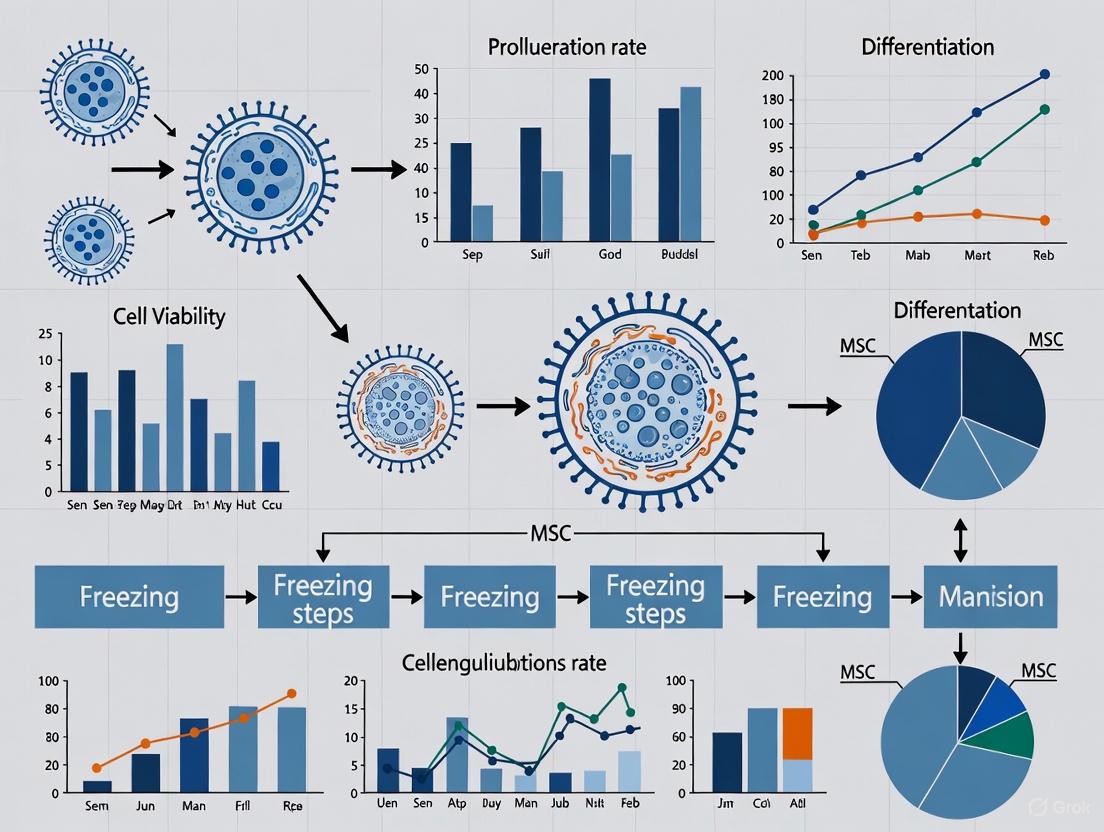
This article provides a comprehensive analysis of how repeated freezing and thawing cycles impact the critical quality attributes of Mesenchymal Stromal Cells (MSCs) for therapeutic applications.
Impact of Repeated Freezing on MSC Quality: A Strategic Guide for Cell Therapy Development
Abstract
This article provides a comprehensive analysis of how repeated freezing and thawing cycles impact the critical quality attributes of Mesenchymal Stromal Cells (MSCs) for therapeutic applications. Tailored for researchers, scientists, and drug development professionals, it synthesizes current evidence on the effects of cryopreservation on MSC viability, phenotype, differentiation potential, and immunomodulatory function. The content explores foundational concepts of cryopreservation-induced cellular stress, methodological approaches for optimizing freeze-thaw protocols, strategies for troubleshooting functional deficits, and comparative validation of fresh versus cryopreserved MSC products. By addressing these four core intents, this resource aims to guide the development of robust, clinically effective, and commercially viable MSC-based therapies.
The Science of Cold Stress: How Freezing Impacts MSC Biology and Function
The development of effective "off-the-shelf" mesenchymal stromal cell (MSC) therapies faces a critical technological bottleneck: the need for robust, reliable cryopreservation. Cryopreservation enables the long-term storage of living cells and tissues by halting metabolic activity, providing a consistent cellular resource for therapeutic applications ranging from bone marrow transplantation and graft-versus-host disease to orthopedic injuries [1] [2]. For MSC-based therapies, this process is indispensable, allowing for the completion of essential quality control testing before batch release, facilitating transportation to clinical sites, and enabling immediate product availability for acute conditions [3] [4]. Without cryopreservation, MSCs would require continuous passage in culture, leading to potential epigenetic alterations, telomere shortening, and eventual senescence [1].
However, the process of cryopreservation itself presents significant challenges. The formation of intracellular ice crystals and osmotic imbalances during freezing can compromise cell membrane integrity, while the cryoprotectant agents (CPAs) required for cell protection, particularly dimethyl sulfoxide (DMSO), introduce potential cytotoxicity concerns for both the cells and patients [3] [5]. Furthermore, emerging evidence suggests that the freeze-thaw process may alter critical functional properties of MSCs, including their immunomodulatory capacities [4] [6]. This article examines the current state of MSC cryopreservation, comparing key technological approaches and their impact on cell quality, with particular focus on the implications of repeated freezing steps for product development.
Comparative Analysis of Cryopreservation Solutions and Protocols
Viability and Recovery Across Different Formulations
The selection of an appropriate cryopreservation solution is paramount to maintaining MSC viability and function. Recent studies have systematically compared various clinical-ready formulations, revealing significant differences in post-thaw cell recovery and proliferation capacity.
Table 1: Comparison of Post-Thaw MSC Parameters in Different Cryopreservation Solutions [3]
| Cryopreservation Solution | DMSO Concentration | Viability Trend (0-6h post-thaw) | Recovery Trend | Proliferative Capacity (after 6-day culture) |
|---|---|---|---|---|
| NutriFreez | 10% | Comparable to other 10% DMSO solutions | Comparable | Similar to PHD10, significantly better than CryoStor solutions |
| PHD10 (PLA/5% HA/10% DMSO) | 10% | Comparable to other 10% DMSO solutions | Comparable | Similar to NutriFreez, significantly better than CryoStor solutions |
| CryoStor CS10 | 10% | Comparable to other 10% DMSO solutions | Comparable | 10-fold less than NutriFreez and PHD10 at 3-6 M/mL |
| CryoStor CS5 | 5% | Decreasing trend over 6 hours | Decreasing trend | 10-fold less than NutriFreez and PHD10 at 3-6 M/mL |
The data reveals that while viability immediately post-thaw may be similar across formulations, long-term functional outcomes such as proliferative capacity can differ dramatically. Solutions containing 10% DMSO generally maintained better viability over a 6-hour period post-thaw compared to those with 5% DMSO [3]. Importantly, no significant differences were observed in immunomodulatory potency (T-cell suppression and monocytic phagocytosis improvement) between MSCs cryopreserved in NutriFreez and PHD10, suggesting that both solution composition and DMSO concentration influence different aspects of cell quality [3].
DMSO Reduction and Alternative Strategies
The well-documented toxicity of DMSO has driven research into reduction and elimination strategies. An international multicenter study compared a novel DMSO-free solution (containing sucrose, glycerol, and isoleucine in Plasmalyte A, termed SGI) with traditional DMSO-containing solutions [5].
Table 2: DMSO-Containing vs. DMSO-Free Cryopreservation Outcomes [5]
| Parameter | DMSO-Containing Solutions | DMSO-Free Solution (SGI) | Statistical Significance |
|---|---|---|---|
| Average Viability Decrease (from fresh) | 4.5% | 11.4% | P = 0.049 (DMSO) vs. P < 0.001 (SGI) |
| Average Recovery of Viable MSCs | Lower by 5.6% compared to SGI | 92.9% | P < 0.013 |
| Immunophenotype | Expected CD73, CD90, CD105 expression; negative for CD45 | Comparable to DMSO solutions | No significant difference |
| Global Gene Expression | Reference profile | Comparable to DMSO solutions | No significant difference |
While the DMSO-free solution resulted in a greater decrease in viability post-thaw, it demonstrated superior cell recovery and maintained appropriate immunophenotype and gene expression profiles [5]. This suggests that viability measurements alone may not fully capture the functional capacity of the recovered cell product.
Another innovative approach involves hydrogel microencapsulation technology, which enables effective cryopreservation with significantly reduced DMSO concentrations. Research demonstrates that alginate-based microencapsulation allows for cryopreservation with as little as 2.5% DMSO while sustaining MSC viability above the 70% clinical threshold, preserving differentiation potential, and enhancing stemness gene expression [7].
Methodological Deep Dive: Experimental Protocols for Cryopreservation Assessment
Standardized Freezing and Thawing Methodology
To ensure reproducible results in cryopreservation studies, standardized protocols must be implemented. The following methodology, adapted from recent investigations, outlines key procedural steps:
- Cell Preparation: Culture MSCs under standard conditions (e.g., in Nutristem XF complete media) to desired passage (typically passage 4).
- Harvesting: Detach cells using enzymatic digestion (e.g., TrypLE Select) at approximately 80-90% confluence.
- Cryopreservation Solution Preparation: Prepare chosen cryopreservation solutions (e.g., NutriFreez, PHD10, CryoStor variants, or DMSO-free alternatives).
- Suspension and Vialing: Resuspend cell pellet in cryopreservation solution at target concentrations (e.g., 3, 6, and 9 million cells/mL). Aliquot into cryogenic vials.
- Controlled-Rate Freezing: Place vials in a controlled-rate freezer, applying a standardized cooling rate (typically -1°C/min) until reaching at least -80°C before transfer to liquid nitrogen for long-term storage.
Thawing and Post-Thaw Assessment: [3] [8]
- Rapid Thawing: Thaw vials by immersion in a 37°C water bath for approximately 2 minutes until ice crystals completely dissolve.
- Dilution/Washing: Dilute thawed cell suspension (e.g., 1:1 or 1:2) with an appropriate solution (e.g., Plasmalyte A with 5% human albumin) to reduce CPA concentration and mitigate osmotic stress. Centrifuge to remove cryoprotectants.
- Viability Assessment: Assess cell viability using Trypan blue exclusion and/or Annexin V/PI staining at multiple time points (0, 2, 4, and 6 hours) post-thaw to evaluate stability.
- Functional Assays: Proceed with phenotypic characterization (flow cytometry for CD73, CD90, CD105 positivity and hematopoietic marker negativity), proliferation assays, and potency assessments (e.g., T-cell suppression assays, differentiation potential).
Industry Practices and Scaling Challenges
A recent survey by the ISCT Cold Chain Management & Logistics Working Group revealed that 87% of respondents use controlled-rate freezing for cryopreservation of cell-based products, with the majority (60%) utilizing default freezer profiles [9]. However, scaling cryopreservation was identified as the biggest industry hurdle (22% of respondents), particularly the "ability to process at a large scale" while maintaining critical quality attributes [9].
Diagram: Comparison of cryopreservation methodologies showing advantages and limitations of each approach. Controlled-rate freezing offers greater process control but presents scaling challenges, while passive freezing is simpler but may provide less consistent results [9].
The Impact of Repeated Freezing on MSC Quality Attributes
The development of MSC banking strategies often necessitates multiple freezing steps, raising critical questions about the cumulative impact on cell quality. Research indicates that 1-2 freezing steps for MSCs in early passages is generally feasible and preserves most in vitro functional properties [4]. Interim freezing steps are not necessarily reflected in standard manufacturing parameters such as cell yield, growth kinetics, or population doubling numbers [4].
However, exhaustive freezing (≥4 cycles) may induce earlier senescence and alter functional characteristics [4]. One study specifically noted that frozen and thawed MSCs exhibited a 50% reduced performance in an in vitro immunosuppression assay measuring IDO pathway activity, though this reduced in vitro performance did not completely abolish immunomodulatory function and may not directly translate to reduced clinical efficacy [4]. This highlights the critical importance of selecting appropriate potency assays that reflect the intended mechanism of action when evaluating cryopreserved products.
The pre-freeze state of the cells also significantly influences post-thaw recovery. Cells exhibiting high pre-freeze senescence demonstrate particularly poor post-thaw function, with one study reporting growth arrest at 48 hours post-thaw in samples with elevated pre-freeze senescence [6]. This underscores the need for comprehensive cell characterization before cryopreservation, as the process may amplify existing cellular vulnerabilities.
Diagram: Key factors influencing MSC quality after cryopreservation. The pre-freeze cell state (particularly senescence levels) and specific freezing process parameters interact to determine post-thaw outcomes including viability, function, and senescence induction [4] [6].
The Scientist's Toolkit: Essential Research Reagents and Materials
Table 3: Key Reagents and Materials for MSC Cryopreservation Research
| Reagent/Material | Function/Application | Examples/Notes |
|---|---|---|
| Cryopreservation Solutions | Protect cells from freeze-induced damage through membrane penetration and ice crystal inhibition | NutriFreez (10% DMSO), CryoStor CS5/CS10 (5-10% DMSO), PHD10 (in-house: Plasmalyte A + 5% HA + 10% DMSO), SGI (DMSO-free: sucrose, glycerol, isoleucine) [3] [5] |
| Basal Media & Supplements | Provide nutrients and growth factors for pre-freeze culture and post-thaw recovery | Nutristem XF, DMEM low glucose supplemented with platelet lysate or FBS [3] [4] |
| Detection & Analysis Reagents | Assess viability, phenotype, and function post-thaw | Trypan blue (viability exclusion), Annexin V/PI (apoptosis), Antibodies for CD73, CD90, CD105 (positive markers), CD14, CD19, CD34, CD45, HLA-DR (negative markers) [3] [10] |
| Specialized Equipment | Enable controlled freezing and thawing processes | Controlled-rate freezers, Passive freezing containers (e.g., "Mr. Frosty"), Water baths or dry thawing equipment [1] [9] |
| Hydrogel Materials | Provide 3D microenvironment for enhanced cryoprotection | Sodium alginate for microencapsulation, enabling reduced DMSO concentrations [7] |
The development of effective off-the-shelf MSC therapies remains inextricably linked to advances in cryopreservation science. Current evidence demonstrates that while cryopreservation inevitably alters certain MSC properties, carefully optimized protocols can maintain critical viability, phenotypic markers, and functional capacities. The research community faces the ongoing challenge of balancing the clear benefits of product stability and off-the-shelf availability against the potential modifications imposed by freezing and thawing processes.
Key considerations for future development include the systematic reduction of DMSO through novel solutions or encapsulation technologies, the establishment of standardized freezing protocols that maintain consistency across manufacturing scales, and the implementation of predictive potency assays that accurately reflect the in vivo functionality of cryopreserved products. Furthermore, understanding the cumulative impact of multiple freezing cycles—a common requirement in cell banking strategies—remains essential for ensuring the long-term quality of MSC-based therapeutics. As the field progresses, cryopreservation will continue to represent both a necessity and a challenge, demanding continued innovation to fully realize the potential of off-the-shelf MSC therapies.
The development of effective mesenchymal stromal/stem cell (MSC) therapies represents a frontier in regenerative medicine, with more than 1,000 clinical trials currently underway globally [3]. Cryopreservation enables the creation of "off-the-shelf" cellular therapeutic products, providing immediate availability and completion of quality testing before batch release [11]. This capability is particularly crucial for treating acute conditions such as stroke, myocardial infarction, and graft-versus-host disease (GvHD), where intervention within hours of symptom onset can significantly impact clinical outcomes [12]. However, the process of cryopreservation introduces substantial cellular stress that can compromise MSC viability and function, potentially undermining their therapeutic efficacy [1].
The fundamental challenge lies in the inherent susceptibility of MSCs to cryo-injury, which manifests through multiple mechanisms including intracellular ice crystal formation, osmotic stress, and macromolecular damage [1]. Recent investigations have revealed that specific cellular states, particularly active cell cycle phases, dramatically influence susceptibility to freezing-induced damage [13]. A comprehensive understanding of these mechanisms and the corresponding cellular stress responses is essential for developing optimized cryopreservation protocols that maintain the therapeutic properties of MSCs. This guide systematically compares the performance of MSCs following different cryopreservation approaches, providing researchers with experimental data and methodologies to advance the field of cellular therapeutics.
Fundamental Mechanisms of Cryo-Injury in MSCs
Physical and Chemical Stressors During Freezing and Thawing
The process of cryopreservation subjects cells to multiple physical and chemical stressors that can collectively contribute to cryo-injury. Two primary mechanisms of damage occur during freezing: the formation of intracellular ice crystals that mechanically disrupt membranes and organelles, and solute concentration effects that create osmotic imbalances across cellular membranes [1] [3]. As water organizes into ice crystal lattices, solutes become concentrated in the unfrozen fraction, leading to hypertonic conditions that draw water out of cells, potentially causing lethal dehydration and membrane damage [3].
During thawing, cells face additional challenges including membrane damage from recrystallization and osmotic shock from the rapid rehydration and dilution of cryoprotectants [1]. The removal of cryoprotective agents (CPAs) must be carefully controlled, as rapid reduction of external CPA concentration can cause excessive cell expansion, membrane damage, and eventual cell lysis [1]. These challenges are compounded by the intrinsic toxicity of some CPAs, particularly at suboptimal concentrations or when added or removed too quickly [1].
Cell Cycle-Dependent Susceptibility to Cryo-Injury
Recent research has identified a previously overlooked mechanism of cryo-injury that exhibits cell cycle dependency. S phase MSCs demonstrate exquisite sensitivity to cryo-injury, showing heightened levels of delayed apoptosis post-thaw and reduced immunomodulatory function [13]. This susceptibility arises from the vulnerability of replicating DNA to double-stranded breaks (DSBs) that form during the cryopreservation and thawing processes [13].
The following diagram illustrates the relationship between cell cycle phase and cryo-injury susceptibility, along with a protective intervention:
This mechanism explains the variable post-thaw recovery observed in heterogeneous MSC populations and suggests that cell cycle synchronization prior to freezing could significantly improve outcomes. Experimental evidence demonstrates that blocking cell cycle progression at G0/G1 through growth factor deprivation (serum starvation) greatly reduces post-thaw dysfunction by preventing apoptosis induced by double-stranded breaks in labile replicating DNA [13]. When this approach is implemented, viability, clonal growth, and T-cell suppression function can be preserved at pre-cryopreservation levels [13].
Comparative Analysis of Cryopreservation Outcomes
Viability and Functional Recovery Across Methods
Different cryopreservation strategies yield substantially different outcomes in terms of post-thaw viability, recovery, and functional preservation. The table below summarizes key comparative data from recent studies:
Table 1: Comparative Performance of MSCs Following Different Cryopreservation Approaches
| Cryopreservation Parameter | Performance Outcomes | Experimental Context | Reference |
|---|---|---|---|
| Cell cycle synchronization | Viability, clonal growth, and T-cell suppression preserved at pre-freeze levels | In vitro analysis of serum-starved vs. control MSCs | [13] |
| Viability with optimized protocols | >95% viability upon thawing; retained responsiveness to inflammatory signals | Modified cryopreservation methods with viability assessment | [12] |
| Immunosuppressive capacity | 50% reduction in in vitro immunosuppression assay (IDO pathway specific) | Clinical-grade BM-MSCs, frozen in passage 2 | [11] |
| Adipose-derived MSC viability | 85% cell viability retention with normal proliferative capacity and differentiation | SVF frozen in serum-free medium with retention of differentiation capability | [14] |
| High cell concentration cryopreservation | No notable loss of viability/recovery at 9M/mL; comparable potency | Bone marrow MSCs cryopreserved in different solutions | [3] |
| Osteoarthritis treatment potential | No significant difference in cartilage repair between fresh and frozen BMAC | In vivo OA rat model, BMAC frozen at -80°C for 4 weeks | [8] |
Impact of Multiple Freezing Cycles
The effect of repeated freezing and thawing cycles on MSC quality attributes presents particular concerns for manufacturing and banking strategies. Research indicates that one to two freezing steps for MSCs in early passage is feasible and preserves most in vitro functional properties [11]. However, exhaustive freezing steps (four or more) may induce earlier senescence, suggesting a cumulative detrimental effect with multiple freeze-thaw cycles [11].
Interim freezing steps are not necessarily reflected in standard manufacturing parameters, highlighting the importance of specialized potency assays to detect functional alterations [11]. These findings have significant implications for master cell bank creation and product manufacturing workflows, suggesting that freezing step minimization should be a design consideration in therapeutic development.
Experimental Models and Assessment Methodologies
Standardized Protocols for Cryopreservation Research
Slow Freezing Method
The slow freezing method represents the current standard for MSC cryopreservation in both clinical and laboratory settings due to its operational simplicity and minimal contamination risk [1]. The protocol involves several critical phases:
- CPA Addition: MSCs are mixed with CPAs such as DMSO at concentrations typically ranging from 5% to 10%, often combined with non-permeating agents like sucrose or trehalose [1].
- Controlled Cooling: Cells are cooled at a controlled rate (typically -1°C/min to -3°C/min) using specialized containers or controlled-rate freezers [1]. This gradual cooling allows sufficient time for cellular dehydration, minimizing intracellular ice crystal formation.
- Storage: After reaching -80°C, samples are transferred to liquid nitrogen (-196°C) for long-term storage [1].
- Thawing: Rapid thawing in a 37°C water bath until ice crystals are completely dissolved [1].
- CPA Removal: Centrifugation to remove CPAs, particularly critical for toxic agents like DMSO [1].
This method typically yields 70-80% cell survival when properly optimized [1]. The following workflow diagram illustrates the key steps in this process:
Vitrification Approach
Vitrification represents an alternative approach that uses high concentrations of CPAs and ultra-rapid cooling rates to transform the cellular environment into a glassy state without ice crystal formation [1]. Two primary methods exist:
- Equilibrium Vitrification: Balancing cells with specific CPA formulations through controlled concentration and penetration time, achieving osmotic equilibrium before rapid immersion in liquid nitrogen [1].
- Non-equilibrium Vitrification: Utilizing high CPA concentrations with immediate immersion in liquid nitrogen, emphasizing cooling rate over equilibrium [1].
While potentially offering superior preservation, vitrification faces practical challenges in clinical implementation due to the high CPA concentrations required and technical complexities in administration [1].
Post-Thaw Functional Assessment Techniques
Comprehensive evaluation of MSC function after cryopreservation requires multiple assessment modalities to fully characterize cryo-injury impacts:
- Viability Assessment: Utilizing Trypan blue exclusion, Annexin V/PI staining, and TUNEL assays for DNA double-strand breaks at multiple timepoints (0, 2, 4, and 6 hours post-thaw) [3] [12].
- Immunomodulatory Potency: Co-culture with activated peripheral blood mononuclear cells (PBMCs) at varying MSC:PBMC ratios (e.g., 1:3, 1:6, 1:12) to assess suppression of proliferation [12].
- IDO Pathway Function: Measurement of indoleamine 2,3-dioxygenase expression by Western blot and functional activity through kynurenine production after IFN-γ stimulation [12].
- Clonogenic Capacity: Colony-forming unit fibroblast (CFU-F) assays plated at 300,000 cells/well in six-well plates with 14-day culture and crystal violet staining [8].
- Metabolic Activity: XTT assays at 24, 48, and 72 hours post-thaw to assess recovery kinetics [12].
- In Vivo Models: Retinal ischemia/reperfusion injury models with MSC administration 3 hours post-ischemia onset to evaluate therapeutic rescue capacity [12].
The Scientist's Toolkit: Essential Research Reagents
Table 2: Key Reagent Solutions for MSC Cryopreservation Research
| Reagent Solution | Composition | Function & Application | Reference |
|---|---|---|---|
| PHD10 | Plasmalyte-A + 5% Human Albumin + 10% DMSO | Clinical-ready formulation; preserves viability and immunomodulatory function | [3] |
| NutriFreez D10 | Proprietary formulation with 10% DMSO | Commercial cryopreservation solution; maintains phenotype and potency | [3] |
| CryoStor CS5/CS10 | Proprietary solutions with 5% or 10% DMSO | Serum-free, cGMP-compliant cryopreservation media | [3] |
| Serum-Free Freezing Medium | 10% DMSO + 90% Human Serum Albumin | Clinical-grade formulation; reduces xenogenic contamination risk | [11] |
| Autologous Plasma Medium | 10% DMSO + 90% Autologous Plasma | Autologous formulation for BMAC freezing; enhances clinical compatibility | [8] |
The cumulative evidence demonstrates that cryopreservation-induced injury to MSCs is a multifaceted challenge with significant implications for therapeutic development. While cryopreserved MSCs have demonstrated clinical utility in conditions such as acute GvHD [11], the variability in functional preservation across different cryopreservation approaches necessitates careful protocol optimization and comprehensive product characterization.
Strategic approaches to enhance cryopreservation outcomes include cell cycle synchronization prior to freezing [13], optimization of cryoprotectant formulations [3], and meticulous control of freezing and thawing rates [1]. The research community would benefit from standardized potency assays that better predict in vivo performance, particularly those that evaluate immunomodulatory capacity through relevant pathways such as IDO-mediated immunosuppression [11].
As the field advances toward increasingly sophisticated cellular therapeutics, understanding and mitigating cryo-injury mechanisms will remain essential for realizing the full potential of off-the-shelf MSC therapies. The experimental frameworks and comparative data presented in this guide provide a foundation for these developments, enabling researchers to make informed decisions in their therapeutic development programs.
For mesenchymal stromal/stem cell (MSC)-based therapies to transition from research tools to reliable medicines, robust and scalable manufacturing processes are essential. A significant challenge in this transition is achieving consistency despite the inherent biological variability of these primary cells [15]. Cryopreservation is a critical unit operation within the manufacturing pipeline, enabling off-the-shelf availability, completion of quality testing before batch release, and logistical flexibility for clinical use [4] [3]. However, the process of freezing and thawing cells imposes significant stress, potentially compromising the critical quality attributes (CQAs) that define MSC safety and functionality. These CQAs include cell viability, immunophenotype, and differentiation potential, which together form a core part of the Quality Target Product Profile (QTPP) for MSC-based Advanced Therapy Medicinal Products (ATMPs) [15] [16]. This guide objectively compares the impact of different freezing strategies on these CQAs, synthesizing current experimental data to inform protocol development for researchers and drug development professionals.
Impact of Cryopreservation on MSC Critical Quality Attributes
The following tables synthesize quantitative data from recent studies investigating how cryopreservation affects key MSC quality attributes.
Table 1: Impact of Cryopreservation on Viability and Recovery
| Cryopreservation Variable | Experimental Findings | Key Outcome Summary |
|---|---|---|
| Freezing Steps | 1-2 steps in early passage: Minimal impact on standard manufacturing parameters (cell yield, growth kinetics) [4].≥4 steps: Induced earlier senescence [4]. | Limited freezing steps are feasible; exhaustive steps accelerate aging. |
| Cell Concentration | Cryopreservation at up to 9 million cells/mL: No notable loss in viability or recovery [3].Dilution (1:2) post-thaw from 9 M/mL: Showed a trend of decreased cell recovery [3]. | High concentration freezing is viable but post-thaw handling is critical. |
| Cryopreservation Solution | Solutions with 10% DMSO (NutriFreez, PHD10, CS10): Comparable viabilities and recoveries up to 6 hours post-thaw [3].Solution with 5% DMSO (CryoStor CS5): Decreasing trend in cell viability and recovery noted [3]. | DMSO concentration and solution composition significantly influence post-thaw stability. |
Table 2: Impact of Cryopreservation on Phenotype and Differentiation Potential
| Quality Attribute | Impact of Limited Freezing (1-2 steps) | Impact of Cryopreservation Solution |
|---|---|---|
| Immunophenotype | Generally unaltered after thawing [4].Cells from all tested cryopreservation solutions exhibited standard MSC surface markers (CD105+, CD73+, CD90+) [3]. | Phenotype is largely resilient to standard freezing protocols and solution variations. |
| Trilineage Differentiation Potential | Generally maintained after thawing [4]. | Not a primary focus of the comparative solution studies. |
| Proliferation Capacity | Not substantially affected by 1-2 freezing steps with interim culture [4]. | MSCs cryopreserved in CS5 and CS10 showed 10-fold less proliferative capacity after a 6-day recovery culture [3]. |
Table 3: Impact of Cryopreservation on MSC Potency and Immunomodulatory Function
| Functional Assay | Experimental Findings | Interpretation |
|---|---|---|
| In Vitro Immunosuppression Assay | Frozen/thawed MSCs exhibited a 50% reduced performance in suppressing T-cell proliferation [4]. | Indicates a reduction in IDO-dependent immunomodulatory capacity post-thaw. |
| T-cell Proliferation Inhibition & Monocytic Phagocytosis | No significant differences between MSCs cryopreserved in NutriFreez and PHD10 [3]. | Specific immunomodulatory functions can be preserved with optimized cryopreservation solutions. |
Experimental Protocols for Assessing Cryopreservation Impact
To ensure the reliability and reproducibility of data on cryopreservation effects, standardized experimental protocols are essential. Below are detailed methodologies for key assays cited in the comparative data.
Protocol: Assessing Post-Thaw Viability and Recovery
This protocol is adapted from studies that evaluated cryopreservation solutions and cell concentrations [3].
Key Materials:
- MSCs: Bone marrow-derived (BM-MSCs), passage 4.
- Cryopreservation Solutions: Tested solutions include NutriFreez (10% DMSO), PHD10 (Plasmalyte-A/5% Human Albumin/10% DMSO), CryoStor CS5 (5% DMSO), and CryoStor CS10 (10% DMSO).
- Equipment: NucleoCounter NC-100 or automated cell counter, flow cytometer, 37°C water bath.
Methodology:
- Cryopreservation: Cryopreserve MSCs at target concentrations (e.g., 3, 6, and 9 million cells/mL) using a controlled-rate freezer or an isopropanol freezing container placed at -80°C for 24 hours before transfer to liquid nitrogen for long-term storage.
- Thawing and Dilution: Rapidly thaw cryovials in a 37°C water bath for approximately 2 minutes.
- For cells frozen at 3 M/mL, analyze without dilution.
- For cells frozen at 6 M/mL, perform a 1:1 dilution with a suitable solution like Plasmalyte-A/5% Human Albumin.
- For cells frozen at 9 M/mL, perform a 1:2 dilution to achieve a final concentration of 3 M/mL.
- Viability Assessment:
- Trypan Blue Exclusion: Measure cell count and viability at 0, 2, 4, and 6 hours post-thaw to assess stability.
- Annexin V/Propidium Iodide (PI) Staining: Resuspend cells in Annexin V binding buffer. Stain with Annexin V and PI for 15 minutes at room temperature in the dark. Analyze by flow cytometry to distinguish live (Annexin V-/PI-), early apoptotic (Annexin V+/PI-), and late apoptotic/necrotic (Annexin V+/PI+) populations.
- Calculation:
- Viability (%) = (Number of live cells / Total number of cells) × 100.
- Cell Recovery (%) = (Number of live cells counted / Number of cells originally cryopreserved) × 100.
Protocol: Evaluating Immunophenotype by Flow Cytometry
This method confirms that MSCs retain their identity after thawing, as per ISCT criteria [15] [16].
Key Materials:
- Antibodies: Fluorescently conjugated antibodies against CD105, CD73, CD90 (positive markers) and CD45, CD34, CD14 or CD11b, CD19, HLA-DR (negative markers).
- Equipment: Flow cytometer, centrifuge.
Methodology:
- Cell Preparation: Harvest and wash post-thaw MSCs to remove cryopreservation solution.
- Staining: Aliquot approximately 1×10^5 cells per tube. Incubate with antibody cocktails for 30 minutes at 4°C in the dark.
- Washing and Resuspension: Wash cells twice with cold FACS buffer (e.g., PBS with 1% FBS) to remove unbound antibody. Resuspend in a fixed volume of buffer for analysis.
- Data Acquisition and Analysis: Run samples on a flow cytometer. Use isotype controls to set negative populations. A population is considered positive if ≥95% of cells express the positive markers and ≤2% express the negative markers, in accordance with standard MSC phenotypic criteria.
Protocol: In Vitro Immunosuppression Assay
This functional potency assay measures the ability of MSCs to suppress T-cell proliferation [4] [3].
Key Materials:
- Peripheral Blood Mononuclear Cells (PBMCs): Isolated from healthy donors.
- T-cell Mitogen: e.g., Phytohemagglutinin (PHA) or anti-CD3/CD28 antibodies.
- Readout: ^3H-thymidine incorporation or CFSE dilution assay.
Methodology:
- Co-culture Setup: Activate PBMCs (labeled with CFSE if using that method) with a mitogen. Co-culture activated PBMCs with various ratios of thawed MSCs (e.g., 1:10, MSC:PBMC) in a culture plate for 3-5 days.
- Proliferation Measurement:
- CFSE Dilution: Analyze the dilution of CFSE fluorescence in CD3+ T cells by flow cytometry. Greater dilution indicates more rounds of cell division.
- ^3H-thymidine Incorporation: Add ^3H-thymidine to cultures for the final 16-18 hours. Harvest cells and measure incorporated radioactivity using a beta-counter.
- Data Analysis: Calculate the percentage suppression of T-cell proliferation in co-cultures with MSCs compared to cultures of activated PBMCs alone.
Flowchart of the In Vitro Immunosuppression Assay Protocol. This diagram outlines the key steps in assessing the immunomodulatory potency of thawed MSCs, a critical quality attribute that can be compromised by cryopreservation [4].
The Scientist's Toolkit: Essential Reagents and Materials
Table 4: Key Research Reagents for MSC Cryopreservation Studies
| Reagent/Material | Function/Application | Examples/Notes |
|---|---|---|
| Cryopreservation Solutions | Protect cells from ice crystal formation and osmotic damage during freeze-thaw cycles. | PHD10: In-house formulation (Plasmalyte-A/5% HA/10% DMSO) [3].NutriFreez, CryoStor CS5/CS10: Proprietary, GMP-ready solutions [3]. |
| Dimethyl Sulfoxide (DMSO) | Permeating cryoprotectant; reduces intracellular ice formation. | Commonly used at 5-10% concentration. Can be cytotoxic; requires post-thaw removal [3] [1]. |
| Human Platelet Lysate (hPL) | Serum-free, GMP-compliant growth supplement for MSC culture pre- and post-freezing. | Used to replace fetal bovine serum (FBS) in clinical-grade manufacturing [16]. |
| Annexin V / Propidium Iodide (PI) | Fluorescent stains for flow cytometry-based detection of apoptosis and necrosis. | Critical for detailed post-thaw viability assessment beyond Trypan blue [3]. |
| Immunophenotyping Antibody Panel | Flow cytometry-based confirmation of MSC identity per ISCT criteria. | Antibodies against CD105, CD73, CD90 (positive) and CD45, CD34, HLA-DR (negative) [15] [16]. |
| Automated Cell Counter | Accurate and consistent quantification of cell count and viability. | Instruments like NucleoCounter NC-100 provide standardized measurements [4]. |
| Controlled-Rate Freezer | Provides precise, reproducible cooling rates to optimize cell survival during freezing. | Alternative: Use of isopropanol freezing containers for a consistent, albeit less controlled, cooling rate at -80°C [17]. |
The integration of cryopreservation into MSC manufacturing pipelines is essential for the development of practical off-the-shelf therapies. The experimental data synthesized in this guide demonstrates that while key CQAs like viability and phenotype can be preserved with optimized protocols—particularly those using 1-2 freezing steps and specific cryopreservation solutions—certain functional potencies, such as immunosuppressive capacity, may be impaired post-thaw. This underscores the necessity of a holistic quality control strategy that moves beyond basic identity markers to include rigorous, clinically relevant potency assays. The provided experimental protocols and toolkit offer a foundation for standardized assessment. Future research must continue to refine cryopreservation formulations and thawing procedures to fully safeguard the therapeutic properties of MSCs, ensuring that product quality is consistently maintained from the manufacturing suite to the patient bedside.
The transition of mesenchymal stromal cells (MSCs) from promising therapeutic agents to clinically viable "off-the-shelf" products is critically dependent on cryopreservation. For researchers and drug development professionals, understanding the precise impact of freeze-thaw cycles on MSC immunomodulatory potency represents a fundamental challenge in cell therapy manufacturing. While cryopreservation enables essential quality testing, logistical flexibility, and batch consistency [4] [18], it introduces potential variables that may compromise the very therapeutic properties these cells are intended to deliver.
The immunomodulatory function of MSCs—their capacity to suppress T-cell proliferation, polarize macrophages, and modulate inflammatory responses—is not an intrinsic fixed property but rather a dynamic potential that must be preserved through optimized manufacturing protocols [2] [19]. Current research reveals a complex relationship between freezing procedures and functional outcomes, with studies reporting apparently conflicting results regarding the preservation of immunosuppressive capacity post-thaw [4] [20]. This comparison guide synthesizes current experimental evidence to objectively evaluate how freeze-thaw cycles impact MSC immunomodulatory potency, providing researchers with a structured analysis of key findings, methodologies, and practical implications for therapeutic development.
Comparative Analysis of Functional Outcomes After Freeze-Thaw Cycles
Table 1: Impact of Freeze-Thaw Cycles on Immunomodulatory Function
| Freeze-Thaw Conditions | Impact on Immunomodulatory Potency | Key Experimental Findings | Reference |
|---|---|---|---|
| Single freeze-thaw cycle | Variable effects reported | • 50% reduction in IDO-dependent T-cell suppression• Preserved monocyte phagocytosis enhancement• Maintained endothelial barrier restoration | [4] [20] |
| Two freeze-thaw cycles (with interim culture) | Minimal impact on basic function | • Feasible without substantial alteration of basic quality attributes• Maintained phenotype and differentiation potential | [4] |
| Exhaustive freezing (≥4 cycles) | Significant functional decline | • Induced earlier cellular senescence• Compromised proliferative capacity | [4] |
| Cryopreserved vs. Fresh MSCs (in sepsis model) | Comparable in vivo performance | • Equivalent improvement in bacterial clearance• Similar reduction in inflammatory cytokines• Comparable phagocytosis restoration | [20] |
The experimental evidence reveals a nuanced picture of how freeze-thaw cycles affect MSC function. The most pronounced concern emerges from studies showing that even a single freeze-thaw cycle can reduce specific immunomodulatory pathways. Research on clinical-grade bone marrow-derived MSCs found that thawed cells exhibited a 50% reduced performance in in vitro immunosuppression assays, particularly affecting the indoleamine 2,3-dioxygenase (IDO)-dependent pathway of T-cell suppression [4]. This suggests that certain mechanistic pathways may be more vulnerable to cryopreservation damage than others.
In contrast, other studies demonstrate remarkably preserved functionality after thawing. Donor-matched comparisons revealed that thawed MSCs maintained equivalent capacity to enhance monocyte phagocytosis and restore endothelial barrier function in vitro [20]. Most importantly, in vivo assessment using a polymicrobial sepsis model showed no significant difference between fresh and thawed MSCs in improving bacterial clearance or reducing systemic inflammation [20]. This disparity between in vitro potency assays and in vivo performance highlights the complexity of evaluating functional potency and suggests that reduced performance in specific assays may not necessarily translate to compromised clinical efficacy.
Detailed Experimental Protocols for Assessing Post-Thaw Potency
In Vitro Immunosuppression Assay
The most frequently employed method for evaluating post-thaw immunomodulatory function involves measuring the capacity of MSCs to suppress activated T-cell proliferation [4] [19] [20]. The standard protocol involves:
T-cell activation: Isolate peripheral blood mononuclear cells (PBMCs) from healthy donors and activate them with anti-CD3/CD28 antibodies or mitogens like phytohemagglutinin (PHA).
Co-culture establishment: Seed thawed MSCs at varying ratios (typically 1:10 to 1:100 MSC:PBMC) in direct contact with activated PBMCs or in transwell systems to distinguish contact-dependent from paracrine effects.
Proliferation measurement: After 3-5 days of co-culture, assess T-cell proliferation using CFSE dilution flow cytometry, 3H-thymidine incorporation, or BrdU ELISA assays.
Pathway analysis: To identify specific mechanistic deficits, evaluate key immunomodulatory molecules through gene expression (IDO1, PTGS2) [19], protein quantification (PGE2, IDO activity), or functional rescue experiments with pathway inhibitors.
This methodology identified the significant reduction in IDO-mediated immunosuppression in thawed MSCs compared to their fresh counterparts [4].
Phagocytosis Rescue Assay
To assess effects on innate immune modulation, the phagocytosis rescue assay evaluates MSC capacity to enhance bacterial clearance:
Monocyte dysfunction induction: Treat CD14+ PBMCs with lipopolysaccharide (LPS) to suppress their baseline phagocytic capacity.
Co-culture with thawed MSCs: Establish direct or indirect co-cultures of LPS-treated monocytes with post-thaw MSCs for 24-48 hours.
Phagocytosis quantification: Incubate monocytes with fluorescently-labeled E. coli or Staphylococcus aureus particles, then analyze phagocytic uptake using flow cytometry or imaging flow cytometry.
Statistical comparison: Compare the phagocytic restoration mediated by fresh versus thawed MSCs from donor-matched sources.
This assay demonstrated preserved monocyte functional enhancement capacity in thawed MSCs, with no significant difference from fresh cells in restoring phagocytic function [20].
Endothelial Barrier Protection Assay
Given the importance of vascular integrity in inflammatory diseases, this assay assesses MSC capacity to protect endothelial barriers:
Endothelial monolayer formation: Culture human umbilical vein endothelial cells (HUVECs) on transwell membranes until forming a tight monolayer, confirmed by transendothelial electrical resistance (TEER).
Barrier injury induction: Treat HUVEC monolayers with LPS or inflammatory cytokines (TNF-α, IL-1β) to disrupt barrier function.
Co-culture with MSCs: Add fresh or thawed MSCs to the lower chamber or directly onto injured endothelial monolayers.
Permeability measurement: Assess barrier integrity by measuring FITC-dextran flux across the monolayer or monitoring TEER recovery.
This approach revealed that the endothelial protective capacity of MSCs remains intact after thawing, with no significant differences between fresh and cryopreserved products [20].
Signaling Pathways in Freeze-Thaw Stress and Immunomodulation
The molecular mechanisms linking freeze-thaw stress to altered immunomodulatory function involve several key pathways that are vulnerable to cryopreservation-induced damage:
This schematic illustrates the key molecular pathways affected by freeze-thaw stress, highlighting both vulnerable and resilient mechanisms of immunomodulation. The IDO1/kynurenine pathway emerges as particularly susceptible, with studies showing approximately 50% reduction in expression and function after thawing [4]. This pathway is crucial for T-cell suppression and may be compromised by freeze-thaw-induced oxidative stress and mitochondrial dysfunction.
In contrast, the PTGS2 (COX-2)/PGE2 pathway appears more resilient, potentially explaining the preserved monocyte phagocytosis enhancement and endothelial barrier protection observed in functional assays [20]. Similarly, chemokine secretion patterns (CCL2, CCL11) involved in immune cell recruitment may remain functional or even enhanced after thawing [19]. This differential vulnerability of immunomodulatory pathways explains why some MSC functions remain intact while others are compromised after freeze-thaw cycles.
The Scientist's Toolkit: Essential Reagents and Materials
Table 2: Key Research Reagents for Freeze-Thaw Potency Studies
| Reagent/Category | Specific Examples | Research Function | Experimental Notes |
|---|---|---|---|
| Cryoprotectants | DMSO, trehalose, sucrose, ethylene glycol, glycerol | Prevent ice crystal formation and osmotic damage during freezing | DMSO (10%) remains gold standard despite toxicity concerns; emerging alternatives show promise [18] [1] |
| Cell Culture Media | αMEM, DMEM low glucose | Base media for MSC expansion and cryopreservation | Supplementation with human platelet lysate (hPL) preferred over FBS for clinical translation [4] [21] |
| Immunophenotyping Reagents | Anti-CD73, CD90, CD105, CD14, CD19, CD34, CD45, HLA-DR antibodies | Confirm MSC identity and phenotype post-thaw | Essential for quality control; phenotype typically preserved after thawing [4] [20] |
| Potency Assay Reagents | CFSE, anti-CD3/CD28 antibodies, LPS, fluorescent E. coli particles, FITC-dextran | Evaluate specific immunomodulatory functions post-thaw | Critical for functional quality assessment; multiple complementary assays recommended [4] [20] |
| Pathway Analysis Tools | IDO1 inhibitors, PTGS2 inhibitors, cytokine arrays, RNA sequencing reagents | Identify molecular mechanisms affected by freeze-thaw stress | Reveals pathway-specific vulnerabilities (e.g., IDO1 reduction) [4] [19] |
The relationship between freeze-thaw cycles and MSC immunomodulatory potency is characterized by both vulnerability and resilience. The current evidence indicates that while specific pathways—particularly the IDO1-mediated immunosuppression—may be significantly compromised by cryopreservation, other critical functions including monocyte phagocytosis enhancement and endothelial barrier protection remain intact. This differential impact underscores the necessity of employing multiple complementary potency assays that evaluate distinct immunomodulatory mechanisms rather than relying on a single functional readout.
For researchers and therapy developers, these findings suggest that a limited number of freeze-thaw cycles (1-2) with appropriate interim culture periods represents a feasible approach that preserves most functional attributes while enabling practical manufacturing and logistics. However, exhaustive freezing protocols (≥4 cycles) should be avoided due to their association with accelerated senescence and functional decline. The continued development of optimized cryopreservation protocols—including DMSO-reduced or DMSO-free cryoprotectants, controlled-rate freezing, and standardized thawing procedures—remains essential for maximizing the therapeutic potential of MSC-based products. As the field advances, rigorous functional validation post-thaw must be considered non-negotiable for ensuring consistent clinical efficacy.
In the development of mesenchymal stromal cell (MSC)-based therapies, cryopreservation is not merely a convenience—it is a fundamental component of manufacturing and logistics that enables "off-the-shelf" access to these living medicinal products. The process allows for the completion of essential quality control testing before batch release and provides critical flexibility in clinical treatment scheduling [11] [4]. However, as MSC production scales up and cell banking strategies become more complex, MSCs may be subjected to multiple freezing and thawing cycles. This comprehensive analysis examines the specific impact of exhaustive freezing, defined as four or more cycles, on MSC quality attributes, with a particular focus on the induction of cellular senescence and its functional consequences.
Comparative Impact of Single, Multiple, and Exhaustive Freezing Cycles
The relationship between freezing cycle frequency and MSC quality is not linear. The following table synthesizes key findings from experimental data across multiple studies:
| Freezing Intensity | Impact on Viability & Recovery | Impact on Phenotype & Differentiation | Impact on Immunomodulatory Function | Risk of Senescence |
|---|---|---|---|---|
| Single Cycle | Superior viability and cell recovery with validated protocols [11] [4] | Generally unaltered phenotype and differentiation potential [11] [4] | 50% reduction in in vitro IDO-mediated immunosuppression in some studies; clinical efficacy may be preserved [11] [4] [22] | Low [11] |
| 1-2 Cycles | Feasible with minimal impact on basic manufacturing parameters (cell yield, growth kinetics) [11] [4] | No substantial effect on basic quality attributes with ≥1 passage of culture between cycles [11] [4] | Preserves most in vitro functional properties [11] | Low [11] |
| ≥4 Cycles (Exhaustive) | Not directly quantified, but correlated with growth arrest in highly senescent populations [23] | Data limited; earlier senescence implies broad functional decline [11] | Data limited; senescence-associated secretory phenotype (SASP) may alter function [11] [23] | Significantly elevated, inducing earlier senescence [11] |
Experimental Evidence: Linking Exhaustive Freezing to Senescence
Key Study Designs and Methodologies
The foundational evidence for the senescence threshold comes from a systematic investigation into repeated freezing of bone marrow-derived MSCs (BM-MSCs).
- Cell Culture Protocol: Clinical-grade BM-MSCs were expanded in platelet lysate-supplemented medium under Good Manufacturing Practice (GMP) conditions. Cells were typically frozen at passage 2 (P2) for the final product [11] [4].
- Freezing/Thawing Protocol: Cells were cryopreserved using a controlled-rate freezer in a freezing medium consisting of 10% dimethylsulfoxide (DMSO) and 90% human serum albumin. Thawing was performed rapidly in a 37°C water bath [11] [4].
- Experimental Design: The impact of repeated freezing was tested by introducing interim freezing steps at passage 0 (P0) or passage 1 (P1), in addition to the final freezing step at P2. This created a paradigm for studying multiple (up to 3 freeze-thaw cycles by P2) and potentially exhaustive (≥4) freezing by extending this process to later passages [11] [4].
- Senescence Assessment: Senescence was evaluated using the β-galactosidase assay, a standard histochemical method for detecting the enzyme activity associated with senescent cells. This was correlated with population doubling (PD) number and growth kinetics [11].
Supporting Evidence from Correlative Studies
Another study, while not testing four cycles directly, provides crucial supporting data on the link between culture expansion, senescence, and freezing response. It found that high senescence in pre-freeze cultures correlated with poor post-thaw function, including 48-hour post-thaw growth arrest [23]. This suggests that the cumulative stress from both extended culture and exhaustive freezing acts synergistically to drive MSCs toward a senescent, non-functional state.
Underlying Mechanisms: The Pathway to Freezing-Induced Senescence
The following diagram illustrates the proposed mechanistic pathway through which exhaustive freezing cycles drive MSCs into senescence, compromising their therapeutic potential.
The Scientist's Toolkit: Essential Reagents and Materials
Successful research into MSC cryopreservation and senescence relies on specific, high-quality reagents. The table below lists key solutions used in the cited studies.
| Research Reagent / Solution | Function & Role in Experimentation |
|---|---|
| DMSO (CryoSure) | A cryoprotective agent (CPA) that penetrates the cell to prevent lethal intracellular ice crystal formation during freezing [11] [8]. |
| Human Serum Albumin (Albunorm) | A component of clinical-grade freezing medium that provides a stable protein matrix, improving post-thaw viability and recovery [11]. |
| Platelet Lysate | A serum-free supplement for MSC expansion media, favoring cell proliferation and maintaining differentiation potential [11] [4]. |
| TrypLE Select | An animal-origin-free enzyme solution used for the gentle detachment of adherent MSCs from culture flasks, preserving surface markers and viability [11]. |
| CryoStor10 (CS10) | A GMP-grade, defined cryopreservation medium. Studies on MSC spheroids found it superior in preserving viability, morphology, and stemness post-thaw compared to conventional media [24]. |
| β-galactosidase Assay Kit | A histochemical staining kit used as a standard method to detect senescent cells in culture, which exhibit increased enzyme activity at pH 6.0 [11] [23]. |
| Ficoll-Paque Premium | A density gradient medium used for the initial isolation of mononuclear cells (MNCs), including MSCs, from bone marrow aspirates [11] [23]. |
The evidence clearly indicates that while MSC products are resilient to limited freezing, a threshold exists at approximately four cycles, beyond which the risk of inducing cellular senescence increases significantly. This exhaustive freezing can lead to a senescent phenotype associated with growth arrest and altered function, posing a substantial risk to product quality and consistency. For researchers and therapy developers, this underscores the critical need to minimize freeze-thaw cycles in bioprocessing protocols and implement rigorous senescence monitoring using tools like the β-galactosidase assay as part of a comprehensive quality control strategy. Adhering to these principles is essential for advancing reliable and efficacious MSC-based therapies.
Optimizing MSC Cryopreservation Protocols: From Cryoprotectants to Clinical Best Practices
Cryopreservation is an indispensable technology in biomedical research and clinical applications, enabling long-term preservation of biological samples such as cells, tissues, and embryos by halting all biochemical activity. The two predominant methods for cryopreservation are slow freezing and vitrification, each with distinct physical mechanisms and practical implications. For researchers and drug development professionals, particularly those working with mesenchymal stromal cells (MSCs) and other therapeutic cell types, selecting the appropriate cryopreservation method is critical for maintaining cell viability, functionality, and therapeutic potential post-preservation.
The fundamental challenge in cryopreservation lies in preventing intracellular ice crystal formation, which can cause irreversible damage to cellular structures. Both slow freezing and vitrification address this challenge through different physical approaches. Slow freezing relies on controlled cooling rates to promote cellular dehydration, minimizing intracellular ice formation. In contrast, vitrification uses high cooling rates and high concentrations of cryoprotectants to achieve a glass-like solid state without ice crystal formation. Understanding the comparative advantages, limitations, and impacts of these methods on cellular properties is essential for optimizing preservation protocols in research and clinical settings.
Within the context of MSC research, where banking strategies often necessitate multiple freezing steps, the impact of cryopreservation method choice becomes particularly significant. Studies have demonstrated that the number of freezing steps can influence critical quality attributes, including senescence induction and immunomodulatory function. This analysis provides a comprehensive comparison of slow freezing versus vitrification, with specific attention to their effects on MSC quality attributes and implications for therapeutic development.
Fundamental Principles and Mechanisms
Slow Freezing Methodology
Slow freezing operates on the principle of controlled extracellular ice formation to gradually dehydrate cells, thereby reducing lethal intracellular ice crystal formation. The process involves several key mechanisms working in concert. During slow freezing, cells are subjected to a precisely controlled cooling rate, typically ranging from -0.3°C/min to -3°C/min, which allows water to slowly exit cells before freezing [1] [25]. This gradual dehydration is facilitated by cryoprotective agents (CPAs) such as dimethyl sulfoxide (DMSO) or ethylene glycol, which penetrate cells and lower the freezing point of intracellular water [1].
The standard slow freezing protocol involves multiple stages with specific temperature milestones. Initially, cells are mixed with CPAs and placed in a freezing apparatus at approximately -20°C to -80°C [1]. The cooling process often includes a critical "seeding" step at approximately -6°C, where ice formation is manually induced in the extracellular solution to control the freezing process [25]. Following this controlled cooling phase, samples are ultimately transferred to long-term storage in liquid nitrogen at -196°C [1]. This methodical approach aims to balance the rate of cellular dehydration with the cooling rate, minimizing mechanical damage from ice crystals while mitigating osmotic stress.
Vitrification Methodology
Vitrification represents a fundamentally different approach to cryopreservation, achieving a glass-like state without ice crystal formation through ultra-rapid cooling and high CPA concentrations. The process transforms liquid intracellular and extracellular solutions directly into an amorphous glassy solid, bypassing crystalline ice formation entirely [1] [26]. This physical state is achieved through a combination of high cooling rates (typically exceeding 20,000°C/min) and elevated concentrations of permeating and non-permeating CPAs, which dramatically increase solution viscosity during cooling [1].
Vitrification protocols generally follow one of two approaches: equilibrium or non-equilibrium vitrification. Equilibrium vitrification involves balancing cells with specific CPA formulations through controlled concentration and penetration time, allowing full cellular dehydration before freezing [1]. In contrast, non-equilibrium vitrification prioritizes cooling rate and high CPA concentrations, rapidly exposing cells to vitrification solutions before immediate immersion in liquid nitrogen [1]. Both approaches utilize CPAs—including permeating agents like DMSO, ethylene glycol, and propylene glycol, plus non-permeating sugars like sucrose and trehalose—to enable the vitreous transition while providing osmotic protection and membrane stabilization [1] [27].
The following diagram illustrates the fundamental mechanisms of both cryopreservation methods:
Comparative Experimental Data Across Cell and Tissue Types
Research across diverse biological systems provides crucial insights into the functional outcomes of slow freezing versus vitrification. The comparative effectiveness varies significantly depending on the cell type, developmental stage, and specific application, underscoring the importance of context-specific protocol optimization.
Performance in Oocyte and Embryo Cryopreservation
In reproductive medicine, both slow freezing and vitrification have been extensively applied to oocytes and embryos with differing outcomes. A 2025 study comparing modified slow freezing with vitrification for human oocytes reported that traditional slow freezing with standard rehydration yielded significantly lower survival rates (65.1%) compared to both vitrification (89.7%) and a modified slow freezing approach with enhanced rehydration (89.8%) [28]. However, with protocol optimization, the clinical pregnancy and implantation rates became comparable between vitrification and optimized slow freezing, demonstrating that methodological refinements can bridge performance gaps [28].
For embryonic development, vitrification demonstrates particular advantages at later developmental stages. Research on mouse embryos revealed that while vitrification at the 8-cell stage did not significantly affect blastocyst formation rates, it did reduce blastocyst cell numbers and live birth frequency [29]. The study identified that vitrification induced reactive oxygen species accumulation, DNA damage, and altered epigenetic modifications in blastocysts, suggesting potential long-term developmental impacts that warrant consideration [29]. In human cleavage-stage embryos, vitrification significantly outperformed slow freezing, with survival rates of 96.95% versus 69.06% and higher clinical pregnancy (41.53% versus 21.53%) and implantation rates (14.41% versus 7.01%) [30].
Tissue and Specialized Cell Applications
The comparative efficacy of cryopreservation methods extends to more complex tissue architectures. In testicular tissue preservation, a 2025 study on neonatal bovine tissue containing gonocytes found that vitrification effectively preserved cell membrane integrity, promoted proliferation, and protected against apoptosis, performing comparably to controlled slow freezing methods [31] [26]. However, vitrification resulted in a significantly lower proportion of seminiferous tubules with optimal basement membrane attachment (19.15%) compared to both controlled (47.89%) and uncontrolled (39.05%) slow freezing methods, suggesting potential structural considerations for tissue-based applications [31].
For ovarian tissue cryopreservation, a 2024 transplantation study demonstrated that vitrification protocols yielded better outcomes than slow freezing in terms of restored endocrine function, follicular morphology, and reduced stromal cell apoptosis after heterotopic transplantation in nude mice [25]. Specifically, one vitrification protocol (VF2) showed significantly higher hormone levels and normal follicle proportions at 6 weeks post-transplantation compared to slow freezing, highlighting the potential of optimized vitrification for complex tissue preservation [25].
Table 1: Comparative Performance of Slow Freezing vs. Vitrification Across Biological Systems
| Biological Material | Outcome Measure | Slow Freezing | Vitrification | Research Context |
|---|---|---|---|---|
| Human oocytes | Survival rate | 65.1% (traditional)89.8% (modified) | 89.7% | Clinical ART [28] |
| Human cleavage-stage embryos | Survival rate | 69.06% | 96.95% | Clinical ART [30] |
| Human cleavage-stage embryos | Clinical pregnancy rate | 21.53% | 41.53% | Clinical ART [30] |
| Neonatal bovine testicular tissue | Seminiferous tubules with >70% basement membrane attachment | 47.89% (controlled)39.05% (uncontrolled) | 19.15% | Preclinical research [31] |
| Neonatal bovine testicular tissue | Apoptosis levels | Significantly higher (uncontrolled)No significant change (controlled) | No significant change | Preclinical research [31] |
| Human ovarian tissue | Normal follicle proportion post-transplantation | Lower | Higher (VF2 protocol) | Preclinical research [25] |
| Feline epididymal sperm | Post-warming motility | 30-57% (literature range) | Comparable to fresh controls with optimized protocol | Species conservation [27] |
Impact on MSC Quality Attributes and Therapeutic Potential
For mesenchymal stromal cell (MSC)-based therapies, cryopreservation method selection significantly influences critical quality attributes and functional properties. Research indicates that while cryopreservation enables important banking strategies, it can alter MSC characteristics in method-dependent ways.
Effects on Viability, Phenotype, and Functionality
Studies investigating the impact of freezing on MSC manufacturing have demonstrated that 1-2 freezing steps for MSCs in early passage is feasible and preserves most in vitro functional properties [4]. Cryopreserved and thawed MSCs generally maintain viability, phenotype, and differentiation potential when optimized protocols are employed. However, comparative analyses reveal meaningful functional differences. Thawed MSCs have been shown to exhibit approximately 50% reduced performance in in vitro immunosuppression assays specifically measuring indoleamine 2,3-dioxygenase (IDO)-mediated T-cell suppression, suggesting that certain immunomodulatory pathways may be particularly sensitive to cryopreservation effects [4].
The number of freezing cycles appears to correlate with cumulative stress on MSCs. Research indicates that while two freezing steps with preceding cell culture of at least one passage between freezes does not substantially affect basic manufacturing parameters or quality attributes, exhaustive freezing steps (≥4) may induce earlier senescence [4]. This finding has significant implications for MSC banking strategies where cells may undergo multiple expansions and cryopreservation cycles before clinical application.
Method-Specific Advantages and Limitations for MSC Applications
Slow freezing remains the recommended technique for clinical and laboratory MSC cryopreservation due to its operational simplicity, minimal contamination risk, and extensive validation history [1]. The method typically yields 70-80% cell survival rates when optimized protocols are employed [1]. However, slow freezing presents challenges in CPA management, as improper addition or removal of CPAs like DMSO can induce cellular toxicity and requires careful osmotic balancing during both freezing and thawing phases [1].
Vitrification offers potential advantages for MSC preservation through its ultra-rapid cooling approach that eliminates ice crystal formation. However, the high CPA concentrations required for vitrification introduce significant osmotic stress and potential chemical toxicity concerns [1]. The development of CPA-free vitrification approaches using disaccharides like trehalose and sucrose shows promise for reducing these risks, as demonstrated in feline sperm vitrification where 0.5M trehalose with rapid mixing preserved sperm motility and viability [27].
Table 2: Impact of Cryopreservation on MSC Quality Attributes
| Quality Attribute | Impact of Slow Freezing | Impact of Vitrification | Clinical Implications |
|---|---|---|---|
| Cell viability & recovery | 70-80% survival with optimized protocols [1] | Variable survival; highly protocol-dependent | Determines cell dosage accuracy |
| Phenotype markers | Generally unaltered (CD105, CD73, CD90 expression maintained) [4] | Generally unaltered | Ensures cell identity and potency |
| Differentiation potential | Maintained [4] | Maintained | Confirms functional multipotency |
| Immunosuppressive capacity | 50% reduction in IDO-mediated T-cell suppression [4] | Not fully characterized | May influence therapeutic efficacy |
| Senescence induction | Minimal with 1-2 freeze steps; increased with ≥4 steps [4] | Limited data available | Affects replicative capacity and function |
| In vivo therapeutic efficacy | Demonstrated in clinical studies for GvHD [4] | Limited clinical data | Ultimate measure of clinical utility |
Experimental Protocols and Methodological Considerations
Standardized Slow Freezing Protocol for MSCs
The following protocol outlines a standardized approach for slow freezing of mesenchymal stromal cells, based on established methodologies from current research:
Cell Preparation: Harvest MSCs at approximately 80% confluency using standard detachment procedures. Perform cell counting and viability assessment using methods such as NucleoCounter NC-100 or trypan blue exclusion [4].
CPA Preparation and Addition: Prepare freezing medium consisting of basal medium (e.g., D-MEM low glucose) supplemented with 10% DMSO and 20-30% serum substitute (e.g., platelet lysate or FBS) [1] [4]. Gradually mix the cell suspension with freezing medium to achieve final cell concentration of 1-2×10^6 cells/mL in 10% DMSO. This gradual mixing minimizes osmotic shock.
Cooling Phase: Transfer cell suspension to cryovials and initiate controlled cooling:
- 4°C for 30-60 minutes (initial equilibration)
- Programmable cooling from 4°C to -6°C at 2°C/min
- Manual seeding at -6°C to induce extracellular ice formation
- Further cooling from -6°C to -40°C at 0.3°C/min
- Rapid cooling from -40°C to -140°C at 10°C/min
- Transfer to liquid nitrogen for long-term storage at -196°C [25] [4]
Thawing and CPA Removal: Rapidly warm cryovials in a 37°C water bath for 2-3 minutes until ice crystals completely dissolve. Immediately dilute thawed cell suspension with pre-warmed basal medium containing 10% serum substitute. Centrifuge at 300-400×g for 5 minutes to remove CPA-containing supernatant. Resuspend cell pellet in fresh culture medium for immediate analysis or culture [1] [4].
Vitrification Protocol for MSC Applications
While vitrification protocols for MSCs are less standardized than for reproductive cells, the following approach adapts successful methodologies from other cell types:
Equilibration Phase: Incubate MSC aggregates or small tissue pieces in equilibration solution containing 3.8% ethylene glycol (EG) + 0.5M sucrose in basal medium for 3-15 minutes at room temperature [25].
Vitrification Solution Exposure: Transfer cells to vitrification solution containing 20-38% total permeating CPAs (typically combination of EG and DMSO) + 0.5-1.0M sucrose for 30-60 seconds at room temperature [25] [29].
Ultra-Rapid Cooling: Immediately place cell suspension on specialized vitrification devices (e.g., Cryotop, cryoloop) and plunge directly into liquid nitrogen, achieving cooling rates >20,000°C/min [29].
Warning and CPA Removal: Warm samples rapidly by immersing in warming solution containing 1.0M sucrose for 1 minute at 37°C. Gradually dilute CPAs through sequential transfer to solutions with decreasing sucrose concentrations (0.5M, 0.25M, 0.125M, 0M) for 3-5 minutes each at room temperature [25].
The experimental workflow below illustrates the key steps in both cryopreservation methods:
The Scientist's Toolkit: Essential Research Reagents and Materials
Successful implementation of either cryopreservation method requires specific reagents and materials optimized for each approach. The following table details essential components for establishing robust cryopreservation protocols in research settings.
Table 3: Essential Research Reagents for Cryopreservation Protocols
| Reagent/Material | Function | Application Notes |
|---|---|---|
| Permeating CPAs | Penetrate cell membrane to suppress ice formation | DMSO: Most common for slow freezing [1]Ethylene Glycol: Lower toxicity, common in vitrification [25]Propylene Glycol: Higher toxicity, less commonly used [1] |
| Non-Permeating CPAs | Create osmotic gradient for cellular dehydration | Sucrose: Standard component in vitrification [27] [25]Trehalose: Enhanced membrane stabilization [27] |
| Basal Media | Maintain pH and osmotic balance during processing | HEPES-buffered M199: Ovarian tissue [25]D-MEM low glucose: MSC culture [4]KSOMaa: Embryo culture [29] |
| Protein Supplements | Provide membrane protection and reduce mechanical stress | Bovine Serum Albumin (BSA): Standard protein source [27]Serum Substitute Supplement (SSS): Defined formulation [25]Platelet Lysate: MSC expansion and cryopreservation [4] |
| Specialized Equipment | Enable controlled cooling or rapid temperature change | Programmable Freezer: Slow freezing [26]Mr. Frosty: Uncontrolled slow freezing [26]Cryotop/Cryoloop: Vitrification devices [29] [30] |
| Viability Assessment Tools | Evaluate post-thaw cell quality | NucleoCounter NC-100: Automated cell counting [4]Flow Cytometry: Phenotype and apoptosis [4]Functional Assays: Immunosuppression capacity [4] |
The comparative analysis of slow freezing and vitrification reveals a complex landscape where method superiority is highly context-dependent. For MSC applications, slow freezing remains the established standard for clinical manufacturing, offering practical advantages in simplicity, validation history, and reliable post-thaw viability. However, evidence of reduced immunomodulatory function after thawing warrants careful consideration of functional potency in addition to basic viability metrics [4]. Vitrification presents theoretical advantages for minimizing ice crystal damage but faces challenges in protocol standardization and CPA toxicity management for larger cells and complex tissues.
Future research directions should prioritize protocol optimization to mitigate method-specific limitations. For slow freezing, this includes developing less toxic CPA cocktails and refined cooling rates tailored to specific cell types. For vitrification, research should focus on reducing CPA concentrations through enhanced cooling rates and developing effective intracellular delivery methods for non-permeating protectants like trehalose [27]. The impact of multiple freezing steps on MSC quality attributes deserves particular attention, as banking strategies often necessitate more than one freeze-thaw cycle [4].
From a clinical translation perspective, comprehensive functional assessment beyond basic viability is essential. Researchers should implement potency assays relevant to their therapeutic application, such as immunomodulation capacity for MSCs intended for inflammatory conditions. As cryopreservation methods continue to evolve, the optimal approach will likely leverage insights from both techniques to develop hybrid protocols that maximize cell recovery while maintaining critical functional attributes for research and clinical applications.
The cryopreservation of mesenchymal stromal cells (MSCs) is an indispensable process in regenerative medicine, enabling the off-the-shelf availability of these therapeutic cells for clinical applications. Within this process, cryoprotectant selection represents a critical determinant of post-thaw cell viability, functionality, and ultimately, therapeutic efficacy. This guide provides a comprehensive comparison of cryoprotectant formulations, with particular emphasis on dimethyl sulfoxide (DMSO)-based solutions and their emerging alternatives. The evaluation is framed within a critical research context: understanding how repeated freezing steps and cryoprotectant choices impact fundamental MSC quality attributes, including immunomodulatory capacity, differentiation potential, and genomic stability. As MSC therapies advance toward broader clinical use, the selection of appropriate cryoprotectant formulations becomes paramount not only for cell preservation but also for patient safety and compliance with Good Manufacturing Practice (GMP) standards [32] [33].
Comparative Analysis of Cryoprotectant Formulations
DMSO-Based Cryoprotectants
DMSO remains the most widely utilized cryoprotectant for MSC preservation, primarily implemented at a concentration of 10% (v/v) in slow-freezing protocols [18] [34]. Its mechanism of action involves creating transient pores in the cellular membrane, facilitating water movement that minimizes intracellular ice crystal formation during freezing. Additionally, DMSO increases intracellular solute concentration, aiding in the vitrification of water at low temperatures [35]. Despite its effectiveness, DMSO presents significant challenges, including dose-dependent cytotoxicity and clinical side effects when administered to patients. These adverse effects can range from mild symptoms such as nausea and characteristic garlic-like odor to more severe complications including hemodynamic instability and neurological events [35] [34].
Recent clinical investigations have explored reducing DMSO concentrations to mitigate these concerns. A systematic review and meta-analysis of autologous hematopoietic stem cell transplantation revealed that decreasing DMSO concentration from 10% to 5% resulted in improved post-thaw CD34+ cell viability and reduced adverse effects in patients, with minimal impact on engraftment rates [35]. For MSC products, the delivered DMSO doses via intravenous administration are typically 2.5–30 times lower than the 1 g DMSO/kg dose accepted for hematopoietic stem cell transplantation [18] [34]. With adequate premedication and infusion protocols, clinical studies involving 1,173 patients receiving DMSO-containing MSC products reported only isolated infusion-related reactions [34].
DMSO-Free and Clinical-Grade Alternatives
The limitations of DMSO have stimulated research into alternative cryoprotectant strategies, which can be broadly categorized into penetrating (endocellular) and non-penetrating (exocellular) cryoprotectants [33]. These alternatives aim to maintain cryoprotective efficacy while reducing potential toxicity.
Penetrating cryoprotectants include low molecular weight compounds such as glycerol, ethylene glycol, and propylene glycol, which function similarly to DMSO by entering cells and forming hydrogen bonds with intracellular water molecules. However, these agents generally demonstrate lower cryoprotective efficiency compared to DMSO [33] [1].
Non-penetrating cryoprotectants comprise oligosaccharides (e.g., sucrose, trehalose) and high molecular weight polymers (e.g., ficoll, polyvinylpyrrolidone, hydroxyethyl starch). These compounds operate through extracellular mechanisms, binding water and inhibiting ice crystal growth without crossing cell membranes [33]. This property makes them particularly attractive for clinical applications due to their favorable safety profiles.
Current research focuses on combining these agents in optimized cocktails. For instance, studies have investigated formulations containing 300 mM trehalose with 10% glycerol and 0.001% ectoine, achieving post-thaw viability of 92% with 88% cell recovery [18]. Other promising combinations include 150 mM sucrose with 300 mM ethylene glycol, 30 mM alanine, 0.5 mM taurine, and 0.02% ectoine, which demonstrated 96% viability and 103% recovery [18]. Despite these advances, the authors note that "none of these approaches has yet been shown to be suitable for clinical application" as robust replacements for DMSO-based protocols [18] [34].
Table 1: Comparison of Primary Cryoprotectant Formulations for MSCs
| Cryoprotectant Type | Representative Agents | Mechanism of Action | Post-Thaw Viability | Clinical Safety Considerations |
|---|---|---|---|---|
| Penetrating Agents | DMSO (10%) | Intracellular penetration, ice crystal inhibition | ~70-80% [1] | Dose-dependent toxicity; infusion reactions [35] [34] |
| DMSO (5%) | Reduced intracellular penetration | Improved CD34+ viability vs. 10% [35] | Reduced adverse effects [35] | |
| Glycerol, Ethylene Glycol | Alternative intracellular cryoprotection | Generally lower than DMSO [33] [1] | Variable toxicity profiles | |
| Non-Penetrating Agents | Sucrose, Trehalose | Extracellular water binding, osmotic regulation | Varies by combination [18] | Favorable safety profile [33] |
| Polymers (Ficoll, HES) | Extracellular matrix stabilization | Protocol-dependent | Reduced toxicity concerns | |
| Combination Formulations | Trehalose + Glycerol + Ectoine | Hybrid intracellular/extracellular protection | Up to 92% [18] | Potential for improved safety |
| Sucrose + Ethylene Glycol + Amino Acids | Multi-mechanism protection | Up to 96% [18] | Reduced DMSO exposure |
Impact of Cryoprotectants on MSC Quality Attributes
The selection of cryoprotectant formulation significantly influences critical quality attributes of MSCs following cryopreservation and thawing. These impacts extend beyond simple viability metrics to encompass functional characteristics essential for therapeutic efficacy.
Functional Properties: Cryopreserved MSCs must retain their immunomodulatory capabilities, differentiation potential, and paracrine secretory functions to be therapeutically effective. Studies indicate that immediately thawed MSCs may exhibit lower blood compatibility and functional properties compared to freshly harvested counterparts [18] [34]. The cryopreservation process can induce transient changes in surface marker expression and metabolic activity, creating a "cryo-stunned" phase from which cells must recover [36] [37].
Engraftment and Biodistribution: Unlike hematopoietic stem cells that require long-term engraftment, MSCs often function through "hit and run" mechanisms, exerting therapeutic effects through paracrine signaling rather than permanent integration [36] [37]. This distinction is crucial when evaluating cryoprotectant formulations, as it suggests that transient post-thaw function may be sufficient for therapeutic efficacy in some applications.
Molecular and Genetic Stability: Repeated freezing steps and cryoprotectant exposure can influence genetic stability and epigenetic modifications in MSCs. While cryopreservation prevents passage-induced alterations such as DNA methylation changes and telomere shortening that occur with continuous culture [1], the freezing process itself can stress cellular systems. Optimal cryoprotectant selection helps minimize these stresses, preserving genomic integrity.
Table 2: Impact of Cryoprotectants on Critical MSC Quality Attributes
| Quality Attribute | Impact of DMSO-Based Cryopreservation | Impact of DMSO-Free Strategies | Research Findings |
|---|---|---|---|
| Cell Viability | 70-80% with standard slow-freezing [1] | Varies widely (e.g., 72-96% with optimized combinations) [18] | Lower DMSO concentrations (5%) may improve viability for some cell types [35] |
| Immunomodulatory Function | Generally preserved with optimized protocols [32] | Limited long-term data; formulation-dependent | Quantum-expanded BM-MSCs maintained T-cell suppression capacity [32] |
| Differentiation Potential | Retained post-thaw with 10% DMSO [1] | Similar osteogenic/chondrogenic potential with optimized protocols [38] | Post-thaw Wharton's jelly MSCs showed better differentiation than mixed cord samples [38] |
| Genomic Stability | Prevents passage-induced epigenetic changes [1] | Limited comparative data available | Cryopreservation prevents random loss of genomic regions during continuous culture [1] |
| Post-Thaw Recovery | Requires 24+ hours for full functional recovery [36] [37] | Recovery kinetics less characterized | Cells experience "cryo-stunned" phase requiring metabolic recovery [36] [37] |
Experimental Protocols for Cryoprotectant Evaluation
Standardized Slow Freezing Protocol with DMSO
The slow freezing method remains the gold standard for MSC cryopreservation in both clinical and research settings due to its operational simplicity and contamination minimization [1]. The following protocol details the standardized approach:
Cell Preparation and CPA Addition: Harvest MSCs at 80-90% confluence and resuspend in cryopreservation medium consisting of culture medium supplemented with 10% DMSO and a protein source (e.g., fetal bovine serum or human platelet lysate). Cell concentration should be optimized typically within 1-5×10^6 cells/mL [33] [1].
Controlled-Rate Freezing: Transfer cell suspensions to cryogenic vials and initiate a controlled freezing program:
- 4°C for 40 minutes (equilibration phase)
- Reduce temperature at -1°C/min to -20°C (slow freezing phase)
- Further reduce at -5°C/min to -80°C (crystallization phase)
- Finally, transfer to liquid nitrogen (-196°C) for long-term storage [1]
Thawing and CPA Removal: Rapidly thaw cells in a 37°C water bath with gentle agitation until only a small ice crystal remains (approximately 2-3 minutes). Immediately dilute the cell suspension with pre-warmed culture medium to reduce DMSO concentration gradually. Centrifuge at 300-400×g for 5 minutes to remove cryoprotectant and resuspend in fresh culture medium [1] [38].
Post-Thaw Assessment: Evaluate viability via trypan blue exclusion or flow cytometry with Annexin V/PI staining. Assess functionality through population doubling time, immunophenotype (CD105+, CD73+, CD90+, CD45-, CD34-, CD14-, CD11b-, CD79α-, HLA-DR-), and differentiation potential to osteogenic, adipogenic, and chondrogenic lineages [32] [1].
Vitrification Methods for DMSO-Free Preservation
Vitrification offers an alternative approach that eliminates intracellular ice formation by achieving a glassy state through ultra-rapid cooling combined with high CPA concentrations. Two primary methodologies have been developed:
Equilibrium Vitrification Protocol:
- Prepare vitrification solution containing high concentrations of permeating CPAs (e.g., 6-8 M) combined with non-permeating agents.
- Incubate cells in stepwise increasing concentrations of CPA solutions to achieve gradual dehydration and osmotic equilibrium.
- Load equilibrated cells into minimal volumes on specialized devices (e.g., cryoloops, open pulled straws).
- Plunge directly into liquid nitrogen for ultra-rapid cooling (>20,000°C/min) [1].
Non-Equilibrium Vitrification Protocol:
- Prepare cells in a single step with high CPA concentrations (typically 6-8 M).
- Immediately submerge in liquid nitrogen without achieving full osmotic equilibrium.
- This method relies on extreme cooling rates to achieve vitrification before significant ice crystal formation [1].
Rewarming and CPA Removal: Rapid rewarming is essential to prevent ice crystallization during warming. This is typically achieved by plunging samples into 37°C water bath with gentle agitation. CPA removal requires careful stepwise dilution to prevent osmotic shock, often using decreasing concentrations of sucrose solutions to gradually restore isotonic conditions [1].
The Scientist's Toolkit: Essential Research Reagents
Table 3: Essential Reagents for Cryoprotectant Research
| Reagent Category | Specific Products | Function/Application | Considerations for MSC Research |
|---|---|---|---|
| Penetrating Cryoprotectants | DMSO (USP-grade) | Gold standard intracellular CPA | Use at 5-10%; associated with toxicity concerns [35] [34] |
| Glycerol, Ethylene Glycol | Alternative penetrating CPAs | Generally lower efficiency than DMSO [33] | |
| Non-Penetrating Cryoprotectants | Sucrose, Trehalose | Extracellular CPAs, osmotic regulation | Often combined with penetrating agents [18] [33] |
| Hydroxyethyl Starch (HES) | Extracellular ice crystal inhibition | Used in combination with DMSO in some protocols [35] | |
| Protein Supplements | Fetal Bovine Serum (FBS) | Traditional protein source for cryomedium | Xenogeneic concerns for clinical applications [32] |
| Human Platelet Lysate (hPL) | Human-derived protein source | GMP-compliant alternative to FBS [32] | |
| Specialized Media | Recovery Cell Culture Freezing Medium | Commercial defined-formulation cryomedium | Serum-free, defined composition [38] |
| MSC-Brew GMP Medium | Chemically defined expansion medium | Supports automated manufacturing platforms [32] | |
| Assessment Tools | Annexin V/Propidium Iodide | Flow cytometry viability/apoptosis detection | Quantifies early vs. late apoptosis post-thaw [38] |
| CD105, CD73, CD90 antibodies | Phenotypic characterization post-thaw | Confirms MSC identity maintenance [32] [1] |
The selection of cryoprotectant formulations for MSC preservation requires careful consideration of both experimental requirements and clinical objectives. DMSO-based protocols, particularly utilizing 10% concentration, remain the most extensively validated approach, offering reliable post-thaw viability and functionality. However, emerging evidence supports the consideration of reduced DMSO concentrations (5%) or alternative cryoprotectant cocktails to mitigate toxicity concerns while maintaining adequate preservation efficacy.
For research focused on understanding the impact of repeated freezing on MSC quality attributes, systematic comparison between established DMSO protocols and emerging DMSO-free formulations is essential. Such investigations should extend beyond simple viability metrics to encompass functional assessments including immunomodulatory capacity, differentiation potential, and paracrine factor secretion. Furthermore, as automated manufacturing platforms advance, cryoprotectant formulations must demonstrate compatibility with systems such as the Quantum Cell Expansion System and CliniMACS Prodigy to enable scalable, GMP-compliant production of MSC therapies [32].
The optimal cryoprotectant strategy must balance preservation efficacy with clinical safety, considering the specific application route (systemic vs. local administration) and patient population. As research continues to elucidate the complex relationships between cryoprotectant selection, freezing methodologies, and post-thaw MSC functionality, the field moves closer to optimized preservation protocols that maximize therapeutic potential while minimizing risks.
For advanced therapeutic medicinal products (ATMPs), particularly those based on living cells such as mesenchymal stromal cells (MSCs), the journey from manufacturing facility to patient bedside is fraught with challenges. Cryopreservation serves as a critical bridge in this journey, enabling long-term storage and flexible administration of these "off-the-shelf" therapies [4] [36]. While the frozen state itself preserves cellular life, the transitions into and out of this state—through freezing and thawing—present substantial risks to cell viability, functionality, and ultimately, therapeutic efficacy [36].
The optimization of cooling rates and thawing techniques represents a fundamental aspect of cryopreservation science that extends beyond simple post-thaw viability metrics. Emerging research indicates that these parameters can significantly influence critical quality attributes of cellular products, including their immunomodulatory capacity, differentiation potential, and senescence states [4] [11]. Furthermore, as the field moves toward more complex manufacturing strategies involving cell banking with multiple freezing steps, understanding the cumulative impact of these processes becomes increasingly important for maintaining product consistency and potency [4].
This guide provides a comprehensive comparison of current methodologies and technological solutions for optimizing cryopreservation protocols, with a specific focus on their impact on MSC quality attributes. Through systematic evaluation of experimental data and technical parameters, we aim to equip researchers and therapy developers with evidence-based strategies for enhancing the cryopreservation workflow while maintaining the critical functional characteristics of their cellular products.
Cooling Rate Optimization: A Comparative Analysis
The rate at which cells are cooled profoundly influences their survival and function by controlling ice crystal formation, cellular dehydration, and cryoprotectant penetration. The optimal cooling rate varies significantly between cell types and is further influenced by cryoprotectant composition and final storage temperature.
Systematic Comparison of Cooling Rate Impact
Table 1: Impact of Cooling Rates on Different Cell Types
| Cell Type | Optimal Cooling Rate | Cryoprotectant Formulation | Post-Thaw Viability/Recovery | Functional Outcomes |
|---|---|---|---|---|
| MSCs [39] | 1°C/min | 300mM Ethylene Glycol, 1mM Taurine, 1% Ectoine (SEGA) | Significantly higher recovery vs. DMSO at 1°C/min | Maintained proliferative capacity |
| MSCs [1] | -3°C/min or slower | Conventional DMSO-based | 70-80% survival | Preserved differentiation potential, phenotype |
| T Cells [40] | -1°C/min or slower | DMSO-based (CryoStor10) | No impact of warming rate on viable cell number | Maintained proliferation and phenotype |
| T Cells [40] | -10°C/min | DMSO-based (CryoStor10) | Reduced viable cell number with slow warming | Ice recrystallization observed during slow thaw |
Key Findings from Cooling Rate Studies
Cell-Type Specificity: Optimal cooling rates are highly cell-type dependent. While MSCs typically respond best to slow cooling rates around 1°C/min to -3°C/min [39] [1], some formulations may enable alternative approaches.
Interplay with Formulation: The cryoprotectant composition significantly influences the optimal cooling rate. Algorithm-optimized formulations like SEGA for MSCs demonstrate that matching specific solute combinations with appropriate cooling rates can significantly enhance recovery compared to conventional DMSO-based approaches [39].
Cumulative Impact of Multiple Freezing Steps: For MSC banking strategies, research indicates that 1-2 freezing steps in early passages are feasible and preserve most in vitro functional properties. However, exhaustive freezing steps (≥4) may induce earlier senescence, highlighting the importance of limiting repeated freeze-thaw cycles in manufacturing processes [4] [11].
Thawing Technique Optimization
While cooling protocols have received significant research attention, thawing techniques represent an equally critical but often overlooked component of the cryopreservation workflow. The rate and method of thawing can profoundly influence cell recovery by controlling ice recrystallization and osmotic stress during the transition from frozen to liquid state.
Comparative Analysis of Thawing Methods
Table 2: Impact of Thawing Rates and Methods on Cell Recovery
| Thawing Method | Approximate Rate | Cell Type | Viability/Recovery | Practical Considerations |
|---|---|---|---|---|
| 37°C Water Bath [1] | >100°C/min | MSCs | Conventional standard | cGMP compatibility concerns; contamination risk |
| Controlled-rate warming [41] | Specific thermal parameters | Ovarian Tissue | Similar quality to fresh tissue | Optimized via DSC characterization |
| Slow warming [40] | 1.6-6.2°C/min | T Cells | Viability compromised only after rapid cooling | Compatible with cGMP environments |
| Drying heating equipment [1] | Variable | MSCs | Comparable to water bath | Enhanced safety; reduces contamination risk |
Critical Insights on Thawing Parameters
Cooling-Thawing Rate Interdependence: The impact of thawing rate is intrinsically linked to the preceding cooling rate. For T cells cooled slowly (-1°C/min), warming rate had minimal impact on viable cell number across a broad range (1.6°C/min to 113°C/min). However, following rapid cooling (-10°C/min), slow warming resulted in significant viability loss correlated with observed ice recrystallization [40].
cGMP Compatibility: Traditional 37°C water baths present significant challenges in current Good Manufacturing Practice (cGMP) environments due to contamination risks. Alternative warming systems using dry heat offer practical solutions while maintaining acceptable recovery rates [1] [40].
Protocol Standardization: In research settings, cryopreserved MSCs are typically thawed by rapid heating in a 37°C water bath until ice crystals dissolve, followed by centrifugation to remove cryoprotectants. However, this centrifugation step can result in significant cell loss, highlighting the need for improved CPA removal techniques [1].
Experimental Protocols for Cryopreservation Optimization
Algorithm-Driven Protocol Optimization
Differential Evolution (DE) Algorithm Methodology [39]:
- Parameter Definition: Establish a parameter space including cryoprotectant concentrations (trehalose, glycerol, ectoine, sucrose, ethylene glycol, alanine, taurine) and cooling rates (0.5-10°C/min).
- Initial Population Generation: The DE algorithm randomly generates an initial population (generation 0) spanning the defined parameter space.
- High-Throughput Screening: Cells are combined with algorithm-defined solution compositions and frozen in 96-well plates at specified cooling rates.
- Iteration and Convergence: Experimental live cell recovery results are iterated back into the DE algorithm, which modifies population vectors to predict improved solutions. Convergence typically occurs within six to nine generations.
- Validation: Optimized protocols are validated through vial-freezing experiments comparing performance against standard DMSO-based cryopreservation.
Thermophysical Characterization Protocol
Differential Scanning Calorimetry (DSC) Optimization [41]:
- Sample Preparation: Freezing medium (Leibovitz L-15 medium with 4 mg/mL HSA, 1.5M DMSO, and 0.1M sucrose) is prepared for thermal analysis.
- Calorimetry Analysis: Using DSC to characterize thermodynamic properties including glass transition temperature (Tg'), crystallization temperature (Tc), and melting temperature (Tm).
- Protocol Derivation: Based on DSC parameters, optimized freezing and thawing protocols are established:
- Freezing curve: 5 min at 4°C, 1°C/min to -7°C, seeding, 60°C/min to -32°C, 10°C/min to -15°C, 0.3°C/min to -40°C, 10°C/min to -140°C
- Thawing protocol: 3.5-min step in cold chamber to slowly reach Tg', followed by 2-min incubation at 37°C
- Quality Assessment: Tissue quality after freezing and thawing is compared to fresh controls through functional assays.
Functional Assessment of Thawed MSCs
Comprehensive Quality Attribute Evaluation [4] [11]:
- Viability and Recovery: Cell numbers and viability determined using automated cell counters (e.g., NucleoCounter NC-100).
- Phenotype Characterization: Flow cytometry analysis of MSC surface markers (CD105, CD73, CD90) with absence of hematopoietic markers.
- Differentiation Potential: In vitro differentiation into osteogenic, adipogenic, and chondrogenic lineages.
- Functional Potency: Immunosuppression assays measuring T-cell proliferation suppression capacity.
- Senescence Assessment: β-galactosidase staining and population doubling calculations, particularly important when evaluating multiple freezing steps.
Impact on MSC Quality Attributes
The cryopreservation process can significantly influence critical quality attributes of MSCs, with potential implications for their therapeutic efficacy.
Functional Alterations in Cryopreserved MSCs
Immunosuppressive Capacity: Several studies report that cryopreserved and thawed MSCs may exhibit reduced immunosuppressive performance in in vitro assays compared to their fresh counterparts. One study specifically noted approximately 50% reduced performance in suppressing T-cell proliferation, potentially linked to the indoleamine 2,3-dioxygenase (IDO) pathway [4] [11]. However, the clinical relevance of this in vitro reduction remains uncertain, as cryopreserved MSCs have demonstrated efficacy in clinical settings for conditions like graft-versus-host disease [11].
Phenotype and Differentiation Potential: The basic phenotypic characterization and tri-lineage differentiation potential (osteogenic, adipogenic, chondrogenic) of MSCs are generally unaltered after thawing, provided appropriate cryopreservation protocols are employed [4] [8]. This preservation of fundamental characteristics supports the use of cryopreserved products for applications requiring these capabilities.
Cumulative Impact of Multiple Freezing Steps: Cell banking strategies often necessitate multiple freezing steps. Research indicates that two freezing steps with an intervening cell culture phase of at least one passage is feasible without substantially affecting basic manufacturing parameters or quality attributes. However, excessive freezing steps (≥4) may induce premature senescence, highlighting the importance of limiting repeated freeze-thaw cycles in manufacturing processes [4] [11].
Visualization of Cryopreservation Optimization Workflow
Figure 1: Cryopreservation Protocol Optimization Workflow. This diagram illustrates the integrated approach combining algorithm-driven formulation development with thermophysical characterization for comprehensive protocol optimization.
The Scientist's Toolkit: Essential Research Reagents and Materials
Table 3: Key Reagents and Materials for Cryopreservation Research
| Category | Specific Examples | Function/Application | Considerations |
|---|---|---|---|
| Cryoprotectants | DMSO (CryoSure) [11], Trehalose [39], Glycerol [39], Ectoine [39] | Protect cells from freezing damage | DMSO concentration typically 10%; concern about toxicity; emerging DMSO-free alternatives |
| Cryopreservation Media | CryoStor10 [40], Albunorm + DMSO [11], PRIME-XV FreezIS DMSO-Free [42] | Formulated solutions for cell freezing | DMSO-free solutions show comparable recovery with potentially lower toxicity |
| Cell Culture Media | αMEM [39] [8], D-MEM low glucose [4] [11], PRIME-XV MSC Expansion XSFM [42] | Pre- and post-cryopreservation cell culture | Serum-free, xeno-free formulations preferred for clinical applications |
| Specialized Equipment | Programmable freezer [41], NucleoCounter NC-100 [4] [11], Differential Scanning Calorimeter [41] | Controlled rate freezing, viability assessment, thermal analysis | Enable precise protocol optimization and characterization |
| Analytical Tools | Flow cytometer [40], NanoSight NTA [43], Raman spectrometer [43] | Phenotype characterization, extracellular vesicle analysis, composition analysis | Critical for comprehensive quality attribute assessment |
The optimization of cooling rates and thawing techniques represents a critical determinant of success in cellular therapy development. Rather than existing as independent variables, these parameters function as interconnected elements within a complex biological system, influencing not only immediate post-thaw viability but also long-term functional potency. The evidence clearly demonstrates that cell-type-specific optimization is essential, with different therapeutic cell products requiring tailored approaches to cryopreservation protocol development.
Emerging methodologies, including algorithm-driven optimization and sophisticated thermophysical characterization, offer promising avenues for accelerating and improving cryopreservation protocol development. Furthermore, the growing availability of DMSO-free cryopreservation solutions presents opportunities to mitigate safety concerns associated with traditional cryoprotectants while maintaining—and in some cases enhancing—cell recovery and functionality.
As the field of cellular therapy continues to evolve, standardized, optimized cryopreservation protocols will play an increasingly vital role in ensuring consistent product quality, facilitating streamlined manufacturing processes, and ultimately delivering therapies with predictable and reproducible clinical outcomes.
The development of "off-the-shelf" allogeneic mesenchymal stromal cell (MSC) therapies relies heavily on robust cell banking strategies. A pivotal question in this process is whether incorporating interim freezing steps with subsequent intermediate culture passages negatively impacts the critical quality attributes of the final therapeutic product. While cryopreservation offers significant logistical advantages for clinical delivery and quality control, understanding its biological consequences is essential for manufacturing protocol design [11]. This guide objectively compares the effects of various freezing strategies on MSC performance, synthesizing current experimental data to inform banking decisions for researchers and drug development professionals.
Comparative Analysis of Freezing Step Impact on MSC Quality
The following table summarizes key experimental findings on how interim freezing steps affect MSC characteristics, providing a direct comparison for strategy evaluation.
Table 1: Impact of Interim Freezing Steps on MSC Quality Attributes
| Freezing Strategy | Cell Viability & Recovery | Phenotype & Differentiation | In Vitro Immunosuppressive Function | Proliferation & Senescence |
|---|---|---|---|---|
| 1-2 Freezing Steps (with intermediate culture) | Superior viability and recovery with validated protocols [11]. | Generally unaltered phenotype and differentiation potential [11]. | Reduced but not abolished; specific to the IDO-mediated pathway [11]. | No substantial impact on cell yield, growth kinetics, or population doubling number [11]. |
| ≥4 Freezing Steps (exhaustive number) | Not explicitly reported, but functional impairment is noted. | Not explicitly reported. | Significantly functionally impaired, with cellular damage observed upon thawing [44]. | Induces earlier senescence [11]. |
| Transient Warming Events (post-freezing) | High viability maintained, but recovery of peripheral blood mononuclear cells is reduced [44]. | Not explicitly reported. | Severely impaired immunosuppressive properties, including reduced T-cell suppression [44]. | Not explicitly reported. |
Detailed Experimental Protocols and Data
To ensure reproducibility and critical assessment, this section outlines the key methodologies from which the comparative data were derived.
Protocol: Investigating Repeated Freezing and Thawing
This methodology was used to generate the data on the feasibility of 1-2 freezing steps and the impact of ≥4 steps, as summarized in [11].
- Cell Source and Culture: Clinical-grade bone marrow-derived MSCs were expanded from healthy donors in platelet lysate-supplemented, animal serum-free medium. Cells were cultured at +37°C in humidified atmospheric oxygen with 5% CO₂ [11].
- Freezing Protocol: MSCs in passage 2 were detached, washed, and suspended in a pre-chilled freezing medium consisting of 10% DMSO and 90% human serum albumin. The cells were dispensed into freezing bags and underwent a controlled-rate freezing process [11].
- Thawing Protocol: The cryopreserved MSC product was thawed bedside at the clinic using a validated warming protocol to ensure superior viability and cell recovery [11].
- Experimental Design: To study repeated freezing, MSCs underwent two freezing steps with a preceding cell culture phase of at least one passage before the second freeze. The impact of an exhaustive number of freezes (≥4) was also evaluated [11].
- Quality Attribute Assessment:
- Viability and Recovery: Determined using the NucleoCounter NC-100 [11].
- Phenotype: Confirmed by surface marker expression (CD105, CD73, CD90) and absence of hematopoietic markers [11].
- Differentiation Potential: Assessed via in vitro differentiation into osteoblasts, adipocytes, and chondroblasts [11].
- Immunosuppressive Function: Measured using an in vitro immunosuppression assay that primarily quantifies the capacity to suppress T-cell proliferation, specifically probing the IDO pathway [11].
- Senescence: Induction of earlier senescence was noted after exhaustive freezing [11].
Protocol: Assessing the Impact of Transient Warming Events
This methodology details the experiment that demonstrated the severe functional consequences of temperature fluctuations after freezing [44].
- Cell Source: Umbilical cord-derived MSCs (UC-MSCs) were used in this study.
- Freezing Protocol: Cells underwent a controlled-rate freezing process down to -130°C [44].
- Experimental Manipulation: Following controlled-rate freezing, MSC vials were subjected to different conditions before transfer to liquid nitrogen for storage:
- Control Group: Vials were placed on dry ice for 10 minutes.
- Test Group: Vials were left at room temperature (RT) for 2-10 minutes to simulate transient warming events [44].
- Measurement: The temperature increase in vials left at room temperature was quantified, showing a rapid rise from -100°C to -40°C within 6 minutes [44].
- Post-Thaw Assessment:
- Viability: Remained high in both groups, failing to predict functional loss.
- Functionality: MSCs exposed to room temperature (RT-MSCs) were compared to the dry ice group and freshly harvested cells. RT-MSCs showed significantly impaired immunosuppressive properties, including a reduced capacity to suppress T-cell proliferation. This was linked to cellular damage, despite high viability [44].
Visualizing the Impact of Cryopreservation on MSC Function
The diagram below illustrates the critical pathway through which cryopreservation and handling stressors can impact MSC immunomodulatory function, a key quality attribute.
The Scientist's Toolkit: Essential Reagents and Materials
Successful MSC banking relies on specific, clinically compatible reagents. The table below details key solutions and their functions based on the cited research.
Table 2: Key Research Reagent Solutions for MSC Cryopreservation
| Reagent Solution | Composition & Function | Experimental Context & Performance |
|---|---|---|
| Platelet Lysate-based Medium | Human platelet lysate in basal medium (e.g., DMEM) with heparin. Serves as a clinical-grade, animal serum-free growth supplement for MSC expansion [11]. | Used for in vitro expansion of bone marrow-derived MSCs prior to freezing, supporting robust cell growth [11]. |
| DMSO-based Freezing Medium | 5-10% DMSO in a protein base (e.g., 90% Human Serum Albumin). DMSO acts as a permeating cryoprotectant to prevent ice crystal formation; proteins reduce osmotic shock [11] [10]. | A formulation with 10% DMSO and 90% HSA resulted in superior post-thaw viability and recovery for clinical-grade MSCs [11]. |
| Protein-Containing Thawing/Reconstitution Solution | Isotonic saline (e.g., Plasmalyte A) supplemented with 2-5% Human Serum Albumin (HSA). Prevents massive cell loss during thawing and dilution by mitigating osmotic stress [45]. | Reconstitution in protein-free solutions induced up to 50% cell loss. Adding 2% HSA to saline prevented this loss and maintained >90% viability for 4 hours post-thaw [45]. |
| Pre-formulated Commercial Media (e.g., CryoStor) | Proprietary, GMP-compatible solutions containing DMSO (e.g., CS10 at 10%, CS5 at 5%). Designed to optimize post-thaw cell recovery and function [10]. | In comparative studies, CryoStor CS10 showed comparable viability to other 10% DMSO formulations. CS5 (5% DMSO) showed a decreasing trend in viability and recovery over 6 hours [10]. |
The experimental data demonstrate that a banking strategy incorporating one to two interim freezing steps, interspersed with intermediate culture passages, is feasible and preserves most critical MSC quality attributes. The primary documented alteration is a potential, partial reduction in a specific immunosuppressive pathway, which may not translate to reduced clinical efficacy [11]. However, stringent protocol optimization is non-negotiable. Critical failure points include exhaustive freezing cycles (≥4), which induce premature senescence, and transient warming events during handling, which catastrophically impair function despite high viability readings [11] [44]. Successful clinical banking therefore depends not only on limiting freeze-thaw cycles but also on rigorously controlling the entire post-freeze thermal chain and implementing optimized, clinically compatible thawing and reconstitution protocols.
For mesenchymal stromal cell (MSC)-based therapies to transition from promising preclinical results to reliable clinical applications, standardized and optimized post-thaw handling protocols are indispensable. The processes following the removal of cells from cryogenic storage—specifically, how they are diluted, washed, and potentially allowed to recover—critically influence their viability, functionality, and ultimate therapeutic efficacy. This guide objectively compares key methodologies and presents supporting experimental data central to a broader research thesis investigating the impact of repeated freezing steps on MSC quality attributes. A nuanced understanding of these protocols is essential for researchers and drug development professionals aiming to develop robust, reproducible, and potent cell therapy products.
Critical Comparison of Post-Thaw Dilution & Reconstitution Strategies
The immediate post-thaw phase presents several critical challenges. Cryoprotectants like dimethyl sulfoxide (DMSO), while necessary for successful freezing, can exert cytotoxic effects upon thawing if not properly handled [46] [47]. Furthermore, the cells are in a fragile state, having endured significant metabolic and physical stress. The choice of dilution and reconstitution strategy directly impacts cell recovery and stability.
Table 1: Comparison of Post-Thaw Dilution and Reconstitution Strategies
| Strategy | Key Experimental Findings | Advantages | Limitations & Considerations |
|---|---|---|---|
| Direct Administration (No Dilution) | Maintains immunomodulatory potency in murine sepsis models comparable to fresh cells [20]. | Logistically simple; suitable for intravascular infusion where DMSO concentration is diluted in the bloodstream [46]. | Potential for DMSO-associated cytotoxicity at local administration sites [46]; not suitable for all routes. |
| Dilution in Protein-Free Solutions (e.g., PBS) | Significant cell loss (>40%) and reduced viability (<80%) within 1 hour at room temperature [46] [45]. | Readily available and simple. | High, unacceptable cell loss; not recommended for clinical protocols. |
| Dilution in Isotonic Saline | >90% viability with no significant cell loss for at least 4 hours post-thaw at room temperature [46] [45]. | Clinically compatible; excellent short-term stability; simple formulation. | May still require protein addition during the initial thawing step to prevent initial cell loss. |
| Dilution with Protein Supplementation (e.g., HSA) | Prevents up to 50% cell loss during thawing and low-concentration dilution; enables stable viability [46] [45] [3]. | Protects against osmotic and mechanical stress; clinically compliant protein source. | Adds complexity and cost to the formulation process. |
| High-Concentration Cryopreservation with Post-Thaw Dilution | Dilution from 9 M/mL to 3 M/mL improved viability over 6 hours but showed a trend of decreased cell recovery [3]. | Reduces final DMSO concentration administered to patients. | High cell density during freezing may impact recovery; requires optimization. |
The Critical Role of Proteins and Cell Concentration
A pivotal finding from recent research is that the presence of a protein source, such as 2% Human Serum Albumin (HSA), during the thawing and initial dilution is not merely beneficial but essential. Its absence can lead to an immediate loss of up to 50% of the MSC population [46] [45]. HSA appears to act as a protective colloid, mitigating the osmotic and mechanical stresses cells experience during these volume-changing processes.
Furthermore, the final concentration at which MSCs are reconstituted is a critical and often overlooked parameter. Diluting cells to concentrations that are too low (e.g., <10^5 cells/mL) in protein-free vehicles results in instant and substantial cell loss (>40%) and significantly reduced viability (<80%) [46]. This highlights the importance of maintaining a sufficient cell density, potentially through high-concentration cryopreservation followed by a less aggressive dilution, to ensure cell-cell contact and survival.
The Functional Imperative of a Post-Thaw Recovery Phase
While immediate post-thaw viability can be high, a growing body of evidence suggests that cryopreservation transiently impairs critical cellular functions, which can be recovered through a short acclimation period.
Table 2: Impact of a 24-Hour Recovery Phase on MSC Functional Potency
| Functional Attribute | Freshly Thawed (FT) MSCs | Thawed & 24h Acclimated (TT) MSCs | Significance |
|---|---|---|---|
| Surface Marker Expression | ↓ Decreased CD44 and CD105 [47] | ↓ Normalized expression [47] | Phenotype recovery |
| Apoptosis | ↑ Significantly increased [20] [47] | ↓ Significantly reduced [47] | Improved cellular health |
| Metabolic Activity | ↓ Significantly decreased [47] | ↑ Recovered [47] | Restored metabolic function |
| Clonogenic Capacity | ↓ Impaired [47] | ↑ Recovered [47] | Restored proliferative potential |
| Immunomodulatory Potency | Maintains ability to arrest T-cell proliferation [20] [47] | Significantly more potent at arresting T-cell proliferation [47] | Enhanced therapeutic function |
| Anti-inflammatory Gene Expression | ↓ Reduced (e.g., IFN-γ) [47] | ↑ Upregulated angiogenic and anti-inflammatory genes [47] | Molecular function reactivation |
The data clearly demonstrate that while freshly thawed MSCs retain their core immunomodulatory and anti-inflammatory properties, a 24-hour recovery period "reactivates" them, allowing for the recovery of diminished functions and a return to a more robust therapeutic state [47]. This has profound implications for designing therapy protocols, particularly for conditions where maximal MSC potency is critical.
Experimental Protocols for Key Investigations
Protocol 1: Evaluating Reconstitution Solutions
- Cell Source: Human adipose tissue-derived MSCs expanded in human platelet lysate (hPL)-supplemented medium [46].
- Cryopreservation: Cells cryopreserved in a DMSO-based cryoprotectant (e.g., CryoStor CS10) [46] [3].
- Thawing & Reconstitution: Rapid thaw in a 37°C water bath. Cells are then reconstituted in various isotonic solutions (saline, Ringer's acetate, PBS) with or without 2% HSA [46] [45]. The cell concentration is adjusted, typically to 5x10^6 cells/mL, to test stability [46].
- Assessment: Cell count and viability are determined using flow cytometry with 7-AAD or Annexin V/PI staining at multiple time points post-thaw (0, 2, 4, 6 hours) to assess stability [46] [3] [20].
Protocol 2: Assessing the Recovery Phase
- Group Design:
- FC (Fresh Cells): MSCs harvested from continuous culture.
- FT (Freshly Thawed): MSCs thawed and used immediately.
- TT (Thawed + Time): MSCs thawed, plated in standard culture flasks, and acclimated for 24 hours before analysis [47].
- Functional Assays:
- Immunophenotyping: Flow cytometry for positive (CD73, CD90, CD105) and negative MSC markers.
- Potency Assays:
- Gene Expression: qPCR analysis of key regenerative, angiogenic, and anti-inflammatory genes [47].
Visualizing Post-Thaw Workflows and Decision Pathways
Post-Thaw Handling Workflow
Dilution Strategy Decision Pathway
The Scientist's Toolkit: Essential Research Reagents
Table 3: Key Reagents for Post-Thaw MSC Handling
| Reagent | Function in Post-Thaw Handling | Key Consideration |
|---|---|---|
| Human Serum Albumin (HSA) | Protein source to prevent cell loss during thawing and dilution; provides osmotic support [46] [45]. | Use clinical-grade (e.g., 2% concentration) for translational work. |
| Isotonic Saline (0.9% NaCl) | Simple, clinically compatible vehicle for post-thaw reconstitution and storage [46] [45]. | Superior to PBS for short-term storage stability. |
| Plasmalyte A | Balanced salt solution used as a base for cryopreservation or dilution solutions [3]. | Maintains physiological pH and ion concentration. |
| DMSO Cryoprotectants | Permeating cryoprotectant essential for viability during freezing (used at 5-10%) [3] [47]. | Cytotoxic upon thawing; concentration must be managed. |
| Annexin V / Propidium Iodide (PI) | Flow cytometry stains to distinguish viable (Annexin-V-/PI-), early apoptotic (Annexin-V+/PI-), and dead/late apoptotic (Annexin-V+/PI+) cells [3] [20] [47]. | Provides a more nuanced viability assessment than Trypan blue. |
| Trypan Blue | Dye exclusion test for rapid, initial assessment of cell membrane integrity and viability [3] [20]. | Does not detect early apoptosis. |
The journey of an MSC from cryogenic storage to a functional therapeutic is precarious. The experimental data compellingly demonstrate that there is no single "best" protocol, but rather an optimal path defined by the therapeutic context. The critical choice between immediate use and employing a recovery phase hinges on the balance between clinical logistics and the requirement for maximal functional potency. Similarly, the dilution strategy must meticulously manage osmotic stress and cell concentration to maximize recovery. For researchers in the field, standardizing these post-thaw handling protocols—whether choosing immediate dilution in HSA-supplemented saline or incorporating a 24-hour recovery phase—is not a minor detail but a fundamental step towards achieving consistent, potent, and reliable MSC-based therapies. Integrating these evidence-based practices is essential for advancing the broader thesis of understanding and mitigating the impacts of cryogenic storage on MSC quality.
Solving the Post-Thaw Potency Puzzle: Troubleshooting Functional Deficits in Cryopreserved MSCs
In the development of Mesenchymal Stromal Cell (MSC)-based therapies, in vitro immunosuppression assays serve as critical tools for predicting therapeutic potential. However, interpreting these results requires careful consideration of experimental context, particularly as manufacturing processes like repeated freezing can alter MSC functional attributes. While the International Society for Cellular Therapy (ISCT) defines MSCs by specific surface markers and differentiation capacity, immunosuppressive function is not included in these minimal criteria despite being a primary mechanism of their therapeutic action [48]. Research demonstrates that cryopreserved MSCs may exhibit different functional properties compared to their fresh counterparts, with studies reporting approximately 50% reduced performance in specific in vitro immunosuppression assays post-thaw [49]. This comparison guide examines key assay methodologies, their interpretation challenges, and the impact of processing variables like freeze-thaw cycles on resulting data, providing researchers with a framework for contextualizing immunosuppression results within their specific experimental and manufacturing contexts.
Core Concepts: MSC Immunosuppression Mechanisms and Assay Principles
Mechanisms of MSC-Mediated Immunosuppression
MSCs exert immunomodulatory effects through multiple mechanisms that are highly dependent on microenvironmental cues. These include:
- Cell-to-cell contact: Direct interaction with immune cells through receptor-ligand binding
- Soluble factor secretion: Production of immunomodulatory molecules like prostaglandin E2 (PGE2), indoleamine 2,3-dioxygenase (IDO), and transforming growth factor-beta (TGF-β)
- Extracellular vesicle release: Paracrine signaling via exosomes and microvesicles
- Metabolic disruption: Depletion of essential amino acids like tryptophan via IDO pathway
The inflammatory microenvironment significantly influences MSC phenotype, with IFN-γ particularly important for licensing MSCs to become immunosuppressive [50]. This context-dependency creates substantial challenges for developing standardized potency assays.
Impact of Cryopreservation on MSC Function
The process of cryopreservation introduces variables that can affect MSC immunosuppressive capacity:
- Reduced immunomodulation: Cryopreserved and thawed MSCs exhibit reduced, though not abolished, performance in in vitro immunosuppression assays, particularly affecting the IDO pathway [49]
- Freeze-thaw cycle effects: While 1-2 freezing steps in early passage MSCs generally preserve most in vitro functional properties, exhaustive freezing steps (≥4) may induce earlier senescence [49]
- Viability and recovery: Using validated freezing and thawing protocols can result in superior viability and cell recovery, though this doesn't necessarily guarantee maintained immunomodulatory function [49] [1]
Table 1: Effects of Processing Variables on MSC Immunosuppressive Properties
| Processing Variable | Impact on Immunosuppression | Key Considerations |
|---|---|---|
| Single freeze-thaw cycle | ~50% reduction in some in vitro suppression assays | Not necessarily indicative of reduced clinical efficacy |
| Multiple freeze-thaw cycles (≥4) | Potential induction of senescence | Culture phase between freeze steps may mitigate effects |
| Cryoprotectant agents (DMSO) | Potential toxicity affecting function | Concentration and removal critical; DMSO-free alternatives emerging |
| Post-thaw recovery time | Possible functional restoration | Variable between cell sources and donors |
Experimental Methodologies: Key Assay Platforms and Protocols
T-Cell Proliferation Suppression Assay
The T-cell proliferation suppression assay represents one of the most widely utilized methods for assessing MSC immunosuppressive capacity [48]. This approach measures the ability of MSCs to inhibit the proliferation of activated T-cells, a key mechanism relevant to many clinical applications.
Detailed Protocol [48]:
- Step 1 (Day 0; ~2 hours): Mitotic inactivation of MSCs followed by seeding on tissue-culture wells. MSC irradiation is performed with an X-ray irradiator at 30 Gy dose. After irradiation, cells are seeded in 96-well plate wells using serial dilutions ranging from 10,000 to 625 cells/well with technological triplicates for each dilution.
- Step 2 (Day 1; ~6 hours): Isolation of splenic T-cells and fluorescent labeling with Carboxy-fluorescein succinimidyl ester (CFSE) before addition to MSC culture in the presence of CD3/CD28 activation beads.
- Step 3 (Day 4; ~4 hours): Assessment of T-cell proliferation index after 3 days in co-culture, based on CFSE dye dilution assay measured by flow cytometry.
Critical Interpretation Considerations:
- This assay mainly measures one specific immunosuppressive mechanism of MSCs and may not capture the full spectrum of immunomodulatory capacity [49]
- The assay demonstrates dose-dependent inhibition, with variability observed between different MSC batches but not between different passages of the same batch [48]
- Results should be reported as percentage of maximum proliferation, with area under curve analysis recommended for comparing batch-to-batch variability [48]
Cytokine Detection Assays
Measuring cytokine secretion profiles provides complementary data to functional assays, offering insights into the mechanisms underlying MSC-mediated immunomodulation.
Bead-Based Multiplex Immunoassays [51] [52]:
- Technology principle: Flow Cytometry Multiplex Bead Array (FCMBA) uses polystyrene carboxylated beads impregnated with specific fluorescent dyes at varying intensities, with each bead group coupled to a specific capture antibody
- Procedure: Bead groups are pooled and incubated with samples, followed by detection with fluorescent-labeled antibodies and analysis by flow cytometry
- Advantages: Simultaneous measurement of multiple analytes (up to 30) from small sample volumes (25-50 μL)
- Sensitivity ranges: Standard assays detect concentrations as low as 5-10 pg/mL, while enhanced sensitivity formats can detect down to 0.274 pg/mL [51]
Homogeneous Time-Resolved Fluorescence (HTRF) [53] [54]:
- Technology principle: Utilizes fluorescence resonance energy transfer (FRET) between europium cryptate (donor) and crosslinked allophycocyanin (acceptor)
- Procedure: Simple reagent addition to culture wells without transfer steps, enabling "in situ" measurement
- Advantages: Amenable to automation, reduced hands-on time, compatibility with high-throughput screening
- Detection limit: Approximately 625 pg/mL for IFN-γ [53]
Table 2: Comparison of Cytokine Detection Platforms for MSC Immunomodulation Assessment
| Platform | Multiplexing Capacity | Sensitivity | Sample Volume | Throughput | Best Applications |
|---|---|---|---|---|---|
| Bead-Based Array | High (up to 30 analytes) | 0.274-10 pg/mL | 25-50 μL | Medium-High | Comprehensive cytokine profiling, mechanism studies |
| HTRF | Low-Medium | ~625 pg/mL | Variable | High | Screening applications, targeted analysis |
| ELISA | Low (single analyte) | Variable | 50-100 μL | Low | Targeted analysis, validated assays |
The Scientist's Toolkit: Essential Research Reagents
Table 3: Key Reagents for MSC Immunosuppression Assays
| Reagent Category | Specific Examples | Function in Assay | Considerations |
|---|---|---|---|
| T-cell Activation | CD3/CD28 beads, Anti-CD3 antibody | Polyclonal T-cell activation | Concentration optimization required for consistent stimulation |
| Proliferation Tracking | CFSE, Cell Trace dyes | Fluorescent cell division tracking | Dye concentration critical for clear resolution of divisions |
| Flow Cytometry Antibodies | CD3, CD4, CD8, CD45 | Immune cell identification and gating | Panel design should include MSC negative markers (CD45) |
| Cytokine Detection | CBA Flex Sets, HTRF reagents | Quantification of soluble mediators | Multiplex panels should include IFN-γ, TNF-α, IL-10 |
| MSC Characterization | CD105, CD73, CD90, CD45 | Phenotype confirmation post-thaw | Essential for validating MSC identity after processing |
Data Interpretation Framework: Contextualizing Results
Assessing Freezing Impact on Assay Results
When interpreting immunosuppression assay results, particularly in the context of cryopreservation effects, several analytical approaches enhance data reliability:
Dose-Response Analysis [48]:
- Establish MSC:T-cell ratios across a minimum of 4 dilution points (e.g., 1:1 to 1:16)
- Calculate area under the curve for quantitative batch comparisons
- Include freshly cultured MSCs as reference controls in each experiment
Assay Platform Selection Matrix:
- T-cell proliferation assays: Most appropriate for predicting efficacy in T-cell mediated conditions like GvHD
- Cytokine secretion profiles: Valuable for mechanistic insights and potency marker identification
- Multiple assay approach: Recommended for comprehensive product characterization
Standardization and Reporting Recommendations
To enhance comparability across studies and manufacturing batches:
- Report cryopreservation parameters: Include details on cryoprotectant composition, freezing rate, storage duration, and thawing method [49] [33]
- Contextualize with clinical performance: Recognize that reduced in vitro function doesn't necessarily translate to reduced clinical efficacy [49]
- Implement potency assays early: Include functional immunosuppression assessment during manufacturing process development rather than only as release criteria
- Control for assay variability: Use reference materials and standardized reporting metrics (e.g., percentage suppression relative to controls)
Interpreting in vitro immunosuppression assays for MSCs requires sophisticated understanding of both methodological limitations and cellular processing effects. The evidence indicates that while cryopreservation can reduce certain functional attributes measured in vitro, this doesn't necessarily preclude clinical efficacy. Rather than seeking absolute thresholds for potency, researchers should implement multiple complementary assays, maintain consistent experimental conditions, and interpret results within the context of their specific MSC product characteristics and intended clinical application. As the field advances, continued refinement of standardized potency assays that account for processing variables like freeze-thaw cycles will enhance both product characterization and predictive power for clinical performance.
For researchers and drug development professionals working with mesenchymal stromal cells (MSCs), cryopreservation is an indispensable step in the manufacturing and clinical application pipeline. However, the process of freezing and thawing can trigger cellular senescence, fundamentally altering MSC phenotype and function. This guide objectively compares current strategies to mitigate post-thaw senescence, presenting experimental data and methodologies that support the maintenance of proliferative capacity, differentiation potential, and immunomodulatory functions. Framed within broader research on how repeated freezing steps impact MSC quality attributes, this analysis provides evidence-based guidance for optimizing cryopreservation protocols.
The Impact of Freezing on MSC Senescence: Understanding the Challenge
Cellular senescence represents a state of stable cell cycle arrest that limits the proliferative potential of MSCs. When MSCs undergo replicative exhaustion after extended culture or experience stress from cryopreservation, they exhibit distinctive phenotypic changes including enlarged and flattened morphology, decreased proliferative capacity, and altered differentiation potential [55]. These changes present significant obstacles to clinical applications where consistent cell potency is paramount.
The freezing process itself can induce stress-induced premature senescence (SIPS), while repeated freeze-thaw cycles compound this damage. Research indicates that while 1-2 freezing steps for MSCs in early passage are feasible and preserve most in vitro functional properties, an exhaustive number of freezing steps (≥4) may induce earlier senescence [11]. This is particularly relevant for MSC banking strategies where multiple freezing steps are often necessary.
Table 1: Characteristic Changes in Senescent MSCs After Thawing
| Parameter | Young/Proliferative MSCs | Senescent MSCs Post-Thaw |
|---|---|---|
| Morphology | Small, round, rapidly proliferating | Enlarged, flattened, granular cytoplasm |
| Proliferation Rate | High (0.09 ± 0.02 PDs/day) | Decreased (0.05 ± 0.02 PDs/day) |
| Population Doublings | 41 ± 10 PDs | 24 ± 11 PDs |
| CFU-F Capacity | High colony-forming efficiency | Decreased CFU-F with smaller colonies |
| Differentiation Potential | Balanced trilineage potential | Skewed toward adipogenesis, reduced osteogenesis |
| Surface Markers | Stable CD73, CD90, CD105 | Downregulated STRO-1, CD106, CD146 |
Comparative Analysis of Senescence Mitigation Strategies
Strategy 1: Optimization of Freezing and Thawing Protocols
Experimental Evidence: A study on in-house manufactured clinical-grade bone marrow-derived MSCs demonstrated that validated freezing and thawing protocols yielded superior viability and cell recovery post-thaw. The methodology involved freezing MSCs in passage 2 in a medium consisting of 10% DMSO and 90% human serum albumin, with careful control of cooling rates [11].
Comparative Performance: When compared to non-optimized protocols, the validated approach maintained MSC phenotype and differentiation potential, though the thawed cells exhibited a 50% reduced performance in in vitro immunosuppression assays specifically measuring the IDO pathway [11]. This highlights that while basic quality attributes may be preserved, specific functional capacities may be compromised post-thaw.
Key Experimental Protocol:
- Cell Preparation: Culture MSCs in platelet lysate-expanded medium under GMP conditions
- Freezing Medium: 10% DMSO + 90% human serum albumin
- Cell Concentration: 50-100 × 10⁶ cells/bag in CryoMACS freezing bags
- Cooling Rate: Controlled-rate freezing (approximately -1°C/min)
- Storage: Liquid nitrogen vapor phase
- Thawing: Rapid thaw at 37°C with subsequent dilution and washing
Strategy 2: Peptide-Based Culture Substrates
Experimental Evidence: Research on a FGF-2-derived peptide (FP2, sequence 44-ERGVVSIKGV-53) immobilized on culture plates demonstrated significant enhancement of MSC proliferation and colony-forming unit capacity post-thaw. Cells cultured on FP2-immobilized surfaces showed increased phosphorylation of FRS2α and FGFR1 and activation of AKT and ERK signaling pathways crucial for cell survival and proliferation [56].
Comparative Performance: In quantitative assessments, FP2-cultured human Wharton's jelly MSCs showed:
- Significantly higher proliferation rates compared to control peptides
- Enhanced osteogenic and chondrogenic differentiation capacity
- Improved therapeutic efficacy in an osteoarthritis mouse model, with intra-articular injection significantly mitigating arthritis symptoms
Key Experimental Protocol:
- Peptide Immobilization: FP2 peptide fused with mussel adhesive proteins immobilized on culture plates via EDC/NHS chemistry
- Cell Culture: Human Wharton's jelly MSCs cultured on peptide-immobilized plates pre-freezing
- Assessment Methods: Cell proliferation assays, colony-forming unit analysis, Western blotting, RNA-Seq analysis
- In Vivo Testing: Osteoarthritis mouse model with functional tests and histological analysis
Strategy 3: Management of Freeze-Thaw Cycle Frequency
Experimental Evidence: Systematic investigation of repeated freezing steps revealed that two freezing steps with a preceding cell culture phase of at least one passage before refreezing does not substantially affect basic cell manufacturing parameters or quality attributes of the final frozen and thawed product [11].
Comparative Performance:
- 1-2 freezing steps: Preserved most in vitro functional properties
- ≥4 freezing steps: Induced earlier senescence with notable functional decline
- Interim culture phase: Critical for maintaining cell quality between freeze-thaw cycles
Impact of Freeze-Thaw Cycles on MSC Quality
Strategy 4: Advanced Cryoprotectant Formulations
Experimental Evidence: While traditional cryopreservation uses DMSO at concentrations of 5-10%, recent approaches incorporate natural non-permeating cryoprotectants like sucrose, trehalose, or low-molecular-weight hyaluronic acid to reduce DMSO percentage and associated toxicity [57].
Comparative Performance:
- Standard DMSO (10%): Effective cryoprotection but with known cytotoxicity and potential post-transplantation complications
- Reduced DMSO with supplements: Better results than DMSO alone, allowing decrease in DMSO percentage while maintaining cell viability
- DMSO-free alternatives: Emerging options that avoid DMSO toxicity entirely but may require additional optimization
Table 2: Quantitative Comparison of Senescence Mitigation Strategies
| Strategy | Post-Thaw Viability | Proliferative Capacity | Differentiation Potential | Immunomodulatory Function |
|---|---|---|---|---|
| Protocol Optimization | Superior recovery | Maintained population doublings | Generally unaltered | 50% reduction in IDO pathway |
| Peptide-Based Culture | Significantly enhanced | Increased proliferation rates | Enhanced osteo/chondrogenesis | Improved in vivo anti-inflammatory effects |
| Cycle Management (1-2 cycles) | High | Fully retained | Multipotency maintained | Partially preserved |
| Advanced Cryoprotectants | Comparable to DMSO | Similar to standard protocols | Unaltered | Potentially improved due to reduced toxicity |
The Scientist's Toolkit: Essential Research Reagents
Table 3: Key Research Reagent Solutions for Senescence Mitigation
| Reagent/Category | Specific Examples | Function in Senescence Mitigation |
|---|---|---|
| Cryoprotectants | DMSO, sucrose, trehalose, hyaluronic acid | Prevent intracellular ice formation, reduce osmotic stress |
| Culture Supplements | FGF-2-derived FP2 peptide, platelet lysate | Enhance pre-freeze proliferation capacity, activate survival pathways |
| Freezing Media Components | Human serum albumin, specialized serums | Provide extracellular protection during freezing process |
| Senescence Detection Assays SA-β-gal staining, population doubling tracking, CFU-F analysis | Quantify senescence progression post-thaw | |
| Signaling Pathway Inhibitors/Activators | AKT inhibitors, ERK pathway modulators | Investigate molecular mechanisms of post-thaw recovery |
The comparative analysis reveals that no single approach universally addresses all aspects of post-thaw senescence. For clinical applications requiring immediate off-the-shelf access, optimized freezing protocols with limited freeze-thaw cycles provide the most balanced preservation of MSC functions. For tissue engineering applications where differentiation capacity is paramount, peptide-based culture substrates before freezing show particular promise. For basic research where experimental flexibility is key, managing freeze-thaw cycle frequency while monitoring senescence markers offers a practical approach.
The emerging understanding of MSC senescence mechanisms continues to inform improved cryopreservation strategies. As research advances, the integration of these approaches—combining optimized freezing protocols with novel culture techniques and careful cycle management—will likely yield the most effective preservation of MSC proliferative capacity and functionality after thawing.
Cryopreservation is a critical technology enabling the long-term storage of living cells and tissues at cryogenic temperatures, which is indispensable for the advancement and commercialization of cellular therapeutic products [58]. For decades, dimethyl sulfoxide (DMSO) has served as the gold standard cryoprotective agent (CPA) in cellular therapeutics, particularly for mesenchymal stem/stromal cells (MSCs) used in regenerative medicine [5]. Its widespread adoption stems from its exceptional ability to penetrate cell membranes and prevent intracellular ice crystal formation during freezing [59].
However, mounting evidence reveals significant limitations of DMSO, particularly concerning its concentration-dependent cytotoxicity and adverse effects on cellular function [58]. Clinical reports document that patients receiving DMSO-cryopreserved cell products can experience adverse reactions ranging from nausea and vomiting to cardiovascular, neurological, and respiratory complications [59] [60]. These concerns have intensified with the expansion of cell therapy applications, where directly infused DMSO-preserved products can trigger serious adverse events in patients [61].
This comparison guide examines the toxicity profile of DMSO, evaluates the efficacy of emerging alternative cryoprotectants, and provides experimental data to inform protocol development for researchers and drug development professionals. Within the broader context of understanding the impact of repeated freezing steps on MSC quality attributes, selecting optimal cryoprotection strategies becomes paramount for maintaining product consistency and therapeutic efficacy [4].
DMSO Toxicity: Mechanisms and Clinical Implications
Cellular-Level Toxicity
DMSO exerts its toxic effects through multiple mechanisms that can compromise cellular integrity and function:
Membrane and Cytoskeleton Disruption: DMSO interacts with proteins and dehydrates lipids, negatively impacting cellular membrane and cytoskeleton structure and integrity [58]. This manifests as increased membrane permeability in erythrocytes and altered chromatin conformation in fibroblasts [58].
Mitochondrial Dysfunction: DMSO causes mitochondrial damage to astrocytes and interferes with mitochondrial function, increasing the production of reactive oxygen species (ROS) that lead to oxidative damage [59].
Epigenetic Alterations: Repeated DMSO use, even at sub-toxic levels, can affect cellular epigenetic profiles. DMSO interferes with DNA methyltransferases and histone modification enzymes in human pluripotent stem cells, causing epigenetic variations and reduction in their pluripotency [58].
The toxicity of DMSO is temperature- and concentration-dependent. Research has shown that human chondrocytes exposed to 6M and 8.1M DMSO at 37°C experience significant toxicity [59]. Above 0°C, DMSO destabilizes proteins through hydrophobic interactions, though it stabilizes proteins below this temperature [59].
Clinical Adverse Effects
In clinical settings, patients receiving cell therapy infusions containing DMSO have reported various adverse events [59] [60]:
- Cardiovascular manifestations including hypotension and arrhythmias
- Neurological symptoms such as headaches and altered mental status
- Gastrointestinal disturbances including nausea and vomiting
- Allergic reactions and hematological disturbances
- Respiratory complications and rare cases of anaphylaxis
Nearly 100% of bone marrow transplant recipients receiving DMSO-cryopreserved cells experience side effects or serious complications during infusion [60]. These clinical concerns, coupled with cellular toxicity, have driven the search for safer alternatives.
Impact on MSC Functional Properties
Studies investigating the effect of cryopreservation on MSC therapeutic properties have yielded conflicting results. Some reports suggest that cryopreserved MSCs may have impaired functional properties compared with freshly harvested MSCs from continuous cultures [4]. One study found that thawed cells exhibited a 50% reduced performance in an in vitro immunosuppression assay, though this assay mainly measured one specific immunosuppressive mechanism of MSCs to suppress T-cell proliferation [4].
However, this impairment may be pathway-specific, as the reduced immunomodulatory capacity was observed in the IDO-dependent pathway but not necessarily in other mechanisms of immunosuppression [4].
Figure 1: Multifaceted Toxicity Profile of DMSO. The diagram illustrates the three primary domains of DMSO toxicity: cellular-level effects, clinical adverse events, and functional impacts on MSC therapeutic properties.
Emerging Alternatives to DMSO
Classification of Cryoprotective Agents
Cryoprotectants are broadly categorized based on their cellular permeability and mechanism of action [33]:
Penetrating (Endocellular) Cryoprotectants: Low molecular weight compounds that penetrate cell membranes and prevent ice crystal formation by forming hydrogen bonds with intracellular water molecules. While generally more effective, they tend to have higher toxicity. Examples include DMSO, glycerol, ethylene glycol, and propylene glycol [33].
Non-penetrating (Exocellular) Cryoprotectants: Macromolecular compounds that cannot cross cell membranes. They protect cells by binding extracellular water, providing osmotic balance, inhibiting ice crystal growth, and enveloping cells. This category includes oligosaccharides (sucrose, trehalose) and high molecular weight polymers (ficoll, polyvinylpyrrolidone, hydroxyethyl starch) [33].
Promising DMSO-Free Formulations
Several DMSO-free alternatives have shown promising results in recent studies:
Sucrose-Glycerol-Isoleucine (SGI) Formulation: A DMSO-free solution containing sucrose, glycerol, and isoleucine in a base of Plasmalyte A demonstrated comparable performance to DMSO-containing solutions in an international multicenter study [5] [62]. MSCs cryopreserved in SGI had slightly lower cell viability (11.4% decrease vs. fresh cells) but better recovery (92.9% of viable MSCs) and comparable immunophenotype and global gene expression profiles compared to MSCs cryopreserved in DMSO-containing solutions [5].
Biomimetic Cryoprotectants: Inspired by natural antifreeze proteins, fully synthetic cryoprotectants like XT-Thrive A and XT-Thrive B control ice formation while being non-toxic, chemically stable, and protein-free [60]. These formulations contain additional nutrients, including saccharides for energy, salts to maintain ion balance, membrane stabilizers, antioxidants, and other molecules to maintain proper osmotic balance [60].
Combination Strategies: Many effective cryoprotective approaches combine multiple strategies, such as using non-penetrating cryoprotectants with specialized freezing protocols or adjunct treatments like nanoparticle-mediated warming [58].
Table 1: Comparison of Primary Cryoprotectant Categories
| Category | Mechanism of Action | Examples | Advantages | Limitations |
|---|---|---|---|---|
| Penetrating Cryoprotectants | Enter cells and form hydrogen bonds with intracellular water | DMSO, Glycerol, Ethylene Glycol, Propylene Glycol [33] | Protect intracellular structures; Effective for diverse cell types [59] | Generally higher toxicity; May disrupt cellular functions [59] [58] |
| Non-Penetrating Cryoprotectants | Bind extracellular water; Inhibit ice crystal growth; Provide osmotic support | Sucrose, Trehalose, Ficoll, HES [33] | Lower toxicity; Stabilize cell membranes [59] | Limited intracellular protection; Often require combination approaches [33] |
| Biomimetic Formulations | Mimic natural antifreeze proteins; Control ice formation | XT-Thrive A, XT-Thrive B [60] | Protein-free; Chemically defined; Reduced toxicity [60] | Relatively new technology; Limited long-term data |
Comparative Experimental Data
International Multicenter Study of DMSO vs. SGI Formulation
A comprehensive international multicenter PACT/BEST collaborative study compared a novel DMSO-free solution (SGI) with traditional DMSO-containing cryoprotectants across seven centers in the USA, Australia, and Germany [5] [62]. The study utilized MSCs isolated from bone marrow or adipose tissue cultured ex vivo per local protocols at each center.
Table 2: Post-Thaw MSC Parameters: DMSO vs. SGI Formulation (International Multicenter Study)
| Parameter | Fresh MSCs | DMSO-Cryopreserved | SGI-Cryopreserved | Statistical Significance |
|---|---|---|---|---|
| Average Viability | 94.3% (95% CI: 87.2-100%) | 4.5% decrease (95% CI: 0.03-9.0%) | 11.4% decrease (95% CI: 6.9-15.8%) | P=0.049 (DMSO); P<0.001 (SGI) |
| Viable MSC Recovery | - | 5.6% lower than SGI (95% CI: 1.3-9.8%) | 92.9% (95% CI: 85.7-100.0%) | P<0.013 |
| Immunophenotype | Expected CD expression | Expected CD45, CD73, CD90, CD105 expression | Comparable to DMSO | No significant difference |
| Global Gene Expression | Baseline profile | No significant alteration | Comparable to DMSO | No significant difference |
The study concluded that MSCs cryopreserved in the DMSO-free SGI solution had slightly lower cell viability but better recovery and comparable immunophenotype and global gene expression profiles compared to MSCs cryopreserved in DMSO-containing solutions [5]. The average viability of MSCs in the novel solution remained above 80%, which is generally considered clinically acceptable [5].
Comparison of Commercial Cryopreservation Solutions
A 2024 study compared key quality parameters of MSC products cryopreserved in different clinical-ready formulations, including both DMSO-containing and DMSO-free options [3]. Researchers evaluated NutriFreez (10% DMSO), PHD10 (Plasmalyte A/5% human albumin/10% DMSO), CryoStor CS5 (5% DMSO), and CryoStor CS10 (10% DMSO) at cell concentrations of 3, 6, and 9 million cells/mL [3].
Table 3: Performance of Commercial Cryopreservation Solutions
| Cryopreservation Solution | DMSO Concentration | Post-Thaw Viability | Cell Recovery | Proliferative Capacity | Immunomodulatory Function |
|---|---|---|---|---|---|
| NutriFreez | 10% | Comparable to other 10% DMSO solutions | Good across concentrations | Similar to PHD10 | Preserved T-cell inhibition and monocytic phagocytosis |
| PHD10 | 10% | Comparable to other 10% DMSO solutions | Good across concentrations | Similar to NutriFreez | Preserved T-cell inhibition and monocytic phagocytosis |
| CryoStor CS5 | 5% | Decreasing trend over 6 hours | Lower than 10% DMSO solutions | 10-fold less at 3M/mL and 6M/mL | Similar immunomodulatory function |
| CryoStor CS10 | 10% | Comparable to other 10% DMSO solutions | Good across concentrations | 10-fold less at 3M/mL and 6M/mL | Similar immunomodulatory function |
The study found that MSCs could be cryopreserved at concentrations up to 9 million cells/mL without notable loss of viability or recovery when using 10% DMSO formulations [3]. Interestingly, despite reduced proliferative capacity in some DMSO-containing formulations, all groups exhibited preserved immunomodulatory functions, suggesting that viability and recovery alone may not fully predict therapeutic potential [3].
Experimental Protocols for Cryopreservation Studies
Standardized Cryopreservation Methodology
The international multicenter study established a standardized protocol for comparing cryoprotectant solutions [5] [62]:
Cell Preparation and Freezing:
- MSCs were isolated from bone marrow or adipose tissue and cultured ex vivo according to local protocols at each participating center
- Cells in suspension were aliquoted into vials/bags with test cryoprotectants
- Six of seven centers used a controlled rate freezer; one center placed vials at -80°C overnight
- All samples were transferred to liquid nitrogen for storage for at least one week before thawing and testing
Thawing and Assessment:
- Frozen cells were thawed rapidly using a 37°C water bath until only a small ice piece remained
- Cells were mixed with warm PBS and washed by centrifugation to remove cryoprotectants
- Post-thaw assessment included cell viability and recovery, immunophenotype, and transcriptional/gene expression profiles
Analysis Methods:
- Cell viability was measured using flow cytometry with appropriate viability stains
- Immunophenotype was assessed using antibodies against characteristic MSC markers (CD45, CD73, CD90, CD105)
- Gene expression profiles were analyzed using RNA sequencing and bioinformatic analysis
- Statistical analysis included linear regression, mixed effects models, and two-sided t-tests
Protocol for Evaluating Repeated Freezing Impact
Studies investigating the impact of repeated freezing steps on MSC quality attributes typically employ this methodology [4]:
Freezing/Thawing Cycles:
- MSCs are subjected to multiple freezing cycles (e.g., 1, 2, or ≥4 cycles) with intervening culture periods
- Each freezing cycle uses standardized cryoprotectant solutions and controlled-rate freezing
- Thawing is performed rapidly in a 37°C water bath with careful removal of cryoprotectants
Quality Assessment Parameters:
- Cell manufacturing parameters: cell yield, growth kinetics, population doubling number
- Quality attributes: viability, membrane integrity, apoptosis markers
- Functional assays: in vitro immunosuppression capacity, differentiation potential
- Senescence markers: β-galactosidase activity, gene expression profiles
Figure 2: Experimental Workflow for Cryopreservation Studies. The diagram outlines the standardized methodology for comparing cryoprotectant solutions, from cell preparation through post-thaw analysis.
The Scientist's Toolkit: Essential Research Reagents
Table 4: Key Reagents for Cryopreservation Research
| Reagent Category | Specific Examples | Function and Application |
|---|---|---|
| Penetrating Cryoprotectants | DMSO (5-10%), Glycerol (5-15%), Ethylene Glycol, Propylene Glycol [59] | Penetrate cell membranes; Protect intracellular structures; Prevent ice crystal formation |
| Non-Penetrating Cryoprotectants | Sucrose (0.1-0.5M), Trehalose (0.1-0.5M), Ficoll, Hydroxyethyl starch [33] [59] | Provide extracellular protection; Stabilize cell membranes; Maintain osmotic balance |
| Combination Formulations | SGI (Sucrose-Glycerol-Isoleucine), XT-Thrive A/B, CryoStor series [5] [60] [3] | Offer balanced cryoprotection; Reduce toxicity; Provide chemically defined alternatives |
| Basal Solutions | Plasmalyte A, Normal Saline, Culture Medium [5] [3] | Serve as base for cryoprotectant solutions; Maintain physiological pH and ion balance |
| Viability Assessment Tools | Trypan Blue, Acridine Orange/Propidium Iodide, Annexin V/PI Staining [3] | Measure cell viability and recovery; Distinguish apoptotic/necrotic cells |
| Phenotypic Characterization | CD45, CD73, CD90, CD105 Antibodies [5] | Confirm MSC identity and purity; Verify maintenance of phenotype post-thaw |
| Functional Assay Reagents T-cell proliferation kits, Differentiation media (osteogenic, adipogenic, chondrogenic) [4] [3] | Assess immunomodulatory capacity; Evaluate multipotent differentiation potential |
The landscape of cryopreservation science is rapidly evolving beyond DMSO-dominated protocols. Current evidence suggests that DMSO-free alternatives, particularly multi-component formulations like the SGI solution, can provide clinically acceptable cryoprotection while mitigating the toxicity concerns associated with DMSO [5] [62]. The slightly reduced viability observed with some alternatives must be balanced against their improved safety profile and potentially better functional preservation of therapeutic cells.
For researchers working within the context of understanding the impact of repeated freezing steps on MSC quality attributes, the selection of cryoprotectants becomes particularly significant. Studies indicate that 1-2 freezing steps for MSCs in early passage is feasible and preserves most in vitro functional properties, while exhaustive freezing steps (≥4) may induce earlier senescence [4]. The development of effective DMSO-free alternatives may help minimize cumulative damage during multiple freeze-thaw cycles in banking strategies.
Future research should focus on optimizing combination approaches that leverage both penetrating and non-penetrating cryoprotectants at lower, less toxic concentrations. Additionally, standardized potency assays that better predict in vivo therapeutic efficacy are needed to fully evaluate the functional preservation offered by new cryoprotectant formulations. As the field advances, the ideal of clinically safe, highly effective, and functionally protective cryopreservation protocols appears increasingly attainable.
In the manufacturing of cell-based therapies, such as Mesenchymal Stromal Cells (MSCs), cell concentration and recovery are not merely quality control checkpoints; they are fundamental Critical Quality Attributes (CQAs) that directly impact product dosing, therapeutic efficacy, and clinical lot release. Achieving high viability and yield after thawing is a universal challenge, as the cryopreservation process inherently inflicts stress that can lead to cell death and loss of function. This challenge is compounded in manufacturing workflows that incorporate repeated freezing steps, such as those required for creating master cell banks or for interim testing. A growing body of evidence indicates that these multiple freezing cycles can significantly impact MSC quality attributes, making the optimization of concentration and recovery processes not just a technical goal, but a prerequisite for clinical success. This guide objectively compares the performance of different viability assays and freezing protocols, providing researchers with the data needed to make informed decisions for their specific applications.
Comparative Analysis of Viability Assays for Cellular Products
Selecting an appropriate viability assay is the first step in accurately measuring cell concentration and recovery. Different assays are susceptible to varying degrees of interference from cell debris and dead cells, a particular concern when analyzing cryopreserved products. A 2024 study provides a direct comparison of four common viability assessment methods, highlighting their performance and suitability for different contexts [63].
Table 1: Comparison of Viability Assays for Cellular Products
| Assay Method | Principle | Key Advantages | Key Limitations | Reported Post-Thaw Viability (Typical Range) |
|---|---|---|---|---|
| Manual Trypan Blue (TB) | Dye exclusion by intact membranes | Simplicity, cost-effectiveness, versatility [63] | Subjectivity, small event count, no audit trail [63] | Variable; can be influenced by debris [63] |
| Flow Cytometry (7-AAD/PI) | Nucleic acid staining in dead cells | Objectivity, multi-parameter analysis, high throughput [63] | Requires specialized, expensive equipment [63] | Highly accurate and reproducible [63] |
| Automated Image-Based (e.g., Cellometer AO/PI) | Fluorescent staining (AO/PI) and automated imaging | Rapid, automated, provides audit trail [63] | Limited to viability and concentration | Comparable accuracy to flow cytometry [63] |
| Automated TB-Based (e.g., Vi-Cell BLU) | Trypan blue exclusion with automated imaging | Consistency, reduced operator bias, audit trail | Based on TB, so may share some limitations | Good correlation with other methods [63] |
The study concluded that while all methods provided accurate and consistent data for fresh cellular products, results for cryopreserved products showed greater variability between assays. This underscores the importance of fit-for-purpose assay selection and validation, particularly for products that will be administered in a cryopreserved state [63].
Impact of Repeated Freezing Steps on MSC Quality and Recovery
The number of freezing steps in a manufacturing process is a critical design consideration. While cryopreservation enables off-the-shelf availability and complete quality testing before release, evidence suggests it can alter cellular properties [4]. Research on a clinical-grade bone marrow-derived MSC product has provided key insights into the impact of repeated freezing.
Table 2: Impact of Repeated Freezing Steps on MSC Attributes
| Quality Attribute | Impact of 1-2 Freezing Steps | Impact of ≥4 Freezing Steps |
|---|---|---|
| Viability & Cell Recovery | Superior viability and recovery with validated protocols [4] | Not explicitly reported, but cell loss accumulates |
| Phenotype (Surface Markers) | Generally unaltered [4] | Generally maintained |
| In Vitro Immunosuppression | Reduced (~50%) but not abolished performance in IDO-pathway assays [4] | Not explicitly tested |
| Growth Kinetics & Senescence | No substantial impact on cell yield or population doublings [4] | May induce earlier senescence [4] |
| Differentiation Potential | Unaltered [4] | Not explicitly reported |
A pivotal finding is that while one or two freezing steps in early passages are feasible and preserve most critical quality attributes, exhaustive freezing (≥4 steps) may induce premature senescence [4]. Furthermore, a reduced performance in specific in vitro potency assays after thawing has been observed, though this may not directly translate to reduced clinical efficacy [4]. Therefore, manufacturers must carefully evaluate the necessity of interim freezing steps and rigorously characterize the final cryopreserved product.
Experimental Protocols for Key Comparability Studies
To generate the comparative data presented above, standardized and robust experimental methodologies are essential. The following protocols outline the key procedures for assessing viability and post-thaw recovery.
Protocol 1: Flow Cytometry-Based Viability Staining (7-AAD/PI Direct Stain)
This protocol is designed for a rapid and objective assessment of viability in a heterogeneous cell sample [63].
- Sample Preparation: After thawing, prepare a single-cell suspension in an appropriate buffer (e.g., HBSS) at a recommended concentration of 1-5 x 10^6 cells/mL.
- Staining: Add 7-AAD or Propidium Iodide (PI) to the cell suspension. Incubate for 5-10 minutes at room temperature, protected from light.
- Acquisition: Analyze the samples on a flow cytometer without a washing step. A minimum of 10,000 events per sample is recommended for statistical relevance.
- Analysis: Viable cells are identified as the population negative for 7-AAD or PI fluorescence. Data analysis is performed using flow cytometry software (e.g., FACSDiva, FlowJo) [63].
Protocol 2: Freezing and Thawing for MSC Stability Studies
This protocol describes the general methodology for evaluating the impact of freezing on MSCs, as used in stability testing programs [4].
- Freezing: Harvest MSCs at the desired passage and resuspend them in a cryoprotectant medium, typically containing 10% DMSO. Use a controlled-rate freezer to cool the cells at a defined rate (e.g., -1°C to -3°C per minute) to -80°C before transferring to liquid nitrogen for long-term storage [1] [4].
- Thawing: Rapidly thaw the cryovial in a 37°C water bath until only a small ice crystal remains. Immediately transfer the cell suspension to a pre-warmed culture medium to dilute the DMSO.
- Post-Thaw Analysis: Centrifuge the cells to remove cryoprotectant and resuspend in fresh medium. Determine viability and cell count using a validated method (e.g., NucleoCounter, flow cytometry). Seed cells at a standard density to assess recovery, attachment efficiency, and subsequent growth kinetics over several days [4].
Workflow and Decision Pathway for Cryopreservation Strategy
The following diagram synthesizes the research findings into a logical workflow for developing a cryopreservation strategy that optimizes cell concentration and recovery. It integrates key decision points regarding freezing steps and quality control.
The Scientist's Toolkit: Essential Reagents and Materials
The following table details key reagents and instruments critical for conducting research on cell concentration, recovery, and cryopreservation.
Table 3: Essential Research Reagents and Solutions
| Item | Function/Application | Example Use-Case |
|---|---|---|
| DMSO (Dimethyl Sulfoxide) | Penetrating cryoprotectant that reduces ice crystal formation [18] [1]. | Standard slow-freezing protocols for MSCs and other cell types, typically at 10% concentration [18] [4]. |
| DMSO-Free Cryopreservation Media | Formulations using alternative CPAs (e.g., sugars, polymers) to avoid DMSO-related toxicity [42] [1]. | Clinical-grade manufacturing where DMSO administration is a concern; shown to achieve similar recovery and post-thaw function [42]. |
| 7-AAD / Propidium Iodide (PI) | Nucleic acid binding dyes for flow cytometry-based viability analysis. They are excluded by live cells [63]. | Accurate, objective quantification of live/dead cells in a heterogeneous sample, especially useful for cryopreserved products with debris [63]. |
| Controlled-Rate Freezer | Equipment that precisely controls cooling rate during freezing, which is critical for cell survival and high recovery [1]. | Standardized slow-freezing of clinical-grade MSC products to ensure batch-to-batch consistency and viability [4]. |
| Automated Cell Counter (Image-Based) | Instrument that automates cell counting and viability assessment using dye exclusion (TB or fluorescent dyes) [63]. | Rapid and reproducible assessment of cell concentration and viability post-thaw, providing audit trail documentation [63]. |
Optimizing cell concentration and recovery is a multi-faceted challenge central to the successful dosing of cell therapies. Data demonstrates that while multiple viability assays are effective, their performance can vary with cryopreserved products, necessitating careful selection. Furthermore, the design of the cryopreservation workflow itself, specifically the number of freezing steps, has a direct and quantifiable impact on critical MSC quality attributes, including viability, recovery, and functional potency. A strategic approach that prioritizes validated freezing/thawing protocols, limits exhaustive freezing cycles, and employs fit-for-purpose analytical methods is essential for ensuring that the cells delivered to the patient are both viable and functionally potent. As the field advances towards more complex manufacturing paradigms and "off-the-shelf" products, mastering these fundamentals will be key to translating cellular therapies from the bench to the bedside.
The therapeutic application of Mesenchymal Stromal Cells (MSCs) has emerged as a promising frontier in regenerative medicine and immunotherapy. However, the transition from laboratory research to clinically effective therapies has been hampered by inconsistent clinical outcomes, partly attributable to product variability. The implementation of robust Quality Control Systems through Critical Quality Attribute (CQA) monitoring represents a pivotal strategy to address these challenges. Within this framework, the impact of repeated freezing steps on MSC quality attributes has become a particularly pressing research focus, as cryopreservation is inevitable in manufacturing and banking strategies yet may significantly alter cell functionality [64] [65]. This guide provides a comprehensive comparison of CQA monitoring approaches specifically contextualized within research investigating how repeated freezing steps impact MSC quality attributes, offering drug development professionals experimental data and methodologies to enhance product consistency and therapeutic reliability.
Comparative Analysis of Freezing Step Impact on MSC CQAs
Impact of Repeated Freezing on Core MSC Attributes
Table 1: Impact of Repeated Freezing Steps on Critical Quality Attributes of MSCs
| Critical Quality Attribute (CQA) | 1-2 Freezing Steps (Early Passage) | ≥4 Freezing Steps (Exhaustive) | Supporting Experimental Evidence |
|---|---|---|---|
| Cell Viability & Recovery | Superior viability and recovery with validated protocols [64] | Not explicitly studied in the context of viability | Validated freezing/thawing protocols; NucleoCounter NC-100 for viability [64] [11] |
| Growth Kinetics & Senescence | No substantial effect on cell yield, PD number, or growth kinetics [64] | Induces earlier senescence [64] | Population doubling time analysis; Ki67 staining (proliferation); X-Gal staining (senescence) [64] [66] |
| Surface Marker Phenotype | Generally unaltered (CD73, CD90, CD105 positive) [64] | Potential loss of marker expression post-transplantation [66] | Flow cytometry for CD73, CD90, CD105, and lack of hematopoietic markers [64] [66] [1] |
| In Vitro Immunosuppressive Capacity | 50% reduced, but not abolished, IDO-mediated suppression [64] | Not explicitly studied | In vitro T-cell proliferation suppression assay; IDO pathway measurement [64] [11] |
| Differentiation Potential | Generally unaltered (osteogenic, adipogenic, chondrogenic) [64] | Not explicitly studied | Trilineage differentiation assays with specific staining (e.g., Alizarin Red O for osteocytes) [64] [1] |
| Post-Transplantation Persistence | Maintains MSC surface marker expression in vivo [66] | Loses MSC surface marker expression in vivo [66] | Subcutaneous transplantation into NOG mice, recovery, and flow cytometry [66] |
| Functional Mitochondrial Activity | Maintained homeostatic function [66] | Hyperpolarization of mitochondrial membrane [67] | Mitochondrial membrane potential assays; redox system balance analysis [66] [67] |
Advanced Morphological and Senescence CQAs
Table 2: Advanced Process Parameters for CQA Monitoring in Repeated Freezing Studies
| Process Parameter / CQA | Target Cell Population (Homeostatic) | Off-Target Cell Population (Senescing) | Measurement Technology |
|---|---|---|---|
| Cell Morphology Consistency | Consistent morphology; lower pseudopod area (e.g., 3.2-3.8%) [66] | Altered morphology; increased pseudopod area (e.g., 5.7-11.2%) [66] | AI-based morphology recognition system (e.g., Cell Pocket) [66] |
| Senescence-Associated β-Galactosidase | Lower positive staining (e.g., ~33%) [66] | Markedly high positive staining (e.g., ~67%) [66] | X-Gal staining and quantification [66] |
| Apoptotic Marker | Lower Annexin V positive cells (e.g., ~22-32%) [66] | High Annexin V positive cells (e.g., ~59%) [66] | Annexin V staining and flow cytometry [66] |
| Cell Cycle Distribution | Higher percentage in G2 phase (e.g., ~15%) [66] | High percentage in G0/G1 (e.g., ~90%), low G2 [66] | Cell cycle analysis with flow cytometry [66] |
Experimental Protocols for Key CQA Assays
Protocol 1: In Vitro Immunosuppression Assay (T-cell Proliferation)
This assay measures the functional potency of MSCs to suppress immune cell proliferation, a key CQA known to be affected by freezing [64].
- Primary Cells: Isolate peripheral blood mononuclear cells (PBMCs) from healthy donors via density gradient centrifugation (e.g., Ficoll-Paque).
- T-cell Activation: Stimulate PBMCs (or isolated T-cells) with a mitogen like phytohemagglutinin (PHA) or anti-CD3/CD28 antibodies.
- Co-culture: Seed irradiated or mitomycin-C-treated MSCs (to prevent MSC proliferation) in a culture plate. Add the activated PBMCs/T-cells to the MSC monolayer at a predefined ratio (e.g., 1:10 MSC:PBMC).
- Control Wells: Include wells with activated PBMCs alone (maximum proliferation control) and non-activated PBMCs (background control).
- Proliferation Measurement: After 3-5 days of co-culture, measure T-cell proliferation. This can be done via:
- [^3H]-Thymidine Incorporation: Add [^3H]-thymidine for the final 6-18 hours of culture and measure incorporated radioactivity with a beta-counter.
- CFSE Dilution: Pre-label T-cells with Carboxyfluorescein succinimidyl ester (CFSE) before activation and track dye dilution by flow cytometry.
- Data Analysis: Calculate the percentage suppression of proliferation compared to the maximum proliferation control [64] [67].
Protocol 2: Senescence and Morphology Analysis
This protocol assesses senescence and morphological changes, which are critical CPPs/CQAs impacted by repeated freezing and passaging [66].
- Senescence-Associated β-Galactosidase (SA-β-Gal) Staining:
- Culture MSCs in a chamber slide or plate until sub-confluent.
- Wash cells with DPBS and fix with a fixative solution (e.g., 2% formaldehyde/0.2% glutaraldehyde) for 5-10 minutes.
- Wash cells and incubate with the X-Gal staining solution (pH 6.0) overnight at 37°C in a dry incubator without CO₂.
- Count the percentage of blue-stained cells under a light microscope. A significant increase indicates senescence [66].
- AI-Based Morphology Analysis:
- Capture high-resolution phase-contrast images of MSC cultures at different passages and post-thawing.
- Process images using an AI-based morphology recognition system (e.g., Cell Pocket from Shimazu).
- The software identifies and quantifies morphological features, such as the area and length of pseudopods relative to the total cell area. An increase in pseudopod area is correlated with loss of homeostatic replication potential [66].
Protocol 3: Post-Thaw Viability and Recovery Assessment
A standardized protocol is crucial for evaluating the immediate impact of thawing on MSC CQAs.
- Thawing: Rapidly thaw cryovials in a 37°C water bath until only a small ice crystal remains (~2 minutes) [68].
- Dilution and Centrifugation: Transfer the cell suspension to a conical tube containing a pre-cooled dilution medium (e.g., DMEM with 1% Bovine Serum Albumin). Centrifuge at 300-400 x g for 5 minutes at 4°C to remove the cryoprotectant [64] [68].
- Viability and Count: Resuspend the cell pellet in culture medium. Determine total cell count and viability using an automated cell counter (e.g., NucleoCounter) or hemocytometer with Trypan Blue exclusion [64] [68].
- Cell Recovery Calculation:
- Viable Cell Recovery (%) = (Total Viable Cells Post-Thaw / Total Viable Cells Frozen) × 100
Signaling Pathways and Experimental Workflows
Signaling Pathways Underpinning MSC Senescence and Immunomodulation
The diagram below illustrates the key intracellular signaling pathways and processes that are monitored as CQAs, particularly in the context of cellular stress induced by repeated freezing.
Diagram Title: Signaling Pathways Linking Freezing Stress to MSC CQAs
Workflow for CQA Assessment in Freezing Impact Studies
The following diagram outlines a systematic experimental workflow for investigating the impact of repeated freezing on MSC CQAs.
Diagram Title: Workflow for Assessing Freezing Impact on MSC CQAs
The Scientist's Toolkit: Essential Reagents and Materials
Table 3: Key Research Reagent Solutions for CQA Monitoring in MSC Freezing Studies
| Reagent / Material | Function / Application | Example Product / Composition |
|---|---|---|
| Cryoprotective Agent (CPA) | Protects cells from ice crystal damage during freeze-thaw cycles. | Dimethyl Sulfoxide (DMSO; e.g., CryoSure); Serum-free, defined freezing media (e.g., Synth-a-Freeze) [64] [68] |
| Cell Freezing Apparatus | Enables controlled-rate cooling (~ -1°C/min) critical for high survival. | Controlled-rate freezer; Isopropanol chamber (e.g., "Mr. Frosty") [68] |
| Senescence Detection Kit | Histochemical detection of senescence-associated β-galactosidase (SA-β-Gal). | X-Gal Staining Kit at pH 6.0 [66] |
| Flow Cytometry Antibody Panel | Confirmation of MSC phenotype (positive and negative markers). | Anti-human CD105, CD73, CD90; CD45, CD34, CD14, HLA-DR [64] [1] |
| Cell Proliferation & Apoptosis Assays | Quantification of growth kinetics and apoptotic cell death. | Ki67 Antibody (proliferation); Annexin V Kit (apoptosis) [66] |
| In Vitro Immunosuppression Assay Kit | Functional potency testing via T-cell proliferation suppression. | PBMC isolation kit; PHA/anti-CD3-CD28; CFSE or [³H]-Thymidine [64] [67] |
| AI-Based Morphology Software | Quantitative, objective analysis of cell morphology changes. | Cell Pocket (Shimazu) or equivalent image analysis system [66] |
| Trilineage Differentiation Kits | Assessment of multilineage differentiation potential. | Osteogenic, Adipogenic, Chondrogenic Induction Media [64] [1] |
The rigorous implementation of CQA monitoring is non-negotiable for advancing reliable MSC-based therapies. Research conclusively demonstrates that while 1-2 freezing steps in early passage MSCs are feasible and preserve most core attributes, exhaustive freezing (≥4 steps) directly impacts critical functional CQAs, including immunosuppressive potency and senescence states [64] [66]. A holistic quality control strategy must therefore integrate traditional release tests (phenotype, viability) with advanced, functionally relevant CQAs like morphological analysis, mitochondrial function, and in vitro immunosuppression assays. By adopting the comparative data, standardized protocols, and tools outlined in this guide, researchers and drug developers can better define their product's CQAs, control the impact of cryopreservation, and ultimately enhance the consistency and efficacy of MSC therapies in clinical applications.
Fresh vs. Frozen MSCs: Validating Efficacy Through Preclinical and Clinical Evidence
This systematic review synthesizes pre-clinical evidence comparing the in vivo efficacy of freshly cultured and cryopreserved Mesenchymal Stem Cells (MSCs) in animal models of inflammation. The analysis reveals that the vast majority of in vivo efficacy outcomes show no statistically significant difference between fresh and cryopreserved MSC products. These findings provide critical rationale for researchers and drug development professionals to consider cryopreserved MSCs in their pre-clinical studies and clinical trials, supporting the feasibility of "off-the-shelf" cellular therapies. Within the broader thesis on the impact of repeated freezing steps on MSC quality attributes, this review establishes that single freezing steps within standardized protocols preserve core therapeutic functions, enabling more flexible therapeutic deployment.
Mesenchymal Stem Cells (MSCs) represent a promising therapeutic tool for treating inflammatory-mediated conditions due to their immunomodulatory properties and tissue repair capabilities [69] [2]. However, a significant controversy exists regarding whether cryopreservation impairs MSC functionality, potentially rendering them less efficacious than their freshly cultured counterparts [69] [4]. This debate carries substantial implications for clinical translation, where cryopreserved products offer obvious benefits for immediate availability, logistical convenience, and quality control testing before administration [4].
This systematic review aims to objectively compare the in vivo efficacy of freshly cultured versus cryopreserved MSCs in pre-clinical models of inflammation. Framed within a broader research thesis investigating the impact of repeated freezing steps on MSC quality attributes, this analysis provides evidence-based guidance for researchers, scientists, and drug development professionals regarding cell product selection and manufacturing strategies.
Methodological Framework
Search Strategy and Study Selection
The foundational systematic review for this analysis employed comprehensive electronic search strategies across multiple databases (OvidMEDLINE, EMBASE, BIOSIS, and Web of Science) until January 13, 2022 [69] [70]. The search utilized pre-defined terms related to MSCs and cryopreservation without language restrictions. The review included pre-clinical studies of in vivo models of inflammation that directly compared freshly cultured to cryopreserved MSC products using randomized, quasi-randomized, or non-randomized designs [69].
Inclusion and Exclusion Criteria
- Inclusion Criteria: Studies employing animal models of inflammation where interventions compared cryopreserved versus freshly cultured MSCs from the same origin; any delivery route; MSC cryopreservation for any duration with culture for less than 24 hours post-thaw; fresh MSCs in continuous culture or thawed and cultured for at least 24 hours [69].
- Exclusion Criteria: Prevention studies administering MSCs before or during disease induction; studies using immunocompromised animals; investigations focused solely on implantation and tissue regeneration without inflammatory components; studies without direct fresh versus frozen comparisons [69].
Outcome Measures and Risk of Bias Assessment
- Primary Outcomes: Surrogate measures of in vivo pre-clinical efficacy relevant to specific inflammatory animal models, including organ dysfunction and histopathological damage [69].
- Secondary Outcomes: In vitro measures of MSC potency, including immunomodulatory capacity and differentiation potential [69].
- Risk Assessment: Evaluated using the SYRCLE 'Risk of Bias' assessment tool adapted for pre-clinical in vivo studies [69].
Quantitative Analysis of In Vivo Efficacy Outcomes
The systematic review incorporated 18 studies encompassing 257 in vivo pre-clinical efficacy experiments, representing 101 distinct outcome measures across various inflammatory models [69] [70]. The distribution of significant findings demonstrates remarkable equivalence between fresh and cryopreserved MSC products.
Table 1: Summary of In Vivo Efficacy Outcomes
| Outcome Category | Total Experiments | Significantly Different Outcomes | Favoring Fresh MSCs | Favoring Cryopreserved MSCs |
|---|---|---|---|---|
| In Vivo Efficacy | 257 | 6 (2.3%) | 2 (0.8%) | 4 (1.6%) |
| In Vitro Potency | 68 | 9 (13.2%) | 7 (10.3%) | 2 (2.9%) |
The minimal difference in efficacy outcomes indicates that cryopreservation, when performed using standardized protocols, maintains the critical therapeutic functions of MSCs in inflammatory environments. This finding is particularly relevant for clinical translation where cryopreservation enables completion of quality testing before batch release and administration [4].
Specific Inflammatory Model Applications
Research across diverse disease models supports the functional preservation of cryopreserved MSCs:
- Osteoarthritis: Both fresh and frozen bone marrow aspirate concentrate (BMAC) significantly improved histological cartilage scores compared to PBS control in an OA rat model, with no significant differences between fresh and frozen treatment groups [8].
- Myocardial Infarction: MSCs from various tissue sources improved cardiac function, decreased infarction area, and inhibited cardiomyocyte apoptosis post-MI in mice, demonstrating the retention of cardioprotective effects after cryopreservation [71].
- Graft-versus-Host Disease: Cryopreserved MSCs have been successfully explored in clinical studies for GvHD with partially encouraging results, supporting their therapeutic utility in human inflammatory conditions [4].
Experimental Protocols and Methodologies
Standardized Cryopreservation Protocols
The evaluated studies utilized methodical cryopreservation approaches to maintain MSC viability and function:
- Cryoprotectant Formulation: Cells were typically resuspended in 10% dimethyl sulfoxide (DMSO) and 90% autologous plasma at standardized cell densities (e.g., 1 million cells/mL) [8].
- Freezing Methodology: Controlled-rate freezing using passive containers (e.g., "Mr. Frosty" at ~-1°C/min) followed by storage at -80°C for varying durations [8].
- Thawing Process: Rapid thawing in a 37°C water bath followed by dilution with pre-warmed culture medium and centrifugation to remove DMSO [8].
In Vivo Assessment Models
The systematic review incorporated diverse inflammatory models to evaluate MSC efficacy:
- Acute Inflammatory Models: Including acute lung injury, sepsis, and acute myocardial infarction [69].
- Chronic Inflammatory Conditions: Including multiple sclerosis, osteoarthritis, and inflammatory bowel disease [69].
- Immune-Mediated Disorders: Including graft-versus-host disease and rheumatoid arthritis [69] [72].
Functional Potency Assays
In addition to in vivo outcomes, studies frequently employed in vitro potency assays to assess MSC functionality:
- Immunomodulatory Capacity: Suppression of T-cell proliferation assays measuring IDO-mediated immunosuppression pathways [4].
- Differentiation Potential: Tri-lineage differentiation capacity (osteogenic, adipogenic, chondrogenic) following cryopreservation [8] [4].
- Phenotypic Characterization: Flow cytometry analysis of surface markers (CD105, CD73, CD90 positivity; CD45, CD34, CD14/CD11b, CD79α/CD19, HLA-DR negativity) [4] [73].
Signaling Pathways and Mechanistic Insights
Figure 1: MSC Therapeutic Mechanisms Preserved After Cryopreservation. Cryopreserved MSCs maintain key secretory functions that drive therapeutic outcomes through multiple interconnected pathways.
The mechanistic basis for the preserved efficacy of cryopreserved MSCs lies in their retention of critical secretory functions. While some studies note reduced performance in specific in vitro immunosuppression assays immediately post-thaw [4], the overall retention of paracrine activity ensures maintained therapeutic potential in vivo.
Impact of Repeated Freezing on MSC Attributes
Within the broader thesis context, understanding the impact of repeated freezing steps on MSC quality is crucial for manufacturing and banking strategies. Evidence suggests that limited freezing steps preserve most functional attributes:
- Single vs. Multiple Freezing: Studies indicate that 1-2 freezing steps for MSCs in early passages is feasible and preserves most in vitro functional properties [4].
- Cellular Senescence: Excessive freezing steps (≥4) may induce earlier senescence, highlighting the need for optimized banking strategies [4].
- Manufacturing Parameters: Interim freezing steps are not substantially reflected in standard manufacturing parameters like cell yield, growth kinetics, or population doubling numbers [4].
Table 2: Impact of Freezing Steps on MSC Quality Attributes
| Quality Attribute | Single Freeze | Double Freeze | Multiple Freezes (≥4) |
|---|---|---|---|
| Cell Viability | Preserved [4] | Preserved [4] | Potential Reduction |
| Differentiation Potential | Preserved [8] [4] | Preserved [4] | Variable Impact |
| Immunophenotype | Preserved [8] [4] | Preserved [4] | Generally Preserved |
| In Vitro Immunosuppression | Potentially Reduced (Transient) [4] | Potentially Reduced (Transient) [4] | Significant Impact Possible |
| In Vivo Efficacy | Preserved [8] [69] | Limited Data | Limited Data |
| Senescence Markers | No Significant Increase | No Significant Increase | Potential Increase [4] |
The Scientist's Toolkit: Essential Research Reagents
Table 3: Key Reagents for MSC Cryopreservation Research
| Reagent / Material | Function | Application Notes |
|---|---|---|
| DMSO (Dimethyl Sulfoxide) | Cryoprotectant agent | Typically used at 10% concentration in freezing media [8] |
| Autologous Plasma | Cryopreservation medium component | Serves as 90% component of cryoprotectant solution; provides protective proteins [8] |
| Platelet Lysate | Culture medium supplement | Animal serum-free alternative for clinical-grade MSC expansion [4] |
| Ficoll Gradient | Mononuclear cell isolation | Separates MNCs for initial MSC isolation and culture [8] [4] |
| CD105, CD73, CD90 Antibodies | Phenotypic characterization | Positive markers for MSC identification by flow cytometry [73] [2] |
| CD45, CD34, HLA-DR Antibodies | Purity assessment | Negative markers for MSC identification by flow cytometry [73] [2] |
| TrypLE Select | Cell detachment | Enzyme-free cell dissociation reagent for GMP-compliant manufacturing [4] |
| Controlled-Rate Freezing Container | Cryopreservation equipment | Enables standardized freezing at approximately -1°C/min [8] |
This systematic analysis demonstrates compelling evidence that cryopreserved MSCs retain equivalent in vivo efficacy to freshly cultured MSCs across diverse pre-clinical models of inflammation. With only 2.3% of in vivo outcomes showing significant differences, researchers and drug development professionals can confidently incorporate cryopreserved MSC products into their therapeutic development pipelines.
The implications for the broader thesis on repeated freezing impacts are substantial. While single freezing steps clearly preserve therapeutic efficacy, careful consideration must be given to banking strategies that involve multiple freeze-thaw cycles. Future research should focus on:
- Optimizing cryopreservation protocols to minimize transient functional reductions in specific immunomodulatory pathways
- Establishing standardized potency assays that better predict in vivo performance post-thaw
- Investigating the impact of donor variability and tissue source on cryopreservation outcomes
- Developing advanced cryopreservation formulations that enhance post-thaw recovery and functionality
The evidence supports the continued development of cryopreserved MSC products as "off-the-shelf" therapeutics for inflammatory conditions, balancing the practical advantages of cryopreservation with maintained therapeutic efficacy.
The integration of cryopreservation steps in the manufacturing of Bone Marrow-Derived Mesenchymal Stromal Cells (BM-MSCs) is essential for creating off-the-shelf regenerative therapies. This case study functionally validates a clinical-grade BM-MSC product subjected to two freezing cycles, comparing its critical quality attributes (CQAs) against once-frozen and fresh counterparts. Comprehensive in vitro analysis reveals that a double freezing protocol maintains high cell viability, recovery, and standard phenotypic markers while inducing a modest, quantifiable reduction in immunosuppressive capacity via the IDO pathway. These findings provide a validated framework for employing twice-frozen BM-MSCs in clinical applications, directly addressing a key challenge in cell banking and logistics for advanced therapy medicinal products (ATMPs).
Mesenchymal Stromal Cells (MSCs) represent a cornerstone of regenerative medicine, valued for their multipotent differentiation potential, immunomodulatory properties, and paracrine signaling capabilities [2] [74]. The transition from preclinical promise to robust clinical product necessitates manufacturing processes that ensure reliable, off-the-shelf cell availability. Cryopreservation is indispensable in this context, enabling quality testing, banking, and flexible administration [4] [75].
A single freezing step is common, but manufacturing and master cell bank strategies often require repeated freeze-thaw cycles. This practice, while logistically vital, remains controversial. Some studies report functional impairments in cryopreserved MSCs, while others show retained efficacy [4] [11] [75]. The impact of a second freezing cycle on BM-MSCs, particularly in a clinical-grade setting, is not fully defined, creating a critical knowledge gap for product development.
This case study systematically evaluates a clinical-grade, twice-frozen BM-MSC product. It frames its findings within the broader research on how repeated freezing steps impact MSC quality attributes, providing comparative experimental data and detailed methodologies to guide researchers and drug development professionals.
Methodologies: Experimental Protocols for Functional Validation
The following section details the core experimental protocols used for the functional validation of the twice-frozen BM-MSC product. These methods are adapted from established clinical-grade manufacturing and testing procedures [4] [76].
Cell Source and Culture Protocol
- Starting Material: Bone marrow aspirates were collected from the posterior iliac crest of healthy, voluntary donors after informed consent [4] [11].
- Primary Culture: Bone marrow mononuclear cells (MNCs) were isolated using density gradient centrifugation (e.g., Ficoll-Paque). Primary cultures (P0) were initiated by plating MNCs at a density of 400,000 cells/cm² [4] [11].
- Culture Medium: Cells were expanded in an animal serum-free, antibiotic-free medium, typically D-MEM low glucose supplemented with 40 IU/ml heparin and 10% pooled human platelet lysate [4] [11].
- Cell Passaging: Cells were detached using a recombinant trypsin substitute (e.g., TrypLE Select) and replated at a density of 1,000 cells/cm² from passage 1 (P1) onwards. All cultures were maintained at 37°C with 5% CO₂ [4].
Freezing and Thawing Protocols
- Freezing Medium: The clinical-grade freezing medium consisted of 10% Dimethylsulfoxide (DMSO) and 90% human serum albumin [4] [11].
- First Freezing Step: Cells were cryopreserved at the end of P2. Cells were detached, resuspended in pre-chilled freezing medium, and cooled using a controlled-rate freezer before transfer to liquid nitrogen vapor phase storage [4].
- Interim Culture: Frozen P2 cells were thawed and cultured for at least one additional passage (to P3) before the second freezing step. This interim culture phase is critical for cell recovery [4].
- Second Freezing Step: P3 cells were harvested, resuspended in fresh freezing medium, and cryopreserved using an identical protocol to the first freezing.
- Thawing for Assays: Vials were thawed rapidly in a 37°C water bath, and cells were immediately transferred to pre-warmed culture medium for subsequent experiments [4].
Analytical Methods for Quality Attributes
- Viability and Recovery: Post-thaw cell viability and recovery were determined using automated cell counters (e.g., NucleoCounter NC-100) [4].
- Flow Cytometry: Immunophenotyping was performed per International Society for Cell & Gene Therapy (ISCT) guidelines. Cells were stained for positive markers (CD73, CD90, CD105) and negative markers (CD34, CD45, HLA-DR) and analyzed using flow cytometry [2] [76].
- In Vitro Immunosuppression Assay: The immunomodulatory capacity was assessed by coculturing MSCs with peripheral blood mononuclear cells (PBMCs) stimulated to proliferate (e.g., with mitogens or in a mixed lymphocyte reaction). T-cell proliferation was quantified by flow cytometry or CFSE dilution, specifically measuring the IDO-dependent pathway [4].
- Differentiation Potential: Trilineage differentiation potential was confirmed using standard induction media. Adipogenesis was visualized with Oil Red O staining, osteogenesis with Alizarin Red S, and chondrogenesis with Alcian Blue [76] [77].
- Growth Kinetics: Population doubling (PD) time and cell yield were calculated at each passage to monitor proliferation capacity [4] [78].
The experimental workflow for generating and testing the twice-frozen product is summarized below.
Results: Comparative Performance Data
This section presents the comparative data for the twice-frozen BM-MSC product against once-frozen and fresh cells.
Impact on Basic Manufacturing and Quality Parameters
The table below summarizes the effects of one and two freezing cycles on fundamental MSC attributes.
Table 1: Impact of Freezing on Basic BM-MSC Manufacturing and Quality Attributes
| Quality Attribute | Fresh (Continuous Culture) | Once-Frozen (P2) | Twice-Frozen (P3) | Measurement Method |
|---|---|---|---|---|
| Post-Thaw Viability | N/A | >90% [4] | >90% [4] | NucleoCounter / Trypan Blue |
| Cell Recovery Post-Thaw | N/A | >80% [4] | >80% [4] | Cell count pre-freeze vs. post-thaw |
| Adherence to Plastic | Normal fibroblast morphology [2] | Normal morphology retained [75] | Normal morphology retained [4] | Phase-contrast microscopy |
| Surface Marker Expression (CD73, CD90, CD105) | ≥95% positive [2] | ≥95% positive [4] [75] | ≥95% positive [4] | Flow cytometry |
| Negative Marker Expression (CD34, CD45, HLA-DR) | ≤2% positive [2] | ≤2% positive [4] [75] | ≤2% positive [4] | Flow cytometry |
| Trilineage Differentiation | Positive [2] | Retained [4] [75] | Retained [4] | Oil Red O, Alizarin Red, Alcian Blue |
| Population Doubling Time | Baseline | Unaltered [4] | Unaltered (after recovery) [4] | Calculated from growth curves |
| Senescence Induction | Low | Low with 1-2 steps [4] | Increased with ≥4 steps [4] | SA-β-galactosidase staining |
Impact on Critical Functional Potency
The most significant impact of cryopreservation was observed in functional potency assays, as detailed below.
Table 2: Comparative Analysis of BM-MSC Functional Potency After Freezing
| Functional Assay | Fresh (Continuous Culture) | Once-Frozen (P2) | Twice-Frozen (P3) | Assay Details |
|---|---|---|---|---|
| In Vitro Immunosuppression (T-cell Proliferation Suppression) | Baseline (100%) | ~50% reduction [4] [11] | ~50% reduction (similar to once-frozen) [4] | Mixed lymphocyte reaction or PBMC mitogen stimulation [4] |
| IDO Pathway Activity | High | Reduced [4] | Reduced [4] | IFN-γ-induced IDO measurement |
| Angiogenic Potential | High (e.g., VEGF secretion) | Largely retained [75] | Largely retained [75] | ELISA for VEGF; HUVEC tube formation assay |
| Paracrine Function | Intact | Variable reports [75] | Variable reports [75] | Cytokine array of conditioned media |
The relationship between the number of freeze-thaw cycles and the resulting impact on key MSC attributes is synthesized in the following diagram.
The Scientist's Toolkit: Essential Research Reagents
The table below lists key reagents and materials critical for replicating these functional validation studies in a clinical-grade context.
Table 3: Essential Reagents and Materials for Clinical-Grade BM-MSC Validation
| Reagent / Material | Function / Purpose | Clinical-Grade Example |
|---|---|---|
| Human Platelet Lysate (hPL) | Serum-free culture medium supplement for MSC expansion [4] [78] | Pooled, pathogen-inactivated hPL |
| DMSO (CryoSure) | Cryoprotectant agent in freezing medium [4] [11] | GMP-grade, certified for cell therapy |
| Human Serum Albumin (HSA) | Base component of freezing medium, improves post-thaw recovery [4] [11] | Albunorm / GMP-grade HSA |
| TrypLE Select | Recombinant, animal-origin-free enzyme for cell detachment and passaging [4] | GMP-grade, CTS formulation |
| Flow Cytometry Antibodies (CD73, CD90, CD105, CD34, CD45, HLA-DR) | Immunophenotyping per ISCT criteria to confirm MSC identity and purity [2] [76] | GMP-compliant, pre-conjugated antibody panels |
| Trilineage Differentiation Kits | Functional validation of multipotent differentiation potential (adipto-, osteo-, chondrogenic) [76] [77] | GMP-grade, xeno-free induction media |
| Ficoll-Paque Premium | Density gradient medium for isolation of bone marrow mononuclear cells (MNCs) [4] | GMP-grade density gradient medium |
Discussion
This case study demonstrates that a twice-freezing protocol is a feasible and practical strategy for clinical-grade BM-MSC manufacturing. The data confirm that two freezing steps in early passages (P2 and P3) maintain core quality attributes, including viability, phenotype, and differentiation potential, aligning with findings that 1-2 freezing steps do not substantially alter basic MSC parameters [4] [75].
The most notable finding is the specific, quantifiable reduction in IDO-mediated immunosuppression observed in frozen and thawed MSCs, consistent with reports of a 50% reduced performance in in vitro immunosuppression assays [4] [11]. This highlights that standard quality attributes may not fully predict functional potency, underscoring the necessity of incorporating pathway-specific potency assays alongside routine quality control for critical batch release.
From a translational perspective, the reduced in vitro immunosuppression does not necessarily preclude clinical efficacy. The in vivo environment is more complex, and cryopreserved MSCs have shown clinical benefit in conditions like GvHD [4]. However, understanding this limitation is crucial for dose selection and manufacturing strategy. The use of an interim culture passage between freezes is a key operational factor that allows cellular recovery and helps preserve most functional properties [4].
This functional validation confirms that a clinical-grade, twice-frozen BM-MSC product can meet fundamental quality specifications while carrying a defined, measurable alteration in its immunosuppressive profile. For researchers and drug development professionals, this work provides a validated framework and comparative dataset for designing cell banking strategies. It strongly advocates for a fit-for-purpose quality control system where functional potency assays are paramount, especially when the intended mechanism of action relies on specific immunomodulatory pathways. As the field progresses, strategies to mitigate the freeze-thaw-induced functional decline—such as cryopreservation media optimization [75] or post-thaw recovery protocols—will be critical for enhancing the therapeutic consistency and efficacy of MSC-based ATMPs.
Mesenchymal stromal cells (MSCs) represent a cornerstone of regenerative medicine, with over 1,500 clinical trials targeting more than 30 different diseases [79]. While traditionally characterized by surface markers and differentiation capacity, the therapeutic potential of MSCs is increasingly attributed to three critical functional attributes: their secretome, mitochondrial transfer capability, and homing capacity. These functions are not intrinsic constants but are significantly influenced by manufacturing and handling processes, particularly cryopreservation. Within the broader thesis on the impact of repeated freezing steps on MSC quality attributes, this guide provides a comparative analysis of how these advanced functions are affected, supported by experimental data and methodologies relevant to researchers and drug development professionals.
Comparative Analysis of MSC Functional Attributes
The table below summarizes the comparative characteristics, mechanisms, and sensitivities to freezing for the three key functional attributes of MSCs.
Table 1: Comprehensive Comparison of Advanced MSC Functional Attributes
| Functional Attribute | Definition & Composition | Primary Mechanisms of Action | Impact of Freezing/Thawing (Based on Experimental Data) |
|---|---|---|---|
| Secretome | The totality of factors secreted by MSCs, including soluble proteins (cytokines, growth factors) and extracellular vesicles (exosomes, microvesicles) [80] [81]. | Paracrine signaling that modulates immune responses, promotes angiogenesis, reduces apoptosis, and supports tissue repair [80] [81]. | A specific 50% reduction in in vitro immunosuppressive capacity via the IDO pathway was observed post-thaw [64] [4] [11]. Overall composition and other functions may be preserved. |
| Mitochondrial Transfer | The active donation of healthy mitochondria from MSCs to stressed or damaged recipient cells [82]. | Occurs via tunneling nanotubes (TNTs), extracellular vesicles, or gap junctions. Restores cellular energy production, reduces oxidative stress, and rescues viability [82]. | The capacity for transfer remains intact post-thaw. However, the quality and functionality of the transferred mitochondria are critical and can be compromised by freeze-induced damage [82]. |
| Homing Capacity | The ability of systemically administered MSCs to migrate and engraft at sites of injury or inflammation [83]. | Mediated by chemokine receptors (e.g., CXCR4) on MSCs interacting with ligands (e.g., SDF-1) expressed at injury sites [83]. | Can be significantly impaired. Cryopreservation and in vitro expansion can lead to downregulation of key homing receptors, reducing migration and engraftment efficiency [83]. |
Experimental Protocols for Functional Assessment
Secretome Potency Assay (Immunosuppression)
Objective: To evaluate the immunomodulatory capacity of the MSC secretome, particularly after cryopreservation.
Detailed Methodology:
- Secretome Collection: Culture MSCs (fresh or post-thaw) until 70-80% confluency. Replace medium with a serum-free option. After 24-48 hours, collect the conditioned medium (CM). Centrifuge the CM (e.g., 2,000 × g for 10 minutes) to remove cells and debris, then filter-sterilize (0.22 µm). This CM contains the soluble secretome and can be used directly or concentrated [80] [81].
- T-cell Proliferation Assay: Isolate peripheral blood mononuclear cells (PBMCs) from healthy donors. Label the PBMCs with a cell proliferation dye (e.g., CFSE). Activate the T-cells within the PBMC population using mitogens like phytohemagglutinin (PHA) or anti-CD3/CD28 antibodies.
- Co-culture Setup: Seed the activated PBMCs in culture plates. Add the collected MSC-conditioned medium to the PBMCs. Include appropriate controls (e.g., activated PBMCs with fresh medium, and non-activated PBMCs).
- Analysis: After 3-5 days, analyze the T-cells by flow cytometry. The suppression of proliferation is measured by the reduction in CFSE dye dilution in the test group compared to the activated control [4] [11]. A reduction in suppression indicates a loss of secretome potency.
Mitochondrial Transfer Efficiency
Objective: To quantify the transfer of mitochondria from MSCs to recipient cells and assess the functional recovery of the recipient cells.
Detailed Methodology:
- Mitochondrial Labeling: Label mitochondria in live MSCs using MitoTracker dyes (e.g., MitoTracker Red CMXRos). Alternatively, transduce MSCs to express a fluorescent protein (e.g., GFP) targeted to the mitochondria.
- Creation of Stressed Recipient Cells: Use a relevant cell type (e.g., bronchial epithelial cells, neurons) and induce mitochondrial stress. This can be achieved by chemical induction (e.g., rotenone to inhibit Complex I) or by creating an in vitro model of injury (e.g., oxygen-glucose deprivation to simulate ischemia) [82].
- Co-culture and Visualization: Co-culture the labeled MSCs with the stressed recipient cells for 12-48 hours. Fix the cells and stain for specific markers of the recipient cell type. Using confocal microscopy, visualize and quantify the percentage of recipient cells that have acquired the labeled mitochondria from MSCs [82].
- Functional Validation: Measure the functional outcome of the transfer by assessing the recovery of ATP levels, reduction in reactive oxygen species (ROS), or improved survival in the recipient cell population compared to controls without MSCs.
Homing Capacity Evaluation
Objective: To assess the migratory potential of MSCs toward a chemotactic gradient, simulating migration to an injury site.
Detailed Methodology:
- In Vitro Transwell Migration Assay: Use a transwell chamber with a porous membrane (e.g., 8.0 µm pore size). Pre-coat the membrane with an extracellular matrix protein like fibronectin to mimic the in vivo environment.
- Gradient Setup: Add a chemoattractant solution to the lower chamber. This is typically a medium containing serum or, more specifically, a recombinant chemokine known to be involved in homing, such as Stromal Cell-Derived Factor-1 (SDF-1/CXCL12).
- Cell Migration: Seed MSCs (fresh or post-thaw) in serum-free medium into the upper chamber. Incubate the system for 12-24 hours to allow cells to migrate through the pores toward the chemoattractant.
- Quantification: After incubation, remove the non-migrated cells from the upper side of the membrane. Fix and stain the cells that have migrated to the lower side. Count these cells manually under a microscope or use a plate reader to quantify the stain. The number of migrated cells is a direct measure of the cells' homing potential [83].
Signaling Pathways and Molecular Regulation
The functional attributes of MSCs are governed by complex molecular networks. The diagram below illustrates the key transcriptional regulators that maintain MSC stemness, a fundamental state underpinning all advanced functions.
The experimental assessment of these attributes requires a structured workflow, from cell preparation to data analysis, as visualized below.
The Scientist's Toolkit: Essential Research Reagents
The following table lists key reagents and materials required for investigating the advanced functional attributes of MSCs.
Table 2: Essential Research Reagents for Functional MSC Analysis
| Reagent/Material | Function/Application | Specific Example |
|---|---|---|
| Platelet Lysate | A xenogeneic-free supplement for MSC culture medium that supports expansion and can influence functionality [4] [11]. | Human pooled platelet lysate. |
| Cryopreservation Medium | Protects cells during freezing. Typically contains DMSO and a protein stabilizer. The formulation impacts post-thaw recovery [4] [11]. | 10% DMSO in Human Serum Albumin. |
| MitoTracker Probes | Cell-permeant dyes that selectively label mitochondria in live cells, essential for visualizing mitochondrial transfer [82]. | MitoTracker Red CMXRos. |
| Transwell Chambers | Permeable supports used to assess cell migration (homing) or to facilitate non-contact co-culture for secretome studies [84]. | 8.0 µm pore size, polycarbonate membrane. |
| Recombinant Chemokines | Used to create a defined chemotactic gradient in homing assays to specifically test CXCR4/SDF-1 axis functionality [83]. | Recombinant Human SDF-1/CXCL12. |
| CFSE / Proliferation Dyes | Fluorescent cell stains that dilute with each cell division, allowing quantification of T-cell proliferation in immunosuppression assays [4]. | CellTrace CFSE Cell Proliferation Kit. |
| Antibodies for Flow Cytometry | Used for immunophenotyping (CD105, CD73, CD90) and analyzing intracellular markers (e.g., IDO, Ki-67) [79] [84]. | Anti-human CD3, CFSE, Ki-67. |
This comparison guide underscores that the therapeutic profile of MSCs extends far beyond basic surface markers. The critical functions of secretome production, mitochondrial donation, and tissue homing are distinctly and differentially susceptible to the stresses of cryopreservation. While the secretome may show a selective reduction in immunomodulatory potency and mitochondrial transfer is highly dependent on organelle quality, the homing capacity appears most vulnerable to freezing. Therefore, within the broader research thesis, it is evident that a nuanced, function-specific quality control paradigm is essential. Optimizing cryopreservation protocols and establishing robust potency assays for these advanced attributes are critical steps for enhancing the consistency and clinical efficacy of MSC-based therapies.
The field of regenerative medicine has witnessed significant advancements with the development of mesenchymal stem cell (MSC) therapies. As "living biodrugs," MSCs offer promising therapeutic potential for a wide range of conditions, from inflammatory and autoimmune diseases to tissue repair and regeneration [2]. The transition from preclinical proof-of-concept studies to larger clinical trials and approved therapies has highlighted the critical importance of effective cryopreservation strategies for enabling the practical application of these cellular therapeutics [36]. Cryopreservation facilitates the creation of "off-the-shelf" MSC products that are readily available for urgent treatments and allows for comprehensive quality control testing before clinical use [1] [85]. However, this process introduces unique challenges, as freezing and thawing can significantly impact MSC quality attributes, functionality, and ultimately, clinical efficacy [36] [86].
This review systematically examines the correlation between cryopreservation methodologies and clinical outcomes by analyzing data from both approved and investigational MSC therapies. We explore the quantitative impact of cryopreservation on MSC biology, critically evaluate current cryopreservation protocols and their limitations, and highlight emerging strategies to mitigate cryoinjury. Furthermore, we provide evidence-based recommendations for optimizing cryopreservation practices to enhance the therapeutic potential of MSC products in clinical applications, with particular attention to the impact of repeated freezing steps on MSC quality attributes—a crucial consideration for the development of robust, clinically effective MSC therapies.
Clinical Trial Landscape and Approved MSC Therapies
Currently Approved MSC-Based Products
The regulatory landscape for MSC therapies has seen notable advancements in recent years, with several products receiving approval for clinical use. These approvals represent significant milestones in the field and provide valuable insights into successful development pathways for cryopreserved MSC products.
Table 1: FDA-Approved Stem Cell Therapies (2023-2025)
| Product Name | Approval Date | Cell Type | Indication | Key Clinical Findings |
|---|---|---|---|---|
| Omisirge (omidubicel-onlv) | April 17, 2023 | Cord Blood-Derived Hematopoietic Progenitor Cells | Hematologic malignancies undergoing cord blood transplantation | Accelerates neutrophil recovery and reduces infection risk post-myeloablative conditioning [87] |
| Ryoncil (remestemcel-L) | December 18, 2024 | Allogeneic Bone Marrow-Derived MSCs | Pediatric steroid-refractory acute graft versus host disease (SR-aGVHD) | First MSC therapy approved for SR-aGVHD; modulates immune response and mitig inflammation [87] |
The approval of Ryoncil in December 2024 marked a particularly significant advancement as the first MSC therapy approved for pediatric steroid-refractory acute graft versus host disease, providing a critical therapeutic alternative for patients who do not respond to standard steroid treatments [87]. This approval demonstrates the growing regulatory acceptance of MSC-based products for serious, life-threatening conditions with limited treatment options.
Clinical Trial Evidence for Cryopreserved MSCs
Recent meta-analyses of randomized controlled trials (RCTs) have provided valuable insights into the efficacy and safety of cryopreserved MSCs (CryoMSCs) in clinical applications, particularly for cardiovascular diseases. A 2025 systematic review and meta-analysis of seven RCTs involving 285 patients with heart disease revealed that CryoMSCs demonstrated a significant 2.11% improvement in left ventricular ejection fraction (LVEF) during short-term follow-up compared to control groups [85]. This improvement was more pronounced when using MSCs with post-thaw viability exceeding 80%, resulting in a substantial 3.44% improvement in LVEF [85].
Notably, the therapeutic effects varied based on the tissue source of MSCs, with umbilical cord-derived MSCs emerging as the most effective cell type for cardiovascular applications [85]. Importantly, the analysis found no statistically significant difference in the frequency of major adverse cardiac events, rehospitalization, or mortality in patients treated with CryoMSCs versus the control group, supporting the safety profile of cryopreserved MSC products [85].
Impact of Cryopreservation on MSC Quality Attributes
Quantitative Assessment of Post-Thaw MSC Properties
The freezing and thawing processes induce significant, measurable changes in MSC biology that can impact their therapeutic potential. A comprehensive quantitative study evaluating human bone marrow-derived MSCs (hBM-MSCs) from three different donors revealed time-dependent alterations in critical quality attributes post-thaw [86].
Table 2: Time-Dependent Impact of Cryopreservation on hBM-MSC Attributes [86]
| Time Post-Thaw | Viability & Apoptosis | Metabolic Activity | Adhesion Potential | Phenotypic Marker Expression |
|---|---|---|---|---|
| Immediately (0h) | Reduced viability; Increased apoptosis | Significantly impaired | Significantly impaired | Largely unchanged |
| 2-4 hours | Further increase in apoptosis | Remained impaired | Remained impaired | Largely unchanged |
| 24 hours | Viability recovered; Apoptosis decreased | Remained lower than fresh | Remained lower than fresh | Largely unchanged |
| Beyond 24 hours | Variable recovery by cell line | Variable recovery by cell line | Variable recovery by cell line | Largely unchanged |
This research demonstrated that while surface marker expression (CD73, CD90, CD105) remained largely unchanged—preserving the immunophenotypic identity of MSCs—functional attributes like metabolic activity and adhesion potential showed impaired recovery even at 24 hours post-thaw [86]. Beyond 24 hours, the effects of cryopreservation varied significantly between different cell lines, with some showing reduced colony-forming unit ability and variably affected adipogenic and osteogenic differentiation potentials [86].
Fundamental Mechanisms of Cryoinjury
Understanding the fundamental mechanisms underlying cryopreservation-induced damage is crucial for developing effective mitigation strategies. Recent research has identified that cells in different phases of the cell cycle exhibit varying sensitivities to cryoinjury [13]. Specifically, MSCs in the S phase (DNA synthesis phase) demonstrate exquisite sensitivity to cryoinjury, showing heightened levels of delayed apoptosis post-thaw and reduced immunomodulatory function [13].
The primary mechanism of injury involves double-stranded breaks in labile replicating DNA that form during the cryopreservation and thawing processes [13]. This discovery has profound implications for pre-freezing processing, suggesting that cell cycle synchronization prior to freezing may significantly reduce post-thaw dysfunction.
Diagram 1: Mechanisms of Cryoinjury in MSCs. S phase cells are particularly vulnerable to DNA damage [13].
Cryopreservation Methodologies and Protocol Optimization
Current Cryopreservation Techniques
Two primary techniques dominate MSC cryopreservation: slow freezing and vitrification. Each method employs distinct mechanisms to protect cells during the freezing process and presents unique advantages and limitations.
Table 3: Comparison of MSC Cryopreservation Methods [1]
| Parameter | Slow Freezing | Vitrification |
|---|---|---|
| Mechanism of Action | Gradual dehydration; Controlled cooling rate | Ultra-rapid cooling; High CPA concentration |
| Cooling Rate | -1°C/min to -3°C/min | Extremely high (>100°C/min) |
| CPA Concentration | Low (5-10%) | High (up to 40-50%) |
| Ice Crystal Formation | Minimized intracellular ice | No ice formation (glass-like state) |
| Technical Complexity | Low | High |
| Risk of Contamination | Low | Moderate to high |
| Typical Cell Survival | 70-80% | Variable (technique-dependent) |
| Clinical Applicability | High (widely used) | Limited (primarily research) |
Slow freezing remains the preferred method for clinical MSC cryopreservation due to its operational simplicity, reliability, and lower risk of contamination [1]. The process typically involves mixing MSCs with cryoprotective agents (CPAs), followed by controlled-rate freezing to -80°C before transfer to liquid nitrogen for long-term storage at -196°C [1].
Cryoprotectant Agents: Composition and Toxicity Considerations
Cryoprotectant agents are essential components of cryopreservation protocols, protecting cells from freezing damage through multiple mechanisms, including binding water molecules, decreasing salt concentrations, and protecting membrane structures [33]. These agents are broadly classified into two categories based on their cellular permeability:
Penetrating (Endocellular) CPAs: Low molecular weight compounds (e.g., DMSO, glycerol, ethylene glycol) that penetrate cell membranes and prevent intracellular ice formation by forming hydrogen bonds with water molecules [33]. While highly effective, these CPAs tend to have higher toxicity profiles, with DMSO being the most widely used despite concerns about its potential adverse effects [1] [88].
Non-Penetrating (Exocellular) CPAs: High molecular weight compounds (e.g., sucrose, trehalose, hydroxyethyl starch) that do not penetrate cell membranes [33]. These agents protect cells by binding extracellular water, inhibiting ice crystal growth, and creating a protective layer around cells [33].
DMSO remains the most commonly used CPA in clinical-grade MSC cryopreservation, typically at concentrations of 5-10% [1] [88]. Recent toxicology studies have evaluated the safety of DMSO in cryopreserved MSC products, particularly for critically ill patients. A 2025 investigation found that cryopreserved MSCs containing 5% DMSO did not cause detectable adverse effects in septic mice or immunocompromised rats, with no DMSO-related effects observed on mortality, body weight loss, body temperature, or organ injury markers [88].
Post-Thaw Processing and Cell Recovery
The methodology for handling MSCs immediately after thawing significantly impacts cell recovery and function. Comparative studies evaluating two post-thaw processing methods—washing to remove DMSO versus simple dilution to reduce DMSO concentration—have revealed important considerations for clinical applications:
- Cell Recovery: Dilution of DMSO to 5% concentration results in significantly higher cell recovery (5% reduction in total cell count) compared to washing procedures (45% reduction in total cell count) [88].
- Apoptosis Levels: Washed MSCs demonstrate higher proportions of early apoptotic cells at 24 hours post-thaw compared to diluted MSCs [88].
- Functionality: Both washed and diluted MSCs show equivalent potency in functional assays, including rescue of impaired monocytic phagocytosis and similar proliferative capacity, metabolic activity, and morphology [88].
These findings suggest that dilution may present a less disruptive method of DMSO reduction compared to washing, particularly for point-of-care applications where minimal processing is desirable.
Mitigation Strategies: Addressing Cryopreservation Challenges
Cell Cycle Synchronization
Based on the identification of S phase vulnerability as a fundamental cryoinjury mechanism, researchers have developed targeted strategies to mitigate this specific damage pathway. Cell cycle synchronization through growth factor deprivation (serum starvation) prior to freezing has emerged as a highly effective approach [13]. By blocking cell cycle progression at the G0/G1 phase, this method significantly reduces post-thaw dysfunction by preventing apoptosis induced by double-stranded breaks in replicating DNA [13].
Experimental data demonstrates that cell cycle synchronization preserves viability, clonal growth capacity, and T cell suppression function at pre-cryopreservation levels, achieving results comparable to cells frozen after priming with interferon gamma (IFNγ) but without the pleiotropic effects associated with cytokine priming [13].
Diagram 2: Cell cycle synchronization mitigates cryoinjury by reducing vulnerable S phase populations [13].
CPA Formulation Optimization
Research continues to focus on developing improved CPA formulations that balance cryoprotective efficacy with reduced toxicity. Key approaches include:
Combination Strategies: Using lower concentrations of penetrating CPAs (e.g., DMSO) supplemented with non-penetrating CPAs (e.g., sucrose, trehalose) to maintain protection while reducing potential toxicity [33] [1].
DMSO-Free Formulations: Investigating alternative penetrating CPAs such as ethylene glycol and propylene glycol, though these currently show limitations in cryoprotective effectiveness compared to DMSO [1].
Natural Cryoprotectants: Exploring biomimetic approaches using trehalose, which occurs naturally in freeze-tolerant organisms, though delivery challenges remain for clinical applications [33].
The Scientist's Toolkit: Essential Reagents and Materials
Table 4: Key Research Reagents for MSC Cryopreservation Studies
| Reagent/Material | Function/Purpose | Application Notes |
|---|---|---|
| DMSO (Dimethyl Sulfoxide) | Penetrating cryoprotectant | Gold standard CPA; typically used at 5-10% concentration; requires toxicity management [1] [88] |
| Human Platelet Lysate (hPL) | Serum-free culture supplement | Alternative to FBS for clinical-grade MSC expansion; supports cell growth and function [13] |
| Annexin V/Propidium Iodide | Apoptosis/necrosis detection | Flow cytometry-based assessment of post-thaw cell death mechanisms [86] [88] |
| CD73/CD90/CD105 Antibodies | MSC phenotype confirmation | Verification of MSC identity post-thaw via surface marker expression [2] [86] |
| IFNγ (Interferon gamma) | MSC priming agent | Enhances immunomodulatory function pre-freezing; requires careful dose optimization [13] |
| Trehalose | Non-penetrating cryoprotectant | Biocompatible CPA; often used in combination with penetrating CPAs [33] [1] |
| Lactate Dehydrogenase Assay | Membrane integrity assessment | Quantifies freeze-thaw induced membrane damage [86] [88] |
The correlation between cryopreservation methodologies and clinical trial outcomes underscores the critical importance of optimizing freezing protocols for MSC-based therapies. Evidence from both approved products and clinical trials demonstrates that cryopreserved MSCs can provide therapeutic benefits, as evidenced by Ryoncil's approval for SR-aGVHD and meta-analyses showing significant improvement in LVEF in cardiovascular applications [87] [85]. However, the variable impacts of cryopreservation on MSC quality attributes—particularly metabolic activity, adhesion potential, and immunomodulatory function—highlight the need for continued refinement of cryopreservation strategies [86].
Future directions in MSC cryopreservation research should focus on several key areas: First, the implementation of cell cycle synchronization techniques prior to freezing shows promise for reducing fundamental cryoinjury mechanisms and preserving therapeutic function [13]. Second, standardized post-thaw viability assessment protocols accounting for delayed-onset apoptosis are needed for accurate potency predictions [86] [88]. Third, continued development of optimized CPA formulations balancing efficacy with safety remains crucial, particularly for sensitive patient populations [1] [88].
As the field advances, recognizing cryopreservation not merely as a storage method but as a critical manufacturing step that significantly influences product quality and clinical efficacy will be essential. By addressing the current challenges through targeted research and protocol optimization, the field can enhance the reliability and therapeutic potential of cryopreserved MSC products, ultimately improving patient outcomes across a spectrum of diseases.
The transition from traditional in vivo potency testing to robust in vitro alternatives represents a pivotal challenge in biopharmaceutical development, particularly for complex biological products like Mesenchymal Stromal Cells (MSCs). While in vivo assays using animal models have historically been the gold standard for vaccine and cell therapy batch release, they present significant limitations including high variability (16-132% CV), long turnaround times, and ethical concerns surrounding animal use [89] [90]. The principles of Replacement, Reduction, and Refinement (3Rs) have rightfully raised the ethical bar for animal use in research, creating an urgent need for reliable in vitro alternatives [91].
For MSC-based therapies, this challenge is compounded by manufacturing complexities, including the impact of repeated freezing steps on critical quality attributes. Cryopreservation enables immediate off-the-shelf access and completion of quality testing before batch release, but its effect on therapeutic properties remains controversial [4] [11]. Some studies suggest cryopreserved MSCs may have impaired functional properties compared to freshly harvested cells, while others show comparable functionality [4]. This scientific disagreement underscores the critical importance of establishing in vitro potency assays that can reliably predict in vivo performance, especially for products subjected to freezing protocols during manufacturing.
Experimental Approaches: From Stress Models to Correlation Studies
Establishing Correlation Through Controlled Stress Models
A fundamental strategy for validating in vitro potency assays involves creating samples with varying potencies through controlled stress conditions, enabling parallel assessment of both in vitro and in vivo responses.
Thermal Stress Models for mRNA Vaccines and MSC Products: For mRNA vaccines, researchers have successfully generated samples with varying relative potencies by applying gradual structural destabilization through thermal stress. These samples are then tested in parallel for antigen expression in transfected cells (in vitro potency) and antigen-specific antibody induction in vaccinated animals (in vivo response) [91]. Similar approaches can be adapted for MSC products by subjecting them to controlled stress conditions before comparative analysis.
Accelerated Degradation Techniques: For recombinant protein-based vaccines, two degradation techniques have been employed in parallel: white light (photo-stress) and thermal stress. Photo-stress caused much faster loss of potency than thermal stress, with possibly different degradation mechanisms, but both techniques successfully generated samples with relative potencies ranging from 100% to 0% [91]. These accelerated degradation studies allow speedy development of robust potency assays and structure-function correlations without replacing real-time stability measurements.
Key Methodologies for In Vitro-In Vivo Correlation (IVIVC)
Table 1: Core Methodologies for Establishing In Vitro-In Vivo Correlation
| Method Category | Specific Techniques | Key Measurements | Application Examples |
|---|---|---|---|
| Cell-Based Potency Assays | HepG2 cell transfection; Quantitative imaging with fluorescently labeled antibodies | Protein expression levels; EC50 values | mRNA-LNP RSV vaccines [91] |
| In Vivo Immunogenicity Assessment | Antibody titre measurement; Pseudovirus neutralization assays (FFA) | Total antibody titers; Neutralization potency (ED50) | RSVpreF mRNA-LNP in mice [91] |
| Structural Integrity Analysis | Capillary gel electrophoresis (CGE); Dynamic light scattering (DLS) | Percentage of intact mRNA; Particle size distribution | mRNA integrity and LNP size [91] |
| MSC Functional Potency Assays | In vitro immunosuppression assays (T-cell proliferation) | Percentage suppression of T-cell proliferation | Cryopreserved BM-MSC product [4] |
Cell-Based Assays for mRNA Vaccines: For mRNA-LNP vaccines, comprehensive assay development involves evaluating multiple mammalian cell lines for protein expression. In one study, HepG2 cells were selected based on all criteria examined after testing six different cell lines. The in vitro potency assay measured protein expression in transfected cells using fluorescently labeled antigen-specific capture and detection antibodies [91]. This approach demonstrated that potency loss was detected even before significant loss of observed mRNA integrity, suggesting high sensitivity to subtle structural changes.
MSC Immunosuppression Assays: For MSC products, in vitro potency often focuses on immunomodulatory capacity. A standardized approach involves measuring the suppression of T-cell proliferation using co-culture systems. Studies on cryopreserved bone marrow-derived MSCs revealed that frozen and thawed cells exhibited a 50% reduced performance in in vitro immunosuppression assays compared to their fresh counterparts, specifically affecting the IDO-mediated pathway [4] [11]. This assay primarily measures one specific immunosuppressive mechanism, highlighting the importance of interpreting results with caution and using multiple complementary assays.
Quantitative Comparison: In Vitro vs. In Vivo Potency Assessment
Statistical Correlation and Variability Metrics
Table 2: Performance Comparison of In Vitro vs. In Vivo Potency Assays
| Parameter | In Vitro Assays | In Vivo Assays | Evidence Source |
|---|---|---|---|
| Variability (Coefficient of Variance) | <10% GCV | 34-125% CV for common vaccines; 16-132% for DTaP | [90] [89] |
| Turnaround Time | Days to 1 week | Several weeks to months (including immunization and response time) | [90] |
| Correlation Strength | Statistically significant correlation for neutralization potency (pseudovirus assays) | Trend correlation for total antibody titers | [91] |
| Impact of Freezing on MSC Potency | 50% reduction in in vitro immunosuppression capacity | Not always translating to reduced clinical efficacy | [4] [11] |
| Regulatory Acceptance Limits | Typically narrow, precisely defined | Wide limits (e.g., 25-400% for rabies vaccine) | [90] |
Assay Variability and Economic Impact: The high variability of in vivo potency tests has significant economic consequences. For DTaP vaccines, the large coefficients of variance (16-132%) may result in the need for greater antigen amounts than required or test repetition [89]. Despite individual potency test results showing high variability, vaccine batches are often manufactured with great consistency, as repeated potency testing yields similar averages for different batches [89]. This suggests that in vitro methods with lower variability could provide more precise potency monitoring for consistent manufacturing.
Correlation Strengths and Limitations: A recent study on an RSVpreF mRNA-LNP vaccine candidate demonstrated a complex correlation picture. While there was a correlating trend between in vitro relative potency and total antibody titers, statistically significant correlation was confirmed only for pseudovirus neutralizing potency (ED50) with in vitro relative potency (EC50) [91]. This highlights that different aspects of immune response may correlate differently with in vitro measures, necessitating careful selection of endpoint measurements.
Impact of Freezing on MSC Quality Attributes
Table 3: Effects of Cryopreservation on MSC Product Quality
| Quality Attribute | Impact of 1-2 Freezing Steps | Impact of ≥4 Freezing Steps | Experimental Evidence |
|---|---|---|---|
| Cell Viability and Recovery | Superior with validated protocols | Not specifically measured | [4] |
| Phenotype and Differentiation | Generally unaltered | Generally maintained | [4] |
| In Vitro Immunosuppression | 50% reduced (IDO-pathway specific) | Further reduction likely | [4] [11] |
| Senescence Induction | Minimal effect | Earlier senescence observed | [4] |
| Clinical Efficacy | Not necessarily translated to reduced efficacy | Not measured | [4] [11] |
Freezing Steps and MSC Banking: The number of freezing steps significantly impacts MSC quality attributes. Research indicates that 1-2 freezing steps for MSCs in early passage is feasible and preserves most in vitro functional properties. However, an exhaustive number of freezing steps (≥4) may induce earlier senescence [4]. Interim freezing steps are not necessarily reflected in standard manufacturing parameters like cell yield, growth kinetics, or population doubling numbers, highlighting the need for specific potency assessment beyond basic quality attributes.
Compositional Changes Beyond Cells: Freezing impacts not only the cells themselves but also their secretory products. Studies on MSC-conditioned medium (CM) demonstrate that freezing freshly collected CM at -80°C prior to concentration resulted in a 34% reduction in total protein content and significant depletion of specific particle types, particularly larger ones [43]. These alterations in the biochemical fingerprint emphasize that freezing can modify critical therapeutic components, potentially affecting product consistency and efficacy.
Workflow Visualization: Correlation Establishment Pathway
The following diagram illustrates the comprehensive workflow for establishing in vitro-in vivo correlation, incorporating stress models and analytical methods:
Impact of Freezing on MSC Potency Signaling Pathways
The diagram below illustrates how freezing stress impacts key cellular pathways and molecular mechanisms in MSCs, particularly those related to immunomodulatory function:
The Scientist's Toolkit: Essential Research Reagents and Materials
Table 4: Key Research Reagent Solutions for Potency Assay Development
| Reagent/Category | Specific Examples | Function/Application | Considerations |
|---|---|---|---|
| Cell Lines | HepG2 cells; Other mammalian cell lines | Protein expression fidelity assessment; Transfection models | Cell line selection critical for assay sensitivity [91] |
| Detection Antibodies | Fluorescently labeled antigen-specific antibodies; mAbs against conformational epitopes | Quantitative imaging; ELISA-based potency measurements | Selectivity for structurally important antigenic sites crucial [91] |
| Cryopreservation Reagents | DMSO (5-10%); Human serum albumin; Sucrose/Trehalose | Cryoprotectants for cell banking; Maintaining viability | DMSO concentration optimization needed to balance toxicity and protection [57] |
| Analytical Instruments | NanoSight (NTA); Capillary gel electrophoresis; Dynamic light scattering | Particle characterization; mRNA integrity assessment; Size distribution | Multiple orthogonal methods recommended for comprehensive characterization [91] [43] |
| Assay Kits | Luminex multiplex assays; MTS cell proliferation kits | Cytokine profiling; Metabolic activity assessment | Standardized kits improve reproducibility across laboratories |
The translation from in vitro potency assays to predictable in vivo performance remains challenging yet achievable through systematic correlation studies. The establishment of robust in vitro assays requires comprehensive stress models, parallel testing protocols, and statistical correlation across multiple product batches. For MSC-based therapies, the impact of manufacturing processes, particularly repeated freezing steps, must be thoroughly characterized as these can significantly alter critical quality attributes without necessarily affecting standard viability metrics.
While in vitro assays offer substantial advantages in reduced variability (<10% GCV), faster turnaround times, and alignment with 3Rs principles, their validation requires demonstration of statistical correlation with clinically relevant in vivo endpoints. The scientific community continues to advance this field, with recent successes in mRNA vaccine potency assessment providing valuable templates for MSC product development. As the cell therapy field evolves at a remarkable pace (anticipated 20.9% CAGR), the development of predictive in vitro potency assays will be crucial for ensuring consistent product quality and clinical efficacy while addressing the practical challenges of global distribution and storage.
Conclusion
The strategic integration of cryopreservation is not merely a logistical convenience but a critical determinant in the success of MSC-based therapies. The evidence confirms that a limited number of freezing steps (1-2), particularly when separated by a culture phase, is a feasible and valid approach for clinical manufacturing, preserving most core MSC attributes. However, exhaustive freezing can induce premature senescence, and specific immunomodulatory functions, particularly those dependent on the IDO pathway, may exhibit a transient, reduced performance post-thaw. Success hinges on a holistic strategy that combines optimized, GMP-compliant cryopreservation protocols with rigorous post-thaw quality assessment. Future efforts must focus on standardizing potency assays that accurately predict the in vivo efficacy of the thawed cell product, developing next-generation DMSO-free cryoprotectants, and establishing robust, universally accepted criteria for judging the clinical readiness of cryopreserved MSCs. By addressing these challenges, the field can fully leverage cryopreservation to deliver safe, effective, and accessible off-the-shelf cellular medicines.
References
- 1. Effects, methods and limits of the cryopreservation on ... [https://stemcellres.biomedcentral.com/articles/10.1186/s13287-024-03954-3]
- 2. Mesenchymal stem cells in treating human diseases [https://www.nature.com/articles/s41392-025-02313-9]
- 3. Key quality parameter comparison of mesenchymal stem ... [https://www.frontiersin.org/journals/bioengineering-and-biotechnology/articles/10.3389/fbioe.2024.1412811/full]
- 4. The Utilization of Freezing Steps in Mesenchymal Stromal ... [https://www.frontiersin.org/journals/immunology/articles/10.3389/fimmu.2019.01627/full]
- 5. Cryopreservation of mesenchymal stem/stromal cells using ... [https://www.sciencedirect.com/science/article/abs/pii/S1465324924007734]
- 6. Clinical mesenchymal stromal cell products undergo ... [https://www.sciencedirect.com/science/article/abs/pii/S1465324914007865]
- 7. Hydrogel microcapsulation technology reduces the DMSO ... [https://pmc.ncbi.nlm.nih.gov/articles/PMC12639263/]
- 8. Short-Term Cryopreservation Preserved the Function of ... [https://pmc.ncbi.nlm.nih.gov/articles/PMC12524150/]
- 9. Cryopreservation - Key Survey Findings from the ISCT ... [https://www.isctglobal.org/telegrafthub/blogs/ken-ip1/2025/05/28/cryopreservation-key-survey-findings-from-the-isct]
- 10. Key quality parameter comparison of mesenchymal stem ... [https://pmc.ncbi.nlm.nih.gov/articles/PMC11324487/]
- 11. The Utilization of Freezing Steps in Mesenchymal Stromal ... [https://pmc.ncbi.nlm.nih.gov/articles/PMC6646664/]
- 12. Cryopreserved Mesenchymal Stromal Cells Maintain ... [https://www.nature.com/articles/srep26463]
- 13. Identification of a fundamental cryoinjury mechanism in ... [https://www.sciencedirect.com/science/article/pii/S0011224023000913]
- 14. Frozen adipose-derived mesenchymal stem cells maintain ... [https://www.sciencedirect.com/science/article/pii/S0011224014001357]
- 15. Identification of critical process parameters and quality ... [https://pmc.ncbi.nlm.nih.gov/articles/PMC12408662/]
- 16. Automated Manufacturing Processes and Platforms for ... [https://link.springer.com/article/10.1007/s12015-024-10812-5]
- 17. Improving Cell Recovery: Freezing and Thawing ... [https://www.mdpi.com/2073-4409/11/5/799]
- 18. Dimethyl sulfoxide in cryopreserved mesenchymal stromal cell ... [https://pmc.ncbi.nlm.nih.gov/articles/PMC12362920/]
- 19. Mesenchymal stromal cells conditioned by peripheral blood ... [https://pmc.ncbi.nlm.nih.gov/articles/PMC12333171/]
- 20. Thawed Mesenchymal Stem Cell Product Shows ... [https://www.nature.com/articles/s41598-019-54462-x]
- 21. Optimization of human mesenchymal stem cell manufacturing [https://www.nature.com/articles/srep16570]
- 22. Comparison of freshly cultured versus cryopreserved ... [https://elifesciences.org/articles/75053]
- 23. Clinical mesenchymal stem cell products experience ... [https://pmc.ncbi.nlm.nih.gov/articles/PMC4274232/]
- 24. Comparison of Cryopreservation Media for Mesenchymal ... [https://pubmed.ncbi.nlm.nih.gov/38011543/]
- 25. Comparative effectiveness of vitrification and slow freezing ... [https://bmcwomenshealth.biomedcentral.com/articles/10.1186/s12905-024-03505-1]
- 26. A comparative analysis of vitrification and two slow freezing ... [https://link.springer.com/article/10.1007/s44164-025-00085-8]
- 27. Impact on Post-Warming Sperm Quality and Fertilizing ... [https://www.mdpi.com/2076-2615/15/13/1919]
- 28. Equivalent outcomes of human oocytes after vitrification or ... [https://pubmed.ncbi.nlm.nih.gov/40234976/]
- 29. Vitrification affects the post-implantation development of ... [https://pmc.ncbi.nlm.nih.gov/articles/PMC11806629/]
- 30. Comparison of vitrification and slow freezing for ... [https://www.msjonline.org/index.php/ijrms/article/view/1810]
- 31. A comparative analysis of vitrification and two slow freezing ... [https://pubmed.ncbi.nlm.nih.gov/40160213/]
- 32. Automated Manufacturing Processes and Platforms for ... [https://pmc.ncbi.nlm.nih.gov/articles/PMC11872983/]
- 33. Cryostorage of Mesenchymal Stem Cells and Biomedical Cell ... [https://pmc.ncbi.nlm.nih.gov/articles/PMC9454587/]
- 34. Dimethyl sulfoxide in cryopreserved mesenchymal stromal cell ... [https://translational-medicine.biomedcentral.com/articles/10.1186/s12967-025-06807-6]
- 35. Impact of lower concentrations of dimethyl sulfoxide on ... [https://www.sciencedirect.com/science/article/abs/pii/S1465324924000537]
- 36. Impact of Cryopreservation and Freeze-Thawing on ... [https://pmc.ncbi.nlm.nih.gov/articles/PMC9045030/]
- 37. Impact of Cryopreservation and Freeze-Thawing on ... [https://link.springer.com/article/10.1007/s40778-022-00212-1]
- 38. Improving Stem Cell Recovery Following Frozen Storage [https://www.thermofisher.com/blog/biobanking/improving-mesenchymal-stem-cell-recovery-following-frozen-storage/]
- 39. Algorithm-driven optimization of cryopreservation protocols ... [https://pmc.ncbi.nlm.nih.gov/articles/PMC5769925/]
- 40. The Impact of Varying Cooling and Thawing Rates on ... [https://www.nature.com/articles/s41598-019-39957-x]
- 41. Optimization of freezing and thawing protocols for human ... [https://www.sciencedirect.com/science/article/pii/S0011224025000513]
- 42. Advancing Key Processes of the MSC Therapy ... [https://www.sciencedirect.com/science/article/abs/pii/S1465324925001902]
- 43. Pre-Concentration Freezing Alters the Composition of ... [https://www.mdpi.com/2079-7737/14/2/181]
- 44. Transient warming events occurring after freezing impairs ... [https://www.sciencedirect.com/science/article/abs/pii/S1465324917305686]
- 45. Reconstitution and post-thaw storage of cryopreserved ... [https://www.sciencedirect.com/science/article/pii/S2352320423000275]
- 46. Reconstitution and post-thaw storage of cryopreserved human ... [https://pmc.ncbi.nlm.nih.gov/articles/PMC10154666/]
- 47. Cryopreserved mesenchymal stem cells regain functional ... [https://translational-medicine.biomedcentral.com/articles/10.1186/s12967-019-2038-5]
- 48. A procedure for in vitro evaluation of the ... [https://pmc.ncbi.nlm.nih.gov/articles/PMC8178850/]
- 49. The Utilization of Freezing Steps in Mesenchymal Stromal Cell (MSC) Manufacturing: Potential Impact on Quality and Cell Functionality Attributes - PMC [https://www.ncbi.nlm.nih.gov/pmc/articles/PMC6646664/]
- 50. Immunosuppression by mesenchymal stromal cells [https://www.sciencedirect.com/science/article/pii/S0301472X08001203]
- 51. Bead-Based Immunoassays [https://www.bdbiosciences.com/en-us/products/reagents/immunoassays/cba]
- 52. Flow Cytometry Multiplex Bead Array Technology and Its ... [https://pmc.ncbi.nlm.nih.gov/articles/PMC12588060/]
- 53. High throughput screening for human interferon-gamma ... [https://pubmed.ncbi.nlm.nih.gov/10992047/]
- 54. Articles High Throughput Screening for Human Interferon-γ ... [https://www.sciencedirect.com/science/article/pii/S2472555222085938]
- 55. Senescence in Mesenchymal Stem Cells: Functional ... [https://www.frontiersin.org/journals/cell-and-developmental-biology/articles/10.3389/fcell.2020.00258/full]
- 56. Efficient improvement of the proliferation, differentiation, ... [https://www.sciencedirect.com/science/article/pii/S2090123223002904]
- 57. From cold chain to ambient: Benefits, risks, and evidence ... [https://pmc.ncbi.nlm.nih.gov/articles/PMC12593556/]
- 58. Strategies in developing dimethyl sulfoxide (DMSO)-free cryopreservation protocols for biotherapeutics - PMC [https://pmc.ncbi.nlm.nih.gov/articles/PMC9579275/]
- 59. Cryoprotectant Toxicity: Balancing Safety and Efficacy - Allan Chemical Corporation | allanchem.com [https://allanchem.com/cryoprotectant-toxicity-safety-efficacy/]
- 60. A bioinspired and chemically defined alternative to dimethyl sulfoxide for the cryopreservation of human hematopoietic stem cells | Bone Marrow Transplantation [https://www.nature.com/articles/s41409-021-01368-w]
- 61. Alternatives to DMSO in cryopreservation: efficacy, toxicity and regulatory perspectives [https://eureka.patsnap.com/report-alternatives-to-dmso-in-cryopreservation-efficacy-toxicity-and-regulatory-perspectives]
- 62. Cryopreservation of mesenchymal stem/stromal cells using a ... [https://pubmed.ncbi.nlm.nih.gov/39066775/]
- 63. Assessment and Comparison of Viability Assays for ... [https://pmc.ncbi.nlm.nih.gov/articles/PMC10872314/]
- 64. The Utilization of Freezing Steps in Mesenchymal Stromal Cell (MSC) Manufacturing: Potential Impact on Quality and Cell Functionality Attributes - PubMed [https://pubmed.ncbi.nlm.nih.gov/31379832/]
- 65. Mesenchymal stromal cell therapy: Progress to date and ... [https://www.sciencedirect.com/science/article/pii/S1525001625000930]
- 66. A Novel Approach for Determining the Critical Quality ... [https://pmc.ncbi.nlm.nih.gov/articles/PMC10021496/]
- 67. Determination of critical quality attributes of mesenchymal ... [https://www.sciencedirect.com/science/article/abs/pii/S1465324920305892]
- 68. Cell Freezing Protocols | Thermo Fisher Scientific - US [https://www.thermofisher.com/us/en/home/references/gibco-cell-culture-basics/cell-culture-protocols/freezing-cells.html]
- 69. Comparison of freshly cultured versus cryopreserved ... [https://pmc.ncbi.nlm.nih.gov/articles/PMC9286731/]
- 70. Comparison of freshly cultured versus cryopreserved ... [https://pubmed.ncbi.nlm.nih.gov/35838024/]
- 71. The therapeutic efficacy comparison of MSCs derived ... [https://pmc.ncbi.nlm.nih.gov/articles/PMC12077008/]
- 72. Harnessing mesenchymal stem/stromal cells-based therapies ... [https://stemcellres.biomedcentral.com/articles/10.1186/s13287-025-04495-z]
- 73. Mesenchymal stem cells: opening a new chapter in the ... [https://pmc.ncbi.nlm.nih.gov/articles/PMC12465317/]
- 74. Mesenchymal Stem Cell-Based Therapies: Challenges ... [https://link.springer.com/article/10.1007/s12013-025-01895-z]
- 75. The impact of cryopreservation on bone marrow-derived ... [https://translational-medicine.biomedcentral.com/articles/10.1186/s12967-019-02136-7]
- 76. Comparison of therapeutic effects of mesenchymal stem ... [https://pmc.ncbi.nlm.nih.gov/articles/PMC9358877/]
- 77. Comparative analysis of human Mesenchymal Stromal ... [https://pmc.ncbi.nlm.nih.gov/articles/PMC12616983/]
- 78. Comparison of production methods for mesenchymal stem ... [https://www.nature.com/articles/s41598-025-21218-9]
- 79. Understanding the molecular basis of mesenchymal stem ... [https://www.nature.com/articles/s41419-025-08094-x]
- 80. Mesenchymal stem cell secretome for regenerative medicine [https://www.sciencedirect.com/science/article/pii/S2090123224001814]
- 81. Mesenchymal stem cells secretome: The cornerstone of ... [https://pmc.ncbi.nlm.nih.gov/articles/PMC7789121/]
- 82. Mesenchymal stromal cell-mediated mitochondrial transfer ... [https://pmc.ncbi.nlm.nih.gov/articles/PMC12505854/]
- 83. Challenges and advances in clinical applications of ... [https://jhoonline.biomedcentral.com/articles/10.1186/s13045-021-01037-x]
- 84. Comparative Effect of MSC Secretome to MSC Co-culture ... [https://www.frontiersin.org/journals/bioengineering-and-biotechnology/articles/10.3389/fbioe.2020.502213/full]
- 85. Clinical experience with cryopreserved mesenchymal stem ... [https://pmc.ncbi.nlm.nih.gov/articles/PMC11947892/]
- 86. Quantitative assessment of the impact of cryopreservation on ... [https://stemcellres.biomedcentral.com/articles/10.1186/s13287-020-02054-2]
- 87. Current Landscape of FDA Stem Cell Approvals and Trials ... [https://www.reprocell.com/blog/current-landscape-of-fda-stem-cell-approvals-and-trials-2023-2025]
- 88. A potency and toxicology study on tolerability of cryopreserved ... [https://pmc.ncbi.nlm.nih.gov/articles/PMC12590272/]
- 89. Variability of in vivo potency tests of Diphtheria, Tetanus ... [https://www.sciencedirect.com/science/article/pii/S0264410X21003844]
- 90. In Vitro vs In Vivo Potency Assays: Modern Vaccine Batch ... [https://www.quantics.co.uk/blog/in-vitro-vs-in-vivo-potency-assays-modern-vaccine-batch-release/]
- 91. Establishing correlation between in vitro potency and in ... [https://pmc.ncbi.nlm.nih.gov/articles/PMC12159153/]