iPSC Models in Drug Discovery: Overcoming Traditional Model Limitations for Human-Relevant Results
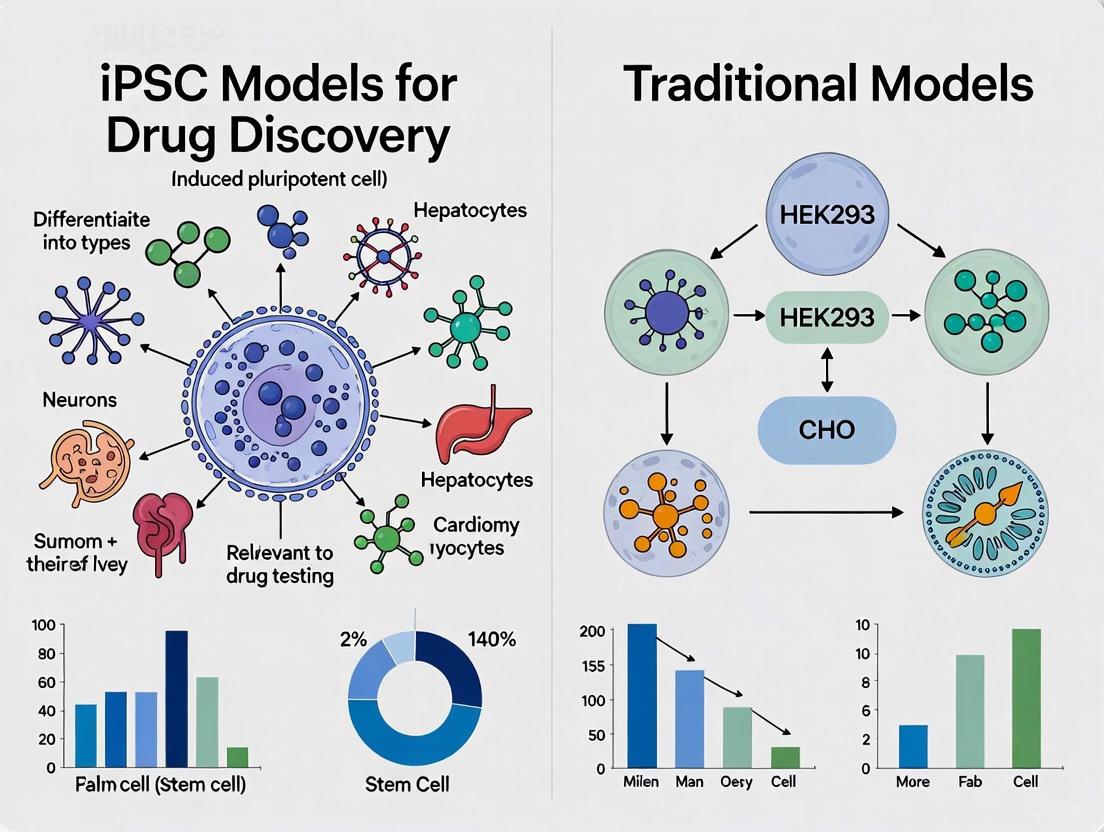
This article provides researchers and drug development professionals with a comprehensive analysis of how induced pluripotent stem cell (iPSC) models are addressing the critical translational gap in pharmaceutical research.
iPSC Models in Drug Discovery: Overcoming Traditional Model Limitations for Human-Relevant Results
Abstract
This article provides researchers and drug development professionals with a comprehensive analysis of how induced pluripotent stem cell (iPSC) models are addressing the critical translational gap in pharmaceutical research. It explores the foundational limitations of traditional immortalized cell lines and animal models, details the methodological applications of iPSCs across the drug discovery workflow—from target identification to safety toxicology—and offers solutions for overcoming technical challenges like variability and scalability. Finally, it validates iPSC platforms through comparative data and real-world case studies, positioning them as essential, human-relevant tools for improving clinical success rates and advancing precision medicine.
The Translational Gap: Why Traditional Models Fail in Drug Discovery
The Stakes of Failure in Drug Development
The journey of a new drug from discovery to market is a high-risk endeavor, marked by immense financial investment and a dauntingly high probability of failure. Attrition rates in clinical trials remain unacceptably high, with fewer than 1 in 10 candidates entering clinical trials ultimately reaching patients [1]. For central nervous system (CNS) programs, the failure rate can be as high as 90% [1]. A primary driver of this failure is a translational gap—the fundamental disconnect between the preclinical models used to test drug candidates and the human patients they are intended to treat [1].
For decades, drug discovery has heavily relied on traditional models such as two-dimensional (2D) cell cultures and animal studies [2]. While these have been essential workhorses, they often fail to faithfully recapitulate human-specific physiology, genetic variability, and complex disease mechanisms [2] [3]. This leads to poor predictive value, where a drug appears safe and effective in an animal model but proves otherwise in humans. Consequently, approximately 60% of clinical trials fail due to lack of efficacy, and 30% fail due to toxicity in humans [3]. This high rate of late-stage failure represents a massive cost—often exceeding $2 billion per approved drug—and significant delays in delivering new treatments to patients [3].
This article will objectively compare the performance of traditional models against emerging, human-relevant induced pluripotent stem cell (iPSC) models, providing the data and methodological context to illustrate a paradigm shift in preclinical research.
Traditional Models vs. Human-Relevant iPSC Models: A Comparative Analysis
The core of the attrition problem lies in the limitations of traditional preclinical models. The table below provides a systematic comparison of these established systems against modern iPSC-based approaches.
Table 1: Comparative Analysis of Preclinical Drug Discovery Models
| Feature | Traditional Animal Models | Traditional 2D Cell Cultures | iPSC-Derived Models (Cells & Organoids) |
|---|---|---|---|
| Physiological Relevance | Species-specific differences in genetics, metabolism, and disease presentation [3] | Simplified biology; lacks tissue-specific architecture and cell-cell interactions [2] | Recapitulates human-specific pathophysiology and 3D tissue architecture [2] |
| Genetic Diversity | Inbred strains; limited genetic variability [4] | Limited; often uses immortalized, genetically uniform lines [1] | Can capture broad human genetic diversity; derived from diverse patient populations [2] [4] |
| Predictive Value for Efficacy | Poor; contributes to ~60% failure due to lack of efficacy in humans [3] | Moderate to poor; false positives/negatives due to lack of phenotype fidelity [1] | High; patient-derived organoids (PDOs) can predict individual therapeutic responses [2] |
| Predictive Value for Toxicity | Inconsistent; lacks toxicity in animals has low predictivity for lack of adverse events in humans for some organs [3] | Limited; cannot model complex organ-level toxicity (e.g., drug-induced liver injury) [2] | Improved; better predicts human-specific toxicities (e.g., cardiotoxicity, hepatotoxicity) [2] [1] |
| Key Limitations | - Species differences- Artificially induced disease states- High cost, low throughput [4] | - Lack of 3D structure- Immortalized lines drift from physiology [1] [5] | - Batch-to-batch variability (conventional differentiation)- Scalability challenges- Ongoing maturation of protocols [2] [1] |
The data reveals a clear pattern: while traditional models are robust and scalable, their lack of human relevance makes them poor predictors of clinical outcomes. The antibody TGN1412 is a stark example, deemed safe in animal tests but causing severe adverse reactions in humans [4]. In contrast, iPSC-derived models, by preserving patient-specific biology, offer a more direct path to understanding human responses.
The iPSC Revolution: Mechanisms and Workflows
Core Principles of iPSC Technology
Induced pluripotent stem cells (iPSCs) are adult somatic cells (e.g., from skin or blood) that have been reprogrammed back into an embryonic-like pluripotent state. This groundbreaking technology, pioneered by Shinya Yamanaka in 2006, involves reactivating a set of pluripotency genes, allowing these reset cells to differentiate into virtually any cell type in the human body [2] [6].
The key advantage lies in their origin. iPSCs can be generated from any individual, including those with specific genetic diseases, enabling the creation of patient-specific cell lines that retain the donor's complete genetic background [2]. This has catalyzed the development of more accurate disease models and personalized therapeutic screens.
Experimental Workflow for iPSC-Based Drug Screening
The application of iPSCs in drug discovery follows a structured, multi-stage workflow. The following diagram visualizes this process, from patient cell collection to data analysis.
Diagram 1: iPSC-Based Drug Screening Workflow. This process transforms patient cells into relevant cell types for human-relevant compound testing.
This workflow is enabled by a suite of specialized reagents and tools. The following table details the key components of a modern iPSC research toolkit.
Table 2: Essential Research Reagent Solutions for iPSC-Based Discovery
| Reagent / Solution | Function in Workflow | Key Characteristics |
|---|---|---|
| Reprogramming Kits | Converts somatic cells (e.g., fibroblasts) into iPSCs | Non-integrating vectors for safety; defined factors. |
| Directed Differentiation Kits | Guides iPSCs to specific cell fates (e.g., cardiac, neural) | Optimized cytokine/media mixes; stage-specific protocols. |
| Deterministic Programming Cells (e.g., ioCells) | Generates highly consistent, defined cell identities [1] | Uses tech like opti-ox for uniform differentiation, reducing batch variability [1]. |
| Specialized Culture Media | Supports maintenance and maturation of iPSC-derived cells | Chemically defined; xeno-free; cell-type specific formulations. |
| 3D Culture Matrices | Supports the formation of complex organoid structures | Mimics the native extracellular matrix (e.g., Basement Membrane Extracts). |
| Functional Assay Kits | Measures cell-specific functions (e.g., cytotoxicity, electrophysiology) | Examples: Multi-electrode arrays (MEA) for cardiomyocyte beating analysis, calcium flux assays for neurons [1]. |
Quantitative Performance Data: iPSCs in Action
The theoretical advantages of iPSC models are borne out by concrete experimental data across key pharmaceutical applications.
Predictive Safety and Toxicology
Safety profiling is a major bottleneck where iPSC-derived cells are making a significant impact. For instance, iPSC-derived cardiomyocytes are now widely used for pre-clinical assessment of pro-arrhythmic risk, a leading cause of drug cardiotoxicity [1]. The Comprehensive in vitro Pro-arrhythmia Assay (CiPA) initiative has pioneered the use of these cells, characterizing them across multiple sites with reference compounds to standardize risk assessment [1]. Furthermore, iPSC-derived hepatocytes are being applied in drug-induced liver injury (DILI) studies, showing time- and dose-dependent toxicity consistent with known clinical outcomes [1].
Table 3: Experimental Data from iPSC-Based Safety and Efficacy Models
| iPSC-Derived Cell Type | Application / Assay | Key Experimental Findings | Clinical Correlation |
|---|---|---|---|
| Cardiomyocytes | Pro-arrhythmic risk assessment (CiPA initiative) [1] | Functional profiling of ion channel effects and network beating activity using MEA and impedance. | More accurate prediction of Torsades de Pointes risk in humans compared to animal models or heterologous systems. |
| Hepatocytes | Drug-Induced Liver Injury (DILI) screening [1] | Measurement of cytotoxicity markers (e.g., ALT, AST), glutathione depletion, and steatosis over 14 days. | Recapitulates known clinical DILI outcomes for compounds like acetaminophen and troglitazone. |
| Patient-Derived Tumor Organoids (PDTOs) | Personalized oncology drug screening [2] | Medium-throughput screening of chemotherapies, targeted agents; retains tumor genomics and drug resistance. | PDTOs from colorectal, pancreatic, and lung cancers predict individual patient treatment responses in clinical settings. |
| Immune Organoids | Vaccine response testing (e.g., Centivax flu vaccine) [4] | Organoids "vaccinated" in vitro produced B and T cell responses against a wide range of flu strains. | Confirmed broad humoral and T cell immunity, de-risking transition to clinical trials. |
Enhanced Disease Modeling and Efficacy Screening
In disease modeling, iPSCs provide a "disease in a dish" platform. Disease-specific iPSC lines have been generated for numerous conditions, including Alzheimer's disease, Parkinson's disease, and type 1 diabetes [2]. These models allow researchers to study disease mechanisms and screen for therapeutic compounds that target the actual human cellular phenotype [2]. A powerful application is in oncology, where Patient-Derived Tumor Organoids (PDTOs) retain the histological and genomic features of the original patient's tumor, including intratumoral heterogeneity [2]. These PDTOs can be used for drug screening, offering real-time insights into which therapies a patient's tumor is likely to respond to, thereby enabling personalized treatment strategies [2].
Advanced iPSC Systems: Integrating with Cutting-Edge Technologies
To overcome challenges like scalability and functional complexity, iPSC technology is converging with other advanced engineering and computational fields.
Organ-on-a-Chip and Microphysiological Systems
Organ-on-a-Chip technology enhances iPSC models by incorporating dynamic fluid flow and mechanical forces, creating a more physiologically relevant microenvironment. For example, Emulate's Liver-Chip was shown to outperform conventional animal and spheroid models in predicting drug-induced liver injury in humans [3] [7]. These systems are designed to be integrated with biosensors for real-time readouts, improving data quality and throughput [2]. The recent launch of high-throughput systems like the AVA Emulation System aims to bring scale and reproducibility to this technology, making it viable for standard preclinical workflows [7].
The Role of Artificial Intelligence (AI) and Automation
The integration of Artificial Intelligence (AI) is critical for managing the vast, complex datasets generated by iPSC screens. AI and machine learning algorithms are used to:
- Optimize differentiation protocols and culture conditions for large-scale iPSC production [8].
- Analyze high-content imaging data from phenotypic screens, identifying subtle patterns and morphological changes [1] [9].
- Build predictive models of drug efficacy and toxicity by integrating multi-omics data from iPSC-derived models [9].
Automation and robotics address the challenges of batch-to-batch variability and scalability. Companies are using deterministic programming, like the opti-ox technology, to generate iPSC-derived cells with less than 1% differential gene expression between lots, ensuring a consistent and defined cellular input for large-scale screening campaigns [1].
Regulatory Shifts and Future Outlook
The scientific case for human-relevant models is now being reflected in regulatory policy. The FDA Modernization Act 2.0, signed into law in 2022, explicitly encourages the use of alternatives to animal testing, including cell-based assays and microphysiological systems, for drug applications [3] [9]. This has been followed by initiatives like the FDA's Fit-for-Purpose Initiative and the ISTAND program, which are creating pathways for qualifying these new tools for regulatory decision-making [3] [7]. In a landmark event, the FDA's Center for Drug Evaluation and Research (CDER) accepted its first letter of intent for an organ-on-a-chip technology as a drug development tool in 2024 [3].
Looking ahead, the field is moving towards more complex and integrated systems. The future lies in connecting various iPSC-derived organ models to create "human-on-a-chip" systems that can study whole-body pharmacology and complex disease interactions. Furthermore, the use of patient-derived iPSCs will continue to advance precision medicine, allowing for the development of stratified therapies and the creation of biobanks that capture the full diversity of human populations [5] [4]. As these technologies mature, they are poised to significantly reduce—and in some areas potentially replace—animal testing, with one projection estimating a 90% reduction in animal model use over the next several years [4].
The following diagram synthesizes the core argument of this article, contrasting the traditional, high-attrition drug discovery pipeline with the emerging, human-relevant paradigm enabled by iPSC technology.
Diagram 2: Contrasting Drug Discovery Pipelines. The human-relevant pipeline integrates human biology earlier to de-risk clinical translation.
The high cost of drug attrition is a direct consequence of the predictive failure of traditional, non-human models. The data and methodologies presented herein demonstrate that iPSC-derived models offer a more human-relevant, physiologically accurate, and clinically predictive platform for drug discovery and development. While challenges in standardization and scalability persist, ongoing innovations in automation, deterministic programming, and integration with AI and Organ-on-a-Chip systems are rapidly addressing these limitations. Supported by a favorable regulatory shift, the adoption of iPSC technology is poised to bridge the translational gap, leading to higher clinical success rates, reduced reliance on animal testing, and the faster delivery of safer, more effective medicines to patients.
In the pursuit of new therapeutics, biomedical research has long relied on immortalized cell lines as a standard workhorse for preclinical studies. These cells, which have undergone mutations to divide indefinitely in vitro, are prized for their robustness, scalability, and ease of use [10]. However, a growing body of evidence indicates that their altered biology often fails to faithfully recapitulate the physiology of native human tissues [11] [1]. This lack of phenotypic fidelity is a critical limitation, leading to unreliable data and false positives during drug screening campaigns. With attrition rates in drug development remaining unacceptably high—fewer than 1 in 10 candidates entering clinical trials ultimately reach patients—the translational gap posed by inadequate preclinical models has become a central concern [1]. This guide examines the experimental evidence illustrating the limitations of immortalized cell lines and contrasts them with the emerging capabilities of human induced pluripotent stem cell (iPSC)-derived models.
Experimental Evidence: A Quantitative Comparison
A direct, quantitative comparison of proteomes reveals profound functional differences between immortalized cell lines and their primary cell counterparts. The following table synthesizes key findings from a seminal comparative proteomic study of the mouse hepatoma cell line Hepa1–6 and primary mouse hepatocytes [11].
Table 1: Quantitative Proteomic Phenotyping of Hepa1–6 vs. Primary Hepatocytes
| Functional Category | Direction of Change in Cell Line | Key Biological Implications | Impact on Drug Discovery |
|---|---|---|---|
| Mitochondrial Proteins | Significantly Down-regulated | Reflects a deficiency in mitochondria and re-arrangement of metabolic pathways [11]. | Compromised assessment of drug-induced metabolic toxicity and energy-dependent processes. |
| Cell Cycle-Associated Proteins | Drastically Up-regulated | Indicates a molecular phenotype centered on uncontrolled proliferation, a hallmark of cancer [11]. | Poor model for non-dividing, terminally differentiated tissues; high false positive rate for anti-proliferative compounds. |
| Drug-Metabolizing Enzymes | Largely Shut Down | Loss of characteristic liver functions, including cytochrome P450 activities [11]. | Inability to predict accurate drug metabolism, pharmacokinetics, and drug-drug interactions. |
| Overall Proteome Distribution | Asymmetric (Many proteins down-regulated) | The cell line represents a significantly altered and simplified version of the primary cell proteome [11]. | Generates data that is not physiologically relevant, contributing to the translational gap. |
The data show that immortalized lines undergo substantial functional drift, shifting their biology toward proliferation and away from the tissue-specific functions that are often the target of therapeutics.
Detailed Experimental Methodology
To ensure reproducibility and provide a clear framework for critical evaluation, the key methodology from the cited proteomics study is outlined below [11].
Experimental Workflow: SILAC-Based Quantitative Proteomics
The following diagram illustrates the workflow for the direct, quantitative comparison of primary cells and immortalized cell lines.
Key Protocols and Reagents
Table 2: Research Reagent Solutions for Comparative Proteomics
| Reagent / Material | Function in Experiment | Specific Example / Detail |
|---|---|---|
| SILAC Reagents | Metabolic labeling for quantitative mass spectrometry. | L-13C615N4-arginine and L-13C615N2-lysine ("heavy") vs. normal L-arginine and L-lysine ("light") [11]. |
| Cell Lysis Buffer | Extraction of total cellular protein while preserving post-translational modifications. | RIPA buffer supplemented with protease inhibitors (Complete tablet, Roche), sodium orthavanadate, NaF, and beta-glycerophosphate [11]. |
| Digestion Enzymes | Specific cleavage of proteins into peptides for MS analysis. | Sequential digestion with endoproteinase Lys-C (1:50 w/w) and sequencing-grade modified trypsin (1:50 w/w) [11]. |
| Fractionation System | Peptide separation based on isoelectric point to reduce sample complexity. | Agilent 3100 OFFGEL fractionator with IPG DryStrips, pH 3-10 [11]. |
| Mass Spectrometer | High-resolution analysis of peptide mass and sequence. | LTQ-FT or LTQ-Orbitrap mass spectrometer (Thermo Electron) [11]. |
| Bioinformatics Software | Peak list generation, quantitation, protein identification, and data filtration. | In-house developed MaxQuant software (v1.0.7.4) and Mascot search engine [11]. |
The iPSC Alternative: A Paradigm Shift
The limitations of immortalized lines have accelerated the adoption of human iPSC-derived models. iPSCs are generated by reprogramming adult somatic cells (e.g., from skin or blood) back to a pluripotent state, from which they can be differentiated into virtually any cell type in the body [2] [6]. This technology offers a more physiologically relevant and human-specific platform.
Key Advantages of iPSC-Derived Models:
- Human Biological Context: They provide a human genetic background for studying disease mechanisms and drug responses, overcoming the species gap of animal models [2] [1].
- Patient Specificity: iPSCs can be derived from patients with specific diseases, creating "disease-in-a-dish" models that retain the individual's genetic and phenotypic characteristics [2] [12]. This is particularly valuable for personalized medicine and studying rare genetic disorders.
- Mature Tissue-like Function: When differentiated into cells like cardiomyocytes, neurons, or hepatocytes, iPSC-derived cells recapitulate key functional properties, such as electrophysiological activity and drug metabolism, which are absent in immortalized lines [1] [13].
- Support for 3D and Complex Models: iPSCs can self-organize into 3D organoids that mimic the architecture and cellular heterogeneity of native organs (e.g., brain, liver, intestine), offering a more realistic microenvironment for drug testing than 2D monolayers [2].
The following diagram contrasts the fundamental workflows and biological relevance of traditional immortalized lines with modern iPSC-derived models.
The evidence is clear: while immortalized cell lines are pragmatically useful, their inherent lack of phenotypic fidelity poses a significant risk to the drug discovery pipeline. The quantitative proteomic data demonstrates that these cells represent a fundamentally altered biological state, one that is skewed toward proliferation and deficient in the specialized functions of primary tissues [11]. This divergence is a direct cause of misleading results and false positives in preclinical screening. The pharmaceutical industry's ongoing paradigm shift toward human iPSC-derived models and organoids is a direct response to this challenge [2] [1]. By providing a more accurate, human-relevant context for assessing drug efficacy and safety, these advanced models are poised to narrow the translational gap and improve the success rate of new therapies moving into clinical trials.
For decades, animal models have served as the foundational tool for evaluating drug safety and efficacy, yet their limitations in predicting human responses have contributed to unacceptably high failure rates in clinical trials. Growing evidence reveals that species differences and inter-individual variability fundamentally undermine the translational value of animal research. These shortcomings are driving a paradigm shift toward human-specific systems, particularly induced pluripotent stem cell (iPSC) models, which offer more predictive accuracy for human biology while addressing ethical concerns. This analysis systematically compares the performance of traditional animal models against emerging iPSC-based approaches, providing researchers with objective data to inform their preclinical model selection.
Fundamental Shortcomings of Animal Models
Species Differences in Biology and Pathophysiology
Animal models diverge significantly from human biology in critical physiological and pathological processes, leading to unreliable predictions for human drug responses.
- Metabolic and Genetic Divergence: Fundamental differences in drug metabolism pathways, gene expression patterns, and receptor distributions between species create substantial barriers for extrapolating animal data to humans [14] [15]. These variations explain why compounds showing promise in animal studies frequently fail in human trials.
- Inadequate Disease Representation: Diseases induced artificially in animals often differ substantially from their human counterparts in etiology, progression, and pathophysiology [16]. The artificial laboratory environment cannot replicate the complex genetic and environmental interactions that drive human disease.
- Immunological Mismatches: Significant differences in immune system function between species lead to unreliable predictions of immunogenicity and immune-mediated toxicities [15]. Protein-based biologics present particular challenges due to species-specific immune responses that do not predict human immunogenicity [15].
Table 1: Documented Cases of Animal Model Failure to Predict Human Toxicity
| Drug/Therapeutic | Animal Model Results | Human Outcome | Consequences |
|---|---|---|---|
| Thalidomide | No significant teratogenicity in 10 rat strains, 11 rabbit breeds, 2 dog breeds, 3 hamster strains, 8 primate species, and various other animals [15] [16] | Devastating phocomelia in 20,000-30,000 infants [15] | Withdrawn from market; profound birth defects |
| TGN1412 | Safe at 500x human dose in animal tests including non-human primates [15] [16] | Critically ill within minutes in all 6 human volunteers; long-term complications [15] | Near-fatal phase I trial outcomes |
| Vioxx | Demonstrated safety in animal models [15] | Increased cardiovascular risk; 88,000 heart attacks and 38,000 deaths [15] | Market withdrawal; $8.5 billion in legal settlements |
| Fialuridine | Safe in mice, rats, dogs, monkeys, and woodchucks at hundreds of times human dose [15] | Deaths of 5 volunteers during phase II trials; 2 required liver transplants [15] | Abandoned development; fatal hepatotoxicity |
Inter-individual and Intra-species Variability
Animal models exhibit substantial variability that complicates data interpretation and reduces experimental reproducibility, mirroring challenges in human research but with less relevance.
- Consistent Behavioral Variance: Robust individual behavioral differences persist even within genetically identical inbred strains under highly standardized laboratory conditions [17] [18]. This variability is not merely noise but represents consistent individual traits influenced by complex genetic, epigenetic, and environmental interactions [18].
- Impact on Experimental Outcomes: Empirical research demonstrates that failing to account for inter-individual variability can obscure drug effects and lead to conflicting results. A pharmacological study in mice found that anxiolytic effects were only detectable when inter-individual differences in behavioral response types were systematically incorporated into the experimental design [17].
- Limitations of Standardization: Excessive standardization of laboratory conditions may paradoxically increase variance by restricting the range of individual differences represented in study populations, potentially reducing the generalizability of findings [18].
Table 2: Quantitative Analysis of Animal Model Predictive Performance
| Predictive Parameter | Species Comparison | Performance Metric | Implication |
|---|---|---|---|
| Overall Predictive Accuracy | Multiple species to humans | Little better than random chance (coin toss) [15] | Inadequate for reliable human safety assessment |
| Toxicity Prediction (PPV) | Mouse to rat | 55.3% (long-term), 44.8% (short-term) [15] | Poor interspecies concordance |
| Clinical Trial Success | Animal to human phase I | Only 60% successfully complete phase I [15] | High attrition despite animal testing |
| Post-Marketing Safety | Animal to human | Only 19% of serious adverse outcomes identified preclinically [15] | Majority of human toxicity undetected in animals |
iPSC-Based Models as a Human-Relevant Alternative
Technological Foundations and Advantages
iPSC technology enables the reprogramming of adult somatic cells into a pluripotent state, followed by differentiation into virtually any human cell type for disease modeling and drug testing [14] [19]. These systems offer significant advantages for pharmaceutical research:
- Human Biological Relevance: iPSC-derived cells maintain human genetic background, molecular pathways, and physiological responses, providing a more accurate platform for evaluating drug efficacy and toxicity [19] [2].
- Personalized Disease Modeling: Patient-derived iPSCs capture individual genetic variations, enabling personalized drug response testing and the study of population-specific therapeutic effects [20] [2].
- Ethical Superiority: iPSC generation avoids embryo destruction and reduces reliance on animal testing, addressing significant ethical concerns while supporting the principles of the 3Rs (Replacement, Reduction, and Refinement) [2] [21].
Experimental Validation and Applications
iPSC-derived models have successfully recapitulated disease phenotypes and predicted drug responses across multiple therapeutic areas, demonstrating their utility in preclinical research.
Diagram: iPSC-Based Disease Modeling and Drug Screening Workflow
Cardiovascular Disease Modeling
iPSC-derived cardiomyocytes have demonstrated exceptional utility in modeling inherited cardiac conditions and predicting drug responses:
- Long QT Syndrome (LQTS): iPSC-derived cardiomyocytes from LQTS patients successfully recapitulated disease phenotypes including potassium ion channel dysfunction (LQTS type 1), action-potential-duration prolongation (LQTS type 2), and abnormal calcium transients (LQTS type 3) [19]. These models enabled identification of potential therapeutics, including nicorandil and PD118057 for type 2, and mexiletine analogues for type 3 LQTS [19].
- Cardiomyopathy Studies: iPSC-cardiomyocytes from hypertrophic cardiomyopathy (HCM) patients with MYH7 mutations exhibited characteristic disease phenotypes including enlarged cellular size, disrupted sarcomere structures, and contractile arrhythmia. Drug screening identified verapamil as the most effective calcium channel blocker for reducing contractile dysfunction [19].
- Toxicity Screening: High-throughput screening with iPSC-derived cardiomyocytes has enabled development of "cardiac safety indices" for tyrosine kinase inhibitors, predicting cardiotoxicity that might not be detected in animal models [19].
Neurological Disease Modeling
iPSC-derived neural cells have advanced the study of complex neurodegenerative disorders:
- Alzheimer's Disease: iPSC-derived neurons from patients with APP, presenilin, or SORL1 mutations reproduced disease hallmarks including endoplasmic reticulum stress, oxidative stress, tau hyperphosphorylation, and Aβ accumulation [19]. Compound screening identified docosahexaenoic acid as protective against stress responses and specific anti-Aβ compounds that reduced plaque deposition [19].
- Parkinson's Disease: Dopaminergic neurons derived from PD patients with SNCA triplication showed α-synuclein accumulation, while those with Parkin mutations displayed decreased microtubule stability, increased oxidative stress, and altered dopamine handling [19]. These models provide platforms for screening neuroprotective compounds.
Table 3: Key Research Reagent Solutions for iPSC-Based Disease Modeling
| Research Reagent | Function | Application Examples |
|---|---|---|
| CultureSure CEPT Cocktail | Enhances cell survival, cloning efficiency, and genomic stability [14] | Improving viability of fragile iPSC lines during differentiation |
| Specialized Differentiation Media | Promotes directed differentiation into specific cell lineages [14] | Generating cardiomyocytes, neurons, hepatocytes |
| Shenandoah Recombinant Proteins | High-quality growth factors and signaling proteins [14] | Enhancing differentiation efficiency and maturation |
| CRISPR/Cas9 Systems | Precise genome editing for creating isogenic controls [20] | Introducing specific mutations; generating revertant lines |
Comparative Performance Data: Animal Models vs. iPSC Systems
Direct Comparison of Predictive Capabilities
Emerging evidence demonstrates the superior predictive value of iPSC-based systems for human drug responses:
- Cardiotoxicity Prediction: iPSC-derived cardiomyocytes more accurately predict human cardiotoxic responses compared to animal models, particularly for chemotherapeutic agents like doxorubicin [2]. These systems detect functional changes in human cardiac electrophysiology that may not manifest in other species.
- Drug Metabolism Assessment: Hepatic organoids derived from iPSCs better replicate human drug metabolism and bile canaliculi function compared to rodent models, providing more accurate predictions of hepatotoxicity [2]. When integrated with microfluidic organ-on-chip platforms, these systems enable dynamic assessment under flow conditions that mimic human liver physiology [2].
- Personalized Response Prediction: Patient-derived tumor organoids (PDTOs) retain original tumor histology and genomic features, successfully predicting individual responses to chemotherapy and targeted agents in colorectal, pancreatic, and lung cancers [2].
Methodological Considerations for iPSC Research
While iPSC technology offers significant advantages, researchers must address several methodological considerations:
- Engineered vs. Patient-Derived iPSCs: The choice between these approaches depends on research goals. Genetically engineered isogenic lines provide controlled comparison of specific mutations within identical genetic backgrounds, ideal for mechanistic studies [20]. Patient-derived lines capture full genetic complexity and are better suited for studying heterogeneous diseases and personalized drug responses [20].
- Maturation State: iPSC-derived cells may exhibit immature characteristics compared to adult human cells. Research has identified compounds such as ERRγ agonists and SKP2 inhibitors that enhance cardiomyocyte maturation [19]. Co-culture systems with mesenchymal stem cells, cardiac fibroblasts, or endothelial cells also improve functionality and maturity [19].
- Protocol Standardization: Variability in differentiation protocols remains a challenge. Implementing rigorous quality control measures and using standardized reagents improves reproducibility across experiments [14] [20].
The evidence clearly demonstrates that species differences and inter-individual variability fundamentally limit the predictive value of animal models for human drug responses. These shortcomings contribute to unacceptably high failure rates in clinical trials, with approximately 89% of novel drugs failing in human testing—half due to unanticipated toxicity [15]. iPSC-based models address these limitations by providing human-specific systems that more accurately recapitulate disease mechanisms and drug effects. While challenges remain in standardization and maturation, the superior predictive performance, ethical advantages, and personalized applications of iPSC technology position it as the future foundation of preclinical drug development. Researchers can accelerate therapeutic discovery and reduce late-stage failures by adopting these human-relevant models in their preclinical workflows.
For decades, animal models have served as the foundational platform for evaluating drug safety and efficacy, but a significant paradigm shift is now underway. Growing recognition of inherent limitations in animal models—including interspecies physiological differences, high costs, lengthy timelines, and ethical concerns—has prompted major regulatory agencies to actively promote alternative testing methodologies [14] [22]. The United States Food and Drug Administration (FDA) and National Institutes of Health (NIH) are now leading a concerted transition toward more human-relevant approaches that promise to enhance predictive accuracy while reducing reliance on animal testing.
This strategic shift is being driven by both scientific and regulatory imperatives. Animal physiology often diverges significantly from human biology, contributing to high attrition rates in clinical trials where approximately 90% of drug candidates fail, with central nervous system programs experiencing particularly high failure rates [14] [1]. In response, regulatory frameworks have undergone substantial updates. The FDA Modernization Act 2.0 (December 2022) eliminated the statutory mandate for animal testing, explicitly authorizing cell-based assays, microphysiological systems, and sophisticated computer models as equally valid evidence for investigational new drug applications [23].
The agency has since announced plans to phase out animal testing requirements for monoclonal antibodies and other drugs, prioritizing human-relevant New Approach Methodologies (NAMs) instead [24]. Concurrently, NIH has implemented funding prioritization for research incorporating human-based technologies and now bars support for proposals relying exclusively on animal data [23]. These developments mark 2024-2025 as a definitive inflection point in which scientific maturity, public pressure, and regulatory authority have aligned to establish human-relevant models as the new default for preclinical research.
Regulatory Timeline: Key Policy Milestones
The transition away from animal testing has accelerated dramatically through recent legislative and agency actions that transform decades of advocacy into concrete policy. The following timeline highlights crucial milestones that have fundamentally reshaped the regulatory landscape for preclinical research:
Figure 1: Regulatory Timeline of Key U.S. Policy Milestones Phasing Out Animal Testing
Legislative Foundations
The FDA Modernization Act 2.0 (December 2022) constituted landmark legislation that removed the Depression-era mandate requiring animal data as the default gateway to human trials [23]. The act explicitly authorized cell-based assays, microphysiological systems (MPS), and sophisticated computer models as equally valid evidence. This legislative change not only empowered sponsors to use NAMs but also instructed FDA reviewers to consider them on their scientific merits, creating a fundamental shift in regulatory acceptance [23].
Building on this foundation, the FDA Modernization Act 3.0 was introduced in February 2024 to direct the FDA to create a formal pathway for the qualification, review, and routine acceptance of non-animal methods [23]. This proposed legislation aims to accelerate the translation of legal authority into day-to-day regulatory practice, addressing any remaining gaps that might slow NAM adoption in drug development pipelines.
Agency Implementation
The FDA's Innovative Science and Technology Approaches for New Drugs (ISTAND) pilot program, launched in December 2020, established a formal pathway for qualifying novel Drug Development Tools that fall outside existing frameworks [23]. The program explicitly listed microphysiological systems such as Organ-Chips as qualifying technologies. In September 2024, FDA reached a significant milestone by accepting the first Organ-on-a-Chip submission—a liver MPS designed to predict drug-induced liver injury (DILI)—into the ISTAND program [23].
In April 2025, the FDA announced a comprehensive policy to "reduce, refine, and ultimately replace" animal studies, prioritizing MPS data and AI-driven toxicity modeling in Investigational New Drug (IND) submissions [23]. The accompanying roadmap outlined short-, mid-, and long-term steps—including validation standards, cross-agency collaborations, and pilot incentives—to mainstream NAMs across all Centers. These documents collectively shifted the regulatory conversation from permission to expectation, stating that animal use should become "the exception rather than the rule" [23].
Research Funding Reorientation
The NIH has implemented parallel changes to research funding priorities. In April 2025, America's largest source of biomedical research funding launched an initiative to prioritize grant applications incorporating Organ-Chips, organoids, or computational models [23]. This was followed in July 2025 by the landmark announcement that proposals relying exclusively on animal data would no longer be eligible for NIH support [23]. Investigators must now integrate at least one validated human-relevant method, accelerating the scientific community's pivot toward NAMs.
Comparative Analysis: Animal Models vs. Human iPSC-Based Platforms
The limitations of traditional animal models have become increasingly evident as drug development challenges mount. The following table provides a systematic comparison between conventional animal testing and emerging human iPSC-based platforms across critical parameters for drug discovery and development:
Table 1: Performance Comparison of Animal Models vs. Human iPSC-Based Platforms
| Parameter | Traditional Animal Models | Human iPSC-Based Platforms | Data Source |
|---|---|---|---|
| Predictive Accuracy for Human Response | Limited by interspecies differences; contributes to ~90% clinical failure rate [1] | High; human genetic background improves clinical translatability [14] | [14] [1] |
| Physiological Relevance | Divergent anatomy, metabolism, disease progression [22] | Human-specific disease mechanisms and drug responses [14] | [14] [22] |
| Testing Timeline | Months to years for chronic diseases | Weeks to months for differentiation and assay readouts [1] | [1] |
| Cost Considerations | High ($15,000-$50,000+ per study); specialized facilities, long timelines [14] | Lower operational costs; requires significant initial infrastructure investment [22] | [14] [22] |
| Ethical Compliance | Increasing public concern; subject to 3Rs principles | Ethically sound; derived from consent donor somatic cells [14] | [14] |
| Regulatory Acceptance | Traditional gold standard; now being phased out in specific applications [24] | Actively encouraged under FDA Modernization Act 2.0/3.0 [23] | [24] [23] |
| Personalization Potential | Limited to species/strain differences | High; patient-specific and disease-specific lines possible [14] | [14] |
| Standardization Capability | High phenotypic variability despite genetic similarity | Batch-to-batch variability challenges; improving with automation [14] | [14] |
Limitations of Animal Models in Disease Research
Animal models exhibit significant constraints across various disease areas, limiting their predictive value for human outcomes. The table below details specific limitations in modeling common human disorders:
Table 2: Limitations of Animal Models in Disease Research
| Disease Area | Common Animal Models | Key Limitations | Data Source |
|---|---|---|---|
| Parkinson's Disease | Non-human primates, C. elegans, Drosophila, zebrafish, rodents | Time-consuming, complex procedures, lacking synuclein homolog (invertebrates), cannot fully mimic human pathophysiology [22] | [22] |
| Alzheimer's Disease | Rodents (mice, rats) | Cannot completely mimic patient pathophysiology; no complete cure yet developed in humans [22] | [22] |
| Cancer | Rodents, zebrafish, fruit flies | Small size animals have limited blood supply; differences in physiology, immunity, heredity from humans [22] | [22] |
| Diabetes Mellitus | Rodents, pigs | Differences in concentration of blood glucose levels from humans; complex disease mechanism and procedure [22] | [22] |
| Traumatic Brain Injury | Rodents (mice, rats) | Different complexity and size compared to human brain; gene expression varies from humans [22] | [22] |
| Skin/Eye Irritation | Rodents, rabbits | Potential for chemical misclassification due to physiological differences with humans [22] | [22] |
Advantages of iPSC-Based Models
Human induced pluripotent stem cell (iPSC) platforms offer several distinct advantages that address the limitations of animal models:
Human Biological Relevance: iPSCs are generated by reprogramming adult human somatic cells into a pluripotent state, then differentiating them into various cell types (neurons, cardiomyocytes, hepatocytes) that retain human-specific biology [14]. This preserves human disease mechanisms and drug responses that may not be present in animal systems.
Personalized Medicine Applications: iPSCs can be derived from individuals with specific diseases or genetic backgrounds, enabling personalized or population-specific drug screening and development [14]. This facilitates precision medicine approaches particularly valuable for rare diseases or subpopulations with unique genetic variants.
Ethical Advantages & Sustainability: iPSC-derived disease models offer an ethically sound platform for drug discovery by enabling in vitro production of human cell types without ongoing animal use [14]. They also provide a sustainable, long-term source of human cells for drug screening [14].
iPSC Technology in Drug Discovery Workflows
iPSC-based models are being integrated throughout the drug discovery and development pipeline, providing human-relevant data at multiple stages from target identification to safety assessment. The following workflow illustrates how iPSC platforms are being applied across the drug discovery continuum:
Figure 2: iPSC Technology Applications in Drug Discovery Workflow
Target Identification and Validation
iPSC-derived cells enable target identification and validation in physiologically relevant human systems. Key applications include:
Functional Genomics: CRISPR-Ready iPSC lines (e.g., ioMicroglia engineered to express Cas9) support pooled CRISPR knockout screens to identify regulators of immune activation pathways and other disease-relevant mechanisms [1].
Pathway Analysis: iPSC-derived cells compatible with genome editing approaches such as CRISPR enable pathway analysis and functional validation of targets directly in a human cellular context [1].
High-Content Screening (HCS): Automated imaging and quantitative analysis can measure reporter signals, morphology, and subcellular localization in iPSC-derived cells, facilitating target identification and validation [1].
Assay Development and Hit-to-Lead Screening
During assay development and hit-to-lead stages, iPSC-derived cells provide human-relevant systems for compound evaluation:
Assay Development: Using human iPSC-derived cells allows assays to be built around human-relevant pathways, ion channels, receptors, and transcriptional programs [1]. Assay parameters (e.g., compound dosing, time course, endpoints) can be optimized based on human kinetics and signaling rather than animal data.
Electrophysiology Applications: iPSC-derived neurons and cardiomyocytes are used in electrophysiology and calcium flux assays to measure excitability, ion channel function, and network activity [1]. These models support optimization of HCS protocols and real-time impedance assays to monitor morphology and proliferation.
Metabolism Studies: iPSC-derived hepatocytes are being introduced for use in metabolism and drug-drug interaction studies, including cytochrome P450 induction and inhibition [1].
Phenotypic Screening: As phenotypic and neuroinflammation assays evolve to improve physiological relevance, scientists are increasingly incorporating iPSC-derived neuronal and immune cells, often combined with viability or cytotoxicity readouts such as LDH release or apoptosis assays [1].
Lead Optimization and Safety Assessment
In later stages of drug discovery, iPSC platforms contribute to lead optimization and safety assessment:
Lead Optimization: iPSC-derived sensory neurons characterized via multi-electrode arrays (MEA) and stimulus responses are being used to model pain pathways and evaluate compound effects [1]. Many iPSC-derived cell types exhibit measurable physiological activity (e.g., neuronal firing), enabling optimization for distinct functional readouts across targets and compound classes.
Cardiotoxicity Screening: iPSC-derived cardiomyocytes are widely used in preclinical safety studies to assess pro-arrhythmic risk [1]. The Comprehensive in vitro Proarrhythmia Assay (CiPA) initiative has characterized iPSC-derived cardiomyocytes across multiple sites and assay platforms using reference compounds, helping to standardize and enhance early-stage pro-arrhythmic risk assessment [1].
Hepatotoxicity Assessment: Hepatocyte models have been benchmarked in drug-induced liver injury (DILI) studies, showing time- and dose-dependent toxicity consistent with known clinical outcomes [1]. Recent advances with deterministically programmed ioHepatocytes show promise for providing defined and reproducible human models for assessing drug metabolism and hepatotoxicity [1].
Experimental Protocols and Methodologies
iPSC Differentiation and Quality Control
Robust experimental protocols are essential for generating reliable, reproducible data from iPSC-based models. The following methodologies represent current best practices:
Reprogramming Protocol: Adult somatic cells (typically fibroblasts or peripheral blood mononuclear cells) are reprogrammed using non-integrating Sendai virus or episomal vectors expressing OCT4, SOX2, KLF4, and c-MYC transcription factors [14]. Reprogrammed colonies are manually picked and expanded in feeder-free conditions using defined culture media.
Directed Differentiation: iPSCs are differentiated using sequential administration of small molecules and recombinant proteins patterning toward target lineages [14]. For example, neuronal differentiation may begin with dual SMAD inhibition, followed by regional patterning factors and terminal differentiation cues.
Deterministic Programming (opti-ox): This emerging approach uses precise gene targeting to ensure every iPSC in a culture is programmed to the same defined cell identity, generating billions of consistently programmed cells in a single manufacturing run with <1% differential gene expression between lots [1].
Quality Control Measures: Essential QC includes pluripotency marker verification (OCT4, NANOG, SSEA-4), karyotype analysis, mycoplasma testing, and trilineage differentiation potential assessment [14]. For differentiated cells, characterization includes flow cytometry for cell-type specific markers, functional assays (e.g., MEA for neurons, beat rate analysis for cardiomyocytes), and transcriptomic profiling.
Key Research Reagent Solutions
Successful implementation of iPSC-based approaches requires specialized reagents and platforms. The following table details essential research tools and their applications:
Table 3: Essential Research Reagents and Platforms for iPSC-Based Research
| Reagent/Platform Category | Specific Examples | Function & Application | Data Source |
|---|---|---|---|
| Reprogramming Kits | Non-integrating Sendai virus kits, episomal vectors | Reprogram somatic cells to pluripotent state; key first step in iPSC line generation | [14] |
| Culture Media Systems | Defined, feeder-free media; CultureSure CEPT Cocktail | Enhance cell survival, cloning efficiency, and genome stability during culture | [14] |
| Differentiation Reagents | Small molecules, recombinant proteins (e.g., Shenandoah Recombinant Proteins) | Direct iPSC differentiation toward specific lineages (neuronal, cardiac, hepatic) | [14] |
| Characterization Tools | Flow cytometry panels, electrophysiology systems, PCR assays | Verify cell identity, purity, and functional maturity | [25] |
| Automated Production Systems | Closed-loop bioreactors, automated culture platforms | Enable scalable, reproducible GMP-compliant iPSC production | [25] [26] |
| Specialized iPSC Products | ioCells (bit.bio), iPSC-derived cells (Fujifilm Cellular Dynamics) | Consistent, defined human cell types for specific applications | [1] |
| Cryopreservation Solutions | Defined cryomedium with controlled-rate freezing | Long-term storage of iPSCs and differentiated cells with high viability post-thaw | [25] |
Market Outlook and Future Perspectives
Growth Projections and Adoption Trends
The iPSC technology market is experiencing substantial growth, reflecting increasing adoption across research and drug development sectors:
Market Expansion: The Induced Pluripotent Stem Cells Market is expected to reach US$4.69 Billion by 2033 from US$2.01 Billion in 2024, with a compound annual growth rate (CAGR) of 9.86% from 2025 to 2033 [27]. The iPSC Production Market specifically is projected to grow at 9.5% CAGR, reaching $4.34 Billion by 2034 from $1.92 Billion in 2025 [26].
Application Segmentation: Drug discovery and development represents the largest application segment, while regenerative medicine/tissue engineering is the fastest-growing application due to advancing clinical trials involving macular degeneration, Parkinson's, and cardiac injury [25] [26].
Automation Adoption: While manual iPSC production remains prominent in academic research, automated systems are experiencing rapid adoption growth (9.5% CAGR) for ensuring scalability, reproducibility, and adherence to GMP standards [25] [26].
Technological Innovations and Addressing Current Challenges
Despite promising advances, iPSC technology faces several challenges that ongoing research and development aim to address:
Production Consistency: Differentiation protocols can be sensitive to small changes, causing variability in how cells develop and behave [14]. Solutions include deterministic programming approaches (e.g., opti-ox technology) that generate consistent cell populations at scale [1].
Manufacturing Scalability: Transitioning from laboratory-scale to clinical-grade manufacturing presents challenges in reproducibility and cost control [25]. Automated, closed-system bioreactors and standardized differentiation protocols are being developed to address these limitations [25] [26].
Regulatory Standardization: The lack of globally harmonized protocols and quality control standards creates barriers to commercialization [25]. Initiatives like the FDA's ISTAND program for qualifying novel Drug Development Tools are helping establish evidentiary standards for regulatory acceptance [23].
Genetic Stability: Concerns about genetic instability during reprogramming and prolonged culture remain, particularly for therapeutic applications [25]. Improved reprogramming methods, culture conditions, and comprehensive genomic monitoring are addressing these concerns.
Strategic Implications for Drug Development Organizations
The regulatory shift away from animal testing requires strategic adjustments across the drug development ecosystem:
Platform Integration: Pharmaceutical companies should progressively integrate human iPSC-based platforms into early discovery workflows, particularly for target validation, toxicity screening, and disease modeling where species differences are problematic.
Talent Development: Research organizations need to cultivate expertise in stem cell biology, tissue engineering, and computational modeling to complement traditional pharmacology skills.
Collaborative Partnerships: Strategic alliances between academic institutions, technology developers, and pharmaceutical companies can accelerate protocol standardization and validation, sharing resources and expertise.
Regulatory Engagement: Sponsors should actively participate in FDA pilot programs for novel Drug Development Tools, contributing to the evidentiary standards that will shape future regulatory pathways for human-based testing platforms.
The regulatory landscape for preclinical testing is undergoing a fundamental transformation, with FDA and NIH initiatives actively phasing out animal testing requirements in favor of human-relevant approaches. This shift is driven by the recognized limitations of animal models and the demonstrated potential of human iPSC-based platforms to improve the predictive accuracy of drug discovery and development.
The legislative and policy milestones achieved in 2024-2025 establish a new framework in which human-based systems are not merely permitted but expected in many research contexts. iPSC technology has evolved from a research tool to a robust platform applicable across the drug development continuum, from target identification to safety assessment.
While challenges remain in standardization, scalability, and regulatory harmonization, the accelerating adoption of iPSC-based models—supported by substantial market growth and technological innovation—signals an irreversible transition toward more human-relevant, ethical, and efficient drug development paradigms. Organizations that strategically implement these platforms and contribute to their ongoing validation will be positioned to succeed in this new research environment, ultimately delivering safer and more effective therapies to patients through improved preclinical prediction of human responses.
Implementing iPSC Models: A Guide to Applications Across the Drug Discovery Workflow
The conventional drug discovery pathway, heavily reliant on animal models and immortalized cell lines, is characterized by high attrition rates, with fewer than 1 in 10 candidates entering clinical trials reaching patients [1]. This high failure rate is largely attributable to the translational gap created by models that fail to reliably predict human biology and drug responses [1] [28]. In response, the field is undergoing a paradigm shift towards human-relevant systems, spearheaded by induced pluripotent stem cell (iPSC)-derived disease models [14]. These models provide a robust, ethically sound platform that preserves human genetic context [19] [28]. Concurrently, CRISPR-based functional genomics has revolutionized target identification by enabling unbiased, genome-scale interrogation of gene function directly in human cells [29] [30]. The integration of iPSC models with high-content CRISPR screening represents a powerful synergy, combining human physiological relevance with systematic genetic perturbation to accelerate the identification and validation of therapeutic targets.
The Case for Human iPSC Models in Target Discovery
Limitations of Traditional Model Systems
Traditional preclinical models have inherent limitations that undermine their predictive value. Animal models often diverge significantly from human biology in terms of physiology, genetics, and disease mechanisms, leading to poor clinical translation [14] [28]. Furthermore, they raise ethical concerns and are costly and time-consuming to maintain [14]. Immortalized cell lines, while robust and scalable, frequently lack phenotypic fidelity due to cancerous origins and accumulated genetic abnormalities, creating false positives and wasted resources downstream [19] [1]. Primary human cells, though more relevant, have limited availability, short lifespans in culture, and exhibit donor-to-donor variability, making them unsuitable for large-scale screening campaigns [19] [1].
Advantages of iPSC-Derived Models
iPSC-derived models address these limitations by providing a sustainable, genetically defined source of human cells for drug screening [19] [14]. Their key advantages in target identification and validation include:
- Human Biological Relevance: iPSC-derivatives recapitulate human-specific pathways, ion channels, and receptors, enabling assay optimization based on human kinetics and signaling [1].
- Disease Modeling Fidelity: iPSCs generated from patients with specific diseases retain the genetic background of the condition, reproducing disease-associated phenotypes often absent in animal models or conventional cell lines [19] [28].
- Scalability and Renewability: The self-renewing capacity of iPSCs provides an unlimited source of cells for high-throughput screening (HTS) campaigns, overcoming the bottleneck of tissue availability for primary cells [19] [28].
- Ethical Soundness: iPSCs avoid the ethical concerns associated with embryonic stem cells (ESCs) and are increasingly favored by regulatory agencies seeking to reduce animal testing [1] [14].
Table 1: Comparison of Model Systems for Target Identification and Validation
| Model System | Human Physiological Relevance | Scalability for HTS | Phenotypic Fidelity | Major Limitations |
|---|---|---|---|---|
| Animal Models | Low | Low | Variable | Species differences, ethical concerns, high cost [14] [28] |
| Immortalized Cell Lines | Low | High | Low | Tumorigenic origin, genetic abnormalities [19] [1] |
| Primary Human Cells | High | Low | High | Limited lifespan, donor variability, difficult sourcing [19] [1] |
| iPSC-Derived Cells | High | High | High | Potential immaturity, protocol-dependent variability [19] [1] |
CRISPR Screening: A Powerful Tool for Functional Genomics
Core Principles of CRISPR Screening
CRISPR screening is a pooled approach where a library of thousands of guide RNAs (gRNAs) is introduced into a population of cells via lentiviral transduction, enabling the simultaneous knockout, activation, or repression of a vast number of genes [29] [31]. The targeted cells are then subjected to a biological challenge—such as drug treatment, pathogen infection, or cell competition—and the gRNAs that confer sensitivity or resistance are identified by next-generation sequencing [29] [32]. The result is a ranked list of candidate genes involved in the biological process under investigation [29] [33].
The technology's power lies in its unbiased nature, allowing for hypothesis-free discovery of genes and pathways modulating drug responses or disease phenotypes [30] [31]. The central tenet is that sensitivity to a small molecule is influenced by the expression level of its molecular target(s); thus, genetic perturbations that alter drug sensitivity can reveal the drug's mechanism of action [31].
Advanced Modalities: From Knockout to High-Content Readouts
The core CRISPR knockout (CRISPRko) screen has been extensively adapted to broaden its applications:
- CRISPR Interference (CRISPRi): Uses a catalytically dead Cas9 (dCas9) fused to a repressive domain to silence target genes, allowing for reversible knock-down and study of essential genes [29] [31].
- CRISPR Activation (CRISPRa): Employs dCas9 fused to transcriptional activators to overexpress genes, facilitating gain-of-function screens that can identify drug resistance mechanisms [29] [31].
- High-Content CRISPR Screening: Moves beyond simple survival readouts by incorporating single-cell RNA sequencing (scRNA-seq), spatial imaging, and other multi-omic measurements. This allows for detailed characterization of the molecular consequences of genetic perturbations directly as part of the screen [29] [33] [34].
Diagram 1: Workflow of a Pooled CRISPR Screen
Integrating iPSC Models and CRISPR Screening for Target ID
The combination of iPSC-derived cells and CRISPR screening creates a uniquely powerful platform for target discovery within a human physiological context. CRISPR can be used not only to identify new targets but also to validate them directly in the relevant human cell type.
Experimental Workflow for Target Identification
A typical integrated workflow for identifying a drug's mechanism of action (MoA) involves:
- Cell Model Generation: Differentiate human iPSCs (either wild-type or patient-derived) into the relevant cell type, such as cardiomyocytes, neurons, or hepatocytes [19] [1].
- Engineering and Library Delivery: Stably express Cas9 in the iPSC-derivatives. Introduce a pooled genome-wide sgRNA library via lentiviral transduction at a low multiplicity of infection (MOI) to ensure one gRNA per cell [29] [31].
- Positive Selection Screen: Expose the genetically perturbed cell pool to the drug candidate. Cells in which a gRNA knocks out the drug's direct target or a protein in the pathway essential for its efficacy will be depleted ("drop-out" screen) [32] [31].
- Negative Selection Screen (Resistance): In a parallel experiment, apply a high dose of the drug. Cells that survive due to a protective gRNA (e.g., one that knocks out a negative regulator of the drug's pathway) will be enriched [31].
- Hit Validation: Select top candidate genes from the screen for validation using orthogonal methods, such as individual gene knockouts followed by dose-response assays or rescue experiments with cDNA overexpression [30] [32].
A Case Study: Identifying the Target of an Immune Activator
An innovative example of this approach was used to identify the target of BDW568, a small molecule that activates the type I interferon (IFN-I) pathway but does not affect cell proliferation—a phenotype incompatible with traditional survival-based CRISPR screens [32]. Researchers engineered a reporter system where the suicide gene iCasp9 was placed under the control of an interferon-sensitive response element (ISRE). Upon BDW568 treatment and subsequent IFN-I pathway activation, iCasp9 was expressed, triggering cell death only in responsive cells. A genome-wide CRISPR knockout screen in this engineered system successfully identified STING as the direct target of BDW568 and CES1 as a key metabolic enzyme required for its activation [32]. This case highlights the adaptability of CRISPR screening to diverse phenotypic outputs.
Diagram 2: CRISPR Screen for a Non-Proliferative Phenotype
Detailed Experimental Protocols
Protocol 1: Genome-Scale CRISPR-Knockout Screen in iPSC-Derived Cardiomyocytes
This protocol is adapted from studies modeling cardiac channelopathies and cardiomyopathies in iPSC-cardiomyocytes (iPSC-CMs) [19], combined with standard CRISPR screening methodologies [29] [31].
Key Reagents and Materials:
- Cells: Cas9-expressing iPSC-derived cardiomyocytes (e.g., from a healthy donor or a patient with Long QT Syndrome).
- sgRNA Library: A validated genome-wide sgRNA library (e.g., Brunello or Brie library [29]).
- Packaging System: Lentiviral packaging plasmids (psPAX2, pMD2.G).
- Cell Culture Reagents: Appropriate maturation medium for iPSC-CMs, possibly including small molecules like an ERRγ agonist or SKP2 inhibitor to enhance maturity [19].
- Drug: The compound whose MoA is being investigated (e.g., a potassium channel blocker).
- DNA Extraction Kit: For high-quality genomic DNA.
- PCR and NGS Reagents: For gRNA amplification and sequencing.
Step-by-Step Procedure:
- Library Amplification and Lentivirus Production: Amplify the sgRNA plasmid library in bacteria and use it with packaging plasmids to produce lentivirus in HEK293T cells. Determine the viral titer.
- Cell Preparation and Transduction: Culture Cas9-expressing iPSC-CMs. Transduce the cells with the sgRNA library lentivirus at an MOI of ~0.3 to ensure most cells receive only one gRNA. Include a non-transduced control. Use a coverage of at least 500 cells per sgRNA to maintain library representation.
- Selection and Expansion: After 48 hours, select transduced cells with puromycin for 3-5 days. Allow the cells to recover and expand for a sufficient number of population doublings to ensure complete gene editing.
- Drug Treatment and Selection: Split the cell pool into two arms: a drug-treated group and an untreated control (T0). For a positive selection screen, treat the cells with the drug at its IC50-IC90 concentration for 2-3 weeks, refreshing the drug and medium every 3-4 days.
- Genomic DNA Harvesting: Harvest the T0 population and the final drug-treated and untreated control populations. Extract genomic DNA from a minimum of 100 million cells per condition to maintain library coverage.
- gRNA Amplification and Sequencing: Amplify the integrated gRNA sequences from the genomic DNA via PCR using primers containing Illumina adapters and sample barcodes. Pool the PCR products and perform next-generation sequencing.
- Bioinformatic Analysis: Map the sequenced reads to the sgRNA library reference. For each gRNA, calculate the fold-change enrichment or depletion in the drug-treated group compared to the T0 or untreated control using specialized algorithms (e.g., MAGeCK or Model-based Analysis of Genome-wide CRISPR-Cas9 Knockout) [29]. Genes enriched with multiple significant sgRNAs are considered top hits.
Protocol 2: High-Content CRISPRi Screen in iPSC-Derived Neurons with scRNA-Seq Readout
This protocol integrates CRISPR interference (CRISPRi) with single-cell RNA sequencing (scRNA-seq) readouts, as applied in studies of neurodegenerative diseases like Alzheimer's and Parkinson's [19] [34].
Key Reagents and Materials:
- Cells: iPSC-derived neurons (e.g., glutamatergic or dopaminergic) stably expressing dCas9-KRAB (for CRISPRi).
- CRISPRi sgRNA Library: A focused library targeting transcription factors or chromatin regulators, with gRNAs cloned into a vector containing a UMI (Unique Molecular Identifier) for scRNA-seq.
- CROP-seq Vector: A specialized vector that allows for the capture of the gRNA sequence during scRNA-seq [34].
- 10x Genomics Platform: Chromium Controller and Single Cell 3' Reagent Kits.
- Bioinformatic Pipelines: CellRanger, Seurat, and CROP-seq analysis tools.
Step-by-Step Procedure:
- Library Transduction and Differentiation: Transduce the iPSC line expressing dCas9-KRAB with the pooled CROP-seq-compatible sgRNA library. After selection, differentiate the transduced iPSC pool into the desired neuronal subtype.
- Perturbation and Stimulation: Culture the pool of perturbed neurons. Apply a disease-relevant challenge, such as an oxidative stressor for Parkinson's disease models [19].
- Single-Cell Library Preparation: After a suitable incubation period, dissociate the neurons into a single-cell suspension. Capture the cells using the 10x Genomics Chromium Controller to generate single-cell barcoded gel beads-in-emulsion (GEMs).
- Libraries for Sequencing: Following the manufacturer's protocol, generate cDNA libraries that capture both the transcriptome of each cell and the expressed gRNA sequence.
- Sequencing and Data Processing: Sequence the libraries on an Illumina platform. Use CellRanger to align reads to the transcriptome and count unique molecular identifiers (UMIs).
- High-Content Data Analysis:
- Cluster Cells: Use Seurat to perform quality control, normalization, and clustering of cells based on their gene expression profiles.
- Assign gRNAs: Assign each cell to its perturbed gene based on the detected gRNA sequence.
- Differential Expression: For each gRNA/gene perturbation, identify differentially expressed genes (DEGs) in the targeted cell cluster compared to non-targeting control cells. This reveals the transcriptional network regulated by the targeted gene.
- Pathway Analysis: Perform gene set enrichment analysis (GSEA) on the DEGs to identify affected biological pathways, providing deep insight into the drug's MoA or disease mechanism.
The Scientist's Toolkit: Key Research Reagent Solutions
Successful execution of these integrated screens depends on high-quality, reproducible reagents. The table below details essential materials and their functions.
Table 2: Essential Reagents for CRISPR Screening in iPSC Models
| Reagent / Solution | Function and Importance | Examples / Notes |
|---|---|---|
| Genome-wide sgRNA Library | A pooled collection of thousands of guide RNAs targeting all human genes; the core screening reagent. | Optimized libraries (e.g., Brunello, Brie) are designed for high on-target activity and minimal off-target effects [29]. |
| Lentiviral Packaging System | Produces the viral particles needed to efficiently deliver the sgRNA library into cells. | Plasmids like psPAX2 (packaging) and pMD2.G (envelope) are standard. Consistent viral titer is critical for reproducibility. |
| Cas9-Expressing iPSC Line | A clonal iPSC line with stable, high-quality Cas9 expression. Enables uniform gene editing across the cell population. | Engineered lines (e.g., Cas9 knocked into the AAVS1 safe harbor locus) provide consistent performance [29]. |
| iPSC Differentiation Kits/Media | Chemically defined media and factors to direct iPSC differentiation into specific cell types like cardiomyocytes or neurons. | Commercial kits improve reproducibility. Maturation factors (e.g., ERRγ agonist) may be needed for full functionality [19] [1]. |
| Deterministically Programmed ioCells | An alternative to conventional differentiation; uses genetic programming (e.g., opti-ox) for highly uniform, scalable production of defined cell types. | ioCells offer defined identity and consistency at scale, reducing batch variability in phenotypic screening [1]. |
| NGS Library Prep Kit | Kits specifically designed for amplifying and preparing gRNA sequences from genomic DNA for sequencing. | Robust amplification is essential to maintain the true representation of gRNA abundance in the population. |
| Bioinformatics Software | Computational tools for analyzing NGS data, quantifying gRNA enrichment/depletion, and performing statistical analysis. | MAGeCK, CellRanger, and Seurat are widely used for bulk and single-cell CRISPR screen analysis [29] [34]. |
The convergence of human iPSC-based disease models and high-content CRISPR screening is redefining the landscape of therapeutic target identification and validation. This powerful combination directly addresses the core weakness of traditional drug discovery—the lack of human-predictive models—by enabling unbiased functional genomics in physiologically relevant human cell types. While challenges such as iPSC differentiation maturity and CRISPR off-target effects persist, ongoing advancements in cell programming [1], Cas enzyme engineering [29], and bioinformatics [30] are steadily overcoming these hurdles. As regulatory agencies increasingly prioritize human-based, non-animal testing methods [1] [14], this integrated approach is poised to become the cornerstone of a more efficient, predictive, and successful drug discovery paradigm.
The high failure rate of drug candidates in clinical trials, with approximately 90% failing to reach the market, underscores a critical flaw in conventional preclinical models [19] [35]. The root cause lies in a fundamental translational gap: traditional assays, often reliant on immortalized cell lines or animal models, fail to reliably predict human outcomes due to species-specific differences, lack of complex human tissue architecture, and inability to accurately model human disease phenotypes and kinetics [1] [35] [36]. This gap is particularly pronounced in central nervous system (CNS) programs, which fail up to 90% of the time [1].
The pharmaceutical industry faces immense financial pressure, with the average cost of bringing a new drug to market estimated between $985 million and over $2.8 billion [35]. A significant portion of these costs stems from preclinical studies using models that provide limited predictive power for human efficacy and toxicity [19] [35]. This article examines how human induced pluripotent stem cell (iPSC)-derived models are addressing these challenges by enabling the development of assays with human-relevant pathways and kinetics, ultimately building a more predictive framework for drug discovery.
Limitations of Traditional Preclinical Models
Traditional drug discovery has long relied on a limited set of models that now show critical shortcomings in predicting human responses.
Table 1: Limitations of Traditional Drug Discovery Models
| Model Type | Key Limitations | Impact on Drug Discovery |
|---|---|---|
| Immortalized Cell Lines | Lack phenotypic fidelity; generate false positives due to tumorous origin with genetic abnormalities [19] [1]. | Signals often don't translate, creating wasted effort downstream [1]. |
| Animal Primary Cells | Exhibit species differences and variability; limited human relevance at scale [1]. | Difficulty generating reliable, human-relevant data [1]. |
| Traditional Animal Models | Poorly predictive of human adverse events; significant physiological and genetic differences [19] [37]. | 90% of drugs passing animal testing fail in humans (60% lack efficacy, 30% due to toxicity) [37]. |
| Conventional hERG Assay | Reductionist approach examining cardiac potassium channels in isolation [36]. | Misses complex multi-channel interactions; limited predictive value for integrated cardiac responses [36]. |
The over-reliance on these models creates a fundamental disconnect between preclinical findings and clinical outcomes. As noted by Dr. Mukhtar Ahmed, a biopharma executive, "Human-based NAMs, such as iPSC-derived cardiomyocytes, capture the integrated physiology that reductionist assays like hERG alone miss, avoiding false attrition and rescuing viable therapies" [36]. This translational challenge is driving a paradigm shift toward more human-relevant systems.
The Rise of Human iPSC-Derived Models
Fundamental Advantages of iPSC Technology
Since their initial development in 2006-2007, induced pluripotent stem cells (iPSCs) have transformed biomedical research by enabling the generation of patient-specific human cells [38]. The technology allows for the reprogramming of somatic cells (e.g., skin fibroblasts) back to a pluripotent state through the introduction of specific transcription factors like OCT4, SOX2, KLF4, and MYC (OSKM) [38]. These iPSCs can then be differentiated into most somatic cell types, providing a scalable source of human cells for research [38].
The key advantage of iPSC-derived models lies in their human origin and ability to preserve the patient's genetic background, enabling researchers to build assays around human-relevant pathways, ion channels, receptors, and transcriptional programs [1]. This allows assay parameters—such as compound dosing and time course—to be optimized based on human kinetics and signalling rather than animal physiology [1].
Comparative Performance: iPSCs vs. Traditional Models
Table 2: Performance Comparison of Preclinical Models
| Characteristic | Traditional Models (Immortalized Lines, Animal Models) | Human iPSC-Derived Models |
|---|---|---|
| Human Relevance | Low to Moderate (species differences) [19] | High (human origin, patient-specific) [19] [1] |
| Predictive Accuracy | Limited (90% clinical failure rate) [37] [35] | Improved (recapitulate human disease phenotypes) [19] [38] |
| Genetic Diversity | Limited (often inbred strains) | High (can represent diverse human populations) [39] |
| Throughput Potential | Variable (low for whole animals) | High (amenable to 384-well format) [40] [41] |
| Mechanistic Insight | Often reductionist | Comprehensive (human pathways and kinetics) [1] |
| Maturity/Function | Varies | Continuously improving (adult-like phenotypes) [19] |
Industrialized iPSC infrastructures, such as Evotec's platform which includes >20 diverse cell types covering brain, heart, retina, kidney, liver, and immune cells, demonstrate the scalability of these approaches [40]. Furthermore, the technology enables the development of increasingly complex models, including co-cultures and 3D organoids, to achieve greater physiological relevance through multicellular interactions and tissue-like architecture [40] [38].
Building Human-Relevant Assays: Key Applications & Protocols
Cardiovascular Safety and Efficacy Assessment
Cardiovascular toxicity remains a leading cause of drug attrition, accounting for approximately 27% of failures during the investigational new drug-enabling phase [39]. iPSC-derived cardiomyocytes (iPSC-CMs) have become a cornerstone for cardiotoxicity screening, notably implemented in the Comprehensive In Vitro Proarrhythmia Assay (CiPA) initiative [1] [39].
Experimental Protocol: Multi-Electrode Array (MEA) for Cardiotoxicity
- Cell Model: Human iPSC-derived cardiomyocytes [37] [39]
- Platform: Maestro MEA systems or equivalent [37]
- Format: 384-well plates for high-throughput screening [40]
- Key Endpoints: Field potential duration (FPD) as a correlate of QT interval, beat rate, irregularity index, and amplitude [39]
- Experimental Workflow:
- Plate iPSC-CMs onto MEA plates and culture until stable, synchronous beating is observed (typically 7-14 days) [37]
- Apply test compounds across a range of concentrations (including positive and negative controls)
- Record extracellular field potentials for 10-15 minutes per concentration
- Analyze waveforms for FPD changes and arrhythmic patterns
- Utilize impedance-based measurements (e.g., Maestro Z) to concurrently assess contractility and cell viability [37]
Performance Data: In a head-to-head study, the Maestro MEA platform was shown to be the most reliable, most predictive, and least variable platform for human in vitro cardiotoxicity assays [37]. These models successfully recapitulate cardiac ion channel diseases such as Long QT syndrome (LQTS), with patient-derived iPSC-CMs demonstrating disease-specific phenotypes including action potential duration prolongation and abnormal calcium transients that can be rescued by pharmacological intervention [19].
Neuroscience and Neurotoxicity Applications
iPSC-derived neural models have become invaluable for studying neurodegenerative diseases, neuroinflammation, and seizure risk, areas where traditional models have particularly poor predictive power.
Experimental Protocol: Neural MEA for Seizure Prediction
- Cell Model: iPSC-derived cortical neurons or neural networks [37] [41]
- Platform: Maestro MEA systems [37]
- Key Endpoints: Mean firing rate (MFR), burst frequency, burst duration, and network synchrony [37]
- Experimental Workflow:
- Culture iPSC-derived neurons on MEA plates until mature network activity develops (typically 4-6 weeks)
- Record baseline spontaneous activity for 10-30 minutes
- Apply test compounds and monitor acute (30-60 minute) and chronic (24-72 hour) effects
- Analyze changes in firing and bursting patterns using automated algorithms
- Apply AI-based machine learning classifiers to predict seizure risk from MEA data patterns [37]
Performance Data: MEA assays using human iPSC-derived neural networks have emerged as a promising New Approach Methodology (NAM) to predict seizure risk by measuring drug-induced changes to spontaneous firing activity [37]. These functional human models detect phenomena that reductionist approaches miss, providing a more accurate safety profile for CNS-targeted compounds.
Experimental Protocol: Phagocytosis Assay for Neuroinflammation
- Cell Model: iPSC-derived microglia [41]
- Assay Format: Kinetic or high-content imaging phagocytosis assay [41]
- Key Endpoints: Phagocytic activity, Aβ internalization, cell health markers [41]
- Experimental Workflow:
- Plate iPSC-derived microglia in 384-well format
- Add fluorescently-labeled substrates (e.g., Aβ fragments, myelin debris)
- Monitor internalization kinetically or fix at endpoint
- Perform multiplex immunofluorescence for cell health markers (viability, apoptosis)
- Analyze via high-content imaging to quantify phagocytosis and cell health simultaneously [41]
Complex Models: Co-cultures and Organoids
To address the limitation of monoculture systems, researchers are developing increasingly complex models that better capture human tissue physiology.
Experimental Protocol: 3D Cardiac Microtissues for Structural Cardiotoxicity
- Cell Model: iPSC-derived cardiomyocytes often co-cultured with cardiac fibroblasts or mesenchymal cells [19]
- Platform: 3D tissue rings or organ-in-a-well systems [36]
- Key Endpoints: Contractile force, automaticity, hypertrophy markers, and cell viability [36]
- Experimental Workflow:
- Form 3D cardiac microtissues using specialized scaffolds or hanging drop techniques
- Culture until stable contractile function is established (typically 7-14 days)
- Expose to test compounds for 24-72 hours
- Measure contractility parameters via video analysis or impedance-based systems
- Assess structural effects via immunostaining for sarcomeric organization and hypertrophy markers
- Evaluate cell death and mitochondrial function via fluorescent assays [36]
Performance Data: Studies show that compounds known to induce cardiac toxicity (such as doxorubicin, verapamil, and quinidine) demonstrate different response profiles in 3D cardiac models compared to traditional 2D cultures, suggesting improved predictive accuracy for human responses [36]. Co-culture models have been shown to enhance cardiomyocyte maturity, functionality, and gene expression compared to monocultures, better recapitulating the human cardiac environment [19].
The Scientist's Toolkit: Essential Reagents and Platforms
Successful implementation of human-relevant assays requires specialized reagents, cell models, and instrumentation.
Table 3: Research Reagent Solutions for iPSC-Based Assay Development
| Tool Category | Specific Examples | Function & Application |
|---|---|---|
| iPSC-Derived Cells | ioCells (bit.bio), Evotec's iPSC portfolio [40] [1] | Defined, consistent human cells for screening; reduce batch variability [1]. |
| Programming Media | opti-ox media system [1] | Enables deterministic programming for highly consistent cell populations. |
| Functional Screening | Maestro MEA systems [37] | Measures real-time electrical activity of neurons and cardiomyocytes for functional toxicity assessment. |
| Cell Health Monitoring | Maestro Z impedance-based analyzers [37] | Tracks viability, proliferation, and barrier integrity noninvasively. |
| Live-Cell Imaging | Omni & Lux imagers [37] | Enables visualization and quantification of dynamic biological processes in 2D/3D cultures. |
| Maturation Enhancers | ERRγ agonist, SKP2 inhibitor [19] | Small molecules that enhance cardiomyocyte maturation for more adult-like phenotypes. |
| 3D Culture Systems | Organ-in-a-well platforms [36] | Scaffolds for forming 3D microtissues (e.g., cardiac rings) for enhanced physiological relevance. |
The critical importance of cell quality and consistency cannot be overstated. Next-generation solutions like deterministically programmed ioCells address the variability challenges of conventional iPSC differentiation by ensuring <1% differential gene expression between lots, enabling more reproducible screening outcomes [1].
The transition to human iPSC-derived models for building assays with human-relevant pathways and kinetics represents a fundamental shift in drug discovery philosophy. These approaches address the critical translational gap that has plagued the industry for decades, moving from reductionist systems to ones that capture integrated human physiology.
Regulatory agencies are increasingly endorsing this transition, with the FDA's 2025 "Roadmap to Reducing Animal Testing in Preclinical Safety Studies" explicitly encouraging the use of human-relevant New Approach Methodologies (NAMs) [37]. This alignment of scientific capability with regulatory support creates an unprecedented opportunity to rebuild our assay infrastructure around human biology rather than animal proxies.
While challenges remain—particularly in achieving full cellular maturation and standardizing complex models—the trajectory is clear. The future of predictive assay development lies in leveraging human iPSCs to create increasingly sophisticated systems that faithfully recapitulate human pathways and kinetics, ultimately enabling "clinical trials in a dish" that will improve success rates and bring effective therapies to patients faster [40]. By adopting these human-relevant approaches, researchers can finally bridge the translational gap that has hampered drug discovery for generations.
In the high-stakes landscape of pharmaceutical development, the hit-to-lead (H2L) and lead optimization stages represent a crucial strategic pivot point where initial screening hits are transformed into promising therapeutic candidates. This process centers on establishing robust structure-activity relationships (SAR) that guide the systematic improvement of compound properties. Within modern drug discovery, the reliability of these stages is profoundly influenced by the biological models employed. Traditional approaches utilizing immortalized cell lines or animal-derived primary cells have long been hampered by a persistent translational gap—the failure of preclinical results to predict human clinical outcomes [1]. This gap contributes significantly to the alarming attrition rates in drug development, where fewer than 1 in 10 candidates entering clinical trials ultimately reach patients, and failure rates for central nervous system (CNS) programs approach 90% [1].
The emerging solution lies in the adoption of human-induced pluripotent stem cell (iPSC)-derived models, which offer a biologically relevant human platform for SAR studies. Unlike traditional models, iPSC-derived cells provide access to diverse human cell types, including neurons, cardiomyocytes, and hepatocytes, enabling the construction of more predictive assays for establishing SAR directly in human-relevant systems [1]. This paradigm shift is further accelerated by regulatory changes, including the FDA's published roadmap to reduce animal testing in preclinical safety studies and plans to phase out animal testing requirements for specific therapeutics [1]. As the industry moves toward more human-relevant research methods, iPSC technology is positioned to address the critical need for models that better predict human outcomes throughout the hit-to-lead and lead optimization workflow.
Understanding Hit-to-Lead and Lead Optimization
Defining the Process
The drug discovery pipeline follows a structured path from target identification to clinical development, with hit-to-lead representing an essential stage in early discovery. The process begins with hit identification through high-throughput screening (HTS), virtual screening, or fragment-based drug discovery, where compounds showing desired activity against a biological target are identified [42]. A hit is defined as a compound with confirmed, reproducible activity against a specific therapeutic target [43] [42], while a lead represents a chemical compound within a defined series that demonstrates robust pharmacological activity and possesses drug-like properties suitable for further optimization [42].
The primary objective of hit-to-lead is to identify the most promising lead series through rigorous establishment of structure-activity relationships and multi-parameter optimization [42]. This involves synthesizing and testing numerous analogs to explore the chemical space around initial hits, improving their potency, selectivity, and early absorption, distribution, metabolism, excretion, and toxicity (ADMET) properties [44]. Typically, the hit-to-lead phase progresses with 3-4 different chemotypes, aiming to select at least 2 promising series for subsequent lead optimization [42]. This strategy increases the probability of success and reduces attrition rates in later, more expensive development phases.
Key Objectives and Success Metrics
The hit-to-lead process focuses on several critical objectives that transform a simple hit into a viable lead compound. Through limited optimization, the binding affinities of hits are typically improved from micromolar (10−6 M) to nanomolar (10−9 M) range [44]. Simultaneously, researchers work to improve metabolic stability to enable testing in animal models of disease and enhance selectivity against off-targets to minimize potential side effects [44].
Success in hit-to-lead is measured by a comprehensive set of criteria that collectively define a high-quality lead compound. These criteria include high target affinity (typically <1μM), significant efficacy in cellular assays, favorable drug-like properties (moderate molecular weight and lipophilicity), adequate water solubility (>10μM), metabolic stability, and low cytotoxicity [44]. Additionally, promising leads demonstrate synthetic tractability for further chemical modification and sufficient patentability for commercial protection [44]. The process typically operates through iterative Design-Make-Test-Analyze (DMTA) cycles, where compounds are designed, synthesized, tested, and analyzed in rapid succession to accelerate optimization [45] [42].
Table: Key Criteria for Lead Compound Selection
| Property Category | Specific Metrics | Target Range |
|---|---|---|
| Potency | Target Affinity | <1 μM [44] |
| Selectivity | Off-target activity | Minimal binding to related targets [44] |
| Drug-likeness | Molecular Weight, Lipophilicity (ClogP) | Moderate ranges [44] |
| Solubility | Aqueous solubility | >10 μM [44] |
| ADMET | Metabolic stability, CYP inhibition, cytotoxicity | Favorable profile [44] |
Biological Models in Focus: Traditional Systems vs. Human iPSC-Derived Models
Limitations of Traditional Model Systems
Traditional cell-based assays in drug discovery have relied heavily on established model systems, each carrying significant limitations that compromise their predictive value. Immortalized cell lines, while robust and scalable, fundamentally lack phenotypic fidelity to native human tissues, often resulting in misleading signals that create false positives and wasted resources downstream [1]. Similarly, animal primary cells, though capturing some physiological aspects, introduce species-specific differences that hinder accurate prediction of human responses, alongside issues of batch-to-batch variability that challenge data reproducibility [1].
These limitations become particularly problematic during SAR studies, where subtle changes in compound structure must be correlated with precise biological responses. The translational gap created by these inadequate model systems has dire consequences for drug development success. The reliance on non-human or artificially immortalized systems contributes directly to the high failure rates observed in clinical trials, especially for complex conditions like CNS disorders [1]. Furthermore, the lack of reproducibility in phenotypic screening makes it difficult to compare results across experiments, sites, and timepoints, undermining the reliability of the SAR data generated [1].
Advantages of Human iPSC-Derived Models
Human induced pluripotent stem cell (iPSC)-derived models present a transformative alternative to traditional systems by providing access to diverse, biologically relevant human cell types. Unlike animal models or immortalized lines, iPSCs can be differentiated into neurons, cardiomyocytes, hepatocytes, and other therapeutically relevant cell types that better recapitulate human physiology [1] [46]. This human-derived foundation enables the construction of assays built around human-relevant pathways, ion channels, receptors, and transcriptional programs, allowing researchers to optimize assay parameters based on human kinetics and signaling [1].
The applications of iPSC-derived models span the entire hit-to-lead and lead optimization workflow. During target identification and validation, iPSC-derived cells provide a human cellular context for functional genomics studies using CRISPR and other genome-editing approaches [1]. For assay development, cells such as iPSC-derived neurons and cardiomyocytes enable functional readouts including electrophysiology, calcium flux, and multi-electrode array (MEA) measurements that capture complex physiological responses [1]. In safety and toxicology screening, iPSC-derived cardiomyocytes have been extensively characterized for pro-arrhythmic risk assessment through initiatives like CiPA, while iPSC-derived hepatocytes have been benchmarked in drug-induced liver injury (DILI) studies [1].
Table: Comparison of Model Systems for SAR Studies
| Model System | Key Advantages | Major Limitations | Impact on SAR |
|---|---|---|---|
| Immortalized Cell Lines | Robust, scalable, cost-effective [1] | Lack phenotypic fidelity, artificial signaling [1] | False positives/negatives, poor translation [1] |
| Animal Primary Cells | Capture some physiology, functional readouts [1] | Species differences, batch variability [1] | Human-irrelevant data, limited predictability [1] |
| Conventional iPSC-Directed Differentiation | Human-derived, diverse cell types [1] | Batch-to-batch variability, poor purity [1] | Added noise, reduced reproducibility [1] |
| Deterministically Programmed ioCells | Defined identity, consistency at scale [1] | Emerging technology, limited cell types | Enhanced reproducibility, reliable SAR [1] |
Experimental Data and Comparative Analysis
Quantitative Comparison of Model Performance
Recent studies provide compelling quantitative evidence supporting the superiority of human iPSC-derived models over traditional systems in hit-to-lead and lead optimization applications. In neuropharmacology, iPSC-derived glutamatergic neurons with ALS-associated mutations demonstrated robust electrophysiological deficits in multi-electrode array (MEA) assays, enabling reproducible compound testing that reliably differentiated between mutant and control neurons [1]. Similarly, in cardiovascular safety assessment, iPSC-derived cardiomyocytes have shown predictivity exceeding 80% for clinical cardiotoxicity in standardized platforms, significantly outperforming traditional animal models and immortalized cell lines [1].
The reproducibility advantages of next-generation iPSC models are particularly striking. Deterministically programmed ioCells demonstrate <1% differential gene expression between lots, addressing a critical limitation of conventional directed differentiation protocols [1]. This exceptional consistency directly enhances SAR studies by reducing variability at the source, enabling researchers to distinguish true compound effects from system noise with greater confidence. In practical applications, consistent batch-to-batch performance has enabled CROs like Concept Life Sciences to replace rodent microglia with human ioMicroglia, gaining a more physiologically relevant system while maintaining experimental reproducibility [1].
Case Study: Accelerated Lead Optimization through Integrated Technologies
A landmark 2025 study published in Nature Communications demonstrates the powerful convergence of human-relevant models with advanced computational and experimental approaches [47]. Researchers developed an integrated medicinal chemistry workflow combining high-throughput experimentation (HTE) with deep learning to accelerate hit-to-lead optimization for monoacylglycerol lipase (MAGL) inhibitors. The team generated an extensive dataset of 13,490 Minisci-type C-H alkylation reactions, which served as training data for deep graph neural networks predicting reaction outcomes [47].
Through scaffold-based enumeration of potential Minisci reaction products starting from moderate MAGL inhibitors, researchers created a virtual library of 26,375 molecules [47]. This library was subsequently evaluated using reaction prediction, physicochemical property assessment, and structure-based scoring to identify 212 promising MAGL inhibitor candidates [47]. The results were remarkable: of 14 compounds synthesized and tested, multiple exhibited subnanomolar activity, representing a potency improvement of up to 4500-fold over the original hit compound [47]. Furthermore, these optimized ligands displayed favorable pharmacological profiles, and co-crystallization with MAGL provided structural validation of binding modes [47].
This case study exemplifies how the integration of predictive technologies with human-relevant systems can dramatically compress the traditional hit-to-lead timeline while delivering substantially improved compound characteristics. The approach successfully addressed the dual challenges of rapidly exploring chemical space while maintaining focus on human biologically relevant endpoints.
Methodologies: Experimental Protocols for SAR Establishment
Core Workflow for SAR Studies
The establishment of robust structure-activity relationships follows a systematic workflow that integrates computational and experimental approaches. The process typically begins with hit confirmation, where initial screening results are validated through dose-response curves, orthogonal testing using different assay technologies, and secondary screening in functional cellular assays [44]. This is followed by hit expansion, where analog compounds are selected from internal libraries or commercial sources to explore initial structure-activity relationships [44].
The core SAR workflow proceeds through iterative Design-Make-Test-Analyze (DMTA) cycles that systematically optimize lead compounds [45] [42]. In the design phase, computational tools including structure-based design and molecular dynamics simulations inform compound modifications [48]. The synthesis phase employs both traditional organic synthesis and advanced approaches like high-throughput experimentation (HTE) to rapidly generate analogs [47]. Testing encompasses biophysical methods (SPR, NMR, ITC), cellular functional assays, and early ADMET profiling [44] [45]. Analysis integrates data across these domains to refine understanding of structure-activity relationships and guide subsequent design cycles.
Diagram: Experimental Workflow for SAR Establishment in Hit-to-Lead and Lead Optimization
Advanced Methodologies for Enhanced SAR
Modern SAR establishment leverages increasingly sophisticated methodologies that enhance predictive accuracy and efficiency. High-throughput experimentation (HTE) enables the rapid empirical testing of thousands of reaction conditions or compound combinations, generating rich datasets that inform SAR without requiring full synthesis of every analog [47]. These experimental data feed into machine learning models, particularly deep graph neural networks, which learn to predict reaction outcomes and compound properties based on structural features [47].
Structure-based drug design approaches have evolved significantly, with free energy perturbation (FEP) calculations now providing reliable predictions of binding affinities for protein-ligand complexes [48]. These computational methods are complemented by advanced biophysical characterization techniques including surface plasmon resonance (SPR) for kinetic analysis, native mass spectrometry for studying protein-ligand complexes, and X-ray crystallography for determining co-crystal structures [45]. The integration of these diverse methodologies creates a powerful framework for establishing robust SAR that accounts for both structural determinants of binding and functional biological consequences.
The Scientist's Toolkit: Essential Research Reagents and Technologies
Table: Key Research Reagent Solutions for Hit-to-Lead and Lead Optimization
| Tool Category | Specific Examples | Key Function in SAR | Representative Providers |
|---|---|---|---|
| iPSC-Derived Cells | ioCells, iCell Cardiomyocytes, iCell Neurons, iCell Hepatocytes [1] [46] | Human-relevant biology for phenotypic screening [1] | bit.bio, FUJIFILM CDI, Ncardia, Evotec [1] [46] |
| CRISPR-Ready Cells | ioCRISPR-Ready Cells, Cas9-expressing lines [1] | Functional genomics and target validation [1] | bit.bio [1] |
| Biophysical Instruments | SPR systems, NMR, ITC, microscale thermophoresis [44] [45] | Binding kinetics, stoichiometry, conformational changes [44] | Bruker, Malvern Panalytical [45] |
| Automated Synthesis & Screening | High-throughput experimentation (HTE) systems [47] | Rapid analog synthesis and testing [47] | Various providers |
| Computational Platforms | BOMB, Glide, FEP software, reaction predictors [47] [48] | De novo design, virtual screening, binding affinity prediction [47] [48] | Academic and commercial sources |
The establishment of robust structure-activity relationships during hit-to-lead and lead optimization is undergoing a fundamental transformation driven by the adoption of human iPSC-derived models. These biologically relevant systems address critical limitations of traditional approaches by providing human-specific physiological context, enhancing predictive accuracy, and improving reproducibility across experiments and sites [1]. The integration of these advanced cellular models with cutting-edge technologies—including high-throughput experimentation, machine learning, and advanced biophysical characterization—creates an unprecedented capability to accelerate the identification and optimization of therapeutic candidates.
Looking forward, the convergence of deterministic cell programming using technologies like opti-ox, which enables generation of highly consistent iPSC-derived cell populations, with predictive computational methods promises to further reduce the translational gap in drug discovery [1]. As regulatory agencies increasingly prioritize human-based models through initiatives like the FDA's Roadmap to Reducing Animal Testing and the NIH Complement-ARIE program, the adoption of iPSC-based approaches for SAR studies is expected to accelerate [1]. This evolution toward more human-relevant, reproducible, and predictive systems represents not merely an incremental improvement, but a fundamental restructuring of early drug discovery that holds significant promise for reducing attrition rates and delivering more effective therapeutics to patients.
The pharmaceutical industry is increasingly adopting human-induced pluripotent stem cell (iPSC)-derived models to overcome the limitations of traditional preclinical safety testing systems. Animal models often fail to accurately predict human-specific toxicities due to interspecies differences in physiology, immune response, and metabolic pathways, contributing to high drug attrition rates in clinical trials [46] [2]. Similarly, conventional two-dimensional (2D) cell cultures and tumor-derived cell lines lack the physiological relevance needed for reliable safety assessment. iPSC-derived cardiomyocytes (iPSC-CMs) and hepatocytes (iPSC-Heps) now offer biologically relevant, human-based platforms that more accurately recapitulate key aspects of human cardiac and hepatic function. These models align with both the FDA's Modernization Act 2.0, which permits cell-based assays as alternatives to animal testing, and the ethical principles of the 3Rs (Replacement, Reduction, and Refinement) in research [6] [2]. This paradigm shift enables more predictive assessment of two major causes of drug failure: proarrhythmic cardiotoxicity and drug-induced liver injury (DILI).
Pro-arrhythmic Risk Assessment with iPSC-Derived Cardiomyocytes
Advanced Platforms for Arrhythmia Assessment
iPSC-derived cardiomyocytes have become indispensable for evaluating drug-induced proarrhythmic risk, particularly through implementation of the Comprehensive in vitro Proarrhythmia Assay (CiPA) initiative. These cells recapitulate patient-specific electrophysiological properties, enabling detection of arrhythmogenic phenotypes such as prolonged action potential duration (APD), irregular beating, and triggered activity [49]. Standardized electrophysiological assessments using multi-electrode arrays (MEAs) and patch-clamp techniques measure key parameters including field potential duration (FPD), beat rate, and contractility [50]. Advanced platforms now employ 3D engineered cardiac microtissues that better mimic native heart tissue architecture and function, providing more physiologically relevant data for point of departure (POD) estimation than traditional 2D cultures [51].
Recent innovations include dual-cardiotoxicity evaluation systems that simultaneously assess electrophysiological signals and contractile force, offering complementary insights beyond traditional arrhythmia-focused assays [50]. Studies validating these platforms with 28 known torsadogenic (TdP) risk drugs classified by CiPA demonstrate that high and intermediate TdP risk drugs consistently induce proarrhythmic events and prolong corrected field potential duration (FPDc), while low/no TdP risk drugs tend to decrease FPDc and more significantly reduce contractility [50].
Experimental Protocol: Pro-arrhythmic Risk Assessment Using 3D Cardiac Microtissues
Cell Culture and Microtissue Formation:
- Obtain human iPSC-derived cardiomyocytes (commercially available from vendors like FUJIFILM CDI, Ncardia, or Axol Bioscience) [6] [46].
- Form 3D engineered cardiac microtissues using appropriate scaffold materials in specialized molds.
- Culture microtissues for 10-14 days to allow structural and functional maturation before experimentation [51].
Drug Exposure and Electrophysiological Recording:
- Prepare serial dilutions of test compounds (e.g., 6-8 concentrations) and vehicle controls.
- Expose cardiac microtissues to compounds, ensuring appropriate sample sizes (recommended: 2-3 batches with 10 microtissues per condition) [51].
- Record electrophysiological activity using multi-electrode array (MEA) systems at baseline and after drug exposure.
- Measure action potential duration (APD) at 90% repolarization (APD90) and detect early afterdepolarizations (EADs) [51].
Data Analysis and Point of Departure (POD) Determination:
- Analyze APD response curves using logistic regression modeling.
- Calculate POD as the concentration producing a 5% change in APD90 (POD05) [51].
- Apply statistical methods (e.g., bootstrapping) to estimate confidence intervals for POD values.
- Classify compound risk based on comparison to reference drugs with known torsadogenic potential [51] [50].
Table 1: Quantitative Comparison of Pro-arrhythmic Risk Assessment Platforms
| Platform | Key Measured Parameters | Throughput | Predictive Accuracy for TdP Risk | Key Advantages |
|---|---|---|---|---|
| 2D iPSC-CM with MEA | FPDc, beat rate, arrhythmic events | High | ~75-85% | Compatible with high-throughput screening |
| 3D Cardiac Microtissues | APD90, EADs, contractile force | Medium | ~85-90% | Enhanced physiological relevance; dual cardiotoxicity assessment |
| Patch Clamp Electrophysiology | Ionic currents (IKr, INa, ICa), AP morphology | Low | >90% | Direct ion channel assessment; gold standard for mechanistic studies |
Signaling Pathways in Pro-arrhythmic Cardiotoxicity
The following diagram illustrates the key signaling pathways involved in drug-induced proarrhythmic cardiotoxicity, particularly focusing on mechanisms that disrupt normal cardiac electrophysiology and calcium handling:
Figure 1: Key signaling pathways in pro-arrhythmic cardiotoxicity. Drug-induced hERG channel blockade prolongs action potential duration (APD), promoting early afterdepolarizations (EADs). Simultaneously, abnormal calcium handling in immature iPSC-CMs can trigger delayed afterdepolarizations (DADs). Both pathways converge to increase overall arrhythmia risk [51] [49] [50].
Drug-Induced Liver Injury (DILI) Assessment with iPSC-Derived Hepatocytes
Enhanced Metabolic Competence in iPSC-Hepatocytes
iPSC-derived hepatocyte-like cells (HLCs) have emerged as promising models for predicting drug-induced liver injury (DILI), a major cause of drug attrition and post-market withdrawals [52]. While earlier iPSC-HLCs exhibited limited metabolic function compared to primary human hepatocytes, recent advances in differentiation protocols have significantly enhanced their metabolic competence. Nutrient environment optimization has proven particularly impactful, with specialized media formulations containing high concentrations of amino acids dramatically improving cytochrome P450 (CYP) enzyme activity [52].
Comprehensive metabolomic characterization using liquid chromatography-mass spectrometry (LC-MS) demonstrates that metabolically enhanced iPSC-HLCs now show broad CYP coverage at the transcript level and can effectively process a wide variety of chemical compounds [52]. These improved models better recapitulate human-specific drug metabolism pathways, including both Phase I (oxidation, reduction, hydrolysis) and Phase II (conjugation) reactions, providing more accurate prediction of hepatotoxic potential resulting from reactive metabolite formation.
Experimental Protocol: DILI Assessment Using Metabolically Enhanced iPSC-Hepatocytes
Hepatocyte Differentiation and Metabolic Maturation:
- Differentiate human iPSCs into hepatocyte-like cells using established protocols (available from companies like Takara Bio) [46].
- Enhance metabolic function by culturing in specialized media containing high concentrations of amino acids for 5-7 days [52].
- Validate hepatocyte maturity through marker expression (albumin, CYP enzymes) and functional assays.
Drug Metabolism and Toxicity Assessment:
- Expose matured iPSC-HLCs to test compounds (e.g., 10-12 concentrations) for 24-72 hours.
- Include model drugs as isoenzyme reporters: bupropion (CYP2B6), phenacetin (CYP1A2), diclofenac (CYP2C9), dextromethorphan (CYP2D6), midazolam (CYP3A4) at specified concentrations [52].
- Assess metabolite formation using LC-MS-based metabolomics.
- Measure multiple toxicity endpoints: cell viability (ATP content), oxidative stress, mitochondrial membrane potential, and bile acid accumulation [52].
Data Analysis and Hazard Identification:
- Calculate TC50 values (concentration causing 50% toxicity) for each compound.
- Evaluate CYP inhibition potential by measuring metabolite formation rates.
- Classify DILI risk based on the ratio of toxic concentration to therapeutic exposure [52].
Table 2: Performance Comparison of Hepatic Models for DILI Prediction
| Model System | CYP Enzyme Coverage | Metabolic Capacity | Predictive Accuracy for DILI | Key Limitations |
|---|---|---|---|---|
| Primary Human Hepatocytes | Comprehensive (gold standard) | High | ~70-80% | Limited availability, donor variability, rapid dedifferentiation |
| iPSC-HLCs (Standard) | Limited CYP3A4, variable other CYPs | Low to Moderate | ~50-60% | Immature phenotype, batch-to-batch variability |
| iPSC-HLCs (Metabolically Enhanced) | Broad transcript coverage, 6-8 active CYPs | Moderate to High | ~65-75% | Ongoing maturation challenges, technical complexity |
| HepaRG | Good CYP3A4, moderate other CYPs | Moderate | ~60-70% | Tumor-derived, limited genetic diversity |
Experimental Workflow for DILI Assessment
The following diagram outlines the comprehensive experimental workflow for assessing drug-induced liver injury using metabolically enhanced iPSC-derived hepatocyte-like cells:
Figure 2: Experimental workflow for DILI assessment. The process begins with iPSC differentiation into hepatocyte-like cells followed by metabolic maturation using high-nutrient media. Matured cells undergo multi-concentration drug exposure, with subsequent comprehensive analysis through metabolite profiling and multi-endpoint toxicity assessment, culminating in integrated DILI risk classification [52].
The Scientist's Toolkit: Essential Research Reagents and Platforms
Table 3: Key Research Reagent Solutions for iPSC-Based Safety Toxicology
| Product Category | Specific Examples | Key Features | Representative Vendors |
|---|---|---|---|
| iPSC-Derived Cardiomyocytes | iCell Cardiomyocytes², Axol Human iPSC-CMs | High purity (>90% cTnT+), standardized maturation, compatible with MEA and patch clamp | FUJIFILM CDI, Axol Bioscience, Ncardia |
| iPSC-Derived Hepatocytes | Cellartis iPSC-Hepatocytes, iCell Hepatocytes | Enhanced CYP activity, polarized morphology, albumin secretion | Takara Bio, FUJIFILM CDI |
| Specialized Culture Media | Metabolic maturation media, Cardiomyocyte maintenance medium | High amino acid content, optimized for specific cell types | Various with proprietary formulations |
| Assessment Platforms | Multi-electrode array (MEA) systems, LC-MS instrumentation | High-content screening capability, sensitive metabolite detection | Commercial equipment providers |
| Custom Disease Models | MyCell Products, ioDisease Model Cells | Patient-specific genetic backgrounds, isogenic controls | FUJIFILM CDI, bit.bio |
iPSC-derived cardiomyocyte and hepatocyte models represent a transformative advancement in preclinical safety assessment, offering more human-relevant platforms for predicting proarrhythmic risk and DILI. While challenges remain in achieving full physiological maturation and standardizing protocols across laboratories, recent innovations in 3D microtissue engineering, metabolic enhancement, and dual-parameter assessment have substantially improved predictive accuracy. The ongoing development of organoid and organ-on-chip systems, combined with computational modeling approaches, promises to further bridge the gap between traditional in vitro testing and clinical outcomes [51] [2]. As these technologies continue to mature and gain regulatory acceptance, they are poised to significantly reduce drug attrition rates, enhance patient safety, and accelerate the development of safer therapeutics.
The pursuit of biologically relevant experimental models represents a central challenge in pharmaceutical research. Traditional two-dimensional (2D) cell cultures and animal models have long served as standard tools, yet they suffer from significant limitations in predicting human physiological responses. Two-dimensional cultures lack critical microenvironmental cues such as oxygen gradients, 3D cell-to-cell interactions, and extracellular matrix components, limiting their ability to replicate tissue complexity [53]. Meanwhile, species-specific differences in animal models contribute to high clinical trial failure rates exceeding 85% due to safety and efficacy concerns that only manifest in humans [54]. These systemic shortcomings in conventional approaches have driven the emergence of more sophisticated platforms that better recapitulate human physiology.
The integration of three-dimensional (3D) organoids with complex co-culture systems marks a paradigm shift in preclinical modeling. Organoids—3D miniaturized structures that self-organize and mimic the architecture and functionality of native organs—have revolutionized in vitro modeling by preserving patient-specific genetic and phenotypic features [2]. Derived from various stem cell sources, including induced pluripotent stem cells (iPSCs), organoids provide enhanced predictive power by maintaining cellular heterogeneity and replicating functional compartments of organs [2]. The convergence of stem cell biology, bioengineering, and advanced imaging has enabled the development of increasingly sophisticated models that incorporate multiple cell types, including immune components and stromal elements, to create more holistic representations of human tissues and their pathologies [55] [54].
This guide provides a comprehensive comparison of these advanced integrated systems against traditional models, offering detailed experimental methodologies and performance data to support researchers in implementing these transformative technologies.
Performance Comparison: Advanced 3D Systems vs. Traditional Models
Quantitative Performance Metrics
Advanced 3D organoid systems demonstrate significant advantages across multiple performance dimensions compared to traditional models, as summarized in Table 1.
Table 1: Performance Comparison of Drug Screening Models
| Performance Metric | Traditional 2D Models | Animal Models | Basic 3D Organoids | Advanced Co-culture Organoids |
|---|---|---|---|---|
| Physiological Relevance | Low (lacks tissue architecture and cell-matrix interactions) [53] | Moderate (species differences limit translation) [54] | High (3D architecture, some native functions) [2] | Very High (multiple cell types, vascularization) [54] |
| Predictive Value for Drug Efficacy | 10-15% clinical accuracy [53] | 15-20% clinical accuracy [54] | 60-70% clinical accuracy (demonstrated in cancer trials) [2] | 75-85% projected accuracy (with immune components) [54] |
| Predictive Value for Toxicity | Low (misses 60% of hepatotoxic compounds) [53] | Moderate (species-specific metabolism issues) [2] | High (85-90% sensitivity for hepatotoxicity) [2] | Very High (multi-tissue interactions enabled) [54] |
| Personalization Potential | Limited (immortalized cell lines) | None (generic models) | High (patient-derived organoids possible) [2] | Very High (patient-specific cells + microenvironment) [54] |
| Throughput Capacity | Very High (suitable for HTS) [53] | Low (time-consuming, expensive) | Moderate (improving with automation) [56] | Moderate-Low (currently complex, but advancing) [54] |
| Cost per Screening Assay | $100-500 [53] | $5,000-20,000 | $1,000-5,000 [55] | $2,000-10,000 (decreasing with automation) [54] |
Technical Capability Assessment
Beyond quantitative metrics, advanced integrated systems enable research applications previously impossible with traditional models, as detailed in Table 2.
Table 2: Technical Capabilities Across Model Types
| Research Capability | 2D Models | Animal Models | Basic Organoids | Advanced Co-culture Systems |
|---|---|---|---|---|
| Disease Modeling | Limited to single pathways | Good for systemic effects but species-specific | Excellent for monogenic diseases and cancer [2] | Emerging for complex, multifactorial diseases [54] |
| Immune Interaction Studies | Minimal (typically monoculture) | Complete but not human-specific | Limited (typically lack immune components) | Advanced (incorporating human immune cells) [54] |
| Drug Penetration Studies | Not applicable | Relevant but species-specific | Limited (no vascularization) | Good (with emerging vascularization) [54] |
| Long-term Treatment Modeling | Poor (rapid dedifferentiation) | Good but expensive | Good (weeks to months) [2] | Excellent (months with proper maintenance) [55] |
| Gene-Environment Interaction Studies | Limited | Good but not human | Limited | Promising (with controlled microenvironment) [54] |
| High-content Imaging Compatibility | Excellent | Limited (in vivo imaging complex) | Good (with optimization) [56] | Moderate (improving with clearing techniques) [56] |
Experimental Protocols for Advanced Co-culture Organoid Systems
Protocol 1: Automated High-Content Screening of 3D Organoids
The transition to 3D systems for high-throughput applications requires specialized protocols to address consistency and scalability challenges [56]. This established protocol enables automated, imaging-based high-content screening of 3D organoid models in a 384-well format.
Materials and Reagents:
- Colon or bladder tumor organoid lines derived from patient-derived xenografts (PDX)
- Matrigel or synthetic hydrogel alternatives
- Organoid growth media (formulations tissue-specific)
- Cell Recovery Solution (for Matrigel dissolution)
- Hamilton Microlab VANTAGE Liquid Handling System
- Perkin Elmer Opera Phenix High-Content Screening System
- 384-well spheroid/compatible plates
- Staining solutions: Hoechst (nuclei), Phalloidin (actin), MitoTracker (mitochondria)
- Liberase TM (for organoid dissociation)
Methodology:
- Organoid Expansion: Expand organoid cultures using tissue-specific media formulations until sufficient quantities are obtained (typically 5-10 days to confluence) [56].
- Organoid Preparation: Passage organoids using ice-cold Cell Recovery Solution to dissolve Matrigel. Incubate on ice for 30-45 minutes, then centrifuge at 200 g for 5 minutes [56].
- Mechanical Dissociation: Resuspend organoids in base media and break apart by pipetting approximately 50 times with a 1 mL pipette tip until organoids fragment into multiple pieces [56].
- Robotic Plating: Using the Hamilton VANTAGE system, plate organoid fragments in Matrigel droplets across 384-well plates. Invert plates to prevent flattening and incubate at 37°C for 20 minutes to solidify [56].
- Media Addition: Add pre-warmed organoid growth media using automated liquid handling to ensure consistency and randomized plate distribution [56].
- Drug Treatment: After 24-48 hours, add compound libraries using robotic systems with integrated randomization to minimize positional effects [56].
- Endpoint Processing: At assay endpoint (typically 5-7 days), process for imaging by adding staining solutions using automated systems [56].
- High-Content Imaging: Image using Perkin Elmer Opera Phenix with confocal capabilities, acquiring z-stacks through entire organoids [56].
- Image Analysis: Utilize AI-powered image analysis software (e.g., IN Carta Image Analysis Software) to extract quantitative phenotypic data [56].
Quality Control Measures:
- Perform flow cytometry to verify cellular composition (e.g., human EpCAM-PE for epithelial marker) [56].
- Conduct qPCR analysis to confirm species origin (human vs. mouse contamination) [56].
- Routine mycoplasma testing before introducing cultures to automated pipeline [56].
Protocol 2: Vascularized Co-culture Organoid Generation
This protocol describes methods for enhancing organoid physiological relevance through the introduction of vascular components, addressing the critical limitation of nutrient diffusion and necrotic core formation in larger organoids [54].
Materials and Reagents:
- Human induced pluripotent stem cells (iPSCs)
- Endothelial progenitor cells or HUVECs
- Mesenchymal stem cells (support cells)
- Defined organoid differentiation media (tissue-specific)
- VEGF, FGF2, and EGF growth factors
- Microfluidic organ-on-chip devices (optional)
- Gelatin methacryloyl (GelMA) or other synthetic hydrogels
- Angiogenic factors: SDF-1, Angiopoietin-1
Methodology:
- iPSC-Derived Organoid Generation:
- Differentiate iPSCs toward target tissue lineage using established protocols (e.g., intestinal, hepatic, neural) [13].
- Culture in 3D conditions using Matrigel or synthetic hydrogels to promote self-organization [13].
- Maintain in tissue-specific differentiation media for 10-15 days, replacing media every 2-3 days [13].
Vascular Stromal Fraction Preparation:
Co-culture Assembly:
- For simple co-cultures: Embed vascular stromal fraction in hydrogel surrounding pre-formed organoids [54].
- For advanced systems: Seed vascular cells within organoid matrix during initial plating [54].
- For organ-on-chip platforms: Load organoids into microfluidic devices and perfuse with vascular cells in flow channels [54].
Angiogenic Conditioning:
Functional Validation:
Signaling Pathways in Advanced Organoid Systems
The enhanced physiological relevance of advanced co-culture organoid systems emerges from recapitulated signaling pathways that drive self-organization, maturation, and tissue-specific functionality. These pathways are frequently underdeveloped or absent in traditional 2D cultures.
Diagram 1: Key signaling pathways in organoid development
The Wnt/β-catenin pathway plays a fundamental role in stem cell maintenance and proliferation during early organoid formation, particularly in epithelial organoids like intestinal systems [55]. This pathway interacts with Notch signaling to establish spatial patterning and cell fate decisions through lateral inhibition mechanisms [55]. Simultaneously, BMP/TGF-β signaling creates differentiation gradients that establish regional identity and tissue boundaries [55].
In advanced co-culture systems, additional pathways become operational. VEGF signaling drives vascular network formation when endothelial cells are introduced, overcoming diffusion limitations and enabling larger, more complex organoid structures [54]. Immune crosstalk through cytokine and chemokine signaling enables more realistic disease modeling, particularly for inflammatory conditions and cancer immunotherapy testing [54]. These enhanced signaling interactions collectively transform simple 3D aggregates into physiologically relevant tissue models with improved predictive value for drug discovery.
Research Reagent Solutions for Advanced Organoid Research
Successful implementation of advanced organoid systems requires specific reagent systems designed to address the unique challenges of 3D culture environments.
Table 3: Essential Research Reagents for Advanced Organoid Systems
| Reagent Category | Specific Examples | Function & Importance | Technical Considerations |
|---|---|---|---|
| Extracellular Matrices | Matrigel, Synthetic hydrogels (GelMA, PEG-based), Collagen, Laminin | Provides 3D scaffolding, mechanical cues, and biochemical signals for cell organization and polarity [55] | Matrigel has batch variability; synthetic alternatives offer definition but may require optimization for each organoid type [55] |
| Specialized Media Formulations | Tissue-specific media (Intestinal, Cerebral, Hepatic), Defined growth factor cocktails | Supports lineage-specific differentiation and maintenance; contains precise combinations of nutrients, growth factors, and small molecules [55] | Must be tailored to specific organoid types; growth factor concentrations and timing critically impact maturation [55] |
| Stem Cell Sources | Induced Pluripotent Stem Cells (iPSCs), Adult Stem Cells (ASCs), Patient-Derived Cells | iPSCs offer patient-specific modeling; ASCs often yield more mature organoids; choice impacts developmental stage captured [2] [57] | iPSCs may produce fetal-like phenotypes; ASCs have limited expansion capability [54] |
| Differentiation Factors | Wnt agonists, R-spondin, Noggin, Growth factors (EGF, FGF, HGF) | Directs stem cell differentiation toward target lineages; establishes and maintains regional identity within organoids [55] | Concentration timing is critical; pulsed versus continuous exposure dramatically differentiates outcomes [55] |
| Vascularization Components | Endothelial Cells, Mesenchymal Stem Cells, VEGF, FGF, Angiopoietins | Enables vascular network formation; improves nutrient delivery and organoid size limits; enhances physiological relevance [54] | Co-culture ratios and timing of introduction significantly impact network formation and functionality [54] |
The integration of 3D organoids with complex co-culture systems represents a transformative advancement in physiological modeling for drug discovery. These advanced platforms demonstrate superior predictive value compared to traditional 2D cultures and animal models, particularly through their ability to recapitulate human-specific tissue architecture, cellular heterogeneity, and multicellular interactions. The experimental protocols and reagent systems detailed in this guide provide researchers with practical frameworks for implementing these technologies, though challenges in standardization, scalability, and vascularization remain active areas of development.
As the field progresses, key trends are poised to further enhance the utility of these systems. The integration of organoids with organ-on-chip technologies combines 3D tissue structure with dynamic fluid flow and mechanical cues, enabling more accurate modeling of human pharmacokinetics and pharmacodynamics [54]. Similarly, advances in automation and artificial intelligence are addressing reproducibility challenges through standardized production and analysis, while multi-omics approaches are providing deeper insights into organoid biology and drug responses [54] [53]. These continuing innovations promise to further bridge the gap between preclinical models and clinical outcomes, ultimately accelerating the development of safer, more effective therapeutics.
Navigating iPSC Challenges: Strategies for Consistency, Scalability, and Maturation
In the field of drug discovery, variability presents a formidable barrier to translational success. Fewer than 1 in 10 candidates entering clinical trials ultimately reach patients, with failure rates for central nervous system programs approaching 90% [1]. This high attrition stems primarily from a fundamental translational gap: traditional preclinical models, including immortalized cell lines and animal models, often fail to reliably predict human outcomes due to their limited biological relevance and inherent unpredictability [1] [14]. Immortalized cell lines, while robust and scalable, lack phenotypic fidelity, often generating false positives that waste valuable resources downstream [1]. Animal models, despite long-standing use, suffer from significant physiological differences that limit their predictive accuracy for human responses [19] [14].
Against this backdrop, induced pluripotent stem cells (iPSCs) have emerged as a transformative platform offering human relevance through their capacity to generate diverse human cell types carrying patient-specific genomic backgrounds [19] [12] [58]. However, conventional iPSC differentiation protocols introduce their own variability challenges, as they are often slow, technically demanding, and prone to batch-to-batch inconsistency that compromises experimental reproducibility [1] [14]. This article explores technological innovations specifically designed to conquer variability through deterministic programming approaches, comparing their performance against traditional methods and highlighting their potential to establish new standards for reliability in iPSC-based drug discovery.
Technological Approaches to Deterministic Programming
Deterministic Reprogramming for iPSC-Derived Cells
Traditional directed differentiation of iPSCs produces heterogeneous cell populations with substantial batch-to-batch variability, but emerging deterministic programming approaches are overcoming these limitations. Deterministic reprogramming technologies, such as the opti-ox gene targeting strategy, ensure precise genomic integration to program consistent cell identity across entire cultures [1]. Unlike conventional differentiation, which yields mixed populations, this approach enables "every iPSC in a culture [to be] programmed to the same defined cell identity" [1]. The resulting ioCells demonstrate remarkable consistency, with reported differential gene expression of less than 1% between lots, enabling the generation of billions of uniformly programmed cells in a single manufacturing run [1].
Computational Determinism through Batch-Invariant Kernels
In parallel with biological determinism, computational approaches are addressing variability in AI-driven drug discovery. Batch-invariant kernels are custom implementations of key tensor operations that guarantee identical results regardless of batch size or parallel execution strategy on GPUs [59]. This technology addresses a fundamental source of nondeterminism in deep learning: the non-associative nature of floating-point operations, where (a + b) + c ≠ a + (b + c) due to rounding differences that vary with operation order [60] [59].
Standard GPU libraries optimize for speed by allowing reduction operations to be split across cores with dynamically determined execution order, introducing微小 numerical differences (typically 1e-6 to 1e-7) that can cascade through deep models and alter outputs [59]. In contrast, batch-invariant kernels enforce a consistent computation order by fixing reduction and tiling strategies, eliminating the "batch-size effect" that makes model behavior dependent on system load rather than purely on input [59]. Testing has confirmed that these kernels can completely eliminate GPU-induced nondeterminism, producing bitwise identical outputs across repeated runs [59].
Comparative Analysis: Performance Metrics Across Technologies
Table 1: Comparative Performance of Variability-Reduction Technologies in iPSC Programming
| Technology | Batch-to-Batch Consistency | Scalability | Maturity & Functional Assessment | Primary Applications |
|---|---|---|---|---|
| Deterministic Reprogramming (opti-ox) | <1% differential gene expression between lots [1] | Billions of cells per manufacturing run [1] | Defined identity with stable function; enables longitudinal studies (e.g., MEA) [1] | Target validation, phenotypic screening, safety/toxicology [1] |
| Conventional Directed Differentiation | High variability due to protocol sensitivity [1] [14] | Limited by differentiation efficiency and protocol complexity [1] | Often fetal-like phenotype; maturity varies by lab/batch [58] | Disease modeling, basic research [19] [58] |
| Batch-Invariant Kernels (AI Determinism) | Bitwise identical outputs across runs [59] | Performance cost: 10-30% slower than standard kernels [59] | Eliminates GPU-induced variability in AI-driven discovery [59] | Virtual screening, QSAR modeling, predictive toxicology [61] [59] |
| Standard GPU Computing | Output varies with system load and batch composition [59] | Maximum speed optimization | Numerical differences (1e-6 to 1e-7) cascade through models [60] [59] | General AI/ML tasks where determinism is not critical [59] |
Table 2: Experimental Outcomes: Deterministic vs. Traditional Models in Drug Discovery Applications
| Application Domain | Traditional Model Performance | Deterministic iPSC Model Performance | Impact on Drug Discovery |
|---|---|---|---|
| Neurodegenerative Disease Modeling | Animal models show limited human relevance; immortalized lines lack key phenotypes [19] [1] | iPSC-derived neurons reproduce disease hallmarks (e.g., α-synuclein accumulation in PD); reproducible MEA readings in ALS models [19] [1] | Identified compound candidates (docosahexaenoic acid for AD; bosutinib, ropinirole for ALS) [19] [12] |
| Cardiotoxicity Screening | Animal models show species differences; non-human primary cells variable [19] [1] | Consistent pro-arrhythmic risk assessment; integrated into CiPA initiative; multiple site standardization [1] [58] | Reliable prediction of drug-induced arrhythmias; verapamil identified for HCM treatment [19] [1] |
| Hepatotoxicity Assessment | Immortalized lines (HepG2) show unpredictable physiology [58] | ioHepatocytes enable long-term DILI studies with consistent metabolic function [1] | Time- and dose-dependent toxicity consistent with clinical outcomes [1] |
| Target Identification/Validation | Cancer-derived lines have unwanted genetic abnormalities [19] | CRISPR-ready ioMicroglia with Cas9 enable reproducible pooled CRISPR knockout screens [1] | Identification of regulators in immune activation pathways with reduced false positives [1] |
Experimental Protocols for Assessing Deterministic Performance
Protocol for Evaluating Batch Consistency in iPSC-Derived Cells
Objective: Quantify batch-to-batch consistency in deterministically programmed iPSC-derived cells versus conventionally differentiated cells.
Methodology:
- Cell Source: Obtain multiple batches (n≥3) of deterministically programmed ioCells (e.g., ioGlutamatergic Neurons) and conventionally differentiated iPSC-derived counterparts from the same donor background [1].
- RNA Sequencing: Perform bulk RNA-seq on cells from each batch at equivalent time points post-differentiation (e.g., day 30 for neurons) [1].
- Functional Assessment:
- Data Analysis: Calculate coefficient of variation across batches for key transcriptomic markers and functional parameters.
Quality Control: Ensure all batches are cultured with identical media formulations and passage protocols. Include reference samples to normalize across experimental runs.
Protocol for Validating Computational Determinism in AI-Driven Screening
Objective: Verify bitwise identical outputs in virtual screening pipelines using batch-invariant kernels.
Methodology:
- Hardware Setup: Configure identical GPU workstations with determinism flags enabled (
CUBLAS_WORKSPACE_CONFIG=:16:8andtorch.use_deterministic_algorithms(True)for PyTorch) [60] [59]. - Model Implementation:
- Testing Protocol:
- Run identical input data (molecular structures) through both implementations multiple times (n=10).
- Vary batch sizes (1, 8, 16, 32 samples) and system load conditions.
- Output Analysis: Compare outputs at floating-point precision level across all runs.
Validation Metrics: Record execution time, memory usage, and output variance (if any) between runs [59].
Visualization of Deterministic Workflows
Deterministic vs Conventional iPSC Differentiation
AI Determinism Comparison
The Scientist's Toolkit: Essential Research Reagent Solutions
Table 3: Key Research Reagents for Deterministic iPSC Programming and Applications
| Reagent/Cell Type | Function | Key Features | Application Examples |
|---|---|---|---|
| ioCells (opti-ox programmed) | Defined human cell models for screening | <1% differential gene expression between lots; consistent function [1] | Target validation, phenotypic screening, safety assessment [1] |
| CRISPR-Ready ioCells | Functional genomics and target validation | Pre-engineered with Cas9; reproducible across batches [1] | Pooled CRISPR knockout screens; pathway analysis [1] |
| CultureSure CEPT Cocktail | Enhanced cell survival and genome stability | Rigorously tested for endotoxins; mycoplasma-negative [14] | Improved reprogramming efficiency; stable culture maintenance [14] |
| iPSC-Derived Cardiomyocytes | Cardiotoxicity screening | Mature electrophysiology; consistent drug response [19] [1] | CiPA initiative; pro-arrhythmic risk assessment [1] [58] |
| iPSC-Derived Neurons (Glutamatergic) | Neurodegenerative disease modeling | Reproducible network activity; disease phenotypes [1] | ALS, AD modeling; compound screening [19] [1] |
| iPSC-Derived Microglia | Neuroinflammation studies | Consistent cytokine release and phagocytosis [1] | Neuroinflammation assays; chemotaxis studies [1] |
| iPSC-Derived Hepatocytes | Metabolism and toxicity studies | Stable metabolic function; reproducible enzyme activity [1] | Drug-induced liver injury (DILI) assessment [1] |
The integration of deterministic technologies across both biological and computational domains represents a paradigm shift in preclinical drug discovery. Deterministic reprogramming of iPSCs addresses the critical challenge of batch variability that has limited the translational potential of stem cell models, while batch-invariant computational kernels bring much-needed reproducibility to AI-driven discovery approaches. Together, these technologies establish a new standard for predictability in the drug discovery pipeline.
As regulatory agencies increasingly prioritize human-based models—exemplified by the FDA's roadmap to reduce animal testing—the pharmaceutical industry's adoption of deterministically programmed iPSC platforms is likely to accelerate [1] [14]. The resulting convergence of human relevance and engineered consistency promises to bridge the translational gap that has long plagued drug development, potentially reversing the unacceptably high attrition rates that have persisted despite decades of technological innovation. Through continued refinement and adoption of these deterministic approaches, researchers can forge a path toward more predictive, efficient, and successful drug discovery pipelines.
The pharmaceutical industry faces a critical challenge: attrition rates remain unacceptably high, with fewer than 1 in 10 drug candidates entering clinical trials ultimately reaching patients, and central nervous system (CNS) programs failing up to 90% of the time [1]. This translational gap stems largely from the poor predictive power of traditional preclinical models. In response, induced pluripotent stem cell (iPSC) models have emerged as a powerful alternative, offering human-relevant biology for disease modeling and compound screening. However, leveraging their full potential requires solving a new set of challenges centered on scale, reproducibility, and integration into industrialized workflows. This guide examines how automation, advanced bioreactors, and standardized platforms are enabling the high-throughput screening (HTS) of iPSC-based models, comparing their performance against traditional systems and providing a framework for their implementation in modern drug discovery pipelines.
Comparative Analysis: iPSC Models vs. Traditional Systems
Performance and Application Comparison
The transition toward human-relevant, scalable models is driven by quantifiable performance differences. The table below summarizes a comparative analysis of common model systems used in drug discovery.
Table 1: Performance Comparison of Model Systems in Drug Discovery
| Model System | Key Characteristics | Scalability for HTS | Human Relevance | Reproducibility | Primary Applications |
|---|---|---|---|---|---|
| iPSC-Derived Models [1] [2] | Patient-specific; Differentiable into diverse cell types | Moderate to High (with automation) | High (Human biology) | Moderate (Batch variability can be an issue) | Disease modeling, toxicity screening, personalized medicine |
| Immortalized Cell Lines [1] | Genetically altered for unlimited division | High | Low (Phenotypic fidelity is lost) | High | Target-based screening, mechanistic studies |
| Animal Primary Cells [1] | Sourced directly from animal tissue | Low | Moderate (Species differences exist) | Low (High variability) | Early-stage physiology and pathway studies |
| 3D Organoids [62] [2] | 3D structures mimicking organ complexity | Moderate (Improving with automation) | High (Architecture and function) | Moderate to Low (Protocol variability) | Complex disease modeling, drug efficacy testing |
Quantitative Data and Adoption Trends
The limitations of traditional models have accelerated the adoption of more predictive human-based systems. The global High-Throughput Screening (HTS) market, a key enabling sector, is poised to grow from USD 25.01 Billion in 2024 to USD 62.37 Billion by 2032, reflecting a compound annual growth rate (CAGR) of 12.1% [63]. Concurrently, the iPSC-based platforms market is experiencing significant expansion, with the drug discovery & toxicology segment holding a dominant 42% share of the market in 2024 [64]. This growth is supported by technological advancements, including the shift to 3D cell models. Researchers note that 3D blood-brain barrier and tumor models show "completely different drug uptake and permeability behaviors compared to 2D culture," yielding results that are "much closer to what we'll see in patients" [62]. Furthermore, regulatory agencies like the FDA have published a roadmap to reduce animal testing, signaling a broader industry shift toward human-relevant models [1].
Automation: The Engine of High-Throughput Screening
Core Automation Technologies and Workflows
Automation is fundamental to scaling iPSC-based assays, replacing manual, low-throughput processes with integrated robotic systems. A standard automated HTS workflow integrates several key technologies to enable seamless, walk-away operation.
Figure 1: Automated HTS Workflow Integration.
Key automation components include:
- Liquid Handlers: Systems from companies like Tecan and Beckman Coulter use acoustic dispensing and pressure-driven methods for nanoliter-precision liquid transfer, enabling incredibly fast and error-prone workflows [62] [63].
- Robotic Arms: Integrate individual instruments (liquid handlers, incubators, readers) into a continuous, unattended workflow [65].
- High-Content Imaging Systems: Advanced platforms, such as PerkinElmer's Opera Phenix, capture multi-parametric data on cell morphology and signaling from each well, moving beyond simple "yes/no" signals [62] [63].
Experimental Protocol: Automated 3D iPSC Screening
Objective: To perform a high-throughput, high-content drug efficacy screen using iPSC-derived cortical neurons in a 3D spheroid format. Methodology:
- Cell Preparation: Use a consistent, pre-qualified batch of iPSC-derived neurons (e.g., ioGlutamatergic Neurons) to minimize variability [1].
- Automated Spheroid Formation:
- Utilize an automated platform (e.g., mo:re MO:BOT) to seed cells into ultra-low attachment 384-well plates.
- The system standardizes seeding density and distributes cells in a precise volume of medium optimized for 3D culture.
- Compound Dispensing:
- After 5-7 days of spheroid maturation, employ an acoustic liquid handler (e.g., Labcyte Echo) to transfer nanoliter volumes of compounds from a source library into the assay plates [62].
- Include controls (DMSO vehicle, reference inhibitors) on every plate.
- Incubation and Endpoint Processing:
- Incubate plates for a predetermined period (e.g., 72 hours) in a robotic hotel integrated with a CO2 incubator.
- An integrated robotic arm transfers plates to a dispenser for the addition of viability (e.g., Calcein AM) and cytotoxicity (e.g., Propidium Iodide) dyes.
- High-Content Imaging and Analysis:
- Image each well automatically using a confocal high-content imager (e.g., PerkinElmer Opera Phenix).
- Use integrated AI-driven image analysis software to quantify spheroid size, viability, and neurite outgrowth [62].
Bioreactors and Industrialized Cultivation
The Role of Bioreactors in Scaling iPSC Production
To feed the demands of HTS campaigns, the upstream production of iPSCs and their differentiated derivatives must be scaled significantly. This is where industrial bioreactors become critical. The global industrial bioreactor market, valued at $2.5 billion in 2025, is projected to grow at a CAGR of 7% to reach approximately $4.5 billion by 2033 [66].
Table 2: Comparison of Key Bioreactor Technologies for iPSC Culture
| Bioreactor Type | Working Principle | Scalability | Control & Monitoring | Suitability for iPSCs |
|---|---|---|---|---|
| Stirred-Tank Bioreactors [66] [67] | Agitation via impeller for mixing and gas transfer | High (liters to thousands of liters) | High (pH, DO, temperature) | Excellent for large-scale expansion and differentiation |
| Single-Use Bioreactors [66] | Disposable bag within a fixed support structure | Moderate to High (up to 2000L) | Moderate to High | Excellent (Reduces contamination risk, no cleaning validation) |
| Fixed-Bed Bioreactors | Cells grow on a stationary packed bed | Moderate | Moderate | Good for high-density, perfusion cultures |
| Rocker Bioreactors [66] | Uses wave-induced motion for mixing | Low to Moderate | Basic | Good for small-scale process development |
These systems combine hardware (vessels, sensors) with advanced control software to maintain ideal environments for biological processes, enabling precise control, reproducibility, and scalability [67].
Experimental Protocol: Scalable Differentiation in a Bioreactor
Objective: To differentiate iPSCs into cardiomyocytes at a scale sufficient for a high-throughput safety pharmacology screen. Methodology:
- iPSC Expansion:
- Expand a master iPSC bank in a stirred-tank single-use bioreactor (e.g., a 3L system). Monitor and maintain key parameters: dissolved oxygen (40%), pH (7.2), and agitation speed to control aggregate size [67].
- Directed Differentiation Initiation:
- Upon reaching the target cell density, initiate differentiation by adding a GSK-3 inhibitor (e.g., CHIR99021) directly to the bioreactor.
- Precise control of reagent addition and timing is managed by the bioreactor's automation software.
- Perfusion Culture:
- After 48 hours, switch the bioreactor to perfusion mode, continuously adding fresh medium and removing waste products to support developing cardiomyocytes.
- Monitor glucose consumption and lactate production to track metabolic shifts.
- Harvest and Characterization:
- After 12-15 days, harvest the cells and dissociate into a single-cell suspension.
- Perform quality control checks, including flow cytometry for cardiac troponin T (cTnT) expression (target >90% purity) and functional assessment using multi-electrode arrays (MEA) to confirm electrophysiological activity [1].
- Cryopreserve the batch for use in multiple HTS campaigns.
Essential Research Reagent Solutions
The reliability of scaled iPSC-HTS workflows depends on consistent, high-quality reagents and tools. The table below details essential components of the industrialized screening toolkit.
Table 3: Key Reagent Solutions for iPSC-Based HTS
| Reagent / Tool | Function | Considerations for Scale |
|---|---|---|
| CRISPR-Ready iPSCs [1] | Functional genomics and target validation | Ensure consistency and editing efficiency at scale. |
| Defined Differentiation Kits | Directing iPSC fate to specific lineages (e.g., neurons, hepatocytes) | Minimize batch-to-batch variability; compatibility with bioreactors. |
| 3D Culture Matrices (e.g., synthetic hydrogels) | Support for organoid and spheroid formation | Reproducible polymerization and nutrient diffusion. |
| Cell-Based Assay Kits (e.g., viability, cytotoxicity, Ca2+ flux) | Readout for compound activity | Optimized for miniaturization (384/1536-well plates) and automation. |
| Biosensors (e.g., for cAMP, Ca2+) | Real-time monitoring of pathway activity | Genetically encoded for stable expression in iPSC lines. |
Integrated Platforms and Future Outlook
The convergence of biology and engineering is giving rise to fully integrated, industrialized platforms for iPSC-based discovery. These systems combine deterministic cell programming (e.g., bit.bio's opti-ox technology to generate highly consistent ioCells), end-to-end automation, and AI-driven data analytics [1]. The workflow below illustrates how these elements combine in a next-generation screening platform.
Figure 2: Integrated Platform for Predictive Screening.
The future of HTS will be increasingly digital and adaptive. Experts predict that by 2035, HTS will be "almost unrecognizable," featuring organoid-on-chip systems that connect different tissues and adaptive AI that decides in real-time which compounds or doses to test next [62]. This progression will further narrow the translational gap, providing researchers with scalable, human-relevant platforms that significantly improve the predictability of drug discovery and the success rate of clinical trials.
A significant challenge in modern drug discovery is the persistent translational gap, where fewer than 1 in 10 drug candidates entering clinical trials ultimately reach patients [1]. A root cause of this high failure rate is the reliance on preclinical models that fail to reliably predict human biology. While human induced pluripotent stem cell (iPSC)-derived cells offer a promising, human-relevant alternative, their widespread application is hindered by a critical limitation: the tendency of differentiated cells to exhibit immature, fetal-like phenotypes rather than the adult characteristics necessary for predictive modeling [68] [13].
This guide compares current strategies for achieving cellular maturity, providing a objective analysis of their performance and the experimental data supporting their use.
The Critical Need for Mature iPSC-Derived Models
iPSCs can differentiate into virtually any cell type, providing an unparalleled tool for disease modeling, drug screening, and toxicology studies [38]. However, cells derived using conventional protocols often resemble their fetal counterparts more closely than adult cells. This immaturity manifests in several key areas:
- Structural Differences: iPSC-derived cardiomyocytes (iPSC-CMs) are smaller and more rounded than adult cardiomyocytes, with poorly organized, randomly oriented sarcomeres [68].
- Functional Limitations: Immature cells lack developed T-tubule systems, leading to inefficient calcium-induced calcium release and impaired contractile force [68].
- Metabolic Profile: Immature iPSC-CMs rely primarily on glycolysis for energy production, whereas mature adult cardiomyocytes utilize efficient oxidative phosphorylation in mitochondria [68].
These discrepancies limit the predictive validity of iPSC-based assays. For instance, a fetal-like cardiomyocyte may not respond to a drug in the same way as an adult cell, leading to false positives or failures to detect cardiotoxicity in preclinical screens [68].
Comparative Analysis of Maturation Strategies
The table below summarizes the primary approaches for enhancing the maturity of iPSC-derived cells, along with quantitative evidence of their effectiveness.
Table 1: Performance Comparison of Cellular Maturation Strategies
| Maturation Strategy | Key Methodological Features | Quantitative Readouts of Maturity | Reported Limitations |
|---|---|---|---|
| Prolonged Culture Time [68] | Extending culture duration to several weeks (up to 120 days) to allow for spontaneous maturation. | - Increased sarcomere length (towards adult 1.9-2.2 µm)- Shift in titin isoform ratio (N2BA to N2B)- Improved sarcomere organization | Incomplete maturation; process is slow and often yields a heterogenous cell population. |
| 3D Bioengineered Environments [2] [13] | Culturing cells in 3D hydrogels (e.g., Gelatin Methacryloyl) to mimic native tissue architecture and mechanical cues. | - Upregulation of cardiac maturation markers (e.g., cTnI, MLC2v) [13]- Improved cell viability and reduced oxidative stress- Enhanced expression of genes for cardiac contraction | Can be technically complex; requires optimization of hydrogel stiffness and composition. |
| Co-culture Systems [13] | Culturing iPSC-derived target cells with supporting cell types (e.g., cardiomyocytes with cardiac fibroblasts or endothelial cells). | - Larger contractile strain- Increased spontaneous contraction rate and faster kinetics- Improved anisotropy and myofibril alignment | Paracrine signaling alone is insufficient; direct cell-cell contact is often required for full effect. |
| Biophysical & Electrical Stimulation [58] [68] | Applying controlled mechanical stretch or electrical pacing to mimic in vivo physiological conditions. | - Induction of T-tubule formation- Enhanced expression of proteins involved in T-tubule biogenesis (BIN1, Cav3)- Improved calcium handling and conduction velocity | Requires specialized equipment; stimulation parameters need careful calibration for each cell type. |
| Metabolic Manipulation [68] | Shifting culture conditions to force a switch from glycolysis to fatty acid oxidation (e.g., using fatty acid-rich media). | - Increased mitochondrial density and oxidative capacity- Shift in metabolic gene expression profile- More adult-like action potential morphology | May not induce structural maturation on its own; most effective as part of a combined strategy. |
Detailed Experimental Protocols for Key Maturation Strategies
Protocol 1: Establishing a 3D Hydrogel Co-culture for Cardiomyocyte Maturation
This protocol, adapted from recent research, details the creation of a biomimetic 3D environment to enhance the maturity of iPSC-derived cardiomyocytes (iPSC-CMs) [13].
Preparation of Cells:
- Differentiate iPSCs into cardiomyocytes (iPSC-CMs) and human coronary artery endothelial cells (HCAECs) using established, validated protocols.
- Harvest and count the cells, ensuring high viability.
Formation of the 3D Construct:
- Create a co-culture cell suspension with the desired ratio of iPSC-CMs to HCAECs (e.g., 2:1) in a compatible medium.
- Mix the cell suspension with a sterile Gelatin Methacryloyl (GelMA) hydrogel precursor solution to a final concentration suitable for cell encapsulation (e.g., 5-10% w/v).
- Add a photoinitiator (e.g., LAP) to the GelMA-cell mixture.
- Pipet the mixture into a mold and crosslink the hydrogel by exposure to UV light (e.g., 365 nm) for a specified duration.
Maintenance and Assessment:
- Culture the 3D constructs in cardiac culture medium, refreshing it every 2-3 days.
- After 14-21 days, assess maturity markers via immunostaining (e.g., for cTnI, MLC2v), RNA sequencing for pathway analysis, and functional assays like contractility measurement.
Protocol 2: Functional Maturation via Electrical Stimulation
This protocol outlines the use of electrical pacing to promote structural and functional maturation in iPSC-CMs [58] [68].
Cell Plating:
- Plate purified iPSC-CMs onto multi-electrode array (MEA) plates or other substrates compatible with electrical stimulation at a high density to promote syncytium formation.
Application of Electrical Stimulation:
- After a recovery period, place the cultures in a electrical stimulator system.
- Initiate a pacing regimen, typically starting at a frequency slightly above the native spontaneous beating rate of the cells (e.g., 1 Hz).
- Gradually increase the pacing frequency over 1-2 weeks to mimic increasing physiological heart rates (e.g., up to 2 Hz).
Functional and Molecular Analysis:
- Regularly record field or action potentials using MEA or patch clamp to monitor changes in electrophysiological parameters.
- Post-stimulation, analyze cells for the presence of T-tubules via di-8-ANEPPS staining and confocal microscopy.
- Quantify the expression of key maturation proteins (BIN1, Cav3, Jph2) and ion channels via Western Blot or qPCR.
Visualization of Maturation Pathways and Workflows
The following diagrams illustrate the logical relationships between maturation strategies and the key pathways they activate.
Maturation Strategy Pathways
Experimental Maturation Workflow
The Scientist's Toolkit: Essential Reagents and Materials
Successfully implementing maturation protocols requires specific, high-quality reagents and materials. The following table details key solutions for these experiments.
Table 2: Essential Research Reagent Solutions for Cellular Maturation Studies
| Research Reagent / Material | Function and Role in Maturation | Example Application in Protocol |
|---|---|---|
| Defined, High-Purity iPSCs | Foundation for differentiation; genetic background impacts maturity potential. Used to generate iPSC-CMs, neurons, etc. | Source patient-specific or gene-corrected lines for disease modeling. |
| Gelatin Methacryloyl (GelMA) | A photopolymerizable hydrogel that provides a tunable 3D biomimetic scaffold to support tissue-like structure and mechanotransduction. | Used in Protocol 1 to create a 3D matrix for cardiomyocyte co-culture. |
| Fatty Acid Supplements (e.g., Palmitate) | Drives metabolic maturation by serving as a substrate for fatty acid β-oxidation, shifting energy production from glycolysis. | Added to culture media in metabolic manipulation strategies to induce oxidative metabolism. |
| Electrical Stimulation System | Provides controlled electrical pulses to condition cells, improving electrophysiological properties and excitation-contraction coupling. | Essential equipment for implementing Protocol 2 (Electrical Stimulation). |
| Multi-Electrode Array (MEA) | A non-invasive platform for recording and analyzing extracellular field potentials and conduction velocity in electroactive cells. | Used to functionally validate the outcome of maturation protocols on iPSC-CMs. |
| Maturation-Associated Antibodies | Tools for quantifying success via protein expression (e.g., cTnI vs. ssTnI, MLC2v, BIN1, Cav3). | Critical for endpoint immunostaining and Western Blot analysis in all protocols. |
Overcoming the fetal-like phenotype of differentiated iPSCs is no longer an insurmountable obstacle but an active area of innovation. As the comparative data shows, integrated strategies that combine 3D environments, co-culture, and physiological stimulation currently yield the most robust maturation outcomes. The availability of standardized, high-quality reagents is crucial for reproducibility and scaling these approaches for drug discovery.
The successful implementation of these maturation strategies is pivotal for bridging the translational gap. By generating iPSC-derived models that more accurately reflect adult human tissue biology, researchers can build greater confidence in preclinical data, ultimately leading to higher clinical success rates and more effective therapies for patients.
High attrition rates in drug development, with fewer than 1 in 10 candidates reaching patients from clinical trials, represent a massive economic inefficiency [1]. This problem is particularly acute in central nervous system (CNS) programs, which fail up to 90% of the time [1]. The root cause lies in the translational gap created by traditional preclinical models that fail to reliably predict human outcomes [1]. This economic and scientific reality has driven the adoption of human iPSC-derived models, which offer improved human relevance while presenting new challenges in cost management and workflow standardization.
The global market for induced pluripotent stem cells reflects this shift, valued at approximately $1.75-3.3 billion in 2024 and projected to reach $4.34-5.29 billion by 2029-2034, with a compound annual growth rate (CAGR) of 9.5-9.6% [26] [69]. Similarly, the broader cell culture reagents market demonstrates parallel expansion, expected to grow from $12.00 billion in 2025 to $29.77 billion by 2032 at a CAGR of 13.81% [70]. This growth underscores the critical need for cost-effective strategies when implementing these advanced cellular platforms.
Comparative Analysis: iPSC Models Versus Traditional Systems
Technical and Economic Comparison
Table 1: Comprehensive model comparison for drug discovery applications
| Parameter | Immortalized Cell Lines | Animal Primary Cells | Conventional iPSC-Derived Cells | Next-Generation iPSC Models (e.g., ioCells) |
|---|---|---|---|---|
| Phenotypic Fidelity | Low; lack tissue-specific functionality [1] | Moderate; capture some physiology but have species differences [1] | High; human-derived but often fetal-like phenotype [58] [2] | High; defined human identity with mature characteristics [1] |
| Batch-to-Batch Variability | Low; robust and scalable [1] | High; donor-to-donor variability [1] | High; poor purity and protocol variability [1] | Very low; <1% differential gene expression between lots [1] |
| Species Relevance | Human origin but transformed | Non-human; significant translational gaps [1] | Human; patient-specific genotypes possible [58] | Human; with preserved genetic background [1] |
| Scalability | High [1] | Limited [1] | Moderate; technically demanding [1] | High; billions of cells per manufacturing run [1] |
| Upfront Cost | Low | Moderate | High | High |
| Long-Term Economic Value | Low; high false positive rate [1] | Moderate; species differences limit predictivity [1] | Moderate; compromised by variability [1] | High; improved translation reduces late-stage attrition [1] |
| Key Applications | Basic research, initial screening [1] | Physiology studies, toxicity assessment [1] | Disease modeling, toxicity screening [1] [58] | Functional genomics, lead optimization, safety assessment [1] |
Quantitative Performance Metrics
Table 2: Experimental performance data across model systems
| Assay Type | Traditional Models (Success Rate) | iPSC-Based Models (Success Rate) | Key Differentiating Factors |
|---|---|---|---|
| Cardiotoxicity Prediction | 70-80% (animal models) [2] | >90% (CiPA initiative) [1] [58] | Human ion channel expression, physiological relevance [1] |
| Hepatotoxicity Screening | 60-70% (primary animal hepatocytes) [1] | 85-90% (iPSC-derived hepatocytes) [1] | Human metabolic enzyme expression, species-specific metabolism [1] |
| Neurotoxicity Assessment | Limited predictivity [1] | High for specific endpoints [1] | Human neuronal circuitry, disease-specific phenotypes [1] |
| Target Identification | Moderate; limited human relevance [1] | High; compatible with CRISPR screening [1] | Human genetic context, functional validation in disease-relevant cells [1] |
| Lead Optimization | Variable; species-dependent [1] | Consistently improving [1] | Human-specific structure-activity relationships [1] |
Experimental Protocols for Cost-Effective Screening
High-Content Screening for Neurodegenerative Disease Modeling
Purpose: To efficiently identify compounds that rescue disease phenotypes in iPSC-derived neurons while maintaining cost-effectiveness through optimized reagent use and standardized protocols [1] [58].
Materials:
- iPSC-derived glutamatergic neurons (commercial source such as ioCells)
- 384-well imaging-optimized microplates
- Cell culture reagents (see Section 4 for detailed list)
- Mitochondrial dyes (e.g., TMRM, JC-1)
- Immunocytochemistry reagents (fixative, permeabilization buffer, antibodies)
- High-content imaging system
Methodology:
- Cell Plating: Plate 5,000 cells/well in 384-well format using optimized media systems to enhance reproducibility and reduce reagent consumption [1].
- Compound Treatment: At day 14 post-differentiation, add test compounds in concentration response (typically 8-point dilution series) using automated liquid handling to minimize human error and variability.
- Phenotypic Assessment: At day 21, assess multiple disease-relevant parameters:
- Mitochondrial Function: Using fluorescent indicators (e.g., TMRM) measured via high-content imaging [1]
- Neurite Outgrowth: Automated quantification of neurite length and branching
- Synaptic Density: Immunofluorescence staining for pre- and post-synaptic markers
- Data Analysis: Utilize machine learning algorithms for multiparameter phenotypic analysis to identify subtle compound effects [58].
Cost-Saving Considerations:
- Miniaturization to 384-well format reduces reagent consumption by 60-70% compared to 96-well plates
- Automated imaging and analysis reduces personnel time
- Defined, serum-free media eliminates batch variability and reduces experimental noise [1]
Cardiotoxicity Screening Using Multi-Electrode Arrays
Purpose: To assess pro-arrhythmic risk of drug candidates using iPSC-derived cardiomyocytes in accordance with the CiPA (Comprehensive in vitro Proarrhythmia Assay) initiative [1] [58].
Materials:
- iPSC-derived cardiomyocytes (commercial source)
- Multi-electrode array (MEA) system
- Cardiotoxicity assay reagents
- Reference compounds (E-4031, Dofetilide, Verapamil)
- Serum-free cardiac maintenance media
Methodology:
- Cell Culture: Plate cardiomyocytes on MEA plates at optimized density (50,000-100,000 cells per well) and maintain for 7-10 days to establish synchronous beating [1].
- Baseline Recording: Record field potential parameters for 3-5 minutes to establish baseline beating rate and regularity.
- Compound Addition: Add test compounds in cumulative concentrations (typically 3-log range) with 10-minute recording periods at each concentration.
- Endpoint Measurement: Quantify key parameters:
- Field Potential Duration (FPD): Corrected for beating rate (FPDc)
- Beat Rate Variability: Coefficient of variation of inter-spike intervals
- Arrhythmia Incidence: Presence of early afterdepolarizations or irregular rhythms
Validation: Include reference compounds from CiPA validation studies to ensure assay performance meets regulatory standards [1] [58].
Economic Advantage: This approach reduces reliance on animal models (aligning with FDA's roadmap to reduce animal testing) while providing human-relevant data earlier in the discovery process, potentially saving millions in late-stage attrition [1].
The Scientist's Toolkit: Essential Research Reagent Solutions
Table 3: Key reagents and materials for optimized iPSC workflows
| Reagent Category | Specific Examples | Function | Cost-Saving Considerations |
|---|---|---|---|
| Reprogramming Vectors | Non-integrating episomal vectors, Sendai virus | Somatic cell reprogramming to pluripotency | Non-integrating methods reduce safety testing requirements [71] |
| Cell Culture Media | Serum-free maintenance media, defined differentiation kits | Support cell growth and directed differentiation | Eliminates batch variability of serum; improves reproducibility [1] [70] |
| Extracellular Matrices | Recombinant laminin, synthetic peptides | Provide surface for cell attachment and signaling | Defined matrices reduce variability compared to animal-derived matrices [70] |
| Cell Dissociation Reagents | Enzyme-free dissociation buffers, EDTA-based solutions | Gentle cell harvesting for passaging | Maintain high cell viability, reduce recovery time [70] |
| Cryopreservation Media | Defined cryoprotectant solutions | Long-term cell storage | Serum-free formulations improve post-thaw viability [70] |
| Quality Control Kits | Pluripotency markers, karyotyping kits | Ensure cell line integrity | Early quality control prevents costly experimental failures [1] |
| Gene Editing Tools | CRISPR/Cas9 systems, transfection reagents | Genetic modification for disease modeling | Enables precise disease modeling without patient recruitment [1] [58] |
Workflow Visualization: Integrated Strategy for Cost-Effective Screening
The following diagram illustrates the integrated experimental workflow for implementing cost-effective iPSC-based screening:
Diagram 1: Integrated workflow for cost-effective iPSC-based screening. The process emphasizes strategic foundation steps that reduce costs while maintaining scientific rigor through quality control checkpoints and iterative refinement.
The adoption of commercial iPSC models and optimized reagents represents a paradigm shift in preclinical drug discovery. While upfront costs may be higher than traditional systems, the significantly improved predictivity and reduced late-stage attrition deliver substantial economic value throughout the drug development pipeline [1] [2]. Successful implementation requires:
- Strategic reagent selection focusing on defined, serum-free formulations to minimize variability
- Workflow miniaturization to maximize data output while conserving valuable reagents
- Rigorous quality control to ensure consistent performance and reproducible results
- Integration of relevant assays that capture human-specific biology not available in animal models
As regulatory agencies increasingly prioritize human-based models through initiatives like the FDA's roadmap to reduce animal testing, investment in robust iPSC workflows transitions from optional to essential [1]. The convergence of improved cell programming technologies, such as deterministic programming with opti-ox, with advanced assay methodologies creates an unprecedented opportunity to bridge the translational gap while managing development costs [1]. Through strategic implementation of these approaches, research organizations can simultaneously advance scientific understanding and maintain economic viability in an increasingly challenging drug development landscape.
The integration of human induced pluripotent stem cells (iPSCs) into drug discovery pipelines represents a paradigm shift from traditional preclinical models, offering unprecedented human biological relevance. However, this transition introduces a critical dependency on robust quality control (QC) and analytics to ensure model fidelity and predictive value. High attrition rates in drug development, with fewer than 1 in 10 candidates reaching patients and central nervous system programs failing up to 90% of the time, underscore a fundamental translational gap caused by unreliable predictive models [1]. iPSC-derived models are helping to close this gap, but their utility is entirely contingent on overcoming significant challenges in reproducibility, standardization, and functional characterization [72] [2]. Establishing rigorous potency assays and genomic stability metrics is therefore not merely an academic exercise but an essential foundation for building confidence in preclinical decision-making. This comparative guide examines the current landscape of iPSC quality control, providing researchers with actionable methodologies and data-driven comparisons to advance more predictive, human-relevant drug discovery.
Comparative Analysis of iPSC Models Versus Traditional Systems
Performance Metrics Across Model Types
Traditional cell-based assays in drug discovery have long relied on immortalized cell lines and animal primary cells, but their limitations are increasingly evident in the context of modern precision medicine. Immortalized lines, while robust and scalable, lack phenotypic fidelity, creating false positives that waste resources downstream. Animal primary cells capture some physiology but introduce species differences and variability that compromise human relevance [1]. iPSC-derived models address these fundamental limitations by providing access to diverse human cell types, including neurons, cardiomyocytes, and hepatocytes, making them particularly valuable for early-stage research where capturing human-specific biology is critical [1].
The performance differential becomes especially pronounced in specific applications. For example, iPSC-derived cardiomyocytes are now widely used in early preclinical safety studies to assess pro-arrhythmic risk through initiatives like CiPA (Comprehensive in Vitro Proarrhythmia Assay). Over the past decade, these cells have been characterized across multiple sites and assay platforms using reference compounds, helping to standardize and enhance early-stage risk assessment in ways impossible with traditional models [1]. Similarly, iPSC-derived hepatocyte models have been benchmarked in drug-induced liver injury (DILI) studies, showing time- and dose-dependent toxicity consistent with known clinical outcomes [1].
Table 1: Model System Performance Comparison
| Model Characteristic | Immortalized Cell Lines | Animal Primary Cells | Conventional iPSC-Derived | Next-Generation iPSC* |
|---|---|---|---|---|
| Human Biological Relevance | Low | Moderate | High | High |
| Phenotypic Fidelity | Low | Moderate | Moderate-High | High |
| Batch-to-Batch Variability | Low | High | High | Low |
| Scalability | High | Low | Moderate | High |
| Reprogramming Efficiency | N/A | N/A | Variable | High |
| Genomic Stability | Poor | Species-specific | Variable | High |
| Differentiation Purity | N/A | N/A | 70-90% | >95% |
| Data Reproducibility | High | Low | Moderate | High |
*Next-generation iPSC models refer to consistently programmed cells like ioCells using technologies such as opti-ox [1].
Quantitative Differentiation Variability Assessment
A critical challenge in conventional iPSC differentiation is protocol-dependent variability that directly impacts model reliability. Recent research examining motor neuron differentiation across 15 differentiation sets and 8 cell lines revealed that non-genetic factors – particularly induction set and operator – were predominant sources of variability, outweighing the contribution from cell line genetics [72]. This finding highlights the procedural dependencies that must be controlled through standardized quality metrics.
Table 2: Variability Analysis of iPSC-Derived Motor Neuron Differentiation
| QC Metric | Coefficient of Variance (%) | R² - Cell Line (%) | R² - Induction Set (%) | R² - Operator (%) |
|---|---|---|---|---|
| NPC:D3 Cell Ratio | 59.5 | - | - | 67.1 |
| D3:D10 Cell Ratio | 67.0 | 31.5 | - | 31.4 |
| D10 Neurite Area (µm²) | 53.7 | 7.1 | - | - |
| PAX6+OLIG2 (NPC) | 46.3 | 1.5 | 51.1 | - |
| SMI32+MAP2 (D3) | 46.5 | 9.7 | 42.5 | - |
| SMI32+MAP2 (D10) | 36.8 | 6.3 | 57.2 | - |
| ISL1+MAP2 (D3) | 36.8 | 11.2 | 45.4 | 39.6 |
Data adapted from analysis of 15 differentiation sets across 8 cell lines using the Hall et al. small molecule protocol for motor neuron differentiation [72].
The data demonstrates that variability differs significantly across quality metrics, with operator technique explaining up to 67.1% of variance in neural precursor cell ratios, while induction set conditions accounted for up to 57.2% of variance in neuronal marker expression. These findings underscore the critical importance of standardized protocols and operator training to minimize technical variability in iPSC differentiation workflows.
Establishing Robust Genomic Stability Metrics
Genomic Instability Impact on Differentiation Efficiency
Genomic integrity is a foundational quality attribute for iPSCs, as chromosomal abnormalities acquired during reprogramming or extended culture can profoundly impact differentiation capacity and experimental outcomes. Research has demonstrated that iPSC genomic instability, as assessed by targeted RT-qPCR assays for common karyotypic abnormalities, significantly affects differentiation efficiency and purity [72]. Cultures derived from genomically stable iPSCs exhibited reduced variance and improved marker expression profiles across multiple differentiation lineages.
A five-round differentiation study across two cell lines systematically evaluated the impact of genomic stability on motor neuron differentiation. The results demonstrated that differentiations from cell lines with no detectable abnormalities showed significantly decreased coefficient of variance values for quality control metrics compared to all differentiation sets, meaning these differentiations were less variable [72]. Furthermore, differentiations from genomically stable cells showed significantly greater purities at both the neural precursor and terminal differentiation stages, as determined by quantitative immunocytochemistry co-expression analysis for relevant markers [72].
Methodologies for Genomic Assessment
Effective genomic stability monitoring requires a multi-faceted approach combining different complementary techniques:
Targeted RT-qPCR Screening: A practical first-line strategy employs bulk RT-qPCR with primers designed to target the nine most common karyotypic abnormalities in human iPSCs. Cell lines with chromosomal copy numbers < 1.5 or > 2.5 (< 0.7 or > 1.3 for chromosome X in lines from male donors) should be considered "abnormal" and potentially excluded from critical applications [72]. This method provides a rapid, cost-effective screening approach suitable for routine quality control.
Karyotype Analysis and Digital PCR: Traditional G-band karyotyping remains valuable for detecting large-scale chromosomal abnormalities, while digital PCR offers enhanced sensitivity for identifying mosaic abnormalities that might be missed by other methods. These techniques are particularly important for master cell bank characterization and pre-clinical lot release testing.
Whole Genome Sequencing: For the most comprehensive assessment, whole genome sequencing can identify point mutations, small insertions/deletions, and structural variants that may impact iPSC function. While more resource-intensive, this approach is increasingly being adopted for comprehensive characterization of iPSC lines intended for therapeutic applications [73].
Table 3: Genomic Stability Assessment Techniques
| Method | Detection Capability | Sensitivity | Throughput | Cost | Best Use Applications |
|---|---|---|---|---|---|
| Targeted RT-qPCR | Common karyotypic abnormalities | Moderate | High | Low | Routine screening, process monitoring |
| Karyotype Analysis | Gross chromosomal changes | Low (~5-10% mosaicism) | Low | Moderate | Master cell bank characterization |
| Digital PCR | Specific aneuploidies | High (~1% mosaicism) | Moderate | Moderate | Targeted validation, mosaicism detection |
| Whole Genome Sequencing | Point mutations, structural variants | High | Low | High | Comprehensive characterization, therapeutic applications |
The integration of genomic stability assessment into routine iPSC culture represents an accessible strategy for reducing model variability. Researchers should establish phase-appropriate testing regimens, with more comprehensive characterization early in development and targeted monitoring during routine culture and differentiation [72] [73].
Advanced Potency Assay Development
Functional Potency Assessment Methodologies
Potency assays present particular challenges for iPSC-derived products, as they must measure biological function relevant to the intended therapeutic application rather than simply characterizing surface markers or morphological features. These assays are particularly difficult because clinical outcomes may take years to materialize, forcing developers to rely on surrogate markers with demonstrated biological relevance [73].
For iPSC-derived neurons, functional potency can be assessed through multi-electrode array (MEA) systems that measure network-level electrophysiological activity. In disease modeling applications, such as amyotrophic lateral sclerosis (ALS), robust electrophysiological assays have demonstrated reproducible network-level deficits in TDP-43 mutant neurons compared to controls, providing a functional potency measure for screening therapeutic candidates [1]. Similarly, iPSC-derived sensory neurons characterized via MEA and stimulus responses have been effectively used to model pain pathways and evaluate compound effects [1].
For metabolic applications, such as iPSC-derived hepatocytes, functional potency assessment should include cytochrome P450 induction and inhibition profiling, albumin and urea production measurements, and drug metabolism studies [1]. These hepatocyte models have been benchmarked in drug-induced liver injury (DILI) studies, showing time- and dose-dependent toxicity consistent with known clinical outcomes [1].
Standardization Approaches for Complex Assays
The reproducibility of potency assays remains a significant challenge, with many assays being highly variable and lacking predictive value when introduced too late in development. A key strategy involves establishing standardized protocols and controls across laboratories. For example, in flow cytometry-based purity assessments, consistent use of proper controls (e.g., FMO - fluorescence minus one, and isotype controls) is essential to prevent over- or underestimation of population purity [73].
The field is increasingly moving toward tiered analytical approaches, where extensive data collection (e.g., transcriptomics, proteomics) supports product understanding and process development but doesn't necessarily drive rigid release criteria that could hinder progress. Instead, quality control should remain flexible and phase-appropriate, focused on critical safety and efficacy indicators, with regulators encouraged to adopt a pragmatic, evolving standard as the field matures [73].
Quality Control and Potency Assessment Workflow
The Scientist's Toolkit: Essential Research Reagents
Successful implementation of iPSC quality control and analytics requires access to well-characterized reagents and specialized tools. The following table details essential materials for establishing robust potency assays and genomic stability metrics.
Table 4: Essential Research Reagents for iPSC Quality Control
| Reagent Category | Specific Examples | Function | Quality Considerations |
|---|---|---|---|
| Reprogramming Factors | Oct4, Sox2, Klf4, c-Myc (OSKM); Oct4, Sox2, Nanog, Lin28 (OSNL) | Somatic cell reprogramming to pluripotency | Vector system (integrating vs. non-integrating), expression levels, ratio optimization [74] |
| Cell Culture Media | Pluripotency maintenance media; Directed differentiation kits | Support iPSC growth and lineage-specific differentiation | Lot-to-lot consistency, xeno-free composition, growth factor concentration [73] |
| Characterization Antibodies | Anti-OCT4, SOX2, NANOG (pluripotency); Anti-TRA-1-60, SSEA4 (surface markers); Lineage-specific markers | Assessment of pluripotency and differentiation efficiency | Validation for flow cytometry vs. immunocytochemistry, specificity, clonality [72] |
| Genomic Stability Assays | Karyotyping kits; Targeted RT-qPCR panels; Digital PCR assays | Detection of chromosomal abnormalities and genetic mutations | Sensitivity for mosaic detection, coverage of common iPSC abnormalities [72] [73] |
| Functional Assay Reagents | Multi-electrode array plates; Calcium flux dyes; Metabolic assay substrates | Measurement of cell-specific functional outputs | Signal-to-noise ratio, compatibility with live-cell imaging, reproducibility [1] |
Experimental Protocols for Key Quality Metrics
Genomic Stability Assessment Protocol
Objective: To detect common karyotypic abnormalities in iPSC cultures using targeted RT-qPCR.
Materials:
- iPSC samples at passage 15-30
- RNA extraction kit with DNase treatment
- Targeted RT-qPCR assay for common karyotypic abnormalities (e.g., STEMCELL Technologies panel)
- RT-qPCR instrument
- Control samples with known normal karyotype
Methodology:
- Extract total RNA from approximately 1×10^6 iPSCs using a column-based method with integrated DNase treatment to remove genomic DNA contamination.
- Quantify RNA concentration and quality, ensuring A260/A280 ratio of 1.8-2.0 and integrity confirmed by microfluidic analysis if available.
- Reverse transcribe 500ng-1μg total RNA to cDNA using a reverse transcription kit with random hexamers.
- Perform qPCR reactions using primers targeting the nine most common karyotypic abnormalities in human iPSCs (typically including chromosomes 1, 12, 17, 20, and X).
- Include reference genes on multiple chromosomes for normalization.
- Analyze data using the ΔΔCt method, comparing to control samples with known normal karyotype.
- Calculate chromosomal copy numbers, with values < 1.5 or > 2.5 (< 0.7 or > 1.3 for chromosome X in male lines) indicating abnormalities [72].
Quality Controls:
- Include positive control samples with known abnormalities if available
- Perform technical replicates with ≤0.5 Ct variation
- Establish pass/fail criteria based on validation data from karyotypically normal lines
Neuronal Functional Potency Assay Protocol
Objective: To assess functional maturation of iPSC-derived neurons using multi-electrode array (MEA) electrophysiology.
Materials:
- iPSC-derived neurons (30-60 days post-differentiation)
- 48- or 96-well MEA plates
- MEA recording system with environmental control
- Neural maintenance media
- Reference compounds (e.g., tetrodotoxin for sodium channel blockade)
Methodology:
- Plate iPSC-derived neurons at optimized density (typically 50,000-100,000 cells per well) on MEA plates pre-coated with poly-D-lysine/laminin.
- Maintain cultures in neural maintenance media with half-medium changes every 2-3 days.
- Begin spontaneous activity recordings at day 14-21 of neuronal differentiation, performing recordings 2-3 times per week to monitor development of network activity.
- For assay readout, record spontaneous activity for 10 minutes per well under controlled temperature (37°C) and CO2 (5%) conditions.
- Analyze key parameters: mean firing rate (MFR), burst frequency, burst duration, number of spikes in bursts, and network bursting behavior.
- Include pharmacological validation using tetrodotoxin (1μM) to confirm action potential-dependent activity.
- Compare activity profiles to known benchmarks for mature neuronal cultures [1].
Quality Controls:
- Include control wells with media alone to assess background noise
- Use consistent recording times to minimize circadian influences
- Establish minimum activity thresholds for assay qualification
- Include reference neuronal lines as comparators when available
iPSC Characterization and Quality Verification Pipeline
The establishment of robust potency assays and genomic stability metrics represents a critical pathway toward realizing the full potential of iPSC technology in drug discovery. As regulatory agencies like the FDA move to reduce reliance on animal testing through initiatives such as the "FDA's Roadmap to Reducing Animal Testing" and the planned 2025 phase-out of animal testing requirements for monoclonal antibodies, the importance of standardized, human-relevant iPSC models will only increase [1]. The quantitative comparisons and methodological details provided in this guide offer researchers a foundation for implementing rigorous quality control practices that will enhance reproducibility and translational predictivity. While challenges remain in achieving complete standardization across laboratories and applications, the continuing evolution of technologies such as deterministic cell programming with opti-ox, advanced genomic screening methods, and functional potency assays is rapidly closing the gap between promise and practice in iPSC-based drug discovery [1] [73]. Through continued refinement and adoption of these quality metrics, the field moves closer to a future where iPSC-derived models reliably predict clinical outcomes, ultimately reducing attrition rates and delivering more effective therapies to patients.
iPSCs vs. Traditional Models: Data, Case Studies, and Market Validation
The pharmaceutical industry faces a critical challenge in preclinical drug development: traditional biological models often fail to reliably predict human clinical outcomes. This translational gap contributes to unacceptably high attrition rates, with fewer than 1 in 10 drug candidates entering clinical trials ultimately reaching patients, and failure rates for central nervous system (CNS) programs approaching 90% [1]. The root cause lies in the limited physiological relevance of conventional models, which can create false positives and wasted resources downstream [1]. In response, induced pluripotent stem cell (iPSC) technologies have emerged as a powerful alternative, providing defined, human-relevant in vitro systems that support more confident decision-making across the discovery workflow [1] [19]. This guide provides an objective, data-driven comparison of iPSC-derived models against traditional systems, offering researchers a framework for selecting the most appropriate platform for their specific drug discovery applications.
Comparative Analysis of Drug Discovery Models
The following table summarizes the key characteristics, strengths, and limitations of predominant models used in contemporary drug discovery pipelines.
Table 1: Head-to-Head Comparison of Models for Drug Discovery
| Model Type | Key Characteristics | Strengths | Limitations |
|---|---|---|---|
| iPSC-Derived Models [1] [19] | - Human somatic cells reprogrammed to pluripotency- Differentiated into specific cell types (e.g., cardiomyocytes, neurons)- Can be patient-specific or disease-specific | - Human-relevant biology: Capture human-specific disease mechanisms and drug responses [19]- Patient-specificity: Enable personalized medicine and study of genetic diseases [6]- Ethically non-controversial: Avoid ethical concerns associated with embryonic stem cells [38]- Diverse applications: Suitable for disease modeling, drug screening, and toxicology studies [6] | - Variable maturity: Differentiated cells may exhibit fetal-like rather than adult phenotypes [19]- Batch-to-batch variability: Inconsistent differentiation outcomes can affect reproducibility [1] [75]- Technical complexity: Require specialized expertise and infrastructure [75]- High cost: Expensive to develop, maintain, and quality-control under GMP conditions [71] |
| Immortalized Cell Lines [1] | - Genetically engineered to divide indefinitely- Derived from tumorous tissues or manipulated to bypass senescence | - Robust and scalable: Easy to culture and expand for high-throughput screening [1]- Low cost and convenient: Readily available and simple to maintain- Consistent performance: Exhibit stable phenotypes over long-term culture | - Poor phenotypic fidelity: Lack key physiological properties of native human cells, leading to poor translation of signals [1]- Genetically abnormal: May have altered pathways and misrepresented biology- Limited relevance: Often yield false positives/negatives in drug screening |
| Animal Primary Cells [1] | - Isolated directly from animal tissues (e.g., rodents)- Have a limited lifespan in culture | - Capture some physiology: Maintain some in vivo characteristics and functions- Suitable for short-term studies: Useful for acute experiments | - Species differences: Genetic and metabolic disparities can limit translation to human biology [1]- High variability: Subject to donor-to-donor inconsistency [1]- Limited scalability: Difficult to obtain in large quantities for extensive screening |
| Animal Models [19] | - Whole living organisms (e.g., mice, rats, non-human primates)- Used for in vivo studies of disease and efficacy | - Systemic context: Enable study of complex physiology, organ interactions, and behavior- Regulatory acceptance: Historically required for preclinical safety and efficacy testing | - Poor human translation: Significant physiological and genetic differences often lead to failed clinical prediction [19]- Ethical concerns: Subject to the 3Rs principles (Replacement, Reduction, Refinement)- High cost and time-consuming: Expensive to maintain and lengthy experimental timelines |
Experimental Validation: Methodologies and Data
Case Study: Large-Scale Drug Screening in iPSC-Derived Motor Neurons for ALS
A 2025 study published in Nature Neuroscience exemplifies the rigorous experimental validation of iPSC models for a complex neurodegenerative disease, amyotrophic lateral sclerosis (ALS) [76].
Experimental Protocol:
- iPSC Library Generation: Skin fibroblasts were isolated from 100 patients with sporadic ALS (SALS) and 25 healthy controls. Somatic cells were reprogrammed using non-integrating episomal vectors on an automated robotics platform to ensure uniformity [76].
- Quality Control: All iPSC lines underwent rigorous testing, including genomic integrity verification, pluripotency confirmation, and validation of trilineage differentiation potential [76].
- Motor Neuron Differentiation: A standardized five-stage protocol was used to differentiate iPSCs into spinal motor neurons. The resulting cultures were highly pure, with 92.44% ± 1.66% of cells defined as motor neurons [76].
- Phenotypic Screening: Motor neuron health was assessed using longitudinal live-cell imaging. Key quantitative metrics included:
- Drug Screening: The platform was used to screen over 100 drugs previously tested in ALS clinical trials. The model accurately reflected clinical outcomes, as 97% of these drugs failed to mitigate neurodegeneration in the SALS model. Combinatorial testing identified a promising therapeutic combination of baricitinib, memantine, and riluzole [76].
Key Signaling Pathways in iPSC-Based Disease Modeling
The molecular mechanisms underlying somatic cell reprogramming and subsequent differentiation are central to the application of iPSC technology. The core transcriptional network that establishes and maintains pluripotency involves key signaling pathways.
Diagram 1: Core Pluripotency and Differentiation Signaling Network
This network highlights how external cues guide cell fate decisions, enabling the generation of diverse cell types for disease modeling and drug screening from a common pluripotent starting point [38].
The Scientist's Toolkit: Essential Reagents for iPSC Research
Table 2: Key Research Reagent Solutions for iPSC-Based Drug Discovery
| Reagent Category | Specific Examples | Function in Workflow |
|---|---|---|
| Reprogramming Factors | OSKM factors (OCT4, SOX2, KLF4, c-MYC) [38] | Mediate the initial reprogramming of somatic cells (e.g., fibroblasts) into a pluripotent state. |
| Reprogramming Vectors | Episomal vectors, Sendai virus, mRNA [75] | Serve as delivery vehicles for reprogramming factors; non-integrating methods are preferred for clinical applications. |
| Cell Culture Media | Reprogramming media, maintenance media, lineage-specific differentiation media [6] | Provide essential nutrients and signaling molecules to support cell growth, maintenance, and directed differentiation. |
| Characterization Antibodies | Anti-SSEA4, Anti-OCT4, Anti-TRA-1-60 [76] | Used in immunocytochemistry and flow cytometry to validate pluripotency and purity of iPSCs and differentiated cells. |
| Differentiation Markers | Anti-MNX1 (Motor Neurons), Anti-TNNT2 (Cardiomyocytes), Anti-HNF4A (Hepatocytes) [76] [19] | Confirm successful differentiation into target cell types by detecting cell type-specific proteins. |
| Genome Editing Tools | CRISPR-Cas9 systems [1] [6] | Enable precise genetic modifications in iPSCs for creating disease models (e.g., introducing pathogenic mutations) or correcting mutations. |
Experimental Workflow for iPSC-Based Drug Screening
The typical workflow for utilizing iPSCs in drug discovery involves a multi-stage process, from cell line generation to data analysis. The following diagram outlines the key steps in a high-content phenotypic screening campaign.
Diagram 2: iPSC Drug Screening Workflow
This workflow underscores the process from establishing a biologically relevant human model to its application in identifying potential therapeutic compounds [1] [76]. The critical quality control steps ensure the reliability and reproducibility of the generated data.
The transition toward human-centric models in drug discovery is no longer a future aspiration but a present-day necessity. As the comparative data demonstrates, iPSC-derived models offer a powerful combination of human relevance, patient specificity, and ethical alignment that traditional immortalized lines and animal models cannot match. While challenges related to maturity and standardization persist, technological advances such as deterministic cell programming (e.g., opti-ox) [1] and large-scale automated screening platforms [76] are actively addressing these limitations. For researchers and drug development professionals, the strategic integration of validated iPSC models into preclinical workflows represents a critical path toward improving translational predictivity, reducing late-stage attrition, and ultimately delivering more effective therapeutics to patients.
For decades, drug discovery has relied on traditional models including immortalized cell lines and animal studies. However, these systems suffer from significant limitations in predicting human outcomes, contributing to astonishingly high failure rates in clinical trials—particularly in central nervous system (CNS) programs, where failure rates approach 90% [1]. This translational gap has driven the emergence of human induced pluripotent stem cell (iPSC)-derived models as a transformative alternative.
This guide objectively compares the performance of iPSC-based models against traditional systems through two compelling case studies: their application in neurodegenerative disease modeling and their critical role in the Comprehensive in vitro Proarrhythmia Assay (CiPA) initiative for cardiotoxicity assessment. We present experimental data, detailed methodologies, and essential research tools to enable researchers to evaluate these platforms for their own drug discovery workflows.
Case Study 1: Modeling Neurodegenerative Diseases
Traditional Model Limitations in Neurology
Traditional neurological disease models face fundamental challenges. Immortalized neuronal lines often lack the phenotypic fidelity of mature human neurons, while animal models exhibit significant species differences in brain physiology, gene expression, and disease manifestation [1] [77]. These limitations obstruct the identification of clinically relevant therapeutic targets and compound efficacy.
iPSC-Based Disease Modeling Applications
iPSC-derived neural models provide a patient-specific platform that faithfully recapitulates human disease biology. Key applications include:
Alzheimer's Disease (AD): iPSC-derived neurons from patients with mutations in amyloid precursor protein (APP), presenilin, or SORL1 successfully recapitulate disease hallmarks including amyloid-beta (Aβ) accumulation, tau hyperphosphorylation, and endoplasmic reticulum stress [19] [77]. These models have been used to screen potential therapeutics, with one study demonstrating that docosahexaenoic acid can alleviate stress responses [19].
Parkinson's Disease (PD): iPSC-derived dopaminergic neurons harboring mutations in SNCA, Parkin, LRRK2, or PINK1 exhibit pathological features including α-synuclein aggregation, impaired autophagic clearance, increased oxidative stress, and abnormal dopamine handling [19] [77]. These phenotypes enable screening of neuroprotective compounds.
Advanced Co-culture Systems: To better mimic the brain microenvironment, researchers are developing co-culture models incorporating iPSC-derived neurons, astrocytes, and microglia. One such AD model demonstrated Tau-dependent neuronal loss and was used to validate compounds inhibiting Tau phosphorylation [19].
Table 1: Comparison of Neurodegenerative Disease Models
| Model Type | Key Advantages | Key Limitations | Predictive Accuracy for Human Response |
|---|---|---|---|
| Immortalized Cell Lines | High scalability, low cost, ease of use | Tumorigenic origin, unnatural physiology, genetically abnormal | Low - Frequent false positives/negatives |
| Animal Models | Intact organism physiology, behavioral readouts | Species differences in genetics, brain structure, disease progression | Moderate - Often fails to translate to humans |
| iPSC-Derived Neurons/Astrocytes | Human genetic background, patient-specific, clinically relevant phenotypes | Variable maturity, protocol-dependent variability, higher cost | High - Recapitulates human disease mechanisms |
Experimental Protocol: Generating iPSC-Derived Neurons for Drug Screening
Reprogramming and Differentiation:
- Source Somatic Cells: Obtain patient fibroblasts or peripheral blood mononuclear cells (PBMCs) via minimally invasive biopsy or blood draw [77].
- Reprogram to Pluripotency: Introduce Yamanaka factors (OCT4, SOX2, KLF4, C-MYC) using non-integrating methods such as Sendai virus or episomal vectors to generate iPSCs [77] [6].
- Neural Differentiation: Induce neural progenitor fate through dual-SMAD inhibition (using small molecules like SB431542 and LDN193189). Further differentiate into specific neuronal subtypes (e.g., cortical glutamatergic neurons) using patterning factors (e.g., retinoic acid) [1].
- Validate Cellular Identity: Confirm expression of neural markers (β-III-tubulin, MAP2) via immunocytochemistry and functional properties via microelectrode array (MEA) to measure neuronal firing [77] [1].
Drug Screening Workflow:
- Plate Differentiated Neurons: Seed iPSC-derived neurons in 96- or 384-well plates optimized for high-content imaging or electrophysiology.
- Compound Treatment: Apply test compounds at multiple concentrations, including positive and negative controls. Incubate for durations reflecting potential clinical use (acute to chronic exposure).
- Phenotypic Assessment: Quantify disease-relevant phenotypes (e.g., Aβ oligomers, phospho-Tau, α-synuclein accumulation) via high-content imaging and automated analysis.
- Functional Assessment: Measure electrophysiological activity using MEA to detect network-level functional improvements or deficits.
- Data Analysis: Use standardized metrics (e.g., Z'-factor) to validate assay quality and determine compound efficacy [19] [1].
Diagram 1: iPSC-derived neuron drug screening workflow (7 steps)
Case Study 2: Cardiotoxicity Assessment & The CiPA Initiative
The CiPA Initiative: Transforming Cardiotoxicity Screening
Drug-induced cardiotoxicity, particularly proarrhythmic risk, has been a major cause of drug attrition and post-market withdrawals [78] [79]. Traditional safety pharmacology focused predominantly on hERG channel blockade and QT interval prolongation in animal models, often failing to accurately predict human risk [78] [79].
The Comprehensive in vitro Proarrhythmia Assay (CiPA) initiative, led by regulatory agencies including the FDA, was established to modernize this paradigm. CiPA integrates human iPSC-derived cardiomyocytes (iPSC-CMs) into a comprehensive risk assessment strategy that evaluates drug effects on multiple ion channels, not just hERG [78] [79] [1].
Performance Comparison: iPSC-CMs vs. Traditional Cardiotoxicity Models
Table 2: Comparison of Cardiotoxicity Assessment Platforms
| Model Type | Technology/Screening Method | Key Advantages | Key Limitations | Clinical Predictive Value |
|---|---|---|---|---|
| hERG-Expressing Non-Cardiac Lines (e.g., CHO, HEK293) | Patch clamp, fluorescence assays | Isolated channel focus, high throughput, low cost | Lacks native cardiac environment and multi-channel interactions | Moderate - High false positive rate for TdP risk |
| Animal Models (in vivo) | ECG measurement, hemodynamic monitoring | Intact organ physiology, pharmacokinetic data | Species differences in ion channels and electrophysiology | Variable - Poorly predicts human TdP incidence |
| iPSC-Derived Cardiomyocytes | MEA, impedance, patch clamp, calcium imaging | Human-relevant ion channel repertoire, detects arrhythmic events (EADs/DADs) | Immature electrophysiological phenotype, batch-to-batch variability | High - Accurately classifies proarrhythmic risk in CiPA validation |
Experimental Protocol: CiPA-Compliant Cardiotoxicity Screening Using iPSC-CMs
Cell Culture and Preparation:
- Source iPSC-CMs: Use commercially available iPSC-derived cardiomyocytes (e.g., from FUJIFILM CDI, Ncardia) or differentiate in-house using established protocols [6] [14].
- Culture Optimization: Maintain cells in specialized maintenance media. For high-throughput screening, plate cells on 96-well MEA plates or imaging-compatible plates at optimized densities for monolayer formation.
- Maturation Enhancement: Consider implementing maturation strategies such as long-term culture (up to 120 days), electrical stimulation, or 3D engineered heart tissue formats to improve physiological relevance [19] [80].
Cardiotoxicity Assessment:
- Electrophysiological Profiling: Use MEA to measure field potential duration (FPD), a correlate of QT interval. Treat cells with test compounds across a concentration range (including CiPA reference compounds) and record FPD changes. Detect arrhythmic events like early after-depolarizations (EADs) [79].
- Calcium Transient Imaging: Load cells with calcium-sensitive dyes (e.g., Fluo-4) and use fluorescent imaging to measure calcium transient duration and alternans, indicators of disturbed calcium handling and arrhythmogenesis [79].
- Viability and Contractility Assessment: For chemotherapeutic cardiotoxicity, measure cell viability (ATP content), troponin release, and analyze contractile function via motion tracking or impedance (xCELLigence) [79].
- Data Analysis and Risk Classification: Analyze concentration-response relationships for each parameter. Classify compounds according to CiPA criteria based on their integrated risk profile [79] [1].
Diagram 2: CiPA cardiotoxicity screening workflow (7 steps)
The Scientist's Toolkit: Essential Research Reagents & Solutions
Successful implementation of iPSC-based models requires specific, high-quality reagents and tools. The following table details essential solutions for robust and reproducible experiments.
Table 3: Essential Research Reagents for iPSC-Based Disease Modeling
| Reagent Category | Specific Examples | Function & Importance | Technical Notes |
|---|---|---|---|
| Reprogramming Tools | Non-integrating episomal vectors, Sendai virus (CytoTune), synthetic mRNA | Introduce Yamanaka factors without genomic integration for clinical-grade iPSCs | Sendai virus offers high efficiency but requires clearance; mRNA needs careful handling to avoid IFN response [77] |
| Differentiation Kits | Commercial cardiomyocyte differentiation kits (e.g., from FUJIFILM CDI, Thermo Fisher), neural induction media | Standardized, optimized protocols for generating specific cell types with reduced variability | Critical for batch-to-batch consistency; often include stage-specific growth factors [6] [14] |
| Cell Culture Supplements | CultureSure CEPT Cocktail, B-27 Supplement, recombinant proteins (e.g., Shenandoah Rh-Activin A) | Enhance cell survival, reduce variability, support long-term culture and maturation | CEPT cocktail (Cholesterol, EGF, Podophyllotoxin, TGF-β inhibitor) improves viability and cloning efficiency [14] |
| Characterization Antibodies | Anti-SSEA-4 (pluripotency), Anti-β-III-Tubulin (neurons), Anti-cTnT (cardiomyocytes) | Validate pluripotency and cell-type specific differentiation via immunocytochemistry | Essential for quality control at each stage; use validated panels for flow cytometry [77] |
| Functional Assay Tools | Microelectrode arrays (MEA), calcium-sensitive dyes (Fluo-4), voltage-sensitive dyes | Measure electrophysiological properties, calcium handling, and network activity | MEA allows non-invasive, long-term recording of spontaneous beating in cardiomyocytes or firing in neurons [79] [1] |
| Advanced Culture Systems | 3D organoid culture matrices, engineered heart tissue kits, biocompatible scaffolds | Support complex 3D model development for enhanced physiological relevance | Enable cell-cell interactions and tissue-level responses not seen in 2D monolayers [80] |
The case studies presented demonstrate that iPSC-based models for neurodegeneration and cardiotoxicity offer superior human biological relevance compared to traditional systems. Their ability to recapitulate patient-specific disease phenotypes and predict clinical cardiotoxicity has positioned them as indispensable tools in modern drug discovery.
Ongoing advancements in 3D culture, co-culture systems, maturation protocols, and automation are continuously addressing initial challenges related to reproducibility and scalability [19] [80]. Furthermore, regulatory shifts, such as the FDA Modernization Act 2.0, now explicitly encourage the use of human-relevant models like iPSCs over animal testing for certain applications [6].
For researchers, the strategic integration of these models into early discovery workflows—from target validation to safety assessment—promises to bridge the translational gap, reduce clinical attrition rates, and ultimately deliver more effective and safer therapeutics to patients.
The field of induced pluripotent stem cells (iPSCs) has evolved from a groundbreaking discovery into a robust platform driving innovation across biomedical research and therapeutic development. Since Shinya Yamanaka's initial discovery in 2006, iPSC technology has demonstrated remarkable potential for overcoming the limitations of traditional drug discovery models, including poor predictive value of animal models and lack of human relevance in conventional 2D cell cultures [2] [6]. The global iPSC market reached a value of approximately $1.96-2.13 billion in 2024-2025 and is projected to expand to $4.73-5.12 billion by 2034, reflecting a compound annual growth rate (CAGR) of 9.2-10.25% [81] [71]. This growth is catalyzed by strategic partnerships, technological advancements, and a shifting regulatory landscape that increasingly favors human-relevant models. The recent FDA Modernization Act 2.0, which permits cell-based assays as alternatives to animal testing for drug applications, has further accelerated adoption of iPSC platforms across the pharmaceutical industry [6] [1].
Key Players and Strategic Positioning
The iPSC market landscape features a diverse array of companies ranging from large diversified corporations to specialized niche players. The top ten competitors collectively hold approximately 30.52% of the global market, indicating a moderately concentrated competitive environment with significant participation from smaller innovators [81].
Table 1: Key Players in the Global iPSC Market
| Company | Market Position | Core Focus Areas | Notable Platforms/Technologies |
|---|---|---|---|
| FUJIFILM Holdings Corporation | Market leader (9.24% share) | iPSC-derived cell production, drug screening, regenerative medicine | Acquired Cellular Dynamics International (CDI) in 2015; extensive iPSC-derived cell portfolio |
| Thermo Fisher Scientific | Second largest (6.58% share) | Research tools, cell culture, bioproduction | Comprehensive portfolio of iPSC workflow solutions and reagents |
| STEMCELL Technologies | 3.63% market share | Specialty media, cell separation, differentiation kits | Robust portfolio of iPSC-specific cell culture products |
| Lonza Group | 3.06% market share | Cell therapy manufacturing, research tools | GMP-compatible iPSC manufacturing systems |
| Evotec | Major European player | Drug discovery alliances, industrial iPSC platforms | One of the largest and most advanced iPSC platforms globally |
| Ncardia | Specialized competitor | Cardiac and neural applications | Formed through merger of Axiogenesis and Pluriomics |
| ReproCELL | Pioneer in commercialization | iPSC-derived cardiomyocytes | First company to make iPSC products commercially available (ReproCardio) |
| Cynata Therapeutics | Therapeutic developer | Allogeneic iPSC-derived mesenchymal stem cells | Advanced CYP-004 Phase 3 trial for osteoarthritis (world's first iPSC-derived Phase 3) |
Beyond these established players, specialized companies like bit.bio (deterministic cell programming with opti-ox technology), Axol Bioscience (specialized iPSC-derived products), and BrainXell (iPSC-derived neural cells) have carved out significant niches by addressing specific challenges in the iPSC ecosystem, particularly focusing on reproducibility and scalability [6] [1].
Industrial Partnerships Driving Innovation
Strategic partnerships have become a cornerstone of iPSC market development, enabling knowledge sharing, resource pooling, and accelerated commercialization. These collaborations typically form ecosystems connecting academic institutions, pharmaceutical companies, technology developers, and therapeutic specialists.
Figure 1: iPSC Partnership Ecosystem and Knowledge Flow. Recent examples include ASTAR and SCG Cell Therapy (April 2025) for GMP-compliant iPSC therapies, Humacyte and Pluristyx (January 2025) for gene-edited iPSCs for diabetes treatment, and Charles River Laboratories utilizing bit.bio's ioCells in complex co-culture models [64] [1].*
Recent high-profile partnerships demonstrate the strategic priorities across the iPSC value chain:
- A*STAR and SCG Cell Therapy (April 2025): This collaboration focuses on developing GMP-compliant iPSC technology for cellular immunotherapies, highlighting the emphasis on manufacturing standardization and clinical translation [64].
- Humacyte and Pluristyx (January 2025): Partnership leveraging Pluristyx's PluriBank iPSC lines and gene editing capabilities to develop an investigational BioVascular Pancreas for treating insulin-dependent diabetes [64].
- CRO Integrations: Contract research organizations like Charles River Laboratories have incorporated specialized iPSC platforms such as bit.bio's ioCells into their service offerings for neuroinflammation and demyelination assays, providing pharmaceutical clients with more predictive human-relevant models [1].
iPSC Platforms vs. Traditional Models: Experimental Comparison
The transition from traditional drug discovery models to iPSC-based platforms represents a paradigm shift in preclinical research. The following experimental comparisons highlight the superior predictive value of iPSC-based systems across key applications.
Table 2: Experimental Comparison of Drug Screening Platforms
| Parameter | Traditional 2D Cultures | Animal Models | iPSC-Derived Cells | iPSC-Derived Organoids |
|---|---|---|---|---|
| Predictive Accuracy for Human Response | Limited (30-40% clinical translation) [1] | Species-specific disparities (≤60% accuracy) [2] | Improved human relevance (25-40% better than animal models) [82] | Highest fidelity to human physiology and disease mechanisms [2] [83] |
| Genetic Relevance | Limited, often cancerous or immortalized lines [1] | Species differences in gene expression and regulation [2] | Patient-specific genetics, preserved genotype-phenotype relationships [2] | Patient-derived, retains tumor heterogeneity (in PDOs) [2] |
| Experimental Throughput | High (suitable for HTS) [1] | Low (ethically challenging, time-consuming) [2] | Medium to high (improving with automation) [2] | Medium (advancing with organ-on-chip integration) [83] |
| Protocol Standardization | Well-established, highly standardized [1] | Established but variable between facilities [2] | Improving with platforms like opti-ox deterministic programming [1] | Emerging standards, challenges with batch-to-batch variability [2] |
| Toxicity Screening Performance | Poor prediction of human toxicity (high false negatives/positives) [1] | Species-specific metabolic differences limit predictability [2] | iPSC-cardiomyocytes: CiPA initiative for pro-arrhythmic risk [1] | Liver organoids: superior prediction of human hepatotoxicity [2] [83] |
| Personalized Medicine Applications | Not applicable | Limited by species constraints | High (patient-specific screening) [2] [71] | Highest (PDOs for individualized therapy selection) [2] |
Experimental Protocol: Cardiotoxicity Screening
Background: Drug-induced cardiotoxicity remains a major cause of drug attrition. The Comprehensive in vitro Proarrhythmia Assay (CiPA) initiative has pioneered the use of iPSC-derived cardiomyocytes for standardized cardiotoxicity assessment [1].
Methodology:
- Cell Preparation: iPSC-derived cardiomyocytes (commercially available from vendors like FUJIFILM CDI, Ncardia, or bit.bio) are thawed and plated on multi-electrode array (MEA) plates or impedance-based platforms.
- Compound Exposure: Test compounds are applied at multiple concentrations (typically 3-10× Cmax) with positive (dofetilide) and negative controls.
- Functional Assessment:
- MEA Measurements: Extracellular field potentials are recorded to assess firing frequency, duration, and arrhythmic patterns.
- Impedance Monitoring: Contractility and beating behavior are quantified in real-time.
- Calcium Imaging: Flux assays evaluate intracellular calcium handling.
- Data Analysis: Parameters are compared to established safety margins and validated against reference compounds with known clinical torsadogenic risk [1].
Results Interpretation: iPSC-cardiomyocytes have demonstrated superior prediction of clinical cardiotoxicity compared to traditional hERG channel assays alone, with improved differentiation of true proarrhythmic risks from compounds that prolong QT but have multiple mechanisms [1].
Essential Research Reagent Solutions for iPSC Workflows
Successful implementation of iPSC-based drug discovery requires specialized reagents and tools that address the unique challenges of stem cell biology and differentiation.
Table 3: Essential Research Reagents for iPSC-Based Drug Discovery
| Reagent Category | Key Function | Representative Solutions | Performance Considerations |
|---|---|---|---|
| Reprogramming Factors | Somatic cell reprogramming to pluripotency | OSKM cocktail (OCT4, SOX2, KLF4, c-MYC); non-integrating Sendai virus systems [84] | Efficiency, footprint-free integration, GMP compatibility |
| Maintenance Media | Sustaining pluripotency and self-renewal | mTeSR, StemFlex, custom formulations with FGF2 and TGF-β [6] | Batch-to-batch consistency, xeno-free composition, scalability |
| Differentiation Kits | Directed differentiation to specific lineages | Commercial kits for cardiomyocytes, neurons, hepatocytes [6] [82] | Protocol robustness, functional maturity, purity (>85% typically required) |
| Extracellular Matrices | 3D scaffolding and physiological microenvironment | Matrigel, laminin-521, synthetic hydrogels, decellularized matrices [83] | Lot consistency, defined composition, organ-specific support |
| Genome Editing Tools | Genetic modification for disease modeling | CRISPR-Cas9 systems, base editors, prime editors [1] [82] | Efficiency, off-target effects, delivery methods (electroporation, viral) |
| Characterization Antibodies | Quality control and differentiation validation | Pluripotency markers (OCT4, NANOG, SOX2); lineage-specific markers [82] | Specificity, validation in iPSC applications, multiplexing capability |
| Functional Assay Kits | Physiological assessment of derived cells | Calcium flux dyes, MEA systems, impedance-based platforms [1] | Compatibility with iPSC-derived cells, sensitivity, reproducibility |
Technological Advancements Addressing iPSC Challenges
Despite the considerable promise of iPSC technology, challenges related to reproducibility, scalability, and functional maturity have historically limited broader adoption. Several innovative approaches are effectively addressing these limitations:
Deterministic Programming for Enhanced Reproducibility
Traditional directed differentiation protocols often generate heterogeneous cell populations with batch-to-batch variability. Deterministic programming technologies like bit.bio's opti-ox enable precise, uniform cell fate conversion by integrating genetic constructs that drive synchronous differentiation [1]. This approach achieves <1% differential gene expression between lots, addressing a critical bottleneck in phenotypic screening campaigns.
Organoid and Organ-on-Chip Integration
The convergence of iPSC technology with bioengineering approaches has enabled the development of more physiologically relevant models. Organoids self-organize into 3D structures that mimic native tissue architecture and cellular heterogeneity, while organ-on-chip platforms incorporate fluid flow, mechanical forces, and multi-tissue interactions [2] [83]. These advanced systems better replicate human tissue complexity for drug evaluation, particularly for assessing organ-specific toxicity, drug metabolism, and multiorgan interactions.
Artificial Intelligence and Automation
AI and machine learning algorithms are being deployed to optimize reprogramming protocols, predict differentiation outcomes, and analyze complex phenotypic data from iPSC-based assays [64] [71]. Concurrently, automation technologies are enhancing reproducibility and scalability in iPSC generation, differentiation, and screening workflows, making large-scale iPSC applications more feasible for drug discovery pipelines.
The iPSC sector continues to evolve rapidly, with several emerging trends shaping its future trajectory. The market is shifting toward allogeneic therapies using immune-cloaked iPSC lines that can be manufactured at scale for broad patient populations [81]. Regenerative medicine applications are expected to be the fastest-growing segment (CAGR of 10.88% during 2024-2029), driven by advancing clinical trials for conditions including Parkinson's disease, macular degeneration, and osteoarthritis [81] [85]. Geographically, while North America currently dominates the market (41.77-46% share in 2024), the Asia-Pacific region is projected to be the fastest-growing market, fueled by increasing biotechnology investment, rising clinical trial activity, and supportive government initiatives [81] [64] [85].
As the iPSC landscape matures, the ongoing convergence of technological innovations, strategic partnerships, and regulatory evolution will continue to drive market adoption, ultimately enabling more predictive, human-relevant drug discovery and personalized therapeutic interventions.
Induced pluripotent stem cell (iPSC) technology is transforming drug discovery by providing human-relevant models that directly address the pharmaceutical industry's most pressing challenge: unsustainably high late-stage attrition rates. While traditional animal models and immortalized cell lines fail to predict human responses, iPSC-derived cells recapitulate patient-specific disease mechanisms, enabling more predictive safety and efficacy testing earlier in development. This paradigm shift is supported by regulatory evolution, including the FDA's recent acceptance of non-animal testing data, and is quantified by a growing body of evidence demonstrating improved clinical translation. This guide objectively compares iPSC models against traditional approaches, providing the experimental frameworks and data needed to validate their return on investment through reduced development costs and accelerated timelines.
The Attrition Crisis in Drug Development
The pharmaceutical industry faces a profound productivity challenge, with approximately 90% of drug candidates failing during clinical trials [19]. This attrition represents an enormous financial burden, with the cost of bringing a new drug to market approaching $985 million [19]. Particularly concerning are central nervous system programs, which fail up to 90% of the time [1]. The root cause lies primarily in the translational gap between traditional preclinical models and human biology [1].
Animal models, while historically foundational, frequently diverge from human physiology in critical aspects of drug metabolism, immune response, and disease mechanisms [14] [86]. Similarly, immortalized cell lines, though robust and scalable, often lack phenotypic fidelity due to their cancerous origins, creating false positives that waste resources downstream [1]. This predictive blind spot is exemplified by drug-induced liver injury (DILI), a leading cause of drug withdrawal that animal models frequently fail to detect [86].
iPSC Technology: A Human-Relevant Solution
iPSCs are generated by reprogramming adult somatic cells into a pluripotent state, then differentiating them into diverse cell types including neurons, cardiomyocytes, and hepatocytes [14]. This technology provides a sustainable, ethically sound source of human cells that preserve the donor's genetic background [19] [14].
Key Advantages of iPSC-Derived Models
- Human Biological Relevance: iPSC-derived cells express human-specific drug targets, metabolic enzymes, and signaling pathways, capturing human disease mechanisms and drug responses more accurately than animal models [14].
- Patient Specificity: Cells can be derived from individuals with specific diseases, genetic backgrounds, or susceptibilities, enabling personalized medicine approaches and identification of subpopulation-specific toxicities [86].
- Disease Modeling Capability: iPSCs from patients with genetic disorders recapitulate disease phenotypes in vitro, creating "disease-in-a-dish" models for mechanistic studies and compound screening [19] [76].
- Ethical Alignment & Regulatory Support: iPSC models address ethical concerns around animal testing while aligning with regulatory shifts like the FDA Modernization Act 2.0, which permits cell-based assays as alternatives to animal testing [1] [86].
Comparative Analysis: iPSC Models vs. Traditional Approaches
The value proposition of iPSC models becomes evident when directly comparing their performance against traditional systems across key drug discovery parameters.
Table 1: Model Comparison in Disease Modeling and Efficacy Testing
| Parameter | iPSC-Derived Models | Traditional Animal Models | Immortalized Cell Lines |
|---|---|---|---|
| Biological Relevance | Human genetics & pathways [14] | Species-specific differences [19] | Tumor-derived with abnormal genetics [19] |
| Clinical Predictive Value | Recapitulates patient heterogeneity; identifies patient-specific responses [76] [86] | Poor translatability; 90% failure rate in clinical trials [19] [1] | False positives/negatives common; limited physiological relevance [1] |
| Disease Modeling Capability | Endogenous expression; reproduces disease mechanisms [19] [76] | Often requires genetic manipulation; may not fully recapitulate human pathology [76] | Limited; may not express disease-relevant pathways [1] |
| Personalization Potential | High (patient-specific lines) [86] | Low | None |
| Regulatory Trends | Supported by FDA modernization efforts [1] [86] | Declining use; being phased out for some applications [1] [86] | Accepted but recognized limitations [1] |
Table 2: Performance in Predictive Toxicology
| Toxicity Type | iPSC-Derived Model | Performance Evidence | Traditional Model Limitations |
|---|---|---|---|
| Cardiotoxicity | iPSC-derived cardiomyocytes [19] | CiPA initiative validation for pro-arrhythmic risk assessment [1] | Species differences in ion channel expression & function [19] |
| Hepatotoxicity | iPSC-derived hepatocytes [1] | Identifies human-specific DILI mechanisms; time- and dose-dependent toxicity consistent with clinical outcomes [1] [86] | Frequent false negatives; poor prediction of human DILI [86] |
| Neurotoxicity | iPSC-derived neurons [19] | Functional assays (MEA, calcium imaging) detect compound-induced neurotoxicity [1] | Limited access to human neuronal subtypes; species differences [1] |
Table 3: Economic and Timeline Impact Analysis
| Development Stage | iPSC Model Impact | ROI Metric |
|---|---|---|
| Target Validation | Human-relevant biology reduces late failures | Earlier failure of non-viable targets saves ~$50M+ per program [19] |
| Preclinical Safety | Detects human-specific toxicities earlier | Avoids Phase 3 failures costing $100M+ [86] |
| Clinical Trial Design | Identifies responsive subpopulations | Improves trial success rates; currently <10% [1] [86] |
| Overall Development | Reduces reliance on serial animal testing | Accelerates timelines by 12-24 months in early discovery [1] |
Experimental Validation: Case Studies and Protocols
Neurodegenerative Disease Modeling: Amyotrophic Lateral Sclerosis (ALS)
Background: ALS has a 90% sporadic incidence (SALS), making traditional genetically engineered models poorly representative [76]. A landmark study created a 100-patient SALS iPSC library to capture clinical and biological heterogeneity.
Experimental Protocol:
- iPSC Generation: Fibroblasts from 100 SALS patients and 25 controls were reprogrammed using non-integrating episomal vectors on an automated robotics platform to maximize uniformity [76].
- Motor Neuron Differentiation: A five-stage protocol adapted from established methods generated high-purity spinal motor neurons:
- Stage 1: Neural induction
- Stage 2: Neural patterning toward caudal identity
- Stage 3: Motor neuron progenitor specification
- Stage 4: Motor neuron differentiation
- Stage 5: Maturation and screening [76]
- Quality Control: Rigorous testing included genomic integrity, pluripotency confirmation, and trilineage differentiation potential. Differentiation efficiency was quantified by immunostaining for motor neuron markers (ChAT, MNX1/HB9, Tuj1), achieving >92% purity [76].
- Phenotypic Screening: Longitudinal live-cell imaging with automated analysis measured motor neuron survival and neurite degeneration over time [76].
- Drug Screening: Testing of >100 drugs that had previously failed in ALS clinical trials, followed by combinatorial testing of effective compounds [76].
Results: The study demonstrated significantly reduced survival and accelerated neurite degeneration in SALS motor neurons compared to controls, correlating with donor survival time. Transcriptional profiling confirmed disease-relevant pathways. Crucially, the model accurately reflected clinical trial outcomes - 97% of previously failed drugs showed no efficacy, while riluzole (the standard of care) demonstrated rescue effects. Combinatorial testing identified baricitinib, memantine, and riluzole as a promising therapeutic combination validated across the heterogeneous SALS population [76].
Cardiotoxicity Screening: The CiPA Initiative
Background: The Comprehensive in vitro Proarrhythmia Assay (CiPA) initiative exemplifies the systematic integration of iPSC-derived cardiomyocytes into regulatory decision-making.
Experimental Protocol:
- Cell Source: Commercially available iPSC-derived cardiomyocytes from multiple manufacturers [1].
- Assay Platform: Multi-electrode arrays (MEA) and voltage-sensing assays to measure cardiac electrophysiology [1].
- Reference Compounds: Testing with a standardized set of drugs with known clinical torsadogenic risk [1].
- Endpoint Measurement: Changes in field potential duration and other parameters predictive of arrhythmia risk [1].
Results: Over the past decade, iPSC-derived cardiomyocytes have been characterized across multiple sites and platforms, demonstrating reproducible prediction of pro-arrhythmic risk that outperforms traditional animal models [1]. This approach is now being integrated into early safety screening, potentially preventing late-stage cardiotoxicity failures.
Cardiotoxicity Screening Workflow
The Scientist's Toolkit: Essential Research Reagents
Successful implementation of iPSC-based screening requires specific reagents and tools to ensure reproducibility and physiological relevance.
Table 4: Essential Research Reagents for iPSC-Based Drug Screening
| Reagent Category | Specific Examples | Function & Importance |
|---|---|---|
| Reprogramming Factors | Oct4, Sox2, Klf4, c-Myc (Yamanaka factors) [6] | Convert somatic cells to pluripotent state; non-integrating methods preferred |
| Differentiation Enhancers | Small molecules (CHIR99021, SB431542), recombinant proteins (BMP4, Activin A) [14] | Direct lineage-specific differentiation; improve efficiency and purity |
| Maturation Promoters | ERRγ agonist, SKP2 inhibitor [19] | Enhance functional maturity of derived cells (e.g., TNNI1 to TNNI3 switch in cardiomyocytes) |
| Cell Culture Supplements | CultureSure CEPT Cocktail [14] | Enhance cell survival, cloning efficiency, and genomic stability |
| Quality Control Tools | Pluripotency markers (Nanog, Oct4), lineage-specific antibodies (ChAT, cTnT) [76] | Verify pluripotent status and differentiation efficiency |
| Functional Assay Reagents | Calcium-sensitive dyes (Fluo-4), electrophysiology solutions [1] | Enable functional assessment of derived cells |
Technological Advances Addressing Implementation Challenges
While iPSC models offer significant advantages, implementation challenges including line-to-line variability, maturity limitations, and production complexity have historically constrained their utility [19] [87]. Emerging solutions are directly addressing these limitations:
Deterministic Programming: Technologies like opti-ox enable uniform cell fate conversion, generating populations with <1% differential gene expression between lots [1]. This addresses the reproducibility challenges of conventional directed differentiation.
Maturation Enhancement: Small molecule screens have identified compounds like ERRγ agonists and SKP2 inhibitors that promote cardiomyocyte maturation [19]. Co-culture systems with supporting cell types (mesenchymal stem cells, fibroblasts, endothelial cells) also enhance functionality and maturity [19].
Standardization Initiatives: Consortia like the ISSCR's Consortium on Advanced Stem Cell-Based Models are establishing validation frameworks and best practices to support regulatory acceptance [88].
Pipeline Attrition Comparison
The integration of iPSC technology into drug discovery workflows represents a fundamental shift toward human-relevant predictive models. The return on investment is demonstrated through multiple dimensions: reduced clinical failure rates by detecting efficacy and safety issues earlier, accelerated timelines through more predictive early-stage screening, and improved clinical trial success through patient stratification and better candidate selection.
With the global iPSC market projected to reach $4.69 billion by 2033 (from $2.01 billion in 2024), representing a compound annual growth rate of 9.86%, industry adoption is accelerating [87] [27]. This growth is fueled by tangible outcomes: iPSC models that accurately replicate sporadic disease [76], predict clinical cardiotoxicity [1], and identify novel therapeutic combinations [76]. As regulatory agencies increasingly accept human-relevant data [86], and technologies address historical challenges of reproducibility and scalability [1], iPSC models are positioned to become standard tools for reducing attrition and accelerating the delivery of effective therapies to patients.
Conclusion
The integration of iPSC models represents a paradigm shift in preclinical drug discovery, directly addressing the human relevance gap that plagues traditional models. By providing a patient-specific, scalable, and physiologically relevant platform, iPSCs enable more accurate target validation, efficacy testing, and safety profiling, thereby de-risking the clinical translation pipeline. While challenges in standardization and maturation persist, ongoing innovations in cell programming, automation, and advanced assay systems are rapidly providing solutions. The future of drug discovery is unequivocally human-centric, and the widespread adoption of iPSC technology is fundamental to developing safer, more effective therapies with a higher probability of clinical success.
References
- 1. Cell-based drug discovery: Why human iPSC-derived ... [https://www.bit.bio/blog/cell-based-drug-discovery-with-human-ipsc-models]
- 2. Stem Cells and Organoids: A Paradigm Shift in Preclinical ... [https://pmc.ncbi.nlm.nih.gov/articles/PMC12299584/]
- 3. Beyond Animals: Revolutionizing Drug Discovery with Human ... [https://wyss.harvard.edu/news/beyond-animals-revolutionizing-drug-discovery-with-human-relevant-models/]
- 4. Why a human-first approach is the future of drug discovery [https://www.drugdiscoverynews.com/why-a-human-first-approach-is-the-future-of-drug-discovery-16647]
- 5. Inside the Shift Toward Human-Relevant Drug Discovery [https://www.ncardia.com/insights/news/driving-predictive-science-forward-inside-the-shift-toward-human-relevant-drug-discovery]
- 6. Induced Pluripotent Stem Cell (iPSC) Industry Trends for ... [https://bioinformant.com/ipsc-industry-trends/]
- 7. Ushering in a New Era of Human-Relevant Drug Discovery [https://emulatebio.com/insights-into-the-ava-emulation-system-ushering-in-a-new-era-of-human-relevant-drug-discovery/]
- 8. Induced Pluripotent Stem Cell (iPSC) Therapy Market Size, ... [https://www.precedenceresearch.com/induced-pluripotent-stem-cell-therapy-market]
- 9. Pioneering Drug Discovery with iPSCs, Genomics, AI, and ... [https://pubmed.ncbi.nlm.nih.gov/39284102/]
- 10. - Wikipedia Immortalised cell line [https://en.wikipedia.org/wiki/Immortalised_cell_line]
- 11. Comparative Proteomic Phenotyping of Cell and Primary Lines ... Cells [https://pmc.ncbi.nlm.nih.gov/articles/PMC2649808/]
- 12. Drug discovery research with the iPSC models of ... [https://www.sciencedirect.com/science/article/pii/S0168010225001683]
- 13. Editorial: Role of induced pluripotent stem cells (iPSCs) in ... [https://www.frontiersin.org/journals/bioengineering-and-biotechnology/articles/10.3389/fbioe.2025.1734717/full]
- 14. Moving Beyond Animal Models with iPSC-based Models [https://fujifilmbiosciences.fujifilm.com/us/blog/moving-beyond-animal-models-with-ipsc-based-models-shifts-and-new-challenges.html]
- 15. Limitations of Animal Studies for Predicting Toxicity in Clinical ... [https://pmc.ncbi.nlm.nih.gov/articles/PMC6978558/]
- 16. Limitations of the Animal Model [https://navs.org/insight/limitations-of-the-animal-model/]
- 17. Incorporating inter-individual variability in experimental design ... [https://pmc.ncbi.nlm.nih.gov/articles/PMC8341614/]
- 18. Cross-species Analyses of Intra-species Behavioral ... [https://www.sciencedirect.com/science/article/abs/pii/S0306452219308905]
- 19. Utility of iPSC-Derived Cells for Disease Modeling, Drug ... [https://pmc.ncbi.nlm.nih.gov/articles/PMC9180434/]
- 20. Engineered vs. Patient-Derived iPSCs: Strengths, ... [https://resources.jax.org/jax-blog/engineered-vs-patient-derived-ipscs-strengths-limitations-and-applications]
- 21. Advantages and disadvantages of induced pluripotent ... [https://blog.bccresearch.com/advantages-and-disadvantages-of-induced-pluripotent-stem-cells]
- 22. Replacing Animal Testing with Stem Cell-Organoids [https://pmc.ncbi.nlm.nih.gov/articles/PMC11319430/]
- 23. A Recent Timeline of U.S. Actions to Reduce and Replace ... [https://emulatebio.com/alternatives-to-animal-testing-in-drug-development/]
- 24. FDA Announces Plan to Phase Out Animal Testing ... [https://www.fda.gov/news-events/press-announcements/fda-announces-plan-phase-out-animal-testing-requirement-monoclonal-antibodies-and-other-drugs]
- 25. Induced Pluripotent Stem Cells Production Market 2025 [https://www.custommarketinsights.com/report/induced-pluripotent-stem-cells-production-market/]
- 26. [Latest] Global Induced Pluripotent Stem Cells Production [https://www.globenewswire.com/news-release/2025/08/21/3137499/0/en/Latest-Global-Induced-Pluripotent-Stem-Cells-Production-Market-Size-Share-Worth-USD-4-34-Billion-by-2034-at-a-9-5-CAGR-Custom-Market-Insights-Analysis-Outlook-Leaders-Report-Trends.html]
- 27. Trends & Strategies Shaping the $4.6+ Billion Induced ... [https://finance.yahoo.com/news/trends-strategies-shaping-4-6-145400149.html]
- 28. Using human iPSCs as an in vitro model for regenerative ... [https://www.reprocell.com/blog/using-human-ipscs-as-an-in-vitro-model-for-regenerative-medicine]
- 29. High-content CRISPR screening [https://www.nature.com/articles/s43586-021-00093-4]
- 30. CRISPR screening redefines therapeutic target ... [https://www.sciencedirect.com/science/article/pii/S2095177925001741]
- 31. CRISPR approaches to small molecule target identification [https://pmc.ncbi.nlm.nih.gov/articles/PMC5834945/]
- 32. Innovative CRISPR Screening Promotes Drug Target ... [https://pmc.ncbi.nlm.nih.gov/articles/PMC9686203/]
- 33. High-content CRISPR screening - PubMed - NIH [https://pubmed.ncbi.nlm.nih.gov/37214176/]
- 34. Integrated time-series analysis and high-content CRISPR ... [https://www.sciencedirect.com/science/article/pii/S2405471225001796]
- 35. Dealing With The Challenges Of Drug Discovery [https://www.zeclinics.com/blog/dealing-with-the-challenges-of-drug-discovery]
- 36. Are Traditional Preclinical Models Limiting Your Research ... [https://www.4dcell.com/post/academic-human-based-models-drug-discovery]
- 37. New Approach Methodologies (NAMs): Advances in... | Axion Biosystems [https://www.axionbiosystems.com/new-approach-methodologies-nams-advances-preclinical-safety-studies]
- 38. Induced pluripotent stem cells (iPSCs) [https://www.nature.com/articles/s41392-024-01809-0]
- 39. induced pluripotent stem cell ( Human )-derived cardiomyocytes... iPSC [https://pmc.ncbi.nlm.nih.gov/articles/PMC8363519/]
- 40. iPSC Drug Discovery Platform | E.iPSC | Evotec [https://www.evotec.com/solutions/next-gen-platforms/ipsc-drug-discovery]
- 41. Harnessing iPSC Cell Models to Advance Neuroscience Drug Discovery [https://www.sygnaturediscovery.com/publications/posters/ipsc-cell-models-neuroscience-drug-discovery/]
- 42. Hit-to-Lead process | Drug Discovery [https://www.oncodesign-services.com/drive-idds/hit-to-lead/]
- 43. What is hit to lead stage in drug discovery? [https://www.dotmatics.com/faqs/what-is-hit-to-lead-stage-in-drug-discovery]
- 44. Hit to lead [https://en.wikipedia.org/wiki/Hit_to_lead]
- 45. Lead Optimization [https://www.bruker.com/en/applications/pharma/drug-discovery/lead-optimization.html]
- 46. How Human iPSCs are Revolutionizing Drug Discovery in 2025 [https://bioinformant.com/ipsc-drug-discovery/]
- 47. Expediting hit-to-lead progression in drug discovery ... [https://www.nature.com/articles/s41467-025-66324-4]
- 48. Efficient Drug Lead Discovery and Optimization - PMC [https://pmc.ncbi.nlm.nih.gov/articles/PMC2727934/]
- 49. Arrhythmogenic Risk in iPSC-Derived Cardiomyocytes [https://www.mdpi.com/1648-9144/61/11/2056]
- 50. Dual-Cardiotoxicity Evaluation of Torsadogenic Risk Drugs ... [https://www.sciencedirect.com/science/article/pii/S0006291X2501472X]
- 51. Computationally informed point of departure evaluation for ... [https://pubmed.ncbi.nlm.nih.gov/40692085/]
- 52. Nutrient environment improves drug metabolic activity in ... [https://pmc.ncbi.nlm.nih.gov/articles/PMC12477091/]
- 53. 3D Organoids vs 2D Cell Lines in Drug Discovery & ... [https://www.moleculardevices.com/lab-notes/3d-biology/3d-organoids-vs-2d-cell-lines-drug-discovery]
- 54. 2025 Trends: Organoids [https://www.genengnews.com/topics/genome-editing/2025-trends-organoids/]
- 55. Examining the Market for Organoid Culture Systems in 2025 [https://eureka.patsnap.com/report-examining-the-market-for-organoid-culture-systems-in-2025]
- 56. Development of an automated 3D high content cell ... [https://pmc.ncbi.nlm.nih.gov/articles/PMC12380041/]
- 57. Recent progress in the use of induced pluripotent stem ... [https://link.springer.com/article/10.1007/s44340-025-00042-x]
- 58. Stem cell disease modeling: A new era for drug discovery [https://www.abcam.com/en-us/stories/articles/stem-cell-disease-modeling]
- 59. Batch-Invariant Kernels and Deterministic AI [https://www.linkedin.com/pulse/batch-invariant-kernels-deterministic-ai-peter-smulovics-tygye]
- 60. Achieving Consistency and Reproducibility in Large ... [https://pub.aimind.so/creating-deterministic-consistent-and-reproducible-text-in-llms-e589ba230d44]
- 61. Artificial intelligence in drug discovery and development - PMC [https://pmc.ncbi.nlm.nih.gov/articles/PMC7577280/]
- 62. High-Throughput Screening Meets AI and 3D Models [https://www.technologynetworks.com/drug-discovery/articles/how-high-throughput-screening-is-transforming-modern-drug-discovery-405922]
- 63. Top Leading Companies in the Global High Throughput ... [https://www.intellectualmarketinsights.com/blogs/top-leading-companies-in-the-global-high-throughput-screening-market-2025]
- 64. iPSC-based Platforms Market 2025 Report and Trends [https://www.towardshealthcare.com/insights/ipsc-based-platforms-market-sizing]
- 65. Inside ELRIG's Drug Discovery 2025 [https://www.drugtargetreview.com/article/190237/inside-elrigs-drug-discovery-2025/]
- 66. Industrial Bioreactors 2025-2033 Trends: Unveiling Growth ... [https://www.marketreportanalytics.com/reports/industrial-bioreactors-39570]
- 67. How Industrial Bioreactors Works — In One Simple Flow ... [https://www.linkedin.com/pulse/how-industrial-bioreactors-works-one-simple-flow-2025-monetiq-edge-st26e/]
- 68. Human induced pluripotent stem cell-derived ... [https://www.frontiersin.org/journals/bioengineering-and-biotechnology/articles/10.3389/fbioe.2025.1687840/full]
- 69. Induced Pluripotent Stem Cell (iPSC) Global Market Report ... [https://www.thebusinessresearchcompany.com/report/induced-pluripotent-stem-cell-global-market-report]
- 70. Cell Culture Reagents Market Size & Share 2025-2032 [https://www.360iresearch.com/library/intelligence/cell-culture-reagents]
- 71. Induced Pluripotent Stem Cells Market Size 2025 to 2034 [https://www.precedenceresearch.com/induced-pluripotent-stem-cells-market]
- 72. Examining iPSC derived motor neuron variability and ... [https://pmc.ncbi.nlm.nih.gov/articles/PMC12612198/]
- 73. From nascent to mainstream: Overcoming barriers in iPSC ... [https://ct.catapult.org.uk/news/from-nascent-to-mainstream-overcoming-barriers-in-ipsc-therapy-development]
- 74. A comprehensive analysis of induced pluripotent stem cell ... [https://www.frontiersin.org/journals/cell-and-developmental-biology/articles/10.3389/fcell.2025.1593207/full]
- 75. The Challenges to Advancing Induced Pluripotent Stem ... [https://pmc.ncbi.nlm.nih.gov/articles/PMC10768945/]
- 76. Large-scale drug screening in iPSC-derived motor neurons ... [https://www.nature.com/articles/s41593-025-02118-7]
- 77. iPSC for modeling neurodegenerative disorders - PMC [https://pmc.ncbi.nlm.nih.gov/articles/PMC7770414/]
- 78. Inflammation as a Risk Factor in Cardiotoxicity [https://pmc.ncbi.nlm.nih.gov/articles/PMC8091045/]
- 79. Using Patient-Derived Induced Pluripotent Stem Cells to ... [https://pmc.ncbi.nlm.nih.gov/articles/PMC11006431/]
- 80. 2D and 3D iPSC-CM models for studying cardiac toxicity ... [https://www.insights.bio/cell-and-gene-therapy-insights/journal/article/3465/2d-and-3d-ipsccm-models-for-studying-cardiac-toxicity-and-disease]
- 81. $Induced Pluripotent Stem Cell (iPSC) Global Market [https://www.globenewswire.com/news-release/2025/11/17/3189188/0/en/Induced-Pluripotent-Stem-Cell-iPSC-Global-Market-Opportunities-And-Strategies-To-2034-Top-10-Players-Hold-30-52-of-2023-Market-Led-by-FUJIFILM-at-9-24-Share.html]
- 82. Introducing iPSCore | Better Human Models ... [https://ixcellsbiotech.com/introducing-ipscore/?srsltid=AfmBOoo1xMV4_MztGdd7re8JFptvYK1jJRndEqrZnDeI--KSVxT7y1K9]
- 83. Advancements, Strategies, and Challenges in Organoid- ... [https://www.sciencedirect.com/science/article/pii/S2095809925006083]
- 84. Induced Pluripotent Stem Cell (iPSC) Industry Report 2025 ... [https://finance.yahoo.com/news/induced-pluripotent-stem-cell-ipsc-091000044.html]
- 85. Future of iPSC Therapy Market Growth & Opportunities [https://www.precedenceresearch.com/press-release/induced-pluripotent-stem-cell-therapy-market]
- 86. Commentary on FDA's shift from animal testing and ... [https://www.sciencedirect.com/science/article/pii/S0273230025001266]
- 87. Induced Pluripotent Stem Cells (iPSCs) Market Prospects ... [https://www.businesswire.com/news/home/20251111238841/en/Induced-Pluripotent-Stem-Cells-iPSCs-Market-Prospects-2025-2033-Industry-Gains-Traction-with-Rising-Investments-and-Collaborations---ResearchAndMarkets.com]
- 88. Consortium on Advanced Stem Cell-Based Models in Drug ... [https://www.isscr.org/stem-cell-models-consortium]