iPSC-Derived Neurons vs. Postmortem Brain Tissue: A New Paradigm for Neuroscience Research and Drug Discovery
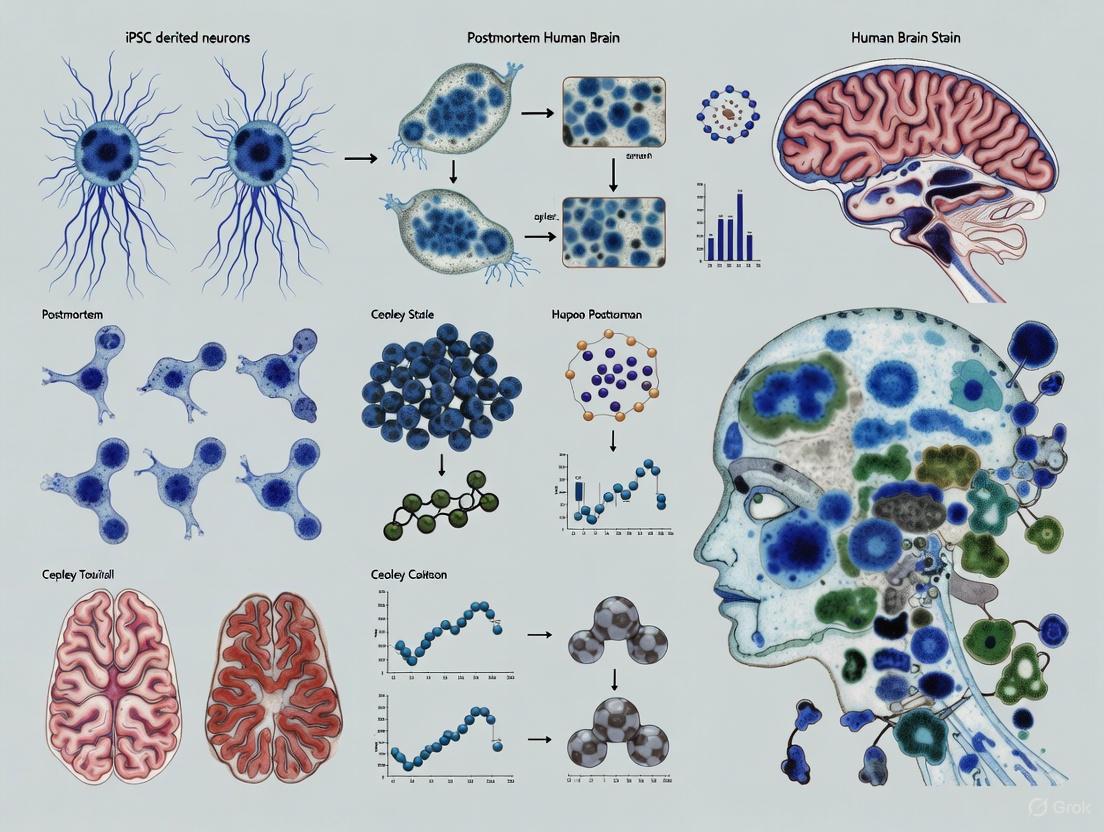
This article provides a comprehensive analysis of induced pluripotent stem cell (iPSC)-derived neuronal models in comparison to traditional postmortem human brain tissue for neuroscience research and drug development.
iPSC-Derived Neurons vs. Postmortem Brain Tissue: A New Paradigm for Neuroscience Research and Drug Discovery
Abstract
This article provides a comprehensive analysis of induced pluripotent stem cell (iPSC)-derived neuronal models in comparison to traditional postmortem human brain tissue for neuroscience research and drug development. We explore the foundational biology distinguishing these models, including recent evidence revealing significant molecular differences between living and postmortem brain tissue. The content covers advanced methodological applications of iPSC technology for disease modeling and high-throughput screening, addresses key challenges in model optimization, and presents rigorous validation frameworks. For researchers and drug development professionals, this synthesis offers critical insights for selecting appropriate model systems to advance the understanding and treatment of neurological disorders.
The Living vs. Postmortem Brain: Unveiling Fundamental Biological Divergences
The Mount Sinai Living Brain Project (LBP) has produced landmark evidence demonstrating distinct molecular differences between brain tissue from living people and postmortem samples. This research challenges long-standing assumptions in neuroscience and provides critical context for evaluating two primary models for studying human brain biology: postmortem brain tissue and induced pluripotent stem cell (iPSC)-derived neurons. This guide objectively compares these models based on the LBP findings and supporting studies, equipping researchers with the data needed to select appropriate models for neurological research and drug development.
Understanding human brain function and disease requires accurate biological models. For decades, postmortem human brain tissue has been the cornerstone of molecular neuroscience. More recently, iPSC-derived neurons have emerged as a powerful alternative, allowing for the generation of patient-specific neural cells in vitro [1]. The Living Brain Project provides an unprecedented opportunity to benchmark these models against the biology of the living human brain, which was previously largely inaccessible for direct molecular analysis.
The LBP obtained dorsolateral prefrontal cortex (DLPFC) tissues from living individuals during deep brain stimulation (DBS) procedures, enabling direct comparison with postmortem DLPFC tissues from brain banks [2]. Their findings reveal substantial molecular differences that must be considered when designing studies of brain function and disease.
Key Experimental Findings from the Living Brain Project
Core Methodology of the Landmark Studies
The LBP's comparative analysis involved a multi-omics approach on living and postmortem tissues [2]:
- Sample Sources: DLPFC tissues from 164 living participants (78 unilateral and 86 bilateral biopsies) and 233 postmortem controls from three brain banks, matched for key demographic and clinical variables.
- Molecular Profiling: Joint genomic data generation including whole-genome sequencing (WGS) and bulk-tissue RNA-sequencing.
- Validation Cohort: Independent collection of 31 living and 21 postmortem DLPFC tissues analyzed by single-nuclei RNA-sequencing (snRNA-seq).
- Analysis Focus: Comprehensive evaluation of A-to-I RNA editing, gene expression, and splicing patterns.
Quantitative Comparison of Molecular Profiles
Table 1: Key Molecular Differences Between Living and Postmortem Human Brain Tissue
| Molecular Feature | Finding in Postmortem vs. Living Tissue | Statistical Significance | Biological Implication |
|---|---|---|---|
| Global Alu Editing (AEI) | Significantly increased | p = 4.3 × 10-75, Cohen's d = 2.88 [2] | Postmortem editing landscape does not reflect living state |
| ADAR Expression | Significantly increased | q = 9.3 × 10-87 [2] | Enzyme driving A-to-I editing elevated after death |
| ADARB1 Expression | Significantly increased | q = 3.5 × 10⁻³² [2] | Brain-specific editing enzyme elevated |
| RNA Transcripts Affected | 95% showed differences in splicing or levels [3] | Large-scale molecular divergence | Widespread postmortem molecular changes |
| Cellular Composition | Fewer oligodendrocytes, more neurons in living tissue [2] | p = 1.8 × 10⁻⁷ (EXC1 neurons) [2] | Cell type proportions differ between sources |
iPSC-Derived Neurons as an Alternative Model
Model Characteristics and Validation
iPSC-derived cortical neurons are generated by reprogramming somatic cells (e.g., skin fibroblasts, blood cells) to pluripotency, then differentiating them into neural lineages [1]. Key validation studies show:
- Transcriptomic Similarity: iPSC-derived cortical neurons show striking resemblance to primary fetal cortical neurons at single-cell resolution, clustering more closely with fetal neurons than adult brain cells [4].
- Functional Maturation: These neurons demonstrate repetitive firing in response to depolarization and spontaneous synaptic activity, indicating functional maturation [4].
- Cortical Identity: Single-cell analysis shows 93.6% of cells express neuronal identity markers (MAP2, NCAM1, TUBB3), with the majority expressing glutamatergic receptors and synaptic genes [4].
Direct Comparison of Model Systems
Table 2: iPSC-Derived Neurons vs. Postmortem Brain Tissue for Research Applications
| Research Consideration | iPSC-Derived Neurons | Postmortem Brain Tissue |
|---|---|---|
| Molecular Fidelity | Closely resembles fetal brain development stage [4] | Altered RNA editing, inflammation, and hypoxia signatures [2] |
| Experimental Accessibility | Suitable for longitudinal studies, drug screening, genetic manipulation [1] | Limited to single time point; no intervention studies |
| Disease Modeling | Can model neurodevelopmental disorders; recapitulate some disease phenotypes [4] [5] | Essential for studying end-stage neuropathology |
| Maturity State | Electrophysiologically immature compared to adult tissue [4] | Represents fully mature adult brain structure |
| Inflammatory Context | Initially lacks microglia (can be incorporated with protocol modifications) [6] | Contains native microglia but with postmortem activation [2] |
| Genetic Background | Enables patient-specific modeling and isogenic controls via CRISPR [1] | Represents natural genetic diversity but no manipulation possible |
Experimental Protocols for Model Characterization
Protocol 1: Single-Cell Characterization of iPSC-Derived Neurons
Objective: Assess neuronal identity, cortical layer specification, and transcriptomic profile at single-cell resolution [4].
- Cell Differentiation: Generate cortical neurons using established protocols with small molecule dual SMAD inhibition for neural induction, followed by plating of neuroepithelial cells for final differentiation (≥81 days maturation).
- Cell Dissociation: Dissociate cultures into single-cell suspension using enzymatic treatment.
- Cell Sorting: Sort individual cells into PCR plates using fluorescence-activated cell sorting (FACS).
- Multiplex RT-qPCR: Perform single-cell reverse transcriptase-quantitative PCR for 96 genes implicated in neuronal function, cortical layer identity, and housekeeping functions.
- Data Analysis: Analyze expression patterns using principal component analysis (PCA) and clustering to identify cell types and assess cortical layer identity using canonical markers (BCL11B/CTIP2, TBR1 for deep layers; CUX1, POU3F2/BRN2 for upper layers).
- Validation: Compare with single-cell RNA-seq data from human fetal and adult brain to assess similarity to primary tissue.
Protocol 2: Assessing Molecular Differences in Living vs. Postmortem Tissue
Objective: Compare A-to-I RNA editing landscapes between living and postmortem brain tissues [2].
- Sample Collection: Obtain DLPFC tissues from living donors during deep brain stimulation procedures and matched postmortem tissues from brain banks.
- Nucleic Acid Extraction: Isolate DNA and RNA using standardized protocols with quality control (RIN assessment for RNA).
- Sequencing: Perform whole-genome sequencing and bulk-tissue RNA-sequencing on all samples using uniform protocols.
- A-to-I Editing Quantification:
- Map RNA-seq reads to reference genome.
- Identify A-to-G mismatches as potential editing sites.
- Calculate Alu Editing Index (AEI) by measuring total edited adenosines over all adenosines with sufficient coverage in Alu elements.
- Statistical Analysis:
- Compare AEI between living and postmortem groups using linear mixed models.
- Account for covariates including age, sex, and relevant clinical variables.
- Validate findings in independent snRNA-seq cohort to assess cell-type-specific effects.
Visualization of Research Workflows
Research Model Comparison Workflow
Signaling Pathways and Molecular Mechanisms
Molecular Signatures of Research Models
The Scientist's Toolkit: Essential Research Reagents
Table 3: Key Reagent Solutions for Brain Research Models
| Reagent/Category | Function/Application | Example Uses |
|---|---|---|
| Dual SMAD Inhibitors | Neural induction from iPSCs; promotes cortical fate [4] | Generating homogeneous populations of cortical neurons |
| Cortical Layer Markers | Characterize neuronal identity and maturation state [4] | TBR1, BCL11B/CTIP2 (deep layers); CUX1, SATB2 (upper layers) |
| ADAR Enzymes | Study RNA editing mechanisms; validate postmortem artifacts [2] | Quantifying A-to-I editing differences between models |
| Microglial Incorporation | Add neuroimmune component to brain organoids [6] | HMC3 cell line, iPSC-derived microglia, PBMC-derived microglia |
| Proximity Labeling | Isolate subcellular proteomes from fixed tissue [7] | PLD3-based labeling of axonal spheroids in AD research |
| scRNA-seq Platforms | Single-cell transcriptomic profiling of heterogeneous cultures [4] [2] | Assessing cellular composition and identifying novel subtypes |
| CRISPR/Cas9 Systems | Genetic manipulation; create isogenic controls [1] | Introducing disease mutations, correcting genetic defects |
The Mount Sinai Living Brain Project has fundamentally altered our understanding of human brain biology by demonstrating significant molecular differences between living and postmortem tissues. This landmark comparison provides crucial insights for model selection:
- For developmental studies and drug screening: iPSC-derived neurons offer living, manipulable systems that closely resemble fetal brain development, though their immaturity relative to adult brain must be considered [4].
- For authentic adult neurobiology: Postmortem tissue remains essential but requires careful interpretation considering the postmortem-induced molecular changes, particularly in RNA editing and inflammatory pathways [2].
- For disease modeling: The optimal approach may combine iPSC-based models for mechanistic studies and intervention testing with postmortem validation to confirm relevance to human disease pathology [5] [7].
These findings advocate for a nuanced approach to brain research that acknowledges the complementary strengths and limitations of each model system, while pushing the field toward more physiologically relevant human-based models for drug development and disease mechanism studies.
The choice between induced pluripotent stem cell (iPSC)-derived neurons and postmortem human brain tissue represents a fundamental crossroads in neuroscience research. Each model serves as a critical window into the molecular underpinnings of brain function and disease, yet each is characterized by distinct transcriptional and proteomic landscapes. Framed within a broader thesis on brain research models, this guide objectively compares these two foundational resources. We present supporting experimental data on their performance, highlighting how their inherent disparities can shape, and potentially skew, our interpretation of neurological mechanisms. Understanding these differences is paramount for researchers, scientists, and drug development professionals aiming to select the most appropriate model for their investigative goals and to accurately contextualize their findings within the limitations of each system.
The following table summarizes the core characteristics, advantages, and limitations of iPSC-derived neurons and postmortem human brain tissue.
Table 1: Comparative overview of iPSC-derived neurons and postmortem brain tissue as research models.
| Feature | iPSC-Derived Neurons | Postmortem Human Brain Tissue |
|---|---|---|
| Developmental Stage | Embryonic-like, immature state; can model early neurodevelopment [8] | Adult, fully mature; represents end-stage pathology [8] [9] |
| Temporal Data | Enables longitudinal studies of disease progression in vitro and in chimeric models [7] [8] | Cross-sectional; provides a single snapshot in time (typically end-stage) [9] |
| Genetic/Epigenetic Context | Carries patient-specific genome; epigenetic landscape is reset and re-established in vitro [10] | Preserves the donor's lifelong genetic and epigenetic signature, including environmental influences [11] |
| Environmental Influence | Minimal; allows study of cell-autonomous mechanisms in a controlled setting [10] | Captures the full complexity of in vivo environmental exposures [11] |
| Primary Applications | Modeling early cellular pathogenesis, drug screening, personalized medicine [8] [12] | Defining end-stage disease pathology, validating discoveries from model systems [7] [8] |
Quantitative Disparities in Molecular Signatures
Direct comparisons and studies of individual models have revealed profound molecular differences between iPSC-derived systems and native brain tissue, spanning both transcriptomic and proteomic domains.
Transcriptomic Disparities
Evidence from the landmark Living Brain Project provides unequivocal and large-scale evidence of the fundamental molecular differences between living and postmortem brain tissue. Their research, analyzing approximately 300 living brain tissue samples collected during deep brain stimulation surgery, found that more than 60% of proteins and 95% of RNA types were differently expressed or processed in living versus postmortem tissue [11]. This massive disparity indicates that the postmortem transcriptome may not always accurately represent gene expression in the living brain, calling for a re-evaluation of assumptions based solely on postmortem studies [11].
Furthermore, a specific analysis of RNA splicing found that 95% of tested RNA transcripts showed differences in at least one of the following: primary RNA levels, splicing rates, or mature RNA levels when comparing living and postmortem states [11]. This suggests widespread disruption of RNA processing after death, which could significantly alter the interpretation of transcriptomic studies in neurodegeneration.
Proteomic Disparities
Proteomic analyses also reveal significant differences. A comparative study of Alzheimer's disease pathogenesis that spanned iPSC-based models and postmortem hippocampal tissue projected coherent longitudinal cellular changes from early to end-stage pathology [8] [13]. This suggests that while iPSC models can capture early disease dynamics, their proteomic state differs from the terminal state observed postmortem.
A key technical limitation affecting proteomic comparisons is the efficiency of protein extraction from fixed postmortem tissue. Recent methodological refinements, such as using increased SDS concentration (e.g., 2%) in basic Tris-HCl solution, have been developed to enhance protein extraction by effectively de-crosslinking proteins, thereby improving the quality of proteomic data from archived samples [7].
Table 2: Key molecular disparities between living and postmortem brain tissue, and iPSC-derived models.
| Molecular Feature | Nature of Disparity | Experimental Evidence |
|---|---|---|
| Global RNA Expression & Processing | Widespread differences in expression and splicing | 95% of RNA transcripts altered in postmortem vs. living tissue [11] |
| Protein Expression | Significant divergence in protein abundance | >60% of proteins differentially expressed [11] |
| RNA-Splicing Dynamics | Altered splicing rates and mature RNA levels | Major differences in intron usage and splicing [11] |
| Epigenetic Landscape | Donor-specific patterns are reset in iPSCs | iPSCs show variable epigenetic states not always reflective of the original donor's brain [10] |
| Pathway Activation | Model-specific pathway engagement | mTOR pathway activation identified in iPSC-derived neuronal spheroids and validated in postmortem tissue [7] |
Experimental Protocols and Methodological Insights
Key Experimental Workflows
Cutting-edge methodologies are being employed to deepen our understanding of molecular signatures in each model. Below is a workflow for a proximity labeling technique used to map the proteome of specific subcellular structures in postmortem brains.
A pivotal workflow for investigating early disease mechanisms involves the transplantation of iPSC-derived brain cells into animal models to create chimeric systems for discovery.
The Scientist's Toolkit: Essential Research Reagents
The following table details key reagents and materials critical for the experimental workflows discussed in this field.
Table 3: Key research reagents and their applications in neuronal transcriptomics and proteomics.
| Research Reagent / Tool | Function / Application |
|---|---|
| PLD3 (Phospholipase D3) Antibody | Protein bait for proximity labeling of axonal spheroids in postmortem brain tissue due to its high abundance within these structures [7]. |
| HRP-Conjugated Secondary Antibody | Enables enzymatic biotinylation in antibody-based proximity labeling protocols for fixed tissue [7]. |
| Biotin-XX-Tyramide | Substrate for HRP; upon reaction, deposits biotin labels on proteins near the antibody target, enabling their isolation [7]. |
| Hippocampal Spheroids | 3D iPSC-derived models that contain neurons and neural progenitors, used for transplantation and in vitro disease modeling [8]. |
| LC-MS/MS (Liquid Chromatography with Tandem Mass Spectrometry) | Core technology for the identification and quantification of thousands of proteins in complex mixtures (proteomics) [7] [8] [14]. |
| scRNA-seq / snRNA-seq (Single-Cell/Nucleus RNA Sequencing) | High-resolution techniques for profiling cellular heterogeneity and gene expression in complex tissues like the brain [15]. |
| Dynamic SILAC (Stable Isotope Labeling with Amino acids in Cell culture) | Mass spectrometry-based method for measuring protein synthesis and degradation rates (protein turnover) in live cells, including iPSC-derived neurons [14]. |
Discussion and Research Implications
The observed molecular disparities between iPSC-derived neurons and postmortem brain tissue have profound implications for research design and interpretation. The choice of model system can predetermine the biological pathways and mechanisms one is likely to discover.
A critical finding is that the relationship between genetic variation and epigenetic variation is most robust in iPSCs and weakens upon differentiation [10]. This suggests that while iPSCs are an excellent model for studying genetically determined epigenetic states, the increased epigenetic variation in differentiated neurons may be less directly tied to the donor's genetic background, potentially limiting their utility for modeling late-onset, environmentally influenced diseases.
Furthermore, research into Alzheimer's disease axonal pathology exemplifies a powerful integrative approach. By using proximity labeling proteomics in postmortem human brain to identify key pathways like PI3K/AKT/mTOR, and then validating the functional role and reversibility of pathology in an iPSC-derived model, researchers can leverage the strengths of both systems [7]. This convergent methodology provides greater confidence in the identified therapeutic targets.
In conclusion, neither model is superior in all contexts. iPSC-derived neurons offer an unparalleled window into early, cell-autonomous disease mechanisms and are ideal for longitudinal studies and drug screening. Postmortem tissue provides the essential ground truth of end-stage human disease pathology. The most compelling research strategies will likely continue to involve a synergistic use of both, where discoveries in one system are rigorously validated in the other, thereby building a more complete and accurate picture of brain health and disease.
The quest to understand the cellular and molecular pathogenesis of human neurological diseases relies heavily on the availability of accurate human-based model systems. For decades, postmortem human brain tissue has been the cornerstone of such research, providing invaluable snapshots of disease pathology at end stages. However, this tissue source presents significant scientific challenges due to the presence of postmortem artifacts—alterations in molecular composition and cellular architecture that occur between death and tissue preservation. These artifacts fundamentally limit the accuracy of disease phenotype interpretation [16]. The advent of induced pluripotent stem cell (iPSC) technology has revolutionized neurological disease modeling by providing an alternative platform that circumvents many postmortem-related limitations. iPSCs are pluripotent stem cells generated by reprogramming adult somatic cells, which can then be differentiated into various neural cell types, including region-specific neurons, astrocytes, oligodendrocytes, and microglia [17] [1]. This comprehensive analysis compares these two fundamental approaches, examining how postmortem artifacts impact disease phenotype accuracy and how iPSC-derived models address these challenges while introducing new considerations for researchers.
Technical Comparison: Postmortem Brain Tissue Versus iPSC-Derived Neural Models
Table 1: Fundamental Characteristics of Postmortem and iPSC-Based Neural Models
| Characteristic | Postmortem Human Brain Tissue | iPSC-Derived Neural Models |
|---|---|---|
| Temporal Resolution | Single endpoint (typically end-stage disease) [18] | Multiple timepoints across developmental continuum [16] |
| Tissue Availability | Limited, especially for rare diseases [18] | Virtually unlimited through self-renewal [17] [18] |
| Genetic Background | Fixed at time of death | Patient-specific with original genomic features preserved [17] |
| Cellular Environment | Altered by agonal state, postmortem interval, and fixation [8] | Controlled, artificial culture environment [18] |
| Neuroinflammatory Context | Includes microglia but potentially altered by brain death [6] | Initially lacked microglia; now can be incorporated via newer protocols [6] |
| Developmental Stage | Adult, aged brain | Typically fetal-like maturation state [17] [18] |
Table 2: Impact of Technical Limitations on Disease Modeling Capabilities
| Modeling Aspect | Postmortem Tissue Limitations | iPSC Model Advancements |
|---|---|---|
| Early Disease Processes | Cannot replicate early disease stages [6] | Enables study of disease initiation and progression [16] [8] |
| Cellular Resolution | Cannot distinguish primary causes from secondary consequences [16] | Can isolate cell-autonomous effects [18] |
| Experimental Control | Limited manipulation capabilities | Enables genetic manipulation via CRISPR/Cas9 [17] [1] |
| Drug Screening | Not suitable for intervention studies | Ideal for high-throughput compound screening [18] |
| Regional Specification | Fixed regional identity | Can generate region-specific neural subtypes [17] [18] |
Postmortem Artifacts: Origins and Consequences for Phenotype Accuracy
The accuracy of disease phenotypes derived from postmortem tissue is compromised by several unavoidable factors. The postmortem interval (time between death and tissue preservation) directly impacts RNA integrity, protein stability, and cellular morphology. The agonal state (circumstances surrounding death) can trigger profound metabolic and gene expression changes that obscure genuine disease signatures [16]. Additionally, postmortem tissue represents only the final pathological state of a progressive disorder, making it impossible to distinguish primary pathogenic mechanisms from secondary compensatory responses or epiphenomena [18] [8]. This limitation is particularly problematic for neurodegenerative diseases like Alzheimer's and Parkinson's, where therapeutic intervention would ideally target early disease processes. Furthermore, postmortem human microglia are potentially altered by molecular events associated with brain death or the disease process itself, limiting their utility for studying neuroinflammatory processes in their native state [6].
Functional Consequences for Research Outcomes
The artifacts inherent to postmortem tissue have direct consequences for research validity and therapeutic development. Studies relying solely on postmortem findings risk misattributing downstream compensatory changes to primary disease mechanisms, potentially leading to misguided therapeutic targets. The inability to access early disease stages creates a fundamental gap in understanding disease initiation, which is particularly problematic for neurodevelopmental disorders like autism and schizophrenia that have prenatal origins but manifest symptoms postnatally [16]. Additionally, the cellular complexity of postmortem tissue makes it difficult to isolate cell-type-specific contributions to disease pathogenesis, especially for non-cell-autonomous mechanisms involving multiple neural cell types [18].
iPSC-Derived Neural Models: Addressing the Artifact Challenge
Technical Foundations and Methodological Approaches
iPSC-based modeling begins with somatic cell reprogramming, typically using skin fibroblasts, peripheral blood mononuclear cells, or other accessible cell types from patients [1]. Through the introduction of reprogramming factors (typically OCT4, SOX2, KLF4, and c-MYC), these somatic cells are returned to a pluripotent state capable of differentiating into any cell type, including various neural lineages [17] [1]. The resulting iPSCs can be expanded indefinitely, providing a renewable source of human neural cells that retain the complete genetic background of the donor [18].
Multiple differentiation protocols have been developed to generate specific neural cell types:
- Neural stem cells (NSCs) can be efficiently induced from iPSCs using small molecule inhibitors of GSK3, TGFβ, and NOTCH pathways (CHIR99021 and SB431542) [17].
- Region-specific neurons are generated through precise temporal application of morphogens that mimic developmental patterning, such as SHH for ventralization and retinoic acid for caudalization [17].
- 3D cerebral organoids provide more physiologically relevant models through self-organization principles, generating diverse cell types that better recapitulate in vivo tissue architecture [6] [18].
Table 3: Advanced iPSC-Derived Neural Model Systems
| Model Type | Key Features | Applications | Limitations |
|---|---|---|---|
| 2D Monocultures | Homogeneous populations; ideal for studying cell-autonomous effects [18] | High-throughput screening; mechanistic studies [18] | Lack cellular diversity; simplified environment [18] |
| Cerebral Organoids | 3D architecture; diverse cell types; self-organization [6] [18] | Modeling complex tissue-level pathology; neurodevelopment [6] | High variability; not easily scalable [18] |
| Assembloids | Multiple region combinations; modeling circuit formation | Studying connectivity between brain regions | Technical complexity; immature connections |
| Xenografts | Human cells in living mouse brain; in vivo environment [8] | Studying human cell behavior in physiological context [8] | Labor intensive; host-graft interactions |
Overcoming Postmortem Limitations
iPSC-based models directly address several critical limitations of postmortem tissue. They enable longitudinal analysis of disease processes, allowing researchers to track the temporal evolution of pathological changes from early precursors to mature phenotypes [16] [8]. This capability was leveraged in a study of Alzheimer's disease where proteomic analysis of iPSC-derived hippocampal neurons transplanted into mouse brain revealed early cellular dysfunction that preceded amyloid plaque formation—a finding impossible to obtain from postmortem tissue alone [8].
The genetic tractability of iPSCs enables precise dissection of disease mechanisms through CRISPR/Cas9 genome editing to introduce or correct specific mutations in isogenic control lines [17] [1]. Furthermore, the ability to generate patient-specific models from individuals with sporadic forms of neurodegeneration (who lack known genetic causes) dramatically expands the scope of diseases that can be modeled, which is particularly important given that most patients with Alzheimer's disease, Parkinson's disease, and ALS do not have known disease mutations [18].
Experimental Validation: Case Studies Across Neurological Disorders
Neurodegenerative Disease Applications
In Alzheimer's disease research, a groundbreaking study directly compared proteomic profiles across iPSC-based models and postmortem hippocampal tissue, revealing coherent longitudinal cellular changes indicative of early to end-stage AD pathogenesis [8]. The research demonstrated that iPSC-derived hippocampal neurons carrying an APP pathogenic variant exhibited significant alterations in cellular pathways and networks, coupled with increased Aβ42/40 ratios and β-sheet structure formation—key early markers of AD pathology that precede amyloid plaque formation [8].
For Parkinson's disease, iPSC-derived dopaminergic neurons from patients with LRRK2 mutations revealed novel nuclear architecture defects and increased proteosomal stress in neural stem cells—a phenotype that would be impossible to identify in postmortem tissue where these early developmental alterations have long since been replaced by end-stage neurodegeneration [17].
In amyotrophic lateral sclerosis (ALS), the Answer ALS consortium has generated over 1,000 iPSC lines from control and ALS patients, creating the largest resource of its kind for differentiating motor neurons and identifying sex-specific differences in ALS pathology that were previously obscured in postmortem studies [19].
Neurodevelopmental and Neuroinflammatory Applications
iPSC models have proven particularly transformative for neurodevelopmental disorders, as they provide access to the prenatal developmental processes that underlie conditions like autism, schizophrenia, and intellectual disabilities but are completely inaccessible in postmortem studies [16]. For example, iPSC-derived neural stem cells from individuals with 15q11.2 copy number variations associated with schizophrenia and autism revealed defects in cytoskeleton organization mediated by CYFIP1, providing mechanistic insights into how this genetic variation increases disease risk [17].
Recent advances in microglia integration have addressed a significant limitation of earlier iPSC models, which predominantly contained only ectodermal-derived cells (neurons and astrocytes) without mesodermal-derived microglia that play crucial roles in neuroinflammation [6]. New protocols now enable the incorporation of microglia into brain organoids through multiple approaches: using immortalized human microglial cell lines (HMC3), iPSC-derived microglia generated via yolk-sac-like intermediates, or microglia isolated from post-surgical brain tissue [6].
The Scientist's Toolkit: Essential Research Reagents and Protocols
Core Reprogramming and Differentiation Reagents
Table 4: Essential Research Reagents for iPSC-Based Neural Modeling
| Reagent Category | Specific Examples | Function | Applications |
|---|---|---|---|
| Reprogramming Factors | OCT4, SOX2, KLF4, c-MYC (OSKM) [1] | Somatic cell reprogramming to pluripotency [1] | iPSC generation from patient somatic cells |
| Small Molecule Inhibitors | CHIR99021 (GSK3β inhibitor), SB431542 (TGF-β inhibitor), Dorsomorphin [17] | Direct differentiation toward neural lineages | Neural induction; regional patterning |
| Extracellular Matrix | Matrigel, laminin, vitronectin | Structural support for 3D culture | Organoid generation; cell attachment |
| Morphogens | SHH, BMP, WNT, retinoic acid [17] | Regional patterning of neural tissue | Specific neuronal subtype generation |
| Microglia Induction Factors | IL-34, CSF-1, TGF-β [6] | Microglia differentiation and maintenance | Neuroinflammation models |
Critical Methodological Protocols
iPSC Generation from Somatic Cells: The standard protocol involves isolating dermal fibroblasts or peripheral blood mononuclear cells from patient samples and transducing them with reprogramming factors using non-integrating methods such as Sendai virus or episomal plasmids [1]. Successful reprogramming is confirmed through pluripotency marker expression (OCT4, NANOG, SOX2) and teratoma formation assays [18].
Neural Induction and Patterning: A widely adopted protocol for generating cortical neurons involves dual SMAD inhibition using SB431542 (TGF-β inhibitor) and dorsomorphin (BMP inhibitor) to direct differentiation toward neural lineages, followed by regional patterning using combinations of morphogens such as SHH for ventralization or FGF8 for anterior patterning [17].
Cerebral Organoid Generation: The Lancaster protocol involves embedding iPSC-derived neuroectodermal tissues in Matrigel droplets to promote complex tissue growth in spinning bioreactors, resulting in 3D structures containing diverse brain cell types that self-organize with features of regionalization [18].
Visualizing Experimental Workflows and Signaling Pathways
Comparative Experimental Pipeline
Experimental Pipeline Comparison
Cellular Composition in Neural Models
Cellular Composition in Neural Models
The comprehensive comparison between postmortem tissue and iPSC-derived models reveals a nuanced landscape for neurological disease research. Postmortem artifacts present significant challenges for accurate phenotype interpretation, particularly for understanding early disease mechanisms and developmental processes. Meanwhile, iPSC-based models offer unprecedented opportunities for longitudinal analysis, genetic manipulation, and patient-specific modeling while continuing to advance in physiological relevance through improved organoid systems and microglia incorporation.
The optimal research strategy involves strategic integration of both approaches: using iPSC-derived models to identify early pathogenic mechanisms and therapeutic targets, while validating key findings in postmortem tissue to ensure clinical relevance. As iPSC technologies continue to mature—addressing current limitations in maturation, cellular diversity, and reproducibility—they promise to increasingly reduce our reliance on postmortem tissue for fundamental disease mechanism studies while providing more accurate platforms for therapeutic development. This evolving research paradigm offers renewed hope for understanding and treating complex neurological disorders that have remained enigmatic due to the historical limitations of postmortem-based research.
The Scientific Rationale for Studying Living Human Brain Tissue
The human brain represents one of science's most profound frontiers, and the quest to understand its intricate workings, especially in disease states, has long been hampered by a fundamental limitation: the inability to study living human neuronal tissue. For decades, neuroscience has relied heavily on postmortem human brain studies and animal models, each with significant constraints. Postmortem tissue provides a static snapshot at the end of a disease process, while animal models, though valuable for mechanistic studies, often fail to fully recapitulate human neurobiology and have a poor track record in predicting therapeutic efficacy in humans [6] [20]. This article compares these traditional approaches with a transformative technological advancement: research using living human brain models derived from induced pluripotent stem cells (iPSCs).
Comparative Analysis of Brain Research Models
The table below summarizes the core characteristics, strengths, and limitations of the three primary models used in human brain research.
Table 1: Comparison of Key Models for Human Brain Research
| Feature | Postmortem Human Brain Tissue | Animal Models | iPSC-Derived Living Human Models (2D & 3D) |
|---|---|---|---|
| Core Principle | Static analysis of human tissue post-death [21] | Study of brain function and disease in a whole living organism | Dynamic study of live, patient-specific human neurons and glia [6] [22] |
| Key Advantages | • Preserves actual human brain architecture and end-stage pathology• Allows for direct histological and molecular analysis | • Enables study of complex neural circuits and behavior• Permits controlled genetic and environmental manipulations | • Captures patient-specific genetic background [20]• Allows direct observation of disease development and real-time functional assessment [23]• Enables high-throughput drug screening [6] |
| Inherent Limitations | • Static snapshot; no dynamic or developmental data [6]• Molecular degradation due to postmortem interval [21]• Cannot infer causality | • Significant species differences in brain development, structure, and gene expression [20]• Poorly predictive of human drug responses [20] | • Lack complex in vivo architecture and systemic inputs [24]• Neuronal immaturity and variability between cell lines can be challenges [20] [24] |
| Ideal Applications | • Validating end-stage disease pathology• Profiling genome-wide transcriptional and epigenetic states | • Studying system-level neurocircuitry and behavior• Preclinical testing of pharmacokinetics and safety | • Modeling human-specific disease mechanisms• Studying early neurodevelopmental processes• Personalized drug discovery and toxicity testing [5] |
Experimental Evidence: Validating the iPSC Model
A critical question is whether iPSC-derived neurons accurately recapitulate the molecular and functional features of the human brain. A pioneering study provided direct validation by generating iPSCs from postmortem human skin fibroblasts and comparing the resulting neurons to isogenic brain tissue from the same donor [21].
Table 2: Key Findings from the Direct Comparison Study of Isogenic Models
| Analysis Method | Key Experimental Finding | Interpretation and Significance |
|---|---|---|
| Epigenetic Clock Analysis | Brain frontal cortex epigenetic age matched the donor's chronological age. Reprogramming fibroblasts to iPSCs reset the epigenetic clock to an embryonic age, and subsequent neuronal differentiation progressively increased it [21]. | Confirms that the iPSC model recapitulates a developmental timeline, offering a window into early-stage disease processes inaccessible in postmortem tissue. |
| Transcriptomic Profiling | Neurons derived from an individual with Opioid Use Disorder (OUD) were exposed to morphine. This treatment induced gene expression changes (e.g., in the immediate early gene EGR1) that mirrored alterations found in postmortem OUD brain tissue [21]. | Demonstrates that the iPSC model can faithfully mimic drug-induced molecular alterations seen in the human brain, providing a causal model for substance use disorders. |
| Functional Characterization | A separate study on Autism Spectrum Disorder (ASD) iPSC-derived neurons showed significantly reduced spontaneous calcium transients and impaired synaptic neurotransmission, indicating dysfunctional neuronal networks [23]. | Provides functional evidence that patient-derived cells can model the core pathophysiological features of complex neuropsychiatric disorders. |
Experimental Protocol: Generating and Validating Postmortem-Derived iPSC Neurons
The validated protocol from the aforementioned study involves several key stages [21]:
- Subject Ascertainment and Fibroblast Culture: Dorsolateral prefrontal cortex (dlPFC) brain tissue (Brodmann Area 9) and skin punches are collected during autopsy from donors with well-characterized psychological autopsies. Dermal fibroblasts are cultured and expanded from the skin punches.
- iPSC Generation: Cultured postmortem fibroblasts are reprogrammed into induced pluripotent stem cells (iPSCs) using established methods, such as the introduction of reprogramming factors.
- Neuronal Differentiation: The generated iPSCs are then directed to differentiate into neural progenitor cells (NPCs) and subsequently into mature neurons using specific growth factors and culture conditions.
- Model Validation and Interrogation:
- Maturity Assessment: The maturity of the cells at each stage (fibroblast, iPSC, NPC, neuron) is assessed using DNA methylation "epigenetic clocks" trained on both adult and fetal human tissue, as well as RNA sequencing for cell type and maturity deconvolution.
- Exposure Studies: The mature neurons are exposed to substances of interest (e.g., morphine, cocaine). Transcriptomic (RNA-seq) and epigenetic (DNA methylation) analyses are then performed to identify drug-induced alterations.
- Cross-Validation: The molecular signatures from the in vitro exposure are directly compared to those from the isogenic postmortem brain tissue and larger cohorts of disorder-specific postmortem brains.
The following diagram illustrates the workflow and logical relationship of this experimental protocol.
The Scientist's Toolkit: Essential Reagents for iPSC-Derived Brain Models
Building robust iPSC-derived neural models requires a carefully selected suite of reagents. The table below details key components used in modern protocols for generating multi-cell type 3D neurospheres, which include neurons, astrocytes, and microglia [22].
Table 3: Key Research Reagent Solutions for iPSC-Derived Neural Models
| Reagent / Tool | Category | Function and Rationale |
|---|---|---|
| mTeSR Plus | Cell Culture Medium | A defined, serum-free medium optimized for the maintenance and expansion of human pluripotent stem cells, including iPSCs [22]. |
| Y-27632 (ROCK inhibitor) | Small Molecule Inhibitor | Enhances survival of iPSCs after passaging and thawing by inhibiting apoptosis. Critical for maintaining cell viability during critical steps [22]. |
| Matrigel | Extracellular Matrix | A basement membrane matrix providing a physiological substrate for cell attachment, proliferation, and differentiation, mimicking the in vivo cellular environment [22]. |
| Dual SMAD Inhibitors (SB 431542, LDN 193189) | Differentiation Inducers | Key signaling molecules that inhibit BMP and TGF-β pathways, efficiently patterning iPSCs toward a neural fate and enabling the generation of neural precursor cells (NPCs) [22]. |
| Accutase | Enzyme | A gentle cell detachment solution used for passaging sensitive iPSCs and NPCs while maintaining high cell viability [22]. |
| B-27 & N-2 Supplements | Cell Culture Supplements | Serum-free supplements essential for the survival, growth, and differentiation of neurons and other neural cells in culture [22]. |
| BrainPhys Neuronal Medium | Functional Assay Medium | A specialized medium formulated to support neuronal activity, synapse function, and network formation, enabling functional studies like calcium imaging and electrophysiology [22]. |
| GCaMP6s/f | Genetically Encoded Sensor | A fluorescent calcium indicator expressed in neurons; changes in fluorescence directly correspond to neuronal activity (calcium transients), allowing real-time functional assessment [23]. |
Modeling Complex Diseases: Insights from iPSC-Derived Models
iPSC-derived brain models have provided novel insights into a range of neurological and psychiatric disorders by revealing cell-autonomous pathologies and early developmental deficits.
Schizophrenia and Oligodendrocyte Function
Postmortem and imaging studies have long suggested white matter alterations in schizophrenia (SCZ). iPSC modeling has helped determine whether these disturbances are a secondary consequence of neuronal deficits or a genetically driven, primary pathology of oligodendrocytes. A 2025 study demonstrated that SCZ genetics have a direct, cell-autonomous impact on the oligodendroglial lineage [25]. Key findings include:
- Morphological Alterations: Mature oligodendrocytes derived from SCZ patients showed significantly increased branch length and elevated junction numbers.
- Transcriptomic Dysregulation: Patient-derived oligodendrocyte precursor cells (OPCs) and oligodendrocytes exhibited dysregulation in cell signaling and proliferation pathways.
- Genetic Association: Gene set enrichment analysis confirmed that the transcriptional signatures of iPSC-derived oligodendroglial cells were highly enriched in the genetic associations of SCZ [25].
Signaling Pathways in Autism Spectrum Disorder
Research using iPSC-derived neurons from individuals with idiopathic ASD has identified critical signaling pathways disrupted in the disorder. Pathway enrichment analysis of differentially expressed microRNAs in ASD neuronal progenitor cells points to deficits in key neurodevelopmental pathways [23].
The following diagram summarizes the core signaling pathways and functional impairments identified in ASD iPSC-derived neuronal models.
The Future: Advanced 3D Organoid and Neurosphere Models
The field is rapidly advancing from 2D neuronal cultures to more complex 3D brain organoids and neurospheres that better mimic the brain's cellular diversity and architecture [6] [26]. A key innovation is the incorporation of microglia, the brain's resident immune cells, which are crucial for modeling neuroinflammation [6]. Newer protocols generate smaller, more reproducible multi-cell type neurospheres that avoid the necrotic cores common in larger organoids, thereby creating a more physiologically relevant environment for studying neuron-glia interactions in health and disease [22].
The scientific rationale for studying living human brain tissue is unequivocally strong. While postmortem brain research provides an essential static record of end-stage disease pathology, and animal models offer insights into systemic physiology, iPSC-derived living human brain models represent a complementary and transformative tool. They provide a unique, dynamic window into human-specific disease mechanisms, enable the study of early developmental processes, and serve as a powerful platform for personalized drug discovery and toxicity testing. As these technologies continue to mature—through the development of more complex 3D models and the standardized integration of non-neuronal cell types like glia—their capacity to bridge the gap between basic research and clinical application will only grow, accelerating our understanding and treatment of the human brain's most challenging disorders.
Harnessing iPSC Technology: From Disease Modeling to High-Throughput Screening
A critical challenge in neuroscience research is the inaccessibility of living human neurons for study. This guide provides an objective comparison of the core methodologies for generating induced pluripotent stem cells (iPSCs), a foundational technology for creating patient-specific neurons in the lab. Within the broader thesis of iPSC-derived neurons versus postmortem human brain tissue research, the initial choices in reprogramming method and cell source significantly impact the efficiency, safety, and ultimate utility of the resulting neuronal models.
Reprogramming Methods: A Comparative Analysis
The process of reprogramming somatic cells into iPSCs relies on introducing specific factors to reset their identity. The methods for delivering these factors vary significantly in their mechanism, efficiency, and safety profile.
Table 1: Comparison of iPSC Reprogramming Delivery Methods
| Delivery Method | Mechanism | Genomic Integration? | Reprogramming Efficiency | Key Advantages | Key Disadvantages & Risks |
|---|---|---|---|---|---|
| Retro-/Lentivirus | Integrates genes into host genome [27] | Yes [28] [27] | High [27] | Well-established, highly efficient [27] | Risk of insertional mutagenesis and tumorigenesis [27] [29] |
| Sendai Virus | Non-integrating RNA virus [27] [29] | No [29] | Moderate [27] | Non-integrating, high efficiency for a viral method [29] | Reactivation of viral genes, low efficiency compared to other systems [27] |
| Episomal Plasmid | Non-integrating DNA plasmid [27] [29] | Very low/No [29] | Low [27] | Virus-free, relatively simple [29] | Low reprogramming efficiency [27] [29] |
| Synthetic mRNA | Direct delivery of reprogramming factor mRNA [27] [29] | No [29] | High [27] | Virus-free, non-integrating, high efficiency [27] [28] | Technically complex, requires repeated transfections, can trigger immune response [27] [29] |
| Recombinant Protein | Direct delivery of reprogramming proteins [27] | No | Very Low [27] | Virus-free, non-integrating, no genetic material [27] | Very low efficiency, technically difficult, requires high amounts of protein [27] |
Somatic Cell Source Selection
The choice of the starting somatic cell is another critical variable, influencing the invasiveness of the procedure, reprogramming efficiency, and the characteristics of the resulting iPSCs.
Table 2: Comparison of Somatic Cell Sources for iPSC Generation
| Cell Source | Harvesting Method | Reprogramming Efficiency | Key Advantages | Key Disadvantages |
|---|---|---|---|---|
| Dermal Fibroblasts | Skin biopsy (invasive) [27] | Low [27] | Easily cultured and expanded, historically the most used source [27] | Invasive harvesting, low reprogramming efficiency [27] |
| Keratinocytes | Plucked hair (minimally invasive) [27] | High [27] | High reprogramming efficiency, non-invasive, easy to transport [27] | - |
| Blood Cells | Blood draw (minimally invasive) [27] | - | Non-invasive, high availability [27] | - |
| Urinary Cells | Urine sample (non-invasive) [27] | - | Completely non-invasive [27] | - |
A significant consideration when selecting a cell source is "epigenetic memory," where iPSCs may retain a molecular signature of their tissue of origin, potentially favoring differentiation back into that cell type [27]. While this bias may diminish with prolonged cell culture, it is a factor to consider for downstream applications [27].
Experimental Protocols for iPSC Generation
Protocol for iPSC Generation from Hair Follicle Keratinocytes
This protocol outlines the generation of iPSCs using a lentiviral delivery system, a method known for its high efficiency [27].
- Step 1: Cell Sourcing and Propagation. Pluck hair follicles from the scalp, ensuring the root bulb is intact. Place the follicle in a culture medium and grow the keratinocytes under standard conditions until they reach the appropriate confluence [27].
- Step 2: Viral Transduction. While the keratinocytes are still in their growth phase, transduce them with lentiviral vectors carrying the reprogramming factors OCT4, SOX2, KLF4, and C-MYC (OSKM) [27].
- Step 3: Feeder Co-culture and Colony Formation. After infection, transfer the transduced keratinocytes onto a feeder layer of mitotically inactivated mouse or human fibroblasts. This layer supports the emerging iPSC colonies [27].
- Step 4: Colony Picking and Expansion. Monitor the culture for the appearance of primary colonies with a distinct stem cell morphology (e.g., tight, dome-shaped colonies with large nuclei). Mechanically pick these colonies and transfer them to a fresh culture vessel, which can be a feeder-free system for subsequent expansion [27].
- Step 5: Characterization. Newly generated cell lines must be rigorously tested for pluripotency marker expression (e.g., via immunofluorescence), genetic integrity (e.g., karyotyping), and differentiation capacity (e.g., teratoma formation assays) [27].
Protocol for Direct mRNA Reprogramming
This non-integrating, virus-free method uses synthetic mRNA to express reprogramming factors, offering a safer alternative with high efficiency [27] [28].
- Step 1: Cell Plating. Plate the somatic cells (e.g., fibroblasts or blood cells) onto an appropriate substrate.
- Step 2: Repeated Transfection. Transfect the cells with a cocktail of synthetic mRNAs encoding the OSKM factors. This process must be repeated daily over a period of approximately two weeks to maintain sufficient levels of the reprogramming proteins [27].
- Step 3: Culture and Expansion. Culture the transfected cells in a medium supportive of pluripotent stem cells. iPSC colonies will emerge and can be picked and expanded similarly to the viral method [27].
Key Signaling Pathways in Reprogramming and Differentiation
The reprogramming of somatic cells to pluripotency and the subsequent differentiation of iPSCs into specialized cells like neurons are governed by key signaling pathways. The diagram below illustrates the core signaling pathways involved in the differentiation of iPSCs into dopaminergic neurons, a critical cell type for Parkinson's disease research.
Key Pathways in Dopaminergic Neuron Differentiation
The Scientist's Toolkit: Essential Research Reagents
Table 3: Key Reagents for iPSC Generation and Differentiation
| Reagent / Solution | Function | Example in Context |
|---|---|---|
| Reprogramming Factors (OSKM) | Core transcription factors that reset somatic cell epigenome to a pluripotent state [28] [29] | OCT4, SOX2, KLF4, c-MYC delivered via virus or mRNA [28] |
| Feeder Layer | A layer of inactivated cells that provides structural support and secretes nutrients for nascent iPSC colonies [27] | Mitotically inactivated mouse or human fibroblasts [27] |
| Small Molecule Enhancers | Chemical compounds that improve reprogramming efficiency by modulating epigenetic or signaling pathways [28] | Valproic acid (histone deacetylase inhibitor); RepSox (can replace SOX2) [28] |
| Wnt Pathway Activators | Small molecules or proteins that activate the Wnt/β-catenin signaling pathway, crucial for midbrain DA neuron specification [30] | e.g., CHIR99021; used in differentiation protocols [30] |
| SHH Pathway Agonists | Compounds that activate Sonic Hedgehog (SHH) signaling, essential for ventral patterning and neuronal subtype identity [28] [30] | e.g., SAG (Smoothened Agonist); used to pattern neural progenitors [28] |
The quest to understand human brain development and disease has long relied on two primary research materials: postmortem human brain tissue and increasingly, induced pluripotent stem cell (iPSC)-derived neural models. Postmortem tissue has been the historical cornerstone for studying the cellular and molecular architecture of the mature human brain [31]. However, the emergence of iPSC technology has provided a dynamic, human-relevant system to observe neurodevelopment and disease processes in real-time [32] [33]. This guide objectively compares the experimental performance of these two approaches, with a focused examination of the strategies for differentiating iPSCs into diverse, functional neural cell types.
iPSC-Derived Neural Models vs. Postmortem Human Brain Tissue: A Core Comparison
The choice between iPSC-derived models and postmortem tissue fundamentally shapes experimental design, capabilities, and conclusions. The table below summarizes their key performance characteristics.
| Feature | iPSC-Derived Neural Models | Postmortem Human Brain Tissue |
|---|---|---|
| Tissue Status | Dynamic, developing tissue in vitro [6] | Static, fixed tissue from a single time point [31] |
| Key Advantage | Enables study of early disease stages, development, and live-cell functional assays [6] [32] | Directly represents the molecular state of the mature adult human brain [11] |
| Major Limitation | Cells often exhibit an immature, fetal-like state; lack full complexity of native tissue [34] [32] | Molecular state is altered by agonal factors, postmortem interval (PMI), and tissue pH [11] [31] |
| Experimental Throughput | High-throughput screening for drug discovery and toxicity are possible [32] | Lower throughput; suitable for cohort studies and endpoint analyses [31] |
| Physiological Relevance | Excellent for modeling neurodevelopmental processes; may lack mature circuits [6] [35] | Directly reflects in vivo biology of the mature brain, but not of the living state [11] |
| Genetic Context | Enables patient-specific modeling and isogenetic control lines [36] [32] | Captures natural genetic diversity of human population [31] |
A landmark study from Mount Sinai's Living Brain Project provides critical experimental data challenging a long-held assumption. By comparing living brain tissue from surgical patients with postmortem samples, they found that over 60% of proteins and 95% of RNA types were differentially expressed or processed in postmortem tissue [11]. This demonstrates that postmortem gene expression signatures may not always accurately portray those in the living brain [11].
Core Signaling Pathways for iPSC Neural Differentiation
The directed differentiation of iPSCs into neural lineages relies on recapitulating developmental signaling events. Key pathways are manipulated using specific inhibitors and growth factors to guide cell fate.
SMAD Pathway Inhibition: Initiating Neural Induction
The dual inhibition of the SMAD signaling pathway is a foundational step for efficient neural induction from iPSCs [36]. This process prevents differentiation into mesodermal and endodermal lineages, directing cells toward a neuroectodermal fate.
Patterning and Regional Specification
Following neural induction, progenitor cells are patterned into specific neuronal subtypes using morphogens that create regional identity in the developing neural tube.
Experimental Data: Protocol Performance and Functional Outcomes
Differentiation protocols vary in efficiency, maturity, and functional output. The data below compare established methods.
Differentiation Efficiency and Neuronal Maturity
| Differentiation Protocol | Key Inducers / Inhibitors | Neuronal Subtype Generated | Reported Efficiency / Performance |
|---|---|---|---|
| Noggin-Based Neural Induction [34] [35] | Noggin (BMP inhibitor) | Mixed Neural Progenitors | Lower yield of βIII-Tubulin+ neurons compared to NIM protocol [35] |
| Neural Induction Medium (NIM) [34] [35] | Combined small molecules | Mixed Neural Progenitors | Higher performance in producing βIII-Tubulin+ neurons [35] |
| Dual SMAD Inhibition [36] [37] | Noggin, SB431542, DKK-1, BDNF, GDNF | Cortical Neurons | Efficient generation of cortical neurons (Markers: Tbr1, CTIP2, Satb2) [36] |
| Floor-Plate Based Method [36] [37] | SHH, FGF8, Purmorphamine | Dopaminergic Neurons | Generation of functional DA neurons (Markers: TH, LMX1A, FOXA2) [36] |
| Retinoic Acid & SHH [36] | RA, SHH, GDNF, BDNF, CNTF | Motor Neurons | Produces electrically active MNs (Markers: BIII-tubulin, ChAT, Islet1) [36] |
Functional Maturation and Electrophysiological Activity
The functional maturity of iPSC-derived neurons is a critical performance metric. Long-term differentiation of iPSC-derived neural progenitor cells (NPCs) grown as neurospheres results in neuronal networks that become electrically active on microelectrode arrays (MEAs) after 85 days in culture [35]. Furthermore, in a comparative study of sensory neuron differentiation protocols, the "Chambers" protocol was found to produce neurons with predominantly tonic firing patterns, whereas the accelerated "Anatomic" protocol produced different functional characteristics [38]. This demonstrates that the choice of protocol directly impacts the functional properties of the resulting neurons.
The Scientist's Toolkit: Essential Reagents for iPSC Neural Differentiation
Successful differentiation relies on a core set of reagents and signaling molecules.
| Research Reagent / Solution | Function in Differentiation | Key Experimental Consideration |
|---|---|---|
| Noggin | Inhibits BMP-4 signaling, initiating neural induction by blocking non-neural fates [36]. | Used in dual SMAD inhibition; quality and concentration are critical for efficiency [36] [35]. |
| SB431542 | Inhibits TGF-β/Activin/Nodal signaling, synergizing with Noggin for efficient neural induction [36]. | Prevents differentiation into mesendodermal lineages, directing cells toward neuroectoderm [36]. |
| Sonic Hedgehog (SHH) | A ventralizing morphogen critical for patterning dopaminergic and motor neurons [36] [37]. | Concentration and timing determine the subtype and purity of ventral neuronal populations [37]. |
| Retinoic Acid (RA) | A posteriorizing factor that promotes differentiation of spinal motor neurons and hindbrain identities [36]. | Essential for activating Hox genes; concentration must be carefully titrated to avoid toxicity [36]. |
| BDNF, GDNF, NGF | Neurotrophic factors that support neuronal survival, growth, and maturation after initial differentiation [36]. | Required for long-term culture and functional maturation of neurons [36] [35]. |
| Matrigel / Basement Membrane Matrix | Provides a 3D substrate that supports complex tissue architecture and polarization in organoid cultures [6]. | Lot-to-lot variability can affect reproducibility; defined alternatives are an area of active development [6]. |
The comparison between iPSC-derived neural models and postmortem tissue reveals a landscape of complementary strengths. Postmortem tissue remains invaluable for snapshot analyses of the mature human brain, but its molecular profile is distinct from the living state [11]. Conversely, iPSC technology offers a dynamic, patient-specific platform for modeling development, screening drugs, and studying disease mechanisms in live cells [32] [33]. The critical choice of differentiation protocol—from SMAD inhibition for cortical neurons to SHH and RA patterning for motor neurons—directly determines the physiological relevance and experimental performance of the resulting cells. As 3D organoid and co-culture systems evolve to incorporate microglia and other cell types [6], they promise to narrow the gap between in vitro models and the complex reality of the human brain, ultimately accelerating the pace of discovery in neuroscience and drug development.
The quest to understand the human brain relies heavily on models that can faithfully recapitulate its complexity. For decades, neuroscience research has oscillated between two imperfect systems: oversimplified two-dimensional cell cultures and animal models that fail to capture human-specific neurobiology. The limitations of these approaches are particularly problematic for studying neurological disorders, where hundreds of millions of people worldwide are affected by conditions that remain poorly understood and largely untreated [39]. The emergence of advanced three-dimensional (3D) model systems—specifically neurospheres and brain organoids—represents a transformative development that bridges critical gaps between traditional models and human brain physiology. These systems leverage induced pluripotent stem cell (iPSC) technology to create patient-specific neural tissues that mirror aspects of human brain development and disease with unprecedented accuracy [6] [40].
This comparison guide examines neurospheres and brain organoids as tools for complex biological research, framing their utility within the broader context of iPSC-derived neurons versus postmortem human brain tissue research. For researchers navigating these model options, understanding their distinct advantages, limitations, and appropriate applications is essential for advancing our understanding of brain function and dysfunction.
Model System Fundamentals and Comparative Analysis
Defining Characteristics and Technical Specifications
Neurospheres are 3D cell aggregates of multipotent neural stem cells (NSCs) grown in suspension culture. These free-floating clusters can be differentiated into various neural cell types, including neurons and glial cells, creating what are known as neural spheroids [40]. The primary strength of neurospheres lies in their relative simplicity and utility for studying neural precursor cells, though they lack the regional specificity and complex cellular organization of the human brain [40].
Brain organoids represent a more advanced 3D culture system that models the human brain at cellular, structural, and developmental levels. First generated by Lancaster et al. in 2013 as a system to study microcephaly, cerebral organoids display discrete brain regions, dorsal cortical organization, and functional cortical neurons with glial cell populations [40]. Organoids are generated through established differentiation protocols that mimic developmental processes, typically involving the differentiation of single-cell iPSCs into embryoid bodies, then neural induction, often with extracellular matrix support, and finally maturation in suspension culture [40].
Table 1: Fundamental Characteristics of Neurospheres and Brain Organoids
| Characteristic | Neurospheres | Brain Organoids |
|---|---|---|
| Definition | 3D aggregates of multipotent neural stem cells [40] | 3D self-organizing tissues mimicking developing brain [6] |
| Cellular Complexity | Limited diversity; primarily neural stem cells and basic differentiation [40] | High diversity; multiple neural cell types including neurons, astrocytes [40] |
| Spatial Organization | Limited organization; cells do not organize into specific regions [40] | Discrete brain regions with dorsal cortical organization [40] |
| Self-Organization Capacity | Low; limited patterning | High; self-patterning into brain regions [40] |
| Protocol Duration | Shorter (weeks) | Extended (months) [41] |
| Technical Demand | Moderate | High, requiring specialized protocols and equipment |
Head-to-Head Performance Comparison
When selecting model systems for specific research applications, direct performance comparisons across key parameters are essential for informed decision-making.
Table 2: Performance Comparison for Research Applications
| Research Parameter | Neurospheres | Brain Organoids |
|---|---|---|
| Developmental Modeling | Limited; no regional specification [40] | High; recapitulates early embryonic brain development [41] |
| Disease Modeling Fidelity | Basic mechanisms | High; recapitulates disease phenotypes like microcephaly [40] [41] |
| Drug Screening Utility | Moderate for toxicity | High; suitable for medium-throughput screening [41] |
| Throughput Capacity | High | Variable; improved with advanced protocols (Hi-Q) [41] |
| Reproducibility | Moderate | Challenging but improving with standardized protocols [41] |
| Genetic Manipulation | Straightforward | Compatible with CRISPR/Cas9 editing [39] |
| Cost Efficiency | Higher | Lower per organoid in high-quantity protocols [41] |
Recent methodological advances have addressed some traditional limitations of both systems. For neurospheres, improved differentiation protocols have enhanced neuronal maturation and functional characterization. For organoids, the development of high-quantity (Hi-Q) approaches has significantly improved reproducibility and scalability. The Hi-Q method generates thousands of uniform-sized organoids across multiple hiPSC lines while maintaining consistent cytoarchitecture, cell diversity, and functionality [41]. This platform addresses previous challenges of morphological heterogeneity, inter-organoid size differences, and limited throughput that constrained statistical power in earlier organoid research.
Experimental Protocols and Methodologies
Neurosphere Generation and Differentiation
The standard protocol for generating neurospheres begins with the isolation of neural stem cells from either tissue samples or through differentiation of iPSCs. Cells are dissociated into single-cell suspensions and plated in non-adherent culture vessels with serum-free medium containing specific growth factors—primarily epidermal growth factor (EGF) and basic fibroblast growth factor (bFGF)—to maintain stemness and promote proliferation [40]. Within 24-48 hours, cells aggregate and begin forming free-floating neurospheres, which are typically maintained for 7-14 days before differentiation.
For differentiation, neurospheres are transferred to adherent culture conditions and switched to media containing differentiation factors such as retinoic acid, brain-derived neurotrophic factor (BDNF), or glial cell line-derived neurotrophic factor (GDNF). The differentiation process typically requires 1-2 weeks, during which neural stem cells give rise to mixed populations of neurons and glial cells [40]. The resulting neural spheroids provide a more physiologically relevant environment than 2D cultures but lack the regional specification and complex cellular organization of the developing brain.
Brain Organoid Generation with Hi-Q Protocol
Advanced organoid protocols have evolved significantly since their inception. The Hi-Q brain organoid protocol represents a streamlined approach that addresses key limitations of earlier methods [41]:
Direct neural induction: Dissociated hiPSCs are directly exposed to neural induction medium in custom-designed, pre-patterned microwells, eliminating the embryoid body intermediate stage and extracellular matrix embedding.
Uniform neurosphere formation: Using spherical plates fabricated from medical-grade Cyclo-Olefin-Copolymer with 185 equally sized microwells (1×1mm opening, 180µm diameter rounded base), researchers achieve highly uniform neurosphere formation through mutual adhesion without centrifugation.
Controlled differentiation: After 5 days, uniform-sized neurospheres are transferred to spinner-flask bioreactors containing neurosphere medium. At day 9, culture medium is switched to brain organoid differentiation medium containing SB431542 (5µM, TGF-β inhibitor) and Dorsomorphin (0.5µM, BMP inhibitor) to initiate undirected neural differentiation.
Long-term maturation: At day 21, organoids are switched to brain organoid maturation medium and cultured long-term (up to 150 days) with constant spinning at 25 RPM, during which they develop complex neural networks and regional specification.
This Hi-Q approach generates approximately 15,000 organoids across 39 batches with high size consistency and minimal disintegration, addressing previous challenges of heterogeneity and limited throughput [41].
The Scientist's Toolkit: Essential Research Reagents
Successful generation and experimentation with neurospheres and brain organoids requires specific reagents and materials optimized for 3D neural culture systems.
Table 3: Essential Research Reagents for 3D Neural Models
| Reagent Category | Specific Examples | Function | Application |
|---|---|---|---|
| Extracellular Matrix | Matrigel, Laminin, Collagen | Provides structural support and biochemical cues | Organoid embedding and differentiation [40] |
| Neural Induction Factors | Noggin, SB431542, Dorsomorphin | Directs differentiation toward neural lineage | Inhibition of BMP and TGF-β pathways [41] |
| Growth Factors | EGF, bFGF, BDNF, GDNF | Promotes proliferation and survival | Neurosphere expansion and neuronal maturation [40] |
| Region-Specifying Factors | SHH, FGF8, WNT agonists/antagonists | Patterns organoids into specific brain regions | Generation of region-specific organoids [40] |
| Metabolic Supplements | B27, N2, N-acetylcysteine | Supports neuronal health and function | Basal medium supplementation [41] |
| Microglia Incorporation | HMC3 cell line, iPSC-derived microglia | Adds immune component to models | Neuroinflammation studies [6] |
iPSC-Derived Models vs. Postmortem Tissue in Research
The choice between iPSC-derived 3D models and postmortem human brain tissue represents a fundamental strategic decision in neuroscience research, with each approach offering complementary strengths and limitations.
Postmortem human brain tissue provides authentic cellular environments with preserved native architecture and disease-endstage pathology, making it invaluable for validating findings from experimental models [39]. However, this tissue represents only the final stage of disease processes, offering limited insight into disease initiation and progression. Additionally, availability is constrained by donor scarcity, and tissue viability decreases rapidly post-mortem, restricting experimental possibilities [39].
iPSC-derived models offer distinct advantages: they enable study of early disease mechanisms and developmental processes, provide virtually unlimited expansion capacity, allow genetic manipulation through CRISPR/Cas9 and other editing techniques, permit longitudinal studies of disease progression, and support patient-specific modeling for personalized medicine applications [39]. Crucially, 3D models bridge the gap between conventional 2D cultures and in vivo physiology by enabling the complex cell-cell interactions, oxygen and nutrient gradients, and spatial organization that mirror the native brain environment [40].
The integration of microglia into brain organoids represents a particularly significant advancement, as these immune cells play crucial roles in neurodevelopment, synaptic pruning, and neuroinflammation across numerous neurological disorders [6] [42]. Recent protocols have successfully incorporated microglia derived from various sources—including immortalized cell lines, post-mortem tissues, iPSC differentiation, and peripheral blood mononuclear cells—creating more complete models of the brain's cellular ecosystem [6].
Neurospheres and brain organoids represent complementary rather than competing technologies in the neuroscience research arsenal. Neurospheres offer a streamlined, accessible system for studying fundamental mechanisms of neural stem cell biology and performing initial drug toxicity screens. In contrast, brain organoids provide unprecedented modeling capacity for human-specific neurodevelopment, complex neurological disorders, and personalized therapeutic development.
The ongoing refinement of these systems—including enhanced reproducibility through standardized protocols like Hi-Q, improved cellular complexity through microglia integration, and the development of region-specific organoids and multi-region assembloids—continues to expand their research applications [6] [40] [41]. As these advanced 3D models more closely approximate the cellular diversity, spatial organization, and functional properties of the human brain, they increasingly fill the critical gap between traditional models and human neurobiology, accelerating our understanding of brain function and dysfunction.
For researchers selecting between these systems, the decision should be guided by specific research questions, available resources, and required throughput. Neurospheres remain optimal for high-throughput screening and basic mechanism studies, while brain organoids provide superior modeling for developmental processes, complex diseases, and human-specific neurobiology. Together, these advanced 3D models have transformed our approach to studying the most complex organ in the human body.
In the pursuit of effective neurological therapeutics, researchers primarily rely on two sources of human biological material: induced pluripotent stem cell (iPSC)-derived neurons and postmortem human brain tissue. These models represent fundamentally different approaches to studying brain health and disease. iPSC-derived neurons are generated by reprogramming adult cells (typically skin fibroblasts or blood cells) into pluripotent stem cells, which are then differentiated into specific neuronal subtypes. This model provides living, human-specific cells that can be studied in real-time and are genetically identical to the donor. In contrast, postmortem human brain tissue, obtained through brain banks and donation programs, offers a direct snapshot of the end-stage neuropathology in the actual human brain but lacks the dynamic, functional capabilities of living neurons.
The choice between these models carries significant implications for drug discovery workflows, particularly in target validation and compound screening. This guide provides an objective comparison of their performance and applications, supported by experimental data and detailed methodologies.
Model Performance Comparison in Drug Discovery Applications
Table 1: Direct comparison of iPSC-derived neurons versus postmortem human brain tissue across key drug discovery applications
| Parameter | iPSC-Derived Neurons | Postmortem Human Brain Tissue |
|---|---|---|
| Physiological Relevance | Dynamic, functional neurons with spontaneous electrical activity and synaptic function [43] [4]; Exhibit disease-relevant phenotypes including reduced survival, neurite degeneration [44] | Static snapshot of end-stage pathology; Molecular architecture altered postmortem [11] |
| Throughput & Scalability | High-throughput screening compatible; 100+ patient lines screened simultaneously [44]; Amenable to 281+ compound libraries [43] | Low-throughput; Limited by tissue availability and donor variability |
| Predictive Validity | Recapitulates clinical trial outcomes: 97% of failed ALS trial drugs showed no efficacy [44]; Identified synergistic combinations [45] [44] | Limited predictive capacity for therapeutic response; No functional validation possible |
| Temporal Resolution | Longitudinal assessment possible (days to months); Live-cell imaging of degeneration kinetics [44] | Single time point (death); No dynamic process information |
| Genetic Diversity Representation | Captures population heterogeneity; 100+ sporadic ALS patients modeled [44]; Donor-specific therapeutic responses [46] | Represents diverse genetic backgrounds but with postmortem molecular changes [11] |
| Transcriptomic Fidelity | Closely resembles fetal brain transcriptomes [4]; Disease-relevant pathways activated | Significant molecular differences: 95% of RNA transcripts show differential processing [11] |
| Functional Assessment Capability | Full electrophysiological characterization [43] [4]; Calcium imaging; Microelectrode array recordings | No functional assessment possible; Limited to molecular and histopathological analysis |
Experimental Protocols and Methodologies
iPSC-Derived Neuronal Models: Protocol Details
Motor Neuron Differentiation for ALS Modeling [44]
- Neural Induction: Adapted five-stage protocol from established spinal motor neuron differentiation with small molecule dual SMAD inhibition
- Maturation Optimization: Extensive optimization of culture conditions to discriminate healthy vs. diseased phenotypes
- Quality Control: Rigorous quantification with 92.44 ± 1.66% (mean ± s.e.m.) cells defined as motor neurons (ChAT+, MNX1/HB9+, Tuj1+)
- Purity Assessment: Cultures contained 97.66 ± 0.99% Tuj1+ neurons, 0.12 ± 0.01% GFAP+ astrocytes, 0.04 ± 0.02% CD11B+ microglia
- Phenotyping Method: Longitudinal live-cell imaging with motor neuron-specific reporter (HB9-turbo)
Sensory Neuron Differentiation for Pain Research [43]
- Cell Source: Control iPSCs reprogrammed from normal human dermal fibroblasts using non-integrating Sendai virus
- IEM Models: Patient-specific iPSC lines with SCN9A mutations (V400M, F1449V) from European Bank for Induced Pluripotent Stem Cells
- Functional Validation: Whole-cell patch-clamp and microelectrode array (MEA) techniques confirm action potentials in response to noxious stimulation
- Disease Phenotype: IEM sensory neuron-like cells display spontaneous electrical activity characteristic of genetic pain disorders
Compound Screening Workflow [43] [45]
- Screening Platform: Microelectrode arrays (MEAs) with patient-derived iPSC sensory neurons
- Compound Libraries: 281 small molecules from chemogenomic library (AstraZeneca)
- Concentrations: Stock solutions at 10 mM in DMSO, tested with concentration-response curves
- Endpoint Measurements: Spontaneous firing frequency reduction with minimal toxicity
- Hit Criteria: Significant decrease in spontaneous firing with calculated IC50 values
Postmortem Brain Tissue Analysis: Methodological Approach
Tissue Processing and Quality Assessment [11]
- Sample Collection: Safe and scalable biopsy procedure during deep brain stimulation surgery
- Comparison Cohort: ~300 living brain tissue samples vs. matched postmortem samples
- Molecular Profiling: State-of-the-art transcriptomics and proteomics tools
- Quality Metrics: RNA integrity number (RIN), protein degradation assessment
Molecular Analysis Techniques [11]
- Transcriptomics: RNA sequencing for gene expression, alternative splicing analysis
- Proteomics: Quantitative mass spectrometry for protein expression profiling
- Data Integration: Multi-omics integration to identify coordinated molecular changes
Signaling Pathways and Experimental Workflows
iPSC-Based Drug Discovery Pipeline
Diagram 1: iPSC-based drug discovery workflow
Key Signaling Pathways in Neurodegenerative Disease Models
Diagram 2: Key pathological pathways in iPSC neuronal models
The Scientist's Toolkit: Essential Research Reagents and Materials
Table 2: Key research reagents and materials for iPSC-based neuronal modeling and compound screening
| Reagent/Material | Function/Application | Specific Examples & Specifications |
|---|---|---|
| Reprogramming Vectors | Non-integrating iPSC generation | Non-integrating Sendai virus [43]; Episomal vectors [44] |
| Neural Induction Media | Directed differentiation to neural lineage | Small molecule dual SMAD inhibition [4] [44]; DMEM/F12 base [43] |
| Neuronal Maturation Supplements | Promote functional maturation | Specific protocol optimization [44] |
| Cell Culture Matrices | Support neuronal growth and connectivity | Matrigel Matrix Basement Membrane (20 µg/mL) [43] |
| Cell Type Markers | Identity and purity validation | TBR1 (deep layer), CUX1 (upper layer) [4]; ChAT, MNX1/HB9, Tuj1 [44] |
| Electrophysiology Tools | Functional characterization | Whole-cell patch-clamp [43]; Microelectrode arrays (MEAs) [43] |
| Live-Cell Imaging Reporters | Longitudinal health assessment | HB9-turbo constructs [44] |
| Compound Libraries | Drug screening collections | 281-compound chemogenomic library [43]; Clinical trial drug sets [44] |
Comparative Performance in Validated Discovery Programs
Case Study: Amyotrophic Lateral Sclerosis (ALS) Drug Screening
iPSC-Derived Motor Neuron Platform [44]
- Library Scale: 100 sporadic ALS patients, 25 healthy controls
- Phenotypic Validation: Demonstrated significantly reduced survival in SALS motor neurons (p < 0.001)
- Clinical Predictive Value: 97% (31/32) of drugs that failed in clinical trials showed no efficacy in the SALS model
- Discovery Output: Identified synergistic combination (baricitinib, memantine, riluzole) that significantly increased SALS motor neuron survival
- Translational Correlation: Neurite degeneration parameters correlated with donor survival (r = 0.72, p < 0.01)
Postmortem Tissue Limitations in ALS Discovery
- Cannot model progressive degeneration dynamics
- Limited to snapshot of end-stage pathology
- No capability for functional rescue experiments
- Confounded by agonal state and postmortem interval effects [11]
Case Study: Alzheimer's Disease (AD) Modeling
iPSC-Derived Cortical Neurons [45] [46] [47]
- Predictive Capacity: Specific Aβ and tau species predicted cognitive decline trajectory
- Screening Output: Identified 27 Aβ-lowering hits; synergistic anti-Aβ combination (bromocriptine, cromolyn, topiramate)
- Clinical Correlation: Molecular profiles predictive of cognitive status and rate of decline
Postmortem Brain Tissue in AD Research [11]
- Molecular Artifacts: 95% of RNA transcripts show differential processing in postmortem vs. living tissue
- Pathway Distortion: Altered relationships between RNA and protein co-expression
- Validation Role: Essential for confirming end-stage pathology but limited for dynamic pathway analysis
The evidence from current research indicates that iPSC-derived neurons and postmortem human brain tissue serve complementary but distinct roles in the drug discovery pipeline. iPSC-derived neurons excel in target validation, compound screening, and mechanistic studies due to their functional capacity, scalability, and predictive validity for clinical outcomes. The demonstrated ability of iPSC models to recapitulate patient-specific disease trajectories and identify effective therapeutic combinations positions them as a primary platform for early discovery.
Postmortem human brain tissue remains invaluable for understanding neuropathology, validating target engagement in human disease, and providing critical context for interpreting drug effects. However, significant molecular differences between living and postmortem tissue limit its utility for predicting dynamic therapeutic responses.
Strategic drug discovery programs should leverage both resources: using iPSC-derived neurons for screening, target validation, and mechanism-of-action studies, while employing postmortem tissue for pathological correlation and biomarker development. This integrated approach maximizes the unique strengths of each model system while mitigating their respective limitations.
The clinical application of induced pluripotent stem cells (iPSCs) has transitioned from theoretical promise to tangible therapeutic reality. Since their discovery, iPSCs have been recognized for their dual properties of unlimited self-renewal and differentiation potential into virtually any cell type, creating unprecedented opportunities for treating a spectrum of diseases [33]. The current clinical landscape reflects nearly two decades of technological advancement, with an accelerating number of trials achieving regulatory approvals worldwide. As of December 2024, a comprehensive review identifies 116 clinical trials with regulatory approval, testing 83 distinct human pluripotent stem cell (hPSC) products across diverse therapeutic areas [48]. These trials have collectively dosed more than 1,200 patients with over 10¹¹ clinically administered cells, demonstrating encouraging safety profiles without class-wide concerns [48] [49]. This growth trajectory underscores the maturing pipeline of iPSC-derived therapies as they advance through structured clinical development pathways toward potential commercialization.
The therapeutic domains dominating the iPSC clinical landscape reflect both biological feasibility and clinical need. Ophthalmology leads in clinical translation, leveraging the eye's immune-privileged status and precise local administration capabilities [49]. Central nervous system (CNS) disorders represent a rapidly expanding frontier, with trials targeting conditions including Parkinson's disease, spinal cord injury, and amyotrophic lateral sclerosis (ALS) [48] [49]. Oncology has emerged as a third major focus, particularly through iPSC-derived immune effector cells engineered as off-the-shelf cellular immunotherapies [50] [49]. This therapeutic consolidation around the eye, CNS, and cancer illustrates the field's strategic approach to addressing conditions where iPSC technology offers distinct mechanistic advantages alongside feasible delivery and monitoring parameters.
Comparative Analysis of Major iPSC-Derived Cell Therapy Trials
Table 1: Key iPSC-Derived Cell Therapies in Clinical Development
| Therapy Name | Target Indication | Cell Type | Development Stage | Key Findings/Observations | Source |
|---|---|---|---|---|---|
| FT819 | Systemic Lupus Erythematosus (SLE) | CD19-targeted CAR T-cell | Phase 1 | Favorable safety profile; rapid CD19+ B-cell depletion; durable responses; RMAT designation | [50] |
| Fertilo | In vitro oocyte maturation | Ovarian Support Cells (OSCs) | Phase 3 (first iPSC-based therapy in US Phase III) | FDA IND clearance (Feb 2025); reduced hormonal burden; live birth reported | [49] |
| OpCT-001 | Retinal degeneration (retinitis pigmentosa, cone-rod dystrophy) | Photoreceptor cells | Phase I/IIa | First iPSC-based therapy for primary photoreceptor diseases; IND cleared Sep 2024 | [49] |
| iPSC-derived Dopaminergic Neural Progenitor Cells | Parkinson's Disease | Dopaminergic neurons | Phase 1 | Autologous approach; trial commenced April 2025 | [49] |
| FT536 | Gynecologic cancers | Natural Killer (NK) cells | Clinical trials | Allogeneic, off-the-shelf therapy from gene-edited clonal master hiPSC line | [49] |
| MyoPAXon | Duchenne Muscular Dystrophy (DMD) | CD54+ allogeneic muscle progenitor cells | Phase 1 | Evaluating safety and potential for muscle regeneration | [49] |
| CYP-001 (Cymerus iMSCs) | High-Risk Acute Graft-Versus-Host Disease (HR-aGvHD) | iPSC-derived MSCs (iMSCs) | Clinical trials | In combination with corticosteroids | [49] |
Table 2: Clinical Safety Profile Across iPSC-Derived Therapies
| Therapy Category | Major Safety Considerations | Reported Adverse Events | Risk Mitigation Strategies | |
|---|---|---|---|---|
| iPSC-derived CAR T-cells (FT819) | Cytokine Release Syndrome (CRS), Immune effector Cell-Associated Neurotoxicity Syndrome (ICANS), Graft-versus-Host Disease (GvHD) | Low incidence of low-grade CRS (Grade 1-2); no ICANS; no GvHD reported in SLE trials | No dose-limiting toxicities observed; short-duration hospitalization | [50] |
| Pluripotent Stem Cell-derived Products (Overall Class) | Tumorigenicity, Immunogenicity, Off-target effects | No class-wide safety concerns across >1,200 patients dosed | Rigorous quality control, genetic stability monitoring, differentiation protocols | [48] [49] |
| Allogeneic iPSC Products | Host immune rejection | Managed through immunosuppression or immune evasion strategies | HLA matching, genetic engineering, combination immunosuppression | [51] |
The regulatory landscape for iPSC-based therapies has evolved significantly, with several programs receiving expedited FDA designations that facilitate development. The Regenerative Medicine Advanced Therapy (RMAT) designation has been granted to multiple iPSC-derived products, including FT819 for SLE, enabling more intensive FDA guidance throughout clinical development [50] [49]. The Investigational New Drug (IND) application process remains the critical gateway to clinical trials, with an important distinction between FDA authorization for trials versus full product approval. While numerous iPSC therapies have received IND clearance, no iPSC-derived product has yet achieved full FDA approval under a Biologics License Application (BLA) [49]. This regulatory progression mirrors the maturation of the field, with therapies advancing through phased clinical testing that progressively expands patient numbers and refines safety and efficacy parameters.
Methodological Framework: Experimental Protocols for iPSC-Derived Therapies
iPSC Generation and Quality Control
The foundation of all iPSC-derived therapies rests on robust reprogramming methodologies and stringent quality control measures. Current clinical approaches favor non-viral reprogramming techniques to minimize genomic alteration risks. One validated protocol involves using mRNA of pluripotent genes (OCT4, NANOG, SOX2, KLF4, MYC, and LIN28) combined with a cocktail of microRNAs for enhanced reprogramming efficiency [52]. This method achieved approximately 30% reprogramming efficiency at passage 0 when applied to urinary epithelial cells, providing a non-invasive cell source [52]. The reprogramming process involves transfecting somatic cells cultured in NutriStem medium on iMatrix-coated plates, with transfection performed daily for 10 days using Lipofectamine [52]. Emerging quality control standards emphasize comprehensive characterization including pluripotency marker verification, genetic stability assessment, and differentiation potential evaluation.
The critical quality assessment of resulting iPSC lines involves multiple validation steps:
- Pluripotency marker confirmation through immunofluorescence staining for TRA1-60, SSEA4, OCT4, NANOG, and SOX2 [52]
- Alkaline phosphatase staining to verify reprogramming success [52]
- Trilineage differentiation potential demonstrated through directed differentiation into ectoderm, mesoderm, and endoderm lineages [52]
- Karyotype analysis to ensure chromosomal integrity after reprogramming [52]
- Epigenetic characterization using DNA methylation clocks to verify resetting to embryonic state [21]
For clinical applications, these standard characterizations are supplemented with additional safety testing including teratoma formation assays, whole-genome sequencing to identify mutations, and mycoplasma testing to ensure freedom from contamination [51]. The manufacturing process must adhere to current Good Manufacturing Practice (cGMP) standards, with documentation submitted in Drug Master Files (DMF) for regulatory review, as demonstrated by REPROCELL's StemRNA Clinical iPSC Seed Clones [49].
Differentiation to Therapeutic Cell Types
Directed differentiation protocols transform master iPSC lines into specific therapeutic cell types through carefully orchestrated developmental cues. For iPSC-derived mesenchymal stem cells (iMSCs), a multi-step differentiation protocol generates cells that express characteristic MSC markers (CD73, CD90, CD105) while maintaining trilineage differentiation potential (osteogenic, chondrogenic, adipogenic) [52]. Comparative analysis shows iMSCs maintain their characteristics without chromosomal abnormalities even at later passages (P15), while primary umbilical cord MSCs (UC-MSCs) begin losing MSC characteristics [52]. Importantly, iMSCs demonstrate superior wound-healing properties in migration assays compared to UC-MSCs, suggesting enhanced therapeutic potential [52].
For iPSC-derived retinal pigment epithelium (iPSC-RPE), authentication of functionally polarized monolayers is essential for therapeutic efficacy. A comprehensive assessment protocol evaluates:
- Transepithelial resistance to confirm barrier function
- Polarized VEGF secretion (preferentially basolateral)
- Physiological responses to apical ATP stimulation including calcium signaling and fluid transport [53]
- Gene expression profiling of key RPE markers compared to human fetal RPE standards [53]
This functional authentication is critical, as studies demonstrate that donor-to-donor genetic variability exceeds tissue-to-tissue variability for RPE function, highlighting the importance of selecting optimal iPSC lines for clinical application [53].
For iPSC-derived neurons, maturation assessment combines molecular and functional criteria:
- Transcriptomic analysis using RNA sequencing and cell type deconvolution
- Epigenetic clock analysis to track maturation progression from embryonic to adult states [21]
- Immunocytochemistry for neuronal markers (TUJ1, MAP2) and synaptic proteins
- Electrophysiological profiling to demonstrate functional maturity [21]
These standardized differentiation and characterization protocols ensure consistent generation of therapeutic cell products that recapitulate native cellular functions essential for clinical efficacy.
Analytical Approaches: iPSC-Derived Cells vs. Native Tissue
Functional Comparison Methodologies
Rigorous comparison between iPSC-derived cells and their native counterparts establishes therapeutic relevance and identifies areas for protocol refinement. For iPSC-derived erythroid cells, a quantitative proteomic approach using multiplex Tandem Mass Tag (TMT) labeling and nanoLC-MS/MS enables precise comparison to adult and cord blood erythroid cells [54]. This methodology quantified 1,989 proteins across three iPSC lines (C19, OCE1, OPM2) compared to primary cells, revealing that only 1.9% of proteins differed in abundance by 5-fold or more between iPSC-derived and adult erythroid cells [54]. Notably, the expression levels of over 30 hallmark erythroid proteins were consistent between iPSC-derived and adult cells, confirming fundamental erythroid identity [54]. However, proteomic analysis did identify alterations in cytoskeletal protein abundance that may underlie the limited enucleation efficiency (10-15%) observed in iPSC-derived erythroid cells [54].
For neuronal applications, epigenetic clock analysis provides a quantitative measure of cellular maturation by tracking DNA methylation patterns at specific CpG sites. Studies comparing postmortem-derived iPSC neurons to their isogenic brain tissue counterparts demonstrate that brain frontal cortex epigenetic age parallels that of skin fibroblasts and closely approximates the donor's chronological age [21]. During reprogramming, stem cell induction effectively resets the epigenetic clock to an embryonic age, with progressive maturation occurring through neural progenitor stages to neurons [21]. This epigenetic validation ensures that iPSC-derived neuronal models recapitulate developmentally appropriate maturation states rather than maintaining fetal characteristics that might limit their therapeutic utility for adult neurodegenerative disorders.
Diagram 1: Experimental workflow for validating iPSC-derived neuronal models through epigenetic and functional comparison to native human brain tissue.
Disease Modeling Validation
iPSC-derived cellular models demonstrate particular utility for modeling complex neuropsychiatric disorders where access to living human brain tissue is impossible. A novel approach using postmortem-derived iPSC neurons from individuals with opioid use disorder (OUD) created controlled systems for investigating drug-induced molecular alterations [21]. These models recapitulated key transcriptomic signatures observed in postmortem brain tissue from OUD donors, including differential expression of the immediate early gene EGR1, which is known to be dysregulated by opioid use [21]. This validation confirms that iPSC-derived neuronal models can capture disease-relevant molecular phenotypes despite the absence of the complex systemic environment present in living organisms.
The pharmacological responsiveness of iPSC-derived cells provides critical functional validation. Studies demonstrate that morphine treatment of iPSC-derived neurons induces gene expression changes similar to those observed in OUD postmortem brain tissue, while cocaine exposure produces distinct transcriptomic signatures aligning with cocaine use disorder brains [21]. This differential response to specific pharmacological challenges confirms that iPSC-derived neuronal models retain substance-specific signaling pathways relevant to human addiction biology. Such models enable controlled investigation of drug-induced neuroadaptations while controlling for genetic background, prior drug exposure history, and other confounding variables inherent in human postmortem studies.
The Scientist's Toolkit: Essential Research Reagents and Solutions
Table 3: Key Research Reagents for iPSC-Derived Therapy Development
| Reagent/Category | Specific Examples | Function in iPSC Workflow | Considerations for Clinical Translation | |
|---|---|---|---|---|
| Reprogramming Factors | OCT4, SOX2, KLF4, MYC (OSKM); NANOG, LIN28 | Somatic cell reprogramming to pluripotency | Non-viral methods (mRNA, episomal plasmids) preferred for clinical use | [33] [52] |
| Culture Matrices | iMatrix, Matrigel, Laminin-521 | Support iPSC attachment, expansion, and differentiation | Xeno-free, defined matrices required for cGMP manufacturing | [52] |
| Differentiation Media | NutriStem, Stemdiff kits, Neuronal induction media | Directed differentiation to target cell lineages | Chemically defined, lot-to-lot consistency essential | [52] [21] |
| Characterization Antibodies | TRA1-60, SSEA4 (pluripotency); TUJ1, MAP2 (neuronal); CD235a, CD71 (erythroid) | Quality control at pluripotent and differentiated stages | Validated for specific applications, low endotoxin | [52] [54] |
| Analytical Tools | Epigenetic clocks, RNA-seq panels, Mass spectrometry | Comprehensive characterization of cell identity and function | Standardized protocols for comparability across studies | [53] [21] [54] |
The transition from research-grade to clinically applicable reagents represents a critical hurdle in iPSC therapy development. Research-grade reprogramming methods often utilize viral vectors or integration-prone approaches that are unsuitable for clinical application [33]. The field is increasingly moving toward xeno-free, chemically defined culture systems that eliminate animal-derived components and provide lot-to-lot consistency [51] [52]. For characterization, validated analytical methods must demonstrate accuracy, precision, and robustness according to regulatory standards, with critical quality attributes (CQAs) defined for each therapeutic cell product [51]. The implementation of Quality by Design (QbD) principles helps identify and control sources of variability throughout the manufacturing process, ensuring consistent production of safe and effective therapies [51].
Diagram 2: Key stages and quality control checkpoints in the development and manufacturing of iPSC-derived therapeutic products.
The clinical translation of iPSC-derived therapies has reached an inflection point, with multiple programs advancing through mid-to-late-stage clinical trials and an expanding therapeutic landscape across ophthalmology, neurology, and oncology. The accumulated safety data from over 1,200 dosed patients provides reassuring preliminary evidence that carefully manufactured iPSC-derived products can be administered without class-wide safety concerns [48] [49]. The continued refinement of manufacturing processes, characterization methods, and delivery approaches will further enhance the therapeutic potential of these innovative cellular medicines.
Looking forward, several key challenges and opportunities will shape the next phase of iPSC therapy development. Manufacturing scalability remains a critical hurdle, with automated advanced manufacturing platforms needed to produce clinical-grade cells at commercially viable cost of goods (COGs) [51]. Allogeneic off-the-shelf approaches offer the potential for broader patient access and standardized product quality, but require careful management of host immune responses [50]. The development of potency assays that reliably predict clinical efficacy represents another frontier, particularly for complex conditions like neurodegenerative disorders where therapeutic mechanisms may involve multiple pathways [48]. As the field addresses these challenges, the accelerating clinical progress in iPSC-derived therapies promises to deliver transformative treatments for conditions with limited therapeutic options, ultimately fulfilling the immense potential inherent in the remarkable plasticity of human induced pluripotent stem cells.
Navigating Technical Challenges: From Reprogramming Fidelity to Functional Maturation
Addressing Genetic and Epigenetic Instability in iPSC Cultures
Induced pluripotent stem cells (iPSCs) have revolutionized biomedical research by providing a patient-specific platform for disease modeling, drug screening, and regenerative therapy development [55] [33]. Derived from somatic cells through reprogramming using transcription factors like OCT4, SOX2, KLF4, and c-MYC, iPSCs can differentiate into virtually any cell type, offering unprecedented opportunities for studying human development and disease [33]. However, the reprogramming process and subsequent in vitro culture introduce significant genetic and epigenetic abnormalities that can compromise experimental results and clinical applications [55]. These instabilities present a critical challenge when comparing iPSC-derived neuronal models to the gold standard of postmortem human brain tissue, particularly in neurological disorder research [56]. This review systematically compares the performance of iPSC-derived neuronal models against postmortem human brain tissue, focusing on how genetic and epigenetic instability impacts their reliability for disease modeling and drug development.
Genetic Instability in iPSC Cultures: Mechanisms and Impact
The reprogramming process and extended in vitro culture introduce various genetic abnormalities in iPSCs. During reprogramming, the forced expression of transcription factors can induce DNA damage and mutations, while extended passaging promotes the accumulation of chromosomal abnormalities [55]. Table 1 summarizes the major types of genetic instability observed in iPSC cultures and their functional consequences.
Table 1: Types of Genetic Instability in iPSC Cultures and Their Functional Impact
| Type of Instability | Specific Alterations | Functional Consequences | Detection Methods |
|---|---|---|---|
| Chromosomal Abnormalities | Aneuploidies, translocations, copy number variations (CNVs) | Altered differentiation potential, aberrant gene expression, potential for malignant transformation | Karyotyping, FISH, aCGH, SNP arrays |
| Point Mutations | Single nucleotide variants (SNVs) in coding and regulatory regions | Disrupted protein function, activation of oncogenes, inactivation of tumor suppressors | Whole-genome sequencing, targeted sequencing |
| DNA Damage | Double-strand breaks, oxidative damage | Cell cycle arrest, apoptosis, accelerated aging phenotypes | Comet assay, γH2AX staining, 8-oxoG detection |
| Copy Number Variations | Recurrent CNVs in regions like 1q, 12p, 17q, 20q | Enhanced self-renewal, selective growth advantage, impaired differentiation | PCR-based assays, genomic integrity analyses [55] |
The reprogramming efficiency remains low (typically <0.1-several percent), and the process can selectively favor cells with pre-existing or acquired mutations that confer growth advantages [55]. These genetic alterations can profoundly affect iPSC differentiation capacity and the physiological relevance of derived cells, including neurons.
Impact on Neuronal Differentiation and Function
Genetic instability in iPSCs directly impacts the quality and reliability of derived neuronal models. In a large-scale study of sporadic amyotrophic lateral sclerosis (ALS) using iPSC-derived motor neurons, researchers implemented rigorous quality control measures to ensure genomic integrity before differentiation [44]. This included confirmation of genomic integrity, pluripotency, and trilineage potential across 100 patient-derived lines. Without such stringent quality control, genetic abnormalities could compromise the disease-relevant phenotypes observed, including reduced neuronal survival, accelerated neurite degeneration, and transcriptional dysregulation [44].
Epigenetic Instability in iPSC Cultures: Reprogramming Memory and Drift
Mechanisms of Epigenetic Remodeling
Reprogramming somatic cells to pluripotency requires extensive epigenetic remodeling, including chromatin structure reorganization, DNA methylation changes, and histone modification shifts [33]. This process occurs in two broad phases: an early stochastic phase where somatic genes are silenced and early pluripotency genes activated, followed by a more deterministic phase where late pluripotency-associated genes are activated [33].
Despite this comprehensive reprogramming, epigenetic memory of the somatic cell origin can persist, preferentially directing differentiation toward lineages related to the original cell type [55]. Additionally, epigenetic drift occurs during extended culture, where epigenetic patterns gradually diverge from the original state due to imperfect maintenance mechanisms.
Table 2: Forms of Epigenetic Instability in iPSC-Derived Neuronal Models
| Epigenetic Alteration | Impact on Neuronal Models | Influence on Drug Screening |
|---|---|---|
| Incomplete DNA Methylation Reprogramming | Altered expression of neural specification genes | May mask or exaggerate disease-specific transcriptional profiles |
| Aberrant Histone Modifications | Impaired neuronal maturation and synaptic function | Could affect responses to compounds targeting epigenetic regulators |
| Persistent Somatic Memory | Biased differentiation toward certain neuronal subtypes | Reduces generalizability across different patient-derived lines |
| Culture-Induced Drift | Progressive loss of donor-specific characteristics | Compromises long-term study reproducibility |
Functional Consequences for Disease Modeling
Epigenetic instability significantly impacts the transcriptional fidelity of iPSC-derived neurons. In a novel approach using postmortem-derived iPSC models for substance use disorders, researchers found that gene expression profiles in morphine- or cocaine-treated iPSC-derived neurons paralleled those observed in the brain tissue of the respective overdose subjects they were derived from [56]. This suggests that despite epigenetic instability concerns, carefully controlled iPSC-neuronal models can retain disease-relevant transcriptional signatures when properly validated against isogenic human tissue.
Methodological Framework: Quality Control and Experimental Design
Essential Quality Control Measures
Maintaining genetic and epigenetic integrity requires comprehensive quality control protocols throughout iPSC generation and neuronal differentiation:
- Comprehensive Genomic Analysis: Regular screening for chromosomal abnormalities using karyotyping, FISH, or aCGH, combined with whole-genome sequencing to identify point mutations [55].
- Pluripotency Verification: Confirmation via PCR-based assays, immunocytochemistry for canonical markers (OCT4, NANOG), and functional differentiation into all three germ layers [55].
- Epigenetic Profiling: Bisulfite sequencing for DNA methylation patterns and ChIP-seq for histone modifications at critical developmental loci.
- Identity Verification: Short tandem repeat (STR) profiling to confirm donor origin and monitor cross-contamination.
Experimental Design Considerations for Comparative Studies
When comparing iPSC-derived neurons to postmortem brain tissue, several methodological considerations are essential:
- Isogenic Validation: The use of postmortem-derived iPSCs, where fibroblasts are obtained from donors for whom brain tissue is also available, enables direct comparison between iPSC-derived neurons and the corresponding brain tissue [56].
- Longitudinal Monitoring: Implementing live-cell imaging pipelines to track neuronal health and degeneration over time, as demonstrated in large-scale ALS studies [44].
- Appropriate Control Lines: Including multiple control lines matched for age, sex, and genetic background to account for baseline variation.
- Standardized Differentiation Protocols: Using rigorously optimized maturation conditions capable of discriminating between healthy and diseased neurons, with quantification of purity and maturity markers [44].
Direct Comparison: iPSC-Derived Neurons vs. Postmortem Brain Tissue
Advantages and Limitations of Each Model System
Table 3: Comprehensive Comparison of iPSC-Derived Neuronal Models versus Postmortem Brain Tissue
| Parameter | iPSC-Derived Neurons | Postmortem Brain Tissue |
|---|---|---|
| Genetic Context | Patient-specific, can be genetically manipulated | Fixed genotype, limited modification possible |
| Epigenetic State | Developing pattern, subject to instability | Mature pattern, reflects lifelong exposures |
| Temporal Resolution | Longitudinal studies possible | Single time point only |
| Tissue Complexity | Can be simplified (pure cultures) or complex (organoids) | Native complexity maintained |
| Accessibility | Unlimited expansion possible | Limited availability |
| Disease Relevance | Can model early disease mechanisms | Reflects end-stage pathology only |
| Throughput Potential | Suitable for high-throughput screening | Limited to lower-throughput analyses |
| Key Applications | Disease mechanism studies, drug screening, personalized medicine | Pathological validation, biomarker discovery |
| Major Limitations | Genetic/epigenetic instability, maturation level | Postmortem artifacts, limited clinical data |
Experimental Evidence from Comparative Studies
Recent research directly comparing iPSC-derived neural models to postmortem tissue demonstrates both convergence and divergence. In the substance use disorder study, postmortem-derived iPSC models showed remarkable concordance with brain tissue, as gene expression alterations in morphine- or cocaine-treated neurons paralleled those in brain tissue from overdose victims [56]. This approach of using isogenic validation - where iPSCs are derived from donors for whom brain tissue is also available - represents a powerful strategy for controlling for genetic and epigenetic instability.
However, ethical considerations arise when propagating new neural tissue from postmortem donors, particularly as models increase in complexity [56]. The philosophical implications of creating new neural tissue from deceased individuals warrant ongoing discussion within the scientific community and public [57] [56].
Research Reagent Solutions for Quality Control
Implementing robust quality control requires specific research reagents and tools. The following table details essential solutions for monitoring and maintaining genetic and epigenetic stability in iPSC cultures:
Table 4: Essential Research Reagents for Genetic and Epigenetic Quality Control
| Reagent/Tool Category | Specific Examples | Research Application |
|---|---|---|
| Pluripotency Validation | Antibodies against OCT4, SOX2, NANOG; PCR primers for pluripotency genes | Confirmation of stem cell state before differentiation |
| Genetic Quality Control | Karyotyping kits, FISH probes, SNP array platforms, whole-genome sequencing services | Detection of chromosomal abnormalities and mutations |
| Epigenetic Analysis | Bisulfite conversion kits, methylation arrays, ChIP-grade antibodies for histone modifications | Assessment of DNA methylation and chromatin states |
| Neuronal Differentiation | Defined neural induction media, patterning factors (SHH, FGFs), maturation supplements | Reproducible generation of specific neuronal subtypes |
| Lineage Validation | Antibodies for neuronal markers (TUJ1, MAP2), synaptic proteins, neurotransmitters | Confirmation of neuronal identity and maturity |
| Viability Assessment | Live-cell imaging systems, cell death detection kits, metabolic activity assays | Longitudinal monitoring of neuronal health |
Emerging Technologies and Future Directions
Advanced Culture Systems
Developing more physiologically relevant culture conditions can reduce selective pressures that promote genetic instability. Chemically defined media such as mTeSR1 or E8, supplemented with essential growth factors (e.g., FGF2) and inhibitors of differentiation pathways (e.g., TGF-β/activin A), enable greater standardization and are considered more suitable for translational applications [55]. Three-dimensional organoid systems better recapitulate tissue-level architecture and cell-cell interactions, potentially providing a more native epigenetic environment [33].
Gene Editing and Computational Approaches
CRISPR-Cas9 genome editing has become an essential tool in iPSC quality control, enabling correction of disease-causing mutations to create isogenic control lines [29]. In Parkinson's disease research, CRISPR has been used to correct the A53T SNCA mutation in patient-derived iPSCs, creating precisely matched lines for mechanistic studies [29]. Meanwhile, AI and machine learning methodologies are being applied to automated colony morphology classification and differentiation outcome prediction, enhancing standardization in iPSC manufacturing [29].
Visualizing Experimental Workflows and Relationships
iPSC Quality Control and Neuronal Validation Workflow
Genetic and Epigenetic Instability Factors
Genetic and epigenetic instability presents significant challenges for iPSC-based neuronal modeling, particularly when comparing results to postmortem brain tissue references. However, methodological advances in quality control, the development of isogenic validation systems using postmortem-derived iPSCs, and implementation of rigorous differentiation protocols are steadily improving the reliability of these models. For drug development professionals, recognizing these limitations and implementing comprehensive quality control measures is essential for generating clinically relevant data. As the field progresses toward more standardized and validated protocols, iPSC-derived neuronal models offer increasingly powerful tools for understanding disease mechanisms and identifying novel therapeutic approaches, particularly when strategically complemented and validated against postmortem brain tissue analyses.
Improving Neuronal Maturity and Network Functionality
The quest to understand the human brain relies heavily on the availability of accurate and physiologically relevant research models. For decades, research on neurological diseases and development has utilized postmortem human brain tissue, which provides an authentic snapshot of the native cellular environment. However, the inability of this tissue to model disease progression or early developmental stages presents a significant limitation. The advent of induced pluripotent stem cell (iPSC) technology has introduced a powerful alternative, enabling the generation of patient-specific neurons in vitro. This guide objectively compares the performance of iPSC-derived cortical neurons against the gold standard of postmortem brain tissue, with a specific focus on their capabilities for achieving neuronal maturity and functional network activity, a critical aspect for modeling neurodevelopmental and psychiatric disorders.
A core challenge for iPSC-based models has been demonstrating that they recapitulate the complexity of the human brain. Research shows that iPSC-derived cortical neurons are highly similar to primary fetal brain cells at the single-cell transcriptome level, providing reassurance about their fundamental biological relevance [4]. However, these in vitro models often exhibit a protracted developmental timeline and can remain in an immature, fetal-like state, lacking the full synaptic connectivity and network activity found in the mature adult human brain [58]. The following sections will provide a detailed, data-driven comparison of these two models to inform researchers and drug development professionals.
Model System Comparison
Key Characteristics and Applications
Table 1: Overview of iPSC-Derived Neurons and Postmortem Brain Tissue as Research Models.
| Feature | iPSC-Derived Cortical Neurons | Postmortem Human Brain Tissue |
|---|---|---|
| Source | Somatic cells (e.g., skin fibroblasts) reprogrammed into pluripotent stem cells [33] | Deceased donors, often from brain banks or tissue repositories |
| Developmental Stage | Typically fetal-like; can model early neurodevelopmental processes [4] [58] | Represents the developmental and disease state at the time of death |
| Genetic Background | Can be patient-specific, enabling study of genetic disorders; allows for isogenic control generation via genetic engineering [33] | Fixed genetic background of the donor; limited capacity for genetic manipulation |
| Key Strengths | - Enables longitudinal studies of development and disease progression- Amenable to high-throughput drug screening [5]- Allows direct experimental manipulation (e.g., exposure to toxicants like copper) [5] | - Preserves native human brain architecture and cell-type diversity- Represents the endpoint of disease pathology in conditions like Alzheimer's [5] |
| Key Limitations | - Immature electrophysiological properties compared to adult brain [4] [58]- Potential disorganization of cortical layer markers in 2D cultures [4] | - Static snapshot; cannot model disease initiation or progression- Tissue availability and postmortem degradation can be limiting factors |
Quantitative Assessment of Neuronal Maturity and Function
To objectively compare the two models, it is essential to examine quantitative data on transcriptomic fidelity, cellular composition, and functional maturity.
Table 2: Quantitative Comparison of Maturity and Functionality.
| Parameter | iPSC-Derived Cortical Neurons | Postmortem Human Brain Tissue | Experimental Evidence & Notes |
|---|---|---|---|
| Transcriptomic Similarity | High correlation with fetal brain (clusters closely with fetal neurons in single-cell RNA-seq) [4] | N/A (serves as the reference standard) | Single-cell RNA-seq of iPSC-neurons showed they "clustered closely with primary fetal brain cells" [4] |
| Neuronal Identity | High (93.6% of cells expressed neuronal markers MAP2, NCAM1, or TUBB3) [4] | Presumed 100% in neuronal populations | A small proportion (23.9%) of iPSC-derived neurons expressed the GABAergic marker GAD1 [4] |
| Cortical Layer Identity | Moderate (68.4% of neurons could be assigned a laminar identity using canonical markers) [4] | Preserved layered structure in appropriate regions | A subpopulation of iPSC-neurons co-expressed deep and upper layer markers, suggesting marker limitations or inherent disorganization [4] |
| Synaptic Gene Expression | High (e.g., DLG4 in 70.3%, SYN1 in 67.6% of neurons) [4] | Present and complex | Indicates potential for synapse formation, though functional maturity may lag [4] |
| Electrophysiological Function | Immature; can fire single or multiple action potentials, but spontaneous network activity is rare before 14 days [58] | Not measurable postmortem | Action potential maturation coincides with axon initial segment (AIS) development in iPSC-neurons [58] |
| Key Differentiating Pathways | Higher activity in glycolysis and amino acid catabolism [4] | Higher activity in ribosomal and neuronal morphogenic pathways [4] | Gene ontology analysis from single-cell RNA-seq data [4] |
Experimental Protocols for Assessing Maturity and Function
To generate the comparative data outlined above, specific, rigorous experimental protocols are employed. Below are detailed methodologies for key assays used to evaluate iPSC-derived neurons, many of which serve as benchmarks against postmortem tissue findings.
Single-Cell Transcriptomic Analysis for Cell Identity
This protocol is critical for validating the molecular identity of iPSC-derived neurons and comparing it to primary tissue [4].
- Cell Dissociation: A single-cell suspension is created from mature iPSC-derived cortical neuronal cultures (e.g., >80 days in vitro) using enzymatic and/or mechanical dissociation.
- Cell Sorting: Individual cells are sorted into reaction plates using Fluorescence-Activated Cell Sorting (FACS).
- Multiplex RT-qPCR or RNA-seq:
- For RT-qPCR: A pre-amplification step is performed using a primer pool targeting genes of interest (e.g., ~96 genes covering pluripotency, neuronal identity, cortical layer markers, synaptic function, and housekeeping genes). This is followed by quantitative PCR with gene-specific probes [4].
- For RNA-seq: Single-cell whole transcriptome libraries are prepared and sequenced on a high-throughput platform.
- Data Analysis: Unsupervised clustering analysis (e.g., t-SNE, PCA) is performed on the expression data. Cells are classified based on expression of marker genes, and their transcriptomic profiles are directly compared to published single-cell RNA-seq datasets from human fetal and adult postmortem brain tissues [4].
Immunocytochemistry for Morphological and Protein Localization Analysis
This method assesses protein expression, subcellular localization, and cellular organization, allowing for comparison with immunohistochemistry on postmortem sections.
- Fixation: Cultures are fixed with 4% paraformaldehyde (PFA) for 15-20 minutes.
- Permeabilization and Blocking: Cells are permeabilized with a buffer containing Triton X-100 and blocked with a protein solution to prevent non-specific antibody binding.
- Antibody Staining: Incubate with primary antibodies overnight at 4°C. Key antibodies for neuronal maturity and polarity include:
- Visualization and Imaging: After washing, incubate with fluorescently conjugated secondary antibodies. Image using confocal or high-content microscopy.
- Quantification: Analyze images for colocalization, intensity, and distribution of markers. For example, the relocation of AnkG and Trim46 from the distal to the proximal axon marks a key stage in functional maturation [58].
Whole-Cell Patch-Clamp Electrophysiology for Functional Characterization
This gold-standard technique directly measures the electrophysiological maturity of neurons, a parameter that cannot be assessed in postmortem tissue.
- Preparation: Place the culture dish containing iPSC-derived neurons on the stage of an inverted microscope. Continuously perfuse with oxygenated artificial cerebrospinal fluid at physiological temperature.
- Electrode Fabrication: Pull borosilicate glass capillaries to a fine tip (resistance 4-7 MΩ) and fill with an intracellular solution containing potassium gluconate, KCl, and buffering agents.
- Whole-Cell Configuration: Approach a neuron with the electrode under positive pressure. Upon contact, form a high-resistance seal (giga-ohm seal), then rupture the patch of membrane under the electrode tip to achieve the whole-cell configuration.
- Protocol Execution:
- Resting Membrane Potential: Recorded immediately upon achieving whole-cell mode.
- Action Potentials (APs): Elicit by injecting depolarizing current steps of increasing magnitude. Record the number, shape, and threshold of APs.
- Synaptic Activity: Record spontaneous postsynaptic currents in voltage-clamp mode at a holding potential of -70 mV (for excitatory currents) and 0 mV (for inhibitory currents).
- Data Analysis: Analyze parameters such as input resistance, AP amplitude, after-hyperpolarization, and the presence of repetitive firing to classify neuronal maturity [58].
Diagram 1: Hierarchical Staging of Neuronal Maturation In Vitro.
The Scientist's Toolkit: Essential Research Reagents and Materials
Successfully modeling neuronal maturity requires a suite of well-validated reagents and tools. The table below details essential items for working with iPSC-derived neurons, many of which are benchmarks for comparison with postmortem tissue.
Table 3: Key Research Reagent Solutions for Neuronal Maturation Studies.
| Reagent / Material | Function & Application | Example & Notes |
|---|---|---|
| Cortical Layer Markers | Immunostaining and RNA analysis to validate neuronal subtype identity and compare to in vivo lamination. | TBR1, BCL11B (CTIP2) for deep layers; CUX1, SATB2 for upper layers. Co-expression in iPSC-neurons may indicate immaturity or marker limitations [4]. |
| Axon Initial Segment (AIS) Markers | Critical for confirming neuronal polarization and functional maturity via immunostaining. | Ankyrin-G (AnkG), Trim46. Their relocation from distal to proximal axon marks a key step in action potential maturation [58]. |
| Electrophysiology Setup | Direct functional assessment of neuronal maturity and network activity. | Patch-clamp rig with appropriate amplifiers, data acquisition software, and micromanipulators. Required for quantifying action potential properties and synaptic transmission. |
| Single-Cell RNA-seq Kits | Profiling transcriptomic identity, heterogeneity, and comparing to primary fetal/adult brain datasets. | 10x Genomics Chromium platform. Allows for high-throughput sequencing of single cells to validate similarity to primary tissue [4] [59]. |
| Neuronal Induction Media | Directing the differentiation of iPSCs into cortical neuronal fates. | Often use dual SMAD inhibition (e.g., SB431542, LDN-193189) for neural induction, followed by patterning factors like retinoids [4] [59]. |
| Microglia Co-culture Systems | Incorporating innate immunity and neuroinflammatory components into brain organoids. | iPSC-derived microglia can be generated from hematopoietic progenitors and incorporated to model neuroinflammation, better mimicking the postmortem brain environment [6]. |
Diagram 2: Multi-Modal Validation Workflow for Neuronal Models.
Enhancing Reproducibility in 3D Model Systems
The pursuit of effective treatments for neurological diseases has been persistently hampered by the limited predictive value of traditional research models. Animal models often fail to fully recapitulate human disease phenotypes, contributing to high failure rates in clinical trials for neurological disorders [6] [60]. Similarly, postmortem human brain tissue, while valuable, only provides a single snapshot at the end-stage of disease progression, offering limited insight into developmental pathophysiology [6] [17]. This research gap has accelerated the development of more physiologically relevant human-based model systems, primarily through two complementary approaches: induced pluripotent stem cell (iPSC)-derived neurons and 3D brain organoids.
The emergence of iPSC technology has revolutionized neuroscience research by providing access to living human neurons and glial cells carrying patient-specific genetic backgrounds [17] [24]. These technologies enable researchers to move beyond static observations to dynamic investigations of disease mechanisms throughout development and progression. However, as these sophisticated models become more complex, ensuring experimental reproducibility across laboratories has emerged as a critical challenge that must be addressed to validate findings and accelerate therapeutic development [61]. This guide systematically compares the experimental applications of iPSC-derived models against traditional postmortem brain tissue research, with specific focus on methodological protocols, reproducibility metrics, and practical implementation for drug development pipelines.
Model System Comparison: Technical Specifications and Applications
Table 1: Comparative Analysis of Human Neural Model Systems
| Feature | iPSC-Derived 2D Neuronal Cultures | iPSC-Derived 3D Brain Organoids | Postmortem Human Brain Tissue |
|---|---|---|---|
| Temporal Resolution | Dynamic, longitudinal studies possible [17] | Developmental processes over months [6] [62] | Static, single time point (end-stage) [6] |
| Genetic Context | Patient-specific genetics preserved [17] [24] | Patient-specific genetics preserved [6] | Patient genetics present, but no live manipulation |
| Cellular Complexity | Defined cell types (often homogeneous) [17] | Diverse, self-organizing cell types [6] [62] | Native complexity but postmortem changes [6] |
| Throughput Potential | High-throughput screening compatible [60] | Moderate, improving with automation [60] | Low throughput, limited material |
| Key Advantages | Genetic manipulation, controlled environment [17] | 3D architecture, cell-cell interactions [6] | Native human brain environment and pathology |
| Primary Limitations | Simplified architecture, fetal-like maturity [17] [63] | Heterogeneity, necrotic cores [62] | No live interventions, postmortem artifacts |
Table 2: Reproducibility and Validation Metrics Across Model Systems
| Parameter | iPSC-Derived Models | Postmortem Tissue | Key Considerations |
|---|---|---|---|
| Cross-laboratory Reproducibility | Variable; laboratory effect is largest source of variation [61] | High for well-established protocols | Protocol standardization critical for iPSCs [61] |
| Transcriptomic Concordance | 70-80% overlap with fetal brain [5] | Direct human reference | iPSC models show stronger alignment with fetal than adult brain [5] |
| Pathological Hallmark Recapitulation | Engineered (Aβ, pTau, axonal spheroids) [60] [7] | Native pathology present | iPSCs require disease induction or patient-derived cells [60] |
| Validation Requirement | Essential against human tissue data [5] [7] | Reference standard | Multi-omics validation strengthens iPSC findings [7] |
| Major Variability Sources | Differentiation protocols, passage effects, progenitor storage [61] | Postmortem interval, agonal state | Single-cell RNA-seq reveals iPSC heterogeneity [61] |
Experimental Protocols and Methodological Implementation
iPSC-Directed Cortical Neuron Differentiation
The establishment of reproducible iPSC-to-neuron differentiation protocols represents a cornerstone of modern neurological disease modeling. The Neurogenin-2 (Ngn2)-directed differentiation approach has emerged as a particularly robust method for generating glutamatergic cortical neurons [64]. The protocol begins with human iPSCs maintained in feeder-free culture on Matrigel-coated surfaces with StemFlex Medium. Upon reaching 50-70% confluence, cells are harvested and plated for differentiation [64].
Key Steps:
- Induction Phase (Days 0-2): Daily medium replacement with differentiation medium containing DMEM/F12, N2 supplement, non-essential amino acids, penicillin/streptomycin, BDNF (10 ng/ml), NT3 (10 ng/ml), laminin (200 ng/ml), and doxycycline (1 µg/ml) to induce Ngn2 expression [64].
- Selection Phase (Day 2): Addition of puromycin (10 mg/ml) to select successfully transfected cells, resulting in rapid morphological changes toward bipolar neurons with elongated neurites [64].
- Maturation Phase: Co-culture with mouse or human astrocytes to promote synaptogenesis, with cultures maintained for up to 6 months using automated feeding systems for long-term experiments [64] [60].
This method yields homogeneous populations of upper-layer cortical neurons, with over 95% expressing cortical marker CUX2 and extensive synaptic connections evidenced by expression of PSD95, SHANK, vGLUT2, Synapsin, and other synaptic markers [60]. The platform demonstrates robust assay performance with Z-factors ranging from 0.5-0.7, indicating excellent suitability for high-content screening applications [60].
Alzheimer's Disease Modeling with iPSC-Derived Neurons
To model Alzheimer's disease pathology, researchers have developed standardized protocols for inducing hallmark pathological features in iPSC-derived cortical neurons:
Aβ Oligomer Treatment:
- Preparation of synthetic Aβ42 oligomers through oligomerization of Aβ42 monomers at 4°C [60]
- Treatment with 5μM soluble Aβ42 species (sAβ42s) for 7 days induces significant synapse loss, dendrite reduction, and axon fragmentation [60]
- Repeated treatment with 300nM sAβ42s for 3 weeks generates Sarkosyl-insoluble tau with 3R-repeat positivity, mimicking early tau pathology [60]
Pathological Endpoint Assessment:
- Synapse quantification: Immunostaining for Synapsin 1/2, PSD95 [60]
- Axonal spheroid detection: PLD3 immunostaining or proximity labeling [7]
- Tau phosphorylation: Multiplex immunofluorescence for pTau sites (S396/404, S217, S235, S400/T403/S404, T181) [60]
- Neurite integrity: MAP2 staining for dendrites, Tau staining for axons [60]
This model successfully recapitulates key AD pathologies including dystrophic neurites, synapse loss, dendrite retraction, axon fragmentation, phospho-Tau induction, and ultimately neuronal cell death [60].
Proteomic Analysis of Axonal Spheroids in Postmortem Tissue
For comparative analysis with human postmortem tissue, a sophisticated proximity labeling protocol has been developed to characterize the proteome of plaque-associated axonal spheroids (PAAS) in AD brains:
Proximity Labeling Workflow:
- Tissue preparation: Postmortem human frontal cortex samples from AD cases and unaffected controls [7]
- Antibody incubation: Sequential incubation with primary antibody against PLD3 (an endolysosomal protein highly enriched in PAAS) followed by HRP-conjugated secondary antibody [7]
- Biotinylation: Peroxidation reaction with H₂O₂ and Biotin-XX-Tyramide for robust protein biotinylation within PAAS [7]
- Protein extraction: High-efficiency lysis with 2% SDS in basic Tris-HCl solution (pH 8.0) to overcome protein cross-linking in fixed tissue [7]
- Proteomic analysis: Pulldown of biotinylated proteins followed by LC-MS/MS identification [7]
This approach has identified 821 proteins representing the PAAS proteome in AD, revealing abnormalities in protein turnover, cytoskeleton dynamics, and lipid transport processes [7]. The subsequent validation of these pathways in iPSC models demonstrates the powerful synergy between postmortem tissue analysis and iPSC disease modeling.
Signaling Pathways in Neurodegeneration
Alzheimer's Disease Signaling Pathway
Experimental Workflow: From iPSC to Disease Modeling
iPSC Disease Modeling Pipeline
Research Reagent Solutions for Enhanced Reproducibility
Table 3: Essential Research Reagents for iPSC-Based Neurological Modeling
| Reagent Category | Specific Examples | Function & Application | Considerations for Reproducibility |
|---|---|---|---|
| Reprogramming Factors | OCT4, SOX2, KLF4, MYC [17] [24] | Somatic cell reprogramming to pluripotency | Consistent vector systems and delivery methods critical |
| Neural Induction | NGN2, ASCL1, Small molecules (CHIR99021, SB431542) [17] [64] [60] | Directed differentiation to neural lineage | Concentration optimization, batch-to-batch consistency |
| Patterning Factors | Dorsomorphin, Compound E, SHH, Retinoic Acid [17] | Regional specification (dorsal/ventral) | Temporal precision in application essential |
| Maturation Media | BDNF, NT-3, GDNF, Laminin [64] | Neuronal maturation & synaptic development | Serum-free formulations recommended |
| Extracellular Matrix | Matrigel, Synthetic hydrogels [6] [64] | 3D structural support for organoids | Lot-to-lot variability significant concern |
| Microglia Incorporation | HMC3 cell line, iPSC-derived microglia [6] | Neuroimmune component integration | Timing of incorporation affects integration |
| Quality Control Assays | Single-cell RNA-seq, Immunostaining panels [61] | Batch validation and characterization | Multi-omics approaches most comprehensive |
Discussion and Future Perspectives
The integration of iPSC-derived models with validation against postmortem human brain tissue represents a powerful framework for advancing our understanding of neurological disease mechanisms. The reproducibility challenges inherent in iPSC research [61] are being actively addressed through automated culturing platforms [60], standardized differentiation protocols [64], and multi-omics quality control measures [7]. For drug development professionals, the key consideration lies in selecting the appropriate model system based on specific research questions, recognizing that iPSC-derived neurons and postmortem brain tissue offer complementary rather than competing insights.
Future directions in the field point toward increased model complexity through assembloid technologies [62], enhanced maturation via extended culture periods [60], and improved physiological relevance through vascularization [62] and immune cell incorporation [6]. The successful application of factor analysis-based normalization to mitigate cross-laboratory variability [61] provides a statistical framework for enhancing reproducibility in multi-center studies. As these technologies continue to evolve, the systematic comparison of molecular phenotypes between iPSC models and human postmortem tissue will remain essential for validating the physiological relevance of findings and accelerating the development of effective therapies for neurological disorders.
Mitigating Tumorigenicity and Immune Rejection Risks
The utilization of induced pluripotent stem cell-derived neurons (iPSC-neurons) represents a transformative approach for modeling neurological diseases and developing cell therapies. However, two significant challenges impede their clinical translation: tumorigenic potential from residual undifferentiated cells or inappropriate differentiation, and immune rejection of allogeneic grafts. Post-mortem human brain tissue research provides an essential benchmark for validating these models but comes with its own set of limitations. This guide objectively compares the experimental strategies and outcomes for mitigating these primary risks, providing researchers with a direct comparison of the supporting data and methodologies.
Tumorigenicity: Risk Profiles and Mitigation Strategies
Table 1: Comparative Analysis of Tumorigenicity Risks and Mitigation Approaches
| Risk Factor | Experimental Evidence | Mitigation Strategy | Key Experimental Findings |
|---|---|---|---|
| Contaminating Cell Populations | Single-cell RNA-seq of hiPSC-NS/PCs revealed subsets with mesenchymal (CD73+/CD105+) transcriptome signatures [65]. | Cell Surface Marker Selection: Elimination of CD73+/CD105+ cells from the final product [65]. | Eliminating CD73+/CD105+ cells from parental hiPSC-NS/PC pools improved quality and prevented undesired grafts [65]. |
| Genomic Instability | Histological evaluation of grafts revealed immature neural tissue overgrowth linked to genomic instability in parent iPSCs [65]. | Careful iPSC Line Selection: Use of integration-free iPSC lines with verified genomic stability [65]. | iPSC lines free of genomic abnormalities and residual reprogramming factors generated safer, non-proliferative grafts [65]. |
| Proliferative Residual Cells | Immunodeficient mouse grafts showed marked increase in graft size over 6 months, with persistent Ki67+ proliferating cells [65]. | In Vivo Safety Testing: Transplantation into immunodeficient mice (e.g., NOG mice) followed by long-term monitoring for Ki67+ cells [65]. | A robust pre-transplantation assay involving grafting in NOG mice successfully identified cell lines with persistent proliferation risk in vivo [65]. |
| Differentiation Resistance | Clones that generated undesired grafts exhibited unique transcriptome signatures and differentiation resistance [65]. | Single-Cell Cloning & Bioassays: Characterizing single cell-derived NS/PC clones to identify and remove tumorigenic subsets [65]. | Bioassays on single cell-derived clones classified cell types within parental hiPSC-NS/PCs, identifying subsets with aberrant differentiation capacity [65]. |
Key Experimental Protocols for Assessing Tumorigenicity
In Vivo Tumorigenicity Safety Test:
- Model: Immunodeficient NOD/Shi-SCID, IL-2Rγ-null (NOG) mice [65].
- Transplantation: Stereotactic injection of 2-5×10^5 cells into the striatum or injured spinal cord [65].
- Monitoring Period: 3 to 6 months post-transplantation [65].
- Endpoint Analysis: Histological analysis of grafts using antibodies against human-specific cytoplasmic antigen (STEM121) and the proliferation marker Ki67. A minimal number of Ki67+ cells indicates a lower risk of overgrowth [65].
Cell Surface Marker Purity Check:
Diagram 1: A combined workflow for mitigating tumorigenicity, integrating quality checks at the cellular and functional in vivo levels.
Immune Rejection: Navigating Autologous, Allogeneic, and MHC-Matched Strategies
Table 2: Comparative Analysis of Immune Rejection Risks and Management
| Transplantation Strategy | Experimental Evidence | Immunosuppression Protocol | Key Outcome on Graft Survival & Immune Response |
|---|---|---|---|
| Autologous | Direct comparison in non-human primates showed minimal immune response (microglia activation, leukocyte infiltration) in autografts versus allografts [66]. | Minimal or none required. | Superior survival of dopaminergic neurons in autografts compared to allografts. Avoids allo-immunization [66]. |
| MHC-Matched Allogeneic | Conflicting results from two NHP studies. One showed reduced immune response and improved dopamine neuron survival with matching [67], while another found it insufficient to prevent long-term rejection in a lesioned brain [68]. | Tacrolimus alone showed efficacy in mismatched grafts, reducing neuroinflammation to match levels [67]. NHP study on Parkinson's disease used tacrolimus alone with no significant immune reaction [69]. | Variable efficacy. Can reduce but not always eliminate T-cell infiltration and microglial activation. Low HLA expression in neurons may contribute to successful engraftment [69] [68] [67]. |
| MHC-Mismatched Allogeneic | NHP studies consistently show strong immune response: T-cell infiltration (CD4+, CD8+), microglia activation (Iba-1+), IgG deposits, and formation of liquid-filled cavities in grafts [68] [67]. | Requires robust, long-term immunosuppression (e.g., Tacrolimus), which carries clinical risks [69] [67]. | Poor long-term survival in lesioned brain environments without sustained immunosuppression. Associated with ongoing rejection [68]. |
Key Experimental Protocols for Assessing Immune Rejection
Positron Emission Tomography (PET) for Neuroinflammation:
- Tracer: ^11^C-PK11195, which targets the translocator protein (TSPO) expressed by activated microglia [67].
- Protocol: Sequential PET imaging pre- and post-transplantation (e.g., at 1, 2, and 3 months). Binding potential (BP) in the grafted region is quantified and compared to a control region [67].
- Outcome: A lower BP indicates reduced neuroinflammation, as seen in MHC-matched or immunosuppressed grafts versus mismatched ones [67].
Histological Analysis of Immune Cell Infiltration:
Diagram 2: Decision tree outlining the immunological outcomes of different transplantation strategies, highlighting the role of immunosuppression.
The Scientist's Toolkit: Essential Research Reagents and Models
Table 3: Key Reagents and Models for iPSC-Neuron and Post-Mortem Tissue Research
| Item | Function/Application | Specific Example |
|---|---|---|
| iPSC-Derived GABAergic Neurons (iGABAs) | Cryopreserved, characterized human neurons for reproducible transplantation studies in disease models like Huntington's disease [70]. | Commercial iGABA lots; used for grafting in rodents and NHP to study long-term engraftment and pathological protein transfer [70]. |
| Long-Term Self-Renewing Neural Stem Cells (lt-NES) | A specific type of neural progenitor cell suitable for single-cell cloning and in-depth characterization of population heterogeneity [65]. | lt-NES cells derived from integration-free hiPSC lines (e.g., 1210B2); used to establish single-cell-derived clones for tumorigenicity studies [65]. |
| Immunodeficient Mouse Models | In vivo safety testing for tumorigenicity and graft survival without confounding host-vs-graft immune responses [65]. | NOD/Shi-SCID, IL-2Rγ-null (NOG) mice; used for long-term (3-6 month) monitoring of hiPSC-NS/PC graft proliferation and overgrowth [65]. |
| Non-Human Primate (NHP) Models | Preclinical assessment of immune rejection and graft function in a system closely mimicking human immunology and neuroanatomy [66] [68] [67]. | Cynomolgus macaques (Macaca fascicularis), particularly those from Mauritius with reduced genetic diversity, for MHC-matching studies [68] [67]. |
| Antibodies for Human Cell Identification | To specifically identify and track human cells and their neural phenotypes in animal host tissue or co-cultures. | STEM121 (human cytoplasmic antigen), STEM123 (human GFAP), HNA (human nuclear antigen) [65]. |
| Antibodies for Immune Profiling | To characterize the host immune response against the graft, including activation of microglia and infiltration of lymphocytes. | Iba-1 (microglia), CD45 (leukocytes), CD3 (T-cells), CD4/CD8 (T-cell subsets), MHC Class II (HLA-DR) [68] [67]. |
Standardization and Quality Control for Reliable Data Generation
In the field of human neuroscience and drug development, two primary sources for human-specific investigation are postmortem human brain tissue and neurons derived from induced pluripotent stem cells (iPSCs). The choice between these models fundamentally influences the generation, interpretation, and translational potential of research data. Postmortem brain tissue offers a direct snapshot of the aged, often diseased, human brain but is subject to confounding variables such as postmortem interval (PMI) and agonal factors [71]. In contrast, iPSC-derived neurons provide a genetically programmable, renewable resource that models developmental stages but may lack the maturity and complexity of adult brain circuits [63]. This guide objectively compares the performance of these two systems, focusing on their standardization, quality control, and resultant data reliability to inform model selection for specific research applications.
Performance Comparison: iPSC-Derived Neurons vs. Postmortem Brain Tissue
The table below summarizes key performance metrics and data generation capabilities of both models, based on current literature.
Table 1: Quantitative Performance Comparison of Research Models
| Performance Metric | iPSC-Derived Neurons | Postmortem Human Brain Tissue |
|---|---|---|
| Model Fidelity & Relevance | ||
| Transcriptomic Concordance | Variable congruence with donor brain; can reflect disease-specific signatures [72] [47] | The gold standard, but molecular character is distinct from the living brain [11] |
| Epigenetic Age | Can be reset to embryonic age and progressively matured through differentiation [72] | Approximates the donor's chronological age [72] |
| Data Reliability & Controllability | ||
| Genetic & Environmental Control | High; isogenic controls possible; environment is controlled [72] [44] | Low; confounded by genetics, life history, medication, and agonal state [72] |
| Experimental Replicability | High in principle, but subject to differentiation protocol variability [63] [73] | Low; each sample is unique with irreproducible covariates |
| Tissue & Data Quality | ||
| Sample Availability | Unlimited, renewable supply from a single donor [44] | Finite, non-renewable; access can be limited |
| RNA/Protein Integrity | Consistently high, controllable | Variable; degraded by postmortem interval (PMI) [72] [71] |
| Ultrastructural Preservation | Not applicable (in vitro model) | Often poor; ambiguous interstitial zones (AIZs) complicate EM connectomics [71] |
| Drug Discovery Utility | ||
| Phenotypic Screening | Highly suitable; enables longitudinal tracking of degeneration and rescue [44] | Not suitable for functional or longitudinal studies |
| Pharmacological Rescue | Demonstrated (e.g., riluzole in ALS motor neurons) [44] | Not applicable |
| Clinical Trial Predictive Value | A 100-line SALS model showed 97% of clinically failed drugs also failed in vitro [44] | Not a dynamic testing platform |
Experimental Protocols for Model Validation and Application
Protocol 1: Generating and Validating an iPSC-Derived Neuronal Model from Postmortem Fibroblasts
This methodology, adapted from a 2023 study, enables a direct, isogenic comparison between iPSC-derived cells and original brain tissue [72].
- Step 1: Fibroblast Culture from Postmortem Donors. Obtain 3 mm skin punches from postmortem donors during autopsy. Dissect and incubate punches in collagenase overnight. Culture dissociated cells in fibroblast media (DMEM with 10% FBS and Pen/Strep) on fibronectin-coated plates. Expand and freeze cells at passage 3 for long-term storage [72].
- Step 2: iPSC Reprogramming. Thaw and plate fibroblasts at passage 4. Reproblem cells using a non-integrating Sendai virus reprogramming kit (e.g., CytoTune-iPS 2.0) containing the transcription factors OCT4, SOX2, KLF4, and c-MYC, following manufacturer's protocol [72] [73].
- Step 3: Neural Differentiation. Differentiate validated iPSC clones into neural progenitor cells (NPCs) and subsequently into neurons using established protocols. For spinal motor neurons, a five-stage protocol generates cultures with >92% purity (co-expressing ChAT, HB9, and Tuj1) [44].
- Step 4: Maturity and Quality Control.
- Transcriptomics: Perform RNA sequencing (RNA-seq) and deconvolution analysis to assess cell type-specific markers and maturity.
- Epigenetic Clocks: Use DNA methylation (DNAm) analysis with clocks trained on fetal and adult tissues to confirm the reset of epigenetic age in iPSCs and its progressive maturation through differentiation to NPCs and neurons [72].
- Immunofluorescence: Confirm expression of neuronal markers (e.g., MAP2, Tuj1) and the absence of non-neuronal contaminants.
- Step 5: Functional Validation via Drug Exposure. Treat neurons with relevant substances (e.g., morphine, cocaine). Validate the model by demonstrating that drug-induced gene expression changes (e.g., dysregulation of EGR1 by morphine) recapitulate signatures observed in matched postmortem brain tissue from donors with substance use disorder [72].
Protocol 2: Assessing Ultrastructural Preservation Quality in Postmortem Brain Tissue
This protocol is critical for determining the suitability of banked tissue for high-resolution research, such as connectomics [71].
- Step 1: Tissue Procurement and PMI Calculation. Calculate the Postmortem Interval (PMI) as the time elapsed between donor death and the initiation of the preservation procedure (e.g., perfusion or immersion fixation). Standardize the time of death estimation for cases with incomplete records [71].
- Step 2: Tissue Fixation and Processing. Perfuse the brain in situ via the carotid arteries using 10% Neutral Buffered Formalin (NBF). For enhanced ultrastructural preservation, consider adding 0.1% glutaraldehyde to the formalin fixative. Process tissue samples for electron microscopy (EM) and light microscopy (LM), ensuring that protocols for dehydration and embedding are optimized to minimize artifact introduction [71].
- Step 3: Quantitative Assessment of Ambiguous Interstitial Zones (AIZs).
- Acquire EM images of the tissue.
- Develop a standardized scoring metric to quantify the extent of AIZs—electron-lucent, non-membrane-bound regions containing possible cellular debris.
- Calculate an AIZ index for each sample to objectively grade preservation quality [71].
- Step 4: Correlative Analysis with Light Microscopy. Perform matched analysis on the contralateral hemisphere. Stain adjacent sections with H&E and via immunohistochemistry for cytoskeletal markers (e.g., neurofilaments). Correlate the AIZ index from EM with the quality of cellular and neurite preservation visible at the light microscopy level [71].
Visualizing Model Workflows and Validation
The following diagrams illustrate the experimental workflows and key decision points for utilizing each model.
iPSC Model Generation and Cross-Validation Workflow
Postmortem Brain Tissue Quality Assessment
The Scientist's Toolkit: Essential Research Reagents and Materials
The table below lists key reagents and their applications for working with these models, as cited in the featured experiments.
Table 2: Key Research Reagent Solutions for Model Generation and Analysis
| Reagent / Material | Function / Application | Example Use Case |
|---|---|---|
| CytoTune-iPS 2.0 Sendai Reprogramming Kit | Non-integrating viral vectors for footprint-free reprogramming of somatic cells to iPSCs. | Generating clinically relevant iPSCs from postmortem fibroblasts [72]. |
| HB9-turbo Fluorescent Reporter | Motor neuron-specific reporter for live-cell imaging and tracking neuronal health. | Longitudinal tracking of motor neuron survival and neurite degeneration in ALS studies [44]. |
| Neutral Buffered Formalin (NBF) with Glutaraldehyde | Tissue fixative for histology; addition of low-dose glutaraldehyde enhances ultrastructural preservation for EM. | Perfusion fixation of postmortem brain to minimize artifacts for connectomics [71]. |
| Epigenetic Clock Algorithms | DNA methylation-based biomarkers for assessing cellular age and maturity. | Validating the reset and progressive maturation of iPSC-derived neurons [72]. |
| LC–MS/MS (Liquid Chromatography with Tandem Mass Spectrometry) | High-sensitivity quantitative proteomic analysis. | Identifying pathway dysregulation in iPSC-derived neurons and postmortem tissue [8]. |
| Flutemetamol (18F) / Congo Red | Amyloid plaque detection via PET imaging or histology. | Assessing the presence of mature Aβ plaques in human-rodent chimeric models [8]. |
Benchmarking Model Systems: Establishing Physiological and Pathological Relevance
Comparative Analysis: iPSC-Derived Neurons vs. Postmortem Human Brain Tissue
For researchers in neuroscience and drug development, selecting the appropriate human-based model system is a critical strategic decision. The choice between induced pluripotent stem cell (iPSC)-derived neurons and postmortem human brain tissue involves significant trade-offs in physiological relevance, experimental flexibility, and data interpretation. This guide provides an objective comparison of these two foundational resources by synthesizing current experimental data, focusing on their validation across molecular, functional, and phenotypic correlates.
Molecular Correlates
Molecular validation ensures that the model system accurately recapitulates the genomic, transcriptomic, and proteomic landscape of the human brain.
- iPSC-Derived Neurons: iPSCs can be differentiated into various neuronal subtypes, including sensory neurons, cortical neurons, and dopaminergic neurons, expressing key markers like
BRN3A,ISLET1,TRKA,TRKB, andTRKC[74]. However, transcriptomic analyses reveal that iPSC-derived sensory neurons (iPSC-DSNs) show greater between-sample variability (median coefficient of variation, CV=0.37) compared to primary dorsal root ganglion (DRG) tissue (median CV=0.23) [75]. This variability is often linked to the differentiation process itself, with differentiation batch accounting for a median of 24.7% of gene expression variance, a proportion slightly larger than that attributed to the donor or iPSC line of origin (23.3%) [75]. Furthermore, iPSC-derived cultures can be heterogeneous, often containing a significant fraction of non-neuronal, fibroblast-like cells, which can influence bulk RNA-seq data [75]. - Postmortem Human Brain Tissue: Postmortem tissue provides the authentic molecular context of the human brain. The quality of molecular data, particularly RNA, is highly dependent on pre- and postmortem factors. Brain pH and RNA Integrity Number (RIN) are strong predictors of RNA quality, with a significant correlation between them [76]. Importantly, protein levels in postmortem tissue have been shown to remain stable even when RNA is degraded [76]. Recent multi-omics studies integrating up to eight molecular layers (e.g., DNA methylation, snRNA-seq, proteomics, metabolomics) from over 1,000 individuals have successfully defined distinct molecular subtypes of Alzheimer's disease dementia, demonstrating the power of this tissue for deep molecular taxonomy [77].
Table 1: Comparison of Key Molecular Validation Metrics
| Validation Metric | iPSC-Derived Neurons | Postmortem Human Brain Tissue |
|---|---|---|
| Transcriptomic Fidelity | Resembles but is not identical to primary tissue; higher variability in developmental genes [75]. | Gold standard for the mature human transcriptome; captures native cell-type diversity [77] [78]. |
| Key Quality Markers | Expression of cell-type-specific markers (e.g., SCN9A for sensory neurons); Pluripotency marker clearance [75] [74] [79]. |
RIN and brain pH [76]. |
| Cellular Complexity | Can be limited; requires specific protocols to incorporate glia (e.g., microglia) [6]. | Innate complexity of all native brain cell types (neurons, astrocytes, microglia, vasculature) [78]. |
| Epigenetic Landscape | Retains an "epigenetic memory" of the somatic cell source; can be remodeled during differentiation [1]. | Represents the true, disease-relevant epigenetic state of the human brain [77] [78]. |
| Major Molecular Challenge | Batch effects and differentiation-induced variability [75] [1]. | Agonal factors, postmortem interval, and RNA degradation [76]. |
Functional Correlates
Functional validation confirms that cells within the model system exhibit expected electrophysiological and neurochemical activities.
- iPSC-Derived Neurons: With optimized protocols, iPSC-derived neurons can achieve robust functional maturation. Microelectrode array (MEA) recordings of human embryonic stem cell (hESC)-derived sensory neurons show spontaneous firing activity emerging as early as 12 days post-differentiation, reaching a peak in spiking and bursting activity at around 6 weeks in culture [74]. These neurons respond appropriately to pharmacological agents like veratridine and tetrodotoxin, and to noxious stimuli (chemical, heat) [74]. Patch-clamp electrophysiology confirms that their rheobase distribution is comparable to that of primary DRG cells [75].
- Postmortem Human Brain Tissue: By its nature, postmortem tissue is not suitable for real-time functional assays like live electrophysiology. Its functional utility is derived indirectly through molecular signatures. For example, gene co-expression network analysis can identify modules enriched for synaptic signaling or immune response, inferring the functional state of specific cell populations [78]. Its primary functional strength lies in correlating lifelong clinical and neuropsychological data with terminal molecular readouts [77].
Phenotypic Correlates
Phenotypic validation assesses the model's ability to recapitulate disease-specific or population-specific characteristics.
- iPSC-Derived Neurons: iPSCs are unparalleled for modeling genetic diseases and testing interventions. Patient-derived iPSCs or those modified with CRISPR/Cas9 can be differentiated into neurons to model diseases like Alzheimer's, Parkinson's, and Huntington's [1]. A key advancement is the development of 3D brain organoids, which model cellular interactions and can recapitulate disease phenotypes such as those observed in microcephaly or Zika virus infection [6]. The incorporation of microglia into these organoids is a critical step for modeling neuroinflammation accurately [6].
- Postmortem Human Brain Tissue: This tissue is essential for validating findings from iPSC models in the context of actual human disease. It allows for the direct assessment of neuropathological hallmarks (e.g., amyloid-beta plaques, tau tangles) and their correlation with molecular changes [77]. Furthermore, it is indispensable for studying the impact of genetic ancestry on brain biology. Research has identified thousands of ancestry-associated differentially expressed genes in the brains of neurotypical Black Americans, which are enriched for immune and vascular functions and explain a significant portion of the heritability for conditions like Alzheimer's and Parkinson's disease [78]. This highlights a phenotypic diversity that is often missing from iPSC biobanks.
Table 2: Summary of Model System Applications and Limitations
| Aspect | iPSC-Derived Neurons | Postmortem Human Brain Tissue |
|---|---|---|
| Best Applications | Disease mechanism studies (genetic), high-throughput drug screening, personalized medicine, developmental modeling [33] [1]. | Validation of disease mechanisms, multi-omics integration, defining human-specific biology and diversity, neuropathological correlation [77] [78]. |
| Experimental Flexibility | High; amenable to genetic manipulation, chronic treatment, and functional live-cell assays [74] [1]. | Low; snapshot in time, not suitable for intervention or live functional studies. |
| Throughput & Scalability | Potentially high, but challenges in standardization and reproducibility remain [79] [1]. | Limited by tissue availability and donor cohort size. |
| Population Diversity | Can be built from diverse donors, but current biobanks are often of European ancestry [78]. | Directly captures ancestral and life-experience diversity, critical for equitable research [78]. |
Experimental Protocols for Key Validation Assays
Protocol 1: Validating Neuronal Identity and Purity in iPSC-Derived Cultures
- Method: Flow Cytometry and Single-Cell RNA-Sequencing (scRNA-seq).
- Procedure:
- Dissociate 2D or 3D neuronal cultures into a single-cell suspension.
- For flow cytometry, stain cells with antibodies against pan-neuronal markers (e.g., TUJ1) and pluripotency markers (e.g., OCT4, NANOG) to confirm differentiation and ensure the absence of undifferentiated cells [79].
- For scRNA-seq, prepare libraries from the single-cell suspension and sequence. Cluster the resulting data to identify the proportion of cells expressing sensory neuronal genes (e.g.,
SCN9A,CHRNB2) versus non-neuronal genes (e.g.,MSN,VIM) [75].
- Data Interpretation: Flow cytometry provides a quantitative measure of purity. scRNA-seq offers a deep, unbiased characterization of cellular heterogeneity and can be used to estimate the neuronal content in bulk RNA-seq samples using deconvolution algorithms like CIBERSORT [75].
Protocol 2: Assessing RNA Quality in Postmortem Human Brain Tissue
- Method: RNA Integrity Number (RIN) measurement via Bioanalyzer or TapeStation.
- Procedure:
- Extract total RNA from a small section of frozen brain tissue.
- Run the RNA sample on an Agilent Bioanalyzer system.
- The software calculates an RIN score on a scale of 1 (degraded) to 10 (intact), based on the electrophoretogram and the ratio of ribosomal RNA bands [76].
- Data Interpretation: A RIN value >7 is generally considered acceptable for most downstream transcriptomic applications. RIN shows a strong positive correlation with brain pH, making pH a useful and rapid proxy indicator of RNA quality [76].
Visualization of Workflows and Relationships
The following diagrams illustrate the core workflows for utilizing each model system and their complementary relationship in neuroscience research.
The Scientist's Toolkit: Essential Research Reagents and Materials
Table 3: Key Reagent Solutions for Model System Generation and Validation
| Item | Function | Example Use Case |
|---|---|---|
| Sendai Virus Vectors | Non-integrating viral method for delivering reprogramming factors (OCT4, SOX2, KLF4, c-MYC) to somatic cells. | Generating clinical-grade iPSCs with minimal risk of genomic integration [1]. |
| CRISPR/Cas9 System | Precision genome editing tool for introducing or correcting disease-associated mutations in iPSCs. | Creating isogenic control lines for disease modeling or developing genetically corrected cell therapies [80] [1]. |
| Matrigel / Basement Membrane Matrix | A 3D hydrogel scaffold providing a complex extracellular environment for cell growth and differentiation. | Supporting the growth and self-organization of iPSCs into 3D cerebral organoids [6]. |
| Nerve Growth Factor (NGF), BDNF, NT-3 | Key neurotrophic factors that support the survival, development, and function of sensory and other neuronal subtypes. | Differentiating neural crest progenitors into a heterogeneous population of DRG sensory neurons [74]. |
| RNA Later Stabilization Solution | A reagent that rapidly permeates tissues to stabilize and protect cellular RNA. | Preserving the RNA integrity of postmortem brain samples immediately after dissection for subsequent transcriptomic analysis [76]. |
| Antibodies for Flow Cytometry | Cell surface and intracellular markers for characterizing and quantifying cell populations. | Assessing the purity of iPSC-derived neuronal cultures (e.g., TUJ1+ for neurons) and clearing of reprogramming intermediates [79]. |
The quest to understand and treat complex neurodegenerative diseases like Alzheimer's disease (AD), Parkinson's disease (PD), and Amyotrophic Lateral Sclerosis (ALS) relies heavily on the availability of accurate research models. For decades, postmortem human brain tissue has been the cornerstone of neuropathological investigation, providing static snapshots of end-stage disease. The emergence of induced pluripotent stem cell (iPSC)-derived neurons offers a dynamic, patient-specific alternative that can model disease progression in vitro. This guide objectively compares the performance of these two model systems across the three diseases, providing experimental data and methodologies to inform research and drug development strategies.
Comparative Model Performance
The table below summarizes key performance metrics of iPSC-derived models versus postmortem tissue studies across Alzheimer's, Parkinson's, and ALS research, based on recent experimental data.
Table 1: Model Performance Comparison in Neurodegenerative Disease Research
| Disease & Study Focus | Model System | Key Experimental Findings | Recapitulation of Human Pathology | Utility for Therapeutic Screening |
|---|---|---|---|---|
| ALS: Drug Screening [44] | iPSC-derived motor neurons from 100 sporadic ALS patients | • Reduced motor neuron survival• Accelerated neurite degeneration correlating with donor survival• 97% of clinically failed drugs also failed in the model; identified effective combo (riluzole, memantine, baricitinib) | High (phenotype & drug response correlation) | Directly validated; high predictive value for clinical outcomes |
| ALS: Mechanism of Drug Action [81] | iPSC-derived motor neurons with TARDBP mutation & isogenic DRD2 knockout | • Ropinirole reduced cell death & ROS, corrected RNA splicing independently of its known target (DRD2) | High (identified novel, target-independent drug mechanism) | High for target discovery and mechanistic studies |
| PD: Protein Aggregation [82] | Postmortem brain tissue (Anterior Cingulate Cortex) | • ASA-PD method visualized ~1.2 million nanoscale α-synuclein aggregates• Identified a disease-specific shift in nanoscale assembly subpopulations | High (direct visualization of native human pathology) | Limited to post-hoc analysis; not suitable for longitudinal or intervention studies |
| General Model Validation [11] | Living vs. Postmortem Brain Tissue (Prefrontal Cortex) | • >60% of proteins & 95% of RNA types differentially expressed/processed• Postmortem gene expression signatures may not accurately reflect living state | N/A (Highlights fundamental limitation of postmortem tissue) | N/A (Calls into question the translational relevance of postmortem findings) |
Detailed Experimental Protocols
This protocol outlines the process for generating and screening patient-derived motor neurons.
- iPSC Library Generation: Skin fibroblasts from 100 sporadic ALS donors and 25 healthy controls were reprogrammed using non-integrating episomal vectors on an automated robotics platform. All lines underwent quality control for genomic integrity, pluripotency, and trilineage differentiation potential.
- Motor Neuron Differentiation: A five-stage, rigorously optimized protocol was adapted from an established spinal motor neuron differentiation method. The protocol was selected for its ability to generate high-purity cultures of mature motor neurons with extensive neurite networks.
- Cell Culture Purity Assessment: Cultures were immunostained for markers including ChAT (choline acetyltransferase), MNX1/HB9 (motor neuron marker), and Tuj1 (neuronal marker). Quantification showed 92.44% ± 1.66% motor neurons and 97.66% ± 0.99% total neurons, with minimal glial contamination.
- Phenotypic Screening & Live-Cell Imaging: Motor neuron health was assessed via longitudinal live-cell imaging. A motor neuron-specific reporter (HB9-turbo) enabled tracking of survival and neurite degeneration over time.
- Drug Screening: Libraries of over 100 drugs that had undergone ALS clinical trials were tested. Compounds were evaluated for their ability to rescue motor neuron survival across the SALS donor population.
This protocol describes the ASA-PD method for detecting nanoscale protein aggregates.
- Tissue Preparation: 8-μm-thick sections from the anterior cingulate cortex of PD patients and matched healthy controls were mounted on glass slides.
- Autofluorescence Suppression: Tissue sections were treated with a 0.1% Sudan Black B solution for 10 minutes. This step reduced background autofluorescence by 93%, crucial for detecting dim, nanoscale signals.
- Immunofluorescence Staining: Sections were stained with a primary antibody targeting phosphorylated α-synuclein at serine 129 (p-syn, clone AB_2819037), a key pathological form, followed by appropriate fluorescent secondary antibodies.
- High-Sensitivity Microscopy: Imaging was performed using a 100x, 1.49 NA oil-immersion objective, which provides high light-collection efficiency and resolution necessary to detect nanoscale assemblies. This is a significant advantage over lower NA objectives typically used in clinical scanners.
- Image Analysis & Quantification: Custom analysis software was used to detect and quantify over 1.2 million individual aggregate features based on brightness, size, and spatial distribution, identifying disease-specific shifts in subpopulations.
This protocol uses genome-edited iPSCs to dissect complex drug mechanisms.
- Generation of Isogenic iPSC Lines: CRISPR/Cas9 genome editing was used on a control iPSC line to introduce a heterozygous TARDBP M337V mutation (a common ALS-linked mutation) and a knockout of the Dopamine Receptor D2 (DRD2) gene.
- Motor Neuron Differentiation: Edited and control iPSCs were differentiated into spinal motor neurons using a standardized protocol involving retinoic acid and a Smoothened agonist.
- Drug Treatment: Motor neurons were treated with Ropinirole hydrochloride (ROPI), a DRD2 agonist identified in a previous phenotypic screen.
- Phenotypic Assessment: Treated and untreated motor neurons were assessed for key disease phenotypes:
- Cell Survival: Measured via cell death assays.
- Reactive Oxygen Species (ROS): Quantified using fluorescent ROS probes.
- Neuronal Hyperexcitability: Assessed by electrophysiological recordings.
- RNA Splicing & Expression: Analyzed via RNA sequencing to detect aberrant splicing and changes in mitochondrial protein mRNA.
- Mechanism Validation: The rescue of phenotypes in the DRD2 knockout line confirmed DRD2-independent pathways of drug action.
The Scientist's Toolkit: Essential Research Reagents & Platforms
This table details key reagents, tools, and platforms essential for conducting the experiments described in the case studies.
Table 2: Key Research Reagents and Solutions
| Item | Function/Application | Specific Example/Model |
|---|---|---|
| iPSC Lines | Patient-specific disease modeling; foundation for in vitro studies. | Target ALS Stem Cell Core library; Sporadic/familial ALS, control lines [83]. |
| CRISPR/Cas9 System | Precise genome editing for introducing disease mutations or creating isogenic controls. | Alt-R CRISPR/Cas9 system for generating TARDBP M337V and DRD2 KO lines [81]. |
| Differentiation Media & Kits | Directing iPSC differentiation into specific neuronal lineages (e.g., motor neurons). | Commercial media (e.g., KBM neural stem cell medium); protocols with retinoic acid/Smog agonists [81]. |
| Primary Antibodies | Detecting cell-type-specific markers and disease-associated proteins in tissue/cells. | Anti-phospho-Ser129 α-synuclein (AB_2819037) for PD aggregates; Anti-ChAT, HB9, Tuj1 for MNs [44] [82]. |
| Autofluorescence Quencher | Reducing tissue background noise for high-sensitivity fluorescence detection. | 0.1% Sudan Black B for postmortem tissue imaging [82]. |
| High-NA Microscope Objective | Maximizing light collection and resolution for detecting nanoscale signals. | 1.49 NA, 100x oil-immersion objective for single-molecule level imaging [82]. |
| Data & Biobank Repositories | Providing access to large-scale, multi-omics datasets and biospecimens. | Target ALS Data Engine (postmortem omics, clinical data); Living Brain Project biobank [83] [11]. |
The choice between iPSC-derived neurons and postmortem human brain tissue is not a simple matter of one model being superior to the other. Instead, they serve as powerful complementary tools in the neuroscience arsenal. iPSC-based models excel in modeling disease dynamics, genetic causality, and for high-throughput drug screening, as demonstrated by their ability to predict clinical trial failures and uncover novel drug mechanisms in ALS. In contrast, postmortem tissue remains indispensable for defining the ultimate neuropathological landscape of the human brain, especially for quantifying native protein aggregation in PD. A critical consideration, highlighted by the Living Brain Project, is that molecular studies in postmortem tissue may not fully reflect the biology of the living brain [11]. The most robust research programs will therefore leverage the unique strengths of both systems to validate findings across platforms, thereby de-risking the translation of preclinical discoveries into effective therapies for neurodegenerative diseases.
The quest to understand the human brain relies on research models that faithfully recapitulate its complex biology while remaining experimentally accessible. In this pursuit, induced pluripotent stem cell (iPSC)-derived neural models and postmortem human brain tissue have emerged as two foundational pillars in modern neuroscience research. These approaches offer complementary rather than competing value, each providing unique insights that the other cannot easily capture. iPSC technology, pioneered by Yamanaka and colleagues, enables the generation of patient-specific neural cells through the reprogramming of somatic cells into a pluripotent state using factors such as Oct4, Sox2, Klf4, and c-Myc [33]. These cells can subsequently be differentiated into various neural lineages, including neurons, astrocytes, and microglial cells, and even complex three-dimensional structures such as brain organoids [40].
Conversely, postmortem brain tissue represents the definitive gold standard for neuropathological classification, providing an irreplaceable snapshot of the end-stage molecular and cellular environment in neurological and psychiatric disorders. The diagnostic power of postmortem tissue is particularly crucial for neurodegenerative diseases, where combined clinical and histopathological examination often provides the most robust approach for classifying individuals as disease-specific cases or unaffected controls [84]. This guide provides an objective comparison of these two research platforms, detailing their respective strengths, limitations, and experimental applications to inform strategic integration in research design.
Methodological Foundations and Technical Considerations
iPSC-Derived Neural Models: Generation and Differentiation
The fundamental process of generating iPSC-derived neural models begins with somatic cell reprogramming, typically using dermal fibroblasts or peripheral blood mononuclear cells. The original reprogramming method involved lentiviral transduction of the Yamanaka factors (OSKM), though non-integrating methods such as episomal plasmids and mRNA transfection have since been developed to reduce mutagenesis risk [33] [84]. Following iPSC generation and validation of pluripotency markers (e.g., Oct3/4, SSEA4), neural differentiation proceeds through either two-dimensional monolayer cultures or three-dimensional organoid protocols.
For brain organoid generation, two primary approaches exist: unguided and guided differentiation. The unguided method, first established by Lancaster et al., involves embedding embryoid bodies in Matrigel without exogenous patterning factors, allowing self-organization into various brain regions [40] [85]. In contrast, guided differentiation incorporates specific small molecules and growth factors to direct regional specification, generating organoids with more reproducible cellular composition targeted to specific brain areas such as the dorsal forebrain, ventral forebrain, or midbrain [85]. A critical advancement in this field has been the development of cerebral organoids that exhibit spontaneous electrical activity, with studies using microelectrode arrays containing over 26,000 recording sites to detect neuronal activity patterns that emerge without external stimulation [86].
Table 1: Key Protocols for Generating iPSC-Derived Neural Models
| Model Type | Protocol Duration | Key Components | Output Characteristics | Primary Applications |
|---|---|---|---|---|
| Long, Serum-Free Astrocytes [87] | ~5 months | SMAD inhibitors, EGF, FGF, CNTF, BMP4 | Mature astrocyte markers (GFAP, S100B, SLC1A2), non-reactive baseline state | Disease modeling of neurodegenerative disorders, host-cell interactions |
| Short, Serum-Containing Astrocytes [87] | ~2 months | Dual-SMAD inhibition, CHIR99201, purmorphamine, ascorbic acid, FBS | Less mature phenotype, enables generation from same precursor as midbrain neurons | Co-culture studies, higher-throughput screening |
| Forebrain GABAergic Neurons (iGABAs) [70] | Cryopreserved after differentiation | Cryopreservation medium, specific differentiation factors | Cryopreservable, maintain phenotype after thawing, robust engraftment capability | Transplantation studies, in vivo modeling, high-throughput applications |
| Cerebral Organoids [40] [85] | 2+ months | Matrigel embedding, rotating bioreactor, neural induction media | Multiple brain regions, discrete cortical organization, electrically active networks | Neurodevelopment, circuit formation, toxicology |
Postmortem Tissue: Acquisition and Validation
The utility of postmortem brain tissue begins with rigorous donor characterization through combined antemortem clinical assessment and postmortem neuropathological examination. The diagnostic accuracy afforded by this approach is particularly valuable for disorders such as Alzheimer's disease, which cannot be definitively confirmed without histopathological observation [84]. Importantly, fibroblasts suitable for iPSC generation can be successfully established from autopsy donors with postmortem intervals up to 48 hours and from individuals up to 99 years old, enabling direct links between postmortem findings and iPSC model generation [84].
Statistical analyses have demonstrated that fibroblast proliferation is significantly affected by biopsy site but not donor age within elderly cohorts, informing optimal tissue collection strategies [84]. The establishment of comprehensive brain banking programs has been instrumental in providing neuropathy-associated tissue that has undergone robust diagnostic characterization, forming an exceptional resource for the neuroscience community.
Comparative Performance Analysis
Recapitulation of Neurodevelopmental and Maturational Trajectories
iPSC-derived neural models excel at capturing early developmental processes but face challenges in achieving full maturation. Comparative analyses reveal that iPSC-derived neural progenitor cells (NPCs) often represent an earlier developmental stage than primary fetal NPCs, with hiPSC-NPCs preferentially differentiating into βIII-Tubulin+ neurons while primary hNPCs first differentiate into Nestin+ and/or GFAP+ radial glia-like cells [35]. This developmental immaturity presents both opportunities and limitations—enabling study of neurodevelopmental processes while potentially limiting relevance to adult-onset disorders.
Advanced organoid cultures have demonstrated remarkable capacity to model intrinsic developmental programming, with research showing that developing brain tissue exhibits spontaneous activity and structure without sensory input, suggesting preconfigured architectural templates established during neurogenesis [86]. This "primordial operating system" provides a foundation for understanding how experience-independent mechanisms shape subsequent brain development.
Pathological Recapitulation and Disease Modeling
Postmortem tissue provides an irreplaceable benchmark for validating disease-specific phenotypes in iPSC models. The definite neuropathological classification available from postmortem examination enables researchers to generate iPSC lines from donors with verified disease status, dramatically enhancing the statistical power of subsequent in vitro modeling [84].
For neurodegenerative disorders, a critical application of iPSC-derived neurons involves modeling proteinopathic mechanisms. Transplantation studies have demonstrated that cryopreserved forebrain GABAergic neurons (iGABAs) derived from human iPSCs survive and integrate when injected into rodent and nonhuman primate brains, with evidence of pathological protein transfer in disease models [70]. Specifically, in Huntington's disease mouse models, grafted iGABAs show presence of mutant huntingtin aggregates after six months, indicating uptake of disease-associated proteins from the host environment and providing a system for studying proteinopathic propagation [70].
Table 2: Functional Applications and Performance Metrics
| Parameter | iPSC-Derived Models | Postmortem Tissue | Comparative Insights |
|---|---|---|---|
| Developmental Stage | Earlier developmental stage (βIII-Tubulin+ neurons) [35] | Terminal differentiation state reflective of disease end-stage | iPSC models capture developmental processes; postmortem reflects endpoint pathology |
| Electrical Activity | Spontaneous activity after 85 days in culture; detectable on MEAs [35] [86] | No direct functional assessment possible | iPSC enables functional studies; postmortem limited to structural/molecular analysis |
| Pathological Protein Handling | Capable of uptake and propagation of mutant huntingtin in transplantation models [70] | Definitive gold standard for neuropathological classification [84] | iPSC useful for studying propagation; postmortem essential for validation |
| Response to Neurotoxic Compounds | Methylmercury chloride inhibits migration; similar potency to primary NPCs [35] | Limited to inferring exposure effects from histological markers | iPSC enables controlled exposure studies; postmortem captures real-world accumulation |
| Cellular Diversity | Region-specific organoids possible; assembloids model inter-region connections [40] [85] | Full human cellular complexity with native cytoarchitecture | Postmortem has complete diversity; iPSC approaching through protocol refinement |
Technical and Methodological Considerations
The strategic selection between iPSC-derived models and postmortem tissue must account for several methodological factors. Immortalized cell lines, while accessible and homogeneous, exhibit proliferation-related signaling distinct from post-mitotic human brain neurons, raising concerns about their relevance for neurotoxicology studies [63]. In contrast, iPSC-derived neurons better model post-mitotic neuronal states but may lack the full maturation and complexity of native human brain tissue.
Protocol duration varies substantially between differentiation approaches, with some astrocyte generation methods requiring approximately five months while others yield cells in approximately two months, with corresponding differences in maturity and functionality [87]. Cryopreservation has emerged as a valuable strategy for enhancing reproducibility, with studies demonstrating that cryopreserved iGABA neurons maintain critical quality attributes for up to five years and survive transplantation after thawing [70].
Experimental Workflows and Signaling Pathways
The experimental workflow for integrating iPSC and postmortem data encompasses multiple stages, from donor characterization through functional validation. The complementary nature of these approaches enables researchers to leverage the definitive pathological classification from postmortem tissue with the experimental flexibility of iPSC models.
Key signaling pathways governing neural differentiation in iPSC models reflect developmental principles, with regional specification controlled through precise manipulation of patterning factors. The JAK-STAT and Notch signaling pathways serve as crucial regulators of astrogliogenesis, while dorsal-ventral patterning is controlled through balanced WNT and SHH signaling.
Essential Research Reagents and Experimental Platforms
Strategic experimental design requires careful selection of reagents and platforms optimized for each model system. The following table details key solutions that enable high-quality research using both iPSC-derived models and postmortem tissue.
Table 3: Essential Research Reagent Solutions for Neural Modeling
| Reagent Category | Specific Examples | Function | Model Application |
|---|---|---|---|
| Reprogramming Factors | Oct3/4, Sox2, Klf4, c-Myc [33] | Somatic cell reprogramming to pluripotency | iPSC generation from patient fibroblasts |
| Neural Induction Media | N2/B27 supplements, SMAD inhibitors [35] [87] | Direct differentiation toward neural lineages | 2D neural cultures and 3D organoid generation |
| Extracellular Matrix | Matrigel, laminin, collagen [40] | Provide structural support for 3D organization | Organoid embedding and maturation |
| Patterning Factors | FGF2, EGF, BMP4, CNTF, SHH agonists/antagonists [87] [85] | Regional specification of neural subtypes | Generation of region-specific organoids |
| Electrophysiology Platforms | Microelectrode arrays (MEAs) with 26,000+ recording sites [86] | Detection of spontaneous electrical activity | Functional validation of neuronal networks |
| Cryopreservation Media | mFreSr, DMSO-based formulations [70] | Long-term storage while maintaining viability | Banking of iPSC lines and differentiated neurons |
| Cell Type-Specific Markers | Nestin, SOX2, βIII-Tubulin, GFAP, S100B [35] [87] | Characterization of differentiation efficiency | Quality control across model systems |
Strategic Integration and Future Directions
The complementary strengths of iPSC-derived models and postmortem tissue analysis create powerful synergies when strategically integrated into research programs. Postmortem tissue provides the essential diagnostic validation and end-stage pathological context that informs the generation of biologically relevant iPSC models, while iPSC systems enable experimental manipulation and longitudinal analysis not possible with static postmortem samples [84] [70].
Future advancements will likely focus on enhancing the maturity and complexity of iPSC-derived models while improving the functional utility of postmortem tissue through advanced molecular profiling. The development of assembloid technologies that fuse region-specific organoids creates opportunities to study inter-regional connectivity and cell migration in vitro [85]. Similarly, the demonstration that cryopreserved iPSC-derived neurons can successfully engraft in multiple species and recapitulate disease-specific proteinopathy provides a platform for studying pathological progression in controlled environments [70].
For researchers designing studies of neurological disorders, the strategic integration of both approaches offers a path to leverage the definitive pathological classification afforded by postmortem analysis with the experimental flexibility and accessibility of iPSC technology. This complementary framework accelerates the translation of basic research findings into therapeutic advancements for complex neurological and psychiatric disorders.
The quest to understand and treat human brain disorders relies heavily on the models researchers use to study disease mechanisms and test potential therapies. For decades, postmortem human brain tissue has been the primary substrate for direct investigation of the human central nervous system. More recently, the emergence of iPSC-derived neural models has presented a dynamic new platform for studying disease processes in living human neurons. This guide provides an objective comparison of these two fundamental approaches, examining their respective capabilities, limitations, and applications in modern neuroscience research and drug development.
Model System Fundamentals: Applications and Limitations
Table 1: Core Characteristics of iPSC-Derived Neural Models vs. Postmortem Brain Tissue
| Characteristic | iPSC-Derived Neural Models | Postmortem Human Brain Tissue |
|---|---|---|
| Temporal Dynamics | Enable longitudinal studies of disease progression and intervention [6] | Single snapshot of end-stage pathology [88] |
| Genetic Context | Patient-specific genetics maintained; enables isogenic control generation [44] | Native human genetic and epigenetic landscape preserved [89] |
| Developmental Modeling | Can recapitulate neurodevelopmental processes [6] [4] | Limited to studying mature brain structure [88] |
| Cellular Complexity | Increasingly sophisticated (incorporating microglia, astrocytes) but simplified [6] | Native cellular architecture and connectivity intact [88] |
| Experimental Accessibility | High-throughput screening compatible; genetic manipulation feasible [44] | Limited to observational and biochemical analyses [88] |
| Key Limitations | Immature fetal-like state; protocol variability [4] | Confounding factors (medications, agonal state, postmortem interval) [88] [89] |
Experimental Protocols and Methodologies
iPSC-Derived Neural Model Generation
The generation of cortical neurons from induced pluripotent stem cells typically follows a multi-stage protocol involving neural induction, patterning, and maturation phases. A well-established method utilizes small molecule dual SMAD inhibition for neural induction followed by plating of neuroepithelial cells for final differentiation [4]. This process generates cultures where approximately 93.6% of single cells express markers of neuronal identity, with the majority expressing genes related to glutamatergic synapse function [4]. Protocol duration typically spans 81-180 days to achieve functional maturation characterized by repetitive firing in response to depolarization and spontaneous synaptic activity [4].
For modeling specific diseases such as amyotrophic lateral sclerosis (ALS), researchers have developed robust motor neuron differentiation and phenotyping pipelines. A five-stage protocol adapted from established spinal motor neuron differentiation methods can generate highly pure cultures (92.44 ± 1.66% motor neurons) suitable for longitudinal assessment of neurodegeneration [44].
Postmortem Brain Tissue Analysis
Studies utilizing postmortem brain tissue require careful consideration of multiple confounding variables. Key methodological steps include:
- Cohort Selection: Careful matching of case and control subjects for age, sex, and postmortem interval [88]
- Tissue Processing: Standardized dissection of specific brain regions with preservation for various analytical approaches [88]
- Data Integration: Combining neuropathological, proteomic, neurochemical, and genome-wide expression data from the same specimens [88]
Resources like the Stanley Neuropathology Consortium Integrative Database (SNCID) provide integrated datasets from multiple brain regions, allowing researchers to identify disease-related pathways through user-friendly statistical tools [88].
Key Research Findings and Validation
Recapitulation of Disease Phenotypes
iPSC-derived neural models have demonstrated significant utility in modeling both neurodevelopmental and neurodegenerative disorders. For sporadic Alzheimer's disease (sAD), transcriptomic analyses revealed that iPSC-derived cortical neurons shared many differentially expressed genes and affected pathways with postmortem AD brain tissue [5]. In some cases, the in vitro model identified more genes functioning in AD-related processes than analyses of postmortem tissue [5].
In ALS research, a landmark study utilizing iPSC-derived motor neurons from 100 sporadic ALS patients successfully recapitulated key disease features including reduced neuronal survival, accelerated neurite degeneration, and transcriptional dysregulation [44]. Importantly, the model demonstrated pharmacological rescue by riluzole, validating its predictive capability [44].
Therapeutic Discovery Applications
Postmortem brain studies have directly contributed to therapeutic development. Research on GABAergic interneuron abnormalities in schizophrenia postmortem samples led to the testing of medications targeting specific GABA receptors, resulting in improved behavioral and cognitive functions not addressed by traditional antipsychotics [88]. Similarly, observations of decreased glutathione levels in schizophrenia postmortem brains prompted clinical trials of N-acetyl cysteine, which demonstrated improvement of negative symptoms [88].
iPSC models enable large-scale drug screening approaches impractical with postmortem tissue. In the ALS study mentioned previously, screening of drugs previously tested in clinical trials revealed that 97% failed to mitigate neurodegeneration in the iPSC model, reflecting actual clinical trial outcomes [44]. This validation supports the use of such models for preclinical compound prioritization.
The Scientist's Toolkit: Essential Research Reagents
Table 2: Key Reagent Solutions for Neural Disease Modeling
| Reagent/Category | Function/Application | Examples/Specifications |
|---|---|---|
| Reprogramming Factors | Generate iPSCs from somatic cells | Non-integrating episomal vectors [44] |
| Neural Induction Agents | Direct differentiation toward neural lineages | Dual SMAD inhibitors (SB431542, LDN193189) [4] |
| Maturation Media | Support neuronal development and maintenance | Supplementation with BDNF, GDNF, cAMP [44] |
| Cell Type Markers | Identify and characterize neural cells | TBR1 (deep layers), CUX1 (upper layers), Tuj1 (neurons) [4] |
| Microglia Incorporation | Enhance neuroinflammatory modeling | HMC3 cell lines, iPSC-derived microglia [6] |
| Functional Reporters | Monitor neuronal health in real-time | HB9-turbo (motor neuron-specific) [44] |
Decision Framework: Model Selection Guide
Future Directions and Integration
The most powerful applications emerge when these approaches are combined rather than viewed as competing alternatives. Integrating genetic risk variants identified through genomic studies of postmortem tissue with functional validation in iPSC-derived neural models represents a particularly promising strategy [89]. Additionally, advancements in microglia incorporation into brain organoids are creating more physiologically relevant models of neuroinflammation [6], while single-cell transcriptomic technologies enable direct comparison of iPSC-derived neurons with primary fetal and adult cortical cells [4].
The continuing development of cerebral organoids and organs-on-a-chip technologies promises to further enhance the physiological relevance of in vitro models, potentially bridging the gap between traditional two-dimensional cultures and the complex architecture of native brain tissue [6]. As both approaches evolve, their synergistic application will accelerate the translation of basic research findings into clinically effective therapies for neurological and psychiatric disorders.
Conclusion
The integration of iPSC-derived neuronal models represents a transformative shift in neuroscience research, offering unprecedented access to living human neural cells with patient-specific genetic backgrounds. While postmortem tissue remains valuable for certain anatomical and neuropathological studies, recent evidence of significant molecular differences underscores the critical importance of utilizing living systems to understand dynamic brain function. The future of neurological drug discovery lies in strategically leveraging the complementary strengths of both approaches: using iPSC models for dynamic functional studies, high-throughput screening, and personalized therapeutic development, while referencing postmortem findings for structural validation and understanding end-stage pathology. As the field advances, the establishment of living brain tissue biobanks and the continued refinement of iPSC-based models promise to dramatically accelerate our understanding of brain function and the development of effective treatments for neurological disorders.
References
- 1. Current Development of iPSC-Based Modeling in ... [https://www.mdpi.com/1422-0067/26/8/3774]
- 2. Divergent landscapes of A-to-I editing in postmortem and ... [https://www.nature.com/articles/s41467-024-49268-z]
- 3. Mount Sinai Research Papers Reveal Molecular ... [https://www.linkedin.com/posts/sinaibrain_friedmanbraininstitute-nashneuroscience-activity-7384310561263624193-vL1q]
- 4. Assessing similarity to primary tissue and cortical layer identity ... [https://pmc.ncbi.nlm.nih.gov/articles/PMC4754051/]
- 5. iPSC-derived cortical neurons to study sporadic Alzheimer ... [https://www.sciencedirect.com/science/article/pii/S0378427421009152]
- 6. A Comprehensive Review on Utilizing Human Brain ... [https://pmc.ncbi.nlm.nih.gov/articles/PMC11846768/]
- 7. Subcellular proteomics and iPSC modeling uncover ... [https://www.nature.com/articles/s43587-025-00823-3]
- 8. Proteomic analysis across patient iPSC-based models and ... [https://actaneurocomms.biomedcentral.com/articles/10.1186/s40478-023-01649-z]
- 9. Unraveling temporal dynamics of the post-mortem ... [https://www.medrxiv.org/content/10.1101/2025.06.10.25329061v1.full-text]
- 10. iPSCs and iPSC-derived cells as a model of human ... [https://www.nature.com/articles/s41467-025-56569-4]
- 11. Two Mount Sinai Research Papers Present Evidence of ... [https://www.mountsinai.org/about/newsroom/2025/two-mount-sinai-research-papers-present-evidence-of-distinct-molecular-differences-between-brain-tissue-from-living-people-and-tissue-collected-after-death]
- 12. Proteomic insights into the biology of dopaminergic neurons [https://pmc.ncbi.nlm.nih.gov/articles/PMC12344309/]
- 13. Proteomic analysis across patient iPSC-based models and ... [https://pubmed.ncbi.nlm.nih.gov/37715247/]
- 14. Proteome Dynamics in iPSC-Derived Human ... [https://www.sciencedirect.com/science/article/pii/S1535947624001282]
- 15. Mapping human brain cell type origin and diseases through ... [https://pmc.ncbi.nlm.nih.gov/articles/PMC12501371/]
- 16. Human induced pluripotent stem cells for modeling ... [https://pmc.ncbi.nlm.nih.gov/articles/PMC5782822/]
- 17. Modeling neurological diseases using iPSC-derived neural cells [https://pmc.ncbi.nlm.nih.gov/articles/PMC6029980/]
- 18. Phenotyping Neurodegeneration in Human iPSCs - PMC [https://pmc.ncbi.nlm.nih.gov/articles/PMC9237961/]
- 19. Large-scale differentiation of iPSC-derived motor neurons ... [https://www.sciencedirect.com/science/article/pii/S089662732300034X]
- 20. The human brain in a dish: The promise of iPSC-derived ... [https://pmc.ncbi.nlm.nih.gov/articles/PMC3691069/]
- 21. A human stem cell-derived neuronal model of morphine ... [https://www.frontiersin.org/journals/psychiatry/articles/10.3389/fpsyt.2023.1070556/full]
- 22. Generation of 3D Human iPSC-Derived Multi-Cell Type ... [https://pmc.ncbi.nlm.nih.gov/articles/PMC12602176/]
- 23. Analysis of neuronal activity impairment in iPSC-derived ... [https://pmc.ncbi.nlm.nih.gov/articles/PMC12546973/]
- 24. Comparing stem cells, transdifferentiation and brain ... [https://www.nature.com/articles/s41398-024-02780-8]
- 25. iPSC-modelling reveals genetic associations and ... [https://www.nature.com/articles/s41398-025-03509-x]
- 26. iPSC-derived neural organoids in dementia research [https://www.sciencedirect.com/science/article/pii/S0168010225001634]
- 27. A Comparative View on Human Somatic Cell Sources for ... [https://pmc.ncbi.nlm.nih.gov/articles/PMC4241335/]
- 28. Advances in Induced Pluripotent Stem Cell Reprogramming ... [https://pmc.ncbi.nlm.nih.gov/articles/PMC12577567/]
- 29. Clinical translation of human iPSC technologies: advances ... [https://www.frontiersin.org/journals/cell-and-developmental-biology/articles/10.3389/fcell.2025.1627149/full]
- 30. Exercise combined with induced pluripotent stem cells ... [https://pmc.ncbi.nlm.nih.gov/articles/PMC12476790/]
- 31. Human Postmortem Tissue: What Quality Markers Matter? [https://pmc.ncbi.nlm.nih.gov/articles/PMC1995236/]
- 32. Utility of iPSC-Derived Cells for Disease Modeling, Drug ... [https://pmc.ncbi.nlm.nih.gov/articles/PMC9180434/]
- 33. Induced pluripotent stem cells (iPSCs) [https://www.nature.com/articles/s41392-024-01809-0]
- 34. Comparative performance analysis of human iPSC-derived ... [https://pubmed.ncbi.nlm.nih.gov/29112887/]
- 35. Comparative performance analysis of human iPSC-derived ... [https://www.sciencedirect.com/science/article/pii/S1873506117302167]
- 36. Neuronal Cell Differentiation of iPSCs for the Clinical ... [https://pmc.ncbi.nlm.nih.gov/articles/PMC11201423/]
- 37. Progression of differentiation of iPSCs into specific ... [https://www.sciencedirect.com/science/article/abs/pii/S0301468125000362]
- 38. How to differentiate induced pluripotent stem cells into ... [https://stemcellres.biomedcentral.com/articles/10.1186/s13287-024-03696-2]
- 39. Brain Organoids: Filling the Need for a Human Model of ... [https://pmc.ncbi.nlm.nih.gov/articles/PMC8389592/]
- 40. iPSC-derived three-dimensional brain organoid models and ... [https://pmc.ncbi.nlm.nih.gov/articles/PMC10127962/]
- 41. Reliability of high-quantity human brain organoids for ... [https://www.nature.com/articles/s41467-024-55226-6]
- 42. Brain organoid models for studying the function of iPSC ... [https://www.sciencedirect.com/science/article/pii/S0969996124003449]
- 43. Screening of candidate analgesics using a patient‐derived ... [https://pmc.ncbi.nlm.nih.gov/articles/PMC12104564/]
- 44. Large-scale drug screening in iPSC-derived motor neurons ... [https://www.nature.com/articles/s41593-025-02118-7]
- 45. iPSC-Based Compound Screening and In Vitro Trials ... [https://www.sciencedirect.com/science/article/pii/S2211124717315899]
- 46. New brain model sheds patient-specific light on Alzheimer's ... [https://www.hsci.harvard.edu/news/new-brain-model-sheds-patient-specific-light-ad]
- 47. Stem cell-derived neurons reflect features of protein ... [https://www.sciencedirect.com/science/article/pii/S089662732100578X]
- 48. Pluripotent stem-cell-derived therapies in clinical trial [https://pubmed.ncbi.nlm.nih.gov/39753110/]
- 49. Current Landscape of FDA Stem Cell Approvals and Trials ... [https://www.reprocell.com/blog/current-landscape-of-fda-stem-cell-approvals-and-trials-2023-2025]
- 50. Fate Therapeutics Presents New Clinical Data at ACR ... [https://ir.fatetherapeutics.com/news-releases/news-release-details/fate-therapeutics-presents-new-clinical-data-acr-convergence]
- 51. Considerations for the development of iPSC-derived cell ... [https://www.sciencedirect.com/science/article/pii/S1465324924007308]
- 52. Comparative analysis of human induced pluripotent stem ... [https://pmc.ncbi.nlm.nih.gov/articles/PMC8435459/]
- 53. In Pursuit of Authenticity: Induced Pluripotent Stem Cell- ... [https://pmc.ncbi.nlm.nih.gov/articles/PMC5070511/]
- 54. Qualitative and Quantitative Comparison of the Proteome of ... [https://journals.plos.org/plosone/article?id=10.1371/journal.pone.0100874]
- 55. Induced Pluripotent Stem Cells (iPSC) and Their Use in ... [https://pmc.ncbi.nlm.nih.gov/articles/PMC12590075/]
- 56. Postmortem-derived iPSC models in substance use ... [https://pmc.ncbi.nlm.nih.gov/articles/PMC10700533/]
- 57. Research Comparing iPSC-Derived Neural Organoids to ... [https://pubmed.ncbi.nlm.nih.gov/35324409/]
- 58. Quantitative mapping of transcriptome and proteome ... [https://elifesciences.org/articles/58124]
- 59. Functional maturation of human iPSC-derived pyramidal ... [https://pmc.ncbi.nlm.nih.gov/articles/PMC10708947/]
- 60. Improved modeling of human AD with an automated ... [https://www.nature.com/articles/s41467-021-25344-6]
- 61. Reproducibility of Molecular Phenotypes after Long-Term ... [https://www.sciencedirect.com/science/article/pii/S2213671118303576]
- 62. Brain organoids: a new paradigm for studying human ... [https://www.frontiersin.org/journals/neuroscience/articles/10.3389/fnins.2025.1699814/full]
- 63. Immortalized neuronal lines versus human induced ... [https://www.sciencedirect.com/science/article/abs/pii/S2468748024000195]
- 64. Human iPSC-Derived Neurons with Reliable Synapses and ... [https://pmc.ncbi.nlm.nih.gov/articles/PMC11170674/]
- 65. Mesenchymal properties of iPSC-derived neural ... [https://www.nature.com/articles/s42003-023-04995-9]
- 66. Direct comparison of autologous and allogeneic ... [https://pubmed.ncbi.nlm.nih.gov/24319664/]
- 67. MHC matching improves engraftment of iPSC-derived ... [https://www.nature.com/articles/s41467-017-00926-5]
- 68. MHC matching fails to prevent long-term rejection of iPSC- ... [https://www.nature.com/articles/s41467-019-12324-0]
- 69. Control of immune response in an iPSC-based allogeneic ... [https://pubmed.ncbi.nlm.nih.gov/40834856/]
- 70. Long-Term Engraftment of Cryopreserved Human Neurons ... [https://pmc.ncbi.nlm.nih.gov/articles/PMC11852092/]
- 71. Evaluating ultrastructural preservation quality in banked brain ... [https://pmc.ncbi.nlm.nih.gov/articles/PMC12189018/]
- 72. A human stem cell-derived neuronal model of morphine ... [https://pmc.ncbi.nlm.nih.gov/articles/PMC9978009/]
- 73. Clinical translation of human iPSC technologies [https://pmc.ncbi.nlm.nih.gov/articles/PMC12498231/]
- 74. Phenotypic and Functional Characterization of Peripheral ... [https://www.nature.com/articles/s41598-017-19093-0]
- 75. Molecular and functional variation in iPSC-derived sensory ... [https://pmc.ncbi.nlm.nih.gov/articles/PMC5742539/]
- 76. Human postmortem tissue: What quality markers matter? [https://www.sciencedirect.com/science/article/abs/pii/S0006899306027338]
- 77. Translating the Post-Mortem Brain Multi-Omics Molecular ... [https://pmc.ncbi.nlm.nih.gov/articles/PMC11974700/]
- 78. Analysis of gene expression in the postmortem brain ... [https://www.nature.com/articles/s41593-024-01636-0]
- 79. Characterization of human induced pluripotent stems cells [https://pmc.ncbi.nlm.nih.gov/articles/PMC9929203/]
- 80. Pluripotent Stem Cells: Recent Advances and Emerging ... [https://pmc.ncbi.nlm.nih.gov/articles/PMC12025069/]
- 81. Mutant iPSC‐Derived Motor Neurons [https://pmc.ncbi.nlm.nih.gov/articles/PMC12361731/]
- 82. Large-scale visualization of α-synuclein oligomers in ... [https://www.nature.com/articles/s41551-025-01496-4]
- 83. Target ALS Data Engine Update [https://www.targetals.org/2024/09/05/target-als-data-engine-update/]
- 84. Induction of Pluripotent Stem Cells from Autopsy Donor- ... [https://pmc.ncbi.nlm.nih.gov/articles/PMC3195418/]
- 85. Application of brain organoids in neurodevelopmental ... [https://www.sciencedirect.com/science/article/abs/pii/S0006291X25011209]
- 86. UC Santa Cruz study shows developing brains have ... [https://www.santacruzsentinel.com/2025/11/26/uc-santa-cruz-study-shows-developing-brains-have-inherent-structure/]
- 87. Comparison of two protocols for the generation of iPSC ... [https://biologicalproceduresonline.biomedcentral.com/articles/10.1186/s12575-023-00218-x]
- 88. Postmortem Brain Tissue for Drug Discovery in Psychiatric ... [https://pmc.ncbi.nlm.nih.gov/articles/PMC2762630/]
- 89. Postmortem Brain: An Underutilized Substrate for Studying ... [https://www.nature.com/articles/npp2013239]