Mastering Slow Freezing: A Complete Guide to Mesenchymal Stem Cell Cryopreservation
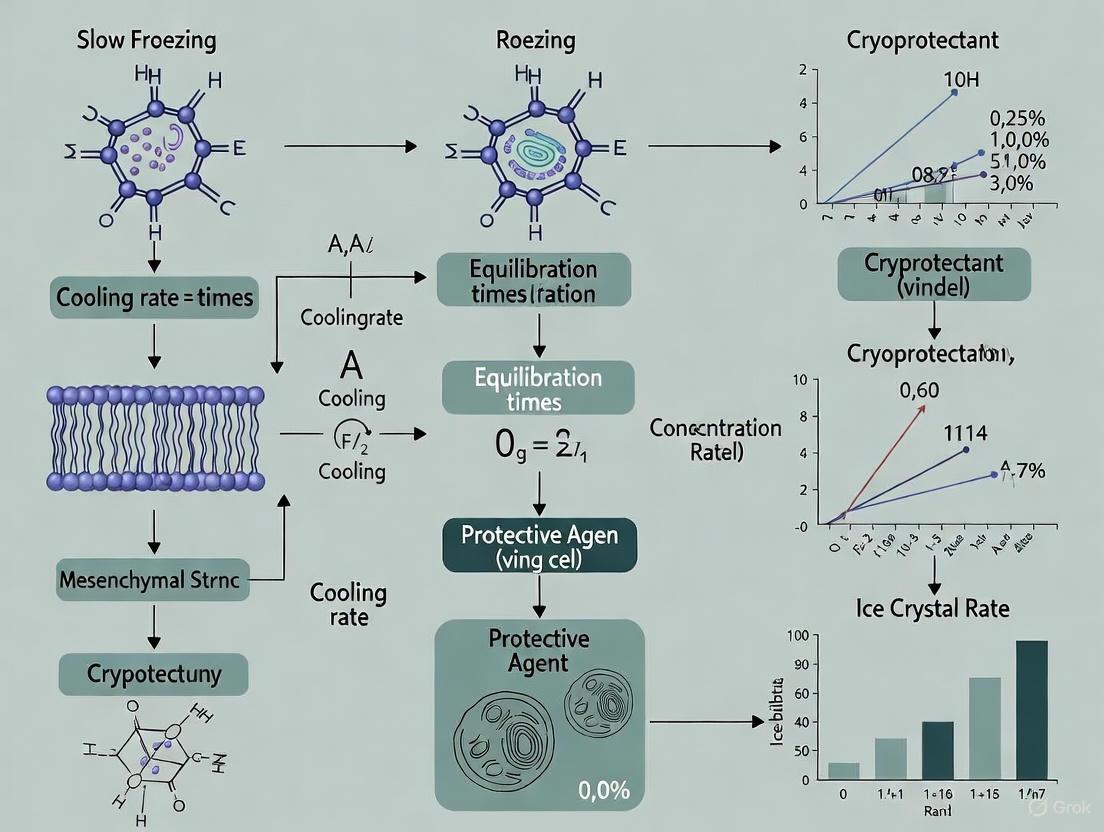
This comprehensive guide examines the principles and practices of slow-freezing cryopreservation for mesenchymal stem cells (MSCs), a dominant method in both research and clinical settings.
Mastering Slow Freezing: A Complete Guide to Mesenchymal Stem Cell Cryopreservation
Abstract
This comprehensive guide examines the principles and practices of slow-freezing cryopreservation for mesenchymal stem cells (MSCs), a dominant method in both research and clinical settings. Covering fundamental mechanisms through advanced optimization strategies, it provides researchers and drug development professionals with current methodologies for maintaining MSC viability, phenotype, and functionality post-thaw. The content explores emerging technologies to reduce cytotoxic cryoprotectant dependence, troubleshoots common preservation challenges, and validates slow freezing against alternative techniques. With the cell line cryopreservation market projected for significant growth, this resource supports the advancing field of cell-based therapies by detailing protocols essential for ensuring reproducible and clinically viable MSC banks.
Understanding the Science: Why Slow Freezing Works for Mesenchymal Stem Cells
Controlled-rate freezing, commonly known as slow freezing, is a fundamental cryopreservation method where biological samples are cooled at precisely controlled, slow rates to facilitate cell dehydration and minimize intracellular ice formation [1] [2]. This technique represents the cornerstone of cellular preservation for mesenchymal stem cell (MSC) research and therapeutic applications, enabling the creation of cell banks for "on demand" access to quality-controlled cellular material [3] [2]. As the most established and widely used method for MSC cryopreservation, slow freezing provides a practical balance between technical feasibility and post-thaw cell viability, typically yielding 70–80% cell survival rates when optimally performed [1].
The clinical and research applications of slow-frozen MSCs are extensive, spanning regenerative medicine, treatment of autoimmune diseases, cardiovascular disorders, and graft-versus-host disease [3] [1]. The successful implementation of slow freezing protocols ensures that cryopreserved MSC products retain their critical biological properties, including immunomodulatory capacity, multipotent differentiation potential, and paracrine secretory activity, which are essential for their therapeutic efficacy [3] [4].
Core Principles and Mechanisms of Action
Fundamental Biophysical Processes
The underlying principle of slow freezing centers on managing the physical transition of water to ice in a controlled manner that minimizes damage to cellular structures. During the slow cooling process, the extracellular solution freezes first, creating a hypertonic environment that draws water out of cells through osmosis [1] [2]. This controlled dehydration is crucial for preventing the formation of intracellular ice crystals, which are lethal to cells [2]. The gradual water efflux continues as temperatures decrease, effectively concentrating intracellular solutes and cryoprotective agents to levels that enable vitrification (glass formation) within the cell without destructive ice crystallization [5] [1].
The success of this process depends heavily on maintaining an appropriate balance between cooling rate and cellular dehydration. If cooling proceeds too rapidly, water cannot exit cells quickly enough, resulting in intracellular ice formation (IIF) [2]. Conversely, excessively slow cooling rates prolong exposure to hypertonic conditions, potentially causing solution effects damage from concentrated electrolytes or excessive cell volume reduction beyond critical minimum volumes [5] [2]. For most mammalian cells, including MSCs, optimal cooling rates typically range from -1°C/min to -3°C/min, allowing sufficient time for cellular dehydration while minimizing both forms of damage [1] [2].
Cryoprotective Agent Mechanisms
Cryoprotective agents (CPAs) are essential components of slow freezing protocols, providing protection through multiple mechanisms. Penetrating CPAs (e.g., DMSO, glycerol) enter cells and partially replace intracellular water, reducing the amount of water available for ice formation and depressing the freezing point of intracellular solutions [3] [5]. These agents also stabilize membrane structures and proteins during dehydration and freezing [3]. Non-penetrating CPAs (e.g., sucrose, trehalose) remain extracellular, creating an osmotic gradient that facilitates controlled dehydration while minimizing osmotic shock [3] [5]. They also contribute to extracellular vitrification and may stabilize cell membranes through specific interactions [5].
Table 1: Classification of Common Cryoprotective Agents Used in MSC Slow Freezing
| CPA Type | Examples | Molecular Weight | Mechanism of Action | Typical Concentration |
|---|---|---|---|---|
| Penetrating (Intracellular) | Dimethyl sulfoxide (DMSO) | 78 Da | Replaces intracellular water; hydrogen bonds with water molecules; depresses freezing point | 5-10% (v/v) |
| Glycerol | 92 Da | Similar to DMSO; lower toxicity but less effective for some cell types | 5-15% (v/v) | |
| Ethylene Glycol | 62 Da | Rapid penetration; often used in vitrification mixtures | 5-10% (v/v) | |
| Non-Penetrating (Extracellular) | Sucrose | 342 Da | Creates osmotic gradient; facilitates dehydration; stabilizes membranes | 0.1-0.5 M |
| Trehalose | 342 Da | Similar to sucrose; additional membrane stabilization properties | 0.1-0.5 M | |
| Hydroxyethyl Starch | 200-2000 kDa | Extracellular vitrification; modifies ice crystal structure | 2-6% (w/v) | |
| Ficoll | 70 kDa | Extracellular matrix formation; reduces osmotic stress | 2-5% (w/v) |
Critical Parameters in Protocol Optimization
Cooling Rate Control and Temperature Regimes
The cooling rate represents perhaps the most critical parameter in slow freezing protocols, directly influencing both intracellular ice formation and solute damage. For most MSC types, cooling rates of approximately -1°C/min have been established as optimal, though specific cell sources may require minor adjustments [5] [1]. This cooling profile is typically achieved using programmable, controlled-rate freezers that ensure precise temperature reduction according to predetermined protocols [1] [2].
The standard temperature regime for MSC slow freezing involves a multi-step process: initial holding at 4°C for equilibration, controlled cooling to -80°C at approximately -1°C/min, followed by transfer to long-term storage in liquid nitrogen at -196°C [1]. Some protocols incorporate an intermediate holding period at -40°C to -50°C to facilitate complete extracellular freezing before further cooling [2]. The transition from -80°C to liquid nitrogen storage should occur promptly to maintain temperature stability and prevent ice recrystallization [1].
Cryoprotectant Toxicity Management
While essential for protection, CPAs can exert concentration-dependent and time-dependent toxicity on cells [1] [2]. DMSO, the most commonly used penetrating CPA for MSCs, demonstrates increased toxicity at higher concentrations and with prolonged exposure at elevated temperatures [1]. Effective toxicity management involves several strategies: using the lowest effective CPA concentration, minimizing exposure time before freezing, and implementing stepwise addition and removal of CPAs to reduce osmotic stress [1] [2].
Recent advances include the development of CPA cocktails that combine permeating and non-permeating agents at reduced individual concentrations, thereby decreasing toxicity while maintaining cryoprotective efficacy [5] [6]. For example, combining DMSO with sucrose or trehalose allows reduction of DMSO concentration while maintaining or improving post-thaw recovery [5] [6]. Emerging cryoprotectants, including synthetic zwitterions, show promise for reducing toxicity concerns while providing effective protection [6].
Table 2: Optimized Slow Freezing Parameters for Different MSC Types
| MSC Source | Cooling Rate | Primary CPA | Supplemental CPA | Reported Viability | Key Functional Markers Preserved |
|---|---|---|---|---|---|
| Bone Marrow MSCs | -1°C/min | 10% DMSO | 0.1-0.2 M sucrose | 70-85% | CD105, CD73, CD90 expression; Osteogenic and adipogenic differentiation |
| Adipose-derived MSCs | -1°C to -3°C/min | 10% DMSO | 5% HES | 75-90% | Immunomodulatory function; Multilineage differentiation capacity |
| Umbilical Cord MSCs | -1°C/min | 5-10% DMSO | 0.1 M trehalose | 80-95% | Paracrine factor secretion; T-cell suppression activity |
| Dental Pulp MSCs | -1°C/min | 10% DMSO | 10% FBS | 70-80% | Stemness markers; Proliferation capacity |
Standardized Methodologies and Protocols
Comprehensive Slow Freezing Protocol for MSCs
The following detailed protocol has been optimized for mesenchymal stem cell cryopreservation based on established methodologies [1] [2]:
Pre-freeze Preparation:
- Cell Assessment: Confirm MSC confluence of 70-80% and characteristic morphology. Verify phenotype through surface marker expression (CD105+, CD73+, CD90+, CD45-, CD34-, CD14-, HLA-DR-) [1].
- CPA Solution Preparation: Prepare freezing medium containing 10% DMSO in fetal bovine serum (FBS) or preferred culture medium. Alternatively, use commercial cryopreservation media such as CryoStor CS10 [7]. Add non-permeating CPAs like 0.1-0.3 M sucrose or trehalose if indicated [1].
- Cell Harvesting: Detach cells using standard methodology (e.g., trypsin-EDTA), neutralize enzyme activity, and centrifuge at 300-400 × g for 5 minutes. Resuspend cell pellet in freezing medium at recommended concentration (typically 1-5 × 10^6 cells/mL) [1].
- Aliquoting: Dispense cell suspension into cryogenic vials (1-2 mL per vial) and maintain at 4°C for 15-30 minutes for temperature and osmotic equilibration [1].
Controlled-Rate Freezing Process:
- Program Initiation: Place vials in controlled-rate freezer already stabilized at 4°C [1].
- Primary Cooling Phase: Initiate cooling at -1°C/min to -40°C to -50°C. This gradual cooling facilitates controlled cellular dehydration [1] [2].
- Secondary Cooling Phase: Increase cooling rate to -5°C to -10°C/min from -40°C to -80°C to -90°C [1].
- Transfer to Storage: Immediately transfer vials to liquid nitrogen storage (-196°C) after reaching -80°C to -90°C [1].
Thawing and CPA Removal:
- Rapid Thawing: Thaw vials quickly in a 37°C water bath with gentle agitation until only a small ice crystal remains (approximately 2-3 minutes) [1].
- Gradual Dilution: Immediately after thawing, slowly dilute the cell suspension 1:10 with pre-warmed culture medium containing 10% FBS to reduce CPA concentration gradually and minimize osmotic shock [1].
- Centrifugation: Centrifuge at 300 × g for 5 minutes to remove cryoprotectants [1].
- Resuspension and Assessment: Resuspend cell pellet in fresh culture medium and assess viability, typically using trypan blue exclusion or flow cytometry with viability stains [1].
Experimental Workflow Visualization
Essential Research Reagents and Materials
Table 3: Essential Research Reagent Solutions for MSC Slow Freezing
| Reagent/Material | Specifications | Function/Purpose | Example Products/Formulations |
|---|---|---|---|
| Basal Cryopreservation Medium | Serum-containing or serum-free formulations | Provides osmotic stability, nutrients, and pH buffering during freezing | Fetal Bovine Serum (FBS) with DMSO; Commercial serum-free freezing media |
| Penetrating Cryoprotectant | DMSO (Cell Culture Grade), >99.9% purity | Penetrates cell membrane; depresses freezing point; reduces intracellular ice formation | Dimethyl sulfoxide (DMSO), Glycerol, Ethylene Glycol |
| Non-Penetrating Cryoprotectant | Sucrose or Trehalose, molecular biology grade | Creates osmotic gradient; facilitates cell dehydration; stabilizes membranes | Sucrose (0.1-0.5 M), Trehalose (0.1-0.5 M) |
| Controlled-Rate Freezer | Programmable cooling rate: -0.1°C to -10°C/min | Provides precise control of cooling rate for optimal dehydration | Planer Kryo 360, Custom Cool EF600 |
| Cryogenic Storage Vials | Internal thread, self-standing, 1.0-2.0 mL capacity | Secure containment during freezing and storage; leak-proof design | Nunc, Corning, Simport |
| Liquid Nitrogen Storage System | Vapor phase or liquid phase storage systems | Maintains long-term temperature stability at -150°C to -196°C | Taylor Wharton, Chart, Worthington |
| Cell Viability Assay | Trypan blue, flow cytometry with viability stains | Assesses post-thaw cell recovery and membrane integrity | Trypan blue exclusion, Propidium iodide, 7-AAD |
| Functional Assessment Kits | Differentiation kits, immunophenotyping panels | Confirms preservation of MSC multipotency and phenotype post-thaw | Osteogenic/Adipogenic/Chondrogenic kits, MSC phenotyping panels |
Current Challenges and Emerging Solutions
Technical Limitations and Functional Impacts
Despite its widespread use, slow freezing of MSCs presents several significant challenges. Post-thaw cell recovery remains variable, typically ranging from 70-80% even under optimized conditions [1]. More concerning are the potential functional alterations in MSCs following cryopreservation, including reduced immunomodulatory properties and secretory profiles [4]. Research indicates that cryopreserved MSCs may exhibit impaired immunosuppressive capabilities compared to their fresh counterparts, potentially due to alterations in indoleamine 2,3-dioxygenase function and other critical immunomodulatory pathways [4].
The freezing process can also induce cellular senescence, particularly in cells that were already approaching replicative limits prior to cryopreservation [4]. Studies demonstrate that MSC samples with high pre-freeze senescence markers show particularly poor post-thaw function, including growth arrest and reduced therapeutic efficacy [4]. Additionally, standard cryopreservation methods utilizing DMSO raise safety concerns for clinical applications, as transfusion of stem cells containing DMSO can trigger allergic responses in patients receiving cellular therapies [1].
Innovative Approaches and Future Directions
Several promising strategies are emerging to address these limitations. Novel CPA formulations that reduce or eliminate DMSO are under active development, including combinations of permeating and non-permeating agents that provide synergistic protection at lower individual concentrations [1] [6]. The incorporation of anti-apoptotic agents and oxidative stress mitigators into freezing media shows potential for improving post-thaw recovery and function [5].
Advanced biophysical approaches include the use of emerging cryoprotectants such as synthetic zwitterions, which demonstrate reduced toxicity while maintaining effective cryoprotection [6]. Research shows that aqueous solutions combining zwitterions with reduced concentrations of DMSO (e.g., 10% zwitterion with 15% DMSO) can produce superior cell recovery and function maintenance in complex cellular systems compared to conventional approaches [6].
The development of improved thawing methodologies and CPA removal techniques represents another area of innovation. Current methods involving centrifugation and dilution result in significant cell loss, prompting research into alternative approaches such as microfluidic CPA removal and stepwise dilution systems [1] [2]. As the field advances, standardized quality assessment protocols that evaluate not just viability but also functional potency will be essential for ensuring the clinical efficacy of cryopreserved MSC products [4].
The cryopreservation of mesenchymal stem cells (MSCs) represents a cornerstone of modern regenerative medicine, enabling the creation of cell banks for therapeutic applications. The process of slow freezing, a predominant method for MSC cryopreservation, aims to preserve cell viability and functionality over extended periods. However, the journey to ultra-low temperatures subjects cells to a formidable biological battle, primarily orchestrated by two key adversaries: the formation of intracellular ice crystals and the onset of profound osmotic stress. These physical and chemical stressors pose a direct threat to cellular integrity, particularly targeting the plasma membrane, which acts as the primary interface between the cell and its external environment [8]. Within the context of MSC research, the principles of slow freezing are designed to navigate these threats. The mechanism involves gradual cellular dehydration, the use of cryoprotective agents (CPAs), and strict control of cooling rates to minimize the formation of intracellular ice crystals [1]. A deep understanding of the interplay between ice formation and osmotic imbalances is therefore not merely academic; it is fundamental to advancing the development of robust cryopreservation protocols that ensure the high fidelity and therapeutic potential of MSCs post-thaw. This whitepaper delves into the core mechanisms of freezing injury and outlines the precise methodologies employed to mitigate them, providing researchers with a detailed technical guide grounded in current scientific understanding.
The Dual Mechanisms of Freezing Injury
During cryopreservation, cells encounter a hazardous transition from a physiological to a frozen state. The two primary, interconnected mechanisms of cellular injury during this process are mechanical damage from ice crystals and physiochemical damage from osmotic stress.
Ice Crystal Formation and Its Consequences
The formation of ice crystals is a central challenge in cryobiology. During slow freezing, ice initially forms in the extracellular space. This event is double-edged; while it sequesters pure water into a solid phase, it increases the concentration of solutes in the remaining unfrozen extracellular liquid. The rate of cooling is a critical determinant of the ultimate location and morphology of ice. Slow cooling rates permit sufficient time for water to exit the cell, following an osmotic gradient, thereby minimizing intracellular ice formation (IIF). In this scenario, the cell dehydrates and shrinks. In contrast, rapid cooling rates do not allow adequate time for this water efflux. Consequently, the supercooled intracellular water nucleates and forms ice crystals inside the cell [1] [9].
Intracellular ice crystals are mechanically devastating. Their sharp edges can physically disrupt intracellular organelles, the cytoskeleton, and, most critically, the plasma membrane, leading to immediate and irreversible cell lysis [1]. Even when not immediately lethal, the recrystallization of small ice crystals into larger, more damaging structures during the thawing process can cause significant harm. For MSCs, which rely on structural integrity for adhesion, migration, and signaling, such damage is particularly detrimental.
Osmotic Stress as a Mechanism of Injury
The "solution effect" — the concentration of solutes in the unfrozen fraction as water turns to ice — is the driving force behind osmotic stress. As the extracellular ice forms, dissolved salts, ions, and other solutes become concentrated, creating a hypertonic environment. This establishes a steep osmotic gradient across the plasma membrane, prompting water to flow rapidly out of the cell. This efflux of water causes severe cell volume reduction, or osmotic shrinkage [10].
This forced dehydration inflicts multiple levels of damage:
- Membrane Stress: The dramatic reduction in cell volume places immense mechanical strain on the plasma membrane and its underlying structures. The membrane is compressed and may undergo phase transitions, losing its fluidity and semi-permeable properties. This stress can exceed the elastic limit of the membrane, leading to rupture [8] [10].
- Solution Effects: The intracellular environment becomes increasingly concentrated as water leaves. This can lead to the denaturation of proteins, disruption of metabolic pathways, and precipitation of normally soluble cellular components, a phenomenon often termed "solution effects" injury [9].
- Minimum Volume Hypothesis: Research on red blood cells has supported the "minimum volume hypothesis," which posits that during osmotic volume reduction, resistance to the compression of cell contents generates an osmotic stress on the membrane itself. Injury appears to be correlated with the cell reaching a critical minimum volume, rather than an absolute solute concentration [10].
Table 1: Summary of Primary Freezing Injury Mechanisms
| Mechanism | Primary Cause | Consequence for Cell | Effect on MSCs |
|---|---|---|---|
| Intracellular Ice Crystals | Rapid cooling; supercooling of intracellular water | Mechanical shearing of organelles and membranes; cell lysis | Loss of viability and adherence potential; necrotic death |
| Osmotic Stress / Dehydration | Slow cooling; extracellular ice formation causing hypertonic stress | Membrane damage from excessive shrinkage; protein denaturation | Apoptosis; loss of membrane integrity and function |
The following diagram illustrates the sequence of events during slow freezing that lead to these two primary injury pathways, culminating in either survival or cell death.
Principles of Slow Freezing for Mesenchymal Stem Cells
The slow freezing method is strategically designed to steer MSCs through the freezing process by favoring controlled dehydration over intracellular ice formation. The core principles involve a carefully orchestrated interplay between cooling rate and cryoprotective agents to manage water transport and mitigate osmotic shock.
The Role of Cryoprotective Agents (CPAs)
CPAs are indispensable components of any freezing medium, acting as molecular shields against freezing injury. They are broadly classified into two categories based on their ability to cross the plasma membrane [3] [1].
Penetrating (Endocellular) CPAs: These are low-molecular-weight compounds such as dimethyl sulfoxide (DMSO), glycerol, ethylene glycol, and propylene glycol. They freely permeate the cell membrane. Their primary mechanism of action is to colligatively reduce the freezing point of both intracellular and extracellular solutions. Inside the cell, they bind water molecules, effectively reducing the amount of water available to form ice and thus minimizing IIF. They also help to dampen the increase in intracellular electrolyte concentration during dehydration, thereby mitigating "solution effects" injury [3] [9]. However, a significant drawback is their inherent cytotoxicity, which must be managed through careful control of concentration and exposure time [1].
Non-Penetrating (Exocellular) CPAs: These are high-molecular-weight compounds such as sucrose, trehalose, ficoll, and hydroxyethyl starch that cannot cross the cell membrane. They operate primarily in the extracellular space. By increasing the extracellular osmolality, they promote a more gentle, preliminary dehydration of the cell before the onset of freezing, effectively reducing the initial cell volume and the amount of freezable water. During freezing, they further slow ice crystal growth and stabilize the cell membrane against osmotic shock [3] [1]. They are often used in combination with penetrating CPAs to create synergistic protective effects and allow for a reduction in the concentration of the more toxic penetrating agents.
Table 2: Key Cryoprotective Agents and Their Functions in MSC Cryopreservation
| Cryoprotectant | Type | Typical Conc. | Primary Function | Notes for MSC Research |
|---|---|---|---|---|
| Dimethyl Sulfoxide (DMSO) | Penetrating | 5-10% | Prevents intracellular ice formation; reduces solute concentration. | Gold standard but cytotoxic. Linked to adverse reactions in patients [1]. |
| Glycerol | Penetrating | ~10% | Similar to DMSO. | Lower toxicity but generally less effective for MSCs than DMSO [3]. |
| Sucrose | Non-Penetrating | 0.1-0.5 M | Induces gentle extracellular dehydration; stabilizes membranes. | Common supplement to reduce DMSO concentration and osmotic stress. |
| Trehalose | Non-Penetrating | 0.1-0.5 M | Stabilizes membranes and proteins in dehydrated state. | Often used in combination therapies; can be used intra- and extracellularly. |
Optimizing the Cooling Rate
The cooling rate is the most critical physical parameter in a slow-freezing protocol. The objective is to find a "sweet spot" — a rate that is slow enough to allow sufficient water to leave the cell, avoiding IIF, but fast enough to minimize prolonged exposure to hypertonic solutions and severe osmotic stress [1] [9].
For most MSC types, including those derived from bone marrow and adipose tissue, controlled-rate freezing at approximately -1°C per minute down to a temperature of -40°C to -80°C, before transfer to liquid nitrogen, is a standard and effective approach. This rate provides an optimal balance, allowing adequate cellular dehydration without excessive exposure to concentrated solutes. Modern controlled-rate freezers are instrumental in implementing this precisely, reproducibly lowering the temperature according to a pre-defined protocol. After the controlled-rate segment, samples are typically transferred to long-term storage in liquid nitrogen at -196°C, where all metabolic processes are effectively halted [1].
Experimental Protocols for Assessing Freezing Injury
To develop and optimize cryopreservation protocols, reliable methods for quantifying cell survival and function post-thaw are essential. The following are key experimental methodologies cited in current research.
Protocol: Viability and Survival Rate Analysis
This is the most direct assessment of cryopreservation success.
- Thawing: Rapidly thaw cryovials containing MSC suspensions in a 37°C water bath with gentle agitation until the last ice crystal disappears [1].
- CPA Removal: Dilute the thawed cell suspension drop-wise with a culture medium (e.g., Dulbecco's Modified Eagle Medium - DMEM, supplemented with 10% Fetal Bovine Serum - FBS) to reduce the extracellular CPA concentration gradually and prevent osmotic shock. Centrifuge the suspension (e.g., 300 x g for 5 minutes) to pellet the cells. Carefully aspirate the supernatant containing the CPA [1].
- Viability Staining: Resuspend the cell pellet in an appropriate buffer. Mix a small aliquot of the cell suspension with a vital dye, such as Trypan Blue. Non-viable cells with compromised membranes will take up the dye and appear blue, while viable cells will exclude it.
- Quantification: Count stained (non-viable) and unstained (viable) cells using a hemocytometer or an automated cell counter. Calculate the percentage viability: (Number of viable cells / Total number of cells) × 100%. A viability of >70-80% is typically targeted for slow-frozen MSCs [1].
Protocol: Membrane Integrity Assessment via Electrolyte Leakage
This protocol quantitatively measures the loss of plasma membrane integrity, a direct consequence of ice crystal and osmotic damage [8].
- Sample Preparation: Divide MSC samples into two groups: a non-frozen control and the experimental slow-freezing group. After thawing and washing, resuspend both groups in an equal volume of deionized water or a low-ionic-strength solution.
- Leakage Measurement: Use a conductivity meter to measure the electrical conductivity of the suspension supernatant immediately after resuspension (Cinitial) and again after a period of incubation (e.g., 2-4 hours) or after complete cell lysis (e.g., by freeze-thawing or detergent) (Cfinal).
- Data Analysis: Calculate the percentage of electrolyte leakage using the formula: (Cinitial / Cfinal) × 100%. A higher percentage of leakage in the frozen-thawed sample compared to the control indicates greater membrane damage [8].
Protocol: Functional Assay - Post-Thaw Adherence and Proliferation
Since viability alone does not guarantee function, this assay assesses the critical MSC characteristic of plastic-adherence.
- Plating: After thawing and washing, seed a known number of MSCs (e.g., 5,000 cells/cm²) into standard tissue culture flasks or plates containing a complete growth medium.
- Incubation: Culture the cells under standard conditions (37°C, 5% CO₂) for 24-72 hours.
- Assessment:
- Adherence Efficiency: After 24 hours, gently wash the plates with phosphate-buffered saline (PBS) to remove non-adherent (dead or damaged) cells. Trypsinize the adherent cells and count them. Adherence efficiency is calculated as: (Number of adherent cells / Number of cells seeded) × 100% [1].
- Proliferation: Continue the culture for several days, performing cell counts at regular intervals (e.g., 24, 48, 72 hours) to generate a growth curve. Compare the population doubling time of frozen-thawed MSCs with that of non-frozen controls.
The Scientist's Toolkit: Essential Research Reagents and Materials
The following table details key materials required for conducting MSC slow-freezing experiments and related injury assessments.
Table 3: Research Reagent Solutions for MSC Cryopreservation Studies
| Item | Function/Application | Example(s) | Technical Notes |
|---|---|---|---|
| Mesenchymal Stem Cells | Primary cell model for research. | Human Bone Marrow MSCs, Adipose-derived MSCs, Umbilical Cord MSCs. | Verify MSC identity via plastic adherence, surface marker expression (CD73+, CD90+, CD105+), and tri-lineage differentiation [1]. |
| Basal Culture Medium | Base nutrient solution for cell growth and cryomedium preparation. | Dulbecco's Modified Eagle Medium (DMEM), Alpha-MEM. | Typically supplemented with serum or growth factors for routine culture. |
| Penetrating CPA | Prevents intracellular ice formation. | Dimethyl Sulfoxide (DMSO), Glycerol. | Use high-grade, sterile DMSO. Final concentration often 10% (v/v) in cryomedium. |
| Non-Penetrating CPA | Mitigates osmotic stress; stabilizes membranes. | Sucrose, Trehalose, Hydroxyethyl starch. | Used at 0.1-0.5 M; often combined with DMSO to reduce its toxicity. |
| Serum/Protein Additive | Provides undefined growth factors and membrane-stabilizing properties. | Fetal Bovine Serum (FBS), Human Serum Albumin (HSA). | FBS at 10-20% is common in cryomedia. Trends move towards defined, xeno-free formulations. |
| Controlled-Rate Freezer | Equipment for precise implementation of slow freezing protocol. | Planar freezer, Stirling cycle freezer. | Critical for reproducible cooling at ~ -1°C/min. Passive freezing containers can be a lower-cost alternative. |
| Liquid Nitrogen Storage | Long-term preservation at -196°C. | Liquid nitrogen tank (vapor or liquid phase). | Maintains metabolic stasis; requires continuous monitoring and replenishment. |
| Viability Stain | Differentiates live and dead cells post-thaw. | Trypan Blue, Propidium Iodide, Calcein-AM. | Trypan Blue is common for simple, quick assessment via light microscopy. |
| Conductivity Meter | Measures electrolyte leakage for membrane integrity assessment. | Benchtop conductivity meter with appropriate electrode. | Directly quantifies ion release from damaged cells [8]. |
The successful cryopreservation of mesenchymal stem cells via slow freezing is a delicate balancing act, perpetually navigating the twin threats of intracellular ice crystallization and osmotic stress. The principles outlined—controlled slow cooling, the strategic use of penetrating and non-penetrating cryoprotective agents, and careful management of osmotic conditions—provide a framework to guide cells through this hazardous transition. While the fundamental mechanisms of freezing injury have been established for decades, ongoing research continues to refine our understanding, seeking to reduce the cytotoxicity of CPAs like DMSO, improve post-thaw recovery, and develop standardized, high-efficacy protocols. As the demand for off-the-shelf MSC therapies grows, mastering the biological battle against ice and osmotic stress remains a critical frontier, ensuring that these powerful cellular tools retain their viability, functionality, and therapeutic potential from the biobank to the clinic.
Dimethyl sulfoxide (DMSO) serves as the cornerstone cryoprotectant in the slow freezing of mesenchymal stem cells (MSCs), a critical process for cell therapy and biobanking. Its efficacy stems from a unique dual capacity to permeate cell membranes and protect cellular integrity by mitigating ice crystal formation and managing osmotic stress. This whitepaper delineates the mechanistic role of DMSO within the framework of slow freezing principles, synthesizing current research on its cryoprotective actions, documented cytotoxic effects, and the emerging landscape of DMSO-free alternatives. Designed for researchers and drug development professionals, this guide provides a detailed technical overview to inform protocol optimization and the development of safer cryopreservation strategies.
The long-term storage of mesenchymal stem cells (MSCs) through cryopreservation is a fundamental requirement for their use in regenerative medicine and therapeutic applications [1]. The slow freezing method, which involves a controlled cooling rate of approximately -1°C per minute, has become the predominant technique for cryopreserving MSCs for clinical and research use [11] [12] [13]. This process halts metabolic activity but introduces significant risks, most notably the formation of intracellular ice crystals and osmotic stress, which can compromise cell viability, functionality, and therapeutic potential [11] [14].
Since its introduction over 60 years ago, DMSO has remained the gold standard cryoprotectant for this process [11]. Its dominance is attributed to several key properties: high water solubility, rapid membrane permeability, and proven effectiveness at relatively low concentrations, typically 5-10% (v/v) [11] [12] [15]. Despite its widespread use, DMSO is not an inert component; it is a biologically active molecule with a dual nature. While it provides essential protection during freezing and thawing, it also exhibits concentration- and time-dependent toxicity that can impair cellular function and cause adverse effects in patients [16] [11] [14]. Understanding this dual role—permeating and protecting—is essential for optimizing MSC cryopreservation protocols within the principles of slow freezing.
The Protective Mechanisms of DMSO in Slow Freezing
Membrane Permeability and Intracellular Action
The primary mechanism behind DMSO's cryoprotective efficacy is its exceptional ability to rapidly penetrate biological membranes [11] [14]. Due to its low molecular weight and hydrophilicity, DMSO freely crosses the plasma membrane and equilibrates between the intra- and extracellular compartments [14]. This permeation is crucial for its protective role during the slow freezing process.
Once inside the cell, DMSO exerts its protective effect through several interrelated mechanisms. It disrupts the hydrogen bonding network of water molecules, effectively lowering the freezing point of the intracellular solution and reducing the amount of freezable water [14]. By binding to water molecules, DMSO suppresses ice crystal nucleation and growth, thereby preventing the formation of sharp, damaging intracellular ice crystals that can rupture organelles and the plasma membrane [16] [15]. This action is vital during the slow cooling phase, where water is gradually drawn out of the cell, increasing the intracellular solute concentration.
Managing Osmotic Stress and Dehydration
During the controlled, slow cooling process, the formation of extracellular ice crystals increases the solute concentration in the remaining unfrozen extracellular solution. This creates an osmotic gradient that drives water out of the cell, leading to cellular dehydration and potential shrinkage-induced damage [14] [1]. DMSO modulates this process.
As a permeating cryoprotectant, DMSO increases the total solute concentration both inside and outside the cell. This action reduces the osmotic differential across the cell membrane during freezing, minimizing the extent of water efflux and protecting the cell from extreme volumetric changes and dehydration stress [1]. The presence of intracellular DMSO helps maintain a more isotonic intracellular environment, preserving structural integrity.
Table 1: Key Cryoprotective Mechanisms of DMSO in Slow Freezing
| Mechanism | Functional Principle | Outcome in Slow Freezing |
|---|---|---|
| Intracellular Penetration | Rapidly crosses cell membrane due to low molecular weight and hydrophilicity [11] [14] | Enables protection from the inside out, preventing intracellular ice formation [15] |
| Ice Crystal Inhibition | Forms hydrogen bonds with water molecules, disrupting ice nucleation [14] | Lowers freezing point, reduces amount and size of intracellular ice crystals [16] |
| Osmotic Balance | Increases total solute concentration intra- and extracellularly [1] | Reduces osmotic gradient, minimizing cell shrinkage and dehydration damage [14] |
| Membrane Stabilization | Interacts with membrane phospholipids and replaces water molecules [16] | Helps maintain membrane fluidity and integrity during phase transitions |
The following diagram illustrates the coordinated interplay of DMSO's protective mechanisms during the slow freezing process.
The Cytotoxic Profile of DMSO: Risks and Limitations
Despite its protective role, DMSO's potency is counterbalanced by a well-documented profile of cytotoxicity and patient side effects, which necessitates careful risk management in clinical applications [16] [11] [14].
Cellular-Level Toxicity and Functional Impairment
DMSO exposure, even at standard cryopreservation concentrations (5-10%), can induce significant cellular damage. The mechanisms of this toxicity are multifaceted. DMSO can compromise mitochondrial respiration, induce oxidative stress, and damage cell membranes by interacting with proteins and dehydrating lipids [16] [11]. Studies have shown that DMSO causes mitochondrial damage in astrocytes and increases membrane permeability in erythrocytes [16]. Furthermore, DMSO can alter the epigenetic landscape and gene expression profiles of cells. It interferes with DNA methyltransferases and histone modification enzymes in human pluripotent stem cells, leading to epigenetic variations and a reduction in pluripotency [16] [14]. Perhaps most critically for MSC therapeutics, the presence of DMSO in culture medium can induce unwanted and unpredictable differentiation, potentially compromising the intended function of the cell product [16] [14].
Clinical Adverse Effects
The administration of DMSO-cryopreserved cell products to patients is associated with a range of adverse reactions. These are often attributed to DMSO-induced histamine release and can include [11] [14]:
- Gastrointestinal effects: Nausea, vomiting, abdominal cramps.
- Cardiovascular effects: Hypotension, hypertension, bradycardia.
- Neurological effects: Headaches, seizures, or encephalopathy in rare cases.
- Other reactions: Hemolysis, hemoglobinuria, and a characteristic garlic-like odor caused by the exhalation of dimethyl sulfide, a DMSO metabolite [14] [17].
A 2025 review by Niebergall-Roth et al. analyzed data from 1,173 patients receiving intravenous DMSO-containing MSC products and concluded that with adequate premedication and when DMSO doses are significantly lower (2.5–30 times) than the 1 g/kg threshold accepted for hematopoietic stem cell transplantation, only isolated infusion-related reactions are reported [18] [19] [17]. This suggests that the risks can be managed in a clinical setting.
Table 2: Documented Toxic Effects of DMSO on MSCs and Related Clinical outcomes
| Toxicity Type | Observed Effects on Cells | Potential Clinical Consequences |
|---|---|---|
| Cellular Toxicity | Mitochondrial damage, oxidative stress, altered membrane integrity [16] [11] | Reduced post-thaw viability and cell recovery [16] |
| Functional Impairment | Unwanted differentiation, loss of pluripotency, disrupted mRNA expression [16] [14] | Compromised therapeutic efficacy and product consistency [16] |
| Epigenetic Impact | Changes in DNA methylation, histone modification, gene dysregulation [16] [14] | Long-term functional instability and unpredictable cell behavior [16] |
| Infusion Reactions | N/A (Effect is on patient) | Nausea, vomiting, cardiovascular events, neurological symptoms [11] [14] |
Experimental Protocols for DMSO-Based MSC Cryopreservation
A standardized protocol for slow freezing of MSCs is critical for achieving reproducible and high-quality results. The following section details a generalized, yet comprehensive, methodology.
Standardized Slow-Freezing Protocol
Principle: To preserve MSCs by controlled-rate cooling in the presence of DMSO, minimizing intracellular ice formation and osmotic shock [12] [1].
Materials:
- Log-phase MSCs at high viability (>90%) and low passage number [12].
- Complete growth medium.
- Cryoprotective agent: DMSO (USP/Ph. Eur. grade for clinical applications) [11] [12].
- Carrier solution: Phosphate-buffered saline (DPBS) or serum-free medium [12].
- Freezing Medium: 10% (v/v) DMSO in complete growth medium or a defined serum-free alternative [12]. Note: Serum-free, protein-free commercial media (e.g., Gibco Synth-a-Freeze) are available [12].
- Sterile cryogenic vials (cryovials).
- Controlled-rate freezer or isopropanol freezing chamber (e.g., "Mr. Frosty") [12] [13].
- Liquid nitrogen storage tank.
Procedure:
- Cell Harvesting: Culture MSCs to 70-90% confluency. Gently detach adherent cells using a dissociation reagent like trypsin or TrypLE Express. Quench the enzyme with complete growth medium [12].
- Cell Counting and Centrifugation: Determine total cell count and viability via Trypan Blue exclusion using a hemocytometer or automated cell counter. Centrifuge the cell suspension at 100–400 × g for 5–10 minutes. Aspirate and discard the supernatant thoroughly [12].
- Resuspension in Freezing Medium: Resuspend the cell pellet in pre-chilled freezing medium to a final concentration of 1–5 x 10^6 cells/mL [12]. Gently mix to ensure a homogeneous suspension.
- Aliquoting: Dispense 1.0–1.5 mL of the cell suspension into each cryovial. Tighten the caps securely.
- Controlled-Rate Freezing: Place the cryovials into a controlled-rate freezer or an isopropanol chamber pre-cooled to 4°C. Initiate the freezing program with a standard rate of -1°C per minute until the temperature reaches at least -80°C to -100°C [12] [15] [13].
- Long-Term Storage: Immediately transfer the frozen cryovials to the vapor phase of a liquid nitrogen storage tank (below -135°C) for long-term preservation [12] [1].
Post-Thaw Processing and DMSO Removal
Thawing: Rapidly thaw cryovials by gentle agitation in a 37°C water bath until only a small ice crystal remains [1]. Safety Note: For clinical applications, a dry thawing system is preferred over a water bath to mitigate contamination risks [1].
DMSO Removal and Washing:
- Gently transfer the thawed cell suspension to a centrifuge tube containing pre-warmed complete growth medium (typically a 10-fold dilution).
- Centrifuge the cell suspension at 100–400 × g for 5–10 minutes to pellet the cells.
- Carefully aspirate the supernatant, which contains the diluted DMSO.
- Resuspend the cell pellet in fresh growth medium or the final formulation buffer for administration.
- Critical Consideration: The washing step, while necessary to remove toxic DMSO, is labor-intensive and can lead to significant cell loss (up to 30%) and activation-induced apoptosis, impacting final product yield and consistency [16] [19] [17].
Advancing the Field: DMSO-Free and DMSO-Reduced Strategies
The documented limitations of DMSO have spurred intensive research into safer, next-generation cryopreservation strategies. These approaches can be broadly categorized into DMSO-free alternatives and adjunct technologies that enable a reduction in DMSO concentration.
Alternative Cryoprotectants
Numerous non-toxic compounds have been investigated as potential replacements for DMSO, often used in combination to mimic its colligative and membrane-stabilizing properties [16] [14].
Table 3: Promising Alternative Cryoprotectants for MSCs
| Cryoprotectant | Type/Mechanism | Reported Efficacy for MSCs |
|---|---|---|
| Trehalose | Non-permeating disaccharide; stabilizes membranes, inhibits ice recrystallization [14] | Used with glycerol or EG; high preservation efficiency for ADSCs and hiPSCs [16] |
| Ethylene Glycol (EG) | Permeating CPA; lower toxicity than DMSO [1] | Effective for Wharton's Jelly tissue and neural stem/progenitor cells [16] |
| Sucrose | Non-permeating sugar; provides osmotic buffering [16] [14] | Used in combination with glycerol or polymers; improves cryopreservation of MSCs [16] |
| Polymer-based CPAs | (e.g., Polyvinyl alcohol, Poly-L-lysine); inhibit ice recrystallization [16] | Post-thaw viability comparable to DMSO for bone marrow MSCs [16] |
| Hydroxyethyl Starch (HES) | Non-permeating polymer; increases extracellular viscosity [14] | Extracellular CPA used in combination with permeating CPAs [14] |
Enabling Technologies for DMSO Reduction
Innovative methods are being developed to facilitate the intracellular delivery of non-permeating cryoprotectants like trehalose, or to improve the physical process of freezing and thawing.
- Intracellular Delivery: Techniques such as electroporation, nanoparticle-mediated delivery, and endocytic uptake via pre-incubation have been successfully used to load trehalose into MSCs, achieving post-thaw viabilities of 80-90% [16] [19].
- Advanced Thawing: "Nano-warming" using magnetic nanoparticles (e.g., Fe3O4) activated by an alternating magnetic field enables ultra-rapid and uniform warming. This suppresses devitrification (the formation of damaging ice crystals during thawing) and has shown a threefold increase in MSC viability compared to conventional methods, even with DMSO-free or DMSO-reduced solutions [16].
The Scientist's Toolkit: Essential Reagents and Materials
The following table catalogues key materials required for implementing DMSO-based slow-freezing protocols for MSCs.
Table 4: Essential Research Reagents and Materials for MSC Cryopreservation
| Item | Function/Purpose | Example Products / Notes |
|---|---|---|
| DMSO (Cell Culture Grade) | Penetrating cryoprotectant | Must be high purity (e.g., USP grade for clinical work); hygroscopic [11] [12] |
| Controlled-Rate Freezer | Ensures consistent cooling at -1°C/min | Planer KRYO 10, CryoMed 1010, or portable CytoSAVER [14] [13] |
| Liquid Nitrogen Storage | Long-term storage at <-135°C | Storage in vapor phase reduces contamination and explosion risks [12] |
| Serum-Free Freezing Medium | Defined, xeno-free carrier medium | Gibco Synth-a-Freeze, Recovery Cell Culture Freezing Medium [12] |
| Programmable Water Bath | For rapid, controlled thawing at 37°C | Dry-heat systems avoid contamination from water baths [1] |
DMSO remains an indispensable, albeit imperfect, tool in the cryopreservation of MSCs. Its dual role as a permeating protector and a potential cytotoxic agent defines a critical balance in slow freezing protocol design. While current evidence suggests that the risks associated with DMSO in MSC therapies can be managed clinically, the scientific impetus to develop safer, defined alternatives is strong. The future of MSC cryopreservation lies in the continued refinement of DMSO-reduced protocols and the validation of innovative, DMSO-free solutions that combine novel cryoprotectants with advanced biophysical technologies. This evolution will be paramount for enhancing the safety, efficacy, and scalability of mesenchymal stem cell therapies.
In the field of mesenchymal stem cell (MSC) research, cryopreservation is not merely a storage technique but a critical determinant of therapeutic efficacy. The principle of slow freezing, particularly at the optimal cooling rate of approximately -1°C/minute, represents a cornerstone of successful MSC preservation [20] [21]. This specific rate is scientifically validated to balance two competing damaging phenomena: intracellular ice formation at faster rates and excessive cellular dehydration at slower rates [22]. For MSC-based therapies and regenerative medicine applications, achieving this precise cooling control is fundamental to maintaining cell viability, functionality, and differentiation potential post-thaw [1]. This technical guide examines the underlying mechanisms, implementation methodologies, and experimental validation for achieving the critical -1°C/minute cooling rate, providing researchers with a comprehensive framework for optimizing MSC cryopreservation protocols within the broader context of slow freezing principles.
The Scientific Basis for -1°C/Minute in MSC Cryopreservation
Fundamental Cryobiological Mechanisms
The physiological basis for the -1°C/minute cooling rate stems from the two-factor hypothesis of freezing injury in cells [22]. When cells are cooled:
- Too rapidly (> -1°C/min to -3.5°C/min): Intracellular water has insufficient time to permeate outward across the membrane, leading to lethal intracellular ice formation (IIF) that mechanically disrupts cellular structures [22].
- Too slowly (< -1°C/min): Excessive cellular dehydration occurs, causing toxic solute concentration, membrane damage, and cytoskeletal disruption—a phenomenon known as solution effect injury [22].
The rate of -1°C/minute optimally balances these factors for MSCs. It allows sufficient time for water to exit the cell, minimizing intracellular ice, while preventing excessive dehydration and osmotic stress [20] [22]. This controlled dehydration is the "MSC dehydration" referenced in the title, a crucial protective mechanism during slow freezing.
The Critical Role of Controlled Ice Nucleation
A pivotal yet often overlooked aspect of achieving consistent cooling rates is controlling the ice nucleation temperature. During supercooling, the cryosolution remains liquid below its freezing point until a stochastic nucleation event triggers a rapid phase change, releasing latent heat and causing a temperature spike [21]. This event can significantly disrupt the intended cooling profile.
Research demonstrates that using an Ice Nucleation Device (IND) increases the mean nucleation temperature from a range of approximately -9.7°C to -16.5°C to a more controlled -5.9°C to -9.4°C [21]. This intervention reduces the maximum cooling rate following nucleation from -2.64 ± 0.67°C/min to -2.16 ± 0.05°C/min, creating a more stable and reproducible freezing process that better adheres to the intended -1°C/minute profile [21]. Controlling nucleation is therefore essential for achieving the true benefits of the critical cooling rate.
Diagram 1: The Impact of Ice Nucleation on Cooling Profile Stability. The pathway demonstrates how using an Ice Nucleation Device (IND) leads to a more controlled process and superior outcomes compared to stochastic nucleation.
Implementing the -1°C/Minute Cooling Rate: Methods & Protocols
Equipment-Based Implementation
For clinical-grade applications or research requiring stringent documentation, controlled-rate freezers represent the gold standard. These instruments use liquid nitrogen and sophisticated control systems to precisely maintain the -1°C/minute rate [20]. They provide a documented record of the temperature profile, which is crucial for regulatory compliance and process validation [20]. However, their high cost and operational complexity can be prohibitive.
Low-Cost Alternative: The Box-in-Box Method
For laboratories without access to controlled-rate freezers, the "box-in-box" or "lumped capacitance" system provides a reliable, low-cost alternative for achieving the target cooling rate [20].
- Principle: The system uses thermal inertia and precise insulation to create a predictable, passive cooling environment when transferred from room temperature to a -80°C freezer.
- Design: Based on a one-dimensional conduction model, the device consists of an insulating container (e.g., Styrofoam) within another container, with the geometry and insulation thickness calculated to achieve the desired -1°C/minute rate [20].
- Performance: Experimental validation shows that a properly designed box-in-box system can achieve a consistent cooling rate of -1°C/min to -3.5°C/min, effectively matching the performance of commercial controlled-rate freezers for HSC cryopreservation with no significant difference in cell recovery or function [20].
Table 1: Comparison of Methods to Achieve -1°C/Minute Cooling
| Method | Cooling Rate Achieved | Relative Cost | Key Advantages | Key Limitations |
|---|---|---|---|---|
| Controlled-Rate Freezer | Precisely -1°C/min [20] | High | Programmable; Detailed documentation; Highest reproducibility [20] | High purchase and maintenance cost; Complex operation; LN2 consumption [20] |
| Box-in-Box System | -1°C/min to -3.5°C/min [20] | Very Low | Low-cost and durable; No power or LN2 required; Maintenance-free [20] | Fixed cooling rate; Requires validation; Limited documentation [20] |
| Dump Freezing (e.g., Mr. Frosty) | Variable, Uncontrolled [20] | Low | Extreme simplicity | Poor consistency; No documentation; Not recommended for clinical use [20] |
Detailed Protocol: Box-in-Box Cryopreservation of MSCs
This protocol allows for the reliable cryopreservation of MSCs using the passive box-in-box method.
Step 1: Pre-Freezing Preparation
- Harvest MSCs (e.g., from bone marrow, adipose tissue, or umbilical cord) via standard trypsinization and centrifugation [1] [23].
- Resuspend the cell pellet in a pre-chilled cryopreservation medium. A common formulation is Culture Medium + 10% (v/v) DMSO [1] [5]. For reduced toxicity, consider a cocktail of 5% DMSO + non-permeating agents like sucrose or trehalose [1] [5].
- Aliquot the cell suspension into cryovials (e.g., 1 mL volume).
Step 2: System Setup and Freezing Initiation
- Place the cryovials into the pre-conditioned (room temperature) box-in-box device.
- Immediately transfer the entire sealed device to a -80°C mechanical freezer.
- The cooling profile will follow a predictable curve: an initial rapid cooldown, followed by a phase change plateau (with latent heat release), and finally a prolonged period of cooling at approximately -1°C/min [20].
Step 3: Long-Term Storage
- After a minimum of 2 hours (or once the sample temperature is below -50°C), rapidly retrieve the vials from the box-in-box device.
- Immediately transfer the vials to long-term storage in liquid nitrogen (-196°C) [1].
Step 4: Thawing and CPA Removal
- Rapidly thaw cells by immersing vials in a 37°C water bath with gentle agitation until the last ice crystal disappears [1].
- To mitigate osmotic shock during CPA removal, gradually dilute the thawed cell suspension with fresh culture medium [1].
- Centrifuge the cells to remove the CPA-containing supernatant, resuspend in fresh medium, and proceed to viability assessment and culture [1].
Diagram 2: Experimental Workflow for MSC Cryopreservation. The process from cell preparation through freezing to post-thaw recovery.
The Scientist's Toolkit: Essential Reagents and Materials
Table 2: Key Research Reagent Solutions for MSC Cryopreservation
| Item | Function / Role | Example Formulations / Notes |
|---|---|---|
| Permeating CPAs | Penetrate cell membrane; reduce intracellular ice formation by depressing freezing point [5] [22]. | DMSO (10%): Gold standard, but cytotoxic [5].Glycerol, Ethylene Glycol: Alternatives with different toxicity profiles [1] [5]. |
| Non-Permeating CPAs | Act extracellularly; increase solution viscosity and mitigate osmotic stress [1] [5]. | Sucrose, Trehalose, Raffinose: Often used in combination with lower DMSO concentrations (e.g., 2.5-5%) [1] [5]. |
| Hydrogel Microcapsules | 3D physical barrier; provides cryoprotection, enables significant DMSO reduction [23]. | Sodium Alginate: Cross-linked with CaCl₂; enables effective cryopreservation with only 2.5% DMSO [23]. |
| Ice Nucleation Device (IND) | Controls the stochastic supercooling event; increases nucleation temperature for a more stable cooling profile [21]. | Medical-grade IND; raises mean nucleation temp to -5.9°C to -9.4°C from <-10°C, reducing post-nucleation cooling rate deviation [21]. |
| Novel Ice Inhibitors | Suppress ice recrystallization during thawing; can reduce or replace traditional CPAs [22]. | Antifreeze Proteins (AFPs), Polyvinyl Alcohol (PVA), Polyampholytes: Shown to significantly improve post-thaw viability [22]. |
Experimental Validation and Outcome Assessment
Post-Thaw Viability and Functional Assays
Validating the success of the -1°C/minute cooling protocol requires assessing multiple cellular parameters post-thaw. A cell viability of 70-80% is typically achievable with an optimized slow-freezing protocol and is often considered a minimum threshold for clinical applications [1] [23]. Beyond simple viability, functional assays are critical. Researchers must confirm that cryopreserved MSCs retain their defining characteristics as per International Society for Cellular Therapy (ISCT) standards: plastic adherence, expression of surface markers (CD105+, CD73+, CD90+), lack of hematopoietic markers (CD45-, CD34-, CD14-), and, crucially, tri-lineage differentiation potential into osteoblasts, adipocytes, and chondroblasts [1] [23].
The Impact of Suboptimal Cooling
Deviations from the optimal cooling rate manifest in predictable declines in cell quality. Excessively slow cooling leads to severe dehydration and solute damage, while excessively rapid cooling causes lethal intracellular ice formation [22]. Both scenarios result in significantly reduced viability and compromised cellular function, undermining the value of the cryopreserved cell stock.
Achieving the critical cooling rate of -1°C/minute is a fundamental objective in the slow freezing of MSCs, directly enabling the optimal dehydration necessary to avoid lethal intracellular ice crystallization. Through understanding the underlying biophysics, implementing reliable methods like controlled-rate freezers or the box-in-box system, and utilizing supportive technologies such as ice nucleation inducers and advanced cryoprotectants, researchers can ensure the consistent recovery of functional, therapeutically competent MSCs. As the field of regenerative medicine advances, the refinement of this core cryopreservation parameter remains essential for the effective banking, distribution, and clinical application of mesenchymal stem cells.
The successful cryopreservation of Mesenchymal Stem Cells (MSCs) is a cornerstone of their clinical application in regenerative medicine and drug development. This whitepaper examines the biophysical and metabolic principles underlying the suspension of cellular activity via slow freezing. The process induces a reversible state of metabolic quiescence, crucial for long-term biobanking. However, the thawing process triggers significant metabolic stress, which can impair immediate post-thaw cellular potency. This document provides an in-depth analysis of post-thaw metabolic recovery, details standardized experimental protocols for its assessment, and presents quantitative data on functional recovery, serving as a technical guide for researchers and scientists.
Cryopreservation is the process of preserving biological samples by cooling them to very low temperatures, typically below -120°C, at which point cells enter a state of metabolic stasis where all biochemical activity effectively ceases [24]. For MSCs, the goal of slow freezing (typically at a rate of -1°C/min) is to facilitate a controlled dehydration of the cell, minimizing the lethal formation of intracellular ice crystals [24] [25]. The success of this process is contingent upon the use of Cryoprotective Agents (CPAs), which protect cells from freezing-induced damage.
The suspension of cellular metabolism is not an instantaneous process but rather a gradual slowing of biochemical pathways as temperature decreases. Upon thawing, the reversal of this state is equally critical. Immediately post-thaw, MSCs exhibit metabolic and functional deficits, including reduced proliferation, altered gene expression, and increased apoptosis [25]. A key finding is that a 24-hour acclimation period post-thaw allows MSCs to regain their functional potency, underscoring that metabolic reactivation is a process that extends beyond the physical act of thawing [25].
Metabolic Consequences of the Freeze-Thaw Cycle
The freeze-thaw cycle imposes significant stress on MSCs, with direct consequences for their core metabolic functions and therapeutic efficacy.
Immediate Post-Thaw Metabolic Deficits
Immediately after thawing (termed "Freshly Thawed" or FT cells), MSCs experience a substantial metabolic shock. Studies comparing FT cells to fresh controls (FC) or thawed cells given a 24-hour recovery period (TT) have quantified these effects [25]:
- Increased Apoptosis: A significant increase in the population of early and late apoptotic/necrotic cells is observed in FT MSCs.
- Reduced Proliferation: DNA concentration assays, such as the PicoGreen assay, show a marked decrease in cell proliferation in FT MSCs.
- Impaired Clonogenic Capacity: The ability of MSCs to form colonies is deleteriously affected immediately post-thaw.
- Altered Gene Expression: The expression of key regenerative, angiogenic, and anti-inflammatory genes is significantly downregulated in FT cells.
Metabolic Recovery Post-Acclimation
The implementation of a 24-hour acclimation period post-thaw facilitates a robust recovery. "Thawed + Time" (TT) MSCs demonstrate [25]:
- A significant reduction in apoptosis to levels comparable with fresh controls.
- Concomitant upregulation of angiogenic and anti-inflammatory genes.
- Recovery of immunomodulatory potency, with a significantly greater ability to arrest T-cell proliferation compared to FT MSCs.
Table 1: Quantitative Comparison of MSC Functional Potency Post-Thaw
| Functional Parameter | Fresh Cells (FC) | Freshly Thawed (FT) Cells | Thawed + 24h (TT) Cells |
|---|---|---|---|
| Apoptosis Level | Baseline | Significantly Increased | Significantly Reduced vs. FT |
| Cell Proliferation | Baseline | Significantly Decreased | Improved vs. FT |
| Clonogenic Capacity | Baseline | Impaired | Recovered |
| Anti-inflammatory Gene Expression | Baseline | Downregulated | Upregulated |
| Immunomodulatory Potency | High | Maintained, but less potent | Significantly more potent than FT |
Experimental Protocols for Assessing Post-Thaw Metabolism
To systematically evaluate the post-thaw metabolic and functional state of MSCs, the following experimental methodologies are essential.
Cell Culture and Cryopreservation Protocol
- MSC Expansion: Isolate and expand human bone-marrow-derived MSCs in complete culture media (e.g., α-MEM supplemented with 15% fetal bovine serum and 1% L-glutamine) [25].
- Cryopreservation: Harvest cells using 0.25% Trypsin/EDTA and resuspend in cryopreservation medium. A standard medium consists of 90% FBS and 10% DMSO [25].
- Freezing Protocol: Utilize a controlled-rate freezer or a passive freezing container to achieve a slow freezing rate of -1°C/min. Store cells in liquid nitrogen for long-term preservation [25].
- Experimental Groups:
- FC (Fresh Cells): Cultured cells not subjected to freezing.
- FT (Freshly Thawed): Cells thawed and used immediately for analysis.
- TT (Thawed + Time): Cells thawed, acclimated in standard culture conditions for 24 hours, and then analyzed [25].
Key Functional Assays
- Immunophenotyping: Use flow cytometry to confirm MSC identity and assess surface marker integrity (e.g., CD90, CD105, CD73) post-thaw. A decrease in markers like CD44 and CD105 is often observed in FT cells [25].
- Multipotent Differentiation Capacity: Culture MSCs in osteogenic and chondrogenic induction media for 2-3 weeks. Differentiate FT cells maintain this capacity. Assess osteogenesis with Alizarin Red staining (calcium deposits) and chondrogenesis with Alcian Blue staining (proteoglycans) [25].
- Cell Apoptosis and Viability: Perform Annexin V/propidium iodide staining analyzed by flow cytometry to quantify apoptotic and necrotic cell populations. A Live/Dead cell viability assay can provide qualitative confirmation [25].
- Metabolic and Proliferation Activity:
- Metabolic Activity: Use a resazurin-based assay (e.g., Vybrant). Seed MSCs at a low density and measure the fluorescent resorufin product at 563/587 nm over several days.
- Proliferation: Following the metabolic assay, lyse cells and quantify DNA concentration using the Quant-iT PicoGreen assay [25].
- Gene Expression Analysis: Utilize RT-qPCR to analyze the expression of key regenerative (e.g., angiogenic and anti-inflammatory) genes, which are typically downregulated in FT cells and recover in TT cells [25].
The Scientist's Toolkit: Essential Research Reagents
Table 2: Key Reagents for MSC Cryopreservation and Post-Thaw Analysis
| Reagent / Material | Function / Application |
|---|---|
| Dimethyl Sulfoxide (DMSO) | Penetrating (endocellular) cryoprotectant; prevents intracellular ice crystal formation [24] [25]. |
| Fetal Bovine Serum (FBS) | Provides a protein-rich environment in cryopreservation medium, supporting cell membrane integrity during freezing [25]. |
| Trehalose or Sucrose | Non-penetrating (exocellular) cryoprotectant; stabilizes the cell membrane and mitigates osmotic stress [24]. |
| Annexin V / PI Apoptosis Kit | Flow cytometry-based kit for distinguishing viable, early apoptotic, and late apoptotic/necrotic cell populations [25]. |
| Resazurin (Vybrant Assay) | Cell-permeant compound reduced to fluorescent resorufin by metabolically active cells, serving as a viability indicator [25]. |
| Quant-iT PicoGreen Assay | Fluorescent assay for quantifying double-stranded DNA, used as a direct measure of cell proliferation [25]. |
| Osteogenic/Chondrogenic Kits | Commercial differentiation media containing inducters to validate multipotent differentiation capacity post-thaw [25]. |
Signaling Pathways and Metabolic Workflows
The following diagram illustrates the core workflow for evaluating MSC metabolic recovery post-thaw, integrating the key experimental protocols and decision points.
Workflow for Assessing Post-Thaw Metabolic Recovery in MSCs
The metabolic state of MSCs post-thaw is not governed by a single linear pathway but is the result of interconnected processes. The following diagram maps the key metabolic and stress response pathways activated during recovery.
Key Pathways in Post-Thaw Metabolic Stress and Recovery
From Theory to Practice: Step-by-Step Slow Freezing Protocols for MSCs
Within the broader thesis on cryopreservation methodologies for mesenchymal stem cell (MSC) research, slow freezing represents a foundational principle for maintaining long-term cell viability and function. The central thesis of this approach posits that by carefully controlling the rate of temperature descent, researchers can minimize intracellular ice crystal formation—a primary cause of cryo-injury—through gradual cellular dehydration [26]. This protocol is engineered to mitigate the inherent challenges of preserving MSC viability, differentiation potential, and functionality post-thaw, which are critical for their application in regenerative medicine and drug development [27] [28]. The slow freezing method is the recommended technique for clinical and laboratory MSC cryopreservation due to its operational simplicity and minimal risk of contamination [26]. The following sections provide a detailed, stepwise guide to implementing this core principle effectively.
Theoretical Foundation: Mechanisms of Slow Freezing
The success of the slow-freezing protocol hinges on its core mechanisms: gradual dehydration, the use of cryoprotective agents (CPAs), and strict control of the cooling rate.
- Gradual Dehydration: During the preservation process, water inside the cell gradually exudes through the cell membrane, reducing the formation of lethal intracellular ice crystals. This is typically achieved by placing cells at a temperature that is gradually reduced [26].
- Role of Cryoprotective Agents (CPAs): CPAs, such as Dimethyl Sulfoxide (DMSO), are small molecules that penetrate the cell membrane. They reduce the freezing point of water and improve the membrane's permeability to water, thereby reducing ice crystal damage [26]. The protocol must carefully control the addition and removal of CPAs due to their intrinsic toxicity [26].
- Controlled Cooling Rate: The cooling rate must be strictly controlled, usually kept within -1°C to -3°C per minute. This ensures cells have sufficient time to dehydrate appropriately before the extracellular solution freezes [26] [28].
Table: Key Mechanisms in Slow Freezing Cryopreservation
| Mechanism | Process | Purpose |
|---|---|---|
| Gradual Dehydration | Water moves out of the cell across the membrane during slow cooling. | Reduces formation of damaging intracellular ice crystals. |
| Cryoprotective Agents (CPAs) | Permeating agents (e.g., DMSO) enter the cell; non-permeating agents (e.g., HES) remain outside. | Lower freezing point, increase membrane water permeability, and protect against solute effects. |
| Controlled Cooling Rate | Maintaining a consistent, slow rate of temperature drop (approx. -1°C/min). | Allows sufficient time for cellular dehydration without triggering intracellular ice formation. |
Figure: The sequential workflow for a standard slow-freezing protocol, illustrating the key temperature transitions.
Materials and Reagents
The Scientist's Toolkit: Essential Research Reagent Solutions
A successful slow-freezing protocol requires specific reagents and equipment to ensure high post-thaw viability and functionality.
Table: Essential Materials and Reagents for MSC Slow Freezing
| Item | Specification/Function | Example/Note |
|---|---|---|
| Cryoprotective Agent (CPA) | 10% DMSO in culture medium or serum; reduces ice crystal formation. | Can be combined with Hydroxyethyl Starch (HES) to reduce DMSO to 5% [27]. |
| Protein Source | Fetal Bovine Serum (FBS); provides proteins and growth factors that protect cells. | Serum-free alternatives (e.g., Synth-a-Freeze) are available [12]. |
| Freezing Container | Insulated container (e.g., "Mr. Frosty"); provides approx. -1°C/min cooling rate in a -80°C freezer. | Alternatively, a controlled-rate freezer can be used for precision [28] [12]. |
| Cryogenic Vials | Sterile, internal thread vials; for safe storage in liquid nitrogen. | Must be properly sealed to prevent LN2 ingress and explosion risk [12]. |
| Liquid Nitrogen Storage | Long-term storage in the vapor phase (< -135°C); preserves cell viability indefinitely. | Storage in the vapor phase reduces explosion risks associated with liquid-phase storage [12]. |
Stepwise Slow Freezing Protocol
Pre-Freezing Preparations
- Cell Quality Assessment: Begin with MSCs in the log phase of growth, achieving at least 90% viability. Use cells at as low a passage number as possible to ensure optimal post-thaw recovery and functionality [12].
- Harvesting: For adherent MSCs, gently detach the cells from the culture vessel using a standard dissociation reagent like trypsin, minimizing damage to the cells [12].
- CPA Addition and Aliquot Preparation:
- Centrifuge the cell suspension and resuspend the pellet in pre-chilled freezing medium at a high concentration (e.g., 1-5 x 10^6 cells/mL) [28] [12].
- Gently mix the cell suspension to maintain homogeneity and dispense aliquots (e.g., 1 mL) into sterile cryogenic vials [12].
- Keep the vials on ice after filling to initiate the gradual cooling process.
Controlled Rate Freezing Process
- Initiate Freezing: Place the cryovials into a pre-cooled controlled-rate freezing apparatus or an isopropanol freezing container (e.g., "Mr. Frosty").
- Slow Freezing Profile: Transfer the entire assembly to a -80°C mechanical freezer for 24 hours. The freezing apparatus ensures the critical cooling rate of approximately -1°C per minute is achieved, which is essential for gradual dehydration [26] [28].
- Long-Term Storage: After 24 hours, promptly transfer the frozen cryovials to a liquid nitrogen storage tank, ensuring storage in the vapor phase (below -135°C) for long-term preservation [28] [12].
Post-Thaw Assessment and Analysis
Thawing and Immediate Post-Thaw Handling
- Rapid Thawing: Retrieve the vial from liquid nitrogen and immediately place it in a 37°C water bath with gentle agitation until only a small ice crystal remains (approximately 1-2 minutes) [28].
- CPA Removal: Immediately after thawing, dilute the DMSO-containing medium slowly to minimize osmotic shock. Add pre-warmed complete growth medium (e.g., 9 mL of medium to 1 mL of cell suspension) [28].
- Centrifugation and Resuspension: Centrifuge the cell suspension at approximately 200-400 x g for 5 minutes. Aspirate the supernatant containing the CPA and resuspend the cell pellet in fresh, pre-warmed complete culture medium [28] [12].
Quantitative Assessment of Post-Thaw Cell Attributes
A comprehensive quantitative assessment is crucial for evaluating the success of the cryopreservation protocol. Key attributes should be measured at various time points post-thaw to understand the recovery trajectory of the MSCs.
Table: Key Metrics for Post-Thaw MSC Assessment and Analysis
| Attribute | Assessment Method | Typical Timeline & Findings | Interpretation & Significance |
|---|---|---|---|
| Viability & Apoptosis | Trypan Blue exclusion, Flow Cytometry (Annexin V/PI) | Viability drops immediately post-thaw, recovers by 24h; apoptosis peaks a few hours post-thaw [28]. | Indicates acute cryo-injury and the onset of delayed cell death processes. |
| Metabolic Activity & Adhesion | MTT Assay, Adhesion Assays | Metabolic activity and adhesion potential are significantly impaired immediately post-thaw and may not fully recover within 24h [28]. | Reflects functional fitness and ability to re-attach and resume normal activity. |
| Phenotype & Proliferation | Flow Cytometry (CD markers), Population Doubling Time | Surface marker expression is generally maintained; proliferation rate may be unaffected, but Colony-Forming Unit (CFU) ability can be reduced [28] [29]. | Ensures maintenance of MSC identity and replicative capacity after freezing. |
| Differentiation Potential | Osteogenic, Adipogenic, Chondrogenic induction (e.g., ALP assay, Oil Red O, Alcian Blue) | Potentially variable; can be maintained [27] or reduced [28] depending on cell source and protocol. | A critical measure of functional potency for research and clinical applications. |
| Cytoskeletal Integrity | Fluorescence microscopy (F-actin staining), Quantitative image analysis | F-actin disruptions (filament buckling, shortening) are common post-thaw; recovery patterns depend on freezing rate [30]. | Directly impacts cell adhesion, migration, and overall functionality. |
Figure: A comprehensive map of the key attributes requiring assessment after thawing to determine the success of the cryopreservation protocol.
Troubleshooting and Protocol Optimization
Even with a standardized protocol, variations can occur. The table below outlines common issues and potential solutions.
Table: Troubleshooting Guide for MSC Slow Freezing
| Problem | Potential Causes | Recommended Solutions |
|---|---|---|
| Low Post-Thaw Viability | Overly rapid cooling rate; improper CPA addition/removal; toxic CPA concentration. | Verify cooling rate is ~-1°C/min; ensure slow, stepwise dilution of CPA upon thawing; consider reducing DMSO to 5% with HES supplementation [27] [26]. |
| Poor Cell Attachment & Spreading | Severe cytoskeletal damage; insufficient recovery time; CPA toxicity. | Allow 24-48 hours for recovery post-thaw; assess F-actin integrity; ensure proper coating of culture vessels [28] [30]. |
| Reduced Differentiation Potential | High DMSO concentration; inappropriate freezing rate; cell senescence. | Optimize CPA composition (e.g., 5% DMSO/5% HES); use a consistent, controlled freezing rate; use low-passage cells [27] [28]. |
| Low CFU Efficiency | Fundamental damage to the stem cell population; osmotic shock during processing. | Optimize all pre-freeze and post-thaw steps to minimize acute stress; ensure high viability and vitality of the pre-freeze culture [28]. |
This detailed Standard Operating Procedure provides a robust framework for the slow freezing cryopreservation of mesenchymal stem cells. By strictly adhering to the principles of controlled cooling and careful handling of cryoprotective agents, researchers can effectively bank MSCs with minimal loss of viability, phenotype, and—critically—their functional differentiation potential. The quantitative assessment and troubleshooting guidelines ensure that the protocol can be consistently applied and optimized within the rigorous context of scientific research and drug development, supporting the advancement of regenerative medicine.
The cryopreservation of mesenchymal stem cells (MSCs) is fundamental to their application in regenerative medicine and clinical therapies. The principle of slow freezing, while ensuring cell viability and functionality, necessitates careful formulation of cryoprotectant solutions. This technical guide examines the critical balance between employing sufficient dimethyl sulfoxide (DMSO) for effective cryoprotection and minimizing its concentration to reduce cytotoxicity, all within the framework of transitioning to serum-free, chemically defined media alternatives. We explore advanced formulation strategies, including the incorporation of non-penetrating cryoprotectants, hydrogel microencapsulation technologies, and serum-free media supplements, providing researchers with methodologies to optimize cryopreservation protocols that ensure high post-thaw viability, maintain MSC phenotype, and align with clinical safety standards.
The slow freezing method is the cornerstone protocol for the cryopreservation of mesenchymal stem cells (MSCs) intended for research and clinical applications [1]. This technique operates on the principle of controlled, gradual cooling, typically at a rate of -1°C to -3°C per minute, which allows for the orderly efflux of water from the cell before it can form damaging intracellular ice crystals [1]. The process involves several key stages: initial holding at 4°C, gradual cooling to -80°C, and final transfer to long-term storage in liquid nitrogen at -196°C [1]. The success of this method is profoundly dependent on the composition of the cryoprotectant formulation, which must protect cells from both the physical stresses of ice formation and the chemical stresses of the cryoprotectants themselves.
The global cell freezing media market, projected to grow from USD 1.92 billion in 2025 to USD 3.68 billion by 2032, reflects the critical importance and expanding need for optimized cryopreservation solutions, particularly in the stem cell and cell therapy sector which dominates the application landscape [31] [32]. A persistent challenge within this domain is the reliance on DMSO (dimethyl sulfoxide) as a penetrating cryoprotectant, combined with fetal bovine serum (FBS) in traditional media. However, this paradigm is shifting due to significant concerns regarding DMSO's inherent cytotoxicity and the batch-to-batch variability, ethical issues, and risk of xenogenic immune reactions associated with FBS [1] [33]. Consequently, the field is moving toward formulations that balance the reduction of DMSO concentration with the integration of effective, serum-free media alternatives, a central theme explored in this guide.
The DMSO Dilemma: Efficacy vs. Toxicity
DMSO remains the gold standard penetrating cryoprotectant in slow freezing protocols due to its small molecular size and rapid permeability across cell membranes. Its primary mechanism of action involves reducing intracellular ice crystal formation, a major cause of cryoinjury, by lowering the freezing point of water and facilitating cellular dehydration during the cooling process [1]. DMSO-containing media currently command a dominant share of the market, holding an estimated 32.4% share in 2025 [31].
However, the efficacy of DMSO is concentration-dependent and intrinsically linked to its toxicity. High concentrations (typically 10%) are standard in many protocols but are known to exert cytotoxic effects, including inducing osmotic stress during the addition and removal phases, and causing metabolic, osmotic, and even potential chromosomal damage [1] [23]. More critically for clinical translation, the transfusion of stem cells containing DMSO has been documented to trigger adverse reactions in patients, including nausea, vomiting, arrhythmias, and neurotoxicity [1] [23]. Therefore, a primary objective in modern cryoprotectant formulation is to identify the minimal effective concentration of DMSO that ensures post-thaw viability meets clinical thresholds, often cited as at least 70% [23].
Serum-Free Media Alternatives: Replacing Undefined Components
The transition from FBS to serum-free and xeno-free media is driven by the need for reproducibility, scalability, and compliance with Good Manufacturing Practices (GMP) for clinical applications. Serum-free media (SFM) offer a chemically defined environment that eliminates batch-to-batch variability and reduces the risk of contamination from animal-derived pathogens [34] [33].
Key alternatives to FBS include:
- Human Platelet Lysate (hPL): A rich source of human growth factors and proteins, hPL has proven highly effective for MSC expansion and cryopreservation. Studies indicate that all tested hPL preparations successfully support MSC growth, offering a cost-performance balance superior to many commercial SFM [34].
- Chemically Defined, Protein-Free Formulations: These media use recombinant proteins, such as recombinant human serum albumin, and synthetic polymers to create a fully defined environment. Innovations in this area focus on identifying stabilizers like methyl cellulose (a food-grade emulsifier) and racemic alanine, which can stabilize growth factors in the medium at a fraction of the cost of recombinant albumin [35].
- Food-Grade Stabilizers and Albumin Replacements: Recent research has identified low-cost, food-grade alternatives, such as methyl cellulose and specific amino acids, which can effectively stabilize culture media components, potentially reducing medium costs by up to 73% for certain cell lines [35].
Table 1: Comparison of Serum-Free Media Supplements for MSC Cryopreservation
| Supplement Type | Key Components | Advantages | Considerations |
|---|---|---|---|
| Human Platelet Lysate (hPL) | Human-derived growth factors (PDGF, TGF-β), proteins | Xeno-free, supports high MSC proliferation, reduces immunogenicity | Batch consistency, donor-dependent cytokine profiles [34] [33] |
| Chemically Defined Media | Recombinant proteins, synthetic polymers, defined lipids | Full composition known, high lot-to-lot consistency, GMP-friendly | Significantly higher cost than hPL; some formulations may still contain human-derived components [34] [33] |
| Food-Grade Alternatives | Methyl cellulose (E461), racemic alanine, plant protein isolates | Extremely low cost, food-safe, reduces albumin dependency | Performance can be cell-line and species-specific; requires validation [35] |
Formulation Strategies: Balancing the Equation
DMSO Reduction and Combination with Non-Penetrating CPAs
A key strategy to mitigate DMSO toxicity is to reduce its concentration and supplement the formulation with non-penetrating cryoprotectants. These agents, such as sugars (sucrose, trehalose) and polymers (hydroxyethyl starch), operate extracellularly. They function by inducing gentle cellular dehydration before freezing, thereby reducing the amount of intracellular water available to form ice, and they help to stabilize the cell membrane [1] [36].
The combination of a reduced concentration of DMSO (e.g., 2.5-5%) with non-penetrating agents like sucrose or trehalose creates a synergistic protective effect. This combination manages osmotic stress more effectively than DMSO alone and provides both intracellular and extracellular protection, enabling a significant reduction in the required DMSO concentration while maintaining or even enhancing post-thaw viability [1].
Hydrogel Microencapsulation as a Cryoprotective Technology
Emerging technologies like hydrogel microencapsulation present a revolutionary approach to reducing DMSO dependency. This method involves encapsulating cells in a biocompatible hydrogel matrix, such as alginate, which provides a physical barrier and a 3D microenvironment that mitigates cryoinjury.
A landmark 2025 study demonstrated that MSCs encapsulated in alginate microcapsules could be successfully cryopreserved with a DMSO concentration as low as 2.5%, while still achieving cell viability that met the 70% clinical threshold [23]. The hydrogel matrix is thought to protect cells by moderating the exchange of water and solutes during freezing and thawing, and by physically restraining the growth of ice crystals. Crucially, this study confirmed that the cryopreserved microencapsulated MSCs retained their stem cell phenotype, differentiation potential, and expression of stemness genes [23].
Integrated Slow Freezing Protocol with Low-DMSO, Serum-Free Formulation
The following workflow integrates the principles and strategies discussed into a coherent experimental protocol for the slow freezing of MSCs.
Detailed Methodology:
- Preparation of Serum-Free Freezing Medium: Formulate a base medium using a commercially available serum-free or chemically defined MSC culture medium. Supplement it with a reduced concentration of DMSO (e.g., 2.5 - 5.0% v/v) and a non-penetrating cryoprotectant such as sucrose (e.g., 0.1-0.2 M) or trehalose. Filter-sterilize the complete freezing medium [1] [23].
- Cell Harvest and Resuspension: Harvest MSCs at 80-90% confluence using standard trypsinization. Terminate digestion, centrifuge the cell suspension, and carefully remove the supernatant. Resuspend the cell pellet in the pre-chilled (4°C) serum-free freezing medium at a typical density of 1 × 10^6 to 1 × 10^7 cells/mL. Gently mix to ensure a homogeneous suspension [1].
- Slow Freezing Process: Dispense the cell suspension into cryogenic vials (e.g., 1 mL/vial). Place the vials in a controlled-rate freezer or a -80°C isopropanol-filled "Mr. Frosty" freezing container. This apparatus ensures an approximate cooling rate of -1°C per minute, which is critical for slow freezing. After 24 hours at -80°C, promptly transfer the vials to liquid nitrogen for long-term storage [1].
- Thawing and Cryoprotectant Removal: To thaw, quickly agitate the vial in a 37°C water bath until only a small ice crystal remains. Decontaminate the vial with ethanol before opening. Immediately transfer the cell suspension to a centrifuge tube containing a large volume (e.g., 10x) of pre-warmed serum-free culture medium to rapidly dilute the DMSO. Centrifuge at a gentle speed to pellet the cells, discard the supernatant containing the cryoprotectants, and resuspend the cell pellet in fresh culture medium for subsequent culture and analysis [1].
Quantitative Data and Performance Comparison
The efficacy of different formulation strategies can be evaluated through key performance metrics, including post-thaw viability and the maintenance of critical cell functions.
Table 2: Performance Comparison of Cryoprotectant Formulation Strategies
| Formulation Strategy | DMSO Concentration | Key Media Components | Reported Post-Thaw Viability | Functional MSC Markers Retained |
|---|---|---|---|---|
| Traditional Formula | 10% | Fetal Bovine Serum (FBS) | 70-80% [1] | Yes, but with serum-associated variability [33] |
| Low-DMSO + Sucrose | 5% | Serum-Free Base + 0.1M Sucrose | Comparable to 10% DMSO [1] | Yes, improved consistency [1] |
| Hydrogel Encapsulation | 2.5% | Serum-Free Base in Alginate Matrix | >70% (meets clinical threshold) [23] | Yes: phenotype, differentiation, stemness genes [23] |
| DMSO-Free Alternative | 0% | Glycerol (10%) in Pre-crosslinked Bioink | Significantly improved vs. no CPA [36] | Viability confirmed for fibroblasts [36] |
The Scientist's Toolkit: Essential Reagents and Materials
Table 3: Research Reagent Solutions for Cryoprotectant Formulation
| Reagent / Material | Function / Purpose | Example Use-Case |
|---|---|---|
| Dimethyl Sulfoxide (DMSO) | Penetrating cryoprotectant; prevents intracellular ice formation. | Gold standard CPA; used in reduced concentrations (2.5-10%) in combination strategies [1]. |
| Sucrose / Trehalose | Non-penetrating cryoprotectant; induces osmotic dehydration and stabilizes membranes. | Added to low-DMSO formulations to offset the reduction in penetrating CPA [1] [36]. |
| Human Platelet Lysate (hPL) | Serum-free, xeno-free media supplement; provides growth factors and proteins. | Used as a direct replacement for FBS in freezing media (typically at 5-10% v/v) [34]. |
| Sodium Alginate | Biopolymer for hydrogel microencapsulation; provides 3D cryoprotective matrix. | Used to create microcapsules for 3D MSC cryopreservation, enabling drastic DMSO reduction [23]. |
| Methyl Cellulose | Food-grade medium stabilizer; stabilizes growth factors in solution. | Low-cost alternative to recombinant albumin in serum-free media formulations [35]. |
| Recombinant Human Serum Albumin | Chemically defined protein source; replaces animal-derived albumin in media. | Provides protein component in GMP-compliant, serum-free and chemically defined freezing media [31] [33]. |
| Controlled-Rate Freezer | Equipment ensuring consistent, reproducible cooling rates (e.g., -1°C to -3°C/min). | Essential for the slow freezing protocol to ensure optimal dehydration and minimize ice crystal damage [1]. |
The evolution of cryoprotectant formulation for mesenchymal stem cells is moving decisively toward a paradigm that minimizes or eliminates DMSO and replaces serum with defined, xeno-free alternatives. The strategic combination of reduced DMSO with non-penetrating cryoprotectants, coupled with innovative approaches like hydrogel microencapsulation, demonstrates that high post-thaw viability and functionality can be achieved while significantly improving the safety profile of cryopreserved cellular products. As the market for cell therapies continues its robust growth, with the DMSO-free cryopreservation medium segment itself projected to exhibit a compound annual growth rate of 12% [37], the adoption of these advanced, rationally designed formulations will be crucial for ensuring the reproducibility, efficacy, and clinical translatability of MSC-based research and therapies. The successful implementation of these principles will enable researchers and drug development professionals to build a robust and reliable supply of cryopreserved MSCs, directly supporting the advancement of regenerative medicine.
The successful cryopreservation of mesenchymal stem cells (MSCs) is fundamental to advancing regenerative medicine and cellular therapy research. As a cornerstone of slow freezing methodologies, the choice between controlled-rate freezers and passive cooling containers represents a significant technical decision point with profound implications for cell viability, functionality, and experimental reproducibility. MSCs, characterized by their plastic-adherence, specific surface marker expression, and tri-lineage differentiation potential, are a vital resource for therapeutic applications [1]. Cryopreservation enables the establishment of biobanks, minimizes continuous passaging-induced epigenetic changes, and facilitates quality control and standardization of cell-based products [1] [3] [38].
Within the specific context of slow freezing—a process designed to allow gradual cellular dehydration and minimize lethal intracellular ice crystallization—the equipment governing the cooling rate is paramount. This guide provides an in-depth technical comparison of controlled-rate freezing and passive cooling technologies, framing this equipment selection within the broader thesis that precise command over the freezing process parameters is essential for optimizing post-thaw MSC recovery and function in research and drug development.
Core Principles: Slow Freezing of MSCs and the Impact of Cooling Rate
The slow freezing method preserves cells by using a carefully controlled cooling rate, typically around -1°C/min to -3°C/min, to facilitate sufficient water movement out of the cell before it freezes [1]. This process minimizes the formation of damaging intracellular ice crystals. The success of this method hinges on the interplay of several factors:
- Cryoprotective Agents (CPAs): CPAs like Dimethyl sulfoxide (DMSO) are used to protect cells from freezing damage. Permeating CPAs like DMSO reduce the freezing point and mitigate osmotic shock, while non-permeating CPAs like sucrose and trehalose stabilize the cell membrane externally [1] [3]. However, CPAs like DMSO can be cytotoxic, necessitating careful optimization and removal post-thaw [1] [38].
- Cooling Rate: The rate of cooling is a critical determinant of cell survival. An overly slow rate can cause excessive dehydration ("solution effect"), while an excessively fast rate leads to lethal intracellular ice formation [1] [39].
- Thawing: Rapid thawing in a 37°C water bath is standard practice to avoid ice recrystallization, followed by centrifugal removal of CPAs [1].
The equipment used—whether a controlled-rate freezer or a passive cooling container—directly governs the cooling rate, making it a fundamental variable in the slow freezing thesis.
Technology Deep Dive: Equipment Comparison
A survey by the ISCT Cold Chain Management & Logistics Working Group indicates that 87% of respondents use controlled-rate freezing, while the remaining 13% use passive freezing, predominantly in early clinical stages (up to phase II) [40]. The following table summarizes the core characteristics of both systems.
Table 1: Technical Comparison of Controlled-Rate Freezers and Passive Cooling Containers
| Feature | Controlled-Rate Freezer (CRF) | Passive Cooling Container |
|---|---|---|
| Core Principle | Active, programmable cooling using liquid nitrogen or Stirling-cycle engines [40] [41] | Passive, reliance on an insulated chamber placed in a -80°C mechanical freezer [40] [42] |
| Cooling Rate Control | Precise and user-defined (e.g., -1°C/min) [40] | Uncontrolled, non-linear; dependent on device design and sample volume [40] |
| Process Documentation | Extensive (time, temperature) for Quality Control [40] | Minimal to none |
| Typical Cell Viability | High and consistent; ~74% post-thaw TNC viability reported for HPCs [42] | Variable; ~68% post-thaw TNC viability reported for HPCs [42] |
| Upfront & Operational Cost | High (equipment, maintenance, liquid nitrogen) [40] | Low (low-cost consumable) [40] |
| Best Application | Late-stage clinical trials, commercial products, sensitive cells (iPSCs, differentiated cells) [40] | Early-stage R&D, early clinical phases, robust cell types [40] |
| Scalability | Can be a bottleneck for large batch sizes [40] | Easy to scale by using multiple units [40] |
Performance and Clinical Evidence
The choice between technologies can also be guided by clinical and functional outcomes. A 2025 retrospective study on hematopoietic progenitor cells (HPCs) found that while total nucleated cell (TNC) viability was slightly higher with CRF (74.2% vs. 68.4%), the critical CD34+ cell viability and time to neutrophil and platelet engraftment were not significantly different between the two methods [42]. This demonstrates that for some cell types, passive freezing can be an acceptable alternative.
However, other evidence underscores the superiority of controlled cooling. A 2024 study on bovine ovarian tissue found that a liquid nitrogen-free controlled rate freezer preserved tissue viability and follicular morphology similarly to a conventional liquid nitrogen-controlled freezer, whereas passive cooling was associated with the lowest tissue viability and highest tissue fibrosis [41]. This highlights that more complex tissues may require the precision of controlled freezing.
Experimental Protocols for MSC Cryopreservation
Detailed Protocol: Slow Freezing of MSCs Using a Controlled-Rate Freezer
This protocol is adapted from established methods for the cryopreservation of MSC suspensions [1] [38] [39].
Objective: To cryopreserve human MSCs with high post-thaw viability and retained functionality using a controlled-rate freezer.
Materials:
- Research Reagent Solutions:
- Culture Medium: DMEM with 10% FBS and 1% penicillin/streptomycin [43].
- Freezing Medium: Culture medium supplemented with 10% (v/v) DMSO [38]. Alternatively, for a DMSO-reduced option, use 5% DMSO with 5-10% non-permeating CPA like trehalose or sucrose [1] [3].
- Phosphate Buffered Saline (PBS)
- Trypsin-EDTA solution (e.g., 0.25%)
- Consumables and Equipment:
- Controlled-rate freezer (e.g., Planer Kryo 560-16)
- Cryogenic vials
- -80°C mechanical freezer
- Liquid nitrogen storage tank
- Water bath (37°C)
- Centrifuge
Method:
- Cell Harvesting: Culture MSCs to 70-80% confluency. Wash the monolayer with PBS, then detach cells using trypsin-EDTA. Inactivate trypsin with complete culture medium.
- Centrifugation & Resuspension: Centrifuge the cell suspension at 300-400 g for 5-10 minutes. Discard the supernatant and resuspend the cell pellet in culture medium to determine cell count and viability via trypan blue exclusion.
- CPA Addition: Centrifuge again and resuspend the cell pellet in cold freezing medium to a final concentration of 1-5 x 10^6 cells/mL. Gently mix to ensure homogeneity.
- Aliquoting: Dispense 1-2 mL of the cell suspension into labeled cryogenic vials. Place vials on ice or in a 4°C refrigerator for approximately 15-30 minutes to allow CPA equilibration.
- Programmable Freezing: Place vials in the controlled-rate freezer and initiate the freezing program. A standard protocol is:
- Thawing: For thawing, rapidly agitate the vial in a 37°C water bath until only a small ice crystal remains. Decontaminate the vial with 70% ethanol before opening.
- CPA Removal: Transfer the thawed cell suspension to a tube containing pre-warmed culture medium (e.g., a 1:10 dilution). Centrifuge gently (300 g for 5-10 minutes) to pellet cells and discard the supernatant containing DMSO. Resuspend the cell pellet in fresh culture medium for subsequent analysis or culture.
Workflow Visualization: MSC Cryopreservation
The following diagram illustrates the key decision points and parallel workflows for the two freezing methods.
The Scientist's Toolkit: Essential Reagents and Materials
Successful cryopreservation relies on a suite of carefully selected reagents and materials. The following table details key solutions and their functions in the context of MSC slow freezing.
Table 2: Essential Research Reagent Solutions for MSC Cryopreservation
| Reagent/Material | Function & Rationale | Example Formulation/Note |
|---|---|---|
| Permeating CPA (DMSO) | Lowers freezing point, penetrates cell, reduces intracellular ice formation. Cytotoxic at high concentrations/room temperature [1] [38]. | Final concentration of 5-10% (v/v) in base medium. Must be added dropwise with mixing [38]. |
| Non-Permeating CPA (Trehalose) | Stabilizes cell membranes externally, protects against osmotic shock. Low cytotoxicity [3] [43]. | Used at 50-1000 mM, often combined with lower DMSO. Requires strategies (e.g., ultrasound) for intracellular delivery [43]. |
| Base Freezing Medium | Provides nutrients, pH buffer, and proteins that protect cells during freezing. | DMEM + 10-90% FBS. Serum-free commercial alternatives are available for clinical applications [1] [43]. |
| Cryogenic Vials | Secure containment of cell suspension during freezing and storage. | Use sterile, internally-threaded, gasketed vials to minimize contamination risk [39]. |
| Controlled-Rate Freezer | Actively controls cooling rate to follow the optimal slow freezing profile for MSCs. | Enforces protocol standardization and provides documentation [40]. |
| Passive Cooling Device | Provides an uncontrolled, non-linear cooling rate by insulating samples in a -80°C environment. | Low-cost option (e.g., "Mr. Frosty"); rate depends on device and sample volume [40] [42]. |
The selection between a controlled-rate freezer and a passive cooling container is not merely a matter of convenience but a critical decision that aligns with the specific stage and goals of a research program. Controlled-rate freezers offer unparalleled precision, documentation, and consistency, making them the gold standard for late-stage preclinical work, clinical trials, and the cryopreservation of sensitive or novel MSC lines [40]. The passive cooling containers provide a simple, cost-effective, and scalable solution for early-stage research, initial protocol development, and banking robust MSC populations where slight variations in post-thaw recovery are acceptable [42].
Future advancements in MSC cryopreservation are likely to focus on DMSO-free cryoprotectant solutions and novel delivery methods. For instance, research into using ultrasound with microbubbles to deliver trehalose intracellularly shows promise for achieving high cell viability and function without the cytotoxicity associated with DMSO [43]. Furthermore, the development of liquid nitrogen-free controlled rate freezers enhances portability and reduces operational costs, potentially enabling decentralized cryobanking networks [41]. As the field progresses, the underlying principle remains steadfast: a rigorous, well-optimized, and equipment-appropriate slow freezing protocol is indispensable for maximizing the translational potential of mesenchymal stem cell research.
Within the context of mesenchymal stem cell (MSC) research and therapeutic development, the principles of slow freezing represent a cornerstone for preserving cell functionality and ensuring reproducible experimental and clinical outcomes. The process of cryopreservation, however, does not begin at the freezing stage; its success is profoundly determined by the physiological state of the cells at the moment of harvest. Harvesting MSCs during the log phase of growth and at optimal confluency is a critical pre-processing step that directly influences post-thaw viability, differentiation potential, immunomodulatory capacity, and genetic stability [44]. MSCs, defined by their plastic adherence, specific surface marker expression (CD73+, CD90+, CD105+, CD34-, CD45-, HLA-DR-), and tri-lineage differentiation potential, are a primary tool in regenerative medicine and cell-based therapy development [45] [46]. This guide provides an in-depth technical framework for cell preparation best practices, integrating quantitative data and detailed protocols to standardize the pre-cryopreservation workflow, thereby enhancing the reliability and efficacy of slow-freezing methodologies in MSC research.
The Science of Timing: Why Log Phase and Confluency Matter
The decision of when to harvest adherent MSCs is not merely a matter of convenience but is rooted in fundamental cell biology. Cells harvested during different growth phases or at varying densities exhibit significant functional differences that can compromise their utility in downstream applications, particularly after the stress of cryopreservation.
Defining Log Phase and Optimal Confluency
The log phase, or exponential phase, is the period of the growth cycle where cells are actively dividing and proliferating at a constant rate. During this phase, MSCs are in a robust, metabolically active state, which is conducive to withstanding the stresses of detachment, cryoprotectant exposure, and freezing [44]. Harvesting during the subsequent plateau or stationary phase should be avoided, as nutrient depletion and contact inhibition can trigger early senescence, apoptosis, and a decline in therapeutic properties [47].
Cell confluency—the percentage of the culture vessel surface area covered by cells—serves as a key proxy for determining the optimal harvest window. It is a critical process parameter in manufacturing, acting as an indicator of biomass and a determinant of product quality for intermediate cell products [48] [49]. Accurate measurement is vital to avoid growth inhibition, minimize lag phases in subsequent cultivations, and facilitate timely, data-driven harvesting decisions [48].
Impact on Post-Thaw Viability and Function
The quality of the starting material has a direct carry-over effect on the cryopreserved product. Studies on clinical-grade MSCs have demonstrated that while a single freezing step in an early passage preserves most cellular attributes, cells that have undergone exhaustive passaging or are harvested from over-confluent cultures exhibit reduced functionality and increased senescence after thawing [44]. Furthermore, the choice of culture medium itself (e.g., serum-free vs. fetal bovine serum-containing) can affect cellular senescence, immunogenicity, and genetic stability, all of which are critical factors for the final frozen cell product [47].
Table 1: Effects of Harvest Conditions on MSC Characteristics and Post-Thaw Performance
| Harvest Parameter | Optimal Range | Impact on MSC Characteristics | Effect on Post-Thaw Performance |
|---|---|---|---|
| Growth Phase | Mid-Log Phase | High metabolic activity, robust proliferation, normal cell cycle | Superior recovery, maintained viability, and preserved differentiation potential [44] |
| Confluency | 70-80% | Avoids contact inhibition and nutrient depletion; maintains paracrine signaling | Consistent immunomodulatory function, reduced senescence, and stable phenotype [48] [44] |
| Passage Number | Low Passage (e.g., P2-P5) | Preserved genetic stability, telomere length, and differentiation capacity | Higher proliferation potential after thaw, reduced risk of culture-induced anomalies [44] |
Quantitative Monitoring and Protocol for Confluency Assessment
Accurately determining the point of harvest requires reliable and consistent monitoring of cell confluency. While manual observation under a microscope is common in research settings, industrial production demands more robust, automated, and quantitative solutions, especially when using large, stacked cultivation vessels like CellSTACK or Cell Factory systems [48].
Advanced Methods for Confluency Estimation
The limitations of subjective visual estimation can be overcome through image-based software applications integrated with high-throughput microscopy systems. One such platform utilizes a machine-learning model for pixel classification to distinguish between "foreground" (cells) and "background" (empty substrate) in images automatically acquired from within incubators [48] [49]. This system facilitates:
- Automated Image Acquisition: Systems like the Evident CM20 incubation monitor can be programmed to capture images from multiple positions within a culture vessel at regular intervals (e.g., every 4 hours) without disturbing the culture [48].
- Near-Real-Time Analysis: Images and metadata are transferred to a cloud-based storage and processing pipeline (e.g., AWS S3 and RDS), where a trained model analyzes the data [49].
- Interactive Reporting: Results, including confluency metrics and other statistics, are displayed through an interactive web interface, enabling researchers to track growth curves and make precise harvesting decisions [48].
Detailed Experimental Protocol: Image-Based Confluency Estimation
The following methodology is adapted from Mason et al. (2025) [48] [49]:
- Cell Cultivation: Culture human MSCs (e.g., iPSCs, bone marrow, or adipose-derived) in an appropriate medium (e.g., Essential 8 or DMEM with platelet lysate) in stacked culture vessels (e.g., CellSTACK or Cell Factory) coated with a suitable matrix (e.g., laminin-521).
- Microscopy Setup: Place cultivation vessels onto automated microscopy platforms (e.g., Evident Provi CM20) inside the incubator. Ensure the vessel is leveled for homogeneous cell distribution.
- Image Acquisition Programming: Create an acquisition protocol (API-script) to capture images from a predefined grid of positions (e.g., 35 positions as a 5x7 grid) within the vessel's observation window. Use autofocus for optimal image clarity.
- Automated Monitoring: Execute the imaging cycle at set intervals (e.g., every 4 hours) starting from seeding until the end of cultivation.
- Data Processing: Transfer acquired images and metadata automatically to a cloud environment for analysis via a structured pipeline involving a SCADA system (e.g., Ignition) and cloud services (AWS RDS, S3).
- Model Analysis: A pre-trained machine learning model processes the images to estimate confluency by pixel classification, with results stored in a database.
- Decision Point: Monitor the confluency growth curve via the dashboard and initiate the harvest procedure when confluency reaches the target range of 70-80%.
The workflow for this automated monitoring and analysis system is illustrated below.
Best Practices for MSC Harvesting and Integration with Slow Freezing
Once the optimal harvest point is identified, the subsequent steps must be executed with precision to ensure a seamless transition into the cryopreservation protocol.
Detailed Harvesting Protocol
This protocol is designed for the harvest of adherent MSCs just prior to the slow freezing process.
- Preparation: Pre-chill centrifugation equipment. Prepare the cryoprotective agent (CPA) solution, typically consisting of a basal medium (e.g., DMEM) with 10% DMSO and a protein source (e.g., 20-90% fetal bovine serum or human platelet lysate), and keep it cold (2-8°C) to minimize CPA toxicity [3] [1] [44].
- Rinsing: Aspirate the culture medium and gently rinse the cell monolayer with a pre-warmed, calcium- and magnesium-free buffer (e.g., DPBS) to remove residual serum and divalent cations that can inhibit detachment.
- Detachment: Add a pre-warmed, defined dissociation enzyme (e.g., TrypLE Select or Accutase) to the culture vessel. Incubate at 37°C for the minimum time required for cell detachment (typically 3-7 minutes), monitoring under a microscope to avoid over-exposure.
- Neutralization: Neutralize the enzyme action by adding a volume of complete culture medium (containing serum) that is at least equal to the volume of enzyme used.
- Cell Suspension & Counting: Gently pipette the cell suspension to break up clumps and create a single-cell suspension. Perform a cell count and viability assessment using an automated cell counter (e.g., NucleoCounter) or trypan blue exclusion.
- Centrifugation: Pellet the cells by centrifugation at a relatively low force (e.g., 300-400 x g) for 5-10 minutes.
- CPA Addition and Cryopreservation: Resuspend the cell pellet in the pre-chilled CPA solution to the target final concentration (e.g., 1-5 x 10^6 cells/mL). Proceed immediately with the slow freezing process, which typically involves a controlled-rate freeze to -80°C (at -1°C to -3°C/min) before transfer to liquid nitrogen for long-term storage [1] [44].
Table 2: The Scientist's Toolkit: Essential Reagents for MSC Harvest and Cryopreservation
| Item | Function | Example Products & Notes |
|---|---|---|
| Serum-Free Medium | Defined culture medium promoting stable growth and lower immunogenicity [47]. | StemPro MSC SFM XenoFree, MesenCult-ACF Plus. Essential for clinical-grade manufacturing. |
| Defined Dissociation Enzyme | Gentle, xeno-free detachment of adherent MSCs, minimizing surface protein damage. | TrypLE Select, Accutase. Preferred over trypsin for better post-thaw recovery. |
| Cryoprotective Agent (CPA) | Protects cells from freezing damage. DMSO is the most common penetrating CPA [3] [1]. | Dimethyl Sulfoxide (DMSO). Use clinical grade. Often combined with non-penetrating CPAs like sucrose or trehalose. |
| Programmable Freezer | Enables controlled-rate slow freezing, critical for high, reproducible cell survival [1]. | Various manufacturers. Standardizes the cooling rate (e.g., -1°C/min) to the freezing point, then -3°C/min to -40°C. |
| Automated Cell Counter | Provides fast, accurate, and consistent cell count and viability data pre-freeze and post-thaw. | NucleoCounter NC-250/NC-100. Integrates viability staining and analysis. |
The harvest of robust, log-phase MSCs at 70-80% confluency is the foundational step that enables the successful application of slow freezing principles. The slow freezing method relies on controlled cooling to allow water to gradually exit the cell, minimizing lethal intracellular ice crystal formation [1]. This process is only effective if the cells entering the freeze cycle are in a metabolically sound state. Cells harvested from over-confluent cultures or those in the plateau phase may already be stressed or senescent, making them more vulnerable to cryo-injury, despite an optimized freezing curve [44].
The flowchart below outlines the integrated workflow from cell culture to cryopreservation, highlighting the critical decision points.
In conclusion, the synergy between meticulous cell preparation and optimized slow-freezing protocols is non-negotiable for generating high-quality, reliable MSC products for research and clinical applications. Adherence to the detailed practices outlined in this guide—rigorous monitoring of growth phase and confluency, precise execution of harvesting protocols, and seamless integration with cryopreservation—will significantly enhance the post-thaw viability, functionality, and overall success of mesenchymal stem cell-based studies and therapies.
The long-term preservation of cellular samples, particularly mesenchymal stem cells (MSCs), represents a fundamental requirement in biomedical research and regenerative medicine. Cryopreservation enables the banking of valuable cell lines, ensures genetic stability over time, and provides a continuous supply of cells for experimental and therapeutic applications [50]. The transition from -80°C storage to liquid nitrogen vapor phase marks a critical advancement in preserving MSC functionality and viability for extended periods. This technical guide examines the scientific principles, protocols, and practical considerations for implementing this transition within the context of slow-freezing methodologies essential for MSC research.
Within research institutions and biopharmaceutical development pipelines, proper cryogenic storage protocols directly impact experimental reproducibility and therapeutic product viability. MSCs, with their multipotent differentiation capacity and therapeutic potential, present unique preservation challenges that necessitate optimized storage conditions below the glass transition temperature of water (approximately -135°C) to effectively halt all biochemical activity [51]. While -80°C mechanical freezers offer a convenient short-term solution, they cannot maintain temperatures below this critical threshold, resulting in gradual degradation of cellular integrity over time [50]. The migration to liquid nitrogen vapor phase storage addresses this limitation by ensuring stable storage at temperatures ranging from -135°C to -190°C, thereby guaranteeing the long-term functional preservation required for rigorous scientific investigation and drug development applications [52] [53].
Principles of Slow Freezing for Mesenchymal Stem Cells
Fundamental Cryobiology of MSCs
The successful cryopreservation of mesenchymal stem cells relies upon the foundational principle of slow freezing, which facilitates controlled dehydration of cells prior to solidification. When cooling rates are optimally controlled at approximately -1°C per minute, water progressively migrates from the intracellular to the extracellular environment, thereby minimizing the formation of lethal intracellular ice crystals during the freezing process [50] [5]. This controlled dehydration prevents the mechanical damage to cellular membranes and organelles that would otherwise compromise post-thaw viability and functionality.
The damaging effects of suboptimal freezing conditions manifest through two primary mechanisms: intracellular ice formation at rapid cooling rates and "solution effects" from excessive solute concentration at slow cooling rates [5]. Intracellular ice crystals physically disrupt membrane structures and organelle integrity, while prolonged exposure to hypertonic conditions during slow dehydration induces osmotic stress and protein denaturation. For MSCs, which require preservation of both viability and differentiation potential, balancing these competing damaging factors through controlled-rate freezing is particularly critical [54]. The slow freezing approach achieves this balance by allowing sufficient time for water efflux while minimizing the duration of hypertonic exposure, thereby preserving the structural and functional integrity essential for research and clinical applications.
Cryoprotectant Mechanisms and Formulations
Cryoprotective agents (CPAs) function through distinct mechanisms to mitigate freezing damage in MSC preservation. Permeating agents, such as dimethyl sulfoxide (DMSO) and glycerol, readily cross cell membranes and depress the freezing point of intracellular fluid, thereby reducing the volume of ice formed at any given temperature [5]. These compounds exhibit high water solubility at low temperatures and directly protect intracellular structures. DMSO, typically employed at concentrations of 5-10% for MSC preservation, additionally modulates membrane permeability characteristics in a concentration-dependent manner [54] [55].
Non-permeating agents, including sucrose, trehalose, and high molecular weight polymers such as polyethylene glycol, operate exclusively in the extracellular environment [5] [54]. These compounds promote gentle cellular dehydration through osmotic pressure gradients and may form viscous protective shells around cell membranes. In advanced cryopreservation protocols, combinations of permeating and non-permeating cryoprotectants enable reduction of DMSO concentrations while maintaining protective efficacy, thereby minimizing CPA toxicity concerns [54] [55]. For MSC applications requiring regulatory compliance, commercially available, serum-free, GMP-manufactured cryopreservation media such as CryoStor and MesenCult-ACF Freezing Medium provide standardized formulations that ensure batch-to-batch consistency and eliminate undefined components [50].
Table 1: Cryoprotectant Agents for Mesenchymal Stem Cell Preservation
| Cryoprotectant Type | Examples | Concentration Range | Mechanism of Action | Considerations for MSC |
|---|---|---|---|---|
| Permeating Agents | DMSO | 5-10% | Depresses intracellular freezing point, modulates membrane permeability | Standard concentration: 10%; potential toxicity at higher concentrations [54] [55] |
| Permeating Agents | Glycerol | 5-15% | Intracellular water replacement, hydrogen bonding with water molecules | Less toxic than DMSO but lower membrane permeability [5] [56] |
| Non-Permeating Agents | Sucrose, Trehalose | 0.1-0.5M | Extracellular osmotic buffering, reduces CPA toxicity | Enables DMSO concentration reduction; prevents excessive osmotic swelling during thawing [54] |
| Polymer Additives | Methylcellulose, PVP | Variable | Extracellular matrix formation, membrane stabilization | Provides viscosity to solution; can improve recovery in serum-free formulations [55] |
Comparative Analysis: -80°C vs. Liquid Nitrogen Vapor Phase Storage
Temperature Stability and Sample Viability
The fundamental distinction between -80°C mechanical freezers and liquid nitrogen vapor phase storage systems resides in their respective temperature maintenance capabilities and consequent effects on long-term sample viability. Mechanical freezers typically operate at -80°C to -90°C, which lies above the glass transition temperature of water (approximately -135°C) [51]. At these temperatures, biochemical processes although dramatically slowed, are not completely arrested, enabling gradual degradation of cellular components over extended storage periods. In contrast, vapor phase nitrogen systems maintain temperatures between -140°C and -190°C, effectively suspending all metabolic and chemical activity indefinitely [52] [53].
Experimental evidence demonstrates that storage temperature significantly impacts post-thaw MSC functionality. Studies comparing cell recovery after storage at -80°C versus vapor phase nitrogen reveal notable differences in viability, attachment efficiency, and differentiation potential following extended storage durations [51]. While -80°C storage may preserve acceptable viability for several months, the cumulative damage from temperature fluctuations during freezer access, potential power interruptions, and ongoing sublimation processes inevitably compromise functional properties essential for research reproducibility. Vapor phase storage eliminates these variables through inherent temperature stability, provided liquid nitrogen levels are adequately maintained.
Practical Operational Considerations
Beyond temperature performance, practical considerations influence storage selection for research and biobanking applications. -80°C mechanical freezers offer convenient access and relatively straightforward implementation but require reliable power sources and generate substantial operational costs through electricity consumption [50]. These units are susceptible to temperature fluctuations during sample retrieval and vulnerable to complete failure during power outages, potentially compromising irreplaceable samples.
Liquid nitrogen vapor phase systems provide superior temperature stability without dependency on electrical power for temperature maintenance but necessitate rigorous inventory management and regular liquid nitrogen replenishment [52] [53]. Modern vapor phase freezers have addressed earlier limitations regarding temperature uniformity and storage capacity, with contemporary systems maintaining temperatures of -190°C at the uppermost regions while consuming approximately 50% less liquid nitrogen than equivalent capacity liquid storage freezers [53]. Additionally, vapor phase systems eliminate the risk of sample cross-contamination via liquid nitrogen, a documented concern with submerged storage [52] [53].
Table 2: Comparative Analysis of Storage Systems for Mesenchymal Stem Cells
| Parameter | -80°C Mechanical Freezer | Liquid Nitrogen Vapor Phase | Implications for MSC Research |
|---|---|---|---|
| Temperature Range | -80°C to -90°C | -140°C to -190°C | Vapor phase maintains temperatures below glass transition (-135°C) for complete metabolic arrest [51] |
| Long-term Viability | Months to 1-2 years (cell type-dependent) | Decades (theoretically indefinite) | Vapor phase enables creation of permanent MSC banks for long-term studies [50] [52] |
| Temperature Stability | Vulnerable to fluctuations during access | Stable when LN2 levels maintained | Vapor phase prevents thermal cycling damage to MSC membranes [51] |
| Contamination Risk | Low cross-contamination risk | Eliminates liquid-mediated cross-contamination | Critical for GMP-compliant MSC banking [52] [53] |
| Storage Capacity | High density in compact units | Generally lower density than mechanical freezers | Impacts facility planning for large MSC collections |
| Operational Costs | High electricity consumption | Regular LN2 replenishment | Cost structures differ; LN2 costs more predictable than energy [53] |
| Failure Recovery | Rapid warming during power loss | Extended hold time (weeks in modern units) | Vapor phase provides inherent disaster resistance [53] |
Comprehensive Protocol: Transitioning MSCs from -80°C to Vapor Phase Storage
Pre-transfer Assessment and Preparation
The successful transition of MSC samples from -80°C to liquid nitrogen vapor phase storage necessitates meticulous preliminary assessment and preparation. Begin by performing a comprehensive inventory audit to identify all candidate vials for transfer, verifying labeling integrity and recording critical information including cell passage number, date of initial freezing, and viability metrics at preservation [50] [56]. Confirm that cryogenic vials remain structurally sound without cracks or compromised seals that might fail under cryogenic conditions. For irreplaceable samples, consider performing a test thaw on a representative vial to assess current viability and functionality status prior to transfer.
Ensure the destination vapor phase storage system maintains proper temperature parameters through calibrated monitoring systems. Verify that the liquid nitrogen inventory suffices for both the transfer process and ongoing maintenance, as temporary nitrogen depletion during transfer could compromise entire sample collections [52]. Prepare appropriate personal protective equipment, including cryogenic gloves, face shields, and lab coats, to ensure safety during handling procedures. Organize samples systematically within transfer racks to minimize exposure duration to ambient conditions, as even brief warming episodes can initiate ice crystal formation and recrystallization damage in partially thawed samples [50].
Stepwise Transfer Methodology
Execute the transfer process systematically to maintain sample integrity throughout the procedure:
Temperature Equalization: Pre-cool cryogenic storage boxes or canes within the vapor phase freezer for a minimum of 24 hours prior to transfer to prevent thermal shock to samples [56].
Sample Retrieval: Extract samples from the -80°C freezer in small batches, typically 5-10 vials per transfer cycle, using pre-chilled containers or temporary placement on dry ice to maintain temperature stability during the transfer process [50].
Rapid Transfer: Immediately transport samples to the vapor phase storage unit, minimizing exposure to ambient conditions. The transfer time from -80°C freezer to vapor phase storage should not exceed 30 seconds per batch to prevent partial thawing [56].
Systematic Placement: Position samples within the pre-cooled storage system according to a documented organizational scheme that facilitates future retrieval without excessive disturbance to adjacent samples.
Inventory Documentation: Update inventory records immediately following transfer, noting the precise storage location, transfer date, and vapor phase unit identification within laboratory information management systems.
Following transfer completion, verify system integrity by confirming temperature recovery within the storage unit and documenting successful transfer within standard operating procedures.
Essential Research Reagent Solutions for MSC Cryopreservation
The implementation of robust MSC cryopreservation protocols requires specific reagents and materials optimized for stem cell applications. The following research toolkit represents essential components for successful transition from -80°C to vapor phase storage:
Table 3: Essential Research Reagent Solutions for MSC Cryopreservation
| Reagent/Material | Function | Application Notes for MSC |
|---|---|---|
| DMSO (Cell Culture Grade) | Permeating cryoprotectant | Use at 10% concentration in combination with serum-free freezing media; filter sterilize prior to use [50] [56] |
| Serum-Free Freezing Media | Base cryopreservation solution | Commercial formulations (e.g., CryoStor CS10, MesenCult-ACF) eliminate batch variability and enhance regulatory compliance [50] |
| Programmable Rate Freezer | Controlled cooling apparatus | Enables precise -1°C/minute cooling rate; critical for reproducible MSC freezing [50] [57] |
| Cryogenic Vials (Internal Thread) | Sample containment | Internal thread design minimizes contamination risk; certified for vapor phase storage [55] |
| Controlled Cooling Containers | Alternative rate control | Isopropanol-based (e.g., Nalgene Mr. Frosty) or alcohol-free (e.g., Corning CoolCell) devices provide approximate -1°C/minute cooling in standard -80°C freezers [50] |
| Vapor Phase Nitrogen Freezer | Long-term storage | Maintains temperatures below -135°C; preferred over liquid phase for safety and contamination control [52] [53] |
| Cryoprotectant Removal Solution | Post-thaw processing | Stepwise dilution media containing decreasing concentrations of non-permeating agents (e.g., sucrose) to minimize osmotic shock [54] |
Safety and Contamination Control Considerations
Cross-Contamination Risks in Cryogenic Storage
The selection between liquid immersion and vapor phase storage carries significant implications for biological sample integrity. Liquid nitrogen storage presents documented risks of cross-contamination between samples, as pathogenic agents including Hepatitis B and Vesicular Stomatitis Virus maintain infectivity after prolonged cryogenic immersion [52] [53]. These contaminants may transfer between samples via the liquid medium, particularly when vial integrity becomes compromised during handling or storage. Research demonstrates that Hepatitis B virus remains viable after two years of liquid nitrogen storage, highlighting the persistent nature of this risk [53].
Vapor phase storage effectively eliminates liquid-mediated cross-contamination by maintaining samples in a nitrogen atmosphere without direct liquid contact [52]. This advantage proves particularly valuable in MSC banking facilities processing multiple cell lines or storing clinical samples with varying pathogen testing status. Additionally, vapor phase systems minimize operator exposure to potentially hazardous samples during retrieval, as the absence of liquid nitrogen eliminates splash-back risks and reduces the likelihood of exterior vial contamination [53]. For these reasons, current best practices in biobanking increasingly recommend vapor phase storage for establishing secure, contamination-free MSC repositories.
Physical Safety Protocols
Implementation of comprehensive safety protocols remains essential when working with liquid nitrogen storage systems. Vials stored in liquid phase may accumulate nitrogen within compromised seals, creating explosion hazards during rapid thawing as liquid nitrogen expands approximately 690-fold upon phase conversion [53] [56]. Vapor phase storage substantially mitigates this risk by preventing liquid infiltration while maintaining requisite temperatures.
Personnel should employ appropriate personal protective equipment, including cryogenic gloves, face shields, and lab coats during all handling procedures [56]. Facilities must ensure adequate ventilation to prevent nitrogen gas accumulation and implement oxygen monitoring systems in storage areas to detect potentially hazardous atmospheric conditions. Emergency procedures should address potential scenarios including freezer failure, liquid nitrogen spills, and sample retrieval emergencies, with regular staff training reinforcing safety competencies. Proper labeling systems resistant to both alcohol and liquid nitrogen ensure sample traceability throughout the storage lifecycle [50].
Implementation Framework: Quality Control and Documentation
Post-Transfer Viability Assessment
Rigorous quality control measures following MSC transition to vapor phase storage provide essential validation of protocol efficacy. Conduct post-thaw viability assessments on representative samples using standardized methodologies such as trypan blue exclusion combined with flow cytometric analysis of membrane integrity [50] [56]. Functional characterization should include MSC-specific potency assays evaluating adherence to plastic surfaces, differentiation potential along osteogenic, chondrogenic, and adipogenic lineages, and surface marker expression profiling [54]. These analyses verify that the transition process preserves not only cellular viability but also critical functional attributes essential for research and therapeutic applications.
Establish scheduled monitoring intervals for periodic reassessment of banked MSC samples, typically at 6-12 month intervals for critical cell lines. Comparative analysis between pre-transfer and post-transfer viability metrics identifies potential procedural optimizations while documenting the functional stability of vapor phase-stored samples over time. For therapeutic applications, additional quality controls including sterility testing, mycoplasma screening, and karyotype analysis provide comprehensive safety validation following storage transition [50] [56].
Documentation and Inventory Management Systems
Comprehensive documentation practices ensure sample traceability and procedural reproducibility throughout the transition process and long-term storage period. Implement inventory management systems capturing critical parameters including unique sample identifiers, freezing date, passage number, storage location, and quality control metrics [50]. Electronic laboratory notebooks or specialized biobanking software facilitate efficient tracking of sample retrieval and return, minimizing cumulative exposure to suboptimal temperatures during access procedures.
Standard operating procedures should explicitly define all aspects of the storage transition protocol, including acceptance criteria for source samples, transfer methodologies, emergency response plans, and contingency measures for system failures [56]. Version-controlled documentation with regular review cycles maintains procedural consistency while incorporating technological advancements and operational experience. For regulated applications, establish audit trails documenting chain of custody and all access events to ensure compliance with relevant quality standards including GMP and GTP requirements [50].
Diagram 1: MSC Storage Transition Workflow. This workflow outlines the systematic process for transferring mesenchymal stem cells from culture to long-term vapor phase storage, incorporating critical quality control checkpoints.
The transition from -80°C storage to liquid nitrogen vapor phase represents a critical advancement in mesenchymal stem cell preservation methodology, providing indefinite stabilization of cellular functions essential for research reproducibility and therapeutic development. Through implementation of controlled slow-freezing protocols, optimized cryoprotectant formulations, and systematic transfer methodologies, research institutions can establish robust MSC banking systems that ensure both viability and functional integrity over extended durations. The integration of comprehensive safety protocols, contamination control measures, and rigorous quality assurance frameworks further enhances the reliability of these preservation systems. As MSC applications continue to expand across regenerative medicine and drug development, standardized long-term storage protocols will play an increasingly vital role in facilitating scientific discovery and clinical translation.
Solving Common Challenges: Strategies to Enhance Post-Thaw Viability and Function
For researchers in mesenchymal stem cells (MSCs) research, achieving high post-thaw viability remains a significant challenge. The process of slow freezing, while fundamental to cell banking, subjects cells to multiple potentially lethal stressors. Two primary antagonists emerge: the mechanical devastation of ice crystal formation and the biochemical insult of cryoprotectant agent (CPA) toxicity [58]. These damaging factors exist in a delicate balance; optimizing against one often exacerbates the other [5]. For instance, reducing CPA concentration to minimize toxicity can increase ice crystal formation, while elevating CPA levels to suppress ice formation amplifies toxic exposure [1]. This technical guide delineates the principles of injury mechanisms during the slow freezing of MSCs and provides evidence-based strategies for troubleshooting low cell viability, framed within the rigorous requirements of preclinical and clinical development.
Fundamental Injury Mechanisms in MSC Cryopreservation
Ice Crystal Formation and Its Consequences
The formation of ice crystals is a primary source of cryoinjury. During slow freezing, water is progressively removed from the cell to equilibrate with the extracellular ice phase, leading to cellular dehydration and volumetric shrinkage [5] [58]. If the cooling rate is too rapid, intracellular water does not have sufficient time to escape, resulting in lethal intracellular ice formation (IIF) that mechanically disrupts organelles and the plasma membrane [58] [1]. The table below summarizes the two main types of ice injury.
Table 1: Types and Consequences of Ice Crystal Injury
| Injury Type | Conditions for Formation | Primary Effect on MSCs | Observed Outcome |
|---|---|---|---|
| Extracellular Ice & Solute Damage | Slow cooling rates; extracellular freezing | Deleterious increase in solute concentration ("solution effect"); cellular dehydration | Osmotic shock; protein denaturation; membrane damage [5] [58] |
| Intracellular Ice Formation (IIF) | Rapid cooling rates; insufficient time for water efflux | Physical piercing of membranes and organelles | Immediate cell death; loss of structural integrity [58] [1] |
Cryoprotectant Agent (CPA) Toxicity
CPAs like dimethyl sulfoxide (DMSO), while essential for protecting against ice damage, exert their own toxic effects. DMSO's toxicity is concentration, temperature, and time-dependent [1] [59]. At high concentrations or prolonged exposure, especially at room temperature, DMSO can disrupt the lipid bilayer of cell membranes, cause protein denaturation, and induce apoptotic pathways [5] [59]. Furthermore, the osmotic stress during the addition and removal of CPAs can lead to harmful cell swelling or shrinkage, resulting in significant cell loss post-thaw [1]. Clinical concerns also arise from adverse patient reactions to DMSO, including nausea, vomiting, arrhythmias, and neurotoxicity, following the transfusion of cryopreserved cell products [23].
Table 2: Cytotoxicity Profile of Common Permeating Cryoprotectants
| Cryoprotectant | Relative Toxicity | Key Considerations for MSC Cryopreservation |
|---|---|---|
| Dimethyl Sulfoxide (DMSO) | Moderate to High | Industry standard (typically 10%), but can trigger adverse clinical reactions; requires post-thaw removal [1] [23] |
| Glycerol (GLY) | Lower | Less effective cryopreservation for some cell types [1] |
| Ethylene Glycol (EG) | Moderate | Toxicity profile can be cell type-dependent [1] |
| Propylene Glycol (PG) | Moderate to High | One study noted the worst cryopreservation effect among CPAs tested [1] |
The following diagram illustrates the interconnected pathways of damage during the slow freezing and thawing of MSCs.
Figure 1: Pathways to Low Post-Thaw Viability in MSCs. The diagram outlines how the primary stressors of ice formation and CPA toxicity lead to distinct but converging damage pathways, ultimately resulting in poor cell recovery.
Systematic Troubleshooting of Low Viability
A methodical approach is required to diagnose the root cause of low MSC viability. The following workflow provides a structured diagnostic pathway.
Figure 2: Diagnostic Workflow for Low MSC Viability. A step-by-step guide to identifying the primary cause of low viability based on observed post-thaw phenomena.
Advanced Strategies for Enhanced Cryopreservation
Optimization of Cryoprotectant Formulations
Moving beyond standard 10% DMSO solutions is crucial for enhancing MSC survival and clinical safety.
- CPA Cocktails: Combining permeating (e.g., DMSO, ethylene glycol) and non-permeating agents (e.g., trehalose, sucrose) allows a reduction in the concentration of any single, toxic permeating CPA while maintaining or even improving vitrification capacity [5] [59]. For instance, a cocktail of 1M DMSO and 5M PD (propylene glycol) was investigated, though its cytotoxicity was notable [59].
- Novel Non-Permeating Agents: The disaccharide trehalose exhibits unique cryoprotective properties. Its stable structure allows it to hydrogen-bond with water, suppressing ice crystal formation and stabilizing cell membranes [5]. Remarkably, a very low concentration (2.6 μM) of trehalose dramatically improved the viability and function of cryopreserved primary rat hepatocytes by forming less damaging, finer ice crystals without inducing osmotic stress [60].
- Hydrogel Microencapsulation: This innovative bio-inspired strategy involves encapsulating MSCs in a biocompatible matrix, such as alginate hydrogel. The hydrogel acts as a physical barrier, shielding cells from the mechanical damage of extracellular ice crystals [23] [61]. This protection is so effective that it enables successful cryopreservation of MSCs with a DMSO concentration as low as 2.5%, far below the typical 10%, while maintaining cell viability above the 70% clinical threshold and preserving phenotype and differentiation potential [23].
Table 3: Quantitative Data on Advanced Cryopreservation Strategies
| Strategy | Experimental Model | Key Quantitative Outcome | Reference |
|---|---|---|---|
| Hydrogel Microencapsulation | Human Umbilical Cord MSCs (hUC-MSCs) | ~70% viability with 2.5% DMSO vs. 10% in standard freezing | [23] |
| Very Low Concentration Trehalose | Primary Rat Hepatocytes | 70% more viable cells vs. DMSO-only controls; 2.6 μM trehalose was optimal | [60] |
| 3D Culture & Cryopreservation | Human Induced Pluripotent Stem Cells (hiPSCs) | Cell survival rate exceeding 85% after thawing from -80°C | [62] |
Protocol-Driven Parameter Optimization
Fine-tuning the physical parameters of the freeze-thaw cycle is equally critical.
- Cooling Rate: The canonical cooling rate for many cells is -1°C/minute [5] [50]. However, MSCs can be sensitive, and slight adjustments (e.g., to -1.5°C/min or -0.5°C/min) may be necessary to find the optimum between dehydration and IIF for a specific MSC source (e.g., bone marrow vs. adipose) [5] [1].
- Thawing Rate: Rapid thawing (e.g., in a 37°C water bath with gentle agitation) is universally recommended to minimize the dangerous ice recrystallization phase, where small ice crystals melt and refreeze into larger, more damaging structures [58] [50].
- Controlled CPA Handling: To mitigate osmotic shock, CPAs should be added and removed in a stepwise manner, preferably at chilled temperatures (e.g., 4°C) to reduce their chemical toxicity [1] [59]. Post-thaw, careful removal of CPAs via centrifugation or dilution is essential, and the use of culture media supplemented with Rho kinase (ROCK) inhibitor (e.g., Y-27632) has been shown to enhance the survival of recovered pluripotent and stem cells [62].
The Scientist's Toolkit: Essential Reagents and Materials
Table 4: Key Research Reagent Solutions for MSC Cryopreservation
| Reagent/Material | Function/Purpose | Example Use-Case |
|---|---|---|
| DMSO (Dimethyl Sulfoxide) | Permeating Cryoprotectant | Standard 10% (v/v) in culture medium for slow freezing [1] [50] |
| Trehalose | Non-Permeating Cryoprotectant | Added at low concentrations (e.g., 2.6 μM - 0.5M) to CPA cocktails to reduce ice crystal formation and osmotic stress [5] [60] |
| Sucrose | Non-Permeating Cryoprotectant & Osmotic Buffer | Common component in vitrification mixtures and CPA cocktails (e.g., 0.5M) [5] [59] |
| Alginate Hydrogel | Cell Microencapsulation Matrix | Forms a protective 3D scaffold around MSCs, enabling cryopreservation with low (2.5%) DMSO [23] |
| CryoStor CS10 | cGMP, Serum-Free Freezing Medium | A ready-to-use, defined formulation containing 10% DMSO for standardized, high-quality cell banking [50] [62] |
| Y-27632 (ROCK inhibitor) | Small Molecule Survival Enhancer | Added to post-thaw culture medium to inhibit apoptosis and improve attachment and recovery of stem cells [62] |
| Controlled-Rate Freezer (or CoolCell) | Preciple Cooling Rate Control | Ensures consistent, reproducible cooling at -1°C/min, critical for protocol robustness [50] |
Successfully troubleshooting low viability in MSC cryopreservation demands a holistic understanding of the competing injury pathways. Researchers must systematically dissect their protocol, from CPA selection and formulation to the precise control of thermal kinetics. The integration of advanced strategies—such as multi-component CPA cocktails, novel biomaterials like trehalose and alginate hydrogels, and rigorous control over every step of the process—provides a powerful path forward. By adopting these principles, scientists can significantly enhance the post-thaw quality of MSCs, ensuring that these critical therapeutic cells retain their functional potency for research and clinical application.
Cryopreservation is a cornerstone of modern regenerative medicine, enabling the off-the-shelf availability of mesenchymal stem cells (MSCs) for clinical applications. The conventional slow-freezing approach, which remains the gold standard for clinical and laboratory cryopreservation due to its operational simplicity and low contamination risk, has historically relied on dimethyl sulfoxide (DMSO) as a penetrating cryoprotectant [63]. DMSO functions by rapidly penetrating cell membranes, mitigating ice-induced damage during the gradual cooling process [23]. However, its application is fraught with challenges. DMSO exhibits intrinsic cytotoxicity, which can lead to metabolic, osmotic, and even chromosomal damage [23] [64]. Furthermore, upon administration to patients, DMSO has been associated with adverse reactions ranging from nausea and vomiting to arrhythmias, neurotoxicity, and respiratory depression [23] [17]. While a maximum dose of 1 g DMSO per kg body weight is often considered acceptable for hematopoietic stem cell transplantation, the potential risks necessitate stringent limitations [17].
The development of innovative cryoprotective agent (CPA) strategies is therefore driven by a critical need to mitigate these toxicities while maintaining, or even enhancing, post-thaw cell viability and functionality. This whitepaper explores two advanced strategies—the use of natural zwitterions and hydrogel microencapsulation—that synergize with the principles of slow freezing to enable a significant reduction, or even elimination, of DMSO in MSC cryopreservation protocols. These approaches align with the growing demand for safer, more effective cell-based therapies.
Zwitterionic Molecules as Non-Toxic CPA Alternatives
Betaine: Mechanism and Performance
Zwitterions are molecules containing both positive and negative ionic groups, granting them exceptional hydrophilicity and strong hydration capabilities. Betaine, a natural zwitterionic molecule found in many microorganisms, plants, and animals, has emerged as a highly promising, non-toxic CPA [64].
Its cryoprotective mechanism is multifaceted:
- Inhibition of Ice Formation: Betaine strongly binds water molecules through ionic solvation, effectively depressing the water freezing point and inhibiting water crystallization more potently than DMSO or glucose at comparable concentrations [64].
- Regulation of Osmotic Stress: As a natural osmoprotectant, betaine enables cells to adapt to external osmotic stress. Cells exposed to hypertonic betaine medium maintain viability and normal morphology, whereas those in hypertonic NaCl or glucose media suffer massive cell death [64].
- Intracellular Protection: Unlike trehalose, which requires membrane modification for entry, betaine can be rapidly taken up by cells, providing intracellular protection even during ultrarapid freezing protocols [64].
The performance of betaine in cryopreservation is quantitatively summarized in Table 1.
Table 1: Post-Thaw Survival Efficiency of Betaine vs. DMSO with Ultrarapid Freezing
| Cell Type | Optimal Betaine Concentration | Post-Thaw Survival with Betaine | Post-Thaw Survival with DMSO |
|---|---|---|---|
| GLC-82 Cells | 6% (v/v) | 90.4% | Significantly lower than betaine at comparable concentrations [64] |
| Hela Cells | 8% (v/v) | ~92% | Data not specified |
| MCF-10 Cells | 6% (v/v) | ~84% | Data not specified |
Table 2: Cytotoxicity Comparison of Betaine and DMSO
| CPA | Cytotoxicity after Long-term Exposure | Cell Morphology after 3-day Hypertonic Exposure |
|---|---|---|
| Betaine | Negligible [64] | Normal, spindle shape similar to control [64] |
| DMSO | Induces cell apoptosis even at low concentrations; can cause uncontrolled differentiation [64] | Abnormal morphology [64] |
Experimental Protocol: Cryopreservation of MSCs using Betaine
Materials:
- Betaine (e.g., D-(+)-Trehalose dihydrate or other commercial sources)
- Basal freezing medium (e.g., DMEM/F12)
- Fetal Bovine Serum (FBS)
- Cryogenic vials
- Controlled-rate freezing container (e.g., Mr. Frosty or CoolCell)
Method:
- Harvesting: Culture MSCs to approximately 80% confluency. Detach cells using trypsin/EDTA and inactivate digestion with complete medium.
- Centrifugation: Centrifuge the cell suspension at 1000 rpm for 5 minutes. Carefully decant the supernatant [50].
- Resuspension in CPA: Resuspend the cell pellet in the betaine-containing freezing medium. The optimal final cell concentration for cryopreservation is typically between 1x10^6 and 1x10^7 cells/mL [50]. The betaine concentration should be optimized for the specific MSC source; a range of 6% to 8% (w/v) is a recommended starting point [64].
- Aliquoting: Dispense the cell suspension into cryogenic vials, typically 1.0-1.8 mL per vial.
- Slow Freezing: Place the cryogenic vials in a controlled-rate freezing container and transfer them immediately to a -80°C freezer. This setup achieves a cooling rate of approximately -1°C/minute, which is ideal for most cell types [50].
- Long-Term Storage: After 24 hours, transfer the vials to a liquid nitrogen tank for long-term storage at or below -135°C [50].
Hydrogel Microencapsulation as a Physico-Chemical Shield
Hydrogel microencapsulation involves entrapping cells within a three-dimensional matrix of cross-linked polymers, such as alginate, to create a protective microenvironment. This technique physically shields cells from the host immune system and, when applied to cryopreservation, provides significant cryoprotective benefits [65].
Alginate, a naturally derived biomaterial, is extensively utilized for this purpose. Upon crosslinking with divalent cations (e.g., calcium chloride), it forms hydrogels with a 3D network structure that facilitates the exchange of gases, nutrients, and metabolic byproducts [23] [65]. The cryoprotective mechanisms of alginate-based microcapsules include:
- Mitigation of Ice Crystal Damage: The hydrogel matrix acts as a physical barrier that restricts ice crystal growth and prevents direct mechanical damage to the encapsulated cells. Cryomicroscopy has shown that extracellular ice crystals within alginate microspheres do not damage the enclosed cells [23].
- Reduction of Osmotic Stress: The 3D environment helps buffer cells against the rapid osmotic shifts that occur during the freezing and thawing processes.
- Enhanced Cell Function: The 3D culture environment can mimic a natural cellular niche, enhancing the expression of stemness genes and helping to preserve the phenotype and differentiation potential of MSCs post-thaw [23].
Quantitative Efficacy of Microencapsulation in DMSO Reduction
Research has demonstrated that hydrogel microencapsulation can drastically lower the DMSO concentration required for effective cryopreservation. A key study investigated the viability of human umbilical cord-derived MSCs (hUC-MSCs) encapsulated in alginate microcapsules and cryopreserved with varying DMSO concentrations [23] [66].
Table 3: Effect of DMSO Concentration on Viability of Microencapsulated MSCs
| DMSO Concentration (v/v) | Post-Thaw Viability of Microencapsulated MSCs | Key Findings |
|---|---|---|
| 0% | Below clinical threshold | Insufficient protection |
| 1.0% | Below 70% | Does not meet minimum clinical requirements |
| 2.5% | ≥ 70% | Meets minimum clinical threshold; retains phenotype & differentiation potential [23] [66] |
| 5.0% | > 80% | Good viability |
| 10.0% | > 80% | Standard concentration, but carries toxicity risks |
The critical finding is that a DMSO concentration as low as 2.5% is sufficient to achieve the minimum required viability of 70% for clinical treatment when cells are microencapsulated, a concentration four times lower than the standard 10% DMSO cocktail [23] [66].
Experimental Protocol: High-Voltage Electrostatic Spraying for MSC Microencapsulation
Materials:
- Sodium Alginate Solution (e.g., 1-2% w/v in sterile water or buffer)
- Core Solution (containing cells, mannitol, and hydroxypropyl methylcellulose)
- Calcium Chloride Solution (e.g., 100 mM for cross-linking)
- High-voltage electrostatic spraying device with coaxial needle assembly
- Infusion pumps
- Sterile syringes
Method:
- Cell Preparation: Harvest hUC-MSCs at ~80% confluency. Trypsinize, centrifuge, and collect the cell pellet [23].
- Core Solution Preparation: On ice, resuspend the cell pellet in the core solution. This solution may also contain additives like Type I collagen to enhance the cellular microenvironment [23].
- Device Setup: Load the cell-containing core solution into a syringe connected to the inner lumen of a coaxial needle via an infusion pump. Load the sodium alginate shell solution into another syringe connected to the outer lumen.
- Microcapsule Generation: Place a beaker with calcium chloride solution below the needle. Adjust the needle tip-to-surface distance and apply a high voltage (e.g., 6 kV). Adjust the flow rates (e.g., 25 μL/min for core, 75 μL/min for shell). The liquid forms microdroplets that fall into the calcium chloride solution and instantly gel into microcapsules [23].
- Collection and Culture: Collect the microcapsules, wash gently, and resuspend in complete culture medium for short-term culture or proceed to cryopreservation.
- Cryopreservation of Microcapsules: Suspend the fabricated MSCs-laden microcapsules in a freezing medium containing a low concentration of DMSO (e.g., 2.5% v/v). Follow the standard slow-freezing protocol as described in Section 2.2, transferring the capsules to a -80°C freezer in a controlled-rate container before long-term storage in liquid nitrogen [23].
Advanced and Emerging CPA Technologies
Trehalose Delivery via Ultrasound and Microbubbles
Trehalose is a non-reducing disaccharide with excellent biocompatibility and cryoprotective properties. However, its effectiveness is limited by its inability to cross the mammalian cell membrane. An innovative solution uses ultrasound in the presence of microbubbles (UMT) to temporarily porate the cell membrane and facilitate intracellular trehalose delivery [43].
Protocol Overview:
- Prepare a cell suspension (1 × 10^6 cells/mL) containing trehalose (optimal concentration ~250-500 mM) and 1% (v/v) microbubbles.
- Expose the sample to ultrasound (e.g., 0.5 MHz frequency, 0.25 MPa pressure, 100 ms pulse length) for several minutes.
- Monitor cavitation activity to ensure safe and effective membrane poration.
- Post-treatment, the cells can be cryopreserved using a slow-freezing method. Studies show this approach preserves MSC viability and, crucially, their multipotency, without the cytotoxicity of DMSO [43].
Commercial Non-DMSO Cryoprotectants
The movement towards DMSO-free biopreservation is also supported by the development of commercial products. For instance, XT-Thrive is a non-DMSO cryoprotectant specifically designed for cell therapy. A comparative study with bone marrow-derived MSCs showed that XT-Thrive maintained approximately 30% higher pre-freeze and post-thaw viability compared to a standard 10% DMSO solution (CryoStor CS10). Furthermore, cells preserved in XT-Thrive exhibited superior growth and expansion post-thaw, particularly in serum-free microcarrier cultures [67].
The Scientist's Toolkit: Essential Research Reagent Solutions
Table 4: Key Reagents and Materials for Implementing Innovative CPA Strategies
| Reagent/Material | Function/Description | Example Use Case |
|---|---|---|
| Betaine | Natural zwitterionic molecule; acts as a non-toxic, penetrating CPA for intracellular protection [64]. | Direct replacement for DMSO in ultrarapid or slow-freezing protocols. |
| Sodium Alginate | Natural polymer for forming hydrogel microcapsules; provides a 3D protective shield for cells [23] [65]. | Creating a cryoprotective microenvironment to drastically reduce DMSO requirements. |
| Trehalose | Natural disaccharide; non-penetrating CPA that stabilizes cell membranes, requires delivery assistance [43]. | Ultrasound-mediated intracellular delivery for DMSO-free cryopreservation. |
| XT-Thrive | Commercial, ready-to-use, non-DMSO cryopreservation solution [67]. | Off-the-shelf solution for cryopreserving MSCs with high viability and functionality. |
| High-Voltage Electrostatic Sprayer | Device for generating uniform, cell-laden hydrogel microcapsules with controlled size distribution [23]. | Fabricating alginate microcapsules for the microencapsulation cryopreservation strategy. |
| Ultrasound with Microbubbles | Enables temporary membrane poration for intracellular delivery of impermeable CPAs like trehalose [43]. | Facilitating trehalose entry into MSCs as part of a DMSO-free protocol. |
| Controlled-Rate Freezer (or CoolCell) | Ensures a consistent, optimal cooling rate of ~-1°C/min for slow freezing [50]. | Standardizing the freezing process across all CPA strategies to maximize post-thaw recovery. |
Workflow and Pathway Diagrams
The following diagram illustrates the logical workflow for selecting and implementing an innovative CPA strategy, based on the core objective of DMSO reduction.
The landscape of MSC cryopreservation is evolving beyond its traditional dependence on DMSO. The strategies detailed in this whitepaper—leveraging the natural cryoprotective properties of zwitterionic betaine and the physical shielding of hydrogel microencapsulation—demonstrate that it is feasible to significantly reduce or eliminate DMSO while maintaining cell viability above the 70% clinical threshold and preserving critical MSC functionalities, including phenotype and differentiation potential [23] [64] [66]. These approaches are readily compatible with standard slow-freezing protocols, facilitating their integration into existing research and clinical workflows.
Emerging technologies, such as ultrasound-mediated trehalose delivery and commercial non-DMSO cryoprotectants like XT-Thrive, further enrich the toolkit available to scientists [67] [43]. The choice of strategy depends on specific research goals, available infrastructure, and the level of DMSO reduction required. By adopting these innovative CPA strategies, researchers and drug development professionals can enhance the safety profile of cryopreserved MSC products, thereby accelerating the translation of more effective and reliable cell-based therapies from the bench to the bedside.
The cryopreservation of mesenchymal stem cells (MSCs) is an essential process in regenerative medicine and cell-based therapies, enabling the creation of "off-the-shelf" cellular products [1]. While significant attention is devoted to optimizing freezing protocols, particularly the established slow freezing method, the thawing process represents an equally critical phase that directly determines post-preservation cell viability, functionality, and therapeutic efficacy [50] [21]. The principle of "slow freezing and rapid thawing" is widely regarded as the fundamental rule for successful cell cryopreservation and recovery [50].
Within the framework of slow freezing—which typically involves controlled cooling at approximately -1°C/min using cryoprotective agents (CPAs) like dimethyl sulfoxide (DMSO)—the thawing protocol must be strategically designed to mitigate the same physical stresses that freezing introduces [1] [21]. Rapid warming at 37°C is not merely a convenient standardization but a scientifically-grounded necessity to minimize ice recrystallization damage and reduce osmotic stress during CPA removal [50] [21]. This technical guide examines the molecular and cellular rationale for optimized thawing procedures, provides detailed experimental methodologies, and presents current data supporting the critical importance of rapid warming for maintaining MSC quality and function in research and drug development applications.
Theoretical Foundations: Why Rapid Thawing is Critical
Physical and Cellular Stresses During Thawing
The process of thawing cryopreserved MSCs introduces two primary categories of stress that can compromise cell survival and function if not properly managed:
Ice Recrystallization Damage: During slow warming, microscopic ice crystals that formed during freezing have the opportunity to grow larger through recrystallization, causing mechanical damage to intracellular structures and plasma membranes [50]. Rapid warming at 37°C minimizes this damage by speeding through the dangerous temperature zone where recrystallization occurs most readily.
Osmotic Imbalance and Volume Stress: As temperatures rise, the cryoprotectant solutions that protected cells during freezing become increasingly toxic. DMSO and other CPAs can disrupt membrane integrity and cellular metabolism when exposed to cells at higher temperatures for extended periods [23] [68]. Rapid thawing reduces this exposure time, while the subsequent careful removal of CPAs through centrifugation and washing prevents excessive cell swelling and potential lysis [1].
Impact on MSC Viability and Functionality
The consequences of suboptimal thawing extend beyond immediate cell death to include functional impairments that critically impact MSC therapeutic value:
Preservation of Immunomodulatory Properties: Cryopreserved and thawed MSCs must retain their immunosuppressive capabilities, which can be compromised by freezing and thawing stresses. Proper thawing protocols help maintain these critical functions [68].
Differentiation Potential: Post-thaw MSCs must retain their capacity for multi-lineage differentiation—a defining characteristic essential for their research and clinical applications [69]. Studies demonstrate that with optimized thawing, cryopreserved MSCs maintain their ability to differentiate into osteogenic, adipogenic, and chondrogenic lineages [69].
Surface Marker Expression: The immunophenotype of MSCs (CD73+, CD90+, CD105+, CD34-, CD45-) can be altered by cryopreservation stresses. Research shows that while CD73 and CD90 expression typically remains stable post-thaw, CD105 expression may significantly decrease in some cases, particularly in tissue culture polystyrene-expanded cells [69].
Table 1: Impact of Freeze-Thaw Process on Key MSC Characteristics
| Cellular Attribute | Pre-Cryopreservation Status | Post-Thaw Status with Optimal Protocol | Functional Significance |
|---|---|---|---|
| Viability | >95% | 70-95% [23] [70] | Meets clinical threshold (>70%) [23] |
| CD105 Expression | >95% | May decrease to ~75% in TCP-expanded cells [69] | Affects MSC identification and potency |
| Tri-lineage Differentiation | Preserved | Maintained with proper protocols [69] | Core MSC functionality |
| Immunomodulatory Capacity | Native function | Preserved with optimized thawing [68] | Critical for therapeutic applications |
Quantitative Analysis of Thawing Parameters
Temperature and Rate Optimization
Precise control of thawing parameters significantly influences post-thaw recovery outcomes:
Optimal Temperature: The standard 37°C water bath provides sufficient heat transfer to rapidly transition cells through the critical -5°C to 5°C temperature zone where ice recrystallization and damaging osmotic shifts occur most readily [21].
Time Considerations: Complete thawing typically requires 2-5 minutes, depending on volume, with the objective of minimizing the duration in which cells are exposed to liquid CPA at elevated temperatures [50].
Cooling Rate Context: The optimal thawing rate must be considered in relation to the original freezing parameters. For MSCs frozen at a standard cooling rate of -1°C/min, rapid thawing at 37°C consistently yields superior results compared to slower thawing methods [50] [21].
Comparative Assessment of Thawing Methodologies
Table 2: Comparison of Thawing Methods for Cryopreserved MSCs
| Thawing Method | Warming Rate | Post-thaw Viability Range | Advantages | Limitations |
|---|---|---|---|---|
| 37°C Water Bath | ~100-200°C/min [1] | 70-95% [23] [70] | Rapid, consistent, widely accessible | Risk of contamination if not properly sealed [1] |
| Controlled-rate Thawers | Programmable | Similar to water bath | Standardized process, reduced contamination risk | Higher equipment cost |
| Bead Bath | Similar to water bath | Not specifically reported | Reduced contamination risk compared to water bath | Less established for MSC thawing |
| Ambient Air Thawing | <10°C/min | Significantly reduced | Convenient, no equipment needed | Unacceptably slow, promotes ice recrystallization |
Recent technological advances have introduced specialized thawing instruments like the ThawSTAR CFT2, which provide standardized warming protocols that can further enhance reproducibility for clinical applications [50].
Experimental Protocols for Thawing Optimization
Standardized Thawing Protocol for MSC Research
The following detailed methodology ensures optimal recovery of cryopreserved MSCs:
Preparation:
- Pre-warm a water bath to 37°C and verify temperature with a calibrated thermometer.
- Prepare complete culture medium supplemented with 10% fetal bovine serum (FBS).
- Prepare CPA removal solution: culture medium with 2.5% human serum albumin (HSA) and 5% anticoagulant citrate-dextrose solution (ACD-A) [68].
- Pre-warm all solutions to 37°C to prevent thermal shock to thawed cells.
Thawing Process:
- Remove cryovial from liquid nitrogen storage, ensuring proper PPE to prevent nitrogen contact.
- Immediately place vial in a sealed plastic bag or protective container to prevent water contamination.
- Submerge vial in 37°C water bath with gentle agitation until only a small ice crystal remains (typically 2-3 minutes) [50].
- Remove vial from water bath and quickly wipe with 70% ethanol to sterilize exterior.
CPA Removal and Cell Processing:
- Transfer cell suspension to a 15mL centrifuge tube containing 10 volumes of pre-warmed thawing solution (culture medium with 2.5% HSA and 5% ACD-A) [68].
- Centrifuge at 400g for 5 minutes to pellet cells [68].
- Carefully aspirate supernatant containing toxic CPAs without disturbing cell pellet.
- Resuspend cell pellet in complete culture medium for subsequent counting, viability assessment, and culture.
Validation Assessments for Post-Thaw MSC Quality
Following thawing, researchers should implement a comprehensive quality assessment:
Viability Analysis:
Functional Characterization:
Diagram 1: MSC Thawing and Validation Workflow
Advanced Thawing Considerations in Research Contexts
Specialized Applications and Formats
As MSC research advances, thawing protocols must adapt to novel cryopreservation formats:
3D Culture Systems: Hydrogel-encapsulated MSCs require modified thawing approaches. Studies demonstrate that alginate microcapsules enable effective cryopreservation with reduced DMSO concentrations (as low as 2.5%) while maintaining post-thaw viability above the 70% clinical threshold [23]. The thawing process for these systems must account for the hydrogel matrix, though rapid warming remains essential.
Cell-Microcarrier Combinations: For tissue-engineered constructs involving MSCs attached to implantable microcarriers, research indicates that both rapid and slow thawing regimens can be effective, with most cells remaining viable and attached to the microcarriers post-thaw [71]. The optimal approach depends on the specific microcarrier composition and should be determined empirically.
High-Throughput Systems: For MSC cryopreserved in 96-well plates for screening applications, specialized thawing approaches may be necessary. Studies show that the increased mass of multi-well plates can significantly impact thawing kinetics, requiring potential protocol adjustments [21].
Integration with Broader Cryopreservation Strategy
The thawing process must be conceptualized as an integral component of the complete cryopreservation workflow rather than an isolated procedure:
Freezing-Thawing Continuum: The optimal thawing protocol is directly influenced by the freezing parameters employed. For instance, cells frozen using ice nucleation devices (IND) to control the freezing phase transition may demonstrate different optimal thawing characteristics compared to standard frozen samples [21].
CPA Selection Impact: The choice of cryoprotectant directly influences thawing requirements. While DMSO-based systems (typically 10%) remain most common, emerging DMSO-free alternatives utilizing combinations of naturally occurring osmolytes (trehalose, glycerol, isoleucine) can achieve post-thaw recoveries exceeding 90% while eliminating DMSO toxicity concerns [72]. These novel CPA formulations may permit modified thawing protocols.
Table 3: Research Reagent Solutions for MSC Thawing Experiments
| Reagent/Category | Specific Examples | Function in Thawing Process | Technical Considerations |
|---|---|---|---|
| Thawing Medium Base | Alpha MEM with 10% FBS [68] | Provides nutrients and stability during critical post-thaw recovery | Serum-free alternatives available for clinical applications |
| Osmotic Stabilizers | HSA (2.5%) with ACD-A (5%) [68] | Prevents osmotic shock during CPA removal | Critical for maintaining membrane integrity |
| Viability Assessment | Acridine Orange/7-AAD [70] | Accurate quantification of post-thaw cell survival | AO shows enhanced sensitivity for delayed damage detection |
| Cryoprotectant Removal | Sucrose, trehalose [1] | Osmotically active non-penetrating agents facilitate CPA dilution | Reduces mechanical stress during centrifugation |
Rapid thawing at 37°C represents a critical, scientifically-validated component of the MSC cryopreservation workflow that significantly impacts post-thaw viability, functionality, and therapeutic potential. When properly executed within the context of an optimized slow-freezing protocol, this procedure minimizes ice recrystallization damage and reduces exposure to toxic cryoprotectants, thereby preserving the essential characteristics that make MSCs valuable for research and clinical applications.
As the field advances toward more complex MSC products—including DMSO-free formulations, 3D culture systems, and tissue-engineered constructs—the fundamental principle of rapid thawing remains constant, though specific methodologies may require refinement. Researchers should view thawing optimization not as a standalone procedure but as an integral element of a comprehensive cryopreservation strategy designed to maintain MSC quality from preservation through recovery and eventual application.
Managing Contamination: Aseptic Techniques and Mycoplasma Testing in Cryopreservation
Within the framework of a broader thesis on the principles of slow freezing for mesenchymal stem cell (MSC) research, maintaining cellular integrity and functionality is paramount. This technical guide addresses a critical, yet often underexplored, pillar of this process: the comprehensive management of contamination through rigorous aseptic techniques and robust mycoplasma testing. Cryopreservation, while suspending metabolic activity, does not eliminate pre-existing microbial contaminants; it preserves them alongside the cells, posing a significant risk to downstream applications, data integrity, and therapeutic safety. This document provides an in-depth analysis of contamination risks specific to MSC cryopreservation, outlines detailed protocols for mycoplasma detection, and establishes a framework of aseptic best practices integrated throughout the slow freezing workflow. By embedding these contamination control measures, researchers can ensure the reliability of their cryopreserved MSC banks, safeguarding their value for both basic research and clinical drug development.
The slow freezing method is a cornerstone technique for the long-term preservation of mesenchymal stem cells (MSCs), vital for creating reproducible and readily available cell banks for research and clinical applications [3] [1]. This method relies on a controlled cooling rate, typically around -1°C per minute, and the use of cryoprotective agents (CPAs) like dimethyl sulfoxide (DMSO) to minimize intracellular ice crystal formation and maintain cell viability [73] [50]. However, the process of in vitro expansion and the multi-step cryopreservation protocol introduce numerous vectors for microbial contamination, which can compromise the entire cell bank.
Contaminants such as bacteria, fungi, and mycoplasma can originate from source tissues, non-sterile reagents, laboratory environment, or operator error [50]. While bacterial and fungal overgrowth often leads to rapid culture destruction and is readily visible, mycoplasma presents a more insidious threat. As the smallest self-replicating organisms, mycoplasma can cause chronic, covert infections that alter cellular function, metabolism, and genotype without causing overt turbidity in the culture media [50]. The cryopreservation process effectively banks these contaminants, leading to cross-contamination of other cell lines and unreliable experimental results. Therefore, a proactive, integrated approach to contamination control is not merely a best practice but a fundamental requirement for ensuring the genetic stability, phenotypic fidelity, and therapeutic potential of cryopreserved MSCs [1] [50].
Mycoplasma Testing: Methodologies and Protocols
Mycoplasma testing is a critical quality control checkpoint that must be performed on the parent culture prior to harvesting cells for cryopreservation. The recommendation is to include mycoplasma testing in the pre-freezing workflow to ensure that only contamination-free cells are banked [50].
Key Testing Methodologies
Several core methodologies are available for mycoplasma detection, each with its own advantages and limitations. The choice of method depends on factors such as required sensitivity, turnaround time, cost, and regulatory compliance.
Table 1: Core Methodologies for Mycoplasma Detection
| Method | Principle | Key Advantage | Key Limitation |
|---|---|---|---|
| Culture-Based | Inoculation of sample into specialized mycoplasma broth and agar, followed by visual observation of colony formation. | High sensitivity; considered the "gold standard." | Lengthy process (up to 4 weeks); requires specialized culturing expertise. |
| PCR-Based | DNA amplification of highly conserved mycoplasma genomic sequences. | Rapid results (within hours); high sensitivity and specificity. | Detects DNA from both viable and non-viable organisms. |
| Indicator Cell Culture | Co-culture of sample with a DNA-staining indicator cell line (e.g., Vero cells), followed by fluorescence microscopy. | Visual confirmation of cytoplasmic mycoplasma infection. | Subjective; requires cell culture and microscopy capabilities. |
Detailed Experimental Protocol: PCR-Based Detection
Given its speed and sensitivity, PCR is widely used in research settings. The following protocol provides a generalized workflow.
Aim: To detect the presence of mycoplasma DNA in a sample of MSC culture supernatant or lysate prior to cryopreservation.
Materials:
- Template DNA: Supernatant from a confluent (≥80%) MSC culture (centrifuged to remove cells) or a direct cell lysate.
- Mycoplasma PCR Kit: Commercially available kit containing a pre-mixed master mix (with primers targeting conserved mycoplasma genes), positive control (mycoplasma DNA), and negative control (nuclease-free water).
- Equipment: Thermal cycler, gel electrophoresis apparatus, and UV transilluminator.
Methodology:
- Sample Collection: Harvest 1 mL of culture supernatant from the MSC culture to be banked. Centrifuge at high speed (e.g., 12,000 × g for 5 minutes) to pellet any detached cells.
- DNA Extraction: Transfer the clarified supernatant to a new tube and use a commercial DNA extraction kit according to the manufacturer's instructions to isolate total nucleic acids. Elute the DNA in a final volume of 50 µL of nuclease-free water.
- PCR Setup: On ice, prepare the PCR reactions as follows:
- Test Reaction: 23 µL master mix + 2 µL extracted sample DNA.
- Positive Control: 23 µL master mix + 2 µL kit-supplied positive control DNA.
- Negative Control: 23 µL master mix + 2 µL nuclease-free water.
- PCR Amplification: Place the tubes in a thermal cycler and run the amplification program as specified by the kit manufacturer. A typical program may include: initial denaturation (95°C for 2 min); 35 cycles of denaturation (95°C for 30 s), annealing (55-60°C for 30 s), and extension (72°C for 1 min); final extension (72°C for 5 min).
- Analysis by Gel Electrophoresis:
- Prepare a 1-2% agarose gel in 1x TAE buffer with a DNA-intercalating dye.
- Load 10 µL of each PCR reaction and a DNA molecular weight ladder into the gel.
- Run the gel at 100V until the dye front has adequately migrated.
- Visualize the gel under UV light.
Interpretation: Compare the band in the test sample to the controls. A band in the test sample that aligns with the positive control indicates mycoplasma contamination. Under no circumstances should contaminated cultures be processed for cryopreservation. The culture should be discarded, the source of contamination investigated, and a fresh, clean culture established.
Aseptic Techniques in the Slow Freezing Workflow
Aseptic technique is the first and most crucial line of defense against contamination. It must be rigorously applied at every stage of the MSC cryopreservation process, from cell culture to final storage. The core principle is to create a barrier between the sterile cell product and the non-sterile environment.
Integrated Aseptic Practices
The following practices should be standard procedure:
- Workspace Decontamination: All work should be performed within a certified biosafety cabinet (BSC). The BSC should be turned on for at least 15 minutes before use, and all interior surfaces should be thoroughly wiped with 70% ethanol or isopropanol. All materials introduced into the BSC (media bottles, pipettes, cryovials) should also be wiped down with 70% ethanol [50].
- Personal Protective Equipment (PPE): Operators must wear a lab coat, gloves, and potentially a mask to prevent the introduction of contaminants from the body. Gloves should be sprayed with ethanol periodically during the procedure.
- Sterile Reagent Handling: All liquids should be handled with sterile, single-use pipettes. The necks of bottles and tubes should be passed through a flame (if using glass) or carefully handled to avoid contact with non-sterile surfaces.
- Minimizing Exposure: The doors of the BSC should not be opened excessively during critical procedures. All work should be performed quickly and efficiently, but without compromising care, to minimize the exposure time of sterile items to the environment.
Slow Freezing Protocol with Integrated Aseptic Safeguards
The following protocol for slow freezing MSCs incorporates specific aseptic checkpoints. The typical cryopreservation medium consists of a base like Fetal Bovine Serum (FBS) supplemented with 10% DMSO [73] [74].
Pre-Freezing: Ensure MSCs are healthy, in the logarithmic growth phase, and >80% confluent. Confirm the absence of mycoplasma contamination via testing [50].
Diagram: Aseptic Workflow for MSC Cryopreservation. Key steps (yellow) must be performed with specific aseptic checkpoints (green) to maintain sterility.
Methodology:
- Harvesting: Wash the monolayer with sterile PBS. Trypsinize the cells using sterile, warmed trypsin-EDTA. Inactivate the trypsin with a complete culture medium containing serum.
- Centrifugation: Transfer the cell suspension to a sterile centrifuge tube and pellet the cells via centrifugation (e.g., 300 × g for 5 minutes). Aseptic Checkpoint: Carefully decant or aspirate the supernatant without disturbing the pellet.
- Freezing Medium Preparation: Prepare the freezing medium, typically 90% FBS + 10% DMSO, and filter-sterilize it if not pre-sterilized. Keep it cold to minimize DMSO toxicity.
- Resuspension: Gently resuspend the cell pellet in the freezing medium to achieve a final concentration recommended for the specific MSC type (e.g., 1x10^6 to 1x10^7 cells/mL) [50]. Aseptic Checkpoint: Perform all pipetting and vial handling within the BSC.
- Aliquoting: Aseptically aliquot the cell suspension into pre-labeled, sterile cryogenic vials. Internal-threaded vials are preferred to prevent contamination during storage [50].
- Controlled-Rate Freezing: Place the cryovials in an isopropanol freezing container (e.g., "Mr. Frosty") or an isopropanol-free container (e.g., "CoolCell") and immediately transfer them to a -80°C freezer. This apparatus ensures the critical cooling rate of approximately -1°C/minute [50].
- Long-Term Storage: After 24 hours, promptly transfer the vials to long-term storage in the vapor phase of a liquid nitrogen tank (below -135°C) to ensure thermal stability and minimize the risk of liquid nitrogen seepage into vials [73] [50].
Quality Control and The Scientist's Toolkit
A successful cryopreservation program is built on a foundation of rigorous quality control and the use of reliable, high-quality reagents. The following toolkit outlines essential materials and quality checks.
Table 2: Research Reagent Solutions for Aseptic MSC Cryopreservation
| Item | Function & Rationale | Example & Notes |
|---|---|---|
| Sterile Cryogenic Vials | Secure, leak-proof containment for cells during freezing and storage. | Use internal-threaded vials to prevent contamination ingress in liquid nitrogen storage [50]. |
| Defined Cryomedium | Protects cells from freezing injury. Prefer serum-free, xeno-free, GMP-manufactured formulations for clinical relevance. | CryoStor CS10 (serum-free) or MesenCult-ACF Freezing Medium (for MSCs). Avoids lot-to-lot variability and safety concerns of FBS [50] [75]. |
| Controlled-Rate Freezing Device | Ensures consistent, optimal cooling rate of ~-1°C/min, critical for cell survival in slow freezing. | Isopropanol containers (e.g., Nalgene Mr. Frosty) or alcohol-free alternatives (e.g., Corning CoolCell) [73] [50]. |
| Mycoplasma Detection Kit | Essential QC for verifying a contamination-free culture pre-banking. | Use a sensitive PCR-based or culture-based kit. Test the culture, not just the reagents. |
| Liquid Nitrogen Storage System | Provides stable, long-term cryogenic environment for archived cells. | Store in the vapor phase (-135°C to -196°C) to mitigate cross-contamination risks associated with liquid phase storage [73]. |
Post-thaw quality assessment is equally critical. Key viability metrics should be established. For instance, studies show that a 24-hour post-thaw acclimation period can significantly improve the recovery of MSC functional potency, including metabolic activity, clonogenic capacity, and immunomodulatory function, compared to using cells immediately after thawing [74]. Furthermore, optimized cryopreservation conditions using FBS + 10% DMSO have demonstrated the ability to maintain fibroblast (a mesenchymal cell) viability above 80% and preserve phenotypic markers like Ki67 and Collagen-I after 3 months of storage [73].
In the context of a thesis dedicated to the principles of slow freezing for MSCs, the methodologies outlined herein for contamination control are not ancillary; they are foundational. The integration of routine mycoplasma testing and uncompromising aseptic technique throughout the cryopreservation workflow is a non-negotiable standard for producing high-quality, reliable data and ensuring the translational potential of MSC-based research. By adopting these practices, researchers and drug development professionals can create secure, well-characterized cell banks. This not only protects significant financial and temporal investments but also upholds the scientific integrity of the research derived from these precious cellular resources, thereby strengthening the entire field of regenerative medicine.
The transition to defined, xeno-free cryopreservation media represents a critical advancement in the journey of mesenchymal stem cells (MSCs) from research laboratories to clinical applications. Conventional cryopreservation protocols often rely on fetal bovine serum (FBS) and dimethyl sulfoxide (DMSO), raising significant concerns regarding batch variability, immunogenicity, and the risk of zoonotic pathogen transmission [76] [77]. This technical guide explores the formulation, efficacy, and application of advanced xeno-free cryopreservation systems within the essential framework of slow freezing principles for MSC research. By providing a comprehensive analysis of current technologies, experimental data, and standardized protocols, this document serves as a resource for researchers and drug development professionals dedicated to implementing clinically compliant, reproducible, and effective cell preservation strategies.
Mesenchymal stem cells (MSCs) have emerged as a cornerstone of regenerative medicine and cell-based therapies due to their self-renewal capacity, multi-lineage differentiation potential, and immunomodulatory properties [63]. The cryopreservation of these cells is not merely a convenience for storage but a critical process that ensures the availability, viability, and functional potency of cellular products for both research and clinical use. Long-term storage in liquid nitrogen (-196°C) halts metabolic activity and prevents the genetic and epigenetic alterations that can occur with continuous passaging in culture [63].
The slow freezing method remains the gold standard for cryopreserving MSCs in both clinical and laboratory settings due to its operational simplicity, minimal contamination risk, and proven effectiveness, accounting for approximately 67% of the cell freezing media market [63] [78]. This controlled-rate freezing technique facilitates gradual cellular dehydration, minimizing the lethal formation of intracellular ice crystals [63] [2]. However, the traditional slow freezing cocktail of 10% DMSO in FBS is incompatible with clinical-grade manufacturing. The undefined nature of FBS, a complex mixture of growth factors, cytokines, and bovine exosomes, introduces variability and carries the risk of transmitting animal-derived pathogens and provoking immune reactions in human recipients [76] [77].
Consequently, the development of chemically defined, xeno-free cryopreservation media is paramount. These formulations are designed to eliminate animal-derived components while maintaining high post-thaw cell recovery, viability, and functionality. The global market shift reflects this trend, with the cell freezing media market projected to grow from USD 1.3 billion in 2025 to USD 2.9 billion by 2035, driven significantly by the demands of cell therapy and regenerative medicine [78] [31]. This guide delves into the principles, compositions, and performance metrics of these advanced formulations, providing a foundational resource for their implementation in MSC research.
Principles of Slow Freezing and the Rationale for Advanced Media
Mechanisms of Slow Freezing
The success of the slow freezing process hinges on the careful management of water phase change and osmotic stress to minimize cryo-injury. The core mechanisms include:
- Gradual Dehydration: Cells are cooled at a controlled, slow rate (typically around -1°C/min to -3°C/min). This allows sufficient time for water to exit the cell osmotically before it freezes, thereby reducing the formation of damaging intracellular ice crystals [63] [2].
- Cryoprotective Agent (CPA) Action: CPAs are essential to this process. Permeating agents like DMSO enter the cell and depress the freezing point of water. They also reduce the difference in osmotic pressure between the intracellular and extracellular environments, which mitigates the excessive water efflux that can lead to cell shrinkage and damage [63] [2].
- Extracellular Ice Crystallization: As the temperature drops, ice forms in the extracellular solution. This extracellular ice effectively removes water from the solution, increasing the concentration of solutes outside the cell and further driving osmotic dehydration [2].
The standard slow freezing protocol involves a multi-step temperature reduction: cells are suspended in a freezing medium, cooled to 4°C, then to -80°C at a controlled rate, and finally transferred to long-term storage in liquid nitrogen [63].
Limitations of Conventional Media and the Case for Xeno-Free Formulations
While effective, conventional FBS-containing media present several challenges that xeno-free formulations aim to overcome:
- Immunological Risks: The presence of foreign animal proteins can sensitize patients or trigger immune responses upon transfusion of cryopreserved cell products [63] [77].
- Batch-to-Batch Variability: The undefined composition of FBS leads to inconsistency in cryopreservation outcomes, compromising experimental reproducibility and clinical standardization [76].
- Regulatory Hurdles: Regulatory agencies like the FDA and EMA strongly advise against or prohibit the use of animal-derived components in cell therapies destined for human use due to safety concerns [76] [77].
- Suboptimal Post-Thaw Function: Evidence suggests that cells cryopreserved in FBS-based media may be inferior to their fresh counterparts in terms of proliferation and function [77].
Xeno-free media address these issues by replacing serum with a cocktail of defined, human-derived or synthetic components. These typically include a base carrier solution (like clinical-grade dextran or sucrose), a permeating CPA (DMSO), and often non-permeating agents (like sucrose or trehalose) that provide additional osmotic support and stabilize cell membranes during freezing [76] [77]. The strategic composition of these media is designed to work in concert with the principles of slow freezing to maximize cell survival while ensuring clinical safety.
Composition and Commercial Landscape of Xeno-Free Media
Key Components and Formulation Strategies
Defined, xeno-free cryopreservation media are engineered with specific, clinically compliant ingredients. The core components generally include:
- Permeating Cryoprotectant: Dimethyl sulfoxide (DMSO) remains the most widely used permeating CPA in xeno-free formulations, typically at a concentration of 10% due to its high membrane permeability and efficacy in preventing intracellular ice formation [79] [77]. Its use, however, is tempered by concerns about its inherent cytotoxicity and potential side effects in patients, driving the development of lower-concentration or DMSO-free alternatives [63].
- Non-Permeating Cryoprotectants: Sugars such as dextrose (anhydrous dextrose), sucrose, and trehalose are common. These molecules do not enter the cell but increase the viscosity of the extracellular solution, thereby reducing the cooling rate required for vitrification. They also create an osmotic gradient that promotes gentle cell dehydration before freezing [76] [77] [80].
- Carrier Solution and Buffers: The base is typically a balanced salt solution that maintains physiological pH and osmolarity, ensuring stability for the cells during the pre-freeze and post-thaw phases.
Quantitative Market and Product Analysis
The growing adoption of these formulations is reflected in the expanding market, where DMSO-based media dominate commercial product offerings. The table below summarizes key commercial xeno-free cryopreservation media and their documented performance with various cell types.
Table 1: Commercial Xeno-Free Cryopreservation Media and Performance Data
| Product Name | Key Formulation Components | Tested Cell Types | Reported Post-Thaw Viability/Recovery | Key Study Findings |
|---|---|---|---|---|
| STEM-CELLBANKER [76] [77] | DMSO, Anhydrous Dextrose | Human Amniotic Epithelial Cells (hAECs), Human Umbilical Cord Tissue (UC-MSCs) | No significant difference vs. standard media [76]; Highest cell yield from frozen UC tissue [77] | Preserved cell morphology, mitochondrial membrane stability, senescence status, and differentiation potential [76] [77]. |
| CryoStor CS10 [76] | 10% DMSO, Proprietary formulation | Human Amniotic Epithelial Cells (hAECs), other stem cells | ~90% recovery (hPSCs) [79]; No significant difference vs. standard (hAECs) [76] | Maintained expression of stem cell markers (OCT4, SOX2, NANOG) [76]. |
| CryoStor CS5 [76] | 5% DMSO, Proprietary formulation | Human Amniotic Epithelial Cells (hAECs) | No significant difference vs. standard media [76] | Viable alternative for lower DMSO concentration requirements. |
| Synth-a-Freeze [76] | DMSO, Proprietary defined components | Human Amniotic Epithelial Cells (hAECs) | No significant difference vs. standard media [76] | Preserved cell recovery and repopulation capacity. |
| TeSR2-based Protocol [79] | 10% DMSO, 10µM Y-27632 (ROCKi), in xeno-free base | Single Human Pluripotent Stem Cells (hPSCs) | ~90% recovery, ~70% cell expansion [79] | Retained pluripotent morphology and differentiation capability. |
The dominance of DMSO in the market is clear, with the DMSO segment accounting for 70.9% of the cell freezing media market in 2025 [78]. This is attributed to its unparalleled efficacy and the extensive validation history supporting its use. However, the "DMSO-containing media" segment, which includes both serum and xeno-free formulations, is projected to hold a 32.4% share by cryoprotectant type in 2025, indicating a diverse and growing landscape of alternative and combination formulations [31].
Experimental Protocols for Evaluating Xeno-Free Media
To ensure the validity and reliability of cryopreservation outcomes, standardized experimental protocols are essential. The following section outlines a generalized methodology for assessing the performance of xeno-free cryopreservation media for MSCs, synthesizing procedures from multiple research studies [76] [77] [80].
Standardized Slow Freezing and Thawing Workflow
The diagram below illustrates the key stages of a typical cryopreservation and assessment protocol.
Diagram: Experimental workflow for MSC cryopreservation and post-thaw analysis.
Detailed Methodology:
- Cell Harvest and Preparation: Culture MSCs to 70-80% confluency. Dissociate using a cell dissociation enzyme (e.g., trypsin/EDTA). Wash the cell pellet and perform a viable cell count using trypan blue exclusion [76].
- Cryomedium Preparation and Cell Suspension: On ice, resuspend the cell pellet at a concentration of 1 × 10^6 cells/mL in the ice-cold test xeno-free cryomedium (e.g., CryoStor CS10, STEM-CELLBANKER). A control group using standard FBS-based medium (90% FBS + 10% DMSO) should be prepared in parallel [76] [77].
- Slow Freezing Process: Aliquot the cell suspension into cryovials. Place the vials in a programmable controlled-rate freezer or an isopropanol-filled "Mr. Frosty" freezing container, which provides an approximate cooling rate of -1°C/min. Place the container at -80°C for 24 hours [76] [80].
- Long-Term Storage: After 24 hours, promptly transfer the cryovials to the vapor phase of a liquid nitrogen tank (-150°C to -196°C) for long-term storage. A minimum storage period of two weeks is recommended before thawing to ensure stability testing [76].
- Thawing and Cryoprotectant Removal: For thawing, quickly transfer the vial to a 37°C water bath or a controlled-thawing device, gently agitating until only a small ice crystal remains. Immerse the vial in 70% ethanol for decontamination. Carefully transfer the cell suspension to a tube containing pre-warmed culture medium to dilute the CPA. Centrifuge to remove the CPA-containing supernatant and resuspend the cell pellet in fresh culture medium [63] [76].
- Post-Thaw Analysis: Plate the cells for subsequent analyses as detailed in Section 4.2.
Post-Thaw Assessment Metrics
A comprehensive panel of assays is required to fully evaluate the success of cryopreservation beyond simple viability.
Table 2: Key Post-Thaw Assessment Metrics for Cryopreserved MSCs
| Assessment Category | Specific Assay/Metric | Technical Description | Significance |
|---|---|---|---|
| Viability & Recovery | Trypan Blue Exclusion | Count of unstained (viable) vs. stained (non-viable) cells using a hemocytometer immediately after thawing. | Quantifies immediate cryo-damage and initial survival rate [76]. |
| MTT / Cell Viability Assay | Measures metabolic activity of cells 24-48 hours post-thaw via colorimetric change. | Assesses repopulation capacity and functional recovery [76]. | |
| Phenotype & Identity | Flow Cytometry | Analysis of MSC surface markers (CD73, CD90, CD105 ≥95%; CD34, CD45, HLA-DR ≤2%) per ISCT criteria [63] [80]. | Confirms retention of MSC immunophenotype after cryopreservation. |
| Quantitative PCR (qPCR) | Quantifies expression of stemness genes (e.g., OCT4, SOX2, NANOG) [76]. | Evaluates impact on pluripotency/gene expression profile. | |
| Functionality | Multilineage Differentiation | In vitro induction into adipocytes, osteocytes, and chondrocytes, with staining (Oil Red O, Alizarin Red, Alcian Blue) [77] [80]. | Gold standard for confirming functional potency post-thaw. |
| Immunosuppressive Assay | Co-culture with activated peripheral blood mononuclear cells (PBMCs) in mixed lymphocyte reaction (MLR) [77]. | Tests retention of key immunomodulatory function. | |
| Morphology & Senescence | Microscopy & Staining | Confocal imaging of cytostructure (phalloidin), mitochondria (MitoTracker), and nuclei (DAPI) [76]. | Assesses cytoskeletal integrity, mitochondrial membrane potential, and morphology. |
| Senescence Assay | Detection of β-galactosidase activity in senescent cells. | Indicates if cryopreservation induces premature aging [76]. |
The Scientist's Toolkit: Essential Research Reagents
Implementing xeno-free cryopreservation requires a specific set of reagents and tools. The following table details essential components for a research protocol.
Table 3: Essential Research Reagents for Xeno-Free Cryopreservation
| Reagent / Material | Function / Purpose | Example Products / Components |
|---|---|---|
| Xeno-Free Cryomedium | Provides a defined, serum-free environment with cryoprotectants for cell preservation. | STEM-CELLBANKER, CryoStor CS10, Synth-a-Freeze [76] [77]. |
| Rho-Kinase (ROCK) Inhibitor | Improves survival of single-cell dissociations post-thaw by inhibiting apoptosis. | Y-27632, used in thawing culture medium [79]. |
| Cell Dissociation Enzyme | Harvests adherent MSCs from culture flasks for cryopreservation. | Trypsin/EDTA, TrypLE Select (a recombinant enzyme) [76]. |
| Controlled-Rate Freezing Device | Ensures reproducible and optimal cooling rate (-1°C/min) for slow freezing. | Programmable freezer; Passive cooling device (e.g., Nalgene "Mr. Frosty") [76] [40]. |
| Liquid Nitrogen Storage System | Provides long-term storage of cryopreserved cells at -196°C. | Cryogenic tanks (liquid or vapor phase) [63]. |
| Controlled-Thawing Device | Provides rapid, uniform, and GMP-compliant thawing to minimize DMSO exposure. | Dry-thawing devices (alternative to contaminating water baths) [63] [40]. |
Applications, Challenges, and Future Directions
Application in Advanced Biopreservation
Xeno-free cryopreservation protocols are being adapted for increasingly complex biological systems beyond monolayer MSCs. Research demonstrates successful application in:
- Tissue Cryopreservation: Entire tissues, such as human umbilical cord (UC), can be cryopreserved as a source for later MSC isolation. Studies show UC tissue frozen in STEM-CELLBANKER yielded MSCs with phenotypes, immunosuppressive properties, and differentiation potentials comparable to those derived from fresh tissue [77].
- Cell-Biomaterial Constructs: MSCs embedded in 3D bioscaffolds, such as a Platelet Rich Plasma-Synovial Fluid (PRP-SF) construct, have been successfully cryopreserved using slow freezing with a combination of 10% DMSO and 0.2M sucrose, maintaining viability and multilineage potential [80].
Persistent Challenges and Optimization Frontiers
Despite significant progress, several challenges remain at the forefront of cryopreservation science:
- DMSO Toxicity: While effective, DMSO's cytotoxicity and potential to cause adverse reactions in patients (e.g., allergic responses during hematopoietic stem cell transfusion) continue to drive the search for less toxic alternatives or DMSO-free formulations [63].
- Scale-Up Hurdles: Scaling cryopreservation processes for commercial-scale cell therapy manufacturing is identified as a major hurdle. Challenges include ensuring consistency across large batch sizes and managing the logistical complexity of freezing numerous units [40] [81].
- Process Standardization: A 2025 ISCT survey highlighted a lack of consensus on critical processes, including how to qualify controlled-rate freezers and whether to use freeze curves as part of the product release process. This underscores the need for greater industry-wide standardization [40].
Future directions include the integration of computational modeling and digital twins to optimize cryopreservation process parameters in silico, reducing experimental time and resources [81]. Furthermore, the development of next-generation CPAs, such as synthetic ice-binding proteins and advanced polymers, holds promise for achieving high viability with minimal toxicity [81] [2]. As the field advances, the synergy between advanced media formulations, standardized protocols, and innovative technologies will be crucial for unlocking the full clinical potential of mesenchymal stem cells.
Ensuring Clinical Potential: Validating MSC Phenotype and Comparing Cryopreservation Methods
Within the broader principles of slow freezing for mesenchymal stem cell (MSC) research, post-thaw quality control represents a critical pillar for ensuring experimental reproducibility and therapeutic efficacy. Cryopreservation via slow freezing, typically at a controlled rate of -1°C/min, enables the creation of off-the-shelf MSC products and is utilized in more than one-third of MSC-based clinical trials [28] [44]. However, the freezing and thawing processes introduce specific stresses—osmotic damage, mechanical ice crystal formation, and oxidative stress—that can compromise cellular integrity [82] [1]. Without rigorous and standardized post-thaw assessment, researchers cannot reliably determine the functional competence of thawed MSCs, potentially leading to inconsistent experimental results and failed therapeutic outcomes. This technical guide provides researchers and drug development professionals with detailed methodologies and benchmarks for quantifying three fundamental post-thaw quality attributes: viability, recovery rate, and apoptosis, all framed within the context of slow freezing principles.
Critical Post-Thaw Cellular Attributes
A comprehensive understanding of how cryopreservation impacts MSCs is foundational to designing meaningful quality control assays. The slow freezing process aims to minimize intracellular ice formation by promoting controlled cellular dehydration, but it nonetheless subjects cells to significant stress [1]. The post-thaw attributes of MSCs are not static and can exhibit considerable variation depending on the time elapsed since thawing.
- Viability and Apoptosis Dynamics: Post-thaw viability is often lowest immediately after thawing. Studies report viability drops to approximately 60-70% at 0 hours post-thaw when measured using trypan blue exclusion. Concurrently, apoptosis levels spike immediately post-thaw, with Annexin V/PI staining showing early and late apoptotic cells reaching up to 15-25% [28] [25]. This indicates significant cellular distress. However, these parameters are dynamic. With a 24-hour recovery period in standard culture conditions, viability typically recovers to 80-90%, while apoptosis levels drop significantly as cells repair themselves [28] [25].
- Recovery Rate Considerations: The recovery rate, defined as the number of live cells recovered post-thaw compared to the number originally cryopreserved, is a key metric for process efficiency. This rate is influenced by both the immediate viability loss and cell loss during subsequent handling steps, such as centrifugation to remove cryoprotectants like DMSO. Optimized protocols that include protein (e.g., Human Serum Albumin) in the thawing solution have been shown to dramatically reduce this handling-related cell loss, preserving yield [83].
- Functional and Metabolic Recovery: Beyond simple membrane integrity, metabolic activity and adhesion potential are severely impaired immediately after thawing. Research indicates that while viability may recover within 24 hours, metabolic activity and adhesion potential can remain depressed, suggesting that a 24-hour period is insufficient for full functional recovery [28]. Furthermore, immunomodulatory potency can be diminished in freshly thawed cells but is often restored following a 24-hour acclimation period, highlighting the importance of timing functional assays appropriately [25].
Table 1: Temporal Changes in Key Post-Thaw MSC Quality Attributes
| Quality Attribute | Measurement Method | 0 Hours Post-Thaw | 24 Hours Post-Thaw | Key Influencing Factors |
|---|---|---|---|---|
| Viability | Trypan Blue Exclusion | 60 - 70% [28] | 80 - 90% [28] | Cryopreservation solution, thawing rate, cell concentration [84] [83] |
| Apoptosis | Annexin V/Propidium Iodide | 15 - 25% [28] [25] | Significant decrease [28] [25] | Cooling rate, DMSO concentration, post-thaw handling [82] [25] |
| Metabolic Activity | Resazurin Reduction Assay | Significantly impaired [28] | Remains lower than fresh cells [28] | Recovery medium, cell density during recovery |
| Recovery Rate | Live Cell Count / Initial Count | Varies by protocol (e.g., >90% with optimized thawing [83]) | Not Applicable | Thawing solution composition (presence of protein), dilution factor [83] |
| Immunomodulatory Potency | T-cell Proliferation Assay | Potentially impaired [44] [25] | Recovered or enhanced [25] | Recovery period, specific immunomodulatory pathway assessed [44] |
Experimental Protocols for Post-Thaw Assessment
Standardized protocols are essential for generating reliable, comparable data on post-thaw MSC quality. The following methodologies detail the assessment of the three core attributes.
Viability Assessment via Trypan Blue Exclusion
Principle: This method relies on the differential permeability of live and dead cell membranes. Viable cells with intact membranes exclude the trypan blue dye, while non-viable cells permit its entry and appear blue.
Materials:
- Trypan blue solution (0.4%)
- Phosphate Buffered Saline (PBS)
- Hemocytometer or automated cell counter
- Micropipettes
Procedure:
- Thaw Cells: Rapidly thaw a cryovial in a 37°C water bath for 1-2 minutes [28] [50].
- Dilute and Wash: Transfer the cell suspension to a pre-warmed culture medium (e.g., 9 mL) to dilute the DMSO. Centrifuge at 200-300 × g for 5 minutes. Discard the supernatant [28] [85].
- Resuspend: Resuspend the cell pellet in 1 mL of PBS or culture medium.
- Stain: Mix 10 μL of the cell suspension with 10 μL of 0.4% trypan blue solution. Incubate for 1-3 minutes at room temperature. Note: Do not exceed 5 minutes, as prolonged exposure can be toxic to live cells.
- Count: Load the mixture onto a hemocytometer. Count the unstained (viable) and stained (non-viable) cells in the four corner quadrants.
- Calculate Viability:
- Total Viable Cells = Average Viable Cell Count per Quadrant × Dilution Factor (2) × 10^4 × Original Suspension Volume (mL)
- Percentage Viability = (Number of Viable Cells / Total Number of Cells) × 100%
Apoptosis Analysis via Annexin V/Propidium Iodide (PI) Staining
Principle: This flow cytometry-based assay distinguishes between viable (Annexin V-/PI-), early apoptotic (Annexin V+/PI-), late apoptotic (Annexin V+/PI+), and necrotic (Annexin V-/PI+) cells. Annexin V binds to phosphatidylserine externalized on the outer leaflet of the plasma membrane in apoptotic cells, while PI stains nucleic acids in cells with compromised membrane integrity.
Materials:
- Annexin V binding buffer
- Fluorescently conjugated Annexin V
- Propidium Iodide (PI) solution
- Flow cytometry tubes
- Flow cytometer
Procedure:
- Harvest and Wash: After the desired post-thaw interval, harvest the cells by gentle trypsinization. Wash the cells twice with cold PBS and resuspend in Annexin V binding buffer at a density of 1 × 10^6 cells/mL [28] [25].
- Stain: Transfer 100 μL of the cell suspension to a flow cytometry tube. Add 5 μL of Annexin V conjugate and 5 μL of PI solution.
- Incubate: Vortex the tubes gently and incubate for 15 minutes at room temperature (22-25°C) in the dark [84].
- Analyze: Within 1 hour, add 400 μL of Annexin V binding buffer to each tube and analyze by flow cytometry. Use unstained and single-stained controls to set up compensation and gating.
- Interpret Results: The resulting dot plots allow for the quantification of the different cell populations, providing a sensitive measure of cryopreservation-induced apoptosis.
Recovery Rate Calculation
Principle: The recovery rate quantifies the total yield of live cells obtained after the complete thawing and processing procedure.
Materials:
- Data from viability assessment (e.g., Trypan Blue)
Procedure:
- Determine Post-Thaw Live Cell Count: Calculate the total number of viable cells after thawing and processing using the formula from the viability assessment protocol.
- Calculate Recovery Rate:
- Percentage Recovery = (Total Number of Live Cells Post-Thaw / Total Number of Cells Cryopreserved) × 100%
- Example: If a vial containing 3 million cells is thawed and the post-thaw count reveals 2.4 million live cells, the recovery rate is (2.4 / 3.0) × 100% = 80%.
The Scientist's Toolkit: Essential Reagents and Materials
The consistency of post-thaw assessments is highly dependent on the quality and appropriateness of the reagents used. The table below catalogs key solutions and their critical functions in the post-thaw workflow.
Table 2: Key Research Reagent Solutions for Post-Thaw Quality Control
| Reagent/Material | Function in Post-Thaw QC | Technical Notes & Considerations |
|---|---|---|
| DMSO-based Cryomedium | Standard cryoprotectant for slow freezing; prevents intracellular ice crystal formation and osmotic damage [1] [50]. | Clinical-grade formulations (e.g., CryoStor) are preferred for regulated research. Concentration (5-10%) and cell-specific formulations impact outcomes [84] [50]. |
| Annexin V/Propidium Iodide Kit | Gold-standard for discriminating viable, early apoptotic, late apoptotic, and necrotic cell populations via flow cytometry [28] [84]. | Requires a flow cytometer. Staining must be performed in the dark, and analysis should be completed shortly after staining. |
| Trypan Blue Solution | Vital dye for a rapid, quantitative assessment of cell membrane integrity and viability [84]. | Fast and inexpensive, but cannot detect early apoptotic cells. Automated cell counters can improve throughput and consistency. |
| Human Serum Albumin (HSA) | Critical additive to thawing and reconstitution solutions; prevents massive cell loss by mitigating osmotic shock and providing a protective protein milieu [83]. | Using 2% HSA in isotonic saline (e.g., Plasmalyte A) during thawing and post-thaw handling can significantly improve cell yield and stability [83]. |
| Controlled-Rate Freezer / Mr. Frosty | Ensures the optimal -1°C/min cooling rate critical for the success of the slow freezing method, maximizing post-thaw viability [28] [50]. | Essential for standardizing the freezing process across experiments and cell batches. Mr. Frosty is a cost-effective alternative to programmable freezers. |
Workflow and Pathway Visualization
A standardized workflow is crucial for obtaining reliable and reproducible post-thaw quality control data. The following diagram outlines the key stages from cell thawing to final assessment, integrating the critical checkpoints and parameters discussed.
Diagram 1: Experimental Workflow for Post-Thaw Quality Control. This diagram outlines the sequential steps from cell thawing to assessment, highlighting critical procedural steps (green), key assessment time points and pathways (red/white), and the optional functional assessment after a recovery period.
The cellular response to cryopreservation and thawing involves specific, measurable pathways of damage and recovery. The following diagram synthesizes the main types of cryodamage and the corresponding cellular outcomes that are quantified in post-thaw QC assays.
Diagram 2: Pathways of Cryodamage and Post-Thaw Cellular Outcomes. This diagram illustrates the causal relationship between the physical stresses of cryopreservation (osmotic, mechanical, oxidative), their immediate and delayed effects on cells, and the potential for recovery, mapping directly to the QC parameters measured.
In mesenchymal stem cell (MSC) research, the principles of slow freezing are not merely a preservation technique but a critical variable that can influence fundamental cell characteristics. Confirming that cryopreserved MSCs retain their identity and functional capacity post-thaw is paramount for experimental reproducibility and therapeutic efficacy. This guide details the core validation methodologies—phenotypic analysis via CD marker expression and functional potency through tri-lineage differentiation—framed within the context of a slow freezing workflow. As these cells are a cornerstone of regenerative medicine [1] [86], ensuring their quality after cryopreservation, which typically employs controlled-rate freezing to -80°C followed by storage in liquid nitrogen [-196°C] [1], is a non-negotiable step in both research and clinical manufacturing.
Phenotypic Validation: CD Marker Expression Analysis by Flow Cytometry
Flow cytometry (FC) is a high-throughput, multi-parameter technique essential for quantifying the expression of specific cell surface molecules, providing a quantitative snapshot of MSC identity at a single-cell resolution [87]. According to the International Society for Cellular Therapy (ISCT), human MSCs must positively express (CD73, CD90, and CD105) and lack expression of hematopoietic markers (CD14 or CD11b, CD34, CD45, CD19, and HLA-DR) [1] [88] [89]. This immunophenotype serves as a primary benchmark for MSC identity before and after cryopreservation.
Standardized Flow Cytometry Protocol
The following protocol, adapted from clinical-grade MSC manufacturing, ensures consistent and reproducible results [86] [44].
- Cell Preparation: Use MSCs at passage 2 or 3. After thawing, centrifuge cells (e.g., 300 ×g for 10 min) and resuspend in PBS containing 0.5% BSA to a concentration of 1–5 × 10^6 cells/mL [90] [86].
- Staining: Aliquot 100 µL of cell suspension per test tube. Add fluorochrome-conjugated antibodies at the manufacturer's recommended titer. Incubate for 30 minutes at room temperature in the dark [90].
- Washing and Resuspension: Wash cells twice with PBS/BSA to remove unbound antibody. Resuspend the final pellet in 200-500 µL of PBS with 2 mM EDTA for acquisition on the flow cytometer [90].
- Data Acquisition and Analysis: Acquire data on a flow cytometer, gating on live cells based on forward and side scatter properties. Analyze a minimum of 10,000 events per sample. Express results as the percentage of positive cells for each marker, with a benchmark of >95% positivity for CD73, CD90, and CD105, and <2% positivity for hematopoietic markers [86].
CD Marker Expression Table
The table below summarizes the minimal criteria for human MSC characterization by flow cytometry.
Table 1: Minimal Marker Criteria for Human MSC Identification by Flow Cytometry
| Marker Category | Specific Markers | Required Expression | Typical Expression Post-Cryopreservation |
|---|---|---|---|
| Positive Markers | CD73, CD90, CD105 | >95% Positive [86] | Generally unaltered with optimized slow freezing [44] |
| Negative Markers | CD45, CD34, CD14/CD11b, CD19, HLA-DR | <2% Positive [86] | Generally unaltered with optimized slow freezing [44] |
Potency Validation: Quantification of Tri-Lineage Differentiation
The definitive functional test for MSC multipotency is their ability to differentiate into osteocytes, adipocytes, and chondrocytes in vitro [89]. While qualitative histological staining is common, quantitative assessment is strongly recommended to objectively determine differentiation efficiency and identify donor- or process-related variations [91]. This is especially critical after slow freezing, as the process can potentially impact cellular functionality [44].
Tri-Lineage Differentiation Protocols
The following standardized protocols use ready-to-use differentiation media for consistency.
Table 2: Standardized Protocols for In Vitro Tri-Lineage Differentiation of MSCs
| Lineage | Seeding & Culture Conditions | Differentiation Medium | Differentiation Period | Staining Method |
|---|---|---|---|---|
| Osteogenesis | Plate at 1x10^5 cells/well in a 6-well plate. Culture to 80-90% confluency [89]. | MSC Osteogenic Differentiation Medium [89] | 12-14 days, medium changed every 3 days [89] | Alizarin Red S (mineralized matrix) [89] |
| Adipogenesis | Plate at 1x10^5 cells/well in a 6-well plate. Culture to 80-90% confluency [89]. | MSC Adipogenic Differentiation Medium [89] | 12-14 days, medium changed every 3 days [89] | Oil Red O (lipid vesicles) [89] |
| Chondrogenesis | Plate 2x10^5 cells in a 96-well U-bottom plate to form spheroids [89]. | MSC Chondrogenic Differentiation Medium [89] | 21 days, medium changed every 3 days [89] | Alcian Blue (proteoglycan matrix) [89] |
Quantitative Analysis of Differentiation
Moving beyond qualitative staining to quantification is a key advancement for rigorous potency validation [91]. Digital image analysis provides a robust method.
- Staining and Imaging: After differentiation and staining (Alizarin Red S for osteocytes, Oil Red O for adipocytes, Alcian Blue for chondrocytes), capture high-resolution, standardized images of the stained cultures [91].
- Digital Image Analysis: Use software like ImageJ with its Color Deconvolution plug-in to separate the stain from the background and from a nuclear counterstain if applied [91].
- Calculation of Differentiation Ratio: A proposed quantitative metric is the Differentiation Ratio. > Differentiation Ratio = (Area % of differentiation signal) / (Area % of nuclear signal) [91] This ratio accounts for variations in cell density, providing a more reliable measure of differentiation efficiency than stain area alone. Studies using such methods have successfully identified significant differences in differentiation potential between donors and species [91].
Table 3: Methods for Quantifying Tri-Lineage Differentiation Potential
| Method | Key Advantage | Key Limitation | Suitability for Post-Cryo MSCs |
|---|---|---|---|
| Histological Scoring | Simple, inexpensive, fast [91] | Highly subjective; qualitative/semi-quantitative [91] | Low, due to lack of sensitivity |
| Spectrophotometry | Fast assay time; straightforward [91] | Destructive; low sensitivity; loses cell-level data [91] | Moderate, for high-throughput screening |
| Digital Image Analysis | Less subjective; quantitative; preserves spatial information [91] | Requires optimization of imaging parameters [91] | High, recommended for robust validation |
| Gene Expression (RT-qPCR) | Highly sensitive and quantitative [91] | Destructive; does not confirm protein level; no cell heterogeneity data [91] | High, for complementary molecular data |
The Scientist's Toolkit: Essential Research Reagents
The following table lists key reagents and their functions for the successful validation of MSCs.
Table 4: Essential Reagents for MSC Phenotype and Potency Validation
| Reagent / Kit | Function / Application | Technical Notes |
|---|---|---|
| BD Stemflow Human MSC Analysis Kit | Multiparameter flow cytometry panel for ISCT-defined marker analysis [86] | Ensures standardized antibody cocktails for consistent phenotyping. |
| MSC Tri-Lineage Differentiation Media (e.g., PromoCell) | Ready-to-use media for directed osteogenic, adipogenic, and chondrogenic differentiation [89] | Promotes reproducibility and saves preparation time. |
| Histological Stains (Alizarin Red S, Oil Red O, Alcian Blue) | Specific detection of calcium deposits, lipid droplets, and sulfated proteoglycans, respectively [89] | Quality of stain batches should be verified. |
| DMSO (Cryoprotectant) | Permeating cryoprotective agent (CPA) for slow freezing [1] | Concentration and removal post-thaw must be controlled to minimize toxicity [1]. |
| Animal Component-Free Culture Media (e.g., MSC-Brew GMP) | Expansion of MSCs under GMP-compliant, defined conditions [86] | Reduces batch variability and risks associated with animal-derived components. |
Integrated Workflow: From Cryopreservation to Validation
The diagram below illustrates the complete integrated workflow for the slow freezing of MSCs and their subsequent phenotypic and potency validation.
The integration of rigorous phenotypic and potency validation is fundamental to any MSC research program, especially one utilizing slow freezing cryopreservation. While the slow freezing method itself is a critical tool for enabling off-the-shelf availability and completing quality control [44], it is not a neutral process. Adherence to the standardized protocols outlined herein—employing quantitative flow cytometry and quantitatively assessed tri-lineage differentiation—ensures that the MSCs used in experiments or therapies are not only defined by a surface marker signature but are also functionally competent. This comprehensive approach to validation strengthens the reliability of research data and is a prerequisite for the successful clinical translation of MSC-based therapies.
Mesenchymal stem cells (MSCs) have emerged as a fundamental resource in regenerative medicine and therapeutic applications due to their self-renewal capacity, multi-lineage differentiation potential, and immunomodulatory properties [1]. The therapeutic application of MSCs spans diverse areas including hematological diseases, plastic repair, and treatment of COVID-19, positioning them as essential seed cells for cell therapy protocols [1]. As the field advances, the creation of biobanks containing ready-to-use biological material has become crucial for minimizing preparation time of therapeutic products, enabling immediate availability to patients, and facilitating quality control and standardization of cell-based products [3]. Cryopreservation represents the only viable technology for long-term storage of these living cells, effectively "holding the biological clock" of cell-based products and allowing "on demand" access to treatments [2].
Within this context, two primary cryopreservation methodologies have emerged: slow freezing and vitrification. Slow freezing involves the gradual cooling of cells at controlled rates, typically around -1°C to -3°C per minute, using relatively low concentrations of cryoprotective agents (CPAs) [1] [2]. In contrast, vitrification employs high concentrations of CPAs combined with rapid cooling rates to transform the cellular solution directly into a glassy, amorphous solid without ice crystal formation [1] [92]. Both techniques aim to preserve cellular integrity and functionality during the freezing process, yet they operate on distinct principles and present unique practical considerations for researchers working with MSCs. This technical guide provides an in-depth comparison of these methodologies, focusing on their application within MSC research and therapeutic development.
Fundamental Principles and Mechanisms of Action
The Biophysical Foundation of Slow Freezing
Slow freezing operates on the principle of controlled cellular dehydration through gradual cooling. The process involves several interconnected mechanisms: when the external solution begins to freeze, water molecules form ice crystals in the extracellular space, thereby increasing the concentration of solutes outside the cell. This creates an osmotic gradient that draws water out of the cell through the membrane, leading to progressive cellular dehydration [1] [3]. The controlled cooling rate—typically maintained within -1°C to -3°C per minute—ensures that cells have sufficient time to dehydrate adequately, thus minimizing the formation of lethal intracellular ice crystals [1]. The gradual dehydration process is further facilitated by the addition of permeating CPAs such as dimethyl sulfoxide (DMSO), which can penetrate the cell membrane, reduce the freezing point of water, and improve membrane permeability to water [1]. Non-permeating agents like sucrose or trehalose may also be added to provide extracellular protection by modifying ice crystal formation and stabilizing cell membranes [3].
The classical "two-factor theory" of cryoinjury explains the relationship between cooling rates and cell survival, presenting a reversed U-shape curve where optimal cooling rates balance the competing risks of solute effects (at slow cooling) and intracellular ice formation (at fast cooling) [92]. This optimal rate is cell-type specific and depends on characteristics such as cell size and membrane transport properties [92]. For mammalian cells, the standard slow freezing protocol cools samples at approximately -1°C/min, allowing adequate dehydration while avoiding intracellular ice formation [2].
The Glass Transition Principle in Vitrification
Vitrification employs a fundamentally different approach by completely avoiding ice crystal formation through ultra-rapid cooling and high CPA concentrations. The process transforms the cellular solution directly into a glassy, amorphous state that maintains the molecular randomness of a liquid without forming ice crystals [1] [92]. This physical state is achieved through a combination of high CPA concentrations (typically 6-8 M) and extremely rapid cooling rates that prevent water molecules from reorganizing into crystalline structures [92]. The high viscosity induced by concentrated CPAs strongly hydrates water molecules, preventing their rearrangement into ice lattices during cooling [1].
Two methodological approaches exist for vitrification: equilibrium and non-equilibrium vitrification. Equilibrium vitrification involves balancing cells with specific CPA formulations by controlling concentration and penetration time, allowing cells to fully dehydrate before freezing and reach osmotic equilibrium with the cryoprotectant [1]. Non-equilibrium vitrification prioritizes cooling rate and high CPA concentration, rapidly exposing cells to high CPA concentrations before immediate immersion in liquid nitrogen to achieve vitrification in minimal time [1]. Both methods aim to protect cellular structures from mechanical damage associated with ice crystal formation, though they differ in their procedural approach to achieving the vitreous state.
Table 1: Fundamental Principles and Mechanisms of Slow Freezing vs. Vitrification
| Characteristic | Slow Freezing | Vitrification |
|---|---|---|
| Primary Mechanism | Controlled dehydration & extracellular ice formation | Glass transition without ice formation |
| Cooling Rate | ~-1°C to -3°C per minute | Ultra-rapid (>1000°C/min in some methods) |
| CPA Concentration | Low to moderate (e.g., 10% DMSO) | High (6-8 M total CPA concentration) |
| Physical State After Preservation | Crystalline with reduced intracellular ice | Amorphous, glass-like |
| Key Protective Mechanism | Minimizes intracellular ice by controlled dehydration | Prevents all ice formation through viscosity and rapid cooling |
| Theoretical Basis | Two-factor theory of cryoinjury | Glass transition theory |
Visualizing the Cryopreservation Workflow
The following diagram illustrates the key procedural differences between slow freezing and vitrification protocols for MSCs:
Comparative Analysis: Methodological Considerations and Outcomes
Practical Implementation and Protocol Specifications
Slow Freezing Protocol Details: The standard slow freezing protocol for MSCs involves a series of carefully controlled steps. Cells are mixed with CPAs (commonly 10% DMSO) and placed in cryopreservation tubes [1]. The samples are initially cooled to 4°C for a period, then gradually cooled to -80°C using a controlled rate freezer or isopropanol-based freezing container (e.g., "Mr. Frosty" system) that maintains approximately -1°C/min cooling rate [1] [93]. For programmable freezers, specific cooling profiles can be optimized—one effective protocol for stem cells uses 1°C/min from 0°C to -10°C, 0.5°C/min to -40°C, 0.25°C/min to -50°C, and 0.1°C/min to -60°C before transfer to liquid nitrogen [94]. Following storage in liquid nitrogen (-196°C), thawing is performed rapidly in a 37°C water bath until ice crystals dissolve, followed by centrifugation to remove CPAs [1]. This method typically yields 70-80% cell survival rates and is recommended for clinical and laboratory MSC cryopreservation due to its operational simplicity and minimal contamination risk [1].
Vitrification Protocol Details: Vitrification protocols require more complex multi-step procedures. For equilibrium vitrification, MSCs undergo incubation in equilibration solution (containing lower CPA concentrations) for approximately 25 minutes, followed by exposure to vitrification solution (with high CPA concentrations of 35-40%) for 15 minutes [93] [80]. Cells are then rapidly plunged into liquid nitrogen, achieving cooling rates exceeding hundreds of degrees per minute [1]. Non-equilibrium vitrification emphasizes even faster processing with immediate immersion after CPA exposure. Warming involves rapid heating in a water bath followed by stepwise dilution using decreasing sucrose gradients to remove CPAs gradually—typically including incubation in 0.8 M sucrose for 1 minute at 37°C, equilibration in 0.4 M sucrose for 3 minutes, and washing in base medium [93]. Successful vitrification demands high surface-to-volume ratios and small sample volumes to achieve necessary cooling and warming rates, often requiring specialized carriers like metal meshes or microdroplet systems [92].
Cell Viability, Functionality, and Apoptosis Comparison
Direct comparative studies on MSC cryopreservation reveal significant differences in outcomes between the two methods. Slow freezing consistently demonstrates cell viability ranging from 70-80% when optimized protocols are used [1]. Research on sheep spermatogonial stem cells (as a model for stem cell cryopreservation) showed significantly greater post-thaw viability with optimized slow freezing (79.64%) compared to other methods [94]. The controlled dehydration process in slow freezing better maintains membrane integrity and reduces apoptotic events compared to rapid freezing methods [94].
Vitrification outcomes are more variable and protocol-dependent. While theoretically superior due to absence of ice crystal formation, practical challenges with CPA toxicity and insufficient cooling/warming rates can compromise results. A study comparing vitrification and slow freezing for gonocyte-containing testicular tissues found comparable densities of germ cells per unit area (7.89 vs. 7.92/10⁴ µm² for controlled slow freezing and vitrification respectively), suggesting similar efficacy in preserving certain cell types when protocols are optimized [93]. However, another study reported significantly lower proportion of seminiferous tubules with adequate attachment to the basement membrane in vitrification (19.15%) compared to both controlled (47.89%) and uncontrolled slow freezing (39.05%) groups [93].
Regarding apoptosis, studies indicate that uncontrolled slow freezing may trigger significantly higher apoptosis levels compared to fresh tissue, while controlled slow freezing and vitrification show no significant increase [93]. Angiogenic factor expression profiles—critical for post-transplantation tissue integration—show no significant differences between vitrified and slow frozen samples according to ovarian tissue studies, suggesting comparable preservation of paracrine signaling functions [95].
Table 2: Experimental Outcomes Comparison Between Slow Freezing and Vitrification
| Outcome Measure | Slow Freezing | Vitrification | Research Context |
|---|---|---|---|
| Cell Viability | 70-80% [1] | Variable, protocol-dependent | MSC cryopreservation |
| Post-thaw Stemness Maintenance | Significant decrease from pre-freeze levels [94] | Comparable to slow freezing when optimized | Spermatogonial stem cells |
| Apoptosis Induction | No significant increase in controlled protocols [93] | No significant increase when optimized [93] | Testicular tissue cryopreservation |
| Angiogenic Factor Secretion | Preserved profile [95] | No significant difference from slow freezing [95] | Ovarian tissue cryopreservation |
| Structural Integrity | Better preservation of tissue architecture [93] | Variable, often inferior to slow freezing [93] | Testicular tissue morphology |
Technical Challenges and Limitations
Slow Freezing Limitations: The primary challenges in slow freezing include intracellular ice crystal formation when cooling rates are suboptimal, leading to mechanical damage to organelles and membranes [3]. Solute effects from concentrated electrolytes during freeze concentration can damage protein structures and cause osmotic stress [92]. CPA toxicity remains a concern, particularly with DMSO, which has been associated with adverse reactions in clinical applications including allergic responses in patients receiving hematopoietic stem cells [1]. The requirement for controlled-rate freezing equipment presents economic barriers, though simpler isopropanol-based systems offer a lower-cost alternative [94]. Additionally, the centrifugation step required for CPA removal after thawing results in significant cell loss [1].
Vitrification Limitations: Vitrification faces distinct challenges, primarily the high cytotoxicity of concentrated CPA solutions required to achieve the glassy state [92] [96]. The multi-step CPA loading and unloading process is time-consuming and introduces opportunities for technical error [92]. Sample volume restrictions are stringent, as large volumes prevent achieving necessary cooling and warming rates, leading to devitrification (ice formation during warming) [92]. The requirement for extremely high warming rates to prevent devitrification presents technical challenges that often necessitate specialized equipment and protocols [92]. Additionally, protocol standardization is more difficult compared to slow freezing, with significant variability between laboratories [3].
The Scientist's Toolkit: Essential Materials and Reagents
Successful implementation of MSC cryopreservation protocols requires specific reagents and materials optimized for each method. The following table summarizes key solutions and their functions:
Table 3: Essential Research Reagents for MSC Cryopreservation
| Reagent/Material | Function | Application in Slow Freezing | Application in Vitrification |
|---|---|---|---|
| Dimethyl Sulfoxide (DMSO) | Penetrating CPA; reduces ice crystal formation | Primary CPA at 5-10% concentration | Component of vitrification solutions at higher concentrations |
| Ethylene Glycol | Penetrating CPA with lower toxicity | Less common | Primary CPA in many vitrification protocols [95] |
| Sucrose/Trehalose | Non-penetrating CPA; osmotic buffer | Extracellular CPA at 0.1-0.2 M | Critical component for osmotic control (0.5-1.0 M) [93] |
| Serum/Albumin | Macromolecular CPA; membrane protection | Commonly used at 10-20% | Included in vitrification solutions (10% SSS) [93] |
| Programmable Freezer | Controlled cooling rate apparatus | Essential for optimized protocols | Not typically used |
| Specialized Carriers | High surface-area containers | Not required | Essential (metal meshes, cryoloops) |
| Liquid Nitrogen | Cryogenic storage medium | -196°C long-term storage | -196°C storage; also for rapid cooling |
Decision Framework for Method Selection
The choice between slow freezing and vitrification depends on multiple factors including research goals, available resources, and intended application of the preserved MSCs. The following decision pathway provides a systematic approach to method selection:
Advanced Applications and Emerging Trends
Cryopreservation in Tissue-Engineered Constructs
The cryopreservation of MSCs within three-dimensional tissue-engineered constructs presents additional challenges beyond cell suspension preservation. Research demonstrates that slow freezing currently represents the most appropriate storage method for microencapsulated cells and complex constructs [2]. The size of these structures impedes CPA penetration and creates heterogeneous CPA exposure depending on cell location within the construct, leading to variable viability throughout the structure [80]. For MSC-laden bioscaffolds such as PRP-SF (platelet rich plasma-synovial fluid) constructs, studies have identified that cryopreservation with 10% DMSO or combination of 10% DMSO with 0.2 M sucrose maintains viability and multilineage differentiation potential after thawing [80].
Vitrification of adherent MSCs on biomaterials presents even greater challenges due to diffusion limitations in three-dimensional environments. However, novel approaches like droplet-based vitrification of adherent human induced pluripotent stem cells on alginate microcarriers show promise for specialized applications [97]. This method has demonstrated superiority over conventional slow freezing when optimal conditions are met, particularly with decreased microcarrier stiffness enhancing cell recovery while preserving stemness characteristics [97].
Innovative Approaches and Future Directions
Emerging technologies aim to address limitations of both conventional methods. Low-CPA vitrification approaches leverage extremely high cooling rates to reduce required CPA concentrations, potentially mitigating toxicity concerns [92]. Microfluidic approaches enable droplet-based vitrification with improved heat transfer rates, showing particular promise for preserving MSCs in their adherent state [97].
Advanced slow freezing protocols incorporate improved CPA combinations, including natural cryoprotectants like hyaluronic acid and trehalose to reduce DMSO dependence [96]. Dynamic measurement of membrane transport properties allows customization of cooling profiles for specific MSC sources and passage numbers [92]. The development of serum-free and xeno-free cryopreservation media addresses regulatory concerns for clinical applications [3].
Research increasingly explores ambient temperature transport as an alternative to cryopreservation for certain applications, utilizing hydrogels with nutrient, oxygen, and structural support to maintain MSC viability during shipment [96]. While not replacing cryopreservation for long-term storage, these approaches may alleviate logistical challenges associated with cold chain maintenance.
Both slow freezing and vitrification offer distinct advantages and limitations for MSC cryopreservation in research and clinical applications. Slow freezing remains the preferred method for most routine applications due to its operational simplicity, reliability, and established protocols that yield 70-80% cell viability while maintaining critical MSC functions including differentiation potential and immunomodulatory properties [1]. Its lower technical requirements and better standardization support broader implementation across diverse laboratory settings and clinical applications [3].
Vitrification offers theoretical advantages for sensitive applications where ice crystal formation must be absolutely minimized, particularly for complex tissue constructs and adherent MSC systems [97]. However, its technical complexity, challenges with CPA toxicity, and protocol variability currently limit its widespread adoption for routine MSC preservation [92].
The selection between these methods should be guided by specific research needs, available resources, and intended applications. As cryopreservation technology continues to evolve, emerging approaches that combine principles from both methods—such as low-CPA vitrification with optimized warming protocols and advanced slow freezing with customized cooling profiles—hold promise for further enhancing MSC preservation outcomes. Regardless of the method selected, rigorous validation of post-thaw MSC viability, functionality, and therapeutic potential remains essential for ensuring research reproducibility and clinical efficacy.
The therapeutic efficacy of Mesenchymal Stem Cells (MSCs) is predominantly attributed to their immunomodulatory functions and paracrine activity, mediated by a complex mixture of secreted factors collectively known as the secretome [98]. Cryopreservation via slow freezing is essential for creating off-the-shelf MSC products, but the process can induce molecular and functional changes that impact these critical therapeutic attributes [99]. Post-thaw functional assays are therefore indispensable for validating that the immunomodulatory potency and secretome profile of MSCs remain within acceptable limits for clinical and research applications. This technical guide details the current methodologies and analytical frameworks for evaluating these essential functional properties within the context of a broader thesis on the principles of slow freezing for MSC research.
Impact of Cryopreservation on MSC Function
The slow freezing process, while enabling long-term storage, imposes several stresses on MSCs that can compromise their function.
- Cryoinjury and Viability: Inadequate cooling rates or suboptimal cryoprotectant agent (CPA) concentration can lead to intracellular ice crystal formation, causing physical damage to membranes and organelles [1]. Even with high post-thaw viability, a subpopulation of cells may enter a transient state of reduced metabolic activity and function, often referred to as "cryo-stun" [99].
- CPA Toxicity: Dimethyl sulfoxide (DMSO), the most common permeating CPA, is intrinsically cytotoxic. While it reduces ice crystal formation, its chemical toxicity can damage cells, potentially altering their secretome profile and immunomodulatory capacity [1] [43]. There is a strong drive to reduce or replace DMSO with less toxic alternatives, such as trehalose [23] [43].
- Osmotic Stress: During both the addition of CPAs before freezing and their removal after thawing, cells are subjected to significant osmotic shifts. These can cause excessive cell swelling or shrinkage, leading to volume-induced cell lysis and death [1] [83]. This is particularly critical during the post-thaw reconstitution and washing steps.
Table 1: Key Stressors During Slow Freezing and Thawing of MSCs
| Process Stage | Key Stressors | Potential Impact on MSC Function |
|---|---|---|
| CPA Addition | Osmotic shock, chemical toxicity | Acute cell death, initiation of stress responses |
| Freezing | Intracellular ice formation, solute concentration, dehydration | Physical membrane damage, organelle disruption, apoptosis |
| Thawing | Ice recrystallization, osmotic shock | Secondary membrane damage, cell lysis |
| CPA Removal | Osmotic swelling, mechanical stress | Significant cell loss, reduced recovery of viable cells |
Analyzing the MSC Secretome Post-Thaw
The MSC secretome consists of soluble factors (cytokines, growth factors, metabolites) and extracellular vesicles (EVs) like exosomes. Its composition is a key indicator of functional potency [100] [98].
Secretome Composition and Key Assays
The therapeutic effects of the secretome are multifaceted, driven by specific components that can be quantitatively assessed.
Table 2: Key Functional Components of the MSC Secretome and Their Assays
| Secretome Component | Key Analytes | Function | Common Assay Methods |
|---|---|---|---|
| Soluble Factors | |||
| > Anti-inflammatory | PGE2, IL-10, TSG-6, HO-1, TGF-β | Inhibit pro-inflammatory pathways, promote macrophage polarization to M2 phenotype [101] [102] | ELISA, Multiplex Immunoassays (Luminex) |
| > Pro-angiogenic | VEGF, HGF, IGF-1, bFGF | Promote endothelial cell proliferation and new blood vessel formation [102] | ELISA, Angiogenesis Assays (e.g., HUVEC tube formation) |
| > Immunomodulatory Metabolites | Kynurenine, IDO activity | Suppress T-cell proliferation and function [101] | HPLC, ELISA, IDO Activity Assays |
| Extracellular Vesicles (EVs) | |||
| > Small EVs (Exosomes) | CD63, CD81, CD9, MSC-specific miRNAs | Cell-cell communication, transfer of regulatory molecules [101] [100] | Nanoparticle Tracking Analysis (NTA), Tunable Resistive Pulse Sensing (TRPS), MACSPLEX flow cytometry, Western Blot |
Experimental Protocol: Secretome Collection and Analysis
Title: Analysis of the Immunomodulatory Soluble Fraction of the MSC Secretome
Objective: To collect, concentrate, and evaluate the anti-inflammatory soluble factors (< 5 kDa) in the conditioned medium (CM) of post-thaw MSCs.
Materials:
- Post-thaw MSCs and fresh (non-frozen control) MSCs
- Basal serum-free culture medium
- Tangential Flow Filtration (TFF) system with 5 kDa and 100 kDa molecular weight cut-off (MWCO) membranes [101]
- Ultracentrifugation equipment
- ELISA kits for PGE2 and kynurenine [101]
- THP-1 Dual reporter cell line (NF-κB and IRF pathway activation) [101]
- Human Peripheral Blood Mononuclear Cells (PBMCs) & CD3+ T-cells
Methodology:
- Secretome Collection: Culture post-thaw and control MSCs until 70-80% confluency. Replace medium with serum-free basal medium. After 24-48 hours, collect the CM and centrifuge (e.g., 2000 × g for 10 min) to remove cells and debris [101].
- Clarification and Concentration: Clarify the CM through a 0.45 μm filter. Use a TFF system with a 100 kDa MWCO membrane to generate two fractions: a >100 kDa retentate (enriched in EVs) and a <100 kDa filtrate. Further process the filtrate using a 5 kDa MWCO membrane to isolate the soluble fraction of interest (< 5 kDa) [101].
- Analyte Quantification: Use commercially available ELISA kits to quantify the concentration of key immunomodulatory factors like PGE2 and kynurenine in the < 5 kDa fraction, following manufacturer protocols [101].
- Functional Potency Assay:
- Treat resiquimod-stimulated PBMCs with the < 5 kDa secretome fraction [101].
- Collect the supernatant from these PBMCs and apply it to THP-1 Dual reporter cells.
- Measure the inhibition of NF-κB and IRF pathway activation in the reporter cells, using the control MSCs' secretome as a baseline for comparison [101].
Evaluating Immunomodulatory Properties
A comprehensive assessment of MSC immunomodulation post-cryopreservation requires multiple assays targeting different immune cell populations and pathways.
Key Immunomodulatory Assays
Table 3: Functional Assays for Evaluating MSC Immunomodulatory Capacity
| Assay Name | Target Immune Process | Readout | Significance |
|---|---|---|---|
| IDO Activity Assay | T-cell suppression | Colorimetric/ELISA measurement of kynurenine production from tryptophan [100] | Confirms functional enzymatic activity of a key immunomodulatory mechanism. |
| T-cell Proliferation Assay | Adaptive immunity suppression | Flow cytometry analysis of dye-dilution (e.g., CFSE) in CD3+ T-cells co-cultured with MSCs [101] | Directly measures the capacity of MSCs to suppress immune cell division. |
| Macrophage Polarization Assay | Innate immunity modulation | Flow cytometry for M1 (CD80, CD86) and M2 (CD206, CD163) markers in monocytes co-cultured with MSCs [102] | Evaluates the ability of MSCs to shift macrophages from a pro-inflammatory to an anti-inflammatory phenotype. |
Experimental Protocol: T-cell Proliferation Assay
Title: Direct Co-culture Assay for MSC-Mediated T-cell Suppression
Objective: To quantify the ability of post-thaw MSCs to inhibit the proliferation of activated human T-cells.
Materials:
- Post-thaw MSCs and control MSCs
- Human PBMCs from healthy donor
- CFSE Cell Division Tracker Kit (or similar)
- Anti-CD3/CD28 activation beads or Phytohemagglutinin (PHA)
- Flow cytometer with appropriate lasers and filters
- IL-2
Methodology:
- Label PBMCs: Isolate PBMCs and label with CFSE according to the manufacturer's protocol. CFSE fluorescence halves with each cell division.
- Setup Co-culture: Seed irradiated post-thaw MSCs (to prevent their proliferation) in a well plate. Add CFSE-labeled PBMCs at a defined MSC:PBMC ratio (e.g., 1:10). Include controls for baseline (non-activated PBMCs) and maximum proliferation (activated PBMCs without MSCs).
- Activate T-cells: Stimulate the PBMCs with anti-CD3/CD28 beads or PHA/IL-2 to induce proliferation [101].
- Incubate and Harvest: Culture for 3-5 days. Harvest the non-adherent cells (primarily lymphocytes).
- Flow Cytometry Analysis: Resuspend cells and acquire data on a flow cytometer. Gate on live CD3+ T-cells and analyze the CFSE fluorescence profile. The percentage of inhibition is calculated by comparing the proliferating fraction (CFSE-low cells) in the MSC co-culture to the maximum proliferation control.
The Scientist's Toolkit: Research Reagent Solutions
Successful functional validation relies on specific, high-quality reagents.
Table 4: Essential Reagents for Post-Thaw Functional Assays
| Reagent / Kit | Function | Application Note |
|---|---|---|
| THP-1 Dual Cells (Invivogen) | Reporter cell line for simultaneous monitoring of NF-κB and IRF pathway activation [101]. | Critical for dissecting the mechanism of anti-inflammatory action in secretome fractions. |
| MACSPlex Exosome Kit (Miltenyi Biotec) | Standardized flow cytometry-based phenotyping of 37 surface antigens on extracellular vesicles [101]. | Enables quantitative characterization of EV subpopulations in the secretome. |
| Human CD3/CD28 T-Activator Dynabeads (Thermo Fisher) | Polyclonal stimulation of T-cells for proliferation assays. | Provides consistent and strong activation for robust proliferation readouts. |
| Prostaglandin E2 ELISA Kit (Cayman Chemical) | Quantifies PGE2 concentration in secretome samples [101]. | Targets a key soluble factor responsible for immunomodulation by fractions < 5 kDa. |
| Reconstitution Solution (Saline + 2% HSA) | Prevents cell loss during post-thaw washing and reconstitution [83]. | A simple, clinically compatible formulation that significantly improves MSC yield and viability after thawing. |
Critical Considerations and Best Practices
- Standardization is Paramount: Variations in freezing protocols, cell source, passage number, and secretome collection methods can drastically alter results. Implement strict Standard Operating Procedures (SOPs) and use internal controls in every assay [40].
- Mimic the In Vivo Environment: The immunomodulatory properties of MSCs are licensed by inflammatory cytokines. Consider preconditioning MSCs with IFN-γ or a cytokine cocktail (e.g., TNF-α, IL-1β) during secretome collection to enhance the relevance of your functional data [100].
- Post-Thaw Handling: The method of reconstituting cryopreserved MSCs is critical. Diluting cells to excessively low concentrations or using protein-free solutions (e.g., plain PBS) can cause instant and significant cell loss. Reconstitution in saline with 2% Human Serum Albumin (HSA) is a simple and effective way to maintain high cell yield and viability [83].
- Adopt a Multi-Assay Approach: No single assay can fully capture the complex immunomodulatory function of MSCs. A combination of soluble factor quantification, EV characterization, and functional co-culture assays provides a comprehensive picture of post-thaw potency [101] [99].
The translation of mesenchymal stem cell (MSC) research from laboratory discoveries to clinical therapies requires an unwavering commitment to quality and standardization. Adherence to Current Good Manufacturing Practice (cGMP) regulations is not merely a regulatory hurdle but a fundamental component of ensuring that cellular therapies are safe, efficacious, and reproducible. For protocols involving the slow freezing of MSCs—a cornerstone technique for long-term biobanking—integrating cGMP principles from the earliest stages is critical. These regulations provide the framework for designing, monitoring, and controlling manufacturing processes and facilities to assure the identity, strength, quality, and purity of drug products [103] [104]. The "C" in cGMP stands for "current," requiring manufacturers to employ technologies and systems that are up-to-date to comply with evolving standards, thus building a foundation of trust with regulators, clinicians, and, most importantly, patients [104].
This whitepaper provides an in-depth technical guide for researchers and drug development professionals aiming to align their MSC cryopreservation workflows with cGMP and other relevant regulatory guidelines. We focus specifically on the principles of slow freezing, detailing how each step of the process can be designed and controlled to meet the exacting standards required for clinical application, fostering an environment of scientific integrity and patient welfare as championed by international bodies like the International Society for Stem Cell Research (ISSCR) [105].
Regulatory Framework and Foundational Principles
A comprehensive understanding of the regulatory landscape is essential for successful clinical translation. The following table summarizes the key regulatory bodies and documents that govern this space.
Table 1: Key Regulatory Frameworks for MSC-Based Therapies
| Regulatory Body/Guideline | Key Focus Areas | Relevance to MSC Cryopreservation |
|---|---|---|
| FDA cGMP Regulations (21 CFR) | Minimum requirements for methods, facilities, and controls in drug manufacturing [103]. | Ensures the quality of cryopreserved MSC products is built into every step of the process, from raw materials to final product storage [104]. |
| FDA 21 CFR Part 211 | Current Good Manufacturing Practice for Finished Pharmaceuticals [103] [106]. | Directly applies to the final cryopreserved MSC product, covering organization, personnel, facilities, production/process controls, and records [106]. |
| FDA 21 CFR Part 600 | Biological Products: General [103] [106]. | Provides specific standards for biological products, including establishment standards and reporting [106]. |
| ISSCR Guidelines | Ethical principles, rigor, oversight, and transparency in stem cell research and clinical translation [105]. | Promotes ethical procurement, standardized reporting, and robust clinical trial design for MSC-based interventions [105] [107]. |
Core cGMP Concepts for the Research Scientist
For researchers, several core cGMP concepts are paramount:
- Quality by Design (QbD): cGMP emphasizes that quality must be built into the product, not tested into it afterward [104]. This means understanding how process variables (e.g., cooling rate, cryoprotectant concentration) impact critical quality attributes (CQAs) of the final MSC product, such as post-thaw viability, identity, and potency.
- Robust Quality Management Systems (QMS): A robust QMS encompasses all aspects of production, from the approval of raw materials to the release of the final product. This includes a dedicated quality control unit, well-defined standard operating procedures (SOPs), and thorough documentation of all processes [104] [106].
- Control of Components and Raw Materials: cGMP requires that all components, including cryoprotectants and cell culture media, be received, quarantined, and tested against strict specifications before use in production [106]. Using research-grade or undefined reagents like fetal bovine serum (FBS) raises concerns about lot-to-lot variability and the risk of transmitting infectious agents, making clinically qualified, fully-defined cryopreservation media the preferred choice [50].
- Advanced Manufacturing and Process Models: The FDA encourages the adoption of innovative technologies, such as controlled-rate freezers, which provide greater consistency than passive freezing containers. Recent guidance emphasizes that while process models are valuable, they should be paired with in-process testing to ensure compliance and batch uniformity [108].
cGMP-Compliant Slow Freezing Protocol for MSCs
The slow freezing method is the most widely adopted technique for MSC cryopreservation in clinical settings due to its operational simplicity and scalability [1]. The following protocol details each step with a focus on cGMP compliance.
Pre-Freezing Considerations: Building a Foundation of Quality
- Cell Source and Characterization: Prior to banking, MSCs must be comprehensively characterized according to international standards (e.g., plastic adherence, expression of CD105, CD73, CD90, and lack of hematopoietic markers, and tri-lineage differentiation potential) [1]. The source material and consent process should adhere to ethical guidelines, such as the ISSCR's template donor consent forms [107].
- Cell Bank System: Implementing a cell bank system (Master and Working Cell Banks) is a cGMP best practice. This system helps ensure a consistent, traceable, and renewable source of cells, preserving the genetic stability of early-passage MSCs and minimizing changes that can occur during continuous passaging [50] [3].
- Aseptic Techniques and Contamination Control: All procedures must be performed using validated aseptic techniques. The manufacturing facility must have appropriate design, air filtration, and sanitation procedures to prevent microbial contamination [106]. It is recommended to test cells for mycoplasma and other contaminants before initiating a cryopreservation run [50].
Cryopreservation Media Formulation: A Critical Process Parameter
The choice of cryopreservation medium is a Critical Process Parameter. While home-made media containing FBS and DMSO are common in research, their undefined nature and variability make them unsuitable for clinical production.
Table 2: Cryoprotectant Agents (CPAs) and Media Selection
| CPA/Media Component | Class | Function | cGMP Considerations |
|---|---|---|---|
| Dimethyl Sulfoxide (DMSO) | Penetrating (Endocellular) [3] | Penetrates the cell, reduces ice crystal formation, lowers freezing point [1]. | Can be cytotoxic. Concentration (typically 5-10%) must be optimized and consistently controlled. Residual levels in final product must be minimized [1]. |
| Sucrose/Trehalose | Non-Penetrating (Exocellular) [3] | Increases extracellular osmolarity, promoting gentle cell dehydration; stabilizes cell membranes [3]. | Provides a defined, non-cytotoxic component. Helps reduce the required concentration of penetrating CPAs like DMSO. |
| Serum-Free, cGMP-Manufactured Media (e.g., CryoStor CS10) | Ready-to-Formulation | A fully-defined, xeno-free solution designed to provide a safe, protective environment during freezing, storage, and thawing [50]. | The gold standard for clinical work. Ensures lot-to-lot consistency, is manufactured under cGMP, and eliminates risks associated with animal-derived components [50]. |
Step-by-Step Controlled Rate Freezing Protocol
The following workflow outlines a cGMP-aligned slow freezing process, which is also depicted in the diagram below.
Diagram 1: cGMP-Compliant MSC Slow Freezing Workflow
Harvest and Prepare Cell Suspension: Harvest MSCs during the logarithmic growth phase (typically >80% confluency) using a qualified method [50]. Centrifuge the cells and carefully remove the supernatant. Resuspend the cell pellet at a predefined, validated concentration (e.g., 1x10^6 to 5x10^6 cells/mL) in the pre-cooled, cGMP-compliant freezing medium [50] [3]. cGMP Focus: The cell concentration, viability, and passage number are recorded as part of the batch record. The freezing medium is a released raw material with a certificate of analysis.
Aseptic Filling and Labeling: Aseptically aliquot the cell suspension into sterile, internally-threaded cryogenic vials to prevent contamination [50]. Label each vial with a unique identifier using printed cryo-labels or a liquid nitrogen-resistant marker. Information should include a unique batch number, cell type, passage number, date, and concentration. cGMP Focus: This step requires strict adherence to SOPs for labeling and filling to prevent mix-ups. The "where and when" of sampling and control should be defined and justified by scientific rationale [108].
Controlled-Rate Freezing: Place the cryovials into a controlled-rate freezer programmed to cool at a rate of approximately -1°C per minute until reaching at least -40° to -80°C [50] [1]. This controlled slow cooling rate is critical to promote cellular dehydration and minimize lethal intracellular ice crystal formation [1]. While passive freezing containers (e.g., "Mr. Frosty") can approximate this rate, a controlled-rate freezer provides superior consistency, documentation, and is preferred for cGMP manufacturing. cGMP Focus: The freezing rate is a Critical Process Parameter. The equipment must be validated and maintained under a formal program [106].
Long-Term Storage: After the controlled-rate freezing cycle is complete, promptly transfer the vials to the vapor or liquid phase of a liquid nitrogen storage system (-135°C to -196°C) for long-term storage [50] [1]. Short-term storage at -80°C is not recommended for long-term biobanking as cell viability can degrade over time [50]. cGMP Focus: Storage units must be continuously monitored with alarms, and there must be a system for maintaining storage inventory, recording each vial's location and status [50].
Thawing and Post-Thaw Assessment: Rapidly thaw cryopreserved vials in a 37°C water bath or a validated dry-thawing device until only a small ice crystal remains [50] [1]. To minimize CPA toxicity, immediately dilute the cell suspension in pre-warmed culture medium and centrifuge to remove the cryopreservation medium. Resuspend the cell pellet and determine post-thaw viability (e.g., via Trypan Blue exclusion) and cell count. cGMP Focus: The thawing process is defined in an SOP. Post-thaw viability and yield are key quality release criteria. Rapid thawing helps reduce damage from ice recrystallization and exposure to CPAs [50].
Quality Control and Analytical Testing
Rigorous QC testing is mandatory to release a cryopreserved MSC batch for clinical use. The following tests should be performed on representative samples from the cell bank.
Table 3: Essential Quality Control Tests for Cryopreserved MSCs
| Test Category | Specific Assay | Acceptance Criteria (Example) | Rationale |
|---|---|---|---|
| Viability | Trypan Blue Exclusion/Flow Cytometry | >80% Post-Thaw Viability [1] | Ensures a sufficient proportion of live cells for therapeutic efficacy. |
| Identity | Flow Cytometry for CD105, CD73, CD90 | >95% Expression | Confirms the cell population is mesenchymal as per ISCT criteria [1]. |
| Purity | Flow Cytometry for CD45, CD34, CD14 | <5% Expression | Confirms absence of hematopoietic contaminants. |
| Potency | In vitro Trilineage Differentiation | Demonstrated differentiation into osteocytes, adipocytes, chondrocytes [1] | Functional assay confirming biological activity. |
| Safety | Sterility (Bacteria/Fungi) | No Growth (USP <71>) | Ensures product is free from microbial contamination. |
| Safety | Mycoplasma Testing (e.g., PCR) | Not Detected | Ensures product is free from mycoplasma contamination [50]. |
| Safety | Endotoxin Testing (LAL) | Ensures product has low levels of pyrogens. |
The Scientist's Toolkit: Essential Reagents and Materials
Table 4: Key Research Reagent Solutions for cGMP-Compliant Cryopreservation
| Item | Function | cGMP-Compliant Example |
|---|---|---|
| Defined Cryopreservation Medium | Protects cells from freezing damage in a defined, xeno-free environment. | CryoStor CS10 [50] |
| Sterile Cryogenic Vials | Secure, leak-resistant containers for long-term storage in liquid nitrogen. | Internally-threaded vials (e.g., Corning) [50] |
| Controlled-Rate Freezer | Precisely controls cooling rate at ~-1°C/min for optimal cell survival. | Planer Kryo 560-1.7 or similar |
| Liquid Nitrogen Storage Dewar | Provides long-term storage at <-135°C to suspend cellular metabolism. | Chart MVE HC 20 or similar |
| Cell Thawing Device | Provides rapid, consistent thawing to minimize CPA exposure time. | ThawSTAR or dry bead bath [50] |
Integrating cGMP standards into the slow freezing protocols for MSCs is a non-negotiable requirement for successful clinical translation. This process extends beyond the technical protocol itself, encompassing the entire product lifecycle—from ethical source material procurement and rigorous quality control to comprehensive documentation and robust storage systems. By adopting a "quality by design" approach, leveraging defined reagents, and implementing controlled, reproducible processes, researchers and developers can build the necessary foundation of safety, efficacy, and consistency. This commitment to quality ensures that the immense therapeutic potential of MSCs can be reliably delivered to patients in need, fulfilling the ethical and scientific mandates of regenerative medicine [105] [107]. As the field advances, continued collaboration between scientists, industry, and regulators will be essential to refine these standards and accelerate the development of life-changing therapies [107] [109].
Conclusion
Slow freezing remains the cornerstone technique for mesenchymal stem cell cryopreservation, successfully balancing operational practicality with robust cell recovery. The method's efficacy is fundamentally rooted in controlled cooling that minimizes lethal intracellular ice formation. Current research is powerfully focused on optimizing protocols to reduce reliance on cytotoxic cryoprotectants like DMSO, with emerging strategies such as hydrogel microencapsulation and novel zwitterionic CPAs showing significant promise. For clinical translation, rigorous post-thaw validation of MSC phenotype, differentiation potential, and functionality is non-negotiable. As the field advances, the integration of these optimized, defined, and standardized slow-freezing protocols will be crucial for supporting the expanding cell therapy market and ensuring the reliable, safe, and effective use of MSCs in regenerative medicine.
References
- 1. Effects, methods and limits of the cryopreservation on ... [https://stemcellres.biomedcentral.com/articles/10.1186/s13287-024-03954-3]
- 2. Advances in the slow freezing cryopreservation of ... [https://www.sciencedirect.com/science/article/abs/pii/S0168365918302736]
- 3. Cryostorage of Mesenchymal Stem Cells and Biomedical Cell ... [https://pmc.ncbi.nlm.nih.gov/articles/PMC9454587/]
- 4. Clinical mesenchymal stromal cell products undergo ... [https://www.sciencedirect.com/science/article/abs/pii/S1465324914007865]
- 5. Cryopreservation: An Overview of Principles and Cell- ... [https://pmc.ncbi.nlm.nih.gov/articles/PMC7995302/]
- 6. Cryopreservation of tissues by slow-freezing using an ... [https://www.nature.com/articles/s41598-022-23913-3]
- 7. Impact of Cryopreservation on Viability, Phenotype, and ... [https://pmc.ncbi.nlm.nih.gov/articles/PMC8666977/]
- 8. Mechanisms for cell survival during abiotic stress [https://pmc.ncbi.nlm.nih.gov/articles/PMC11693639/]
- 9. Chemical approaches to cryopreservation [https://www.nature.com/articles/s41570-022-00407-4]
- 10. Osmotic stress as a mechanism of freezing injury [https://www.sciencedirect.com/science/article/pii/001122407190040X]
- 11. Risks of Protein and DMSO in Cryopreservation [https://www.atlantisbioscience.com/blog/risks-dmso-protein-cryopreservation-cell-gene-therapy/?srsltid=AfmBOooPNN9lmkSA_mRFyklwzinMra3IkOM0THccQOI2Sn6Y67FM6-gU]
- 12. Cell Freezing Protocols | Thermo Fisher Scientific - US [https://www.thermofisher.com/us/en/home/references/gibco-cell-culture-basics/cell-culture-protocols/freezing-cells.html]
- 13. Freezing Cells in DMSO: Benefits & Process Explained [https://strexcell.com/blog/freezing-cells-in-dmso-the-benefits-and-process-explained/]
- 14. Effects of storage media, supplements and ... [https://pmc.ncbi.nlm.nih.gov/articles/PMC8474714/]
- 15. DMSO: Freezing Cells [https://www.susupport.com/blogs/knowledge/dmso-freezing-cells]
- 16. Strategies in developing dimethyl sulfoxide (DMSO) [https://pmc.ncbi.nlm.nih.gov/articles/PMC9579275/]
- 17. Dimethyl sulfoxide in cryopreserved mesenchymal stromal cell ... [https://translational-medicine.biomedcentral.com/articles/10.1186/s12967-025-06807-6]
- 18. Dimethyl sulfoxide in cryopreserved mesenchymal stromal ... [https://pubmed.ncbi.nlm.nih.gov/40826088/]
- 19. Dimethyl sulfoxide in cryopreserved mesenchymal stromal cell ... [https://pmc.ncbi.nlm.nih.gov/articles/PMC12362920/]
- 20. Development of a reliable low-cost controlled cooling rate ... [https://www.sciencedirect.com/science/article/abs/pii/S1465324910703789]
- 21. Cryopreservation of Mesenchymal Stem Cells Using ... [https://www.mdpi.com/1422-0067/21/22/8579]
- 22. Advanced cryopreservation engineering strategies: the critical ... [https://cellregeneration.springeropen.com/articles/10.1186/s13619-023-00173-8]
- 23. Hydrogel microcapsulation technology reduces the DMSO ... [https://pmc.ncbi.nlm.nih.gov/articles/PMC12639263/]
- 24. Cryostorage of Mesenchymal Stem Cells and Biomedical ... [https://www.mdpi.com/2073-4409/11/17/2691]
- 25. Cryopreserved mesenchymal stem cells regain functional ... [https://translational-medicine.biomedcentral.com/articles/10.1186/s12967-019-2038-5]
- 26. Slow freezing [https://bio-protocol.org/exchange/minidetail?id=19079401&type=30]
- 27. Effect of different freezing rates during cryopreservation of rat... [https://bmcbiotechnol.biomedcentral.com/articles/10.1186/1472-6750-12-49]
- 28. Quantitative assessment of the impact of cryopreservation ... [https://pmc.ncbi.nlm.nih.gov/articles/PMC7734731/]
- 29. Cryopreservation of Human Wharton’s Jelly-derived Mesenchymal ... [https://pmc.ncbi.nlm.nih.gov/articles/PMC4651280/]
- 30. Quantitative analysis of F-actin alterations in adherent human ... [https://journals.plos.org/plosone/article?id=10.1371/journal.pone.0211382]
- 31. Cell Freezing Media Market Size & Opportunities, 2025-2032 [https://www.coherentmarketinsights.com/industry-reports/cell-freezing-media-market]
- 32. Cell Freezing Media Market to Grow 8.6% CAGR till 2035 [https://www.towardshealthcare.com/insights/cell-freezing-media-market-sizing]
- 33. Re-imagining human cell culture media: Challenges, ... [https://www.sciencedirect.com/science/article/abs/pii/S0734975025000503]
- 34. Comparison of culture media supplements identifies serum ... [https://pmc.ncbi.nlm.nih.gov/articles/PMC12382287/]
- 35. Low-cost food-grade alternatives for serum albumins in ... [https://www.nature.com/articles/s41598-025-99603-7]
- 36. Insights on the role of cryoprotectants in enhancing the ... [https://pmc.ncbi.nlm.nih.gov/articles/PMC11729100/]
- 37. DMSO-Free Cryopreservation Medium Analysis 2025 and ... [https://www.archivemarketresearch.com/reports/dmso-free-cryopreservation-medium-296559]
- 38. Principles and Protocols For Post-Cryopreservation Quality ... [https://www.frontiersin.org/journals/pharmacology/articles/10.3389/fphar.2022.907943/full]
- 39. Technical Considerations in the Freezing, Low ... [https://pmc.ncbi.nlm.nih.gov/articles/PMC6558338/]
- 40. Cryopreservation - Key Survey Findings from the ISCT ... [https://www.isctglobal.org/telegrafthub/blogs/ken-ip1/2025/05/28/cryopreservation-key-survey-findings-from-the-isct]
- 41. Comparison of liquid nitrogen-free slow freezing protocols ... [https://www.sciencedirect.com/science/article/abs/pii/S0011224023003358]
- 42. Passive freezing is equivalent to controlled-rate ... [https://pubmed.ncbi.nlm.nih.gov/40323255/]
- 43. Mesenchymal stem cell cryopreservation with cavitation- ... [https://www.nature.com/articles/s44172-024-00265-6]
- 44. The Utilization of Freezing Steps in Mesenchymal Stromal ... [https://www.frontiersin.org/journals/immunology/articles/10.3389/fimmu.2019.01627/full]
- 45. Mesenchymal stem cells in treating human diseases [https://www.nature.com/articles/s41392-025-02313-9]
- 46. Clinical applications of mesenchymal stem cells - PMC [https://pmc.ncbi.nlm.nih.gov/articles/PMC3416655/]
- 47. Comparative analysis of mesenchymal stem cells ... [https://www.nature.com/articles/s41598-022-12467-z]
- 48. Advancing cell therapy manufacturing: an image-based ... [https://www.frontiersin.org/journals/bioengineering-and-biotechnology/articles/10.3389/fbioe.2025.1651144/full]
- 49. Advancing cell therapy manufacturing: an image-based ... [https://pmc.ncbi.nlm.nih.gov/articles/PMC12521239/]
- 50. Protocols and Best Practices for Freezing Cells [https://www.stemcell.com/cryopreservation-basics-protocols-and-best-practices-for-freezing-cells]
- 51. White Paper: Effects of Storage Temperature on Human MSC [https://www.azenta.com/learning-center/resources/effect-storage-temperature-and-repetitive-temperature-cycling-post-thaw-functionality]
- 52. Long-term storage in liquid nitrogen: Should I keep frozen ... [https://www.eppendorf.com/us-en/lab-academy/life-science/cell-biology/long-term-storage-in-liquid-nitrogen-should-i-keep-frozen-cells-in-the-liquid-phase-or-in-the-vapor-phase/]
- 53. Benefits of Vapor Cryogenic Storage Compared to Liquid ... [https://www.news-medical.net/whitepaper/20201027/The-Benefits-of-Vapor-Cryogenic-Storage-Compared-to-Liquid-Storage.aspx]
- 54. Long-term and short-term preservation strategies for tissue ... [https://pmc.ncbi.nlm.nih.gov/articles/PMC9802477/]
- 55. Cryopreservation of Cells: Dos and Don'ts [https://www.corning.com/worldwide/en/products/life-sciences/resources/stories/at-the-bench/the-dos-and-donts-of-cryopreservation.html]
- 56. Cryogenic Storage of Animal Cells [https://www.atcc.org/resources/technical-documents/cryogenic-storage-of-animal-cells]
- 57. Cryopreservation techniques & best practice freezing ... [https://www.susupport.com/blogs/knowledge/cryopreservation-techniques-best-practice-freezing-methods]
- 58. Ice Inhibition for Cryopreservation: Materials, Strategies, ... [https://pmc.ncbi.nlm.nih.gov/articles/PMC7967093/]
- 59. CYTOTOXICITY EFFECTS OF CRYOPROTECTANTS AS ... [https://pmc.ncbi.nlm.nih.gov/articles/PMC3049861/]
- 60. Cryoprotective enhancing effect of very low concentration ... [https://www.sciencedirect.com/science/article/pii/S2352320420300687]
- 61. Walking on thin ice: controlled freezing & thawing of ... [https://www.insights.bio/cell-and-gene-therapy-insights/journal/article/2677/Walking-on-thin-ice-controlled-freezing-thawing-of-pharmaceutical-active-molec]
- 62. 3D culture and cryopreservation/thawing strategy of human ... [https://www.sciencedirect.com/science/article/abs/pii/S2214552425000951]
- 63. Effects, methods and limits of the cryopreservation on ... [https://pmc.ncbi.nlm.nih.gov/articles/PMC11441116/]
- 64. Natural zwitterionic betaine enables cells to survive ... [https://www.nature.com/articles/srep37458]
- 65. Mesenchymal Stem/Stromal Cells Microencapsulation for ... [https://www.mdpi.com/2073-4409/14/3/149]
- 66. Hydrogel microcapsulation technology reduces the DMSO ... [https://pubmed.ncbi.nlm.nih.gov/41282490/]
- 67. 138 Mesenchymal Stem/Stromal Cells XT-THRIVE, A NON- ... [https://www.sciencedirect.com/science/article/pii/S1465324925002026]
- 68. Optimizing cryopreservation conditions for use ... [https://pmc.ncbi.nlm.nih.gov/articles/PMC11007032/]
- 69. Comparative analysis of cryopreserved adipose stem cells ... [https://www.nature.com/articles/s41598-024-83255-0]
- 70. Viable and Functional: Long-Term −80 °C Cryopreservation ... [https://pmc.ncbi.nlm.nih.gov/articles/PMC12525932/]
- 71. Cryopreservation of implantable human skeletal muscle ... [https://www.sciencedirect.com/science/article/pii/S1465324925008424]
- 72. DMSO-free cryopreservation of hiPSC-derived cardiomyocytes [https://stemcellres.biomedcentral.com/articles/10.1186/s13287-025-04384-5]
- 73. Optimisation of cryopreservation conditions, including storage ... [https://bmcmolcellbiol.biomedcentral.com/articles/10.1186/s12860-024-00516-6]
- 74. Cryopreserved mesenchymal stem cells regain functional ... [https://pmc.ncbi.nlm.nih.gov/articles/PMC6716839/]
- 75. Cryopreservation: A Review Article - PMC [https://pmc.ncbi.nlm.nih.gov/articles/PMC9756256/]
- 76. Biological impact of xeno-free chemically defined ... [https://stemcellres.biomedcentral.com/articles/10.1186/s13287-015-0258-z]
- 77. Serum- and xeno-free cryopreservation of human umbilical ... [https://www.sciencedirect.com/science/article/abs/pii/S146532491500688X]
- 78. Cell Freezing Media Market | Global Market Analysis Report [https://www.futuremarketinsights.com/reports/cell-freezing-media-market]
- 79. An Effective and Reliable Xeno-free Cryopreservation ... [https://www.stemcell.com/an-effective-and-reliable-xeno-free-cryopreservation-protocol-for-single-human-pluripotent-stem-cells.html]
- 80. Cryopreservation of Human Mesenchymal Stem Cells in an ... [https://www.nature.com/articles/s41598-017-16134-6]
- 81. Strategies to enhance stability of cryopreservation ... [https://www.sciencedirect.com/science/article/abs/pii/S0734975025002496]
- 82. Principles and Protocols For Post-Cryopreservation Quality ... [https://pmc.ncbi.nlm.nih.gov/articles/PMC9113563/]
- 83. Reconstitution and post-thaw storage of cryopreserved ... [https://www.sciencedirect.com/science/article/pii/S2352320423000275]
- 84. Key quality parameter comparison of mesenchymal stem ... [https://pmc.ncbi.nlm.nih.gov/articles/PMC11324487/]
- 85. Improving Stem Cell Recovery Following Frozen Storage [https://www.thermofisher.com/blog/biobanking/improving-mesenchymal-stem-cell-recovery-following-frozen-storage/]
- 86. Optimizing mesenchymal stem cell therapy: from isolation ... [https://pmc.ncbi.nlm.nih.gov/articles/PMC12054297/]
- 87. Flow Cytometry: a versatile tool for stem cell research [https://www.sciencedirect.com/science/article/abs/pii/S0006291X25017498]
- 88. Flow Cytometry Analysis of Mesenchymal Stem Cells [https://pmc.ncbi.nlm.nih.gov/articles/PMC12118590/]
- 89. Trilineage Differentiation of Multipotent Human ... [https://www.sigmaaldrich.com/US/en/technical-documents/protocol/cell-culture-and-cell-culture-analysis/primary-cell-culture/mesenchymal-stem-cell-differentiation?srsltid=AfmBOorgBFcIh1giqaOyh0X-rDo8ecPFVLBW7CICorSPcZMNZwPUthbd]
- 90. CD Maps—Dynamic Profiling of CD1–CD100 Surface ... [https://pmc.ncbi.nlm.nih.gov/articles/PMC6820661/]
- 91. Validation of a color deconvolution method to quantify MSC ... [https://pmc.ncbi.nlm.nih.gov/articles/PMC9608146/]
- 92. Advanced technologies for the preservation of mammalian ... [https://pmc.ncbi.nlm.nih.gov/articles/PMC8765766/]
- 93. A comparative analysis of vitrification and two slow freezing ... [https://link.springer.com/article/10.1007/s44164-025-00085-8]
- 94. Comparison of different freezing rates on post-thaw viability ... [https://www.sciencedirect.com/science/article/abs/pii/S0011224025000094]
- 95. Comparison of angiogenic potential in vitrified vs. slow ... [https://www.nature.com/articles/s41598-023-39920-x]
- 96. From cold chain to ambient: Benefits, risks, and evidence ... [https://pmc.ncbi.nlm.nih.gov/articles/PMC12593556/]
- 97. Droplet-based vitrification of adherent human induced ... [https://www.sciencedirect.com/science/article/pii/S0011224021001681]
- 98. Mesenchymal stem cell secretome for regenerative medicine [https://www.sciencedirect.com/science/article/pii/S2090123224001814]
- 99. Impact of Cryopreservation and Freeze-Thawing on ... [https://link.springer.com/article/10.1007/s40778-022-00212-1]
- 100. Mesenchymal Stem Cell Secretome: Potential Applications in ... [https://pmc.ncbi.nlm.nih.gov/articles/PMC11940137/]
- 101. Size-dependent immunomodulation by MSC secretome [https://pmc.ncbi.nlm.nih.gov/articles/PMC12512777/]
- 102. Exploring the therapeutic potential of MSC-derived ... [https://stemcellres.biomedcentral.com/articles/10.1186/s13287-025-04616-8]
- 103. Current Good Manufacturing Practice (CGMP) Regulations [https://www.fda.gov/drugs/pharmaceutical-quality-resources/current-good-manufacturing-practice-cgmp-regulations]
- 104. Facts About the Current Good Manufacturing Practice ... [https://www.fda.gov/drugs/pharmaceutical-quality-resources/facts-about-current-good-manufacturing-practice-cgmp]
- 105. Guidelines — International Society for Stem Cell Research [https://www.isscr.org/guidelines]
- 106. Current Good Manufacturing Practice [https://www.aabb.org/regulatory-and-advocacy/regulatory-affairs/regulatory-for-cellular-therapies/biological-products/current-good-manufacturing-practice]
- 107. 5. Standards in Stem Cell Research [https://www.isscr.org/guidelines/standards-in-stem-cell-research]
- 108. FDA Issues New Guidance on Current Good Manufacturing ... [https://www.arnoldporter.com/en/perspectives/advisories/2025/01/fda-guidance-good-manufacturing-practices-for-drugs]
- 109. Promoting the adoption of best practices and standards to ... [https://pubmed.ncbi.nlm.nih.gov/40513566/]