MSC Biobanking and Cryostorage: A Complete Guide to Principles, Methods, and Best Practices for Researchers
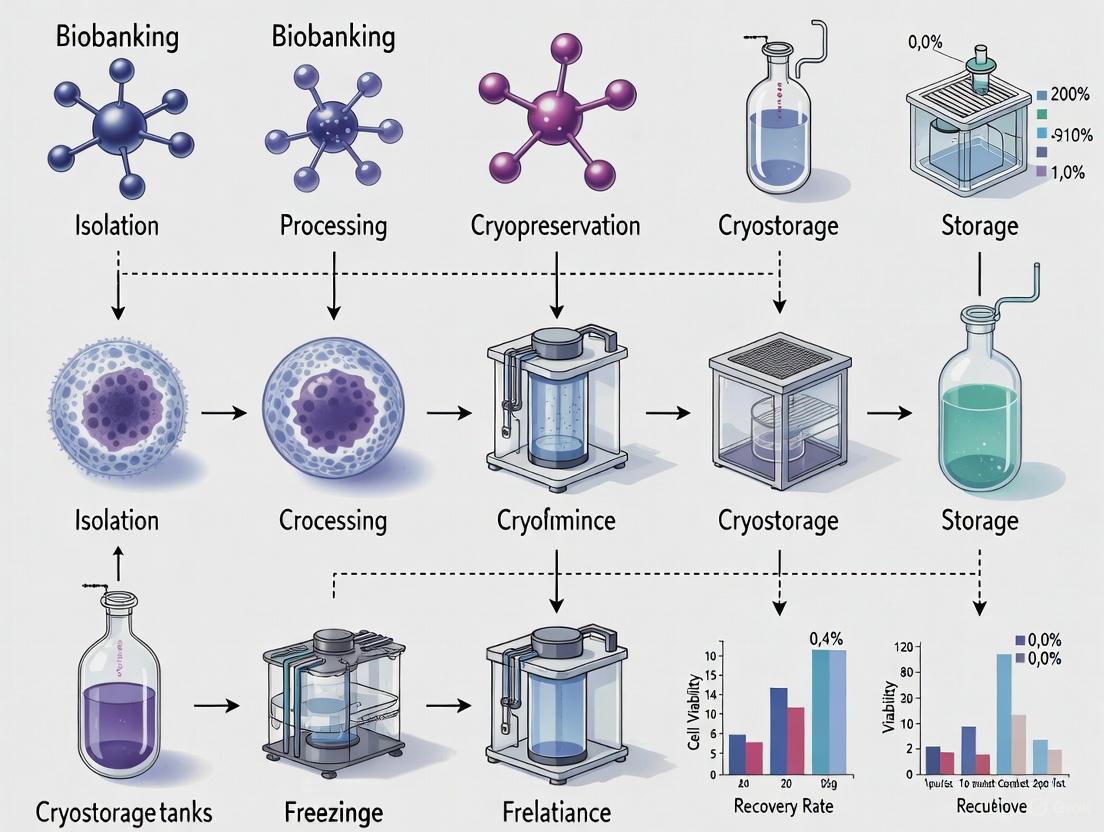
This comprehensive article provides researchers, scientists, and drug development professionals with an in-depth examination of Mesenchymal Stromal Cell (MSC) biobanking and cryostorage.
MSC Biobanking and Cryostorage: A Complete Guide to Principles, Methods, and Best Practices for Researchers
Abstract
This comprehensive article provides researchers, scientists, and drug development professionals with an in-depth examination of Mesenchymal Stromal Cell (MSC) biobanking and cryostorage. Covering foundational principles to advanced applications, it explores the critical importance of biobanking for regenerative medicine and clinical therapy. The content details established and emerging cryopreservation methodologies, including slow freezing and vitrification protocols, while addressing key challenges in cell recovery and functional preservation. Practical troubleshooting guidance and optimization strategies are presented, alongside validated comparative analyses of cryopreservation media and the impact of storage conditions on MSC phenotype and functionality. This resource serves as an essential reference for implementing robust, reproducible MSC biobanking workflows that ensure cell quality and therapeutic potential.
The Essential Role of MSC Biobanking in Modern Regenerative Medicine
Mesenchymal stromal cell (MSC) biobanking represents a critical infrastructure supporting advanced regenerative medicine and cellular therapy research. This technical guide examines the comprehensive framework of MSC biobanking, encompassing standardized collection protocols, cryopreservation methodologies, quality control measures, and clinical translation pathways. As defined by the International Society for Cell & Gene Therapy (ISCT), MSCs must adhere to specific criteria including plastic adherence, expression of characteristic surface markers (CD105, CD73, CD90), lack of hematopoietic markers, and trilineage differentiation potential. The biobanking of these cells enables critical clinical applications by providing off-the-shelf availability while maintaining functional properties and ensuring biosafety. This whitepaper delineates the technical specifications, international standards, and experimental protocols essential for establishing robust MSC biobanking operations that support the growing demands of translational medicine and therapeutic development.
Definition and Scope
MSC biobanking constitutes the systematic collection, processing, cryopreservation, storage, and distribution of mesenchymal stromal cells for research and clinical applications. These operations extend beyond simple cryostorage to encompass comprehensive quality management systems that maintain cell viability, functionality, and identity throughout the biobanking lifecycle. The scope of modern MSC biobanking includes:
- Source Diversity: MSCs are obtained from multiple tissues including bone marrow (BM-MSCs), adipose tissue (AT-MSCs), umbilical cord Wharton's Jelly (MSC(WJ)), and other perinatal tissues [1] [2].
- Process Standardization: Implementation of standardized protocols from donor screening through to cryostorage and distribution.
- Quality Assurance: Rigorous characterization and functional testing to ensure batch-to-batch consistency.
- Information Management: Comprehensive data tracking integrating clinical, molecular, and processing information [3].
Clinical and Research Significance
The strategic importance of MSC biobanking lies in its capacity to overcome critical limitations in cell-based therapeutic development. By cryopreserving MSCs at early passages, biobanks mitigate risks associated with long-term culture including chromosomal abnormalities, malignant transformation, and compromised functional properties [4]. This approach enables pooling of cells for "off-the-shelf" use in clinical applications, addressing the challenge of obtaining sufficient cell numbers required for therapeutic dosing [4]. The clinical translation of MSCs leverages their immunomodulatory properties, multilineage differentiation potential, and tissue repair capabilities, making them valuable candidates for treating conditions such as graft-versus-host disease, Crohn's disease, osteoarthritis, and various autoimmune disorders [1] [5].
Critical Importance in Research and Therapy
Enabling Clinical Applications
MSC biobanking directly facilitates clinical translation by ensuring consistent access to quality-controlled cellular material. Several critical factors underscore this importance:
Functional Preservation: Studies demonstrate that properly cryopreserved MSCs maintain proliferation capacity, multilineage differentiation potential, and therapeutic efficacy. Recent research on bone marrow aspirate concentrate (BMAC) showed that MSC function remained preserved after freezing at -80°C for 4 weeks, with no significant differences in cartilage repair capabilities between fresh and frozen BMAC in osteoarthritis models [6].
Treatment Accessibility: Cryopreservation enables a "single harvest, multiple injection" approach, reducing patient burden from repeated bone marrow aspirations. This is particularly valuable for conditions requiring multiple treatments, as it minimizes scarring at extraction sites and patient discomfort while maintaining therapeutic effectiveness [6].
Scalability for Clinical Trials: Biobanking provides the necessary cell quantities for advanced-phase clinical trials while maintaining consistent quality across treatment groups and study sites [4].
Supporting Research Reproducibility
The implementation of standardized biobanking protocols directly addresses the challenge of irreproducibility in preclinical research. By providing well-characterized, quality-controlled MSCs with comprehensive documentation, biobanks reduce technical variability that contributes to the >60% irreproducibility rate in preclinical studies [7]. Proper biobanking information management systems increase sample quality and tracking capabilities, thereby enhancing research reliability and accelerating scientific discovery.
Table 1: Clinical Applications of Biobanked MSCs
| Application Area | Specific Conditions | Key Mechanisms | Clinical Trial Status |
|---|---|---|---|
| Immunomodulation | Graft-versus-host disease, Crohn's disease, autoimmune disorders | T-cell suppression, anti-inflammatory cytokine secretion | Phase 3 trials completed for complex perianal fistulas in Crohn's disease [1] |
| Tissue Regeneration | Osteoarthritis, cartilage defects, bone repair | Chondrogenic and osteogenic differentiation, paracrine factor secretion | Multiple clinical trials showing improved cartilage scores and pain reduction [6] |
| Orthobiologics | Musculoskeletal injuries, joint surface defects | Multilineage differentiation, growth factor secretion | Clinical trials for various orthopedic applications [6] [5] |
Technical Framework and Methodologies
MSC Biobanking Workflow
The MSC biobanking process encompasses multiple integrated stages from donor selection to final product distribution. The following diagram illustrates the comprehensive workflow:
Cryopreservation Methodologies
Two primary cryopreservation techniques are employed in MSC biobanking, each with distinct mechanisms and applications:
Slow Freezing Method
The slow freezing approach involves controlled-rate cooling that enables gradual cellular dehydration, minimizing intracellular ice crystal formation [2]. The technical protocol involves:
- CPA Addition: MSCs are mixed with cryoprotective agents (CPAs) - typically dimethyl sulfoxide (DMSO) at concentrations of 5-10%, often combined with non-permeating agents like sucrose or trehalose [2].
- Controlled Cooling: Samples are cooled at a controlled rate of approximately -1°C to -3°C per minute using specialized freezing containers or controlled-rate freezers [2].
- Temperature Phasing: Initial holding at 4°C, gradual cooling to -80°C, followed by transfer to liquid nitrogen (-196°C) for long-term storage [2].
- Thawing Protocol: Rapid warming in a 37°C water bath until ice crystals dissolve, followed by centrifugation to remove CPAs and resuspension in culture medium [2].
This method typically yields 70-80% cell survival and remains the preferred approach for clinical and laboratory MSC cryopreservation due to operational simplicity and minimal contamination risk [2].
Vitrification
Vitrification employs high CPA concentrations and ultra-rapid cooling to achieve a glassy, non-crystalline state [2]. Two approaches are utilized:
- Equilibrium Vitrification: Balanced penetration of CPAs with controlled concentration and exposure time, achieving cellular osmotic equilibrium before freezing [2].
- Non-Equilibrium Vitrification: Emphasis on extreme cooling rates with high CPA concentrations for immediate vitrification [2].
While vitrification reduces ice crystal formation, it presents challenges including CPA toxicity at high concentrations and technical complexity for larger sample volumes.
Table 2: Comparison of MSC Cryopreservation Methods
| Parameter | Slow Freezing | Vitrification |
|---|---|---|
| Cooling Rate | -1°C to -3°C per minute | > -1000°C per minute |
| CPA Concentration | Low (5-10%) | High (up to 40-50%) |
| Ice Crystal Formation | Minimal intracellular crystals | No crystal formation |
| Cell Survival Rate | 70-80% | Variable (technology-dependent) |
| Technical Complexity | Low | High |
| Suitable Sample Volume | High (multiple aliquots) | Lower (small volumes) |
| Clinical Applicability | Well-established | Emerging |
Quality Control and Characterization
Rigorous quality assessment forms the foundation of reliable MSC biobanking. The International Society for Cellular Therapy (ISCT) has established minimal criteria for defining MSCs [5]:
- Plastic Adherence: Maintenance of adherent growth under standard culture conditions.
- Surface Marker Expression: Positive for CD105, CD73, and CD90 (≥95%); negative for CD45, CD34, CD14/CD11b, CD79α/CD19, and HLA-DR (≤2% positive) [5].
- Trilineage Differentiation: In vitro differentiation capacity into osteoblasts, adipocytes, and chondroblasts.
Additional quality measures include:
- Viability Assessment: Post-thaw viability exceeding 70-80%.
- Microbiological Testing: Sterility, mycoplasma, and endotoxin testing.
- Functional Potency Assays: Immunomodulatory capacity and specific therapeutic function assessments.
- Karyotypic Analysis: Genomic stability evaluation through chromosomal analysis.
Standards and Regulatory Framework
International Standards
The International Standards Organization (ISO) has developed specific standards for MSC biobanking through Technical Committee 276 on Biotechnology:
- ISO 24651: Standard for bone marrow-derived MSC (MSC(M)) biobanking for research and development purposes [1].
- ISO/TS 22859: Technical specification for Wharton's Jelly MSC (MSC(WJ)) biobanking [1].
These standards represent international consensus on MSC identity, definition, and characterization, providing a matrix of assays for functional characterization. Developed with extensive input from ISCT, these documents align with the society's recommendations on nomenclature and characterization while maintaining scope for research use of culture-expanded MSCs [1].
Good Manufacturing Practice (GMP) Compliance
For clinical applications, MSC biobanking must adhere to GMP standards ensuring quality, safety, and efficacy [5]. Key requirements include:
- Facility Specifications: Controlled sterility with multi-level aseptic protection, clean rooms, laminar flow hoods, and closed cultivation systems [5].
- Documentation Practices: Comprehensive batch records, standard operating procedures, and chain of custody documentation.
- Quality Management: Integrated quality control systems, equipment validation, and environmental monitoring.
- Staff Training: Qualified personnel with understanding of manufacturing processes and regulatory requirements.
Technological Platforms and Automation
Automated Bioprocessing Systems
Advanced automated platforms enable large-scale production of clinical-grade MSCs while maintaining GMP compliance:
Table 3: Automated Platforms for MSC Manufacturing
| Platform | Technology | Scale/Capacity | Key Features | MSC Types Supported |
|---|---|---|---|---|
| Quantum Cell Expansion System (Terumo BCT) | Hollow fiber bioreactor | 21,000 cm² (equivalent to 120 T-175 flasks) | Continuous medium exchange, closed system, hypoxic capability | BM-MSCs, AT-MSCs, UC-MSCs [5] |
| CliniMACS Prodigy (Miltenyi Biotec) | Integrated cell processing | 1-layer CellSTACK → 29-50 million MSCs (P0) | Automated isolation, cultivation, media change, and harvest | BM-MSCs, AT-MSCs, UC-MSCs [5] |
| CellQualia (Sinfonia) | Automated cell processing | Not specified | Focused on quality-controlled manufacturing | Not specified [5] |
| Cocoon Platform (Lonza) | Personalized automated manufacturing | Not specified | Compact, closed-system bioreactor | Not specified [5] |
Biobank Information Management Systems (BIMS)
Modern MSC biobanking requires sophisticated information management infrastructure to track samples throughout their lifecycle. Effective BIMS implementation addresses critical needs:
- Sample Tracking: Comprehensive monitoring from collection through processing, storage, and distribution.
- Data Integration: Linking clinical, molecular, and processing information for comprehensive sample annotation [3].
- Quality Management: Documenting quality control results and monitoring storage conditions.
- Regulatory Compliance: Managing consent, ethics approvals, and chain of custody documentation.
Implementation studies have identified up to 123 requirements grouped into 15 clusters across functional, nonfunctional, and system operation categories [7]. Systems like OpenSpecimen have emerged as solutions supporting biospecimen management with customization capabilities, role-based access control, and interoperability with electronic medical records and analytics pipelines [3].
Experimental Protocols for MSC Characterization
Trilineage Differentiation Assay
The functional characterization of biobanked MSCs requires demonstration of multilineage differentiation capacity:
Adipogenic Differentiation Protocol:
- Culture MSCs to 100% confluence in growth medium (αMEM with 20% FBS, 1% Penicillin/Streptomycin, 10 ng/mL FGF-2) [6].
- Switch to adipogenic induction medium (DMEM high glucose with 10% FBS, 1 μM dexamethasone, 0.5 mM isobutylmethylxanthine, 10 μg/mL insulin, 200 μM indomethacin).
- Maintain for 2-3 weeks with medium changes every 3-4 days.
- Fix with 4% paraformaldehyde and stain with Oil Red O to visualize lipid vacuoles.
Osteogenic Differentiation Protocol:
- Culture MSCs to 70-80% confluence in growth medium.
- Switch to osteogenic induction medium (DMEM high glucose with 10% FBS, 0.1 μM dexamethasone, 10 mM β-glycerophosphate, 50 μM ascorbate-2-phosphate).
- Maintain for 3-4 weeks with medium changes twice weekly.
- Fix with 4% paraformaldehyde and stain with Alizarin Red S to detect calcium deposits.
Chondrogenic Differentiation Protocol:
- Pellet 2.5 × 10^5 MSCs by centrifugation in conical tube.
- Culture in chondrogenic induction medium (DMEM high glucose with 1% ITS+ Premix, 100 nM dexamethasone, 50 μg/mL ascorbate-2-phosphate, 40 μg/mL proline, 10 ng/mL TGF-β3).
- Maintain for 3-4 weeks with medium changes every 3-4 days.
- Fix, embed, section, and stain with Alcian Blue or Safranin O to detect sulfated proteoglycans.
Colony-Forming Unit Fibroblast (CFU-f) Assay
The CFU-f assay determines MSC clonogenic capacity:
- Plate mononuclear cells at 300,000 cells/well in six-well plates with growth medium [6].
- Cultivate for 14 days in αMEM medium supplemented with 20% FBS, 1% Penicillin/Streptomycin, and 10 ng/mL FGF-2.
- Fix with 4% paraformaldehyde and stain with 1% crystal violet solution for 30 minutes.
- Count colonies manually using the criterion of over 100 cells to determine the number of colonies per 300,000 seeded cells.
- Score colonies only when distinct clonal centers are evident, with confluent clusters counted as single colonies unless visually separable clonal centers are divided by clear boundaries [6].
Research Reagent Solutions
Table 4: Essential Research Reagents for MSC Biobanking
| Reagent Category | Specific Examples | Function | Considerations |
|---|---|---|---|
| Cryoprotective Agents | Dimethyl sulfoxide (DMSO), ethylene glycol, glycerol, sucrose, trehalose | Prevent ice crystal formation, reduce freezing damage | DMSO concentration (5-10%), toxicity concerns, removal post-thaw [2] |
| Culture Media | αMEM, DMEM, MSC Brew GMP | Cell expansion and maintenance | Shift from fetal bovine serum to human platelet lysate or serum-free for GMP compliance [5] |
| Characterization Antibodies | CD105, CD73, CD90 (positive); CD45, CD34, CD14, HLA-DR (negative) | Phenotypic characterization by flow cytometry | ISCT minimum criteria requirement [5] |
| Differentiation Reagents | Dexamethasone, IBMX, insulin, TGF-β3, ascorbate-2-phosphate, β-glycerophosphate | Trilineage differentiation induction | Quality control for consistent differentiation efficiency |
| Cell Dissociation Agents | Trypsin/EDTA, recombinant trypsin, enzyme-free alternatives | Cell harvesting and passaging | Impact on cell surface markers and viability |
Challenges and Future Perspectives
Current Limitations
Despite significant advances, MSC biobanking faces several persistent challenges:
- CPA Toxicity: DMSO and other cryoprotectants pose potential risks including allergic reactions and cellular toxicity, driving research into DMSO-free alternatives [2].
- Functional Preservation: Maintaining immunomodulatory properties and differentiation capacity post-thaw remains challenging, requiring optimized protocols [4].
- Standardization: Heterogeneity in source tissues, donor variability, and processing methods complicates standardization across biobanks [1].
- Regulatory Complexity: Evolving regulatory landscapes for advanced therapy medicinal products create compliance challenges [5].
Emerging Solutions
Innovative approaches are addressing these limitations:
- Advanced Cryopreservation: Development of controlled-rate freezing systems and optimized cooling protocols enhance post-thaw viability [5].
- Serum-Free Media: Formulation of xeno-free, chemically defined media supports clinical translation and regulatory compliance [5].
- Automated Platforms: Integrated, closed-system bioreactors reduce manual manipulation and improve reproducibility [5].
- Quality Metrics: Implementation of advanced potency assays and genomic stability testing ensures product consistency [1].
The following diagram illustrates the critical signaling pathways and functional mechanisms that must be preserved through biobanking processes:
MSC biobanking represents an essential infrastructure supporting the advancing field of regenerative medicine and cellular therapy. By implementing standardized methodologies, rigorous quality control systems, and automated platforms, biobanks ensure consistent access to high-quality MSCs with preserved functionality and demonstrated safety profiles. The continuing evolution of international standards, cryopreservation technologies, and information management systems will further enhance the capacity of MSC biobanking to support both basic research and clinical applications. As the field progresses, collaborative initiatives involving industry, academia, and regulatory bodies will be essential to address remaining challenges and fully realize the potential of MSC-based therapies for treating a diverse range of clinical conditions.
The field of Mesenchymal Stromal Cell (MSC) research is dynamic, with standards continuously refined to reflect scientific advancements. A significant shift occurred in 2025 when the International Society for Cell & Gene Therapy (ISCT) released updated identification criteria, marking a substantial evolution from the 2006 standard [8]. These changes are not merely semantic; they represent a fundamental reevaluation of the cells' nature based on decades of evidence, moving the field toward greater precision, reproducibility, and therapeutic relevance [8]. For researchers and drug development professionals, adherence to these updated standards is critical for ensuring that MSC biobanks contain well-characterized, high-quality cells fit for their intended research and clinical purposes. This guide provides a detailed technical overview of both historical and current standards, along with practical experimental protocols for MSC characterization within the context of modern biobanking and cryostorage research.
ISCT Standards: 2006 versus 2025
The following table summarizes the key differences between the original and the updated ISCT standards, highlighting the evolution toward more rigorous and clinically relevant characterization.
Table 1: Comparison of ISCT MSC Identification Standards: 2006 vs. 2025
| Standard Element | 2006 Standard | 2025 Standard |
|---|---|---|
| Cell Definition | Mesenchymal Stem Cells (MSCs) | Mesenchymal Stromal Cells (MSCs) |
| Stemness Requirement | Mandatory demonstration of trilineage differentiation | Evidence required only to use the term "stem" |
| Marker Detection | Qualitative (positive/negative) | Quantitative (thresholds and percentages) |
| Tissue Origin | Not emphasized | Must be specified and considered |
| Critical Quality Attributes | Not required | Must assess efficacy and functional properties |
| Culture Conditions | No standard reporting requirement | Detailed parameter reporting required [8] |
The most notable change is the formal redefinition from "Mesenchymal Stem Cells" to "Mesenchymal Stromal Cells." This change is foundational, reflecting a consensus that the multipotency of these cells is not their primary therapeutic mechanism and that the "stem" terminology should be reserved for populations with experimentally verified stem cell properties [8]. Consequently, the once-mandatory trilineage differentiation assay (osteogenesis, adipogenesis, and chondrogenesis) and plastic adherence are no longer universal requirements. Instead, the 2025 standard introduces more rigorous, quantitative reporting, particularly for surface markers, and mandates the specification of tissue source, acknowledging that MSCs from different origins may have distinct functional properties [8].
Updated Characterization Protocols and Release Criteria
Phenotypic Characterization via Flow Cytometry
The 2025 standards provide enhanced guidance on phenotypic characterization, moving beyond simple positive/negative reporting to a quantitative framework.
- Positive Markers: The classic positive markers—CD73, CD90, and CD105—remain as the foundational panel. The new standard requires researchers to report the percentage of positive cells and specify the threshold used for determining positivity via flow cytometry [8].
- Negative Markers: The presence of the hematopoietic marker CD45 must be evaluated to ensure the population is not contaminated with hematopoietic lineages. Complete results for all markers, including the percentage of positive cells, must be reported to improve data transparency and comparability across studies [8].
- Reporting: A comprehensive flow cytometry report should include details on the instrument, software, antibodies (clone, conjugation, dilution), gating strategy, and the number of events acquired.
Assessment of Critical Quality Attributes (CQAs)
A major update in the 2025 standard is the incorporation of Critical Quality Attributes (CQAs) into the characterization process [8]. CQAs are biological properties that define the clinical functionality and safety of the MSC product. These are application-dependent and must be designed based on the intended therapeutic mechanism of action (MOA).
Table 2: Examples of Critical Quality Attributes (CQAs) for MSCs
| CQA Category | Example Assay | Measured Parameter | Link to Therapeutic Function |
|---|---|---|---|
| Immunomodulation | T-cell Suppression Assay | Percentage inhibition of T-cell proliferation | Predicts efficacy in autoimmune diseases [9] |
| Secretome | ELISA / Multiplex Assay | Concentration of secreted factors (e.g., PGE2, IDO, IL-6) | Evaluates paracrine signaling capacity |
| Functional Potency | IFN-γ Priming & IDO Activity | Tryptophan degradation (HPLC) | Measures inducible immunomodulatory pathway strength [9] |
For example, if the proposed MOA involves indoleamine 2,3-dioxygenase (IDO)-mediated immunomodulation, a key CQA would be the MSC's ability to upregulate IDO activity upon priming with interferon-gamma (IFN-γ). This can be quantified by measuring the depletion of tryptophan and the accumulation of kynurenine in the culture supernatant using high-performance liquid chromatography (HPLC).
Diagram 1: IDO-mediated immunomodulation pathway.
The Scientist's Toolkit: Key Reagents for Characterization
Table 3: Essential Research Reagents for MSC Characterization
| Reagent / Material | Function | Example Application |
|---|---|---|
| Clinical-Grade Culture Medium | Supports MSC expansion under defined, xeno-free conditions. | Large-scale MSC expansion for clinical trials [9]. |
| TrypLE Select / Recombinant Trypsin | Detaches adherent cells from culture surfaces with minimal proteolytic damage. | Passaging and harvesting MSCs. |
| Flow Cytometry Antibody Panel | Detects presence of surface markers for phenotypic identification. | Confirmation of CD73+, CD90+, CD105+, CD45- profile [8]. |
| Dimethyl Sulfoxide (DMSO) | Cryoprotectant that prevents intracellular ice crystal formation. | Formulation of cryopreservation media [9]. |
| Human Serum Albumin (HSA) | Provides a defined protein base in cryopreservation and culture media. | Component of freezing medium to improve post-thaw viability [9]. |
| IFN-γ | A priming agent that stimulates immunomodulatory pathways in MSCs. | Functional potency assays for immunomodulatory CQAs. |
MSC Characterization in Biobanking & Cryostorage
Impact of Cryopreservation on MSC Properties
Cryopreservation is a cornerstone of biobanking, enabling "off-the-shelf" access and completion of quality control before release. However, the process can impact MSC properties. Studies show that while basic attributes like viability, phenotype, and differentiation potential may be unaltered after thawing, functional properties like in vitro immunosuppression can be affected [9]. One study reported a 50% reduction in immunosuppressive capacity in a T-cell proliferation assay post-thaw, which was linked to the IDO pathway [9]. This underscores the necessity of characterizing the cryopreserved counterpart of the MSC product that will be used in applications, rather than relying solely on data from fresh cultures.
Optimized Cryopreservation and Thawing Protocol
A validated and consistent protocol is vital for maintaining MSC quality during biobanking.
Freezing Protocol:
- Harvesting: Detach MSCs at the desired passage using a validated enzyme.
- Formulation: Wash cells and resuspend in a pre-chilled freezing medium. A common clinical-grade formulation is 10% DMSO in 90% Human Serum Albumin [9].
- Controlled-Rate Freezing: Use a controlled-rate freezer (CRF). While 60% of users employ default CRF profiles, sensitive or engineered cells may require optimized cooling rates [10]. CRFs allow control over critical parameters like cooling rate before and after nucleation, which influences cell dehydration and intracellular ice formation [10].
- Storage: Transfer cryobags/vials to the vapor or liquid phase of liquid nitrogen for long-term storage.
Thawing Protocol:
- Rapid Thaw: Thaw vials/bags rapidly in a 37°C water bath or using a validated controlled-rate thawing device until only an ice sliver remains.
- Dilution: Immediately transfer the cell suspension to a larger volume of pre-warmed culture medium to dilute the cytotoxic DMSO.
- Washing: Centrifuge the cell suspension to remove the DMSO-containing supernatant.
- Resuspension and Assessment: Resuspend the cell pellet in fresh culture medium and perform a cell count and viability assessment (e.g., using trypan blue exclusion or an automated NucleoCounter) [9].
Diagram 2: Cryopreservation and thawing workflow.
The 2025 ISCT standards represent a maturation of the MSC field, prioritizing accurate terminology, quantitative data, and functionally relevant quality attributes. For successful MSC biobanking and research, scientists must integrate these updated identification criteria with robust, validated protocols for cryopreservation and thawing. Crucially, the final characterization of the product must include assessments of CQAs on the cryopreserved cells themselves, as this is the state in which they will be utilized. By adhering to these refined standards and understanding the impact of biobanking processes, researchers can ensure the generation of high-quality, reliable, and clinically relevant MSC data and therapeutics.
Mesenchymal stem cells (MSCs) have emerged as a cornerstone of regenerative medicine due to their unique triple-capacity for self-renewal, multilineage differentiation, and immunomodulation [11]. These non-hematopoietic, multipotent stem cells can be isolated from a remarkably diverse range of tissues, which broadly classify into adult tissues (like bone marrow and adipose tissue) and perinatal tissues (like umbilical cord) [12]. The therapeutic potential of MSCs extends across a vast spectrum of human diseases, including autoimmune disorders, neurodegenerative diseases, orthopedic injuries, and cardiovascular conditions [11] [13]. Their mechanisms of action are primarily mediated through paracrine release of bioactive molecules—growth factors, cytokines, and extracellular vesicles—that modulate the local cellular environment, promote tissue repair, angiogenesis, and cell survival, and exert anti-inflammatory effects [11]. The International Society for Cellular Therapy (ISCT) established minimal criteria for defining MSCs: (1) adherence to plastic under standard culture conditions; (2) expression of specific surface markers (CD73, CD90, CD105 ≥95%) and lack of hematopoietic markers (CD34, CD45, CD14/CD11b, CD79α/CD19, HLA-DR ≤2%); and (3) capacity for in vitro differentiation into osteoblasts, chondrocytes, and adipocytes [11] [12]. The choice of MSC source significantly impacts cell yield, proliferation potential, differentiation capacity, and clinical applicability, making the understanding of source-specific characteristics fundamental to biobanking and therapeutic development [12].
Bone Marrow-Derived MSCs (BM-MSCs)
Bone marrow was the original source from which MSCs were first isolated and remains the most extensively studied type [11]. BM-MSCs are characterized by their high differentiation potential and strong immunomodulatory effects [11]. However, their isolation involves an invasive aspiration procedure from the iliac crest, which can cause patient discomfort and carries a risk of infection [13]. Furthermore, the frequency of MSCs in bone marrow is very low, approximately 0.01% to 0.001% of the total nucleated cells, necessitating substantial ex vivo expansion to obtain clinically relevant cell numbers [12]. This expansion requirement presents a significant limitation, as the proliferative capacity and differentiation potential of BM-MSCs have been shown to decline with increased donor age and prolonged culture [13]. The British Standards Institution (BSI) has published the international standard ISO/TS 24651:2022, which outlines specific requirements for the collection, isolation, culture, characterization, and cryopreservation of human BMSCs for research purposes [12].
Adipose Tissue-Derived MSCs (AD-MSCs)
Adipose tissue represents a highly accessible and abundant source of MSCs. AD-MSCs can be obtained through minimally invasive procedures like liposuction, yielding a significantly higher number of stem cells compared to bone marrow; up to 500-fold more MSCs can be isolated from adipose tissue than from an equivalent volume of bone marrow aspirate [13]. It is estimated that up to 1 billion cells can be generated from 300 grams of adipose tissue [12]. AD-MSCs exhibit comparable therapeutic properties to BM-MSCs, including immunomodulatory effects, but with a faster proliferation rate [11] [12]. They also demonstrate distinct advantages in applications related to bone regeneration and skin healing [12]. The primary harvesting sites are the abdomen and thighs, making AD-MSCs an attractive source for autologous transplantation and large-scale biobanking initiatives due to the relative ease of procurement and high initial cell yield [12].
Perinatal Tissue-Derived MSCs
Perinatal tissues, typically considered medical waste after birth, offer a rich source of MSCs with superior proliferative capacities and lower immunogenicity, making them ideal for allogeneic transplantation [11].
Umbilical Cord MSCs (UC-MSCs): UC-MSCs are primarily isolated from Wharton's jelly, the mucous connective tissue of the umbilical cord [12]. They are known for their enhanced proliferation and migratory capacities, high safety profile, low immunogenicity, and low application risk [12]. The international technical specification ISO/TS 22859-1:2022 provides guidelines for human UC-MSCs derived from cord tissue [12]. A key biobanking consideration for umbilical cord tissue is the processing method; cryopreserving intact cord tissue segments for future isolation, rather than digesting the tissue before storage, is considered optimal as it preserves the cells in their natural microenvironment and allows for flexible future use [14].
Umbilical Cord Blood MSCs (UCB-MSCs): While primarily known for hematopoietic stem cells, umbilical cord blood also contains MSCs. UCB-MSCs exhibit higher cell proliferation and clonogenic rates compared to adult-derived MSCs, along with significantly lower expression of senescence markers like p53, p21, and p16 [12].
Placental MSCs (P-MSCs): The placenta, composed of the amnion, chorionic frondosum, and basal decidua, is enriched with MSCs. P-MSCs may possess an even superior proliferative capacity compared to UC-MSCs and exhibit pronounced immunosuppressive effects on dendritic cells and T cells [12]. However, the complex composition of the placenta can make the isolation of pure MSC populations challenging [12].
The following table provides a quantitative comparison of the key characteristics of these primary MSC sources.
Table 1: Comparative Analysis of Primary MSC Sources
| Characteristic | Bone Marrow (BM-MSCs) | Adipose Tissue (AD-MSCs) | Umbilical Cord (UC-MSCs) |
|---|---|---|---|
| Tissue Source | Iliac crest aspirate | Liposuction from abdomen/thighs | Wharton's Jelly of umbilical cord |
| Cell Yield | Very low (~0.001-0.01% of nucleated cells) [12] | High (up to ~1 billion cells from 300g tissue) [12] | High [12] |
| Isolation Invasiveness | High (invasive aspiration) [13] | Low (minimally invasive liposuction) [12] | None (medical waste) [11] |
| Proliferation Rate | Moderate, declines with age/passage [13] | High/Fast [12] | Very High [12] |
| Differentiation Potential | High [11] | Comparable to BM-MSCs, strong in bone/adiopgenic lines [11] [12] | High, multilineage potential [11] |
| Immunogenicity | Low for autologous, variable for allogeneic [12] | Low | Very Low, ideal for allogeneic use [11] [12] |
| Key Advantage | Gold standard, well-characterized [11] | High yield, easy access, fast proliferation [11] [12] | High proliferation, low immunogenicity, non-invasive source [11] [12] |
| Primary Limitation | Invasive harvest, low yield, donor age effect [13] [12] | Donor age and health may affect quality [13] | Limited donor history, requires allogeneic banking [11] |
A significant innovation in the field is the generation of induced MSCs (iMSCs). These are derived from induced pluripotent stem cells (iPSCs), which are themselves generated by reprogramming adult somatic cells [13]. This approach offers a solution to several limitations of primary MSCs. iMSCs are patient-specific, provide a virtually unlimited and consistent supply, and avoid the donor-to-donor variability and age-related senescence associated with tissue-derived MSCs [13] [15]. They represent a promising, druggable source for standardized therapeutic products and are a compelling candidate for next-generation biobanking [15].
MSC Biobanking: Cryopreservation Fundamentals and Protocols
Biobanking is a critical infrastructure for enabling the clinical and research use of MSCs. It minimizes preparation time for therapeutic products, allows for quality control and standardization, and facilitates the commercialization of cell-based products [16]. Cryopreservation, the process of preserving cells at ultralow temperatures (typically in liquid nitrogen at -196°C), is the cornerstone of long-term MSC biobanking, as it halts all metabolic activity and ensures long-term viability [16] [2].
Cryoprotective Agents (CPAs) and Media Formulation
CPAs are essential to protect cells from freezing-induced damage, primarily caused by dehydration and intracellular ice crystal formation [16]. They are categorized based on their ability to cross the cell membrane.
Table 2: Classification and Examples of Cryoprotective Agents (CPAs)
| CPA Type | Mechanism of Action | Common Examples | Key Considerations |
|---|---|---|---|
| Penetrating (Endocellular) | Penetrate cell membrane, bind intracellular water, reduce ice crystal formation [16]. | Dimethyl Sulfoxide (DMSO), Glycerol, Ethylene Glycol [16] [2] | More effective but often more toxic (e.g., DMSO can cause allergic reactions) [16] [2]. |
| Non-Penetrating (Exocellular) | Do not enter cell; bind extracellular water, protect from osmotic shock, inhibit ice crystal growth [16]. | Sucrose, Trehalose, Ficoll, Albumin, Hydroxyethyl Starch [16] | Lower toxicity; often used in combination with penetrating CPAs to reduce their concentration and toxicity [16] [2]. |
A typical cryopreservation medium for MSCs often includes a base solution like culture medium or normal saline, supplemented with 5-10% DMSO as a penetrating CPA and serum (e.g., Fetal Bovine Serum) or serum-free alternatives to provide additional macromolecular support. To mitigate DMSO toxicity, non-penetrating CPAs like sucrose or trehalose are frequently added, allowing for a reduction in DMSO concentration while maintaining post-thaw viability [16] [2].
Standardized Cryopreservation Protocols
Two primary techniques are employed for MSC cryopreservation: slow freezing and vitrification.
Slow Freezing Protocol: This is the most widely used and recommended method for clinical-grade MSC cryopreservation due to its operational simplicity and lower risk of contamination [2].
- Harvesting and CPA Addition: After trypsinization and centrifugation, resuspend the MSC pellet in pre-chilled cryopreservation medium. The cell concentration is typically adjusted to 1-5 x 10^6 cells/mL [2].
- Equilibration: Incubate the cell suspension with CPAs on ice or at 4°C for 15-30 minutes to allow permeation.
- Controlled-Rate Freezing: Place samples in a programmable freezer or a -80°C freezer using an isopropanol freezing container to control the cooling rate. The optimal cooling rate is typically -1°C/min to -3°C/min down to -40°C to -80°C, facilitating gradual cellular dehydration [2].
- Long-Term Storage: Transfer the frozen vials to the vapor or liquid phase of liquid nitrogen (-150°C to -196°C) for long-term storage [2].
Vitrification Protocol: This method uses high concentrations of CPAs and ultra-rapid cooling rates to solidify the solution into a glassy, non-crystalline state, completely avoiding ice crystal formation [2]. It is more common for complex samples like tissues and embryos but is less standardized for MSC suspensions.
- Equilibration: Expose cells to a lower concentration of CPAs (e.g., 1-2 M) for a short period to initiate partial dehydration.
- Vitrification Solution Exposure: Quickly transfer cells to a high-concentration vitrification solution (e.g., 6-8 M CPA mix) for less than one minute.
- Ultra-Rapid Cooling: Plunge the sample directly into liquid nitrogen. The cooling rate exceeds 20,000°C/min [2].
Thawing and Post-Thaw Processing
The thawing process is critical for cell survival. The standard protocol involves:
- Rapid Thawing: Quickly transfer the vial from liquid nitrogen to a 37°C water bath with gentle agitation until only a small ice crystal remains (thawing rate >100°C/min) [2].
- CPA Removal: Immediately after thawing, dilute the cell suspension drop-wise with pre-warmed culture medium to reduce CPA concentration and osmotic stress. This is followed by centrifugation to remove the CPA-containing supernatant [2].
- Assessment and Culture: Resuspend the cell pellet in fresh culture medium and seed into culture flasks. Post-thaw viability is typically assessed using trypan blue exclusion or other viability assays. A survival rate of 70-80% is expected with optimized slow-freezing protocols [2].
Diagram 1: MSC Biobanking Workflow
The Scientist's Toolkit: Essential Reagents for MSC Biobanking
Table 3: Key Research Reagent Solutions for MSC Biobanking
| Reagent/Chemical | Function/Application | Technical Notes |
|---|---|---|
| Dimethyl Sulfoxide (DMSO) | Penetrating cryoprotectant; prevents intracellular ice crystal formation [16] [2]. | Use high-grade, sterile-filtered. Final concentration typically 5-10%. Associated with cytotoxicity and potential patient allergic reactions; requires careful post-thaw removal [2]. |
| Sucrose / Trehalose | Non-penetrating cryoprotectant; mitigates osmotic shock, reduces required DMSO concentration [16]. | Often used at 0.1-0.5 M. Improves post-thaw cell viability and membrane integrity [16]. |
| Fetal Bovine Serum (FBS) | Serum supplement in freeze medium; provides proteins and macromolecules that stabilize cell membranes [2]. | Batch-to-batch variability is a concern. For clinical applications, serum-free or xeno-free alternatives are preferred to avoid immunogenic reactions [2]. |
| Serum-Free Cryopreservation Media | Chemically defined, xeno-free base medium for clinical-grade cell cryopreservation [2]. | Eliminates risk associated with animal-derived components. Often contain proprietary combinations of polymers and sugars as CPA supplements. |
| Trypan Blue | Viability stain for post-thaw assessment; distinguishes live (unstained) from dead (blue) cells [2]. | Used for simple, rapid viability counting with a hemocytometer. Does not assess functional recovery. |
| Programmable Freezer | Equipment for controlled-rate freezing; ensures consistent, reproducible cooling rate (~-1°C/min) [2]. | Critical for standardizing the slow freezing process and maximizing cell survival. |
| Liquid Nitrogen Storage System | Long-term storage of cryopreserved cells at -150°C to -196°C [2]. | Requires continuous monitoring and maintenance. Cells are stored in vapor phase to prevent risk of vial explosion. |
The diverse sources of MSCs—from established adult tissues like bone marrow and adipose to prolific perinatal tissues like the umbilical cord—each offer a unique set of biological properties and practical advantages for regenerative medicine [11] [12]. The choice of source is a fundamental decision that directly impacts the strategy for biobanking, a critical infrastructure supporting both research and clinical translation [16]. Effective cryopreservation, primarily through optimized slow-freezing protocols utilizing combinations of penetrating and non-penetrating CPAs, is essential to preserve the viability, functionality, and genetic stability of these cells for future use [16] [2].
Future advancements in MSC biobanking will focus on standardizing isolation and cryopreservation protocols globally, as championed by organizations like the International Bone Marrow Adiposity Society (BMAS) [17]. There is a strong drive toward developing safer, serum-free, and xeno-free cryopreservation solutions to meet clinical regulatory standards [2]. Furthermore, emerging technologies, particularly the use of induced MSCs (iMSCs) derived from iPSCs, promise an unlimited, consistent, and high-quality cell source that could overcome the challenges of donor variability and limited proliferative capacity associated with primary MSCs [13] [15]. As the field progresses, harmonizing biobanking practices and integrating these innovative cell sources will be paramount for realizing the full therapeutic potential of MSC-based therapies.
The fields of regenerative medicine and immunotherapy are undergoing a revolutionary transformation, largely driven by advanced cellular therapeutics. At the core of this transformation lies the fundamental science of mesenchymal stem cell (MSC) biobanking and cryostorage, which enables the preservation and on-demand availability of living cellular material for diverse therapeutic applications. MSCs have emerged as a cornerstone therapeutic product due to their multipotent differentiation potential, immunomodulatory properties, and paracrine activity that facilitates tissue repair and regeneration [16]. These cells can be sourced from various tissues including bone marrow, adipose tissue, amnion, and umbilical cord, creating a versatile cellular resource for addressing complex medical conditions [2].
The creation of biobanks using cryopreservation technology addresses critical challenges in clinical translation, including the need for immediate therapeutic product availability, quality standardization, and commercial viability [16]. Without effective cryopreservation, cells require continuous passage, leading to potentially detrimental changes including altered epigenetic modifications, telomere shortening, and genomic instability [2]. Thus, the scientific fundamentals of MSC biobanking directly enable the therapeutic applications spanning from Graft-versus-Host Disease management to COVID-19 treatment and regenerative therapies that form the focus of this technical guide.
Therapeutic Application I: Graft-versus-Host Disease (GVHD)
Pathophysiology and Current Treatment Landscape
Graft-versus-Host Disease represents a lethal complication of allogeneic hematopoietic stem cell transplantation (HSCT) where immunocompetent donor T cells attack genetically disparate host cells [18]. The condition manifests in two primary forms: acute GVHD (typically occurring within 100 days post-transplant) characterized by skin rash, diarrhea, jaundice, and wasting; and chronic GVHD (appearing after 100 days) exhibiting symptoms similar to autoimmune diseases such as systemic lupus erythematosus and systemic sclerosis [18].
The pathophysiology of acute GVHD evolves through three distinct phases:
- Phase 1: Tissue damage and cellular activation induced by preconditioning regimens
- Phase 2: Donor T-cell activation and recognition of host antigens
- Phase 3: Cellular and inflammatory effectors mediating target cell injury [18]
Conventional immunosuppressive agents that disrupt phase 2 of the GVHD cascade include cyclosporine, corticosteroids, tacrolimus, and mycophenolate mofetil [18]. These agents primarily function through calcineurin inhibition or cytokine suppression, but carry significant limitations including increased risk of infections and potential suppression of the beneficial graft-versus-leukemia effect [18].
Advanced Cellular Therapies for GVHD
Recent therapeutic innovations have focused on cellular therapies that restore immune tolerance without causing broad immunosuppression. Regulatory T-cell (Treg) therapy has emerged as a promising approach, leveraging the body's natural mechanisms for maintaining immunological homeostasis [19].
Table 1: Treg Cell Therapeutic Approaches for GVHD
| Therapeutic Approach | Mechanism | Clinical Status | Key Features |
|---|---|---|---|
| Freshly isolated nTregs | CD4+ CD25+ CD127low FOXP3+ Tregs from donor | Phase III trials | High purity sorting (CD25highCD127low); defined ratios with conventional T cells [19] |
| Ex vivo expanded nTregs | Polyclonal expansion using TCR/CD28 stimulation + IL-2 | Phase I/II trials | Enables clinically relevant numbers from limited starting material [19] |
| In vitro generated iTregs | TGF-β + rapamycin conversion of conventional T cells | Phase I/II trials | Epigenetic manipulation for stable regulatory phenotype [19] |
| Tr1-like cells | IL-10-producing tolerogenic cells | Early clinical evaluation | Allo-antigen-specific tolerance [19] |
Tregs mediate suppression through multiple mechanisms including CTLA-4-mediated downregulation of CD80/CD86 on antigen-presenting cells, IL-2 consumption via high-affinity CD25 expression, and secretion of suppressive cytokines (IL-10, TGF-β, IL-35) [19]. The therapeutic application of Tregs represents a paradigm shift from generalized immunosuppression toward targeted immune tolerance.
Therapeutic Application II: COVID-19 Management
Antiviral Therapeutic Strategies
The COVID-19 pandemic accelerated the development and authorization of antiviral therapeutics targeting SARS-CoV-2. These treatments are most effective when administered during early stages of infection when viral replication peaks (typically within 3-5 days of symptom onset) [20]. The therapeutic landscape has evolved to target specific aspects of the viral lifecycle and the host immune response.
Table 2: COVID-19 Therapeutic Agents and Applications
| Therapeutic Agent | Class | Mechanism of Action | Administration | Target Population |
|---|---|---|---|---|
| Nirmatrelvir with Ritonavir (Paxlovid) | Antiviral | Mpro protease inhibitor; pharmacokinetic enhancement | Oral | Adults and children (12+); within 5 days of symptoms [21] |
| Remdesivir (Veklury) | Antiviral | Nucleotide analog | IV infusion | Adults and children; within 7 days of symptoms [21] [22] |
| Molnupiravir (Lagevrio) | Antiviral | Nucleoside inhibitor | Oral | Adults; within 5 days of symptoms [21] [20] |
| Baricitinib (Olumiant) | Immunomodulator | JAK1/2 inhibitor | Oral/IV | Hospitalized adults [22] |
| Tocilizumab (Actemra) | Immunomodulator | IL-6 receptor antagonist | IV | Hospitalized adults [22] |
The strategic use of these therapeutics depends on disease stage: antiviral agents target active viral replication in early stages, while immunomodulators address the dysregulated host inflammatory response characteristic of advanced disease [20].
MSC-Based Approaches for COVID-19
MSCs have been investigated as an add-on therapy for COVID-19, particularly in cases characterized by hyperinflammatory responses. The therapeutic potential of MSCs in this context derives from their immunomodulatory properties and ability to secrete anti-inflammatory factors that may mitigate the cytokine storm associated with severe COVID-19 [16]. Clinical trials are exploring the use of MSCs to modulate the exaggerated immune response in critically ill patients, potentially reducing mortality and improving long-term outcomes [16].
Fundamental Science: MSC Biobanking and Cryopreservation Methodologies
Cryopreservation Principles and Protocols
The long-term preservation of MSCs through cryopreservation represents a critical enabling technology for their clinical application. The two primary techniques for MSC cryopreservation are slow freezing and vitrification, each with distinct mechanisms and implementation protocols [2].
Diagram 1: MSC cryopreservation techniques comparison
Slow freezing protocols involve controlled-rate freezing typically at approximately -1°C to -3°C per minute, allowing sufficient cellular dehydration and minimizing intracellular ice crystal formation [2]. The standard methodology involves:
- Mixing MSCs with cryoprotective agents (CPAs)
- Initial storage at -20°C
- Gradual cooling to -80°C
- Long-term storage in liquid nitrogen at -196°C [2]
This approach yields approximately 70-80% cell survival and remains the preferred method for clinical and laboratory MSC cryopreservation due to operational simplicity and minimal contamination risk [2].
Vitrification represents an alternative approach utilizing high CPA concentrations and ultra-rapid cooling to achieve a glassy state without ice crystal formation [2]. This method can be implemented through:
- Equilibrium vitrification: Controlled CPA exposure achieving cellular dehydration and osmotic equilibrium before freezing
- Non-equilibrium vitrification: High CPA concentrations with immediate liquid nitrogen immersion [2]
Cryoprotective Agents: Classification and Mechanisms
Cryoprotective agents are essential components of cryopreservation protocols, protecting cells from freezing-induced damage through multiple mechanisms including binding water molecules, decreasing salt concentrations, and protecting membrane structures from ice crystal damage [16].
Table 3: Cryoprotective Agent Classification and Properties
| CPA Category | Mechanism of Action | Examples | Clinical Considerations |
|---|---|---|---|
| Endocellular (Penetrating) | Penetrate cell membrane; form hydrogen bonds with intracellular water | DMSO, glycerol, ethylene glycol, propylene glycol | More effective but higher toxicity; DMSO can trigger allergic responses [16] [2] |
| Exocellular (Non-penetrating) | Bind extracellular water; inhibit ice crystal growth; cell enveloping | Sucrose, trehalose, ficoll, albumin, hydroxyethyl starch | Lower toxicity; osmotic protection; typically used in combination with penetrating CPAs [16] |
DMSO remains the most widely used CPA despite concerns about its potential toxicity, which has motivated research into DMSO-free alternatives [2]. Optimal CPA selection requires balancing protective efficacy against cellular toxicity, with combination approaches often providing superior results.
Post-Thaw Processing and Viability Assessment
The thawing process is equally critical for maintaining MSC viability and functionality. Standard protocols recommend rapid warming at 37°C until complete ice crystal dissolution, followed by centrifugation to remove CPAs [2]. However, this process can result in significant cell loss due to osmotic stress, motivating development of improved CPA removal techniques.
Post-thaw assessment must evaluate multiple parameters beyond simple viability, including:
- Differentiation potential (osteogenic, adipogenic, chondrogenic capacity)
- Immunophenotype (CD105+, CD73+, CD90+; CD45-, CD34-, CD14-)
- Secretory activity and immunomodulatory function
- Genetic stability and epigenetic modifications [2]
Experimental Protocols: Key Methodologies
Standard Slow Freezing Protocol for MSCs
This protocol describes a optimized slow freezing method for clinical-grade MSCs, achieving approximately 70-80% post-thaw viability [2].
Materials:
- Culture-expanded MSCs (passage 3-5)
- Cryoprotective medium: 90% FBS + 10% DMSO or commercial serum-free cryomedium
- Controlled-rate freezing apparatus
- Cryogenic vials
- Liquid nitrogen storage system
Procedure:
- Harvesting: Detach MSCs using enzyme-free cell dissociation solution at approximately 80% confluence
- CPA Addition: Resuspend cell pellet in cryoprotective medium at 1-5×10^6 cells/mL
- Aliquoting: Distribute 1 mL suspensions into cryogenic vials
- Initial Cooling: Place vials at 4°C for 30-60 minutes
- Programmed Freezing:
- 4°C to -20°C at -1°C/minute
- Hold at -20°C for 15 minutes
- -20°C to -80°C at -1°C/minute
- Hold at -80°C for 2-24 hours
- Long-term Storage: Transfer vials to liquid nitrogen vapor phase (-150°C to -196°C)
- Thawing: Rapid warming in 37°C water bath until small ice crystal remains
- CPA Removal: Dilute 1:10 with culture medium, centrifuge at 300×g for 5 minutes
- Viability Assessment: Trypan blue exclusion or flow cytometry with viability dyes
Treg Expansion Protocol for GVHD Therapy
This protocol describes ex vivo expansion of natural Tregs for adoptive immunotherapy in GVHD [19].
Materials:
- Leukapheresis product from eligible donor
- GMP-compliant CD25+ immunomagnetic isolation reagents
- Anti-CD3/CD28 activation beads
- Recombinant human IL-2
- X-VIVO 15 serum-free medium
- GMP flow sorter for CD25highCD127lowCD4+ T cells
Procedure:
- Treg Isolation:
- Pre-enrichment via CD25+ immunomagnetic selection
- High-purity sorting for CD25highCD127lowCD4+ population
- Purity assessment (>90% FOXP3+)
- Polyclonal Expansion:
- Culture at 1×10^6 cells/mL in X-VIVO 15 medium
- Add anti-CD3/CD28 beads at 3:1 bead:cell ratio
- Supplement with 1000 IU/mL recombinant IL-2
- Culture for 14 days with medium exchange every 2-3 days
- Harvest and Formulation:
- Remove activation beads magnetically
- Wash cells and resuspend in infusion medium
- Quality control: viability, phenotype, sterility, endotoxin
- Administration:
- Fresh infusion or cryopreservation for later use
- Dose escalation: 0.1-10×10^6 cells/kg recipient weight
- Monitor for infusion reactions and efficacy outcomes
The Scientist's Toolkit: Essential Research Reagents
Table 4: Essential Research Reagents for MSC and Treg Studies
| Reagent Category | Specific Examples | Research Application | Functional Role |
|---|---|---|---|
| Cell Isolation | CD105 Microbeads, CD25+ selection kits | MSC and Treg purification | Immunomagnetic separation of target populations [2] [19] |
| Cryopreservation | DMSO, trehalose, serum-free cryomedium | Cell biobanking | Cryoprotection during freezing/thawing cycles [16] |
| Cell Expansion | MesenCult, StemSpan, recombinant IL-2 | In vitro culture | Support proliferation while maintaining phenotype [2] [19] |
| Characterization | CD105, CD73, CD90, CD45, CD34 antibodies | Immunophenotyping | MSC identification per ISCT criteria [2] |
| Differentiation | Osteo-, chondro-, adipogenic induction media | Functional validation | Verification of tri-lineage differentiation potential [2] |
| Suppression Assays | CFSE-labeled T cells, anti-CD3/28 | Treg functional analysis | Measurement of immunosuppressive capacity [19] |
Signaling Pathways in GVHD and MSC Mechanisms
Diagram 2: GVHD pathophysiology and MSC immunomodulation mechanisms
The signaling pathways involved in GVHD pathogenesis represent complex cascades that begin with conditioning-induced tissue damage and progress through sequential immune activation phases. MSCs counter these processes through multiple immunomodulatory mechanisms including:
- Soluble factor secretion: PGE2, IDO, TGF-β, and IL-10 that suppress T-cell proliferation and promote regulatory phenotypes
- Cell contact-dependent mechanisms: Via CTLA-4, CD39/CD73 ectoenzyme pathways
- Macrophage reprogramming: Promoting anti-inflammatory M2 polarization [16] [19]
Understanding these intersecting pathways enables the rational design of MSC-based therapies for immune-mediated conditions including GVHD and severe COVID-19.
The therapeutic applications spanning from GVHD to COVID-19 and regenerative medicine share a common foundation in advanced cell biobanking methodologies. As cryopreservation protocols evolve toward serum-free, xeno-free, and DMSO-reduced formulations, the safety and efficacy profile of banked cellular products continues to improve. Future directions include the cryopreservation of more complex tissue-engineered structures, the development of closed automated systems, and the implementation of advanced quality control measures including epigenetic and metabolic profiling.
The integration of robust biobanking practices with cutting-edge cellular therapeutics creates a powerful platform for addressing diverse medical challenges through regenerative and immunomodulatory approaches. As these fields continue to converge, the fundamental science of MSC cryopreservation will remain essential for translating cellular discoveries into clinical realities.
Biobanking has evolved from simple collections of frozen specimens into sophisticated biorepositories that are indispensable pillars of biomedical research and advanced therapy development [23]. For Mesenchymal Stem Cell (MSC) research and therapy, biobanks provide the critical infrastructure necessary to ensure these living cellular products maintain their therapeutic potential from donor to patient. The strategic implementation of biobanking systems addresses three fundamental challenges in therapeutic development: providing immediate access to characterized cells, ensuring consistent quality across production batches, and maintaining rigorous standards throughout the storage and distribution chain.
The field of biorepository and biospecimen science has emerged in response to the changing landscape of external regulatory pressures, advances in biological sciences, and the advent of sophisticated computing capabilities [23]. This evolution is particularly crucial for MSC-based therapies, where the therapeutic outcome is directly related to the quality of MSCs [24]. Controversial results in therapeutic outcomes often stem from the application of MSC populations lacking homogeneity, highlighting the critical need for standardized banking systems [24]. By implementing structured biobanking approaches, researchers and therapeutic developers can overcome these challenges and accelerate the translation of MSC therapies from bench to bedside.
Off-the-Shelf Availability: Enabling Immediate Access and Scalability
The concept of "off-the-shelf" availability refers to the immediate accessibility of well-characterized, quality-assured biological materials for research and clinical use. This capability transforms the logistical framework for therapeutic development by eliminating the time-consuming processes of donor recruitment, cell isolation, and characterization for each new application. A properly implemented biobanking system ensures that researchers and clinicians have continuous access to a reliable, permanent source of cells for related operations [25].
Tiered Banking System
A fundamental strategy for achieving off-the-shelf availability is the implementation of a tiered cell banking system, which typically includes:
Master Cell Bank (MCB): An aliquot of a single pool of cells prepared from the selected cell clone under defined conditions, dispensed into multiple containers, and stored under defined conditions [25]. The MCB serves as the common starting source for all production batches.
Working Cell Bank (WCB): Derived from the MCB, these aliquots are used for routine production and distribution [25]. This two-tiered system ensures that the original characterized cell population is preserved while providing ample material for daily operations.
This systematic approach guarantes a uniform source of cells for production and quality control, which is particularly crucial in the biopharmaceutical industry where consistency directly impacts product safety and efficacy [25]. The three-tier banking system demonstrated with amniotic fluid MSCs (AF-MSCs)—comprising AF-MSC stock, Master Cell Bank at passage 4, and Working Cell Bank at passage 9—exemplifies how this strategy maintains cell supply for allogeneic therapeutic applications [24].
Operational Infrastructure
The physical infrastructure supporting off-the-shelf availability requires specialized facilities and equipment, including:
- Cryopreservation Systems: Liquid nitrogen storage tanks maintaining temperatures of -196°C, with vapor-phase systems preferred for master/working cell banks [25] [26].
- Automated Monitoring: Systems that continuously track temperature and sample integrity, often with alarm-monitored backup LN2 supply and auto-refill capabilities per FDA 21 CFR Part 11 requirements [25].
- Processing Infrastructure: Cell processing areas with appropriate biosafety cabinets, CO2 incubators, and supporting equipment for cell expansion and characterization [25].
Table 1: Quantitative Evidence Supporting Long-Term Storage Viability
| Cell Type | Storage Duration | Viability Retention | Key Findings | Source |
|---|---|---|---|---|
| Mesenchymal Stem Cells (MSCs) | 10 years | 95% viability | Maintained regenerative potential and safety profile | [26] |
| MSCs with advanced cryopreservation | 15 years | Maintained functionality | Preserved differentiation capacity and therapeutic properties | [26] |
| Amniotic Fluid MSCs (AF-MSCs) | 250 population doublings | Stable characteristics | Maintained morphology, normal karyotype, and high tumor suppressor P53 expression | [24] |
Quality Control: Ensuring Therapeutic Potential and Safety
Quality control in biobanking encompasses the comprehensive assessment of biospecimens to ensure they meet predefined standards for identity, purity, potency, and safety. Effective quality control is a prerequisite to ensure the integrity, quality, and accessibility of biobank resources [27]. For therapeutic MSC applications, this involves rigorous characterization throughout the banking process, from donor selection to final product distribution.
Comprehensive Quality Assessment Framework
A robust quality control framework for MSC biobanking includes multiple verification layers:
- Identity Verification: Confirmation of MSC characteristics according to International Society for Cell and Gene Therapy (ISCT) standards through flow cytometry analysis of cell surface markers (CD73, CD90, CD105 positive; CD34, CD45, HLA-DR negative) [24].
- Safety Testing: Comprehensive pathogen screening including serological and biological testing for adventitious agents, mycoplasma contamination, and endotoxin levels [25] [24].
- Potency Assessment: Evaluation of differentiation potential (osteogenic, adipogenic, chondrogenic), proliferation capacity, and immunomodulatory properties [24].
- Purity Evaluation: Assessment of population homogeneity, viability post-thaw, and freedom from cellular contaminants.
The critical importance of quality control is highlighted by research showing that inconsistencies in sample collection, processing, or storage compromise the accuracy and reproducibility of biomedical research [28]. Such variations can negatively impact patient outcomes and increase costs associated with repeated experiments.
Molecular Quality Metrics
Advanced molecular assessments provide quantitative metrics for specimen quality:
- RNA Integrity: Measurement of RNA quality using RNA Integrity Number (RIN) and/or 28S/18S ratios to ensure suitability for genomic studies [29].
- Genetic Stability: Karyotyping and analysis of telomere length to verify genetic integrity after long-term culture [24].
- Functional Assays: Quantitative PCR, whole transcriptome sequencing, or whole-genome expression profiling to confirm molecular functionality [29].
Table 2: Essential Quality Control Assays for MSC Biobanking
| Quality Dimension | Specific Test | Acceptance Criteria | Regulatory Reference |
|---|---|---|---|
| Identity | Flow cytometry for surface markers | ≥95% positive for CD73, CD90, CD105; ≤5% positive for CD34, CD45, HLA-DR | ISCT standards [24] |
| Safety | Mycoplasma testing | Negative by PCR or culture methods | FDA/EMA guidelines [25] |
| Safety | Endotoxin testing | <0.5 EU/mL | USP <85> [24] |
| Potency | Trilineage differentiation | Demonstrated osteogenic, adipogenic, chondrogenic differentiation | ISCT standards [24] |
| Viability | Post-thaw recovery | ≥70% viability | Internal specifications [26] |
Diagram 1: Comprehensive Quality Control Framework for MSC Biobanking. This workflow integrates quality checkpoints at each critical processing stage to ensure final product safety and efficacy.
Batch Standardization: Ensuring Consistency and Reproducibility
Batch standardization addresses the critical challenge of heterogeneity in MSC populations, which directly affects their efficacy and therapeutic outcomes [24]. Through the implementation of standardized protocols and automated systems, biobanks can minimize technical variability and ensure consistent performance across production lots. Standardization is particularly crucial for regulatory compliance and commercial viability of MSC-based therapies.
Standardization Methodologies
Effective batch standardization employs multiple complementary approaches:
- Standard Operating Procedures (SOPs): Evidence-based protocols for collection, processing, and annotation of specimens developed through initiatives like the NCI's caHUB [23]. These provide consistent processing and reduce contamination risks during aliquoting and handling [28].
- Automation Technologies: Automated systems for sample transport, processing, and storage that reduce human error and improve workflow consistency [28].
- Reference Materials: Well-characterized control materials that enable calibration and comparison across different production batches and facilities.
The adoption of international standards like ISO 20387:2018, which focuses on competence, impartiality, and consistency in biobanking operations, represents a significant milestone for harmonizing procedures at the international level [28]. These standards build a robust foundation for groundbreaking research and therapeutic discoveries through biobanking.
Automation in Standardization
Automated systems play a crucial role in achieving batch standardization:
- Automated Transport: Pneumatic tube systems like Starstedt's Tempus600 that control temperature and handling during transit, ensuring sample integrity upon arrival [28].
- Automated Processing: Systems from manufacturers like Tecan, Hamilton, and Cryo Bio System that automate aliquotation, consistently process samples, and reduce contamination risks [28].
- Automated Storage: Systems such as Azenta's SampleStore (-20°C) and BioStore (-80°C) that reduce sample exposure to temperature variations and minimize hands-on handling [28].
The experience of UZ KU Leuven Biobank in implementing automated storage systems demonstrates both challenges and benefits. Despite requiring four years for full implementation due to labware changes and initial installation issues, the automated system eventually stored over 63,000 samples while significantly reducing hands-on sample handling and retrieval times [28].
Experimental Protocols: Methodologies for MSC Biobanking
Establishment of Clonal AF-MSC Lines and Banking
A comprehensive technical approach for clinical-grade MSC banking has been demonstrated with amniotic fluid-derived MSCs (AF-MSCs), which offer advantages including high clonogenicity, proliferation efficiency, and genomic stability [24]. The methodology includes:
Donor Screening and Eligibility
- Rigorous donor selection following Good Tissue Practice (GTP) guidelines and specific donor screening tests
- Comprehensive medical history review, physical examination, and behavioral assessment
- Blood analysis for pathogenic agents via serological and biological testing
- Ethical approval and individual written consent for long-term storage and potential commercialization [24]
Cell Isolation and Clonal Selection
- Collection of 3ml AF under sterile conditions by perinatologists
- Transportation in sterile closed box at room temperature (25-30°C) within one hour
- Centrifugation and culture in amniotic fluid stem cell medium containing α-MEM with 15% embryonic stem cell-qualified FBS, 1% L-glutamine, 1% penicillin/streptomycin, and 20% Amniomax-II
- Single-cell culture in 96-well plates with microscopic verification of clonality
- Expansion through 1-3 subcultures to obtain AF clones [24]
Three-Tier Banking System
- AF-MSC Stock: Initial clonal isolates
- Master Cell Bank (MCB): Passage 4, fully characterized
- Working Cell Bank (WCB): Passage 9, for distribution and use
- Quality control assessments at each banking stage [24]
Quality Control Assessment Protocols
Flow Cytometry Analysis
- Cells harvested and washed in DPBS
- Staining with PE-conjugated monoclonal antibodies against CD34, CD45, CD73, CD90, CD105, and HLA-DR
- Analysis using 1 × 10^6 cells per test
- Verification of MSC phenotype: ≥95% positive for CD73, CD90, CD105; ≤5% positive for CD34, CD45, HLA-DR [24]
Differentiation Potential Assay
- Osteogenic differentiation: Cells cultured in osteoinductive medium for 21 days, assessed by Alizarin Red S staining
- Adipogenic differentiation: Cells cultured in adipogenic supplements for 21 days, assessed by Oil Red O staining
- Chondrogenic differentiation: Pellet culture in chondrogenic medium for 21 days, assessed by Alcian Blue staining [24]
Genetic Stability Assessment
- Karyotyping at different passages to monitor chromosomal abnormalities
- Telomere length analysis to assess replicative history
- Tumor suppressor gene expression (e.g., P53) to verify safety profile [24]
Diagram 2: MSC Biobanking Experimental Workflow. This end-to-end process from donor screening to product release ensures systematic cell banking with integrated quality control checkpoints.
The Scientist's Toolkit: Essential Research Reagent Solutions
Table 3: Essential Research Reagents for MSC Biobanking and Quality Control
| Reagent/Category | Specific Example | Function in Biobanking | Technical Notes |
|---|---|---|---|
| Cell Culture Medium | Amniotic Fluid Stem Cell Medium (AFS) | Supports expansion and maintenance of AF-MSCs | α-MEM supplemented with 15% ES-FBS, 1% L-glutamine, 1% penicillin/streptomycin, 20% Amniomax-II [24] |
| Cryoprotectant | Dimethyl Sulfoxide (DMSO) | Prevents ice crystal formation during cryopreservation | Concerns about adverse effects in human infusion and epigenetic alterations drive research into alternatives [30] |
| Characterization Antibodies | PE-conjugated CD73, CD90, CD105, CD34, CD45, HLA-DR | Flow cytometry analysis for MSC identity verification | Essential for ISCT compliance; ≥95% positive for CD73, CD90, CD105; ≤5% positive for CD34, CD45, HLA-DR [24] |
| Differentiation Kits | Osteogenic, Adipogenic, Chondrogenic Induction Media | Assessment of multilineage differentiation potential | 21-day induction followed by specific staining (Alizarin Red S, Oil Red O, Alcian Blue) [24] |
| Quality Assessment Kits | RNA Integrity Number (RIN) Assay | Molecular quality assessment of biospecimens | RIN values >7 generally indicate high-quality RNA; lack of consensus on threshold values between studies [29] |
| Pathogen Testing Kits | Mycoplasma PCR Detection | Safety testing for microbial contamination | Required for regulatory compliance; must be performed on MCB and WCB [25] |
The strategic benefits of biobanking—off-the-shelf availability, rigorous quality control, and comprehensive batch standardization—create a powerful framework that accelerates MSC research and therapeutic development. When implemented systematically, these elements work synergistically to address the fundamental challenges in translational regenerative medicine.
Biobanking infrastructure provides the foundation for reliable, permanent, and uniform sources of cells that can significantly impact product quality and consistency in the biopharmaceutical industry [25]. The continuing evolution of biobanking practices, including the adoption of automation, advanced monitoring systems, and international standards, further enhances the value proposition of organized biological repositories. As the field advances, biobanks are transitioning from passive storage facilities to active partners in therapeutic development, providing not just biological materials but also critical data and quality assurance.
For MSC-based therapies specifically, the implementation of structured banking systems represents a crucial step toward clinical and commercial viability. By ensuring off-the-shelf availability of well-characterized cells, maintaining rigorous quality standards, and guaranteeing batch-to-batch consistency, biobanking directly addresses the key challenges that have hindered the widespread adoption of MSC therapies. Through these strategic benefits, biobanking serves as an enabling technology that bridges the gap between basic research and clinical application, ultimately supporting the development of reproducible, safe, and effective regenerative therapies.
The International Society for Biological and Environmental Repositories (ISBER) provides the definitive global guide for managing and operating biobanks through its Best Practices: Recommendations for Repositories. Now in its fifth edition released in December 2023, this comprehensive document represents the collective knowledge of repository professionals worldwide and serves as an essential resource for ensuring the quality, reliability, and ethical integrity of biological specimens for research purposes [31] [32]. These practices are particularly crucial for mesenchymal stem cell (MSC) biobanking, where maintaining cell viability, functionality, and differentiation potential during cryostorage is fundamental to research validity and therapeutic applications.
ISBER Best Practices are designed to be adaptable to various repository types and sizes, providing evidence-based and consensus-based recommendations rather than rigid mandatory standards. For MSC research, implementing these guidelines ensures that cryopreserved cells remain fit-for-purpose, maintaining their critical biological characteristics through controlled freezing, storage, and thawing processes. The guidelines encompass the entire specimen lifecycle from collection through processing, storage, and distribution, establishing a framework that supports research reproducibility—a particular challenge in cell-based studies and therapies [31] [33] [34].
Evolution and Structure of ISBER Best Practices
Historical Development
ISBER Best Practices have evolved significantly since their initial publication in 2005, reflecting advances in biospecimen science and technology. The fifth edition (BP5) builds upon foundations established in previous editions (2005, 2008, 2012, and 2018), incorporating new scientific evidence and addressing emerging challenges in biobanking [31] [34]. This continuous revision process ensures the guidelines remain current with technological innovations and evolving ethical standards, particularly important for dynamic fields like MSC research where new cryopreservation techniques and quality assessment methods continually emerge.
The development process for ISBER Best Practices involves extensive collaboration among international experts. For the fourth edition, an Editorial Board was selected from volunteer ISBER members who worked with contributors to revise sections, with drafts undergoing rigorous review by the ISBER Standards Advisory Committee and an International Review Board before final approval [34]. This meticulous, consensus-driven approach ensures the guidelines represent global perspectives and diverse repository needs.
Key Structural Components
ISBER Best Practices are organized into thematic sections that address all aspects of repository management:
- Repository Planning and Governance: Strategic planning, business models, and governance structures
- Facilities and Equipment: Physical infrastructure, storage equipment, and monitoring systems
- Operations Management: Day-to-day procedures, documentation, and inventory management
- Quality Management Systems: Quality control, audits, and continuous improvement processes
- Specimen Lifecycle Management: Collection, processing, storage, and distribution protocols
- Ethical, Legal, and Social Implications (ELSI): Consent, privacy, data management, and regulatory compliance
- Safety Management: Personnel safety, hazard prevention, and emergency response [31] [35] [34]
For MSC biobanking, each section contains relevant guidance, from establishing appropriate cryogenic storage systems to implementing quality controls that verify post-thaw cell viability and functionality.
Table: Evolution of ISBER Best Practices
| Edition | Publication Year | Key Advancements and Focus Areas |
|---|---|---|
| First Edition | 2005 | Initial comprehensive guide focusing on human biological materials |
| Second Edition | 2008 | Expanded to include environmental specimens |
| Third Edition | 2012 | Incorporated advances in biospecimen science and technology |
| Fourth Edition | 2018 | Added repository governance, automated systems, cloud computing |
| Fifth Edition | 2023 | Enhanced ELSI focus, non-human biobanking, risk-based quality management |
Core Principles of Quality Management
Quality Management System Framework
The ISBER Best Practices emphasize a comprehensive Quality Management System (QMS) as the foundation for repository operations. For MSC biobanking, this system ensures that cryopreserved cells maintain their critical quality attributes—including viability, differentiation potential, and immunomodulatory properties—throughout storage and distribution. The QMS encompasses several key elements:
- Standard Operating Procedures (SOPs): Documented, validated protocols for all processes including MSC isolation, expansion, cryopreservation, storage, and thawing
- Quality Control and Assurance: Regular monitoring, testing, and auditing to ensure adherence to specifications
- Documentation and Records Management: Complete traceability of all processes and materials
- Corrective and Preventive Actions (CAPA): Systematic processes for addressing non-conformities
- Management Review: Regular evaluation of system effectiveness by leadership [35] [36] [34]
BP5 introduces a risk-based approach to quality management, encouraging repositories to focus resources on areas with greatest impact on specimen quality. For MSC biobanks, this means prioritizing critical processes like freezing rate control, cryoprotectant selection, and temperature maintenance during storage and transport.
Key Updates in BP5 Quality Management
The fifth edition introduces significant enhancements to the Quality Management framework, with several updates particularly relevant to MSC biobanking:
- Shift to Risk-Based Methodology: Emphasizes flexible, proportionate quality measures based on risk assessment rather than one-size-fits-all approaches
- Enhanced Leadership and Quality Culture: Stresses management's role in establishing and maintaining a culture of quality throughout the organization
- Expanded Resource Management: Detailed guidance on managing equipment, suppliers, and personnel competencies
- Modernized Documentation Practices: Recommendations for electronic systems and digital workflows
- Strengthened Vendor Oversight: Requirements for evaluating and monitoring suppliers of critical materials like cryogenic storage systems and cryoprotectants [35]
These updates reflect the evolving landscape of biobanking, where MSC repositories must balance rigorous quality standards with operational flexibility to support diverse research applications.
Operational Guidelines for Biorepositories
Facility and Equipment Management
ISBER Best Practices provide detailed recommendations for biorepository facilities and equipment essential for maintaining MSC quality during long-term cryostorage:
- Storage Equipment Validation: All freezers and cryogenic storage units must be manufacturer-rated for cryogenic temperatures and periodically temperature-mapped to document and control temperature distribution [33]
- Backup Systems: repositories should maintain backup storage units with at least the same capacity as the largest freezer, continuously running at required operating temperatures [33]
- Emergency Preparedness: Written procedures for transferring samples from failed units to backup storage, with complete tracking of sample locations throughout any move [33]
- Container and Label Validation: All sample containers and labels must be tested for performance under specific storage temperatures and conditions [33]
- Safety Systems: Oxygen monitors and alarms for areas using oxygen-depriving compressed gases like liquid nitrogen, with duplicate safety systems where possible [33]
For MSC biobanking, temperature stability is particularly critical as temperature fluctuations during cryostorage can compromise membrane integrity and post-thaw viability. The guidelines recommend continuous monitoring with alarm systems to immediately detect deviations from specified storage conditions.
Sample Lifecycle Management
Effective management of the sample lifecycle is essential for MSC biobanks supporting research applications:
- Collection and Processing: Standardized procedures for MSC isolation, expansion, and characterization before cryopreservation
- Cryopreservation Protocols: Validated freezing rates, cryoprotectant concentrations, and container systems optimized for MSCs
- Inventory Management: Barcode tracking systems that maintain complete sample lineage and chain-of-custody documentation [36]
- Distribution Controls: Procedures for safe sample retrieval, packaging, and shipping that maintain temperature stability
- Disposition Policies: Guidelines for sample disposal or transfer when no longer needed [34]
ISBER emphasizes meticulous record-keeping throughout the sample lifecycle, ensuring full traceability from original tissue source through processing, storage, and eventual use in research—critical for experimental reproducibility in MSC studies.
Table: ISBER Recommended Storage and Handling Practices for MSC Biobanking
| Process Stage | Key Practices | Quality Indicators |
|---|---|---|
| Pre-processing | Standardized isolation & expansion protocols; Donor screening & testing | Cell viability, surface marker expression, differentiation potential |
| Cryopreservation | Controlled-rate freezing; Optimized cryoprotectant formulation; Container validation | Post-thaw viability, recovery rate, functionality retention |
| Storage | Temperature monitoring & alarm systems; Backup storage capacity; Liquid nitrogen management | Temperature stability, container integrity, ice crystal formation prevention |
| Retrieval & Distribution | Validated thawing protocols; Packaging qualification; Shipping validation | Post-thaw viability, function maintenance, contamination prevention |
| Quality Assurance | Regular viability testing; Sterility testing; Functional assays | Adherence to specifications, contamination freedom, functional competence |
Ethical, Legal, and Social Implications (ELSI)
Expanded ELSI Framework in BP5
The fifth edition of ISBER Best Practices significantly expands guidance on Ethical, Legal, and Social Implications, with enhanced considerations for MSC biobanking:
- Informed Consent Processes: Detailed recommendations for appropriate consent procedures, particularly important for MSC donors where future research applications may be unforeseen
- Privacy and Confidentiality: Enhanced data protection measures in alignment with evolving global regulations like GDPR
- Material Transfer Agreements: Standardized approaches governing MSC distribution and use
- Cultural Sensitivity: Recognition of diverse cultural perspectives on tissue donation and research, especially relevant for international collaborative MSC studies
- Non-Human Biobanking Considerations: New subsections addressing ELSI aspects of animal-derived MSCs, an important expansion as many research MSCs originate from animal models [35]
The updated ELSI section places greater emphasis on core ethical concepts while acknowledging the diversity of legal systems and cultural contexts across different regions, providing a framework for ethical MSC biobanking in global research collaborations.
Governance and Stakeholder Engagement
Effective governance is essential for maintaining trust in MSC biobanking operations:
- Governance Frameworks: Clear governance structures with defined roles, responsibilities, and accountability mechanisms
- Stakeholder Engagement: Active involvement of donors, researchers, clinicians, and communities in biobank governance and policy development
- Transparency: Open communication about biobank operations, sample use, and research outcomes
- Access and Benefit Sharing: Equitable policies for resource access and distribution of research benefits [35]
ISBER emphasizes that governance "isn't just a checkbox—it's the backbone of a thriving, impactful repository," particularly relevant for MSC biobanks where ethical concerns around cell sourcing and application require careful oversight [35].
Implementation Strategies and Tools
Practical Implementation Approaches
Successful implementation of ISBER Best Practices in MSC biobanking requires strategic planning and resource allocation:
- Gap Analysis: Comprehensive assessment of current practices against BP5 recommendations to identify improvement priorities
- Phased Implementation: Sequential adoption of practices based on risk assessment and resource availability
- Staff Training: Ongoing education programs ensuring personnel competency in specialized MSC handling techniques
- Documentation Systems: Electronic systems that efficiently manage SOPs, records, and quality documentation
- Performance Metrics: Key performance indicators (KPIs) to monitor implementation effectiveness and identify improvement opportunities [35]
For MSC biobanks pursuing accreditation, ISBER Best Practices provide a foundation for meeting requirements of programs like ISO 20387, though the guidelines themselves are advisory rather than mandatory [31] [33].
Quality Control Experimental Protocols
ISBER recommends specific quality control methodologies for monitoring biospecimen quality, with particular relevance to MSC biobanking:
Post-Thaw Viability Assessment Protocol:
- Objective: Quantify recovery of viable MSCs following cryopreservation and thawing
- Materials: Trypan blue solution (0.4%), hemocytometer or automated cell counter, culture medium, water bath (37°C)
- Methodology: Rapidly thaw cryovials in 37°C water bath (≤2 minutes), transfer cells to culture medium, centrifuge to remove cryoprotectant, resuspend in fresh medium, mix cell suspension with trypan blue (1:1 ratio), count unstained (viable) and stained (non-viable) cells using hemocytometer
- Calculation: % Viability = (Viable cell count / Total cell count) × 100
- Quality Threshold: ≥70% viability for most research applications [33] [34]
Differentiation Potential Verification Protocol:
- Objective: Confirm retention of trilineage differentiation potential following cryopreservation
- Materials: Specific differentiation induction media (adipogenic, osteogenic, chondrogenic), staining solutions (Oil Red O, Alizarin Red, Alcian Blue), tissue culture supplies
- Methodology: Plate post-thaw MSCs at appropriate densities in differentiation media with control groups in maintenance media, culture for 2-4 weeks with medium changes, fix cells and perform lineage-specific staining
- Assessment: Visual confirmation of lipid droplets (adipogenesis), mineralized matrix (osteogenesis), proteoglycan deposition (chondrogenesis)
- Documentation: Photomicroscopy and scoring of differentiation efficiency [34]
Sterility Testing Protocol:
- Objective: Detect bacterial, fungal, or mycoplasma contamination in cryopreserved MSC stocks
- Materials: Culture broth, agar plates, mycoplasma detection kit, sterile sampling equipment
- Methodology: Aseptically sample thawed cell culture supernatant, inoculate into nutrient broth and onto agar plates, incubate aerobically and anaerobically, use PCR-based or enzymatic mycoplasma detection
- Quality Threshold: No microbial growth in culture-based tests; negative mycoplasma detection [33] [34]
Research Reagent Solutions for MSC Biobanking
Table: Essential Materials and Reagents for MSC Biobanking Quality Management
| Reagent/Material | Function in MSC Biobanking | Quality Considerations |
|---|---|---|
| Programmable Freezer | Controlled-rate freezing to optimize cryopreservation | Validation of cooling rate uniformity; alarm systems; backup power |
| Cryogenic Storage Vials | Containment of cells during freezing and storage | Compatibility with storage temperature; leak resistance; labeling durability |
| Cryoprotectants (DMSO) | Prevention of ice crystal formation; cell membrane protection | Concentration optimization; sterility; endotoxin testing |
| Cell Culture Media | Expansion and maintenance of MSCs pre-freezing and post-thaw | Serum quality testing; growth factor activity; lot-to-lot consistency |
| Viability Assay Kits | Assessment of post-thaw cell recovery and health | Signal linearity; reproducibility; compatibility with MSC metabolism |
| Characterization Antibodies | Confirmation of MSC identity through surface marker expression | Specificity validation; appropriate isotype controls; titration optimization |
| Differentiation Induction Kits | Verification of MSC functional potency post-preservation | Induction efficiency; component stability; positive control performance |
Emerging Trends and Future Directions
The biobanking field continues to evolve, with several emerging trends influencing MSC biobanking practices:
- Automated Storage Systems: Increasing adoption of automated cryogenic storage solutions to enhance sample security, tracking, and temperature stability [34]
- Advanced Temperature Monitoring: Implementation of continuous, connected monitoring systems with real-time alerts and data logging
- Cold Chain Validation: Enhanced focus on validating all temperature-controlled processes from collection through final use [34]
- Data Standardization: Development and adoption of common data elements and exchange standards to improve interoperability between repositories [34]
- Sustainability Considerations: Growing attention to environmental impacts of biobanking operations, particularly energy-intensive cryogenic storage
ISBER facilitates ongoing discussion of these trends through initiatives like the 2025 webinar series, which explores practical applications of updated Best Practices and lessons learned from real-world implementations [31] [35]. Additionally, ISBER engages in standards development through activities like the ISO 20387 revision process, ensuring international standards reflect current practices and emerging technologies in biobanking [37].
The ISBER Best Practices: Recommendations for Repositories, Fifth Edition provides an essential framework for establishing and maintaining high-quality MSC biobanking operations. By implementing these evidence-based and consensus-driven guidelines, repositories can ensure the availability of well-characterized, viable MSCs that maintain their critical biological functions through cryopreservation and storage—thereby supporting reproducible, impactful research in regenerative medicine and therapeutic development.
The comprehensive nature of the ISBER guidelines, addressing technical, operational, ethical, and quality management aspects, makes them an invaluable resource for MSC biobanks navigating the complex landscape of cell-based research. As the field continues to evolve, the proactive revision process employed by ISBER ensures these Best Practices will remain current with scientific advances, continuing to serve as the definitive global guide for repository management excellence.
Mastering MSC Cryopreservation: From Core Protocols to Advanced Techniques
The field of regenerative medicine and assisted reproductive technology relies heavily on the ability to preserve biological materials for extended periods. Cryopreservation, the process of cooling and storing cells, tissues, and other biological constructs at ultra-low temperatures, represents a cornerstone technology for biomedical cell banking and clinical applications. For Mesenchymal Stem Cells (MSCs), which are increasingly utilized in therapeutic applications for their immunomodulatory properties and multi-lineage differentiation potential, effective cryopreservation is essential for creating readily available, quality-controlled cell banks [38] [16].
The two predominant methodologies that have emerged for the cryopreservation of MSCs and other sensitive biological materials are slow freezing and vitrification. While both techniques aim to mitigate the lethal effects of intracellular ice formation, they employ fundamentally different physical approaches and cryoprotective strategies. The selection between these methods carries significant implications for post-thaw viability, functionality, and clinical applicability [38] [39].
This technical analysis provides a comprehensive comparison of slow freezing and vitrification methods, examining their underlying principles, practical protocols, and outcomes specific to MSC biobanking and related biomedical applications. By synthesizing current research and technical data, this review serves to inform researchers and clinicians in selecting and optimizing cryopreservation strategies for advanced therapeutic development.
Fundamental Principles and Mechanisms
Slow Freezing: Controlled Dehydration
The slow freezing method relies on controlled-rate cooling to gradually dehydrate cells, thereby minimizing intracellular ice formation. This process involves several key mechanisms:
- Gradual Dehydration: As the extracellular solution freezes, the concentration of solutes increases, creating an osmotic gradient that draws water out of the cell through the membrane [38].
- Ice Crystal Management: The controlled cooling rate (typically -1°C/min to -3°C/min) allows sufficient time for water to exit the cell before intracellular freezing occurs [38].
- Cryoprotectant Function: Permeating cryoprotectants like dimethyl sulfoxide (DMSO) enter the cell and displace water, lowering the freezing point and reducing the volume of water available for ice formation [16].
The process typically involves cooling cells from 4°C to -80°C at a controlled rate before transfer to liquid nitrogen for long-term storage at -196°C [38].
Vitrification: Glassy Solidification
Vitrification takes an alternative approach by eliminating ice formation entirely through ultra-rapid cooling and high cryoprotectant concentrations:
- Glass Transition: The combination of high cooling rates and high solute concentration causes the solution to solidify into a glassy, amorphous state without crystalline structure [38].
- Ice Prevention: The rapid cooling rate (exceeding 20,000°C/min) surpasses the kinetics of ice nucleation, preventing both extracellular and intracellular ice formation [40].
- Viscosity Increase: High concentrations of cryoprotectants dramatically increase solution viscosity, inhibiting water molecule rearrangement into ice crystals [38].
This method requires direct plunging of samples into liquid nitrogen using specialized carriers that facilitate extreme cooling rates [40].
Table 1: Core Mechanism Comparison
| Parameter | Slow Freezing | Vitrification |
|---|---|---|
| Primary Mechanism | Controlled dehydration | Glassy solidification |
| Cooling Rate | -0.3°C/min to -3°C/min | >20,000°C/min |
| CPA Concentration | Low (0.5-1.5M) | High (4-8M) |
| Ice Formation | Extracellular only | None |
| Physical State | Crystalline | Amorphous glass |
Technical Protocols and Methodologies
Slow Freezing Protocol for MSCs
The standardized protocol for MSC slow freezing involves sequential steps designed to minimize cellular stress:
Harvesting and Preparation: Harvest MSCs at 70-80% confluence using standard enzymatic detachment. Centrifuge and resuspend in culture medium at 1-5×10^6 cells/mL [16].
Cryoprotectant Addition: Gradually mix the cell suspension with an equal volume of freezing medium containing 20% DMSO and serum/serum substitute to achieve final concentrations of 10% DMSO and 1-2×10^6 cells/mL. Incubate on ice for 10-15 minutes [38] [16].
Packaging: Aliquot 1-2 mL of cell suspension into cryovials and place in an insulated container or controlled-rate freezer [38].
Controlled-Rate Cooling:
- Cool from 4°C to -9°C at -2°C/min
- Soak for 10 minutes with manual seeding
- Cool to -40°C at -0.3°C/min
- Cool to -140°C at -10°C/min [41]
Storage: Transfer cryovials to liquid nitrogen storage vapor phase (-150°C to -196°C) for long-term preservation [38].
Vitrification Protocol for MSCs
Vitrification requires precise timing and specialized equipment to achieve the necessary cooling rates:
Cell Preparation: Harvest MSCs as for slow freezing and concentrate to a high density (5-10×10^6 cells/mL) in base medium [16].
Equilibration: Transfer cell suspension to equilibration solution containing 3.8% ethylene glycol (EG) + 0.5M sucrose for 3 minutes at room temperature [42].
Vitrification Solution: Transfer to vitrification solution containing 19-38% EG + 0.5M sucrose for 1 minute [42].
Loading and Cooling: Place 1-2 μL drops containing approximately 100-500 cells onto vitrification device (Cryotop, OPS) and immediately plunge into liquid nitrogen within 60 seconds of vitrification solution exposure [40].
Storage: Transfer to sealed containers for storage in liquid nitrogen [38].
Thawing and Cryoprotectant Removal
Both methods require careful thawing and CPA removal:
Rapid Thawing: Warm samples in a 37°C water bath with gentle agitation until ice crystals disappear (approximately 2 minutes) [38].
Gradual CPA Removal:
Washing and Assessment: Centrifuge, resuspend in fresh medium, and assess viability and recovery [38].
Comparative Performance Analysis
Quantitative Outcomes Across Cell and Tissue Types
Extensive research has compared the efficacy of slow freezing and vitrification across various biological materials. The following table synthesizes key performance metrics from multiple studies:
Table 2: Performance Comparison Across Biological Materials
| Biological Material | Method | Survival Rate | Additional Outcomes | Reference |
|---|---|---|---|---|
| Cleavage Stage Embryos (Day 3) | Vitrification | 96.95% | Clinical pregnancy: 41.53%, Implantation: 14.41% | [43] |
| Cleavage Stage Embryos (Day 3) | Slow Freezing | 69.06% | Clinical pregnancy: 21.53%, Implantation: 7.01% | [43] |
| MSCs (General) | Slow Freezing | 70-80% | Considered standard for clinical applications | [38] |
| Human Oocytes | Vitrification | 89.7% | High clinical pregnancy and implantation rates | [44] |
| Human Oocytes | Slow Freezing (Modified) | 89.8% | Comparable to vitrification with improved protocol | [44] |
| Ovarian Tissue (Transplant) | Vitrification (VF2) | N/A | Higher E2 levels, better follicle preservation | [42] |
| Ovarian Tissue (Transplant) | Slow Freezing | N/A | Lower hormone levels, reduced normal follicles | [42] |
Impact on Cellular Function and Viability
Beyond immediate survival, cryopreservation methods differentially impact long-term cellular functions:
MSC Immunomodulatory Properties: Studies indicate that vitrification may better preserve the immunomodulatory capacity of MSCs, though both methods cause some temporary alteration in cytokine secretion profiles [38] [16].
Apoptosis and DNA Integrity: Vitrification typically demonstrates lower apoptosis rates in stromal cells and better preservation of nuclear integrity compared to slow freezing [42].
Metabolic and Secretory Functions: Slow-frozen MSCs may require longer recovery periods to restore mitochondrial function and secretory capacity compared to vitrified counterparts [16].
Differentiation Potential: Both methods can preserve trilineage differentiation potential when optimized, though adipogenic differentiation appears particularly sensitive to cryopreservation stress [45].
Critical Technical Considerations
Cryoprotectant Agents: Composition and Toxicity
Cryoprotectant selection and formulation significantly influence method success:
Table 3: Cryoprotectant Agents and Their Applications
| Cryoprotectant | Type | Common Concentrations | Advantages | Limitations | |
|---|---|---|---|---|---|
| DMSO | Penetrating | 5-10% (Slow freezing) | High permeability, effective protection | Cellular toxicity, allergic reactions in patients | [38] [16] |
| Ethylene Glycol (EG) | Penetrating | 15-40% (Vitrification) | Lower toxicity, rapid penetration | Requires combination with other CPAs | [42] |
| Glycerol | Penetrating | 5-15% (Slow freezing) | Low toxicity | Slow permeability limits use for vitrification | [16] |
| Sucrose | Non-penetrating | 0.1-0.5M (Both) | Osmotic buffer, reduces CPA concentration | Does not penetrate cells | [38] [42] |
| Trehalose | Non-penetrating | 0.1-0.3M (Both) | Stabilizes membranes, antioxidant | Poor cellular uptake | [16] |
The Scientist's Toolkit: Essential Research Reagents
Table 4: Essential Research Reagents for Cryopreservation Studies
| Reagent/Category | Specific Examples | Function/Application | Technical Notes | |
|---|---|---|---|---|
| Penetrating CPAs | DMSO, EG, glycerol, propylene glycol | Intracellular ice suppression | DMSO most common despite toxicity concerns | [16] |
| Non-penetrating CPAs | Sucrose, trehalose, ficoll, HES | Extracellular protection, osmotic control | Reduce required penetrating CPA concentration | [16] |
| Base Media | MEM, M199, L-15, HEPES-buffered solutions | Maintain pH and osmolarity | Varies by cell type and protocol | [41] [42] |
| Serum/Supplements | FBS, SSS, albumin, hyaluronic acid | Membrane stabilization, nutrient source | Trend toward defined, xeno-free formulations | [40] [42] |
| Viability Assays | Trypan blue, TUNEL, LIVE/DEAD kit | Post-thaw assessment | Combine with functional assays for full picture | [41] [42] |
| Specialized Equipment | Controlled-rate freezer, vitrification devices | Protocol implementation | Cryotop, OPS for vitrification; programmable freezers for slow freezing | [41] [40] |
Current Challenges and Emerging Solutions
Technical Limitations and Safety Concerns
Both cryopreservation methods face significant challenges in clinical translation:
CPA Toxicity: DMSO remains the most effective penetrating CPA but presents clinical safety concerns, including allergic reactions and potential differentiation effects on MSCs [38] [16].
Standardization Issues: The extensive protocol variability between laboratories complicates comparative analysis and clinical standardization [16].
Scale-Up Challenges: Current vitrification methods face practical limitations in processing large cell quantities needed for clinical doses [16].
Contamination Risks: Open vitrification systems present potential contamination risks during liquid nitrogen storage [43].
Innovative Approaches and Future Directions
Emerging technologies aim to address current limitations:
CPA Cocktail Optimization: Research focuses on identifying less toxic CPA combinations that maintain efficacy while reducing cellular stress [38].
Closed Vitrification Systems: New device designs maintain high cooling rates while eliminating direct contact with liquid nitrogen [43].
Universal Warming Protocols: Development of standardized thawing protocols applicable to both slow-frozen and vitrified samples shows promise for clinical workflow simplification [46].
Biophysical Modeling: Computational approaches help optimize cooling rates and CPA permeation kinetics for specific cell types [39].
The comparative analysis of slow freezing and vitrification reveals a complex landscape where method superiority depends heavily on specific application requirements, cell type, and available resources. Vitrification generally provides superior survival rates and functional preservation for most cell types, including MSCs, owing to the complete avoidance of ice crystal formation. However, slow freezing remains the gold standard for many clinical applications due to its simpler implementation, better standardization, and lower CPA toxicity concerns.
For MSC biobanking specifically, the choice between methods should consider the intended application timeline, required cell quantities, and regulatory constraints. Vitrification shows particular promise for small-scale, high-value applications where maximal post-thaw functionality is critical, while slow freezing may better suit large-scale biobanking needs. Emerging technologies that combine the benefits of both approaches while mitigating their respective limitations represent the future of cryopreservation science, potentially enabling more effective cellular therapies and regenerative medicine applications.
The ongoing development of standardized protocols, improved cryoprotectant formulations, and advanced device technologies will continue to enhance both cryopreservation methods, ultimately supporting the advancement of MSC-based therapeutics and biomedical research.
The successful cryopreservation of mesenchymal stem cells (MSCs) is fundamental to modern regenerative medicine and biobanking initiatives. Controlled cooling protocols represent a critical technological approach to mitigate the primary mechanisms of cryoinjury: ice crystal formation and cell dehydration. This technical guide examines the fundamental biophysical processes governing water transport during freezing, detailing how optimized cooling rates balance intracellular dehydration against intracellular ice formation. Within the context of MSC biobanking, we explore advanced strategies including controlled ice nucleation, cryoprotectant interactions, and emerging technologies that enhance post-thaw viability and functionality. The comprehensive analysis presented herein provides researchers and drug development professionals with both theoretical principles and practical methodologies to advance cryostorage protocols for cell-based therapies.
Cryopreservation has developed into a fundamental supporting technology for biomedical applications including cell-based therapeutics, tissue engineering, and assisted reproduction [47]. For mesenchymal stem cells (MSCs), effective cryostorage solutions are particularly vital, enabling the creation of biobanks that overcome limitations associated with the non-recurrent generation of large cell numbers and the need for repeated donor sampling [16]. The fundamental principle underpinning cryopreservation is the significant reduction or complete arrest of chemical and biological reactions in living cells at very low temperatures (typically -80°C to -196°C), thereby preserving structural and functional integrity for future clinical applications [47] [48].
Despite its widespread application, cryopreservation presents significant technical challenges. The formation, growth, and recrystallization of ice crystals during freeze-thaw cycles constitute major limitations, causing fatal cryoinjury to biological samples [47] [49]. During freezing, cells face at least three primary dangers: intracellular ice formation, which damages cellular structures such as organelles and the cytoskeleton; osmotic stress from elevated solute concentrations; and mechanical forces from extracellular ice crystals [50]. A successful cryopreservation strategy must employ a combination of tools to mitigate these risks, with controlled cooling representing a cornerstone approach [50].
This technical guide examines the mechanisms through which controlled cooling protocols prevent ice crystal formation and cell dehydration, with specific application to MSC biobanking. We explore the fundamental biophysical principles, detail experimental methodologies for protocol optimization, and provide researchers with practical resources for implementing these approaches in drug development and clinical applications.
Fundamental Principles of Cryoinjury
Ice Crystal Formation and Growth
The phase change of water to ice represents the primary destructive process during cryopreservation. Ice crystallization occurs through several stages: nucleation, growth, and potentially recrystallization during warming [49]. When the temperature falls below the freezing point, water molecules begin to arrange into an ordered crystalline structure. The initial formation of ice crystals (nucleation) can occur either heterogeneously (around impurities or surfaces) or homogeneously (in pure solutions) [49]. Following nucleation, ice crystals grow rapidly under the driving force of supercooling (ΔTs = Tf - Tn, where Tf is the freezing point and Tn is the nucleation temperature) [49].
The location and morphology of ice crystals depend significantly on cooling parameters. Extracellular ice formation occurs first as the temperature drops below the freezing point of the extracellular solution. This initiates a cascade of detrimental effects, including mechanical damage to cell membranes and the concentration of solutes in the remaining liquid [47]. Intracellular ice formation (IIF) typically occurs at higher cooling rates when intracellular water cannot exit the cell rapidly enough, resulting in ice nucleation within the cytoplasm. IIF is particularly damaging as it disrupts organelles and membrane structures, often proving lethal to cells [51] [50].
During thawing, ice recrystallization presents an additional hazard. As temperatures rise through the risky zone (-15°C to -60°C), existing ice crystals undergo changes where larger crystals grow at the expense of smaller ones through Ostwald ripening, causing further mechanical damage to cellular structures [49] [48].
Cellular Dehydration Mechanisms
In response to extracellular ice formation, cells undergo profound dehydration through osmotic mechanisms. As extracellular water freezes, solutes become concentrated in the remaining liquid, creating a hypertonic environment that draws water out of cells [47] [50]. This dehydration can result in two distinct forms of cell shrinkage:
- Freezing plasmolysis: A reversible shrinkage of the protoplast and cell wall where cellular integrity is maintained [52].
- Freezing cytorrhysis: A more severe collapse where the cell wall becomes deformed and wrinkled, potentially causing irreversible damage [52].
The extent of cellular dehydration is temperature-dependent and influenced by cooling rate. Slow cooling permits extensive dehydration, potentially leading to excessive concentration of intracellular solutes and "solution effects" injury, including protein denaturation and membrane disruption [50]. The degree of dehydration is dramatic, with cells losing approximately 90% of their water content under standard cryopreservation conditions [50].
Table 1: Types of Cryoinjury and Their Cellular Effects
| Type of Injury | Mechanism | Primary Effects | Cooling Rate Association |
|---|---|---|---|
| Intracellular Ice Formation | Ice nucleation inside cell | Organelle damage, cytoskeleton disruption, membrane rupture | High cooling rates |
| Extracellular Ice Formation | Ice crystallization in extracellular space | Mechanical damage, solute concentration, channel narrowing | All cooling rates |
| Cell Dehydration | Osmotic water efflux | Volume reduction, solute concentration, protein denaturation | Low cooling rates |
| Ice Recrystallization | Ostwald ripening during warming | Further mechanical damage, membrane disruption | Thawing phase |
The Role of Controlled Cooling
Fundamental Biophysics
Controlled cooling operates on the principle of balancing two competing injurious processes: intracellular ice formation and cellular dehydration. The relationship between cooling rate and cell survival was first systematically articulated by Mazur's "two-factor hypothesis," which describes how cooling rate determines the dominant mechanism of cryoinjury [47].
At slow cooling rates (typically <1°C/min), cells experience extensive dehydration. As extracellular ice forms, the chemical potential of intracellular water exceeds that of the extracellular environment, driving water efflux. This gradual dehydration minimizes intracellular ice formation but risks excessive volume reduction and solute concentration effects [47] [50].
At rapid cooling rates (typically >10°C/min), intracellular water cannot exit quickly enough to maintain equilibrium, resulting in supercooling and ultimately intracellular ice formation. While dehydration is minimized, the mechanical damage from internal ice crystals often proves lethal [51].
The optimal cooling rate represents a balance between these competing injuries, permitting sufficient dehydration to avoid substantial intracellular ice formation while preventing excessive volume reduction. For many mammalian cell suspensions, including MSCs, cooling rates of approximately 1°C per minute are often employed [50].
Figure 1: Cooling Rate Determines Dominant Cryoinjury Mechanism. The relationship between cooling rate and cellular response follows Mazur's two-factor hypothesis, where optimal cooling balances dehydration against intracellular ice formation.
Controlled Ice Nucleation
A critical advancement in controlled cooling protocols involves the intentional initiation of ice formation at defined temperatures, known as controlled ice nucleation. Unlike spontaneous nucleation, which occurs unpredictably at variable supercooling levels, controlled nucleation standardizes the freezing process across product batches [51].
Research demonstrates that initiating ice nucleation at temperatures close to the equilibrium freezing point of cryoformulations (approximately -6°C) promotes gradual ice formation, allowing sufficient time for cellular dehydration and minimizing intracellular ice formation [51]. Studies on Jurkat cells as a T-cell model revealed that controlled nucleation at -6°C resulted in more intracellular dehydration and less intracellular ice formation during freezing compared to either lower nucleation temperatures (-10°C) or uncontrolled ice nucleation [51].
The benefits of controlled nucleation include:
- Reduced sample heterogeneity during freezing
- Enhanced post-thaw cell recovery
- Potential for reduced cryoprotectant concentrations
- Improved protocol standardization for clinical applications [51]
Table 2: Comparative Analysis of Controlled vs. Spontaneous Ice Nucleation
| Parameter | Controlled Nucleation | Spontaneous Nucleation |
|---|---|---|
| Nucleation Temperature | Defined (-4°C to -6°C) | Variable and unpredictable |
| Process Reproducibility | High across batches | Variable |
| Intracellular Dehydration | More extensive and controlled | Less predictable |
| Intracellular Ice Formation | Reduced incidence | More likely |
| Post-Thaw Viability | Improved and consistent | Variable |
| Clinical Application | Better standardization | Less desirable |
Experimental Protocols for Cooling Optimization
Determining Optimal Cooling Rates
Establishing cell-type-specific cooling protocols requires systematic investigation of viability across a range of cooling rates. The following methodology outlines a standardized approach for determining optimal cooling parameters for MSC populations.
Materials and Equipment
- Controlled-rate freezer capable of precise cooling rate modulation
- Viability assessment reagents (flow cytometry antibodies, viability dyes)
- Functional assay materials (differentiation kits, metabolic assays)
- Temperature monitoring system with fine-resolution thermocouples
Methodology
- Cell Preparation: Culture MSCs to 70-80% confluence under standard conditions. Harvest using gentle dissociation reagents to maintain membrane integrity.
- Cryoprotectant Formulation: Prepare cryopreservation medium containing 5-10% DMSO in culture medium supplemented with 10-20% serum or defined alternatives. Maintain formulations on ice to reduce cryoprotectant toxicity.
- Cooling Protocol Implementation: Aliquot cell suspensions into cryovessels and subject to controlled cooling rates spanning 0.1°C/min to 50°C/min. Include a minimum of five rate conditions to adequately characterize the response curve.
- Ice Nucleation Control: For each cooling rate, implement controlled nucleation at -5°C using an appropriate method (mechanical induction, pressure shift, or chemical nucleators).
- Storage and Thawing: Following cooling to -80°C, transfer samples to liquid nitrogen storage for 24-72 hours. Thaw rapidly in a 37°C water bath with gentle agitation.
- Viability Assessment: Evaluate membrane integrity immediately post-thaw (trypan blue exclusion, flow cytometry with PI/Annexin V). Assess functional recovery at 24 hours post-thaw (adhesion efficiency, metabolic activity, differentiation potential).
Data Analysis Plot viability and functional recovery metrics against cooling rate to identify the optimal parameter that maximizes post-thaw outcomes. The characteristic inverted-U-shaped curve confirms the balance between dehydration and intracellular ice formation.
Intracellular Ice Formation Assessment
Direct observation of ice formation provides critical validation of cooling protocol efficacy. Cryomicroscopy techniques enable real-time visualization of intracellular ice formation during controlled cooling.
Experimental Setup
- Temperature-controlled cryostage mounted on inverted microscope
- High-resolution camera for time-lapse imaging
- Phase contrast and polarization optics for ice crystal detection
- Fluorescence capability for simultaneous membrane integrity assessment
Protocol
- Sample Preparation: Seed MSCs onto temperature-compatible imaging chambers. Load with membrane-impermeant fluorescent dye (e.g., calcein-AM) for viability tracking.
- Temperature Programming: Program cryostage to replicate controlled cooling protocols from +20°C to -80°C at target rates.
- Image Acquisition: Capture time-lapse images at 2-5 second intervals throughout cooling process. Monitor for sudden darkening of intracellular space indicating ice formation.
- Analysis: Quantify the temperature of intracellular ice formation for individual cells and calculate the proportion affected at each cooling rate.
This methodology directly correlates cooling parameters with intracellular ice incidence, providing mechanistic validation of optimized protocols.
The Scientist's Toolkit: Essential Research Reagents and Materials
Table 3: Essential Research Reagents for Controlled Cooling Studies
| Category/Item | Function/Application | Technical Considerations |
|---|---|---|
| Controlled-Rate Freezer | Precise regulation of cooling rates | Liquid nitrogen vs. mechanical options; programming flexibility |
| Cryomicroscopy System | Visualizing ice formation in real-time | Temperature resolution; imaging capabilities |
| DMSO (Dimethyl Sulfoxide) | Penetrating cryoprotectant | Concentration optimization (5-10%); toxicity concerns |
| Glycerol | Penetrating cryoprotectant | Lower toxicity; different permeability |
| Sucrose/Trehalose | Non-penetrating cryoprotectants | Osmotic buffering; membrane stabilization |
| Ice Nucleators | Controlled ice initiation | Silver iodide; specific proteins; pressure-based methods |
| Viability Assays | Post-thaw function assessment | Flow cytometry; metabolic assays; clonogenic tests |
| Programmable Freezers | Standardized cooling protocols | Reproducibility for clinical applications |
Advanced Strategies and Future Directions
Biochemical Modulation of Cellular Responses
Emerging research indicates that biological responses to freezing stress can be actively modulated rather than merely mitigated. The discovery that cells exhibit adaptive responses during rehydration points to novel approaches for enhancing cryopreservation outcomes [53].
Studies identify Na+ conducting cation channels as key players in volume restoration of osmotically shrunken cells. Following cryo-arrest, regulated Na+ import increases approximately two-fold, facilitating osmotic rehydration during warming [53]. This process represents the rate-limiting step in water restoration, with aquaporins playing a permissive role. Experimental evidence indicates that increasing cell viscosity stimulates Na+ channel activity, while the peptide hormone vasopressin further activates these channels, significantly enhancing post-cryo cell viability [53].
These findings suggest a new class of biologically active cryoprotectants that actively modulate cellular stress responses rather than simply providing physical protection. Incorporating such compounds into controlled cooling protocols may substantially improve recovery of functional MSCs post-thaw.
Integration with Novel Technologies
The future of controlled cooling methodologies lies in integration with emerging biotechnological platforms:
Nanotechnology: Engineered nanoparticles can serve as ice-nucleating agents for precise spatial and temporal control of ice formation. Functionalized surfaces can modulate ice crystal growth at the molecular level, providing unprecedented control over crystallization dynamics [48].
Microfluidic Systems: Lab-on-a-chip platforms enable high-throughput screening of cooling parameters with minimal cell numbers. These systems facilitate rapid optimization of cell-type-specific protocols and investigation of intracellular responses during freezing [48].
Biomimetic Materials: Synthetic analogs of antifreeze proteins and ice-binding polymers offer new approaches to controlling ice recrystallization. These materials inhibit destructive ice crystal growth while maintaining low toxicity profiles [47] [48].
Isochoric Freezing: Preservation at constant volume rather than constant pressure shows promise in reducing ice formation altogether. This approach minimizes mechanical stress on cellular structures and may complement traditional controlled cooling methods [48].
Figure 2: Emerging Technologies Enhancing Controlled Cooling. Integration of novel approaches with traditional controlled cooling protocols addresses current limitations in MSC cryopreservation.
Controlled cooling represents a sophisticated biotechnological approach to balancing the competing injurious processes of intracellular ice formation and cellular dehydration during MSC cryopreservation. Through precise regulation of cooling rates and implementation of controlled nucleation strategies, researchers can significantly enhance post-thaw viability and functionality—critical considerations for clinical applications in regenerative medicine.
The mechanistic understanding of how cooling parameters influence water transport and ice crystallization provides a rational basis for protocol optimization. When combined with advanced cryoprotectant strategies and novel technologies, controlled cooling methodologies continue to evolve toward greater efficiency and reliability. For MSC biobanking initiatives supporting drug development and cell-based therapies, these advances promise improved consistency, enhanced viability, and ultimately more successful clinical outcomes.
As the field progresses, integration of biological response modulation with physical freezing parameters will likely yield the next generation of cryopreservation protocols, further establishing biobanking as a cornerstone of regenerative medicine and pharmaceutical development.
Cryoprotectant Agents (CPAs) are fundamental components in the cryopreservation process, serving to protect biological materials like cells, tissues, and proteins from damage during freezing and thawing [54] [55]. The core challenge of cryopreservation lies in the phase change of intracellular water from liquid to solid, which results in the formation of damaging ice crystals that can mechanically destroy cellular structures [55]. Additionally, cells face osmotic stress and oxidative damage during freeze-thaw cycles [55]. CPAs mitigate these detrimental effects through various mechanisms, primarily by preventing intracellular ice formation, stabilizing cell membranes, and reducing the concentration of dissolved salts that become toxic as water freezes [54] [16].
CPAs are systematically categorized based on their physicochemical properties and mechanisms of action. The most fundamental classification divides them into penetrating (endocellular) and non-penetrating (exocellular) cryoprotectants [16] [56]. Penetrating CPAs are small, low-molecular-weight compounds (typically <100 daltons) that cross the cell membrane to protect intracellular components [56]. In contrast, non-penetrating CPAs are larger molecules (often >1,000 daltons) that exert their protective effects exclusively in the extracellular space [56]. Common examples of penetrating CPAs include dimethyl sulfoxide (DMSO), glycerol, ethylene glycol, and propylene glycol, while non-penetrating CPAs encompass sugars like sucrose and trehalose, as well as synthetic polymers such as polyethylene glycol (PEG) and hydroxyethyl starch (HES) [54] [16].
Fundamental Mechanisms of Action
Protective Mechanisms of Penetrating CPAs
Penetrating cryoprotectants provide protection through several interconnected mechanisms that originate from their ability to cross the cell membrane:
- Intracellular Ice Suppression: Once inside the cell, penetrating CPAs lower the freezing point of intracellular water, thereby reducing the formation of lethal intracellular ice crystals that can tear apart cellular structures [56]. This is achieved by colligative effects—the reduction of ice formation at any given temperature by increasing the total solute concentration within the system [54].
- Osmotic Balance Maintenance: During freezing, as water turns to ice, dissolved salts and electrolytes become concentrated in the remaining liquid phase, creating hypertonic conditions that can dehydrate and damage cells. Penetrating CPAs buffer this effect by moderating electrolyte concentrations through their colligative properties [54]. They effectively reduce the amount of ice formed at a given subzero temperature, thereby diluting the concentration of potentially harmful salts [54].
- Vitrification Facilitation: At high concentrations, penetrating CPAs enable vitrification—a process where the solution transitions to a glass-like, amorphous solid state without forming ice crystals [56]. This is particularly crucial for preserving complex biological structures like tissues and organs where ice formation is especially damaging.
Protective Mechanisms of Non-Penetrating CPAs
Non-penetrating cryoprotectants operate through distinct extracellular mechanisms:
- Extracellular Ice Modulation: These agents inhibit the growth and recrystallization of ice in the extracellular environment, preventing mechanical damage to cell membranes from sharp ice crystals [16] [55]. Some specialized non-penetrating CPAs, known as "ice blockers" (e.g., polyvinyl alcohol, polyglycerol), bind directly to ice crystals and nucleation sites to disrupt their growth [56].
- Osmotic Dehydration: By increasing extracellular osmolality, non-penetrating CPAs draw water out of cells in a controlled manner before freezing [55]. This protective dehydration reduces the likelihood of intracellular ice formation by decreasing the cell's water content [16].
- Membrane Stabilization: Sugars like trehalose and sucrose protect membrane integrity by forming hydrogen bonds with phospholipid head groups, effectively replacing water molecules and maintaining membrane structure during dehydration [57]. This aligns with the "water replacement hypothesis" [57].
- Vitrification Enhancement: Non-penetrating CPAs increase the viscosity of the cryopreservation solution and elevate its glass transition temperature (Tg), facilitating the formation of a stable glassy state during cooling [57]. Trehalose is particularly effective at raising Tg, promoting vitrification at higher temperatures [57].
Table 1: Key Characteristics of Penetrating vs. Non-Penetrating Cryoprotectants
| Characteristic | Penetrating CPAs | Non-Penetrating CPAs |
|---|---|---|
| Molecular Size | Small (<100 daltons) [56] | Large (>1,000 daltons) [56] |
| Membrane Permeability | High | None or very low |
| Primary Action Site | Intracellular [56] | Extracellular [56] |
| Ice Protection Focus | Prevents intracellular ice formation [56] | Prevents extracellular ice formation & recrystallization [56] |
| Toxicity Profile | Generally higher, especially at high concentrations [56] | Generally lower [56] |
| Common Examples | DMSO, glycerol, ethylene glycol, propylene glycol [54] [16] | Sucrose, trehalose, hydroxyethyl starch, polyethylene glycol [54] [16] |
Detailed Analysis of Key Cryoprotectants
Dimethyl Sulfoxide (DMSO) - The Penetrating CPA Paradigm
DMSO represents one of the most widely used penetrating cryoprotectants in biobanking and cryopreservation research. As a sulfoxide compound, it is a small, neutral molecule with high water solubility and membrane permeability [54]. Its cryoprotective efficacy stems from its ability to penetrate cells rapidly and depress the freezing point of water through colligative action [54]. DMSO typically functions at concentrations ranging from 5% to 15% for cell preservation [54], though optimal concentrations vary by cell type.
The significant challenge with DMSO is its concentration-dependent cytotoxicity [57] [55]. At high concentrations or with prolonged exposure, DMSO can cause membrane damage, alter cellular protein function, disrupt mitochondrial activity, and induce differentiation in stem cells [55]. Furthermore, clinical applications of DMSO-cryopreserved cell products have been associated with adverse patient reactions, including allergic responses and cardiovascular complications [57]. These limitations have motivated research into reduced-DMSO or DMSO-free cryopreservation strategies, often incorporating non-penetrating CPAs as partial replacements.
Sucrose and Trehalose - Non-Penetrating CPA Powerhouses
Sucrose and trehalose are natural disaccharides that serve as effective non-penetrating cryoprotectants. While both are disaccharides, trehalose (α-d-glucopyranosyl-(1→1)-α-d-glucopyranoside) possesses a unique 1,1-glycosidic bond that confers exceptional stability [57].
Trehalose operates through two principal protective mechanisms:
- The Vitrification Hypothesis: Trehalose forms a high-viscosity glassy state during cooling, immobilizing molecular structures and preventing destructive ice crystal growth [57]. It significantly increases the glass transition temperature (Tg) of the preservation solution, facilitating vitrification at higher temperatures [57].
- The Water Replacement Hypothesis: Trehalose stabilizes membranes and proteins by replacing water molecules through hydrogen bonding to phospholipid head groups and protein surfaces, maintaining structural integrity in the dehydrated state [57]. This mechanism is particularly relevant during freezing as water becomes unavailable.
Trehalose also exhibits kosmotropic properties, meaning it organizes water molecules in its immediate vicinity, altering the hydrogen bond network in a way that inhibits ice formation [57]. This effect extends approximately three hydration shells wide, allowing each trehalose molecule to protect numerous water molecules from freezing [57].
Sucrose shares similar protective mechanisms though is generally less effective than trehalose in membrane stabilization during cryopreservation [58]. Experimental comparisons in rat ovarian cryopreservation demonstrated that while both sucrose and trehalose preserved ovarian histological structure better than fructose, the trehalose group showed significantly lower percentages of apoptotic cells compared to sucrose [58].
Table 2: Experimental Comparison of Sugar-Based Cryoprotectants in Rat Ovarian Cryopreservation
| Parameter | Sucrose Group | Trehalose Group | Fructose Group |
|---|---|---|---|
| Ovarian Histological Structure | Well-preserved [58] | Well-preserved [58] | Poorly preserved [58] |
| Total Follicle Number | No statistical difference vs. trehalose [58] | No statistical difference vs. sucrose [58] | Not reported |
| Apoptotic Cells | Higher percentage [58] | Significantly lower percentage (p<0.01) [58] | Not reported |
| Overall Assessment | Good cryoprotection | Superior cryoprotection | Inferior cryoprotection |
CPA Applications in MSC Biobanking and Cryostorage
Mesenchymal stromal cell (MSC) biobanking presents unique challenges that influence CPA selection and protocol optimization. The primary objective is to preserve not only cell viability but also functionality, including differentiation potential, immunomodulatory properties, and secretory activity [16] [59].
Current CPA Strategies for MSC Cryopreservation
Standard cryopreservation protocols for MSCs frequently employ combinations of penetrating and non-penetrating CPAs to balance effectiveness with toxicity. A typical approach utilizes 10% DMSO supplemented with various concentrations of sugars like trehalose or sucrose [57] [16]. Research demonstrates that trehalose supplementation at optimal concentrations (typically 100-400 mM) can enhance post-thaw recovery while allowing reduced DMSO concentrations [57].
For instance, studies on human pluripotent stem cells showed that replacing standard 10% DMSO with a combination of 500 mM trehalose and 10% glycerol increased relative viability by approximately 20-30% while maintaining phenotype and functionality [57]. Similarly, human umbilical cord blood stem cells cryopreserved with 2.5% DMSO and 30 mM trehalose demonstrated viability comparable to higher DMSO concentration controls, with reduced post-thaw apoptosis [57].
Protocol Optimization and Toxicity Mitigation
The toxicity of penetrating CPAs represents a significant constraint in MSC biobanking [57] [55]. This toxicity is concentration, temperature, and time-dependent—increasing with higher concentrations, elevated temperatures, and longer exposures [56]. Several strategies have been developed to mitigate CPA toxicity:
- Stepwise CPA Addition: Gradual introduction of CPAs allows cells to adapt osmotically, reducing volume excursions and membrane stress.
- Lower Temperature Exposure: Performing CPA addition and removal at reduced temperatures (e.g., 4°C) decreases metabolic activity and toxic effects.
- Combination Formulas: Using multiple penetrating CPAs at lower individual concentrations can reduce specific toxicity while maintaining cryoprotection [56].
- Non-Penetrating CPA Supplementation: Incorporating sugars or polymers allows reduction of penetrating CPA concentrations without compromising efficacy [56].
Recent research on fucosylated human MSCs further highlights the importance of optimized cryopreservation conditions, demonstrating that proper CPA formulation and freezing protocols are essential for preserving the anti-inflammatory and immunomodulatory properties of therapeutic MSCs post-thaw [59].
Experimental Protocols and Methodologies
Comparative Assessment of Sugars in Oyster Sperm Cryopreservation
A comprehensive study on Portuguese oyster (Crassostrea angulata) sperm cryopreservation exemplifies rigorous methodology for evaluating CPA efficacy [60]. This protocol assessed the cryoprotective effects of trehalose and sucrose when combined with DMSO.
Experimental Workflow:
- Sample Collection: Sperm was individually collected from oysters via gonadal incisions and diluted in artificial seawater (1:10 v/v) [60].
- CPA Preparation: Three cryoprotectant solutions were tested: (1) 20% DMSO; (2) 20% DMSO + 0.9 M trehalose; (3) 20% DMSO + 0.9 M sucrose in artificial seawater [60].
- Freezing Protocol: Sperm samples were diluted with cryoprotectants (1:1 v/v), loaded into 0.5 mL straws, equilibrated at 4°C for 10 minutes, and frozen in a programmable biofreezer at a controlled rate of -6°C/min from 0°C to -70°C before transfer to liquid nitrogen [60].
- Thawing: Samples were rapidly thawed in a 37°C water bath for 10 seconds [60].
- Quality Assessment: Post-thaw quality was evaluated through multiple parameters:
- Motility analysis using computer-assisted sperm analysis (CASA)
- DNA integrity via comet assay
- Membrane and acrosome integrity by flow cytometry
- Intracellular reactive oxygen species (ROS) detection
- Apoptosis activity assessment
- Lipid peroxidation through malondialdehyde (MDA) measurement
- Antioxidant enzyme activity evaluation [60]
Results: The addition of trehalose or sucrose did not significantly affect motility or reduce DNA damage compared to DMSO alone. However, both sugars notably protected the plasma membrane, increasing cell viability and significantly reducing MDA content (a marker of lipid peroxidation) [60]. Live cells in sugar-supplemented groups also showed significantly lower ROS levels, and antioxidant enzyme activity was higher, though not statistically significant [60].
Whole Ovary Cryopreservation Protocol
A study comparing sucrose, trehalose, and fructose for intact rat ovary cryopreservation provides insights into CPA evaluation for complex tissues [58].
Methodological Approach:
- Tissue Preparation: Intact ovaries with blood vessels were harvested from adult Lewis female rats [58].
- Experimental Groups: Ovaries were divided into four groups: control (non-vitrified), sucrose, trehalose, and fructose groups [58].
- CPA Exposure: Ovarian samples underwent stepped cryoprotectant exposure with solutions containing increasing DMSO concentrations (0.5 M, 1 M, 1.5 M, 3 M) supplemented with 0.1 M or 0.2 M of the respective sugars [58].
- Assessment Methods:
- Follicular histological analysis using light and electron microscopy
- Ovarian cell apoptosis evaluation via BAX immunohistochemistry
- TUNEL assay for DNA fragmentation detection [58]
This systematic approach allowed researchers to determine that trehalose provided superior cryoprotection, with significantly fewer apoptotic cells compared to sucrose [58].
The Scientist's Toolkit: Essential Research Reagents
Table 3: Key Research Reagents for CPA Studies
| Reagent/Chemical | Function in Cryopreservation Research | Common Applications |
|---|---|---|
| Dimethyl Sulfoxide (DMSO) | Penetrating CPA; prevents intracellular ice formation [54] [56] | Standard cryoprotectant for cell lines, stem cells, primary cells [54] |
| Trehalose | Non-penetrating CPA; membrane stabilization, vitrification enhancement [57] | MSC cryopreservation, germ cells, reproductive tissues [57] [58] |
| Sucrose | Non-penetrating CPA; osmotic regulation, membrane protection [58] | Ovarian tissue cryopreservation, cell suspensions [58] |
| Glycerol | Penetrating CPA; colligative action, intracellular protection [54] | Bacterial preservation, gamete cryopreservation [61] |
| Polyethylene Glycol (PEG) | Non-penetrating polymer; extracellular ice inhibition [16] | Tissue engineering, organ preservation |
| Hydroxyethyl Starch (HES) | Non-penetrating polymer; viscosity modifier, glass former [16] | Blood product preservation, cell therapy products |
| Fetal Bovine Serum (FBS) | Media supplement; provides proteins, growth factors [59] | MSC culture and cryopreservation base medium [59] |
| Artificial Seawater | Isotonic medium; maintains physiological osmolarity [60] | Marine organism cryopreservation [60] |
The strategic selection and combination of penetrating and non-penetrating cryoprotectants is fundamental to advancing MSC biobanking and cryostorage research. While DMSO remains the gold standard penetrating CPA due to its efficacy and reliability, its documented cytotoxicity drives ongoing research into reduced-DMSO or DMSO-free formulations. Non-penetrating CPAs, particularly trehalose, demonstrate significant potential in protecting membrane integrity, reducing oxidative stress, and enabling vitrification.
Future directions in CPA development include engineered delivery systems to overcome the permeability barrier of non-penetrating CPAs, synthetic biomimetics inspired by extremophile organisms, and customized CPA cocktails tailored to specific cell types and applications. The integration of computational modeling to predict CPA toxicity and efficacy, along with the development of standardized assessment protocols that evaluate both viability and functionality, will further advance the field of cryopreservation for regenerative medicine and biobanking applications.
The establishment of robust and reproducible biobanking protocols is fundamental to the advancement of mesenchymal stromal cell (MSC) research and its translation into clinical applications. Among cryopreservation techniques, slow freezing remains the cornerstone for preserving MSCs intended for cell-based therapies and drug discovery platforms. This method, characterized by a controlled, gradual temperature reduction, primarily functions through gradual cellular dehydration, minimizing the formation of lethal intracellular ice crystals [62]. The success of this process hinges on the synergistic combination of cryoprotective agents (CPAs) and a meticulously controlled cooling rate, which together mitigate the primary mechanisms of cryoinjury [62] [63]. For researchers and drug development professionals, mastering this protocol is not merely a technical skill but a critical requirement for ensuring the long-term viability, genetic stability, and functional potency of MSC stocks. This guide provides an in-depth technical protocol for the slow freezing of MSCs, framed within the broader context of biobanking fundamentals.
Theoretical Foundations of Slow Freezing
Mechanisms of Cell Injury and Cryoprotection
Understanding the biophysical events during freezing is essential for protocol optimization. The "two-factor theory" of cryoinjury describes two major cell-damaging mechanisms [63].
- Solute Effect (Slow Cooling Injury): During slow cooling, extracellular ice formation increases the concentration of solutes in the unfrozen fraction. This creates an osmotic imbalance, driving water out of the cell and leading to excessive cellular dehydration and shrinkage. This prolonged exposure to high solute concentrations and osmotic stress can damage membrane lipids and proteins [63].
- Intracellular Ice Formation (IIF) (Rapid Cooling Injury): If the cooling rate is too fast, water does not have sufficient time to exit the cell. Consequently, it supercools and freezes internally, forming ice crystals that are almost always fatal, as they can disrupt organelles and rupture the plasma membrane and cytoskeleton [63] [64].
The core principle of equilibrium slow freezing is to find a cooling rate that is slow enough to avoid IIF by allowing adequate dehydration, but fast enough to minimize the time cells are exposed to harmful solute concentrations [63]. This optimal cooling rate is cell-type specific, varying with cell size and membrane permeability [65].
The Cryoprotective Agent (CPA) Triad
CPAs are compounds that protect cells from freeze-related damage. They are broadly categorized as follows:
- Permeating CPAs: Small molecules like Dimethyl Sulfoxide (DMSO) and glycerol can freely cross the cell membrane. They reduce the freezing point of intra- and extracellular solutions, decrease the amount of ice formed at any given temperature, and dampen the increase in solute concentration during freeze-concentration [62] [66]. Their presence inside the cell also reduces the volume of water that must be expelled to achieve equilibrium.
- Non-Permeating CPAs & Proteins: Compounds like sucrose, trehalose, and proteins such as Albumin or those in Fetal Bovine Serum (FBS) cannot enter the cell. They work extracellularly by creating an osmotic gradient that promotes gentle cell dehydration before freezing, thereby reducing the potential for IIF. They also stabilize cell membranes [62] [66].
The interplay of these components is visualized in the following diagram, which maps the thermodynamic path and key injury mechanisms of the slow freezing process.
Materials and Reagent Solutions
The Researcher's Toolkit
A successful cryopreservation workflow requires high-quality, consistent reagents and specialized equipment. The table below details the essential components of the MSC slow-freezing toolkit.
Table 1: Essential Materials and Reagents for MSC Slow Freezing
| Item Category | Specific Examples & Specifications | Primary Function |
|---|---|---|
| Base Medium | Leibovitz L-15, Basal culture medium [67] [68] | Provides pH buffering and ionic balance during the freezing process. |
| Permeating CPA | DMSO (1.5M - 10%), Glycerol [62] [66] [67] | Penetrates the cell, reduces ice formation, and mitigates solute effects. |
| Non-Permeating CPA | Sucrose (0.1M), Trehalose, FBS (10-90%), HSA (4 mg/mL) [62] [67] [68] | Promotes extracellular osmotic dehydration and stabilizes the cell membrane. |
| Ready-to-Use Media | CryoStor CS10, Synth-a-Freeze, Recovery Cell Culture Freezing Medium [66] [69] | Defined, serum-free formulations offering consistency and reduced risk of contamination. |
| Equipment | Controlled-rate freezer, Isopropanol chamber (e.g., "Mr. Frosty") [66] [69] | Achieves the critical controlled cooling rate of approximately -1°C/min. |
| Storage Vessels | Sterile cryogenic vials (internal-threaded recommended) [66] [69] | Secure, leak-proof containers for safe storage in liquid nitrogen. |
| Storage Units | Liquid nitrogen tank (vapor phase, -135°C to -196°C), -80°C ULT freezer [62] [66] [70] | Provides long-term storage temperature to suspend all metabolic activity. |
Step-by-Step Slow Freezing Protocol
Pre-Freezing Preparations
- Cell Health Assessment: Begin with MSCs in the logarithmic growth phase and at >80% confluency to ensure maximum recovery [69]. Cells must be free of microbial contamination (e.g., mycoplasma). Determine total cell count and viability (e.g., via Trypan Blue exclusion); viability should be >90% pre-freezing [66].
- Freezing Medium Preparation: Prepare the freezing medium fresh and chill to 2-8°C. A typical lab-made formulation for MSCs might be:
- Harvesting Cells: Gently detach adherent MSCs using a standard dissociation reagent like trypsin. Neutralize the enzyme with a complete growth medium containing serum. Gently resuspend the cells to achieve a single-cell suspension.
Protocol Workflow: CPA Addition to Final Storage
The core freezing procedure involves a series of precise steps, from mixing cells with CPAs to their final placement in long-term storage. The following workflow diagram outlines the entire process, highlighting key actions and critical control points.
Critical Parameters and Optimization Data
The viability and functionality of MSCs post-thaw are highly dependent on specific protocol parameters. Optimization data from the literature can guide researchers in refining their approach. The following table consolidates key quantitative findings.
Table 2: Key Cryopreservation Parameters and Experimental Outcomes
| Parameter | Typical Range / Value | Experimental Context & Outcome |
|---|---|---|
| Cooling Rate | -1°C/min [66] [69] | Standard for many mammalian cells, achieved via isopropanol chamber or controlled-rate freezer. |
| Cooling Rate | -0.3°C/min to -40°C [67] | Optimized rate used in a complex multi-step protocol for human ovarian tissue. |
| Cell Concentration | 1x10^6 to 1x10^7 cells/mL [66] [69] | General recommended range to prevent low viability or excessive clumping. |
| DMSO Concentration | 1.5M (∼10-11%) [67] | Concentration used in an optimized ovarian tissue freezing medium. |
| DMSO Concentration | 7.5% - 10% [66] | Common concentration range for standard cell culture freezing protocols. |
| Post-Thaw Viability | 70-80% [62] | Reported survival rate for MSCs when employing a gradual freezing procedure. |
| Novel CPA (Zwitterion) | 10 wt% Zwitterion + 15 wt% DMSO [64] | Optimized composition showing superior cryoprotection for cell spheroids vs. commercial CPA. |
Discussion: Integrating Protocol Steps into MSC Biobanking Strategy
The step-by-step protocol outlined above must be viewed as part of an integrated biobanking strategy. Key considerations for its implementation in a research or drug development setting include:
- CPA Toxicity and Removal: The choice and handling of CPAs, particularly DMSO, have clinical implications. DMSO possesses intrinsic toxicity, and its improper addition or removal can harm cells [62]. Furthermore, transfusion of stem cells containing DMSO can trigger allergic responses in patients [62]. Consequently, post-thaw washing to remove CPAs is critical, but must be performed carefully with solutions that gradually reduce osmotic stress to prevent cell lysis [62].
- The Shift Towards Defined Systems: While FBS-containing media are common in research, the use of serum-free, xeno-free, and GMP-manufactured cryopreservation media is increasingly important for clinical applications. These defined media eliminate lot-to-lot variability and reduce the risk of transmitting infectious agents or immune reactions [69].
- Storage and Stability: For long-term biobanking, storage in the vapor phase of liquid nitrogen (< -135°C) is the gold standard. While short-term storage at -80°C is possible, cells will degrade over time due to ongoing physicochemical reactions, making it unsuitable for master cell banks [70] [69].
The slow freezing protocol, from CPA addition to long-term storage in liquid nitrogen, remains a foundational and recommended technique for the cryopreservation of MSCs. Its reliability, ease of operation, and minimal contamination risk make it well-suited for both clinical and laboratory settings [62]. Mastery of this protocol—including a deep understanding of the underlying cryobiological principles, careful execution of each technical step, and thoughtful selection of reagents—is indispensable for any research or development program relying on MSC biobanking. As the field progresses, optimization of CPAs and the adoption of defined, regulatory-compliant materials will further enhance the safety and efficacy of MSC-based therapies.
Within the fundamental framework of Mesenchymal Stem Cell (MSC) biobanking and cryostorage research, the post-thaw recovery phase is critically recognized as a determinant of therapeutic efficacy. Cryopreservation halts biological time, but the process of thawing and subsequent removal of cryoprotective agents (CPAs) introduces substantial stress that can compromise cell integrity, viability, and function. The initial promise of a viable biobank is only fully realized upon successful cell revival. This technical guide details optimized protocols for rapid warming and CPA removal, procedures that are essential to minimize the cumulative damage inflicted by osmotic stress and CPA toxicity, thereby ensuring that the post-thaw phenotype and functional capacity of MSCs align with their pre-freeze state and intended clinical applications [2] [71].
The formation of ice crystals during freezing is a well-known hazard; however, the thawing process presents its own set of challenges, including the potential for recrystallization during slow warming and the osmotic shock that can occur during the dilution and removal of penetrating CPAs like Dimethyl Sulfoxide (DMSO). Managing these stressors is a cornerstone of effective biobanking. For sensitive cell types like MSCs, which are pivotal in regenerative medicine and cell therapy, a non-optimized thawing protocol can severely diminish their immunomodulatory properties, differentiation potential, and overall clinical value [16] [72]. This document provides an in-depth examination of the scientific principles and detailed methodologies necessary to navigate the thawing process successfully, with a focus on preserving the biological integrity of MSCs for research and therapeutic use.
The Science of Thawing: Why Rapid Warming is Non-Negotiable
The transition from a cryopreserved state back to physiological conditions is a delicate phase where the control of warming rate is paramount. The primary objective of rapid warming is to bypass the temperature zone (approximately -50°C to -20°C) where devitrification and ice crystal growth are most likely to occur. Slow warming permits small, initially harmless ice crystals to melt and refreeze into larger, damaging structures, a process known as recrystallization. These larger crystals can mechanically disrupt plasma membranes and intracellular organelles, leading to immediate cell lysis or apoptosis [73] [71].
Rapid warming, achieved by immersing cryovials directly into a 37°C water bath, ensures that the sample passes through this dangerous temperature range so quickly that ice crystals do not have time to grow. The standard best practice is to agitate the vial gently in a 37°C water bath until only a small ice crystal remains, typically for no longer than 1-2 minutes [73] [74]. It is crucial to use a water bath that is maintained clean to prevent microbial contamination; as an alternative, specialized bead baths or dry warming blocks can be used, though their efficiency in heat transfer should be validated [2]. The following diagram illustrates the critical journey of a cryopreserved sample from frozen storage to a fully thawed state, highlighting the temperature zones of highest risk and the procedural steps that ensure maximal cell survival.
Figure 1: The Critical Pathway for Rapid Thawing of Cryopreserved Cells. This workflow underscores the necessity of rapid transition through the -50°C to -20°C "danger zone" to prevent lethal ice crystal growth (recrystallization) and the immediate need for CPA dilution post-thaw.
Navigating CPA Removal: A Balance of Toxicity and Osmotic Stress
Once the cells are thawed, the imperative shifts to the swift yet careful removal of CPAs. While essential for protection during freezing, CPAs like DMSO become cytotoxic upon warming and at physiological temperatures. However, the sudden dilution of these penetrating CPAs creates a severe osmotic imbalance. If the extracellular CPA concentration is reduced too quickly, water will rush into the cells faster than the intracellular CPA can diffuse out, causing excessive swelling that can rupture the cell membrane—a phenomenon known as osmotic shock or osmotic lysis [73] [2] [71].
To mitigate this, a controlled, stepwise dilution is employed. The established method involves adding the thawed cell suspension drop-by-drop into a larger volume of pre-warmed culture medium, sometimes with the intermediary use of an isotonic solution containing sugars like sucrose. These non-penetrating sugars provide extracellular osmotic support, counterbalancing the intracellular CPA and allowing for a more gradual efflux of CPA and influx of water, thereby protecting cell volume within tolerable limits [2] [71]. The table below quantifies the typical viability outcomes and critical parameters for different CPA removal techniques, illustrating the direct impact of protocol choice on cell survival.
Table 1: Comparison of Post-Thaw Cell Viability Based on CPA Removal Method
| Method | Typical Post-Thaw Viability Range | Key Parameter | Osmotic Shock Risk | Recommended For |
|---|---|---|---|---|
| Direct Dilution | 50-70% [71] | Single-step addition to 10x media volume | High | Robust cell lines |
| Dropwise Dilution | 70-85% [71] | Slow addition (e.g., 1 drop/sec) to 10x media volume | Medium | Standard MSCs, iPSCs |
| Centrifugation-Based | 60-80% [2] | 200-300 x g for 2-5 minutes [74] | Medium-High (during pellet resuspension) | Cell types that pellet well |
| Sucrose Buffer Wash | 80-90%+ [2] [71] | Serial dilution in iso-osmotic sucrose solution | Low | Sensitive MSCs, Clinical applications |
The process of managing osmotic stress during CPA removal is a carefully orchestrated sequence of events to maintain cell volume within safe limits. The following diagram maps this logical workflow, from the thawed state to the final seeded cells, highlighting the key decision points for preventing damage.
Figure 2: Logical Workflow for Mitigating Osmotic Stress During CPA Removal. This diagram outlines the critical steps following rapid thawing, focusing on strategies to gradually reduce CPA concentration and avoid the cell swelling and lysis associated with osmotic shock.
Essential Reagents and Equipment: The Scientist's Toolkit
The consistency and success of the thawing process are heavily dependent on the quality and appropriateness of the materials used. Below is a table detailing the key research reagent solutions and equipment essential for executing the optimized protocols described in this guide.
Table 2: Essential Materials for Optimized Cell Thawing and Recovery
| Item | Function/Description | Technical Notes |
|---|---|---|
| Water Bath or Dry Warmer | Provides rapid, uniform warming at 37°C. | Calibration is critical. A clean, disinfectant-containing water bath is required to minimize contamination risk [2]. |
| Pre-warmed Complete Culture Medium | Serves as the diluent for CPA removal. | Must contain serum or other additives to support cell viability. Pre-warming to 37°C prevents thermal shock. |
| DMSO-Based Freezing Medium | Standard cryopreservation solution. | Typically contains 10% DMSO in culture medium or serum. DMSO is cytotoxic upon thawing and must be removed [74] [2]. |
| Isotonic Sucrose or Trehalose Solution | Provides osmotic support during CPA dilution. | A non-penetrating sugar that stabilizes extracellular osmolarity, allowing gentler CPA efflux and reducing osmotic shock [2] [71]. |
| Centrifuge | Pelletizes cells for supernatant (CPA) removal. | A gentle spin (e.g., 200-300 x g for 2-5 minutes) is recommended to minimize additional mechanical stress on fragile, post-thaw cells [74]. |
Detailed Experimental Protocol for Thawing MSCs
This section provides a step-by-step methodology for thawing and recovering MSC suspensions, incorporating the critical steps of rapid warming and controlled CPA removal.
Pre-Thaw Preparations
- Prepare Workspace: Ensure all procedures are performed under sterile conditions in a biosafety cabinet.
- Warm Media: Pre-warm a sufficient volume of complete culture medium (e.g., 9 mL for a 1 mL cryovial) in a 37°C water bath for at least 15-30 minutes.
- Prepare Equipment: Turn on the centrifuge for cooling and set to 4°C. Ensure the 37°C water bath is clean and at the correct temperature.
Rapid Thawing Process
- Retrieve Vial: Quickly retrieve the cryovial from liquid nitrogen storage, wearing appropriate cryo-gloves and a face shield for protection.
- Rapid Warming: Immediately place the vial directly into the 37°C water bath. Gently agitate the vial to ensure uniform warming.
- Thaw Completion: Thaw until only a small, pea-sized ice crystal remains (typically 60-90 seconds). Do not completely thaw in the water bath, as the high DMSO concentration at elevated temperatures is highly toxic.
- Decontaminate: Wipe the outside of the vial thoroughly with 70% ethanol before placing it inside the biosafety cabinet.
Controlled CPA Removal and Cell Seeding
- Transfer and Dilute: Using a sterile pipette, gently transfer the thawed cell suspension (approximately 1 mL) into a 15 mL conical tube.
- Slow Dilution: Dropwise Addition: Begin adding the pre-warmed complete medium to the cell suspension at a slow, dropwise rate (approximately one drop per second) while gently swirling the tube. Gradually build up the volume to 10 mL over 2-3 minutes. This step is critical for mitigating osmotic shock.
- Centrifuge: Cap the tube and centrifuge at 200-300 x g for 2-5 minutes at 4°C to pellet the cells.
- Resuspend: Carefully aspirate and discard the supernatant, which contains the diluted DMSO. Gently tap the tube to loosen the cell pellet and resuspend the cells in 1-2 mL of fresh, pre-warmed complete medium. Avoid vigorous pipetting.
- Seed Cells: Perform a cell count and viability assessment (e.g., using Trypan Blue exclusion). Seed the cells at the recommended density (e.g., 2x10⁶ cells for a T75 flask) in a fresh culture vessel containing pre-warmed medium.
- Initial Incubation: Place the culture vessel in a 37°C, 5% CO₂ incubator. It is often beneficial to check the cells after 24 hours to replace the medium, thereby removing any non-adherent dead cells and residual DMSO.
The processes of rapid thawing and meticulous CPA removal are not merely concluding steps in MSC biobanking; they are foundational to unlocking the full clinical and research potential of the preserved cells. By adhering to the principle of rapid warming to circumvent physical ice damage and implementing a controlled, stepwise dilution to manage osmotic stress, researchers can consistently achieve high rates of post-thaw viability and functionality. As the field of regenerative medicine continues to advance, further refinement of these protocols—including the development of less toxic CPAs and automated, closed-thawing systems—will be crucial for enhancing the reproducibility, safety, and scalability of MSC-based therapies. Mastering these techniques ensures that the valuable biological resource housed within a biobank is fully realized upon revival, faithfully representing its original state for downstream applications.
The field of mesenchymal stem cell (MSC) research has progressively shifted from traditional two-dimensional (2D) monolayer cultures to more physiologically relevant three-dimensional (3D) culture systems. MSC spheroids, a fundamental 3D model, demonstrate enhanced paracrine signaling, improved survival after transplantation, and increased expression of immunomodulatory factors compared to their 2D counterparts [75]. This transition presents significant challenges for biobanking, as conventional cryopreservation protocols developed for 2D cultures often prove suboptimal for preserving the viability, functionality, and structural integrity of 3D constructs. The cryopreservation of MSC spheroids represents a critical roadblock to their successful clinical translation, necessitating the development of specialized protocols that function as both a storage medium and a delivery vehicle for future therapeutic applications [76].
This technical guide examines advanced considerations for cryopreserving MSC spheroids and 3D culture systems, framing them within the broader context of MSC biobanking fundamentals. The convergence of 3D culture technology with cryopreservation science enables the development of "off-the-shelf" MSC spheroid products for regenerative medicine, drug discovery, and basic research. By addressing the unique biophysical and metabolic challenges posed by 3D structures, researchers can now establish robust biobanking strategies that maintain the superior therapeutic properties of MSC spheroids through the freeze-thaw cycle.
Fundamental Challenges in Cryopreserving 3D MSC Constructs
Cryopreserving MSC spheroids introduces complexities beyond those encountered with single-cell suspensions. The three-dimensional architecture creates mass transfer limitations that affect the uniform penetration of cryoprotective agents (CPAs) and the dissipation of thermal gradients during freezing and thawing. The core challenges include:
- Mass Transfer Limitations: The diffusion of CPAs into the spheroid core and the efflux of water outwards during freezing are physically constrained by cell-cell interactions and extracellular matrix (ECM) components [2]. This can lead to heterogeneous CPA distribution, resulting in intracellular ice formation in the spheroid core while cells at the periphery experience excessive dehydration.
- Enhanced Mechanical Stress: The volumetric expansion of water during ice formation generates significant mechanical stresses that can rupture cell-cell junctions and disrupt the spheroid's structural integrity, leading to dissociation post-thaw [76].
- Altered Cellular Responses: Cells within spheroids exist in different metabolic states compared to monolayer cultures, with gradients of nutrient availability, oxygen tension, and waste accumulation. These physiological differences can alter cellular responses to cryoinjury and the apoptotic pathways activated during freeze-thaw cycles [77].
- Post-Thaw Functionality: Beyond mere viability, preserving the enhanced "stemness," differentiation potential, and immunomodulatory capacity characteristic of 3D MSC spheroids represents the ultimate challenge [75]. Conventional freezing media and protocols often fail to maintain these critical functional attributes.
The following diagram illustrates the core challenges and their interrelationships in the cryopreservation of MSC spheroids.
Comparative Analysis of Cryopreservation Media for MSC Spheroids
Selecting appropriate cryopreservation media is paramount for successful MSC spheroid banking. Recent comparative studies have evaluated various commercially available, clinically relevant freezing media specifically for MSC spheroids.
Table 1: Viability and Functional Outcomes of MSC Spheroids in Different Cryopreservation Media
| Cryopreservation Medium | Post-Thaw Viability | Spheroid Morphology | Stemness Marker Expression | Key Characteristics |
|---|---|---|---|---|
| CryoStor CS10 | High (LIVE/DEAD & Annexin V/PI assays) [76] | Well-preserved surface architecture (SEM) [76] | Similar to unfrozen control [76] | FDA-approved, contains 10% DMSO, optimized formulation |
| Stem-Cellbanker (SCB) | Relatively high [76] | Not specified | Not specified | GMP-grade, proprietary formulation |
| Recovery Cell Culture Freezing Medium (RFM) | Lower than CS10 and SCB [76] | Not specified | Not specified | Serum-free, contains DMSO |
| Conventional Medium (CM) | Lower than CS10 and SCB [76] | Poorly preserved | Not specified | 10% DMSO + 20% FBS in DMEM, suboptimal for spheroids |
| DMSO-Free Media (e.g., CellShield MSC) | Equivalent or better vs. DMSO standards (manufacturer claim) [78] | Data not available | Data not available | Eliminates DMSO toxicity, supports viability & functionality |
A landmark study by Park et al. directly compared these media, with CryoStor CS10 demonstrating superior performance in maintaining viability, surface morphology, and stemness properties after freeze-thaw cycles [76]. The study employed comprehensive assessment methodologies, including LIVE/DEAD assays, annexin V/propidium iodide staining for apoptosis/necrosis detection, scanning electron microscopy (SEM) for structural analysis, and gene expression profiling for pluripotency and MSC marker validation.
Advanced Cryopreservation Methodologies and Protocols
Slow Freezing Protocol for MSC Spheroids
The slow freezing method remains the most widely adopted approach for cryopreserving MSC spheroids due to its practicality and reliability [2]. The following protocol is adapted from established methodologies with specific optimizations for 3D structures:
- Pre-freeze Preparation: Culture MSC spheroids using appropriate 3D culture systems (e.g., hanging drop, micro-molded dishes, or suspension bioreactors). Confirm spheroid formation and maturity before cryopreservation [77].
- CPA Addition: Gently replace culture medium with pre-chilled (4°C) cryopreservation medium. For MSC spheroids, CryoStor CS10 has demonstrated superior results [76]. Alternatively, for DMSO-free approaches, media such as CellShield MSC can be employed [78].
- Packaging: Aliquot spheroids in cryogenic vials at optimal density (e.g., 50-100 spheroids/vial depending on size) to ensure uniform cooling.
- Controlled-Rate Freezing: Use a controlled-rate freezer or a passive freezing device (e.g., "Mr. Frosty") achieving approximately -1°C/min. The critical cooling rate for MSCs typically ranges from -1°C/min to -3°C/min [2].
- Transfer to Long-Term Storage: After reaching -80°C, promptly transfer vials to liquid nitrogen (-196°C) for long-term preservation [2].
Vitrification for MSC Spheroids
Vitrification offers an alternative approach by ultra-rapid cooling to form a glassy state without ice crystal formation [2]. The equilibrium vitrification method is generally more suitable for 3D constructs:
- CPA Loading: Equilibrate spheroids in a stepwise increasing concentration of CPAs (e.g., 1.0-2.0 M DMSO or EG combined with non-permeating sugars like sucrose) to minimize osmotic shock [2].
- Rapid Cooling: Transfer CPA-loaded spheroids in minimal volume onto a specialized device (e.g., cryoloop) and immediately plunge into liquid nitrogen.
- Storage and Warming: Store in liquid nitrogen and warm rapidly (∼100°C/min) by plunging into pre-warmed (37°C) culture medium containing decreasing sucrose concentrations to remove CPAs osmotically [2].
Integrated 3D Culture and Cryopreservation Workflow
Recent advances have enabled the development of integrated systems where 3D culture and cryopreservation occur within the same device, minimizing handling and preserving microenvironmental cues. The following diagram illustrates a comprehensive workflow from 3D culture to cryopreserved banking.
The Scientist's Toolkit: Essential Reagents and Materials
Successful cryopreservation of MSC spheroids requires specialized reagents and materials tailored to 3D culture systems.
Table 2: Essential Research Reagent Solutions for MSC Spheroid Cryopreservation
| Reagent/Material | Function | Example Products/Formats |
|---|---|---|
| Clinical-Grade Cryomedium | Protects against ice damage, maintains viability & functionality | CryoStor CS10 [76], Stem-Cellbanker [76], CellShield MSC (DMSO-free) [78] |
| DMSO | Penetrating cryoprotectant, reduces ice crystal formation | Pharmaceutical grade, typically used at 5-10% (v/v) [76] [2] |
| Non-Penetrating CPAs | Provide osmotic balance, reduce CPA toxicity | Sucrose, trehalose, mannitol (often 0.1-0.5 M) [2] |
| ROCK Inhibitor (Y-27632) | Enhances post-thaw viability, reduces apoptosis | Added to culture medium at 10 µM during recovery phase [79] |
| Hydrogel Systems | Provides 3D extracellular matrix for spheroid culture & cryopreservation | VitroGel Hydrogel Matrix [79], Matrigel, synthetic PEG hydrogels |
| Specialized 3D Culture Ware | Enables consistent spheroid formation with controlled size & morphology | Microfabricated dishes (e.g., StemFIT 3D) [77], hanging drop plates, ultra-low attachment plates |
| Controlled-Rate Freezing Devices | Ensures reproducible cooling rates for optimal viability | Programmable freezing systems, passive cooling containers (e.g., Mr. Frosty) [80] |
Assessment Methodologies for Post-Thaw Spheroid Quality
Rigorous assessment of post-thaw MSC spheroids is essential to validate cryopreservation efficacy beyond simple viability metrics. Key methodologies include:
- Viability and Apoptosis Assessment: Utilize LIVE/DEAD assays (calcein-AM/ethidium homodimer) for immediate viability quantification, complemented by annexin V/propidium iodide flow cytometry to distinguish early apoptosis from late apoptosis/necrosis [76].
- Structural Integrity Analysis: Employ scanning electron microscopy (SEM) to evaluate surface morphology and cell-cell interactions at high resolution [76]. Histological sectioning with staining for cytoskeletal components (e.g., phalloidin for F-actin) and junctional proteins provides additional structural validation.
- Functional Potency Assays:
- Immunomodulatory Capacity: Measure suppression of T-cell proliferation in co-culture systems and quantify secretion of anti-inflammatory factors (PGE2, IDO, TSG-6) [75].
- Multilineage Differentiation Potential: Conduct in vitro differentiation toward osteogenic, adipogenic, and chondrogenic lineages with quantitative assessment of differentiation markers [77] [80].
- Secretory Profile: Analyze conditioned media using ELISA or multiplex arrays for angiogenic (VEGF, angiogenin) and trophic factors [75].
- Molecular Characterization: Perform qPCR or RNA-seq for pluripotency markers (OCT4, NANOG, SOX2), MSC surface markers (CD73, CD90, CD105), and immunomodulatory genes [76] [77]. Single-cell RNA sequencing can reveal subpopulation heterogeneity and response to cryopreservation [75].
Emerging Trends and Future Perspectives
The field of MSC spheroid cryopreservation is rapidly evolving with several promising directions:
- DMSO-Free Formulations: Increasing focus on eliminating DMSO due to its clinical toxicity concerns. New commercial products like CellShield MSC demonstrate that DMSO-free cryopreservation achieving equivalent or better performance is feasible [78].
- Integrated Biomaterial Solutions: Development of "all-in-one" systems combining 3D culture substrates with cryopreservation capabilities, such as hydrogel-based platforms that remain integrated through culture, freezing, storage, and thawing [79].
- Advanced Thermal Protocols: Optimization of non-equilibrium vitrification approaches and exploration of ice-recrystallization inhibitors to further minimize freezing damage.
- Standardization and Automation: Implementation of automated, closed-system technologies for reproducible spheroid formation, cryopreservation, and thawing, essential for clinical translation and compliance with Good Manufacturing Practice (GMP) standards [79].
- Functional Potency as a Primary Endpoint: Shift from viability-based assessment to functional potency metrics as the gold standard for evaluating cryopreservation success, particularly immunomodulatory capacity and secretory profile retention [75].
As these advancements mature, they will undoubtedly enhance the reliability and clinical applicability of cryopreserved MSC spheroids, ultimately fulfilling their potential as readily available, effective cellular therapeutics for regenerative medicine applications.
The establishment of robust biobanking practices is fundamental to the advancement of mesenchymal stromal/stem cell (MSC)-based therapies. Cryopreservation enables the long-term storage of MSC samples, ensuring their immediate availability for therapeutic applications and facilitating quality control and standardization of cell-based products [81]. The cryopreservation medium is a decisive factor in this process, directly influencing post-thaw viability, functionality, and clinical efficacy. A suboptimal freezing protocol can inflict severe damage on cells through two primary mechanisms: ice crystal formation at rapid cooling rates, which physically disrupts membrane structures, and solution effects at slow cooling rates, where extracellular water freezing concentrates solutes to toxic levels, causing osmotic stress and dehydration [81]. The protective function of cryopreservation media, therefore, is not merely a convenience but a necessity for safeguarding cellular integrity. This technical guide provides an in-depth evaluation of clinical-grade cryopreservation media, with a focused analysis on leading formulations like CryoStor CS10 and STEM-CELLBANKER, to support researchers in making informed decisions for MSC biobanking.
Comparative Analysis of Clinical-Grade Cryopreservation Media
Key Commercial Formulations
The landscape of clinical-grade cryopreservation media is characterized by formulations designed to mitigate freezing-induced damage while complying with regulatory standards for clinical use. These media typically combine penetrating and non-penetrating cryoprotective agents (CPAs) to maximize protection [81].
Penetrating CPAs, such as dimethyl sulfoxide (DMSO), are low molecular weight compounds that enter the cell, reducing ice crystal formation by forming hydrogen bonds with intracellular water. Non-penetrating CPAs, including sugars like sucrose, operate extracellularly. They bind water, slow ice crystal growth, and create a gentle osmotic gradient that helps prevent excessive cell dehydration during freezing [81]. Modern clinical-grade media are defined, serum-free, and manufactured under current Good Manufacturing Practices (cGMP) to ensure batch-to-batch consistency and minimize the risk of contamination from adventitious agents [82] [83].
Table 1: Commercial Clinical-Grade Cryopreservation Media for MSCs
| Product Name | Key Formulation Components | Regulatory & Manufacturing Features | Documented MSC Application & Performance |
|---|---|---|---|
| CryoStor CS10 [82] | 10% DMSO (USP-grade), defined components | cGMP-manufactured; FDA Master File; serum-free, animal component-free | Significantly higher viability vs. conventional medium in MSC spheroids; maintained stemness marker expression post-thaw [76] |
| STEM-CELLBANKER EX [84] [85] | Chemically defined, DMSO-containing | cGMP-grade; FDA Master File (CBER); xeno-free; components approved for intravenous application | High post-thaw viability (>95%) for umbilical cord blood-derived MSCs; maintained proliferation and differentiation ability [85] |
| MesenCult-ACF Cryopreservation Medium [83] | Defined, DMSO-containing | Serum-free, animal component-free (ACF) | Reproducibly high recovery rates; maintained MSC multipotency and expansion capacity post-thaw [83] |
Quantitative Performance Comparison
Recent comparative studies provide critical data on the performance of these commercial media, moving beyond vendor claims to independent empirical validation.
A 2024 comparative study by Park et al. specifically evaluated three Good Manufacturing Practice (GMP)-grade media for cryopreserving MSC spheroids. The study endpoints included viability, morphology, and expression of stem cell markers [76]. The results, summarized below, offer a direct performance comparison that is invaluable for selection.
Table 2: Quantitative Performance Comparison of GMP-Grade Media for MSC Spheroids (Adapted from Park et al. 2024) [76]
| Cryopreservation Medium | Relative Post-Thaw Viability | Preservation of Surface Morphology | Maintenance of "Stemness" / MSC Markers |
|---|---|---|---|
| CryoStor CS10 (CS10) | Relatively High | Well-preserved (per Scanning Electron Microscopy) | Similar to unfrozen control |
| STEM-CELLBANKER (SCB) | Relatively High | Not Specified | Not Specified |
| Recovery Cell Culture Freezing Media (RFM) | Lower than CS10/SCB | Not Specified | Not Specified |
| Conventional Medium (CM) | Lower than CS10/SCB | Not Specified | Not Specified |
The study concluded that CryoStor CS10 is a particularly promising medium for clinical application, as it preserved not only viability but also the critical biological attributes and morphology of the MSC spheroids [76]. This is significant because maintaining the 3D structure of spheroids presents a greater cryopreservation challenge than single-cell suspensions.
Experimental Protocols for Evaluating Cryopreservation Media
To ensure reliable and reproducible results when benchmarking cryopreservation media, adherence to a standardized experimental workflow and rigorous assessment methodologies is essential. The following section outlines a generalized yet comprehensive protocol.
Detailed Methodological Breakdown
1. Cell Preparation:
- Culture MSCs to approximately 80% confluency, ensuring they are in the log phase of growth [85].
- Harvest cells using a standard method (e.g., trypsinization), followed by centrifugation to pellet the cells.
2. Cryopreservation Protocol:
- Resuspend the cell pellet in the test cryopreservation medium at a specific concentration (e.g., (1 \times 10^6 ) to (5 \times 10^6) cells/mL) [85].
- Dispense 1 mL aliquots into labeled cryogenic vials.
- For a simple -80°C protocol, place vials directly in a -80°C freezer. For controlled-rate freezing, use a programmable freezer or an alcohol-free freezing container [83]. After 24 hours, transfer vials to long-term storage in the vapor or liquid phase of liquid nitrogen.
3. Thawing and Assessment:
- Rapidly thaw a vial by gentle agitation in a 37°C water bath until only a small ice crystal remains [83].
- Immediately transfer the cell suspension to a tube containing 10 mL of pre-warmed culture medium to dilute the DMSO.
- Centrifuge to remove the cryopreservation medium and resuspend the cell pellet in fresh culture medium for analysis.
Key Assessment Endpoints
Viability and Apoptosis:
- LIVE/DEAD Assay: Uses calcein-AM (to stain live cells green) and ethidium homodimer-1 (to stain dead cells red), allowing for fluorescent visualization of viability [76].
- Annexin V/Propidium Iodide (PI) Staining: Flow cytometry-based method to distinguish between live (Annexin V-/PI-), early apoptotic (Annexin V+/PI-), late apoptotic (Annexin V+/PI+), and necrotic (Annexin V-/PI+) cell populations [76]. This provides a more nuanced picture of cell health post-thaw than simple membrane integrity tests.
Functional and Phenotypic Characterization:
- Cell Recovery and Proliferation: Perform cell counts post-thaw and monitor proliferation over several days to ensure recovery of metabolic activity [85].
- Surface Marker Expression: Use flow cytometry to confirm the retention of standard MSC surface markers (e.g., CD73, CD90, CD105) and the absence of hematopoietic markers, as defined by the International Society for Cellular Therapy [76].
- Multipotency Assay: Differentiate thawed MSCs into osteocytes, adipocytes, and chondrocytes in vitro to verify the retention of trilineage differentiation potential [83].
- Gene Expression Analysis: Employ RT-qPCR or RNA sequencing to analyze the expression of genes related to "stemness" (e.g., OCT4, NANOG), stress responses, and immunomodulation to ensure no significant cryo-induced alterations [76].
The Scientist's Toolkit: Essential Reagents and Materials
Successful cryopreservation and evaluation require a suite of reliable reagents and instruments.
Table 3: Essential Research Reagents and Tools for Cryopreservation Studies
| Tool / Reagent | Function / Purpose | Example Product / Note |
|---|---|---|
| cGMP-Grade Cryomedium | Protects cells from freezing-induced damage; ensures clinical compatibility. | CryoStor CS10, STEM-CELLBANKER EX [76] [84] |
| Controlled-Rate Freezer | Enables reproducible, slow cooling (~-1°C/min) for optimal dehydration. | Programmable freezer or passive devices (e.g., Corning CoolCell) [83] |
| Cryogenic Vials | Sterile, leak-proof containers for safe long-term storage. | Self-standing vials with secure internal thread caps [83] |
| Automated Thawing System | Standardizes thawing, improving consistency and sterility. | ThawSTAR CFT2 (water-free instrument) [83] |
| Viability Staining Kits | Quantifies live/dead cell ratios post-thaw. | LIVE/DEAD Kit, Annexin V/PI Apoptosis Kit [76] |
| Cell Culture Media & Supplements | For post-thaw recovery culture and functional assays. | Use serum-free, defined media for clinical-grade work. |
| Flow Cytometry Antibodies | Phenotypic confirmation of MSC identity and purity post-thaw. | Antibodies against CD73, CD90, CD105, CD34, CD45, etc. [76] |
Molecular Mechanisms of Cryoprotection
Understanding the molecular basis of how cryoprotective agents (CPAs) function provides a rational framework for media selection and optimization. CPAs operate through interconnected mechanisms to combat freezing injury.
Penetrating CPAs like DMSO are characterized by their low molecular weight and high membrane permeability. Their primary intracellular actions are to colligatively reduce the freezing point of the intracellular solution and, more critically, to * drastically reduce the amount of water that can form ice* at any given temperature by forming hydrogen bonds. This action directly mitigates lethal intracellular ice crystallization. Furthermore, by reducing the effective water content, they counter the deleterious increase in intracellular electrolyte concentration (the "solution effect") that can damage proteins and organelles [81].
Non-Penetrating CPAs, such as sucrose and synthetic polymers, operate primarily in the extracellular space. They function by binding free water molecules, which slows the kinetics of ice crystal growth and promotes a phenomenon known as vitrification—the transition into a non-crystalline, glassy state. Osmotically, they draw a controlled amount of water out of the cell before freezing, thus reducing the volume of freezable water inside the cell, but without causing the extreme dehydration and osmotic shock associated with salt concentration alone [81].
The combination of both types of CPAs in modern formulations like CryoStor and STEM-CELLBANKER creates a synergistic protective effect, addressing the multifaceted physical and chemical stresses of the freezing process.
The systematic evaluation of clinical-grade cryopreservation media is a critical step in developing a robust MSC biobanking strategy. Empirical evidence, such as that from Park et al., demonstrates that advanced, pre-formulated media like CryoStor CS10 and STEM-CELLBANKER can provide superior post-thaw outcomes—including high viability, maintained phenotype, and preserved functionality—compared to conventional, lab-made formulations [76]. The selection of a cryopreservation medium should be guided by the specific cell type (e.g., 2D cultures vs. 3D spheroids), the intended clinical application, and the requisite regulatory compliance.
The future of MSC biobanking will be shaped by several key trends. The drive towards DMSO-reduced or DMSO-free formulations continues, aiming to eliminate the potential toxicity and clinical side effects associated with this penetrative CPA [81]. Furthermore, the integration of automation and artificial intelligence (AI) in biobanking processes is poised to enhance reproducibility, sample tracking, and quality control. AI-driven monitoring systems can provide real-time audit trails and improve sample security [86]. As the field progresses, the harmonization of cryopreservation protocols and the development of standards specifically for complex tissue-engineered products will be essential to fully unlock the clinical potential of regenerative medicine.
Solving Common MSC Cryopreservation Challenges: A Troubleshooting Guide
The biobanking of mesenchymal stem cells (MSCs) represents a cornerstone of modern regenerative medicine, enabling the development of off-the-shelf therapeutic products for diverse clinical applications ranging from autoimmune diseases to orthopedic injuries [11]. Despite their demonstrated clinical potential, the process of cryopreservation and subsequent thawing often inflicts substantial damage on MSC populations, manifesting as both acute cell death and impaired cellular functionality in surviving cells [16] [2]. These challenges directly undermine the therapeutic efficacy and consistency of MSC-based treatments, presenting a critical bottleneck in the translation from laboratory research to clinical application.
This technical guide examines the fundamental mechanisms underlying cryo-injury in MSCs and presents evidence-based strategies to maximize post-thaw recovery. By addressing both the immediate viability loss and the more subtle functional impairments in cell attachment and proliferation, researchers can significantly enhance the reliability and effectiveness of biobanked MSC products for both basic research and clinical drug development.
Fundamental Mechanisms of Cryo-Injury in MSCs
The process of cryopreservation subjects cells to multiple forms of stress that can culminate in both immediate necrotic death and delayed apoptotic pathways. Understanding these mechanisms is essential for developing effective countermeasures.
Physical and Chemical Stressors
During freezing, cells encounter two primary physical threats. At slow cooling rates, extracellular ice formation increases solute concentration in the unfrozen fraction, creating osmotic imbalances that drive water efflux and cause cell shrinkage and dehydration [16] [81]. Conversely, at rapid cooling rates, intracellular water has insufficient time to exit, leading to lethal intracellular ice formation that physically disrupts membrane and organelle integrity [2]. Even when immediate structural damage is avoided, MSCs frequently experience cryoprotectant agent (CPA) toxicity, particularly from dimethyl sulfoxide (DMSO), which can disrupt membrane stability and induce oxidative stress [87] [88].
Molecular Consequences for Attachment and Function
Beyond immediate membrane damage, the thawing process can compromise MSC function through more subtle molecular mechanisms. Integrin clustering and focal adhesion assembly—essential processes for attachment—are particularly vulnerable to cold-induced disruption of cytoskeletal organization [89]. Additionally, cryopreservation can trigger mitochondrial membrane permeability transition, leading to reduced ATP production and activation of intrinsic apoptotic pathways that may not manifest until days post-thaw [2]. These functional impairments significantly diminish the capacity of MSCs to engraft, proliferate, and exert their therapeutic effects following administration.
Optimization Strategies for Enhanced Recovery
A multifaceted approach addressing pre-freeze, freezing, and post-thaw variables is essential for maximizing MSC recovery. The following evidence-based strategies target specific injury mechanisms to preserve both viability and functionality.
Cryoprotectant Selection and Formulation
The composition of cryopreservation media fundamentally influences post-thaw outcomes. While DMSO remains the most common penetrating CPA, its concentration and combination with non-penetrating agents significantly affect both toxicity and protective efficacy.
Table 1: Comparison of Cryopreservation Solutions for MSCs
| Solution Formulation | DMSO Concentration | Reported Viability Range | Key Functional Findings |
|---|---|---|---|
| PHD10 (Plasmalyte-A/5% HA/10% DMSO) | 10% | 70-85% | Maintained immunomodulatory function and proliferation capacity [87] |
| CryoStor CS10 | 10% | 70-80% | Preserved phenotype; some reports of reduced proliferative capacity [87] |
| CryoStor CS5 | 5% | 60-75% | Decreasing viability trend noted; significantly reduced proliferation [87] |
| NutriFreez | 10% | 70-85% | Comparable to PHD10 in viability and T-cell inhibition potency [87] |
Innovative approaches aim to reduce DMSO dependence by incorporating non-penetrating CPAs like trehalose, which stabilizes membranes through hydrogen bonding with phospholipid head groups [88]. Advanced delivery methods using ultrasound with microbubbles can facilitate intracellular trehalose transport, achieving cryoprotection while eliminating DMSO toxicity concerns [88].
Controlled Freezing and Thawing Parameters
The kinetics of temperature change during freezing and thawing critically influence ice formation and cell survival.
Cooling Rate Optimization: The slow freezing method (-1°C/min) facilitates gradual cellular dehydration, minimizing intracellular ice formation. This is typically achieved using isopropanol freezing containers or controlled-rate freezers [2] [69]. While vitrification offers an alternative ultra-rapid approach without ice crystallization, it requires high CPA concentrations that may prove toxic [2].
Thawing Protocol Standardization: Rapid thawing in a 37°C water bath (≥100°C/min) minimizes recrystallization damage and reduces toxic CPA exposure time. For enhanced safety, drying heating equipment can replace water baths to avoid microbial contamination [2].
Pre- and Post-Thaw Handling Considerations
Cellular condition before freezing and processing after thawing significantly impact functional recovery.
Pre-freeze Culture Conditions: MSCs should be harvested during logarithmic growth phase at approximately 80% confluency to ensure optimal metabolic state and membrane integrity [69].
Post-thaw Processing: Controlled CPA removal through gradual dilution (e.g., 1:1 or 1:2 with base medium) prevents osmotic shock. For example, diluting cells from 9 million/mL to 3 million/mL has demonstrated improved viability maintenance over 6 hours post-thaw [87]. Subsequent plating at higher densities can compensate for attachment deficiencies and facilitate cell-cell signaling for recovery [89].
Diagram 1: Comprehensive MSC cryopreservation workflow highlighting critical optimization points across all phases
Advanced Techniques and Emerging Solutions
Novel Cryoprotectant Delivery Systems
Innovative technologies are emerging to address the fundamental limitations of conventional CPA delivery. Ultrasound-mediated microbubble cavitation creates transient pores in cell membranes, enabling intracellular delivery of non-penetrating cryoprotectants like trehalose that would otherwise remain extracellular [88]. This approach achieves comparable viability to DMSO-based methods (approximately 70-80%) while eliminating concerns about DMSO toxicity and its potential effects on MSC differentiation capacity [88].
Biomaterial-Assisted Recovery
The use of engineered scaffolds and hydrogels that mimic native extracellular matrix provides mechanical support and biochemical cues that enhance post-thaw recovery. These biomaterials maintain MSCs in a more physiologic 3D environment, reducing anoikis and promoting retention of multipotency [16] [81]. For tissue-engineered products, cryopreservation of intact constructs rather than cell suspensions better preserves cell-matrix interactions critical for functionality [16].
Alternative Storage and Shipping Modalities
While cryopreservation remains standard, ambient temperature transport systems are emerging as potential alternatives for certain applications. These systems utilize specialized hydrogels that provide nutrient, oxygen, and structural support during transit, completely avoiding cryo-induced damage [90]. Though not yet suitable for long-term storage, this approach offers significant logistical advantages for point-of-care therapies.
Table 2: Key Research Reagent Solutions for MSC Cryopreservation
| Product/Reagent | Category | Key Components | Primary Function |
|---|---|---|---|
| CryoStor CS10 [87] [69] | Clinical-grade CPA | 10% DMSO in serum-free base | Optimized ice crystal inhibition with defined formulation |
| NutriFreez [87] | Commercial medium | 10% DMSO with proprietary additives | Maintains viability and proliferative capacity post-thaw |
| Plasmalyte-A/5% HA/10% DMSO (PHD10) [87] | In-house formulation | Electrolyte solution, human albumin, DMSO | Clinically adaptable formulation with demonstrated efficacy |
| Trehalose solutions [88] | Non-penetrating CPA | Biocompatible disaccharide | Membrane stabilization without toxicity concerns |
| HypoThermosol FRS [89] | Intracellular-like solution | Ionic composition mimicking cytosol | Minimizes cold-induced ionic perturbations during handling |
Maximizing post-thaw recovery of MSCs requires a comprehensive approach that addresses the multiple injury mechanisms encountered throughout the cryopreservation cycle. By implementing optimized protocols for cryoprotectant formulation, controlled-rate freezing, rapid thawing, and gentle post-thaw handling, researchers can significantly enhance both the viability and functional capacity of biobanked MSCs. The continued development of advanced technologies—including novel cryoprotectant delivery systems and biomaterial-enhanced recovery—promises to further bridge the gap between preserved cells and their native therapeutic potential. As the field of regenerative medicine advances, these refined biobanking practices will ensure that MSC-based therapies can realize their full promise in clinical applications.
The biobanking of mesenchymal stromal cells (MSCs) represents a fundamental pillar of regenerative medicine, providing the cellular raw material for an expanding range of therapeutic applications. At the heart of this preservation process lies cryopreservation, a technology that enables long-term storage of biologics by cooling them to cryogenic temperatures. The conventional cryopreservation protocols employed since the 1970s have predominantly relied on the permeating cryoprotectant dimethyl sulfoxide (DMSO) due to its exceptional ability to restrict ice nucleation and promote post-thaw viability [91] [92]. Despite its widespread adoption and proven efficacy, DMSO introduces significant challenges that must be reconciled with the demands of clinical-grade MSC biobanking. The fundamental paradox of DMSO lies in its dual nature as both protector and potential toxicant—a chemical that effectively preserves cellular integrity during freezing yet impairs functional recovery and induces various mild to severe adverse effects that must be avoided when administering immunotherapeutic products [91].
The situation is considerably more critical during vitrification, a freezing method that has attracted heightened recognition as a faster and economic substitute to slow freezing. In vitrification, high cooling rates and high concentrations (4–8 M) of cryoprotectants are usually required, enforcing the exigency of using non-toxic cryoprotectants because increasing DMSO concentration is not advisable [91]. Efficacious cryopreservation and biobanking demands the development of safe and consistent storage protocols, favorably devoid of xenogeneic or toxic components [91]. This technical guide examines the multifaceted challenge of DMSO toxicity in MSC biobanking, presenting a comprehensive framework of strategies for its reduction and elimination, while addressing the critical process of safe removal post-thaw.
Understanding DMSO Toxicity: Mechanisms and Implications
Cellular and Molecular Toxicity Pathways
The toxicity profile of DMSO is complex and multifaceted, exhibiting concentration-, temperature-, and time-dependent characteristics that pose significant challenges for MSC preservation [91] [93]. At the cellular level, DMSO induces mitochondrial damage in astrocytes and negatively impacts cellular membrane and cytoskeleton structure and integrity by interacting with proteins and dehydrating lipids [91]. This is particularly evident in the increased membrane permeability of erythrocytes and altered chromatin conformation in fibroblasts [91]. Furthermore, the presence of DMSO in culture medium can induce unwanted stem cell differentiation, presenting a particular concern for MSC applications where differentiation control is paramount [91].
The epigenetic impact of DMSO represents perhaps its most insidious toxicity mechanism. Repeated DMSO use even at sub-toxic levels can affect cellular epigenetic profiles, resulting in undesirable phenotypic disturbances [91]. DMSO interferes with DNA methyltransferases and histone modification enzymes of human pluripotent stem cells, causing epigenetic variations and reduction in their pluripotency [91]. Similarly, murine embryonic stem cells display disrupted mRNA expression levels of several markers following DMSO treatment [91]. These findings have profound implications for MSC biobanking, where maintaining genetic and epigenetic fidelity is essential for therapeutic applications.
Clinical Manifestations of Toxicity
The translation of DMSO-cryopreserved MSC products from biobank to bedside introduces significant clinical safety concerns. Adverse reactions affecting cardiac, neurological, and gastrointestinal systems have been reported in patients receiving DMSO-containing cellular products [91]. These clinical manifestations have led to the design of several washing procedures to ensure complete DMSO removal before patient administration. However, these washing protocols introduce their own challenges, typically involving agitation and osmotic/mechanical stresses which are particularly detrimental to the fragile and sensitive nature of biologics post-thaw [91]. The washing step can also be time-consuming, expensive, and resource-intensive, often resulting in significant cell loss during processing [91].
Table 1: Documented Adverse Effects of DMSO in Clinical Applications
| System Affected | Clinical Manifestations | Typical Incidence |
|---|---|---|
| Cardiovascular | Hypertension, hypotension, bradycardia, arrhythmias | 20-40% of patients [91] |
| Neurological | Headache, dizziness, encephalopathy, seizures | 10-30% of patients [91] |
| Gastrointestinal | Nausea, vomiting, abdominal cramping, diarrhea | 20-50% of patients [91] |
| Respiratory | Bronchospasm, dyspnea, respiratory depression | 5-15% of patients [91] |
| Allergic/Hypersensitivity | Rash, urticaria, anaphylactoid reactions | 5-20% of patients [91] |
Strategic Approaches to DMSO Reduction and Elimination
Partial DMSO Reduction Through Combination Strategies
A primary strategy for mitigating DMSO toxicity involves supplementing reduced concentrations of DMSO with other cryoprotectants to create synergistic protective effects while minimizing overall toxicity. This approach acknowledges the proven efficacy of DMSO while systematically reducing its concentration through strategic formulation. Numerous methods have emerged to lessen the quantity of DMSO used, mostly by supplementation with other cryoprotectants, and these methods may also require special adjunct treatments, reagents, or freezing protocols [91].
Research has demonstrated that combining lower DMSO concentrations (2.5-5%) with non-penetrating cryoprotectants like trehalose, sucrose, or hydroxyethyl starch can maintain post-thaw viability while reducing DMSO-related toxicity [91] [93]. These combinations leverage the intracellular protection of diminished DMSO with extracellular stabilization from non-toxic additives, creating a comprehensive protection system with reduced risk profile. The incorporation of ice-binding polymers or amphiphilic materials further enhances this approach by providing additional membrane stabilization during the freezing process [91].
Complete DMSO Elimination Strategies
The complete elimination of DMSO from cryopreservation protocols represents the ultimate solution to DMSO-related toxicity, though this presents significant technical challenges. Research has identified several promising DMSO-free formulations capable of supporting MSC cryopreservation, though these typically require optimization for specific cell types and applications [91] [94]. The transition to DMSO-free cryopreservation necessitates sophisticated formulation strategies that address both intracellular and extracellular damage pathways through complementary mechanisms.
Notably, commercial DMSO-free cryoprotectant solutions are increasingly available, though the literature notes there are limited studies to scrutinize or validate the potency of these products, which might explain why most researchers are yet to largely patronize products without DMSO [91]. This evidence gap highlights the need for extended application of these products to a wider range of biotherapeutics to speed up the availability of clinically approved products, especially immunotherapeutics which represent promising treatments for many complicated diseases like cancers [91].
Table 2: DMSO-Free Cryoprotectant Formulations for MSCs
| Cryoprotectant Composition | Additional Strategy | Cell Type Tested | Reported Outcome | Reference |
|---|---|---|---|---|
| 1,2-propanediol and 1.0 M ethylene glycol | Thawing via magnetic induction heating of magnetic nanoparticles | Human umbilical cord matrix MSCs | Suppressed devitrification and recrystallization with improved cell survival | [91] |
| 100–300 mM sucrose | Addition of 10% platelet lysate to expansion medium | Mesenchymal stromal cells | Improved cryopreservation | [91] |
| Polyampholyte cryoprotectant | None | Human bone marrow-derived MSCs | High viability with preserved biological properties after 24 months at -80°C | [91] |
| 300 mM ethylene glycol, 1 mM taurine and 1% ectoine (SEGA) | Controlled-rate freezing at 1°C/min | Mesenchymal stem cells | Significantly higher recovery than DMSO at 1°C/min | [94] |
| 6.5 M ethylene glycol, 0.5 M sucrose, and 10% w/w COOH-PLL | Slow vitrification at 4.9-10.8°C/min | Human MSC monolayers | Significantly improved viability with less apoptosis | [91] |
| 1.0 M trehalose and 20% glycerol | None | Human ADSCs | High preservation efficiency with acceptable outcomes | [91] |
Algorithm-Driven Optimization of Cryopreservation Protocols
The complexity of multicomponent cryoprotectant formulation has prompted the development of sophisticated computational approaches to protocol optimization. Differential evolution (DE) algorithms have demonstrated remarkable efficacy in optimizing cryopreservation solution compositions and cooling rates for specific cell types with significantly reduced experimental burden [94]. This approach represents a paradigm shift from traditional empirical methods, enabling systematic exploration of complex parameter spaces that would be prohibitively resource-intensive using conventional approaches.
In practice, the DE algorithm randomly generates an initial population that spans the entire parameter space, with solution vectors corresponding to different solute levels or cooling rates [94]. Cells are frozen at algorithm-dictated cooling rates with solutions made from these vector specifications, and the resulting experimental live cell recoveries are iterated back into the algorithm. The DE algorithm utilizes this experimental information to modify existing population vectors, predicting solutions that may result in more favorable live cell recovery [94]. Implementation of this approach has demonstrated that optimization can be achieved within six to nine generations (seven to 10 experiments) for specific cell types, dramatically accelerating protocol development [94].
Differential Evolution Algorithm Workflow
Technical Methodologies for DMSO-Free Cryopreservation
Slow Freezing Protocols with Non-Toxic Cryoprotectants
Slow freezing remains the recommended technique for clinical and laboratory MSC cryopreservation because of its ease of operation and minimal risk of contamination [2]. The mechanisms of slow freezing primarily involve gradual dehydration, using cryoprotective agents (CPAs), and controlling the cooling rate. Gradual dehydration occurs during the preservation process as water inside the cell gradually exits through the cell membrane, reducing the formation of ice crystals inside the cell [2]. This is typically achieved by placing the cells at gradually reduced temperatures: first at 4°C for a period, then gradually cooled to -80°C, and finally transferred to liquid nitrogen (-196°C) for long-term preservation [2].
The composition of DMSO-free freezing media varies based on cell type, but successful formulations typically incorporate permeating agents like glycerol or ethylene glycol alongside non-permeating agents such as trehalose, sucrose, or raffinose. Additional components may include ice-binding polymers, antioxidants, and membrane stabilizers. For example, one optimized protocol for mesenchymal stem cells utilizes 300 mM ethylene glycol, 1 mM taurine, and 1% ectoine (SEGA formulation) with a controlled cooling rate of 1°C/min [94]. This approach yielded significantly higher recovery rates compared to conventional DMSO-based protocols, demonstrating the efficacy of properly optimized DMSO-free formulations.
Vitrification Approaches for DMSO-Free Preservation
Vitrification represents an alternative approach that allows cells and their extracellular environment to solidify into a glassy state without forming ice crystals [2] [91]. This method employs high concentrations of cryoprotectants and high cooling rates to achieve an ultrahigh-viscosity glass, thereby preventing catastrophic cellular damage caused by ice nucleation and intracellular ice growth during cryopreservation [92]. While traditionally associated with high DMSO concentrations, advances in formulation have enabled DMSO-free vitrification through strategic combination of alternative cryoprotectants.
There are two primary methods for accomplishing vitrification: equilibrium vitrification, which involves a balance between the cells and the specific formulation of CPAs, and non-equilibrium vitrification, which prioritizes cooling rate and high CPA concentration [2]. Equilibrium vitrification controls the concentration and penetration time of CPAs to ensure cells are fully dehydrated before freezing and reach osmotic equilibrium with the cryoprotectant before being placed in liquid nitrogen. Non-equilibrium vitrification utilizes high CPA concentrations to rapidly penetrate cells, which are immediately placed in liquid nitrogen to achieve the vitrification state almost instantaneously [2]. For human MSC monolayers, successful vitrification has been achieved using 6.5 M ethylene glycol, 0.5 M sucrose, and 10% w/w COOH-PLL with slow vitrification rates of 4.9-10.8°C/min, resulting in significantly improved viability with less apoptosis [91].
Adjunct Technologies and Supplementary Techniques
The efficacy of DMSO-free cryopreservation is frequently enhanced through supplementary techniques that address specific damage pathways. These include:
Nanowarming: The integration of nanoparticle technology represents a groundbreaking advancement in thawing methodologies. This approach utilizes magnetic nanoparticles (typically iron oxide) dispersed in the cryopreservation solution that generate heat through Neel and Brownian relaxation when exposed to alternating magnetic fields [91]. This enables rapid and uniform warming throughout the sample, devitrification and recrystallization, significantly improving cell survival. Research demonstrates that MSC viability can show a threefold increase with nanowarming compared to conventional water bath thawing, with maintained attachment, proliferation, surface marker expression, and multilineage differentiation capacity [91].
Membrane Permeabilization for Non-Penetrating CPAs: Since many effective alternative cryoprotectants are non-penetrating (e.g., trehalose, sucrose), strategies to facilitate their intracellular delivery have been developed. Electroporation-assisted pre-freeze delivery of cryoprotectants has demonstrated improved cryopreservation of MSCs by enabling intracellular access for sugars that would otherwise remain extracellular [91]. Similarly, nanoparticle-mediated intracellular delivery of trehalose eliminates the multistep washing of cryopreserved cells to remove toxic/penetrating cryoprotectants [91].
Sugar Pretreatment: Pre-incubation of MSCs with non-reducing disaccharides (trehalose, sucrose) for 24 hours prior to cryopreservation has shown beneficial effects on post-thaw recovery, potentially through pre-conditioning effects on membrane stability and metabolic adaptation [91]. Studies demonstrate that cryopreserved MSCs following sugar pretreatment retain attachment, proliferation, and multilineage differentiation capacity [91].
Safe Removal of Cryoprotectants: Techniques and Technologies
Challenges in CPA Removal
The removal of cryoprotectants before clinical administration presents significant technical challenges that must be carefully managed to maintain cell viability and function. Improper removal of CPAs can potentially harm cells due to osmotic shock, particularly when the external CPA concentration is rapidly reduced, leading to excessive cell expansion, cell damage, and lysis [2]. The process of removing CPAs is essentially the reverse of the addition process, requiring meticulous control of osmotic conditions to ensure cells can withstand volume fluctuations and prevent damage from osmotic pressure [2]. This challenge is particularly acute for DMSO due to its potential hazards even at room temperature, with studies showing that transfusion of stem cells containing DMSO can trigger allergic responses in individuals requiring hematopoietic stem cells [2].
Established Removal Methodologies
Centrifugation-Based Methods: Traditional centrifugation approaches remain widely utilized for CPA removal, though methodologies have evolved significantly. The single-step centrifugation method, where cryopreserved material is diluted in isotonic saline solution and centrifuged to remove supernatant containing CPAs,,, though simple and efficient, causes serious osmotic damage to RBCs [95]. This limitation led to the development of multi-step centrifugation methods designed to reduce osmotic damage through gradual concentration adjustment [95]. These methodologies have evolved from Fixed Volume Steps (FVS) to Fixed Molarity Steps (FMS) and finally to Fixed level of Shrinkage/Swelling steps (FSS), with recent advances reducing deglycerolization time to several minutes while maintaining cell viability [95].
Dilution-Filtration Systems: As an alternative to centrifugation, dilution-filtration systems provide continuous CPA removal through a combination of dilution and filtration processes [95]. In these systems, blood containing CPAs is circulated in a closed-loop system and subjected to continuous dilution and filtration. As cells are concentrated or enriched by a hemofilter, the solution outside the cells containing the CPAs is removed [95]. Advanced implementations incorporate automated flow rate control, with research demonstrating that optimized diluent flow rates can reduce washing time by over 50% compared to fixed flow rate approaches while maintaining volume safety of RBCs [95].
Dilution-Filtration System for CPA Removal
Emerging Technologies in CPA Removal
Microseparation Devices: Microfluidic approaches to CPA removal represent an emerging technology with potential for automation and reduced cell loss. These devices utilize precisely engineered channels and membranes to separate CPAs from cellular components based on differential mass transfer properties [96]. Mathematical modeling has demonstrated the ability to predict CPA removal performance and cell volume changes during the process, enabling optimized device design and operational parameters [96]. While offering advantages in precision and potential for integration, these systems currently face challenges related to scaling for clinical volumes and membrane fouling.
Automated Optimization of Removal Parameters: Theoretical optimization approaches for dilution-filtration systems have demonstrated significant improvements in removal efficiency. Research shows that implementing dynamically adjusted diluent flow rates—automatically controlled through programming to maximize CPA clearance while maintaining cell volume below upper tolerance limits—can reduce processing time by over 50% compared to fixed flow rate approaches [95]. This advantage becomes more pronounced with higher initial CPA concentrations, lower blood flow rates, larger dilution region volumes, or more restrictive cell-swelling limits [95].
Table 3: Comparison of Cryoprotectant Removal Techniques
| Technique | Principle | Advantages | Limitations | Cell Recovery |
|---|---|---|---|---|
| Multi-step Centrifugation | Sequential dilution and centrifugation | Well-established, equipment widely available | Time-consuming, requires multiple steps, cell loss 10-25% | 75-90% [95] |
| Dialysis-Based Method | Countercurrent diffusion across membrane | Gentle osmotic transition, reduced mechanical stress | Limited by membrane mass transfer rates | 80-85% [95] |
| Dilution-Filtration | Continuous dilution with simultaneous filtration | Reduced processing time, adaptable to automation | Requires specialized equipment, optimization complexity | 85-95% [95] |
| Microseparation Devices | Microfluidic separation using membranes | High precision, small sample handling | Scaling challenges, membrane fouling potential | 80-90% [96] |
The Scientist's Toolkit: Essential Reagents and Materials
Table 4: Research Reagent Solutions for DMSO-Free Cryopreservation
| Reagent/Material | Function | Application Notes | Commercial Examples |
|---|---|---|---|
| Trehalose | Non-penetrating cryoprotectant, stabilizes membranes | Typically used at 0.1-0.5 M; often combined with permeating agents | Compendial grade (USP/FCC) [93] |
| Sucrose | Non-penetrating cryoprotectant, osmotic buffer | Effective at 0.1-0.5 M; useful in vitrification solutions | Pharmaceutical grade [93] |
| Ethylene Glycol | Permeating cryoprotectant | Lower toxicity than DMSO; used in vitrification at high concentrations | High-purity reagent grade [91] [94] |
| Glycerol | Permeating cryoprotectant | Lower toxicity profile; ideal for sensitive cells | Biotech grade, sterile filtered [93] |
| Ectoine | Osmoprotectant, membrane stabilizer | Typically used at 0.01-1%; enhances stability under osmotic stress | High-purity biological grade [94] |
| Polyampholyte CPAs | Macromolecular cryoprotectants | Provide extracellular protection; minimal toxicity | Custom synthesized [91] |
| Ice-binding Polymers | Inhibit ice recrystallization | Nanomolar concentrations effective; improve membrane integrity | Recombinant or synthetic sources [91] |
| Pluronic F127-liquid metal nanoparticles | Nanowarming agents | Enable rapid, uniform warming via magnetic induction | Laboratory-synthesized [91] |
The strategic management of cryoprotectant toxicity represents an essential component of MSC biobanking infrastructure, with profound implications for both basic research and clinical translation. The evolving landscape of DMSO reduction and elimination strategies demonstrates that effective cryopreservation can be achieved through multiple complementary approaches, ranging from partial reduction using combination formulations to complete replacement with alternative cryoprotectant systems. The successful implementation of these strategies requires careful consideration of cell-specific responses, protocol optimization, and appropriate post-thaw processing to ensure both viability and functionality are maintained.
Looking forward, the field continues to evolve toward increasingly sophisticated approaches that address the fundamental challenges of cryopreservation while eliminating toxicity concerns. Algorithm-driven optimization, nanotechnology-enabled thawing, and advanced removal systems represent promising directions that will likely shape the next generation of MSC biobanking protocols. Furthermore, the standardization of DMSO-free approaches across the research community will facilitate more meaningful comparisons between studies and accelerate the clinical translation of MSC-based therapies. As these technologies mature, the vision of a DMSO-free preservation era appears increasingly achievable, promising enhanced safety profiles without compromising the efficacy that makes MSC therapies so promising for regenerative medicine applications.
Preventing Osmotic Shock and Ice Crystal Damage Through Controlled Cooling and Warming Rates
The long-term cryostorage of Mesenchymal Stem Cells (MSCs) is a fundamental pillar of regenerative medicine, drug screening, and cell-based therapeutics. Achieving high post-thaw viability and functionality is paramount, as the biochemical and physical stresses induced during freezing and thawing can severely compromise cellular integrity and therapeutic potential. Within this context, two interconnected phenomena present the most significant barriers to successful cryopreservation: ice crystal formation and osmotic shock [50]. Ice crystals, forming both intracellularly and extracellularly, inflict direct mechanical damage on cell membranes and organelles [47]. Concurrently, the freeze-concentration of solutes and the cell's subsequent osmotic responses lead to detrimental volume changes and dehydration, a process known as solution effects injury [50]. This technical guide delineates the fundamental principles and detailed methodologies for mitigating these primary sources of cryoinjury through the precise control of cooling and warming rates, framed within the rigorous requirements of MSC biobanking and research.
Fundamental Mechanisms of Cryoinjury
Ice Crystal Formation and Growth
The phase change of water to ice is the central challenge in cryopreservation. This process occurs in distinct stages, each posing unique risks to MSCs:
- Extracellular Ice Formation: As the temperature drops below the freezing point, ice first nucleates in the extracellular solution. This growth of extracellular ice crystals mechanically squeezes and damages cells trapped in the intervening channels [50].
- Intracellular Ice Formation (IIF): With rapid cooling, intracellular water does not have sufficient time to exit the cell, leading to supercooling and eventual lethal intracellular ice crystallization [47]. IIF is particularly damaging as it directly disrupts organelles and the cytoskeleton [50].
- Recrystallization during Thawing: During the warming phase, especially within the "risky temperature zone" (approximately -15 °C to -160 °C), small ice crystals undergo recrystallization, merging into larger, more destructive structures [47]. This phenomenon underscores that cryoinjury is not limited to the freezing process alone.
Osmotic Shock and "Solution Effects"
The formation of extracellular ice initiates a cascade of osmotic imbalances:
- Freeze-Concentration: As pure water freezes out, the concentration of solutes in the remaining unfrozen extracellular fluid increases dramatically [50].
- Cellular Dehydration: The hypertonic extracellular environment draws water out of the cell through osmosis, leading to excessive cell shrinkage and loss of critical internal volume [50].
- Solute Damage: The high intracellular solute concentration can lead to protein denaturation and membrane disruption, a collective injury termed "solution effects" [50].
- Swelling during Thawing: Upon rapid thawing, the extracellular environment becomes hypotonic as ice melts. If water influx is too rapid for the cell to regulate, it can swell and potentially lyse [48].
The cooling rate is the critical determinant that balances the risks of intracellular ice formation (favored by fast cooling) and osmotic shock/solution effects (favored by slow cooling) [50]. Finding the optimal rate for a specific cell type, like MSCs, is therefore essential.
Optimizing the Freezing Process: Controlled Cooling
The Principle of Controlled-Rate Freezing
Controlled-rate freezing aims to navigate a path between the two dominant mechanisms of cryoinjury. A cooling rate that is too slow leads to excessive dehydration, while a rate that is too fast results in lethal intracellular ice. The optimal rate achieves a balance, allowing sufficient water to leave the cell to minimize IIF while preventing excessive dehydration [50]. For many mammalian cells, including stem cells, a cooling rate of approximately -1 °C/min is often effective [71] [50].
Detailed Protocol: Slow Programmable Freezing for MSCs
This protocol is designed for freezing MSC aggregates or single-cell suspensions using a controlled-rate freezer.
Step 1: Cell Preparation and Harvesting
- Culture MSCs to the logarithmic growth phase to ensure maximum health and recovery potential [71].
- Harvest cells using a standard method (e.g., enzymatic dissociation for single cells or gentle scraping for aggregates). Ensure high viability (>95%) before cryopreservation.
- Perform a cell count and centrifuge to form a cell pellet.
Step 2: Formulation with Cryoprotectant (CPA) Solution
- Prepare a pre-chilled cryopreservation medium. A common base is culture medium supplemented with 10% Dimethyl Sulfoxide (DMSO) and 20% serum or serum-alternatives [71] [50].
- Crucially, add the CPA solution to the cell pellet gradually and drop-wise while gently agitating. This step is vital to prevent severe osmotic shock and allow for gradual equilibration and cell dehydration [50].
- Aliquot the cell-CPA suspension into cryovials. Work swiftly to minimize CPA toxicity at room temperature.
Step 3: Controlled Cooling and Transfer to Storage
- Place cryovials into the controlled-rate freezer.
- Initiate the cooling program. A standard protocol for MSCs often involves:
- Immediately transfer the vials to long-term storage in the vapor phase of liquid nitrogen (≈ -150 °C) or a -150 °C freezer to avoid deleterious transient warming events [71] [50].
Table 1: Impact of Cooling Rate on MSC Cryoinjury
| Cooling Rate | Primary Mechanism of Injury | Observed Effect on MSCs |
|---|---|---|
| Too Slow (< -0.3 °C/min) | Excessive dehydration, prolonged solute exposure (solution effects) | Severe cell shrinkage, protein denaturation, low recovery |
| Optimal (~ -1 °C/min) | Balanced water efflux and intracellular supercooling | Minimal IIF, manageable dehydration, high post-thaw viability |
| Too Fast (> -10 °C/min) | Intracellular ice formation (IIF) | Lethal ice crystals damaging membranes and organelles |
Advanced Strategy: Vitrification
Vitrification is an ultra-rapid cooling method that transforms the cellular solution directly into a glassy, non-crystalline state, thereby avoiding ice formation entirely [47]. This method requires very high concentrations of CPAs (e.g., 4-6 M), which introduces significant challenges of CPA toxicity and osmotic stress during loading and removal [47] [48]. While less common for bulk MSC suspensions, it is a valuable technique for sensitive structures and is a key growth segment in cryopreservation technology [97].
Optimizing the Thawing Process: Controlled Warming
The Critical Nature of the Thawing Phase
Thawing is often the most neglected yet most critical phase. The warming rate must be sufficiently high to minimize the dangerous temperature zone (-15 °C to -160 °C) where ice recrystallization and devitrification (in vitrified samples) can occur [47] [50]. Slow warming permits small, initially non-lethal ice crystals to melt and refreeze into larger, damaging structures.
Detailed Protocol: Rapid Thawing and Osmotic Protection
The objective is to warm the sample to 0°C as quickly as possible and then promptly remove the CPA to avoid toxicity.
Step 1: Rapid Warming
- Retrieve the cryovial from long-term storage, taking care to minimize transient warming.
- Thaw the vial rapidly in a 37°C water bath with gentle agitation. This achieves the recommended high warming rates of 60-80°C per minute [50]. Thawing is typically complete in 60-90 seconds or when only a small ice crystal remains.
Step 2: Dilution and CPA Removal
- Immediately upon thawing, wipe the vial with 70% ethanol and transfer the contents to a pre-warmed tube.
- To prevent osmotic shock during CPA efflux, add the post-thaw culture medium gradually. A step-wise dilution is optimal:
- Add 1 volume of pre-warmed medium drop-wise while gently shaking.
- Incubate for 5 minutes.
- Add 2-3 more volumes of medium.
- Centrifuge to pellet cells and resuspend in fresh, pre-warmed complete culture medium.
- This gradual dilution allows water to enter the cell and the CPA to exit in a controlled manner, preventing excessive swelling and rupture.
Table 2: Comparison of Thawing Methodologies for MSCs
| Thawing Parameter | Slow Thawing (Room Temperature) | Rapid Thawing (37°C Water Bath) |
|---|---|---|
| Warming Rate | Low (< 50 °C/min) | High (≈ 60-80 °C/min) |
| Ice Recrystallization | Significant | Minimized |
| Osmotic Stress | Prolonged CPA exposure | Brief CPA exposure |
| Expected Cell Viability | Lower, more variable | Higher, more consistent |
| Recommendation for MSCs | Not Recommended | Standard Protocol |
Essential Reagents and Research Tools
A successful cryopreservation workflow relies on a suite of specialized reagents and equipment.
Table 3: Research Reagent Solutions for MSC Cryopreservation
| Reagent / Tool | Function / Purpose | Technical Notes |
|---|---|---|
| Dimethyl Sulfoxide (DMSO) | Penetrating cryoprotectant; reduces ice crystal formation by forming H-bonds with water [50]. | Standard use at 10% (v/v). Pre-chill and add gradually to cells. Can be cytotoxic at room temperature. |
| Fetal Bovine Serum (FBS) | Non-penetrating CPA; provides extracellular protection and membrane stability. | Often used at 20-90% in freezing media. Consider defined, xeno-free alternatives for clinical applications. |
| Programmable Freezer | Provides precise, controlled-rate cooling to achieve optimal -1 °C/min profile. | Essential for reproducible, high-quality freezing. Superior to passive cooling devices. |
| Controlled-Rate Thawing Device | Ensures rapid, reproducible warming at ~60-80 °C/min to avoid recrystallization. | Provides more consistency than a water bath for critical applications. |
| Liquid Nitrogen Storage System | Maintains samples below glass transition temperature (-135 °C) for long-term stability [50]. | Vapor phase storage (≈ -150 °C) reduces risk of cross-contamination. |
| Viability/Cytotoxicity Assays | Post-thaw assessment of membrane integrity (e.g., Trypan Blue) and metabolic function (e.g., MTT). | Use a combination of assays; dye exclusion alone is insufficient to detect apoptosis or metabolic damage [50]. |
Visualizing Cryopreservation Workflows and Injury Mechanisms
MSC Cryopreservation Workflow
This diagram outlines the complete, optimized workflow for the cryopreservation and recovery of MSCs, highlighting critical control points.
Mechanisms of Cryoinjury and Protection
This diagram illustrates the fundamental injury mechanisms during freezing and how controlled cooling rates and CPAs provide protection.
The successful cryopreservation of MSCs for biobanking and research is contingent upon a deep understanding of cryoinjury mechanics and the meticulous application of controlled thermal protocols. By employing an optimized cooling rate of approximately -1 °C/min to navigate the balance between intracellular ice formation and osmotic shock, and by mandating a rapid thawing protocol to mitigate recrystallization, researchers can ensure the consistent recovery of viable, functional MSCs. The integration of gradual CPA handling and robust post-thaw assessment further solidifies a reproducible and reliable cryopreservation strategy. As the field advances, the integration of novel ice-inhibiting materials and automated technologies will continue to refine these fundamental practices, enhancing the fidelity of MSC biobanking for future therapeutic and drug development applications.
The transition of mesenchymal stem cell (MSC) therapies from research to clinical application hinges on robust, reproducible biobanking practices. Central to achieving this is a meticulous understanding of how cell passage number and culture conditions directly impact cellular phenotype, potency, and genomic stability. This technical guide elucidates the critical role of harvesting MSCs during the logarithmic growth phase to ensure the consistent quality of cryopreserved stocks. We provide a comprehensive analysis of quantitative data, detailed experimental protocols for culture optimization, and visualizations of key cellular mechanisms, all framed within the context of standardizing MSC biobanking for clinical development.
Mesenchymal stem cells (MSCs) are adult, multipotent stem cells characterized by their plastic-adherence, specific surface marker expression (CD73+, CD90+, CD105+, CD14-, CD34-, CD45-, HLA-DR-), and capacity for in vitro trilineage differentiation into osteocytes, adipocytes, and chondrocytes [98] [2]. Their immunomodulatory properties and regenerative potential make them promising candidates for treating a wide range of chronic diseases and injuries [98].
The foundation of any successful MSC-based therapeutic product is a reliable and well-characterized cell bank. An "off-the-shelf" approach using pre-expanded, cryopreserved allogenic MSCs is often preferred to bypass practical difficulties associated with fresh cell therapy [99]. However, the passage number and the physiological state of cells at the time of cryopreservation are critical process parameters. Harvesting cells from late passage cultures or from the plateau phase of growth can lead to cellular senescence, reduced differentiation potential, and epigenetic alterations [2] [100]. Therefore, a foundational principle of MSC biobanking is the routine harvest of cells during the logarithmic (log) growth phase, a period of active proliferation where cells are most robust and phenotypically stable.
Quantitative Data: Culture Conditions and Proliferation
The choice of culture medium significantly influences the proliferation rate of MSCs, directly affecting the duration of the logarithmic phase and the yield of viable cells for biobanking. Recent studies have focused on optimizing animal-free, GMP-compliant media to ensure clinical safety and efficacy.
Table 1: Impact of Culture Media on MSC Proliferation and Potency [100]
| Media Formulation | Average Doubling Time | Colony Forming Unit (CFU) Capacity | Clinical Compliance |
|---|---|---|---|
| Standard FBS-based Media | Baseline (Reference) | Baseline (Reference) | Research-grade |
| MesenCult-ACF Plus Medium | Higher than MSC-Brew | Lower than MSC-Brew | GMP-compliant, Animal-free |
| MSC-Brew GMP Medium | Lower across multiple passages | Higher | GMP-compliant, Animal-free |
Data from a 2025 study demonstrates that MSCs cultured in MSC-Brew GMP Medium exhibited enhanced proliferation rates, as evidenced by lower doubling times across passages, indicating a sustained and vigorous logarithmic phase [100]. Furthermore, these cells showed higher colony formation efficiency, supporting the conclusion that optimized, animal component-free media not only supports expansion but also maintains or enhances cellular "stemness" and potency prior to cryopreservation [100].
Table 2: Post-Thaw Viability and Stability Specifications for Clinical-Grade MSCs [99] [100]
| Parameter | Minimum Release Specification | Optimized Performance | Critical Factor |
|---|---|---|---|
| Viability Post-Thaw | >70% | >95% | Protein in thaw solution |
| Sterility | Negative (Bact/Alert, Mycoplasma) | Negative | Aseptic processing |
| Phenotype Stability | Expression of CD73, CD90, CD105 | Maintained expression | Culture conditions & passage |
| Short-term Stability | N/A | >90% viability for 4h post-thaw | Reconstitution in saline with HSA |
Experimental Protocols for Culture and Analysis
Protocol: Establishing a Growth Curve and Calculating Doubling Time
This fundamental protocol is essential for determining the logarithmic growth phase of a specific MSC line under defined culture conditions.
- Objective: To quantify MSC proliferation and identify the optimal time for cell passage and cryopreservation.
- Materials: MSCs, GMP-compliant culture medium (e.g., MSC-Brew), phosphate-buffered saline (PBS), trypsin/EDTA or non-enzymatic dissociation solution, hemacytometer or automated cell counter.
- Method:
- Seed MSCs at a standardized density of 5 × 10³ cells/cm² in multiple culture vessels [100].
- Every 24 hours for 7-10 days, trypsinize and count cells from triplicate vessels.
- Calculate the mean cell count for each day and plot a graph of cell number versus time.
- Data Analysis: The resulting growth curve will display a lag phase, a logarithmic (exponential) phase, and a plateau phase. The logarithmic phase is identified as the segment of the curve where the cell count increases exponentially. The population doubling time (PDT) during this phase can be calculated using the formula:
- Doubling Time (hours) = (T - T₀) * ln(2) / ln(N - N₀)
- Where T is the end time of the interval, T₀ is the start time, N is the cell count at T, and N₀ is the cell count at T₀ [100].
Protocol: Colony Forming Unit (CFU) Assay
This assay measures the clonogenic potential and proliferative capacity of a cell population, key indicators of "stemness."
- Objective: To assess the potency and self-renewal capacity of MSCs by quantifying their ability to form colonies from a single cell.
- Materials: Low-passage MSCs, crystal violet stain, neutral buffered formalin.
- Method:
- Seed MSCs at very low densities (e.g., 20, 50, 100 cells) in a large culture dish [100].
- Culture cells for 10-14 days without disturbance, allowing colony formation.
- Fix cells with 10% neutral buffered formalin and stain with 0.5% crystal violet.
- Count colonies (aggregates of >50 cells) manually or using imaging software.
- Data Analysis: The CFU capacity is a critical quality attribute. A high CFU frequency indicates that the culture contains a robust population of progenitor cells, which is desirable for banking. This potency is best preserved by harvesting during the log phase and is compromised with high passage numbers or suboptimal media [100].
Mechanistic Insights: Signaling Pathways and External Cues
The phenotypic properties of MSCs are not only governed by culture timing but also by biochemical and biophysical signals from their microenvironment. Understanding these pathways is key to optimizing pre-banking culture conditions.
Diagram 1: Integrin-mediated mechanotransduction in osteogenic differentiation. Studies show that stiffer ECM (62-68 kPa) enhances osteogenic differentiation of hMSCs via integrin α5/β1, activating FAK, ERK, and PI3K/Akt pathways. Akt phosphorylates and inactivates GSK-3β, leading to β-catenin accumulation and translocation to the nucleus, where it promotes expression of osteogenic genes like RUNX2 [101].
The Scientist's Toolkit: Essential Reagents for MSC Biobanking
Table 3: Key Research Reagent Solutions for MSC Culture and Cryopreservation
| Reagent / Solution | Function & Importance in MSC Biobanking | Clinical-Grade Examples |
|---|---|---|
| Animal-Free Culture Media | Supports MSC expansion while eliminating risks of animal-derived component contamination and immunogenicity. Essential for GMP compliance. | MSC-Brew GMP Medium, MesenCult-ACF Plus Medium [100] |
| Cryoprotective Agent (CPA) | Protects cells from ice crystal formation and osmotic shock during freeze-thaw. DMSO is most common but requires careful handling and removal. | Dimethyl Sulfoxide (DMSO) [2] [99] |
| Protein Supplement | Critical component of thawing and reconstitution solutions. Prevents significant cell loss (up to 50%) post-thaw by mitigating osmotic stress. | Human Serum Albumin (HSA) [99] |
| Isotonic Reconstitution Solution | Diluent for post-thaw MSC storage. Simple saline proves superior to PBS for maintaining >90% viability and stability for at least 4 hours. | Saline (0.9% Sodium Chloride) [99] |
| Dissociation Agent | Used for detaching adherent MSCs during subculture. Non-enzymatic, defined agents are preferred for GMP processes to ensure consistency and minimize cell surface protein damage. | Trypsin/EDTA alternatives, Collagenase [100] |
The establishment of high-quality MSC biobanks for drug development is a multifaceted process where culture conditions and passage strategy are paramount. As detailed in this guide, harvesting MSCs during the logarithmic growth phase, cultivated in optimized GMP-compliant media, is a non-negotiable standard for ensuring the highest yield of potent, phenotypically stable, and functionally competent cells. Adherence to the protocols and principles outlined—from growth kinetic analysis and potency assays to the use of defined reagents and an understanding of underlying biological mechanisms—provides a rigorous scientific framework. This approach is fundamental to overcoming translational challenges and advancing reproducible, safe, and effective MSC-based therapies from the research bench to the clinic.
Effects of Repeated Freezing Steps on Senescence and MSC Functional Properties
Within the framework of Mesenchymal Stromal Cell (MSC) biobanking and cryostorage research, the preservation of cellular functionality and the avoidance of premature senescence are paramount. Cryopreservation enables the creation of "off-the-shelf" MSC products, which is a fundamental requirement for their widespread clinical application in regenerative medicine and drug development [102] [16]. However, the process of freezing and thawing is not benign; it imposes significant stress on cells. While a single freezing step is a standard part of many manufacturing protocols, the strategic creation of cell banks often necessitates multiple freezing steps, such as the production of a Master Cell Bank (MCB) and subsequent Working Cell Banks (WCB) [102] [103]. This technical guide synthesizes current research to elucidate the impact of repeated cryopreservation on MSC senescence and critical functional properties, providing researchers and scientists with a detailed analysis of the associated risks and protocols for evaluation.
Functional Consequences of Repeated Freezing
The journey from a single freeze-thaw cycle to multiple cycles reveals a trajectory of cumulative cellular stress. Understanding this progression is critical for designing biobanking strategies that prioritize cell quality.
Impact of a Single Freezing Step
A single freeze-thaw cycle, when optimized, can yield MSCs with high viability and recovery. Studies report that post-thaw viability often shows no significant difference from pre-freeze values when assessed immediately after thawing [104] [105]. Phenotypic characterization via surface markers (e.g., CD105, CD73, CD90) and differentiation potential into osteogenic, chondrogenic, and adipogenic lineages are generally found to be unaltered [102] [103]. However, a more nuanced functional deficit can emerge. Research on bone marrow-derived MSCs has demonstrated a 50% reduction in the capacity to suppress T-cell proliferation in an in vitro immunosuppression assay following a single freeze-thaw cycle [102] [103]. It is crucial to interpret this finding with caution, as this assay typically measures one specific mechanism, often related to the indoleamine 2,3-dioxygenase (IDO) pathway, and may not reflect the entirety of the MSC immunomodulatory repertoire [103].
Cumulative Effects of Multiple Freezing Steps
The addition of interim freezing steps introduces compounding effects. Evidence suggests that two freezing steps, interspersed with a cell culture phase of at least one passage, are feasible and do not substantially affect basic manufacturing parameters like cell yield, growth kinetics, or population doubling numbers [102] [103]. The core quality attributes of phenotype and differentiation potential also typically remain intact.
The critical threshold for significant detriment appears to lie at a higher number of cycles. Experimental data indicates that an exhaustive number of freezing steps (≥4) can trigger accelerated cellular senescence [102]. Senescent cells are characterized by an irreversible arrest of the cell cycle and the development of a distinct, pro-inflammatory secretome, which can undermine the therapeutic efficacy of MSC products [104] [105]. This is corroborated by findings that a high pre-freeze senescence level is a key indicator of poor post-thaw function, with these samples exhibiting growth arrest 48 hours after thawing, unlike their counterparts with lower senescence [104] [105].
Table 1: Summary of MSC Functional Attributes After Repeated Freezing
| Freezing Steps | Viability & Recovery | Phenotype & Differentiation | Immunosuppressive Capacity | Senescence & Growth |
|---|---|---|---|---|
| Single Step | Generally high and superior with validated protocols [102] [103] | Largely unaltered [102] [103] | Can be reduced by ~50% in specific in vitro assays [102] [103] | Usually unaffected [102] |
| Two Steps | Feasible, with minor impact on basic cell manufacturing parameters [102] | Generally unaltered with interim culture [102] | Data suggests similar or slightly reduced potency [102] | No substantial increase if passages between freezes are not exhaustive [102] |
| ≥ Four Steps | Not directly reported, but implied decline due to senescence | Likely preserved in surviving cells, but population may be altered | Not directly reported, but likely impaired due to senescence | Induces earlier replicative senescence [102] |
Experimental Workflows for Assessment
A rigorous assessment of cryopreservation impact requires a multifaceted experimental approach. The following workflow and methodologies are essential for a comprehensive evaluation.
Key Experimental Methodology
A typical experimental design to investigate the impact of repeated freezing involves splitting cell populations at various passages and subjecting them to additional freezing cycles, as conceptually outlined in the diagram below.
Cell Culture Protocol: MSCs are isolated from bone marrow aspirates via density gradient centrifugation (e.g., using Ficoll-Paque). The resulting mononuclear cells are plated at high density (e.g., 400,000 cells/cm²) for the primary culture (P0) [103] [105]. Cultures are maintained in animal serum-free media, often supplemented with platelet lysate (e.g., 10%) and heparin. Cells are passaged upon reaching 70-80% confluency using a detachment enzyme like TrypLE Select and are typically replated at lower densities (e.g., 1,000 cells/cm²) for subsequent expansions [102] [103] [105].
Controlled Rate Freezing Protocol: Cells are harvested and resuspended in a cryoprotectant medium. A common formulation is 10% DMSO in a carrier such as Plasmalyte A with human serum albumin [105]. The cell suspension is cooled at a controlled rate of -1°C/min in a controlled-rate freezer until reaching approximately -100°C, after which vials are transferred to liquid nitrogen for long-term storage [105].
Thawing Protocol: Vials are rapidly warmed in a 37°C water bath until just slushy. The content is then diluted dropwise into a pre-warmed culture medium to mitigate osmotic shock, centrifuged to remove the cryoprotectant, and resuspended in fresh medium for analysis or further culture [102] [105].
Post-Thaw Functional Assays
The following assays are critical for a holistic assessment of post-thaw MSC quality, moving beyond simple viability to gauge true functional capacity.
- Viability and Recovery: Assessed immediately post-thaw and after 48 hours in culture using dyes like acridine orange (AO) and propidium iodide (PI) [105]. A key metric is the recovery of adherent, viable cells after 48 hours, which is more indicative of functionality than immediate post-thaw viability [104].
- Senescence-Associated β-Galactosidase (SA-β-Gal) Staining: A fundamental assay to detect senescent cells. An increase in SA-β-Gal positive cells is a clear indicator of freezing-induced stress, particularly after multiple cycles [102] [104].
- In Vitro Immunosuppression Assay: The gold standard for evaluating immunomodulatory potency. This typically involves co-culturing thawed MSCs with activated peripheral blood mononuclear cells (PBMCs) or T-cells and measuring the suppression of proliferation (e.g., via CFSE dilution or 3H-thymidine incorporation) [102] [103].
- Phenotyping and Differentiation: Flow cytometry analysis for positive (CD105, CD73, CD90) and negative (CD45, CD34, etc.) markers confirms phenotype retention [102] [2]. In vitro trilineage differentiation assays (osteogenic, adipogenic, chondrogenic) validate multipotency.
Table 2: Key Assays for Evaluating Cryopreservation Impact on MSCs
| Assay Category | Specific Assay | Key Outcome Measures | Interpretation & Significance |
|---|---|---|---|
| Viability & Growth | AO/PI Staining [105] | Percentage of viable cells; post-thaw recovery rate | High immediate viability is necessary but insufficient; 48-hour growth is a better indicator of health. |
| Population Doubling Time [104] | Time for population to double | Prolonged doubling time indicates freezing-induced damage or onset of senescence. | |
| Senescence | SA-β-Gal Staining [104] | Percentage of SA-β-Gal positive cells | A direct measure of cellular aging. Increased levels correlate with poor post-thaw function. |
| Immunomodulation | T-cell Suppression Assay [102] [103] | Percentage inhibition of T-cell proliferation | Functional potency readout. Highly sensitive to freezing, especially IDO-mediated pathway. |
| Identity & Function | Flow Cytometry [102] [2] | Confirmation of CD105+, CD73+, CD90+, CD45- profile | Ensures phenotype stability after freezing. |
| Trilineage Differentiation [102] [2] | Oil Red O (fat), Alizarin Red (bone), Alcian Blue (cartilage) staining | Confirms retention of multipotent differentiation potential, a core MSC property. |
The Scientist's Toolkit: Research Reagent Solutions
The following table details essential materials and reagents used in MSC cryopreservation research, as cited in the literature.
Table 3: Key Research Reagent Solutions for MSC Cryopreservation Studies
| Reagent / Material | Function / Application | Examples from Literature |
|---|---|---|
| Platelet Lysate | Serum-free supplement for MSC culture medium, promotes expansion. | 10% in low-glucose DMEM [103] |
| Dimethyl Sulfoxide (DMSO) | Penetrating cryoprotectant; prevents intracellular ice crystal formation. | 10% final concentration in freezing medium [16] [105] |
| Human Serum Albumin (HSA) | Carrier protein in cryopreservation medium; provides osmotic support. | Used in freezing medium with Plasmalyte A and DMSO [105] |
| TrypLE Select | Animal-origin-free enzyme for cell detachment during passaging. | Used for harvesting cells pre-freezing and post-thaw [103] [105] |
| Ficoll-Paque | Density gradient medium for isolation of mononuclear cells from bone marrow. | Used for initial MSC isolation [103] [105] |
| Acridine Orange/Propidium Iodide | Fluorescent dyes for simultaneous determination of live and dead cells. | Used for viability counts pre-freeze and post-thaw [105] |
Discussion and Path Forward
The relationship between repeated freezing and MSC senescence is a critical consideration in biobanking. The evidence strongly suggests that while the MSC manufacturing process can tolerate one or two freezing steps, exhaustive freezing (≥4 cycles) poses a significant risk by accelerating senescence and likely impairing immunomodulatory function [102] [104]. The pre-freeze state of the cells, particularly the level of cellular senescence accumulated during ex vivo expansion, is a major determinant of post-thaw resilience [104] [105]. This highlights the importance of monitoring senescence throughout the culture process and before cryopreservation.
From a clinical perspective, the use of cryopreserved MSCs remains valid and highly practical. A 2025 meta-analysis of cardiovascular trials confirmed that cryopreserved MSCs can improve cardiac function and are safe, with efficacy being particularly notable when post-thaw viability exceeds 80% [106]. This underscores that proper handling and validated protocols are key to clinical success. The scientific and clinical community must continue to refine cryopreservation protocols, with a focus on reducing the toxicity of cryoprotectants like DMSO and standardizing thawing procedures to enhance cell recovery and functionality [16] [2]. Future efforts should be directed toward the development of advanced, serum-free, and xeno-free cryopreservation solutions that better maintain MSC potency through multiple bank freezes, ensuring the consistent quality required for both research and drug development.
In the field of mesenchymal stem cell (MSC) biobanking and cryostorage research, the process of cryopreservation is not concluded when cells are transferred to liquid nitrogen. The true measure of a successful preservation protocol lies in the comprehensive validation of cellular properties after thawing. Cryopreserved MSCs must maintain their viability, characteristic phenotype, and therapeutic potency to be effective in clinical applications, ranging from treating hematological diseases and graft-versus-host disease to supporting tissue regeneration [107] [2]. Without rigorous post-thaw quality control checkpoints, the therapeutic potential of these cells remains unverified, jeopardizing both research integrity and clinical outcomes.
The process of freezing and thawing exposes cells to multiple stressors, including ice crystal formation, osmotic imbalances, and cryoprotectant toxicity, which can compromise cellular integrity and function [16] [2]. Therefore, establishing standardized, validated checkpoints is fundamental to the broader thesis of reliable MSC biobanking. This technical guide provides an in-depth framework for researchers and drug development professionals to systematically validate these three critical parameters—viability, phenotype, and potency—ensuring that cryopreserved MSC products meet the stringent requirements for scientific and clinical applications.
Essential Concepts in MSC Cryopreservation
Fundamental Principles and Challenges
Cryopreservation enables long-term storage of MSCs by halting metabolic activity, but it can induce cellular damage through two primary mechanisms: the formation of intracellular ice crystals that mechanically compromise membrane integrity, and the increase in solute concentration in the unfrozen parts of the solution, leading to osmotic stress [107]. Cryoprotective agents (CPAs) like dimethyl sulfoxide (DMSO) are used to mitigate these injuries by forming hydrogen bonds with water molecules, depressing the freezing point and minimizing ice crystallization [107].
Two main technical approaches are employed for MSC cryopreservation:
- Slow Freezing: A controlled-rate cooling process (typically at -1°C to -3°C/min) that allows gradual cellular dehydration, minimizing intracellular ice formation [2].
- Vitrification: An ultra-rapid cooling technique that uses high CPA concentrations to solidify cells and their extracellular environment into a glassy, non-crystalline state [2].
Despite these protocols, challenges remain, including CPA toxicity (particularly with DMSO), variable post-thaw recovery, and potential loss of critical cellular functions [2] [108]. These challenges necessitate robust post-thaw quality control measures.
The Scientist's Toolkit: Essential Research Reagents and Materials
Successful post-thaw validation requires specific reagents and equipment. The table below details key materials and their functions in quality control workflows.
Table 1: Essential Research Reagents and Materials for Post-Thaw QC
| Item | Function/Application | Examples/Specifications |
|---|---|---|
| Cryopreservation Solutions | Protect cells from freezing damage; contain CPAs | NutriFreez (10% DMSO); Plasmalyte-A/5% HA/10% DMSO (PHD10); CryoStor CS5/CS10; Non-toxic osmolyte solutions (SGC, SGI, SMC) [107] [108] |
| Viability Assay Reagents | Distinguish live from dead cells; detect apoptosis | Trypan Blue (dye exclusion); Annexin V / Propidium Iodide (flow cytometry for apoptosis) [107] |
| Phenotyping Antibodies | Confirm MSC surface marker profile via flow cytometry | Positive: PE-conjugated CD73, CD90, CD105; Negative: CD14, CD19, CD34, CD45, HLA-DR [107] [2] |
| Cell Culture Media | Support post-thaw recovery and proliferation | Nutristem XF; Basal media supplemented with fetal bovine serum or human platelet lysate [107] |
| Potency Assay Reagents | Evaluate immunomodulatory function | Mitogens for T-cell proliferation inhibition assays; reagents for monocytic phagocytosis assays [107] |
| Specialized Equipment | Enable precise processing and analysis | Controlled-rate freezer; Flow cytometer (e.g., Attune Acoustic Focusing Cytometer); 37°C water bath or drying heating equipment for thawing [107] [2] |
Checkpoint 1: Validating Cell Viability and Recovery
Experimental Protocols for Viability Assessment
The immediate and short-term assessment of cell survival after thawing is the first critical checkpoint. A detailed methodology is outlined below.
Thawing and Dilution Protocol:
- Rapid Thawing: Remove the vial from liquid nitrogen and immediately place it in a 37°C water bath for approximately 2 minutes, or until the last ice crystal has dissolved. To enhance safety and avoid contamination, consider using drying heating equipment instead of a water bath [2].
- Dilution to Reduce CPA Toxicity: Immediately after thawing, dilute the cell suspension to reduce the concentration of DMSO or other CPAs.
- For cells cryopreserved at 6 million cells/mL (M/mL), perform a 1:1 dilution with a solution like Plasmalyte-A supplemented with 5% human albumin (PLA/5% HA).
- For cells cryopreserved at a higher concentration of 9 M/mL, perform a 1:2 dilution to achieve a final uniform concentration of 3 M/mL [107].
- CPA Removal: Centrifuge the diluted cell suspension to pellet the cells. Carefully remove the supernatant containing the CPA and resuspend the cell pellet in an appropriate culture medium or buffer [2].
Viability Measurement Techniques:
- Trypan Blue Exclusion Assay: Mix a small aliquot of the cell suspension with 0.4% Trypan Blue solution. Non-viable cells with compromised membranes will take up the blue dye, while live cells will exclude it. Count stained (dead) and unstained (live) cells using a hemocytometer or an automated cell counter to calculate the percentage of viable cells [107].
- Annexin V/Propidium Iodide (PI) Staining for Apoptosis: This flow cytometry-based method provides a more nuanced view of cell health, distinguishing between viable, early apoptotic, late apoptotic, and necrotic cells.
- Procedure: Stain approximately 1x10^5 cells with Annexin V and PI according to manufacturer instructions. Incubate for 15 minutes at room temperature in the dark. Analyze the samples using a flow cytometer (e.g., Attune Acoustic Focusing Cytometer). Use software like FlowJo for data analysis. Viable cells are Annexin V-/PI-; early apoptotic cells are Annexin V+/PI-; late apoptotic/necrotic cells are Annexin V+/PI+ [107].
Quantitative Data and Interpretation
Post-thaw viability is not static and should be monitored over time to assess stability. The following table summarizes key quantitative findings from a systematic study.
Table 2: Post-Thaw Viability and Recovery of Cryopreserved MSCs
| Cryopreservation Parameter | Experimental Findings | Key Interpretation |
|---|---|---|
| Cell Concentration | Cryopreservation up to 9 M/mL did not lead to a notable loss of viability or recovery [107]. | High concentration freezing is feasible, aiding in logistics and final product formulation. |
| Dilution Effect | A 1:2 dilution of product from 9 M/mL improved cell viability over 6 hours but showed a trend of decreased recovery [107]. | The dilution strategy post-thaw is a critical factor that requires optimization to balance viability and cell yield. |
| DMSO Concentration | Solutions with 10% DMSO (NutriFreez, PHD10, CS10) showed comparable viabilities and recoveries up to 6h post-thaw. A decreasing trend was noted with 5% DMSO (CS5) [107]. | The concentration of the permeating CPA significantly impacts post-thaw stability. |
| Viability Over Time | Viability can be measured at 0, 2, 4, and 6 hours post-thaw to assess stability at room temperature [107]. | Viability should be tracked over the intended hold time before administration to ensure consistency. |
| Calculation of Recovery | Viable cell recovery = (Total number of live cells counted) / (Number of cells originally cryopreserved) [107]. | This metric is crucial for determining the functional yield of the cryopreservation process. |
Diagram 1: The sequential workflow for thawing and preparing MSCs for viability assessment, highlighting critical steps like dilution and cryoprotectant removal.
Checkpoint 2: Confirming Phenotypic Identity
Protocol for Surface Marker Analysis by Flow Cytometry
Maintaining the correct surface marker profile is essential for confirming MSC identity post-thaw. Flow cytometry is the gold-standard technique for this validation.
Sample Preparation and Staining:
- Harvesting: After thawing and a brief recovery period (e.g., 6-24 hours in culture), harvest the MSCs using a standard detachment method like trypsinization.
- Cell Counting: Count the cells and aliquot approximately 1-5x10^5 cells into separate flow cytometry tubes for each marker to be tested.
- Antibody Staining: Add the recommended volume of fluorescently-conjugated antibodies (e.g., PE-conjugated CD73, CD90, CD105, CD14, CD19, CD34, CD45) to the respective tubes. Include appropriate isotype controls for background subtraction.
- Incubation: Incubate the cells with antibodies for 30-60 minutes on ice or at 4°C in the dark.
- Washing: Wash the cells twice with a cold flow cytometry staining buffer (e.g., PBS with 1-5% FBS) to remove unbound antibody.
- Resuspension and Analysis: Resuspend the cell pellets in a suitable buffer containing a viability dye (e.g., 7-AAD) to exclude dead cells from the analysis. Run the samples on a flow cytometer and analyze the data [107].
Interpretation of Results: According to the International Society for Cellular Therapy (ISCT) criteria, genuine MSCs must positively express CD105, CD73, and CD90 (≥95% positive population) and must lack expression (≤2% positive population) of hematopoietic markers CD45, CD34, CD14 or CD11b, CD79a or CD19, and HLA-DR [2]. Cells from all cryopreservation solution groups in the cited study exhibited these characteristic surface markers post-thaw, confirming phenotypic maintenance [107].
Checkpoint 3: Verifying Functional Potency
Assessing Immunomodulatory Function
For MSCs, viability and phenotype are necessary but insufficient; the cells must retain their therapeutic potency, primarily their immunomodulatory capacity. Two key functional assays are described below.
T-cell Proliferation Inhibition Assay:
- Principle: This assay tests the ability of MSCs to suppress the proliferation of activated immune cells, a cornerstone of their therapeutic mechanism [107].
- Protocol: Co-culture thawed and recovered MSCs with peripheral blood mononuclear cells (PBMCs) that have been stimulated with a mitogen like phytohemagglutinin (PHA) or anti-CD3/CD28 antibodies. The co-culture is typically performed in a transwell system or in direct contact for several days. T-cell proliferation is measured by flow cytometry using carboxyfluorescein succinimidyl ester (CFSE) dilution, or by a colorimetric assay like BrdU incorporation. The percentage of inhibition is calculated by comparing proliferation in co-cultures with MSCs to proliferation in PBMC-only controls [107].
Monocytic Phagocytosis Assay:
- Principle: This assay evaluates the capacity of MSCs to enhance the phagocytic activity of monocytes, which is another relevant immunomodulatory function [107].
- Protocol: Differentiate monocytic cell lines (e.g., THP-1) or primary monocytes into macrophages. Co-culture these macrophages with thawed MSCs. Subsequently, expose the macrophages to fluorescently-labeled particles (e.g., pHrodo-labeled E. coli bioparticles or fluorescent zymosan). Measure the fluorescence intensity of the macrophages using flow cytometry or a fluorescence plate reader, which is proportional to their phagocytic uptake. Compare the results to macrophage-only controls to determine the enhancement effect of MSCs [107].
Quantitative Potency Data and Proliferation Capacity
The functional outcome of post-thaw potency assays must be correlated with other quality attributes to build a complete picture of cell quality.
Table 3: Impact of Cryopreservation on MSC Functional Potency and Proliferation
| Functional Assay | Experimental Findings | Key Interpretation |
|---|---|---|
| Immunomodulatory Potency | No significant differences were observed between MSCs cryopreserved in NutriFreez and PHD10 in their ability to inhibit T-cell proliferation and improve monocytic phagocytosis [107]. | Specific cryopreservation formulations can maintain critical immunomodulatory functions post-thaw. |
| Post-Thaw Proliferation | MSCs cryopreserved in NutriFreez and PHD10 showed similar cell growth after a 6-day recovery. In contrast, MSCs cryopreserved in CryoStor CS5 and CS10 at 3 M/mL and 6 M/mL showed a 10-fold less proliferative capacity [107]. | The choice of cryopreservation solution can profoundly impact the regenerative potential (self-renewal) of MSCs after thawing, independent of initial viability. |
| Solution Toxicity | DMSO can cause epigenetic changes and disrupt the actin cytoskeleton, potentially affecting long-term function. New osmolyte solutions (SGC, SGI) showed less damage and higher expression of cytoprotective genes [108]. | CPA toxicity is a major factor influencing not just immediate viability but also long-term function and potency. |
Diagram 2: The three interconnected pillars of post-thaw quality control, demonstrating that each validation checkpoint is essential for confirming the overall quality of the biobanked product.
The path to reliable and clinically impactful MSC biobanking is paved with rigorous, multi-faceted quality control. As detailed in this guide, this requires moving beyond a simple viability check to a comprehensive validation regime that unequivocally confirms phenotypic identity and, most critically, therapeutic potency post-thaw. The data clearly shows that the choice of cryopreservation solution, processing parameters, and validation protocols are not mere technical details but are decisive factors determining the success of the final cell product.
By systematically implementing these checkpoints—validating viability and recovery, confirming phenotypic identity, and verifying functional potency—researchers and therapy developers can ensure that their cryopreserved MSC products are not merely alive, but are functionally competent and ready to fulfill their intended therapeutic promise. This rigorous approach is fundamental to advancing the field of MSC biobanking from a simple storage exercise to a cornerstone of reproducible, efficacious, and safe cell-based therapies.
Validating Cryopreserved MSCs: Ensuring Phenotype, Potency, and Clinical Readiness
Mesenchymal stromal/stem cells (MSCs) represent a cornerstone of regenerative medicine and immunomodulatory therapy, with nearly 1,100 active clinical trials registered as of 2022 [109]. The transition from laboratory research to clinical application necessitates robust preservation strategies, making cryopreservation an indispensable component of MSC biobanking and therapeutic development. The fundamental question of whether cryopreserved MSCs retain functional parity with their freshly cultured counterparts remains a critical area of investigation, with implications for product efficacy, regulatory approval, and clinical logistics [2] [110].
This technical analysis synthesizes current evidence comparing functional properties of cryopreserved versus fresh MSCs, examining impacts on phenotypic characteristics, differentiation potential, immunomodulatory capacity, and in vivo efficacy. Within the broader context of MSC biobanking fundamentals, we evaluate methodological considerations and provide evidence-based protocols to guide research and therapeutic applications.
Quantitative Outcomes of Functional Properties
Comprehensive Functional Comparison
Table 1: Summary of quantitative outcomes comparing cryopreserved and freshly cultured MSCs across functional domains.
| Functional Domain | Number of Experiments | Significantly Different Outcomes | Favoring Fresh MSCs | Favoring Cryopreserved MSCs |
|---|---|---|---|---|
| In Vivo Efficacy | 257 | 6/257 (2.3%) | 2 outcomes | 4 outcomes |
| In Vitro Potency | 68 | 9/68 (13.2%) | 7 experiments | 2 experiments |
| Immunomodulation | Multiple studies | Variable | Context-dependent | Context-dependent |
| Proliferation Capacity | Multiple studies | Generally reduced immediately post-thaw | ✓ | - |
| Metabolic Activity | Multiple studies | Generally reduced immediately post-thaw | ✓ | - |
A systematic review of preclinical evidence encompassing 18 studies and 257 in vivo experiments demonstrated that the overwhelming majority (97.7%) of efficacy outcomes showed no statistically significant difference between cryopreserved and fresh MSCs [109]. Among the small percentage of significantly different results, the distribution between fresh and cryopreserved MSCs was relatively balanced. In vitro potency assays revealed more variability, with 13.2% of experiments showing significant differences, the majority of which favored fresh MSCs [109]. This suggests that while in vivo functionality is largely preserved, certain specific in vitro assays may show cryopreservation-associated effects.
Impact of Post-Thaw Recovery Period
Table 2: Temporal recovery of functional properties post-thaw [111].
| Parameter | Freshly Thawed (FT) MSCs | Thawed + 24h Acclimation (TT) MSCs | Fresh Cultured (FC) MSCs |
|---|---|---|---|
| Cell Viability | Significantly decreased | Recovered | Reference standard |
| Apoptosis Rate | Significantly increased | Significantly reduced | Reference standard |
| Proliferation Capacity | Decreased | Improved recovery | Reference standard |
| Clonogenic Potential | Decreased | Partial recovery | Reference standard |
| Immunomodulatory Gene Expression | Reduced | Upregulated angiogenic and anti-inflammatory genes | Reference standard |
| T-cell Suppression | Maintained | Significantly more potent | Reference standard |
Critical evidence indicates that a 24-hour post-thaw acclimation period facilitates substantial recovery of MSC functional potency [111]. Freshly thawed MSCs exhibit transient impairments in metabolic activity, proliferation capacity, and immunomodulatory gene expression. However, after 24 hours of culture post-thaw, these cells demonstrate significant recovery across multiple functional parameters, including reduced apoptosis and enhanced immunomodulatory capacity [111]. This temporal pattern underscores the importance of accounting for recovery time in experimental design and clinical application.
Experimental Methodologies for Functional Comparison
Standardized MSC Culture and Cryopreservation Protocol
Isolation and Expansion:
- Isolate MSCs from bone marrow aspirates using density gradient centrifugation (Ficoll-Paque Premium) [103].
- Plate mononuclear cells at 400,000 cells/cm² in animal serum-free, antibiotic-free basal culture medium consisting of D-MEM low glucose supplemented with 40 IU/ml heparin and 10% pooled human platelet lysate [103].
- Culture at +37°C in humidified atmospheric oxygen with 5% CO₂, replacing medium twice weekly.
- Passage cells at 80-90% confluency using TrypLE Select detachment reagent.
- For expansion, plate at 1,000 cells/cm² from passage 1 onward [103].
Cryopreservation Procedure:
- Harvest MSCs at desired passage (typically P2-P4) at 80-90% confluency.
- Resuspend in cryopreservation solution: 90% fetal bovine serum (FBS) with 10% DMSO or clinical-grade alternatives such as Plasmalyte-A with 5% human albumin and 10% DMSO [111] [87].
- Transfer to cryovials at concentrations of 3-9 million cells/mL [87].
- Implement controlled-rate freezing at approximately -1°C/minute to -80°C using isopropanol chambers or programmable freezers.
- Transfer to liquid nitrogen for long-term storage after 24 hours at -80°C.
Thawing and Post-Thaw Assessment:
- Rapidly thaw cryovials in a 37°C water bath for approximately 2 minutes until only a small ice crystal remains [87].
- Immediately dilute cell suspension drop-wise with pre-warmed culture medium to reduce DMSO toxicity.
- Centrifuge at 300-400 × g for 5 minutes to remove cryoprotectant.
- Resuspend in complete culture medium for analysis or further culture.
- Assess viability via Trypan blue exclusion or Annexin V/PI staining [87].
Critical Functional Assays
Immunophenotypic Characterization:
- Analyze MSC surface markers per International Society for Cellular Therapy (ISCT) guidelines: ≥95% expression of CD105, CD90, CD73 and ≤2% expression of CD45, CD34, CD14/CD11b, CD79α/CD19, HLA-DR [2] [112].
- Note: CD44 and CD105 surface markers may show transient decrease immediately post-thaw, recovering after 24 hours [111] [113].
Immunomodulatory Potency Assays:
- Perform T-cell proliferation suppression assays using peripheral blood mononuclear cells (PBMCs) activated with mitogens (e.g., phytohemagglutinin) or CD3/CD28 antibodies [103] [114].
- Assess IDO activity via kynurenine production in response to IFN-γ stimulation [114].
- Evaluate cytokine secretion profiles (e.g., PGE2, TGF-β, IL-10) via ELISA.
Multipotent Differentiation Capacity:
- Osteogenic differentiation: Culture in osteogenic induction medium for 21 days, assess mineralization via Alizarin Red S staining [111] [2].
- Adipogenic differentiation: Culture in adipogenic induction medium for 14-21 days, assess lipid vacuole formation via Oil Red O staining [2] [113].
- Chondrogenic differentiation: Culture pellet micromasses in chondrogenic induction medium for 21-28 days, assess proteoglycan deposition via Alcian Blue staining [111] [2].
Signaling Pathways and Functional Mechanisms
The therapeutic effects of MSCs are primarily mediated through paracrine signaling and direct cell-cell contact, mechanisms that can be influenced by cryopreservation. The following diagram illustrates key pathways affected by the freezing and thawing process:
Pathway Diagram Description: This workflow illustrates the temporal progression of MSC functional recovery following cryopreservation and thawing. Immediate post-thaw effects include transient reductions in viability and metabolic activity, alongside increased apoptosis. Following a 24-hour acclimation period, MSCs demonstrate significant recovery of immunomodulatory functions through upregulated gene expression and IDO pathway activation. Critical MSC functions including trilineage differentiation potential, plastic adherence, and general immunosuppressive capacity remain preserved throughout the process.
Essential Research Reagent Solutions
Table 3: Key reagents and materials for comparative MSC functional studies.
| Reagent Category | Specific Products | Application Notes | Functional Implications |
|---|---|---|---|
| Cryopreservation Media | NutriFreez D10; CryoStor CS5/CS10; PLA/5%HA/10%DMSO (PHD10) | Clinical-grade formulations preferred; DMSO concentration 5-10% | Affects post-thaw viability, recovery, and potency [87] |
| Culture Media | α-MEM or D-MEM low glucose with platelet lysate or FBS | Serum-free/xeno-free media for clinical applications | Influences expansion, phenotype, and differentiation capacity [103] |
| Phenotypic Characterization | CD90-FITC, CD105-PerCP-Cy5.5, CD73-APC, CD45-PE, CD34-PE | Flow cytometry per ISCT guidelines | Verifies MSC identity; CD105 transiently decreased post-thaw [111] [112] |
| Viability Assessment | Trypan blue; Annexin V/PI staining | Distinguish apoptosis vs. necrosis | Critical for evaluating cryopreservation success [111] [87] |
| Differentiation Kits | StemPro Osteogenic/Adipogenic/Chondrogenic | Standardized induction protocols | Confirms multipotency retention post-thaw [111] [2] |
| Immunomodulation Assays | PBMCs from healthy donors; PHA/anti-CD3-CD28; IFN-γ | Evaluate immunosuppressive capacity | IDO-mediated pathway may be transiently impaired [103] [114] |
Discussion and Research Implications
The collective evidence indicates that cryopreserved MSCs largely retain their functional properties compared to fresh counterparts, with the majority of in vivo efficacy measures (97.7%) showing no significant differences [109]. However, the observed transient impairment immediately post-thaw underscores the critical importance of methodological considerations in both research and clinical applications.
The post-thaw acclimation period emerges as a pivotal factor influencing functional outcomes. A 24-hour recovery period allows MSCs to reestablish their metabolic equilibrium, reduce apoptosis, and upregulate critical immunomodulatory pathways [111]. This temporal pattern suggests that study protocols administering MSCs immediately post-thaw may underestimate their functional capacity, while those incorporating recovery periods may observe comparable performance to fresh MSCs.
From a clinical perspective, cryopreservation offers substantial practical advantages, including off-the-shelf availability, completion of quality control testing before release, and convenient logistics [103]. The demonstrated functional preservation supports the use of cryopreserved MSCs in therapeutic applications, provided that post-thaw handling protocols are optimized.
Future research directions should focus on standardizing cryopreservation methodologies across different MSC sources (adipose, umbilical cord, dental pulp), elucidating the precise molecular mechanisms underlying post-thaw recovery, and developing potency assays that better predict in vivo performance [112] [115]. Additionally, the impact of cryopreservation on newly recognized MSC functions, such as mitochondrial transfer and extracellular vesicle production, warrants further investigation.
Within the fundamental framework of MSC biobanking and cryostorage research, this analysis demonstrates that cryopreserved MSCs maintain the majority of their functional properties compared to fresh cultures, particularly after an appropriate post-thaw recovery period. The minimal significant differences in in vivo efficacy outcomes, coupled with the transient nature of in vitro impairments, support the continued use of cryopreservation as a vital strategy for MSC biobanking and therapeutic development. Research and clinical protocols should account for the temporal recovery trajectory post-thaw, implement standardized functional assessments, and select cryopreservation reagents that balance viability, functionality, and clinical safety. As the field advances, optimized cryopreservation methodologies will be essential for realizing the full potential of MSC-based therapies in regenerative medicine.
The biobanking of mesenchymal stromal cells (MSCs) has become an indispensable strategy in regenerative medicine and cellular therapy, enabling off-the-shelf availability for treating acute conditions and facilitating large-scale manufacturing of cellular products [16] [103]. Cryopreservation effectively halts metabolic processes, allowing long-term storage of MSCs in liquid nitrogen at -196°C while theoretically preserving cellular viability and function [2]. However, the freezing and thawing processes introduce substantial stresses that can compromise membrane integrity, protein conformation, and ultimately, the phenotypic identity that defines MSCs according to International Society for Cellular Therapy (ISCT) standards [2] [116].
Post-thaw phenotypic validation via flow cytometry represents a critical quality checkpoint to ensure that cryopreserved MSCs retain their defining surface marker profile before clinical or research application. The ISCT minimally defines human MSCs by positive expression (≥95%) of CD105, CD73, and CD90, and negative expression (≤2%) of hematopoietic markers CD45, CD34, CD14 or CD11b, CD79α or CD19, and HLA-DR [2]. This technical guide provides an in-depth framework for validating MSC phenotype after thawing, addressing the unique methodological considerations required for accurate assessment within the broader context of MSC biobanking and cryostorage research fundamentals.
The Impact of Cryopreservation on MSC Surface Markers
Immediate Post-Thaw Effects on Marker Expression
The cryopreservation process, while essential for long-term storage, imposes significant stress on MSCs that can transiently alter their surface marker expression profile. Several studies have documented specific changes that occur immediately after thawing:
Reduced Expression of Key Markers: Freshly thawed (FT) MSCs exhibit a statistically significant decrease in CD44 and CD105 surface expression compared to freshly cultured cells or thawed cells that have been allowed a 24-hour acclimation period [116]. This reduction may be attributed to membrane perturbations or internalization of surface proteins during the freezing process.
Increased Apoptotic Signaling: Thawed MSCs demonstrate higher levels of apoptotic cells beyond 4 hours post-thaw, with significant increases in both early apoptotic (Annexin V+/PI-) and late apoptotic (Annexin V+/PI+) populations [117]. This apoptosis can indirectly affect marker expression through membrane alterations.
Transient Functional Impairment: While one study reported that thawed MSCs show comparable immunomodulatory potency to cultured cells both in vitro and in septic animals [117], other research indicates that the in vitro immunosuppressive performance of frozen and thawed MSCs may be different from their fresh counterparts, showing a reduced—though not abolished—capacity to suppress T-cell proliferation, specifically through the indoleamine 2,3-dioxygenase (IDO) pathway [103].
Recovery Through Post-Thaw Acclimation
A critical finding in MSC cryobiology is that many of the cryopreservation-induced alterations are reversible with appropriate post-thaw handling:
Surface Marker Re-expression: Thawed MSCs that are acclimated for 24 hours post-thaw (TT) demonstrate recovery of diminished surface markers, with CD44 and CD105 expression returning to levels comparable to fresh cells [116].
Functional Recovery: The 24-hour acclimation period "reactivates" thawed cells, resulting in significantly reduced apoptosis and concomitant upregulation of angiogenic and anti-inflammatory genes [116]. Although all MSCs significantly arrest T-cell proliferation, the TT MSCs are significantly more potent than FT MSCs [116].
The following diagram illustrates the experimental workflow and the differential outcomes between freshly thawed and acclimated MSCs:
Comprehensive Marker Panels for Phenotypic Validation
Classical ISCT-Defined Markers
The minimal criteria for MSC definition established by the ISCT provide the foundation for any phenotypic validation panel. These markers must be evaluated in any post-thaw analysis to confirm MSC identity:
Positive Markers:
- CD90 (Thy-1): A glycosylphosphatidylinositol (GPI)-anchored protein involved in cell-cell and cell-matrix interactions.
- CD73 (Ecto-5'-nucleotidase): An enzyme that catalyzes the conversion of AMP to adenosine, mediating immunoregulatory effects.
- CD105 (Endoglin): A component of the TGF-β receptor complex with roles in angiogenesis and inflammation.
Negative Markers:
- CD45: Pan-hematopoietic marker.
- CD34: Hematopoietic progenitor and endothelial cell marker.
- CD14/CD11b: Monocyte/macrophage markers.
- CD19/CD79α: B-cell markers.
- HLA-DR: MHC Class II molecule (should be absent in undifferentiated MSCs).
Expanded Marker Panels for Enhanced Characterization
While the ISCT markers confirm basic MSC identity, additional markers provide deeper characterization of functional subsets, tissue origins, and potency attributes. Research has identified several non-classical markers that may potentially discriminate MSCs from different sources or with varying functional properties [118]:
Table 1: Comprehensive MSC Surface Marker Panel for Post-Thaw Validation
| Marker | Category | Typical Expression | Functional Significance | Post-Thaw Stability Notes |
|---|---|---|---|---|
| CD44 | Classical/Homing | ≥95% | Hyaluronic acid receptor, cell migration | Often decreased immediately post-thaw; recovers with acclimation [116] |
| CD73 | Classical (ISCT) | ≥95% | Immunomodulation via adenosine production | Generally stable post-thaw [117] |
| CD90 | Classical (ISCT) | ≥95% | Cell adhesion, fibrosis modulation | Generally stable post-thaw [117] |
| CD105 | Classical (ISCT) | ≥95% | Angiogenesis, TGF-β signaling | May decrease post-thaw; recovers with acclimation [116] |
| CD146 | Non-classical | Variable | Pericyte marker, migration potential | Shows donor-dependent variability [118] |
| CD271 | Non-classical | Variable | Neural growth factor receptor | May identify primitive MSC subset [118] |
| CD200 | Non-classical | Variable | Immunoregulatory functions | Potential immunomodulatory role [118] |
| CD274 (PD-L1) | Non-classical | Variable | T-cell inhibition, immunomodulation | Important for therapeutic function [118] |
| CD36 | Non-classical | Variable | Fatty acid transporter, metabolism | Functional heterogeneity indicator [118] |
| CD45 | Negative (ISCT) | ≤2% | Pan-hematopoietic | Critical exclusion marker |
| CD34 | Negative (ISCT) | ≤2% | Hematopoietic progenitor | Critical exclusion marker |
| HLA-DR | Negative (ISCT) | ≤2% | MHC Class II | Critical exclusion marker |
The relationships between these markers and their position in a typical gating strategy can be visualized as follows:
Optimized Experimental Protocols for Post-Thaw Flow Cytometry
Sample Preparation and Thawing Procedure
Proper sample preparation is critical for accurate flow cytometry analysis, as poor techniques can introduce artifacts and misleading results [119]. The following protocol is optimized for post-thaw MSC analysis:
Rapid Thawing and Cryoprotectant Removal
- Thaw cryovials rapidly in a 37°C water bath until only a small ice crystal remains (approximately 2 minutes) [119] [2].
- Transfer cell suspension to a pre-warmed tube containing complete culture medium (e.g., α-MEM with 10-15% FBS or platelet lysate) to dilute cryoprotectants.
- Centrifuge at 300-400 × g for 5 minutes to pellet cells and remove supernatant containing DMSO and other cryoprotectants.
- Resuspend in fresh complete medium and perform cell count and viability assessment.
Critical Consideration: For clinical-grade MSCs, consider using drying heating equipment instead of a water bath for enhanced safety, as water baths may be contaminated with microorganisms [2].
Post-Thaw Acclimation (When Appropriate)
- Plate thawed MSCs at a density of 1,000-3,000 cells/cm² in standard tissue culture flasks.
- Incubate for 24 hours at 37°C with 5% CO₂ in a humidified incubator.
- Harvest cells using standard detachment protocols (trypsin/EDTA or TrypLE Select).
- Proceed with flow cytometry staining protocol.
Viability Staining and Dead Cell Exclusion
Dead cells can non-specifically bind antibodies, compromising data integrity [120]. It is therefore essential to exclude dead cells from analysis through appropriate viability staining:
Fixable Viability Dye (FVD) Protocol [120]
- After thawing and washing, resuspend 1-10 × 10⁶ cells/mL in azide-free and protein-free PBS.
- Add 1 μL of FVD per 1 mL of cells and vortex immediately.
- Incubate for 30 minutes at 2-8°C protected from light.
- Wash cells 1-2 times with Flow Cytometry Staining Buffer.
- Proceed with surface marker staining.
Propidium Iodide (PI) or 7-AAD Protocol [120]
- After surface antigen staining, wash cells 1-2 times with Flow Cytometry Staining Buffer.
- Resuspend cells in an appropriate volume of Flow Cytometry Staining Buffer.
- Add 5 μL of PI or 7-AAD Staining Solution per 100 μL of cells.
- Incubate for 5-15 minutes on ice or at room temperature.
- Critical: Do not wash cells after PI or 7-AAD addition—these dyes must remain in buffer during acquisition.
Table 2: Viability Stain Selection Guide for Post-Thaw MSC Analysis
| Viability Stain | Mechanism | Compatibility | Advantages | Limitations |
|---|---|---|---|---|
| Fixable Viability Dyes (FVD) | Covalent amine binding | Intracellular staining, fixation, permeabilization | Compatible with complex protocols; stable after fixation | Requires washing before acquisition; multiple colors available |
| Propidium Iodide (PI) | DNA intercalation | Surface staining only | Inexpensive; simple protocol | Must remain in buffer; incompatible with intracellular staining |
| 7-AAD | DNA intercalation | Surface staining only | Red laser excitation; good for multicolor panels | Must remain in buffer; incompatible with intracellular staining |
Surface Marker Staining and Acquisition
Antibody Staining Protocol
- Prepare antibody cocktail in Flow Cytometry Staining Buffer, titrating antibodies for optimal signal-to-noise ratio [119].
- Resuspend cell pellet (1-5 × 10⁵ cells) in 100 μL of antibody cocktail.
- Incubate for 30 minutes at 2-8°C protected from light.
- Wash cells with 2 mL Flow Cytometry Staining Buffer and centrifuge at 400 × g for 5 minutes.
- Repeat wash step if necessary.
- Resuspend in 200-500 μL Flow Cytometry Staining Buffer for acquisition.
- For intracellular staining, add fixation/permeabilization steps after surface staining.
Instrument Acquisition and Quality Control
- Calibrate flow cytometer using appropriate calibration beads.
- Create compensation controls using single-stained samples or compensation beads.
- Acquire a minimum of 10,000 events in the live cell gate for statistical significance [119].
- Include fluorescence minus one (FMO) controls for proper gating boundaries, especially for dim populations.
The Scientist's Toolkit: Essential Reagents and Materials
Table 3: Essential Research Reagent Solutions for Post-Thaw MSC Flow Cytometry
| Reagent Category | Specific Examples | Function/Purpose | Technical Notes |
|---|---|---|---|
| Cryopreservation Media | 90% FBS + 10% DMSO; Clinical-grade cryomedium | Maintain cell viability during freezing | DMSO concentration can be optimized; consider serum-free alternatives [116] |
| Digestion Enzymes | Trypsin/EDTA; TrypLE Select; Collagenase | Cell detachment from culture surface | TrypLE Select is less damaging to some epitopes; optimize concentration and timing [119] |
| Viability Stains | Fixable Viability Dyes; PI; 7-AAD | Identify and exclude dead cells | FVD preferred for intracellular staining; PI/7-AAD for surface-only panels [120] |
| Antibody Panels | CD73, CD90, CD105, CD44, CD45, CD34 | Phenotypic characterization | Titrate antibodies for optimal concentration; validate new lots [119] |
| Staining Buffers | Flow Cytometry Staining Buffer; PBS + 1% BSA | Provide appropriate staining environment | Protein-containing buffers reduce non-specific binding |
| Fixation Solutions | 4% PFA; Commercial fix buffers | Preserve stained samples for later analysis | Aldehyde-based fixatives provide superior epitope preservation [119] |
Data Interpretation and Analytical Considerations
Establishing Acceptance Criteria
Based on current literature and regulatory guidelines, the following acceptance criteria should be applied when validating post-thaw MSC phenotype:
- Viability: ≥70-80% viability is generally acceptable immediately post-thaw, with improvement expected after acclimation [117] [2].
- Positive Marker Expression: ≥95% of viable cells should express CD73, CD90, and CD105 to meet ISCT criteria [2].
- Negative Marker Expression: ≤2% of viable cells should express hematopoietic markers (CD45, CD34, CD14, CD19) and HLA-DR [2].
- Donor Variability: Account for natural donor-to-donor variability in marker expression levels, particularly for non-classical markers [118].
Troubleshooting Common Post-Thaw Phenotypic Issues
Several technical challenges may arise when analyzing post-thaw MSCs:
- High Background Staining: Often caused by insufficient washing of cryoprotectants or presence of dead cells. Increase wash steps and optimize viability staining.
- Unexpected Marker Downregulation: If classical markers (CD105, CD44) are significantly reduced, consider implementing a 24-hour acclimation period before analysis [116].
- Poor Recovery: Low cell recovery post-thaw may indicate suboptimal freezing rates or cryoprotectant toxicity. Systematically review cryopreservation protocol.
- Altered Scatter Properties: Changes in forward and side scatter profiles are common post-thaw and reflect cell shrinkage or granularity changes. Gate accordingly without overinterpreting these shifts.
Comprehensive flow cytometric analysis of surface marker expression following thawing represents an essential component of quality assurance in MSC biobanking. The data presented in this technical guide demonstrates that while cryopreservation can transiently alter the MSC phenotype, these changes are often reversible with appropriate post-thaw handling. By implementing standardized protocols that account for the unique challenges of post-thaw analysis—including proper viability assessment, antibody titration, and consideration of post-thaw acclimation—researchers can ensure accurate phenotypic validation of their MSC products.
The integration of these analytical methods into broader quality systems for MSC manufacturing and biobanking will enhance product characterization, improve batch-to-batch consistency, and ultimately strengthen the scientific foundation for MSC-based therapies. As the field continues to evolve, further research linking specific phenotypic profiles to functional potency will refine these validation approaches and potentially incorporate additional novel markers that predict therapeutic efficacy.
The establishment of a robust biobanking and cryostorage system is a foundational pillar of mesenchymal stromal cell (MSC) research and therapeutic development. Within this framework, assessing functional potency through standardized in vitro assays is a critical quality attribute that confirms the biological activity and therapeutic potential of cryopreserved MSC products. The convergence of clinical approvals and evolving scientific understanding has clarified that MSC therapies function primarily as immunomodulatory agents rather than through lineage-driven regeneration [121]. This paradigm shift necessitates potency assays that accurately reflect this mechanism of action (MoA). This technical guide provides a comprehensive overview of the current methodologies for evaluating the immunosuppression and differentiation capacity of MSCs, serving as an essential resource for ensuring product consistency, efficacy, and regulatory compliance in MSC-based drug development.
MSC Functional Potency in a Regulatory and Biobanking Context
The therapeutic effects of MSCs are predominantly mediated through paracrine signaling and direct immunomodulation, rather than their differentiation capacity alone [11] [121] [122]. MSCs achieve this by releasing a diverse range of bioactive molecules, including growth factors, cytokines, and extracellular vesicles (EVs), which play crucial roles in modulating the local cellular environment, promoting tissue repair, and exerting anti-inflammatory effects [11]. Furthermore, MSCs interact with various immune cells, such as T cells, B cells, dendritic cells, and macrophages, modulating the immune response through both direct cell–cell interactions and the release of immunoregulatory molecules [11].
For biobanks and manufacturing facilities, demonstrating consistent post-thaw potency is a cornerstone of Chemistry, Manufacturing, and Controls (CMC). As advanced therapy medicinal products (ATMPs), MSC therapies require mechanism-aligned potency assays that are validated for their intended use in lot release and stability testing [123] [121]. The concept of relative potency (%RP), measured against a well-characterized reference standard, is central to controlling intra- and inter-lab assay variability and ensuring that the product's critical quality attributes are maintained throughout its shelf-life [123].
In Vitro Immunosuppression Assays
Immunosuppression is a primary MoA for most clinical MSC products. Assays in this category measure the ability of MSCs to suppress the activation and proliferation of immune cells.
T-cell Proliferation Suppression Assay
This is a cornerstone functional assay that directly measures a key immunomodulatory function of MSCs.
- Experimental Protocol:
- PBMC Isolation: Isolate peripheral blood mononuclear cells (PBMCs) from healthy donors via density gradient centrifugation.
- T-cell Labeling: Label the PBMCs (or isolated T-cells) with a cell proliferation dye such as CFSE (Carboxyfluorescein succinimidyl ester).
- Coculture Setup: Seed MSCs (the test article) in a culture plate and allow them to adhere. Coculture the CFSE-labeled PBMCs with the MSCs at varying ratios (e.g., 1:1 to 1:10 MSC:PBMC). Include a positive control (PBMCs stimulated with anti-CD3/CD28 beads or Phytohaemagglutinin (PHA)) and a negative control (unstimulated PBMCs).
- Incubation and Analysis: Incubate for 3-5 days. Harvest the cells and analyze T-cell proliferation by flow cytometry based on the sequential dilution of the CFSE dye. The percentage of proliferated T-cells is calculated for each condition.
- Key Readouts and Acceptance Criteria: A valid assay requires the positive control to show a high level of proliferation (e.g., >80% proliferated cells), while the negative control shows minimal proliferation. The test article is evaluated based on its percentage suppression of T-cell proliferation compared to the positive control. A well-characterized MSC reference standard should be included to calculate the %RP of the test sample.
Table 1: Key Reagents for T-cell Proliferation Suppression Assay
| Research Reagent | Function in the Assay |
|---|---|
| Ficoll-Paque | Density gradient medium for the isolation of PBMCs from whole blood. |
| CFSE or similar proliferation dye (e.g., CellTrace Violet) | A fluorescent dye that binds intracellularly and dilutes by half with each cell division, allowing tracking of proliferation. |
| Anti-CD3/CD28 Microbeads | Provides a potent and specific stimulus to activate T-cells via the T-cell receptor (TCR) complex. |
| Flow Cytometer | Instrument used to detect the fluorescence intensity of the proliferation dye and quantify the percentage of cells that have divided. |
Cytokine Secretion Profiling
The immunomodulatory effect of MSCs is largely mediated through their secretome. This assay quantifies the changes in cytokine levels in the coculture supernatant.
- Experimental Protocol:
- Conditioned Media Collection: Collect supernatant from MSC and immune cell cocultures (as described in 3.1) after a defined period (e.g., 48-72 hours).
- Multiplex Immunoassay: Analyze the supernatant using a multiplex bead-based immunoassay (e.g., Luminex) or ELISA to quantify the concentration of key cytokines.
- Key Analytes:
- Pro-inflammatory Cytokines (Downregulated): Interferon-gamma (IFN-γ), Tumor Necrosis Factor-alpha (TNF-α), Interleukin-1β (IL-1β), IL-6, IL-17A.
- Anti-inflammatory Cytokines (Upregulated): IL-10, Transforming Growth Factor-beta (TGF-β).
Table 2: Quantitative Profiles of MSC-Mediated Cytokine Modulation
| Cytokine | Function | Expected Change with MSC Coculture | Typical Concentration Range (pg/mL) |
|---|---|---|---|
| IFN-γ | T-cell activator, pro-inflammatory | Downregulation | 50-80% reduction vs. stimulated control |
| TNF-α | Pro-inflammatory, promotes inflammation | Downregulation | 40-70% reduction vs. stimulated control |
| IL-10 | Anti-inflammatory, suppresses immune responses | Upregulation | 2-5 fold increase vs. stimulated control |
| IL-6 | Pleiotropic; can be pro/anti-inflammatory | Context-dependent modulation | Variable |
Monocyte/Macrophage Polarization Assay
MSCs can influence the phenotype of monocytes and macrophages towards an anti-inflammatory, tissue-reparative state.
- Experimental Protocol:
- Monocyte Isolation: Isolate CD14+ monocytes from PBMCs using magnetic-activated cell sorting (MACS).
- Macrophage Differentiation: Differentiate monocytes into M1 macrophages (pro-inflammatory) by culturing with GM-CSF and IFN-γ.
- Coculture with MSCs: Coculture the M1 macrophages with MSCs in a transwell system or by direct contact.
- Phenotype Analysis: After 48 hours, analyze the macrophages by flow cytometry for surface markers. Alternatively, use quantitative PCR (qPCR) to measure gene expression.
- Key Markers:
- M1 Markers (Downregulated): CD80, CD86, HLA-DR.
- M2 Markers (Upregulated): CD206, CD163, IL-10.
In Vitro Differentiation Capacity Assays
While immunomodulation is the primary clinical MoA, the in vitro trilineage differentiation potential remains a defining biological characteristic of MSCs according to the International Society for Cell & Gene Therapy (ISCT) criteria [11] [12]. These assays confirm the fundamental multipotent nature of the banked cell population.
Osteogenic Differentiation
This assay evaluates the potential of MSCs to form bone-forming osteoblasts.
- Experimental Protocol:
- Induction: Culture MSCs to ~70% confluence in standard growth medium. Replace the medium with osteogenic induction medium, typically containing Dexamethasone, Ascorbic Acid, and β-Glycerophosphate.
- Maintenance: Culture the cells for 21-28 days, changing the induction medium every 3-4 days.
- Detection: Fix the cells and stain with Alizarin Red S to detect calcium deposits, a hallmark of osteogenic differentiation. Quantification can be achieved by eluting the dye and measuring its absorbance.
- Key Reagents: Dexamethasone, Ascorbic Acid, β-Glycerophosphate, Alizarin Red S.
Adipogenic Differentiation
This assay evaluates the potential of MSCs to form fat-storing adipocytes.
- Experimental Protocol:
- Induction: Culture MSCs to 100% confluence. Replace the medium with adipogenic induction medium, typically containing Dexamethasone, Isobutylmethylxanthine (IBMX), Indomethacin, and Insulin.
- Maintenance: Cycle between induction and maintenance (Insulin-only) media for 2-3 weeks.
- Detection: Fix the cells and stain with Oil Red O to detect intracellular lipid vacuoles. Quantification can be performed by eluting the dye.
- Key Reagents: IBMX, Indomethacin, Insulin, Oil Red O.
Chondrogenic Differentiation
This assay evaluates the potential of MSCs to form cartilage.
- Experimental Protocol:
- Pellet Culture: Centrifuge 2.5 x 10^5 MSCs in a conical tube to form a pellet.
- Induction: Culture the pellet in chondrogenic induction medium, typically containing TGF-β3 (or TGF-β1), Dexamethasone, Ascorbic Acid, Sodium Pyruvate, Proline, and ITS+ Premix.
- Maintenance: Culture for 21-28 days.
- Detection: Fix the pellets, embed in paraffin, section, and stain with Alcian Blue or Safranin O to detect sulfated proteoglycans in the extracellular matrix.
- Key Reagents: TGF-β3, ITS+ Premix, Alcian Blue.
Table 3: Trilineage Differentiation Assay Components and Analysis
| Lineage | Key Inducing Factors | Staining Method | Positive Result | Culture Duration |
|---|---|---|---|---|
| Osteogenic | Dexamethasone, Ascorbic Acid, β-Glycerophosphate | Alizarin Red S | Orange-red mineralized matrix nodules | 21-28 days |
| Adipogenic | Dexamethasone, IBMX, Indomethacin, Insulin | Oil Red O | Bright red intracellular lipid droplets | 14-21 days |
| Chondrogenic | TGF-β3, Dexamethasone, Ascorbic Acid, ITS+ Premix | Alcian Blue / Safranin O | Blue/Orange-Red stained proteoglycan matrix | 21-28 days |
The Scientist's Toolkit: Essential Research Reagent Solutions
A successful potency assay program relies on high-quality, well-characterized reagents. The following table details critical materials and their functions.
Table 4: Essential Research Reagents for MSC Potency Assays
| Reagent Category | Specific Examples | Function & Importance |
|---|---|---|
| Cell Culture Media & Supplements | MesenCult, StemPro MSC SFM; Fetal Bovine Serum (FBS) | Provides essential nutrients and growth factors for MSC expansion. Serum-free, xeno-free media are critical for clinical-grade manufacturing. |
| Differentiation Kits | STEMdiff MSC Osteo/Adipo/Chondro Kits; HPDMC Osteo/Adipo/Chondro Kits | Standardized, pre-mixed media formulations that ensure reproducibility and reliability in trilineage differentiation assays. |
| Immunoassay Kits | LEGENDplex Human Inflammation Panel; ELISA kits for IFN-γ, TNF-α, IL-10 | Multiplex or single-plex kits for the quantitative profiling of cytokines in MSC-immune cell coculture supernatants. |
| Flow Cytometry Reagents | Anti-human CD73, CD90, CD105, CD45, CD34, CD14, CD19, HLA-DR antibodies; CFSE/CellTrace proliferation kits | Essential for immunophenotyping MSCs per ISCT criteria and for conducting functional assays like T-cell suppression. |
| Reference Standards | Internally developed Master Cell Bank; Commercially available MSC controls | A well-characterized, stable reference standard is mandatory for calculating Relative Potency (%RP) and controlling inter-assay variability. |
Statistical Analysis and Potency Reporting
The final step in potency assessment is the statistical derivation of a reportable value, typically expressed as % Relative Potency (%RP) [123]. Relative potency is derived from a pairwise comparison of the dose-response curves of a test sample against a reference standard.
A critical aspect of controlling assay variability is determining the number of assay runs used to derive the reportable potency value. An assay run is defined as a single, valid experiment that generates one %RP value. The reportable value can be the average of multiple %RP values from independent runs. Using multiple runs reduces the overall variability of the reportable result and lowers the probability of an out-of-specification (OOS) rate due to methodological noise [123].
The field of Mesenchymal Stem Cell (MSC) research and therapy has witnessed remarkable growth, with MSC-based treatments demonstrating promising potential for a wide range of clinical applications from gynecological conditions to regenerative dentistry [12] [115]. As of 2025, sixteen MSC therapies have received regulatory approval worldwide, ten derived from bone marrow, three from umbilical cord, two from adipose tissue, and one from umbilical cord blood [12]. This expanding clinical landscape underscores the critical importance of reliable, standardized cryopreservation protocols that maintain cell viability, phenotype, and functionality throughout the biobanking process.
Cryopreservation serves as the fundamental bridge between MSC production and clinical application, enabling the establishment of cell banks, facilitating transport, ensuring off-the-shelf availability of therapeutic doses, and providing essential time for quality control testing [124]. The global cell freezing media market, projected to grow from USD 1.3 billion in 2025 to approximately USD 2.9 billion by 2035, reflects the increasing importance of these technologies in supporting the expanding cell therapy industry [125]. However, the process itself presents significant challenges, as cryopreservation can substantially impact MSC quality attributes, including viability, metabolic activity, adhesion potential, and differentiation capacity [124]. This technical guide provides a comprehensive, data-driven evaluation of commercial cryopreservation media, offering researchers and clinicians evidence-based methodologies for selecting and validating cryopreservation strategies tailored to specific MSC sources and clinical applications.
Quantitative Analysis of Cryopreservation Media Performance
Comparative Performance of Commercial Formulations
Recent studies have provided quantitative assessments of how different cryopreservation media affect post-thaw cell recovery and viability. A 2022 systematic comparison of four cryopreservation media used for mononuclear cells revealed significant differences in performance metrics essential for clinical applications [126].
Table 1: Comparative Performance of Cryopreservation Media for MNCs
| Cryopreservation Medium | Cell Recovery (%) | Viability (Trypan Blue, %) | Viability (SytoxGreen, %) |
|---|---|---|---|
| 90% FBS/10% DMSO | 80.9 [74.8-87.6] | 71.5 [68.3-78.7] | 92.6 [91.3-94.3] |
| CryoStor CS10 | 78.0 [71.5-79.3] | 70.1 [64.4-74.8] | 94.7 [92.6-96.4] |
| 70% RPMI/20% FBS/10% DMSO | 72.5 [65.9-76.7] | 63.7 [59.8-70.2] | 90.8 [87.6-92.7] |
| Synth-a-Freeze | 68.4 [63.1-73.9] | 62.4 [55.9-68.9] | 88.4 [84.1-91.3] |
The data clearly indicates that serum-containing formulations (FBS/DMSO) and specialized commercial media (CryoStor CS10) outperform other options in both cell recovery and viability preservation. CryoStor CS10 demonstrated particular advantage in maintaining membrane integrity, as evidenced by the superior SytoxGreen viability results [126]. These findings are particularly relevant for clinical applications where maximizing viable cell yield is critical for therapeutic efficacy.
Market Segmentation and Industry Adoption
The cryopreservation media market reflects distinct preferences and specialization patterns across research and clinical applications. DMSO-based formulations continue to dominate the market, holding a 70.9% share in 2025, reaffirming their position as the gold standard cryoprotectant due to their exceptional ability to penetrate cell membranes and prevent ice crystal formation [125]. The market segmentation by application reveals stem cells as the leading category, accounting for 29% of the cell freezing media market in 2025, with MSC applications representing a significant portion of this segment [125].
Table 2: Cell Freezing Media Market Segmentation (2025)
| Segment | Leading Product | Market Share | Key Applications |
|---|---|---|---|
| By Product | DMSO-based formulations | 70.9% | Stem cells, primary cells, cell lines |
| By Type | Slow freezing methods | 67% | Research and clinical applications |
| By Application | Stem cells | 29% | Regenerative medicine, cell therapies |
| By Cell Culture | 3D culture systems | Emerging segment | Advanced therapy medicinal products |
The slow freezing method maintains dominance with 67% market share, reflecting its compatibility with standard laboratory equipment, established protocols, and regulatory guidelines [125]. This method's controlled rate freezing technique allows for gradual dehydration of cells, preventing damaging ice crystal formation across diverse cell populations. The data indicates a clear preference for proven, standardized technologies in both commercial and research settings, though innovation continues in specialized formulations for emerging applications such as 3D cell culture systems [125].
Advanced Cryopreservation Strategies for MSCs
DMSO Reduction Strategies Through Biomaterial Integration
Recent research has explored innovative approaches to reduce reliance on DMSO while maintaining or enhancing post-thaw viability. A 2025 study investigating hydrogel microencapsulation technology demonstrated that alginate-based microcapsules enable effective cryopreservation of MSCs with DMSO concentrations as low as 2.5%, while sustaining cell viability above the 70% clinical threshold [127]. This represents a significant advancement over traditional protocols that typically use 10% DMSO concentrations, which are associated with cytotoxic effects and adverse reactions in patients, including nausea, vomiting, arrhythmias, and neurotoxicity [127].
The methodology employed high-voltage electrostatic coaxial spraying devices to encapsulate MSCs in sodium alginate microcapsules. The core solution contained 0.68 g of mannitol and 0.15 g of hydroxypropyl methylcellulose dissolved in sterile water, while the shell solution consisted of 0.46 g of mannitol and 0.2 g of sodium alginate. The microdroplets formed through coaxial channels were gelled in calcium chloride solution, creating a protective 3D environment that mitigated cryoinjury during the freezing process [127]. The cryopreserved microencapsulated MSCs retained their multidifferentiation potential, and the 3D culture environment enhanced the expression of stemness genes, addressing a key challenge in MSC cryopreservation [127].
Functional Assessment of Post-Thaw MSC Recovery
Beyond immediate post-thaw viability, comprehensive functional assessment is critical for evaluating cryopreservation efficacy. A 2020 quantitative study examined multiple attributes of human bone marrow-derived MSCs (hBM-MSCs) after cryopreservation, revealing that cryopreservation reduces cell viability, increases apoptosis levels, and impairs hBM-MSC metabolic activity and adhesion potential in the first 4 hours after thawing [124]. While cell viability recovered and apoptosis levels dropped at 24 hours post-thaw, metabolic activity and adhesion potential remained significantly lower than fresh cells, indicating that a 24-hour period is insufficient for complete functional recovery [124].
The experimental protocol for this comprehensive assessment involved:
- Viability and Apoptosis Measurement: Conducted at 0h, 2h, 4h, and 24h post-thaw using automated cell counting and flow cytometry.
- Metabolic Activity Assessment: Evaluated using standardized metabolic assays at matching time points.
- Adhesion Potential: Quantified through adhesion assays measuring attachment to culture surfaces.
- Proliferation Capacity: Assessed via growth curve analysis over multiple days.
- Differentiation Potential: Evaluated through osteogenic and adipogenic differentiation assays.
- Colony-Forming Unit Ability: Measured by plating efficiency assays.
This multifaceted approach revealed that cryopreservation variably affected the adipogenic and osteogenic differentiation potentials across different cell lines, highlighting donor-specific responses to cryopreservation stresses [124]. The findings underscore the importance of extending quality control beyond immediate post-thaw viability to include functional assays that better predict therapeutic efficacy.
Experimental Design and Methodological Considerations
Standardized Workflow for Cryopreservation Media Evaluation
The evaluation of cryopreservation media requires a systematic approach to generate comparable, reproducible data. The following workflow outlines a comprehensive assessment strategy adapted from recent studies:
Diagram 1: Cryopreservation Media Evaluation Workflow
The Scientist's Toolkit: Essential Reagents and Equipment
Table 3: Essential Research Reagents and Equipment for Cryopreservation Studies
| Category | Specific Products/Instruments | Application Purpose |
|---|---|---|
| Commercial Media | CryoStor CS10, Synth-a-Freeze | Specialized, standardized cryopreservation formulations |
| Base Media Components | FBS, DMSO, RPMI-1640, Glycerol | Custom media preparation and controls |
| Viability Assessment | Trypan Blue, SytoxGreen, Flow cytometry | Cell viability, apoptosis, and membrane integrity |
| Functional Assays | Metabolic assays, Adhesion assays, CFU-F kits | Post-thaw functional capacity assessment |
| Differentiation Kits | Osteogenic, Adipogenic, Chondrogenic | Differentiation potential post-cryopreservation |
| Cryogenic Equipment | Controlled-rate freezers, Liquid nitrogen tanks | Standardized freezing and storage conditions |
| Cell Culture Materials | Standard tissue culture plastic, Biochemical substrates | Cell expansion and phenotypic assessment |
Regulatory Considerations and Clinical Translation
The clinical application of cryopreserved MSCs demands strict adherence to regulatory standards and guidelines. The International Society for Stem Cell Research (ISSCR) regularly updates its guidelines to address the evolving landscape of stem cell research and clinical translation, with the most recent 2025 update refining recommendations for stem cell-based embryo models [128]. These guidelines emphasize fundamental ethical principles including integrity of the research enterprise, primacy of patient welfare, respect for research subjects, transparency, and social justice [128].
For MSC-based products, the International Society for Cell & Gene Therapy (ISCT) has established strict release criteria including adherence to plastic surfaces, specific surface marker expression (CD105+, CD73+, CD90+, CD45-, CD34-, CD14/CD11b-, CD79α/CD19-, HLA-DR-), and trilineage differentiation potential [12] [129]. These criteria provide essential benchmarks for evaluating cryopreservation impact on critical quality attributes. Furthermore, regulatory compliance requires meticulous documentation of cryopreservation protocols, including:
- Cryoprotectant composition and concentration
- Cooling rates and storage conditions
- Post-thaw viability and functionality assessments
- Donor-specific responses and variability
- Stability data for specified storage durations
The growing emphasis on biobanking standardization and quality control underscores the need for validated, reproducible cryopreservation protocols that maintain MSC potency and functionality throughout the product lifecycle [115] [130]. As the field advances toward more widespread clinical application, cryopreservation media and protocols must evolve to meet increasingly stringent regulatory requirements while maintaining therapeutic efficacy.
The data-driven evaluation of commercial cryopreservation media presented in this technical guide provides researchers and clinicians with evidence-based frameworks for selecting and optimizing cryopreservation strategies for MSC-based therapies and research applications. The quantitative comparisons reveal significant performance differences between media formulations, with specialized commercial media such as CryoStor CS10 and traditional FBS/DMSO mixtures demonstrating superior cell recovery and viability preservation compared to other options.
Emerging technologies, particularly hydrogel microencapsulation, offer promising avenues for reducing DMSO concentration requirements while maintaining or enhancing post-thaw cell viability and functionality [127]. These advanced approaches address critical clinical safety concerns associated with DMSO toxicity while potentially enhancing therapeutic efficacy through preservation of stemness characteristics. Future developments in cryopreservation media will likely focus on further reducing or eliminating toxic cryoprotectants, enhancing recovery of functional attributes beyond simple viability, and developing cell-type specific formulations tailored to unique MSC sources and applications.
As the field progresses, standardized evaluation protocols incorporating comprehensive functional assessment will be essential for validating new cryopreservation technologies and ensuring their successful translation to clinical applications. The integration of automated cryopreservation systems, advanced quality control measures, and rigorous regulatory compliance will further enhance the reliability and clinical applicability of cryopreserved MSC products, ultimately supporting their expanded use in regenerative medicine and cell-based therapies.
Within the framework of MSC biobanking and cryostorage research, the selection between vapor and liquid phase liquid nitrogen (LN2) storage is a fundamental decision that impacts every aspect of sample quality, safety, and operational efficiency. Since its first use in the 1950s, LN2 has been the gold standard for cryogenic storage, enabling the preservation of biological samples at temperatures as low as -196°C, effectively halting all biological activity [131] [132]. This whitepaper provides an in-depth technical analysis of the two primary storage phases—vapor and liquid—focusing on their respective impacts on temperature stability, long-term sample integrity, and contamination risks, with a specific emphasis on mesenchymal stromal cells (MSCs) and other advanced therapy medicinal products (ATMPs).
Fundamental Principles of Cryogenic Storage
Cryogenic storage operates on the principle that biological functions cease below the glass transition point of water (-135°C), a limit at which virtually all cellular metabolic activities stop [131] [132]. While liquid phase storage maintains samples at a constant -196°C through direct submersion in LN2, vapor phase storage preserves samples in the nitrogen vapor above the liquid, typically at temperatures ranging from -150°C to -190°C [133] [132]. Both methods effectively maintain samples below the critical -135°C threshold, but they differ significantly in their operational characteristics and impact on sample quality over extended periods.
For MSC biobanking, where maintaining differentiation potential, immunomodulatory functions, and viability is paramount, understanding the nuances of these storage methods is essential. Evidence indicates that cryopreserved cell products, when stored correctly at temperatures below -150°C, demonstrate remarkable stability, with studies showing no diminishment in viability or efficacy for up to 13.5 years [134].
Comparative Analysis: Vapor vs. Liquid Phase Storage
Temperature Profiles and Uniformity
Table 1: Temperature Characteristics of Vapor vs. Liquid Phase LN2 Storage
| Characteristic | Liquid Phase Storage | Vapor Phase Storage |
|---|---|---|
| Temperature Range | Fixed at ~-196°C [131] | -150°C to -190°C (varies by position) [133] [132] |
| Temperature Uniformity | Highly consistent throughout [133] | Gradient exists; modern units maintain -190°C at top [131] |
| Temperature Control | Fixed temperature [131] | Adjustable temperatures possible with advanced systems [131] |
| Hold Time During Failure | Limited data available | Several weeks for modern systems [131] |
Temperature fluctuations present different challenges for each system. Liquid phase systems offer exceptional temperature consistency but lack adjustability [133]. Historically, vapor phase systems faced criticism for temperature gradients, with significant differences between top and bottom samples [131]. However, modern vapor phase freezers have largely overcome these limitations, with current models capable of maintaining temperatures as low as -190°C in the top chamber [131] [132]. Advanced vapor storage systems like the Variō freezer can operate across a wide temperature range from -20°C to -150°C, offering unprecedented flexibility for research applications requiring different storage conditions [131].
Long-Term Stability and Sample Integrity
Table 2: Long-Term Stability Considerations for MSC Biobanking
| Parameter | Liquid Phase Storage | Vapor Phase Storage | Supporting Evidence |
|---|---|---|---|
| Theoretical Storage Duration | Centuries [133] | Decades (proven for 13.5+ years) [134] | Extended stability data [134] |
| Documented Stability | Limited long-term data | Stable viability, phenotype & potency for 13.5 years [134] | ATMP stability study [134] |
| Physical Risks to Samples | Vial explosion risk [131] | No vial explosion risk [131] | Safety analyses [131] [132] |
| Cryoprotectant Requirements | Standard DMSO concentrations | Standard DMSO concentrations | Stability study [134] |
Long-term stability data for cell-based ATMPs, including MSCs, demonstrates that cryopreserved products remain very stable long-term at temperatures below -150°C [134]. A comprehensive analysis of 19 different experimental ATMPs found no tendency for diminished viability, immunophenotype, or potency for up to 13.5 years when stored in vapor phase nitrogen [134]. These findings provide strong evidence for the suitability of vapor phase storage for long-term biobanking applications, particularly for valuable MSC stocks.
The physical risks to samples differ substantially between methods. Liquid phase storage carries the risk of vial explosion should LN2 enter containers during storage; upon warming, the rapid expansion of liquid nitrogen to 690 times its volume can cause violent container failure [131] [132]. This risk is eliminated in vapor phase storage, where samples have no direct contact with liquid nitrogen [131].
Contamination Risks and Cross-Contamination
Contamination presents a significant concern in cryogenic storage, particularly for clinical-grade MSC products. Evidence indicates that certain pathogens, including Hepatitis B and Vesicular Stomatitis Virus, remain highly infectious even when suspended in liquid nitrogen, with Hepatitis B retaining infectivity after two years in LN2 [131] [132]. This represents a substantial risk for cross-contamination between samples stored in liquid phase.
Vapor phase systems effectively circumvent liquid-mediated contamination by storing samples above the LN2 rather than in it, minimizing the possibility of pathogen transmission via the liquid medium [131]. This advantage is particularly crucial in biobanking facilities storing multiple cell lines or samples from different donors, where cross-contamination could compromise entire collections.
Operational Considerations
Table 3: Operational Comparison for Research and Biobanking Facilities
| Operational Aspect | Liquid Phase Storage | Vapor Phase Storage |
|---|---|---|
| LN2 Consumption | Generally efficient | Up to 50% less in modern systems [131] |
| Sample Access & Retrieval | Difficult, risk of splash injury [131] | Easier, safer access [131] [133] |
| Sample Organization | Challenging, often requires diving | Internal carousels available [131] |
| Space Efficiency | High storage density | Lower third may be unusable in older units [131] |
| Alarm Systems & Monitoring | Critical due to rapid failure [135] | Longer response time during failures [131] |
Operational efficiency varies significantly between the two systems. While liquid phase freezers are often considered more space-efficient, modern vapor phase units designed specifically for purpose have largely overcome historical limitations of unusable space in the lower third of the freezer [131]. Sample access represents a notable difference—vapor phase systems typically offer easier retrieval without the risks associated with reaching into liquid nitrogen, with some advanced models featuring internal carousels that bring samples to the operator [131].
LN2 consumption patterns also differ. Contrary to common assumptions, highly efficient purpose-built vapor storage freezers can consume almost 50 percent less liquid nitrogen than equivalent capacity liquid storage freezers [131], representing significant long-term cost savings for biobanking facilities.
Experimental Protocols and Methodologies
Stability Testing Protocol for Cryopreserved MSCs
Based on comprehensive stability studies for ATMPs [134], the following protocol can be implemented to evaluate the impact of storage conditions on MSC quality:
Sample Preparation:
- Cryopreserve MSCs in appropriate cryoprotectant (typically containing 10% DMSO)
- Use validated controlled-rate freezing protocols [10]
- Divide samples for parallel testing in vapor and liquid phase conditions
Long-Term Stability Assessment:
- Store replicate samples in both vapor phase (-150°C to -190°C) and liquid phase (-196°C)
- Implement continuous temperature monitoring with calibrated probes
- Conduct periodic quality assessments at 0, 6, 12, 24 months and then annually
Quality Metrics:
- Viability: Measure post-thaw recovery and viability using flow cytometry
- Immunophenotype: Characterize surface markers (CD73, CD90, CD105, etc.)
- Potency Assays: Assess differentiation potential (osteogenic, adipogenic, chondrogenic)
- Microbiological Attributes: Perform sterility, endotoxin, and mycoplasma testing
- Functional Assays: Evaluate immunosuppressive capacity and cytokine secretion profiles
This comprehensive approach allows researchers to directly compare the effects of storage conditions on critical quality attributes of MSCs, providing data-driven insights for storage method selection.
Tank Performance and Failure Mode Analysis
Understanding cryostorage tank behavior during failure events is crucial for risk management in biobanking operations. Experimental data on tank failures reveal that storage tanks with failed vacuum have dramatically higher evaporation rates than intact tanks [135]. The following methodology provides actionable data for emergency response planning:
Vacuum Failure Simulation:
- Induce vacuum failure by drilling through the vacuum port of decommissioned tanks
- Monitor temperature 2 inches below the styrofoam cap/plug
- Record tank weight every 3 hours to calculate evaporation rate
- Document external signs (frost, vapor plumes, audible air movement)
Failure Response Timeline Mapping:
- Determine time from vacuum failure to critical warming temperature (-130°C)
- Establish evaporation rates for different tank sizes and fill levels
- Correlate external observations with internal temperature changes
Studies implementing this protocol have found that alarm systems typically provide approximately 1 hour of warning before reaching the critical warming temperature after vacuum failure [135]. These data enable biobanks to develop evidence-based emergency response protocols specific to their equipment and storage configurations.
Visualizing Cryostorage Decision Pathways
Diagram 1: Decision Pathway for MSC Cryostorage Method Selection
The Scientist's Toolkit: Essential Materials for Cryostorage Research
Table 4: Key Research Reagents and Equipment for Cryostorage Studies
| Item | Function | Application Notes |
|---|---|---|
| Controlled-Rate Freezer | Precisely controls cooling rate during cryopreservation | 87% of survey respondents use CRF; critical for process documentation [10] |
| DMSO Cryoprotectant | Prevents intracellular ice crystal formation | Typically used at 10% concentration; requires toxicity optimization [134] |
| Temperature Data Loggers | Monitors temperature during storage and failure events | Place 2 inches below plug for optimal alarm function [135] |
| Liquid Nitrogen Dewars | Long-term sample storage at cryogenic temperatures | Vacuum failure dramatically increases evaporation rates [135] |
| Vapor Phase Storage Freezers | Maintains samples in LN2 vapor phase | Modern units maintain -190°C; reduce contamination risk [131] [132] |
| Sterility Testing Kits | Ensures microbiological safety | Critical for ATMPs; includes sterility, endotoxin, and mycoplasma testing [134] |
| Viability/Potency Assays | Measures post-thaw cell function and activity | Includes flow cytometry, differentiation assays, and immunosuppression tests [134] |
The choice between vapor and liquid phase LN2 storage for MSC biobanking involves careful consideration of multiple factors, including temperature requirements, contamination risks, operational efficiency, and long-term stability needs. While liquid phase storage offers the theoretical advantage of maximum temperature stability at -196°C, modern vapor phase systems provide comparable long-term stability with significant advantages in safety, contamination control, and operational flexibility.
Evidence from long-term stability studies indicates that vapor phase storage effectively maintains MSC viability, phenotype, and functional potency for over 13 years [134], making it a suitable choice for most biobanking applications. The dramatically reduced risk of cross-contamination in vapor phase systems presents a particularly compelling advantage for facilities storing multiple cell lines or patient samples.
Ultimately, the selection between vapor and liquid phase storage should be guided by a thorough risk assessment that considers the specific requirements of the research or clinical application, regulatory constraints, and available infrastructure. As cryopreservation technologies continue to evolve, with innovations in temperature control and monitoring systems, both storage methods will remain essential tools in the advancing field of MSC biobanking and regenerative medicine.
Within the framework of Mesenchymal Stem Cell (MSC) biobanking and cryostorage research, the development of a robust Master Cell Bank (MCB) stands as a critical milestone, bridging foundational research and clinical application. This technical guide details evidence-based strategies for establishing MCBs that ensure long-term consistency, scalability, and regulatory compliance. It provides a comprehensive overview of the entire workflow—from cell line selection and clonal isolation to rigorous characterization and cryopreservation—and underscores the role of the MCB as the definitive source for all production cells, guaranteeing the quality and safety of cell-based therapeutics [136]. With the global cell banking outsourcing market projected to grow at a CAGR of 16.91% (2025-2030), driven significantly by stem cell therapies, the implementation of standardized, rigorous MCB development protocols is more crucial than ever for the advancement of regenerative medicine [137].
The Critical Role of Master Cell Banks in Biomanufacturing
A Master Cell Bank is a collection of cryopreserved cells, derived from a single, genetically homogeneous cell population, which serves as the foundational source for all future production runs [136]. In the context of MSC biobanking, the MCB provides the raw material for generating Working Cell Banks (WCBs)—the immediate source for production batches—and ultimately, the final therapeutic product. The integrity of the MCB is paramount; it is the primary defense against genetic drift, phenotypic instability, and the introduction of contaminants, all of which can compromise product safety and efficacy [136] [138].
The strategic importance of a well-developed MCB is magnified by the expanding clinical landscape for cell therapies. Recent FDA approvals, such as Ryoncil (remestemcel-L) in December 2024—the first MSC therapy for pediatric steroid-refractory acute graft-versus-host disease—highlight the transition of MSC therapies from research to clinical reality [139]. Furthermore, the pipeline of pluripotent stem cell (PSC) clinical trials, which had dosed over 1,200 patients globally by December 2024 without significant class-wide safety concerns, demonstrates the scaling potential of cell-based modalities [139]. This progress is enabled by foundational elements like MCBs, which provide the consistent, scalable, and well-characterized starting material required for successful commercialization.
Foundational Strategies for MCB Development
The development of a MCB is a multi-stage process designed to lock in critical quality attributes at the earliest possible stage. A systematic approach is non-negotiable for ensuring the bank's long-term performance.
Cell Line Selection and Clonal Isolation
The process begins with the careful selection of a parent cell line. For MSCs, this involves verifying standard characteristics such as adherence to plastic, specific surface marker expression (e.g., CD73+, CD90+, CD105+), and tri-lineage differentiation potential [136]. The selected population is then subjected to clonal isolation to ensure genetic homogeneity. Modern techniques for this include:
- Single-Cell Sorting via Flow Cytometry: This method allows for the high-throughput isolation of individual cells based on specific surface markers into multi-well plates.
- Limited Dilution Cloning (LDC): A established technique that involves serially diluting a cell suspension to the point where, statistically, each well receives a single cell [136]. The resulting clones are screened for desirable growth characteristics, productivity (if engineered), and morphological stability to select the single best candidate for bank expansion.
Systematic Expansion and Bank Creation
The chosen clone is gradually scaled up through a series of culture vessels under strictly controlled conditions to minimize selective pressure and phenotypic drift [136]. The expanded cells are then aliquoted into a predetermined number of identical cryovials (e.g., ≥200 vials [140]) to form the MCB. A portion of the MCB is then used to create a Working Cell Bank (WCB), which is used for routine manufacturing, thereby preserving the MCB for long-term use [136].
Cell Bank Hierarchy and Use
| Level | Description | Primary Use |
|---|---|---|
| Master Cell Bank (MCB) | The original, fully characterized batch of cells from a selected clone. Serves as the genetic "source code." | Creation of Working Cell Banks; regulatory reference. |
| Working Cell Bank (WCB) | A larger bank of cells expanded from one or more vials of the MCB. | Used for routine production and manufacturing runs. |
| End of Production Cells | Cells harvested from a production batch at the end of the manufacturing process. | Used for comparability studies and validation of production lifespan. |
Comprehensive Cell Bank Characterization
A rigorous characterization protocol is essential to confirm the identity, purity, genetic stability, and safety of the MCB. The following table summarizes the key assays and their specifications.
Essential Characterization Assays for a Master Cell Bank
| Characterization Aspect | Key Assays & Tests | Purpose & Specifications |
|---|---|---|
| Identity & Genetic Stability | Karyotype analysis, STR profiling, Genetic fingerprinting | Confirms chromosomal stability and provides a unique DNA profile for identity verification [136]. |
| Purity & Sterility | Testing for adventitious agents (bacteria, fungi, mycoplasma, viruses) | Ensures the cell bank is free from microbial and viral contaminants [136] [138]. |
| Viability & Functionality | Flow cytometry for marker expression, Growth rate checks, Potency assays (e.g., differentiation) | Verifies phenotypic identity, proliferative capacity, and biological function [136]. |
| Genomic Integrity | Next-Generation Sequencing (NGS) panels | Detects genomic instability or latent viral sequences; AI-driven analysis can accelerate this process [137]. |
Advanced Workflows and Protocol for MCB Establishment
The following diagram illustrates the complete, integrated workflow for Master Cell Bank development, from donor tissue to certified bank.
Master Cell Bank establishment involves a multi-stage workflow from source cell to certified bank, with quality control gates at each stage.
Detailed Experimental Protocol: Clonal Isolation and Expansion
This protocol details the critical steps for generating a monoclonal cell population for MCB development.
Methodology: Single-Cell Cloning by FACS
- Objective: To isolate a genetically homogeneous single cell and expand it to create a master cell bank.
- Materials:
- Parental Cell Population: Early-passage MSCs with verified phenotype.
- Culture Vessels: Sterile 96-well or 384-well plates.
- Growth Medium: Chemically defined, xeno-free MSC medium, potentially supplemented with proprietary factors to enhance clonal survival and growth [140].
- Flow Cytometer: Equipped with a single-cell deposition unit.
- Procedure:
- Cell Preparation: Harvest the parental MSC population and prepare a single-cell suspension in sorting buffer. Determine cell viability, aiming for >95%.
- Single-Cell Sorting: Using the flow cytometer, gate on the desired population based on size, granularity, and specific surface markers (e.g., CD105). Program the instrument to deposit one cell per well into a 96-well plate containing pre-conditioned or enriched medium.
- Clonal Expansion: Culture the plates under standard conditions (37°C, 5% CO2). Monitor wells daily for single-cell-derived colony formation.
- Screening and Selection: After 10-14 days, screen wells for colony growth. Select clones exhibiting uniform, healthy morphology for further expansion. Transfer colonies to successively larger vessels (e.g., 24-well plate, then T-flask).
- Banking: Once a sufficient cell number is achieved, cryopreserve the expanded clone as the Master Cell Bank using a controlled-rate freezer and store the vials in the vapor phase of liquid nitrogen (< -150°C) [136] [138].
The Scientist's Toolkit: Essential Research Reagents
The following table catalogs key reagents and materials critical for successful MCB development.
Research Reagent Solutions for MCB Development
| Reagent/Material | Function & Application |
|---|---|
| Chemically Defined, Xeno-Free Media | Supports consistent, scalable MSC expansion while eliminating the risk of adventitious agents from animal sera, crucial for regulatory compliance [136] [140]. |
| Cryoprotectants (e.g., DMSO) | Penetrating agents that reduce ice crystal formation during freezing, thereby preserving cell viability and functionality during cryopreservation and long-term storage [136]. |
| GMP-Grade Cytokines/Growth Factors | Defined factors (e.g., FGF-2) used to maintain MSC stemness, control differentiation, and enhance proliferation during scale-up under controlled conditions. |
| QC Assay Kits (e.g., Mycoplasma, STR) | Standardized, validated kits for performing essential quality control tests, such as mycoplasma detection and genetic fingerprinting, ensuring consistency and reliability of results [136]. |
| Single-Cell Sorting Reagents | Buffers and dyes used to prepare viable, single-cell suspensions for clonal isolation via flow cytometry or other automated platforms. |
Technological Advances and Market Context
The field of cell banking is being transformed by technological innovations that directly enhance the consistency and scalability of MCB development.
- Automation and AI: Automated platforms like the C.Station & UP.Sight enable high-throughput, traceable clonal selection, ensuring monoclonality and reducing human error [140]. Furthermore, AI-driven image analytics can now distinguish pluripotent stem cells from differentiated progeny with >95% accuracy, providing a powerful tool for quality control during MCB expansion [137].
- Advanced Gene Editing: Platforms such as STAR-CRISPR allow for multiplexed gene edits (e.g., up to 4 edits simultaneously) in induced pluripotent stem cells (iPSCs), streamlining the development of engineered MCBs and cutting development timelines by 12 months or more [140].
- Scalability through Outsourcing: The complex and costly nature of GMP-compliant MCB development is driving growth in the cell banking outsourcing market, valued at USD 16.78 billion in 2025 [137]. Partnering with specialized Contract Development and Manufacturing Organizations (CDMOs) provides access to expertize, certified facilities, and industrialized processes, de-risking the path to clinic for many developers [137] [140].
The strategic development of a Master Cell Bank is a foundational pillar in the translation of MSC research into reliable, commercial-scale therapies. By implementing rigorous protocols for clonal selection, systematic expansion, comprehensive characterization, and controlled cryopreservation, researchers can create a MCB that ensures consistent product quality for decades. As the regulatory landscape for cell therapies matures and technologies like automation and AI become standard, the principles outlined in this guide will continue to underpin the successful and scalable manufacturing of advanced regenerative medicines.
Conclusion
MSC biobanking and cryostorage is a sophisticated yet indispensable process that bridges foundational research with clinical application. Success hinges on a balanced integration of foundational knowledge, optimized and validated methodologies, and proactive troubleshooting. While current protocols effectively preserve basic MSC properties, the field must continue to advance by addressing key challenges such as reducing reliance on DMSO, standardizing potency assays for thawed cells, and developing robust protocols for complex products like spheroids and tissue-engineered constructs. The future of MSC therapeutics will be significantly shaped by innovations in biobanking that enhance cell quality, ensure functional reliability, and enable immediate 'off-the-shelf' access for treating a wide spectrum of diseases. Adherence to global best practices and a commitment to rigorous validation are paramount for translating the immense potential of MSCs into consistent clinical success.
References
- 1. ISCT Committee Paper An International Society for Cell ... [https://www.sciencedirect.com/science/article/abs/pii/S1465324923001007]
- 2. Effects, methods and limits of the cryopreservation on ... [https://stemcellres.biomedcentral.com/articles/10.1186/s13287-024-03954-3]
- 3. From biobank and data silos into a data commons [https://translational-medicine.biomedcentral.com/articles/10.1186/s12967-021-03147-z]
- 4. Biobanking of Human Mesenchymal Stem Cells [https://pubmed.ncbi.nlm.nih.gov/27837557/]
- 5. Automated Manufacturing Processes and Platforms for ... [https://link.springer.com/article/10.1007/s12015-024-10812-5]
- 6. Short-Term Cryopreservation Preserved the Function of ... [https://pmc.ncbi.nlm.nih.gov/articles/PMC12524150/]
- 7. Brief Reports Prepared by Students and Graduates of ... [https://pmc.ncbi.nlm.nih.gov/articles/PMC9963501/]
- 8. MSC Renamed? From "Stem Cells" to "Stromal Cells" [https://yoconcelltherapy.com/msc-renamed-from-stem-cells-to-stromal-cells-three-major-shifts-to-note/]
- 9. The Utilization of Freezing Steps in Mesenchymal Stromal ... [https://pmc.ncbi.nlm.nih.gov/articles/PMC6646664/]
- 10. Cryopreservation - Key Survey Findings from the ISCT ... [https://www.isctglobal.org/telegrafthub/blogs/ken-ip1/2025/05/28/cryopreservation-key-survey-findings-from-the-isct]
- 11. Mesenchymal stem cells in treating human diseases [https://www.nature.com/articles/s41392-025-02313-9]
- 12. Mesenchymal stem cells: opening a new chapter in the ... [https://pmc.ncbi.nlm.nih.gov/articles/PMC12465317/]
- 13. Induced Mesenchymal Stem Cells: An Emerging Source for ... [https://pmc.ncbi.nlm.nih.gov/articles/PMC11943107/]
- 14. Cord Tissue Processing Key Role in Regenerative Medicine [https://www.cryo-cell.com/stem-cell-insider/june-2016/cord-tissue-processing-regenerative-medicine]
- 15. Review Pluripotent stem cell–derived mesenchymal ... [https://www.sciencedirect.com/science/article/abs/pii/S0959437X2500019X]
- 16. Cryostorage of Mesenchymal Stem Cells and Biomedical Cell ... [https://pmc.ncbi.nlm.nih.gov/articles/PMC9454587/]
- 17. Guidelines for Biobanking of Bone Marrow Adipose Tissue ... [https://pmc.ncbi.nlm.nih.gov/articles/PMC8503265/]
- 18. Recent Advances in the Treatment of Graft-Versus-Host ... [https://pmc.ncbi.nlm.nih.gov/articles/PMC1069100/]
- 19. Regulatory T cell therapy for Graft-versus-Host Disease [https://www.nature.com/articles/s41409-025-02553-x]
- 20. Therapeutics for COVID-19 | Nature Microbiology [https://www.nature.com/articles/s41564-023-01356-4]
- 21. Types of COVID-19 Treatment [https://www.cdc.gov/covid/treatment/index.html]
- 22. Know Your Treatment Options for COVID-19 [https://www.fda.gov/consumers/consumer-updates/know-your-treatment-options-covid-19]
- 23. Biobanking Past, Present and Future: Responsibilities and ... [https://pmc.ncbi.nlm.nih.gov/articles/PMC3894636/]
- 24. Clinical-grade allogeneic amniotic fluid stem cell banking [https://stemcellres.biomedcentral.com/articles/10.1186/s13287-025-04654-2]
- 25. Cell bank system, establishment, and application in the ... [https://pmc.ncbi.nlm.nih.gov/articles/PMC12409320/]
- 26. Stem Cell Banking: Securing Your Health Future [https://blog.cell-lavie.com/2025/06/09/stem-cell-banking-securing-your-health-future/]
- 27. Data Management in Biobanking: Strategies, Challenges, and ... [https://pmc.ncbi.nlm.nih.gov/articles/PMC11417763/]
- 28. Automation as a Tool for Standardizing Biobank Processes [https://www.clinicallab.com/automation-as-a-tool-for-standardizing-biobank-processes-28200]
- 29. Specimen Quality Control in Biobanking: A Systematic ... [https://www.thermofisher.com/blog/biobanking/specimen-quality-control-in-biobanking-a-systematic-review/]
- 30. Stem Cell Banking: Current Trends, Benefits, Emerging ... [https://www.biobanking.com/stem-cell-banking-current-trends-benefits-emerging-issues-and-challenges/]
- 31. ISBER Best Practices For Repositories [https://www.isber.org/page/BPR]
- 32. ISBER Launches New Best Practices [https://www.isber.org/news/659281/ISBER-Launches-New-Best-Practices-Recommendations-for-Repositories-Fifth-Edition.htm]
- 33. ISBER Best Practices for Biobanks [https://www.biobanking.com/isber-best-practices-for-biobanks/]
- 34. The 2018 Revision of the ISBER Best Practices [https://pmc.ncbi.nlm.nih.gov/articles/PMC5846567/]
- 35. ISBER Best Practice Webinar Series [https://www.isber.org/events/eventdetails.aspx?id=1973365]
- 36. ISBER Best Practices for Biobanking [https://www.labkey.com/isber-best-practices-biobanking/]
- 37. ISBER 2025 ISO20387 Revision Roundtable [https://www.isber.org/404.aspx?404;http://www.isber.org:80/isoroundtable2025]
- 38. Effects, methods and limits of the cryopreservation on ... [https://pmc.ncbi.nlm.nih.gov/articles/PMC11441116/]
- 39. Current State and Challenges of Tissue and Organ ... [https://www.mdpi.com/1422-0067/25/20/11124]
- 40. Optimization of bovine oocyte cryopreservation: membrane ... [https://www.frontiersin.org/journals/veterinary-science/articles/10.3389/fvets.2025.1628947/full]
- 41. Comparison between slow freezing and vitrification of ... [https://pmc.ncbi.nlm.nih.gov/articles/PMC8956766/]
- 42. Comparative effectiveness of vitrification and slow freezing ... [https://bmcwomenshealth.biomedcentral.com/articles/10.1186/s12905-024-03505-1]
- 43. Comparison of vitrification and slow freezing for ... [https://www.msjonline.org/index.php/ijrms/article/view/1810]
- 44. Equivalent outcomes of human oocytes after vitrification or ... [https://pubmed.ncbi.nlm.nih.gov/40234976/]
- 45. Mesenchymal stromal cells derived from various tissues [https://www.sciencedirect.com/science/article/pii/S0011224015002047]
- 46. Towards a universal rapid warming protocol for ... [https://www.sciencedirect.com/science/article/pii/S147264832500358X]
- 47. Ice Inhibition for Cryopreservation: Materials, Strategies, ... [https://pmc.ncbi.nlm.nih.gov/articles/PMC7967093/]
- 48. Overcoming ice: cutting-edge materials and advanced ... [https://jnanobiotechnology.biomedcentral.com/articles/10.1186/s12951-025-03265-6]
- 49. The Formation and Control of Ice Crystal and Its Impact on ... [https://www.mdpi.com/2073-4352/11/1/68]
- 50. Protecting Cell Viability During Cryopreservation [https://www.azenta.com/learning-center/blog/considerations-protecting-cell-viability-during-cryopreservation]
- 51. Impact of controlled ice nucleation on intracellular ... [https://www.sciencedirect.com/science/article/abs/pii/S0378517324009281]
- 52. Freeze dehydration vs. supercooling of mesophyll cells [https://pmc.ncbi.nlm.nih.gov/articles/PMC9828361/]
- 53. Adaptive responses of cell hydration to a low temperature arrest [https://pmc.ncbi.nlm.nih.gov/articles/PMC4799975/]
- 54. Cryoprotectant - an overview [https://www.sciencedirect.com/topics/medicine-and-dentistry/cryoprotectant]
- 55. Natural Cryoprotective and Cytoprotective Agents in ... [https://pmc.ncbi.nlm.nih.gov/articles/PMC9145333/]
- 56. 5 Key Differences Between Cryoprotectant Types [https://allanchem.com/key-differences-cryoprotectant-types/]
- 57. Trehalose in cryopreservation. Applications, mechanisms ... [https://pmc.ncbi.nlm.nih.gov/articles/PMC11411628/]
- 58. Effects of Sucrose, Trehalose, and Fructose on Whole ... [https://www.imrpress.com/journal/CEOG/51/4/10.31083/j.ceog5104090/htm]
- 59. Optimizing cryopreservation conditions for use of ... [https://www.frontiersin.org/journals/immunology/articles/10.3389/fimmu.2024.1385691/full]
- 60. Effect of Trehalose and Sucrose in Post-thaw Quality ... [https://www.frontiersin.org/journals/physiology/articles/10.3389/fphys.2021.749735/full]
- 61. Efficacy assessment of different cryoprotectants for ... [https://www.nature.com/articles/s41598-024-71529-6]
- 62. Slow freezing [https://bio-protocol.org/exchange/minidetail?id=19079401&type=30]
- 63. Advanced technologies for the preservation of mammalian ... [https://pmc.ncbi.nlm.nih.gov/articles/PMC8765766/]
- 64. Cryopreservation of tissues by slow-freezing using an ... [https://www.nature.com/articles/s41598-022-23913-3]
- 65. Protocols in slow freezing - from a new article in Bio ... [https://planer.com/~tmsplane/archive/139-2014/640-protocols-in-slow-freezing-from-a-new-article-in-bio-process-magazine.html]
- 66. Cell Freezing Protocols | Thermo Fisher Scientific - US [https://www.thermofisher.com/us/en/home/references/gibco-cell-culture-basics/cell-culture-protocols/freezing-cells.html]
- 67. Optimization of freezing and thawing protocols for human ... [https://www.sciencedirect.com/science/article/pii/S0011224025000513]
- 68. NXR Slow-Freezing Protocol [https://www.mbl.edu/research/resources-research-facilities/national-xenopus-resource/protocols/nxr-slow-freezing-protocol]
- 69. Protocols and Best Practices for Freezing Cells [https://www.stemcell.com/cryopreservation-basics-protocols-and-best-practices-for-freezing-cells]
- 70. Ultra-low Temperature Freezers Have Become Important ... [https://www.biobanking.com/ultra-low-temperature-freezers-have-become-important-for-todays-cell-and-gene-therapies/]
- 71. Improving Cell Recovery: Freezing and Thawing ... [https://pmc.ncbi.nlm.nih.gov/articles/PMC8909336/]
- 72. Optimizing the cryopreservation and post-thaw recovery of ... [https://pmc.ncbi.nlm.nih.gov/articles/PMC10773738/]
- 73. Cell Cryopreservation: Common Protocols, Thawing Tips ... [https://www.genfollower.com/cell-cryopreservation-thawing-guide/]
- 74. Cryopreservation of Cells: Dos and Don'ts [https://www.corning.com/worldwide/en/products/life-sciences/resources/stories/at-the-bench/the-dos-and-donts-of-cryopreservation.html]
- 75. 3D spheroid culture synchronizes heterogeneous MSCs ... [https://www.sciencedirect.com/science/article/pii/S2589004224020364]
- 76. Comparison of Cryopreservation Media for Mesenchymal ... [https://pubmed.ncbi.nlm.nih.gov/38011543/]
- 77. Three-Dimensional Spheroid Formation of Cryopreserved ... [https://pmc.ncbi.nlm.nih.gov/articles/PMC6778553/]
- 78. Evia Bio® Introduces CellShield TM MSC DMSO-Free ... [https://www.biospace.com/press-releases/evia-bio-introduces-cellshieldtm-msc-dmso-free-cryopreservation-media-kit]
- 79. 3D culture and cryopreservation/thawing strategy of human ... [https://www.sciencedirect.com/science/article/abs/pii/S2214552425000951]
- 80. Short-Term Cryopreservation Preserved the Function of ... [https://www.mdpi.com/2073-4409/14/19/1569]
- 81. Cryostorage of Mesenchymal Stem Cells and Biomedical ... [https://www.mdpi.com/2073-4409/11/17/2691]
- 82. CryoStor® CS10 Cell Freezing Medium [https://www.stemcell.com/products/cryostor-cs10.html]
- 83. Cell Freezing and Preservation Media | Cell Storage [https://www.stemcell.com/cell-storage-media-overview.html]
- 84. STEM-CELLBANKER® EX Cryopreservation Solution [https://www.amsbio.com/stem-cell-cryopreservation-ex/]
- 85. STEM-CELLBANKER GMP grade (Chemically defined ... [https://www.zenogenpharma.com/en/stem-cellbanker.html]
- 86. Cell Line Cryopreservation Market Size 2024 to 2034 [https://www.towardshealthcare.com/insights/cell-line-cryopreservation-market-sizing]
- 87. Key quality parameter comparison of mesenchymal stem ... [https://www.frontiersin.org/journals/bioengineering-and-biotechnology/articles/10.3389/fbioe.2024.1412811/full]
- 88. Mesenchymal stem cell cryopreservation with cavitation- ... [https://www.nature.com/articles/s44172-024-00265-6]
- 89. A Cornerstone in the Supply Chain of Cell-based Therapies [https://www.insights.bio/cell-and-gene-therapy-insights/journal/article/362/biopreservation-best-practices-a-cornerstone-in-the-supply-chain-of-cellbased-therapies-msc-model-case-study]
- 90. From cold chain to ambient: Benefits, risks, and evidence ... [https://pmc.ncbi.nlm.nih.gov/articles/PMC12593556/]
- 91. Strategies in developing dimethyl sulfoxide (DMSO) [https://pmc.ncbi.nlm.nih.gov/articles/PMC9579275/]
- 92. Chemical approaches to cryopreservation - PMC [https://pmc.ncbi.nlm.nih.gov/articles/PMC9294745/]
- 93. Cryoprotectant Toxicity: Balancing Safety and Efficacy [https://allanchem.com/cryoprotectant-toxicity-safety-efficacy/]
- 94. Algorithm-driven optimization of cryopreservation protocols ... [https://pmc.ncbi.nlm.nih.gov/articles/PMC5769925/]
- 95. Theoretical optimization of the removal of cryoprotective ... [https://biomedical-engineering-online.biomedcentral.com/articles/10.1186/1475-925X-13-120]
- 96. Removal of cryoprotectant with the use of a microseparation ... [https://atami.oregonstate.edu/publications/removal-cryoprotectant-use-microseparation-device]
- 97. Cryopreservation Systems Market | Global Market Analysis ... [https://www.futuremarketinsights.com/reports/cryopreservation-systems-market]
- 98. Human mesenchymal - current trends and future... stem cells [https://pmc.ncbi.nlm.nih.gov/articles/PMC4413017/]
- 99. Reconstitution and post-thaw storage of cryopreserved ... [https://www.sciencedirect.com/science/article/pii/S2352320423000275]
- 100. Optimizing mesenchymal stem cell therapy: from isolation ... [https://pmc.ncbi.nlm.nih.gov/articles/PMC12054297/]
- 101. Extracellular matrix stiffness controls osteogenic differentiation of... [https://stemcellres.biomedcentral.com/articles/10.1186/s13287-018-0798-0]
- 102. The Utilization of Freezing Steps in Mesenchymal Stromal ... [https://pubmed.ncbi.nlm.nih.gov/31379832/]
- 103. The Utilization of Freezing Steps in Mesenchymal Stromal ... [https://www.frontiersin.org/journals/immunology/articles/10.3389/fimmu.2019.01627/full]
- 104. Clinical mesenchymal stromal cell products undergo ... [https://www.sciencedirect.com/science/article/abs/pii/S1465324914007865]
- 105. Clinical mesenchymal stem cell products experience ... [https://pmc.ncbi.nlm.nih.gov/articles/PMC4274232/]
- 106. Clinical experience with cryopreserved mesenchymal stem ... [https://pmc.ncbi.nlm.nih.gov/articles/PMC11947892/]
- 107. Key quality parameter comparison of mesenchymal stem ... [https://pmc.ncbi.nlm.nih.gov/articles/PMC11324487/]
- 108. New Non-Toxic Cryoprotectant Solutions [https://www.biobanking.com/new-non-toxic-cryoprotectant-solutions/]
- 109. Comparison of freshly cultured versus cryopreserved ... [https://pmc.ncbi.nlm.nih.gov/articles/PMC9286731/]
- 110. Mesenchymal stromal cell therapy: Progress to date and ... [https://www.sciencedirect.com/science/article/pii/S1525001625000930]
- 111. Cryopreserved mesenchymal stem cells regain functional ... [https://pmc.ncbi.nlm.nih.gov/articles/PMC6716839/]
- 112. Advancements in Umbilical Cord Biobanking - PubMed Central [https://pmc.ncbi.nlm.nih.gov/articles/PMC11626973/]
- 113. Comparative analysis of cryopreserved adipose stem cells ... [https://www.nature.com/articles/s41598-024-83255-0]
- 114. Function of Cryopreserved MSCs with and without IFN-γ pre ... [https://pmc.ncbi.nlm.nih.gov/articles/PMC5397371/]
- 115. Production and biobanking of dental stem cells for clinical ... [https://www.sciencedirect.com/science/article/pii/S0300571225003781]
- 116. Cryopreserved mesenchymal stem cells regain functional ... [https://translational-medicine.biomedcentral.com/articles/10.1186/s12967-019-2038-5]
- 117. Thawed Mesenchymal Stem Cell Product Shows ... [https://www.nature.com/articles/s41598-019-54462-x]
- 118. Identification and validation of multiple cell surface markers ... [https://pmc.ncbi.nlm.nih.gov/articles/PMC4982273/]
- 119. Flow Cytometry Sample Preparation: Best Practices [https://kcasbio.com/blogs/sample-preparation-for-flow-cytometry-best-practices/]
- 120. BestProtocols: Viability Staining Protocol for Flow Cytometry [https://www.thermofisher.com/us/en/home/references/protocols/cell-and-tissue-analysis/protocols/viability-staining-flow-cytometry.html]
- 121. From “stem” to “stromal”: Reframing the nomenclature of ... [https://pmc.ncbi.nlm.nih.gov/articles/PMC12553919/]
- 122. Extracellular vesicle bioactivity and potential for clinical ... [https://pmc.ncbi.nlm.nih.gov/articles/PMC12532472/]
- 123. Potency Assay Variability Estimation in Practice - PMC [https://pmc.ncbi.nlm.nih.gov/articles/PMC11788244/]
- 124. Quantitative assessment of the impact of cryopreservation ... [https://pmc.ncbi.nlm.nih.gov/articles/PMC7734731/]
- 125. Cell Freezing Media Market | Global Market Analysis Report [https://www.futuremarketinsights.com/reports/cell-freezing-media-market]
- 126. Quantitative and Functional Assessment of the Influence ... [https://pmc.ncbi.nlm.nih.gov/articles/PMC8837123/]
- 127. Hydrogel microcapsulation technology reduces the DMSO ... [https://pmc.ncbi.nlm.nih.gov/articles/PMC12639263/]
- 128. Guidelines — International Society for Stem Cell Research [https://www.isscr.org/guidelines]
- 129. Validated methods for isolation and qualification of ... [https://translational-medicine.biomedcentral.com/articles/10.1186/s12967-025-06972-8]
- 130. Biobanking and Cryopreservation of Stem Cells [https://link.springer.com/book/10.1007/978-3-319-45457-3]
- 131. The benefits of vapor cryogenic storage vs liquid storage [https://www.selectscience.net/article/the-benefits-of-vapor-cryogenic-storage-vs-liquid-storage]
- 132. Benefits of Vapor Cryogenic Storage Compared to Liquid ... [https://www.news-medical.net/whitepaper/20201027/The-Benefits-of-Vapor-Cryogenic-Storage-Compared-to-Liquid-Storage.aspx]
- 133. Liquid Phase or Vapor Phase LN2 Freezer? [https://www.discoveryscientificsolutions.com/item/42]
- 134. A comprehensive report of long-term stability data for a ... [https://www.sciencedirect.com/science/article/pii/S146532492200007X]
- 135. Cryostorage tank failures: temperature and volume loss ... [https://pmc.ncbi.nlm.nih.gov/articles/PMC6885466/]
- 136. Developing Stable Cell Banks for Commercial Production [https://ritaibioreactor.com/cell-banks/]
- 137. Cell Banking Outsourcing Market Size, Growth Report ... [https://www.mordorintelligence.com/industry-reports/cell-banking-outsourcing-market]
- 138. Cell Bank Production and Storage Insightful Analysis [https://www.archivemarketresearch.com/reports/cell-bank-production-and-storage-561871]
- 139. Current Landscape of FDA Stem Cell Approvals and Trials ... [https://www.reprocell.com/blog/current-landscape-of-fda-stem-cell-approvals-and-trials-2023-2025]
- 140. Pulse [https://www.cellistic.com/pulse-cell-line-development]