Needle-Free Cell Injection: Advancing Biotherapeutics with Water-Jet Technology
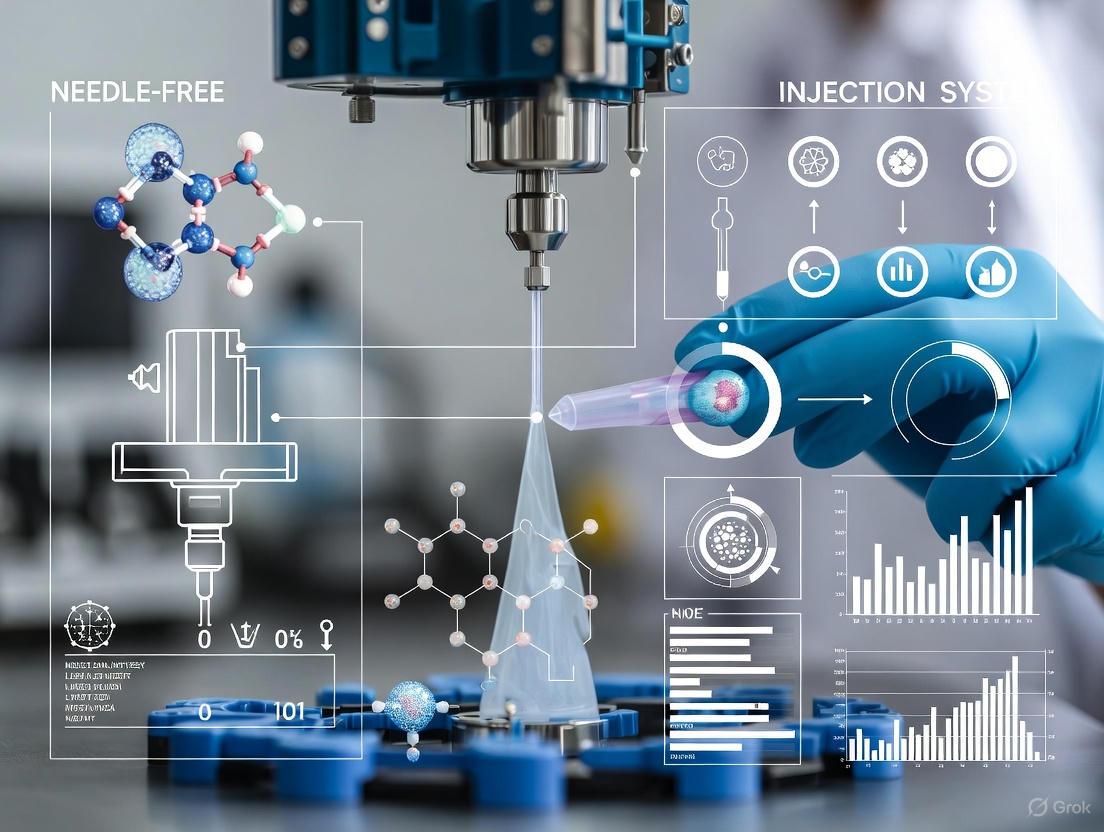
This article provides a comprehensive analysis of needle-free water-jet injection technology for cell therapy applications, targeting researchers, scientists, and drug development professionals.
Needle-Free Cell Injection: Advancing Biotherapeutics with Water-Jet Technology
Abstract
This article provides a comprehensive analysis of needle-free water-jet injection technology for cell therapy applications, targeting researchers, scientists, and drug development professionals. It explores the foundational physics and mechanisms of laser-induced microjets, details current methodological approaches for delivering sensitive biological materials, addresses key optimization challenges for viable cell processing, and presents comparative validation data against traditional needle-based systems. The synthesis of recent technological breakthroughs, clinical applications, and market trends offers a strategic roadmap for implementing this transformative technology in advanced therapy medicinal products (ATMPs) and automated cell manufacturing platforms.
The Physics and Principles of Needle-Free Liquid Jet Cell Delivery
Laser-induced cavitation and the subsequent formation of microjets represent a sophisticated physical phenomenon with transformative potential in biomedical engineering, particularly for needle-free drug and cell delivery. This technology utilizes focused laser energy to generate controlled cavitation bubbles in a liquid medium. The precise collapse of these bubbles near a solid boundary or a free surface propels a high-velocity microjet of liquid. When harnessed effectively, this microjet can penetrate biological tissues and deliver payloads without the use of a conventional needle, thereby mitigating issues such as needle phobia, needlestick injuries, and cross-contamination [1] [2]. This Application Note delineates the fundamental mechanisms of this process and provides detailed experimental protocols for its investigation and application, contextualized within needle-free injection research.
Fundamental Mechanisms and Key Quantitative Data
The process of laser-induced cavitation and microjet formation is a transient, multi-stage event. A nanosecond-scale pulsed laser is focused into a liquid, leading to optical breakdown and plasma generation. This plasma rapidly expands, creating a high-pressure cavitation bubble. The subsequent dynamics are governed by the pressure differential between the bubble interior and the surrounding liquid.
Bubble Dynamics and Microjet Formation: When a cavitation bubble collapses near a solid boundary (e.g., a drug reservoir membrane or a biological tissue), the spherical symmetry of the collapse is broken. The side of the bubble furthest from the wall collapses faster than the near side, leading to the formation of a high-speed, focused microjet that penetrates the bubble and travels toward the boundary [3] [4]. This microjet is the principal agent for material delivery in needle-free injectors. The velocity, direction, and energy of the microjet are critically dependent on parameters such as the laser energy, the bubble's initial position relative to the boundary, and the properties of the liquid medium.
Shock Wave Emission: The collapse of the cavitation bubble is also accompanied by the emission of intense shock waves [3] [5]. These pressure waves can contribute to the overall mechanical impact on a target material or tissue. In a biomedical context, understanding the interplay between the microjet and the shock wave is essential for optimizing delivery efficiency and minimizing potential tissue damage.
The table below summarizes key quantitative data from foundational studies on laser-induced cavitation and its material effects, which inform the design of needle-free injection systems.
Table 1: Quantitative Data from Laser-Induced Cavitation and Related Jet Injection Studies
| Parameter | Reported Value(s) | Context and Impact | Source |
|---|---|---|---|
| Laser Pulse Width | 7 - 9 nanoseconds | Typical for Nd:YAG lasers used to induce cavitation; affects the initial plasma formation and pressure rise. [3] [5] | |
| Bubble Pulsation Period | 795 μs (total, 500 mJ energy); First cycle: 412.5 μs | The bubble undergoes damped oscillations. Most energy is dissipated in the first cycle, dictating the primary impact. [4] | |
| Micro-Dimple Diameter | 450 μm (500 mJ energy, with Cu foil) | A proxy for the affected area on a material, indicating the potential delivery spot size on tissue. [4] | |
| Micro-Dimple Depth | 13.56 - 18.25 μm (for microtexturing) | Indicates the penetration depth achievable in a metallic substrate, suggesting potential for intradermal delivery. [5] | |
| Optimal Bubble Standoff Distance | 3 mm (for microgroove formation) | The initial bubble position is critical for controlling jet velocity and impact pressure. [3] | |
| Jet Injector Driving Pressure | 130 - 1,800 psi | Pressures in commercial needle-free devices; lower pressures (130-160 psi) reduce pain while maintaining efficacy. [2] | |
| Nozzle Diameter (Jet Injector) | ~150 μm | The orifice size that creates a high-speed stream for tissue penetration, comparable to a mosquito's proboscis. [1] | |
| Microjet Velocity (Estimated) | Quantified via pit morphology analysis | Velocity can be inferred from the erosion pits left on a soft metal target, such as copper. [6] |
Experimental Protocols
This section provides a detailed methodology for two key experimental approaches: one for fundamental visualization and analysis of the cavitation process, and another for applying this process to material deformation, which serves as a model for tissue penetration.
Protocol: High-Speed Visualization of Laser-Induced Cavitation Bubbles and Microjet Formation
Objective: To capture the dynamics of laser-induced cavitation bubble formation, oscillation, collapse, and microjet generation near a solid boundary.
Apparatus Setup:
- Laser System: Utilize a Q-switched Nd:YAG laser (e.g., Nimma Extra, Beamtech) with a wavelength of 532 nm or 1064 nm and a pulse width of 7-9 ns [3] [4].
- Optical Path: Employ a beam expander to widen the laser beam. Direct the expanded beam through a mirror and focus it into the test chamber using a convex lens (e.g., focal length to achieve a 0.5 mm spot size) [5].
- Test Chamber: A high-transmittance acrylic water tank filled with filtered deionized water.
- High-Speed Imaging: Position a high-speed camera (e.g., Phantom V2012) opposite an LED backlight source. Set the camera to a high frame rate (e.g., 400,000 fps) and a resolution of 128 x 128 or 256 x 256 pixels [4] [5]. Synchronize the camera trigger with the laser pulse using a delay generator.
- Pressure Measurement: Place a hydrophone (e.g., fiber-optic FOPHv2) at a known distance (e.g., 10 cm) and angle (e.g., 45°) from the laser focus point. Connect the hydrophone to a high-performance oscilloscope to record shock wave signals [3] [4].
Sample Preparation and Positioning:
- Use a solid sample, such as a polished 7050 aluminum alloy block, to represent the boundary.
- Adhere a sacrificial absorption layer (e.g., 100 μm thick copper foil or black paint) to the sample surface to prevent laser ablation and standardize energy coupling [3] [4].
- Mount the sample in the water tank and use a high-precision 3D movable platform to position it accurately. Define the "initial bubble position" as the distance (H) between the laser focus point and the sample surface.
Data Acquisition and Analysis:
- Execution: Fire the laser pulse. The synchronization system should trigger the high-speed camera and the oscilloscope simultaneously.
- Image Analysis: From the high-speed video, measure the bubble radius over time (R(t)) to determine the maximum bubble radius and oscillation period. Observe the jet formation during the collapse phase near the boundary.
- Pressure Analysis: Analyze the oscilloscope trace to identify the peak voltage corresponding to the initial plasma shock wave and the subsequent bubble collapse shock wave. Convert this voltage to pressure using the hydrophone's calibration factor.
Protocol: Micro-Dimple Formation via Laser-Induced Cavitation for Penetration Modeling
Objective: To investigate the deformation effects of cavitation bubble collapse on a metallic surface, modeling the potential for tissue penetration in needle-free injection.
Apparatus and Sample Preparation:
- Utilize the setup described in Protocol 3.1.
- The sample is a 20 mm x 20 mm x 5 mm piece of 7050 aluminum alloy, sequentially polished with sandpaper (from 60# to 2500#) and diamond paste to a mirror finish. Clean and dry the sample ultrasonically [4] [5].
- Affix a 100 μm copper foil absorption layer to the sample surface.
Experimental Procedure:
- Parameter Variation: Systematically vary the following parameters:
- Laser Energy: Test a range from 200 mJ to 500 mJ.
- Standoff Distance (H): Adjust the sample position to vary H from 2 mm to 5 mm.
- Number of Impacts: Subject the same spot to multiple laser pulses (e.g., 1, 3, 5 impacts).
- Process Execution: For each parameter set, position the sample and administer the laser pulse(s).
- Parameter Variation: Systematically vary the following parameters:
Post-Processing and Metrology:
- Surface Morphology Analysis: After processing, remove the sample and clean it. Use a non-contact optical profilometer (e.g., NanoFocus µsurf) to measure the 3D morphology of the resulting micro-dimple.
- Data Extraction: From the 3D profile, extract the dimple's depth and diameter. Analyze how these geometric characteristics depend on the laser energy, standoff distance, and number of impacts [3] [4].
The Scientist's Toolkit: Research Reagent Solutions
Table 2: Essential Materials and Equipment for Laser-Induced Cavitation Research
| Item | Typical Specification | Function in Research |
|---|---|---|
| Q-switched Nd:YAG Laser | Wavelength: 532/1064 nm; Pulse Width: <10 ns; Energy: >100 mJ | Generates the plasma and initiates the cavitation bubble through optical breakdown in the liquid. [3] [4] |
| High-Speed Camera | Frame Rate: >100,000 fps; Resolution: 128x128 pixels | Captures the transient dynamics of bubble expansion, collapse, and microjet formation. [4] |
| Fiber-Optic Hydrophone | Bandwidth: 1-35 MHz; Sensitivity: Calibrated | Measures the pressure of shock waves emitted during plasma formation and bubble collapse. [3] |
| Sacrificial Absorption Layer | 100 μm thick Copper Foil or Black Paint | Protects the target sample from direct laser ablation and ensures consistent plasma generation. [3] [5] |
| Ablation Medium | Filtered Deionized Water | The liquid medium in which the cavitation bubble is generated and evolves. |
| 3D Profilometer | Non-contact type; Vertical resolution: 2 nm | Measures the micro-scale deformation (dimples) on the target surface, quantifying the process impact. [5] |
Workflow and Mechanism Visualization
The following diagram illustrates the logical sequence and core mechanisms involved in a needle-free injection system based on laser-induced cavitation.
Diagram 1: Needle-Free Injection via Laser-Induced Cavitation. This workflow outlines the transformation of laser energy into a mechanical force for drug delivery. The process begins with a laser pulse generating plasma, which leads to the formation and asymmetric collapse of a cavitation bubble. This collapse produces a high-speed microjet that penetrates the target tissue to administer a drug payload without a needle [3] [1] [4].
Historical Development and Evolution of Medical Water-Jet Technology
The adoption of water-jet technology in medicine represents a significant paradigm shift from industrial material processing to precise, minimally invasive biomedical applications. Framed within a broader thesis on needle-free injection, this evolution is characterized by the translation of high-pressure fluid dynamics principles to solve complex challenges in cell therapy and tissue manipulation. Medical water-jet technology has progressed from rudimentary tissue dissection to sophisticated cell delivery platforms that preserve viability and function while eliminating needle-induced trauma [7]. This document details the historical trajectory, technical parameters, and experimental protocols that underpin contemporary research in needle-free cell injection using water-jet technology, providing researchers with both contextual understanding and practical methodologies.
Historical Development and Technological Evolution
The transition of water-jet technology from industrial cutting to medical applications began in earnest in the 1980s, leveraging fundamental principles of fluid dynamics that had been established in industrial settings since the mid-20th century [8]. The recognition that controlled fluid streams could dissect tissues with minimal thermal damage and precise tissue-selectivity drove initial surgical adoption, primarily for hepatic resections [7]. The subsequent conceptual leap to cell injection emerged from observed advantages in precision and reduced tissue damage compared to conventional needle-based systems.
Table 1: Historical Evolution of Medical Water-Jet Technology
| Time Period | Key Developments | Primary Applications | Technical Specifications |
|---|---|---|---|
| 1980s | Initial surgical adaptation of industrial water-jet | Hepatic resections, soft tissue dissection | Pressures tailored for tissue compliance [7] |
| 1990s–2000s | Laparoscopic integration | Minimally invasive surgery, tumor dissection | Sterile saline systems, improved pressure control [7] |
| Early 2000s | Needle-free injection concept development | Vaccinations, drug delivery | Low-pressure systems for minimal cellular damage [7] |
| 2010–2015 | Preclinical cell therapy research | Hydrodynamic debridement, wound care | Dual-pressure systems (high for tissue penetration, low for delivery) [7] [9] |
| 2015–Present | Refined cell injection protocols | Regenerative medicine, urinary incontinence therapy | Pressure ranges 1–80 bar; viability >80% [10] [11] |
The critical innovation distinguishing medical water-jet technology from its industrial predecessors lies in the development of pressure modulation systems. Unlike industrial cutting systems that operate at consistently high pressures (e.g., 60,000–90,000 psi), medical systems for cell injection utilize precisely controlled lower pressures (typically 1–80 bar) that can be adjusted in milliseconds to accommodate different tissue types and cellular sensitivities [10] [7]. This temporal control enables a two-phase injection approach: an initial high-pressure phase to loosen the extracellular matrix and create micro-lacunae, followed immediately by a low-pressure phase to gently deliver cells into the prepared tissue space [11].
Technical Parameters and Performance Metrics
Contemporary medical water-jet systems for cell injection operate within precisely defined parameters that balance effective tissue penetration with optimal cell viability. These systems typically utilize sterile saline as the fluid medium and can generate jet widths of less than 200 micrometers, enabling precise targeting without direct nozzle-tissue contact [10].
Table 2: Technical Specifications of Medical Water-Jet Systems for Cell Injection
| Parameter | Typical Range | Impact on Procedure | Research Evidence |
|---|---|---|---|
| Injection Pressure | 1–80 bar | Determines tissue penetration depth and distribution pattern | Significantly wider cell distribution vs. needles (P < 0.05) [10] |
| Nozzle Diameter | 100–500 µm | Affects jet stream characteristics and tissue interaction | Adapted to tissue density and target depth [12] |
| Cell Viability | >80% | Critical for therapeutic efficacy in regenerative applications | Viability significantly higher than needle injection (typically 1-31%) [11] |
| Injection Depth | Adaptable via pressure control | Enables precise targeting of specific tissue layers | Successful injection to urethral sphincter complex [10] |
| Success Rate | ≥95% | Procedure reliability and consistency | Significantly higher than needle injection in living animal models [10] |
The biomechanical interaction between water-jet and biological tissue is governed by tissue-specific properties including stiffness, elasticity, and structural composition. Research indicates that liver tissue, for instance, exhibits a stiffness range of 4.2–4.6 kPa, while other soft tissues demonstrate varying mechanical properties that influence their response to water-jet exposure [12]. Understanding these parameters is essential for optimizing injection protocols for different target tissues and cell types.
Application Notes: Needle-Free Cell Injection for Urinary Incontinence
Background and Rationale
Stress urinary incontinence (SUI), characterized by deficiency of the urethral sphincter muscle, affects 15-35% of adult populations [10]. Cell therapy has emerged as a promising regenerative approach, but conventional needle delivery systems face significant limitations including poor cell distribution, low viability (as low as 1-31%), and tissue damage from needle penetration [11]. Water-jet technology addresses these limitations by enabling precise, needle-free delivery of therapeutic cells (typically muscle-derived cells or adipose tissue-derived stromal cells) to the urethral sphincter complex under cystoscopic guidance [10] [11].
Mechanism of Action
The water-jet cell delivery system operates through a sequential mechanism:
- Tissue Penetration Phase: Isotonic solution applied at higher pressure (e.g., E60 or E80 effect setting) temporarily loosens the extracellular matrix and creates interconnecting micro-lacunae
- Cell Injection Phase: Pressure rapidly decreases (to approximately E10 effect setting) to gently deliver cells suspended in solution into the prepared tissue space
- Integration Phase: Cells are deposited in a liquid-filled cavernous area with minimal mechanical stress, enhancing retention and integration [11]
This approach significantly reduces mechanical shear forces on cells compared to needle passage through solid tissue, maintaining viability and functionality while enabling more even distribution throughout the target tissue.
Experimental Protocols
Protocol 1: Water-Jet Injection of Porcine Adipose Tissue-Derived Stromal Cells (pADSCs)
Objective: To deliver viable pADSCs into cadaveric urethral tissue using water-jet technology and assess post-delivery cell viability and biomechanical properties [11].
Materials and Equipment:
- Porcine adipose tissue samples
- Water-jet device (e.g., Erbe Elektromedizin GmbH)
- Williams needle (WN; Cook Medical) for comparison
- Dulbecco's Modified Eagle Medium - low glucose (DMEM-LG)
- Fetal bovine serum (FBS), Penicillin-Streptomycin, Amphotericin B
- Collagenase type I
- Calcein-AM and ethidium homodimer dyes
- Cell culture flasks (75 cm²)
- Centrifuge, hemocytometer
- Atomic force microscope (AFM) for elasticity measurements
Procedure:
- Isolation of pADSCs:
- Mince porcine adipose tissue into small fragments using scalpels in a sterile Petri dish
- Incubate tissue with 5 mL homogenizer solution (PBS with 1% BSA and 0.1% collagenase type I) for 30 minutes at 37°C on a shaker
- Stop digestion by adding 10 mL growth media (DMEM-LG with 10% FBS, 1% Penicillin-Streptomycin, 1% Amphotericin B)
- Remove adipocyte layer floating on top and filter stromal fraction through 100 µm cell sieve
- Centrifuge filtered cell suspension at 630 × g for 7 minutes at room temperature
- Resuspend pellet in PBS, repeat centrifugation, and seed cells in 75 cm² flasks with growth media
Cell Culture and Preparation:
- Culture cells at 37°C with 5% CO₂, passage at 70% confluence
- Harvest cells using 0.05% Trypsin-EDTA, incubate 3-5 minutes at 37°C
- Neutralize trypsin with growth media, centrifuge at 630 × g for 7 minutes
- Resuspend cells and count using hemocytometer
- For injection, label cells with calcein-AM (2 µM) and ethidium homodimer (4 µM) in growth media for 30 minutes at room temperature in the dark
Water-Jet Injection:
- Prepare cadaveric urethral tissue samples
- Set water-jet device to appropriate pressure parameters:
- Tissue penetration phase: Higher pressure (E60 or E80 effect)
- Cell injection phase: Lower pressure (up to E10 effect)
- Deliver labeled pADSCs into tissue samples via water-jet cystoscopy
- For comparison, inject parallel samples using Williams needle
Post-Injection Analysis:
- Extract cells from injected tissue and assess viability using fluorescence microscopy
- Compare viability between water-jet and needle-injected cells
- Perform atomic force microscopy (AFM) to measure cellular elasticity
- Analyze cell distribution patterns within tissue samples
Protocol 2: Water-Jet Injection of Muscle-Derived Cells for Urethral Sphincter Regeneration
Objective: To deliver viable muscle-derived cells (MDCs) into the urethral sphincter complex using water-jet technology and assess cell distribution and retention in living animal models [10].
Materials and Equipment:
- Muscle-derived cells from piglets (German Landrace)
- Transgenic piglets expressing iRFP720 fluorescent protein (optional)
- Water-jet device (Erbe Elektromedizin GmbH)
- PKH26 fluorescent cell linker kit
- CellLight BacMam 2.0 (eGFP expression system)
- Surgical equipment for animal procedures
- Fluorescence microscopy equipment
- Image analysis software
Procedure:
- MDC Isolation and Preparation:
- Isolate MDCs from musculus longissimus or musculus semitendinosus of piglets
- Minced muscle tissue and enzymatically degrade using 0.025% trypsin, 0.2% mixed collagenases I + II, and 0.01% DNase I in PBS for 20 minutes at 37°C with agitation
- Filter supernatant through 100 µm nylon strainer, centrifuge at 800 × g for 10 minutes at 4°C
- Purify MDCs using Percoll step-gradient centrifugation (15,000 × g, 4°C, 9 minutes)
- Collect interface containing mononuclear cells, wash with DMEM
- Expand cells in type I collagen-coated flasks in growth medium with 10% FBS
- Label cells with PKH26 following manufacturer's protocol prior to injection
In Vivo Water-Jet Injection:
- Anesthetize experimental pigs using established protocols (atropine 0.05 mg/kg, azaperone 4 mg/kg, phenobarbital 150 mg/kg)
- Perform visual-guided cystoscopy to access urethral sphincter
- Set water-jet pressure parameters based on desired injection depth
- Inject labeled MDCs into urethral sphincter complex
- Monitor animals for up to 7 days post-injection
Analysis and Evaluation:
- Sacrifice animals at predetermined time points and harvest tissue
- Process urethral tissue for histological analysis
- Evaluate cell distribution, retention, and tissue integration using fluorescence microscopy
- Assess cell morphology, nuclear integrity, and chromosomal DNA condition
- Compare results with needle-injected controls for distribution width and success rate
The Scientist's Toolkit: Essential Research Reagents and Materials
Table 3: Essential Research Reagents for Water-Jet Cell Injection Studies
| Reagent/Material | Function | Application Notes | Representative Examples |
|---|---|---|---|
| Cell Culture Media | Cell expansion and maintenance | Use low-glucose DMEM with 10% FBS for ADSCs and MDCs | DMEM-LG with supplements [11] |
| Fluorescent Labels | Cell tracking and viability assessment | Membrane-permeable dyes for live cells; membrane-impermeant for dead cells | Calcein-AM, PKH26, ethidium homodimer [10] [11] |
| Enzymatic Digestion Cocktail | Tissue dissociation for cell isolation | Optimize concentration and timing for different tissue types | Collagenase type I, trypsin, DNase I [10] [11] |
| Water-Jet Apparatus | Needle-free cell delivery | Pressure-controlled system with sterile fluid path | Erbe Elektromedizin GmbH system [10] |
| Sterile Isotonic Solution | Fluid medium for injection | Maintains cell viability during delivery | Physiological saline or PBS [11] |
| Atomic Force Microscope | Biomechanical characterization | Measures cellular elasticity post-injection | Post-delivery elasticity assessment [11] |
Technical Considerations and Optimization Guidelines
Successful implementation of water-jet cell injection protocols requires careful attention to several critical parameters:
Pressure Optimization: The relationship between injection pressure and tissue penetration depth must be empirically determined for each tissue type. Research indicates that mechanical properties of target tissues vary significantly - liver stiffness ranges from 4.2-4.6 kPa, while other tissues exhibit different compliance characteristics [12]. Initial pressure calibration should be performed using dye injection in ex vivo tissue models to establish pressure-depth correlation before proceeding with cellular materials.
Cell Viability Preservation: Maintaining viability >80% requires optimization of multiple parameters including nozzle diameter, pressure transition timing, and cell suspension density. The two-phase injection approach (high pressure for tissue penetration followed by immediate transition to low pressure for cell delivery) has demonstrated significant advantages in preserving membrane integrity and cellular function [11]. Additionally, the composition of the suspension medium can significantly impact outcomes, with isotonic buffers outperforming hypotonic or hypertonic solutions.
Distribution Control: The wider distribution pattern achieved with water-jet technology (compared to needle injection) represents both an advantage and a parameter requiring careful control. Studies report significantly wider cell distribution with water-jet injection (P < 0.05), which can be modulated by adjusting injection pressure, volume, and duration [10]. For clinical applications requiring precise spatial localization, these parameters must be calibrated to achieve the desired distribution profile while minimizing dispersion beyond target tissues.
The historical evolution of medical water-jet technology has transformed it from a industrial cutting tool to a sophisticated biomedical platform for needle-free cell injection. The documented protocols and technical parameters provide researchers with a foundation for advancing this promising technology toward clinical application in regenerative medicine, particularly for urinary incontinence and other conditions requiring precise cellular delivery. As research continues, further refinement of pressure parameters, nozzle designs, and injection strategies will likely expand the applications of this technology while improving efficacy and reliability. The integration of water-jet cell injection with emerging modalities in image guidance and real-time monitoring represents the next frontier in this evolving field.
In the evolving field of regenerative medicine and drug delivery, needle-free water-jet injection technology presents a paradigm shift, offering a method to precisely deliver cells and biologics with minimal tissue damage. This technique leverages the kinetic energy of high-speed liquid microjets to penetrate biological tissues, eliminating the drawbacks of conventional needle-based systems, such as significant cell damage, needle-stick injuries, and patient needle phobia. The efficacy of this technology is governed by a complex interplay of key physical parameters: the pressure dynamics that drive the fluid, the velocity of the resulting jet, and the impact forces that determine tissue penetration and dispersion. This document details the core physical principles and provides standardized protocols to guide researchers in optimizing these systems for reproducible and effective application in preclinical research.
Core Physical Principles and Quantitative Parameters
The performance of a needle-free injector is primarily determined by the relationship between its power source, the generated fluid jet, and the mechanical properties of the target tissue.
Jet Power and Tissue Penetration
The fundamental metric for successful tissue penetration is the power of the liquid jet ((P{jet})), which combines jet velocity and diameter. The governing equation is: [P{jet} = \frac{1}{8}\pi\rho D{jet}^{2}v{jet}^{3}] where (\rho) is the fluid density, (D{jet}) is the jet diameter, and (v{jet}) is the jet velocity [13] [14]. This relationship shows that jet velocity has a cubic influence on power, making it the most critical parameter for controlling injection depth.
Experimental data correlates jet power with penetration depth into hydrogels of varying elastic moduli, mimicking different tissue stiffnesses. For instance, a jet power of approximately 7 W is sufficient to penetrate a 2% agar gel (elastic modulus ~ 60 kPa) to a depth of about 1 mm [15]. To penetrate stiffer tissues, such as those with an elastic modulus up to 0.5 MPa, unprecedented jet speeds exceeding 680 m/s are required [14].
Table 1: Key Physical Parameters for Needle-Free Injection Systems
| Parameter | Typical Range | Biological Significance | Key Findings from Literature |
|---|---|---|---|
| Jet Velocity ((v_{jet})) | 80 - >850 m/s [13] [14] | Determines penetration capability and injection depth. | • 150 m/s is a threshold for efficient intradermal delivery [13].• Supersonic jets (>680 m/s) enable injection into harder tissues (e.g., scars, tumors) [14]. |
| Nozzle Diameter ((D_{jet})) | 76 - 360 µm [16] | Controls injection volume and lateral precision. | • Smaller diameters (e.g., 10-30 µm) reduce tissue damage and increase jet stability [14].• A diameter of 152 µm at 150 m/s optimizes injection efficiency in human skin [13]. |
| Jet Power ((P_{jet})) | ~7 W - >50 W [13] [15] | Primary determinant of penetration depth in elastic tissues. | • A power of ~7 W penetrates 2% agar gel (~60 kPa) [15].• >50 W enables >90% delivery efficiency into the dermis [13]. |
| Operating Pressure | 5 - 80 bar (Effects E5 - E80) [16] [11] | Drives fluid acceleration; can be tuned for tissue penetration vs. gentle cell delivery. | • High pressure (E60-E80) used for initial tissue penetration [11].• Low pressure (E<20) used for cell injection to maintain viability [17]. |
| Target Tissue Elastic Modulus | 16 kPa - 0.5 MPa [14] | Mimics a range of biological tissues from fat to scarred skin. | • Softer gels (e.g., 13-30 kPa): mimic healthy dermis and fat [14].• Stiffer gels (>450 kPa): mimic scarred skin or certain tumors [14]. |
Pressure Dynamics and Fluid Rheology
The pressure applied to the fluid is the driving force behind jet formation. Needle-free systems use various energy sources, including compressed air, springs, and lasers [18] [15]. A critical operational strategy, particularly for delicate cell injections, is the use of a two-phase pressure protocol: a high-pressure pulse (e.g., E60-E80, equivalent to 60-80 bar) to create a micro-cavity in the tissue, immediately followed by a low-pressure phase (E<20) to gently deliver the cellular suspension into the pre-formed space, thereby minimizing shear stress on the cells [17] [11].
The geometry of the fluid path, particularly a tapered orifice, significantly influences pressure drop and boundary layer development. Computational studies show that a converging taper suppresses boundary layer growth and accelerates the fluid, leading to a more stable and collimated jet [13]. The fluid's viscosity and its behavior under shear (rheology) are also crucial. For non-Newtonian, shear-thinning fluids like DNA vaccines, the Carreau model can predict flow behavior, and nozzle geometry can be optimized to maintain consistent performance across different fluid types [13].
Experimental Protocols for System Characterization
Protocol: Measuring Jet Velocity and Penetration Depth in Tissue Phantoms
This protocol is used to calibrate an injector and quantify its penetration capability using agarose hydrogels as standardized tissue phantoms.
I. Materials and Reagents Table 2: Research Reagent Solutions for Jet Characterization
| Reagent / Material | Function / Explanation |
|---|---|
| Agarose Powder | Used to prepare hydrogel phantoms with tunable elastic modulus to simulate skin and other tissues. |
| Phosphate-Buffered Saline (PBS) | Aqueous medium for preparing hydrogels and for injection to simulate drug/cell carrier fluids. |
| Allura Red AC Dye | Added to the injection fluid to enhance laser energy absorption in laser-induced systems [14]. |
| High-Speed Camera | Essential for visualizing and quantifying jet formation, velocity, and impact dynamics (e.g., >200,000 fps) [14]. |
| Boroscillicate Glass Capillaries | Commonly used as nozzles; available in precise inner diameters (e.g., 100, 150, 300 µm) [14]. |
II. Procedure
- Hydrogel Preparation: Prepare agarose gels at concentrations ranging from 1% to 2% (w/v) in PBS to mimic a spectrum of tissue stiffnesses (approximately 16 kPa to 60 kPa) [15] [14].
- System Setup: Mount the needle-free injector perpendicular to the hydrogel surface at a fixed standoff distance (e.g., 1.5 mm) [14].
- High-Speed Imaging: Position a high-speed camera to capture the jet in a side-view. Use back illumination for optimal contrast.
- Velocity Measurement: Fire the injector and record the event. The jet velocity ((v{jet})) is calculated by tracking the jet tip displacement between frames using the formula: (v{jet} = \Delta x / \Delta t).
- Penetration Depth Analysis: After injection, carefully section the hydrogel and measure the depth of the formed cavity using calipers or microscopic imaging.
The workflow for this characterization protocol is summarized in the following diagram:
Protocol: Assessing Cell Viability Post Water-Jet Injection
This protocol evaluates the impact of the injection process on the viability and function of delivered cells.
I. Materials and Reagents
- Cells: e.g., Porcine Adipose Tissue-Derived Stromal Cells (pADSCs) [11] or Mesenchymal Stromal Cells (MSCs) [16].
- Injection Media: Dulbecco's Modified Eagle's Medium (DMEM) supplemented with 10% Fetal Bovine Serum (FBS). Serum proteins act as a protective agent against shear stress [16].
- Viability Stains: Calcein-AM (for live cells) and a membrane-impermeant dye like propidium iodide (for dead cells) [11].
- Needle-Free Injector: e.g., a modified ERBEJET2 system capable of two-phase pressure settings [17] [11].
II. Procedure
- Cell Preparation: Harvest and concentrate cells (e.g., to (6 \times 10^6) cells/mL) in injection media [11].
- Control Group: Reserve an aliquot of cells that does not undergo injection.
- Injection Group: Load the cell suspension into the injector's dosing unit. Inject into a capture fluid (e.g., PBS) or cadaveric tissue using the E60-10 setting (i.e., high-pressure penetration at E60, low-pressure injection at E10) [17] [11].
- Cell Recovery: Collect the injected cells from the capture fluid or dissociate them from the tissue.
- Viability Assay: Label the recovered cells and controls with viability stains. Quantify the percentage of live and dead cells using a fluorescence microscope or flow cytometer. Viability should typically be >80% to be considered acceptable for therapeutic purposes [11].
The Scientist's Toolkit: Essential Research Reagent Solutions
Successful implementation of water-jet cell injection requires careful selection of reagents to balance injectability with cell health.
Table 3: Essential Reagents for Water-Jet Cell Injection
| Reagent Solution | Function / Explanation |
|---|---|
| Serum-Containing Media (e.g., DMEM + 10% FBS) | Serves as the cell carrier fluid. Proteins in the serum provide shear-thinning behavior and a protective effect on cells during the high-stress injection process [16]. |
| Fibrinogen & Thrombin | Used in multi-channel injectors to form a protective, polymerizing hydrogel in situ. This shields cells during injection and improves retention at the target site by creating a biocompatible scaffold [16]. |
| Phosphate-Buffered Saline (PBS) with Ca++/Mg++ | A balanced salt solution used as a control transport medium or for preparing hydrogel phantoms. Lacks the protective properties of protein-enriched media [16]. |
| Type I Collagenase | Enzyme used for the initial digestion of adipose tissue to isolate stromal cells for subsequent injection experiments [11]. |
| Calcein-AM & Propidium Iodide | Fluorescent live/dead viability stains. Used to quantitatively assess the impact of the injection process on cell membrane integrity and survival [11]. |
Mastering the key physical parameters of pressure, velocity, and impact force is fundamental to advancing needle-free water-jet injection technology. The quantitative data and standardized protocols provided here offer a framework for researchers to systematically optimize these systems. By carefully selecting nozzle geometry, tuning pressure profiles, and employing cell-protective reagents, it is possible to achieve precise, minimally invasive delivery of sensitive biological materials like living cells. This approach holds significant promise for enhancing the efficacy and safety of regenerative therapies and intradermal drug delivery.
Needle-free jet injection using water-jet technology represents a transformative approach for administering drugs and cells, eliminating the risks associated with hypodermic needles including needlestick injuries, phobia, and biohazard waste [19]. The fundamental principle involves pressurizing a liquid drug or cell suspension to form a high-speed microjet (typically 50–300 µm in diameter) that penetrates the skin and deposits its payload into targeted tissue layers [20]. The efficacy of this technology critically depends on the dynamic interaction between the propelled liquid jet and the complex, multi-layered biological substrates it encounters.
Understanding these material interactions is essential for developing efficient transdermal delivery systems. Biological tissues, including skin, muscle, and subcutaneous fat, exhibit anisotropic mechanical properties, viscoelastic behavior, and layered structural integrity that significantly influence jet penetration and dispersion patterns [21]. The interaction mechanism poses a unique challenge as the injected drug must penetrate various skin tissue layers and interact with these layers and their interfaces during both penetration and dispersion phases, typically under injection pressures in the MPa range [20]. This document details the key interaction mechanisms, provides quantitative data on jet behavior across substrates, and outlines standardized protocols for evaluating injection performance in research settings.
Fundamental Interaction Mechanisms
The interaction between a high-speed liquid jet and biological tissue involves complex biomechanical processes. When the jet impacts the tissue surface, its kinetic energy is converted to work for penetrating the tissue matrix and dispersing the fluid.
Primary Penetration and Dispersion Phenomena
Research using optically cleared ex vivo skin models with microsecond imaging has revealed two distinct penetration phases [20]. The initial penetration phase involves the fluid jet penetrating to a specific depth with minimal diffusion. This is followed by a radial dispersion phase where subsequent fluid influx causes spherical or elliptical dispersion in the tissue matrix. The depth achieved at the end of the initial penetration is termed the initial penetration depth, while the final settled position constitutes the final penetration depth [20].
In soft tissues, the waterjet dissection mechanism relies on exploiting differences in tissue fracture toughness and structural integrity. Unlike mechanical cutting, waterjet processes separate tissues through controlled erosion and fracture propagation along paths of least resistance, potentially preserving vital structures like nerves and blood vessels [7] [21]. For cell injection applications, this targeted separation allows for precise placement of therapeutic agents with minimal tissue damage.
Tissue-Specific Jet Interaction Characteristics
Table 1: Jet Interaction Characteristics with Different Biological Substrates
| Biological Substrate | Key Structural Properties | Dominant Interaction Mechanism | Resultant Dispersion Pattern |
|---|---|---|---|
| Skin (Epidermis/Dermis) | Multi-layered, dense collagen network, high fracture toughness | Dynamic rupture of collagen matrix, interface delamination | Initial narrow tract followed by limited radial dispersion [20] |
| Subcutaneous Fat | Low-density adipocyte cells, weak structural reinforcement | Cavitation and low-resistance fracture along cell borders | Wider, irregular dispersion with potential for pocket formation [21] |
| Skeletal Muscle | Anisotropic fiber organization, intermediate mechanical strength | Separation along fiber directions, inter-fascicular dispersion | Elliptical dispersion aligned with muscle fibers [7] |
| Liver/Kidney Parenchyma | Homogeneous cellular structure, high vascularity | Bulk fracture and hydraulic erosion | Spherical, predictable dispersion with rapid vascular uptake [7] |
| Urethral Sphincter Complex | Mixed smooth/striated muscle, clinical SUI treatment target | Controlled micro-cavitation creating space for cell placement | Wider distribution compared to needle injection [10] |
The varying mechanical properties of tissue layers and their interfaces play a crucial role in determining injection characteristics. Studies document that the penetration depth in homogeneous in vitro media like gelatin may be significantly higher than in actual skin tissue due to the anisotropic nature and complex layered structure of biological tissue [20].
Quantitative Performance Data Across Biological Substrates
Systematic evaluation of jet injection parameters across different biological substrates provides essential data for protocol optimization. The following tables summarize key quantitative relationships observed in experimental studies.
Injection Performance Across Substrate Types
Table 2: Comparative Injection Performance Across Biological Substrates
| Substrate Type | Optimal Pressure Range (MPa) | Typical Penetration Depth (mm) | Dispersion Volume (µL) | Cell Viability Post-Injection |
|---|---|---|---|---|
| Porcine Skin (ex vivo) | 15-30 [20] | 2-6 (depending on target layer) | 100-500 [19] | 85-95% (variable by pressure) [10] |
| Porcine Urethra (in vivo) | 4-12 [10] | 1-3 (submucosal) | 50-200 | ≥95% [10] |
| Gelatin (0.5-10%) | 5-25 [22] | 3-15 (concentration-dependent) | 100-1000 | N/A (model system) |
| Muscle Tissue | 10-20 [7] | 5-10 | 500-1000 | 80-90% [10] |
Nozzle Configuration Effects on Delivery Performance
Table 3: Influence of Nozzle Configuration on Delivery Characteristics
| Nozzle Parameter | Configuration Options | Performance Impact | Recommended Applications |
|---|---|---|---|
| Orifice Diameter | 100 µm [22] | High velocity, shallow penetration | Intradermal delivery |
| 200-400 µm [22] | Lower velocity, deeper penetration | Intramuscular delivery | |
| Orifice Geometry | Single orifice | Concentrated deposition | Targeted delivery |
| Dual/multiple orifice | Broader dispersion pattern | Combined ID/IM delivery [22] | |
| Standoff Distance | 0-5 mm | Minimal jet dispersion | Precise superficial delivery |
| 5-20 mm | Increased dispersion before impact | Larger area coverage |
Jet-Tissue Interaction Workflow
Experimental Protocols for Jet-Substrate Interaction Analysis
Protocol: Ex Vivo Injection Analysis Using Optically Cleared Tissue
This protocol adapts methodologies from dynamic imaging studies of jet injections to enable visualization of fluid-tissue interactions in ex vivo models [20].
Research Reagent Solutions:
- Indocyanine Green (ICG) Dye: Near-infrared fluorescent tracer for high-contrast imaging of liquid jet propagation [20]
- Dulbecco's Modified Eagle Medium (DMEM): Isotonic buffer for cell suspension during viability studies [10]
- Phosphate-Buffered Saline (PBS): Carrier solution for drug/dye delivery in non-cellular injections
- Tissue Clearing Agents: Chemical treatments that reduce light scattering for improved visualization
Methodology:
- Tissue Preparation: Obtain fresh porcine skin or other target tissues within 2 hours of sacrifice. Clean and remove excess hair and subcutaneous fat. For visualization studies, apply tissue clearing techniques to enhance optical transparency.
- Dye Preparation: Prepare ICG solution at 0.1-1.0 mg/mL in sterile PBS or appropriate buffer. Filter sterilize if conducting cellular studies.
- Injection System Setup: Mount needle-free jet injector in stable fixture. Set driving pressure according to target tissue (15-30 MPa for skin). Set injection volume to 100-500 µL based on experimental needs.
- High-Speed Imaging: Position high-speed camera capable of microsecond temporal resolution. For NIR imaging, use appropriate excitation (785 nm) and emission filters. Set capture rate to ≥20,000 frames per second.
- Injection Execution: Maintain consistent standoff distance (2-5 mm) between nozzle and tissue surface. Activate injection system while simultaneously triggering image capture.
- Post-Injection Analysis: Dissect tissue to validate deposition sites. Quantify penetration depth, dispersion volume, and pattern using image analysis software.
Protocol: In Vivo Cell Viability and Distribution Assessment
This protocol evaluates the survival and distribution of cells delivered via waterjet technology in living animal models, based on successful urethral sphincter complex injections [10].
Methodology:
- Cell Preparation: Isolate and expand primary muscle-derived cells (MDCs) or other therapeutic cell types. Culture to 70-80% confluence. Label cells with fluorescent markers (e.g., PKH26, calcein-AM) following manufacturer protocols.
- Cell Suspension Preparation: Harvest cells at passage 3-4. Resuspend at concentration of 10-50×10^6 cells/mL in isotonic buffer. Maintain on ice until injection.
- Animal Preparation: Anesthetize animal (porcine model recommended) following approved ethical guidelines. Position for target tissue accessibility.
- Waterjet Injection System Setup: Load cell suspension into sterile injection reservoir. Set pressure parameters based on target tissue depth (4-12 MPa for urethral submucosal delivery).
- Cell Delivery: Position nozzle at 1-5 mm from target tissue. Administer injection in steady motion. For comparative studies, perform parallel needle injections using same cell preparation.
- Post-Injection Analysis:
- Acute Assessment: Sacrifice animal immediately post-injection. Excise target tissue and process for histological analysis. Quantify initial cell distribution.
- Survival Studies: Allow animal to recover. Monitor for 1-7 days before tissue harvest. Assess cell viability, integration, and proliferation via fluorescence microscopy and immunohistochemistry.
Protocol: Hydrodynamic Characterization for Dual-Orifice Injectors
This protocol provides methodology for evaluating injector systems designed for simultaneous multi-depth delivery, using numerical simulation and experimental validation [22].
Methodology:
- Computational Fluid Dynamics Setup:
- Create 3D model of dual-orifice injector geometry (100 µm narrow orifice, 200-400 µm wide orifice).
- Define boundary conditions: fixed upstream pressure (10-30 MPa), fluid properties (density, viscosity).
- Perform steady-state simulation to determine velocity profiles and pressure losses through each orifice.
- Dimensional Analysis:
- Calculate Reynolds number (Re = ρvd/μ) for each orifice to characterize flow regime.
- Calculate Euler number (Eu = ΔP/(ρv²)) to quantify pressure losses.
- Generate geometry-specific correlations in Eu-Re parameter space.
- Experimental Validation:
- Fabricate dual-orifice injector cartridges based on optimized designs.
- Conduct injection experiments into transparent tissue simulants (gelatin at 2-10% concentration).
- Use high-speed imaging to capture penetration characteristics of both jet streams simultaneously.
- Measure penetration depth, dispersion volume, and jet power for each orifice.
- Tissue Testing:
- Perform comparative injections into ex vivo tissue samples (porcine skin, muscle).
- Dissect tissue to validate computational predictions of differential deposition patterns.
The Scientist's Toolkit: Essential Research Materials
Table 4: Essential Research Reagents and Equipment for Jet Injection Studies
| Category | Specific Items | Research Function | Application Notes |
|---|---|---|---|
| Imaging & Visualization | Indocyanine Green (ICG) dye [20] | NIR fluorescent tracer for jet visualization | Enables high-contrast imaging in tissue models |
| High-speed camera (µs resolution) [20] | Captures dynamic jet-tissue interactions | Essential for analyzing penetration mechanics | |
| Micro-CT scanner [23] | 3D reconstruction of injection sites | Quantifies dispersion volume and geometry | |
| Cell Culture & Tracking | Muscle-derived cells (MDCs) [10] | Primary model for cell therapy research | Relevant for musculoskeletal and sphincter applications |
| PKH26/Calcein-AM fluorescent dyes [10] | Cell labeling for viability and tracking | Enables post-injection cell quantification | |
| DMEM + 10% FBS [10] | Cell culture expansion medium | Standardized conditions for reproducible cell preparation | |
| Injection Systems | Spring-powered jet injector [19] | Mechanically-driven injection mechanism | Common in mass immunization devices |
| Compressed air-driven injector [19] | Pneumatically-driven injection mechanism | Offers dynamic control of injection parameters | |
| Dual-orifice injector cartridges [22] | Simultaneous multi-depth delivery | Enables combined intradermal/intramuscular delivery | |
| Tissue Models | Ex vivo porcine skin [20] | Anthropomorphic skin model | Closely mimics human skin mechanical properties |
| Gelatin/Polyacrylamide gels [20] | Transparent tissue simulants | Facilitates initial parameter optimization | |
| Porcine urethral tissue [10] | Sphincter complex model | Relevant for stress urinary incontinence research |
The interaction between liquid jets and biological substrates represents a critical frontier in needle-free injection technology. The data and protocols presented herein establish that successful injection outcomes depend on precisely matching jet parameters—including velocity, orifice geometry, and volume—to the specific mechanical properties of target tissues. The ability to simultaneously deliver therapeutic agents to multiple tissue depths using multi-orifice systems presents particular promise for enhancing immune responses in vaccination and improving cell survival in regenerative therapies [22] [10].
Future research directions should focus on refining real-time control mechanisms that can dynamically adjust injection parameters in response to tissue resistance feedback, ultimately creating more adaptive and precise injection systems. Furthermore, expanding the characterization of jet interactions with pathological tissues (e.g., scar tissue, tumors) will open new therapeutic applications for this promising technology.
Current Technological Landscape and Major Research Initiatives
The field of needle-free injection represents a paradigm shift in the delivery of therapeutic agents, moving beyond traditional syringes to advanced, minimally invasive systems. Needle-free injection technology (NFIT) encompasses a wide range of drug delivery systems that drive drugs through the skin using forces such as Lorentz, shock waves, pressure by gas, or electrophoresis, which propel the drug through the skin without hypodermic needles [1]. This technological approach has evolved significantly from its initial applications in mass immunization programs to sophisticated cell-based therapies, addressing critical limitations of conventional needle injection methods.
Traditional needle-based cell delivery systems face substantial challenges that impact treatment efficacy, including significant cell damage from mechanical shear forces, inaccurate placement of therapeutic cells, and cell reflux along the injection channel upon needle withdrawal [16]. These limitations have driven innovation in water-jet-based cell injection, which utilizes an extremely thin, high-pressure stream of isotonic fluid to deliver viable cells directly into target tissues with precision and minimal trauma [10]. The kinetic energy of the water stream enables tissue penetration without the direct contact and larger-scale tissue disruption characteristic of conventional needles, representing a significant advancement in therapeutic cell delivery for regenerative medicine applications.
Current Technological Landscape
Classification of Needle-Free Injection Systems
Needle-free injection technologies can be categorized through multiple classification frameworks based on their operational mechanisms and intended applications:
Table 1: Classification of Needle-Free Injection Technologies
| Classification Basis | Categories | Key Characteristics | Representative Examples |
|---|---|---|---|
| Working Principle | Spring Systems | Mechanical spring energy; pressure decreases during injection [1] | Traditional jet injectors |
| Laser Powered | Erbium-doped YAG laser generates vapor bubble to propel microjets [1] [24] | BoldJet (FlowBeams) | |
| Lorentz Force Actuator | Magnetic force propels piston; velocity controlled by current [1] | MIT-developed device | |
| Gas Propelled | Compressed gas (CO₂ or butane) provides propulsion [1] | CrossJect, BioValve systems | |
| Type of Load | Liquid Injectors | Deliver liquid formulations [1] | Most NFIT systems |
| Powder Injectors | Deliver solid powder formulations [1] | Experimental systems | |
| Projectile-based | Use solid projectiles for delivery [1] | Ballistic delivery systems | |
| Delivery Site | Intradermal Injectors | Target superficial skin layers [1] [24] | BoldJet |
| Intramuscular Injectors | Target muscle tissue [1] | Vaccine delivery systems | |
| Subcutaneous Injectors | Target subcutaneous tissue [1] | Insulin delivery systems |
Water-Jet Cell Injection Technology
Water-jet technology for cell injection represents a specialized category within the broader needle-free landscape, characterized by its unique mechanism of action and specific design parameters. The technology functions by creating a narrow, high-pressure stream of isotonic buffer less than 200 μm wide through which cells are gently transported into target tissues [10]. This approach offers distinct advantages for cell therapy applications, particularly through its ability to minimize tissue injury and reduce cell loss compared to conventional needle injection methods [10].
Key technological parameters for water-jet cell injection systems include:
- Nozzle Diameter: Ranges from 76 to 500 μm, optimized for specific cell types and target tissues [10] [16]
- Pressure Settings: Operates between 5-80 bars (effect E5 to E80), adjustable for precise control of injection depth [10] [16]
- Cell Viability Optimization: Dependent on nozzle design, pressure parameters, and injection medium composition [16]
The ergonomic design of modern water-jet injectors enables compatibility with standard endoscopic and cystoscopic working channels, facilitating minimally invasive applications in various anatomical locations, including the urethral sphincter complex for stress urinary incontinence treatment [10] [16].
Major Research Initiatives and Quantitative Findings
Preclinical Studies in Large Animal Models
Significant research initiatives have demonstrated the efficacy of water-jet cell injection in large animal models. A comprehensive 2022 study investigating muscle-derived cell (MDC) injection for stress urinary incontinence treatment in a porcine model yielded compelling quantitative results:
Table 2: Quantitative Comparison of Water-Jet vs. Needle Injection in Porcine Model
| Performance Parameter | Water-Jet Injection | Conventional Needle Injection | Statistical Significance |
|---|---|---|---|
| Cell Distribution Area | Significantly wider distribution | Limited, concentrated distribution | P < 0.05 (n ≥ 12 samples) |
| Procedure Success Rate | ≥95% (n = 24) | Approximately 50% (n > 100) | Statistically significant |
| Cell Viability Post-Injection | High viability, defined cellular somata | Reduced viability, cellular damage | Not explicitly quantified |
| Injection Depth Control | Adaptable via pressure adjustment | Fixed by needle length | Not statistically tested |
| Tissue Penetration Risk | Minimal full penetration | Significant risk of full penetration | Statistically significant |
This research demonstrated that cells injected via water-jet technology appeared undamaged, showed defined cellular somata with distinct nuclei, and contained intact chromosomal DNA after injection into live animals, with significantly superior distribution characteristics compared to needle injection [10]. The adaptability of injection depth through pressure adjustment provides particular clinical value, allowing practitioners to tailor delivery to specific tissue layers.
Advanced Injection System Development
Research initiatives have also addressed the challenge of maintaining cell viability during high-pressure injection through innovative system designs. A 2021 study developed a multi-channel injection system capable of delivering cells alongside protective biomaterials that polymerize upon injection to create supportive scaffolds [16]. This system features:
- Three Separate Channels: For (a) cell suspension, (b) scaffold material (fibrinogen), and (c) catalyst (thrombin) [16]
- In-Nozzle Mixing: Components combine at the nozzle immediately before injection [16]
- Rapid Polymerization: Forms biocompatible hydrogel within seconds after deposition [16]
This approach achieved high cell viability in constructs up to 4mm thick, with rare detection of dead cells, demonstrating the potential for water-jet technology to deliver complex therapeutic combinations [16]. The fibrin scaffold provides a protective microenvironment for delivered cells, enhancing engraftment and functionality in the target tissue.
mRNA Vaccine Delivery Applications
Beyond cell therapy, significant research has explored needle-free injection for nucleic acid-based vaccines. A 2023 study demonstrated that a needle-free injection system for mRNA-lipid nanoparticle (LNP) vaccination against SARS-CoV-2 provided:
- Superior Immunogenicity: Compared to conventional needle injection [25]
- Structural Preservation: Maintained mRNA-LNP structural integrity despite high-pressure conditions [25]
- Enhanced Neutralizing Antibodies: Significantly higher antibody titers against SARS-CoV-2 variants [25]
This research confirms that appropriately configured needle-free systems can successfully deliver complex biological therapeutics without compromising structural integrity or pharmacological activity.
Experimental Protocols
Water-Jet Injection of Muscle-Derived Cells in Porcine Model
Objective: To assess viability, distribution, and retention of muscle-derived cells (MDCs) following water-jet injection into porcine urethral tissue.
Materials:
- Cells: Porcine muscle-derived cells (MDCs) from German Landrace piglets [10]
- Labeling Agents: Fluorescent dyes (calcein-AM, ethidium homodimer, PKH26) [10]
- Injection Device: Water-jet system (Erbe Elektromedizin GmbH) [10]
- Control Device: Williams needle (Cook Medical) [10]
- Animal Model: Porcine model (living pigs for in vivo, cadaveric tissue for in vitro) [10]
Methodology:
- Cell Preparation:
Injection Procedure:
- Resuspend cells in isotonic injection buffer at appropriate density (10^4 - 3×10^6 cells/mL) [10] [16]
- Set water-jet pressure to 5-80 bars (effect E5-E80) based on desired injection depth [10]
- For in vivo injections: Administer cells to urethral sphincter under endoscopic guidance [10]
- For multi-component injections: Utilize separate channels for cells, scaffold material, and catalyst [16]
Post-Injection Analysis:
Viability-Optimized Injection Protocol
Objective: To maximize post-injection cell viability through medium composition and system parameters.
Materials:
- Cell Lines: MonoMac6, HeLa, HUVEC, MSC [16]
- Injection Media: PBS with Ca++/Mg++, DMEM, gelatin, fibrinogen-thrombin system [16]
- Viability Assays: Live/dead staining, apoptosis assays [16]
Methodology:
- Parameter Optimization:
- Viability Assessment:
The Scientist's Toolkit
Table 3: Essential Research Reagents and Materials for Water-Jet Cell Injection
| Reagent/Material | Function/Application | Example Specifications | References |
|---|---|---|---|
| Muscle-Derived Cells (MDCs) | Primary therapeutic cells for incontinence treatment | Isolated from porcine musculus longissimus/semitendinosus | [10] |
| Fluorescent Cell Labeling Dyes | Cell tracking and viability assessment | Calcein-AM, ethidium homodimer, PKH26 | [10] |
| Fibrinogen-Thrombin System | Polymerizable scaffold for cell protection | Multi-component system forming fibrin hydrogel | [16] |
| Collagen-Coated Flasks | Cell expansion and maintenance | Type I collagen coating for attachment | [10] |
| Water-Jet Injection Device | Needle-free cell delivery | Erbe Elektromedizin GmbH system | [10] |
| Isotonic Injection Buffer | Vehicle for cell transportation | PBS with Ca++/Mg++ ions or DMEM | [10] [16] |
Future Research Directions
The advancing frontier of needle-free cell injection technology presents several promising research trajectories:
- Novel Power Sources: Development of safer, more controllable energy sources for injection propulsion [26]
- Micro-Jet Tissue Interaction: Fundamental research into jet behavior in different tissue types [26]
- Formulation-Device Integration: Co-development of biologics optimized for needle-free delivery [26]
- Scalable Manufacturing: Processes for broad implementation while maintaining cost-effectiveness [26]
These research initiatives will accelerate the clinical translation of water-jet cell injection technology, potentially revolutionizing regenerative medicine approaches across multiple therapeutic areas.
The Bubble Gun Project, officially titled "Penetrating microjets in soft substrates: towards controlled needle-free injections," is a research initiative funded by a €1.5 million European Research Council Starting Grant (ERC-STG) under Horizon 2020 [27]. Coordinated by Professor David Fernandez Rivas at the University of Twente, its primary objective is to overcome the longstanding challenges in needle-free liquid injection into soft, heterogeneous substrates like human tissue [28] [27].
The project aims to replace conventional needles by using controlled microjets of liquid, propelled by laser-induced cavitation within microfluidic confinements [28]. The core innovation lies in using a laser to rapidly heat a liquid inside a tiny glass chamber containing a microfluidic channel. This heating generates a cavitation bubble that expands, ejecting the liquid as a microjet at speeds exceeding 100 km/h (60 mph) [29]. This high-velocity, ultra-fine jet can penetrate the outer layer of the skin without damaging it or stimulating pain receptors, enabling virtually painless injections [30] [29]. The project's success has led to the creation of a spin-off company, FlowBeams, which is advancing the technology toward commercialization, showcasing it at international events like CES 2025 [28] [24].
Key Performance Parameters and Objectives
Table 1: Key Quantitative Objectives and Parameters of the Bubble Gun Project
| Parameter | Target Specification / Achievement | Significance / Application |
|---|---|---|
| Jet Velocity | >100 km/h (60 mph) [29] | Ensures penetration of the skin's outer layer. |
| Injection Duration | <1 millisecond [29] | Faster than a mosquito bite, minimizes sensation. |
| Project Funding | €1.5 million EU Starting Grant [27] | Financial backing from European Research Council. |
| Primary Goal | Controlled penetration depth without splash-back or dispersion [27] | Prevents contamination and ensures accurate dosing. |
| Technology Readiness | Spin-off company (FlowBeams) founded; CES 2025 Innovation Award [28] [24] | Path to commercialization and market validation. |
| Annual Needle Use | 44 million per day (global context) [28] | Highlights the potential impact on medical waste. |
Experimental Protocols
The research methodology for the Bubble Gun project combines advanced experimental setups with numerical modeling to systematically study and optimize each stage of the injection process.
Protocol: Laser-Induced Microjet Generation and Characterization
This protocol details the procedure for creating and analyzing the microjets used for needle-free injection.
2.1.1 Research Reagent Solutions
Table 2: Essential Materials and Reagents for Microjet Experimentation
| Item Name | Function / Explanation |
|---|---|
| Microfluidic Chip | Glass device containing miniature channels for liquid containment and bubble/jet formation [28]. |
| Laser System | Continuous-wave or pulsed laser source used to heat the liquid volumetrically and induce cavitation [28] [27]. |
| High-Speed Camera | Ultra-high-speed imaging system capable of microsecond and micrometer resolution to capture bubble dynamics and jet formation [27]. |
| Skin Surrogates / ex vivo Tissue | Artificial or real biological tissues (e.g., ex vivo skin, plant tissue) used as soft substrates to test penetration and injection [28] [31]. |
| Test Fluids | Biocompatible liquids, potentially with rheological modifiers (e.g., biocompatible additives), to study jet cohesion and injection behavior [27]. |
2.1.2 Methodology
- System Setup: A microfluidic chip is filled with the test fluid. A laser system is calibrated and aligned to focus its beam precisely within the liquid-filled microchannel [28] [27].
- Laser Activation and Bubble Formation: The laser is activated for a very short duration (on the order of milliseconds). The laser energy is absorbed by the liquid, leading to rapid, localized heating and the formation of a cavitation bubble [28] [29].
- Jet Ejection: The expansion of the cavitation bubble generates a pressure wave that forces the liquid through the microchannel's nozzle, ejecting it as a high-speed microjet [28].
- High-Speed Imaging: An ultra-high-speed camera records the entire event—from bubble nucleation to jet impact on a substrate. This visual data is used to measure jet velocity, stability, and break-up dynamics [27].
- Penetration Analysis: The microjet is directed at a skin surrogate or ex vivo tissue sample. Post-injection, the substrate is analyzed to assess penetration depth, dispersion pattern, and the presence of any entry wound [28] [29].
Protocol: Optimization of Injection Parameters for Biomedical Applications
This protocol describes the approach for tuning the system to achieve effective drug delivery.
2.2.1 Methodology
- Parameter Space Exploration: The research involves a systematic variation of key parameters, including:
- Impact Assessment: For each parameter set, the resulting jet's performance is evaluated based on its ability to:
- Numerical Modeling: Computational fluid dynamics (CFD) models are developed and validated against experimental data. These models help untangle the complex relationships between device parameters, fluid dynamics, and the resulting injection outcome in heterogeneous tissues [27].
- In-Vitro and Ex-Vivo Validation: The optimized parameters are tested on increasingly complex biological targets, such as ex vivo skin and other tissues of clinical relevance, to confirm efficacy and safety before moving to in vivo studies [28] [27].
Visualization of Core Technology and Workflow
The following diagrams illustrate the fundamental operating principle and the experimental workflow of the Bubble Gun technology.
Diagram 1: Core principle of the BuBble Gun injection process.
Diagram 2: The integrated workflow from fundamental research to application.
Implementation Strategies for Cell Therapy and Biologics Delivery
Needle-free jet injection technology represents a significant advancement in drug delivery and cell therapy, mitigating issues such as needle phobia, needlestick injuries, and biological waste associated with conventional syringes [33] [11]. Laser-generated microjets, enabled by the precise configuration of laser systems and microfluidic chips, offer a promising platform for delivering substances into superficial skin layers with high precision [34]. This application note details the essential equipment configurations and experimental protocols for implementing laser-based needle-free injection systems within research settings, providing a framework for reproducible and effective experimentation.
Laser System Configuration
Laser-induced jet injection operates on the principle of thermocavitation, whereby laser energy is absorbed by a liquid, leading to rapid heating, superheating, and the explosive formation of a vapor bubble. The expansion of this bubble displaces liquid, ejecting it from a microchannel as a high-speed jet capable of penetrating biological tissues [33] [34]. Laser selection is paramount and hinges on the method of energy absorption.
Table 1: Laser System Specifications for Needle-Free Jet Injection
| Laser Parameter | Volumetric Absorption (Liquid) | Surface Absorption (Coated Substrate) | Industrial Fabrication (CO₂ Laser) |
|---|---|---|---|
| Laser Type | Continuous-wave (CW) diode laser [33] | Continuous-wave (CW) blue diode laser [35] | Continuous-wave CO₂ laser [36] [37] |
| Typical Wavelength | 790 nm [33] | 450 nm [35] | 10.6 µm [36] [37] |
| Typical Power | Not specified | 300 - 1200 mW [35] | 30 - 45 W [36] [37] |
| Absorption Method | Light-absorbing dye (e.g., Copper Nitrate) in liquid [33] | Thin metal film (e.g., Gold) on channel wall [35] | Direct absorption by substrate material (e.g., Glass, PMMA) [37] |
| Primary Application | Jet generation for injection [33] | Jet generation for injection (dye-free) [35] | Fabrication of microfluidic channels [36] [37] |
The choice between volumetric and surface absorption involves a key trade-off. Volumetric absorption using a dissolved dye is a established method with high bubble growth velocities (20-25 m/s) and good reproducibility [33] [35]. However, the required dye may be incompatible with sensitive biological payloads like vaccines or cell therapies [35]. Surface absorption using a metal coating (e.g., gold) eliminates the need for a dye but currently results in slower bubble growth (5-15 m/s) and issues with layer degradation over time [35].
Microfluidic Channel Design and Fabrication
The microfluidic device is the core component that houses the liquid, confines bubble expansion, and focuses the resulting jet. Its geometry critically determines the jet's velocity and stability [33].
Table 2: Microfluidic Channel Design Geometries and Performance
| Design Parameter | Typical Values / Options | Impact on Jet Performance |
|---|---|---|
| Channel Diameter (D) | 100 µm [35], 250 µm [33] | Smaller diameters increase flow resistance and may yield higher jet velocities for the same pressure impulse. |
| Chamber Width (A) | 400 µm [35], 700 µm [33] | A larger chamber relative to the channel (e.g., A700D250) focuses the bubble's expansion energy, resulting in faster jets [33]. |
| Channel Cross-Section | Circular [38], Rectangular | A circular cross-section, often desired for fluid dynamics, can be achieved in glass via femtosecond laser fabrication [38]. |
| Substrate Material | Silicon/Glass [33], PDMS, PMMA [37] | Silicon/glass offers rigidity for efficient energy transfer. Polymers like PDMS and PMMA are easier to fabricate but may absorb energy and deform [33] [37]. |
Microfluidic channels can be fabricated using several methods. A common approach for devices used in injection experiments involves cleanroom microfabrication, such as wet etching of glass for the chamber and dry etching of silicon for the channel, followed by anodic bonding to create a rigid, sealed device [33]. For rapid prototyping, CO₂ laser machining is a versatile, maskless technique. It can directly ablate microchannels in materials like PMMA, PDMS, and glass, with channel dimensions (width and depth) controlled by adjusting laser power, scanning speed, and the number of passes [36] [37]. For high-quality, circular cross-section channels embedded in glass, femtosecond laser direct writing followed by chemical etching is a highly precise, though more complex and expensive, method [38].
Experimental Protocols
Protocol for Jet Injection Using a CW Laser and Dye
This protocol describes the generation of a microjet using volumetric absorption in a silicon/glass microfluidic device [33].
Equipment & Reagents:
- Microfluidic device (e.g., silicon/glass anodically bonded).
- Continuous-wave laser (e.g., 790 nm diode laser).
- High-speed camera (>180,000 fps).
- Microscope objective (e.g., 10x) and lens for laser focusing.
- Function generator for laser-camera synchronization.
- White light source for illumination.
- Light-absorbing solution (e.g., saturated Copper Nitrate in water).
Methodology:
- Device Filling: Introduce the light-absorbing solution into the microfluidic chamber. This can be done by depositing a small drop (e.g., 25 µL) at the channel exit and using a vacuum to draw the liquid into the cavity, avoiding air bubbles [33].
- Optical Alignment: Mount the device on a translation stage. Focus the laser beam through the objective to a spot on the bottom of the chamber. Align the chamber center with the illumination source and the high-speed camera's field of view [33].
- Synchronization: Use a function generator to trigger the laser and the high-speed camera simultaneously to capture the cavitation event. A typical laser illumination pulse duration is 500 ms [33].
- Jet Ejection & Recording: Activate the system. The laser will superheat the liquid, causing thermocavitation. Record the bubble dynamics and jet ejection using the high-speed camera. Jet velocity can be determined by analyzing the jet tip displacement in consecutive frames [33].
Protocol for Cell Injection via Waterjet Technology
This protocol outlines the procedure for delivering viable cells using a commercially available waterjet system, as demonstrated with porcine adipose tissue-derived stromal cells (pADSCs) [11].
Equipment & Reagents:
- Waterjet device (e.g., debritom+ with custom handpiece).
- Sterile isotonic saline solution (ISS).
- Cell suspension of interest (e.g., pADSCs).
- Target tissue (e.g., cadaveric urethral tissue).
Methodology:
- Cell Preparation: Isolate and culture the cells according to standard protocols. Label cells with a fluorescent viability indicator (e.g., calcein-AM) for post-injection tracking if required [11].
- Device Setup: Load the cell suspension into the waterjet system. Attach the appropriate application tip.
- Two-Phase Injection:
- Tissue Penetration Phase: Apply a high pressure (e.g., E60 or E80) with isotonic saline to loosen the extracellular matrix and create micro-lacunae in the target tissue [11].
- Cell Injection Phase: Within milliseconds, lower the pressure (e.g., to E10) to gently deliver the cell suspension into the prepared tissue area [11].
- Post-Injection Analysis: Aspirate the injected tissue to retrieve cells. Assess cell viability (e.g., via live/dead staining), yield, and other functional assays like cellular elasticity via Atomic Force Microscopy (AFM) [11].
The Scientist's Toolkit
Table 3: Essential Research Reagent Solutions
| Item | Function / Application | Example Usage |
|---|---|---|
| Copper Nitrate Solution | Light-absorbing liquid for volumetric laser energy absorption. | Saturated solution used to generate thermocavitation bubbles in a microchamber [33]. |
| Allura Red AC Dye | Alternative light-absorbing dye for volumetric absorption. | 5 mM solution used as a comparative liquid for bubble generation experiments [35]. |
| Gold/Tantalum Coating | Thin metal film for surface absorption of laser energy. | 45 nm or 90 nm gold layer with 15 nm tantalum adhesion layer on glass to enable dye-free bubble generation [35]. |
| Isotonic Saline Solution | Biocompatible carrier fluid for cell injection. | Irrigation medium and cell suspension carrier in waterjet-based cell delivery [11] [39]. |
| Artificial Plaque | Water-insoluble stain for simulating biofilm and quantifying cleaning efficiency. | Used to coat implants for quantitative analysis of water jet cleaning performance [39]. |
| Calcein-AM Fluorescent Dye | Cell-permeant fluorescent live-cell stain. | Used to label porcine adipose tissue-derived stromal cells (pADSCs) before injection to track viability and location [11]. |
Chimeric Antigen Receptor T-cell (CAR-T) therapy represents a groundbreaking advancement in cancer treatment, engineering a patient's own immune cells to recognize and destroy malignant cells. This personalized cellular therapy has demonstrated remarkable success against various blood cancers, transforming the therapeutic landscape for patients with previously untreatable relapsed or refractory diseases [40]. Unlike conventional chemotherapies that broadly target rapidly dividing cells, CAR-T therapies are precisely engineered to recognize specific protein antigens on tumor cell surfaces, offering a targeted approach with the potential for long-lasting immunity through memory T-cell formation.
The fundamental innovation of CAR-T technology lies in the genetic modification of T lymphocytes to express synthetic chimeric antigen receptors. These receptors combine an extracellular antigen-binding domain with intracellular T-cell signaling domains, creating cells capable of recognizing cancer antigens independent of major histocompatibility complex (MHC) restriction [40]. This engineering bypasses a common immune evasion mechanism employed by tumors and enables potent anti-tumor responses. As of 2025, the U.S. Food and Drug Administration has approved multiple CAR-T cell therapies for various hematological malignancies, with ongoing research focused on expanding applications to solid tumors and improving accessibility through off-the-shelf approaches [41] [40].
Current Clinical Applications and Efficacy
Approved CAR-T Therapies and Indications
CAR-T cell therapies have received regulatory approval for several specific hematologic malignancies, demonstrating unprecedented response rates in patients with limited treatment options. The first CAR-T therapy, tisagenlecleucel (Kymriah), was approved in 2017 for pediatric and young adult patients with B-cell acute lymphoblastic leukemia (ALL), a population previously facing dismal prognoses after relapse [40]. Subsequent approvals have expanded the therapeutic arsenal to include treatments for adults with various B-cell lymphomas, including diffuse large B-cell lymphoma (DLBCL), follicular lymphoma, and mantle cell lymphoma, as well as for multiple myeloma [40].
Clinical trial data reveals the transformative potential of these therapies. In advanced follicular lymphoma, the CAR-T therapy axicabtagene ciloleucel (Yescarta) achieved complete cancer elimination in nearly 80% of clinical trial participants, with many maintaining responses at the three-year follow-up mark [40]. Similarly impressive results have been observed in large B-cell lymphoma, where over 30% of patients treated with CAR-T therapy remained alive without evidence of disease five years post-treatment—remarkable outcomes for a population that would historically have had a median survival measured in months [40].
Table 1: FDA-Approved CAR-T Cell Therapies and Their Clinical Applications
| Therapy Name | Target Antigen | Approved Indications |
|---|---|---|
| Tisagenlecleucel (Kymriah) | CD19 | B-cell ALL (pediatric/young adult); Diffuse Large B-cell Lymphoma; Follicular lymphoma |
| Axicabtagene ciloleucel (Yescarta) | CD19 | Large B-cell lymphoma; Follicular lymphoma |
| Brexucabtagene autoleucel (Tecartus) | CD19 | B-cell ALL (adult); Mantle cell lymphoma |
| Lisocabtagene maraleucel (Breyanzi) | CD19 | Follicular lymphoma; Large B-cell lymphoma; Mantle cell lymphoma; CLL |
| Idecabtagene vicleucel (Abecma) | BCMA | Multiple myeloma |
| Ciltacabtagene autoleucel (Carvykti) | BCMA | Multiple myeloma |
| Obecabtagene autoleucel (Aucatzyl) | CD19 | B-cell ALL (adult) |
Quantitative Clinical Outcomes
The efficacy of CAR-T cell therapies is evidenced by robust clinical trial data across multiple hematologic malignancies. For pediatric B-cell ALL, which once carried a grave prognosis following relapse, CAR-T therapy has dramatically altered the treatment paradigm, with a significant proportion of patients achieving complete remission and long-term survival [40]. Similarly encouraging results have been documented in aggressive lymphomas, where these therapies have produced durable responses even in extensively pretreated patients who had exhausted conventional treatment options [40].
The remarkable success of CAR-T therapy in hematologic malignancies has prompted investigation into earlier lines of treatment. Clinical trials are currently evaluating CAR-T as a second-line therapy for children with high-risk B-cell ALL who show suboptimal response to initial chemotherapy, potentially sparing them from years of additional cytotoxic treatment [40]. This strategic shift toward earlier implementation highlights the growing confidence in CAR-T technology and its potential to improve outcomes while reducing treatment-related toxicity.
Table 2: Clinical Efficacy of Selected CAR-T Cell Therapies
| Therapy | Cancer Type | Key Efficacy Metrics |
|---|---|---|
| Tisagenlecleucel | Pediatric B-cell ALL | Elimination of leukemia in most children with relapsed ALL; long-term survival in many |
| Axicabtagene ciloleucel | Advanced Follicular Lymphoma | ~80% elimination of cancer; many patients disease-free at 3 years |
| Axicabtagene ciloleucel | Large Cell Lymphoma | >30% of patients alive with no cancer at 5 years |
| Novel CAR-NKT (Preclinical) | Pancreatic Cancer | Effective against primary tumors and metastases in mouse models |
CAR-T Cell Engineering and Manufacturing Protocols
Standard Manufacturing Workflow
The production of autologous CAR-T cell therapies follows a meticulous, multi-step process that requires approximately 3-5 weeks from leukapheresis to infusion [40]. This complex manufacturing protocol ensures the generation of a sufficient quantity of functionally potent, genetically modified T cells while maintaining strict quality control standards. The individualized nature of this process—where each treatment is manufactured exclusively for a single patient—presents significant logistical challenges but represents the current standard for commercial CAR-T products.
The manufacturing journey begins with leukapheresis, a procedure where the patient's blood is circulated through an apheresis machine that selectively collects white blood cells, including T lymphocytes, while returning remaining blood components to the patient [42]. The collected cells are then shipped under controlled temperature conditions to a specialized manufacturing facility where they undergo activation and genetic modification. During this critical phase, T cells are stimulated with cytokines and transduced with viral vectors—most commonly lentiviruses or gamma-retroviruses—carrying the genetic blueprint for the chimeric antigen receptor [40]. Following successful genetic engineering, the transduced T cells undergo ex vivo expansion in bioreactors over 7-10 days, multiplying to achieve the target therapeutic dose of hundreds of millions of cells [42]. The final product undergoes rigorous quality control testing for potency, purity, sterility, and identity before being cryopreserved and shipped back to the treatment center for infusion into the patient [42].
CAR-T Cell Manufacturing Workflow
Next-Generation Manufacturing Approaches
To address limitations of current autologous CAR-T platforms, researchers are developing innovative manufacturing approaches aimed at improving accessibility, reducing production time, and enhancing therapeutic efficacy. Allogeneic ("off-the-shelf") CAR-T cells represent a promising alternative derived from healthy donors rather than patients themselves [40]. These products can be manufactured in advance, stored, and made immediately available for treatment, eliminating the weeks-long manufacturing delay that can be detrimental for rapidly progressing cancers. However, allogeneic approaches require additional genetic engineering to prevent graft-versus-host disease and host immune rejection of the donor cells [40].
Another emerging innovation is the development of CAR-Natural Killer T (NKT) cell therapies, which leverage a rare but powerful immune cell population with inherent advantages for cancer immunotherapy. UCLA researchers have developed an allogeneic CAR-NKT platform that can be mass-produced from donated blood stem cells and stored ready for immediate use at an estimated cost of $5,000 per dose—a fraction of the cost of current personalized therapies [41]. This approach demonstrated potent activity against pancreatic tumors and their metastases in preclinical models, overcoming the immunosuppressive tumor microenvironment that has limited conventional CAR-T efficacy in solid tumors [41].
Technical and Clinical Challenges
Limitations in Solid Tumors and Tumor Microenvironment
Despite remarkable success in hematologic malignancies, CAR-T cell therapies have demonstrated limited efficacy against solid tumors due to multiple overlapping barriers. A primary challenge is tumor antigen heterogeneity, wherein targetable antigens are not uniformly expressed across all tumor cells within a patient, allowing antigen-negative clones to escape immune recognition and drive relapse [40]. Additionally, the physical and biochemical properties of the solid tumor microenvironment create formidable obstacles, including dense physical barriers that impede T-cell infiltration and immunosuppressive factors that inactivate or exhaust CAR-T cells upon arrival [41] [40].
The immunosuppressive tumor microenvironment represents perhaps the most complex challenge, employing multiple mechanisms to neutralize immune attack. Tumor cells and associated stromal cells secrete inhibitory cytokines and express ligands for immune checkpoint receptors that dampen T-cell function [40]. Metabolic competition within the nutrient-deprived tumor core further restricts CAR-T cell activity and persistence. Additionally, the presence of regulatory immune cells—such as myeloid-derived suppressor cells and regulatory T cells—establishes a profoundly immunosuppressive milieu that can effectively shut down engineered T-cell functions [41]. Innovative strategies to overcome these barriers include engineering CAR-T cells with resistance to immunosuppression, arming them with cytokines to modify the microenvironment, and combining CAR-T therapy with immune checkpoint inhibitors.
Toxicity Management Protocols
CAR-T cell therapies are associated with unique and potentially severe toxicities that require specialized management protocols. The most common adverse events include cytokine release syndrome (CRS) and immune effector cell-associated neurotoxicity syndrome (ICANS) [40]. CRS results from massive cytokine release following CAR-T cell activation and engagement with target cells, characterized by high fevers, hypotension, and potential organ dysfunction. ICANS manifests as confusion, impaired speech, excessive sleepiness, and in severe cases, cerebral edema.
Standard management algorithms for CRS involve the interleukin-6 receptor antagonist tocilizumab, often combined with corticosteroids for refractory cases [40]. ICANS is primarily managed with corticosteroids, while the interleukin-1 receptor antagonist anakinra has shown promise for prevention and treatment of severe neurotoxicity [40]. Additional concerns include prolonged cytopenias and increased infection risk due to B-cell aplasia—an on-target effect of CD19-directed therapies that deletes normal B cells along with malignant ones. Supportive care measures including antimicrobial prophylaxis, immunoglobulin replacement, and hematologic support are essential components of comprehensive CAR-T patient management.
Integration with Water-Jet Injection Technology
Principles of Water-Jet Based Cell Delivery
Water-jet technology represents a promising needle-free alternative for administering cellular therapies, utilizing a high-pressure stream of sterile fluid to deliver therapeutic cells directly into target tissues. This approach offers several potential advantages over conventional injection methods, including reduced mechanical cell shear stress, enhanced delivery precision, and the ability to target less accessible anatomical sites [43]. The fundamental principle involves pressurizing a cell suspension to create a coherent fluid jet that penetrates tissue with minimal dispersion, enabling controlled deposition of living cells while preserving their viability and functionality.
The application of water-jet technology to biomedical fields builds upon its established use in industrial precision cutting, where systems routinely operate at pressures exceeding 60,000 psi to process materials ranging from delicate glass to robust metals [44] [43]. Adapted for therapeutic cell delivery, these systems would operate at significantly lower pressures optimized for tissue penetration without causing significant damage. The technology's capacity for precise control over injection depth and volume makes it particularly suitable for administering cellular therapies to defined anatomical locations, such as tumor margins, lymphoid tissues, or immunoprivileged sites [43] [45].
Proposed Protocol for Water-Jet Assisted CAR-T Cell Administration
A standardized protocol for water-jet delivery of CAR-T cells would involve several critical steps to ensure cell viability, delivery accuracy, and patient safety. First, cell preparation requires formulating CAR-T cells at the appropriate concentration in a physiologically compatible carrier solution optimized for jet stability and cell protection. The system calibration phase involves adjusting pressure parameters (typically 200-500 psi for most soft tissues), nozzle diameter, and standoff distance based on target tissue density and desired penetration depth [43] [45].
The administration procedure begins with precise positioning of the water-jet nozzle perpendicular to the target tissue surface under image guidance. A brief, pulsed jet delivers the cell suspension in a controlled manner, with real-time monitoring ensuring accurate deposition. Post-procedure validation includes assessing delivery accuracy via imaging and evaluating cell viability through biopsy when clinically indicated [45]. This approach could potentially enhance CAR-T therapy by enabling precise regional delivery to tumor sites, improving tumor infiltration, and potentially reducing systemic exposure and associated toxicities.
Water-Jet Assisted Cell Delivery Protocol
Research Reagents and Materials
The development, manufacturing, and functional assessment of CAR-T cell therapies requires a comprehensive suite of specialized reagents and analytical tools. These materials enable the genetic engineering, expansion, and quality control of cellular products, ensuring their safety, potency, and consistency. The following table details essential reagents and their specific applications in CAR-T cell research and development.
Table 3: Essential Research Reagents for CAR-T Cell Development
| Reagent Category | Specific Examples | Research Application |
|---|---|---|
| Viral Vectors | Lentivirus, Gamma-retrovirus | Delivery of CAR genetic construct into T-cells |
| Cell Culture Media | Serum-free media with cytokines (IL-2, IL-7, IL-15) | T-cell expansion and maintenance during manufacturing |
| Cell Selection Kits | Magnetic beads for T-cell isolation | Purification of T-cell subsets from leukapheresis product |
| Flow Cytometry Reagents | Fluorochrome-conjugated antibodies against CD3, CD4, CD8, CAR detection reagents | Assessment of CAR expression, immunophenotyping, purity analysis |
| Functional Assay Kits | Cytokine ELISA kits (IFN-γ, IL-6), cytotoxicity assays | Measurement of CAR-T cell functional potency |
| Molecular Biology Kits | qPCR reagents for vector copy number, transgene expression | Quality control and CAR transduction efficiency assessment |
Future Perspectives and Research Directions
The field of advanced cellular therapies continues to evolve rapidly, with several promising research directions poised to expand the applications and improve the efficacy of these treatments. A primary focus involves overcoming the limitations of current CAR-T platforms in solid tumors through engineering approaches that enhance tumor homing, microenvironment resistance, and antigen targeting breadth [41] [40]. Bispecific CAR designs targeting multiple tumor antigens simultaneously may address antigen escape, while "armored" CARs expressing protective cytokines or dominant-negative receptors for inhibitory ligands could counteract immunosuppressive microenvironments.
The integration of advanced delivery technologies like water-jet systems represents another frontier for innovation. The precision and control offered by these systems could enable regional delivery strategies that enhance tumor penetration while minimizing systemic toxicity [43] [45]. Furthermore, the development of universal allogeneic products continues to advance, with ongoing research focused on improving persistence and overcoming host immune rejection through more sophisticated gene editing approaches [41] [40]. As these technologies mature, they hold the potential to transform CAR-T therapy from a highly specialized, resource-intensive treatment into a more accessible, scalable, and broadly applicable modality for cancer treatment.
Integration with Automated Cell Manufacturing Systems for Scalable Production
The field of advanced therapy medicinal products (ATMPs), particularly cell-based therapies, has witnessed significant growth with several high-profile regulatory approvals in the past decade [46]. However, the complex manufacturing processes, often involving single batches for individual patients, create substantial barriers through high personnel costs, facility expenses, and challenges in tech-transfer from research to clinical production [46]. Automated manufacturing solutions have emerged as critical enablers for scaling up and scaling out cell therapy production in a cost-effective manner [46]. These integrated systems address key challenges including reducing manual errors, minimizing microbial contamination, improving process consistency, and enhancing overall production scalability [46].
The integration of needle-free water-jet injection technology represents a promising advancement for complete end-to-end automation of cell therapy manufacturing and administration. This approach aligns with the industry's shift toward closed, automated systems that maintain sterility while reducing labor-intensive manual operations [47]. By combining automated bioreactor systems with needle-free delivery technologies, manufacturers can achieve truly seamless production from cell expansion to patient administration.
Automated Manufacturing Platforms for Cell Therapies
Current Automated Systems for Cell Manufacturing
Table 1: Comparison of Automated Cell Manufacturing Platforms
| Platform Name | Manufacturer | Key Technology | Scale/Capacity | Supported Cell Types | Key Features |
|---|---|---|---|---|---|
| Quantum Cell Expansion System | Terumo BCT | Hollow fiber bioreactor | Equivalent to 120 T-175 flasks (21,000 cm²) | BM-MSCs, AT-MSCs, UC-MSCs [48] | Continuous medium exchange, closed system, compatible with human platelet lysate [48] |
| CliniMACS Prodigy | Miltenyi Biotec | Integrated automation with adherent cell culture | 29-50 million MSCs at P0 from equine samples [48] | BM-MSCs, AT-MSCs, UC-MSCs [48] | Automated from isolation to harvest, uses MSC-Brew GMP medium [48] |
| Cell Shuttle | Cellares | Integrated modular platform | 16 parallel batches [47] | Autologous and allogeneic therapies [47] | 75% fewer process failures, 90% less labor, multi-product concurrent manufacturing [47] |
| Cocoon Platform | Lonza | Personalized automated platform | Single patient doses | T-cell therapies, other autologous therapies | Closed system, end-to-end automation from apheresis to final product |
| Xuri Cell Expansion System W25 | Cytiva | Stirred-tank bioreactor | Various scales | Multiple cell types | Flexible scale-up, cGMP-compliant |
Quantitative Performance Metrics of Automated Systems
Table 2: Performance Metrics of Automated Manufacturing Platforms
| Performance Parameter | Quantum System | CliniMACS Prodigy | Cellares Cell Shuttle | Manual Flask-Based Process |
|---|---|---|---|---|
| Cell Yield | 100-276 × 10⁶ BM-MSCs in 7 days [48] | 29-50 × 10⁶ MSCs at P0 in 10 days [48] | Not specified | Variable, lower expansion |
| Labor Reduction | Significant reduction in manual steps | Automated isolation and expansion | 90% less labor required [47] | Baseline labor intensive |
| Manipulation Steps | Reduced from 54,400 to 133 compared to flasks [48] | Fully automated process | Minimal manual intervention | Extensive open manipulations |
| Process Failures | Not specified | Not specified | 75% fewer process failures [47] | Higher risk of contamination |
| Facility Space | Not specified | Not specified | 90% less facility space required [47] | Significant cleanroom footprint |
Needle-Free Water-Jet Injection Technology
Principles and Mechanisms
Needle-free injection technology utilizing microfluidic jets represents a groundbreaking approach for administering cell-based therapies. The Bubble Gun project has pioneered a technique that uses laser-induced cavitation to generate precisely controlled microjets for subcutaneous or intradermal delivery [28]. The technology operates by focusing laser energy to heat a small volume of liquid within a microfluidic channel, generating a rapidly expanding bubble that propels a fine jet of liquid through the skin surface without needle penetration [28].
This mechanism offers distinct advantages for cell therapy administration, particularly for delicate cellular products that may be damaged by traditional needle-based injection. The technology enables precise control over injection depth and volume, potentially enhancing cell viability and therapeutic efficacy by minimizing shear stress during administration [28]. The microjets produced by this method have dimensions comparable to skin cells, allowing for impregnation without the tissue damage associated with conventional needles [28].
BoldJet System Specifications
The BoldJet system, developed by FlowBeams, represents a commercial implementation of this technology that was recently showcased at CES 2025 [24]. Key technical features include:
- Precision Targeting: Optimized for superficial skin layers with unparalleled accuracy [24]
- Application Scope: Medical injections (vaccines, insulin) and aesthetic/cosmetic procedures (Botox, dermal fillers) [24]
- Clinical Benefits: Virtually painless, minimally invasive injections enhancing safety and reliability [24]
- Operational Advantages: Reduced operational costs, minimized waste, basic medical training requirements [24]
Integrated Experimental Protocols
Protocol 1: Automated MSC Expansion Using Quantum System
Objective: To automate the expansion of mesenchymal stem/stromal cells (MSCs) for clinical-scale production using the Quantum Cell Expansion System.
Materials:
- Quantum Cell Expansion System (Terumo BCT)
- Hollow fiber bioreactor (21,000 cm² surface area)
- MSC culture medium with human platelet lysate (hPL)
- Fibronectin or other adhesive substrate for coating
- Source of MSCs (bone marrow, adipose tissue, or umbilical cord)
Procedure:
- Bioreactor Coating: Coat hollow fibers with fibronectin (2-5 μg/cm²) or cryoprecipitate following manufacturer's instructions [48].
- System Priming: Prime the bioreactor and all tubing with phosphate-buffered saline (PBS) to remove air bubbles and prepare the fluid path.
- Cell Seeding: Load MSCs at a density of 20 × 10⁶ cells into the bioreactor [48].
- Culture Conditions: Set up continuous medium perfusion at a rate appropriate for cell density (typically 0.5-2 mL/min initially).
- Process Monitoring: Monitor glucose and lactate levels regularly to adjust feeding schedules [48].
- Gas Control: Connect appropriate gas mixture (typically 5% CO₂, with either normoxic or hypoxic oxygen tension based on experimental requirements) [48].
- Harvesting: After 7-14 days of culture, harvest cells using enzymatic detachment (trypsin/EDTA or equivalent) when target cell numbers are achieved (typically 100-276 × 10⁶ cells) [48].
Quality Control:
- Determine cell viability via trypan blue exclusion (>90% expected)
- Verify MSC phenotype through flow cytometry for CD105, CD73, CD90 positivity and CD45, CD34, CD14, CD11b, CD79α, HLA-DR negativity [48]
- Assess differentiation potential toward adipogenic, chondrogenic, and osteogenic lineages [48]
- Test immunomodulatory function through T-cell suppression assays [48]
Protocol 2: Integrated Cell Harvesting and Needle-Free Injection
Objective: To seamlessly integrate the harvesting process from automated bioreactors with needle-free injection technology for immediate administration of cell therapies.
Materials:
- Cell suspension from automated bioreactor (Quantum, CliniMACS Prodigy, or similar)
- BoldJet needle-free injection system or equivalent
- Formulation buffer appropriate for cell type
- Viability staining reagents (e.g., calcein AM/propidium iodide)
Procedure:
- Cell Formulation: Concentrate and formulate harvested cells at the target density for injection (typically 5-50 × 10⁶ cells/mL depending on application).
- Viability Assessment: Perform rapid viability assessment using fluorescence-based methods (calcein AM for live cells, propidium iodide for dead cells).
- System Loading: Transfer formulated cell suspension into BoldJet cartridge, avoiding air bubble introduction.
- Injection Parameter Optimization:
- Set injection pressure based on target tissue depth (subcutaneous vs. intradermal)
- Optimize volume per injection (typically 0.1-0.5 mL)
- Calibrate for cell concentration to ensure accurate dosing
- Administration: Apply needle-free injector perpendicular to skin surface and activate.
- Post-Injection Validation:
- Assess delivery efficiency through imaging or marker studies
- Evaluate cell viability post-injection through retrieval and analysis where applicable
Critical Parameters:
- Maintain cell suspension homogeneity during loading
- Minimize time between harvesting and injection (<4 hours)
- Control temperature throughout process (4-37°C based on cell type)
Protocol 3: Validation of Cell Viability and Function Post-Needle-Free Injection
Objective: To validate the viability, functionality, and delivery efficiency of cells administered via needle-free water-jet technology.
Materials:
- Cell culture or expanded cells from automated system
- Needle-free injection system
- Animal model or skin model for validation
- Standard injection needles and syringes (for comparison)
- Flow cytometry equipment
- ELISA or multiplex cytokine array
Procedure:
- Experimental Groups:
- Group 1: Cells injected via needle-free technology
- Group 2: Cells injected via conventional needle/syringe (control)
- Group 3: Non-injected cells (baseline control)
- Pre-Injection Analysis:
- Characterize cell phenotype (surface markers)
- Assess baseline viability (>90% required)
- Measure secretory profile (if applicable)
- Injection Process:
- Inject equivalent cell numbers via both methods
- Use identical formulation buffers and injection volumes
- Post-Injection Analysis:
- Immediate viability assessment post-ejection
- Recovery and analysis of delivered cells from injection site (where feasible)
- Functional assays: immunosuppression, differentiation potential, proliferation capacity
- In Vivo Tracking (if applicable):
- Label cells with appropriate tracker (e.g., GFP, luciferase, radioactive label)
- Monitor cell retention, distribution, and persistence at injection site
Research Reagent Solutions
Table 3: Essential Research Reagents for Automated Cell Manufacturing and Needle-Free Injection
| Reagent/Material | Function | Example Products/Formats | Application Notes |
|---|---|---|---|
| Human Platelet Lysate (hPL) | Serum replacement for GMP-compliant MSC expansion [48] | Commercial GMP-grade hPL | Superior to FBS for autologous therapies; enhances expansion in Quantum system [48] |
| MSC-Brew GMP Medium | Xeno-free culture medium [48] | Miltenyi Biotec MSC-Brew | Optimized for use with CliniMACS Prodigy system [48] |
| Fibronectin | Bioreactor coating substrate | GMP-grade recombinant human fibronectin | Essential for hollow fiber bioreactor coating in Quantum system [48] |
| Proteolytic Enzymes | Cell detachment at harvest | Trypsin/EDTA, TrypLE Select | Gentle formulation preferred for sensitive primary cells |
| Formulation Buffers | Final cell product formulation | Lactated Ringer's, Plasma-Lyte A, Normosol | Must maintain cell viability and compatibility with injection system |
| Viability Assay Reagents | Post-injection viability assessment | Calcein AM, Propidium Iodide, 7-AAD | Rapid assessment critical for process optimization |
Integration Workflow and Signaling Pathways
Integrated Automated Manufacturing and Needle-Free Injection Workflow
Technical Considerations for Integration
Fluid Dynamics and Cell Viability Optimization
The integration of automated cell manufacturing with needle-free injection requires careful consideration of fluid dynamics parameters to maintain cell viability and function. Key parameters include:
- Shear Stress Management: Optimization of jet velocity, nozzle diameter, and fluid properties to minimize shear stress during injection [28]
- Cell Suspension Properties: Adjustment of viscosity and cell density to ensure consistent jet formation and delivery
- Temperature Control: Maintenance of appropriate temperature throughout the process from bioreactor to injection
Regulatory and Quality Considerations
Implementing an integrated automated manufacturing and delivery system requires adherence to stringent regulatory standards:
- GMP Compliance: All processes must comply with Good Manufacturing Practice guidelines for ATMPs [48]
- Quality Control: Implementation of process analytical technologies (PAT) for real-time monitoring [46]
- Documentation: Automated generation of electronic batch records to ensure traceability [47]
- Sterility Assurance: Maintenance of closed systems from initial cell processing through final administration [47]
The integration of automated cell manufacturing systems with needle-free water-jet injection technologies represents a significant advancement in the field of cell-based therapies. This approach addresses critical challenges in scalability, cost-effectiveness, and patient comfort while maintaining product quality and efficacy. By implementing the protocols and considerations outlined in this application note, researchers and therapy developers can work toward fully automated, closed-system production and administration of cell therapies. The continued development and optimization of these integrated systems will be essential for realizing the full potential of regenerative medicine and making cell-based treatments accessible to broader patient populations.
The Micro-Needle Jet Injection (MNJI) system represents a technological advancement in extravascular drug administration, specifically designed to overcome the limitations of conventional Needle Injection (NI) and Needle-Free Jet Injection (NFJI). This technology addresses a critical challenge in modern pharmacotherapy: the effective delivery of biomacromolecular drugs such as Glucagon-like peptide-1 (GLP-1) receptor agonists, which often exhibit low bioavailability when administered via traditional methods [32] [49]. The MNJI system operates on the principle of creating a high-pressure microjet that penetrates the skin with minimal invasiveness while achieving superior and tunable drug dispersion in the subcutaneous tissue [49].
This case study frames the application of MNJI within a broader research context focused on needle-free cell injection using water-jet technology. The core innovation of MNJI lies in its introduction of the Initial Dispersion Rate (IDR) as a quantitative metric for evaluating and controlling drug dispersion at the moment of delivery [49]. By enabling precise control over this parameter, MNJI provides researchers and drug development professionals with a tool to optimize the pharmacokinetic profiles of sustained-release formulations, particularly for obesity management and other chronic conditions requiring long-term pharmacotherapy [32].
Sustained-Release Formulations Compatible with MNJI
The development of sustained-release formulations is pivotal for extending the therapeutic effect of drugs, especially those with short plasma half-lives. For GLP-1 analogs like semaglutide, which has a naturally short half-life of 1-2 minutes, sustained-release systems can dramatically improve patient compliance by reducing injection frequency [32]. MNJI technology enables the effective administration of these advanced formulations, which are often too viscous for conventional needle injection.
Table 1: Sustained-Release Formulations for MNJI Delivery
| Formulation Type | Base Material | Drug Load Example | Key Mechanism | Compatibility with MNJI |
|---|---|---|---|---|
| Erodible Polymer System | Poly(ortho esters) (POE) | GLP-1 analogs (50 nmol/kg) | Slow polymer erosion for continuous drug release | Excellent for semi-solid, viscous formulations [32] |
| Thermal-Sensitive Gelation (TSG) System | Poloxamer 407 | GLP-1 analogs | Gel formation at body temperature controls release rate | Ideal for temperature-responsive delivery [32] |
| Nanoparticle (NP) Hydrogel | dodecyl-modified HPMC-C12 + PEG-PLA nanoparticles | Semaglutide | Combined dissolution and diffusion mechanisms | Effective for complex nanocarrier systems [32] |
The MNJI system demonstrates particular effectiveness with highly viscous, semi-solid formulations that would be impossible to administer through standard needles. Research indicates that sustained-release formulations delivered via MNJI exhibited higher bioavailability than non-sustained release formulations, achieving significant weight loss outcomes in diet-induced obesity (DIO) rat models with reduced dosing frequency [32].
Experimental Protocols and Methodologies
MNJI Device Configuration and Operation
The MNJI system consists of precisely engineered components that generate controlled microjets for subcutaneous drug delivery. The experimental setup involves the following key components and parameters:
- Device Configuration: The MNJI system employs micro-needles with varying nozzle sizes (small and large) to modulate the Initial Dispersion Rate (IDR). The system can be configured for single-site or multi-site (three-sites) injection protocols [32].
- Pressure Calibration: The injection pressure is carefully calibrated to balance tissue penetration and safety. Excessive force could damage tissues, while insufficient force would limit drug absorption [50].
- Dispersion Control: Computational Fluid Dynamics (CFD) modeling alongside an in vitro nanosponge-gel model is employed to investigate the correlation between IDR and various fluid properties and injection parameters [49].
Formulation Preparation Protocol
Standard GLP-1 Formulation:
- Obtain semaglutide active pharmaceutical ingredient (API; 99% pure) [32].
- Prepare blank diluent consisting of 1.42 mg/mL disodium hydrogen phosphate dihydrate and 8.25 mg/mL sodium chloride in injection-grade water [32].
- Adjust pH to 7.4 using 0.5 mol/L hydrochloric acid or 1 mol/L sodium hydroxide solution [32].
- Dissolve semaglutide in blank diluent to a final concentration of 0.025 mg/0.3 mL, equivalent to 10 nmol/kg per rat dose [32].
Sustained-Release Formulations:
- POE-Based System: Incorporate GLP-1 analogs into poly(ortho ester) matrix at 50 nmol/kg concentration [32].
- TSG System: Formulate with Poloxamer 407 to create thermal-responsive gelation properties [32].
- Characterization: Conduct viscosity measurements, in vitro release studies, and stability testing for all formulations.
In Vivo Evaluation in Diet-Induced Obesity (DIO) Rat Model
Table 2: Experimental Groups for Pharmacodynamic Assessment
| Group | Delivery Method | Formulation | Dosage Regimen | Sample Size |
|---|---|---|---|---|
| Control 1 | NI | Saline | 15 daily injections | n=6-8 rats |
| Control 2 | NI | Standard GLP-1 | 10 nmol/kg, 15 daily injections | n=6-8 rats |
| Test 1 | MNJI (sMNJI-1) | Standard GLP-1 | 10 nmol/kg, 15 daily injections | n=6-8 rats |
| Test 2 | MNJI (sMNJI-2) | Standard GLP-1 | 10 nmol/kg, 15 daily injections | n=6-8 rats |
| Test 3 | MNJI (tMNJI) | Standard GLP-1 | 10 nmol/kg, 15 daily injections | n=6-8 rats |
| Test 4 | MNJI | POE-SRP | 50 nmol/kg, single injection | n=6-8 rats |
| Test 5 | MNJI | TSG-SRP | 50 nmol/kg, single injection | n=6-8 rats |
Experimental Timeline:
- Acclimatization Period: 7 days with standard diet.
- Obesity Induction: 8 weeks of high-fat diet feeding.
- Treatment Phase: 15 days of therapeutic intervention according to group assignment.
- Recovery Phase: 14 days with continued monitoring to assess weight maintenance.
- Endpoint Analysis: Blood collection for pharmacokinetics; tissue harvest for histology.
Assessment Parameters:
- Body weight measurement: Daily during treatment, twice weekly during recovery.
- Food intake monitoring: Daily throughout study.
- Plasma drug concentration: Serial sampling after injection for AUC calculation.
- Bioavailability calculation: (AUC₍ₘₙⱼᵢ₎/AUC₍꜀ₒₙₜᵣₒₗ₎) × 100%.
- Safety evaluation: Injection site examination, histopathology.
Key Experimental Findings and Data Analysis
Delivery Efficiency and Bioavailability
Table 3: Comparative Bioavailability Across Delivery Technologies
| Delivery Technology | Formulation Type | Bioavailability Relative to NI | Key Advantages |
|---|---|---|---|
| Needle Injection (NI) | Standard GLP-1 | Baseline (100%) | Low cost, established practice |
| Needle-Free Jet Injection (NFJI) | Standard GLP-1 | Variable, often suboptimal | Needle-free, reduced injury risk |
| Micro-Needle Jet Injection (MNJI) | Standard GLP-1 | Significantly higher than NI and NFJI | Tunable IDR, predictable dispersion [49] |
| MNJI with small nozzle | Standard GLP-1 | Higher bioavailability | Controlled dispersion profile |
| MNJI with large nozzle | Standard GLP-1 | Modified release kinetics | Tunable for specific drug requirements |
| MNJI multi-site | Standard GLP-1 | Optimized absorption | Enhanced distribution area |
| MNJI | POE-Sustained Release | Higher than non-sustained formulation | Extended release, reduced frequency |
| MNJI | TSG-Sustained Release | Higher than non-sustained formulation | Temperature-responsive release |
Research demonstrates that MNJI achieves 100% subcutaneous delivery with predictable results, outperforming both NI and NFJI in bioavailability for biomacromolecular drugs [32] [49]. Modulation of MNJI parameters enables generation of various dispersion profiles, allowing researchers to tailor the injection characteristics to specific drug properties.
Pharmacodynamic Outcomes in Obesity Management
The therapeutic efficacy of MNJI-delivered sustained-release formulations was evaluated in DIO rat models, with compelling results:
- Single Injection Efficacy: A single administration of sustained-release formulation via MNJI achieved equivalent weight loss to five daily administrations of non-sustained release formulation [32].
- Sustained Weight Reduction: Subsequent injections of sustained-release formulations resulted in further body weight reduction to 18%, contrasting sharply with the plateau at 13% observed in the standard formulation administered daily (p < 0.05) [32].
- Synergy with Dietary Management: The combination of MNJI-delivered sustained-release formulations and structured dietary protocols (particularly time-restricted feeding) successfully maintained weight loss at approximately 18% below baseline levels [32].
The Scientist's Toolkit: Research Reagent Solutions
Table 4: Essential Materials and Reagents for MNJI Research
| Reagent/Equipment | Specification/Function | Research Application |
|---|---|---|
| Semaglutide API | C005A-D230301, 99% pure | Active pharmaceutical ingredient for GLP-1 formulations [32] |
| Poly(ortho esters) | Biodegradable polymer matrix | Sustained-release formulation base for prolonged drug delivery [32] |
| Poloxamer 407 | Thermal-sensitive polymer | Temperature-responsive gelation system for controlled release [32] |
| HPMC-C12 | dodecyl-modified hydroxypropyl methyl cellulose | Nanoparticle hydrogel carrier for drug encapsulation [32] |
| PEG-PLA Nanoparticles | Biodegradable nanocarriers | Sustained-release platform for macromolecular drugs [32] |
| Disodium hydrogen phosphate dihydrate | 1.42 mg/mL in blank diluent | Buffer component for formulation stability [32] |
| Sodium chloride | 8.25 mg/mL in blank diluent | Tonicity adjustment for injectable formulations [32] |
| CFD Simulation Software | Computational Fluid Dynamics | Modeling drug dispersion and IDR optimization [49] |
| Nanosponge-gel model | In vitro testing platform | Correlation of IDR with fluid properties and injection parameters [49] |
Visualization of Experimental Workflows and Biological Mechanisms
MNJI Technology Workflow
MNJI Drug Delivery Process
This workflow illustrates the sequential process of MNJI-mediated drug delivery, highlighting the critical control points from formulation development through therapeutic outcome, with special emphasis on IDR as a key modulation parameter.
Biological Mechanism of GLP-1 in Obesity Management
GLP-1 Neuroendocrine Pathways
This diagram illustrates the dual mechanism of GLP-1 receptor agonists in weight management, showing simultaneous activation of anorexigenic POMC/CART neurons and inhibition of orexigenic NPY/AgRP neurons in the hypothalamus, ultimately leading to reduced food intake and body weight.
The integration of Micro-Needle Jet Injection technology with sustained-release formulations represents a significant advancement in drug delivery science, particularly for biomacromolecular therapeutics such as GLP-1 receptor agonists. The MNJI platform addresses critical challenges in extravascular drug administration by providing:
- Enhanced Bioavailability: Through tunable Initial Dispersion Rate control, MNJI achieves superior drug absorption compared to conventional delivery methods [49].
- Formulation Compatibility: Capability to administer highly viscous, sustained-release formulations that are incompatible with traditional needles [32].
- Therapeutic Optimization: Demonstrated efficacy in preclinical models for long-term condition management, with reduced dosing frequency and improved outcomes [32].
For researchers and drug development professionals, MNJI technology offers a versatile platform for optimizing the delivery of next-generation biotherapeutics. The ability to precisely control drug dispersion through modulation of injection parameters provides unprecedented opportunities to tailor pharmacokinetic profiles to specific therapeutic requirements. Future development directions include miniaturization of devices, optimization of activation mechanisms, and exploration of compatibility with an expanding range of biologic therapies [50].
The protocols and data presented in this case study provide a foundation for further research into needle-free injection technologies and their application to sustained-release drug delivery systems, contributing valuable insights to the broader field of water-jet based injection research.
Needle-free water-jet injection technology represents a transformative approach in biomedical applications, utilizing a high-pressure, narrow fluid stream to administer therapeutics without traditional needles. This technology operates on the principle of using kinetic energy to propel a fine liquid jet that penetrates the skin or tissue layers with minimal invasiveness. The fundamental mechanism involves the expulsion of a drug or cell suspension through a microscale nozzle (typically 76-500 µm in diameter) at pressures that can be precisely modulated from 5 to 80 bars, depending on the target tissue depth and characteristics [51] [16]. This controlled penetration allows for targeted delivery while significantly reducing tissue trauma, pain, and the risk of needlestick injuries that account for approximately 800,000 incidents annually in the United States alone [24].
The historical development of jet injectors spans over 50 years, initially used for mass vaccination campaigns [51]. However, recent technological advancements have expanded their applications into sophisticated domains including gene therapy, vaccine delivery, and tissue engineering. Contemporary innovations include laser-induced microjets, such as the Bubble Gun project which utilizes laser heating to generate fast-travelling jets comparable to skin cell dimensions [28], and specialized multi-channel systems that enable simultaneous delivery of cells and scaffold-forming biomaterials [16]. The global market for these needle-free technologies is projected to grow from $17.0 billion in 2025 to $27.7 billion by 2030, reflecting a compound annual growth rate of 10.2% and underscoring the increasing adoption and commercial viability of these systems [52].
Application Note 1: Gene Therapy Delivery
Technical Background and Significance
Needle-free water-jet technology offers distinct advantages for gene therapy applications by addressing critical challenges associated with viral and non-viral vector delivery. The technology enables direct cytoplasmic delivery of nucleic acid payloads, potentially enhancing transfection efficiency while minimizing the immune responses and insertional mutagenesis risks associated with viral vectors [53]. This approach is particularly valuable for the approximately 3,200 active gene therapy trials registered globally as of 2025, which span therapeutic areas including hematological malignancies, solid tumors, and rare genetic disorders [54]. The transient, controlled expression characteristics of mRNA-based therapies align exceptionally well with the precise deposition capabilities of water-jet systems, allowing for spatial targeting of genetic payloads to specific tissue layers without the genomic integration concerns associated with DNA-based approaches [53].
Quantitative Performance Data
Table 1: Key Parameters for Water-Jet Mediated Gene Delivery Systems
| Parameter | Conventional Needle Injection | Water-Jet Delivery | Significance |
|---|---|---|---|
| Cell Viability Post-Injection | 60-75% [16] | >80% with optimized media [16] | Enhanced therapeutic cell survival |
| Injection Depth Control | Limited precision | Adjustable via pressure (5-80 bars) [10] | Targeted tissue layer deposition |
| Distribution Area | Localized, limited dispersion | Significantly wider (p < 0.05) [10] | Improved therapeutic coverage |
| Dose Accuracy | Subject to reflux | Reduced reflux loss [16] | Precise dosing administration |
| Procedure Success Rate | ~50% in sphincter muscles [16] | ≥95% in urethral applications [10] | Enhanced procedural reliability |
Experimental Protocol: Nucleic Acid Delivery to Target Tissues
Objective: To deliver nucleic acid therapeutics (mRNA, DNA) or genetically modified cells to specific tissue layers using needle-free water-jet technology.
Materials:
- Erbe Elektromedizin water-jet system or equivalent [16]
- Nucleic acid payload (e.g., mRNA constructs, plasmid DNA)
- Injection media: DMEM supplemented with 10% fetal bovine serum [16]
- Sterile phosphate-buffered saline (PBS)
- Target tissue (ex vivo or in vivo models)
- Pressure calibration equipment
Methodology:
- Preparation of Nucleic Acid Formulation:
System Setup and Calibration:
- Assemble the water-jet device with an appropriate nozzle diameter (100-500 µm based on payload characteristics) [16].
- Prime the system with sterile PBS to remove air bubbles and ensure uninterrupted fluid flow.
- Calibrate injection pressure based on target tissue density: 5-20 bars for superficial dermal layers, 20-50 bars for intramuscular delivery, and 50-80 bars for deeper tissue applications [10] [16].
Administration Procedure:
- Position the nozzle perpendicular to the target tissue surface at a distance of 1-5 mm.
- For in vivo applications, stabilize the target tissue to minimize movement.
- Activate the jet injector using a foot pedal or manual trigger for precise control.
- Deliver the nucleic acid formulation in a volume of 0.1-1.0 mL per injection site, depending on the target tissue capacity.
Post-Procedure Validation:
- Assess delivery efficiency through fluorescent labeling of nucleic acids or encoded proteins.
- Quantify transfection efficiency via PCR, Western blot, or flow cytometry at 24, 48, and 72 hours post-administration.
- Evaluate tissue distribution patterns using histological sectioning and microscopy.
Application Note 2: Vaccine Delivery
Technical Background and Significance
Needle-free vaccine delivery represents a paradigm shift in immunization strategies, particularly relevant in the context of recent global pandemics. Water-jet systems facilitate optimal antigen presentation by targeting vaccines to skin regions rich in antigen-presenting cells, such as the dermal and subdermal layers, potentially enhancing immunogenicity compared to conventional intramuscular injections [26]. This approach is especially beneficial for nucleic acid-based vaccines (mRNA and DNA), which require efficient intracellular delivery to exert their effects. The technology addresses significant public health challenges by enabling rapid mass vaccination campaigns, reducing needle phobia (affecting approximately 20-30% of the population), and minimizing the 16 billion single-use syringes discarded annually worldwide [24]. Clinical studies have demonstrated that needle-free vaccine delivery can achieve seroconversion rates and immune responses comparable to traditional needle-based administration while significantly improving patient acceptability [26] [51].
Quantitative Performance Data
Table 2: Performance Metrics of Needle-Free Vaccine Delivery Systems
| Performance Metric | Traditional Needle | Water-Jet Delivery | Clinical Significance |
|---|---|---|---|
| Patient Pain Perception | High [26] | Minimal to negligible [24] | Improved compliance, especially pediatric |
| Mass Vaccination Rate | Slower due to needle handling | 3-5x faster administration [26] | Critical for pandemic response |
| Cross-Contamination Risk | Present with multi-use syringes | Eliminated with disposable cartridges [51] | Reduced disease transmission |
| Immunogenicity Profile | Standard | Enhanced for some antigens [26] | Potentially improved protection |
| Cold Chain Requirements | Standard | Comparable, formulation-dependent [53] | Similar logistics |
Experimental Protocol: Intradermal Vaccine Delivery
Objective: To administer vaccine formulations (mRNA, subunit, or inactivated vaccines) to the dermal layer using needle-free water-jet technology for enhanced immunogenicity.
Materials:
- PharmaJet Tropis or FlowBeams BoldJet needle-free delivery systems [28] [26]
- Vaccine formulation (mRNA-LNP, protein subunit, or inactivated virus)
- Sterile injection medium (PBS or specialty formulations)
- Skin preparation supplies (alcohol swabs)
- Calibration equipment and depth control accessories
Methodology:
- Vaccine Formulation Preparation:
- For mRNA-LNP vaccines, maintain cold chain until immediately before administration [53].
- For other vaccine types, prepare according to manufacturer specifications in appropriate sterile buffers.
- Avoid viscosity-altering additives unless specifically validated for jet injection.
Device Configuration:
Administration Technique:
- Cleanse the administration site (deltoid region or thigh) with alcohol swab and allow to dry.
- Position the injector perpendicular to the skin surface, applying gentle pressure to ensure contact.
- Activate the device to deliver the vaccine in a rapid jet stream (typically <0.5 seconds).
- Observe for immediate wheal formation indicating successful intradermal deposition.
Immunogenicity Assessment:
- Collect serum samples at baseline, 2, 4, and 8 weeks post-vaccination.
- Quantify antigen-specific antibodies using ELISA or virus neutralization assays.
- Assess cellular immunity via ELISpot for interferon-γ production or flow cytometry for T-cell activation markers.
- Compare immune responses with conventional needle injection cohorts.
Application Note 3: Tissue Engineering and Cell Therapy
Technical Background and Significance
Water-jet technology has emerged as a particularly valuable tool in tissue engineering and regenerative medicine, enabling precise deposition of viable cells into target tissues with minimal damage. This application addresses a critical challenge in cell therapy - the frequent misplacement and poor survival of administered cells associated with conventional needle injection, which fails to deposit cells at the intended target position in approximately 50% of cases according to studies involving over 100 animals [16]. The technology's significance is exemplified in applications such as treatment for stress urinary incontinence (SUI), where precise delivery of muscle-derived cells (MDCs) or mesenchymal stromal cells (MSCs) to the urethral sphincter complex can promote functional tissue regeneration [10]. By maintaining cell viability exceeding 80% and enabling simultaneous delivery of cells and scaffold materials, water-jet systems provide a robust platform for creating functional tissue constructs in situ, representing a substantial advancement over conventional delivery methods.
Quantitative Performance Data
Table 3: Cell Viability and Distribution in Tissue Engineering Applications
| Parameter | Conventional Needle | Water-Jet Technology | Statistical Significance |
|---|---|---|---|
| Cell Viability Post-Injection | 60-75% [16] | >80% with optimized media [16] | p < 0.05 |
| Cell Distribution Area | Limited, clustered | Significantly wider [10] | p < 0.05, n ≥ 12 |
| Injection Precision Success Rate | ~50% in complex tissues [16] | ≥95% in urethral applications [10] | p < 0.01 |
| Tissue Damage | Significant trauma | Minimal, controlled penetration [16] | Qualitative improvement |
| Cell Retention at Site | Low due to reflux | High, minimal reflux [10] | p < 0.05 |
Experimental Protocol: Precise Cell Injection for Tissue Engineering
Objective: To deliver viable muscle-derived cells (MDCs) or mesenchymal stromal cells (MSCs) to specific tissue layers (e.g., urethral sphincter) using needle-free water-jet technology for regenerative applications.
Materials:
- Erbe water-jet system with multi-channel capability for simultaneous cell and scaffold delivery [16]
- Primary cells (MDCs or MSCs) expanded to 70-80% confluence [10]
- Injection media: DMEM with 10% FBS or specialized protein-supplemented media [16]
- Scaffold components: fibrinogen (10-20 mg/mL) and thrombin (2-10 IU/mL) solutions [16]
- Sterile PBS for system priming
- Three-channel injection catheter for simultaneous delivery
Methodology:
- Cell Preparation and Characterization:
Multi-Component System Preparation:
- Load the central channel of the injector with cell suspension in culture medium.
- Load the first lateral channel with fibrinogen solution (10-20 mg/mL in buffered saline).
- Load the second lateral channel with thrombin solution (2-10 IU/mL in buffered calcium chloride).
- Maintain components separately until mixing at the nozzle to prevent premature polymerization.
Injection Parameter Optimization:
Cell Delivery Procedure:
- Position the water-jet nozzle 2-10 mm from the target tissue surface.
- Simultaneously activate all three channels to deliver cells within a polymerizing fibrin scaffold.
- Observe rapid hydrogel formation (within 2-3 minutes) at the injection site [16].
- For multiple injections, space administration sites 3-5 mm apart to ensure adequate coverage.
Post-Injection Validation:
- Assess immediate cell viability using live/dead staining (calcein-AM/ethidium homodimer).
- Evaluate cell distribution and retention through histological analysis at 24 hours and 7 days post-injection.
- Analyze functional outcomes through tissue-specific assays (e.g., contractility measurements for sphincter muscle).
The Scientist's Toolkit: Essential Research Reagents and Materials
Table 4: Essential Research Reagents for Needle-Free Water-Jet Applications
| Reagent/Material | Function/Application | Specific Examples & Concentrations |
|---|---|---|
| DMEM with 10% FBS | Cell culture medium for maintaining viability during injection | Dulbecco's Modified Eagle Medium with 10% fetal bovine serum [16] |
| Fibrinogen-Thrombin System | In situ forming scaffold for cell encapsulation and retention | Fibrinogen (10-20 mg/mL) + thrombin (2-10 IU/mL) [16] |
| Fluorescent Cell Labels | Cell tracking and viability assessment | PKH26, calcein-AM, ethidium homodimer [10] |
| Sterile PBS with divalent cations | Isotonic injection buffer | Phosphate-buffered saline with Ca++ and Mg++ ions [10] |
| Type I Collagen Coating | Cell culture surface preparation | Collagen-coated flasks for cell expansion [10] |
| Protein-Enriched Media | Cell protection during high-pressure injection | Addition of gelatin or albumin to injection media [16] |
Needle-free water-jet injection technology represents a significant advancement in therapeutic delivery systems with demonstrable applications across gene therapy, vaccination, and tissue engineering. The technology addresses fundamental limitations of conventional needle-based approaches through enhanced precision, reduced tissue damage, improved cell viability, and superior distribution of therapeutic agents. The experimental protocols and quantitative data presented herein provide researchers with validated methodologies for implementing these systems across diverse applications.
Future developments in this field will likely focus on several key areas: refinement of power sources to enhance portability and usability, deeper investigation of micro-jet behavior within different tissue types to optimize delivery parameters, and advancement of formulation science to maintain stability of sensitive biologics during high-pressure injection [26]. Additionally, the integration of imaging technologies for real-time guidance and the development of smart, responsive delivery systems represent promising directions that could further enhance the precision and efficacy of needle-free injection platforms. As these technologies mature and gain regulatory approvals across broader therapeutic categories, they hold the potential to fundamentally transform administration paradigms for a wide spectrum of medical treatments, ultimately improving patient experiences and therapeutic outcomes across global healthcare systems.
Addressing Technical Challenges in Cell Viability and Process Control
Within the burgeoning field of regenerative medicine, cell therapy stands as a promising approach for treating conditions like stress urinary incontinence (SUI) by repairing or replacing damaged tissues [10]. The conventional method for delivering therapeutic cells, typically via sharp hollow needles, often compromises cell membrane integrity, leading to significant post-injection cell death and suboptimal therapeutic outcomes [55]. Needle-free injection using water-jet (WJ) technology emerges as an innovative alternative, designed to deliver viable cells with high precision while minimizing tissue trauma [10] [55]. This application note, framed within broader thesis research on needle-free cell injection, details the critical challenges of maintaining cell viability and provides structured protocols and data to aid researchers and drug development professionals in optimizing this transformative technology.
The following tables consolidate key quantitative findings from recent investigations into water-jet cell injection, providing a clear comparison of the parameters affecting cell viability.
Table 1: Impact of Water-jet System Parameters on Cell Viability
| Parameter | Tested Range | Observed Effect on Viability | Optimal Range/Setting | Reference |
|---|---|---|---|---|
| Injection Pressure (Effect) | 5 - 80 bars [55] | Viability drastically reduced with narrow tubes & high pressure [55] | Lower pressures (e.g., E10) for injection phase [11] | |
| Nozzle/Tube Caliber | 100 µm - 500 µm [55] | Wider tubes without nozzles preserved higher viability [55] | Tubes ≥500 µm without nozzle [55] | |
| Cell Density | 10^4 - 3x10^6 cells/mL [55] | Information not specified in search results | To be determined experimentally | |
| Cell Type | MDCs, ADSCs, MSCs [10] [55] [11] | pADSCs post-injection viability >80% [11] | Muscle-derived cells (MDCs) [10] |
Table 2: Comparison of Injection Media Compositions
| Injection Medium | Composition | Impact on Viability | Additional Notes | Reference |
|---|---|---|---|---|
| Buffered Saline (PBS) | Phosphate-buffered saline | Lower viability at given pressure [55] | Baseline control | [55] |
| Culture Media (DMEM) | DMEM + 10% Fetal Bovine Serum | Improved viability vs. saline [55] | Provides nutrients and protection [55] | [55] |
| Protein-Enriched Media | PBS/DMEM + Gelatin | Improved viability at higher pressures [55] | Inhibits cell attachment, can induce apoptosis [55] | [55] |
| Fibrin Hydrogel System | Cells + Fibrinogen + Thrombin | High viability in constructs up to 4mm thick [55] | Polymerizes in situ; protects cells and facilitates nesting [55] | [55] |
Experimental Protocols
Protocol: Assessing Post-WJ Injection Viability via Live/Dead Staining
This protocol is adapted from methods used to evaluate porcine adipose tissue-derived stromal cells (pADSCs) and muscle-derived cells (MDCs) post-injection [10] [11].
1. Cell Preparation and Labeling
- Isolate and expand target cells (e.g., pADSCs or MDCs) using standard culture techniques until the third or fourth passage [10] [11].
- Prior to injection, wash cells twice with phosphate-buffered saline (PBS) [11].
- Prepare a dye solution in growth media containing 2 µM Calcein-AM (green-fluorescent, membrane-permeable live-cell stain) and 4 µM Ethidium Homodimer-1 (red-fluorescent, membrane-impermeant dead-cell stain) [10] [11].
- Incubate cells with the dye solution for 30 minutes at room temperature, protected from light [11].
- Aspirate the dye solution, wash cells with PBS, and resuspend in the desired injection medium at the required density [11].
2. Water-Jet Injection and Cell Retrieval
- Set the WJ system to the desired parameters. For a two-phase injection: use high pressure (e.g., E60-E80) for tissue penetration, then swiftly lower to a gentle injection pressure (e.g., E5-E10) to deliver the cell suspension [11].
- Inject the labeled cells into the target substrate (e.g., capture fluid or cadaveric tissue sample) [11].
- If injected into tissue, subsequently aspirate or retrieve the cells from the tissue for analysis [11].
3. Viability Analysis
- Analyze the retrieved cell suspension using fluorescence microscopy or flow cytometry.
- Calcein-AM stains the cytoplasm of viable cells green.
- Ethidium Homodimer-1 binds to the nucleic acids of membrane-compromised cells, staining them red.
- Calculate the percentage of viable cells based on the ratio of green fluorescent cells to total (green + red) fluorescent cells.
Protocol: In Vivo Cell Delivery and Distribution Analysis
This protocol outlines the procedure for injecting and tracking cells in a live animal model, as performed in porcine studies [10].
1. Cell Labeling for In Vivo Tracking
- Harvest and expand the therapeutic cells (e.g., MDCs).
- Fluorescently label cells immediately prior to injection using a lipophilic dye such as PKH26 (following the manufacturer's protocol) or use cells expressing a fluorescent reporter protein (e.g., iRFP720) [10].
- As an optional secondary label, a baculovirus system expressing a fluorescent protein (e.g., eGFP) fused to histone 2B can be used to label cell nuclei [10].
2. Water-Jet Injection in Live Animals
- Anesthetize the animal following approved ethical guidelines.
- Using a cystoscope for visual guidance, position the WJ injector.
- Deliver the labeled cell suspension into the target tissue (e.g., urethral sphincter) using the optimized two-phase pressure settings [11].
3. Post-Injection Analysis
- After a predetermined follow-up period (e.g., 7 days), sacrifice the animal and harvest the target tissue [10].
- Process the tissue for histological sectioning and fluorescence microscopy.
- Analyze cell distribution, survival (based on fluorescent signal presence), and morphology. Successful injection is indicated by the presence of fluorescent cells with defined cellular somata and distinct nuclei [10].
- Compare the distribution width and retention rate to needle-injected controls. WJ injection typically results in a significantly wider cell distribution [10].
Workflow and Pathway Diagrams
Water Jet Cell Injection Workflow
Viability Challenge Pathways
The Scientist's Toolkit: Research Reagent Solutions
Table 3: Essential Reagents and Materials for Water-Jet Cell Injection Research
| Reagent/Material | Function/Application | Example & Notes |
|---|---|---|
| Fluorescent Cell Labels | Tracking cell viability, distribution, and survival post-injection. | Calcein-AM/Ethidium Homodimer-1: For in vitro/ex vivo viability assessment [10] [11]. PKH26: For stable, long-term in vivo cell tracking [10]. |
| Injection Media Additives | Protect cells from shear stress, provide nutrients, and enhance retention. | Fetal Bovine Serum (10%): Provides protective proteins [55]. Fibrinogen/Thrombin: Forms a protective, biocompatible hydrogel in situ that nests cells [55]. |
| Enzymes for Cell Isolation | Harvesting primary cells for therapy. | Collagenase Type I: Digests matrix for isolation of pADSCs or MDCs [10] [11]. Trypsin-EDTA: Passaging adherent cells during expansion [10] [11]. |
| Water-Jet System Components | Core hardware for needle-free delivery. | Multi-channel Injector: Allows simultaneous delivery of cells and scaffold components (e.g., fibrinogen/thrombin) [55]. Swirl Pressure Spray Nozzle: Enables wide-field injection (spraying) for covering larger areas [55]. |
Needle-free water-jet injection represents a transformative approach for delivering therapeutic cells in regenerative medicine. Unlike conventional needle-based systems, this technology utilizes a high-speed fluid stream to penetrate tissue and deposit cells with precision, eliminating "needle-stick" trauma and cell reflux [55]. However, the optimization of physical injection parameters is critical to balance the competing demands of effective tissue penetration and preservation of cellular viability and function. This application note provides a structured experimental framework to identify optimal injection conditions by quantifying the relationship between key engineering parameters and biological outcomes for researchers and drug development professionals.
Key Optimization Parameters and Quantitative Effects
The efficacy of needle-free cell injection is governed by a set of interdependent physical parameters. The table below summarizes the key parameters, their typical ranges, and their primary effects on injection outcomes, as established in current literature.
Table 1: Key Parameters for Water-Jet Cell Injection Optimization
| Parameter | Typical Range | Impact on Injection Force/Penetration | Impact on Cellular Damage | Key Supporting Evidence |
|---|---|---|---|---|
| Driving Pressure [2] | 5 - 80 bar [55]; 130 - 1800 psi [2] | Higher pressure increases tissue penetration depth and force. | Excessively high pressure (e.g., > E60/E80) drastically reduces cell viability due to shear stress [55] [2]. | Viability can drop to ≤25% at high pressures with narrow nozzles [55]. |
| Nozzle Diameter [55] | 76 - 500 μm [55] | Wider bores reduce fluid velocity and penetration for a given pressure. | Narrower diameters increase fluid shear stress, reducing viability. Wider bores without nozzles maintain ~75% viability [55]. | Cell viability was ~75% with wider tubes vs. ≤25% with narrow nozzles at high pressure [55]. |
| Injection Media Composition [55] | PBS, Culture Media, + Proteins (Gelatin, Fibrinogen) | Viscosity affects stream cohesion and penetration force. | Proteins in media (e.g., 10% serum, fibrinogen) act as protectants, significantly enhancing post-injection viability [55]. | Media with 10% serum + fibrinogen yielded high cell viability in fabricated scaffolds [55]. |
| Cell Density [55] | 10^4 - 3x10^6 cells/mL [55] | Higher densities may increase stream viscosity, slightly modifying penetration. | High densities may exacerbate shear-induced damage; an optimal range must be determined empirically. | Studies successfully utilized densities up to 3x10^6 cells/mL [55]. |
| Cellular Elasticity (Young's Modulus) [56] | ~0.4 - 1.2 kPa (for pADSCs) | Softer cells (lower modulus) may be more susceptible to deformation and damage during injection. | Water-jet injection can significantly reduce cellular stiffness by 40-51% [56] [11], potentially impacting long-term function. | AFM measurements showed Young's modulus reduction from ~1.176 kPa to ~0.469 kPa after injection [56]. |
Experimental Protocol for Parameter Optimization
This protocol provides a detailed methodology for systematically evaluating the impact of injection parameters on cell viability, biomechanical properties, and delivery precision.
Cell Preparation and Labeling
- Cell Source: Isolate and expand primary cells relevant to your application (e.g., Porcine Adipose Tissue-Derived Stromal Cells - pADSCs [56] [11] or Human Bone Marrow-derived Mesenchymal Stromal Cells - MSCs [55] [57]).
- Culture and Harvest: Culture cells in standard growth media (e.g., DMEM with 10% FBS). Harvest at 70-80% confluence using standard trypsinization techniques [11].
- Labeling (Optional): For subsequent tracking in tissues, label cells with a fluorescent viability indicator like Calcein-AM (2-4 μM in growth media for 30 minutes at room temperature, protected from light) [11].
Injection Parameter Setup and Testing
- Device Preparation: Utilize a research-grade needle-free water-jet injector (e.g., a customizable prototype [55]). Ensure channels are sterile.
- Parameter Matrix: Design a experiment varying Driving Pressure (e.g., E5, E10, E20, E40, E60 [55]) and Nozzle Diameter (e.g., 100 μm, 200 μm, 500 μm [55]).
- Media Formulation: Test different injection media in parallel:
- Basic saline (e.g., PBS).
- Complete culture media (e.g., DMEM + 10% FBS).
- Protein-enhanced media (e.g., culture media with 10 mg/mL fibrinogen) [55].
- Injection Execution: Resuspend cells at the target density (e.g., 1x10^6 cells/mL) in the test media. Perform injections into a capture fluid or a simulated tissue model (e.g., Type I collagen matrix [57]) for initial viability assessment.
Post-Injection Analysis
- Cell Viability and Yield:
- Biomechanical Property Assessment (Atomic Force Microscopy - AFM):
- Allow injected cells to adhere to a culture dish for a short period (e.g., 4-6 hours).
- Use an AFM with a colloidal probe to perform force spectroscopy on individual cells.
- Calculate the Young's Modulus (Elasticity Modulus) from the resulting force-indentation curves. Compare against non-injected controls [56].
- Functional Assays:
- Cell Attachment: Seed injected and control cells on a matrix (e.g., serial dilutions of collagen I) and quantify attachment after a set time [56].
- Proliferation & Differentiation: Culture recovered cells for several days to assess duplication rates and multipotent differentiation capacity (adirogenic, osteogenic) [56].
Visualization of the Optimization Workflow
The following diagram outlines the logical workflow and critical decision points for the parameter optimization process.
The Scientist's Toolkit: Essential Research Reagents and Materials
Table 2: Key Reagents and Materials for Needle-Free Cell Injection Research
| Item | Function/Application | Example Specifications / Notes |
|---|---|---|
| Needle-Free Jet Injector | Core device for generating high-speed fluid stream for cell delivery. | Customizable research prototypes [55]; Commercial devices (e.g., Tropis for ID delivery [58]). |
| Mesenchymal Stromal Cells (MSCs) | Common therapeutic cell model for regenerative medicine studies. | Sourced from bone marrow [55] [57] or adipose tissue [56] [11]. |
| Injection Media Components | Protect cells from shear stress during injection. | Fibrinogen/Thrombin: Forms a protective, polymerizing hydrogel [55]. Serum (FBS): Provides natural protein protectants [55]. |
| Calcein-AM / Viability Dyes | Fluorescently labels live cells for tracking and viability assessment post-injection. | Typically used at 2-4 μM concentration [11]. |
| Atomic Force Microscope (AFM) | Quantifies biomechanical properties (Young's Modulus) of cells pre- and post-injection. | Critical for detecting sub-lethal cellular damage [56] [11]. |
| Collagen-Based Matrices | Simulates tissue for practice injections and analyzing cell penetration/depth. | e.g., Type I collagen scaffolds or decellularized tissue [57]. |
Solving Splash-Back and Dispersion Issues for Precise Dosing
In the field of regenerative medicine, needle-free water-jet technology has emerged as a promising approach for precise cell delivery, offering significant advantages over traditional needle-based injections. However, the widespread adoption of this technology has been hampered by two persistent challenges: splash-back of the injected fluid and unreliable dispersion within the target tissue. These issues directly compromise dosing precision, therapeutic efficacy, and patient safety.
Conventional needle injections often result in misplaced cells and significant cell loss along the injection channel. Preclinical studies in animal models have demonstrated that cells injected via standard needles were frequently misplaced or completely absent at the target site in three out of four cases [59]. This poor precision necessitates higher initial cell doses and multiple injection sessions, increasing both tissue trauma and treatment costs.
This Application Note provides a detailed analysis of splash-back and dispersion mechanisms in needle-free jet injection and presents optimized protocols to overcome these challenges. By integrating recent advancements in dynamic jet control, injection media composition, and nozzle design, researchers can achieve unprecedented precision in cell dosing for therapeutic applications.
Understanding the Core Challenges
Splash-Back Mechanisms and Consequences
Splash-back occurs when injected fluid rebounds from the tissue surface, leading to dose inaccuracy, potential contamination, and therapeutic loss. This phenomenon is particularly problematic when the jet velocity exceeds the tissue's fluid absorption capacity [60].
The underlying mechanism involves complex fluid-tissue interactions where high-velocity jets create temporary micro-channels in the tissue. If the jet momentum exceeds the tissue compliance threshold, surplus fluid cannot be accommodated, resulting in reflux. This problem is exacerbated by the complex mechanical structure of biological tissues, where outermost layers typically demonstrate the greatest stiffness and strength [60].
Dispersion Irregularities and Tissue Heterogeneity
Dispersion inconsistencies stem from variations in tissue density, extracellular matrix composition, and structural barriers within the target tissue. Unlike homogeneous model materials, biological tissues present heterogeneous mechanical properties that create unpredictable dispersion patterns, leading to uneven cell distribution and suboptimal engraftment.
Traditional jet injectors utilizing a constant jet velocity throughout the injection pulse struggle to compensate for this heterogeneity, resulting in highly variable deposition patterns [60]. This variability poses a particular challenge for cell therapies requiring precise spatial distribution for functional tissue regeneration.
Quantitative Analysis of Injection Parameters
Key Parameter Optimization
The following table summarizes critical injection parameters and their influence on splash-back and dispersion characteristics, based on experimental data from jet injection studies:
Table 1: Injection Parameters and Their Impact on Splash-Back and Dispersion
| Parameter | Experimental Range | Effect on Splash-Back | Effect on Dispersion | Optimal Value Range |
|---|---|---|---|---|
| Nozzle Diameter | 40-500 μm [61] [55] | Larger diameters increase splash-back volume | Wider dispersion pattern | 100-200 μm for cell suspensions [55] |
| Jet Velocity | 50-160 m/s [61] | Velocities >100 m/s significantly increase splash-back | Higher velocity increases penetration depth | 60-80 m/s for superficial layers; dynamic control preferred [60] |
| Injection Pressure | 5-80 bars [55] | Higher pressure correlates with increased splash-back | More forceful tissue displacement | 10-40 bars with protective media [55] |
| Cell Density in Suspension | 10^4-3×10^6 cells/mL [55] | Minimal direct effect | Higher density improves dispersion uniformity | 1-2×10^6 cells/mL [55] |
| Injection Volume | 50-650 nL per pulse [61] | Larger volumes increase splash-back probability | Multiple small pulses improve uniformity | 100-300 nL per pulse with multiple pulses [61] |
Cell Viability and Injection Parameters
Maintaining cell viability during the injection process is paramount for therapeutic efficacy. Experimental data demonstrates that parameter selection directly impacts post-injection viability:
Table 2: Cell Viability Under Different Injection Conditions
| Condition | Viability Range | Key Influencing Factors | Recommended Mitigation Strategies |
|---|---|---|---|
| Narrow tubes (≤100 μm) with nozzle at ≥10 bars | ≤25% [55] | High shear forces, pressure shock | Use wider bore tubes (200-500 μm), lower pressure settings |
| Wide tubes (500 μm) without nozzle | ≈75% [55] | Reduced shear stress, gentler flow | Optimize tube diameter to balance precision and viability |
| Protective media (e.g., fibrinogen-thrombin) | >80% [55] | Hydrogel cushion effect, reduced mechanical stress | Implement multi-component protective systems |
| Standard buffered saline | Significantly reduced | Lack of protective macromolecules | Add proteins (serum, albumin) to transportation media |
Advanced Technical Solutions
Dynamic Jet Velocity Control
The conventional approach of maintaining a constant jet velocity throughout injection fails to address the competing requirements of tissue penetration and controlled dispersion. Research has demonstrated that implementing a temporally varying jet velocity profile can effectively decouple these processes [60].
The optimized injection sequence employs:
- Initial high-velocity phase (50-100 m/s): Lasting 1-5 milliseconds to penetrate superficial tissue layers and establish the injection channel
- Transition to lower velocity (20-40 m/s): For controlled dispersion and dose delivery, minimizing splash-back risk
- Termination phase: Precise cessation to prevent overflow
This approach enables independent control of penetration depth (determined by high-velocity duration) and delivered dose (determined by low-velocity duration) [60]. Piezoelectric actuation systems provide the necessary responsiveness for such dynamic control, with expansion rates electronically modulated to achieve the desired velocity profile [61].
Figure 1: Dynamic Injection Control Sequence. This two-stage velocity profile enables independent control of penetration depth and delivered dose, significantly reducing splash-back.
Injection Media Engineering
The composition of the cell suspension medium critically influences both cell viability and dispersion characteristics. Research demonstrates that standard buffered saline solutions provide inadequate protection during the injection process, while optimized formulations can maintain viability above 80% [55].
Protective Media Formulations:
- Protein-enriched solutions: Addition of 10% serum or albumin (1% w/v) to transportation media
- Hydrogel precursor systems: Fibrinogen (10-20 mg/mL) with thrombin (2-5 U/mL) for in situ polymerization
- Viscosity modifiers: Controlled gelatin concentrations (0.5-2%) balanced against integrin signaling interference
Advanced injection systems employ multi-channel designs that keep reactive components separated until the point of injection. This approach enables the creation of protective hydrogels precisely at the injection site, creating a supportive matrix for delivered cells while minimizing dispersion irregularities [55].
Nozzle Geometry and Flow Characteristics
Nozzle design directly influences jet coherence and dispersion patterns. Research comparing straight-tube nozzles with specialized "swirl pressure spray" configurations demonstrates significant differences in dispersion characteristics [55].
Optimized Nozzle Features:
- Tapered designs: Gradual contraction ratios of 4:1 to 8:1 for stable jet formation
- Surface modification: Hydrophilic coatings to reduce cell adhesion
- Multi-orifice configurations: For wide-field spraying applications requiring broad coverage
- Flow-straightening elements: To minimize turbulence and droplet fragmentation
Experimental data indicates that nozzle diameters between 100-200 μm provide the optimal balance between injection precision and cell viability for most therapeutic cell types, including mesenchymal stromal cells (15-25 μm diameter) [55].
Experimental Protocols
Protocol: Dynamic Injection for Precision Dosing
This protocol describes the procedure for achieving precise dosing in tissue models using dynamically controlled jet injection, adapted from established methodologies [60] [11].
Materials:
- Piezoelectric jet injector system with electronic velocity control
- Cell suspension (1-2×10^6 cells/mL in protective medium)
- Target tissue (ex vivo or in vivo)
- Pressure measurement system (0-200 bar range)
- High-speed camera (>5000 fps) for jet visualization
Procedure:
- System Preparation
- Calibrate the injection system using reference materials of known mechanical properties
- Sterilize fluid path components using approved methods (ethylene oxide, autoclaving where appropriate)
- Load cell suspension, avoiding bubble formation in the fluid path
Parameter Setting
- Program the injection controller with the desired velocity profile:
- Phase 1: 80 m/s for 3 ms (depth definition)
- Phase 2: 35 m/s for 15 ms (dose delivery)
- Set nozzle-to-tissue distance to 5-10 mm for consistent targeting
- Confirm pressure limits (maximum 40 bar for cell suspensions)
- Program the injection controller with the desired velocity profile:
Injection Execution
- Position injector perpendicular to tissue surface
- Activate injection sequence with precise stabilization
- Monitor pressure trace for consistency between injections
- Document each injection with high-speed imaging for subsequent analysis
Post-Injection Analysis
- Quantify delivered dose through fluorescence measurement or cell counting
- Assess dispersion pattern through histological sectioning
- Evaluate cell viability via membrane integrity stains (e.g., calcein-AM/propidium iodide)
Troubleshooting:
- If splash-back occurs: Reduce Phase 1 duration by 0.5 ms increments
- If dispersion is insufficient: Increase Phase 2 duration by 5-10%
- If cell viability is below 80%: Review protective medium composition and pressure settings
Protocol: Viability-Preserving Cell Injection
This protocol specifies the steps for preparing and injecting cell suspensions while maintaining high post-injection viability, based on established water-jet methodologies [55] [11].
Materials:
- Water-jet injection system compatible with cell suspensions
- Protective medium components: DMEM with 10% FBS, fibrinogen (15 mg/mL), thrombin (4 U/mL)
- Cells for injection (e.g., adipose-derived stromal cells)
- Viability assay reagents (calcein-AM, propidium iodide)
- Atomic force microscope for elasticity measurements (optional)
Procedure:
- Cell Preparation
- Harvest cells at 70-80% confluence using standard trypsinization techniques
- Centrifuge at 630×g for 7 minutes and resuspend in protective medium
- Adjust cell density to 1-2×10^6 cells/mL in complete media with 10% serum
- Keep cells in suspension until injection (within 30 minutes of preparation)
System Configuration
- For multi-component systems: Load fibrinogen and thrombin in separate reservoirs
- Use nozzle diameter of 200 μm for optimal viability-precision balance
- Set injection pressure to 20-30 bars (E20-E30) for gentle delivery
- Prime system with protective medium without cells to establish flow
Viability Assessment
- Collect samples of injected cells and control (non-injected) cells
- Stain with calcein-AM (2 μM) and propidium iodide (4 μM) for 30 minutes at room temperature
- Quantify viable (green) and non-viable (red) cells using fluorescence microscopy
- Calculate viability percentage: (viable cells/total cells) × 100%
Functional Analysis (Optional)
- Measure cell elasticity using atomic force microscopy
- Assess post-injection proliferation capacity through culture expansion
- Evaluate secretory profile or differentiation potential for functional competence
Validation Criteria:
- Post-injection viability should exceed 80% compared to non-injected controls
- Cells should retain normal morphological characteristics
- Injection should not induce significant changes in cellular elasticity (≤10% change from baseline)
The Scientist's Toolkit
Table 3: Essential Research Reagents and Materials for Needle-Free Cell Injection Studies
| Category | Specific Items | Function/Purpose | Application Notes |
|---|---|---|---|
| Cell Culture | Porcine adipose tissue-derived stromal cells (pADSCs) | Model cell system for therapeutic injection studies | Isolate from adipose tissue, culture in DMEM-LG with 10% FBS [11] |
| Viability Assessment | Calcein-AM (2 μM) | Membrane-permeable live-cell stain (green fluorescence) | Incubate 30 min at room temperature, protected from light [11] |
| Propidium iodide (4 μM) | Membrane-impermeant dead-cell stain (red fluorescence) | Combine with calcein-AM for simultaneous viability assessment [11] | |
| Protective Media | Fibrinogen (15 mg/mL) | Hydrogel precursor for cell protection during injection | Combine with thrombin for in situ polymerization [55] |
| Thrombin (4 U/mL) | Enzyme catalyst for fibrinogen polymerization | Keep separate until point of injection in multi-channel systems [55] | |
| Bovine serum albumin (1% w/v) | Protein additive for shear protection in injection media | Use in PBS or basic transport media [55] | |
| Injection System | Piezoelectric actuator | Electronically-controlled propulsion for dynamic velocity profiles | Enables precise temporal control of jet velocity [61] [60] |
| Glass syringes (100 μL capacity) | Fluid reservoir with consistent inner diameter (1.457 mm) | Hamilton syringes provide reliable performance [61] | |
| Micro-nozzles (100-500 μm) | Orifice for jet formation and tissue penetration | Fabricate using micropipette puller for consistency [61] | |
| Analysis Tools | High-speed camera (>5000 fps) | Visualization of jet formation and tissue interaction | Critical for optimizing injection parameters [60] |
| Atomic force microscope | Measurement of cellular elasticity changes post-injection | Detects subtle mechanical changes following injection [11] | |
| PCR for SRY gene | Detection of male-derived cells in tissue samples | Verifies cell delivery and retention in target tissue [59] |
Splash-back and dispersion challenges in needle-free cell injection can be effectively addressed through integrated approaches combining dynamic jet control, optimized injection media, and appropriate nozzle design. The protocols and data presented in this Application Note provide researchers with validated methodologies to achieve precise dosing in therapeutic applications.
The future of needle-free cell delivery will likely see increased integration of real-time monitoring and closed-loop control systems that can adapt injection parameters to tissue-specific mechanical properties. Such advancements will further enhance the precision and reliability of water-jet technology, accelerating its translation from research laboratories to clinical applications in regenerative medicine and drug development.
Strategies for Handling High-Viscosity Formulations and Cell Suspensions
The development of high-concentration biologic formulations, particularly monoclonal antibodies (mAbs) and cell therapies, represents a critical frontier in modern therapeutics. For subcutaneous or intramuscular administration—preferred routes for patient self-administration and chronic disease management—volume limitations (typically 1-1.5 mL) necessitate highly concentrated solutions [62]. However, such concentrations often lead to challenging increases in viscosity, which can impair manufacturability, stability, and injectability [62] [63]. Simultaneously, advances in regenerative medicine require delivery of viable cell suspensions with high precision and minimal damage [10] [64].
This application note details strategies for handling high-viscosity formulations within the context of needle-free water-jet injection technology. We provide a systematic framework encompassing formulation optimization, viscosity reduction techniques, and specialized protocols for administering challenging biologics via advanced delivery systems.
Understanding Viscosity in Biologic Formulations
Molecular Origins of High Viscosity
At high concentrations (>100 mg/mL), antibody solutions demonstrate complex viscosity behaviors driven by multiple factors:
- Intermolecular Interactions: Viscosity increases are primarily governed by pairwise and higher-order intermolecular interactions, non-native aggregation, and concentration-dependent fluctuations of various antibody regions [62].
- Electrostatic and Hydrophobic Effects: The net charge, surface charge distribution (particularly in the Fv region), and surface hydrophobicity significantly influence interaction strength [62].
- Molecular Crowding: At high protein concentrations, the available volume for each molecule is diminished, further increasing viscosity according to relationships described by Mooney's equation: η = η₀ exp(2.5ϕ/(1-kϕ)), where ϕ is the volume fraction and k is the crowding factor [62].
Quantitative Impact of Concentration on Viscosity
Table 1: Concentration-Dependent Viscosity Relationships for Macromolecular Solutions
| Equation Name | Mathematical Form | Parameters | Applicability |
|---|---|---|---|
| Einstein Equation [62] | η = η₀(1 + 2.5ϕ) | η₀ = solvent viscosity, ϕ = volume fraction | Dilute solutions of spherical particles |
| Ross and Minton Equation [62] | η = η₀ exp([η]c/(1-kυ[η]c)) | [η] = intrinsic viscosity, c = concentration, υ = shape factor | Accounts for molecular crowding and short-range interactions |
| Power Series Expansion [62] | η = η₀(1 + k₁c + k₂c² + ...) | k₁, k₂ = coefficients for monomer and pairwise interactions | Describes contributions of monomers and clusters |
Strategic Approaches for Viscosity Mitigation
Formulation-Based Strategies
Table 2: Comparison of Formulation Strategies for High-Concentration Proteins
| Strategy | Mechanism of Action | Typical Excipients/Approaches | Advantages | Limitations |
|---|---|---|---|---|
| Aqueous Solution Optimization [62] | Modulates electrostatic and hydrophobic interactions | Salts, amino acids, surfactants (e.g., polysorbate) | Well-established regulatory pathway | Limited efficacy for highly viscous mAbs |
| Protein Engineering [62] | Reduces self-association propensity by modifying CDR or surface residues | Mutagenesis of charged residues to alter pI and surface potential | Fundamental solution at discovery stage | Requires extensive screening; may affect binding |
| Non-Aqueous Powder Suspensions [63] [65] | Solid protein particles suspended in non-aqueous vehicle | Spray-dried or lyophilized powder in plant oils, semifluorinated alkanes | Low viscosity at high concentrations; enhanced stability | Complex manufacturing; potential resuspension issues |
| Excipient-Based Viscosity Reduction [62] [65] | Disrupts protein-protein interactions | NaCl, organic acids, histidine, sucrose | Simple implementation; compatible with existing processes | Formulation-specific efficacy |
Non-Aqueous Suspension Formulations
Protein powder suspensions in non-aqueous vehicles represent a promising alternative to conventional aqueous solutions, particularly for high-concentration antibodies [63]. This approach involves preparing protein microparticles (typically via spray-drying or freeze-drying with milling) and dispersing them in non-aqueous vehicles such as plant oils, benzyl benzoate, or semifluorinated alkanes [63] [65].
Key Advantages:
- Reduced Viscosity: Suspension viscosity depends primarily on the vehicle and particle loading rather than protein-protein interactions in solution [63].
- Enhanced Stability: Proteins demonstrate superior stability in solid form compared to aqueous solutions [63].
- Ready-to-Use: Eliminates reconstitution steps required with lyophilized products [63].
Water-Jet Injection Technology for High-Viscosity Formulations
Needle-free water-jet injection harnesses a high-speed, finely focused fluid stream to administer biologics through the skin. These systems propel a pre-measured drug volume using forces generated by high-pressure fluids, gas pressure, electromagnetic forces, or shock waves [1]. The technology is particularly valuable for high-viscosity formulations that challenge conventional needle injection [1].
System Classification and Operating Principles
Table 3: Water-Jet Injection System Configurations
| Classification Basis | System Types | Typical Applications | Key Characteristics |
|---|---|---|---|
| Working Principle [1] | Spring, Laser-powered, Lorentz-force, Gas-propelled | Vaccination, insulin delivery, cell therapy | Varying pressure profiles; different control capabilities |
| Drug Load Type [1] | Liquid, Powder, Projectile | Small molecules, biologics, cell suspensions | Different formulation compatibility |
| Delivery Site [1] | Intradermal, Intramuscular, Subcutaneous | Various therapeutic targets | Adjustable penetration depth |
Laser-Powered Jet Injection: A laser pulse (wavelength ~2940 nm) attacks a driving fluid, generating vapor that impacts a membrane to forcefully eject the drug through a microscopic nozzle (~150 µm diameter) [1].
Lorentz-Force Actuated Injection: Uses a magnet surrounded by a wire coil attached to a piston within a drug ampoule. Current application creates a magnetic force that pushes the piston, ejecting formulation at high velocity [1].
Key Parameters for Injection Optimization
Jet Power and Penetration Relationship: The penetration depth in elastic materials follows the relationship described by Schramm-Baxter and Mitragotri [14]:
P ∝ D²v³
where P is jet power, D is jet diameter, and v is jet velocity [14]. This demonstrates the greater importance of velocity compared to diameter in determining penetration capability.
Repetitive Injection Regime: Using smaller diameter jets in a repetitive regime compensates for smaller individual jet volumes while reducing pain and bruising [14]. Supersonic microjets (>600 m/s) with diameters of 10-30 µm can penetrate materials with elastic modulus ranging from 13-450 kPa, covering the spectrum of biological tissues [14].
Experimental Protocols
Protocol 1: Viscosity Profiling of High-Concentration mAb Formulations
Purpose: To characterize the viscosity of concentrated antibody solutions and screen excipients for viscosity reduction.
Materials:
- Purified monoclonal antibody (>100 mg/mL)
- Excipients: NaCl, L-histidine, sucrose, polysorbate 80 (from [62] [65])
- Rheometer (cone-plate or capillary viscometer)
- HPLC system for aggregation analysis
Procedure:
- Prepare mAb solutions at target concentrations (50-200 mg/mL) using ultrafiltration.
- Dialyze against selected formulation buffers (e.g., histidine-sucrose).
- Add viscosity-modifying excipients (e.g., 50-150 mM NaCl).
- Measure viscosity at relevant shear rates (0.1-1000 s⁻¹) at 25°C.
- Correlate viscosity with interaction parameters (kD from DLS, B22 from SLS).
- Assess stability after shear stress and storage.
Expected Outcomes: Identification of formulations with viscosity <20 cP at 150 mg/mL for subcutaneous delivery.
Protocol 2: Preparation and Characterization of Non-Aqueous Protein Suspensions
Purpose: To develop stable, high-concentration protein powder suspensions in non-aqueous vehicles with reduced viscosity.
Materials:
- Therapeutic protein (mAb, enzyme)
- Stabilizers: sucrose, trehalose
- Non-aqueous vehicles: sesame oil, medium-chain triglycerides, benzyl benzoate
- Spray dryer or freeze dryer with milling capability
- Particle size analyzer
Procedure:
- Prepare protein solution with stabilizers (e.g., 1:1 protein:sucrose ratio).
- Generate powder via spray-drying (outlet temperature 40-60°C) or freeze-drying.
- Micronize powder to target particle size (D90 < 50 µm) using jet milling.
- Disperse powder in non-aqueous vehicle at 20-40% w/w loading.
- Characterize suspension homogeneity, resuspendability, and viscosity.
- Assess protein stability after storage at 5°C, 25°C, and 40°C.
Expected Outcomes: Protein suspension with >90% monomeric content after 3 months storage at 25°C and viscosity <50 cP at 150 mg/mL equivalent.
Protocol 3: Water-Jet Injection of Cell Suspensions
Purpose: To deliver viable cell suspensions using needle-free water-jet technology while maintaining cell viability and function.
Materials:
- Cell suspension (e.g., adipose tissue-derived stromal cells, muscle-derived cells)
- Isotonic capture fluid (e.g., PBS with 1% HSA)
- Water-jet device (e.g., Erbe Elektromedizin GmbH)
- Viability stains (Calcein-AM, ethidium homodimer)
- Atomic force microscope for biomechanical assessment
Procedure:
- Isolate and expand cells, characterizing surface markers and differentiation potential.
- Prepare cells at 5-20 × 10⁶ cells/mL in isotonic capture fluid.
- Optimize injection parameters (pressure 2-6 bar, nozzle diameter 100-200 µm).
- Inject cells into cadaveric tissue samples or in vivo models.
- Assess cell viability post-injection (Calcein-AM/EthD-1 staining).
- Evaluate cell distribution in tissue (histology) and biomechanical properties (AFM).
Expected Outcomes: >85% cell viability post-injection, with significantly wider distribution compared to needle injection and maintenance of differentiation capacity [10] [64].
Visualization of Experimental Workflows
Water-Jet Cell Injection Workflow
High-Concentration Formulation Development
The Scientist's Toolkit: Essential Research Reagents and Materials
Table 4: Key Research Reagents and Materials for High-Viscosity Formulation and Water-Jet Injection Studies
| Category | Item | Specifications | Function/Application |
|---|---|---|---|
| Formulation Excipients [62] [65] | L-Histidine buffer | 10-50 mM, pH 5.5-6.5 | Buffer system for mAb formulations |
| Sucrose/Trehalose | 5-10% w/v | Lyoprotectant and stabilizer | |
| Sodium Chloride | 50-150 mM | Viscosity reduction via electrostatic shielding | |
| Polysorbate 80 | 0.01-0.1% w/v | Surfactant to prevent aggregation | |
| Non-Aqueous Vehicles [63] [65] | Sesame Oil | USP/PhEur grade | Traditional injection vehicle for suspensions |
| Benzyl Benzoate | NF grade | Solvent for non-aqueous suspensions | |
| Semi-fluorinated Alkanes | e.g., perfluorodecalin | Inert, non-polar suspension vehicle | |
| Cell Culture & Analysis [10] [64] | DMEM with FBS | 10% supplementation | Cell expansion medium |
| Collagen-coated flasks | Type I collagen | Enhanced cell attachment | |
| Calcein-AM/EthD-1 | Ready-to-use kits | Live/dead cell viability assessment | |
| PKH26 cell linker | 2-10 µM working concentration | Fluorescent cell labeling for tracking | |
| Water-Jet Specific [10] [14] | Borosilicate glass capillaries | 100-300 µm inner diameter | Nozzle for microjet formation |
| Isotonic capture fluid | PBS with 1% HSA | Vehicle for cell suspension during injection | |
| Pressure regulation system | 2-10 bar operational range | Controls injection depth and distribution |
Effective handling of high-viscosity formulations and cell suspensions requires an integrated approach combining formulation science with advanced delivery technologies. Key strategies include optimizing protein interactions through excipient selection, employing non-aqueous suspension approaches for high-concentration antibodies, and utilizing water-jet injection systems for precise, needle-free administration. The protocols and methodologies detailed herein provide researchers with practical tools to overcome viscosity challenges while maintaining therapeutic efficacy. As water-jet technology continues to evolve, its synergy with innovative formulation strategies will expand the frontiers of biologic drug delivery, particularly for high-concentration monoclonal antibodies and cell-based therapies.
Temperature Control and Sterility Maintenance During Injection
For researchers advancing needle-free water-jet cell injection, maintaining stringent temperature control and sterility is not just a supportive practice but a foundational requirement for experimental validity and reproducibility. This technology, which employs high-velocity microjets for delivery, introduces unique challenges for preserving the stability of sensitive biologics and ensuring aseptic handling throughout the protocol. These Application Notes and Protocols synthesize current guidelines and experimental data to provide a structured framework for integrating robust temperature control and sterility measures into water-jet injection research workflows, directly supporting the integrity of a broader thesis in this field.
Temperature Control Protocols
The stability of biological materials, including cells, vaccines, and sensitive biologics, is critically dependent on maintaining an unbroken cold chain. Temperature excursions can lead to loss of potency, aggregation, or degradation, directly compromising experimental outcomes [66].
Recommended Storage Temperature Ranges
Adherence to specific temperature ranges is essential for preserving the integrity of biological materials from storage through to administration. The following table summarizes the definitive standards.
Table 1: Pharmaceutical Storage Temperature Ranges and Examples
| Category | Temperature Range | Example Products/Significance |
|---|---|---|
| Refrigerated | +2°C to +8°C (36°F to 46°F) | Most routine vaccines (e.g., MMR, DTaP, HPV); many biologics and cell culture reagents. Maintaining ~5°C minimizes fluctuations [67] [66]. |
| Frozen | –50°C to –15°C (–58°F to +5°F) | Varicella, some COVID-19 formulations. Essential for live attenuated components; freezing damages aluminum-containing adjuvants [66]. |
| Ultracold | –90°C to –60°C (–130°F to –76°F) | mRNA vaccines (e.g., Pfizer-BioNTech), certain cell and gene therapies for long-term storage [66]. |
Temperature Monitoring and Mapping
Relying on equipment thermostats is insufficient. Active monitoring and spatial mapping are required to ensure uniformity and integrity.
- Digital Data Loggers (DDLs): The CDC and WHO recommend using DDLs with buffered probes in every storage unit. These probes mimic the thermal response of the biological product itself, providing a more accurate reading than air-temperature probes. DDLs should record temperatures at least every 30 minutes and feature visual/audible out-of-range alarms [66] [68].
- Temperature Mapping: As per the WHO's 2024 Effective Vaccine Management (EVM) initiative, storage units—from ultra-cold freezers to refrigerators—must undergo routine temperature mapping every two years. This process involves placing multiple calibrated sensors throughout the unit's 3D space to identify hot and cold spots, which can vary by as much as 10°C. This map determines the optimal placement of products and the DDL probe [68].
The workflow below outlines the key stages for establishing a reliable temperature control system.
Experimental Protocol: Temperature Mapping a Storage Unit
This protocol is adapted from the WHO's 2024 guidelines and tool [68].
- Objective: To identify and document temperature variations within a storage unit (refrigerator, freezer, or cold room) and establish a validated storage zone.
- Materials:
- Unit to be mapped (empty and clean)
- 9-15 calibrated temperature sensors (depending on unit size)
- Data logging system or software (e.g., WHO Temperature Mapping Tool)
- Rack or shelving to position sensors
- Methodology:
- Sensor Placement: Position sensors at all geometric corners, near the door, and at the center of the unit. Ensure sensors are not touching walls or shelves and are placed at different heights.
- Data Logging: Securely close the unit door and initiate data logging for a minimum of 24-48 hours under normal operating conditions, including typical door-opening cycles.
- Data Analysis: Download data and analyze minimum, maximum, and average temperatures for each sensor. Identify any locations where temperatures fall outside the target range.
- Validation: The area where all sensors recorded in-range temperatures constitutes the validated storage zone. Mark this zone for future use.
- Documentation: Generate a mapping report detailing the methodology, results, and the defined safe storage zone. Repeat this process every two years or after any significant equipment repair or move.
Sterility Maintenance Protocols
Sterile injection development encompasses processes designed to ensure injectable products are free from microbial contamination, which is paramount for patient safety and experimental validity, especially with complex biologics [69].
Sterilization and Aseptic Manufacturing Methods
The choice between terminal sterilization and aseptic processing is determined by the nature of the drug product and its stability.
Table 2: Sterile Manufacturing Method Comparison
| Method | Description | Common Applications |
|---|---|---|
| Terminal Sterilization | The final sealed container and its contents are subjected to a sterilization process (e.g., heat, gamma irradiation). | Most injectable solutions and equipment that can withstand the process without degradation [70]. |
| Aseptic Fill-Finish | The drug product and container are sterilized separately, then combined in a highly controlled ISO 5 environment. | Biologics, cell therapies, and other products too sensitive for terminal sterilization [69] [70]. |
| Vaporized Hydrogen Peroxide (VHP) | An Established Category A sterilization method recognized by the FDA. Uses vapor for effective, environmentally friendly sterilization. | Increasingly adopted for sterilizing medical devices and sensitive components [70]. |
Experimental Protocol: Aseptic Non-Touch Technique (ANTT) for Needle-Free Jet Injection Setup
This protocol is critical for preventing contamination during the preparation and administration phases in a research or clinical setting.
- Objective: To aseptically prepare and load a needle-free jet injection device without introducing microbial contamination.
- Principles: Never touch key sterile parts (e.g., nozzle, fluid path, vial septa). Use sterile gloves and perform all critical site manipulations non-touch.
- Materials:
- Needle-free jet injection device (e.g., BoldJet, MNJI system)
- Sterile drug product in a vial
- Alcohol swabs (70% isopropyl alcohol)
- Sterile gloves
- Clean, dedicated preparation surface
- Methodology:
- Environmental Preparation: Disinfect the work surface. Gather all materials and perform hand hygiene.
- Ampule/Vial Disinfection: Vigorously scrub the rubber septum of the vial with a 70% alcohol swab for 15 seconds and allow it to air dry.
- Device Loading: Don sterile gloves. Without touching the critical fluid pathway, aseptically load the sterile drug into the device's reservoir according to the manufacturer's instructions. For complex devices like the Micro-Needle Jet Injection (MNJI) used in research, this may involve a sterile, single-use cartridge [32].
- Assembly: Complete the device assembly using a non-touch technique.
- Administration: The nozzle of the jet injector is considered a critical aseptic field. Do not allow it to contact any non-sterile surface before administration.
The diagram below maps the logical decision process for selecting the appropriate sterility method.
Integration with Needle-Free Water-Jet Technology
Needle-free water-jet injection presents specific challenges for temperature control and sterility. The technology, exemplified by devices like the BoldJet which uses laser-induced cavitation [24] or the Micro-Needle Jet Injection (MNJI) designed for highly viscous sustained-release formulations [32], must be engineered to protect the product throughout the delivery cycle.
- In-Device Temperature Control: The fluid path of the injector should be designed to minimize hold-up volume and, if necessary, incorporate thermal control elements to prevent biologics from warming during the brief period between loading and injection, especially for ultracold stored products.
- Single-Use, Pre-Sterilized Components: To eliminate cross-contamination and simplify the aseptic process, researchers should utilize disposable, pre-sterilized fluid cartridges or nozzle tips. This aligns with industry trends toward single-use systems in sterile manufacturing [69].
- Dispersion and Bioavailability: Research on MNJI shows that modulation of injection parameters (e.g., pressure, nozzle size) can generate various dispersion profiles in the subcutaneous tissue, directly impacting bioavailability [32]. A sterile, consistent injection is a prerequisite for studying these critical parameters.
The Scientist's Toolkit: Essential Research Reagents and Materials
Table 3: Key Materials for Temperature Control and Sterility Research
| Item | Function/Application |
|---|---|
| Calibrated Digital Data Logger (DDL) with Buffered Probe | Provides continuous, accurate temperature monitoring of storage units; the buffered probe simulates the thermal mass of a vaccine or biologic [66]. |
| WHO Temperature Mapping Tool (2024) | An Excel-based tool and guide for systematically conducting and analyzing temperature mapping studies of storage equipment and areas [68]. |
| Validated Insulated Shipping Container | Maintains required temperature ranges during transport of materials between labs or facilities. |
| Vaporized Hydrogen Peroxide (VHP) System | Provides an effective, low-temperature method for sterilizing sensitive device components that cannot undergo autoclaving [70]. |
| Single-Use, Pre-Sterilized Fluid Path Assemblies | Ensures sterility for each injection, eliminates cleaning validation, and prevents carryover contamination in needle-free jet devices [32] [69]. |
| Aseptic Non-Touch Technique (ANTT) Framework | A standardized clinical practice that can be adapted for the research lab to guarantee aseptic handling during device loading and operation [70]. |
Process Analytical Technologies (PAT) for Real-Time Quality Control
Process Analytical Technology (PAT) is a system for designing, analyzing, and controlling manufacturing through timely measurements of Critical Quality Attributes (CQAs) and Critical Process Parameters (CPPs) of raw, in-process materials and processes to ensure final product quality [71]. The framework, encouraged by regulatory bodies like the U.S. FDA, represents a shift from traditional offline quality control to a proactive, science-based approach for real-time quality assurance [72] [71]. For innovative modalities like needle-free cell injection using water-jet technology, PAT provides the essential tools to achieve precise process control, enhance product consistency, and streamline regulatory pathways.
The integration of PAT is particularly critical for needle-free delivery systems, such as jet injection, which involve complex fluid dynamics and rapid process sequences. The micro-needle jet injection (MNJI) technology, a advanced form of needle-free delivery, has been developed to address the challenges of delivering highly viscous, semi-solid sustained-release formulations that are difficult to administer with conventional needles [32]. PAT enables real-time monitoring and control of these intricate processes, ensuring that the jet's properties—such as velocity, dispersion profile, and droplet size—remain within predefined quality limits, thereby guaranteeing the safety and efficacy of the administered therapy.
PAT Framework and Key Technologies
The successful implementation of a PAT strategy relies on a structured framework that aligns with Quality by Design (QbD) principles. This involves defining a product's Critical Quality Attributes (CQAs), understanding the process and its Critical Process Parameters (CPPs), and establishing control strategies using appropriate analytical tools [72]. The framework is supported by a suite of advanced analytical technologies, which can be categorized as follows [71]:
- Spectral Information-Based Technologies: This category includes techniques like Near-Infrared (NIR) and Raman spectroscopy. These tools provide molecular-level information about the chemical and physical characteristics of a sample in a non-destructive manner, making them ideal for monitoring drug concentration or identity in a reservoir.
- Physical Information-Based Technologies: Methods such as ultrasonic backscattering leverage physical properties. High-frequency ultrasound waves analyze material properties by scattering when they encounter particles or pores, which can be used to characterize the formulation in the injection cartridge.
- Sensor Array-Based Technologies: This includes "soft sensors," which are computational models that estimate difficult-to-measure process variables in real time by leveraging readily available process data and mathematical algorithms like machine learning [71]. These are invaluable for predicting product quality based on multi-sensor input.
- Microfluidic-Based Technologies: Microfluidic systems, often integrated with other detection methods, are miniaturized platforms for precise fluid handling and analysis. Microfluidic immunoassays are a key innovation in PAT for biopharmaceuticals, enabling rapid, on-line measurement of key metabolites and quality attributes [71].
PAT Tool Selection Table for Needle-Free Injection
The table below summarizes how key PAT technologies can be applied to monitor and control a needle-free water-jet injection process.
Table 1: PAT Tools for Needle-Free Water-Jet Injection Monitoring
| PAT Technology Category | Example Techniques | Application in Needle-Free Jet Injection | Monitored Attribute/Parameter |
|---|---|---|---|
| Spectral Information-Based | NIR Spectroscopy, Raman Spectroscopy | In-line verification of drug concentration and identity in the formulation reservoir; monitoring of formulation stability. | Chemical identity, potency, concentration |
| Physical Information-Based | Ultrasonic Backscattering | Non-invasive characterization of formulation homogeneity and particle size in the drug cartridge. | Physical uniformity, presence of aggregates |
| Sensor Array-Based | Soft Sensors (Machine Learning Models) | Predictive modeling of jet performance (e.g., dispersion profile) based on real-time pressure and temperature data. | Jet dynamics, injection quality |
| Microfluidic-Based | Microfluidic Immunoassay | At-line analysis of sample droplets for specific biomarkers or protein integrity post-ejection. | Product quality, biomarker levels |
Application Note: PAT for a Micro-Needle Jet Injection (MNJI) System
Background and Objective
Recent research has demonstrated the development of a micro-needle jet injection (MNJI) system for the delivery of sustained-release formulations of GLP-1 receptor agonists (e.g., semaglutide) for obesity management [32]. This technology was designed to overcome the limitation of conventional needle injection (NI) in delivering highly viscous materials and to improve bioavailability compared to needle-free jet injection (NFJI). The objective of this application note is to outline how a PAT framework was integral to characterizing and validating the performance of this novel drug-device combination.
Experimental Workflow and PAT Integration
The following diagram illustrates the integrated experimental workflow for the development and analysis of the MNJI system, highlighting key steps where PAT can be implemented for real-time quality control.
The study quantitatively compared the performance of different injection technologies and formulations. The key quantitative results are summarized in the table below.
Table 2: Quantitative Comparison of Injection Technologies and Formulations [32]
| Parameter | Needle Injection (NI) | Needle-Free Jet Injection (NFJI) | Micro-Needle Jet Injection (MNJI) | Sustained-Release Formulation (via MNJI) |
|---|---|---|---|---|
| Delivery Efficiency | Effective for standard formulations | Lower bioavailability vs. MNJI | 100% subcutaneous delivery; higher bioavailability | Effectively delivered despite high viscosity |
| Formulation Compatibility | Limited for highly viscous formulations | Not specified | Compatible with standard and highly viscous sustained-release formulations | Based on POE and TSG systems |
| Pharmacodynamic Outcome | ~13% body weight reduction (plateau) | Not specified | Superior weight loss with sustained-release: further reduction to ~18% (p < 0.05) | Single injection equivalent to five daily NI doses |
| Key Advantage | Conventional standard | Pain-free administration | Precision targeting & controlled dispersion profiles | Extended release, improved patient compliance |
Detailed Experimental Protocol: PAT-Enabled Characterization of a Jet Injection System
Protocol Title: Integrated PAT for the Analysis of Micro-Needle Jet Injection Performance and Formulation Dispersion.
Objective: To characterize the critical quality attributes of a needle-free jet injection process and the resulting subcutaneous dispersion profile using real-time monitoring tools and ex vivo analysis.
Materials and Equipment
- Jet Injection Device: Micro-needle jet injector (e.g., BoldJet/FlowBeams platform or custom research system) [24] [32].
- Test Formulation: Standard solution (e.g., saline with tracer) and a highly viscous sustained-release formulation (e.g., Poloxamer 407-based thermal-sensitive gel) [32].
- PAT Sensors:
- High-speed camera (>1000 fps).
- In-line pressure transducer.
- Laser-based droplet size analyzer (Spatial Filter Velocimetry) [71].
- Biological Model: Excised porcine skin or subcutaneous tissue in a validated tissue phantom.
- Analytical Instruments: UHPLC system with UV/VIS detector for quantification.
Procedure
Step 1: Formulation Preparation and PAT (Pre-Injection) 1.1. Prepare the standard and viscous test formulations, incorporating a visible dye (e.g., methylene blue) or a UV-active tracer for visualization and quantification. 1.2. PAT Integration: Use an in-line rheometer to continuously monitor and record the viscosity of the formulation during loading into the device reservoir. Ensure the viscosity is within the operational range specified for the jet injector.
Step 2: Jet Dynamics Characterization (Real-Time PAT) 2.1. Set up the jet injector perpendicular to the target tissue phantom. Position the high-speed camera to capture the jet upon exit from the nozzle. 2.2. Mount the pressure transducer at the injection nozzle to record the pressure profile during the injection event. 2.3. Fire the injector and simultaneously trigger the high-speed camera and pressure sensor. 2.4. PAT Integration: Analyze the high-speed footage to determine jet velocity and initial break-up length. Correlate the jet morphology with the real-time pressure profile. Use laser-based analysis to quantify droplet size distribution in the jet stream.
Step 3: Subcutaneous Dispersion Analysis (Post-Injection) 3.1. Perform injections into the excised porcine skin or tissue phantom using standardized parameters (pressure, volume). 3.2. Immediately after injection, excise the tissue and carefully dissect to expose the deposited formulation. 3.3. Measure the dispersion geometry (major and minor axes of the "depot") and calculate the dispersion volume. 3.4. PAT Integration: Extract the formulation depot from the tissue. Homogenize and quantify the tracer concentration using UHPLC to determine the actual delivered dose and extraction efficiency, providing a quantitative measure of delivery success.
Step 4: Data Integration and Model Building 4.1. Compile all data: formulation viscosity, jet pressure, jet velocity, droplet size, dispersion geometry, and delivered dose. 4.2. Use statistical software or machine learning algorithms to build a predictive model. For example, a soft sensor can be developed where easy-to-measure parameters (pressure, viscosity) are used to predict critical-but-hard-to-measure outcomes (dispersion volume, delivered dose) [71].
The Scientist's Toolkit: Research Reagent Solutions
The following table details key materials and reagents essential for conducting PAT-focused research on needle-free jet injection systems.
Table 3: Essential Research Reagents and Materials for Jet Injection PAT
| Item | Function/Application | Example/Note |
|---|---|---|
| Poloxamer 407 | A thermal-sensitive gelling polymer used to create sustained-release, high-viscosity test formulations. | Enables simulation of complex biologic formulations; gelation temperature can be tuned [32]. |
| Fluorescent or UV Tracers | (e.g., Methylene Blue, Fluorescein). Added to formulations for visualization and quantitative analysis of jet dynamics and subcutaneous dispersion. | Allows for high-speed camera tracking and spectrophotometric/UHPLC quantification of delivery efficiency [32]. |
| Poly (Ortho Esters) (POE) | A class of erodible polymers used in sustained-release formulations to extend drug release profile. | Used to test device compatibility with advanced drug delivery systems [32]. |
| Tissue Phantoms | (e.g., Excised porcine skin, synthetic hydrogels). Simulate the mechanical properties of human skin and subcutaneous tissue for standardized testing. | Provides a reproducible and ethical platform for initial jet penetration and dispersion studies. |
| Microfluidic Immunoassay Kits | Enable rapid, on-line measurement of specific protein biomarkers or drug concentrations in micro-samples. | Serves as a PAT tool for at-line product quality check during process development [71]. |
The integration of Process Analytical Technologies is not merely an enhancement but a fundamental requirement for the robust development and quality control of advanced drug delivery systems like needle-free water-jet injection. By implementing the PAT framework—utilizing tools from spectral analysis to soft sensors—researchers can move beyond empirical optimization to a science-based, data-driven understanding of their processes. The detailed protocols and application notes provided here demonstrate how real-time monitoring and control can be practically achieved, ensuring that these innovative injection technologies deliver their promise of pain-free, efficient, and reliable subcutaneous drug delivery. As the field advances towards personalized medicine and on-demand manufacturing, the role of PAT in ensuring the quality of these complex therapeutics will only become more pronounced [72].
Performance Metrics: Water-Jet Versus Traditional Delivery Methods
The advancement of needle-free injection systems, particularly water-jet based platforms for cell therapy, necessitates robust frameworks for evaluating performance. This protocol establishes standardized efficiency metrics and methodologies for comparative analysis of biological delivery platforms, with emphasis on cell viability and distribution—critical parameters for therapeutic efficacy in applications such as urethral sphincter complex regeneration for stress urinary incontinence (SUI) [10]. The transition from conventional needle-based delivery to needle-free technologies aims to address significant challenges including cell misplacement, tissue damage, and suboptimal viability rates that can compromise treatment outcomes [10].
The following tables summarize key quantitative metrics for assessing delivery platform performance, derived from current literature and experimental data.
Table 1: Key Market and Adoption Metrics for Needle-Free Delivery Platforms
| Metric Category | Specific Metric | Value/Rating | Context & Source |
|---|---|---|---|
| Market Valuation | Global Market Size (2024) | USD 25.43 Billion [73] | Base year for projection |
| Global Market Size (2025) | USD 29.50 Billion [73] | Projected starting value | |
| Forecast Market Size (2033) | USD 112.19 Billion [73] | Projected value | |
| Forecast Period CAGR | 16% (2025-2033) [73] | Compound Annual Growth Rate | |
| Technology Adoption | Leading Product Segment | Prefilled Needle-Free Injectors [74] | 63.4% market share (2025) |
| Dominant Technology | Jet-Based Injectors [74] | 67.4% share in technology category | |
| Leading Application | Vaccination [75] | >38% market share | |
| Regional Growth | Largest Market (2025) | North America [75] [73] | 38% market share |
| Fastest Growing Region | Asia Pacific [75] | CAGR >14% | |
| European Growth | Second leading region [73] | Significant market presence |
Table 2: Experimental Performance Metrics for Water-Jet Cell Delivery
| Performance Parameter | Needle Injection | Water-Jet Injection | Experimental Context |
|---|---|---|---|
| Cell Viability Post-Injection | Variable/Not Specified | High (Cells proliferated well) [10] | In vitro injection in cadaveric tissue |
| Cell Distribution | Narrower | Significantly wider (p < 0.05) [10] | In vivo injection in porcine urethra |
| Injection Success Rate | Lower | ≥95% (n=24) [10] | In vivo application in live pigs |
| Tissue Damage | Higher Risk | Reduced Risk [10] | Minimized "wide holes" and reflux |
| Injection Depth Control | Limited | Adaptable via pressure adjustment [10] | Precise depth targeting achievable |
Experimental Protocols for Platform Comparison
Protocol 1: Comparative Analysis of Cell Viability and Distribution
Objective: To quantitatively compare the viability, distribution, and retention of muscle-derived cells (MDCs) delivered via water-jet injection versus conventional needle injection.
Materials:
- Muscle-derived cells (e.g., from porcine musculus longissimus or semitendinosus)
- Needle-free water-jet injection system (e.g., Erbe Elektromedizin GmbH)
- Conventional needle injection system (e.g., Williams Needle, Cook Medical)
- Fluorescent cell labels (e.g., PKH26, calcein-AM, ethidium homodimer)
- Cadaveric urethral tissue samples or live animal model (e.g., porcine)
- Cell culture reagents (DMEM, FBS, collagenase, trypsin)
Methodology:
- Cell Preparation and Labeling: Isolate and expand MDCs in vitro. Prior to injection, label cells with a fluorescent viability marker (e.g., calcein-AM for live cells) and a nuclear counterstain [10].
- Injection Parameter Standardization: For both systems, standardize the total cell count and volume of the injected cell suspension.
- In Vitro Injection (Cadaveric Tissue): Inject labeled MDCs into fresh cadaveric urethral tissue samples using both the water-jet and needle systems.
- Viability Assessment (In Vitro): Process injected tissue sections for fluorescence microscopy. Quantify the percentage of calcein-AM positive (viable) cells within the injection site.
- In Vivo Injection and Analysis: Perform injections in a live animal model (e.g., porcine urethra). Allow a follow-up period (e.g., 7 days).
- Distribution and Retention Analysis: Harvest tissue and analyze cross-sections. Measure the cross-sectional area of cell distribution and count the number of retained, labeled cells per tissue section [10].
Protocol 2: Injection Depth and Precision Profiling
Objective: To determine the relationship between water-jet injection pressure and the depth of delivery, and to compare the precision of cell placement against needle injection.
Materials:
- Water-jet injection system with adjustable pressure settings
- Multi-layered tissue phantoms or stratified cadaveric tissue
- Contrast agent or labeled cells
Methodology:
- System Calibration: Calibrate the water-jet injector across a range of pressures (e.g., 1-5 bar).
- Layered Target Injection: Inject a contrast agent into a multi-layered tissue phantom with distinct, measurable layers.
- Depth Measurement: Section the phantom and measure the depth of the deposited material relative to the surface.
- Precision Comparison: Repeat injections with both systems into a target tissue (e.g., porcine urethra) with defined anatomical layers. Histologically assess the accuracy of delivery to the target layer (e.g., submucosal vs. muscularis) [10].
Workflow and Pathway Visualization
The following diagram illustrates the logical workflow for the comparative analysis of delivery platforms, from cell preparation to final data interpretation.
Diagram 1: Comparative Analysis Workflow
The Scientist's Toolkit: Essential Research Reagents and Materials
Table 3: Key Reagent Solutions for Needle-Free Cell Delivery Research
| Item | Function/Application | Specific Example/Note |
|---|---|---|
| Muscle-Derived Cells (MDCs) | Primary model for cell therapy; source of myoblasts for regeneration studies. | Isolated from porcine musculus longissimus; characterized for myogenic transcripts (e.g., MYOD1, MYF5) [10]. |
| Fluorescent Cell Labels (PKH26, Calcein-AM) | Cell tracking and viability assessment post-injection. | PKH26 for in vivo cell tracking; Calcein-AM/Ethidium homodimer for live/dead viability assay in vitro [10]. |
| Water-Jet Injection System | Needle-free delivery device using high-pressure, narrow fluid stream for cell administration. | Enables precise depth control via pressure adjustment; minimizes tissue damage and cell reflux [10]. |
| Dulbecco's Modified Eagle Medium (DMEM) | Base medium for cell culture and expansion prior to injection. | Supplemented with Fetal Bovine Serum (FBS) and antibiotics for MDC growth [10]. |
| Cell Dissociation Enzymes | Tissue digestion for primary cell isolation. | Trypsin and Collagenases I/II cocktail for muscle tissue degradation [10]. |
| Histology & Microscopy Supplies | Tissue processing, sectioning, and analysis of cell distribution and viability. | Critical for post-injection analysis of cell location and survival in target tissue [10]. |
Within the broader research on needle-free cell injection using water-jet technology, assessing the viability and functionality of cells after the injection process is a critical step in validating the method. This protocol provides detailed methodologies for evaluating these key parameters, ensuring that researchers can accurately determine the impact of the waterjet injection process on cellular integrity and performance.
Waterjet injection technology presents a promising, minimally invasive alternative to needle-based cell delivery for therapies such as stress urinary incontinence [10] [56]. However, the high-pressure stream and associated shear stresses pose potential risks to cell integrity. A standardized post-injection assessment is therefore essential for optimizing injection parameters and confirming that delivered cells retain their therapeutic potential. This document outlines a comprehensive experimental workflow and provides a reagent toolkit for this critical characterization.
Key Quantitative Findings
The following tables summarize core quantitative data on cell viability and functionality following waterjet injection, as established in foundational studies.
Table 1: Post-Injection Cell Viability and Yield
| Injection Method | Cell Type | Viability (%) | Relative Cell Yield | Citation |
|---|---|---|---|---|
| Waterjet (E60-10 settings) | Porcine Adipose Tissue-Derived Stromal Cells (pADSCs) | 85.9 ± 0.16 | Lower than needle controls | [56] |
| Williams Needle (WN) | Porcine Adipose Tissue-Derived Stromal Cells (pADSCs) | 97.2 ± 2 | Higher than Waterjet | [56] |
| G22 Cannula | Porcine Adipose Tissue-Derived Stromal Cells (pADSCs) | 95.6 ± 0.06 | Higher than Waterjet | [56] |
| Immediate Drop on Demand (I-DOT) | Human Bone Marrow Mesenchymal Stromal Cells (MSCs) | ~80% (via EdU labeling) | Not Specified | [57] |
Table 2: Impact on Cell Biomechanics and Functionality
| Assessment Parameter | Injection Method | Key Finding | Citation |
|---|---|---|---|
| Cellular Elasticity (Young's Modulus) | Waterjet (in isotonic fluid) | 40-50% reduction (e.g., from 0.891 kPa to 0.440 kPa) | [56] |
| Cellular Elasticity (Young's Modulus) | Williams Needle (WN) | No significant difference from non-injected controls | [56] |
| Differentiation Capacity | Waterjet | Retained adipogenic and osteogenic potential | [56] |
| Cell Attachment to Matrix | Waterjet | Not adversely affected; attachment to collagen remained strong | [56] |
| Cell Distribution in Tissue | Waterjet | Significantly wider distribution compared to needle injection | [10] |
Experimental Protocols
Protocol 1: Assessment of Cell Viability and Proliferation Post-Waterjet Injection
This protocol is designed to quantify the immediate and short-term viability of cells following the waterjet injection process.
I. Materials and Reagents
- Cells for injection (e.g., pADSCs, MDCs)
- Complete growth medium (e.g., DMEM + 10% FBS)
- Phosphate-Buffered Saline (PBS), sterile
- Calcein-AM and Ethidium Homodimer-1 (e.g., Live/Dead Viability/Cytotoxicity Kit)
- Waterjet injection system (e.g., Erbe Elektromedizin GmbH)
- Control injection systems (e.g., Williams Needle, G22 cannula)
- Hemocytometer or automated cell counter
- Tissue culture flasks and multi-well plates
- Fluorescence microscope
II. Methodological Workflow
- Cell Preparation: Isolate and expand the cells of interest according to established protocols. For pADSCs, isolation from tissue samples is performed via enzymatic degradation (e.g., 0.025% trypsin, 0.2% collagenases I+II, 0.01% DNase I) and enriched by Percoll step-gradient centrifugation [10] [56]. Culture cells until the third or fourth passage.
- Cell Labeling (Optional): For tracking, label cells with a fluorescent dye like Calcein-AM (for live cells) or PKH26 immediately prior to injection [10] [56].
- Injection Procedure:
- Resuspend cells in an isotonic capture fluid or PBS at a standardized concentration.
- Divide the cell suspension into aliquots for Waterjet injection and control injections (WN, cannula).
- Perform Waterjet injections using predefined pressure settings (e.g., E60-10). For controls, use standard needle procedures [56].
- Collect the injected cell suspension from the target receptacle or tissue.
- Viability Staining and Quantification:
- Mix the recovered cells with Calcein-AM and Ethidium Homodimer-1 according to the manufacturer's instructions.
- Incubate for 15-30 minutes at room temperature.
- Count the calcein-positive (live, green fluorescence) and ethidium homodimer-positive (dead, red fluorescence) cells using a hemocytometer under a fluorescence microscope or via flow cytometry. Calculate the percentage viability.
- Proliferation Assay:
- Plate recovered cells at a low density in multi-well plates with complete growth medium.
- Culture for 5-7 days, monitoring confluence and morphology daily.
- To quantify proliferation, perform an MTT assay: Add MTT reagent to the culture medium, incubate for several hours to allow formazan crystal formation, dissolve the crystals, and measure the absorbance at 570 nm. Compare the values to non-injected control cells [57].
Protocol 2: Functional Characterization of Injected Cells
This protocol assesses whether critical cellular functions are preserved after the waterjet injection process.
I. Materials and Reagents
- Injected cells and control cells (from Protocol 1)
- Adipogenic differentiation medium (e.g., containing indomethacin, insulin, IBMX, dexamethasone)
- Osteogenic differentiation medium (e.g., containing ascorbate, β-glycerophosphate, dexamethasone)
- Fixative (e.g., 4% Paraformaldehyde)
- Staining solutions: Oil Red O (for lipids), Alizarin Red S (for calcium deposits)
- Type I collagen-coated culture plates or spots
- Atomic Force Microscope (AFM)
II. Methodological Workflow
- In Vitro Differentiation Capacity:
- Adipogenesis: Culture the recovered, injected cells in adipogenic induction medium for 14-21 days. Change the medium twice weekly. Fix the cells and stain with Oil Red O to visualize intracellular lipid droplets [56].
- Osteogenesis: Culture the recovered, injected cells in osteogenic induction medium for 21-28 days. Change the medium twice weekly. Fix the cells and stain with Alizarin Red S to detect calcified extracellular matrix deposits [56].
- Compare the differentiation efficiency to non-injected control cells.
- Cell-Matrix Attachment Assay:
- Prepare a series of spots with serial dilutions of Type I collagen on a culture-compatible surface. Use Bovine Serum Albumin (BSA) spots as a negative control.
- Immediately after waterjet injection, seed the recovered cells onto the prepared spots.
- Incubate for a set period (e.g., 1-4 hours) to allow for attachment.
- Gently wash the spots with PBS to remove non-adherent cells.
- Image the spots and quantify the number of attached cells, comparing the attachment strength to control cells [56].
- Biomechanical Property Assessment via AFM:
- Plate recovered cells and control cells sparsely on a culture dish.
- Using an AFM with a colloidal probe, perform force spectroscopy measurements on the somata of individual cells.
- Acquire multiple force curves per cell across a population of cells.
- Fit the retraction curve data to an appropriate model (e.g., Hertz model) to calculate the Young's Modulus (Elasticity Modulus, EM) as a measure of cellular stiffness [56].
- Statistically compare the EM distributions of injected versus non-injected cells.
The Scientist's Toolkit: Research Reagent Solutions
Table 3: Essential Reagents and Materials for Post-Injection Assessment
| Reagent/Material | Function/Application | Example from Protocol |
|---|---|---|
| Live/Dead Viability/Cytotoxicity Kit | Fluorescently distinguishes live (Calcein-AM, green) from dead (Ethidium Homodimer, red) cells for immediate post-injection viability quantification. | Protocol 1, Step 4 |
| PKH26 / PKH67 Cell Linker Kits | Fluorescent dyes that incorporate into the cell membrane for long-term tracking of injected cells in tissue samples over days. | Protocol 1, Step 2 [10] |
| MTT Assay Kit | Colorimetric assay that measures metabolic activity of cells, serving as a proxy for cell proliferation and health after injection and during expansion. | Protocol 1, Step 5 [57] |
| Adipogenic & Osteogenic Induction Media | Defined media mixtures used to trigger and assess the retention of multi-lineage differentiation potential in stem/stromal cells after injection. | Protocol 2, Step 1 [56] |
| Type I Collagen | Key extracellular matrix protein used to coat surfaces for cell attachment assays, testing if injection compromises integrin-mediated adhesion. | Protocol 2, Step 2 [56] |
| EdU (5-ethynyl-2'-deoxyuridine) Labeling Kit | A thymidine analog that incorporates into newly synthesized DNA, allowing for detection of proliferating cells via a click chemistry reaction. | [57] |
| Antibodies for Flow Cytometry (e.g., CD44, CD90) | Used to analyze the expression of characteristic cell surface markers before and after injection, ensuring phenotype is maintained. | [56] |
Experimental Workflow and Pathway Analysis
The following diagram illustrates the logical workflow for the comprehensive assessment of cell viability and functionality after waterjet injection.
Post-Injection Assessment Workflow
The second diagram details the analytical pathway for investigating the impact of injection-induced shear stress on cell surface markers.
Shear Stress Impact Analysis
Bioavailability and Dispersion Profiles in Preclinical Models
Needle-free jet injection technology represents a paradigm shift in parenteral drug delivery, offering potential solutions to the limitations of conventional needle-based systems, including patient discomfort, needle-stick injuries, and variable bioavailability of biotherapeutics [1] [51]. Understanding and controlling bioavailability and dispersion profiles in preclinical models is fundamental to optimizing these technologies for clinical translation. This application note provides a structured framework for evaluating these critical parameters, with specific focus on methodologies relevant to needle-free cell injection using water-jet technology research.
The dispersion of a drug upon delivery—its spatial distribution and initial release kinetics within the tissue—is a primary determinant of its subsequent absorption into the systemic circulation [49]. Bioavailability, defined as the fraction of an administered dose that reaches the systemic circulation unchanged, is heavily influenced by this initial dispersion profile. For biomacromolecular drugs, which constitute an increasing proportion of the therapeutic pipeline, conventional needle injection (NI) often results in low and variable bioavailability [49]. Recent advances in needle-free devices, including micro-needle jet injection (MNJI), have demonstrated enhanced and more controllable drug dispersion, leading to improved and tunable pharmacokinetic outcomes [32] [49].
Quantitative Comparison of Delivery Technologies
The following tables summarize key quantitative data from preclinical studies, enabling direct comparison of the performance of various injection technologies on bioavailability and efficacy.
Table 1: Bioavailability and Pharmacokinetic Parameters of GLP-1 (Semaglutide) in Diet-Induced Obese (DIO) Rats Using Different Injection Technologies (Adapted from [32])
| Injection Technology | Bioavailability (%) | Key Pharmacokinetic Observations | Relative Dispersion Profile |
|---|---|---|---|
| Needle Injection (NI) | 68.7% | Standard reference profile | Confined, bolus-like deposition |
| Needle-Free Jet Injection (NFJI) | 85.4% | Faster initial absorption | Broad, shallow dispersion |
| Micro-Needle Jet Injection (sMNJI-1) | 92.3% | Highest and most rapid peak concentration | Focused, intermediate dispersion |
| Micro-Needle Jet Injection (sMNJI-2) | 88.1% | High bioavailability, slightly slower than sMNJI-1 | Broader dispersion than sMNJI-1 |
| Micro-Needle Jet Injection (tMNJI) | 90.5% | Sustained release profile | Multi-focal, wide dispersion |
Table 2: Efficacy of Sustained-Release Formulations Delivered via MNJI in DIO Rats (Adapted from [32])
| Formulation & Delivery | Total Dose | Dosing Frequency | Maximum Body Weight Reduction | Key Efficacy Finding |
|---|---|---|---|---|
| Standard Formulation (NI) | 10 nmol/kg | Daily (15 injections) | ~13% (plateau) | Standard efficacy profile |
| POE-Sustained Release (MNJI) | 50 nmol/kg | Single injection | ~13% | Single injection matched 15 daily standard doses |
| POE-Sustained Release (MNJI) | 100 nmol/kg | Single injection | ~18% | Significant further weight reduction beyond standard |
| Thermal-Sensitive Gel (MNJI) | 50 nmol/kg | Single injection | ~15% | Sustained effect from single administration |
Key Experimental Protocols
Protocol: Evaluating Bioavailability and Pharmacokinetics of Macromolecules
This protocol outlines the steps for comparing the bioavailability of a macromolecular drug (e.g., GLP-1 analogs like semaglutide) delivered via different needle-free jet injection technologies against conventional needle injection in a preclinical rodent model.
Formulation Preparation:
- Standard Solution: Prepare the drug (e.g., semaglutide) in an appropriate sterile buffer, such as phosphate-buffered saline (PBS) adjusted to physiological pH (7.4) [32].
- Sustained-Release Formulations: For sustained-release studies, formulate the drug using carrier systems such as poly(ortho esters) (POE) or thermal-sensitive poloxamer 407 gels [32].
Animal Model and Dosing:
- Utilize a Diet-Induced Obese (DIO) rat model to simulate metabolic disease conditions.
- Randomize animals into experimental groups (e.g., NI, NFJI, MNJI with different nozzle sizes).
- Administer a single, equimolar subcutaneous dose (e.g., 10 nmol/kg for standard formulation) using the assigned delivery technology [32].
Blood Sample Collection:
- Collect serial blood samples (e.g., via tail vein or submandibular bleed) at predetermined time points post-injection (e.g., 0, 15, 30 min, 1, 2, 4, 8, 12, 24 hours).
- Centrifuge samples to obtain plasma and store at -80°C until analysis.
Bioanalytical Analysis:
- Quantify drug concentrations in plasma using a validated method, such as Enzyme-Linked Immunosorbent Assay (ELISA) or Liquid Chromatography-Mass Spectrometry (LC-MS/MS).
- Calculate key pharmacokinetic parameters including maximum plasma concentration (C~max~), time to C~max~ (T~max~), and area under the concentration-time curve (AUC) using non-compartmental analysis.
Data Analysis:
- Determine relative bioavailability (F) by comparing the AUC of the test injection system (e.g., MNJI) with that of the reference standard needle injection:
F (%) = (AUC~test~ / AUC~NI~) * 100[32].
- Determine relative bioavailability (F) by comparing the AUC of the test injection system (e.g., MNJI) with that of the reference standard needle injection:
Protocol: Assessing In Vivo Dispersion Profiles Using the Initial Dispersion Rate (IDR)
This protocol describes a method to quantify the initial dispersion of injected formulations, a critical factor influencing bioavailability, using a combination of computational and experimental approaches.
Computational Fluid Dynamics (CFD) Modeling:
- Develop a 3D model of the subcutaneous space.
- Simulate the jet injection process, incorporating fluid properties (viscosity, density) and device parameters (nozzle diameter, velocity) [49].
- Calculate the Initial Dispersion Rate (IDR), defined as the rate at which the injected volume disperses upon tissue deposition, from the simulation results.
In Vitro Nanosponge-Gel Model:
- Prepare a tissue-mimetic gel (e.g., agarose or gelatin) containing absorber particles ("nanosponges") that can capture the drug.
- Perform injections into the gel model using different device parameters.
- Section the gel and quantify the spatial distribution of the drug to validate the CFD-predicted IDR [49].
In Vivo Correlation:
- Correlate the calculated IDR values from in silico and in vitro models with the pharmacokinetic profiles (particularly T~max~ and C~max~) obtained from the in vivo protocol in Section 3.1.
- Use this correlation to tune device parameters to achieve a desired dispersion profile and pharmacokinetic outcome [49].
The Scientist's Toolkit: Research Reagent Solutions
Table 3: Essential Reagents and Materials for Needle-Free Jet Injection Research
| Item | Function/Application | Example/Notes |
|---|---|---|
| GLP-1 Receptor Agonists | Model macromolecular drug for obesity/diabetes research | Semaglutide, Liraglutide [32] |
| Sustained-Release Polymers | Formulate long-acting depots at the injection site | Poly(ortho esters) (POE), Poloxamer 407 [32] |
| Phosphate Buffered Saline (PBS) | Standard vehicle for biologic drug formulations | Adjust to pH 7.4 for physiological compatibility [32] |
| Diet-Induced Obese (DIO) Rodent Model | Preclinical model for metabolic disease studies | Essential for evaluating pharmacodynamics of anti-obesity drugs [32] |
| Nanocrystal Suspensions | Model particle-based formulation for injectability studies | Diclofenac nanosuspensions used to test formulation stability post-jet injection [76] |
| CFD Simulation Software | Modeling jet hydrodynamics and predicting tissue dispersion | Used to calculate parameters like Initial Dispersion Rate (IDR) [49] |
| Tissue-Mimetic Gels | In vitro substrate for injection visualization and analysis | Agarose or gelatin gels used to study jet penetration and dispersion patterns [22] |
Technology Workflow and Dispersion Logic
The diagram below illustrates the logical relationship between different needle-free injection technologies, their operational principles, and the resulting dispersion profiles that ultimately determine bioavailability.
The systematic evaluation of bioavailability and dispersion profiles is indispensable for advancing needle-free water-jet injection technologies. As demonstrated, technologies like MNJI can achieve superior and tunable bioavailability for macromolecules compared to traditional needles, largely by controlling the initial dispersion profile [32] [49]. The integration of sustained-release formulations with these advanced delivery devices presents a particularly promising strategy for long-term management of chronic conditions, potentially drastically reducing dosing frequency and improving patient compliance [32]. The experimental frameworks and quantitative comparisons provided herein offer a foundation for researchers to rigorously assess and optimize these parameters in preclinical models, thereby facilitating the development of more effective and patient-centric injectable therapies.
This document provides a detailed economic and procedural analysis of needle-free water-jet injection technology for cell therapy, framing it within broader research on the subject. This technology uses a high-pressure, narrow fluid jet to deliver viable cells into soft tissues without a needle, aiming to reduce cell loss and tissue injury associated with conventional needles [10]. The content is structured to assist researchers, scientists, and drug development professionals in evaluating the technology's operational costs and scalability.
Economic and Scalability Analysis
The economic viability of any cell therapy is paramount for its successful translation from the laboratory to the clinic. A "needle-to-needle" cost analysis that encompasses every step from cell sourcing to clinical application is essential for minimizing the cost per dose while maintaining product quality [77].
Key Cost Components and Optimization Strategies
Table 1: Key Cost-of-Goods (COG) Components for Cell Therapy Manufacturing
| Cost Component | Description & Impact on COG | Scalability Considerations & Optimization Strategies |
|---|---|---|
| Tissue Procurement | Includes cell acquisition and transport stability [77]. | Logistically complex; requires continuous facility operation for cadaveric tissue and accommodates patient schedules for autologous material [77]. |
| Material Acquisition | Constitutes a significant portion (avg. 36%) of COG, with media being a major cost driver [77]. | Over 50% of developers may not fully understand the cost impact of switching to serum-free or xeno-free media [77]. Strategic supplier partnerships are key. |
| Facility Operation & Labor | Facility choice (internal vs. external) and product format (fresh vs. cryopreserved) strongly affect costs [77]. | Cryopreservation enables batch testing, longer storage, and flexible logistics, reducing facility overhead compared to fresh products [77]. |
| Production & Scaling | Cell processing is often the rate-limiting factor [77]. Scaling strategies differ fundamentally by therapy type. | Allogeneic: Benefits from economies of scale (large-scale bioreactors) [77].Autologous: Requires scale-out, with consistent per-dose costs [77]. |
| Storage & Distribution | Cold chain integrity is critical; most products require liquid nitrogen storage and frozen shipping [77]. | A major cost driver. Optimizing storage time (typically <2 years) and logistics is essential for cost control [77]. |
Comparative Analysis: Waterjet vs. Needle Injection
Empirical studies directly comparing waterjet injection with traditional needle methods reveal distinct operational advantages.
Table 2: Experimental Comparison of Waterjet vs. Needle Injection
| Parameter | Waterjet Injection | Traditional Needle Injection |
|---|---|---|
| Cell Viability | Cells remain viable and proliferate well post-injection [10]. | Viability can be compromised by shear forces and tissue damage [10]. |
| Cell Distribution | Significantly wider cell distribution in the target tissue [10]. | Limited, localized distribution of cells [10]. |
| Injection Depth Control | Adaptable and predetermined by adjusting the waterjet pressure [10]. | Fixed by needle length and insertion angle. |
| Injection Success Rate | Significantly higher (≥95%) in living animal models [10]. | Lower success rate due to cell reflux and misplacement [10]. |
| Tissue Damage | Minimal; reduces "wide holes" punched by needles, minimizing cell reflux and inflammation [10]. | More substantial, potentially leading to inflammation and loss of cells [10]. |
Experimental Protocols and Methodologies
Protocol: Waterjet Injection of Cells into Tissue Samples
This protocol details the procedure for injecting muscle-derived cells (MDCs) or adipose tissue-derived stromal cells (pADSCs) into cadaveric tissue using a waterjet device, based on established methodologies [10] [17].
Research Reagent Solutions
Table 3: Essential Materials for Waterjet Cell Injection
| Item | Function/Description |
|---|---|
| Modified ERBEJET2 Device | The core injection unit, capable of two-phase injection (high pressure for penetration, low pressure for cell delivery) [17]. |
| Prototype Injection Nozzle | Allows for the two-phase injection process critical for precision [17]. |
| Dosing Unit | Holds the prepared cell suspension for injection [17]. |
| Injection Medium | An isotonic buffer (e.g., PBS) used to suspend cells, ensuring their viability during the injection process [10]. |
| Cell Suspension | Harvested, washed, and resuspended cells at a defined concentration (e.g., 6x10^6 cells/mL) [17]. |
| Fresh Porcine Cadaveric Tissue | Serves as a surrogate for human soft tissue for ex vivo experimentation [10]. |
| Micrometer Caliper/Stand | Allows for precise, perpendicular mounting and lowering of the injector tip onto the tissue surface [17]. |
Step-by-Step Procedure
- Cell Preparation: Harvest, wash, and resuspend the cells (e.g., MDCs or pADSCs) in an appropriate injection medium, such as PBS, at the desired concentration (e.g., 6x10^6 cells/mL) [17]. Keep the cells on ice until use.
- Device Setup: Fill the prepared cell suspension into the dosing unit of the waterjet device [17]. Mount the injection device perpendicularly on a stand.
- Tissue Positioning: Position the fresh porcine cadaveric tissue sample beneath the injector nozzle.
- Nozzle Alignment: Lower the injector tip towards the tissue surface using a micrometer caliper. Once the tip approaches the tissue, lower it an additional two millimeters to ensure proper contact and prevent splashing [17].
- Injection Execution: Perform the injection using the predetermined pressure settings. For example, use the "E60-10" setting on the ERBEJET2 device, where a higher effect (E60) is used for the tissue penetration phase and a lower effect (E10) is used for the actual cell injection to minimize shear stress [17].
- Post-Injection Analysis: Process the injected tissue as required for downstream analyses, such as histology to assess cell distribution or cell viability assays [10].
Workflow and Economic Pathway Visualization
The following diagrams illustrate the core experimental workflow and the integrated economic and production pathway for implementing this technology.
Experimental Workflow for Waterjet Cell Injection
Integrated Economic and Production Pathway
Needle-free waterjet injection presents a promising alternative to traditional needle-based cell delivery, with demonstrated benefits in cell viability, distribution, and injection precision. A comprehensive economic analysis that integrates COG planning from the earliest stages of process development is critical for ensuring the scalability and commercial viability of therapies utilizing this technology. Strategic decisions regarding therapy modality, material acquisition, and storage logistics are paramount for achieving cost-effective production and broadening patient access to transformative cell-based treatments.
Regulatory Landscape and Compliance Requirements for ATMPs
Advanced Therapy Medicinal Products (ATMPs) represent a innovative class of medicinal products based on genes, cells, or tissues. Within the European Union, the regulatory framework for these therapies is established by Regulation (EC) No 1394/2007, which defines four distinct categories of ATMPs [78]. Gene therapy medicinal products contain or consist of recombinant nucleic acids aimed at regulating, repairing, replacing, adding, or deleting genetic sequences, with their therapeutic effect relating directly to this recombinant nucleic acid. Somatic cell therapy medicinal products comprise cells or tissues that have been subjected to substantial manipulation or are intended for different essential functions in the recipient versus donor, acting through pharmacological, immunological, or metabolic mechanisms. Tissue-engineered products contain or consist of engineered cells or tissues designed to regenerate, repair, or replace human tissue. Finally, combined ATMPs incorporate one or more medical devices as an integral part of the product, where the cellular or tissue component contains viable cells or tissues, or non-viable cells that act primarily upon the human body [78].
The development and authorization of ATMPs require evaluation by the European Medicines Agency's (EMA) Committee for Advanced Therapies (CAT) before a Marketing Authorisation can be granted by the European Commission [79]. These products must demonstrate an acceptable safety profile within a risk-benefit assessment context and proven clinical efficacy for treating the target condition [80]. The regulatory pathway emphasizes a graduated, phase-appropriate increase in compliance, particularly for Good Manufacturing Practice (GMP) requirements, with full verification typically occurring during pre-license inspection [80]. On July 1, 2025, the EMA's new multidisciplinary guideline on quality, non-clinical, and clinical requirements for investigational ATMPs in clinical trials is scheduled to come into effect, representing a significant consolidation of over 40 separate guidelines and reflection papers [80].
The EU Regulatory Framework for ATMPs
Regulatory Pathways and Procedures
The European regulatory system for ATMPs provides multiple pathways from clinical development to market authorization, designed to accommodate different product characteristics and patient population needs [79]. The standard marketing authorization procedure requires demonstration of quality, safety, and efficacy through comprehensive clinical data, reviewed via centralized procedure by the EMA. For ATMPs addressing serious conditions with unmet medical needs, expedited pathways such as the Priority Medicines (PRIME) scheme offer enhanced regulatory support, including accelerated assessment and conditional approval possibilities [79]. The conditional marketing authorization pathway allows approval based on less comprehensive data when the benefit of immediate availability outweighs the risk of less complete data, requiring the company to complete specific obligations post-authorization. Additionally, the hospital exemption provision (Article 28 of Regulation (EC) No 1394/2007) allows the use of non-routinely prepared ATMPs within a single Member State under a medical practitioner's exclusive responsibility for custom-made products for individual patients [78].
The recently adopted EMA guideline (effective July 1, 2025) specifically addresses requirements for both early-phase exploratory and late-stage confirmatory clinical trials, with the latter intended to provide pivotal data for marketing authorization applications [80]. This guideline serves as a primary-source multidisciplinary reference document, providing detailed recommendations on the structural organization and content expectations for quality, non-clinical, and clinical data in clinical trial applications involving investigational ATMPs [80]. For ATMPs designated as priority medicines, the EMA employs existing regulatory tools—including scientific advice, conditional approval, and accelerated assessment—to optimize and expedite the development pathway [79].
Key Regulatory Bodies and Responsibilities
The regulatory framework established by the European Commission is implemented through a collaborative structure involving EU-level and national agencies [79] [78]. The European Medicines Agency (EMA) and its Committee for Advanced Therapies (CAT) are responsible for the scientific assessment of ATMP marketing authorization applications, while the European Commission grants the actual marketing authorization valid across all Member States [79]. At the national level, Member State Competent Authorities (such as the Danish Medicines Agency) oversee clinical trial approvals, manufacturing authorizations, and GMP compliance within their territories [78]. For combined ATMPs containing medical devices, additional coordination with Notified Bodies responsible for device conformity assessment may be required [78].
Table 1: Key Regulatory Bodies Governing ATMP Development in the EU
| Regulatory Body | Key Responsibilities | Relevant Guidance/Documents |
|---|---|---|
| European Medicines Agency (EMA) | Scientific evaluation of MAAs; PRIME designation; Maintaining ATMP regulation | Guideline on clinical-stage ATMPs (2025) [80] |
| Committee for Advanced Therapies (CAT) | Primary evaluation of ATMP MAAs; Following scientific developments | ATMP classification [79] |
| National Competent Authorities (e.g., DKMA, BfArM) | Clinical trial approvals; Manufacturing authorizations; GMP inspections | National implementation of EU directives [78] |
| European Commission | Granting Marketing Authorisation; Updating regulatory framework | Regulation (EC) No 1394/2007 [78] |
Current Regulatory Developments
The regulatory landscape for ATMPs continues to evolve rapidly. Recently, on May 8, 2025, the EMA released a concept paper proposing revisions to Part IV of the EU GMP guidelines specific to ATMPs [81]. These proposed revisions aim to achieve several key objectives: alignment with the revised Annex 1 on manufacturing sterile medicinal products; integration of ICH Q9 (Quality Risk Management) and ICH Q10 (Pharmaceutical Quality System) concepts; adaptation to technological advancements in ATMP manufacturing; and updates on cleanroom classifications and barrier system expectations [81]. The public consultation period for this concept paper was open from May 8 to July 8, 2025, indicating the ongoing refinement of ATMP-specific regulations [81].
The EMA's guideline on clinical-stage ATMPs, scheduled to take effect on July 1, 2025, has undergone significant development since its first public consultation in February 2019, with the current CHMP-adopted version expanding to 60 pages [80]. This guideline specifically encourages ATMP developers to seek early guidance at either the national member state or European level to inform development and recommends that sponsors adopt a risk-based approach when evaluating quality, non-clinical, and clinical data [80]. Importantly, the guideline explicitly states that immature quality development may compromise the use of clinical trial data to support a marketing authorization, indicating that weak quality systems could prevent authorization if deficiencies pose risks to participant safety or data robustness [80].
Needle-Free Waterjet Injection Technology for ATMPs
Needle-free waterjet (WJ) injection technology represents an innovative approach for administering cell-based therapies, utilizing a narrow, high-velocity fluid stream to deliver viable cells directly into target tissues without conventional needles [56] [10]. This technology operates on the principle of using energy—typically from pressurized gas or mechanical springs—to propel a premeasured dose of therapeutic cells through the skin or into internal tissues [1]. The waterjet technology creates a fluid stream less than 200 micrometers wide, capable of penetrating tissue with minimal damage while precisely delivering cellular payloads [10]. Unlike sturdy injection needles that can punch "wide holes" in tissues, leading to cell reflux and tissue damage, the waterjet technology creates minimal disruption, reducing inflammation and improving cell retention at the target site [10].
The versatility of waterjet technology enables its application across various medical specialties, including urology, orthopedic surgery, neurosurgery, dermatology, and dental surgery [56]. In the context of ATMP delivery, this technology offers significant advantages for precise, minimally invasive administration of cell therapies, particularly for targets requiring high spatial precision such as the urethral sphincter complex [56] [10]. Recent advancements have demonstrated the technology's capability to deliver viable cells while maintaining their therapeutic properties, addressing a critical challenge in regenerative medicine applications [56].
Experimental Evidence for Cell Therapy Delivery
Research investigating waterjet technology for cell delivery has yielded promising results across multiple parameters critical to ATMP efficacy. In studies evaluating the viability of porcine adipose tissue-derived stromal cells (pADSCs) following injection, waterjet technology demonstrated maintenance of cell viability at 85.9%, compared to 95.6% for cannula injection and 97.2% for Williams Needle injection [56]. Although viability was somewhat reduced compared to conventional methods, the recovered pADSCs proliferated well and maintained their in vitro adipogenic and osteogenic differentiation capacities, indicating preservation of therapeutic potential [56].
Beyond simple viability, researchers have investigated additional cellular properties following waterjet injection. Biomechanical assessments using atomic force microscopy revealed a significant reduction in cellular stiffness (Young's modulus) after waterjet injections, with decreases of 40-51% observed across multiple experiments [56]. This alteration in biomechanical properties did not negatively impact cell attachment capabilities, as pADSCs maintained strong attachment to collagen substrates immediately after waterjet injection [56]. Flow cytometry analysis further demonstrated that shear stress during waterjet injection did not cause major changes in cell surface markers (CD44 and CD90), though slight reductions in mean fluorescence intensities were observed [56].
Table 2: Experimental Outcomes of Waterjet Cell Delivery Versus Conventional Needle Injection
| Parameter | Waterjet Injection | Conventional Needle Injection | Significance |
|---|---|---|---|
| Cell Viability | 85.9% [56] | 95.6-97.2% [56] | Slightly reduced but maintains therapeutic potential |
| Cell Distribution | Significantly wider distribution [10] | Limited, often misplaced [10] | Improved tissue coverage |
| Tissue Damage | Minimal [10] | Risk of full penetration [10] | Reduced inflammation risk |
| Cellular Stiffness | 40-51% reduction [56] | No significant change [56] | Altered biomechanical properties |
| Cell Attachment | Not affected [56] | Not affected [56] | Maintained adhesion capacity |
| Surface Markers | No major changes [56] | No major changes [56] | Maintained phenotype |
Advantages for ATMP Delivery
Waterjet injection technology addresses several limitations associated with conventional needle injection for ATMPs. Precision and distribution are significantly enhanced, with studies demonstrating significantly wider cell distribution in the urethral sphincter complex compared to needle injections, improving the likelihood of therapeutic efficacy [10]. The technology also reduces tissue injury and cell loss, as the fluid stream creates minimal tissue disruption compared to needles that can punch "wide holes" in delicate tissues, leading to inflammation and cell reflux [10]. Additionally, waterjet systems offer adaptable delivery depth by allowing adjustment of injection pressure to control penetration depth according to specific tissue requirements [10]. The approach also demonstrates high success rates in living animal models, achieving ≥95% success in cell application compared to conventional needle injections [10].
For clinical applications, waterjet technology enables visual-guided administration through integration with cystoscopy, allowing direct visualization during cell delivery to the urethral sphincter [56]. This precise targeting is particularly valuable for structures requiring accurate spatial placement of therapeutic cells. The technology also facilitates high-throughput delivery of cells, meeting demanding clinical setup criteria while maintaining cell viability and function [56]. Furthermore, the reduction in tissue damage and inflammation potentially enhances patient recovery and comfort following ATMP administration.
Compliance Requirements for ATMP Development
Quality and Manufacturing Requirements (CMC)
Chemistry, Manufacturing, and Controls (CMC) documentation constitutes approximately 70% of the content in the EMA's guideline on multidisciplinary requirements for investigational ATMPs, highlighting its critical importance in the regulatory framework [80]. The guideline follows the Common Technical Document (CTD) structure for Module 3, providing a roadmap for organizing CMC information in investigational or marketing applications [80]. Key requirements include comprehensive characterization of starting materials, particularly for human cell-based materials which must comply with EU and member state-specific legal requirements for donor screening and testing [80]. Substantial manipulation determination is crucial, as certain processing steps may change a product's classification to ATMP, with Annex I to Regulation (EC) No 1394/2007 providing guidance on manipulations not considered substantial [78].
Manufacturing processes must adhere to Good Manufacturing Practice (GMP) requirements outlined in specific ATMP guidelines, with compliance achieved through mandatory self-inspections and documented quality systems [80]. The proposed revisions to Part IV of the EU GMP guidelines for ATMPs emphasize integration of ICH Q9 (Quality Risk Management) and ICH Q10 (Pharmaceutical Quality System) principles, promoting a systematic approach to quality risk management [81]. Additionally, process validation and comparability studies are required, especially for manufacturing changes, to ensure consistent product quality, safety, and efficacy [80].
Non-Clinical and Clinical Requirements
Non-clinical studies for ATMPs must demonstrate proof of concept, appropriate biodistribution and engraftment, and safety profile in relevant models [80]. The EMA guideline emphasizes a risk-based approach to non-clinical testing, considering the product's mechanism of action, manufacturing process, and intended clinical use [80]. Clinical development should follow a phase-appropriate approach, with early-phase trials focusing on safety and feasibility, and late-stage trials providing pivotal data for marketing authorization [80]. The guideline specifically references ICH E11 guidance addressing clinical investigation of ATMPs in pediatric populations [80].
For cell-based ATMPs delivered via waterjet technology, specific considerations include demonstration of viability and functionality post-delivery, as the injection process may alter cellular properties [56]. Delivery system compatibility must be established, ensuring the injection method doesn't adversely affect product quality or safety [56]. Additionally, product distribution and retention at the target site should be characterized, as waterjet technology may result in different distribution patterns compared to conventional delivery methods [10].
Regulatory Submission Documents
The Investigational Medicinal Product Dossier (IMPD) represents the core regulatory submission for ATMP clinical trials in the EU, requiring quality, non-clinical, and clinical data [78]. The documentation should follow the Common Technical Document (CTD) format, as recommended in EU Regulation No 536/2014, even for early-stage investigations [78]. For ATMPs incorporating novel delivery technologies like waterjet injection, additional documentation should include device description and validation data, particularly for combined ATMPs where the delivery system may be considered an integral medical device [78]. Delivery process validation studies demonstrating consistent and reliable administration of the ATMP are also essential [56] [10].
Table 3: Key Documentation Requirements for ATMP Clinical Trial Applications
| Document Category | Key Elements | Technology-Specific Considerations |
|---|---|---|
| Quality (CMC) | Manufacturing process; Characterization; Specifications; Stability data [80] | Effect of injection process on cell properties [56] |
| Non-Clinical | Proof of concept; Safety pharmacology; Toxicological profile [80] | Biodistribution pattern with waterjet delivery [10] |
| Clinical | Trial protocol; Investigator's Brochure; Informed consent form [78] | Administration procedure standardization [56] |
| Device-Related | Description; Validation; Compatibility [78] | Waterjet system specifications and performance [10] |
Experimental Protocols for Waterjet Technology Evaluation
Protocol: Assessment of Cell Viability and Function Post-Injection
This protocol evaluates the impact of waterjet injection on the viability, proliferation, and differentiation capacity of ATMP cells, providing critical data for regulatory submissions on product quality and functionality.
Materials and Reagents:
- Test cell suspension (ATMP candidate)
- Waterjet injection system (e.g., Erbe Elektromedizin GmbH) [56]
- Control injection methods (conventional needles/cannulas)
- Complete culture medium
- Cell viability assay kit (e.g., calcein-AM/ethidium homodimer) [56]
- Differentiation induction media (lineage-specific)
- Flow cytometry antibodies (for surface marker analysis) [56]
- Atomic force microscope (for biomechanical assessment) [56]
Procedure:
- Prepare cell suspension at the recommended concentration for injection (e.g., 1-10×10^6 cells/mL in isotonic capture fluid) [56].
- Divide cell suspension into three aliquots:
- Test sample for waterjet injection
- Control sample for conventional needle injection
- Untreated control (no injection)
- Perform waterjet injection using predetermined parameters (e.g., E60-10 settings for Erbe system) [56].
- Recover cells immediately after injection and assess:
- Culture recovered cells for 7 days to assess:
- Evaluate biomechanical properties using atomic force microscopy to determine Young's modulus [56].
Data Analysis: Compare viability, yield, surface marker expression, proliferation rates, differentiation capacity, and cellular stiffness between waterjet-injected cells and both control groups. Statistical analysis (e.g., t-tests, ANOVA) should determine significant differences (p < 0.05 considered significant) [56].
Protocol: In Vivo Distribution and Retention Analysis
This protocol assesses the distribution pattern and retention efficiency of waterjet-injected ATMPs in target tissues, providing critical pharmacokinetic and biodistribution data for regulatory submissions.
Materials and Reagents:
- Fluorescently labeled test cells (e.g., PKH26, eGFP) [10]
- Waterjet injection system with pressure adjustment capability [10]
- Control injection needles (e.g., Williams Needle) [10]
- Animal model or cadaveric tissue samples [56] [10]
- Tissue processing equipment (cryostat, fixatives)
- Fluorescence microscopy system
- Image analysis software
Procedure:
- Label cells using fluorescent dyes (e.g., PKH26) according to manufacturer protocols [10].
- Prepare cell suspension at clinical concentration in appropriate carrier fluid.
- Anesthetize animal models (if using live animals) following approved ethical protocols.
- Administer cells via:
- Waterjet injection at predetermined pressures (e.g., varying pressures for depth optimization) [10]
- Conventional needle injection (control)
- Allow specified residence time (e.g., immediate analysis, 7-day follow-up) [10].
- Harvest target tissues and process for histological analysis:
- Fixation, cryosectioning
- Counterstaining (e.g., DAPI for nuclei)
- Mounting for microscopy
- Image sections using fluorescence microscopy:
- Capture multiple fields per sample
- Include appropriate controls (uninjected tissues, autofluorescence controls)
Data Analysis: Quantify distribution parameters including:
- Injection depth (distance from tissue surface) [10]
- Distribution area (total tissue area containing cells) [10]
- Cell density within distribution area
- Retention efficiency (percentage of administered cells remaining at site) Compare waterjet and needle injection groups using appropriate statistical tests.
The Scientist's Toolkit: Essential Materials for Waterjet ATMP Delivery Research
Table 4: Essential Research Reagents and Equipment for Waterjet ATMP Studies
| Item | Specification/Example | Research Application |
|---|---|---|
| Waterjet Injection System | Erbe Elektromedizin GmbH with pressure adjustment [56] | Precise cell delivery with controlled penetration depth |
| Control Injection Devices | Williams Needle (WN); G22 cannula [56] | Comparative assessment of conventional delivery methods |
| Cell Viability Assays | Calcein-AM/ethidium homodimer (Live/Dead kit) [56] | Determination of post-injection cell viability and cytotoxicity |
| Cell Labeling Reagents | PKH26 membrane dyes; BacMam eGFP constructs [10] | Cell tracking in distribution and retention studies |
| Flow Cytometry Antibodies | CD44, CD90 for mesenchymal stromal cells [56] | Phenotypic characterization pre- and post-injection |
| Differentiation Media | Adipogenic and osteogenic induction cocktails [56] | Assessment of functional capacity maintenance |
| Biomechanical Analysis | Atomic force microscopy (AFM) [56] | Evaluation of cellular stiffness changes post-injection |
| Tissue Culture Materials | Collagen-coated flasks; specific culture media [10] | Cell expansion and maintenance under defined conditions |
| Histology Supplies | Fixatives, cryostat, fluorescence mounting media [10] | Tissue processing and analysis post-injection |
| Animal Models | Porcine models for urethral sphincter studies [10] | In vivo assessment of delivery efficiency and safety |
The regulatory landscape for ATMPs continues to evolve, with recent guidelines emphasizing a risk-based, phase-appropriate approach to development. The integration of innovative delivery technologies like needle-free waterjet injection requires careful consideration of regulatory requirements, particularly regarding product quality, characterization, and demonstration of safety and efficacy. By addressing these requirements through comprehensive experimental evaluation and thorough documentation, researchers can successfully navigate the regulatory pathway while advancing novel therapeutic approaches for patients in need.
Market Projections and Adoption Trends in Pharmaceutical Manufacturing
The global pharmaceutical manufacturing sector is undergoing a significant transformation, characterized by robust market growth and accelerated technological adoption. Current projections estimate the global pharmaceutical market will reach USD 1.81 trillion in 2025, with further expansion to USD 3.12 trillion by 2032, exhibiting a strong compound annual growth rate (CAGR) of 8.1% [82]. This growth is primarily fueled by escalating healthcare needs, continuous advancements in drug development, and rising global investments in biopharmaceutical research [82]. Simultaneously, the industry is embracing innovative manufacturing technologies, including needle-free injection systems, which promise to enhance patient comfort, improve safety, and streamline administration processes. These systems, which utilize high-precision microjets to deliver substances without needles, align with broader industry shifts towards patient-centric design and sustainable practices [28] [24].
Table 1: Global Pharmaceutical Market Projections (2025-2032)
| Metric | 2025 Estimate | 2032 Projection | CAGR (2025-2032) |
|---|---|---|---|
| Total Market Value | USD 1.81 Trillion [82] | USD 3.12 Trillion [82] | 8.1% [82] |
| Oncology Drug Spending | ~USD 273 Billion [83] | N/A | 9-12% (Annual) [83] |
| Specialty Medicines Share | ~50% of Global Spending [83] | N/A | N/A |
| Biologics Share | Large share of top-selling products [83] | 57% of global pharma value by 2030 [83] | N/A |
Key Market Drivers and Adoption Trends
Several interconnected trends are shaping the future of pharmaceutical manufacturing, driving both market expansion and the adoption of new technologies like needle-free injection.
Dominance of Specialty Medicines and Biologics
The market is increasingly dominated by specialty medicines and biologics. By 2025, specialty drugs are projected to account for roughly 50% of global pharmaceutical spending [83]. Biologics, including monoclonal antibodies and other complex molecules, already comprise a large share of top-selling products and are expected to represent over half of global pharma value by 2030 [83]. This shift necessitates advanced delivery technologies capable of handling sensitive macromolecular therapeutics, creating an opportunity for needle-free systems that can improve bioavailability and patient compliance [32].
Technological Integration and AI
Artificial intelligence (AI) is now a core component of pharmaceutical manufacturing and R&D. By 2025, it is estimated that 30% of new drugs will be discovered using AI, reducing drug discovery timelines and costs by 25-50% in preclinical stages [84]. This focus on technological innovation extends to manufacturing processes, where "snackable AI" used in day-to-day work is being adopted at scale to improve decision-making and operational efficiency [84].
Strategic Shifts and the Needle-Free Injection Market
Faced with ongoing pricing pressure and competition, pharmaceutical companies are reinventing their business models. Many CEOs doubt their current business models can survive another decade, prompting a strategic reevaluation [85]. One strategic bet is to change the relationship with the patient by going "long on patient experience" and playing a more direct role in the patient journey [85]. Needle-free injection technology aligns perfectly with this strategy. It addresses significant drawbacks of traditional needles, including needle phobia (which affects a substantial portion of the population), needlestick injuries (approximately 800,000 annually in the U.S. alone), and the environmental burden of 16 billion single-use syringes and needles discarded annually worldwide [24].
Application Note: Advancing Needle-Free Cell Injection with Water-Jet Technology
Needle-free cell injection using water-jet technology, also referred to as micro-needle jet injection (MNJI), represents a paradigm shift in substance delivery. This method uses laser-induced cavitation to generate fast microfluidic jets for high-precision liquid delivery directly into biological substrates [28] [24]. The core principle involves focusing a laser pulse to heat a small volume of liquid within a microfluidic channel. The rapid heating leads to the formation of a bubble that expands, ejecting a precise microjet from the channel orifice at speeds sufficient to penetrate soft tissues and cellular structures without traditional needles [28]. This controlled penetration allows for the injection or impregnation of the skin or cells without the damage associated with conventional needles [28].
Figure 1: Microjet Injection Workflow
Comparative Performance Analysis
Recent research demonstrates the significant advantages of micro-needle jet injection (MNJI) over traditional needle injection (NI) and needle-free jet injection (NFJI). A study on GLP-1 receptor agonist delivery found that modulation of MNJI parameters enabled the generation of various dispersion profiles, resulting in higher bioavailability compared to both NI and NFJI [32]. Furthermore, MNJI technology successfully delivered highly viscous, semi-solid sustained-release formulations that are ineffective via traditional needle injection [32]. This capability is crucial for next-generation therapeutics.
Table 2: Comparison of Injection Modalities for GLP-1 Agonist Delivery
| Injection Modality | Key Characteristics | Bioavailability (Relative) | Formulation Viscosity Compatibility |
|---|---|---|---|
| Needle Injection (NI) | Standard method for commercial formulations [32] | Baseline [32] | Limited to standard formulations; ineffective for semi-solids [32] |
| Needle-Free Jet Injection (NFJI) | Traditional needle-free approach [32] | Lower than MNJI [32] | Not specified |
| Micro-Needle Jet Injection (MNJI) | Novel, precise subcutaneous targeting [32] | Higher than NI and NFJI [32] | Effective for highly viscous, semi-solid sustained-release formulations [32] |
Experimental Protocols for Needle-Free Injection Research
Protocol 1: Establishing Microjet Injection Parameters for Cellular Delivery
This protocol outlines the steps for optimizing laser and microfluidic parameters to achieve controlled penetration in soft substrates or cellular layers, based on the methodologies of the BuBble Gun project [28].
4.1.1 Materials and Equipment
- Laser System: Pulsed laser source (wavelength and energy adjustable).
- Microfluidic Chip: Fabricated with small channels (dimensions comparable to skin cells) [28].
- High-Speed Camera: Capable of >1,000,000 fps for jet visualization.
- Pressure Control System: For priming the microfluidic channel.
- Target Substrate: ex vivo skin models, synthetic soft substrates, or cellular monolayers [28].
- Pipettes and Analytical Balance.
4.1.2 Procedure
- System Priming: Fill the microfluidic channel and reservoir with the sterile injection fluid (e.g., buffer, therapeutic candidate).
- Laser Alignment: Align the laser focal point precisely within the liquid-filled microfluidic channel.
- Parameter Sweep: Systemically vary key parameters:
- Laser pulse energy (e.g., 10 - 100 μJ).
- Laser pulse duration (e.g., 1 - 10 ns).
- Nozzle diameter (e.g., 10 - 100 μm).
- Stand-off distance to target.
- Jet Characterization: For each parameter set, use the high-speed camera to record:
- Jet velocity (calculated from frame-by-frame progression).
- Jet diameter and stability.
- Bubble dynamics.
- Penetration Testing: Direct the generated microjet onto the target substrate. Assess penetration depth and dispersion pattern (e.g., via histology or confocal microscopy if a dye is used).
- Viability Assessment: For cellular targets, perform viability assays (e.g., Calcein-AM/EthD-1 staining) post-injection to ensure membrane integrity and cell health.
4.1.3 Data Analysis
- Correlate laser and fluidic parameters with jet kinematics and penetration outcomes.
- Identify the parameter space that results in clean penetration without splash-back or dispersion, which is critical for accurate dosing [28].
Protocol 2: Evaluating Drug Delivery Efficacy In Vivo
This protocol describes a method for comparing the pharmacokinetic and pharmacodynamic performance of MNJI against standard delivery methods, adapted from a study on obesity management [32].
4.2.1 Materials and Equipment
- Animal Model: Diet-Induced Obesity (DIO) rodent model [32].
- Test Article: Standard formulation (e.g., semaglutide in buffer) and sustained-release formulations (e.g., based on poly(ortho esters) or thermal-sensitive gel) [32].
- Delivery Devices: MNJI device, traditional needle syringes (NI), needle-free jet injector (NFJI) for comparison [32].
- Analytical Instrumentation: HPLC-MS/MS for plasma drug concentration quantification.
- Physiological Monitoring: Precision scale for body weight tracking, food intake monitoring system.
4.2.2 Procedure
- Group Allocation: Randomly assign animals to experimental groups (e.g., NI, NFJI, MNJI with standard formulation; MNJI with sustained-release formulation; vehicle control) [32].
- Dosing Administration:
- Pharmacokinetic Sampling: At predetermined time points post-injection (e.g., 0.5, 2, 6, 12, 24, 48, 72h), collect blood plasma samples.
- Pharmacodynamic Monitoring: Record body weight and food intake daily throughout the study period.
- Bioanalysis: Quantify drug concentrations in plasma samples using a validated HPLC-MS/MS method.
4.2.3 Data Analysis
- Calculate pharmacokinetic parameters: AUC (Area Under the Curve), C~max~, T~max~, and half-life.
- Compare bioavailability between different delivery modalities.
- Analyze weight loss efficacy and trends between groups, noting plateaus and further reductions [32].
Figure 2: In Vivo Study Workflow
The Scientist's Toolkit: Key Research Reagent Solutions
Successful research and development in needle-free water-jet injection requires a suite of specialized reagents and materials.
Table 3: Essential Research Reagents and Materials
| Item | Function/Application | Specific Examples / Notes |
|---|---|---|
| GLP-1 Receptor Agonists | Model macromolecular therapeutic for testing delivery efficacy and pharmacokinetics [32]. | Semaglutide API; standard formulation in phosphate-buffered saline [32]. |
| Sustained-Release Formulation Excipients | Create drug reservoirs for prolonged release; enable testing with high-viscosity materials [32]. | Poly(ortho esters) (POE); Poloxamer 407 for thermal-sensitive gelation (TSG) [32]. |
| Microfluidic Chip & Nozzle | Core component where laser-induced cavitation occurs; defines jet diameter and characteristics [28]. | Microchannels with dimensions comparable to skin cells; nozzle made of wear-resistant materials (e.g., artificial gemstones) [28] [86]. |
| Abrasive Particles (for AWJ) | Enhance cutting ability in non-biological applications (e.g., material processing); not typically used for live-cell injection [87]. | Garnet, fine river sand; salt/sugar/ice particles for food processing [87]. |
| Sterile Buffer Systems | Diluent and carrier medium for biologics and active ingredients; ensures biocompatibility and stability. | Phosphate-buffered saline (PBS), disodium hydrogen phosphate dihydrate, sodium chloride, pH adjusted to 7.4 [32]. |
| Viability & Staining Assays | Assess cell membrane integrity and viability post-injection; critical for biocompatibility studies. | Calcein-AM (for live cells), Ethidium Homodimer-1 (for dead cells), or similar fluorescent viability stains. |
Conclusion
Needle-free water-jet technology represents a paradigm shift in cell therapy delivery, offering enhanced precision, reduced cellular damage, and improved scalability over conventional needle-based systems. The integration of laser-induced microjets with automated manufacturing platforms addresses critical challenges in advanced therapy medicinal production, particularly for sensitive cell-based therapeutics. Future development should focus on standardizing protocols for different cell types, enhancing real-time monitoring capabilities, and navigating regulatory pathways for clinical translation. As the global needle-free device market projects significant growth to $27.7 billion by 2030, this technology stands to fundamentally transform biotherapeutic manufacturing and administration, ultimately improving patient access to cutting-edge cell therapies.
References
- 1. Needle free injection technology: A complete insight - PMC [https://pmc.ncbi.nlm.nih.gov/articles/PMC4675000/]
- 2. Current trends in needle-free jet injection: an update | CCID [https://www.dovepress.com/current-trends-in-needle-free-jet-injection-an-update-peer-reviewed-fulltext-article-CCID]
- 3. Experiment and Simulation Study of the Laser-Induced ... [https://www.mdpi.com/2072-666X/14/11/2106]
- 4. Experimental Study on Near-Wall Laser-Induced Cavitation ... [https://www.mdpi.com/2073-4441/16/10/1410]
- 5. Experimental Study of Surface Microtexture Formed by ... [https://www.mdpi.com/2079-6412/14/9/1230]
- 6. Quantitative evaluation of the microjet velocity and ... [https://www.sciencedirect.com/science/article/pii/S1350417721004417]
- 7. Waterjet machining of biological tissues in medical surgeries [https://www.sciencedirect.com/science/article/abs/pii/S1526612523010253]
- 8. The Technical Evolution of Water Jet Cutting (1850–2025) [https://www.hollyfab.com/a-short-history-2020-of-waterjet-cutting]
- 9. Waterjet Debridement Machine 2025 Trends and Forecasts ... [https://www.archivemarketresearch.com/reports/waterjet-debridement-machine-284463]
- 10. Replacing Needle Injection by a Novel Waterjet ... [https://pmc.ncbi.nlm.nih.gov/articles/PMC9036380/]
- 11. Injection of Porcine Adipose Tissue-Derived Stroma Cells ... [https://www.jove.com/t/63132/injection-porcine-adipose-tissue-derived-stroma-cells-via-waterjet]
- 12. Experimental and numerical investigation of waterjet ... [https://pmc.ncbi.nlm.nih.gov/articles/PMC11396041/]
- 13. Computational study of fluid flow in tapered orifices for ... [https://www.sciencedirect.com/science/article/abs/pii/S0168365920300195]
- 14. Repetitive regime of highly focused liquid microjets for ... [https://www.nature.com/articles/s41598-020-61924-0]
- 15. Bubble dynamics and speed of jets for needle-free ... [https://pmc.ncbi.nlm.nih.gov/articles/PMC10362157/]
- 16. Novel Techniques to Improve Precise Cell Injection [https://www.mdpi.com/1422-0067/22/12/6367]
- 17. 4.4. Waterjet Injections of Cells in Fluids and Tissue Samples [https://bio-protocol.org/exchange/minidetail?id=9458231&type=30]
- 18. A Needle-Free Jet Injection System for Controlled Release ... [https://www.mdpi.com/1999-4923/13/11/1770]
- 19. A Needle-Free Jet Injection System for Controlled Release ... [https://pmc.ncbi.nlm.nih.gov/articles/PMC8620904/]
- 20. Dynamic interaction of injected liquid jet with skin layer ... [https://jbioleng.biomedcentral.com/articles/10.1186/s13036-023-00335-x]
- 21. Recent Advances in Soft Biological Tissue Manipulating ... [https://cjme.springeropen.com/articles/10.1186/s10033-022-00767-4]
- 22. Hydrodynamics of a dual-orifice needle-free jet injector [https://www.sciencedirect.com/science/article/abs/pii/S1773224724005872]
- 23. Atmospheric and submerged bone cement erosion by a ... [https://www.nature.com/articles/s41598-025-91213-7]
- 24. CES 2025 Day 2: Showcasing the possibility of a needle- ... [https://news3lv.com/news/local/ces-2025-day-2-showcasing-the-possibility-of-a-needle-free-future]
- 25. A highly efficient needle-free-injection delivery system for ... [https://www.sciencedirect.com/science/article/pii/S1748013222003589]
- 26. An overview of needle-free injection technology in human ... [https://www.sciencedirect.com/science/article/abs/pii/S037851732501124X]
- 27. Penetrating microjets in soft substrates: towards controlled ... [https://cordis.europa.eu/project/id/851630]
- 28. Developments towards needle-free injections | Results in Brief [https://cordis.europa.eu/article/id/461674-developments-towards-needle-free-injections]
- 29. This new technology could allow needle-free injections [https://www.weforum.org/stories/2021/10/new-technology-could-allow-you-to-have-a-needle-free-injection/]
- 30. Bubbles as the future of medicine [https://www.utwente.nl/en/news/2025/10/634695/bubbles-as-the-future-of-medicine]
- 31. New technology for drug delivery in hearing loss [https://www.utwente.nl/en/news/2025/3/228525/new-technology-for-drug-delivery-in-hearing-loss]
- 32. Integrating micro-needle jet injection and sustained GLP-1 ... [https://pmc.ncbi.nlm.nih.gov/articles/PMC12424150/]
- 33. Continuous-wave laser generated jets for needle free ... [https://pmc.ncbi.nlm.nih.gov/articles/PMC4714984/]
- 34. Jet injectors: Perspectives for small volume delivery with ... [https://www.sciencedirect.com/science/article/pii/S0169409X21005020]
- 35. Thermocavitation in gold-coated microchannels for needle- ... [https://arxiv.org/html/2406.17570v1]
- 36. Direct fabrication of glass microfluidic channel using CO2 ... [https://www.sciencedirect.com/science/article/abs/pii/S2214785323051180]
- 37. Experimental Analysis of Laser Micromachining of ... [https://pmc.ncbi.nlm.nih.gov/articles/PMC7911801/]
- 38. Fabrication of microfluidic channels with a circular cross ... [https://opg.optica.org/abstract.cfm?uri=ol-35-7-1106]
- 39. Training in the use of the water jet and cold atmospheric ... [https://pmc.ncbi.nlm.nih.gov/articles/PMC11150293/]
- 40. CAR T Cells: Engineering Immune Cells to Treat Cancer [https://www.cancer.gov/about-cancer/treatment/research/car-t-cells]
- 41. UCLA scientists develop one-product-fits-all ... [https://newsroom.ucla.edu/releases/immunotherapy-car-nkt-pancreatic-cancer-ucla]
- 42. Cell Therapy Technology [http://www.kitepharma.com/cell-therapy/cell-therapy-technology]
- 43. The application of water jet technology on concrete: A review [https://www.sciencedirect.com/science/article/abs/pii/S2352710225011970]
- 44. Waterjet Cutting Machines Market Size 2025-2029 [https://www.technavio.com/report/waterjet-cutting-machines-market-industry-analysis]
- 45. 2025 Water Jet Guided Laser Cutting System Market Research ... [https://smb.state-journal.com/article/2025-Water-Jet-Guided-Laser-Cutting-System-Market-Research-Report-PW-Consulting?storyId=68c18402c797410002165689]
- 46. Automated manufacturing of cell therapies [https://www.sciencedirect.com/science/article/pii/S0168365925001701]
- 47. Fully Automated, Scalable, Cell Therapy Manufacturing [https://www.cellares.com/technology/]
- 48. Automated Manufacturing Processes and Platforms for ... [https://pmc.ncbi.nlm.nih.gov/articles/PMC11872983/]
- 49. Micro-needle jet injection technology for tunable drug ... [https://pubmed.ncbi.nlm.nih.gov/40531368/]
- 50. Squid-Inspired Microjet Device Could Improve Drug Delivery [https://www.qps.com/2025/02/03/squid-inspired-microjet-device-could-enable-more-direct-drug-delivery/]
- 51. Current status and future prospects of needle-free liquid jet ... [https://www.nature.com/articles/nrd2076]
- 52. Needle-Free Technologies Projected to Reach $27.7 Billion [https://www.bccresearch.com/pressroom/hlc/needle-free-technologies-projected-to-reach-$277-billion?srsltid=AfmBOopmNqLv0dFX-TfHAUK165m7dSRROrhGteG-cXiRB-1vsMaVP5PF]
- 53. Opportunities and Challenges in the Delivery of mRNA-Based ... [https://pmc.ncbi.nlm.nih.gov/articles/PMC7076378/]
- 54. Clinical Trial Trends: Gene Therapy [https://www.precisionformedicine.com/blog/clinical-trial-trends-gene-therapy]
- 55. Novel Techniques to Improve Precise Cell - PMC Injection [https://pmc.ncbi.nlm.nih.gov/articles/PMC8232276/]
- 56. Injection of Porcine Adipose Tissue-Derived Stromal Cells ... [https://pmc.ncbi.nlm.nih.gov/articles/PMC8070533/]
- 57. New technique for needle-less implantation of eukaryotic ... [https://www.sciencedirect.com/science/article/abs/pii/S146532491501004X]
- 58. Evaluating the Impact of Needle-Free Delivery ... [https://pmc.ncbi.nlm.nih.gov/articles/PMC12116027/]
- 59. Rapid and precise delivery of cells in the urethral sphincter complex by... [https://pubmed.ncbi.nlm.nih.gov/32940408/]
- 60. Dynamic control of needle-free jet injection [https://www.sciencedirect.com/science/article/abs/pii/S0168365909000297]
- 61. Piezoelectric control of needle-free transdermal drug delivery [https://www.sciencedirect.com/science/article/abs/pii/S0168365907004233]
- 62. Molecular basis of high viscosity in concentrated antibody ... [https://pmc.ncbi.nlm.nih.gov/articles/PMC5074600/]
- 63. Powder suspensions in non-aqueous vehicles for delivery ... [https://www.sciencedirect.com/science/article/abs/pii/S0939641121000321]
- 64. Injection of Porcine Adipose Tissue-Derived Stromal Cells ... [https://www.mdpi.com/1422-0067/22/8/3958]
- 65. Non-Aqueous High Concentration Reduced Viscosity ... [https://patents.google.com/patent/US20120076800A1/en]
- 66. Vaccine Storage and Cold Chain – 2025 Expert Guide [https://www.tempcontrolpack.com/knowledge/vaccine-storage-and-cold-chain-2025-expert-guide/]
- 67. Vaccine Storage and Handling Resources [https://www.cdc.gov/vaccines/hcp/storage-handling/resources.html]
- 68. How to conduct temperature mapping for vaccine storage [https://iifiir.org/en/news/how-to-conduct-temperature-mapping-for-vaccine-storage-who-s-latest-2024-guidelines-tool]
- 69. Sterile Injection Development in the Real World: 5 Uses ... [https://www.linkedin.com/pulse/sterile-injection-development-real-world-5-uses-youll-tpdge]
- 70. What are the latest sterile infusion options? [https://www.pharmko.com/blog/what-are-the-latest-sterile-infusion-options]
- 71. Trends and new process analytical technologies in ... [https://www.sciencedirect.com/science/article/abs/pii/S037851732500794X]
- 72. 2025 Trends In Pharmaceutical Analytical Methods ... [https://agnopharma.com/blog/trends-in-pharmaceutical-analytical-methods-development-validation/]
- 73. Needle-Free Injection Systems Market Size, Top Share ... [https://straitsresearch.com/report/needle-free-injection-systems-market]
- 74. Needle-Free Injection System Market [https://www.futuremarketinsights.com/reports/needle-free-injection-system-market]
- 75. Needle-Free Injection System Market Size and Forecast [https://www.coherentmarketinsights.com/market-insight/needle-free-injection-system-market-1681]
- 76. Needle-Free Jet Injectors and Nanosuspensions [https://www.mdpi.com/1999-4923/14/5/1085]
- 77. A roadmap for cost-of-goods planning to guide economic ... [https://www.sciencedirect.com/science/article/abs/pii/S1465324917306254]
- 78. Regulation of innovative medicinal products including advanced therapies (ATMP) [https://laegemiddelstyrelsen.dk/en/special/regulation-of-innovative-medicinal-products-including-atmp/]
- 79. EU Regulatory Pathways for ATMPs: Standard, Accelerated and Adaptive Pathways to Marketing Authorisation - PMC [https://pmc.ncbi.nlm.nih.gov/articles/PMC6378853/]
- 80. EMA Guideline On Clinical-Stage ATMPs Comes Into Effect: On The Verge Of Convergence? [https://www.cellandgene.com/doc/ema-guideline-on-clinical-stage-atmps-comes-into-effect-on-the-verge-of-convergence-0001]
- 81. EMA Proposes Revisions to GMP Guideline for ATMPs [https://www.gmp-compliance.org/gmp-news/ema-proposes-revisions-to-gmp-guideline-for-atmps]
- 82. Pharmaceutical Market Poised for Growth, Expected to Hit ... [https://www.biospace.com/press-releases/pharmaceutical-market-poised-forgrowth-expected-to-hit-usd-3-12-tillion-by-2032-coherent-market-insights]
- 83. Global Pharmaceutical Market: 2025 Analysis & Key Trends [https://intuitionlabs.ai/articles/pharmaceutical-market-analysis-trends]
- 84. How 2025 can be a pivotal year of progress for pharma [https://www.weforum.org/stories/2025/01/2025-can-be-a-pivotal-year-of-progress-for-pharma/]
- 85. Next in pharma 2025: The future is now [https://www.pwc.com/us/en/industries/pharma-life-sciences/pharmaceutical-industry-trends.html]
- 86. Getting Started with Your Water Jet Cutter - Tips and Best ... [https://blog.jetedgewaterjets.com/water-jet-machines/getting-started-with-your-water-jet-cutter-tips-and-best-practices]
- 87. Applications of Water Jet Cutting Technology in Agricultural ... [https://www.mdpi.com/2076-3417/12/18/8988]