Optimizing Stem Cell Expansion: A 2025 Guide to Culture Conditions and Media Formulation
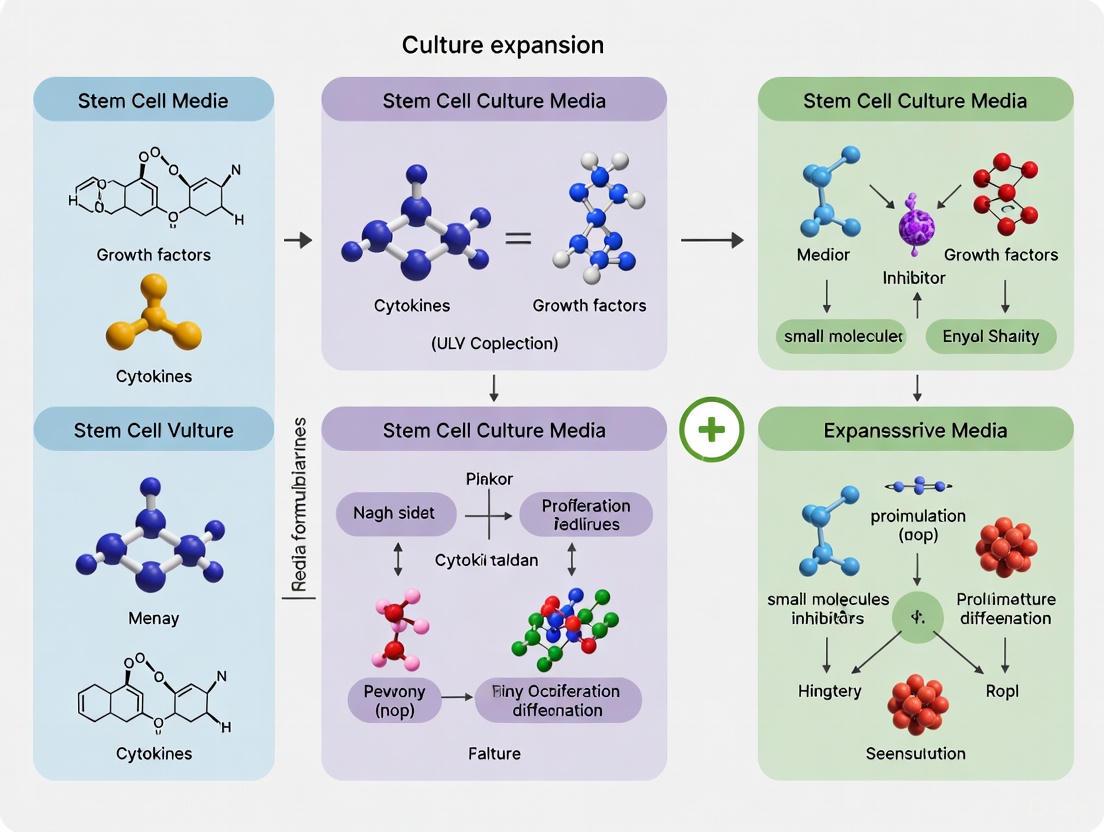
This article provides a comprehensive overview of the latest advancements and methodologies in stem cell culture media formulation for researchers, scientists, and drug development professionals.
Optimizing Stem Cell Expansion: A 2025 Guide to Culture Conditions and Media Formulation
Abstract
This article provides a comprehensive overview of the latest advancements and methodologies in stem cell culture media formulation for researchers, scientists, and drug development professionals. It covers the foundational principles of modern, chemically-defined media, detailed protocols for adaptation and scaling, advanced troubleshooting and AI-driven optimization techniques, and rigorous validation and comparative analysis of commercial systems. The content is designed to equip professionals with the knowledge to enhance reproducibility, scalability, and therapeutic efficacy in stem cell research and manufacturing.
The Foundation of Stem Cell Expansion: Core Media Components and Market Dynamics
The field of stem cell research and therapy is undergoing a significant transformation, moving away from traditional serum-containing media toward serum-free and chemically-defined (CD) formulations. This paradigm shift is primarily driven by the critical need for reproducibility and regulatory compliance in both basic research and clinical applications. Serum, particularly Fetal Bovine Serum (FBS), has been a fundamental component of cell culture for decades. However, its inherent batch-to-batch variability, undefined nature, and ethical concerns pose substantial challenges for standardized experimental outcomes and therapeutic applications [1] [2].
The regulatory landscape is increasingly mandating the use of defined systems for clinical-grade cell products. Regulatory agencies emphasize the risks of contamination and immunogenicity associated with animal-derived components [3] [1]. This aligns with initiatives like the FDA New Approach Methodologies (NAM) and the FDA Modernization Act 2.0, which advocate for reduced animal product use in research and development [2]. Consequently, the global market for serum-free media is projected to grow from USD 205 million in 2025 to USD 290 million by 2032, exhibiting a Compound Annual Growth Rate (CAGR) of 5.7% [3]. The stem cell culture media market specifically shows even more vigorous growth, expected to jump from USD 2.48 billion in 2025 to USD 5.28 billion by 2031, at a remarkable CAGR of 14.0% [4]. This market expansion underscores the rapid adoption and critical importance of defined culture systems.
Quantitative Market and Performance Data
The transition to defined formulations is reflected not only in market growth but also in measurable performance enhancements and shifting adoption patterns across key regions and sectors. The data in the tables below quantify these trends.
Table 1: Global Market Growth Projections for Advanced Cell Culture Media
| Market Segment | Base Year Value (2024/2025) | Projected Value | CAGR | Time Period |
|---|---|---|---|---|
| Serum-Free Media Market [3] | USD 205 million | USD 290 million | 5.7% | 2025-2032 |
| Stem Cell Media Market [5] | USD 434.83 million | USD 932.09 million | 10.0% | 2025-2032 |
| Stem Cell Culture Media Market [4] | USD 2.48 billion | USD 5.28 billion | 14.0% | 2025-2031 |
| Serum Free Stem Cell Medium [6] | USD 1.27 billion | - | 6.4% | 2025-2033 |
Table 2: Documented Performance Advantages of Serum-Free and Defined Formulations
| Performance Metric | Reported Improvement | Context and Application |
|---|---|---|
| Protein Yield [3] | 30-40% increase | Monoclonal antibody production in biopharmaceuticals |
| Cell Viability [3] | 40% higher | 3D cell culture systems using next-generation formulations |
| Cell Proliferation [5] | 35% increase | AI-optimized serum-free stem cell media in large-scale batches |
| Media Consumption [5] | 28% reduction | Use of AI-powered platforms in stem cell media production |
| Batch Consistency [5] | 25% increase | Facilities adopting real-time monitoring in stem cell culture |
Table 3: Regional Adoption and Growth Patterns
| Region | Market Characteristics | Projected Growth / Market Share |
|---|---|---|
| North America | Dominated by the U.S.; robust biotechnology sector and significant investments [5] [4]. | Largest market share (≈38%-40%) [4] [6]. |
| Asia-Pacific | Fastest-growing region; driven by investments in China, India, and South Korea [3] [6]. | Projected CAGR of 8.3% (Serum-Free Media) [3]; over 15% (Stem Cell Media) [6]. |
| Europe | Substantial market share with Germany, U.K., and France leading in R&D [6]. | Holds about 30% of the serum-free stem cell medium market [6]. |
Key Formulation Types and Their Applications
The shift from serum-containing media has led to the development of several classes of advanced formulations, each offering a different level of control and compliance.
- Serum-Free Media (SFM): These media eliminate animal serum but may still contain plant-derived or recombinant proteins. They significantly reduce batch-to-batch variability and are widely adopted in biopharmaceutical production, with over 60% of companies using them for monoclonal antibody production [3].
- Xeno-Free Media: A subset of SFM, these formulations exclude all components of non-human animal origin, which is critical for clinical applications to prevent immune reactions. Over 60% of new clinical-stage cell therapy programs now use xeno-free media [5].
- Chemically Defined Media (CDM): These represent the highest level of formulation control. Every component is a known chemical entity, ensuring maximum reproducibility and regulatory alignment. They are essential for Good Manufacturing Practice (GMP)-compliant manufacturing of cell-based therapies [6] [2].
The demand for these specialized formulations is further segmented by stem cell type, driving the need for customized solutions. The stem cell media market includes products tailored for Human Embryonic Stem Cells (ESCs), Mesenchymal Stem Cells (MSCs), Induced Pluripotent Stem Cells (iPSCs), and others, each with specific nutrient and factor requirements to maintain self-renewal or direct differentiation [5] [4].
Experimental Protocol: Adaptation of Cells to Chemically-Defined Medium
Transitioning cell lines from serum-containing (SC) to chemically-defined (CD) medium is a critical, yet challenging, step. The following protocol, adapted from a recent study on Human Umbricl Vein Endothelial Cells (HUVECs), provides a systematic workflow for this process [2]. It emphasizes strategies to minimize cellular stress and achieve robust growth in a fully defined environment.
Materials and Reagent Solutions
The successful execution of this protocol relies on specific, high-quality reagents and materials designed to support cell health under defined conditions.
Table 4: Essential Research Reagents for CD Adaptation
| Reagent / Material | Function / Purpose | Example Formulation / Notes |
|---|---|---|
| Basal Medium | Provides essential salts, nutrients, and pH buffer. | DMEM/F12 is a common foundation [2]. |
| Recombinant Growth Factors | Replace mitogenic and survival factors present in serum. | FGF basic, VEGF, EGF are critical for HUVECs [2]. |
| Chemically-Defined Supplements | Provide lipids, trace elements, and carrier proteins. | ITSE+A (Insulin, Transferrin, Selenium, Ethanolamine, Albumin) [2]. |
| Defined Attachment Coating | Mimics extracellular matrix for cell adhesion and spreading. | Recombinant fibronectin, vitronectin, laminin; fibronectin showed superior performance for HUVECs [2]. |
| Gentle Dissociation Reagent | Detaches adherent cells with minimal damage to surface proteins. | TrypLE is preferred over trypsin during adaptation [2]. |
Protocol Steps
- Pre-adaptation Culture: Begin with early-passage cells. Culture them for 1-2 passages in standard SC medium to ensure they are healthy and actively proliferating before initiating adaptation [2].
- Selection of Adaptation Method:
- Gradual Adaptation (Recommended for sensitive cells): Initiate weaning by replacing the SC medium with a mixture of SC and CD medium. Start with a ratio of 25%-50% CD medium. Continuously monitor cell morphology and confluence. Every 48-72 hours, or at each passage, increase the proportion of CD medium until 100% CD medium is achieved [2].
- Direct Adaptation (For robust cell lines): After the recovery phase, detach the cells and reseed them directly into 100% CD medium. This method is faster but carries a higher risk of failure due to sudden environmental shock [2].
- Optimized Seeding and Passaging: During the adaptation process, plate cells on culture vessels pre-coated with a defined substrate like fibronectin, which was shown to substantially improve cell attachment and viability over laminin or collagen IV [2]. Use a gentle dissociation enzyme like TrypLE and consider using a soybean trypsin inhibitor for neutralization instead of serum-containing solutions [2].
- Rigorous Monitoring and Assessment: Employ daily monitoring. AI-based image analysis tools can provide quantifiable and reproducible tracking of cell confluence and morphology [2]. Adaptation is considered successful when cells maintain a viability of >80% and demonstrate a stable, consistent growth rate over at least three passages in 100% CD medium [2].
Signaling Pathways and Growth Factors in Defined Media
The removal of serum necessitates the precise supplementation of key signaling molecules to maintain stem cell pluripotency or direct differentiation. The complex interplay of these pathways is managed through tailored media formulations.
The diagram above illustrates how key soluble factors in defined media influence stem cell fate by activating specific signaling pathways:
- Basic Fibroblast Growth Factor (bFGF or FGF2): A cornerstone of human embryonic stem cell (hESC) and induced pluripotent stem cell (iPSC) media, bFGF activates signaling pathways that support self-renewal and pluripotency [1].
- TGF-β/Activin A Pathway: This pathway is crucial for maintaining hESC pluripotency, in part by inhibiting BMP signaling [1].
- BMP Signaling: The role of BMP is species-specific. It synergizes with LIF to support mouse ESC self-renewal but promotes differentiation in human ESCs [1].
- LIF/JAK/STAT Pathway: Leukemia Inhibitory Factor (LIF) is essential for mouse ESC self-renewal but is not sufficient for human ESCs, highlighting species-specific requirements [1].
- WNT/GSK3 Pathway: Pharmacological inhibition of GSK3 has been shown to help maintain both mouse and human ES cell pluripotency, and small-molecule inhibitors like CHIR99021 are used in defined culture systems [1].
The shift from serum-containing to serum-free and chemically-defined formulations is a fundamental advancement in stem cell research and regenerative medicine. This transition directly addresses the critical challenges of experimental reproducibility and regulatory compliance, enabling the development of safe and effective cell-based therapies. The protocol and analyses presented here provide a framework for researchers to successfully navigate this transition.
Future progress will be driven by several key trends. The integration of Artificial Intelligence (AI) and machine learning for media optimization and predictive monitoring is already reducing development costs and improving performance [3] [5]. Furthermore, the development of increasingly specialized media for specific cell types and clinical applications will enhance differentiation efficiency and therapeutic outcomes [5] [6]. Finally, the adoption of automated, closed-system bioprocessors integrated with real-time sensors will ensure the scalability and quality control required for commercial and clinical manufacturing [5] [4]. Together, these innovations will solidify defined media as the indispensable foundation for the next generation of biomedical breakthroughs.
The foundation of successful stem cell expansion lies in a meticulously formulated culture environment. This system is a complex mixture designed to support cell survival, proliferation, and maintenance of critical characteristics like pluripotency or specific differentiation potential. For research and drug development professionals, selecting the right combination of components is not trivial; it directly impacts experimental reproducibility, cell viability, and the safety profile of any resultant therapeutic product. The core building blocks of any culture system can be deconstructed into basal media, which provide essential nutrients, and supplements, which include growth factors and other additives that provide specialized signals and support. A significant trend in the field is the shift away from traditional, ill-defined supplements like fetal bovine serum (FBS) toward xeno-free, serum-free, and even chemically defined formulations [7]. This evolution is driven by the need for greater batch-to-batch consistency, reduced risk of adventitious contaminants, and compliance with regulatory standards for clinical applications [8] [9].
This application note provides a detailed, protocol-oriented breakdown of these essential building blocks, framed within the context of optimizing stem cell culture for mesenchymal stem cells (MSCs) and hematopoietic stem cells (HSCs). It synthesizes current market intelligence with recent peer-reviewed research to offer a practical guide for scientists navigating the complex landscape of media formulation.
Deconstructing the Core Components
Basal Media: The Nutritional Foundation
Basal media form the aqueous base of the culture system, containing the fundamental nutrients required for basic cellular metabolism. These include carbohydrates (e.g., glucose), amino acids, vitamins, inorganic salts, and trace elements. The choice of basal medium can significantly influence cell growth and functional output.
Table 1: Comparison of Basal Media Performance for MSC Expansion
| Basal Medium | Key Characteristics | Reported Performance in MSC Culture | Primary Application Context |
|---|---|---|---|
| α-MEM | Minimal Essential Eagle Medium; widely used for MSC culture. | Superior proliferation rates and expansion ratio compared to DMEM; higher sEV particle yield [10]. | Standard workhorse for MSC expansion; used in GMP-compliant, xeno-free systems [8] [10]. |
| DMEM/F12 | Dulbecco's Modified Eagle Medium/Nutrient Mixture F-12; rich formulation. | Demonstrated superior performance alongside α-MEM in supporting primary UC-MSC culture [8]. | Situations requiring a rich nutrient environment for demanding cell types. |
| DMEM | Dulbecco's Modified Eagle Medium; high nutrient concentration. | Supported cell growth but was outperformed by α-MEM and DMEM/F12 in head-to-head comparisons [8] [10]. | General cell culture; less optimal for high-yield MSC expansion. |
Recent research underscores the importance of basal media selection. A 2025 study comparing production methods for MSC-derived small extracellular vesicles (sEVs) found that while both DMEM and α-MEM supplemented with 10% human platelet lysate (hPL) supported growth, cells in α-MEM showed a higher expansion ratio and yielded more sEV particles per cell [10]. This highlights that the basal medium choice can affect not just cell growth but also functional downstream products.
Growth Factors and Cytokines: The Signaling Regulators
Growth factors are signaling proteins that bind to cell surface receptors, activating intracellular pathways that critically regulate processes like proliferation, differentiation, and survival. Unlike basal media components, they are active at very low concentrations. The specific growth factors required depend entirely on the stem cell type being cultured.
Table 2: Essential Growth Factors for Stem Cell Expansion
| Growth Factor/Cytokine | Primary Function | Target Stem Cell Type | Example Product/Context |
|---|---|---|---|
| Flt-3 Ligand, SCF, TPO, IL-3, IL-6 | Combination for promoting self-renewal and expansion of primitive hematopoietic progenitors [11]. | Hematopoietic Stem Cells (HSCs) | StemSpan CD34+ Expansion Supplement; enables ~40-fold expansion of total nucleated cells from cord blood [11]. |
| FGF-2 (bFGF) | Promotes proliferation and helps maintain pluripotency in undifferentiated stem cells. | MSCs, iPSCs, ESCs | Common component in commercial serum-free MSC and pluripotent stem cell media [8] [9]. |
| PDGF-BB, TGF-β1 | Stimulate proliferation and migration of mesenchymal lineage cells. | Mesenchymal Stem Cells (MSCs) | Found in high concentrations in human platelet lysate (hPL), a common FBS alternative [7]. |
| EGF | Promotes proliferation of epithelial and mesenchymal cells. | MSCs, various progenitors | Included in defined formulations like Prime-XV MSC Expansion XSFM [8]. |
The market for these critical reagents is substantial and growing. The global cell culture growth factors market is projected to reach approximately $456 million by 2025, driven by escalating demand in cell and gene therapy and regenerative medicine [12]. The hematopoietic growth factors segment alone represents a market likely exceeding $150 million annually [12].
Supplements: Providing Specialized Support
Supplements are additives that are not part of the basal medium or growth factor cocktails but are essential for creating a complete culture environment. Their function is to replace the complex, undefined components found in serum.
- Human Platelet Lysate (hPL): Derived from human platelets, hPL is a rich source of growth factors (PDGF, TGF-β, VEGF) and adhesive proteins. It has emerged as a leading xeno-free alternative to FBS for MSC expansion [7] [8]. Studies show that all tested hPL preparations supported MSC growth effectively, and it often presents a better cost-performance balance than commercial serum-free media [7]. A key consideration is the need for heparin anticoagulation in some hPL formulations to prevent gelation.
- Recombinant Protein Supplements: For chemically defined systems, recombinant proteins are used to replace human- or animal-derived components. Key examples include:
- Recombinant Albumin: Functions as a carrier for lipids, hormones, and metal ions, and acts as a stabilizer and detoxifier [13].
- Recombinant Insulin: Enhances cell growth and protein synthesis by facilitating glucose uptake [13].
- Recombinant Transferrin: Crucial for extracellular iron transport, promoting viability and proliferation in serum-free media [13].
- Attachment Factors: In serum-free systems, adhesion factors like vitronectin or fibronectin are often required to replace the attachment-promoting activity normally provided by serum, enabling cells to adhere to the culture surface [8].
A critical 2025 study highlighted that terminology can be misleading; some commercially available "Serum-Free Media" (SFM) were found to contain significant levels of human-derived proteins like myeloperoxidase and fibrinogen, essentially reclassifying them as hPL-based media [7]. This underscores the importance of rigorous supplier scrutiny and in-house testing.
Application Notes & Experimental Protocols
Protocol 1: Comparative Screening of Culture Media for UC-MSC Expansion
This protocol is adapted from a 2025 study that systematically compared culture systems for human umbilical cord-derived MSC expansion [8].
Objective: To identify the optimal culture medium for scalable expansion of UC-MSCs that maintains phenotypic properties and functional potency.
Materials
- Basal Media: α-MEM (e.g., Gibco), DMEM, DMEM/F12.
- Supplements: 5% and 10% HPL (e.g., Stemulate, PLTGold), commercial serum-free media (e.g., Corning MSC Xeno-Free SFM, NutriStem XF Medium, Prime-XV MSC Expansion XSFM).
- Cells: UC-MSCs isolated from Wharton's jelly (P0, from 3+ independent donors).
- Reagents: Recombinant trypsin (e.g., CTS TrypLE Select), vitronectin.
- Equipment: Cell culture flasks/factories, automated cell counter (e.g., Vi-Cell Blu), flow cytometer.
Workflow Diagram: UC-MSC Media Screening
Methodology
- Cell Seeding: Harvest P2 UC-MSCs and plate at a consistent density (e.g., 4500-5500 cells/cm²) in 25 cm² flasks with the various test media.
- Culture Maintenance: Incubate at 37°C with 5.0% CO₂. Monitor confluence and harvest cells when they reach 85-95% confluence.
- Data Collection:
- Population Doubling Time (PDT): Calculate using the formula:
PDT = T * log2 / (logN - logX₀), where T is culture time, N is harvested cell number, and X₀ is initial cell number. - Cell Morphology & Viability: Observe daily using an inverted microscope. Determine viability and cell diameter using an automated cell counter with trypan blue exclusion.
- Population Doubling Time (PDT): Calculate using the formula:
- Downstream Functional Assays: For the most promising media, continue passaging cells to P4. At P4, perform a comprehensive evaluation:
- Phenotyping: Use flow cytometry to confirm expression of CD105, CD73, CD90 (≥95%) and lack of hematopoietic markers (≤2%).
- Clonogenicity: Perform Colony-Forming Unit Fibroblast (CFU-F) assay.
- Multilineage Differentiation: Induce osteogenic, adipogenic, and chondrogenic differentiation to confirm trilineage potential.
- Immunomodulatory Potency: Assess using a mixed lymphocyte reaction (MLR) to measure lymphocyte proliferation inhibition.
Expected Outcomes: The study from which this protocol is adapted found that α-MEM and DMEM/F12 generally outperformed DMEM. Among serum-free media, performance varied, with some formulations like NutriStem XF + 2% HPL eliciting strong immunomodulatory effects, while Prime-XV + 2% HPL yielded high primary culture output [8].
Protocol 2: Expansion of CD34+ Hematopoietic Progenitor Cells
This protocol details the use of a specialized supplement for the selective expansion of human CD34+ cells from cord blood or bone marrow [11].
Objective: To achieve a high-fold expansion of functional CD34+ hematopoietic progenitor cells in a serum-free system.
Materials
- Cells: CD34+ cells isolated from human cord blood (CB) or bone marrow (BM).
- Basal Medium: StemSpan SFEM II (recommended for optimal performance).
- Supplement: StemSpan CD34+ Expansion Supplement (10X).
- Optional Additive: Small molecules like UM729 for further increased expansion.
- Equipment: Liquid culture vessels (flasks, plates), flow cytometer for CD34 analysis.
Workflow Diagram: CD34+ Cell Expansion
Methodology
- Medium Preparation: Thaw the 10X CD34+ Expansion Supplement completely and mix thoroughly. Aseptically add it to the chosen StemSpan basal medium (e.g., SFEM II) at a 1:10 dilution to create a 1X working solution.
- Culture Initiation: Seed the enriched CD34+ cells into the complete medium. The recommended cell density depends on the initial purity and source but typically ranges from 1x10⁴ to 1x10⁵ cells/mL.
- Culture Maintenance: Incubate the cultures for 7 days at 37°C with 5% CO₂. No medium exchange is typically required during this short-term expansion.
- Harvest and Analysis: After 7 days, harvest the cells and perform the following analyses:
- Fold Expansion: Count total nucleated cells. The supplement typically promotes ~40-fold expansion of total nucleated cells and >10-fold expansion of input CD34+ cells from cord blood.
- Phenotype Maintenance: Analyze the percentage of cells still expressing CD34 by flow cytometry. Expect ~40% of the cultured cells to remain CD34+ after one week.
- Functional Potency: Perform a colony-forming unit (CFU) assay to confirm the primitive nature of the expanded cells.
Key Considerations: The supplement contains a defined combination of recombinant human cytokines: Flt-3 Ligand, Stem Cell Factor (SCF), Interleukin-3 (IL-3), Interleukin-6 (IL-6), and Thrombopoietin (TPO) [11]. Using StemSpan SFEM II as the basal medium is recommended, as internal data shows it supports on average ~60% higher cell yields than other serum-free media in this application [11].
The Scientist's Toolkit: Essential Research Reagent Solutions
Table 3: Key Reagents for Advanced Stem Cell Culture
| Reagent Category & Name | Function & Application | Key Characteristics |
|---|---|---|
| StemSpan CD34+ Expansion Supplement [11] | Selective expansion of human CD34+ hematopoietic cells from CB/BM. | Defined cocktail of recombinant cytokines (Flt3L, SCF, IL-3, IL-6, TPO); supplied as 10X concentrate. |
| Human Platelet Lysate (hPL) [7] [8] | Xeno-free supplement for MSC expansion, replacing FBS. | Rich in growth factors (PDGF, TGF-β, VEGF); supports robust MSC growth; cost-effective. |
| Recombinant Human Albumin (e.g., CellPrime rAlbumin) [13] | Chemically defined replacement for human/animal serum albumin in media. | GMP-manufactured, non-animal origin (NAO); eliminates variability and viral contamination risk from blood-derived products. |
| Recombinant Trypsin (e.g., CellPrime rTrypsin) [13] | Enzymatic dissociation of adherent cells (e.g., MSCs) for passaging. | Non-animal origin; ensures a safe and sustainable supply, avoiding adventitious agents. |
| Serum-Free Media Suites (e.g., NutriStem XF, Prime-XV) [8] | Chemically defined, xeno-free platforms for clinical-grade stem cell expansion. | Formulated with specific growth factors (e.g., FGF, EGF); support consistent and reproducible cell production. |
Deconstructing and understanding the individual roles of basal media, growth factors, and specialized supplements is paramount for optimizing stem cell culture conditions. As the field advances, the move toward chemically defined and xeno-free systems is unequivocal, driven by demands for reproducibility, safety, and regulatory compliance in both research and clinical translation [9]. The global stem cell culture media market, projected to grow substantially to over $2 billion by 2033, reflects this technological evolution and the increasing importance of these tools [9].
The experimental protocols and data presented here provide a framework for researchers to make informed decisions. The findings that α-MEM often outperforms DMEM for MSC culture [8] [10], and that HPL represents a robust and cost-effective FBS alternative [7], offer actionable starting points for media optimization. Furthermore, the availability of highly defined, recombinant supplements and specialized cytokine cocktails enables precise control over the cellular environment, paving the way for the next generation of reliable and effective stem cell-based therapies and applications in drug development.
Market Growth and Drivers: Analyzing the Trajectory from $2.48B in 2025 to $5.28B by 2031
The global stem cell culture media market represents a critical enabler for regenerative medicine and therapeutic development. With the market projected to grow from $2.48 billion in 2025 to $5.28 billion by 2031, exhibiting a robust compound annual growth rate of 14.0%, understanding both the commercial drivers and technical applications becomes essential for research and development professionals [4] [14]. This substantial growth trajectory reflects increasing investments in regenerative medicine, rising prevalence of chronic diseases requiring cell-based therapies, and significant advancements in stem cell research technologies [4]. The market expansion is further propelled by clinical trials exploring stem cell therapies for conditions including Parkinson's disease, spinal cord injuries, myocardial infarction, and various orthopedic applications [4] [15].
This application note examines the key market drivers, provides detailed experimental protocols, and analyzes the impact of media formulation on stem cell functionality within the context of stem cell expansion culture conditions. The convergence of market dynamics and scientific innovation creates unprecedented opportunities for researchers, scientists, and drug development professionals to advance therapeutic applications through optimized culture media systems.
Market Analysis: Quantitative Data and Growth Drivers
Global Market Size and Projections
Table 1: Global Stem Cell Culture Media Market Forecast, 2025-2031
| Metric | Value |
|---|---|
| 2024 Market Value | USD 2.16 billion [4] |
| 2025 Projected Value | USD 2.48 billion [4] |
| 2031 Projected Value | USD 5.28 billion [4] |
| CAGR (2025-2031) | 14.0% [4] |
| Alternative 2024 Value | USD 434.83 million [5] |
| Alternative 2032 Projection | USD 932.09 million [5] |
| Alternative CAGR | 10.0% (2025-2032) [5] |
Note: Variations in reported values reflect different market definitions and segmentation approaches among research firms.
Regional market analysis reveals that North America currently dominates the stem cell culture media landscape, accounting for approximately 38% of revenue share in 2024, with the United States serving as the primary growth engine due to its robust biotechnology sector and significant investments in regenerative medicine research [4]. Meanwhile, China is emerging as the fastest-growing regional market, driven by substantial government and private investments in biotechnology infrastructure and expanding clinical trial capabilities [4].
Key Market Drivers and Restraints
Table 2: Primary Market Drivers and Restraints Influencing Growth
| Drivers | Restraints |
|---|---|
| Rising demand for regenerative medicine [4] | High development costs and regulatory hurdles [4] |
| Technological advancements in stem cell research [4] | Ethical and legal considerations in certain regions [4] [16] |
| Increasing chronic disease prevalence [4] | Standardization challenges across research institutions [4] |
| Expanding biopharmaceutical applications [4] | Technical complexities in scaling up production [4] |
| Growing adoption of 3D cell culture technologies [4] | Stringent regulatory requirements for clinical applications [5] |
The growth is further accelerated by increasing clinical trials in regenerative medicine, with more than 1,500 active clinical trials globally investigating stem cell therapies for conditions such as cardiovascular diseases, neurodegenerative disorders, and orthopedic injuries [5]. This expanding clinical pipeline creates substantial demand for high-quality, consistent media formulations optimized for therapeutic applications.
Key Application Areas and Media Formulation Trends
Application Segmentation and Media Requirements
Table 3: Stem Cell Media Applications and Technical Requirements
| Application Area | Key Media Requirements | Representative Cell Types |
|---|---|---|
| Regenerative Medicine [5] | GMP-grade, serum-free, defined composition [4] | MSCs, iPSCs, Embryonic Stem Cells [4] |
| Drug Discovery & Development [5] | High reproducibility, screening compatibility [5] | iPSCs, Tissue-specific progenitors [4] |
| Disease Modeling [17] | Patient-specific differentiation capacity [17] | iPSCs, Neural stem cells [5] |
| Toxicology Studies [5] | Consistent response, standardized endpoints [5] | Hepatocytes, Cardiomyocytes [17] |
| Tissue Engineering [5] | 3D culture compatibility, matrix deposition support [4] | MSCs, iPSCs, Tissue-specific stem cells [17] |
The manufacturing of biologics currently dominates the application segment, fueled by increasing demand for cell-based therapies and advancements in pharmaceutical manufacturing [4]. This segment requires media formulations that ensure consistent performance, scalability, and compliance with rigorous regulatory standards for therapeutic applications.
Emerging Media Formulation Trends
The stem cell culture media market is witnessing a significant transition toward chemically defined, serum-free, and xeno-free formulations [14]. This shift is primarily driven by the increasing number of stem cell therapies entering clinical trials and commercial manufacturing, which necessitates media that offers superior consistency, reduced batch-to-batch variability, and enhanced safety/regulatory compliance [4]. Recent data indicates that over 60% of newly developed clinical-stage cell therapy programs are now using xeno-free media to ensure consistent quality and reduce immunogenic risks in stem cell expansion and differentiation processes [5].
The movement away from traditional serum-containing media addresses critical challenges related to reproducibility, variability, and potential contamination risks associated with animal-derived components [4]. Additionally, regulatory agencies such as the FDA are implementing stricter guidelines on the use of animal-derived products in therapeutic manufacturing, further accelerating adoption of advanced synthetic media solutions [4].
Experimental Protocols: Advanced Methodologies for Stem Cell Expansion
Protocol 1: Enhancing Ex Vivo Expansion of Human Hematopoietic Stem Cells by Inhibiting Ferroptosis
This protocol describes a method to enhance HSC expansion by inhibiting ferroptosis, an iron-dependent form of regulated cell death that causes substantial HSC loss in standard culture systems [18].
HSC Expansion Workflow
Reagents and Equipment:
- StemSpan SFEM II (StemCell Technologies): Serum-free expansion medium [18]
- CD34+ cells from cord blood (CB) or mobilized peripheral blood (mPB) [18]
- Cytokine cocktail: 1× CC100 (FLT3L, SCF, IL3, IL6), 100 ng/mL TPO [18]
- Ferroptosis inhibitors: Liproxstatin-1 (Lip-1) or Ferrostatin-1 (Fer-1) [18]
- UM171: 35 nM for stem cell maintenance [18]
- Cell culture vessels and standard cell culture incubator (37°C, 5% CO₂) [18]
Step-by-Step Procedure:
- Prepare reagents: Warm thawing medium (PBS + 1% FBS) and complete SFEM II culture medium to room temperature. Prepare ferroptosis inhibitor stock solutions (10 mM Lip-1 or Fer-1 in DMSO) [18].
- Thaw CD34+ cells: Thaw cryovial in 37°C water bath until only a small ice crystal remains. Transfer cell suspension dropwise into 10 mL of thawing medium and centrifuge at 300 × g for 10 minutes at room temperature [18].
- Initiate culture: Carefully aspirate supernatant and resuspend cell pellet in SFEM II Culture Medium supplemented with either 10 µM Lip-1 or 5 µM Fer-1. Count viable cells and adjust concentration to 5×10⁵ cells/mL. Plate cells in appropriate culture vessels [18].
- Maintain culture: Split cultures every 2-3 days by diluting cells to final concentration of 3-5×10⁵ cells/mL in fresh SFEM II Culture Medium. Replenish ferroptosis inhibitors with each medium change [18].
- Monitor expansion: Continue expansion for 7-14 days, assessing cell count, viability, and phenotypic markers until desired endpoint is reached [18].
Technical Notes:
- Treatment with ferroptosis inhibitors significantly improves expansion of both cord blood and mobilized peripheral blood-derived HSCs while preserving phenotypic and molecular stem cell features [18].
- Expanded cells sustain long-term, multilineage engraftment in xenotransplantation assays, demonstrating maintenance of functional stem cell properties [18].
- For cytokine-free conditions, alternative CFEM (Cytokine-free Expansion Medium) can be used with 1% ITS-X, 1 mg/mL PVA, 1 µM 740Y-P, 0.1 µM Butyzamide, and 70 nM UM171 [18].
Protocol 2: Evaluating Media-Dependent Secretome Variations in Mesenchymal Stromal Cells
This protocol assesses how different culture media formulations influence the secretory profile of mesenchymal stromal cells, which is critical for orthopaedic applications including osteoarthritis treatment [15].
Secretome Analysis Workflow
Research Reagent Solutions:
Table 4: Essential Materials for Secretome Analysis
| Item | Function | Example Suppliers |
|---|---|---|
| Adipose-derived MSCs | Primary cell source for secretome production | Various tissue banks [15] |
| Fetal Bovine Serum (FBS) | Standard serum supplement for control conditions | Various [15] |
| Human Platelet Lysate (hPL) | Human-derived serum alternative | Various [15] |
| S/X-free GMP supplements | Chemically-defined, xeno-free media formulations | Thermo Fisher, Stemcell Technologies [4] [15] |
| Flow cytometry antibodies | Immunophenotype characterization | Various [15] |
| ELISA arrays | High-throughput soluble protein analysis | Various [15] |
| Nanoparticle Tracking Analysis | Extracellular vesicle quantification | Malvern Panalytical [15] |
| qRT-PCR arrays | EV-miRNA profiling | Various [15] |
Step-by-Step Procedure:
- Cell culture and expansion: Culture adipose-derived mesenchymal stromal cells (ASCs) in parallel using four different media conditions: FBS-supplemented, hPL-supplemented, and two next-generation S/X-free GMP-ready supplements [15].
- Secretome collection: Harvest conditioned media from ASCs during log-phase growth after reaching 70-80% confluence. Centrifuge to remove cells and debris, then aliquot and store at -80°C for subsequent analysis [15].
- Secretome composition analysis:
- Immunophenotype: Characterize soluble factors using flow cytometry and high-throughput ELISA [15]
- Extracellular vesicles: Perform nanoparticle tracking analysis for vesicle quantification and size distribution [15]
- miRNA profiling: Analyze EV-embedded miRNAs using qRT-PCR arrays to identify protective signals [15]
- Functional testing in OA models:
Technical Notes:
- Secretomes collected after ASC expansion in standard FBS/hPL media demonstrate more protective features for osteoarthritis applications compared to those from S/X-free formulations [15].
- Media choice creates divergent secretome fingerprints with functional implications: expansion in hPL produces the most effective secretome for chondrocytes, while FBS conditions yield superior outcomes for immune cell modulation [15].
- The study emphasizes the need for thorough media characterization before clinical application, as formulation choices significantly impact therapeutic potential of MSC-derived secretomes [15].
Technological Innovations and Future Directions
The stem cell culture media landscape is being transformed by several technological innovations that promise to enhance research capabilities and therapeutic outcomes. Artificial intelligence is increasingly deployed for optimizing media formulation, allowing researchers to identify the most effective nutrient combinations with higher precision and reduced experimental cycles [5]. AI-powered image analysis enables precise monitoring of stem cell morphology and confluence, while machine learning algorithms streamline the development of customized media formulations for specific cell lines and applications [5].
Automation in stem cell bioprocessing represents another significant trend, with automated closed systems being increasingly deployed across GMP facilities to reduce manual labor while ensuring contamination control [5]. These systems integrate media exchange, cell harvesting, and environmental monitoring, leading to more consistent product quality across batches [5]. The integration of advanced bioreactors with real-time monitoring for pH, dissolved oxygen, and metabolite levels is also gaining traction, with facilities adopting these technologies reporting up to 25% increases in batch consistency in stem cell culture production [5].
The regulatory landscape continues to evolve in parallel with technological advancements. The International Society for Stem Cell Research regularly updates its guidelines to address emerging scientific and ethical considerations, with the most recent 2025 update refining recommendations for stem cell-based embryo models (SCBEMs) to ensure appropriate oversight mechanisms while enabling critical research [16]. These guidelines maintain fundamental principles of rigor, oversight, and transparency across all areas of stem cell research and clinical translation [16].
The trajectory of the stem cell culture media market from $2.48 billion in 2025 to $5.28 billion by 2031 reflects the critical importance of optimized culture conditions in advancing regenerative medicine and therapeutic applications. This growth is driven by converging factors including technological innovations, expanding clinical applications, and the transition toward defined, xeno-free media formulations that ensure consistency and safety for therapeutic use.
The experimental protocols presented herein demonstrate the sophisticated approaches required to address current challenges in stem cell expansion and functionality assessment. As research continues to elucidate the complex relationships between media composition and stem cell behavior, the development of increasingly tailored formulations will further enhance therapeutic efficacy and manufacturing scalability. For researchers and drug development professionals, understanding both the market dynamics and technical considerations surrounding stem cell culture media is essential for leveraging these advancements toward successful therapeutic outcomes.
The foundation of successful stem cell research and therapy development lies in the precise formulation of culture media. These specialized media provide the essential nutrients, growth factors, and signaling molecules required to maintain stem cell pluripotency, direct differentiation, and ensure genomic stability. The selection of an appropriate, well-defined media formulation is not merely a technical step but a critical determinant of experimental reproducibility and therapeutic efficacy. As the field advances, media development has progressively shifted from serum-containing to defined, xeno-free compositions that enhance consistency, reduce variability, and align with regulatory requirements for clinical applications [5]. This document provides a detailed overview of leading media formulations for embryonic, induced pluripotent, mesenchymal, and tissue-specific stem cells, supported by quantitative market data, standardized protocols, and essential research tools.
The global stem cell media market reflects the expanding role of stem cells in regenerative medicine and drug discovery. The market was valued at USD 434.83 Million in 2024 and is projected to reach USD 932.09 Million by 2032, growing at a CAGR of 10.0% [5]. This growth is paralleled in niche segments; for example, the induced pluripotent stem cell (iPSC) market specifically is predicted to expand from USD 2.13 billion in 2025 to approximately USD 5.12 billion by 2034 [19]. A key driver is the accelerating transition from research-grade to clinical-grade media formulations.
Table 1: Global Stem Cell Media Market Snapshot and Trends
| Aspect | Detail | Significance |
|---|---|---|
| Market Size (2024) | USD 434.83 Million [5] | Baseline for industry scaling and investment |
| Projected Market (2032) | USD 932.09 Million [5] | Reflects anticipated growth in demand |
| Dominant Trend | Adoption of serum-free & xeno-free media [5] | Driven by need for consistency, safety, and regulatory compliance |
| Key Growth Driver | Increasing clinical trials in regenerative medicine [5] | Over 1,500 active trials globally fuel demand for GMP-grade media |
| Emergent Technology | AI-powered media optimization [5] | Uses predictive analytics to enhance proliferation and reduce consumption |
The formulation of stem cell media is increasingly guided by the principles of Good Manufacturing Practice (GMP). Over 60% of new clinical-stage cell therapy programs now utilize xeno-free media to ensure consistent quality and mitigate immunogenic risks [5]. Furthermore, the integration of artificial intelligence (AI) is transforming media development. AI-powered platforms are being used to optimize serum-free stem cell media formulations, with one reported instance leading to a 35% increase in cell proliferation rates and a 28% reduction in media consumption in large-scale production [5]. This trend towards intelligent, data-driven formulation is setting new standards for efficiency and reproducibility in the field.
Media for Pluripotent Stem Cells (PSCs)
Pluripotent stem cells, including Embryonic Stem Cells (ESCs) and Induced Pluripotent Stem Cells (iPSCs), require meticulously formulated media to maintain their undifferentiated state and self-renewal capacity.
Media for Embryonic Stem Cells (ESCs)
ESC media are complex formulations designed to support the naïve pluripotent state. While the use of human ESCs involves ethical considerations, they remain a critical tool in developmental biology. Modern ESC media are typically serum-free and feeder-free to improve definition and reduce variability. A common base medium is DMEM/F12, supplemented with essential components such as insulin, transferrin, selenium, and specific small-molecule inhibitors that regulate key signaling pathways like TGF-β/Activin A and FGF to sustain pluripotency [20]. The use of defined matrices like Recombinant Vitronectin or Synthemax is standard for providing a consistent attachment substrate [20].
Media for Induced Pluripotent Stem Cells (iPSCs)
iPSCs, generated by reprogramming somatic cells, share media requirements with ESCs. The landmark discovery by Takahashi and Yamanaka showed that somatic cells could be reprogrammed using the OSKM factors (OCT4, SOX2, KLF4, c-Myc) [21]. Due to safety concerns associated with the oncogene c-Myc, subsequent research has focused on optimizing factors, including the use of L-Myc as a safer alternative or small molecules like RepSox to replace transcription factors [21]. Commercially available reprogramming media often incorporate supplements such as valproic acid (VPA) and 8-Br-cAMP, which have been shown to increase reprogramming efficiency by up to 6.5-fold [21].
Table 2: Key Reprogramming Factors and Alternatives for iPSC Generation
| Core Factor | Function | Alternative Factors/Molecules |
|---|---|---|
| OCT4 | Master regulator of pluripotency | NR5A2 [21] |
| SOX2 | Partners with OCT4 to establish pluripotency | SOX1, SOX3, RepSox (small molecule) [21] |
| KLF4 | Facilitates reprogramming and cell survival | KLF2, KLF5 [21] |
| c-Myc | Promotes proliferation and epigenetic remodeling | L-Myc, N-Myc, Glis1, Esrrb [21] |
The following diagram illustrates the core reprogramming workflow and the key signaling pathways involved in generating and maintaining iPSCs.
Media for Mesenchymal Stem Cells (MSCs)
Mesenchymal Stem Cells (MSCs) are multipotent stromal cells with self-renewal, tri-lineage differentiation (osteogenic, chondrogenic, adipogenic), and potent immunomodulatory properties, making them a cornerstone of regenerative medicine [22]. They are defined by the International Society for Cellular Therapy (ISCT) by their adherence to plastic, specific surface marker expression (CD73+, CD90+, CD105+; CD34-, CD45-, HLA-DR-), and differentiation capacity [22].
The MSC-specific cell culture medium market is growing rapidly, projected to reach USD 4.1 billion by 2035 [23]. This growth is fueled by the rising number of MSC-based clinical trials and a strong shift towards serum-free and xeno-free media to ensure higher safety and compliance for therapeutic use [23]. These media provide essential nutrients and growth factors to expand MSCs while maintaining their multipotency and therapeutic potential. Leading market players are focusing on developing GMP-compliant media formulations to support the scalable expansion of MSCs for applications in immunology, oncology, and tissue repair [23].
Tissue-Specific Differentiation Media
Directing pluripotent or multipotent stem cells into specific functional lineages requires stage-specific media formulations that activate precise signaling pathways.
Protocol: Differentiation of hPSCs into Definitive Endoderm
Definitive endoderm (DE) gives rise to internal organs including the liver, pancreas, and intestines. The following is a detailed protocol for efficient DE differentiation [20].
Key Resources Table:
- Cell Lines: Human ESC lines (H1, H9) or iPSC lines.
- Basal Medium: DMEM/F12.
- Small Molecules: CHIR99021 (GSK-3 inhibitor), LDN193189 (BMP inhibitor).
- Supplements: Vitamin C.
- Coating Substrates: Matrigel, Vitronectin, or Synthemax.
- Antibodies for Validation: Anti-FoxA2, Anti-SOX17, Anti-CXCR4 (APC-conjugated).
Step-by-Step Procedure:
Day -3 to 0: Preparation of hPSCs
- Revive and Plate hPSCs: Thaw hPSCs in pre-warmed TeSR-E8 medium supplemented with 10 µM Y-27632 (ROCK inhibitor). Plate cells onto a culture vessel pre-coated with a suitable substrate (e.g., diluted Matrigel, Vitronectin).
- Maintain Cultures: Culture cells in a humidified incubator at 37°C with 5% CO₂. Change TeSR-E8 medium daily until cells reach 80-90% confluence.
Day 0: Initiate Differentiation
- Prepare DE Induction Medium: 4C-DE Basal Medium (DMEM/F12 + 71 µg/mL Vitamin C) supplemented with 3 µM CHIR99021.
- Passage and Plate Cells: Wash cells with PBS without Ca²⁺/Mg²⁺. Dissociate with Accutase to create a single-cell suspension. Neutralize with DMEM/F12, centrifuge, and resuspend in TeSR-E8 with 10 µM Y-27632.
- Plate for Differentiation: Plate cells at a high density (e.g., 5.0 x 10⁵ cells per well of a 12-well plate) in TeSR-E8 with Y-27632 onto coated plates.
- Induce Differentiation: After 24 hours (Day 1), replace the medium with the prepared DE Induction Medium.
Day 2-4: Continue Differentiation
- Refresh Medium: Replace the DE Induction Medium with a fresh batch every 24 hours for a total of 3-4 days of induction.
Day 4-5: Analyze Differentiation Efficiency
- Harvest Cells: Analyze cells via flow cytometry for CXCR4 (a key DE surface marker) and/or perform immunocytochemistry for intracellular markers FOXA2 and SOX17.
- Expected Outcome: A successful differentiation should yield >70% FOXA2/SOX17 double-positive cells.
The following workflow graph summarizes the key stages of this differentiation protocol.
The Scientist's Toolkit: Essential Research Reagents
Successful stem cell culture and differentiation rely on a core set of high-quality reagents. The table below details essential components for media formulation and experimental execution, based on the protocols and market analyses cited.
Table 3: Essential Research Reagents for Stem Cell Culture and Differentiation
| Reagent Category | Example Product | Function & Application |
|---|---|---|
| Basal Media | DMEM/F12 [20] | A common, balanced salt solution used as a base for many specialized stem cell media formulations. |
| Pluripotency Media | TeSR-E8 [20] | A defined, xeno-free medium for the maintenance of human ESCs and iPSCs in a feeder-free system. |
| Small Molecule Inhibitors/Activators | CHIR99021 (GSK-3β inhibitor) [20], LDN193189 (BMP inhibitor) [20], Y-27632 (ROCK inhibitor) [20] | Precisely control key signaling pathways (e.g., WNT, BMP) to maintain pluripotency or direct differentiation. |
| Cell Dissociation Reagents | Accutase [20] | Enzyme solution for gentle detachment and dissociation of adherent stem cells into single cells for passaging. |
| Defined Substrates | Recombinant Vitronectin, Synthemax II-SC [20] | Defined, xeno-free attachment matrices that replace animal-derived products like Matrigel for improved consistency. |
| Characterization Antibodies | Anti-FoxA2, Anti-SOX17, Anti-GATA4/6, Anti-CXCR4 (APC) [20] | Critical tools for validating stem cell identity and differentiation efficiency via flow cytometry and immunofluorescence. |
| GMP-Grade MSC Media | Serum-free/Xeno-free Media (e.g., from Thermo Fisher, Lonza) [23] | Scalable, consistent media formulations for the clinical-grade expansion of Mesenchymal Stem Cells (MSCs). |
The landscape of stem cell media formulation is characterized by a definitive move towards defined, xeno-free, and GMP-compliant systems that support both basic research and clinical translation. The integration of AI and advanced bioprocessing technologies is further enhancing the scalability, efficiency, and reproducibility of stem cell culture [5]. As evidenced by the growing market and the increasing number of clinical trials, robust and well-characterized media are the bedrock upon which reliable stem cell science is built. The protocols and resources detailed in this document provide a framework for researchers to navigate this complex but critical aspect of stem cell biology, ultimately accelerating the development of new therapies for a range of human diseases.
The development of cell-based therapies and advanced research models is driving significant innovation and competition in the specialized field of stem cell culture media. The global stem cell culture media market, valued at $2.16 billion in 2024, is projected to grow to $5.28 billion by 2031, demonstrating a robust compound annual growth rate (CAGR) of 14.0% [4]. This growth is fueled by increasing investments in regenerative medicine, rising prevalence of chronic diseases requiring cell-based therapies, and advancements in 3D cell culture technologies [4]. Within this expanding market, three companies—Thermo Fisher Scientific, Sartorius AG, and STEMCELL Technologies—have established dominant positions through comprehensive product portfolios and specialized solutions.
The strategic importance of stem cell culture media lies in their critical role in maintaining cellular viability, potency, and functionality during in vitro expansion. These specialized formulations contain essential nutrients, growth factors, and supplements optimized for specific stem cell types [24]. A significant market trend is the shift toward xeno-free and chemically defined media to address regulatory and safety concerns associated with traditional animal-derived components [4]. This transition is particularly crucial for clinical applications where reproducibility and regulatory compliance are paramount.
Comparative Analysis of Key Industry Players
Thermo Fisher Scientific
Company Strategic Positioning: Thermo Fisher Scientific commands significant market share through its comprehensive Gibco brand portfolio and global infrastructure [4]. The company leverages its extensive distribution network and manufacturing capabilities to serve diverse customer segments from academic research to clinical manufacturing. Their 2023 acquisition of Corning's discovery labware business further strengthened their position in cell culture technologies, demonstrating a strategic commitment to portfolio expansion and market consolidation [4].
Core Product Portfolio: Thermo Fisher's stem cell research portfolio includes media systems supporting pluripotent stem cell maintenance, expansion, and differentiation. Key products include:
- Gibco Essential 8 Medium: A defined, xeno-free formulation for feeder-free maintenance of human pluripotent stem cells [25] [26].
- Gibco CTS Stem Cell Media: Specifically manufactured for cell therapy applications under current good manufacturing practices (cGMP) and undergoing extensive testing to ensure sterility and safety [25] [26].
- Stem Cell Differentiation Kits: Complete systems for differentiating pluripotent stem cells into specific lineages including cardiomyocytes, dopaminergic neurons, and definitive endoderm [27].
- Cell Therapy Systems (CTS): A comprehensive range of GMP-manufactured media, supplements, and reagents designed specifically for clinical applications [25].
Technology Differentiation: Thermo Fisher emphasizes regulatory support and manufacturing consistency, with many products manufactured in facilities compliant with current good manufacturing practices (cGMP) [25]. Their media formulations are designed to deliver reproducibility and performance, supporting seamless transition from research to clinical applications [25] [26].
Sartorius AG
Company Strategic Positioning: Sartorius has established a strong market position by focusing on integrated bioprocessing solutions that combine media with advanced culture systems [4]. The company targets both research and clinical applications with particular emphasis on scalable manufacturing solutions for cell and gene therapies. Sartorius benefits from its broad portfolio of bioprocessing equipment and analytical technologies, creating a unique value proposition for customers seeking integrated workflow solutions [4].
Core Product Portfolio: Sartorius offers a comprehensive range of xeno-free and serum-free stem cell media under its NutriStem brand, along with specialized reagents for complete culture systems [28] [29]. Key products include:
- NutriStem hPSC XF Culture Media: Xeno-free media for human pluripotent stem cell culture, supporting long-term maintenance while preserving pluripotency and normal karyotypes [28].
- MSC NutriStem XF Culture Media: Serum-free, xeno-free media specifically formulated for human mesenchymal stem/stromal cells, supporting exceptional proliferation and rapid expansion [28] [30].
- MSCgo Differentiation Media: Serum-free and xeno-free media kits for efficient differentiation of hMSCs into adipocytes, chondrocytes, and osteoblasts [28] [30].
- PLTGold Human Platelet Lysate: A xeno-free, animal serum-free supplement derived from human platelets, containing growth factors and proteins necessary for hMSC growth [28] [30].
Technology Differentiation: Sartorius emphasizes scalability and regulatory compliance, with media manufactured in accordance with applicable cGMP guidelines and Drug Master Files (DMF) available for many products [28] [30]. Their integrated approach combines media with specialized equipment including the Ambr high-throughput bioreactor systems and BIOSTAT RM bioreactors for GMP-compliant production [31].
STEMCELL Technologies
Company Strategic Positioning: STEMCELL Technologies has emerged as a strong competitor by focusing on specialized, high-performance media formulations for specific research applications [4]. The company maintains a singular focus on cell culture technologies without significant diversion into equipment or instrumentation, allowing for deep expertise in media development and optimization. Their recent launch of enhanced products like mTeSR Plus for pluripotent stem cell culture exemplifies their commitment to product innovation [4].
Core Product Portfolio: STEMCELL Technologies offers an extensive portfolio of specialized media optimized for specific cell types and applications [32] [24]. Key product lines include:
- TeSR Pluripotent Stem Cell Culture Media: A family of products for feeder-free maintenance and differentiation of human ES and iPS cells [24].
- StemSpan Hematopoietic Cell Media and Supplements: Serum-free media formulations for expansion and differentiation of hematopoietic stem and progenitor cells [24].
- MesenCult Mesenchymal Stromal Cell Culture Systems: Complete systems for isolation, culture, and differentiation of MSCs [24].
- STEMdiff Pluripotent Stem Cell Differentiation Media: Specialized media for differentiating human ES and iPS cells into various lineages [24].
Technology Differentiation: STEMCELL Technologies emphasizes application-specific optimization and technical support, with media formulations rigorously tested for specific cell types and experimental workflows [24]. Their products are available in various formulations including serum-free, xeno-free, animal component-free, and chemically defined options to meet diverse research requirements [24].
Quantitative Market and Product Comparison
Table 1: Market Position and Strategic Focus of Key Stem Cell Media Companies
| Company | Market Position | Core Technology Focus | Primary Customer Segments | Regulatory Support |
|---|---|---|---|---|
| Thermo Fisher | Market leader, ~38% revenue share [4] | Comprehensive portfolio, GMP manufacturing | Pharma/biotech, academic, clinical | cGMP, DMF files, regulatory support [25] |
| Sartorius | Integrated solutions provider [4] | Xeno-free media, scalable bioprocessing | Cell therapy developers, biomanufacturing | cGMP compliance, DMF available [28] [30] |
| STEMCELL Technologies | Specialized media innovator [4] | Application-specific optimization | Academic research, drug discovery | Research-use focused, specialized QC [24] |
Table 2: Stem Cell Media Portfolio Comparison by Cell Type
| Cell Type | Thermo Fisher | Sartorius | STEMCELL Technologies |
|---|---|---|---|
| Pluripotent Stem Cells | Gibco Essential 8, StemFlex [25] [26] | NutriStem hPSC XF [28] | TeSR series, mTeSR [24] |
| Mesenchymal Stem Cells | Gibco MSC media solutions [25] | MSC NutriStem XF [30] | MesenCult series [24] |
| Hematopoietic Stem Cells | Gibco HSC expansion media [25] | CellGenix GMP SCGM [28] | StemSpan series [24] |
| Differentiation Kits | PSC Cardiomyocyte, Dopaminergic kits [27] | MSCgo differentiation media [28] [30] | STEMdiff differentiation series [24] |
Application Note: hMSC Expansion Using Defined Xeno-Free Media Systems
Experimental Rationale and Objectives
Human mesenchymal stem/stromal cells (hMSCs) represent promising tools for regenerative medicine and cell-based therapies due to their multipotent differentiation potential, immunomodulatory properties, and relative ease of isolation from various tissues including adipose tissue, bone marrow, and umbilical cord [30]. However, traditional hMSC culture systems utilizing fetal bovine serum present significant challenges for clinical translation, including batch-to-batch variability, risk of xenogenic contamination, and regulatory complications [28] [30].
This application note describes a standardized protocol for the isolation, expansion, and characterization of hMSCs using completely defined, serum-free, and xeno-free media systems from Sartorius and STEMCELL Technologies. The protocol aims to generate high-quality hMSCs suitable for research and potential clinical applications while maintaining critical quality attributes including normal morphology, stable karyotype, immunophenotype, and trilineage differentiation potential [30].
Materials and Reagents
Table 3: Essential Research Reagent Solutions for hMSC Expansion
| Reagent Category | Specific Products | Function and Application |
|---|---|---|
| Basal Media | MSC NutriStem XF (Sartorius), MesenCult-XF (STEMCELL) [30] [24] | Serum-free, xeno-free base formulation supporting hMSC proliferation and maintenance |
| Attachment Matrix | NutriCoat (Sartorius), CellAdhere (STEMCELL) [28] [24] | Facilitates cell adhesion and spreading in serum-free conditions |
| Dissociation Reagents | Recombinant Trypsin Solution (Sartorius) [28] [30] | Animal component-free enzymes for gentle cell detachment |
| Supplementation | PLTGold Human Platelet Lysate (Sartorius) [28] [30] | Xeno-free supplement providing essential growth factors |
| Differentiation Media | MSCgo Differentiation Kits (Sartorius) [30] | Serum-free, xeno-free media for adipogenic, chondrogenic, osteogenic differentiation |
| Cryopreservation Media | NutriFreez Cryopreservation Media (Sartorius) [28] | Defined formulation for freezing and recovery of hMSCs |
Methodology: hMSC Isolation and Expansion Protocol
Initial Cell Isolation and Seeding
- Tissue Processing: Isplicate hMSCs from adipose tissue obtained through liposuction procedures using established protocols including tissue mincing, collagenase digestion, and centrifugation to separate the stromal vascular fraction [30].
- Medium Equilibration: Pre-equilibrate MSC NutriStem XF Medium at 37°C in a humidified incubator with 5% CO₂ for at least 30 minutes prior to use [30].
- Cell Seeding: Resuspend the isolated cell pellet in complete MSC NutriStem XF Medium and seed at a density of 5,000-10,000 cells/cm² onto tissue culture vessels pre-coated with NutriCoat attachment matrix [30].
- Initial Culture: Maintain cultures at 37°C with 5% CO₂, performing complete medium changes every 2-3 days to remove non-adherent cells and debris.
Routine Maintenance and Passaging
- Monitoring Cell Growth: Observe cultures daily using phase-contrast microscopy. hMSCs should exhibit characteristic fibroblast-like, spindle-shaped morphology and form uniform, shoal-like patterns at confluence [30].
- Cell Dissociation: Upon reaching 70-80% confluence (typically every 5-7 days), aspirate medium and gently rinse cells with DPBS. Add appropriate volume of Recombinant Trypsin Solution and incubate at 37°C for 3-5 minutes until cells detach [28] [30].
- Trypsin Neutralization: Neutralize dissociation reaction with complete MSC NutriStem XF Medium and collect cell suspension by centrifugation at 300 × g for 5 minutes.
- Cell Seeding for Expansion: Resuspend cell pellet in fresh medium and reseed at recommended density of 1,000-3,000 cells/cm² for continued expansion. Maintain cultures for up to 6 passages while monitoring population doubling times and morphological characteristics [28].
Quality Assessment and Characterization
- Immunophenotyping: Analyze surface marker expression by flow cytometry following established ISC criteria [30]. hMSCs should positively express CD73, CD90, and CD105 (>95% positive), while lacking expression of hematopoietic markers CD14, CD34, and CD45 (<2% positive) [30].
- Trilineage Differentiation Potential: Confirm multipotency using MSCgo Differentiation Media kits according to manufacturer's instructions [30]:
- Adipogenic Differentiation: Culture confluent hMSCs in adipogenic differentiation medium for 14 days, with lipid accumulation visualized by Oil Red O staining.
- Osteogenic Differentiation: Culture hMSCs in osteogenic differentiation medium for 21 days, with mineralized matrix deposition detected by Alizarin Red S staining.
- Chondrogenic Differentiation: Pellet culture in chondrogenic differentiation medium for 21-28 days, with sulfated proteoglycans visualized by Alcian Blue staining.
- Karyotype Analysis: Perform G-banding chromosomal analysis at passage 5-6 to confirm genomic stability and absence of cytogenetic abnormalities [30].
- Growth Kinetics: Calculate population doubling times and cumulative population doublings throughout the culture period to assess proliferative capacity.
Expected Results and Technical Notes
When following this protocol using MSC NutriStem XF Medium, researchers should observe:
- Consistent population doubling times of approximately 24-48 hours through passage 6 [28] [30]
- Maintenance of characteristic spindle-shaped morphology and adherence to ISC surface marker criteria [30]
- Successful trilineage differentiation potential with efficient lipid accumulation, mineralization, and proteoglycan deposition using MSCgo differentiation kits [30]
- Stable karyotype with no detectable cytogenetic abnormalities through multiple passages [30]
For optimal results, researchers should:
- Avoid over-confluence during expansion, as this may trigger spontaneous differentiation
- Use recommended seeding densities specific to the hMSC source tissue (adipose, bone marrow, umbilical cord)
- Perform rigorous quality control of incoming cell sources and regularly monitor for microbial contamination
- Consider incorporating PLTGold Human Platelet Lysate supplementation (1-5%) for enhanced proliferation in later passages [30]
Experimental Workflow and Signaling Pathways
The following diagram illustrates the complete experimental workflow for hMSC isolation, expansion, and characterization using defined culture systems:
Diagram 1: hMSC Culture Workflow
The maintenance of hMSC multipotency and directed differentiation are governed by specific signaling pathways that can be modulated by media formulations:
Diagram 2: Key Signaling Pathways
Technical Considerations for Media Selection
When selecting stem cell media for research or therapeutic applications, several critical factors must be considered:
- Regulatory Strategy: For clinical applications, media manufactured under cGMP guidelines with available DMFs provide significant regulatory advantages [28] [25]. Thermo Fisher's CTS and Sartorius's cGMP-compliant media are specifically designed for this purpose.
- Scalability Requirements: Traditional 2D culture systems may be sufficient for research-scale applications, but transition to 3D bioreactor systems requires media formulations optimized for suspension culture [31]. Sartorius offers integrated solutions combining media with bioreactor systems.
- Cell Type Specificity: While some media support multiple related cell types, optimal performance is typically achieved with cell-type specific formulations [24]. STEMCELL Technologies specializes in application-specific media optimization.
- Cost Considerations: Research-grade media are appropriate for early development work, while clinical-grade formulations command premium pricing but offer essential quality documentation for regulatory submissions [4].
The stem cell media landscape continues to evolve with increasing emphasis on defined, xeno-free formulations that support both research reproducibility and clinical translation. Thermo Fisher Scientific, Sartorius, and STEMCELL Technologies each offer distinct technological strengths and strategic positioning within this competitive market. Selection of appropriate media systems requires careful consideration of research objectives, regulatory requirements, and scalability needs. The protocol presented herein for hMSC expansion using defined systems provides a framework for generating high-quality cells suitable for both basic research and advanced therapeutic applications. As the field advances, continued innovation in media formulations coupled with improved understanding of stem cell biology will further enhance our ability to manipulate these promising cells for research and clinical applications.
From Theory to Practice: Protocols for Media Adaptation and Scalable Production
The transition to advanced, chemically defined (CD) media is a critical step in modern stem cell research and therapeutic development. This shift is driven by the need for improved reproducibility, reduced batch-to-batch variability, and alignment with regulatory requirements for clinical applications [2] [4]. However, adapting cells from traditional serum-containing (SC) media to CD formulations presents significant technical challenges, including potential growth inhibition, altered adhesion dynamics, and loss of cellular phenotype [2]. This application note provides a systematic comparison of two fundamental adaptation protocols—gradual and direct transition—delivering detailed methodologies and quantitative insights to guide researchers in selecting and optimizing their approach for robust and reliable cell adaptation.
Key Concepts and Scientific Background
Serum-containing media, traditionally supplemented with fetal bovine serum (FBS), contain complex mixtures of growth factors, hormones, and adhesion proteins that support cell growth but introduce significant variability and ethical concerns [2]. In contrast, chemically defined media are formulated with precisely known concentrations of purified ingredients, including salts, amino acids, vitamins, and defined growth factors, which enhance experimental reproducibility and safety profiles [2] [4]. The adaptation process requires cells to acclimate to a new biochemical environment, often necessitating changes in their metabolic pathways and adhesion mechanisms. For sensitive adherent cell types like stem cells, this transition must be carefully managed to minimize cellular stress and preserve critical characteristics such as pluripotency and differentiation potential [2].
Experimental Protocols: Gradual vs. Direct Adaptation
Pre-Adaptation Preparation
Cell Culture Conditions: Begin with cells in optimal growth conditions in their original SC medium. For human umbilical vein endothelial cells (HUVECs), this typically means 80% confluency in T-75 flasks [2]. Ensure all equipment and reagents are sterile, and maintain strict aseptic technique throughout, as CD media often lack antibiotics [2].
CD Medium Preparation: Formulate CD medium according to specific cell type requirements. A representative basal formulation may include DMEM/F12 supplemented with L-glutamine, ascorbic acid, heparin, hydrocortisone, and defined growth factors (e.g., VEGF, FGF basic, EGF) [2]. Filter-sterilize non-sterile components (0.22 µm) before adding sterile growth factors. Aliquot and store at -20°C, avoiding repeated freeze-thaw cycles. Protect light-sensitive components during storage [2].
Extracellular Matrix (ECM) Coating: Coat culture vessels with defined attachment proteins before cell seeding. Fibronectin has demonstrated superior performance for HUVEC attachment during CD adaptation compared to laminin and collagen IV [2]. Use recombinant proteins at appropriate concentrations to ensure a chemically defined environment.
Gradual Adaptation Protocol
The gradual adaptation method employs a stepwise increase in CD medium concentration, allowing cells to acclimate progressively to the new formulation [2].
Step 1: Recover cells from cryopreservation and expand in standard SC medium for at least two passages to ensure optimal health before beginning adaptation [2].
Step 2: Initiate adaptation at a low ratio of CD to SC medium. Research on HUVECs successfully used starting proportions of 25%, 33%, and 50% CD medium [2].
Step 3: Passage cells upon reaching suitable confluency (typically 80-90%). At each passage, increase the proportion of CD medium while correspondingly decreasing the SC medium component.
Step 4: Continue this incremental increase every 48 hours or at each passage until reaching 100% CD medium. Monitor cell morphology, viability, and growth rates closely at each stage [2].
Step 5: Once stable growth in 100% CD medium is achieved for at least three passages, cells are considered fully adapted. Cryopreserve adapted cells to create a master cell bank.
Direct Adaptation Protocol
The direct adaptation method involves immediate and complete transition to 100% CD medium [2].
Step 1: Recover cells from cryopreservation and expand in standard SC medium for at least two passages to ensure optimal health [2].
Step 2: At the first passage following recovery, detach cells using a gentle dissociation reagent like TrypLE, and neutralize with soybean trypsin inhibitor instead of serum-containing solutions [2].
Step 3: Pellet cells by centrifugation (200g for 5 minutes), resuspend directly in 100% CD medium, and seed onto appropriately coated culture vessels [2].
Step 4: Monitor cells daily for attachment, morphology, and confluency. Change medium every 48 hours with fresh 100% CD formulation [2].
Step 5: Passage cells as needed, maintaining them in 100% CD medium. Cells that maintain viability and proliferation through at least three passages are considered adapted.
Table 1: Quantitative Comparison of Adaptation Methods for HUVECs
| Parameter | Gradual Adaptation | Direct Adaptation |
|---|---|---|
| Time to Full Adaptation | ~9 days [2] | Immediate transition [2] |
| Cell Viability | Maintained through incremental steps [2] | Potential initial stress and viability loss [2] |
| Typical Success Rate | Higher for sensitive cell types [2] | Variable; lower for delicate primary cells [2] |
| Resource Requirement | Higher (medium preparation, monitoring) [2] | Lower (simpler protocol) [2] |
| Optimal Use Case | Sensitive primary cells, valuable cell lines [2] | Robust cell lines, research efficiency priorities [2] |
Results and Data Analysis
Performance Metrics Comparison
Research comparing these adaptation strategies for HUVECs demonstrated that the gradual adaptation approach yielded superior results for this sensitive primary cell type. Cells undergoing gradual adaptation maintained better morphology and viability throughout the transition process [2]. The success of gradual adaptation stems from allowing cellular metabolic and adhesion machinery time to adjust to the new chemically defined environment, reducing shock that can trigger apoptosis or senescence.
Impact of Extracellular Matrix Coating
The importance of proper extracellular matrix support cannot be overstated in CD adaptation. Studies demonstrated that fibronectin coating substantially improved cell attachment and viability during CD medium adaptation, outperforming laminin and collagen IV [2]. This highlights the critical role of defined attachment factors in successful adaptation protocols, particularly for anchorage-dependent cells like stem cells and their derivatives.
The Scientist's Toolkit: Essential Research Reagents
Table 2: Key Reagents for Cell Culture Adaptation Protocols
| Reagent Category | Specific Examples | Function & Importance |
|---|---|---|
| Basal Medium | DMEM/F12 [2] | Provides essential salts, nutrients, and pH buffering |
| Defined Growth Factors | VEGF, FGF basic, EGF [2] | Replace serum-derived signals for proliferation/survival |
| Attachment Factors | Recombinant Fibronectin [2] | Promotes cell adhesion under serum-free conditions |
| Enzymatic Dissociation | TrypLE [2] | Gentle cell detachment while maintaining viability |
| Inhibition Solution | Soybean Trypsin Inhibitor [2] | Neutralizes dissociation enzymes without serum |
| Specialized Supplements | ITSE+A, Hydrocortisone, Heparin [2] | Defined replacements for serum components |
Technical Workflow and Decision Framework
The following diagram illustrates the key decision points and methodological flow for selecting and implementing the appropriate adaptation strategy:
The choice between gradual and direct adaptation protocols depends primarily on cell type characteristics and research objectives. Gradual adaptation, while more time and resource-intensive, provides a more controlled transition that maximizes viability for sensitive primary cells and valuable stem cell lines [2]. Direct adaptation offers efficiency benefits for robust cell types but carries higher risk of culture failure.
Successful adaptation requires careful attention to multiple parameters beyond the media transition itself, including extracellular matrix support, enzymatic dissociation methods, and environmental factors [2]. The implementation of defined, xeno-free culture systems represents a critical advancement in stem cell research, supporting both scientific rigor and regulatory compliance in therapeutic development [4]. As the field progresses toward increasingly sophisticated applications in regenerative medicine and cell-based therapies, robust and standardized adaptation protocols will remain essential for ensuring consistent, reproducible results across research and clinical applications.
In stem cell expansion and differentiation, the extracellular matrix (ECM) provides critical structural and biochemical signals that far surpass the role of a simple physical scaffold. Defined ECM coatings have emerged as essential tools for replacing variable, animal-derived substrates like Matrigel, enabling precise control over the stem cell microenvironment. This control is crucial for achieving consistent expansion, maintaining phenotypic stability, and directing lineage-specific differentiation—key objectives in both basic research and clinical-scale manufacturing. Framed within the broader thesis of optimizing stem cell culture conditions, this application note details the use of three core defined ECM components—fibronectin, laminin, and vitronectin. We provide quantitative data on their application, detailed protocols for their use, and an analysis of the signaling pathways they engage to guide stem cell fate.
ECM Protein Functions and Quantitative Formulations
The selection of an appropriate ECM coating is not one-size-fits-all; it depends on the specific stem cell type and the desired outcome, whether it's robust expansion or targeted differentiation. The following table summarizes the key functions and effective working concentrations for fibronectin, laminin, and vitronectin in stem cell culture systems.
Table 1: Key Defined ECM Proteins in Stem Cell Culture
| ECM Protein | Primary Functions in Stem Cell Culture | Typical Working Concentration | Key Receptors |
|---|---|---|---|
| Fibronectin (FN) | Promotes robust cell adhesion and attachment, supports mesenchymal stem/stromal cell (MSC) expansion, facilitates mechanotransduction [33]. | 22 - 75 µg/mL [34] | α5β1 integrin [33] |
| Laminin (LN) | Critical for maintenance of pluripotency and neural differentiation; specific isoforms (e.g., LN-411, LN-511) are essential for vascular and endothelial specification [34]. | 0.8 - 15.8 µg/mL [34] | Various integrins (e.g., α6β1) |
| Vitronectin (VN) | Provides a defined, xeno-free substrate for the attachment and expansion of human embryonic and induced pluripotent stem cells (hESCs/hiPSCs), supporting self-renewal [35]. | 10 µg/mL [35] | αvβ3 and αvβ5 integrins |
Advanced culture systems often leverage combinations of these proteins to synergistically enhance outcomes. For instance, a Design of Experiments (DoE) approach identified an optimized endothelial differentiation formulation (EO) consisting of Collagen I (35.6 µg/mL), Collagen IV (67.2 µg/mL), and Laminin-411 (0.9 µg/mL), which outperformed single-protein substrates [34].
Detailed Experimental Protocols
Protocol: Coating Cultureware with Vitronectin for Pluripotent Stem Cells
This protocol is adapted for the culture of hESCs and hiPSCs in defined media such as mTeSR1 or TeSR-E8 [35].
Materials:
- Vitronectin XF
- CellAdhere Dilution Buffer (or other suitable buffer like PBS)
- Non-tissue culture-treated cultureware (e.g., 6-well plates, T-25 flasks)
- Cell culture medium
Procedure:
- Thaw and Dilute: Thaw Vitronectin XF at room temperature. Dilute it in the provided buffer to a final concentration of 10 µg/mL. Gently mix by pipetting; do not vortex.
- Coat Cultureware: Immediately add the diluted vitronectin solution to the cultureware. For a 6-well plate, use 1 mL per well; for a T-25 flask, use 3 mL [35].
- Incubate: Rock the cultureware to ensure even coverage. Incubate at room temperature (15–25°C) for at least 1 hour. Seal the cultureware with Parafilm if storing coated plates at 2–8°C for up to one week.
- Prepare for Seeding: Before use, gently remove the vitronectin solution by aspiration. It is not necessary to let the surface dry. Wash the coated surface once with the dilution buffer, then remove the wash. Add the appropriate cell culture medium and proceed with cell seeding.
Protocol: Adapting Sensitive Cell Lines to Defined ECM and Media
Transitioning cells from serum-containing to chemically-defined (CD) media requires careful adaptation, where the right ECM coating is critical for cell survival and proliferation [2].
Materials:
- Cells to be adapted (e.g., HUVECs, MSCs)
- Serum-containing (SC) medium and target CD medium
- Coating substrate (e.g., Fibronectin, Laminin, Collagen IV)
- TrypLE or other animal-origin-free dissociation reagent
Procedure:
- Surface Coating: Coat cultureware with a defined ECM protein. Fibronectin has been shown to substantially improve cell attachment and viability during adaptation compared to laminin and collagen IV [2].
- Initial Seeding: Recover and passage cells in their standard SC medium and seed them onto the coated vessel.
- Gradual Adaptation (Recommended): After 24 hours, begin gradually increasing the proportion of CD medium.
- Cycle 1: 25% CD medium / 75% SC medium for 48 hours.
- Cycle 2: 50% CD medium / 50% SC medium for 48 hours.
- Cycle 3: 100% CD medium [2].
- Monitor and Passage: Monitor cell confluency and morphology closely. Passage cells during the adaptation process only if they maintain healthy confluency (e.g., >80%). Use a decision-flow chart to objectively determine if the adaptation is successful before proceeding to the next step [2].
- Full Transition: Once cells are stable and proliferating in 100% CD medium over multiple passages, the adaptation is complete.
Signaling Pathways and Experimental Workflows
The biochemical and biophysical cues from the ECM are transduced into intracellular signals primarily through integrin receptors, orchestrating stem cell behavior.
Diagram 1: Integrin-Mediated Signaling by ECM Coatings. ECM ligands binding to integrin receptors trigger FAK activation and cytoskeletal remodeling, leading to changes in gene expression that determine cell survival, proliferation, and fate [36] [33].
The following workflow visualizes the key steps for designing an experiment to test a defined ECM formulation, from initial selection to final analysis.
Diagram 2: Workflow for testing an optimized ECM coating, from selection based on the cellular goal to final analysis of the results.
The Scientist's Toolkit: Key Research Reagent Solutions
The move towards defined culture systems necessitates a toolkit of reliable, commercially available reagents. The following table lists essential material solutions for implementing defined ECM coatings in stem cell research.
Table 2: Essential Research Reagents for Defined ECM Culture Systems
| Reagent / Product | Function & Application | Specific Example |
|---|---|---|
| Vitronectin XF | Defined, recombinant attachment substrate for hESC/hiPSC culture, supporting self-renewal in xeno-free conditions [35]. | STEMCELL Technologies, Cat #07180 |
| Recombinant Laminin Isoforms | Defined substrates for specialized differentiation; e.g., LN-411 for endothelial specification and LN-521 for pluripotency [34]. | Various suppliers (e.g., Biolamina, Thermo Fisher) |
| Fibronectin | A versatile adhesion protein for supporting the attachment and expansion of a wide range of stem cells, including MSCs [34] [2]. | Human recombinant or plasma-derived from multiple suppliers |
| Serum-Free Media | Chemically-defined basal media (e.g., DMEM/F12) form the foundation for creating customized, serum-free growth media [8] [2]. | Thermo Fisher Scientific |
| Commercial SFM Kits | Off-the-shelf, optimized serum-free media for specific cell types, such as MSCs, often requiring lower HPL supplementation [8]. | NutriStem XF, PRIME-XV MSC XSFM |
| Coating Buffer | A sterile, compatible buffer (e.g., PBS or proprietary dilution buffers) for correctly diluting and handling recombinant ECM proteins without precipitation [35]. | CellAdhere Dilution Buffer |
The strategic implementation of defined ECM coatings—fibronectin, laminin, and vitronectin—is a cornerstone of modern, reproducible stem cell science. By moving away from ill-defined substrates, researchers gain unparalleled control over the cellular microenvironment. This application note provides a framework for selecting the appropriate ECM components, details practical protocols for their use, and outlines the mechanistic signaling underpinnings. Integrating these defined materials with advanced, serum-free media formulations is essential for developing robust, scalable, and clinically relevant stem cell manufacturing processes, ultimately driving progress in regenerative medicine and drug development.
The transition of stem cell therapies from research to clinical application hinges on the development of robust, scalable bioprocessing strategies. The global stem cell culture media market, valued at $2.16 billion in 2024 and projected to reach $5.28 billion by 2031, reflects the critical demand for integrated systems that ensure reproducibility, quality, and scalability [4]. Successful integration of specialized culture media with advanced bioreactors and automation is fundamental to overcoming the challenges of manual processes, including high costs, batch-to-batch variability, and regulatory hurdles [4] [5]. This document provides detailed application notes and protocols to guide researchers and drug development professionals in implementing these integrated systems for scalable stem cell expansion.
Market Context and Growth Drivers
The expansion of the stem cell media market is propelled by specific, quantifiable trends in regenerative medicine and technological innovation.
Table 1: Key Market Drivers and Quantitative Impact
| Market Driver | Quantitative Impact & Statistics | Primary Market Effect |
|---|---|---|
| Rising Demand for Regenerative Medicine | Over 1,500 active clinical trials globally for stem cell therapies [5]. | Surge in demand for GMP-grade, serum-free media for therapeutic manufacturing [4] [5]. |
| Adoption of Xeno-Free/Chemically Defined Media | >60% of new clinical-stage cell therapy programs use xeno-free media [5]. | Ensures regulatory compliance and reduces immunogenic risks; addresses batch-to-batch variability [4] [15]. |
| Integration of Automated Bioprocessing | Automated systems can reduce manual hands-on time by >10 hours per run and improve batch consistency by up to 25% [5] [37]. | Enhances scalability, reduces contamination risk, and improves process reproducibility [5]. |
| Technological Advancements in AI and Monitoring | AI-optimized media formulations can increase cell proliferation rates by 35% and reduce media consumption by 28% [5]. | Optimizes media formulation and enables real-time, predictive process control [5]. |
Integrated Systems: Media, Bioreactors, and Automation
The functional synergy between media formulation, bioreactor systems, and control software creates a foundation for scalable stem cell bioprocessing.
The Role of Specialized Culture Media
Culture media are not merely nutrient solutions but active determinants of cell fate and product quality. Research demonstrates that the choice of expansion media directly influences critical quality attributes (CQAs) of the final cell product. For instance, a 2025 study revealed that mesenchymal stromal cells (MSCs) expanded in standard supplements like Fetal Bovine Serum (FBS) or Human Platelet Lysate (hPL) produced secretomes with more protective features for orthopedic applications compared to those expanded in newer serum/xeno-free (S/X) media [15]. This underscores the necessity of tailoring media selection to the specific therapeutic application.
Furthermore, the adoption of xeno-free and chemically defined media is crucial for clinical translation. These formulations eliminate animal-derived components, mitigating risks of contamination and immune rejection, and provide a consistent, reproducible environment essential for regulatory approval and manufacturing scale-up [4] [38].
Advanced Bioreactor Technologies for Scalability
Modern bioreactor systems enable precise control over the cell culture environment, moving beyond the limitations of static flask cultures.
Table 2: Multi-Parallel Bioreactor Systems for Process Development
| System Feature | Ambr 15 Cell Culture | Ambr 250 High Throughput | Stratyx 250 Laboratory Bioreactor |
|---|---|---|---|
| Working Volume | 10 – 15 mL [39] | 100 – 250 mL [39] | 250 mL [37] |
| Parallel Capacity | 24 – 48 bioreactors [39] | 12 – 24 bioreactors [39] | Modular, cart-based system [37] |
| Key Application | High-throughput clone and media selection [39] | Process optimization and scale-up studies [39] | Flexible, cloud-integrated process development [37] |
| Distinctive Advantage | Maximizes experimental throughput for early screening [39] | Balances throughput with scalable vessel volume [39] | Cloud-native software for remote monitoring and data analytics [37] |
These systems provide a scalable pathway, where process parameters developed at small scales (e.g., 15 mL) can be effectively translated to larger pilot and production-scale bioreactors [39].
Automation and Data Integration
Automation in bioprocessing extends beyond liquid handling to encompass integrated control and data analytics. Cloud-integrated systems, such as the Stratyx bioreactor powered by Culture Console software, allow researchers to design, monitor, and analyze experiments remotely [37]. This capability facilitates real-time decision-making and enhances collaborative workflows.
The integration of AI and machine learning is transforming the field. AI algorithms are used to optimize media formulations by identifying the most effective nutrient combinations for specific cell lines, significantly reducing experimental cycles [5]. Real-time monitoring of parameters like pH, dissolved oxygen, and metabolite levels allows for predictive adjustments, maintaining optimal culture conditions and improving overall cell viability and batch consistency [5] [39].
Experimental Protocols for Integrated Expansion
The following protocols illustrate how media, bioreactors, and automation are combined for the expansion of different stem cell types.
Protocol: Mesenchymal Stem Cell (MSC) Expansion in a Bioreactor-Ready, Xeno-Free System
This protocol is adapted for scalability using GMP-compliant, serum-free media and is suitable for transfer to automated bioreactor systems [40] [38].
Materials (Research Reagent Solutions)
- PRIME-XV MSC Expansion SFM (Fujifilm): A serum-free, cGMP-manufactured medium formulated for MSC expansion [40].
- PRIME-XV MatrIS F or Human Fibronectin (Fujifilm): An extracellular attachment substrate for coating vessels [40].
- TrypLE Express (Thermo Fisher): An animal-origin-free enzyme for cell dissociation [40].
- Ambr 250 Modular or Stratyx 250 Bioreactor: Bioreactor systems for controlled, scalable expansion [37] [39].
Workflow Diagram: MSC Expansion Process
Step-by-Step Procedure
- Coating Culture Vessels: Prepare a working solution of PRIME-XV attachment substrate at 5μg/mL in PBS. Add to the culture vessel (e.g., 6 mL for a T-75 flask) and incubate at room temperature for 3 hours. Aspirate and discard the solution before adding cells [40].
- Thawing and Seeding MSCs:
- Pre-warm PRIME-XV MSC Expansion SFM to 37°C.
- Rapidly thaw a frozen vial of MSCs in a 37°C water bath and transfer the contents to a conical tube.
- Slowly add 5-10 mL of pre-warmed medium dropwise.
- Centrifuge at 400 × g for 5 minutes, aspirate the supernatant, and resuspend the cell pellet in fresh medium.
- Seed the cells into the pre-coated vessel at a density of ~6,000 cells/cm² [40].
- Culture Maintenance: Incubate at 37°C, 5% CO₂. Replace the spent medium with fresh, pre-warmed SFM every two days. Do not allow cultures to become over-confluent [40].
- Subculture and Scale-Up:
- Once cells reach 80-90% confluence, rinse with PBS and add TrypLE Express (e.g., 3 mL for a T-75 flask).
- Incubate at 37°C until >90% of cells detach (~5-10 minutes).
- Neutralize with SFM, collect the cell suspension, and centrifuge at 400 × g for 5 minutes.
- Resuspend the pellet, perform a cell count, and reseed into a larger vessel or transfer to a benchtop bioreactor like the Ambr 250 or Stratyx 250 for continued, controlled expansion [40] [39].
- Bioreactor Process: In the bioreactor, leverage integrated sensors and control software to maintain optimal pH, dissolved oxygen, and temperature. Automated feeding strategies can be implemented based on real-time metabolite data [37] [39].
Protocol: Enhanced Ex Vivo Expansion of Hematopoietic Stem Cells (HSCs) with Ferroptosis Inhibition
This protocol utilizes a specialized cytokine-free medium and inhibitors to enhance the expansion of functional HSCs, a cell type historically difficult to culture [18].
Materials (Research Reagent Solutions)
- StemSpan SFEM II (StemCell Technologies): A serum-free medium designed for hematopoietic cells [18].
- Cytokine Cocktails (e.g., CC100) (StemCell Technologies): Contains key growth factors (FLT3L, SCF, IL-3, IL-6) for HSC proliferation [18].
- Ferroptosis Inhibitors (Liproxstatin-1, Ferrostatin-1): Small molecules that suppress iron-dependent cell death, improving HSC survival and expansion [18].
- CellBind Plates (Corning/Fisher): Surface-treated plates for optimal cell attachment of sensitive cells [18].
Workflow Diagram: HSC Expansion with Ferroptosis Inhibition
Step-by-Step Procedure
- Prepare Media:
- Option A (SFEM II Culture Medium): Supplement StemSpan SFEM II with 1% L-glutamine, 1% penicillin/streptomycin, 1x CC100 cytokine cocktail, 100 ng/mL TPO, and 35 nM UM171 [18].
- Option B (Cytokine-Free Expansion Medium - CFEM): Prepare IMDM-based medium supplemented with 1% ITS-X, 1% L-glutamine, 1% penicillin/streptomycin, 1 mg/mL PVA, 1 μM 740Y-P, 0.1 μM Butyzamide, and 70 nM UM171 [18].
- Add Ferroptosis Inhibitor: Add either Liproxstatin-1 (Lip-1) to a final concentration of 10 μM or Ferrostatin-1 (Fer-1) to 5 μM to the prepared medium [18].
- Cell Culture:
- Isolate or thaw CD34+ HSCs from cord blood or mobilized peripheral blood.
- Resuspend cells in the prepared medium at a concentration of 5x10⁵ cells/mL for SFEM II or 7x10⁴–1x10⁵ cells/mL for CFEM.
- Plate cells in CellBind plates and incubate at 37°C, 5% CO₂ [18].
- Culture Maintenance:
- Split cultures every 2-3 days to maintain the recommended cell density.
- Crucially, replenish the ferroptosis inhibitor (Lip-1 or Fer-1) with every medium change to ensure continuous protection [18].
System Integration and Process Optimization
Achieving robust scalability requires a holistic view of the entire bioprocessing workflow, from initial cell isolation to final harvest.
Diagram: Integrated Scalable Bioprocessing System
Key Integration and Optimization Strategies
- Media and Bioreactor Compatibility: Ensure that the selected serum-free media perform effectively under the specific agitation and aeration conditions of the bioreactor. Some media formulations may require optimization to prevent excessive foaming in stirred-tank systems.
- Leveraging Design of Experiments (DoE): Utilize integrated software like MODDE in Ambr systems to efficiently design experiments that screen multiple parameters (e.g., pH, dissolved oxygen, feeding strategies) simultaneously. This data-driven approach accelerates process optimization and identifies critical process parameters [39].
- Implementing Predictive Scaling Tools: Software such as BioPAT Process Insights uses characterized bioreactor data to predict scalability risks when moving from small-scale (e.g., 15 mL) to pilot and production-scale (e.g., 2000 L) systems, de-risking the technology transfer process [39].
The seamless integration of optimized, defined culture media with advanced bioreactor systems and intelligent automation is no longer a luxury but a necessity for the successful clinical translation and commercialization of stem cell therapies. By adopting the protocols and integration strategies outlined in this document, researchers and process development scientists can establish robust, scalable, and reproducible bioprocessing platforms. This will ultimately accelerate the delivery of safe and effective cell-based therapies to patients.
The transition to serum-free media (SFM) is a critical step in the clinical-scale production of human umbilical cord-derived mesenchymal stem/stromal cells (UC-MSCs). While traditional culture systems often rely on basal media like α-MEM or DMEM supplemented with fetal bovine serum (FBS) or human platelet lysate (HPL), these formulations present significant challenges including batch-to-batch variability, risk of xenogenic contamination, and immunological complications [41] [8] [42]. The development of robust, defined, and xeno-free culture systems is essential for ensuring the safety, efficacy, and regulatory compliance of UC-MSCs destined for therapeutic applications [4] [43].
This case study provides a comprehensive evaluation of multiple serum-free culture systems for UC-MSC expansion, focusing on their effects on proliferative capacity, phenotypic stability, functional potency, and secretome profiles. We present a rigorously tested framework for selecting optimized SFM formulations that ensure both scalability and functional integrity of UC-MSCs for clinical manufacturing, supported by quantitative data and detailed experimental protocols.
Comparative Analysis of Serum-Free Media Formulations
Performance Evaluation of Commercial SFM
A systematic comparison of three commercial serum-free media—Corning MSC Xeno-Free SFM, NutriStem XF Medium, and Prime-XV MSC Expansion XSFM—revealed distinct performance characteristics for UC-MSC expansion [41] [8]. The evaluation assessed primary culture output, population doubling time, cell morphology, and immunomodulatory capacity across multiple donor-derived UC-MSC lines.
Table 1: Performance Metrics of Commercial Serum-Free Media for UC-MSC Expansion
| Media Formulation | Primary Culture Output | Population Doubling Time (Hours) | Cell Diameter (μm) | Immunomodulatory Effect (MLR Inhibition %) |
|---|---|---|---|---|
| Prime-XV + 2% HPL | Highest | Shortest | Reduced, Uniform | Moderate |
| NutriStem XF + 2% HPL | High | Intermediate | Reduced, Uniform | Strongest |
| Corning MSC Xeno-Free SFM | Moderate | Longest | Reduced, Uniform | Moderate |
| α-MEM + 5-10% HPL (Reference) | High | Intermediate | Variable | Moderate |
Notably, all commercial SFM formulations produced cells with reduced diameter and higher uniformity compared to traditional serum-containing media, potentially indicating a more consistent cell population [8]. Furthermore, UC-MSCs expanded in all tested media maintained trilineage differentiation capacity and satisfied the International Society for Cellular Therapy (ISCT) phenotypic criteria for MSCs, expressing characteristic surface markers (CD105, CD73, CD90 ≥95%) while lacking hematopoietic markers (CD45, CD34, CD14, CD19, HLA-DR ≤2%) [41] [8].
Functional Characterization and Secretome Analysis
The functional properties of UC-MSCs, particularly their immunomodulatory capacity and secretome composition, showed significant variation depending on the expansion media. In mixed lymphocyte reactions (MLRs), UC-MSCs expanded in NutriStem XF Medium supplemented with 2% HPL elicited the strongest immunomodulatory effects [41]. This finding highlights how media composition can directly influence the therapeutic potential of MSCs for immunomodulatory applications.
Recent research has demonstrated that culture media significantly impact the secretory, protective, and immunomodulatory features of MSC-derived secretomes [15]. When UC-MSCs were expanded in different media formulations, their secretomes showed divergent protein and extracellular vesicle (EV) signatures, including variations in embedded miRNAs. Specifically, secretomes from MSCs expanded in standard FBS or HPL supplements showed more protective signals for osteoarthritis applications compared to those from next-generation serum/xeno-free media [15]. This underscores the critical importance of media selection tailored to the specific therapeutic application.
Table 2: Functional Properties of UC-MSCs in Different Culture Systems
| Functional Attribute | Serum-Containing Media (α-MEM + HPL) | Commercial SFM | Impact on Therapeutic Potential |
|---|---|---|---|
| Immunomodulatory Capacity | Variable, donor-dependent | Enhanced with specific SFM | Critical for treating inflammatory diseases |
| Secretome Profile | Protective signals for chondrocytes | Variable by formulation | Determines efficacy in tissue-specific applications |
| Differentiation Potential | Enhanced adipogenic/osteogenic capacity | Maintained trilineage potential | Important for regenerative applications |
| Scalability | Moderate, batch variability | High, consistent across batches | Essential for clinical manufacturing |
Experimental Protocols for Media Optimization
Media Selection and Screening Protocol
Objective: Systematically evaluate multiple serum-free media formulations to identify the optimal condition for UC-MSC expansion based on proliferation, phenotypic stability, and functional properties.
Materials:
- Commercial SFM: Corning MSC Xeno-Free SFM, NutriStem XF Medium, Prime-XV MSC Expansion XSFM
- Basal media controls: α-MEM, DMEM, DMEM/F12 supplemented with 5-10% HPL
- Recombinant trypsin (CTS TrypLE Select)
- Human platelet lysate (HPL, Stemulate or PLTGold)
- Cell culture vessels: T25 flasks or cell factories
- Inverted microscope with imaging capability
- Automated cell counter (e.g., Vi-Cell Blu)
Procedure:
- UC-MSC Isolation: Isolate UC-MSCs from Wharton's jelly using enzymatic digestion with collagenase NB6 GMP (0.4 PZ U/mL) at 37°C for 3 hours [8].
- Primary Culture: Seed digested tissue fragments in T25 flasks with test media. Perform first medium exchange at day 5, then every 3 days until 60-80% confluence.
- Media Formulation Testing:
- Test each commercial SFM under three conditions: media only, media with vitronectin (5μg/T25 flask), and media supplemented with 2% HPL.
- Compare against control groups of basal media (α-MEM, DMEM, DMEM/F12) with 5% or 10% HPL.
- Passaging and Expansion: Harvest primary cells (P0) at 85-95% confluence using recombinant trypsin. Passage cells at consistent density (4500-5500 cells/cm²) through passage 4 (P4) in their respective media.
- Performance Assessment:
- Monitor cell morphology and confluence daily via inverted microscopy.
- Quantify population doubling time at each passage using the formula: [PDT = T \times \frac{\log 2}{(\log N - \log N_0)}] where T is culture time, N is harvested cell number, and N₀ is initial cell count.
- Analyze cell diameter and uniformity using automated cell counting with trypan blue exclusion.
- Functional Characterization: At P4, assess immunomodulatory capacity via mixed lymphocyte reaction (MLR), differentiation potential via trilineage assays, and phenotype via flow cytometry for ISCT markers.
Diagram 1: Experimental workflow for serum-free media screening and optimization.
Large-Scale Production Validation Protocol
Objective: Validate selected SFM performance in scaled-up UC-MSC manufacturing across multiple production batches.
Materials:
- Selected optimal SFM based on screening results
- Bioreactor or cell factory systems
- Cryopreservation medium with 20% CryoPur-D
- Quality control assays: sterility, mycoplasma, endotoxin testing
Procedure:
- Scale-Up Expansion: Expand UC-MSCs from 3 donor lines in selected SFM through 7 production batches using progressively larger culture vessels.
- Consistency Monitoring:
- Track expansion kinetics and population doubling time across passages.
- Measure cell viability and diameter uniformity at each passage.
- Confirm phenotypic stability via flow cytometry at P2, P4, and P6.
- Functional Potency Assessment:
- Evaluate immunomodulatory capacity at P4 via MLR for each batch.
- Verify trilineage differentiation potential (osteogenic, adipogenic, chondrogenic) at P4.
- Safety Profiling:
- Assess tumorigenic potential via in vitro and in vivo assays.
- Perform karyotype analysis to confirm genetic stability.
- Cryopreservation and Recovery:
- Cryopreserve P4 cells in SFM with 20% CryoPur-D using controlled-rate freezing.
- Assess post-thaw viability and recovery rate after 3-6 months of storage.
The Scientist's Toolkit: Essential Research Reagents
Table 3: Key Reagent Solutions for UC-MSC Serum-Free Culture Optimization
| Reagent Category | Specific Products | Function & Application |
|---|---|---|
| Commercial SFM | Prime-XV MSC Expansion XSFM, NutriStem XF Medium, Corning MSC Xeno-Free SFM | Defined, xeno-free formulations supporting UC-MSC proliferation and maintaining phenotypic properties [41] [8] |
| Basal Media | α-MEM (Gibco/Lonza), DMEM, DMEM/F12 | Foundation media for creating customized formulations, often requiring HPL supplementation [8] |
| Human Supplements | HPL (Stemulate, PLTGold) | Human-derived growth factor source replacing FBS, reducing xenograft risks while enhancing proliferation [41] [42] |
| Dissociation Reagents | Recombinant trypsin (CTS TrypLE Select) | Animal origin-free enzymes for cell passaging, maintaining cell viability and surface receptor integrity [8] |
| Attachment Factors | Vitronectin, Recombinant human proteins | Enhance initial cell adhesion in SFM systems, particularly important for primary culture establishment [8] |
| Cryopreservation Media | CryoPur-D with defined cryoprotectants | Maintain post-thaw viability and functionality while avoiding animal-derived components [43] |
Media Selection Framework for Therapeutic Applications
The optimal SFM formulation varies depending on the intended therapeutic application of UC-MSCs. The following decision framework guides researchers in selecting the most appropriate media for specific clinical targets:
Diagram 2: Media selection framework based on therapeutic application requirements.
For immunomodulatory applications such as graft-versus-host disease (GVHD) or inflammatory bowel disease (IBD), NutriStem XF Medium supplemented with 2% HPL has demonstrated superior performance in enhancing the immunosuppressive properties of UC-MSCs [41]. In contrast, for orthopedic applications including osteoarthritis and cartilage repair, media formulations resulting in protective secretomes—typically those containing HPL—may be more appropriate [15]. When the primary requirement is large-scale manufacturing with consistent output across multiple batches, Prime-XV MSC Expansion XSFM with 2% HPL provides the highest primary culture output and most rapid population doubling times [41] [8].
Optimization of serum-free media for UC-MSC expansion represents a critical advancement in clinical-scale stem cell manufacturing. The systematic evaluation presented in this case study demonstrates that while multiple commercial SFM formulations can maintain UC-MSC phenotypic characteristics and differentiation potential, they impart distinct functional properties that significantly influence therapeutic efficacy.
The integration of advanced bioprocessing technologies with optimized SFM formulations presents the next frontier in UC-MSC manufacturing. Automated closed-system bioreactors with real-time monitoring capabilities are increasingly being deployed to enhance scalability and reproducibility while minimizing contamination risks [5]. Furthermore, the emergence of AI-powered platforms for media optimization has demonstrated remarkable potential, with one platform reporting a 35% increase in cell proliferation rates and a 28% reduction in media consumption across large-scale production batches [5].
As the field progresses toward more personalized therapeutic applications, the development of disease-specific media formulations tailored to enhance particular UC-MSC functions will be essential. The framework presented herein provides researchers with a rigorous methodology for selecting and optimizing serum-free media that ensures both manufacturing scalability and functional precision for advanced therapeutic applications.
For researchers and drug development professionals working on stem cell expansion, the transition from research-grade to Good Manufacturing Practice (GMP)-grade manufacturing is a critical step in translating laboratory discoveries into clinical therapies. GMP regulations, as outlined by the FDA in 21 CFR Parts 210 and 211, establish the minimum requirements for methods, facilities, and controls used in manufacturing to ensure that products are safe for use and possess the ingredients and strength they claim to have [44]. The global stem cell culture media market, valued at $2.16 billion in 2024 and projected to reach $5.28 billion by 2031, reflects the growing emphasis on standardized, quality-assured materials for clinical applications [4]. Within this context, GMP-grade media formulations provide the essential foundation for maintaining stem cell viability, functionality, and therapeutic potential during expansion while ensuring regulatory compliance for clinical trials and eventual commercialization.
The fundamental distinction between GMP-grade and research-grade materials lies in the comprehensive quality control, documentation, and process validation required for clinical use. GMP-grade products are manufactured under stringent quality management systems, typically in compliance with ISO 13485:2016 and aligned with principles defined in U.S. 21 CFR 820 for quality system regulation [45] [46]. These standards ensure lot-to-lot consistency, traceability, and freedom from contaminants that could compromise patient safety or therapeutic efficacy. For stem cell expansion culture, this translates to specialized media formulations that support proliferation while maintaining pluripotency or directed differentiation capacity under defined conditions suitable for regulatory approval.
Regulatory Framework and Quality Considerations
Core GMP Principles and Documentation Requirements
Navigating the regulatory landscape requires understanding the key distinctions between quality grades for manufacturing. The transition from basic research to clinical applications typically follows a structured pathway with increasing quality requirements [47]:
- Research-grade: Suitable for discovery-stage in vitro studies with basic quality control and faster turnaround times but lacking GMP compliance
- GMP-like: An intermediary grade offering enhanced quality control mimicking GMP standards without full certification, ideal for preclinical studies and process optimization
- GMP-grade: The highest standard with full regulatory compliance, extensive documentation, and rigorous testing suitable for clinical applications
Table 1: Quality Grade Comparison for Stem Cell Culture Media
| Aspect | Research-grade | GMP-like | GMP-grade |
|---|---|---|---|
| Purpose | Non-clinical R&D | Preclinical studies & process optimization | Clinical trials & commercialization |
| Regulatory Standards | No specific standards | Follows many GMP practices without full certification | Fully GMP compliant [47] |
| Documentation | Certificate of Analysis | Intermediate documentation | Extensive batch records & CMC package [47] |
| Quality Control | Basic purity testing | Enhanced quality control | Comprehensive purity, integrity, quantity testing [47] |
| Batch Consistency | May vary across batches | Improved consistency | High consistency through process validation [47] |
| Cost | Lower | Moderate | Higher due to stringent requirements [47] |
Documentation represents a cornerstone of GMP compliance, with requirements extending far beyond basic Certificates of Analysis. The Chemistry, Manufacturing, and Controls (CMC) section of regulatory submissions requires comprehensive details about the manufacturing process, quality controls, and product specifications [47]. For stem cell media formulations, this includes complete batch records, raw material traceability, validated testing methods, and stability data. These documentation practices ensure that every component of the culture media can be traced back to its origin, and that any deviations from established processes can be identified and addressed promptly.
Essential Quality Attributes for GMP-Grade Stem Cell Media
GMP-grade stem cell culture media must meet specific quality attributes that go beyond supporting cell growth and proliferation. These attributes ensure the safety and efficacy of the final cellular product destined for clinical use [46]:
- Bioburden and endotoxin control: Rigorous specifications and testing to minimize microbial contamination and pyrogenic substances
- Animal-free origin certification: Elimination of animal-derived components to reduce risks of contamination and immune reactions
- Qualified equipment and validated processes: Controlled manufacturing processes to deliver consistent lot-to-lot performance
- Comprehensive testing panels: Including mass spectrometry, HPLC, SDS-PAGE, host cell protein/DNA analysis, and mycoplasma testing
- Formal stability programs: Testing over the product's shelf-life to ensure maintained performance and safety
The manufacturing facility itself plays a crucial role in maintaining these quality attributes. Purpose-built GMP facilities typically include ISO 8 clean rooms and ISO 5 filling hoods with strict environmental controls, segregated production suites, and qualified utilities [45]. These physical controls prevent cross-contamination and ensure that products are manufactured under consistent, monitored conditions. Additionally, quality assurance teams oversee personnel training programs, facility maintenance, validation of equipment, raw materials inspection, and supplier qualification to create a comprehensive quality ecosystem [46].
Experimental Protocols: Implementation of GMP-Grade Media in Stem Cell Expansion
Protocol: Qualification of GMP-Grade Media for Mesenchymal Stem Cell (MSC) Expansion
Objective: To validate the performance of GMP-grade MSC-specific culture media in maintaining cell viability, differentiation potential, and genomic stability during serial passage.
Materials:
- GMP-grade MSC basal media (serum-free, xeno-free)
- GMP-grade growth factor supplements (FGF-2, TGF-β1)
- Passage 3 human bone marrow-derived MSCs (research-grade)
- GMP-grade detachment reagent
- GMP-grade phosphate-buffered saline (PBS)
- Tissue culture plasticware (non-treated, sterile)
- Flow cytometry system with GMP-compliant software
- Microscope with image capture system
Procedure:
- Pre-qualification testing: Perform endotoxin, mycoplasma, and sterility testing on all media components prior to use. Document results in batch records.
- Seeding and expansion: Thaw MSC stock and seed at 5,000 cells/cm² in parallel cultures using research-grade media (control) and GMP-grade media (test). Incubate at 37°C, 5% CO₂.
- Media exchange: Replace media every 48-72 hours with fresh pre-warmed GMP-grade media, documenting lot numbers and expiration dates.
- Passaging: Harvest cells at 80-90% confluence using GMP-grade detachment reagent. Count cells using automated cell counter and record population doubling times.
- Performance assessment:
- Viability: Measure at each passage using trypan blue exclusion method
- Surface markers: Analyze MSC markers (CD73, CD90, CD105) and absence of hematopoietic markers (CD34, CD45) at passages 3, 5, and 7 using flow cytometry
- Differentiation potential: Induce adipogenic, osteogenic, and chondrogenic differentiation at passage 4 using GMP-grade differentiation kits
- Karyotype analysis: Perform at passage 5 to assess genomic stability
- Data documentation: Record all data in electronic laboratory notebook with audit trail functionality. Include any deviations and corrective actions.
Acceptance Criteria:
- Cell viability ≥90% through 7 passages
- Maintenance of trilineage differentiation capacity
- Stable expression of MSC surface markers (≥95% positive for CD73, CD90, CD105)
- Normal karyotype through 5 passages
- Population doubling time consistent with research-grade media (±20%)
Protocol: Process Validation for Scale-Up Expansion Using GMP-Grade Media
Objective: To establish and validate a scalable expansion process for stem cells using GMP-grade media in bioreactor systems.
Materials:
- GMP-grade stem cell media (chemically defined, xeno-free)
- Single-use bioreactor system (1L capacity)
- GMP-grade microcarriers (where applicable)
- In-line sensors for pH, dissolved oxygen, glucose
- Automated sampling system
- Process analytical technology (PAT) tools
Procedure:
- Bioreactor setup and calibration: Install and calibrate all sensors according to GMP protocols. Document calibration dates and results.
- Media preparation: Prepare GMP-grade media according to manufacturer's instructions. Filter sterilize (0.22μm) into bioreactor vessel. Take sample for pre-culture quality testing.
- Inoculation: Seed with cells expanded using the qualified process from Protocol 3.1. Maintain starting density of 2×10⁵ cells/mL.
- Process monitoring:
- Monitor and record pH, DO, temperature every 15 minutes
- Automated sampling for metabolite analysis (glucose, lactate) every 12 hours
- Cell counting and viability assessment daily
- Process control:
- Maintain dissolved oxygen at 40% through oxygen sparging
- Control pH at 7.2 through CO₂ or sodium bicarbonate addition
- Maintain glucose concentration >2g/L through fed-batch supplementation
- Harvest: When target cell density is reached (typically 2×10⁶ cells/mL), detach cells (if using microcarriers) and concentrate using closed-system cell processors.
- Quality assessment: Perform comprehensive quality control testing on harvested cells, including identity, purity, potency, and viability.
Validation Parameters:
- Consistent cell expansion (minimum 10-fold increase in cell number)
- Maintenance of stem cell markers (>90% positive)
- Defined metabolite profiles consistent between runs
- Absence of microbial contamination throughout process
The diagram below illustrates the quality transition pathway from research to clinical-grade manufacturing:
The Scientist's Toolkit: Essential GMP-Grade Reagents for Stem Cell Research
Successful implementation of GMP-grade manufacturing requires careful selection of reagents and materials that meet regulatory standards while maintaining stem cell potency and functionality. The following table outlines key components of the GMP-grade toolkit for stem cell expansion:
Table 2: Essential GMP-Grade Reagents for Stem Cell Culture
| Reagent Category | Specific Examples | Function | Quality Considerations |
|---|---|---|---|
| Basal Media | MSC-Specific Media, iPSC Media, Embryonic Stem Cell Media | Provides essential nutrients, vitamins, minerals | Serum-free, xeno-free, chemically defined formulation [23] |
| Growth Factors | FGF-2, TGF-β, EGF, BMP | Directs proliferation, maintains pluripotency | Recombinant human origin, low endotoxin, documented purity [46] |
| Detachment Agents | Trypsin replacement, Accutase | Cell passaging | Animal-free, defined protease activity, minimal cell damage |
| Supplemental Factors | Insulin, Transferrin, Selenium | Supports cell growth and metabolism | Chemically defined, documented stability |
| Quality Control Reagents | Endotoxin test kits, mycoplasma detection | Quality verification | Validated methods, compliance with pharmacopeial standards [46] |
Leading suppliers in this space include Thermo Fisher Scientific, Sartorius AG, Merck KGaA, and STEMCELL Technologies, who offer comprehensive portfolios of GMP-grade media and supplements specifically formulated for clinical-grade stem cell expansion [4] [23]. These companies provide the necessary regulatory support documentation, including Drug Master Files, that can be referenced in regulatory submissions for cell-based therapies.
The experimental workflow for implementing GMP-grade media validation involves multiple controlled stages:
The successful implementation of GMP-grade manufacturing for stem cell expansion requires forward planning and strategic integration of quality systems from the earliest research stages. Researchers should consider their ultimate clinical goals when initiating stem cell culture projects, as early decisions regarding media formulation, reagent selection, and documentation practices can significantly impact the timeline and success of eventual clinical translation. The growing market for MSC-specific culture media, projected to reach USD 4.1 billion by 2035, underscores the increasing importance of standardized, quality-assured expansion systems for regenerative medicine applications [23].
Emerging trends in the field, including the integration of artificial intelligence for media optimization and the adoption of automated closed-system bioprocessors, are further enhancing the efficiency and reproducibility of GMP-compliant stem cell manufacturing [5]. By establishing robust protocols using GMP-grade materials early in the development pipeline, researchers and drug development professionals can accelerate the translation of stem cell technologies from bench to bedside while ensuring the safety, efficacy, and consistency required for regulatory approval and clinical success.
Overcoming Roadblocks: Troubleshooting and AI-Driven Media Optimization
Stem cell expansion is a cornerstone of regenerative medicine and drug development, yet researchers consistently face three major challenges that can compromise experimental reproducibility and therapeutic efficacy: cellular stress, low viability, and phenotype drift. These interconnected pitfalls often originate from suboptimal culture conditions and media formulations, leading to unreliable data and failed translation to clinical applications. This application note provides a detailed analysis of these challenges, supported by structured quantitative data, experimental protocols for mitigation, and essential visualization tools to guide researchers in maintaining robust stem cell cultures.
Understanding and Managing Cellular Stress
Cellular stress in stem cell cultures arises from a complex interplay of metabolic, oxidative, and environmental factors that can disrupt normal cell function and lead to premature senescence or apoptosis.
Key Stress Indicators and Thresholds
Table 1: Quantitative Parameters for Monitoring Cellular Stress
| Stress Parameter | Optimal Range | Stress Threshold | Measurement Technique |
|---|---|---|---|
| Population Doubling Time (PDT) | 20-30 hours [48] | >40 hours [48] | Time-lapse imaging, cell counting [48] |
| Senescence-Associated β-galactosidase | <10% positive cells [48] | >20% positive cells [48] | Histochemical staining [48] |
| Reactive Oxygen Species (ROS) | Cell-type specific baseline | >2x baseline | Flow cytometry with fluorescent probes |
| Glucose Consumption | 15-25 pmol/cell/day [48] | <10 pmol/cell/day [48] | Metabolite analysis of spent media |
| Lactate Production | 15-25 pmol/cell/day [48] | >30 pmol/cell/day [48] | Metabolite analysis of spent media |
Experimental Protocol: Assessing and Mitigating Metabolic Stress
Objective: To quantify and reduce metabolic stress in expanding mesenchymal stem cell (MSC) cultures.
Materials:
- MSC cultures (passage 3-5)
- Serum-free, xeno-free basal media (DMEM or α-MEM) [48]
- Glucose-free basal media for controls
- Lactate assay kit
- Glucose assay kit
- Incubator with continuous oxygen monitoring (maintained at 5% O₂ for low oxygen culture)
Methodology:
- Baseline Metabolic Profiling:
- Seed MSCs at 5,000 cells/cm² in triplicate T75 flasks.
- Collect 100μL of conditioned media daily for 5 days.
- Quantify glucose and lactate concentrations using standardized assays.
- Calculate metabolic quotients (glucose consumption/lactate production rates per cell).
Media Optimization:
- Prepare media formulations with incremental glucose concentrations (5mM, 10mM, 15mM, 20mM).
- Culture MSCs in each formulation for 3 passages, monitoring PDT and senescence markers.
- At each passage, assess differentiation potential through osteogenic and adipogenic induction.
Low Oxygen Culture:
- Maintain parallel cultures at physiological oxygen tension (5% O₂) alongside standard conditions (21% O₂).
- Compare ROS levels, PDT, and clonogenic potential between conditions.
Expected Outcomes: Optimal glucose concentration (typically 10-15mM) should maintain PDT <30 hours with minimal lactate accumulation. Low oxygen culture should reduce ROS and improve clonogenicity.
Addressing Low Viability in Expansion Cultures
Low cell viability during expansion directly impacts yield and functionality, particularly in scale-up processes for therapeutic applications.
Critical Factors Influencing Viability
Table 2: Strategies to Improve Cell Viability
| Challenge | Impact on Viability | Recommended Solution | Supporting Evidence |
|---|---|---|---|
| Serum Lot Variability | 20-40% reduction [48] | Transition to defined serum alternatives (e.g., HPL) [48] | Improved consistency, >90% viability maintained [48] |
| Detachment Methods | 15-25% loss per passage | Optimized enzyme cocktails (TrypLE vs. trypsin) | Reduced membrane damage, faster recovery |
| Cryopreservation Recovery | 30-50% initial death | Controlled-rate freezing with DMSO alternatives | Improved attachment and growth post-thaw |
| Growth Factor Depletion | Progressive decline after 48h | Supplementation with FGF-2, PDGF [48] | Maintains >95% viability during expansion [48] |
| Cell Density Effects | 20-35% reduction at low density | Maintain 5,000-10,000 cells/cm² [48] | Optimal paracrine signaling, reduced apoptosis |
Experimental Protocol: Viability Optimization Through Media Formulation
Objective: To develop a serum-free media formulation that maintains >90% viability over serial passages.
Materials:
- Basal media (DMEM/F12)
- Growth factors (FGF-2, PDGF-BB, TGF-β1)
- Serum alternatives (human platelet lysate [HPL], defined supplements) [48]
- Annexin V/PI apoptosis detection kit
- Automated cell counter
Methodology:
- Formulation Screening:
- Prepare 5 media formulations with varying growth factor combinations:
- Base: Basal media + insulin-transferrin-selenium
- FGF: Base + FGF-2 (10ng/mL)
- FGF+PDGF: Base + FGF-2 (10ng/mL) + PDGF-BB (5ng/mL)
- HPL: Base + 5% human platelet lysate [48]
- Commercial control: Defined commercial MSC media
- Culture MSCs in each formulation for 5 passages, assessing viability at each passage.
- Prepare 5 media formulations with varying growth factor combinations:
Viability Assessment:
- Use trypan blue exclusion for initial viability counts.
- Perform Annexin V/PI staining at passage 3 to quantify apoptosis/necrosis.
- Calculate population doubling time and cumulative population doublings.
Functional Validation:
- At passage 5, evaluate tri-lineage differentiation potential.
- Analyze surface marker expression (CD73, CD90, CD105) via flow cytometry.
Expected Outcomes: Formulations containing FGF-2 + PDGF-BB or HPL should maintain >90% viability with stable phenotype over 5 passages, outperforming basal media alone.
Preventing Phenotype Drift and Loss of Stemness
Phenotype drift represents one of the most significant challenges in stem cell expansion, fundamentally altering cellular identity and functionality.
Quantitative Markers of Stemness Maintenance
Table 3: Monitoring Parameters for Phenotype Stability
| Parameter | Stemness Indicator | Drift Warning Sign | Assessment Method |
|---|---|---|---|
| Surface Marker Expression | >95% CD73+, CD90+, CD105+ [48] | <80% positive population [48] | Flow cytometry [48] |
| Differentiation Potential | Robust tri-lineage capacity [48] | Loss of ≥1 lineage [48] | Directed differentiation assays [48] |
| Morphology | Spindle-shaped, fibroblastic [48] | Enlarged, flattened appearance [48] | Phase-contrast microscopy [48] |
| Genetic Stability | Normal karyotype | Karyotypic abnormalities | G-banding analysis |
| Proliferation Capacity | Consistent PDT across passages | Progressive PDT increase [48] | Growth curve analysis [48] |
Experimental Protocol: Comprehensive Phenotype Monitoring
Objective: To establish a rigorous quality control protocol for detecting early signs of phenotype drift.
Materials:
- MSC cultures at different passage numbers (P2, P5, P8)
- Flow cytometry antibodies (CD73, CD90, CD105, CD14, CD19, CD34, CD45, HLA-DR)
- Differentiation induction media (osteogenic, adipogenic, chondrogenic)
- Karyotyping reagents
- RNA extraction kit for gene expression analysis
Methodology:
- Surface Marker Analysis:
- Harvest cells at 80% confluence and stain with antibody panels.
- Include isotype controls for gating.
- Analyze ≥10,000 events per sample on flow cytometer.
- Report percentage of positive cells for each marker.
Differentiation Capacity Assessment:
- Osteogenic: Culture in osteo-inductive media for 21 days, stain with Alizarin Red.
- Adipogenic: Culture in adipogenic media for 14 days, stain with Oil Red O.
- Chondrogenic: Pellet culture in chondrogenic media for 21 days, stain with Alcian Blue.
- Quantify differentiation through image analysis or extraction of stains.
Genetic Stability Monitoring:
- Perform G-banding karyotyping at passages 5, 10, and 15.
- Score 20 metaphase spreads per passage for chromosomal abnormalities.
Morphological Scoring:
- Capture phase-contrast images at each passage.
- Develop a quantitative morphology index (cell area, circularity, elongation).
Expected Outcomes: Early-passage cells (P2-P5) should maintain >95% positive marker expression and robust differentiation. Later passages may show reduced differentiation potential and morphological changes indicative of drift.
The Scientist's Toolkit: Essential Research Reagents
Table 4: Key Reagents for Stem Cell Culture Optimization
| Reagent Category | Specific Examples | Function | Considerations |
|---|---|---|---|
| Basal Media | DMEM, α-MEM, IMDM [48] | Nutrient foundation | α-MEM often optimal for MSC isolation [48] |
| Serum Alternatives | Human Platelet Lysate (HPL) [48] | Xeno-free growth factor source | Batch variability requires screening [48] |
| Growth Factors | FGF-2, PDGF [48] | Promote proliferation, maintain stemness | Concentration optimization critical [48] |
| Dissociation Reagents | TrypLE, recombinant trypsin | Gentle cell detachment | Enzyme exposure time affects viability |
| Matrix Substrates | Laminin-521, vitronectin | Defined attachment surfaces | Enhances pluripotency maintenance for iPSCs |
| Quality Control Assays | Flow cytometry kits, metabolic assays | Monitor phenotype and function | Regular assessment prevents experimental drift |
Visualizing Experimental Workflows
Diagram 1: Phenotype Monitoring Protocol
Diagram 2: Media Optimization Strategy
Advanced Monitoring Techniques
Recent technological advances provide powerful tools for addressing these common pitfalls. Quantitative Phase Imaging (QPI) with machine learning integration enables non-invasive, label-free monitoring of stem cell diversity and function [49]. This approach can track single-cell kinetics over time, predicting functional quality based on temporal dynamics rather than single timepoint assessments [49]. For instance, QPI can identify HSC subpopulations with distinct expansion potentials and differentiation biases through analysis of parameters including dry mass, sphericity, and velocity [49].
Furthermore, 3D culture systems better mimic physiological environments and reduce cellular stress compared to traditional 2D cultures [50]. The enhanced cell-cell interactions and metabolic efficiency of 3D systems help maintain stemness and reduce spontaneous differentiation [50].
Successfully navigating the challenges of cellular stress, low viability, and phenotype drift requires integrated approach combining rigorous monitoring, media optimization, and advanced culture technologies. By implementing the protocols and quality control measures outlined in this application note, researchers can significantly improve the reliability and reproducibility of their stem cell expansion systems, ultimately accelerating progress in regenerative medicine and drug development.
The pursuit of reliable and scalable stem cell therapies is fundamentally constrained by the challenge of culture media formulation. Stem cell expansion for regenerative medicine requires precisely defined microenvironments to maintain cellular potency, genetic stability, and therapeutic efficacy [51] [48]. Traditional optimization methods struggle with the high-dimensional complexity of modern serum-free formulations, where dozens of components interact in nonlinear ways [52] [53]. This protocol details the implementation of a biology-aware machine learning (ML) platform that successfully reformulated a 57-component serum-free medium, achieving a 60% increase in cell concentration over commercial alternatives for CHO-K1 cells [52]. By explicitly accounting for biological variability and experimental noise, this approach provides a robust framework for optimizing stem cell culture media to advance translational applications.
Theoretical Foundation: From Traditional Methods to Biology-Aware ML
The Limitations of Conventional Optimization Approaches
Traditional media optimization strategies have primarily relied on One-Factor-at-a-Time (OFAT) approaches and statistical Design of Experiments (DOE). While valuable for simple systems, these methods become increasingly inadequate for complex media formulations because they cannot capture high-order interactions between components [48]. Furthermore, biological systems exhibit inherent fluctuations and experimental noise that traditional machine learning approaches often overlook, leading to models that perform well in theory but fail in practical application [52] [53]. The transition from serum-containing to defined, xeno-free media for clinical applications has further intensified the optimization challenge, as removing animal-derived components eliminates crucial but undefined growth factors that support cell survival and proliferation [51] [54].
Core Principles of Biology-Aware Machine Learning
Biology-aware ML represents a paradigm shift in media optimization by explicitly incorporating biological reality into computational models. This approach acknowledges and accounts for two critical sources of variability: (1) Biological fluctuations - inherent stochasticity in cellular processes and population heterogeneity; and (2) Experimental errors - technical variations introduced during manual laboratory procedures [52]. The platform employs error-aware data processing during model training to distinguish meaningful signals from noise, and utilizes active learning to guide iterative experimentation, focusing resources on the most informative design points [52] [53]. This framework is particularly valuable for stem cell applications where maintaining phenotypic stability and functionality across passages is essential for clinical translation [51] [48].
Platform Architecture and Implementation Framework
Integrated Workflow for Media Optimization
The biology-aware ML platform operates through a structured four-phase workflow that integrates computational modeling with wet-lab validation. This systematic approach ensures that model predictions are continuously refined with experimental data, creating a virtuous cycle of improvement.
Technical Components of the Platform
Table 1: Core Technical Components of the Biology-Aware ML Platform
| Component | Function | Implementation Details |
|---|---|---|
| Error-Aware Data Processing | Filters biological and experimental noise | Statistical outlier detection; batch effect correction; technical replicate aggregation |
| Predictive Model Architecture | Maps media components to cell growth outcomes | Gradient Boosting Decision Trees (GBDT) for interpretability; ensemble methods for robustness |
| Active Learning Framework | Guides iterative experimentation | Bayesian optimization with uncertainty sampling; selects media variants maximizing information gain |
| Biology-Aware Constraints | Incorporates domain knowledge | Physiological ranges for components; known biochemical interactions; metabolic constraints |
The platform employs Gradient Boosting Decision Trees (GBDT) as its core predictive algorithm, chosen for its ability to model complex nonlinear relationships while maintaining interpretability of component effects [48]. The active learning cycle uses a customized acquisition function that balances exploration of uncertain regions of the design space with exploitation of known high-performing formulations. This is particularly crucial for stem cell applications where media composition directly influences critical quality attributes like differentiation potential, immunomodulatory properties, and genetic stability [51] [48].
Experimental Protocol: Application to 57-Component Serum-Free Medium Reformulation
Materials and Reagents
Table 2: Essential Research Reagents and Solutions
| Category | Specific Items | Function in Protocol |
|---|---|---|
| Basal Media Components | 57 serum-free components (amino acids, vitamins, trace elements, lipids) | Formulation backbone; provide essential nutrients and signaling molecules |
| Cells | CHO-K1 cells (or relevant stem cell line: hMSCs, iPSCs) | Biological system for media testing and optimization |
| Culture Vessels | 96-well plates, T-flasks, bioreactors | Scalable platforms for cell culture and testing |
| Analysis Instruments | Automated cell counter, flow cytometer, metabolic analyzers | Quantification of cell growth, viability, and functionality |
| Specialized Solutions | Cryopreservation medium (e.g., with DMSO), detachment reagents | Cell maintenance, passage, and storage |
Step-by-Step Optimization Protocol
Phase 1: Initial Experimental Design and Baseline Establishment
- Define Component Space: Identify the 57 serum-free components for optimization, including concentrations ranges based on physiological relevance and previous formulations [52].
- Establish Baseline Performance: Culture CHO-K1 cells (or relevant stem cells) in current commercial media (e.g., StemPro MSC SFM, MesenCult-ACF) to establish baseline growth metrics [54] [48].
- Initial Design of Experiments: Execute a space-filling experimental design (e.g., Latin Hypercube Sampling) to generate 50-100 initial media variants covering the defined component space.
- Cell Culture and Assessment:
- Seed cells at optimized density (e.g., 4×10³ cells/cm² for MSCs) in 96-well plates [51].
- Apply test media variants with appropriate controls.
- Culture for predetermined duration (typically 3-4 days for rapid screening).
- Quantify endpoint metrics: cell concentration, viability, and key functionality markers.
Phase 2: Model Training and Iterative Active Learning
Error-Aware Data Processing:
- Apply statistical filters to identify and handle experimental outliers.
- Aggregate technical replicates using robust measures of central tendency.
- Normalize data to account for batch-to-batch variation.
Predictive Model Construction:
- Train GBDT models to predict cell growth outcomes from media compositions.
- Incorporate biological constraints as regularization terms in the model.
- Validate model performance using cross-validation techniques.
Active Learning Cycle:
- Use the trained model to predict performance of unexplored media formulations.
- Select the 10-20 most promising candidates using the acquisition function.
- Experimentally test selected formulations and add results to the training dataset.
- Retrain the model with expanded dataset and repeat for 5-10 cycles.
Phase 3: Validation and Scale-Up
- Comprehensive Validation: Test the final optimized medium against commercial benchmarks across multiple passages, assessing population doubling time, genetic stability, and functional properties [51] [48].
- Scale-Up Studies: Transition from 96-well plates to T-flasks and bioreactors to verify performance at clinically relevant scales [48].
- Quality Assessment: Perform rigorous quality control testing, including sterility, mycoplasma, and endotoxin testing for translational applications [54].
Key Performance Metrics and Validation
Table 3: Quantitative Outcomes of 57-Component Media Optimization
| Performance Metric | Commercial Media Baseline | ML-Optimized Media | Improvement |
|---|---|---|---|
| Max Cell Concentration | 100% (reference) | 160% | +60% [52] |
| Number of Media Tested | N/A | 364 variants | Comprehensive search |
| Population Doubling Time | Varies by cell type | Significant reduction | Improved proliferation [51] |
| Cell Viability | Varies by cell type | Maintained or improved | Consistent with requirements |
| Genetic Stability | Passage-dependent decline | Enhanced maintenance | Reduced senescence [51] |
Application to Stem Cell Expansion Culture Conditions
The biology-aware ML approach has profound implications for stem cell research and therapy development. For mesenchymal stem cell (MSC) expansion, optimized serum-free media can enhance proliferation while maintaining differentiation potential and reducing immunogenicity [51]. The platform successfully addressed the critical trade-off between expansion and stemness maintenance that often challenges traditional media development efforts. In the referenced study, ADSCs cultivated in optimized serum-free media showed more stable population doubling times to later passages, lower cellular senescence, lower immunogenicity, and higher genetic stability than those cultivated in FBS-containing media [51]. These attributes are essential for clinical applications where safety and consistency are paramount.
The integration of machine learning with biological expertise creates new opportunities for developing cell-specific media formulations tailored to unique applications in regenerative medicine. For example, media can be optimized specifically for neural stem cells, hematopoietic stem cells, or induced pluripotent stem cells (iPSCs), each with distinct nutritional requirements and growth characteristics [55] [56]. The ability to efficiently navigate complex, high-dimensional design spaces makes this approach particularly valuable for addressing the unique challenges of stem cell bioprocessing.
The Scientist's Toolkit: Essential Research Reagents
Table 4: Key Research Reagent Solutions for Media Optimization Studies
| Reagent Category | Specific Examples | Function in Stem Cell Culture |
|---|---|---|
| Basal Media Formulations | DMEM, α-MEM, IMDM | Provide essential nutrients, vitamins, minerals as foundation |
| Serum Alternatives | Human Platelet Lysate (HPL), StemPro MSC SFM | Replace FBS; defined, xeno-free supplements for clinical compliance [54] |
| Growth Factors & Cytokines | FGF-2, PDGF, SCF, TPO | Promote proliferation, maintain stemness, prevent differentiation |
| Cell Attachment Substrates | CELLstart, Recombinant Laminin | Support adhesion and growth in serum-free conditions [48] |
| Detection & Analysis Kits | Flow cytometry antibodies, PCR assays | Characterize surface markers (CD73, CD90, CD105), differentiation potential |
| Cryopreservation Media | CryoStor, Synth-a-Freeze | Maintain cell viability and functionality during frozen storage |
The biology-aware machine learning platform represents a transformative approach to stem cell media optimization, successfully demonstrating its capability to reformulate a complex 57-component serum-free medium that significantly outperforms commercial alternatives. By integrating error-aware data processing, predictive modeling, and active learning within an experimentally validated framework, this approach addresses the fundamental challenges of high-dimensional optimization in the presence of biological noise. The resulting 60% improvement in cell concentration achieved for CHO-K1 cells underscores the power of this methodology [52].
For the field of stem cell research and therapy development, this approach promises to accelerate the creation of defined, xeno-free media formulations that robustly support cell expansion while maintaining therapeutic properties. As stem cell applications advance toward clinical translation, such optimized media will be essential for ensuring the consistent quality, safety, and efficacy required for regulatory approval and successful therapeutic outcomes [51] [54] [48]. The integration of machine learning with biological expertise represents a paradigm shift in bioprocess development, offering a powerful toolkit to overcome the persistent challenges in stem cell manufacturing scale-up.
Stem cell culture media provide the essential nutritional foundation, growth factors, and signaling molecules required for the ex vivo expansion, maintenance, and differentiation of stem cells [57]. The transition of cell-based therapies from research laboratories to clinical applications demands rigorous control over media composition and performance [38]. Three significant technical challenges in this process are managing batch-to-batch variation, optimizing shelf-life, and establishing proper storage protocols. These factors directly impact experimental reproducibility, clinical efficacy, and regulatory compliance [58] [4].
Variability in media composition remains a substantial barrier to manufacturing standardized cell therapy products. Similarly, inadequate shelf-life and improper storage conditions can compromise media performance, leading to inconsistent cell growth and differentiation outcomes [38]. This document outlines detailed protocols and application notes to address these challenges within the context of stem cell expansion and media formulation research, providing scientists with practical frameworks for enhancing culture consistency and reliability.
Table 1: Experimental Performance Metrics of Different Culture Media Formulations
| Media Type | Cell Doubling Time (hours) | Viability (%) | Colony Forming Unit Efficiency | Stability at 4°C | Key Stability Indicators |
|---|---|---|---|---|---|
| Standard MSC Media (with FBS) | 48.2 ± 3.5 | 88.5 ± 2.1 | 25.4 ± 3.2 | 2 weeks | pH drift >0.4, precipitate formation |
| MesenCult-ACF Plus Medium | 36.8 ± 2.7 | 92.3 ± 1.8 | 38.7 ± 2.9 | 4 weeks | Osmolality change >5%, growth factor degradation |
| MSC-Brew GMP Medium | 28.4 ± 1.9 | 95.7 ± 0.9 | 45.2 ± 2.1 | 2 weeks (after reconstitution) | Consistent performance across 5 batches tested |
Table 2: Impact of Storage Conditions on Media Components
| Component Category | Recommended Storage | Stability Under Recommended Conditions | Key Degradation Indicators |
|---|---|---|---|
| Basal Media | 2-8°C, protected from light | 12 months | Yellowing (riboflavin degradation), pH shift |
| Growth Factor Supplements | -20°C to -80°C | Varies by component (3-24 months) | Reduced bioactivity, aggregation |
| Complete Media (reconstituted) | 2-8°C, protected from light | 2-4 weeks | Microbial contamination, precipitation, performance decline |
| Animal-Free Formulations | As per manufacturer (often 2-8°C) | Typically shorter (2-4 weeks) | Decreased cell growth rates, altered differentiation potential |
Data adapted from experimental results comparing media formulations for mesenchymal stem cell culture [38]. The MSC-Brew GMP Medium demonstrated superior performance with lower doubling times and higher viability across multiple passages. All stability data assumes proper storage conditions and aseptic handling procedures.
Understanding and Managing Batch-to-Batch Variation
Batch-to-batch variation in stem cell culture media primarily stems from three sources: biological components with inherent variability, manufacturing processes with insufficient controls, and quality assurance protocols with inadequate sensitivity [58]. For media containing animal-derived components like fetal calf serum (FCS), the undefined nature of these complex biological fluids creates substantial lot-to-lot differences that significantly impact experimental reproducibility [58] [59]. FCS production is characterized by large inter-batch variations that negatively impact research consistency and clinical translatability [58]. Even in defined media formulations, subtle differences in raw material sourcing, water quality, or manufacturing parameters can introduce performance variations.
Strategies for Variation Reduction
Transition to Chemically Defined Formulations: Replacing biologically undefined components like FCS with recombinant proteins and synthetic supplements represents the most effective strategy for minimizing batch variation [38] [58]. Studies implementing animal component-free media such as MSC-Brew GMP Medium have demonstrated enhanced consistency in supporting mesenchymal stem cell proliferation while maintaining differentiation potential and marker expression profiles [38].
Enhanced Quality Control Testing: Implement rigorous quality control measures that go beyond standard sterility and endotoxin testing. Functional performance assays using reference cell lines provide critical data on media performance before use in critical experiments [38]. These assays should quantify key parameters including doubling time, viability, and differentiation potential across multiple batches to establish acceptable performance ranges.
Supplier Qualification and Auditing: Establish preferred supplier relationships with manufacturers demonstrating consistent quality documentation and manufacturing processes aligned with Good Manufacturing Practice (GMP) standards [38] [4]. Conduct regular audits of critical suppliers to verify their quality systems and change control procedures.
Adequate Quality Control Testing: "Data from our GMP validation, including cells from 4 different donors, showed post-thaw GMP-FPMSC maintained stem cell marker expression and all the specifications required for product release, including >95% viability (>70% is required) and sterility, even after extended storage (up to 180 days), demonstrating the reproducibility and potential of GMP-FPMSCs for clinical use as well as the robustness of the isolation and storage protocols" [38].
Shelf-Life and Storage Optimization
Determining Optimal Storage Conditions
Shelf-life determination requires systematic testing under various storage conditions. The International Council for Harmonisation (ICH) guidelines recommend real-time stability testing under intended storage conditions complemented by accelerated stability studies [38]. For complete stem cell media, stability should be assessed through both physicochemical parameters (pH, osmolality, color, precipitation) and functional performance metrics (cell growth, viability, differentiation efficiency).
Experimental data indicate that complete media formulations typically maintain optimal performance for 2-4 weeks when stored at 2-8°C protected from light [38]. Beyond this period, gradual degradation of labile components like glutamine, growth factors, and vitamins occurs, diminishing media performance. Growth factors particularly susceptible to degradation include FGF-2, TGF-β, and Wnt proteins, which are critical for maintaining stem cell pluripotency and directing differentiation [58] [60].
Protocol: Media Stability Testing
Objective: To determine the shelf-life of complete stem cell culture media under recommended storage conditions.
Materials:
- Test media (complete formulation)
- Appropriate stem cell line (e.g., human mesenchymal stem cells, induced pluripotent stem cells)
- Cell culture reagents and equipment
- Analytical instruments (pH meter, osmometer)
Methodology:
- Preparation: Aseptically prepare complete media and divide into aliquots. Store at recommended temperature (typically 2-8°C) protected from light.
- Sampling Schedule: Test media immediately after preparation (baseline) and at weekly intervals for 8 weeks.
- Physicochemical Analysis:
- Measure pH and osmolality
- Document color changes and precipitation
- Filter media through 0.22μm membrane if precipitation observed
- Functional Testing:
- Culture reference stem cells using both test media and fresh control media
- Quantify doubling time over 3-5 passages
- Assess viability using Trypan Blue exclusion
- Evaluate differentiation potential using lineage-specific markers
- Data Analysis: Compare test media performance against fresh control media. Establish failure criteria (e.g., >15% reduction in growth rate, significant viability decrease).
Interpretation: The shelf-life endpoint is determined when media performance falls below pre-established acceptance criteria. Document all parameters to establish comprehensive stability profiles for each media formulation.
Experimental Protocols for Quality Assessment
Protocol: Batch-to-Batch Consistency Testing
Objective: To evaluate consistency between different lots of culture media.
Materials:
- Multiple lots of test media
- Reference media with established performance
- Standardized stem cell line
- Cell culture vessels and reagents
Methodology:
- Cell Culture: Thaw and pre-culture standardized stem cells for 2 passages in reference media.
- Experimental Setup: Seed cells at standardized density (e.g., 5,000 cells/cm² for MSCs) in parallel cultures using test media lots and reference media.
- Assessment Parameters:
- Growth Kinetics: Count cells every 24-48 hours to determine population doubling time
- Morphology: Document cellular morphology daily using phase-contrast microscopy
- Viability Analysis: Quantify viability using Trypan Blue exclusion or flow cytometry with viability dyes
- Surface Marker Expression: Analyze characteristic surface markers using flow cytometry (e.g., CD73, CD90, CD105 for MSCs)
- Differentiation Potential: Assess trilineage differentiation potential (osteogenic, adipogenic, chondrogenic)
- Colony Forming Unit Assay: Plate at low density (100-500 cells) and count colonies after 10-14 days
- Statistical Analysis: Compare results across media lots using ANOVA with post-hoc testing. Establish acceptable ranges for each parameter based on historical data.
Quality Criteria: Media lots demonstrating performance statistics within 15% of reference media values across all parameters are considered acceptable for most research applications. Tighter tolerances (10%) may be required for clinical applications.
Protocol: Functional Performance Assessment
Objective: To evaluate media performance in supporting stem cell expansion and functionality.
Materials:
- Test media
- Control media with established performance
- Standardized stem cell population
- Differentiation induction kits
Methodology:
- Expansion Assessment:
- Seed cells at standardized density and culture for 5-7 days
- Perform cell counts every 2-3 days using automated cell counter or hemocytometer
- Calculate population doubling time using the formula: Doubling Time = (Duration × log(2)) / (log(Final Concentration) - log(Initial Concentration))
- Assess viability at each passage using Trypan Blue exclusion
- Potency Assays:
- Clonogenicity: Seed at low density (20-100 cells/cm²), culture for 10-14 days, fix and stain with Crystal Violet, count colonies >2mm
- Differentiation Capacity: Induce differentiation toward relevant lineages, assess using lineage-specific stains (Oil Red O for adipogenesis, Alizarin Red for osteogenesis)
- Marker Expression: Analyze stem cell marker expression using flow cytometry at passage 3-5
- Long-term Culture: Maintain cells for 10-15 passages to assess genetic stability and phenotypic drift
Interpretation: Compare test media performance against reference media and established laboratory benchmarks. Document any deviations in growth characteristics, morphology, or functional properties.
The Scientist's Toolkit: Essential Research Reagents
Table 3: Key Reagents for Stem Cell Culture and Quality Assessment
| Reagent Category | Specific Examples | Function | Application Notes |
|---|---|---|---|
| Basal Media | DMEM, MEM-α, TeSR-AOF 3D | Nutrient foundation | Select based on cell type; MEM-α supports MSC growth [38] |
| Serum-Free Supplements | MSC-Brew GMP Medium, MesenCult-ACF | Replace animal serum | Enhance consistency; support clinical translation [38] |
| Dissociation Reagents | Gentle Cell Dissociation Reagent (GCDR), Trypsin/EDTA | Passage and subculture | GCDR preferred for sensitive cells; trypsin requires neutralization |
| Cryopreservation Media | CryoStor CS10, FBS with DMSO | Long-term storage | DMSO concentration critical; serum-free options available [38] |
| Quality Control Assays | Flow cytometry kits, Bact/Alert, Mycoplasma assays | Safety and identity testing | Essential for GMP compliance; regular monitoring required [38] |
| 3D Culture Systems | TeSR 3D, mTeSR 3D | Scalable expansion | Enable large-scale production; require optimization [61] |
Quality Control Workflow Visualization
The following diagram illustrates a comprehensive quality control workflow for managing stem cell culture media:
Quality Control Workflow for Culture Media
Storage Optimization Strategy
The following diagram outlines a systematic approach to optimizing media storage conditions:
Media Storage Optimization Strategy
Effectively managing shelf-life, storage, and batch-to-batch variation requires a systematic approach integrating rigorous quality control, appropriate storage conditions, and comprehensive documentation. The transition to chemically defined, xeno-free media represents the most significant advancement in reducing variability while enhancing regulatory compliance [38] [4]. Implementation of the protocols outlined herein provides researchers with a framework for establishing robust media management systems that support reproducible stem cell research and facilitate the translation of cell-based therapies to clinical applications.
As the stem cell field continues to evolve, ongoing attention to media quality, stability, and performance remains fundamental to scientific progress. By adopting these practices, researchers can significantly reduce technical variability, enhance experimental reproducibility, and accelerate the development of reliable stem cell-based technologies for research and therapeutic applications.
Stem cell culture media provide the essential nutritional foundation required for the proliferation, maintenance, and differentiation of stem cells in vitro. These specialized formulations are complex mixtures of nutrients, growth factors, hormones, and supplements designed to mimic the natural stem cell niche [4] [62]. The global stem cell culture media market, valued at approximately USD 2.16 billion in 2024, reflects their critical role, with projected growth to USD 5.28 billion by 2031 at a compound annual growth rate (CAGR) of 14.0% [4]. This growth is propelled by escalating demand for regenerative medicine, with over 1,500 active clinical trials globally investigating stem cell therapies for conditions including cardiovascular diseases, neurodegenerative disorders, and orthopedic injuries [5].
Selecting the appropriate culture medium is a strategic decision that directly impacts experimental reproducibility, therapeutic efficacy, and cost-effectiveness. Researchers must navigate a complex landscape of media formulations while balancing often competing priorities: performance, cost, and application-specific requirements. This document provides a structured framework for this selection process, supported by comparative data, detailed protocols, and practical tools tailored for research scientists and drug development professionals.
Media Formulation Landscape and Strategic Selection
The stem cell media landscape has evolved significantly from basic serum-containing media to sophisticated, defined formulations. A key trend is the strong industry shift toward serum-free and xeno-free media due to regulatory requirements and the need for greater consistency; over 60% of new clinical-stage cell therapy programs now use xeno-free media to ensure consistent quality and reduce immunogenic risks [5] [63]. Concurrently, artificial intelligence is emerging as a transformative tool, with one platform demonstrating a 35% increase in cell proliferation rates and a 28% reduction in media consumption through optimized formulation [5].
Quantitative Comparison of Stem Cell Media Types
Table 1: Comparative Analysis of Major Stem Cell Culture Media Types
| Media Characteristic | Serum-Contained Media | Serum-Free Media | Xeno-Free Media | Chemically Defined Media |
|---|---|---|---|---|
| Composition Definition | Undefined, contains animal serum (e.g., FBS) | Defined, no serum but may contain animal-derived proteins | Fully free of non-human animal components | Fully defined chemical composition, no biological components |
| Batch-to-Batch Consistency | Low (High variability) | Medium-High | High | Highest |
| Regulatory Compliance for Therapy | Low (Problematic) | Medium | High | Highest |
| Relative Cost | Low | Medium | High | Highest |
| Typical Applications | Basic research, initial cell establishment | Scaling up, preclinical research | Clinical-grade cell manufacturing | GMP-compliant therapeutic manufacturing |
| Cell Viability & Growth Performance | Variable, risk of serum toxicity | Good, optimized for specific cell types | Excellent, reduced immunogenicity | Predictable and reproducible |
Media Selection Framework by Application
Different research and therapeutic applications demand distinct media properties. The table below outlines optimal media characteristics aligned with specific application goals, reflecting the segmentation of the stem cell media market where regenerative medicine dominates application share [4] [5].
Table 2: Application-Based Media Selection Guidance
| Application Domain | Priority Factors | Recommended Media Type | Key Formulation Considerations |
|---|---|---|---|
| Basic Research & Discovery | Cost-effectiveness, flexibility | Serum-containing or serum-free media | Capacity to maintain pluripotency, support for genetic manipulation |
| Drug Screening & Toxicology | Reproducibility, scalability | Serum-free, chemically defined media | Lot-to-lot consistency, compatibility with high-throughput systems |
| Regenerative Medicine & Cell Therapy | Regulatory compliance, safety | Xeno-free, chemically defined GMP-grade | Documentation (TSE/BSE), compliance with good manufacturing practice (GMP) |
| Disease Modeling | Physiological relevance | Specialty defined media | Support for 3D culture, differentiation efficiency toward target lineages |
| Bioprocessing & Scale-Up | Scalability, cost at volume | Serum-free, scalable formulations | Compatibility with bioreactors, stability in storage |
Experimental Protocols
Protocol 1: Culturing Human Embryonic Stem Cells (hESCs) using MEF-Conditioned Medium
This established protocol enables hESC culture without a direct feeder layer, using murine embryonic fibroblast-conditioned medium (MEF-CM) to maintain pluripotency [64].
Reagent Preparation
Basic Fibroblast Growth Factor (bFGF) Solution (10 μg/mL)
- Combine 10 μg bFGF with 980 μL DPBS (without calcium and magnesium)
- Add 10 μL Knockout Serum Replacement (KSR)
- Aliquot and store at -20°C for up to 6 months
Collagenase Type IV Solution (10 mg/mL)
- Dissolve Collagenase Type IV in D-MEM/F-12 to 10 mg/mL concentration
- Filter sterilize and aliquot
- Store at -20°C for long-term; usable for 2 weeks at 2-8°C
Pluripotent Stem Cell (PSC) Culture Medium
- Combine 79 mL D-MEM/F-12, 20 mL KSR, 1 mL MEM Non-Essential Amino Acids (10 mM)
- Add 100 μL β-mercaptoethanol (1000X)
- Add bFGF at time of medium change (final concentration 4 ng/mL)
MEF-Conditioned Medium (MEF-CM) Production
- Coat T-175 flask with Attachment Factor solution for 30 minutes at 37°C
- Plate 9.4 × 10^6 mitomycin C-treated or irradiated MEFs in 30 mL MEF medium
- After 24 hours, replace MEF medium with 90 mL PSC Culture Medium
- Collect conditioned medium daily for up to seven days
- Filter sterilize using 0.22 μM filter and store at -20°C
- Before use, thaw and supplement with additional bFGF (20 ng/mL)
Substrate Coating and Cell Seeding
Coating with Geltrex Matrix:
- Thaw Geltrex overnight at 2-8°C
- Dilute 1:1 with cold D-MEM/F-12 and prepare aliquots
- Further dilute to 1:100 with cold D-MEM for working solution
- Cover culture surface and incubate at 37°C for 1 hour
- Aspirate diluted solution before plating cells [64]
Cell Thawing and Plating:
- Quickly thaw frozen hESC vial in 37°C water bath
- Transfer cells to 50 mL conical tube with slow drop-wise addition of 10 mL MEF-CM
- Centrifuge at 200 × g for 5 minutes
- Resuspend pellet in appropriate volume of MEF-CM
- Plate onto prepared Geltrex-coated dishes
- Incubate at 37°C, 5% CO₂
Maintenance and Passaging
- Feeding: Change medium daily with freshly prepared MEF-CM
- Passaging: Split at 1:2 to 1:4 ratio when colonies become dense or show differentiation (typically every 4-10 days)
- Enzymatic Passaging:
- Aspirate spent medium and rinse with DPBS without calcium and magnesium
- Add Collagenase Type IV solution (1 mL for 35-mm dish)
- Incubate until colony edges begin to detach
- Collect cells and plate into freshly coated dishes
Figure 1: hESC Culture with MEF-Conditioned Medium Workflow
Protocol 2: Neuronal Differentiation of hESCs for Aging Modeling
This protocol adapts recently published methods for generating highly pure hESC-derived neurons suitable for modeling aging and conducting genetic manipulation studies [65].
Neuronal Differentiation and Maturation
Initial Neural Induction:
- Culture hESCs to 70-80% confluence in defined, feeder-free conditions
- Transition to neural induction medium containing dual SMAD pathway inhibitors
- Monitor morphological changes toward neural rosette structures (5-7 days)
Neural Progenitor Expansion:
- Mechanically or enzymatically isolate rosette structures
- Plate on poly-ornithine/laminin-coated surfaces in neural expansion medium
- Supplement with FGF2 and EGF for progenitor proliferation
Terminal Neuronal Differentiation:
- Withdraw mitogens (FGF2/EGF) and initiate neuronal differentiation medium
- Add brain-derived neurotrophic factor (BDNF), glial cell-derived neurotrophic factor (GDNF), and cAMP
- Culture for 4-6 weeks with weekly medium changes to achieve mature neuronal phenotypes
Genetic Manipulation via siRNA Transfection
Design and Preparation:
- Design siRNA sequences targeting genes of interest
- Resuspend siRNA in nuclease-free buffer to appropriate stock concentration
Transfection Procedure:
- Plate hESC-derived neurons at desired density
- At 50-60% confluence, prepare transfection complex per manufacturer protocol
- Use minimal essential medium without supplements during transfection
- Incubate cells with transfection complex for 6-8 hours
- Replace with fresh neuronal maintenance medium
Validation and Functional Assessment:
- Evaluate knockdown efficiency 48-72 hours post-transfection via qPCR/Western blot
- Assess phenotypic consequences in aging models through:
- Immunocytochemistry for neuronal markers (βIII-tubulin, MAP2)
- Analysis of aging markers (e.g., β-galactosidase activity)
- Functional assays (calcium imaging, electrophysiology)
Figure 2: hESC Neuronal Differentiation and Aging Modeling Workflow
The Scientist's Toolkit: Essential Research Reagent Solutions
Table 3: Key Reagents for Stem Cell Culture and Differentiation
| Reagent Category | Specific Examples | Function & Application | Selection Considerations |
|---|---|---|---|
| Basal Media | D-MEM/F-12, Neurobasal, RPMI-1640 | Nutrient foundation for media formulation | Compatibility with cell type, buffer capacity, osmolarity |
| Serum Replacements | Knockout Serum Replacement (KSR), B-27, N-2 | Defined replacement for fetal bovine serum | Composition transparency, lot consistency, specialization |
| Growth Factors | bFGF, EGF, TGF-β, BMP-4 | Direct stem cell fate decisions | Stability in culture, working concentration, cost |
| Extracellular Matrices | Geltrex, Matrigel, Laminin, Vitronectin | Provide structural support and signaling cues | Coating consistency, complexity, defined composition |
| Enzymatic Passaging Reagents | Collagenase Type IV, Trypsin/EDTA, Accutase | Dissociate cell colonies for passaging | Specificity, toxicity to cells, recovery time |
| Small Molecule Inhibitors/Activators | Y-27632 (ROCKi), CHIR99021 (GSK-3 inhibitor) | Enhance survival, direct differentiation | Specificity, solvent (DMSO) concentration, stability |
| Cell Viability Supplements | Y-27632 (ROCK inhibitor), Antioxidants | Improve cloning efficiency and cryorecovery | Timing of use (pre/post-thaw), concentration optimization |
Strategic selection of stem cell culture media requires a multidimensional approach that aligns technical requirements with practical constraints. The ongoing transition toward defined, xeno-free systems represents both a challenge and opportunity for improving experimental reproducibility and clinical translation. By applying the structured frameworks, detailed protocols, and reagent guidance provided in this document, researchers can make informed decisions that balance performance, cost, and application-specific needs in their stem cell culture systems. As the field evolves with advancements in AI-driven formulation and automated bioprocessing, these foundational principles will continue to inform effective media selection strategies across basic research and therapeutic development [5] [23].
Ensuring Efficacy: Validating Media Performance and Comparative Analysis
Within stem cell expansion and media formulation research, demonstrating control over critical quality attributes (CQAs) is paramount for transitioning from research to clinical application. Functional assays provide the essential link between a specific media formulation and the biological performance of the stem cells cultured within it. This document details standardized protocols for three pillars of product validation: proliferation, potency, and genetic stability. These assays are designed to be employed during the development and qualification of novel stem cell culture media, ensuring that formulations not only support cell growth but also maintain critical therapeutic functionality and genomic integrity. The data generated are crucial for justifying media changes, supporting regulatory filings, and ensuring batch-to-batch consistency in manufacturing advanced therapy medicinal products (ATMPs).
Proliferation Assays
Proliferation assays determine the growth kinetics and metabolic health of stem cells in a given culture medium. Moving beyond simple cell counts, a combination of metabolic and direct imaging assays provides a comprehensive view of population expansion and cellular well-being.
MTT Metabolic Proliferation Assay
The MTT assay is a colorimetric homogenous assay that measures the reduction of a yellow tetrazolium salt (MTT) to a purple formazan product by cellular NAD(P)H-dependent oxidoreductases, an indicator of metabolic activity [66].
Detailed Protocol:
- MTT Solution Preparation: Dissolve MTT (Thiazolyl Blue Tetrazolium Bromide) in Dulbecco's Phosphate Buffered Saline (DPBS, pH 7.4) to a final concentration of 5 mg/mL. Filter-sterilize the solution through a 0.2 µm filter into a sterile, light-protected container. Store at 4°C for frequent use or at -20°C for long-term storage [66].
- Solubilization Solution Preparation: In a ventilated fume hood, prepare a solution of 40% (vol/vol) dimethylformamide (DMF) in 2% (vol/vol) glacial acetic acid. Add sodium dodecyl sulfate (SDS) to a final concentration of 16% (wt/vol) and dissolve completely. Adjust the pH to 4.7 and store at room temperature. Warm to 37°C if precipitation occurs [66].
- Assay Procedure:
- Plate stem cells in a 96-well plate at a density within the linear range of the assay (e.g., 2,000-10,000 cells/well, depending on cell type and growth rate) in the test and control media formulations. Include blank wells containing medium without cells.
- Culture the cells for the desired experimental duration.
- At the assay endpoint, add the MTT solution directly to each well to achieve a final concentration of 0.2-0.5 mg/mL.
- Incubate the plate for 1-4 hours at 37°C in a cell culture incubator to allow for formazan crystal formation.
- Carefully remove the culture medium and MTT solution.
- Add the solubilization solution (e.g., 100 µL per well for a 96-well plate) and incubate for an additional 1-2 hours at 37°C to dissolve the formazan crystals.
- Mix gently to ensure complete dissolution.
- Measure the absorbance at 570 nm using a plate-reading spectrophotometer. A reference wavelength of 630 nm can be used to subtract background [66].
Data Interpretation: The amount of formazan product, indicated by the absorbance at 570 nm, is directly proportional to the number of metabolically active cells in the culture. Data should be normalized to blanks and presented as a fold-change or percentage relative to a control condition.
Limitations and Considerations: The MTT assay is an endpoint assay. The formazan product is insoluble and requires a solubilization step. The reduction rate is dependent on cell metabolism, which can be influenced by culture conditions and is not strictly a measure of cell number [66] [67]. Compounds that interact with the MTT reagent or alter cellular metabolism can interfere with the results.
Live-Cell Imaging for Proliferation Kinetics
Non-invasive live-cell imaging provides kinetic data on cell proliferation, enabling continuous monitoring of the same culture without the need for terminal sampling. This method is ideal for tracking confluence and growth rates over time, offering a direct measure of population doubling [67].
Detailed Protocol:
- Equipment Setup: Place a multi-well plate containing cultured cells on the stage of a microscope housed within a controlled environmental chamber (maintaining 37°C, 5% CO₂, and humidity). Alternatively, use a microscope that can be placed inside a standard CO₂ incubator.
- Image Acquisition:
- Program the imaging system to capture phase-contrast or label-free images of predefined fields in each well at regular intervals (e.g., every 2-4 hours).
- Set the experiment to run for the entire duration of the culture period (from hours to several days).
- Data Analysis:
- Use integrated software algorithms to analyze the acquired images.
- Quantify the percentage of confluence or directly count cells in each image over time.
- Plot the growth curve and calculate parameters such as population doubling time, lag phase, and saturation density.
Data Interpretation: Kinetic growth curves provide a dynamic view of how a culture media formulation supports cell expansion. A shorter lag phase and steeper logarithmic phase indicate robust proliferation support.
Advantages: The method is non-destructive, allows for kinetic analysis from a single culture, reduces experimental variability, and can capture rare or transient events. It is particularly useful for delicate 3D cultures like organoids [67].
Comparative Analysis of Proliferation Assays
Table 1: Comparison of Key Proliferation Assay Methodologies
| Assay Type | Measured Parameter | Throughput | Key Advantage | Key Limitation |
|---|---|---|---|---|
| MTT Reduction | Metabolic Activity | High | Inexpensive; well-established | Endpoint only; indirect measure of cell number [66] |
| Live-Cell Imaging | Confluence / Cell Count | Medium-High | Kinetic data; non-invasive | Requires specialized equipment [67] |
| BrdU/EdU Incorporation | DNA Synthesis | Medium | Direct measure of proliferation | Requires fixation & denaturation; toxic labels [67] |
| CFSE Staining | Cell Division History | Low-Medium | Tracks multiple divisions | Signal dilutes over time; requires flow cytometry [67] |
Potency Assays
Potency is defined as the specific ability or capacity of a product to achieve a defined biological effect. For stem cells, this relates to their functional capability, such as differentiation potential or secretory activity. Potency assays are critical release tests for ATMPs to ensure manufacturing consistency and product efficacy [68].
Framework for Potency Assay Selection
An analysis of FDA-approved cell therapy products reveals that a matrix of potency tests is typically employed, with an average of 3.4 tests per product. The most common tests measure cell viability and count (52%) and specific gene or protein expression (27%) [68]. This supports the use of a multi-parametric approach.
Expression-Based Potency Assays
Flow cytometry for surface marker or intracellular protein expression is a widely used, quantitative method for assessing stem cell identity and differentiation potential, serving as a surrogate potency assay.
Detailed Protocol (Flow Cytometry for Surface Markers):
- Cell Harvesting: Harvest stem cells cultured in test media using a gentle dissociation reagent. Wash cells twice with cold Flow Cytometry Staining Buffer (e.g., PBS with 1-2% FBS or BSA).
- Staining:
- Aliquot 1-5 x 10^5 cells into FACS tubes.
- Prepare antibody master mixes in staining buffer. Include isotype controls for each fluorochrome.
- Resuspend cell pellets in 100 µL of antibody mix and incubate for 30 minutes in the dark at 4°C.
- Washing and Fixation:
- Wash cells twice with 2 mL of staining buffer to remove unbound antibody.
- (Optional) Fix cells in 1-2% paraformaldehyde for 15 minutes in the dark if analysis is not immediate.
- Acquisition and Analysis:
- Resuspend cells in an appropriate volume of staining buffer and acquire data on a flow cytometer.
- Use forward and side scatter to gate on single, viable cells.
- Analyze fluorescence using the isotype controls to set positive/negative boundaries.
Key Analytes: For mesenchymal stromal cells (MSCs), assess positivity for CD73, CD90, CD105 and negativity for CD34, CD45. For pluripotent stem cells, assess markers like TRA-1-60, SSEA-4, and OCT4. Differentiation potency can be assessed by quantifying the upregulation of lineage-specific markers (e.g., SOX9 for chondrogenesis, RUNX2 for osteogenesis) after induction.
Bioassay for Secretory Potency
The secretory profile of stem cells, including cytokines and extracellular vesicles (EVs), is a key functional attribute. The choice of expansion media significantly influences this secretome profile [15].
Detailed Protocol (ELISA for Secreted Factors):
- Conditioned Media Collection:
- Culture stem cells in the test media until 70-80% confluent.
- Wash cells with PBS and replace with a serum-free or low-protein base medium to avoid background interference.
- Incubate for 24-48 hours.
- Collect the conditioned medium and centrifuge (e.g., 2,000 x g for 10 minutes) to remove cells and debris. Aliquot and store at -80°C.
- ELISA Procedure:
- Follow the manufacturer's instructions for the specific analyte (e.g., VEGF, HGF, PGE2).
- Briefly, coat a plate with capture antibody, block, and add standards and conditioned media samples.
- After incubation, add detection antibody, followed by enzyme-conjugated secondary (if needed) and substrate.
- Stop the reaction and read the absorbance.
- Data Interpretation: Compare the concentration of secreted factors from cells grown in different media formulations. A media that promotes a higher secretion of therapeutic factors indicates support for a potent secretome.
Key Consideration: Research shows that MSCs expanded in standard supplements like FBS or human platelet lysate (hPL) can have a more protective secretome profile for applications like osteoarthritis compared to those expanded in some newer serum/xeno-free GMP-ready media, underscoring the need to align media selection with the intended therapeutic mechanism [15].
Potency Assay Workflow
The following diagram illustrates a logical workflow for developing and implementing potency assays for stem cell products, from understanding the product's biology to qualifying the final assay.
Genetic Stability Assays
Maintaining genomic integrity during ex vivo expansion is a critical safety concern. Genetic stability assays are used to monitor for karyotypic abnormalities, DNA damage, and mutations that may arise due to selective pressure from culture conditions.
Karyotyping by G-Banding
Karyotyping provides a global view of the chromosome complement and can detect gross chromosomal abnormalities such as aneuploidy, translocations, and large deletions/insertions.
Detailed Protocol:
- Cell Culture and Metaphase Arrest:
- Culture stem cells in test media until sub-confluent and actively dividing.
- Add a mitotic inhibitor, such as colcemid, to the culture medium (final concentration 0.1 µg/mL) for 3-6 hours. This arrests cells in metaphase.
- Cell Harvesting:
- Harvest cells by trypsinization.
- Expose the cell pellet to a hypotonic solution (e.g., 0.075 M KCl) for 15-20 minutes at 37°C. This causes cells to swell.
- Fix cells with multiple changes of Carnoy's fixative (3:1 methanol:glacial acetic acid).
- Slide Preparation and Staining:
- Drop the fixed cell suspension onto clean, wet microscope slides and air-dry.
- Age slides and treat with trypsin.
- Stain with Giemsa stain (G-banding).
- Microscopy and Analysis:
- Analyze slides under a light microscope with a 100x objective.
- Capture images of 20-50 well-spread metaphases.
- Arrange the chromosomes to create a karyogram.
- Score for numerical and structural abnormalities.
Data Interpretation: A normal diploid karyotype (46,XX or 46,XY) is the expected outcome. Any consistent deviation should be investigated further.
DNA Damage Response Assays
Assays like the TUNEL assay detect DNA fragmentation, a hallmark of apoptosis, which can be triggered by suboptimal culture conditions.
Detailed Protocol (TUNEL Assay):
- Cell Seeding and Fixation:
- Culture cells on glass coverslips in test media.
- After treatment or at a specific passage, rinse cells with PBS and fix with 4% paraformaldehyde for 15-25 minutes at room temperature.
- Permeabilize cells with 0.1% Triton X-100 in PBS for 5 minutes on ice.
- Labeling and Detection:
- Follow the kit manufacturer's instructions (e.g., Roche).
- Incubate fixed cells with the TUNEL reaction mixture containing terminal deoxynucleotidyl transferase (TdT) and fluorochrome-labeled dUTP for 60 minutes at 37°C in a humidified dark chamber.
- Counterstaining and Imaging:
- Rinse cells with PBS.
- Counterstain nuclei with DAPI or Hoechst.
- Mount coverslips and image using a fluorescence microscope. TUNEL-positive nuclei will fluoresce.
Data Interpretation: The percentage of TUNEL-positive cells indicates the level of apoptosis in the population. A higher percentage in a test media formulation may indicate cytotoxicity or poor culture support.
Limitations: The TUNEL assay is an endpoint measurement and cannot quantify the magnitude of DNA damage in a single cell [67]. Live-cell imaging with DNA damage reporters can provide kinetic data on damage and repair [67].
The Scientist's Toolkit: Essential Reagents and Materials
Table 2: Key Research Reagent Solutions for Functional Assays
| Reagent / Material | Function / Application | Example |
|---|---|---|
| Tetrazolium Reagents (MTT, MTS) | Colorimetric measurement of cellular metabolic activity in proliferation/viability assays [66]. | CellTiter 96 Non-Radioactive Cell Proliferation Assay (Promega) [66] |
| Defined Culture Media | Serum-free, xeno-free formulations to reduce variability and support specific stem cell types in a GMP-compliant manner [4] [69]. | mTeSR Plus (Stemcell Technologies) [4] |
| Flow Cytometry Antibodies | Quantification of cell surface and intracellular markers for identity, purity, and potency assessment [70] [68]. | CD73, CD90, CD105 for MSC phenotyping |
| ELISA Kits | Quantitative measurement of specific secreted proteins (cytokines, growth factors) in conditioned media for secretome potency [15]. | Human VEGF or HGF DuoSet ELISA (R&D Systems) |
| Growth Factor Cocktails | Defined supplements to replace serum and maintain stem cell proliferation and potency in low-serum conditions [71]. | Proliferation Synergy Factor Cocktail (PSFC: IGF-1, bFGF, TGF-β, etc.) [71] |
| Karyotyping Kits | Complete systems for metaphase chromosome preparation, staining, and analysis to assess genetic stability. | Giemsa Stain, Colcemid Solution |
| Live-Cell Imaging System | Automated microscope for non-invasive, kinetic monitoring of cell proliferation, morphology, and death in multi-well plates [67]. | Axon Biosystems' Maestro |
The expansion of stem cells in vitro is a fundamental requirement for both basic research and clinical applications in regenerative medicine. The choice of culture media is a critical determinant of success, influencing not only cell proliferation and viability but also the maintenance of key stem cell properties such as pluripotency and differentiation potential. This application note provides a systematic benchmarking of three prominent media categories: the classical basal media α-MEM and DMEM/F12, and advanced specialty serum-free formulations.
The optimization of stem cell culture conditions represents a significant challenge in the field. While traditional media supplemented with fetal bovine serum (FBS) have been widely used, they present substantial limitations including batch-to-batch variability, undefined composition, and risks of introducing adventitious agents [72] [73]. These concerns have driven a marked shift toward defined, serum-free systems that offer greater consistency, safety, and experimental reproducibility [74] [63]. This document provides detailed protocols and comparative data to guide researchers in selecting and implementing the most appropriate media system for their specific stem cell expansion needs.
Media Formulations: Composition and Rationale
Classical Basal Media
Table 1: Key Components and Applications of Classical Basal Media
| Media | Key Characteristics | Typical Applications | Historical Context/Development |
|---|---|---|---|
| α-MEM | Contains nucleotides (deoxyribosides and ribosides) and lipids, in addition to standard vitamins and amino acids [75]. | Superior for propagation of equine bone marrow-derived MSCs, promoting rapid proliferation and maintaining stem cell gene markers while depressing differentiation markers [75]. | A modification of Eagle's Minimum Essential Medium (MEM) [76]. |
| DMEM/F12 | A 1:1 mixture of DMEM and Ham's F12; combines the higher amino acid and vitamin concentration of DMEM with the complex composition of Ham's F12 [76]. | A popular basal medium for stem cell culture; provides a robust nutritional foundation [76]. | DMEM = Dulbecco's Modified Eagle's Medium; F12 = Ham's F-12 nutrient mixture [76]. |
Specialty Serum-Free Formulations
Specialty serum-free media are precisely formulated solutions that eliminate animal-derived components like FBS. Instead, they incorporate a defined combination of recombinant proteins, growth factors, and synthetic components to support specific cell types [72] [76]. The key advantages of this category include:
- Defined Composition: Eliminates the variability and undefined nature of serum, leading to superior experimental reproducibility and consistency [72] [74].
- Reduced Contamination Risk: Removes the potential for introducing viral, bacterial, or prion contaminants present in animal sera [72] [74].
- Regulatory Compliance: Essential for the development of clinical-grade cell therapies, as they align with regulatory requirements for defined, animal-component-free manufacturing processes [74] [63].
- Cell-Specific Optimization: Formulations are often tailored to support the specific biological needs of particular stem cell types, such as maintaining pluripotency in human induced pluripotent stem cells (hiPSCs) [77] [76].
Comparative Performance Benchmarking
Quantitative Performance Metrics
Table 2: Functional Benchmarking of Media Formulations in Stem Cell Expansion
| Media Type | Proliferation Rate | Maintenance of Stemness | Lineage Differentiation Potential | Reported Advantages | Reported Limitations |
|---|---|---|---|---|---|
| α-MEM | Significantly superior for equine BM-MSC expansion over 14 days compared to DMEM-LG, DMEM-HG, RPMI-1640, and DMEM/F12 [75]. | Promoted high expression of MSC surface markers (ITGB1, CD44) and stemness gene POU5F1 [75]. | Depressed expression of adipogenic (PPARG, ADIPOQ) and other differentiation genes [75]. | Promotes proliferation while maintaining stem cell gene expression and inhibiting spontaneous differentiation [75]. | Performance data is primarily from specific studies on mesenchymal stem cells; may vary with other cell types. |
| DMEM/F12 | Serves as a common basal foundation for many stem cell media; performance is highly dependent on supplemental growth factors and additives [77] [76]. | Supports pluripotency in hiPSCs when appropriately supplemented with key factors like bFGF [77]. | A versatile base that can be directed toward multiple lineages with specific differentiation cocktails. | A robust and widely adopted nutritional base for many customized formulations [76]. | As a basal medium, requires significant supplementation and optimization for specific applications. |
| Specialty Serum-Free | Can achieve high expansion rates when optimized; may require cell adaptation. hiPSC expansion optimized with specific bFGF concentrations [77]. | Designed to maintain pluripotency or multipotency through defined cytokine/growth factor combinations (e.g., bFGF for hiPSCs) [77] [76]. | Allows for precise control of differentiation pathways by regulating media components. | Defined, consistent, scalable, and reduced regulatory hurdles for clinical translation [72] [74] [63]. | Higher cost, potential need for cell-line-specific customization, and can be more sensitive to culture handling [72] [73]. |
Impact on Specific Cell Types
Research indicates that different dental tissue-derived MSCs (DT-MSCs) exhibit varying adipogenic potential when cultured under identical conditions. Dental follicle stem cells (DFSCs) and periodontal ligament stem cells (PLSCs) demonstrated significantly higher lipid accumulation and expression of adipogenic markers (PPARγ, LPL, ADIPOQ) compared to dental pulp stem cells (DPSCs) [78]. This highlights that the optimal media choice is influenced not only by media composition but also by the developmental origin and intrinsic commitment of the stem cell population being studied.
Experimental Protocols for Media Evaluation
Protocol: Optimizing hiPSC Culture Using Design of Experiments (DoE)
Application: This protocol utilizes Response Surface Methodology (RSM) to efficiently identify the optimal combination of basic Fibroblast Growth Factor (bFGF) concentration and cell seeding density for maintaining hiPSC pluripotency and proliferation [77].
Background: hiPSCs require exogenous bFGF for self-renewal, and seeding density significantly impacts pluripotency cultivation. Traditional one-factor-at-a-time optimization is inefficient for understanding factor interactions [77].
Materials:
- hiPSC Line: UMN PCBC16iPS or equivalent.
- Basal Medium: DMEM/F12 supplemented with KnockOut Serum Replacement (KOSR), non-essential amino acids (NEAA), glutamine, and β-mercaptoethanol [77].
- Growth Factor: Recombinant human bFGF.
- Experimental Vessels: 6-well plates coated with feeder layers of mouse embryonic fibroblasts (MEFs) or defined substrate.
- Assay Kits: MTT assay kit, RNA extraction kit, qRT-PCR reagents for pluripotency markers (e.g., OCT4, SOX2, NANOG).
Procedure:
- DoE Setup: Use statistical software (e.g., Design-Expert) to establish a Central Composite Design (CCD). Assign three levels to each factor (bFGF concentration and seeding density). This typically generates 9 distinct experimental conditions [77].
- Cell Seeding and Culture: Prepare hiPSCs as single cells or small clumps. Seed cells at the densities specified by the experimental design into 6-well plates. Add culture media supplemented with the corresponding bFGF concentrations for each condition. Culture cells for 24-48 hours under standard conditions (37°C, 5% CO2) [77].
- Viability and Proliferation Assay: After the culture period, perform an MTT assay according to the manufacturer's instructions. Measure the optical density (OD) to assess cell metabolic activity and proliferation for each condition [77].
- Pluripotency Assessment:
- Molecular Analysis: Extract total RNA from cells in key conditions and a control group. Perform qRT-PCR to quantify the expression of core pluripotency genes [77].
- Morphological Analysis: Examine colony morphology under a phase-contrast microscope. Undifferentiated hiPSC colonies should appear compact with well-defined borders and high nucleus-to-cytoplasm ratio [77].
- Data Analysis and Validation: Input the MTT OD values and pluripotency gene expression data into the DoE software. Generate empirical models to predict the optimal bFGF and density combination. Validate the model's prediction in a subsequent culture experiment [77].
Protocol: Direct vs. Gradual Adaptation to Serum-Free Media
Application: Transitioning adherent stem cell lines (e.g., MSCs) from serum-containing to serum-free media.
Background: Abrupt removal of serum can induce stress, apoptosis, and reduced growth. A gradual adaptation strategy significantly improves cell survival and proliferation rates during the transition [73].
Materials:
- Cells: A healthy, mid-log phase culture with >90% viability.
- Media: Existing serum-containing medium (e.g., α-MEM + 10% FBS) and the target specialty serum-free medium.
- Culture Vessels: Standard tissue culture flasks/plates.
Procedure:
- Direct Adaptation: Recommended for robust, adaptable cell lines.
- Passage cells as usual, but centrifuge and resuspend the cell pellet in 100% serum-free medium.
- Seed the cells at a standard density and monitor closely. Subculture again once the cell density increases, which may take several days longer than usual [73].
- Gradual Adaptation: Recommended for sensitive cell lines or when the response is unknown.
- Passage 1: Subculture cells into a mixture of 75% serum-containing medium and 25% serum-free medium.
- Passage 2: Once cells are growing steadily, passage them into a 50:50 mixture.
- Passage 3: Progress to a mixture of 25% serum-containing and 75% serum-free medium.
- Passage 4: Subculture into 100% serum-free medium.
- At each stage, ensure cells maintain healthy morphology and acceptable proliferation rates before proceeding. If growth slows significantly, maintain at the current ratio for an additional passage [73].
The Scientist's Toolkit: Essential Research Reagents
Table 3: Key Reagents for Stem Cell Media Preparation and Testing
| Reagent Category | Specific Examples | Function & Importance | Technical Notes |
|---|---|---|---|
| Basal Media | α-MEM, DMEM/F12 | The foundational solution providing inorganic salts, energy sources (e.g., glucose), and amino acids. | α-MEM contains additional nucleotides and lipids beneficial for certain MSCs [75]. |
| Buffers | Sodium Bicarbonate, HEPES | Maintain physiological pH (∼7.4). Sodium bicarbonate buffers in a CO2 environment; HEPES is for CO2-independent buffering [76]. | Use ∼1.5 g/L NaHCO3 for 5% CO2. HEPES is useful for sensitive cells or when outside an incubator [76]. |
| Growth Factors | bFGF (FGF-2), LIF | Key regulators of self-renewal and pluripotency. bFGF is critical for human iPSC/ESC; LIF for mouse ESC [77] [76]. | Use high-purity, recombinant proteins. Make small, single-use aliquots; avoid freeze-thaw cycles to preserve activity [76]. |
| Amino Acids | L-Glutamine, L-Alanyl-L-Glutamine, Non-Essential Amino Acids (NEAA) | L-Glutamine is an essential nitrogen and energy source. NEAA reduce metabolic burden on cells [76]. | Free L-glutamine degrades into toxic ammonia. The dipeptide L-alanyl-L-glutamine is a stable alternative [76]. |
| Serum & Alternatives | Fetal Bovine Serum (FBS), Human Serum Albumin (HSA), Defined Lipids | Serum provides a complex mix of growth promoters and attachment factors. Alternatives provide defined replacements. | Serum is undefined and variable. HSA and synthetic lipids are key components of defined, serum-free formulations [76]. |
| Supplements | Insulin, Selenium, Transferrin | Support cell growth and metabolism in serum-free conditions. Insulin is a critical metabolic regulator. | Often formulated together as "ITS" supplements for serum-free media [76]. |
| Visualization Aids | Phenol Red | A pH indicator. Media appears red at pH 7.4, yellow (acidic), or purple (basic) [76]. | Omit for estrogen-sensitive cells as phenol red can mimic steroid hormones [76]. |
The benchmarking data and protocols presented herein underscore that there is no universal "best" medium for all stem cell applications. The selection is a strategic decision based on cell type, research goals, and regulatory context.
- α-MEM has demonstrated exceptional performance for the expansion of specific mesenchymal stem cells, effectively promoting proliferation while maintaining stemness.
- DMEM/F12 serves as a versatile and robust basal medium that forms the foundation for countless customized and commercial specialty formulations.
- Specialty Serum-Free Media represent the future of reproducible and clinically relevant stem cell culture, offering defined conditions that are essential for drug discovery, toxicity testing, and cell therapy development.
The ongoing evolution of stem cell culture media is characterized by increasing definition, safety, and cell-type specificity. The global stem cell media market's robust growth, driven by innovations in serum-free and xeno-free formulations, reflects these trends [62] [63]. By applying the systematic evaluation and adaptation protocols outlined in this document, researchers can make informed decisions to optimize their culture systems, thereby enhancing the reliability and translational potential of their stem cell research.
For researchers and drug development professionals working on stem cell expansion and media formulation, navigating the complex regulatory landscape is paramount for successful clinical translation. The journey from research to therapy demands rigorous adherence to standards that ensure product quality, safety, and efficacy. Three pillars form the foundation of this regulatory framework: identity and potency characterization as defined by the International Society for Cell & Gene Therapy (ISCT), sterility assurance, and comprehensive tumorigenicity risk assessment. This application note synthesizes current guidelines and practical protocols, providing a structured approach to integrating these critical elements into stem cell culture media research and development. Adherence to these standards is not merely a regulatory hurdle but a crucial component of scientific integrity and patient safety in advanced therapy medicinal products (ATMPs) [79] [16] [80].
Core Regulatory Pillars: Framework and Criteria
Evolving Nomenclature and ISCT Characterization Criteria
The field has undergone significant maturation in terminology, reflecting an evolving understanding of biological mechanisms. The ISCT now strongly recommends "mesenchymal stromal cells" over the legacy term "mesenchymal stem cells" to better align with the predominant paracrine and immunomodulatory mode of action observed in clinical settings, rather than lineage-driven regeneration [80]. This terminology shift is crucial for accurate scientific communication, appropriate trial design, and realistic patient expectation management.
The minimal criteria for defining human MSCs, as established by the ISCT, provide the foundational characterization framework required for regulatory compliance [79] [80] [81]:
- Plastic Adherence: Must be maintained in culture under standard conditions.
- Positive Surface Marker Expression (≥95%): CD105, CD73, and CD90.
- Negative Surface Marker Expression (≤2%): CD45, CD34, CD14 or CD11b, CD79α or CD19, and HLA-DR.
- Multilineage Differentiation Potential: Must demonstrate in vitro differentiation into osteoblasts, adipocytes, and chondroblasts.
Sterility and Current Good Manufacturing Practice (cGMP) Requirements
Product sterility is non-negotiable for clinical administration. Sterility testing for cell therapies falls under cGMP regulations enforced by the FDA, where expectations exceed typical clinical laboratory standards [82]. A robust quality management system is essential, with one critical element being the validation of equipment, software, and systems through Installation, Operational, and Performance Qualification (IOPQ) [82]. This ensures that all instruments function as intended according to pre-defined specifications in a cGMP environment. The limitations of the traditional 14-day sterility test for short-lived cell products like CAR-T cells have spurred innovation, leading to the development of rapid methods like NEST (Nanoparticle-based Enrichment and rapid Sterility Test), which can provide results within a single day [83].
Tumorigenicity Risk Assessment for Cell-Based Therapies
Tumorigenicity evaluation is a critical safety assessment, particularly for stem cell-based therapies. The risk is influenced by multiple factors, including cell source, phenotype, differentiation status, proliferative capacity, and ex vivo processing methods [84]. Products derived from human embryonic stem cells (hESCs) or induced pluripotent stem cells (iPSCs) require particularly stringent evaluation due to the potential for residual undifferentiated cells with high proliferative and differentiation potential. While global regulatory requirements vary, the core focus involves a risk-based strategy combining complementary in vitro and in vivo assays to assess the potential for inappropriate proliferation and tumor formation [84]. There is no single standardized global guideline, making a thorough, scientifically justified approach essential.
Quantitative Data and Monitoring Parameters
Rigorous, data-driven monitoring is essential for maintaining compliance throughout the stem cell expansion process. The following parameters must be tracked and documented.
Table 1: Key Cell Growth and Phenotypic Monitoring Parameters for MSC Expansion
| Parameter Category | Specific Metric | Target / Acceptance Criterion | Monitoring Method |
|---|---|---|---|
| Growth & Population Dynamics | Population Doubling Time (PDT) | Varies by cell source; optimize for rapid yet healthy proliferation | Calculation from cell counts |
| Population Doubling Level (PDL) | Maintain high PDL without senescence; track cumulative divisions | Calculation over multiple passages | |
| Senescence Indicators | Absence of β-galactosidase activity; fibroblast-like morphology | β-gal staining; microscopic examination | |
| Phenotypic Characterization | Positive Marker Expression (CD73, CD90, CD105) | ≥95% positive population | Flow cytometry |
| Negative Marker Expression (CD45, CD34, CD14, CD19, HLA-DR) | ≤2% positive population | Flow cytometry | |
| Morphology & Adherence | Fibroblast-like, spindle-shaped; adherent to plastic | Routine microscopic examination | |
| Functional Potency | Trilineage Differentiation Potential | Osteogenic, adipogenic, chondrogenic capacity | Lineage-specific staining (Alizarin Red, Oil Red O, Alcian Blue) and/or qPCR |
Table 2: Key Safety and Manufacturing Control Parameters
| Parameter Category | Specific Metric | Target / Acceptance Criterion | Monitoring Method |
|---|---|---|---|
| Sterility & Mycoplasma | Sterility Test | No microbial contamination detected | compendial methods (e.g., BacT/ALERT) or rapid tests (e.g., NEST) |
| Mycoplasma Testing | Negative for mycoplasma presence | PCR or culture-based methods | |
| Manufacturing Process | Equipment Validation | Full IOPQ (Installation, Operational, Performance Qualification) | Documented protocol with pre-defined acceptance criteria [82] |
| Final Cell Dose | Must meet clinical requirement (e.g., ~1.12B cells/infusion for a 70kg adult in SR-aGVHD) | Viable cell count & calculation [81] | |
| Tumorigenicity Assessment | In vitro soft agar colony formation | No colony growth in semi-solid medium | Colony formation assay |
| In vivo tumor formation | No tumor formation in immunodeficient mice | Histopathological analysis post-injection |
Experimental Protocols and Workflows
Protocol: Comprehensive MSC Characterization per ISCT Criteria
This protocol outlines the steps to validate mesenchymal stromal cells against the minimal defining criteria.
1.0 Materials:
- Confluent T75 flask of MSCs (passage 3-5)
- Complete MSC expansion medium (e.g., α-MMEM supplemented with FBS/HPL and FGF-2 [81])
- Dissociation reagent (e.g., trypsin/EDTA)
- Phosphate Buffered Saline (PBS)
- Flow cytometry staining buffer (PBS + 1% BSA)
- Antibody panel: CD73-APC, CD90-FITC, CD105-PE, CD45-PerCP, CD34-PerCP, HLA-DR-PerCP
- Trilineage differentiation kits (osteogenic, adipogenic, chondrogenic) with induction and maintenance media
- Fixation and staining solutions: 4% PFA, Alizarin Red S (osteogenesis), Oil Red O (adipogenesis), Alcian Blue (chondrogenesis)
2.0 Methods: 2.1 Plastic Adherence and Morphology: Culture cells in standard tissue culture flasks. Daily observation via phase-contrast microscopy must confirm typical fibroblast-like, spindle-shaped morphology and adherence to the plastic substrate. 2.2 Surface Marker Analysis by Flow Cytometry:
- Harvest MSCs at ~80% confluency using dissociation reagent.
- Wash cell pellet twice with PBS and resuspend in staining buffer (~1x10^6 cells/100μL).
- Aliquot 100μL of cell suspension into separate FACS tubes.
- Add appropriate volumes of fluorochrome-conjugated antibodies or isotype controls to each tube. Incubate for 30 minutes in the dark at 4°C.
- Wash cells twice with staining buffer, resuspend in 300-500μL of buffer, and analyze immediately on a flow cytometer.
- Analysis: A minimum of 95% of the population must express CD73, CD90, and CD105. A maximum of 2% of the population may express the negative markers (CD45, CD34, HLA-DR). 2.3 Trilineage Differentiation Assay:
- Seed cells for differentiation at specified densities (e.g., 2x10^4 cells/cm² for osteo/adipogenesis; 2.5x10^5 cells for chondrogenic micromass).
- Culture cells in complete growth medium until ~100% confluent (adipogenesis) or for 24 hours (osteogenesis, chondrogenesis).
- Replace growth medium with specific differentiation induction media. Include control groups maintained in standard growth medium.
- Differentiate for 14-21 days, refreshing induction media every 3-4 days.
- Fix and stain differentiated cultures and controls.
- Osteogenesis: Fix with 4% PFA for 15 min, stain with 2% Alizarin Red S (pH 4.1-4.3) for 20-30 min to detect calcium deposits.
- Adipogenesis: Fix with 4% PFA for 15 min, stain with filtered 0.5% Oil Red O in isopropanol for 30-60 min to detect lipid vacuoles.
- Chondrogenesis: Fix micromass pellets with 4% PFA, embed in paraffin, section, and stain with 1% Alcian Blue in 3% acetic acid (pH 2.5) to detect sulfated proteoglycans.
- Image stained cultures to document successful multilineage differentiation potential compared to undifferentiated controls.
Protocol: Implementing a cGMP-Compliant Equipment Validation (IOPQ)
For any equipment used in cGMP testing (e.g., incubators, centrifuges, blood culture systems), a full IOPQ is required [82].
1.0 Definition of IOPQ:
- Installation Qualification (IQ): Verifies equipment is received as specified, installed correctly, and meets manufacturer's requirements in the intended environment.
- Operational Qualification (OQ): Tests equipment functionality to ensure it operates as intended under defined conditions, often including alarm testing and operational sequences.
- Performance Qualification (PQ): Evaluates equipment performance under real-world conditions to demonstrate consistent operation per pre-defined acceptance criteria [82].
2.0 Methodology:
- Develop a Protocol: Create a pre-approved validation protocol detailing specific test scripts and pre-defined acceptance criteria for IQ, OQ, and PQ.
- Documentation: Meticulously document all steps, including validation rationale, test results, protocol deviations, corrective actions, and a final summary report.
- Example - CO2 Incubator PQ:
- Test: Place calibrated temperature and CO2 probes at multiple locations within the chamber.
- Procedure: Set to 37°C and 5% CO2. Log data every minute for 72 hours.
- Acceptance Criteria: Chamber temperature maintains 37.0°C ± 0.2°C; CO2 concentration maintains 5.0% ± 0.2%. All probe locations must meet criteria simultaneously.
Protocol: Tumorigenicity Assessment Strategy
A risk-based, hierarchical approach is recommended for tumorigenicity assessment [84].
1.0 In Vitro Assays:
- Soft Agar Colony Formation Assay: This assay assesses anchorage-independent growth, a hallmark of cellular transformation.
- Method: Seed a single-cell suspension of the final cell product in a semi-solid agar medium layered over a base agar layer. Culture for 3-4 weeks, refreshing top liquid medium weekly.
- Controls: Include a positive control (e.g., HeLa cells) that forms colonies and a negative control (e.g., primary human fibroblasts) that does not.
- Analysis: Score for the presence or absence of colony formation. The product is considered low risk if no colonies form.
- Karyotype Analysis: Perform G-banding karyotyping to assess genomic stability and identify major chromosomal abnormalities.
2.0 In Vivo Assay:
- Animal Model: Utilize immunodeficient mice (e.g., NOD/SCID, nude mice).
- Test Article: The final clinical-grade cell product.
- Procedure: Administer cells via the intended clinical route of administration at the highest planned clinical dose (per body weight) and a significant multiple of that dose (e.g., 10x). Include a positive control group injected with known tumor-forming cells.
- Duration: Monitor animals for at least 6 months, with a 12-month observation period often recommended for higher-risk products.
- Endpoint Analysis: Perform gross necropsy and detailed histopathological analysis of the injection site and major organs for any evidence of tumor formation or aberrant cell growth.
The Scientist's Toolkit: Research Reagent Solutions
Table 3: Essential Reagents and Materials for Regulatory-Compliant Stem Cell Research
| Reagent/Material | Function & Importance | Key Considerations for Regulatory Compliance |
|---|---|---|
| Serum-Free/Xeno-Free Media | Defined formulation for MSC expansion; eliminates variability and immunogenic risks of animal sera. | Essential for GMP compliance. Supports batch-to-batch consistency and reduces adventitious agent risk [5] [81]. |
| Human Platelet Lysate (HPL) | Serum substitute rich in growth factors; promotes MSC proliferation. | Moves culture system toward a xeno-free, humanized model, aligning with clinical-grade manufacturing goals [81]. |
| Recombinant Growth Factors (e.g., FGF-2) | Enhances MSC proliferation and helps maintain differentiation potential. | Use GMP-grade, recombinantly produced factors to ensure purity, potency, and traceability [81]. |
| Characterized Cell Banks | Master and Working Cell Banks provide a consistent, low-passage starting material. | Critical for CMC (Chemistry, Manufacturing, and Controls). Fully characterized for identity, viability, sterility, and mycoplasma [85]. |
| Validated Antibody Panels | Flow cytometry analysis of ISCT-defined surface markers (CD73, CD90, CD105, etc.). | Use antibodies validated for analytical staining. Ensures accurate identity and purity assessment of the final product [79] [81]. |
| GMP-Grade Dissociation Reagents | For cell passaging and harvest while maintaining viability and phenotype. | Defined, animal-origin-free enzymes (e.g., recombinant trypsin) are preferred over crude preparations for cGMP processes. |
| Rapid Sterility Testing Kits (e.g., NEST) | Rapid microbial detection for products with short shelf-lives. | Emerging technology to address the critical gap between product release and traditional 14-day sterility results [83]. |
For researchers and drug development professionals, the formulation of stem cell culture media is a critical determinant of clinical success. The transition from research-scale culture to commercial-scale manufacturing of cell therapies requires meticulously defined, robust, and scalable media protocols. This application note examines the direct link between culture media formulation and the clinical efficacy of an FDA-approved stem cell therapy, providing a detailed analysis of the Omisirge (omidubicel-onlv) manufacturing protocol. The data and methods outlined herein serve as a foundational case study for the development of robust, clinically translatable expansion processes within a thesis on stem cell expansion culture conditions.
Case Study: Omisirge for Blood Cancers
Omisirge is an FDA-approved, allogeneic (donor) cord blood-based cell therapy for adults and pediatric patients (12 years and older) with blood cancers who are planned for umbilical cord blood transplantation following a myeloablative conditioning regimen [86]. Its approval was based on its ability to accelerate neutrophil recovery and reduce the risk of infection post-transplantation.
Clinical Trial Outcomes: The safety and efficacy of Omisirge were established in a randomized, multicenter study comparing it to standard umbilical cord blood transplantation [86]. The key outcomes are summarized in the table below.
Table 1: Key Efficacy Outcomes from the Omisirge Pivotal Trial
| Parameter | Omisirge Group | Control Group (Standard Cord Blood) |
|---|---|---|
| Neutrophil Recovery Rate | 87% of subjects | 83% of subjects |
| Median Time to Neutrophil Recovery | 12 days | 22 days |
| Incidence of Bacterial/Fungal Infections (by Day 100) | 39% of subjects | 60% of subjects |
The therapy carries a Boxed Warning for infusion reactions, graft-versus-host disease (GvHD), engraftment syndrome, and graft failure, with common adverse reactions including infections and GvHD [86].
Media Formulation and Culture Process Deconstruction
The clinical success of Omisirge is intrinsically linked to its ex vivo expansion process, which utilizes a specific small molecule to modulate stem cell function.
Key Media Component: Nicotinamide
The Omisirge manufacturing protocol involves processing and culturing donated cord blood-derived hematopoietic stem cells (HSCs) with nicotinamide (a form of vitamin B3) [86]. This is not a simple nutrient addition but a strategic manipulation of cell signaling.
- Function: The addition of nicotinamide is a key differentiator. It works by inhibiting differentiation and promoting the self-renewal and expansion of the hematopoietic stem and progenitor cells (HSPCs) in culture [87] [86]. This ex vivo expansion is crucial for generating a sufficient therapeutic dose from a single umbilical cord blood unit, which is typically limited in cell number.
- Impact on Clinical Outcome: By enabling a significant increase in the number of functional HSPCs, the nicotinamide-based culture process directly translates to the accelerated engraftment observed in the clinic. A faster neutrophil recovery means a shorter period of severe immunocompromise for the patient, leading to the significant reduction in life-threatening infections demonstrated in the trial [86].
Alignment with Industry Trends
The Omisirge process reflects broader trends in the Stem Cell Media Market, which is shifting toward defined, xeno-free formulations to ensure safety, consistency, and regulatory compliance [4] [5]. Over 60% of new clinical-stage cell therapy programs now use xeno-free media to reduce immunogenic risks and align with GMP standards for advanced therapy manufacturing [5].
Experimental Protocol: HSC Expansion with Nicotinamide
The following protocol outlines a generalized methodology for the serum-free, nicotinamide-based expansion of human hematopoietic stem cells, modeled after the principles used in the development of Omisirge.
Materials and Reagents
Table 2: Research Reagent Solutions for HSC Expansion
| Item | Function | Example Catalog Numbers / Specifications |
|---|---|---|
| Basal Serum-Free Media | Provides essential nutrients, salts, and buffers as the foundation for the culture medium. | StemSpan SFEM (e.g., Catalog #09650) |
| Nicotinamide | Key small molecule component that inhibits differentiation and promotes HSC self-renewal. | Use GMP-grade, >98% purity. |
| Recombinant Human Cytokines (SCF, TPO, FLT-3L) | Critical growth factors that support proliferation and maintenance of primitive hematopoietic cells. | GMP-grade, carrier-free formulations. |
| Antibiotics (Penicillin-Streptomycin) | Prevents bacterial contamination in long-term cultures. | - |
| Cord Blood or Mobilized PBMCs | Source of CD34+ hematopoietic stem and progenitor cells. | Obtained under informed consent and IRB approval. |
| Cell Culture Bioreactor | Provides a controlled, scalable environment for cell expansion. | - |
Step-by-Step Procedure
CD34+ Cell Isolation:
- Isplicate CD34+ cells from human umbilical cord blood using a clinical-grade immunomagnetic selection kit according to the manufacturer's instructions.
- Determine cell count and viability using Trypan Blue exclusion on an automated cell counter.
Media Preparation:
- Prepare the complete expansion medium under sterile conditions:
- Basal Medium: 500 mL of serum-free expansion medium.
- Nicotinamide: Add to a final concentration of 10 mM.
- Cytokines: Add recombinant human SCF (100 ng/mL), TPO (100 ng/mL), and FLT-3L (100 ng/mL).
- Antibiotics: Add 1% Penicillin-Streptomycin.
- Filter the complete medium through a 0.22 µm PES filter unit.
- Prepare the complete expansion medium under sterile conditions:
Inoculation and Culture:
- Seed the isolated CD34+ cells at a density of 1-5 x 10^4 cells/mL in the complete medium.
- Culture cells in a controlled environment at 37°C, 5% CO2, and 95% humidity.
- For large-scale expansion, use an automated, closed-system bioreactor with real-time monitoring of pH (maintained at 7.2-7.4) and dissolved oxygen (maintained at 20-40%) [5].
Feeding and Monitoring:
- Perform a half-medium exchange every 2-3 days, carefully removing spent medium and adding fresh, pre-warmed complete medium.
- Monitor cell density, viability, and morphology daily. Passage cells if density exceeds 2 x 10^6 cells/mL.
Harvest and Quality Control:
- Harvest cells after 12-16 days of culture.
- Perform the following QC assays:
- Total Nucleated Cell Count and Viability.
- Flow Cytometry for CD34+ Purity: Expect a significant expansion of the CD34+ population.
- Colony-Forming Unit (CFU) Assay: To quantify functional hematopoietic progenitors [88]. Culture cells in methylcellulose-based medium for 14 days and score colony types (CFU-GEMM, BFU-E, CFU-GM) according to standard morphological criteria.
Workflow and Signaling Pathway
The experimental and manufacturing workflow, along with the hypothesized mechanism of action for nicotinamide, is visualized below.
Experimental Workflow
Nicotinamide Signaling Mechanism
The following diagram illustrates the proposed mechanism by which nicotinamide influences stem cell fate.
The Omisirge case study provides a definitive example of how a targeted, well-defined culture media formulation is directly linked to clinical success. The strategic use of nicotinamide to manipulate stem cell fate ex vivo was instrumental in overcoming the historical limitation of low cell dose in cord blood transplants, ultimately resulting in accelerated engraftment and improved patient outcomes. This underscores a critical principle for regenerative medicine: the pathway to clinical translation is paved not just by the cells themselves, but by the precise and rational design of the conditions in which they are expanded. Future work in the field will continue to leverage advanced media formulations, integrated with AI and automated bioprocessing, to enhance the scalability, consistency, and efficacy of next-generation stem cell therapies [4] [5].
The field of stem cell research is undergoing a transformative shift towards data-driven methodologies, particularly in the critical area of culture media formulation. The global stem cell media market, valued at $434.83 million in 2024 and projected to reach $932.09 million by 2032, reflects this transition with a compound annual growth rate of 10.0% [5]. This growth is fueled by increasing clinical applications in regenerative medicine, with over 1,500 active clinical trials globally investigating stem cell therapies for conditions including cardiovascular diseases, neurodegenerative disorders, and orthopedic injuries [5]. These therapies demand high-quality, consistent media formulations to ensure the viability, potency, and consistency of stem cells for therapeutic use.
Artificial intelligence (AI) is revolutionizing stem cell media development by enabling predictive analytics, process optimization, and enhanced quality control throughout the stem cell culture lifecycle [5]. Traditional quality control methods—such as manual microscopy, flow cytometry, and immunostaining—offer only static snapshots, are labor-intensive, destructive, and poorly scalable for large-scale production [89]. In contrast, AI-powered systems integrate heterogeneous data streams including high-resolution imaging, environmental sensor data, and multi-omics profiles to dynamically track Critical Quality Attributes (CQAs), forecast culture trajectories, and proactively guide process interventions [89]. This paradigm shift enables researchers to move from reactive quality control to predictive quality assurance, substantially enhancing the scalability, reproducibility, and clinical compliance of stem cell biomanufacturing processes.
AI Technologies for Quality Monitoring and Control
Critical Quality Attributes (CQAs) in Stem Cell Cultures
In stem cell manufacturing, CQAs are the physical, chemical, biological, or microbiological properties that must be maintained within specific limits to ensure the safety, efficacy, and quality of the final cell product [89]. Unlike Critical Process Parameters (CPPs), which are operational variables such as pH or oxygen levels, CQAs directly influence cell fate and function [89]. The table below summarizes the major CQAs relevant to stem cell-derived product manufacturing and the corresponding AI-enabled monitoring strategies.
Table 1: Critical Quality Attributes and AI-Based Monitoring Strategies
| Critical Quality Attribute (CQA) | AI-Based Monitoring Strategies |
|---|---|
| Cell Morphology and Viability | CNN-based image analysis [89], GAN-generated synthetic data [89], automated time-lapse tracking [89] |
| Differentiation Potential | Support Vector Machines (SVMs) for lineage classification [89], regression models for stage prediction [89] |
| Genetic Stability | Multi-omics data fusion using deep learning [89], attention-based models [89] |
| Contamination Risk | Anomaly detection via sensor data and random forest classifiers [89], CNNs on microscopy images [89] |
| Environmental Conditions | Predictive modeling from IoT sensor data [89], Reinforcement Learning for feedback control [89] |
AI Algorithms and Their Applications
Various AI algorithms are being deployed to monitor and control the CQAs listed above. Convolutional Neural Networks (CNNs) are particularly valuable for non-invasive, continuous tracking of morphological changes in stem cell cultures. For instance, one research team demonstrated over 90% accuracy in predicting induced pluripotent stem cell (iPSC) colony formation without labeling or destructive sampling [89]. This approach enables real-time assessment of cell confluence, viability, and early detection of phenotypic changes that might indicate differentiation or stress.
Reinforcement Learning (RL) algorithms have shown significant promise in dynamically adjusting environmental parameters to optimize culture conditions. In one application, gas composition adjustments guided by an RL algorithm improved the expansion efficiency of stem cell cultures by 15% [89]. Similarly, predictive models can forecast oxygen saturation dips hours in advance based on high-frequency input from dissolved oxygen and lactate sensors, allowing for preemptive corrections [89].
For tracking differentiation potential, Support Vector Machines (SVMs) and other classification algorithms have been successfully implemented. One research group developed a classifier trained on time-series imaging and gene expression data that could forecast differentiation outcomes with 88% accuracy [89]. In specific applications such as pancreatic beta cell differentiation, SVM classifiers trained on brightfield images have achieved over 90% sensitivity in distinguishing endocrine lineage commitment stages [89].
Bayesian Optimization for Media Formulation
Beyond monitoring, AI plays a crucial role in optimizing media composition itself. Bayesian Optimization (BO) has emerged as a powerful framework for efficiently navigating the complex, high-dimensional space of media formulations [90]. This approach is particularly valuable given that media optimization typically involves 10-100 components with complex interactions, creating a highly combinatorial design space [90].
The BO-based iterative experimental design framework couples data collection, modeling, and optimization in a cyclical process [90]. It employs a probabilistic surrogate model, typically a Gaussian Process (GP), which is well-suited for biological applications due to its ability to handle noise, incorporate prior knowledge, and quantify uncertainty in predictions [90]. The algorithm balances exploration of unknown regions of the design space with exploitation of promising areas identified through previous experiments.
This approach has demonstrated remarkable efficiency in media optimization tasks. In one study, researchers applied BO to optimize media for maintaining peripheral blood mononuclear cell (PBMC) viability and phenotype distribution [90]. With only 24 total experiments conducted in batches over four iterations, they identified an optimized media blend that significantly outperformed standard formulations [90]. Compared to traditional Design of Experiments (DoE) approaches, BO achieved similar or better results with 3-30 times fewer experiments, with greater efficiency gains as the number of factors increased [90].
Diagram 1: Bayesian Optimization Workflow for Media Development. This iterative process efficiently navigates the complex design space of media formulations, balancing exploration and exploitation to identify optimal compositions with minimal experiments [90].
Experimental Protocols for AI-Enhanced Quality Control
Protocol: Real-Time Monitoring of Stem Cell Quality Attributes
Objective: To implement an AI-driven system for non-invasive, real-time monitoring of critical quality attributes in human pluripotent stem cell (hPSC) cultures.
Materials:
- hPSC line (e.g., iPSC or ESC)
- Appropriate stem cell culture medium (e.g., mTeSR Plus or TeSR-AOF)
- Matrigel or equivalent extracellular matrix
- Live-cell imaging system with time-lapse capability
- Multi-sensor bioreactor system (measuring pH, dissolved oxygen, metabolites)
- High-performance computing workstation with GPU acceleration
- AI software platform (e.g., Python with TensorFlow/PyTorch, or commercial solutions)
Procedure:
Culture Establishment:
- Maintain hPSCs in 2D culture using standard protocols until 70-80% confluence.
- For 3D suspension culture, transfer cells to appropriate vessels (e.g., Nalgene Storage Bottles or PBS-MINI Bioreactors) with specialized media such as TeSR-AOF 3D [61].
- Allow at least two passages for adaptation to 3D culture, monitoring aggregate morphology, viability, and expansion rates [61].
Sensor Integration and Calibration:
- Calibrate all sensors (pH, dissolved oxygen, metabolite) according to manufacturer specifications.
- Establish baseline parameters for optimal culture conditions: pH 7.2-7.4, dissolved oxygen 20-60%, temperature 37°C [89].
- Implement data logging at minimum 5-minute intervals for continuous monitoring.
AI Model Implementation:
- For morphological analysis: Implement a CNN architecture (e.g., ResNet or U-Net) trained on annotated images of stem cell colonies.
- Collect training dataset of at least 1,000 images representing various states of cell health, confluence, and differentiation.
- Train the model to classify cell states with confidence thresholds exceeding 90% [89].
- For environmental monitoring: Deploy predictive algorithms (e.g., Gaussian Process regression) to forecast parameter deviations 2-4 hours in advance [89].
Real-Time Monitoring and Feedback:
- Acquire time-lapse images every 30 minutes at 10X magnification.
- Process images through the CNN model for automatic assessment of confluence, morphology, and early detection of differentiation.
- Integrate sensor data with morphological analysis for comprehensive quality assessment.
- Implement alert system for parameter deviations beyond acceptable ranges.
Quality Assessment and Validation:
- At each passage, validate AI predictions through standard assays: flow cytometry for marker expression, viability staining, and metabolic assays.
- Every 5-10 passages, perform comprehensive quality control including genetic stability analysis and trilineage differentiation potential [61].
- Continuously refine AI models based on validation results.
Troubleshooting:
- Poor image quality can reduce model accuracy; ensure consistent illumination and focus.
- Sensor drift can occur over time; implement regular recalibration protocols.
- For 3D cultures, optimize aggregate size (100-200 μm) to prevent necrotic core formation [61].
Protocol: Bayesian Optimization for Serum-Free Media Formulation
Objective: To efficiently optimize a serum-free media formulation for specific stem cell types using Bayesian Optimization.
Materials:
- Human Mesenchymal Stem Cells (hMSCs) from relevant source (e.g., umbilical cord, bone marrow)
- Basal media (α-MEM, DMEM, DMEM/F12)
- Serum-free media supplements (e.g., growth factors, lipids, trace elements)
- Human Platelet Lysate (HPL) if required
- Multi-well culture plates (6-well to 96-well format depending on scale)
- Automated liquid handling system (optional but recommended)
- Cell viability/ proliferation assay kit (e.g., MTT, PrestoBlue)
- Flow cytometry system for phenotypic characterization
- Bayesian Optimization software platform (e.g., Python with scikit-optimize, Ax)
Procedure:
Experimental Setup:
- Define the optimization objective(s): e.g., maximize cell proliferation, maintain phenotypic markers, and/or enhance differentiation potential.
- Identify critical media components to optimize (typically 5-15 factors); these may include growth factors, lipids, amino acids, and specialty supplements.
- Establish constraints for each component based on solubility, toxicity, and cost considerations.
- Define the experimental budget (total number of experiments feasible).
Initial Design:
- Generate an initial set of 8-16 media formulations using Latin Hypercube Sampling or similar space-filling design to ensure good coverage of the design space [90].
- Include control points with standard media formulations for baseline comparison.
Iterative Optimization Cycle:
- Culture Phase: Plate hMSCs at standardized density (e.g., 5,000 cells/cm²) in test media formulations.
- Assessment Phase: After 3-5 days, assess outcomes using defined metrics: cell count, viability, and phenotypic markers (CD73+, CD90+, CD105+, CD34-, CD45-) [41].
- Modeling Phase: Update the Gaussian Process model with new experimental results.
- Acquisition Phase: Use acquisition function (e.g., Expected Improvement) to select the next batch of promising media formulations to test [90].
Validation:
- After convergence (typically 3-5 iterations), validate the top-performing media formulation across multiple batches and cell donors.
- Perform comprehensive functional assays: immunomodulatory potential in mixed lymphocyte reactions, trilineage differentiation capacity, and genetic stability [41].
- Compare optimized media against commercial serum-free formulations (e.g., NutriStem XF, Prime-XV MSC Expansion XSFM) [41].
Key Considerations:
- Include appropriate controls in each experiment to account for batch-to-batch variability.
- For clinical applications, ensure all media components are xeno-free and compliant with regulatory requirements.
- Maintain detailed records of all formulations tested for traceability and knowledge management.
Table 2: Quantitative Outcomes of AI-Driven Media Optimization
| Optimization Method | Experimental Burden | Performance Improvement | Key Applications |
|---|---|---|---|
| Bayesian Optimization | 3-30x fewer experiments than DoE [90] | Significant improvement over standard media [90] | PBMC culture, recombinant protein production [90] |
| AI-Powered Platform | Reduced experimental cycles [5] | 35% increase in cell proliferation rates [5] | Serum-free stem cell media formulation [5] |
| Reinforcement Learning | Continuous optimization [89] | 15% improvement in expansion efficiency [89] | Environmental parameter control [89] |
The Scientist's Toolkit: Essential Research Reagent Solutions
Implementing AI-driven quality control and media optimization requires both biological reagents and computational tools. The table below outlines essential solutions for establishing these advanced workflows.
Table 3: Essential Research Reagent Solutions for AI-Driven Stem Cell Research
| Category | Specific Products/Solutions | Function and Application |
|---|---|---|
| Specialized Media | TeSR-AOF 3D, mTeSR 3D [61] | Supports fed-batch 3D suspension culture with animal-origin free components for scalable hPSC expansion |
| Serum-Free Formulations | NutriStem XF, Prime-XV MSC Expansion XSFM [41] | Defined, xeno-free media for clinical-grade MSC expansion; maintains phenotypic properties and functional potency |
| Process Monitoring Systems | Integrated bioreactor systems with pH/O₂ sensors [5] | Enables real-time monitoring of critical process parameters; provides data for predictive AI models |
| AI/ML Platforms | Bayesian Optimization frameworks [90], CNN for image analysis [89] | Accelerates media optimization and enables non-invasive quality monitoring through image analysis |
| Quality Assessment Tools | Flow cytometry panels (CD73, CD90, CD105) [41], Genetic stability assays [61] | Validates AI predictions and ensures final product quality meets regulatory standards |
Implementation and Integration Strategies
Transitioning from 2D to 3D Culture Systems
The shift from traditional 2D adherent culture to 3D suspension culture represents a critical enabling step for scalable, AI-driven stem cell manufacturing. This transition offers several advantages: enhanced scalability, elimination of matrix dependence, more efficient media use, and better environmental control through continuous monitoring [61]. The protocol below outlines a systematic approach for this transition:
Pre-adaptation Quality Control:
- Confirm high-quality hPSCs in 2D culture before initiation.
- Assess key metrics: pluripotency marker expression (OCT4, TRA-1-60), genetic stability, and viability >90% [61].
Initial Adaptation:
- For direct 3D suspension culture, thaw cryopreserved hPSCs directly into specialized 3D media such as TeSR-AOF 3D [61].
- Use reversible strainers (70-micron) to maintain appropriate aggregate size during initial culture establishment.
- Culture in appropriate vessels: Nalgene Storage Bottles (15-60 mL) or PBS-MINI Bioreactor Vessels (100-500 mL) [61].
Monitoring and Optimization:
- Monitor aggregate morphology, viability, and expansion rates at each passage.
- Expected daily fold expansion should range from 1.4 to 2; deviations indicate suboptimal conditions [61].
- Every five passages, assess undifferentiated marker expression and genetic stability.
Differentiation in 3D:
- Once stable expansion is achieved, adapt 2D differentiation protocols to 3D.
- Begin with small-scale optimization in 6-well plates on orbital shakers before scaling up.
- Monitor differentiation efficiency through marker expression and functional assays.
Diagram 2: 2D to 3D Culture Transition Workflow. This systematic approach ensures maintenance of cell quality during the transition to scalable 3D suspension culture systems, enabling large-scale production for clinical applications [61].
Integration with Automated Bioprocessing
The full potential of AI-driven quality control is realized when integrated with automated bioprocessing systems. This integration enhances scalability, reduces manual intervention, and minimizes contamination risks [5]. Modern automated systems equipped with real-time monitoring technologies and AI-powered control enable consistent environmental conditions and nutrient management, significantly improving cell viability and process reproducibility [5].
Key integration points include:
- Closed-system bioreactors with automated media exchange and cell harvesting capabilities
- In-line sensors for continuous monitoring of critical parameters (pH, dissolved oxygen, metabolites)
- Machine vision systems for non-invasive assessment of cell morphology and confluence
- Feedback control loops that adjust process parameters based on AI analysis of sensor and image data
Facilities adopting such integrated systems have reported up to 25% increase in batch consistency in stem cell culture production [5]. Furthermore, AI-assisted systems support predictive maintenance of bioreactors and environmental control systems, minimizing downtime and ensuring consistency in cell viability during scale-up operations [5].
The integration of AI and real-time analytics into stem cell media formulation and quality control represents a paradigm shift in regenerative medicine manufacturing. The approaches outlined in these application notes—from Bayesian Optimization for media development to AI-driven quality monitoring—provide researchers with powerful tools to enhance the efficiency, consistency, and scalability of stem cell production.
As the field advances, several emerging trends are poised to further transform this landscape. The development of digital twins—virtual replicas of bioprocesses that can simulate and predict behavior under various conditions—offers exciting possibilities for in silico optimization and reduced experimental burden [89]. Similarly, federated learning approaches enable collaborative model development across institutions while preserving data privacy, potentially accelerating the accumulation of training data for AI systems [89].
The continued advancement of sensor technologies and multi-omics integration will provide increasingly rich data streams for AI analysis, enabling more sophisticated prediction and control of stem cell behavior [89]. As these technologies mature, we can anticipate a future where autonomous, self-optimizing biomanufacturing systems become standard in stem cell therapy production, ultimately enhancing the safety, efficacy, and accessibility of regenerative medicine treatments for patients worldwide.
Conclusion
The optimization of stem cell culture media is a critical determinant of success in regenerative medicine, directly impacting the scalability, safety, and functional potency of cellular therapies. The field is decisively moving toward chemically-defined, xeno-free formulations supported by advanced adaptation protocols and AI-driven optimization to overcome historical challenges of reproducibility. As evidenced by recent FDA approvals and a robust clinical trial pipeline, these advancements are paving the way for next-generation treatments. Future progress will hinge on deeper integration of machine learning for predictive media design, the development of highly customized formulations for specific therapeutic applications, and the establishment of global standards for manufacturing. This evolution will accelerate the transition of stem cell therapies from the laboratory to the clinic, ultimately fulfilling their potential to treat a wide range of incurable diseases.
References
- 1. Optimizing stem cell culture - PMC [https://pmc.ncbi.nlm.nih.gov/articles/PMC3348118/]
- 2. Chemically-defined medium formulation and adaptation ... [https://www.nature.com/articles/s41598-025-19226-w]
- 3. SerumFree Media Market Outlook 2025-2032 [https://www.intelmarketresearch.com/serum-free-media-2025-2032-44-1123]
- 4. Stem Cell Culture Media Market Outlook 2025-2032 [https://www.intelmarketresearch.com/global-stem-cell-culture-media-forecast-market-2721]
- 5. Stem Cell Media Market Insights & Growth Outlook 2025– ... [https://www.congruencemarketinsights.com/report/stem-cell-media-market]
- 6. Serum Free Stem Cell Medium Charting Growth Trajectories [https://www.archivemarketresearch.com/reports/serum-free-stem-cell-medium-284177]
- 7. Comparison of culture media supplements identifies serum ... [https://pmc.ncbi.nlm.nih.gov/articles/PMC12382287/]
- 8. Optimization of Culture Media for Human Umbilical Cord- ... [https://pmc.ncbi.nlm.nih.gov/articles/PMC12638159/]
- 9. Stem Cell Culture Media Market Growth & Trends [https://www.grandviewresearch.com/press-release/global-stem-cells-culture-media-market]
- 10. Comparison of production methods for mesenchymal stem ... [https://www.nature.com/articles/s41598-025-21218-9]
- 11. StemSpan™ Human CD34+ Cell Expansion Supplement [https://www.stemcell.com/products/stemspan-cd34-expansion-supplement-10x.html]
- 12. Growth Factors for Cell Culture 2025-2033 Trends [https://www.archivemarketresearch.com/reports/growth-factors-for-cell-culture-136602]
- 13. Bioprocessing Recombinant Supplements [https://www.sigmaaldrich.com/US/en/products/pharma-and-biopharma-manufacturing/bioprocessing-cell-culture/recombinant-supplements?srsltid=AfmBOooQ10Vu8T_yEJJA8mXS2SjoDZSS89O7YOt6B6FrS6f4rDMjstpS]
- 14. Stem Cell Culture Media Market Growth Analysis ... [https://www.linkedin.com/pulse/stem-cell-culture-media-market-growth-analysis-dynamics-i3yjc]
- 15. Cell culture expansion media choice affects secretory ... [https://www.sciencedirect.com/science/article/pii/S235232042500015X]
- 16. Guidelines — International Society for Stem Cell Research [https://www.isscr.org/guidelines]
- 17. Stem Cell Research: The Future of Regenerative Medicine ... [https://www.dvcstem.com/post/stem-cell-research]
- 18. Protocol for enhancing ex vivo expansion of human ... [https://www.protocols.io/view/protocol-for-enhancing-ex-vivo-expansion-of-human-hcumb2wu7.html]
- 19. Induced Pluripotent Stem Cells Market Size 2025 to 2034 [https://www.precedenceresearch.com/induced-pluripotent-stem-cells-market]
- 20. Protocol for differentiation of human pluripotent stem cells into ... [https://pmc.ncbi.nlm.nih.gov/articles/PMC12205342/]
- 21. Advances in Induced Pluripotent Stem Cell Reprogramming ... [https://pmc.ncbi.nlm.nih.gov/articles/PMC12577567/]
- 22. Mesenchymal stem cells in treating human diseases [https://www.nature.com/articles/s41392-025-02313-9]
- 23. MSC-Specific Cell Culture Medium Market to Reach USD ... [https://finance.yahoo.com/news/msc-specific-cell-culture-medium-151000397.html]
- 24. Cell Culture Media and Supplements Overview [https://www.stemcell.com/products/product-types/cell-culture-media-and-supplements-overview.html]
- 25. Cell Culture Media | Thermo Fisher Scientific - BR [https://www.thermofisher.com/br/en/home/life-science/cell-culture/mammalian-cell-culture/cell-culture-media.html]
- 26. Stem Cell Research | Thermo Fisher Scientific - US [https://www.thermofisher.com/us/en/home/life-science/stem-cell-research.html]
- 27. Stem Cell Differentiation | Thermo Fisher Scientific - US [https://www.thermofisher.com/us/en/home/life-science/stem-cell-research/stem-cell-differentiation.html]
- 28. Stem Cell Media [https://www.sartorius.com/en/products/cell-culture-media/stem-cell-media]
- 29. Cell Culture Media & Buffers [https://www.sartorius.com/en/products/cell-culture-media]
- 30. Mesenchymal Stem Cell Media [https://www.sartorius.com/en/products/cell-culture-media/stem-cell-media/msc-media]
- 31. Cell Expansion [https://www.sartorius.com/en/applications/life-science-research/cell-biology/car-t-research/expansion]
- 32. Products [https://www.stemcell.com/products.html]
- 33. The Physical and Biochemical Properties of the Extracellular ... [https://pmc.ncbi.nlm.nih.gov/articles/PMC6586474/]
- 34. Optimizing extracellular matrix for endothelial ... [https://www.nature.com/articles/s41598-025-09256-9]
- 35. How to Coat Cultureware with Vitronectin XF™ for ... [https://www.stemcell.com/how-to-coat-cultureware-for-pluripotent-stem-cell-culture.html]
- 36. Acellular Extracellular Matrix Scaffolds in Regenerative ... [https://pmc.ncbi.nlm.nih.gov/articles/PMC12565388/]
- 37. Stratyx™ Laboratory Bioreactor System [https://www.culturebiosciences.com/stratyx]
- 38. Optimizing mesenchymal stem cell therapy: from isolation ... [https://pmc.ncbi.nlm.nih.gov/articles/PMC12054297/]
- 39. Multi-Parallel Bioreactors [https://www.sartorius.com/en/products/fermentation-bioreactors/ambr-multi-parallel-bioreactors]
- 40. Protocol for Mesenchymal Stem Cell Expansion [https://fujifilmbiosciences.fujifilm.com/protocol-for-mesenchymal-stem-cell-expansion]
- 41. Optimization of Culture Media for Human Umbilical Cord ... [https://pubmed.ncbi.nlm.nih.gov/41277944/]
- 42. Optimization of human mesenchymal stem cell manufacturing [https://www.nature.com/articles/srep16570]
- 43. Evaluation of the impact of customized serum-free culture ... [https://stemcellres.biomedcentral.com/articles/10.1186/s13287-024-03949-0]
- 44. Current Good Manufacturing Practice (CGMP) Regulations [https://www.fda.gov/drugs/pharmaceutical-quality-resources/current-good-manufacturing-practice-cgmp-regulations]
- 45. GMP-grade Product Manufacturing [https://www.neb.com/en-us/custom-solutions/gmp?srsltid=AfmBOor3E5PZw7J-Fpd9YW79r-4XnTCRGvl76Bioh3BZLexxi9OgjZXE]
- 46. GMP Manufacturing Capabilities & Quality Compliance [https://www.bio-techne.com/gmp-products/gmp-capabilities]
- 47. Understanding quality grades in mRNA synthesis [https://www.eurogentec.com/en/news/107_understanding-quality-grades-in-mrna-synthesis-from-research-to-gmp-grade]
- 48. MSC Expansion Optimization for Translational Applications Media [https://www.atlantisbioscience.com/blog/optimising-media-formulations-for-mesenchymal-stem-cell-expansion-for-translational-applications/]
- 49. Quantitative phase imaging with temporal kinetics predicts ... [https://www.nature.com/articles/s41467-025-61846-3]
- 50. Navigating stem cell culture: insights, techniques, challenges ... [https://pmc.ncbi.nlm.nih.gov/articles/PMC11586186/]
- 51. Comparative analysis of mesenchymal stem cells ... [https://www.nature.com/articles/s41598-022-12467-z]
- 52. Biology-aware machine learning for culture medium ... [https://www.sciencedirect.com/science/article/pii/S1871678425000731]
- 53. Biology-aware machine learning for culture medium ... [https://pubmed.ncbi.nlm.nih.gov/40716669/]
- 54. Evaluation of GMP-compliant culture media for in vitro ... [https://www.sciencedirect.com/science/article/pii/S0301472X16000618]
- 55. MarketGlobal... | Intel Market Stem Cell Culture Media Research [https://www.intelmarketresearch.com/global-stem-cell-culture-media-forecast-2025-2032-752-2721]
- 56. Market Stem -2034 | Innovations... Cell Culture Media Research 2025 [https://finance.yahoo.com/news/stem-cell-culture-media-market-081800438.html]
- 57. Quick Primer | Top 5 Uses for Media in Stem Applications Cell [https://www.linkedin.com/pulse/quick-primer-top-5-uses-media-stem-cell-applications-jxmuf]
- 58. Optimizing Wnt activation in fetal calf serum (FCS) [https://www.frontiersin.org/journals/toxicology/articles/10.3389/ftox.2025.1504469/full]
- 59. Optimizing Wnt activation in fetal calf serum (FCS) [https://pmc.ncbi.nlm.nih.gov/articles/PMC12116640/]
- 60. Wnt signaling pathways in biology and disease [https://www.nature.com/articles/s41392-025-02142-w]
- 61. Scaling Up and Differentiating hPSCs in 3D Suspension ... [https://www.isctglobal.org/telegrafthub/blogs/ken-ip1/2025/03/12/scaling-up-and-differentiating-hpscs-in-3d-suspens]
- 62. Stem Cell Media Market Outlook 2025-2032 [https://www.intelmarketresearch.com/stem-cell-media-market-market-15162]
- 63. Stem Cell Culture Media Market Research 2025-2034 [https://uk.finance.yahoo.com/news/stem-cell-culture-media-market-081800485.html]
- 64. Culturing Human Embryonic Stem Cells (hESCs) on MEF- ... [https://www.thermofisher.com/us/en/home/references/protocols/cell-culture/stem-cell-protocols/ipsc-protocols/culture-hescs-conditioned-medium.html]
- 65. Protocols for the application of human embryonic stem cell- ... [https://www.sciencedirect.com/science/article/pii/S2666166725000395]
- 66. Cell Viability Assays - Assay Guidance Manual - NCBI Bookshelf [https://www.ncbi.nlm.nih.gov/books/NBK144065/]
- 67. Cell proliferation assays supported by live-cell imaging [https://www.axionbiosystems.com/cell-proliferation-assays-supported-live-cell-imaging]
- 68. Analysis of the measurements used as potency tests for the 31 US FDA-approved cell therapy products | Journal of Translational Medicine | Full Text [https://translational-medicine.biomedcentral.com/articles/10.1186/s12967-025-06253-4]
- 69. Specialty Cell Culture Media Market Outlook 2025-2032 [https://www.intelmarketresearch.com/specialty-cell-culture-media-2025-2032-426-961]
- 70. Enhancing diagnostics through flow cytometry [https://www.frontiersin.org/journals/oncology/articles/10.3389/fonc.2025.1604295/full]
- 71. A novel proliferation synergy factor cocktail maintains ... [https://www.frontiersin.org/journals/cell-and-developmental-biology/articles/10.3389/fcell.2025.1680263/full]
- 72. Understanding Serum-Free Media: Balancing Benefits and ... [https://yoconcelltherapy.com/serum-free-media-benefits-and-limitations/]
- 73. Serum in Cell Culture: The pros and cons of going serum free [https://bitesizebio.com/46997/removing-serum-from-your-media/]
- 74. Serum-free media: ask the experts [https://www.regmednet.com/serum-free-media-ask-the-experts/]
- 75. MEM α Promotes Cell Proliferation and Expression of Bone ... [https://www.sciencedirect.com/science/article/abs/pii/S0737080616303823]
- 76. Cell Culture Basics: Stem Cell Media – The “What” and “Why” [https://cellculturedish.com/cell-culture-basics-stem-cell-media-the-what-and-why/]
- 77. Systematic optimization of culture media for maintenance of ... [https://pmc.ncbi.nlm.nih.gov/articles/PMC11226774/]
- 78. A Comparative In Vitro Study of the Adipogenic Potential ... [https://pmc.ncbi.nlm.nih.gov/articles/PMC8401480/]
- 79. Defining minimal criteria for peer-reviewed reporting of ... [https://www.sciencedirect.com/science/article/pii/S1465324925007443]
- 80. From “stem” to “stromal”: Reframing the nomenclature of ... [https://pmc.ncbi.nlm.nih.gov/articles/PMC12553919/]
- 81. MSC Expansion Media Optimization for Translational ... [https://www.atlantisbioscience.com/blog/optimising-media-formulations-for-mesenchymal-stem-cell-expansion-for-translational-applications/?srsltid=AfmBOoqQnJf12M4X94kg1ZWXvujMyhk05u1aNXX49G6FuRJeyg9o7mKR]
- 82. All you need to know about equipment validation for ... [https://pmc.ncbi.nlm.nih.gov/articles/PMC12421869/]
- 83. One-day sterility testing for the age of biopharmaceuticals [https://communities.springernature.com/posts/one-day-rapid-sterility-testing]
- 84. Global regulatory considerations and practices for ... [https://www.sciencedirect.com/science/article/pii/S0273230024002101]
- 85. Current Landscape of FDA Stem Cell Approvals and Trials ... [https://www.reprocell.com/blog/current-landscape-of-fda-stem-cell-approvals-and-trials-2023-2025]
- 86. FDA Approves Cell Therapy for Patients with Blood ... [https://www.fda.gov/news-events/press-announcements/fda-approves-cell-therapy-patients-blood-cancers-reduce-risk-infection-following-stem-cell]
- 87. Regenerative Medicine: Case Study for Understanding and ... [https://nam.edu/regenerative-medicine-case-study-for-understanding-and-anticipating-emerging-science-and-technology/]
- 88. Stem Cell Protocols [https://www.rndsystems.com/protocol-types/stem-cell-protocols]
- 89. AI‐Driven Quality Monitoring and Control in Stem Cell Cultures [https://pmc.ncbi.nlm.nih.gov/articles/PMC12336434/]
- 90. Accelerating cell culture media development using ... [https://www.nature.com/articles/s41467-025-61113-5]