Piezo1 Channels as Cellular Mechanoprotectors: Molecular Mechanisms, Therapeutic Targeting, and Future Directions
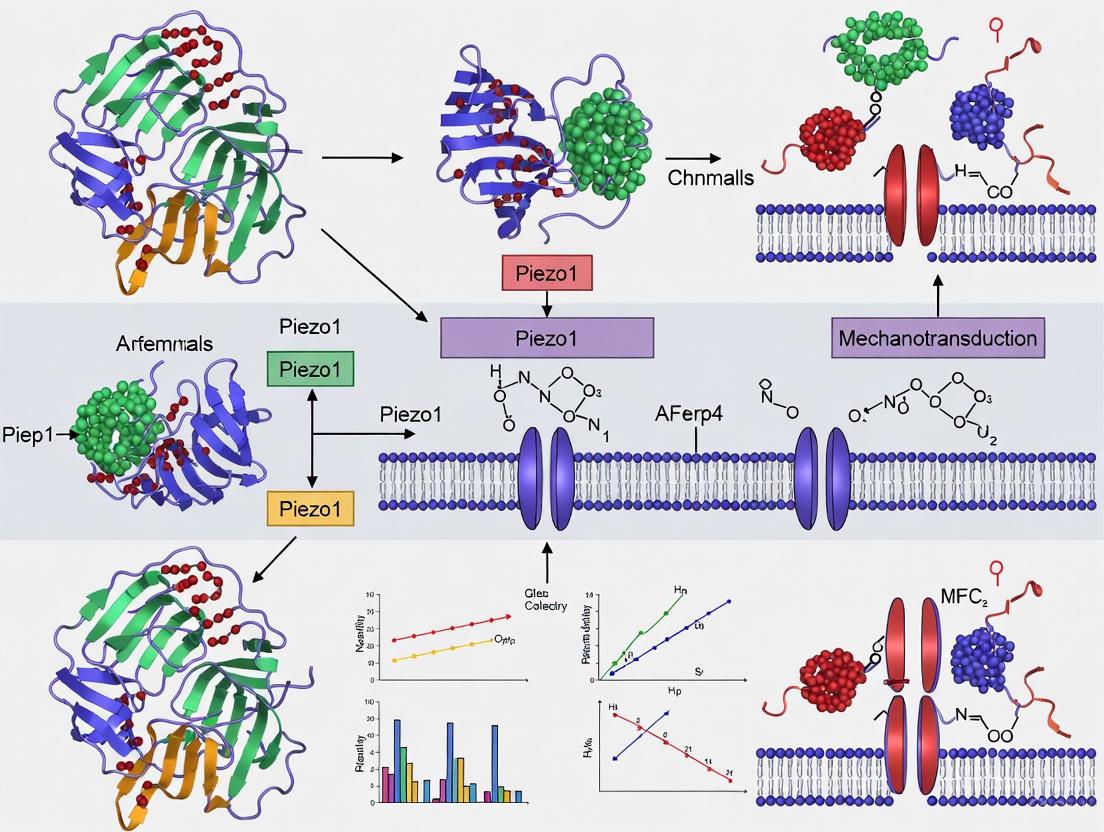
This article comprehensively explores the critical role of Piezo1 mechanosensitive ion channels in cellular mechanoprotection, the physiological process by which cells defend against mechanical stress.
Piezo1 Channels as Cellular Mechanoprotectors: Molecular Mechanisms, Therapeutic Targeting, and Future Directions
Abstract
This article comprehensively explores the critical role of Piezo1 mechanosensitive ion channels in cellular mechanoprotection, the physiological process by which cells defend against mechanical stress. We examine the foundational principles of Piezo1-mediated mechanotransduction, its structural determinants for force sensing, and its protective functions across various physiological systems. The review details current methodologies for studying Piezo1 activity, the landscape of its pharmacological modulators, and advanced approaches for therapeutic targeting. We further analyze key challenges in Piezo1 drug development, including specificity and toxicity concerns, and present validation strategies through disease-specific case studies and comparative analysis with other mechanosensitive channels. This synthesis provides researchers, scientists, and drug development professionals with a comprehensive framework for understanding Piezo1's mechanoprotective roles and advancing novel therapeutic strategies for mechanopathologies.
Piezo1 Fundamentals: Unraveling the Molecular Architecture and Mechanoprotective Signaling Pathways
Mechanoprotection refers to the mechanisms by which cells sense, respond to, and survive mechanical stresses. Central to this process are mechanosensitive ion channels, which act as molecular transducers, converting physical forces into electrochemical signals [1]. The Piezo family of proteins, particularly Piezo1, represents a major breakthrough in our understanding of mammalian mechanotransduction. Discovered in 2010, Piezo1 functions as a principal mechanosensitive cation channel that is evolutionarily conserved across numerous species, from protozoa to plants and mammals [2] [3] [4]. Unlike specialized sensory neurons that rely on force transmission through tethered filaments ("force-from-filaments"), many non-excitable cells utilize the "force-from-lipids" gating paradigm, where mechanical force activates channels directly through the lipid bilayer without requiring other cellular components [1] [5]. This fundamental gating mechanism is evolutionarily ancient, employed by bacterial mechanosensitive channels like MscL and MscS, and represents a crucial mechanoprotective system that allows cells to maintain integrity against mechanical stress.
Evolutionary Conservation of Piezo1
Piezo proteins exhibit remarkable evolutionary conservation, highlighting their fundamental role in mechanobiology.
Conservation Across Species
Table 1: Evolutionary Conservation of Piezo Proteins Across Species
| Organism Type | Piezo Homologs Present | Key Conservation Findings |
|---|---|---|
| Vertebrates (e.g., Humans, Mice) | Piezo1 and Piezo2 | Share ~50% amino acid identity; Piezo1 diverged from Piezo2 [3] [4]. |
| Invertebrates (e.g., Drosophila melanogaster) | One Piezo member (DmPiezo/CG8486) | 24% identical to mammalian Piezo; essential for noxious mechanical stimulus response [4]. |
| Zebrafish | Piezo1, Piezo2A, Piezo2B | Piezo1 is 59.2% identical to human Piezo1; Piezo2B mediates light touch in embryos [4]. |
| Plants & Protozoa | Piezo homologs present | Distinct from mammalian Piezo1/2; presence confirms deep evolutionary roots [3]. |
| Bacteria & Yeast | No Piezo homologs | Utilize other mechanosensitive channel families (e.g., MscL, MscS) [1]. |
Sequence analysis reveals a highly conserved motif known as the PFEW domain, which is hypothesized to be involved in channel conductance or gating [3]. This domain is particularly significant as most disease-associated mutations in humans occur within this region. The deep evolutionary conservation of Piezo channels underscores their fundamental role in mechanosensation across the tree of life.
Quantitative Biophysical Properties of Piezo1
Understanding the mechanoprotective role of Piezo1 requires examining its biophysical characteristics, which have been quantified through electrophysiological studies.
Table 2: Key Biophysical and Pharmacological Properties of Piezo1
| Property | Quantitative Measurement | Experimental Context & Notes |
|---|---|---|
| Slope Conductance | ~14-15 pS [6] | Measured in full-length Piezo1, inside-out patch configuration. |
| Single Channel Conductance (Reconstituted) | ~120 pS (0.5M KCl), ~60 pS (0.2M KCl) [2] | Measured after protein purification and reconstitution into artificial lipid bilayers. |
| Inactivation Time Constant (τ) | ~32 ms at -40 mV [3] | Single-exponential fit; is voltage-dependent. |
| Ruthenium Red (RR) Block (IC₅₀) | 5.4 μM (mouse Piezo1) [3] | Applied extracellularly; Drosophila Piezo is RR-insensitive [2]. |
| GsMTx4 Inhibition | ~80% current inhibition at low μM [3] | Peptide toxin; acts as a gating modifier, shifting activation to higher pressures. |
Piezo1 is a non-selective cation channel, permeable to Na⁺, K⁺, and Ca²⁺, with the latter playing a critical role in downstream signaling upon activation [2] [3]. The channel exhibits rapid inactivation during static stimulus and demonstrates voltage-dependent rectification [6] [3]. Its sensitivity to membrane tension is comparable to that of the bacterial channel MscL, confirming that lipid tension alone is sufficient for gating [3] [5].
Experimental Evidence for Piezo1 as a Bilayer Tension Sensor
A pivotal study by Cox et al. (2016) provided direct evidence that Piezo1 is gated by bilayer tension, a key mechanoprotective mechanism [5].
Detailed Experimental Protocol: Bleb Formation and Electrophysiology
Objective: To determine if PIEZO1 activation requires force transmission through the cytoskeleton or if it is gated directly by bilayer tension ("force-from-lipids").
Methodology Overview:
- Cell Line and Transfection: Human Embryonic Kidney (HEK293) cells were transfected with a novel PIEZO1-GFP fusion construct (GFP inserted at position 1591) or a bacterial MscL-GFP construct as a control.
- Membrane Blebbing:
- Induction: Cells were treated with a hypoosmotic sodium gluconate solution (~140 mOsm) for up to 6 hours. This solution was identified as the most effective, inducing blebs in >60% of cells while maintaining membrane integrity (verified by trypan blue exclusion) [5].
- Validation of Cytoskeletal Deficiency: The resulting blebs were stained with Alexa Fluor 568 phalloidin (for F-actin) and expressed β-tubulin-GFP. Imaging confirmed the absence of both F-actin and β-tubulin in the blebs, indicating a cytoskeleton-free membrane environment [5].
- Electrophysiological Recordings: Mechanosensitive currents were recorded from cell-attached patches, excised inside-out patches, and blebbed membranes using patch-clamp techniques.
- Mechanical Stimulation: Negative pressure (suction) was applied to the patch pipette to control membrane tension.
- Calibration: The bacterial channel MscL, a known bilayer tension sensor, was used to calibrate the mechanical environment. In blebs, MscL activated at ~56 mm Hg, nearly identical to its gating threshold in pure liposomes, confirming a minimal cytoskeletal influence [5].
Key Findings:
- The pressure required to gate PIEZO1 was significantly lower in blebbed membranes compared to cell-attached patches.
- This leftward shift in pressure sensitivity, also observed for MscL, indicates that PIEZO1 is more sensitive to membrane tension when the mechanoprotective, force-dissipating influence of the cytoskeleton is removed [5].
- Conclusion: PIEZO1 channels are directly gated by tension in the lipid bilayer, operating on the "force-from-lipids" principle [5].
Piezo1-Mediated Mechanoprotection Signaling Pathways
The activation of Piezo1 by mechanical forces initiates critical signaling cascades that contribute to cellular mechanoprotection. The following diagram illustrates the core pathway from mechanical stimulus to cellular response.
Diagram 1: Piezo1-mediated mechanoprotection signaling pathway. Mechanical force on the lipid bilayer gates Piezo1, leading to cation influx and diverse downstream responses that maintain cellular integrity and function.
In vascular endothelial cells, Piezo1 senses shear stress from blood flow, triggering calcium influx that activates calpain-2. This protease cleaves actin cytoskeleton and focal adhesion proteins, leading to cellular realignment—a critical adaptation that reduces mechanical stress on the cell [3]. In erythrocytes, Piezo1 is implicated in volume regulation, where its dysfunction leads to hereditary xerocytosis, a disease characterized by dehydrated red blood cells [2] [3]. Furthermore, Piezo1 activation in various cell types can influence gene expression, proliferation, and differentiation, all of which are essential for long-term tissue mechanoprotection and homeostasis [7] [4].
The Scientist's Toolkit: Key Research Reagents
Table 3: Essential Research Reagents for Studying Piezo1 Function and Mechanoprotection
| Reagent / Tool | Function / Purpose | Key Characteristics and Usage Notes |
|---|---|---|
| PIEZO1-Knockout HEK293T Cells [6] | A heterologous expression system lacking endogenous Piezo1, crucial for cleanly characterizing transfected wild-type or mutant channels. | Eliminates confounding effects of native Piezo1 currents. Essential for truncation mutant studies [6]. |
| GsMTx-4 Toxin [6] [3] [5] | Peptide inhibitor from tarantula venom that acts as a gating modifier. | Applied extracellularly (low μM). Shifts pressure-activation curve; not entirely specific as it can affect other channels [3]. |
| Ruthenium Red (RR) [2] [3] | Small molecule pore blocker of mouse and human Piezo1. | Applied extracellularly (IC₅₀ ~5.4 μM for mPiezo1). Not specific to Piezo; blocks various ion channels [2] [3]. |
| Yoda1 [8] [7] | The first identified synthetic chemical activator of Piezo1. | Binds to and stabilizes the open state, sensitizing the channel to mechanical stimuli. A key tool for probing Piezo1 pharmacology [8] [7]. |
| Hypoosmotic Sodium Gluconate Solution [5] | Solution used to induce membrane blebbing in cultured cells. | Creates cytoskeleton-deficient membrane patches for isolating "force-from-lipids" gating mechanisms [5]. |
| PIEZO1 Truncation Mutants (e.g., E2172) [6] | Deletion proteins (e.g., aa 2172-2547) used to identify the minimal pore-forming module. | Folds and functions as a constitutively active pore, but lacks mechanosensitivity [6]. |
Piezo1 stands as a paradigm for an evolutionarily conserved mechanoprotective protein. Its identity as a force-from-lipids gated ion channel, its unique three-bladed propeller structure, and its critical roles in vascular development, erythrocyte volume regulation, and cartilage homeostasis underscore its fundamental importance in cellular mechanobiology [2] [3] [5]. The experimental approaches and tools detailed in this review provide a roadmap for continued investigation. Future research will likely focus on obtaining higher-resolution dynamic structures of the channel throughout its gating cycle, developing more specific pharmacological modulators, and elucidating the complex interplay between Piezo1 and other cellular components in the mechanoprotective network. This deeper understanding holds significant promise for developing novel therapies for a wide range of mechanopathologies.
The Piezo1 channel is a pivotal mechanosensitive ion channel that functions as a key mechanotransducer in various physiological processes, including vascular development, red blood cell volume regulation, and touch sensation. Its unique three-bladed, propeller-like architecture and associated dome mechanism enable the highly sensitive conversion of mechanical forces into electrochemical signals. This whitepaper details the structural components of Piezo1, the experimental methodologies underpinning these discoveries, and the quantitative biophysical properties that define its function. Understanding these structural principles is fundamental to advancing cellular mechanoprotection research and developing novel therapeutic strategies for mechanosensitivity-related disorders.
Mechanotransduction—the process by which cells convert mechanical stimuli into biological signals—is essential for numerous physiological functions, from neuronal development to cardiovascular regulation [9] [10]. The Piezo family of proteins, specifically Piezo1 and Piezo2, were identified in 2010 as the long-sought-after mechanically activated cation channels in mammals [10] [2]. As a primary mechanosensor, Piezo1 plays a critical role in cellular mechanoprotection by enabling cells to detect and respond to potentially damaging mechanical forces, thereby initiating adaptive and protective signaling cascades. Its structural design is optimally configured for this role, embodying principles of mechanical efficiency and sensitivity [8] [11].
The Piezo1 channel exhibits a unique homotrimeric architecture that is evolutionarily conserved and distinct from any other known class of ion channels [2]. Cryo-electron microscopy (cryo-EM) studies have revealed its overall structure with increasing precision.
- Three-Bladed Propeller Shape: The channel assembles into a trimeric, propeller-like structure with three extended peripheral blades surrounding a central pore [12] [2]. This top-down view highlights its three-fold symmetry.
- Homotrimeric Composition: The functional channel is composed of three identical subunits (homotrimer), each contributing to the blade structures and the central pore module [2].
- Overall Dimensions: The structure deforms the surrounding lipid membrane into a dome with a diameter of approximately 18 nm and a depth of about 6 nm [11].
Table 1: Key Quantitative Features of the Piezo1 Architecture
| Structural Feature | Quantitative Description | Functional Significance |
|---|---|---|
| Subunits | 3 (Homotrimer) | Forms the fundamental functional unit [2] |
| Transmembrane Helices per Subunit | 38 | Unprecedented topology for an ion channel [10] [13] |
| Intracellular Beam Length | ~90 Å (9 nm) | Acts as a lever for mechanotransduction [12] [10] |
| Membrane Dome Diameter | ~18 nm | Creates a site for sensing membrane tension [11] |
| Membrane Dome Depth | ~6 nm | Correlates with the channel's curvature [11] |
Structural Components and Their Functional Roles
The sophisticated function of Piezo1 arises from the coordinated action of its discrete structural modules.
The Transmembrane Helical Units and Blade Assembly
Each of the three subunits of Piezo1 is composed of 36 transmembrane (TM) helices organized into nine repetitive, four-transmembrane-helix bundles known as Transmembrane Helical Units (THUs) [12] [10]. These THUs (TM1-TM36) assemble sequentially to form the three curved, blade-like structures that constitute the propeller. The blades exhibit considerable flexibility and are intrinsically curved, enabling them to induce and sense local membrane curvature [9] [10]. This curvature is critical for the proposed dome mechanism of mechanosensing.
The Central Pore Module
The ion conduction pathway is housed in a central module formed by the two C-terminal transmembrane helices (TM37 and TM38) from each subunit.
- Pore Architecture: TM38 from each subunit lines the hydrophilic ion-conducting pore, while TM37 acts as an outer helix [12] [13].
- Ion Pathway: The continuous central channel comprises an extracellular vestibule within the cap, a transmembrane vestibule, and an intracellular vestibule [13].
- Ion Selectivity: The channel is a non-selective cation channel. Key residues, such as a patch of negatively charged residues (DEEED, residues 2393–2397) in the extracellular cap, are required for efficient cation conduction and selection over anions [13].
The Intracellular Beam and Anchor
A defining feature of the Piezo1 structure is the presence of three long, intracellular beam-like domains.
- Structure and Composition: Each beam is approximately 90 Å long and is formed by residues within the large intracellular loop between THU7 and THU8 (e.g., residues H1300-S1362) [10] [13].
- Mechanotransduction Function: The beams physically bridge the distal blade regions to the central pore. This design suggests they function as levers, transmitting force from the peripheral blades to the central gate, mediating mechanical gating [12] [11].
- The Anchor Domain: A hairpin structure, comprising three helices (α1, α2, α3), connects the pore module to the beam and the C-terminal domain. Mutations in this region (e.g., KKKK 2182-K2185) are linked to human disease, underscoring its functional importance [10] [13].
The Extracellular Cap
The C-terminal extracellular domain (CED, residues ~2210-2457) trimerizes to form a central cap structure that sits atop the central pore [10] [13]. This cap encloses an extracellular vestibule with openings and is crucial for the channel's mechanical activation, though its deletion does not prevent ion conduction [13].
The Dome Mechanism of Mechanosensing
The unique architecture of Piezo1 is directly linked to its mechanosensitive function through the "dome mechanism" [11]. Unlike bacterial MscL channels, which have a large in-plane area expansion, Piezo1's narrow, cation-selective pore necessitates an alternative mechanism for high mechanosensitivity.
The model proposes that the inherent curvature of the Piezo1 propeller structure locally deforms the lipid bilayer into a dome-shaped protrusion. Membrane tension favors a flattening of this dome, which stores elastic energy. The transition of the channel to an open state is coupled to a reduction in this curvature, releasing the stored energy and lowering the free energy required for gating. The sensitivity of gating is proportional to the change in the projected area under the dome upon channel opening, providing a quantitative basis for its mechanosensitivity without requiring a large expansion of the pore itself [11].
Piezo1 Dome Mechanism Pathway
Experimental Protocols for Structural and Functional Analysis
Cryo-Electron Microscopy (Cryo-EM) Structure Determination
The determination of Piezo1's structure relied on state-of-the-art cryo-EM techniques [12] [2] [11].
- Protein Engineering and Expression: Full-length mouse Piezo1 (mPiezo1, 2547 amino acids) was expressed in mammalian expression systems (e.g., HEK293T cells) to ensure proper folding and post-translational modifications.
- Purification: The protein was solubilized using the detergent C12E10 and purified via affinity and size-exclusion chromatography. The use of a C-terminal GST-tag aided in purification and oligomeric state analysis [2].
- Grid Preparation and Vitrification: Purified protein was applied to cryo-EM grids and plunge-frozen in liquid ethane to preserve its native state in a thin layer of vitreous ice.
- Data Collection: Micrographs were collected using a Titan Krios microscope operating at 300 kV, equipped with a K2 Summit direct electron detector, at a nominal magnification of 22,500x, yielding a pixel size of 1.31 Å [12] [2].
- Image Processing and 3D Reconstruction:
- Beam-induced motion correction was performed using tools like MotionCor2 [12].
- Contrast Transfer Function (CTF) estimation was determined by Gctf.
- Particle picking and extraction yielded hundreds of thousands of particle images.
- 2D classification was used to select homogeneous particle subsets.
- 3D classification and refinement were performed in RELION. Due to the flexibility of the peripheral blades, focused refinement with a mask covering the central hub and one arm was often employed, followed by symmetry expansion, to improve resolution at the periphery [11].
- Model Building: An atomic model was built de novo, docking the known CED crystal structure (PDB: 4RAX) and building the remaining transmembrane regions into the cryo-EM density map using Coot and PHENIX [12] [11].
Functional Validation via Electrophysiology and Mutagenesis
Structural insights were validated functionally using a combination of approaches.
- Electrophysiology: Whole-cell patch-clamp recordings were used to measure mechanically activated currents and agonist (e.g., Yoda1)-induced currents in cells expressing wild-type and mutant Piezo1 [14]. This confirmed the channel's ion conductance and selectivity.
- Site-Directed Mutagenesis: Residues identified as critical from the structure (e.g., in the pore, beam, or anchor) were mutated. For example, deleting the beam (residues 1280-1360) or mutating single residues in critical domains impaired mechanical activation, confirming their role in mechanotransduction [12] [10].
- Lipid Bilayer Reconstitution: Purified Piezo1 protein was reconstituted into artificial lipid bilayers, where spontaneous single-channel activities were recorded, providing definitive evidence that Piezo1 itself is the pore-forming subunit [2].
Table 2: Key Research Reagents for Piezo1 Investigation
| Reagent / Tool | Type | Primary Function in Research |
|---|---|---|
| HEK293T Cell Line | Cellular Model | Heterologous expression system for Piezo1 protein production and electrophysiology [2] |
| C12E10 Detergent | Chemical | Solubilizes Piezo1 from the membrane while maintaining structural integrity for cryo-EM [2] |
| Yoda1 | Small Molecule Agonist | Chemically activates Piezo1, used to probe channel function and downstream signaling [14] |
| GsMTx4 | Peptide Toxin | Inhibits Piezo1 activation by partitioning into the membrane, used to block mechanosensitive currents [14] |
| Ruthenium Red (RR) | Small Molecule | Pore blocker for mouse Piezo1, used to confirm pore identity and for single-channel analysis [2] |
The Scientist's Toolkit
Piezo1 Research Toolkit Overview
The elucidation of Piezo1's trimeric propeller and dome architecture represents a landmark achievement in mechanobiology. This structure provides a definitive physical basis for understanding how mechanical forces are sensed at the cellular level and transduced into protective biochemical and electrical signals. The model of the intracellular beam acting as a lever to transmit force from the curved blades to the central pore offers a elegant mechanistic explanation for Piezo1's high mechanosensitivity.
Future research will focus on capturing high-resolution structures of Piezo1 in different conformational states (e.g., fully open and inactivated) to delineate the complete gating cycle. Furthermore, integrating these structural insights with advanced live-cell imaging and AI-driven modeling will be crucial for understanding Piezo1 dynamics in native physiological contexts [8]. From a therapeutic perspective, the widespread role of Piezo1 in chronic inflammation [15], cancer, and various genetic disorders highlights its potential as a drug target. Overcoming the challenges of developing tissue-specific modulators of Piezo1 will be essential for translating this fundamental structural knowledge into safe and effective mechanoprotective therapies.
Mechanosensitive (MS) ion channels serve as fundamental molecular transducers, converting mechanical forces into electrochemical signals within living cells. These channels are integral membrane proteins that operate on a millisecond timescale, positioning them at the origin of cellular mechanosensory transduction pathways [1]. The gating mechanisms of MS channels have been extensively studied, leading to the establishment of two primary paradigms that explain how mechanical force activates these channels: the force-from-lipids principle and the force-from-filaments principle [1] [16]. The force-from-lipids paradigm posits that mechanical force activates MS channels directly through the lipid bilayer without requiring other cellular components, whereas the force-from-filaments mechanism involves cytoskeletal or extracellular elements transmitting force to the channel [1].
Within this mechanistic framework, Piezo1 channels represent a groundbreaking discovery in eukaryotic mechanobiology. As one of the principal molecular force sensors in mammalian cells, Piezo1 exhibits a unique sensitivity to membrane curvature and tension, operating primarily through the force-from-lipids principle [1] [8]. This whitepaper examines the structural and biophysical principles underlying Piezo1's gating mechanism, with particular emphasis on its role in membrane curvature sensing and its implications for cellular mechanoprotection. Understanding these fundamental processes provides critical insights for drug development targeting mechanochannelopathies—diseases arising from abnormal MS channel activity [1].
The Force-from-Lipids Principle: Biophysical Foundations
Fundamental Mechanism and Evolutionary Significance
The force-from-lipids principle represents a fundamental biophysical mechanism where mechanical forces activate MS channels directly through changes in the lipid bilayer properties. This gating paradigm was first proposed approximately three decades ago through seminal studies on bacterial MS channels [1]. The core premise is that mechanical stimuli, such as membrane tension or curvature changes, alter the lipid bilayer's physical state, which in turn induces conformational changes in embedded channel proteins, leading to channel opening and ion flux [16].
This mechanism is evolutionarily ancient, with MS channels operating on this principle found in all three domains of life: bacteria, archaea, and eukaryotes [1]. The evolutionary conservation underscores its fundamental importance in mechanobiology. In bacterial systems such as Escherichia coli, the mechanosensitive channels of small conductance (MscS) and large conductance (MscL) function as "safety valves" during hypoosmotic shock, opening in response to increased membrane tension to release osmolytes and prevent cell lysis [17]. These bacterial channels have served as valuable model systems for understanding the structural and biophysical principles that also govern eukaryotic MS channels like Piezo1.
The Transbilayer Pressure Profile
A key concept underlying the force-from-lipids principle is the transbilayer pressure profile—the differential distribution of lateral pressure across the lipid bilayer [1]. This profile arises from the anisotropic molecular forces between lipid molecules, including headgroup repulsion, hydrocarbon chain attraction, and interfacial tension. Mechanical forces applied to the membrane distort this pressure profile, creating a driving force that promotes conformational changes in embedded channel proteins [1] [18].
Table 1: Key Biophysical Concepts in Force-from-Lipids Gating
| Concept | Description | Role in Channel Gating |
|---|---|---|
| Membrane Tension | Force per unit length in the membrane plane | Directly drives channel conformational changes; typical gating tensions ≤25 mN/m [1] |
| Transbilayer Pressure Profile | Differential pressure distribution across bilayer thickness | Provides energy landscape for conformational transitions; distortion drives gating [1] |
| Membrane Curvature | Deviation from flat membrane geometry | Creates asymmetric stress on channel structure; key activation mechanism for Piezo1 [8] |
| Elastic Energy Storage | Energy stored in deformed membrane | Energy released during flattening drives pore opening in Piezo1 [8] |
Advanced structural studies, particularly cryo-electron microscopy (cryo-EM) of membrane-embedded channels, have revealed how specific lipid-channel interactions mediate force transmission. For MscS channels in nanodiscs, structural analyses have identified distinct lipid densities that play explicit roles in mechanotransduction, including phospholipids that 'hook' the top of TM2-TM3 hairpins and likely participate in force sensing [18]. These structural insights demonstrate that lipids act not merely as a passive medium but as active participants in the mechanogating process.
Piezo1 Channel Structure and Curvature Sensing Mechanism
Architectural Basis for Curvature Sensing
Piezo1 channels exhibit a remarkable trimeric architecture that directly facilitates their curvature-sensing capabilities. Structural analyses reveal that Piezo1 forms a three-bladed, propeller-shaped homotrimer, with each subunit containing 38 transmembrane helices for a total of 114 transmembrane helices in the full channel complex [4] [13]. This unprecedented transmembrane topology organizes into several distinct structural modules:
- Central pore module: Contains the ion-conducting pathway formed by the innermost transmembrane helices [13]
- Peripheral blades: Nine repetitive transmembrane helical units (THUs) arranged in curved blade-like structures that sense membrane mechanics [13]
- Intracellular beams: Long structural elements connecting the peripheral blades to the central pore [13]
- Extracellular cap: Trimeric structure enclosing an extracellular vestibule above the pore [13]
The most distinctive structural feature enabling curvature sensing is the highly curved conformation of the peripheral blades. When incorporated into a lipid bilayer, these blades induce and stabilize a pronounced local membrane curvature, creating a dome-shaped footprint approximately 20-30 nm in diameter [4] [13]. This inherent curvature establishes a resting state energy potential that is central to Piezo1's gating mechanism.
Curvature-to-Gating Transition Model
Piezo1 channels operate as molecular transducers that convert changes in membrane curvature into channel opening through a precise structural mechanism. In the resting state, Piezo1's blades maintain a deeply curved conformation that matches and stabilizes highly curved membrane domains [8] [13]. When membrane tension increases or curvature decreases, the lipid bilayer flattens, exerting mechanical force on the channel structure. This force drives a conformational transition where Piezo1's blades flatten toward the membrane plane, storing elastic energy in the deformed structure [8].
The stored elastic energy is then transduced through the intracellular beam structures to the central pore module [13]. These beams function as essential mechanical linkages, transmitting force from the peripheral blades over nanometer-scale distances to induce pore opening. The resulting conformational change opens the cation-selective permeation pathway, allowing calcium and other cations to flow into the cell [8] [16]. This curvature-to-gating transition represents an elegant biophysical mechanism for converting mechanical information into electrochemical signaling.
Diagram 1: Piezo1 curvature gating model. Membrane tension forces flattening, transmitting force via beams to open the pore.
Experimental Methodologies for Studying Piezo1 Gating
Structural Biology Approaches
Elucidating the structural basis of Piezo1 gating has required advanced structural biology techniques, particularly cryo-electron microscopy (cryo-EM). The methodology for determining Piezo1 structures involves several critical steps:
Membrane Protein Purification: Recombinant Piezo1 is expressed in heterologous systems (typically HEK293 cells) and purified using detergent solubilization and affinity chromatography [4] [13]
Membrane Mimetic Systems: For native-like gating studies, purified Piezo1 is reconstituted into lipid nanodiscs of defined composition [18]. Nanodiscs consist of a lipid bilayer surrounded by membrane scaffold proteins (MSPs) that provide a native-like membrane environment while maintaining control over lipid composition [17]
Cryo-EM Grid Preparation: Samples are vitrified in liquid ethane to preserve native structures and imaged using advanced cryo-electron microscopes [4] [13]
Image Processing and 3D Reconstruction: Hundreds of thousands of particle images are processed through single-particle analysis to generate high-resolution 3D density maps [4]
Molecular Dynamics Simulations: Computational approaches complement structural data to model the dynamic gating process and lipid interactions [8]
This integrated approach has revealed Piezo1 structures in multiple conformational states, providing critical insights into the curvature-sensing mechanism and force-from-lipids gating [8] [4].
Functional Assays for Mechanosensitivity
Determining the functional properties of Piezo1 channels requires specialized biophysical approaches that apply controlled mechanical stimuli while monitoring channel activity:
Patch-Clamp Electrophysiology: The gold standard for measuring ion channel activity [1]. For mechanosensitivity studies, channels are activated through:
Liposome Reconstitution: Purified Piezo1 incorporated into synthetic liposomes allows examination of gating in minimal systems without cellular components [1]. Channel activity is measured via:
Live-Cell Imaging: Combining mechanical stimulation with calcium imaging using indicators like Fluo-4 or Fura-2 to monitor calcium influx through activated Piezo1 channels [19]
Atomic Force Microscopy: Provides precise control over mechanical stimulation while simultaneously monitoring cellular responses [8]
Table 2: Key Experimental Parameters for Piezo1 Functional Characterization
| Parameter | Typical Range | Measurement Significance |
|---|---|---|
| Activation Membrane Tension | ~1.5-3 mN/m [1] | Indicates mechanical sensitivity |
| Ion Selectivity (Pₐ/Pₖ) | ~0.8-1.5 (cation-selective) [13] | Determines permeability to Ca²⁺ vs other ions |
| Single Channel Conductance | ~30-50 pS [13] | Reflects pore dimensions and transport rate |
| Inactivation Time Constant | ~10-50 ms [13] | Measures adaptation to sustained stimulus |
| Curvature Sensitivity | Gating at ~0.005-0.01 nm⁻¹ curvature [8] | Quantifies curvature sensing capability |
Diagram 2: Experimental workflow integrating structural and functional approaches to study Piezo1 gating.
The Scientist's Toolkit: Essential Research Reagents
Table 3: Key Research Reagents for Piezo1 Mechanobiology Studies
| Reagent/Category | Specific Examples | Research Application | Technical Function |
|---|---|---|---|
| Membrane Mimetic Systems | Nanodiscs (MSP1E3D1, MSP2N2) [18]; Liposomes (DOPC, POPC) [1] | Structural studies in lipid environments | Provide native-like membrane context without cellular complexity |
| Chemical Modulators | Yoda1 (agonist) [8]; GsMTx4 (inhibitor) [20]; Ruthenium Red (pore blocker) [13] | Functional probing of channel activity | Pharmacologically manipulate opening/closing for mechanism studies |
| Lipid Components | Phosphatidylinositol 4,5-bisphosphate [PI(4,5)P₂] [8]; Cholesterol [8] | Investigation of lipid regulation | Test specific lipid effects on gating and mechanosensitivity |
| Imaging Tools | Cryo-EM microscopes (Titan Krios) [4]; Calcium indicators (Fluo-4, Fura-2) [19] | Structural & functional monitoring | Visualize structure and measure real-time channel activity |
| Genetic Tools | CRISPR/Cas9 KO cells [4]; Piezo1-GFP fusions [19]; Mutant constructs [13] | Manipulation of channel expression | Create model systems and test structure-function relationships |
Piezo1 in Cellular Mechanoprotection and Therapeutic Implications
Physiological Roles in Mechanoprotection
Piezo1 channels play essential roles in cellular mechanoprotection—the ability of cells to withstand and adapt to mechanical stress. This protective function operates through several key mechanisms:
In the cardiovascular system, Piezo1 in endothelial cells senses blood flow-induced shear stress, triggering calcium signals that regulate vascular development and blood pressure homeostasis [4] [16]. Global Piezo1 knockout in mice causes embryonic lethality due to defective vascular development, underscoring its critical protective role during development [16]. Piezo1 also mediates regulatory volume decrease in red blood cells, allowing them to adapt to osmotic challenges and prevent swelling-induced lysis [1] [16]. Mutations in Piezo1 that alter its inactivation kinetics cause hereditary xerocytosis, a disease characterized by red blood cell dehydration, highlighting the importance of proper channel kinetics for cellular protection [1] [20].
In the nervous system, Piezo1 contributes to mechanoprotection by regulating myelin formation and maintenance. During myelination, Piezo1 on axonal surfaces senses mechanical forces generated by oligodendrocytes wrapping around axons, thereby helping coordinate proper myelin sheath formation [19]. This process is essential for nerve protection and efficient signal conduction. Additionally, Piezo1 activation in microglia and astrocytes facilitates clearance of amyloid-beta plaques in Alzheimer's disease, representing a protective mechanism against neurodegenerative pathology [19].
Therapeutic Targeting of Piezo1 Gating
The central role of Piezo1 in mechanoprotection and various disease processes makes it an attractive therapeutic target. Several strategic approaches have emerged for modulating Piezo1 activity:
Small Molecule Modulators: Compounds like Yoda1 act as chemical agonists that sensitize Piezo1 to mechanical stimuli, potentially offering therapeutic benefits in conditions requiring enhanced mechanosensitivity [8]. Conversely, selective inhibitors could treat conditions involving pathological Piezo1 activation.
Membrane-Lipid Therapy: Since Piezo1 gating is highly dependent on membrane composition and physical properties, strategies that modulate membrane lipid content represent a promising approach to indirectly regulate channel activity [8] [17]. This could involve targeting lipid metabolic pathways or utilizing synthetic lipids that alter membrane mechanical properties.
Genetic Approaches: For hereditary conditions caused by Piezo1 mutations, gene therapy approaches could restore normal channel function. Additionally, antisense oligonucleotides might fine-tune Piezo1 expression levels in specific tissues [20].
The development of Piezo1-targeted therapies faces significant challenges, including the channel's widespread expression and diverse physiological roles, which increase the risk of off-target effects [8] [20]. However, emerging technologies such as tissue-specific delivery systems, advanced imaging methods, and organ-on-a-chip models are helping to address these barriers and accelerate therapeutic development [8].
The force-from-lipids principle and membrane curvature sensing represent fundamental biophysical mechanisms that enable Piezo1 channels to function as sophisticated molecular transducers of mechanical stimuli. Through its unique propeller-shaped architecture and exquisite sensitivity to membrane mechanics, Piezo1 exemplifies how ion channels have evolved to directly interface with their lipid environment to detect and respond to mechanical force. The continuing elucidation of Piezo1's gating mechanism not only advances our fundamental understanding of mechanobiology but also opens new therapeutic avenues for treating a wide range of mechanochannelopathies. As research progresses, integrating cutting-edge structural, biophysical, and pharmacological approaches will be essential for fully unlocking the therapeutic potential of Piezo1 modulation in human disease.
Ion Permeation and Calcium Signaling in Cellular Defense Mechanisms
The Piezo1 ion channel, discovered in 2010 and recognized with the 2021 Nobel Prize in Physiology or Medicine, represents a fundamental mechanotransduction pathway that enables cells to convert mechanical stimuli into electrochemical signals through controlled ion permeation [21]. This non-selective cation channel functions as a critical cellular defense component by sensing a wide spectrum of mechanical forces including shear stress, membrane stretch, and compression, thereby initiating calcium-mediated protective responses that maintain cellular integrity under mechanical challenge [21]. The channel's distinctive propeller-like architecture, resolved through cryo-electron microscopy, forms a trimeric bowl-shaped structure with elongated blade domains that radiate symmetrically from a central pore, creating an exquisite mechanosensitive apparatus capable of detecting subtle changes in membrane tension and curvature [21].
Piezo1-mediated mechanoprotection operates through a sophisticated ion permeation system that translates physical forces into calcium signaling cascades, subsequently activating defense mechanisms essential for cellular homeostasis [21]. Beyond its established roles in vascular development, erythrocyte volume regulation, and neural plasticity, emerging research highlights Piezo1's significance in coordinating integrated stress responses across various tissues, including bone, skin, and immune systems [21] [22] [23]. This technical guide comprehensively examines the structural principles governing Piezo1 ion permeation, details the calcium signaling pathways it activates in cellular defense contexts, and provides experimental methodologies for investigating its mechanoprotective functions, with particular emphasis on applications relevant to pharmaceutical development and therapeutic intervention.
Structural Basis of Piezo1 Ion Permeation
Architectural Features Governing Ion Selectivity
The Piezo1 channel exhibits a remarkable trimeric propeller-like structure that distinguishes it from other ion channel families. This distinctive architecture comprises three identical subunits arranged around a central pore, forming a bowl-shaped complex that extends approximately 280 Å into the cell membrane [21]. Each subunit contributes to the formation of the ion conduction pathway, with the entire assembly containing 38 transmembrane helices per protomer that collectively create the mechanosensitive blade structures and central pore domain [21]. The immense size of this assembly—around 900 kDa—enables its function as both a force sensor and ion conductor, with the elongated blade arms serving as lever arms to amplify membrane tension into pore gating motions.
The ion permeation pathway is characterized by a non-selective cation selectivity filter that permits the passage of Ca²⁺, Mg²⁺, Na⁺, and K⁺ ions, though with notable preference for calcium ions under physiological conditions [21] [24]. Structural analyses reveal that the pore region contains critical amino acid residues that coordinate dehydrated calcium ions during permeation, with the narrowest constriction point approximately 8-10 Å in diameter when the channel is in the open state [21]. This dimensions allows partially hydrated cations to pass while excluding larger molecules, establishing the basis for Piezo1's cation selectivity. The channel's permeability to both calcium and magnesium ions has significant implications for cellular signaling, as both divalent cations function as critical intracellular messengers in defense pathways [24].
Gating Mechanisms and Permeation Properties
Piezo1 undergoes dramatic conformational transitions between curved and flattened states during gating, with membrane tension serving as the primary activation stimulus [21]. In the resting curved state, the pore remains closed, while application of mechanical force induces blade expansion and flattening of the channel structure, which subsequently opens the pore domain through a helical spring mechanism [21]. This "force-from-lipids" gating model positions Piezo1 as a direct sensor of bilayer tension, with activation thresholds typically between 1.5-2.5 mN/m in native cellular environments [21]. The channel exhibits rapid activation kinetics (milliseconds) followed by rapid inactivation, a property that prevents calcium overload during sustained mechanical stimulation—a critical defense mechanism against excitotoxicity.
The table below summarizes key biophysical properties of Piezo1 ion permeation:
Table 1: Biophysical Properties of Piezo1 Ion Permeation
| Parameter | Characteristics | Functional Significance |
|---|---|---|
| Ion Selectivity | Non-selective cation channel (PCa/PNa ≈ 0.8-1.5) | Permeation by Ca²⁺, Mg²⁺, Na⁺, K⁺ enables diverse signaling |
| Single-Channel Conductance | 28-35 pS (Na⁺), 15-18 pS (Ca²⁺), 12-14 pS (Mg²⁺) | Moderate conductance prevents energy dissipation during mechanosensing |
| Calcium Permeability | Significant Ca²⁺ influx (fractional Ca²⁺ current ~10-20%) | Direct calcium signaling without secondary messenger amplification |
| Activation Kinetics | Rapid activation (τactivation < 1-5 ms) | Enables immediate response to mechanical perturbations |
| Inactivation Kinetics | Voltage-dependent (τinactivation ≈ 10-50 ms) | Prevents calcium overload during sustained stimulation |
| Mechanical Threshold | 1.5-2.5 mN/m membrane tension | Tunable sensitivity across cell types and physiological contexts |
Recent single-channel patch-clamp studies using the specific Piezo1 agonist Yoda1 have precisely quantified divalent cation permeation, revealing unitary conductance values of approximately 15-18 pS for calcium and 12-14 pS for magnesium under physiological ion concentrations [24]. The saturation effect observed at increasing Mg²⁺ concentrations suggests binding sites within the permeation pathway that partially occlude the pore, contributing to the channel's lower magnesium conductance compared to calcium [24]. These precise permeation characteristics enable Piezo1 to generate localized calcium nanodomains near the cytoplasmic mouth of the channel while simultaneously contributing to bulk cytoplasmic calcium changes through both direct influx and secondary calcium-induced calcium release mechanisms [21].
Calcium Signaling Pathways in Cellular Defense
Primary Calcium Influx and Amplification Mechanisms
Upon mechanical activation, Piezo1-mediated calcium entry initiates a sophisticated signaling cascade that coordinates multiple cellular defense programs. The initial calcium influx through Piezo1 creates localized nanodomains with calcium concentrations reaching tens of micromoles near the channel mouth, which subsequently triggers calcium-induced calcium release (CICR) from endoplasmic reticulum stores via ryanodine and IP3 receptors [21]. This amplification mechanism transforms a spatially restricted mechanical signal into a global calcium response that engages effector systems throughout the cell. In bone tissue, for instance, this primary calcium signal activates PI3K-Akt signaling, which subsequently regulates the opening of connexin 43 hemichannels (Cx43 HCs), establishing a positive feedback loop that sustains the anabolic response to mechanical loading [23].
The coordination between Piezo1 and hemichannels represents a crucial defense mechanism in mechanically stressed tissues. Research demonstrates that Piezo1 activation promotes ATP release through both Cx43 and pannexin1 channels, creating purinergic signaling microdomains that activate P2X and P2Y receptors on the cell surface and further potentiate calcium signaling through store-operated calcium entry [23]. This integrated system enables cells to translate transient mechanical stimuli into sustained calcium elevations that drive transcriptional reprogramming and metabolic adaptation—essential components of cellular mechanoprotection.
Downstream Effector Systems and Defense Responses
The calcium signals initiated by Piezo1 activation engage multiple effector systems that execute specific defense functions. The calcium/calmodulin-dependent protein kinase II (CaMKII) pathway translates Piezo1-mediated calcium transients into phosphorylation events that regulate transcription factors including NFAT, YAP, and TAZ, driving the expression of genes involved in cytoskeletal remodeling, antioxidant defense, and metabolic reprogramming [21]. In group 2 innate lymphoid cells (ILC2s), Piezo1 activation triggers mTOR signaling through calcium influx, selectively enhancing IL-13 protein production via translational control—a mechanism critical for mounting appropriate immune responses in mechanically dynamic environments like the lung [14].
The skin represents a particularly instructive model for understanding Piezo1-mediated defense coordination, where mechanical stretching activates Piezo1 in keratinocytes, driving an inflammatory-metabolic network that promotes tissue expansion and barrier reinforcement [22]. This process involves increased glycolytic activity through upregulation of GLUT1 and ALDOA, coupled with macrophage infiltration and cytokine signaling—all coordinated by Piezo1-mediated calcium entry [22]. The table below summarizes key downstream effector systems engaged by Piezo1 calcium signaling in cellular defense contexts:
Table 2: Piezo1-Activated Downstream Effector Systems in Cellular Defense
| Effector System | Activation Mechanism | Cellular Defense Function |
|---|---|---|
| CaMKII-NFAT Pathway | Calmodulin binding to Ca²⁺, kinase activation | Transcriptional reprogramming for adaptive cellular remodeling |
| mTOR Signaling | Calcium-dependent mTOR phosphorylation | Enhanced protein translation, metabolic reprogramming, cytokine production |
| YAP/TAZ Signaling | Calcium-mediated cytoskeletal changes | Regulation of proliferative and anti-apoptotic gene programs |
| Cx43 Hemichannel Opening | PI3K-Akt activation secondary to Ca²⁺ influx | ATP and prostaglandin release for paracrine communication |
| Glycolytic Activation | Calcium-dependent enzyme regulation | Metabolic adaptation to support defense-related biosynthesis |
| Cytoskeletal Reorganization | Direct calcium effects on actin-binding proteins | Cellular reinforcement against mechanical stress |
The defense pathways activated by Piezo1 extend beyond individual cells to tissue-level protection systems. In neuronal tissues, Piezo1-mediated calcium signaling contributes to myelination processes, with recent evidence suggesting its involvement in demyelinating diseases where mechanical properties of the cellular environment are altered [19] [25]. Similarly, in vascular endothelial cells, Piezo1 senses blood flow-induced shear stress and regulates vascular tone through the calcium-nitric oxide pathway, protecting against hypertension and atherosclerosis [21]. These diverse contexts highlight Piezo1's fundamental role as a coordinator of integrated defense mechanisms across physiological systems.
Experimental Approaches for Piezo1 Research
Pharmacological and Molecular Tools
Piezo1 research employs a growing arsenal of specific pharmacological and molecular tools that enable precise interrogation of its functions. The agonist Yoda1 serves as a cornerstone compound for selective Piezo1 activation without applying mechanical stimuli, functioning by stabilizing the channel's open state and producing calcium influx profiles similar to mechanical activation [14] [23] [24]. The antagonist Dooku1 (also termed Yoda1 antagonist) specifically inhibits Yoda1-induced activation and mechanically activated currents, providing a critical tool for establishing Piezo1-dependent effects [23]. The peptide inhibitor GsMTx4, originally isolated from tarantula venom, demonstrates higher specificity for mechanosensitive channels including Piezo1 and effectively blocks mechanically evoked responses without affecting Yoda1-induced activation in some systems [14].
Genetic approaches complement pharmacological tools, with RNA interference (siRNA) and conditional knockout strategies enabling cell-type-specific Piezo1 deletion [14]. These approaches have been particularly valuable for dissecting Piezo1 functions in complex tissues, such as establishing its role in ILC2s where Piezo1 deletion impaired IL-13 production and attenuated lung inflammation [14]. For advanced mechanistic studies, CRISPR/Cas9-mediated genome editing allows generation of stable knockout cell lines, while overexpression systems employing viral vectors facilitate structure-function studies and rescue experiments in Piezo1-deficient models.
Table 3: Essential Research Reagents for Piezo1 Investigation
| Reagent | Category | Primary Function | Example Applications |
|---|---|---|---|
| Yoda1 | Chemical Agonist | Piezo1-specific activation, stabilizes open state | Mimicking mechanical activation without physical force application |
| Dooku1 | Chemical Antagonist | Competitive inhibition of Yoda1 binding | Distinguishing Piezo1-specific effects in complex systems |
| GsMTx4 | Peptide Inhibitor | Pore blockade, inhibits mechanically activated currents | Isolating mechanosensitive component in mixed stimuli responses |
| Piezo1-siRNA | Molecular Tool | Targeted mRNA knockdown | Establishing Piezo1-dependent signaling in specific cell types |
| Piezo1-floxed mice | Genetic Model | Cell-type-specific Cre-mediated deletion | Tissue-specific function analysis in physiological contexts |
| Anti-Piezo1 antibodies | Detection Reagent | Protein localization and expression analysis | Immunofluorescence, Western blot, flow cytometry applications |
| CAL-520 AM / Fluo-4 AM | Calcium Indicators | Real-time monitoring of intracellular Ca²⁺ | Live-cell imaging of Piezo1-mediated calcium influx |
Methodologies for Assessing Ion Permeation and Signaling
Comprehensive evaluation of Piezo1 function requires integrated methodological approaches that span biophysical, imaging, and molecular techniques. Patch-clamp electrophysiology remains the gold standard for directly measuring Piezo1-mediated currents, with whole-cell configurations suitable for recording macroscopic currents and cell-attached modes enabling single-channel analysis [24]. For ion permeation studies, careful control of extra- and intracellular solutions allows isolation of specific cation contributions, as demonstrated in recent work precisely quantifying calcium and magnesium permeation through native Piezo1 channels in human myeloid leukemia K562 cells [24].
Calcium imaging techniques using ratiometric (e.g., Fura-2) or single-wavelength intensity-based (e.g., Fluo-4, CAL-520) dyes provide complementary information about downstream signaling consequences of Piezo1 activation [14] [23]. These approaches enable real-time visualization of calcium dynamics in response to both mechanical stimuli and pharmacological Piezo1 modulators. For example, in osteocyte studies, live calcium imaging combined with fluid flow shear stress demonstrated that Piezo1 activation initiates propagating calcium waves that depend on subsequent hemichannel opening and purinergic signaling [23].
Mechanical stimulation methodologies vary based on research questions, with systems including cell stretching devices, atomic force microscopy, fluid flow chambers, and substrate deformation platforms [14] [23]. The recent development of a cyclic air pressure (CAP) chamber system that mimics respiratory pressures has been particularly valuable for studying Piezo1 function in lung immune cells, revealing how mechanical forces associated with breathing regulate ILC2 function through Piezo1 activation [14]. Similarly, defined-stiffness hydrogel substrates (e.g., 2 vs. 50 kPa PDMS) enable investigation of how substrate mechanical properties influence Piezo1-mediated responses, demonstrating that stiffer substrates enhance IL-13 production in ILC2s in a Piezo1-dependent manner [14].
Diagram 1: Integrated Piezo1 Calcium Signaling Pathway in Cellular Defense Mechanisms. This diagram illustrates the sequence of events from mechanical stimulus detection to cellular defense outputs, highlighting key amplification loops including calcium-induced calcium release (CICR) and ATP-mediated autocrine/paracrine signaling.
Research Applications and Therapeutic Implications
Methodological Integration for Comprehensive Analysis
Advanced Piezo1 research requires strategic integration of multiple methodological approaches to establish comprehensive mechanistic understanding. The experimental workflow below outlines a robust strategy for investigating Piezo1-mediated calcium signaling in cellular defense contexts:
Diagram 2: Experimental Workflow for Piezo1 Mechanotransduction Research. This methodological sequence ensures systematic investigation from initial channel characterization to integrated functional analysis.
This integrated approach has revealed nuanced aspects of Piezo1 function across different cellular contexts. In bone mechanotransduction, combined patch-clamp electrophysiology, calcium imaging, and dye uptake assays demonstrated that Piezo1 activation triggers ATP release through connexin 43 hemichannels via PI3K signaling, establishing a positive feedback loop that sustains anabolic responses to mechanical loading [23]. In immune cells, the combination of single-cell RNA sequencing, calcium imaging, and genetic deletion approaches revealed that Piezo1 activation in ILC2s selectively enhances IL-13 production through mTOR-mediated translational control without affecting transcription—a finding with significant implications for understanding mechanical regulation of immune responses in barrier tissues [14].
Therapeutic Targeting and Future Directions
The growing understanding of Piezo1 in cellular defense mechanisms has opened promising therapeutic avenues for diverse pathological conditions. In demyelinating diseases, emerging evidence suggests Piezo1 plays a role in myelination processes, positioning it as a potential therapeutic target for conditions like multiple sclerosis [19] [25]. Similarly, in pulmonary diseases, Piezo1 modulation may offer strategies for controlling type 2 inflammation in asthma and fibrosis, given its established role in regulating ILC2 function in the lung [14]. The channel's involvement in coordinating inflammatory and metabolic responses in skin growth and repair further suggests potential applications in wound healing and tissue engineering [22].
Future research directions will likely focus on developing tissue-specific Piezo1 modulators with improved pharmacokinetic profiles, leveraging structural insights from cryo-EM studies to design next-generation agonists and antagonists [21]. The integration of artificial intelligence and machine learning approaches holds particular promise for predicting Piezo1 modulators with desired specificity and therapeutic properties [21]. Additionally, advanced delivery systems including nanoparticle-based approaches may enable targeted Piezo1 modulation in specific tissues while minimizing off-target effects [21]. As our understanding of Piezo1's roles in cellular defense continues to expand, so too will opportunities for therapeutic intervention across a spectrum of mechanical stress-related pathologies.
The critical importance of Piezo1-mediated calcium signaling in cellular defense is now firmly established, with ongoing research continuing to reveal new dimensions of its functional repertoire across physiological systems. From its fundamental role as a mechanotransducer to its position as a coordinator of integrated defense programs, Piezo1 represents both a fascinating biological system and a promising therapeutic target. The experimental approaches and conceptual frameworks outlined in this technical guide provide a foundation for advancing our understanding of how ion permeation through this remarkable channel enables cells to mount appropriate defense responses in mechanically dynamic environments.
The discovery of Piezo1 channels, recognized by the Nobel Prize in Physiology or Medicine in 2021, has unveiled fundamental mechanisms by which cells convert mechanical forces into biological signals—a process essential for tissue development, homeostasis, and protection [26] [21]. In the central nervous system (CNS), Piezo1 has emerged as a critical mediator of mechanoprotection, enabling neural cells to sense, adapt to, and respond to mechanical cues within their microenvironment [27] [28]. This mechanosensitive ion channel is expressed throughout the CNS and contributes to key neuroprotective processes, including adult neurogenesis, myelination, and the maintenance of cognitive function [29] [19]. The growing understanding of Piezo1's role in neural mechanobiology provides new insights into how mechanical forces shape brain health and offers novel therapeutic avenues for neurological disorders.
Piezo1 functions as a mechanosensitive cation channel that opens in response to various mechanical stimuli, including membrane stretch, shear stress, compression, and changes in matrix stiffness [15] [21]. Upon activation, it permits the influx of cations, particularly calcium (Ca²⁺), initiating downstream signaling cascades that influence cell fate, differentiation, and function [21]. In the mechanically dynamic environment of the brain, Piezo1 serves as a crucial sensor that translates physical cues into electrochemical signals, thereby orchestrating adaptive responses that contribute to neural protection and repair [27] [28]. This review systematically examines the role of Piezo1-mediated mechanotransduction in myelination, neurogenesis, and cognitive function, framing these processes within the broader context of cellular mechanoprotection research.
Structural and Functional Basis of Piezo1 Mechanosensitivity
Molecular Architecture and Gating Mechanisms
Piezo1 exhibits a unique trimeric propeller-shaped structure that distinguishes it from other ion channel families [26] [21]. Each subunit consists of approximately 2500 amino acids, forming a complex with 38 transmembrane helices [26]. The channel comprises several key structural components: a central pore module formed by the last two transmembrane helices (inner and outer helices), a C-terminal extracellular domain (CED) that forms a cap above the pore, and large peripheral blade domains that function as the mechanosensing module [26] [6] [21]. This distinctive architecture enables Piezo1 to effectively detect and respond to mechanical forces in the cellular environment.
The gating of Piezo1 channels is governed by sophisticated mechanical principles. The prevailing "lever-like mechanism" model proposes that the curved blade domains serve as mechanosensors, while an intracellular beam acts as a pivot that couples force from the distal blades to the central pore, leading to channel opening [26]. According to the "membrane dome mechanism," the closed state of Piezo1 deforms the surrounding lipid bilayer into a dome-like shape; membrane tension flattens this dome, increasing the system's energy and driving the transition to the open state [26] [21]. This mechanism allows Piezo1 to function as a sophisticated cellular mechanometer, with its activation kinetics exhibiting voltage-dependent inactivation and consistent patterns across different cell types [26].
Ion Permeability and Calcium Signaling
Piezo1 channels are nonselective cation channels with significant permeability to Ca²⁺, Na⁺, and K⁺ ions [26] [21]. They demonstrate permeability to multiple monovalent (K⁺, Na⁺, Cs⁺) and divalent ions (Ba²⁺, Ca²⁺, Mg²⁺, Mn²⁺), as well as several organic cations [26]. The preferential Ca²⁺ permeation through Piezo1 is particularly significant for its role in neural mechanoprotection, as Ca²⁺ serves as a universal second messenger that regulates numerous cellular processes [21]. Upon mechanical activation, Piezo1-mediated Ca²⁺ influx establishes localized nanodomains and can amplify signals via calcium-induced calcium release (CICR), activating downstream effectors including CaMKII, NFAT, and YAP/TAZ [21]. These signaling pathways ultimately influence gene expression, cell differentiation, morphological remodeling, and functional adaptation in neural cells.
Table 1: Piezo1 Channel Properties and Activation Mechanisms
| Property | Description | Functional Significance |
|---|---|---|
| Structure | Trimeric propeller-shaped complex with 114 transmembrane helices total (38 per subunit) | Unique architecture optimized for mechanosensing [26] [21] |
| Pore Domain | Formed by residues E2172-E2547, containing last two transmembrane helices and extracellular cap | Conducts ion permeation; functional without full protein [6] |
| Activation Mechanisms | Membrane tension, shear stress, compression, matrix stiffness, osmotic pressure | Enables response to diverse mechanical cues in neural environment [26] [15] [21] |
| Ion Selectivity | Nonselective cation channel (PCa²⁺/PNa⁺ = 0.79-3.27) | Preferential Ca²⁺ permeability initiates signaling cascades [26] [21] |
| Single-Channel Conductance | 14-15 pS (in symmetric 140mM NaCl) | Consistent permeation properties across experimental conditions [6] |
| Inactivation | Voltage-dependent; fast kinetics (milliseconds) | Enables rapid adaptation to mechanical stimuli [26] [21] |
Piezo1 in Adult Neurogenesis and Neural Circuit Formation
Astrocytic Piezo1 Mediates Hippocampal Neurogenesis
Recent research has established a crucial role for astrocytic Piezo1 in regulating adult hippocampal neurogenesis, a process essential for learning, memory, and cognitive flexibility [29]. Astrocytes, the most abundant glial cells in the CNS, extend exploratory processes that express functional Piezo1 channels, enabling them to sense mechanical cues in their environment [29] [27]. Activation of astrocytic Piezo1 triggers Ca²⁺ influx and subsequent ATP release, establishing a mechano-chemo transduction pathway that creates a favorable microenvironment for neural stem cell (NSC) proliferation and differentiation [29]. This mechanosensitive mechanism represents a novel form of glial-neuronal communication that supports the generation of new neurons in the adult brain.
The essential role of Piezo1 in neurogenesis is demonstrated by striking morphological and functional changes following its deletion. Conditional knockout of Piezo1 in astrocytes results in a significant reduction in hippocampal volume and decreased brain weight, indicating impaired structural maintenance [29]. Moreover, Piezo1 deficiency severely compromises adult neurogenesis, leading to reduced NSC proliferation and neuronal differentiation—defects that can be rescued by exogenous ATP application, confirming the role of Piezo1-mediated ATP release in this process [29]. Conversely, overexpression of Piezo1 in astrocytes enhances mechanotransduction, promotes neurogenesis, and improves cognitive performance, highlighting the therapeutic potential of targeting this pathway [29].
Regulation of Neural Stem Cell Fate and Axonal Guidance
Beyond the hippocampal niche, Piezo1 influences neural development by regulating NSC differentiation and axonal pathfinding [27] [28]. Neural stem cells exhibit mechanosensitive properties, with Piezo1 activation influencing their lineage commitment. Inhibition of Piezo1 expression in NSCs suppresses neuronal growth and alters differentiation patterns, indicating that mechanical cues channeled through Piezo1 help determine neural cell fate [19]. Additionally, Piezo1 contributes to axon guidance and extension, as growing neurites can sense mechanical properties of their environment, including substrate stiffness and topography [27] [19]. The mechanical compliance of neural tissue appears to be optimized for neurite outgrowth, with softer substrates (∼100-500 Pa) promoting more extensive branching than stiffer materials [27]. This mechanosensitive guidance mechanism ensures proper neural circuit formation during development and may facilitate regenerative responses following injury.
Figure 1: Piezo1-Mediated Mechanotransduction Pathway in Adult Neurogenesis. Mechanical stimuli activate astrocytic Piezo1, triggering calcium influx and ATP release that promote neural stem cell proliferation and neurogenesis, ultimately supporting cognitive function.
Piezo1 in Central Nervous System Myelination
Oligodendrocyte Mechanobiology and Myelination
Myelination is essential for efficient neural conduction and provides metabolic support to axons. Recent evidence indicates that mechanical forces play a crucial role in myelination, with Piezo1 serving as a key mechanosensor in this process [19]. During myelination, oligodendrocytes extend processes that wrap around axons, generating and responding to mechanical forces in their microenvironment [19]. Piezo1 channels expressed on axonal surfaces sense the mechanical forces generated by ensheathing oligodendrocytes, facilitating the coordination required for proper myelin sheath formation [19]. This mechanosensitive mechanism ensures that myelination proceeds appropriately according to the physical properties of both the axon and the surrounding extracellular matrix.
The mechanical properties of the CNS environment significantly influence oligodendrocyte behavior and myelination efficiency. Studies have demonstrated that substrate stiffness affects oligodendrocyte progenitor cell (OPC) differentiation and myelination capacity, with optimal stiffness ranges promoting myelin basic protein (MBP) expression and membrane expansion [27] [19]. Additionally, Piezo1 activation in oligodendrocytes influences their ability to wrap axons, with either excessive or insufficient activity potentially disrupting the precise spatial and temporal control required for effective myelination [19]. The mechanical compliance of normal brain tissue (approximately 500-1000 Pa) appears ideal for both neurite outgrowth and myelination, highlighting the importance of maintaining appropriate mechanical homeostasis in the CNS [27].
Piezo1 Dysfunction in Demyelinating Pathologies
Dysregulation of Piezo1 signaling has been implicated in demyelinating diseases, which involve damage to the protective myelin sheaths around nerve fibers [19]. In experimental models, the Piezo1 agonist Yoda1 has been shown to directly induce demyelination, suggesting that excessive channel activation may contribute to myelin damage [27]. Conversely, impaired Piezo1 function may compromise the mechanosensitive responses necessary for myelin maintenance and repair [19]. These findings position Piezo1 as a potential therapeutic target for demyelinating conditions such as multiple sclerosis, with modulation of its activity potentially offering new approaches to protect myelin or enhance remyelination efforts.
The role of Piezo1 in demyelinating pathologies may involve both direct effects on oligodendrocytes and indirect mechanisms through other glial cells. For instance, Piezo1 activation in microglia influences their migration, phagocytic activity, and inflammatory responses, all of which can impact myelin integrity [27] [28]. Similarly, astrocytic Piezo1 contributes to the creation of a microenvironment that either supports or hinders remyelination [29] [28]. The complex interplay between mechanical forces, Piezo1 signaling, and inflammatory processes in demyelinating diseases represents an important area for future investigation, with potential significant implications for therapeutic development.
Table 2: Piezo1 in CNS Cell Types and Mechanoprotective Functions
| Cell Type | Piezo1 Expression & Function | Mechanoprotective Role | Experimental Evidence |
|---|---|---|---|
| Astrocytes | High expression in exploratory processes; mediates Ca²⁺ responses and ATP release | Supports neurogenesis, maintains hippocampal volume, promotes cognitive function [29] | Conditional deletion reduces brain weight; overexpression enhances LTP and memory [29] |
| Oligodendrocytes | Expressed during differentiation; senses wrapping forces | Facilitates myelination, maintains myelin sheath integrity [19] | Yoda1 administration induces demyelination; mechanical cues guide OPC differentiation [27] [19] |
| Neural Stem Cells | Determines mechanosensitive lineage; regulates differentiation | Promotes neuronal differentiation, guides axonal growth [28] [19] | Piezo1 inhibition suppresses neuronal growth; stiffness influences NSC fate [27] [19] |
| Microglia | Activated by matrix stiffness and amyloid plaque rigidity | Enhances phagocytosis of debris and pathological proteins [27] [28] | Microglia migrate toward stiffer areas (durotaxis); Piezo1 upregulation in reactive microglia [27] |
| Neurons | Expressed in growth cones and axons; senses mechanical cues | Guides axon pathfinding, supports synaptic plasticity [27] [28] | Softer substrates (100-500 Pa) promote neurite branching; mechanical forces influence network activity [27] |
Piezo1 in Cognitive Function and Neuroprotection
Regulation of Synaptic Plasticity and Learning
Piezo1 plays a surprising yet crucial role in cognitive function, particularly in learning and memory processes [29] [19]. Research has demonstrated that astrocyte-specific deletion of Piezo1 impairs long-term potentiation (LTP), a key cellular mechanism underlying learning and memory [29]. These deficits in synaptic plasticity correlate with impaired performance in learning and memory behavioral tests, establishing a direct link between Piezo1-mediated mechanotransduction and cognitive function [29]. Conversely, overexpression of Piezo1 in astrocytes enhances mechanotransduction and significantly improves learning and memory performance, suggesting that optimizing Piezo1 activity may represent a strategy for cognitive enhancement [29].
The mechanisms through which Piezo1 influences cognitive function likely involve both direct effects on synaptic transmission and indirect pathways mediated by glial support of neuronal networks. Astrocytic processes, which contain Piezo1 channels, closely associate with synapses and can modulate synaptic strength through the release of gliotransmitters like ATP [29]. Additionally, Piezo1-mediated control of adult neurogenesis in the hippocampus directly contributes to memory formation and pattern separation [29]. The integration of new neurons into existing circuits provides a substrate for encoding new memories, while mechanical regulation of synaptic plasticity enables experience-dependent refinement of neural connections. Together, these mechanisms position Piezo1 as a central regulator of cognitive processes that depend on mechanical sensing within the neural environment.
Piezo1 in Neurodegenerative and Neuroinflammatory Conditions
Piezo1 has been implicated in various neurodegenerative disorders, where its activity may exert either protective or detrimental effects depending on the context. In Alzheimer's disease (AD), Piezo1 expression is upregulated in reactive astrocytes associated with amyloid-β plaques, which exhibit increased stiffness and surface roughness [15] [27]. This Piezo1 activation may facilitate the clearance of pathological proteins through enhanced phagocytosis, suggesting a potential protective role [28]. However, chronic Piezo1 activation in inflammatory conditions may also contribute to detrimental neuroinflammatory responses, highlighting the complex, dual nature of Piezo1 in neurodegeneration [15] [28].
In other neurological conditions, including stroke, glaucoma, and brain tumors, Piezo1 expression and activity are altered, influencing disease progression and outcomes [28]. For instance, Piezo1 in brain endothelial cells contributes to the regulation of cerebral blood flow, suggesting a role in cerebrovascular function that may be relevant to ischemic injury [28] [19]. The involvement of Piezo1 in such a diverse array of neurological conditions underscores its fundamental importance in CNS mechanobiology and suggests its potential as a therapeutic target across multiple disease contexts.
Experimental Approaches for Studying Neural Piezo1
Methodologies for Piezo1 Research
Investigating Piezo1 function in neural systems requires specialized methodological approaches that enable the precise application of mechanical stimuli and the measurement of downstream responses. Common techniques include:
Patch Clamp Electrophysiology: Both cell-attached and inside-out patch clamp configurations are used to study Piezo1 currents, with the inside-out configuration allowing control of intracellular and extracellular ionic conditions [6]. This approach enables the characterization of Piezo1's biophysical properties, including its conductance, ion selectivity, and inactivation kinetics [26] [6].
Calcium Imaging: Piezo1-mediated Ca²⁺ influx is frequently monitored using calcium-sensitive fluorescent indicators such as CAL-520 AM [14]. This method allows real-time visualization of Piezo1 activation in response to mechanical or pharmacological stimuli and can be combined with inhibitors like BAPTA to confirm the specificity of calcium responses [14].
Mechanical Stimulation Systems: Various devices are employed to apply controlled mechanical forces to neural cells, including cyclic air pressure (CAP) chambers that mimic respiratory pressures and hydrogels of defined stiffness (e.g., 2 vs. 50 kPa) that model different mechanical environments [14]. These systems enable researchers to study how specific mechanical cues influence Piezo1 activation and downstream cellular responses.
Genetic Manipulation: Conditional knockout mice and cell-specific Piezo1 deletion enable the investigation of cell-type-specific Piezo1 functions [29] [14]. Conversely, overexpression systems allow researchers to study the consequences of enhanced Piezo1 activity [29]. siRNA approaches are also used for targeted Piezo1 knockdown in specific cell types [14].
Figure 2: Experimental Approaches for Studying Piezo1 Function. Key methodologies for investigating Piezo1 in neural systems include mechanical stimulation devices, electrophysiological recording, calcium imaging, and genetic manipulation techniques.
Research Reagent Solutions for Piezo1 Studies
Table 3: Essential Research Reagents for Piezo1 Mechanobiology Studies
| Reagent / Tool | Type | Key Function & Application | Example Use in Literature |
|---|---|---|---|
| Yoda1 | Small molecule agonist | Selective Piezo1 activator; used to probe channel function without mechanical stimulation | Induces inward currents at -80mV in patch clamp; stimulates Ca²⁺ influx and IL-13 production in ILC2s [14] |
| GsMTx4 | Peptide toxin (tarantula venom) | Piezo1 inhibitor; blocks mechanically activated currents in excised patches | Suppresses Yoda1-induced Ca²⁺ influx and IL-13 upregulation in ILC2s [14] [6] |
| BAPTA-AM | Calcium chelator | Intracellular Ca²⁺ buffer; confirms Ca²⁺ dependence of Piezo1-mediated responses | Completely blocks Yoda1-induced Ca²⁺ influx in ILC2s [14] |
| siRNA/shRNA | Genetic tool | Targeted Piezo1 knockdown; assesses functional consequences of Piezo1 loss | Abrogates Yoda1-induced Ca²⁺ influx and IL-13 production in ILC2s [14] |
| CAL-520 AM | Fluorescent Ca²⁺ indicator | Monitors intracellular Ca²⁺ dynamics following Piezo1 activation | Detects Yoda1-induced Ca²⁺ influx in whole-cell calcium analysis [14] |
| Conditional KO Mice | Genetic model | Cell-type-specific Piezo1 deletion; investigates cell-specific functions | Astrocytic deletion reduces hippocampal volume and impairs neurogenesis [29] |
The growing understanding of Piezo1's role in neural mechanoprotection reveals the profound importance of mechanical sensing in CNS development, function, and repair. As a key mechanotransducer, Piezo1 integrates mechanical cues from the cellular environment to regulate critical processes including myelination, adult neurogenesis, and synaptic plasticity. The demonstrated effects of Piezo1 manipulation on cognitive function underscore its potential as a therapeutic target for neurological disorders characterized by impaired neural protection and regeneration.
Future research directions should focus on elucidating the tissue-specific mechanisms of Piezo1 signaling across different neural cell types and developmental stages [21] [28]. The development of more specific pharmacological modulators with improved CNS penetration and cell-type selectivity will be essential for translating basic findings into therapeutic strategies [15] [21]. Additionally, exploring the interactions between Piezo1 and other mechanosensitive pathways may reveal cooperative networks that collectively maintain mechanical homeostasis in the nervous system [27] [28]. As our understanding of Piezo1 in neural mechanoprotection continues to evolve, it promises to uncover novel approaches for preserving cognitive function and promoting repair in the injured or diseased nervous system.
The Piezo1 channel is a mechanosensitive cation channel that functions as a master molecular sensor of physical forces in biological systems. As a transmembrane protein with a unique three-bladed propeller-like structure, Piezo1 directly converts mechanical stimuli into electrochemical signals through cation influx, primarily calcium (Ca²⁺) [30]. This mechanotransduction capability positions Piezo1 as a critical regulator of vascular homeostasis and inflammatory processes, where mechanical forces are ever-present. In the circulatory system, Piezo1 is highly expressed in endothelial cells across the vascular network, including arteries, capillaries, and veins [31]. Beyond the vasculature, Piezo1 is functionally expressed in various immune cells, including macrophages, microglia, and group 2 innate lymphoid cells (ILC2s), creating an intricate network of mechanosensitive communication between vascular and immune systems [32] [14].
The significance of Piezo1 extends from fundamental developmental processes to adult physiological homeostasis and disease pathogenesis. During embryonic development, Piezo1 is indispensable for vascular remodeling and maturation, with knockout models demonstrating lethal phenotypes due to defective vascular patterning [33]. In adult organisms, Piezo1 continuously monitors hemodynamic forces, including shear stress from blood flow, and translates these mechanical cues into signaling pathways that regulate vascular tone, endothelial barrier function, and immune responses. Recent research has illuminated how Piezo1-mediated mechanotransduction serves as a bridge between physical forces and biochemical signaling in both vascular and immune compartments, providing new insights into the integrated regulation of endothelial integrity and inflammatory processes [32] [30].
Molecular Mechanisms of Piezo1 Activation and Signaling
Structural Basis of Piezo1 Mechanosensitivity
Piezo1 possesses a distinctive trimeric propeller-shaped architecture that enables its mechanosensitive properties. Each subunit contains 38 transmembrane helices organized into a central pore module surrounded by peripheral blade-like structures that function as mechanosensing domains [30]. The channel's activation mechanism involves a lever-like system within its beam domain, where specific residues (L1342 and L1345 in mice) serve as fulcrums to amplify mechanical forces applied to the lipid bilayer [30]. This sophisticated structural arrangement allows Piezo1 to directly respond to membrane tension changes without requiring accessory proteins, classifying it as a primary mechanotransducer.
In the vascular endothelium, Piezo1 detects diverse mechanical stimuli including shear stress from blood flow, hydrostatic pressure, and matrix stiffness [30] [34]. Under physiological conditions, Piezo1 activation leads to transient Ca²⁺ influx that initiates signaling cascades essential for vascular homeostasis. However, under supraphysiological mechanical deformation (>50% cell deformation), Piezo1 activation triggers more sustained signaling that often promotes pathological processes [30]. This force-dependent response specificity enables Piezo1 to function as a precise regulator of mechanical force interpretation in the vascular environment.
Downstream Signaling Pathways
Upon activation, Piezo1-mediated Ca²⁺ influx initiates multiple downstream signaling pathways that mediate its biological effects:
TRPV4 Channel Activation: Piezo1 activation triggers phospholipase A2 (PLA2)-dependent production of 5',6'-epoxyeicosatrienoic acid (5',6'-EET) from arachidonic acid, which in turn activates TRPV4 channels [35]. This Piezo1-initiated, TRPV4-mediated sustained Ca²⁺ elevation disrupts adherens junctions and actin remodeling, leading to endothelial barrier dysfunction [35].
mTOR Signaling Pathway: In immune cells such as ILC2s, Piezo1-mediated Ca²⁺ influx activates the mammalian target of rapamycin (mTOR) pathway, leading to selective enhancement of protein synthesis, particularly IL-13 production [14].
NF-κB Transcriptional Regulation: Proinflammatory cytokines like TNF-α induce Piezo1 upregulation through NF-κB p65 subunit binding to the PIEZO1 promoter region, creating a positive feedback loop that amplifies mechanosensitive responses during inflammation [36].
Cytoskeletal Reorganization: Piezo1 activation influences RhoA/ROCK signaling and YAP/TAZ transcriptional activity, leading to cytoskeletal remodeling and changes in cellular mechanical properties [32] [37].
Table 1: Key Piezo1-Mediated Signaling Pathways in Vascular and Immune Contexts
| Signaling Pathway | Mechanism of Activation | Biological Outcomes | Cellular Context |
|---|---|---|---|
| Piezo1-TRPV4 Axis | Piezo1 activates PLA2, generating 5',6'-EET that activates TRPV4 | Sustained Ca²⁺ elevation, adherens junction disruption, actin remodeling | Endothelial cells [35] |
| mTOR Translational Control | Ca²⁺ influx activates mTOR signaling | Enhanced protein synthesis, particularly IL-13 production | Group 2 innate lymphoid cells [14] |
| NF-κB Transcriptional Regulation | p65 subunit binds PIEZO1 promoter in response to TNF-α | Piezo1 upregulation, sustained mechanosensitive responses | Endothelial cells, immune cells [36] |
| RhoA/ROCK & YAP/TAZ | Mechanical force transmission to cytoskeleton and nucleus | Cytoskeletal remodeling, proliferation, migration | Multiple cell types [32] [37] |
Diagram 1: Piezo1-mediated signaling pathways in vascular and immune regulation. This diagram illustrates the key mechanotransduction pathways initiated by Piezo1 activation, showing how mechanical stimuli trigger calcium influx and downstream signaling events that regulate vascular integrity and inflammatory responses.
Piezo1 in Endothelial Integrity and Barrier Function
Regulation of Cerebral Blood Flow
Piezo1 serves as a built-in brake system in the neurovascular unit, sculpting hyperemic responses to neural activity. Research using endothelial-specific Piezo1 gain-of-function (GOF) mouse models (Piezo1cx/cx;Cdh5-Cre+) demonstrated that Piezo1 activation suppresses functional hyperemia and accelerates blood flow recovery to baseline following neural activation [31]. Specifically, Piezo1 GOF mice exhibited reduced maximum hyperemic responses from 14.7±1.6% to 9.7±0.7% during 30-second whisker stimulation and from 10.3±1% to 7.4±0.6% during 5-second stimulation compared to controls [31]. This mechano-feedback control system ensures precise regulation of cerebral blood flow delivery while preventing overshooting responses that could compromise microvascular integrity.
The cellular mechanism involves Piezo1-mediated cation influx and endothelial depolarization in response to increased blood flow during hyperemia. This depolarization propagates to electrically coupled smooth muscle cells, promoting vasoconstriction and flow normalization [31]. Importantly, this Piezo1-dependent regulation occurs without alterations to baseline cerebral blood flow or vascular density, highlighting its specific role in dynamic flow adjustments rather than steady-state maintenance [31]. The functional significance of this mechanism is underscored by findings that genetic Piezo1 modification led to complementary memory task deficits, linking proper mechanoregulation to cognitive performance [31].
Blood-Brain Barrier Mechanotransduction
At the blood-brain barrier (BBB), Piezo1 contributes to mechanical force sensing in human brain microvascular endothelial cells (HBMECs). Studies using the hCMEC/D3 cell line, an established in vitro BBB model, demonstrated that both Piezo1 and TRPV4 are abundantly expressed and functionally responsive to mechanical stimuli including membrane poking and fluid shear stress [38]. Mechanical stimulation induced prominent intracellular Ca²⁺ increases that were significantly inhibited by selective Piezo1 or TRPV4 antagonists, confirming their contribution to BBB endothelial mechanotransduction [38].
Piezo1 activation in BBB endothelial cells triggered adenosine triphosphate (ATP) release, establishing purinergic signaling as a mechanism for mechanosensitive communication between the stimulated cell and neighboring cells [38]. This ATP-mediated intercellular signaling was abolished by extracellular ATP hydrolysis with apyrase or purinoceptor blockade with PPADS, demonstrating the functional significance of this pathway in coordinating endothelial responses to mechanical forces [38]. These findings position Piezo1 as a key component of the BBB's ability to sense and respond to hemodynamic forces, with implications for maintaining CNS homeostasis.
Role in Endothelial Barrier Dysfunction
Under pathological conditions involving excessive mechanical forces, Piezo1 transitions from a homeostatic regulator to a mediator of vascular hyperpermeability. Research has elucidated a sequential activation mechanism where high and prolonged shear stress first activates Piezo1, which then triggers TRPV4 opening through PLA2-dependent generation of 5',6'-EET [35]. This Piezo1-initiated, TRPV4-mediated sustained Ca²⁺ elevation is responsible for disrupting adherens junctions and actin remodeling, ultimately compromising endothelial barrier integrity [35].
The pathological significance of this mechanism is demonstrated by the protective effects of Piezo1 and TRPV4 inhibition. Blocking TRPV4 channels with HC067047 prevented the loss of endothelial cell integrity and actin disruption induced by Yoda1 (a Piezo1 agonist) or shear stress, and abolished Piezo1-induced monocyte adhesion to endothelial monolayers [35]. This Piezo1-TRPV4 axis represents a promising therapeutic target for conditions involving vascular hyperpermeability, such as atherosclerosis, pulmonary edema, and inflammatory disorders.
Table 2: Experimental Models for Studying Piezo1 in Endothelial Function
| Experimental Approach | Key Findings | Technical Methods | Reference |
|---|---|---|---|
| Endothelial-specific Piezo1 GOF mice (Piezo1cx/cx;Cdh5-Cre+) | Suppressed functional hyperemia; accelerated blood flow recovery; no change in vascular density | Laser Doppler flowmetry; laser speckle contrast imaging; vascular staining | [31] |
| hCMEC/D3 cell line (human BBB model) | Piezo1 and TRPV4 mediate mechanical stress-induced Ca²⁺ increases; trigger ATP release | Calcium imaging; immunofluorescence; Western blot; pharmacological inhibition | [38] |
| HUVEC shear stress models | Piezo1 activates TRPV4 via PLA2/5',6'-EET pathway; causes sustained Ca²⁺ elevation and barrier disruption | Controlled shear stress application; calcium imaging; junctional integrity assays | [35] |
| Transcriptional profiling | TNF-α upregulates PIEZO1 via p65/NF-κB binding to promoter | RNA sequencing; ChIP-seq analysis; promoter binding assays | [36] |
Piezo1 in Inflammatory Regulation and Immune Function
Modulation of Innate Immune Responses
Piezo1 serves as a critical regulator of innate immunity through its expression and function in various immune cell types. In macrophages, Piezo1 responds to matrix stiffness, osmotic pressure, and inflammatory cytokines, influencing innate immune functions through calcium signaling and downstream transcriptional reprogramming [32]. Activation of Piezo1 in macrophages promotes M1 polarization and proinflammatory cytokine release (IL-6, TNF-α), particularly in mechanically stressed environments such as fibrotic tissues [32]. This mechanosensitive regulation of macrophage phenotype positions Piezo1 as a key mediator of inflammation in response to biomechanical changes in tissue microenvironment.
In microglia, Piezo1 activation under hyperglycemic conditions induces proinflammatory signaling via JNK1 and mTOR pathways, enhancing proliferation, migration, and phagocytic activity [32]. Similarly, in mechanically stressed fibroblasts, Piezo1 mediates neutrophil chemotaxis through calcium influx and upregulation of CXCL8, establishing a direct link between mechanical loading and acute inflammation [32]. These findings across multiple innate immune cell types demonstrate Piezo1's fundamental role in translating mechanical cues into inflammatory responses.
Regulation of Group 2 Innate Lymphoid Cells
In group 2 innate lymphoid cells (ILC2s), Piezo1 functions as a mechanosensor that selectively programs effector functions through translational control. Research has shown that Piezo1 is highly expressed in both murine and human ILC2s, where its activation by mechanical stress or the chemical agonist Yoda1 induces calcium influx that triggers mTOR signaling and selectively enhances IL-13 protein production without affecting IL-4 or IL-5 [14]. This selective regulation occurs through post-transcriptional mechanisms, as scRNA-seq and scATAC-seq confirmed that Piezo1-deficient ILC2s retained Il13 transcription and chromatin accessibility but exhibited translational suppression [14].
The pathophysiological significance of Piezo1 in ILC2s was demonstrated in disease models of lung inflammation and fibrosis, where conditional deletion of Piezo1 in ILC2s reduced mTOR activation and puromycin incorporation, leading to impaired protein synthesis and attenuated lung pathology in IL-33, Alternaria alternata, and bleomycin challenge models [14]. Pharmacologic mTOR inhibition phenocopied Piezo1 loss, supporting the functional relevance of the Piezo1-mTOR axis in regulating ILC2 effector function [14]. These findings reveal a novel mechanotransduction pathway that integrates biomechanical cues to regulate cytokine output in innate lymphoid cells, with implications for type 2 inflammation-associated lung diseases.
Role in Chronic Inflammatory Diseases
Piezo1 contributes to the pathogenesis of various chronic inflammatory disorders by mediating aberrant mechanotransduction in response to pathological mechanical environments. In osteoarthritis, Piezo1 expression is upregulated in chondrocytes under supraphysiological mechanical stimulation, leading to sustained Ca²⁺ signaling that promotes apoptosis and inflammatory mediator production (IL-1β, TNF-α) through MAPK/ERK5 and MAPK/ERK1/2 pathways [30]. Piezo1 activation also upregulates miR-155-5p, which downregulates the downstream target gene GDF6, accelerating chondrocyte senescence and cartilage degradation [30].
In atherosclerosis, monocytes sense shear stress and activate via Piezo1, promoting adhesion to endothelial cells and driving valve inflammation [30]. Similarly, in pulmonary inflammation, Piezo1 on macrophages is stimulated by cyclic hydrostatic pressure to promote expression of inflammatory factors and macrophage M1-type polarization, exacerbating inflammatory responses in the lungs [30]. Across these diverse chronic inflammatory conditions, Piezo1 emerges as a common mechanism that translates abnormal mechanical forces into pathological inflammatory responses, highlighting its potential as a therapeutic target.
Experimental Methodologies for Piezo1 Research
In Vitro Mechanostimulation Techniques
Research into Piezo1 function employs specialized mechanostimulation platforms that apply controlled physical forces to cells while monitoring downstream responses:
Cyclic Air Pressure (CAP) Chambers: Custom-made systems that mimic respiratory pressures by applying rhythmic air pressure variations to cell cultures, used particularly for studying lung immune cells such as ILC2s [14].
Defined-Stiffness Substrates: Polyacrylamide or PDMS hydrogels with tunable elastic moduli (e.g., 2 kPa vs. 50 kPa) that allow investigation of substrate stiffness effects on cellular responses [14].
Fluid Shear Stress Systems: Flow chambers that generate precise laminar or disturbed fluid flow across endothelial cell monolayers, enabling study of hemodynamic force responses [35] [34]. Typical experimental shear stresses range from physiological (≤5 dyne/cm²) to pathological levels (up to 30 dyne/cm²) [35] [36].
Membrane Poking Assays: Using glass micropipettes with closed and rounded tips (approximately 2 μm) controlled by motorized micromanipulators to deflect plasma membranes of individual cells while monitoring calcium responses [38].
Genetic and Pharmacological Manipulation Strategies
Precise manipulation of Piezo1 function is achieved through multiple genetic and pharmacological approaches:
Endothelial-Specific Gain-of-Function Models: Tamoxifen-inducible GOF mice (Piezo1cx/cx;Cdh5-Cre+) that express a mutant Piezo1 channel with slower inactivation kinetics and increased cation influx, enabling study of enhanced Piezo1 activity specifically in endothelial cells [31].
Conditional Knockout Models: Cell type-specific deletion of Piezo1 using Cre-lox systems, such as ILC2-specific Piezo1 knockout mice that demonstrate cell-autonomous functions in immune responses [14].
Pharmacological Agonists and Antagonists: Yoda1 (Piezo1 agonist), GsMTx4 (Piezo1 antagonist), GSK1016790A (TRPV4 agonist), and HC067047 (TRPV4 antagonist) enable acute and reversible manipulation of channel activity [31] [35] [14].
RNA Interference: siRNA-mediated Piezo1 knockdown to confirm specificity of pharmacological effects and establish causal relationships [14].
Functional Assessment Methods
Comprehensive evaluation of Piezo1-mediated responses employs multiple functional readouts:
Calcium Imaging: Using Fura-2/AM or CAL-520 AM fluorescent indicators to monitor intracellular Ca²⁺ dynamics in response to mechanical or pharmacological stimulation [14] [38].
Electrophysiology: Whole-cell patch clamp recording to measure Piezo1-mediated inward currents and characterize biophysical properties [31] [14].
Barrier Integrity Assays: Measuring transendothelial electrical resistance (TEER) or macromolecular flux to quantify endothelial barrier function under mechanical stimulation [35].
Cytokine Production Analysis: ELISA, flow cytometry, or multiplex assays to quantify inflammatory mediator secretion in response to mechanostimulation [14].
Diagram 2: Experimental workflow for studying Piezo1 in vascular and immune contexts. This diagram outlines the key methodological approaches for investigating Piezo1 function, from genetic and pharmacological interventions through mechanical stimulation to multi-modal readouts and data integration.
Research Reagent Solutions
Table 3: Essential Research Reagents for Piezo1 Investigations
| Reagent/Category | Specific Examples | Primary Applications | Key Findings Enabled |
|---|---|---|---|
| Genetic Models | Endothelial-specific GOF mice (Piezo1cx/cx;Cdh5-Cre+); ILC2-specific KO mice | Cell type-specific function analysis; in vivo pathophysiology studies | Piezo1 suppresses functional hyperemia; ILC2 Piezo1 drives lung inflammation [31] [14] |
| Pharmacological Modulators | Yoda1 (agonist); GsMTx4 (antagonist); HC067047 (TRPV4 antagonist) | Acute channel manipulation; pathway dissection; therapeutic potential | Piezo1-TRPV4 axis in barrier dysfunction; translational regulation in ILC2s [31] [35] [14] |
| Mechanostimulation Systems | Flow chambers; cyclic pressure devices; tunable stiffness substrates | Controlled application of mechanical forces; pathophysiology modeling | Mechanical stress enhances IL-13 production in ILC2s; shear stress thresholds for barrier disruption [35] [14] |
| Detection & Imaging Tools | Fura-2/AM, CAL-520 AM (Ca²⁺ indicators); patch clamp electrophysiology | Real-time monitoring of channel activity; signaling dynamics | Piezo1-mediated currents and Ca²⁺ influx; intercellular ATP signaling [14] [38] |
| Molecular Analysis Kits | scRNA-seq; scATAC-seq; ChIP-seq; phospho-specific antibodies | Mechanistic dissection; transcriptional and translational regulation | Piezo1 regulates IL-13 translation, not transcription; NF-κB binds PIEZO1 promoter [14] [36] |
Piezo1 channels represent master regulators of vascular integrity and inflammatory responses through their unique capacity to translate mechanical forces into biochemical signaling. The evidence reviewed establishes Piezo1 as a central node in the complex interplay between hemodynamic forces and immune function, with specific roles in regulating cerebral blood flow, endothelial barrier function, innate immune cell activation, and chronic inflammation. The Piezo1-TRPV4 axis emerges as a particularly important pathway mediating sustained calcium signaling and barrier disruption under pathological mechanical conditions [35]. Meanwhile, the Piezo1-mTOR pathway in ILC2s reveals a novel mechanism of mechanoregulated protein translation that selectively controls cytokine production without affecting transcription [14].
Therapeutically, Piezo1 represents a promising target for numerous chronic inflammatory conditions, including osteoarthritis, atherosclerosis, pulmonary inflammation, and fibrotic lung diseases [32] [14] [30]. The development of specific Piezo1 modulators, particularly inhibitors that can dampen pathological signaling without disrupting physiological mechanotransduction, represents an attractive therapeutic strategy. However, challenges remain in achieving cell type-specific targeting and managing potential side effects given Piezo1's widespread expression and diverse physiological functions.
Future research directions should focus on elucidating context-dependent Piezo1 regulation, developing more specific pharmacological tools, and exploring tissue-specific delivery approaches for Piezo1-targeted therapies. Additionally, further investigation into the interplay between Piezo1 and other mechanosensing pathways will provide a more comprehensive understanding of vascular and immune mechanobiology. As research progresses, targeting Piezo1-mediated mechanotransduction holds significant promise for innovative treatments across a spectrum of vascular and inflammatory disorders.
Research Tools and Therapeutic Translation: From Patch Clamp to Pharmacological Modulators
The patch-clamp technique is the gold standard for electrophysiological measurements of currents through ion channels in the cell membrane, providing resolution up to the level of a single channel [39]. Developed in 1976 by Erwin Neher and Bert Sakmann, who later received the Nobel Prize in 1991 for their work, this technique has enabled unprecedented investigation into the function of ion channels, including mechanosensitive ion channels such as Piezo1 [39] [40] [41]. Mechanotransduction—the process by which cells convert physical forces into electrochemical responses—is fundamental to numerous physiological processes, including touch, pain, blood pressure regulation, and red blood cell volume regulation [6] [19]. Piezo1, a mechanically activated cation channel discovered in 2010, serves as a critical molecular sensor for mechanical forces and is intensely studied in cellular mechanoprotection research for its roles in vascular development, neuronal differentiation, and myelin formation [19] [13]. This technical guide details the application of patch-clamp electrophysiology to characterize the biophysical and pharmacological properties of mechanosensitive Piezo1 currents, providing a standardized framework for researchers in the field.
Core Principles of Patch-Clamp Technique
The fundamental principle of patch-clamp recording involves isolating a tiny area of cell membrane using a glass micropipette and forming a tight electrical seal, which allows for high-fidelity recording of ionic currents [39] [41]. A typical patch-clamp rig consists of several key components: a Faraday cage to eliminate environmental electrical noise, a vibration isolation table, an inverted microscope for cell visualization, micromanipulators for precise pipette positioning, a low-noise amplifier, and a computer system for data acquisition and stimulus generation [39]. The crucial element is the formation of a gigaohm seal (gigaseal), with an electrical resistance exceeding 1 GΩ, between the polished pipette tip and the cell membrane. This high-resistance seal electrically isolates the membrane patch, enabling the detection of very small currents in the picoampere range with minimal background noise [39] [40] [41].
Patch-clamp experiments can be conducted in several configurations, each suited for specific experimental questions regarding Piezo1 channel function. The table below summarizes the primary configurations and their applications in mechanosensitive channel research.
Table 1: Patch-Clamp Configurations for Studying Mechanosensitive Channels
| Configuration | Method of Achievement | Key Advantages | Primary Applications in Piezo1 Research |
|---|---|---|---|
| Cell-Attached | Pipette is sealed onto intact cell membrane [40]. | Minimal disturbance to intracellular environment; studies channels in near-physiological state [39] [40]. | Initial recording of single Piezo1 channel activity under mechanical stimulation [6]. |
| Inside-Out | Pipette with attached patch is retracted, exposing cytosolic surface to bath [40] [41]. | Direct access to intracellular surface for controlling cytosolic composition and applying pharmacological agents [40]. | Studying modulation of Piezo1 by intracellular signaling molecules and Ca²⁺ [6]. |
| Whole-Cell | Membrane patch within pipette is ruptured after gigaseal, providing electrical access to cell interior [40] [41]. | Records total ionic current across entire cell membrane; allows control of intracellular milieu via pipette solution [39] [41]. | Characterizing macroscopic Piezo1 currents, inactivation kinetics, and drug dose-response relationships [6]. |
| Outside-Out | Pipette is retracted during whole-cell mode, causing membrane bleb to detach and reform with extracellular surface exposed [40]. | Controls extracellular environment; ideal for studying effects of extracellular ligands and toxins [40]. | Pharmacological testing of extracellular Piezo1 blockers like GsMTx4 [6]. |
Quantitative Biophysical Properties of Piezo1 Channels
Piezo1 channels are non-selective cation channels permeable to Na⁺, K⁺, and Ca²⁺, and they exhibit distinctive biophysical signatures that can be quantified using patch-clamp electrophysiology. A key characteristic is their rapid inactivation; upon sustained mechanical stimulation, the current exhibits a transient waveform, decaying from its peak despite the continued stimulus [6] [13]. Single-channel analysis reveals a conductance of approximately 14-15 picosiemens (pS) for native full-length Piezo1, a property retained by its minimal pore domain [6]. Furthermore, Piezo1 currents display outward rectification, meaning they pass more easily in the outward direction (from intracellular to extracellular) under physiological ion gradients [6]. The following table summarizes the core biophysical properties of Piezo1 that are characterized via patch-clamp.
Table 2: Key Biophysical Properties of Piezo1 Channels
| Property | Typical Value / Description | Significance | Experimental Configuration |
|---|---|---|---|
| Ion Selectivity | Non-selective cation channel (permeable to Na⁺, K⁺, Ca²⁺) [13]. | Ca²⁺ influx acts as a key second messenger in mechanotransduction signaling [19] [13]. | Whole-cell, inside-out. |
| Single-Channel Conductance | ~14-15 pS [6]. | Identifies the channel and reflects the physical properties of its permeation pathway. | Cell-attached, inside-out. |
| Inactivation Kinetics | Rapid and voltage-dependent [6] [13]. | Critical for controlling calcium influx; mutations altering inactivation cause disease (e.g., xerocytosis) [13]. | Whole-cell, cell-attached. |
| Current-Voltage (I-V) Relationship | Outwardly rectifying [6]. | Influences the magnitude and direction of ion flow across the membrane during channel activation. | All voltage-clamp configurations. |
| Pharmacological Profile | Blocked by GsMTx4 toxin and Ruthenium Red [6]. | Provides tools for confirming the identity of the recorded current and for potential therapeutic intervention. | Whole-cell, outside-out. |
Experimental Workflow for Piezo1 Characterization
The following diagram illustrates the generalized experimental workflow for the patch-clamp characterization of Piezo1 currents, from cell preparation to data analysis.
Experimental Workflow for Piezo1 Patch-Clamp Recording
Detailed Methodology: Cell-Attached Single-Channel Recording of Piezo1
This protocol is ideal for initial detection of functional Piezo1 channels and studying their single-channel properties in a near-physiological environment [6].
- Cell Preparation: Use Piezo1-transfected HEK293T cells or an endogenous Piezo1-expressing cell line. Plate cells at low density on glass coverslips and culture until 40-70% confluent [39] [6].
- Pipette Solution: Prepare a solution mimicking the extracellular environment. An example is (in mM): 140 NaCl, 5 KCl, 2 CaCl₂, 1 MgCl₂, 10 HEPES, 10 Glucose, pH 7.4 (with NaOH) [6]. To isolate Na⁺ currents for larger signal amplitude, divalent cations can be omitted [39].
- Bath Solution: Use the same solution as the pipette to nullify liquid junction potentials.
- Gigaseal Formation: Mount the coverslip in the recording chamber. Position the filled patch pipette (1-5 MΩ resistance) close to the cell membrane. Apply gentle positive pressure while advancing the pipette. Upon contact, as indicated by a small increase in resistance, release the pressure and apply mild negative suction to achieve a gigaseal (>1 GΩ) [39] [41].
- Mechanical Stimulation and Recording: Apply negative pressure pulses (e.g., -10 to -40 mmHg) to the pipette interior via a suction port to mechanically stimulate the membrane patch. Hold the membrane potential at a set voltage (e.g., -80 mV) and record the current. Piezo1 channels will activate, appearing as downward (inward current) square pulses. To generate a current-voltage (I-V) relationship, record currents at a range of holding potentials (e.g., from -100 mV to +100 mV) [6].
Detailed Methodology: Whole-Cell Recording of Macroscopic Piezo1 Currents
This configuration is used to study the collective behavior of all Piezo1 channels in the cell and their kinetic properties [40] [41].
- Cell and Solution Preparation: Prepare cells and pipette solution as above. For whole-cell recording, the pipette solution should mimic the intracellular cytoplasm. An example is (in mM): 140 CsCl, 10 EGTA, 10 HEPES, 1 MgCl₂, 4 Mg-ATP, pH 7.2 (with CsOH). Cs⁺ blocks potassium channels to isolate Piezo1-mediated currents, and EGTA chelates calcium to minimize Ca²⁺-dependent inactivation [39] [6].
- Establishing Whole-Cell Configuration: After achieving a gigaseal in cell-attached mode, apply brief, strong suction or a high-voltage electrical pulse to rupture the membrane patch within the pipette tip. Access to the cell interior is indicated by a large capacitive transient [40] [41].
- Recording Mechanosensitive Currents: Apply a series of mechanical steps (increasing negative pressure) to the cell. At each pressure step, record the elicited currents. Piezo1 will typically generate rapidly inactivating inward currents. The voltage protocol can be repeated at different holding potentials to construct an I-V curve and confirm outward rectification [6].
- Pharmacological Validation: To confirm the identity of the currents as Piezo1-mediated, bath-apply a specific blocker such as GsMTx4 (1-5 µM) at the end of the experiment. A significant reduction in the mechanically activated current is a positive confirmation [6].
The Scientist's Toolkit: Essential Reagents and Equipment
Table 3: Key Research Reagent Solutions for Piezo1 Patch-Clamp Studies
| Category | Item | Function / Rationale |
|---|---|---|
| Cell Lines | Piezo1-knockout HEK293T cells [6] | Heterologous expression system devoid of confounding endogenous Piezo1 currents. |
| Pharmacological Tools | GsMTx4 Toxin (Tarantula venom peptide) [6] | Selective inhibitor of mechanosensitive channels; used to confirm Piezo1-mediated currents. |
| Ruthenium Red [6] | Cationic dye that blocks Piezo1 channels; useful for pharmacological characterization. | |
| Pipette Solutions | High EGTA/BAPTA (5-10 mM) [39] | Chelates intracellular Ca²⁺ to prevent Ca²⁺-dependent inactivation of Piezo1 during whole-cell recording. |
| Cesium-based internal solution [6] | Blocks K⁺ channels to isolate Piezo1-mediated cationic currents. | |
| Critical Equipment | Anti-vibration Table [39] [41] | Isulates the recording setup from mechanical noise, which is essential for maintaining a stable gigaseal. |
| Micropipette Puller & Microforge [39] [41] | Fabricates and heat-polishes glass pipettes to the precise geometry required for gigaseal formation. | |
| Pressure System [41] | Applies controlled negative pressure pulses for reproducible mechanical stimulation of the channel. |
Piezo1 in Cellular Mechanoprotection: A Signaling Perspective
In the context of cellular mechanoprotection, Piezo1 activation initiates critical signaling cascades that help cells adapt to mechanical stress. The diagram below outlines the core signaling pathway mediated by Piezo1 activation.
Piezo1-Mediated Mechanoprotection Signaling Pathway
As illustrated, mechanical forces such as shear stress or membrane tension activate Piezo1 channels, leading to a transient influx of Ca²⁺ ions [19] [13]. This Ca²⁺ signal acts as a critical second messenger, triggering diverse downstream effects that contribute to cellular integrity and function. In the nervous system, Piezo1 in oligodendrocytes senses mechanical forces during the process of wrapping axons, thereby promoting myelination and ensuring proper electrical insulation of neurons [19]. In neural stem cells, Piezo1-mediated Ca²⁺ influx influences lineage determination and neuronal growth, which is vital for development and repair [19]. Furthermore, in glial cells such as microglia and astrocytes, Piezo1 activation facilitates the clearance of amyloid-beta plaques, a key pathological feature in Alzheimer's disease, highlighting its role in maintaining cellular homeostasis and protection [19]. The ability to precisely measure and manipulate this pathway using patch-clamp electrophysiology is fundamental to advancing mechanoprotection research.
Mechanoprotection refers to the cellular strategies that allow cells to sense, interpret, and defend against potentially damaging mechanical forces. At the forefront of this cellular defense system is Piezo1, a mechanosensitive ion channel that functions as a primary molecular transducer of mechanical stimuli. Piezo1 enables cells to rapidly convert physical forces into electrochemical signals, initiating protective physiological responses across numerous tissues including vascular systems, bone, and erythrocytes [1] [4]. Dysregulation of Piezo1 function has been implicated in various "mechanopathologies" such as hereditary xerocytosis and generalized lymphatic dysplasia [1], highlighting its critical role in maintaining cellular integrity. This technical guide explores how advanced imaging techniques, particularly cryo-electron microscopy (cryo-EM) and live-cell dynamics imaging, have revolutionized our understanding of Piezo1 structure-function relationships in mechanoprotective processes.
The study of Piezo1 represents a paradigm shift in mechanobiology. As a true mechanically-gated channel, Piezo1's activity is controlled over the full dynamic range from closed to open states by mechanical force alone, responding to membrane tensions of up to ~25 mN/m—roughly the average lytic tension of cellular lipid bilayers [1]. This exquisite mechanical sensitivity positions Piezo1 as a crucial first responder in cellular mechanoprotection, making it a compelling subject for structural and dynamic investigation using cutting-edge imaging technologies.
Cryo-Electron Microscopy: Unveiling Piezo1 Architecture
Technical Principles and Methodological Advances
Cryo-electron microscopy has emerged as the cornerstone technique for determining high-resolution structures of membrane proteins like Piezo1 in near-native conditions. The fundamental workflow involves rapidly vitrifying purified protein samples in thin layers of amorphous ice, preserving their native conformations without the need for crystallization [42]. Electron micrographs are collected under low-dose conditions to minimize radiation damage, followed by sophisticated computational processing to reconstruct three-dimensional structures from thousands of individual particle images.
Recent technical breakthroughs have pushed cryo-EM to unprecedented resolutions, enabling visualization of Piezo1's intricate architecture. These advances include:
- Spherical aberration correction: Completely eliminates beam tilt effects that introduce phase shifts at high resolutions [42]
- Parallel illumination maintenance: Reduces divergence and direction tilt components of electron beam tilt [42]
- Defocus gradient compensation: Accounts for focus variations through particle depth using model-based iterative methods [42]
- Dynamic scattering correction: Deconvolutes transfer functions to address multiple electron scattering [42]
For atomic-resolution cryo-EM (better than 3Å), beam tilt must be reduced to approximately 0.025° (0.436 mrad) to limit phase shifts to acceptable levels (<45°), requiring exceptional instrumental stability and alignment precision [42].
Structural Revelations of Piezo1
Cryo-EM studies have revealed that Piezo1 forms a remarkable three-bladed, propeller-shaped homotrimer, representing one of the largest plasma membrane ion channels identified to date [4]. Each subunit contains 38 transmembrane helices, resulting in a trimeric complex with 114 transmembrane helices in total [4]. The channel exhibits a unique "nanobowl" configuration that deforms lipid bilayers locally into a dome shape, with key structural features including:
Table 1: Structural Modules of Piezo1 Channel
| Module | Structural Components | Functional Role |
|---|---|---|
| Pore Module | Extracellular Cap, TM pore (3 pairs of TMs), C-terminal domain (CTD) | Governs ion conduction, selectivity, and pore blockage [4] |
| Mechanotransduction Module | Peripheral blade structures | Converts membrane tension into pore gating [4] |
| Anchor Domain | Intracellular motifs | Stabilizes channel in membrane [4] |
High-resolution cryo-EM structures in various conformational states demonstrate that Piezo1 senses membrane curvature changes, with mechanical tension inducing a transition from a curved to a flattened state that stores elastic energy for channel activation [8]. This "dynamic curvature-gating model" represents a fundamental mechanoprotective mechanism, allowing Piezo1 to respond to mechanical perturbations before they cause cellular damage.
Live-Cell Imaging: Capturing Piezo1 Dynamics in Native Environments
Technical Approaches and Methodological Considerations
While cryo-EM provides exquisite structural snapshots, understanding Piezo1's dynamic behavior in physiological contexts requires live-cell imaging techniques that capture its real-time conformational changes and cellular interactions. Recent advances in this domain include:
MINFLUX Nanoscopy: This revolutionary technique combines minimal photon fluxes with precise laser switching to achieve spatial resolutions in the nanometer range (approximately 4 nm in xyz coordinates) while minimizing phototoxicity [43]. For Piezo1 imaging, researchers employ extracellular ALFA tags at the distal end of blade domains combined with fluorescent C-terminal tags (e.g., mGreenLantern), allowing simultaneous visualization of blade movements and channel localization [43].
DNA-PAINT (Point Accumulation for Imaging in Nanoscale Topography): This super-resolution technique utilizes transient binding of dye-labeled oligonucleotides to their complementary docking strands, achieving molecular-resolution imaging of Piezo1 clusters and their nanoarchitecture [43].
Calcium Imaging with Genetically-Encoded Indicators: The use of jGCaMP8 calcium sensors fused to Piezo1 C-termini enables real-time monitoring of channel activity in response to mechanical and chemical stimuli, providing functional readouts of mechanosensitivity across different cellular compartments [43].
Critical methodological considerations for live-cell Piezo1 imaging include minimizing light exposure to prevent phototoxicity, using appropriate mechanical stimulation methods, and controlling for potential artifacts introduced by fluorescent tagging [44]. For reliable data interpretation, researchers must implement rigorous controls, including negative controls for labeling specificity and validation of Piezo1 functionality in tagged constructs [43].
Functional Insights from Live-Cell Imaging
The application of these advanced live-cell techniques has revealed previously unrecognized aspects of Piezo1 biology with significant implications for mechanoprotection:
Subcellular Compartmentalization: MINFLUX nanoscopy has demonstrated that Piezo1 channels accumulate in pit-shaped invaginations distinct from classical membrane structures like clathrin-coated pits and caveolae [43]. These specialized compartments potentially create hotspots for mechanotransduction, organizing Piezo1 into signaling microdomains that optimize cellular mechanoprotection.
Conformational Diversity: Intramolecular distance measurements in individual Piezo1 channels have revealed subcellular compartment-specific differences in conformation at rest. Notably, the mean interblade distance is significantly smaller in neurites (20.3 ± 4.9 nm) compared to somata (22.7 ± 5.6 nm), indicating that Piezo1 is more contracted in neurites and suggesting compartment-specific regulation of mechanosensitivity [43].
Cluster Nanoarchitecture: Piezo1 forms prominent clusters in many cell types, with 3D MINFLUX imaging revealing dense packing of multiple channels within these clusters [43]. The spatial arrangement within clusters creates energetic constraints that potentially influence mutual flattening and repulsion between adjacent channels, fine-tuning the collective mechanoresponse.
Table 2: Live-Cell Imaging Techniques for Piezo1 Research
| Technique | Resolution | Key Applications | Advantages | Limitations |
|---|---|---|---|---|
| MINFLUX Nanoscopy | ~4 nm (xyz) | Mapping Piezo1 conformation in situ [43] | Highest spatial resolution, minimal phototoxicity | Requires specialized instrumentation |
| DNA-PAINT | Molecular resolution | Visualizing cluster nanoarchitecture [43] | Ultra-high resolution, multiplexing capability | Slow imaging speed |
| jGCaMP8 Calcium Imaging | N/A | Monitoring functional channel activity [43] | Direct functional readout, high temporal resolution | Indirect measurement of channel activity |
Integrated Experimental Workflows
Correlative Imaging Approaches
A comprehensive understanding of Piezo1 in mechanoprotection requires integrating multiple imaging modalities into coordinated experimental workflows. The following diagram illustrates a representative workflow combining cryo-EM and live-cell techniques:
Integrated Workflow for Piezo1 Mechanoprotection Research
This integrated approach leverages the complementary strengths of structural and dynamic imaging: cryo-EM reveals high-resolution conformational states, while live-cell techniques capture temporal dynamics and compartment-specific behaviors in physiologically relevant contexts.
The Scientist's Toolkit: Essential Research Reagents
Successful implementation of Piezo1 imaging studies requires carefully selected reagents and tools:
Table 3: Essential Research Reagents for Piezo1 Imaging
| Reagent/Category | Specific Examples | Function/Application |
|---|---|---|
| Expression Constructs | PIEZO1-ALFA-mGL [43] | Combines extracellular ALFA tag with fluorescent C-terminal tag for dual-color imaging |
| Labeling Tools | Anti-ALFA nanobody with DNA-PAINT docking strand [43] | Enables ultra-high resolution localization via DNA-PAINT |
| Chemical Activators | Yoda1 (100-300 nM) [43] | Selective Piezo1 activator for controlled channel stimulation |
| Calcium Indicators | jGCaMP8 [43] | Genetically-encoded calcium sensor for functional activity readouts |
| Oxidative Modulators | H₂O₂, Chloramine-T, DTNB [45] | Investigate redox regulation of Piezo1 activity |
| Antioxidants | N-acetylcysteine (NAC), Dithiothreitol (DTT) [45] | Reverse oxidative inhibition and study redox sensitivity |
Piezo1 Conformational Transitions and Signaling
The structural transitions of Piezo1 during mechanical activation represent a sophisticated mechanoprotective mechanism. The following diagram illustrates the conformational states and their functional relationships:
Piezo1 Conformational States and Signaling Relationships
This gating mechanism exemplifies elegant mechanoprotective design: the curved conformation at rest minimizes basal activity, while tension-induced flattening provides a sensitive activation mechanism that precedes potentially damaging mechanical stress. Recent research has revealed that Piezo1 activation itself generates reactive oxygen species (ROS) [45], creating a feedback loop where oxidative stress inhibits further channel activity—potentially a protective mechanism against overactivation under pathological conditions.
Implications for Drug Development and Therapeutic Translation
The structural and dynamic insights from advanced imaging techniques are directly informing Piezo1-targeted therapeutic development. However, significant challenges remain in translating these findings into clinically viable treatments:
Complex Dynamic Structure: Piezo1's large size, conformational flexibility, and intricate regulation by membrane lipids (e.g., phosphatidylinositol 4,5-bisphosphate and cholesterol) and accessory proteins (e.g., MDFIC) complicate drug targeting [8]. Notably, differences between human and mouse Piezo1 channels necessitate careful translation from preclinical models [8].
Targeting Specificity: Achieving tissue-specific Piezo1 modulation is particularly challenging given the channel's widespread physiological functions. Off-target effects and potential systemic toxicity represent significant barriers [8]. Promising approaches include tissue-specific delivery systems and the development of highly selective small-molecule modulators [46].
Integration of Cutting-Edge Technologies: Overcoming these challenges requires combining advanced imaging with artificial intelligence (AI)-assisted drug design, organoid models, and organ-on-a-chip systems to better replicate physiological mechanoenvironments [8]. These integrated approaches will accelerate the development of safe, effective Piezo1-targeted therapies for mechanopathologies.
Advanced imaging techniques have transformed our understanding of Piezo1 channel biology, revealing an exquisite structural architecture designed for optimal mechanoprotection. The integration of cryo-EM structural snapshots with live-cell dynamics has uncovered a sophisticated mechanotransduction system that enables cells to respond appropriately to mechanical challenges. As imaging technologies continue to evolve—with further improvements in resolution, temporal sampling, and minimal phototoxicity—we can anticipate even deeper insights into Piezo1's mechanoprotective roles.
The future of Piezo1 research lies in multiscale imaging approaches that bridge molecular structures, cellular dynamics, and tissue-level mechanobiology. Combining cutting-edge imaging with physiologically relevant model systems and computational modeling will unlock the full therapeutic potential of Piezo1 modulation across a spectrum of mechanosensitive diseases, ultimately enabling the development of novel mechanoprotective therapies that preserve cellular integrity under mechanical stress.
The mechanosensitive Piezo1 channel is a key transducer of mechanical forces into biochemical signals, playing a critical homeostatic role in various tissues and organ systems [19] [2]. As a non-selective cation channel, Piezo1 responds to membrane tension and curvature changes by facilitating calcium influx, which subsequently activates diverse downstream signaling pathways [8] [13]. In cardiovascular system, Piezo1 mediates heart mechano-chemo transduction, converting cardiomyocyte stretch into Ca²⁺ and reactive oxygen species signaling that determines cardiac mechanical activity [47]. In nervous system, Piezo1 is essential for neuronal development, axon guidance, and oligodendrocyte-mediated myelination, with emerging implications for demyelinating diseases [19] [25]. Furthermore, recent research has identified Piezo1 as a regulator of immune cell function, particularly in group 2 innate lymphoid cells (ILC2s) in lung, where it integrates mechanical cues to regulate cytokine production via mTOR-mediated translation [14]. The strategic manipulation of Piezo1 expression and function through genetic approaches provides powerful tools for deciphering its mechanoprotective roles and therapeutic potential across physiological systems.
Global Knockout Strategies: From Conception to Validation
Complete genetic ablation of Piezo1 represents a fundamental approach for investigating its non-redundant functions in mechanotransduction pathways. The generation of global Piezo1 knockout models requires careful consideration of targeting strategies, validation methodologies, and interpretation of systemic consequences.
CRISPR/Cas9-Guided gRNA Design and Validation
The implementation of CRISPR/Cas9 technology for Piezo1 knockout necessitates carefully designed guide RNA (gRNA) sequences with minimal off-target potential. The laboratory of Feng Zhang at Broad Institute has established validated gRNA sequences for targeting human PIEZO1 gene (Entrez Gene ID: 9780) with wild-type SpCas9 [48]. These sequences are designed to uniquely target the PIEZO1 locus within human genome while minimizing off-target Cas9 binding. The gRNA design process incorporates comprehensive risk scoring based on sequence similarity throughout genome, with scores ranging from 0 (optimal specificity) to 57 (exact match across entire 20-mer), where gRNAs with risk scores below 49 are recommended to avoid potential off-target effects [48].
Table 1: Validated CRISPR gRNA Sequences for PIEZO1 Knockout
| gRNA Identifier | Sequence (5' to 3') | Target Region | Risk Score | Recommended Use |
|---|---|---|---|---|
| Custom-designed per project | Variable | Exonic regions | <49 | SpCas9-mediated knockout |
| SAM gRNA 1 | CGAGCGCGGGCCCGGGACGT | -200 bp upstream TSS | N/A | Transcriptional activation |
| SAM gRNA 2 | GGCACCGGCGGGGCGGCCGA | -200 bp upstream TSS | N/A | Transcriptional activation |
For researchers employing custom gRNA designs, stringent validation is essential. This includes Sanger sequencing of cloned gRNA constructs, T7E1 mismatch assays to verify editing efficiency, and deep sequencing of potential off-target sites predicted by algorithms such as CRISPRseek or Cas-OFFinder [48].
Embryonic Lethality and Compensatory Mechanisms
Global Piezo1 knockout presents significant challenges due to its essential developmental functions. Studies have demonstrated that conventional Piezo1 knockout mice exhibit embryonic lethality with defective vascular development, highlighting the channel's critical role in cardiovascular formation [49] [47]. This lethal phenotype necessitates conditional knockout approaches for postnatal investigation. Furthermore, potential compensatory upregulation of Piezo2 or other mechanosensitive channels must be considered in experimental design. Validation should include quantitative PCR for related mechanotransduction components (Piezo2, TRP channels, K2P channels) and functional assessments to confirm the specificity of observed phenotypes [49] [13].
Tissue-Specific Deletion: Precision Dissection of Piezo1 Functions
Conditional genetic approaches enable spatial and temporal control of Piezo1 ablation, permitting investigation of its tissue-specific functions while circumventing embryonic lethality associated with global knockout.
Cardiac-Specific Piezo1 Manipulation
The heart represents a mechanically dynamic environment where Piezo1 serves critical homeostatic functions. Generation of cardiac-specific Piezo1 knockout models employs Cre-loxP technology with cardiomyocyte-specific promoters [47].
Methodology:
- Mouse Line: Piezo1 floxed mice (Piezo1fl/fl) crossed with MLC2v-Cre mice (myosin light chain 2 ventricular-specific)
- Control: Littermate Piezo1fl/fl mice lacking Cre recombinase
- Validation: RT-PCR and western blotting confirmed successful Piezo1 deletion in heart tissue without affecting expression in lung, blood vessels, or red blood cells [47]
Table 2: Tissue-Specific Piezo1 Deletion Models and Their Applications
| Target Tissue/Cell Type | Cre Driver | Primary Phenotype | Experimental Validation Methods |
|---|---|---|---|
| Cardiomyocytes | MLC2v-Cre | Defective Ca²⁺ signaling; cardiomyopathy | Western blot, RT-PCR, Ca²⁺ imaging, cardiac function assessment |
| ILC2s | Id2-CreERT2 | Reduced IL-13 production; attenuated lung inflammation | scRNA-seq, scATAC-seq, calcium flux assays, cytokine measurement |
| Various cell types | Ubiquitous inducible systems (e.g., CAG-CreERT2) | Variable depending on target tissue | Tissue-specific protein analysis, functional assays |
For cardiac-specific Piezo1 overexpression, researchers have employed a transgenic approach utilizing the MLC2v promoter to drive eGFP-Piezo1 fusion protein expression exclusively in ventricular cardiomyocytes [47]. This model demonstrates that both endogenously expressed and overexpressed Piezo1 proteins localize in punctate, striated patterns near Z-lines and T-tubules, colocalizing with SERCA2 but not RyR2, indicating specific subcellular targeting to sarcolemma [47].
Immune Cell-Specific Deletion: ILC2 Model
In group 2 innate lymphoid cells (ILC2s), Piezo1 functions as a mechanosensor that regulates cytokine output through mTOR-mediated translation control. Conditional deletion in ILC2s provides insights into mechano-immune regulation [14].
Experimental Workflow:
- Mouse Model: Piezo1fl/fl mice crossed with Id2-CreERT2 mice for inducible ILC2-specific deletion
- Tamoxifen Administration: 2 mg/mouse for 5 consecutive days to activate Cre recombinase
- Validation: scRNA-seq and scATAC-seq confirmation of Piezo1 deletion with retained Il13 transcription and chromatin accessibility
- Functional Assays: Calcium imaging, puromycin incorporation assays for protein synthesis, cytokine measurements
This approach demonstrated that Piezo1 deficiency in ILC2s impaired mTOR activation and protein translation, leading to attenuated lung inflammation and fibrosis in IL-33, Alternaria alternata, and bleomycin challenge models [14].
Diagram 1: Piezo1-mTOR Mechanotransduction Pathway in ILC2s. This simplified signaling cascade illustrates how Piezo1 activation by mechanical stimuli in lung environment translates into functional immune responses through calcium-dependent mTOR signaling, ultimately regulating pathological outcomes in lung inflammation and fibrosis models [14].
Experimental Validation: Multimodal Assessment of Genetic Manipulation
Comprehensive validation of Piezo1 genetic manipulation requires integrated molecular, biochemical, and functional approaches to confirm successful targeting and characterize resulting phenotypes.
Molecular Confirmation of Genetic Manipulation
Genotypic Validation:
- PCR Genotyping: Primer sets for floxed allele detection (∼400 bp), wild-type allele (∼300 bp), and Cre recombinase (∼100 bp)
- DNA Sequencing: Verification of CRISPR-mediated indels in targeted exons
- qRT-PCR: Tissue-specific Piezo1 mRNA quantification using validated primer sets
Protein-Level Confirmation:
- Western Blotting: Immunoblotting with anti-Piezo1 antibodies (∼300 kDa band)
- Immunohistochemistry: Tissue-specific localization using validated antibodies
- Flow Cytometry: Cell type-specific protein expression in immune populations
Functional Assessment of Piezo1 Activity
Calcium Imaging:
- Protocol: Load cells with Ca²⁺-sensitive dyes (e.g., CAL-520 AM, Fura-2)
- Stimulation: Apply Piezo1 agonist Yoda1 (10-30 μM) or mechanical stimulation
- Measurement: Record fluorescence intensity changes; calculate ΔF/F0
- Controls: Include extracellular Ca²⁺ removal and Piezo1 inhibitor GsMTx4 (1-5 μM) [47] [14]
Electrophysiological Recording:
- Technique: Whole-cell patch clamp configuration
- Stimulation: Mechanical indentation or Yoda1 application
- Parameters: Measure inward currents at -80 mV holding potential
- Validation: Current abolition under cation-free conditions confirms Piezo1 specificity [14]
Mechanical Stimulation Assays:
- Cyclic Air Pressure System: Custom chambers mimicking respiratory pressures (5-15% elongation)
- Substrate Stiffness Platforms: PDMS hydrogels with defined elastic moduli (2-50 kPa)
- Outcome Measures: Cytokine production (IL-13 ELISA), proliferation assays, morphological changes [14]
The Scientist's Toolkit: Essential Research Reagents
Table 3: Key Reagents for Piezo1 Genetic Manipulation Studies
| Reagent/Category | Specific Examples | Function/Application | Experimental Notes |
|---|---|---|---|
| Genetic Models | Piezo1fl/fl mice | Conditional knockout studies | Available from JAX or MMRRC repositories |
| Piezo1-tdTomato-KI | Endogenous expression tracking | Visualize localization in cardiomyocytes [47] | |
| Piezo1-Flag-KI | Biochemical applications | Immunoprecipitation, subcellular localization [47] | |
| Cre Drivers | MLC2v-Cre | Cardiomyocyte-specific deletion | Ventricular-specific expression [47] |
| Id2-CreERT2 | ILC2-specific inducible deletion | Tamoxifen-inducible system [14] | |
| Chemical Modulators | Yoda1 | Piezo1 agonist | EC50 ~17 μM; maximal solubility ~30 μM [47] |
| GsMTx4 | Piezo1 inhibitor | 1-5 μM working concentration [14] | |
| Ruthenium Red | Piezo1 pore blocker | Species-dependent efficacy [2] | |
| Validation Tools | Anti-Piezo1 antibodies | Protein detection | Multiple commercial sources available |
| CAL-520 AM | Calcium imaging | High signal-to-noise ratio dye [14] | |
| CRISPR gRNA constructs | Gene editing | Broad Institute-validated sequences [48] |
Technical Considerations and Troubleshooting
Successful implementation of Piezo1 genetic manipulation strategies requires attention to several technical considerations and potential pitfalls.
Optimization of Tissue-Specific Deletion
The efficiency of Cre-mediated recombination varies significantly between tissues and experimental systems. Several approaches can optimize deletion efficiency:
- Cre Dosage: Titrate Cre recombinase expression to balance deletion efficiency with potential cellular toxicity
- Developmental Timing: Consider temporal requirements for gene deletion based on Piezo1 expression patterns
- Validation Controls: Include multiple littermate controls (Cre-negative floxed, wild-type, Cre-only) to account for genetic background effects
Phenotypic Interpretation Challenges
The interpretation of Piezo1 manipulation phenotypes requires consideration of several factors:
- Compensatory Mechanisms: Potential upregulation of Piezo2 or other mechanosensitive channels following chronic Piezo1 deletion
- Cell Non-Autonomous Effects: Altered mechanotransduction in one cell type may indirectly influence neighboring cells
- Developmental Adaptation: Chronic versus acute deletion may yield different phenotypes due to developmental plasticity
Future Directions: Advanced Genetic Manipulation Strategies
Emerging technologies offer new opportunities for precise manipulation of Piezo1 function in mechanoprotection research:
- Temporally Controlled Systems: Photoactivatable Cre recombinases for precise spatiotemporal control
- Single-Cell Approaches: CRISPR in combination with single-cell omics technologies to resolve cellular heterogeneity in Piezo1 responses
- Humanized Models: Development of Piezo1 mutant models incorporating human-specific variants and polymorphisms
- Organoid Systems: Implementing genetic manipulation in three-dimensional culture systems that better recapitulate tissue mechanics
The continued refinement of genetic manipulation strategies for Piezo1 will enable increasingly precise dissection of its mechanoprotective functions across physiological and pathological contexts, accelerating the development of novel therapeutic approaches targeting mechanotransduction pathways.
The discovery and characterization of the mechanosensitive Piezo1 channel have catalyzed the development of a specialized pharmacological toolkit essential for probing its function in cellular mechanoprotection. This toolkit comprises selective agonists, such as Yoda1, and inhibitors, including the peptide GsMTx4 and the small molecule Dooku1. These reagents enable researchers to mimic or block mechanically induced signals, providing critical insights into the channel's role in maintaining cellular integrity against physical stresses. Their application is fundamental for deconvoluting Piezo1's contribution to physiological homeostasis and its potential as a therapeutic target across a spectrum of diseases.
Mechanosensitive (MS) ion channels are integral membrane proteins that function as molecular transducers, rapidly converting mechanical stimuli into electrochemical signals within milliseconds. [1] Among these, the Piezo1 channel, identified in 2010, stands out as a principal force sensor in mammalian cells. It assembles as a trimeric, non-selective cation channel with exquisite sensitivity to mechanical force, permitting the flow of Ca²⁺, K⁺, and Na⁺ ions upon activation. [50] [15] Its function is tightly linked to the lipid bilayer, and it is postulated to be gated by the "force-from-lipids" principle, where mechanical force alters bilayer properties to gate the channel directly. [1]
In the context of cellular mechanoprotection, Piezo1 is a critical component of the cell's defense system against detrimental mechanical stress. By sensing forces such as membrane stretch, shear stress, and matrix stiffness, it initiates adaptive signaling cascades. [15] For instance, Piezo1 activation can lead to the release of vasodilatory agents in the endothelium to regulate blood flow-induced stress or mediate the regulatory volume decrease in red blood cells to prevent swelling. [1] [51] Conversely, dysfunctional Piezo1 signaling is implicated in "mechanopathologies" or "mechanochannelopathies," including hereditary xerocytosis, generalized lymphatic dysplasia, and various chronic inflammatory conditions. [1] [28] [15] Therefore, precise pharmacological tools are indispensable for dissecting these protective versus pathological pathways and for validating Piezo1 as a target for novel therapeutics.
Comprehensive Pharmacological Profile
The development of pharmacological modulators for Piezo1 is a rapidly advancing field. The current toolkit offers both activators and inhibitors with distinct mechanisms of action, providing researchers with versatile means to interrogate channel function.
Quantitative Comparison of Piezo1 Modulators
Table 1: Key Characteristics of Piezo1 Pharmacological Tools
| Reagent Name | Type | Chemical Nature | Mechanism of Action | Key Quantitative Data | Primary Experimental Use |
|---|---|---|---|---|---|
| Yoda1 | Agonist | Small molecule (C₁₃H₈Cl₂N₄S₂) [51] | Chemical activator of Piezo1; sensitizes the channel to mechanical force. [51] | First identified agonist; used in studies of vascular tone and erythrocyte volume. [51] | Chemical activation of mechanotransduction in vitro and ex vivo; study of Piezo1-dependent signaling pathways. |
| GsMTx4 | Inhibitor | Peptide (34 amino acids, +5 net charge) [52] | Modifies local membrane tension; inhibits cationic MSCs via a non-stereospecific mechanism. [52] | Potent inhibitor of Piezo1 and TRP channels; both L- and D- enantiomers are active. [52] | Broad-spectrum inhibition of mechanosensitive cation channels; tool to implicate MS channel activity in physiological processes. |
| Dooku1 | Antagonist | Small molecule (C₁₃H₉Cl₂N₃OS) [53] | Reversibly antagonizes Yoda1-evoked activation; no effect on constitutive Piezo1 activity. [54] | IC₅₀ of 1.3-1.5 μM against 2 μM Yoda1-induced Ca²⁺ entry. [54] | Specific negative control for Yoda1-mediated effects; tool to study the Yoda1 binding site and agonist-specific signaling. |
Detailed Agonist Profile: Yoda1
Yoda1 is the pioneering small-molecule agonist for Piezo1, significantly advancing the field by providing a means to activate the channel independently of direct mechanical stimulation. [51] Its core structure consists of a pyrazine ring and a 1,3,4-thiadiazole scaffold, which are critical for its activity. [54]
Yoda1 reliably induces Piezo1-mediated cation influx, predominantly Ca²⁺, in a wide array of cell types, from overexpression systems like HEK293 cells to native cells such as human umbilical vein endothelial cells (HUVECs) and red blood cells. [51] [54] This property has been instrumental in linking Piezo1 activity to fundamental physiological processes. For example, in vascular studies, Yoda1-evoked Piezo1 activation in endothelial cells leads to calcium-dependent release of ATP and subsequent vasodilation, a key mechanism in flow-induced blood pressure regulation. [51] Its effect is also demonstrated ex vivo, where it causes endothelium-dependent relaxation of mouse aortic rings. [54]
Detailed Inhibitor Profiles
GsMTx4: A Membrane-Targeting Peptide Inhibitor
GsMTx4 is a 34-amino acid peptide isolated from tarantula venom, known for its potent inhibition of cationic mechanosensitive channels, including Piezo1 and some TRP family members. [52] [55] Unlike many channel-acting peptides, its mechanism is unique and non-stereospecific, meaning both its L- and D- enantiomers are effective, ruling out a specific protein receptor interaction. [52]
The prevailing model posits that GsMTx4 is an amphipathic peptide that binds superficially at the lipid-water interface of the outer membrane leaflet. [52] Its six lysine residues are crucial for stabilizing this superficial binding mode. [52] In unstressed membranes, the peptide occupies a small surface area. When membrane tension increases, the peptide penetrates more deeply, acting as an "area reservoir" that reduces lateral membrane tension in the immediate vicinity of the channel. [52] This "tension clamping" effect thereby reduces the mechanical stimulus reaching the Piezo1 gate, leading to inhibition.
Dooku1: A Selective Yoda1 Antagonist
Dooku1 represents a more recent and targeted pharmacological tool. It is a synthetic small-molecule analogue of Yoda1, generated by modifying the pyrazine ring, which serendipitously resulted in a loss of agonist function and the emergence of antagonistic properties. [54]
Dooku1 specifically inhibits Yoda1-evoked Piezo1 activation in multiple cell types, including HEK293 cells and HUVECs, with IC₅₀ values in the low micromolar range (1.3-1.5 μM). [54] A critical feature of its profile is that it does not affect constitutive (basal) Piezo1 activity induced by mechanical stimulation alone. [54] [53] This specificity makes it an invaluable negative control for delineating Yoda1-specific effects from general Piezo1 activation. Its existence strongly suggests the presence of a specific chemical interaction site on Piezo1 with distinct domains for ligand binding (pharmacophore) and channel activation (efficacy). [54]
Experimental Protocols for Utilizing the Toolkit
To ensure reliable and reproducible results, standardized protocols for applying these reagents are essential. The following sections detail common methodologies used in conjunction with this toolkit.
Electrophysiology and Mechanostimulation
This protocol is used for directly measuring Piezo1-mediated currents in response to mechanical stimuli and pharmacological agents. [52]
- 1. Cell Preparation: Culture cells expressing Piezo1 (e.g., HEK293 cells transfected with mouse Piezo1 cDNA).
- 2. Patch-Clamp Recording: Pull glass micropipettes to a resistance of 2-5 MΩ. Establish an outside-out patch configuration to isolate channel activity.
- Solutions:
- Extracellular: 145 mM NaCl, 5 mM KCl, 3 mM MgCl₂, 0.1 mM CaCl₂, 10 mM HEPES (pH 7.4).
- Pipette (Intracellular): 133 mM CsCl, 10 mM HEPES (pH 7.4).
- Solutions:
- 3. Mechanical Stimulation: Use a high-speed pressure clamp to apply a train of positive pressure steps (e.g., 500 ms duration, 40-90 mmHg, separated by 1500 ms intervals) to the patch pipette.
- 4. Drug Application: Superfuse the patch with the pharmacological tool (e.g., 1-10 μM Yoda1, 1-5 μM GsMTx4, or 1-10 μM Dooku1) using a fast perfusion system. Monitor the change in integrated current or peak current amplitude.
- 5. Data Analysis: Model the current decay (inhibition) and recovery (washout) rates using exponential equations to calculate association (kₐ) and dissociation (kd) rate constants, from which an effective equilibrium dissociation constant (KD) can be derived. [52]
Intracellular Calcium Flux Measurements
This protocol is a high-throughput method for monitoring Piezo1 activity via its primary signaling ion, Ca²⁺.
- 1. Cell Seeding: Seed cells in a 96-well or 384-well black-walled, clear-bottom plate.
- 2. Dye Loading: Incubate cells with a calcium-sensitive fluorescent dye (e.g., Fluo-4 AM, Fura-2 AM) in a physiological buffer for 30-60 minutes at 37°C.
- 3. Baseline Recording: Place the plate in a fluorometric imaging plate reader (FLIPR) or similar system. Record baseline fluorescence for 1-2 minutes.
- 4. Agonist/Antagonist Challenge:
- For agonist studies: Add Yoda1 (typically 1-30 μM) and monitor the rapid increase in fluorescence.
- For antagonist studies: Pre-incubate cells with Dooku1 (1-20 μM) or GsMTx4 (1-10 μM) for 5-15 minutes before adding Yoda1. The antagonist will blunt or abolish the Yoda1-induced Ca²⁺ response. [54]
- 5. Data Normalization: Normalize fluorescence signals to baseline (F/F₀) and plot over time. Calculate area under the curve (AUC) or peak response for quantitative comparisons.
Signaling Pathways and Experimental Workflows
The following diagrams, generated using Graphviz DOT language, illustrate the mechanistic actions of the pharmacological tools and a typical experimental workflow.
Mechanism of Piezo1 Modulators
Diagram Title: Piezo1 Pharmacological Modulation Mechanism
Workflow for Agonist-Antagonist Study
Diagram Title: Agonist-Antagonist Assay Workflow
Research Reagent Solutions
A successful investigation into Piezo1 mechanobiology relies on a suite of essential reagents and models beyond the core pharmacological toolkit.
Table 2: Essential Research Reagents for Piezo1 Studies
| Reagent Category | Specific Examples | Function in Research |
|---|---|---|
| Cell Lines | HEK293 cells, CHO cells, HUVECs | Heterologous expression system (HEK/CHO) or model of native Piezo1 function (HUVECs). [52] [54] |
| Expression Vectors | Mouse Piezo1 cDNA (co-expressed with GFP) | For transient or stable transfection to introduce or overexpress Piezo1 in cell models. [52] |
| Calcium Indicators | Fluo-4 AM, Fura-2 AM | Fluorescent dyes for monitoring intracellular Ca²⁺ dynamics in FLIPR or live-cell imaging. [54] |
| Ion Channel Modulators | Thallium (Tl⁺), store-operated Ca²⁺ entry inhibitors, TRP channel modulators | Tools for flux-based assays (Tl⁺) and controls for specificity (other channel modulators). [54] |
| Ex Vivo Models | Mouse thoracic aortic rings | Functional tissue model for studying Piezo1's role in vascular relaxation. [54] |
The pharmacological toolkit of Yoda1, GsMTx4, and Dooku1 provides an powerful and evolving foundation for exploring Piezo1's role in cellular mechanoprotection and disease. Yoda1 allows for controlled chemical activation, GsMTx4 offers broad mechanosensitive channel inhibition via membrane manipulation, and Dooku1 introduces a new level of specificity as a Yoda1-antagonist. Despite their utility, challenges remain, including achieving true tissue-specific modulation and fully understanding the dynamic structural changes of Piezo1 during gating. [50] [8]
Future directions will focus on developing next-generation modulators with improved potency, selectivity, and drug-like properties. This effort will be accelerated by integrating high-resolution structural insights from cryo-electron microscopy, advanced live-cell imaging, and artificial intelligence-driven drug design. [8] Overcoming these hurdles will be paramount to translating basic research on Piezo1 mechanobiology into novel therapeutics for the wide array of mechanochannelopathies, from cardiovascular diseases to neurological disorders and chronic inflammation. [28] [50] [15]
Mechanoprotection, the cellular defense against mechanical stress, is an emerging frontier in biomedical research. Central to this process are Piezo1 channels, mechanically activated cation channels that function as key mechanotransducers. These channels convert external mechanical forces into intracellular biochemical signals, influencing processes from vascular development to inflammation [19] [15]. The discovery of pharmacological modulators of Piezo1 is crucial for deciphering its physiology and developing novel therapeutics for mechano-related diseases. Among the most promising modulators are natural products: Tubeimoside I (TBMS1), Salvianolic Acid B (SalB), and Escin. This whitepaper provides an in-depth technical analysis of these three compounds, detailing their mechanisms, efficacy, and experimental applications for researchers and drug development professionals working in cellular mechanoprotection.
Piezo1 is a trimeric, mechanosensitive ion channel that permits the influx of cations, particularly calcium (Ca²⁺), upon activation by diverse mechanical stimuli such as shear stress, membrane stretch, and matrix stiffness [19] [15]. Its propeller-like structure, comprising a central ion-conducting pore and three blade-like domains, is uniquely designed to sense changes in membrane tension [15]. The channel is widely expressed in numerous tissues, including vascular endothelium, macrophages, and the nervous system.
Piezo1's role extends beyond mere mechanosensation; it is a critical node in pathological mechanotransduction. Dysregulated Piezo1 activity is implicated in chronic inflammatory diseases, atherosclerosis, and demyelinating conditions, often driven by persistent harmful mechanical forces [56] [57] [15]. Consequently, the channel represents a high-value target for therapeutic intervention, with inhibition being a primary strategy to ameliorate mechano-related pathologies.
Natural Product Modulators: Mechanisms and Efficacy
The following table summarizes the key characteristics of the three featured natural product modulators.
Table 1: Profile of Natural Product Piezo1 Inhibitors
| Compound | Source | Primary Mechanism | Key Experimental IC₅₀/EC₅₀ | Documented In Vivo/Ex Vivo Effects |
|---|---|---|---|---|
| Tubeimoside I (TBMS1) | Traditional Chinese Medicine | Antagonizes Yoda1-evoked Piezo1 activation [58] [59]. | Not specified in search results. | Inhibits Yoda1-induced relaxation of aortic rings [58]. |
| Salvianolic Acid B (SalB) | Salvia miltiorrhiza (Danshen) | Inhibits both chemically (Yoda1) and mechanically activated Piezo1 channels [56] [60]. | Not specified in search results. | Ameliorates atherosclerosis in Ldlr⁻/⁻ mice on a high-fat diet; reduces foam cell formation [56]. |
| Escin | Seeds of Aesculus hippocastanum (Horse Chestnut) | Antagonizes Yoda1-induced activation and inhibits mechanical-stretch-induced inflammation [57]. | 1.74 μM (for Yoda1-induced Ca²⁺ influx) [57]. | Inhibits Yoda1-evoked relaxation of thoracic aorta; reduces inflammation in models of phlebitis [57]. |
Tubeimoside I (TBMS1)
Tubeimoside I was identified as a potent and selective antagonist of the Piezo1 agonist Yoda1. It effectively inhibits Yoda1-induced Ca²⁺ influx in human umbilical vein endothelial cells (HUVECs), murine liver endothelial cells (MLECs), and macrophages without significantly affecting other cation channels like TRPC5, TRPM2, or TRPV4, demonstrating its selectivity for Piezo1 [58]. Its functional relevance is confirmed ex vivo, where it antagonizes Yoda1-induced vasorelaxation in aortic ring assays [58] [59].
Salvianolic Acid B (SalB)
Salvianolic Acid B exhibits a broader inhibitory profile, suppressing Piezo1 activation by both chemical agonists (Yoda1) and direct mechanical stimuli [56]. It inhibits Yoda1-induced Ca²⁺ influx in endothelial cells and macrophages and suppresses mechanically activated currents measured by patch-clamp. Its therapeutic potential is highlighted in atherosclerosis models, where SalB treatment inhibits the formation of atherosclerotic plaques and reverses Yoda1-enhanced foam cell formation in bone marrow-derived macrophages (BMDMs) [56]. Notably, its protective effects were insensitive to Piezo1 genetic depletion, suggesting a primary mechanism of action through Piezo1 inhibition [56].
Escin
Escin, widely used to treat phlebitis, is a potent Piezo1 inhibitor. It concentration-dependently inhibits Yoda1-induced Ca²⁺ influx in HUVECs with an IC₅₀ of 1.74 μM [57]. Beyond chemical activation, escin inhibits the inflammatory response in endothelial cells subjected to mechanical stretch, an effect mediated via the Piezo1-NF-κB signaling axis [57]. Furthermore, escin inhibits cell alignment induced by shear stress in a Piezo1-dependent manner and blocks Yoda1-evoked aortic ring relaxation, providing a mechanistic basis for its clinical anti-phlebitis and anti-edematous effects [57].
Experimental Protocols for Key Assays
This section details standard methodologies used to characterize Piezo1 inhibitors, as referenced in the provided literature.
Intracellular Ca²⁺ Measurement
This is a primary high-throughput assay for screening and validating Piezo1 modulators.
- Objective: To quantify changes in intracellular Ca²⁺ levels following Piezo1 activation and inhibition.
Workflow: The following diagram illustrates the experimental workflow.
Diagram Title: Intracellular Ca²⁺ Measurement Workflow
Key Reagents:
- Cells: HUVECs, MLECs, macrophages (THP-1, RAW264.7), or BMDMs.
- Dyes: Fura-2-AM or Fluo8-AM Ca²⁺ indicators.
- Agonist: Yoda1 (typically 1-10 µM).
- Inhibitors: Tubeimoside I, Salvianolic Acid B, Escin.
- Procedure:
- Culture cells in a 96-well plate to ~80% confluency.
- Load cells with the fluorescent Ca²⁺ indicator (e.g., 2-5 µM Fura-2-AM) in a physiological buffer for 30-60 minutes at 37°C.
- Wash cells to remove excess dye.
- Pre-incubate with the test inhibitor (e.g., Escin at 10 µM for 30 minutes) [57].
- Stimulate cells with the Piezo1-specific agonist Yoda1 (e.g., 5 µM) [58] [57].
- Immediately measure fluorescence (e.g., Fura-2 ratio: 340/380 nm excitation, 510 nm emission) using a fluorescent plate reader or live-cell imaging system.
- Quantify the peak amplitude or area under the curve of the Ca²⁺ response and normalize to the Yoda1-only control to determine percentage inhibition [58] [56] [57].
Isometric Tension Recording of Aortic Rings
This ex vivo assay assesses the functional impact of Piezo1 modulation on vascular tone.
- Objective: To evaluate the effect of Piezo1 modulators on agonist-induced vasodilation or vasoconstriction.
Workflow: The following diagram outlines the key steps.
Diagram Title: Aortic Ring Relaxation Assay Workflow
Key Reagents:
- Tissue: Thoracic aorta isolated from mice (e.g., C57BL/6).
- Physiological Solution: Oxygenated Krebs-Henseleit solution.
- Vasoconstrictor: Phenylephrine (PE).
- Piezo1 Agonist: Yoda1.
- Piezo1 Inhibitors: TBMS1, Escin, SalB.
- Procedure:
- Isolve the thoracic aorta and carefully dissect it into 2-3 mm rings.
- Mount the rings in an organ bath or wire myograph filled with oxygenated physiological salt solution at 37°C.
- Apply a resting tension and allow the rings to equilibrate.
- Pre-contract the aortic rings with a contractile agent like phenylephrine (PE).
- Once a stable contraction plateau is reached, administer Yoda1 (e.g., 1-10 µM) to induce Piezo1-dependent relaxation.
- In experimental groups, pre-incubate the rings with the inhibitor (e.g., TBMS1 or Escin) for 20-30 minutes before PE contraction and Yoda1 challenge.
- Record the isometric tension. Inhibition of Piezo1 is demonstrated by a significant reduction in the Yoda1-evoked vasorelaxation [58] [57].
Signaling Pathways and Molecular Mechanisms
The anti-inflammatory and mechanoprotective effects of these inhibitors converge on the suppression of Piezo1-mediated calcium signaling and its downstream pathways.
- Core Mechanism: All three compounds inhibit Piezo1 channel activity, reducing mechanically or chemically gated Ca²⁺ influx. This attenuated calcium signal disrupts key pro-inflammatory and pathological signaling cascades.
Escin's Specific Pathway: Escin has been shown to inhibit the mechanical stretch-induced inflammatory response via a Piezo1-mediated NF-κB pathway [57]. The following diagram illustrates this specific mechanism.
Diagram Title: Escin Inhibits Stretch-Induced Inflammation via Piezo1/NF-κB
SalB in Atherosclerosis: Salvianolic Acid B's amelioration of atherosclerosis involves inhibiting Piezo1 in endothelial cells and macrophages, thereby reducing shear stress-induced endothelial inflammation and oxLDL-induced foam cell formation [56].
The Scientist's Toolkit: Essential Research Reagents
The table below catalogues critical reagents and tools for investigating Piezo1 biology and screening for modulators.
Table 2: Essential Research Reagents for Piezo1 Studies
| Reagent/Tool | Function and Application in Research | Example Use in Context |
|---|---|---|
| Yoda1 | Potent and selective chemical agonist of Piezo1. Used to activate Piezo1 in the absence of mechanical stimulation for controlled pharmacological studies [58]. | Standard stimulus in Ca²⁺ influx assays and aortic ring relaxation studies to probe inhibitor efficacy [58] [57]. |
| GsMTx4 | Peptide toxin, a non-selective inhibitor of mechanosensitive ion channels, including Piezo1. Used as a reference inhibitor [59]. | Validates Piezo1 involvement in a response; pre-incubation blocks Yoda1-induced Ca²⁺ influx [14]. |
| siRNA / shRNA | Genetic tool for knocking down Piezo1 expression. Confirms the specific role of Piezo1 in a observed phenotype. | Piezo1 knockdown in HUVECs or ILC2s abolishes Yoda1-induced responses, establishing channel-specificity of an effect [57] [14]. |
| Piezo1 Genetically Modified Mice | Endothelial-specific (e.g., Cdh5-Cre; Piezo1fl/fl) or immune cell-specific knockout mice. Critical for in vivo validation of target engagement and mechanism [56] [57]. | Used to demonstrate that SalB's anti-atherosclerotic effects are insensitive to Piezo1 deletion, confirming it as the primary target [56]. |
| Ca²⁺ Indicators (Fura-2, Fluo8) | Fluorescent dyes that bind Ca²⁺, enabling real-time monitoring of intracellular Ca²⁺ dynamics. | The workhorse for high-throughput screening and initial validation of Piezo1 modulators [58] [57]. |
| Shear Stress/Stretch Systems | Bioreactors or devices (e.g., flow chambers, stretch systems) to apply controlled mechanical forces to cells. | Used to show SalB and Escin inhibit not only Yoda1-induced but also mechanically activated Piezo1 currents and signaling [56] [57]. |
The Piezo1 channel is a critical mechanosensitive ion channel that functions as a key biological sensor for mechanical forces, converting them into electrochemical signals through the influx of cations, particularly calcium (Ca²⁺) [19]. Its discovery represented a fundamental breakthrough in the field of mechanobiology, earning the Nobel Prize in Physiology or Medicine in 2021 for Ardem Patapoutian [19]. In the context of mechanoprotection research, Piezo1 plays a dual role: it both initiates protective cellular adaptations to mechanical stress and can contribute to pathology when its activity becomes dysregulated. The channel's gating mechanism is primarily governed by the "force-from-lipids" principle, where mechanical forces directly alter the tension of the lipid bilayer surrounding the channel, leading to conformational changes and channel opening [5] [61]. This direct sensitivity to membrane tension makes Piezo1 a crucial component in the cellular mechanoprotection system, allowing cells to detect and respond to potentially damaging mechanical perturbations in their environment.
Understanding Piezo1's function requires knowledge of its unique triskelion (three-bladed propeller) structure, which contains a central ion-conducting pore and three large extracellular blades that curve the surrounding membrane into a nanobowl-like shape [61]. Under mechanical stimulation, this structure flattens, opening the pore and permitting cation flux [61]. This mechanotransduction capability enables Piezo1 to mediate numerous physiological processes, including vascular development, red blood cell volume regulation, neuronal differentiation, and bone remodeling [19] [62] [61]. In mechanoprotection research, a central hypothesis posits that Piezo1 activation triggers adaptive signaling pathways that help cells withstand mechanical stress, with dysregulation contributing to diseases such as osteoarthritis, cardiovascular pathologies, and demyelinating disorders [19] [63]. Consequently, biomechanical assays designed to study Piezo1 function provide invaluable tools for exploring fundamental mechanobiology and developing novel therapeutic strategies.
Fundamental Principles of Piezo1 Channel Activation
Structural Basis for Mechanosensitivity
The structural architecture of Piezo1 underlies its exceptional mechanosensitivity. The channel assembles as a homotrimeric complex with each subunit containing over 2,000 amino acids and an estimated 30-40 transmembrane domains [64] [61]. This massive molecular machine forms a distinctive triskelion shape with three curved blades surrounding a central pore domain [61]. Cryoelectron microscopy studies have revealed that this unique configuration distorts the lipid bilayer into a pronounced dome-shaped curvature when the channel is in its resting state [61] [8]. This pre-curved structure is fundamental to the channel's gating mechanism, as it stores elastic energy that facilitates the transition to an open state when mechanical tension is applied to the membrane.
The activation mechanism involves a dramatic conformational flattening of the entire Piezo1 structure upon mechanical stimulation. This flattening process, driven by increased membrane tension, causes the blades to splay outward and the central cap to rotate, ultimately pulling the transmembrane helices to open the ion conduction pathway [61] [8]. Research has demonstrated that this gating mechanism responds directly to bilayer tension rather than requiring specific tethers to cytoskeletal or extracellular matrix components, firmly establishing Piezo1 within the "force-from-lipids" paradigm of mechanosensitive channel activation [5]. However, cellular components significantly modulate its sensitivity—the cortical cytoskeleton provides mechanoprotection by absorbing mechanical energy, thereby increasing the threshold for Piezo1 activation [5]. In membrane blebs lacking cytoskeletal connections, Piezo1 activates at significantly lower pressure thresholds, highlighting how cellular infrastructure modulates the channel's innate mechanosensitivity to provide mechanical protection [5].
Key Gating Models and Biophysical Properties
Two primary models explain how mechanical forces activate mechanosensitive channels like Piezo1. The "force-from-lipids" model posits that mechanical forces directly tension the lipid bilayer, which in turn induces conformational changes in the channel protein [5] [61]. In contrast, the "force-from-filaments" model proposes that forces are transmitted to the channel through physical tethers to cytoskeletal elements or extracellular matrix components [61]. For Piezo1, substantial evidence supports the dominance of the force-from-lipids mechanism, though accessory proteins and membrane composition can modulate its sensitivity [5] [8].
Piezo1 demonstrates several distinctive biophysical properties that shape its role in mechanoprotection. The channel is a non-selective cation channel with significant permeability to Ca²⁺, Na⁺, and K⁺ ions [19] [64]. This cation non-selectivity means that Piezo1 activation typically results in membrane depolarization alongside specific signaling effects mediated by calcium influx. The channel exhibits rapid inactivation during sustained mechanical stimulation, a potential adaptive mechanism that prevents excessive cation influx during prolonged mechanical stress [64]. Piezo1 is sensitive to diverse mechanical stimuli including membrane stretch, fluid shear stress, substrate deformation, and pressure changes [61], making it a versatile mechanosensor across different cellular contexts. Its activation threshold has been quantitatively calibrated in specific cell types; in chondrocytes, for instance, finite element modeling coupled with atomic force microscopy measurements revealed that Piezo1-mediated Ca²⁺ signaling initiates at approximately 80-85% nominal cell compression, corresponding to a membrane stretch ratio (λ) of 1.9 [63].
Table 1: Key Biophysical Properties of Piezo1 Channels
| Property | Characteristic | Experimental Evidence |
|---|---|---|
| Activation Mechanism | Force-from-lipids | Gating in cytoskeleton-deficient membrane blebs [5] |
| Ion Selectivity | Non-selective cation channel | Permeable to Ca²⁺, Na⁺, K⁺ [19] [64] |
| Inactivation Kinetics | Rapid inactivation during sustained stimuli | Current decay in patch clamp recordings [64] |
| Mechanical Threshold | Cell type-dependent | 80-85% compression in chondrocytes (λ=1.9 stretch ratio) [63] |
| Sensitizing Factors | Hypoosmolarity, cytoskeletal disruption | Reduced pressure threshold in blebs and with cytochalasin D [63] [5] |
Biomechanical Assays for Piezo1 Research
Membrane Stretch Assays
Membrane stretch assays represent a fundamental approach for studying Piezo1 activation, as they directly manipulate the tension in the plasma membrane where Piezo1 resides. These assays apply controlled biaxial or uniaxial stretch to cells cultured on flexible substrates, mimicking mechanical stresses experienced by tissues such as the heart, lungs, and blood vessels. The IsoStretcher system exemplifies advanced technology in this domain, capable of applying precisely controlled isotropic stretch to cells cultured on polydimethylsiloxane (PDMS) chambers while simultaneously monitoring intracellular Ca²⁺ responses via fluorescence microscopy [65]. This system translates rotational motion from a stepper motor into radial displacement of six mounting pins, stretching the PDMS chamber and adhered cells up to 20% radial increase (40% surface area increase) while maintaining a stable focal plane for live-cell imaging [65].
A typical experimental workflow involves culturing Piezo1-expressing cells (such as HL-1 cardiomyocytes or HEK293 cells) on the flexible PDMS substrate, loading them with Ca²⁺-sensitive fluorescent dyes (e.g., Fluo-4 or Fluo-8), and applying defined stretch protocols while recording fluorescence intensity changes [62] [65]. The resulting data enables quantitative analysis of Piezo1-mediated Ca²⁺ signaling at single-cell resolution across entire populations, revealing heterogeneous responses to mechanical stimulation [65]. Pharmacological validation is crucial for establishing the specific role of Piezo1 in observed responses; this includes using the selective Piezo1 agonist Yoda1 to sensitize channels or the peptide inhibitor GsMTx4 to block mechanosensitive cation channels [65] [64]. Membrane stretch assays have revealed that Piezo1 cooperates with Piezo2 at moderate mechanical loads, but functions as the primary mechanosensor at high, supraphysiologic loading conditions [63].
Diagram 1: Membrane Stretch Assay Workflow
Substrate Stiffness and Atomic Force Microscopy (AFM) Assays
Substrate stiffness assays explore how the mechanical properties of the cellular microenvironment influence Piezo1 activity and downstream signaling. Cells cultured on substrates with tunable stiffness (typically polyacrylamide hydrogels or PDMS of varying cross-linking densities) experience differential resistance to cell-generated contractile forces, which in turn modulates tension in the plasma membrane and potentially activates Piezo1 channels. Although not explicitly detailed in the search results, this method is implied as a fundamental approach in mechanobiology for studying how cells sense their mechanical environment.
Atomic Force Microscopy (AFM) provides a more direct and quantitative approach for studying Piezo1 mechanosensitivity at the single-cell level. In this assay, a precisely calibrated cantilever applies controlled compressive forces to individual cells while simultaneously monitoring intracellular Ca²⁺ responses [63]. This technique allows researchers to establish precise mechanical thresholds for Piezo1 activation by combining physical force measurements with live-cell fluorescence imaging. When coupled with finite element modeling (FEM), AFM can correlate whole-cell deformation with local membrane strain, providing biophysical parameters for Piezo1 gating [63]. Research using this approach has demonstrated that PIEZO1 responds to supraphysiologic levels of chondrocyte deformation via increases in cellular membrane tension to drive Ca²⁺ signaling [63].
The experimental protocol for AFM-mediated Piezo1 activation involves culturing cells on glass coverslips, loading with Ca²⁺-sensitive dyes, and using a tipless AFM cantilever to apply precisely controlled compression forces (typically ranging from 100-500 nN) while monitoring Ca²⁺ transients [63]. To establish Piezo1's specific role, researchers combine AFM with genetic approaches (siRNA knockdown) and pharmacological tools (Yoda1, GsMTx4) [63]. This method has revealed that Piezo1 activation depends on both intracellular and extracellular Ca²⁺ sources and is modulated by factors including microenvironment osmolarity, loading magnitude, and deformation rate [63].
Table 2: Comparison of Membrane Stretch and AFM Assays
| Parameter | Membrane Stretch Assays | Atomic Force Microscopy |
|---|---|---|
| Force Application | Global, biaxial stretch to cell monolayer | Localized, single-cell compression |
| Throughput | Medium to high (population-level data) | Low (single-cell measurements) |
| Force Control | Macroscopic substrate deformation | Precise pN-nN force control |
| Physiological Relevance | Mimics tissue-level strains | Mimics point loading/cell-cell contacts |
| Primary Readout | Population Ca²⁺ imaging | Single-cell Ca²⁺ and force measurement |
| Key Strengths | High-content data, physiological stretch patterns | Precise mechanical threshold determination |
| Technical Challenges | Potential focal plane shifts during stretch | Low throughput, technical complexity |
Shear Stress Models
Shear stress models investigate how Piezo1 responds to fluid flow forces, particularly relevant for endothelial cells lining blood vessels and epithelial cells in various ductal systems. These assays typically utilize parallel plate flow chambers or microfluidic systems that generate controlled laminar flow across cultured cells, creating well-defined shear stress profiles. While the search results provide limited technical details about shear stress assays specifically, they consistently identify fluid shear stress as a key physiological activator of Piezo1 channels [61]. This activation mechanism is particularly important in the cardiovascular system, where Piezo1 in endothelial cells senses blood flow and participates in vascular development and remodeling.
The experimental setup for shear stress assays involves culturing cells in specialized flow chambers that connect to a perfusion system generating controlled flow rates. Calculating the resulting wall shear stress (τ) follows the equation: τ = (6μQ)/(wh²), where μ is fluid viscosity, Q is volumetric flow rate, w is chamber width, and h is chamber height. Cells are typically pre-loaded with Ca²⁺-sensitive dyes, and responses are monitored during flow initiation using fluorescence microscopy. Piezo1-specific contributions are confirmed through knockout/knockdown approaches or pharmacological inhibition with GsMTx4 [61]. Shear stress models have been instrumental in establishing Piezo1's role in vascular biology, including its contribution to shear stress-evoked ionic currents and calcium influx in endothelial cells that determine vascular structure and function [62].
The Scientist's Toolkit: Essential Reagents and Methodologies
Research Reagent Solutions
Table 3: Key Research Reagents for Piezo1 Mechanobiology
| Reagent | Function | Application Notes |
|---|---|---|
| Yoda1 | Selective Piezo1 agonist | Synthetic small molecule identified through high-throughput screening; sensitizes Piezo1 to mechanical activation and slows inactivation kinetics [64] [61] |
| GsMTx4 | Mechanosensitive channel inhibitor | Peptide toxin from tarantula venom; inhibits Piezo1 by altering membrane curvature rather than direct pore block [65] [61] |
| Jedi1/2 | Piezo1 agonists | Hydrophilic compounds that activate Piezo1 by binding extracellular blade regions; minimal effects on Piezo2 [61] |
| Dooku1 | Yoda1 antagonist | Competitive inhibitor of Yoda1-activated Piezo1 signaling; useful for control experiments [61] |
| Ruthenium Red | Non-selective channel blocker | Polycationic inhibitor that blocks Piezo1-mediated ion signaling [61] |
| Ca²⁺ indicators (Fluo-4, Fluo-8) | Intracellular Ca²⁺ detection | Cell-permeant fluorescent dyes for monitoring Piezo1 activation via calcium imaging [62] [65] |
| PIEZO1-siRNA/shRNA | Genetic knockdown | Validated sequences for reducing Piezo1 expression; essential for establishing specificity [63] [62] |
Experimental Protocols and Methodologies
Protocol 1: IsoStretcher-based Membrane Stretch Assay This protocol details the procedure for assessing Piezo1 responses to isotropic stretch in adherent cells [65]:
- Cell Preparation: Culture Piezo1-expressing cells (e.g., HL-1 cardiomyocytes) in custom PDMS chambers until 70-80% confluent.
- Dye Loading: Incubate cells with 5 μM Fluo-4 AM in culture medium for 30-45 minutes at 37°C, followed by a 15-minute wash period.
- Baseline Acquisition: Mount the chamber on the IsoStretcher system positioned on an inverted fluorescence microscope. Acquire baseline fluorescence images for 1-2 minutes.
- Stimulation Protocol: Apply isotropic stretch (typically 10-15% radial stretch) using the stepper motor control while continuing image acquisition.
- Pharmacological Validation: In separate experiments, pre-treat cells with 5 μM GsMTx4 for 15 minutes or 10 μM Yoda1 for 5 minutes before stretch application.
- Data Analysis: Use automated image analysis software for cell segmentation, fluorescence quantification, and response classification.
Protocol 2: AFM Single-Cell Compression Assay This protocol describes the method for determining Piezo1 activation thresholds using atomic force microscopy [63]:
- Sample Preparation: Plate cells sparsely on glass-bottom dishes and culture for 24-48 hours.
- Calcium Imaging Setup: Load cells with Fluo-8 AM (5 μM) for 30 minutes and maintain in imaging buffer during experiments.
- AFM Configuration: Mount a tipless cantilever with known spring constant on the AFM system. Approach individual cells with minimal contact force.
- Mechanical Stimulation: Apply compressive forces (100-500 nN range) at controlled loading rates (e.g., 1 μm/s) while simultaneously recording Ca²⁺ fluorescence.
- Threshold Determination: Combine AFM data with finite element modeling to correlate applied force with local membrane strain.
- Validation: Repeat experiments following Piezo1 knockdown with siRNA or pretreatment with GsMTx4 (2-5 μM).
Diagram 2: Piezo1 Mechanotransduction Signaling Pathway
Data Analysis and Interpretation in Mechanoprotection Research
Quantitative Analysis of Mechanosensitive Responses
The analysis of Piezo1-mediated mechanoresponses requires specialized approaches to extract meaningful biological insights from complex biomechanical data. For calcium imaging experiments, the primary quantitative parameters include response amplitude (peak ΔF/F₀, where F₀ is baseline fluorescence), response latency (time from stimulus to half-maximal response), response duration, and the percentage of responding cells within a population [63] [65]. High-content analysis platforms enable automated segmentation and tracking of individual cells across multiple fields of view, facilitating the classification of subpopulations with distinct response profiles to mechanical stimulation [65] [66]. This heterogeneity analysis is particularly valuable in mechanoprotection research, as it may reveal specialized cellular subpopulations with enhanced mechanical resilience.
For AFM-based compression assays, finite element modeling converts applied forces into estimates of local membrane tension and strain, enabling researchers to determine precise activation thresholds for Piezo1 gating [63]. In chondrocytes, this approach revealed that 50% of cells exhibit Ca²⁺ signaling at 80-85% nominal compression, corresponding to an apparent membrane finite principal strain of E = 1.31 (membrane stretch ratio λ = 1.9) [63]. The cooperative relationship between Piezo1 and Piezo2 depends on loading magnitude, with both channels required at moderate strains but Piezo1 functioning independently at highest strains [63]. These quantitative relationships provide crucial parameters for understanding how Piezo1 contributes to cellular mechanoprotection across different mechanical environments.
Interpretation in Mechanoprotection Context
Interpreting Piezo1 biomechanical data within a mechanoprotection framework requires considering both adaptive and pathological activation contexts. Adaptive mechanoprotection involves Piezo1 activation triggering responses that enhance cellular resilience, such as cytoskeletal reinforcement, altered gene expression, and tissue remodeling [19] [61]. For example, in bone tissue, Piezo1 activation by mechanical loading promotes osteogenic differentiation and bone formation, protecting against skeletal fragility [62] [61]. In neural tissues, Piezo1 regulates oligodendrocyte-mediated myelination, with dysregulation implicated in demyelinating diseases [19].
In contrast, pathological Piezo1 activation occurs when mechanical stresses exceed physiological ranges, potentially contributing to cellular damage and disease progression. In osteoarthritis research, Piezo1 activation in response to supraphysiologic cartilage loading mediates chondrocyte death and progressive joint degeneration [63]. The mechanoprotective role of the cytoskeleton is evidenced by research showing that Piezo1 activates at lower pressure thresholds in cytoskeleton-deficient membrane blebs, indicating that cytoskeletal elements normally absorb mechanical energy to protect against excessive channel activation [5]. This perspective helps explain why factors that increase membrane tension—such as hypoosmotic stress or cytoskeletal disruption—lower the mechanical threshold for Piezo1 activation and may predispose cells to mechanical injury [63] [5].
Biomechanical assays for studying Piezo1 channels have revolutionized our understanding of cellular mechanotransduction and its implications for mechanoprotection. Membrane stretch systems, AFM compression, and shear stress models each provide unique insights into how this remarkable mechanosensor converts physical forces into biological signals. The continuing development of these technologies—particularly the integration of advanced imaging, automated analysis, and computational modeling—promises to further illuminate Piezo1's roles in physiological adaptation and disease pathogenesis.
Future directions in Piezo1 biomechanics research include the development of more physiologically relevant 3D culture models that better recapitulate tissue-level mechanical environments, the creation of highly selective pharmacological tools with minimal off-target effects, and the application of advanced imaging techniques to visualize Piezo1 dynamics in real-time within living cells and tissues [8]. The recent elucidation of Piezo1's structure at high resolution provides exciting opportunities for structure-based drug design, potentially yielding novel compounds that can modulate the channel's activity for therapeutic benefit in conditions involving mechanical hypersensitivity or deficiency [8]. As these technological advances converge with our growing understanding of Piezo1 biology, we move closer to realizing the potential of mechanosensitive channel modulation for promoting cellular mechanoprotection and treating human disease.
Challenges and Refinement Strategies in Piezo1-Targeted Therapeutic Development
Addressing Dynamic Structural Complexity and Conformational Signaling
The Piezo1 ion channel represents a paradigm shift in our understanding of mechanotransduction, functioning as a sophisticated molecular nanomachine that converts physical forces into biological signals. As a central mediator of cellular mechanoprotection, Piezo1 exhibits extraordinary dynamic structural complexity that enables its dual functionality as both an ion channel and a conformational signaling device. Recent breakthroughs in structural biology have revealed that Piezo1 possesses an intricate propeller-shaped architecture that undergoes substantial tension-induced remodeling, facilitating not only cation permeation but also force-dependent protein-protein communication independent of ion flux [21] [67]. This capacity for conformational signaling expands the traditional view of ion channel operation and positions Piezo1 as a master regulator of cellular mechanical homeostasis.
The significance of Piezo1's structural plasticity extends across physiological systems, with particular relevance in mechanoprotective responses. In the nervous system, Piezo1 mediates critical processes including neuronal development, axon guidance, and myelination, while its dysfunction contributes to demyelinating pathologies [19] [25]. Beyond neural tissues, Piezo1 governs vascular tone, red blood cell volume regulation, skeletal remodeling, and immune function through its exquisite sensitivity to membrane mechanics [21] [14]. This whitepaper synthesizes recent structural and functional advances to provide researchers with a comprehensive framework for understanding Piezo1's dynamic architecture and its implications for drug development in mechan-related disorders.
Architectural Principles of the Piezo1 Nanomachine
Core Structural Organization
The Piezo1 channel assembles as a homotrimeric complex with a distinctive three-bladed propeller arrangement that embeds within the lipid bilayer. Each protomer contributes to the central ion conduction pore while projecting an extensive blade structure composed of 36 transmembrane helices that radiate outward and upward toward the N-terminus [68] [21]. This sophisticated architecture forms a remarkable bowl-shaped nanodome approximately 24 nm in diameter and 9 nm in depth, with a total projected area of approximately 450 nm² [68] [69]. The entire structure exhibits intrinsic curvature that generates substantial membrane deformation, creating a distinctive footprint that extends far beyond the protein-lipid interface and fundamentally influences local membrane mechanics.
The Piezo1 blade domains function as mechanosensory levers that directly couple to the central pore through intracellular beam elements, forming a continuous mechanical pathway for force transmission [68] [67]. In the resting state, the blades maintain an expanded conformation with significant curvature, while mechanical tension drives flattening transitions that ultimately gate the ion conduction pathway. Recent single-molecule imaging in native membranes has revealed that the resting blade expansion exceeds earlier structural predictions, with interblade distances measuring 25.1 ± 7.4 nm at distal positions – approximately 6.2 nm more expanded than computational models suggested [68]. This structural expansion in physiological environments highlights the profound influence of membrane-protein interactions on Piezo1 conformation and underscores the necessity of studying structural dynamics in native contexts.
Table 1: Quantitative Parameters of Piezo1 Structural Dynamics
| Structural Parameter | Value | Measurement Technique | Biological Significance |
|---|---|---|---|
| Blade diameter | ~24 nm | Cryo-EM, MINFLUX | Determines membrane footprint size |
| Interblade distance (position 103) | 25.1 ± 7.4 nm | MINFLUX super-resolution microscopy | Reflects blade expansion in native membrane |
| Excess area (ΔA) of nanodome | ~40 nm² | Molecular dynamics simulations | Energy reservoir for mechanotransduction |
| Half-maximal tension for flattening | 3-4 mN/m | Patch clamp + simulations | Indicates mechanical sensitivity |
| Height of nanodome | ~9 nm | Cryo-EM tomography | Determines extent of membrane deformation |
| Protein-induced membrane curvature | ~0.08 nm⁻¹ | Elastic modeling of vesicle shapes | Influences local membrane mechanics |
Conformational States and Transitions
Piezo1 undergoes sophisticated conformational cycling through distinct structural states that correspond to specific functional modalities. The channel transitions from a curved closed state through an intermediate open state to a flattened inactivated state, with each transition accompanied by characteristic structural rearrangements [67]. The closed state, represented by detergent-solubilized structures, exhibits pronounced blade curvature that generates substantial membrane deformation. Activation proceeds through a partially flattened intermediate characterized by downward and rotational motion of the extracellular cap domain, spring-like compression of the cap-pore linker, and dilation of the transmembrane gate [67].
Advanced imaging approaches have directly captured these conformational dynamics in native environments. Using MINFLUX super-resolution microscopy with ~5-6 nm localization precision, researchers observed significant blade flexibility in individual Piezo1 channels, with structural heterogeneity suggesting continuous conformational sampling [68]. The application of mechanical or chemical stimuli further demonstrated that blade expansion correlates directly with channel activation, while inhibitors like GsMTx4 stabilize contracted conformations [68]. These structural transitions are energetically driven by the membrane bending energy, with the curved Piezo1 nanodome storing ~40 nm² of excess area that can be released upon flattening to perform mechanical work [69].
Table 2: Characterized Conformational States of Piezo1
| Conformational State | Structural Features | Blade Curvature | Pore Status | Functional Correlate |
|---|---|---|---|---|
| Curved Closed | Bowl-shaped, contracted blades | High | Hydrophobic gate closed | Non-conducting, tension-sensitive |
| Intermediate Open | Partially flattened blades, rotated cap | Moderate | TM gate open, cap gate open | Cation conducting |
| Flattened Inactivated | Planar blades, upward cap | Low | Lateral plug gate closed | Non-conducting, desensitized |
| Membrane-Expanded Resting | Extended blades, curved | Variable, often high | Closed | Pre-stressed for rapid activation |
Conformational Signaling Mechanisms
Principles of Flux-Independent Signaling
Beyond its established role as a mechanosensitive ion channel, Piezo1 demonstrates a remarkable capacity for conformational signaling – the ability to modulate cellular processes through structural changes independent of ion permeation. This paradigm-shifting mechanism was definitively established through experiments showing that Piezo1 potentiates the mechanosensitive K2P channel TREK1 without requiring ion flow through Piezo1 itself [70] [71]. Using chemical control to restrict Piezo1 conformational flexibility without blocking pore permeation, researchers demonstrated that structural rearrangements, rather than cation flux, are necessary and sufficient for TREK1 modulation [71].
The physical basis for conformational signaling lies in Piezo1's extensive membrane footprint and substantial force-induced structural transitions. The ~28 nm diameter channel induces significant membrane curvature that extends tens of nanometers from the protein boundary, creating a mechanically coupled nanodomain that influences neighboring membrane proteins [70] [71] [69]. When Piezo1 flattens under tension, it reduces this local membrane curvature, potentially altering the mechanical environment and activity of proximal channels like TREK1. This mechanism represents a sophisticated form of biophysical coupling that expands Piezo1's functional repertoire beyond electrochemical signaling to include direct mechanical communication within protein networks.
Physiological Relevance of Conformational Signaling
Conformational signaling has demonstrated significance in multiple physiological contexts. In adipose stem cells and gingival fibroblasts, Piezo1-mediated TREK1 modulation contributes to wound healing responses, confirming the pathophysiological relevance of this mechanism [70] [71]. The conservation of this capacity across Piezo family members – including Drosophila Piezo, which potentiates TREK1 more effectively than mouse Piezo1 despite lower sequence identity and conductance – further supports the fundamental importance of conformational signaling in mechanotransduction pathways [71].
This flux-independent signaling mechanism potentially explains certain physiological observations where Piezo1 function persists despite conditions that limit ion permeation or where pharmacological blockade of conduction fails to replicate genetic ablation. For mechanoprotection research, conformational signaling represents a compelling therapeutic target, as modulating Piezo1's structural dynamics could offer more precise control over specific downstream pathways compared to complete channel inhibition. The expanding recognition that Piezo1 functions as both an ionotropic receptor and a metabotropic-like conformational effector fundamentally reshapes our approach to targeting this channel therapeutically.
Diagram 1: Piezo1 Signaling Pathways. This diagram illustrates the dual signaling mechanisms of Piezo1, including both canonical ion flux-dependent pathways and conformational signaling independent of ion permeation.
Methodologies for Investigating Piezo1 Dynamics
Structural Biology Approaches
Cryo-electron microscopy (cryo-EM) has been instrumental in elucidating Piezo1 architecture, revealing the propeller-shaped trimeric organization and identifying distinct conformational states [68] [21] [67]. For structural studies, researchers express and purify full-length mouse Piezo1 from HEK293 systems using detergent extraction and size-exclusion chromatography, followed by vitrification in various membrane-mimetic environments [67]. The recent determination of an intermediate open state structure employed an open-prone S2472E mutant trapped in a conducting state, enabling visualization of partial blade flattening and pore dilation that precedes full inactivation [67]. Advanced processing techniques including 3D classification and focused refinement have been essential for resolving flexible blade domains that exhibit substantial conformational heterogeneity.
Super-resolution fluorescence microscopy provides complementary structural information in native cellular environments. Using genetic code expansion with an orthogonal aminoacyl-tRNA synthetase/tRNA pair, researchers incorporate non-canonical amino acids (TCO*K) at specific Piezo1 positions (e.g., residue 103 in distal extracellular loops) for precise, minimally perturbing fluorophore labeling via click chemistry [68]. Fixed-cell imaging with 3D interferometric PALM (iPALM) and MINFLUX techniques achieves ~5-6 nm localization precision, enabling direct measurement of interblade distances and conformational dynamics in plasma membranes [68]. Custom particle identification algorithms and template-free 3D particle fusion approaches generate super-particles from thousands of individual channels, revealing population-level structural features and heterogeneity.
Biophysical and Functional Assays
Patch-clamp electrophysiology remains the gold standard for functional characterization of Piezo1 mechanosensitivity and conformational signaling. For pressure-clamp experiments, researchers use fire-polished glass pipettes (2-4 MΩ) to form gigaohm seals on cells expressing Piezo1, applying precisely controlled negative pressure steps (−80 mmHg maximum) while recording currents at holding potentials that isolate Piezo1 (−80 mV) or TREK1 (0 mV) activity [71]. To discriminate conformational signaling from ionotropic functions, critical experiments include ion substitution (NMDG+ or Ca²⁺-free conditions), pore-blocking mutations, and the use of non-conducting Piezo1 constructs while monitoring TREK1 modulation [71].
Molecular dynamics simulations provide atomic-scale insights into Piezo1-membrane interactions and force-induced conformational changes. State-of-the-art approaches employ coarse-grained Martini 2.2 and atomistic CHARMM36 force fields to simulate membrane-embedded Piezo1 trimmers in asymmetric lipid bilayers at various tension states (0-20 mN/m) [69]. Simulation systems typically encompass ~50 × 50 nm² membrane patches with integrated Piezo1, running for microseconds (coarse-grained) or hundreds of nanoseconds (atomistic) to observe tension-dependent flattening, excess area reduction, and pore dilation [69]. These computational approaches successfully reproduce experimental observations including half-maximal activation at ~3-4 mN/m tension and quantify the energetic contributions of protein and membrane components to mechanotransduction.
Diagram 2: Experimental Workflow for Piezo1 Structural-Functional Analysis. This diagram outlines the integrated multidisciplinary approach required to investigate Piezo1 dynamics, combining structural biology, biophysics, and computational methods.
Research Toolkit for Piezo1 Investigations
Table 3: Essential Research Reagents and Tools for Piezo1 Studies
| Reagent/Tool | Type | Primary Function | Key Applications | Considerations |
|---|---|---|---|---|
| Yoda1 | Small molecule agonist | Piezo1-specific activation via blade stabilization | Mechanotransduction assays, calcium imaging, in vivo activation | EC50 ~17 μM; may induce desensitization with prolonged use |
| GsMTx-4 | Peptide toxin | Piezo1 inhibition via membrane mechanism | Isolating Piezo1-specific effects, conformational studies | Non-pore blocking; affects other mechanosensitive channels at high doses |
| PIEZO1-S2472E mutant | Genetic construct | Open-state stabilization | Structural studies of intermediate states, gating mechanism analysis | Alters inactivation kinetics; conductance similar to wild-type |
| TCO*K incorporation system | Genetic code expansion | Site-specific protein labeling | Super-resolution microscopy, single-molecule tracking | Minimal perturbation; requires specialized tRNA/synthetase pair |
| Piezo1 knockout cell lines | Genetic model | Background control | Electrophysiology, signaling studies, CRISPR validation | Multiple backgrounds available (Neuro2A, HEK293) |
| Asymmetric lipid membranes | Biochemical tool | Native-like membrane environment | MD simulations, reconstitution studies, biophysical assays | Recapitulates physiological tension sensitivity |
| Piezo1-FLAG/GFP constructs | Expression vectors | Heterologous expression, localization | Cellular imaging, purification, electrophysiology | Maintains proper membrane trafficking and function |
Experimental Protocols for Key Assays
Conformational Signaling Assay Protocol:
- Cell Preparation: Culture Neuro2A-Piezo1ko cells in DMEM + 10% FBS and transfect with mouse TREK1 and Piezo1 constructs (1:1 ratio) using lipid-based transfection 24-48 hours before recording.
- Electrophysiology Setup: Use patch pipettes (3-5 MΩ) filled with standard extracellular solution, achieving gigaohm seals on cells maintained at 22-25°C.
- Stimulus Application: Apply series of negative pressure steps (−10 to −80 mmHg, 100 ms duration) while recording currents at −80 mV (TREK1) and 0 mV (Piezo1).
- Ion Permeation Control: Replace extracellular Ca²⁺ with NMDG⁺ or use non-conducting Piezo1 mutants (E2137A) to eliminate ion flux while maintaining conformational signaling.
- Data Analysis: Quantify TREK1 current amplitude, steady-state/inactivation ratio, and activation kinetics with/without Piezo1 co-expression.
Single-Molecule Localization Protocol:
- Sample Labeling: Express TCO*K-incorporated Piezo1 in HEK293 cells, label with tetrazine-conjugated Alexa Fluor 647 (10 nM, 15 min, 37°C) in live cells before fixation.
- Fixation: Use 4% PFA + 0.1% glutaraldehyde in isosmotic buffer (15 min, room temperature) to preserve membrane structure without permeabilization.
- Microscopy: Image with MINFLUX system with 3D stabilization, collecting 50,000-100,000 frames per cell with 640 nm excitation.
- Particle Analysis: Identify triple-labeled particles using automated clustering algorithms, fit with 3D Gaussian mixture models to determine fluorophore positions.
- Structural Measurement: Calculate interblade distances, generate super-particles through localization fusion, and compare with structural models.
Implications for Mechanoprotection and Therapeutic Development
The structural and mechanistic insights into Piezo1 dynamics have profound implications for understanding cellular mechanoprotection – the processes that maintain tissue integrity against mechanical stress. In neural systems, Piezo1 mediates myelination responses to mechanical cues, with recent evidence demonstrating that Schwann cell Piezo1 channels contribute to peripheral nerve myelination regulation [19] [25]. This function positions Piezo1 as both a sensor of mechanical environment and a regulator of structural integrity, with potential therapeutic relevance for demyelinating diseases like multiple sclerosis where mechanical properties of tissues are altered.
The emerging paradigm of conformational signaling offers novel therapeutic opportunities for modulating Piezo1 activity with greater precision. Traditional approaches targeting ion conduction may be complemented by strategies that selectively modulate specific conformational states or signaling outputs, potentially achieving tissue- or pathway-specific effects. For example, compounds that stabilize intermediate open states could enhance conformational signaling while limiting calcium overload, or molecules that bias Piezo1 toward flattening without pore opening could modulate its mechanical effects on neighboring proteins [70] [71] [67].
In vascular contexts, Piezo1 upregulation in peripheral arterial disease demonstrates the channel's significance in pathological mechanical signaling, with increased expression observed in endothelial cells, smooth muscle cells, and macrophages within stenotic femoral arteries [72]. This pattern suggests Piezo1 involvement in flow-sensitive remodeling processes and identifies it as a potential target for managing vascular complications. Similar mechanical dysregulation likely occurs in fibrotic, skeletal, and neural pathologies where tissue mechanics are altered, positioning Piezo1 modulators as promising candidates for mechano-based therapeutics across multiple disease domains.
The integration of structural biology, single-molecule biophysics, and computational approaches continues to reveal unexpected sophistication in Piezo1's functional mechanisms. As research advances, the developing appreciation of Piezo1's dynamic structural complexity and conformational signaling capacity will undoubtedly uncover new biological insights and therapeutic opportunities in mechanobiology and mechanoprotection.
The mechanosensitive ion channel Piezo1 has emerged as a highly promising therapeutic target for a diverse range of conditions, including neurological diseases, cardiovascular disorders, cancer, and demyelinating pathologies [19] [8]. As a key mechanotransducer that converts mechanical forces into biochemical signals, Piezo1 regulates critical physiological processes from vascular development to neural plasticity [21]. However, the development of targeted therapies faces a fundamental paradox: Piezo1 performs essential functions across nearly all tissue types, creating significant challenges for achieving tissue-specific modulation while minimizing systemic toxicity [8]. The channel's widespread expression in non-sensory tissues of higher vertebrates, including lungs, kidneys, bladder, skin, and cardiovascular system, means that systemic administration of Piezo1 modulators risks disrupting vital physiological functions [19] [8]. This whitepaper examines the key challenges in Piezo1-targeted therapeutic development and outlines innovative experimental approaches and strategic solutions to overcome the critical barriers of tissue-specific delivery and off-target risks.
Core Challenges in Piezo1-Targeted Therapeutics
The Dynamic Structural Complexity of Piezo1
Piezo1's unique structural features present substantial obstacles for drug development. The channel exhibits an unusual trimeric, propeller-like architecture with a distinctive "bowl-shaped" conformation that deforms lipid bilayers into a dome shape [49] [21]. This massive membrane protein contains 114 transmembrane helices in its trimeric channel complex, creating a sophisticated gating mechanism that transitions between curved and flattened states in response to membrane tension [49] [21]. The channel's activity is further modulated by accessory proteins such as MDFIC and membrane lipids including phosphatidylinositol 4,5-bisphosphate [PI(4,5)P2] and cholesterol, which significantly influence gating, inactivation, and structural stability [8]. Notably, research has revealed important differences in these regulatory mechanisms between human and mouse channels, complicating preclinical validation [8]. This structural complexity means that potential therapeutics must be designed to interact with specific conformational states and navigate a complex structural landscape that varies across cell types and mechanical environments.
Widespread Physiological Expression and Function
Piezo1's extensive distribution across multiple organ systems creates significant targeting challenges, as illustrated in the table below.
Table 1: Piezo1 Expression and Functions Across Physiological Systems
| Tissue/Organ System | Key Physiological Functions | Therapeutic Risks |
|---|---|---|
| Cardiovascular System | Vascular development, regulation of cerebral blood flow, blood pressure regulation [19] | Hypertension/hypotension, vascular dysfunction |
| Nervous System | Neuronal development/differentiation, axon guidance, myelination, learning and memory [19] | Impaired cognition, disrupted neural development |
| Skeletal System | Bone formation, mechano-stimulated bone homeostasis, osteoblast differentiation [49] [73] | Skeletal abnormalities, altered bone remodeling |
| Immune System | Macrophage and dendritic cell function, T-cell priming, ILC2 regulation of lung immunity [14] | Immunosuppression or excessive inflammation |
| Red Blood Cells | Volume regulation, erythrocyte function [21] | Hereditary xerocytosis, anemia |
The fundamental role of Piezo1 in mechanoprotection is particularly relevant to targeting challenges. Research demonstrates that Piezo1 is gated by bilayer tension according to the "force-from-lipids" principle, but its sensitivity is modulated by the cortical cytoskeleton, which provides a mechanoprotective influence [5]. This creates a complex regulatory environment where therapeutic modulation must account for both direct channel mechanics and cytoskeletal interactions that vary by cell type.
Off-Target Risks and Systemic Toxicity Concerns
The development of Piezo1-targeted therapies faces substantial safety challenges due to the channel's ubiquitous expression and essential functions. Preclinical studies indicate that global Piezo1 knockout leads to embryonic lethality in mice, underscoring the channel's critical role in development [73]. Even partial inhibition or unintended activation risks disrupting vital physiological processes, including:
- Cardiovascular instability through impaired endothelial shear stress sensing [21]
- Neurological deficits including reduced hippocampal volume, impaired long-term potentiation, and cognitive dysfunction [19]
- Hematological abnormalities such as those seen in hereditary xerocytosis caused by Piezo1 gain-of-function mutations [21]
- Skeletal defects including spontaneous bone fractures and impaired bone formation [73]
Compounding these risks, the widespread physiological expression of Piezo1 means that systemically administered modulators inevitably affect multiple organ systems simultaneously, creating potential for dangerous side effects and narrow therapeutic windows [8] [59].
Experimental Approaches for Assessing Targeting Specificity
Advanced Membrane Model Systems
Investigating Piezo1 gating mechanisms and drug interactions requires specialized membrane models that isolate specific components of the mechanotransduction system. The membrane bleb model system has proven particularly valuable for differentiating between direct bilayer effects and cytoskeleton-mediated mechanisms [5]. The experimental workflow for this approach can be summarized as follows:
Table 2: Membrane Bleb Experimental Protocol for Piezo1 Studies
| Step | Procedure | Key Parameters | Application |
|---|---|---|---|
| Bleb Induction | Expose HEK293 cells to hypoosmotic sodium gluconate solution (~140 mOsm) [5] | >60% cells exhibit blebs after 6 hours; confirm membrane integrity with trypan blue assay | Generate cytoskeleton-deficient membranes |
| Cytoskeletal Validation | Stain with Alexa Fluor 568 phalloidin (F-actin) and β-tubulin-GFP [5] | Verify absence of F-actin and β-tubulin in blebs | Confirm cytoskeletal deficiency |
| Channel Expression | Express Piezo1-GFP fusion constructs in blebbed membranes [5] | Localize channels to bleb membrane using fluorescence | Ensure proper channel targeting |
| Mechanical Stimulation | Apply negative pressure via patch pipette; record MA currents [5] | Compare pressure thresholds in blebs vs. cell-attached patches | Assess bilayer tension sensitivity |
| Pharmacological Testing | Apply candidate compounds during mechanical stimulation [5] | Measure changes in pressure threshold and current kinetics | Evaluate drug effects on channel gating |
This methodology demonstrated that Piezo1 activation requires approximately three times less pressure in blebbed membranes compared to cell-attached patches, confirming that the cytoskeleton provides substantial mechanoprotection and that Piezo1 is fundamentally gated by bilayer tension [5]. This experimental paradigm provides a reductionist system for evaluating compound effects on Piezo1 without the confounding influence of cytoskeletal interactions.
Structural Biology and Computational Approaches
High-resolution structural techniques have become indispensable for understanding Piezo1's unique properties and informing targeted drug design. Cryo-electron microscopy (cryo-EM) has revealed Piezo1's dynamic architecture, including its transition between curved and flattened states during gating [8] [21]. Current structural analysis workflows typically involve:
- Expression and purification of full-length Piezo1 protein using baculovirus-insect cell systems
- Membrane reconstitution into nanodiscs or liposomes to maintain native lipid environment
- Cryo-EM data collection with direct electron detectors at multiple deflection ranges
- 3D reconstruction and model building to resolve structures at 3.5-4.0 Å resolution
- Molecular dynamics simulations to study conformational transitions and lipid interactions
These approaches have identified potential drug-binding pockets in regions such as the extracellular cap, pore lumen, and blade anchors, providing templates for structure-based drug design [8]. Additionally, artificial intelligence (AI)-driven modeling is now being employed to simulate Piezo1's dynamic gating in physiological contexts and predict allosteric regulatory sites [8].
Strategic Solutions for Enhanced Targeting Specificity
Tissue-Specific Delivery Platforms
Emerging delivery technologies offer promising avenues for overcoming Piezo1's targeting challenges:
- Lipid Nanoparticles (LNPs) with targeting ligands: Antibody-conjugated LNPs designed to recognize tissue-specific surface markers can potentially direct Piezo1 modulators to desired cell types while minimizing systemic exposure [8]
- Cell-type-specific promoters in gene therapy: CRISPR-based approaches utilizing tissue-specific promoters (e.g., Tie2 for endothelial cells, GFAP for astrocytes) enable selective Piezo1 modulation in target tissues [8]
- Mechanically-activated prodrugs: Compounds designed to release active Piezo1 modulators only in specific mechanical environments (e.g., high-stiffness tumors or high-shear-stress vasculature) [21]
- Inhalation delivery for lung diseases: Local administration for pulmonary conditions avoids systemic exposure while targeting lung-resident immune cells like ILC2s [14]
State-Dependent Modulation Strategies
Capitalizing on Piezo1's conformational dynamics offers another approach to enhancing specificity:
- State-selective inhibitors: Compounds that preferentially bind to specific channel conformations (closed, open, or inactivated states) can target Piezo1 primarily in actively mechanotransducing tissues [59]
- Allosteric modulators: Molecules that bind outside the pore region to modify channel sensitivity without blocking conduction may offer improved safety profiles [8]
- Membrane composition sensors: Leveraging Piezo1's sensitivity to membrane lipids like cholesterol and PI(4,5)P2 to develop context-dependent modulators [21]
The following diagram illustrates the strategic framework for developing targeted Piezo1 therapies:
The Scientist's Toolkit: Essential Research Reagents
Table 3: Key Research Reagents for Piezo1 Specificity Studies
| Reagent/Category | Specific Examples | Primary Research Applications | Considerations for Specificity |
|---|---|---|---|
| Piezo1 Agonists | Yoda1 [14], Jedi1/2 | Activating Piezo1 in target tissues, studying gain-of-function effects | Limited tissue specificity; requires localized application |
| Piezo1 Inhibitors | GsMTx4 [59] [14], Dooku1 [59], Ruthenium red, Gadolinium | Blocking mechanosensitive currents, validating target engagement | Varying selectivity profiles; Gadolinium affects other ion channels |
| Genetic Tools | Cre-lox conditional knockout mice [73], siRNA/shRNA [14], Piezo1-GFP fusion proteins [5] | Cell-type-specific deletion, expression modulation, subcellular localization | Promoter specificity critical for targeted manipulation |
| Cell Culture Models | Membrane blebs [5], PDMS hydrogels [14], Organoids [8] | Isolating bilayer effects, controlling substrate stiffness, 3D tissue contexts | Better physiological relevance than 2D cultures |
| Detection Methods | CAL-520 AM calcium imaging [14], Patch clamp electrophysiology [5], Immunofluorescence [14] | Measuring Ca2+ influx, recording MA currents, protein localization | Calcium dyes detect indirect activation; electrophysiology provides direct channel measurement |
Future Directions and Concluding Remarks
Overcoming the targeting specificity challenges for Piezo1 therapies will require integrated approaches that combine cutting-edge technologies with sophisticated biological understanding. Promising directions include:
- Advanced tissue-specific delivery systems utilizing novel nanoparticle platforms with antibody or peptide targeting ligands [8]
- High-resolution structural studies of Piezo1 in complex with modulator compounds to inform rational drug design [8] [21]
- Organ-on-a-chip and organoid models that better recapitulate native tissue mechanics for preclinical validation [8]
- AI-assisted drug design to identify highly selective compounds and predict off-target effects [8]
- Dual-targeting approaches that combine Piezo1 modulation with tissue-specific pathway manipulation
The development of safe, effective Piezo1-targeted therapies remains challenging due to the channel's widespread physiological functions and complex regulation. However, by leveraging innovative delivery strategies, state-dependent modulation, and advanced experimental models, researchers can potentially unlock the considerable therapeutic potential of Piezo1 modulation while minimizing off-target risks. Success in this endeavor will require interdisciplinary collaboration across structural biology, drug delivery, and mechanobiology to address the fundamental challenge of targeting a universal mechanosensor with tissue-specific precision.
Managing Widespread Physiological Functions and Systemic Toxicity Concerns
The mechanosensitive ion channel Piezo1, discovered in 2010 and recognized with the 2021 Nobel Prize, represents one of the most promising yet challenging targets in modern therapeutic development [21]. This non-selective cation channel functions as a master cellular mechanotransducer, converting mechanical forces into biochemical signals through rapid calcium influx [21]. Its expression across virtually all tissue types enables Piezo1 to regulate diverse physiological processes, including vascular development, neural plasticity, immune function, and tissue homeostasis [19] [21] [32]. However, this very ubiquity creates a fundamental paradox for therapeutic targeting: how can we selectively modulate Piezo1 in pathological contexts without disrupting its essential physiological functions throughout the body? This whitepaper examines the multifaceted roles of Piezo1, analyzes the systemic toxicity concerns associated with its modulation, and outlines experimental frameworks for developing targeted therapeutic strategies within the broader context of cellular mechanoprotection research.
Physiological Scope of Piezo1 Channels
Structural Basis for Mechanosensitivity
Piezo1's unique structural architecture underlies both its mechanosensitive properties and widespread functional roles. Cryo-electron microscopy studies reveal that Piezo1 forms a homotrimeric complex with a distinctive three-bladed propeller shape [21] [30]. Each subunit contains 38 transmembrane helices organized into a central pore domain surrounded by peripheral blade-like structures that function as mechanical sensors [30]. This specialized configuration enables the channel to directly detect membrane tension changes without secondary messengers, undergoing conformational transitions from curved to flattened states that open the cation-conducting pore [8] [21]. The channel's mechanical sensitivity is further modulated by membrane composition, with cholesterol and phosphatidylinositol 4,5-bisphosphate [PI(4,5)P2] directly influencing gating kinetics and inactivation [8] [21]. This elegant structural design permits rapid, millisecond-scale responses to diverse mechanical stimuli, including shear stress, membrane stretch, compression, and substrate stiffness [21] [30].
Systemic Functional Distribution
Piezo1 demonstrates remarkably broad expression patterns across physiological systems, with distinct functional roles in each context. The table below summarizes its key physiological functions and the consequences of dysregulation.
Table 1: Physiological Functions of Piezo1 Across Major Organ Systems
| Physiological System | Key Functions | Expression/Cell Types | Consequences of Dysregulation |
|---|---|---|---|
| Cardiovascular System | Vascular development, endothelial shear stress sensing, blood pressure regulation, red blood cell volume homeostasis [21] [32] | Vascular endothelial cells, red blood cells, vascular smooth muscle [19] [21] | Hereditary xerocytosis, hypertension, atherosclerosis, impaired vascular tone [21] [30] |
| Nervous System | Neuronal development and differentiation, axon guidance, myelination, synaptic plasticity, learning and memory, neurogenesis [19] [21] | Neurons, astrocytes, oligodendrocytes, microglia [19] | Impaired cognition, demyelinating diseases, neurodegenerative conditions [19] [74] |
| Immune System | Immune cell activation, cytokine production, macrophage polarization, phagocytosis, T-cell priming [75] [14] [32] | Macrophages, dendritic cells, T-cells, group 2 innate lymphoid cells (ILC2s), neutrophils [75] [14] [32] | Dysregulated inflammation, autoimmune pathology, impaired pathogen defense [14] [32] |
| Musculoskeletal System | Bone remodeling, mechanoadaptation, chondrocyte regulation, muscle atrophy prevention [30] [76] | Osteoblasts, osteoclasts, chondrocytes, skeletal myocytes [30] [76] | Osteoarthritis, immobilization-induced muscle atrophy, impaired bone formation [30] [76] |
| Respiratory System | Lung development, barrier function, immune surveillance in airways [14] | Pulmonary alveolar cells, lung ILC2s, airway epithelial cells [14] | Pulmonary inflammation, fibrosis, aberrant type 2 immunity [14] |
The functional diversity of Piezo1 stems from its fundamental role as a mechanochemical signal transducer. Upon activation by mechanical stimuli, Piezo1-mediated calcium influx initiates tissue-specific signaling cascades through effectors including CaMKII, NFAT, YAP/TAZ, and mTOR [14] [21]. In the nervous system, Piezo1 activation in astrocytes enhances long-term potentiation and learning capabilities, while in oligodendrocytes, it directly regulates myelination processes [19]. In immune contexts, Piezo1 activation in group 2 innate lymphoid cells (ILC2s) triggers mTOR-dependent protein translation that selectively enhances IL-13 production, shaping type 2 inflammatory responses in the lung [14]. This tissue-specific signaling integration enables Piezo1 to perform customized functions despite its structurally conserved mechanism.
Systemic Toxicity and Targeting Challenges
Risks Associated with Piezo1 Modulation
The systemic expression and diverse physiological roles of Piezo1 create substantial challenges for therapeutic targeting, with potential toxicity risks manifesting across multiple organ systems.
Table 2: Major Systemic Toxicity Concerns in Piezo1-Targeted Therapies
| Toxicity Category | Specific Risks | Underlying Mechanisms | Evidence Source |
|---|---|---|---|
| Hematological Toxicity | Hemolytic anemia, splenomegaly, red blood cell deformities [21] [76] | Altered erythrocyte volume regulation, increased osmotic fragility [21] [76] | Gain-of-function mutations in hereditary xerocytosis; preclinical models [21] [76] |
| Cardiovascular Effects | Hypertension, vascular leakage, impaired endothelial function [21] [32] | Dysregulated shear stress response, altered vascular tone, calcium overload in endothelial cells [21] [32] | Preclinical studies with Piezo1 agonists; channel overexpression models [21] [32] |
| Immune Dysregulation | Uncontrolled inflammation, autoimmune pathology, cytokine storm [14] [32] | Enhanced pro-inflammatory signaling in macrophages, microglia, and lymphocytes; mTOR hyperactivation [14] [32] | Conditional knockout and agonist studies in immune cells [14] [32] |
| Neurological Consequences | Neuroinflammation, blood-brain barrier disruption, pain sensitization [19] [32] | Microglial activation, astrocyte dysfunction, impaired myelination [19] [74] [32] | Cell-specific knockout models; neurodegenerative disease studies [19] [74] |
| Musculoskeletal Effects | Joint pathology, altered bone remodeling, muscle dysfunction [30] [76] | Chondrocyte apoptosis, inflammatory mediator release, impaired mechanoadaptation [30] | Osteoarthritis models; immobilization studies [30] [76] |
These risks are compounded by the dynamic regulation of Piezo1 expression and activity in different tissues. For example, studies demonstrate that limb immobilization downregulates Piezo1 expression in skeletal muscle, leading to atrophy through enhanced protein catabolism, while conversely, Piezo1 overexpression protects against immobilization-induced muscle loss [76]. This context-dependent functionality means that therapeutic modulation must account for both pathological and physiological mechanical signaling states.
Molecular Determinants of Toxicity
The systemic toxicity of Piezo1 modulators stems from several molecular and pharmacological properties. First, the channel's central role in calcium homeostasis creates vulnerability to calcium-mediated cytotoxicity with sustained activation [21] [74]. Second, the widespread tissue distribution increases the likelihood of off-target effects, as demonstrated by the expression of Piezo1 in red blood cells, endothelial cells, and various immune cell populations [21] [32]. Third, the complex regulatory network controlling Piezo1 activity—including membrane composition, cytoskeletal interactions, and oxidative environment—introduces multiple variables that influence drug response [8] [21] [74].
Recent research has identified oxidative stress as a particularly important modulator of Piezo1 function, with hydrogen peroxide and other oxidants inhibiting channel activity through cysteine and methionine oxidation [74]. This redox sensitivity creates potential for context-dependent drug effects in inflammatory environments where reactive oxygen species are abundant. Additionally, studies reveal that Piezo1 activation can itself induce endogenous ROS production, establishing feedback loops that may exacerbate tissue damage in chronic diseases [74].
Experimental Frameworks for Efficacy and Safety Assessment
Preclinical Models for Target Validation
Robust assessment of Piezo1-targeted therapies requires integrated experimental approaches that evaluate both efficacy and safety parameters. The following methodologies represent best practices for preclinical validation:
Genetic Mouse Models:
- Inducible Systemic Overexpression: Tamoxifen-inducible R26-Cre-ERT2 systems enable controlled Piezo1 overexpression across multiple tissues in adult animals, allowing researchers to separate developmental from therapeutic effects [76]. This model has demonstrated that systemic Piezo1 overexpression does not cause apparent abnormalities in growth or general activity, though it does confer slight resistance to hypoosmolarity-induced hemolysis in red blood cells [76].
- Tissue-Specific Knockout/Overexpression: Cre-lox systems targeting specific cell types (e.g., HSA-Cre-ERT2 for skeletal muscle) permit isolation of tissue-specific Piezo1 functions [76]. These models have revealed that skeletal muscle-specific Piezo1 overexpression prevents immobilization-induced atrophy without systemic toxicity [76].
Functional Assessment Protocols:
- Calcium Imaging: FLUO-4 AM or CAL-520 AM staining combined with live-cell imaging quantifies Piezo1-mediated calcium flux in response to mechanical stimuli or pharmacological modulators [14] [74].
- Osmotic Fragility Testing: For hematological toxicity assessment, blood samples are diluted in solutions of decreasing tonicity, and hemoglobin release is measured at 540nm to determine erythrocyte stability [76].
- Patch Clamp Electrophysiology: Whole-cell configuration recording in Piezo1-transfected HEK293T cells or native cells characterizes channel kinetics, inactivation properties, and drug dose-response relationships [14] [74].
Research Reagent Solutions
Table 3: Essential Research Reagents for Piezo1 Investigation
| Reagent/Category | Specific Examples | Function/Application | Experimental Notes |
|---|---|---|---|
| Pharmacological Agonists | Yoda1 [14] [74] | Selective Piezo1 activator; used to mimic mechanical activation | 5μM concentration typical for in vitro studies; dissolved in DMSO [14] [74] |
| Pharmacological Antagonists | GsMTx4 [14] [74] | Piezo1 inhibitor; mechanistically blocks channel gating | 2.5μM concentration effective in cellular assays; demonstrates specificity over other ion channels [14] [74] |
| Genetic Tools | Cre-inducible overexpression models, siRNA knockdown constructs [14] [76] | Tissue-specific manipulation of Piezo1 expression | Conditional knockout mice enable cell-type-specific function analysis; siRNA provides transient suppression [14] [76] |
| Calcium Indicators | FLUO-4 AM, CAL-520 AM [14] [74] | Real-time monitoring of Piezo1-mediated calcium influx | Loaded for 30min at 37°C; compatible with flow cytometry and live imaging [14] [74] |
| Mechanical Stimulation Systems | Cyclic air pressure chambers, defined-stiffness PDMS hydrogels [14] | Application of controlled mechanical forces to cells | 2-50kPa stiffness range mimics physiological to pathological tissue environments [14] |
Visualization of Piezo1 Signaling and Therapeutic Development
Piezo1-Mediated Calcium Signaling Pathway
Diagram 1: Piezo1-Mediated Calcium Signaling Cascade. This pathway illustrates how mechanical stimuli activate Piezo1 channels, triggering calcium influx and downstream signaling events that regulate diverse cellular functions. The modular architecture highlights key effector pathways and functional outcomes relevant to both physiological and pathological contexts.
Therapeutic Development Workflow
Diagram 2: Piezo1-Targeted Therapeutic Development Workflow. This process map outlines the key stages in developing Piezo1 modulators, highlighting major challenges (red) and enabling technologies (blue) at each stage. The linear workflow emphasizes iterative refinement based on safety and efficacy data.
The therapeutic targeting of Piezo1 channels represents a frontier in mechanobiology with immense potential for treating diverse diseases. However, success requires innovative approaches that address the fundamental challenge of widespread physiological functions and associated systemic toxicity risks. Promising strategies include the development of context-dependent modulators that leverage pathological mechanical environments, tissue-specific delivery systems using nanoparticle or antibody conjugates, and state-dependent compounds that preferentially target Piezo1 in specific conformational states [8] [77]. Additionally, combining Piezo1 modulators with complementary therapeutics may enable lower dosing that mitigates toxicity while maintaining efficacy.
The integration of advanced technologies—including cryo-electron microscopy for structure-based design, artificial intelligence for predicting toxicity profiles, and organ-on-chip systems for human-relevant safety testing—will accelerate the development of safer Piezo1-targeted therapies [8] [77]. Furthermore, recognizing Piezo1 as a central component of cellular mechanoprotection networks rather than an isolated target will enable more holistic therapeutic strategies that maintain mechanical homeostasis while correcting pathological signaling. As research continues to unravel the complex roles of Piezo1 in health and disease, the strategic management of its widespread functions and potential systemic toxicity will remain paramount for successful clinical translation.
Optimizing Pharmacokinetics of Piezo1 Modulators for Clinical Translation
The Piezo1 channel is a master mechanotransducer that enables cells to sense and respond to mechanical forces. Its discovery, recognized by the 2021 Nobel Prize in Physiology or Medicine, unveiled a fundamental biological process with profound implications for human health and disease [21] [19]. Piezo1 functions as a mechanosensitive ion channel that converts physical stimuli—such as shear stress, membrane stretch, compression, and substrate stiffness—into intracellular cation influx, primarily calcium (Ca²⁺) [32] [21]. This Ca²⁺ entry establishes localized nanodomains and amplifies signals via Ca²⁺-induced Ca²⁺ release, activating downstream effectors including CaMKII, NFAT, YAP/TAZ, and mTOR pathways [14] [21]. In the context of mechanoprotection, Piezo1 activation orchestrates critical adaptive responses including cytoskeletal remodeling, immune regulation, tissue repair, and cellular differentiation. However, Piezo1 dysregulation drives numerous pathologies, ranging from vascular dysfunction and neurodegeneration to inflammation, fibrosis, and cancer [32] [21] [8]. This established Piezo1 as a promising therapeutic target for a spectrum of mechanosensitive diseases. The transition from biological understanding to clinical application requires overcoming significant pharmacokinetic (PK) challenges to optimize Piezo1 modulators for human therapeutics.
Structural and Functional Basis for Piezo1 Targeting
Architectural Features Influencing Drug Design
Piezo1's distinctive three-dimensional architecture presents both opportunities and challenges for pharmacological targeting. High-resolution cryo-electron microscopy (cryo-EM) reveals Piezo1 as a homotrimeric complex with a unique "propeller-shaped" structure, consisting of 38 transmembrane helices per monomer arranged around a central ion-conducting pore [21] [8]. This massive, bowl-shaped conformation adopts curved and flattened states, where membrane tension induces an outward flexing of the blade arms, driving pore domain opening [21]. The channel's gating follows a dynamic curvature model, where tension induces a curved-to-flattened transition that stores elastic energy for activation [8]. The lipid microenvironment critically regulates Piezo1 activity, with membrane cholesterol, phosphatidylinositol 4,5-bisphosphate [PI(4,5)P2], and cytoskeletal interactions directly modulating its mechanical threshold [21] [8]. These structural insights reveal multiple potential targeting sites: the central pore for direct inhibition, blade regions for modulating mechanosensitivity, and lipid-interaction sites for allosteric regulation.
Key Piezo1-Activated Signaling Pathways in Mechanoprotection
Piezo1-mediated Ca²⁺ influx initiates diverse signaling cascades relevant to mechanoprotection across tissue types. The diagram below illustrates the core signaling pathways.
Figure 1: Core Piezo1-Activated Signaling Pathways. Piezo1 activation initiates calcium-dependent signaling cascades regulating translation, transcription, mechanoadaptation, and inflammation.
In immune cells such as group 2 innate lymphoid cells (ILC2s), Piezo1 activation triggers mTOR signaling that selectively enhances IL-13 protein production through translational control without affecting transcription, demonstrating pathway-specific regulation of effector functions [14]. In macrophages and microglia, Piezo1 activates pro-inflammatory pathways including NF-κB, STAT1, and JNK1, driving cytokine production and phagocytic activity [32]. Across stromal cells, Piezo1-mediated Ca²⁺ influx activates YAP/TAZ signaling and RhoA/ROCK pathways, directing cytoskeletal remodeling, fibroblast activation, and fibrotic responses [32] [37]. These diverse downstream effects highlight the therapeutic potential of context-specific Piezo1 modulation.
Pharmacological Landscape of Piezo1 Modulators
Established Pharmacological Tools
Current Piezo1 modulators provide essential research tools but lack drug-like properties for clinical translation. The table below summarizes key pharmacological agents used in experimental settings.
Table 1: Key Pharmacological Modulators of Piezo1 Channel Function
| Modulator | Type | Mechanism of Action | Key Pharmacological Uses | Major Limitations |
|---|---|---|---|---|
| Yoda1 | Agonist | Piezo1-specific agonist inducing conformational changes promoting channel opening [14] | In vitro activation of Piezo1 in ILC2s, macrophages, endothelial cells; proof-of-concept studies [14] [32] | Limited solubility, unknown PK/PD profile, potential off-target effects at higher concentrations |
| GsMTx4 | Inhibitor | Piezo1 inhibitor (tarantula venom peptide) that blocks cation influx and downstream signaling [14] | Validation of Piezo1-specific effects in murine ILC2 models; calcium influx blockade [14] | Peptide stability and delivery challenges, poor oral bioavailability, potential immunogenicity |
| Jedi1/2 | Agonist | Recently identified small-molecule agonists with potentially distinct binding sites from Yoda1 | Emerging research tools for selective Piezo1 activation | Characterization incomplete, limited availability, unknown ADME properties |
Experimental Protocols for Piezo1 Modulation Studies
Protocol 1: Assessing Piezo1-Mediated Calcium Influx in Immune Cells
- Cell Preparation: Isolate murine or human ILC2s from lungs or peripheral blood using fluorescence-activated cell sorting (FACS) for Lin⁻ CD45⁺ CD127⁺ ST2⁺ KLRG1⁺ populations [14].
- Calcium Imaging: Load cells with calcium-sensitive dye CAL-520 AM (5 µM) for 30 minutes at 37°C in calcium-containing buffer [14].
- Stimulation: Treat cells with Yoda1 (10-20 µM) with or without pre-incubation with GsMTx4 (5 µM) for 15 minutes [14].
- Data Acquisition: Monitor fluorescence intensity changes using confocal microscopy or plate readers over 10-30 minutes; quantify area under curve for calcium traces [14].
- Interpretation: Yoda1 typically induces rapid calcium influx peaking within 30-60 seconds; GsMTx4 should significantly attenuate this response, confirming Piezo1 specificity [14].
Protocol 2: Evaluating Piezo1-Dependent Cytokine Production
- Cell Culture: Prime ILC2s with IL-33 (10-20 ng/mL) for 24 hours to mimic inflammatory activation [14].
- Mechanical Stimulation: Utilize custom cyclic air pressure chambers (mimicking respiratory pressures) or defined-stiffness PDMS hydrogels (2 kPa vs. 50 kPa) to apply physiological mechanical forces [14].
- Pharmacological Modulation: Treat with Yoda1 (10 µM) with/without GsMTx4 (5 µM) or mTOR inhibitors (rapamycin, 100 nM) to dissect signaling pathways [14].
- Outcome Measures: Quantify IL-13, IL-5, and IL-4 production by ELISA after 24-48 hours; assess mRNA levels by qRT-PCR to distinguish translational vs. transcriptional regulation [14].
- Advanced Validation: Employ Piezo1-deficient cells (conditional knockout) to confirm target specificity through loss-of-function effects [14].
Pharmacokinetic Optimization Strategies for Piezo1 Modulators
ADME Challenges and Engineering Solutions
The translation of Piezo1 modulators faces significant pharmacokinetic hurdles related to their absorption, distribution, metabolism, and excretion (ADME) properties. The diagram below outlines major challenges and potential solutions.
Figure 2: ADME Challenges and Engineering Solutions for Piezo1 Modulators. Key pharmacokinetic limitations and potential technological approaches to address them.
Chemical Optimization Approaches: Lead Piezo1 modulators require strategic chemical modification to improve drug-like properties. For small molecules like Yoda1 analogs, structure-activity relationship (SAR) studies should focus on enhancing metabolic stability through introduction of metabolically resistant motifs (deuterium substitution, fluorination) and reducing cytochrome P450 metabolism [8]. Improving aqueous solubility via formulation approaches (nanocrystal technology, amorphous solid dispersions) or molecular modification (incorporation of ionizable groups, polar surface area optimization) can enhance bioavailability and dissolution rates. Modulating lipophilicity (Log P optimization to ~2-4 range) can improve membrane permeability while maintaining acceptable solubility profiles.
Tissue-Targeted Delivery Systems: Given Piezo1's widespread expression and diverse physiological roles, tissue-specific targeting is essential for therapeutic utility while minimizing off-target effects. Lipid nanoparticles (LNPs) can be engineered with surface ligands (peptides, antibodies, aptamers) recognizing tissue-specific markers (lung endothelium, immune cell subsets) [8]. Polymer-based systems (PLGA, chitosan) enable controlled release kinetics tailored to disease timecourses (acute inflammation vs. chronic fibrosis) [21]. Antibody-drug conjugates leveraging monoclonal antibodies against endothelial (ICAM-1, PECAM-1) or immune cell (CD45, CD11b) surface markers can achieve precise delivery to pathological niches [8]. Emerging organ-on-a-chip and organoid technologies provide human-relevant platforms for evaluating tissue-specific delivery efficiency before advancing to animal models and clinical trials [8] [37].
Preclinical Pharmacokinetic Assessment Framework
A comprehensive PK assessment strategy is essential for prioritizing Piezo1 modulator candidates for clinical development. The table below outlines key parameters and assessment methodologies for thorough preclinical evaluation.
Table 2: Essential Preclinical Pharmacokinetic Parameters for Piezo1 Modulator Development
| PK Parameter | Assessment Methodology | Target Profile | Optimization Approaches |
|---|---|---|---|
| Oral Bioavailability | LC-MS/MS quantification in plasma after oral vs. IV administration in rodent models | >20% for oral dosing; >60% for other routes | Prodrug derivation, nanoformulation, absorption enhancers, permeation enhancers |
| Half-life (t½) | Non-compartmental analysis of plasma concentration-time profiles | >6 hours for sustained target engagement | PEGylation, albumin fusion, sustained-release formulations |
| Volume of Distribution (Vd) | Modeling of drug disposition kinetics | Tissue-specific based on indication (larger Vd for fibrotic diseases) | Lipophilicity optimization, tissue-targeting ligands |
| Clearance (CL) | Measurement of elimination rate from systemic circulation | <30% liver blood flow | CYP metabolism blocking, renal reabsorption strategies |
| Plasma Protein Binding | Equilibrium dialysis or ultrafiltration methods | Moderate binding (80-95%) to balance tissue penetration and half-life | Structural modification to alter binding affinity |
| Blood-Brain Barrier Penetration | Brain-plasma ratio measurement in rodent models | Indication-dependent (low for peripheral actions) | Chemical optimization for desired CNS penetration profile |
Advanced PK/PD Modeling: Integrative pharmacokinetic-pharmacodynamic (PK/PD) models should incorporate biomarkers of target engagement including calcium flux inhibition (for antagonists), cytokine modulation (IL-13 reduction for ILC2-targeted agents), and downstream pathway modulation (mTOR, YAP/TAZ activity) [14] [21]. Mechanistic PK/PD models should account for the dynamic interplay between Piezo1 modulation, pathway activation, and ultimate therapeutic effects across different tissue compartments. These models require incorporation of disease-specific mechanical environments (matrix stiffness, fluid shear stress) that influence Piezo1 activity and modulator effectiveness [32] [8].
The Scientist's Toolkit: Essential Research Reagents and Materials
Successful investigation of Piezo1 pharmacology requires standardized research tools and methodologies. The table below summarizes key reagents and their experimental applications.
Table 3: Essential Research Reagent Solutions for Piezo1 Mechanobiology Studies
| Reagent/Cell Line | Specific Function | Example Application | Experimental Consideration |
|---|---|---|---|
| Yoda1 | Piezo1-specific agonist; induces calcium influx and downstream signaling | In vitro validation of Piezo1-mediated responses; concentration range 5-20 µM [14] | Solubilize in DMSO; use calcium chelator (BAPTA) controls to confirm specificity [14] |
| GsMTx4 | Peptide inhibitor of Piezo1; blocks mechanically activated currents | Negative control for Piezo1-specific effects; pre-incubate 15-30 min at 1-5 µM [14] | Tat peptide conjugation may enhance cellular uptake; consider stability in long-term assays |
| Piezo1-Flp | Conditional knockout mouse model (Piezo1 floxed alleles) | Cell-type specific Piezo1 deletion studies; cross with tissue-specific Cre drivers [14] | Validate deletion efficiency by PCR, Western blot, and functional assays (calcium imaging) |
| Piezo1-EGFP Reporter | Fluorescent reporter for Piezo1 expression visualization | Localization studies; expression level quantification across cell types [14] | Confirm correlation between EGFP signal and functional channel expression |
| PDMS Hydrogels | Tunable stiffness substrates (0.5-50 kPa range) | Mimicking physiological vs. pathological tissue mechanics [14] | Characterize actual stiffness via rheometry; coat with ECM proteins for cell adhesion |
| CAL-520 AM Dye | Calcium-sensitive fluorescent indicator (rationetric) | Real-time monitoring of Piezo1-mediated calcium influx [14] | Optimize loading concentration (2-5 µM) and duration (30-45 min) to minimize compartmentalization |
| scRNA-seq | Single-cell RNA sequencing for transcriptomic profiling | Identify Piezo1-expressing cell subsets in complex tissues; assess downstream signaling [14] | Include cell hashing to multiplex samples; validate findings with protein-level assays |
The optimization of Piezo1 modulators for clinical translation represents a frontier in targeting mechanobiology for therapeutic benefit. Success requires multidisciplinary integration of structural biology, medicinal chemistry, pharmacokinetics, and disease biology. Current evidence suggests that context-specific modulation rather than broad activation or inhibition will likely yield the greatest therapeutic benefit, given Piezo1's diverse physiological roles. Future efforts should prioritize developing tissue-selective delivery strategies, disease-activated prodrugs, and combination approaches that leverage Piezo1's position as a master regulator of mechanotransduction signaling networks. The application of artificial intelligence and machine learning to Piezo1 structural data and compound screening holds promise for accelerating the identification of optimized clinical candidates [8]. As these technologies mature, Piezo1 modulators may soon transition from research tools to transformative therapies for mechano-inflammatory, fibrotic, and degenerative diseases.
Integrating AI-Driven Drug Design and Computational Modeling Approaches
The Piezo1 ion channel serves as a critical mechanotransducer in eukaryotic cells, converting mechanical stimuli into electrochemical signals that maintain cellular integrity under mechanical stress. Recent advances establish that Piezo1 functions as a key mechanoprotective element across multiple physiological contexts, from vascular development to inflammatory bone regulation [5] [78]. The channel's unique propeller-shaped trimeric structure enables direct sensing of membrane tension changes through the "force-from-lipids" principle, allowing rapid cellular adaptation to mechanical challenges [5] [21]. This mechanoprotective role positions Piezo1 as a compelling therapeutic target for pathologies involving mechanosensation defects, including hereditary xerocytosis, generalized lymphatic dysplasia, and inflammatory bone loss conditions [79] [78].
The emerging integration of artificial intelligence (AI) and computational modeling has begun to transform Piezo1 research, enabling unprecedented insights into its dynamic gating mechanisms and accelerating therapeutic development [8] [77]. These computational approaches address fundamental challenges in Piezo1 pharmacology, including the channel's complex dynamic architecture, widespread physiological functions that create potential off-target risks, and the difficulty of achieving tissue-specific modulation [8] [77]. This technical guide examines current methodologies and future directions for combining computational and AI-driven strategies to advance Piezo1-targeted drug discovery within mechanoprotection research.
Structural Basis of Piezo1 Mechanoprotection
Architectural Features Enabling Mechanosensitivity
Piezo1's distinctive three-bladed propeller architecture forms the structural foundation for its mechanoprotective capabilities. High-resolution cryo-electron microscopy reveals that each subunit contains 38 transmembrane helices organized into a central ion-conducting pore surrounded by curved blades that detect membrane tension [21]. This unique bowl-shaped conformation induces local membrane curvature that sensitizes the channel to mechanical perturbations [79]. Molecular dynamics simulations demonstrate that mechanical force application drives a conformational transition from curved to flattened states, storing elastic energy that gates the channel open [8] [21].
The structural relationship between Piezo1's domains and their mechanoprotective functions can be summarized as follows:
Table 1: Structural Domains of Piezo1 and Their Mechanoprotective Roles
| Structural Domain | Key Features | Mechanoprotective Function |
|---|---|---|
| Blade Region | Large arms contacting lipid bilayer | Primary force sensor; converts membrane tension to pore opening |
| Central Pore | Non-selective cation conduction pathway | Controls calcium influx for mechanoprotective signaling |
| Anchor Domain | Intracellular connector elements | Stabilizes channel during mechanical stress |
| C-terminal Domain (CTD) | Intracellular regulatory region | Modulates inactivation kinetics and calcium-dependent feedback |
| Beam Domains | Long intracellular helical supports | Transmits force from blade to pore region |
Dual Gating Mechanisms: Force-from-Lipids vs. Force-from-Filaments
Piezo1 employs dual gating mechanisms that enable context-dependent mechanoprotection. The established "force-from-lipids" mechanism allows direct activation through bilayer tension without accessory proteins [5]. Seminal experiments using cytoskeleton-deficient membrane blebs demonstrated that Piezo1 gates at lower pressure thresholds when cytoskeletal influences are removed, confirming its intrinsic sensitivity to bilayer tension [5]. This direct mechanism provides rapid, widespread mechanoprotection across diverse cell types.
Complementary evidence supports a "force-from-filaments" model where Piezo1's mechanosensitivity is modulated through physical connections to intracellular cytoskeletal elements and extracellular matrix proteins [21] [80]. Experimental studies show that actin depolymerization or disruption of integrin-ECM interactions reduces Piezo1 activity, while strengthening cytoskeleton-membrane connections enhances gating sensitivity [80]. This tethered mechanism enables tissue-specific mechanoprotection tuned to local mechanical environments, particularly in mechanically stressed tissues like bone, cartilage, and vasculature [78] [80].
Computational Methodologies for Piezo1 Research
Molecular Dynamics Simulations
Molecular dynamics (MD) simulations have emerged as indispensable tools for investigating Piezo1's dynamic behavior at atomistic resolution. These computational approaches leverage cryo-EM structures as starting points to model protein movements using Newtonian physics, generating trajectories that reveal activation mechanisms, lipid interactions, and small-molecule binding events [79]. The enormous system size of Piezo1 (over 100 transmembrane helices) has prompted widespread adoption of coarse-grained (CG) force fields, which group multiple atoms into single interaction sites to access biologically relevant timescales [79].
Several specialized MD approaches have been developed specifically for Piezo1 research:
- Coarse-Grained Simulations: Enable investigation of Piezo1's interactions with complex membrane environments containing up to 63 different lipid types, revealing preferential lipid binding sites that modulate mechanosensitivity [79]
- All-Atom Simulations: Provide atomic-resolution insights into ion permeation pathways and gating mechanics, though limited by computational demands [79]
- Enhanced Sampling Techniques: Methods like metadynamics accelerate rare events such as full channel gating transitions, providing energy landscapes for activation [79]
- Membrane Deformation Protocols: Apply controlled tension to simulated lipid bilayers to directly observe Piezo1's structural response to mechanical force [79]
Table 2: Key MD Simulation Studies of Piezo1 Mechanisms
| Simulation Focus | Key Findings | Methodological Innovations |
|---|---|---|
| Lipid Interactions | Identified preferential binding of cholesterol and PIP2; revealed membrane curvature sensing mechanism | Complex mammalian membrane mimicking with 63 lipid types |
| Yoda1 Agonism | Suggested potential binding sites and allosteric activation mechanism | Coarse-grained and all-atom simulations with enhanced sampling |
| Gating Transitions | Characterized curved-to-flat conformational change pathway | Systematically applied membrane tension with weighted ensemble methods |
| Channel Clustering | Revealed potential for cooperative gating in multi-channel assemblies | Large-scale membrane patches with multiple Piezo1 trimers |
AI-Driven Structural Prediction and Drug Design
Artificial intelligence approaches, particularly AlphaFold2 and RoseTTAFold, have complemented experimental structures by predicting Piezo1 conformations not yet resolved cryo-EM [8]. These AI systems enable rapid prediction of how disease-associated mutations impact channel structure and function, accelerating the identification of mechanoprotection-deficient variants [8] [77].
AI-driven drug discovery has shown particular promise for Piezo1 targeting through several applications:
- Virtual Screening Pipelines: Machine learning models trained on known Piezo1 modulators can rapidly screen millions of compounds for potential activity, dramatically expanding the candidate pool [8] [77]
- Generative Chemistry Models: AI systems design novel chemical entities with optimized Piezo1 binding characteristics and pharmacological properties [8]
- Binding Site Prediction: Deep learning algorithms identify cryptic allosteric sites that may offer more specific modulation than the central pore [8] [59]
- Toxicity Prediction: AI models forecast off-target effects by analyzing structural similarities across ion channel families, addressing safety concerns early in development [8] [77]
Experimental Protocols for Piezo1 Mechanoprotection Studies
Membrane Bleb Assay for Force-from-Lipids Mechanism
This protocol isolates the force-from-lipids mechanism by removing cytoskeletal influences through membrane bleb formation, based on methodology from Cox et al. [5].
Materials:
- HEK293T cells (or other Piezo1-expressing cell line)
- Hypoosmotic sodium gluconate solution (~140 mOsm)
- Patch clamp electrophysiology setup
- PIEZO1-GFP fusion construct
- Alexa Fluor 568 phalloidin (f-actin stain)
- Blebbistatin (myosin II inhibitor)
Procedure:
- Cell Culture and Transfection: Culture HEK293T cells in standard DMEM medium. Transfect with PIEZO1-GFP fusion construct using preferred method (e.g., lipofection, electroporation).
- Bleb Induction: Incubate cells in hypoosmotic sodium gluconate solution for 4-6 hours. Monitor bleb formation using time-lapse microscopy.
- Cytoskeletal Verification: Fix cells and stain with Alexa Fluor 568 phalloidin to confirm f-actin absence in blebs via fluorescence microscopy.
- Electrophysiological Recording: Perform patch-clamp recordings in cell-attached configuration on bleb membranes.
- Mechanical Stimulation: Apply calibrated pressure steps (-100 to +100 mm Hg) to patch pipette while recording current responses.
- Data Analysis: Determine pressure activation threshold and compare to non-blebbed membrane patches.
Validation: Successful bleb formation is confirmed by >60% cells exhibiting spherical protrusions and absence of phalloidin staining in blebs [5]. Piezo1 in blebs should gate at significantly lower pressures (approximately 50-60% reduction) compared to intact membranes [5].
Shear Stress Mechanoprotection Assay
This protocol evaluates Piezo1-mediated protection against mechanical stress in physiological flow conditions, particularly relevant for vascular and bone mechanobiology [78].
Materials:
- Ibidi pump system or rocker platform
- Pre-osteoclasts (bone marrow-derived or cell line)
- Yoda1 (Piezo1 agonist) and GsMTx4 (Piezo1 inhibitor)
- Calcium imaging setup (e.g., Fura-2 AM)
- RANKL and M-CSF for osteoclast differentiation
Procedure:
- Cell Preparation: Differentiate pre-osteoclasts from bone marrow mononuclear cells using M-CSF (25 ng/mL) for 3 days.
- Shear Stress Application: Seed cells in µ-Slide I 0.4 Luer chambers (3×10^5 cells/well). Apply controlled shear stress (5-20 dyn/cm²) using ibidi pump system or place on rocker (15°, 30 rpm).
- Pharmacological Modulation: Pre-treat cells with Yoda1 (5-10 µM) or GsMTx4 (1-5 µM) for 30 minutes before shear application.
- Calcium Imaging: Load cells with Fura-2 AM (2 µM) and record calcium transients during shear stress.
- Downstream Analysis: Fix cells after shear exposure and assess NFATc1 nuclear localization via immunostaining or measure osteoclast differentiation markers (TRAP staining) after RANKL stimulation.
Validation: Successful Piezo1 activation is indicated by rapid calcium transients upon shear initiation. Piezo1-mediated protection should manifest as suppressed NFATc1 nuclear translocation and reduced osteoclast differentiation despite inflammatory (RANKL) stimulation [78].
Integrated Workflow: Combining Computation and Experimentation
The most powerful applications of AI and computational modeling emerge when integrated with experimental validation. The following diagram illustrates a recommended workflow for Piezo1 mechanoprotection research:
Research Reagent Solutions for Piezo1 Studies
Table 3: Essential Research Reagents for Piezo1 Mechanoprotection Investigations
| Reagent/Category | Specific Examples | Research Application | Mechanistic Insight |
|---|---|---|---|
| Piezo1 Agonists | Yoda1, Jedi1/2 | Activate Piezo1 without mechanical stimuli | Study downstream signaling and protective pathways |
| Piezo1 Antagonists | GsMTx4, Dooku1, Ruthenium Red | Inhibit mechanosensitive currents | Define Piezo1-specific effects in complex mechanical environments |
| Genetic Tools | siRNA, CRISPR/Cas9 knockout, Conditional mutants | Modulate Piezo1 expression | Establish necessity in mechanoprotection paradigms |
| Biosensors | GCamp6f (Ca2+), FRET-based tension sensors | Monitor channel activity and membrane mechanics | Correlate Piezo1 activation with cellular responses |
| Membrane Modulators | Methyl-β-cyclodextrin (cholesterol depletion), PIP2 antibodies | Alter lipid environment | Investigate force-from-lipids mechanism |
| Cytoskeletal Modulators | Cytochalasin D (actin disruptor), Jasplakinolide (actin stabilizer) | Manipulate cellular mechanics | Probe force-from-filaments contributions |
| Animal Models | Global and tissue-specific Piezo1 knockout mice, Gain-of-function mutants | In vivo mechanoprotection studies | Translate findings to physiological contexts |
Future Directions and Implementation Challenges
Despite significant advances, several challenges remain in fully leveraging AI and computational approaches for Piezo1-targeted therapeutic development. A primary limitation involves the timescale disparity between MD simulations (typically microseconds) and physiological Piezo1 processes (milliseconds to seconds) [79]. Combining multi-scale modeling with AI-accelerated simulations shows promise in bridging this gap. Additionally, the structural heterogeneity of Piezo1 across tissues and activation states complicates structure-based drug design [8] [21]. Ensemble-based docking approaches that consider multiple conformations may improve prediction accuracy.
The widespread physiological functions of Piezo1 create significant therapeutic safety challenges, as systemic modulation may cause unacceptable off-target effects [8] [59]. AI-driven tissue-specific targeting strategies, including nanoparticle delivery systems optimized for particular vascular beds or tissue microenvironments, represent promising solutions [8] [77]. Furthermore, the nonlinear dynamics of Piezo1-mediated calcium signaling necessitate sophisticated computational models that can predict both therapeutic efficacy and potential oscillatory behaviors that might limit clinical utility [21].
Future progress will require closer integration between computational prediction and experimental validation, particularly using advanced systems such as organ-on-a-chip platforms that replicate physiological mechanical environments [8] [77]. These systems provide biologically relevant contexts for testing computational predictions while generating high-quality data to refine AI models. Additionally, the development of standardized benchmarking datasets for Piezo1 modulators will enable more rigorous comparison across computational approaches and accelerate therapeutic development for mechanoprotection deficiencies.
The pursuit of physiological relevance in biomedical research has catalyzed a paradigm shift from traditional two-dimensional cell cultures toward complex three-dimensional models that more accurately mimic human biology. This evolution is particularly critical in mechanobiology, where mechanical forces regulate fundamental cellular processes from development to disease pathogenesis. At the forefront of this mechanosensory landscape are Piezo1 channels, recently identified mechanosensitive ion channels that transduce physical forces into biochemical signals across numerous tissue types [19] [16]. These channels function as master regulators of mechanotransduction, sensing diverse stimuli including fluid shear stress, membrane tension, and cellular deformation [8] [16].
The growing recognition that mechanical cues directly influence cellular behavior has created an urgent need for experimental platforms that replicate not only biochemical but also biophysical microenvironments. Organoids and organs-on-chips (OoCs) have emerged as complementary technologies that address this need, enabling researchers to study Piezo1 function in contexts that closely resemble native human physiology [81] [82]. These advanced models are revolutionizing our approach to studying mechanosensitive processes in diseases ranging from demyelinating disorders to digestive pathologies [19] [37]. This technical guide examines the integration of these physiological models with cutting-edge imaging and molecular tools to advance Piezo1 research, providing methodologies and frameworks for researchers investigating cellular mechanoprotection.
Piezo1 Channels: Molecular Mechanotransducers
Structural and Functional Principles
Piezo1 represents a evolutionary conserved class of mechanically activated cation channels that are fundamentally distinct from other mechanosensitive ion channel families [16]. Structural analyses reveal that Piezo1 channels adopt a unique trimeric propeller-shaped architecture with three blade-like domains that curve the plasma membrane [8]. This distinctive curvature is central to the channel's gating mechanism, serving as a mechanosensory element that flattens in response to membrane tension, driving the transition from closed to open states [8] [16].
Functionally, Piezo1 operates as a non-selective cation channel with particular permeability to calcium ions (Ca²⁺) [19]. This Ca²⁺ influx initiates diverse downstream signaling cascades, including those mediated by calmodulin, Rho GTPases, and transcriptional co-activators YAP/TAZ, ultimately influencing processes such as cell differentiation, proliferation, and cytoskeletal remodeling [16]. The channel exhibits context-dependent activation, responding to varied mechanical stimuli including fluid shear stress, membrane stretch, and compression across different cell types [16].
Physiological and Pathological Significance
Piezo1 channels participate in numerous physiological processes, with research implicating them in vascular development, erythrocyte volume regulation, neural stem cell fate determination, and axonal guidance [19] [83]. In the nervous system, Piezo1 is increasingly recognized as a crucial regulator of myelination, with recent studies demonstrating its involvement in oligodendrocyte-mediated sheath formation [19]. During this process, Piezo1 on axonal surfaces senses mechanical forces generated by oligodendrocytes as they envelop axons, thereby participating in myelin regulation [19].
Dysregulated Piezo1 signaling has been associated with multiple pathological conditions. In demyelinating diseases such as multiple sclerosis, aberrant Piezo1 function may contribute to myelin sheath degradation [19] [25]. In the digestive system, altered Piezo1 activity has been linked to disorders of intestinal motility, epithelial barrier dysfunction, and inflammatory conditions [37]. Cancer researchers have also identified roles for Piezo1 in tumor invasion and metastasis through pathways involving RhoA/ROCK and YAP/TAZ signaling [37].
Advanced Model Systems: Organoids and Organs-on-Chips
Organoid Technology
Organoids are three-dimensional, self-organizing structures derived from stem cells (either pluripotent or adult stem cells) that recapitulate key architectural and functional features of native organs [81] [82]. These miniaturized organ models develop through processes mimicking organogenesis, resulting in structures that contain multiple organ-specific cell types arranged in their proper spatial organization [82]. The self-assembly capacity of organoids depends critically on appropriate extracellular matrix scaffolds, with Matrigel being historically prevalent though increasingly replaced by defined synthetic alternatives such as polyethylene glycol (PEG)-based hydrogels [82].
Table 1: Organoid Model Applications in Mechanobiology Research
| Organoid Type | Research Application | Relevance to Piezo1 Studies |
|---|---|---|
| Neural Organoids | Modeling neurodevelopmental processes and demyelinating diseases [19] | Studying Piezo1 in oligodendrocyte differentiation and myelination [19] |
| Intestinal Organoids | Investigating gut barrier function, host-microbiome interactions [37] | Researching Piezo1 in epithelial remodeling and digestive pathologies [37] |
| Tumor Organoids | Drug screening, personalized cancer therapy [84] | Examining Piezo1 in cancer metastasis and invasion [37] |
| iPSC-Derived Organoids | Disease modeling, regenerative medicine [83] | Creating patient-specific models for Piezo1-related disorders [83] |
Organ-on-a-Chip Systems
Organ-on-a-chip (OoC) platforms represent a more engineered approach to mimicking human physiology, incorporating microfluidic devices to replicate tissue-tissue interfaces, mechanical forces, and biochemical gradients [82] [85]. These systems typically feature hollow microchannels lined with living human cells, often separated by permeable membranes that allow controlled communication between different compartments [84]. A key advantage of OoC platforms is their ability to introduce dynamic fluid flow, which provides physiological shear stresses, enhances nutrient delivery, and enables the establishment of complex chemical gradients [82].
The mechanical microenvironment in OoCs can be precisely controlled to replicate tissue-specific forces, including rhythmic stretching to simulate breathing motions in lung chips or peristalsis in gut models [84] [85]. This capability makes OoCs particularly valuable for Piezo1 research, as they can apply controlled mechanical stimuli while monitoring cellular responses in real time [8]. Furthermore, the optical transparency of most chip materials (typically PDMS or glass) facilitates live-cell imaging of Piezo1 localization and activity using advanced microscopy techniques [83] [85].
Integrated Platform Comparison
Table 2: Technical Comparison of Advanced Physiological Models
| Characteristic | Organoids | Organs-on-Chips | Organoids-on-Chips |
|---|---|---|---|
| Complexity | High cellular diversity and self-organization [82] | Controlled tissue-tissue interfaces [85] | Combines self-organization with engineered control [82] |
| Microenvironment Control | Limited; static conditions [85] | High; dynamic flow, mechanical stimuli [82] | High; perfusion with organoid complexity [82] |
| Throughput | Moderate; scalable but variable [81] | Moderate to high; compatible with screening [81] | Emerging; potential for high-content screening [82] |
| Piezo1 Research Applications | Studying developmental mechanobiology [19] [83] | Investigating shear stress responses [8] | Comprehensive disease modeling with physiological cues [8] [82] |
| Key Limitations | Batch variability, limited maturation [82] | Simplified cellular complexity [85] | Technical complexity, standardization challenges [82] |
Methodologies for Piezo1 Research in Physiological Models
Genetic Engineering of Piezo1 Reporter Systems
The precise investigation of Piezo1 dynamics in physiological models requires sophisticated molecular tools. A breakthrough methodology involves engineering endogenous Piezo1 reporter systems using CRISPR/Cas9-mediated genome editing in human induced pluripotent stem cells (hiPSCs) [83]. The following protocol describes the generation of Piezo1-HaloTag hiPSCs for advanced imaging applications:
Step 1: Vector Design and CRISPR Guide RNA Selection
- Design donor vectors containing HaloTag sequence fused to the C-terminus of Piezo1 via a flexible linker [83]
- Select guide RNAs targeting sequences immediately preceding the Piezo1 stop codon
- Include homologous arms (800-1000 bp) flanking the Piezo1 stop codon for homology-directed repair
Step 2: hiPSC Transfection and Selection
- Culture WTC-11 hiPSCs in feeder-free conditions with essential supplements
- Transfect cells with ribonucleoprotein complexes (Cas9 + gRNA) and donor vector using electroporation
- Apply antibiotic selection (e.g., puromycin) 48 hours post-transfection for 7-10 days
- Isolate single clones by FACS or limited dilution for expansion
Step 3: Validation of Piezo1-HaloTag Knock-in
- Confirm correct integration by PCR genotyping across both homology arms
- Verify protein expression by Western blot using both anti-Piezo1 and anti-HaloTag antibodies
- Expected size shift: ~289 kDa (wild-type) to ~319 kDa (Piezo1-HaloTag) [83]
- Validate channel function using patch clamp electrophysiology in hiPSC-derived endothelial cells
Step 4: Differentiation into Target Lineages
- Direct Piezo1-HaloTag hiPSCs toward neural stem cells, endothelial cells, or other relevant lineages using established protocols [83]
- Confirm cell-type-specific markers via immunocytochemistry before experiments
Piezo1 Imaging in 3D Models Using HaloTag Technology
Visualizing endogenous Piezo1 localization and activity in organoids requires specialized imaging approaches. The following protocol leverages the HaloTag technology for high-resolution analysis:
Step 1: HaloTag Ligand Labeling
- Prepare working solution of Janelia Fluor (JF)646 HaloTag ligand (500 nM) in culture medium
- Incubate with live Piezo1-HaloTag organoids for 15-30 minutes at 37°C
- Wash thoroughly with fresh medium to remove unbound ligand
- For activity measurements, use Ca²⁺-sensitive HaloTag ligands (e.g., CalBrite dyes)
Step 2: Sample Preparation for Imaging
- For lightsheet microscopy: embed organoids in 1% low-melting-point agarose within appropriate imaging chambers
- For confocal microscopy: transfer organoids to glass-bottom dishes with appropriate mounting media
- Maintain physiological temperature and CO₂ during imaging when possible
Step 3: Image Acquisition
- Lightsheet microscopy: acquire z-stacks (1-2 μm steps) with dual-side illumination to reduce shadow artifacts
- Super-resolution imaging: employ STORM or PALM techniques for nanoscale localization (≈20 nm resolution)
- Time-lapse imaging: capture dynamics every 5-30 seconds depending on biological process
Step 4: Image Analysis and Quantification
- Segment individual cells using machine learning-based tools (e.g., CellPose, Ilastik)
- Quantify Piezo1 clustering at subcellular locales (focal adhesions, cell-cell junctions)
- Calculate fluorescence recovery after photobleaching (FRAP) for mobility assessments
- Correlate Piezo1 localization with calcium activity maps when using Ca²⁺ indicators
Mechanostimulation Protocols for OoC Platforms
Applying controlled mechanical stimuli in OoCs enables precise investigation of Piezo1 activation. The following methodologies describe approaches for introducing relevant mechanical forces:
Fluid Shear Stress Application
- Calculate desired shear stress using: τ = (6μQ)/(wh²), where μ = viscosity, Q = flow rate, w = channel width, h = channel height [82]
- For endothelial studies, apply physiological shear stresses (5-20 dyn/cm²) using precision pumps
- For intestinal models, implement pulsatile flow profiles mimicking peristalsis
- Incorporate real-time pressure and flow monitoring for precise parameter control
Substrate Deformation and Compression
- Integrate flexible membranes with computer-controlled vacuum systems for cyclic stretching
- Apply physiological strain magnitudes (5-15% for lung alveoli, 10-20% for vascular tissues)
- Implement compression regimes using actuated plungers for cartilage or bone models
- Synchronize mechanical stimulation with imaging acquisition for correlation analyses
Luminal Flow and Pressure Manipulation
- Establish pressure gradients across epithelial barriers using height-based hydrostatic pressure
- Monitor transepithelial electrical resistance (TEER) to assess barrier integrity during mechanical stimulation
- Incorporate capacitance-based pressure sensors for continuous monitoring
- Model disease states through pathological pressure application (e.g., hypertension, obstruction)
Signaling Pathways in Piezo1 Mechanotransduction
Piezo1 channels sit at the apex of complex signaling networks that translate mechanical stimuli into biological responses. The diagram below illustrates key pathways implicated in Piezo1-mediated mechanotransduction across different cellular contexts:
The molecular mechanisms downstream of Piezo1 activation exhibit significant context dependence. In myelination, Piezo1-mediated calcium influx influences oligodendrocyte differentiation and myelin sheath formation [19]. In vascular endothelial cells, Piezo1 activation by blood flow regulates vascular development and tone through calmodulin and BK channel interactions [16]. In epithelial tissues, Piezo1 activation can promote either cell division or extrusion depending on whether cells experience stretch or compression, respectively [16]. This pleiotropic signaling capacity enables Piezo1 to coordinate appropriate cellular responses to diverse mechanical environments.
Research Reagent Solutions for Piezo1 Studies
Table 3: Essential Research Tools for Piezo1 Mechanobiology
| Reagent Category | Specific Examples | Research Application | Technical Considerations |
|---|---|---|---|
| Piezo1 Modulators | Yoda1 (agonist), GsMTx4 (inhibitor) [8] | Acute manipulation of Piezo1 activity | Specificity concerns at higher concentrations; batch variability |
| Genetic Tools | Piezo1-HaloTag hiPSCs [83], CRISPRa/i systems | Endogenous tagging and expression control | Requires validation of function after tagging |
| Imaging Reagents | Janelia Fluor HaloTag ligands, CalBrite Ca²⁺ dyes [83] | Localization and activity monitoring | Photostability varies between JF dyes |
| ECM Scaffolds | Matrigel, synthetic PEG hydrogels [82] | 3D support for organoid development | Matrigel has batch variability; defined hydrogels offer reproducibility |
| Cell Culture Media | Defined differentiation kits, custom cytokine cocktails | Lineage-specific differentiation | Require optimization for different stem cell lines |
| OoC Materials | PDMS chips, membrane inserts, microfluidic pumps [85] | Creating physiological microenvironments | PDMS can absorb small molecules; consider alternatives |
The integration of organoids and organ-on-a-chip technologies with advanced molecular tools has created unprecedented opportunities for investigating Piezo1 channel biology in physiologically relevant contexts. These models bridge the critical gap between traditional cell culture and in vivo studies, enabling researchers to probe Piezo1 function within human-relevant microenvironments that incorporate appropriate mechanical cues [8] [82]. The ongoing development of standardized protocols, combined with innovations in imaging and biosensor technologies, promises to accelerate our understanding of Piezo1's roles in both health and disease.
Looking forward, several emerging trends will likely shape the future of Piezo1 research. The convergence of organoid-OoC hybrid systems with patient-specific iPSC technologies will enable increasingly personalized disease modeling and drug testing [82]. Advanced imaging modalities, particularly those combining high spatial and temporal resolution, will reveal new dimensions of Piezo1 dynamics in intact tissues [83]. Additionally, the incorporation of artificial intelligence and machine learning approaches for analyzing complex multidimensional data from these systems will uncover previously inaccessible patterns and relationships in Piezo1 signaling networks [8]. As these technologies mature, they will undoubtedly yield novel insights into Piezo1's mechanoprotective functions and pave the way for innovative therapeutic strategies targeting mechanosensitive pathways in human disease.
Validation in Disease Context and Comparative Analysis with Mechanosensory Systems
The mechanosensitive ion channel Piezo1 has emerged as a critical regulator of central nervous system (CNS) homeostasis and a significant contributor to the pathophysiology of demyelinating diseases, particularly multiple sclerosis (MS). This whitepaper synthesizes current evidence demonstrating that Piezo1 functions as a key biomechanical sensor on oligodendrocytes, neurons, and immune cells, integrating mechanical cues from the extracellular microenvironment to influence myelination, remyelination failure, and neuroinflammation. We present comprehensive experimental data indicating that Piezo1 activity negatively regulates oligodendrocyte maturation and migration, while its pharmacological inhibition protects against demyelination in experimental models. The channel's expression is significantly altered in MS brain tissue, positioning it as a promising therapeutic target for overcoming remyelination failure. This technical guide provides researchers with structured quantitative data, detailed experimental methodologies, and visualization of Piezo1-mediated signaling pathways to advance drug discovery efforts in mechanoprotection research.
Piezo1 represents a major breakthrough in mechanobiology since its discovery in 2010, earning its discoverer the Nobel Prize in Physiology or Medicine in 2021 [86] [13]. This mechanically-activated cation channel functions as a principal mechanotransducer, converting physical forces into electrochemical signals that regulate diverse physiological processes. In the CNS, Piezo1 is widely expressed across neural cell types, including neurons, oligodendrocytes, astrocytes, and microglia, where it senses and responds to mechanical properties of the extracellular environment such as stiffness, pressure, and shear stress [28]. The channel exhibits a unique trimeric propeller-shaped structure with 38 transmembrane helices per subunit, forming a central ion-conducting pore and three elongated blades that extend into the extracellular space [13]. This specialized architecture enables Piezo1 to directly gate in response to membrane tension changes, initiating calcium influx that activates downstream signaling cascades including MAPK, NF-κB, and STAT pathways [32]. Understanding Piezo1's role in CNS mechanobiology provides critical insights into its emerging functions in demyelinating pathologies.
Piezo1 Expression and Function in the Demyelinated CNS
Altered Piezo1 Expression in Multiple Sclerosis
Human tissue studies have revealed significant dysregulation of Piezo1 expression in MS patients compared to healthy controls. Immunohistochemical analyses of post-mortem brain sections demonstrate that Piezo1 is consistently downregulated in the white matter of MS brains compared to non-MS controls [87]. Interestingly, no significant differences in Piezo1 expression were observed between plaque areas and healthy-appearing white matter within the same MS brain, suggesting a global alteration rather than focal changes specific to lesions [87]. This finding indicates that Piezo1 dysregulation in MS may represent a widespread pathophysiological adaptation rather than merely a localized response to demyelination.
Table 1: Piezo1 Expression Changes in Demyelinating Conditions
| Experimental Model | Piezo1 Expression Change | Biological Consequence | Citation |
|---|---|---|---|
| Human MS brain tissue | ↓ in white matter | Associated with failed remyelination | [87] |
| Aged mouse OPCs | ↑ expression | Impaired OPC differentiation | [88] |
| LPS-challenged glia | ↑ in microglia/astrocytes | Enhanced pro-inflammatory signaling | [87] |
| MO3.13 oligodendrocytes | ↓ with maturation | Regulates differentiation process | [87] |
Piezo1 in Oligodendrocyte Lineage Cells
Oligodendrocyte precursor cells (OPCs) and mature oligodendrocytes express functional Piezo1 channels that significantly influence their biology during developmental myelination and remyelination. Research demonstrates that Piezo1 expression decreases progressively during oligodendrocyte maturation in vitro, suggesting stage-specific functions [87]. The mechanical properties of the extracellular matrix, sensed through Piezo1, directly regulate OPC differentiation capacity. In stiff microenvironments—a characteristic of aged CNS and chronic MS lesions—Piezo1 activation inhibits OPC differentiation, whereas its inhibition promotes oligodendrocyte maturation even in non-permissive mechanical conditions [88]. Beyond differentiation, Piezo1 activation directly impacts oligodendrocyte migratory capacity, with pharmacological inhibition enhancing migration and activation impairing it [87].
Piezo1 in Multiple Sclerosis Pathogenesis: Mechanisms and Pathways
Biomechanical Alterations in MS CNS
The CNS undergoes significant biomechanical changes during MS progression that influence Piezo1 activity. Magnetic resonance elastography (MRE) studies reveal substantially reduced brain viscoelasticity in MS patients compared to healthy controls, with chronic progressive forms showing more pronounced reduction than early relapsing-remitting disease [89]. This mechanical softening correlates with clinical disability scores and reflects complex underlying pathology including demyelination, inflammation, and extracellular matrix reorganization. Animal models demonstrate that these mechanical changes are dynamic throughout disease course, with EAE models showing reversible reductions in brain stiffness during acute phases [89]. The relationship between tissue mechanics and myelination is bidirectional—while myelin content positively correlates with tissue stiffness, progressive demyelination leads to ECM degradation and further mechanical alterations that potentially feed forward to disrupt remyelination through mechanosensitive pathways including Piezo1 [89].
Piezo1-Mediated Signaling in Immune and Glial Cells
Piezo1 activation in CNS resident and infiltrating immune cells contributes significantly to MS neuropathology. In microglia and macrophages, Piezo1 senses matrix stiffness and initiates calcium-dependent pro-inflammatory signaling through JNK1, mTOR, and NF-κB pathways, driving production of IL-1β, IL-6, and TNF-α [32]. This creates an inflammatory microenvironment that inhibits OPC differentiation and promotes demyelination. Critically, Piezo1 in T lymphocytes regulates experimental autoimmune encephalomyelitis (EAE) severity, with Piezo1-deficient T cells and T regulatory cells (Tregs) resulting in attenuated disease and enhanced Treg function [89] [87]. In astrocytes, Piezo1 activation under inflammatory conditions promotes polarization, migration, and production of chemokines including CCL2, further amplifying neuroinflammation [32].
Figure 1: Piezo1-Mediated Signaling Pathway in Demyelination. This diagram illustrates how mechanical stimuli activate Piezo1 channels, triggering calcium influx and subsequent pro-inflammatory signaling that ultimately inhibits OPC differentiation and promotes demyelination.
Experimental Evidence: Methodologies and Key Findings
In Vitro Oligodendrocyte Studies
The functional role of Piezo1 in oligodendrocyte biology has been characterized using human MO3.13 oligodendrocyte cell lines and primary OPC cultures. Standard experimental workflows involve modulating Piezo1 activity pharmacologically using the specific agonist Yoda-1 (typically 5-10 μM) and inhibitor GsMTx4 (1-5 μM), then assessing proliferation, migration, and differentiation parameters [87]. proliferation is commonly quantified via BrdU incorporation or MTT assays, while migration is evaluated using transwell or scratch wound assays. Differentiation capacity is measured by immunocytochemical analysis of mature oligodendrocyte markers (MBP, CNPase) and morphological assessment of process extension and membrane sheet formation. Key findings demonstrate that Piezo1 inhibition enhances OPC proliferation and migration, while activation produces opposite effects [87]. Furthermore, Piezo1 expression decreases during oligodendrocyte maturation, suggesting its downregulation may be permissive for terminal differentiation.
In Vivo Demyelination Models
Animal models have been instrumental in elucidating Piezo1's role in demyelinating pathologies. The experimental autoimmune encephalomyelitis (EAE) model, induced either through active immunization with myelin peptides or adoptive transfer of activated myelin-specific T cells, demonstrates that T-cell-specific Piezo1 deficiency attenuates disease severity and enhances regulatory T cell function [89] [87]. In lysolecithin (LPC)-induced focal demyelination models, Piezo1 inhibition with GsMTx4 (administered intracranially or systemically) protects against myelin damage and ameliorates secondary neurodegeneration [87]. The cuprizone toxic demyelination model reveals complex temporal mechanical changes, with initial stiffness increases followed by progressive softening correlating with demyelination and ECM degradation [89]. Tissue mechanical properties in these models are quantified using atomic force microscopy (AFM) on fresh tissue sections or magnetic resonance elastography (MRE) for in vivo assessment.
Table 2: Quantitative Effects of Piezo1 Modulation in Experimental Demyelination
| Intervention | Model System | Key Quantitative Outcomes | Significance |
|---|---|---|---|
| Piezo1 inhibition (GsMTx4) | LPC-induced demyelination | ↓ Demyelination area by ~40%↑ Oligodendrocyte survival by ~30% | Protection against acute demyelination |
| Piezo1 agonism (Yoda-1) | MO13.13 oligodendrocytes | ↓ Migration by ~50%↓ Proliferation by ~35% | Direct inhibition of oligodendrocyte functions |
| T-cell Piezo1 knockout | EAE model | ↓ Clinical score by ~60%↑ Treg numbers by ~25% | Immunomodulatory effect in neuroinflammation |
| Piezo1 shRNA in aged OPCs | Aged mouse model | ↑ OPC differentiation by ~45% | Reversal of age-related remyelination failure |
Therapeutic Targeting of Piezo1 for Remyelination
Pharmacological Modulation Strategies
The therapeutic potential of Piezo1 modulation for promoting remyelination has gained substantial experimental support. Pharmacological inhibition using GsMTx4, a selective mechanosensitive channel blocker, demonstrates robust protective effects across multiple demyelination models [87]. This peptide inhibitor selectively targets Piezo1 without affecting voltage-gated or ligand-gated ion channels, making it a valuable research tool and potential therapeutic candidate. Conversely, Piezo1 activation using the small molecule agonist Yoda-1 exacerbates demyelination and impairs OPC functions, providing mechanistic insight into Piezo1's pathological roles [87]. Emerging evidence suggests that the therapeutic window for Piezo1 modulation may be context-dependent, with inhibition beneficial during active demyelination but potentially requiring precise titration during recovery phases. Current drug development efforts focus on optimizing the specificity, pharmacokinetics, and CNS penetration of Piezo1-targeting compounds.
Mechanoprotective Therapeutic Approaches
Beyond direct pharmacological targeting, strategies that modulate the mechanical microenvironment represent promising alternative approaches to influence Piezo1 activity indirectly. These include biomaterial-based interventions designed to normalize CNS tissue mechanics, thereby reducing pathological Piezo1 activation [88]. Injectable hydrogels with tunable stiffness properties can create a permissive mechanical environment for OPC differentiation by mitigating Piezo1-mediated inhibition. Additionally, interventions targeting downstream effectors of Piezo1 signaling, such as calcium-dependent enzymes and inflammatory mediators, may provide complementary benefits. The integration of Piezo1-targeting approaches with established immunomodulatory MS therapies represents a particularly promising direction, potentially addressing both inflammatory and neurodegenerative aspects of the disease.
Research Reagent Solutions and Methodologies
Essential Research Tools
Table 3: Key Research Reagents for Piezo1 Studies in Demyelination
| Reagent/Tool | Specific Application | Function/Mechanism | Experimental Use |
|---|---|---|---|
| GsMTx4 | Piezo1 inhibition | Selective mechanosensitive channel blocker | 1-5 μM in vitro; 1-10 mg/kg in vivo |
| Yoda-1 | Piezo1 activation | Small molecule agonist | 5-10 μM in vitro |
| Piezo1 shRNA | Gene silencing | Reduces Piezo1 expression | Lentiviral delivery in vitro and in vivo |
| Piezo1 antibodies | Immunodetection | Target specific epitopes for IHC/Western | Commercial clones: ab128245 (Abcam) |
| Atomic Force Microscopy | Tissue stiffness measurement | Quantifies mechanical properties | Ex vivo tissue sections |
| Magnetic Resonance Elastography | In vivo biomechanics | Non-invasive stiffness mapping | Longitudinal studies in patients/models |
Standard Experimental Workflow
Figure 2: Experimental Workflow for Studying Piezo1 in Demyelination Models. This diagram outlines the standardized approach for investigating Piezo1 function in demyelinating pathologies, from model selection through endpoint analysis.
Piezo1 channels represent a crucial interface between mechanical microenvironment and cellular responses in demyelinating pathologies. The accumulated evidence positions Piezo1 as both a biomarker of disease-associated mechanical alterations and a promising therapeutic target for promoting remyelination. Future research should focus on developing CNS-penetrant Piezo1 modulators with optimal pharmacokinetic profiles, defining precise therapeutic windows for intervention across different disease stages, and exploring combinatorial approaches that simultaneously target Piezo1 and complementary remyelination pathways. Additionally, advancing our understanding of how Piezo1 interacts with other mechanosensitive systems in the CNS will be essential for designing comprehensive mechanoprotective strategies. As the field of mechanobiology continues to evolve, Piezo1-targeted therapies hold significant promise for addressing the critical unmet need of remyelination failure in multiple sclerosis and other demyelinating disorders.
Mechanotransduction, the process by which cells convert mechanical stimuli into biochemical signals, is fundamental to cellular homeostasis. The Piezo1 channel, a mechanically-activated, non-selective cation channel, has emerged as a pivotal molecular player in this process [1]. As a key mechanosensor, Piezo1 detects various mechanical forces including membrane tension, compression, and shear stress, leading to calcium (Ca²⁺) influx that initiates downstream signaling cascades [8]. This case study examines the neuroprotective functions of Piezo1 within the context of two distinct neurodegenerative conditions: Alzheimer's disease (AD) and glaucoma. Evidence from recent studies indicates that Piezo1 activation modifies disease progression through mechanisms involving enhanced clearance of pathogenic proteins, modulation of neuroinflammation, and protection of neuronal cells against mechanical stress [90] [91]. The channel's dual role in both central and peripheral neurodegeneration highlights its significance in cellular mechanoprotection and its potential as a therapeutic target for a range of neurological disorders. This analysis synthesizes current understanding of Piezo1's protective mechanisms, experimental methodologies for its investigation, and implications for future therapeutic development.
Piezo1 Structure and Mechanosensitive Mechanisms
Piezo1 exhibits a unique trimeric propeller-like structure distinguished by three curved blade domains that embed within the lipid bilayer, and a central pore module responsible for ion conduction [8] [92]. This remarkable architecture is intrinsically sensitive to changes in membrane curvature and tension. The prevailing "force-from-lipids" gating paradigm posits that mechanical forces directly alter lipid bilayer properties, prompting a conformational shift in Piezo1 from a curved to a flattened state, which opens the central pore and permits Ca²⁺ and other cations to flow down their electrochemical gradients [1]. This mechanosensitive mechanism operates rapidly, with activation occurring within milliseconds of stimulus application [92].
The channel's activity is modulated by various cellular components, including accessory proteins like MDFIC and membrane lipids such as phosphatidylinositol 4,5-bisphosphate [PI(4,5)P2] and cholesterol, which influence gating kinetics and inactivation [8]. This sophisticated mechanical gating mechanism allows Piezo1 to function as a precise cellular mechanotransducer, enabling it to protect cells against diverse mechanical challenges in complex physiological environments.
Piezo1 in Alzheimer's Disease Pathophysiology
Key Neuroprotective Mechanisms of Piezo1 in AD
In Alzheimer's disease, Piezo1 demonstrates several protective functions primarily mediated through glial cells, especially microglia and astrocytes. Its activation in plaque-associated microglia stimulates cell migration toward amyloid-β (Aβ) deposits and enhances phagocytic clearance of Aβ, thereby limiting plaque accumulation and disease progression [90]. Additionally, Piezo1 activation in microglia suppresses lipopolysaccharide (LPS)-induced pro-inflammatory responses by inhibiting TLR4-mediated NF-κB signaling pathway, reducing the production of cytokines like TNF-α, IL-1, and IL-6 [90] [93]. This anti-inflammatory effect is also observed in astrocytes, where Piezo1 activation dampens neurotoxic reactivity [90]. Bioinformatic analyses further reveal that Piezo1 expression in AD models associates with regulation of extracellular matrix organization and cell-substrate adhesion, pathways implicated in neurodegenerative processes [93] [94].
Experimental Models and Quantitative Assessment
Research investigating Piezo1 in AD employs various experimental models, including the 5xFAD transgenic mouse model and primary microglial cultures. Key methodologies include intraperitoneal injection of the Piezo1 agonist Yoda1, microglial-specific Piezo1 knockout strategies, and assessment of cognitive function through behavioral tests [90]. Quantitative data from these studies demonstrate the significant impact of Piezo1 modulation on AD-related pathology, as summarized in Table 1.
Table 1: Quantitative Effects of Piezo1 Modulation in Alzheimer's Disease Models
| Experimental Intervention | Effect on Aβ Phagocytosis | Effect on Plaque Load | Effect on Cognitive Function | Key Signaling Pathways |
|---|---|---|---|---|
| Yoda1 (Piezo1 agonist) in 5xFAD mice | Increased by ~40-60% [90] | Reduced by ~30-50% [90] | Significant improvement [90] | Enhanced microglial migration & phagocytosis [90] |
| Microglial Piezo1 knockout in 5xFAD mice | Reduced by ~50-70% [90] | Increased by ~40-60% [90] | Accelerated deficits [90] | Impaired plaque clearance [90] |
| Piezo1 activation in LPS-stimulated microglia | Not assessed | Not applicable | Not assessed | Suppressed TNF-α, IL-1, IL-6 via NF-κB inhibition [90] |
| RBC Piezo1 activity in MCI/AD patients | Not applicable | Not applicable | Positive association with early dementia [95] | Increased Ca²⁺ flux & cell shrinkage [90] [95] |
Beyond its role in brain cells, Piezo1 activity in red blood cells (RBCs) shows promising diagnostic potential. RBCs from individuals with mild cognitive impairment (MCI) and AD exhibit significantly higher Yoda1-induced Ca²⁺ responses (~1.5-2 fold increase) and greater cell shrinkage compared to healthy controls, suggesting Piezo1 channel activity may serve as an early biomarker for AD-related dementia [90] [95].
Figure 1: Piezo1-Mediated Neuroprotective Signaling in Alzheimer's Disease. This diagram illustrates how Piezo1 activation by mechanical stimuli, such as stiff amyloid plaques, triggers calcium influx that promotes microglial migration and Aβ phagocytosis while suppressing pro-inflammatory pathways, collectively leading to reduced plaque burden and neuroprotection.
Piezo1 in Glaucoma Pathophysiology
Piezo1-Mediated Protection in Ocular Tissues
In glaucoma, Piezo1 contributes to neuroprotection through dual mechanisms involving both intraocular pressure (IOP) regulation and direct retinal ganglion cell (RGC) protection. Within the trabecular meshwork (TM), Piezo1 activation initiates arachidonic acid cascades that increase matrix metalloproteinase-2 (MMP-2) expression, leading to fibronectin degradation and potentially enhanced aqueous humor outflow [96] [92]. Studies demonstrate that Yoda1 eye drops decrease IOP in mice, highlighting Piezo1's therapeutic potential for pressure management [92]. In the retina, Piezo1 is expressed in RGCs and optic nerve head astrocytes, where it modulates cell survival responses to mechanical strain [91] [92]. Interestingly, while Piezo1 activation in RGC somas elevates calcium transients, its inhibition enhances magnetic force-induced neurite outgrowth, suggesting compartment-specific roles in axon regeneration [97].
Experimental Approaches and Functional Data
Glaucoma research utilizes various models including optic nerve injury models, cultured RGCs, and TM cell cultures. Techniques such as magnetic nanoparticle-guided neurite outgrowth, two-photon calcium imaging, and IOP measurement following topical Yoda1 application provide insights into Piezo1's functional roles [97] [92]. Quantitative findings from these investigations are summarized in Table 2.
Table 2: Quantitative Effects of Piezo1 Modulation in Glaucoma Models
| Experimental Intervention | Effect on IOP | Effect on RGC Survival | Effect on Neurite Outgrowth | Key Mechanisms |
|---|---|---|---|---|
| Yoda1 eye drops in mice | Decreased by ~15-20% [92] | Not assessed | Not assessed | Increased MMP-2, decreased fibronectin [92] |
| Piezo1 activation in TM cells | Not directly measured | Not applicable | Not applicable | Arachidonic acid & PGE2 release [92] |
| Piezo1 inhibition in hiPSC-RGCs | Not applicable | Not directly measured | Increased by ~30-50% [97] | Reduced Ca²⁺ influx in neurites [97] |
| Magnetic force + MagNAVs in hiPSC-RGCs | Not applicable | Not assessed | Enhanced alignment & elongation [97] | Compartment-specific Ca²⁺ signaling [97] |
The compartment-specific regulation of neurite outgrowth represents a particularly significant finding. While Piezo1 inhibition enhances neurite elongation, its activation increases somatic calcium transients without affecting outgrowth, indicating distinct regulatory mechanisms in different cellular compartments [97]. This nuanced understanding of Piezo1 function highlights its potential as a target for innovative glaucoma therapies aimed at both IOP control and direct RGC protection.
Figure 2: Piezo1-Mediated Protective Mechanisms in Glaucoma. This diagram illustrates Piezo1's dual protective roles in glaucoma: in trabecular meshwork (TM) cells, it activates pathways that reduce intraocular pressure (IOP); in retinal ganglion cells (RGCs), it modulates calcium signaling to promote cell survival, while its inhibition enhances neurite extension.
Research Reagent Solutions for Piezo1 Investigation
The study of Piezo1 channels relies on specific pharmacological tools, genetic approaches, and specialized assay systems. Key reagents and their applications are detailed in Table 3, providing researchers with essential methodological information for investigating Piezo1 in neurodegenerative contexts.
Table 3: Essential Research Reagents for Piezo1 Investigation
| Reagent / Tool | Type | Function / Mechanism | Application Examples |
|---|---|---|---|
| Yoda1 | Small molecule agonist | Acts as molecular wedge, reducing mechanical threshold for activation [92] | Microglial phagocytosis (1-10 μM) [90]; IOP reduction (eye drops) [92] |
| Dooku1 | Small molecule antagonist | Yoda1 analog without agonist activity [92] | Inhibition of Piezo1 (5-20 μM) in neurite outgrowth studies [97] |
| GsMTx4 | Peptide toxin | Inhibits Piezo1 by relieving membrane tension [92] | Outflow facility studies in TM [92] |
| Piezo1-CKO mice | Genetic model | Cell-type specific Piezo1 knockout | Microglia-specific deletion in AD models [90] |
| MagNAVs + Magnetic Field | Nanotechnology | Magnetic nanoparticles guided by external field | Directed neurite outgrowth in hiPSC-RGCs [97] |
| Two-photon Ca²⁺ imaging | Imaging technique | Visualizes compartment-specific Ca²⁺ dynamics | Soma vs. neurite Ca²⁺ signaling in RGCs [97] |
| Micropipette aspiration | Biomechanical assay | Measures RBC deformability & Piezo1 activity | RBC biomechanics in AD patients [95] |
Integrated View of Piezo1 Neuroprotection
Common Mechanoprotective Themes
Across Alzheimer's disease and glaucoma, Piezo1 demonstrates consistent mechanoprotective themes despite differing pathological contexts. In both conditions, Piezo1 serves as a critical mechanosensor that translates potentially damaging mechanical stimuli into adaptive cellular responses. The channel's activation consistently modulates cytoskeletal dynamics and cellular motility—directing microglial migration toward Aβ plaques in AD and influencing RGC neurite extension in glaucoma [90] [97]. Furthermore, Piezo1-mediated calcium signaling represents a universal mechanism that initiates downstream protective pathways, though the specific outcomes are context-dependent. Both diseases also exhibit complex, sometimes paradoxical, Piezo1 functions that vary by cell type, subcellular localization, and disease stage, highlighting the importance of precise therapeutic targeting.
Therapeutic Implications and Future Directions
The neuroprotective functions of Piezo1 present compelling therapeutic opportunities for neurodegenerative diseases. In Alzheimer's disease, Piezo1 agonists could potentially enhance microglial clearance of Aβ plaques and suppress neuroinflammation, while allosteric modulators might optimize channel activity without over-activation risks [90] [8]. The association between increased Piezo1 activity in red blood cells and early AD-related dementia suggests diagnostic applications where channel activity might serve as a accessible biomarker [95]. For glaucoma, targeted Piezo1 modulation in trabecular meshwork cells offers a novel IOP-lowering strategy, while nuanced approaches to Piezo1 inhibition in RGCs might promote axon regeneration without compromising cell survival [97] [92]. Future research should prioritize developing tissue-specific delivery systems, optimizing modulation timing relative to disease progression, and employing advanced models such as organoids and organs-on-chips to better recapitulate the mechanical microenvironment of neurodegenerative conditions [8].
The cardiovascular system is continuously subjected to mechanical forces, including shear stress, cyclic stretch, and hydrostatic pressure. The mechanosensitive ion channel Piezo1 has emerged as a primary sensor of these hemodynamic forces, translating mechanical stimuli into crucial biochemical signals that maintain vascular integrity. This technical review examines the molecular mechanisms of Piezo1-mediated mechanotransduction, its dual roles in cardiovascular homeostasis and disease, and details experimental methodologies for investigating its function. We synthesize current understanding of how Piezo1 contributes to embryonic development, blood pressure regulation, angiogenic responses, and pathological states including hypertension, pulmonary hypertension, and heart failure. The framework establishes Piezo1 as a central mediator of cardiovascular mechanoprotection with significant therapeutic implications.
The cardiovascular system generates and constantly responds to mechanical forces throughout life. Mechanotransduction—the process by which cells convert mechanical stimuli into biochemical signals—underpins fundamental physiological processes including vascular development, blood flow regulation, and tissue repair [98] [99]. Disruptions in mechanical sensing contribute to numerous pathological conditions such as hypertension, atherosclerosis, pulmonary hypertension, and heart failure [100] [101] [102]. The recent identification of Piezo1 channels as evolutionarily conserved mechanosensors has revolutionized our understanding of how vascular cells perceive and respond to hemodynamic forces [98] [47].
Piezo1 represents a paradigm shift in mechanobiology as a bona fide mechanosensitive cation channel directly activated by membrane tension [98]. Unlike earlier models that proposed complex multi-protein complexes as primary mechanosensors, Piezo1 functions as the central pore-forming subunit that directly responds to mechanical perturbation [100]. Its widespread expression in endothelial cells, vascular smooth muscle cells, cardiomyocytes, and fibroblasts positions Piezo1 as a master regulator of cardiovascular mechanoprotection [98] [102]. This review comprehensively examines Piezo1's structure-function relationships, homeostatic roles, pathological contributions, and experimental approaches for studying its function within the framework of cardiovascular mechanoprotection.
Molecular Structure and Activation Mechanisms
Piezo1 Architecture
Piezo1 exhibits a unique architectural organization distinct from other ion channel families. This large, trimeric protein (approximately 300 kDa per subunit) assembles as a three-bladed propeller-shaped structure with 114 transmembrane helices totaling 38 per subunit [98] [99]. Structural studies reveal three critical domains:
- Peripheral propeller blades: Comprising the N-terminal domains that sense mechanical stress through membrane tension
- Central ion pore: Formed by the C-terminal domains including the C-terminal extracellular domain (CED) and intracellular C-terminal domain (CTD)
- Lever-like beams: Three long mechanical beams that transmit force from the peripheral blades to the central pore [98]
This unique architecture creates an inverted dome structure in the membrane that efficiently concentrates mechanical forces toward the central pore region [98].
Activation Mechanisms
Piezo1 channels respond to diverse mechanical stimuli including membrane indentation, stretch, shear stress, and substrate stiffness [98]. Two primary activation models have been proposed:
- Force-from-lipids mechanism: Mechanical stress on the plasma membrane is transmitted to Piezo1 as membrane tension, leading to conformational changes that gate the channel [98]
- Force-from-filament mechanism: External mechanical stress is sensed by the extracellular matrix and intracellular actin cytoskeleton, indirectly acting on Piezo1 through cadherin-β-catenin complexes [98]
The force-from-lipids mechanism is better established, though both may operate synergistically under different physiological contexts. Upon activation, Piezo1 permits cation influx with particular permeability to calcium ions, initiating downstream signaling cascades [98] [102].
Figure 1: Piezo1 Mechanotransduction Pathway. Mechanical forces increase membrane tension, opening Piezo1 channels to allow calcium influx and activate downstream signaling cascades.
Functional Roles in Cardiovascular Homeostasis
Embryonic Cardiovascular Development
Piezo1 is indispensable for mammalian cardiovascular development. Complete knockout of Piezo1 is embryonically lethal due to severe cardiovascular defects [98] [99]. Embryonic mice lacking Piezo1 develop normally until approximately embryonic day 9.5 (E9.5), after which they exhibit impaired angiogenesis, defective myocardial trabeculation, pericardial effusion, and circulation failure, culminating in death by E14.5 [98]. These findings establish Piezo1 as essential for translating mechanical forces into developmental signals during cardiogenesis.
Vascular Development and Angiogenesis
Piezo1 mediates flow-induced angiogenesis by sensing shear stress from blood flow. During vascular development, Piezo1 activation in endothelial precursor cells promotes their differentiation, maturation, and orderly arrangement into mature vascular networks [98]. Mechanistically, Piezo1-mediated calcium influx activates calcium-dependent calpain, which promotes vascular endothelial growth factor (VEGF) signaling through the PI3K/AMPK/AKT/eNOS pathway [98]. Additionally, Piezo1 activates the ADAM10 protease to cleave Notch1, releasing its intracellular domain (N1ICD) to regulate pro-angiogenic gene expression [98].
Blood Flow Regulation
Piezo1 functions as a shear stress sensor in adult vasculature to maintain blood flow homeostasis. In cerebral circulation, Piezo1 activation during functional hyperemia triggers a mechano-feedback system that promotes blood flow recovery to baseline, acting as a "built-in brake" to sculpt hyperemic responses [31]. This regulatory function prevents excessive perfusion and maintains vascular integrity during neural activity. Piezo1 also contributes to systemic blood pressure regulation through sensing in baroreceptor neurons and endothelial cells [100] [47].
Table 1: Homeostatic Functions of Piezo1 in the Cardiovascular System
| Function | Mechanism | Key Signaling Pathways | Physiological Outcome |
|---|---|---|---|
| Embryonic Development | Sensing hemodynamic forces during cardiogenesis | Calpain activation, Cytoskeletal remodeling | Proper heart chamber and vascular network formation [98] |
| Angiogenesis | Sensing blood flow shear stress | VEGF/VEGFR2, PI3K/AMPK/AKT/eNOS, Notch1 | Vascular network formation and maturation [98] |
| Blood Flow Regulation | Responding to shear stress changes | Kir2.1 channels, NO signaling, Vasodilator release | Cerebral blood flow autoregulation, Blood pressure homeostasis [100] [31] |
| Vascular Tone | Sensing pressure and stretch | Calcium influx, eNOS phosphorylation, NO production | Flow-mediated vasodilation [100] [101] |
| Red Blood Cell Volume | Regulating erythrocyte volume | Calcium-mediated potassium efflux | Erythrocyte volume homeostasis [100] |
Piezo1 in Cardiovascular Pathophysiology
Hypertension and Vascular Remodeling
Piezo1 demonstrates a Janus-faced role in cardiovascular health, maintaining homeostasis at normal expression levels while contributing to pathology when dysregulated [100]. In pulmonary hypertension, Piezo1 is upregulated in both pulmonary arterial endothelial cells (PAECs) and smooth muscle cells (PASMCs) in response to high shear stress [101]. In PAECs, Piezo1 upregulation associates with IL33/ST2/NF-κB pathway activation and inflammation, while in PASMCs, it correlates with YAP/TEAD4 signaling and promotes proliferation, collectively driving pathologic vascular remodeling [101].
Cardiac Remodeling and Heart Failure
In cardiomyocytes, Piezo1 serves as a key mechano-chemo transducer that converts mechanical stretch into calcium and reactive oxygen species (ROS) signaling [47]. Either knockout or overexpression of Piezo1 in mouse models results in defective calcium signaling and cardiomyopathy development, demonstrating that precise Piezo1 regulation is essential for cardiac homeostasis [47]. In heart failure, Piezo1 is upregulated across multiple cardiac cell types:
- Cardiomyocytes: Exhibit altered calcium handling and mechanosensing
- Cardiac fibroblasts: Show enhanced proliferation and fibrotic activity
- Endothelial cells: Demonstrate inflammatory activation [102]
Atherosclerosis and Vascular Inflammation
Piezo1 mediates mechanically induced inflammation in atherosclerosis-prone regions. Disturbed blood flow patterns activate Piezo1 in endothelial cells, triggering NF-κB activation and pro-inflammatory gene expression that initiates atherosclerotic lesion formation [100] [15]. This inflammatory response involves Piezo1-mediated calcium influx and Gq/G11-mediated integrin activation, creating a feed-forward loop of vascular inflammation and remodeling [15].
Table 2: Pathological Roles of Piezo1 in Cardiovascular Diseases
| Disease | Piezo1 Expression | Cellular Effects | Signaling Pathways |
|---|---|---|---|
| Pulmonary Hypertension | Upregulated in PASMCs and PAECs | PASMC proliferation, Endothelial dysfunction, Vascular remodeling | YAP/TEAD4 (PASMCs), NF-κB/RELA (PAECs) [101] |
| Heart Failure | Upregulated in multiple cardiac cells | Defective Ca2+ signaling, Fibrosis, Inflammation, Hypertrophy | Ca2+/ROS signaling, SERCA2 interaction [47] [102] |
| Atherosclerosis | Activated by disturbed flow | Endothelial inflammation, Immune cell recruitment | NF-κB, Integrin activation [100] [15] |
| Cardiac Arrhythmias | Dysregulated activity | Arrhythmogenic signals, Altered electrophysiology | Ca2+ handling disruption [103] [102] |
Experimental Approaches for Piezo1 Research
Genetic Manipulation Strategies
- Global knockout: Embryonically lethal due to cardiovascular defects, limiting utility for adult studies [98]
- Cell-specific knockout: Endothelial-specific (Cdh5-Cre) and cardiomyocyte-specific (MLC2v-Cre) models reveal cell-type-specific functions [47] [31]
- Gain-of-function models: Inducible models with mutant Piezo1 channels exhibiting slower inactivation kinetics (e.g., Piezo1cx/cx;Cdh5-Cre+) [31]
- Knock-in models: Piezo1-Flag-KI and Piezo1-tdTomato-KI for protein localization and expression studies [47]
Functional Assays and Protocols
Calcium Imaging in Cardiomyocytes
- Isolate adult ventricular cardiomyocytes from Piezo1-KO, Piezo1-TG, and control mice
- Load cells with Ca2+ indicator (e.g., Fura-2, Fluo-4)
- Record baseline Ca2+ levels
- Apply Yoda1 (30 μM for maximal activation) in presence of 1.8 mM extracellular Ca2+
- Remove extracellular Ca2+ as negative control
- Apply caffeine (10 mM) to assess SR Ca2+ content
- Use total internal reflection fluorescence (TIRF) microscopy to image localized Ca2+ influx near plasma membrane [47]
Cerebral Blood Flow Measurement
- Anesthetize mice and perform cranial window surgery or skull thinning
- Place laser Doppler flowmetry probe or laser speckle contrast imaging over barrel cortex
- Monitor baseline cerebral blood flow (CBF)
- Apply mechanical whisker stimulation (4-5 Hz for 5-30 seconds)
- Measure CBF changes during functional hyperemia
- Apply Piezo1 modulators (Yoda1 or GsMTx4) cortically or systemically
- Quantify hyperemic responses and recovery kinetics [31]
Electrophysiology in Endothelial Cells
- Freshly isolate endothelial cells from gain-of-function and control mice
- Perform patch clamp recordings in mechanically stimulated or Yoda1-treated cells
- Measure single channel open probability
- Quantify inward cation currents and inactivation kinetics [31]
The Scientist's Toolkit: Research Reagents
Table 3: Essential Research Reagents for Piezo1 Investigation
| Reagent | Type | Function/Application | Key Details |
|---|---|---|---|
| Yoda1 | Chemical Activator | Selective Piezo1 agonist | EC50 ~17 μM, maximal solubility ~30 μM; induces sustained Ca2+ response [47] |
| GsMTx4 | Peptide Inhibitor | Piezo1 channel blocker | Selective mechanosensitive channel inhibitor; modulates local membrane tension [98] [102] |
| Jedi1/2 | Chemical Activators | Piezo1 agonists | Experimental activators for clinical studies [102] |
| Piezo1-Flag-KI Mouse | Genetic Model | Endogenous Piezo1 tagging | Flag-tagged Piezo1 for localization and immunoprecipitation studies [47] |
| Piezo1-tdTomato-KI Mouse | Genetic Model | Endogenous Piezo1 visualization | tdTomato-tagged Piezo1 for expression and localization analysis [47] |
| MLC2v-Cre Mouse | Genetic Tool | Cardiomyocyte-specific deletion | Enables cardiac-specific Piezo1 knockout or overexpression [47] |
| Cdh5-CreERT2 Mouse | Genetic Tool | Endothelial-specific manipulation | Tamoxifen-inducible endothelial-specific Piezo1 modulation [31] |
Signaling Pathways and Molecular Interactions
Piezo1 activation initiates diverse signaling cascades through calcium-mediated signaling and protein-protein interactions. The major downstream pathways include:
Figure 2: Piezo1-Mediated Signaling Cascades. Piezo1 activation triggers multiple downstream pathways through calcium influx, regulating processes from vasodilation to inflammation.
Key regulatory proteins that modulate Piezo1 function include:
- SERCA2: Interacts with Piezo1 to inhibit channel activity [47] [102]
- Stomatin-like protein-3: Binds cholesterol to facilitate force transmission [100] [102]
- Sphingomyelin and ceramide: Determinants of native Piezo gating [100]
- Cytoskeletal elements: Actin networks modulate Piezo1 sensitivity to mechanical stimuli [102]
Piezo1 channels represent fundamental components of the cardiovascular system's mechanoprotection machinery, translating hemodynamic forces into physiological responses throughout development and adult life. Their dual roles in homeostasis and pathology highlight the importance of expression threshold effects, where both insufficient and excessive Piezo1 activity can be detrimental [100] [47]. The development of tissue-specific Piezo1 modulators holds significant therapeutic promise for conditions including heart failure, pulmonary hypertension, and atherosclerosis [103] [102].
Future research directions should focus on:
- Developing clinically viable, tissue-specific Piezo1 modulators
- Elucidating Piezo1's role in neurovascular interactions
- Exploring Piezo1 as a biomarker for mechanical stress in cardiovascular diseases
- Investigating Piezo1's interactions with other mechanosensing pathways
- Developing advanced imaging techniques for real-time Piezo1 monitoring in vivo
As our understanding of Piezo1's roles in cardiovascular mechanoprotection advances, this mechanosensitive channel emerges as a promising therapeutic target for numerous treatment-resistant cardiovascular conditions.
Mechanotransduction—the conversion of mechanical forces into biological electrochemical signals—is a fundamental process critical to numerous physiological functions, from the sense of touch to vascular development. Central to this process are the Piezo ion channels, Piezo1 and Piezo2, which were first identified as mechanically activated cation channels in 2010 [19] [4]. These channels are the largest ion channels in the plasma membrane and serve as key molecular sensors of mechanical stimuli. While both channels are mechanosensitive, they exhibit distinct expression patterns, physiological roles, and contributions to sensory functions. Piezo2 is predominantly recognized for its specialized role in the somatosensory system, mediating touch, proprioception, and mechanical nociception [104] [4]. In contrast, Piezo1 is increasingly understood to function as a broader mechanoprotective sensor, integrating mechanical cues to regulate cellular homeostasis, protection, and viability across various non-neuronal and neuronal tissues [19] [8] [105]. This review provides a comparative analysis of Piezo1 and Piezo2, emphasizing their specialized sensory functions and framing the discussion within the context of Piezo1's emerging role in cellular mechanoprotection research.
Molecular and Structural Characteristics
The Piezo family members, Piezo1 and Piezo2, share a fundamental architectural blueprint but possess distinct structural features that underpin their functional specialization.
- Overall Structure: Both channels form homotrimeric complexes with a unique three-bladed, propeller-shaped structure. Each subunit contributes to a central ion-conducting pore module surrounded by peripheral mechanosensing modules. This massive assembly deforms the lipid bilayer into a characteristic "nanobowl" or dome shape, which is critical for its mechanosensitivity [4].
- Topology and Composition: Piezo1 is composed of approximately 2,500 amino acids and contains 38 transmembrane (TM) helices per subunit, resulting in a trimeric complex with 114 TM helices. Piezo2 is slightly larger, with about 2,800 amino acids per subunit. The pore module is formed by the last two TM helices of each subunit, capped by an extracellular domain, and is accompanied by a large intracellular C-terminal domain (CTD) [4].
- Gating Mechanism: The channels are gated by mechanical forces transmitted through the lipid bilayer ("force-from-lipid" model) or potentially via tethers to the cytoskeleton ("force-from-filament" model) [106]. Membrane tension induces a conformational change from a curved, resting state to a flattened, open state, allowing ion conductance [8].
Table 1: Key Molecular and Structural Properties of Piezo1 and Piezo2
| Property | Piezo1 | Piezo2 |
|---|---|---|
| Gene Name | FAM38A | FAM38B |
| Human Chromosome | 16q24.3 | 18p11.22-p11.21 |
| Protein Length (Human) | 2,520 amino acids | 2,752 amino acids |
| Subunit Topology | ~38 transmembrane domains | ~38 transmembrane domains |
| Overall Architecture | Homotrimeric propeller-shaped complex | Homotrimeric propeller-shaped complex |
| Ion Selectivity | Nonselective cation channel (Ca²⁺, Na⁺, K⁺) | Nonselective cation channel (Ca²⁺, Na⁺, K⁺) |
| Key Structural Models | Dynamic curvature-gating model, "Nanobowl" configuration | Dynamic curvature-gating model, "Nanobowl" configuration |
Expression Patterns and Localization
The distinct physiological functions of Piezo1 and Piezo2 are largely dictated by their differential expression profiles across tissues and cell types.
- Piezo1 Expression: Piezo1 is widely expressed in non-neuronal tissues, including the lung, bladder, skin, cardiovascular system, and red blood cells [19]. Within the nervous system, its expression is prominent in glial cells, such as astrocytes and oligodendrocytes, and in brain capillaries, where it helps regulate cerebral blood flow [19] [105]. Its broad expression underscores its role as a general cellular mechanosensor involved in systemic mechanoprotection and homeostasis.
- Piezo2 Expression: Piezo2 exhibits a more restricted expression pattern, predominantly localizing to sensory neurons of the dorsal root ganglia (DRG) and trigeminal ganglia [104] [4]. It is highly expressed in specific somatosensory subtypes, including low-threshold mechanoreceptors (LTMRs) for gentle touch, proprioceptors, and a subpopulation of nociceptors for noxious mechanical sensing [104]. This specialized expression aligns with its primary function in encoding distinct mechanosensory modalities.
Table 2: Comparative Tissue and Cellular Expression of Piezo1 and Piezo2
| Tissue/Cell Type | Piezo1 Expression | Piezo2 Expression | Functional Implication |
|---|---|---|---|
| Sensory Neurons (DRG) | Low or absent in most; potential role in subsets | High; in 20-60% of neurons, all sizes [104] | Piezo2: Touch, proprioception, mechanical pain |
| Central Nervous System | Astrocytes, oligodendrocytes, capillaries [19] [105] | Neurons; relatively uniform in cortex [105] | Piezo1: Glial response, myelination, blood flow |
| Vascular System | Endothelial cells, red blood cells [19] [4] | Low or absent | Piezo1: Shear stress sensing, vascular development |
| Lung | Immune cells (e.g., ILC2s), structural cells [14] | Low or absent | Piezo1: Immune regulation, lung function |
| Skin | Keratinocytes [104] | Merkel cells, sensory nerve endings [4] | Piezo2: Light touch; Piezo1: Keratinocyte function |
Functional Roles in Sensory and Mechanoprotective Processes
Piezo2 in Somatosensation
Piezo2 is the principal transducer of mechanical stimuli for several well-defined somatosensory functions:
- Light Touch and Proprioception: Piezo2 is essential for the perception of gentle, innocuous touch and for proprioception—the sense of self-movement and body position. Loss-of-function mutations in the PIEZO2 gene in humans lead to profound deficits in these senses [104] [4].
- Mechanical Nociception: Inflammatory and neuropathic pain states can engage Piezo2. Following skin inflammation or nerve injury, Piezo2 is upregulated and contributes to mechanical allodynia and hyperalgesia. PSN-specific Piezo2 knockout mice show reduced pain sensitization after such injuries [104].
- Internal Organ Sensation: Piezo2 also mediates mechanosensation in visceral organs, playing critical roles in respiratory control, urinary bladder stretch sensing, and gastrointestinal physiology [4].
Piezo1 in Broad Mechanosensing and Mechanoprotection
Piezo1 functions as a versatile mechanoprotector, integrating mechanical cues to support cellular and tissue integrity:
- Vascular and Cardiovascular Homeostasis: Piezo1 in endothelial cells senses shear stress from blood flow, a key process for vascular development and remodeling. In red blood cells, it regulates volume homeostasis [19] [4].
- Nervous System Development and Myelination: Piezo1 is critical for neural stem cell fate determination, axon guidance, and the myelination process by oligodendrocytes in the CNS and Schwann cells in the PNS. Its dysfunction is implicated in demyelinating diseases [19] [25].
- Immune Regulation and Lung Function: In group 2 innate lymphoid cells (ILC2s) in the lung, Piezo1 senses mechanical stresses and regulates IL-13 production via calcium and mTOR signaling, influencing lung inflammation and fibrosis in response to allergens and injury [14].
- Response to Chronic Mechanical Stress: In the context of intracortical microelectrode implants, Piezo1 is highly upregulated in reactive astrocytes near the implant site. This chronic activation is a key mediator of the foreign body response, linking persistent mechanical mismatch to neuroinflammation and glial scar formation [105].
Experimental Methodologies and Research Toolkit
Studying the nuanced functions of Piezo channels requires a multifaceted experimental approach, combining molecular biology, electrophysiology, and in vivo models.
Key Experimental Workflows
Key Research Reagents and Models
A robust toolkit of reagents and models is essential for probing Piezo channel function.
Table 3: Essential Research Reagents and Models for Piezo Channel Studies
| Reagent/Model | Type | Key Function in Research | Example Application |
|---|---|---|---|
| Yoda1 | Small Molecule Agonist | Selective activator of Piezo1; used to probe channel function and downstream signaling. | Inducing Piezo1-mediated calcium influx and IL-13 production in ILC2s [14]. |
| GsMTx4 | Peptide Toxin | Inhibitor of Piezo1 (and other mechanosensitive channels); blocks mechanically evoked currents. | Attenuating Piezo1-dependent astrocyte activation and foreign body response [105]. |
| Piezo1-floxed Mice | Genetic Model | Enables cell-type-specific knockout of Piezo1 using Cre recombinase drivers. | Studying role of Piezo1 in ILC2s in lung inflammation (e.g., IL-33 challenge model) [14]. |
| Piezo2-floxed Mice | Genetic Model | Enables cell-type-specific knockout of Piezo2 using Cre recombinase drivers. | Defining Piezo2's role in sensory neurons for touch and pain [104]. |
| siRNA/shRNA | Molecular Tool | Knocks down Piezo1 or Piezo2 expression in specific cell types in vitro or in vivo. | Validating Piezo1-dependence of Yoda1 effects in cultured ILC2s [14]. |
| von Frey Filaments | Behavioral Assay Tool | Calibrated nylon filaments to assess mechanical withdrawal thresholds in rodents. | Quantifying mechanical allodynia in inflammatory pain models [104]. |
Signaling Pathways and Mechanotransduction Mechanisms
The downstream signaling cascades activated by Piezo1 and Piezo2 channel opening are complex and cell-type-specific, ultimately translating a physical force into a functional biological response.
- Core Mechanotransduction: The primary event for both channels is the influx of cations, particularly calcium (Ca²⁺), upon mechanical activation. This Ca²⁺ signal serves as a critical second messenger [14].
- Piezo1-Specific Pathways: As illustrated in Figure 2, Piezo1-mediated Ca²⁺ influx can trigger several key pathways central to its mechanoprotective role. In ILC2s, it activates the mTOR signaling pathway, leading to selective enhancement of IL-13 protein translation, which drives type 2 lung immunity and fibrosis [14]. In neural and glial cells, Piezo1 activation influences pathways that govern cell fate determination, differentiation, and myelination [19] [4]. In the chronic foreign body response in the brain, Piezo1 in astrocytes contributes to sustained gliosis and inflammation [105].
- Piezo2-Specific Pathways: In sensory neurons, Piezo2 activation generates mechanically activated currents that are fast-adapting, suitable for rapid sensory encoding. These currents directly depolarize the neuron, leading to action potential generation and signal transmission to the central nervous system to elicit perceptual and reflexive responses to touch and proprioceptive cues [104] [4].
This comparative analysis underscores the fundamental dichotomy between Piezo1 and Piezo2: Piezo2 is the quintessential sensory mechanotransducer for the somatosensory system, while Piezo1 acts as a ubiquitous mechanoprotector, integrating diverse mechanical cues to regulate cellular and tissue homeostasis. The distinct expression profiles, functional roles, and associated pathologies of these two channels highlight their specialized evolutionary trajectories.
Future research in this field will be propelled by overcoming key challenges, including the complexity of Piezo's dynamic structure and its widespread physiological functions, which pose a risk of off-target effects with systemic drug administration [8]. The next frontier involves leveraging cutting-edge technologies such as high-resolution live-cell imaging, artificial intelligence-assisted drug design, and more physiologically relevant models like organoids and organs-on-chips. These tools will be crucial for deciphering the precise gating mechanisms of Piezo channels and for developing highly selective modulators. Targeting Piezo1, in particular, holds immense therapeutic potential for a wide spectrum of conditions, including demyelinating diseases, chronic inflammatory lung disorders, fibrosis, and improving the biocompatibility of neural implants [19] [8] [105]. As our understanding of these remarkable molecular force sensors deepens, so too will our ability to harness their power for therapeutic intervention in mechanopathologies.
Mechanosensitive ion channels are fundamental cellular components that act as molecular sensors, enabling organisms to convert mechanical stimuli into electrochemical signals. This process, known as mechanotransduction, is critical for numerous physiological functions, including touch, proprioception, hearing, vascular regulation, and nociception [26] [21]. For researchers in cellular mechanoprotection, understanding the distinct roles of different channel families is essential for developing targeted therapeutic strategies. The landscape of mammalian mechanosensitive channels includes several key families: the recently discovered Piezo channels (Piezo1 and Piezo2), various members of the Transient Receptor Potential (TRP) superfamily, and the two-pore-domain potassium (K2P) channels [107] [26] [106]. Each of these families possesses unique structural architectures, activation mechanisms, and physiological roles, making them suitable for specific functions within the complex mechanical microenvironment of cells and tissues. This review provides a detailed technical comparison of these channels, with a focus on Piezo1's distinctive role in mechanoprotection research.
Structural and Mechanosensitive Properties
Piezo1 Channel Architecture
Discovered in 2010, Piezo1 is a large, homotrimeric transmembrane protein with a unique and remarkable structure. Each subunit consists of approximately 2,500 amino acids, forming a complex with a total of 114 transmembrane helices. The channel assembles into a distinctive three-bladed, propeller-like shape [26] [21] [106]. This structure comprises several key modules:
- Peripheral Blade Domains: These 38 transmembrane helices per subunit form the mechanosensing module, which deforms the surrounding lipid membrane into a characteristic dome shape.
- Central Pore Module: Formed by the C-terminal extracellular domain (CED) and the 37th and 38th transmembrane helices, this module controls ion conduction.
- Intracellular Beam: This long structure acts as a transduction lever, coupling conformational changes in the blades to the opening of the central pore [26] [21].
Piezo1 is a non-selective cation channel with high permeability to calcium ions (Ca²⁺) [21]. Its activation mechanism is best described by the "force-from-lipid" model, where membrane tension directly flattens the Piezo1 dome, leading to channel opening. An auxiliary "force-from-filaments" model also exists, where the cytoskeleton and extracellular matrix can transmit forces to the channel [26] [32].
TRP and K2P Channel Architectures
In contrast to Piezo1, TRP and K2P channels exhibit different structural designs and activation paradigms.
TRP Channels: Members of the TRP superfamily, such as TRPA1, TRPV4, and TRPC, are involved in mechanosensation but are generally considered polymodal sensors rather than dedicated mechanotransducers. They typically form tetrameric complexes and often require accessory proteins or second messengers for their mechanical activation. For instance, their gating can be linked to G-protein coupled receptors (GPCRs) or phospholipase activity [107] [26]. Their role in mechanosensation is often context-dependent and less direct than that of Piezo1.
K2P Channels: The two-pore-domain potassium channels, such as TREK1, TREK2, and TRAAK, are potassium-selective "leak" channels. They function as background channels that set the negative resting membrane potential of neurons and regulate neuronal excitability. Structurally, they contain four transmembrane segments and two pore-forming loops per subunit and assemble as dimers [107] [108]. Their mechanosensitivity is intrinsic, allowing them to be opened by membrane curvature and tension, thereby hyperpolarizing the cell and exerting an anti-nociceptive effect [107].
Table 1: Comparative Structural and Biophysical Properties of Key Mechanosensitive Channels.
| Feature | Piezo1 | TRP Channels (e.g., TRPA1, TRPV4) | K2P Channels (e.g., TREK1, TRAAK) |
|---|---|---|---|
| Subunit Topology | ~38 TMs per subunit, trimeric | 6 TMs per subunit, tetrameric | 4 TMs per subunit, dimeric |
| Overall Architecture | Three-bladed propeller | Non-specific cation channel | Potassium leak channel |
| Ion Selectivity | Non-selective cation (Ca²⁺ permeable) | Non-selective cation (varies by subtype) | K⁺ selective |
| Primary Activation Model | Force-from-lipid (and force-from-filaments) | Polymodal (chemical, thermal, mechanical) | Force-from-lipid |
| Effect on Membrane Potential | Depolarizing | Depolarizing | Hyperpolarizing |
| Inactivation Kinetics | Fast, voltage-dependent | Variable, often slow | Variable |
Figure 1: Mechanosensory Cascade. Mechanical force activates distinct channels, leading to opposing effects on membrane potential: Piezo1 and TRP channels are depolarizing, while K2P channels are hyperpolarizing.
Physiological and Pathophysiological Roles
Piezo1 in Systemic Mechanobiology
Piezo1 is widely expressed in both non-neural and neural tissues, functioning as a master regulator of mechanotransduction. Its roles are diverse and critical for homeostasis [19] [26] [21]:
- Vascular System: In endothelial cells, Piezo1 senses blood flow-induced shear stress, regulating vascular tone and development through Ca²⁺-dependent signaling pathways, including the production of nitric oxide (NO) [21] [72].
- Immune Function: Piezo1 is expressed in immune cells like macrophages and Group 2 Innate Lymphoid Cells (ILC2s). In ILC2s, Piezo1 activation by mechanical stress or agonists triggers calcium influx, which activates the mTOR signaling pathway. This leads to selective enhancement of IL-13 protein production, linking mechanical cues to type 2 immune responses in the lung [14].
- Nervous System and Musculoskeletal Health: Piezo1 is involved in neuronal development, axon guidance, and myelination. It also plays a key role in mechanically induced bone formation and cartilage homeostasis [19] [26]. Its dysfunction is implicated in pathologies including hypertension, atherosclerosis, and xerocytosis [21] [72].
Nociception and Pain Pathways: A Comparative Context
The interplay of these channels is particularly evident in pain pathways, such as migraine. Here, their roles are distinct and often oppositional [107]:
- TRP Channels (Pro-nociceptive): Channels like TRPA1 and TRPV4 are expressed on meningeal nociceptors. They respond to various endogenous and exogenous stimuli, triggering the release of pro-nociceptive peptides like Calcitonin Gene-Related Peptide (CGRP). This promotes peripheral sensitization and pain [107].
- K2P Channels (Anti-nociceptive): Channels like TREK1 set the resting potential of trigeminal ganglion neurons. By enabling potassium efflux, they dampen neuronal excitability and counterbalance the depolarizing currents generated by TRP channels. Knockout of TREK1 results in heightened sensitivity to mechanical stimulation [107].
- Piezo1 (Context-dependent): The role of Piezo1 in pain is complex. Some studies show it mediates reduced pain thresholds, while others suggest its enhanced expression might reduce mechanical pain responses. Its involvement in migraine is an emerging field of study [107].
Table 2: Key Functional Roles and Pathological Associations of Mechanosensitive Channels.
| Channel | Key Physiological Functions | Associated Pathologies | Expression Profile |
|---|---|---|---|
| Piezo1 | Vascular development, erythrocyte volume regulation, neural stem cell fate, bone remodeling, immune cell activation (ILC2s). | Hereditary xerocytosis, hypertension, atherosclerosis, peripheral arterial disease, demyelination. | Ubiquitous: endothelial cells, red blood cells, immune cells, osteocytes, neural cells. |
| TRP Channels (TRPA1, V1, V4) | Thermosensation, chemosensation, inflammatory pain, CGRP release, mechanical hypersensitivity. | Migraine, neuropathic pain, chronic inflammation. | Sensory neurons (TG, DRG), meningeal nociceptors. |
| K2P Channels (TREK1, TRAAK) | Background K⁺ conductance, regulation of resting membrane potential, neuronal excitability damping, anti-nociception. | Migraine (potentially via loss of function), mechanical allodynia. | CNS neurons, sensory neurons (TG, DRG). |
Experimental Methodologies and Reagent Toolkit
The study of mechanosensitive channels relies on a suite of specialized techniques and pharmacological tools to probe their structure, function, and physiological impact.
Key Experimental Approaches
- Patch-Clamp Electrophysiology: This is the gold-standard for functional characterization. The cell-attached configuration with stepwise suction is used to study single-channel activation by membrane stretch. The whole-cell configuration allows for the assessment of how channel activity affects overall neuronal excitability and firing patterns [108]. This technique can be combined with mechanical stimulation systems, such as cyclic pressure chambers or substrates of defined stiffness, to apply controlled mechanical stimuli [14].
- Calcium Imaging: The use of Ca²⁺-sensitive fluorescent dyes (e.g., CAL-520 AM, Fura-2) is crucial for visualizing Piezo1 and TRP channel activity, given their significant Ca²⁺ permeability. This technique allows for real-time, spatially resolved monitoring of channel activation in live cells and tissues [14].
- Genetic and Molecular Manipulation:
- Conditional Knockout Models: The use of Cre-lox systems to delete Piezo1 in specific cell types (e.g., ILC2s) has been instrumental in defining its cell-autonomous functions in vivo [14].
- RNA Interference (siRNA/shRNA): Transient knockdown of Piezo1 expression in cultured cells validates the specificity of pharmacological and phenotypic observations [14].
- Transcriptomics and Histology: Single-cell RNA sequencing (scRNA-seq) and in situ hybridization are powerful methods for mapping the expression patterns of these channels across different tissues and cell populations, providing a foundation for their functional study [107] [14].
Research Reagent Solutions
Table 3: Essential Pharmacological and Molecular Tools for Mechanosensitive Channel Research.
| Reagent / Tool | Primary Target | Mechanism of Action / Function | Example Application |
|---|---|---|---|
| Yoda1 | Piezo1 | Selective chemical agonist; stabilizes the open state. | Activating Piezo1 in vitro to study downstream signaling (e.g., mTOR-IL-13 axis in ILC2s) [26] [14]. |
| GsMTx4 | Piezo1 (and other SACs) | Peptide inhibitor from tarantula venom; thought to modify lipid-channel interactions. | Blocking mechanically evoked currents and Ca²⁺ influx to confirm Piezo1's role [107] [21] [14]. |
| Ruthenium Red | Piezo1, TRP Channels | Non-selective cation channel blocker. | Initial characterization of mechanosensitive currents (note: lacks specificity) [109]. |
| Gadolinium (Gd³⁺) | Broad-spectrum (SACs) | Non-selective blocker of stretch-activated channels. | Historical use to implicate mechanosensitive channels; used to classify MS K⁺ channels [108]. |
| siRNA/shRNA | Gene-specific (e.g., PIEZO1) | RNA-mediated knockdown of specific channel expression. | Validating the specificity of phenotypes observed with pharmacology or in KO models [14]. |
| Conditional KO Mice | Gene-specific (e.g., PIEZO1) | Cell-type-specific gene deletion. | Defining in vivo functions of Piezo1 in specific tissues (e.g., ILC2s in lung inflammation) [14]. |
Figure 2: Experimental Workflow for Piezo1. A multi-modal approach from initial activation to downstream functional and genetic validation.
Within the landscape of cellular mechanosensation, Piezo1 stands out for its specialized role as a dedicated, rapidly-gating mechanotransducer with profound influence over vascular, immune, and nervous system function. Its unique propeller structure and direct activation by membrane tension contrast with the polymodal nature of TRP channels and the stabilizing, hyperpolarizing function of K2P channels. For research in mechanoprotection, this comparative view is critical. The pro-nociceptive roles of TRP channels versus the anti-nociceptive functions of K2P channels in migraine highlight how an imbalance in mechanosensitive pathways can lead to disease. Piezo1 occupies a central, if not yet fully defined, position in this network, integrating mechanical cues to direct cellular outcomes ranging from cytokine production to neuronal excitability.
Future research will undoubtedly focus on developing more specific pharmacological agents targeting each channel family, particularly subtype-specific modulators for TRP channels and safer, more effective Piezo1 agonists and antagonists. Furthermore, understanding the crosstalk and redundancy between these systems in different tissues will be essential for therapeutic targeting. The integration of structural biology (e.g., cryo-EM), systems mechanobiology, and artificial intelligence holds the promise of enabling precision targeting of Piezo1 and related channels, offering new avenues for clinical intervention in diseases rooted in mechanical dysfunction [21]. The ongoing exploration of these remarkable molecular machines will continue to refine our understanding of cellular mechanoprotection and open new frontiers in biomedical science.
Functional Redundancy and Cross-talk in Integrated Mechanoprotective Networks
Mechanoprotection represents a fundamental biological process wherein cells detect and respond to mechanical stresses to maintain structural integrity and homeostasis. At the heart of these integrated mechanoprotective networks lies Piezo1, a mechanically-activated cation channel that functions as a primary molecular sensor of physical forces. Piezo1 channels are evolutionarily conserved transmembrane proteins that rapidly convert mechanical stimuli into electrochemical signals, enabling cells to adapt to changing mechanical environments within milliseconds [1]. These channels exhibit a unique trimeric propeller-shaped structure with 114 transmembrane helices that deform lipid bilayers into characteristic nanobowl configurations, creating an exquisite mechanosensory apparatus [4]. The critical importance of Piezo1 in mechanoprotection is evidenced by its association with various human diseases termed "mechanopathologies" when channel function is compromised [1].
Integrated mechanoprotective networks exhibit sophisticated functional redundancy and cross-talk mechanisms that ensure robust cellular responses to mechanical stress. Functional redundancy provides backup systems through parallel mechanosensory pathways, while cross-talk enables coordinated signal integration across different cellular compartments and tissue types. Piezo1 channels participate in both paradigms through their widespread expression and ability to interface with diverse signaling networks. These channels respond to multiple mechanical stimuli including membrane tension, shear stress, and substrate stiffness, subsequently activating downstream pathways that influence cell proliferation, differentiation, migration, and survival [32] [14]. The positioning of Piezo1 at the interface between mechanical forces and biochemical signaling makes it a central regulator of cellular mechanoprotection with profound implications for health and disease.
Structural and Mechanistic Basis of Piezo Channel Function
Molecular Architecture and Gating Mechanisms
Piezo1 channels possess an extraordinary molecular architecture that underlies their mechanosensitive properties. These massive membrane proteins form homotrimeric complexes with each subunit containing 38 transmembrane helices arranged into a distinctive three-bladed propeller structure [4]. The channel comprises several key structural modules: the N-terminal "blades" that form the peripheral mechanosensing apparatus, the central ion-conducting pore module, connecting beam structures, and anchor domains that integrate these components [110]. This sophisticated architecture enables Piezo1 to detect mechanical forces through membrane deformation and subsequently gate the central cation-permeable pore.
The gating mechanism of Piezo1 involves sophisticated conformational changes that translate membrane tension into channel opening. Current models propose a "dual-gate" mechanism wherein mechanical stimulation induces rotation of extracellular cap domains, opening both upper and lower transmembrane gates [110]. Simultaneously, mechanical force applied to the peripheral blades is transmitted via intracellular beam structures to the central pore through a proposed "lever-like" action, displacing lateral gate components and further facilitating ion conduction [110]. This coordinated mechanical transmission enables Piezo1 to exhibit exquisite sensitivity to various mechanical stimuli, including membrane stretch, fluid shear stress, and compressive forces, while maintaining rapid adaptation kinetics essential for its protective functions.
Force Sensing Paradigms: Lipid-Centric and Tethered Mechanisms
Piezo1 channels are regulated by two primary mechanosensory paradigms that contribute to functional redundancy in mechanoprotective networks. The force-from-lipids paradigm posits that mechanical activation occurs directly through changes in lipid bilayer tension without requiring other cellular components [1]. This mechanism is evolutionarily ancient and observed in bacterial mechanosensitive channels, with recent evidence confirming its relevance for Piezo1 in mammalian cells. Alternatively, the force-from-filaments paradigm involves physical tethering of channels to intracellular cytoskeletal elements or extracellular matrix components, transmitting mechanical forces directly to the channel gates [1] [32]. Emerging evidence suggests Piezo1 may employ both paradigms context-dependently, with cytoskeletal associations modulating channel sensitivity and inactivation kinetics [32].
The relative contribution of these mechanisms varies by cell type and mechanical context, creating a redundant sensing system that ensures robust mechanical detection under diverse conditions. This redundancy is further enhanced by Piezo1's sensitivity to membrane composition, with cholesterol and phosphoinositides modulating channel activity [8]. The transbilayer pressure profile—representing asymmetric forces across membrane leaflets—has been proposed as a potential unifying principle that may reconcile these gating paradigms [1]. This integrative model suggests that both membrane-intrinsic and tethered forces ultimately converge to alter local membrane curvature and tension at Piezo1 activation sites.
Functional Redundancy in Piezo-Mediated Mechanoprotection
Tissue-Specific Expression and Compensation Patterns
Functional redundancy within Piezo-mediated mechanoprotection is evidenced by the tissue-specific expression patterns and compensatory capabilities of Piezo1 and Piezo2 channels. While both channels share structural similarities and basic mechanosensitive properties, they exhibit distinct expression profiles that create complementary protective networks. Piezo1 is ubiquitously expressed in non-excitable cells, including endothelial cells, epithelial cells, immune cells, and various mesenchymal cell types [4]. In contrast, Piezo2 demonstrates more restricted expression, predominantly in sensory neurons and specialized mechanosensory cells [4]. This distribution establishes a dual-layer mechanoprotective system: Piezo1 provides cell-autonomous mechanical sensing in peripheral tissues, while Piezo2 contributes organismal-level mechanical awareness through neural integration.
In the skeletal system, both channels contribute to mechanoprotection with partial functional redundancy. Bone marrow stromal cells (BMSCs) express both Piezo1 and Piezo2, with Piezo1 playing the predominant role in mechanotransduction during osteogenic differentiation [110]. However, Piezo2 provides compensatory capabilities when Piezo1 function is compromised, particularly in response to specific mechanical stimuli such as fluid shear stress [110] [4]. This redundant system ensures mechanical awareness is maintained despite challenges to individual components. Similarly, in the lung, Piezo1 in structural and immune cells works in concert with Piezo2 in sensory neurons to coordinate responses to mechanical forces associated with respiration [14]. This multi-cell type, multi-channel integration creates a robust system for maintaining pulmonary mechanical homeostasis.
Table 1: Tissue-Specific Expression and Functional Roles of Piezo Channels
| Tissue/Cell Type | Piezo1 Function | Piezo2 Function | Redundancy Manifestation |
|---|---|---|---|
| Bone (BMSCs, Osteoblasts) | Primary mechanosensor for osteogenic differentiation [110] | Supports Piezo1 in specific contexts [110] | Piezo2 compensation during Piezo1 deficiency |
| Cartilage/Chondrocytes | Responds to compressive load; upregulated in osteoarthritis [110] | Detects high-strain mechanical signals [110] | Coordinated calcium signaling in response to injury |
| Immune Cells (ILC2s, Macrophages) | Regulates cytokine production, cell migration, and effector functions [32] [14] | Limited expression; minimal immune functions | Specialized division of labor with minimal overlap |
| Sensory Neurons | Limited expression in specific neuronal subsets | Primary mechanotransducer for touch, proprioception [4] | Distinct functions with limited redundancy |
| Vascular Endothelium | Shear stress sensing; vascular development [1] [4] | Minimal expression; limited vascular role | Piezo1 dominance with minimal Piezo2 backup |
Signaling Pathway Redundancy in Downstream Mechanotransduction
Beyond channel redundancy, Piezo1 activates multiple parallel signaling pathways that create functional redundancy at the intracellular level. The primary event following Piezo1 activation is calcium influx, which serves as a second messenger engaging diverse downstream effectors. This calcium signal propagates through several parallel pathways including Akt/Wnt signaling (critical for bone homeostasis) [110], mTOR-mediated translational control (important for immune cell function) [14], and NF-κB/STAT1 inflammatory pathways (central to mechano-inflammation) [32]. The simultaneous engagement of these multiple signaling cascades ensures that mechanical information is distributed across cellular processes, creating robustness against failure in individual pathway components.
In group 2 innate lymphoid cells (ILC2s), Piezo1 activation triggers calcium influx that selectively activates mTOR signaling to enhance IL-13 protein production without affecting transcription [14]. This pathway operates alongside other mechanical signaling mechanisms, including those regulating cytoskeletal reorganization and cell migration. Similarly, in bone cells, Piezo1 engages both Akt/Wnt signaling for osteogenic differentiation and YAP/TAZ signaling for mechanoadaptation [110] [4]. The presence of these parallel signaling routes exemplifies the redundant design principles within integrated mechanoprotective networks, ensuring that critical mechanical information is processed through multiple computational channels to generate appropriate cellular responses.
Piezo1 Signaling Pathway Redundancy Diagram
Cross-talk in Integrated Mechanoprotective Networks
Piezo1 in Neuroimmune Mechano-Cross-talk
Piezo1 channels serve as critical integration points for neuroimmune cross-talk within mechanoprotective networks. This cross-talk is particularly evident at neuroimmune interfaces where mechanical signaling coordinates responses across tissue types. PIEZO1 is broadly expressed in immune cells (macrophages, microglia, dendritic cells) and fibroblasts, while PIEZO2 is enriched in sensory neurons, creating a complementary system for detecting and responding to mechanical stimuli [32]. When tissue mechanical properties change due to injury, inflammation, or fibrosis, this neuroimmune mechanosensory system activates coordinated responses that influence inflammation, pain perception, and tissue repair.
In pathological conditions such as osteoarthritis or pulmonary fibrosis, Piezo1-mediated mechano-cross-talk can become maladaptive. Stiffened arthritic cartilage or fibrotic lung tissue exhibits enhanced Piezo1 sensitivity, creating feed-forward loops that drive disease progression [110] [32]. Similarly, in the central nervous system, Piezo1 activation in microglia under hyperglycemic conditions induces pro-inflammatory signaling through JNK1 and mTOR pathways, enhancing migration and phagocytic activity [32]. This neuroimmune cross-talk positions Piezo1 as a context-dependent gatekeeper that can either promote resolution or perpetuate pathology depending on the mechanical and inflammatory milieu.
Cross-talk with TRP Channels and Other Mechanosensitive Systems
Piezo1 channels engage in extensive cross-talk with other mechanosensitive systems, particularly transient receptor potential (TRP) channels, creating integrated networks with emergent regulatory properties. While Piezo1 is often the primary mechanotransducer initiating calcium signals, TRP channels can modulate these responses and add regulatory layers. For instance, in bone marrow stromal cells, Piezo1 cooperates with TRPV4 channels to mediate responses to mechanical stimulation and promote osteogenic differentiation [110]. This channel cooperation enables more sophisticated signal processing than either channel could accomplish independently, allowing cells to discriminate between different mechanical stimulus types and durations.
The pharmacological agent GsMTx4 exemplifies the interconnected nature of mechanoprotective networks, as it inhibits both Piezo channels and specific TRP channels (TRPC1, TRPC6) [111]. This dual inhibition arises from GsMTx4's mechanism of action, which involves altering membrane mechanical properties rather than direct pore blockade [111]. The functional consequence is that GsMTx4 can disrupt maladaptive mechanical signaling in diseases like Duchenne muscular dystrophy by simultaneously modulating multiple mechanosensitive channels [111]. This network-level pharmacology highlights both the challenge and opportunity of targeting integrated mechanoprotective systems for therapeutic benefit.
Table 2: Documented Piezo1 Cross-talk Interactions in Different Tissues
| Interaction Partner | Cellular/Tissue Context | Functional Consequences | Experimental Evidence |
|---|---|---|---|
| TRPV4 | Bone marrow stromal cells [110] | Enhanced osteogenic differentiation; coordinated calcium signaling | siRNA knockdown shows partial redundancy |
| Cytoskeleton (Actin) | Multiple cell types [32] | Modulated channel gating and inactivation kinetics | Actin disruption alters Piezo1 sensitivity |
| Integrin Adhesion Complexes | Fibroblasts, endothelial cells [32] | Force transmission from extracellular matrix | Reduced Piezo1 activity after integrin inhibition |
| Inflammatory Cytokine Receptors | Immune cells [32] | Enhanced Piezo1 expression in inflammation | IL-6 and TGF-β upregulate Piezo1 |
| mTOR Signaling Axis | Group 2 innate lymphoid cells [14] | Selective enhancement of IL-13 translation | Piezo1 deletion impairs mTOR activation |
Experimental Approaches for Studying Mechanoprotective Networks
Methodologies for Investigating Piezo1 Function
Research into Piezo1-mediated mechanoprotection employs sophisticated methodologies that interrogate channel function across structural, biophysical, and biological dimensions. Structural approaches including cryo-electron microscopy have revealed Piezo1's trimeric propeller-shaped architecture and conformational changes associated with gating [4] [8]. These structural insights inform mechanistic understanding of how mechanical force is transduced into channel opening. Biophysical techniques such as patch-clamp electrophysiology enable direct measurement of Piezo1 currents in response to controlled mechanical stimuli, quantifying key parameters like pressure sensitivity, inactivation kinetics, and ion selectivity [1] [14].
At the cellular level, calcium imaging using indicators like CAL-520 AM allows visualization of Piezo1-mediated calcium influx in real-time, particularly when combined with specific pharmacological modulators [14]. Genetic approaches including siRNA knockdown and conditional knockout models establish causal relationships between Piezo1 function and cellular mechanoresponses [110] [14]. For example, Piezo1 deletion in ILC2s impairs mTOR activation and IL-13 production, establishing its critical role in translating mechanical cues into immune outputs [14]. These methodologies collectively enable comprehensive dissection of Piezo1's contributions to integrated mechanoprotective networks.
Protocols for Key Mechanobiology Assays
Standardized protocols for assessing Piezo1 function facilitate reproducible investigation of mechanoprotective networks. The following experimental approaches represent cornerstone methodologies in the field:
Cyclic Stretch Assay for Bone Marrow Stromal Cells:
- Isolate and culture BMSCs from appropriate model organisms
- Subject cells to controlled cyclic stretch (typically 8% elongation) using flexible membrane systems
- Assess osteogenic differentiation markers (ALP, BMP-2) via qPCR or immunostaining
- Quantify Piezo1/2 and TRPV4 expression changes under mechanical stimulation
- Validate channel-specific contributions using siRNA knockdown or pharmacological inhibition [110]
Substrate Stiffness Screening for Immune Cells:
- Fabricate polyacrylamide hydrogels with defined stiffness (2 kPa vs. 50 kPa)
- Seed ILC2s or macrophages onto stiffness-tuned substrates
- Activate cells with relevant cytokines (IL-25, IL-33, TSLP)
- Measure cytokine production (IL-5, IL-13) via ELISA or intracellular staining
- Modulate Piezo1 function using Yoda1 (agonist) or GsMTx4 (antagonist) [14]
Calcium Imaging with Piezo1 Modulation:
- Load cells with calcium-sensitive fluorescent dye (e.g., CAL-520 AM)
- Establish baseline fluorescence before stimulation
- Apply Piezo1-specific agonist Yoda1 (5-10 µM) or mechanical stimulation
- Monitor calcium influx in real-time using live-cell imaging
- Confirm Piezo1-dependence using calcium chelators (BAPTA) or Piezo1 inhibitors [14]
Mechanobiology Experimental Workflow Diagram
The Scientist's Toolkit: Key Research Reagents and Models
Table 3: Essential Research Tools for Studying Piezo1 in Mechanoprotective Networks
| Tool/Reagent | Function/Application | Key Experimental Uses | Considerations/Limitations |
|---|---|---|---|
| Yoda1 | Piezo1-specific agonist [14] | Activate Piezo1 without mechanical stimulation; study downstream signaling | May not fully recapitulate mechanical activation; concentration-dependent effects |
| GsMTx4 | Piezo channel inhibitor (spider venom peptide) [111] | Inhibit Piezo1 function; determine Piezo1-specific contributions | Also affects some TRP channels; membrane-acting mechanism |
| Piezo1 siRNA/shRNA | Genetic knockdown of Piezo1 expression [14] | Establish causal relationships; study acute Piezo1 loss | Incomplete knockdown; potential compensatory mechanisms |
| Conditional Piezo1 KO mice | Tissue-specific Piezo1 deletion [110] [14] | Study Piezo1 function in specific cell types in vivo | Developmental compensation in some tissues |
| Cryo-EM structural models | High-resolution Piezo1 architecture [4] [8] | Understand gating mechanisms; guide mutagenesis studies | Static structures may not capture full dynamics |
| CAL-520 AM calcium dye | Monitor intracellular calcium changes [14] | Visualize Piezo1-mediated calcium influx in live cells | Not Piezo1-specific; confirms calcium but not source |
| Stiffness-tuned hydrogels | Control substrate mechanical properties [14] | Study Piezo1 responses to defined mechanical environments | Multiple mechanical parameters change simultaneously |
Therapeutic Implications and Future Directions
The extensive functional redundancy and cross-talk within Piezo1-mediated mechanoprotective networks present both challenges and opportunities for therapeutic development. From a challenge perspective, the redundant nature of these networks means that simple inhibition of individual components may yield limited efficacy due to compensatory mechanisms. However, this same redundancy offers opportunities for selective modulation in specific pathological contexts where maladaptive mechanical signaling dominates. Current research focuses on developing context-specific Piezo1 modulators that can fine-tune rather than completely abolish channel activity, potentially providing therapeutic benefits while preserving essential mechanoprotective functions [8].
Future research directions should prioritize understanding how Piezo1 cross-talk varies across tissues and disease states to enable more targeted interventions. Advanced experimental systems such as organ-on-a-chip platforms that replicate physiological mechanical environments will be crucial for dissecting these complex interactions [8]. Similarly, the development of highly specific Piezo1 modulators without effects on related channels (particularly Piezo2 and TRP channels) represents a critical frontier. As structural insights into Piezo1 continue to advance, leveraging this information for rational drug design may yield compounds that can selectively modulate specific gating states or protein interactions [8]. These approaches hold promise for addressing mechanopathologies ranging from vascular disorders to osteoporosis while respecting the protective redundancies evolution has built into these essential systems.
Conclusion
Piezo1 channels emerge as fundamental cellular mechanoprotectors with far-reaching implications for human health and disease. Their unique structural architecture enables exquisite sensitivity to mechanical stimuli, translating physical forces into crucial protective signaling cascades that maintain tissue integrity across neural, vascular, and immune systems. The development of specific pharmacological modulators and advanced research methodologies has accelerated our understanding of Piezo1's therapeutic potential, particularly in demyelinating disorders, neurodegenerative conditions, and chronic inflammatory diseases. However, significant challenges remain in achieving tissue-specific targeting and managing the systemic implications of modulating a channel with such widespread physiological functions. Future research must focus on leveraging cutting-edge technologies—including super-resolution imaging, AI-assisted drug design, and sophisticated organoid models—to overcome these barriers. The continued exploration of Piezo1's mechanoprotective roles promises to unlock novel therapeutic strategies for a broad spectrum of mechanopathologies, positioning this fascinating ion channel as a pivotal target for next-generation biomedical interventions.
References
- 1. Piezo1 mechanosensitive channels: what are they and why ... [https://pmc.ncbi.nlm.nih.gov/articles/PMC6815293/]
- 2. The mechanosensitive Piezo1 channel: structural features and ... [https://pmc.ncbi.nlm.nih.gov/articles/PMC5851880/]
- 3. Piezo Proteins: Regulators of Mechanosensation and ... [https://pmc.ncbi.nlm.nih.gov/articles/PMC4231648/]
- 4. Roles of mechanosensitive channel Piezo1/2 proteins in ... [https://www.nature.com/articles/s41413-021-00168-8]
- 5. Removal of the mechanoprotective influence ... [https://www.nature.com/articles/ncomms10366]
- 6. Identification and functional characterization of the Piezo1 ... [https://pmc.ncbi.nlm.nih.gov/articles/PMC7948955/]
- 7. Exploring the Multifactorial Regulation of PIEZO1 in ... [https://pmc.ncbi.nlm.nih.gov/articles/PMC12320791/]
- 8. Piezo1: structural pharmacology and mechanotransduction ... [https://www.sciencedirect.com/science/article/pii/S0165614725001427]
- 9. The Structural Basis for Sensing by the Piezo1 Protein [https://pubmed.ncbi.nlm.nih.gov/28728815/]
- 10. Structure, kinetic properties and biological function of ... [https://pmc.ncbi.nlm.nih.gov/articles/PMC7796548/]
- 11. Structure-based membrane dome mechanism for Piezo ... [https://elifesciences.org/articles/33660]
- 12. Structure and mechanogating mechanism of the Piezo1 ... [https://www.nature.com/articles/nature25743]
- 13. Structure, kinetic properties and biological function of ... [https://cellandbioscience.biomedcentral.com/articles/10.1186/s13578-020-00522-z]
- 14. Piezo1-mediated mechanotransduction regulates the ... [https://www.nature.com/articles/s41392-025-02350-4]
- 15. Piezo1 Channels as Force Sensors in Mechanical ... [https://www.frontiersin.org/journals/immunology/articles/10.3389/fimmu.2022.816149/full]
- 16. PIEZO channels as multimodal mechanotransducers - PMC [https://pmc.ncbi.nlm.nih.gov/articles/PMC12010695/]
- 17. How Functional Lipids Affect the Structure and Gating of ... [https://pmc.ncbi.nlm.nih.gov/articles/PMC9739000/]
- 18. Molecular basis of force-from-lipids gating in the ... [https://elifesciences.org/articles/50486]
- 19. Mechanosensitive Piezo1 channel: an emerging target in ... [https://www.frontiersin.org/journals/cellular-neuroscience/articles/10.3389/fncel.2025.1556892/full]
- 20. The role of mechanosensitive Piezo1 channel in diseases [https://pubmed.ncbi.nlm.nih.gov/35436566/]
- 21. Mechanosensitive channel Piezo1 in calcium dynamics [https://pmc.ncbi.nlm.nih.gov/articles/PMC12582999/]
- 22. The mechanotransducer Piezo1 coordinates metabolism ... [https://www.nature.com/articles/s41467-025-62270-3]
- 23. Mechanosensitive piezo1 calcium channel activates connexin ... [https://cellandbioscience.biomedcentral.com/articles/10.1186/s13578-022-00929-w]
- 24. Functional characterization of native Piezo1 as calcium ... [https://pubmed.ncbi.nlm.nih.gov/38988073/]
- 25. Mechanosensitive Piezo1 channel: an emerging target in ... [https://pubmed.ncbi.nlm.nih.gov/40703567/]
- 26. The Role of the Piezo1 Mechanosensitive Channel in the ... [https://pmc.ncbi.nlm.nih.gov/articles/PMC10095409/]
- 27. Mechanical properties of the brain - PubMed Central - NIH [https://pmc.ncbi.nlm.nih.gov/articles/PMC10498085/]
- 28. Mechanosensitive Piezo1 channel in physiology and ... [https://www.sciencedirect.com/science/article/pii/S156816372300185X]
- 29. Astrocytic Piezo1-mediated mechanotransduction ... [https://www.sciencedirect.com/science/article/pii/S0896627322006559]
- 30. Roles of Piezo1 in chronic inflammatory diseases and ... [https://www.spandidos-publications.com/10.3892/mmr.2025.13565]
- 31. Endothelial Piezo1 channel mediates mechano-feedback ... [https://www.nature.com/articles/s41467-024-52969-0]
- 32. PIEZO Channels in Mechano-Inflammation: Gatekeepers of ... [https://pmc.ncbi.nlm.nih.gov/articles/PMC12386134/]
- 33. PIEZO Force Sensing in Vascular Biology - PubMed Central [https://pmc.ncbi.nlm.nih.gov/articles/PMC7618154/]
- 34. Flow-sensitive ion channels in vascular endothelial cells [https://www.sciencedirect.com/science/article/pii/S0006349525001936]
- 35. Piezo1 acts upstream of TRPV4 to induce pathological ... [https://pmc.ncbi.nlm.nih.gov/articles/PMC7948745/]
- 36. Transcriptional Profiling of Human Endothelial Cells ... [https://www.mdpi.com/2076-3921/12/10/1874]
- 37. Piezo ion channels in the digestive system [https://www.sciencedirect.com/science/article/pii/S2352304225004143]
- 38. Activation of Piezo1 and TRPV4 channels contributes to ... [https://www.frontiersin.org/journals/physiology/articles/10.3389/fphys.2025.1633251/full]
- 39. Patch Clamp Technique - an overview [https://www.sciencedirect.com/topics/biochemistry-genetics-and-molecular-biology/patch-clamp-technique]
- 40. Patch clamp [https://en.wikipedia.org/wiki/Patch_clamp]
- 41. What is the Patch-Clamp Technique? | Learn & Share [https://www.leica-microsystems.com/science-lab/life-science/the-patch-clamp-technique/]
- 42. Limiting factors in atomic resolution cryo electron microscopy [https://pmc.ncbi.nlm.nih.gov/articles/PMC3710782/]
- 43. Cluster nanoarchitecture and structural diversity of PIEZO1 ... [https://pmc.ncbi.nlm.nih.gov/articles/PMC12542951/]
- 44. Live-cell techniques—Advances and challenges - PMC [https://pmc.ncbi.nlm.nih.gov/articles/PMC4594560/]
- 45. Oxidative modulation of Piezo1 channels [https://www.sciencedirect.com/science/article/pii/S2213231725003106]
- 46. Progress and challenges in the development of clinically ... [https://pubmed.ncbi.nlm.nih.gov/40643562/]
- 47. The mechanosensitive Piezo1 channel mediates heart ... [https://www.nature.com/articles/s41467-021-21178-4]
- 48. Interactive CRISPR gRNA design tool [https://www.genscript.com/gRNA-detail/9780/PIEZO1-CRISPR-guide-RNA.html]
- 49. Roles of mechanosensitive channel Piezo1/2 proteins in ... [https://pmc.ncbi.nlm.nih.gov/articles/PMC8526690/]
- 50. Pharmacology of PIEZO1 channels [https://pubmed.ncbi.nlm.nih.gov/39402010/]
- 51. Yoda1 [https://en.wikipedia.org/wiki/Yoda1]
- 52. GsMTx4: Mechanism of Inhibiting Mechanosensitive Ion ... [https://pmc.ncbi.nlm.nih.gov/articles/PMC5231890/]
- 53. Dooku1 | Ligand page [https://www.guidetopharmacology.org/GRAC/LigandDisplayForward?ligandId=10112]
- 54. Yoda1 analogue (Dooku1) which antagonizes ... [https://pubmed.ncbi.nlm.nih.gov/29498036/]
- 55. GsMtx-4: Uses, Interactions, Mechanism of Action [https://go.drugbank.com/drugs/DB17861]
- 56. Inhibition of chemically and mechanically activated Piezo1 ... [https://pubmed.ncbi.nlm.nih.gov/35194776/]
- 57. Escin ameliorates inflammation via inhibiting mechanical ... [https://www.sciencedirect.com/science/article/abs/pii/S0014299923004636]
- 58. Tubeimoside I Antagonizes Yoda1-Evoked Piezo1 ... [https://pubmed.ncbi.nlm.nih.gov/32523536/]
- 59. Piezo1 and its inhibitors: Overview and perspectives [https://www.sciencedirect.com/science/article/pii/S0223523424003829]
- 60. Inhibition of chemically and mechanically activated Piezo1 ... [https://www.semanticscholar.org/paper/Inhibition-of-chemically-and-mechanically-activated-Pan-Wan/cf9a6ed081173fbf2f70262b313f656a1e78ce5c]
- 61. Frontiers | Mechanosensitive Piezo channels in mineralized tissues: emerging roles in osteodental adaptation and disease [https://www.frontiersin.org/journals/cell-and-developmental-biology/articles/10.3389/fcell.2025.1607337/full]
- 62. Piezo1 channel activation in response to ... [https://www.nature.com/articles/s41413-020-00124-y]
- 63. Membrane stretch as the mechanism of activation ... [https://pmc.ncbi.nlm.nih.gov/articles/PMC10372640/]
- 64. Chemical activation of the mechanotransduction channel ... [https://pmc.ncbi.nlm.nih.gov/articles/PMC4456433/]
- 65. High-content method for mechanosignaling studies using ... [https://pmc.ncbi.nlm.nih.gov/articles/PMC10940437/]
- 66. High-Content Analysis (Quantitative Imaging) Information [https://www.thermofisher.com/us/en/home/life-science/cell-analysis/cell-analysis-learning-center/cell-imaging-information/high-content-analysis-information.html]
- 67. An intermediate open structure reveals the gating transition ... [https://www.sciencedirect.com/science/article/abs/pii/S0896627324008778]
- 68. Direct observation of the conformational states of PIEZO1 [https://www.nature.com/articles/s41586-023-06427-4]
- 69. Conformational changes, excess area, and elasticity of the ... [https://elifesciences.org/articles/105138]
- 70. Piezo1 ion channels are capable of conformational signaling [https://www.sciencedirect.com/science/article/pii/S0896627324004598]
- 71. Piezo1 ion channels are capable of conformational signaling [https://pmc.ncbi.nlm.nih.gov/articles/PMC11427155/]
- 72. Piezo-type Mechanosensitive Ion Channel Component 1 ... [https://www.sciencedirect.com/science/article/pii/S2666350325001154]
- 73. Piezo1/2 mediate mechanotransduction essential for bone ... [https://elifesciences.org/articles/52779]
- 74. Oxidative modulation of Piezo1 channels - PMC [https://pmc.ncbi.nlm.nih.gov/articles/PMC12355560/]
- 75. Research progress on the immunological functions of ... [https://www.sciencedirect.com/science/article/pii/S1567576924012050]
- 76. Effects of Systemic and Skeletal Muscle–Specific ... [https://pmc.ncbi.nlm.nih.gov/articles/PMC12455910/]
- 77. Piezo1: structural pharmacology and mechanotransduction ... [https://pubmed.ncbi.nlm.nih.gov/40750459/]
- 78. Frontiers | Piezo1 protects against inflammatory bone loss via a unique Ca2+-independent mechanism in osteoclasts [https://www.frontiersin.org/journals/immunology/articles/10.3389/fimmu.2025.1661538/full]
- 79. Computational studies of Piezo1 yield insights into key lipid ... [https://pmc.ncbi.nlm.nih.gov/articles/PMC8921400/]
- 80. PIEZO Channels in Mechano-Inflammation: Gatekeepers of Neuroimmune Crosstalk [https://www.mdpi.com/2079-9721/13/8/263]
- 81. Organoids and organs-on-chips: Recent advances ... [https://www.sciencedirect.com/science/article/abs/pii/S2666634025000947]
- 82. Organ-on-a-Chip: A Roadmap for Translational Research in ... [https://pmc.ncbi.nlm.nih.gov/articles/PMC12610883/]
- 83. Visualizing PIEZO1 localization and activity in hiPSC- ... [https://www.nature.com/articles/s41467-025-59150-1]
- 84. Science in 3D: How organoids and organs-on-chips can ... [https://www.jax.org/news-and-insights/2025/september/science-in-3d-how-organoids-and-organs-on-chips-can-help-scientists-study-host-immune-microbiome-interactions]
- 85. Organoids VS Organ-on-a-chip: A Comparative Review ... [https://elveflow.com/microfluidic-reviews/organoids-vs-organ-on-a-chip/]
- 86. Mechanosensitive Piezo1 channel: an emerging target in ... [https://pmc.ncbi.nlm.nih.gov/articles/PMC12283589/]
- 87. Mechanoreceptor Piezo1 Is Downregulated in Multiple ... [https://www.frontiersin.org/journals/cellular-neuroscience/articles/10.3389/fncel.2022.914985/full]
- 88. Breaking the Barriers to Remyelination in Multiple Sclerosis [https://pmc.ncbi.nlm.nih.gov/articles/PMC8995341/]
- 89. The emerging roles of piezo1 channels in animal models of ... [https://pmc.ncbi.nlm.nih.gov/articles/PMC9513475/]
- 90. The mechanosensitive Piezo1 channel mechanism of ... [https://www.frontiersin.org/journals/aging-neuroscience/articles/10.3389/fnagi.2025.1707659/full]
- 91. The role of mechanosensitive ion channel Piezo1 in glaucoma [https://brainresilience.stanford.edu/our-science/funded-projects/role-mechanosensitive-ion-channel-piezo1-glaucoma-pathophysiology]
- 92. Mechanosensitive Ion Channels in Glaucoma Pathophysiology [https://pmc.ncbi.nlm.nih.gov/articles/PMC11398070/]
- 93. Analysis of the potential regulatory mechanism of PIEZO1 in ... [https://pmc.ncbi.nlm.nih.gov/articles/PMC12639471/]
- 94. Analysis of the potential regulatory mechanism of PIEZO1 ... [https://www.sciencedirect.com/science/article/pii/S2667242125001812]
- 95. Increased activity of Piezo1 channel in red blood cells is ... [https://pubmed.ncbi.nlm.nih.gov/40534259/]
- 96. Piezo in the eye: expression, distribution and roles ... [https://www.frontiersin.org/journals/physiology/articles/10.3389/fphys.2025.1651258/full]
- 97. Magnetically guided neurite outgrowth modulated by ... [https://www.sciencedirect.com/science/article/pii/S2590006425010178]
- 98. Essential Roles of PIEZO1 in Mammalian Cardiovascular ... [https://pmc.ncbi.nlm.nih.gov/articles/PMC11394449/]
- 99. Essential Roles of PIEZO1 in Mammalian Cardiovascular ... [https://www.mdpi.com/2073-4409/13/17/1422]
- 100. The Janus-faced role of Piezo1 in cardiovascular health under ... [https://pmc.ncbi.nlm.nih.gov/articles/PMC10363580/]
- 101. Upregulation of mechanosensitive channel Piezo1 ... [https://www.sciencedirect.com/science/article/abs/pii/S0049384822003395]
- 102. The Role of the Piezo1 Mechanosensitive Channel in Heart ... [https://pmc.ncbi.nlm.nih.gov/articles/PMC10378680/]
- 103. The Role of Piezo1 Channels in Cardiovascular Function [https://seriesscience.com/the-role-of-piezo1-channels-in-cardiovascular-function-mechanotransduction-in-the-heart-and-blood-vessels/]
- 104. Piezo2 mechanosensitive ion channel is located to sensory ... [https://pmc.ncbi.nlm.nih.gov/articles/PMC8526381/]
- 105. Piezo1 and Piezo2 Ion Channels in Neuronal ... [https://www.mdpi.com/1422-0067/26/18/9001]
- 106. The role of Piezo1 and Piezo2 proteins in tissue engineering [https://www.sciencedirect.com/science/article/pii/S266613812400015X]
- 107. receptors in migraine: a systematic review - PMC Mechanosensitive [https://pmc.ncbi.nlm.nih.gov/articles/PMC10788982/]
- 108. Frontiers | Mechanosensitive potassium channels in neurons... [https://www.frontiersin.org/journals/physiology/articles/10.3389/fphys.2025.1644488/full]
- 109. Mechanotransduction channel Piezo is widely expressed in the spider... [https://www.nature.com/articles/s41598-021-87202-1?error=cookies_not_supported&code=3c0d0037-a3ae-49bc-b07f-e8b2d6b08ae7]
- 110. Piezo机械敏感性离子通道在骨关节系统中的作用 [https://pmc.ncbi.nlm.nih.gov/articles/PMC10882244/]
- 111. AbMole - GsMTx4如何通过调控Piezo,TRP影响机械转导 [https://blog.csdn.net/AbMole/article/details/149068426]