RGD-Modified Hydrogels: Enhancing Cell Delivery and Mitigating Transplantation Stress for Advanced Therapies
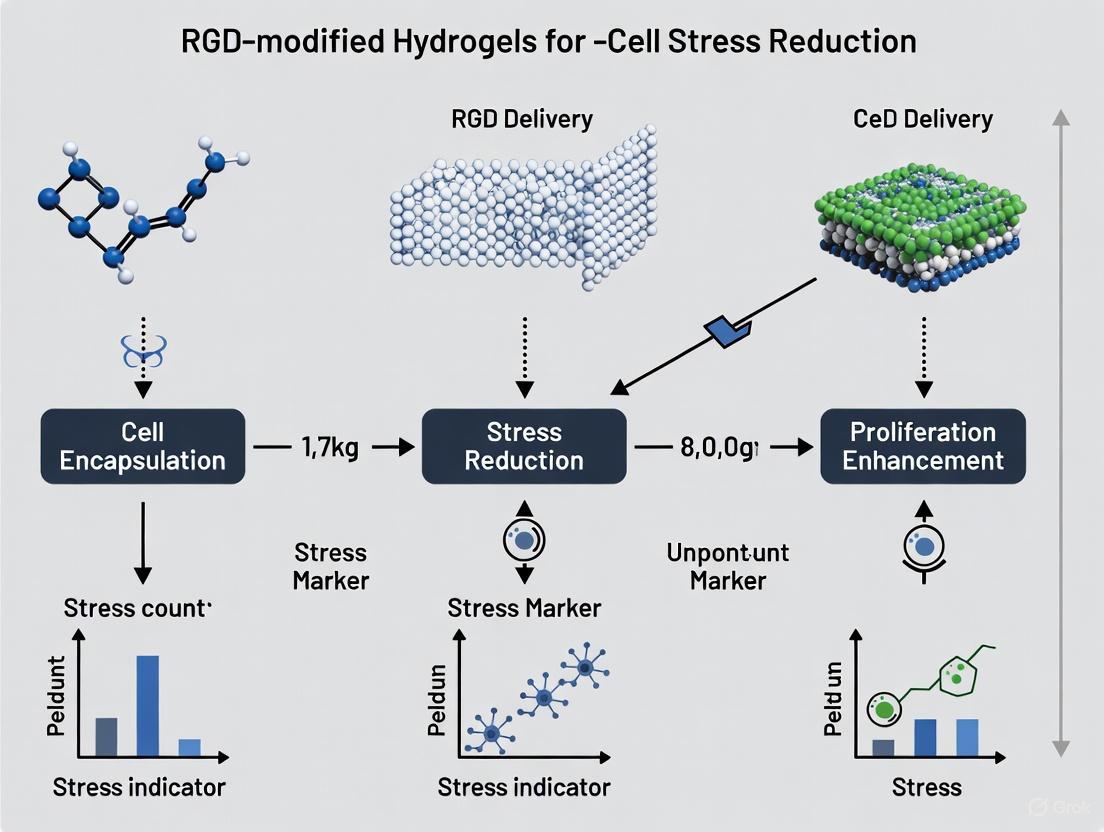
This article explores the transformative role of RGD-modified hydrogels in overcoming the central challenge of cell therapy: poor cell survival and function post-transplantation.
RGD-Modified Hydrogels: Enhancing Cell Delivery and Mitigating Transplantation Stress for Advanced Therapies
Abstract
This article explores the transformative role of RGD-modified hydrogels in overcoming the central challenge of cell therapy: poor cell survival and function post-transplantation. We provide a comprehensive analysis for researchers and drug development professionals, covering the foundational science of RGD-integrin binding, the design and application of various RGD-functionalized hydrogel systems, and strategies to optimize their properties for specific therapeutic outcomes. By synthesizing recent preclinical and clinical evidence, we demonstrate how these biomimetic platforms significantly enhance cell viability, retention, and paracrine signaling while mitigating environmental stress, ultimately accelerating the translation of more effective cell-based regenerative treatments.
The RGD Motif and Hydrogel Matrix: Core Principles for a Supportive Cellular Niche
The arginine-glycine-aspartate (RGD) peptide sequence represents one of the most fundamental and extensively studied cell adhesion motifs in biological systems. First identified in the early 1980s as the minimal recognition sequence within fibronectin required for cell attachment, this tri-amino acid sequence has since been established as a universal mediator of cell adhesion found in numerous extracellular matrix (ECM) proteins including vitronectin, fibrinogen, osteopontin, and bone sialoprotein [1] [2]. The RGD sequence serves as the primary docking site for a family of transmembrane receptors known as integrins, which function as critical bidirectional signaling molecules that regulate cell adhesion, migration, proliferation, and differentiation [1] [3].
The transition from recognizing RGD as a biological motif to utilizing it as a tool in biomaterial design represents a paradigm shift in regenerative medicine and tissue engineering. Synthetic RGD peptides offer several advantages over native ECM proteins: they maintain functionality after processing and sterilization steps that typically denature proteins, minimize immune reactivity risks, are relatively simple and inexpensive to synthesize, and can be coupled to material surfaces in controlled densities and orientations [1]. This application note examines the journey of RGD peptides from their natural origins to their sophisticated applications in synthetic biomaterial design, with particular emphasis on hydrogel systems for cell delivery and mechanotransduction research.
RGD-Integrin Signaling: Molecular Mechanisms and Pathways
The interaction between RGD peptides and integrin receptors initiates a complex cascade of intracellular events that ultimately dictate cellular behavior. Integrins are heterodimeric transmembrane receptors composed of α and β subunits, with the specific subunit pairing determining ligand specificity [1]. The RGD sequence binds to multiple integrin species, including αvβ3, α5β1, and αvβ5, which are upregulated in various pathological conditions including cancer and during tissue repair processes [4].
Table 1: Major RGD-Binding Integrins and Their Primary Functions
| Integrin | Primary Ligands | Cellular Functions | Expression in Disease |
|---|---|---|---|
| αvβ3 | Vitronectin, fibronectin, fibrinogen | Angiogenesis, cell migration, bone resorption | Upregulated in tumor vasculature and activated endothelial cells |
| α5β1 | Fibronectin | Cell adhesion, migration, proliferation | Overexpressed in breast, lung, and colon cancers |
| αvβ5 | Vitronectin | Angiogenesis, cell migration | Elevated in various cancer types and tumor vasculature |
| αvβ6 | Fibronectin, tenascin | Cell invasion, metastasis | Highly expressed in pancreatic, lung, and colon tumors |
| αIIbβ3 | Fibrinogen, von Willebrand factor | Platelet aggregation | Target for anti-thrombotic therapies |
The binding of RGD to integrins triggers integrin clustering and formation of focal adhesion complexes, which serve as mechanical linkages between the ECM and cytoskeleton while also initiating biochemical signaling cascades [5]. Importantly, native ECM proteins contain additional synergistic domains that cooperate with RGD to enhance integrin activation. For instance, the PHSRN sequence within fibronectin synergizes with RGD in activating the α5β1 receptor [1]. This explains why isolated RGD peptides typically exhibit 1000-fold lower potency compared to native fibronectin itself [1].
Figure 1: RGD-Mediated Integrin Signaling Pathway. The binding of RGD peptides to integrin receptors triggers intracellular signaling cascades through focal adhesion kinase (FAK) that ultimately influence cell adhesion, survival, proliferation, and differentiation.
Design Principles for RGD-Modified Biomaterials
Peptide Presentation and Spatial Organization
The efficacy of RGD-functionalized biomaterials depends critically on how the peptides are presented to cells, rather than simply their concentration. Key design parameters include:
Ligand Density: Optimal RGD densities typically range from 10-100 fmol/cm², with insufficient density limiting cell adhesion and excessive density potentially promoting unfavorable cellular responses [1].
Spatial Arrangement: Controlled nanoscale spacing between RGD ligands (typically 50-70 nm) mimics native ECM organization and enables proper integrin clustering [1].
Ligand Mobility: Recent advances in dual-network hydrogels demonstrate that presenting RGD on both mobile (self-assembled peptide amphiphiles) and fixed (covalently crosslinked PEG) networks maximizes endothelial cell adhesion and spreading [5].
Material Background and Nonfouling Strategies
A critical consideration in RGD biomaterial design is the background upon which peptides are presented. Traditional in vitro studies often evaluate RGD activity in serum-depleted conditions, which fails to recapitulate the in vivo environment where materials rapidly adsorb proteins from blood and other body fluids [1]. These adsorbed proteins (fibronectin, vitronectin, fibrinogen) can either synergize with or compete against synthetic RGD peptides.
To address this challenge, researchers have developed nonfouling polymer backgrounds such as poly(ethylene glycol) (PEG) that resist protein adsorption, thereby ensuring that cellular responses are directed primarily by the engineered RGD signals rather than adventitious protein adsorption [1] [5]. This approach provides more predictable control over cell-material interactions and enhances the translational potential of RGD-functionalized biomaterials.
Advanced Applications: RGD-Modified Hydrogels for Cell Delivery
Stress Relaxation in Viscoelastic Hydrogels
Traditional biomaterials for cell delivery have predominantly featured elastic hydrogels with static mechanical properties. However, natural ECMs are viscoelastic and exhibit stress relaxation - the ability to dissipate stress under constant strain [6]. This property has profound implications for cell behavior, as demonstrated in studies where mesenchymal stem cells (MSCs) encapsulated in relaxing hydrogels showed enhanced spreading, proliferation, and osteogenic differentiation compared to purely elastic hydrogels with identical initial modulus [6].
Table 2: Impact of Hydrogel Stress Relaxation on MSC Behavior in 3D Culture
| Stress Relaxation Time (τ₁/₂) | Cell Spreading | Proliferation | Osteogenic Differentiation | Adipogenic Differentiation |
|---|---|---|---|---|
| ~1 minute (Fast relaxation) | Significantly enhanced | Significantly enhanced | Strongly promoted at 17 kPa | Suppressed |
| ~10 minutes (Intermediate) | Moderately enhanced | Moderately enhanced | Moderately promoted at 17 kPa | Moderate |
| ~1 hour (Slow relaxation) | Suppressed | Suppressed | Minimal at 17 kPa | Preferred at 9 kPa |
The mechanism underlying these effects involves cellular mechanical remodeling of the matrix through actomyosin contractility, which enables integrin clustering and enhanced mechanotransductive signaling in rapidly relaxing hydrogels [6]. This principle has been successfully applied in alginate hydrogel systems where stress relaxation rates were tuned by modulating polymer molecular weight and crosslinking density while maintaining constant initial elastic modulus [6].
Protocol: Fabricating RGD-Modified Alginate Hydrogels with Tunable Stress Relaxation
Materials:
- High molecular weight (280 kDa) and low molecular weight (35 kDa) sodium alginate
- 5 kDa PEG-diamine spacers
- RGD peptide (GCGYGRGDSPG)
- EDC/NHS chemistry reagents
- Calcium sulfate dihydrate (CaSO₄·2H₂O)
Method:
Alginate Modification:
- Dissolve high or low molecular weight alginate in MES buffer (0.1 M, pH 6.5) at 1% (w/v) concentration
- For PEG-spaced RGD, first conjugate 5 kDa PEG-diamine to alginate using EDC/NHS chemistry at 1:0.5:0.25 molar ratio (alginate carboxyl groups:EDC:NHS) for 2 hours
- React RGD peptide with alginate or alginate-PEG using EDC/NHS at 1:1:0.5 molar ratio (alginate carboxyl groups:EDC:NHS) overnight at 4°C
- Purify by dialysis against deionized water for 48 hours and lyophilize
Hydrogel Formation with Controlled Stress Relaxation:
- Prepare 3% (w/v) solutions of modified alginate in physiological buffer
- For high stress relaxation (τ₁/₂ ~1 min): Use PEG-conjugated 35 kDa alginate with 35 mM CaSO₄
- For intermediate stress relaxation (τ₁/₂ ~10 min): Use 35 kDa alginate with 50 mM CaSO₄
- For low stress relaxation (τ₁/₂ ~1 hour): Use 280 kDa alginate with 35 mM CaSO₄
- Mix alginate solution with CaSO₄ suspension rapidly and transfer to molds
- Cure for 30 minutes at room temperature before cell encapsulation
Cell Encapsulation:
- Suspend cells in alginate solution prior to crosslinking
- Use cell density of 1-5 million cells/mL depending on application
- Culture in standard media and assess cell behavior over 7-21 days
Figure 2: Hydrogel Fabrication Workflow. Diagram illustrating the process for creating RGD-modified alginate hydrogels with tunable stress relaxation properties for cell encapsulation.
The Scientist's Toolkit: Essential Reagents for RGD Research
Table 3: Key Research Reagent Solutions for RGD Biomaterial Studies
| Reagent/Category | Function/Description | Example Applications |
|---|---|---|
| Linear RGD Peptides | Simplest form, typically with sequence RGDS | Basic adhesion studies, initial biomaterial screening |
| Cyclic RGD Peptides (cRGD, RGD4C) | Enhanced stability and binding affinity through constrained conformation | Cancer targeting, angiogenesis studies |
| PEG-Based Hydrogels | Nonfouling background for controlled RGD presentation | 2D and 3D cell culture, fundamental mechanobiology |
| Alginate Hydrogels | Ionic crosslinking enables stress relaxation tuning | Cell delivery, MSC differentiation studies |
| RGD-FITC Conjugates | Fluorescently labeled RGD for visualization | Binding studies, adhesion quantification, live imaging |
| Dual-Network Hydrogels | Combined stable and dynamic networks for ligand mobility | Advanced cell-matrix interaction studies |
The strategic incorporation of RGD peptides into synthetic biomaterials represents a powerful approach for directing cellular responses in therapeutic applications. The evolution from simple RGD presentation to sophisticated engineering of ligand density, spatial organization, and material dynamics reflects growing appreciation of the complexity of natural ECM signaling. The recent emphasis on viscoelasticity and stress relaxation properties in hydrogel design represents a particularly promising direction, as it more accurately recapitulates the dynamic mechanical environment of native tissues.
Future developments will likely focus on creating increasingly biomimetic platforms that incorporate multiple bioactive signals in spatially and temporally controlled patterns. The integration of RGD with other ECM-derived peptides, growth factors, and mechanical cues will enable more precise control over cell fate for applications in regenerative medicine, disease modeling, and cell-based therapies. As our understanding of RGD-integrin signaling matures, so too will our ability to harness this fundamental adhesion motif for advanced biomaterial design.
The Arg-Gly-Asp (RGD) motif, found in numerous extracellular matrix (ECM) proteins, serves as the primary recognition site for a subset of integrin receptors, facilitating critical cell-adhesion events. This adhesion is not merely structural but initiates potent outside-in signaling that transduces survival signals, thereby protecting cells from programmed cell death, or apoptosis. This application note delves into the molecular mechanisms by which RGD-binding integrins, such as αvβ3 and α5β1, activate intracellular survival pathways. Furthermore, it provides detailed protocols for leveraging RGD-modified hydrogels as synthetic ECMs to study these mechanisms and to enhance cell survival in therapeutic cell delivery applications, with a specific focus on mitigating mechanical stress.
Integrins are transmembrane heterodimeric receptors, composed of α and β subunits, that link the extracellular environment to the intracellular cytoskeleton [7] [8]. Among them, a subgroup known as RGD-binding integrins—including αvβ3, αvβ5, αvβ6, αvβ8, α5β1, and αIIbβ3—specifically recognize the tripeptide sequence Arginine-Glycine-Aspartic acid (RGD) present in ECM proteins like fibronectin, vitronectin, and fibrinogen [7] [2] [8]. This interaction is fundamental to cell adhesion, migration, and the transduction of biochemical and mechanical signals.
A critical outcome of successful integrin-mediated adhesion is the promotion of cell survival. When cells lose adhesion to the ECM, they undergo a specific form of caspase-dependent apoptosis known as anoikis [9]. RGD-binding integrins are pivotal in suppressing anoikis by activating downstream signaling pathways that regulate the balance of pro- and anti-apoptotic proteins [9] [10]. The strategic use of RGD-modified hydrogels in cell delivery systems mimics natural ECM, providing essential adhesion-mediated survival signals and enhancing the efficacy of cell-based therapies by reducing mechanical stress on encapsulated cells [6] [11].
Molecular Mechanisms of Survival Signal Transduction
The binding of RGD motifs to integrins triggers a cascade of intracellular events. The following diagram illustrates the core survival signaling pathway initiated by RGD-binding integrins.
The binding of soluble RGD motifs or hydrogel-coupled RGD peptides to integrins induces a conformational change from a bent to an extended state, activating the receptor [7]. This activation is often potentiated by inside-out signaling, where intracellular proteins like talin and kindlin bind to the β-integrin cytoplasmic tail, disrupting transmembrane domain clasping and increasing integrin affinity for ligand [7] [10]. Subsequent outside-in signaling leads to:
- Focal Adhesion Kinase (FAK) and Src Activation: Integrin clustering recruits and activates FAK and Src, which form a dual-kinase complex. This is a primary step in the survival pathway [8] [10].
- PI3K-Akt Pathway Activation: The FAK-Src complex phosphorylates and activates phosphoinositide 3-kinase (PI3K), which in turn activates the serine/threonine kinase Akt. Akt is a central regulator of cell survival [9] [8].
- Regulation of Bcl-2 Family Proteins: Akt phosphorylates and inactivates pro-apoptotic proteins like Bad and Bax, preventing them from neutralizing anti-apoptotic proteins such as Bcl-2 and Bcl-XL. This action maintains mitochondrial membrane integrity, preventing cytochrome c release and the initiation of the caspase cascade [9].
- Mechanical Force Transduction: The engagement of RGD-integrin also establishes a mechanical link between the ECM and the actin cytoskeleton via proteins like talin and vinculin. This link is essential for sensing matrix stiffness and viscoelasticity, which are critical cues for survival and differentiation [6] [10].
Application Note: Utilizing RGD-Modified Hydrogels for Enhanced Cell Survival
RGD-modified hydrogels are synthetic, water-swollen polymer networks that function as tunable synthetic ECMs. Their properties can be finely adjusted to modulate integrin signaling and study cell survival. A key advancement is the design of hydrogels with stress relaxation, which allows the matrix to be remodeled in response to cell-generated forces, more closely mimicking dynamic native tissues [6].
Key Hydrogel Properties for Survival Signaling
Table 1: Hydrogel Properties and Their Impact on Cell Survival
| Hydrogel Property | Biological Impact | Effect on Survival Signaling |
|---|---|---|
| RGD Ligand Density | Determines integrin binding and clustering efficiency [6]. | Optimal density promotes robust FAK/Akt activation; too low fails to support adhesion, leading to anoikis. |
| Initial Elastic Modulus | Measures the initial stiffness of the material [6]. | Higher stiffness (e.g., ~17 kPa) promotes osteogenic differentiation and survival in MSCs; lower stiffness (e.g., ~9 kPa) promotes adipogenesis [6]. |
| Stress Relaxation Rate (τ₁/₂) | Measures the time for stress to reduce to half its initial value under constant strain; indicates matrix ability to be remodeled [6]. | Faster relaxation (shorter τ₁/₂, e.g., ~1 min) significantly enhances cell spreading, proliferation, and osteogenic differentiation by allowing mechanical force dissipation and adhesion maturation [6]. |
| Viscoelasticity | The property of a material to exhibit both elastic (solid) and viscous (liquid) characteristics [6]. | Viscoelastic hydrogels better mimic native ECM (e.g., collagen, brain, liver) than purely elastic ones, promoting superior survival and function [6]. |
Protocol: Assessing Survival Signaling in RGD-Modified Hydrogels with Tunable Stress Relaxation
This protocol details the encapsulation of cells in alginate-based RGD-modified hydrogels with controlled stress relaxation to investigate downstream survival pathways.
I. Materials Table 2: Research Reagent Solutions
| Reagent/Material | Function | Example/Notes |
|---|---|---|
| Alginate Polymer | Base hydrogel polymer. | Use different molecular weights (e.g., 35 kDa, 280 kDa) to tune stress relaxation [6]. |
| RGD Peptide | Covalently coupled integrin-binding ligand. | Cyclo(RGDfK) is commonly used for its stability and high affinity [2] [6]. |
| Crosslinking Ion | Forms ionic bonds to create hydrogel network. | Calcium Sulfate (CaSO₄) solution [6]. |
| Cell Culture Media | Supports cell viability and growth. | DMEM or RPMI, supplemented with serum or defined factors. |
| Primary Antibodies | Detect protein expression and phosphorylation. | Anti-phospho-FAK (Tyr397), Anti-phospho-Akt (Ser473), Anti-cleaved Caspase-3 [9] [10]. |
II. Experimental Workflow The following diagram outlines the key steps for preparing and analyzing cell-laden hydrogels.
III. Step-by-Step Procedure
Hydrogel Precursor Preparation:
- Synthesize RGD-modified alginate polymers. This typically involves covalent coupling of cyclo(RGDfK) peptides to the alginate backbone via carbodiimide chemistry [6].
- Prepare separate alginate solutions of varying molecular weights (e.g., 35 kDa and 280 kDa) in a physiologically compatible buffer (e.g., 150 mM NaCl + 20 mM HEPES). Sterilize by filtration.
Cell Encapsulation:
- Trypsinize and centrifuge the cells of interest (e.g., Mesenchymal Stem Cells - MSCs).
- Resuspend the cell pellet in the sterile alginate-RGD solution to achieve a final density of 1-10 million cells/mL.
- Mix the cell-polymer suspension with a pre-determined volume of crosslinking agent (e.g., CaSO₄ slurry) to initiate gelation.
- Quickly pipet the mixture into desired molds (e.g., disk-shaped) and incubate at 37°C for 10-15 minutes for complete gelation.
3D Cell Culture:
- Transfer the polymerized hydrogels to cell culture plates containing complete media.
- Maintain cultures at 37°C and 5% CO₂, changing the media every 2-3 days.
Downstream Analysis (After 3-7 days in culture):
- Immunofluorescence Staining: Fix hydrogels with 4% PFA, permeabilize with 0.1% Triton X-100, and block. Incubate with primary antibodies (e.g., anti-pFAK, anti-pAkt) overnight, followed by fluorescently-labeled secondary antibodies and phalloidin for F-actin. Image using confocal microscopy to assess adhesion formation and signaling activation in situ [6] [10].
- Western Blotting: Dissolve hydrogel disks in a chelating buffer (e.g., 55 mM sodium citrate) to release encapsulated cells. Lyse cells and analyze protein expression levels of pFAK, pAkt, Bcl-2, and cleaved Caspase-3 to quantify survival signaling and apoptosis [9].
- Cell Viability and Proliferation: Assess using a Live/Dead assay kit or by quantifying metabolic activity (e.g., AlamarBlue assay). Proliferation can be measured by quantifying DNA content or via EdU incorporation [6].
- RNA Extraction and qPCR: After cell release, extract RNA and perform quantitative PCR to analyze the expression of survival-related genes (e.g., BCL2, BAX) and differentiation markers [6].
The strategic incorporation of RGD peptides into engineered hydrogels provides a powerful tool to direct cell fate through controlled integrin activation. The data demonstrates that beyond the presence of the RGD motif, the physical properties of the hydrogel—specifically its viscoelasticity and stress relaxation rate—are critical parameters that govern the efficacy of survival signaling [6]. Faster relaxing gels enable cells to mechanically remodel their microenvironment, facilitating integrin clustering, strengthening of focal adhesions, and sustained activation of the FAK/PI3K/Akt pathway, ultimately leading to enhanced survival and function.
For researchers developing cell delivery platforms, these insights are paramount. Utilizing RGD-modified hydrogels with optimized ligand density and mechanical profiles can significantly reduce post-transplantation stress and anoikis, thereby increasing therapeutic cell engraftment and efficacy. Future directions include designing multi-functional hydrogels that present combinations of adhesion ligands (e.g., RGD with other ECM-derived peptides) and developing more sophisticated, patient-specific mechanical microenvironments to further advance the field of regenerative medicine.
Hydrogels, water-swollen networks of hydrophilic polymers, have emerged as the most promising biomaterials for mimicking native extracellular matrices (ECMs) in cell culture systems. Their high water content, tunable mechanical properties, and permeability to oxygen and nutrients make them ideal for creating physiological relevant microenvironments that conventional two-dimensional (2D) plastic or glass surfaces cannot provide [12]. Cells cultured in 3D hydrogels rather than on 2D substrates display more natural behaviors, including normalized cell morphology, polarization, pharmaceutical response, and differentiated phenotype maintenance [12] [13].
A critical advancement in hydrogel technology has been the functionalization with bioactive peptides, with the Arg-Gly-Asp (RGD) sequence being by far the most effective and widely employed. This tripeptide, found in native ECM proteins like fibronectin, laminin, and collagen, is recognized by cell surface integrins, enabling cells to adhere to and interact with their synthetic surroundings [14] [15]. The integration of RGD into hydrogel networks transforms otherwise inert scaffolds into interactive, biomimetic environments that can significantly enhance cell adhesion, survival, and directed function, which is central to applications in tissue engineering, drug delivery, and fundamental research on cell-ECM interactions [14] [16].
This application note details the design principles, practical protocols, and key analytical tools for utilizing RGD-modified hydrogels as synthetic ECMs, with a specific focus on cell delivery and the mitigation of cellular stress.
Key Properties and Functional Advantages
RGD-modified hydrogels provide a hospitable microenvironment for cells by recapitulating critical aspects of the native ECM. The core functionality stems from the synergistic combination of the physical support of the hydrogel polymer network and the specific biological signaling of the RGD peptide.
Mechanism of Cell Adhesion and Signaling
The RGD peptide serves as the primary ligand for a family of cell surface receptors known as integrins (e.g., αVβ3) [16]. Upon binding, integrins cluster to form focal adhesions, which act as mechanical linkages between the external ECM and the intracellular actin cytoskeleton. This engagement triggers intracellular signaling cascades, such as the Focal Adhesion Kinase (FAK) and PI3K/Akt pathways, which promote cell survival, proliferation, and differentiation, while simultaneously suppressing caspase-mediated apoptosis [17]. This signaling nexus is crucial for countering cellular stress and promoting viability in a 3D context. The following diagram illustrates this key signaling mechanism.
Impact on Cellular Phenotypes
The presence of RGD peptides within hydrogels profoundly influences cell morphology and behavior across a wide range of cell types. The table below summarizes documented cellular responses to RGD-functionalized hydrogels, highlighting their broad utility.
Table 1: Documented Cell Behavior in RGD-Modified Hydrogel Systems
| Tissue/System | Cell Type | Observed Behavior with RGD |
|---|---|---|
| Bone | Goat/Rat Bone Marrow Stromal Cells | Promoted osteogenic differentiation [18] |
| Rat Osteoblasts | Increased cell attachment and spreading [18] | |
| Cancer/Tumor | Breast Cancer Cells (MDA-MB-231, MCF-7) | Enhanced cell proliferation, division, migration, and invasion [18] |
| Colorectal Cancer Cells (HCT 116, Caco-2) | Increased cell proliferation, survival, and anoikis resistance [18] [17] | |
| Glioblastoma Cells (U-251 MG, U87) | Increased cell spreading, proliferation, and actin stress fiber assembly [18] | |
| Cartilage | Bovine/Human Chondrocytes | Increased cell viability, proliferation, and attachment [18] |
| Connective Tissues | Human Dermal Fibroblasts (HDF) | Promoted cell survival, spreading, adhesion, and proliferation [18] [19] |
| Stem Cells | Human/Mouse Mesenchymal Stem Cells (MSCs) | Increased cell adhesion, viability, spreading, and migration [15] [18] |
| Human Adipose-Derived Stem Cells (ADSCs) | Induced cell spreading in 2D and miniaturized 3D systems [15] | |
| Neural | Chick Dorsal Root Ganglion | Increased neurite length, outgrowth, and number [18] |
| Vascular/Cardiac | Human Umbilical Vein Endothelial Cells (HUVECs) | Increased cell adhesion, proliferation, migration, and angiogenesis [18] |
Quantitative studies on stem cells, including MSCs and ADSCs, have demonstrated that incorporation of RGD into alginate hydrogels results in a significant increase in cell surface area and a significant decrease in cell circularity, indicating a shift from a rounded to a spread, adherent morphology [15]. This physical attachment is a fundamental prerequisite for reducing anoikis (apoptosis due to loss of cell adhesion) and promoting long-term survival and function in 3D culture [17].
Experimental Protocols
This section provides detailed methodologies for synthesizing RGD-functionalized hydrogels and for encapsulating cells within them.
Protocol 1: Synthesis of RGD-Functionalized Hydrogel via Click Chemistry
This protocol describes the functionalization of polyacrylic acid (PAA) with an RGD peptide using copper-catalyzed azide-alkyne cycloaddition (CuAAC), followed by the formation of a composite hydrogel via microwave-assisted polycondensation [14]. The workflow is illustrated in the diagram below.
Materials
- Polyacrylic acid (PAA, 35% w/w solution)
- Propargylamine hydrochloride
- 1-Ethyl-3-(3-dimethylaminopropyl)carbodiimide (EDC)
- 1-Hydroxybenzotriazole hydrate (HOBt)
- RGD peptide (Arg-Gly-Asp, linear)
- 4-Azidobutanoic acid and Oxalyl chloride
- Copper(I) catalyst (e.g., Copper(II) sulfate with a reducing agent like sodium ascorbate)
- Carbomer, Agarose, Polyethylene glycol (PEG)
- Dialysis membrane (MW cut-off: 3,500 Da)
Step-by-Step Procedure
Synthesis of 4-Azidobutanoyl Chloride (1)
- Dissolve 500 mg of 4-azidobutanoic acid (3.90 mmol) in 10 ml of dichloromethane (DCM) containing 0.5 ml of dimethylformamide (DMF).
- Cool the solution to 0°C in an ice bath.
- Slowly add a solution of 505 µl oxalyl chloride (5.85 mmol) in 5 ml DCM dropwise while stirring.
- After 1 hour at 0°C, allow the reaction to warm to room temperature.
- Remove the solvent under reduced pressure using a rotary evaporator to obtain the product. Characterize by ¹H-NMR (CDCl₃) [14].
Synthesis of RGD-azide Derivative (2)
- Dissolve 50 mg of RGD (0.145 mmol) in 1 ml of 1 M NaOH.
- Dissolve 24 mg of compound 1 (0.16 mmol) in 2 ml of tetrahydrofuran (THF).
- Add the RGD solution dropwise to the azidobutanoyl chloride solution at 0°C.
- Stir the reaction mixture overnight at room temperature.
- Add 1 ml of 1 M HCl and remove solvents under reduced pressure. Characterize the product by ¹H-NMR (D₂O) [14].
PAA Alkyne Modification (3)
- Dissolve 200 mg of 35% w/w PAA solution (2.8 mmol) in 15 ml of distilled water.
- Add 15.4 mg propargylamine hydrochloride (0.20 mmol).
- Dissolve 42.8 mg HOBt (0.28 mmol) in 14 ml of a 1:1 (v/v) acetonitrile:water solution by heating to 50°C, then add to the PAA solution.
- Add 53.6 mg EDC (0.28 mmol) to the reaction mixture.
- Adjust the pH to 5.5 using 1 M HCl and stir overnight at room temperature.
- Purify the product via dialysis (against acidified 2L distilled water, 0.2 ml 37% HCl, changed daily for 3 days) using a membrane with a 3.5 kDa MWCO.
- Lyophilize the dialyzed solution to obtain the alkyne-modified PAA. Characterize by ¹H-NMR (D₂O) [14].
Synthesis of PAA-RGD Polymer (4) via Click Reaction
- Dissolve the alkyne-modified PAA (3) and the RGD-azide derivative (2) in an aqueous buffer.
- Add a copper(I) catalyst (e.g., Cu(I)Br or CuSO₄ with sodium ascorbate) to the mixture.
- Stir the reaction for several hours at room temperature to facilitate the cycloaddition.
- Purify the resulting PAA-RGD conjugate via dialysis to remove copper catalysts [14].
Hydrogel Synthesis via Microwave-Assisted Polycondensation
- Combine the PAA-RGD conjugate with carbomer, agarose, and PEG in water.
- Subject the mixture to microwave radiation to initiate a polycondensation esterification reaction between the carboxyl groups (from PAA and carbomer) and hydroxyl groups (from agarose and PEG).
- The resulting sterile, RGD-functionalized hydrogel is ready for cell culture applications [14].
Protocol 2: 3D Cell Encapsulation in RGD-Modified Hydrogel
This protocol outlines a standard procedure for encapsulating cells within a pre-formed RGD-modified hydrogel, such as a commercial VitroGel RGD formulation [18].
Materials
- VitroGel RGD High Concentration (or another RGD-functionalized hydrogel precursor)
- VitroGel Dilution Solution (for tuning stiffness)
- Cell suspension (e.g., Fibroblasts, MSCs) in appropriate culture medium
- Cell culture plates (e.g., 24-well plate)
Step-by-Step Procedure
- Hydrogel Preparation: Thaw the VitroGel RGD stock and Dilution Solution at room temperature or 4°C. Mix the hydrogel with the Dilution Solution at the recommended ratio (e.g., 1:2 to 1:5) to achieve the desired mechanical strength (can be tuned from ~10 Pa to 4,000 Pa) [18].
- Cell-Hydrogel Mixing: Gently mix the prepared hydrogel solution with your cell suspension at a ratio of 1:1 (v/v). For example, combine 50 µL of hydrogel with 50 µL of cell suspension. Pipette slowly to avoid introducing air bubbles and to prevent shear stress on the cells.
- Gelation: Transfer 50-100 µL of the cell-hydrogel mixture into each well of a culture plate. Gently spread the mixture.
- Incubation: Add cell culture medium carefully on top of the mixture without disturbing it.
- Incubate the plate at 37°C in a 5% CO₂ incubator for about 20 minutes to allow complete gelation.
- Culture and Harvesting: Change the culture medium regularly as needed. To harvest encapsulated cells or organoids, use a specific recovery solution (e.g., VitroGel Organoid Recovery Solution) for 5-15 minutes to dissolve the hydrogel matrix without harming the cells [18].
The Scientist's Toolkit: Essential Research Reagents
Table 2: Key Reagent Solutions for RGD-Modified Hydrogel Research
| Reagent / Material | Function / Description | Example Use Case |
|---|---|---|
| VitroGel RGD | Xeno-free, ready-to-use, tunable hydrogel pre-modified with RGD peptide. | Simplifies 3D culture setup for high-throughput screening of cell behavior and drug response [18]. |
| Alginate-RGD | Biocompatible polysaccharide modified with RGD via carbodiimide chemistry (EDC/Sulfo-NHS). | Used for creating microcapsules and 3D scaffolds to study stem cell morphology and differentiation [15]. |
| Click Chemistry Reagents | Toolkit (e.g., Alkyne/Azide modifiers, Cu(I) catalyst) for covalent, bio-orthogonal peptide conjugation. | Enables custom, stable functionalization of synthetic polymers like PAA with RGD [14]. |
| Fmoc-FF-RGD Peptides | Self-assembling peptides forming nanofibrous, injectable hydrogels with inherent RGD presentation. | Creates shear-thinning hydrogels for injectable cell delivery and tissue regeneration [16]. |
| EDC / NHS Chemistry | Carbodiimide crosslinkers for covalent attachment of RGD peptides to polymer backbones (e.g., alginate, HA). | Standard method for conjugating RGD to natural polysaccharides to enable cell adhesion [15] [19]. |
Concluding Remarks
RGD-functionalized hydrogels represent a powerful and versatile class of synthetic extracellular matrices that effectively mimic critical aspects of the native 3D microenvironment. By integrating the cell-adhesive RGD motif into tunable polymer networks, these hydrogels facilitate robust cell adhesion, significantly reduce anoikis, and promote cell survival and function—key objectives in cell delivery and stress reduction research. The protocols and tools outlined herein provide a foundation for researchers to design and implement these advanced biomaterial systems, thereby enhancing the physiological relevance of in vitro models and improving the efficacy of cell-based therapeutic strategies.
The Synergy of RGD and 3D Scaffolds in Counteracting Transplantation Stress
Cell transplantation represents a cornerstone of regenerative medicine; however, its therapeutic potential is severely limited by the pervasive challenge of transplantation stress. This stress manifests as a cascade of biological insults—including anoikis (detachment-induced cell death), mechanical shear forces during injection, hypoxia, and inflammatory immune responses—that collectively lead to catastrophic rates (often 80-99%) of transplanted cell death [20]. The absence of a supportive extracellular matrix (ECM) at the transplantation site deprives adherent cells of essential survival signals, initiating apoptotic pathways and compromising engraftment efficiency.
To address this critical barrier, biomaterial scientists have developed engineered hydrogels that mimic the native ECM, providing a protective three-dimensional (3D) microenvironment. Among various biofunctionalization strategies, the incorporation of the arginine-glycine-aspartic acid (RGD) peptide sequence has emerged as a particularly powerful approach. As the primary integrin-binding domain found in numerous ECM proteins including fibronectin, vitronectin, and osteopontin, RGD serves as a critical ligand for cell surface integrins [1]. The presentation of RGD within hydrogel scaffolds facilitates robust cell adhesion, activates integrin-mediated survival signaling, and enhances cell-matrix interactions, thereby directly countering the primary triggers of transplantation stress. This Application Note delineates the mechanistic basis, quantitative evidence, and practical protocols for leveraging RGD-functionalized 3D scaffolds to significantly improve cell viability and therapeutic outcomes in regenerative applications.
Quantitative Evidence: Efficacy of RGD-Modified Scaffolds
Extensive preclinical studies across various disease models have demonstrated that RGD modification significantly enhances the performance of 3D scaffolds for cell delivery. The tables below summarize key quantitative findings that validate the efficacy of this approach in mitigating transplantation stress and improving functional outcomes.
Table 1: Therapeutic Outcomes of RGD-Modified Scaffolds in Preclinical Models
| Disease Model | Scaffold System | Cell Type | Key Quantitative Results | Reference |
|---|---|---|---|---|
| Murine Hindlimb Ischemia | RGD-modified D-form peptide hydrogel (Nap-DFDFKGRGD) | Human Placental MSCs (hP-MSCs) | • Enhanced cell survival & retention• Promoted collateral vessel revascularization• Significant upregulation of proangiogenic cytokines• Improved tissue regeneration & functional recovery | [21] |
| Critical-Sized Bone Defects | Neuro-osseous coupled bilayer hydrogel (GGMN-GSE) | BMSCs/EPCs | • 2.9-fold increase in CGRP+ nerve density• 1.8-fold increase in CD31+ blood vessel density• 3.6-fold expansion of neogenetic bone matrix• BV/TV reached 97.1% in CT scan | [22] |
| In Vitro Endothelial Culture | Dual-network hydrogel (PEG + Peptide Amphiphile) | Endothelial Cells | • Maximized cell adhesion formation & spreading on soft gels• Optimal function with RGD on both covalent & dynamic networks | [5] |
Table 2: Mechanisms of RGD-Mediated Protection Against Transplantation Stress
| Stress Mechanism | RGD-Scaffold Countermeasure | Experimental Evidence | Impact on Cell Viability/Function |
|---|---|---|---|
| Anoikis (Detachment-induced apoptosis) | Provides integrin-binding sites for cell adhesion & survival signaling | RGD-functionalized hydrogels demonstrated anti-apoptotic effects and improved cell viability in vitro [21] | Prevents apoptosis; enhances long-term engraftment |
| Mechanical Shear (Injection) | Shear-thinning hydrogels protect cells during injection | Hydrogels with reversible crosslinks enable "plug flow," reducing membrane damage [20] | Significantly higher post-injection cell survival |
| Hypoxia & Nutrient Lack | Promotes vascularization; supports nutrient diffusion | RGD-hydrogel co-transplantation promoted collateral vessel revascularization in hindlimb ischemia [21] | Improves oxygen & nutrient supply; enhances survival |
| Host Immune Response | Modulates immunomodulatory secretome of MSCs | Engineered hydrogels can influence the paracrine signaling of MSCs [23] [24] | Creates a pro-regenerative microenvironment |
The data substantiate that RGD-modified scaffolds operate through multiple concurrent mechanisms to alleviate transplantation stress. The integration of RGD peptides is particularly crucial for mitigating anoikis by reinstating the essential integrin-mediated survival signals that cells lose upon dissociation from their native matrix [21]. Furthermore, the demonstrated capacity of these scaffolds to enhance vascularization addresses the critical challenges of hypoxia and nutrient deficiency, which are especially prevalent in ischemic tissues [21] [22]. The combination of these protective effects creates a comprehensive strategy for safeguarding transplanted cells throughout the entire transplantation timeline.
Experimental Protocols
This section provides detailed methodologies for key experiments cited in this note, focusing on the evaluation of RGD-modified hydrogels in a murine hindlimb ischemia model and the assessment of cell-scaffold interactions in vitro.
Protocol: Evaluating RGD-Modified Hydrogel with MSCs in Murine Hindlimb Ischemia
This protocol is adapted from the study demonstrating the efficacy of Nap-DFDFKGRGD hydrogel for enhancing MSC therapy [21].
Objective: To assess the capacity of an RGD-modified self-assembling D-form peptide hydrogel to enhance MSC survival, retention, and therapeutic efficacy in a murine model of hindlimb ischemia (HLI).
Materials:
- Peptide Hydrogel: Nap-DFDFKGRGD (D-Gel) and control hydrogel (e.g., Nap-FFKGRGD, L-Gel).
- Cells: Human Placental Mesenchymal Stem Cells (hP-MSCs), preferably expressing a reporter gene (e.g., Rluc/RFP) for tracking.
- Animals: Immunodeficient mice (e.g., NOD/SCID), 8-10 weeks old.
- Equipment: Bioluminescence Imaging (BLI) system, Micro-CT scanner, surgical tools for HLI induction.
Methodology:
- Hydrogel Preparation & Characterization:
- Synthesize Nap-DFDFKGRGD and control peptides using standard Solid Phase Peptide Synthesis (SPPS) and purify via HPLC.
- Confirm molecular weight using Mass Spectrometry.
- Prepare the hydrogel by dissolving the peptide in PBS and adjusting the pH to trigger self-assembly. Characterize the nanofiber structure using Transmission Electron Microscopy (TEM) and measure the storage modulus via rheometry.
In Vitro Biocompatibility & Bioactivity Assessment:
- 3D Cell Encapsulation: Mix hP-MSCs with the pre-gel solution and induce gelation to form 3D cell-hydrogel constructs.
- Live/Dead Assay: After 1, 3, and 7 days of culture, stain cells with Calcein-AM and Propidium Iodide to quantify viability and apoptosis.
- Cytokine Analysis: Collect conditioned media from 3D cultures and measure the concentration of key proangiogenic cytokines (e.g., VEGF, Ang-1) using ELISA.
In Vivo HLI Model & Treatment:
- HLI Induction: Anesthetize mice and surgically ligate the femoral artery in one hindlimb.
- Cell Transplantation: Randomize animals into treatment groups:
- Group 1: hP-MSCs suspended in saline.
- Group 2: hP-MSCs co-transplanted with control L-Gel.
- Group 3: hP-MSCs co-transplanted with RGD-modified D-Gel.
- Inject the cell-material constructs intramuscularly into the ischemic hindlimb.
In Vivo Monitoring & Analysis:
- Cell Survival Tracking: Perform serial Bioluminescence Imaging (BLI) on days 1, 7, 14, and 28 post-transplantation to monitor the survival and retention of hP-MSCs(_{Rluc/RFP}).
- Limb Perfusion Assessment: Use Laser Doppler Perfusion Imaging to measure blood flow recovery at weekly intervals.
- Angiogenesis Analysis: On day 28, sacrifice animals and harvest tissues.
- Micro-CT Angiography: Perfuse animals with a radio-opaque contrast agent to visualize and quantify the density of collateral vessels in the hindlimb.
- Histology: Section muscle tissues and stain for capillaries (CD31+) and arterioles (α-SMA+) to quantify vessel density.
Protocol: Assessing Cell Adhesion and Spreading on Dual-Network RGD Hydrogels
This protocol is based on research investigating the role of RGD presentation in viscoelastic hydrogels [5].
Objective: To evaluate endothelial cell adhesion and spreading on hydrogels where RGD ligands are attached to networks with different mobilities.
Materials:
- Hydrogel System: Interpenetrating Polymer Network (IPN) of covalently crosslinked Poly(ethylene glycol) (PEG) and self-assembled Peptide Amphiphiles (PA).
- Ligand Presentation: Hydrogel variants with RGD attached to: (1) the covalent PEG network, (2) the dynamic PA network, (3) both networks.
- Cells: Human Umbilical Vein Endothelial Cells (HUVECs).
Methodology:
- Hydrogel Fabrication: Prepare the IPN hydrogels with tunable viscoelasticity by modulating the ratio of the PEG and PA networks. Covalently conjugate RGD peptides to the respective networks as per experimental design.
- Cell Seeding: Seed fluorescently labeled (e.g., CellTracker) HUVECs onto the surface of the pre-formed hydrogels at a standard density.
- Immunostaining: After 6-24 hours, fix cells and stain for focal adhesion complexes (e.g., with anti-paxillin antibody) and actin cytoskeleton (e.g., Phalloidin).
- Image Acquisition & Analysis: Acquire high-resolution confocal microscopy images. Quantify:
- Cell Spreading Area: Using image analysis software.
- Focal Adhesion Size & Number: From the paxillin channels.
- Cell Morphology: Assess circularity or aspect ratio.
Signaling Pathways
The protective effects of RGD-functionalized scaffolds are mediated through specific integrin-triggered signaling cascades that promote cell survival and counteract stress-induced apoptosis. The diagram below illustrates the primary pathway through which RGD binding transduces signals to suppress anoikis.
Diagram 1: RGD-Integrin Signaling Cascade Countering Anoikis. Engagement of RGD with cell-surface integrins leads to the assembly of focal adhesion complexes and activation of Focal Adhesion Kinase (FAK). FAK initiates the PI3K-Akt pathway, a critical pro-survival cascade. Akt phosphorylates and inactivates pro-apoptotic proteins like BAD, thereby inhibiting apoptosis and promoting cell survival and proliferation [21] [1].
The Scientist's Toolkit: Research Reagent Solutions
Table 3: Essential Reagents and Materials for RGD-Hydrogel Research
| Item | Function/Description | Key Characteristics & Considerations |
|---|---|---|
| RGD-Modified Peptide (e.g., Nap-DFDFKGRGD) | Core scaffold material that self-assembles into a nanofiber hydrogel providing cell-adhesive motifs. | • D-form amino acids enhance biostability against proteases [21].• RGD motif is crucial for integrin binding. |
| Dual-Network Hydrogel System (PEG-PA IPN) | Tunable platform to independently study the effects of RGD mobility and matrix viscoelasticity. | • Covalent PEG network provides stable anchor points.• Dynamic PA network allows for ligand mobility and stress relaxation [5]. |
| Bioluminescence Imaging (BLI) | Non-invasive, quantitative tracking of cell survival and retention in live animals. | • Requires reporter gene-expressing cells (e.g., Luciferase).• Ideal for longitudinal studies [21]. |
| Decellularized Extracellular Matrix (dECM) | Bioactive hydrogel component providing a complex, tissue-specific milieu of native cues. | • Contains native integrin-binding sites beyond RGD.• Can be combined with synthetic polymers in hybrid systems to improve mechanical properties [23] [24]. |
| Shear-Thinning Hydrogel (e.g., MAX8 peptide) | Injectable material that protects cells from mechanical shear stress during injection. | • Reversible crosslinks allow gel to flow under shear and immediately self-heal after injection [20].• Crucial for enhancing survival in the injection phase. |
The strategic integration of RGD peptides within 3D scaffold designs presents a powerful, multi-faceted solution to the pervasive challenge of transplantation stress. By recapitulating critical cell-matrix interactions, RGD-functionalized hydrogels directly mitigate anoikis, enhance cell viability, and foster a pro-regenerative microenvironment through improved paracrine signaling and vascularization. The experimental protocols and tools outlined in this Application Note provide a validated roadmap for researchers to implement this technology. As the field advances, the development of more sophisticated "smart" hydrogels—incorporating elements such as controlled RGD spatial patterning, dynamic viscoelasticity, and additional bioactive cues—will further refine our ability to ensure the survival and functional integration of transplanted cells, ultimately unlocking the full potential of cell-based regenerative therapies.
RGD-functionalized hydrogels are a cornerstone technology in tissue engineering and regenerative medicine, designed to mimic the cell-adhesive properties of the native extracellular matrix (ECM). The tripeptide arginine-glycine-aspartic acid (RGD) sequence is the primary integrin-binding domain found in many ECM proteins, such as fibronectin and vitronectin. By incorporating this motif into hydrogels, researchers can create synthetic microenvironments that actively promote cell adhesion, survival, and function, addressing a key limitation of many inert biomaterials. These hydrogels are broadly categorized into natural, synthetic, and hybrid systems, each offering distinct advantages for cell delivery and mechanotransduction research. The mechanical property of stress relaxation, a key characteristic of viscoelastic materials, has been identified as a critical design parameter that regulates cell spreading, proliferation, and differentiation, independent of initial elastic modulus [6] [25].
The following table summarizes the key characteristics of the three primary classes of RGD-functionalized hydrogels.
Table 1: Key Classes of RGD-Functionalized Hydrogels for Cell Delivery
| Material Class | Base Components | Key Advantages | Typical Applications in Cell Delivery |
|---|---|---|---|
| Natural | Alginate, Dextran, Hyaluronic Acid, Chitosan, ECM-derived polymers [24] [26] | Innate biocompatibility and biodegradability; often inherently bioactive [24] | Injectable cell carriers; 3D culture systems; platforms for studying mechanotransduction [6] [26] |
| Synthetic | Polyethylene Glycol (PEG), Polyacrylic Acid (PAA), Polyvinyl Alcohol (PVA) [14] [24] | High tunability of mechanical properties (e.g., stiffness, stress relaxation); batch-to-batch consistency [24] | Precisely controlled microenvironments for studying cell-material interactions; "smart" responsive hydrogels [14] [24] |
| Hybrid | Combinations (e.g., Alginate-PEG, ECM-Synthetic polymers) [6] [24] | Synergistic properties: bioactivity of natural materials with mechanical robustness of synthetics [24] | Complex tissue regeneration (e.g., bone, cartilage, cardiac) requiring balanced mechanical and biochemical cues [24] |
The design parameters of RGD-hydrogels, including mechanical properties, RGD density, and stability, directly dictate their performance in cell delivery applications. The data below, compiled from recent research, provides a benchmark for material selection and design.
Table 2: Quantitative Performance Data of Representative RGD-Functionalized Hydrogels
| Hydrogel System | Key Mechanical Properties | RGD Density/Modification | Primary Cell Type Studied | Key Functional Outcome |
|---|---|---|---|---|
| D-form Peptide Hydrogel (Nap-DFDFKGRGD) [21] | Self-assembling nanofibrous structure; enhanced biostability | RGD motif covalently linked to D-form peptide | Human Placental MSCs (hP-MSCs) | Significant improvement in cell survival and angiogenic cytokine release in a murine hindlimb ischemia model. |
| Alginate Hydrogels (for stress relaxation) [6] | Initial Elastic Modulus: ~9 kPa & ~17 kPa; Stress Relaxation (τ₁/₂) tuned from ~1 min to ~1 hr | RGD coupled to alginate chains (constant density for a given experiment) | Mesenchymal Stem Cells (MSCs) | Faster stress relaxation (~1 min) enhanced cell spreading, proliferation, and osteogenic differentiation at ~17 kPa modulus. |
| Dextran-Based Hydrogels [26] | Macroporous structure with interconnected pores | 0.1% RGD-modified dextran within the gel | Human Umbilical Vein Endothelial Cells (HUVECs) | Sufficient to support HUVEC adhesion, proliferation, and infiltration into the matrix. |
| RGD Peptide Hydrogel (for anti-scarring) [27] | Matrix hardness mimicking normal conjunctival tissue | 1.0 weight percent (optimal concentration) | Human Tenon's Capsule Fibroblasts (HTFs) | Inhibited fibroblast activation and YAP expression, preventing conjunctival fibrosis in a rat model. |
Detailed Experimental Protocols
Protocol: Microwave-Assisted Synthesis of RGD-Functionalized PAA Hydrogels
This protocol details the synthesis of RGD-modified polyacrylic acid (PAA) hydrogels using click chemistry and microwave-assisted polycondensation, ensuring a high degree of functionalization and sterile conditions [14].
Key Research Reagent Solutions:
- Polyacrylic Acid (PAA) Solution: The primary polymer backbone providing carboxyl groups for functionalization and crosslinking.
- Propargylamine: Used to introduce alkyne groups onto the PAA chain for subsequent click chemistry.
- RGD-Azide Derivative: The tripeptide functionalized with an azide group for coupling with the alkyne-modified PAA.
- Crosslinking Polymer Mix: A combination of carbomer, agarose, and polyethylene glycol (PEG) that reacts with PAA to form the 3D hydrogel network.
- Coupling Reagents: 1-Hydroxybenzotriazole (HOBt) and ethyldimethylaminopropylcarbodiimide (EDC) for catalyzing the amide bond formation during PAA modification.
Step-by-Step Procedure:
Synthesis of 4-Azidobutanoyl Chloride (Precursor)
- Dissolve 500 mg of 4-azidobutanoic acid in 10 mL of dichloromethane and 0.5 mL of dimethylformamide.
- Cool the solution to 0°C in an ice bath.
- Slowly add a solution of 505 µL oxalyl chloride in 5 mL dichloromethane dropwise while stirring.
- After 1 hour at 0°C, allow the reaction to reach room temperature.
- Remove the solvent under reduced pressure using a rotary evaporator.
- Characterize the product by ¹H-NMR spectroscopy [14].
Synthesis of RGD-Azide Derivative
- Dissolve 50 mg of RGD peptide in 1 mL of 1 M NaOH.
- Dissolve 24 mg of the synthesized 4-azidobutanoyl chloride in 2 mL of tetrahydrofuran.
- Add the RGD solution to the acid chloride solution dropwise at 0°C.
- Stir the reaction mixture overnight at room temperature.
- Add 1 mL of 1 M HCl to quench the reaction.
- Remove solvents under reduced pressure and characterize the RGD-azide product by ¹H-NMR spectroscopy [14].
PAA Alkyne Modification
- Dissolve 200 mg of a 35% w/w PAA solution in 15 mL of distilled water.
- Add 15.4 mg of propargylamine hydrochloride to the PAA solution.
- Dissolve 42.8 mg of HOBt in 14 mL of a 1:1 (v/v) acetonitrile:distilled water solution with gentle heating (50°C).
- Add the HOBt solution to the PAA mixture at room temperature.
- Add 53.6 mg of EDC to the reaction to initiate coupling.
- Adjust the pH to 5.5 using 1 M HCl and stir the system overnight at room temperature.
- Purify the functionalized polymer via dialysis against acidified water (pH ~3-4) using a membrane with a 3.5 kDa molecular weight cut-off for three days, changing the dialysis solution daily.
- Lyophilize the final product and confirm functionalization by ¹H-NMR spectroscopy [14].
Click Reaction Conjugation (PAA-RGD)
- Dissolve the alkyne-modified PAA in a copper(II) sulfate solution.
- Add the RGD-azide derivative to the solution.
- Initiate the Cu(I)-catalyzed azide-alkyne cycloaddition (CuAAC) by adding sodium ascorbate to reduce Cu(II) to the active Cu(I) catalyst.
- Allow the reaction to proceed, then dialyze the final product to remove copper residues [14].
Microwave-Assisted Hydrogel Formation
- Mix the PAA-RGD polymer with the crosslinking polymer mix (carbomer, agarose, PEG).
- Expose the mixture to microwave radiation to initiate the polycondensation esterification reaction between the carboxyl and hydroxyl groups, forming the final RGD-functionalized hydrogel network [14].
Protocol: Fabrication and Evaluation of Stress-Relaxing Alginate Hydrogels for MSC Culture
This protocol describes the creation of alginate hydrogels with tunable stress relaxation rates to study and direct mesenchymal stem cell (MSC) fate in 3D culture [6].
Key Research Reagent Solutions:
- Varying Molecular Weight Alginates: High (e.g., 280 kDa) and low (e.g., 35 kDa) molecular weight ultrapure sodium alginate (high guluronic acid content).
- RGD Peptide (GGGGRGDSP): The adhesion ligand coupled to alginate chains to enable integrin binding.
- Calcium Sulfate (CaSO₄): Ionic crosslinker used to form the viscoelastic hydrogel network.
- PEG-Spacer (optional): Short PEG chains that can be coupled to alginate to further enhance stress relaxation.
Step-by-Step Procedure:
Alginate Functionalization with RGD
- Couple the GGGGRGDSP peptide to alginate polymers using standard carbodiimide chemistry (e.g., using EDC and NHS).
- Purify the RGD-alginate conjugate and determine the degree of functionalization [6].
Hydrogel Preparation with Tunable Stress Relaxation
- To vary stress relaxation: Use alginates of different molecular weights (e.g., 280 kDa vs. 35 kDa) or PEG-conjugated alginate. The lower molecular weight and addition of PEG spacers create faster relaxing hydrogels (shorter τ₁/₂).
- To control initial elastic modulus: Adjust the concentration of the ionic crosslinker (Calcium Sulfate) to compensate for changes in polymer molecular weight and achieve the target initial modulus (e.g., ~9 kPa or ~17 kPa) [6].
- Prepare sterile solutions of RGD-alginate and CaSO₄.
- Mix the RGD-alginate solution with a cell suspension of MSCs to form a homogeneous cell-polymer mix.
- Crosslink the hydrogel by adding the CaSO₄ slurry and rapidly mixing before the solution gels. Pipette the mixture into molds and allow it to crosslink fully [6].
In Vitro Cell Culture and Analysis
- Culture the MSC-laden hydrogels in standard osteogenic or adipogenic differentiation media as required.
- Cell Spreading and Morphology: Analyze after 1-7 days in culture using phalloidin staining for actin cytoskeleton and imaging via confocal microscopy.
- Proliferation: Quantify using metabolic assays (e.g., AlamarBlue) or by measuring DNA content.
- Differentiation: Assess osteogenic differentiation by measuring alkaline phosphatase (ALP) activity and staining for mineralized matrix (Alizarin Red). Assess adipogenic differentiation by staining for neutral lipids (Oil Red O) [6].
Signaling Pathway Diagrams
RGD-YAP Mechanosignaling in Fibrosis
Hydrogel Stress Relaxation directs MSC Fate
Design, Fabrication, and Therapeutic Applications of RGD-Hydrogel Systems
Within the field of hydrogel-based cell delivery, the method of incorporating bioactive motifs such as the arginine-glycine-aspartic acid (RGD) sequence is a critical determinant of therapeutic efficacy. These strategies directly influence cell-matrix interactions, the stability of the scaffold, and the subsequent cellular response to microenvironmental stresses. This document outlines standardized protocols and application notes for two principal functionalization strategies—covalent grafting and physical blending—framed within ongoing research on RGD-modified hydrogels for cell delivery and stress reduction. Covalent grafting involves the permanent chemical conjugation of RGD peptides to the hydrogel polymer backbone, ensuring stable presentation to cell surface integrins [28] [29]. In contrast, physical blending relies on the entrapment of RGD-containing molecules within the hydrogel's porous network, allowing for dynamic release and potential spatial redistribution [30]. The choice between these strategies profoundly impacts critical performance parameters, including the efficiency of cell adhesion, the stability of the ligand presentation, and the material's ability to mitigate oxidative stress, thereby guiding the design of advanced hydrogels for regenerative medicine and drug development.
Comparative Analysis of Functionalization Strategies
The following table summarizes the core characteristics of covalent grafting and physical blending, providing a high-level comparison to guide strategy selection.
Table 1: Core Characteristics of Covalent Grafting and Physical Blending
| Feature | Covalent Grafting | Physical Blending |
|---|---|---|
| Bonding Nature | Stable covalent bonds (e.g., via photopolymerization) [28] | Non-covalent interactions (e.g., entrapment, supramolecular forces) [30] [31] |
| Ligand Stability | High; permanent, non-leaching presentation [29] | Variable; dependent on blend homogeneity and degradation rate [30] |
| Impact on Mechanical Properties | Can significantly increase crosslinking density and stiffness [29] | Minimal direct impact on polymer network mechanics [31] |
| Ligand Presentation & Mobility | Fixed, immobile ligand display | Dynamic; allows for ligand release and rearrangement [30] |
| Functionalization Complexity | Higher; requires chemical modification and reaction steps [28] | Lower; simpler mixing process [30] |
| Suitability for Co-delivery | Less straightforward for multiple agents | High; facile for incorporating multiple factors (e.g., peptides, nanozymes) [28] [30] |
Experimental Protocols for RGD-Modified Hydrogels
Protocol 1: Covalent Grafting of RGD onto Dextran Methacrylate (DEXMA)
This protocol details the synthesis of a covalently RGD-grafted DEXMA hydrogel, a system demonstrated to enhance bone marrow mesenchymal stem cell (BMSC) adhesion and proliferation, crucial for cell delivery applications [28].
3.1.1 Research Reagent Solutions Table 2: Essential Reagents for Covalent Grafting Protocol
| Reagent/Material | Function/Description |
|---|---|
| Dextran Methacrylate (DEXMA) | Main hydrogel polymer backbone; provides photocrosslinkable groups [28]. |
| RGDfKAC Solution | Peptide sequence containing the RGD motif for integrin-binding and cell adhesion [28]. |
| Lithium Phenyl-2,4,6-trimethylbenzoylphosphinate (LAP) | Photoinitiator for free radical polymerization under UV light [28]. |
| Mn3O4 Nanozymes | Reactive oxygen species (ROS)-scavenging particles to mitigate oxidative stress [28]. |
| DOPA-P24 Osteogenic Peptide | DOPA-modified peptide for sustained osteogenic induction; can be adapted for other therapeutic functions [28]. |
| 405 nm UV Light Source | Light source for initiating photopolymerization (3 W power, 0.611 W/cm² power density) [28]. |
3.1.2 Step-by-Step Procedure
- Preparation of Precursor Solution: Dissolve DEXMA at 5% (w/v) in an LAP solution (0.25% w/v). To this solution, add the desired functional additives, such as Mn3O4 nanozymes (100 μg/mL) and DOPA-P24 osteogenic peptide (200 μg/mL) [28].
- Initial Crosslinking: Expose the precursor solution to 405 nm ultraviolet (UV) light to crosslink the DEXMA, forming the primary hydrogel network.
- RGD Grafting: Spread the RGDfKAC solution (5% wt) onto the surface of the pre-formed hydrogel. Expose the coated hydrogel to 405 nm UV light for an additional 30 seconds to graft the RGD sequence onto the polymer network via photopolymerization [28].
- Post-processing: The resulting RGD@DEXMA/DOPA-P24/Mn3O4 composite hydrogel is ready for sterilization (e.g., UV exposure) and subsequent in vitro or in vivo cell delivery applications.
3.1.3 Key Characterization Data Table 3: Quantitative Performance Data of Covalently-Grafted RGD Hydrogel
| Parameter | Method | Result / Typical Value |
|---|---|---|
| Degradation Rate | Weight loss in α-dextranase/PBS | ~40-60% degradation over 21 days [28] |
| Peptide Release Profile | Bicinchoninic acid (BCA) assay | Sustained release over >14 days (DOPA-P24) [28] |
| Biological Outcome (BMSCs) In Vitro | Cell adhesion/proliferation assay | Excellent cell adhesion and promoted cellular proliferation [28] |
| Biological Outcome (Osteogenesis) In Vivo | Bone defect model | Accelerated regeneration of bone defects [28] |
Protocol 2: Physical Blending of RGD Peptides
This protocol describes the physical incorporation of RGD peptides during hydrogel formation, a versatile strategy for creating dynamic microenvironments.
3.2.1 Research Reagent Solutions Table 4: Essential Reagents for Physical Blending Protocol
| Reagent/Material | Function/Description |
|---|---|
| Hyaluronic Acid (HyA) or other Biopolymers | Natural polysaccharide that forms the base hydrogel; biocompatible and tunable [32]. |
| RGD-Containing Peptide | Can be a simple RGD sequence or a more complex functional peptide (e.g., SIKVAV) [30]. |
| Crosslinker | Agent to form hydrogel network (e.g., divinyl sulfone for HyA) [32]. |
3.2.2 Step-by-Step Procedure
- Polymer Modification: Chemically modify the base polymer (e.g., HyA) with functional groups (e.g., methacrylate, norbornene) as required for the chosen crosslinking chemistry [32].
- Solution Preparation: Prepare an aqueous solution of the modified polymer at the desired concentration (e.g., 1-5% w/v).
- Blending: Add the RGD-containing peptide solution directly to the polymer solution and mix thoroughly to ensure a homogeneous distribution before crosslinking is initiated [30].
- Hydrogel Formation: Induce gelation via the appropriate method for the polymer system, such as adding a chemical crosslinker, exposing to UV light (if modified with photoresponsive groups), or adjusting physiological conditions (e.g., temperature, pH) [32].
3.2.3 Key Characterization Data Table 5: Performance Attributes of Physically-Blended RGD Hydrogels
| Parameter | Method | Result / Typical Outcome |
|---|---|---|
| Ligand Release Kinetics | BCA assay / ELISA | Rapid initial burst release, followed by a sustained phase, dependent on hydrogel degradation [30] |
| Impact on Angiogenesis In Vitro | Endothelial cell tube formation assay | Promotion of endothelial cell proliferation and lumen formation [30] |
| Cell Behavior Modulation | Cell migration/proliferation assay | Enhanced adhesion and migration of fibroblasts and keratinocytes [30] |
Integrated Stress Reduction and Cell Signaling Pathways
A key advantage of composite hydrogel systems is the ability to concurrently promote cell adhesion and mitigate microenvironmental stress, such as excessive ROS. The following diagram illustrates the coordinated signaling pathways activated by a multifunctional RGD-grafted hydrogel incorporating Mn3O4 nanozymes, a prime example of the covalent grafting strategy.
Strategy Selection and Concluding Remarks
Selecting between covalent grafting and physical blending depends on the specific requirements of the cell delivery and stress reduction application.
- Choose Covalent Grafting when the research goal requires sustained, stable ligand presentation for long-term cell adhesion and mechanotransduction signaling, and when the hydrogel system can accommodate the more complex synthesis workflow. This strategy is ideal for directing stem cell fate and ensuring prolonged cell-biomaterial interaction under mechanical stress [28] [29].
- Choose Physical Blending for applications demanding dynamic microenvironments, such as the simultaneous delivery of multiple soluble factors (RGD, growth factors, antioxidants), or when a simpler, more versatile fabrication process is preferred. It is particularly useful for creating gradients or for applications in wound healing where rapid initial release of bioactive components is beneficial [30] [33].
In conclusion, both strategies are powerful tools for engineering functional hydrogels. The integration of these strategies with stress-reducing components, such as nanozymes, paves the way for the development of next-generation, intelligent scaffolds that not only deliver cells efficiently but also proactively enhance their survival and function by modulating the hostile microenvironments often encountered in regenerative medicine.
Hydrogel platforms have emerged as foundational tools in biomedical engineering, particularly for cell delivery and therapies aimed at mitigating cellular stress. Their utility stems from an ability to closely mimic the native extracellular matrix (ECM), providing a supportive, hydrated, and biologically active microenvironment for encapsulated cells. Among the various strategies to enhance hydrogel biofunctionality, modification with the arginine-glycine-aspartate (RGD) peptide sequence has become a cornerstone. As a ubiquitous integrin-binding ligand found in ECM proteins like fibronectin, RGD promotes crucial cell-matrix interactions by binding to cell surface integrins, thereby enhancing cell adhesion, spreading, and survival [28] [34]. This is especially critical in the context of cell delivery, where anoikis (detachment-induced apoptosis) must be prevented. Furthermore, in stressful microenvironments such as those characterized by inflammation or oxidative stress, RGD-mediated strong adhesion provides survival signals that enhance cellular resistance.
Beyond RGD modification, advanced hydrogel platforms are being engineered with multifunctional capabilities to address specific clinical challenges. These include incorporating antioxidant nanozymes to scavenge reactive oxygen species (ROS), integrating oxygen-sustaining compounds to alleviate hypoxia, and creating direct covalent linkages to cellular mechanosensors to enhance stress transmission [35] [36] [28]. This document presents detailed Application Notes and experimental Protocols for four leading hydrogel platforms: Self-Assembling Peptides, Polyethylene Glycol (PEG), Dextran, and Gelatin Methacryloyl (GelMA). The content is framed within a broader thesis investigating how RGD-functionalization and other innovative strategies can optimize these materials for reliable cell delivery and reduction of environmental and mechanical stress on transplanted cells.
Platform Application Notes
Self-Assembling Peptide Hydrogels
Self-assembling peptide (SAP) hydrogels are formed through the spontaneous organization of short peptide sequences into stable nanofibrous networks that closely mimic the native ECM. The design principle involves engineering peptides with alternating hydrophobic and hydrophilic residues, which drive assembly through hydrogen bonding, electrostatic, and van der Waals interactions [37]. A key advantage is the ability to incorporate bioactive motifs, such as RGD, directly into the peptide sequence during synthesis. This creates a inherently bioactive scaffold without the need for post-functionalization. Research highlights their significant potential in spatiotemporal drug release and as matrices for 3D cell culture [37] [38]. Furthermore, SAP hydrogels can be designed with antimicrobial properties by integrating peptides derived from lactoferrin, offering a strategy to prevent bacterial colonization—a common source of implant failure and inflammatory stress [34].
Table 1: Key Characteristics of Self-Assembling Peptide Hydrogels
| Feature | Description | Implication for Cell Delivery/Stress Reduction |
|---|---|---|
| Structural Mimicry | Nanofibrous architecture resembling collagen [37]. | Provides familiar topographical cues to cells, reducing encapsulation stress. |
| Inherent Bioactivity | Bioactive motifs (e.g., RGD) can be encoded directly into the sequence [34]. | Promotes integrin-mediated adhesion and cell survival; can be tailored for specific cell types. |
| Mechanical Tunability | Stiffness and viscoelasticity can be modulated via peptide sequence and concentration [37]. | Allows matching of target tissue mechanics, mitigating mechanostress. |
| Antimicrobial Capacity | Incorporation of lactoferrin-derived peptides [34]. | Reduces infection-related inflammatory stress at the implantation site. |
| Shear-Thinning | Some formulations exhibit reversible gel-sol transitions under shear. | Enables injectable delivery for minimally invasive implantation. |
Polyethylene Glycol (PEG) Hydrogels
PEG hydrogels are synthetic networks prized for their high hydration, biocompatibility, and resistance to protein fouling. Their "blank slate" nature makes them an ideal platform for the precise and controlled incorporation of bioactive elements like RGD peptides. A recent advancement is the development of rapid in situ forming PEG hydrogels using bio-reducible disulfide linkages. These gels form in 30 seconds or less upon mixing thiol-terminated PEG with orthopyridyl disulfide-terminated PEG, making them suitable for mucosal drug delivery [39] [40]. The disulfide crosslinks are stable under physiological conditions but degrade in reducing environments (e.g., in the presence of glutathione), enabling natural clearance. For cell delivery, the inert PEG backbone can be functionalized with RGD to provide the necessary adhesion signals. Studies show these gels can conform and adhere to mucosal tissues via mucin entanglements and hydrogen bonding, creating a sustained local drug depot [39].
Table 2: Key Characteristics of Polyethylene Glycol (PEG) Hydrogels
| Feature | Description | Implication for Cell Delivery/Stress Reduction |
|---|---|---|
| Rapid In Situ Gelation | Gelation in ≤30 seconds via thiol-pyridyl disulfide exchange [39]. | Minimizes wash-away in dynamic mucosal environments, reducing application stress. |
| Reducible Degradation | Disulfide crosslinks degrade in the presence of glutathione or DTT [40]. | Allows for cell-mediated degradation and scaffold clearance, supporting tissue remodeling. |
| Adhesion to Mucosa | Adheres via PEG-mucin entanglements and hydrogen bonding [39]. | Improves retention at the target site, enhancing delivery efficiency. |
| Customizable Bioactivity | Easy conjugation of RGD peptides to overcome innate inertness [39]. | Provides controlled cell-adhesion cues to support anchored growth. |
| Controlled Release | Sustained release of protein cargo over hours; nanoparticle retention >24h [39]. | Enables co-delivery of cells and supportive trophic factors. |
Dextran-Based Hydrogels
Dextran, a polysaccharide derived from bacteria, is used to form hydrogels that are biodegradable, biocompatible, and easily modified. Methacrylated dextran (DEXMA) allows for hydrogel formation via photopolymerization. A prime example of a multifunctional dextran platform is the RGD-grafted DEXMA hydrogel incorporating Mn3O4 nanozymes and an osteogenic peptide (DOPA-P24) [28]. This composite hydrogel is engineered to address multiple aspects of the healing process simultaneously. The grafted RGD sequences are crucial for facilitating the adhesion and proliferation of bone marrow mesenchymal stem cells (BMSCs). Meanwhile, the Mn3O4 nanozymes act as potent reactive oxygen species (ROS) scavengers, modulating the immune microenvironment by reducing oxidative stress and promoting a transition from pro-inflammatory M1 to anti-inflammatory M2 macrophages [28]. This "immunomodulation–osteogenesis coupling" strategy showcases a sophisticated approach to reducing inflammatory stress and enhancing tissue regeneration.
Diagram 1: Multifunctional Dextran Hydrogel Mechanism. This diagram illustrates the synergistic mechanism of the RGD-grafted dextran methacrylate (DEXMA) composite hydrogel for bone repair. The hydrogel's three key components—Mn3O4 nanozymes, RGD peptide, and DOPA-P24 osteogenic peptide—work in concert to alleviate oxidative stress, enhance cell adhesion, and promote osteogenesis, leading to synergistic bone regeneration [28].
Gelatin Methacryloyl (GelMA) Hydrogels
GelMA is produced by the methacrylation of gelatin, a denatured collagen, endowing it with both inherent bioactivity and photocrosslinkability. GelMA retains natural cell-adhesive motifs like RGD and matrix metalloproteinase (MMP) sensitivity, allowing cells to naturally adhere and remodel their environment. A significant recent development is a cooling-induced entanglement strategy to enhance GelMA's mechanical properties without compromising biocompatibility [41]. By subjecting GelMA precursor solutions to extended cooling periods (e.g., at 4°C), physical chain entanglements and hydrogen bonds form, leading to hydrogels with significantly enhanced tensile strength and Young's modulus after subsequent photocrosslinking. This method provides a tunable viscoelasticity crucial for dynamic tissues. Furthermore, GelMA has been successfully used to emulate the small intestinal microenvironment, supporting the culture of enterocyte-like (Caco-2) and goblet-like (LS174T) cells, with its mechanical strength falling within a physiologically relevant range [42]. This makes it an excellent platform for modeling barrier tissues and for cell delivery to such sites.
Table 3: Key Characteristics of GelMA Hydrogels
| Feature | Description | Implication for Cell Delivery/Stress Reduction |
|---|---|---|
| Native Bioactivity | Inherits RGD and MMP-sensitive sequences from gelatin [42]. | Supports innate, high-affinity cell adhesion and spreading, reducing anoikis. |
| Cooling-Induced Entanglement | Enhanced mechanics via pre-crosslink cooling to form topological entanglements [41]. | Provides robust, tunable mechanical support without additional chemical crosslinkers. |
| Photocrosslinkability | Rapid gelation under UV light in the presence of a photoinitiator. | Enables spatial and temporal control over gelation for complex shape filling. |
| Physiological Permeability | Allows efficient transport of nutrients and waste [42]. | Maintains cell viability in 3D culture by preventing metabolic stress. |
| Sterilization Compatibility | Minimal property change with EtOH/UVC or ethylene oxide sterilization [42]. | Facilitates translational application with maintained sterility. |
Experimental Protocols
Protocol: Formulating Rapid In Situ Forming PEG Hydrogels for Mucosal Delivery
This protocol details the synthesis of rapid-gelling, bio-reducible PEG hydrogels based on thiol-pyridyl disulfide chemistry, as described by Yeruva et al. [39] [40]. These gels are suitable for mucosal drug delivery applications where rapid gelation and adherence are critical.
3.1.1 Materials
- 4-Arm PEG-SH (PEG-4SH), 10 kDa and 20 kDa (e.g., Laysan Bio)
- 4-Arm PEG-OPSS (PEG-4OPSS), 10 kDa and 20 kDa (e.g., Creative PEGWorks)
- Phosphate Buffered Saline (PBS), pH 7.4
- Therapeutic Cargo (e.g., protein, nanoparticles)
- Dithiothreitol (DTT) and L-glutathione reduced (for degradation studies)
3.1.2 Hydrogel Synthesis and Gelation Time Measurement
- Polymer Solution Preparation: Separately dissolve PEG-4SH and PEG-4OPSS in PBS to the desired final concentration (e.g., 2-5% w/v). Gently vortex or agitate to dissolve without introducing bubbles. If encapsulating cargo, add it to the PEG-4SH solution and mix thoroughly.
- Gel Formation: Mix equal volumes of the PEG-4SH and PEG-4OPSS solutions. For a 100 µL gel, mix 50 µL of each precursor in a vial (e.g., a 0.5 mL Eppendorf tube). Pipette up and down to ensure homogeneous mixing.
- Gelation Time Assay (Tube Inversion Method):
- Place the tube containing the mixed polymer solution on a heat block set to 37°C.
- At 5-second intervals, remove the tube and invert it.
- Record the time at which the solution no longer flows and maintains its shape upon inversion. This is the gelation time. The target gelation time for mucosal delivery is 30 seconds or less [40].
3.1.3 Degradation and Swelling Characterization
- Equilibrium Swelling Ratio:
- Prepare cylindrical gels (e.g., 100 µL) in a syringe mold.
- Incubate the gels in 5 mL of PBS at 37°C for 24 hours.
- Weigh the swollen gels ((Ws)).
- Lyophilize the gels and weigh the dried mass ((Wd)).
- Calculate the mass equilibrium swelling ratio as (Qm = (Ws - Wd) / Wd) [40].
- Degradation in Reducing Environments:
- Prepare gels as above and immerse in 200 µL of 100 mM DTT or 100 mM glutathione in PBS at 37°C.
- Periodically invert the tube and record the time when the gel completely transitions to a liquid state.
Protocol: Developing a Multifunctional RGD-Grafted Dextran Hydrogel for Bone Repair
This protocol outlines the synthesis of a composite RGD@DEXMA/DOPA-P24/Mn3O4 hydrogel designed for immunomodulation and osteogenesis, as reported by Song et al. [28].
3.2.1 Materials
- Methacrylate Dextran (DEXMA)
- RGDfKAC peptide solution
- DOPA-modified osteogenic peptide P24 (DOPA-P24)
- Mn3O4 nanozymes, synthesized as described [28]
- Photoinitiator: Lithium phenyl-2,4,6-trimethylbenzoylphosphonate (LAP)
- UV Light Source (405 nm, 3W)
3.2.2 Synthesis of Mn3O4 Nanozymes
- Mix 30 mL of 2 M manganese acetate (MnAc₂) with 30 mL of 0.2 M NaOH solution. Stir for 30 minutes.
- Add 5.6 mmol of glucose to the mixture and stir for an additional 20 minutes.
- Transfer the solution to a sealed reactor and heat at 180°C for 21 hours.
- Cool the reactor to room temperature and collect the resulting Mn3O4 nanozymes [28].
3.2.3 Hydrogel Fabrication
- Prepare Precursor Solution: In a LAP solution (0.25% w/v), dissolve DEXMA to 5% w/v. To this solution, add DOPA-P24 (200 µg/mL final concentration) and the synthesized Mn3O4 nanozymes (100 µg/mL final concentration). Mix thoroughly.
- Form Primary Network: Expose the precursor solution to 405 nm UV light for a defined period (e.g., 30 seconds) to crosslink the DEXMA into a hydrogel network.
- Graft RGD Peptide: Spread the RGDfKAC solution (5% wt) onto the surface of the formed hydrogel.
- Photograph to Immobilize RGD: Expose the RGD-coated hydrogel to 405 nm UV light for an additional 30 seconds to covalently graft the RGD peptides onto the hydrogel network [28]. The composite hydrogel is now ready for use.
3.2.4 In Vitro Bioactivity Assessment
- ROS Scavenging Assay: Use a cellular ROS assay kit (e.g., with DCFH-DA probe) to treat macrophages stimulated with a pro-oxidant (e.g., H₂O₂). Co-culture with the composite hydrogel and measure fluorescence to quantify reduction in ROS levels.
- Macrophage Polarization: Culture RAW 264.7 macrophages on the hydrogel. After 48 hours, extract RNA and perform qPCR to analyze gene markers for M1 (e.g., iNOS, TNF-α) and M2 (e.g., Arg-1, CD206) phenotypes. A shift towards M2 markers indicates successful immunomodulation.
- Osteogenic Differentiation: Seed BMSCs onto the hydrogel. After 14-21 days, assess osteogenic markers by staining for alkaline phosphatase (ALP) activity and calcium deposits (Alizarin Red S staining), and by analyzing gene expression of Runx2 and OCN [28].
Protocol: Enhancing GelMA Hydrogel Mechanics via Cooling-Induced Entanglement
This protocol describes a physical method to significantly enhance the mechanical properties of GelMA hydrogels, as detailed by Liu et al. [41].
3.3.1 Materials
- GelMA (any degree of substitution)
- Photoinitiator (e.g., LAP or Irgacure 2959)
- UV Light Source (e.g., 365-405 nm)
3.3.2 Hydrogel Preparation with Cooling
- Dissolve GelMA: Prepare a GelMA solution in PBS at the desired concentration (e.g., 5-15% w/v) containing the photoinitiator (e.g., 0.25% w/v LAP). Ensure complete dissolution by heating to 37°C if necessary.
- Cooling-Induced Entanglement: Incubate the GelMA precursor solution at a low temperature (e.g., 4°C) for an extended period. Studies show that cooling durations of 30 minutes to several hours can be used to tune the level of chain entanglement and the resulting mechanical properties [41].
- Photocrosslinking: After the cooling period, transfer the solution to a mold and expose it to UV light to initiate chemical crosslinking. The pre-formed physical entanglements from the cooling step will be locked in by the covalent network.
- Mechanical Testing: Perform uniaxial tensile or compression tests on the resulting hydrogels. Compare the Young's modulus and tensile strength of cooled samples against control samples that were crosslinked immediately without the cooling step. A significant enhancement is expected in the cooled samples [41].
Diagram 2: GelMA Cooling-Enhanced Mechanics Workflow. This workflow outlines the process of enhancing GelMA hydrogel mechanical properties through a cooling-induced entanglement strategy. The GelMA precursor solution is subjected to an extended cooling period, which promotes the formation of physical chain entanglements. Subsequent UV photocrosslinking locks in this reinforced structure, resulting in a hydrogel with significantly improved tensile strength and Young's modulus [41].
The Scientist's Toolkit: Essential Research Reagents
This table catalogs key materials and reagents essential for working with the featured hydrogel platforms, based on the protocols and applications discussed.
Table 4: Essential Reagents for Hydrogel-Based Cell Delivery and Stress Reduction Research
| Reagent / Material | Function / Purpose | Example Use Case |
|---|---|---|
| 4-Arm PEG-SH / PEG-OPSS | Forms rapid-gelling, reducible hydrogels via thiol-disulfide exchange. | Mucoadhesive drug delivery vehicle [40]. |
| Methacrylated Dextran (DEXMA) | Photocrosslinkable polysaccharide backbone for creating hydrogel networks. | Base material for multifunctional bone repair scaffold [28]. |
| GelMA | Photocrosslinkable gelatin derivative with innate RGD motifs. | Scaffold for intestinal epithelium models or general cell delivery [42] [41]. |
| RGD Peptide (e.g., RGDfK) | Synthetic integrin-binding ligand to promote cell adhesion. | Grafted onto DEXMA or PEG to confer bioadhesiveness [28]. |
| Mn3O4 Nanozymes | Scavenges reactive oxygen species (ROS) to mitigate oxidative stress. | Incorporated into dextran hydrogels to create an anti-inflammatory microenvironment [28]. |
| DOPA-Modified Peptides | Provides strong, sustained binding to hydrogel matrices via catechol groups. | Used to tether osteogenic peptide P24 in DEXMA hydrogel for prolonged release [28]. |
| Lithium Phenyl-2,4,6-trimethylbenzoylphosphonate (LAP) | A cytocompatible photoinitiator for UV-induced crosslinking. | Initiates polymerization of DEXMA and GelMA under 405 nm light [28]. |
| Calcium Peroxide (CaO2) | Oxygen-releasing compound to alleviate hypoxia in engineered tissues. | Component of self-oxygenating SFMA hydrogels for myocardial infarction repair [36]. |
Mesenchymal stem cells (MSCs) have emerged as a highly promising strategy in regenerative medicine due to their tripartite therapeutic capabilities: multipotent differentiation capacity, potent immunomodulatory properties, and significant paracrine activity [43] [44]. These non-hematopoietic stem cells can be isolated from multiple tissues, including bone marrow, adipose tissue, umbilical cord, and placental tissue, making them relatively accessible for therapeutic applications [45]. The therapeutic potential of MSCs has been widely explored for a diverse range of human diseases, particularly ischemic conditions such as hindlimb ischemia and myocardial infarction, and musculoskeletal disorders including osteoarthritis and bone injuries [21] [45].
However, a critical challenge limits their clinical translation: the harsh microenvironment of ischemic and injured tissues leads to poor cell survival, rapid cell death, and limited engraftment following transplantation [21] [24]. Studies reveal that transplanted MSCs often experience rapid clearance, with most cells disappearing within days to weeks after administration [44]. This poor survival directly compromises the therapeutic efficacy of MSC-based treatments. To overcome these limitations, biomaterial-based strategies have been developed, with RGD-modified hydrogels emerging as a particularly promising platform for enhancing MSC resilience and function [21] [24] [46].
RGD-Modified Hydrogels as a Strategic Solution
Hydrogel Design and Mechanism of Action
Hydrogels are water-swollen, crosslinked polymer networks that closely mimic the physical and biochemical properties of the native extracellular matrix (ECM) [24]. Their biocompatibility, tunable mechanical strength, and ability to encapsulate cells make them ideal vehicles for supporting MSC survival and function [24]. The incorporation of the Arg-Gly-Asp (RGD) peptide sequence—a classic integrin-binding motif found in fibronectin and other ECM proteins—transforms these hydrogels from passive carriers to bioactive environments [21] [46].
RGD-modified hydrogels specifically address the challenge of MSC survival through multiple mechanisms. The RGD motif binds to integrin receptors on the MSC membrane surface, promoting cell adhesion, increasing integrin clustering at the hydrogel-cell interface, and activating intracellular signaling pathways that suppress apoptosis [21] [46]. This integrin-mediated adhesion is crucial for anchorage-dependent cells like MSCs, as it directly influences cell spreading, survival, and function [46]. Furthermore, three-dimensional hydrogel encapsulation provides physical protection against mechanical forces and inflammatory insults at the transplantation site [24].
Table 1: Key Advantages of RGD-Modified Hydrogels for MSC Delivery
| Feature | Mechanism of Action | Therapeutic Benefit |
|---|---|---|
| Biomimetic RGD Motif | Binds to integrin receptors on MSCs | Enhances cell adhesion, spreading, and pro-survival signaling |
| 3D Microenvironment | Recapitulates native ECM structure | Provides physical protection and structural support |
| Tunable Mechanical Properties | Adjustable stiffness and porosity | Allows matching to target tissue mechanics (e.g., muscle vs. bone) |
| Injectable Formulations | In situ gelation capabilities | Enables minimally invasive delivery and conformal filling of defects |
| Protective Niche | Shields from inflammatory mediators | Reduces apoptosis and improves retention in ischemic tissues |
Innovations in Hydrogel Engineering
Recent advances in hydrogel engineering have further enhanced their functionality for MSC delivery. One significant innovation involves the use of D-form amino acids in self-assembling peptide hydrogels. Unlike natural L-form peptides, those composed of D-amino acids resist protease degradation, significantly increasing biostability and extending half-life in vivo [21]. The RGD-modified self-assembling D-form peptide hydrogel (Nap-DFDFKGRGD) has demonstrated excellent biocompatibility and biostability, exerting anti-apoptosis capacity and improving cell viability in vitro and in vivo [21].
Another engineering strategy involves creating "smart" hydrogels that respond to physiological stimuli in the disease microenvironment [24] [47]. For instance, matrix metalloproteinase (MMP)-responsive hydrogels can be designed to release encapsulated cells or bioactive factors in response to elevated MMP levels at injury sites [47]. Enzyme-responsive biomaterials represent a promising approach for achieving controlled therapeutic release aligned with tissue remodeling processes [47].
Application Protocols for Disease-Specific Models
Protocol 1: RGD-Modified Hydrogel Preparation and MSC Encapsulation for Hindlimb Ischemia
Background: Hindlimb ischemia (HLI) is a common manifestation of peripheral artery disease, affecting over 200 million people globally and representing a significant cause of cardiovascular morbidity and mortality [21]. MSC-based therapy offers promise for therapeutic angiogenesis in ischemic tissues, but limitations such as low cell survival following transplantation remain a key challenge [21].
Materials:
- RGD-modified self-assembling D-form peptide (Nap-DFDFKGRGD)
- Human placental MSCs (hP-MSCs) or other MSC sources
- Sterile phosphate-buffered saline (PBS)
- Cell culture media (appropriate for MSC expansion)
- Bioluminescence imaging system for tracking cell survival
Methodology:
- Hydrogel Preparation: Synthesize Nap-DFDFKGRGD peptide using standard solid-phase peptide synthesis and purify via high-performance liquid chromatography (HPLC) [21].
- Sterilization: Filter-sterilize the peptide solution through a 0.22 μm filter.
- MSC Expansion: Culture hP-MSCs under standard conditions until 80-90% confluence at passage 3-5.
- Cell Encapsulation: Mix trypsinized MSC pellet with sterile peptide solution at a density of 5×10^6 cells/mL [21].
- Gelation Induction: Adjust pH and ionic strength to trigger self-assembly into nanofibrous hydrogel structures.
- Therapeutic Administration: Implant 100-200 μL of the MSC-laden hydrogel intramuscularly into the ischemic hindlimb of the mouse model.
Key Experimental Controls:
- MSCs delivered in vehicle solution without hydrogel
- Hydrogel alone without MSCs
- Sham-operated animals
Assessment Parameters:
- Cell survival and retention via bioluminescence imaging (BLI) at days 1, 3, 7, and 14 post-transplantation
- Perfusion recovery via laser Doppler imaging
- Capillary density quantification through immunohistochemistry (CD31+ staining)
- Functional recovery assessment using treadmill tests
Protocol 2: Pre-Culture Strategy for Enhanced MSC Resilience in Myocardial Infarction
Background: Myocardial infarction creates a particularly harsh ischemic environment with limited oxygen and nutrients, resulting in poor MSC survival. A pre-culture period in RGD-modified hydrogels before transplantation allows MSCs to establish strong adhesions, enhancing their resilience to subsequent ischemic conditions [46].
Materials:
- RGD-modified hyaluronic acid (HA) hydrogel
- Human MSCs (hMSCs)
- Ischemic culture medium (low serum, low glucose)
- Normoxic and hypoxic culture chambers
- VEGF and MCP-1 ELISA kits
Methodology:
- Hydrogel Fabrication: Prepare RGD-modified HA hydrogel according to established protocols [46].
- MSC Encapsulation: Encapsulate hMSCs at a density of 1×10^7 cells/mL in the RGD-HA hydrogel.
- Pre-Culture Phase: Culture the MSC-laden constructs under standard culture conditions (37°C, 21% O₂, 5% CO₂) for 48 hours to allow strong adhesion formation.
- Ischemic Challenge: Transfer constructs to ischemic culture conditions (1% O₂, low serum, low nutrients) to simulate the myocardial infarction environment.
- Functional Assessment: Analyze cell viability (Live/Dead assay), metabolic activity (MTT assay), and paracrine function (VEGF and MCP-1 secretion via ELISA).
Key Findings from Pre-Clinical Studies:
- Pre-culture in RGD-hydrogel significantly increases hMSC spreading and protein secretion compared to unmodified HA hydrogel under standard conditions [46].
- Cells pre-cultured in RGD-hydrogel before ischemic challenge show markedly improved survival and function compared to directly encapsulated cells [46].
- The pre-culture strategy enhances VEGF secretion by 2.5-fold and MCP-1 release by 3.1-fold under ischemic conditions compared to control [46].
Table 2: Quantitative Assessment of RGD-Hydrogel Enhanced MSC Therapy in Hindlimb Ischemia
| Parameter | MSCs Alone | MSCs + RGD-Hydrogel | Significance |
|---|---|---|---|
| Cell Survival (Day 7) | 15.3% ± 2.1% | 68.7% ± 5.4% | p < 0.001 |
| Capillary Density (capillaries/mm²) | 285 ± 34 | 512 ± 47 | p < 0.01 |
| Blood Perfusion Ratio (Day 28) | 0.52 ± 0.06 | 0.83 ± 0.07 | p < 0.01 |
| Proangiogenic Cytokines | Baseline | 3.2-fold increase | p < 0.05 |
| Limb Function Recovery | Partial | Complete/near-complete | p < 0.05 |
The Scientist's Toolkit: Essential Research Reagents
Table 3: Key Research Reagent Solutions for RGD-MSC Hydrogel Studies
| Reagent/Category | Specific Examples | Function/Application | Experimental Notes |
|---|---|---|---|
| RGD-Modified Hydrogels | Nap-DFDFKGRGD (D-form); RGD-HA hydrogel | Provides bioactive scaffold for MSC adhesion and retention | D-form peptides increase biostability; HA offers biocompatibility [21] [46] |
| MSC Sources | Human placental MSCs; Bone marrow MSCs; Adipose-derived MSCs | Therapeutic cell source with multipotent differentiation capacity | Source impacts secretory profile; hP-MSCs used in HLI study [21] |
| Characterization Antibodies | CD73, CD90, CD105 (positive); CD34, CD45, HLA-DR (negative) | Confirmation of MSC phenotype via flow cytometry | ISCT-defined markers essential for standardization [43] [45] |
| Viability Assays | Live/Dead staining; Bioluminescence imaging (BLI); MTT assay | Quantification of cell survival and metabolic activity | BLI enables longitudinal tracking in vivo [21] |
| Angiogenesis Assays | CD31 immunohistochemistry; VEGF ELISA; Micro-CT angiography | Assessment of neovascularization and perfusion recovery | Micro-CT provides 3D vasculature reconstruction [21] |
| MMP-Responsive Elements | PLGLAG peptide sequence | Creates enzyme-responsive hydrogel degradation | Responds to MMP-2/9 upregulated in ischemic tissues [47] |
The integration of MSCs with RGD-functionalized hydrogels represents a significant advancement in regenerative medicine for ischemic and musculoskeletal diseases. The strategic combination of cellular therapy with bioactive biomaterials addresses the fundamental challenge of poor cell survival in harsh disease microenvironments. The protocols outlined here provide standardized methodologies for leveraging this technology in preclinical models, with demonstrated efficacy in enhancing angiogenesis, tissue regeneration, and functional recovery.
Future directions in this field include the development of increasingly sophisticated "smart" hydrogel systems that respond to multiple environmental cues, the incorporation of MSC-derived extracellular vesicles as acellular alternatives, and the advancement of personalized approaches using patient-specific MSCs [24] [47] [48]. As these technologies mature, RGD-modified hydrogels are poised to significantly improve the clinical translation and therapeutic efficacy of MSC-based treatments for a wide range of debilitating conditions.
The phenotypic modulation of vascular smooth muscle cells (SMCs) is a critical process in vascular tissue engineering and the pathogenesis of vascular diseases. In pathological conditions and during expansion in culture, SMCs undergo a shift from a contractile, quiescent phenotype to a proliferative, synthetic phenotype, which is characterized by excessive extracellular matrix (ECM) synthesis and loss of contractile function [49]. This de-differentiation presents a significant challenge for developing functional tissue-engineered blood vessels (TEBVs). RGD (arginine-glycine-aspartic acid)-bearing hydrogels have emerged as a powerful biomaterial platform to direct SMC phenotype toward a contractile state, thereby supporting the creation of more biologically functional vascular grafts [49] [50]. This application note details the use of RGD-modified poly(ethylene glycol) diacrylate (PEGDA) hydrogels to promote SMC re-differentiation, providing key experimental data, standardized protocols, and mechanistic insights for researchers in the field.
Key Experimental Findings and Quantitative Data
Research demonstrates that RGD-bearing PEGDA hydrogels (RGD-gels) effectively support the re-differentiation of human coronary artery SMCs (HCASMCs) toward a contractile phenotype when combined with appropriate soluble factors.
Table 1: Quantitative mRNA Expression of SMC Contractile Markers on RGD-gels
| Contractile Marker | Fold Up-regulation | Expression vs. FN/LN Controls | Key Experimental Condition |
|---|---|---|---|
| Smooth muscle α-actin | 2.7 to 25-fold | Equivalent | Low serum medium + soluble heparin [49] |
| Calponin | 2.7 to 25-fold | Equivalent | Low serum medium + soluble heparin [49] |
| SM-22α | 2.7 to 25-fold | Equivalent | Low serum medium + soluble heparin [49] |
Table 2: Protein-Level Analysis of SMC Re-differentiation on RGD-gels
| Analysis Method | Key Finding | Biological Significance |
|---|---|---|
| Protein Expression | Levels on RGD-gels indistinguishable from Fibronectin (FN) and Laminin (LN) controls | Confirms mRNA data at the translational level [49] |
| Immunofluorescence/Intracellular Organization | Co-localization of α-actin, calponin, and SM-22α in stress fibers | Recapitulation of an organized contractile apparatus within the cells [49] |
Experimental Protocols
Synthesis of RGD-Functionalized PEGDA Hydrogels
This protocol describes the creation of thin hydrogel films covalently linked to glass coverslips, suitable for 2D cell culture studies [49].
Materials:
- PEG (MW 6000)
- Acryloyl chloride, Triethylamine
- GRGDSP peptide (or other ECM-derived peptides for control)
- Acrylate-PEG-N-hydroxysuccinimide (ACRL-PEG-NHS, MW ~3400)
- Irgacure 2959 photoinitiator
- Phosphate Buffered Saline (PBS), pH 7.4
- γ-Methacryloxypropyl trimethoxysilane
- Glass coverslips or flexible PET sheets
Methodology:
- Silanization of Substrates: Clean glass coverslips via sonication and argon/water RF glow discharge. Coat with γ-methacryloxypropyl trimethoxysilane solution (in 95% ethanol/5% water, pH 5) for 2 hours per side. Rinse with ethanol, anneal, and sterilize by drying in vacuo at 110°C [49].
- Peptide Conjugation: React the GRGDSP peptide with ACRL-PEG-NHS in aqueous sodium bicarbonate (pH 8.4) under argon for ≥2 hours. Purify the product (ACRL-PEG-RGD) via dialysis against water to remove salts and unreacted peptide. Confirm conjugation using MALDI-MS [49].
- Hydrogel Precursor Solution: Prepare a sterile-filtered solution containing:
- PEGDA (20% w/w)
- Peptide-PEG-acrylate conjugate (5-10 mM, 2-4% w/w)
- Irgacure 2959 (0.1% w/v) in PBS [49].
- Photopolymerization: Place drops of precursor solution on a sterile PET sheet. Cover with silanized glass coverslips. Expose to ultraviolet light (365 nm, 0.4–0.5 mW/cm²) for 10 minutes to initiate cross-linking and form the hydrogel film [49].
- Post-processing: Invert the assembly, submerge in PBS, and peel away the PET sheet. Incubate the gel-coated coverslips in excess PBS for at least 2 hours to leach out unreacted materials before cell seeding [49].
Cell Seeding and Re-differentiation Protocol
- Cell Source: Human coronary artery SMCs (HCASMCs), e.g., from Lonza. Use cells at passage 6-8 [49].
- Routine Culture: Maintain HCASMCs in SmGM-2 growth medium supplemented with 5% FBS and growth factors [49].
- Re-differentiation Phase:
- Seed HCASMCs onto the pre-hydrated RGD-gel films at desired density.
- Induce differentiation by switching to a low-serum medium (e.g., containing 0.5-1% FBS) supplemented with soluble heparin.
- Culture cells under these conditions for several days, monitoring the expression of contractile markers. The study indicated that changes in mRNA could be monitored over a 12-day period, with significant organization observed [49].
Signaling Pathways and Mechanistic Insights
The re-differentiation process is mediated by specific integrin-mediated signaling pathways. While the exact pathway in vascular SMCs on RGD-gels involves integrin binding, research on mesenchymal stem cells in RGD-functionalized hydrogels provides evidence for a closely related mechanism.
This pathway illustrates how RGD peptides incorporated into the hydrogel matrix are recognized by cell surface integrins (such as integrin αv), initiating an intracellular signaling cascade. The activation of PI3K and subsequent phosphorylation of AKT transduces the signal, ultimately leading to key cellular outcomes that support the re-differentiated, contractile state, including enhanced secretion of trophic factors, improved cell adhesion, and up-regulation of contractile proteins [51].
The Scientist's Toolkit: Research Reagent Solutions
Table 3: Essential Materials for RGD Hydrogel-based SMC Re-differentiation Studies
| Item/Category | Specific Example | Function/Application Note |
|---|---|---|
| Base Polymer | Poly(ethylene glycol) diacrylate (PEGDA, MW 6000) | Forms the backbone of the synthetic, bio-inert hydrogel scaffold; resists non-specific protein adsorption [49]. |
| Cell-Adhesive Peptide | GRGDSP peptide | The primary integrin-binding ligand that mimics cell-ECM interactions, crucial for initiating re-differentiation signaling [49] [50]. |
| Crosslinker/Conjugation Agent | Acrylate-PEG-NHS (ACRL-PEG-NHS) | Links the RGD peptide to the PEGDA network, creating a peptide-PEG-acrylate conjugate for copolymerization [49]. |
| Photoinitiator | Irgacure 2959 | Enables light-induced crosslinking (at 365 nm) of the hydrogel precursor solution for spatial and temporal control over polymerization [49]. |
| SMC Culture Medium | SmGM-2 (Proliferation) | For routine expansion and maintenance of HCASMCs in culture [49]. |
| Re-differentiation Media Additives | Low Serum (e.g., 0.5-1% FBS), Soluble Heparin | Key soluble cues that work synergistically with the RGD matrix to induce contractile phenotype; heparin is a known promoter of SMC differentiation [49]. |
| Key Assay Targets | Antibodies vs. α-actin, Calponin, SM-22α | Essential for quantifying re-differentiation success via immunofluorescence, Western blot, and qPCR [49]. |
The regeneration of tissues following injury or disease is a complex process that requires the coordinated action of cells, signaling molecules, and a supportive microenvironment. Single-component therapeutic strategies often yield suboptimal outcomes due to the multifaceted nature of tissue repair pathways. This application note details integrated co-delivery strategies using RGD-modified hydrogels as a versatile platform for the simultaneous delivery of mesenchymal stromal cells (MSCs), osteogenic growth factors, and anti-inflammatory agents. The synergistic combination of these components addresses multiple aspects of the regenerative process, including cell adhesion and survival, differentiation guidance, and immunomodulation, thereby creating a conducive microenvironment for enhanced tissue regeneration. The protocols outlined herein provide researchers with standardized methodologies for fabricating and evaluating these advanced therapeutic systems, with particular emphasis on their application within the context of RGD-modified hydrogels for cell delivery and stress reduction research.
Strategic Framework for Co-delivery Systems
The therapeutic efficacy of co-delivery systems stems from their ability to simultaneously target multiple regenerative pathways. The conceptual framework underpinning these strategies integrates three core components:
Cellular Component: Mesenchymal stromal cells serve as a primary therapeutic agent, contributing through direct differentiation and paracrine secretion of trophic factors that modulate inflammation, promote angiogenesis, and recruit endogenous progenitor cells [24] [23]. Hydrogel encapsulation significantly enhances MSC viability, retention, and function upon transplantation by providing a protective three-dimensional microenvironment.
Osteogenic Induction: Growth factors and osteogenic peptides, such as bone morphogenetic protein-2 (BMP-2) and its derivative P24, directly promote the osteogenic differentiation of MSCs and progenitor cells [28]. Sustained localized delivery is critical for maintaining effective concentrations throughout the differentiation process.
Immunomodulation: Excessive inflammation and reactive oxygen species (ROS) at injury sites disrupt intercellular communication and hinder regeneration [28] [52]. Anti-inflammatory agents and antioxidant nanozymes counteract these detrimental processes by scavenging ROS and promoting a transition from pro-inflammatory M1 to anti-inflammatory M2 macrophage phenotypes [28] [53].
RGD-modified hydrogels provide the foundational substrate that unifies these components. The arginine-glycine-aspartic acid (RGD) sequence serves as a specific integrin-binding ligand, facilitating cellular adhesion and proliferation [28] [54]. Furthermore, the hydrogel matrix can be engineered with tunable mechanical properties, degradation kinetics, and release profiles to control the presentation of encapsulated therapeutic agents [24].
Representative Co-delivery Hydrogel Formulation
The following section details a specific composite hydrogel formulation that exemplifies the co-delivery strategy, incorporating an RGD-modified backbone, nanozymes for immunomodulation, and an osteogenic peptide for differentiation guidance.
RGD@DEXMA/DOPA-P24/Mn₃O₄ Composite Hydrogel
This multifunctional hydrogel was designed to accelerate bone defect healing through synergistic immunomodulatory and osteogenic effects [28].
- Hydrogel Backbone: RGD-grafted dextran methacrylate (DEXMA) forms the primary hydrogel network via photopolymerization. The RGD sequence confers excellent cell-adhesive properties.
- Osteogenic Component: DOPA-P24, a 3,4-dihydroxyphenylalanine-modified BMP-2-derived osteogenic peptide. The DOPA moiety enhances binding to the hydrogel, facilitating sustained release.
- Anti-inflammatory/Antioxidant Component: Mn₃O₄ nanozymes that mimic natural antioxidant enzymes to effectively scavenge intracellular reactive oxygen species (ROS) and induce M1-to-M2 macrophage polarization.
- Cross-linking Mechanism: Ultraviolet light (405 nm) initiation using lithium phenyl-2,4,6-trimethylbenzoylphosphonate (LAP) as a photoinitiator.
Table 1: Key Composition and Functional Parameters of RGD@DEXMA/DOPA-P24/Mn₃O₄ Hydrogel
| Component | Type | Concentration | Primary Function |
|---|---|---|---|
| DEXMA | Polymer backbone | 5% (w/v) | Forms the primary, photocrosslinkable hydrogel matrix. |
| RGDfKAC | Cell-adhesive peptide | 5% (wt) | Grafted onto hydrogel to promote integrin-mediated cell adhesion. |
| DOPA-P24 | Osteogenic peptide | 200 μg/mL | Induces osteogenic differentiation of BMSCs; DOPA enables sustained release. |
| Mn₃O₄ | Nanozyme | 100 μg/mL | Scavenges ROS and polarizes macrophages toward anti-inflammatory M2 phenotype. |
| LAP | Photoinitiator | 0.25% (w/v) | Initiates photopolymerization under 405 nm UV light. |
Detailed Experimental Protocols
Protocol 1: Synthesis of RGD-Modified Hydrogel Loaded with Therapeutic Agents
This protocol describes the fabrication of the core multifunctional hydrogel, incorporating the RGD motif, nanozymes, and an osteogenic peptide.
I. Materials
- Methacrylate dextran (DEXMA)
- RGDfKAC peptide solution
- Lithium phenyl-2,4,6-trimethylbenzoylphosphonate (LAP)
- DOPA-P24 osteogenic peptide (Sequence: DOPA-(S[PO4]KIPKASSVPTELSAISTLYLDDD)
- Synthesized Mn₃O₄ nanozymes [28]
- Deionized water
- 405 nm UV light source (3 W power)
II. Equipment
- Vortex mixer
- Biological safety cabinet
- UV crosslinking chamber
III. Procedure
- Prepare the LAP photoinitiator solution at 0.25% (w/v) in deionized water.
- Dissolve DEXMA in the LAP solution to a final concentration of 5% (w/v). Vortex gently until fully dissolved.
- To the DEXMA/LAP mixture, add DOPA-P24 (final concentration: 200 μg/mL) and Mn₃O₄ nanozymes (final concentration: 100 μg/mL). Mix thoroughly by pipetting to ensure homogeneous distribution.
- Transfer the mixture to the desired mold (e.g., a well plate) and expose to 405 nm UV light for 30 seconds to form the primary hydrogel network. The power density should be approximately 0.611 W/cm² for a panel diameter of 2.5 cm.
- After the initial crosslinking, spread the RGDfKAC solution (5% wt) onto the surface of the formed hydrogel.
- Expose the hydrogel to 405 nm UV light for an additional 30 seconds to graft the RGD sequence onto the hydrogel network.
- The resulting RGD@DEXMA/DOPA-P24/Mn₃O₄ hydrogel is now ready for use or in vitro characterization.
Protocol 2: In Vitro Functional Characterization
This protocol outlines key assays to validate the hydrogel's bioactivity, including its effects on immunomodulation, cell adhesion, and osteogenesis.
Part A: Macrophage Polarization Assay
Objective: To evaluate the immunomodulatory effect of the hydrogel via Mn₃O₄ nanozymes on macrophage polarization.
- Cell Seeding: Culture RAW 264.7 macrophages or primary bone marrow-derived macrophages on the hydrogel surface or in its conditioned medium. Include appropriate control groups (e.g., tissue culture plastic, hydrogel without Mn₃O₄).
- Stimulation: Stimulate macrophages with LPS (e.g., 100 ng/mL) for 24 hours to induce a pro-inflammatory M1 state.
- Analysis:
- qPCR: Measure expression of M1 markers (e.g., iNOS, TNF-α, IL-1β) and M2 markers (e.g., Arg1, CD206, IL-10).
- Flow Cytometry: Stain cells for surface markers CD86 (M1) and CD206 (M2).
- Cytokine Profiling: Use ELISA to quantify secretion of TNF-α (M1) and IL-10 (M2) in the culture supernatant [28] [55].
Part B: Cell Adhesion and Viability Assay
Objective: To confirm the role of RGD in facilitating cell adhesion and supporting viability.
- Cell Seeding: Seed Bone Marrow Mesenchymal Stem Cells (BMSCs) onto the hydrogel surface at a density of 5x10⁴ cells/cm².
- Adhesion & Morphology: After 4-6 hours, image cells using phase-contrast microscopy or stain actin cytoskeleton (e.g., Phalloidin) to assess spreading and morphology. Compare with non-RGD-modified controls.
- Viability/Proliferation:
Part C: Osteogenic Differentiation Assay
Objective: To assess the sustained osteoinductive activity of the released DOPA-P24 peptide.
- Cell Culture: Encapsulate BMSCs within the hydrogel or seed them on top. Culture in standard or osteogenic medium.
- Staining:
- Alizarin Red S Staining: After 14-21 days, fix cells and stain for calcium deposits.
- ALP Staining: After 7-10 days, fix cells and stain for Alkaline Phosphatase (ALP) activity, an early osteogenic marker.
- Gene Expression: Perform qPCR after 7, 14, and 21 days for key osteogenic genes (e.g., Runx2, Osterix, Osteocalcin) [28].
Data Presentation and Analysis
The quantitative outcomes from the protocols above should be systematically organized for clear interpretation. Key performance metrics are summarized below.
Table 2: Expected Experimental Outcomes from In Vitro Characterization
| Assay | Key Readout | Expected Outcome vs. Control | Significance |
|---|---|---|---|
| Macrophage Polarization | CD206+/CD86+ cell ratio | >2-fold increase | Confirms M2 polarization and anti-inflammatory activity of Mn₃O₄ nanozymes. |
| TNF-α secretion (ELISA) | >50% reduction | Quantifies reduction of pro-inflammatory cytokines. | |
| Cell Adhesion | BMSC adhesion density (cells/mm²) at 6h | >150% improvement | Validates efficacy of RGD modification for cell attachment. |
| Cell Viability | Live/Dead ratio (Day 3) | >95% viability | Demonstrates hydrogel biocompatibility. |
| Osteogenesis | Alizarin Red S (Mineralized Nodules) at Day 21 | >3-fold increase | Confirms sustained bioactivity of DOPA-P24. |
| ALP Activity (Day 10) | >2.5-fold increase | Induces early osteogenic differentiation. |
Signaling Pathways and Workflow Visualizations
The therapeutic action of the co-delivery system involves a coordinated sequence of biological events. The following diagrams, generated using Graphviz DOT language, illustrate the key signaling pathway and experimental workflow.
Diagram 1: Integrated signaling pathway of the co-delivery hydrogel system.
Diagram 2: Experimental workflow for hydrogel fabrication and characterization.
The Scientist's Toolkit: Essential Research Reagents
Successful implementation of the described protocols requires the following key reagents and materials.
Table 3: Essential Research Reagents and Materials
| Category | Item | Specifications / Example Source | Critical Function |
|---|---|---|---|
| Polymer Backbone | Dextran Methacrylate (DEXMA) | EFL, China [28] | Photocrosslinkable polymer forming the hydrogel matrix. |
| Bioactive Peptides | RGDfKAC | EFL, China [28] | Confers cell-adhesive properties via integrin binding. |
| DOPA-P24 (BMP-2 derived) | Custom synthesis, >95% purity, Sangon Biotech [28] | Induces osteogenic differentiation; DOPA enables sustained release. | |
| Immunomodulatory Agent | Mn₃O₄ Nanozymes | Synthesized in-lab per reported methods [28] | Scavenges ROS and promotes anti-inflammatory M2 macrophage polarization. |
| Photoinitiator | LAP (Lithium phenyl-2,4,6-trimethylbenzoylphosphonate) | EFL, China [28] | Initiates radical polymerization upon 405 nm UV exposure. |
| Cells | Bone Marrow Mesenchymal Stem Cells (BMSCs) | Isolated from rodent or human bone marrow [28] | Primary therapeutic and responsive cell type for regeneration. |
| RAW 264.7 Cells | ATCC | Macrophage cell line for in vitro immunomodulation studies. | |
| Assay Kits | Cell Counting Kit-8 (CCK-8) | Dojindo, Japan [54] [53] | Measures cell metabolic activity/proliferation. |
| Live/Dead Viability/Cytotoxicity Kit | Thermo Scientific [54] [55] | Simultaneously stains live (green) and dead (red) cells. | |
| ELISA Kits for TNF-α, IL-10, etc. | Multiple suppliers (e.g., R&D Systems) | Quantifies secreted inflammatory cytokines. |
Concluding Remarks
The integrated co-delivery strategies outlined in this application note provide a robust framework for developing advanced regenerative therapies. By combining MSCs, osteogenic factors, and anti-inflammatory agents within a single RGD-functionalized hydrogel platform, researchers can effectively mimic the natural complexity of the healing process. The standardized protocols for fabrication, characterization, and analysis ensure reproducibility and facilitate comparative studies across different research settings. This multifaceted approach, which simultaneously enhances cell survival, guides differentiation, and modulates the immune microenvironment, holds significant promise for improving outcomes in bone regeneration and other complex tissue engineering applications.
Optimizing RGD-Hydrogel Properties for Enhanced Performance and Efficacy
The strategic tuning of hydrogels' mechanical properties—stiffness, viscoelasticity, and degradation kinetics—is fundamental to designing effective platforms for cell delivery and stress reduction. Synthetic hydrogels, particularly those based on poly(ethylene glycol) (PEG) and alginate, provide independently controllable physical and chemical properties that mimic the native extracellular matrix (ECM) while avoiding the batch-to-batch variability of natural materials [56] [6]. When functionalized with RGD (Arg-Gly-Asp) cell-adhesion peptides, these hydrogels gain the crucial ability to mediate specific integrin binding, directly influencing encapsulated cell behavior [6]. The mechanical profile of the hydrogel scaffold must be precisely engineered to guide biological outcomes; this includes not only the initial elastic modulus but also the often-overlooked dynamic properties of stress relaxation and the timed breakdown of the network via degradation. A comprehensive understanding of these properties enables researchers to create materials that actively direct cellular processes for therapeutic applications in tissue regeneration and drug development.
Quantitative Properties and Their Biological Impact
The following tables summarize key quantitative relationships between hydrogel properties and their documented biological effects, providing a reference for material design.
Table 1: Stiffness and Viscoelasticity in Hydrogel Design
| Property | Typical Range | Material Examples | Key Biological Impact |
|---|---|---|---|
| Stiffness (Elastic Modulus) | 0.25 - 4.5 kPa (Soft tissue-mimicking) [55] | Alginate Methacrylate (ALMA) [55] | Increased stiffness upregulates pro-inflammatory markers (e.g., TNF-α) in human macrophages [55]. |
| ~9 kPa [6] | Alginate (ionically crosslinked) [6] | Supports adipogenic differentiation of MSCs [6]. | |
| ~17 kPa [6] | Alginate (ionically crosslinked) [6] | Supports osteogenic differentiation of MSCs, enhanced by faster stress relaxation [6]. | |
| Stress Relaxation (τ₁/₂) | ~1 minute (Fast) [6] | 35 kDa Alginate + 5 kDa PEG spacer [6] | Enhances cell spreading, proliferation, and osteogenic differentiation [6]. |
| ~1 hour (Slow) [6] | 280 kDa Alginate [6] | Suppresses cell spreading and proliferation; cells remain rounded [6]. |
Table 2: Degradation Kinetics and Mechanisms
| Degradation Mechanism | Kinetic Model | Hydrogel System | Design Impact |
|---|---|---|---|
| Hydrolytic | First-order kinetics [56] | PEG-norbornene with MMP-degradable cross-linker [56] | Contributes to slow, bulk degradation; minimal in cell-mediated contexts [56]. |
| Enzymatic (Cell-Secreted MMPs) | Michaelis-Menten kinetics [56] | PEG-norbornene with KCGPQG↓IWGQCK peptide [56] | Dominant mechanism in cell-laden hydrogels; allows cell migration and active remodeling [56]. |
| Micellar Hydrogels | Tunable from days to months [57] | SPEXA (PEG chain-extended with aliphatic hydroxy acids) [57] | Faster gelation, higher compressive moduli; enhanced MSC viability and differentiation [57]. |
Experimental Protocols for Characterization
Protocol: Tuning and Measuring Hydrogel Stiffness via Rheology
This protocol details the creation of alginate methacrylate (ALMA) hydrogels with stiffness tuned to a physiologically relevant soft tissue range and the subsequent measurement of their elastic modulus [55].
Materials:
- Alginate Methacrylate (ALMA, 20-40% methacrylation)
- Photoinitiator (e.g., Irgacure D-2959)
- Phosphate Buffered Saline (PBS)
- Rheometer with a parallel plate geometry and Peltier temperature control
Procedure:
- Hydrogel Preparation: a. Dissolve ALMA in PBS at varying concentrations (e.g., 2%, 4%, 6% w/v) to tune stiffness. b. Add photoinitiator to the ALMA solution to a final concentration of 0.1% w/v and mix thoroughly. c. Pipette the solution onto a rheometer plate pre-warmed to 37°C. d. Crosslink the hydrogel in situ by exposing it to UV light (e.g., 365 nm) for 5-10 minutes.
- Oscillatory Rheometry: a. Lower the upper parallel plate to a defined gap height (e.g., 500 μm), ensuring full contact with the hydrogel. b. Perform an amplitude sweep (e.g., 0.1% - 10% strain) at a constant frequency (e.g., 1 Hz) to determine the linear viscoelastic region (LVER). c. Conduct a frequency sweep (e.g., 0.1 - 10 Hz) at a strain value within the LVER. d. Record the storage modulus (G'), which represents the elastic (solid-like) component of the material and is the primary indicator of stiffness. The reported elastic (Young's) modulus is often calculated from G' under the assumption of incompressibility.
Protocol: Characterizing Stress Relaxation
This protocol describes how to measure the stress relaxation behavior of alginate-based hydrogels, a key viscoelastic property [6].
Materials:
- Hydrogels with tunable relaxation (e.g., 35 kDa vs. 280 kDa alginate, with/without PEG spacers) [6]
- Rheometer with a parallel plate geometry
Procedure:
- Sample Loading: Load and crosslink the hydrogel on the rheometer plate as described in Protocol 3.1.
- Strain Application: Apply a rapid, constant strain (e.g., 15% strain) to the hydrogel. This strain should be maintained throughout the experiment.
- Stress Monitoring: Monitor the resulting shear stress (τ) over time as the hydrogel relaxes.
- Data Analysis: Plot the normalized stress (τ(t)/τ₀) versus time, where τ₀ is the initial peak stress. The stress relaxation half-time (τ₁/₂) is defined as the time required for the initial stress to decay to half its value.
Protocol: Assessing Enzymatic Degradation Kinetics
This protocol outlines the use of bulk rheology to quantify the degradation kinetics of PEG-based hydrogels mediated by cell-secreted enzymes [56].
Materials:
- 4-arm PEG-norbornene macromer
- MMP-degradable crosslinker (e.g., KCGPQG↓IWGQCK peptide)
- Photoinitiator (e.g., LAP)
- hMSCs in culture medium
- Rheometer
Procedure:
- Hydrogel Encapsulation: a. Prepare a precursor solution containing PEG-norbornene, MMP-crosslinker, and photoinitiator. b. Mix the precursor solution with a suspension of hMSCs to achieve the desired final cell density. c. Pipette the cell-polymer mixture onto the rheometer plate and photo-crosslink.
Long-term Rheological Monitoring: a. After initial crosslinking, maintain the hydrogel at 37°C and 5% CO₂ in a humidified chamber compatible with the rheometer. b. Periodically perform low-amplitude oscillatory shear measurements (as in Protocol 3.1) to non-destructively monitor the evolution of the storage modulus (G') over days to weeks.
Kinetic Modeling: a. Plot G'(t)/G'(0) versus time. b. Model the enzymatic degradation component using Michaelis-Menten kinetics, which accounts for the action of cell-secreted MMPs on the degradable crosslinks [56]. This modeling can provide an estimate of the initial concentration of active MMPs secreted by the encapsulated cells.
The Scientist's Toolkit: Research Reagent Solutions
Table 3: Essential Materials for Hydrogel-Based Cell Delivery Research
| Reagent/Material | Function in Research | Key Example |
|---|---|---|
| PEG-norbornene | Synthetic, biocompatible polymer backbone that forms a hydrogel via step-growth photopolymerization [56]. | Serves as the primary scaffold material for encapsulating hMSCs; allows independent control over mechanical properties [56]. |
| MMP-Degradable Peptide Crosslinker | Provides cleavage sites for cell-secreted matrix metalloproteinases (MMPs), enabling cell-mediated hydrogel degradation and migration [56]. | KCGPQG↓IWGQCK peptide crosslinker allows hMSCs to actively degrade the hydrogel during motility [56]. |
| RGD Peptide | Covalently coupled integrin-binding ligand that facilitates specific cell adhesion to the otherwise inert synthetic hydrogel [6]. | Enables formation of integrin-mediated adhesions, which is crucial for transmitting mechanical cues and driving cell spreading and differentiation [6]. |
| Alginate (various MWs) | Natural polysaccharide used to form ionically crosslinked (e.g., with Ca²⁺) hydrogels; mechanical properties can be tuned by molecular weight and crosslinking density [6]. | 35 kDa and 280 kDa alginates used to create hydrogels with fast and slow stress relaxation, respectively [6]. |
| Photoinitiator | Initiates radical polymerization upon exposure to light, leading to covalent crosslinking of the hydrogel network [55]. | Irgacure D-2959 used for UV crosslinking of Alginate Methacrylate (ALMA) hydrogels [55]. |
Signaling and Mechanotransduction Pathways
The mechanical properties of hydrogels influence cell fate through mechanotransduction pathways. The following diagram illustrates the logical workflow from hydrogel design to cellular response, integrating the key properties of stiffness, stress relaxation, and RGD presentation.
Diagram 1: From Hydrogel Properties to Cellular Outcome. This workflow shows how key hydrogel design parameters converge to influence cell behavior. Stiffness and stress relaxation work in concert: cellular forces initially meet resistance defined by stiffness (G'), but over time, a rapidly relaxing matrix (short τ₁/₂) permits local remodeling. This remodeling, combined with sufficient RGD ligand density, promotes integrin clustering and the formation of stable adhesions. These adhesions, in turn, generate actomyosin-mediated cytoskeletal tension, a key signal that drives ultimate cell behaviors such as spreading, proliferation, and differentiation [6].
Concluding Remarks
The precision tuning of stiffness, viscoelasticity, and degradation kinetics in RGD-modified hydrogels provides a powerful methodology for controlling the cellular microenvironment in cell delivery applications. The quantitative data, standardized protocols, and conceptual frameworks outlined in these application notes offer a foundation for researchers to design hydrogel scaffolds that not only deliver cells but also actively instruct them. By moving beyond static elasticity to embrace dynamic properties like stress relaxation and cell-mediated degradation, scientists can develop more effective and translatable therapeutic strategies that minimize foreign body response and promote functional tissue integration.
The arginine-glycine-aspartic acid (RGD) peptide sequence is a critical integrin-binding motif used to fabricate bioactive biomaterials. Incorporating RGD into hydrogels overcomes the bio-inert nature of many synthetic polymers, directly promoting cell adhesion, survival, and function [24] [58]. However, the therapeutic efficacy of RGD-modified hydrogels is not merely a function of their presence; it is profoundly influenced by their density and spatial presentation within the polymer network. These parameters dictate integrin clustering and the formation of focal adhesions, which are pivotal initial steps in intracellular signaling cascades that ultimately govern cell fate decisions, including proliferation, differentiation, and paracrine secretion [49] [59].
Striking a balance is crucial. While sufficient RGD density is necessary for effective cell adhesion and protection against apoptosis, excessive or improperly presented RGD can lead to overly strong adhesion, potentially locking cells into a proliferative state and hindering their differentiation into specific lineages, such as osteogenic or chondrogenic cells [24] [59]. This application note, framed within a broader thesis on RGD-modified hydrogels for cell delivery and stress reduction, provides researchers and drug development professionals with structured quantitative data and detailed protocols to systematically investigate and optimize RGD parameters for enhanced regenerative outcomes.
Quantitative Data on RGD Parameters and Cellular Outcomes
The relationship between RGD presentation and cell behavior is complex. The following tables summarize key quantitative findings from the literature to guide experimental design.
Table 1: Influence of RGD Density on Cell Behavior and Functional Outcomes
| Cell Type | Hydrogel System | RGD Density Range | Key Cellular Outcome | Reference/Model |
|---|---|---|---|---|
| Human Coronary Artery SMCs | PEGDA | 5 - 10 mM peptide-PEG-acrylate | Supported rapid re-differentiation toward a contractile phenotype (2.7- to 25-fold up-regulation of marker genes) | [49] |
| Mesenchymal Stromal Cells (MSCs) | Tunable Stiffness Hydrogels | N/A (Context: Stiffness 1-10 kPa vs. 25-40 kPa) | Softer matrices (1-10 kPa) promoted adipogenic/neurogenic differentiation; stiffer matrices (25-40 kPa) favored osteogenic commitment. | [24] |
| Human Placental MSCs (hP-MSCs) | D-form Peptide (Nap-DFDFKGRGD) | N/A (Qualitative: "RGD-modified") | Enhanced cell survival, proangiogenic cytokine secretion, and functional recovery in a murine hindlimb ischemia model. | [21] |
| Bone Marrow MSCs (BMSCs) | RGD-modified HAMA | N/A (Qualitative: "RGD-modified") | Recruited endogenous BMSCs and preserved their chondrogenic differentiation capacity under an inflammatory environment. | [60] |
| Stem Cells (General) | Shell-Hardened Macroporous Hydrogels | Acrylated RGD ligand incorporated | Pore shell provides sustained mechanical cues for guiding osteodifferentiation while protecting cells. | [59] |
Table 2: Protocolized RGD-Modified Hydrogel Formulations for Specific Applications
| Application | Hydrogel Formulation | RGD Sequence/Modification | Key Functional Advantage | Citation |
|---|---|---|---|---|
| Angiogenesis for Hindlimb Ischemia | Self-assembling D-form Peptide Hydrogel | Nap-DFDFKGRGD | D-form amino acids confer biostability and extend half-life in vivo by resisting protease degradation. | [21] |
| Vascular Smooth Muscle Cell Re-differentiation | Poly(ethylene glycol) diacrylate (PEGDA) | Pendant GRGDSP peptide | Bioactive scaffold that regulates SMC phenotype; resists non-specific cell attachment. | [49] |
| Cartilage Regeneration & Microenvironment Amelioration | Hyaluronic Acid Methacryloyl (HAMA) | RGD-modified HAMA | Attenuates oxidative stress and modulates macrophage polarization toward anti-inflammatory phenotypes. | [60] |
| Stem Cell-Driven Bone Regeneration | Shell-Hardened Macroporous Hydrogel | cyclo(Arg-Gly-Asp-D-Phe-Lys-acrylate) | Acrylate modification allows for covalent incorporation during photopolymerization; provides sustained mechanical cues. | [59] |
Experimental Protocols
Below are detailed methodologies for key experiments in synthesizing and evaluating RGD-modified hydrogels.
Protocol: Synthesis of RGD-Modified PEGDA Hydrogels for Cell Re-differentiation Studies
This protocol is adapted from the work on vascular smooth muscle cells [49].
I. Materials
- Resin: AM resin or similar amide resin for solid-phase peptide synthesis.
- Fmoc-Amino Acids: Fmoc-Gly, Fmoc-Arg(Pbf), Fmoc-Asp(OtBu), Fmoc-Ser(tBu), Fmoc-Pro.
- Polymer: PEG (MW 6000), purified and dried.
- Reagents: Acryloyl chloride, triethylamine, anhydrous dichloromethane.
- Photoinitiator: Irgacure 2959.
- Crosslinker: 4-armed PEG acrylate (PEG-ACLT).
- Substrate: γ-methacryloxypropyl trimethoxysilane.
- Buffer: Phosphate Buffered Saline (PBS), pH 7.4.
II. Method
- Peptide Synthesis (GRGDSP):
- Synthesize the GRGDSP peptide using a standard solid-phase peptide synthesizer and Fmoc chemistry on an amide resin.
- Cleave and deprotect the peptide using trifluoroacetic acid.
- Precipitate the peptide in cold diethyl ether, purify via reverse-phase HPLC, and confirm successful synthesis using MALDI mass spectrometry.
- Lyophilize and store at -20°C.
Peptide-PEG-Acrylate Conjugation:
- React the purified GRGDSP peptide (0-15% molar excess) with acrylate-PEG-NHS (ACRL-PEG-NHS, MW ~3400) in aqueous sodium bicarbonate (pH 8.4) under an argon atmosphere for ≥2 hours.
- Remove salts and unreacted peptide by dialysis against water for 24 hours.
- Lyophilize the conjugate (peptide-PEG-acrylate) and store at -20°C. Confirm conjugation via MALDI-MS.
Substrate Preparation:
- Clean glass coverslips by sonication in chloroform and treat with argon RF glow discharge.
- Silanize the glass by incubating in a solution of γ-methacryloxypropyl trimethoxysilane in 95% ethanol/5% water (pH 5) for 2 hours per side.
- Rinse with pure ethanol and anneal in a vacuum oven at 110°C.
Hydrogel Fabrication:
- Prepare the sterile precursor solution containing:
- PEGDA (20% w/w)
- Peptide-PEG-acrylate conjugate (5-10 mM, 2-4% w/w)
- Irgacure 2959 photoinitiator (0.1% w/v) in PBS.
- Filter sterilize the solution (0.22 μm pore).
- Place drops of the precursor solution on a flexible PET sheet.
- Cover with the silanized glass coverslips to create a thin layer.
- Photopolymerize under 365 nm UV light (0.4–0.5 mW/cm²) for 10 minutes.
- Submerge the assembly in PBS, peel away the PET sheet, and incubate the hydrogel-coated coverslips in excess PBS for at least 2 hours to remove unreacted components.
- Prepare the sterile precursor solution containing:
Protocol: Evaluating Therapeutic Angiogenesis in a Murine Hindlimb Ischemia Model
This protocol is based on the application of a self-assembling D-form RGD-peptide hydrogel for MSC delivery [21].
I. Materials
- Hydrogel: Nap-DFDFKGRGD (D-Gel) and control hydrogel (e.g., Nap-FFKGRGD, L-Gel).
- Cells: Human Placental MSCs (hP-MSCs), preferably transduced with a reporter gene like Rluc/RFP for tracking.
- Animal Model: Immunocompromised mice (e.g., BALB/c nude mice).
- Imaging Equipment: Bioluminescence Imaging (BLI) system, Micro-CT scanner.
II. Method
- Hydrogel and Cell Preparation:
- Synthesize and characterize the D-form peptide hydrogel (Nap-DFDFKGRGD) and its L-form control via HPLC and mass spectrometry [21].
- Culture hP-MSCs under standard conditions. For in vivo tracking, use genetically engineered hP-MSCs expressing Rluc and RFP.
Surgical Induction of Hindlimb Ischemia (HLI):
- Anesthetize the mice.
- Make a skin incision in the left upper thigh. Ligate and excise the proximal femoral artery and its distal portion.
- Confirm the success of the model by visual observation of blood flow cessation (pale foot color).
Cell Transplantation with Hydrogel:
- Randomize the HLI mice into treatment groups (e.g., hP-MSCs alone, hP-MSCs + L-Gel, hP-MSCs + D-Gel, sham control).
- Mix 2x10^5 hP-MSCs with 20 μL of the respective hydrogel in vitro.
- Immediately inject the cell-hydrogel mixture intramuscularly into the ischemic hindlimb at multiple sites.
Longitudinal Monitoring:
- Cell Survival (Bioluminescence Imaging):
- At designated time points (e.g., days 1, 3, 7, 14, 28), image anesthetized mice using an IVIS system after intraperitoneal injection of D-luciferin.
- Quantify the total photon flux from the hindlimb region to compare cell retention and survival between groups.
- Angiogenesis (Micro-CT Angiography):
- At the study endpoint, perfuse mice with a radio-opaque contrast agent (e.g., Microfil) via the abdominal aorta.
- Scan the harvested hindlimbs using high-resolution Micro-CT.
- Reconstruct 3D images and quantify vessel volume, number, and collateral formation to assess the extent of revascularization.
- Functional Recovery:
- Monitor and score limb function and tissue integrity (e.g., limb movement, toe necrosis, auto-amputation) throughout the study period.
- Cell Survival (Bioluminescence Imaging):
Signaling Pathway Visualizations
The following diagrams illustrate the core signaling pathways and experimental workflows related to RGD-mediated cell adhesion and differentiation.
Integrin-Mediated Mechanotransduction
Hydrogel Therapeutic Evaluation Workflow
The Scientist's Toolkit: Research Reagent Solutions
Table 3: Essential Materials for RGD-Modified Hydrogel Research
| Item | Function/Description | Example/Catalog Consideration |
|---|---|---|
| RGD Peptide Ligands | Core bioactive motif for integrin binding. | GRGDSP (fibronectin-derived), cyclo(RGDfK) (cyclic, enhanced stability), Acrylated-RGD (for covalent coupling). |
| Base Polymer Systems | Forms the backbone of the hydrogel scaffold. | Polyethylene Glycol (PEG), Hyaluronic Acid Methacryloyl (HAMA), Self-assembling Peptides (e.g., Nap-FF). |
| Protease-Resistant D-Amino Acids | Increases biostability and half-life of peptide hydrogels in vivo. | D-form Fmoc-amino acids (e.g., D-Phe, D-Asp) for solid-phase synthesis [21]. |
| Photoinitiators | Enables light-induced crosslinking for spatial control. | Irgacure 2959 (for UV, ~365 nm), Lithium phenyl-2,4,6-trimethylbenzoylphosphinate (LAP) (for blue light, ~405 nm) [59]. |
| Silanization Reagents | Functionalizes glass/ceramic surfaces for covalent hydrogel attachment. | γ-methacryloxypropyl trimethoxysilane [49]. |
| Cell Adhesion Assay Kits | Quantifies the efficiency of cell attachment to the hydrogel. | Kits based on fluorescent or colorimetric detection of adhered cells. |
| Bioluminescence Imaging System | Non-invasive, longitudinal tracking of cell survival in vivo. | IVIS Spectrum or similar, requires luciferase-expressing cells and D-luciferin substrate [21]. |
| Micro-CT Scanner | High-resolution 3D imaging of mineralized tissue and contrast-agent-perfused vasculature. | Systems from Bruker, Scanco, etc., used for bone and vessel quantification [21]. |
In the fields of tissue engineering and regenerative medicine, hydrogel scaffolds are indispensable for cell delivery, acting as a three-dimensional mimic of the native extracellular matrix (ECM). A significant challenge with conventional peptide-based hydrogels, constructed from L-amino acids, is their rapid degradation by proteases in physiological environments. This instability can limit their effectiveness for long-term therapeutic applications. The incorporation of D-form amino acids, the mirror-image isomers of natural L-amino acids, presents a transformative strategy to overcome this biostability challenge. These D-form peptides exhibit remarkable resistance to proteolytic degradation, significantly extending the functional lifespan of hydrogel scaffolds in vivo. When functionalized with bioactive motifs such as RGD (Arg-Gly-Asp), these hydrogels create a protected, supportive niche for delivered cells, enhancing their survival, retention, and paracrine activity, which is crucial for applications like therapeutic angiogenesis in ischemic diseases [21] [61].
Key Advantages of D-Form Peptide Hydrogels
D-form amino acid hydrogels offer a suite of benefits that make them superior to their L-form counterparts for many biomedical applications. Their primary advantage is enhanced biostability. Because proteases in the body are evolutionarily tailored to recognize and cleave peptides made from L-amino acids, they are largely ineffective against D-form sequences. This inherent resistance drastically increases the hydrogel's half-life in vivo. For instance, one study demonstrated that D-RADA16 scaffolds exhibited significantly higher resistance to degradation by proteinase K compared to L-RADA16 scaffolds [61]. Furthermore, systematic D-amino acid substitutions in a common MMP-sensitive peptide linker (VPMSMRGG) showed a clear trend: increasing the number of D-amino acid substitutions led to a proportional increase in resistance to enzymatic degradation by collagenase [62].
Beyond stability, these hydrogels maintain excellent bioactivity and biocompatibility. Research confirms that D-form peptide scaffolds, such as D-RADA16, support critical cellular processes including the proliferation, migration, and viability of mesenchymal stem cells (MSCs) in 3D culture, performing as effectively as L-form scaffolds [61]. The biofunctionality can be further enhanced by conjugating cell-adhesive motifs like RGD. The RGD sequence is recognized by integrin receptors on cell surfaces, promoting strong cell-matrix interactions. The combination of RGD and D-form peptides creates a synergistic effect, fostering a protective microenvironment that reduces apoptosis and enhances the proangiogenic potential of MSCs, as demonstrated in a murine model of hindlimb ischemia [21].
Table 1: Quantitative Comparison of D-Form vs. L-Form Peptide Hydrogels
| Property | D-Form Peptide Hydrogel | L-Form Peptide Hydrogel | Experimental Context |
|---|---|---|---|
| Proteolytic Resistance | High resistance to proteinase K [61]; Tunable degradation with D-AA substitution [62] | Rapidly degraded [61] | In vitro enzymatic assay |
| Cell Survival & Retention | Significantly improved cell survival in vivo [21] | Lower cell survival and retention [21] | Murine hindlimb ischemia model with MSCs |
| Biocompatibility | Excellent; supports cell proliferation and migration [61] | Excellent; supports cell proliferation and migration [61] | 3D culture of bone marrow MSCs |
| Therapeutic Angiogenesis | Enhanced collateral vessel revascularization & functional recovery [21] | Less effective therapeutic efficacy [21] | Murine hindlimb ischemia model |
Application Notes: RGD-Modified D-Gel for Cell Delivery
Mechanism of Action in a Hindlimb Ischemia Model
The therapeutic application of RGD-modified D-form peptide hydrogels (D-Gel) for mesenchymal stem cell (MSC) delivery directly addresses the core challenges of cell therapy in harsh ischemic environments. The mechanism can be summarized as follows: Upon co-transplantation with MSCs into the ischemic tissue, the Nap-DFDFKGRGD hydrogel spontaneously assembles into a nanofibrous network. The RGD motifs on these nanofibers engage with integrin receptors on the MSC membrane, promoting firm cell adhesion and survival signaling. The D-form peptide backbone acts as a shield, protecting the scaffold from rapid proteolytic breakdown. This stable, bioactive niche prolongs the retention and viability of MSCs, which in turn secrete elevated levels of proangiogenic cytokines. This enhanced paracrine response promotes the formation of new blood vessels (angiogenesis), leading to improved blood perfusion, tissue repair, and functional recovery of the ischemic limb [21].
Diagram 1: Therapeutic mechanism of D-Gel with MSCs in hindlimb ischemia.
Experimental Protocol: Evaluating D-Gel for MSC Therapy in Hindlimb Ischemia
This protocol details the methodology for synthesizing the D-form peptide hydrogel and evaluating its efficacy in enhancing MSC-based therapy for hindlimb ischemia, as derived from published studies [21].
1. Peptide Synthesis and Hydrogel Preparation
- Synthesis: Synthesize the D-form peptide (Nap-DFDFKGRGD) and its L-form control (Nap-FFKGRGD) using standard Solid Phase Peptide Synthesis (SPPS) and Fmoc chemistry. Purify the peptides using High-Performance Liquid Chromatography (HPLC) and confirm molecular weight with Mass Spectrometry.
- Hydrogel Formation: Dissolve the purified peptide in sterile water (e.g., at 1% w/v). Sonicate the solution for approximately 30 minutes to ensure a homogeneous mixture. The hydrogel forms upon exposure to physiological pH and ionic strength, typically by adding a cell culture medium or buffer to the peptide solution.
2. In Vitro Biocompatibility and Bioactivity Assays
- 3D Cell Culture: Encapsulate MSCs (e.g., human placental MSCs) within the hydrogel. Seed cells on top of pre-formed hydrogel scaffolds in culture plates and allow them to migrate into the 3D network.
- Cell Viability and Proliferation: Assess using the MTT assay at 3, 5, and 7 days. Compare results between D-Gel, L-Gel, and standard 2D culture.
- Anti-apoptosis Assay: After subjecting MSCs to stress (e.g., serum starvation), measure apoptosis rates using a TUNEL assay or by analyzing caspase activity. Co-culture stressed MSCs with the hydrogel and quantify the reduction in apoptotic cells.
3. In Vivo Therapeutic Efficacy in Murine HLI Model
- Surgery: Induce hindlimb ischemia in mice (e.g., C57BL/6) by ligating and excising the femoral artery.
- Cell Transplantation: Immediately after surgery, intramuscularly co-inject MSCs (e.g., 1-2 x 10^6 cells) with the D-Gel or L-Gel into the ischemic limb. Include control groups receiving cells alone or gel alone.
- Cell Tracking: Use MSCs engineered to express Red Fluorescent Protein (RFP) and Renilla luciferase (Rluc). Monitor cell survival and retention weekly for 4 weeks using Bioluminescence Imaging (BLI).
- Angiogenesis Assessment:
- Perfusion Analysis: Quantify blood flow recovery at weekly intervals using Laser Doppler Perfusion Imaging.
- Vessel Density: At the endpoint (e.g., 4 weeks), harvest muscle tissues. Analyze capillary density by immunostaining for CD31 (a endothelial cell marker).
- 3D Vasculature Imaging: Use Micro-CT Angiography to obtain 3D images of the collateral vessel network.
- Functional Recovery: Monitor limb function and tissue damage using a standardized clinical scoring system (e.g., assessing limb mobility, toe necrosis, and auto-amputation).
Diagram 2: Experimental workflow for developing and testing D-Gel therapy.
The Scientist's Toolkit: Research Reagent Solutions
Table 2: Essential Materials for D-Form Peptide Hydrogel Research
| Reagent / Material | Function & Importance | Example from Literature |
|---|---|---|
| D-form Amino Acids | Building blocks that confer proteolytic resistance and extend hydrogel half-life in vivo. | D-phenylalanine in Nap-DFDFKGRGD [21]. |
| RGD Motif Peptide | A critical bioactive ligand that promotes integrin-mediated cell adhesion, survival, and signaling. | Covalently linked to self-assembling core in Nap-DFDFKGRGD [21]. |
| Solid Phase Peptide Synthesizer | Enables the automated, step-wise chemical synthesis of custom peptide sequences. | Used for synthesizing D-RADA16 and Nap-DFDFKGRGD [21] [61]. |
| Analytical HPLC & Mass Spectrometry | Essential for purifying synthesized peptides and confirming their identity and purity. | Purity of >95% achieved for D-RADA16 [61]. |
| Matrix Metalloproteinases (MMPs) | Enzymes (e.g., MMP-2, MMP-9) used in vitro to quantitatively assess hydrogel degradation kinetics. | Type IV Collagenase used to test VPMS linker degradation [62]. |
| Luciferase-Expressing Cells | Genetically modified cells (e.g., MSCs-Rluc) that enable non-invasive tracking of cell survival in vivo via BLI. | Used to monitor MSC retention in mouse HLI model [21]. |
Concluding Remarks
D-form amino acid hydrogels represent a significant leap forward in biomaterial science, directly addressing the critical biostability limitations of previous generations of peptide scaffolds. Their enhanced resistance to proteolysis, combined with the ability to be functionalized with motifs like RGD, creates a robust and bioactive platform for cell delivery. The proven efficacy of these hydrogels in enhancing stem cell survival and therapeutic outcomes in models of ischemic disease underscores their high translational potential. As research progresses, the principles of using D-amino acids and bioactive motifs can be extended to create next-generation hydrogels with tailored degradation rates, multifunctionality, and responsiveness to specific biological cues for a wider range of applications in regenerative medicine and drug delivery [21] [63] [64].
Incorporating Bioactive Cues for Immunomodulation and Oxidative Stress Reduction
Application Notes
This document provides detailed application notes and experimental protocols for the development and characterization of a multifunctional RGD-modified hydrogel, designated as RGD@DEXMA/DOPA-P24/Mn3O4. This composite material is engineered to create a regenerative microenvironment that supports cell delivery, modulates the immune response, and scavenges reactive oxygen species (ROS) to facilitate tissue repair in bone defect models.
The core innovation lies in the synergistic combination of three key components within a dextran methacrylate (DEXMA) hydrogel backbone:
- RGD Peptide: Grafied onto the hydrogel network to confer potent cell-adhesive properties, promoting the attachment, spreading, and survival of Bone Marrow Mesenchymal Stem Cells (BMSCs) [28] [65].
- DOPA-P24 Osteogenic Peptide: A DOPA-modified BMP-2 derived peptide that exhibits sustained release from the hydrogel, directly inducing the osteogenic differentiation of BMSCs over time [28].
- Mn3O4 Nanozymes: Possess catalase-like and superoxide dismutase-like activity, effectively scavenging intracellular ROS. This activity induces a polarization of macrophages from a pro-inflammatory (M1) to an anti-inflammatory (M2) phenotype, mitigating oxidative stress and creating a pro-regenerative immune microenvironment [28].
Table 1: Key Functional Outcomes of the RGD@DEXMA/DOPA-P24/Mn3O4 Hydrogel
| Functional Aspect | Experimental Finding | Significance |
|---|---|---|
| Immune Modulation | Effective scavenging of intracellular ROS; induction of M1-to-M2 macrophage polarization [28]. | Alleviates inflammation at the defect site, promoting a healing-friendly environment. |
| Angiogenesis | Synergistic enhancement of blood vessel formation following immunomodulation [28]. | Provides essential metabolic support for new tissue formation and integration. |
| Osteogenic Activity | Sustained release of DOPA-P24; significant induction of BMSC osteogenic differentiation [28]. | Directly enhances bone matrix formation and mineralization. |
| Cell Adhesion & Viability | RGD sequence endowed excellent adhesive properties for BMSCs; promoted cellular proliferation [28]. | Ensures delivered or resident cells can attach, survive, and function within the scaffold. |
| In Vivo Bone Regeneration | Accelerated regeneration of bone defects in vivo [28]. | Validates the overall therapeutic efficacy of the composite strategy. |
Experimental Protocols
Protocol 1: Synthesis of RGD@DEXMA/DOPA-P24/Mn3O4 Hydrogel
This protocol describes the multi-step fabrication of the composite hydrogel.
Materials
- Dextran Methacrylate (DEXMA): 5% (w/v) in LAP solution [28].
- Photo-initiator: Lithium phenyl-2,4,6-trimethylbenzoylphosphonate (LAP), 0.25% (w/v) [28].
- Bioactive Cues: DOPA-P24 osteogenic peptide (200 µg/mL); Mn3O4 nanozymes (100 µg/mL) [28].
- Adhesion Motif: RGDfKAC solution (5% wt) [28].
- UV Light Source: 405 nm, 3 W power, with an illuminated panel diameter of 2.5 cm (power density ~0.611 W/cm²) [28].
Step-by-Step Procedure
- Preparation of Precursor Solution: Dissolve DOPA-P24 peptide (200 µg/mL) and Mn3O4 nanozymes (100 µg/mL) in the LAP solution (0.25% w/v) containing DEXMA (5% w/v). Mix thoroughly to ensure a homogeneous suspension [28].
- Primary Crosslinking: Expose the precursor solution to 405 nm UV light for 30 seconds to crosslink the DEXMA polymer chains, forming the primary hydrogel network with the peptides and nanozymes incorporated [28].
- RGD Functionalization: Spread the RGDfKAC solution (5% wt) onto the surface of the freshly formed hydrogel [28].
- Secondary Crosslinking: Expose the RGD-coated hydrogel to 405 nm UV light for an additional 30 seconds to graft the RGD sequence onto the hydrogel matrix, resulting in the final RGD@DEXMA/DOPA-P24/Mn3O4 composite hydrogel [28].
- Sterilization and Storage: Sterilize the hydrogels under UV light in a laminar flow hood for 15-20 minutes per side. Store in sterile phosphate-buffered saline (PBS) at 4°C until use.
Protocol 2: In Vitro Assessment of Hydrogel Properties
Degradation Profile
- Procedure: Immerse pre-weighed hydrogels (e.g., 10 mm x 10 mm x 6 mm) in PBS solution containing α-dextranase (2 U/mL) at 37°C [28].
- Data Collection: At predetermined time points, remove the hydrogels, blot dry, and record the remaining weight (Wt). Compare to the initial weight (W0).
- Calculation: Calculate the degradation rate as follows: Degradation rate (%) = [(W0 - Wt) / W0] × 100% [28].
Peptide Release Kinetics
- Procedure: Immerse hydrogels in PBS at 37°C under gentle shaking [28].
- Sampling: Collect the upper layer of release medium at scheduled time points.
- Analysis: Quantify the released peptide concentration using the bicinchoninic acid (BCA) assay, following the manufacturer's protocol [28].
Mechanical Characterization
- Analysis: Assess the compressive modulus of the hydrogel using a universal testing instrument. Perform unconfined compression tests on cylindrical hydrogel samples at a constant strain rate until failure to determine stiffness and strength [28].
Table 2: Key Characterization Parameters and Methods
| Parameter | Method/Tool | Typical Outcome for Composite Hydrogel |
|---|---|---|
| Morphology & Porosity | Scanning Electron Microscopy (SEM) [28] | Porous, interconnected 3D structure. |
| Elemental Composition | Energy Dispersive Spectroscopy (EDS) [28] | Presence and uniform distribution of Mn. |
| Chemical Groups | Fourier Transform Infrared (FTIR) Spectroscopy [28] | Confirmation of RGD grafting and successful crosslinking. |
| Compressive Modulus | Universal Testing Instrument [28] | ~3 kPa (for a similar RGD-peptide hybrid system) [66]. |
| Degradation Half-life | Weight loss in enzymatic (α-dextranase) PBS [28] | To be determined experimentally over 21 days. |
Protocol 3: Functional Biological Assessments
ROS Scavenging and Immunomodulation Assay
- Cell Culture: Seed RAW 264.7 macrophages on the hydrogel or in its conditioned medium. Induce polarization to M1 phenotype using Lipopolysaccharide (LPS, 100 ng/mL).
- ROS Detection: Measure intracellular ROS levels using a fluorescent probe, such as DCFH-DA, via flow cytometry or fluorescence microscopy.
- Immunophenotyping: After 48 hours, analyze macrophage polarization by flow cytometry using specific surface markers (e.g., CD86 for M1, CD206 for M2) or by quantifying the expression of associated genes (iNOS for M1, Arg-1 for M2) via RT-qPCR [28].
Osteogenic Differentiation Assay
- Cell Culture: Encapsulate or seed BMSCs onto the hydrogels and maintain in osteogenic differentiation medium.
- Staining: After 14-21 days, fix cells and perform Alizarin Red S staining to visualize and quantify calcium deposits.
- Gene Expression: Analyze the expression of osteogenic marker genes (e.g., Runx2, OPN, OCN) via RT-qPCR at 7 and 14 days [28].
Signaling Pathways and Mechanisms
The therapeutic effect of the composite hydrogel is mediated through a coordinated "immunomodulation–osteogenesis coupling" mechanism [28]. The following diagram illustrates the key signaling pathways and cellular crosstalk involved.
The Scientist's Toolkit: Research Reagent Solutions
Table 3: Essential Reagents and Materials for Hydrogel Fabrication and Testing
| Reagent/Material | Function/Application | Example Source / Note |
|---|---|---|
| Dextran Methacrylate (DEXMA) | Primary polymer backbone for photocrosslinkable hydrogel formation [28]. | EFL (EFL, China) [28] |
| RGDfKAC Peptide | Confers cell-adhesive properties by providing integrin-binding sites for BMSCs [28]. | EFL (EFL, China) [28] |
| DOPA-P24 Peptide | BMP-2 derived osteogenic peptide; DOPA modification enables sustained release from hydrogel [28]. | Custom synthesis (e.g., Sangon Biotech, China) [28] |
| Mn3O4 Nanozymes | Mimic antioxidant enzymes to scavenge ROS and modulate macrophage polarization [28]. | Synthesized in-lab from MnAc₂ and NaOH [28] |
| Lithium Phenyl-2,4,6-trimethylbenzoylphosphonate (LAP) | Photo-initiator for free radical polymerization under 405 nm UV light [28]. | EFL (EFL, China) [28] |
| α-dextranase | Enzyme used for in vitro degradation studies of dextran-based hydrogels [28]. | Commercial suppliers (e.g., Sigma-Aldrich) |
| Bicinchoninic Acid (BCA) Assay Kit | Colorimetric assay for quantifying peptide/protein release from hydrogels [28]. | Commercial kits (e.g., Beyotime, China) [28] |
The field of regenerative medicine is increasingly leveraging smart hydrogels as dynamic, three-dimensional scaffolds for controlled cell delivery. These hydrogels provide a biomimetic microenvironment that closely resembles the native extracellular matrix (ECM), supporting cell viability, retention, and function upon transplantation [24]. A significant advancement in this area involves the incorporation of the arginine-glycine-aspartic acid (RGD) peptide sequence, a critical integrin-binding motif that enhances cell-matrix interactions. For researchers and scientists focused on drug development and tissue engineering, the primary challenge lies in designing hydrogel systems that not only deliver cells efficiently but also mitigate transplantation-related stresses, thereby enhancing therapeutic outcomes. This application note details the design principles, quantitative characterization, and standardized protocols for employing RGD-modified hydrogels in controlled cell release and stress reduction applications.
Key Design Principles and Quantitative Characterization
The efficacy of a smart hydrogel is determined by a combination of its physical, chemical, and biological properties. The table below summarizes key design parameters and their typical target values for optimizing cell delivery and reducing cellular stress, with a specific focus on RGD-modified systems.
Table 1: Key Design Parameters for RGD-Modified Smart Hydrogels in Cell Delivery
| Design Parameter | Target Value / Range | Functional Impact on Cell Delivery |
|---|---|---|
| RGD Peptide Density | 0.1 - 1.0 mM [27] | Enhances integrin-mediated cell adhesion, improves survival, and reduces anoikis. |
| Matrix Stiffness (Elastic Modulus) | 1 - 40 kPa [24] | Directs stem cell fate; softer gels (1-10 kPa) promote adipogenic/neurogenic differentiation, stiffer gels (25-40 kPa) favor osteogenic commitment. |
| Gelation Time | 30 seconds - 10 minutes [67] | Ensures injectability and complete encapsulation of cells before solidification. |
| Porosity / Pore Size | 50 - 200 µm [24] | Facilitates nutrient diffusion, waste removal, and cell migration within the scaffold. |
| Degradation Rate | Tunable to match tissue regeneration rate (days to weeks) [24] | Enables gradual cell release and space for new tissue formation without premature collapse. |
| Stimulus Response | pH, enzymes (MMPs), or ROS [30] [68] | Enables controlled, on-demand cell release in response to specific microenvironmental cues. |
A critical application of these design principles is the mitigation of cellular mechanostress. Research has demonstrated that RGD peptide hydrogels with a matrix stiffness designed to mimic normal connective tissue (around 1.0 weight percent) can effectively downregulate the mechanosensitive transcriptional coactivator Yes-associated protein (YAP) [27]. This downregulation inhibits the transition of fibroblasts into myofibroblasts—a key source of pathological scarring and fibrosis—and reduces the expression of associated proteins like α-smooth muscle actin (α-SMA) and connective tissue growth factor (CTGF) [27]. This presents a powerful strategy for reducing fibrosis in cell delivery outcomes.
Experimental Protocols
Protocol: Fabrication of a Basic RGD-Modified, Injectable Hydrogel
This protocol outlines the synthesis of a cell-laden RGD-functionalized hydrogel using a hyaluronic acid-based system, a common and biocompatible natural polymer.
Principle: Hyaluronic acid methacryloyl (HAMA) is crosslinked via a radical reaction under cytocompatible conditions. RGD peptides are covalently conjugated to the polymer backbone to present integrin-binding sites throughout the 3D network [69] [24].
Materials:
- Hyaluronic Acid Methacryloyl (HAMA): Provides the main scaffold structure and allows for UV crosslinking.
- RGD Peptide Solution (1.0 wt%): Prepared in sterile PBS to the optimal concentration for cell adhesion and YAP modulation [27].
- Photoinitiator (e.g., LAP): Irgacure 2959 or Lithium phenyl-2,4,6-trimethylbenzoylphosphinate (LAP) for UV-initiated crosslinking.
- Cells for Encapsulation: e.g., Mesenchymal Stromal Cells (MSCs).
- UV Light Source (365 nm, 5-10 mW/cm²).
Procedure:
- Polymer Solution Preparation: Dissolve HAMA in sterile PBS to a final concentration of 3-5% (w/v).
- RGD Functionalization: Add the RGD peptide solution to the HAMA solution to achieve the desired final density (e.g., 0.5 mM). Mix gently but thoroughly.
- Photoinitiator Addition: Add the photoinitiator (e.g., 0.05% w/v LAP) to the HAMA-RGD mixture. Protect the solution from light.
- Cell Suspension and Mixing: Harvest and concentrate the target cells. Gently resuspend the cell pellet in the HAMA-RGD-photoinitiator solution to achieve a uniform cell distribution. A final density of 5-10 million cells/mL is typical.
- Gelation: Pipette the cell-polymer suspension into the desired mold or syringe. Expose to UV light (365 nm) at an intensity of 5-10 mW/cm² for 30-60 seconds to form a stable hydrogel.
- Post-Culture: After gelation, transfer the hydrogel to complete cell culture medium and incubate under standard conditions (37°C, 5% CO₂).
Protocol: Assessing YAP Mechanosignaling and Cell Stress
This protocol describes how to validate the efficacy of the RGD hydrogel in reducing cellular mechanostress by analyzing YAP localization.
Principle: In cells under high mechanostress on stiff substrates, YAP localizes to the nucleus to drive pro-fibrotic gene expression. On softer, RGD-presenting hydrogels that mimic physiological stiffness, YAP is sequestered in the cytoplasm, indicating reduced stress [27].
Materials:
- Test Groups: Cells encapsulated in the 1.0 wt% RGD hydrogel (experimental) vs. cells on a traditional tissue culture plastic (TCP) surface (control).
- Reagents for Immunofluorescence (IF): Primary antibody against YAP, fluorescently-labeled secondary antibody, phalloidin (for F-actin staining), and DAPI (for nuclear staining).
- Confocal Microscope.
Procedure:
- Culture: Culture the cell-laden hydrogels and TCP controls for 24-48 hours.
- Fixation and Permeabilization: Fix constructs with 4% paraformaldehyde for 15 minutes and permeabilize with 0.1% Triton X-100 for 10 minutes.
- Staining: Incubate with anti-YAP primary antibody, followed by the corresponding fluorescent secondary antibody. Co-stain with phalloidin and DAPI.
- Imaging and Analysis: Image the cells using a confocal microscope. Analyze the images to determine the nuclear-to-cytoplasmic ratio of YAP.
- Expected Outcome: Cells on the RGD-modified hydrogel should show predominantly cytoplasmic YAP, indicating successful downregulation of mechanosignaling, whereas cells on TCP will show strong nuclear YAP [27].
The Scientist's Toolkit: Research Reagent Solutions
Table 2: Essential Reagents for Developing RGD-Modified Smart Hydrogels
| Reagent / Material | Function / Application | Key Characteristics |
|---|---|---|
| RGD Peptide | Promotes integrin-mediated cell adhesion and survival [27] [4]. | Can be linear or cyclic; sequence: Arg-Gly-Asp. |
| Hyaluronic Acid (HA) | Base biomaterial for hydrogel formation; highly biocompatible and biodegradable [69] [24]. | Often modified with methacrylate (HAMA) or other groups for crosslinking. |
| Tetrahedral Framework Nucleic Acid (tFNA) | Nanoscaffold for precise spatial presentation of bioactive peptides [69]. | Enables multivalent ligand presentation for high-efficiency growth factor capture. |
| Matrix Metalloproteinase (MMP)-Sensitive Peptides | Enables cell-responsive degradation and migration [30]. | Crosslinker that degrades in response to cell-secreted enzymes. |
| Photoinitiator (e.g., LAP) | Initiates polymerization for UV-crosslinkable hydrogels [67]. | Must be cytocompatible; LAP is preferred over Irgacure 2959 for faster gelation with lower UV intensity. |
Workflow and Signaling Pathways
The following diagram illustrates the logical workflow for designing, fabricating, and analyzing a smart RGD-hydrogel for controlled cell release, integrating the key protocols and design principles outlined above.
Diagram 1: Hydrogel Design and Testing Workflow
The core biological mechanism by which RGD-hydrogels mitigate cell stress is through the regulation of the Hippo-YAP signaling pathway, as visualized below.
Diagram 2: YAP Mechanosignaling Regulation via RGD
Preclinical, Clinical, and Comparative Analysis of RGD-Hydrogel Efficacy
Within the broader scope of a thesis on RGD-modified hydrogels for cell delivery and stress reduction, this document provides detailed application notes and standardized protocols for the in vitro validation of these biomaterials. The core objective is to quantify the enhancements in cell survival, morphology, and secretome profile that RGD-functionalization confers, providing robust and quantitative evidence of its efficacy. Arginine-Glycine-Aspartic acid (RGD) peptide sequences, which mimic cell adhesion sites in native extracellular matrix (ECM) proteins, are integrated into hydrogels to promote specific integrin binding. This interaction is crucial for activating intracellular signaling pathways that suppress anoikis (apoptosis due to lack of adhesion), enhance cytoskeletal organization, and modulate paracrine signaling [51] [29]. The following sections summarize key quantitative data and provide detailed, actionable methodologies for researchers to validate these hydrogels in their own laboratories.
The following tables consolidate key quantitative findings from the literature, demonstrating the measurable impact of RGD modification on critical cell parameters.
Table 1: Quantitative Improvements in Cell Viability, Function, and Secretome
| Cell Type | Hydrogel System | Key Quantitative Findings (RGD vs. Control) | Reference |
|---|---|---|---|
| Islet Beta-Cells (β-cells) | RGD-modified injectable hydrogel | Better cell viability and enhanced insulin secretory capacity in vitro; Maintained insulin secretion in vivo, regulating blood glucose in diabetic mice. | [70] |
| Human Amniotic MSCs (hAMSCs) | RADA16-RGDSP composite hydrogel (RGDmix) | ~2-fold increase in metabolic activity (CCK-8 assay); >50% increase in adhesion after 3 hours; Significant upregulation of angiogenic growth factors (VEGF, FGF2, HGF). | [51] |
| Bone Marrow MSCs (BMSCs) | RGD-grafted dextran methacrylate (DEXMA) | Excellent adhesive properties promoting cellular proliferation and osteogenic differentiation. | [28] |
| Endothelial Cells (ECs) / Cardiomyocytes | SFMA/HA-RGD composite hydrogel | Good cell adhesion and proliferation; Significant antioxidant activity improving cell survival under oxidative stress. | [36] |
Table 2: Key Signaling Pathways Modulated by RGD-Integrin Interaction
| Pathway | Key Components | Cellular Outcome | Validated Assays |
|---|---|---|---|
| Integrin αv/PI3K/AKT | Integrin αv, PI3K, p-AKT | Enhanced secretion of pro-regenerative growth factors (VEGF, HGF, FGF2) | Western Blot, siRNA Silencing, ELISA [51] |
| Anti-oxidative / Anti-inflammatory | Mn3O4 Nanozymes, Cu-EGCG | Scavenging of intracellular ROS; M1-to-M2 macrophage polarization | DCFH-DA ROS assay, Flow Cytometry (CD86/CD206) [28] [36] |
Detailed Experimental Protocols
Protocol 1: Assessing Cell Viability, Metabolic Activity, and Adhesion
This protocol is adapted from methods used to evaluate human amniotic MSCs in RGD-functionalized peptide hydrogels [51].
- Objective: To quantify the improvements in cell survival, proliferation, and initial adhesion conferred by RGD modification.
Materials:
- Sterile peptide solutions (e.g., RADA16, RADA16-RGDSP)
- Cell culture medium
- Cell Counting Kit-8 (CCK-8) or MTT reagent
- Live/Dead Viability/Cytotoxicity Kit (e.g., Calcein-AM / Ethidium Homodimer-1)
- 96-well and 24-well plates
- Phosphate Buffered Saline (PBS)
Methodology:
- Hydrogel Preparation and Cell Encapsulation:
- Prepare 1% (w/v) sterile solutions of the control (e.g., RADA16) and RGD-functionalized (e.g., RADA16-RGDSP) peptides.
- Mix the peptide solutions at a desired ratio (e.g., 7:3 RGD-functionalized to control) to create the "RGDmix" hydrogel. Suspend the cell pellet (e.g., hAMSCs) in the peptide solution to a density of 5 × 10^5 cells/mL.
- Pipette 200 μL of the cell-peptide mixture into the center of a 24-well plate. Gently add culture medium to trigger hydrogelation. Change the medium three times in the first 2 hours to balance the pH.
- Live/Dead Staining:
- After 4 days of culture, aspirate the medium and rinse the hydrogels with PBS.
- Incubate with the Live/Dead stain (e.g., 2 μM Calcein-AM and 4 μM Ethidium Homodimer-1) in PBS for 30-45 minutes at 37°C.
- Image using a fluorescence microscope. Viable cells (green) and dead cells (red) are counted from multiple fields of view to calculate percentage viability.
- Metabolic Activity (CCK-8 Assay):
- Seed cells in hydrogel as above in a 96-well plate.
- At designated time points (e.g., days 1, 3, 5), add 10% (v/v) CCK-8 reagent to the medium and incubate for 2-4 hours at 37°C.
- Measure the absorbance of the supernatant at 450 nm using a plate reader. The absorbance value is directly proportional to the number of metabolically active cells.
- Cell Adhesion Assay:
- Coat a 96-well plate with 100 μL of the peptide solution to form a thin hydrogel membrane. Incubate at 37°C for 2 hours.
- Seed 3,000 cells onto each hydrogel-coated well and incubate for 1 and 3 hours.
- Gently wash with PBS to remove non-adherent cells. Harvest the remaining adherent cells and quantify using the CCK-8 assay as described above.
- Hydrogel Preparation and Cell Encapsulation:
Protocol 2: Secretome Analysis via ELISA and Mass Spectrometry
This protocol is based on secretome analysis performed during cardiac differentiation and studies on MSC secretomes [71] [72] [73].
- Objective: To identify and quantify the soluble factors (cytokines, growth factors) secreted by cells encapsulated in RGD-hydrogels, indicating altered paracrine function.
Materials:
- Serum-free basal medium (e.g., lg-DMEM)
- Protease inhibitor cocktail
- Centrifugal concentrators (e.g., 3kDa MWCO)
- ELISA kits for target growth factors (e.g., VEGF, FGF2, HGF, IGFBP7)
- Bicinchoninic acid (BCA) assay kit
Methodology:
- Conditioned Medium (CM) Collection:
- Culture cells encapsulated in control and RGD-hydrogels in complete medium until ~80% confluent.
- Rinse the hydrogels three times with PBS to remove serum proteins.
- Add serum-free basal medium and incubate for 24 hours.
- Collect the CM and centrifuge at 4,000 × g for 20 min at 8°C to remove cell debris and apoptotic bodies. Add a protease inhibitor cocktail to the supernatant immediately. Store aliquots at -80°C.
- Protein Concentration and Normalization:
- Concentrate the CM if necessary using centrifugal concentrators.
- Determine the total protein concentration of each CM sample using a BCA assay.
- Normalize all samples to the same protein concentration for downstream analysis to ensure comparisons are based on equal secretory output.
- Enzyme-Linked Immunosorbent Assay (ELISA):
- Follow the manufacturer's instructions for the specific growth factor ELISA kit.
- Briefly, add standards and samples to the antibody-coated wells. Incubate, wash, add detection antibody, and then add substrate solution. Measure the absorbance and calculate concentrations from the standard curve. Report as pg or ng of factor per mg of total secreted protein.
- Mass Spectrometry (LC-MS/MS) for Global Proteomic Profiling:
- For an unbiased secretome analysis, submit normalized CM samples for liquid chromatography with tandem mass spectrometry (LC-MS/MS).
- Data analysis involves identifying proteins and performing label-free quantification to determine fold-changes between RGD and control hydrogel conditions. Gene set enrichment analysis (GSEA) can then identify over-represented biological processes.
- Conditioned Medium (CM) Collection:
Protocol 3: Evaluating Intracellular Signaling via Western Blot
This protocol validates the activation of specific pathways, such as the integrin αv/PI3K/AKT axis, as reported in functionalized hydrogel studies [51].
- Objective: To confirm the activation of hypothesized pro-survival and pro-secretory signaling pathways downstream of RGD-integrin binding.
Materials:
- RIPA Lysis Buffer with protease and phosphatase inhibitors
- BCA assay kit
- SDS-PAGE gels, PVDF membranes
- Primary antibodies (e.g., Anti-integrin αv, Anti-PI3K, Anti-AKT, Anti-phospho-AKT (Ser473), Anti-β-Actin)
- HRP-conjugated secondary antibodies
- Chemiluminescent substrate
Methodology:
- Cell Lysis:
- After the desired treatment period, rinse the cell-laden hydrogels with cold PBS.
- Lyse the cells directly within the hydrogel matrix using RIPA buffer with inhibitors. Agitate on a shaker at 4°C for 30 minutes.
- Collect the lysate and centrifuge at >12,000 × g for 15 minutes at 4°C to remove insoluble debris. Transfer the supernatant to a new tube.
- Protein Quantification and Immunoblotting:
- Determine protein concentration via BCA assay.
- Separate equal amounts of protein (e.g., 20-30 μg) by SDS-PAGE and transfer to a PVDF membrane.
- Block the membrane with 5% BSA in TBST for 1 hour.
- Incubate with primary antibodies diluted in blocking buffer overnight at 4°C.
- Wash the membrane and incubate with HRP-conjugated secondary antibody for 1 hour at room temperature.
- Detect signal using a chemiluminescent substrate and image with a digital system. Densitometric analysis of bands (e.g., p-AKT vs. total AKT) provides quantitative data on pathway activation.
- Cell Lysis:
Signaling Pathway and Experimental Workflow Diagrams
RGD-Induced Pro-Survival and Pro-Secretory Signaling
(Diagram Title: RGD-activated signaling pathway for cell survival and secretome)
Experimental Workflow for In Vitro Validation
(Diagram Title: In vitro validation workflow for RGD-hydrogels)
The Scientist's Toolkit: Essential Research Reagents
Table 3: Key Reagents for Validating RGD-Modified Hydrogels
| Reagent / Kit | Function / Application | Example Use-Case in Protocol |
|---|---|---|
| RADA16-RGDSP Peptide | Core component for constructing RGD-functionalized self-assembling hydrogels. | Forming the 3D microenvironment for cell encapsulation (Protocol 1.1) [51]. |
| Cell Counting Kit-8 (CCK-8) | Colorimetric assay for quantifying metabolic activity, proportional to cell number. | Measuring proliferation of cells in hydrogels over time (Protocol 1.3) [51]. |
| Live/Dead Viability/Cytotoxicity Kit | Fluorescent staining for simultaneous visualization of viable (green) and dead (red) cells. | Assessing cell survival and viability within the 3D hydrogel matrix (Protocol 1.2) [51]. |
| Specific Growth Factor ELISA Kits | Quantifying the concentration of specific secreted proteins (e.g., VEGF, HGF). | Analyzing the conditioned medium for paracrine factor production (Protocol 2.3) [51] [72]. |
| Phospho-Specific Antibodies (e.g., p-AKT Ser473) | Detecting activated/phosphorylated forms of signaling proteins in Western Blot. | Validating the activation of the PI3K/AKT pathway downstream of RGD-integrin binding (Protocol 3) [51]. |
| Mn3O4 Nanozymes / Cu-EGCG | Incorporated into hydrogels to scavenge ROS and mitigate oxidative stress. | Creating a cytoprotective microenvironment, reducing cellular stress [28] [36]. |
The translation of regenerative therapies from the laboratory to the clinic is critically dependent on robust preclinical data demonstrating efficacy and elucidating mechanism. RGD-modified hydrogels have emerged as a leading strategy to enhance cell survival and function, directly addressing the central challenge of therapeutic stress reduction following transplantation. This document provides detailed application notes and protocols for key preclinical models that quantitatively assess the capacity of these engineered biomaterials to promote angiogenesis and tissue regeneration in vivo. The focus is on providing reproducible methodologies and analytical frameworks for researchers developing advanced cell delivery platforms.
Quantitative Outcomes in Preclinical Models
Data from recent, high-quality studies provide compelling evidence for the therapeutic potential of RGD-functionalized hydrogels. The tables below summarize key quantitative findings from representative in vivo models.
Table 1: Therapeutic Outcomes of RGD-Modified Hydrogels in a Murine Hindlimb Ischemia Model
| Evaluation Parameter | Experimental Group | Key Findings | Citation |
|---|---|---|---|
| Cell Survival & Retention | hP-MSCs in D-form RGD hydrogel (Nap-DFDFKGRGD) | Significant improvement in cell survival and retention post-transplantation, as measured by bioluminescence imaging (BLI). | [21] |
| Angiogenesis & Perfusion | hP-MSCs in D-form RGD hydrogel (Nap-DFDFKGRGD) | Promoted collateral vessel revascularization and perfusion recovery, confirmed via micro-CT imaging. | [21] |
| Cytokine Expression | hP-MSCs in D-form RGD hydrogel (Nap-DFDFKGRGD) | Significant up-regulation of proangiogenic cytokines from hP-MSCs in vivo. | [21] |
| Functional Recovery | hP-MSCs in D-form RGD hydrogel (Nap-DFDFKGRGD) | Improved regeneration and functional recovery of the ischemic hindlimb. | [21] |
Table 2: Pro-Vasculogenic Properties of Integrin-Specific Hydrogels
| Evaluation Parameter | Experimental Group | Key Findings | Citation |
|---|---|---|---|
| Vasculogenesis Initiation | SVF cells in αvβ3-specific RGD hydrogel | Triggered formation of PECAM1+ capillary-like structures in vitro without extrinsic growth factors. | [74] |
| Cell Survival Signaling | SVF cells in αvβ3-specific RGD hydrogel | Activated FAK/paxillin pathway; prevented caspase-8 pathway activation. | [74] |
| Host Integration | Prevascularized αvβ3-specific constructs | Inosculation with the host vascular system, fostering functional neovascularization in vivo. | [74] |
| Vessel Maturation | SVF cells in integrin-specific hydrogels | Upregulation of angiopoietin 1 (ANGPT1) and its receptor (TEK), indicating vessel maturation. | [74] |
Detailed Experimental Protocols
Protocol: Murine Hindlimb Ischemia Model for Angiogenesis Assessment
This protocol evaluates the therapeutic potential of RGD-hydrogel+MSC constructs in a well-established model of peripheral arterial disease [21].
Materials Required:
- Experimental groups: 1) RGD-hydrogel + MSCs, 2) Control hydrogel + MSCs, 3) MSCs alone, 4) RGD-hydrogel alone, 5) Sham surgery.
- C57BL/6 or nude mice (8-12 weeks old).
- RGD-modified self-assembling peptide hydrogel (e.g., Nap-DFDFKGRGD).
- Human Placental MSCs (hP-MSCs), preferably expressing a reporter gene (e.g., Rluc/RFP for tracking).
- Isoflurane anesthesia system.
- Surgical tools: fine scissors, forceps, 6-0 silk sutures.
Step-by-Step Methodology:
- Preoperative Preparation: Anesthetize the mouse. Shave and disinfect the hindlimb area.
- Ischemia Induction: Make a skin incision over the proximal thigh. Carefully dissect to expose the femoral artery and its branches. Ligate the femoral artery proximal to the superficial caudal epigastric artery and distal to the deep femoral artery. Transect the artery between ligations. Confirm ischemia by visible blanching of the limb.
- Therapeutic Administration: Immediately after inducing ischemia, inject 50-100 µL of the pre-mixed therapeutic (e.g., ~1-2 x 10^5 MSCs encapsulated in 50 µL RGD-hydrogel) intramuscularly at 2-3 sites in the adductor and gastrocnemius muscles using a chilled syringe.
- Post-operative Care: Close the incision with sutures. Provide analgesia and monitor animals until fully recovered. Assess limb function and necrosis daily.
Key Outcome Measures:
- Longitudinal Cell Tracking: Use Bioluminescence Imaging (BLI) weekly. Inject D-luciferin substrate intraperitoneally and image with an IVIS system to quantify MSC retention [21].
- Perfusion Analysis: Use Laser Doppler Perfusion Imaging (LDPI) pre-surgery, immediately post-surgery, and weekly to quantify blood flow recovery. Express data as the ratio of ischemic to non-ischemic limb perfusion.
- Vessel Morphometry: At endpoint (e.g., 4 weeks), perfuse animals with a radio-opaque contrast agent (e.g., Microfil) and perform high-resolution micro-CT imaging. Reconstruct 3D models to quantify collateral vessel density, diameter, and tortuosity [21].
- Histological Analysis: Harvest muscle tissue. Process for cryosectioning and stain with:
- H&E for general morphology and immune cell infiltration.
- CD31/PECAM-1 immunofluorescence to quantify capillary density.
- α-SMA immunofluorescence to identify mature, stabilized vessels.
Protocol: In Vivo Implantation of Prevascularized Constructs
This protocol assesses the capacity of hydrogel constructs, pre-cultured with cells to form capillary networks in vitro, to anastomose with the host circulation [74].
Materials Required:
- Stromal Vascular Fraction (SVF) isolated from human or rodent adipose tissue.
- αvβ3-specific RGD-functionalized hydrogel (e.g., GGDVS-RGD spongy-like hydrogel).
- Cell culture media (growth factor-free basal media).
- Immunodeficient mice (e.g., NOD/SCID) for xenograft studies.
- Subcutaneous pocket or dorsal skinfold chamber.
Step-by-Step Methodology:
- In Vitro Prevascularization:
- Isolate SVF cells via collagenase digestion and centrifugation of adipose tissue.
- Mix SVF cells (e.g., 1-5 x 10^6 cells/mL) with the RGD-hydrogel precursor solution.
- Allow gelation and culture the construct in growth factor-free media for 7-14 days.
- Confirm the formation of PECAM1+ capillary-like networks via confocal microscopy before implantation.
- In Vivo Implantation:
- Anesthetize the mouse. For a subcutaneous model, make a small dorsal incision and create a pocket.
- Implant the prevascularized construct into the pocket. Close the incision.
- Alternatively, use a dorsal skinfold chamber for direct longitudinal intravital microscopy.
- Host Integration Assessment:
- Intravital Microscopy: If using a chamber, directly observe and quantify the ingrowth of host vessels (e.g., Texas Red-dextran perfusion) and anastomosis with the pre-formed network.
- Explant Analysis: Harvest constructs at 1-4 weeks post-implantation. Perform immunofluorescence for host-specific (e.g., mouse CD31) and human-specific (e.g., human CD31) endothelial markers to confirm functional inosculation and chimeric vessel formation [74].
- In Vitro Prevascularization:
Signaling Pathways in RGD-Mediated Regeneration
The RGD peptide motif enhances regeneration by engaging specific integrin receptors on the cell surface, activating downstream signaling cascades that promote survival, migration, and vascular morphogenesis. The following diagram illustrates the key pathways involved.
RGD-Integrin Signaling in Angiogenesis
This pathway highlights how RGD binding to αvβ3 integrin triggers FAK/paxillin activation, simultaneously promoting pro-survival/migratory signals while inhibiting apoptotic pathways, creating a microenvironment conducive to vasculogenesis [75] [74].
The Scientist's Toolkit: Research Reagent Solutions
Successful implementation of these models relies on well-defined materials and reagents. The following table lists key components for developing and testing RGD-modified hydrogel cell delivery systems.
Table 3: Essential Research Reagents for RGD-Hydrogel Cell Delivery Studies
| Reagent / Material | Function & Role in Stress Reduction | Specific Examples / Notes |
|---|---|---|
| RGD-Modified Hydrogel | Provides a synthetic ECM mimic; enhances cell adhesion via integrin binding, reducing anoikis and improving retention. | Nap-DFDFKGRGD (D-form for biostability) [21]; GGDVS-RGD [74]; RGD-grafted dextran methacrylate (DEXMA) [76]. |
| Mesenchymal Stem/Stromal Cells (MSCs) | The therapeutic cell product; possesses pro-angiogenic and immunomodulatory paracrine activity. | Human placental MSCs (hP-MSCs), Bone Marrow MSCs (BMSCs). Use low passage numbers for consistency. [21] [24] |
| Stromal Vascular Fraction (SVF) | A heterogeneous cell population containing endothelial progenitors and pericytes for de novo vessel formation. | Isolated from adipose tissue; enables growth factor-free vasculogenesis in RGD hydrogels. [74] |
| Reporter Genes | Enables non-invasive tracking of cell survival, retention, and distribution in vivo. | Firefly luciferase (Fluc) for BLI; fluorescent proteins (RFP, GFP) for histology. [21] |
| Bioluminescence Imaging (BLI) | Quantifies cell viability and retention longitudinally in the same animal, reducing inter-subject variability. | Requires D-luciferin substrate and an IVIS spectrum or similar imaging system. [21] |
| Micro-CT Angiography | Provides high-resolution, quantitative 3D analysis of vascular network morphology and perfusion. | Perfuse with radio-opaque agents like Microfil prior to scanning. [21] |
| Integrin-Blocking Antibodies | Mechanistic tool to confirm the specific role of integrin signaling in observed therapeutic effects. | Antibodies against αvβ3 or β1 integrins for functional blockade experiments. [74] |
Within the context of RGD-modified hydrogels for cell delivery and stress reduction research, a critical question emerges: how does the presentation of the cell-adhesive RGD motif fundamentally influence the cellular experience and subsequent therapeutic efficacy? While the RGD (Arginine-Glycine-Aspartic acid) peptide sequence—a ubiquitous integrin-binding domain found in extracellular matrix proteins like fibronectin and vitronectin—is widely incorporated into biomaterials to promote cell adhesion, its benefits are not absolute. The biological outcomes are profoundly influenced by the specific presentation, density, and structural context of the RGD motif [3] [1] [77]. This application note provides a structured, data-driven framework for conducting head-to-head comparisons between RGD-functionalized hydrogels and two critical control groups: non-functionalized (bio-inert) hydrogels and hydrogels incorporating scrambled-sequence (e.g., RDG) peptides. The objective is to equip researchers with the methodologies to move beyond simple confirmation of cell adhesion and to quantitatively dissect how RGD parameters direct cell fate through mechanobiological pathways, with a specific emphasis on stress reduction and cell delivery applications.
Comparative Performance Data
The following tables synthesize quantitative findings from key studies, highlighting the significant impact of RGD functionalization and sequence specificity on hydrogel properties and cellular responses.
Table 1: Impact of RGD and Scrambled Sequences on Hydrogel Material Properties
| Hydrogel Type | Gelation Time | Stiffness (Elastic Modulus) | Ligand Presentation | Key Findings |
|---|---|---|---|---|
| RGD-Functionalized | Varies by chemistry (e.g., hours for some alginate systems) [6] | Tunable independently of stress relaxation (e.g., 9-17 kPa) [6] | Controlled, specific integrin binding [6] [1] | Promotes specific, integrin-mediated cell adhesion and signaling. [6] [77] |
| Scrambled-Sequence (e.g., RDG) | < 10 minutes (for scrFmoc-GFFRDG) [78] | ~0.5 kPa (for scrFmoc-GFFRDG at 0.4% w/v); Hybrid with RGD can reach ~3 kPa [78] | Non-specific or altered integrin interaction [78] | Can fine-tune assembly kinetics; may support different cell behaviors (e.g., higher α-SMA expression) [78]. |
| Non-Functionalized | Varies by polymer | Tunable, but lacks adhesion motifs | None | Inhibits cell spreading and proliferation unless degradable. [6] |
Table 2: Quantitative Cellular Responses in Comparative Hydrogel Studies
| Cellular Response | RGD-Functionalized Hydrogels | Scrambled-Sequence Hydrogels | Non-Functionalized Hydrogels |
|---|---|---|---|
| Cell Spreading | Enhanced, correlating with faster stress relaxation (ρ < 0.0001) [6]. | Can support cell attachment and activity, but may alter phenotype (e.g., higher α-SMA) [78]. | Suppressed; rounded cell morphologies. [6] |
| Proliferation | Significantly increased with faster stress relaxation (ρ < 0.0001) [6]. | Information Not Specified | Suppressed [6]. |
| Osteogenic Differentiation | Enhanced in faster relaxing gels (~17 kPa); Alkaline phosphatase activity increases. [6] | Information Not Specified | Minimal differentiation at moduli where RGD gels show osteogenesis. [6] |
| Adipogenic Differentiation | Decreases in rapidly relaxing gels at ~9 kPa. [6] | Information Not Specified | Primarily adipogenic at ~9 kPa modulus. [6] |
| Mechanobiological Pathway Activation | Mediated by adhesion-ligand binding, actomyosin contractility, and mechanical clustering of ligands [6]. | Altered pathway activation (inferred from α-SMA expression) [78]. | Minimal integrin signaling and mechanotransduction. |
Experimental Protocols
Protocol 1: Fabrication of Comparative Hydrogel Groups
This protocol outlines the synthesis of alginate-based hydrogels with controlled stress relaxation, as adapted from foundational work [6].
Objective: To fabricate three critical hydrogel groups (RGD, Scrambled, Non-Functionalized) with identical initial elastic moduli and polymer concentrations, differing only in their adhesive ligand presentation.
Materials:
- Polymers: Alginate of varying molecular weights (e.g., 35 kDa and 280 kDa).
- Ligands: RGD peptide (e.g., GRGDSP), Scrambled-sequence peptide (e.g., GRDSPG or RDG-based peptides [78]).
- Crosslinker: Calcium sulfate (CaSO₄) slurry.
- Buffers: MES buffered saline (for coupling), cell culture media.
Procedure:
- Polymer Modification: Covalently couple the RGD or scrambled-sequence peptide to the alginate polymer backbone via standard carbodiimide chemistry (e.g., using EDC and NHS) in MES buffer. Purify the conjugate via dialysis.
- Hydrogel Preparation: a. Prepare a sterile solution of the modified (or unmodified, for non-functionalized control) alginate in buffered solution. b. In a separate container, prepare a CaSO₄ slurry. c. To form hydrogels, rapidly mix the alginate solution with the CaSO₄ slurry to achieve a final concentration of 2-4% (w/v) alginate and 25-100 mM Ca²⁺. Pipette the mixture immediately into desired molds. d. Allow gelation to proceed for 30 minutes at room temperature before use.
- Mechanical Tuning: To create hydrogels with varying stress relaxation but the same initial modulus, use a combination of alginate MW and crosslinking density. For example:
- Slow-relaxing gels: Use high MW (280 kDa) alginate with a higher crosslink density.
- Fast-relaxing gels: Use low MW (35 kDa) alginate, optionally PEGylated, with a compensating crosslink density to match the initial modulus of the slow-relaxing gels [6].
Validation:
- Confirm ligand coupling efficiency via HPLC or NMR.
- Verify initial elastic modulus and stress relaxation profile (τ₁/₂) via rheology.
Protocol 2: Quantifying Cell Functionality in 3D Culture
Objective: To encapsulate and characterize mesenchymal stromal cell (MSC) behavior within the three hydrogel groups, assessing viability, spreading, and differentiation.
Materials:
- Cells: Human MSCs (e.g., passage 4-6).
- Hydrogels: Sterile RGD, scrambled, and non-functionalized hydrogels from Protocol 1.
- Culture Media: Basal MSC medium, with osteogenic or adipogenic induction cocktails as needed.
- Assay Kits: Live/Dead assay, DNA quantification kit, alkaline phosphatase (ALP) activity assay, lipid staining (e.g., Oil Red O).
Procedure:
- Cell Encapsulation: Trypsinize, count, and resuspend MSCs in the alginate solution prior to crosslinking. Execute the crosslinking procedure as in Protocol 1 to encapsulate cells at a density of 1-10 million cells/mL.
- Viability and Proliferation: a. At designated time points (days 1, 3, 7), incubate hydrogels in Live/Dead stain and image with confocal microscopy to assess viability. b. Quantify total DNA content from parallel samples using a fluorescent DNA quantification assay to infer cell number.
- Cell Morphology: At day 3-5, fix gels, permeabilize cells, and stain for F-actin (e.g., phalloidin) and nuclei (DAPI). Image using confocal microscopy and quantify cell spread area and circularity.
- Differentiation Assays: a. Osteogenesis: Culture encapsulated MSCs in osteogenic medium for 14-21 days. Quantify ALP activity (early marker) normalized to DNA content. At later timepoints, stain for calcium deposits with Alizarin Red. b. Adipogenesis: Culture in adipogenic medium for 14-21 days. Fix and stain neutral lipids with Oil Red O, and quantify via elution or image analysis.
Data Analysis: Compare all quantitative metrics (viability, spread area, ALP activity, etc.) across the three hydrogel groups using one-way or two-way ANOVA with post-hoc tests. A sample size of n=5 is recommended.
Signaling Pathway and Experimental Workflow Diagrams
The Scientist's Toolkit: Research Reagent Solutions
Table 3: Essential Materials for RGD Hydrogel Cell Delivery Research
| Item | Function/Description | Example Application |
|---|---|---|
| Alginate Polymers (varying MW) | Natural polysaccharide polymer; backbone for forming ionically-crosslinked hydrogels with tunable stress relaxation [6]. | 3D cell encapsulation scaffold. |
| RGD Peptide (Linear & Cyclic) | The core integrin-binding ligand. Cyclic RGD often shows enhanced stability and binding affinity [77]. | Functionalizing alginate or synthetic polymers to confer cell adhesiveness. |
| Scrambled Peptide (e.g., RDG) | A sequence-scrambled control peptide that retains similar chemical composition but disrupts specific integrin recognition [78]. | Critical control for distinguishing specific RGD-integrin signaling from non-specific effects. |
| Calcium Sulfate (CaSO₄) | Ionic crosslinker for alginate hydrogels; allows for controlled gelation kinetics [6]. | Forming stable, non-degradable alginate hydrogels for cell encapsulation. |
| PEG-Based Crosslinkers | Synthetic polymers used for creating hydrogels via click chemistry or photopolymerization; offer high modifiability and reproducibility [24]. | Forming bio-inert hydrogels that can be functionalized with RGD. |
| Live/Dead Viability/Cytotoxicity Kit | Fluorescent assay using calcein-AM (green, live) and ethidium homodimer-1 (red, dead) to visualize cell viability in 3D constructs. | Quantifying cell survival post-encapsulation and during culture. |
| Phalloidin (e.g., conjugated to Alexa Fluor dyes) | High-affinity F-actin probe used for staining the cytoskeleton. | Visualizing and quantifying cell spreading and morphology within hydrogels. |
| Osteogenic & Adipogenic Induction Media | Cocktails containing dexamethasone, ascorbic acid, β-glycerophosphate (osteogenic) or insulin, IBMX, indomethacin (adipogenic). | Directing and assessing MSC differentiation potential in different hydrogel environments. |
Rigorous head-to-head comparisons are indispensable for advancing the rational design of RGD-modified hydrogels. The protocols and frameworks provided here demonstrate that the mere presence of RGD is insufficient to guarantee a desired cellular outcome. The specificity of the sequence (vs. scrambled controls), the dynamics of the matrix (stress relaxation), and the context of presentation collectively govern integrin signaling and downstream cell fate decisions. Employing non-functionalized hydrogels establishes a baseline for bio-inert materials, while scrambled-sequence controls are essential for isolating the specific biochemical effects of the RGD motif from non-specific physicochemical interactions. By systematically applying these comparisons, researchers can deconvolute the complex interplay between matrix mechanics, biochemistry, and cell function, ultimately accelerating the development of optimized hydrogels for targeted cell delivery and tissue regeneration strategies.
The therapeutic efficacy of cell-based therapies, particularly those utilizing mesenchymal stem/stromal cells (MSCs) and cardiac progenitor cells (CPCs), hinges on two primary mechanisms: direct differentiation into target cell lineages and paracrine-mediated tissue repair [79] [23]. RGD (Arg-Gly-Asp)-modified hydrogels have emerged as powerful synthetic extracellular matrix (ECM) platforms that can be strategically engineered to preferentially steer cell fate toward either pathway. This application note provides a structured framework for researchers to quantitatively evaluate the functional outcomes associated with paracrine enhancement versus direct differentiation within RGD-modified hydrogel environments, detailing critical protocols, analytical methods, and reagent solutions for rigorous experimental design.
Theoretical Framework and Comparative Analysis
The decision to promote paracrine signaling or direct differentiation involves a strategic trade-off. Paracrine-focused strategies primarily aim to enhance the secretion of bioactive factors (e.g., VEGF, IL-6, PGE2) that modulate immune responses, promote angiogenesis, and reduce apoptosis [23] [80]. In contrast, differentiation-focused strategies aim to generate specific, functional cell types (e.g., cardiomyocytes, osteoblasts) to replace damaged tissues [81] [79]. RGD hydrogels influence this balance by engaging integrin receptors, which activate intracellular signaling cascades governing both cell survival/secretory activity and lineage-specific differentiation.
Table 1: Key Functional Outcomes for Paracrine vs. Differentiation Strategies
| Evaluation Parameter | Paracrine Enhancement Strategy | Direct Differentiation Strategy |
|---|---|---|
| Primary Therapeutic Mechanism | Secretion of reparative factors (VEGF, FGF, TSG-6, IL-6) and extracellular vesicles (EVs) [23] [82] | Cell replacement via differentiation into functional tissue-specific cells (e.g., cardiomyocytes, osteocytes) [81] [79] |
| Key Measurable In Vitro Outcomes | - Cytokine array analysis (VEGF, FGF-2, IL-6, TSG-6) [81]- EV concentration & characterization (NTA, Western Blot) [82]- Macrophage polarization assay (M1/M2 phenotype) [80] | - Gene expression (qPCR for cTnT, α-actinin, Runx2) [81]- Protein expression (Immunostaining for structural proteins) [81]- Functional assays (calcium imaging for cardiomyocytes) |
| Key Measurable In Vivo Outcomes | - Angiogenesis (micro-CT, CD31+ staining) [21]- Reduction in inflammation & fibrosis (Histology) [81]- Functional recovery (e.g., ejection fraction, limb perfusion) [81] [21] | - Cell engraftment & integration (e.g., bioluminescence imaging) [21]- Expression of mature markers in vivo (Histology) - Attenuation of pathological remodeling [81] |
| Typical Timeframe for Functional Recovery | Relatively rapid (days to weeks) [80] | Slower, sustained (weeks to months) [79] |
| In Vivo Cell Retention with RGD Hydrogels | High cell retention and survival reported [21] | Variable; can be lower if differentiation compromises viability [81] |
Critical evidence from cardiac progenitor cell (CPC) studies reveals a pivotal insight: hydrogels promoting differentiation, such as those presenting the collagen-mimetic peptide GFOGER, successfully upregulate cardiomyocyte structural proteins but do not necessarily translate to functional improvement in vivo [81]. Conversely, non-adhesive RDG-presenting hydrogels, which can enhance paracrine signaling and cell retention, were shown to preserve cardiac contractility and attenuate remodeling post-infarction, despite lower differentiation markers [81]. This underscores the necessity of evaluating both molecular and functional endpoints.
Experimental Protocols
Protocol 1: Fabrication of RGD-Modified Hydrogels for Controlled Cell Delivery
This protocol outlines the synthesis of a maleimide-functionalized poly(ethylene glycol) (PEG-MAL) hydrogel system, which allows for precise conjugation of RGD peptides via Michael-type addition [81]. The PEG backbone provides a bio-inert, tunable foundation, while the RGD motif confers specific cell-adhesive properties.
Reagents & Materials:
- 20 kDa PEG-MAL (Laysan Bio) [81]
- RGD peptide (e.g., GRGDSPC, AAPPTec) [81]
- Protease-sensitive cross-linker (e.g., VPM peptide: GCRDVPMS↓MRGGDRCG) [81]
- DPBS++ (with Ca²⁺ and Mg²⁺)
- HEPES buffer (10 mM, pH 6.0)
Procedure:
- Prepare Precursor Solutions: Resuspend all hydrogel components (PEG-MAL, cross-linker peptide, RGD peptide) in a chilled, degassed 10 mM HEPES buffer (pH 6.0) to prevent premature gelation.
- Calculate Stoichiometry: Balance the molar ratios of maleimide groups on PEG-MAL with thiol groups on the cross-linker and RGD peptide. A typical RGD concentration is 1.0 mM [81].
- Mix Cell Suspension: Gently combine the pooled precursor solution with the cell pellet (e.g., MSCs or CPCs) to achieve a final density of 10-20 million cells/mL.
- Induce Gelation: Transfer the cell-polymer mixture into a mold (e.g., a 1 mL syringe barrel) and incubate at 37°C for 10-15 minutes to form a stable hydrogel [81].
- Equilibrate and Culture: Carefully transfer the polymerized hydrogel to a multi-well plate and submerge in appropriate serum-free culture media supplemented with insulin-transferrin-selenium.
Protocol 2: Assessing Paracrine Secretion from Encapsulated Cells
This protocol details the collection and analysis of conditioned media to quantify the paracrine output of cells within hydrogels, a key metric for paracrine enhancement.
Reagents & Materials:
- Serum-free basal media
- Protease inhibitor cocktail
- Cytokine array kit (e.g., Proteome Profiler Array) or ELISA kits for specific factors (VEGF, FGF-2, IL-6, TSG-6)
- BCA Protein Assay Kit
Procedure:
- Conditioned Media Collection:
- After 24-72 hours of encapsulation, aspirate the culture media.
- Wash hydrogels gently with DPBS to remove residual serum proteins.
- Add a defined volume of fresh, serum-free basal media.
- Incubate for a standardized period (e.g., 24 hours).
- Collect the conditioned media and centrifuge to remove any cellular debris. Add a protease inhibitor cocktail immediately after collection.
- Secretome Analysis:
- Total Protein Normalization: Use the BCA assay to determine the total protein concentration of the conditioned media.
- Cytokine Profiling: Process the normalized conditioned media samples using a commercial cytokine array or ELISA kits according to the manufacturer's instructions. Key analytes should include pro-angiogenic factors (VEGF), immunomodulators (TSG-6, IL-6), and other reparative factors (FGF-2) [81] [80].
- Data Interpretation: Compare the secretion profiles between cells in RGD-functionalized hydrogels and relevant controls (e.g., non-adhesive RDG hydrogels, 2D culture). Significant upregulation of multiple reparative factors indicates a enhanced paracrine phenotype.
Protocol 3: Evaluating Lineage-Specific Differentiation
This protocol covers the quantification of direct differentiation within hydrogels via gene and protein expression analysis.
Reagents & Materials:
- TRIzol Reagent for RNA isolation
- cDNA synthesis kit
- qPCR reagents and primers for lineage-specific genes
- Paraformaldehyde (4%)
- Permeabilization buffer (e.g., Triton X-100)
- Blocking buffer (e.g., BSA or serum)
- Primary and fluorescently conjugated secondary antibodies
Procedure:
- RNA Isolation and qPCR:
- Homogenize entire cell-laden hydrogels in TRIzol reagent [81].
- Isolate total RNA following the standard phase-separation protocol.
- Synthesize cDNA and perform quantitative PCR (qPCR) using primers for early and late markers of the target lineage (e.g., for cardiomyogenesis: GATA4, Nkx2.5, cTnT, α-actinin; for osteogenesis: Runx2, Osterix, Osteocalcin) [81].
- Immunocytochemistry:
- Fix hydrogels with 4% PFA for 30-60 minutes.
- Permeabilize and block with a solution containing 0.1-0.5% Triton X-100 and 1-5% BSA for 1-2 hours.
- Incubate with primary antibodies against target structural proteins (e.g., cardiac Troponin T for cardiomyocytes, Osteopontin for osteoblasts) overnight at 4°C.
- Wash thoroughly and incubate with fluorophore-conjugated secondary antibodies.
- Image using confocal microscopy to assess the organization and maturity of differentiated structures.
- Data Interpretation: A successful pro-differentiation strategy will show a significant, time-dependent increase in both mRNA and protein expression of mature lineage markers, accompanied by the assembly of relevant cytoskeletal structures.
Signaling Pathway Visualization
The following diagram illustrates the central signaling pathways through which RGD-integrin engagement in a hydrogel microenvironment influences the critical cell fate decision between paracrine enhancement and direct differentiation.
The Scientist's Toolkit: Research Reagent Solutions
Table 2: Essential Reagents for Hydrogel-Based Cell Therapy Research
| Reagent / Material | Function / Application | Example & Notes |
|---|---|---|
| PEG-MAL (20 kDa) | Synthetic, bio-inert polymer backbone for hydrogel formation; maleimide group allows for controlled cross-linking and peptide conjugation [81]. | Laysan Bio; Highly tunable mechanical properties. |
| RGD Peptide | Confers cell adhesion by binding to αvβ3 and α5β1 integrins on cell surfaces, activating downstream signaling [81] [21]. | GRGDSPC (AAPPTec); Concentration typically 0.5-2.0 mM. |
| Protease-Sensitive Cross-linker (VPM) | Allows for cell-mediated hydrogel degradation, facilitating cell spreading, migration, and remodeling [81]. | GCRDVPMS↓MRGGDRCG; Cleavable by MMP-2 and MMP-9. |
| D-form Peptide Hydrogel | Provides enhanced biostability against proteolytic degradation, extending scaffold longevity in vivo [21]. | Nap-DFDFKGRGD; Superior half-life compared to L-form peptides. |
| Cytokine Array Kit | Multiplexed profiling of secreted factors in conditioned media to quantify paracrine activity [81] [80]. | Proteome Profiler Array (R&D Systems); Assesses 50+ factors simultaneously. |
| Mn₃O₄ Nanozymes | Incorporated into hydrogels to scavenge reactive oxygen species (ROS), modulating the immune microenvironment and supporting cell survival [76]. | Synergistic with RGD for bone repair via anti-inflammatory and angiogenic effects. |
The strategic direction of cell therapy toward paracrine enhancement or direct differentiation using RGD-modified hydrogels is not a one-size-fits-all approach. The optimal path is dictated by the specific pathology, the therapeutic window, and the desired mechanism of action. The protocols and analytical frameworks provided herein empower researchers to make this critical determination empirically. A holistic evaluation that integrates in vitro molecular data with in vivo functional outcomes is paramount for developing effective and clinically translatable cell-hydrogel combination therapies.
This document provides a structured framework for the preclinical and early-phase clinical development of RGD-modified hydrogels for mesenchymal stromal cell (MSC) delivery. With the global regulatory landscape for advanced therapies evolving rapidly, a clear pathway from proof-of-concept to first-in-human trials is essential for successful translation. This application note synthesizes current regulatory guidelines, quantitative preclinical data, and standardized experimental protocols to support researchers in de-risking the development pathway for these innovative therapeutic products. The focus is on leveraging the synergistic benefits of RGD-modified hydrogels—enhanced cell retention, viability, and pro-angiogenic function—to meet the stringent requirements of health authorities for early-phase trials [24] [21].
Quantitative Outcomes in Preclinical Studies
RGD-modified hydrogels have demonstrated significant quantitative improvements in key therapeutic parameters in preclinical models of ischemic disease, providing a strong rationale for clinical translation.
Table 1: Quantitative Therapeutic Outcomes of MSC-Laden RGD-Modified D-Form Peptide Hydrogel in a Murine Hindlimb Ischemia Model [21]
| Parameter Assessed | MSCs Alone | MSCs + RGD-D-Form Hydrogel | Measurement Method |
|---|---|---|---|
| Cell Survival (Day 7) | Baseline (100%) | ~300% increase | Bioluminescence Imaging (BLI) |
| Limb Blood Perfusion | Gradual recovery | ~2.5-fold faster recovery | Laser Doppler Perfusion |
| Limb Functional Score | Significant impairment | Near-complete functional recovery | Clinical observation scale |
| Capillary Density | Moderate increase | ~2-fold higher density | Immunohistochemistry (CD31+) |
| Pro-angiogenic Cytokines | Modest upregulation | Significant upregulation | ELISA / Multiplex assay |
Table 2: Key Physicochemical and Functional Properties of Engineered Hydrogels for MSC Delivery [24] [21]
| Hydrogel Property | RGD-Modified D-Form Peptide Hydrogel | Significance for MSC Therapy |
|---|---|---|
| Biostability | High (resists protease degradation) | Prolongs scaffold integrity and support in inflammatory milieu |
| Mechanical Modulus (Elasticity) | Tunable (1-40 kPa) | Can be matched to target tissue to direct MSC differentiation |
| Ligand Presentation | Covalently linked RGD motifs | Enhances integrin-mediated cell adhesion and survival |
| Mode of Delivery | Injectable with in situ gelation | Enables minimally invasive administration conforming to defect |
| In vitro Anti-apoptotic Effect | Significant enhancement of cell viability | Creates a protective 3D niche for transplanted MSCs |
Experimental Protocols for Preclinical Evaluation
Protocol: Synthesis and Characterization of RGD-Modified D-Form Peptide Hydrogel
Objective: To synthesize a stable, bioactive Nap-DFDFKGRGD hydrogel and characterize its key physicochemical properties [21].
Materials:
- Fmoc-protected D-amino acids (D-Phe, D-Lys)
- RGD (Arg-Gly-Asp) peptide sequence
- Solid-phase peptide synthesis (SPPS) reagents
- High-Performance Liquid Chromatography (HPLC) system
- Mass Spectrometer
- Transmission Electron Microscope (TEM)
- Rheometer
Procedure:
- Peptide Synthesis: Synthesize the Nap-DFDFKGRGD peptide using standard SPPS protocols from the C-terminus to the N-terminus.
- Purification: Purify the crude peptide using reverse-phase HPLC. Confirm the molecular weight and purity (>95%) via mass spectrometry.
- Hydrogel Preparation: Dissolve the purified peptide in sterile PBS or culture medium at a desired concentration (e.g., 1% w/v). Allow self-assembly into a stable hydrogel.
- Structural Characterization:
- Nanostructure Imaging: Dilute the hydrogel, deposit on a TEM grid, and negatively stain. Image to confirm the formation of supramolecular nanofibers.
- Rheological Testing: Use a rheometer to measure the storage modulus (G') and loss modulus (G") to quantify mechanical strength and gelation kinetics.
- Biostability Assay: Incubate the hydrogel in PBS containing proteases (e.g., trypsin). Monitor degradation over time and compare to an L-form peptide hydrogel control.
Protocol: In Vivo Efficacy Assessment in a Murine Hindlimb Ischemia Model
Objective: To evaluate the therapeutic efficacy of MSC-laden RGD-hydrogel for promoting angiogenesis and functional recovery [21].
Materials:
- Immunodeficient mice (e.g., NOD/SCID)
- Human Placental MSCs (hP-MSCs), preferably transduced with a reporter gene (e.g., Rluc/RFP)
- RGD-modified D-form peptide hydrogel
- Isoflurane anesthesia system
- Laser Doppler Perfusion Imager
- In Vivo Bioluminescence Imager (IVIS)
- Micro-CT scanner and contrast agent
- Tissue processing equipment for histology
Procedure:
- Hindlimb Ischemia Surgery: Anesthetize mice. Ligate and excise the femoral artery and its branches in one hindlimb to induce ischemia.
- Therapeutic Administration: Randomize mice into treatment groups post-surgery. Prepare the MSC-hydrogel construct by mixing MSCs with the liquid peptide solution immediately prior to injection.
- Group 1: MSC suspension in PBS (injection control)
- Group 2: MSC-laden RGD-D-form hydrogel
- Group 3: Hydrogel alone
- Group 4: PBS sham injection
- Longitudinal Monitoring:
- Cell Survival: Image mice weekly using an IVIS system to track the bioluminescent signal from the transplanted MSCs.
- Blood Perfusion: Measure blood flow in the ischemic and non-ischemic limbs using Laser Doppler imaging at days 0, 3, 7, 14, and 28 post-treatment. Express data as a ratio (ischemic/non-ischemic).
- Limb Function: Assess limb mobility, necrosis, and auto-amputation using a standardized clinical scoring system.
- Angiogenesis (Micro-CT): At endpoint, perfuse mice with a radio-opaque contrast agent via the aorta. Scan the hindlimbs using Micro-CT to quantify 3D vasculature and collateral vessel formation.
- Endpoint Analysis: Harvest muscle tissue from the ischemic region for histological analysis (H&E, CD31 staining for capillaries) and protein assays to quantify pro-angiogenic cytokines.
Visualizing the Pathway from Mechanism to Clinic
The following diagrams illustrate the core mechanistic pathway and the integrated translational workflow for developing MSC-laden RGD-hydrogel therapies.
Mechanism of RGD-Hydrogel Enhanced MSC Therapy
Translational Workflow for Hydrogel-MSC Products
The Scientist's Toolkit: Essential Research Reagents and Materials
Table 3: Key Research Reagent Solutions for Hydrogel-MSC Therapy Development
| Reagent / Material | Function / Application | Key Considerations |
|---|---|---|
| D-Form Amino Acids | Peptide synthesis for protease-resistant hydrogel backbone. | Increases biostability and functional half-life in vivo compared to L-form [21]. |
| RGD (Arg-Gly-Asp) Peptide | Covalent modification of hydrogel to provide cell-adhesion motifs. | Binds integrin receptors on MSCs, enhancing adhesion, survival, and paracrine function [24] [21]. |
| GMP-Grade MSCs | Therapeutic cell source for encapsulation and delivery. | Must be screened for donors, tested for adventitious agents, and manufactured under quality-controlled conditions [83]. |
| Xeno-Free Hydrogel Polymers | Base material for clinical-grade hydrogel (e.g., synthetic peptides, PEG). | Ensures biocompatibility and reduces immunogenicity risk; required for regulatory approval [24]. |
| Bioluminescence Reporter Genes (e.g., Rluc) | Genetic labeling of MSCs for non-invasive in vivo cell tracking. | Enables longitudinal monitoring of cell retention and survival in preclinical models [21]. |
Navigating the Regulatory Pathway for Clinical Translation
The transition from preclinical success to clinical evaluation requires careful navigation of evolving regulatory frameworks for advanced therapy medicinal products (ATMPs).
Key Regulatory Considerations for Early-Phase Trials:
- Substantial Manipulation & Non-Homologous Use: MSCs expanded in culture or used with RGD-hydrogels for a purpose different from their native function are considered substantially manipulated. This classification triggers the requirement for full regulatory oversight as a drug or biologic, not a minimally manipulated tissue [83].
- Expedited Programs: Regulators like the FDA offer expedited pathways such as the Regenerative Medicine Advanced Therapy (RMAT) designation for serious conditions. Sponsors should engage with agencies early to discuss eligibility, which can streamline development and review [84].
- Quality and Manufacturing: A phase-appropriate GMP (Good Manufacturing Practice) approach is critical. This involves rigorous quality control for all reagents and processes, standard operating procedures, and thorough characterization of the final cell-product construct [24] [83].
- Trial Protocol Standards: Adherence to the updated SPIRIT 2025 statement is recommended for trial protocols. This ensures protocols are complete and transparent, covering key elements like open science practices, detailed plans for patient involvement, and comprehensive assessment of harms [85].
- Model-Informed Drug Development (MIDD): The use of quantitative pharmacokinetic/pharmacodynamic (PK/PD) modeling and trial simulation is increasingly encouraged by regulators. These approaches can optimize dosing regimens and strengthen the evidence package for early-phase trials, particularly in complex areas like oncology [86].
- Global Submissions: For multi-regional trials, translation of patient-facing materials (e.g., informed consent forms, patient-reported outcome measures) must adhere to regulations from the FDA, EMA, and other regional authorities. This requires linguistic validation and cultural adaptation to ensure participant comprehension and data integrity [87].
Conclusion
RGD-modified hydrogels represent a paradigm shift in cell delivery, effectively creating a protective, instructive microenvironment that drastically improves the odds of successful cell therapy. The integration of the RGD motif is a critical determinant for enhancing cell viability, retention, and function by mitigating the harsh stresses of the transplantation site. Future progress hinges on the development of more sophisticated, multi-functional 'smart' hydrogels that integrate immunomodulatory and stress-reducing components. The ongoing translation of these systems into clinical practice, supported by robust GMP-compliant manufacturing and a deeper understanding of cell-material interactions, promises to unlock the full therapeutic potential of stem cell and adoptive cell therapies for a wide range of debilitating diseases.
References
- 1. Advantages of RGD peptides for directing cell association with ... [https://pmc.ncbi.nlm.nih.gov/articles/PMC3091033/]
- 2. Arginylglycylaspartic acid [https://en.wikipedia.org/wiki/Arginylglycylaspartic_acid]
- 3. The RGD Peptide, origins and applications [https://www.cellgs.com/blog/the-rgd-peptide-origins-and-applications.html]
- 4. RGD peptide in cancer targeting: Benefits, challenges ... [https://pmc.ncbi.nlm.nih.gov/articles/PMC10832341/]
- 5. Hydrogels with multiple RGD presentations increase cell ... [https://www.sciencedirect.com/science/article/pii/S1742706125002880]
- 6. Hydrogels with tunable stress relaxation regulate stem cell ... [https://pmc.ncbi.nlm.nih.gov/articles/PMC4767627/]
- 7. RGD-Binding Integrins Revisited - PubMed Central - NIH [https://pmc.ncbi.nlm.nih.gov/articles/PMC8038522/]
- 8. Targeting integrin pathways: mechanisms and advances in ... [https://www.nature.com/articles/s41392-022-01259-6]
- 9. Integrin Signaling, Cell Survival, and Anoikis - PubMed Central [https://pmc.ncbi.nlm.nih.gov/articles/PMC3139189/]
- 10. A Review of Talin- and Integrin-Dependent Molecular ... [https://www.mdpi.com/1422-0067/26/5/1798]
- 11. Harnessing the potential of hydrogels for advanced ... [https://www.nature.com/articles/s41392-024-01852-x]
- 12. A Practical Guide to Hydrogels for Cell Culture - PMC [https://pmc.ncbi.nlm.nih.gov/articles/PMC5800304/]
- 13. A practical guide to hydrogels for cell culture [https://www.nature.com/articles/nmeth.3839]
- 14. The Synthesis of RGD-functionalized Hydrogels as a Tool ... [https://pmc.ncbi.nlm.nih.gov/articles/PMC5092185/]
- 15. The effect of RGD peptide on 2D and miniaturized 3D ... [https://pmc.ncbi.nlm.nih.gov/articles/PMC5157694/]
- 16. An injectable self-assembling hydrogel based on RGD ... [https://www.sciencedirect.com/science/article/abs/pii/S0928493121007736]
- 17. Bioinspired 3D Hydrogel Scaffold to Mimic Tumor ... [https://www.sciencedirect.com/science/article/pii/S2590006425006313]
- 18. VitroGel® RGD hydrogel for 3D cell culture | TheWell Bioscience [https://www.thewellbio.com/product/vitrogel-rgd/]
- 19. Attachment and spreading of fibroblasts on an RGD peptide-modified injectable hyaluronan hydrogel - PubMed [https://pubmed.ncbi.nlm.nih.gov/14704979/]
- 20. Design of Injectable Materials to Improve Stem Cell ... [https://link.springer.com/article/10.1007/s40778-016-0058-0]
- 21. The RGD-modified self-assembling D-form peptide ... [https://www.sciencedirect.com/science/article/abs/pii/S1385894722034908]
- 22. 3D printed scaffolds regulated by neural-bone metabolic ... [https://www.sciencedirect.com/science/article/pii/S2452199X25004979]
- 23. Mesenchymal stromal cell-laden hydrogels in tissue ... [https://www.frontiersin.org/journals/pharmacology/articles/10.3389/fphar.2025.1670649/full]
- 24. Mesenchymal stromal cell-laden hydrogels in tissue ... [https://pmc.ncbi.nlm.nih.gov/articles/PMC12464487/]
- 25. Hydrogel substrate stress-relaxation regulates the ... [https://www.sciencedirect.com/science/article/abs/pii/S174270611730555X]
- 26. Impact of RGD amount in dextran-based hydrogels for cell ... [https://www.sciencedirect.com/science/article/abs/pii/S0144861717300024]
- 27. RGD peptide hydrogel downregulates mechanosignal YAP ... [https://www.sciencedirect.com/science/article/pii/S1742706125003137]
- 28. RGD-grafted dextran methacrylate hydrogel incorporating ... [https://pmc.ncbi.nlm.nih.gov/articles/PMC12554889/]
- 29. Current hydrogel advances in physicochemical and ... [https://www.nature.com/articles/s41392-021-00830-x]
- 30. Functionalized peptide hydrogels: enabling dynamic stage- ... [https://www.frontiersin.org/journals/cell-and-developmental-biology/articles/10.3389/fcell.2025.1710175/full]
- 31. Recent advances in glycopeptide hydrogels: design, ... [https://www.frontiersin.org/journals/bioengineering-and-biotechnology/articles/10.3389/fbioe.2025.1577192/full]
- 32. Hyaluronic acid as a versatile building block for the ... [https://pmc.ncbi.nlm.nih.gov/articles/PMC11903855/]
- 33. Innovative applications of multidimensional engineered ... [https://www.sciencedirect.com/science/article/pii/S2090123225005946]
- 34. Tailoring Self-Assembled Peptide Hydrogels with ... [https://pubmed.ncbi.nlm.nih.gov/40521611/]
- 35. In vivo mechano-tissue engineering by hydrogels capable ... [https://www.nature.com/articles/s41467-025-64656-9]
- 36. Bioengineered multifunctional hydrogel integrating oxygen ... [https://www.sciencedirect.com/science/article/abs/pii/S1385894725066975]
- 37. Self-assembling peptide hydrogels: design, mechanisms, ... [https://pubs.rsc.org/en/content/articlelanding/2025/sm/d5sm00396b]
- 38. Self-Assembling Peptides [https://sites.utexas.edu/suggslab/2025/08/15/design-of-self-assembling-peptide-based-hydrogels-for-drug-delivery-and-tissue-engineering/]
- 39. Rapid in situ forming PEG hydrogels for mucosal drug ... [https://pubs.rsc.org/en/content/articlelanding/2025/bm/d4bm01101e]
- 40. Rapid in situ forming PEG hydrogels for mucosal drug delivery [https://pubs.rsc.org/en/content/articlehtml/2025/bm/d4bm01101e]
- 41. Harnessing the mechanical properties of Gelatin ... [https://www.sciencedirect.com/science/article/pii/S2095034925000546]
- 42. GelMA as scaffold material for epithelial cells to emulate ... [https://pubmed.ncbi.nlm.nih.gov/40064943/]
- 43. Mesenchymal stem cells in treating human diseases [https://www.nature.com/articles/s41392-025-02313-9]
- 44. Mesenchymal Stem Cell-Based Therapies: Challenges ... [https://link.springer.com/article/10.1007/s12013-025-01895-z]
- 45. Clinical Progress in Mesenchymal Stem Cell Therapy [https://pmc.ncbi.nlm.nih.gov/articles/PMC12067559/]
- 46. Pre-culture of mesenchymal stem cells within RGD ... [https://pubmed.ncbi.nlm.nih.gov/32145393/]
- 47. Enzyme-responsive biomaterials for biomedical applications [https://www.nature.com/articles/s43246-025-00983-0]
- 48. The tiny giants of regeneration: MSC-derived extracellular ... [https://www.frontiersin.org/journals/cell-and-developmental-biology/articles/10.3389/fcell.2025.1612589/full]
- 49. The Influence of RGD-Bearing Hydrogels on the Re ... [https://pmc.ncbi.nlm.nih.gov/articles/PMC2735770/]
- 50. Design of Functional RGD Peptide-Based Biomaterials for ... [https://www.mdpi.com/1999-4923/15/2/345]
- 51. RGDSP-functionalized peptide hydrogel stimulates growth ... [https://www.frontiersin.org/journals/bioengineering-and-biotechnology/articles/10.3389/fbioe.2024.1385931/full]
- 52. Co-delivery of anti-inflammatory and antioxidant agents via ... [https://www.frontiersin.org/journals/pharmacology/articles/10.3389/fphar.2025.1635761/full]
- 53. Co-delivery of anti-inflammatory and antioxidant agents via ... [https://pmc.ncbi.nlm.nih.gov/articles/PMC12283600/]
- 54. RGDSP-functionalized peptide hydrogel stimulates growth ... [https://pmc.ncbi.nlm.nih.gov/articles/PMC11513332/]
- 55. Soft tissue-mimicking hydrogel stiffness modulates ... [https://pubs.rsc.org/en/content/articlehtml/2025/bm/d5bm01187f]
- 56. Characterization of the Kinetics and Mechanism ... [https://pmc.ncbi.nlm.nih.gov/articles/PMC6760666/]
- 57. Gelation characteristics, physico-mechanical properties ... [https://www.sciencedirect.com/science/article/abs/pii/S001430571500244X]
- 58. Dynamic Hydrogels: Adaptive Biomaterials for Engineering ... [https://www.mdpi.com/1422-0067/26/19/9502]
- 59. Hydrogels with programmed spatiotemporal mechanical ... [https://www.nature.com/articles/s41467-025-59016-6]
- 60. Bioactive multifunctional hydrogel to ameliorate adverse ... [https://www.sciencedirect.com/science/article/pii/S1385894725043888]
- 61. Designer D-form self-assembling peptide scaffolds ... [https://pmc.ncbi.nlm.nih.gov/articles/PMC5547947/]
- 62. Systematic D-amino acid substitutions to control peptide ... [https://pmc.ncbi.nlm.nih.gov/articles/PMC10560456/]
- 63. Enhancing the Biological Functionality of Hydrogels Using ... [https://www.mdpi.com/2313-7673/10/7/442]
- 64. Self-Assembly of Short Peptides and DNA-Based Materials ... [https://www.sciencedirect.com/science/article/pii/S2667240525000327]
- 65. Pre-culture of mesenchymal stem cells within RGD ... [https://www.sciencedirect.com/science/article/abs/pii/S1742706120301318]
- 66. Scrambled RGD Hexameric Peptide Hydrogel Supports ... [https://pmc.ncbi.nlm.nih.gov/articles/PMC12080297/]
- 67. Recent advances and challenges of injectable hydrogels in ... [https://www.sciencedirect.com/science/article/abs/pii/S016836592500642X]
- 68. Functionalized peptide hydrogels: enabling dynamic stage ... [https://pmc.ncbi.nlm.nih.gov/articles/PMC12646999/]
- 69. Framework Nucleic Acid-Based Hydrogel for Sequential ... [https://www.sciencedirect.com/science/article/abs/pii/S0142961225006994]
- 70. RGD-modified injectable hydrogel maintains islet beta-cell ... [https://pubmed.ncbi.nlm.nih.gov/33259245/]
- 71. Secretome Analysis Performed During in vitro Cardiac ... [https://pmc.ncbi.nlm.nih.gov/articles/PMC7025591/]
- 72. Secretome analysis of in vitro aged human mesenchymal ... [https://www.nature.com/articles/s41598-018-22855-z]
- 73. Uncovering the secretome of mesenchymal stromal cells ... [https://stemcellres.biomedcentral.com/articles/10.1186/s13287-020-02062-2]
- 74. Integrin-specific hydrogels for growth factor-free ... [https://www.nature.com/articles/s41536-022-00253-4]
- 75. Biomaterials in tissue repair and regeneration: key insights ... [https://www.frontiersin.org/journals/medical-technology/articles/10.3389/fmedt.2025.1565810/full]
- 76. RGD-grafted dextran methacrylate hydrogel incorporating ... [https://www.sciencedirect.com/science/article/pii/S2590006425010075]
- 77. Function and Mechanism of RGD in Bone and Cartilage ... [https://www.frontiersin.org/journals/bioengineering-and-biotechnology/articles/10.3389/fbioe.2021.773636/full]
- 78. Scrambled RGD Hexameric Peptide Hydrogel Supports ... [https://pubmed.ncbi.nlm.nih.gov/40192287/]
- 79. Current status and new horizons in stem cell therapy in ... [https://pmc.ncbi.nlm.nih.gov/articles/PMC12406451/]
- 80. Engineering strategies to enhance the research progress of ... [https://stemcellres.biomedcentral.com/articles/10.1186/s13287-025-04471-7]
- 81. Evaluation of Hydrogels Presenting Extracellular Matrix ... - PMC [https://pmc.ncbi.nlm.nih.gov/articles/PMC5812287/]
- 82. Effects of Hydrogels on Mesenchymal Stem/Stromal Cells ... [https://pmc.ncbi.nlm.nih.gov/articles/PMC11911545/]
- 83. 3. Clinical Translation of Stem Cell-based Interventions [https://www.isscr.org/guidelines/clinical-translation-of-stem-cell-based-interventions]
- 84. Regulatory Updates, September 2025 [https://www.caidya.com/resources/regulatory-updates-sept-2025/]
- 85. SPIRIT 2025 statement: Updated guideline for protocols of ... [https://pmc.ncbi.nlm.nih.gov/articles/PMC12037212/]
- 86. Are virtual models ready to transform early-phase drug ... [https://www.drugdiscoverynews.com/are-virtual-models-ready-to-transform-early-phase-drug-development-16618]
- 87. 7 Vital Translation Requirements for Clinical Trials [https://www.conversis.com/insights/translation-requirements-for-clinical-trials]