Scaling the Future: Bioreactor Systems for Personalized Stem Cell Therapies
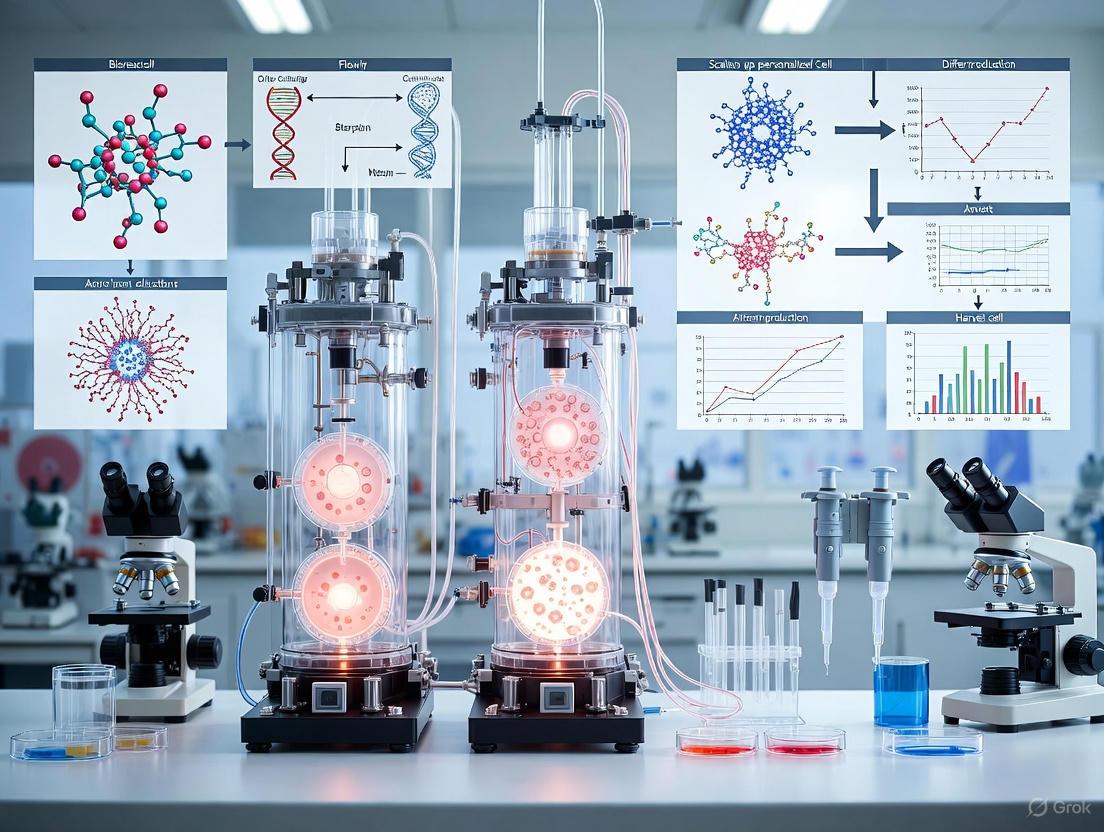
The transition of personalized stem cell therapies from laboratory research to clinical application is contingent on overcoming significant manufacturing challenges.
Scaling the Future: Bioreactor Systems for Personalized Stem Cell Therapies
Abstract
The transition of personalized stem cell therapies from laboratory research to clinical application is contingent on overcoming significant manufacturing challenges. This article provides a comprehensive overview for researchers and drug development professionals on the implementation of bioreactor systems to scale up the production of human induced pluripotent stem cells (hiPSCs) and their derivatives. We explore the foundational engineering principles of stirred-tank and single-use bioreactors, detail methodological approaches for process transfer and scale-up using criteria like constant power input per volume, address key troubleshooting challenges such as shear stress management and cellular heterogeneity, and validate these strategies with recent case studies demonstrating successful clinical-scale production of functional cell products. The integration of advanced monitoring, automation, and Quality by Design (QbD) principles is highlighted as essential for developing robust, scalable, and economically viable bioprocesses for regenerative medicine.
The Engineering Foundation: Bioreactor Design and Principles for Stem Cell Expansion
Stem cell therapy is poised to become a cornerstone of regenerative medicine, offering the potential to restore or establish normal function in diseased or damaged tissues. These therapies are typically comprised of a series of sophisticated laboratory and clinical steps: stem cells are first isolated from a donor (allograft) or the patient's own tissue (autograft), then proliferated and differentiated in vitro using specific culture media and growth factors. In autologous applications, gene editing may be employed to correct genetic defects before the expanded or differentiated cells are transplanted back into the patient [1].
The field is dominated by several key stem cell types, each with distinct properties and therapeutic applications:
- Induced Pluripotent Stem Cells (iPSCs): Generated by reprogramming adult somatic cells (e.g., skin or blood cells) to an embryonic-like pluripotent state. This provides an ethically favorable alternative to ESCs and enables the creation of patient-specific cells, potentially avoiding the need for lifelong immunosuppression [2] [1].
- Embryonic Stem Cells (ESCs): Derived from the blastocyst, these cells exhibit the greatest capability for self-renewal and potency, meaning they can differentiate into any cell type in the body. However, their use is accompanied by ethical concerns and will likely not be acceptable to certain religious groups [2] [1].
- Adult Stem Cells: This category includes hematopoietic stem cells (HSCs) and mesenchymal stem cells (MSCs). While they are the largest segment of the current stem cell therapy market, their capacity for self-renewal and differentiation is more limited compared to pluripotent stem cells [1].
The clinical translation of stem cell knowledge is progressing rapidly. The number of companies in the regenerative medicine space has grown globally from 772 in 2016 to over 1,550 in 2024, with more than 8,000 stem cell clinical trials ongoing or completed by early 2023 [1]. The global stem cell market, valued at US$297 million in 2022, is anticipated to grow at a compound annual growth rate (CAGR) of 16.8% from 2022 to 2027, driven by promising clinical trials and increasing demand for regenerative medicine solutions [1].
Scalability Challenges in Stem Cell Production
A significant hurdle in the development of stem cell therapies is the manufacturing process. The transition from small-scale laboratory research to the large-scale expansion required for clinical applications presents several critical bioprocess bottlenecks.
The Scale and Quality Challenge
For clinical efficacy, treatments often require vast quantities of cells. It is estimated that patients may need between 10^9 to 10^12 high-quality cells, with therapeutic efficacy directly correlating to the cell dose [3]. For example, in the context of diabetes treatment, patients typically require at least 7,000 to 12,000 islet equivalent counts (IEQ) per kilogram of body weight to achieve full diabetes reversal, equating to approximately a billion stem cell-derived islet cells [2]. Generating this cell mass is currently beyond the reach of most conventional planar (2D) culture platforms [2].
Key Manufacturing Bottlenecks
- Inoculation and Harvesting: Defining a scalable cell inoculation protocol that maintains growth rates without sacrificing quality is difficult. While hPSCs are often plated as clumps to maintain viability, this method produces a bottleneck in scalability and results in heterogeneous aggregates [3]. Similarly, harvesting, a critical step in serial passaging, risks altering cell phenotype if excessive shear is applied during the process [3].
- Cell Loss and Viability: Substantial cell loss occurs during the terminal stages of differentiation, particularly when physical disaggregation-reaggregation or cell sorting steps are involved, with some protocols reporting recovery rates of only 6-21% [2].
- Batch-to-Batch Variability and Off-Target Cells: Unwanted batch-to-batch variability and the risk of cellular off-target heterogeneity remain persistent concerns, rendering processes unreliable and costly, and potentially compromising product safety [2].
Table 1: Key Scalability Challenges and Their Impact on Manufacturing
| Challenge | Impact on Manufacturing | Reference |
|---|---|---|
| Massive Cell Quantities Required | Doses of 10^9 to 10^12 cells per patient are needed, demanding highly efficient and scalable production systems. | [3] |
| Substantial Cell Loss | Recovery rates can be as low as 6-21% after purification and reaggregation steps, drastically reducing final yield. | [2] |
| Aggregate Heterogeneity | Inoculation with cell clumps leads to inconsistent aggregate size, increasing apoptosis and spontaneous differentiation. | [3] |
| Off-Target Cell Populations | Risk of unwanted cellular heterogeneity in the final product, which can compromise safety and efficacy. | [2] |
Quantitative Data on Scalability Parameters
To illustrate the current state of scalable stem cell production, the following table summarizes key performance data from various bioreactor systems used for the expansion of human induced pluripotent stem cells (hiPSCs).
Table 2: Scalability Parameters for hiPSC Expansion in Different Bioreactor Systems
| Bioreactor System | Technology | Working Volume | Max Final Cell Concentration (cells/mL) | Max Fold Increase | Key Findings | Reference |
|---|---|---|---|---|---|---|
| PBS MINI 0.1 | Vertical-wheel impeller | 60 mL | 2.3 x 10^6 | 34 | Achieved over 30-fold expansion in 6 days using a scalable single-cell inoculation protocol. | [3] |
| DASbox Mini Bioreactor | Pitched-blade impeller | 125 mL | 3 x 10^6 | 6 | Cultured hiPSCs as aggregates, demonstrating moderate expansion. | [4] |
| Spinner Flask | Magnetic stir bar | 100 mL | 6 x 10^7 | 12 | Showed that aggregate-based culture in simpler systems can achieve reasonable expansion. | [4] |
| Stirred Bioreactor | Three-bladed impeller | 200 mL | 4.4 x 10^7 | Information not specified | Highlighted the use of aggregated cells in a stirred environment. | [4] |
| Hollow Fiber System | Capillary membrane | 3-17 mL | 16.6 x 10^6 | 100 | Achieved very high fold expansion in a low-volume, adherent culture system. | [4] |
Protocol: Scale-Up of hiPSCs in Vertical-Wheel Bioreactors
This protocol provides a detailed methodology for the large-scale expansion of high-quality hiPSC aggregates in Vertical-Wheel stirred suspension bioreactors, adapted from recent research [2] [3].
Materials and Equipment
- Cell Line: Human induced pluripotent stem cells (hiPSCs), e.g., line 4YA or patient-derived iPSC lines.
- Bioreactor System: PBS mini–Vertical Wheel (VW) Bioreactor (e.g., 0.1 L to 0.5 L working volume).
- Culture Medium: mTeSR1 or TeSR-E8 medium.
- Enzymes: Accutase for cell dissociation.
- Small Molecule Inhibitor: Y-27632 (Rho kinase inhibitor).
- Coating Substrate: For static culture, use hESC-qualified Matrigel or Vitronectin-XF.
- Equipment: Laminar flow hood, CO2 incubator, centrifuge, automated cell counter.
Step-by-Step Procedure
Pre-culture in Static Conditions:
- Culture hiPSCs in T-75 flasks coated with Matrigel or Vitronectin-XF under standard conditions (37°C, 5% CO2).
- Inoculate cells at a density of 15,000 cells/cm² in mTeSR1 medium.
- Perform 50% medium replacement daily until cells reach ~80% confluency.
Harvesting from Static Culture:
- Aspirate the culture medium and rinse the cell layer with 1X PBS.
- Add Accutase enzyme solution supplemented with 10 µM Y-27632 (3 mL per T-75 flask) and incubate for 10 minutes at 37°C.
- Quench the enzyme by adding an equal volume of mTeSR1 + Y-27632. Gently pipette the solution to create a single-cell suspension.
- Transfer the cell suspension to a conical tube and centrifuge at 300 x g for 5 minutes.
- Aspirate the supernatant and resuspend the cell pellet in fresh mTeSR1 + Y-27632. Take an aliquot for cell counting.
Single-Cell Inoculation and Aggregate Formation in Bioreactor:
- Inoculate the bioreactor with a single-cell suspension at a density of 2 x 10^5 cells/mL in mTeSR1 medium supplemented with 10 µM Y-27632.
- Set the agitation rate to 40-60 rpm. Computational fluid dynamics (CFD) modeling confirms this range in VW bioreactors provides a homogeneous distribution of hydrodynamic forces, optimizing aggregate formation while minimizing shear stress [3].
- Allow the cells to form uniform 3D clusters (typically 125–324 µm in diameter) over 24-48 hours.
Bioreactor Expansion Culture:
- Maintain the culture for 6-9 days, feeding with a complete medium exchange or perfusing with fresh mTeSR1 (without Y-27632) every 24 hours.
- Monitor aggregate size and morphology daily. The vertical-wheel technology promotes uniform aggregate growth and minimizes shear-induced damage [3].
- Sample the culture to monitor cell concentration, viability (via trypan blue exclusion), and pluripotency markers.
In-Vessel Dissociation and Harvest (for Serial Passaging):
- To harvest, add a proteolytic enzyme (e.g., Accutase) directly to the bioreactor vessel.
- Agitate the vessel at a controlled rate (e.g., 40-60 rpm) for a defined exposure time to dissociate aggregates into a single-cell suspension.
- Recover the cell suspension from the bioreactor. This method can achieve a harvesting recovery efficiency of over 95% [3].
Scale-Up:
- Use the harvested single cells to re-inoculate a larger-scale VW bioreactor (e.g., from 0.1 L to 0.5 L), repeating the process from step 3. This enables a scalable expansion process.
Diagram 1: hiPSC Scale-Up Workflow. This diagram outlines the key steps for scaling up hiPSCs in Vertical-Wheel bioreactors, from static culture to final harvest.
Quality Control and Characterization
Post-expansion, cells must be characterized to ensure quality:
- Viability and Yield: Assess using an automated cell counter with trypan blue exclusion.
- Pluripotency Markers: Confirm via flow cytometry for markers like OCT4, SOX2, and NANOG.
- Karyotype Analysis: Perform to ensure genomic stability after expansion.
- Functional Differentiation: Validate pluripotency through teratoma formation assays or directed differentiation into all three germ layers.
The Scientist's Toolkit: Essential Research Reagent Solutions
Table 3: Key Reagents and Materials for hiPSC Bioprocessing
| Item | Function/Application | Example Products |
|---|---|---|
| cGMP-Grade Culture Medium | Supports the growth and maintenance of pluripotent stem cells; defined, xeno-free formulations are critical for clinical translation. | mTeSR1, TeSR-E8, StemMACs |
| Extracellular Matrix (ECM) Substrate | Coats culture surfaces to facilitate cell adhesion and survival in 2D culture. | Vitronectin-XF, hESC-qualified Matrigel |
| Rho Kinase (ROCK) Inhibitor | Improves cell survival after single-cell dissociation and during cryopreservation; used in inoculation medium. | Y-27632 |
| Proteolytic Enzymes | Gently dissociate cell colonies into single cells or smaller clumps for passaging and inoculation. | Accutase, TrypLE |
| Vertical-Wheel Bioreactor | Provides a scalable, controlled suspension environment with homogeneous hydrodynamic forces for 3D aggregate culture. | PBS Biotech PBS MINI Series |
| Cell Count and Viability Kit | Accurately determines cell concentration and viability throughout the expansion process. | Automated Cell Counter with Trypan Blue |
The transition from laboratory-scale planar culture to robust, scalable bioprocesses is a critical hurdle in translating stem cell research into clinically viable therapies. Bioreactor systems provide the controlled environment necessary for the efficient expansion and differentiation of stem cells, moving beyond the limitations of static culture. This document provides detailed application notes and protocols for four key bioreactor technologies—Stirred-Tank, Vertical Wheel, Wave, and Single-Use Bioreactors (SUBs)—within the context of scaling up personalized stem cell production. It is designed to equip researchers and drug development professionals with the comparative data and methodological details needed to select and implement the optimal bioreactor system for their specific application, thereby accelerating the path to clinical translation.
Comparative Analysis of Key Bioreactor Systems
The following table summarizes the core characteristics, advantages, and limitations of the four bioreactor systems central to modern stem cell bioprocessing.
Table 1: Key Bioreactor Systems for Stem Cell Culture
| Bioreactor Type | Key Mechanism & Flow Pattern | Key Advantages | Primary Limitations | Ideal Stem Cell Applications |
|---|---|---|---|---|
| Stirred-Tank (STB) | Axial or radial flow impeller; high, uniform power input [5]. | Well-characterized, easy scale-up, precise parameter control (pH, DO), suitable for high-density culture [5]. | Higher shear stress potential, requires careful engineering to avoid cell damage [5]. | Large-scale expansion of hiPSCs [5] and differentiation into functional cell types like islets [2]. |
| Vertical Wheel (VW) | Paddle-shaped vertical wheel; uniform, low-shear mixing [2] [6]. | Low-shear environment, highly scalable from 0.1L to 80L, enhanced cell viability and yield, consistent 3D cluster formation [2] [6]. | Proprietary single-use vessel design may limit flexibility. | Sensitive 3D culture processes; hiPSC expansion and differentiation into mature, functional SC-islets [2] [6]. |
| Wave | Rocking platform induces wave action in disposable bag; simple, disposable culture chamber [7]. | Low capital cost, minimal shear from rocking, pre-sterilized single-use bags reduce contamination risk [7]. | Limited scalability for very high volumes, less established control strategies compared to STBs. | Early-stage process development, small-scale production of cell therapies [7]. |
| Single-Use (SUB) | Various (Stirred-Tank, Wave, etc.); disposable pre-sterilized plastic liner [7]. | Eliminates cleaning/sterilization, reduces cross-contamination, increases operational flexibility, lower operating costs [7]. | Generates plastic waste, potential for leachables/extractables, supply chain dependency [7]. | Mammalian cell culture, monoclonal antibodies, cell and gene therapies; multi-product facilities [7]. |
Quantitative Performance Data
Empirical data is essential for informed bioprocess decisions. The table below consolidates key performance metrics from recent studies utilizing different bioreactor systems for stem cell culture.
Table 2: Quantitative Performance Metrics in Stem Cell Bioprocessing
| Bioreactor System | Cell Type / Process | Key Performance Metrics | Scale | Source/Model |
|---|---|---|---|---|
| Stirred-Tank | hiPSC Expansion | Successful scale-up using constant P/V (4.6 W/m³); maintained pluripotency and differentiation potential. | 0.2 L to 2 L | [5] |
| Vertical Wheel | hiPSC-Derived Islets | 5x scale-up (0.1L to 0.5L) resulted in a 12-fold yield increase (15,005 to 183,002 IEQ); yielded functional, glucose-responsive islets [2]. | 0.1 L to 0.5 L | PBS Mini [2] |
| Vertical Wheel | PSC Expansion | Reliable recapitulation of growth rates, cell yields, and cell quality metrics during linear scale-up. | 0.5 L (MiniPro) to 3 L (PBS-3) | PBS MiniPro & PBS-3 [6] |
| Single-Use (SUB) | Market & Operational | ~60% lower operating costs vs. stainless steel; market growth from $1.3B to $6.6B by 2035 (CAGR ~15%) [7]. | N/A | Industry Report [7] |
Detailed Experimental Protocol: hiPSC Expansion in a Stirred-Tank Bioreactor
This protocol details the expansion of human induced pluripotent stem cells (hiPSCs) in a single-use stirred-tank bioreactor, based on a successfully scaled-up process [5].
Methodology
- Objective: To achieve robust, scalable expansion of hiPSCs while maintaining pluripotency and differentiation potential.
- Bioreactor Setup: A DASGIP or equivalent single-use STB system with a top-driven impeller.
- Cell Line: Validated hiPSC line.
- Culture Medium: Commercial, chemically defined hiPSC expansion medium.
- Critical Process Parameters (CPPs):
- Agitation: Controlled to maintain a constant power input per unit volume (P/V) of 4.6 W/m³ [5].
- Dissolved Oxygen (DO): Maintained at a set point (e.g., 40-50% air saturation) via cascaded control with O₂/N₂/air gassing.
- pH: Maintained at 7.2 ± 0.1 via CO₂ gassing and base addition.
- Temperature: Maintained at 37°C.
Step-by-Step Procedure
Bioreactor Preparation & Inoculation:
- Assemble the single-use vessel with all probes (pH, DO, temperature).
- Calibrate all probes according to manufacturer specifications.
- Add the pre-warmed culture medium to the vessel and set the initial operating parameters (agitation, temperature, gas flow).
- Allow the system to stabilize until pH and DO meet set points.
- Inoculate with hiPSCs at a viable cell density of 0.5 - 1.0 x 10⁶ cells/mL.
Process Monitoring & Control:
- Monitor CPPs (agitation, P/V, pH, DO, temperature) continuously.
- Perform daily sampling for off-line analysis: viable cell density (VCD), viability (via trypan blue exclusion), metabolite analysis (glucose, lactate), and osmolality.
- Execute a fed-batch or perfusion feeding strategy based on glucose consumption rates to maintain nutrient levels and prevent waste metabolite accumulation.
Harvest:
- Terminate the culture when VCD plateaus or viability drops below 80%.
- Stop agitation and harvest the cell suspension from the bioreactor.
- Quantify total cell yield and viability.
Post-Harvest Quality Control:
- Pluripotency Analysis: Analyze harvested cells via flow cytometry for key pluripotency markers (e.g., OCT4, SOX2, NANOG). A population with >90% positive cells is indicative of successful culture.
- Differentiation Potential: Perform a standard embryoid body (EB) formation assay to confirm trilineage differentiation potential (ectoderm, mesoderm, endoderm).
The Scientist's Toolkit
Table 3: Essential Reagents and Materials for hiPSC Bioprocessing
| Item | Function / Application | Example / Note |
|---|---|---|
| Chemically Defined Medium | Provides nutrients and signals for hiPSC self-renewal; eliminates batch variability and animal-derived components. | Essential for maintaining pluripotency and ensuring regulatory compliance [8]. |
| Single-Use Bioreactor Vessel | Pre-sterilized, disposable culture chamber; eliminates cleaning validation and cross-contamination. | Available for STB, Vertical Wheel, and Wave systems [7]. |
| pH & DO Sensors | Real-time monitoring and control of critical process parameters. | Single-use sensor patches or traditional probes are available [9]. |
| Aphidicolin (APH) | Cell growth inhibitor; used in differentiation protocols to mitigate risk of off-target cells and heterogeneity. | Applied in SC-islet differentiation in VW bioreactors [2]. |
| Ultimus Film | Enhanced leak-resistant and durable film for single-use bags. | Used in advanced SUB systems like the Merck Mobius Reactor [10]. |
Process Visualization: Scale-Up Workflow
The following diagram illustrates a linear scale-up workflow for pluripotent stem cell (PSC) culture, from process optimization to manufacturing scale, as demonstrated in recent studies [6].
The choice of bioreactor system is fundamental to the success of scaling up personalized stem cell production. As detailed in these application notes, each technology offers a distinct profile of advantages. Stirred-Tank Bioreactors provide a well-characterized path for scale-up, while Vertical Wheel systems excel in low-shear, high-yield culture of sensitive 3D aggregates. The widespread adoption of Single-Use technologies significantly enhances operational flexibility and cost-effectiveness. The provided protocols and quantitative data serve as a foundation for researchers to implement these systems, with the ultimate goal of developing robust, clinically relevant manufacturing processes for stem cell-based therapies.
In the scale-up of bioreactor systems for personalized stem cell production, controlling the physical environment is paramount to ensuring consistent cell growth, differentiation, and product quality. The transition from small-scale research bioreactors to large-scale production vessels introduces significant challenges in maintaining uniform conditions. This application note details four critical engineering parameters—Impeller Power Number (Np), Power Input per Unit Volume (P/V), Reynolds Number (Re), and Mixing Time (θₘ)—that form the foundation for successful bioreactor scale-up. Mastering these parameters allows researchers to control hydrodynamic conditions, thereby replicating the optimal physiological environment for stem cells across different scales [11].
Theoretical Foundations
Definition and Interrelationship of Key Parameters
The table below summarizes the definitions, equations, and significance of each key parameter.
Table 1: Fundamental scale-up parameters for stirred bioreactors.
| Parameter | Definition | Governing Equation | Significance in Bioreactor Scale-Up |
|---|---|---|---|
| Power Number (Np) | A dimensionless number representing the resistance of the impeller to flow [12]. | ( Np = \frac{P}{\rho \times N^3 \times D^5} )Where ( P ) = Power (W) [13] [12] | Relates impeller geometry to power draw; essential for scaling power input [14] [12]. |
| Power Input per Unit Volume (P/V) | The power dissipated into the fluid per unit volume [15]. | ( P/V = \frac{P}{V} = \frac{Np \times \rho \times N^3 \times D^5}{V} ) [15] | A primary scale-up criterion influencing mixing, mass transfer, and shear stress [11] [15]. |
| Reynolds Number (Re) | The ratio of inertial to viscous forces, predicting flow regime [16] [17]. | ( Re_i = \frac{\rho \times N \times D^2}{\mu} ) [18] [17] | Determines if flow is laminar, transitional, or turbulent, impacting mixing and shear environment [16] [18]. |
| Mixing Time (θₘ) | The time required to achieve a specified degree of homogeneity after tracer injection [19]. | ( N\theta_m = K ) (for turbulent regime) [19] | Key indicator of bulk homogenization efficiency; critical for nutrient and pH uniformity [11] [19]. |
The logical relationship between these parameters is direct. The impeller speed (N) and diameter (D), along with fluid properties, determine the Reynolds Number (Re), which characterizes the flow regime. The Power Number (Np), specific to the impeller geometry, then allows for the calculation of the total power input (P). When this power is normalized by the working volume (V), it gives the Power Input per Unit Volume (P/V), a key scale-up criterion. Finally, the P/V and the bioreactor geometry collectively determine the Mixing Time (θₘ), which defines the culture homogeneity [11] [18] [15].
Logical Workflow for Parameter Utilization
The following diagram illustrates the decision-making workflow for applying these parameters during bioreactor scale-up.
Experimental Protocols
Protocol: Torque-Based Measurement of Power Input and Power Number
This protocol describes a reliable method for experimental determination of power input (P) and the subsequent calculation of the Power Number (Np) in benchtop bioreactors, which is crucial for characterizing and scaling up stem cell bioprocesses [13].
Research Reagent Solutions & Essential Materials
Table 2: Key materials and equipment for power input measurement.
| Item | Function |
|---|---|
| Laboratory-scale Bioreactor | The vessel for which power input is being characterized. |
| Torque Transducer | Measures the torque acting on the impeller shaft during rotation [13]. |
| Air Bearing | Effectively reduces friction losses in the impeller shaft assembly, critical for accurate measurements at low torques typical in cell culture [13]. |
| Servo Agitator Motor | Provides precise control of impeller rotational speed (N). |
| Metal Bellow Couplings | Connect motor, torque sensor, and agitator shaft while compensating for minor misalignments. |
| Data Acquisition (DAQ) System | Records torque and impeller speed signals at a recommended rate of 2 Hz [13]. |
| Sucrose Solutions (20-60% w/w) | Newtonian model fluids with elevated viscosity and density to study power input over a wide range of Reynolds numbers [13]. |
Step-by-Step Procedure
- Solution Preparation: Prepare sucrose solutions at different concentrations (e.g., 20-60% w/w) in water. For concentrations above 40%, intermittent addition and slight heating (~50°C) may be necessary to dissolve the sucrose completely. Allow solutions to cool to room temperature before use [13].
- Sensor Installation:
- Mount the torque transducer in its holder with the integrated air bearing.
- Attach the servo motor to the top of the holder and connect it to the torque transducer's drive shaft using a metal bellow coupling.
- Connect the specifically designed impeller shaft to the measurement shaft of the torque transducer using another coupling.
- Mount the assembled sensor holder onto the bioreactor head plate and install the impeller with the desired off-bottom clearance.
- Connect the pressurized air supply to the air bearing and apply a pressure of approximately 5.5 bar [13].
- System Configuration:
- In the bioreactor control software, create an automated recipe that increases the impeller speed (N) stepwise (e.g., from 100 to 300 rpm in 20 rpm increments), maintaining each speed for a stable period (e.g., 4 minutes) [13].
- In the DAQ software, set the acquisition rate to 2 Hz. Initialize the torque and speed channels. Perform a "zero balance" on the torque channel if the signal without rotation exceeds 0.1 mN·m [13].
- Measurement Execution:
- Fill the bioreactor with the test fluid (e.g., water or sucrose solution) to the desired working volume.
- Start the data acquisition for the torque signal.
- Immediately initiate the pre-defined agitation recipe in the bioreactor control software.
- Data Analysis and Calculation:
- Torque: For each impeller speed (N), calculate the effective torque (( T{eff} )) as the difference between the torque measured with liquid (( TL )) and the torque of the empty vessel (( TD )): ( T{eff} = TL - TD ) [13].
- Power Input (P): Calculate the power input for each speed using the equation: ( P = 2\pi N T{eff} ), where N is the rotational speed in revolutions per second [13].
- Power Number (Np): Calculate the Power Number using the equation: ( Np = \frac{P}{\rho \times N^3 \times D^5} ), where ρ is the fluid density and D is the impeller diameter [13].
- Plot the Power Number (Np) against the Impeller Reynolds Number (( Rei )) to characterize the impeller's performance.
Protocol: Determination of Mixing Time via Colorimetry
Colorimetry is a simple, non-intrusive technique for visualizing flow patterns and determining mixing time in stirred vessels, providing a direct assessment of homogenization efficiency [19].
Research Reagent Solutions & Essential Materials
| Item | Function |
|---|---|
| pH Indicator | A tracer whose color change is easily visible (e.g., phenolphthalein or methyl orange) [19]. |
| Acid/Base Solution | A solution (e.g., NaOH or HCl) used to induce an instantaneous color change in the pH indicator upon injection [19]. |
| High-Resolution Camera | To record the decolorization process for precise time measurement. |
| Programmable Syringe Pump | For consistent and rapid tracer injection. |
Step-by-Step Procedure
- Bioreactor Setup: Fill the bioreactor with the model fluid (e.g., culture media or water) to the working volume. Add a small, pre-determined amount of pH indicator to the entire volume until a uniform, light color is achieved.
- Calibration and Injection: Set the bioreactor to the desired agitation speed and allow the flow to stabilize. Position the camera to view the entire vessel. Load the acid or base solution into the syringe pump. The injection point should be located in a poorly mixed zone, typically the liquid surface.
- Mixing Time Measurement: Start the camera recording. Instantaneously inject a small volume of the acid/base solution sufficient to cause a visible color change (e.g., from pink to colorless for phenolphthalein with NaOH). Continue recording until the color change is complete and the fluid returns to its original uniform color throughout the vessel.
- Data Analysis: Review the video recording to determine the mixing time (θₘ), defined as the time elapsed from the moment of tracer injection until the point where the color is uniform and no streaks or islands of un-mixed tracer remain. The degree of homogeneity is typically set at 95% [19].
Application in Stem Cell Bioreactor Scale-Up
Practical Guidance for Parameter Selection and Scaling
Successfully scaling a stem cell production process requires careful consideration of how these engineering parameters interact with biological needs.
Table 3: Scale-up guidance and implications for stem cell culture.
| Parameter | Considerations for Shear-Sensitive Stem Cells | Common Scale-Up Strategy | Potential Impact on Cell Culture |
|---|---|---|---|
| Power Number (Np) | Select impellers with low to moderate Np (e.g., marine, pitched-blade, kidney; Np ~0.2-2.0) to minimize shear stress and power input for a given speed [14]. | Maintain geometric similarity (impeller type and D/T ratio) across scales to keep Np constant [11]. | High-shear impellers (e.g., Rushton turbines) can damage cells and affect product quality [18] [17]. |
| P/V | Use a low P/V (e.g., ~0.1 W/kg for animal cells) to avoid excessive shear. Ensure it is sufficient to keep cells in suspension and control mixing time [18]. | Constant P/V is a widely used strategy. It maintains similar shear stress and mass transfer capabilities across scales [11] [15]. | Excessively high P/V can lead to hydrodynamic shear damage. Too low P/V can cause settling, poor mixing, and gradients in nutrients/pH [11] [18]. |
| Reynolds Number (Re) | Operate in the turbulent regime (Reᵢ > 10⁴ for many stirred tanks) for effective mixing, but ensure the Kolmogorov scale of eddies (λ) remains larger than the cell diameter [18]. | Flow regime often changes during scale-up. The key is to control the outcome (e.g., mixing time, shear) rather than keep Re constant [11]. | Turbulent eddies smaller than cells can cause damage. Laminar or transitional flow can lead to poor mixing and formation of gradients [18]. |
| Mixing Time (θₘ) | Accept longer mixing times than microbial fermentation. Aim to keep θₘ shorter than the time scale of critical metabolic processes (e.g., oxygen consumption) [11]. | Mixing time increases with scale. Scale-up based on constant θₘ is often infeasible as it requires a massive increase in P/V [11]. | Long mixing times can create zones of nutrient depletion (e.g., glucose, oxygen) and metabolite accumulation (e.g., lactate, CO₂), impacting growth and product quality [11]. |
An Integrated Scaling Workflow
The following diagram synthesizes the parameters into a holistic, iterative workflow for scaling a stem cell bioprocess, from initial small-scale model characterization to successful large-scale production.
The disciplined application of the power number, power input per unit volume, Reynolds number, and mixing time provides a robust engineering framework for scaling personalized stem cell production processes. By integrating the theoretical foundations, experimental protocols, and practical guidance outlined in this document, researchers and process engineers can make informed decisions to control the hydrodynamic environment. This systematic approach is essential for achieving the consistent, high-quality stem cell yields required for the successful commercialization of regenerative medicines.
Application Notes
Within bioreactor systems for scaling up personalized stem cell production, the application of controlled biophysical cues is critical for guiding cell fate. Shear stress, the frictional force exerted by fluid flow over cell surfaces, is a key parameter that can be precisely modulated in bioreactors to direct stem cell differentiation towards specific lineages, thereby enhancing the efficiency and consistency of tissue-engineered product manufacturing [20] [21]. The effects are magnitude-dependent; for instance, in mouse induced pluripotent stem cells (iPSCs), a shear stress of 0.5 Pa was found to be optimal for enhancing osteogenic differentiation, resulting in significantly upregulated gene expression (osterix, osteocalcin) and increased mineral deposition, whereas other magnitudes were less effective or even suppressive [20]. The accompanying table summarizes these differential effects.
Table 1: Magnitude-Dependent Effects of Shear Stress on Mouse iPSCs
| Shear Stress Magnitude | Impact on Cell Proliferation | Impact on Pluripotency Genes | Effect on Osteogenic Markers | Mineral Deposition |
|---|---|---|---|---|
| 0.15 Pa | Significantly reduced [20] | Slight increase in Oct3/4, Sox2, Nanog; slight decrease in Klf4 [20] | Significant upregulation of Osx, Ocn, Opn; suppressed Runx2 [20] | Significant increase [20] |
| 0.5 Pa | Significantly reduced [20] | Slight increase in Oct3/4, Sox2, Nanog; decrease in Klf4 [20] | Highest upregulation of Osx, Ocn, Opn, Col1a1; Runx2 not suppressed [20] | Highest increase [20] |
| 1.5 Pa | Significantly reduced (force-dependent manner) [20] | Slight increase in Oct3/4, Sox2, Nanog; decrease in Klf4 [20] | Significant upregulation of Osx, Ocn, Opn; suppressed Runx2 [20] | Increased, but less than 0.5 Pa [20] |
The molecular mechanotransduction pathways activated by shear stress are central to its effects. Research indicates that shear stress enhances osteogenic differentiation in mouse iPSCs partly through the upregulation of Connexin 43 (Cx43) and the subsequent phosphorylation of Erk1/2 [20]. The temporal dynamics of this response are critical, as shown in the table below. Inhibition of the Erk1/2 pathway results in suppressed osteogenic gene expression and mineralization, confirming its essential role [20]. Furthermore, the mechanosensitive ion channel Trpm7 is also involved, relocating from perinuclear regions to throughout the cell upon shear stress application [20].
Table 2: Temporal Dynamics of Osteogenic Marker Expression Under 0.5 Pa Shear Stress
| Duration of Shear Stress | Osterix (Osx) Expression | Osteocalcin (Ocn) Expression | Osteopontin (Opn) Expression | Collagen 1a1 (Col1a1) Expression | Mineral Deposition (ARS) |
|---|---|---|---|---|---|
| 12 Hours | Not specified | Not specified | Significant upregulation (~2.5 fold) [20] | Significant upregulation (~2 fold) [20] | Not observed [20] |
| 24 Hours | Upregulated [20] | Upregulated [20] | Further increased (~3 fold) [20] | Sustained upregulation (~2.5 fold) [20] | Positive in outgrowth area [20] |
| 48 Hours | Further increased [20] | Not specified | Highest increase (~7 fold) [20] | Sustained upregulation (~2 fold) [20] | Significantly higher than static group [20] |
These findings underscore the importance of integrating quality-by-design (QbD) and design-of-experiment (DOE) approaches into bioprocess development to define critical process parameters (CPPs) like shear stress magnitude and duration [22]. This ensures the consistent production of high-quality, clinically relevant stem cell derivatives for personalized therapies.
Experimental Protocols
Protocol: Application of Laminar Shear Stress to Enhance Osteogenic Differentiation of iPSCs
This protocol details a method for applying controlled, continuous laminar shear stress to mouse iPSCs to enhance their osteogenic differentiation, suitable for integration into a bioreactor-based manufacturing process.
I. Materials and Equipment
Research Reagent Solutions
Table 3: Essential Materials for Shear Stress Experimentation
| Item | Function/Description | Example/Note |
|---|---|---|
| Shear Stress Loading Apparatus | Applies continuous, laminar fluid shear stress to adherent cells [20]. | Custom-designed or commercial parallel-plate flow chambers compatible with sterile cell culture. |
| Osteogenic Induction Medium | Provides biochemical cues to direct cells toward the bone lineage. | Typically contains ascorbic acid, β-glycerophosphate, and dexamethasone [20]. |
| Retinoic Acid | A signaling molecule used as a pretreatment to prime cells for differentiation [20]. | Added to the medium for 3 days during embryoid body (EB) formation. |
| ERK1/2 Pathway Inhibitor | A pharmacological agent used to validate the involvement of the ERK signaling pathway [20]. | e.g., U0126 or PD0325901; used during shear loading to confirm mechanism. |
| Primary Antibodies | For detecting protein expression and localization via immunofluorescence. | Antibodies against Cx43, phospho-Erk1/2, Trpm7, Osx, Opn [20]. |
| Alizarin Red S (ARS) | A histological dye that stains calcium deposits, indicating mineralized matrix [20]. | Used for endpoint quantification of osteogenic differentiation. |
II. Cell Culture and Osteogenic Induction
- Embryoid Body (EB) Formation: Culture mouse iPSCs in suspension for two days in ES medium to form EBs [20].
- Retinoic Acid Priming: Transfer EBs to a medium supplemented with retinoic acid for three days to prime differentiation [20].
- Adherent Culture and Osteogenic Induction: Plate the EBs on adherent culture dishes and maintain them in osteogenic induction medium for one day [20].
III. Application of Shear Stress
- Apparatus Setup: Place the adherent culture with differentiated iPSCs into the shear stress loading system. Ensure sterile, laminar flow conditions.
- Shear Stress Application: Subject the cells to a continuous, laminar flow of osteogenic induction medium. The optimal magnitude for osteogenesis is 0.5 Pa for a duration of 48 hours [20]. Include static controls (no flow) cultured in the same medium for comparison.
IV. Downstream Analysis
- Gene Expression: Harvest cells and perform real-time PCR to analyze the expression of osteogenic markers (e.g., Osterix, Osteocalcin, Osteopontin, Collagen 1a1) [20].
- Protein Expression and Localization: Fix cells and perform immunofluorescence staining or Western blotting for Cx43, phospho-Erk1/2, Trpm7, and osteogenic transcription factors like Osx [20].
- Functional Assessment: Mineral Deposition: Fix cells and stain with Alizarin Red S (ARS). Quantify the staining by elution and spectrophotometric measurement or image analysis to assess the extent of mineralization [20].
V. Mechanistic Investigation Protocol
To confirm the role of a specific signaling pathway:
- Pharmacological Inhibition: During the 48-hour shear stress application, include a treatment group where the osteogenic induction medium is supplemented with an ERK1/2 pathway inhibitor [20].
- Comparison: Compare the gene expression (via PCR) and mineral deposition (via ARS) of the inhibited group to the non-inhibited shear stress group and the static control. An attenuation of the pro-osteogenic effect confirms the pathway's involvement [20].
Signaling Pathway Diagram
In the field of regenerative medicine, particularly for scaling up personalized stem cell production, the adoption of single-use systems (SUS) represents a paradigm shift from traditional stainless-steel equipment. These disposable, pre-sterilized technologies are transforming bioprocessing by addressing critical challenges in the manufacturing of cell-based therapies, where product sterility, batch-to-batch consistency, and operational flexibility are paramount [23] [24].
For stem cell research and production, single-use bioreactors (SUBs) offer a closed, controlled environment that minimizes contamination risks while supporting the complex needs of pluripotent and adult stem cell expansion and differentiation [23]. The inherent flexibility of SUS enables rapid changeover between different patient-specific cell lines, making them ideally suited for personalized production workflows where traditional stainless-steel systems would require extensive cleaning and validation between batches [25]. This application note examines the specific advantages of single-use systems through the lens of personalized stem cell production, providing data-driven insights and practical protocols for researchers and drug development professionals.
Key Advantages and Quantitative Benefits
Contamination Risk Reduction
Single-use systems significantly enhance product safety by providing a new, sterile flow path for each production batch, effectively eliminating the risk of cross-contamination between different cell lines—a critical consideration for autologous therapies [26] [25].
- Pre-sterilized Components: SUS are typically sterilized by gamma irradiation or ethylene oxide (EtO) gas after assembly, ensuring sterility before use and eliminating the need for facility-based sterilization procedures [26] [25].
- Closed Processing: Modern SUS incorporate aseptic connectors, tubing welders, and closed-system bags that maintain sterility throughout the production process, particularly crucial for extended cultures such as perfusion processes [27] [26].
- Elimination of Cleaning Validation: By disposing of components after use, SUS remove the need for cleaning validation between batches, reducing regulatory burdens and potential validation gaps that could compromise product safety [26] [28].
Table 1: Contamination Control Comparison Between Single-Use and Traditional Systems
| Parameter | Single-Use Systems | Traditional Stainless Steel |
|---|---|---|
| Cross-contamination risk | Eliminated through disposable flow path | Requires validated CIP procedures |
| Sterilization method | Gamma irradiation/X-ray/EtO gas | Steam-in-Place (SIP) & autoclaving |
| Cleaning validation | Not required | Extensive and ongoing |
| System closure | Pre-assembled, closed systems | Multiple connections increase risk |
Operational Efficiency and Economic Benefits
The implementation of single-use technologies generates significant efficiency improvements throughout the production workflow, particularly valuable for stem cell applications requiring rapid turnaround between patient-specific batches.
- Reduced Changeover Time: SUS eliminate time-consuming cleaning and sterilization steps, reducing facility changeover time from days or weeks to mere hours [28] [25]. This acceleration is particularly valuable for personalized therapies requiring multiple small batches.
- Lower Capital Investment: Single-use bioreactors eliminate the need for costly fixed infrastructure like pure water systems, clean steam generators, and complex piping, reducing upfront capital expenditure (CAPEX) by 30-50% compared to stainless steel facilities [29] [24].
- Facility Footprint Optimization: SUS-based facilities require approximately 30% less space than traditional facilities, enabling more efficient facility design or repurposing of existing spaces [25].
Table 2: Economic and Operational Comparison of Bioreactor Systems
| Factor | Single-Use Bioreactors | Stainless Steel Bioreactors |
|---|---|---|
| Initial capital investment | 30-50% lower | Significant infrastructure costs |
| Changeover time between batches | Hours | Days to weeks |
| Facility footprint | Compact, reduced space needs | Extensive support systems required |
| Water/energy consumption | Substantially lower | High (CIP/SIP requirements) |
| Batch failure risk | Reduced cross-contamination | Higher contamination risk |
Enhanced Flexibility for Personalized Production
The modular nature of single-use systems provides unparalleled flexibility for manufacturing personalized therapies, including stem cell products tailored to individual patients.
- Multi-Product Facilities: SUS enable the same production suite to manufacture multiple different cell therapies simultaneously or in rapid succession, a capability essential for autologous stem cell treatments [25].
- Scalability: Single-use platforms support seamless scale-up from process development to commercial manufacturing, with bioreactors available from bench-scale (1-10L) to production-scale (2000L+) [2] [24].
- Rapid Technology Integration: SUS more readily incorporate emerging technologies such as perfusion systems, advanced process controls, and integrated analytical technologies that benefit stem cell culture intensification [30] [24].
Application Case Study: Scaling hiPSC-Derived Islet Production
A recent landmark study demonstrates the successful application of single-use bioreactors for scaling up personalized stem cell products. Researchers utilized Vertical Wheel (VW) bioreactors to differentiate human induced pluripotent stem cells (hiPSCs) into functional islets for diabetes treatment [2].
Experimental Protocol: hiPSC to Islet Differentiation in SUS
Materials and Equipment
- Vertical Wheel bioreactors (0.1L and 0.5L scales)
- hiPSCs from patient-derived PBMCs
- Specialty differentiation media for each stage
- Aphidicolin (APH) for cell cycle control
- Glucose challenge solution for functional assessment
Methodology
- hiPSC Expansion: Seed individual hiPSCs into VW bioreactors and culture as 3D clusters until reaching uniform size distribution (target: 250µm average).
- Definitive Endoderm Induction: Initiate differentiation protocol with specific growth factors and small molecules.
- Pancreatic Progenitor Specification: Transition culture conditions to promote pancreatic lineage commitment.
- Endocrine Differentiation: Mature pancreatic progenitors into hormone-expressing endocrine cells.
- Islet Maturation: Final maturation stage to produce functional, glucose-responsive islets.
- Quality Assessment: Analyze islet equivalent count (IEQ), cellular composition, glucose-stimulated insulin secretion, and transcriptomic profile.
The entire process maintained a single-vessel, single-batch approach over 27 days, eliminating the need for 2D planar culture and disruptive cell disaggregation-agaggregation steps [2].
Results and Performance Metrics
The scale-up from 0.1L to 0.5L bioreactors demonstrated impressive outcomes:
Table 3: Quantitative Results from hiPSC-Derived Islet Production in SUS
| Parameter | 0.1L Bioreactor | 0.5L Bioreactor | Improvement |
|---|---|---|---|
| Islet Equivalent Count (IEQ) | 15,005 | 183,002 | 12-fold increase |
| β-cell composition | ~63% (CPPT+NKX6.1+ISL1+) | ~63% (CPPT+NKX6.1+ISL1+) | Consistent purity |
| Glucose-responsive insulin release | 3.9-6.1-fold increase | 3.9-6.1-fold increase | Maintained function |
| Cell cluster uniformity | High | High | Minimal variability |
| Diabetes reversal in murine model | Achieved | Achieved | Therapeutic efficacy confirmed |
This case study demonstrates that single-use bioreactors can successfully scale stem cell differentiation processes while maintaining product quality and functionality—essential requirements for clinical translation of personalized regenerative therapies [2].
Implementation Protocols
Risk Assessment Framework for SUS Implementation
Successful implementation of single-use systems for stem cell manufacturing requires a structured risk management approach:
- Pre-Process Characterization: Assess material compatibility, extractables and leachables, and supply chain stability [28].
- Process Parameter Risk Assessment: Identify critical process parameters and establish control strategies using Failure Mode and Effects Analysis (FMEA) methodologies [27].
- Raw Material Assessment: Implement two-stage traceability and criticality scoring for all contact materials [28].
- Ongoing Monitoring: Establish periodic review cycles to address emerging risks throughout the product lifecycle [28].
Standardized Single-Use Bioreactor Protocol for hMSC Expansion
Materials
- Single-use bioreactor (1-5L working volume) with marine or pitched-blade impeller
- Human Mesenchymal Stem Cells (hMSCs)
- Serum-free culture media
- Microcarriers (if using adherent culture)
- Pre-sterilized sampling sets
- Aseptic connectors or welders
Procedure
- Bioreactor Assembly: Aseptically install pre-sterilized single-use bag into bioreactor controller unit.
- System Calibration: Calibrate pH, dissolved oxygen, and temperature sensors according to manufacturer specifications.
- Media Addition: Transfer culture media to bioreactor vessel through pre-sterilized tubing lines.
- Inoculation: Introduce cell inoculum via septum port or through aseptic connection.
- Process Control: Maintain culture parameters (pH 7.2, DO 30-50%, temperature 37°C) with controlled agitation.
- Feeding: Perform media exchanges or perfusions using pre-sterilized transfer sets.
- Monitoring: Take periodic samples using sterile sampling systems for cell count, viability, and metabolite analysis.
- Harvest: Transfer cell suspension from bioreactor to downstream processing using closed-system tubing.
Critical Process Parameters
- Agitation rate: Balance sufficient mixing with minimal shear stress
- Dissolved oxygen: Maintain 30-50% air saturation
- pH: Control within 7.1-7.3 range
- Temperature: Maintain at 37±0.5°C
The Researcher's Toolkit: Essential SUS Components
Table 4: Key Single-Use Components for Stem Cell Bioprocessing
| Component | Function | Application Notes |
|---|---|---|
| Single-use bioreactor | 3D cell culture vessel | Choose impeller design for shear-sensitive cells (marine/pitched-blade) [23] |
| Media bags | Sterile fluid storage | Pre-sterilized, integrity-tested bags with sensor patches |
| Aseptic connectors | Maintaining closed system | Various sizes for different flow rates; genderless designs simplify use [25] |
| Tubing welders | Creating sterile connections | Higher initial investment but reliable aseptic connections [25] |
| Single-use sensors | Monitoring process parameters | Pre-calibrated pH, DO, temperature sensors for single-use |
| Sampling systems | Removing culture samples | Closed-system designs prevent contamination during sampling [27] |
| Mixing systems | Media and buffer preparation | Single-use magnetic mixers available up to 3,000L scale [24] |
Process Flow and Contamination Control Visualization
Diagram 1: Single-Use System Workflow for Stem Cell Production. This workflow illustrates the integrated contamination control points (green) within the single-use manufacturing process (yellow), highlighting how sterile components and closed-system operations minimize contamination risks throughout production.
Single-use systems provide compelling advantages for scaling up personalized stem cell production by effectively addressing the triple challenges of contamination control, operational efficiency, and production flexibility. The case study on hiPSC-derived islet manufacturing demonstrates that SUS can achieve significant scale-up while maintaining product quality and functionality—key requirements for clinical translation of regenerative medicines.
As the field advances, single-use technologies continue to evolve with improved scalability, better material compatibility, and enhanced sustainability profiles. For researchers and drug development professionals working on personalized stem cell therapies, strategic implementation of single-use systems offers a pathway to overcome traditional manufacturing constraints and accelerate the development of transformative treatments for patients.
From Flask to Bioreactor: Methodologies for Process Scale-Up and Clinical Translation
Scaling up bioreactor processes from laboratory to production scale is a critical step in translating personalized stem cell research into clinically viable therapies. The fundamental challenge lies in recreating the optimized growth environment achieved in small-scale bioreactors within much larger vessels, without compromising cell viability, product quality, or process consistency. For stem cell-derived therapies, where patient-specific batches may be produced, maintaining strict control over the cellular microenvironment becomes paramount. Physical, chemical, and biological factors are all influenced by scale changes, with scale-dependent parameters such as mixing, oxygen transfer, and shear forces requiring particular attention during scale-up [11].
The selection of appropriate scale-up criteria is essential for success. Among various available strategies, maintaining constant power input per unit volume (P/V) and impeller tip speed has emerged as a widely adopted approach for scaling sensitive cell culture processes, including stem cell expansion and differentiation. These parameters directly influence the hydrodynamic environment that cells experience, affecting nutrient distribution, gas exchange, and the mechanical forces that can impact cell health and function. This application note provides detailed protocols and analytical frameworks for implementing these scale-up criteria specifically within the context of personalized stem cell production research [15] [31].
Theoretical Foundation: P/V and Tip Speed as Scaling Parameters
Power Input per Unit Volume (P/V)
The power input per unit volume (P/V) represents the amount of mechanical energy delivered to the culture medium via agitation per unit volume. It is a crucial parameter that influences mixing efficiency, oxygen transfer rates, and shear stress levels within the bioreactor. The P/V value is calculated using the following equation:
P/V = (Np × ρ × N³ × d⁵)/V
Where:
- Np = Impeller power number (dimensionless, specific to impeller type)
- ρ = Fluid density (kg/m³)
- N = Agitation speed (revolutions per second, rps)
- d = Impeller diameter (m)
- V = Working volume (m³) [15]
Maintaining constant P/V across scales helps preserve similar mixing characteristics and energy dissipation rates throughout the fluid volume. However, it's important to note that scale-up based solely on constant P/V typically results in increased circulation times in larger vessels, which can lead to environmental heterogeneities including nutrient and pH gradients [11].
Impeller Tip Speed
Impeller tip speed defines the linear velocity at the outermost point of the impeller and serves as an indicator of the maximum shear forces generated within the bioreactor. It is calculated as:
Tip Speed = π × d × N
Where:
- d = Impeller diameter (m)
- N = Agitation speed (revolutions per second, rps) [31]
For shear-sensitive stem cell cultures, controlling tip speed is critical for maintaining cell viability and functionality. Excess tip speed can damage cells through mechanical shear, while insufficient speed may lead to poor mixing and settling of cells or aggregates. For animal cell cultures, including stem cells, tip speeds are generally maintained below 1-2 m/s to prevent cell damage [31].
Interrelationship and Trade-offs
The implementation of constant P/V and tip speed as scale-up criteria requires understanding their interrelationship and inherent trade-offs. These parameters are interconnected through the agitation speed (N) and impeller diameter (d), meaning that adjusting one parameter inevitably affects the other. The table below summarizes the effects of maintaining each parameter constant during scale-up:
Table: Effects of Scale-Up Criteria on Bioreactor Performance
| Scale-Up Criterion | Effect on Mixing | Effect on Shear | Effect on Mass Transfer | Suitability for Stem Cells |
|---|---|---|---|---|
| Constant P/V | Maintains similar energy distribution; longer mixing times at large scale | Varies with impeller design | Generally maintains oxygen transfer | Moderate (requires shear monitoring) |
| Constant Tip Speed | Reduced mixing efficiency at large scale | Maintains consistent mechanical shear | May reduce oxygen transfer | High (protects against shear damage) |
| Combined Approach | Balanced mixing performance | Controlled shear environment | Optimized mass transfer | Ideal for stem cell processes |
The diagram below illustrates the logical relationship between scale-up inputs, criteria, and outcomes:
Quantitative Scale-Up Data and Parameter Ranges
Effective scale-up requires careful consideration of appropriate parameter ranges for different culture systems. The table below summarizes key parameter values across scales for stem cell bioprocessing:
Table: Parameter Ranges Across Bioreactor Scales for Stem Cell Culture
| Parameter | Laboratory Scale (1-10 L) | Pilot Scale (50-200 L) | Production Scale (500-2000 L) | Critical Considerations |
|---|---|---|---|---|
| P/V (W/m³) | 50-200 [31] | 50-200 [31] | 50-200 [31] | Lower range for sensitive cells; monitor heat generation |
| Tip Speed (m/s) | 1-2 [31] | 1-2 [31] | 1-2 [31] | Critical for aggregate size control; higher values may damage cells |
| kLa (h⁻¹) | 5-20 [31] | 5-20 [31] | 5-20 [31] | Must meet oxygen demand without causing toxicity |
| Mixing Time (s) | 10-30 [31] | 60-180 [31] | 120-300 [11] | Increases with scale; can create gradients in large bioreactors |
| Temperature Control | Efficient | Moderate efficiency | Challenging | Due to decreasing surface area-to-volume ratio [11] |
| CO₂ Removal | Efficient | Moderate efficiency | Challenging | Affected by increased hydrostatic pressure [11] |
For stem cell applications, particularly the production of human induced pluripotent stem cell-derived islets, studies have demonstrated successful scale-up from 0.1 L to 0.5 L bioreactors while maintaining cell functionality and differentiation efficiency. This scale-up resulted in a 12-fold increase in islet equivalent count (from 15,005 to 183,002) without compromising islet structure or function, demonstrating the effectiveness of proper parameter control [2].
Experimental Protocols for Scale-Up Implementation
Protocol 1: Establishing Baseline Parameters at Laboratory Scale
Objective: Determine optimal P/V and tip speed values for specific stem cell line in laboratory-scale bioreactors (1-10 L).
Materials:
- Stirred-tank bioreactor system with compatible impeller
- Dissolved oxygen probe and calibration solutions
- pH probe and calibration solutions
- Temperature control system
- Relevant cell culture media and cells
Methodology:
- Bioreactor Setup: Assemble and sterilize the bioreactor system according to manufacturer specifications. Install appropriate sensors for dissolved oxygen (DO), pH, and temperature.
- Parameter Ranges Definition: Establish testing ranges for agitation speed based on preliminary calculations for P/V (50-200 W/m³) and tip speed (1-2 m/s).
- Cell Culture Initiation: Inoculate bioreactor with stem cells at appropriate seeding density. Begin with conservative agitation speed within the predetermined range.
- Process Monitoring: Monitor key parameters throughout the culture period:
- Cell density and viability (daily sampling)
- Glucose consumption and metabolite production
- Dissolved oxygen maintenance at setpoint (20-50% air saturation)
- pH stability at setpoint (typically 7.0-7.4)
- Performance Assessment: Evaluate cell growth, productivity, and critical quality attributes at each agitation condition.
- Optimum Identification: Select P/V and tip speed values that yield optimal cell growth while maintaining product quality and cell functionality.
Data Analysis: Calculate specific growth rates, doubling times, and productivity metrics for each condition. Use statistical analysis to identify significant differences between conditions.
Protocol 2: Scaling Up to Pilot Scale (50-200 L)
Objective: Translate optimized laboratory-scale parameters to pilot-scale bioreactors while maintaining process performance.
Materials:
- Pilot-scale bioreactor system with geometric similarity to lab-scale system
- Scale-up calculation software or spreadsheet
- Expanded monitoring and control systems
- Sufficient media and cells for larger culture volume
Methodology:
- Scale-Up Calculations:
- Calculate the required impeller speed at pilot scale to maintain constant P/V using the formula: N₂ = N₁ × (D₁/D₂)⁽²ᐟ³⁾ (for geometrically similar systems)
- Verify that the resulting tip speed remains within acceptable range (1-2 m/s)
- If tip speed exceeds acceptable limits, adjust strategy to maintain constant tip speed while accepting a moderate reduction in P/V
- Bioreactor Preparation: Clean, sterilize, and calibrate the pilot-scale bioreactor system. Implement additional monitoring points if available.
- Process Transfer: Implement the calculated parameters while maintaining all scale-independent parameters (pH, temperature, DO, feeding strategy) constant.
- Comparative Analysis: Monitor process parameters and compare performance with laboratory-scale data:
- Growth kinetics and metabolic profiles
- Product quality attributes specific to stem cell application
- Mixing time verification using tracer studies if possible
- Parameter Adjustment: If significant discrepancies are observed, implement controlled adjustments to agitation and aeration parameters while monitoring their effects.
Troubleshooting: Common issues during pilot-scale implementation include longer mixing times, dissolved CO₂ accumulation, and zones of heterogeneity. These may require adjustments to impeller configuration or aeration strategy.
Protocol 3: Validation Scale-Up to Production Scale (500-2000 L)
Objective: Validate scaling parameters at production scale while demonstrating consistency of product quality and process performance.
Materials:
- Production-scale bioreactor system
- Advanced process monitoring capabilities (if available)
- Expanded analytical capabilities for product characterization
- Quality control testing protocols
Methodology:
- Parameter Calculation: Apply the successfully demonstrated scale-up criteria from pilot scale to production scale using the same calculation methodology.
- Process Performance Qualification: Execute multiple runs at production scale to demonstrate:
- Process consistency across batches
- Comparable cell growth and productivity
- Equivalent product quality meeting predefined specifications
- Comprehensive Monitoring: Implement enhanced monitoring for large-scale specific issues:
- Gradient formation (substrate, pH, dissolved CO₂)
- Mixing heterogeneity through multiple sampling ports
- Shear stress variations across the bioreactor
- Quality Attribute Assessment: Conduct rigorous analysis of critical quality attributes relevant to the stem cell product, including:
- Purity and potency assessments
- Identity and functionality testing
- Safety parameters (e.g., sterility, endotoxin)
Acceptance Criteria: Define predetermined acceptance criteria based on laboratory and pilot-scale experience. Production-scale batches should fall within established ranges for key performance and quality indicators.
The Scientist's Toolkit: Essential Research Reagent Solutions
Successful implementation of scale-up criteria requires appropriate selection of reagents and equipment. The table below details key research reagent solutions and their functions in scale-up studies:
Table: Essential Research Reagent Solutions for Bioreactor Scale-Up Studies
| Reagent/Equipment Category | Specific Examples | Function in Scale-Up Studies |
|---|---|---|
| Bioreactor Systems | Stirred-tank bioreactors with geometrically similar designs across scales [32] | Provides consistent fluid dynamics across scales; enables linear scale-up |
| Cell Culture Media | Serum-free, chemically defined media optimized for stem cell expansion | Supports cell growth while maintaining consistency; reduces lot-to-lot variability |
| Process Gases | Oxygen, nitrogen, carbon dioxide, air | Maintains dissolved oxygen setpoints; controls pH through CO₂; essential for scale-up of aeration systems |
| Analytical Tools | Metabolite analyzers, cell counters, flow cytometers | Monitors process consistency and product quality across scales |
| Impeller Systems | Marine propellers, pitched-blade turbines, hydrofoil impellers [31] | Provides appropriate mixing while controlling shear forces; different designs offer varying efficiency |
| Spargers | Microspargers (0.3-1 mm pore size) [33] | Controls oxygen mass transfer and CO₂ stripping efficiency; affects bubble-induced shear |
| Single-Use Bioreactors | Commercially available single-use systems with standardized geometries [32] | Reduces cross-contamination risk; simplifies scale-up between predefined scales |
Scale-Up Workflow and Decision Framework
The following diagram illustrates the complete scale-up workflow from laboratory to production scale, highlighting key decision points and parameter controls:
Implementing constant P/V and impeller tip speed as scale-up criteria provides a robust framework for maintaining consistent environments across bioreactor scales in personalized stem cell production. While this approach effectively balances the competing demands of adequate mixing and shear protection, success ultimately depends on comprehensive process understanding and careful attention to both scale-dependent and scale-independent parameters. As stem cell therapies advance toward clinical application, systematic scale-up methodologies will play an increasingly critical role in ensuring that laboratory innovations can be translated into reproducible, commercially viable manufacturing processes that deliver safe and effective patient-specific treatments.
This application note details the successful transfer and scale-up of a human induced pluripotent stem cell (hiPSC) expansion process from a 0.2 L DASGIP stirred-tank bioreactor (STB) to a single-use 2 L STB. The primary objective was to achieve large-scale cell production without compromising critical quality attributes, a cornerstone for personalized stem cell production and therapeutics. The scale-up was executed using a rational engineering approach, maintaining a constant power input per unit volume (P/V) of 4.6 W/m³ as the key scaling criterion. Results confirmed that this strategy supported equivalent hiPSC expansion, viability, metabolic profile, and, crucially, the maintenance of pluripotency and differentiation potential in the 2 L scale, providing a robust and scalable bioprocess for clinical-grade cell manufacturing [5].
The transition from laboratory-scale research to commercially and clinically viable bioprocesses for hiPSCs is a pivotal challenge in regenerative medicine. Therapeutic applications can require cell doses ranging from 10^8 to 10^10 cells per patient [34], demands that cannot be met by conventional planar culture systems due to spatial inefficiency, high labor costs, and poor process control [35]. Stirred-tank bioreactors offer a solution, providing a controlled, scalable, and monitorable 3D environment for cell culture [35] [5]. However, scaling a process to a larger volume introduces risks, such as altered hydrodynamic environments and shear stresses, which can impact cell viability, proliferation, and phenotype [5]. This case study demonstrates a methodical, engineering-driven scale-up of a hiPSC expansion process, validating that critical quality attributes are preserved post-scale-up, thereby contributing significantly to the framework of scalable personalized medicine.
Materials and Methods
Bioreactor Systems and Scale-Up Engineering Characterization
Bioreactor Configurations:
- 0.2 L DASGIP-STB: This small-scale system, used for process development, was equipped with a trapezoidal two-blade paddle impeller (a radial-flow design) [5].
- 2 L Single-Use STB (Univessel-STB): The scale-up system utilized a single-use vessel. The impeller type, while not explicitly stated for the Univessel, was characterized to meet the same engineering criteria as the 0.2 L BioBLU-STB, which features an 8-blade impeller with a 60° pitch (an axial-flow design) [5].
Engineering Characterization and Scale-Up Criterion: A rigorous engineering characterization was performed to define the scale-up strategy.
- Power Number (Np) Estimation: The impeller power number was experimentally determined for both the DASGIP and BioBLU systems. For the BioBLU 0.2 L STB, an Np of 0.5 was established [5].
- Scale-up Strategy: The power input per unit volume (P/V) was identified as the key scaling parameter to maintain a consistent hydrodynamic environment and shear stress profile across scales. The P/V was kept constant at 4.6 W/m³ during the transfer from the 0.2 L to the 2 L STB [5]. This ensured similar mixing and suspension dynamics while protecting the cells from damaging shear levels.
Table 1: Bioreactor Systems and Engineering Parameters for Scale-Up
| Parameter | 0.2 L DASGIP-STB | 2 L Single-Use STB (Univessel) |
|---|---|---|
| Working Volume | 0.2 L [5] | 2 L [5] |
| Impeller Type | Two-blade paddle (Radial-flow) [5] | Not specified (Designed to match P/V criteria) [5] |
| Power Number (Np) | Characterized [5] | Characterized [5] |
| Scale-up Criterion | Baseline | Constant P/V = 4.6 W/m³ [5] |
| Agitation Speed | Optimized to achieve P/V | Calculated to maintain P/V at 4.6 W/m³ [5] |
Cell Line and Culture Medium
- Cell Line: The process was developed and validated using hiPSCs. The specific cell lines used are detailed in the associated research [5].
- Culture Medium: The cells were expanded in a fully defined, commercially available hiPSC culture medium, Essential 8 (E8) [34]. The medium was potentially supplemented with additives identified through a Design of Experiments (DoE) approach to enhance aggregate stability, such as Polyethylene Glycol (PEG) and Polyvinyl Alcohol (PVA) [34].
Experimental Protocol: hiPSC Expansion in STBs
Step 1: Inoculum Preparation
- Culture hiPSCs to approximately 60-70% confluence in static, vitronectin-coated vessels [34].
- Dissociate the cells using TrypLE or a similar enzyme for 3-5 minutes at 37°C [34].
- Quench the enzyme activity with E8 medium, centrifuge the cell suspension (400 × g for 6 minutes), and resuspend the pellet in E8 medium supplemented with a 10 µM Y-27632 ROCK inhibitor [34].
- Determine the cell count and viability.
Step 2: Bioreactor Inoculation
- Inoculate the bioreactors at a density of 0.27 × 10^6 cells/mL [35]. The inoculation can be performed using single cells or pre-formed aggregates [35].
- Set the initial working volume to 0.2 L or 2 L, ensuring the impeller is fully submerged for proper mixing.
Step 3: Process Parameter Control Monitor and control the following critical process parameters throughout the culture duration:
- Agitation Speed: Set based on the P/V criterion (4.6 W/m³). For the 0.2 L DASGIP system, this was achieved at 30-60 rpm [5].
- Dissolved Oxygen (DO): Maintain at a setpoint, often 10% O₂ (mild hypoxia), which has been shown to reduce reactive oxygen species and enhance hiPSC proliferation [35].
- pH: Maintain at a physiological setpoint (e.g., 7.2-7.4) using CO₂ and base addition loops.
- Temperature: Maintain at 37°C [34].
Step 4: Culture Maintenance and Monitoring
- Employ a fed-batch or perfusion feeding strategy to maintain nutrient levels and remove waste products [35] [36].
- Take daily samples for monitoring:
- Cell Count and Viability: Using an automated cell counter after aggregate dissociation [34].
- Aggregate Size Distribution: Analyze bright-field images with software like ImageJ; measure a minimum of 30 aggregates per sample [34].
- Metabolites: Measure glucose and lactate concentrations to track metabolic activity [36].
- Pluripotency Markers: Assess via flow cytometry for markers like OCT-4, SOX-2, and NANOG [37].
Step 5: Harvest and Analysis
- Harvest the cells typically upon reaching the maximum cell density or after a predetermined culture period.
- Perform a comprehensive final analysis, including cell yield, viability, aggregate size, and in-depth quality control (pluripotency and differentiation potential).
Results and Data Analysis
Expansion and Metabolic Performance
The scale-up process was highly successful, with the 2 L STB demonstrating comparable and, in some cases, superior performance to the 0.2 L system. The constant P/V strategy ensured that cell growth and metabolism were not adversely affected by the increase in scale.
Table 2: Comparative hiPSC Expansion and Metabolic Performance at 0.2 L and 2 L Scales
| Performance Metric | 0.2 L STB | 2 L STB | Analysis |
|---|---|---|---|
| Max. Cell Density (cells/mL) | ~1.0 × 10^6 [35] | 2.1 × 10^6 [35] | A significant increase in maximum cell density was observed at the 2L scale under mild hypoxia. |
| Expansion Factor | ~4-5 fold [35] | 9.2 ± 1.4 [35] | The expansion factor nearly doubled in the 2L bioreactor, indicating a highly favorable environment. |
| Viability | High (e.g., >90%) [35] | High (e.g., >90%) [35] | High viability was maintained at both scales, confirming the suitability of the shear environment. |
| Key Metabolites (Glucose & Lactate) | Never depleted/accumulated to inhibitory levels [36] | Consistent profile with 0.2L scale [5] | Metabolic profiles were consistent, indicating reproducible culture conditions and controlled feeding. |
Critical Quality Attributes (CQAs)
The preservation of hiPSC quality following scale-up is paramount. Analysis confirmed that the cells expanded in the 2 L STB retained their defining characteristics.
Table 3: Analysis of Critical Quality Attributes Post-Scale-Up
| Quality Attribute | Method of Analysis | Result | Conclusion |
|---|---|---|---|
| Pluripotency Marker Expression | Flow Cytometry (OCT-4, SOX-2, NANOG) | >90% positive cells [5] [37] | The expanded hiPSCs maintained an undifferentiated state. |
| Pluripotency Maintenance | qRT-PCR | High expression of pluripotency genes [5] | Confirmed at the transcriptional level. |
| Differentiation Potential | Directed differentiation to cardiomyocytes (hiPSC-CMs) | Efficiency of ~87.4% cTNT+ cardiomyocytes [37] | The scaled-up cells retained their fundamental capacity to differentiate into functional progeny. |
| Aggregate Stability | Image analysis (e.g., ImageJ) | Controlled size distribution (e.g., ~346 μm avg.) [36]; minimized fusion [34] | Media additives and controlled agitation maintained optimal aggregate size, preventing core necrosis. |
The Scientist's Toolkit: Essential Research Reagents and Materials
The successful bioprocess relied on several key reagents and materials to ensure scalability, stability, and defined conditions.
Table 4: Key Research Reagent Solutions for hiPSC Bioprocessing
| Reagent / Material | Function in the Bioprocess | Specific Example |
|---|---|---|
| Essential 8 (E8) Medium | A defined, xeno-free medium providing essential nutrients and growth factors for hiPSC maintenance [34]. | Commercial, GMP-grade available. |
| ROCK Inhibitor (Y-27632) | Significantly improves cell survival after single-cell passaging by inhibiting apoptosis [34]. | Added at 10 µM during inoculation. |
| Aggregate Stability Additives | Modulate cell surface charge and reduce aggregate fusion, enabling better control over aggregate size and homogeneity [34]. | Polyethylene Glycol (PEG), Polyvinyl Alcohol (PVA), Heparin Sodium Salt (HS) [34]. |
| Wnt Pathway Activator | Promotes hiPSC proliferation by sustaining cell cycle activity and delaying spontaneous differentiation [35]. | CHIR99021 (CHIR), perfused continuously [35]. |
| Single-Use Bioreactor Vessel | Provides a pre-sterilized, ready-to-use culture vessel, eliminating cleaning validation and reducing cross-contamination risk [5] [38]. | BioBLU Single-Use Vessels, BIOne SUB [5] [38]. |
Visualizations
Experimental Workflow for hiPSC Expansion and Scale-Up
The following diagram outlines the complete experimental workflow, from pre-culture to final quality control after scale-up.
Key Signaling Pathways in hiPSC Expansion Control
This diagram illustrates the key molecular pathways that were actively controlled within the bioreactor to maximize hiPSC expansion.
This case study demonstrates a successful and transferable strategy for scaling up hiPSC expansion from 0.2 L to 2 L in single-use STBs. The core of this success was a rational, engineering-based approach centered on maintaining a constant power input per unit volume (P/V). This criterion ensured hydrodynamic similarity between scales, which directly translated to consistent and improved cell culture outcomes.
The data unequivocally shows that the scaled-up process not only maintained but enhanced cell expansion metrics while fully preserving critical quality attributes. The combination of Wnt pathway activation (via CHIR99021) and a mild hypoxic environment (10% O₂) was instrumental in boosting hiPSC proliferation by reducing ROS and promoting a proliferative gene signature [35]. Furthermore, the use of media additives like PEG and Heparin, identified through systematic DoE, was critical for controlling aggregate stability—a common bottleneck in 3D suspension culture [34].
In conclusion, this work provides a validated blueprint for scaling hiPSC production. The ability to generate billions of high-quality, pluripotent cells in a controlled, scalable bioreactor system is a significant advancement toward the economic and technical feasibility of personalized stem cell therapies. The principles and protocols outlined here can be directly applied to further scale-up efforts and the development of integrated differentiation processes within bioreactors.
The generation of human stem cell-derived islets (SC-islets) presents a promising avenue for transforming cell-based therapies for diabetes. A significant challenge in this field is the scalable manufacturing of high-quality, functional islets that can reverse diabetes in preclinical models. While advanced protocols show potential for generating SC-islets under planar (2D) or three-dimensional (3D) cultures, they often face challenges in scalability, substantial cell loss, and batch-to-batch consistency [2]. This case study details the successful scale-up of a differentiation process for producing human induced pluripotent stem cell (iPSC)-derived islets using Vertical Wheel (VW) bioreactors, achieving a 12-fold increase in islet equivalent count (IEQ) when scaling from 0.1 L to 0.5 L vessels [2] [39]. The resulting SC-islets demonstrated enriched β-cell composition, glucose-responsive insulin release, and the ability to reverse diabetes in streptozotocin (STZ)-treated mice, providing a pathway for clinical-grade SC-islet production [2].
Key Quantitative Outcomes of SC-Islet Scale-Up
The scale-up process in Vertical Wheel bioreactors yielded substantial improvements in final islet production while maintaining high-quality cell composition and function.
Table 1: Summary of Scale-Up Performance and Functional Outcomes
| Parameter | 0.1 L Bioreactor | 0.5 L Bioreactor | Measurement/Notes |
|---|---|---|---|
| Islet Equivalent Count (IEQ) | 15,005 | 183,002 | 12.2-fold increase with 5x scale-up [2] |
| β-cell Composition | ~63% | ~63% | CPPT+NKX6.1+ISL1+ cells; consistent across scales [2] |
| Glucose-Stimulated Insulin Secretion | 3.9-6.1 fold increase | 3.9-6.1 fold increase | Glucose-responsive insulin release maintained [2] |
| Cluster Size Uniformity | Uniform | Uniform | Average 250 µm (IQR: 125-324 µm) [2] |
| In Vivo Function | Diabetes reversal | Diabetes reversal | Achieved in STZ-treated mice [2] |
Characterization of SC-Islet Quality
Rigorous quality assessment confirmed that the scaled-up process maintained the critical quality attributes of the derived SC-islets.
Transcriptional and Functional Maturity: Single-cell RNA sequencing and flow cytometry analysis confirmed that the SC-islets exhibited transcriptional maturity and functional identity similar to adult human islets [2]. The harvested SC-islet grafts demonstrated improved functionality and mature transcriptomic signatures post-transplantation [2].
Reduction of Off-Target Populations: The application of aphidicolin (APH), a potent cell growth inhibitor, during differentiation helped mitigate the risk of off-target cells and cellular heterogeneity. This approach enhanced endocrine cell maturation and eliminated the need for physical disaggregation-reaggregation of final cell products, thereby minimizing cell loss [2].
Experimental Protocol
The following diagram illustrates the complete experimental workflow from iPSC expansion to functional maturation assessment of SC-islets.
Detailed Methodologies
iPSC Expansion and 3D Cluster Formation in VW Bioreactors
- Starting Material: Use fully characterized, high-quality human iPSC lines from qualified banks. Proper characterization is critical to limit variability and ensure reproducible findings [40].
- Expansion Protocol: Expand iPSCs as individual cells in VW bioreactors to generate uniform 3D clusters. A single expansion cycle in a 0.5 L VW bioreactor vessel typically generates 997.1 million human iPSCs (IQR: 850-1050 million) [2].
- Cluster Size Control: Maintain uniform 3D clusters with an average size of 250 µm (IQR: 125-324 µm) through optimized agitation parameters in the Vertical Wheel system [2].
- Culture Medium: Use defined media specifically optimized for 3D suspension culture, such as TeSR 3D-based media products, which support robust and scalable expansion of hPSCs as aggregates [40].
Directed Differentiation to Functional SC-Islets
- Overall Timeline: The complete differentiation process spans 27 days in a single-vessel, single-batch process within VW suspension bioreactors, eliminating the need for any 2D planar culture and cell disaggregation-aggregation steps [2].
- Stage-Specific Protocol:
Table 2: Stage-Wise Differentiation Protocol
| Stage | Duration | Key Media Components | Target Cell Population | Quality Control Checkpoints |
|---|---|---|---|---|
| Definitive Endoderm | 4 days | Basal medium: DMEM/F21 + B-27 [41] | SOX17+ CXCR4+ cells | >90% expression of endodermal markers |
| Pancreatic Progenitors | 7 days | FGF-7, FGF-10, CHIR99021 [41] | PDX1+ NKX6.1+ cells | >90% PDX1+ NKX6.1+ population [2] |
| SC-Islet Maturation | 16 days | Aphidicolin (APH) [2] | CPPT+ NKX6.1+ ISL1+ β-cells | ~63% β-cell composition; glucose responsiveness |
- Aphidicolin Treatment: Apply aphidicolin during the differentiation process to mitigate risk of off-target cells and cellular heterogeneity. This potent cell growth inhibitor reduces cell proliferation, enhances endocrine cell maturation, and eliminates the need for physical disaggregation-reaggregation of final cell products [2].
- Process Monitoring: For advanced process control, implement multi-sensor systems that enable real-time, wireless monitoring of culture parameters such as pH, dissolved oxygen, glucose, and temperature. These systems provide dynamic, spatially resolved feedback for high-throughput cell manufacturing [42].
Harvest and Quality Assessment
- Harvesting: Collect SC-islets at day 27 without the need for dissociation and reassociation steps, minimizing cell loss that typically occurs in traditional protocols [2].
- Functional Assessment:
- Perform glucose-stimulated insulin secretion (GSIS) assays to confirm functionality (3.9-6.1 fold increase in insulin release) [2].
- Conduct single-cell RNA sequencing and flow cytometry to confirm transcriptional maturity and identity similar to adult islets [2].
- Implement in vivo transplantation in STZ-treated immunodeficient mice to validate diabetes reversal capability [2].
The Scientist's Toolkit
Essential Research Reagent Solutions
Table 3: Key Reagents and Materials for SC-Islet Production in VW Bioreactors
| Item | Function/Application | Example/Notes |
|---|---|---|
| Vertical Wheel Bioreactors | 3D suspension culture platform | PBS mini (0.1L, 0.5L) or PBS MiniPro systems; enable linear scale-up [2] [6] |
| TeSR 3D Media | hPSC expansion in suspension | Fed-batch feeding strategy reduces labor [40] |
| Aphidicolin (APH) | Cell growth inhibitor | Enhances endocrine maturation, reduces off-target cells [2] |
| DMEM/F21 + B-27 | Basal differentiation medium | Supports definitive endoderm induction [41] |
| FGF-7, FGF-10 | Growth factors | Ventralized endodermal patterning [41] |
| CHIR99021 | GSK-3β inhibitor | Wnt signaling activation; promotes pancreatic progenitors [41] |
| Multi-sensor Systems | Culture monitoring | Wireless, real-time monitoring of pH, DO, glucose, temperature [42] |
Signaling Pathways and Molecular Regulation
The differentiation process recapitulates developmental signaling pathways to direct iPSCs through sequential stages toward functional β-cells. The following diagram summarizes the key signaling modifications implemented in this protocol.
Discussion
The successful scale-up of SC-islet production from 0.1 L to 0.5 L Vertical Wheel bioreactors, resulting in a 12-fold yield increase, demonstrates the potential of this platform for clinical-grade manufacturing of stem cell-based therapies for diabetes [2]. This system addresses critical challenges in the field, including scalability, cell loss, and batch-to-batch consistency, while maintaining functional and transcriptional maturity of the final product [2].
For researchers implementing this protocol, several factors are critical for success. First, beginning with fully characterized, high-quality iPSCs is essential to limit variability and ensure reproducible differentiation outcomes [40]. Second, the aphidicolin treatment represents a key innovation for reducing off-target populations without the need for physical purification steps that typically result in substantial cell loss [2]. Finally, the use of controlled, small-scale bioreactor systems like the PBS MiniPro platform enables efficient process optimization before transitioning to manufacturing-scale volumes, accelerating the path from research to clinical application [6].
This case study establishes a framework for scalable manufacturing of functional SC-islets that can support future clinical applications. The methodology demonstrates that scale-up in VW bioreactor technology enhances IEQ yield with minimal variability and reduced cell loss, offering a viable pathway for clinical-grade SC-islet production to address the growing need for diabetes treatments [2].
The transition from traditional two-dimensional (2D) planar cultures to three-dimensional (3D) suspension systems represents a critical advancement in scaling up personalized stem cell production [43] [44]. Traditional 2D methods, while convenient, cannot fully represent physiological conditions as they lack a three-dimensional cell environment and mechanical stimulation, which are crucial for mimicking the in vivo microenvironment [43]. This limitation becomes particularly pronounced in biomanufacturing workflows for advanced therapies, where conventional approaches often require transferring cells from 2D vessels to 3D suspension bioreactors, a process that involves disruptive enzymatic digestion and intermediate harvesting steps leading to substantial cell loss [2] [45].
For induced pluripotent stem cell (iPSC)-based therapies, achieving clinically relevant cell quantities—often estimated at nearly one billion cells per patient—demands robust, scalable processes [2]. A single-vessel strategy that enables initial cell attachment and expansion on a 2D surface, followed by an in-situ transition to 3D suspension culture, eliminates these high-loss handling steps. This integrated approach directly addresses the major challenges of scalability, batch-to-batch consistency, and preservation of cellular integrity, which are essential for clinical-grade manufacturing of stem cell-derived products, such as islets for diabetes treatment or cardiomyocytes for cardiac repair [2] [45] [46].
Key Advantages of a Single-Vessel System
Implementing the entire differentiation and expansion process within a single closed system offers significant benefits over multi-vessel workflows. The primary advantage is the dramatic reduction in cell loss, which is critical for autologous therapies where starting material is limited. Studies have shown that traditional purification and physical disaggregation-reaggregation steps can result in recovery rates as low as 6-21% [2]. Furthermore, a closed, single-use bioreactor system minimizes the number of aseptic operations—from potentially thousands per day down to a minimal number—thereby reducing contamination risks, operational complexity, and facility footprint by over 60% [45].
This system also ensures superior process control and reproducibility. By maintaining a consistent environment from initial plating through final harvest, and enabling continuous monitoring of critical parameters like pH, dissolved oxygen, and cell morphology, it supports more predictable and homogeneous cell growth [45]. This integrated approach is particularly compatible with suspension-based bioreactor technologies, such as Vertical Wheel (VW) bioreactors, which provide gentle mixing with low shear stress, promoting uniform aggregate formation and enabling direct scalability from 0.1 L to 0.5 L scales without compromising islet structure or function [2].
Quantitative Comparison of Culture Platforms
The table below summarizes performance data from traditional multi-vessel processes versus integrated single-vessel systems, highlighting key metrics for scalability and efficiency.
Table 1: Performance Comparison of Culture Platforms for Stem Cell Expansion
| Parameter | Multi-layer Stacks (2D) | Microcarriers in Stirred-Tank | Integrated Single-Vessel System |
|---|---|---|---|
| Scale-up Potential | Limited by surface area and manual handling [45] | High, but requires process re-development [47] | High, linear scalability demonstrated from 0.1L to 0.5L [2] |
| Relative Cell Yield | Baseline | Variable; highly process-dependent | 12-fold increase in Islet Equivalent Count (IEQ) upon 5x scale-up [2] |
| Cell Loss / Handling | High (e.g., ~80-94% loss in some terminal differentiation steps [2]) | Moderate (harvesting from microcarriers required) | Minimal (eliminates disaggregation and re-aggregation steps) [2] |
| Process Operations | Up to 2000 aseptic operations daily for 3000 patients/year [45] | Reduced, but harvesting remains complex [47] | Closed system; minimal open handling [45] |
Essential Reagents and Materials
Successful implementation of this strategy relies on a defined set of reagents and materials designed to support cell survival, proliferation, and differentiation within a single, controlled environment.
Table 2: Key Research Reagent Solutions for Single-Vessel Culture
| Item | Function / Application | Example / Notes |
|---|---|---|
| Xeno-Free Hydrogel | Provides a physiologically relevant 3D microenvironment for cell growth and signaling [46]. | Synthetic peptide hydrogels (e.g., PGmatrix); superior to animal-derived Matrigel for clinical applications [46]. |
| Vitronectin / Laminin-521 | Defined, xeno-free coating for initial cell attachment in 2D mode [46]. | Essential for maintaining pluripotency and supporting adhesion in a defined culture system. |
| Aphidicolin (APH) | Cell growth inhibitor used to mitigate risk of off-target cells and cellular heterogeneity during differentiation [2]. | Enhances endocrine cell maturation in iPSC-derived islet differentiation protocols. |
| Vertical-Wheel (VW) Bioreactor | Provides low-shear, homogeneous mixing for uniform 3D aggregate formation [2]. | Compatible with single-use, closed-system processing under cGMP conditions. |
Detailed Single-Vessel Protocol
This protocol outlines the steps for the differentiation of human induced pluripotent stem cells (hiPSCs) into functional islets within a Vertical Wheel (VW) bioreactor system, adapting the methodology from Nair et al. [2].
Stage 1: Bioreactor Seeding and Initial Expansion
- Preparation: Pre-coat the single-use, 0.1 L PBS mini-Vertical Wheel bioreactor with a defined, xeno-free substrate such as recombinant vitronectin (5 µg/cm²) in DPBS for a minimum of 2 hours at 37°C.
- Cell Seeding: Harvest hiPSCs as single cells using a gentle enzyme-free dissociation reagent. Seed the cells directly into the prepared bioreactor at a density of 2.5 - 5.0 x 10^5 cells/mL in a chemically defined mTeSR Plus medium supplemented with a Rho-associated kinase (ROCK) inhibitor.
- Initial Culture Parameters: Set the bioreactor to an intermittent stirring regime (e.g., 30 seconds ON at 20 rpm, 5 minutes OFF) for the first 24 hours to facilitate initial cell attachment. Maintain temperature at 37°C, pH at 7.4, and dissolved oxygen (DO) at 30%.
- Expansion Phase: After 24 hours, transition to continuous stirring at 40 rpm. Perform a 50% medium exchange daily. Monitor cell confluence and morphology in-situ via integrated microscopy. Continue expansion until cells reach 80-90% confluence, typically within 3-5 days.
Stage 2: In-Situ Transition to 3D Suspension and Differentiation
- Aggregate Induction: To initiate the transition from 2D monolayer to 3D aggregates, switch the bioreactor to an aggressive continuous stirring mode at 60-80 rpm for 24-48 hours. This hydrodynamic force encourages cells to detach and spontaneously form aggregates.
- Differentiation Initiation: Once a uniform population of aggregates (100-200 µm in diameter) is established, commence a directed, 27-day differentiation protocol toward definitive endoderm, pancreatic progenitors, and finally, SC-islets.
- Dynamic Control: Maintain the bioreactor at a constant stirring speed of 40-60 rpm to keep aggregates in suspension and ensure homogeneous nutrient distribution. Add the growth factor cocktail and small molecule inhibitors (e.g., Aphidicolin at stage-specific concentrations) as per the established differentiation protocol [2]. Perform continuous perfusion or daily 75% medium exchanges from this point forward.
Stage 3: Harvesting and Functional Analysis
- Harvesting: At the terminal differentiation stage (Day 27), stop the bioreactor. Allow the SC-islet aggregates to settle by gravity. Drain the spent medium and collect the aggregates from the bottom port of the bioreactor.
- Quality Control: Determine the Islet Equivalent Count (IEQ). A successful scale-up from a 0.1 L to a 0.5 L reactor should yield a 12-fold increase in IEQ (e.g., from ~15,000 to ~180,000 IEQ) [2].
- Functional Assessment:
- Glucose-Stimulated Insulin Secretion (GSIS): Challenge the SC-islets with low (2.8 mM) and high (20 mM) glucose solutions. A functional maturity is indicated by a 3.9 to 6.1-fold increase in insulin release under high glucose conditions [2].
- Flow Cytometry & scRNA-seq: Analyze for enriched β-cell composition (target: ~63% C-Peptide⁺/NKX6.1⁺) and confirm transcriptional maturity comparable to adult human islets [2].
Workflow and Decision Pathway
The following diagram illustrates the logical workflow and critical decision points for successfully executing the single-vessel transition protocol.
Single-Vessel Transition Workflow
Troubleshooting Guide
Even in an optimized single-vessel system, challenges can arise. The table below outlines common issues and recommended solutions.
Table 3: Troubleshooting Common Issues in Single-Vessel Culture
| Problem | Potential Cause | Recommended Solution |
|---|---|---|
| Poor Initial Cell Attachment | Inadequate coating or high shear during seeding phase. | Verify coating protocol and duration; extend the intermittent stirring period post-seeding; confirm ROCK inhibitor is present in seeding medium. |
| Excessive Aggregate Size (>300 µm) | Insufficient stirring speed or high cell density. | Gradually increase agitation rate to promote aggregate dissociation; optimize seeding density for the target aggregate size. |
| Low Final Yield / High Cell Loss | Shear stress or inefficient differentiation. | Confirm bioreactor parameters (e.g., low shear in VW system is used); validate differentiation factor activity and timing; the single-vessel approach inherently minimizes handling-related loss [2]. |
| High Off-Target Cell Populations | Suboptimal differentiation efficiency. | Incorporate small molecule inhibitors like Aphidicolin during differentiation to suppress proliferation of unwanted cell types [2]. |
Quality by Design (QbD) is a systematic, risk-based approach to drug development that begins with predefined objectives and emphasizes product and process understanding and process control based on sound science and quality risk management [48]. For bioreactor systems scaling up personalized stem cell production, implementing QbD principles is crucial to ensure the consistent production of safe and effective cell therapies. The approach brings modern development methodologies to chemistry, manufacturing, and control (CMC) teams working on biologics, pharmaceuticals, and vaccines, with regulatory agencies now moving it from recommended to mandatory in drug submissions and filings [48]. The primary goal of QbD is to ensure that all sources of variability affecting a process are identified, explained, and managed by appropriate measures, enabling the finished medicine to consistently meet its predefined characteristics from the start [49].
The International Conference on Harmonisation (ICH) guidelines Q8, Q9, Q10, and Q11 provide the framework for implementing QbD in pharmaceutical development [49]. For pluripotent stem cell-based therapies, manufacturing at the scale required for patient treatment remains a significant challenge [22]. The QbD framework addresses this by providing a structured approach to process development and optimization from the outset, which is particularly critical for personalized stem cell products where process consistency directly impacts patient safety and therapeutic efficacy.
QbD Principles and Their Application to Bioreactor Systems
The Ten Guiding Principles of QbD
Quality by Design operates according to ten guiding principles that together form a comprehensive framework for quality management throughout the product lifecycle [48]:
- A clear line of sight from clinical to product release and stability
- Quality risk management (QRM) in every aspect of development
- Enhanced product understanding
- Assay understanding
- Process understanding and characterization
- Generation of transfer functions
- Improved product specification limits and justification
- Robust design space and edge of failure
- Use of modern control strategies and process analytical technologies (PAT)
- Continuous improvement and validation throughout a product's lifecycle
These principles ensure that stem cell bioprocessing for personalized therapies maintains focus on critical quality attributes (CQAs) from early development through commercial manufacturing. For bioreactor systems, this means establishing a direct connection between process parameters and the quality attributes of the final cell product.
Critical QbD Elements for Stem Cell Bioreactors
Implementing QbD in stem cell bioprocessing requires special consideration of several key elements that directly impact product quality. The table below summarizes these critical elements and their application to bioreactor systems for personalized stem cell production.
Table 1: Critical QbD Elements for Stem Cell Bioreactor Systems
| QbD Element | Definition | Application to Stem Cell Bioreactors |
|---|---|---|
| Quality Target Product Profile (QTPP) | A prospective summary of the quality characteristics of a drug product that ideally will be achieved to ensure the desired quality, taking into account safety and efficacy of the product [48] | Defines target cell viability, potency, purity, identity, and functionality for the final stem cell product |
| Critical Quality Attributes (CQAs) | Physical, chemical, biological, or microbiological properties or characteristics that should be within an appropriate limit, range, or distribution to ensure the desired product quality [48] | Includes cell surface markers, differentiation status, secretome profile, genetic stability, and absence of contaminants |
| Critical Process Parameters (CPPs) | Process parameters whose variability impacts CQAs and therefore should be monitored or controlled to ensure the process produces the desired quality [48] | Parameters such as dissolved oxygen, pH, temperature, agitation speed, feeding schedules, and metabolite levels |
| Design Space | The multidimensional combination and interaction of input variables (e.g., material attributes) and process parameters that have been demonstrated to provide assurance of quality [48] | Established ranges for bioreactor operation that consistently produce stem cells meeting all CQAs |
| Control Strategy | A planned set of controls, derived from current product and process understanding that ensures process performance and product quality [48] | Includes in-process testing, PAT, and adjustment rules for maintaining process within design space |
QbD Implementation Framework for Personalized Stem Cell Bioprocessing
Establishing a Clear Line of Sight from Clinic to Product
The foundation of QbD implementation is establishing a clear line of sight from clinical requirements to product release specifications. This begins with defining the Quality Target Product Profile (QTPP) based on clinical needs, which then informs the identification of Critical Quality Attributes (CQAs) [48]. For personalized stem cell therapies, this connection is particularly crucial as the product must consistently demonstrate specific functional characteristics to ensure therapeutic efficacy while maintaining patient safety.
The systematic approach ensures that all elements of the bioprocess are aligned with clinical objectives. As stated in ICH Q8, "The aim of pharmaceutical development is to design a quality product and its manufacturing process to consistently deliver the intended performance of the product" [48]. For scaling up pluripotent stem cell-based therapies, this means the manufacturing process must be designed to produce cells with consistent identity, purity, potency, and functionality at the scale required for clinical applications [22].
Risk Management in Stem Cell Bioprocess Development
Quality risk management (QRM) is fundamental to QbD and should be applied in every aspect of stem cell bioprocess development [48]. The two key QRM principles are: (1) risk assessment should be based on scientific knowledge associated with product and process understanding, and (2) the level of effort and detail associated with risk assessment and management should be commensurate with the level of risk being identified and evaluated [48].
For personalized stem cell production, risk management should address specific challenges including:
- Donor-to-donor variability in source materials for induced pluripotent stem cells (iPSCs)
- Process consistency across multiple small-scale batches for autologous therapies
- Cell stability during expansion and differentiation processes
- Product characterization and release testing for patient-specific lots
Effective QRM helps manufacturers determine when, what, how much, and where additional development is needed to reduce potential risks to safety and efficacy [48].
Experimental Protocol: Implementing QbD in Bioreactor Scale-Up for Stem Cell Expansion
This protocol demonstrates the application of QbD principles to scale up the manufacturing of human induced pluripotent stem cell (iPSC)-derived islets using Vertical Wheel (VW) bioreactors, based on recent research showing successful 5x scale-up from 0.1 L to 0.5 L reactors [2]. The protocol ensures predefined quality objectives are met through systematic process understanding and control.
Pre-experiment Planning and QTPP Definition
Before initiating experiments, establish the Quality Target Product Profile (QTPP) for the stem cell-derived islets:
Table 2: QTPP for iPSC-Derived Islets
| Target Attribute | Quality Target | Rationale |
|---|---|---|
| Islet Equivalent Count (IEQ) | ≥15,000 IEQ per 0.1L reactor batch [2] | Ensures sufficient yield for therapeutic application |
| β-cell Composition | ~63% CPPT+NKX6.1+ISL1+ [2] | Critical for functional insulin production |
| Glucose Responsive Insulin Release | 3.9–6.1-fold increase upon glucose stimulation [2] | Key functional potency indicator |
| Transcriptional Maturity | Similar to adult islets by single cell RNA sequencing [2] | Ensures appropriate cellular maturation |
| In Vivo Function | Reversal of diabetes in STZ-treated mice [2] | Confirmation of therapeutic efficacy |
Critical Quality Attributes (CQAs) and Analytical Methods
Define CQAs and establish validated analytical methods for monitoring:
Cell Identity and Purity CQAs
- Pluripotency Marker Expression (OCT4, NANOG): Flow cytometry ≥90% positive for undifferentiated iPSCs pre-differentiation [50]
- Pancreatic Progenitor Markers (PDX1, NKX6.1): Immunofluorescence and flow cytometry ≥90% positive at progenitor stage [2]
- Endocrine Cell Composition: Immunostaining for insulin (β-cells), glucagon (α-cells), somatostatin (δ-cells)
Potency and Function CQAs
- Glucose-Stimulated Insulin Secretion (GSIS): Static incubation assays measuring 3.9–6.1-fold increase in insulin secretion with high glucose [2]
- Oxygen Consumption Rate (OCR): Measured using Seahorse Analyzer as indicator of metabolic function
Safety CQAs
- Karyotypic Stability: G-bandning analysis at predetermined population doublings
- Sterility: Mycoplasma testing, endotoxin levels, and microbiological contamination screening
Step-by-Step Bioreactor Protocol with QbD Controls
Bioreactor Setup and Inoculation
Materials and Equipment:
- PBS mini-Vertical Wheel (VW) bioreactors (0.1L and 0.5L) [2]
- Qualified human iPSC line with normal karyotype and pluripotency validation [2]
- Essential 8 (E8) medium or equivalent defined culture medium [50]
- ROCK inhibitor (Y-27632) for enhancing single cell survival [50]
Procedure:
- Prepare Bioreactor System
- Sterilize VW bioreactor vessels and associated fluid paths according to manufacturer specifications
- Calibrate pH and dissolved oxygen (DO) probes using standard solutions
- Validate sterilization with biological indicators
Harvest and Inoculate iPSCs
- Culture iPSCs in defined conditions to 70-80% confluency
- Dissociate with Accutase at 37°C for 5 minutes to single cells [50]
- Prepare cell suspension at 1-2 × 10^6 cells/mL in E8 medium with 10μM ROCK inhibitor
- Inoculate into bioreactors at target density of 1 × 10^6 cells/mL
Establish Baseline Process Parameters
- Set agitation speed to 40-60 rpm to maintain uniform suspension without damaging cells
- Maintain dissolved oxygen at 30-50% through surface aeration or direct sparging
- Control temperature at 37°C and pH at 7.2-7.4 through CO2 regulation or buffer addition
- Document all parameter setpoints as initial critical process parameters (CPPs)
Monitoring and Process Adjustment
In-process Monitoring CQAs:
- Cell Density and Viability: Daily sampling with automated cell counters
- Metabolite Analysis: Glucose, lactate, glutamine, glutamate levels measured daily
- Cell Cluster Size: Microscopic analysis with target size of 150-250μm diameter [2]
- Off-line pH and DO: Correlated with in-line probe readings
Process Analytical Technology (PAT) Implementation:
- Use in-line sensors for continuous monitoring of CPPs: pH, DO, temperature, agitation
- Implement multivariate data analysis for early detection of process deviations
- Establish control rules for parameter adjustments within the design space
Scale-Up and Process Characterization
Scale-Up Experimentation
The scale-up process from 0.1L to 0.5L bioreactors should follow a structured approach:
Process Characterization Studies
- Use Design of Experiments (DOE) methodology to evaluate multiple CPPs simultaneously
- Identify interactions between parameters such as agitation speed, oxygen transfer rate, and feeding strategies
- Determine edge of failure for critical parameters to establish proven acceptable ranges
Scale-Up Implementation
- Maintain constant power per unit volume (P/V) during scale-up to ensure consistent hydrodynamic environment
- Match oxygen mass transfer coefficient (kLa) across scales to ensure consistent oxygen delivery
- Implement similar feeding strategies based on metabolic consumption rates rather than fixed schedules
Design Space Establishment
Based on the referenced study, the following design space was established for scale-up of iPSC-derived islet production [2]:
Table 3: Design Space for Bioreactor Scale-Up of iPSC-Derived Islets
| Critical Process Parameter | Proven Acceptable Range | Impact on CQAs |
|---|---|---|
| Agitation Speed | 40-60 rpm | Affects cell cluster size, viability, and differentiation efficiency |
| Dissolved Oxygen | 30-50% | Critical for metabolic function and differentiation |
| pH | 7.2-7.4 | Impacts enzyme activity and cellular function |
| Feeding Strategy | Metabolite-based feeding | Maintains nutrient availability while preventing waste accumulation |
| Cell Seeding Density | 0.8-1.2 × 10^6 cells/mL | Ensures proper cell-cell interactions for differentiation |
The Scientist's Toolkit: Essential Research Reagents and Materials
Successful implementation of QbD in stem cell bioprocessing requires carefully selected reagents and materials with defined quality attributes. The following table summarizes key solutions used in the featured protocol and their functions in ensuring process consistency and product quality.
Table 4: Essential Research Reagent Solutions for QbD-Compliant Stem Cell Bioprocessing
| Reagent/Material | Function | Quality Considerations | Example in Protocol |
|---|---|---|---|
| Defined Culture Medium (E8) | Supports pluripotent stem cell expansion while maintaining genomic stability [50] | Composition fully defined, lot-to-lot consistency, growth factor potency verified | Used for iPSC expansion phase [50] |
| PNIPAAm-PEG Hydrogel | Thermoresponsive polymer for 3D cell culture enabling integrated bioprocessing [50] | Consistent polymerization, defined mechanical properties, sterile | Used in integrated miniature bioprocessing systems [50] |
| Small Molecule Inhibitors (LDN193189, SB431542) | Direct differentiation toward specific lineages by modulating key signaling pathways [50] | Purity >98%, biological activity verified, stability in solution | Used in neural induction medium at 100nM and 10μM respectively [50] |
| Aphidicolin (APH) | Cell growth inhibitor that mitigates risk of off-target cells and cellular heterogeneity [2] | Cytotoxicity profile established, concentration response characterized | Applied to reduce proliferation and enhance endocrine maturation [2] |
| ROCK Inhibitor (Y-27632) | Enhances survival of dissociated stem cells by inhibiting apoptosis [50] | Stable in solution, effective concentration range established, no pleiotropic effects at working concentration | Used at 10μM during cell passaging and inoculation [50] |
| Characterized iPSC Line | Starting material with defined genetic background and differentiation potential | Normal karyotype, pluripotency validated, free of contaminants, consistent differentiation efficiency | Patient-derived iPSC lines with quality control for pluripotency and genomic stability [2] |
Results Interpretation and Continuous Process Verification
Analyzing Process Performance and Product Quality
Implementing QbD requires rigorous data collection and analysis to demonstrate process consistency and product quality. For the featured bioreactor scale-up protocol, the following results should be expected:
Scale-Up Consistency: A successful scale-up should demonstrate proportional increases in yield without compromising quality. The referenced study showed a 12-fold increase in islet equivalent count (from 15,005 to 183,002 IEQ) with a 5x scale-up in reactor volume (0.1L to 0.5L), indicating improved efficiency at larger scales [2].
Quality Attribute Verification: The final product should meet all predefined CQAs including:
Process Consistency: Multivariate data analysis should demonstrate that the process remains within the established design space throughout the scale-up, with all CPPs maintained within their proven acceptable ranges.
Control Strategy and Continuous Improvement
The control strategy for the scaled-up process should include:
In-process Controls
- Real-time monitoring of CPPs with automated alarms for deviations
- Regular sampling for CQA verification throughout the process
- Defined procedures for process adjustments within the design space
Lot Release Criteria
- Comprehensive testing against all predefined CQAs
- Documentation of process consistency and adherence to established parameters
- Traceability of all materials and process steps
Continuous Improvement
- Regular review of process performance data
- Periodic reassessment of risk analyses based on accumulated knowledge
- Procedure for design space refinement as additional data is collected
Implementing Quality by Design principles from the outset of bioprocess development for personalized stem cell production provides a systematic framework for ensuring consistent product quality. The approach, centered on predefined objectives, thorough product and process understanding, and quality risk management, is particularly valuable for addressing the unique challenges of scaling up bioreactor systems for stem cell expansion and differentiation. By establishing a clear line of sight from clinical requirements to process parameters, defining critical quality attributes, characterizing design space, and implementing appropriate control strategies, manufacturers can achieve the consistency, efficiency, and reliability needed for clinical-grade stem cell production. The integration of QbD principles with advanced bioreactor technologies and process analytical technologies represents the future of robust, scalable manufacturing for the emerging field of personalized stem cell therapies.
Optimizing Yield and Quality: Tackling Shear Stress, Heterogeneity, and Process Control
The successful scale-up of personalized stem cell production is a critical milestone in regenerative medicine. A predominant challenge in this process is the innate sensitivity of stem cells to hydrodynamic shear stress within stirred-tank bioreactors. Unlike robust microbial cells or even many mammalian cell lines used for protein production, pluripotent stem cells (PSCs) are particularly vulnerable. Excessive shear stress can trigger not only a reduction in cell viability and growth but also unwanted spontaneous differentiation, compromising the quality and safety of the final cell product [51] [52].
This application note details practical strategies, grounded in recent research, to mitigate shear-induced damage. It provides a focused overview of how bioreactor impeller selection and operational parameter modulation can create a conducive environment for the expansion of shear-sensitive stem cell cultures, thereby supporting the development of robust and scalable manufacturing processes for cell-based therapies.
Key Principles of Shear Stress Management
The Impact of Shear on Stem Cells
Hydrodynamic shear stress is an unavoidable physical force in stirred-tank bioreactors, arising from fluid flow, impeller rotation, and gas bubble dispersion. For sensitive stem cells, the consequences are twofold:
- Cell Damage and Death: Direct physical damage to cell membranes can lead to reduced viability and lysis [53] [54].
- Alteration of Cell Phenotype: Subtle, sub-lethal shear stress can prime cells for differentiation. Research on mouse embryonic stem cells (mESCs) has shown that fluid shear stress can up-regulate the epiblast marker Fgf5 even in a self-renewing environment, indicating a initiation of early differentiation pathways [51]. This underscores the necessity for a cultivation environment that is not just viable, but also phenotypically stable.
Foundational Mitigation Strategies
Two primary engineering approaches form the cornerstone of shear control:
- Optimized Impeller Design: The goal is to achieve homogeneous mixing for nutrient and gas distribution while minimizing the intensity of shear forces. This is achieved through impellers that generate low-shear flow patterns [55] [56].
- Gentle Operational Parameters: Agitation speed (RPM) is a critical process parameter. Lower agitation rates reduce the energy dissipation and maximum shear rates experienced by the cells. Furthermore, advanced aeration systems, such as bubble-free membrane aeration, can prevent the significant shear and foam formation associated with gas bubble rupture at the liquid surface [53].
Techniques and Equipment for Shear Mitigation
Impeller Selection Guide
The choice of impeller is the most significant design decision affecting the shear environment. The table below compares common and specialized impeller types for shear-sensitive applications.
Table 1: Impeller Types for Shear-Sensitive Cell Cultures
| Impeller Type | Flow Pattern | Shear Profile | Typical Applications | Key Considerations |
|---|---|---|---|---|
| Pitched-Blade [55] [56] | Axial (with some radial component) | Low | Mammalian cells, insect cells, shear-sensitive cells in suspension or on microcarriers. | Provides a good balance of gentle mixing and mass transfer. |
| Marine [55] [56] | Axial | Very Low | Mammalian cells, insect cells, other highly shear-sensitive lines. | Mixing efficiency and oxygen mass transfer (KLa) can be lower than pitched-blade impellers. |
| Cell-Lift [56] | Axial (via fluid displacement) | Ultra-Low | Microcarrier cultures and highly sensitive animal cells. | Uses a low-pressure zone to lift fluid/cells, creating a gentle circulation loop; often incorporates bubble-free aeration. |
| Vertical-Wheel (VW) [2] [52] | Combination | Low & Uniform | hPSC aggregates, stem cell-derived islets, other 3D cell clusters. | Unique geometry promotes uniform hydrodynamic force distribution, ideal for aggregate suspension. |
| Rushton Turbine [55] [57] | Radial | High | Bacteria, yeasts, and other shear-resistant microbes. | Generally not recommended for shear-sensitive stem cell cultures. |
Advanced Bioreactor Systems
Moving beyond standard stirred-tank designs, several systems offer inherent advantages for sensitive cells:
- Vertical-Wheel Bioreactors (VWBRs): These bioreactors feature a wheel-shaped impeller that rotates within a U-shaped vessel. This design creates strong, sweeping liquid flows that provide excellent mixing with a relatively uniform distribution of mild hydrodynamic forces, minimizing high-shear zones. VWBRs have been successfully used for the expansion of human induced pluripotent stem cells (hiPSCs) as aggregates and for the differentiation of hiPSCs into islets [2] [58] [52].
- Pneumatic Bioreactors (Airlift & Bubble Column): These bioreactors lack mechanical impellers altogether. Instead, mixing and aeration are achieved by gas sparging at the bottom of the vessel. They provide good mixing with very low shear stress and low energy consumption, though scalability can be a challenge [57].
- Membrane Aeration Systems: A key innovation for overcoming shear from aeration is bubble-free membrane aeration. Systems like the dynamic membrane aeration bioreactor use silicone tubing to directly transfer oxygen into the culture medium, eliminating damaging gas bubbles and the associated shear stress from bubble rupture [53].
Quantitative Operation Guidelines
Establishing quantitative parameters is essential for process control and scale-up. The following table provides operational guidelines for different scales of VW bioreactors used in hiPSC culture, based on recent studies.
Table 2: Operational Parameters for hiPSC Aggregate Culture in Vertical-Wheel Bioreactors [52]
| Process Parameter | 0.1 L VW Bioreactor | 0.5 L VW Bioreactor | Key Impact on Culture |
|---|---|---|---|
| Working Volume | 60 - 80 mL | 300 - 400 mL | Must be appropriate for vessel geometry to ensure proper mixing. |
| Inoculation Density | 0.3 - 0.5 x 10^6 cells/mL | 0.3 - 0.5 x 10^6 cells/mL | Critical for consistent aggregate formation and growth kinetics. |
| Agitation Rate | 20 - 40 rpm | 20 - 40 rpm | Maintains aggregates in suspension; too high causes shear damage, too low causes settling. |
| Oxygen Control | 1 - 6 LPM air flow; 20-50% DO | 1 - 6 LPM air flow; 20-50% DO | Controlled oxygen levels are crucial for maintaining pluripotency and preventing stress. |
| Culture Duration | 2 - 4 days per passage | 2 - 4 days per passage | Allows for significant fold expansion before aggregate size becomes detrimental. |
A Novel Scale-Up Strategy
For traditional stirred-tanks, a simple rule-of-thumb (e.g., constant tip speed) is often insufficient for shear-sensitive cells due to the heterogeneous shear distribution in larger tanks. A sophisticated "3D Shear Space" strategy has been successfully demonstrated for scaling up insect cell (Sf9) culture from 7.5 L to a 1000 L bioreactor [59]. This approach involves:
- Using Computational Fluid Dynamics (CFD) to quantify shear rates in different zones (impeller vs. bulk tank) at various scales.
- Identifying the key shear parameters (e.g., impeller zone shear rate, tank zone shear rate, overall average shear rate) that correlate with cell growth in a small-scale model.
- Establishing a "secure" 3D operational space for these parameters.
- Determining the agitation rates at larger scales that keep the shear environment within this secure 3D space, rather than relying on a single parameter [59].
Detailed Experimental Protocol: Serial Expansion of hiPSCs in a Vertical-Wheel Bioreactor
The following diagram outlines the key stages of the serial expansion process for hiPSCs in a Vertical-Wheel bioreactor system.
Materials and Equipment
Table 3: Research Reagent Solutions for hiPSC Bioreactor Culture [52]
| Item | Function / Purpose | Example Product / Specification |
|---|---|---|
| Vertical-Wheel Bioreactor | Provides low-shear, uniform mixing environment for aggregate suspension. | PBS 0.1 or 0.5 L Mini Bioreactor (PBS Biotech) |
| Commercial hPSC Medium | Chemically defined medium for pluripotency maintenance. | mTeSR1, StemFlex, etc. |
| Rho-Kinase (ROCK) Inhibitor (Y-27632) | Improves post-dissociation cell survival; added at seeding after passaging. | 10 µM final concentration |
| Dissociation Enzyme | Breaks down cell-cell adhesions to dissociate aggregates into single cells for passaging. | Accutase or TrypLE Select |
| Basal Medium for Washing | Used to rinse cells and dilute enzymes without calcium and magnesium. | DPBS (without Ca2+/Mg2+) |
| Cell Sieve/Separation Device | To remove overly large aggregates or debris after dissociation. | 37-100 µm reversible strainer |
Step-by-Step Procedure
This protocol is adapted from robust bioprocess designs for the serial expansion of hiPSC aggregates [52].
Pre-culture and Bioreactor Preparation:
- Maintain hiPSCs in static T-flask culture for at least two passages prior to bioreactor inoculation to ensure a healthy, log-phase seed stock.
- Coat the VW bioreactor vessel with a suitable substrate (if required for initial attachment in some protocols) and sterilize according to manufacturer's instructions.
- Pre-equilibrate the bioreactor with the chosen culture medium at 37°C and the setpoint for dissolved oxygen (e.g., 20-50%).
Bioreactor Inoculation:
- Harvest static cultures using a dissociation enzyme (e.g., Accutase) to create a single-cell suspension.
- Count cells and resuspend in fresh medium supplemented with 10 µM Y-27632.
- Inoculate the bioreactor at a density of 0.3 - 0.5 x 10^6 cells/mL in the final working volume.
Aggregate Expansion Culture:
- Set the agitation rate to 20 - 40 rpm. This range typically provides sufficient suspension while minimizing shear.
- Perform a full medium exchange every 24 hours to replenish nutrients and remove waste products.
- Culture for 2-4 days, monitoring aggregate size and morphology daily. Ideal aggregates are spherical and 150-300 µm in diameter.
In-Vessel Dissociation and Harvest:
- At the end of the expansion cycle, stop agitation and allow aggregates to settle.
- Drain and discard the spent medium.
- Add pre-warmed dissociation enzyme (e.g., Accutase) supplemented with 10 µM Y-27632 directly into the bioreactor vessel.
- Restart agitation at a very low speed (e.g., 10-20 rpm) for 5-10 minutes to facilitate dissociation into a single-cell/small-cluster suspension.
- Neutralize the enzyme with a volume of fresh medium and transfer the cell suspension to a centrifuge tube.
Cell Assessment and Serial Passage:
- Pass the harvested cell suspension through a cell strainer (e.g., 37 µm) to remove any remaining large aggregates.
- Centrifuge, count cells, and assess viability (e.g., via Trypan Blue exclusion).
- To continue serial passage, repeat from Step 2 using the freshly harvested cells as the new inoculum. Robust processes should demonstrate consistent growth and morphology over at least 3-10 serial passages [52].
Monitoring and Characterization
Ensuring process robustness requires monitoring key process outputs beyond simple cell count:
- Aggregate Morphology: Daily visual inspection for spherical, smooth-edged aggregates. Irregular, elongated, or rough aggregates can indicate shear stress or suboptimal conditions [52].
- Growth Kinetics: Calculate population doubling time and fold expansion for each passage. A sudden decline indicates process instability.
- Harvest Efficiency (Recovery): Calculate the percentage of cells recovered after dissociation and harvest compared to the pre-harvest estimated count. Low recovery suggests cell loss or death during the dissociation/harvest step [52].
- Pluripotency and Genomic Stability: Periodically assess the expression of pluripotency markers (e.g., Oct4, Nanog, SOX2) via flow cytometry or immunocytochemistry. Perform karyotyping or other genomic integrity assays at regular intervals to ensure long-term culture stability [52].
The management of shear stress is not merely an optimization step but a fundamental requirement for the successful scale-up of personalized stem cell production. By strategically selecting low-shear impellers like pitched-blade or Marine types, or adopting specialized bioreactors such as the Vertical-Wheel system, and by carefully modulating operational parameters like agitation rate, researchers can create a controlled, gentle culture environment. This approach effectively mitigates cell damage and spontaneous differentiation, enabling the robust, serial expansion of high-quality stem cells necessary to meet the demanding requirements of clinical and commercial-scale manufacturing.
In the scaling up of personalized stem cell production, cellular heterogeneity poses a significant challenge to the manufacturing of reproducible and safe cell therapy products. Unwanted batch-to-batch variability and off-target cell populations can compromise product safety and efficacy, rendering the process unreliable and costly [2]. Within the context of bioreactor systems, controlling this heterogeneity is paramount for clinical translation.
This Application Note details a strategy employing the specific inhibitor aphidicolin to minimize off-target cell proliferation and enhance the purity of stem cell-derived islets (SC-islets) produced in Vertical Wheel bioreactors. The protocol outlined below demonstrates how integrating this small molecule during differentiation can effectively reduce cellular heterogeneity, offering a pathway for robust, clinical-grade cell production [2].
Background and Rationale
The Challenge of Heterogeneity in Bioprocesses
Cellular heterogeneity, the presence of subpopulations of cells with varying phenotypes in a seemingly uniform culture, significantly influences metabolic activity, product yield, and process consistency in biotechnological processes [60]. In stem cell bioprocessing, this manifests as limitations in scalability, substantial cell loss during differentiation, and the risk of off-target cell populations that could compromise the final product [2]. For stem cell-derived therapies, such as SC-islets for diabetes treatment, this heterogeneity can lead to unreliable therapeutic outcomes.
Aphidicolin as a Solution for Off-Target Proliferation
Aphidicolin is a tetracyclic diterpene antibiotic that acts as a potent and specific inhibitor of DNA polymerase α and δ in eukaryotic cells [61]. By blocking the cell cycle at the early S-phase, it functions as an effective antimitotic agent [61]. In the context of stem cell differentiation, this property is harnessed to mitigate the risk of unwanted proliferation of off-target cells. Applying aphidicolin during the differentiation process enhances endocrine cell maturation and eliminates the need for physical disaggregation-reaggregation steps, which are associated with substantial cell loss [2].
Table 1: Key Characteristics of Aphidicolin
| Property | Description |
|---|---|
| CAS Number | 38966-21-1 [61] |
| Molecular Formula | C₂₀H₃₄O₄ [61] |
| Molecular Weight | 338.48 g/mol [61] |
| Mechanism of Action | Specific inhibitor of DNA polymerase α and δ [61] |
| Cell Cycle Effect | Blocks cell cycle at early S-phase [61] |
| Primary Application in Protocol | To reduce proliferation of off-target cells and enhance maturation of SC-islets [2] |
Quantitative Data from Case Study
A study demonstrated the successful integration of aphidicolin within a bioreactor-based manufacturing process for human induced pluripotent stem cell (iPSC)-derived islets. The key outcomes are summarized in the table below [2].
Table 2: Performance Metrics of SC-Islet Differentiation in VW Bioreactors with Aphidicolin
| Parameter | Result / Metric | Significance |
|---|---|---|
| Bioreactor Scale-Up | 0.1 L to 0.5 L (5x increase) | Demonstrated scalability of the process. |
| Islet Equivalent Count (IEQ) Yield | 15,005 to 183,002 IEQ (12-fold increase) | Scale-up resulted in a more than linear yield increase. |
| β-cell Composition | ~63% (CPPT+NKX6.1+ISL1+) | Enriched, transcriptionally mature β-cell population. |
| Functional Insulin Release | 3.9 to 6.1-fold increase in response to glucose | Confirmed physiological function of the SC-islets. |
| In Vivo Efficacy | Reversed diabetes in STZ-treated mice | Proven therapeutic potential of the final product. |
The use of aphidicolin was critical to this success, as it helped mitigate the risk of off-target cells and cellular heterogeneity without compromising the structure or function of the resulting SC-islets [2].
Experimental Protocol
This protocol describes a 27-day, single-vessel process for differentiating human iPSCs into SC-islets in Vertical Wheel bioreactors, incorporating aphidicolin to minimize heterogeneity.
Materials and Reagents
- Cell Line: Human induced pluripotent stem cells (iPSCs) [2].
- Bioreactor: PBS mini-Vertical Wheel (VW) Bioreactor system (0.1 L to 0.5 L working volume) [2].
- Key Reagent: Aphidicolin, ≥98% purity [61].
- Culture Medium: Stage-specific differentiation media as per Sui et al., adapted for suspension culture [2].
Table 3: Research Reagent Solutions
| Item | Function / Explanation |
|---|---|
| Vertical Wheel Bioreactor | Provides a homogeneous 3D suspension culture environment with efficient mass transfer and controlled shear stress, critical for uniform cluster growth and differentiation [2]. |
| Aphidicolin | A DNA synthesis inhibitor used to suppress the proliferation of off-target cell populations during differentiation, thereby enriching the target SC-islet population and improving product purity [2] [61]. |
| Stem Cell Differentiation Media | A series of media formulations containing specific growth factors, small molecules, and inhibitors to direct the step-wise differentiation of iPSCs through definitive endoderm, pancreatic progenitors, and finally into endocrine cells [2]. |
Step-by-Step Methodology
iPSC Expansion and Cluster Formation:
- Expand human iPSCs in VW bioreactors to generate uniform 3D clusters. A single expansion cycle in a 0.5 L vessel should yield approximately 1 billion cells with uniform clusters of an average diameter of 250 µm [2].
- Critical Parameter: Monitor cluster size and morphology to ensure consistency before initiating differentiation.
Definitive Endoderm and Pancreatic Progenitor Differentiation:
- Initiate differentiation by switching to stage-specific media to guide cells through definitive endoderm and subsequent stages toward pancreatic progenitors, following established protocols [2].
- Quality Check: At the pancreatic progenitor stage (Stage 4), efficiency can exceed 90% PDX1+NKX6.1+ cells [2].
Application of Aphidicolin during SC-Islet Maturation:
- During the final stages of differentiation (approximately from day 15 onwards, adapted from the referenced protocol), supplement the culture medium with aphidicolin [2].
- Recommended Concentration: While the exact concentration from the source is unspecified, aphidicolin is typically used in the low µg/mL range (e.g., 0.5-3 µg/mL) for cell cycle synchronization and inhibition. The optimal concentration should be determined empirically for the specific cell line and bioreactor setup.
- Purpose: The addition of aphidicolin inhibits the DNA replication of rapidly dividing, off-target cell populations, selectively allowing the post-mitotic, maturing endocrine cells to dominate the final product [2].
Harvest and Analysis:
- On day 27, harvest the SC-islets from the bioreactor.
- Quality Control: Perform analyses including Islet Equivalent Count (IEQ), flow cytometry for β-cell markers (CPPT, NKX6.1, ISL1), glucose-stimulated insulin secretion (GSIS) assays, and single-cell RNA sequencing to confirm transcriptional maturity and functional identity [2].
Diagram 1: SC-Islet Differentiation Workflow
Mechanism of Action: How Aphidicolin Reduces Heterogeneity
The following diagram and text describe the mechanistic pathway by which aphidicolin acts to purify the stem cell population.
Diagram 2: Aphidicolin Mechanism for Cell Purification
- Inhibition of DNA Synthesis: Aphidicolin enters the cell and specifically inhibits the activity of the eukaryotic DNA polymerases α and δ [61].
- Cell Cycle Arrest: These polymerases are essential for chromosomal DNA replication. Their inhibition leads to the stalling of DNA synthesis, effectively blocking the cell cycle at the early S-phase and preventing cell division [61].
- Selective Pressure on Proliferating Cells: This arrest primarily affects cells that are actively cycling and attempting to proliferate. In a differentiating culture, these are often the unwanted off-target cell populations.
- Enrichment of Post-Mitotic Cells: The desired target cells, such as maturing SC-β cells, are largely post-mitotic. Their maturation and function are not dependent on further cell division and are therefore unaffected by aphidicolin [2].
- Outcome - Reduced Heterogeneity: The net effect is the selective suppression of off-target cells, leading to a final product enriched for the desired, functional cell type, thereby improving overall purity and reducing heterogeneity [2].
Integrating aphidicolin into a bioreactor-based differentiation protocol presents a powerful strategy for controlling cellular heterogeneity. This approach addresses a critical bottleneck in the scalable manufacturing of stem cell-derived therapies by enhancing product purity and functional maturity. The method detailed in this Application Note provides a robust and reproducible framework for researchers and drug development professionals aiming to produce clinical-grade cell products for personalized medicine and regenerative applications.
Process Analytical Technology (PAT) is a framework endorsed by regulatory bodies like the FDA for designing, analyzing, and controlling manufacturing through timely measurements of Critical Process Parameters (CPPs) during processing [62]. In the context of scaling up personalized stem cell production, PAT moves quality assurance from traditional end-point testing to a proactive, quality-by-design (QbD) approach [63]. This paradigm shift is crucial for stem cell therapies, where the final product quality is intrinsically linked to the process itself. For autologous (patient-specific) therapies, which require many parallel, smaller batches, PAT enables real-time process control and ensures each batch meets stringent quality standards, despite potential donor-to-donor variability [64].
The core principle of PAT is the use of in-line, on-line, or at-line analytical tools that provide real-time or near-real-time data on the bioprocess environment and the cells within it [65]. This real-time data facilitates immediate adjustments to process parameters, leading to improved process understanding, enhanced product quality and consistency, reduced batch failures, and a more efficient path to clinical application [63] [66] [62].
PAT for Monitoring Critical Process Parameters
For stem cell cultures, maintaining a tightly controlled microenvironment is essential for preserving cell viability, pluripotency, and directing differentiation. The following table summarizes the key CPPs, their importance, and PAT tools for their monitoring.
Table 1: Critical Process Parameters in Stem Cell Bioprocessing and PAT Monitoring Solutions
| Critical Parameter | Impact on Stem Cell Culture | Common PAT Sensor Technologies | Measurement Mode |
|---|---|---|---|
| pH | Drastic shifts can compromise cell health, metabolic activity, and differentiation efficiency [64]. | Electrochemical sensors | In-line |
| Dissolved Oxygen (DO) | Low oxygen (hypoxia) can favor stem cell maintenance, while higher levels are often needed for differentiation; precise control is vital [67]. | Optical or electrochemical sensors | In-line |
| Temperature | Affects all biochemical reactions within the cells; must be maintained at physiologically optimal levels (e.g., 37°C) [67]. | Resistive temperature detectors (RTDs) | In-line |
| Cell Density & Viability | Fundamental for tracking growth kinetics and determining key process events like harvesting or feeding [63]. | Capacitance (permittivity) probes [62], In-line microscopy, Raman spectroscopy [66] | In-line |
| Metabolites (e.g., Glucose, Lactate) | Glucose is a main energy source; its depletion can halt growth. Lactate accumulation can inhibit growth and be toxic [66]. | Raman spectroscopy [66] [62], Enzyme-based electrochemical biosensors [65] | In-line, On-line |
Advanced PAT tools like Raman spectroscopy are particularly powerful as they can monitor several of these parameters and attributes simultaneously with a single probe installed directly in-line [66]. For example, Raman can provide real-time, quantitative data on key metabolites like glucose, enabling control strategies that have demonstrated titer increases of up to 85% in mammalian cell cultures [66].
PAT Implementation and Control Strategies
PAT System Configuration and Data Integration
Implementing a PAT framework involves integrating analytical sensors into the bioreactor system and establishing robust data pipelines for process control. The three primary configurations for real-time monitoring are:
- In-line: The sensor is inserted directly into the process stream (e.g., a probe in the bioreactor), providing a continuous, non-invasive measurement without removing the sample [65].
- On-line: The measurement is performed outside the bioreactor using an automated bypass or loop, which aseptically diverts a sample stream to an analyzer [65].
- At-line: An automated system takes a sample from the bioreactor and transports it to a dedicated analyzer located nearby (e.g., an at-line flow cytometer), providing results within minutes [65].
A key advantage of in-line and on-line monitoring is the elimination of contamination risks associated with manual sampling and the compression of data turnaround time from hours to seconds [66] [62]. This real-time data stream is fed into the bioreactor control system, which can be programmed with feedback control loops to automatically adjust process parameters and maintain the culture within the predefined optimal "design space" [63].
Workflow for PAT Implementation in Stem Cell Scale-Up
The following diagram illustrates the logical workflow for implementing PAT in a stem cell scale-up process, from initial setup to automated control.
Experimental Protocols for PAT Application
Protocol 1: Real-Time Monitoring and Control of Glucose in a Stem Cell Bioprocess
Objective: To maintain glucose concentration within an optimal range (e.g., 2-4 g/L) in a stem cell bioreactor using Raman spectroscopy for real-time monitoring and automated feedback control.
Materials:
- Bioreactor system with integrated control software
- Raman spectrometer (e.g., Kaiser Raman Rxn analyzer) with bioprocess probe [66]
- Glucose calibration model for the Raman system
- Peristaltic pump for nutrient feed
- Sterile glucose concentrate solution
Method:
- Sensor Installation and Calibration: Aseptically install the sterile Raman probe into a standard port on the bioreactor. Ensure the pre-developed Partial Least Squares (PLS) calibration model for glucose is loaded into the spectrometer's software. This model correlates specific Raman spectral features to known glucose concentrations [66] [62].
- System Integration: Connect the Raman analyzer's output to the bioreactor's control system. Define the setpoint for glucose concentration (e.g., 3 g/L) and the control algorithm (e.g., proportional-integral-derivative, or PID, control) for the feed pump.
- Process Initiation and Monitoring: Start the bioreactor culture. The Raman spectrometer collects spectra continuously (e.g., every minute) and the software uses the calibration model to convert these spectra into real-time glucose concentration values [66].
- Feedback Control:
- The control system compares the measured glucose value to the setpoint.
- If the concentration falls below the setpoint, the controller activates the peristaltic pump to deliver a bolus of glucose concentrate.
- The pump duration is calculated by the PID algorithm to add the precise amount needed to return to the setpoint without overshooting.
- Data Recording and Validation: The system logs all glucose measurements and pump actions. Periodically, validate the in-line Raman readings against off-line reference measurements (e.g., using a blood gas analyzer or HPLC) to ensure model accuracy [62].
Protocol 2: At-Line Monitoring of Cell Population Dynamics in a Co-Culture
Objective: To monitor the relative abundance of two cell types in a synthetic co-culture system using at-line flow cytometry for potential population control.
Materials:
- Bioreactor system with an automated, aseptic sampling port
- At-line flow cytometer (e.g., capable of automated sampling)
- Stainless steel or single-use sample loop
- Fixation buffer and nucleic acid stain (e.g., SYBR Green I) [65]
- Phosphate Buffered Saline (PBS)
Method:
- Sampling System Setup: Connect the bioreactor's harvest line or a dedicated sample port to the at-line flow cytometer via a sterile, cooled sample loop. Program the system to withdraw a small, representative sample (e.g., 1 mL) at defined intervals (e.g., every 4 hours) [65].
- Sample Preparation: The automated system dilutes the sample with PBS and adds a fixation agent and a fluorescent nucleic acid stain. The stain labels all cells, but differentiation between populations is achieved based on light-scattering properties (Forward Scatter - FSC, and Side Scatter - SSC), which relate to cell size and internal complexity [65].
- Automated Analysis: The prepared sample is injected into the flow cytometer. The instrument analyzes thousands of cells per second, measuring their FSC and SSC signals.
- Data Processing and Gating: The flow cytometry data is processed using software (e.g., FlowCore in R or a proprietary toolbox). A gating strategy is applied to the FSC/SSC dot plot to distinguish and quantify the two cell populations based on their distinct size and granularity [65].
- Data Feedback and Control (Optional): The calculated population ratios are fed back to the bioreactor's control system. This data can then be used to trigger control actions, such as adjusting the temperature or feeding a specific substrate to selectively favor the growth of one population, thereby maintaining the desired co-culture equilibrium [65].
The Scientist's Toolkit: Essential PAT Reagents and Materials
Table 2: Key Research Reagent Solutions for PAT-Enabled Bioprocessing
| Item Name | Function/Description | Application Example |
|---|---|---|
| Raman Spectrometer & Probe | Laser-based analytical tool for in-line, simultaneous monitoring of multiple compounds (e.g., glucose, lactate, amino acids) via molecular "fingerprints" [66]. | Real-time metabolite monitoring and control in bioreactors. |
| In-line Capacitance Probe | Measures biomass (cell density) in real-time by detecting the permittivity of the cell culture, which is proportional to the volume of viable cells [62]. | Tracking stem cell growth and viability without manual sampling. |
| Automated Aseptic Sampler | Allows for sterile removal of samples from a bioreactor for at-line analysis, eliminating contamination risk and manual handling [62]. | Coupling with at-line analyzers like flow cytometers or metabolite analyzers. |
| Single-Use Bioprocess Bags | Pre-sterilized, disposable culture vessels with integrated ports for PAT sensors, minimizing cross-contamination and cleaning validation [67]. | Scale-up of allogeneic or autologous stem cell therapies in a GMP-compliant manner. |
| Specialized 3D Culture Media | Chemically defined, animal-origin-free media (e.g., TeSR-AOF 3D) designed to support hPSC expansion and differentiation in 3D suspension systems [68]. | Fed-batch workflows in 3D bioreactors for scalable stem cell production. |
Practical Considerations for Scale-Up
Integrating PAT into stem cell bioprocessing for scale-up presents specific challenges. Stem cells are particularly sensitive to shear stress, which can be exacerbated by probe placement or mixing in bioreactors. Computational Fluid Dynamics (CFD) modeling can help identify operating ranges that limit cell exposure to detrimental wall shear stress, ensuring cell quality is not compromised [67]. Furthermore, transitioning from 2D to 3D suspension culture—a common step for scaling up—requires careful optimization of PAT methods, as aggregate size and morphology can influence measurements [68].
A significant hurdle remains the transition of current analytical technologies to robust, fit-for-purpose in-line or on-line operations, especially for complex attributes like cell potency and identity. However, the continued development of biosensors and spectroscopic techniques, coupled with advanced multivariate data analysis, is steadily overcoming these barriers, paving the way for the fully automated, PAT-driven "facility of the future" for personalized stem cell medicine [62].
The transition from traditional open-flask cultures to closed-loop automated bioreactors represents a critical evolution in the manufacturing of personalized stem cell therapies. This shift addresses fundamental challenges in scalability, reproducibility, and contamination control essential for commercial and clinical success [69] [70]. Unlike conventional batch processing, closed-loop systems integrate real-time monitoring, automated process adjustments, and advanced control strategies to overcome the limitations of labor-intensive approaches that currently constrain patient access to these transformative treatments [69].
For personalized stem cell production, where products are inherently patient-specific (autologous), the implementation of automated closed systems enables multiple parallel batches to be processed simultaneously with minimal operator intervention. This scale-out approach is vital for treating the hundreds of thousands of patients who currently cannot access cell therapies due to manufacturing limitations [69]. By leveraging sensors, process analytical technologies (PAT), and computational models, these systems continuously monitor and adjust critical parameters during cell expansion and differentiation, ensuring consistent product quality while reducing contamination risks and human error [69] [71].
Core AI and Machine Learning Technologies
Machine Learning Approaches for Bioprocess Optimization
Artificial intelligence (AI) and machine learning (ML) technologies serve as the computational foundation for intelligent bioprocess control, enabling sophisticated modeling of complex, nonlinear biological systems that are difficult to predict using traditional methods [71].
- Artificial Neural Networks (ANNs) are extensively applied to model and optimize bioprocesses by learning complex, nonlinear relationships between process parameters and outcomes. For example, ANNs have been successfully used to optimize poly(3-hydroxybutyrate-co-3-hydroxyvalerate) production through fermentation [71].
- Support Vector Machines (SVM) provide effective classification and regression capabilities for bioprocess data, particularly in high-dimensional spaces [71].
- Fuzzy Logic (FL) systems handle the uncertainty and imprecision inherent in biological systems, allowing for more robust control strategies under variable conditions [71].
- Evolutionary Algorithms, including Genetic Algorithms (GA) and Particle Swarm Optimization (PSO), excel at multi-objective optimization problems, such as simultaneously maximizing biomass and product yield [71].
These AI technologies enable predictive modeling of critical process parameters (CPPs) based on sensor data, allowing for proactive process adjustments rather than reactive interventions [71]. In stem cell bioprocessing, this capability is particularly valuable for predicting differentiation outcomes, optimizing feeding regimens, and maintaining optimal growth conditions throughout the culture period.
AI-Driven Monitoring and Control Strategies
Advanced monitoring technologies combined with AI form the backbone of modern closed-loop control systems, providing real-time insights into process performance and product quality.
- Spectroscopy and Machine Vision: Near-infrared reflectance spectroscopy (NIRS) combined with ML algorithms enables convenient, accurate qualitative and quantitative analysis of culture components [71]. Machine vision approaches allow for non-invasive monitoring of critical quality attributes, such as bioreactor foam sensing and cell morphology analysis [71].
- Soft Sensors: These virtual sensors use easily measurable process parameters (e.g., metabolic heat rate) to estimate difficult-to-measure variables (e.g., specific growth rate) in real-time, enabling effective control strategies without direct measurement [71].
- Process Analytical Technology (PAT): Modern bioreactors incorporate sophisticated PAT that transforms manufacturing from reactive batch processing to proactive, data-driven control. Real-time sensing of critical process parameters enables closed-loop control systems that automatically adjust conditions to maintain setpoints [70].
Implementation Framework: From Data to Control
Data Acquisition and Preprocessing
The foundation of any effective AI-driven control system is robust data acquisition and preprocessing. For stem cell bioprocessing, this involves collecting multimodal data streams from various sensor systems:
- Bioreactor Environmental Sensors: Temperature, pH, dissolved oxygen (typically maintained at 40-60% air saturation), and agitation rate [70]
- Metabolic Monitoring Systems: Inline or online analysis of glucose consumption, lactate production, glutamine depletion, and ammonia accumulation [70]
- Cell Density Sensors: Capacitance-based biomass sensors that non-invasively measure viable cell density [70]
- Image-Based Monitoring: Microscopy systems for cell morphology analysis and confluence assessment [64]
Data preprocessing must address the high time-scale variability of bioprocesses across different stages and phases, which result from variations in inoculation size, seed age, and culture conditions [71]. Effective preprocessing pipelines should include sensor validation, outlier detection, data normalization, and feature engineering to transform raw sensor data into meaningful process signatures.
Development of Predictive Models
Building accurate predictive models requires systematic experimentation and feature selection to identify the most influential process parameters affecting critical quality attributes (CQAs) of stem cell products.
Table 1: Critical Process Parameters and Quality Attributes in Stem Cell Manufacturing
| Process Parameter Category | Specific Examples | Impacted Quality Attributes |
|---|---|---|
| Physicochemical Environment | pH (typically 7.2-7.4), dissolved oxygen, temperature (37±0.5°C) [70] | Cell viability, differentiation efficiency, potency markers |
| Culture Dynamics | Seeding density, feeding strategy, culture duration [70] | Final cell yield, phenotype retention, population homogeneity |
| Physical Environment | Shear stress (agitation rate), surface composition [64] | Cell morphology, unwanted differentiation, extracellular matrix production |
Implementation of Quality by Design (QbD) principles through systematic experimentation (often using design of experiments methodology) enables mapping of how variables affect product CQAs [70]. This process understanding demonstrates robustness to normal operating variability while identifying operating boundaries beyond which quality cannot be assured.
Closed-Loop Control Implementation
Closed-loop control systems in stem cell bioprocessing integrate predictive models with actuation systems to automatically maintain optimal culture conditions. The control strategy typically combines:
- Direct Control of Process Parameters: Maintaining dissolved oxygen at setpoint through automatic adjustment of gas mixing ratios [70]
- Monitoring with Intervention Limits: Triggering feeding protocols when nutrient levels fall below predetermined thresholds [70]
- Growth-Phase-Dependent Control: Initiating specific process adjustments when viable cell density reaches predefined levels [70]
The control system must address the unique challenges of stem cell cultures, particularly their sensitivity to shear stress and the potential for unwanted differentiation when environmental conditions fluctuate [64].
Experimental Protocols
Protocol: Implementation of AI-Guided Closed-Loop Control for Stem Cell Expansion
Objective: To establish a reproducible, automated expansion process for personalized stem cell therapies using closed-loop control and machine learning.
Materials:
- Bioreactor system with automated control capabilities (e.g., rocking platform, stirred-tank, or fixed-bed) [70]
- Non-invasive optical sensors for pH and dissolved oxygen [70]
- Capacitance-based biomass sensor for viable cell density monitoring [70]
- Inline metabolite analysis system (optional) [70]
- Sterile tubing set with welded connections [70]
- Personalised stem cell line
- GMP-grade culture media and supplements
Method:
- System Calibration and Validation
Bioreactor Inoculation
Closed-Loop Control Implementation
- Activate real-time monitoring of critical process parameters
- Implement predictive feeding regimen triggered by metabolic consumption rates
- Apply intermittent flow (100 mL/min for 1-2 minutes) to dissociate cell aggregates as needed [72]
- Utilize gas-permeable silicone bag materials to enhance oxygen transfer where applicable [72]
Process Monitoring and Model Retraining
- Continuously monitor process parameters and cell growth kinetics
- Collect samples for offline quality attribute analysis (viability, potency markers, phenotype)
- Update predictive models with new process data to improve accuracy
- Document all process conditions, interventions, and deviations for regulatory compliance [70]
Cell Harvest and System Recovery
Protocol: Scale-Up from 0.1L to 0.5L Bioreactor for SC-Islet Differentiation
Objective: To scale up stem cell-derived islet (SC-islet) production while maintaining product quality and functionality, adapted from published differentiation protocols [2].
Materials:
- Vertical Wheel bioreactors (0.1L and 0.5L) [2]
- Human induced pluripotent stem cells (iPSCs)
- Differentiation media and supplements
- Aphidicolin (APH) for cell growth inhibition [2]
- Single-use, pre-sterilized tubing sets
Method:
- iPSC Expansion Phase
Differentiation in Bioreactors
- Implement 27-day differentiation protocol entirely in suspension bioreactors
- Eliminate 2D planar culture and cell disaggregation-aggregation steps [2]
- Apply aphidicolin (APH) to mitigate risk of off-target cells and cellular heterogeneity [2]
- Maintain consistent differentiation efficiency across scales (0.1L to 0.5L) [2]
Scale-Up Implementation
- Increase scale from 0.1L to 0.5L reactors while maintaining consistent process parameters
- Achieve 12-fold increase in islet equivalent count (IEQ) from 15,005 to 183,002 [2]
- Monitor key quality attributes: β-cell composition (~63% CPPT+NKX6.1+ISL1+), glucose-responsive insulin release (3.9-6.1-fold increase) [2]
Product Characterization and Quality Control
Visualization of System Architecture and Workflows
Closed-Loop Control System Architecture
AI-Driven Process Optimization Workflow
The Scientist's Toolkit: Essential Research Reagent Solutions
Table 2: Key Materials and Reagents for Automated Stem Cell Bioprocessing
| Category/Item | Specification | Function/Application |
|---|---|---|
| Bioreactor Systems | ||
| Vertical Wheel Bioreactor [2] | 0.1L to 0.5L scale | 3D suspension culture for SC-islet differentiation |
| Rocking Platform Bioreactor [70] | 2L to 500L disposable bags | Gentle wave motion for shear-sensitive cells |
| Microcarrier Systems [64] | 100-300 μm diameter beads | Large-scale adherent cell expansion in stirred tanks |
| Culture Materials | ||
| Gas-Permeable Silicone Bags [72] | 10 mil thickness, O₂ permeability: 4×10⁴ cm³·mm/mm²·day·atm | Enhanced oxygen transfer for T-cell expansion |
| Microcarriers [70] [64] | Collagen-coated, macroporous or solid | Surface for adherent stem cell growth in suspension |
| Process Monitoring | ||
| Capacitance-Based Biomass Sensors [70] | Inline, non-invasive | Real-time viable cell density measurement |
| Optical pH/DO Sensors [70] | Pre-sterilized, single-use | Continuous monitoring of critical parameters |
| Culture Components | ||
| Aphidicolin (APH) [2] | GMP-grade | Cell growth inhibition to reduce off-target populations |
| CD3/CD28 T-cell Activator [72] | ImmunoCult | T-cell activation and expansion |
| IL-2 (aldesleukin) [72] | 50 IU/mL | T-cell growth and maintenance |
The implementation of closed-loop control systems and AI-driven optimization represents a transformative approach to addressing the critical manufacturing bottlenecks in personalized stem cell production. By integrating real-time monitoring, predictive modeling, and automated control, these systems enable the reproducible, scalable manufacturing necessary to make transformative cell therapies accessible to the growing patient populations who could benefit from them [69].
Future developments in this field will likely focus on increasing system intelligence through more sophisticated AI algorithms, enhancing sensor technologies for direct monitoring of critical quality attributes, and establishing standardized platforms for technology transfer across manufacturing sites [71] [73]. As these systems evolve, they will play an increasingly vital role in realizing the full potential of personalized stem cell therapies, ultimately enabling the treatment of conditions that are currently considered incurable.
Process intensification in stem cell biomanufacturing aims to maximize productivity within a constrained physical footprint, a critical requirement for the scalable production of personalized cell therapies. Traditional two-dimensional (2D) culture systems present significant limitations in scalability, process control, and efficiency. The integration of three-dimensional (3D) microcarriers with perfusion-based bioreactor systems represents a transformative approach to overcome these challenges. This paradigm enables unprecedented cell densities by providing ample surface area for cell growth and maintaining optimal culture conditions through continuous medium exchange. This application note details protocols and engineering principles for implementing these intensified processes, with a specific focus on achieving high-yield expansion of human mesenchymal stem cells (hMSCs) for clinical applications.
Key Research Reagent Solutions
The successful implementation of an intensified process requires carefully selected reagents and equipment. The table below summarizes essential materials and their functions.
Table 1: Key Research Reagent Solutions for Process Intensification
| Item | Function/Description | Application Note |
|---|---|---|
| Dissolvable Microcarriers | Collagen-based, macroporous carriers that dissolve upon application of a specific lysis buffer, facilitating non-enzymatic cell harvest [74]. | Eliminates trypsinization, reduces cell loss and damage during harvest, and improves overall yield. |
| Serum-Free Medium (SFM) | Xeno-free, chemically defined culture medium devoid of animal components [75] [74]. | Ensures biosafety, reduces batch-to-batch variability, and facilitates regulatory compliance for clinical applications. |
| Bach Impeller | A novel impeller design engineered for efficient particle suspension at low power inputs [76]. | Creates a low-shear environment ideal for sensitive stem cells while ensuring homogeneous culture conditions. |
| Alternating Tangential Flow (ATF) System | A cell retention device used in perfusion processes that minimizes filter fouling and provides gentle cell handling [75]. | Enables continuous medium exchange, maintains nutrient levels, removes waste, and can be used for automated harvesting. |
| Edible Porous Microcarriers (EPMs) | Food-grade, gelatin-based microcarriers with macroporous structures, suitable for cellular agriculture [77]. | Provides a high surface-area-to-volume ratio for scalable cell expansion in applications where edibility is required. |
Quantitative Performance of Intensified Systems
Recent studies demonstrate the significant gains in cell density and productivity achievable through microcarrier-perfusion systems. The following table summarizes key performance metrics from recent implementations.
Table 2: Quantitative Performance of Intensified Bioreactor Systems
| Bioreactor Configuration | Cell Type | Max. Cell Density (cells/mL) | Culture Duration | Key Intensification Feature | Citation |
|---|---|---|---|---|---|
| STR with Bach Impeller | Wharton's Jelly hMSCs | ( 1.7 \times 10^6 ) | 5 days | High microcarrier concentration (11.2 g/L Cytodex 1) [76] | |
| STR with ATF Perfusion | hMSCs (ASC52telo) | ( \approx 2.9 \times 10^6 ) | 5-7 days | Perfusion operation with automated medium exchange [75] | |
| STR with Bach Impeller | Wharton's Jelly hMSCs | Achieved at 75 rpm | 5-7 days | Successful scale-up from 1L to 5L scale while retaining critical quality attributes [76] | |
| Edible Microcarrier System | Fish Muscle Satellite Cells | ( 6.25 \times 10^5 ) | Not Specified | 499-fold increase in cell number using edible macroporous microcarriers [77] |
Experimental Protocol: High-Density hMSC Expansion in a Perfusion Bioreactor
This protocol outlines the steps for the intensive expansion of hMSCs using a stirred-tank bioreactor (STR) integrated with a microcarrier system and an ATF-based perfusion setup for cell retention [75].
Materials and Equipment
- Bioreactor System: 1.8 L single-use stirred-tank bioreactor.
- Cell Retention Device: Alternating Tangential Flow (ATF) system.
- Microcarriers: Dissolvable, macroporous microcarriers (e.g., 3D TableTrix or 3D RecomTrix) at a working concentration of 1–5 g/L [74].
- Cell Line: hMSCs (e.g., immortalized ASC52telo cell line).
- Culture Medium: Xeno-free, serum-free medium (e.g., Stemline XF MSC medium).
- Analytical Tools: Hemocytometer for cell counting, flow cytometer for viability analysis, reagents for FACS (fluorescence-activated cell sorting) to identify stem cell surface markers, and tri-lineage differentiation kits to confirm cell quality [76] [75].
Procedure
Bioreactor and Microcarrier Preparation:
- Hydrate and sterilize the microcarriers according to the manufacturer's instructions. A typical working concentration is 1–5 g/L [74].
- Add the pre-swollen microcarriers to the bioreactor containing the culture medium.
Inoculation and Cell Adhesion:
- Inoculate hMSCs at a recommended density of 1–10 × 10⁴ cells per mg of microcarrier [74].
- To enhance initial cell attachment, employ a "static–stir–static" intermittent agitation strategy. Allow the culture to remain static for 1–2 hours, followed by brief, low-speed agitation (e.g., 30–40 rpm for a few minutes), and then return to a static phase. Repeat this cycle for the first 4–8 hours post-inoculation [74].
Expansion Phase with Perfusion:
- After the adhesion phase, initiate continuous perfusion. The perfusion rate should be calibrated to maintain nutrient levels and metabolite concentrations (e.g., glucose, lactate).
- Set the initial impeller speed to the minimum required to keep microcarriers in suspension (e.g., 75 rpm in a 1L system [76]). Gradually increase the speed as cell-microcarrier aggregates grow in size and density to maintain a homogeneous suspension.
- Monitor and control critical parameters throughout the process:
- Dissolved Oxygen (DO): Maintain at a set point (e.g., 40-60% air saturation).
- pH: Maintain within a physiological range (e.g., 7.2-7.4).
- Temperature: Maintain at 37°C.
Cell Harvest and Microcarrier Dissolution:
- Once the target cell density is achieved (typically > 2.5 × 10⁶ cells/mL after 5-7 days [75]), terminate the perfusion.
- Use the ATF system to remove the spent culture medium and wash the cell-laden microcarriers with a buffer solution.
- Add a specialized lysis buffer to dissolve the microcarriers. Incubate for the manufacturer's recommended time to ensure complete dissolution.
- If visible aggregates (composed of cells and secreted extracellular matrix) persist, centrifuge and wash the cells to obtain a single-cell suspension [74].
Post-Harvest Cell Quality Assessment:
- Viability Analysis: Determine cell viability using a hemocytometer with Trypan Blue exclusion or an automated cell counter.
- Phenotype Characterization: Use FACS to analyze the expression of characteristic hMSC surface markers (e.g., CD73, CD90, CD105) to confirm identity [76].
- Functionality Assessment: Perform tri-lineage differentiation (adipo-, osteo-, and chondrogenesis) and a colony-forming unit fibroblast (CFU-F) assay to verify the cells' functional potency and stemness [76].
Diagram 1: High-Density hMSC Expansion Workflow.
Process Optimization and Scale-Up Considerations
Successful process intensification relies on the careful optimization of several interdependent parameters.
Agitation and Shear Stress: Agitation speed must balance two opposing needs: keeping microcarriers in suspension and minimizing hydrodynamic shear stress that can damage cells. Engineering parameters such as the Reynolds number (Re) and shear stress should be calculated to define the optimal operating window [76] [74]. The Bach impeller has demonstrated superior performance in creating a low-shear environment while maintaining suspension at low power inputs [76].
Microcarrier Selection and Concentration: The choice of microcarrier is critical. Macroporous carriers offer a higher surface area for cell growth and migration into the pores. For intensified processes, higher microcarrier concentrations (e.g., 11.2 g/L) can be used to increase the available growth area, directly enabling higher final cell densities [76]. Dissolvable microcarriers significantly streamline the harvest process [74].
Perfusion Control and Cell Retention: The choice of cell retention device impacts aggregate size and cell viability. ATF systems have been shown to constrain the median aggregate size to 250 µm, compared to 470 µm in repeated-batch cultures, promoting better nutrient transfer [75]. The perfusion rate must be optimized to prevent nutrient depletion or accumulation of inhibitory metabolites.
Diagram 2: Key Parameters for Process Optimization.
The synergy between 3D microcarrier technology and perfusion strategies represents a cornerstone of process intensification for stem cell manufacturing. The protocols and data presented herein provide a validated roadmap for researchers to achieve cell densities exceeding ( 2.5 \times 10^6 ) cells/mL, thereby enhancing yield without a proportional increase in bioreactor footprint. Adherence to optimized parameters for inoculation, agitation, and perfusion control is critical for success. This approach not only improves the scalability and economics of stem cell production but also ensures the consistent manufacturing of high-quality, functionally potent cells, accelerating the translation of personalized cell therapies from the laboratory to the clinic.
Benchmarking Success: Validating Cell Product Quality and Comparing Bioreactor Performance
Within the framework of scaling up personalized stem cell production in bioreactors, the rigorous assessment of Critical Quality Attributes (CQAs) is paramount to ensuring the safety, identity, purity, potency, and efficacy of the final cellular product. As bioprocesses transition from planar culture to agile three-dimensional systems like Vertical Wheel bioreactors, the inherent variability and complexity of the process necessitate robust, standardized monitoring protocols [2] [22]. This document provides detailed application notes and protocols for validating four core CQAs—pluripotency, differentiation potential, genomic stability, and metabolic function—essential for the clinical translation of pluripotent stem cell (PSC)-based therapies. The integration of advanced analytical methods, including artificial intelligence for real-time monitoring, is highlighted as a key enabler for scalable quality control [78].
Assessing Pluripotency: Identity of Stem Cells
The defining characteristic of pluripotent stem cells (PSCs), including induced PSCs (iPSCs), is their capacity for self-renewal and differentiation into all three germ layers. Validating the pluripotent state is a fundamental CQA for ensuring the developmental competence of the cell product.
Key Markers and Functional Assays
The core pluripotency network in early development is governed by the cooperative interaction between transcription factors such as OCT4 and SOX2 [79] [80]. Their expression is not merely correlative but functionally critical for establishing the pluripotency network in the inner cell mass [79]. Assessment combines the evaluation of key marker expression with functional potency assays.
Table 1: Core Pluripotency Markers and Assessment Methods
| Assessment Category | Specific Target/Method | Technical Method | Key Interpretation |
|---|---|---|---|
| Transcription Factors | OCT4, SOX2, NANOG | Immunostaining, Fluidigm qPCR [81] | Co-expression confirms pluripotent state. Loss disrupts the network [79]. |
| Surface Markers | TRA-1-60, SSEA-4 | Flow Cytometry [78] | High expression (>80%) indicates a homogeneous pluripotent population. |
| Functional Assay | In Vivo Teratoma Formation | Teratoma Assay in Immunodeficient Mice [82] | Gold-standard validation; formation of tissues from ecto-, meso-, and endoderm confirms functional pluripotency. |
Detailed Protocol: Validating Pluripotency via Immunostaining and qPCR
This protocol is adapted for cells harvested from 3D bioreactor cultures.
I. Sample Preparation
- Harvesting: At the end of the expansion phase, harvest cell clusters from the bioreactor (e.g., PBS mini Vertical-Wheel Bioreactor) [2].
- Dissociation: Gently dissociate a representative sample of 3D clusters into a single-cell suspension using a validated enzymatic method.
- Splitting: Split the cell suspension for parallel analysis by immunostaining and molecular analysis.
II. Immunofluorescence Staining & Imaging
- Fixation & Permeabilization: Fix cells with 4% paraformaldehyde for 15 minutes, followed by permeabilization with 0.1% Triton X-100 for 10 minutes.
- Blocking: Incubate cells with a blocking buffer (e.g., 3% BSA in PBS) for 1 hour at room temperature.
- Primary Antibody Incubation: Incubate with primary antibodies against OCT4, SOX2, and NANOG diluted in blocking buffer overnight at 4°C.
- Secondary Antibody Incubation: Wash and incubate with fluorophore-conjugated secondary antibodies for 1 hour at room temperature in the dark.
- Mounting & Imaging: Mount cells with DAPI-containing mounting medium and image using a high-content confocal microscope. Co-localization of OCT4/SOX2/NANOG in cell nuclei confirms pluripotency.
III. Gene Expression Analysis via qPCR
- RNA Extraction: Isolate total RNA from another aliquot of the cell sample using a commercial kit.
- cDNA Synthesis: Synthesize cDNA using a reverse transcription kit.
- qPCR Run: Perform qPCR using pre-validated TaqMan assays for POU5F1 (OCT4), SOX2, and NANOG. Use GAPDH or HPRT1 as housekeeping controls. A cycle threshold (Ct) value of <30 for pluripotency genes is typically indicative of robust expression.
Figure 1: Workflow for pluripotency validation.
Evaluating Differentiation Potential: Functional Potency
The ultimate measure of a PSC's quality is its functional capacity to efficiently and faithfully differentiate into target lineages. This is a critical potency assay.
Quantitative Assessment of Differentiation Efficiency
For pancreatic islet differentiation, the protocol can be performed entirely in a single Vertical Wheel bioreactor vessel, eliminating the need for 2D culture and reducing cell loss [2]. The efficiency is quantified as shown in Table 2.
Table 2: Key Metrics for Assessing Differentiation Potency to Pancreatic Islets
| Target Cell Type | Key Markers | Quantitative Method | Performance Benchmark |
|---|---|---|---|
| Pancreatic Progenitors | PDX1+, NKX6.1+ | Flow Cytometry | >90% double positivity indicates high-purity progenitor population [2]. |
| SC-β Cells | C-Peptide+ (CPPT), NKX6.1+, ISL1+ | Flow Cytometry, scRNA-seq [2] | ~63% CPPT+NKX6.1+ISL1+ composition reported in scaled bioreactors [2]. |
| Functional Maturity | Glucose-Stimulated Insulin Secretion (GSIS) | Static GSIS Assay | 3.9–6.1-fold increase in insulin release upon high glucose challenge [2]. |
| In Vivo Potency | Diabetes Reversal | Transplant into STZ-treated mice | Restoration of normoglycemia demonstrates functional therapeutic potency [2]. |
Detailed Protocol: Trilineage Differentiation and Analysis
This protocol outlines a standard method for assessing spontaneous differentiation potential, a key indicator of pluripotency.
I. Directed Differentiation Setup
- For target-specific differentiation (e.g., pancreatic islets), adapt a published, multi-stage protocol for bioreactor use [2]. This involves sequential media changes containing specific growth factors and small molecules over ~27 days in a suspension bioreactor.
- Monitor aggregate size and morphology throughout the process.
II. Endpoint Analysis of Differentiated Cells
- Flow Cytometry: Dissociate final 3D clusters and stain for cell-specific surface and intracellular markers (e.g., C-Peptide for β-cells). Analyze on a flow cytometer. Target >90% purity for progenitors and characterize the composition of the final islet product [2].
- Functional Assay (GSIS):
- Wash ~100 islet equivalents (IEQs) with a low-glucose (2.8 mM) buffer, incubate for 1 hour, and collect supernatant.
- Wash the same clusters with a high-glucose (20 mM) buffer, incubate for 1 hour, and collect supernatant.
- Measure insulin concentration in both supernatants via ELISA. A fold-change >3.9 is indicative of glucose responsiveness [2].
- Single-Cell RNA Sequencing (scRNA-seq): For in-depth characterization, perform scRNA-seq to confirm transcriptional maturity and identity, comparing the product to primary adult human islets [2].
Monitoring Genomic Stability and Metabolic Function
Ensuring Genomic Integrity
Genomic instability, such as chromosomal abnormalities acquired during culture, poses a significant safety risk [78]. Monitoring is essential.
Table 3: Methods for Assessing Genomic Stability
| Method | Scope/Target | Protocol Summary | Acceptance Criteria |
|---|---|---|---|
| Karyotyping (Traditional) | Gross chromosomal abnormalities | Metaphase arrest, Giemsa staining, microscopic analysis of chromosomes. | Normal karyotype (e.g., 46, XX or XY) without major rearrangements. |
| AI-Driven Multi-Omics Integration | Latent instability trajectories [78] | Deep learning models fuse RNA-seq and SNP data to predict genetic drift. | Models flag aberrant profiles for further investigation. |
| qPCR for Common Variants | Specific common aberrations (e.g., 20q11.21 amplification) | Targeted qPCR assay for known variant loci in PSCs. | Copy number variation within normal bounds. |
Profiling Metabolic Function
Metabolic state is a robust indicator of pluripotent stem cell health and differentiation status. A shift from glycolysis to oxidative phosphorylation often accompanies maturation.
Protocol: Metabolic Flux Analysis
- Seed Cells: Seed a defined number of cells from a bioreactor sample into a specialized XF96 cell culture microplate.
- Equilibrate: Replace medium with XF assay medium and incubate the plate in a CO₂-free incubator for 1 hour.
- Sequential Injection & Measurement: Using a Seahorse XFe96 Analyzer, sequentially inject:
- Port A: Glucose (to measure glycolysis).
- Port B: Oligomycin (ATP synthase inhibitor, to measure ATP-linked respiration).
- Port C: FCCP (uncoupler, to measure maximal respiration).
- Port D: Rotenone & Antimycin A (inhibitors, to measure non-mitochondrial respiration).
- Data Analysis: Calculate key parameters like Glycolytic Rate, Oxygen Consumption Rate (OCR), and Spare Respiratory Capacity. Naïve PSCs typically exhibit high glycolytic flux.
The Scientist's Toolkit: Essential Research Reagents and Materials
The following table catalogs key reagents and tools critical for implementing the CQA assessments described above.
Table 4: Essential Research Reagent Solutions for CQA Assessment
| Reagent/Tool | Function/Application | Example in Protocol |
|---|---|---|
| Anti-OCT4/SOX2/NANOG Antibodies | Immunostaining and flow cytometry for pluripotency validation. | Core identity markers [79] [81]. |
| TRA-1-60 & SSEA-4 Antibodies | Flow cytometry for pluripotency surface marker profiling. | Confirming homogeneous pluripotent population. |
| Vertical Wheel Bioreactor | Scalable 3D suspension culture for iPSC expansion and differentiation. | Single-vessel differentiation of iPSCs to islets [2]. |
| Pancreatic Differentiation Kit | Pre-formulated media and factors for directed differentiation. | Generating SC-islets in bioreactors [2]. |
| Aphidicolin (APH) | Cell growth inhibitor to mitigate risk of off-target cells and heterogeneity. | Used in differentiation to enhance endocrine cell maturation [2]. |
| Seahorse XF Analyzer Kits | Real-time analysis of cellular metabolic phenotypes. | Measuring glycolytic flux and mitochondrial respiration. |
| Single-Cell RNA Sequencing Kit | Comprehensive transcriptional profiling of cell populations. | Confirming SC-islet maturity and purity vs. adult islets [2]. |
| AI/Machine Learning Models | Real-time, non-invasive monitoring of CQAs like morphology and differentiation [78]. | CNN-based image analysis for predicting colony formation or lineage commitment. |
The path to clinical-scale manufacturing of personalized stem cell therapies is underpinned by a rigorous, multi-parametric CQA assessment framework. The protocols detailed herein—spanning the validation of molecular pluripotency via OCT4/SOX2, functional differentiation into target lineages like pancreatic islets, and comprehensive safety monitoring of genomic and metabolic integrity—provide a foundational roadmap. The integration of these quality controls within scalable bioreactor systems, augmented by emerging AI-driven analytics, is critical for achieving the reproducibility and robustness required for successful clinical translation [2] [22] [78].
The transition of stem cell-derived islets (SC-islets) from research to clinical application hinges on robust functional validation in vivo. Demonstrating the ability of these cells to reverse diabetes in animal models is a critical step in proving their therapeutic potential and safety. This process not only validates the functionality of the manufactured cells but also provides essential data for regulatory approvals. Within the broader context of scaling up personalized stem cell production in bioreactors, in vivo validation serves as the ultimate quality control check, ensuring that scaled production processes yield cells with the necessary physiological function to treat diabetes effectively.
The fundamental premise is that fully functional SC-islets should replicate the glucose-responsive insulin secretion of native pancreatic β-cells, thereby restoring physiological glucose homeostasis without the need for external insulin administration [83]. Recent clinical advances have demonstrated the feasibility of this approach, with stem cell-derived islet therapies now showing remarkable success in reducing or eliminating the need for injectable insulin in human trials [84].
Background and Significance
Diabetes as an Ideal Candidate for Cell Replacement Therapy
Type 1 diabetes (T1D) results from the autoimmune destruction of insulin-producing β-cells, leading to a complete inability to produce endogenous insulin and regulate blood glucose levels [83]. While exogenous insulin administration preserves life, it cannot replicate the precise dynamic regulation of native β-cells, often resulting in dangerous hypoglycemic events or long-term complications from chronic hyperglycemia [83].
Cell replacement therapy via SC-islet transplantation offers a more physiological approach by introducing new insulin-producing cells that can sense blood glucose levels and secrete appropriate amounts of insulin in response [83]. The success of cadaveric islet transplantation (Edmonton Protocol) established proof-of-concept that islet replacement can restore glucose homeostasis, but limited donor availability constrains widespread application [83] [2]. SC-islets provide an unlimited cell source that can be manufactured at scale under standardized conditions, overcoming this fundamental limitation [83] [2].
Current State of SC-Islet Therapies
Recent clinical trials have demonstrated substantial progress. The Phase 1/2 FORWARD study evaluating Vertex Pharmaceuticals' VX-880 therapy reported restoration of endogenous insulin secretion in all 12 participants, with a mean 92% reduction in exogenous insulin use and elimination of insulin dependence in 10 patients [84]. Simultaneously, advances in genetic engineering have produced immune-shielded SC-islets with integrated safety switches, potentially addressing the need for chronic immunosuppression [84].
These clinical successes underscore the critical importance of reliable animal models for preclinical validation, as they provide the foundational data required to advance to human trials. The consistent functionality of SC-islets across different animal models provides essential confidence in their therapeutic potential.
In Vivo Validation Protocols
Animal Model Selection and Preparation
Diabetic Mouse Model Generation
- Model Type: Immunodeficient mice (e.g., NOD-scid, NRG) rendered diabetic chemically
- Diabetes Induction: Single high-dose streptozotocin (STZ) injection (180-220 mg/kg, IP) to selectively destroy pancreatic β-cells
- Inclusion Criteria: Persistent hyperglycemia (>350 mg/dL blood glucose) for two consecutive measurements pre-transplantation
- Animal Monitoring: Daily health checks, twice-weekly body weight measurements, and blood glucose monitoring until stable hyperglycemia established
The use of immunodeficient models prevents rejection of human-derived SC-islets without immunosuppression, allowing clear assessment of graft function without confounding immune responses [2]. STZ-induced diabetes creates a metabolic environment similar to T1D, providing a rigorous testbed for SC-islet functionality.
SC-Islet Transplantation Procedures
Intraportal Transplantation to Liver (Clinical Route)
- Surgical Setup: Anesthetized mouse positioned supine, abdominal area shaved and disinfected
- Surgical Access: Midline laparotomy (1.5-2 cm) to expose portal vein
- Cell Preparation: 2-5 million SC-islet cells (or 1000-2000 islet equivalents) suspended in 100-200 μL transplant media (cold PBS with 0.1-0.5% HSA)
- Infusion Technique: Slow infusion (50-100 μL/min) via portal vein using 30G insulin syringe
- Post-procedural Care: Absorbable suture for muscle layer, wound clips for skin, analgesic administration (buprenorphine), and daily monitoring until full recovery
Kidney Capsule Transplantation (Ectopic Site)
- Surgical Access: Flank incision to expose kidney
- Cell Preparation: SC-islets concentrated in minimal volume (10-20 μL)
- Implantation Technique: Gentle incision of kidney capsule, creation of pocket, and careful insertion of cell mass
- Advantages: Technically simpler, enables subsequent graft retrieval for histological analysis
The intraportal route mirrors the clinical approach used in human trials [84], while the kidney capsule model offers technical accessibility for initial validation studies. Both methods have successfully demonstrated diabetes reversal with SC-islets in multiple studies [2].
Functional Assessment and Monitoring
Glycemic Control Metrics
- Blood Glucose Monitoring: Daily measurements for first 2 weeks, then 3× weekly until study endpoint
- Glycated Hemoglobin (A1C): Pre-transplant and at 4-week intervals post-transplant
- Intraperitoneal Glucose Tolerance Test (IPGTT): Performed at 4, 8, and 12 weeks post-transplant following 6-hour fast (2 g/kg glucose load)
- Human C-peptide Measurement: Fasting and stimulated levels (post-glucose challenge) at regular intervals
Diabetes Reversal Criteria
- Primary Endpoint: Maintenance of normoglycemia (blood glucose <200 mg/dL) for 7 consecutive days
- Secondary Endpoints: Significant improvement in glucose tolerance, elevated human C-peptide levels, reduced glycated hemoglobin
- Tertiary Endpoints: Weight normalization, improved activity levels, and coat condition
Functional validation requires demonstration that transplanted SC-islets not only survive but also respond appropriately to physiological glucose challenges, establishing their integration into the host's metabolic regulatory system [2].
Quantitative Efficacy Metrics
Table 1: Key Efficacy Metrics from Recent SC-Islet Transplantation Studies
| Study Model | Transplant Site | Cell Dose | Time to Normoglycemia | Diabetes Reversal Rate | Key Functional Metrics |
|---|---|---|---|---|---|
| STZ-induced diabetic NOD-scid mice [2] | Intraportal | 15,000-183,000 IEQ | 4-8 weeks | >80% | Fasting human C-peptide: 0.8-1.2 ng/mL; Glucose-stimulated insulin secretion: 3.9-6.1-fold increase |
| STZ-induced diabetic NRG mice [2] | Kidney capsule | 1,000-2,000 IEQ | 2-4 weeks | 70-90% | A1C reduction: >3%; Glucose tolerance normalized to non-diabetic controls |
| Clinical FORWARD Trial (Phase 1/2) [84] | Intraportal | Not specified | 3-6 months | 83% (10/12 patients insulin-independent) | Mean insulin use reduction: 92%; Time in range: >70%; A1C: <7% |
Table 2: Analytical Methods for Graft Assessment
| Assessment Method | Primary Application | Key Parameters Measured | Timeline |
|---|---|---|---|
| Blood Glucose Monitoring | Daily graft function | Fasting and random glucose levels | Continuous |
| Metabolic Cages | Comprehensive metabolic assessment | Food/water intake, energy expenditure, activity | Pre-transplant and 4-week intervals |
| Glucose Tolerance Tests | β-cell function | Glucose clearance rate, insulin secretion | 4, 8, 12 weeks post-transplant |
| C-peptide ELISA | Human-specific insulin secretion | Fasting and stimulated C-peptide | 2-week intervals |
| Immunohistochemistry | Graft morphology and composition | Insulin, glucagon, somatostatin-positive cells; proliferation (Ki67); apoptosis (TUNEL) | Endpoint studies |
| Single-cell RNA sequencing | Transcriptomic maturity | Comparison to adult human islets; identification of off-target populations | Endpoint studies |
The quantitative data demonstrates that SC-islets can reverse diabetes in multiple models, with efficacy metrics approaching those observed in recent clinical trials [2] [84]. The consistency of outcomes across different models strengthens the evidence for SC-islet functionality.
Integration with Bioreactor Manufacturing
The successful translation of SC-islet therapies depends on the seamless integration between scaled manufacturing processes and functional validation. Bioreactor systems enable the production of clinically relevant quantities of SC-islets – estimated at approximately one billion cells per patient to achieve glycemic control and insulin independence [2]. Recent advances in Vertical Wheel bioreactor systems have demonstrated a 12-fold increase in islet equivalent count (up to 183,002 IEQ) when scaling from 0.1L to 0.5L reactors, without compromising islet structure or function [2].
This manufacturing scalability must be paired with rigorous quality control measures that include in vivo functional validation as a critical release criterion. The bioreactor environment provides superior 3D cell culture conditions that more closely mimic the in vivo microenvironment compared to traditional 2D cultures, promoting the development of more mature, functional SC-islets [85]. Bioreactor-grown SC-islets have demonstrated enriched β-cell composition (~63% CPPT+NKX6.1+ISL1+), proper glucose-responsive insulin release, and the ability to reverse diabetes in animal models [2].
The continuous feedback loop between manufacturing and validation enables iterative improvement of differentiation protocols and bioreactor parameters, ultimately yielding SC-islets with enhanced in vivo functionality [2] [22]. This integrated approach is essential for developing commercially viable, clinically effective SC-islet therapies.
The Scientist's Toolkit
Table 3: Essential Research Reagent Solutions for SC-Islet Validation
| Reagent/Category | Specific Examples | Function/Application | Key Considerations |
|---|---|---|---|
| Stem Cell Lines | Human ESCs, patient-specific iPSCs | Source material for SC-islet differentiation | Pluripotency confirmation, genomic stability, differentiation efficiency |
| Differentiation Media Components | Small molecule inhibitors, growth factors (Activin A, FGF7, Retinoic acid) | Directed differentiation through pancreatic lineage | Concentration optimization, temporal specification, batch-to-batch consistency |
| Bioreactor Systems | Vertical Wheel bioreactors, stirred-tank reactors | Scalable 3D culture and differentiation | Shear stress control, oxygen transfer, scalability from 0.1L to 0.5L+ |
| Extracellular Matrix | Corning Matrigel, synthetic hydrogels, laminin-521 | Support for 3D structure and signaling | Xeno-free requirements, cost at scale, impact on differentiation |
| Animal Models | STZ-diabetic immunodeficient mice (NOD-scid, NRG) | In vivo functional validation | Diabetic stability, transplantation tolerance, metabolic monitoring capability |
| Analytical Tools | Glucose assays, ELISA for C-peptide/insulin, flow cytometry panels (NKX6.1, PDX1, C-peptide) | Functional and phenotypic characterization | Human-specific detection, sensitivity, correlation with in vivo function |
| Immunohistochemistry Reagents | Antibodies against insulin, glucagon, somatostatin, Ki67 | Graft composition and proliferation assessment | Species cross-reactivity, multiplexing capability, quantification methods |
The selection of appropriate reagents and systems at each stage of the process is critical for successful outcomes. Particularly important is the choice of bioreactor system and extracellular matrix components, which significantly impact the scalability and functionality of the final SC-islet product [2] [86].
Experimental Workflow
This comprehensive workflow ensures systematic evaluation of SC-islet function from manufacturing through in vivo validation. The sequential phases provide a structured approach to generating reproducible, high-quality data on therapeutic efficacy.
Functional validation of SC-islets in animal models represents a critical milestone in the development of diabetes cell therapies. The protocols and metrics outlined here provide a framework for rigorously assessing therapeutic efficacy, particularly the gold standard of diabetes reversal in validated animal models. As bioreactor manufacturing processes continue to advance, enabling larger-scale production of high-quality SC-islets, robust in vivo validation will remain essential for translating these innovations into clinically effective therapies for diabetes.
The integration of scalable manufacturing with rigorous functional assessment creates a powerful pipeline for advancing regenerative medicine approaches to diabetes treatment. Recent clinical successes demonstrate that this integrated approach is yielding tangible benefits for patients, moving us closer to the goal of a functional cure for type 1 diabetes.
The transition of stem cell therapies from laboratory research to clinical and commercial applications necessitates the development of robust, scalable, and reproducible manufacturing processes. Bioreactor systems are central to this transition, enabling the production of clinically relevant cell quantities under controlled conditions. This application note provides a comparative analysis of three bioreactor platforms—DASGIP-STB, BioBLU-STB, and Vertical Wheel (VW)—evaluating their performance in the expansion and differentiation of human pluripotent stem cells (hPSCs), with a focus on yield, homogeneity, and scalability.
Bioreactor Platform Specifications and Comparative Performance
The table below summarizes the key engineering parameters, performance metrics, and scalability of the DASGIP, BioBLU, and Vertical Wheel bioreactor systems.
Table 1: Comparative analysis of bioreactor platforms for stem cell culture
| Parameter | DASGIP-STB | BioBLU-STB | Vertical Wheel (VW) |
|---|---|---|---|
| Impeller Type | Two-blade paddle (radial flow) [5] | Eight-blade, 60° pitch (axial flow) [5] | Vertical wheel (proprietary) [87] |
| Power Number (NP) | 0.5 [5] | Characterized, value not specified [5] | Not specified in search results |
| Typical Working Volume | 0.2 L [5] | 0.2 L [5] | 0.1 L to 80 L [87] [88] |
| Scale-Up/Down Range | mL-scale parallel systems available | mL-scale parallel systems available | 0.1 L to 80 L (PBS-Mini to PBS-80) [87] [88] |
| Mixing & Flow Characteristics | Radial flow; mixing time characterized [5] | Axial flow; mixing time characterized [5] | Uniform, low-shear stress; sweeping liquid flow [52] |
| Key Scale-Up Criterion | Constant power input per unit volume (P/V = 4.6 W/m³) [5] | Constant power input per unit volume (P/V = 4.6 W/m³) [5] | Constant mixing dynamics across scales [88] |
| Reported hiPSC Expansion | Successful process transfer and expansion [5] | Successful process transfer and expansion [5] | ~1 billion cells in 0.5 L reactor [87] |
| Reported hiPSC-Derived Islet Yield | Information not available in search results | Information not available in search results | 183,002 Islet Equivalent Count (IEQ) in 0.5 L reactor [87] |
| Shear Stress Management | Critical (stress >0.5 Pa impacts hiPSCs) [5] | Critical (stress >0.5 Pa impacts hiPSCs) [5] | Low-shear environment, suitable for sensitive cells [52] |
| Cell Aggregation Control | Information not available in search results | Information not available in search results | Uniform 3D clusters (~250 µm) [87] |
Experimental Protocols for Bioreactor Characterization and Cell Culture
Engineering Characterization of Stirred-Tank Bioreactors
Objective: To determine the impeller power number and characterize mixing and suspension dynamics in small-scale stirred-tank bioreactors [5].
Materials:
- Bioreactor system (e.g., DASGIP-STB or BioBLU-STB)
- Top-drive motor (e.g., connected to Ultra 3000 Servo drive)
- Servo control software (e.g., Ultraware)
- Air bearing system with pressurized air supply (0.2 bar)
- Digital force gauge (e.g., DFG55-10, Omega Engineering)
- High-speed camera (e.g., NET iCube)
- Water-filled glass trough and white LED panel
- Test fluids: MilliQ water and MilliQ water-glycerol mixtures (0-100% glycerol)
Methodology:
- System Setup: Replace the standard magnetically driven impeller with a top-driven configuration. Mount the bioreactor on the air bearing system to allow smooth vessel motion [5].
- Torque Measurement: Connect a rotating rod rigidly mounted on the vessel to the digital force gauge. Calculate torque (M) as the product of the measured force (F) and the distance from the impeller axis (l) (62 mm for DASGIP, 73 mm for BioBLU) [5].
- Data Acquisition: For each impeller speed, allow the fluid to reach steady state for 60 s. Record force measurements at 10 Hz and average over 60 s. Perform three replicates (n=3) per condition [5].
- Power Number Calculation: Determine the impeller power number using the measured torque and impeller rotational speed, across a range of Reynolds numbers (Re) [5].
- Mixing Time Visualization: Mount the bioreactor system in a water-filled glass trough. Use a high-speed camera to record images at increasing agitation speeds. Employ a white LED panel backdrop to reduce noise and improve visualization. Analyze images to determine mixing time (tM) and homogeneity index (Hmax) [5].
hiPSC Expansion in Stirred-Tank Bioreactors
Objective: To expand human induced pluripotent stem cells (hiPSCs) in stirred-tank bioreactors using a scale-up strategy based on constant power input per unit volume [5].
Materials:
- hiPSC line
- Single-use bioreactors (0.2 L BioBLU, 2 L Univessel SU)
- Appropriate cell culture medium
- Impeller with known power number
Methodology:
- Process Transfer: Establish a hiPSC expansion process in a 0.2 L DASGIP-STB system [5].
- Scale-Up Calculation: Calculate the required agitation speed for the 0.2 L BioBLU-STB and 2 L Univessel-STB to maintain a constant power input per unit volume (P/V) of 4.6 W/m³, using the determined power number [5].
- Cell Culture: Inoculate hiPSCs into the bioreactors. Maintain setpoints for pH, dissolved oxygen (DO), and temperature. Monitor cell growth, viability, and metabolism [5].
- Quality Assessment: At the end of the culture, assess critical quality attributes including pluripotent phenotype (e.g., via flow cytometry for marker expression) and differentiation potential (e.g., via embryoid body formation) [5].
hiPSC-Derived Islet Differentiation in Vertical-Wheel Bioreactors
Objective: To generate functional, mature SC-islets from hiPSCs in a single-vessel, 3D suspension process within Vertical-Wheel bioreactors [87].
Materials:
- Qualified hiPSC line
- PBS mini-Vertical-Wheel Bioreactors (0.1 L and 0.5 L)
- Differentiation media and supplements (e.g., growth factors, small molecules)
- Aphidicolin (APH) [87]
Methodology:
- hiPSC Expansion: Seed hiPSCs as single cells into the VW bioreactor and expand as 3D aggregates to generate a high-density, uniform cell bank [87].
- Directed Differentiation: Initiate a 27-day differentiation protocol progressing through definitive endoderm, pancreatic progenitor, and endocrine progenitor stages to mature SC-islets, all within the same VW bioreactor vessel [87].
- Process Control: Apply aphidicolin during differentiation to mitigate off-target cell proliferation and reduce cellular heterogeneity [87].
- Functional Assessment: Harvest SC-islets and characterize them for:
- Cell Composition: Flow cytometry for β-cell markers (CPPT+NKX6.1+ISL1+) [87].
- Function: Glucose-stimulated insulin secretion (GSIS) assay [87].
- Transcriptomics: Single-cell RNA sequencing to confirm maturity [87].
- In Vivo Efficacy: Transplantation into diabetic mouse models to assess diabetes reversal [87].
Workflow and Scale-Up Pathway Visualization
The following diagram illustrates the logical pathway for selecting and scaling up a bioreactor platform for stem cell production, based on critical process parameters and therapeutic targets.
The Scientist's Toolkit: Essential Research Reagents and Materials
Table 2: Key reagents and materials for bioreactor-based stem cell culture
| Item | Function/Application | Example/Notes |
|---|---|---|
| hiPSC Line | Starting cell material for expansion and differentiation. | Patient-derived lines; ensure quality control (pluripotency, karyotyping) [87]. |
| Xeno-Free Medium | Provides nutrients and signaling molecules for cell growth and maintenance. | Essential for clinical compliance; performance varies significantly between brands [52]. |
| Microcarriers (MCs) | Provide surface for adherent cell growth in suspension bioreactors. | Used in stirred-tank systems; concentration impacts growth area to medium ratio [89]. |
| Aphidicolin (APH) | Cell growth inhibitor. | Used in differentiation processes to reduce off-target proliferation and heterogeneity [87]. |
| Dissociation Enzyme | Harvesting cells from aggregates or microcarriers. | e.g., Accutase; critical for harvest efficiency and cell viability [52]. |
| Rho-Kinase (ROCK) Inhibitor | Enhances cell survival after passaging and thawing. | e.g., Y-27632; often used in seeding medium to improve cell recovery [52]. |
| Alternating Tangential Flow (ATF) System | Cell retention device for perfusion processes. | Enables medium exchange and concentration in microcarrier cultures [89]. |
This application note demonstrates that the choice of bioreactor platform directly impacts the performance and scalability of stem cell manufacturing processes. The DASGIP and BioBLU stirred-tank systems offer a well-characterized, engineering-driven approach to scale-up, successfully demonstrated for hiPSC expansion by maintaining constant P/V. The Vertical Wheel system provides a low-shear alternative with demonstrated scalability from 0.1L to 80L, supporting both high-yield hiPSC expansion and complex, multi-stage differentiation protocols in a single vessel. The selection of an appropriate platform, coupled with robust protocols and quality control, is fundamental for advancing stem cell therapies toward clinical and commercial reality.
The transition of stem cell (SC) therapies from laboratory research to clinical-scale manufacturing is a pivotal challenge in regenerative medicine. A primary obstacle in this translation is the efficient production of high-quality, functional cells at a scale relevant for human treatments. This process is persistently hampered by two critical issues: significant batch-to-batch variability and substantial cell loss during the terminal stages of differentiation [87] [22]. These challenges are exacerbated when moving from traditional planar (2D) cultures to scalable 3D suspension systems, impacting the consistency, cost, and clinical viability of the final cell product.
For personalized stem cell production, where the aim is to create therapies from a patient's own induced pluripotent stem cells (iPSCs), overcoming these hurdles is even more critical. The inherent variability between individual cell lines demands a robust and reproducible manufacturing process. This application note, framed within the broader context of scaling up personalized stem cell production, details a protocol utilizing Vertical Wheel (VW) bioreactor technology to directly address these scale-up challenges, enhancing yield and reproducibility while minimizing unwanted cellular heterogeneity.
Key Challenges in Scaling Stem Cell Differentiation
- Substantial Cell Loss in Terminal Differentiation: Protocols often involve physical disaggregation and reaggregation steps to purify or format the final cell product. Studies have reported dramatic cell losses during these stages, with recovery rates as low as 6-21% of the initial cell population [87]. This inefficient process makes it difficult to achieve the billion-cell quantities estimated to be necessary for treating a single patient [87].
- Unwanted Batch-to-Batch Variability: The use of multiple culture vessels and manual processing steps in planar cultures introduces inconsistency. This results in final products with variable cellular composition and function, complicating quality control and regulatory approval [87] [22].
- Risk of Off-Target Cell Populations: Inefficient differentiation protocols can lead to cellular heterogeneity in the final product, including the presence of non-target cell types that could compromise the safety and efficacy of the therapy [87].
A Scalable Bioreactor-Based Solution: Protocol and Performance
The following protocol leverages a single-use, closed-system VW bioreactor to create a controlled, scalable environment for the entire differentiation process, from iPSC expansion to mature SC-islet formation.
Experimental Protocol: Vertical Wheel Bioreactor Differentiation of iPSCs to SC-Islets
Objective: To differentiate human induced pluripotent stem cells (iPSCs) into functional, islet-like clusters (SC-islets) in a single 3D suspension bioreactor system, minimizing cell loss and batch-to-batch variability.
Starting Material: Quality-controlled human iPSC lines, expanded as uniform 3D clusters in VW bioreactors [87].
Equipment
- PBS 0.1 L or 0.5 L Mini Vertical Wheel (VW) Bioreactor System
- Bioreactor control system for pH, dissolved oxygen (DO), and temperature
Reagents and Media
- Aphidicolin (APH): A cell growth inhibitor used to mitigate off-target proliferation and enhance endocrine cell maturation [87].
- Stage-specific Differentiation Media: Formulated for definitive endoderm, pancreatic progenitor, and endocrine progenitor stages, based on established protocols [87].
- Maturation Media: Supports the final functional maturation of SC-islets.
Methodology
iPSC Expansion & Cluster Formation:
- Seed iPSCs as single cells into the VW bioreactor.
- Culture in expansion medium with controlled agitation to form uniform 3D clusters targeting an average size of 250 µm.
- A single expansion cycle in a 0.5 L vessel typically yields ~1 billion cells [87].
Definitive Endoderm Induction (Stage 1-3):
- Replace medium with definitive endoderm induction media.
- Maintain bioreactor parameters (pH, DO, temperature) as per established differentiation protocols [87].
- The VW design promotes uniform mass transfer and signaling molecule distribution.
Pancreatic Progenitor Specification (Stage 4):
- Transition to pancreatic progenitor media.
- Continue dynamic culture to maintain cluster uniformity and health.
Terminal Differentiation and Maturation (Stages 5-7):
- Transfer clusters into terminal differentiation and maturation media.
- Key Step: Include Aphidicolin (APH) in the culture to suppress the proliferation of off-target cell populations.
- This step eliminates the need for physical disaggregation-reaggregation, a major source of cell loss [87].
- The total differentiation process is completed within 27 days [87].
Harvest and Analysis:
- Harvest the final SC-islet clusters directly from the bioreactor.
- Perform quality control assessments, including islet equivalent count (IEQ), flow cytometry for cellular composition, glucose-stimulated insulin secretion (GSIS) assays, and transcriptomic analysis.
Quantitative Performance Data
The implementation of this bioreactor-based protocol demonstrates significant improvements in scalability and consistency. The table below summarizes key performance metrics when scaling from a 0.1 L to a 0.5 L VW bioreactor system.
Table 1: Performance Metrics of SC-Islet Production in VW Bioreactors
| Parameter | Scale (0.1 L) | Scale (0.5 L) | Improvement & Outcome |
|---|---|---|---|
| Islet Equivalent (IEQ) Yield [87] | 15,005 IEQ | 183,002 IEQ | 12-fold increase with scale-up. |
| β-cell Composition [87] | ~63% (CPPT+NKX6.1+ISL1+) | ~63% (CPPT+NKX6.1+ISL1+) | Consistent, enriched β-cell population across scales. |
| Functional Maturity [87] | 3.9–6.1-fold glucose-responsive insulin release | 3.9–6.1-fold glucose-responsive insulin release | Consistent physiological function. |
| In Vivo Efficacy [87] | Reversed diabetes in STZ-treated mice | Reversed diabetes in STZ-treated mice | Proof-of-concept for therapeutic potential. |
Workflow and Signaling Pathway
The following diagram illustrates the integrated bioreactor-based workflow and the key biological signaling pathways targeted during the differentiation process, highlighting how the system mitigates scale-up hurdles.
The Scientist's Toolkit: Essential Research Reagents
Successful implementation of this scalable protocol relies on several key reagents and materials. The table below details these essential components and their functions.
Table 2: Key Research Reagent Solutions for Scalable SC-Islet Production
| Reagent/Material | Function in the Protocol |
|---|---|
| Vertical Wheel (VW) Bioreactor | Provides uniform laminar flow, enhancing mass transfer and ensuring consistent cluster size without damaging shear stress [87]. |
| Aphidicolin (APH) | A small molecule inhibitor of DNA replication. Used during terminal differentiation to reduce proliferation of off-target cells, enhancing endocrine purity and eliminating the need for purification steps that cause cell loss [87]. |
| Chemically Defined Media | Stage-specific media formulations containing growth factors, small molecules, and nutrients to direct cell fate through definitive endoderm, pancreatic, and endocrine lineages in a reproducible manner [87]. |
| Synthetic Peptide-Coated Carriers | For initial iPSC expansion, these substrates offer a defined, xeno-free alternative to animal-sourced matrices, reducing batch variability and supporting clinical-grade production [90]. |
| Process Analytical Technology (PAT) | Sensors (e.g., for pH, DO) and analytical tools (e.g., Raman spectroscopy) integrated for real-time monitoring and control of Critical Process Parameters (CPPs), ensuring product consistency [91] [22]. |
The path to clinically viable, personalized stem cell therapies requires manufacturing strategies that are not only scalable but also robust and reproducible. The application of Vertical Wheel bioreactor technology, combined with a strategic pharmacological approach using aphidicolin, presents a effective solution to the persistent challenges of cell loss and batch-to-batch variability during terminal differentiation. This single-vessel, 3D suspension culture system enables the production of a therapeutically relevant number of functional SC-islets with a mature phenotype, demonstrating that overcoming these scale-up hurdles is within reach. This protocol provides a foundation for the reliable, large-scale manufacturing of personalized stem cell products for both therapeutic applications and drug discovery.
The transition of personalized stem cell therapies from research to clinical application hinges on the ability to scale up production within a robust and compliant manufacturing framework. This process must navigate the complex interplay of rigorous regulatory standards and significant economic pressures. Adherence to Current Good Manufacturing Practice (cGMP) regulations is not optional but a fundamental requirement to ensure the safety, identity, strength, quality, and purity of clinical-grade cell products [92]. Simultaneously, the adoption of single-use systems (SUS) has emerged as a pivotal strategy to enhance cost-effectiveness, improve operational flexibility, and mitigate contamination risks in biomanufacturing [93] [94]. This application note details the critical economic and regulatory considerations for implementing bioreactor-based production systems for personalized stem cells, providing a structured guide for researchers and drug development professionals.
Regulatory Framework for Clinical Grade Production
Core cGMP Principles and Regulations
The U.S. Food and Drug Administration (FDA) mandates cGMP compliance to assure drug product quality. The cGMP regulations establish minimum requirements for the methods, facilities, and controls used in manufacturing, processing, and packing [92]. For stem cell-based biologics, this framework ensures that a product is safe for use and possesses the ingredients and strength it claims to have. The following parts of Title 21 of the Code of Federal Regulations (CFR) are particularly relevant:
- 21 CFR Part 210: Current Good Manufacturing Practice in Manufacturing, Processing, Packing, or Holding of Drugs.
- 21 CFR Part 211: Current Good Manufacturing Practice for Finished Pharmaceuticals.
- 21 CFR Part 600: Biological Products: General [92].
The approval process for investigational new drugs includes a review of the manufacturer's compliance with cGMP, where FDA assessors determine whether the firm has the necessary facilities, equipment, and capability to manufacture the product it intends to market [92].
Quality and Regulatory Requirements for Master Cell Banks
For allogeneic induced pluripotent stem cell (iPSC)-derived therapies, the establishment of clinical-grade master cell banks (MCBs) is a critical initial step. Manufacturers must adhere to a comprehensive set of quality and regulatory requirements from both the European Medicines Agency (EMA) and the FDA [95]. Key areas requiring guidance and harmonization include:
- Expression vectors authorized for iPSC generation.
- Minimum identity testing.
- Minimum purity testing, including adventitious agent testing.
- Stability testing of the cell banks [95].
Current International Council for Harmonisation (ICH) guidelines for biotechnological products are often adapted, but the field would benefit from specific guidance extended to cover cell banks used for cell therapies [95].
Economic Advantages of Single-Use Bioprocessing Systems
Single-use technology has revolutionized biopharmaceutical manufacturing by offering significant economic and operational advantages over traditional stainless-steel equipment, especially in the context of personalized medicine and multi-product facilities [93] [94].
Table 1: Comparative Analysis: Single-Use Systems vs. Stainless-Steel Equipment.
| Consideration | Single-Use Systems (SUS) | Traditional Stainless-Steel |
|---|---|---|
| Initial Capital Investment | ~40% lower; avoids costs for fixed piping and dedicated infrastructure [93]. | Very high; construction of a large-scale facility can range from $500 million to $1 billion [94]. |
| Operational Costs | Reduced costs for water, energy, and labor for cleaning/sterilization [93]. | High operational expenditures for cleaning (CIP), sterilization (SIP), and validation [93]. |
| Cross-Contamination Risk | Virtually eliminated; the entire setup is disposed of after a single batch [93]. | A point of concern; requires rigorous and validated cleaning procedures between batches [93]. |
| Facility Flexibility | High; process trains are decoupled from facility infrastructure, enabling rapid product changeover [94]. | Very low; fixed piping and tank layout signify few changes can be made once installed [94]. |
| Environmental Impact | ~40-50% reduction in carbon footprint; large reductions in water and energy consumption [93] [94]. | More energy intensive due to the heating of large volumes of water for cleaning and sterilization [94]. |
| Time Efficiency | Faster turnaround between batches; set-up is quick and easy, increasing plant output per time unit [93]. | Time-consuming changeover between products due to CIP, SIP, and validation requirements [93]. |
Implementing Single-Use Bioreactor Systems: A Protocol for cGMP-Compliant Scale-Up
Scaling up stem cell production for clinical applications requires a meticulous approach that integrates bioreactor engineering with cGMP principles. The following protocol outlines a structured workflow for the production of human iPSC-derived islets in Vertical Wheel bioreactors, a model process that can be adapted for other stem cell types.
Diagram 1: cGMP workflow for scaling SC-islets in bioreactors.
Materials and Reagent Solutions
Table 2: Essential Research Reagent Solutions for Bioreactor-based Stem Cell Differentiation.
| Item | Function / Application | Example / Consideration for cGMP |
|---|---|---|
| Vertical Wheel (VW) Bioreactor | Provides scalable 3D suspension culture with homogeneous mixing and efficient mass transfer [2]. | PBS mini-Vertical Wheel Bioreactors (0.1 L to 0.5 L). Suitable for closed-circuit cGMP processes [2]. |
| cGMP-compliant Cell Lines | Source of starting material. | Use clinically qualified human iPSC master cell banks with normal karyotyping and cleared of adventitious agents [95]. |
| Xeno-Free Culture Medium | Provides nutrients and signaling molecules for cell growth and differentiation. | Use chemically defined, xeno-free media components to enhance product safety and regulatory compliance [86]. |
| cGMP-Grade Small Molecules/Growth Factors | Directs cell differentiation through specific pathways (e.g., WNT, TGF-β). | Aphidicolin (APH) can be used to mitigate off-target cell proliferation and heterogeneity [2]. |
| Microcarriers (if applicable) | Provides a surface for adherent stem cell growth in suspension cultures. | Select pre-coated, xeno-free microcarriers; validate that curved surface growth does not alter cell fate [86]. |
| cGMP-Grade Extracellular Matrix (ECM) | Coats bioreactor surfaces or microcarriers to support cell adhesion and signaling. | Corning Matrigel or synthetic/xeno-free alternatives. Optimize protein concentration to drive down costs [86]. |
Detailed Experimental Protocol
Objective: To achieve a 5x scale-up from 0.1 L to 0.5 L VW bioreactors for the production of functional human iPSC-derived islets (SC-islets), resulting in a significant increase in Islet Equivalent Count (IEQ) yield while maintaining product quality and cGMP compliance [2].
Step-by-Step Methodology:
iPSC Expansion:
3D Cluster Formation and Differentiation Initiation:
- Maintain the iPSC clusters in suspension within the bioreactor. The VW design promotes uniform cluster formation and minimizes shear stress.
- Commence a directed, 27-day differentiation protocol entirely in suspension, progressing through stages of definitive endoderm, pancreatic progenitors, and finally, functional islet cells [2]. This single-vessel process eliminates the need for disruptive 2D planar culture and physical disaggregation-reaggregation steps, thereby reducing cell loss and variability.
Process Monitoring and In-Process Controls (IPC):
- Monitor critical process parameters (CPPs) such as dissolved oxygen, pH, and temperature.
- Perform regular sampling for in-process quality control.
- Assay 1: Flow Cytometry. Analyze samples for specific marker expression (e.g., >90% PDX1+NKX6.1+ for pancreatic progenitors) to ensure differentiation efficiency and minimize off-target populations [2].
- Assay 2: Cell Count and Viability. Use automated cell counters to track cell growth and health throughout the process.
- Assay 3: Mycoplasma Testing. Ensure cultures test negative for mycoplasma contamination [95].
Harvest and Final Product Release Testing:
- At day 27, harvest the SC-islets and determine the total Islet Equivalent Count (IEQ). A successful 5x scale-up should yield a 12-fold increase in IEQ (e.g., from ~15,000 to ~183,000) [2].
- Subject the final product to a panel of release tests:
- Safety: Sterility testing and analysis of genomic stability (e.g., karyotyping) [95].
- Identity and Purity: Flow cytometry for enriched β-cell composition (e.g., ~63% CPPT+NKX6.1+ISL1+) and single-cell RNA sequencing to confirm transcriptional maturity and identity [2].
- Potency: Glucose-stimulated insulin secretion (GSIS) assay to demonstrate functionality (e.g., a 3.9–6.1-fold increase in insulin release) [2].
The successful scale-up of personalized stem cell production is a multifaceted challenge that demands a synergistic approach to both regulatory compliance and economic efficiency. Adherence to cGMP standards provides the necessary foundation for product safety and quality, while the strategic implementation of single-use bioprocessing technologies offers a pathway to achieve this compliance in a cost-effective and operationally flexible manner. By following structured protocols that integrate qualified materials, rigorous process controls, and comprehensive analytics, researchers and manufacturers can navigate this complex landscape and advance promising stem cell therapies from the laboratory to the clinic.
Conclusion
The successful scale-up of personalized stem cell production is no longer a distant goal but an achievable reality through the strategic application of engineered bioreactor systems. By adhering to foundational engineering principles, implementing rigorous methodological scale-up strategies, proactively troubleshooting critical process parameters, and validating final product quality, researchers can overcome the historic bottlenecks of yield, consistency, and cost. The convergence of single-use technologies, advanced monitoring, and data-driven automation paves the way for robust, closed, and scalable bioprocesses. Future progress will be fueled by the deeper integration of AI, computational fluid dynamics (CFD) for predictive scaling, and continued innovation in bioreactor design. These advancements are crucial for translating the immense promise of personalized stem cell therapies from bespoke laboratory protocols into standardized, commercially viable, and life-changing clinical treatments, ultimately making regenerative medicine accessible to a global patient population.
References
- 1. Stem Cell Therapy, the Market, the Opportunities and the Threat [https://pmc.ncbi.nlm.nih.gov/articles/PMC11092897/]
- 2. Scale up manufacturing approach for production of human ... [https://www.nature.com/articles/s41536-025-00409-y]
- 3. Overcoming bioprocess bottlenecks in the large-scale ... [https://stemcellres.biomedcentral.com/articles/10.1186/s13287-020-02109-4]
- 4. Critical Analysis of cGMP Large-Scale Expansion Process ... [https://pmc.ncbi.nlm.nih.gov/articles/PMC8561684/]
- 5. Engineering Characterization of Small‐Scale Bioreactors ... [https://pmc.ncbi.nlm.nih.gov/articles/PMC12406179/]
- 6. A Controlled, Small-Scale PBS MINIPro Vertical-Wheel ... [https://www.sciencedirect.com/science/article/pii/S1465324925005596]
- 7. Why Single-Use Bioreactors Are Revolutionizing Cell ... [https://cellculturecompany.com/why-single-use-bioreactors-are-revolutionizing-cell-culture-in-2025/]
- 8. The key technologies and main challenges for ... [https://link.springer.com/article/10.1186/s43014-025-00327-y]
- 9. PBS-3 Bioreactors [https://www.pbsbiotech.com/pbs-3-bioreactors]
- 10. Top 6 Single Use Bioreactor Companies to Watch in 2025 [https://www.expertmarketresearch.com/healthcare-articles/top-companies-in-the-single-use-bioreactor-market]
- 11. Exploring Principles of Bioreactor Scale-Up [https://www.bioprocessintl.com/bioreactors/lessons-in-bioreactor-scale-up-part-1-mdash-exploring-introductory-principles]
- 12. Power Number definition [https://perfusecell.com/bioreactor-support/power-number-details/power-number-definition/]
- 13. Power Input Measurements in Stirred Bioreactors at ... [https://pmc.ncbi.nlm.nih.gov/articles/PMC6101222/]
- 14. Power Number (Np) examples for impellers [https://cercell.com/bioreactor-support/power-number-details/impeller-np-examples/]
- 15. Bioprocessing Scale Up [https://www.eppendorf.com/us-en/lab-academy/applied-industries/bioprocessing/introduction-to-bioprocessing/bioprocessing-scale-up/]
- 16. Reynolds number [https://en.wikipedia.org/wiki/Reynolds_number]
- 17. Impeller Reynolds Number - an overview [https://www.sciencedirect.com/topics/engineering/impeller-reynolds-number]
- 18. Fluid Flow and Mixing With Bioreactor Scale-Up [https://www.bioprocessintl.com/bioreactors/lessons-in-bioreactor-scale-up-part-2-a-refresher-on-fluid-flow-and-mixing]
- 19. Mixing time in stirred vessels: A review of experimental ... [https://www.sciencedirect.com/science/article/abs/pii/S1004954115000877]
- 20. Application of shear stress for enhanced osteogenic ... [https://pmc.ncbi.nlm.nih.gov/articles/PMC9643422/]
- 21. Biophysical and Biochemical Cues of Biomaterials Guide ... [https://pmc.ncbi.nlm.nih.gov/articles/PMC8027358/]
- 22. Scaling up pluripotent stem cell-based therapies [https://www.sciencedirect.com/science/article/pii/S1465324925006784]
- 23. Single-Use Bioreactors for Human Pluripotent and Adult ... [https://www.mdpi.com/2306-5354/8/5/68]
- 24. Single-Use Systems Are Rewiring Biopharma Manufacturing [https://biopharmaapac.com/report/113/6885/single-use-systems-are-rewiring-biopharma-manufacturing.html]
- 25. Single-Use Systems Enhance Flexibility [https://www.biopharminternational.com/view/single-use-systems-enhance-flexibility]
- 26. Contamination Prevention: How Single-Use Systems Can ... [https://www.pharmtech.com/view/contamination-prevention-how-single-use-systems-can-ensure-safe-clean-and-efficient-bioprocess-envir]
- 27. A case study of upstream continuous processing [https://www.sciencedirect.com/science/article/pii/S1045105623000519]
- 28. Risk Management Strategies for Single-Use in Biologics ... [https://www.agcbio.com/biopharma-blog/essential-risk-management-strategies-for-single-use-technologies-in-biologics-manufacturing]
- 29. What are single-use systems in bioprocessing? [https://greenelephantbiotech.com/blog/single-use-systems-in-bioprocessing/]
- 30. Trends in Bioprocessing for 2025 | Innovative Insights [https://www.tecnic.eu/trends-in-bioprocessing-for-2025/]
- 31. Mixing in Bioreactors: Scale-Up Best Practices [https://cultivatedmeat.co.uk/blogs/cultivatedmeat/mixing-in-bioreactors-scale-up-best-practices?srsltid=AfmBOopDW0NtnB_spjhIWI0ABFsW5A8TmXoVvxcJAIqFbFMmbzzD-BIl]
- 32. Simplifying the Scaling Process Between Bioreactors [https://www.sartorius.com/en/knowledge/science-snippets/simplifying-the-scaling-process-between-bioreactors-1040122]
- 33. A new strategy in bioreactor scale-up and process transfer ... [https://pmc.ncbi.nlm.nih.gov/articles/PMC11420042/]
- 34. Addressing bioreactor hiPSC aggregate stability, maintenance ... [https://stemcellres.biomedcentral.com/articles/10.1186/s13287-024-03802-4]
- 35. Billion‐ Scale of Functional Expansion ‐Derived Cardiomyocytes... hiPSC [https://pmc.ncbi.nlm.nih.gov/articles/PMC11923921/]
- 36. Strategies for the expansion of human induced pluripotent stem cells... [https://jbioleng.biomedcentral.com/articles/10.1186/s13036-019-0204-1]
- 37. Controlled, large-scale manufacturing of hiPSC-derived ... [https://www.axionbiosystems.com/resources/application-note/controlled-large-scale-manufacturing-hipsc-derived-cardiomyocytes]
- 38. BIOne Single-Use Benchtop Bioreactor | SUB 2L, 5L & 10L [https://www.distekinc.com/products/bione-single-use-bioreactor/]
- 39. Scale up manufacturing approach for production of human ... [https://pubmed.ncbi.nlm.nih.gov/40442082/]
- 40. Tips to Optimize Your hPSC Scale-Up Workflows [https://www.isctglobal.org/telegrafthub/blogs/lauren-reville/2023/10/12/tips-to-optimize-your-hpsc-scale-up-workflows]
- 41. High-Throughput Culture Method of Induced Pluripotent ... [https://pmc.ncbi.nlm.nih.gov/articles/PMC8742269/]
- 42. Large-scale smart bioreactor with fully integrated wireless ... [https://pmc.ncbi.nlm.nih.gov/articles/PMC10866562/]
- 43. Current Advances in 3D Dynamic Cell Culture Systems - PMC [https://pmc.ncbi.nlm.nih.gov/articles/PMC9778081/]
- 44. Frontiers | Is It Time to Start Transitioning From 2D to 3D Cell Culture? [https://www.frontiersin.org/journals/molecular-biosciences/articles/10.3389/fmolb.2020.00033/full]
- 45. Scaling Up Stem Cells [https://www.bioprocessintl.com/single-use/scaling-up-stem-cells]
- 46. Physiological Relevant 3D Biomanufacturing of Pluripotent ... [https://link.springer.com/article/10.1007/s40778-025-00250-5]
- 47. 2D vs 3D cell culture: What's best for scalable ... [https://greenelephantbiotech.com/blog/2d-vs-3d-cell-culture-what-s-best-for-scalable-biopharmaceutical-production/]
- 48. Essentials in Quality By Design [https://www.bioprocessintl.com/cell-line-development/essentials-in-quality-by-design]
- 49. Quality by design | European Medicines Agency (EMA) [https://www.ema.europa.eu/en/human-regulatory-overview/research-development/quality-design]
- 50. An Integrated Miniature Bioprocessing for Personalized ... [https://www.nature.com/articles/srep40191]
- 51. Fluid shear stress primes mouse embryonic stem cells for ... [https://pmc.ncbi.nlm.nih.gov/articles/PMC3058703/]
- 52. Robust bioprocess design and evaluation of commercial ... [https://stemcellres.biomedcentral.com/articles/10.1186/s13287-024-03819-9]
- 53. Improving bioreactor cultivation conditions for sensitive cell ... [https://pmc.ncbi.nlm.nih.gov/articles/PMC2677146/]
- 54. Cell-based shear stress sensor for bioprocessing [https://www.sciencedirect.com/science/article/abs/pii/S0168165624001251]
- 55. A guide to impeller selection [https://www.eppendorf.com/us-en/lab-academy/applied-industries/bioprocessing/a-guide-to-impeller-selection/]
- 56. Which Impeller Is Right for Your Cell Line? [https://www.bioprocessintl.com/cell-line-development/which-impeller-is-right-for-your-cell-line-]
- 57. Bioreactors: Applications and Innovations for a Sustainable ... [https://www.mdpi.com/2076-3417/14/20/9346]
- 58. Researchers Engineer Mass-Production Method for Stem Cell ... [https://eng.famu.fsu.edu/news/researchers-engineer-mass-production-method-stem-cell-therapy-healing-particles]
- 59. Novel scale-up strategy based on three-dimensional shear ... [https://www.sciencedirect.com/science/article/abs/pii/S000925091930819X]
- 60. Cellular variability as a driver for bioprocess innovation ... [https://www.sciencedirect.com/science/article/pii/S073497502500014X]
- 61. | CAS 38966-21-1 | SCBT - Santa Cruz Biotechnology Aphidicolin [https://www.scbt.com/p/aphidicolin-38966-21-1]
- 62. Improving Efficiency and Control in Biopharma ... [https://www.sigmaaldrich.com/ZA/en/technical-documents/technical-article/pharmaceutical-and-biopharmaceutical-manufacturing/process-analytical-technology-biopharma-manufacturing?srsltid=AfmBOopwlWa_c--CHb8kFNskTrl9Dc16XW4jB464QqtFlkkSgi-zcwK5]
- 63. Process Analytical Technology [https://www.eppendorf.com/us-en/lab-academy/applied-industries/bioprocessing/introduction-to-bioprocessing/bioprocess-monitoring-and-control/process-analytical-technology/]
- 64. Considerations for Scale-Up of Stem-Cell Cultures [https://www.biopharminternational.com/view/considerations-scale-stem-cell-cultures]
- 65. Application of process analytical technology for real-time ... [https://pmc.ncbi.nlm.nih.gov/articles/PMC12528235/]
- 66. Process Analytical Technology (PAT) [https://www.za.endress.com/en/industry-expertise/life-sciences/process-analytical-technology]
- 67. Expansion of induced pluripotent stem cells under ... [https://pmc.ncbi.nlm.nih.gov/articles/PMC11802622/]
- 68. Scaling Up and Differentiating hPSCs in 3D Suspension ... [https://www.isctglobal.org/telegrafthub/blogs/ken-ip1/2025/03/12/scaling-up-and-differentiating-hpscs-in-3d-suspens]
- 69. Closed-Loop Manufacturing Is The Cell Therapy ... [https://www.cellandgene.com/doc/closed-loop-manufacturing-is-the-cell-therapy-revolution-we-need-0001]
- 70. Bioreactor Design for Cell Therapy Manufacturing [https://www.cytion.com/us/Knowledge-Hub/Blog/Bioreactor-Design-for-Cell-Therapy-Manufacturing-Closed-System-Requirements/]
- 71. Artificial intelligence technologies in bioprocess [https://www.sciencedirect.com/science/article/abs/pii/S0960852422017849]
- 72. Closed Loop Bioreactor System for the Ex Vivo Expansion ... [https://pmc.ncbi.nlm.nih.gov/articles/PMC6333522/]
- 73. The Future of Process Automation in Bioprocessing [https://www.automation.com/article/future-process-automation-bioprocessing]
- 74. Guidelines for Process Optimization of Microcarrier-Based ... [https://en.cytoniche.com/MSC-Cultivation]
- 75. Cell retention in scalable, perfusion-based mesenchymal ... [https://www.frontiersin.org/journals/bioengineering-and-biotechnology/articles/10.3389/fbioe.2025.1611703/full]
- 76. Scalable, High‐Density Expansion of Human Mesenchymal ... [https://pmc.ncbi.nlm.nih.gov/articles/PMC12417783/]
- 77. Scalable production of muscle and adipose cell-laden ... [https://www.nature.com/articles/s41467-025-57015-1]
- 78. AI‐Driven Quality Monitoring and Control in Stem Cell Cultures [https://pmc.ncbi.nlm.nih.gov/articles/PMC12336434/]
- 79. Emerging cooperativity between Oct4 and Sox2 governs ... [https://elifesciences.org/articles/100735]
- 80. Emerging cooperativity between Oct4 and Sox2 governs ... [https://pubmed.ncbi.nlm.nih.gov/40014376/]
- 81. From unipotency to pluripotency: deciphering protein networks ... [https://bmcgenomics.biomedcentral.com/articles/10.1186/s12864-025-11612-y]
- 82. Scale-down optimization of a robust, parallelizable human ... [https://pubmed.ncbi.nlm.nih.gov/40521435/]
- 83. Developments in stem cell-derived islet replacement therapy ... [https://pmc.ncbi.nlm.nih.gov/articles/PMC10167558/]
- 84. Stem Cell-Derived Islet Therapies Shown to Reduce the ... [https://diabetes.org/newsroom/press-releases/stem-cell-derived-islet-therapies-shown-reduce-need-injectable-insulin]
- 85. Bioreactor Engineering of Stem Cell Environments - PMC [https://pmc.ncbi.nlm.nih.gov/articles/PMC3743940/]
- 86. Coatings for Bioreactor Scale-up vs Other Stem Cell ... [https://www.corning.com/worldwide/en/products/life-sciences/resources/stories/the-cutting-edge/coatings-for-bioreactor-scale-up-vs-other-stem-cell-production-systems.html]
- 87. Scale up manufacturing approach for production of human ... [https://pmc.ncbi.nlm.nih.gov/articles/PMC12122946/]
- 88. PBS-80 Bioreactors [https://www.pbsbiotech.com/pbs-80-bioreactors]
- 89. Cell retention in scalable, perfusion-based mesenchymal ... [https://pmc.ncbi.nlm.nih.gov/articles/PMC12271218/]
- 90. Controlled differentiation of stem cells - PMC [https://pmc.ncbi.nlm.nih.gov/articles/PMC2712932/]
- 91. Bioprocessing & Bioproduction In-Depth Focus 2025 [https://www.pharmafocusamerica.com/articles/bioprocessing-bioproduction-in-depth-focus-2025]
- 92. Current Good Manufacturing Practice (CGMP) Regulations [https://www.fda.gov/drugs/pharmaceutical-quality-resources/current-good-manufacturing-practice-cgmp-regulations]
- 93. Single-use bioprocessing: Why it pays off to switch ... [https://www.susupport.com/blogs/knowledge/single-use-bioprocessing-why-it-pays-off-to-switch-to-single-use-systems-now]
- 94. Review Single-use in the biopharmaceutical industry [https://www.sciencedirect.com/science/article/abs/pii/S0960308513001272]
- 95. Quality and Regulatory Requirements for the Manufacture ... [https://pubmed.ncbi.nlm.nih.gov/39821060/]