Stem Cell-Derived Exosomes: Engineering a Personalized Future for Regenerative Therapy
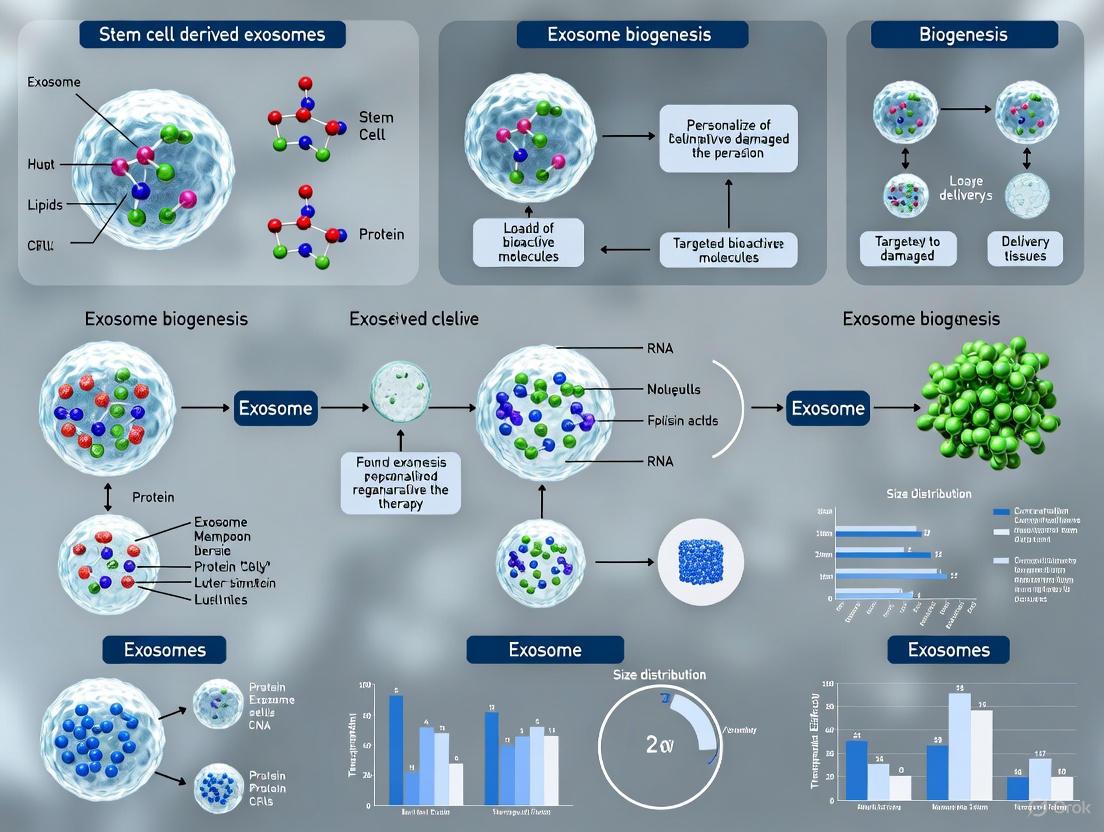
This article provides a comprehensive analysis of stem cell-derived exosomes as a next-generation, cell-free platform for personalized regenerative medicine.
Stem Cell-Derived Exosomes: Engineering a Personalized Future for Regenerative Therapy
Abstract
This article provides a comprehensive analysis of stem cell-derived exosomes as a next-generation, cell-free platform for personalized regenerative medicine. Tailored for researchers, scientists, and drug development professionals, it explores the foundational biology of exosomes from key sources like MSCs, iPSCs, and ESCs. It delves into advanced methodologies for isolation, engineering, and clinical application across diverse therapeutic areas, including wound healing, neurology, and orthopedics. The review critically addresses the major challenges in manufacturing, standardization, and regulatory pathways, while offering a comparative evaluation of different exosome platforms. Finally, it synthesizes the current clinical trial landscape and outlines future directions for translating these promising nanotherapeutics into clinically viable, personalized treatments.
The Biology of Stem Cell-Derived Exosomes: From Biogenesis to Therapeutic Potential
Exosomes are nanoscale, lipid bilayer-enclosed extracellular vesicles (EVs) that are naturally secreted by nearly all eukaryotic cell types and play a fundamental role in intercellular communication [1] [2]. With a typical diameter of 30 to 150 nanometers, these vesicles were once considered mere cellular waste disposal units but are now recognized as crucial mediators of both physiological homeostasis and pathological processes [1] [3]. Their biogenesis follows a distinct endosomal pathway, setting them apart from other extracellular vesicles which bud directly from the plasma membrane [4].
The significance of exosomes in regenerative medicine and personalized therapy stems from their unique composition and function. They carry a complex cargo of proteins, nucleic acids, lipids, and metabolites that reflects the biological state of their parent cells, making them dynamic indicators of cellular function and promising therapeutic agents [1] [5]. For researchers focusing on stem cell-derived exosomes, understanding their fundamental biology is paramount for developing effective, cell-free regenerative therapies that circumvent the challenges associated with whole-cell transplantation [6] [2].
Biogenesis of Exosomes
The formation of exosomes is a meticulously orchestrated intracellular process that involves four primary stages: endocytosis, endosomal maturation, cargo sorting, and secretion. This pathway ensures the production of vesicles capable of executing complex communicative functions [1] [7].
The Stepwise Biogenesis Pathway
Formation of Early Endosomes: The process initiates with the inward budding of the plasma membrane, a step facilitated by proteins like clathrin and caveolin-1, leading to the creation of early endosomes [1]. These endosomes serve as the initial sorting compartment, gathering cytoplasmic components and transmembrane proteins from the cell surface.
Maturation into Multivesicular Bodies (MVBs): Early endosomes undergo maturation to become late endosomes. During this phase, the endosomal membrane invaginates inward, forming numerous intraluminal vesicles (ILVs) within a larger structure known as a multivesicular body (MVB) [1] [7]. The formation of these ILVs is the critical step where the future exosomes are assembled.
Cargo Sorting into Intraluminal Vesicles: During ILV formation, specific biomolecules are selectively sorted into the vesicles. This process is governed by two primary mechanisms:
- The ESCRT-Dependent Pathway: The Endosomal Sorting Complex Required for Transport (ESCRT), comprising multiple protein complexes (ESCRT-0, -I, -II, -III, and VPS4), sequentially recruits and packages ubiquitinated proteins into the ILVs [1].
- ESCRT-Independent Pathways: Alternative mechanisms rely on lipids such as ceramide (generated by neutral sphingomyelinase 2, or nSMase2) and membrane proteins like tetraspanins (e.g., CD63, CD9, CD81) to drive the budding and sorting processes [1] [4].
Final Secretion: The ultimate step is the release of exosomes into the extracellular space. This occurs when MVBs are transported along the cytoskeleton and fuse with the plasma membrane, expelling their contained ILVs as exosomes [7] [3]. This fusion is regulated by Rab GTPase proteins and SNARE complexes [1]. The fate of MVBs is not uniform; some are destined for degradation via fusion with lysosomes, while others are routed for secretion, a decision that finely tunes exosome output [1] [7].
The following diagram illustrates this complex, multi-stage biogenesis pathway.
Exosome Cargo and Composition
The functional potency of exosomes is derived from their diverse molecular cargo, which is selectively packaged and reflects the state and origin of the parent cell. This cargo can dynamically reprogram recipient cells upon delivery.
Table 1: Core Cargo Components of Exosomes
| Cargo Category | Key Components | Functions & Examples |
|---|---|---|
| Proteins | Tetraspanins (CD9, CD63, CD81), ESCRT-related proteins (Alix, Tsg101), Heat shock proteins (Hsp70, Hsp90), Antigen-presenting molecules (MHC-I/II) [7] [3] | Serve as common exosome markers for identification (CD63, CD9); facilitate biogenesis (Alix, Tsg101); mediate immune responses [5]. |
| Nucleic Acids | mRNAs, microRNAs (miRNAs), long non-coding RNAs (lncRNAs), circular RNAs (circRNAs), genomic and mitochondrial DNA [1] [5] | Regulate gene expression in target cells; miRNAs can silence target mRNAs. DNA can reflect the genetic makeup of the parent cell, useful in diagnostics [5]. |
| Lipids | Cholesterol, sphingomyelin, ceramide, phosphatidylserine [1] [8] | Form the structural backbone of the vesicle membrane; ceramide is involved in ESCRT-independent biogenesis; aid in membrane stability and fusion [1]. |
The packaging of this cargo is a highly regulated process. Sorting mechanisms depend on specific sequence motifs in RNA molecules and post-translational modifications (e.g., ubiquitination) for proteins, which are recognized by machinery such as the ESCRT complexes [1] [5]. The resulting cargo profile is not static; it dynamically changes in response to the parent cell's metabolic state, environmental cues, and disease conditions, making exosomes sensitive biomarkers and tailored therapeutic messengers [1].
Exosomes as Intercellular Messengers
Exosomes facilitate communication between cells through local paracrine and distant endocrine-like signaling, fundamentally influencing the recipient cell's behavior and phenotype [5].
Mechanisms of Interaction with Target Cells
Exosomes employ three primary mechanisms to deliver their cargo:
- Ligand-Receptor Binding: Bioactive ligands on the exosome surface bind to receptors on the target cell membrane, triggering intracellular signaling cascades without full internalization of the vesicle [7].
- Direct Membrane Fusion: The exosome lipid bilayer fuses directly with the plasma membrane of the target cell, releasing the entire lumenal cargo directly into the cytoplasm [7].
- Cellular Uptake: The target cell internalizes the exosome via endocytosis, phagocytosis, or macropinocytosis. The exosome then fuses with the endosomal membrane to release its contents into the cytoplasm [7] [5].
Functional Roles in Intercellular Communication
The consequences of this cargo transfer are vast and context-dependent:
- Stem Cell and Regenerative Signaling: Mesenchymal stem cell (MSC)-derived exosomes have been shown to modulate immune responses, promote angiogenesis, and activate endogenous repair pathways in models of tissue injury, positioning them as key mediators of regeneration [6] [8] [2].
- Pathological Propagation: In disease contexts, exosomes can contribute to pathogenesis. For instance, tumor-derived exosomes can remodel the tumor microenvironment to promote metastasis, induce drug resistance, and facilitate immune evasion [1] [8].
- Crossing Biological Barriers: Their small size and biophysical properties allow exosomes to traverse formidable biological barriers, including the blood-brain barrier, making them particularly attractive for delivering therapeutics to the central nervous system [1] [3].
The following diagram summarizes the mechanisms of exosome-mediated communication between a donor cell (e.g., a stem cell) and a recipient cell.
Experimental Protocols for Exosome Research
For research and therapeutic development, robust and reproducible protocols for isolating and characterizing exosomes are essential. The following provides a core workflow.
Protocol: Isolation of Exosomes via Differential Ultracentrifugation
Differential ultracentrifugation remains the most widely used "gold standard" method for isolating exosomes from cell culture supernatants or biological fluids [7] [3].
Principle: This technique separates vesicles based on their size and density through a series of centrifugation steps with incrementally increasing centrifugal forces.
Reagents and Equipment:
- Cell culture supernatant or biological fluid (e.g., blood plasma, conditioned media)
- Phosphate-buffered saline (PBS)
- Ultracentrifuge with fixed-angle or swinging-bucket rotors
- Polycarbonate or polypropylene ultracentrifuge tubes
Procedure:
- Pre-Clearing: Centrifuge the sample at 300 × g for 10 minutes to pellet and remove live cells.
- Debris Removal: Transfer the supernatant to new tubes and centrifuge at 2,000 × g for 20 minutes to remove dead cells and large debris.
- Vesicle Enrichment: Transfer the supernatant again and centrifuge at 10,000 × g for 30 minutes to pellet larger microvesicles and apoptotic bodies.
- Exosome Pelletting: Carefully transfer the final supernatant to ultracentrifuge tubes. Ultracentrifuge at ≥100,000 × g for 70-120 minutes to pellet the exosomes.
- Washing (Optional): Resuspend the pellet in a large volume of PBS and repeat the ultracentrifugation step (≥100,000 × g, 70 minutes) to wash the exosome preparation.
- Resuspension: Finally, resuspend the purified exosome pellet in a small volume of PBS or storage buffer for downstream applications.
Notes: All steps should be performed at 4°C to preserve exosome integrity and prevent protein degradation [3]. The final pellet should be a translucent, off-white color.
Protocol: Characterization of Isolated Exosomes
Comprehensive characterization is required to confirm the identity, purity, and quantity of isolated exosomes, typically involving a combination of techniques [7] [3].
Table 2: Key Methods for Exosome Characterization
| Method | Purpose | Key Outputs & Indicators |
|---|---|---|
| Nanoparticle Tracking Analysis (NTA) | Determine the size distribution and concentration of particles in suspension. | Peak particle size between ~80-150 nm; confirms high particle concentration and absence of large aggregates [4] [3]. |
| Transmission Electron Microscopy (TEM) | Visualize the morphology and structure of exosomes. | Cup-shaped morphology under vacuum; clear, intact lipid bilayer; size conformity [7] [3]. |
| Western Blotting | Detect the presence of specific exosomal marker proteins and assess purity. | Positive for tetraspanins (CD63, CD81, CD9) and ESCRT-associated proteins (Alix, Tsg101). Absence of negative markers (e.g., calnexin) from cell debris [7]. |
The Scientist's Toolkit: Essential Research Reagents
Successful exosome research relies on a suite of essential reagents and tools for isolation, characterization, and functional analysis.
Table 3: Key Reagent Solutions for Exosome Research
| Reagent / Tool | Function | Application Notes |
|---|---|---|
| Antibody Panels (CD63, CD81, CD9) | Immunoaffinity capture and detection of exosomes via flow cytometry, Western blot, or SP-IRIS [4] [7]. | Critical for phenotyping and confirming exosomal identity. Multiplexing is recommended for robust characterization. |
| Size Exclusion Chromatography (SEC) Columns | High-purity isolation of exosomes from soluble proteins and other contaminants based on size [4]. | Provides superior particle-to-protein ratios compared to some precipitation kits, aligning with MISEV guidelines for purity [4]. |
| Polymer-Based Precipitation Kits | Rapid, low-force isolation of exosomes from complex biofluids by reducing solubility. | Useful for processing many samples quickly but may co-precipitate non-vesicular contaminants; purity should be verified [3]. |
| Nanoparticle Tracking Analyzer | Measure the size and concentration of exosomes in a prepared sample. | An essential tool for quantitative analysis; provides a particle size distribution profile and concentration (particles/mL) [4] [3]. |
| Lactadherin / Annexin V | Detect phosphatidylserine on the exosome surface, a marker often associated with uptake by recipient cells. | Useful for functional studies investigating exosome-cell interaction and internalization mechanisms. |
Stem cell-derived exosomes represent a groundbreaking cell-free therapeutic paradigm in regenerative medicine, offering a promising alternative to whole-cell therapies by overcoming critical challenges such as tumorigenicity, immunogenicity, and poor engraftment [2]. These natural nanoscale vesicles, typically 30-150 nm in diameter, facilitate intercellular communication by shuttling functional proteins, lipids, and nucleic acids from their parent cells to recipient cells [9] [10]. The therapeutic potential of exosomes hinges significantly on their cellular origin, with mesenchymal stem cells (MSCs), induced pluripotent stem cells (iPSCs), embryonic stem cells (ESCs), and induced mesenchymal stem cells (iMSCs) emerging as prominent platforms. Each source confers distinct biological cargoes, functional properties, and manufacturing considerations that dictate their suitability for specific therapeutic applications [9] [2]. Within the framework of personalized regenerative therapy research, selecting the optimal exosome source requires careful balancing of biological potency, manufacturing scalability, regulatory pathways, and therapeutic consistency.
Biological Properties and Therapeutic Mechanisms
Exosomes from different stem cell origins exhibit unique molecular signatures that directly influence their therapeutic mechanisms and regenerative potential:
MSC-Derived Exosomes: As the most translationally advanced platform, MSC-exosomes inherit the immunomodulatory, anti-inflammatory, and pro-regenerative functions of parent cells [11] [12]. They contain abundant cytokines (TGF-β, IL-10), growth factors (VEGF), and miRNAs that promote tissue repair, angiogenesis, and immune regulation through paracrine signaling [9]. Their membrane composition facilitates biological barrier penetration, including the blood-brain barrier, enabling diverse administration routes [11].
iPSC-Derived Exosomes: Leveraging the pluripotent nature of their parent cells, iPSC-exosomes carry transcription factors (OCT4, SOX2, NANOG) and regenerative cargo that demonstrate superior potency in certain contexts [9] [2]. Studies indicate they outperform MSC-exosomes in promoting corneal epithelial repair, sustaining fibroblast collagen production, and restoring proliferative capacity to aged stem cells [2]. Their virtually unlimited expansion capacity and patient-specific origin make them ideal for personalized therapeutic approaches [13] [2].
ESC-Derived Exosomes: Similar to iPSC-exosomes in their pluripotent cargo, ESC-exosomes share regenerative potential but face significant ethical concerns and regulatory restrictions that have limited research and clinical exploration [9] [2]. Their use remains comparatively scarce in the current scientific literature.
iMSC-Derived Exosomes: These exosomes combine the manufacturing advantages of iPSCs with the familiar mesenchymal phenotype of MSCs [2]. Generated by differentiating iPSCs into MSCs in vitro, this platform offers a renewable, consistent source that mitigates donor variability. Some studies suggest iMSC-exosomes may outperform primary MSC-exosomes in specific disease models like osteoarthritis [2].
Comparative Analysis of Exosome Platforms
Table 1: Comprehensive Comparison of Stem Cell Exosome Platforms
| Parameter | MSC-Exosomes | iPSC-Exosomes | ESC-Exosomes | iMSC-Exosomes |
|---|---|---|---|---|
| Cell Source Availability | Multiple tissues (bone marrow, umbilical cord, adipose) [14] | Reprogrammed somatic cells (e.g., PBMCs) [13] | Blastocyst inner cell mass [9] | iPSCs differentiated into MSCs [2] |
| Key Markers & Cargo | CD73, CD90, CD105; TGF-β, IL-10, VEGF [14] [9] | OCT4, SOX2, NANOG; pluripotency-associated miRNAs [9] | Pluripotency factors similar to iPSCs [9] | MSC surface markers with enhanced regenerative cargo [2] |
| Therapeutic Strengths | Immunomodulation, tissue repair, anti-fibrosis, angiogenesis [14] [12] | Enhanced regenerative potency, neuroprotection, epithelial repair [13] [2] | Broad differentiation potential, proliferative capacity [9] | Consistent quality, combats MSC donor variability, scalable production [2] |
| Scalability & Manufacturing | Moderate; limited by donor variability and senescence [15] [2] | High; unlimited expansion from master cell banks [9] [2] | High; but limited by ethical restrictions [9] | High; renewable source with standardized processes [2] |
| Clinical Translation Status | Most advanced (64 registered clinical trials) [11] | Early clinical trials (e.g., vitiligo, atopic dermatitis) [2] | Limited due to ethical concerns [9] | Preclinical stage [2] |
| Key Challenges | Donor-dependent variability, scalable production [15] [11] | Tumorigenicity risk assessment, complex manufacturing [2] | Ethical controversies, regulatory restrictions [9] [2] | Complex process development, regulatory pathway definition [2] |
Experimental Protocols for Exosome Production and Characterization
Biomanufacturing Workflow for MSC-Exosomes
A standardized 28-day biomanufacturing protocol established for MSC-exosomes demonstrates a scalable approach for clinical-grade production [15]:
Step 1: Cell Sourcing and Expansion
- Isolate human umbilical cord-derived MSCs (hUC-MSCs) from donated tissue with informed consent and ethical approval [15].
- Culture cells in RoosterNourish-MSC-CC medium under standard conditions (37°C, 5% CO₂) [15].
- Expand cells using a Hollow Fiber 3D bioreactor system for large-scale, consistent production, replacing traditional flask-based static cultures [15].
Step 2: Exosome Production and Harvesting
- Integrate the RoosterBio exosome-harvesting system with the bioreactor for continuous production [15].
- Maintain the culture system for 28 days, with regular monitoring to ensure cell viability and exosome secretion stability [15].
- Collect conditioned medium at multiple time points (e.g., days 7, 14, 21, 28) to verify subpopulation consistency throughout the production window [15].
Step 3: Exosome Purification and Concentration
- Clarify conditioned medium by centrifugation at 300 × g for 10 minutes to remove cells and debris [15] [9].
- Further clarify at 10,000 × g for 30 minutes to eliminate larger vesicles and organelles [9].
- Concentrate using tangential flow filtration (TFF) with appropriate molecular weight cut-off membranes [9].
- Apply size exclusion chromatography (SEC) for high-purity isolation, separating exosomes from soluble proteins and contaminants [9].
Step 4: Characterization and Quality Control
- Determine particle size and concentration using Nanoparticle Tracking Analysis (NTA); expect diameter range of 30-150 nm [15] [10].
- Confirm exosome identity by detecting surface markers (CD9, CD63, CD81) via western blot or flow cytometry [9] [10].
- Assess morphology by transmission electron microscopy (TEM) [15].
- Evaluate subpopulation consistency throughout the 28-day production period to ensure batch-to-batch reproducibility [15].
Diagram 1: MSC-Exosome Biomanufacturing Workflow. This diagram outlines the standardized 28-day protocol for scalable production of clinical-grade MSC-exosomes, from cell isolation through final quality control [15] [9].
Protocol for iPSC-Exosome Production and Functional Testing
For iPSC-derived exosomes with application in neural regeneration, the following protocol is recommended [13]:
Step 1: iPSC Generation and Characterization
- Isolate peripheral blood mononuclear cells (PBMCs) from healthy donors using Ficoll-Paque density gradient centrifugation [13].
- Reprogram PBMCs using Sendai virus vectors expressing human OCT4, SOX2, KLF4, and c-MYC at multiplicity of infection (MOI) of 20 [13].
- Culture emerging iPSC colonies on Vitronectin-N-coated plates in mTeSR Plus medium [13].
- Validate pluripotency through alkaline phosphatase staining and immunofluorescence for markers (NANOG, OCT4, SOX2, SSEA4) [13].
Step 2: Exosome Isolation and Characterization
- Culture iPSCs in exosome-depleted medium for 48-72 hours [13].
- Collect conditioned medium and isolate exosomes using sequential ultracentrifugation (2,000 × g for 30 minutes, 10,000 × g for 45 minutes, 100,000 × g for 2 hours) [9].
- Alternatively, use SEC for higher purity isolation [9].
- Characterize using NTA, TEM, and western blot for exosomal markers [13].
Step 3: Functional Assessment in Disease Models
- For peripheral nerve injury studies, use a rat sciatic nerve crush model [13].
- Locally inject iPSC-exosomes at injury site (dosage optimization required) [13].
- Assess functional recovery weekly using gait analysis, grip strength measurements, and pain response evaluation [13].
- Perform histological analyses at endpoint for axonal regeneration, myelination, and Schwann cell activation [13].
- Conduct RNA sequencing to identify activated pathways (e.g., PI3K-AKT, focal adhesion) [13].
Signaling Pathways and Molecular Mechanisms
Key Regulatory Pathways in Exosome-Mediated Regeneration
Stem cell exosomes exert their therapeutic effects through the delivery of bioactive molecules that modulate critical signaling pathways in recipient cells:
PI3K-AKT Pathway: iPSC-exosomes activate this survival pathway in Schwann cells, promoting proliferation and peripheral nerve regeneration after crush injury [13]. MSC-exosomes similarly activate PI3K-AKT to reduce granulosa cell apoptosis in premature ovarian failure models [14].
Immunomodulatory Pathways: MSC-exosomes carry TGF-β and IL-10 that suppress inflammatory responses and promote regulatory T-cell differentiation, creating a pro-regenerative microenvironment [9] [11].
Angiogenic Signaling: Exosomal miRNAs (e.g., miR-126) and VEGF activate endothelial cell proliferation and tube formation through multiple pathways, including SMAD6/BMP2 in salivary exosomes [10].
Anti-apoptotic Mechanisms: MSC-exosomes transfer miRNAs that inhibit PTEN/AKT/FOXO3a signaling, reducing cellular apoptosis in ovarian failure models [14].
Diagram 2: Exosome-Mediated Signaling Pathways. This diagram illustrates key molecular mechanisms through which stem cell exosomes activate regenerative processes in target cells [13] [14] [10].
The Scientist's Toolkit: Essential Research Reagents
Table 2: Key Research Reagents for Stem Cell Exosome Research
| Reagent/Category | Specific Examples | Function & Application |
|---|---|---|
| Cell Culture Media | RoosterNourish-MSC-CC [15], mTeSR Plus [13] | Specialized media for MSC and iPSC culture expansion and exosome production |
| Bioreactor Systems | Hollow Fiber 3D Bioreactor [15] | Enables scalable exosome production over extended periods (28-day culture) |
| Reprogramming Vectors | Sendai Virus Vectors (Oct3/4, Sox2, Klf4, c-Myc) [13] | Reprogram somatic cells (e.g., PBMCs) to iPSCs for exosome production |
| Isolation Kits | RoosterBio Exosome Harvesting System [15] | Integrated system for consistent exosome collection from bioreactors |
| Characterization Antibodies | Anti-CD9, CD63, CD81 [9] [10] | Confirm exosome identity via western blot, flow cytometry, immunoaffinity |
| Isolation Technologies | Ultracentrifugation, Size Exclusion Chromatography, Tangential Flow Filtration [9] | Purify and concentrate exosomes from conditioned medium |
| Characterization Instruments | Nanoparticle Tracking Analyzer, Transmission Electron Microscope [15] [10] | Determine exosome size, concentration, and morphology |
Application Notes for Personalized Regenerative Therapy
Source Selection Considerations
For personalized regenerative therapy research, stem cell exosome source selection should be guided by specific therapeutic objectives and practical constraints:
Patient-Specific Therapies: iPSC platforms offer optimal patient matching through reprogramming of autologous somatic cells, minimizing immune rejection concerns while providing unlimited starting material [13] [2].
Neurological Applications: Both iPSC- and NSC-derived exosomes show particular promise for neurodegenerative conditions due to their neuroprotective and neuroregenerative cargo [13] [16]. iPSC-exosomes enhance nerve regeneration through PI3K-AKT and focal adhesion pathways [13].
Immunomodulatory Applications: MSC-exosomes from umbilical cord or adipose sources provide potent immunomodulation for inflammatory conditions, supported by more extensive clinical experience [14] [11].
Scalability and Consistency: For off-the-shelf products, iMSC-exosomes offer a compelling balance between MSC-like biology and iPSC scalability, potentially overcoming donor variability issues that plague primary MSC sources [2].
Clinical Translation Considerations
Advancing exosome therapies toward clinical application requires addressing several critical challenges:
Manufacturing Standardization: Transition from laboratory-scale ultracentrifugation to scalable, GMP-compliant processes using bioreactors and closed-system purification technologies [15] [2].
Potency Assay Development: Establish standardized quantitative assays that correlate exosome characteristics with biological activity for reliable batch-to-batch consistency [2] [11].
Route of Administration Optimization: Consider disease-specific delivery routes, as demonstrated by superior efficacy of respiratory versus intravenous delivery for pulmonary conditions like silicosis [15] [17].
Biodistribution Profiling: Utilize tracking technologies such as isotopic labeling (89Zr) to understand tissue tropism and pharmacokinetics for dosage optimization [15] [17].
Stem cell-based therapies have long held promise for regenerative medicine but face significant translational challenges. Stem cell-derived exosomes (SC-Exos) have emerged as a potent cell-free alternative, inheriting therapeutic effects from their parental cells while overcoming critical limitations associated with living cell transplantation [18]. These nano-sized extracellular vesicles (30-150 nm) mediate intercellular communication by transferring bioactive molecules—proteins, lipids, and nucleic acids—to recipient cells, mimicking the regenerative, immunomodulatory, and anti-inflammatory effects of their parent stem cells [19] [20].
For researchers and drug development professionals, SC-Exos offer distinct advantages within three fundamental domains: reduced immunogenicity, minimized tumorigenic risk, and enhanced storage stability. This Application Note provides a structured comparison of these advantages alongside detailed protocols to support their integration into personalized regenerative therapy pipelines.
Comparative Advantages of SC-Exos
Table 1: Quantitative Comparison of Key Therapeutic Parameters between Stem Cell Therapy and Stem Cell-Derived Exosomes
| Parameter | Stem Cell Therapy | Stem Cell-Derived Exosomes | Key Supporting Evidence |
|---|---|---|---|
| Immunogenicity | High (Allogeneic cells express antigens) [21] | Low (Non-immunogenic, no immune response) [18] [21] | Evades immune rejection; suitable for allogeneic use. |
| Tumorigenicity | Present risk (Teratoma/Non-teratoma tumors) [21] | Minimal (No self-replication capacity) [18] [21] | Lacking nuclear material prevents uncontrolled proliferation. |
| Storage Stability | Challenging (Requires cryopreservation, sensitive to freeze-thaw) [21] | High (Stable at -80°C; lyophilization possible) [21] [22] | Long-term frozen storage; can be sterilized by filtration [21]. |
| Ethical Concerns | Associated with embryonic stem cells (hESCs) [19] | Minimal (Ethical issue-free) [18] [19] | iPSC and MSC exosomes avoid ethical controversies. |
| Delivery Routes | Limited (Mainly intravenous/invasive) | Multiple (IV, nebulized, lyophilized for inhalation) [21] | Enables non-invasive administration like inhalable vaccines [21]. |
Immunogenicity Profile
The low immunogenicity of SC-Exos is a primary advantage for allogeneic therapies. Unlike whole stem cells, which express major histocompatibility complexes (MHC) that can trigger immune rejection in recipients, exosomes possess non-immunogenic properties [18] [21]. This eliminates concerns about infusion toxicity and immune-mediated clearance, making "off-the-shelf" therapeutic products more feasible [18]. Their biocompatibility and low immunogenicity profile make them ideal carriers for drug delivery, minimizing the risk of adverse inflammatory reactions [23].
Tumorigenicity Risk
SC-Exos present a significantly lower tumorigenic risk compared to their parent cells. While stem cell transplantation carries a documented risk of teratoma and non-teratoma tumor formation [21], exosomes cannot self-replicate because they lack a nucleus and the necessary machinery for cell division [18] [21]. This inherent characteristic eliminates the risk of uncontrolled proliferation and tumor formation post-transplantation, addressing a major safety concern in stem cell-based therapeutic applications [18].
Storage and Handling
SC-Exos demonstrate superior stability during storage, simplifying logistics for clinical translation. They remain stable for long-term frozen storage at -80°C and can be lyophilized for storage at room temperature, unlike living cells that require complex and expensive cryopreservation protocols [21]. Furthermore, their small size allows terminal sterilization through filtration, a critical advantage for manufacturing sterile pharmaceutical products [21]. Systematic reviews confirm that storage at -80°C best preserves particle concentration, RNA content, morphology, and biological function [22].
Experimental Protocols
Protocol: Isolation of SC-Exos via Ultracentrifugation
Principle: Differential centrifugation separates exosomes from cell culture supernatant based on size and density [19]. This is the "gold standard" method for laboratory-scale exosome isolation.
Materials:
- Conditioned cell culture media
- Ultracentrifuge and fixed-angle rotor
- Polycarbonate bottles or thick-walled polypropylene tubes
- Phosphate-Buffered Saline (PBS), filtered (0.1 µm)
Procedure:
- Cell Culture and Media Collection: Culture stem cells to 80-90% confluence. Replace media with exosome-depleted serum. Collect conditioned media after 48 hours.
- Pre-Clearing Spins:
- Centrifuge at 300 × g for 10 min to pellet cells.
- Transfer supernatant and centrifuge at 2,000 × g for 20 min to remove dead cells.
- Transfer supernatant and centrifuge at 10,000 × g for 30 min to remove cell debris and large vesicles.
- Ultracentrifugation:
- Filter supernatant through a 0.22 µm filter.
- Transfer to ultracentrifuge tubes. Pellet exosomes at 100,000 × g, 4°C for 70 min.
- Discard supernatant gently. Resuspend pellet in a large volume of PBS.
- Repeat ultracentrifugation (100,000 × g, 4°C, 70 min) for a wash step.
- Resuspension: Discard supernatant completely. Resuspend the final exosome pellet in a small volume of PBS or storage buffer. Aliquot and store at -80°C.
Protocol: Evaluating Storage Stability of SC-Exos
Principle: Monitor changes in exosome integrity and cargo under different storage conditions to define optimal parameters.
Materials:
- Purified SC-Exos
- Cryovials
- Trehalose (cryoprotectant)
- Nanoparticle Tracking Analyzer (NTA)
- BCA Protein Assay Kit
- RNA extraction kit and Bioanalyzer
Procedure:
- Sample Preparation: Aliquot purified SC-Exos into three groups:
- Group A (Short-term): Store at 4°C for 1 week.
- Group B (-20°C): Store at -20°C for 1 month.
- Group C (-80°C): Store at -80°C for 1 month.
- Optional: Add trehalose (5-10% w/v) to a subset of Group C aliquots as a stabilizer [22].
- Post-Storage Analysis:
- Concentration & Size: Thaw samples and dilute in PBS. Analyze using NTA to determine particle concentration (particles/mL) and mean size (nm). Note aggregation if present.
- Morphology: Use transmission electron microscopy (TEM) to assess vesicle integrity, membrane deformation, or fusion events.
- Cargo Integrity:
- Proteins: Perform BCA assay for total protein yield. Use western blot for specific markers (CD63, CD81, TSG101).
- RNA: Extract total RNA and analyze via Bioanalyzer for RNA integrity number (RIN). Use qRT-PCR for specific miRNAs.
- Functional Assay: Perform a target cell uptake assay (e.g., using PKH67-labeled exosomes) or a relevant bioactivity assay (e.g., angiogenesis tube formation) to confirm retained function.
The Scientist's Toolkit
Table 2: Essential Research Reagent Solutions for SC-Exos Research
| Reagent/Material | Function | Application Notes |
|---|---|---|
| Ultracentrifuge | Pellet exosomes from solution via high g-force. | Essential for isolation; requires polycarbonate tubes. |
| Size-Exclusion Chromatography (SEC) Columns | Isolate exosomes based on hydrodynamic radius. | Maintains exosome integrity and function; better for downstream applications than ultracentrifugation [19]. |
| Nanoparticle Tracking Analyzer (NTA) | Measures particle concentration and size distribution. | Critical for quantitative and qualitative analysis of vesicle preparations. |
| CD63/CD81/CD9 Antibodies | Detect exosome surface markers via western blot/flow cytometry. | Confirms exosome identity and purity according to MISEV guidelines [19]. |
| Trehalose | Disaccharide cryoprotectant that stabilizes lipid bilayers. | Added before freezing to reduce vesicle aggregation and preserve integrity during storage [22]. |
| Tangential Flow Filtration (TFF) System | Concentrates and purifies exosomes from large volumes. | Enables scalable production for clinical applications [20]. |
Strategic Workflow and Decision Pathways
The following diagram illustrates the strategic decision-making pathway for leveraging the inherent advantages of SC-Exos in a research or therapeutic development project.
Stem cell-derived exosomes represent a paradigm shift in regenerative medicine, effectively addressing the critical challenges of immunogenicity, tumorigenicity, and storage stability that have long hindered cell-based therapies. The quantitative data and detailed protocols provided herein equip researchers and drug developers with the foundational knowledge to harness these advantages. Adopting SC-Exos can significantly streamline the path to clinical translation, enabling the creation of safer, more stable, and "off-the-shelf" products for personalized regenerative therapy. Future efforts should focus on standardizing isolation protocols, scaling up production under GMP conditions, and validating these findings in large-scale clinical trials.
Stem cell-derived exosomes (SC-Exos) represent a transformative advancement in regenerative medicine, shifting the therapeutic paradigm from a one-size-fits-all approach to highly personalized strategies. As nanoscale extracellular vesicles (30-150 nm in diameter), exosomes naturally mediate intercellular communication by transporting proteins, nucleic acids, lipids, and other bioactive molecules from their parent cells to recipient cells [20] [19]. Unlike direct stem cell transplantation, which faces challenges including immunogenicity, tumorigenicity, ethical concerns, and technical difficulties in storage and viability maintenance, SC-Exos offer reduced immunogenicity, decreased tumorigenicity risks, enhanced stability, improved biological barrier penetration, and fewer ethical considerations [20] [18].
The personalization potential of SC-Exos stems from their biogenetic properties: they inherit specific therapeutic signatures from their parental cells while offering unparalleled engineering flexibility. This enables researchers to develop tailored therapeutic solutions based on specific disease pathophysiology, patient profiles, and targeted tissue requirements. By leveraging advances in exosome engineering, biomarker profiling, and patient-specific stem cell sources, the field is moving toward truly personalized regenerative interventions with enhanced precision and efficacy [20] [18] [24].
Foundation: The Biological Basis for Personalization
Biogenesis and Molecular Composition of SC-Exos
Exosomes are formed through a sophisticated endosomal pathway that begins with the inward budding of the endosomal membrane, creating intraluminal vesicles (ILVs) within multivesicular bodies (MVBs). These MVBs subsequently fuse with the plasma membrane, releasing ILVs as exosomes into the extracellular space [20] [19]. This biogenesis pathway enables precise loading of specific biomolecules, making exosomes natural carriers of biological information.
The molecular composition of SC-Exos varies significantly based on their cellular origin and physiological conditions, comprising:
- Proteins: Tetraspanins (CD9, CD63, CD81), heat shock proteins, ESCRT machinery components, cytokines, and membrane transporters [18] [19]
- Nucleic Acids: microRNAs (miRNAs), messenger RNAs (mRNAs), and other non-coding RNAs that can modulate gene expression in recipient cells [18] [25]
- Lipids: Cholesterol, ceramide, and sphingolipids that contribute to membrane stability and functionality [18]
This diverse cargo composition can be harnessed for personalized approaches by selecting specific parent cell types and engineering their molecular content to target particular pathological processes [20] [24].
Different stem cell sources offer distinct advantages for personalized exosome therapies, each with unique molecular profiles and therapeutic properties. The table below provides a comprehensive comparison of the three primary SC-Exos sources:
Table 1: Comparative Analysis of Stem Cell Sources for Exosome Production
| Source Cell Type | Key Molecular Markers/Cargo | Advantages for Personalization | Limitations & Considerations |
|---|---|---|---|
| Human Induced Pluripotent Stem Cells (hiPSCs) | Pluripotency factors (OCT4, SOX2, NANOG) [19] [9] | • Enables patient-specific autologous therapies• Unlimited expansion potential• Free from ethical concerns• Standardized "off-the-shelf" products possible [19] | • Requires extensive reprogramming and characterization• Potential genomic instability needs monitoring [19] |
| Human Mesenchymal Stem Cells (hMSCs) | Anti-inflammatory molecules (TGF-β, IL-10), pro-angiogenic factors (VEGF) [19] | • Readily available from multiple tissues (bone marrow, adipose, umbilical cord)• Strong immunomodulatory properties• Enhanced tissue repair capabilities• Proven homing ability to injury sites [19] [24] | • Donor age and health status affect exosome quality• Tissue source influences cargo composition [24] |
| Human Embryonic Stem Cells (hESCs) | Pluripotency factors (OCT4, SOX2, NANOG) [19] [25] | • Consistent pluripotent cargo profile• Enhanced regenerative potential demonstrated in 3D cultures [25] | • Significant ethical controversies• Limited availability due to regulatory restrictions [19] [9] |
The selection of an appropriate exosome source represents the first critical decision point in developing personalized SC-Exos therapies, with each option offering distinct advantages for specific clinical scenarios and patient requirements.
Core Personalization Strategies: From Source to Application
Source Selection and Preconditioning Optimization
Strategic selection and preconditioning of parent stem cells significantly influence exosome yield, cargo composition, and therapeutic efficacy—foundational elements for personalization. Key preconditioning parameters include:
- Biochemical Stimulation: Cytokine exposure (IFN-γ, TNF-α), growth factors (BMP-2), or pharmacological agents (rapamycin) can enhance production and modify cargo [18] [24]
- Oxygen Tension: Hypoxic preconditioning upregulates pro-angiogenic factors in MSC-derived exosomes, improving neovascularization capacity [24]
- 3D Culture Systems: Compared to 2D culture, 3D hESC spheroids produce exosomes with enhanced therapeutic potential, as demonstrated in liver fibrosis models [25]
- Mechanical Stimulation: Shear stress application modifies exosome release and content profiles [18]
Table 2: Preconditioning Strategies for Enhancing SC-Exos Therapeutic Properties
| Preconditioning Method | Experimental Conditions | Impact on SC-Exos Properties | Personalization Application |
|---|---|---|---|
| Hypoxia | 1-5% O₂ for 24-72 hours [24] | • Upregulates pro-angiogenic factors• Enhances tissue repair capabilities in fracture models [24] | Tailoring for ischemic conditions or enhanced vascularization |
| 3D Culture Systems | Ultralow attachment plates for spheroid formation [25] | • Enriches specific miRNAs (e.g., miR-6766-3p in 3D-hESC-Exos)• Enhances in vivo targeting and therapeutic efficacy [25] | Improving organ-specific targeting and regenerative potential |
| Cytokine Priming | IFN-γ (25-50 ng/mL) or TNF-α (10-20 ng/mL) for 48 hours [18] | • Modulates immunomodulatory cargo• Enhances anti-inflammatory properties [18] | Customizing for specific inflammatory environments |
Engineering and Modification Techniques for Precision Targeting
Engineering approaches enable precise modification of SC-Exos to enhance their targeting specificity, therapeutic potency, and pharmacokinetic properties—cornerstones of the personalization paradigm. The following diagram illustrates the primary engineering strategies:
Surface Engineering Techniques:
- Cellular-Level Modification: Parent cells are engineered to express targeting ligands on their surface, which are subsequently incorporated into exosome membranes [24]
- Post-Isolation Modification: Isolated exosomes are directly modified using click chemistry or other bioconjugation methods to attach targeting moieties such as peptides, antibodies, or receptor ligands [20] [24]
- Peptide Display: Adhesive stem cell-derived exosomes have been engineered with specific peptide linkers to conjugate therapeutic molecules, demonstrating enhanced anti-inflammatory and tissue regenerative effects [24]
Cargo Loading Methods:
- Active Loading: Techniques including electroporation, sonication, or extrusion enhance incorporation of therapeutic agents into isolated exosomes [24]
- Passive Loading: Incubation of exosomes with desired cargo (drugs, nucleic acids) allows diffusion-based incorporation [24]
- Genetic Modification: Transfection of donor cells with genes encoding therapeutic proteins or RNAs produces exosomes pre-loaded with specific therapeutic agents [18] [24]
Administration Route and Dosage Personalization
The therapeutic efficacy of SC-Exos is significantly influenced by administration route and dosage, requiring careful personalization based on target tissue, disease pathophysiology, and patient-specific factors. Research indicates that different administration routes significantly impact biodistribution and therapeutic outcomes [24]:
Table 3: Administration Routes and Dosage Considerations for SC-Exos
| Administration Route | Therapeutic Considerations | Recommended Dosage Ranges | Personalization Applications |
|---|---|---|---|
| Intravenous (Systemic) | • Widespread distribution• Rapid clearance by liver/spleen• Potential off-target accumulation [24] | • 10-100 μg protein in mouse models [24]• Specific effective doses vary by condition | Conditions requiring systemic effects (e.g., multiple inflammatory foci) |
| Local Injection | • Enhanced target site concentration• Reduced systemic exposure• Direct tissue integration [26] [24] | • 200 μg/mL for wound healing [24]• 10 μg/100 μL for perianal fistulas [24] | Focal pathologies (joint, skin, neural injection sites) |
| Intranasal | • Bypasses blood-brain barrier• Direct CNS delivery [24] | • 4×10⁸ particles in saline (1 mL) twice weekly [24] | Neurological disorders (Alzheimer's, Parkinson's) |
| Biomaterial-Assisted Delivery | • Enhanced retention at target site• Sustained release kinetics• Protection from degradation [20] | • Dose-dependent on scaffold properties• Requires optimization for each material | Tissue engineering applications, chronic wounds |
Dosage optimization represents a critical personalization parameter, as studies demonstrate non-linear dose-response relationships. For example, in traumatic brain injury models, 100 μg exosomes per rat demonstrated superior efficacy compared to both lower (50 μg) and higher (200 μg) doses [24].
Application Notes & Experimental Protocols
Protocol 1: Isolation and Characterization of SC-Exos for Personalized Applications
Objective: To isolate and characterize high-purity exosomes from stem cell conditioned media for downstream therapeutic applications and engineering approaches.
Materials & Reagents:
- Stem cell conditioned media (48-72 hour collection)
- Ultracentrifugation equipment (Optima XPN-80 or equivalent)
- Size Exclusion Chromatography columns (qEVoriginal or equivalent)
- Phosphate Buffered Saline (PBS), filtered (0.22 μm)
- Transmission Electron Microscope
- Nanoparticle Tracking Analysis system (NanoSight NS300 or equivalent)
- Western blot equipment and antibodies (CD9, CD63, CD81, TSG101)
Procedure:
- Conditioned Media Collection:
- Culture stem cells to 70-80% confluence in appropriate medium
- Replace with exosome-depleted serum medium
- Collect conditioned media after 48 hours
- Perform preliminary centrifugation at 300 × g for 10 minutes to remove cells
- Centrifuge at 2,000 × g for 20 minutes to remove dead cells and debris
- Centrifuge at 10,000 × g for 30 minutes to remove larger vesicles [19]
Exosome Isolation:
- Ultracentrifugation Method:
- Size Exclusion Chromatography Alternative:
Characterization:
- Nanoparticle Tracking Analysis: Dilute samples 1:100-1:1000 in PBS to obtain 20-100 particles per frame. Measure size distribution and concentration [19] [25]
- Transmission Electron Microscopy: Apply 5 μL of exosomes to Formvar-carbon coated grids. Negative stain with 2% uranyl acetate. Image at 80 kV [25]
- Western Blotting: Confirm presence of exosomal markers (CD9, CD63, CD81) and absence of negative markers (calnexin) [19] [25]
- Flow Cytometry: Confirm stem cell origin using specific markers (SSEA4 for hESC-derived exosomes) [25]
Quality Control Parameters:
- Particle size: 30-150 nm diameter
- Protein concentration: 1-5 μg/μL (Bradford assay)
- Purity ratio: Particle-to-protein ratio >3×10¹⁰ particles/μg
- Sterility: Negative bacterial/fungal culture
Protocol 2: Engineering SC-Exos for Enhanced Liver Fibrosis Targeting
Objective: To engineer 3D hESC-derived exosomes enriched with miR-6766-3p for targeted therapy of liver fibrosis, based on demonstrated efficacy in mouse models [25].
Materials & Reagents:
- Human embryonic stem cells (H9 or equivalent)
- Ultra-low attachment plates for 3D spheroid formation
- miR-6766-3p mimic or expression vector
- Lipofectamine 3000 or electroporation system
- TGF-β-activated LX2 cells (hepatic stellate cell line)
- CCl₄-induced liver fibrosis mouse model
- PKH26 fluorescent dye for tracking
Procedure:
- 3D hESC Culture and Exosome Production:
- Culture hESCs in ultra-low attachment plates to form spheroids (100-200 μm diameter)
- Maintain in mTeSR1 medium with daily medium changes
- Collect conditioned media from 5-day-old spheroids
- Iserve exosomes using sequential centrifugation and SEC as in Protocol 1 [25]
miR-6766-3p Enrichment:
- Transfect hESCs with miR-6766-3p mimic using lipofection
- Alternatively, use lentiviral vectors for stable miR-6766-3p expression
- Confirm enrichment via qRT-PCR and miRNA array analysis [25]
In Vitro Functional Validation:
- Activate LX2 cells with TGF-β (5 ng/mL) for 24 hours
- Treat with 3D-hESC-Exosomes (50 μg/mL) for 48 hours
- Assess profibrogenic markers (α-SMA, collagen I) via Western blot
- Evaluate proliferation and migration capacity [25]
In Vivo Tracking and Efficacy:
- Induce liver fibrosis in mice using CCl₄ (0.5 μL/g, twice weekly for 6 weeks)
- Label exosomes with PKH26 according to manufacturer's protocol
- Administer via tail vein injection (100 μg exosomes in 100 μL PBS)
- Monitor accumulation using TPEF imaging
- Sacrifice at predetermined endpoints for histological analysis [25]
Mechanistic Investigation:
- Perform dual luciferase reporter assay to confirm TGFβRII as direct target of miR-6766-3p
- Analyze SMAD signaling pathway (phosphorylated SMAD2/3 levels) via Western blot
- Assess downstream fibrogenic gene expression [25]
Table 4: Essential Research Reagents for SC-Exos Personalization Studies
| Reagent/Resource | Function/Application | Specific Examples & Considerations |
|---|---|---|
| Stem Cell Sources | Parent cells for exosome production | • hiPSCs: Patient-specific autologous applications• hMSCs: Bone marrow, adipose tissue, umbilical cord sources• hESCs: H1, H9 lines (with ethical considerations) [19] [9] |
| Isolation Kits | Exosome purification from conditioned media | • Ultracentrifugation: Gold standard but time-consuming• Size Exclusion Chromatography: qEVcolumns preserve functionality• Precipitation kits: Quick but potential impurity co-precipitation [19] [24] |
| Characterization Tools | Quality control and validation | • Nanoparticle Tracking: NanoSight for size distribution• TEM: Morphological confirmation• Western Blot: Marker confirmation (CD9, CD63, CD81)• RNA Sequencing: Cargo profiling [19] [25] |
| Engineering Tools | Modification for enhanced targeting/function | • Electroporation: Cargo loading• Click chemistry: Surface modification• Lentiviral vectors: Genetic modification of parent cells [20] [24] |
| Animal Models | In vivo efficacy and biodistribution | • CCl₄-induced liver fibrosis [25]• Traumatic brain injury models [24]• Myocardial infarction models [20] |
Pathway Analysis: Molecular Mechanisms of Personalized SC-Exos Action
The therapeutic efficacy of personalized SC-Exos approaches derives from their ability to modulate specific molecular pathways in target cells. The following diagram illustrates the confirmed mechanistic pathway for 3D-hESC-Exosomes in liver fibrosis, demonstrating the precision of personalized exosome approaches:
This validated mechanism demonstrates how specific molecular components within engineered SC-Exos can precisely target pathological signaling pathways. Similar approaches can be developed for other disease contexts by identifying key pathological pathways and incorporating appropriate therapeutic cargo.
The personalization paradigm for SC-Exos represents a fundamental shift in regenerative medicine strategy, moving from broad therapeutic approaches to precisely tailored interventions. By leveraging specific stem cell sources, strategic preconditioning, precision engineering, and optimized delivery parameters, researchers can now design exosome-based therapies with enhanced specificity and efficacy for individual patient profiles and disease states.
The future of personalized SC-Exos therapies will likely focus on several key areas:
- Multi-omics Integration: Combining transcriptomic, proteomic, and lipidomic profiling to design patient-specific exosome cocktails
- Biomaterial Synergy: Developing advanced biomaterial scaffolds for spatially and temporally controlled exosome delivery
- Manufacturing Innovation: Scaling personalized production through bioreactor systems and standardized quality control measures
- Clinical Translation: Addressing regulatory challenges for personalized biologics through rigorous clinical trial designs
As research continues to elucidate the sophisticated mechanisms of SC-Exos action and engineering capabilities advance, the potential for truly personalized regenerative therapies becomes increasingly attainable. The paradigm presented herein provides a framework for developing these next-generation therapeutic strategies, offering promising avenues for addressing previously untreatable conditions through precise, personalized regenerative interventions.
From Lab to Clinic: Production, Engineering, and Therapeutic Applications
The transition of stem cell-derived exosome research from bench to bedside is critically dependent on the development of robust, scalable isolation techniques that preserve the integrity and biological function of these extracellular vesicles (EVs). Exosomes, particularly those derived from mesenchymal stem cells (MSCs), human induced pluripotent stem cells (hiPSCs), and human embryonic stem cells (hESCs), hold immense promise for personalized regenerative therapies due to their role in intercellular communication, immunomodulation, and tissue repair [19] [27]. However, the choice of isolation methodology significantly impacts exosome yield, purity, and functionality, thereby influencing therapeutic efficacy. This application note provides a detailed comparative analysis of three key isolation techniques—Ultracentrifugation (UC), Tangential Flow Filtration (TFF), and Size Exclusion Chromatography (SEC)—framed within the context of scalable production for regenerative medicine research and development.
Comparative Analysis of Isolation Techniques
The selection of an isolation method is a primary determinant in the success of downstream experimental and therapeutic applications. The table below summarizes the key characteristics of UC, TFF, and SEC for isolating stem cell-derived exosomes.
Table 1: Key Characteristics of Ultracentrifugation, Tangential Flow Filtration, and Size Exclusion Chromatography
| Characteristic | Ultracentrifugation (UC) | Tangential Flow Filtration (TFF) | Size Exclusion Chromatography (SEC) |
|---|---|---|---|
| Principle | Separation based on particle size and density using high gravitational forces [19] | Size-based separation using cross-flow filtration parallel to a membrane [28] [29] | Size-based separation via porous resin beads; larger particles elute first [19] [27] |
| Typical Yield | Low to moderate; significant particle loss [28] [30] | High; retains up to 23-fold more particles than UC [29] | Moderate; can be coupled with TFF for pre-concentration [29] |
| Purity | Low to moderate; co-isolation of protein contaminants and lipoprotein particles is common [19] [28] | Moderate; requires subsequent SEC for high purity [31] | High; effective separation from soluble proteins [19] [29] |
| Functional Integrity | Risk of damage, aggregation, and structural disruption due to high g-forces [28] | High; gentle process preserves integrity and biological activity [29] [31] | High; gentle process maintains native structure and function [19] [29] |
| Scalability | Poor; limited by ultracentrifuge rotor capacity [28] [29] | Excellent; easily scalable from milliliters to hundreds of liters [28] [32] | Good; scalable with column size, but large volumes can be time-consuming [29] |
| Processing Time | Long (typically 4-8 hours) [27] [29] | Moderate and efficient [29] | Fast (can be < 30 minutes for a run) [29] |
| Cost & Equipment | High equipment cost, low consumable cost [27] | High initial setup cost [27] | Moderate cost for columns and resins [19] |
The data demonstrates that while UC is considered the historical "gold standard," it is outperformed by TFF and SEC in critical areas such as yield, scalability, and preservation of exosome integrity. A direct comparative study found that TFF isolated significantly higher yields of small EVs (sEVs) than UC while maintaining consistent particle size and morphology [28]. Furthermore, the combination of TFF for concentration and volume reduction, followed by SEC for purification (TFF-SEC), has emerged as a superior workflow for producing high-quality exosomes suitable for therapeutic development [29] [32] [31].
Table 2: Quantitative Comparison of UC-SEC vs. TFF-SEC from Direct Studies
| Performance Metric | UC-SEC | TFF-SEC | Significance/Context |
|---|---|---|---|
| Particle Yield | Baseline | Up to 23-fold higher [29] | Enables more efficient use of starting material [30] |
| Particle Size | ~200 nm [28] | ~200 nm [28] | Both methods isolate consistent sEV populations [28] [29] |
| Protein Contamination | Lower particle-to-protein ratio | Higher particle-to-protein ratio, but SEC polishing effectively removes contaminants [31] | Purity is comparable post-SEC [29] |
| Morphology | Cup-shaped particles [28] | Cup-shaped particles [28] [29] | Integrity is preserved in TFF isolates [29] |
| Time Efficiency | Less efficient, multi-step process | More efficient and quicker processing [28] [29] | TFF-SEC workflow reduces hands-on time [29] |
Experimental Protocols
Protocol 1: Ultracentrifugation for Exosome Isolation
This protocol is adapted for isolating exosomes from stem cell-conditioned media [19] [28].
Materials:
- Centrifuges: Beckman Coulter Allegra X-15R (or equivalent) and Optima XPN-80 Ultracentrifuge (or equivalent)
- Rotor: Fixed-angle rotor (e.g., Type 50.2 Ti)
- Ultracentrifuge tubes (e.g., Polycarbonate or PET bottles)
- Phosphate-Buffered Saline (PBS), ice-cold
- 0.22 µm Pore Size Filter
Procedure:
- Pre-conditioning and Collection: Culture stem cells (e.g., MSCs, hiPSCs) in media supplemented with EV-depleted serum for 48 hours. Collect the cell culture conditioned media (CCM).
- Clarification: Centrifuge the CCM at 500 × g for 10 minutes at 4°C to remove detached cells.
- Filtration: Transfer the supernatant and filter it through a 0.22 µm filter to remove larger particles and debris.
- First Ultracentrifugation: Transfer the clarified supernatant to ultracentrifuge tubes. Centrifuge at 100,000 × g for 120 minutes at 4°C.
- Pellet Resuspension: Carefully decant the supernatant. Resuspend the crude exosome pellet in a small volume (e.g., 1 mL) of ice-cold PBS.
- Second Ultracentrifugation (Wash Step - Optional but Recommended): Transfer the resuspended exosomes to fresh ultracentrifuge tubes. Top up with PBS and centrifuge again at 100,000 × g for 120 minutes at 4°C.
- Final Resuspension: Decant the supernatant and resuspend the final, purified exosome pellet in an appropriate buffer (e.g., PBS or storage buffer with trehalose) for downstream applications. Aliquot and store at -80°C.
Protocol 2: TFF-SEC Workflow for Scalable Exosome Production
This protocol describes a scalable method for isolating exosomes from large volumes of conditioned media, combining the concentration power of TFF with the high purity of SEC [28] [29] [32].
Materials:
- TFF System (e.g., from Repligen or Cytiva) with hollow fiber filters (500 kDa or 0.05 µm pore size)
- Peristaltic pump and tubing
- Size Exclusion Chromatography columns (e.g., qEV columns from Izon Science or custom-packed Sepharose CL-6B columns)
- Fraction collector (recommended)
- PBS, pH 7.4
Procedure: Part A: Concentration via Tangential Flow Filtration
- Clarification: Begin with clarified and 0.22 µm-filtered CCM, as described in steps 1-3 of the UC protocol.
- TFF Setup: Assemble the TFF system with a filter appropriate for exosome retention (e.g., 500 kDa MWCO or 0.05 µm pore size). Prime the system with PBS.
- Concentration: Circulate the clarified CCM through the TFF system. The permeate (waste) will contain small molecules and proteins, while the retentate is continuously concentrated.
- Diafiltration: Once the initial volume is significantly reduced, initiate diafiltration by continuously adding PBS to the retentate reservoir at the same rate as permeate removal. This step exchanges the buffer and removes soluble contaminants. Continue for 5-10 volume turnovers.
- Final Retentate Recovery: Recover the final concentrated retentate (typically 10-50 mL). This material contains concentrated exosomes.
Part B: Purification via Size Exclusion Chromatography
- Column Equilibration: Equilibrate the SEC column with 2-3 bed volumes of PBS.
- Sample Application: Apply a defined volume of the TFF retentate (typically 0.5-1 mL or 5% of the column bed volume) to the top of the SEC column.
- Elution and Fraction Collection: Elute the sample with PBS and collect sequential fractions (e.g., 1 mL fractions for a 10 mL column). Exosomes typically elute in the early-to-mid fractions (void volume), while soluble proteins and other contaminants elute later.
- Pooling and Storage: Identify the exosome-rich fractions using nanoparticle tracking analysis (NTA) or similar. Pool these high-purity fractions. Aliquot and store at -80°C.
Diagram 1: TFF-SEC Workflow. This diagram outlines the key steps for scalable exosome isolation, from media clarification to final analysis.
The Scientist's Toolkit: Essential Research Reagents and Materials
Successful isolation and characterization of stem cell-derived exosomes require specific reagents and instrumentation. The following table details key solutions for a standard TFF-SEC workflow.
Table 3: Key Research Reagent Solutions for Exosome Isolation and Characterization
| Item | Function/Application | Example Products/Notes |
|---|---|---|
| EV-Depleted FBS | Serum supplement for cell culture that minimizes confounding bovine EVs in conditioned media. | FBS processed via ultracentrifugation (e.g., 100,000 × g overnight) or commercial EV-depleted FBS. |
| Human Platelet Lysate (hPL) | Xeno-free supplement for clinical-grade MSC culture, can influence exosome yield and profile [30]. | Commercial GMP-grade hPL. |
| TFF Hollow Fiber Cartridge | The core component for concentrating and diafiltering large volumes of conditioned media. | 500 kDa MWCO or 0.05 µm PES membranes (e.g., from Repligen). |
| SEC Columns | For high-purity separation of exosomes from soluble proteins and other contaminants post-TFF. | qEV columns (Izon Science) or lab-packed Sepharose CL-6B/CL-4B columns. |
| Nanoparticle Tracking Analyzer | Instrument for determining exosome particle size distribution and concentration. | ZetaView (Particle Metrix) or NanoSight (Malvern Panalytical). |
| Exosome Storage Buffer | Buffer to preserve exosome integrity and functionality during long-term storage. | Typically contains cryoprotectants like trehalose and buffers like HEPES [31]. |
The evolution of exosome isolation techniques from UC towards more sophisticated, integrated approaches like TFF-SEC marks a critical advancement in the field of regenerative medicine. For researchers and drug development professionals aiming to translate stem cell-derived exosome therapies into clinical reality, the scalability, yield, and preservation of biological function offered by the TFF-SEC workflow make it a compelling choice. This methodology directly addresses the limitations of UC, facilitating the production of high-quality, therapeutically relevant exosomes necessary for robust preclinical studies and eventual clinical manufacturing. Future efforts will focus on further standardizing these protocols, enhancing automation, and establishing rigorous quality control metrics to ensure batch-to-batch consistency, thereby accelerating the development of personalized exosome-based regenerative therapies.
Stem cell-derived exosomes (SC-Exos) have emerged as a transformative platform for personalized regenerative therapy, offering distinct advantages over whole-cell transplants, including reduced immunogenicity, minimized tumorigenicity risks, and enhanced ability to cross biological barriers [20]. These nanoscale extracellular vesicles (30-150 nm) serve as natural carriers of bioactive molecules, mediating intercellular communication by transporting proteins, nucleic acids, and lipids between cells [33]. For therapeutic applications, engineering SC-Exos involves two fundamental strategies: loading therapeutic cargo into the vesicle lumen and modifying the surface to achieve targeted delivery. These engineered exosomes can be derived from various stem cell sources, including mesenchymal stem cells (MSCs), induced pluripotent stem cells (iPSCs), and embryonic stem cells, each imparting unique biological properties that can be harnessed for specific regenerative applications [34]. The functionalization of SC-Exos through advanced engineering approaches enables precise control over their therapeutic payload and tissue targeting capabilities, positioning them as powerful tools in the evolving landscape of precision medicine.
Cargo Loading Strategies for Therapeutic Functionalization
Loading therapeutic cargo into exosomes is accomplished through two primary approaches: pre-isolation (endogenous) methods that modify parent cells before exosome secretion, and post-isolation (exogenous) methods that directly load purified exosomes [35] [36]. Each strategy offers distinct advantages and limitations that must be considered based on the therapeutic application, cargo type, and scalability requirements.
Table 1: Comparison of Cargo Loading Strategies for SC-Exos
| Loading Method | Mechanism | Optimal Cargo Types | Loading Efficiency | Key Advantages | Major Limitations |
|---|---|---|---|---|---|
| Co-incubation (Passive) | Passive diffusion across concentration gradient | Lipophilic small molecules (curcumin, doxorubicin, paclitaxel) [36] | Low to moderate | Simple, preserves exosome integrity, no special equipment | Limited to hydrophobic compounds, low efficiency for hydrophilic cargo |
| Electroporation | Electrical pulses create transient membrane pores | Nucleic acids (siRNA, miRNA, DNA ≤750 bp) [36], charged molecules | Variable (risk of cargo aggregation) | Versatile for charged molecules, relatively standardized protocol | Potential membrane damage, cargo aggregation overestimates efficiency |
| Sonication | Ultrasound-induced membrane pores | Chemotherapeutics (doxorubicin, paclitaxel), proteins, siRNA [35] [36] | High | High loading efficiency, applicable to various cargo types | Potential damage to membrane proteins (CD9, CD63 reduction) |
| Freeze-Thaw Cycling | Membrane disruption through freezing and thawing | Proteins, small molecules [36] | Moderate | Simple protocol, minimal equipment | Potential exosome aggregation, inconsistent loading |
| Saponin-Assisted | Cholesterol complexation creates membrane pores | Small molecules, proteins [35] | High | Enhanced membrane permeability, efficient for various cargo | Surfactant removal required, potential membrane integrity effects |
| Parent Cell Genetic Engineering (Endogenous) | Genetic modification of parent cells to secrete engineered exosomes | Overexpressed proteins, nucleic acids [35] | Varies with transfection efficiency | Natural loading process, no post-isolation damage | Technical complexity, lower yield, extensive optimization required |
Experimental Protocol: Sonication-Mediated Drug Loading
Objective: To load doxorubicin into MSC-derived exosomes using sonication for targeted breast cancer therapy [36].
Materials:
- MSC-derived exosomes (100-500 μg protein)
- Doxorubicin hydrochloride (2 mg/mL in DMSO)
- Phosphate Buffered Saline (PBS), pH 7.4
- Probe sonicator with microtip
- Ultracentrifugation equipment
- Size Exclusion Chromatography (SEC) columns
- BCA Protein Assay Kit
- NanoSight NS300 for particle characterization
Procedure:
- Exosome Isolation: Isolate MSC-derived exosomes from conditioned media using sequential ultracentrifugation: 300 × g for 10 min (cell removal), 2,000 × g for 20 min (debris removal), 10,000 × g for 30 min (large vesicles), and 100,000 × g for 70 min (exosome pelleting) [37].
- Resuspension: Resuspend exosome pellet in PBS to a concentration of 2 mg/mL protein (determined by BCA assay).
- Drug-Exosome Mixture: Mix exosomes with doxorubicin at 1:10 ratio (w/w, exosome protein:drug) in a total volume of 1 mL PBS.
- Sonication: Sonicate the mixture using a probe sonicator with microtip at 20-40 W power for 3-6 cycles (30s pulse, 30s rest) in an ice bath to prevent overheating.
- Incubation: Incubate the sonicated mixture for 1 hour at 37°C to allow membrane resealing.
- Purification: Remove unencapsulated doxorubicin using size exclusion chromatography (Sephadex G-25 column) with PBS as eluent.
- Characterization: Analyze loaded exosomes for particle size (NanoSight), drug encapsulation efficiency (HPLC), and surface marker preservation (Western blot for CD63, CD81) [37].
Validation: Determine encapsulation efficiency by measuring doxorubicin fluorescence (Ex/Em: 470/585 nm) before and after purification. Calculate loading efficiency as (amount of encapsulated drug/total initial drug) × 100%. Expected loading efficiency: 15-25% [36].
Surface Modification Strategies for Targeted Delivery
Surface engineering of SC-Exos enhances their targeting specificity and therapeutic efficacy by enabling preferential accumulation at disease sites. Modification techniques can be categorized into genetic engineering of parent cells, chemical conjugation, and hybrid approaches that combine multiple strategies.
Table 2: Surface Modification Techniques for SC-Exos
| Modification Strategy | Mechanism | Ligand Examples | Targeting Applications | Efficiency | Technical Considerations |
|---|---|---|---|---|---|
| Genetic Engineering (Pre-isolation) | Transfection of parent cells with targeting ligands fused to exosomal membrane proteins | Peptides (RGD, iRGD), protein fragments, single-chain variable fragments (scFvs) [33] | Tissue-specific targeting (tumors, inflamed tissues) | Moderate to high (depends on transfection efficiency) | Requires extensive optimization, may alter exosome biogenesis |
| Chemical Conjugation (Post-isolation) | Covalent linkage via click chemistry, NHS-ester, or maleimide reactions | Antibodies, aptamers, peptides, carbohydrates [35] | Specific cell surface receptors (HER2, EGFR, EpCAM) | High | Potential disruption of surface proteins, requires purification |
| Metabolic Engineering | Incorporation of bioorthogonal groups via modified metabolic precursors | Azide-modified sugars, unnatural amino acids [33] | Click chemistry-based secondary conjugation | Moderate | Minimal disruption to native structure, versatile secondary modification |
| Membrane Fusion | Fusion with functionalized liposomes or lipid-based nanoparticles | Targeting lipids, synthetic polymers [36] | Enhanced stability and targeting | Variable | May alter natural lipid composition, technical complexity |
| Hybrid Methods | Combination of genetic and chemical approaches | Multi-specific targeting ligands [35] | Complex targeting requirements | High | Increased complexity but superior targeting capability |
Experimental Protocol: Click Chemistry-Mediated Surface Functionalization
Objective: To conjugate cyclo(RGDfk) peptides to MSC-derived exosomes for targeting αvβ3 integrin in breast cancer models [35].
Materials:
- MSC-derived exosomes (200 μg protein)
- DBCO-PEG4-NHS ester (click chemistry crosslinker)
- Azide-modified cyclo(RGDfk) peptide
- Phosphate Buffered Saline (PBS), pH 7.4
- Amicon Ultra-4 centrifugal filters (100 kDa MWCO)
- Zeba Spin Desalting Columns (7K MWCO)
- BCA Protein Assay Kit
Procedure:
- Exosome Isolation: Isulate and characterize MSC-derived exosomes as described in Protocol 2.1.
- DBCO Functionalization:
- Resuspend exosomes in PBS to 1 mg/mL protein concentration.
- Add DBCO-PEG4-NHS ester (10 mM in DMSO) to exosome solution at 10:1 molar ratio (DBCO:exosome protein).
- Incubate for 2 hours at room temperature with gentle rotation.
- Purification: Remove unreacted DBCO using Zeba Spin Desalting Columns pre-equilibrated with PBS.
- Click Conjugation:
- Add azide-modified cyclo(RGDfk) peptide (5 mM in water) to DBCO-functionalized exosomes at 20:1 molar ratio (peptide:DBCO).
- Incubate for 4 hours at room temperature or overnight at 4°C with gentle mixing.
- Purification: Remove unconjugated peptide using Amicon Ultra-4 centrifugal filters (100 kDa MWCO) with PBS washes (3×).
- Characterization: Validate functionalization efficiency through:
- Nanoparticle Tracking Analysis (size distribution)
- Western blot for tetraspanins (CD9, CD63, CD81) to confirm membrane integrity
- Flow cytometry with fluorescently-labeled RGD analog to quantify surface conjugation efficiency
Validation: Assess targeting specificity using uptake assays with αvβ3 integrin-positive (MDA-MB-231) and negative (MCF-10A) breast cell lines. Expected result: >3-fold higher uptake in integrin-positive cells compared to untargeted exosomes [35].
The Scientist's Toolkit: Essential Research Reagent Solutions
Table 3: Key Reagents for SC-Exos Engineering and Characterization
| Reagent/Category | Specific Examples | Function/Application | Considerations for Use |
|---|---|---|---|
| Isolation Kits | Exosupur Exosome Purification Kit, Total Exosome Isolation Kits | Rapid isolation from cell culture media or biological fluids | Variable purity; may co-isolate contaminants; optimize for specific stem cell type |
| Characterization Antibodies | Anti-CD63, Anti-CD81, Anti-CD9, Anti-TSG101, Anti-ALIX, Anti-HSP70 | Confirm exosome identity via surface and luminal markers [37] | Validate specificity for species of interest; use combinations for definitive identification |
| Characterization Instruments | NanoSight NS300 (NTA), ZetaView, DynaPro Plate Reader | Size distribution, concentration, and zeta potential analysis [37] | Standardize measurement parameters across experiments; use complementary techniques |
| Loading Reagents | Electroporation buffers, Saponin, Cholesterol-conjugated nucleotides | Facilitate cargo encapsulation into exosomes | Optimize concentration to balance efficiency with membrane integrity preservation |
| Surface Modification Reagents | DBCO-PEG4-NHS ester, Sulfo-SMCC, Maleimide-PEG-NHS, Azide-modified ligands | Covalent conjugation of targeting moieties | Control reaction stoichiometry to prevent aggregation; purify thoroughly post-modification |
| Cell Culture Media | Serum-free MSC media, Xeno-free supplements | Production of clinical-grade exosomes | Maintain stem cell potency during expansion; ensure reproducibility across batches |
| Analytical Tools | LC-MS/MS systems, SEC columns, BCA/Protein Assay kits | Quantification, purity assessment, and functional analysis [37] | Establish standardized protocols for comparative analyses between experimental groups |
Workflow Visualization: Engineering Stem Cell-Derived Exosomes
The following diagram illustrates the comprehensive workflow for engineering stem cell-derived exosomes, from isolation through functionalization and quality validation:
The engineering strategies outlined in this document provide researchers with comprehensive methodologies for transforming stem cell-derived exosomes into targeted therapeutic vehicles for personalized regenerative medicine. The integration of advanced cargo loading techniques with precision surface modification enables the creation of sophisticated delivery systems capable of addressing complex disease pathologies. As the field progresses, key challenges remain in standardizing isolation protocols, scaling up production while maintaining quality, and establishing robust characterization frameworks that meet regulatory requirements [20]. Future developments will likely focus on creating more sophisticated multi-functional exosomes that combine targeting, therapeutic delivery, and diagnostic capabilities in a single platform. The continuous refinement of these engineering approaches will accelerate the clinical translation of SC-Exos, ultimately fulfilling their potential as powerful tools in personalized regenerative therapy.
Application Note: Wound Healing
Mechanism of Action
Stem cell-derived exosomes, particularly from mesenchymal stem/stromal cells (MSCs), accelerate wound healing through coordinated regulation of all wound healing phases. They attenuate inflammation by polarizing macrophages toward the M2 phenotype and reducing pro-inflammatory cytokines (TNF-α, IL-1β, IL-6) while increasing anti-inflammatory factors (IL-10, TGF-β) [38] [39]. They promote angiogenesis by transferring pro-angiogenic miRNAs (e.g., miR-126) that activate Ras/Erk signaling pathways in endothelial cells, enhancing proliferation and new blood vessel formation [38] [39]. Exosomes also stimulate fibroblast proliferation, epithelial migration, and collagen deposition while regulating collagen fiber organization to reduce scar formation [39] [40].
Evidence and Outcomes
Table 1: Preclinical Evidence for Exosomes in Wound Healing
| Exosome Source | Model System | Key Outcomes | References |
|---|---|---|---|
| Adipose-derived MSCs (ADSCs) | Diabetic ulcers | Enhanced angiogenesis, collagen synthesis, and epithelialization | [40] |
| Bone marrow MSCs (BMSCs) | Cutaneous wound models | Promoted macrophage M2 polarization, reduced inflammation | [40] |
| Umbilical cord MSCs (UCMSCs) | Hypoxic conditions | Enriched miR-126 promoted endothelial cell proliferation and migration | [38] |
| iPSC-derived exosomes | Corneal epithelial wounds | Superior wound closure and epithelial cell proliferation vs. MSC-exosomes | [2] |
Experimental Protocol: Wound Healing Assessment
Objective: To evaluate the efficacy of MSC-derived exosomes in accelerating cutaneous wound closure.
Materials:
- Exosomes: Isolated from MSC conditioned media via ultracentrifugation or size-exclusion chromatography [40] [20].
- Animal Model: Diabetic mice (e.g., db/db mice) or chemically-induced diabetic models.
- Wound Creation: Create full-thickness excisional wounds on the dorsum.
- Treatment Groups: (1) PBS control, (2) MSC-derived exosomes (e.g., 100 µg/exosome protein per wound), (3) Vehicle control.
Methods:
- Wound Creation and Treatment: Anesthetize animals and create two 6-mm full-thickness excisional wounds on the dorsum. Apply exosomes topically in a buffer or via hydrogel immediately post-wounding and every 48-72 hours.
- Wound Area Measurement: Photograph wounds daily with a reference scale. Calculate wound area using image analysis software (e.g., ImageJ). Determine percentage wound closure:
(Initial area - Current area)/Initial area × 100%. - Tissue Collection and Analysis: Harvest wound tissues at days 7, 14, and 21 post-wounding for:
- Histology: H&E staining for re-epithelialization measurement; Masson's Trichrome for collagen deposition and organization.
- Immunohistochemistry: CD31 staining for capillary density (angiogenesis); F4/80 and CD206 for M2 macrophage quantification.
- Molecular Analysis: qRT-PCR for inflammatory cytokines (IL-1β, IL-6, TNF-α, IL-10) and angiogenic factors (VEGF, FGF).
- Statistical Analysis: Compare wound closure rates and histological parameters between groups using ANOVA with post-hoc tests (n ≥ 5 animals/group).
Application Note: Bone and Cartilage Repair
Mechanism of Action
In bone regeneration, exosomes deliver osteogenic proteins (BMP-2, RUNX2), angiogenic factors (VEGF, FGF-2), and immunoregulatory molecules (miR-21, TGF-β) that initiate osteogenic pathways and orchestrate vascularization [41]. They enhance osteoblast differentiation and mineralization while suppressing osteoclast activity [38] [41]. For cartilage repair, exosomes modulate the cartilage microenvironment by reducing inflammatory cytokines, inhibiting matrix metalloproteinases, promoting chondrocyte proliferation and migration, enhancing autophagy, and mitigating oxidative stress [42].
Evidence and Outcomes
Table 2: Preclinical Evidence for Exosomes in Bone and Cartilage Repair
| Application | Exosome Source | Delivery System | Key Outcomes | References |
|---|---|---|---|---|
| Critical-sized bone defects | BMSCs | Hyaluronic acid-based 3D hydrogel | Enhanced bone regeneration, reduced inflammation, promoted macrophage M2 polarization | [38] |
| Osteochondral defects | BMSCs | Alginate-Hyaluronic Acid hydrogel | Higher bone volume/total volume (BV/TV) ratio, increased RUNX-2 and osteocalcin expression | [38] |
| Osteoarthritis | iMSCs | Not specified | Superior therapeutic effect compared to synovial membrane MSC-exosomes | [2] |
| Bone implant integration | BMSCs | Tannic acid-modified implant | Sustained exosome release promoted new bone formation, better implant integration | [38] |
Experimental Protocol: Bone Defect Repair
Objective: To assess bone regeneration capacity of BMSC-derived exosomes delivered via a hydrogel scaffold in a critical-sized bone defect model.
Materials:
- Exosomes: BMSC-derived exosomes isolated via ultracentrifugation [38] [41].
- Scaffold: 3D-printed hydrogel scaffold (e.g., hyaluronic acid-based or alginate-hyaluronic acid composite) [38].
- Animal Model: Rat femoral condyle or calvarial critical-sized defect model.
- Groups: (1) Empty defect, (2) Scaffold alone, (3) Scaffold + exosomes.
Methods:
- Scaffold Preparation: Load exosomes (e.g., 100-200 µg exosomal protein) onto sterile hydrogel scaffolds via physical adsorption or mixing prior to cross-linking.
- Surgical Procedure: Create a critical-sized (e.g., 5-mm) bone defect in the femoral condyle. Implant the exosome-loaded scaffold into the defect. Secure scaffold if necessary. Close wound in layers.
- Post-operative Analysis:
- Micro-Computed Tomography (µCT): Scan explanted specimens at 4, 8, and 12 weeks. Quantify bone mineral density (BMD), bone volume/total volume (BV/TV), trabecular number, and thickness.
- Histology: Process decalcified bone for H&E staining and undecalcified bone for Van Gieson or Goldner's Trichrome staining. Score histological sections for new bone formation, osteoblast activity, and scaffold degradation.
- Immunohistochemistry: Stain for osteogenic markers (RUNX2, Osteocalcin, OPN) and angiogenic markers (CD31).
- Statistical Analysis: Compare µCT and histological parameters using two-way ANOVA with post-hoc tests (n ≥ 6 animals/group).
Application Note: Neurological Disorders
Mechanism of Action
Stem cell-derived exosomes show particular promise for neurological disorders due to their innate ability to cross the blood-brain barrier (BBB), their low immunogenicity, and their regenerative potential [43]. They mediate neuroprotection by transferring neurotrophic factors and miRNAs that inhibit neuronal apoptosis, promote axonal growth, and modulate neuroinflammation [43] [20]. The combination of SC-Exos with hydrogels creates a sustained-release delivery system that prolongs exosome retention at the injury site, enhancing therapeutic efficacy for conditions like spinal cord injury and stroke [43].
Evidence and Outcomes
- Spinal Cord Injury: Integration of human placenta amniotic membrane MSC-derived exosomes with laminin-derived peptide-modified hyaluronic acid hydrogels demonstrated enhanced therapeutic efficacy through improved exosome retention and sustained release, facilitating comprehensive microenvironment regulation [20].
- Stroke and Neurodegenerative Diseases: MSC-exosomes have shown therapeutic effects in animal models of stroke, Alzheimer's disease, and Parkinson's disease by promoting neurogenesis, modulating neuroinflammation, and facilitating tissue repair [43] [2].
Experimental Protocol: Spinal Cord Injury Model
Objective: To evaluate the efficacy of hydrogel-loaded MSC-exosomes in promoting functional recovery after spinal cord injury.
Materials:
- Exosomes: MSC-derived exosomes labeled with a lipophilic dye (e.g., DiR) for tracking.
- Hydrogel: Laminin-derived peptide-modified hyaluronic acid hydrogel or similar sustained-release system [43] [20].
- Animal Model: Rat spinal cord contusion or transection model.
- Groups: (1) Sham, (2) Injury + PBS, (3) Injury + Hydrogel, (4) Injury + Hydrogel + exosomes.
Methods:
- Hydrogel-Exosome Preparation: Mix exosomes (e.g., 200 µg exosomal protein) with hydrogel precursor solution prior to cross-linking.
- Surgical Procedure: Perform laminectomy at the T9-T10 level. Induce contusion injury using an impactor device. Immediately inject 10-20 µL of hydrogel-exosome composite into the injury epicenter.
- Functional Assessment:
- Basso, Beattie, Bresnahan (BBB) Locomotor Rating Scale: Assess hindlimb motor function weekly for 6-8 weeks. Score from 0 (no movement) to 21 (normal gait).
- Footprint Analysis: Evaluate coordination and stride length.
- Sensory Testing: Assess pain withdrawal and tactile sensitivity.
- Histological and Molecular Analysis: Harvest spinal cords at endpoint.
- Immunohistochemistry: Stain for neuronal markers (NeuN, β-III-tubulin), astrocytes (GFAP), axons (NF-200), and oligodendrocytes (MBP). Quantify lesion volume and spared tissue.
- In Vivo Imaging: If using labeled exosomes, track biodistribution and retention in vivo.
- Statistical Analysis: Compare BBB scores over time using repeated measures ANOVA and histological endpoints with one-way ANOVA (n ≥ 8 animals/group).
The Scientist's Toolkit: Research Reagent Solutions
Table 3: Essential Research Reagents for Exosome Studies
| Reagent/Category | Specific Examples | Function/Application | References |
|---|---|---|---|
| Exosome Isolation Kits | Total Exosome Isolation Kit, miRCURY Exosome Kit | Precipitation-based isolation from cell media or biofluids | [42] |
| Characterization Antibodies | Anti-CD63, Anti-CD81, Anti-CD9, Anti-TSG101 | Western blot detection of exosomal markers for characterization | [40] [20] |
| Scaffold Biomaterials | Hyaluronic acid hydrogel, Alginate hydrogel, Fibrin glue, 3D-printed scaffolds | Delivery vehicle for sustained exosome release at target site | [38] [43] [41] |
| Cell Culture Supplements | MSC-qualified FBS, Growth factor cocktails (FGF, EGF) | Culture media formulation for optimal parental cell growth and exosome production | [2] |
| In Vivo Tracking Dyes | DiR, DiD, PKH67, PKH26 | Fluorescent labeling of exosomes for biodistribution and uptake studies | [20] |
The transition of stem cell-derived exosomes (SC-Exos) from laboratory research to clinical applications in personalized regenerative therapy faces significant delivery and retention challenges. Biomaterial-based delivery systems, particularly hydrogels and polymeric scaffolds, have emerged as a foundational technology to overcome these hurdles by providing localized, sustained, and controlled release of therapeutic exosomes at the target site [44] [45]. This paradigm shift from systemic administration of "free" exosomes to integrated delivery platforms enhances bioavailability, prolongs therapeutic activity, and protects exosomal cargo from rapid degradation [46].
These advanced systems are highly tunable; their physical and chemical properties—such as porosity, degradation kinetics, and mechanical strength—can be precisely engineered to match specific tissue requirements [47]. The resulting synergy between the biomaterial's structural support and the exosomes' biological signaling creates a pro-regenerative microenvironment that actively promotes tissue repair and regeneration across diverse medical applications, including wound healing, bone and cartilage repair, and neural regeneration [44] [48]. For researchers and drug development professionals, mastering the integration of SC-Exos with biomaterials is therefore crucial for developing next-generation, cell-free personalized regenerative therapies.
Hydrogel Systems for Exosome Delivery
Hydrogels, three-dimensional (3D) hydrophilic polymer networks, are ideal carriers for exosomes due to their high water content, biocompatibility, and injectability. Their porous structure allows for the physical encapsulation of exosomes and provides a protective niche that mitigates the rapid clearance and degradation observed with bolus injections [45] [46]. The following table summarizes key hydrogel types used in SC-Exos delivery.
Table 1: Hydrogel Biomaterials for Exosome Delivery
| Hydrogel Type | Key Characteristics | Exosome Source | Primary Application |
|---|---|---|---|
| Chitosan | Biocompatible, biodegradable, mucoadhesive | MSC-derived | Bone repair, wound healing [45] |
| Hyaluronic Acid | Naturally occurring in ECM, enzymatically degradable | iPSC-derived, MSC-derived | Spinal cord injury, cartilage regeneration [20] [46] |
| Alginate | Ionic crosslinking (e.g., with Ca²⁺), mild gelation conditions | MSC-derived | Cardiac repair, wound healing [47] |
| Collagen/Gelatin | Native ECM components, high cell affinity | ADSC-derived, BMSC-derived | Skin regeneration, neural repair [47] [48] |
| Poly(ethylene glycol) (PEG) | Synthetic, highly tunable mechanical properties | Engineered MSC-exosomes | Controlled release drug delivery systems [20] |
Encapsulation and Release Dynamics
The efficacy of hydrogel-exosome systems is governed by the encapsulation method and the resulting release profile. The primary goal is to achieve a sustained release that aligns with the prolonged process of tissue repair.
- Encapsulation Techniques: Physical mixing is the most straightforward method, where exosomes are uniformly suspended in the polymer solution before gelation [44]. Covalent conjugation, while more complex, can be used to tether exosomes to the polymer network via chemical linkers, offering greater control over release kinetics [46].
- Release Mechanisms: Release is typically governed by a combination of diffusion and hydrogel degradation. The mesh size of the polymer network can be designed to trap exosomes initially, with their release triggered as the hydrogel degrades or swells in response to environmental cues (e.g., enzyme activity or pH changes) [44]. This controlled release can extend exosome activity from several days to weeks, significantly enhancing their therapeutic window compared to free exosomes, which may be cleared within hours [45].
Table 2: Quantitative Analysis of Hydrogel-Exosome Release Kinetics
| Hydrogel System | Exosome Type | Encapsulation Efficiency | Release Duration | Key Outcome |
|---|---|---|---|---|
| Chitosan/Hyaluronic Acid | BMSC-Exos | >90% | 14-21 days | Significantly enhanced skin wound closure in diabetic mice [48] |
| Peptide-modified HA | MSC-Exos | ~85% | Up to 28 days | Improved retention & functional recovery in severe spinal cord injury [20] |
| Gelatin-Methacryloyl (GelMA) | iPSC-Exos | 80-90% | 10-14 days | Superior corneal epithelial repair vs. MSC-exosomes [2] |
| Fibrin | MSC-Exos | Not specified | 7-10 days | Promoted angiogenesis and osteogenesis in bone defect models [46] |
Experimental Protocols
Protocol 1: Fabrication of an Exosome-Laden Hyaluronic Acid Hydrogel for Wound Healing
This protocol details the synthesis of a peptide-modified hyaluronic acid hydrogel loaded with MSC-derived exosomes, adapted from methods with proven efficacy in pre-clinical wound healing models [20] [48].
Research Reagent Solutions:
- Solution A (Modified HA): Hyaluronic acid (1% w/v) functionalized with laminin-derived peptides in PBS.
- Solution B (Crosslinker): Poly(ethylene glycol) diacrylate (PEGDA, 5 mM) in PBS.
- Solution C (Exosome Load): MSC-derived exosomes (1x10^10 particles/mL) suspended in sterile PBS.
Procedure:
- Exosome Isolation: Isolate exosomes from human MSC conditioned media using a combination of tangential flow filtration (TFF) and size exclusion chromatography (SEC) to ensure high purity and scalability [9] [20]. Characterize the exosomes via nanoparticle tracking analysis (NTA), transmission electron microscopy (TEM), and western blot for CD63, CD81, and TSG101 [45].
- Hydrogel Precursor Preparation: Gently mix 900 µL of Solution A with 100 µL of Solution C (the exosome load) in a sterile vial on ice to create a homogenous precursor solution. Avoid vortexing to preserve exosome integrity.
- Crosslinking Initiation: Add 50 µL of Solution B to the precursor mixture and mix by gentle pipetting. The crosslinking reaction will proceed at room temperature.
- Gelation: Transfer the mixture to a custom mold or directly apply to the wound bed. Allow gelation to proceed for 15-20 minutes at 37°C.
- Release Kinetics Validation: To quantify the release profile, incubate the formed hydrogel (n=3) in PBS at 37°C. Collect the supernatant at predetermined time points and replace with fresh PBS. Measure exosome concentration in the collected samples using NTA or a BCA protein assay [44].
Protocol 2: Evaluating Therapeutic Efficacy in a Diabetic Wound Model
This in vivo protocol is designed to test the hydrogel-exosome system's ability to promote wound healing.
Research Reagent Solutions:
- Test Groups: (1) Hydrogel + MSC-Exos, (2) Hydrogel alone, (3) Free MSC-Exos (bolus injection), (4) Untreated control.
- Animal Model: Streptozotocin (STZ)-induced diabetic C57BL/6 mice (8-10 weeks old).
Procedure:
- Wound Creation: Anesthetize mice and create one full-thickness excisional wound (6 mm diameter) on the dorsal skin.
- Treatment Application: Immediately apply the prepared hydrogels (Groups 1 & 2) topically to cover the wound. For Group 3, inject an equivalent dose of exosomes (e.g., 5x10^9 particles) in PBS subcutaneously around the wound margin.
- Monitoring: Photograph wounds daily. Calculate wound area as a percentage of the original using image analysis software (e.g., ImageJ).
- Tissue Harvest and Analysis: Euthanize animals at Day 7 and Day 14 post-wounding.
- Histology: Process wound tissue for H&E staining to measure epithelial gap and granulation tissue thickness. Use Masson's Trichrome to assess collagen deposition and maturation.
- Immunofluorescence: Stain for CD31 to quantify angiogenesis (number of blood vessels per field) and for specific macrophage markers (e.g., CD86 for M1, CD206 for M2) to evaluate immunomodulation [48].
Diagram 1: Exosome-Mediated Cellular Mechanism. This diagram illustrates the core pathway through which MSC-derived exosomes (MSC-Exos) exert their therapeutic effects, leading to key regenerative outcomes.
The Scientist's Toolkit: Research Reagent Solutions
Successful implementation of biomaterial-exosome strategies requires specific, high-quality reagents and equipment. The following table catalogs essential solutions for this field.
Table 3: Essential Research Reagents for Biomaterial-Exosome Research
| Reagent/Material | Function/Application | Key Considerations |
|---|---|---|
| Mesenchymal Stem Cells (MSCs) | Parent cell source for exosome production. | Source (bone marrow, adipose, umbilical cord) impacts exosome cargo [9]. Use low passage numbers. |
| Hyaluronic Acid (MW 50-500 kDa) | Base polymer for hydrogel formation. | Functionalization (e.g., methacrylation) enables UV or chemical crosslinking for mechanical tuning [20]. |
| Laminin-derived Peptide | Chemical modifier to enhance hydrogel bioactivity. | Promotes cell adhesion and can be conjugated to HA backbone to mimic the ECM [20]. |
| PEG-based Crosslinker (e.g., PEGDA) | Crosslinking agent for hydrogel network formation. | Concentration and molecular weight determine hydrogel mesh size and mechanical properties. |
| CD63/CD81 Antibodies | Exosome characterization and purification. | Critical for immunoaffinity capture and Western blot validation per MISEV guidelines [9]. |
| Tangential Flow Filtration (TFF) System | Scalable isolation and concentration of exosomes. | Preferred over ultracentrifugation for large-scale, GMP-compatible production [9] [20]. |
| Nanoparticle Tracking Analyzer | Characterizes exosome particle size and concentration. | Essential for quality control and dose standardization before encapsulation [45]. |
Advanced Applications and Pathway Analysis
Application in Neural Regeneration
The central nervous system's limited regenerative capacity makes it a prime target for advanced therapies. Biomaterial scaffolds loaded with SC-Exos provide both physical guidance and biological cues for nerve repair [47]. For instance, exosomes derived from umbilical cord MSCs (UC-MSCs), when integrated into conductive polymers like polypyrrole, have shown enhanced potential for neural tissue engineering. These exosomes carry miRNAs and other factors that promote neurite outgrowth, modulate inflammation, and support the survival of damaged neurons [47] [20].
Diagram 2: Neural Repair with Conductive Scaffolds. This workflow details the strategy of using conductive polymer scaffolds loaded with MSC-exosomes to address the complex pathophysiology of neural injury.
Future Perspectives and Clinical Translation
The field of biomaterial-enhanced exosome delivery is rapidly evolving toward greater sophistication. Key future directions include the development of "smart" hydrogels that release exosomes in response to specific disease biomarkers (e.g., elevated MMP levels in inflamed tissues) and the use of 3D bioprinting to create anatomically precise, exosome-laden scaffolds [44] [47]. For clinical translation, overcoming challenges in scalable GMP production of both exosomes and biomaterials is paramount [2] [20]. This requires a shift from lab-scale ultracentrifugation to industrial-scale TFF and standardized potency assays to ensure batch-to-batch consistency. As these technologies mature, biomaterial-integrated exosome therapies are poised to become a cornerstone of personalized regenerative medicine.
Navigating the Hurdles: Manufacturing, Standardization, and Regulatory Pathways
Overcoming Scalability and Batch-to-Batch Variability in GMP Production
The clinical application of stem cell-derived exosomes in personalized regenerative therapy represents a frontier in modern medicine. These nano-sized extracellular vesicles (EVs), typically 30–150 nm in diameter, carry bioactive molecules from their parent cells and show great promise for treating conditions ranging from traumatic brain injury to neurodegenerative diseases [49]. However, their transition from laboratory research to reliable clinical therapeutics is hampered by two interconnected, major challenges in Good Manufacturing Practice (GMP) production: achieving scalable output and controlling batch-to-batch variability [50] [51]. For therapies intended to be personalized, these challenges are amplified, as manufacturing processes must accommodate diverse patient-specific biological starting materials while consistently delivering a product that meets stringent pharmaceutical quality standards. This document outlines the core challenges, presents comparative data on current technologies, and provides detailed protocols designed to help researchers develop robust, scalable, and consistent GMP processes for stem cell-derived exosome therapies.
Core Challenges and Comparative Analysis of Current Technologies
Foundational Hurdles in GMP Production
The journey from research-grade exosomes to a clinical-grade investigational medicinal product (IMP) is complex. The primary hurdles include:
- Process Scalability: Transitioning from small-scale laboratory isolation to large-volume production suitable for clinical trials is a significant obstacle [51]. Research-grade methods often do not translate to the volumes required for therapeutic applications.
- Raw Material and Source Cell Variability: The therapeutic potential of exosomes is deeply influenced by the physiological state of the parent stem cells. Using primary cells from multiple donors introduces inherent variability in the starting material, which is then reflected in the final exosome product [52]. A shift towards a well-defined, single-source of human induced pluripotent stem cell (hiPSC)-derived progenitor cells can significantly improve batch-to-batch reproducibility [52].
- Stringent GMP Compliance: GMP requires that production and testing meet established quality standards. This necessitates a switch from Research Use Only (RUO) materials to xeno-free or chemically defined GMP-grade reagents, and from open to closed processing methods to minimize contamination risk [50] [52]. All processes must be thoroughly validated and documented.
- Product Characterization and Potency: Demonstrating consistent product quality, safety, and biological activity (potency) across batches is critical. This requires robust quality control (QC) assays that can reliably measure critical quality attributes (CQAs), such as exosome concentration, specific marker expression (e.g., CD9, CD63, CD81), and functional activity in a relevant bioassay [50] [52].
Quantitative Comparison of Exosome Isolation Methods
Selecting an appropriate isolation method is a critical first step in process design. The choice of method profoundly impacts yield, purity, scalability, and the suitability of the final product for clinical use. The table below summarizes the performance characteristics of common and emerging isolation techniques.
Table 1: Performance Comparison of Exosome Isolation Methods [53] [54]
| Method | Principle | Time | Purity | Yield | Scalability for GMP | Key Limitations |
|---|---|---|---|---|---|---|
| Ultracentrifugation | Sedimentation based on size/density | >4 hours | Medium | Low | Low; open process, difficult to scale | Co-precipitation of contaminants, potential for exosome damage |
| Density Gradient Centrifugation | Separation based on buoyant density | >16 hours | High | Low | Low; cumbersome, time-consuming | Labor-intensive, low throughput, not suitable for large volumes |
| Ultrafiltration | Size-based exclusion using membranes | <4 hours | High | Medium | Medium; can be integrated with TFF | Membrane clogging, potential shear stress on exosomes |
| Size Exclusion Chromatography (SEC) | Size-based separation in a column | ~0.3 hours (qEV) | High | High | High; reproducible, can be scaled | Lipoprotein contamination, requires specialized columns |
| Precipitation | Altering solubility with polymers | 0.3-12 hours | Low | High | Medium; simple but introduces impurities | High contaminant carryover (proteins, polymers) |
| Tangential Flow Filtration (TFF) | Continuous filtration with parallel flow | Varies by scale | High | High | High; ideal for large-scale, closed-system GMP | Requires optimized system to minimize shear forces |
| Microfluidic Chips | Various (immunoaffinity, acoustics, etc.) | <1 hour | High | Variable (often medium) | Low; currently best for diagnostic/downstream analysis | Limited processing volume, not yet suited for therapeutic-scale production |
For scalable GMP production, Tangential Flow Filtration (TFF) is particularly advantageous. It allows for the gentle and efficient processing of large volumes of conditioned media, can be integrated into a fully closed system to maintain aseptic conditions, and is compatible with subsequent sterile filtration steps [52].
Quality Control Metrics for GMP Compliance
A comprehensive QC strategy is non-negotiable for managing batch-to-batch variability. The following table outlines essential testing categories and provides examples of specific assays that can be employed.
Table 2: Essential Quality Control Testing for Stem Cell-Derived Exosomes [50] [52]
| Testing Category | Purpose | Example Methods/Assays | Target Specification |
|---|---|---|---|
| Identity | Confirm the presence of exosomal markers | Western Blot, Flow Cytometry, ELISA | Positive for CD9, CD63, CD81 (tetraspanins) |
| Safety (Sterility) | Ensure product is free from microbial contamination | BacT/ALERT system, Mycoplasma testing | No growth detected |
| Safety (Endotoxin) | Detect bacterial endotoxins | Limulus Amebocyte Lysate (LAL) assay | Below FDA-defined threshold (e.g., <5 EU/kg/hr) |
| Safety (Tumorigenicity) | Assess risk of tumor formation from residual cells | In vivo tumorigenicity study in immunocompromised mice (e.g., NOG/NSG) | No tumor formation over study duration |
| Potency | Measure biological activity relevant to mechanism of action | In vitro functional assay (e.g., angiogenesis, immunomodulation) | EC50 within predefined validated range |
| Purity & Impurities | Quantify exosome concentration and process residuals | Nanoparticle Tracking Analysis (NTA), Tunable Resistive Pulse Sensing (TRPS), HPLC for media components | Particle concentration and size distribution within specification; impurities below acceptable level |
| Stability | Monitor product integrity over time | Real-time stability testing under storage conditions (e.g., -65°C to -85°C) | Maintains CQAs throughout shelf-life |
Detailed GMP-Compliant Protocol for Scalable Exosome Production
This protocol provides a detailed workflow for the GMP-compliant production of an extracellular vesicle (EV)-enriched secretome from human induced pluripotent stem cell (hiPSC)-derived cardiovascular progenitor cells (CPCs), based on a process approved for a Phase I clinical trial [52].
The following diagram illustrates the complete GMP production workflow, from cell culture to final product release.
Materials and Reagents
Table 3: Research Reagent Solutions for GMP-Compliant Production
| Item | Function | GMP-Grade Consideration |
|---|---|---|
| hiPSC-derived CPCs | Source cell for exosome production | Use a master cell bank from a single, well-defined donor to ensure reproducibility [52]. |
| Chemically Defined, Serum-Free Media | Cell culture and vesiculation | Eliminates variability and safety risks associated with animal sera; must be GMP-grade [52]. |
| Tangential Flow Filtration (TFF) System | Concentration and purification of exosomes from conditioned media | Enables large-scale, closed-system processing. Cassette material must be compatible with product [52] [54]. |
| Closed-System Bioreactor | Scalable cell culture platform | Allows for controlled, aseptic expansion of cells to the required volume (e.g., from 50 L to 2000 L scales) [55]. |
| Cryostorage Vials & Boxes | Final product packaging | Must be sterile and suitable for long-term storage at -65°C to -85°C [52]. |
Step-by-Step Procedure
Initiation with GMP-Grade Cells
- Thaw a vial of GMP-grade hiPSC-derived Cardiovascular Progenitor Cells (CPCs) [52]. The use of a clonal master iPSC line is critical to minimize initial variability.
- Expand cells in a GMP-compliant, closed-system bioreactor using a serum-free, xeno-free culture medium. Maintain strict process parameters (temperature, pH, dissolved O₂, CO₂) throughout the expansion phase.
Vesiculation and Conditioned Media Collection
- Once the target cell density is achieved, replace the expansion medium with a fresh, GMP-grade, serum-free production medium to initiate the vesiculation phase.
- Allow the cells to secrete exosomes and other secretome factors into the production medium for a predefined period (typically 48-72 hours, process-dependent).
- Collect the conditioned media containing the exosomes under aseptic conditions, transferring it to a sterile holding bag for subsequent processing.
Clarification and Primary Purification via TFF
- First, clarify the conditioned media using a 0.22 µm vacuum filter or depth filter to remove any remaining cells and large debris.
- Connect the clarified media bag to a TFF system equipped with a membrane with a suitable molecular weight cutoff (e.g., 100-300 kDa) for exosome concentration.
- Perform diafiltration with a GMP-grade buffer (e.g., PBS) to exchange the media and remove soluble proteins and small molecules, thereby purifying and concentrating the exosome product.
Sterilizing Filtration and Final Formulation
- Pass the concentrated exosome solution through a pre-sterilized 0.22 µm filter into a sterile receiving bag. This step is critical to ensure the sterility of the final product.
- Perform final formulation adjustments, such as bringing the product to the desired final concentration in an appropriate formulation buffer (e.g., containing a cryoprotectant like sucrose).
- Aseptically fill the final product into sterile, labeled vials within a Class A environment (e.g., under a Fan-Filter Unit within a Class B cleanroom) [52].
Storage and Quality Control Release
- Immediately transfer the filled vials to a designated storage freezer at -65°C to -85°C [52].
- Perform comprehensive QC release testing on the final product lot as outlined in Table 2. The product can only be released for clinical use after meeting all pre-defined specifications for safety, identity, purity, and potency.
The Scientist's Toolkit: Essential Materials for GMP-Compliant Research
Beyond the core protocol, several key reagents and platforms are fundamental to establishing a robust and scalable process.
Table 4: Essential Toolkit for Scalable, Reproducible Exosome R&D
| Tool / Reagent | Function | Rationale |
|---|---|---|
| StemRNA Clinical iPSC Seed Clones | Standardized, GMP-compliant starting material | A Drug Master File (DMF) submitted to the FDA provides comprehensive regulatory documentation, streamlining IND filings and ensuring a consistent, qualified cell source [56]. |
| Closed-System Automated Bioreactors | Scalable cell culture | Enables controlled, large-scale expansion of source cells under GMP-mandated aseptic conditions, directly addressing scalability and contamination risks [50] [55]. |
| GMP-Grade, Chemically Defined Media | Cell culture and production | Eliminates lot-to-lot variability and adventitious agent risk associated with serum, directly reducing a major source of batch-to-batch variability in the final exosome product [52]. |
| Nanoparticle Tracking Analysis (NTA) | Quality Control: particle concentration and size | Provides quantitative data on key CQAs, essential for demonstrating product consistency and stability across different batches [52]. |
| In Vitro Potency Assay | Quality Control: biological activity | A cell-based assay relevant to the mechanism of action (e.g., angiogenesis, immunomodulation) is required by regulators to ensure that the product has the intended biological effect [52]. |
Overcoming the dual challenges of scalability and batch-to-batch variability is paramount for bringing stem cell-derived exosome therapies from the research bench to the patient bedside. A successful strategy requires an integrated approach: standardizing the biological starting material through master hiPSC banks, adopting scalable and closed processing technologies like TFF and bioreactors, and implementing a rigorous, quality-by-design QC framework. The protocols and data summarized herein provide a roadmap for researchers to develop robust, GMP-compliant manufacturing processes. By meticulously controlling these factors, the field can advance the clinical application of these powerful personalized regenerative therapeutics, ensuring they are not only effective but also consistently safe and reproducible.
Stem cell-derived exosomes represent a paradigm shift in regenerative medicine, offering a cell-free therapeutic alternative that circumvents the risks associated with whole-cell transplants, such as immunogenicity, tumorigenicity, and infusion toxicity [18]. These nano-sized extracellular vesicles (30-150 nm), particularly those derived from mesenchymal stem cells (MSCs), inherit regenerative and immunomodulatory properties from their parent cells through vertical delivery of bioactive cargo, including proteins, lipids, and nucleic acids [20] [18]. Their therapeutic potential spans diverse medical domains, including tissue engineering, cardiovascular and neurological diseases, wound healing, and immunomodulation [20] [57] [58].
Despite promising preclinical results and growing clinical interest—with 66 registered clinical trials for MSC-derived extracellular vesicles (MSC-EVs) between 2014-2024—the field faces significant standardization barriers that hinder clinical translation [59] [60]. The lack of harmonized protocols for characterization, potency assays, and dosing strategies creates unacceptable variability in therapeutic preparations, compromising both scientific reproducibility and clinical efficacy [59] [61] [2]. This application note addresses these critical challenges within the context of personalized regenerative therapy research, providing structured data analysis, experimental protocols, and visualization tools to advance standardized exosome research.
Quantitative Analysis of Current Clinical Landscape
Clinical Trial Dosing Variability
Table 1: Analysis of Administration Routes and Dosing in MSC-Exosome Clinical Trials
| Administration Route | Typical Dose Range | Therapeutic Indications | Notable Efficacy Findings |
|---|---|---|---|
| Intravenous Infusion | Variable, typically higher than inhalation [59] | Respiratory diseases, systemic inflammatory conditions | Requires higher particle counts for therapeutic effect [59] |
| Aerosolized Inhalation | ~108 particles [59] [60] | Respiratory diseases (including COVID-19 ARDS) | Achieves therapeutic effects at significantly lower doses than intravenous route [59] [60] |
| Topical Application | Concentration-dependent [58] | Cutaneous wound healing, dermatological conditions | Enhanced efficacy when combined with biomaterial scaffolds [57] [58] |
| Intra-articular Injection | Dose not fully standardized [2] | Osteoarthritis, joint disorders | Encouraging safety and efficacy signals in early trials [2] |
Characterization Standardization Challenges
Table 2: Key Analytical Parameters for Exosome Characterization
| Characterization Parameter | Current Technologies | Standardization Challenges |
|---|---|---|
| Size and Concentration | Nanoparticle Tracking Analysis (NTA), Dynamic Light Scattering [59] [61] | Instrument calibration variability, measurement protocol differences [59] [51] |
| Surface Marker Profile | Flow cytometry, Western blot, Immunoaffinity capture [59] [61] | Lack of universal marker panels, antibody validation issues [61] |
| Morphological Assessment | Electron microscopy (TEM, SEM) [59] [61] | Sample preparation artifacts, qualitative nature [61] |
| Purity Assessment | Protein-to-particle ratio, contaminant detection [51] | Co-isolation of non-exosomal components (lipoproteins, proteins) [59] [51] |
| Cargo Analysis | RNA sequencing, proteomics, lipidomics [20] [61] | Technical variability in nucleic acid extraction and analysis [61] |
Experimental Protocols for Standardized Assessment
Protocol: Isolation and Purification of MSC-Derived Exosomes
Principle: Exosomes are isolated from conditioned media using differential centrifugation combined with size-exclusion chromatography to ensure high purity and minimal damage to vesicle integrity [59] [18] [51].
Materials:
- Mesenchymal stem cells (bone marrow, adipose, or umbilical cord-derived)
- Exosome-depleted fetal bovine serum (FBS)
- Ultracentrifugation equipment with fixed-angle or swinging-bucket rotors
- Size-exclusion chromatography columns (e.g., qEV original columns)
- Phosphate-buffered saline (PBS), sterile-filtered (0.1 μm)
- 0.22 μm pore-size filters for sterilization
Procedure:
- Cell Culture and Conditioned Media Collection:
- Culture MSCs in complete medium supplemented with 10% exosome-depleted FBS
- At 80-90% confluence, replace medium with serum-free basal medium
- Incubate for 48 hours under standard culture conditions (37°C, 5% CO₂)
- Collect conditioned media and centrifuge at 300 × g for 10 minutes to remove cells
- Transfer supernatant and centrifuge at 2,000 × g for 20 minutes to remove dead cells and debris
- Filter supernatant through 0.22 μm pore-size filter
Concentration and Purification:
- Ultracentrifuge filtered supernatant at 100,000 × g for 70 minutes at 4°C
- Discard supernatant and resuspend pellet in sterile PBS
- For higher purity, apply resuspended pellets to size-exclusion chromatography columns
- Collect exosome-rich fractions based on manufacturer specifications
Storage:
- Aliquot purified exosomes and store at -80°C
- Avoid repeated freeze-thaw cycles to maintain vesicle integrity
Protocol: Comprehensive Characterization of Exosome Preparations
Principle: Multiple orthogonal techniques are employed to validate exosome identity, purity, and integrity according to MISEV (Minimal Information for Studies of Extracellular Vesicles) guidelines [20] [61].
Materials:
- Nanoparticle Tracking Analysis system (e.g., Malvern Nanosight)
- Transmission Electron Microscope
- Flow cytometer with high sensitivity for nanoparticles
- Antibodies for tetraspanins (CD63, CD81, CD9), MSC markers (CD73, CD90, CD105)
- Bicinchoninic acid (BCA) protein assay kit
- RNA extraction and quantification tools
Procedure:
- Concentration and Size Distribution:
- Dilute exosome preparation 1:100-1:1000 in sterile-filtered PBS
- Inject into NTA system and record three videos of 60 seconds each
- Analyze particle size distribution and concentration using built-in software
- Ensure measurements fall within 30-150 nm range typical for exosomes
Morphological Assessment (TEM):
- Adsorb exosomes to Formvar-carbon coated EM grids for 20 minutes
- Fix with 2% paraformaldehyde for 10 minutes
- Negative stain with 1% uranyl acetate for 1 minute
- Air dry and image using TEM at 80-100 kV
- Expected result: cup-shaped morphology with intact lipid bilayers
Surface Marker Validation (Flow Cytometry):
- Incubate exosomes with aldehyde/sulfate latex beads for 15 minutes
- Block with glycine and BSA
- Stain with fluorochrome-conjugated antibodies against CD63, CD81, CD9, CD73, CD90, CD105
- Include appropriate isotype controls
- Analyze using flow cytometry with detection of expected tetraspanin and MSC markers
Protocol: Potency Assay Development for Wound Healing Applications
Principle: Functional potency is assessed through biologically relevant assays that measure exosome-mediated effects on key wound healing processes: cell migration, proliferation, and angiogenesis [57] [58].
Materials:
- Human dermal fibroblasts (HDFs) or human umbilical vein endothelial cells (HUVECs)
- Cell culture inserts (8 μm pore size) for migration assays
- Matrigel matrix for tube formation assays
- Cell proliferation assay kits (e.g., MTT, CCK-8)
- Recombinant growth factors (VEGF, FGF) as positive controls
Procedure:
- Cell Migration Assay (Scratch Test):
- Seed HDFs in 12-well plates and grow to confluence
- Create a uniform scratch wound using a 200 μL pipette tip
- Wash with PBS to remove detached cells
- Treat with exosome preparations (10⁸-10¹⁰ particles/mL) in serum-free medium
- Capture images at 0, 12, 24, and 48 hours using inverted microscopy
- Quantify migration area using image analysis software (e.g., ImageJ)
Angiogenesis Assay (Tube Formation):
- Thaw Matrigel on ice and coat 96-well plates (50 μL/well)
- Polymerize for 30 minutes at 37°C
- Seed HUVECs (1×10⁴ cells/well) in exosome-treated medium
- Incubate for 6-8 hours at 37°C, 5% CO₂
- Capture images of tube networks using phase-contrast microscopy
- Quantify total tube length, number of branches, and meshed areas
Proliferation Assay (CCK-8):
- Seed HDFs in 96-well plates (5×10³ cells/well)
- After 24 hours, treat with exosome preparations in serum-free medium
- At 24, 48, and 72 hours, add CCK-8 reagent and incubate for 2-4 hours
- Measure absorbance at 450 nm using a microplate reader
- Compare proliferation rates against untreated controls
Visualization of Experimental Workflows
Exosome Characterization Workflow
Figure 1: Comprehensive workflow for standardized exosome isolation, characterization, and potency assessment, integrating multiple orthogonal validation techniques.
Exosome Biogenesis and Signaling Pathways
Figure 2: Exosome biogenesis pathway and mechanism of action in recipient cells, highlighting key regulatory checkpoints and therapeutic effects relevant to potency.
Research Reagent Solutions
Table 3: Essential Research Reagents for Exosome Studies
| Reagent Category | Specific Examples | Function/Application |
|---|---|---|
| Isolation Kits | Size-exclusion chromatography columns (qEV), Polymer-based precipitation kits | Isolate exosomes from conditioned media or body fluids with varying purity and yield [18] [51] |
| Characterization Antibodies | Anti-CD63, CD81, CD9, CD73, CD90, CD105, TSG101, Calnexin (negative control) | Validate exosome identity and purity through Western blot, flow cytometry, immunofluorescence [61] |
| Cell Culture Supplements | Exosome-depleted FBS, Human platelet lysate, Defined growth factors | Support MSC expansion while minimizing exogenous vesicle contamination [2] |
| Functional Assay Reagents | Matrigel (tube formation), Cell migration inserts, proliferation assays (CCK-8, MTT) | Quantify exosome-mediated therapeutic effects in biologically relevant systems [57] [58] |
| Engineering Tools | Transfection reagents, Click-chemistry labeling kits, Biocompatible scaffolds (hyaluronic acid, chitosan) | Modify exosome content or surface properties, enhance retention and delivery [20] [57] |
The clinical translation of stem cell-derived exosomes for personalized regenerative therapies hinges on resolving critical standardization challenges in characterization, potency assessment, and dosing. Current evidence suggests that route-dependent effective dosing and standardized potency assays are immediate priorities for the field [59] [60]. The experimental frameworks and protocols outlined herein provide researchers with standardized methodologies to enhance reproducibility and comparability across studies.
Future developments must focus on establishing internationally harmonized standards for exosome characterization, developing matrix-specific potency assays that correlate with clinical outcomes, and creating scalable manufacturing processes that maintain therapeutic consistency [51] [2]. Additionally, advanced engineering approaches—including genetic modification of parent cells, biomaterial-assisted delivery, and cargo loading optimization—hold promise for enhancing therapeutic efficacy while maintaining safety profiles [20] [57] [58]. By addressing these standardization challenges through collaborative, multidisciplinary efforts, the field can accelerate the development of exosome-based personalized regenerative therapies with predictable clinical outcomes.
Analyzing the Global Regulatory Landscape for Exosome-Based Biologics
Exosomes are nanoscale extracellular vesicles (EVs), typically 30-150 nm in size, released by diverse cell types that facilitate intercellular communication via the transfer of biomolecules such as proteins, lipids, and genetic material [62] [63]. Their roles in immune modulation, cell survival, and angiogenesis underscore their importance in both physiological regulation and pathological conditions [62]. In regenerative medicine, stem cell-derived exosomes have demonstrated significant capacity to enhance tissue repair and regeneration through modulation of inflammation and promotion of angiogenesis, offering potential benefits for conditions ranging from diabetic complications to neurodegenerative disorders [62] [64]. The natural capacity of exosomes to serve as biological drug carriers provides a biocompatible and targeted delivery system for therapeutics, positioning them as a promising new class of biologics [62] [65].
The clinical translation of exosome-based therapies, however, is impeded by a fragmented and rapidly evolving regulatory landscape with significant disparities between the United States, European Union, and key Asian jurisdictions [62] [66]. This application note analyzes the current global regulatory frameworks, provides quantitative data on the clinical trial landscape, and offers detailed protocols for navigating the pathway to clinical approval of exosome-based biologics within the context of personalized regenerative therapy research.
Global Regulatory Framework Analysis
Comparative Classification Across Major Regions
The regulatory classification of exosome-based products varies significantly across jurisdictions, primarily hinging on two strategic approaches: evaluation of the molecular and physiological effects of exosomal cargo, and assessment based on methods of acquisition and production [62] [64]. The table below summarizes the key regulatory classifications and pathways in major regions.
Table 1: Global Regulatory Frameworks for Exosome-Based Therapeutics
| Region/Authority | Primary Classification | Governing Regulations | Key Considerations | Approval Pathway |
|---|---|---|---|---|
| U.S. FDA | Biological drug under Section 351 of PHS Act [67] | FD&C Act, PHS Act [67] | - Degree of manipulation (minimal vs. more than minimal) - Intended use (homologous vs. non-homologous) - CMC requirements for biologics [67] | IND → BLA [56] [67] |
| EU EMA | Advanced Therapy Medicinal Product (ATMP) [62] [67] | Regulation (EC) No 1394/2007 [67] | - Substantial manipulation - Mode of action (gene therapy, somatic cell therapy) - Non-homologous use [67] | Centralized Marketing Authorization [67] |
| Singapore HSA | Cell, Tissue or Gene Therapy Product (CTGTP) [67] | Health Products Act | - Substantial manipulation - Allogeneic use - Engineered with therapeutic cargo [67] | Clinical Trial Authorization → Market Authorization [67] |
| Japan PMDA | Biological Product/Regenerative Medicine Product [62] | Pharmaceutical and Medical Device Act | - Product categorization based on provenance - Risk-based classification [62] | Clinical Trial Notification → Marketing Approval |
Critical Regulatory Challenges
Several consistent challenges emerge across global regulatory landscapes that significantly impact the development of exosome-based biologics:
Classification Uncertainties: The dual nature of exosomes as both biological products and drug delivery systems creates regulatory complexity [62] [64]. Most therapeutic exosomes (e.g., engineered with RNA/protein cargo or used for non-homologous functions) are classified as drugs/biological products requiring full IND/BLA pathways [67].
Standardization Gaps: The absence of universally accepted protocols for exosome isolation, characterization, and quantification remains a significant hurdle [62] [63]. Regulatory agencies face difficulties evaluating consistency and reliability of exosome-based products due to methodological variability between manufacturers [62].
Manufacturing and Quality Control: The inherent heterogeneity of exosomes impedes standardization efforts [62] [63]. Batch-to-batch consistency is challenging due to factors such as cell source variability, culture conditions, and isolation methods [62]. Robust quality control must address both intrinsic EV safety and risks from co-isolated impurities [67].
Mechanistic Understanding: Regulatory approval requires comprehensive characterization of pharmacokinetics, biodistribution, and therapeutic mechanisms [62]. The dynamic nature of exosome content, influenced by cell type, disease state, and environmental conditions, further complicates regulatory evaluation [62] [64].
Clinical Trial Landscape and Quantitative Analysis
Current Clinical Development Status
The clinical development of exosome-based therapeutics has accelerated rapidly, with applications spanning diverse medical fields including oncology, cardiology, neurology, and regenerative medicine [62] [64]. The table below summarizes key quantitative data on the clinical trial landscape.
Table 2: Clinical Trial Landscape for Exosome and Pluripotent Stem Cell-Based Therapies
| Therapeutic Area | Number of Trials (Approximate) | Key Indications | Development Stage |
|---|---|---|---|
| Pluripotent Stem Cell (PSC) Trials | 115 global trials involving 83 distinct PSC-derived products [56] | Ophthalmology, neurology, oncology [56] | >1,200 patients dosed with >10¹¹ cells [56] |
| Mesenchymal Stem Cell (MSC) Applications | Nearly 1,000 registered clinical trials [63] | Graft vs. host disease, tissue healing, autoimmune diseases [63] | Phase I-III, with Ryoncil receiving first FDA approval for MSC therapy in 2024 [56] |
| Oncology (Exosome-Based) | Multiple active trials [62] | Pancreatic cancer, glioblastoma [62] [64] | Early-phase trials evaluating targeted drug delivery [62] |
| Regenerative Medicine | Several companies in Phase I/II trials [63] [65] | Diabetic foot ulcers, epidermolysis bullosa, respiratory failure [63] | Clinical-stage development with leading players including Direct Biologics, Aegle Therapeutics, Rion [63] |
Analysis of Recent Regulatory Milestones
Several recent milestones highlight the evolving regulatory acceptance of exosome and cell-based therapies:
Ryoncil (remestemcel-L): Received FDA approval on December 18, 2024, as the first MSC therapy for pediatric steroid-refractory acute graft versus host disease (SR-aGVHD) [56]. This approval establishes a regulatory precedent for cell-derived products.
Fertilo: In February 2025, received FDA IND clearance as the first iPSC-based therapy to enter U.S. Phase III trials, using ovarian support cells derived from clinical-grade iPSCs [56].
iPSC-Derived Therapies: Multiple iPSC-based programs have recently received FDA IND clearance, including therapies for Parkinson's disease, spinal cord injury, and ALS, demonstrating regulatory acceptance of pluripotent stem cell-derived products [56].
Experimental Protocols for Regulatory Compliance
Comprehensive Characterization Protocol
Objective: To establish identity, purity, potency, and safety profiles of exosome-based biologics for regulatory submissions.
Materials:
- Ultracentrifuge or size-exclusion chromatography system
- Nanoparticle tracking analysis (NTA) instrument
- Transmission electron microscope (TEM)
- Western blot or flow cytometry system
- CD9, CD63, CD81 antibodies for tetraspanin markers
- Albumin, apolipoprotein assays for purity assessment
- Cell-based potency assay systems
Procedure:
Isolation and Purification
- Isolate exosomes from conditioned media using differential ultracentrifugation: 300 × g for 10 min, 2,000 × g for 20 min, 10,000 × g for 30 min, followed by 100,000 × g for 70 min [63].
- Alternative methods: Size-exclusion chromatography or immunoaffinity capture for higher purity.
- Resuspend pellets in PBS and filter through 0.22-μm filters.
Quantification and Size Distribution
- Determine particle concentration and size distribution using nanoparticle tracking analysis.
- Dilute samples in PBS to achieve 20-100 particles per frame.
- Perform five 60-second videos per sample; analyze with appropriate software.
Morphological Examination
- Fix exosomes with 2% paraformaldehyde for 30 minutes.
- Adsorb to Formvar-carbon coated EM grids for 20 minutes.
- Negative stain with 2% uranyl acetate for 1 minute.
- Image using transmission electron microscopy.
Surface Marker Characterization
- Confirm identity via detection of tetraspanins (CD9, CD63, CD81) and absence of apolipoproteins.
- Use Western blotting with chemiluminescent detection or quantitative flow cytometry.
- Include positive (Alix, TSG101) and negative (GM130, calnexin) markers.
Purity Assessment
- Quantify protein contaminants using albumin-specific ELISA.
- Determine particle-to-protein ratio (>3×10¹⁰ particles/μg protein indicates high purity).
- Assess residual process impurities (endotoxins, solvents).
Potency Assay
- Establish cell-based bioassay relevant to mechanism of action.
- For immunomodulatory exosomes: Measure inhibition of T-cell proliferation or cytokine secretion.
- For regenerative exosomes: Assess angiogenesis, migration, or proliferation in relevant cell lines.
- Validate assay for precision, accuracy, and linearity.
Quality Controls:
- Include reference standard in each assay.
- Establish acceptance criteria for identity (>95% positive for CD9/CD63/CD81), purity (<5% protein contaminants), and potency (EC₅₀ within 2-fold of reference).
- Document all procedures following GLP guidelines.
GMP-Compliant Manufacturing Workflow
The following diagram illustrates a standardized workflow for manufacturing exosome-based biologics under GMP conditions:
Research Reagent Solutions for Exosome Development
The following table details essential research reagents and materials critical for exosome-based therapeutic development, with specific attention to regulatory compliance.
Table 3: Essential Research Reagents for Exosome-Based Therapeutic Development
| Reagent/Material | Function | Regulatory Considerations | Example Applications |
|---|---|---|---|
| Clinical-Grade iPSC Lines | Source cells for reproducible exosome production [56] | DMF (Drug Master File) submission provides regulatory documentation [56] | REPROCELL StemRNA Clinical iPSC Seed Clones [56] |
| Xeno-Free Cell Culture Media | Supports cell growth without animal-derived components [67] | Reduces contamination risk from serum-derived vesicles and adventitious agents [67] | GMP-compliant media for MSC and iPSC culture |
| Characterization Antibodies | Detection of tetraspanins (CD9, CD63, CD81) and negative markers [62] [63] | Validation required for specificity, sensitivity, and reproducibility [62] | Identity testing by flow cytometry or Western blot |
| Purification Columns | Size-based separation of exosomes from contaminants [63] | Must demonstrate removal of impurities (proteins, lipoproteins) [67] | Size-exclusion chromatography for high-purity isolation |
| Reference Standards | Calibration and qualification of analytical methods [67] | Well-characterized materials with established properties | Particle concentration, size distribution standards |
Strategic Pathway to Clinical Translation
Regulatory Strategy and Engagement
Successful navigation of the regulatory pathway for exosome-based biologics requires proactive planning and agency engagement:
Early Regulatory Interaction: Pursue pre-IND meetings (FDA INTERACT program) or scientific advice procedures (EMA) to obtain feedback on CMC plans and nonclinical development strategies [67]. Early alignment on product classification, especially for borderline products, is critical.
Risk-Based CMC Strategy: Implement a chemistry, manufacturing, and controls strategy that addresses product heterogeneity through rigorous characterization [67]. Focus on establishing reference standards, qualified assays, and acceptance criteria early in development.
Platform Technology Validation: For companies developing multiple exosome products, consider platform technology approaches where manufacturing processes and analytical methods are standardized across products [65]. This can streamline regulatory review for subsequent candidates.
Addressing Key Regulatory Concerns
Regulatory agencies have emphasized several key areas requiring comprehensive data for exosome-based biologics:
Comprehensive Characterization: Beyond standard markers (CD9, CD63, CD81), regulators expect thorough assessment of cargo composition (proteins, RNAs, lipids), functional potency, and batch-to-batch consistency [67]. Advanced techniques like single-vesicle analysis may be needed to address heterogeneity [67].
Impurity Control: Rigorous control of process-related impurities (endotoxins, host cell proteins, residual DNA) and product-related impurities (non-EV particles, protein aggregates) is essential [67]. Implementation of closed-system workflows and purification strategies targeting specific surface markers can reduce impurity burden [67].
Potency Assay Development: Establishing a quantitative potency assay linked to the mechanism of action is a regulatory requirement [67]. The assay should be biologically relevant, reproducible, and capable of discriminating between acceptable and unacceptable product.
The regulatory landscape for exosome-based biologics continues to evolve as scientific understanding advances and regulatory agencies gain experience with these complex products. By adopting a strategic approach to development that emphasizes thorough characterization, robust manufacturing, and proactive regulatory engagement, developers can navigate this complex landscape and accelerate the translation of promising exosome-based therapies to patients in need.
Addressing Stability, Biodistribution, and Long-Term Safety Profiles
For stem cell-derived exosomes (SC-Exos) to transition from promising research entities to reliable tools in personalized regenerative therapy, addressing the interconnected challenges of stability, biodistribution, and long-term safety is paramount. These parameters form the foundation of reproducible dosing, predictable therapeutic outcomes, and ultimate regulatory approval [68]. SC-Exos offer a cell-free therapeutic paradigm, circumventing risks associated with direct stem cell transplantation, such as tumorigenicity and immunogenicity [20] [18]. However, their clinical translation hinges on a comprehensive and standardized evaluation of their in vivo behavior and pharmacological profile. This document provides detailed application notes and experimental protocols to help researchers systematically characterize these critical aspects, ensuring the development of safe and effective SC-Exos-based regenerative therapies.
Stability Profiling of Stem Cell-Derived Exosomes
Stability Challenges and Assessment Framework
Stability refers to the maintenance of physicochemical properties and biological functionality of SC-Exos during production, storage, and administration. Key challenges include particle aggregation, degradation of cargo (e.g., proteins, RNAs), and loss of membrane integrity, which can compromise therapeutic efficacy and consistency [68]. A multi-parametric assessment framework is essential.
Table 1: Key Parameters for Exosome Stability Assessment
| Assessment Category | Specific Parameter | Recommended Assay |
|---|---|---|
| Physicochemical | Size distribution & Concentration | Nanoparticle Tracking Analysis (NTA) |
| Morphology | Transmission Electron Microscopy (TEM) | |
| Zeta Potential | Dynamic Light Scattering (DLS) | |
| Marker Expression (CD9, CD63, CD81) | Flow Cytometry, Western Blot | |
| Molecular Composition | Protein Cargo | Proteomics (LC-MS/MS), Western Blot |
| Nucleic Acid Cargo (miRNA, mRNA) | RNA Sequencing, qRT-PCR | |
| Lipid Composition | Lipidomics | |
| Functional | Bioactivity / Potency | Cell-based assays (e.g., proliferation, migration) |
Detailed Protocol: Evaluating Batch-to-Batch and Storage Stability
The following protocol, adapted from a comprehensive study on HEK293F-derived EVs, provides a model for systematic stability evaluation [69].
- Objective: To assess the stability of SC-Exos across different production batches and under various storage conditions.
- Materials:
- Isolated SC-Exos (e.g., from human mesenchymal stem cells).
- Phosphate-Buffered Saline (PBS).
- Cryovials.
- -80°C freezer.
- Lyophilizer.
- NTA instrument (e.g., ZetaView).
- TEM equipment.
- Zeta potential analyzer.
- Lysis buffer for protein/RNA extraction.
- Method:
- Exosome Production: Isolate exosomes from the supernatant of parent stem cells at different passage numbers (e.g., P10, P20, P30) using a standardized method like ultracentrifugation combined with size-exclusion chromatography [69].
- Storage Conditions: Aliquot the purified exosomes and subject them to different conditions:
- Short-term: 4°C for 24-72 hours.
- Long-term: -80°C for 1, 3, and 6 months (with or without cryoprotectants).
- Lyophilized: Lyophilize samples and store at 4°C or -20°C for stability testing.
- Stability Testing: At each time point, characterize the exosomes as follows:
- Physicochemistry: Resuspend aliquots and analyze size, concentration, and zeta potential via NTA and DLS. Confirm morphology using TEM [69].
- Biochemical Composition: Perform multi-omics analysis (proteomics, RNA sequencing, lipidomics) on samples from different batches to confirm molecular consistency. Pathway analysis (GO, KEGG) can check for stability in functional molecular signatures [69].
- Functional Assay: Test the bioactivity of stored vs. fresh exosomes in a relevant cell-based assay (e.g., a scratch assay for migration or a qPCR analysis of inflammatory marker expression in target cells).
The workflow for this stability assessment is summarized in the diagram below.
Biodistribution and Pharmacokinetics
Factors Governing In Vivo Fate
Understanding the in vivo journey of administered SC-Exos—their biodistribution (where they go) and pharmacokinetics (how long they last)—is critical for dose optimization, route selection, and predicting efficacy and off-target effects. Systemically administered exosomes typically show rapid clearance from blood, accumulating primarily in the liver, spleen, and lungs, with a half-life of only a few minutes [70]. Their fate is modulated by several key factors:
- Cellular Origin: Exosomes tend to exhibit tropism toward their parental tissue. For instance, neural stem cell-derived EVs show better brain targeting than mesenchymal stem cell-derived EVs [70].
- Membrane Composition: Proteins (e.g., integrins, tetraspanins), lipids, and glycans on the exosome surface dictate cellular interactions and organotropism [70].
- Administration Route: This significantly alters distribution. Intravenous (IV) injection leads to high hepatic sequestration, while intranasal or local injection can enhance delivery to target sites like the brain or injured tissue [70] [71].
- Pathophysiological State: The presence of inflammation or injury can enhance the homing of exosomes to affected tissues due to enhanced permeability and retention effects [70].
Detailed Protocol: Tracking Biodistribution via Near-Infrared Imaging
Fluorescent labeling is a common method for real-time, non-invasive tracking of exosomes in live animal models.
- Objective: To visualize and quantify the real-time biodistribution of systemically administered SC-Exos in a rodent model.
- Materials:
- Purified SC-Exos.
- Lipophilic near-infrared (NIR) dye (e.g., DiR, DiD).
- PD-10 desalting columns or ultracentrifugation equipment.
- IVIS Spectrum Imaging System.
- Animal model (e.g., mouse or rat).
- Method:
- Labeling: Incubate purified SC-Exos (e.g., 100 µg protein) with the NIR dye (e.g., 5 µM DiR) for 20-30 minutes at 37°C. Critical Note: Include a control with free dye alone to account for any non-specific signal.
- Purification: Remove unincorporated dye by passing the mixture through a size-exclusion chromatography column (e.g., PD-10) or via ultracentrifugation. Collect the labeled exosome fraction.
- Administration: Inject the purified, labeled exosomes into the animal via the desired route (e.g., tail vein IV injection).
- Imaging: Anesthetize the animal at predetermined time points (e.g., 5 min, 30 min, 2 h, 6 h, 24 h) and image using the IVIS system. Acquire both 2D planar images and 3D reconstructions if possible.
- Ex Vivo Analysis: At the endpoint, euthanize the animal, collect major organs (heart, liver, spleen, lungs, kidneys, brain, etc.), and image them ex vivo to quantify fluorescence intensity in each organ. Express data as Radiant Efficiency ([p/s/cm²/sr] / [µW/cm²]).
- Data Interpretation: The imaging data will reveal the kinetics of exosome circulation, primary organs of accumulation, and clearance pathways. Compare different administration routes (e.g., IV vs. intraperitoneal) or exosomes from different cellular sources to identify optimal delivery strategies.
The factors influencing biodistribution and the resulting organ targeting are illustrated below.
Table 2: Impact of Administration Route on Biodistribution and Dose
| Route of Administration | Primary Organs of Accumulation | Reported Effective Dose Range (Particles) | Considerations for Personalized Therapy |
|---|---|---|---|
| Intravenous (IV) | Liver, Spleen, Lungs | ~10^10 - 10^12 [71] | High first-pass clearance may require higher doses; modified via engineering to reduce uptake. |
| Intranasal | Brain, Lungs | Not fully established | Bypasses BBB; minimal systemic exposure; promising for neurological disorders. |
| Aerosol Inhalation | Lungs | ~10^8 [71] | Localized delivery allows for significantly lower effective doses compared to IV. |
| Local Injection | Site of Injury (e.g., joint, heart) | Varies by tissue volume | Maximizes target site concentration; minimizes systemic side effects. |
Long-Term Safety and Immunogenicity
Comprehensive Safety Evaluation Protocol
While SC-Exos are generally considered to have low immunogenicity and tumorigenic potential compared to their parent cells, comprehensive long-term safety profiling is non-negotiable for clinical translation [69] [18]. This involves assessing potential toxicities across multiple organ systems.
- Objective: To evaluate the acute and long-term in vivo safety of repeatedly administered SC-Exos.
- Materials:
- Purified SC-Exos.
- Animal model (e.g., immunocompetent mice).
- Equipment for blood collection and serum analysis.
- Histopathology equipment.
- ELISA kits for cytokines.
- Method:
- Study Design: Divide animals into control (e.g., PBS) and treatment groups. Administer SC-Exos at a therapeutic dose and a higher dose (e.g., 5x) via the intended clinical route. Repeat doses over a period reflecting chronic therapy (e.g., weekly for 4-8 weeks).
- Clinical Observations: Monitor animals daily for signs of distress, changes in body weight, food/water consumption, and mortality.
- Hematology and Clinical Chemistry: At the end of the study, collect blood for analysis.
- Hematology: Complete blood count (CBC) to detect anemia, infection, or inflammation.
- Serum Biochemistry: Assess liver function (ALT, AST, Albumin) and kidney function (BUN, Creatinine) [69].
- Immunogenicity and Cytokine Profiling: Analyze serum samples using a multiplex cytokine/chemokine array (e.g., for IL-6, TNF-α, IFN-γ, IL-10) to check for systemic inflammatory or immune responses [69].
- Histopathological Analysis: After euthanasia, harvest major organs (heart, liver, spleen, lungs, kidneys, brain). Fix tissues in formalin, embed in paraffin, section, and stain with Hematoxylin and Eosin (H&E). A blinded pathologist should examine slides for lesions, inflammation, necrosis, or cellular infiltration.
- Data Interpretation: A favorable safety profile is indicated by the absence of significant changes in clinical observations, blood parameters, and cytokine levels, coupled with normal tissue histology in the treatment groups compared to controls.
The Scientist's Toolkit: Essential Research Reagents and Materials
Table 3: Key Reagents for Characterizing Stability, Biodistribution, and Safety
| Research Tool | Function / Application | Example Use Case |
|---|---|---|
| Size-Exclusion Chromatography (SEC) Columns | High-purity isolation of exosomes from soluble proteins and contaminants. | Preparing clean exosome preps for in vivo injection to reduce immune reactions. |
| Lipophilic Tracers (DiI, DiD, DiR) | Stable incorporation into exosome lipid bilayer for in vivo imaging. | Tracking biodistribution over time using IVIS or fluorescence microscopy. |
| Nanoparticle Tracking Analyzer | Measures particle size distribution and concentration in solution. | Quantifying exosome yield and monitoring aggregation during stability studies. |
| Antibody Panels (CD9, CD63, CD81, TSG101) | Characterize exosome identity and purity via flow cytometry or Western blot. | Ensuring batch-to-batch consistency and confirming vesicle identity. |
| Cytokine/Chemokine Multiplex Assays | Quantify dozens of inflammatory mediators simultaneously from serum. | Profiling systemic immune response after exosome administration. |
| Next-Generation Sequencing | Profile miRNA and other RNA cargo in exosomes. | Linking molecular composition to functional stability and mechanism of action. |
The pathway to clinically viable, personalized SC-Exos therapies is built upon robust data for stability, biodistribution, and long-term safety. By implementing the standardized protocols and assessments outlined in this document, researchers can generate comparable and reliable data, accelerating the translation of these promising biologics from the bench to the bedside.
Comparative Analysis and Clinical Validation: Weighing the Evidence
The field of regenerative medicine is increasingly shifting from whole-cell therapies toward cell-free alternatives, with exosomes emerging as a leading modality [2]. These nano-sized extracellular vesicles (EVs), typically 30-150 nm in diameter, serve as natural mediators of intercellular communication by shuttling proteins, nucleic acids, and lipids between cells [19] [18]. For researchers and drug development professionals pursuing personalized regenerative therapies, selecting the optimal exosome source is a critical strategic decision. This application note provides a systematic, data-driven comparison of three leading platforms: exosomes derived from mesenchymal stromal/stem cells (MSCs), induced pluripotent stem cells (iPSCs), and induced MSC (iMSCs). We evaluate their biological characteristics, therapeutic performance, manufacturing considerations, and provide standardized protocols for platform assessment, enabling informed decision-making for therapeutic development.
Biological Characteristics and Cargo Profiles
The therapeutic potential of exosomes is intrinsically linked to the biological properties and molecular cargo of their parent cells. Understanding these fundamental differences is essential for selecting the appropriate platform for specific therapeutic applications.
Table 1: Comparative Analysis of Exosome Source Cell Characteristics
| Parameter | MSCs | iPSCs | iMSCs |
|---|---|---|---|
| Cell Origin | Adult tissues (bone marrow, adipose, umbilical cord) [72] [59] | Reprogrammed somatic cells [2] [19] | iPSCs differentiated into MSC-like cells [2] [73] |
| Key Markers | CD73, CD90, CD105; absence of CD34, CD45 [72] [73] | OCT4, SOX2, NANOG [19] | CD73, CD90, CD105 (similar to MSCs) [72] [73] |
| Proliferation Potential | Limited in vitro expansion [72] | Essentially unlimited [2] [19] | High, superior to primary MSCs [73] |
| Donor Variability | High (dependent on tissue source and donor age) [73] | Low (renewable, clonal populations) [2] [19] | Low (overcomes donor variability of MSCs) [2] [73] |
| Ethical Considerations | None [19] | None [2] [19] | None [2] |
| Regulatory Familiarity | High (established clinical workflows) [2] | Emerging [2] | Exploratory [2] |
Exosomes from these sources carry distinct molecular cargo that dictates their functional capabilities. MSC-derived exosomes are enriched with anti-inflammatory and pro-angiogenic molecules such as TGF-β, IL-10, and VEGF, making them particularly attractive for immune modulation and tissue repair [19]. In contrast, iPSC-derived exosomes carry pluripotency factors like OCT4, SOX2, and NANOG, which contribute to their robust capacity to promote cell proliferation and tissue regeneration across multiple lineages [19]. iMSC-derived exosomes effectively mimic the regenerative and immunomodulatory properties of primary MSC exosomes, while in some cases demonstrating enhanced therapeutic performance [2]. The cargo of iMSC exosomes can be further enhanced by priming the parent iMSCs with pro-inflammatory cytokines, significantly boosting their immunomodulatory potential [73].
Functional Performance and Therapeutic Efficacy
Comparative Performance in Preclinical Models
Rigorous head-to-head comparative studies provide the most valuable insights for platform selection. The table below summarizes key quantitative findings from functional studies.
Table 2: Functional Efficacy Comparison of Exosome Platforms from Preclinical Studies
| Disease Model/Assay | MSC-Exo Performance | iPSC-Exo Performance | iMSC-Exo Performance |
|---|---|---|---|
| Corneal Epithelial Wound Healing | Accelerates wound healing [74] | Superior efficacy vs. MSC-Exo; significantly faster wound closure and epithelial proliferation [74] | Information missing |
| Skin Cell Proliferation (HaCaT keratinocytes) | Increases viability and cell cycle progression [72] | Information missing | Significantly greater proliferation vs. MSC-Exo at 48h (p=0.0104); more cells in S-phase (p<0.05) [72] |
| Immunomodulation (T-cell proliferation) | Information missing | Information missing | Potent suppression; 94.6% inhibition (direct contact), comparable to primary MSCs [73] |
| Osteoarthritis Model | Information missing | Information missing | Greater therapeutic effect vs. synovial membrane MSC-Exo [2] |
| Fibroblast Senescence | Information missing | Reduces senescence markers (β-galactosidase), sustains collagen post-UV damage [2] | Information missing |
| Scratch Wound Assay (in vitro) | Information missing | Information missing | Effective closure promotion, comparable to primary MSC-Exo [73] |
Key Signaling Pathways
The differential effects of exosomes are mediated through the modulation of specific signaling pathways in recipient cells.
- ERK1/2 Signaling: iMSC-derived exosomes promote skin cell (HaCaT keratinocytes and HDFs) proliferation by stimulating phosphorylation of extracellular signal-regulated kinase (ERK1/2), a pathway not significantly activated by MSC-derived exosomes in the same study [72].
- Cell Cycle Regulation: iPSC-derived exosomes promote corneal epithelial cell regeneration by upregulating cyclin A and CDK2, driving cells to enter the S phase from the G0/G1 phase [74]. A similar pro-proliferative mechanism, pushing cells into S-phase, has been observed for iMSC-derived exosomes on keratinocytes [72].
Manufacturing, Scalability, and Clinical Translation
Production and Scalability Considerations
Transitioning from laboratory-scale production to GMP-compliant manufacturing presents distinct challenges and opportunities for each platform.
- MSC Platform: Traditional MSC culture faces donor variability and limited expansion capacity, which can lead to batch-to-batch inconsistency [2] [73]. Scaling up often requires pooling multiple donors, introducing additional complexity.
- iPSC Platform: iPSCs offer an essentially unlimited, renewable cell source [2]. They support the creation of Master Cell Banks (MCBs), providing a highly consistent and scalable starting material for standardized, off-the-shelf exosome products [2] [19].
- iMSC Platform: This platform combines the familiar mesenchymal phenotype with the scalability and homogeneity of iPSCs [2]. iMSCs enable the production of large, uniform cell banks, mitigating donor variability and supply-chain complexity associated with primary MSCs [2].
For all platforms, a move from traditional flask-based culture and ultracentrifugation toward closed-system bioreactors and more scalable purification methods like Tangential Flow Filtration (TFF) is essential for clinical and commercial translation [2] [9].
Clinical Trial Landscape
The clinical translation status of these platforms varies significantly.
- MSC-Derived Exosomes: Represent the most mature platform, with early-phase clinical trials already reporting acceptable safety and encouraging signals of efficacy in wound healing and lung function improvement via topical, intra-articular, or inhalation routes [2] [59].
- iPSC-Derived Exosomes: Clinical exploration is actively expanding, with ongoing trials registered for conditions such as stable vitiligo (NCT06810869), atopic dermatitis (NCT05969717), and Moyamoya disease (NCT07065409) [2].
- iMSC-Derived Exosomes: As of the latest data, clinical studies of iMSC-derived exosomes remain largely absent, highlighting their early and exploratory translational stage [2].
A critical barrier for the field is the lack of standardized dosing. Research indicates that dose-effect relationships are route-dependent; for example, nebulization therapy for lung diseases achieved effects at doses around 10^8 particles, significantly lower than intravenous routes [59].
Experimental Protocols for Platform Evaluation
Standardized Protocol for Exosome Isolation and Characterization
This protocol ensures consistent preparation and quality control of exosomes for functional comparisons.
Methodology: Isolation by Ultracentrifugation and Characterization [72] [19] [74]
- Cell Culture and Conditioned Media Collection: Culture parent cells (MSCs, iPSCs, iMSCs) to 70-80% confluence. Replace medium with exosome-depleted serum. Collect conditioned media after 48 hours.
- Differential Ultracentrifugation:
- Centrifuge at 300 × g for 10 min to remove cells.
- Centrifuge supernatant at 2,000 × g for 20 min to remove dead cells.
- Centrifuge resulting supernatant at 10,000 × g for 30 min to remove cell debris and large vesicles.
- Filter the supernatant through a 0.22 μm filter.
- Ultracentrifuge at 100,000 × g for 70 min to pellet exosomes.
- Wash pellet in large volume of PBS and repeat ultracentrifugation (100,000 × g, 70 min).
- Resuspend the final exosome pellet in PBS and store at -80°C.
- Characterization:
- Nanoparticle Tracking Analysis (NTA): Determine particle size distribution and concentration [72] [74].
- Transmission Electron Microscopy (TEM): Confirm cup-shaped spherical morphology [72] [74].
- Western Blotting: Verify presence of exosome markers (CD9, CD63, CD81) and absence of negative markers (e.g., Calnexin, GM130) [72] [74].
Core Functional Assays for Platform Benchmarking
The following assays are recommended for a comprehensive head-to-head comparison of therapeutic potential.
Assay 1: In Vitro Scratch Wound Healing [72] [73]
- Purpose: To assess the pro-migratory and pro-regenerative effects of exosomes on monolayer cells.
- Procedure: Seed human keratinocytes (HaCaT) or dermal fibroblasts (HDFs) in a plate. Create a scratch wound with a sterile pipette tip. Wash and treat with exosomes (e.g., 20-50 μg/mL). Capture images at 0, 24, and 48 hours. Quantify the wound closure area using image analysis software.
Assay 2: Immunomodulation - T-cell Proliferation [73]
- Purpose: To evaluate the immunomodulatory capacity of exosomes.
- Procedure: Isolate peripheral blood mononuclear cells (PBMCs). Activate T-cells using anti-CD2/CD3/CD28 coated beads. Co-culture activated PBMCs with exosomes or their parent cells in direct contact or using transwell inserts. After 5 days, analyze T-cell proliferation by flow cytometry via CFSE dilution or CD3+ cell counts.
Assay 3: Cell Proliferation and Viability [72] [74]
- Purpose: To quantify the effect of exosomes on target cell growth and health.
- Procedure: Seed target cells (e.g., corneal epithelial cells, keratinocytes). Treat with exosomes for 48-72 hours.
- Perform MTT assay to measure metabolic activity/viability.
- Conduct cell cycle analysis by flow cytometry (propidium iodide staining) to determine the percentage of cells in S-phase.
The Scientist's Toolkit: Research Reagent Solutions
Table 3: Essential Reagents and Materials for Exosome Research
| Product Category | Specific Examples / Methods | Critical Function / Rationale |
|---|---|---|
| Cell Culture Media | Exosome-depleted FBS, defined MSC/iPSC media | Ensures exosomes in supernatant are cell-derived, not from serum. Maintains cell phenotype. |
| Isolation Kits | Ultracentrifugation, Size-Exclusion Chromatography (SEC) kits, Precipitation kits | Isolates exosomes from conditioned media with varying purity/yield trade-offs. |
| Characterization Tools | Antibodies against CD9, CD63, CD81, Calnexin; NTA instrument access | Confirms exosome identity, purity, size, and concentration. |
| Functional Assay Kits | MTT assay kit, CFSE cell labeling kit, Flow cytometry antibodies (CD3, CD14) | Quantifies biological effects: proliferation, immunomodulation. |
| Imaging Reagents | DiL dye for exosome labeling, Fixation buffers, Mounting media with DAPI | Tracks exosome uptake in vitro and in vivo. |
| Animal Disease Models | Corneal epithelial defect model, Osteoarthritis model, Skin wound model | Provides in vivo validation of therapeutic efficacy for specific indications. |
The choice between MSC-, iPSC-, and iMSC-derived exosome platforms involves a strategic trade-off between immediate translatability and long-term scalability and potency.
- For advanced clinical development where regulatory familiarity is paramount, the MSC-exosome platform offers the most direct path, albeit with potential scalability challenges [2].
- For innovative therapeutics requiring high scalability, customization (engineered cargo), and potentially superior regenerative potency, the iPSC-exosome platform presents a compelling option [2] [74].
- For a balanced approach that combines the favorable immunomodulatory profile of MSCs with the scalability and homogeneity of iPSCs, the iMSC-exosome platform is highly promising, though it requires further validation [2] [73].
The future of exosome therapeutics lies in overcoming shared challenges: standardizing isolation and potency assays, optimizing scalable GMP production, and establishing clear dosing regimens. The ongoing convergence of biomedical engineering and biology will further enable the development of engineered exosomes, pushing the boundaries of personalized regenerative medicine.
Within the rapidly advancing field of regenerative medicine, stem cell-derived exosomes have emerged as a promising cell-free therapeutic strategy for personalized treatments [75] [2]. These nanoscale extracellular vesicles mediate intercellular communication by transferring bioactive molecules—including proteins, lipids, and nucleic acids—to recipient cells, thereby recapitulating the therapeutic effects of their parent cells [75]. This application note provides a structured framework for synthesizing preclinical efficacy data from animal models, enabling robust assessment of exosome therapeutic potential and supporting their clinical translation.
Data Synthesis Methodology
Systematic synthesis of preclinical data requires a structured approach to ensure comprehensive and unbiased evidence collection. The process should adhere to established systematic review guidelines, such as the Preferred Reporting Items for Systematic Reviews and Meta-Analyses (PRISMA) [76].
Data Extraction Framework
A well-designed data extraction strategy forms the foundation for reliable synthesis. Extraction should be performed independently by at least two reviewers to minimize error and bias [77]. The following structured framework ensures consistency:
- Study Characteristics: Document author, publication year, journal, funding sources, and any conflicts of interest.
- Animal Model Details: Record species, strain, sex, weight/age, disease induction method, and disease severity at intervention.
- Intervention Parameters: Extract exosome source (e.g., MSC, iPSC, iMSC), donor cell characteristics, isolation method (e.g., ultracentrifugation, size-exclusion chromatography), characterization data (e.g., particle size, surface markers), dosage, administration route, and frequency.
- Outcome Measures: Collect all reported quantitative data on functional recovery, histological improvements, molecular biomarkers, and behavioral assessments. Note the timing of outcome assessments relative to intervention.
- Study Quality Indicators: Assess and document elements of study rigor, including randomization procedures, blinding methods, sample size calculations, and animal exclusions.
Quantitative Synthesis Approaches
The choice of synthesis method depends on the homogeneity of the extracted data concerning study designs, populations, and outcome measures [77].
- Meta-Analysis: Employ when studies are sufficiently similar in design and outcomes. Calculate pooled effect sizes using standardized mean differences for continuous outcomes, with 95% confidence intervals. Statistical heterogeneity should be quantified using the I² statistic, where values exceeding 70% indicate substantial heterogeneity [78].
- Narrative Synthesis: Implement when studies are too heterogeneous for quantitative pooling. Summarize findings descriptively, identifying consistent patterns, conflicting results, and evidence gaps across the literature [77].
Table 1: Data Extraction Framework for Preclinical Exosome Studies
| Category | Data Field | Description and Examples |
|---|---|---|
| Study Identification | Author, Year, DOI | Essential for referencing and tracking |
| Animal Model | Species/Strain | e.g., C57BL/6 mice, Sprague-Dawley rats |
| Disease Induction | e.g., Streptozotocin for diabetes, middle cerebral artery occlusion for stroke | |
| Exosome Intervention | Biological Source | e.g., BM-MSC, iPSC, iMSC [2] |
| Characterization | Size (nm), markers (e.g., CD63, CD81), quantification (particles/mL) | |
| Dosage & Route | e.g., 100 µg via tail vein injection, 50 µL local administration | |
| Outcome Measures | Functional Recovery | e.g., Nerve conduction velocity, sensorimotor scores [76] |
| Histology | e.g., Axon diameter, myelin sheath thickness, intraepidermal nerve fiber density [76] | |
| Molecular Biomarkers | e.g., NF-200, MBP, S-100β for neural regeneration [76] | |
| Study Quality | Randomization | Method of random sequence generation |
| Blinding | Whether assessors were blinded to group allocation |
Synthesis of Key Preclinical Efficacy Data
Umbrella reviews of meta-analyses demonstrate that MSC-derived extracellular vesicles (MSC-EVs) show high therapeutic efficacy across diverse disease models, including neurological, renal, wound healing, and musculoskeletal disorders [75]. The table below synthesizes quantitative findings from preclinical studies, highlighting outcomes across multiple organ systems and disease models.
Table 2: Synthesis of Preclinical Efficacy Data for MSC-Derived Exosomes
| Disease Model | Key Efficacy Outcomes | Pooled Effect Size (SMD) | Heterogeneity (I²) | Exosome Sources |
|---|---|---|---|---|
| Diabetic Peripheral Neuropathy | Improved motor nerve conduction velocity [76] | SMD = 4.71 [2.18; 7.25] | 91.8% | MSC, Schwann Cell |
| Increased intraepidermal nerve fiber density [76] | SMD = 1.46 [-0.85; 3.77] | 88.7% | MSC, Plasma | |
| Reduced thermal hyperalgesia [76] | SMD = -1.48 [-2.45; -0.50] | 88.4% | MSC | |
| Neurological Disorders | Functional recovery after stroke | Varies by specific model and outcome | >70% [75] | BM-MSC, UC-MSC |
| Wound Healing | Wound closure rate, Re-epithelialization | Varies by specific model and outcome | >70% [75] | AD-MSC, UC-MSC |
| Liver Disease | Reduced fibrosis, Improved function | Varies by specific model and outcome | >70% [75] | BM-MSC, MSC |
Key: SMD = Standardized Mean Difference (with 95% confidence interval); BM-MSC = Bone Marrow-MSC; AD-MSC = Adipose-Derived MSC; UC-MSC = Umbilical Cord-MSC.
Experimental Protocols for Key Assessments
Protocol: Exosome Isolation and Characterization from MSC Cultures
This protocol describes the standard isolation of exosomes from mesenchymal stem cell conditioned media using ultracentrifugation, consistent with methodologies cited in preclinical studies [75] [2].
Materials:
- MSC conditioned media (serum-free, 48-hour collection)
- Dulbecco's Phosphate Buffered Saline (DPBS)
- Ultracentrifugation tubes
- Tabletop centrifuge
- Ultracentrifuge with fixed-angle or swinging-bucket rotor
Procedure:
- Cell Culture: Culture MSCs to 80% confluence in T175 flasks. Replace growth media with serum-free media and incubate for 48 hours.
- Conditioned Media Collection: Collect conditioned media and perform initial centrifugation at 300 × g for 10 minutes to remove floating cells.
- Cell Debris Removal: Transfer supernatant to new tubes and centrifuge at 2,000 × g for 20 minutes to remove dead cells.
- Large Vesicle Removal: Transfer supernatant to ultracentrifuge tubes and centrifuge at 10,000 × g for 30 minutes at 4°C to pellet large vesicles and debris.
- Exosome Pelletting: Transfer the resulting supernatant to fresh ultracentrifuge tubes. Ultracentrifuge at 100,000 × g for 70 minutes at 4°C to pellet exosomes.
- Wash: Resuspend the pellet in a large volume of DPBS. Ultracentrifuge again at 100,000 × g for 70 minutes at 4°C to wash the exosomes.
- Resuspension: Finally, resuspend the purified exosome pellet in 100-200 µL of DPBS.
- Characterization: Quantify particle size and concentration using Nanoparticle Tracking Analysis (NTA). Confirm the presence of exosomal markers (e.g., CD63, CD81, TSG101) and the absence of negative markers (e.g., calnexin) via western blot.
Protocol: In Vivo Assessment of Diabetic Peripheral Neuropathy
This protocol outlines the key functional, vascular, and structural assessments for evaluating exosome efficacy in a rodent model of DPN, based on Neurodiab guidelines and meta-analytic findings [76].
Materials:
- Streptozotocin (STZ)
- Sodium citrate buffer
- Nerve conduction velocity system
- Von Frey filaments
- Plantar test apparatus
- Laser Doppler perfusion imager
- Transmission electron microscope
Procedure:
- Model Induction: Induce diabetes in male Sprague-Dawley rats via a single intraperitoneal injection of STZ. Confirm hyperglycemia.
- Intervention: After 8 weeks, administer exosomes via tail vein, local, or intrathecal injection. Include vehicle control and positive control groups.
- Functional Assessment (4-8 weeks post-intervention):
- Nerve Conduction Velocity: Under anesthesia, measure motor and sensory nerve conduction velocity in the sciatic nerve.
- Behavioral Testing:
- Mechanical Allodynia: Assess paw withdrawal threshold using Von Frey filaments.
- Thermal Hyperalgesia: Measure paw withdrawal latency using a plantar test apparatus.
- Vascular Assessment: Under anesthesia, measure blood flow perfusion in the plantar skin and sciatic nerve using laser Doppler imaging.
- Nerve Structure Analysis: After sacrifice, harvest and process the sciatic nerve for analysis.
- Histology: Analyze nerve fiber diameter, axon diameter, and myelin sheath thickness via transmission electron microscopy. Calculate the g-ratio.
- Immunohistochemistry: Quantify intraepidermal nerve fiber density in skin biopsies and assess expression of NF-200, MBP, and S-100β in nerve sections.
Signaling Pathways in Exosome-Mediated Repair
Exosomes derived from stem cells facilitate tissue repair through multifaceted mechanisms, including immunomodulation, promotion of angiogenesis, and direct stimulation of endogenous repair processes [75] [2]. The following diagram illustrates the key signaling pathways involved in exosome-mediated therapeutic effects, particularly in the context of nerve and vascular repair.
Diagram 1: Key signaling pathways in exosome-mediated repair. IENFD: Intraepidermal Nerve Fiber Density.
The Scientist's Toolkit: Research Reagent Solutions
Successful preclinical evaluation of exosome therapies relies on a suite of specialized reagents and tools. The following table details essential materials for key experimental procedures in this field.
Table 3: Essential Research Reagents and Materials for Preclinical Exosome Studies
| Reagent/Material | Function/Application | Specific Examples & Notes |
|---|---|---|
| Mesenchymal Stem Cells | Source of therapeutic exosomes. | Bone marrow (BM-MSC), adipose tissue (AD-MSC), or umbilical cord (UC-MSC) derived. iMSCs offer scalability [2]. |
| Cell Culture Media | Support MSC growth and exosome production. | Serum-free, xeno-free media are critical to avoid bovine exosome contamination. |
| Ultracentrifuge | Gold-standard for exosome isolation. | Requires fixed-angle or swinging-bucket rotors for 100,000+ × g forces. |
| Nanoparticle Tracking Analyzer | Characterize exosome size and concentration. | Provides particle size distribution and concentration (particles/mL). |
| Antibody Panels | Confirm exosome identity and purity. | Target tetraspanins (CD63, CD81, CD9) and endosomal markers (TSG101, Alix). |
| Streptozotocin (STZ) | Induce type 1 diabetes in animal models. | Used to create Diabetic Peripheral Neuropathy (DPN) models for testing efficacy [76]. |
| Nerve Conduction Velocity System | Assess functional neurological recovery. | Key functional outcome measure in DPN and other neuropathy models [76]. |
| Laser Doppler Perfusion Imager | Quantify vascular recovery and blood flow. | Measures microvascular blood flow in extremities (e.g., plantar foot) [76]. |
Stem cell-derived exosomes (SC-Exos) represent a pioneering cell-free therapeutic paradigm in regenerative medicine, overcoming critical limitations of whole-cell therapies such as immunogenicity, tumorigenicity, and ethical concerns [20] [18]. These nanoscale extracellular vesicles (30-150 nm) function as natural biological messengers, transferring proteins, lipids, and nucleic acids from their parental stem cells to recipient cells to mediate therapeutic effects including immunomodulation, angiogenesis, and tissue regeneration [18] [9]. The clinical translation of SC-Exos is rapidly advancing, with an increasing number of early-phase trials evaluating their safety and preliminary efficacy across diverse disease areas. This application note systematically analyzes the current clinical trial landscape, synthesizes emerging safety and efficacy data, and provides detailed methodological protocols to support research and development in this field.
Current Clinical Trial Landscape
Analysis of registered clinical trials reveals a rapidly expanding field investigating mesenchymal stem cell-derived exosomes (MSC-Exos) for therapeutic applications. A comprehensive review identified 66 registered clinical trials evaluating MSC-Exos across various medical conditions, with a significant concentration in respiratory, neurological, and dermatological diseases [59] [11].
Table 1: Analysis of Clinical Trials by Administration Route and Dose Ranges
| Administration Route | Common Therapeutic Areas | Typical Dose Range (Particles) | Notable Efficacy Findings |
|---|---|---|---|
| Intravenous Infusion | Neurological disorders, Cardiovascular diseases | 10^9 - 10^11 | Dose-dependent effects observed in ischemic stroke and myocardial injury models [59] |
| Aerosolized Inhalation | Respiratory diseases (COVID-19, ARDS) | ~10^8 | Therapeutic effects at lower doses compared to IV; direct lung delivery [59] |
| Topical Application | Dermatological conditions (Psoriasis, Wounds) | Not fully standardized | Phase 1 trial demonstrated safety and tolerability in psoriasis [79] |
| Intravitreal Injection | Ophthalmic diseases (Retinitis Pigmentosa) | Varies by product | Clinical trials ongoing for retinal degeneration [30] |
Table 2: Current Clinical Trial Status Across Major Disease Categories
| Therapeutic Area | Number of Trials | Phase (Majority) | Key Cell Sources |
|---|---|---|---|
| Respiratory Diseases | 15+ | I/II | Umbilical cord MSC, Bone marrow MSC [59] |
| Neurological Disorders | 10+ | I/II | Bone marrow MSC, Adipose tissue MSC [20] |
| Dermatological Conditions | 8+ | I | Adipose tissue MSC, Umbilical cord MSC [79] |
| Cardiovascular Diseases | 5+ | I/II | Bone marrow MSC, Umbilical cord MSC [20] |
| Orthopedic Applications | 5+ | I/II | Bone marrow MSC, Adipose tissue MSC [20] |
Geographically, clinical trial activity is global, with significant concentrations in East Asia, North America, and Europe [59]. The most common MSC sources include bone marrow, adipose tissue, and umbilical cord, with tissue source influencing exosome composition and function [59] [9].
Safety and Tolerability Profile
Emerging Clinical Safety Data
Early-phase clinical trials have consistently demonstrated favorable safety profiles for SC-Exos across multiple administration routes:
- Topical Application: A recent Phase 1 open-label study (2025) investigated topical MSC exosome ointment (PTD2021P) in ten healthy volunteers applied thrice daily for 20 days. Results showed no treatment-related adverse events, no skin abnormalities at application sites, and no clinically significant laboratory parameter changes [79].
- Intravenous Administration: Preliminary results from trials involving intravenous infusion report minimal infusion-related toxicity, with most adverse events being mild and self-limiting [59] [11].
- Respiratory Delivery: Nebulized MSC-Exos for COVID-19 and other respiratory conditions have shown excellent tolerability with no significant adverse events related to the exosome products [59].
The favorable safety profile is attributed to the inherent properties of exosomes, including low immunogenicity, inability to replicate, and natural biocompatibility [18] [11]. Compared to whole-cell therapies, exosomes present reduced risks of infusion toxicity, immunogenic reactions, and tumorigenicity [20] [18].
Preliminary Efficacy Signals
Disease-Specific Therapeutic Effects
Early efficacy data, while primarily from preliminary trials, demonstrates promising therapeutic potential across multiple indications:
- Respiratory Diseases: In trials of patients with severe COVID-19, aerosolized MSC-Exos demonstrated significant acceleration of clinical recovery, reduction in inflammatory markers, and clearance of lung opacities on imaging [59] [11]. Nebulization therapy achieved therapeutic effects at substantially lower doses (~10^8 particles) compared to intravenous routes.
- Dermatological Applications: Early-phase trials for psoriasis and wound healing have shown improved healing kinetics, reduced inflammation, and enhanced tissue regeneration [79].
- Neurological Disorders: Preliminary data in ischemic stroke and traumatic brain injury suggest potential for functional recovery, possibly through modulation of neuroinflammation and promotion of neural repair mechanisms [20] [11].
- Ophthalmic Diseases: Studies on retinitis pigmentosa demonstrate that MSC-derived small extracellular vesicles can protect retinal pigment epithelium cells from oxidative stress-induced apoptosis, reducing total apoptotic cells by approximately 50% in preclinical models [30].
Experimental Protocols
Protocol 1: Isolation and Purification of MSC-Exos
Objective: To isolate and purify MSC-Exos from conditioned culture media for preclinical or clinical applications.
Materials:
- Mesenchymal stem cells (bone marrow, adipose, or umbilical cord-derived)
- Serum-free culture media or media with exosome-depleted FBS
- Ultracentrifugation equipment or Tangential Flow Filtration (TFF) system
- Phosphate-Buffered Saline (PBS)
- Nanoparticle Tracking Analysis (NTA) instrument
- Transmission Electron Microscope
- Western blot equipment
Methodology:
- Cell Culture and Conditioning:
- Culture MSCs in appropriate media until 70-80% confluency
- Replace with serum-free media or media with exosome-depleted FBS
- Condition for 24-48 hours [30]
- Collect conditioned media and perform sequential centrifugation:
- 300 × g for 10 min to remove cells
- 2,000 × g for 20 min to remove dead cells
- 10,000 × g for 30 min to remove cell debris [30]
Exosome Isolation (Choose one method):
- Ultracentrifugation Method:
- Tangential Flow Filtration (TFF) Method:
- Use TFF system with appropriate molecular weight cutoff (typically 100-500 kDa)
- Concentrate and diafilter against PBS
- Final purification using size-exclusion chromatography [30]
Characterization and Quality Control:
Protocol 2: In Vitro Efficacy Assessment for Retinal Protection
Objective: To evaluate the therapeutic effects of BM-MSC-sEVs on oxidative stress-induced damage in retinal pigment epithelium (ARPE-19) cells.
Materials:
- ARPE-19 cell line (spontaneously arising retinal pigment epithelium)
- Bone marrow MSC-derived small extracellular vesicles (BM-MSC-sEVs)
- Hydrogen peroxide (H₂O₂)
- Cell culture reagents: DMEM/F12 medium, FBS, trypsin-EDTA
- MTT assay kit or similar viability assay
- Flow cytometry equipment with apoptosis detection kit
- Incubator (37°C, 5% CO₂)
Methodology:
- Cell Culture and Maintenance:
- Culture ARPE-19 cells in DMEM/F12 medium supplemented with 10% FBS
- Maintain at 37°C in a 5% CO₂ humidified atmosphere
- Passage cells at 80-90% confluency [30]
Oxidative Stress Induction and Treatment:
- Seed ARPE-19 cells in 96-well plates (5×10³ cells/well) or appropriate dishes
- Allow cells to adhere for 24 hours
- Apply one of two treatment paradigms:
- Pre-treatment: Apply BM-MSC-sEVs (50 μg/mL) for 24 hours, then expose to H₂O₂
- Post-treatment: Expose to H₂O₂ first, then apply BM-MSC-sEVs (50 μg/mL) for 24 hours [30]
Assessment of Therapeutic Effects:
- Cell Viability: Measure using MTT assay after 24 hours of treatment
- Expected outcome: Increase from ~38% viability (H₂O₂ only) to ~54% with sEV treatment [30]
- Apoptosis Analysis: Use flow cytometry with Annexin V/PI staining
- Expected outcome: Significant reduction in total apoptotic cells [30]
- Statistical Analysis: Perform triplicate experiments with appropriate controls; analyze using Student's t-test or ANOVA
- Cell Viability: Measure using MTT assay after 24 hours of treatment
The Scientist's Toolkit: Research Reagent Solutions
Table 3: Essential Research Reagents for SC-Exos Studies
| Reagent/Category | Specific Examples | Function/Application | Considerations |
|---|---|---|---|
| Cell Culture Media | α-MEM, DMEM, Serum-free media | MSC expansion and exosome production | α-MEM shows higher particle yields vs DMEM [30] |
| Isolation Systems | Ultracentrifugation, TFF, SEC | Exosome separation and purification | TFF provides higher yield vs UC; better for scale-up [30] |
| Characterization Instruments | NTA, TEM, Western Blot | Size, concentration, morphology, and marker analysis | Essential for MISEV compliance [20] |
| Viability Assays | MTT, Flow cytometry (Annexin V/PI) | Assessment of therapeutic efficacy | Critical for dose-response studies [30] |
| Animal Disease Models | Mouse imiquimod psoriasis, Rat stroke models | In vivo efficacy and safety testing | Route-specific modeling essential [59] |
The current clinical trial landscape for stem cell-derived exosomes demonstrates a promising safety profile and preliminary efficacy signals across multiple disease areas. Early-phase trials consistently show excellent tolerability with minimal adverse events, supporting continued clinical development. Efficacy signals, while preliminary, suggest therapeutic potential in respiratory, dermatological, neurological, and ophthalmic conditions. Critical challenges remain in standardization of isolation methods, dose optimization, and manufacturing scale-up. Future research directions should focus on developing potency assays, optimizing administration routes, and conducting larger controlled trials to definitively establish efficacy across specific indications.
Stem cell-derived exosomes (SC-Exos) represent a rapidly advancing frontier in personalized regenerative medicine, offering a cell-free therapeutic alternative that circumvents many challenges associated with whole-cell therapies, including tumorigenicity, immunogenicity, and ethical concerns [20]. These nanoscale extracellular vesicles, typically 30-150 nm in diameter, mediate intercellular communication by transferring proteins, nucleic acids, and lipids from their parent stem cells to recipient cells, thereby promoting tissue repair, modulating immune responses, and stimulating regeneration [2] [9]. As the field progresses toward clinical translation, understanding the U.S. Food and Drug Administration (FDA) regulatory pathway becomes essential for research scientists and drug development professionals. This document delineates the critical regulatory milestones—Investigational New Drug (IND) applications, Biologics License Applications (BLA), and Regenerative Medicine Advanced Therapy (RMAT) designation—within the context of stem cell-derived exosome therapeutics, providing a structured framework for navigating the path to market.
The Regulatory Framework for Exosome Therapeutics
Regulatory Classification and Pathways
Stem cell-derived exosomes are regulated by the FDA's Center for Biologics Evaluation and Research (CBER) as biological products under Section 351 of the Public Health Service Act [80]. They are considered regenerative medicine therapies, falling under the broader category of cellular and gene therapy products. The regulatory journey from concept to market approval follows a structured pathway designed to ensure safety, purity, and potency, with key milestones including IND authorization, RMAT designation (if applicable), and BLA approval [56] [81].
Table: Key Regulatory Designations for Advanced Therapies
| Designation Type | Purpose | Eligibility Criteria | Key Benefits |
|---|---|---|---|
| RMAT [82] | Expedites development of regenerative medicine products | • Regenerative medicine therapy• Intended for serious condition• Preliminary clinical evidence shows potential to address unmet medical need | • Intensive FDA guidance• Rolling BLA review• Potential for accelerated approval |
| Fast Track [56] | Facilitates development of drugs for serious conditions | • Therapy for serious condition• Nonclinical/clinical data demonstrates potential to address unmet medical need | • Early and frequent communication with FDA• Rolling review |
| Accelerated Approval [80] | Allows approval based on surrogate endpoint | • Therapy for serious condition• Meaningful advantage over available therapies• Effect on surrogate endpoint reasonably likely to predict clinical benefit | • Earlier approval based on surrogate endpoint• Post-approval verification required |
Current Regulatory Landscape and Recent Approvals
The regulatory landscape for regenerative medicine is evolving rapidly, with significant milestones achieved in recent years. As of September 2025, the FDA has approved multiple regenerative medicine products with RMAT designation, including cellular, gene therapy, and tissue-engineered products [81]. While no exosome-based product has yet received full FDA approval, the field is advancing quickly through clinical development, with several stem cell-derived products paving the way.
Notably, Ryoncil (remestemcel-L) received FDA approval in December 2024 as the first mesenchymal stem cell (MSC) therapy for pediatric steroid-refractory acute graft-versus-host disease [56]. Additionally, Zevaskyn (prademagene zamikeracel), a genetically modified cellular therapy for recessive dystrophic epidermolysis bullosa wounds, received approval in April 2025 [81]. These approvals demonstrate the FDA's willingness to license complex cellular products when supported by compelling clinical evidence.
The pipeline for pluripotent stem cell (PSC) therapies is also expanding, with over 115 global clinical trials involving 83 distinct PSC-derived products reported as of December 2024 [56]. These trials have dosed over 1,200 patients with no class-wide safety concerns identified, building confidence in the overall safety profile of stem cell-based modalities.
Navigating the IND Application Process
IND Requirements for Exosome Therapeutics
An Investigational New Drug (IND) application is the mandatory first step for conducting clinical trials of exosome-based therapeutics in the United States. It becomes effective 30 days after FDA receipt unless the agency places the application on clinical hold [56]. The IND must comprehensively address three critical areas: chemistry, manufacturing, and controls (CMC); nonclinical data; and clinical trial protocols.
For exosome products, the CMC section presents particular challenges due to their complex nature as heterogeneous biological nanoparticles. This section must detail all aspects of manufacturing and characterization, including donor eligibility and screening (for allogeneic products), cell banking system, exosome production methods, purification processes, formulation, and final product testing. The manufacturing process should incorporate closed bioreactor systems rather than flask-based culture to ensure controlled, contamination-resistant production [2].
Characterization should include assessment of particle size and concentration (typically via nanoparticle tracking analysis), identity markers (CD9, CD63, CD81), purity (absence of process contaminants), and potency [2] [20]. Potency assays present a particular challenge and should quantitatively measure biological activity relevant to the proposed mechanism of action, such as angiogenesis promotion, immunomodulation, or tissue repair enhancement [2].
Table: Essential Quality Controls for SC-Exos in IND Applications
| Test Category | Specific Assays | Acceptance Criteria | Methodology |
|---|---|---|---|
| Identity | Surface marker profile | Positive for CD9, CD63, CD81 | Flow cytometry, Western blot |
| Cell-specific markers | Consistent with parent cell lineage | Western blot, ELISA | |
| Purity | Process contaminants | <5% protein impurity from FBS | Proteomic analysis |
| Apoptotic bodies | Minimal presence | Flow cytometry, electron microscopy | |
| Potency | Biological activity | Dose-dependent response in relevant assay | In vitro functional assay (e.g., angiogenesis, immunomodulation) |
| Safety | Endotoxin | <0.5 EU/mL | LAL test |
| Sterility | No microbial growth | Sterility testing | |
| Characterization | Size distribution | 30-150 nm mode | Nanoparticle tracking analysis |
| Particle concentration | Within specified range | Nanoparticle tracking analysis |
Experimental Protocols for IND-Enabling Studies
Protocol 1: Comprehensive Exosome Characterization
Objective: To fully characterize stem cell-derived exosomes for identity, purity, quantity, and potency as required for IND applications.
Methods:
- Sample Preparation: Isolate exosomes from conditioned media using tangential flow filtration combined with size exclusion chromatography (SEC) to ensure scalability and purity [9].
- Particle Analysis: Determine particle size distribution and concentration using nanoparticle tracking analysis (e.g., NanoSight). Acceptable criteria: predominant mode of 30-150 nm with minimal aggregates [20].
- Surface Marker Profiling: Confirm exosome identity using multiplexed bead-based flow cytometry for CD9, CD63, and CD81, with ≥80% positive for these markers [9].
- Morphological Examination: Visualize exosome morphology using transmission electron microscopy to confirm characteristic cup-shaped morphology.
- Potency Assay: Develop a quantitative biofunctional assay relevant to the proposed mechanism of action (e.g., T-cell suppression for immunomodulation, endothelial tube formation for angiogenesis). Include reference standards for batch-to-batch comparison.
- Purity Assessment: Evaluate protein contamination via bicinchoninic acid assay and bovine albumin ELISA to quantify residual fetal bovine serum proteins (<5% acceptable) [2].
- Stability Testing: Monitor stability under proposed storage conditions through periodic characterization of size, concentration, and potency over time.
Protocol 2: Biodistribution and Toxicity Study
Objective: To evaluate exosome biodistribution, clearance, and potential toxicity in appropriate animal models.
Methods:
- Labeling: Label exosomes with near-infrared dyes (e.g., DiR) or radioactive tags (e.g., 99mTc) for tracking.
- Administration: Administer via proposed clinical route (e.g., intravenous, intra-articular, topical) at three dose levels (low, anticipated clinical, and high-exposure) to rodents (n=8/group).
- Imaging: Conduct live-animal imaging at predetermined time points (e.g., 1, 4, 24, 72 hours) to track distribution to major organs and potential tumorigenicity.
- Histopathology: Perform complete necropsy with tissue collection (brain, heart, lung, liver, kidney, spleen, reproductive organs) for hematoxylin and eosin staining and assessment of lesions.
- Clinical Pathology: Collect blood for comprehensive hematology and clinical chemistry at study termination.
- Immune Response: Assess immunogenicity through anti-exosome antibody detection via ELISA.
- Data Analysis: Quantify organ accumulation and correlate with histological findings.
Leveraging the RMAT Designation
Eligibility Criteria and Application Process
The Regenerative Medicine Advanced Therapy (RMAT) designation, established under Section 3033 of the 21st Century Cures Act, provides an expedited development pathway for promising regenerative medicine therapies [82]. A drug is eligible for RMAT designation if it meets all of the following criteria:
- It qualifies as a regenerative medicine therapy, defined as a cell therapy, therapeutic tissue engineering product, human cell and tissue product, or any combination product using such therapies or products
- It is intended to treat, modify, reverse, or cure a serious or life-threatening disease or condition
- Preliminary clinical evidence indicates that the drug has the potential to address unmet medical needs for such disease or condition [82]
Based on FDA's interpretation, certain human gene therapies and xenogeneic cell products may also meet the definition of a regenerative medicine therapy [82]. For stem cell-derived exosomes, eligibility would require demonstration that the product meets the definition of a regenerative medicine therapy and presents compelling preliminary clinical evidence of addressing unmet needs in a serious condition.
The request for RMAT designation must be submitted either concurrently with an IND application or as an amendment to an existing IND [82]. The FDA will not grant RMAT designation if an IND is on hold or is placed on hold during the designation review. The submission should include a cover letter that specifies "REQUEST FOR REGENERATIVE MEDICINE ADVANCED THERAPY DESIGNATION" in bold, uppercase letters [82].
The Office of Tissues and Advanced Therapies (OTAT) will notify the sponsor of their decision within 60 calendar days of receipt of the designation request. If the request is denied, OTAT will provide a written description of the rationale for the determination [82].
Strategic Advantages of RMAT Designation
RMAT designation offers several significant advantages for the development of stem cell-derived exosome therapeutics:
Early and Frequent FDA Communication: Sponsors receive intensive guidance on efficient drug development, which is particularly valuable for novel product categories like exosomes where regulatory expectations are still evolving [80].
Rolling Review of BLA Applications: This allows for submission of completed sections of the BLA for review rather than waiting until the entire application is complete, potentially shortening the overall review timeline [80].
Eligibility for Accelerated Approval: RMAT-designated products may be eligible for approval based on surrogate or intermediate endpoints that are reasonably likely to predict clinical benefit, requiring post-approval verification of the effect on irreversible morbidity or mortality [80].
The FDA's expedited programs guidance specifically addresses opportunities for sponsors of regenerative medicine therapies, including detailed considerations for clinical development and opportunities for interaction with CBER review staff [80].
The BLA and Path to Market Approval
BLA Requirements for Exosome Therapeutics
A Biologics License Application (BLA) represents the comprehensive marketing application for biological products in the United States. Approval requires demonstration that the product is "safe, pure, and potent" for its intended use [56]. For stem cell-derived exosomes, the BLA must build upon the data accumulated during IND investigation and provide definitive evidence of safety and effectiveness.
The BLA should include:
- Complete CMC Section: Updated with commercial-scale manufacturing processes, validated analytical methods, and established release specifications. For exosomes, this should demonstrate consistent production of well-characterized vesicles with minimal batch-to-batch variability [2].
- Nonclinical Data Summary: Comprehensive overview of pharmacology, toxicology, and biodistribution studies supporting the safety profile.
- Clinical Data: Results of adequate and well-controlled investigations establishing the product's safety and effectiveness for the proposed indication. This should include a fair benefit-risk analysis.
- Labeling Proposal: Comprehensive prescribing information, including indications, contraindications, warnings, and dosage instructions.
- Risk Management Plan: Strategies to identify, characterize, and mitigate known or potential risks.
For exosome products, particular attention should be paid to defining appropriate potency assays, establishing product stability, and validating scalable manufacturing processes that can transition from research to commercial production [2] [20].
Post-Marketing Considerations
Following BLA approval, sponsors typically have post-marketing commitments, which may include:
- Additional clinical studies to verify and describe clinical benefits where accelerated approval was based on surrogate endpoints
- Long-term follow-up studies to monitor delayed adverse events
- Product quality monitoring and reporting of manufacturing changes
- Pharmacovigilance programs to monitor adverse events in the broader patient population
For RMAT-designated products that received accelerated approval, post-approval studies are required to verify the predicted clinical benefit [80].
The Scientist's Toolkit: Essential Research Reagents and Materials
Successful development of stem cell-derived exosome therapeutics requires specialized reagents and materials throughout the research, development, and characterization process.
Table: Essential Research Reagents for SC-Exos Development
| Reagent/Material | Function | Examples/Specifications |
|---|---|---|
| StemRNA Clinical iPSC Seed Clones [56] | Standardized starting material for iPSC-derived exosome production | Clinical-grade iPSC clones with documented DMF (Drug Master File) |
| Serum-Free Media | Cell culture without bovine exosome contamination | Defined, xeno-free media formulations |
| Bioreactor Systems | Scalable exosome production | Stirred-tank reactors, hollow-fiber bioreactors |
| Tangential Flow Filtration System [9] | Large-scale exosome concentration and purification | Systems with appropriate molecular weight cut-off membranes |
| Size Exclusion Chromatography Columns [9] | High-purity exosome isolation | Sepharose-based columns for laboratory or process scale |
| Nanoparticle Tracking Analyzer | Size and concentration analysis | NanoSight systems with automated sample handling |
| CD9/CD63/CD81 Antibodies [9] | Exosome identification and characterization | Antibodies validated for flow cytometry, Western blot, ELISA |
| Functional Assay Kits | Potency determination | Angiogenesis, immunomodulation, or tissue repair assay kits |
| Reference Standard Materials | Assay qualification and comparability | Well-characterized exosome preparations |
The successful translation of stem cell-derived exosome therapies from research to clinical application requires strategic integration of regulatory planning throughout the development process. By understanding the interconnected pathways of INDs, BLAs, and potential RMAT designations, researchers can design more efficient development programs that address regulatory requirements while advancing the science of exosome therapeutics. The regulatory landscape for these innovative products continues to evolve, with the FDA providing increasingly specific guidance through resources such as the "Expedited Programs for Regenerative Medicine Therapies for Serious Conditions" [80]. For research scientists and drug development professionals, early engagement with regulatory authorities, meticulous attention to product characterization, and strategic use of expedited programs offer the most promising path to delivering these innovative therapies to patients in need.
Conclusion
Stem cell-derived exosomes represent a paradigm shift in regenerative medicine, offering a powerful, cell-free platform for personalized therapy. This review has synthesized evidence demonstrating their significant potential across diverse disease models, driven by their inherent biological activity and capacity for engineering. The journey from foundational science to clinical reality, however, is contingent upon overcoming critical challenges in scalable manufacturing, rigorous standardization, and navigating complex regulatory frameworks. The comparative analysis underscores that while MSC-exosomes are the most translationally advanced, iPSC and iMSC platforms offer superior scalability and engineering potential for the future. For researchers and drug developers, the immediate priorities must be establishing universally accepted potency assays, conducting large-scale controlled clinical trials, and developing robust GMP processes. The future of personalized regenerative medicine will be increasingly shaped by our ability to harness and optimize these natural nanotherapeutics, transforming them from promising biological curiosities into standardized, clinically approved medicines.
References
- 1. The role of exosomes in immunopathology and potential ... [https://www.nature.com/articles/s41423-025-01323-5]
- 2. iPSC-, MSC- and iMSC-Derived Exosome Therapeutics [https://www.reprocell.com/blog/ipsc-msc-and-imsc-derived-exosome-therapeutics-the-cell-free-future-of-regenerative-medicine]
- 3. The potential of exosomes in regenerative medicine and ... [https://www.frontiersin.org/journals/medicine/articles/10.3389/fmed.2025.1539714/full]
- 4. Molecular Mechanisms of Extracellular Vesicle Biogenesis ... [https://pmc.ncbi.nlm.nih.gov/articles/PMC12417789/]
- 5. The exosome collection - PMC [https://pmc.ncbi.nlm.nih.gov/articles/PMC11931789/]
- 6. Adipose-derived stem cell exosomes [https://pubmed.ncbi.nlm.nih.gov/40696930/]
- 7. Engineered exosomes: a promising drug delivery platform ... [https://www.frontiersin.org/journals/molecular-biosciences/articles/10.3389/fmolb.2025.1583992/full]
- 8. Extracellular vesicle-based drug overview [https://www.nature.com/articles/s41392-025-02312-w]
- 9. Stem cell derived exosome trilogy: an epic comparison of ... [https://stemcellres.biomedcentral.com/articles/10.1186/s13287-025-04440-0]
- 10. Bio fluid exosomes: promises, challenges, and future ... [https://translational-medicine.biomedcentral.com/articles/10.1186/s12967-025-06886-5]
- 11. The tiny giants of regeneration: MSC-derived extracellular ... [https://www.frontiersin.org/journals/cell-and-developmental-biology/articles/10.3389/fcell.2025.1612589/full]
- 12. Recent Advances in the Application of Mesenchymal Stem Cell-Derived Exosomes for Cardiovascular and Neurodegenerative Disease Therapies - PubMed [https://pubmed.ncbi.nlm.nih.gov/35335993/]
- 13. Induced Pluripotent Stem Cell-Derived Exosomes Promote ... [https://pmc.ncbi.nlm.nih.gov/articles/PMC11989054/]
- 14. Advances in mesenchymal stem cell and exosome-based ... [https://pmc.ncbi.nlm.nih.gov/articles/PMC12296599/]
- 15. Frontiers | Mesenchymal stem cell-derived exosome subpopulations remained consistent for 28 culture days, displaying therapeutic effects in a silicosis mouse model [https://www.frontiersin.org/journals/cell-and-developmental-biology/articles/10.3389/fcell.2025.1550447/full]
- 16. Neural Stem Cell‐Derived Extracellular Vesicles for Advanced ... [https://pmc.ncbi.nlm.nih.gov/articles/PMC12308169/]
- 17. Mesenchymal stem cell-derived exosome subpopulations remained consistent for 28 culture days, displaying therapeutic effects in a silicosis mouse model - PubMed [https://pubmed.ncbi.nlm.nih.gov/40496140/]
- 18. Clinical applications of stem cell-derived exosomes [https://www.nature.com/articles/s41392-023-01704-0]
- 19. Stem cell derived exosome trilogy: an epic comparison of ... [https://pmc.ncbi.nlm.nih.gov/articles/PMC12186388/]
- 20. Stem Cell-Derived Exosomes: A Comprehensive Review of ... [https://pmc.ncbi.nlm.nih.gov/articles/PMC12417880/]
- 21. Stem cell-derived exosome versus stem cell therapy - PMC [https://pmc.ncbi.nlm.nih.gov/articles/PMC10092910/]
- 22. Different storage and freezing protocols for extracellular vesicles [https://stemcellres.biomedcentral.com/articles/10.1186/s13287-024-04005-7]
- 23. Different origin-derived exosomes and their clinical ... [https://www.frontiersin.org/journals/immunology/articles/10.3389/fimmu.2024.1401852/full]
- 24. Exosome Source Matters: A Comprehensive Review from ... [https://pmc.ncbi.nlm.nih.gov/articles/PMC11858990/]
- 25. 3D hESC exosomes enriched with miR-6766-3p ... [https://pmc.ncbi.nlm.nih.gov/articles/PMC8686281/]
- 26. Color Doppler Ultrasound Pattern of Cutaneous Exosomes ... [https://pubmed.ncbi.nlm.nih.gov/40643160/]
- 27. The potential of exosomes in regenerative medicine and in the ... [https://pmc.ncbi.nlm.nih.gov/articles/PMC11966052/]
- 28. Comparative analysis of tangential flow filtration and ... [https://pmc.ncbi.nlm.nih.gov/articles/PMC9486818/]
- 29. Pairing Tangential Flow Filtration and Size Exclusion ... [https://www.izon.com/news/pairing-tangential-flow-filtration-and-size-exclusion-chromatography]
- 30. Comparison of production methods for mesenchymal stem ... [https://www.nature.com/articles/s41598-025-21218-9]
- 31. Scalable isolation of surface-engineered extracellular vesicles ... [https://bmcmethods.biomedcentral.com/articles/10.1186/s44330-024-00009-0]
- 32. Exosome Isolation By Tangential Flow Filtration And Size ... [https://www.cellandgene.com/doc/exosome-isolation-by-tangential-flow-filtration-and-size-exclusion-chromatography-0001]
- 33. Extracellular vesicles for targeted drug delivery [https://pmc.ncbi.nlm.nih.gov/articles/PMC12486671/]
- 34. Exosome-Based Drug Delivery: A Next-Generation Platform ... [https://pmc.ncbi.nlm.nih.gov/articles/PMC12567338/]
- 35. Latest developments in advanced exosome engineering ... [https://link.springer.com/article/10.1007/s44395-025-00023-3]
- 36. Emerging Strategies for Cargo Loading and Engineering of ... [https://www.mdpi.com/2079-4991/15/18/1418]
- 37. A Label-Free Liquid Chromatography–Tandem Mass ... [https://pmc.ncbi.nlm.nih.gov/articles/PMC12195665/]
- 38. Exosomal Interventions in Bone and Osteochondral Repair [https://pmc.ncbi.nlm.nih.gov/articles/PMC12653543/]
- 39. The functions and clinical application potential of exosomes ... [https://pmc.ncbi.nlm.nih.gov/articles/PMC10486026/]
- 40. Therapeutic application of mesenchymal stem cell-derived ... [https://www.frontiersin.org/journals/bioengineering-and-biotechnology/articles/10.3389/fbioe.2024.1428793/full]
- 41. Exosome-based therapeutics in bone regeneration [https://stemcellres.biomedcentral.com/articles/10.1186/s13287-025-04686-8]
- 42. Exosomes in cartilage microenvironment regulation and ... [https://www.frontiersin.org/journals/cell-and-developmental-biology/articles/10.3389/fcell.2025.1460416/full]
- 43. The Recent Applications of Stem Cell-Derived Exosomes ... [https://pubmed.ncbi.nlm.nih.gov/40323680/]
- 44. Hydrogel-exosome system in tissue engineering: A promising ... [https://pmc.ncbi.nlm.nih.gov/articles/PMC11061651/]
- 45. Different exosomes are loaded in hydrogels for the ... [https://www.frontiersin.org/journals/bioengineering-and-biotechnology/articles/10.3389/fbioe.2025.1545636/full]
- 46. Exosome-Laden Hydrogels as Promising Carriers for Oral ... [https://www.mdpi.com/1422-0067/25/20/11092]
- 47. Exploration of biomaterial and stem cell-based strategies for ... [https://pmc.ncbi.nlm.nih.gov/articles/PMC12574274/]
- 48. Biomimetic scaffolds loaded with mesenchymal stem cells ... [https://stemcellres.biomedcentral.com/articles/10.1186/s13287-024-04012-8]
- 49. Mesenchymal stem cell exosomes therapy for the treatment ... [https://pubmed.ncbi.nlm.nih.gov/40217480/]
- 50. Current challenges and future directions of ATMPs in ... [https://pmc.ncbi.nlm.nih.gov/articles/PMC12274769/]
- 51. Recent advances in scalable exosome production [https://www.sciencedirect.com/science/article/pii/S2096691125000196]
- 52. GMP‐Compliant Process for the Manufacturing of an ... [https://pmc.ncbi.nlm.nih.gov/articles/PMC12365392/]
- 53. Review on Strategies and Technologies for Exosome Isolation ... [https://pmc.ncbi.nlm.nih.gov/articles/PMC8766409/]
- 54. Efficient methods of isolation and purification of extracellular ... [https://nanoconvergencejournal.springeropen.com/articles/10.1186/s40580-025-00509-x]
- 55. Overcoming Variability and Scaling Challenges in AAV ... [https://www.pharmasalmanac.com/articles/overcoming-variability-and-scaling-challenges-in-aav-manufacturing]
- 56. Current Landscape of FDA Stem Cell Approvals and Trials ... [https://www.reprocell.com/blog/current-landscape-of-fda-stem-cell-approvals-and-trials-2023-2025]
- 57. Mesenchymal stem cell-derived exosomes: emerging ... [https://www.sciencedirect.com/science/article/pii/S2773041725000253]
- 58. Adipose-derived stem cell exosomes - Biomarker Research [https://biomarkerres.biomedcentral.com/articles/10.1186/s40364-025-00801-2]
- 59. Trends in mesenchymal stem cell-derived extracellular ... [https://pmc.ncbi.nlm.nih.gov/articles/PMC12488731/]
- 60. Trends in Mesenchymal Stem Cell-derived Extracellular ... [https://www.frontiersin.org/journals/medicine/articles/10.3389/fmed.2025.1625787/abstract]
- 61. Mesenchymal stem cell-derived exosomes: Characteristics ... [https://www.sciencedirect.com/science/article/abs/pii/S0024320524001310]
- 62. Navigating the Global Regulatory Landscape for Exosome- ... [https://www.mdpi.com/1999-4923/17/8/990]
- 63. Exploring Regulatory Frameworks for Exosome Therapy [https://pmc.ncbi.nlm.nih.gov/articles/PMC12371722/]
- 64. Navigating the Global Regulatory Landscape for Exosome- ... [https://www.preprints.org/manuscript/202506.2532]
- 65. Five Exosome Biotechs to Watch: July 2025 [https://www.pharmasalmanac.com/articles/five-exosome-biotechs-to-watch-july-2025]
- 66. Navigating the Global Regulatory Landscape for Exosome ... [https://pubmed.ncbi.nlm.nih.gov/40871013/]
- 67. Regulatory Roadmap for Exosome-Based Therapeutics [https://www.atlantisbioscience.com/blog/commercialising-exosome-therapeutics-key-regulatory-pathways/?srsltid=AfmBOopQl0dPXTX-cfTUlqpNFm-VumSFIvUC0JJiPOeBOpR9m3Ve-Iym]
- 68. Regulation of exosomes as biologic medicines: Regulatory ... [https://pmc.ncbi.nlm.nih.gov/articles/PMC11307316/]
- 69. A comprehensive evaluation of stability and safety for ... [https://www.sciencedirect.com/science/article/pii/S0168365925002937]
- 70. Biodistribution of Exosomes and Engineering Strategies for ... [https://pmc.ncbi.nlm.nih.gov/articles/PMC8325750/]
- 71. Trends in mesenchymal stem cell-derived extracellular ... [https://www.frontiersin.org/journals/medicine/articles/10.3389/fmed.2025.1625787/full]
- 72. Exosomes Secreted from Induced Pluripotent Stem Cell ... [https://pmc.ncbi.nlm.nih.gov/articles/PMC6213597/]
- 73. Unveiling the Immunomodulatory and regenerative ... [https://www.nature.com/articles/s41598-024-75956-3]
- 74. Comparison of exosomes derived from induced pluripotent ... [https://www.aging-us.com/article/103904/text]
- 75. Umbrella review of mesenchymal stem cell-derived ... [https://pmc.ncbi.nlm.nih.gov/articles/PMC12554768/]
- 76. a preclinical animal studies systematic review and meta-analysis [https://stemcellres.biomedcentral.com/articles/10.1186/s13287-025-04432-0]
- 77. Step Five: Data Extraction & Synthesis - Systematic Reviews [https://libguides.unthsc.edu/systematic-reviews/step-five]
- 78. SUMMARY OF EVIDENCE AND DATA SYNTHESIS - NCBI [https://www.ncbi.nlm.nih.gov/books/NBK361833/]
- 79. A phase 1, open-label study to determine safety and ... [https://www.sciencedirect.com/science/article/pii/S1465324925000313]
- 80. Expedited Programs for Regenerative Medicine Therapies ... [https://www.fda.gov/regulatory-information/search-fda-guidance-documents/expedited-programs-regenerative-medicine-therapies-serious-conditions-0]
- 81. CBER Regenerative Medicine Advanced Therapy (RMAT) ... [https://www.fda.gov/vaccines-blood-biologics/cellular-gene-therapy-products/cber-regenerative-medicine-advanced-therapy-rmat-approvals]
- 82. Regenerative Medicine Advanced Therapy Designation [https://www.fda.gov/vaccines-blood-biologics/cellular-gene-therapy-products/regenerative-medicine-advanced-therapy-designation]