Strategic Enhancement of Mitochondrial Function in Therapeutic Stem Cells: From Foundational Mechanisms to Clinical Translation
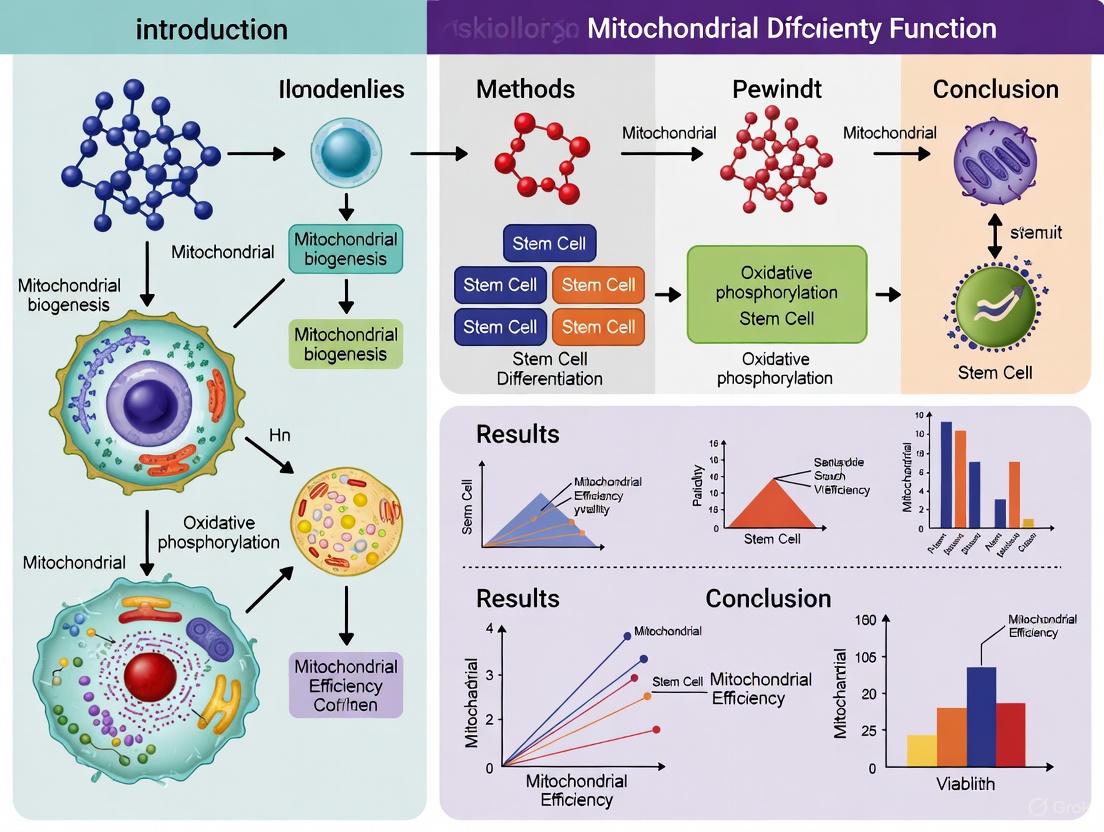
This article synthesizes current strategies for augmenting mitochondrial function in therapeutic stem cells, a critical determinant of their efficacy in regenerative medicine.
Strategic Enhancement of Mitochondrial Function in Therapeutic Stem Cells: From Foundational Mechanisms to Clinical Translation
Abstract
This article synthesizes current strategies for augmenting mitochondrial function in therapeutic stem cells, a critical determinant of their efficacy in regenerative medicine. It explores the foundational role of mitochondria in stem cell fate and therapeutic actions, including mitochondrial transfer. The content details methodological advances in enhancing mitochondrial bioenergetics through 3D culture, epigenetic modulation, and metabolic reprogramming. It further addresses key challenges in mitochondrial delivery, functional stability, and patient-specific optimization, providing troubleshooting guidance. Finally, the article covers rigorous validation frameworks employing advanced respirometry, imaging protocols, and comparative efficacy analyses, offering researchers and drug development professionals a comprehensive roadmap for developing potent mitochondrial-enhanced stem cell therapies.
The Central Role of Mitochondria in Stem Cell Therapeutic Efficacy
Frequently Asked Questions (FAQs)
FAQ 1: How can I confirm that observed changes in cell fate are due to mitochondrial signaling and not just metabolic support? Answer: To distinguish signaling roles from general metabolic support, implement a combination of the following assays:
- Measure Signaling Metabolites: Quantify key mitochondrial signaling molecules such as reactive oxygen species (ROS) using fluorescent probes like MitoSOX Red [1] [2], and assess the NAD+/NADH ratio with enzymatic or fluorescent assays [3].
- Inhibit Specific Pathways: Use targeted inhibitors. For example, use MitoTEMPO to scavenge mitochondrial ROS without affecting ATP production, and then observe if the phenotypic changes are blocked [4] [5].
- Analyze Downstream Effects: Perform Western blotting or immunofluorescence to check for activation of known signaling pathways (e.g., HIF-1α stabilization) and epigenetic modifications (e.g., histone acetylation via acetyl-CoA) [3] [6]. Correlate these with mitochondrial functional readouts.
FAQ 2: My isolated mitochondria have low membrane potential and poor functionality after transfer. How can I improve this? Answer: Low mitochondrial membrane potential (ΔΨm) often indicates damage during isolation or transfer.
- Optimize Isolation Protocol: Use density gradient centrifugation with media like Optiprep or Nycodenz, which offer better osmotic pressure control and preserve mitochondrial integrity better than sucrose [1]. Perform procedures at 4°C to prevent protein denaturation.
- Assess Quality Post-Isolation: Use dyes like TMRM or TMRE to quantify ΔΨm via flow cytometry before conducting functional experiments or transfer [1] [2]. Mitochondria with high ΔΨm should be used.
- Use Protective Reagents: Include mitochondria-targeted antioxidants like MitoTEMPO during isolation to reduce oxidative damage, which has been shown to preserve ΔΨm in mitochondrial cargo within extracellular vesicles [5].
FAQ 3: What are the primary mechanisms of mitochondrial transfer, and how do I investigate which one is active in my co-culture system? Answer: The three main mechanisms are Tunneling Nanotubes (TNTs), Extracellular Vesicles (EVs), and free mitochondria released through other means [7].
- Use Specific Inhibitors: Employ cytochalasin B to disrupt actin-dependent TNT formation. Use GW4869 to inhibit the release of small EVs. To block gap junctions, use chemical inhibitors like carbenoxolone or employ siRNA against Connexin 43 (Cx43) [7] [8].
- Physical Separation: Use transwell inserts with different pore sizes (e.g., 0.4 µm to block all contact vs. 3.0 µm which allows some processes) to distinguish contact-dependent from contact-independent transfer [8].
- Direct Visualization: Use live-cell imaging with fluorescent markers (e.g., MitoTracker) to visually confirm the formation of TNTs and the movement of mitochondria through them [7] [8].
FAQ 4: We are developing a mitochondrial enhancement strategy for therapeutic MSCs. What key quality controls should we perform on mitochondria before transplantation? Answer: For clinical applications, rigorous quality control is essential.
- Viability and Function: Assess mitochondrial membrane potential (using JC-1 or TMRM), oxygen consumption rate (OCR) using a Seahorse Analyzer, and ATP production [1] [2].
- Purity and Integrity: Check for contamination from other organelles (e.g., endoplasmic reticulum, peroxisomes) by testing for specific marker proteins like Calnexin (ER) or Catalase (peroxisomes) in your mitochondrial isolate [1]. Electron microscopy can evaluate ultrastructural integrity [1] [8].
- Genetic Integrity: For long-term studies, sequence mtDNA to check for deletions or mutations, especially if mitochondria are sourced from diseased or aged tissues [1] [8].
FAQ 5: In our cancer models, we suspect mitochondrial transfer from tumor cells to T cells is causing immunosuppression. How can we validate this? Answer: This is a key mechanism of immune evasion [8].
- Track Mitochondrial Origin: Label cancer cell mitochondria with a stable fluorescent protein (e.g., Mito-DsRed) and co-culture them with unlabeled T cells. Use flow cytometry or confocal microscopy to detect the fluorescent signal in T cells over time [8].
- Genetically Identify Transferred mtDNA: Perform mtDNA sequencing on isolated T cells (e.g., TILs) after co-culture and check for the presence of mtDNA mutations unique to the cancer cell line [8].
- Functional Assays: Assess the metabolic and functional status of recipient T cells. Look for indicators of senescence, impaired effector function (e.g., reduced cytokine production), and metabolic shifts away from oxidative phosphorylation [8].
Experimental Protocols
Protocol 1: Isolating Functional Mitochondria from Mesenchymal Stem Cells (MSCs)
Principle: This protocol uses differential centrifugation to separate mitochondria from other cellular components, followed by purification via density gradient centrifugation to obtain a highly pure and functional fraction for research or transplantation [1].
Materials:
- Reagents: Mitochondrial Isolation Buffer (e.g., containing mannitol, sucrose, EDTA, HEPES, pH 7.4), BSA (fatty-acid free), Protease inhibitor cocktail, Optiprep or Nycodenz density gradient medium [1].
- Equipment: Dounce homogenizer, Refrigerated centrifuge, Ultracentrifuge (for high-purity needs).
Procedure:
- Harvesting Cells: Culture MSCs to 80-90% confluence. Wash cells with PBS and trypsinize. Collect cells by centrifugation at 600 × g for 5 minutes at 4°C.
- Cell Homogenization: Resuspend the cell pellet in ice-cold Mitochondrial Isolation Buffer supplemented with BSA (0.1-1%) and protease inhibitors. Transfer to a Dounce homogenizer. Homogenize on ice with 30-50 strokes. Check cell lysis under a microscope (>90% lysis is ideal).
- Differential Centrifugation:
- Centrifuge the homogenate at 1,000 × g for 10 minutes at 4°C to pellet nuclei, unbroken cells, and large debris.
- Carefully transfer the supernatant to a new tube.
- Centrifuge the supernatant at 10,000 × g for 15 minutes at 4°C. The resulting pellet contains the crude mitochondrial fraction.
- Purification (Density Gradient Centrifugation):
- Resuspend the crude mitochondrial pellet in a small volume of isolation buffer.
- Layer this suspension on top of a pre-formed Optiprep or Nycodenz density gradient.
- Centrifuge at 100,000 × g for 1-2 hours at 4°C.
- Mitochondria will band at a specific density. Carefully collect this band using a Pasteur pipette.
- Washing and Storage: Dilute the collected mitochondrial fraction with isolation buffer and centrifuge at 10,000 × g for 15 minutes to pellet the purified mitochondria. Resuspend in a suitable buffer (e.g., MAS buffer for functional assays). Use immediately for best results, or store on ice for short periods.
Troubleshooting Tip: If mitochondrial yield is low, ensure homogenization is efficient but not excessive. If purity is insufficient (contaminated with ER/microsomes), repeat the density gradient step or optimize the gradient concentration [1].
Protocol 2: Quantifying Mitochondrial Transfer via Tunneling Nanotubes (TNTs) in Co-culture
Principle: This method visualizes and quantifies the direct cell-to-cell transfer of mitochondria using fluorescent labeling and live-cell imaging [7] [8].
Materials:
- Reagents: MitoTracker Green FM (for recipient cell mitochondria), MitoTracker Deep Red FM (for donor cell mitochondria), cell culture medium without phenol red, cytochalasin B (TNT inhibitor) [7] [8].
- Equipment: Confocal live-cell imaging microscope, environmental chamber (to maintain 37°C and 5% CO2 during imaging).
Procedure:
- Fluorescent Labeling:
- Donor Cells: Label mitochondria in donor cells (e.g., MSCs) with 50-100 nM MitoTracker Deep Red in serum-free medium for 30 minutes at 37°C.
- Recipient Cells: Independently label mitochondria in recipient cells (e.g., damaged epithelial cells) with 100 nM MitoTracker Green under the same conditions.
- Wash both cell types thoroughly with PBS to remove excess dye.
- Establish Co-culture: Trypsinize both cell populations and seed them together on a glass-bottom imaging dish at the desired ratio. Allow cells to adhere and interact for 6-24 hours.
- Live-Cell Imaging:
- Place the culture dish in the environmental chamber on the confocal microscope.
- Use a 63x or higher oil-immersion objective.
- Acquire time-lapse images (e.g., every 5-10 minutes for 2-4 hours) in both green and far-red channels.
- Image Analysis:
- Identify TNTs as thin, actin-based membrane bridges connecting two cells.
- Quantify mitochondrial transfer by counting events where a red fluorescent (donor) mitochondrial particle moves through a TNT into a green-labeled recipient cell over time.
- Express results as the number of transfer events per field of view or the percentage of recipient cells that have received donor mitochondria.
Validation and Controls:
- Inhibition Control: Include a co-culture condition treated with cytochalasin B (e.g., 1-5 µM) to disrupt TNTs. A significant reduction in transfer events confirms TNT-mediated transfer [8].
- Specificity Control: Image cells cultured alone to confirm no dye transfer occurs through the medium.
Research Reagent Solutions
Table 1: Essential Reagents for Investigating Mitochondrial Signaling and Transfer
| Reagent / Tool | Primary Function | Key Application Examples |
|---|---|---|
| MitoTracker Probes (Green, Red, Deep Red) | Labeling of mitochondria based on membrane potential or mass. | Visualizing mitochondrial morphology, tracking mitochondrial transfer between cells in co-culture [7] [8]. |
| TMRM / TMRE | Potentiometric dyes for quantifying mitochondrial membrane potential (ΔΨm). | Flow cytometric or fluorescent microscopic assessment of mitochondrial health and function [1] [2]. |
| MitoSOX Red | Fluorescent probe for detecting mitochondrial superoxide. | Measuring site-specific ROS production as a signaling molecule or indicator of oxidative stress [1] [2]. |
| Cytochalasin B | Inhibitor of actin polymerization. | Disrupting the formation of Tunneling Nanotubes (TNTs) to study their role in mitochondrial transfer [7] [8]. |
| GW4869 | Inhibitor of neutral sphingomyelinase. | Blocking the biogenesis and release of small extracellular vesicles (EVs) to study EV-mediated mitochondrial transfer [8]. |
| MitoTEMPO | Mitochondria-targeted antioxidant (combines TEMPO with a TPP+ cation). | Scavenging mitochondrial ROS to investigate its role in signaling pathways and improving mitochondrial cargo quality in EVs [4] [5]. |
| Seahorse XF Analyzer | Instrument for real-time measurement of cellular metabolic parameters. | Measuring Oxygen Consumption Rate (OCR) and Extracellular Acidification Rate (ECAR) to profile cellular metabolic status [3] [2]. |
Table 2: Quantitative Markers of Mitochondrial Dysfunction and Recovery
| Parameter | Indication of Dysfunction | Indication of Functional Recovery | Common Assessment Method |
|---|---|---|---|
| Membrane Potential (ΔΨm) | Defluorescence (TMRM/JC-1) | Increased fluorescence intensity | Flow Cytometry, Fluorometry [1] [2] |
| ROS Production | Increased MitoSOX signal | Decreased MitoSOX signal | Fluorescence Microscopy, Flow Cytometry [1] [2] |
| Oxygen Consumption Rate (OCR) | Decreased basal and maximal OCR | Increased basal and ATP-linked OCR | Seahorse XF Analyzer [3] [2] |
| ATP Production | Decreased cellular ATP levels | Increased ATP levels | Luciferase-based assays, HPLC [1] |
| mtDNA Integrity | Increased mutation/deletion burden | Stable wild-type mtDNA | Sequencing, Long-range PCR [1] [8] |
Signaling Pathways and Experimental Workflows
Diagram 1: Mitochondrial Signaling Pathways Governing Stem Cell Fate
Diagram 2: Investigating Mitochondrial Transfer Mechanisms
Diagram 3: Workflow for Mitochondrial Functional Assessment
Mitochondrial transfer represents a groundbreaking frontier in regenerative medicine, enabling the restoration of cellular bioenergetics and function. For researchers focusing on enhancing mitochondrial function in therapeutic stem cells, understanding the mechanisms of this transfer is paramount. This process occurs through highly specialized pathways, including tunneling nanotubes (TNTs), extracellular vesicles (EVs), and other intercellular structures, allowing damaged cells to receive healthy mitochondria from donor stem cells. The therapeutic implications are profound, offering potential strategies for treating conditions ranging from ischemic injury to neurodegenerative diseases. This technical support center provides a comprehensive guide to the methodologies, troubleshooting, and reagent solutions essential for investigating these mechanisms in your stem cell research.
Core Mechanisms: FAQs on Mitochondrial Transfer Pathways
FAQ 1: What are the primary contact-dependent mechanisms for mitochondrial transfer between stem cells and recipient cells?
The major contact-dependent mechanisms facilitating mitochondrial transfer are tunneling nanotubes (TNTs) and gap junction internalization.
- Tunneling Nanotubes (TNTs): These are dynamic, actin-based membranous channels that form cytoplasmic bridges between cells, allowing direct organelle movement. They are especially active under stress conditions such as hypoxia or inflammation.
- Biogenesis: TNT formation can occur via an actin-driven protrusion model, where a cell extends a long protrusion toward a donor cell, orchestrated by regulators like M-Sec (TNFaip2) which interacts with RalA GTPase and the exocyst complex. Alternatively, a cell-displacement or filopodial bridge model occurs when two cells separate from one another, extending a membrane tube where actin polymerizes [9].
- Structure and Cargo: TNTs are structurally heterogeneous. Thin TNTs (20–700 nm diameter), composed solely of F-actin, transport small vesicles and ions. Thick TNTs (>700 nm) incorporate microtubules, enabling long-range, directional transport of large cargo like mitochondria via motor proteins such as kinesin and dynein [9] [10].
- Gap Junction Internalization: This is a process where connexin-mediated gap junctions (e.g., those formed by Connexin 43) connecting two cells are internalized by one cell, resulting in the engulfment of cellular material, including mitochondria, from the second cell [11] [12].
FAQ 2: How are mitochondria transferred through contact-independent mechanisms?
Contact-independent transfer involves the release and uptake of extracellular mitochondria, which can be categorized based on their form.
- Free Mitochondria: Intact mitochondria or mitochondria-derived vesicles (MDVs) released from cells without an additional surrounding lipid bilayer. MDVs are smaller budding structures containing oxidized mitochondrial components [11].
- MitoEVs: Intact mitochondria or MDVs that are enclosed in an additional lipid bilayer derived from the endolysosomal system or plasma membrane, forming a type of extracellular vesicle. This bilayer may offer protection and carry additional signaling molecules [11].
FAQ 3: What signaling pathways and key proteins regulate mitochondrial transport via TNTs?
The transport of mitochondria along TNTs is an active process regulated by specific proteins. The central regulator is Miro1 (Mitochondrial Rho GTPase 1, RHOT1), an outer mitochondrial membrane protein with two GTPase domains and two EF-hand Ca²⁺-binding motifs [9]. It acts as a Ca²⁺-sensitive adaptor that links mitochondria to microtubule motors (kinesin, dynein) via TRAK/Milton proteins, controlling long-range trafficking and positioning [9] [10]. Overexpression of Miro1 in mesenchymal stem cells (MSCs) has been shown to enhance mitochondrial transfer to injured neurons, cardiomyocytes, and epithelial cells, improving outcomes in models of stroke, cardiac ischemia, and acute lung injury [9].
The diagram below illustrates the formation of a TNT and the Miro1-mediated transport of a mitochondrion.
Diagram 1: Miro1-Mediated Mitochondrial Transport via a Tunneling Nanotube.
The Scientist's Toolkit: Research Reagent Solutions
Successful investigation of mitochondrial transfer requires a suite of reliable reagents and tools. The table below summarizes essential materials and their functions.
Table 1: Key Research Reagents for Studying Mitochondrial Transfer
| Item/Category | Specific Examples | Function/Application | Key Considerations |
|---|---|---|---|
| Mitochondrial Labels | MitoTracker dyes (e.g., CMXRos), mtGFP | Visualizing and tracking mitochondrial transfer. | MitoTracker dyes can leak, causing false positives; use as confirmatory evidence only [11]. |
| Genetically Encoded Reporters | mt-Keima, mito-Dendra2, mito-TagGFP | Cell type-specific, stable labeling for in vitro and in vivo tracking. | Prefer over dyes for primary evidence. Ensure specificity and assess impact on mitochondrial function [11]. |
| TNT Formation Inducers | Chemotherapeutic drugs, H₂O₂, serum starvation, galactose media | Stressors that induce TNT formation in co-culture experiments. | Stress type and level must be optimized for specific cell types [9] [13]. |
| Inhibitors / Modulators | Cytochalasin D (actin disruptor), Dynamin-related protein 1 (DRP1) inhibitors, Miro1 siRNA | Mechanistic studies to block specific pathways (TNT formation, mitochondrial transport, fission). | Confirm inhibition of the target pathway and monitor for off-target effects on cell health. |
| mtDNA Tracking | Species-specific qPCR probes, sequencing primers | Detecting transfer by quantifying donor mtDNA in recipient cells. | Cannot distinguish whole mitochondria from free mtDNA; use DNase treatment to confirm protected DNA [11]. |
Experimental Protocols: Key Methodologies
Protocol 1: Co-culture System for Studying TNT-Mediated Mitochondrial Transfer
This foundational protocol is used to observe and quantify mitochondrial transfer between two cell populations.
- Cell Preparation:
- Label donor cells (e.g., MSCs) with a stable mitochondrial reporter (e.g., mito-TagGFP). Alternatively, pre-label with a cell-permanent dye like CellTracker (e.g., red CMTPX).
- Culture recipient cells (e.g., injured epithelial cells or neurons) in a separate flask, leaving them unlabeled or labeling with a different color (e.g., CellTracker green).
- Stress Induction:
- Co-culture:
- Trypsinize both cell populations and seed them together in a suitable ratio (e.g., 1:1) on glass-bottom dishes for imaging or in standard culture plates for flow cytometry.
- TNT Induction:
- Culture cells in galactose-based media instead of glucose-based media to force cells to rely on oxidative phosphorylation, which promotes TNT formation [13].
- Imaging and Analysis:
Protocol 2: MitoCeption - An Artificial Method for Mitochondrial Transfer
MitoCeption is a centrifugation-based technique to artificially load recipient cells with isolated mitochondria [10].
- Mitochondrial Isolation:
- Isulate functional mitochondria from donor cells using differential centrifugation. Use a Mitochondrial Isolation Kit for best results. Confirm mitochondrial membrane potential and integrity using JC-1 or TMRM staining.
- Labeling:
- Label isolated mitochondria with a fluorescent dye (e.g., MitoTracker Red) after isolation to avoid dye transfer artifacts.
- Co-incubation and Centrifugation:
- Seed recipient cells and allow them to adhere.
- Carefully add the labeled mitochondrial suspension onto the recipient cells.
- Centrifuge the plate at a specific speed (e.g., 1500 x g for 15-30 minutes) to facilitate mitochondrial deposition onto and into the recipient cells. Some protocols include a brief heat shock (40°C for 10 min) post-centrifugation.
- Validation:
The workflow for the MitoCeption protocol is summarized in the following diagram.
Diagram 2: MitoCeption Workflow for Artificial Mitochondrial Transfer.
Troubleshooting Guides
Table 2: Common Experimental Challenges and Solutions
| Problem | Potential Cause | Solution & Advice |
|---|---|---|
| Low/no observed mitochondrial transfer | Insufficient stress signal. | Titrate stressor (e.g., H₂O₂ concentration) to induce damage without causing excessive cell death. Use galactose media to force OXPHOS dependence [13]. |
| Low expression of key regulators (e.g., Miro1). | Overexpress Miro1 in donor MSCs to enhance mitochondrial mobility and transfer efficiency [9]. | |
| False positive signal in transfer assays | Leakage of mitochondrial dyes. | Use genetically encoded fluorescent protein tags (e.g., mtGFP) instead of dyes. If using dyes, employ them only for confirmatory studies and always include appropriate controls [11]. |
| Uptake of mitochondrial debris from dead cells. | Include viability dyes to exclude dead cells from analysis. Use co-culture systems with validated healthy donor cells. | |
| Transferred mitochondria fail to function | Damaged or dysfunctional isolated mitochondria. | rigorously check the quality of isolated mitochondria: measure membrane potential (ΔΨm) with TMRM/JC-1 and respiratory control ratio (RCR) with an oxygen electrode or Seahorse Analyzer [14] [15]. |
| Lack of integration into endogenous network. | Extend the observation period. Use time-lapse imaging to monitor fusion events. The functional rescue may take several hours to days. | |
| Inability to visualize TNTs | TNTs are fragile and sensitive to light, shear force, and chemical fixation. | Use live-cell imaging with minimal illumination. Use spinning-disk confocal microscopy. Avoid washing steps during fixation; add fixative gently to the side of the dish [9] [10]. |
FAQ 4: How can we distinguish true mitochondrial transfer from artifacts like dye leakage?
This is a critical methodological consideration. The best practice is to use a combination of methods:
- Primary Method: Genetically Encoded Reporters. Use donor cells with stably integrated, cell type-specific labels for mitochondria (e.g., mito-Dendra2). The presence of the fluorescent protein in the recipient cell's mitochondria is strong evidence of transfer, as proteins do not "leak" like dyes [11].
- Confirmatory Method: Dye-based and mtDNA Tracking.
- If using MitoTracker dyes, perform a "dye-only" control where recipient cells are exposed to the supernatant from labeled, washed donor cells. Any signal in this control indicates dye leakage [11].
- Use species-specific qPCR to detect donor mtDNA in recipient cells. Pre-treat samples with DNase to ensure only mtDNA within intact mitochondria is quantified [11].
- Functional Validation: The most compelling evidence is demonstrating that the transfer event rescues a functional deficit, such as restoring ATP production, membrane potential, or reducing apoptosis in the recipient cell [9] [15] [12].
The efficacy of mitochondrial transfer can be quantified through various parameters. The table below summarizes key quantitative findings from the literature.
Table 3: Quantitative Data on Mitochondrial Transfer Efficacy and Outcomes
| Parameter / Finding | Quantitative Value / Observation | Experimental Context | Source |
|---|---|---|---|
| TNT Dimensions | Diameter: 50–1500 nm (thick >700 nm); Length: 5–200 μm (up to 150 mm). | Observations across various cell types (MSCs, immune cells, cancer cells). | [9] [10] |
| Transfer Efficiency with Miro1 | Miro1 overexpression enhances transfer; suppression markedly reduces efficiency. | MSC to epithelial cells, cardiomyocytes, and neurons in injury models. | [9] |
| Rescue of Mitochondrial Import | Cells with chronically blocked import (48h) showed no import defect, consistent with a rescue mechanism. | HeLa cells with artificial precursor stalling in mitochondrial import machinery. | [13] |
| Lifespan of Isolated Mitochondria | Isolated mitochondria significantly lose respiratory function after ~2 hours. | Critical parameter for mitochondrial transplantation protocols. | [14] |
| Therapeutic Outcomes (Preclinical) | Improved neurological recovery in stroke; mitigated acetaminophen-induced liver injury (AILI). | Rodent models: MSC mitochondrial transfer via TNTs; AMSCs modulating DDIT4/PGC-1α axis. | [9] [16] |
Troubleshooting Guides and FAQs
Frequently Asked Questions
Q1: What are the most reliable biomarkers for quantifying mitochondrial dysfunction in human cell models? Two well-recognized biomarkers are mitochondrial DNA copy number (mtDNA-CN) and methylmalonic acid (MMA). mtDNA-CN, the ratio of mitochondrial to nuclear DNA, correlates with mitochondrial abundance and cellular energy status, serving as a surrogate marker for mitochondrial function. Decreased mtDNA-CN has a negative causal relationship with conditions like bipolar disorder and Alzheimer's disease. MMA is a mitochondrial intermediate metabolite that accumulates when mitochondrial function is impaired, such as when the mitochondrial methylmalonyl-coenzyme A mutase (MUT) is inactivated. Elevated serum MMA levels are significantly associated with an increased risk of cognitive impairment and depression [17].
Q2: How can I improve the efficiency of mitochondrial transfer to recipient cells in my co-culture experiments? Several strategies can enhance transfer efficiency. Genetically engineering donor cells to overexpress Miro1, a key protein involved in mitochondrial transport along the cytoskeleton, can significantly increase transfer rates. Utilizing specific nanoparticles, such as those made of molybdenum disulfide, can boost mitochondrial biogenesis within donor stem cells. Research shows that such "nanoflower-boosted" stem cells can transfer two to four times more mitochondria than untreated cells. Furthermore, optimizing culture conditions with a specialized medium like "mito-condition," which includes growth factors and human platelet lysate, can increase mitochondrial production by hundreds of fold and enhance the quality of the mitochondria produced [18] [19] [20].
Q3: I am working on an HFpEF model. What are the primary aspects of mitochondrial dysfunction I should investigate? In Heart Failure with preserved Ejection Fraction (HFpEF), you should focus on several interconnected areas of mitochondrial pathology:
- Energy Metabolism Dysregulation: Investigate impaired fatty acid oxidation (FAO) and glucose metabolism. Look for elevated levels of long-chain acylcarnitines (indicating incomplete FAO) and increased glycolysis, which is an inefficient energy source for the heart.
- Electron Transport Chain (ETC) Dysfunction: Assess the activity of respiratory chain complexes (particularly I, III, and V). Damage here leads to reduced ATP synthesis and impaired ventricular diastolic relaxation.
- Oxidative Stress: Measure reactive oxygen species (ROS) generation resulting from electron leakage from a dysfunctional ETC.
- Calcium Signaling Dysregulation: Examine intracellular calcium homeostasis, as insufficient ATP impairs calcium pumps, further disrupting diastolic function [21] [22].
Q4: Can mitochondrial transfer have adverse effects, such as promoting cancer growth? Yes, mitochondrial transfer can be a "double-edged sword." While it can restore health to damaged cells, it can also enhance the proliferation and drug resistance of cancer cells. For example, mitochondrial transfer from adipose stem cells to breast cancer cells via tunneling nanotubes (TNTs) provides cancer cells with ample ATP, driving multi-drug resistance (MDR) through oxidative phosphorylation. Blocking this mitochondrial transfer has been suggested as a potential therapeutic strategy for breast cancer [20].
Troubleshooting Common Experimental Challenges
Problem: Low efficiency of mitochondrial transfer from MSCs to target neuronal cells.
- Potential Cause 1: Suboptimal culture conditions that do not stimulate the formation of tunneling nanotubes (TNTs).
- Solution: Induce stress in the recipient neuronal cells (e.g., using hydrogen peroxide or serum starvation) to create a demand for functional mitochondria. This can enhance the natural formation of TNTs from MSCs to the stressed cells [20].
- Potential Cause 2: Inherent low expression of transport-related proteins in MSCs.
- Solution: Genetically modify MSCs to overexpress Miro1, a key regulator of mitochondrial transport along the cytoskeleton. This has been shown to enhance the mitochondrial donation capacity of MSCs [20].
Problem: Inconsistent results when measuring mitochondrial function in patient-derived cardiomyocytes.
- Potential Cause: High heterogeneity in the patient population, leading to varied molecular signatures of mitochondrial dysfunction.
- Solution: Stratify your patient cells based on specific comorbidities (e.g., diabetes, obesity) before analysis. In HFpEF, mitochondrial dysfunction is often driven by underlying metabolic diseases. Analyzing subgroups can reveal more consistent patterns, such as elevated specific acylcarnitine profiles in obese or diabetic HFpEF models [22].
Problem: Different studies report conflicting trends for mtDNA-CN in depression—some show an increase, others a decrease.
- Potential Cause: The relationship may not be unidirectional. Mendelian randomization analysis suggests a complex causal link where depressive symptoms can also lead to reduced mtDNA-CN.
- Solution: Do not treat mtDNA-CN as a standalone diagnostic marker. Use it in conjunction with other biomarkers, such as serum MMA levels, and always contextualize your findings within the specific clinical and experimental conditions. This multi-faceted approach provides a more robust assessment [17].
Quantitative Data and Research Reagents
Table 1: Quantitative Data on Mitochondrial Biomarkers and Disease Risk
| Biomarker / Parameter | Association with Disease | Quantitative Effect Size | Reported P-value | Context / Notes |
|---|---|---|---|---|
| mtDNA Copy Number | Bipolar Disorder | OR = 0.15 to 0.84 (Negative causal effect) [17] | < 0.05 | Mendelian Randomization Study [17] |
| mtDNA Copy Number | Alzheimer's Disease & Dementia | OR = 0.15 to 0.84 (Negative causal effect) [17] | < 0.05 | Mendelian Randomization Study [17] |
| Methylmalonic Acid (MMA) | Cognitive Impairment | OR = 1.56 (per unit increase) [17] | 0.036 | NHANES Cross-Sectional Analysis [17] |
| Methylmalonic Acid (MMA) | Depression | OR = 1.53 (per unit increase) [17] | 0.020 | NHANES Cross-Sectional Analysis [17] |
| Mitochondrial Production | General Biomanufacturing | 854-fold increase in yield [18] | N/A | Using "mito-condition" culture medium [18] |
| ATP Production | Engineered vs. Natural Mitochondria | 5.7 times higher [18] | N/A | Mitochondria produced via innovative culture method [18] |
| Mitochondrial Transfer | Nanoflower-boosted vs. Untreated Cells | 2 to 4 times more mitochondria transferred [19] | N/A | Using molybdenum disulfide nanoparticles [19] |
Research Reagent Solutions
| Item / Reagent | Function / Application | Key Details / Rationale |
|---|---|---|
| "Mito-condition" Medium | Optimizes mass production of high-quality mitochondria from stem cells. | A specially designed culture medium containing nine components, including growth factors and human platelet lysate, to boost mitochondrial biogenesis and energy output [18]. |
| Molybdenum Disulfide Nanoflowers | Enhances mitochondrial biogenesis in donor stem cells. | Inorganic nanoparticles (~100 nm) that, when internalized by cells, act as sustained-release "mitochondrial biofactories," leading to a several-fold increase in mitochondrial transfer efficiency [19]. |
| Miro1 (RHOT1) Expression Vector | Genetic modification to improve mitochondrial transfer efficiency. | Overexpression of this mitochondrial GTPase in Mesenchymal Stromal Cells (MSCs) enhances the transport of mitochondria along the cytoskeleton and their donation to stressed recipient cells [20]. |
| PINK1/Parkin Pathway Activators | Induces mitophagy for quality control studies. | Tools to trigger the classic pathway for tagging and clearing damaged mitochondria, crucial for studying mitochondrial homeostasis in neurodegenerative diseases [4] [23]. |
| AMPK Activators (e.g., AICAR, Metformin) | Stimulates mitochondrial biogenesis. | Activates a central energy sensor (AMPK), which upregulates PGC-1α, a master regulator of mitochondrial creation, helping to replenish the mitochondrial pool [4]. |
Experimental Protocols & Workflows
Protocol 1: Enhancing Mitochondrial Biogenesis and Transfer Using Nanoparticle-Modified MSCs
This protocol details a method to create "mitochondrial biofactories" by boosting mitochondrial numbers in donor MSCs using molybdenum disulfide nanoflowers, thereby enhancing subsequent transfer to recipient cells [19].
Key Steps:
- Synthesis of Nanoflowers: Fabricate molybdenum disulfide nanoparticles in a two-dimensional, flower-like morphology approximately 100 nm in diameter.
- Priming of Donor MSCs:
- Culture human Mesenchymal Stromal Cells (MSCs) in standard growth medium.
- Treat MSCs with a sub-toxic concentration of the synthesized nanoflowers (e.g., 10-50 µg/mL) for 24-48 hours. This internalization promotes a sustained boost in mitochondrial biogenesis.
- Co-culture with Recipient Cells:
- Seed stressed or damaged recipient cells (e.g., aged cardiomyocytes, neurons under oxidative stress) in a transwell system or directly mix them with the nanoflower-primed MSCs.
- Allow co-culture for 24-72 hours to facilitate the formation of tunneling nanotubes (TNTs) and the transfer of mitochondria.
- Validation:
- Confirm mitochondrial transfer using confocal microscopy by pre-labeling MSC mitochondria with a fluorescent dye (e.g., MitoTracker Green).
- Assess functional recovery in recipient cells by measuring ATP levels, mitochondrial membrane potential (using JC-1 or TMRM dyes), and cell viability assays.
Protocol 2: Assessing Key Mitochondrial Dysfunction Pathways in a HFpEF Model
This protocol outlines a multi-faceted approach to characterize mitochondrial dysfunction in a cellular model of Heart Failure with preserved Ejection Fraction (HFpEF) [21] [22].
Key Steps:
- Model Establishment:
- Use cardiomyocytes derived from a suitable HFpEF model (e.g., ZSF1 rat model or human iPSC-derived cardiomyocytes treated with pro-inflammatory cytokines and high fatty acids to mimic the metabolic syndrome).
- Metabolic Phenotyping:
- Substrate Utilization: Analyze fatty acid and glucose oxidation rates using radiolabeled or Seahorse XF technology.
- Metabolite Profiling: Perform LC-MS to measure levels of key metabolites like long-chain acylcarnitines (indicative of impaired fatty acid oxidation) and lactate (suggestive of increased glycolysis).
- Electron Transport Chain (ETC) Assessment:
- Measure the enzymatic activity of individual respiratory chain complexes (I-V) using spectrophotometric assays. In HFpEF models, expect significant reductions in Complex I and III activity.
- Evaluate oxidative phosphorylation and ATP production rate using a Seahorse XF Analyzer.
- Oxidative Stress Measurement:
- Quantify mitochondrial ROS production using fluorescent probes like MitoSOX Red.
- Measure levels of lipid peroxidation (e.g., MDA) and antioxidant enzyme activities (e.g., SOD, GPx).
Signaling Pathways and Workflow Diagrams
Mitochondrial Quality Control Pathways
Mitochondrial Transfer for Cellular Rescue
Troubleshooting Guides for Core Mitochondrial Pathways
Troubleshooting Impaired Mitochondrial Function in Stem Cells
Problem: Differentiating stem cells show reduced viability and impaired differentiation efficiency, potentially linked to inadequate energy production.
| Potential Cause | Diagnostic Experiments & Key Metrics | Solution & Validation |
|---|---|---|
| Low Mitochondrial Biogenesis [24] [25] | - Measure mtDNA copy number (qPCR) and TFAM protein levels (Western blot). [24]- Assess PGC-1α activation (phosphorylation/deacetylation status). [24] | - Treat with PGC-1α pathway activators (e.g., RSG, 5-20 µM). [26]- Validate by increased OXPHOS capacity (Seahorse XF Analyzer) and ATP luminescence. [26] |
| Unbalanced Fission/Fusion [27] [28] | - Analyze mitochondrial morphology via MitoTracker staining and confocal microscopy. [26]- Check protein levels of Drp1 (fission) and Mfn2/Opa1 (fusion). [27] [28] | - Use Drp1 inhibitor (Mdivi-1, 10-50 µM) to counter excessive fission. [28]- Confirm network normalization and improved cell survival post-treatment. [28] |
| Accumulation of Damaged Mitochondria [29] [30] | - Monitor mitophagy flux (mt-Keima assay, LC3-II/LAMP2 colocalization). [29]- Measure PINK1 stabilization on OMM and Parkin recruitment. [29] | - Induce mild mitophagy with low-dose FCCP (0.5-1 µM) or activate BNIP3/FUNDC1 pathways. [30]- Verify reduced ROS and mitochondrial Cyt C release. [30] |
Troubleshooting Mitochondrial Fission and Fusion Imbalances
Problem: Observations of excessive mitochondrial fragmentation or hyperfusion, leading to altered stem cell differentiation and function.
| Observation | Key Investigative Steps | Recommended Interventions |
|---|---|---|
| Excessive Fragmentation [27] [28] | - Confirm Drp1 translocation to mitochondria (cell fractionation + Western blot). [28]- Check phosphorylation at Drp1-S616 (activator) and Drp1-S637 (inhibitor). [28] | - Transfer stem cells to 3D spheroid culture on chitosan-coated surfaces to promote network health. [26]- Transfer stem cells to 3D spheroid culture on chitosan-coated surfaces. [26] |
| Excessive Hyperfusion [27] [31] | - Evaluate expression of fusion proteins Mitofusins (Mfn1/2) and Opa1. [27] [31]- Assess mitochondrial calcium buffering capacity and sensitivity to MPTP opening. [28] | - Consider Mfn2 siRNA or Opa1 knockdown to restore fission/fusion balance. [27]- Monitor recovery of fission events and normalization of ATP production rates. |
Troubleshooting Assessment of Mitophagy
Problem: Inconsistent or inconclusive results when measuring mitophagy levels in therapeutic stem cells.
| Challenge | Troubleshooting Diagnostics | Best Practice Solutions |
|---|---|---|
| Differentiating General Autophagy from Mitophagy [29] | - Use specific markers: Co-localization of LC3 with mitochondrial proteins (TOMM20) or mt-Keima assay. [29] | - Employ PINK1/Parkin knockout controls to confirm pathway specificity. [29]- Induce with known stressors like CCCP (10-20 µM) as a positive control. [29] |
| Quantifying Mitophagy Flux [29] [30] | - Combine lysosomal inhibitors (Bafilomycin A1, 100 nM) with mitochondrial staining to track engulfment. [29]- Monitor SQSTM1/p62 degradation specifically in mitochondrial fractions. [29] | - Establish time-course experiments; mitophagy can be rapid and transient. [30]- Use multiple assays (imaging, biochemical, flow cytometry with mt-Keima) for corroboration. |
Frequently Asked Questions (FAQs)
Q1: What is the core transcriptional pathway regulating mitochondrial biogenesis, and how can I target it therapeutically?
A1: The master regulatory pathway is the PGC-1α → NRF-1/2 → TFAM cascade. [24] [31] PGC-1α, a transcriptional coactivator, is the central inducer. Upon activation (e.g., via phosphorylation by AMPK), it stimulates nuclear respiratory factors (NRF-1/2), which in turn upregulate the mitochondrial transcription factor A (TFAM). TFAM is the final effector that drives mtDNA transcription and replication. [24] In stem cell research, you can target this pathway using:
- PPARγ agonists like Rosiglitazone (RSG), which can enhance mitochondrial function via the PGC-1α axis. [26]
- AMPK activators (e.g., AICAR, Metformin), which sense low energy and phosphorylate/activate PGC-1α. [24] [31]
Q2: How do mitochondrial fission and fusion proteins work at a molecular level?
A2: These processes are mediated by dynamin-family GTPases. [27] [28]
- Fission is primarily executed by Drp1, which is recruited from the cytosol to the mitochondrial outer membrane by adaptors (Mff, MiD49/51). [28] Drp1 then oligomerizes into spirals around the mitochondrion and, through GTP hydrolysis, constricts to sever both outer and inner membranes. [27]
- Fusion involves two steps: Mitofusins (Mfn1/2) on the outer membrane mediate tethering and fusion of opposing outer membranes. Opa1, located in the inner membrane, then drives the fusion of the inner membranes. [27]
Q3: What are the key pathways for targeted mitochondrial quality control (mitophagy), and how are they regulated?
A3: The two best-characterized pathways are:
- PINK1-Parkin Pathway: In damaged mitochondria (depolarized), PINK1 stabilizes on the outer membrane and recruits the E3 ubiquitin ligase Parkin. Parkin ubiquitinates numerous outer membrane proteins, marking the entire organelle for autophagic degradation via LC3-binding adaptors. [29] [4]
- Receptor-Mediated Pathway: Proteins like BNIP3, NIX, and FUNDC1 act as mitophagy receptors on the mitochondrial outer membrane. During hypoxia or other stresses, they are activated (e.g., via dephosphorylation) and directly bind to LC3 on the autophagosome, engulfing the mitochondrion. [30] The choice of pathway depends on cell type and stress signal.
Q4: Why is the balance between mitochondrial fission, fusion, and mitophagy critical for stem cell function?
A4: This balance, known as mitochondrial dynamics, is crucial for:
- Quality Control: Fission isolates damaged mitochondrial segments, facilitating their targeted removal by mitophagy while allowing healthy parts to re-fuse. [28] [30]
- Metabolic Plasticity: Mitochondrial networks adapt morphology to meet changing energy demands during stem cell self-renewal and differentiation. [25]
- Cell Fate Decisions: Asymmetric segregation of mitochondria during stem cell division can determine daughter cell fate, with older mitochondria being segregated away to maintain stemness. [25] An imbalance can lead to the accumulation of damaged mitochondria, reduced stemness, and impaired regenerative capacity. [25]
Q5: What are advanced techniques for improving mitochondrial function in therapeutic stem cells?
A5: Beyond pharmacological activation of biogenesis, emerging strategies include:
- 3D Spheroid Culture: Culturing adipose-derived stem cells (ASCs) on chitosan-coated surfaces induces a compact mitochondrial morphology with enhanced OXPHOS and ATP production, mediated by epigenetic changes like H3K27me3 modification. [26]
- Mitochondrial Transplantation: Isolating functional mitochondria from healthy donor cells and delivering them into compromised stem cells is being explored to rescue function. [4] [32] This can be achieved via co-culture or direct injection of isolated organelles.
Signaling Pathway Diagrams
Mitochondrial Biogenesis and Quality Control Signaling
Diagram Title: Mitochondrial Biogenesis and Quality Control Signaling
Mitochondrial Dynamics and Quality Control Coordination
Diagram Title: Mitochondrial Dynamics and Quality Control Coordination
The Scientist's Toolkit: Research Reagent Solutions
| Reagent / Tool | Primary Function | Example Application in Research |
|---|---|---|
| MitoTracker Probes (e.g., Deep Red, Green) | Staining of live mitochondria based on membrane potential. [26] | Visualizing mitochondrial morphology, mass, and distribution via fluorescence microscopy. [26] |
| Seahorse XF Analyzer | Real-time measurement of OCR and ECAR to assess mitochondrial respiration and glycolysis. [26] | Profiling metabolic function of stem cells under different culture conditions or after genetic/pharmacological intervention. [26] |
| Drp1 Inhibitor (Mdivi-1) | Selective inhibitor of mitochondrial fission GTPase Drp1. [28] | Used to investigate effects of excessive fission; promotes mitochondrial elongation and can protect against apoptosis in some models. [28] |
| Carbonyl Cyanide m-chlorophenyl hydrazone (CCCP) | Mitochondrial uncoupler that dissipates proton gradient, collapsing membrane potential. [29] | A strong inducer of PINK1/Parkin-dependent mitophagy; used as a positive control in mitophagy assays. [29] |
| GSK126 | Potent, selective inhibitor of EZH2 methyltransferase activity. [26] | Used to probe the role of H3K27me3 histone modification in regulating mitochondrial function and stem cell fate, as in ASC spheres. [26] |
| Rosiglitazone (RSG) | PPARγ agonist. [26] | Activates the PPARγ-PGC-1α pathway to enhance mitochondrial biogenesis and OXPHOS function in stem cells. [26] |
Practical Strategies for Boosting Mitochondrial Performance and Delivery
In the field of therapeutic stem cell research, the functionality of mitochondria is a critical determinant of cell health, differentiation efficacy, and therapeutic potential. Traditional two-dimensional (2D) cell cultures fall short of replicating the intricate structures and dynamic evolution of three-dimensional (3D) environments found in native tissues, prompting the development of more physiologically pertinent in vitro models [33]. A key advancement is the use of ultra-low attachment (ULA) surfaces, particularly those coated with engineered chitosan derivatives like N-hexanoyl glycol chitosan (HGC) and N-octanoyl glycol chitosan (OGC). These surfaces promote the formation of 3D spheroids and organoids that not only better mimic in vivo tissue architecture but also create a microenvironment that can enhance mitochondrial ATP production and morphology, ultimately leading to more predictive and translatable research outcomes in drug development and regenerative medicine [33] [34] [35].
Key Research Reagent Solutions
The following table outlines essential materials used in establishing chitosan-based ULA culture systems.
Table 1: Key Reagents for Chitosan-Based ULA 3D Culture Systems
| Reagent Category | Specific Examples | Function in 3D Culture |
|---|---|---|
| ULA-Coating Polymers | N-hexanoyl glycol chitosan (HGC), N-octanoyl glycol chitosan (OGC) [33] [34] [35] | Creates a non-adhesive surface that promotes cell-cell interactions over cell-substrate attachment, enabling spontaneous 3D spheroid formation. |
| Specialized Cultureware | ULA lattice plates; Nunclon Sphera plates [33] [36] | Provides a physical surface designed to minimize cell attachment, supporting the establishment and maintenance of 3D spheroids and organoids. |
| Metabolism Assay Kits | MitoXpress Xtra HS (Oxygen Consumption Assay); pH-Xtra (Glycolysis Assay) [37] | Enables measurement of mitochondrial function (via oxygen consumption rate) and glycolytic flux in intact 3D constructs without disruption. |
| Extracellular Matrices (ECMs) | Geltrex, Matrigel, purified collagen [38] [36] | Used in scaffold-based approaches to provide biochemical and structural cues that mimic the native cellular microenvironment. |
| Cell Lines & Sources | Primary cells; Induced Pluripotent Stem Cells (iPSCs); HepG2; U373-MG [34] [38] [35] | Provide the cellular basis for generating physiologically relevant 3D models, such as hepatocytes for toxicity screening or patient-derived cells for personalized medicine. |
Frequently Asked Questions (FAQs)
Q1: How do chitosan-coated ULA surfaces specifically enhance mitochondrial ATP production in 3D cultures? The enhancement is primarily indirect, achieved by recapitulating a more physiological tissue environment. ULA surfaces facilitate the formation of 3D spheroids with tight cell-cell contacts and nutrient gradients, mirroring conditions in vivo [35]. This 3D architecture influences mitochondrial function in two key ways: First, computational models indicate that the morphology of the mitochondrial inner membrane (cristae) directly governs ATP production, with lamellar cristae found in healthier cells supporting greater total ATP output [39] [40]. Second, the improved cell health and differentiation within 3D spheroids—such as the enhanced efficiency in class switching of immunoglobulin receptors in B cells—are energy-intensive processes reliant on robust mitochondrial function [33]. Assays measuring oxygen consumption rate (OCR), a direct indicator of mitochondrial activity, confirm that cells in 3D constructs have higher metabolic rates compared to 2D cultures [37].
Q2: What are the practical differences between HGC and OGC coatings? Both HGC and OGC are N-acylated glycol chitosan derivatives that function as effective non-cell adhesive polymers. The difference lies in the length of the acyl chain substituent (hexanoyl vs. octanoyl) and the degree of substitution, which influence the physical properties of the hydrogel coating. OGC, with its longer acyl chain, was specifically developed for applications like generating glioblastoma spheroids, where it demonstrated high efficiency in spheroid formation within one day and increased resistance to chemotherapeutic agents compared to 2D cultures [35]. HGC has been successfully used in co-culture systems, for instance, to cultivate human B cells with stromal cells, enabling the formation of dynamically evolving spatial organizations akin to physiological germinal centers [33] [34]. The choice between them may depend on the specific cell type and desired spheroid characteristics.
Q3: How can I measure mitochondrial ATP production and function in my 3D cultures without disrupting them? Non-disruptive assays are essential for accurate metabolic profiling. The recommended approach is to use fluorescent probe-based kits in a microplate reader format:
- Oxygen Consumption: Use the MitoXpress Xtra HS assay. This probe's fluorescence is quenched by oxygen, so a decrease in fluorescence signal over time corresponds to oxygen consumption, a direct readout of mitochondrial respiration. The 3D construct is immersed in a probe-containing medium, sealed with oil to prevent oxygen back-diffusion, and measured kinetically for 90-120 minutes [37].
- Glycolytic Flux: Use the pH-Xtra assay. This probe's fluorescence increases with a drop in pH, measuring extracellular acidification caused by lactic acid production. The 3D culture is washed and placed in a specialized respiration buffer containing the probe for kinetic measurement [37]. This combination allows you to profile the cellular energy flux of your 3D model in a high-throughput manner while preserving the integrity of the 3D structure.
Q4: My 3D spheroids are showing low viability. What are the main culprits? Low viability in 3D cultures can stem from several factors. A systematic troubleshooting approach is recommended [41] [38]:
- Cell Seeding Density: An inappropriate density is a common issue. High density can lead to central necrosis due to diffusion limits, while low density may prevent proper spheroid formation. Perform an encapsulation study to optimize density for your specific cell type [41].
- Nutrient and Waste Transport: In thick constructs (>200 µm), diffusion becomes limited. Ensure regular media changes and consider using orbital shakers or bioreactor systems to improve nutrient distribution and waste removal [38].
- Sample Thickness: If manually pipetting hydrogels, ensure they are not too thick. Bioprinting can help create structures with integrated microchannels to overcome diffusion limitations [41].
- Material Toxicity: Always include a pipetted thin-film control to rule out cytotoxicity from your hydrogel or any contamination introduced during preparation [41].
Step-by-Step Experimental Protocols
This protocol creates a ULA surface conducive to complex 3D models, such as co-cultures of immune and stromal cells.
Synthesis of HGC Polymer: a. Dissolve 3 g of glycol chitosan (GC) in 375 mL of distilled water. b. Add 375 mL of methanol to the solution. c. Under vigorous stirring at room temperature, add 1.119 mL of hexanoic anhydride. d. Allow the reaction to proceed, then purify the polymer via precipitation in an excess of acetone. e. Re-dissolve the precipitate in distilled water and dialyze (12-14 kDa MWCO) for 2 days. f. Recover the final HGC powder via freeze-drying. Characterize the product via ¹H-NMR and FTIR.
Preparation of HGC-Coated Culture Dish: a. Dissolve HGC powder in autoclaved, filtered distilled water to create a 0.5% (wt%) solution. b. Add 0.9 mL of the HGC solution to a standard 60 mm Petri dish, ensuring the entire surface is covered. c. Dry the coated dish overnight in an oven at 55°C. The coated plates are now ready for cell culture.
3D Co-Culture Setup: a. Isolate naïve human B cells from peripheral blood mononuclear cells (PBMCs) of healthy donors. b. Culture CD40L-expressing MS5 stromal cells to confluence. c. Seed the mixture of B cells and stromal cells onto the HGC-coated lattice plates. d. Culture the cells in appropriate medium. 3D spheroids with spatial organization akin to germinal centers are expected to form, enabling the study of enhanced B cell differentiation and mitochondrial energetics.
This protocol details how to measure mitochondrial respiration and glycolytic flux in a 3D collagen-based construct.
Prepare 3D RAFT Cultures: a. Mix cells (e.g., A549 or HepG2) with a neutralized collagen solution. b. Pipette 240 µL of the cell-collagen mix into a well of a 96-well plate. c. Incubate for 15 minutes at 37°C to form a hydrogel. d. Absorb medium from the hydrogel to concentrate the collagen and cells, creating a final structure approximately 120 µm thick.
Oxygen Consumption Measurement (Mitochondrial Function): a. After the desired culture period, remove the culture medium. b. Add 100 µL of pre-warmed MitoXpress Xtra stock solution, prepared in DMEM. c. Add 1 µL of test compounds (e.g., 100x concentrates of inhibitors like antimycin). d. Seal each well by adding 100 µL of pre-warmed HS mineral oil to prevent ambient oxygen diffusion. e. Immediately measure the plate kinetically on a fluorescence microplate reader (e.g., FLUOstar Omega) for 90-120 minutes at 37°C using time-resolved fluorescence (TR-F) settings.
Extracellular Acidification Measurement (Glycolytic Flux): a. Two hours prior to measurement, place the RAFT culture plate in a CO₂-free incubator at 37°C to de-gas CO₂. b. Remove media and perform two wash steps using a Respiration Buffer. c. Add 150 µL of Respiration Buffer containing the pH-Xtra probe at the recommended concentration to each well. d. Measure the plate kinetically on the microplate reader using the appropriate TR-F settings.
Diagram 1: Mechanism of ULA surfaces enhancing mitochondrial function and cell outcomes.
Troubleshooting Guides
Table 2: Troubleshooting Common Issues in 3D Culture
| Problem | Potential Causes | Solutions & Optimization Tips |
|---|---|---|
| Poor Spheroid Formation | • Inadequate ULA surface• Cell seeding density too low or high• Cells adhering to plate | • Verify coating completeness with HGC/OGC [34] [35].• Optimize seeding density via a matrix study; use low-attachment U-bottom plates for uniformity [38] [36]. |
| Low Viability in Spheroid Core | • Necrosis due to diffusion limits (O₂, nutrients)• Spheroids too large (>300 µm) | • Reduce initial seeding density [41].• Use orbital shakers or bioreactors for improved mixing [38].• Incorporate microchannels in bioprinted constructs [41]. |
| High Variability in Spheroid Size | • Inconsistent cell seeding• Aggregation of multiple spheroids | • Gently mix cell suspension before seeding for even distribution [38].• Supplement culture medium with HGC to prevent spheroid-spheroid fusion [34]. |
| Inconsistent Metabolic Assay Results | • Disruption of 3D structure during assay• Oxygen back-diffusion in OCR assay | • Use non-disruptive assays (e.g., MitoXpress Xtra, pH-Xtra) [37].• Ensure proper sealing of wells with a layer of HS mineral oil in OCR assays [37]. |
| Difficulty Imaging Spheroid Interiors | • Light scattering in dense tissues | • Use clearing agents (e.g., CytoVista) on fixed samples to enable visualization of spheroid cores [36]. |
Diagram 2: Troubleshooting guide for low viability in 3D cultures.
Troubleshooting Guides & FAQs
FAQ: Conceptual and Experimental Design
Q1: What is the core hypothesis linking EZH2 inhibition to improved mitochondrial function in stem cells? A1: Inhibition of EZH2 reduces repressive H3K27me3 marks at the PPARγ promoter, leading to its transcriptional upregulation. Increased PPARγ activity promotes the expression of genes involved in mitochondrial biogenesis and cristae formation, thereby enhancing oxidative phosphorylation (OXPHOS) capacity and cellular fitness.
Q2: Why is cristae condensation important for therapeutic stem cell applications? A2: Condensed cristae increase the surface area for electron transport chain (ETC) complexes, improving the efficiency of proton pumping and ATP synthesis. This enhances the bioenergetic capacity of stem cells, which is critical for their survival, engraftment, and function post-transplantation in demanding microenvironments.
Q3: Which EZH2 inhibitors are most suitable for this specific application? A3: The choice depends on the context. GSK126 is a highly specific, catalytic inhibitor. Tazemetostat (EPZ-6438) is FDA-approved for other indications and well-characterized. UNC1999 is a tool compound often used in research. For primary stem cells, consider potency (IC50) and potential off-target effects.
Troubleshooting Guide: Common Experimental Issues
Q4: We are not observing a significant reduction in H3K27me3 levels after EZH2 inhibitor treatment. What could be wrong? A4:
- Cause 1: Ineffective inhibitor concentration or duration.
- Solution: Perform a dose-response (e.g., 0.5-10 µM) and time-course (24-96 hours) experiment. Confirm inhibition by Western blot for H3K27me3 and global H3 as a loading control.
- Cause 2: Cell permeability or stability of the inhibitor.
- Solution: Ensure proper storage and reconstitution of inhibitors per manufacturer's instructions. Use DMSO concentrations below 0.1%. Consider using a positive control cell line known to be sensitive to the inhibitor.
- Cause 3: The cell type has compensatory mechanisms or high EZH2 expression.
- Solution: Combine pharmacological inhibition with genetic knockdown (siRNA/shRNA against EZH2) to confirm on-target effects.
Q5: After successful EZH2 inhibition, PPARγ mRNA is upregulated, but we see no corresponding increase in OXPHOS. What are the potential bottlenecks? A5:
- Cause 1: Inadequate PPARγ activation. Transcriptional upregulation may not be sufficient without ligand-induced activation.
- Solution: Co-treat with a PPARγ agonist (e.g., Rosiglitazone, 1-10 µM) to potentiate the signal.
- Cause 2: Insufficient time for mitochondrial remodeling.
- Solution: Cristae formation and ETC complex assembly are slow processes. Extend the treatment and analysis timeline to 5-7 days post-inhibition.
- Cause 3: Underlying mitochondrial damage or dysfunction.
- Solution: Assess baseline mitochondrial health (membrane potential, ROS levels). Ensure culture media contains necessary metabolites (e.g., uridine, pyruvate) to support mitochondrial function.
Q6: Our Seahorse XF Mito Stress Test shows high variability in the OCR measurement after modulating the pathway. How can we improve consistency? A6:
- Cause 1: Inconsistent cell seeding or counting.
- Solution: Standardize cell counting methods (e.g., automated cell counter) and optimize seeding density 24 hours before the assay. Perform a seeding density optimization experiment.
- Cause 2: Variable inhibitor treatment efficiency.
- Solution: Ensure uniform treatment by using pre-warmed, fresh media containing the inhibitor. Include a vehicle control (DMSO) in every run.
- Cause 3: Improper sensor cartridge calibration or assay conditions.
- Solution: Follow manufacturer's calibration protocols meticulously. Calibrate the sensor cartridge for at least 4 hours in a non-CO2 incubator. Use assay media with exactly 1mM Pyruvate, 2mM Glutamine, and 10mM Glucose.
Table 1: Efficacy of Common EZH2 Inhibitors in Stem Cell Models
| Inhibitor | Target | Typical Working Concentration (µM) | Treatment Duration | Expected H3K27me3 Reduction* | Key Considerations |
|---|---|---|---|---|---|
| GSK126 | EZH2 (wild-type & mutant) | 1 - 5 µM | 72 - 96 hours | 60-80% | High specificity, low cytotoxicity. |
| Tazemetostat (EPZ-6438) | EZH2 (wild-type & mutant) | 1 - 10 µM | 72 - 120 hours | 50-70% | Clinically relevant, well-tolerated in most stem cells. |
| UNC1999 | EZH2 & EZH1 | 0.5 - 5 µM | 48 - 72 hours | 70-90% | Dual inhibition, more potent but may have broader effects. |
| GSK343 | EZH2 | 0.5 - 2 µM | 72 hours | 60-85% | Potent and selective, useful for in vitro studies. |
*% reduction vs. vehicle control, as measured by Western blot densitometry.
Table 2: Key Mitochondrial Parameters Following Successful Pathway Modulation
| Parameter | Assay/Method | Expected Change (vs. Control) | Typical Timeline Post-Treatment |
|---|---|---|---|
| Basal OCR | Seahorse XF Mito Stress Test | +30% to +60% | 5-7 days |
| ATP-linked OCR | Seahorse XF Mito Stress Test | +40% to +80% | 5-7 days |
| Maximal OCR | Seahorse XF Mito Stress Test | +35% to +70% | 5-7 days |
| Cristae Density | Transmission Electron Microscopy | +25% to +50% | 7-10 days |
| Mitochondrial Membrane Potential (ΔΨm) | TMRE/JC-1 Flow Cytometry | +20% to +40% | 3-5 days |
| PPARγ Target Gene Expression (e.g., PGC-1α) | qRT-PCR | +3 to +8 fold | 2-4 days |
Experimental Protocols
Protocol 1: Chromatin Immunoprecipitation (ChIP) for H3K27me3 at PPARγ Promoter
Objective: To validate the direct binding of the repressive H3K27me3 mark to the PPARγ promoter and its removal upon EZH2 inhibition.
- Cell Fixation: Treat stem cells (e.g., MSCs) with 5 µM GSK126 or DMSO control for 96 hours. Cross-link proteins to DNA by adding 1% formaldehyde directly to the culture media for 10 min at room temperature. Quench with 125 mM glycine for 5 min.
- Cell Lysis & Sonication: Wash cells, scrape, and lyse. Isolate nuclei and resuspend in sonication buffer. Sonicate chromatin to shear DNA to an average length of 200-500 bp. Confirm fragment size by agarose gel electrophoresis.
- Immunoprecipitation: Dilute sonicated chromatin and incubate overnight at 4°C with:
- Test Sample: 2-5 µg of Anti-H3K27me3 antibody.
- Positive Control: Anti-RNA Polymerase II antibody.
- Negative Control: Normal Rabbit IgG.
- Input Control: Reserve 10% of chromatin before IP.
- Capture & Washing: Add Protein A/G Magnetic Beads for 2 hours. Wash beads sequentially with Low Salt, High Salt, LiCl, and TE buffers.
- Elution & Reverse Cross-linking: Elute chromatin from beads with elution buffer (1% SDS, 0.1M NaHCO3). Reverse cross-links by adding 5M NaCl and incubating at 65°C overnight.
- DNA Purification & Analysis: Treat samples with RNase A and Proteinase K. Purify DNA using a PCR purification kit. Analyze enrichment at the PPARγ promoter via qPCR. Calculate % Input.
Protocol 2: Transmission Electron Microscopy (TEM) for Cristae Morphology
Objective: To visualize and quantify mitochondrial cristae density and structure.
- Fixation: After EZH2i treatment, wash cells with PBS and immediately fix with 2.5% glutaraldehyde + 2% paraformaldehyde in 0.1M sodium cacodylate buffer (pH 7.4) for 1 hour at room temperature, then overnight at 4°C.
- Post-fixation & Staining: Wash with cacodylate buffer and post-fix with 1% osmium tetroxide for 1 hour. Wash and en bloc stain with 2% aqueous uranyl acetate for 30 minutes.
- Dehydration: Dehydrate samples through a graded ethanol series (50%, 70%, 90%, 100%) and propylene oxide.
- Embedding: Infiltrate cells with a mixture of propylene oxide and epoxy resin (e.g., Epon/Araldite), then embed in fresh resin and polymerize at 60°C for 48 hours.
- Sectioning & Imaging: Use an ultramicrotome to cut 70-90 nm thin sections. Mount on copper grids and stain with lead citrate. Image using a TEM at 80-100 kV. Acquire 10-15 random images per condition at 15,000x - 30,000x magnification.
- Quantification: Use ImageJ/FIJI software to manually trace mitochondria and count the number of cristae per micrometer of mitochondrial length.
Pathway and Workflow Diagrams
Title: EZH2 Inhibition Activates PPARγ to Enhance OXPHOS
Title: Experimental Workflow for EZH2i Mitochondrial Study
The Scientist's Toolkit
Table 3: Essential Research Reagents for Targeting the EZH2-PPARγ-Mitochondria Axis
| Reagent / Kit | Function / Application | Example Product (Supplier) |
|---|---|---|
| EZH2 Inhibitors | Pharmacologically inhibit EZH2 catalytic activity to reduce H3K27me3 levels. | GSK126 (Cayman Chemical), Tazemetostat (Selleckchem) |
| PPARγ Agonist | Positive control to activate PPARγ signaling and confirm pathway specificity. | Rosiglitazone (Tocris Bioscience) |
| Anti-H3K27me3 Antibody | Detect global H3K27me3 levels by Western Blot or for ChIP experiments. | Cell Signaling Technology #9733 |
| Anti-PPARγ Antibody | Detect PPARγ protein expression by Western Blot or Immunofluorescence. | Abcam ab45036 |
| ChIP Kit | Kit for performing Chromatin Immunoprecipitation to study histone modifications. | Magna ChIP Kit (MilliporeSigma) |
| Seahorse XFp / XFe96 Analyzer & Kits | Measure mitochondrial respiration (OCR) and glycolysis (ECAR) in live cells. | Seahorse XF Cell Mito Stress Test Kit (Agilent) |
| TMRE / JC-1 Dye | Fluorescent dyes to measure mitochondrial membrane potential (ΔΨm) via flow cytometry. | TMRE (Invitrogen) |
| Transmission Electron Microscope | High-resolution imaging to visualize and quantify mitochondrial cristae structure. | (Core Facility Instrument) |
| Mitochondrial DNA / Nuclear DNA Quantification Kit | Quantify mitochondrial copy number relative to nuclear DNA. | qPCR-based kit (e.g., Abcam ab206178) |
Troubleshooting Guides & FAQs
Q1: After Rosiglitazone treatment, my cells show reduced viability. What could be the cause? A: High concentrations of Rosiglitazone can induce adipogenic differentiation or apoptosis in stem cells. Titrate the dose (common range 1-10 µM) and limit treatment duration to 24-72 hours. Ensure your basal medium does not contain high glucose, which can cause metabolic stress when combined with the agonist.
Q2: My Seahorse XF Analyzer shows no significant change in OCR after metabolic reprogramming. Why? A: This indicates a failed switch to OXPHOS. Key reasons include:
- Insufficient PPARγ Activation: Confirm Rosiglitazone activity and check for solvent (e.g., DMSO) toxicity.
- Incorrect Substrate Availability: Switch to OXPHOS-supporting media containing galactose, glutamine, and fatty acids (e.g., palmitate conjugated to BSA) instead of glucose.
- Immature Mitochondria: In stem cells, mitochondria may be underdeveloped. Pre-treatment with TMRM or MitoTracker Red can assess mitochondrial mass and membrane potential.
Q3: How do I confirm successful metabolic reprogramming at the genetic level? A: Perform qPCR to analyze the expression of key genes. A successful switch is indicated by the upregulation of OXPHOS genes and downregulation of glycolytic genes. See Table 1 for target genes.
Q4: What are the key controls for a Rosiglitazone experiment in stem cells? A: Essential controls are:
- Vehicle control (e.g., DMSO at the same dilution as treatment).
- Untreated cells in high-glucose medium (glycolytic baseline).
- Untreated cells in galactose medium (OXPHOS-pressed control).
- A PPARγ antagonist, such as GW9662 (2-5 µM), to confirm on-target effects.
Data Presentation
Table 1: Key Gene Expression Markers for Metabolic Reprogramming
| Gene Symbol | Gene Name | Function | Expected Change (Glycolysis to OXPHOS) |
|---|---|---|---|
| PDK1 | Pyruvate Dehydrogenase Kinase 1 | Inhibits PDH, shunting pyruvate away from TCA | Downregulation |
| LDHA | Lactate Dehydrogenase A | Converts pyruvate to lactate | Downregulation |
| PPARGC1A | PGC-1α | Master regulator of mitochondrial biogenesis | Upregulation |
| NRF1 | Nuclear Respiratory Factor 1 | Regulates OXPHOS gene expression | Upregulation |
| TFAM | Mitochondrial Transcription Factor A | Essential for mtDNA replication | Upregulation |
| COX4I1 | Cytochrome C Oxidase Subunit 4I1 | Component of ETC Complex IV | Upregulation |
Table 2: Characteristic Metabolic Parameters (Sample Data from hMSCs)
| Parameter | Glycolytic State (High Glucose) | OXPHOS State (Galactose + 5 µM Rosiglitazone) | Assay Method |
|---|---|---|---|
| Basal OCR (pmol/min/µg protein) | 25 ± 5 | 85 ± 10 | Seahorse XF Analyzer |
| Basal ECAR (mpH/min/µg protein) | 12 ± 2 | 4 ± 1 | Seahorse XF Analyzer |
| ATP Production Rate (from OXPHOS) | 40% | 85% | Seahorse XF ATP Rate Assay |
| Mitochondrial Membrane Potential (ΔΨm) | 100% (baseline) | 180% ± 15% | TMRM Flow Cytometry |
Experimental Protocols
Protocol 1: Metabolic Reprogramming of Human Mesenchymal Stem Cells (hMSCs)
- Cell Preparation: Seed hMSCs at 20,000 cells/cm² in growth medium (e.g., DMEM with 10% FBS).
- Media Exchange (24h later): Aspirate growth medium and replace with OXPHOS induction medium: DMEM (no glucose) supplemented with 10 mM galactose, 2 mM glutamine, 1 mM sodium pyruvate, 10% FBS, and 100 µM sodium palmitate conjugated to 1% BSA.
- Agonist Treatment: Add Rosiglitazone to a final concentration of 5 µM from a 10 mM stock in DMSO. For the vehicle control, add an equal volume of DMSO (e.g., 0.05% v/v).
- Incubation: Incubate cells for 48-72 hours in a standard CO₂ incubator (37°C, 5% CO₂).
- Validation: Proceed with functional assays (e.g., Seahorse XF Analysis, mitochondrial staining) or molecular analysis (qPCR, western blot).
Protocol 2: Mitochondrial Respiration Analysis using Seahorse XF Analyzer
- Cartridge Hydration: Hydrate a Seahorse XFp/XFe24 sensor cartridge in XF Calibrant at 37°C in a non-CO₂ incubator overnight.
- Cell Seeding: Seed 20,000-40,000 reprogrammed cells per well in a Seahorse microplate in their respective assay media. Include 3-5 background control wells without cells.
- Assay Medium: On the day of the assay, use unbuffered DMEM (Seahorse Base Medium) supplemented with 10 mM galactose, 2 mM glutamine, and 1 mM sodium pyruvate. Adjust pH to 7.4.
- Mito Stress Test Injections:
- Port A: Oligomycin (1.5 µM final) - inhibits ATP synthase.
- Port B: FCCP (1.0 µM final) - uncoupler for maximal respiration.
- Port C: Rotenone & Antimycin A (0.5 µM final each) - inhibits Complex I & III.
- Run the Assay: Follow the standard Seahorse XF Mito Stress Test program. Normalize data to total protein content per well.
Pathway and Workflow Diagrams
Title: PPARγ Agonist Signaling Pathway
Title: Metabolic Reprogramming Workflow
The Scientist's Toolkit
Table 3: Essential Research Reagents for Metabolic Reprogramming
| Reagent | Function | Example Catalog Number |
|---|---|---|
| Rosiglitazone | PPARγ agonist to induce mitochondrial biogenesis and OXPHOS. | Cayman Chemical #71740 |
| GW9662 | Irreversible PPARγ antagonist; essential control for confirming on-target effects. | Tocris #2512 |
| Sodium Palmitate | Long-chain fatty acid; provides substrate for fatty acid oxidation in OXPHOS media. | Sigma-Aldrich #P9767 |
| Fatty Acid-Free BSA | Carrier for conjugating sodium palmitate to make it soluble in cell culture media. | Sigma-Aldrich #A8806 |
| Galactose | Carbon source that forces cells to rely on mitochondrial OXPHOS for ATP production. | Sigma-Aldrich #G5388 |
| Seahorse XF Glycolysis Stress Test Kit | Measures glycolytic function (ECAR). | Agilent #103020-100 |
| Seahorse XF Mito Stress Test Kit | Measures mitochondrial respiration (OCR). | Agilent #103015-100 |
| TMRM (Tetramethylrhodamine, Methyl Ester) | Cell-permeant dye for measuring mitochondrial membrane potential (ΔΨm). | Thermo Fisher Scientific #T668 |
Within the field of therapeutic stem cell research, enhancing mitochondrial function has emerged as a pivotal strategy for improving cellular therapy outcomes. Mitochondrial dysfunction is a critical factor in the progression of diverse diseases, making the restoration of healthy mitochondria a key therapeutic target [20]. Mitochondrial transplantation—the process of introducing healthy, isolated mitochondria into damaged cells—has shown promise in restoring cellular energetics, reducing oxidative stress, and promoting tissue regeneration [15]. Mesenchymal stromal cells (MSCs) are particularly effective donors, as they can naturally transfer mitochondria to damaged cells via mechanisms like tunneling nanotubes (TNTs) and extracellular vesicles, providing metabolic support and enhancing recovery in diseased tissues [20]. This technical support center provides the foundational protocols and troubleshooting guidance essential for implementing these advanced techniques in a therapeutic stem cell research context.
Standard Operating Procedures
Protocol 1: Mitochondrial Isolation from Cultured Fibroblasts
This protocol, adapted from the Seifert Lab, is designed for isolating functional mitochondria from cultured fibroblasts [42].
- Step 1: Cell Harvesting. Dislodge cultured fibroblasts using trypsin. Pellet the cells by centrifugation at 1500 rpm for 5 minutes. Discard the supernatant and keep the cell pellet on ice.
- Step 2: Initial Wash. Resuspend the cell pellet in 1 mL of ice-cold Mitochondria Isolation Buffer (MIB: 215 mM mannitol, 75 mM sucrose, 0.1% BSA, 20 mM HEPES, 1 mM EGTA, pH 7.2 with KOH). Centrifuge the suspension at 400 rcf for 5 minutes. Discard the supernatant.
- Step 3: Cell Disruption. Resuspend the pellet in 450 µL of MIB. Break the cells using a Nitrogen cell disruptor at 1250 psi for 10 minutes.
- Step 4: Clarification. Pass the lysate through a 26-gauge syringe topped with 1.5 mL MIB by spinning at 1300 x g, 4°C for 3 minutes. Repeat this step once. Transfer the supernatant to a new tube.
- Step 5: Purification. Apply the supernatant to a pre-formed Ficoll gradient. Centrifuge at 3200 rpm for 30 minutes. This step separates mitochondria from other cellular components.
- Step 6: Final Wash. Discard the supernatant and resuspend the mitochondrial pellet in 1 mL of MIB. Pellet the purified mitochondria by centrifugation at 13,000 rcf for 10 minutes. Discard the final supernatant and resuspend the mitochondrial pellet in an appropriate volume of MIB for immediate use or storage [42].
Protocol 2: Magnetic Bead-Based Isolation from Yeast
For applications requiring rapid isolation without ultracentrifugation, this immunoprecipitation-based protocol from yeast can be a valuable alternative [43].
- Step 1: Cell Lysis. Homogenize cultures of Saccharomyces cerevisiae expressing FLAG-tagged Tom20.
- Step 2: Immunocapture. Incubate the homogenized cell lysate with magnetic beads conjugated to anti-FLAG antibodies. This allows for specific binding of mitochondria.
- Step 3: Washing and Elution. Wash the bead-bound mitochondria thoroughly to remove contaminants. Elute the purified mitochondria for downstream applications. This method is efficient for metabolite quantification and can be integrated with LC-MS workflows [43].
Protocol 3: Mitochondrial Transplantation into Cells
This general protocol outlines two common methods for introducing isolated mitochondria into recipient cells.
- Method A: Co-culture. Culture recipient cells with mitochondrial donor cells (e.g., MSCs). Mitochondrial transfer can occur spontaneously via TNTs, gap junctions, or extracellular vesicles. This can be enhanced by overexpressing proteins such as Miro1 in the donor cells [20].
- Method B: Direct Delivery of Isolated Mitochondria. Isolate mitochondria as described in Protocol 1. Add the isolated mitochondria directly to the culture medium of recipient cells. In some cases, centrifugation or reagents like BioPorter may be used to facilitate uptake. The success of transplantation should be confirmed via functional assays, such as measuring ATP levels or oxygen consumption rate [15].
The Scientist's Toolkit: Research Reagent Solutions
Table 1: Essential Reagents for Mitochondrial Isolation and Transplantation
| Reagent/Material | Function/Application |
|---|---|
| Mitochondria Isolation Buffer (MIB) | Isotonic buffer to maintain mitochondrial integrity and function during isolation [42]. |
| Ficoll Gradient | Density gradient medium for purifying mitochondria away from cellular debris and other organelles [42]. |
| HEPES | Buffer component to maintain stable pH during the isolation procedure [42]. |
| EGTA | Calcium chelator that protects mitochondria from calcium-induced permeability transition [42]. |
| Mannitol and Sucrose | Osmotic supporters in the isolation buffer to prevent mitochondrial swelling and rupture [42]. |
| BSA (Bovine Serum Albumin) | Acts as a fatty acid scavenger, stabilizing mitochondrial membranes [42]. |
| Anti-TOM22 Magnetic Beads | For immunocapture-based isolation of mitochondria, bypassing the need for density gradients [43]. |
| "Mito-condition" Medium | A specialized culture medium containing growth factors and human platelet lysate to enhance mitochondrial biogenesis in stem cells prior to isolation [18]. |
Data Presentation: Quantitative Metrics for Mitochondrial Quality
Table 2: Key Quantitative Metrics for Assessing Isolated Mitochondria
| Parameter | Target/Desired Outcome | Measurement Technique |
|---|---|---|
| ATP Production | High output (e.g., engineered mitochondria produced 5.7x more ATP) [18]. | Bioluminescence assay (e.g., using luciferase). |
| Membrane Integrity | Intact double-membrane structure. | Electron microscopy, JC-1 dye staining for membrane potential. |
| Purity | Minimal contamination from other organelles (e.g., nuclei, lysosomes). | Western blot analysis for organelle-specific markers [44]. |
| Respiration Capacity | High oxygen consumption rate (OCR). | Seahorse XF Analyzer. |
| Enzyme Activity | Normal function of complexes I-IV of the electron transport chain. | Spectrophotometric enzyme activity assays. |
Troubleshooting Guide & FAQs
Q1: My isolated mitochondria have low membrane potential and poor ATP output. What could be wrong? A1: This is often a sign of damage during isolation.
- Cause: Excessive mechanical force during cell disruption or outdated/wrong buffer components.
- Solution: Optimize the homogenization method (e.g., pressure, number of passes). Ensure all buffers are ice-cold, prepared fresh, and contain protective agents like BSA and EGTA. Always keep samples on ice [42].
Q2: My mitochondrial preps are consistently contaminated with other cellular components. How can I improve purity? A2: Contamination is common but can be minimized.
- Cause: Incomplete clarification of the cell lysate or an improperly formed density gradient.
- Solution: Ensure low-speed centrifugation steps are performed correctly to pellet intact cells and nuclei. Consider optimizing the Ficoll gradient concentration or switching to an immunocapture-based method using magnetic beads for higher specificity [43].
Q3: The efficiency of mitochondrial uptake by my recipient cells is very low. How can I enhance this? A3: Uptake efficiency is a common bottleneck.
- Cause: Passive co-culture may be insufficient.
- Solution: For direct delivery, use facilitators like centrifugation or commercial transduction reagents. When using MSCs as donors, consider genetically engineering them to overexpress Miro1, a protein that enhances mitochondrial transfer via TNTs [20]. Also, ensure recipient cells are in a stressed state, as this can naturally increase their capacity to accept mitochondria [15].
Q4: What are the critical controls to include when designing a mitochondrial transplantation experiment? A4: Proper controls are essential for interpreting results.
- Solution: Always include a control group treated with "empty" isolation buffer to account for any effects of the delivery vehicle. For functional studies, use mitochondria that have been inactivated (e.g., by heat) to confirm that the observed effects are due to functional mitochondrial activity and not a non-specific stimulus.
Q5: Could transplanted mitochondria trigger an immune response? A5: This is a valid concern, especially in allogeneic settings.
- Solution: While more research is needed, using autologous mitochondria (isolated from the patient's own cells, such as MSCs) is the preferred strategy to mitigate potential immune rejection in clinical applications [15] [45].
Workflow Visualization
Diagram 1: Mitochondrial isolation and transplantation workflow.
Diagram 2: Key therapeutic mechanisms of transplanted mitochondria.
Frequently Asked Questions (FAQs)
Q1: What are the primary biological mechanisms cells use to transfer mitochondria? Cells utilize three primary mechanisms for intercellular mitochondrial transfer [7] [46]:
- Tunneling Nanotubes (TNTs): Dynamic, actin-based cytoplasmic extensions that form direct bridges for long-distance organelle exchange, including whole mitochondria [14].
- Extracellular Vesicles (EVs): Membrane-bound vesicles, including exosomes and microvesicles, which encapsulate mitochondria or mitochondrial components for transport and uptake by recipient cells [7] [46].
- Gap Junction Channels (GJCs): Intercellular channels that connect adjacent cells, permitting the direct passage of small molecules and, in some cases, mitochondria [7] [14].
Q2: How can I improve the low efficiency of mitochondrial transfer in my co-culture experiments? Low efficiency is a common challenge. You can employ several strategies to enhance transfer [47] [14] [46]:
- Pre-conditioning Donor Cells: Expose mesenchymal stromal cells (MSCs) to stressful conditions like inflammation or hypoxia to stimulate their innate mitochondrial donation response.
- Genetic Modification: Overexpress proteins that facilitate transfer, such as Miro1 (a mitochondrial Rho GTPase) or connexin 43 (a gap junction protein), in the donor cells.
- Nanomaterial Enhancement: Treat donor stem cells with engineered nanoparticles like molybdenum disulfide "nanoflowers," which have been shown to double mitochondrial biogenesis and increase transfer efficiency by 2 to 4 times [47] [19].
Q3: What are the key considerations for isolating functional mitochondria for transplantation? The isolation process is critical for success. Key considerations include [14]:
- Speed and Vitality: Mitochondria rapidly lose respiratory function after isolation (typically within 2 hours). Protocols must be optimized for speed and minimal structural damage.
- Viability: Use only viable and functional mitochondria. Non-viable organelles can trigger immune responses by releasing damage-associated molecular patterns (DAMPs).
- Isolation Media: Use specialized buffers that maintain osmotic pressure and contain substrates to preserve membrane potential and function during and after isolation.
Q4: How can I achieve cell-specific targeting for mitochondrial delivery in vivo? Overcoming non-specific distribution is a key research focus. Advanced biotechnological strategies include [14]:
- Surface Modification: Conjugating isolated mitochondria with cell-penetrating peptides (CPPs) like TAT or Pep-1 to enhance cellular uptake.
- Ligand Functionalization: Engineering the surface of mitochondrial-loaded carriers (e.g., liposomes, extracellular vesicles) with antibodies or ligands that bind to specific receptors on your target cell type.
- Bionic Carriers: Using cell-membrane coatings (e.g., from leukocytes or stem cells) to camouflage delivered mitochondria, leveraging the native targeting abilities of the source cells.
Q5: Is mitochondrial transfer always beneficial, or can it have adverse effects? Mitochondrial transfer can be a "double-edged sword" [46]. While it typically restores bioenergetics in damaged cells, it can also exacerbate disease. For example, mitochondrial transfer from adipose stem cells to breast cancer cells can enhance the cancer cells' ATP production, driving multi-drug resistance [46]. Always validate the functional outcome in your specific disease model.
Troubleshooting Guides
Issue 1: Poor Mitochondrial Uptake by Recipient Cells
| Possible Cause | Verification Experiment | Proposed Solution |
|---|---|---|
| Low mitochondrial membrane potential (damaged mitochondria) | Measure MMP using JC-1 or TMRM dyes post-isolation [2]. | Optimize isolation protocol; use fresh, high-quality reagents; reduce time between isolation and delivery. |
| Inefficient transfer mechanism | Image co-cultures for TNT formation (F-actin staining) or EV release (electron microscopy) [7]. | Pre-condition donor MSCs with hypoxia or inflammation; overexpress Miro1 in donor cells to enhance TNT transport [46]. |
| Lack of specific targeting | Use flow cytometry to confirm recipient cells lack receptors for non-targeted delivery systems. | Functionalize mitochondria or their carriers with targeting moieties (e.g., antibodies, peptides) specific to your recipient cell type [14]. |
Issue 2: Short-Lived Therapeutic Effect After Mitochondrial Transplantation
| Possible Cause | Verification Experiment | Proposed Solution |
|---|---|---|
| Rapid clearance of transplanted mitochondria | Use fluorescently labeled mitochondria to track their persistence in vivo. | Employ a sustained-delivery system, such as a hydrogel that encapsulates and slowly releases functional mitochondria over time [14]. |
| Failure of transplanted mitochondria to integrate into the endogenous network | Perform confocal live-cell imaging to monitor fusion events with the host mitochondrial network. | Ensure isolated mitochondria are healthy and express key fusion proteins like Mitofusin; select recipient cells with a healthy fusion machinery. |
| Underlying dysfunction in recipient cell not addressed | Assess overall health of recipient cells (e.g., apoptosis, ROS levels) post-transfer. | Combine mitochondrial therapy with other supportive treatments to address the root cause of dysfunction. |
Issue 3: Inconsistent Experimental Results
| Possible Cause | Verification Experiment | Proposed Solution |
|---|---|---|
| Heterogeneity in mitochondrial function across isolations | Perform respirometry (e.g., Seahorse Analyzer) on each mitochondrial preparation to measure Oxygen Consumption Rate (OCR) as a quality control [2]. | Standardize the donor cell culture conditions, number, and the entire isolation protocol meticulously. |
| Variability in donor cell potency | Characterize donor MSCs for standard markers and mitochondrial function before each experiment. | Use low-passage-number cells; establish a standardized pre-conditioning protocol; use a well-defined cell source. |
| Insufficient controls | Include controls with non-functional (e.g., UV-irradiated) mitochondria. | Always run parallel controls: (1) untreated recipient cells, (2) recipient cells + empty delivery vehicle, (3) recipient cells + non-functional mitochondria. |
Experimental Protocols
Aim: To boost mitochondrial content in donor MSCs using molybdenum disulfide (MoS₂) nanoflowers, creating "mitochondrial biofactories" for enhanced transfer.
Materials:
- Mesenchymal Stem Cells (MSCs)
- Molybdenum Disulfide (MoS₂) Nanoflower particles (~100 nm in diameter)
- Complete cell culture medium
- Cell culture plates
- Mitochondrial stains (e.g., MitoTracker Deep Red)
- Flow cytometer or confocal microscope
Method:
- Cell Seeding: Culture MSCs in standard conditions until they reach 70-80% confluence.
- Nanoflower Treatment: Add MoS₂ nanoflowers to the culture medium at a predetermined, non-cytotoxic concentration (e.g., 50 µg/mL).
- Incubation: Incubate the cells with the nanoflowers for 24-48 hours.
- Validation of Biogenesis:
- Harvest the treated MSCs.
- Stain cells with MitoTracker Deep Red according to the manufacturer's protocol.
- Analyze mitochondrial mass and membrane potential via flow cytometry. Expect an approximate 2-fold increase in MitoTracker signal compared to untreated controls [47].
- Functional Assay: Use these supercharged MSCs in your co-culture transfer experiments. A 2- to 4-fold increase in mitochondrial transfer efficiency has been reported [19].
Aim: To directly deliver isolated, functional mitochondria to recipient cells using Pep-1 cell-penetrating peptide.
Materials:
- Isolated mitochondria from donor cells (e.g., MSCs)
- Pep-1 peptide
- Isolation buffer (e.g., mannitol-sucrose-HEPES buffer)
- Recipient cell culture
- Water bath or incubator
Method:
- Mitochondrial Isolation: Isulate mitochondria from donor cells using a standard differential centrifugation protocol. Keep mitochondria on ice.
- Complex Formation: Resuspend the mitochondrial pellet in isolation buffer.
- Combine the mitochondria suspension with Pep-1 peptide at a weight ratio of 1:1750 (mitochondria:Pep-1) [14].
- Incubate the mixture at 37°C for 30 minutes to form the Pep-1/mitochondria complex.
- Delivery:
- Wash recipient cells with PBS and add fresh medium.
- Add the Pep-1/mitochondria complex directly to the culture medium of the recipient cells.
- Incubate for several hours to allow for cellular uptake.
- Validation: Confirm uptake and functionality using confocal microscopy (with pre-labeled mitochondria) and bioenergetic assays like ATP measurement or Seahorse analysis.
Data Presentation
Table 1: Quantitative Outcomes of Advanced Mitochondrial Delivery Strategies
| Delivery Strategy | Key Metric | Reported Outcome | Model System | Reference |
|---|---|---|---|---|
| MoS₂ Nanoflower-primed MSCs | Mitochondrial Biogenesis | ~2x increase in mitochondrial mass | MSCs in vitro | [47] [19] |
| Transfer Efficiency | 2- to 4-fold increase vs. untreated MSCs | MSCs to damaged cells | [47] [19] | |
| Pep-1-mediated Delivery (PMD) | Uptake Efficiency | Enhanced uptake vs. cell-free mitochondria | PC12 cells, Parkinson's model | [14] |
| MSC-mediated via TNTs | Functional Recovery | Improved engraftment of endothelial cells; Reduced neuronal loss & improved motor function | Ischemic tissue; Parkinson's model | [46] |
| Systemic Injection (Isolated Mitochondria) | Delivery Efficiency | ~10% of injected dose reaches target cells | In vivo models | [14] |
Table 2: Essential Research Reagent Solutions
| Reagent / Material | Function / Application | Key Notes |
|---|---|---|
| Molybdenum Disulfide (MoS₂) Nanoflowers | Induce mitochondrial biogenesis in donor stem cells. | ~100 nm particles; remain in cells for sustained effect (~monthly administration potential) [47]. |
| Pep-1 Cell-Penetrating Peptide | Enhances cellular uptake of isolated mitochondria. | Forms non-covalent complex with mitochondria; incubation at 37°C for 30 min [14]. |
| Miro1 Expression Vector | Genetic modification to enhance mitochondrial transport via TNTs. | Overexpression in MSCs increases mitochondrial transfer to stressed cells [46]. |
| JC-1 or TMRM Dye | Assess mitochondrial membrane potential (ΔΨm). | Critical for verifying the health and functionality of isolated mitochondria pre-delivery [2]. |
| Hydrogel Encapsulation Systems | Provides a protective matrix for sustained release of mitochondria. | Shields mitochondria from immune detection and degradation, prolonging therapeutic window [14]. |
Mandatory Visualization
Diagram 1: Mechanisms of Mitochondrial Transfer
Diagram 2: Nanoflower-Enhanced Transfer Workflow
Diagram 3: Strategies to Overcome Delivery Challenges
Overcoming Critical Bottlenecks in Mitochondrial Enhancement and Therapy
Frequently Asked Questions (FAQs)
General Principles of Endocytosis
Q1: What are the key functional differences between macropinocytosis and caveolae-mediated endocytosis that I should consider for my experiment?
The choice between these pathways depends on your cargo size, desired intracellular fate, and the cell type you are using. The table below summarizes the core differences.
Table 1: Key Characteristics of Macropinocytosis and Caveolae-Dependent Endocytosis
| Feature | Macropinocytosis | Caveolae-Dependent Endocytosis |
|---|---|---|
| Cargo Specificity | Non-selective, bulk uptake of extracellular fluid and solutes [48] | Can be receptor-mediated; more selective [49] |
| Vesicle Size | Large (over 1 μm in diameter) [48] | Small (50-80 nm in diameter) [49] |
| Key Regulatory Molecules | Small G protein Cdc42, actin polymerization [50] [48] | Caveolin-1 (Cav-1), dynamin-2, cholesterol [50] [49] |
| Lysosomal Trafficking | Typically leads to lysosomal degradation [48] | Often bypasses lysosomes, favoring other destinations [48] [49] |
| Primary Cellular Roles | Nutrient sampling, immune surveillance [48] | Cell signaling, lipid regulation, transcytosis [49] |
Q2: My therapeutic stem cells are not efficiently internalizing isolated mitochondria. What could be the reason?
Isolated mitochondria are large cargo (0.5–1.0 μm) [26], and their uptake is known to occur via endocytic pathways, specifically macropinocytosis and caveolae-dependent endocytosis [26]. Low efficiency can result from:
- Inactive Pathways: The target stem cells may have low basal levels of macropinocytosis or caveolae-mediated endocytosis.
- Incorrect Cell Model: Different cell types have varying preferences for endocytic processes [48]. Confirm your stem cell line robustly utilizes your chosen pathway.
- Poor Mitochondrial Quality: Mitochondria with damaged membranes may not be recognized or internalized effectively. Assess mitochondrial membrane potential and integrity prior to experiments [4].
Troubleshooting Low Engulfment Efficiency
Q3: I am trying to induce macropinocytosis in my stem cells, but it's not working. How can I troubleshoot this?
Follow this systematic troubleshooting guide to identify the issue.
Table 2: Troubleshooting Guide for Inducing Macropinocytosis
| Problem | Potential Cause | Solution & Experimental Check |
|---|---|---|
| No cup formation or actin ruffling | Key signaling pathways not activated. | Use a known potent inducer like Phorbol Myristate Acetate (PMA). Validate induction by staining for F-actin (e.g., with phalloidin) to visualize membrane ruffles [48]. |
| Cargo not internalized | Macropinosomes may form but not seal. | Ensure the presence of growth factors in your culture medium, as they are often required for the completion of macropinocytosis. Verify uptake with a fluid-phase marker like dextran [48]. |
| Low efficiency across cell population | Cell state heterogeneity or confluency issues. | Ensure cells are healthy and sub-confluent during the experiment, as high cell density can inhibit macropinocytic activity. |
| Uncertain if pathway is active | Lack of proper positive controls. | Always include a positive control (e.g., PMA-treated cells) and use a specific macropinocytosis inhibitor like EIPA (5-(N-ethyl-N-isopropyl)amiloride) to confirm that uptake is dependent on this pathway [48]. |
Q4: I suspect caveolae-mediated endocytosis is inefficient in my system. What steps should I take?
Inefficient caveolae-mediated uptake can be addressed by focusing on its core structural requirements.
- Verify Caveolin-1 Expression: Confirm your stem cells express the Caveolin-1 (Cav-1) protein via western blot or immunofluorescence. Lack of Cav-1 precludes this pathway [49].
- Check Cholesterol Levels: Caveolae stability is highly dependent on membrane cholesterol. Use cholesterol depletion agents (e.g., Methyl-β-cyclodextrin) to inhibit the pathway, or conversely, ensure culture conditions support healthy cholesterol metabolism [50] [49].
- Confirm Dynamin-2 Function: Caveolae scission requires dynamin-2. Using a dynamin inhibitor (e.g., Dynasore) can help you determine if it is a functional bottleneck in your system [49].
Q5: How can I definitively confirm which endocytic pathway is being used in my experiments?
Relying on a single chemical inhibitor is insufficient due to potential off-target effects [48]. A definitive conclusion requires a multi-pronged approach:
- Pharmacological Inhibition: Use specific inhibitors for each pathway (see Table 3) and measure the comparative reduction in uptake.
- Genetic Knockdown/Knockout: If possible, knockdown key pathway components (e.g., Cav-1 for caveolae, Cdc42 for macropinocytosis) using siRNA or CRISPR-Cas9. This provides more specific evidence than chemical inhibitors [48].
- Morphological Validation: Use transmission electron microscopy (TEM) to visually identify the characteristic flask-shaped shape of caveolae or the large, irregular macropinosomes [49].
The Scientist's Toolkit: Essential Reagents & Protocols
Research Reagent Solutions
Table 3: Essential Reagents for Studying Macropinocytosis and Caveolae-Dependent Endocytosis
| Reagent Name | Function / Target | Brief Application in Research |
|---|---|---|
| EIPA | Inhibitor of Na+/H+ exchange | A standard inhibitor used to selectively block macropinosome formation [48]. |
| Dynasore | Inhibitor of dynamin GTPase activity | Used to inhibit the scission of both caveolae and clathrin-coated vesicles [49]. |
| Methyl-β-Cyclodextrin | Cholesterol-depleting agent | Disrupts lipid rafts and caveolae by removing cholesterol from the plasma membrane [50] [49]. |
| Phorbol Myristate Acetate (PMA) | Protein Kinase C (PKC) activator | A potent and direct inducer of macropinocytosis [48]. |
| GSK126 | EZH2 inhibitor (targets H3K27me3) | In stem cell research, used to probe epigenetic regulation of mitochondrial function and differentiation [26]. |
| Rosiglitazone | PPARγ agonist | Enhances mitochondrial function and can promote metabolic reprogramming in stem cells [26]. |
Experimental Protocols
Protocol 1: Isolating Mitochondria from Adipose-Derived Stem Cell (ASC) Spheres
This protocol is adapted from research showing that mitochondria from 3D-cultured ASC spheres have enhanced function and delivery efficiency [26].
- Sphere Formation: Seed human ASCs at a density of 1x10^6 cells on a chitosan-coated 9 cm plate in growth medium. Allow spheres to form for 72 hours [26].
- Cell Lysis: Gently collect the spheres and wash with PBS. Resuspend the sphere pellet in a chilled mitochondrial isolation buffer containing protease inhibitors. Use a mechanical homogenizer (e.g., Dounce homogenizer) for efficient cell breakage while preserving mitochondrial integrity.
- Differential Centrifugation:
- Centrifuge the homogenate at 800 x g for 10 min at 4°C to pellet nuclei and unbroken cells.
- Transfer the supernatant to a new tube and centrifuge at 12,000 x g for 15 min at 4°C to pellet the mitochondrial fraction.
- Mitochondrial Washing: Carefully discard the supernatant. Gently resuspend the mitochondrial pellet in fresh isolation buffer and repeat the high-speed centrifugation step. The final mitochondrial pellet is ready for resuspension in your experimental buffer.
- Quality Control: Assess mitochondrial viability and membrane potential using a fluorescent dye such as MitoTracker Deep Red or JC-1 prior to functional experiments [26].
Protocol 2: Validating Mitochondrial Uptake via Induced Macropinocytosis
This protocol provides a method to enhance and confirm the internalization of isolated mitochondria into target stem cells.
- Pre-conditioning: Pre-treat your target stem cells (e.g., MSCs) with a PPARγ agonist like Rosiglitazone (RSG, 10-50 μM) for 24 hours. This can enhance mitochondrial function and prime the cells for uptake via epigenetic and metabolic reprogramming [26].
- Induction and Co-incubation: Induce macropinocytosis by adding PMA (50-100 ng/mL) to the culture medium. Immediately add the isolated mitochondria (labeled with MitoTracker Green FM) to the cells.
- Inhibition Control: In a parallel well, pre-treat cells with the macropinocytosis inhibitor EIPA (50-100 μM) for 30-60 minutes before adding PMA and mitochondria.
- Incubation and Analysis: Co-incubate for 1-2 hours. Then, thoroughly wash the cells to remove non-internalized mitochondria. Analyze internalization using flow cytometry or confocal microscopy. A significant reduction in fluorescence in the EIPA-treated group confirms uptake is primarily via macropinocytosis.
Pathway Diagrams and Workflows
Caveolae-Mediated Endocytosis Pathway
Mitochondrial Uptake via Macropinocytosis
FAQs: Addressing Core Technical Challenges
Q1: What are the primary factors that cause a rapid decline in mitochondrial membrane potential after isolation?
The mitochondrial membrane potential (ΔΨm), crucial for ATP production, is highly vulnerable post-isolation due by several key factors:
- Isolation Method and Mechanical Stress: The process of cell homogenization and subsequent centrifugation can physically disrupt the fragile mitochondrial double-membrane structure. Differential centrifugation, while common, involves repetitive spins that increase isolation time and reduce viability. Filtration-based methods can mitigate this but require optimization to avoid whole-cell contaminants [51].
- Exposure to the Extracellular Milieu: Once isolated, mitochondria face an "inhospitable extracellular environment" characterized by high calcium concentrations and potential exposure to reactive oxygen species (ROS), for which they no longer have the cell's full protective and regulatory machinery [14].
- Loss of Endogenous Buffers and Metabolites: The isolation process can lead to the loss of soluble proteins and critical molecules from the mitochondrial matrix, disrupting the finely tuned internal environment necessary for maintaining the proton motive force [52].
- Time and Temperature: Mitochondrial respiratory function significantly declines after about 2 hours post-isolation. Maintaining samples on ice (0-4°C) throughout the procedure and storage is therefore critical to slow metabolic activity and preserve function [14].
Q2: Which isolation protocol is best for maximizing the yield of functional mitochondria?
No single protocol is universally "best"; the choice depends on the source material and intended application. The table below compares the primary methods based on recent research:
Table 1: Comparison of Mitochondrial Isolation Methods
| Method | Key Principle | Advantages | Disadvantages | Best For |
|---|---|---|---|---|
| Differential Centrifugation [51] | Sequential low & high-speed spins to pellet mitochondria. | - Widely used; minimal specialized equipment. | - Lengthy process; mechanical stress from repeated spins reduces viability. | Standard biochemical analyses where top purity is not critical. |
| Differential Filtration [51] | Uses filters (5-40 μm) to separate mitochondria from cellular debris. | - Faster (~30 min); reduced mechanical stress; higher viability. | - Risk of whole-cell contamination; filter choice critical for purity. | Therapeutic transplantation where mitochondrial viability is paramount. |
| Percoll Gradient Centrifugation [52] | Density-based separation in a Percoll medium. | - High purity, effective for complex tissues like brain. | - Additional steps; Percoll must be thoroughly washed off. | Applications requiring high-purity isolates, e.g., proteomics. |
Optimization Insight: For filtration-based methods, the filter membrane composition is critical. One study found that using a 5-μm filter with a PVDF membrane provided a superior combination of mitochondrial purity and viability compared to PET or nylon membranes [51].
Q3: What are the most reliable assays to confirm mitochondrial integrity and function post-isolation?
A combination of assays is recommended to get a comprehensive functional profile. Key metrics and their measurement techniques are summarized below:
Table 2: Key Assays for Assessing Isolated Mitochondrial Function
| Parameter | Assay/Technique | Functional Readout | Protocol Notes |
|---|---|---|---|
| Membrane Potential (ΔΨm) | JC-1 staining [53] or TMRM [54] | High ΔΨm = JC-1 aggregates (red emission); Low ΔΨm = JC-1 monomers (green emission). A high red/green ratio indicates healthy mitochondria. | Use a fluorometer or flow cytometer. Valinomycin (a potassium ionophore) can be used as a negative control to collapse ΔΨm. |
| Oxidative Phosphorylation | Seahorse XF Analyzer or Oxygraph [26] [52] | Measures Oxygen Consumption Rate (OCR). Key states: State 3 (ADP-stimulated), State 4 (ADP-limited). RCR=State 3/State 4. RCR > 3 indicates tight coupling and health. | Use substrates like glutamate/malate (Complex I) or succinate (Complex II). Assess uncoupled respiration with FCCP. |
| Structural Integrity | Citrate Synthase (CS) Activity Assay [52] | CS is a matrix enzyme; its activity in the isolate correlates with intact mitochondrial quantity, as damaged mitochondria leak matrix components. | Compare CS activity in the isolate to the original tissue homogenate to calculate yield and assess damage during isolation. |
| Viability & Concentration | MitoTracker Staining + Flow Cytometry [51] | Quantifies the concentration of mitochondria retaining membrane potential. | MitoTracker CMXRos is a cell-permeant dye that accumulates in active mitochondria. |
Q4: Can mitochondrial integrity and delivery be enhanced through bioengineering after isolation?
Yes, surface engineering is an advanced strategy to improve stability and targeting. A leading approach involves coating isolated mitochondria with DSPE-PEG (1,2-distearoyl-sn-glycero-3-phosphoethanolamine-polyethylene glycol) polymers.
- Methodology: Incubate freshly isolated mitochondria with DSPE-PEG-peptide conjugates on ice for several hours. The lipid tail inserts into the mitochondrial outer membrane, while the PEG chain provides a hydrophilic protective layer and a platform for conjugating targeting peptides (e.g., VCAM-1-binding peptide for targeting inflamed endothelium) [53].
- Documented Benefits: This coating has been shown to significantly enhance cellular uptake in target cells, improve cytoplasmic retention, and lead to better restoration of host cell bioenergetics compared to uncoated mitochondria [53].
Troubleshooting Guides
Problem: Low Respiratory Control Ratio (RCR) in Isolated Mitochondria
Potential Causes and Solutions:
- Cause 1: Isolation-Induced Damage. The process may be too harsh, damaging the inner mitochondrial membrane.
- Solution: Optimize homogenization intensity and time. Switch to a gentler, filtration-based protocol and ensure all buffers are ice-cold and at the correct pH (7.2-7.4) [51].
- Cause 2: Improper Storage or Handling. Mitochondria are functional for a limited time.
- Solution: Perform functional assays immediately after isolation (within 2 hours). Keep mitochondria on ice in an appropriate storage or respiration buffer. Avoid freeze-thaw cycles unless using specialized cryopreservation media [14].
- Cause 3: Contamination with Non-Mitochondrial Material. The presence of other cellular components can consume oxygen and skew readings.
Problem: Poor Uptake of Transplanted Mitochondria into Recipient Cells
Potential Causes and Solutions:
- Cause 1: Loss of Mitochondrial Membrane Potential. Recipient cells primarily uptake mitochondria with intact ΔΨm.
- Solution: Rigorously assess ΔΨm with JC-1 or TMRM prior to transplantation. Use only fresh, high-quality isolates with a high ΔΨm [53].
- Cause 2: Lack of Targeting and Inefficient Uptake Mechanism.
- Solution: Employ bioengineering strategies. Surface coating with DSPE-PEG alone has been shown to enhance uptake. For specific targeting, conjugate targeting peptides (e.g., VCAM-1 or collagen-binding peptides) to the PEG chain to direct mitochondria to desired cell types [53].
The Scientist's Toolkit: Research Reagent Solutions
Table 3: Essential Reagents for Mitochondrial Isolation and Functional Assessment
| Reagent / Kit | Function / Application | Key Characteristics |
|---|---|---|
| MitoTracker Probes (e.g., CMXRos, Deep Red) [51] [53] | Staining of viable mitochondria based on membrane potential for visualization, flow cytometry, and quantification of viable mitochondrial concentration. | Cell-permeant, fluorescent dyes that accumulate in active mitochondria. |
| Seahorse XF ATP Rate Assay Kit [26] | Live-cell assay to measure mitochondrial ATP production rates and glycolytic ATP production rates in a single experiment. | Provides a real-time, kinetic measurement of metabolic function in intact cells. |
| Citrate Synthase (CS) Activity Assay Kit [52] | Spectrophotometric measurement of CS activity, used as a biomarker for mitochondrial content and integrity. | Reliable indicator of the number of intact mitochondria, as it is a stable matrix enzyme. |
| Mitochondria Isolation Kit (for cultured cells) [53] | Reagent-based system for isolating mitochondria from cultured cells using gentle, detergent-free lysis. | Fast and convenient, minimizing the need for mechanical homogenization. Ideal for cell lines and stem cells. |
| DSPE-PEG-Maleimide [53] | A block copolymer used for surface engineering of isolated mitochondria. The maleimide group allows for conjugation to thiol-containing targeting peptides. | Creates a protective, "stealth" layer and provides a functional handle for targeted delivery. |
Experimental Protocol: Surface Engineering of Mitochondria for Enhanced Stability
This protocol is adapted from a study demonstrating improved mitochondrial uptake and function in endothelial cells [53].
Objective: To functionalize the surface of isolated mitochondria with a DSPE-PEG-based coating to enhance stability and targeting potential.
Materials:
- Freshly isolated mitochondria (e.g., from iPSC-MSCs using a commercial kit).
- DSPE-PEG-Maleimide (e.g., from Nanosoft Polymers).
- Biotinylated targeting peptide (e.g., VBP: VHPKQHRGGSKGC for VCAM-1 targeting).
- Mitochondria Storage Buffer (from isolation kit).
- Rotating shaker at 4°C.
Method:
- Conjugate Peptide to Polymer: React the biotinylated peptide with DSPE-PEG-Maleimide in ultrapure water at a thiol-to-maleimide molar equivalent. Incubate at room temperature for 24 hours. Purify the resulting DSPE-PEG-Peptide conjugate via dialysis and lyophilize for storage.
- Isolate Mitochondria: Isolate mitochondria from your chosen cell source (e.g., iPSC-MSCs) using a standardized method, keeping all materials on ice.
- Surface Functionalization: Resuspend the isolated mitochondrial pellet in Reagent C buffer. Combine an aliquot of mitochondria with a solution of the DSPE-PEG-Peptide conjugate (1 mg/mL) at an optimized mass ratio (e.g., polymer-to-mitochondrial protein). Incubate this mixture on ice for 3 hours with gentle shaking.
- Purify Coated Mitochondria: After incubation, centrifuge the functionalized mitochondria at 12,000×g for 5 minutes at 4°C. Carefully remove the supernatant and resuspend the pellet in fresh Mitochondria Storage Buffer. Repeat this wash step once more.
- Quality Control:
- Coating Efficiency: Analyze by flow cytometry. Incubate Mitotracker-labeled, coated mitochondria with fluorescently labeled streptavidin, which binds the biotin on the peptide. The percentage of double-positive particles indicates coating efficiency [53].
- Functionality: Confirm maintained bioenergetic competence using a Seahorse XF Analyzer to measure oxygen consumption rate (OCR) compared to uncoated controls.
Visual Workflows
Mitochondrial Integrity Assessment Workflow
Surface Engineering for Enhanced Stability
Technical Troubleshooting Guide: Common Experimental Challenges
Troubleshooting Question: We are observing high variability in mitochondrial transfer efficiency in our co-culture assays. What factors should we investigate?
Several factors in your experimental setup can significantly impact the consistency of mitochondrial transfer. Please systematically check the following areas [26] [47]:
- Donor Cell Health and Pre-conditioning: The metabolic state of the donor stem cells is critical. Ensure they are not over-confluent and are used in their optimal growth phase. For assays using pre-conditioned cells (e.g., with nanoflowers or 3D culture), verify the preconditioning protocol is followed precisely and the enhanced mitochondrial biogenesis is confirmed beforehand via a functional assay like Seahorse XF Analysis [47].
- Recipient Cell Status: The efficiency of mitochondrial uptake is highly dependent on the recipient cell's state. Standardize the level of "damage" or metabolic stress induced in the recipient cell population (e.g., consistent drug concentration and exposure time for chemotoxic injury) [47].
- Co-culture Conditions and Ratio: The ratio of donor to recipient cells must be optimized and kept constant. Furthermore, the medium used during co-culture should not favor the growth of one cell type over the other, as this can alter cell health and transfer dynamics over the assay duration [26].
- Method of Mitochondrial Labeling: If using fluorescent dyes (e.g., MitoTracker) to track transfer, be aware that dye leakage, photobleaching, and toxicity can cause artifacts. Use dye controls and consider confirming key results with genetic tags where possible [54].
Troubleshooting Question: Our measurements of oxygen consumption rate (OCR) in primary neurons are inconsistent. What are the key steps for reliable respirometry?
Obtaining stable and reproducible OCR measurements in sensitive primary cell cultures requires careful attention to protocol details. Adhere to the following guidelines standardized by the CeBioND consortium [54]:
- Cell Preparation and Plating: Use a consistent seeding density and ensure cells are properly dispersed to avoid aggregates that can create oxygen gradients. The number of days in vitro (DIV) should be standardized, as the metabolic profile of neurons changes with maturation.
- Assay Medium: The assay must be performed in a specialized, buffered medium (e.g., XF or MAS) without bicarbonate, Phenol Red, or serum. Ensure the pH is correctly calibrated to 7.4 at the temperature of the assay.
- Instrument Calibration: The sensor cartridge must be hydrated and calibrated overnight in a non-CO2 incubator. Failure to do so will lead to inaccurate baseline readings.
- Drug Preparation: Prepare all mitochondrial modulators (oligomycin, FCCP, rotenone/antimycin A) in the exact same assay medium at the correct stock concentrations and ensure they are at the proper pH. Inconsistent FCCP titration is a common source of variability in maximal respiration measurements.
- Data Normalization: Plan for a robust and relevant normalization method post-assay, such as total protein content (e.g., via Bradford assay) per well, to account for differences in cell number [54].
Frequently Asked Questions (FAQs) for Mitochondrial Research
FAQ: What are the primary genetic causes of mitochondrial dysfunction we should consider for patient stratification?
Mitochondrial disease can arise from mutations in two genomes, which is a fundamental consideration for genomic profiling [55] [4]:
- Nuclear DNA (nDNA) Mutations: These follow classical Mendelian inheritance (autosomal dominant, autosomal recessive). Mutations can affect a wide range of proteins, including those involved in the respiratory chain complexes, mitochondrial DNA maintenance, and protein import machinery (e.g., TOM/TIM complex proteins) [55].
- Mitochondrial DNA (mtDNA) Mutations: mtDNA is maternally inherited. Diseases can result from point mutations or large-scale deletions. The phenomenon of heteroplasmy—where a cell contains a mix of mutant and wild-type mtDNA—is critical, as the disease presentation and severity are often linked to the mutant load [55].
- Combination and Sporadic Defects: Some defects involve communication between nDNA and mtDNA. Additionally, large mtDNA deletions are often sporadic [55].
FAQ: Beyond energy production, what signaling roles do mitochondria play in stem cell fate decisions?
Mitochondria are signaling hubs that influence stem cell biology through multiple mechanisms [25] [4]:
- Metabolite Signaling: Metabolites from the TCA cycle, such as α-ketoglutarate (α-KG), act as cofactors for epigenetic enzymes like DNA and histone demethylases. This directly links mitochondrial metabolism to the epigenetic regulation of stem cell pluripotency and differentiation [25].
- Reactive Oxygen Species (ROS) Signaling: While excessive ROS causes damage, basal levels act as important second messengers to regulate signaling pathways that maintain stem cell self-renewal and fate. The redox state is thus a key parameter to monitor [25].
- Biosynthetic Precursor Production: Mitochondria provide critical intermediates for the synthesis of nucleotides, amino acids, and lipids, which are necessary for the rapid proliferation of stem cells and their progeny during tissue regeneration [25].
Detailed Experimental Protocols
Protocol 1: Assessing Mitochondrial Function via Oxygen Consumption Rate (OCR)
Objective: To measure key parameters of mitochondrial function in live cells using a Seahorse XF Analyzer or similar respirometer [54].
Materials:
- Seahorse XF Cell Culture Microplate
- XF Assay Medium (e.g., DMEM-based, without bicarbonate, Phenol Red, with 10 mM glucose, 1 mM pyruvate, 2 mM glutamine)
- Mitochondrial Stress Test Injector Kit and drugs:
- Oligomycin: ATP synthase inhibitor (1.5 µM final conc.)
- FCCP: Uncoupler (0.5-2.0 µM final conc., requires titration)
- Rotenone & Antimycin A: Complex I and III inhibitors (0.5 µM final conc. each)
Workflow:
- Cell Seeding: Seed cells at an optimized density (e.g., 20,000-50,000 cells/well for primary neurons) in the Seahorse microplate and culture for the required period.
- Calibration: Hydrate the sensor cartridge in XF Calibrant in a non-CO2 incubator overnight.
- Assay Day: Replace growth medium with XF Assay Medium. Incubate cells for 45-60 minutes in a non-CO2 incubator to pre-equilibrate temperature and pH.
- Drug Loading: Load the injector ports with the mitochondrial drugs at the predetermined concentrations.
- Run Assay: Place the cartridge and cell plate in the analyzer. The standard program measures:
- Basal OCR.
- OCR after Oligomycin (represents ATP-linked respiration and proton leak).
- Maximal OCR after FCCP.
- Non-Mitochondrial OCR after Rotenone/Antimycin A.
- Data Analysis: Calculate key parameters: ATP production = (Basal OCR - Oligomycin OCR); Maximal Respiration = (FCCP OCR - Non-mitochondrial OCR); Spare Capacity = (Maximal Respiration - Basal Respiration).
Protocol 2: Enhancing Stem Cell Mitochondrial Function via 3D Sphere Formation
Objective: To induce 3D sphere formation in Adipose-Derived Stem Cells (ASCs) using a chitosan-coated surface to enhance mitochondrial function [26].
Materials:
- Human Adipose-Derived Stem Cells (ASCs)
- Chitosan-coated culture plates or flasks
- Standard ASC growth medium
Workflow:
- Surface Preparation: Ensure culture surfaces are uniformly coated with chitosan.
- Cell Seeding: Seed ASCs at a high density (e.g., 1 x 10^6 cells in 10 mL medium on a 9 cm plate) directly onto the chitosan-coated surface.
- Sphere Induction: Culture the cells for 72 hours in a standard humidified incubator (37°C, 5% CO2). During this time, cells will self-assemble into 3D spheres.
- Validation: Confirm enhanced mitochondrial function through follow-up assays:
- MitoTracker Staining: Visualize mitochondrial network morphology and mass.
- ATP Luminescence Assay: Quantify total ATP production.
- Seahorse XF Analysis: Measure the increased oxidative phosphorylation.
Research Reagent Solutions
Table 1: Essential Research Reagents for Mitochondrial and Stem Cell Studies
| Reagent / Tool | Primary Function | Example Application |
|---|---|---|
| MitoTracker Probes (e.g., Deep Red) | Fluorescent dyes that label active mitochondria based on membrane potential. | Visualizing mitochondrial mass, network morphology, and tracking mitochondrial transfer in live-cell imaging [26]. |
| Seahorse XF Analyzer | Instrument for real-time measurement of OCR and ECAR (glycolysis) in live cells. | Performing Mitochondrial Stress Tests and Glycolytic Rate Assays to profile cellular metabolism [54] [26]. |
| Chitosan-coated Surfaces | Biomaterial that induces 3D sphere formation in stem cells. | Enhancing mitochondrial function and oxidative phosphorylation in ASCs for therapeutic applications [26]. |
| EZH2 Inhibitors (e.g., GSK126) | Small molecule inhibitor that targets histone methyltransferase EZH2, reducing H3K27me3. | Investigating the role of epigenetic regulation via the EZH2-H3K27me3-PPARγ pathway in mitochondrial biogenesis [26]. |
| PPARγ Agonists (e.g., Rosiglitazone) | Activates PPARγ, a key regulator of lipid metabolism and mitochondrial function. | Stimulating mitochondrial fatty acid oxidation and biogenesis in stem cells [25] [26]. |
Signaling Pathways and Workflows
Diagram 1: Mitochondrial Biogenesis Pathway in Stem Cells
Diagram 2: Mitochondrial Transfer Therapy Workflow
Frequently Asked Questions (FAQs)
Q1: Why do so few of my systemically administered therapeutic cells reach the target tissue? Systemic homing is a multi-step process where cells can fail at any point. The journey involves tethering/rolling, activation, firm arrest, transmigration, and extravascular migration [56]. Inefficiency often stems from poor expression of critical homing receptors (like CXCR4 or VLA-4) on your cells, or insufficient inflammatory signals from the target tissue to initiate the process [56].
Q2: What are the primary mechanisms cells use to transfer mitochondria, and which is most efficient for therapy? Mitochondrial transfer occurs via tunneling nanotubes (TNTs), gap junctions, extracellular vesicles (EVs), and uptake of free mitochondria [7] [14]. For therapeutic application, naturally occurring methods like TNTs are biologically relevant but heterogeneous and lack precision. Biotechnology-enhanced methods, such as surface modification of isolated mitochondria with cell-penetrating peptides (e.g., Pep-1) or encapsulation in engineered extracellular vesicles, show significantly improved uptake efficiency and are more suitable for controlled therapy [14].
Q3: How can I protect transplanted mitochondria from immune recognition and clearance? Isolated mitochondria are recognized as foreign entities and can trigger immune responses. To shield them, use biotechnological carriers such as:
- Liposomes or artificial vesicles to encapsulate mitochondria.
- Surface functionalization with hydrophilic, biocompatible polymers (e.g., polyethylene glycol, PEG).
- Hydrogels that provide a protective microenvironment for controlled release [14]. These methods shield mitochondria from immune detection, enzymatic degradation, and oxidative damage in the extracellular space [14].
Q4: My therapeutic stem cells show reduced regenerative potential after expansion. Could mitochondria be involved? Yes. Stem cell fate—including self-renewal, proliferation, and differentiation—is intimately linked to mitochondrial function [25] [57]. Low mitochondrial content and glycolytic metabolism are typical of quiescent stem cells. However, activation and differentiation require a metabolic shift to mitochondrial oxidative phosphorylation [25] [57]. Dysfunctional mitochondria fail to provide the necessary energy and metabolites, leading to a loss of "stemness" and regenerative capacity.
Q5: What key quality controls are needed for isolated mitochondria before transplantation? Ensuring mitochondrial quality is critical for therapeutic efficacy and safety. Before transplantation, check:
- Structural Integrity: Use electron microscopy to confirm intact outer and inner membranes.
- Membrane Potential: Use fluorescent dyes (e.g., JC-1, TMRE) to validate a strong potential, indicating health.
- Oxygen Consumption Rate (OCR): Measure using a Seahorse Analyzer to confirm robust respiratory function.
- Purity: Confirm the absence of cellular debris from the isolation process.
- Timeliness: Use mitochondria quickly after isolation (ideally within 2 hours), as respiratory function declines rapidly ex vivo [14].
Troubleshooting Guides
Problem: Poor Homing Efficiency of Systemically Administered Cells
Potential Causes and Solutions:
Cause 1: Low expression of homing receptors (e.g., CXCR4) on cells.
- Solution: Genetically modify cells to overexpress CXCR4. This has been shown to increase homing to target tissues like the bone marrow [56].
- Protocol:
- Transduce cells with a lentiviral vector encoding the CXCR4 gene.
- Culture cells for 48-72 hours post-transduction.
- Validate CXCR4 surface expression using flow cytometry before administration.
Cause 2: Inadequate inflammatory signaling from the target tissue.
- Solution: "Prime" the target tissue to create a receptive microenvironment. The SDF-1/CXCR4 axis is crucial for homing activation [56].
- Protocol:
- Induce a controlled, localized inflammatory response at the target site (e.g., using low-dose irradiation if applicable to your model) [56].
- Alternatively, pre-administer a cytokine (e.g., SDF-1) to the target site to enhance chemotactic gradients.
Cause 3: Weak cell arrest on the vascular endothelium.
- Solution: Enhance integrin-mediated adhesion. The VLA-4/VCAM-1 interaction is critical for firm arrest [56].
- Protocol:
- Prime your cells with SDF-1 in vitro before injection. This activates integrins like VLA-4, increasing their affinity for VCAM-1 on endothelial cells [56].
- Confirm enhanced adhesion using a parallel plate flow chamber assay to simulate shear stress and rolling.
Problem: Low Efficiency of Mitochondrial Transfer
Potential Causes and Solutions:
Cause 1: Natural transfer mechanisms (e.g., TNTs) are inefficient and unpredictable.
- Solution: Use a direct mitochondrial transplantation approach with biotechnological enhancement [7] [14].
- Protocol: Pep-1-Mediated Mitochondria Delivery (PMD) [14]
- Isolate Mitochondria: Isolate functional mitochondria from donor cells using differential centrifugation.
- Conjugate with Pep-1: Incubate isolated mitochondria with the cell-penetrating peptide Pep-1 at a weight ratio of 1750:1 (Pep-1:mitochondria) for 30 minutes at 37°C to form a complex.
- Wash and Resuspend: Remove excess peptide and resuspend the Pep-1/mitochondria complex in an appropriate buffer.
- Deliver: Add the complex directly to the recipient cell culture or administer in vivo.
Cause 2: Isolated mitochondria aggregate or lose function before uptake.
- Solution: Utilize vesicle-based encapsulation for protection and enhanced delivery.
- Protocol:
- Co-incubate isolated mitochondria with mesenchymal stem cell (MSC)-derived extracellular vesicles (EVs). Some protocols use centrifugation or electroporation to load mitochondria into EVs.
- Alternatively, encapsulate mitochondria in artificially synthesized liposomes.
- Purify the mitochondria-loaded vesicles via ultracentrifugation and use them for delivery, which improves stability and cellular uptake [14].
Problem: Transplanted Mitochondria Fail to Integrate Functionally
Potential Causes and Solutions:
Cause 1: Mitochondria are damaged during isolation or delivery.
- Solution: Implement rigorous quality control (QC) as outlined in FAQ A5. Only use mitochondria with high membrane potential and OCR for experiments [14].
Cause 2: Recipient cell environment is hostile (high ROS, Ca2+).
- Solution: Pre-condition recipient cells to improve the hospitable environment.
- Protocol:
- Treat recipient cells with low-dose antioxidants (e.g., N-Acetylcysteine, NAC) to mitigate excessive ROS before mitochondrial transplantation.
- Consider using a hydrogels as a delivery scaffold in vivo. This provides a protective, sustained-release system that buffers the harsh extracellular environment [14].
Data Presentation
Table 1: Clinically Approved Nanocarriers and Their Status
Table summarizing FDA-approved nanocarriers, highlighting that discontinuations underscore the challenges of clinical translation, including delivery efficiency and safety [58].
| Carrier Type | Marketing Status | Drug Name (Example) | Active Ingredient | Approval Date |
|---|---|---|---|---|
| Liposomes | Prescription | DOXIL | DOXORUBICIN HYDROCHLORIDE | 1995 |
| Liposomes | Discontinued | DAUNOXOME | DAUNORUBICIN CITRATE | 1996 |
| Micelles | Discontinued | ESTRASORB | ESTRADIOL HEMIHYDRATE | 2003 |
| Albumin carriers | Prescription | ABRAXANE | PACLITAXEL | 2005 |
| Iron oxide nanoparticles | Discontinued | FERIDEX I.V. | FERUMOXIDES | 1996 |
Table 2: Biotechnological Strategies to Enhance Mitochondrial Transplantation
Comparison of emerging methods to overcome the limitations of direct mitochondrial transfer [14].
| Strategy | Mechanism | Key Advantage | Reported Application |
|---|---|---|---|
| Surface Modification (CPPs) | Covalent/non-covalent conjugation with cell-penetrating peptides (e.g., TAT, Pep-1). | Enhances cellular uptake and precision of delivery. | Parkinson's disease models, mitochondrial myopathy models [14]. |
| Extracellular Vesicle (EV) Encapsulation | Packaging mitochondria into natural vesicles derived from cells like MSCs. | Improves biocompatibility, reduces immune clearance, inherent targeting. | Ischemia-reperfusion injury, tissue repair [7] [14]. |
| Hydrogel Scaffolds | Entrapping mitochondria in a biocompatible polymer network for sustained release. | Protects from extracellular environment; allows localized, controlled delivery. | Cardiac injury models, muscle atrophy [14]. |
| Artificial Liposomes | Encapsulating mitochondria in synthetic lipid bilayers. | High controllability of size and surface properties; can be engineered with targeting ligands. | Under investigation in various preclinical models. |
Diagrams
Mitochondrial Transfer Mechanisms
Multistep Cell Homing Process
The Scientist's Toolkit
Table 3: Essential Research Reagents for Mitochondrial and Homing Studies
| Reagent / Material | Function / Application | Key Notes |
|---|---|---|
| Cell-Penetrating Peptides (e.g., Pep-1, TAT) | Enhance cellular uptake of isolated mitochondria. | Conjugate with isolated mitochondria to form a complex for improved delivery efficiency [14]. |
| Mesenchymal Stem Cells (MSCs) | Source of mitochondria and regenerative factors. | Can be used as mitochondrial donors or engineered to improve their intrinsic homing and therapeutic capacity [7] [56]. |
| Extracellular Vesicle (EV) Isolation Kits | Isolate EVs for mitochondrial encapsulation studies. | Used to create natural delivery vesicles for mitochondria. |
| Seahorse XF Analyzer Reagents | Measure mitochondrial Oxygen Consumption Rate (OCR) and Extracellular Acidification Rate (ECAR). | Critical for functional QC of isolated mitochondria and assessing metabolic status of stem cells [25] [14]. |
| Flow Cytometry Antibodies (e.g., anti-CXCR4, anti-VLA-4) | Quantify homing receptor expression on cell surfaces. | Essential for validating genetic modification or priming strategies to enhance homing potential [56]. |
| MitoTracker Dyes (e.g., CMXRos, Green FM) | Label and track mitochondria in live cells. | Used to visualize and quantify mitochondrial transfer between cells [7]. |
| JC-1 Dye | Assess mitochondrial membrane potential. | A key QC metric; healthy mitochondria show a shift from green to red fluorescence [14]. |
Within therapeutic stem cell research, enhancing mitochondrial function is a cornerstone for improving cell survival, engraftment, and reparative efficacy post-transplantation. Preconditioning strategies—namely hypoxia, pharmacological agents, and gene editing—are powerful tools to "prime" stem cell mitochondria, making them more resilient to the stressful environments of damaged tissues. This technical support center provides targeted troubleshooting guides and FAQs to address the specific experimental challenges you may encounter while implementing these advanced priming protocols.
Frequently Asked Questions (FAQs)
FAQ 1: What is the primary mechanistic goal of hypoxic preconditioning for stem cell mitochondria?
The core goal is to trigger an adaptive, hormetic response that enhances mitochondrial quality and function without inducing irreversible damage. This process, often referred to as mitohormesis, involves exposing cells to mild, sub-lethal stress, which activates protective signaling pathways [59] [60]. Key adaptations include:
- Enhanced Mitochondrial Quality Control: Hypoxia induces mitophagy, the selective autophagy of damaged mitochondria, and promotes mitochondrial biogenesis, leading to a healthier overall mitochondrial network [61] [59].
- Metabolic Reprogramming: A shift towards glycolysis preserves oxygen and reduces the generation of reactive oxygen species (ROS) from the electron transport chain during the preconditioning phase [62].
- Activation of Pro-Survival Pathways: Stabilization of the transcription factor HIF-1α (Hypoxia-Inducible Factor 1-alpha) upregulates genes involved in angiogenesis, cell survival, and stress resistance, priming the cell for subsequent challenges [63] [62].
FAQ 2: My preconditioned stem cells show poor survival in vivo. What are the potential causes and solutions?
Poor post-transplantation survival is a common hurdle. The causes and troubleshooting steps are multifaceted:
- Cause 1: Inconsistent Preconditioning Protocol. The efficacy of hypoxia preconditioning is highly dependent on precise oxygen levels and exposure duration.
- Cause 2: Impaired Mitochondrial Transfer. The therapeutic benefit often relies on the transfer of primed mitochondria to injured cells. This process can be inefficient.
- Solution: Enhance intercellular communication. The transfer efficiency can be modulated using agents like the gap junction enhancer Retinoic Acid (RA) or the inhibitor Gap26 [61]. Furthermore, upregulation of specific connexins (Cx43, Cx32) in stem cells has been shown to facilitate the formation of homotypic gap junctions with recipient cells, promoting mitochondrial transfer [61].
- Cause 3: Inhospitable Host Microenvironment. The recipient site may have high levels of ROS, calcium, or inflammation that damage transplanted cells and mitochondria [14].
- Solution: Consider combined strategies. Using biocompatible scaffolds or hydrogels to encapsulate cells can provide a protective microenvironment [14]. Alternatively, pre-treating recipient animals with anti-inflammatory agents may improve engraftment.
FAQ 3: What are the key mechanisms for mitochondrial transfer from stem cells to recipient cells, and how can I measure them?
Stem cells can donate mitochondria via several distinct routes. Your experimental design should account for these mechanisms [7] [64] [14]:
- Tunneling Nanotubes (TNTs): Actin-based, long-range channels that directly transport organelles. Key regulators include Miro1 and connexin 43 (Cx43) [7] [64].
- Gap Junctions: Direct protein channels connecting adjacent cells, allowing the transfer of small molecules and, in some cases, mitochondria [61] [14].
- Extracellular Vesicles (EVs): Mitochondria or mitochondrial components can be packaged into microvesicles or exosomes for delivery [7] [14].
To measure transfer, employ co-culture systems where stem cell mitochondria are pre-labeled with a fluorescent dye (e.g., MitoTracker Red) and recipient cells are tagged with a different fluorophore. Confocal microscopy and flow cytometry can then quantify the presence of donor mitochondria in recipient cells over time [61].
Troubleshooting Guides
Issue 1: Low Efficiency of Mitochondrial Transfer
| Symptom | Possible Cause | Solution / Experimental Check |
|---|---|---|
| Minimal fluorescent signal from labeled mitochondria in recipient cells in co-culture. | The chosen conduit for transfer (e.g., TNTs) is not sufficiently induced. | Introduce a physiological stressor to recipient cells (e.g., serum starvation, inflammatory cytokines like TNFα) to trigger "find-me" signals [64]. |
| Gap junction function is impaired. | Pharmacologically modulate gap junctions. Use Retinoic Acid (RA) to enhance function or Gap26 to inhibit it and use this as a control to confirm the mechanism [61]. | |
| Low expression of key transfer machinery proteins. | Overexpress key proteins such as Miro1 (for TNT-mediated transfer) or Cx43/Cx32 (for gap junction-mediated transfer) in your stem cells and measure the change in efficiency [61] [64]. |
Issue 2: Inconsistent Results with Hypoxic Preconditioning
| Symptom | Possible Cause | Solution / Experimental Check |
|---|---|---|
| Variable cell viability and mitochondrial membrane potential after preconditioning. | Fluctuations in oxygen concentration within the hypoxia chamber. | Regularly calibrate the hypoxia workstation and ensure the chamber is properly sealed. Use chemical oxygen indicators as a backup monitor. |
| Cell density at the time of preconditioning is not consistent between experiments. | Standardize the seeding density and ensure cells are in a similar growth phase (e.g., 70-80% confluency) at the start of each preconditioning run. | |
| Excessive ROS production during preconditioning is causing damage instead of hormesis. | Titrate the duration and severity of hypoxia. Consider adding a low concentration of a mitochondrial-targeted antioxidant (e.g., MitoQ) during the recovery phase to mitigate excessive oxidative stress. |
Issue 3: Poor Functional Integration of Transplanted Mitochondria
| Symptom | Possible Cause | Solution / Experimental Check |
|---|---|---|
| Donor mitochondria are detected in recipient cells but fail to restore bioenergetics (e.g., ATP levels). | Isolated mitochondria are damaged during transplantation procedures. | Use a validated mitochondrial isolation kit and minimize the time between isolation and transplantation. Confirm mitochondrial membrane potential and integrity before transfer using a probe like JC-1 [14]. |
| Donor mitochondria are being degraded by the recipient cell's lysosomal pathway. | Employ biotechnological strategies to enhance integration. Consider surface-modifying mitochondria with cell-penetrating peptides (CPPs) like Pep-1 or TAT to improve uptake and evade lysosomes [14]. | |
| The recipient cell's endogenous mitochondrial network is highly dysfunctional, inhibiting fusion. | Assess the fission/fusion dynamics in recipient cells. It may be necessary to concurrently target the recipient's mitochondrial quality control systems for the donor mitochondria to have a functional impact. |
Experimental Protocols & Data Presentation
Table 1: Standardized Parameters for Hypoxic Preconditioning of MSCs
Table summarizing key experimental conditions based on current literature.
| Parameter | Recommended Setting | Example Citation & Notes |
|---|---|---|
| Oxygen Concentration | 1% - 5% O₂ | [62]: Mild hypoxia (1-5%) enhances therapeutic potential; severe hypoxia (<1%) induces senescence. |
| Exposure Duration | 24 - 48 hours | [62]: Exposure less than 48 hours favors protective mechanisms without significant damage. |
| Cell Confluency | 70-80% | Standard practice to ensure cells are in a logarithmic growth phase. |
| Key Readout: Mitochondrial Membrane Potential | Increase (e.g., via JC-1 or TMRM dye) | [61]: Hypoxia preconditioning elevates mitochondrial membrane potential, indicating improved health. |
| Key Readout: Mitophagy Induction | Increase in PINK1/Parkin signaling or LC3-II colocalization | [61] [59]: Hypoxia induces mitophagy, which is crucial for improving overall mitochondrial quality. |
Table 2: Research Reagent Solutions for Mitochondrial Priming
Essential materials and their functions for designing preconditioning experiments.
| Research Reagent | Function / Application in Priming |
|---|---|
| Gap26 | A connexin-mimetic peptide that inhibits gap junction function. Used as a control to confirm the role of gap junctions in mitochondrial transfer [61]. |
| Retinoic Acid (RA) | A gap junction enhancer. Used to experimentally increase the efficiency of mitochondrial transfer via gap junction channels [61]. |
| MitoTracker Probes (e.g., MitoTracker Red CMXRos) | Fluorescent dyes that stain active mitochondria based on membrane potential. Used for labeling and tracking donor stem cell mitochondria [61]. |
| Cell-Penetrating Peptides (CPPs) e.g., Pep-1, TAT | Used to coat isolated mitochondria, enhancing their cellular uptake and protecting them from lysosomal degradation during transplantation experiments [14]. |
| Miro1 Expression Vector | For overexpression studies to enhance the transport of mitochondria along tunneling nanotubes (TNTs) between cells [64]. |
Diagram: Signaling Pathways in Hypoxic Preconditioning and Mitochondrial Transfer
Diagram: Mitochondrial Quality Control and Hormesis
Assessing and Benchmarking Enhanced Mitochondrial Function
Table 1: Comparison of Resipher and Seahorse XF Analyzers [65]
| Feature | Resipher System | Seahorse XF Analyzer |
|---|---|---|
| Measurement Environment | Open system; standard cell culture incubator [65] | Dedicated, controlled assay cartridge [65] |
| Measurement Duration | Real-time over days or weeks [65] | Short-term (typically hours) [65] |
| Cell Culture Conditions | Standard culture media and conditions [65] | Requires specific assay media [65] |
| Throughput | Screening of multiple conditions in the same plate [65] | Screening of multiple conditions in the same plate [65] |
| Key Advantage | Long-term, real-time kinetics in native culture state [65] | Fully automated, integrated injection system [65] |
| Key Limitation | No injection system; delay in equilibration [65] | Limited to ~4 sequential injections; expensive [65] |
System Selection Workflow: Guides researchers in choosing the appropriate technology based on experimental needs.
Troubleshooting Guides & FAQs
Seahorse XF-Specific FAQs
Low Response to Inhibitors in Mito Fuel Flex Test Q: All three inhibitors in my Mito Fuel Flex Test cause only a small decrease in total OCR. Why? A: The oxygen consumption rate (OCR) has components beyond the oxidation of glucose, glutamine, and fatty acids. Other processes contributing to baseline OCR include oxidation of alternative mitochondrial substrates (short/medium-chain fatty acids, other amino acids) and non-mitochondrial oxygen consumption from other biochemical processes [66]. Measure the non-mitochondrial fraction using the Seahorse XF Cell Mito Stress Test for a clearer picture [66].
Negative Flexibility Values Q: What does it mean if I have negative flexibility values? A: Negative flexibility values less than 5% are generally attributable to well-to-well variability and assay noise. Significant negative flexibility should be diagnosed by performing a control test with media injections only (no inhibitors) to check for baseline respiration trends [66].
OCR Increase After Oligomycin in ATP Rate Assay Q: In an induced ATP Rate Assay, my OCR after oligomycin injection is higher than the basal OCR. What happened? A: This occurs if compounds that uncouple electron transport from oxidative phosphorylation (e.g., FCCP, DNP) are added before oligomycin. The increased respiration is not coupled to ATP production. Include a control group with an injection of assay medium + vehicle to accurately calculate basal mitochondrial ATP production rates [67].
Resipher-Specific FAQs
Delayed Drug Response in 3D Cultures Q: I observe a delayed OCR response when adding inhibitors to my 3D spheroids. Is this a diffusion problem? A: While delayed penetration due to spheroid architecture can be a factor, a delayed response to oligomycin and other ATP synthase inhibitors can also be an intrinsic characteristic of 3D cultures, potentially related to their different metabolic state [68]. This is a key metabolic difference from 2D cultures.
Ensuring Data Reproducibility Q: How can I ensure low variability between my Resipher measurements? A: For both 2D and 3D cultures, thorough optimization of cell seeding density is critical [65]. For spheroids, use methods that produce spheroids highly regular in shape and homogeneous in size, as this drastically reduces variability in metabolic parameters among replicates [69].
Cross-Platform & 3D Culture Challenges
Metabolic Differences Between 2D and 3D Models Q: Are the metabolic profiles of my 2D cells and 3D spheroids comparable? A: No, significant differences exist. 3D models better recapitulate the in vivo tumor microenvironment, leading to heterogeneous cell phenotypes and metabolic profiles [68] [69]. 3D cultures may show different basal metabolism, delayed responses to inhibitors, and altered sensitivity to chemotherapeutics compared to 2D monolayers [68].
High Heterogeneity in Tissue Microtissues Q: My microtissues, derived from the same tumor, show high metabolic heterogeneity. Is my technique flawed? A: Not necessarily. Metabolic heterogeneity is an inherent feature of tumors in vivo, correlating to different histological regions and cell sub-populations [68]. This heterogeneity is a key advantage of using microtissues, as it more accurately reflects the pathophysiological reality you are trying to model.
Essential Protocols for Robust Respirometry
Optimized Protocol for 3D Spheroid Analysis on Seahorse XF
This protocol ensures the formation of uniform spheroids for low-variability Seahorse analysis [69].
Spheroid Generation:
- Use U-bottom Ultra-Low Attachment (ULA) 96-well plates.
- Plate cells in a specialized 3D experimental medium (e.g., DMEM without phenol red, 1% BSA, 10 mM glucose, 2 mM glutamine, and relevant growth factors like EGF).
- Centrifuge the plate at a specific relative centrifugal force for 10 minutes to promote initial cell aggregation.
- Incubate for 72-96 hours to allow for dense, round spheroid formation.
Spheroid Transfer and Assay:
- Carefully transfer individual spheroids to a Seahorse XF microplate pre-coated with a cell adhesion reagent to prevent movement.
- Allow spheroids to adhere.
- Replace the medium with the appropriate Seahorse XF assay medium.
- Run the chosen assay (e.g., Mito Stress Test).
Post-Assay Normalization:
- Perform high-resolution imaging of each spheroid after the assay.
- Use computational analysis to calculate the number of viable cells in each spheroid based on its size.
- Normalize all metabolic parameters (OCR, ECAR) on a per-cell basis for accurate comparison [69].
Protocol for Real-Time OCR in 3D Cultures Using Resipher
This protocol adapts the Resipher system for 3D cultures like brain tumor stem cell (BTSC) spheroids [65].
System Setup:
- Place the Resipher sensor lid onto your standard cell culture plate containing the 3D cultures.
- Place the entire assembly inside a standard cell culture incubator (37°C, 5% CO₂).
Data Acquisition and Equilibration:
- Start the measurement via the Resipher software.
- Allow a 1-hour equilibration period for the oxygen gradient to stabilize above the cells before recording data.
- Monitor OCR in real-time for the desired duration (hours to weeks).
Pharmacological Modulation:
- As the Resipher lacks an integrated injector, manually add modulators. This requires temporarily removing the plate from the incubator, adding compounds, and returning it.
- Key is determining the optimal concentration for each modulator (e.g., oligomycin, FCCP, rotenone/antimycin A) for your specific 3D model, as sensitivity may differ from 2D cultures [65].
The Scientist's Toolkit: Research Reagent Solutions
Table 2: Essential Reagents for Respirometry in 2D and 3D Cultures
| Reagent | Function | Application Notes |
|---|---|---|
| Oligomycin | Inhibits ATP synthase (Complex V), revealing ATP-linked respiration [68]. | Response may be delayed in 3D spheroids; not solely due to diffusion [68]. |
| FCCP | Mitochondrial uncoupler; collapses proton gradient to induce maximal OCR [65]. | Concentration must be titrated for each cell type, especially in 3D models [65]. |
| Rotenone & Antimycin A | Inhibit Complex I and III, respectively; reveal non-mitochondrial oxygen consumption [65]. | Used in combination to fully shut down the mitochondrial electron transport chain. |
| Seahorse XF Assay Media | Specialized, bicarbonate-free media with a known, low buffer capacity for accurate ECAR/PER measurement [67]. | Mandatory for Seahorse ATP Rate Assay. Do not use media with phenol red [67]. |
| Ultra-Low Attachment (ULA) Plates | Promote the formation of 3D spheroids by preventing cell attachment to the plastic surface [69]. | U-bottom plates are ideal for creating single, uniform spheroids per well. |
| Etomoxir (in Mito Fuel Flex Test) | Inhibits fatty acid oxidation by targeting CPT1a [66]. | Note: Only oxidation of long-chain fatty acids (e.g., palmitate) is sensitive to etomoxir [66]. |
Connecting Respirometry to Therapeutic Stem Cell Research
Mitochondrial function is a critical therapeutic target. Respirometry platforms like Seahorse and Resipher are vital for quantifying the efficacy of interventions aimed at enhancing mitochondrial function in stem cells.
A key therapeutic strategy is mesenchymal stromal cell (MSC)-mediated mitochondrial transfer, where healthy mitochondria from MSCs are transferred to damaged cells via tunneling nanotubes (TNTs) or extracellular vesicles [20]. This process can restore cellular energy production, enhance metabolic resilience, and counteract oxidative damage in diseased tissues [20]. Respirometry allows researchers to measure the functional outcome of this transfer—namely, the restoration of OCR and mitochondrial function in recipient cells.
Therapeutic Strategy and Measurement: Illustrates the process of mitochondrial transfer from donor MSCs to damaged cells and the subsequent restoration of mitochondrial function measurable via respirometry.
Emerging technologies, such as using "nanoflower"-boosted stem cells to enhance mitochondrial transfer efficiency, show promise for recharging aging or damaged tissues [19]. Respirometry provides the essential quantitative data to validate these innovative approaches, bridging the gap between cellular therapy and clinical application.
FAQs and Troubleshooting Guide
Frequently Asked Questions
Q1: What is the main advantage of TSIT-FT over traditional mitochondrial respirometry assays? TSIT-FT (Tailored Substrate-Inhibitor Titration for Frozen Tissue) enables the accurate measurement of mitochondrial respiratory capacity in previously frozen biobank samples, which was historically not feasible with conventional methods. Traditional assays require fresh mitochondria, as freeze-thaw cycles deplete cytochrome c and disrupt membrane integrity, uncoupling electron transport from ATP synthesis [70]. TSIT-FT circumvents this by using tailored substrate combinations and accounting for variable membrane permeabilization, preserving 90-95% of the maximal respiratory capacity found in fresh samples [70].
Q2: My frozen tissue samples show negligible respiration with pyruvate/malate. Does this mean the mitochondria are non-functional? Not necessarily. Depressed respiration with conventional substrates like pyruvate and malate is expected in frozen samples due to the loss of TCA cycle components and damaged substrate shuttle carriers [70]. The TSIT-FT approach uses alternative, compatible substrates such as succinate (for Complex II) or NADH (for Complex I) that can directly access the electron transport system, bypassing these initial bottlenecks [70]. You should validate electron transport chain integrity using these dedicated substrates.
Q3: How does sample quality from a biobank impact the success of the TSIT-FT assay? Sample quality is paramount. Potential issues include:
- Sample Misidentification: A sample identity error rate of around 1.5% has been reported in biobanks, which could lead to incorrect data interpretation [71]. Implementing routine audits and DNA signature verification (e.g., using an iPLEX Pro Sample ID Panel) is recommended to ensure sample-donor relationships are correct [71].
- Sample Degradation: While the electron transport system components are relatively stable, sample degradation can affect the accuracy of characterization, especially in diseased tissues where non-diseased cell contamination can occur [72]. Rigorous quality control during the original collection, storage, and processing is essential [72].
Q4: Can the TSIT-FT protocol be applied to tissues other than the cardiac and colonic tissues mentioned in the literature? Yes, the principle is versatile. The protocol has been successfully used for frozen liver tissue [70], and the methodology is described as amenable to multiple sample types, including isolated mitochondria, permeabilized cells, and tissue homogenates, without the need for special freezing protocols [70]. The key is to optimize the amount of tissue used to match the detection limits of your specific respirometer [73].
Troubleshooting Common Experimental Issues
| Problem | Possible Cause | Solution |
|---|---|---|
| Low or no respiration with succinate/NADH | Mitochondrial content is too low; severe sample degradation. | - Normalize results to protein concentration or a mitochondrial content marker [73] [70].- Ensure proper tissue storage at -80°C and avoid repeated freeze-thaw cycles [73]. |
| High, non-inhibitable oxygen consumption | Non-mitochondrial oxygen consumption. | - Validate the mitochondrial origin of respiration by confirming inhibition with specific ETC inhibitors (e.g., antimycin A for Complex III) [70].- Include control wells with inhibitors to subtract background noise. |
| Irreproducible results between sample runs | Inconsistent tissue homogenization; respirometer calibration drift. | - Use a Teflon-glass homogenizer for consistent tissue disruption [73].- Perform a comprehensive respirometer calibration before each use, following the manufacturer's manual (e.g., Oxygraph-2k) [73]. |
| Unexpectedly low protein concentration | Inefficient tissue homogenization or protein extraction. | - Optimize the homogenization protocol for your specific tissue type.- Use a standardized protein assay kit (e.g., BCA Protein Assay Kit) and ensure proper sample preparation [73]. |
Experimental Protocol: TSIT-FT Respirometry for Frozen Cardiac Tissue
This protocol is adapted from the novel robust substrate-tailored respirometry (TSIT-FT) method to assess mitochondrial respiratory capacity in frozen cardiac tissue [74] [70].
The following diagram illustrates the key stages of the TSIT-FT protocol for frozen tissue samples.
Detailed Materials and Reagents
- Mitochondrial Respiration Buffer (MiR05) [73]:
- Composition: 110 mM Sucrose, 60 mM K-lactobionate, 20 mM HEPES, 10 mM KH₂PO₄, 20 mM Taurine, 3 mM MgCl₂, 0.5 mM EGTA, and 1 g/L Fatty-Acid Free BSA.
- Preparation: Adjust pH to 7.1 with KOH, filter sterilize, and store at -20°C in 50 mL aliquots for up to 6 months.
- Mitochondrial Assay Buffer [73]:
- Composition: 220 mM Mannitol, 70 mM Sucrose, 5 mM KH₂PO₄, 5 mM MgCl₂, 2 mM HEPES, 1 mM EGTA.
- Preparation: Adjust pH to 7.4 with KOH, filter sterilize, and store at -20°C.
- Substrate and Inhibitor Stocks [73] [70]:
- 1 M Succinate (pH 7.0, stored at -20°C)
- 10 mM NADH (in 10 mM NaOH, stored at -20°C)
- 4 mg/mL Oligomycin (in ethanol, stored at -20°C)
- 0.1 mM Rotenone (in ethanol, stored at -20°C)
- 5 mM Antimycin A (in ethanol, stored at -20°C)
- 40 mM TMPD/200 mM Ascorbate (freshly prepared)
- 1 M Sodium Azide (store at room temperature)
Step-by-Step Procedure
Tissue Homogenization:
Respirometry Calibration:
- Set up your respirometer (e.g., Oxygraph-2k or Seahorse XF96) according to the manufacturer's instructions.
- Calibrate the oxygen sensors in air-saturated MiR05 buffer at the experimental temperature (typically 37°C). This step is critical to minimize instrumental oxygen consumption background [73].
Chamber Loading and Substrate-Inhibitor Titration:
- Load the respirometry chambers with homogenate (protein amount must be optimized, e.g., 4-20 μg/well for Seahorse) in MiR05 buffer.
- Since frozen mitochondria are uncoupled, the standard ATP-linked respiration steps are bypassed. The following table outlines a tailored substrate-inhibitor titration protocol for frozen tissue homogenates [70]:
TSIT-FT Injection Protocol for Frozen Tissue Homogenates
| Step | Injection | Final Concentration | Purpose | Parameter Measured |
|---|---|---|---|---|
| 1 | Succinate | 10 mM | Activate Complex II (CII)-driven electron flow | CII-supported Leak Respiration |
| 2 | Rotenone | 0.5 μM | Inhibit Complex I (CI) to isolate CII activity | - |
| 3 | Antimycin A | 2.5 μM | Inhibit Complex III (CIII) to confirm mitochondrial specificity | Non-Mitochondrial Respiration |
| 4 | TMPD/Ascorbate | 0.5/2 mM | Provide electrons directly to Complex IV (CIV) via cytochrome c | CIV-supported Capacity |
- Data Acquisition and Analysis:
Research Reagent Solutions
The following table details key reagents essential for implementing the TSIT-FT assay.
| Research Reagent | Function in TSIT-FT Assay |
|---|---|
| Succinate | A substrate that feeds electrons directly into the Electron Transport Chain (ETC) at Complex II, bypassing TCA cycle deficiencies in frozen tissue [70]. |
| NADH | A substrate for Complex I. Used in frozen samples where the inner membrane is permeable, allowing direct access to the enzyme [70]. |
| TMPD/Ascorbate | An artificial electron donor system that reduces cytochrome c, allowing direct measurement of Complex IV activity [70]. |
| Rotenone | A specific inhibitor of Complex I. Used to isolate electron flow through Complex II [73] [70]. |
| Antimycin A | A specific inhibitor of Complex III. Used to confirm the mitochondrial origin of respiration [73] [70]. |
| Sodium Azide | An inhibitor of Complex IV. Used to validate the specificity of the TMPD/ascorbate-driven respiration [70]. |
| Fatty-Acid Free BSA | A component of the respiration buffer that binds free fatty acids, preventing their uncoupling effects and stabilizing mitochondrial proteins [73]. |
Integration with Therapeutic Stem Cell Research
The TSIT-FT assay provides a critical tool for advancing mitochondrial therapeutics in stem cell research. Enhancing mitochondrial function is a key strategy for improving the efficacy of stem cell-based regenerative therapies [75]. The ability to retrospectively analyze mitochondrial function in frozen tissues from biobanks opens new avenues for research.
Linking Mitochondrial Function to Stem Cell Fate: Research shows that mitochondrial metabolism directly governs hematopoietic stem cell (HSC) heterogeneity and lineage choice, with low mitochondrial membrane potential biasing cells towards myeloid lineage [76]. The TSIT-FT assay can be used to profile the mitochondrial respiratory states of different stem cell populations isolated from biobanked tissues, informing strategies to manipulate cell fate for therapeutic purposes.
Quality Control for Mitochondrial Transfer: A promising therapeutic approach is the transfer of functional mitochondria from stem cells to damaged tissues to promote repair [7]. The TSIT-FT method can be applied to quality-control mitochondria isolated from stem cells (e.g., adipose-derived stem cells) before transplantation. For instance, studies show that mitochondria from 3D-cultured stem cell spheres exhibit enhanced function and delivery efficiency, driven by pathways like EZH2-H3K27me3-PPARγ [26]. Using TSIT-FT, researchers can rigorously quantify this enhanced respiratory capacity, ensuring that only high-potency mitochondria are used for therapy.
The following diagram illustrates this integrated research pipeline, from mitochondrial analysis to therapeutic application.
Technical Support Center
Troubleshooting Guides & FAQs
Q1: My MitoTracker staining is too weak or absent in my stem cells. What could be the cause? A: Weak staining can result from several factors:
- Incorrect Loading Concentration/Duration: The standard working concentration for MitoTracker probes (e.g., MitoTracker Red CMXRos) is 50-500 nM. Too low a concentration or insufficient incubation time (typically 15-45 minutes) will result in weak signal.
- Probe Degradation: MitoTracker probes are light-sensitive and can degrade if not stored properly. Aliquot probes in opaque tubes and store at -20°C. Avoid repeated freeze-thaw cycles.
- Low Mitochondrial Membrane Potential (ΔΨm): MitoTracker CMXRos and similar probes accumulate in mitochondria in a ΔΨm-dependent manner. If your stem cells are stressed, unhealthy, or undergoing apoptosis, the ΔΨm may be collapsed, preventing probe accumulation. Use a positive control (e.g., healthy HeLa cells) to verify probe activity. Consider using a ΔΨm-independent probe like MitoTracker Green FM for confirmation.
- Excessive Washing: Over-washing after loading can remove the probe. Perform a quick wash (x2) with pre-warmed culture medium.
Q2: I observe high background fluorescence during live-cell imaging. How can I reduce it? A: High background is a common issue that can obscure specific signal.
- Incomplete Probe Washout: Ensure unbound probe is thoroughly removed after the loading step. A longer wash period (e.g., 30 minutes in fresh medium) can help.
- Probe Precipitation: If the probe stock solution is old or improperly stored, it may form aggregates. Centrifuge the working solution before use to pellet any precipitates.
- Cell Debris: Use fresh, high-quality culture media and ensure cells are healthy to minimize debris.
- Imaging Media: Phenol red in culture medium can cause background fluorescence. Use phenol-red-free medium during imaging sessions.
- Photobleaching: If the signal fades quickly, it can be mistaken for high background. Optimize exposure times and use an environmental chamber to maintain cell health, reducing the need for high laser power.
Q3: The mitochondrial transfer efficiency I quantify is highly variable between replicates. How can I improve consistency? A: Variability often stems from inconsistent experimental conditions.
- Cell Seeding Density: Ensure donor and acceptor cells are seeded at a consistent, optimized density. Too high density makes tracking individual mitochondria difficult; too low reduces cell-cell contact events.
- Co-culture Timing: Standardize the duration of the co-culture period. Mitochondrial transfer is a dynamic process and can be time-dependent.
- Image Analysis Thresholding: Use a consistent, automated thresholding algorithm (e.g., Otsu's method) across all images instead of manual adjustment. Define transfer events with clear, binary criteria (e.g., a punctate signal from one cell type is clearly located within the cytoplasm of another).
- Control for False Positives: Include a "no-donor" control to account for any autofluorescence in acceptor cells and a "no-probe" control to set the background levels correctly.
Q4: My cells show signs of toxicity during long-term live-cell imaging. What should I check? A: Maintaining cell health is critical for accurate data.
- Probe Toxicity: High concentrations of MitoTracker probes, especially upon light exposure, can generate reactive oxygen species (ROS). Use the lowest effective concentration and minimize light exposure outside of image acquisition.
- Environmental Control: Use a live-cell imaging chamber that rigorously controls temperature (37°C), humidity, and CO2 (5%). Without this, pH drift and temperature fluctuations will stress cells.
- Phototoxicity: This is a major concern. Use the lowest possible laser power and the shortest exposure time that provides a sufficient signal-to-noise ratio. Utilize hardware-based autofocus instead of software-based to reduce laser exposure.
Table 1: Common MitoTracker Probes for Mitochondrial Transfer Studies
| Probe Name | Excitation/Emission (nm) | ΔΨm Dependent? | Primary Use | Key Advantage | Key Limitation |
|---|---|---|---|---|---|
| MitoTracker Red CMXRos | 579/599 | Yes | Long-term tracking, fixation | Good retention after fixation. | Signal loss indicates ΔΨm collapse, not necessarily mitochondrial loss. |
| MitoTracker Green FM | 490/516 | No | Mitochondrial mass/visualization | Stains regardless of metabolic state. | Cannot be used with aldehyde fixation; may bleed into GFP channel. |
| MitoTracker Deep Red FM | 644/665 | Yes | Live-cell imaging, multi-color | Far-red emission minimizes autofluorescence and allows pairing with GFP. | More expensive; requires a far-red capable detector. |
Table 2: Typical Imaging Parameters for Live-Cell Tracking
| Parameter | Recommended Setting | Rationale & Consideration |
|---|---|---|
| Temperature | 37°C | Maintains physiological function. |
| CO₂ | 5% | Maintains media pH. (Sealed chambers can be used without CO₂ with buffered media). |
| Time Interval | 30 seconds - 5 minutes | Balances temporal resolution with phototoxicity and file size. |
| Total Duration | 2 - 24 hours | Depends on the kinetics of the specific transfer model. |
| Objective | 60x or 63x Oil Immersion | Provides high resolution for visualizing mitochondrial puncta. |
| Z-stacks | Recommended (e.g., 5-7 slices, 0.5 µm step) | Captures 3D movement of mitochondria through cell cytoplasm. |
Experimental Protocols
Protocol: Labeling Mitochondria and Tracking Transfer in a Co-culture System
Objective: To label mitochondria in donor mesenchymal stem cells (MSCs) and track their transfer to recipient cells (e.g., damaged epithelial cells) via live-cell imaging.
Materials:
- Donor Cells (e.g., MSCs)
- Recipient Cells (e.g., Airway Epithelial Cells)
- MitoTracker Red CMXRos (or equivalent)
- CellTracker Green CMFDA (or equivalent, for recipient cell labeling)
- Pre-warmed PBS, Fluorescence-Activated Cell Sorting (FACS) Buffer, or serum-free medium
- Complete cell culture medium
- Confocal or Spinning Disk Microscope with environmental chamber
Methodology:
- Prepare Donor Cells: a. Culture donor MSCs to ~80% confluency. b. Prepare a working solution of MitoTracker Red CMXRos (e.g., 100-200 nM) in pre-warmed, serum-free medium. c. Replace the culture medium with the MitoTracker solution and incubate for 20-30 minutes at 37°C, protected from light. d. Aspirate the staining solution and wash the cells gently x2 with pre-warmed PBS or complete medium. e. (Optional) Trypsinize and resuspend cells in complete medium for co-culture.
Prepare Recipient Cells: a. Culture recipient cells to the desired confluency in an imaging-compatible dish. b. Label recipient cells with a spectrally distinct dye, such as CellTracker Green CMFDA (5 µM, 30 min), following the manufacturer's protocol. This allows for clear identification of cell types during imaging. c. Wash cells x2 with pre-warmed complete medium.
Establish Co-culture: a. If donor cells were trypsinized, add them directly onto the pre-labeled recipient cells at the desired donor:recipient ratio (e.g., 1:1 to 1:5). b. Allow cells to settle and initiate contact for a pre-defined period (e.g., 2-6 hours) in the live-cell imaging chamber set to 37°C and 5% CO₂.
Live-Cell Imaging: a. Locate a field of view with both donor and recipient cells in contact. b. Set up acquisition parameters: acquire images for the MitoTracker (Red) and CellTracker (Green) channels at regular intervals (e.g., every 2 minutes for 12 hours). c. Include a brightfield or phase-contrast channel to monitor overall cell morphology. d. Begin time-lapse acquisition.
Image Analysis: a. Use image analysis software (e.g., ImageJ/Fiji, Imaris). b. Create maximum intensity projections of Z-stacks for each time point. c. Manually or automatically track punctate red fluorescence (donor mitochondria) that appear within the green-fluorescent cytoplasm of recipient cells over time. d. Quantify transfer efficiency as the percentage of recipient cells that contain donor-derived mitochondria at the end of the experiment, or as the number of transfer events per field of view over time.
Visualizations
Diagram 1: MitoTracker Staining Workflow
Diagram 2: Mitochondrial Transfer Analysis Logic
The Scientist's Toolkit
Table 3: Essential Research Reagents for Mitochondrial Transfer Imaging
| Reagent / Material | Function | Example |
|---|---|---|
| MitoTracker Probes | Labels live mitochondria for visualization and tracking. | MitoTracker Red CMXRos, MitoTracker Deep Red FM. |
| CellTracker Probes | Labels the cytoplasm of a specific cell population for identification in co-culture. | CellTracker Green CMFDA, CellTracker Far Red. |
| Phenol-red Free Medium | Reduces background autofluorescence during live imaging. | Gibco FluoroBrite DMEM. |
| Live-Cell Imaging Dish | Provides an optically clear, sterile surface compatible with high-resolution microscopy. | MatTek dishes, µ-Slide from ibidi. |
| Environmental Chamber | Maintains cells at 37°C and 5% CO₂ during imaging to ensure viability. | Pecon/Zeiss/Okolab stage top incubators. |
| Mitochondrial Uncoupler (Control) | Collapses ΔΨm as a negative control for ΔΨm-dependent dyes. | Carbonyl cyanide m-chlorophenyl hydrazone (CCCP). |
In therapeutic stem cell research, the functional potency of cells is critically dependent on their mitochondrial health. Three key metrics—ATP output, spare respiratory capacity (SRC), and reactive oxygen species (ROS) management—serve as primary indicators of bioenergetic fitness and therapeutic potential. These parameters are interdependent; SRC represents the extra mitochondrial capacity available to produce ATP under stress, while effective ROS management ensures that energy production does not lead to damaging oxidative stress. This technical support center provides troubleshooting guidance for researchers measuring these vital metrics in stem cell populations destined for therapeutic applications.
Essential Metrics & Their Significance
The table below defines the core mitochondrial metrics and explains their critical role in assessing stem cell function.
| Metric | Physiological Role | Significance in Therapeutic Stem Cells |
|---|---|---|
| ATP Output | Primary energy currency for cellular processes [7] | Determines capacity for proliferation, differentiation, and post-transplantation engraftment [7]. |
| Spare Respiratory Capacity (SRC) | Extra mitochondrial capacity to produce ATP in response to increased energy demand or stress [77] | Predicts cellular survival and longevity; high SRC is a hallmark of robust, therapeutically competent cells [78]. |
| ROS Management | Balance between ROS production (as signaling molecules) and antioxidant defenses to prevent oxidative stress [79] [80] | Ensures genomic stability and prevents oxidative damage that can compromise stem cell function and therapeutic safety [79] [4]. |
The Scientist's Toolkit: Key Research Reagents
The following table lists essential reagents used in the experimental protocols for assessing mitochondrial function in stem cells.
| Research Reagent | Experimental Function | Application Example |
|---|---|---|
| Oligomycin | ATP synthase (Complex V) inhibitor | Used in Seahorse assays to measure ATP-linked respiration and calculate proton leak [77]. |
| FCCP | Uncoupling agent that collapses the proton gradient | Used to induce maximum respiratory capacity, allowing measurement of SRC [77]. |
| Rotenone & Antimycin A | Inhibitors of Complex I and III, respectively | Used together to shut down mitochondrial respiration, allowing measurement of non-mitochondrial acidification [80]. |
| MitoSOX Red | Fluorescent dye for selective detection of mitochondrial superoxide | Used to quantify mitochondrial ROS production via flow cytometry or fluorescence microscopy [81]. |
| N-Acetylcysteine (NAC) | Antioxidant and ROS scavenger | Used to experimentally reduce ROS levels to investigate the functional role of ROS in observed phenotypes [79] [81]. |
| Tacrolimus | Inhibits NFATC1 signaling and DRP1-mediated mitochondrial fission | Used to protect stem cells (e.g., UCB-MSCs) from high glucose-induced mtROS and apoptosis, improving therapeutic efficacy [79]. |
Experimental Protocols for Key Metrics
Protocol: Measuring Spare Respiratory Capacity (SRC)
Principle: This protocol uses a Seahorse XF Analyzer to measure the Oxygen Consumption Rate (OCR) of cells in real-time under basal and stressed conditions. SRC is calculated as the difference between the maximum FCCP-induced respiration and the basal respiration.
Step-by-Step Workflow:
- Cell Preparation: Seed mesenchymal stem cells (MSCs) at an optimized density (e.g., 20,000-50,000 cells per well) in a Seahorse XF cell culture microplate and culture overnight.
- Assay Medium: On the day of the assay, replace growth medium with Seahorse XF Base Medium supplemented with 1 mM pyruvate, 2 mM glutamine, and 10 mM glucose (pH 7.4) and incubate at 37°C without CO₂ for 45-60 minutes.
- Injection Port Loading:
- Port A: Load with Oligomycin (1.5 µM final concentration).
- Port B: Load with FCCP (1.0 µM final concentration, must be titrated for different cell types).
- Port C: Load with a mixture of Rotenone (0.5 µM) and Antimycin A (0.5 µM).
- Run Assay: Place the cartridge in the Seahorse XF Analyzer and initiate the programmed measurement cycle (e.g., 3-minute mix, 2-minute wait, 3-minute measure).
- Data Analysis:
- Basal Respiration = (Last measurement before first injection) - (Non-mitochondrial respiration).
- Maximal Respiration = (Maximum measurement after FCCP injection) - (Non-mitochondrial respiration).
- SRC = Maximal Respiration - Basal Respiration.
Protocol: Quantifying Mitochondrial ROS Production
Principle: This protocol uses the MitoSOX Red fluorescent probe to specifically detect superoxide radical (O₂•⁻) within the mitochondria of live cells.
Step-by-Step Workflow:
- Cell Staining: Harvest and wash the stem cells. Resuspend the cell pellet in pre-warmed buffer containing 2-5 µM MitoSOX Red reagent.
- Incubation: Incubate the cells at 37°C for 10-30 minutes, protected from light.
- Washing: Wash the cells twice with warm buffer to remove excess dye.
- Analysis: Analyze the cells immediately using flow cytometry. Excite at 510 nm and detect emission at 580 nm. The median fluorescence intensity is proportional to the mitochondrial superoxide levels.
- Validation (Optional): Include a control group treated with a ROS scavenger like N-Acetylcysteine (NAC, 1-5 mM) to confirm the specificity of the signal [79].
Protocol: Assessing ATP Production
Principle: This protocol uses a luminescent assay where ATP present in cell lysates drives a luciferase-catalyzed reaction, producing light that is proportional to the ATP concentration.
Step-by-Step Workflow:
- Cell Lysis: Lyse a known number of stem cells (e.g., from a 96-well plate) with an ATP-compatible lysis buffer.
- Reaction Setup: Combine the cell lysate with a reaction mix containing luciferase and its substrate, D-luciferin.
- Measurement: Measure the luminescent signal immediately using a plate-reading luminometer.
- Quantification: Generate a standard curve with known concentrations of ATP and use it to calculate the ATP concentration in the samples. Normalize the values to total protein content or cell number.
Troubleshooting FAQs
FAQ 1: Why do my stem cells have low Spare Respiratory Capacity (SRC), and how can I improve it?
- Problem: Low SRC indicates a limited ability to respond to energetic demands, which can compromise stem cell survival post-transplantation.
- Potential Causes & Solutions:
- Cause: Nutrient Stress. Inadequate culture conditions.
- Solution: Optimize media with key metabolites. Supplementing with pyruvate, glutamine, and fatty acids can enhance oxidative metabolism [77].
- Cause: Mitochondrial Dysfunction. Accumulated damage or poor biogenesis.
- Solution: Precondition cells. Exposure to mild hypoxia or using pharmacological agents like IL-15 (which promotes mitochondrial biogenesis and fatty acid oxidation) can boost SRC [78].
- Cause: Oxidative Stress. High levels of ROS damage mitochondrial components.
- Cause: Nutrient Stress. Inadequate culture conditions.
FAQ 2: My experiment shows high mitochondrial ROS is damaging the stem cells. What are the primary sources and how can I target them?
- Problem: Excessive ROS causes oxidative stress, leading to DNA damage, impaired function, and cell death.
- Troubleshooting Guide: The primary sites of ROS production within the mitochondrial electron transport chain are Complex I and Complex III [80]. The diagram below illustrates these sites and the effect of specific inhibitors.
- Targeted Interventions:
- For Complex I (IQ Site) ROS: This is a major source of ROS, particularly during reverse electron transport (RET) when using succinate as a substrate. Inhibitor: Rotenone can suppress ROS production from this site [80].
- For Complex III (IIIQo Site) ROS: This site has the highest capacity for ROS production. Inhibitor: Antimycin A inhibits this complex but can also increase ROS production from other sites by altering the redox state of the electron transport chain [80].
- General Strategy: Consider using the drug Tacrolimus, which has been shown to suppress NFATC1 signaling and reduce high glucose-induced mitochondrial fission and ROS in stem cells, improving their therapeutic efficacy for applications like diabetic retinopathy [79].
FAQ 3: How does mitochondrial transfer from donor cells impact these functional metrics in recipient stem cells?
- Problem: Stem cells with compromised mitochondria have poor therapeutic outcomes.
- Solution & Mechanism: Horizontal mitochondrial transfer is a natural rescue mechanism where functional mitochondria are moved from healthy donor cells to stressed recipient cells.
- Impact on Metrics:
- ATP & SRC: Recipient stem cells show "enhanced potential for proliferation, differentiation, and immunomodulation" due to restored bioenergetics, including improved ATP production [7].
- ROS Management: The transfer of healthy mitochondria "alleviates oxidative stress" in the recipient stem cells [7].
- Therapeutic Application: This principle is the foundation of mitochondrial transplantation. Isolated mitochondria from MSCs have been shown to have therapeutic effects in models of ischemia-reperfusion injury, osteoporosis, and spinal cord injury [7]. The safety of this approach has been validated in clinical settings, such as the local injection of mitochondria in the human ischemic heart [7].
Frequently Asked Questions (FAQs)
Q1: What are the primary mechanisms by which mesenchymal stem cells (MSCs) transfer mitochondria to recipient cells? MSCs utilize three principal mechanisms for mitochondrial transfer:
- Tunneling Nanotubes (TNTs): Dynamic, actin-based cytoplasmic channels that facilitate the direct transfer of healthy mitochondria to stressed cells over long distances [20] [12].
- Extracellular Vesicles (EVs): Including exosomes and microvesicles, which encapsulate and transport mitochondria or mitochondrial components for uptake by recipient cells [20] [82].
- Gap Junctions: Connexin 43 (Cx43)-mediated channels that allow for direct cell-to-cell transfer of mitochondria and other small molecules [12].
Q2: Why is the source of MSCs (e.g., Adipose, Bone Marrow, Umbilical Cord) a critical consideration for mitochondrial enhancement strategies? Different MSC sources exhibit inherent functional and genetic differences that significantly impact their mitochondrial transfer capability and therapeutic potential. Single-cell RNA-sequencing analyses have identified that Adipose-Derived MSCs (AD-MSCs) demonstrate a more consistent and broader spectrum of gene expression for regulatory and secretory functions compared to Bone Marrow (BM-MSCs) or Umbilical Cord MSCs (UC-MSCs) [83]. Furthermore, source-specific variations can influence immunomodulatory properties, proliferation rates, and differentiation capacity, all of which are linked to mitochondrial function [84].
Q3: What are the main strategies to enhance the efficiency of mitochondrial transfer from MSCs? Key enhancement strategies include:
- Genetic Modification: Overexpression of mitochondrial Rho GTPase 1 (Miro1), a protein critical for mitochondrial transport along TNTs, significantly augments transfer efficiency [20] [12].
- Preconditioning: Exposing MSCs to sublethal stress conditions such as hypoxia, inflammation, or reactive oxygen species (ROS) can upregulate mitochondrial transfer mechanisms [12].
- Optimization of MSC Source: Selecting AD-MSCs, which show superior functional capability, or using induced pluripotent stem cell-derived MSCs (iPSC-MSCs) can be beneficial [20] [83].
- Engineered Delivery Systems: Using artificial microvesicles derived from enucleated MSCs to encapsulate and protect mitochondria for efficient delivery has shown promise in recent studies [82].
Q4: Can mitochondrial transfer have detrimental effects, such as promoting cancer growth? Yes, mitochondrial transfer can function as a "double-edged sword." While it typically restores health to damaged cells, evidence shows that mitochondrial transfer from MSCs to cancer cells can enhance the cancer cells' ATP production via oxidative phosphorylation, driving multi-drug resistance (MDR) in breast cancer cells [20]. Blocking this transfer has been proposed as a potential therapeutic strategy [20].
Troubleshooting Common Experimental Challenges
Challenge 1: Low Efficiency of Mitochondrial Transfer
- Potential Cause: Inherent low expression of machinery facilitating mitochondrial transport, such as Miro1 or TNT formation components.
- Solution:
- Genetic Engineering: Transduce MSCs to overexpress Miro1. Use lentiviral vectors for stable gene expression [20].
- Chemical Induction: Pre-treat MSCs with low doses of stressors like H₂O₂ (100-200 µM) or conduct co-cultures under mild hypoxia (1-2% O₂) to stimulate TNT formation [12].
- Source Selection: Prioritize the use of AD-MSCs, which have demonstrated a robust functional profile [83].
Challenge 2: Inconsistent Functional Outcomes After Transfer
- Potential Cause: Variability in the quality and functionality of the mitochondria being transferred from donor MSCs.
- Solution:
- Quality Control: Regularly assess mitochondrial health in donor MSCs using assays for membrane potential (e.g., JC-1 or TMRM staining) and ROS levels (e.g., MitoSOX Red staining) [20].
- Standardized Propagation: Adhere to strict MSC identification criteria (plastic adherence, surface marker expression, trilineage differentiation) to minimize population heterogeneity [83] [84].
- Functional Validation: Confirm therapeutic efficacy in recipient cells by measuring the restoration of ATP production, oxygen consumption rate (OCR), and a reduction in apoptosis post-transfer [20] [82].
Challenge 3: Difficulty in Visualizing and Quantifying Mitochondrial Transfer
- Potential Cause: Lack of specific and persistent labeling of mitochondria.
- Solution:
- Fluorescent Labeling: Use MitoTracker dyes (e.g., MitoTracker Deep Red) for short-term tracking. For long-term and specific labeling, transduce MSCs to express fluorescent proteins (e.g., GFP) targeted to the mitochondrial matrix [12].
- Imaging and Analysis: Employ live-cell imaging microscopy to track transfer events. Use flow cytometry to quantify the percentage of recipient cells that have acquired fluorescent mitochondria from donors [12] [82].
Challenge 4: Safety Concerns Regarding Tumorigenicity and Immune Rejection
- Potential Cause: The presence of undifferentiated stem cells or transfer of nuclear genetic material in allogeneic settings.
- Solution:
- Use of Enucleated Systems: Consider using mitochondrial-containing microvesicles (Mito@euMVs) derived from enucleated MSCs. This approach eliminates the risk of transferring nuclear DNA and reduces concerns over uncontrolled cell proliferation [82].
- Rigorous Characterization: Employ single-cell transcriptomics to ensure cell populations are distinct from pluripotent stem cells and do not express self-renewal genes like SOX2, NANOG, or POU5F1 [83].
Comparative Data Tables
| Feature | Adipose-Derived MSCs (AD-MSCs) | Bone Marrow-Derived MSCs (BM-MSCs) | Umbilical Cord-Derived MSCs (UC-MSCs) |
|---|---|---|---|
| Key Identifying Genes [83] | TMEM119, FBLN5, KCNK2, CLDN11, DKK1 | TMEM119, FBLN5, KCNK2, CLDN11, DKK1 | TMEM119, FBLN5, KCNK2, CLDN11, DKK1 |
| Self-Renewal Gene Expression [83] | Negative for SOX2, NANOG, POU5F1 | Negative for SOX2, NANOG, POU5F1 | Negative for SOX2, NANOG, POU5F1 |
| Functional Capability [83] | More consistent and broader spectrum | Moderate | Moderate |
| Proliferation & Immunogenicity [84] | High yield, easy harvest | Standard, extensively studied | Enhanced proliferation, lower immunogenicity |
Table 2: Quantitative Assessment of Mitochondrial Transfer Enhancement Strategies
| Enhancement Strategy | Method Example | Reported Outcome / Efficacy | Key Considerations |
|---|---|---|---|
| Genetic Modification: Miro1 Overexpression | Lentiviral transduction of MSCs [20] | Preserved mitochondrial function and neural stem cell (NSC) survival in vivo; enhanced transfer efficiency [20] | Requires stringent biosafety checks; potential for insertional mutagenesis. |
| Preconditioning | Co-culture under hypoxia (1% O₂) [12] | Upregulation of TNT formation and mitochondrial donation to stressed cells [12] | Dose and timing are critical to avoid inducing MSC senescence or death. |
| Engineered Vesicle Delivery | Mito@euMVs from enucleated MSCs [82] | 71.7% of vesicles contained mitochondria; improved ejection fraction by 24.55% in diabetic MI rats [82] | Scalable production; avoids cell-based risks; encapsulation protects mitochondria. |
Detailed Experimental Protocols
Protocol 1: Enhancing Mitochondrial Transfer via Miro1 Overexpression
This protocol is adapted from studies demonstrating that Miro1 overexpression in MSCs enhances mitochondrial transfer and rescues function in damaged cells [20].
Workflow Diagram: Genetic Enhancement of MSCs
Research Reagent Solutions
- MSCs: Adipose, Bone Marrow, or Umbilical Cord-derived MSCs.
- Lentiviral Vector: Plasmid containing Miro1 gene and a selectable marker (e.g., Puromycin resistance).
- Cell Culture Reagents: Standard MSC growth medium, polybrane for transduction, puromycin dihydrochloride for selection.
- Validation Reagents: Antibodies against Miro1 for Western Blot or Immunofluorescence (IF).
- Recipient Cells: Cell line or primary cells with induced mitochondrial dysfunction (e.g., via rotenone/antimycin A).
- Functional Assay Kits: ATP luminescence kit, Seahorse XFp Analyzer reagents for OCR, Caspase-3 assay for apoptosis.
Step-by-Step Methodology
- Cell Culture: Expand MSCs from your chosen source in standard culture medium.
- Viral Transduction: Incubate MSCs (at ~70% confluence) with the Miro1 lentivirus in the presence of 8 µg/mL polybrane for 24 hours.
- Selection: Replace the virus-containing medium with fresh growth medium containing puromycin (e.g., 1-2 µg/mL, concentration needs optimization) for 5-7 days to select for successfully transduced cells.
- Validation: Confirm Miro1 overexpression via Western Blot analysis or immunofluorescence staining of the MSCs.
- Co-culture: Plate the validated Miro1-overexpressing MSCs with stressed recipient cells (e.g., at a 1:1 or 1:2 ratio) for 24-48 hours. Use transwell inserts or direct co-culture depending on the mechanism being studied.
- Quantification and Functional Assay:
- For transfer quantification: If MSCs were labeled with a mitochondrial dye (e.g., MitoTracker Deep Red), use flow cytometry to analyze the percentage of recipient cells that have acquired the signal.
- For functional recovery: Lyse cells for ATP measurement or perform a Seahorse XFp Assay to measure the Oxygen Consumption Rate (OCR) in recipient cell populations.
Protocol 2: Mitochondrial Delivery Using Engineered Microvesicles (Mito@euMVs)
This protocol is based on a 2026 study that developed microvesicles from enucleated MSCs for targeted mitochondrial delivery to macrophages, a method adaptable to other cell types [82].
Workflow Diagram: Mitochondrial Delivery via Microvesicles
Research Reagent Solutions
- Donor MSCs: Preferably AD-MSCs or UC-MSCs for their robust functional profile.
- Enucleation Reagents: Cytochalasin B, centrifuge.
- Extrusion Equipment: Polycarbonate (PC) membrane filters (3.0 µm pore size), mini-extruder.
- Characterization Tools: Nanoparticle Tracking Analysis (NTA) for vesicle size, flow cytometry or microscopy with mitochondrial dyes (e.g., MitoTracker Green) to confirm mitochondrial content.
- Target Cells: The specific cells you aim to treat (e.g., cardiomyocytes, neurons, macrophages).
Step-by-Step Methodology
- MSC Expansion: Culture a sufficient quantity of donor MSCs.
- Enucleation: Treat MSCs with Cytochalasin B (e.g., 10 µg/mL) for 15-30 minutes, followed by centrifugation (e.g., 15,000 rpm for 1 hour) to separate the cytoplast (enucleated cell body) from the nucleus.
- Vesicle Formation: Resuspend the collected cytoplasts and pass them through a polycarbonate membrane with a 3.0 µm pore size using a mini-extruder to generate uniform microvesicles (Mito@euMVs).
- Characterization:
- Determine vesicle size and concentration using NTA.
- Stain the Mito@euMVs with MitoTracker Green and analyze by flow cytometry or fluorescence microscopy to determine the percentage of vesicles containing mitochondria (aim for >70%) [82].
- Treatment and Validation:
- Incubate target cells with the prepared Mito@euMVs (dosage needs optimization).
- Validate mitochondrial uptake by pre-staining Mito@euMVs and using confocal microscopy or flow cytometry on recipient cells.
- Assess functional outcomes, such as a shift from M1 to M2 macrophage phenotype (via CD86/CD206 staining) or improvement in mitochondrial membrane potential in recipient cells.
Key Signaling Pathways in Mitochondrial Enhancement
Diagram: Mitochondrial Transfer & Cell Fate Signaling
Conclusion
The strategic enhancement of mitochondrial function is poised to redefine the therapeutic potential of stem cells. Converging advances in 3D culture, epigenetic modulation, and precision delivery have transitioned mitochondrial boosting from a conceptual goal to a tangible, optimizable process. The integration of robust validation frameworks ensures that improvements in bioenergetics reliably translate to superior rescue functions in diseased cells and tissues. Future progress hinges on overcoming translational challenges in large-scale mitochondrial production, achieving long-term functional stability in vivo, and developing standardized potency assays. As research continues to unravel the intricate dialogue between mitochondria and the stem cell niche, the clinical application of mitochondrially enhanced therapies promises a new frontier in treating degenerative, metabolic, and age-related diseases.
References
- 1. Common methods in mitochondrial research (Review) - PMC [https://pmc.ncbi.nlm.nih.gov/articles/PMC9448300/]
- 2. Overview of methods that determine mitochondrial function ... [https://www.sciencedirect.com/science/article/pii/S0026049525001696]
- 3. Mitochondria as signaling organelles control mammalian ... [https://pmc.ncbi.nlm.nih.gov/articles/PMC7944920/]
- 4. Mitochondrial dysfunction: mechanisms and advances in ... [https://www.nature.com/articles/s41392-024-01839-8]
- 5. Mitochondrial cargo quality determines the paracrine ... [https://www.sciencedirect.com/science/article/pii/S075333222500945X]
- 6. Editorial: Mitochondria as a hub in cellular signaling [https://www.frontiersin.org/journals/cell-and-developmental-biology/articles/10.3389/fcell.2022.981464/full]
- 7. Therapeutic implications of mitochondrial transfer on stem cell ... [https://pmc.ncbi.nlm.nih.gov/articles/PMC12093763/]
- 8. Immune evasion through mitochondrial transfer in the ... [https://www.nature.com/articles/s41586-024-08439-0]
- 9. Mechanisms of Mitochondrial Transfer Through TNTs [https://pmc.ncbi.nlm.nih.gov/articles/PMC12607586/]
- 10. Mitochondrial transfer in tunneling nanotubes—a new target ... [https://jeccr.biomedcentral.com/articles/10.1186/s13046-024-03069-w]
- 11. A Guide for Studying Mitochondria Transfer - PMC [https://pmc.ncbi.nlm.nih.gov/articles/PMC11610514/]
- 12. Therapeutic implications of mitochondrial transfer on stem ... [https://translational-medicine.biomedcentral.com/articles/10.1186/s12967-025-06472-9]
- 13. Rescue of mitochondrial import failure by intercellular ... [https://www.nature.com/articles/s41467-024-45283-2]
- 14. Biotechnological approaches and therapeutic potential of ... [https://www.nature.com/articles/s41467-025-61239-6]
- 15. Mitochondrial Transplantation: A Novel Therapeutic Approach ... [https://pmc.ncbi.nlm.nih.gov/articles/PMC12152381/]
- 16. Adipose-derived mesenchymal stem cell therapy ... [https://pubmed.ncbi.nlm.nih.gov/41276869/]
- 17. Mitochondrial dysfunction, a new marker warning of ... [https://pmc.ncbi.nlm.nih.gov/articles/PMC12542384/]
- 18. Revolutionary Breakthrough in Mitochondrial Production ... [https://wms-site.com/press-media/1338-revolutionary-breakthrough-in-mitochondrial-production-offers-hope-for-degenerative-diseases]
- 19. Recharging the powerhouse of the cell | Texas A&M University ... [https://engineering.tamu.edu/news/2025/11/recharging-the-powerhouse-of-the-cell.html]
- 20. Mesenchymal stromal cell-mediated mitochondrial transfer ... [https://pmc.ncbi.nlm.nih.gov/articles/PMC12505854/]
- 21. Mitochondrial dysfunction as a therapeutic nexus in HFpEF [https://pubmed.ncbi.nlm.nih.gov/41089829/]
- 22. Mitochondrial Dysfunction as a Therapeutic Nexus in HFpEF [https://www.frontiersin.org/journals/pharmacology/articles/10.3389/fphar.2025.1676988/abstract]
- 23. Mitochondrial Dysfunction in Neurodegenerative Diseases [https://pmc.ncbi.nlm.nih.gov/articles/PMC11852430/]
- 24. Mitochondrial biogenesis: An update - PMC - PubMed Central [https://pmc.ncbi.nlm.nih.gov/articles/PMC7205802/]
- 25. The role of mitochondria in stem cell fate and aging - PMC [https://pmc.ncbi.nlm.nih.gov/articles/PMC5964648/]
- 26. Enhanced mitochondrial function and delivery from adipose ... [https://stemcellres.biomedcentral.com/articles/10.1186/s13287-025-04164-1]
- 27. Mechanisms of Mitochondrial Fission and Fusion - PMC [https://pmc.ncbi.nlm.nih.gov/articles/PMC3660830/]
- 28. Mitochondrial dynamics in health and disease [https://www.nature.com/articles/s41392-023-01547-9]
- 29. The pathways of mitophagy for quality control and ... [https://www.nature.com/articles/cdd201281]
- 30. Mitophagy as a mitochondrial quality control mechanism in ... [https://pubmed.ncbi.nlm.nih.gov/37093549/]
- 31. Mitochondrial biogenesis [https://en.wikipedia.org/wiki/Mitochondrial_biogenesis]
- 32. Mitochondrial dysfunction: mechanisms and advances in ... [https://pubmed.ncbi.nlm.nih.gov/38744846/]
- 33. Ultra-low attachment surface enabling 3D co-culture ... [https://pubs.rsc.org/en/content/articlelanding/2025/bm/d5bm01039j]
- 34. Application of Hexanoyl Glycol Chitosan as a Non-cell ... [https://pmc.ncbi.nlm.nih.gov/articles/PMC9178711/]
- 35. Preparation and characterization of 3D human ... [https://www.sciencedirect.com/science/article/abs/pii/S0141813021013106]
- 36. 5 steps to creating 3D cell culture models [https://www.thermofisher.com/us/en/home/life-science/cell-culture/organoids-spheroids-3d-cell-culture/5-steps-creating-3d-cell-models.html]
- 37. Mitochondrial function assay and glycolytic flux [https://www.bmglabtech.com/en/application-notes/measuring-mitochondrial-function-and-glycolytic-flux-in-3d-cell-cultures/]
- 38. 3D Cell Culture Tips To Optimize Your Workflow [https://www.technologynetworks.com/cell-science/how-to-guides/3d-cell-culture-tips-to-optimize-your-workflow-398326]
- 39. Mitochondrial morphology governs ATP production rate - PMC [https://pmc.ncbi.nlm.nih.gov/articles/PMC10450615/]
- 40. Effect of crista morphology on mitochondrial ATP output [https://www.sciencedirect.com/science/article/pii/S2665944121000146]
- 41. Troubleshooting Guide: 3D Bioprinted Culture Viability - Allevi [https://www.allevi3d.com/troubleshooting-issues-with-3d-viability/]
- 42. Mitochondrial isolation from cultured fibroblasts [https://www.protocols.io/view/mitochondrial-isolation-from-cultured-fibroblasts-g7s9bznh7.html]
- 43. Isolation of Mitochondria From Yeast to Estimate ... [https://pubmed.ncbi.nlm.nih.gov/40655426/]
- 44. Protocol for mitochondrial isolation and sub-cellular ... [https://www.sciencedirect.com/science/article/pii/S2666166723000461]
- 45. Mitochondrial transplantation: Triumphs, challenges, and ... [https://www.sciencedirect.com/science/article/pii/S156772492500039X]
- 46. Mesenchymal stromal cell-mediated mitochondrial transfer ... [https://stemcellres.biomedcentral.com/articles/10.1186/s13287-025-04675-x]
- 47. Nanoflowers supercharge stem cells to recharge aging cells [https://www.sciencedaily.com/releases/2025/11/251126095020.htm]
- 48. Navigating macropinocytosis and other endocytic routes for ... [https://www.sciencedirect.com/science/article/abs/pii/S0378517325001929]
- 49. Caveolin-Mediated Endocytosis: Bacterial Pathogen ... [https://www.mdpi.com/2073-4409/14/1/2]
- 50. The Chemical Inhibitors of Endocytosis: From Mechanisms to ... [https://pmc.ncbi.nlm.nih.gov/articles/PMC10527932/]
- 51. Optimization of differential filtration-based mitochondrial ... [https://stemcellres.biomedcentral.com/articles/10.1186/s13287-023-03436-y]
- 52. Methodological Issue of Mitochondrial Isolation in Acute-Injury ... [https://pmc.ncbi.nlm.nih.gov/articles/PMC8071985/]
- 53. Surface-Engineered Mitochondria with Targeting Potential ... [https://link.springer.com/article/10.1007/s12195-025-00862-1]
- 54. Guidelines on experimental methods to assess mitochondrial ... [https://pmc.ncbi.nlm.nih.gov/articles/PMC5864235/]
- 55. Mitochondrial Disease Frequently Asked Questions (FAQs) [https://www.mitoaction.org/mitochondrial-disease/faq/]
- 56. Mesenchymal Stromal Cell Homing: Mechanisms and ... [https://pmc.ncbi.nlm.nih.gov/articles/PMC6529790/]
- 57. Review Mitochondrial regulation in stem cells [https://www.sciencedirect.com/science/article/abs/pii/S0962892423002076]
- 58. In vivo Fate of Targeted Drug Delivery Carriers - PMC [https://pmc.ncbi.nlm.nih.gov/articles/PMC11246094/]
- 59. Mitohormesis and metabolic health: The interplay between ... [https://pmc.ncbi.nlm.nih.gov/articles/PMC6718302/]
- 60. Review Mitohormesis [https://www.sciencedirect.com/science/article/pii/S1550413123003807]
- 61. Hypoxia-preconditioning human bone marrow-derived mesenchymal stem cells induce high-quality mitochondrial transfer through gap junctions to alleviate ischemia-reperfusion injury in liver graft | Cell Communication and Signaling [https://link.springer.com/article/10.1186/s12964-025-02497-1]
- 62. Frontiers | Hypoxia-induced metabolic reprogramming in mesenchymal stem cells: unlocking the regenerative potential of secreted factors [https://www.frontiersin.org/journals/cell-and-developmental-biology/articles/10.3389/fcell.2025.1609082/full]
- 63. Hypoxic Preconditioning Protects against Ischemic Brain Injury [https://pmc.ncbi.nlm.nih.gov/articles/PMC534910/]
- 64. Stem cell‐derived mitochondria transplantation: A promising ... [https://pmc.ncbi.nlm.nih.gov/articles/PMC8193690/]
- 65. Protocol for real-time measurement of mitochondrial ... [https://pmc.ncbi.nlm.nih.gov/articles/PMC11907464/]
- 66. Agilent Seahorse XF Mito Fuel Flex Test Kit FAQs - Wiki [https://community.agilent.com/technical/cell-analysis/w/wiki/4441/agilent-seahorse-xf-mito-fuel-flex-test-kit-faqs]
- 67. Agilent Seahorse XF Real-Time ATP Rate Assay Kit FAQs [https://community.agilent.com/technical/cell-analysis/w/wiki/4439/agilent-seahorse-xf-real-time-atp-rate-assay-kit-faqs]
- 68. Metabolic Profiling of healthy and cancerous tissues in 2D ... [https://www.nature.com/articles/s41598-017-15325-5]
- 69. An Optimized Workflow for the Analysis of Metabolic Fluxes in ... [https://pmc.ncbi.nlm.nih.gov/articles/PMC8909358/]
- 70. A novel approach to measure mitochondrial respiration in ... [https://pmc.ncbi.nlm.nih.gov/articles/PMC7327496/]
- 71. Oops-a-Daisy! SOPs for Misidentified Biospecimens [https://www.thermofisher.com/blog/biobanking/oops-a-daisy-sops-for-misidentified-biospecimens/]
- 72. Practical implementation issues and challenges for biobanks ... [https://pmc.ncbi.nlm.nih.gov/articles/PMC3388905/]
- 73. Protocol for measuring respiratory function of mitochondria ... [https://pmc.ncbi.nlm.nih.gov/articles/PMC10522993/]
- 74. Novel robust substrate-tailored respirometry (TSIT-FT) to ... [https://research.wur.nl/en/publications/novel-robust-substrate-tailored-respirometry-tsit-ft-to-assess-th/]
- 75. Special Issue : Mitochondrial Functions in Stem Cells [https://www.mdpi.com/journal/cells/special_issues/mitochondrial_functions_stem_cells]
- 76. Mitochondrial-activity-driven hematopoietic stem cell fate ... [https://www.sciencedirect.com/science/article/pii/S2211124725010678]
- 77. Mitochondrial spare respiratory capacity: Mechanisms, ... [https://pubmed.ncbi.nlm.nih.gov/32808332/]
- 78. Mitochondrial Respiratory Capacity Is a Critical Regulator ... [https://www.sciencedirect.com/science/article/pii/S1074761311005188]
- 79. Mitochondrial Management of ROS in Physiological and ... [https://pmc.ncbi.nlm.nih.gov/articles/PMC11761860/]
- 80. Modelling mitochondrial ROS production by the respiratory ... [https://pmc.ncbi.nlm.nih.gov/articles/PMC11104992/]
- 81. Mitochondrial Complex I and ROS control neuromuscular ... [https://journals.plos.org/plosbiology/article?id=10.1371/journal.pbio.3003388]
- 82. Therapeutic Mitochondrial Transfer via Mesenchymal Stem ... [https://www.sciencedirect.com/science/article/abs/pii/S014296122500482X]
- 83. Unveiling distinctions between mesenchymal stromal cells ... [https://pmc.ncbi.nlm.nih.gov/articles/PMC11872483/]
- 84. Mesenchymal stem cells in treating human diseases [https://www.nature.com/articles/s41392-025-02313-9]