The Body's Hidden Repair Kit
How a Scientist's Quest Revealed the Liver's Secret Code
Remembering the Brilliant, Joyful Legacy of Dr. Supriya "Shoop" Saha
In the vast and complex world of medical science, some of the most profound discoveries come from asking the simplest questions. For Dr. Supriya Saha, a brilliant and beloved physician-scientist, that question was: How does the liver know when to stop growing?
His groundbreaking work cracked open a fundamental mystery of human biology, revealing the precise molecular signals that control organ regeneration. His untimely passing in 2020 cut short a luminous career, but his discoveries continue to inspire and guide the fight against liver disease and cancer.
Key Insight
Dr. Saha discovered that the mTORC2 pathway acts as a critical "off-switch" for liver regeneration, preventing dangerous overgrowth.
The Regeneration Riddle: More Than Just a Myth
The human liver is a biological marvel. It's the only internal organ that can regenerate itself, growing back to its full size and function even after up to 70% of it is removed. This isn't just a lab curiosity; it's the principle that makes living-donor liver transplants possible.
Regeneration Capacity
The liver can regenerate even after 70% removal, making living-donor transplants possible.
Critical Balance
When regeneration fails to stop, it leads to dangerous overgrowth seen in cirrhosis and cancer.
For decades, scientists understood the broad strokes of this process but lacked the instruction manual—the specific genetic and molecular code that tells liver cells (hepatocytes) to start multiplying and, just as crucially, to stop once the job is done.
This "stop" signal is critical. When it fails, as in diseases like cirrhosis or cancer, the liver doesn't just repair itself; it overgrows, leading to life-threatening complications. Dr. Saha's work, conducted at the Massachusetts General Hospital Cancer Center and Harvard Medical School, was dedicated to finding this biological off-switch.
The Key Experiment: Cracking the Code of Cellular Communication
Dr. Saha and his team designed a series of elegant experiments to pinpoint the exact pathway responsible for halting liver regeneration. Their 2019 study, published in the prestigious journal Cell, was a masterclass in precision.
Methodology: A Step-by-Step Detective Story
The Trigger
They surgically removed a portion of the liver (a partial hepatectomy) in mice, triggering the natural regenerative process.
The Investigation
As the liver began to regenerate, they analyzed the tissue at multiple time points to see which genes and signaling pathways were most active.
The Suspects
They zeroed in on the mTOR pathway, a well-known master regulator of cell growth and proliferation. But mTOR is complex, with two distinct complexes: mTORC1 (which promotes growth) and mTORC2 (whose role was less clear in the liver).
The Test
Using genetic engineering, they created mice where they could selectively disable the mTORC2 complex only in their liver cells. They then performed the same liver removal surgery.
The Observation
They meticulously tracked the regeneration process in these engineered mice and compared it to normal mice.
Results and Analysis: The "Off-Switch" Found
The results were striking and clear. The mice without a functional mTORC2 complex saw their livers regenerate, but they didn't stop. The liver cells just kept multiplying.
Liver regeneration initiated, peaked, and then gracefully shut down once the original size was restored.
Regeneration initiated and peaked but failed to stop, leading to massive and dangerous overgrowth of the liver (hepatomegaly).
The scientific importance: This proved that mTORC2 was not a "go" signal but the critical "stop" signal. It acts as a built-in brake on the regeneration process, preventing uncontrolled growth that could lead to cancer. Dr. Saha's team had identified a fundamental quality-control mechanism essential for maintaining organ size and function.
| Group | Genetic Profile | Liver Regeneration Result | Key Finding |
|---|---|---|---|
| Control Group | Normal mTORC2 function | Regeneration initiated and correctly terminated. Liver returned to normal size. | Demonstrates the normal, controlled regenerative process. |
| Experimental Group | mTORC2 disabled in liver cells | Regeneration initiated but failed to terminate. Liver became severely enlarged. | Proves that mTORC2 is the essential "off-switch" for regeneration. |
| Metric | Control Mice (Normal) | mTORC2-Disabled Mice | Change |
|---|---|---|---|
| Liver Mass (7 days post-surgery) | 450 mg | 950 mg | +111% |
| Proliferating Cells (per field of view) | 15 | 85 | +467% |
| Evidence of Scarring (Fibrosis) | Low | Severe | N/A |
The Scientist's Toolkit: Reagents of Discovery
Dr. Saha's research relied on a sophisticated array of modern biological tools. Here are some of the key reagents and materials that powered his landmark experiment.
| Reagent / Material | Function in the Experiment |
|---|---|
| Cre-Lox Recombination System | A genetic "scissor and glue" system that allows scientists to delete or activate specific genes in specific tissues (e.g., only in the liver). This was crucial for creating the mTORC2-disabled mice. |
| Antibodies (for Immunostaining) | Specially designed molecules that bind to specific proteins (like those involved in cell division). When tagged with a fluorescent dye, they allow scientists to see proliferating cells under a microscope and count them. |
| siRNA / shRNA | Small pieces of RNA that can be used to "silence" or reduce the expression of a target gene in cell cultures, allowing researchers to test the function of that gene. |
| Western Blotting Reagents | A suite of chemicals and gels used to separate proteins by size and identify specific proteins (like components of the mTOR complexes) in a tissue sample, showing if they are present and active. |
A Legacy of Curiosity and Joy
"His work on mTORC2 provided more than just an answer to a scientific question; it opened a new therapeutic avenue."
Supriya Saha was more than just a brilliant scientist; he was known for his infectious enthusiasm, his kindness, and the sheer joy he brought to the lab. His nickname, "Shoop," captured his lively and approachable nature. He was a dedicated mentor, a caring physician, and a passionate researcher who believed in the transformative power of curiosity.
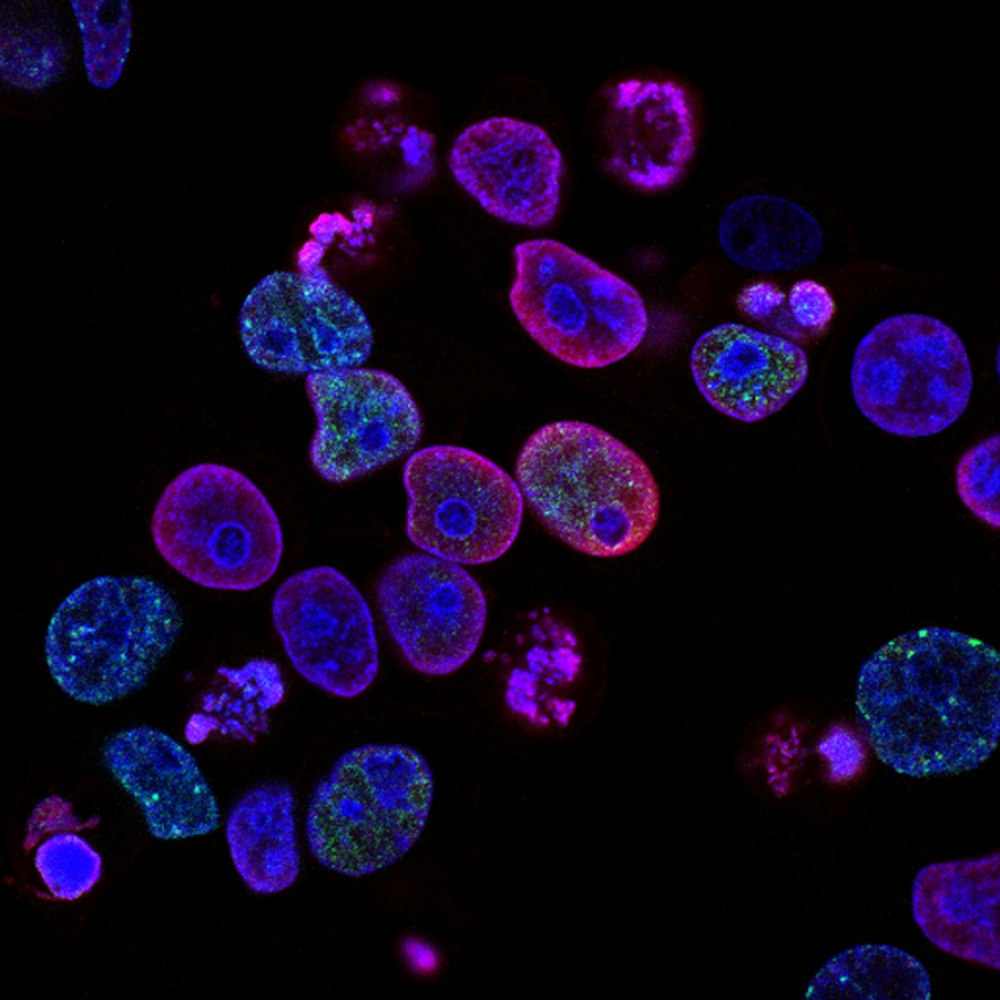
Dr. Saha's work continues to inspire new generations of researchers.
By understanding this "stop" signal, scientists can now explore ways to manipulate it—to enhance regeneration in failing livers or to apply the brakes in cancers where this pathway is broken. Dr. Saha's legacy is a powerful reminder that the pursuit of fundamental knowledge is the essential first step toward healing.
His light may have been dimmed too soon, but the path he illuminated continues to guide us toward a healthier future.
In Memoriam
Dr. Supriya "Shoop" Saha (1980-2020)