The Definitive Guide to Flow Cytometry Potency Assays for MSC Therapies: From Validation to Clinical Release
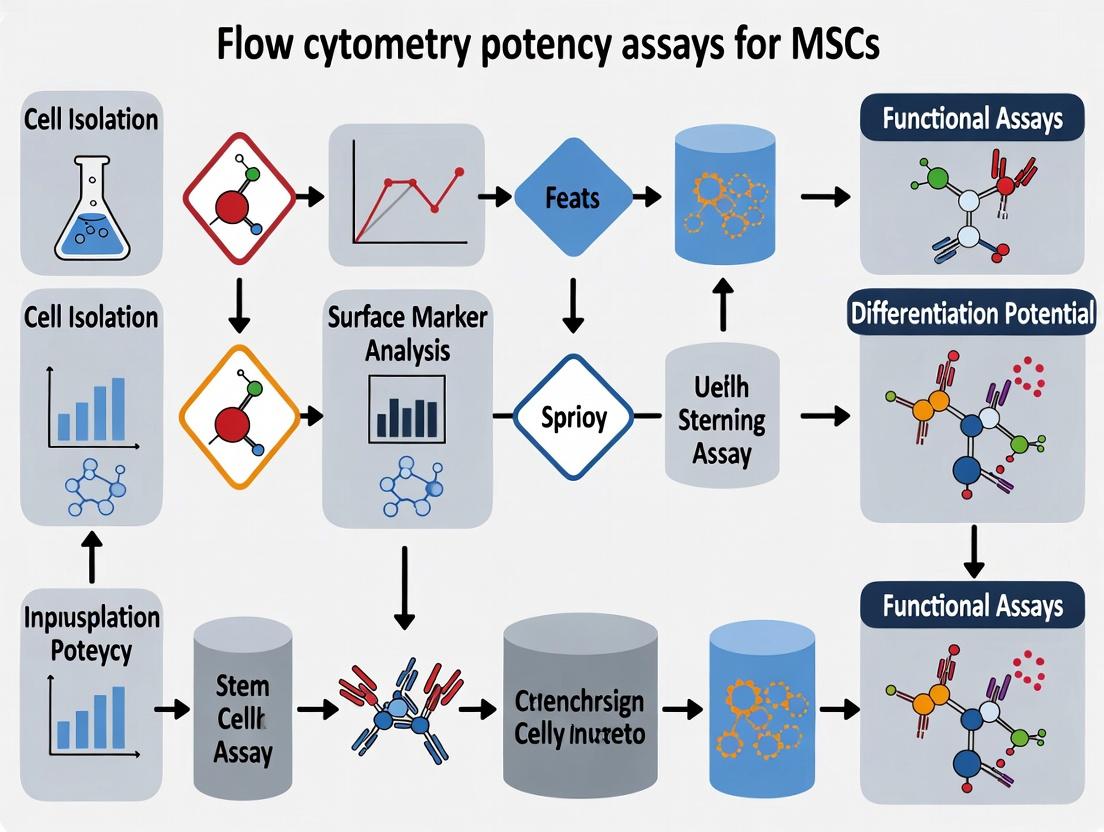
This comprehensive guide provides researchers and drug development professionals with an in-depth analysis of flow cytometry-based potency assays for Mesenchymal Stromal/Stem Cells (MSCs).
The Definitive Guide to Flow Cytometry Potency Assays for MSC Therapies: From Validation to Clinical Release
Abstract
This comprehensive guide provides researchers and drug development professionals with an in-depth analysis of flow cytometry-based potency assays for Mesenchymal Stromal/Stem Cells (MSCs). It explores the foundational principles, critical markers (ISCT and beyond), and the role of potency in defining MSC mechanism of action. The article details advanced methodologies for multi-parameter panel design, intracellular staining, and data analysis to quantify immunomodulatory, homing, and trophic functions. It addresses common troubleshooting challenges, optimization strategies for assay robustness, and the critical path to analytical validation following ICH Q2(R2) and USP guidelines. Finally, it compares flow cytometry to other functional assays (like suppression or cytokine secretion) and discusses its integration into a holistic potency strategy for clinical lot release and regulatory filing.
Decoding MSC Potency: Why Flow Cytometry is the Cornerstone of Functional Characterization
The transition of mesenchymal stromal cell (MSC) therapies from research to regulated clinical products necessitates robust potency assays. While identity (e.g., surface marker expression: ≥95% positive for CD73, CD90, CD105; ≤2% positive for CD34, CD45, CD11b, CD19, HLA-DR) confirms "what the cells are," potency defines "what the cells do"—their biological activity relevant to their therapeutic effect. Moving beyond correlation to causality requires assays that probe specific Mechanisms of Action (MOA), such as immunomodulation, trophic support, or homing. This document provides application notes and protocols for flow cytometry-based assays designed to measure functional potency.
Application Notes: Quantifying MSC MOA
Table 1: Core MSC Mechanisms of Action and Associated Potency Metrics
| Mechanism of Action (MOA) | Key Functional Readout | Quantitative Flow Cytometry Metric | Typical Benchmark (Range) |
|---|---|---|---|
| Immunomodulation | T-cell Suppression | Inhibition of CD3/CD28-stimulated T-cell proliferation (%) | 40-70% inhibition at 1:10 (MSC:PBL) ratio |
| Monocyte Modulation | Induction of CD206+ HLA-DRlo M2-like Macrophages (%) | 25-50% of co-cultured monocytes | |
| Trophic / Regenerative | Angiogenic Potential | Secretion of VEGF, HGF (Measured via intracellular staining) | MFI Fold Increase: 2-5x over unstimulated control |
| Homing / Engraftment | Adhesion/Migration Potential | Surface Expression of CXCR4 (CD184) | % Positive MSCs: 10-40% (donor/variable) |
| Secretory Profile | Paracrine Factor Production | Intracellular TNFa-Stimulated Gene 6 (TSG-6) | % Positive MSCs: >60% post-inflammatory priming |
Detailed Experimental Protocols
Protocol 1: Flow Cytometric Assay for MSC-Mediated T-Cell Suppression
Objective: To quantify the immunomodulatory potency of MSCs by measuring their capacity to inhibit the proliferation of activated peripheral blood mononuclear cells (PBMCs).
Materials (Research Reagent Solutions):
- CFSE (Carboxyfluorescein succinimidyl ester): Cell-permeable dye for tracking proliferation by fluorescence dilution.
- Anti-human CD3/CD28 Activation Beads: Provides a standardized, surface-bound stimulus to activate T-cells via the TCR complex.
- Flow Cytometry Staining Buffer (PBS + 2% FBS): For cell resuspension and staining to minimize non-specific antibody binding.
- Anti-human CD3-APC Antibody: Used to specifically gate on T-lymphocytes within the PBMC population.
- Propidium Iodide (PI) or 7-AAD: Viability dye to exclude dead cells from analysis.
Procedure:
- MSC Preparation: Seed candidate MSCs in a 96-well U-bottom plate at 2 x 10⁴ cells/well. Allow to adhere overnight.
- PBMC Labeling: Isolate PBMCs from donor blood. Resuspend PBMCs at 1-2 x 10⁷ cells/mL in pre-warmed PBS/0.1% BSA. Add CFSE to a final concentration of 0.5-1 µM, incubate 10 min at 37°C. Quench with 5x volume of complete culture medium.
- Co-culture: Stimulate CFSE-labeled PBMCs (2 x 10⁵ cells/well) with anti-human CD3/CD28 beads (bead:cell ratio 1:1). Add them directly to MSC monolayers (MSC:PBMC ratio of 1:10). Include controls: PBMCs alone (unstimulated and stimulated).
- Incubation: Culture for 5 days.
- Harvest & Stain: Gently pipette to dislodge non-adherent cells. Combine with trypsinized MSCs (optional). Wash cells, stain with anti-CD3-APC and viability dye for 20 min at 4°C.
- Acquisition & Analysis: Acquire on a flow cytometer. Gate on live, CD3+ lymphocytes. Analyze CFSE fluorescence intensity. Calculate % inhibition of proliferation:
[1 - (% Divided in Co-culture / % Divided in Stimulated Control)] x 100.
Protocol 2: Intracellular Staining for TSG-6 as a Potency Marker
Objective: To measure the inducible expression of the anti-inflammatory protein TSG-6, reflecting MSC responsiveness to an inflammatory environment.
Procedure:
- Priming: Treat MSCs with 20 ng/mL recombinant human TNF-α for 6-12 hours. Include an unprimed control.
- Fixation and Permeabilization: Harvest MSCs using trypsin. Wash, then fix cells with 4% paraformaldehyde for 15 min at RT. Wash, then permeabilize with 90% ice-cold methanol for 30 min on ice.
- Intracellular Staining: Wash cells thoroughly to remove methanol. Block with 3% BSA for 15 min. Incubate with anti-TSG-6 primary antibody (or corresponding isotype control) for 1 hour at RT. Wash, then incubate with a fluorochrome-conjugated secondary antibody for 30 min at 4°C (protected from light).
- Acquisition: Wash and resuspend in staining buffer. Acquire on a flow cytometer. Report results as the percentage of TSG-6 positive cells and/or the Median Fluorescence Intensity (MFI) fold-change over the isotype or unprimed control.
Visualizations
Diagram 1: MSC Immunomodulation via IDO & PGE2 Pathways
Diagram 2: Workflow for a Multi-Parameter MSC Potency Assay
The Scientist's Toolkit: Key Reagents for Flow-Based Potency Assays
Table 2: Essential Research Reagents
| Reagent / Material | Function / Relevance | Example Application |
|---|---|---|
| Fluorescent Cell Linker Dyes (CFSE, CellTrace Violet) | Covalently labels cytoplasmic proteins to track cell division via dye dilution. | Quantifying inhibition of immune cell proliferation. |
| Cocktails of Recombinant Cytokines (IFN-γ, TNF-α, IL-1β) | Used to "prime" or license MSCs, mimicking an inflammatory milieu to induce MOA-relevant factor production. | Upregulating IDO1, TSG-6, or COX-2/PGE2 pathways prior to assay. |
| Fixable Viability Dyes (e.g., Zombie NIR) | Distinguishes live from dead cells by covalently binding to amines in non-viable cells. Critical for accurate analysis. | Excluding dead cells in co-culture assays to prevent false positives. |
| Intracellular Staining Buffer Sets (Fix/Perm) | Reagent systems for fixing cells and permeabilizing membranes to allow antibody access to intracellular targets. | Staining for induced proteins like TSG-6, IDO1, or cytokines. |
| Multicolor Flow Cytometry Antibody Panels | Pre-optimized or custom antibody mixes for surface and intracellular targets. | Simultaneously analyzing immune cell phenotype (CD4, CD8, CD25, CD127) and MSC markers. |
| Compensation Beads (Anti-Mouse/Rat Ig κ) | Antibody-capture beads used to calculate spectral overlap (compensation) between fluorochromes. | Essential for setting up any multicolor flow cytometry experiment. |
The ISCT Minimum Criteria and Their Limitations for Potency Assessment
Within the broader thesis on flow cytometry potency assays for Mesenchymal Stromal Cells (MSCs), the 2006 International Society for Cell & Gene Therapy (ISCT) minimal criteria serve as a foundational benchmark. While essential for defining MSC identity (plastic adherence, surface marker expression, and trilineage differentiation), these criteria are insufficient for predicting or confirming therapeutic potency for specific clinical indications. This creates a critical gap in advanced therapy medicinal product (ATMP) development, necessitating the development of functional potency assays that correlate with in vivo mechanism of action.
Quantitative Comparison of Criteria vs. Proposed Potency Attributes
Table 1: ISCT Minimum Criteria vs. Proposed Potency Attributes for MSCs
| Aspect | ISCT Minimum Defining Criteria (2006) | Proposed Potency-Associated Attributes |
|---|---|---|
| Primary Purpose | Standardized in vitro identification of MSCs. | Predict in vivo therapeutic efficacy for a specific indication. |
| Adherence | Must be plastic-adherent under standard culture. | Functional adhesion molecule expression (e.g., for vascular migration). |
| Surface Markers | ≥95% positive: CD105, CD73, CD90. ≤2% positive: CD45, CD34, CD14/CD11b, CD79a/CD19, HLA-DR. | Quantitative expression of immunomodulatory (e.g., PD-L1, HLA-G) or homing (e.g., CXCR4) markers. |
| Differentiation | Osteogenic, adipogenic, and chondrogenic differentiation in vitro. | Secretion of bioactive molecules (TSG-6, PGE2, IDO, VEGF, etc.). |
| Potency Link | None. Purely identity/quality metrics. | Direct correlation to hypothesized mechanism of action (e.g., IDO activity for immunomodulation). |
| Assay Type | Static, quality control. | Dynamic, lot-to-lot functional release test. |
Experimental Protocols for Key Potency Assessments
Protocol 3.1: Flow Cytometry-Based Quantification of Immunomodulatory Surface Markers Objective: To quantitatively assess the expression of potency-linked surface markers (e.g., PD-L1, HLA-G, CD274) under pro-inflammatory priming. Materials: Human MSCs, IFN-γ, flow cytometer, antibodies (CD274-PE, HLA-G-APC, relevant isotype controls), staining buffer. Procedure:
- Cell Priming: Seed MSCs at 70% confluence. Treat experimental group with 50 ng/mL IFN-γ for 24-48 hours. Maintain an unprimed control.
- Harvesting: Detach cells using a gentle dissociation reagent. Wash with PBS.
- Staining: Aliquot 1x10^5 cells per tube. Resuspend in 100 µL staining buffer containing fluorochrome-conjugated antibodies or isotype controls. Incubate for 30 min at 4°C in the dark.
- Acquisition: Wash cells twice, resuspend in buffer, and analyze on a flow cytometer. Collect ≥10,000 events per sample.
- Analysis: Use median fluorescence intensity (MFI) and % positive cells compared to isotype controls. Calculate fold-change in MFI for primed vs. unprimed cells.
Protocol 3.2: Indoleamine 2,3-Dioxygenase (IDO) Functional Enzymatic Assay Objective: To measure functional IDO activity, a key potency metric for immunomodulatory MSCs. Materials: MSCs, IFN-γ, L-Tryptophan, Trichloroacetic acid, Ehrlich’s reagent, spectrophotometer. Procedure:
- Stimulation: Seed MSCs in a 96-well plate. Stimulate with 100 ng/mL IFN-γ for 48 hours.
- Reaction: Add 0.5 mM L-Tryptophan in serum-free media to stimulated and unstimulated wells. Incubate for 24 hours.
- Detection: Transfer supernatant to a new plate. Add 30% Trichloroacetic acid, incubate at 50°C for 30 min to hydrolyze N-formylkynurenine to kynurenine. Centrifuge.
- Readout: Mix supernatant with equal volume of Ehrlich’s reagent in a fresh plate. Incubate for 10 min at room temperature.
- Measurement: Read absorbance at 490 nm. Compare to a kynurenine standard curve. Express IDO activity as µM kynurenine produced per hour per 10^6 cells.
Visualizations
Title: Bridging the ISCT Criteria Potency Gap
Title: Integrated MSC Potency Assessment Workflow
The Scientist's Toolkit: Key Reagent Solutions
Table 2: Essential Research Reagents for MSC Potency Assessment
| Reagent/Material | Function & Application in Potency Assays |
|---|---|
| Recombinant Human IFN-γ | Gold-standard priming cytokine to induce immunomodulatory phenotype in MSCs; used to stimulate IDO, PGE2, and PD-L1 expression. |
| Fluorochrome-conjugated Antibodies (CD274/PD-L1, HLA-G, CXCR4) | Critical for flow cytometry-based quantification of potency-linked surface markers before and after priming. |
| L-Tryptophan & Kynurenine Standard | Substrate and standard for the functional colorimetric or HPLC-based IDO enzymatic activity assay. |
| Prostaglandin E2 (PGE2) ELISA Kit | Quantifies secreted PGE2, a key soluble mediator of MSC-mediated immunomodulation. |
| Multiplex Immunoassay (e.g., Luminex/MSD) | Simultaneously measures a panel of MSC-secreted cytokines/chemokines (VEGF, IL-6, MCP-1, etc.) from conditioned media. |
| Peripheral Blood Mononuclear Cells (PBMCs) | Used as responder cells in functional co-culture suppression assays to measure MSC immunomodulatory potency. |
| CFSE Cell Proliferation Dye | Fluorescent dye to label PBMCs or T-cells for tracking proliferation inhibition by MSCs in co-culture assays via flow cytometry. |
| Trilineage Differentiation Kit (Osteo, Adipo, Chondro) | Validates MSC multipotency per ISCT criteria, a baseline quality attribute preceding potency testing. |
Within the thesis framework on flow cytometry potency assays for MSCs, defining robust, quantitative markers for critical functions is paramount. The translation of Mesenchymal Stromal Cell (MSC) therapies necessitates moving beyond basic phenotypic characterization to assess functional potency. This document details application notes and protocols for evaluating key markers linked to three cardinal MSC therapeutic mechanisms: Immunomodulation, Homing, and Secretion of Matrix/Trophic Factors. Flow cytometry serves as a central, high-throughput technology to quantify these markers at the single-cell level, correlating surface and intracellular protein expression with predicted in vivo efficacy.
Application Notes & Protocols
Immunomodulatory Markers: PD-L1, IDO, HLA-G
Application Note: The immunosuppressive capacity of MSCs is highly inducible, often requiring licensing with pro-inflammatory cytokines like IFN-γ and TNF-α. Quantifying induced expression of immunomodulatory markers provides a direct measure of this dynamic potency. PD-L1 (CD274) mediates T-cell suppression via the PD-1 receptor. Indoleamine 2,3-dioxygenase (IDO) is an intracellular enzyme that catabolizes tryptophan, inhibiting lymphocyte proliferation. HLA-G is a non-classical MHC class I molecule inducing immune tolerance.
Protocol: Flow Cytometry for Induced Immunomodulatory Markers
- Objective: To quantify the inducible expression of PD-L1 and HLA-G, and intracellular IDO, in MSCs following inflammatory priming.
- Materials: Licensed MSCs (passage 3-5), Complete MSC medium, Recombinant human IFN-γ (50 ng/mL) and TNF-α (20 ng/mL), Fixation/Permeabilization Buffer Kit, Flow cytometry buffer (PBS + 2% FBS), Antibodies (see Toolkit).
- Procedure:
- Cell Seeding & Licensing: Seed MSCs at 10,000 cells/cm². At ~70% confluence, replace medium with fresh medium containing IFN-γ/TNF-α. Include an unlicensed control (no cytokines). Incubate for 24-48 hours (IDO peak ~24h, PD-L1/HLA-G peak ~48h).
- Harvesting: Detach cells using a gentle enzyme-free dissociation buffer. Wash cells twice in flow cytometry buffer.
- Surface Staining (PD-L1, HLA-G): Aliquot cells. Resuspend cell pellets in 100 µL buffer containing pre-titrated antibodies against PD-L1 and HLA-G. Incubate for 30 min at 4°C in the dark. Wash twice.
- Fixation and Permeabilization: Fix and permeabilize cells using a commercial kit (e.g., BD Cytofix/Cytoperm) according to manufacturer instructions.
- Intracellular Staining (IDO): Resuspend fixed/permeabilized cells in 100 µL perm/wash buffer containing anti-IDO antibody. Incubate 30-45 min at 4°C in the dark.
- Acquisition: Wash cells twice in perm/wash buffer, then resuspend in flow buffer. Acquire data on a flow cytometer, collecting ≥10,000 single-cell events.
- Analysis: Gate on viable, single cells. Report results as Median Fluorescence Intensity (MFI) and % Positive Cells relative to isotype controls for each marker.
Homing Marker: CXCR4
Application Note: CXCR4 (CD184) is the receptor for SDF-1α (CXCL12), a key chemokine guiding MSC migration to injury sites. Its expression is often low on cultured MSCs but can be modulated. Flow cytometry assessment of CXCR4 provides a potency indicator for migratory capacity.
Protocol: CXCR4 Surface Staining & Analysis
- Objective: To quantify CXCR4 surface expression on MSCs under standard and potentially enhancing conditions.
- Materials: MSCs, Complete medium, CXCR4 enhancing reagents (e.g., 100 nM Hypoxia Mimetic - Desferrioxamine, or specific cytokine cocktails), anti-human CXCR4 antibody.
- Procedure:
- Treatment: Culture MSCs under standard (normoxic) and test conditions (e.g., 24-48 hr hypoxic mimetic treatment).
- Harvest & Stain: Harvest cells gently. Perform surface staining for CXCR4 as described in 1.1, step 3. Note: CXCR4 is sensitive to trypsin; use non-enzymatic detachment.
- Acquisition & Analysis: Acquire and analyze as in 1.1, steps 6-7. MFI is the critical readout due to often heterogenous expression.
Matrix & Trophic Factor Secretion Assessment
Application Note: While secretion is measured via ELISA/multiplex, flow cytometry can identify the secreting cell population and co-expression patterns. This protocol uses intracellular staining for factors like VEGF, HGF, or FGF2 post-secretion inhibition.
Protocol: Intracellular Staining for Trophic Factors
- Objective: To quantify the intracellular store of key trophic factors in MSCs.
- Materials: Protein transport inhibitor (e.g., Brefeldin A, 1µg/mL, 4-6h), Intracellular staining kit, antibodies for VEGF, HGF.
- Procedure:
- Inhibition: Treat MSC cultures with a protein transport inhibitor to accumulate cytokines intracellularly.
- Harvest, Fix, Permeabilize: Harvest cells, then fix and permeabilize as in 1.1, step 4.
- Intracellular Staining: Stain for VEGF and/or HGF following 1.1, step 5.
- Analysis: Determine the % of VEGF+/HGF+ cells and MFI as an indicator of secretory potential.
Data Presentation
Table 1: Typical Expression Ranges for Key MSC Potency Markers by Flow Cytometry
| Marker | Function | Baseline (% Positive ± SD) | Induced (e.g., IFN-γ/TNF-α) (% Positive ± SD) | Key Readout |
|---|---|---|---|---|
| PD-L1 | Immunosuppression | 5-20% | 70-95% | % Positive, MFI |
| IDO | Immunosuppression | 1-10% | 60-85% | % Positive, MFI |
| HLA-G | Immunosuppression | 2-15% | 40-75% | % Positive |
| CXCR4 | Homing/Migration | 10-30% (Variable) | 40-70% (with enhancers) | MFI |
| VEGF | Trophic/Angiogenic | 15-35%* | 50-80%* (Hypoxia) | % Positive, MFI |
Note: Data are illustrative composites from recent literature. SD = Standard Deviation. *Intracellular staining post-secretion inhibition.
Table 2: Example Flow Cytometry Panel for Concurrent MSC Potency Marker Analysis
| Fluorochrome | Marker | Specificity | Purpose |
|---|---|---|---|
| FITC | PD-L1 | Surface | Immunomodulation |
| PE | HLA-G | Surface | Immunomodulation |
| PerCP-Cy5.5 | CXCR4 | Surface | Homing |
| APC | CD105 | Surface | MSC Phenotype (Gating) |
| PE-Cy7 | Live/Dead | Viability | Exclusion |
| Fixed, then BV421 | IDO | Intracellular | Immunomodulation |
Signaling Pathways & Workflow Diagrams
Title: MSC Immunomodulation Pathway Induction
Title: Flow Cytometry Workflow for MSC Potency Markers
The Scientist's Toolkit: Research Reagent Solutions
| Item | Function in MSC Potency Assays | Example/Note |
|---|---|---|
| Recombinant Human IFN-γ & TNF-α | Licenses MSCs to induce high expression of immunomodulatory markers (PD-L1, IDO, HLA-G). | Use at 50 ng/mL and 20 ng/mL respectively for 24-48h. Critical for potency assessment. |
| Hypoxia Mimetic (e.g., DFO) | Upregulates homing markers (CXCR4) and trophic factors (VEGF) by simulating a low-oxygen environment. | Desferrioxamine (DFO) at 100-200 µM for 24-48h. Alternative: Hypoxia chamber (1-5% O₂). |
| Protein Transport Inhibitor | Accumulates secreted cytokines (VEGF, HGF) inside the cell for intracellular detection by flow cytometry. | Brefeldin A (1µg/mL, 4-6h treatment). Use for trophic factor staining protocols. |
| Fluorochrome-conjugated Antibodies | Direct detection of surface/intracellular markers. Panel design requires careful compensation. | Anti-human: CD274 (PD-L1), CD184 (CXCR4), IDO, HLA-G, VEGF. Always include isotype controls. |
| Live/Dead Fixable Viability Dye | Distinguishes viable from non-viable cells, crucial for accurate potency measurement. | e.g., Zombie NIR, Fixable Viability Dye eFluor 780. Stain in PBS before fixation. |
| Fixation/Permeabilization Kit | Enables intracellular staining for IDO and trophic factors after surface marker staining. | Commercial kits (e.g., Foxp3/Transcription Factor Staining Buffer Set) ensure consistency. |
| Flow Cytometry Analysis Software | For calculating %Positive cells and Median Fluorescence Intensity (MFI) from acquired data. | FlowJo, FCS Express, or instrument-native software. Use consistent gating strategies. |
Correlating Surface and Intracellular Protein Expression with Biological Function
Within the broader thesis on developing robust flow cytometry-based potency assays for Mesenchymal Stromal Cells (MSCs), correlating specific protein expression patterns with biological function is paramount. MSCs are functionally heterogeneous, and their therapeutic efficacy (e.g., immunomodulation, tissue repair) is linked to the expression of surface markers (e.g., immunophenotypic markers, homing receptors) and intracellular functional proteins (e.g., indoleamine 2,3-dioxygenase (IDO), hepatocyte growth factor (HGF), TGF-β). This application note details protocols to quantitatively link these expression profiles to functional outcomes, enabling the development of predictive potency assays.
Table 1: Correlation of MSC Surface Marker Expression with Immunomodulatory Function (In Vitro T-cell Suppression Assay)
| Surface Marker | Mean Expression (%) in High-Potency Batches (n=5) | Mean Expression (%) in Low-Potency Batches (n=5) | P-value (t-test) | Correlation (r) with % T-cell Suppression |
|---|---|---|---|---|
| CD106 (VCAM-1) | 78.4 ± 6.2 | 25.1 ± 8.7 | <0.001 | 0.89 |
| CD274 (PD-L1) | 65.3 ± 9.1 | 18.9 ± 5.4 | <0.001 | 0.82 |
| CD54 (ICAM-1) | 92.5 ± 3.0 | 85.7 ± 10.2 | 0.12 | 0.31 |
| CD90 | 99.5 ± 0.5 | 98.9 ± 1.1 | 0.23 | 0.15 |
Table 2: Intracellular Functional Protein Induction Post-Inflammatory Priming
| Intracellular Protein | Mean Fluorescence Intensity (MFI) Unprimed | MFI after IFN-γ Priming (24h) | Fold Increase | Required Level for >50% Immunosuppression |
|---|---|---|---|---|
| IDO1 | 105 ± 22 | 15500 ± 2100 | 147.6 | >7500 MFI |
| HGF | 520 ± 110 | 3800 ± 450 | 7.3 | >2000 MFI |
| TGF-β1 (latent) | 850 ± 200 | 2100 ± 320 | 2.5 | >1200 MFI |
Experimental Protocols
Protocol 1: Multiplexed Surface & Intracellular Staining for Functional Protein Correlation
Objective: To simultaneously quantify surface homing/immunomodulatory markers and intracellular functional proteins in single cells.
Materials:
- MSC monolayer (70-80% confluent).
- Priming cytokine: IFN-γ (50 ng/mL).
- Fixation/Permeabilization Buffer Kit (Intracellular Staining).
- Flow Cytometry Staining Buffer (PBS + 2% FBS).
- Antibodies: See "Research Reagent Solutions" table.
- Flow cytometer with ≥ 3 lasers.
Procedure:
- Priming: Treat MSC cultures with IFN-γ (50 ng/mL) or control medium for 24 hours.
- Harvest: Detach cells using gentle enzyme-free dissociation buffer. Wash twice in cold PBS.
- Surface Stain: Resuspend ~1x10^6 cells in 100 µL staining buffer. Add titrated amounts of surface marker antibody cocktails (e.g., CD106-BV421, CD274-PE). Vortex gently. Incubate for 30 minutes at 4°C in the dark. Wash twice with 2 mL buffer.
- Fix & Permeabilize: Resuspend cell pellet in 100 µL fixation/permeabilization buffer. Incubate 20 minutes at 4°C. Wash twice with 2 mL permeabilization wash buffer.
- Intracellular Stain: Resuspend fixed/permeabilized cells in 100 µL permeabilization buffer containing pre-titrated intracellular antibodies (e.g., IDO1-APC, HGF-FITC). Incubate 30 minutes at 4°C in the dark. Wash twice.
- Acquisition: Resuspend in 300 µL staining buffer. Acquire immediately on flow cytometer. Use FSC/SSC and viability dye to gate on live, single cells.
- Analysis: Correlate MFI of intracellular proteins with percentage positivity of surface markers on a per-cell basis using flow cytometry software.
Protocol 2: Functional Validation via T-cell Suppression Assay
Objective: To link protein expression profiles from Protocol 1 to a measurable biological outcome.
Materials:
- MSCs analyzed in Protocol 1.
- Peripheral Blood Mononuclear Cells (PBMCs) from donor.
- T-cell activator (e.g., anti-CD3/CD28 beads).
- CFSE dye for T-cell proliferation.
- IFN-γ priming medium.
Procedure:
- MSC Preparation: Split MSC sample post-flow analysis: one portion for protein analysis, another co-culture.
- T-cell Preparation: Isolate PBMCs, label CD3+ T-cells with CFSE (5 µM, 10 min), and quench with serum.
- Co-culture: Plate primed/unprimed MSCs in a 96-well U-bottom plate (5x10^3 to 2x10^4 cells/well). Add CFSE-labeled T-cells (1x10^5/well) and T-cell activator. Maintain for 5 days.
- Analysis: Harvest co-culture, stain with CD3-APC antibody, and analyze CFSE dilution via flow cytometry.
- Correlation: Calculate % suppression:
(1 - (Proliferation with MSCs / Proliferation without MSCs)) * 100. Correlate this value with matched protein expression data (MFI, % positivity) from the same MSC batch using linear regression.
Signaling Pathway & Experimental Workflow Diagrams
Title: MSC Protein-Function Correlation Workflow
Title: IFN-γ Priming Induces Functional MSC Proteins
The Scientist's Toolkit: Research Reagent Solutions
Table 3: Essential Reagents for MSC Protein-Function Correlation Assays
| Reagent / Solution | Function & Application in Protocols | Key Considerations |
|---|---|---|
| Recombinant Human IFN-γ | Inflammatory priming agent to induce functional protein expression (IDO1, PD-L1). | Use clinical-grade, aliquot to avoid freeze-thaw. Titrate for batch-specific response (e.g., 10-100 ng/mL). |
| Fixation/Permeabilization Kit (e.g., Foxp3/Transcription Factor Staining Buffer Set) | Preserves cell surface antigens while allowing intracellular antibody access. Critical for Protocol 1. | Must be compatible with surface antibodies used. Time in buffer affects light scatter properties. |
| Fluorescent-conjugated Anti-Human Antibodies (CD106, CD274, CD90, IDO1, HGF) | Quantitative detection of surface and intracellular targets via flow cytometry. | Validate clones for intracellular staining (e.g., IDO1 clone eyedio). Perform compensation and titration. |
| CFSE Cell Division Tracker | Labels T-cells to track proliferation inhibition by MSCs in co-culture assays (Protocol 2). | Optimize concentration (1-5 µM) to avoid toxicity. Quench thoroughly with serum. |
| Anti-CD3/CD28 Activation Beads | Polyclonal T-cell activator for suppression assays. Provides consistent activation baseline. | Bead-to-cell ratio must be optimized (typically 1:1). Use non-activating MSC controls. |
| Flow Cytometry Validation Beads (e.g., Rainbow Calibration Beads) | Standardizes instrument performance across experiments, ensuring MFI data comparability. | Run daily to monitor laser delays and CVs. Essential for longitudinal studies. |
Within the context of developing flow cytometry potency assays for Mesenchymal Stromal Cells (MSCs), adherence to global regulatory guidelines is paramount. Potency assays must quantitatively measure the biological activity relevant to the proposed mechanism of action (MoA). The FDA, EMA, and ICH provide the framework for these critical quality attribute assessments. The following table summarizes key guidance points relevant to MSC potency.
Table 1: Comparative Summary of Regulatory Guidelines on Potency Assays
| Aspect | FDA (CBER Guidance) | EMA (ATMP Guideline) | ICH Q6B (Specifications) |
|---|---|---|---|
| Core Definition | A quantitative measure of biological activity linked to the product's MoA. | A measure of the relevant biological activity based on the product's MoA. | The specific ability or capacity of a product to achieve its intended effect. |
| Assay Strategy | Preferable to use a matrix of assays if multiple activities contribute to efficacy. | May require multiple assays or a single multi-parameter assay for complex products. | A combination of physicochemical and biological tests may be necessary. |
| Validation | Must be validated (ICH Q2(R1)) for the intended purpose (e.g., lot release). | Analytical procedures should be validated, considering ICH guidelines. | Assays should be validated, with results reported in appropriate units. |
| Stability & Potency Link | Potency should be a stability-indicating attribute. | Potency testing is required for stability studies. | The potency profile should be established at the time of release and monitored during stability. |
| Reference Standards | Use of qualified reference standards is critical for assay calibration. | In-house primary reference material should be established and calibrated. | Reference materials and standards are essential for assay qualification/validation. |
Application Note: Developing a Multi-Parameter Flow Cytometry Potency Assay for MSCs
Context: For an MSC product where the proposed MoA involves immunomodulation (e.g., via IDO1 induction) and tissue repair (e.g., via VCAM-1/CD106 expression), a single-parameter assay is insufficient. A multi-parameter flow cytometry assay measuring intracellular IDO1 and surface CD106 after cytokine stimulation provides a quantitative, MoA-relevant potency readout.
Protocol 1: MSC Potency Assay Based on IDO1 and CD106 Induction Objective: To quantify the percentage of MSCs expressing inducible IDO1 and CD106 as a measure of immunomodulatory and tissue-homing potency.
Materials (The Scientist's Toolkit): Table 2: Key Research Reagent Solutions
| Reagent/Material | Function | Example |
|---|---|---|
| Recombinant Human IFN-γ | Stimulant to induce IDO1 and CD106 expression via the JAK-STAT pathway. | 100 ng/mL final concentration. |
| Protein Transport Inhibitor | Allows intracellular accumulation of proteins for detection (e.g., IDO1). | Brefeldin A or Monensin. |
| Anti-Human CD106 (VCAM-1) Antibody | Fluorescent-conjugated antibody for detecting surface homing marker. | APC-conjugated, clone STA. |
| Anti-Human IDO1 Antibody | Fluorescent-conjugated antibody for detecting intracellular immunomodulatory enzyme. | FITC-conjugated, clone eyedio. |
| Cell Permeabilization Buffer | Permeabilizes cell membrane to allow intracellular antibody staining. | Commercially available saponin-based buffer. |
| Flow Cytometry Viability Dye | Distinguishes live cells from dead cells for analysis accuracy. | Propidium Iodide or 7-AAD. |
| Flow Cytometer with ≥ 3 Lasers | Instrument capable of exciting and detecting multiple fluorochromes simultaneously. | Configurable for FITC, APC, and viability dye. |
| Analysis Software | Software for data acquisition and quantitative population analysis. | e.g., FlowJo, FACS DIVA. |
Detailed Methodology:
- Cell Preparation: Plate MSCs at 70-80% confluence in tissue culture flasks. Replace medium with fresh growth medium.
- Stimulation: Add recombinant human IFN-γ to a final concentration of 100 ng/mL. Include an unstimulated control (medium only). Incubate for 24 hours at 37°C, 5% CO₂.
- Inhibition of Protein Transport: For IDO1 intracellular staining, add a protein transport inhibitor (e.g., Brefeldin A, 1:1000 dilution) for the final 4-6 hours of stimulation.
- Cell Harvest and Viability Staining: Harvest cells using a gentle detachment enzyme. Wash with PBS. Resuspend cell pellet in PBS containing a viability dye (e.g., 7-AAD) and incubate for 10 minutes in the dark.
- Surface Staining (CD106): Wash cells to remove excess dye. Resuspend cell pellet in flow cytometry staining buffer (PBS + 2% FBS). Add fluorescently labeled anti-human CD106 antibody. Incubate for 30 minutes at 4°C in the dark. Wash cells twice.
- Fixation and Permeabilization: Fix cells using a 4% paraformaldehyde solution for 20 minutes at 4°C. Wash twice. Permeabilize cells using a saponin-based buffer for 10 minutes.
- Intracellular Staining (IDO1): Centrifuge and resuspend cell pellet in permeabilization buffer containing the fluorescently labeled anti-human IDO1 antibody. Incubate for 30 minutes at 4°C in the dark.
- Acquisition: Wash cells twice and resuspend in staining buffer. Acquire data on a flow cytometer, collecting a minimum of 10,000 live cell events per sample.
- Analysis: Gate on live, single cells. Analyze the percentage of cells positive for CD106 (surface) and IDO1 (intracellular). Report potency as the Product Potency Index (PPI) = (% CD106+ * % IDO1+) / 100 for the IFN-γ stimulated sample, normalized to the unstimulated control.
Title: Flow Cytometry Potency Assay Protocol Workflow
Title: IFN-γ Induced Potency Marker Signaling Pathway
Protocol 2: Assay Qualification for Regulatory Submission
Objective: To outline key experiments qualifying the above potency assay for lot release, per ICH Q2(R1) and Q14 principles.
Detailed Methodology:
- Specificity: Demonstrate the assay detects only IDO1 and CD106. Use isotype controls and verify staining is abolished by pre-incubation with recombinant target protein.
- Precision (Repeatability & Intermediate Precision):
- Repeatability: Analyze three different MSC batches, each in triplicate, by the same analyst on the same day. Calculate %CV for the PPI.
- Intermediate Precision: Repeat the repeatability study with a second analyst on different days. Perform ANOVA to determine inter-analyst and inter-day variability.
- Linearity & Range: Create a dilution series of a reference MSC sample with high potency (e.g., 100%, 75%, 50%, 25% viable cells in a fixed population) and demonstrate the PPI response is linear across the specified range (e.g., 20%-120% of target potency).
- Robustness: Deliberately introduce small variations (e.g., ±2 hours stimulation time, ±10% antibody volume, different lots of IFN-γ). Measure impact on PPI.
- System Suitability: Establish and document critical instrument performance parameters (e.g., laser delays, CV of standardization beads, fluorescence sensitivity) to be checked before each acquisition run.
Table 3: Example Qualification Acceptance Criteria (Target)
| Qualification Parameter | Target Acceptance Criterion |
|---|---|
| Specificity | Isotype control signal < 2% positive. Signal inhibition > 80% with antigen block. |
| Repeatability (Intra-assay %CV) | ≤ 15% for PPI. |
| Intermediate Precision (Inter-assay %CV) | ≤ 20% for PPI. |
| Linearity (R²) | ≥ 0.95 across specified range. |
| Range | 20% to 120% of expected potency. |
Building Your Assay: Panel Design, Staining Protocols, and Gating Strategies for MSC Potency
Within the context of developing robust flow cytometry potency assays for mesenchymal stromal cell (MSC) therapeutics, sample preparation is a critical pre-analytical variable. The choice of handling live, fixed, or permeabilized cells dictates which cellular attributes—surface markers, intracellular proteins, or functional states—can be interrogated. Consistent, optimized protocols are essential for generating reliable, reproducible data that meets regulatory standards for advanced therapy medicinal products (ATMPs).
Key Considerations and Quantitative Benchmarks
Table 1: Comparative Overview of MSC Sample Preparation States
| Preparation State | Primary Purpose | Key Applications in Potency Assays | Stability Post-Processing | Common Pitfalls |
|---|---|---|---|---|
| Live (Unfixed) | Functional assays, viability, surface marker detection. | Immunomodulatory marker (e.g., PD-L1, HLA-DR) quantification, apoptosis assays, sorting. | Hours; requires immediate analysis or cryopreservation. | Receptor internalization, enzymatic degradation, cell death. |
| Fixed (Stabilized) | Preservation of cellular morphology and surface epitopes. | Phenotypic characterization (ISCT markers: CD73, CD90, CD105), snapshot of surface protein expression. | Weeks to months at 4°C. | Over-fixation can mask epitopes; no intracellular access. |
| Permeabilized | Detection of intracellular & intranuclear targets. | Measurement of tri-lineage differentiation transcription factors (e.g., RUNX2, PPARγ), cytokine production (e.g., IDO), phospho-proteins in signaling pathways. | Weeks (when fixed first). | Incomplete permeabilization; leakage of cellular components. |
Table 2: Optimized Fixation & Permeabilization Reagent Systems
| Reagent System | Fixative Agent | Permeabilizer Agent | Best Suited For | Typical Incubation Time |
|---|---|---|---|---|
| Aldehyde-based (e.g., PFA) | Formaldehyde (1-4%) | Detergent (e.g., Saponin, Triton X-100) | Cytoplasmic proteins, cytoskeleton. | Fix: 10-15 min RT; Perm: 15 min RT. |
| Alcohol-based | Methanol / Ethanol (cold) | Intrinsic (Alcohol itself) | Nuclear transcription factors, phospho-epitopes. | Combined Fix/Perm: 15 min - 2 hr at -20°C. |
| Commercial Kits (e.g., FoxP3 staining buffers) | Formaldehyde | Dedicated detergent buffers | Complex intracellular targets (cytokines, nuclear factors). | As per manufacturer (often Fix: 30-60 min; Perm: 30-60 min). |
Detailed Experimental Protocols
Protocol 1: Preparation of Live MSCs for Surface Staining and Viability Assessment
Purpose: To phenotype MSCs via ISCT markers while assessing viability, excluding dead cells from analysis. Materials: MSC culture, DPBS (Ca2+/Mg2+ free), FBS, viability dye (e.g., 7-AAD, DAPI), fluorochrome-conjugated antibodies (CD73, CD90, CD105, CD45, CD34), flow cytometry staining buffer. Procedure:
- Harvest & Wash: Harvest cells using gentle enzymatic dissociation (e.g., TrypLE). Neutralize with complete medium. Wash cells once with DPBS by centrifugation (300 x g, 5 min).
- Count & Aliquot: Count cells using an automated counter or hemocytometer. Aliquot 1x10^5 to 5x10^5 cells per staining tube.
- Fc Block (Optional): Resuspend cell pellet in 100 µL buffer containing 1% FBS or human Fc block for 10 min on ice.
- Surface Staining: Add pre-titrated antibody cocktail directly to the tube (no wash). Mix gently and incubate for 30 min in the dark at 4°C.
- Viability Staining: Add viability dye (e.g., 1 µL of 7-AAD) for the last 5-10 minutes of incubation.
- Wash & Resuspend: Wash cells twice with 2 mL cold staining buffer. Resuspend in 300-500 µL of buffer for immediate acquisition on a flow cytometer.
Protocol 2: Fixation of MSCs for Surface Marker Analysis
Purpose: To stabilize cell surface immunophenotype for delayed analysis or transportation. Materials: Live MSC sample, 4% Paraformaldehyde (PFA) in PBS, flow cytometry staining buffer. Procedure:
- Complete Surface Staining: Follow Protocol 1 steps 1-4 for surface staining with live cells. Do not add viability dye.
- Fixation: After the final wash, resuspend the cell pellet gently in 100 µL of PBS.
- Add Fixative: Add 100 µL of 4% PFA (to achieve a final concentration of 2%) drop-wise while vortexing gently. Incubate for 10-15 minutes at room temperature (RT) in the dark.
- Wash: Add 2 mL of staining buffer and centrifuge (400 x g, 5 min). Decant supernatant.
- Storage: Resuspend fixed cells in 0.5-1 mL of staining buffer or PBS. Store at 4°C in the dark for up to 4 weeks. Acquire on flow cytometer.
Protocol 3: Intracellular Staining for Potency Markers (Fixation & Permeabilization)
Purpose: To detect intracellular proteins indicative of MSC potency (e.g., IDO, HGF, or transcription factors). Materials: Live or fixed MSC sample, fixation buffer (4% PFA), permeabilization buffer (0.1-0.5% Saponin or Triton X-100 in buffer), intracellular staining antibodies. Procedure: A. For Cytoplasmic Proteins (e.g., IDO):
- Surface Stain & Fix: Perform surface staining (if required) following Protocol 1 steps 1-4. Then fix cells using Protocol 2 steps 2-4.
- Permeabilize: Resuspend the fixed cell pellet in 100 µL of permeabilization buffer. Incubate for 15 minutes at RT in the dark.
- Intracellular Stain: Add directly titrated intracellular antibody to the tube. Do not wash. Incubate for 30-45 min at RT in the dark.
- Wash & Resuspend: Wash cells twice with 2 mL of permeabilization buffer. Resuspend in standard staining buffer for flow cytometry analysis. B. For Nuclear Proteins (e.g., Transcription Factors):
- Fix & Permeabilize Simultaneously: Resuspend live, stained or unstained cells in 1 mL of ice-cold 70% ethanol added drop-wise while vortexing. Incubate at -20°C for at least 30 minutes.
- Wash: Pellet cells (600 x g, 5 min) and wash twice with staining buffer.
- Intracellular Stain: Proceed with intracellular staining as in Step A.3-4 above.
Diagrams
The Scientist's Toolkit: Research Reagent Solutions
Table 3: Essential Materials for MSC Flow Sample Preparation
| Item | Function in MSC Preparation | Example/Note |
|---|---|---|
| Gentle Dissociation Reagent | Harvests adherent MSCs while preserving surface receptors. | TrypLE Select; superior to trypsin for epitope integrity. |
| Flow Cytometry Staining Buffer | Provides protein background reduction and cell stability during staining. | PBS with 0.5-2% BSA or FBS and 0.1% sodium azide. |
| Viability Dye | Distinguishes live from dead cells; critical for accurate phenotyping. | 7-AAD, DAPI (for fixed/permeabilized), or LIVE/DEAD fixable dyes. |
| Paraformaldehyde (PFA) | Cross-linking fixative. Preserves morphology and surface proteins. | Typically 2-4% solution in PBS. Prepare fresh or use stabilized commercial solutions. |
| Permeabilization Agent | Creates pores in membranes for antibody access to intracellular spaces. | Saponin: For cytoplasmic targets (reversible pores). Triton X-100: For robust permeabilization (irreversible). |
| Intracellular Staining Buffer | Maintains antibody stability and low background during permeabilized staining. | Typically staining buffer with added permeabilizing agent (e.g., 0.1% Saponin). |
| Fc Receptor Block | Reduces nonspecific antibody binding via Fc receptors. | Human Fc Block (purified human IgG) or species-specific serum. |
| Antibody Panels | Multiplex detection of surface and intracellular targets. | ISCT Minimal Panel: CD73, CD90, CD105, CD45, CD34. Potency Panel: e.g., IDO, PD-L1, HLA-G. |
| Cryopreservation Medium | For long-term storage of live cells prior to analysis. | 90% FBS + 10% DMSO or commercially defined serum-free formulations. |
Within the critical context of developing robust flow cytometry potency assays for Mesenchymal Stromal Cells (MSCs), selecting the appropriate staining protocol for functional markers is paramount. MSCs' therapeutic efficacy—spanning immunomodulation, homing, and differentiation—is linked to the expression of both surface receptors and intracellular proteins. This application note provides a detailed comparative analysis and protocol for surface versus intracellular staining, focusing on key functional markers like cytokines, chemokines, and signaling intermediates essential for characterizing MSC potency.
Key Concepts and Quantitative Comparison
Table 1: Comparison of Surface vs. Intracellular Staining for MSC Functional Markers
| Parameter | Surface Staining | Intracellular Staining (Cytokine/Chemokine) |
|---|---|---|
| Primary Target | Constitutively expressed or induced surface receptors (e.g., CD274/PD-L1, CXCR4) | Synthesized and secreted proteins (e.g., IL-10, IDO, HGF, TSG-6) |
| Typical Fixation/Permeabilization | None or mild fixation only (post-stain) | Required (strong cross-linker fixative + permeabilization agent) |
| Cell Viability Post-Procedure | High (>95% with live-stain) | Reduced (70-90%, depends on protocol harshness) |
| Optimal Stimulation Duration | 6-24 hours (for induced surface markers) | 4-6 hours with protein transport inhibitor (e.g., Brefeldin A) |
| Common MSC Functional Markers | PD-L1, ICAM-1, HLA-DR (induced), Chemokine Receptors | IDO, IL-6, IL-10, HGF, TGF-β, VEGF, PGE2 (requires indirect stain) |
| Key Advantage | Simpler, preserves cell structure/function for sorting | Direct correlation of protein synthesis with cell identity |
| Main Limitation | Limited to secreted proteins' receptors | Harsher process, potential for increased background/noise |
Table 2: Impact of Staining Method on Detection Sensitivity of Key MSC Markers
| Marker | Function | Recommended Staining Method | Typical Detection Fold-Change (Activated vs. Resting) |
|---|---|---|---|
| PD-L1 (CD274) | Immunosuppression | Surface | 5x - 20x |
| IDO (Indoleamine 2,3-dioxygenase) | Immunosuppression | Intracellular | 10x - 50x (post-IFN-γ stimulation) |
| CXCR4 | Homing/Migration | Surface | 2x - 5x |
| IL-10 | Immunosuppression | Intracellular | 15x - 100x (post-inflammatory stimulation) |
| HLA-DR | Immunogenicity (induced) | Surface | Variable (low on MSCs, induced by high IFN-γ) |
Detailed Experimental Protocols
Protocol 1: Surface Staining for Induced Functional Receptors on MSCs
Objective: To detect the upregulation of immunosuppressive surface markers (e.g., PD-L1) on MSCs following inflammatory priming.
Materials:
- Live, stimulated MSCs (e.g., treated with 50 ng/mL IFN-γ for 24 hours).
- Flow cytometry staining buffer (PBS + 2% FBS + 1 mM EDTA).
- Fluorescently conjugated anti-human PD-L1 antibody (and isotype control).
- Viability dye (e.g., 7-AAD or Fixable Viability Dye).
- 5 mL Polystyrene round-bottom tubes.
- Refrigerated centrifuge.
Procedure:
- Harvest & Wash: Harvest primed and control MSCs using gentle dissociation. Wash cells twice in cold staining buffer. Count and adjust concentration to 1-5 x 10^6 cells/mL.
- Viability Staining (Optional Live/Dead Discrimination): Resuspend cell pellet in 100 µL of buffer containing the recommended amount of viability dye. Incubate for 10-15 minutes at 4°C in the dark. Wash with 2 mL of buffer.
- Fc Receptor Blocking: Resuspend cell pellet in 100 µL of buffer. Add 5 µL of human Fc block (optional but recommended). Incubate for 10 minutes at 4°C.
- Surface Antibody Staining: Add directly titrated fluorescent anti-PD-L1 antibody (typically 5-20 µL per test). Vortex gently. Incubate for 30 minutes at 4°C in the dark.
- Wash & Resuspend: Wash cells twice with 2 mL of cold staining buffer. Centrifuge at 300 x g for 5 minutes.
- Fixation (Optional for delayed acquisition): For immediate acquisition, resuspend in 300-500 µL of staining buffer. For later acquisition, fix cells in 200 µL of 1-2% PFA for 20 minutes at 4°C, then wash and resuspend in buffer.
- Acquisition: Analyze on a flow cytometer within 4 hours if not fixed.
Protocol 2: Intracellular Cytokine Staining (ICS) for MSC Potency Markers
Objective: To detect the synthesis of immunomodulatory cytokines/chemokines (e.g., IL-10, IDO) within MSCs after stimulation.
Materials:
- MSCs stimulated with an inflammatory cocktail (e.g., IFN-γ + TNF-α) for 4-6 hours in the presence of a protein transport inhibitor (erefeldin A or Monensin).
- Fixation/Permeabilization kit (e.g., Cytofix/Cytoperm or equivalent).
- Permeabilization Wash Buffer (10X Dilution in dH2O).
- Fluorescently conjugated anti-cytokine antibody (e.g., anti-IL-10) and isotype control.
- Flow cytometry staining buffer.
Procedure:
- Stimulation & Harvest: Culture MSCs with appropriate stimulant and protein transport inhibitor. Harvest cells using gentle detachment (avoiding trypsin if possible; use enzyme-free solutions). Wash once in cold PBS.
- Surface Stain (Optional): If a surface marker is needed for gating, perform Steps 2-5 of Protocol 1 at this stage. DO NOT FIX. Wash cells after surface stain.
- Fixation & Permeabilization: Thoroughly resuspend cell pellet in 100 µL of staining buffer. Add 100 µL of Fixation/Permeabilization solution. Mix well and incubate for 20 minutes at 4°C in the dark.
- Wash: Add 1 mL of 1X Permeabilization Wash Buffer. Centrifuge at 500 x g for 5 minutes. Decant supernatant.
- Intracellular Staining: Resuspend fixed/permeabilized cells in 100 µL of 1X Permeabilization Wash Buffer. Add the predetermined optimal amount of fluorescent anti-cytokine antibody. Incubate for 30 minutes at 4°C in the dark.
- Final Wash: Wash cells twice with 1 mL of 1X Permeabilization Wash Buffer. Centrifuge at 500 x g for 5 minutes.
- Resuspension & Acquisition: Resuspend cells in 300-500 µL of flow cytometry staining buffer. Acquire on flow cytometer within 24 hours.
Visualization of Method Selection and Workflow
Diagram Title: MSC Functional Marker Staining Decision Tree
Diagram Title: Surface vs Intracellular Staining Workflow Comparison
The Scientist's Toolkit: Essential Reagent Solutions
Table 3: Key Reagents for Surface and Intracellular Staining in MSC Potency Assays
| Reagent | Primary Function | Key Considerations for MSC Research |
|---|---|---|
| Protein Transport Inhibitors (Brefeldin A/Monensin) | Blocks Golgi transport, causing intracellular accumulation of secreted proteins for ICS detection. | Critical for cytokine detection. Titrate to balance signal and MSC health. |
| Cross-linking Fixatives (Formaldehyde/PFA) | Preserves cellular architecture and cross-links proteins in place. | Concentration (1-4%) and incubation time affect epitope integrity. |
| Permeabilization Agents (Saponin, Triton X-100) | Creates pores in the lipid membrane to allow intracellular antibody access. | Saponin is common for ICS; requires presence in wash/antibody buffers. |
| Fc Receptor Blocking Reagent | Binds to Fc receptors on MSCs to prevent non-specific antibody binding. | Highly recommended for MSCs to reduce background, especially for surface markers. |
| Fixable Viability Dyes (e.g., Zombie, Live/Dead) | Covalently labels amines in dead cells; survives fixation. | Essential for excluding dead cells in ICS, which have high autofluorescence. |
| Cytokine Stimulation Cocktail (e.g., IFN-γ + TNF-α) | Induces expression of immunomodulatory functional markers in MSCs. | Must be optimized per MSC donor source and passage for potency assay consistency. |
| Validated Conjugated Antibodies | Specific detection of target antigens. | Conjugation to bright fluorophores (PE, APC) is often needed for low-abundance intracellular targets. |
Within the framework of developing robust potency assays for Mesenchymal Stromal Cell (MSC) therapies, precise flow cytometric analysis is foundational. Accurate data acquisition, predicated on optimized instrument settings, is critical for characterizing MSC immunophenotype (e.g., CD73+, CD90+, CD105+, CD45-) and assessing functional markers. Suboptimal settings lead to inaccurate quantification, poor resolution of dim populations, and compromised data reproducibility, directly impacting potency determination in drug development.
Key Principles for Optimizing Instrument Settings
2.1. Establishing Thresholds and Linear/Logarithmic Scales
- Threshold (Discriminator): Set primarily on forward scatter (FSC-A) to exclude small debris and electronic noise. A threshold that is too low captures excessive noise; too high excludes small cells or debris aggregates.
- Scaling: Use linear scaling for light scatter parameters (FSC, SSC). Use logarithmic (log) scaling for all fluorescence parameters to visualize signals across a wide dynamic range (10³-10⁶). Verify the instrument’s log decade (e.g., 4, 4.5, 5) is appropriate for the brightest fluorochromes used.
2.2. Voltage (PMT) Optimization and Spreading Error Photomultiplier Tube (PMT) voltages must be calibrated for each assay. The goal is to position the negative population optimally on-scale while avoiding off-scale positive signals and minimizing "spreading error" (spectral overlap into other detectors).
- Method: Use unstained and single-stained compensation controls representative of the target MSCs (e.g., MSC pellets).
- Optimal PMT Target: Set voltages so the median fluorescence intensity (MFI) of the unstained population is between 10¹ and 10² on the log scale, ensuring negative and positive populations are clearly separated.
2.3. Fluorescence Compensation Critical for multi-color panels (>2 colors). Compensation corrects for spillover of a fluorochrome’s emission into adjacent detectors.
- Protocol: For each fluorochrome in the panel, acquire cells stained singly with that fluorochrome. Using instrument software, calculate a compensation matrix that mathematically removes spillover signal from other detectors. Apply this matrix to all experimental samples.
Application Note: A Systematic Protocol for Daily Setup
Title: Daily QC and Setup for MSC Immunophenotyping. Objective: To standardize instrument performance for reproducible MSC analysis.
Materials:
- Flow cytometer with requisite lasers and filters.
- QC Beads: Unstained and single-stained compensation particles, and rainbow/calibration beads (e.g., CS&T, Cytometer Setup & Tracking beads).
- Control Cells: Unstained human MSCs, viability dye-stained MSCs (e.g., 7-AAD), and single-color stained MSC controls for each marker.
- Sheath fluid and cleaning solution.
Procedure:
- Startup & Stability: Power on cytometer, start fluidics, and allow lasers to stabilize (≥30 min).
- Hydraulic Check: Perform startup or clean cycles per manufacturer instructions.
- QC Bead Run: Acquire calibration beads. Record laser delays, PMT voltages, and performance metrics (e.g., FSC & SSC resolution). Compare to established baselines. Adjust PMTs only if values drift beyond acceptable ranges (typically ±5% of target voltage).
- Threshold Setting: Load unstained MSCs. Set FSC-A threshold to eliminate subcellular debris while retaining all viable cells.
- PMT Voltage Optimization: Using unstained MSCs, adjust voltages for all fluorescence detectors so the MFI of the population sits between 10¹ and 10². Confirm using a dim positive control (e.g., CD105-APC stained MSC run on the APC detector).
- Compensation Setup: Acquire each single-stained control. In the software, apply automatic or manual compensation. Verify compensation by checking that the median fluorescence of the positive population in its off-target channels matches the negative population in those channels.
- Experimental Acquisition: Apply the established settings and compensation matrix to acquisition templates. Begin with an unstained control, then isotype controls (if used), followed by experimental samples.
Data Presentation: Quantitative Settings for MSC Markers
Table 1: Exemplary PMT Voltage & Fluorochrome Panel for Basic MSC Immunophenotyping Instrument Model: 3-laser (488nm, 640nm, 405nm) configuration. Target: Position unstained MFI at ~10¹.².
| Parameter | Detector | Fluorochrome | Typical Target Voltage Range | Purpose/Note |
|---|---|---|---|---|
| FSC-A | 488/10 | N/A | 200-400 | Size; linear scale |
| SSC-A | 488/10 | N/A | 300-500 | Granularity; linear scale |
| FL1 | 530/30 | FITC (CD90) | 400-600 | Log scale |
| FL2 | 585/42 | PE (CD73) | 500-700 | Log scale; bright |
| FL3 | 670/LP | PerCP-Cy5.5 (CD45) | 450-650 | Log scale |
| FL4 | 660/20 | APC (CD105) | 550-750 | Log scale |
| FL5 | 450/50 | Viability Dye (e.g., DAPI) | 350-550 | Log scale; for viability |
Table 2: Critical QC Metrics and Acceptable Ranges
| Metric | Method of Calculation | Acceptable Range for MSC Assay |
|---|---|---|
| Laser Delay Consistency | Measure via calibration beads | Variation < 0.5 samples from baseline |
| PMT Voltage Drift | Daily voltage vs. baseline | ≤ ± 5% of baseline voltage |
| Median Signal CV | CV of bead fluorescence peak | < 3% for brightest peak |
| Compensation Accuracy | Spillover of single-stain into off-target channel | Corrected median < 10² in off-target |
The Scientist's Toolkit: Essential Reagent Solutions
Table 3: Key Research Reagent Solutions for MSC Flow Cytometry
| Item | Function & Importance in MSC Analysis |
|---|---|
| Viability Dye (e.g., 7-AAD, DAPI, Fixable Viability Dye) | Distinguishes live from dead cells; crucial as dead cells cause nonspecific antibody binding and affect potency assessment. |
| FC Receptor Blocking Reagent | Reduces nonspecific antibody binding to MSCs, which can express Fc receptors, improving stain specificity. |
| Phosphate-Buffered Saline (PBS) + 0.5-2% BSA/FBS | Standard wash and resuspension buffer; protein reduces cell loss and clumping. |
| Single-Stain Compensation Controls | Particles or MSC pellets identically stained with each single fluorochrome from the panel. Must be identical to experimental cells for accurate compensation. |
| Calibration/QC Beads (e.g., CS&T, Rainbow Beads) | Polystyrene beads with stable fluorescence to monitor and standardize instrument performance daily (laser power, fluidics, PMT sensitivity). |
| Isotype Controls | Antibodies of the same class and fluorochrome but irrelevant specificity. Help define non-specific binding levels, though less critical with optimized blocking and titrated antibodies. |
| Antibody Titration Kit | Pre-determined aliquots of antibody at different concentrations. Essential for determining the optimal antibody dilution that provides the best signal-to-noise ratio, conserving reagent and improving data quality. |
Visualized Protocols and Pathways
Daily Setup & Acquisition Workflow
Fluorochrome Emission & Spillover
MSC Gating Hierarchy & Potency Link
Within the critical framework of developing potency assays for Mesenchymal Stromal Cells (MSCs), advanced flow cytometry gating and quantitative analysis are paramount. Determining the percentage of positive cells for key functional markers and their corresponding Mean Fluorescence Intensity (MFI) moves beyond simple phenotyping. MFI provides a semi-quantitative measure of antigen density, which can correlate with cellular activation state, differentiation potential, or secretion capacity—key attributes for MSC potency. This application note details protocols and analytical strategies for robust quantification in MSC research and development.
Core Principles: % Positive vs. MFI
- % Positive Population: Identifies the proportion of cells expressing a specific antigen above a defined threshold (isotype control). Crucial for assessing population purity and homogeneity.
- Mean Fluorescence Intensity (MFI): Represents the average fluorescence signal of the positive population. Changes in MFI can indicate upregulation or downregulation of surface markers (e.g., immunomodulatory markers like PD-L1, HLA-DR) in response to inflammatory priming, a key aspect of MSC potency.
Experimental Protocol: Intracellular Cytokine Staining for MSC Potency Assessment
This protocol assesses MSC immunomodulatory potency by quantifying interferon-gamma (IFN-γ) induced PD-L1 expression.
A. Materials & Reagents (The Scientist's Toolkit)
| Reagent/Material | Function |
|---|---|
| Human Bone Marrow-derived MSCs | Primary cellular model for immunomodulation studies. |
| Recombinant Human IFN-γ | Pro-inflammatory cytokine used to prime MSCs, inducing immunomodulatory marker expression. |
| Transport Inhibitors (e.g., Brefeldin A) | Blocks secretory pathway, retaining cytokines/proteins intracellularly for detection. |
| Anti-human CD274 (PD-L1) Antibody, conjugated | Primary antibody for detecting target immunomodulatory checkpoint protein. |
| Isotype Control Antibody, conjugated | Critical matched control to establish background fluorescence and gating thresholds. |
| Cell Fixation/Permeabilization Buffer Kit | Fixes cells and permeabilizes membranes to allow intracellular antibody access. |
| Flow Cytometry Staining Buffer (PBS + BSA) | Diluent for antibodies and wash buffer to minimize non-specific binding. |
| Viability Dye (e.g., 7-AAD, DAPI) | Distinguishes live from dead cells; analysis should be gated on live cells only. |
| High-Speed Flow Cytometer | Instrument capable of detecting multiple fluorescence parameters. |
B. Step-by-Step Procedure
- MSC Culture & Stimulation: Culture MSCs to 70-80% confluence. Stimulate test group with IFN-γ (e.g., 50 ng/mL) for 24-48 hours. Include an unstimulated control.
- Harvesting: Detach cells using a gentle enzyme (e.g., TrypLE), wash with PBS, and count.
- Viability Staining: Resuspend cell pellet in buffer containing viability dye. Incubate in the dark for 10-20 minutes.
- Surface Stain (Optional): If combining with a surface marker, perform stain at this stage, then wash.
- Fixation and Permeabilization: Fix cells using 4% paraformaldehyde for 10-15 min. Wash, then permeabilize cells with ice-cold 100% methanol or a commercial permeabilization buffer for 20-30 minutes on ice.
- Intracellular Staining: Wash cells twice in permeabilization/flow buffer. Resuspend cell pellet in buffer containing titrated, optimal concentration of anti-PD-L1 antibody or isotype control. Incubate for 30-60 minutes in the dark at room temperature.
- Wash and Resuspend: Wash cells twice in flow buffer. Resuspend in a final volume of 300-500 µL for acquisition.
- Flow Cytometry Acquisition: Acquire data on a flow cytometer, collecting a minimum of 10,000 live cell events per sample. Set photomultiplier tube (PMT) voltages using unstained and isotype controls.
Advanced Gating Strategy & Data Analysis
A. Sequential Gating Hierarchy A rigorous, reproducible gating strategy is essential for accurate quantification.
Diagram Title: Sequential Gating Hierarchy for Intracellular Stain
B. Quantification and Data Presentation
- Setting the Positive Gate: Apply the isotype control sample to the FL-* (fluorescence) parameter histogram. Set the positive gate such that ≤1% of the isotype control population falls within the positive region.
- Apply to Stained Samples: Apply this consistent gate to the IFN-γ-stimulated and unstimulated samples.
- Record Data: Record both the percentage of cells in the positive gate and the MFI (geometric mean) of the positive population (not the entire population). The MFI of the isotype control (background) may also be recorded.
Table 1: Representative Data from MSC PD-L1 Potency Assay
| Sample Condition | % PD-L1 Positive Cells (Live, Singlets) | PD-L1 MFI (Geo Mean, a.u.) | Isotype Control MFI (Geo Mean, a.u.) |
|---|---|---|---|
| Unstimulated MSCs | 5.2 ± 1.8 | 1,850 ± 210 | 520 ± 45 |
| IFN-γ Primed MSCs | 92.5 ± 4.1 | 45,300 ± 3,850 | 580 ± 65 |
Signaling Pathway Underlying the Assay
The assay measures the endpoint of a key immunomodulatory signaling pathway in MSCs.
Diagram Title: IFN-γ Induced PD-L1 Upregulation Pathway in MSCs
Key Considerations for Potency Assays
- Standardization: Use the same instrument settings, antibody lots, and gating strategy across experiments.
- MFI Interpretation: MFI is instrument-dependent. Use internal controls (e.g., calibration beads, biological controls) to normalize data across runs. Report MFI Fold Change (Stimulated/Unstimulated) for robustness.
- Beyond Surface Markers: This intracellular staining protocol can be adapted for quantifying actual cytokine production (e.g., IDO, TGF-β) in MSCs, providing a more direct functional potency measure.
Solving Common Challenges: Ensuring Robustness, Reproducibility, and Sensitivity
Troubleshooting High Background and Non-Specific Staining
Within the broader thesis on developing robust flow cytometry potency assays for Mesenchymal Stromal Cells (MSCs), managing background and non-specific staining is paramount. These assays are critical for the characterization of cell surface immunophenotype, a key quality attribute and potential potency marker for MSC-based therapeutics. High background compromises data resolution, obscures low-abundance epitopes (e.g., co-stimulatory molecules), and leads to inaccurate quantification, ultimately threatening the validity of the potency assay and its correlation with biological function. This document outlines systematic troubleshooting approaches and protocols to identify and mitigate these issues.
Common Causes and Diagnostic Workflow
A logical diagnostic approach is essential for identifying the root cause. The following diagram outlines this systematic workflow.
Diagram Title: Diagnostic Workflow for High Background in MSC Flow Cytometry
Key Experimental Protocols for Troubleshooting
Protocol 3.1: Comprehensive Control Setup
Purpose: To isolate the source of non-specific signal. Materials: MSC sample, staining buffer (PBS + 2% FBS + 2mM EDTA), primary antibodies, fluorescence-minus-one (FMO) controls, isotype controls. Procedure:
- Prepare Cells: Harvest and wash MSCs. Count and aliquot 1e5 cells per tube.
- Fc Block (Optional): Resuspend cell pellet in 50µL buffer containing 1µg/µL human Fc block (e.g., human IgG). Incubate 10 min on ice.
- Stain: Add antibody cocktails directly without wash. Use the following panel for every experiment:
- Tube 1: Full Panel. All antibodies (e.g., CD73, CD90, CD105, CD45).
- Tube 2-5: FMO Controls. Omit one primary antibody from the panel per tube.
- Tube 6: Isotype Control. Use matched isotype antibodies at same concentration as primaries.
- Tube 7: Unstained Control. Cells in buffer only.
- Incubate 30 min in the dark at 4°C.
- Wash twice with 2mL staining buffer.
- Resuspend in 300µL buffer for acquisition.
Protocol 3.2: Antibody Titration for MSC Markers
Purpose: To determine the optimal antibody concentration that maximizes signal-to-noise. Materials: MSC sample, antibody of interest (e.g., anti-human CD90), staining buffer. Procedure:
- Harvest and wash MSCs. Prepare 8 aliquots of 1e5 cells each.
- Prepare serial dilutions of the test antibody (e.g., 0.125µg, 0.25µg, 0.5µg, 1.0µg, 2.0µg per test) in 50µL buffer.
- Stain cells with each concentration alongside an unstained and isotype control (at the highest test conc.).
- Incubate, wash, and acquire as in Protocol 3.1.
- Analysis: Plot Median Fluorescence Intensity (MFI) vs. antibody concentration. The optimal concentration is at the plateau just before the curve flattens.
Data Presentation: Quantitative Troubleshooting Guide
Table 1: Common Causes and Corrective Actions with Expected Impact on Stain Index (SI)*
| Cause Category | Specific Issue | Diagnostic Clue | Corrective Action | Expected Outcome (SI Change) |
|---|---|---|---|---|
| Sample Prep | Dead Cells/Apoptosis | High side scatter, PI+ events. | Increase viability; use live/dead fixable dye. | Increase by 15-40% |
| Cell Clumping | Irregular FSC/SSC profiles. | Improve dissociation; filter through 70µm mesh. | Improves population resolution | |
| Antibody | Over-titration | High MFI in isotype control. | Titrate to optimal concentration (Protocol 3.2). | Increase by 50-200% |
| Fc Receptor Binding | Staining in isotype/FMO. | Implement Fc blocking step (10 min, ice). | Reduction in background MFI by 30-70% | |
| Staining | Insufficient Washing | High background across channels. | Increase wash volume (2mL) and次数 (2x). | Reduction in background MFI by 20-50% |
| Non-specific Ab Binding | High signal in low-expressing markers. | Add 0.5% BSA or 5% normal serum to buffer. | Increase by 10-30% | |
| Instrument | Voltage Too High | Population shifted on scale. | Adjust PMT voltages using unstained cells. | Optimal CV and resolution |
| Spectral Overlap | Signal in FMO control channel. | Re-optimize compensation with single stains. | Corrected positive population |
*Stain Index (SI) = (MFIpositive – MFInegative) / (2 × SD_negative). An increase indicates improved signal-to-noise.
The Scientist's Toolkit: Research Reagent Solutions
Table 2: Essential Materials for Optimizing MSC Flow Cytometry Assays
| Item | Function & Rationale | Example Product/Catalog |
|---|---|---|
| Human Fc Block | Blocks non-specific binding of antibodies to Fc receptors on MSCs, reducing background. | Human TruStain FcX (BioLegend, 422302) |
| Fixable Viability Dye | Distinguishes live from dead cells; dead cells bind antibodies non-specifically. | Zombie NIR Fixable Viability Kit (BioLegend, 423106) |
| Cell Strainer (70µm) | Removes cell clumps that can cause irregular light scatter and clog the instrument. | Falcon Cell Strainers (Corning, 352350) |
| BSA or FBS | Protein source in staining buffer to minimize non-specific antibody adsorption. | Bovine Serum Albumin (BSA), Fraction V (Sigma, A9418) |
| Pre-titrated Antibody Panels | Validated, spectral spillover-optimized panels save time and reagents. | Human MSC Phenotyping Kit (Miltenyi Biotec, 130-110-681) |
| Compensation Beads | Antibody-capturing beads for generating accurate single-color compensation controls. | UltraComp eBeads (Invitrogen, 01-2222-42) |
| DNAse I | Prevents re-clumping of cells post-harvest by digesting free DNA from lysed cells. | DNase I (STEMCELL Tech, 07900) |
Signaling and Staining Pathway Visualization
A key pathway leading to non-specific staining in MSCs involves Fc Receptor-mediated binding. The following diagram illustrates this mechanism and the blocking strategy.
Diagram Title: Fc Receptor Mediated Non-Specific Staining Mechanism
Optimizing Antibody Titration and Staining Incubation Conditions
Abstract Within the broader thesis on developing robust flow cytometry potency assays for mesenchymal stromal cell (MSC) research, this application note details the systematic optimization of two critical pre-analytical variables: antibody titration and staining incubation conditions. Consistent immunophenotyping of MSCs, whether for identity (ISCT criteria: CD73, CD90, CD105) or potency marker (e.g., CD54, CD106, CD146) assessment, is foundational. Suboptimal staining can lead to false-negative/positive results and poor assay reproducibility, compromising potency correlations. We provide validated protocols and data-driven recommendations for establishing optimal conditions in-house.
1. Introduction Flow cytometry is indispensable for characterizing MSC surface markers. However, its quantitative power is undermined by using antibody concentrations and incubation protocols derived from disparate cell types. MSCs have unique size, granularity, and antigen density profiles. Over-staining wastes reagents, increases background, and can obscure dim populations. Under-staining reduces sensitivity. Similarly, incubation time and temperature critically influence antibody binding kinetics and viability. This protocol outlines a systematic approach to define the optimal stain index for each antibody-fluorochrome conjugate and to evaluate incubation parameters for multi-color MSC panels.
2. Key Research Reagent Solutions
| Reagent/Material | Function in Optimization |
|---|---|
| Viability Dye (e.g., 7-AAD, DAPI) | Distinguishes live from dead cells; critical as dead cells cause nonspecific antibody binding. |
| Fc Receptor Blocking Buffer | Blocks nonspecific binding via Fc receptors on MSCs, reducing background fluorescence. |
| Flow Cytometry Staining Buffer (PBS + BSA/Azide) | Provides optimal pH and protein content to maintain cell viability and antibody stability during staining. |
| Compensation Beads (Anti-Mouse/Rat Ig κ) | Essential for multi-color panel setup; used with single-stain controls to calculate spectral overlap. |
| UltraComp eBeads or ArC Beads | Capture antibodies for precise single-color controls and titration, independent of cellular antigen expression. |
| Reference Control Antibody (Isotype) | Matched to primary antibody's host species, immunoglobulin class, and fluorochrome; assesses nonspecific binding. |
| Pre-titrated Antibody Panels (e.g., MSC Phenotyping Kit) | Provide a validated starting point for core markers, against which in-house titrations can be compared. |
3. Protocol 1: Antibody Titration Using Reference Beads
Objective: Determine the antibody dilution that yields the optimal Stain Index (SI), maximizing the signal-to-noise ratio.
Materials:
- Antibody of interest (conjugated).
- Matched Isotype control (same conjugate).
- Appropriate compensation beads.
- Flow cytometry staining buffer.
- Flow cytometer.
Procedure:
- Prepare Dilutions: Create a series of two-fold dilutions of the test antibody and its isotype control in staining buffer. A typical range spans from the manufacturer's recommended concentration down to 1/16th of that concentration (e.g., 5 µL/test, 2.5 µL/test, 1.25 µL/test, 0.625 µL/test).
- Stain Beads: Aliquot beads into tubes. Add each antibody dilution and the corresponding isotype dilution to separate bead aliquots. Mix gently.
- Incubate: Protect from light, incubate at room temperature (RT) for 15-20 minutes.
- Acquire Data: Resuspend beads in buffer and acquire data on the flow cytometer. Ensure the median fluorescence intensity (MFI) is on scale.
- Analyze & Calculate: For each dilution, record the MFI of the positive antibody stain (MFIpositive) and its isotype control (MFIisotype). Calculate the Stain Index: SI = (MFIpositive – MFIisotype) / (2 × SD of MFI_isotype).
- Determine Optimal Dilution: Plot SI versus antibody amount. The optimal point is typically at the plateau before the curve flattens, indicating efficient binding without excess.
Table 1: Example Titration Data for Anti-Human CD90-FITC on Beads
| Antibody Amount (µL/test) | MFI (Positive) | MFI (Isotype) | SI | Recommendation |
|---|---|---|---|---|
| 5.0 | 185,000 | 520 | 350.2 | Over-saturated, wasteful |
| 2.5 | 175,200 | 510 | 341.5 | Optimal (Plateau) |
| 1.25 | 142,100 | 505 | 279.8 | Good, near plateau |
| 0.625 | 85,400 | 498 | 169.6 | Suboptimal, signal loss |
4. Protocol 2: Optimizing Staining Incubation Conditions for MSCs
Objective: Compare the effects of time and temperature on staining quality (SI) and cell viability.
Materials:
- Cultured human MSCs (P3-P5).
- Optimized antibody dilution (from Protocol 1) for CD73, CD90, CD105.
- Viability dye (7-AAD).
- Flow cytometry staining buffer.
- Refrigerated centrifuge.
Procedure:
- Harvest MSCs: Use standard trypsinization. Wash cells twice in cold buffer, count, and aliquot ~1×10^5 cells/tube.
- Block: Resuspend cells in buffer containing Fc block. Incubate on ice for 10 minutes.
- Staining Matrix: Set up a factorial experiment: Time (20 min, 45 min, 60 min) × Temperature (4°C, RT, 37°C). Include an unstained and isotype control for each condition.
- Incubate: Add the optimized antibody cocktail to cell pellets. Vortex gently. Place tubes in the respective temperature conditions for the designated times. Protect from light.
- Wash & Stain Viability: Add 2 mL cold buffer, centrifuge (300 x g, 5 min), aspirate supernatant. Repeat wash. Resuspend in buffer containing viability dye (per manufacturer's instructions).
- Acquire & Analyze: Acquire data immediately. Record MFI for markers and viability (%) for each condition. Calculate SI for each marker.
Table 2: Impact of Incubation Conditions on MSC Staining (Representative Data)
| Condition | Viability (%) | CD73 SI | CD90 SI | CD105 SI | Notes |
|---|---|---|---|---|---|
| 20 min, 4°C | 98.5 | 125 | 341 | 88 | Excellent viability, good SI |
| 45 min, 4°C | 98.1 | 130 | 345 | 90 | Recommended: Balanced performance |
| 60 min, 4°C | 97.8 | 132 | 348 | 92 | Slightly improved SI, longer time |
| 20 min, RT | 97.0 | 135 | 355 | 95 | Good SI, minor viability impact |
| 45 min, RT | 95.2 | 138 | 360 | 98 | SI peaks, viability reduced |
| 20 min, 37°C | 85.5 | 140 | 362 | 100 | Highest SI, but viability compromised |
Conclusion: For most MSC surface markers, a 45-minute incubation at 4°C provides the optimal balance of high stain index and preserved cell viability, ensuring data integrity for potency assays.
5. Visualized Workflows
Diagram Title: Antibody Optimization Workflow for MSC Potency Assays
Diagram Title: Logic for Choosing Staining Incubation Conditions
Managing Cell Viability and Autofluorescence in Cultured MSCs
Within the framework of developing robust flow cytometry potency assays for Mesenchymal Stromal Cells (MSCs), managing cell viability and autofluorescence is not merely a preparatory step but a foundational requirement for assay validity. Autofluorescence, intrinsic to MSCs due to their metabolic activity and constituent molecules (e.g., flavins, lipofuscin), directly compromises the sensitivity and resolution of multiparametric potency marker detection (e.g., CD73, CD90, CD105, TSG-6, IDO). Concurrently, non-viable cells contribute to background noise, non-specific binding, and data misinterpretation. This document provides application notes and detailed protocols to mitigate these confounders, ensuring data generated for potency assessment is accurate, reproducible, and reflective of true biological state.
Table 1: Comparison of Cell Viability Enhancement Agents in MSC Culture
| Agent | Typical Concentration | Mechanism of Action | Impact on Viability (% Increase vs. Control) | Key Considerations for Potency Assays |
|---|---|---|---|---|
| Recombinant Human Albumin | 0.5-2.0% | Antioxidant, reduces apoptosis, carrier protein | 15-25% | Serum-free compatible, minimizes lot variability. |
| ROCK Inhibitor (Y-27632) | 5-10 µM | Inhibits apoptosis via Rho kinase pathway | 20-35% (post-thaw/enzymatic passage) | Transient use recommended; may alter cytoskeleton. |
| Antioxidant (N-Acetylcysteine) | 0.5-2.0 mM | Boosts intracellular glutathione, reduces ROS | 10-20% | Can influence metabolic potency markers (e.g., IDO). |
| Advanced Serum-Free Media | N/A | Optimized nutrients, growth factors, supplements | 20-40% | Essential for clinical-grade manufacturing consistency. |
Table 2: Strategies to Mitigate MSC Autofluorescence for Flow Cytometry
| Strategy | Principle | Protocol Effect on Autofluorescence | Compatible with Viability Staining |
|---|---|---|---|
| Serum/Riboflavin Reduction | Culture in low-riboflavin/ serum-free media 24-48h pre-harvest | Reduces flavin adenine dinucleotide (FAD/FMN) signal by ~30-50% | Yes |
| Fixation with Paraformaldehyde | Crosslinks cellular components, may quench some signals | Variable; can increase long-wavelength autofluorescence. | Requires pre-fix viability stain (e.g., Live/Dead Near-IR). |
| Use of True-Stain Monoclonal Antibodies | Conjugates with proprietary polymers reduce non-specific binding | Improves signal-to-noise ratio without reducing intrinsic autofluorescence. | Yes |
| Spectral Flow Cytometry & Unmixing | Mathematical separation of full emission spectra | Digitally subtracts autofluorescence signature from all channels. | Yes |
| Quenching Dyes (e.g., Trypan Blue, TrueBlack) | Absorbs emitted light at specific wavelengths post-fixation | Effective for extracellular/ adherent quenching; less so for intracellular. | No (post-fixation only). |
Detailed Experimental Protocols
Protocol 3.1: Pre-Analytical MSC Culture for Optimal Viability and Low Autofluorescence
Objective: To culture MSCs to a state suitable for high-resolution flow cytometric potency assays. Materials: See "Scientist's Toolkit" below. Procedure:
- Thawing & Plating: Rapidly thaw cryopreserved MSCs (P3-P5) in a 37°C water bath. Dilute dropwise in pre-warmed complete culture medium containing 10 µM ROCK inhibitor (Y-27632).
- Culture Maintenance: Plate at 5,000 cells/cm². After 24h, replace medium with standard or advanced serum-free medium without ROCK inhibitor. Culture to 70-80% confluence in a humidified 37°C, 5% CO₂ incubator.
- Pre-Harvest Conditioning: 48 hours prior to flow cytometry analysis, carefully aspirate the standard medium and replace it with "Autofluorescence Reduction Medium" – a specialized, riboflavin-deficient, serum-free formulation supplemented with 1% recombinant human albumin and 1mM N-Acetylcysteine.
- Harvesting: Wash cells with DPBS without Ca²⁺/Mg²⁺. Detach using a gentle, enzyme-free dissociation buffer (e.g., PBS-based with 0.5mM EDTA) for 10-15 minutes at 37°C. Avoid trypsin as it can cleave surface potency markers (e.g., CD105).
- Wash & Filter: Neutralize dissociation buffer with complete medium. Pass cell suspension through a 70µm cell strainer. Perform a viable cell count using an automated cell counter or hemocytometer with Trypan Blue.
Protocol 3.2: Staining for Viability and Surface Potency Markers with Autofluorescence Compensation
Objective: To simultaneously distinguish viable cells and quantify surface potency markers while accounting for autofluorescence. Materials: Flow staining buffer (DPBS + 2% FBS + 0.1% NaN₃), viability dye (e.g., Zombie NIR), antibody cocktail (against CD73, CD90, CD105, CD45, CD34), 5ml polystyrene round-bottom tubes. Procedure:
- Preparation: Centrifuge harvested cell suspension (from Protocol 3.1) at 300 x g for 5 min. Resuspend cell pellet in flow staining buffer to 1-5 x 10⁶ cells/mL.
- Viability Staining: Aliquot 100µL of cell suspension per test tube. Add 100µL of a 1:1000 dilution of Zombie NIR viability dye in DPBS. Incubate for 15 minutes at room temperature (RT), protected from light.
- Wash: Add 2mL of flow staining buffer, centrifuge (300 x g, 5 min), and decant supernatant.
- Fc Receptor Block: Resuspend pellet in 100µL flow staining buffer containing 5µL human Fc block. Incubate for 10 minutes at RT.
- Surface Marker Staining: Without washing, add the pre-titrated antibody cocktail directly to the tube. Mix gently and incubate for 30 minutes at 4°C, protected from light.
- Final Wash: Add 2mL flow staining buffer, centrifuge, decant. Resuspend in 300-500µL of flow staining buffer containing 1% paraformaldehyde (if required for fixation) or in fresh buffer for immediate acquisition.
- Controls & Acquisition: Prepare single-stain controls for each fluorophore and an unstained control (critical for autofluorescence assessment). Acquire on a flow cytometer, collecting a minimum of 10,000 events in the live cell gate. For spectral cytometers, record the full spectrum.
Visualization Diagrams
Title: MSC Pre-Analytical Workflow for Flow Cytometry
Title: Autofluorescence in MSC Potency Assays: Sources and Mitigation
The Scientist's Toolkit: Key Research Reagent Solutions
Table 3: Essential Materials for Managing Viability and Autofluorescence
| Item | Example Product/Category | Function in Protocol |
|---|---|---|
| Low-Autofluorescence Serum-Free Medium | MEM-α, riboflavin-deficient formulations | Reduces flavin-based autofluorescence during pre-harvest conditioning. |
| Recombinant Human Albumin | cGMP-grade, animal-free | Improves viability, reduces stress in serum-free conditions, lot-to-lot consistency. |
| ROCK Pathway Inhibitor | Y-27632 dihydrochloride | Enhances post-thaw and post-passage viability by inhibiting apoptosis. |
| Gentle Cell Dissociation Reagent | Enzyme-free, EDTA-based buffers | Preserves surface epitopes of potency markers (CD105) during harvest. |
| Fixable Viability Dye (Near-IR) | Zombie NIR, LIVE/DEAD Fixable Near-IR | Distinguishes viable from non-viable cells; IR channel avoids spectral overlap with common fluorophores. |
| True-Stain Conjugated Antibodies | BioLegend True-Stain, BD Horizon Brilliant Stain | Fluorophore conjugates with reduced non-specific sticking to MSCs, improving signal-to-noise. |
| Automated Cell Counter | Bench-top image-based cytometers | Provides rapid, consistent viability (%) and concentration counts pre-staining. |
| Spectral Flow Cytometer | Cytek Aurora, Sony ID7000 | Enables post-acquisition spectral unmixing to digitally subtract autofluorescence. |
Addressing Lot-to-Lot Variability in Reagents and MSC Donors
Within the development of flow cytometry potency assays for mesenchymal stromal cells (MSCs), a critical challenge is the inherent variability introduced by different lots of critical reagents and the biological diversity of MSC donors. This variability can obscure true product potency and compromise assay reproducibility. These application notes provide a framework and specific protocols to identify, quantify, and mitigate these sources of variability to ensure robust potency assessment.
Table 1: Impact of Antibody Lot Variability on MFI and %Positive Cells
| Target | Lot A (MFI ± SD) | Lot B (MFI ± SD) | % Difference (MFI) | Lot A (%Pos ± SD) | Lot B (%Pos ± SD) |
|---|---|---|---|---|---|
| CD73 | 15,240 ± 1,205 | 11,560 ± 980 | -24.1% | 98.5 ± 0.8 | 97.1 ± 1.2 |
| CD90 | 28,750 ± 2,110 | 34,900 ± 2,550 | +21.4% | 99.3 ± 0.5 | 99.6 ± 0.3 |
| CD105 | 9,850 ± 745 | 7,920 ± 620 | -19.6% | 95.8 ± 1.5 | 93.4 ± 2.1 |
| HLA-DR | 105 ± 25 | 98 ± 18 | -6.7% | 0.8 ± 0.3 | 0.7 ± 0.2 |
Table 2: Donor-Dependent Variability in Potency Marker Expression
| MSC Donor (Passage 4) | IDO Activity (µM Trp) | TSG-6 Expression (MFI) | CXCL12 Secretion (pg/ml) | Immunomodulation Score* |
|---|---|---|---|---|
| Donor 101 (BM) | 12.5 ± 1.2 | 8,540 ± 650 | 1,250 ± 150 | 0.85 |
| Donor 202 (UC) | 18.7 ± 2.1 | 12,300 ± 1,100 | 2,890 ± 310 | 1.24 |
| Donor 303 (AT) | 9.8 ± 0.9 | 6,750 ± 720 | 980 ± 120 | 0.67 |
| Donor 404 (BM) | 14.3 ± 1.5 | 9,100 ± 800 | 1,540 ± 190 | 0.92 |
*Normalized composite score based on fold-change in T-cell suppression.
Experimental Protocols
Protocol 1: Qualification of New Reagent Lots for Flow Cytometry
Objective: To establish equivalence between new and qualified lots of critical antibodies and viability dyes.
- Cell Preparation: Use a single, well-characterized MSC donor batch (Passage 3-5). Prepare a single-cell suspension and aliquot 1x10^5 cells per test tube.
- Staining Master Mix: Prepare two separate master mixes, one with the qualified (Q) antibody lot and one with the new (N) test lot. Maintain identical antibody concentrations and clone specifications.
- Staining: Incubate cells with master mixes for 30 minutes at 4°C in the dark. Include Fc receptor blocking step.
- Acquisition: Analyze samples on a calibrated flow cytometer within 2 hours. Use identical instrument settings and cytometer setup and tracking (CS&T) beads for standardization.
- Data Analysis: Compare the Median Fluorescence Intensity (MFI) and percentage of positive cells for the Q and N lots. Apply pre-defined equivalence criteria (e.g., ≤ 20% difference in MFI, ≤ 5% absolute difference in % positive).
- Documentation: Create a reagent qualification certificate linking the new lot to the validated assay.
Protocol 2: Cross-Donor Potency Assay Normalization
Objective: To derive a normalization factor for comparing potency across different MSC donors.
- Donor Panel: Select a minimum of 3 distinct MSC donors (e.g., Bone Marrow, Adipose Tissue, Umbilical Cord) at the same passage.
- Reference Potency Assay: Perform a standardized immunomodulation assay (e.g., T-cell proliferation suppression) with all donors using identical target cells (e.g., PBMCs from a single donor) and reagents.
- Internal Control: Include a cryopreserved vial of a "reference donor" MSCs as an inter-assay control.
- Flow Cytometry Panel: In parallel, stain all donors with a core phenotype panel (CD73, CD90, CD105, CD45, HLA-DR) and a functional marker panel (e.g., PD-L1, ICAM-1) pre- and post-inflammatory licensing (IFN-γ exposure).
- Calculation: For each donor, calculate a "Potency Index" relative to the reference donor based on suppression percentage and functional marker fold-change. Use this index to normalize inter-donor flow cytometry data.
Visualizing Strategies for Variability Mitigation
Diagram Title: Framework to Mitigate Lot and Donor Variability
Diagram Title: Normalized Potency Assay Workflow
The Scientist's Toolkit: Key Research Reagent Solutions
Table 3: Essential Materials for Variability-Controlled MSC Potency Assays
| Item | Function & Rationale for Variability Control |
|---|---|
| Lyophilized CS&T Beads | For daily instrument calibration and performance tracking, ensuring day-to-day optical and detector stability. |
| Single Donor, Large Batch PBMCs | Cryopreserved peripheral blood mononuclear cells from a single donor to standardize the target cell population in immunosuppression assays. |
| Cell Viability Dye (Fixable) | Distinguish live/dead cells; critical for accurate immunophenotyping. Using a fixable dye from a large, single lot minimizes staining variability. |
| Antibody Master Mix | Pre-mixed, titrated cocktails of critical antibodies (CD73/90/105/45) from qualified lots, aliquoted and frozen to ensure consistency across experiments. |
| Recombinant Human IFN-γ | For standardized inflammatory licensing of MSCs to induce functional markers (e.g., IDO, PD-L1). Use a single, high-quality lot. |
| Cryopreserved Reference MSC Line | A well-characterized MSC stock serving as an internal control across all assays to benchmark new reagent lots and donor cells. |
| Standardized Buffer Systems | Use commercially available, protein-stabilized cell staining buffers from a single manufacturer to minimize non-specific binding and background shifts. |
| Counting Beads (Absolute) | Added to flow samples to calculate absolute cell counts, adding a quantitative layer to percentage-based analyses. |
Strategies for Detecting Low-Abundance or Transiently Expressed Potency Markers
1. Introduction Within the framework of developing robust potency assays for Mesenchymal Stromal Cells (MSCs), a critical challenge is the detection of predictive potency markers that are expressed at low levels or transiently during specific activation windows. These markers—often cytokines, surface receptors, or intracellular phospho-proteins—correlate with immunomodulatory or regenerative functions. This application note details integrated strategies and protocols to overcome sensitivity and temporal resolution limitations in flow cytometry-based assays.
2. Key Strategies and Comparative Data The following table summarizes core strategies, their mechanisms, and indicative sensitivity gains.
Table 1: Comparison of Detection Strategies for Low-Abundance/Transient Markers
| Strategy | Core Principle | Typical Sensitivity Gain (vs. Standard) | Best for Marker Type | Key Limitation |
|---|---|---|---|---|
| Signal Amplification | Use of tyramide (TSA) or multiple fluorochrome layers to boost signal. | 10-100x increase in fluorescence intensity. | Surface & intracellular proteins. | Increased background; requires optimization. |
| High-Parameter Spectral Flow Cytometry | Full spectrum analysis reduces autofluorescence & spillover, improving SNR. | 2-5x improvement in detection index for dim signals. | All types, especially in complex panels. | Instrument access, complex data analysis. |
| PrimeFlow RNA Assay | In situ hybridization combined with branched DNA amplification for RNA. | Can detect single RNA molecules. | Transient mRNA expression. | Fixed cells only; protocol length. |
| Phosflow (Intracellular Phospho-EP) | Rapid fixation/permeabilization to "freeze" transient phosphorylation states. | Enables kinetic tracking over minutes. | Phospho-proteins (e.g., pSTAT). | Requires precise kinetic controls. |
| Magnetic Pre-enrichment | Target cell subset enrichment prior to staining to increase analyte frequency. | Increases rare event detection by 10-1000x. | Markers on rare subpopulations. | Risk of activating or altering cells. |
| Advanced Cytometers | Use of high-sensitivity detectors (e.g., APD) and optimized optics. | Lower background noise, higher resolution. | All dim signals. | Cost, availability. |
3. Detailed Experimental Protocols
Protocol 3.1: Phosflow for Transient pSTAT Detection in MSCs Objective: Detect phosphorylation of STAT proteins in MSCs following brief IFN-γ stimulation, a key event predicting immunomodulatory potency. Materials: Recombinant human IFN-γ, Phospho-STAT1 (pY701) antibody, BD Phosflow Fix Buffer I, BD Phosflow Perm Buffer III, flow cytometer with violet laser. Procedure:
- Stimulation: Serum-starve MSC (2h). Stimulate with 50 ng/mL IFN-γ for 0, 5, 15, 30 minutes at 37°C.
- Rapid Fixation: Immediately add an equal volume of pre-warmed (37°C) BD Phosflow Fix Buffer I. Vortex and incubate 10 mins at 37°C.
- Permeabilization: Centrifuge, resuspend in ice-cold methanol. Incubate 30 mins on ice.
- Staining: Wash twice with BD Perm Buffer III. Stain with anti-pSTAT1-Alexa Fluor 647 (1:50) in Perm Buffer III for 60 mins at RT in the dark.
- Analysis: Wash, resuspend in PBS, acquire immediately. Use an unstimulated control to set the baseline phosphorylation gate.
Protocol 3.2: Tyramide Signal Amplification (TSA) for Low-Abundance Surface Antigens Objective: Enhance detection of low-density surface markers (e.g., CD106/VCAM-1) on MSCs. Materials: TSA-conjugated fluorophore kit (e.g., from Akoya Biosciences), primary antibody, H₂O₂, blocking reagent. Procedure:
- Standard Staining: Stain live MSC with unconjugated primary antibody (e.g., mouse anti-human CD106). Wash.
- HRP Conjugation: Stain with HRP-conjugated secondary antibody. Wash thoroughly.
- Amplification: Incubate cells with diluted tyramide-fluorophore reagent + 0.0015% H₂O₂ for 2-10 mins. Precisely time this step.
- Reaction Stop: Wash cells aggressively with buffer containing 0.1% sodium azide.
- Analysis: Acquire on flow cytometer. Include a no-primary control and a TSA-only control to assess background.
4. Visualized Workflows and Pathways
Diagram 1: Phosflow Kinetic Assay Workflow
Diagram 2: IFN-γ / JAK-STAT Potency Signaling Pathway
5. The Scientist's Toolkit: Research Reagent Solutions
Table 2: Essential Materials for High-Sensitivity Potency Assays
| Item & Example Product | Function in Context |
|---|---|
| BD Phosflow Fix/Perm Buffers | Optimized for preserving labile phosphorylation events for intracellular flow cytometry. |
| eBioscience Foxp3 / Transcription Factor Staining Buffer Set | Permeabilization buffers suitable for nuclear transcription factors (e.g., RUNX2). |
| Akoya Biosciences Opal TSA Reagents | Tyramide-based signal amplification for ultra-sensitive protein detection. |
| BioLegend TotalSeq Antibodies | Oligo-conjugated antibodies for CITE-seq, allowing parallel protein and RNA detection of rare markers. |
| PrimeFlow RNA Assay Kit | Enables detection of low-copy mRNA transcripts (e.g., early activation genes) in single cells via flow. |
| Miltenyi Biotec MACS MicroBeads | For pre-enrichment of subpopulations expressing low-abundance markers to enhance detection. |
| FluoroFix Buffer | A non-aldehyde fixative for better preservation of conformation-sensitive epitopes. |
| CellStimulation Cocktail | A defined PKC activator mix for positive control of transient signaling pathways. |
From Development to Deployment: Validating and Integrating Flow-Based Potency Assays
Within the thesis on "Flow Cytometry Potency Assays for Mesenchymal Stromal Cells (MSCs) in Advanced Therapy Medicinal Products (ATMPs)," analytical validation is paramount. This document provides detailed Application Notes and Protocols for establishing assay validity, ensuring data generated is reliable, reproducible, and fit-for-purpose in a regulatory (e.g., ICH Q2(R1), USP <1033>) and research context.
Validation Parameter Protocols & Application Notes
Specificity
Definition: The ability to assess the analyte (e.g., a potency marker like TSG-6, IDO-1, or a functional readout) unequivocally in the presence of other components, including impurities, degradants, or matrix components (e.g., other cell types, serum, assay reagents).
Protocol for Flow Cytometry Potency Assay:
- Sample Preparation:
- Test Sample: MSCs induced for a specific potency function (e.g., immunomodulation via IFN-γ priming).
- Interfering Substance Controls:
- Uninduced MSCs.
- Co-culture with target immune cells (e.g., PBMCs) without induction.
- Cell debris/dead cells (prepared by freeze-thaw).
- Relevant process residuals.
- Staining & Analysis:
- Stain all samples with antibodies for the target intracellular or surface potency marker.
- Include a viability dye (e.g., 7-AAD) to gate on live cells.
- Run on flow cytometer. Use fluorescence-minus-one (FMO) and isotype controls to establish gating boundaries.
- Data Interpretation: Specificity is confirmed if the positive signal (e.g., %IDO-1+ cells or MFI shift) is only present in the induced test sample and not in the interfering controls. The signal should be clearly distinguishable from background.
Application Note: For MSC secretome analysis via cytokine bead arrays (CBA), specificity includes demonstrating lack of cross-reactivity between analytes in the multiplex panel.
Precision
Definition: The closeness of agreement between a series of measurements from multiple sampling of the same homogeneous sample under prescribed conditions. Includes repeatability (intra-assay) and intermediate precision (inter-assay, inter-operator, inter-day).
Protocol for Repeatability & Intermediate Precision:
- Sample: A single batch of cryopreserved MSCs, thawed and expanded for a limited passage.
- Experimental Design:
- Prepare a large, homogeneous aliquot of MSCs induced for potency.
- Repeatability: One analyst performs the full potency assay (from cell staining to analysis) 6 times on the same day with the same instrument.
- Intermediate Precision: Two different analysts perform the assay in triplicate over three separate days, using different reagent lots and instrument calibrations.
- Analysis: Calculate %CV for the primary potency metric (e.g., % positive cells, MFI, or inhibitory concentration IC50 from a dose-response).
- Acceptance Criteria: Based on assay stage. For a validated potency assay, %CV < 15-20% is often targeted.
Table 1: Example Precision Data for an IDO-1 Potency Assay
| Precision Level | Analyst | Day | Replicate | %IDO-1+ Cells (Live MSCs) | Mean % Positive | %CV |
|---|---|---|---|---|---|---|
| Repeatability | A | 1 | 1-6 | 65.2, 67.8, 63.5, 68.1, 66.3, 64.9 | 66.0 | 2.7 |
| Intermediate | A | 1 | 1-3 | 65.2, 67.8, 63.5 | 65.5 | 3.4 |
| Intermediate | A | 2 | 4-6 | 62.1, 64.5, 63.0 | 63.2 | 1.9 |
| Intermediate | B | 3 | 7-9 | 59.8, 61.2, 60.5 | 60.5 | 1.2 |
| Overall Intermediate | A & B | 1-3 | 1-9 | All values above | 63.1 | 4.1 |
Accuracy
Definition: The closeness of agreement between the test result and an accepted reference value (theoretical truth). For potency assays, this is often assessed via spike/recovery or comparison to a reference standard.
Protocol for Accuracy via Spiked Recovery (for Secreted Analytes):
- Reference Material: Purified recombinant cytokine (e.g., human PGE2, HGF) at known concentration.
- Sample Matrix: Supernatant from uninduced MSCs (expected to have low endogenous levels of the target).
- Spiking: Spike the matrix with the reference analyte at low, mid, and high concentrations within the assay's range.
- Analysis: Measure the concentration of the analyte in the spiked samples and an unspiked control using the validated CBA or ELISA. Perform in triplicate.
- Calculation: % Recovery = (Measured [Spiked] – Measured [Unspiked]) / Theoretical Spike Concentration * 100.
Table 2: Accuracy/Recovery Data for PGE2 in MSC Supernatant
| Spike Level | Theoretical [PGE2] (pg/mL) | Mean Measured [PGE2] (pg/mL) | % Recovery |
|---|---|---|---|
| Low | 100 | 92.5 | 92.5 |
| Mid | 500 | 515.3 | 103.1 |
| High | 1500 | 1412.7 | 94.2 |
Linearity & Range
Definition:
- Linearity: The ability (within a given range) to obtain test results directly proportional to the concentration/amount of analyte.
- Range: The interval between the upper and lower levels of analyte that have been demonstrated to be determined with suitable precision, accuracy, and linearity.
Protocol for Establishing Linearity and Range:
- Sample Preparation: Create a dilution series of the analyte.
- For a surface marker (MFI): Use quantitative calibration beads to convert MFI to Antibody Binding Capacity (ABC).
- For a functional readout (e.g., inhibition): Serially dilute MSCs in a co-culture with target cells (e.g., PBMC proliferation assay). This generates a dose-response curve.
- Assay Execution: Run the complete potency assay for each dilution level in replicate (n=3).
- Statistical Analysis: Plot the measured response (e.g., % inhibition, ABC) against the theoretical value or dilution factor. Perform linear regression (for direct proportionality) or 4-parameter logistic (4PL) regression (for dose-response). The range is defined by the region where the model fits with an R² > 0.95 (or similar pre-defined criterion) and where precision/accuracy criteria are met.
Table 3: Linearity Data for MSC Dose in PBMC Inhibition Assay
| MSC:PBMC Ratio | Theoretical % Inhibition (from reference) | Mean Measured % Inhibition | Standard Deviation |
|---|---|---|---|
| 1:100 | 10 | 12.5 | 1.2 |
| 1:20 | 30 | 28.7 | 2.1 |
| 1:5 | 60 | 58.9 | 3.5 |
| 1:1 | 85 | 87.2 | 1.8 |
| 2:1 | 90 | 91.5 | 0.9 |
(Linearity assessed via 4PL fit across the range 1:100 to 2:1; R² = 0.989)
The Scientist's Toolkit: Research Reagent Solutions
Table 4: Essential Materials for MSC Flow Cytometry Potency Assays
| Item | Function & Application Note |
|---|---|
| Viability Dye (e.g., 7-AAD, DAPI, Fixable Viability Stain) | Distinguishes live from dead cells during flow analysis. Critical for accuracy, as dead cells exhibit non-specific antibody binding. |
| Phospho-Specific Flow Antibodies (e.g., pSTAT1, pSTAT3) | Detects intracellular signaling events linked to potency induction (e.g., IFN-γ signaling leading to IDO-1 upregulation). Requires cell fixation/permeabilization. |
| CBA or LEGENDplex Kits | Multiplexed bead-based arrays for quantifying multiple soluble potency factors (e.g., PGE2, IDO, TGF-β) from MSC supernatants with high specificity. |
| Quantitative Calibration Beads (e.g., QIFIKIT, Simply Cellular) | Converts fluorescence MFI into absolute Antibody Binding Capacity (ABC), enabling linearity assessments for surface marker expression. |
| Cryopreserved PBMCs | Provide a consistent, biologically relevant target cell population for MSC immunomodulation functional assays (e.g., inhibition of proliferation). |
| Recombinant Cytokines (e.g., IFN-γ, TNF-α) | Used to prime or induce the potent immunomodulatory state in MSCs prior to assay, ensuring a measurable signal. |
| Fc Receptor Blocking Reagent | Reduces non-specific antibody binding to MSCs, which can express Fc receptors, thereby improving assay specificity. |
Visualization: Experimental Workflows & Relationships
Workflow for Validating a Single Analytical Parameter
Linking MSC Potency Readouts to Validation Parameters
Establishing Acceptance Criteria and Reference Standards for Potency
Within the critical path of developing flow cytometry-based potency assays for Mesenchymal Stromal Cells (MSCs), establishing robust acceptance criteria and qualified reference standards is paramount for assay validation and product lot release. These elements provide the objective benchmarks against which assay performance and product potency are judged, ensuring consistency, reliability, and regulatory compliance. This application note details a framework and specific protocols for their establishment.
Defining Potency and Critical Quality Attributes (CQAs)
Potency is defined as the specific ability or capacity of a cellular product to achieve a defined biological effect. For MSCs, potency is often linked to immunomodulatory and trophic functions. The first step is to identify measurable Critical Quality Attributes (CQAs) that correlate with these functions.
- Key CQAs for MSC Potency: Surface marker expression (e.g., PD-L1, CD274), functional receptor presence (e.g., IFNγR1), and intracellular signaling molecules (e.g., phosphorylated STAT proteins) induced under specific priming conditions.
- Correlation to Mechanism of Action (MoA): The selected markers must be mechanistically linked to the intended therapeutic effect, such as suppression of T-cell proliferation or polarization of macrophages.
Establishing the Reference Standard
A well-characterized reference standard is essential for assay calibration and monitoring long-term performance.
Protocol 2.1: Generation and Qualification of a Working Reference Standard (WRS)
- Source Material: Select a large, homogeneous batch of MSCs from a defined donor and passage number, processed identically to the clinical product.
- Formulation and Cryopreservation: Aliquot the cell batch into a single-use format using the same cryoprotectant and freezing protocol as the product. Use controlled-rate freezing.
- Characterization:
- Viability and Purity: Assess via trypan blue and flow cytometry for standard MSC markers (≥95% positive for CD73, CD90, CD105; ≤5% positive for CD34, CD45, CD11b, CD19, HLA-DR).
- Potency Attribute Quantification: Analyze the WRS using the developed potency assay (see Protocol 3.1). Perform a minimum of n=10 independent assays to establish a baseline range.
- Stability: Store aliquots under designated conditions (e.g., liquid nitrogen vapor phase). Perform potency testing at predefined intervals (e.g., 0, 3, 6, 12 months) to establish expiration criteria.
- Acceptance Criteria for WRS: The WRS batch must meet all pre-defined specifications for purity, viability, and potency signal intensity before release for routine use.
Development and Validation of the Flow Cytometry Potency Assay
Protocol 3.1: Example Protocol for IFN-γ Priming and PD-L1 Upregulation Assay This assay measures MSC responsiveness to inflammatory priming, a key immunomodulatory mechanism.
I. MSC Priming
- Thaw and culture test MSCs and WRS to 80% confluence.
- Stimulate cells with 50 ng/mL recombinant human IFN-γ in complete media for 24 hours. Include an unstimulated control.
- Harvest cells using a gentle cell dissociation reagent.
II. Cell Staining and Flow Cytometry
- Wash cells twice with PBS containing 2% FBS (FACS buffer).
- Resuspend cell pellet (~1x10^6 cells) in 100 µL FACS buffer.
- Add fluorescently conjugated antibodies: anti-CD274 (PE, clone 29E.2A3) and viability dye (e.g., Zombie NIR).
- Incubate for 30 minutes at 4°C in the dark.
- Wash twice with FACS buffer, resuspend in 300 µL, and acquire data on a flow cytometer calibrated daily with CS&T beads.
- Gating Strategy: Live cells → Single cells → Analyze median fluorescence intensity (MFI) of CD274.
III. Data Analysis
- Calculate the Stimulation Index (SI) for each sample: SI = (MFI CD274 stimulated) / (MFI CD274 unstimulated).
- Normalize sample SI to the WRS SI run in the same experiment: Normalized Potency = (Sample SI / WRS SI) x 100%.
Setting Acceptance Criteria for the Assay and Product
Acceptance criteria are set based on validation data and product-specific specifications.
Table 1: Summary of Key Validation Parameters and Proposed Acceptance Criteria
| Validation Parameter | Objective | Experimental Design | Proposed Acceptance Criterion |
|---|---|---|---|
| Specificity | Confirm target detection is specific. | Use isotype controls, Fc receptor block, antigen competition. | ≥95% of signal is abrogated by specific competition. |
| Precision (Repeatability) | Assess within-run variation. | Analyze n=6 replicates of WRS in one run. | %CV of SI ≤ 15%. |
| Intermediate Precision | Assess between-run/analyst variation. | Analyze n=6 replicates of WRS across 3 runs/2 analysts. | %CV of SI ≤ 20%. |
| Range & Linearity | Ensure response is proportional. | Analyze serially diluted IFN-γ (0-100 ng/mL) or cells. | R² of dose-response curve ≥ 0.95. |
| Robustness | Evaluate susceptibility to small changes. | Deliberately vary key parameters (e.g., incubation time ±10%). | SI remains within pre-set control limits. |
| Stability-Indicating | Demonstrate capacity to detect loss of function. | Test samples subjected to stress (heat, extended culture). | Significant decrease in SI vs. control (p < 0.05). |
Table 2: Example Lot Release Acceptance Criteria for an MSC Product
| Test Attribute | Method | Release Specification |
|---|---|---|
| Viability | Flow cytometry with viability dye. | ≥ 70% viable cells. |
| Identity | Flow cytometry for CD73, CD90, CD105. | ≥ 95% positive for all three markers. |
| Potency | IFN-γ Priming / CD274 Assay (Normalized Potency). | Normalized Potency = 70% - 130%. |
The Scientist's Toolkit: Essential Research Reagent Solutions
Table 3: Key Reagents for Flow Cytometry Potency Assays
| Reagent / Material | Function & Importance | Example / Note |
|---|---|---|
| Qualified MSC WRS | Provides an assay calibrator; ensures inter-assay comparability and defines the potency unit. | Internally generated, fully characterized cell bank. |
| Recombinant Human IFN-γ | Stimulus to trigger the MoA-relevant pathway; must be high purity and activity-titered. | Carrier-free, endotoxin-tested. |
| Fluorochrome-conjugated Anti-CD274 (PD-L1) | Primary detection antibody for the CQA; clone and fluorochrome must be validated. | PE conjugate recommended for strong signal. |
| Viability Dye | Distinguishes live from dead cells; critical for accurate quantification of cellular CQAs. | Fixable viability dyes (e.g., Zombie, LIVE/DEAD). |
| Flow Cytometer Calibration Beads | Daily performance tracking of instrument sensitivity and fluorescence standardization. | CS&T or equivalent rainbow calibration beads. |
| Cell Dissociation Reagent | Gentle harvesting to preserve surface antigen integrity. | Enzyme-free, PBS-based buffer. |
| FACS Buffer | Provides consistent medium for staining and washing steps. | PBS with 2% FBS and 0.09% sodium azide. |
Diagrams
Correlating Flow Cytometry Data with Functional Outcomes (e.g., Suppression Assays)
Within the broader thesis on flow cytometry potency assays for Mesenchymal Stromal Cell (MSC) research, correlating immunophenotypic data with functional outcomes is paramount. As regulatory guidance evolves, demonstrating a direct link between a defined cellular phenotype and a relevant biological function strengthens the validity of potency assays. This document details methodologies to correlate surface marker expression (via flow cytometry) with in vitro immunosuppressive capacity, a key functional outcome for MSCs.
Key Rationale: Flow cytometry provides rapid, quantitative data on MSC marker expression (e.g., CD73, CD90, CD105 positivity and hematopoietic lineage negativity). However, this phenotype must be linked to a measurable function, such as the suppression of immune cell proliferation or cytokine secretion. Establishing this correlation helps identify critical quality attributes (CQAs), supports batch release testing, and provides evidence for mechanism of action.
Core Challenge: Functional assays like suppression assays are inherently variable, involving co-culture of MSCs with stimulated immune cells (e.g., peripheral blood mononuclear cells (PBMCs), T cells). The readout (e.g., percent suppression) must be statistically correlated with flow cytometry metrics (e.g., median fluorescence intensity (MFI) of a specific marker, or the percentage of a phenotypic subset).
Experimental Protocols
Protocol 2.1: Multiparameter Flow Cytometry for MSC Immunophenotyping
Objective: To quantitatively characterize the surface marker profile of MSC batches.
Materials:
- Trypsin-EDTA for cell detachment.
- Flow cytometry staining buffer (PBS + 2% FBS).
- Antibody master mixes (see Reagent Solutions table).
- Viability dye (e.g., 7-AAD or DAPI).
- 5 mL polystyrene round-bottom tubes.
- Flow cytometer with appropriate lasers and filters.
Method:
- Harvesting: Harvest MSC cultures at 80-90% confluence using trypsin-EDTA. Neutralize with complete medium, wash twice in PBS, and resuspend in staining buffer at ~1x10^7 cells/mL.
- Staining: Aliquot 100 µL of cell suspension per tube. Add pre-titrated antibody cocktails. Include:
- Tube 1: Positive markers (CD73, CD90, CD105)
- Tube 2: Negative markers (CD34, CD45, CD19, CD11b, HLA-DR)
- Tube 3: Isotype controls for each fluorochrome used.
- Tube 4: Unstained cells.
- Incubation: Incubate for 30 minutes at 4°C in the dark.
- Wash & Resuspend: Wash cells twice with 2 mL staining buffer, centrifuging at 300 x g for 5 minutes. Resuspend in 300-500 µL of staining buffer containing a viability dye.
- Acquisition: Acquire data on a flow cytometer, collecting a minimum of 10,000 viable cell events. Use forward/side scatter to gate on the live, single-cell MSC population.
- Analysis: Determine the percentage of positive cells for each marker and calculate the MFI. Document all data in a structured format (see Table 1).
Protocol 2.2: MSC-Mediated T-Cell Suppression Assay
Objective: To quantify the functional immunosuppressive capacity of MSCs.
Materials:
- Irradiated (or mitomycin C-treated) MSCs.
- Fresh PBMCs from a healthy donor.
- Anti-CD3/CD28 activation beads or soluble anti-CD3 + anti-CD28 antibodies.
- RPMI-1640 complete medium (with 10% FBS, L-Glutamine, Pen/Strep).
- 96-well U-bottom plates.
- CFSE or similar proliferation dye.
- [³H]-thymidine (if using radioactivity-based readout).
- Cell culture incubator (37°C, 5% CO₂).
Method:
- MSC Preparation: Harvest MSCs and irradiate (e.g., 30-40 Gy) or treat with mitomycin C to arrest proliferation. Wash and count. Plate in triplicate in a 96-well U-bottom plate at varying ratios (e.g., 1:10, 1:50, 1:100 MSC:PBMC) in 100 µL complete medium. Include wells with medium only (background) and MSCs only.
- PBMC Preparation & Labeling: Isolate PBMCs via density gradient centrifugation. Optionally label with CFSE per manufacturer’s protocol. Wash and resuspend in complete medium.
- Co-culture Setup: Add 1x10⁵ CFSE-labeled PBMCs per well to the pre-plated MSCs. Activate T cells by adding anti-CD3/CD28 beads (at a bead:cell ratio of 1:1) or soluble antibodies (e.g., 1 µg/mL anti-CD3 + 1 µg/mL anti-CD28).
- Controls: Include PBMCs + activator without MSCs (maximal proliferation control) and PBMCs without activator (negative proliferation control).
- Incubation: Incubate plates for 3-5 days at 37°C, 5% CO₂.
- Readout:
- CFSE Dilution: Harvest cells, stain with a viability dye and a CD3 antibody, and analyze by flow cytometry. Calculate the percentage of proliferated CD3+ T cells in control vs. co-culture wells.
- [³H]-thymidine Incorporation: Add 1 µCi/well of [³H]-thymidine for the final 6-18 hours of culture. Harvest cells onto a filter plate and measure incorporated radioactivity using a beta counter.
- Data Calculation: Calculate percent suppression using the formula:
% Suppression = [1 - (Proliferation in Co-culture / Proliferation in PBMC-only control)] * 100
Data Presentation
Table 1: Correlation of MSC Phenotype (Flow Cytometry) with Suppressive Function
| MSC Batch ID | Phenotypic Purity (% CD73+/CD90+/CD105+) | HLA-DR MFI (Aberrant Activation) | Suppression of T-cell Proliferation (% at 1:10 Ratio) | Correlation Coefficient (r) vs. Purity |
|---|---|---|---|---|
| MSC-B001 | 98.5% | 520 | 85.2% | +0.92 |
| MSC-B002 | 99.1% | 480 | 88.7% | |
| MSC-B003 | 76.4% | 2450 | 32.1% | |
| MSC-B004 | 95.2% | 610 | 78.9% | |
| Average (SD) | 92.3% (10.5) | 1015 (954) | 71.2% (25.3) | p < 0.01 (Pearson) |
Table 2: Key Research Reagent Solutions
| Item Name | Function/Brief Explanation |
|---|---|
| Anti-human CD73-APC | Conjugated antibody to detect ecto-5'-nucleotidase, a canonical MSC surface marker. |
| Anti-human CD90-FITC | Conjugated antibody to detect Thy-1, a GPI-anchored glycoprotein highly expressed on MSCs. |
| Anti-human CD105-PE | Conjugated antibody to detect endoglin, part of the TGF-β receptor complex. |
| Lineage Cocktail (CD34/45/19/11b/HLA-DR) | Antibody mix to confirm absence of hematopoietic and endothelial contaminants. |
| 7-AAD Viability Stain | Membrane-impermeant dye to exclude dead cells during flow cytometry analysis. |
| CFSE Cell Division Tracker | Fluorescent dye that dilutes with each cell division, used to track T-cell proliferation. |
| Human T-Activator CD3/CD28 Dynabeads | Magnetic beads providing a uniform stimulus for polyclonal T-cell activation. |
| [³H]-thymidine | Radioactive nucleoside incorporated into DNA, used as a direct measure of cell proliferation. |
Visualization
Diagram 1: Experimental Workflow for Correlation
Diagram 2: Key MSC Immunosuppressive Pathways
Within the development of potency assays for Mesenchymal Stromal Cells (MSCs), selecting the appropriate analytical platform is critical. This document provides a detailed comparison of flow cytometry-based potency assays with three established methodologies—ELISA, quantitative PCR (qPCR), and functional co-cultures—framed within the context of MSC research for drug development. The application notes and protocols herein are designed to guide researchers in aligning method selection with specific critical quality attributes (CQAs) of their MSC therapeutic product.
Tabular Comparison of Methodologies
Table 1: Core Characteristics and Data Output
| Feature | Flow Cytometry Potency Assay | ELISA (e.g., Secreted Factor) | qPCR (e.g., Gene Expression) | Functional Co-culture (e.g., Immunomodulation) |
|---|---|---|---|---|
| Primary Measured Output | Protein level/cell, % positive cells (Single-cell, multi-parametric) | Total secreted protein concentration (Bulk analysis) | Relative gene expression levels (Bulk analysis) | Functional readout (e.g., % T-cell suppression) |
| Throughput | High (96-well plate compatible) | Very High | High | Low to Medium |
| Single-Cell Resolution | Yes | No | No | No (indirect) |
| Multiplexing Capacity | High (≥10 parameters simultaneously) | Low (typically 1-2 analytes) | Medium (with digital PCR) | Low (typically 1 readout) |
| Assay Time | Moderate (4-8 hrs post-stimulation) | Moderate (4-24 hrs) | Fast (2-4 hrs) | Long (3-5 days) |
| Key Strength | Links phenotype to function at single-cell level; heterogeneous population analysis. | Highly sensitive, specific, and quantitative for soluble factors. | Extremely sensitive; detects early transcriptional changes. | Measures biologically relevant functional response. |
| Key Limitation | Indirect measure of secretory function; complex data analysis. | Measures bulk secretion, losing cell-specific data. | Protein level not confirmed; may not reflect functional protein. | Low throughput; highly variable; complex standardization. |
| Best Suited For | Identifying active cell subsets, intracellular signaling (pSTAT), surface marker co-expression. | Quantifying specific secreted cytokines (e.g., PGE2, IDO) in supernatant. | Rapid profiling of response to stimulation across many genes. | Gold-standard validation of hypothesized mechanism of action. |
Table 2: Performance Metrics Summary (Typical Ranges)
| Metric | Flow Cytometry (ICC*) | ELISA | qPCR | Functional Co-culture |
|---|---|---|---|---|
| Sensitivity | 100 - 500 molecules/cell | 1 - 10 pg/mL | < 10 cDNA copies | N/A (functional) |
| Dynamic Range | ~3-4 logs | ~3-4 logs | >7 logs | ~2 logs |
| Precision (CV) | 5-15% (inter-assay) | 8-12% (inter-assay) | 5-10% (inter-assay) | 15-30% (inter-assay) |
| Sample Requirement | 1x10^4 - 1x10^5 cells/condition | 50-100 µL supernatant | 10-100 ng RNA | 1x10^4 - 1x10^5 MSCs + responder cells |
*ICC: Intracellular Cytokine Staining
Detailed Experimental Protocols
Protocol 1: Flow Cytometry Potency Assay for IFN-γ Primed MSC Immunomodulation
Title: Intracellular IDO Detection in MSCs by Flow Cytometry.
Application Note: This protocol measures indoleamine 2,3-dioxygenase (IDO) induction, a key immunomodulatory mediator, at the single-cell level following IFN-γ priming, providing a link between stimulus and functional protein production.
Materials:
- MSCs (passage 3-5).
- Complete culture medium.
- Recombinant human IFN-γ.
- Protein transport inhibitor (e.g., Brefeldin A).
- Flow cytometry staining buffer (PBS + 2% FBS).
- Fixation/Permeabilization buffer kit.
- Anti-IDO antibody (conjugated to fluorochrome, e.g., PE).
- Isotype control antibody.
- Viability dye (e.g., 7-AAD or Zombie NIR).
- 96-well U-bottom plates.
- Flow cytometer with 488 nm and 640 nm lasers.
Procedure:
- Stimulation: Seed 1x10^5 MSCs/well in a 96-well U-bottom plate. After adherence, replace medium with complete medium containing 50 ng/mL recombinant human IFN-γ. Include an unstimulated control. Incubate for 24h at 37°C, 5% CO₂.
- Inhibition of Secretion: Add Brefeldin A (1:1000 dilution) for the final 4-6 hours of incubation to retain proteins within the cell.
- Harvesting: Gently detach cells using trypsin-EDTA or a non-enzymatic cell dissociation buffer. Transfer cells to a new V-bottom plate.
- Surface Staining (Optional): Resuspend cell pellet in 100 µL staining buffer containing a viability dye. Incubate for 15-20 minutes at 4°C in the dark. Wash with 200 µL buffer.
- Fixation and Permeabilization: Resuspend cells in 100 µL fixation/permeabilization buffer. Incubate for 20 minutes at 4°C in the dark.
- Intracellular Staining: Wash cells twice with 1X permeabilization buffer. Resuspend cell pellet in 50 µL permeabilization buffer containing the titrated anti-IDO antibody or isotype control. Incubate for 30 minutes at 4°C in the dark.
- Acquisition: Wash cells twice with staining buffer. Resuspend in 200 µL PBS. Acquire data on a flow cytometer, collecting at least 10,000 viable cell events.
- Analysis: Gate on viable, single cells. Plot fluorescence intensity for the IDO channel. Report results as Median Fluorescence Intensity (MFI) and/or percentage of IDO-positive cells.
Protocol 2: Complementary T-cell Suppression Co-culture Assay
Title: MSC-Mediated Suppression of PBMC Proliferation.
Application Note: This functional assay validates the immunomodulatory potency measured by flow cytometry (Protocol 1) in a biologically relevant context.
Materials:
- IFN-γ primed and control MSCs (from Protocol 1).
- Peripheral Blood Mononuclear Cells (PBMCs) from healthy donor.
- RPMI-1640 + 10% FBS.
- Anti-human CD3/CD28 activator beads.
- Carboxyfluorescein succinimidyl ester (CFSE).
- 96-well flat-bottom tissue culture plate.
- Flow cytometer.
Procedure:
- Label PBMCs: Resuspend PBMCs at 2x10^6/mL in PBS containing 1 µM CFSE. Incubate for 10 min at 37°C. Quench with 5x volume of complete RPMI.
- Setup Co-culture: Plate IFN-γ primed MSCs (or controls) in a 96-well plate (e.g., 1x10^4 cells/well). Allow to adhere.
- Activation & Co-culture: Add CFSE-labeled PBMCs (1x10^5/well) and anti-CD3/CD28 beads (bead:PBMC ratio 1:1) to the MSC monolayer. Use PBMCs alone (with beads) as a maximal proliferation control.
- Incubation: Culture for 4-5 days at 37°C, 5% CO₂.
- Harvest & Analysis: Harvest non-adherent cells. Analyze by flow cytometry to measure CFSE dilution in the CD3+ T-cell gate. Calculate % suppression:
[1 - (Proliferation in Co-culture / Proliferation of PBMCs alone)] * 100.
Visualizations
Title: Flow Cytometry Potency Assay Workflow
Title: Assay Relationship & Data Integration
The Scientist's Toolkit: Key Reagent Solutions
| Item | Function in MSC Potency Assays | Example/Note |
|---|---|---|
| Recombinant Human IFN-γ | Gold-standard priming agent to induce immunomodulatory functions (IDO, PGE2) in MSCs. | Critical for assay standardization; use GMP-grade for late-stage development. |
| Protein Transport Inhibitors | Retains secreted proteins (e.g., IDO) intracellularly for detection by flow cytometry. | Brefeldin A or Monensin. Optimization of incubation time is required. |
| Fixation/Permeabilization Buffer Kit | Enables antibody access to intracellular targets while preserving light scatter properties. | Commercial kits (e.g., Foxp3/Transcription Factor Staining Buffer Set) ensure consistency. |
| Multicolor Antibody Panels | Allows simultaneous measurement of potency marker, viability, phenotype (e.g., CD90, CD105), and phosphorylation states. | Crucial for comprehensive profiling. Include isotype and fluorescence-minus-one (FMO) controls. |
| Viability Dye (Fixable) | Distinguishes live from dead cells prior to fixation, improving data quality. | Zombie Dyes, LIVE/DEAD Fixable Stains. Must be used before fixation. |
| Anti-CD3/CD28 Activator Beads | Polyclonal T-cell activators for functional co-culture suppression assays. | Provide consistent and strong activation. Magnetic beads allow easy removal if needed. |
| Cell Proliferation Dyes | Track division of responder cells (e.g., T cells) in co-culture assays. | CFSE, CellTrace Violet. Enable precise quantification of suppression. |
| Standardized MSC Media | Ensures consistent cell growth and function, reducing assay variability. | Use serum-free, xeno-free formulations for clinical relevance. |
Implementing the Assay for In-Process Testing and Final Product Lot Release
Within the framework of a thesis on flow cytometry potency assays for Mesenchymal Stromal Cells (MSCs), the implementation of robust, validated assays for in-process testing and final product lot release is paramount. These assays must objectively demonstrate that the cellular product possesses the biological activity (potency) required for its intended clinical effect, as mandated by regulatory guidelines (FDA, EMA). For MSCs, potency is often linked to secretory profile, immunomodulatory capacity, and differentiation potential. This document provides application notes and detailed protocols for implementing a flow cytometry-based potency assay panel suitable for critical quality control checkpoints.
Application Notes: A Multi-Parameter Potency Panel
A comprehensive potency assessment moves beyond identity and purity. For immunomodulatory MSCs, a recommended panel quantifies key functional surface markers and intracellular cytokines induced under standardized activation.
Table 1: Core Flow Cytometry Potency Panel for Immunomodulatory MSCs
| Target | Biological Function | Assay Type | Acceptance Criterion (Example) |
|---|---|---|---|
| HLA-DR | Immunogenicity; Induced by IFN-γ | Surface Marker | ≤15% Positive (Resting State) |
| PD-L1 (CD274) | Immunosuppression; Induced by IFN-γ | Surface Marker | ≥60% Positive (Post-IFN-γ) |
| ICOS-L (CD275) | T-cell Modulation; Induced by IFN-γ | Surface Marker | ≥40% Positive (Post-IFN-γ) |
| IDO1 | Tryptophan catabolism, Immunosuppression | Intracellular (Post-IFN-γ) | ≥50% Positive (Post-IFN-γ) |
| TSG-6 | Anti-inflammatory mediator | Intracellular (Post-TLR priming) | Mean Fluorescence Intensity ≥ 2x Unstimulated |
Note: Acceptance criteria are lot-release specific and must be statistically defined from historical data from batches with confirmed in vivo or in vitro efficacy.
Detailed Experimental Protocols
Protocol 3.1: MSC Stimulation for Potency Marker Induction
Objective: To standardize the cell state prior to staining for inducible potency markers (e.g., PD-L1, IDO1). Materials:
- Passage 4-6 MSCs at 80% confluence.
- Complete culture medium (e.g., α-MEM + 10% FBS).
- Recombinant human IFN-γ (PeproTech, #300-02).
- TLR3 agonist (e.g., Poly(I:C), InvivoGen, #tlrl-pic).
- 37°C, 5% CO2 incubator.
Procedure:
- Harvest MSCs using standard trypsinization. Count and seed at 2.0 x 10^4 cells/cm² in T-75 flasks.
- Allow cells to adhere overnight.
- Prepare stimulation medium: Complete medium supplemented with 50 ng/mL IFN-γ and/or 1 µg/mL Poly(I:C). Include an unstimulated control (medium only).
- Aspirate old medium and replace with 10 mL of stimulation or control medium.
- Incubate for 24 hours (for PD-L1, ICOS-L) or 48 hours (for optimal IDO1 detection).
- Proceed to cell harvesting for flow cytometry.
Protocol 3.2: Surface and Intracellular Staining for Flow Cytometry
Objective: To stain for surface and intracellular potency markers for quantitative analysis. Materials:
- Stimulated and control MSCs.
- DPBS, without Ca2+/Mg2+.
- Dissociation enzyme (e.g., TrypLE).
- Flow cytometry staining buffer (DPBS + 2% FBS).
- Fixation/Permeabilization buffer kit (e.g., BD Cytofix/Cytoperm).
- Fluorescent-conjugated antibodies (see Table 2).
- 5 mL Polystyrene round-bottom tubes.
- Flow cytometer with appropriate laser/filter configuration.
Procedure:
- Harvesting: Aspirate medium, wash with DPBS, and detach cells using TrypLE. Neutralize with staining buffer.
- Wash & Count: Wash cells once in staining buffer, count, and aliquot 2.5 x 10^5 cells per staining tube.
- Surface Staining: a. Resuspend cell pellet in 100 µL staining buffer. b. Add predetermined optimal concentrations of surface antibody cocktails (e.g., anti-CD90, CD105, CD73, HLA-DR, PD-L1, ICOS-L). c. Vortex gently and incubate for 30 minutes at 4°C in the dark. d. Wash cells with 2 mL staining buffer. Centrifuge at 300 x g for 5 min. Decant supernatant.
- Intracellular Staining (for IDO1, TSG-6): a. Fix and permeabilize cells using BD Cytofix/Cytoperm kit per manufacturer's instructions. b. Wash with 1x Perm/Wash buffer. c. Resuspend cell pellet in 100 µL Perm/Wash buffer containing intracellular antibodies. d. Incubate 30-45 min at 4°C in the dark. e. Wash twice with Perm/Wash buffer, then once with staining buffer.
- Acquisition: Resuspend cells in 300-500 µL staining buffer. Acquire data on flow cytometer, collecting a minimum of 10,000 live cell events per sample. Use unstained and fluorescence-minus-one (FMO) controls for gating.
Visualization of Workflow & Signaling
Diagram Title: Potency Assay Workflow for MSC Lot Release
Diagram Title: Signaling Pathways for MSC Potency Marker Induction
The Scientist's Toolkit: Key Research Reagent Solutions
Table 2: Essential Reagents for Flow Cytometry Potency Assays
| Reagent / Material | Supplier Example (Catalog #) | Function in Assay |
|---|---|---|
| Recombinant Human IFN-γ | PeproTech (300-02) | Gold-standard cytokine to induce immunomodulatory phenotype in MSCs. |
| TLR3 Agonist (Poly(I:C)) | InvivoGen (tlrl-pic) | Priming agent to enhance anti-inflammatory factor (e.g., TSG-6) production. |
| Anti-Human PD-L1 (CD274) Antibody | BioLegend (329706) | Quantifies key immunosuppressive ligand. Critical for potency correlation. |
| Anti-Human IDO1 Antibody | Miltenyi Biotec (130-119-849) | Detects intracellular indoleamine 2,3-dioxygenase, a key enzymatic mediator. |
| Fixation/Permeabilization Kit | BD Biosciences (554714) | Enables reliable intracellular staining while preserving light scatter properties. |
| Viability Dye (e.g., 7-AAD) | BD Biosciences (559925) | Distinguishes live from dead cells for accurate analysis of viable product. |
| Compensation Beads | Thermo Fisher (01-2222-42) | Essential for multicolor panel setup and accurate fluorescence compensation. |
| Flow Cytometer | Beckman Coulter (CytoFLEX) or BD (FACSymphony) | Instrument for high-resolution, multi-parameter acquisition of stained cells. |
Conclusion
Flow cytometry potency assays represent a powerful, quantitative, and multi-parametric tool essential for the advanced characterization of MSC-based therapies. By moving beyond minimal identity panels to quantify markers linked to specific mechanisms of action, these assays bridge the gap between product attributes and clinical functionality. Successful implementation requires meticulous panel design, robust troubleshooting, and rigorous analytical validation to meet regulatory standards. As the field evolves, the integration of high-parameter spectral cytometry, phospho-specific flow for signaling pathways, and standardized reference materials will further enhance the predictive power of these assays. Embracing a comprehensive flow cytometry-based potency strategy is not just a regulatory imperative but a scientific necessity to ensure the consistency, efficacy, and clinical success of next-generation MSC therapeutics.