The Freeze-Thaw Challenge: Impacts on MSC Viability, Recovery, and Functional Potency
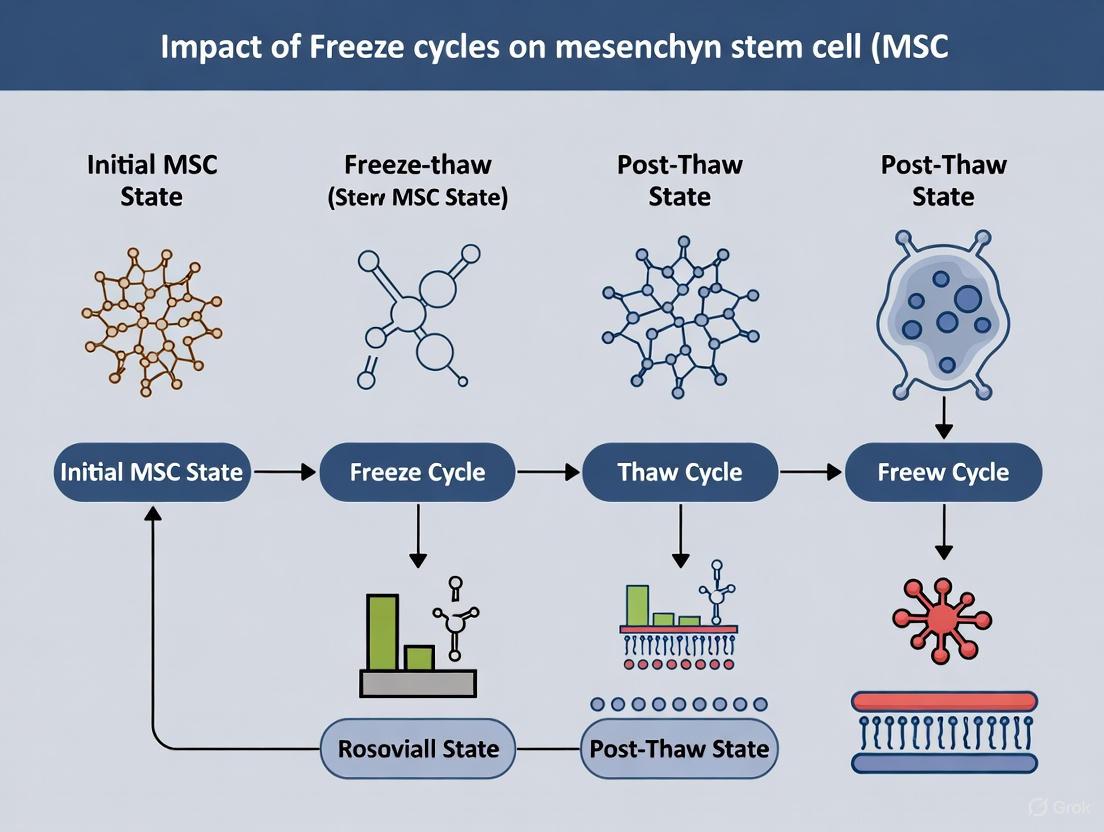
The cryopreservation and subsequent thawing of Mesenchymal Stromal Cells (MSCs) are critical, yet potentially damaging, steps in the manufacturing of cell-based therapies.
The Freeze-Thaw Challenge: Impacts on MSC Viability, Recovery, and Functional Potency
Abstract
The cryopreservation and subsequent thawing of Mesenchymal Stromal Cells (MSCs) are critical, yet potentially damaging, steps in the manufacturing of cell-based therapies. This article provides a comprehensive analysis of how freeze-thaw cycles impact MSC viability, recovery, and, crucially, their therapeutic functionality. Drawing on recent scientific evidence, we explore the cellular damage mechanisms, compare established and novel cryopreservation methodologies, and present optimization strategies to mitigate post-thaw impairments. We further delve into the critical importance of post-thaw potency assays and the ongoing industry shift towards DMSO-free solutions and standardized processes to ensure the clinical efficacy and safety of cryopreserved MSC products for researchers and drug development professionals.
Understanding the Cellular Impact: How Freeze-Thaw Cycles Compromise MSC Integrity and Function
The cryopreservation of Mesenchymal Stem Cells (MSCs) is a fundamental step in their application in regenerative medicine and cell-based therapies, enabling long-term storage and "off-the-shelf" availability [1] [2]. However, the freeze-thaw cycle inflicts substantial stress and damage on cells, collectively termed "cryo-injury," which can significantly compromise the viability, recovery, and therapeutic potency of MSCs post-thaw [1] [3]. For biomedical researchers and drug development professionals, a deep understanding of these injury mechanisms is crucial for developing optimized protocols that maximize cell survival and function. The core mechanisms of cryo-injury can be categorized into three principal, interconnected pathways: damage caused by osmotic stress, the formation of intracellular ice crystals, and direct membrane damage [4] [5]. These processes are not isolated; rather, they form a complex network of injury, as illustrated below.
This whitepaper delves into the specific mechanisms of each cryo-injury pathway, summarizes quantitative data on post-thaw MSC recovery, details experimental methodologies for studying these phenomena, and outlines essential reagents for the researcher's toolkit.
Fundamental Mechanisms of Cryo-Injury
Osmotic Stress and Solute Effects
During slow freezing, extracellular water begins to freeze first, leading to a profound increase in the concentration of solutes in the unfrozen extracellular solution [4] [6]. This creates a steep osmotic pressure gradient across the cell membrane. In response, intracellular water moves out of the cell down its chemical potential gradient, leading to severe cell dehydration and shrinkage [4] [5]. This process, often referred to as the "solute effect" or "solution effects injury," can cause irreversible damage to cellular structures and loss of membrane integrity [7] [4]. The rate of cooling is a critical determinant of the dominant injury type; slow cooling rates favor extensive dehydration, while rapid cooling prevents sufficient water efflux, leading to intracellular ice formation [4].
Intracellular Ice Formation (IIF)
When cooling rates are too rapid for water to exit the cell efficiently, the supercooled intracellular water eventually freezes, forming ice crystals within the cell. This phenomenon, known as Intracellular Ice Formation (IIF), is almost universally lethal [5]. The formation of intracellular ice crystals causes mechanical damage, shearing the plasma membrane, nuclear envelope, and intracellular organelles, leading to immediate cell lysis upon thawing [4]. Research on mouse fibroblasts suggests that IIF may not be a simple result of critical undercooling but may instead be triggered by membrane damage caused by a critical osmotic pressure gradient across the membrane during freezing [7]. During the thawing phase, another dangerous process called recrystallization can occur, where small, unstable ice crystals regroup into larger, more damaging structures, further exacerbating mechanical injury [4].
Membrane Damage
The plasma membrane is a primary target of cryo-injury. The combined stresses of osmotic swelling/shrinkage and mechanical forces from ice crystals can compromise membrane integrity, leading to rupture and cell death [8] [5]. Furthermore, the lipid bilayer itself can be disrupted by the physical-chemical changes during freezing. The process of removing cryoprotective agents (CPAs) post-thaw can also be damaging; if not performed carefully, the rapid influx of water into cells with high intracellular CPA concentration causes excessive swelling that can lyse the cell—a phenomenon known as "dilution shock" [2] [5].
Quantitative Impact on MSC Viability and Recovery
The detrimental effects of cryopreservation on MSCs are quantifiable across multiple cellular and functional parameters. The table below summarizes key experimental findings from studies comparing freshly thawed MSCs to their pre-freeze or post-acclimation states.
Table 1: Quantitative Effects of Cryopreservation on MSC Viability and Function
| Parameter | Freshly Thawed MSCs (vs. Pre-freeze or Acclimated) | Source |
|---|---|---|
| Viability & Apoptosis | ||
| Early Apoptosis | Significantly increased (Annexin V-FITC positive) | [3] |
| Late Apoptosis/Necrosis | Significantly increased (Annexin V-FITC/PI positive) | [3] |
| Phenotype | ||
| Surface Marker Expression | Decrease in CD44 and CD105 | [3] |
| Functional Potency | ||
| Cell Proliferation | Significantly decreased | [3] |
| Clonogenic Capacity | Significantly decreased (Colony Forming Units) | [9] [3] |
| Metabolic Activity | Significantly increased (suggestive of stress) | [3] |
| Immunomodulatory Genes | Downregulation of key angiogenic and anti-inflammatory genes | [3] |
| T-cell Suppression | Maintained, but significantly less potent than acclimated MSCs | [3] |
Crucially, these deficits are not necessarily permanent. A pivotal study demonstrated that allowing MSCs a 24-hour acclimation period post-thaw, rather than using them immediately, led to a significant recovery of function. This was evidenced by reduced apoptosis, upregulation of therapeutic genes, and restored potency in T-cell suppression assays [3]. This highlights that cryo-injury often stuns rather than instantly kills a large proportion of cells, and recovery is possible with appropriate post-thaw handling.
Experimental Protocols for Studying Cryo-Injury
To systematically investigate cryo-injury and test mitigation strategies, researchers employ standardized protocols for cryopreservation, thawing, and analysis. The workflow below outlines a typical experiment designed to assess the impact of freezing on MSCs.
Detailed Methodology
1. Cell Culture and Pre-freeze Analysis:
- Human bone-marrow-derived MSCs are expanded in culture using complete culture media (e.g., α-MEM supplemented with 15% FBS) [3].
- Prior to freezing, a sample of cells is analyzed to establish a baseline. This includes immunophenotyping by flow cytometry to confirm MSC surface markers (CD73+, CD90+, CD105+, CD34-, CD45-, etc.) and assessment of viability [2] [3].
2. Cryopreservation Protocol (Slow Freezing):
- Cells are harvested, counted, and resuspended in a cryoprotective medium. A common formulation is 90% Fetal Bovine Serum (FBS) + 10% Dimethyl Sulfoxide (DMSO) [3].
- The cell suspension is aliquoted into cryovials.
- The vials are placed in a controlled-rate freezer or an isopropanol freezing chamber at -80°C to achieve a standard cooling rate of 1°C per minute [3]. After 24 hours at -80°C, vials are transferred to long-term storage in liquid nitrogen (-196°C) [2] [3].
3. Thawing and Experimental Group Allocation:
- After a defined storage period (e.g., 7 weeks), vials are rapidly thawed by immersion in a 37°C water bath with gentle agitation until the last ice crystal disappears [2] [3].
- The cell suspension is immediately diluted with pre-warmed culture media to reduce the concentration of the toxic DMSO.
- Cells are centrifuged to remove the CPA-containing supernatant and resuspended in fresh media [2].
- Cells are then allocated into key experimental groups:
4. Post-thaw Assessment of Viability and Function:
- Viability and Apoptosis: Analyzed using flow cytometry with Annexin V/PI staining to distinguish live (Annexin V-/PI-), early apoptotic (Annexin V+/PI-), and late apoptotic/necrotic (Annexin V+/PI+) cells [8] [3].
- Phenotype: Flow cytometry is repeated to check for changes in characteristic MSC surface markers [3].
- Clonogenic Capacity: Measured by a Colony-Forming Unit Fibroblast (CFU-F) assay, where a low density of cells is plated and allowed to grow for ~14 days before colonies are stained and counted [9].
- Functional Potency: Assessed through:
The Scientist's Toolkit: Research Reagent Solutions
The following table catalogues essential materials and reagents used in MSC cryopreservation research, as cited in the literature.
Table 2: Key Research Reagents for MSC Cryopreservation Studies
| Reagent / Material | Function / Application | Specific Examples |
|---|---|---|
| Cryoprotective Agents (CPAs) | Protect cells from freezing damage by reducing ice crystal formation and stabilizing membranes. | DMSO (penetrating) [3] [6], Glycerol (penetrating) [6], Sucrose/Trehalose (non-penetrating) [2] [6] |
| Cryopreservation Media Base | Provides a supportive, protein-rich environment for cells during freezing. | Fetal Bovine Serum (FBS) [3], Human Serum Albumin [3] |
| Cell Culture Media | For expansion, post-thaw acclimation, and functional assays. | α-MEM [3], supplemented with FBS and glutamine. |
| Differentiation Kits | To assess multipotent differentiation potential post-thaw. | StemPro Osteogenic/Chondrogenic/Adipogenic Differentiation Kits [3] |
| Flow Cytometry Antibodies | For immunophenotyping MSCs pre- and post-cryopreservation. | Antibodies against CD73, CD90, CD105, CD44, CD34, CD45, HLA-DR [2] [3] |
| Viability & Apoptosis Assays | To quantify cell survival and death mechanisms post-thaw. | Annexin V-FITC/PI Apoptosis Kit [8] [3], Live/Dead Cell Viability Kit [3] |
| Molecular Biology Reagents | To analyze gene expression changes related to function and stress. | qRT-PCR systems and reagents for genes like SURVIVIN, BCL2, BAX [8] [3] |
Advanced Mitigation Strategies
Beyond standard protocols, recent research has unveiled more sophisticated strategies to mitigate cryo-injury. One promising approach is cell cycle synchronization. A 2023 study discovered that MSCs in the S phase (DNA replication) are exceptionally sensitive to cryo-injury, exhibiting high levels of DNA double-stranded breaks and post-thaw apoptosis. By inducing a reversible arrest at the G0/G1 phase through serum starvation prior to freezing, researchers were able to significantly protect MSCs, preserving their viability, clonogenic capacity, and immunomodulatory function at pre-freeze levels [9]. This highlights the importance of considering cellular biology beyond just the physical chemistry of freezing.
Other advanced strategies focus on the ice crystals themselves, exploring ice-inhibiting materials such as antifreeze proteins (AFPs), synthetic polymers, and nanomaterials to control ice nucleation, growth, and recrystallization [4]. Furthermore, optimizing the physical processes of freezing and thawing using external physical fields (e.g., magnetic, electric) is an emerging area of interest to improve warming rates and reduce devitrification [4].
The journey of MSCs through the freeze-thaw cycle is a perilous one, besieged by the triumvirate of osmotic stress, intracellular ice formation, and membrane damage. These mechanisms interact to cause significant cell death and, critically, a profound but often reversible functional impairment in survivors. For translational research, this underscores that standard viability assays are insufficient; rigorous assessment of therapeutic potency post-thaw is mandatory. Promisingly, strategies such as a simple 24-hour post-thaw acclimation period and advanced techniques like cell cycle synchronization prior to freezing offer tangible pathways to dramatically enhance MSC recovery. As the field of cellular therapeutics continues to advance, a deeper, more mechanistic understanding of cryo-injury will be the foundation for developing next-generation cryopreservation protocols, ensuring that the living medicine administered to patients is of the highest possible quality and potency.
For researchers and drug development professionals working with Mesenchymal Stromal Cells (MSCs), the freeze-thaw cycle represents a critical juncture where significant product quality can be compromised. While cryopreservation enables "off-the-shelf" availability for clinical applications, a growing body of evidence confirms that standard freezing and thawing processes can induce immediate, measurable deficits in cellular integrity and function [10] [2]. These deficits are not merely transient stresses but can include reduced viability, impaired recovery, diminished proliferative capacity, and altered immunomodulatory function. This technical guide synthesizes current research to document these specific post-thaw deficits, provide detailed experimental methodologies for their quantification, and elucidate the underlying mechanisms. Acknowledging and systematically characterizing these challenges is the foundational step within the broader research thesis of developing optimized cryopreservation and post-thaw handling protocols that preserve the critical therapeutic attributes of MSC-based therapies.
Documented Quantitative Deficits in Post-Thaw MSCs
Rigorous in vitro studies have consistently quantified specific functional impairments in MSCs immediately following thawing. The data below summarizes key deficits observed in various studies.
Table 1: Documented Post-Thaw Functional Deficits in MSCs
| Functional Attribute | Deficit Documented | Experimental Context | Citation |
|---|---|---|---|
| In Vitro Immunosuppression | ~50% reduction in capacity to suppress T-cell proliferation (IDO-pathway specific) | Human BM-MSCs, frozen in PL, thawed and tested immediately | [10] |
| Short-Term Viability | Significant increase in apoptotic cells (AV+/PI− and AV+/PI+) at 4-6 hours post-thaw | Donor-matched MSCs (cultured vs. thawed) assessed over 6 hours | [11] |
| Cell Recovery | Slightly lower cell recovery at 2 hours post-thaw | Donor-matched MSCs (cultured vs. thawed) assessed over 6 hours | [11] |
| Senescence Induction | Earlier senescence observed with exhaustive freezing steps (≥4 cycles) | Human BM-MSCs subjected to repeated freeze-thaw cycles | [10] |
It is crucial to note that not all functions are equally impaired. While a significant reduction in a specific immunosuppressive pathway has been documented, other studies, particularly those comparing in vivo outcomes in disease models, have shown that thawed MSCs can retain potent therapeutic effects. One study found that while thawed MSCs exhibited higher apoptosis levels in vitro, they showed comparable immunomodulatory potency to cultured cells both in vitro and in polymicrobial septic animals, with no significant difference in improving bacterial clearance or reducing inflammatory cytokines [11]. This suggests that the documented in vitro deficits may not always translate to a loss of clinical efficacy, highlighting the complexity of MSC mechanisms of action.
Experimental Protocols for Assessing Post-Thaw Deficits
To reliably identify and quantify the post-thaw deficits described, standardized experimental protocols are essential. Below are detailed methodologies for key assays cited in the literature.
Protocol for In Vitro Immunosuppression Assay
This assay measures the functional capacity of thawed MSCs to suppress the proliferation of activated immune cells, a key therapeutic mechanism [10].
- Co-culture Setup: Isolate Peripheral Blood Mononuclear Cells (PBMCs) from a healthy donor. Label the PBMCs with a fluorescent cell proliferation dye, such as CFSE (Carboxyfluorescein succinimidyl ester). Activate the PBMCs using anti-CD3/CD28 antibodies or mitogens like Phytohemagglutinin (PHA).
- Experimental Groups: Seed the thawed MSCs (or cultured MSCs for a positive control) in a multi-well plate and allow them to adhere for a few hours. Include control wells with activated PBMCs alone (maximum proliferation control) and non-activated PBMCs (background control).
- Initiation of Co-culture: Add the activated, CFSE-labeled PBMCs to the wells containing the adherent MSCs. A typical MSC:PBMC ratio can range from 1:5 to 1:10. Culture the cells for 5-6 days.
- Flow Cytometry Analysis: Harvest the cells and analyze the PBMCs using flow cytometry. The dilution of the CFSE fluorescence in the PBMC population (typically gated on CD3+ T-cells) is a direct measure of cell division.
- Data Calculation: The percentage of suppression is calculated by comparing the proliferation in co-culture wells to the proliferation in the control well with activated PBMCs alone. > Formula: % Suppression = [1 - (Proliferation in Co-culture / Proliferation in PBMC-alone control)] × 100
Protocol for Post-Thaw Viability and Apoptosis Staining
This protocol uses Annexin V/Propidium Iodide (AV/PI) staining to distinguish between live, early apoptotic, and late apoptotic/necrotic cells at various time points after thawing [11].
- Sample Preparation: At designated time points post-thaw (e.g., 0, 2, 4, 6 hours), harvest the MSCs by gentle trypsinization and resuspend in a cold buffer.
- Staining: Aliquot the cell suspension into tubes. Add Annexin V-FITC and Propidium Iodide (PI) to the cell samples according to the manufacturer's instructions. Incubate the tubes for 15-20 minutes in the dark at room temperature.
- Flow Cytometry Acquisition and Analysis: Analyze the stained cells by flow cytometry within 1 hour. Use a dot plot to display Annexin V-FITC signal (x-axis) versus PI signal (y-axis).
- AV-/PI-: Viable, non-apoptotic cells.
- AV+/PI-: Early apoptotic cells.
- AV+/PI+: Late apoptotic or necrotic cells.
Protocol for Assessing Impact of Repeated Freezing
This methodology evaluates the cumulative effect of multiple freeze-thaw cycles on MSC quality attributes, such as senescence [10].
- Interim Freezing: Culture MSCs to the desired passage (e.g., Passage 0 or 1). Detach the cells and cryopreserve them using a standard slow-freezing protocol. This is the first freezing step.
- Thaw and Reculture: Thaw the vial and reculture the MSCs for at least one passage to allow for recovery from the first freezing stress.
- Second Freezing: Cryopreserve the cells again at the next passage (e.g., Passage 1 or 2). This represents the second freezing step. The process can be repeated to simulate multiple cycles (e.g., ≥4 cycles).
- Analysis of Final Product: Thaw the final product and assess key parameters. This includes standard manufacturing parameters (cell yield, viability, growth kinetics) and specific quality attributes like:
- Senescence-associated β-galactosidase (SA-β-gal) staining: To detect senescent cells.
- Population Doubling (PD) time: To assess proliferative capacity.
- Phenotype (surface marker expression) and differentiation potential.
The following workflow diagram illustrates the experimental design for studying repeated freezing:
Mechanisms and Pathways Underlying Freeze-Thaw Damage
The immediate post-thaw deficits observed in MSCs are the result of a series of interconnected physical and biochemical stresses. Understanding these mechanisms is critical for developing targeted mitigation strategies.
- Physical Ice Crystal Damage: During slow freezing, the formation of extracellular ice crystals leads to solute concentration (cryo-concentration) in the unfrozen fraction, creating hypertonic stress that draws water out of the cell (dehydration) [2]. If cooling is too rapid, intracellular ice can form, physically shearing organelles and the plasma membrane.
- Oxidative Stress: The freeze-thaw process can induce a burst of reactive oxygen species (ROS) upon reperfusion, leading to damage of lipids (lipid peroxidation), proteins, and DNA.
- Induction of Apoptosis: The confluence of physical membrane damage, osmotic shock, and oxidative stress can trigger programmed cell death pathways. This is evidenced by the increased population of AV+ cells in the hours immediately following thawing [11].
- Alteration of Key Signaling Pathways: The stress of cryopreservation can impair critical therapeutic functions. For instance, the specific reduction in indoleamine 2,3-dioxygenase (IDO) activity, a key enzyme in the immunomodulatory pathway, points to a targeted disruption of metabolic signaling in response to inflammatory cues [10].
The diagram below summarizes the primary stressors and their cellular consequences during the freeze-thaw process:
The Scientist's Toolkit: Key Research Reagent Solutions
To conduct the experiments outlined in this guide, specific reagents and tools are essential. The following table details key solutions used in the featured research.
Table 2: Essential Research Reagents for Post-Thaw MSC Analysis
| Reagent / Solution | Function & Role in Analysis | Example from Literature |
|---|---|---|
| Platelet Lysate (PL) | Xeno-free, clinical-grade culture medium supplement for MSC expansion. | Used for clinical-grade BM-MSC manufacturing [10]. |
| DMSO-based Cryomedium | Standard cryoprotective agent (CPA) for slow freezing; penetrates cells to prevent ice crystal formation. | Commonly used, though associated with toxicity concerns [2]. |
| DMSO-Free Cryopreservation Solution | Alternative CPA designed to avoid DMSO-related toxicity and potential side effects in patients. | PRIME-XV FreezIS demonstrated comparable recovery to DMSO controls [12]. |
| Annexin V / Propidium Iodide (PI) | Fluorescent stains for flow cytometry to distinguish viable (AV-/PI-), early apoptotic (AV+/PI-), and late apoptotic/necrotic (AV+/PI+) cells. | Used for detailed viability and apoptosis analysis post-thaw [11]. |
| CFSE (Carboxyfluorescein succinimidyl ester) | Cell proliferation dye that dilutes with each cell division; used to track and quantify suppression of immune cell proliferation. | Used for in vitro immunosuppression (T-cell proliferation) assays [11]. |
| Senescence-associated β-galactosidase (SA-β-gal) Staining Kit | Histochemical detection kit to identify senescent cells, which exhibit increased β-galactosidase activity at pH 6. | Key for assessing cellular senescence after repeated freeze-thaw cycles [10]. |
The empirical evidence is clear: standard cryopreservation and thawing protocols can inflict significant immediate harm on MSCs, manifesting as quantifiable deficits in viability, recovery, and critical therapeutic functions like immunomodulation. Acknowledging these deficits is not a repudiation of cryopreservation, which remains logistically indispensable, but a mandatory step for progress. The path forward requires a concerted effort from researchers and drug developers to move beyond simple viability metrics. It demands the routine implementation of the detailed, functional assays described herein—such as immunosuppression potency testing and apoptosis tracking—to fully characterize post-thaw product quality. By embracing this rigorous, data-driven approach, the field can systematically optimize every step, from cryoprotectant formulation and freezing rates to post-thaw handling, ultimately ensuring that the "off-the-shelf" MSC therapy delivered to patients retains its full functional potential.
The freeze-thaw cycle, an essential process in the manufacturing and storage of Mesenchymal Stromal Cell (MSC)-based therapeutics, has traditionally been evaluated through the narrow lens of cell viability. However, emerging evidence compellingly demonstrates that cryopreservation inflicts profound functional impairments on MSCs, significantly diminishing their immunomodulatory and anti-inflammatory potency even in populations with high post-thaw viability. This whitepaper synthesizes current research detailing the mechanisms behind this functional loss, quantifies the impact on therapeutic efficacy, and outlines validated protocols to recover MSC potency, providing drug development professionals with critical insights for optimizing advanced therapy medicinal products (ATMPs).
The clinical application of MSCs increasingly relies on cryopreserved, "off-the-shelf" products to ensure widespread availability and logistical feasibility [1]. While standard quality assessments focus on post-thaw viability, this metric presents an incomplete picture. A growing body of literature indicates that the freeze-thaw cycle triggers a "cryo-stunned" state, wherein MSCs maintain membrane integrity but exhibit significantly compromised therapeutic function [13] [1]. This functional deficit encompasses reduced secretion of anti-inflammatory mediators, impaired responsiveness to inflammatory cues, and heightened susceptibility to innate immune attack, ultimately undermining the mechanistic basis for their efficacy in treating inflammatory and immune-mediated diseases [14]. Recognizing and addressing this disconnect is paramount for the successful clinical translation of MSC-based therapies.
Quantifying the Functional Deficit Post-Thaw
The functional impairment of cryopreserved MSCs is not merely theoretical but is quantifiable across multiple potency assays. The data below summarize key experimental findings comparing freshly harvested (FC), freshly thawed (FT), and thawed-and-acclimated (TT) MSCs.
Table 1: Quantitative Impact of Cryopreservation on MSC Functionality
| Functional Parameter | Freshly Thawed (FT) vs. Fresh Cells (FC) | After 24h Acclimation (TT) | Citation |
|---|---|---|---|
| Cell Recovery | 45% reduction after washing | 5% reduction after dilution | [15] |
| Early Apoptosis (24h) | Significantly increased | Significantly reduced | [15] [13] |
| Clonogenic Capacity | Significantly decreased | Recovered to fresh cell levels | [13] |
| Anti-inflammatory Gene Expression | Downregulated (e.g., TSG-6, COX-2) | Upregulated compared to FT | [13] [16] |
| T-cell Proliferation Suppression | Significant arrest, but less potent | Significantly more potent than FT | [13] |
| Complement-Mediated Lysis | ~80% reduction in viable cells after serum exposure | Not Tested | [14] |
| Clinical Response Rate (GvHD) | ~50% in patients | ~100% with fresh, low-passage cells | [14] |
Table 2: Impact of Cryoprotectant Agent (CPA) Formulation on MSC Quality
| CPA Formulation | Post-Thaw Viability | Viable Cell Recovery | Immunophenotype | Citation |
|---|---|---|---|---|
| 5-10% DMSO (Standard) | Decreased by 4.5% (avg.) | Lower by 5.6% (avg.) | Comparable to pre-freeze | [17] |
| DMSO-Free (SGI Solution) | Decreased by 11.4% (avg.) | 92.9% (avg.) | Comparable to DMSO groups | [17] |
| 5% DMSO (Diluted, not washed) | Similar to Washed MSCs | Significantly higher than Washed MSCs | Maintained | [15] |
Mechanisms of Functional Impairment: A Molecular and Cellular Perspective
The loss of potency following cryopreservation is a multifactorial problem rooted in several key biological disruptions.
Disrupted Immunomodulatory Secretome and Responsiveness
Freshly thawed MSCs exhibit a blunted response to inflammatory stimuli. Studies show they have an impaired production of critical anti-inflammatory mediators like Prostaglandin E2 (PGE2) and Tumor Necrosis Factor-Stimulated Gene 6 (TSG-6) upon activation [14]. This is coupled with a downregulation of key surface markers involved in cellular interaction, such as CD44 and CD105, immediately post-thaw [13]. Global gene expression analyses further confirm that cryopreservation alters the transcriptional profile of MSCs, reducing the expression of genes central to their immunomodulatory pathways [16].
Activation of Innate Immune Attack and Complement System
The freeze-thaw process can induce cellular stress that increases the procoagulant and complement-activating profile of MSCs. Research indicates that freeze-thawed MSCs trigger a more pronounced Instant Blood-Mediated Inflammatory Reaction (IBMIR) and demonstrate stronger activation of the complement cascade compared to their fresh counterparts [14]. This leads to opsonization of the cells and significantly faster complement-mediated elimination, with one study reporting twice the efficiency of lysis of thawed MSCs after just one hour of serum exposure [14]. This rapid clearance mechanism drastically reduces the window of therapeutic opportunity for systemically administered cells.
Induction of Apoptosis and Metabolic Stress
The physical stresses of ice crystal formation and osmotic shock during freezing and thawing can trigger apoptotic pathways. Flow cytometry analyses consistently show a significantly higher proportion of early apoptotic cells (Annexin V+/PI-) in freshly thawed MSC populations [15] [13]. This is paired with a transient increase in metabolic activity and a decrease in cell proliferation, indicating a state of metabolic stress as the cells attempt to repair the damage incurred during the freeze-thaw process [13].
Experimental Protocols for Assessing Potency
To move beyond viability, researchers must employ robust, functional assays. Below are detailed methodologies for key experiments cited in this review.
Protocol: Evaluating Immunosuppressive Capacity via T-cell Proliferation Assay
This protocol is foundational for quantifying the immunomodulatory potency of MSCs [13].
- MSC Preparation: Prepare MSCs from the three experimental groups: Freshly Cultured (FC), Freshly Thawed (FT), and Thawed & Acclimated for 24 hours (TT).
- Peripheral Blood Mononuclear Cell (PBMC) Isolation: Isolate PBMCs from healthy human donors using density gradient centrifugation (e.g., Ficoll-Paque).
- T-cell Activation: Label PBMCs with a cell proliferation dye (e.g., CFSE) and activate T-cells within the population using anti-CD3/CD28 activation beads or mitogens like phytohemagglutinin (PHA).
- Co-culture: Co-culture the activated PBMCs with the prepared MSCs in a defined ratio (e.g., 10:1 PBMCs to MSCs) in a 96-well plate for 3-5 days.
- Flow Cytometry Analysis: Harvest the cells and analyze CFSE dilution in the CD3+ T-cell population by flow cytometry. The suppression of T-cell proliferation is calculated by comparing the proliferation in co-cultures to that of activated PBMCs cultured alone.
Protocol: Analysis of Complement-Mediated Lysis
This assay assesses the susceptibility of MSCs to innate immune attack, a critical factor for in vivo survival [14].
- Serum Preparation: Pool sera from multiple donors with blood type AB to create Normal Human Serum (NHS) with complement activity. Prepare a control serum inactivated with EDTA (NHS/EDTA).
- Cell Treatment: Resuspend fresh or freeze-thawed MSCs in PBS and expose them to a 50% (v/v) concentration of NHS or NHS/EDTA for 60 minutes at 37°C.
- Reaction Stop: Halt complement activity by adding 10 mM EDTA.
- Viability Assessment: Quantify viable and non-viable cell counts before and after serum treatment using an automated cell counter (e.g., CASY counter) or flow cytometry. Complement-mediated lysis is calculated as the percentage reduction in viable cells after NHS exposure compared to the NHS/EDTA control.
Protocol: Post-Thaw Acclimation and Recovery
This simple yet effective protocol can restore significant functional potency [13].
- Thawing: Rapidly thaw cryopreserved MSCs in a 37°C water bath.
- CPA Removal: Dilute the cell suspension in pre-warmed culture medium and centrifuge to remove cryoprotectant (e.g., DMSO). Alternatively, for Diluted MSCs, simply dilute the thawed product in an appropriate buffer to reduce DMSO concentration to a target level (e.g., 5%) [15].
- Acclimation Culture: Seed the washed or diluted MSCs at a standard density (e.g., 1,000 cells/cm²) in complete culture medium and incubate at 37°C, 5% CO₂ for 24 hours.
- Harvest: After 24 hours, harvest the cells using a standard dissociation reagent and proceed with functional assays or administration. These cells are designated the Thawed + Time (TT) group.
Diagram 1: Functional Impairment and Recovery Pathway of Cryopreserved MSCs
The Scientist's Toolkit: Essential Research Reagents and Solutions
The following table details key reagents and their applications in studying and mitigating cryopreservation-induced functional loss.
Table 3: Research Reagent Solutions for Cryopreservation Studies
| Reagent / Solution | Function / Application | Key Consideration / Effect |
|---|---|---|
| DMSO (Dimethyl Sulfoxide) | Penetrating cryoprotectant; standard for slow freezing. | Cytotoxic; can induce differentiation and epigenetic changes; implicated in functional impairment post-thaw [13]. |
| DMSO-Free Solutions (e.g., SGI) | Alternative CPA containing Sucrose, Glycerol, Isoleucine in Plasmalyte A base. | Reduces DMSO toxicity; shows comparable immunophenotype and gene expression profile post-thaw with good cell recovery [17]. |
| Annexin V / Propidium Iodide (PI) | Flow cytometry dyes for detecting apoptosis (early and late) and necrosis. | Critical for assessing post-thaw cell health beyond simple viability; FT MSCs show higher early apoptosis [15] [13]. |
| Anti-CD3/CD28 Activation Beads | Polyclonal T-cell activators for immunosuppression assays. | Used to stimulate donor PBMCs in co-culture with MSCs to measure suppression of T-cell proliferation, a key potency metric [13]. |
| Normal Human Serum (NHS) | Source of active complement proteins for serum challenge assays. | Evaluates MSC susceptibility to complement-mediated lysis, a major in vivo clearance mechanism exacerbated by freezing [14]. |
| Cell Recovery Medium (e.g., with HSA, ACD-A) | Thawing and wash solution to remove CPAs and support initial recovery. | Composition affects cell recovery and apoptosis; dilution may be less disruptive than washing and centrifugation [18] [15]. |
Strategic Recommendations for Drug Development Professionals
To enhance the efficacy of MSC-based ATMPs, a strategic shift is required.
- Incorporate Potency Assays into Release Criteria: Move beyond viability. Implement quantitative assays for immunosuppressive function (e.g., T-cell proliferation inhibition) and secretome analysis (e.g., PGE2/TSG-6 production) as part of the product's critical quality attributes [14] [13].
- Optimize the Post-Thaw Protocol: Evaluate the trade-offs between complete DMSO removal (washing) and simple dilution. Data suggests dilution may yield higher recovery of functional cells, which could be clinically acceptable as toxicology studies indicate well-tolerated low levels of DMSO in the final product [15].
- Implement a Mandatory Acclimation Period: Where logistically feasible, a 24-hour post-thaw acclimation period in standard culture conditions is a simple and highly effective method to recover significant immunomodulatory potency, restoring gene expression, reducing apoptosis, and enhancing anti-inflammatory function [13].
- Explore Novel Cryopreservation Formulations: Invest in research and development of next-generation, defined, DMSO-free cryoprotectant solutions. These formulations aim to better preserve not only cell membranes but also the delicate biological machinery responsible for MSC therapeutic function [17] [2].
The pursuit of clinically effective cryopreserved MSC products demands a fundamental reconceptualization of success metrics. A viable cell is not necessarily a potent cell. The freeze-thaw cycle inflicts measurable damage on the critical immunomodulatory and anti-inflammatory functions of MSCs, which standard viability assays fail to capture. By integrating the insights and protocols outlined in this whitepaper—including the adoption of functional potency assays, strategic post-thaw processing, and a mandated acclimation period—researchers and drug developers can significantly enhance the therapeutic fidelity of cryopreserved MSCs, ensuring that these living medicines deliver on their full clinical promise.
Phenotypic and Senescence Changes Induced by Cryopreservation and Culture Age
Mesenchymal stem cells (MSCs) represent a cornerstone of regenerative medicine due to their multipotent differentiation potential, immunomodulatory properties, and paracrine activity [19]. The transition from preclinical proof-of-concept studies to larger clinical trials has highlighted that cryopreservation and subsequent freeze-thawing may present a critical bottleneck affecting optimal cell product safety and efficacy [1]. The phenotypic and senescent changes induced by these processes are of paramount importance, as they directly impact the therapeutic potential of MSCs. Within the broader thesis on the impact of freeze-thaw cycles on MSC viability and recovery, this review synthesizes current understanding of how cryopreservation triggers molecular and functional alterations, establishing a critical link between cryoinjury, cellular senescence, and diminished clinical utility.
Phenotypic and Functional Alterations Post-Cryopreservation
Viability and Morphological Changes
The immediate aftermath of cryopreservation reveals significant cellular stress. While standard slow-freezing protocols yield survival rates of approximately 70–80% [2], this figure masks substantial underlying damage. Thawed cells frequently exhibit an enlarged, flattened, and more granular morphology, a characteristic signature of cellular distress that often precedes senescence [20] [21]. This morphological shift is not merely cosmetic; it reflects profound cytoskeletal reorganizations, including redistribution of myosin-9 and secretion of profilin-1, which compromise fundamental cellular functions [20].
Table 1: Summary of Key Phenotypic Changes in MSCs After Cryopreservation
| Cellular Attribute | Observed Change Post-Cryopreservation | Functional Consequence |
|---|---|---|
| Morphology | Enlarged, flattened, more granular morphology [20] [21] | Precursor to senescence; altered mechanical properties |
| Proliferation | Reduced proliferative potential; prolonged population doubling time [22] [23] | Limited expansion capability for therapies |
| Surface Markers | Typical CD105, CD73, CD90 profile generally maintained [22] [23] | Phenotypic identity preserved despite functional decline |
| Genomic Stability | Aneuploidy, chromosomal breaks, condensation disorders [22] [23] | Risk of aberrant behavior and loss of function |
Senescence and Proliferative Capacity
Perhaps the most critical long-term consequence is the induction of cellular senescence. Long-term cryopreservation (e.g., 10 years) triggers a significant reduction in proliferative potential and the early manifestation of cellular senescence features upon subsequent culturing [22] [23]. This is mechanistically underpinned by the upregulation of cyclin-dependent kinase inhibitors p16 and p21, effectors of the Rb and p53 pathways, which enforce irreversible cell cycle arrest [20]. Senescent MSCs adopt a characteristic Senescence-Associated Secretory Phenotype (SASP), releasing pro-inflammatory factors like IL-6, IL-8, and GRO that can exacerbate inflammation at a systemic level and disrupt tissue homeostasis [20]. This SASP not only diminishes the immunomodulatory activity of MSCs but may also promote the proliferation or migration of cancer cells [20].
Genomic Instability
A particularly alarming effect of long-term cryopreservation is genomic instability. Karyotyping of G-banded metaphase chromosomes after 10-year cryopreservation revealed instability associated with variable chromosome numbers, random chromosomal rearrangements, and condensation disorders [22] [23]. This genomic damage manifests as aneuploidy and chromosomal aberrations, with increased fragility observed in specific regions, such as the pericentromeric and terminal areas [23]. It is crucial to note that while short-term cryopreservation (up to 6 months) does not appear to significantly affect karyotype stability, the long-term effects are profound and potentially irreversible, raising serious concerns for clinical applications using long-stored cells [22] [23].
Molecular Mechanisms of Cryopreservation-Induced Injury and Senescence
DNA Damage and Cell Cycle Dysregulation
A fundamental mechanism of cryoinjury has been identified in the context of the cell cycle. Research reveals that S-phase MSCs are exquisitely sensitive to damage during freezing and thawing, demonstrating heightened levels of delayed apoptosis and reduced immunomodulatory function post-thaw [9]. The vulnerability stems from double-stranded breaks (DSBs) in labile replicating DNA that form during the cryopreservation process. These DSBs are identified by the phosphorylation of the histone variant H2AX (γH2AX), a key DNA damage marker [9]. This damage triggers a persistent DNA Damage Response (DDR), which activates and sustenses senescence growth arrest [20].
Figure 1: DNA Damage-Induced Senescence Pathway. The freeze-thaw cycle causes double-stranded breaks, particularly in S-phase cells, triggering a DNA damage response that leads to senescence or apoptosis.
Oxidative Stress and Mitochondrial Dysfunction
Cryopreservation and thawing are known to induce oxidative stress as a result of osmotic imbalances during these processes [24]. This oxidative damage disproportionately affects mitochondrial function, a key pillar of MSC senescence [21]. Mitochondrial dysfunction not only impairs the energy metabolism of MSCs but also contributes to the generation of excessive reactive oxygen species (ROS), creating a vicious cycle that perpetuates cellular damage and accelerates the aging process. The accumulation of oxidative stress and the resulting damage are critical factors in the decreased differentiation potential observed in senescent MSCs [20].
Epigenetic Modifications
Cellular senescence is also accompanied by significant epigenetic alterations. Senescent MSCs display distinct chromatin restructuring, including the formation of Senescence-Associated Heterochromatic Foci (SAHF), which are transcriptionally inactive regions marked by high levels of H3K9me3 and H3K27me3 [21]. Furthermore, a global reduction in DNA methylation occurs during MSC senescence, driven by the downregulation of DNA methyltransferases DNMT1 and DNMT3B [21]. These epigenetic changes silence proliferative genes and contribute to the irreversible growth arrest that defines senescence.
Experimental Protocols for Assessing Senescence and Function
Protocol for Evaluating Post-Thaw Viability and Senescence
Objective: To quantify viability, genomic stability, and senescent phenotype of MSCs following cryopreservation and thawing.
Materials:
- Cryopreserved MSC aliquots
- Complete culture medium (e.g., α-MEM with 10% human platelet lysate)
- Phosphate Buffered Saline (PBS)
- Senescence-associated β-galactosidase (SA-β-gal) staining kit
- Fixative solution (2% formaldehyde/0.2% glutaraldehyde)
- Staining solution (X-gal, citric acid, ferrocyanide)
- Flow cytometry antibodies (CD73, CD90, CD105, CD45)
- Giemsa stain, KaryoMAX colcemid solution
Methodology:
- Thawing: Rapidly warm cryovials in a 37°C water bath until ice crystals dissolve (~2 minutes) [2].
- CPA Removal: Transfer cell suspension to pre-warmed medium and centrifuge (300-400 x g for 5 minutes). Aspirate supernatant to remove cryoprotectant [2].
- Viability & Phenotype (Day 1): Resuspend cell pellet and assess viability (e.g., via Trypan Blue exclusion). For immunophenotyping, stain 1x10^5 cells with fluorochrome-conjugated antibodies against MSC markers (CD73, CD90, CD105) and hematopoietic linage markers (CD45). Analyze by flow cytometry [22] [23].
- SA-β-gal Staining (Day 3): Plate cells at 5,000 cells/cm². After 72 hours, wash with PBS, fix for 5 minutes, and incubate with X-gal staining solution overnight at 37°C (without CO₂). Count blue-stained senescent cells under a light microscope [20].
- Karyotyping (Passage 4): Culture thawed cells for several passages. At ~70% confluence, add colcemid to arrest cells in metaphase. Harvest cells, treat with hypotonic solution, fix, and drop onto slides. Perform G-banding and analyze 20-50 metaphase spreads for chromosomal abnormalities [22] [23].
Protocol for Assessing Immunomodulatory Function
Objective: To determine the impact of cryopreservation on the T cell suppressive capacity of MSCs.
Materials:
- Cryopreserved and fresh (control) MSCs
- Peripheral blood mononuclear cells (PBMCs) from healthy donor
- Anti-CD3/CD28 activation beads
- Cell culture medium (RPMI-1640)
- CFSE cell proliferation dye
- Flow cytometry
Methodology:
- MSC Preparation: Seed irradiated (to prevent proliferation) cryopreserved or fresh MSCs in a 96-well plate and allow to adhere overnight.
- T Cell Activation: Isolate PBMCs and label with CFSE. Stimulate T cells using anti-CD3/CD28 beads.
- Co-culture: Add activated, CFSE-labeled PBMCs to the MSC monolayer at various MSC:PBMC ratios (e.g., 1:10, 1:20).
- Analysis: After 4-5 days, harvest non-adherent cells and analyze CFSE dilution by flow cytometry to measure T cell proliferation. Compare the suppression of proliferation by cryopreserved MSCs versus fresh controls [9].
Table 2: Quantitative Data on Functional Impairment Post-Cryopreservation
| Functional Metric | Fresh MSCs (Control) | Post-Thaw MSCs (Short-Term) | Post-Thaw MSCs (Long-Term) | Measurement Technique |
|---|---|---|---|---|
| Viability (%) | >95% [2] | 70-80% [2] | Not Explicitly Reported | Trypan Blue Exclusion |
| SA-β-Gal Positive Cells (%) | Baseline (~5-10%) | Increased [20] | Significantly Increased [22] [23] | Histochemical Staining |
| Genomic Instability | Stable Karyotype | Minimal Change [22] [23] | ~50% of cells show abnormalities [22] [23] | G-banded Karyotyping |
| T cell Suppression | High (Baseline) | Can be impaired [9] | Significantly Reduced [22] | CFSE-based Co-culture Assay |
| Population Doubling Time | Normal for cell line | Moderately Increased | Significantly Prolonged [22] [23] | Cell Counting |
Mitigation Strategies and the Scientist's Toolkit
Optimizing Cryopreservation Protocols
Standardizing and optimizing the cryopreservation process itself is a primary line of defense. The use of controlled-rate freezers is recommended to maintain a consistent cooling rate, typically -1°C/min [24]. A major advancement is the introduction of medical-grade Ice Nucleation Devices (INDs), which actively instigate the freezing transition at a higher temperature (e.g., -5°C to -9°C). This reduces the stochastic supercooling effect, minimizes the damaging maximum cooling rate, and significantly improves post-thaw recovery and metabolic activity [24]. For thawing, a fast thawing rate (achieved by placing vials in a 37°C water bath until ice crystals dissolve) is critical to avoid destructive re-crystallization [2].
Cell Cycle Synchronization
A powerful biochemical strategy to mitigate cryoinjury is cell cycle synchronization prior to freezing. Since S-phase cells are highly vulnerable, forcing cells into a quiescent state dramatically improves outcomes. This is achieved by growth factor deprivation (serum starvation), which blocks cell cycle progression at the G0/G1 phase [9]. This simple pretreatment has been shown to greatly reduce post-thaw dysfunction, preserving viability, clonal growth, and T cell suppression function at pre-cryopreservation levels by preventing apoptosis induced by double-stranded breaks in replicating DNA [9].
Figure 2: Experimental Workflow for Mitigating Cryopreservation Injury. Key strategies and their mechanisms of action for preserving MSC function.
The Scientist's Toolkit: Essential Reagents and Materials
Table 3: Research Reagent Solutions for MSC Cryopreservation Studies
| Reagent / Material | Function / Application | Key Considerations |
|---|---|---|
| Dimethyl Sulfoxide (DMSO) | Penetrating (endocellular) cryoprotectant [19] [2] | Effective but cytotoxic; requires careful removal post-thaw [2]. |
| Sucrose / Trehalose | Non-penetrating (exocellular) cryoprotectant [19] [2] | Provides osmotic buffer; often used in combination with DMSO to reduce its concentration [19]. |
| Human Platelet Lysate (hPL) | Serum-free culture medium supplement for expansion and serum starvation [9] | Preferred over fetal bovine serum (FBS) for clinical translation; used in deprivation protocols. |
| Senescence-associated β-galactosidase (SA-β-gal) Staining Kit | Histochemical detection of senescent cells [20] | A hallmark biomarker; senescent cells stain blue at pH 6.0. |
| Anti-CD3/CD28 Activation Beads | Polyclonal activation of T cells for functional co-culture assays [9] | Used to assess the immunomodulatory potency of MSCs post-thaw. |
| Ice Nucleation Device (IND) | Controls the initiation of ice formation during freezing [24] | Raises nucleation temperature, reduces supercooling variance, and improves process stability. |
| Controlled-Rate Freezer | Provides a programmable, consistent cooling rate during freezing [24] | Critical for standardizing the slow freezing process (-1°C/min). |
The journey of MSCs from biobank to bedside is fraught with challenges, as the freeze-thaw cycle inflicts profound phenotypic, functional, and genomic injuries that can trigger premature senescence and compromise therapeutic efficacy. The evidence is clear: long-term cryopreservation can lead to genomic instability, reduced proliferative capacity, and a loss of immunomodulatory function. However, a mechanistic understanding of these processes, particularly the vulnerability of S-phase cells to cryogenic DNA damage, illuminates a path forward. By adopting rigorous, optimized protocols—including cell cycle synchronization, controlled ice nucleation, and precise thawing techniques—researchers and clinicians can significantly mitigate these deleterious effects. The future of robust, effective MSC-based therapies depends on a relentless focus on the quality of the cellular product throughout its entire lifecycle, including its time in cryostorage.
Cryopreservation in Practice: Protocols, Agents, and Industry Standards for MSC Preservation
The field of regenerative medicine and fertility preservation relies fundamentally on the ability to safely preserve and recover living cells and tissues. Cryopreservation techniques serve as the cornerstone for biobanking, cell therapy manufacturing, and assisted reproductive technology, enabling the long-term storage of biological specimens while maintaining their functional viability. Among the various cryopreservation approaches, two principal methodologies have emerged as the standards in both clinical and research settings: conventional slow freezing and vitrification [2]. The ongoing scientific discourse regarding their comparative efficacy is particularly relevant in the context of therapeutic applications involving mesenchymal stem cells (MSCs), where post-thaw viability, functionality, and recovery kinetics directly impact clinical outcomes.
Understanding the impact of the freeze-thaw cycle on MSC viability and recovery represents a critical research frontier in cell-based therapies. While both slow freezing and vitrification aim to achieve the same fundamental goal—preserving cellular integrity during freezing and storage—they employ distinct physical mechanisms and operational parameters that impart unique advantages and challenges [2]. This comparative analysis systematically examines these core techniques within the framework of MSC cryopreservation, focusing on their effects on post-thaw cell potency, recovery dynamics, and therapeutic functionality, thereby providing evidence-based guidance for researchers and therapeutic developers.
Fundamental Principles and Mechanisms
Slow Freezing: Controlled Dehydration
The slow freezing technique operates on the principle of controlled cellular dehydration through gradual cooling. This method involves reducing temperatures at precisely defined rates, typically around -1°C to -3°C per minute, allowing sufficient time for water to exit cells before it freezes intracellularly [2]. As extracellular ice forms, the concentration of solutes in the remaining liquid increases, creating an osmotic gradient that draws water out of cells. This process minimizes the formation of lethal intracellular ice crystals, which can damage membranes and organelles.
The protocol generally follows a multi-step sequence: initial cooling to 4°C, followed by a gradual reduction to -80°C using a controlled-rate freezer, with final transfer to liquid nitrogen for long-term storage at -196°C [2]. The success of this method hinges on the careful balance of cooling rates and the use of cryoprotective agents (CPAs) such as dimethyl sulfoxide (DMSO) at concentrations typically ranging from 5% to 10% [17]. These penetrating CPAs function by reducing the freezing point of intracellular solutions and stabilizing cellular membranes against osmotic stress and ice crystal damage.
Vitrification: Glassy Solidification
In contrast, vitrification employs an alternative approach by achieving an ice-free solidification of biological samples. This technique utilizes high cooling rates (typically exceeding 20,000°C/min) combined with high concentrations of CPAs (ranging from 6-8 M) to transition water directly from a liquid to a glass-like, amorphous state, bypassing crystalline ice formation entirely [2]. The extremely rapid cooling prevents water molecules from organizing into ice crystals, instead locking them in a viscous, glassy matrix that maintains the molecular organization of liquid water.
The vitrification process requires careful equilibration steps to introduce high CPA concentrations while minimizing osmotic shock and chemical toxicity. Samples are typically exposed to increasing concentrations of CPAs (often including both penetrating agents like ethylene glycol and DMSO, and non-penetrating agents like sucrose) before being plunged directly into liquid nitrogen [25] [26]. The entire extracellular and intracellular environment vitrifies simultaneously, eliminating the mechanical damage associated with ice crystal formation but introducing challenges related to CPA toxicity and the potential for devitrification during warming if not performed correctly.
Comparative Physical Mechanisms
Figure 1: Fundamental cryopreservation pathways illustrating the distinct physical mechanisms of slow freezing versus vitrification.
Technical Methodologies and Protocols
Standardized Slow Freezing Protocol
The conventional slow freezing method for MSCs follows a systematic approach with optimized parameters to maximize cell recovery. The typical procedure begins with harvesting confluent MSCs and resuspending them in a cryopreservation medium consisting of a base medium (such as α-MEM) supplemented with 10% DMSO and a protein source (typically 90% fetal bovine serum) [13]. The cell suspension is aliquoted into cryovials at densities appropriate for subsequent applications (generally 1-5×10^6 cells/mL).
The freezing process employs a controlled-rate freezer programmed to initiate cooling at -1°C/min from room temperature to -7°C, followed by a hold time at this temperature for 10 minutes. The cooling rate then increases to -15°C/min down to -150°C, with another 10-minute holding period before final transfer to liquid nitrogen for long-term storage [25] [8]. This precise thermal profile ensures gradual cellular dehydration while minimizing the formation of intracellular ice.
For thawing, vials are rapidly warmed in a 37°C water bath until complete ice dissolution, followed by immediate dilution with pre-warmed culture medium to reduce CPA concentration. The cells are then centrifuged to remove residual CPAs and resuspended in fresh culture medium for either immediate use or post-thaw acclimation [13].
Vitrification Methodology for MSCs
Vitrification of MSCs requires a more complex CPA loading strategy to prevent toxicity while achieving sufficient concentration for glass transition. A representative protocol for 3D-cultured MSCs involves sequential equilibration in solutions with increasing CPA concentrations: initial exposure to 1.2 M glycerol for 3 minutes, transfer to 1.2 M glycerol + 3.6 M ethylene glycol for 3 minutes, and final treatment with 3 M glycerol + 4.5 M ethylene glycol for 1 minute [25] [26]. All steps are performed at room temperature to optimize membrane fluidity during CPA permeation.
Following CPA equilibration, samples are placed on specialized carriers (such as aluminum foils or Cryotop devices) and plunged directly into liquid nitrogen. The extremely high cooling rate (achieved through direct liquid nitrogen contact) facilitates the vitreous transition. For warming, samples are rapidly transferred to pre-warmed solutions containing decreasing sucrose concentrations (0.5 M, 0.25 M, and 0.125 M) for 5 minutes each to gradually remove CPAs osmotically, followed by two washes in equilibrium solution before culture or analysis [25].
Recent advancements have demonstrated innovative approaches such as encapsulating 3D MSCs in GelMA hydrogel microspheres before vitrification, which significantly enhances cryosurvival while reducing required CPA concentrations by approximately 25% [26].
Experimental Workflow for Comparative Studies
Figure 2: Standardized experimental workflow for comparing cryopreservation outcomes incorporating critical post-thaw recovery period assessment.
Comparative Performance Analysis
Quantitative Metrics of Cryopreservation Efficacy
Table 1: Comparative analysis of cryopreservation outcomes across multiple cell and tissue types
| Cell/Tissue Type | Viability Metric | Slow Freezing | Vitrification | Assessment Method | Citation |
|---|---|---|---|---|---|
| Bovine Ovarian Follicles | Non-atretic follicles | 373/772 (48.3%) | 289/612 (47.2%) | Morphological analysis | [25] |
| MSCs (Bone Marrow) | Post-thaw viability | 89.8% | N/A | Flow cytometry | [17] |
| MSCs (DMSO-free) | Post-thaw viability | >80% | N/A | Flow cytometry | [17] |
| MSCs (Post-acclimation) | Apoptosis rate | Significant reduction | N/A | Annexin V assay | [13] |
| 3D MSCs in GelMA | Post-thaw viability | N/A | 96% | Live/dead staining | [26] |
| Human Ovarian Tissue | Follicular viability | RR=0.96 | Reference | Meta-analysis (18 studies) | [27] |
| Human Ovarian Tissue | DNA fragmentation | RR=1.20 | Reference | Meta-analysis | [27] |
The comparative data reveal several important trends in cryopreservation efficacy. For ovarian tissue preservation, a comprehensive meta-analysis of 18 studies found no statistically significant difference in follicular viability between slow freezing and vitrification (RR=0.96, 95% CI: 0.84-1.09, P=0.520) [27]. Similarly, the proportion of intact primordial follicles showed comparable outcomes between both techniques (RR=1.01, 95% CI: 0.94-1.09, P=0.778) [27]. These findings suggest fundamental equivalence in the capacity of both methods to preserve tissue architecture and follicular integrity.
In MSC cryopreservation, recent advances in vitrification techniques have demonstrated exceptional results for complex systems, with 3D-encapsulated MSCs showing 96% viability post-rewarming while simultaneously reducing required CPA concentrations by 25% [26]. This highlights how methodological innovations can push the performance boundaries of established techniques. For conventional slow freezing, viability rates typically range between 70-90% depending on cell source, passage number, and specific protocol details [2] [17].
Post-Thaw Functional Recovery Dynamics
The functional recovery of MSCs following cryopreservation represents a critical determinant of their therapeutic utility. Research demonstrates that immediately post-thaw (freshly thawed, FT), MSCs exhibit significant alterations in surface marker expression, with documented decreases in CD44 and CD105, along with increased metabolic activity and apoptosis compared to fresh controls [13]. Additionally, FT cells show reduced clonogenic capacity and downregulation of key regenerative genes, indicating substantial cryopreservation-associated stress responses.
A pivotal finding in MSC cryobiology is that a 24-hour acclimation period post-thaw facilitates remarkable functional recovery. When MSCs are allowed this recovery window (thawed + time, TT), they demonstrate significantly reduced apoptosis, upregulated angiogenic and anti-inflammatory gene expression, and enhanced immunomodulatory potency compared to FT cells [13]. Specifically, TT MSCs show superior capacity to arrest T-cell proliferation and modulate cytokine secretion profiles, suggesting that functional recovery continues well beyond the immediate restoration of membrane integrity.
This recovery dynamic has profound implications for clinical applications, where the timing between thawing and administration may significantly influence therapeutic efficacy. The data strongly suggest that MSC function is optimally restored following a 24-hour post-thaw acclimation period, challenging the common practice of immediate administration after thawing [13].
Table 2: Functional recovery parameters of MSCs following cryopreservation
| Functional Parameter | Freshly Thawed (FT) | 24h Post-Thaw (TT) | Fresh Control (FC) | Assessment Method |
|---|---|---|---|---|
| Viable Cell Recovery | ~70-80% | ~85-95% | 100% (reference) | Trypan exclusion |
| Early Apoptosis | Significantly increased | Significantly reduced | Baseline | Annexin V-FITC |
| CD105 Expression | Decreased | Recovered | Normal | Flow cytometry |
| CD44 Expression | Decreased | Recovered | Normal | Flow cytometry |
| Clonogenic Capacity | Reduced | Restored | Normal | CFU-F assay |
| Metabolic Activity | Elevated | Normalized | Normal | Resazurin reduction |
| Immunomodulatory Potency | Maintained | Significantly enhanced | Normal | T-cell proliferation |
| Angiogenic Gene Expression | Downregulated | Upregulated | Baseline | qRT-PCR |
Critical Factors Influencing Cryopreservation Success
Cryoprotectant Selection and Toxicity Management
The choice and management of cryoprotective agents significantly impact cryopreservation outcomes. CPAs are broadly categorized as penetrating (endocellular) or non-penetrating (exocellular), each with distinct protective mechanisms [19]. Penetrating CPAs like DMSO, glycerol, and ethylene glycol cross cell membranes to prevent intracellular ice formation but introduce potential toxicity concerns. Non-penetrating CPAs such as sucrose, trehalose, and synthetic polymers remain extracellular, creating osmotic gradients that promote cell dehydration while stabilizing membranes.
DMSO remains the gold standard CPA for slow freezing of MSCs at concentrations typically ranging from 5% to 10% [2] [17]. However, concerns regarding its cytotoxicity and potential to induce differentiation and epigenetic modifications have motivated research into alternative formulations [13] [1]. Recent multicenter studies have demonstrated that DMSO-free solutions containing sucrose, glycerol, and isoleucine (SGI) in Plasmalyte A base provide comparable post-thaw viability (approximately 11.4% reduction versus fresh), recovery rates of 92.9%, and equivalent immunophenotype and gene expression profiles compared to DMSO-containing solutions [17].
For vitrification, CPA cocktails typically combine penetrating agents (DMSO, ethylene glycol, propylene glycol) with non-penetrating agents (sucrose, trehalose, ficoll) at significantly higher total concentrations [19] [2]. The toxicity associated with these high concentrations necessitates precise optimization of exposure times and temperatures, often employing a multi-step equilibration process to gradually introduce CPAs before final cooling [25] [26].
Technical Parameters and Optimization Strategies
Several technical parameters require careful optimization for successful cryopreservation regardless of the primary method selected. The cooling rate represents a critical variable, with slow freezing typically employing rates of -1°C to -3°C/minute, while vitrification requires ultra-rapid cooling exceeding 20,000°C/minute to achieve glass transition without ice crystallization [2]. For slow freezing, controlled-rate freezers provide precise thermal regulation, whereas uncontrolled methods using insulated containers in -80°C freezers offer a cost-effective alternative with potentially compromised consistency [28].
The warming rate similarly influences cell recovery, with rapid warming generally preferred for both techniques to minimize devitrification and ice crystal growth during the phase transition. For MSC thawing, rapid warming in a 37°C water bath until complete ice dissolution is standard practice, followed by immediate dilution to reduce CPA concentration [2] [13].
Cell-specific factors including tissue origin, passage number, culture conditions, and developmental status significantly impact cryopreservation success. Research indicates that freezing fresh Wharton's jelly from human umbilical cords without prior cell separation yields superior post-thaw recovery (93.52 ± 6.12% viability) compared to mixed cord segments, with significantly lower apoptosis (1.46 ± 0.67% versus 6.93 ± 1.26%) and enhanced differentiation capacity [8]. Similarly, tissue architecture complexity influences protocol optimization, with 3D systems requiring modified approaches compared to monolayer cultures [26].
Implications for Research and Clinical Translation
Practical Implementation Considerations
The selection between slow freezing and vitrification for specific applications involves weighing multiple practical considerations. Slow freezing offers advantages in procedural simplicity, equipment standardization, and scalability for large sample volumes, making it particularly suitable for biobanking operations and clinical cell therapy products requiring batch consistency [2] [17]. The method's compatibility with closed-system cryobags further enhances its utility for clinical-grade manufacturing.
Vitrification presents technical challenges for large-volume samples due to limitations in achieving uniformly high cooling rates throughout substantial tissue fragments. However, it excels in preserving complex cellular organizations and minimizing ice crystal damage in structured tissues [26] [28]. Recent innovations including microfluidic encapsulation and hydrogel-based supports have expanded vitrification applications to more complex tissue constructs while reducing CPA toxicity concerns [26].
For clinical MSC applications, the documented recovery period required for functional potency restoration following thawing necessitates protocol adjustments. Rather than immediate administration, allowing a 24-hour acclimation period post-thaw significantly enhances immunomodulatory potency, gene expression profiles, and metabolic normalization [13]. This finding has important implications for clinical trial design and therapeutic manufacturing protocols, potentially influencing timing logistics between cell preparation and patient administration.
Research Reagent Solutions and Technical Toolkit
Table 3: Essential research reagents and materials for cryopreservation studies
| Reagent Category | Specific Examples | Function & Application | Technical Notes |
|---|---|---|---|
| Penetrating CPAs | DMSO, glycerol, ethylene glycol, propylene glycol | Reduce intracellular ice formation; lower freezing point | DMSO concentration typically 5-10%; potential cytotoxicity at higher concentrations |
| Non-penetrating CPAs | Sucrose, trehalose, ficoll, HES | Create osmotic gradient; stabilize cell membranes | Often used in combination with penetrating CPAs |
| Base Media | α-MEM, Plasmalyte A, HBSS | Provide ionic and nutrient foundation for cryopreservation solutions | Composition affects CPA efficacy and toxicity |
| Protein Supplements | Fetal bovine serum, synthetic serum substitute, albumin | Membrane stabilization; reduce freezing damage | Trend toward defined, xeno-free formulations for clinical applications |
| Viability Assays | Trypan blue, Annexin V/PI, Live/Dead staining | Quantify post-thaw cell survival and apoptosis | Multiple methods recommended for comprehensive assessment |
| Differentiation Kits | Osteogenic: Alizarin Red; Chondrogenic: Alcian Blue | Verify multipotent differentiation capacity retention | Essential for functional potency validation |
| Controlled-Rate Freezer | Programmable freezing systems | Precise cooling rate control for slow freezing | Enables standardized, reproducible protocols |
The comparative analysis of slow freezing and vitrification techniques reveals a nuanced landscape where both methods offer distinct advantages depending on the specific application requirements, cell types, and operational contexts. For MSC cryopreservation, the current evidence suggests that slow freezing remains the predominant method for clinical cell therapy applications due to its procedural standardization, scalability, and reliable recovery rates [2] [17]. However, vitrification demonstrates exceptional potential for preserving complex tissue architectures and increasingly for 3D cellular systems where ice crystal formation proves particularly damaging [26].
The critical finding regarding post-thaw recovery dynamics—specifically the 24-hour acclimation period required for functional potency restoration—represents a paradigm shift in how cryopreserved MSCs should be handled for therapeutic applications [13]. This evidence challenges the conventional practice of immediate post-thaw administration and underscores the importance of considering cellular recovery timelines in clinical protocol development.
Future research directions should focus on CPA toxicity mitigation through novel formulations and delivery strategies, protocol standardization across diverse MSC sources, and the development of integrated preservation systems that combine the advantages of both techniques. As cryopreservation science continues to evolve, the convergence of these approaches—potentially incorporating elements of both controlled freezing and vitrification principles—may yield hybrid methodologies that overcome current limitations, ultimately enhancing the therapeutic efficacy and clinical accessibility of MSC-based treatments.
Dimethyl sulfoxide (DMSO) is a quintessential cryoprotective agent (CPA) that has enabled the field of cryobiology and modern cellular therapeutics. Since its initial application for preserving red blood cells and bull semen in 1959, DMSO has become the preferred cryoprotectant for the cryopreservation of diverse cell types, including mesenchymal stromal cells (MSCs) [29] [30]. Despite its widespread use, DMSO has been associated with both in vitro and in vivo toxicity, raising concerns about its safety profile in clinical applications [29]. In MSC-based therapies, where cryopreservation is essential for creating "off-the-shelf" availability, the debate surrounding DMSO's potential side effects continues to be a significant consideration [31] [32]. This technical guide examines the role, toxicity, and safety of DMSO within the broader context of research on the impact of freeze-thaw cycles on MSC viability and recovery, providing researchers and drug development professionals with a comprehensive evidence-based resource.
The Role of DMSO in Cryopreservation
Mechanisms of Action
DMSO functions as a penetrating cryoprotectant due to its low molecular weight and high water solubility, enabling it to freely cross cell membranes [29] [19]. During cryopreservation, DMSO exerts its protective effects through multiple mechanisms. It disrupts ice crystal nucleation by forming hydrogen bonds with intracellular water molecules, thereby reducing ice formation and preventing dehydration by minimizing the amount of water absorbed into ice crystals [29]. Additionally, DMSO increases the total solute concentration during freezing, which lowers the freezing point of the solution and reduces the extent of supercooling [19].
Table 1: Classification of Cryoprotective Agents
| Category | Mechanism of Action | Examples | Molecular Characteristics |
|---|---|---|---|
| Penetrating (Endocellular) | Enters cells, forms hydrogen bonds with intracellular water, reduces ice crystal formation | DMSO, glycerol, ethylene glycol, propylene glycol | Low molecular weight, crosses cell membranes |
| Non-Penetrating (Exocellular) | Remains extracellular, binds water, creates osmotic gradient, inhibits ice crystal growth | Sucrose, trehalose, hydroxyethyl starch, albumin, polyvinylpyrrolidone | High molecular weight, does not cross cell membranes |
Standard Protocols for MSC Cryopreservation
The conventional method for cryopreserving MSCs employs slow cooling in the presence of 10% (v/v) DMSO [31] [32]. The typical slow freezing protocol involves:
- CPA Addition: MSCs are suspended in a cryoprotective medium containing 10% DMSO, often supplemented with fetal bovine serum or human serum albumin [2].
- Cooling Phase: Cells are cooled at a controlled rate of 1-3°C/minute from +4°C to -40°C, then transferred to liquid nitrogen for long-term storage at -196°C [29] [2].
- Thawing Process: Rapid warming in a 37°C water bath until ice crystals are completely dissolved [2].
- CPA Removal: Centrifugation to remove DMSO-containing medium, though this step can result in significant cell loss [2].
This protocol typically yields 70-80% cell survival post-thaw, making it the recommended technique for clinical and laboratory MSC cryopreservation due to its operational simplicity and low contamination risk [2].
Toxicity Profile of DMSO
Cellular-Level Toxicity
While DMSO is effective for cryopreservation, it exerts multiple adverse effects on MSCs at the cellular level. A 2024 study comprehensively investigated these impacts on human bone mesenchymal stem cells (hBMSCs) [30]:
- DNA Damage: Cryopreservation with 10% DMSO resulted in approximately 3.8 times higher DNA damage/repair relative to fresh cells after 48 hours of post-thaw culture [30].
- Apoptosis: Immediate freeze-thaw with DMSO caused 10-15% apoptosis in hBMSCs [30].
- Cell Cycle Arrest: Frozen-thawed MSCs showed arrest at the G0/G1 phase 24 hours post-thaw [30].
- Oxidative Stress: DMSO significantly increased reactive oxygen species (ROS) levels in frozen-thawed MSCs [30].
- Functional Impairment: The differentiation and migration abilities of post-thaw MSCs decreased, with reduced expression of adipogenic, osteogenic genes, and F-actin [30].
Beyond these effects, DMSO has been shown to affect fundamental cellular processes by causing differential expression of thousands of genes, altering DNA methylation profiles, and dysregulating tissue-specific miRNAs [29]. These changes may potentially influence stem cell fate by inducing unwanted differentiation [29].
Clinical and Patient Safety Concerns
In clinical applications, DMSO administration has been associated with various adverse effects, though the risk profile varies by route of administration and dosage.
Table 2: Clinical Safety Profile of DMSO in Cell Therapy Products
| Parameter | Intravenous Administration | Topical Administration |
|---|---|---|
| Reported Adverse Effects | Gastrointestinal effects (nausea, vomiting, abdominal pain), cardiovascular effects (hypertension, bradycardia, tachycardia), respiratory effects (dyspnea), dermatological effects (urticaria, itching) [29] | Limited data for MSC products; based on DMSO use for wound healing: potential local irritation [31] |
| Dosage Considerations | Doses in MSC products 2.5-30 times lower than the 1 g/kg accepted for HSC transplantation [31] | Worst-case systemic exposure ~55 times lower than IV dose of 1 g/kg [31] |
| Characteristic Side Effect | "Garlic-like" odor from dimethyl sulfide elimination through breath [32] | |
| Safety Conclusion | Available data do not indicate significant safety concerns with DMSO in cryopreserved MSC products [31] [32] | Unlikely to cause significant local adverse effects [31] |
For intravenous administration, the maximum acceptable dose is generally considered to be 1 g DMSO per kg body weight per infusion, a standard adopted from hematopoietic stem cell transplantation [32]. A comprehensive 2025 review analyzing 1173 patients treated with 1-24 DMSO-containing MSC infusions found that with adequate premedication, only isolated infusion-related reactions were reported, if any [31].
DMSO Alternatives and Safety Mitigation Strategies
DMSO-Free Cryoprotectant Solutions
Research into DMSO-free alternatives has accelerated due to the recognized toxicity concerns. A 2024 international multicenter study compared a novel DMSO-free solution containing sucrose, glycerol, and isoleucine (SGI) in a Plasmalyte A base with traditional DMSO-containing cryoprotectants [17]. The findings revealed:
- MSCs cryopreserved in SGI solution had slightly lower cell viability (decrease of 11.4% vs. 4.5% for DMSO) but better recovery (92.9% vs. 87.3% for DMSO) [17].
- Both solutions maintained comparable immunophenotype and global gene expression profiles [17].
- The average viability of MSCs in the SGI solution remained above 80%, suggesting clinical acceptability [17].
Other investigated alternatives include combinations of amino acids, sugar alcohols, polymers, and disaccharides such as trehalose, though none have yet demonstrated suitability for broad clinical application [31].
Technical Approaches to Minimize DMSO Toxicity
Several technical strategies have been developed to mitigate DMSO-related toxicity:
- Post-Thaw Washing: Removal of DMSO through repeated cycles of washing and centrifugation between thawing and patient administration [31]. However, this approach is labor-intensive and poses a risk of cell damage and loss [32].
- CPA Removal Technologies: Development of alternative, mechanical force-reducing methods such as filtration to minimize cell loss during DMSO removal [31].
- Reduced DMSO Concentrations: Optimization of cryopreservation protocols to use lower DMSO concentrations while maintaining adequate cell viability and function [17].
Experimental Methodologies for Assessing DMSO Impact
Evaluating Post-Thaw MSC Quality and Function
The following experimental approaches are essential for comprehensive assessment of DMSO impact on MSCs:
Viability and Recovery Analysis:
DNA Damage Assessment:
Functional Assays:
- Osteogenic/Adipogenic Differentiation: Culture in induction media followed by staining (Alizarin Red for osteogenesis, Oil Red O for adipogenesis) and gene expression analysis of lineage-specific markers [33] [30].
- Migration Capacity: Transwell migration assays and F-actin staining to evaluate cytoskeletal organization [30].
Immunophenotype Characterization:
Diagram 1: Experimental workflow for assessing DMSO impact on MSCs. The process begins with cell harvest and progresses through cryopreservation, thawing, and comprehensive post-thaw analysis of multiple cellular parameters.
Research Reagent Solutions
Table 3: Essential Research Reagents for DMSO Toxicity Studies
| Reagent/Category | Specific Examples | Function/Application |
|---|---|---|
| Cryoprotectants | DMSO, glycerol, ethylene glycol, sucrose, trehalose, hydroxyethyl starch | Cryoprotection during freezing; experimental comparisons |
| Cell Culture Media | α-MEM, DMEM, Plasmalyte A | Base solutions for cell culture and cryoprotectant formulations |
| Viability Assays | Trypan blue, acridine orange (AO), propidium iodide (PI), MTT, flow cytometry | Assessment of cell viability, apoptosis, and live cell recovery |
| DNA Damage Detection | γ-H2AX antibodies, comet assay reagents | Detection and quantification of DNA damage |
| Differentiation Kits | Osteogenic induction media, adipogenic induction media, Alizarin Red, Oil Red O | Evaluation of MSC differentiation potential post-thaw |
| Immunophenotyping Reagents | Fluorescently-labeled antibodies against CD73, CD90, CD105, CD45, CD34, CD14 | Characterization of MSC surface marker expression |
| Oxidative Stress Detection | DCFDA/H2DCFDA, MitoSOX Red | Measurement of reactive oxygen species (ROS) |
DMSO remains the most widely utilized cryoprotectant for MSC cryopreservation despite its documented cellular and clinical toxicity. The cumulative evidence indicates that while DMSO can induce DNA damage, apoptosis, cell cycle arrest, and functional impairment in MSCs, the clinical risks associated with DMSO in cryopreserved MSC products appear manageable when current standards and dosage guidelines are followed [31] [32] [30]. Promising DMSO-free alternatives such as the SGI solution are emerging, showing comparable performance in maintaining MSC viability, recovery, and functionality [17]. Future research directions should focus on standardizing cryopreservation protocols, validating the long-term functionality of DMSO-free cryopreserved MSCs in clinical settings, and developing improved strategies to mitigate cryoprotectant toxicity while maintaining cell potency and therapeutic efficacy.
The cryopreservation of mesenchymal stem/stromal cells (MSCs) is a critical step in the cellular therapy supply chain, ensuring that these living medicines are widely and readily available for clinical use [1] [17]. Currently, cryopreservation of MSCs most often involves the use of solutions containing dimethyl sulfoxide (DMSO) as a penetrating cryoprotectant [34] [17]. While effective, the use of DMSO is associated with significant drawbacks, including documented in vitro and in vivo toxicity [29] [35]. Infusion of DMSO-preserved cell products can cause a range of adverse effects from mild (nausea, vomiting) to severe cardiovascular events [29] [36]. Furthermore, DMSO can affect many cellular processes, including changes in DNA methylation, dysregulation of gene expression, and induction of unwanted differentiation [29] [35].
These concerns have fueled the search for safer, DMSO-free alternatives. Among the most promising emerging formulations are solutions based on a combination of sucrose, glycerol, and isoleucine (SGI) [34] [36] [37]. This whitepaper provides an in-depth technical evaluation of SGI formulations, framing their performance within the critical context of how the freeze-thaw cycle impacts MSC viability and recovery. It is designed to equip researchers and drug development professionals with the data and protocols necessary to adopt and advance these novel cryopreservation platforms.
The Science of SGI: Mechanism of Action
The SGI formulation represents a shift from reliance on a single, penetrating cryoprotectant to a multi-component system where each agent plays a synergistic role in protecting cells from cryo-injury. The fundamental mechanisms of this approach are illustrated below.
Synergistic Protective Mechanisms of SGI Components
Sucrose, a non-penetrating disaccharide, functions primarily in the extracellular space. It provides cryoprotection by stabilizing the cell membrane and, through its strong hydrogen bonding with water molecules, increasing solution viscosity to promote a glassy, non-crystalline state during cooling (vitrification) rather than destructive ice formation [36] [6]. Glycerol, a low molecular weight polyol, is a penetrating cryoprotectant. It freely crosses the cell membrane, bonds with intracellular water, and reduces the amount of water available to form ice crystals, thereby protecting against dehydration damage [36] [6]. L-Isoleucine, an amino acid, plays a crucial supporting role by helping to stabilize other osmolytes in solution, preventing their precipitation and ensuring the homogeneous efficacy of the formulation [36]. Research characterizing this "sweet spot" for preservation has demonstrated that the interactions between these components—particularly between sucrose and glycerol and between sucrose and isoleucine—are critical for achieving high post-thaw recovery, with the combination being significantly more effective than any single component alone [36].
Quantitative Performance: SGI vs. Traditional DMSO Formulations
Recent high-quality, international multicenter studies provide robust quantitative data for comparing the performance of SGI solutions against traditional DMSO-containing cryoprotectants.
Post-Thaw Cell Viability and Recovery
Table 1: Comparative Post-Thaw Outcomes for MSCs Cryopreserved in DMSO vs. SGI Solutions
| Parameter | DMSO-Containing Solutions | SGI Solution | Significance and Context |
|---|---|---|---|
| Average Post-Thaw Viability | Decrease of 4.5% from pre-freeze viability (94.3%) [34] [17]. | Decrease of 11.4% from pre-freeze viability (94.3%) [34] [17]. | SGI shows a statistically greater decrease in viability (P<0.001). However, the final average viability with SGI remains above 80%, a threshold often considered clinically acceptable [34]. |
| Recovery of Viable MSCs | Lower by 5.6% compared to SGI recovery [34] [17]. | Average recovery of 92.9% [34] [17]. | Despite a steeper viability drop, SGI results in a significantly higher yield of viable cells post-thaw (P<0.013) due to better overall cell recovery [34]. |
| Immunophenotype | Expected expression levels of CD73, CD90, CD105; low expression of CD45 [34]. | Expression levels comparable to DMSO controls; no significant differences [34]. | Both solutions maintain critical MSC surface markers, confirming preservation of cellular identity post-thaw [34]. |
| Global Gene Expression | Baseline transcriptional profile [34]. | No significant difference from DMSO controls [34]. | SGI cryopreservation does not induce significant aberrant changes in the MSC transcriptome [34]. |
The data reveals a nuanced profile for the SGI solution. While the freeze-thaw cycle has a more pronounced effect on immediate cell viability in SGI compared to DMSO, the SGI formulation demonstrates a superior ability to recover a greater proportion of the original viable cell population. This suggests that SGI may offer better protection against certain types of cryo-damage, such as apoptosis or loss of adhesion potential, that are not fully captured by membrane integrity (viability) assays alone. The comparable immunophenotype and gene expression profiles confirm that the biological integrity of the MSCs is maintained.
Experimental Protocols for SGI Cryopreservation
To ensure reproducibility, detailed methodologies for key experiments are provided below. The following workflow outlines the core cryopreservation process using SGI formulation.
Standardized Workflow for MSC Cryopreservation
Detailed Methodology from Multicenter Study
The following protocol is synthesized from the international PACT/BEST collaborative study that directly compared SGI and DMSO solutions [34] [17].
- Preparation of SGI Cryopreservation Solution: The DMSO-free cryoprotectant is composed of sucrose, glycerol, and isoleucine in a base solution of Plasmalyte A [34] [17]. The exact concentrations can be proprietary, but the solution is commercially available through entities like Evia Bio [34].
- Cell Harvest and Preparation: MSCs are isolated from bone marrow or adipose tissue and cultured ex vivo according to standard local protocols. Upon harvesting, the cells are counted and concentrated into a suspension [34].
- Mixing and Incubation: The MSC suspension is combined with the SGI solution. The cell-SGI mixture is typically aliquoted into cryogenic vials or freezing bags. The vials/bags are sealed and may be incubated at room temperature for a brief period (e.g., 30-60 minutes) to allow for CPA equilibration [37].
- Controlled-Rate Freezing:
- For six out of seven centers in the multicenter study, the vials/bags were placed in a controlled-rate freezer [34].
- A representative freezing profile is as follows [37]:
- Start at 20°C.
- Cool at -10°C/min to 0°C.
- Hold at 0°C for 10-15 minutes for thermal equilibration.
- Cool at -1°C/min to a nucleation temperature (e.g., -4°C to -12°C).
- Induce ice nucleation (seeding) manually.
- Continue cooling at -1°C/min to -60°C.
- Cool rapidly at -10°C/min to -100°C.
- Storage: Transfer the frozen samples to the vapor or liquid phase of liquid nitrogen (≤ -135°C) for long-term storage. The cells should be kept frozen for a minimum period (e.g., one week) before thawing and evaluation to ensure stability [34].
- Thawing and CPA Removal: Rapidly thaw the cryopreserved vials by immersing them in a 37°C water bath with gentle agitation until only a small ice crystal remains [2] [38]. Immediately after thawing, dilute the cell suspension drop-wise with pre-warmed culture medium (e.g., TeSR-E8 for hiPSCs) or a buffered salt solution to reduce the osmotic shock during CPA removal [37]. Centrifuge the diluted cell suspension to pellet the cells, carefully aspirate the supernatant containing the SGI solution, and resuspend the cell pellet in fresh culture medium for subsequent plating or analysis [2].
The Scientist's Toolkit: Essential Reagents for SGI Cryopreservation
Table 2: Key Research Reagent Solutions for SGI-Based Cryopreservation
| Reagent / Material | Function and Description | Examples / Notes |
|---|---|---|
| SGI Base Solution | The core DMSO-free cryoprotectant. Protects cells from freezing damage via synergistic action of sucrose, glycerol, and isoleucine. | Commercially available as a proprietary solution (e.g., from Evia Bio) [34]. Can be prepared in-house per published formulations [36] [37]. |
| Plasmalyte A | A balanced electrolyte solution used as the base carrier for the SGI components. Provides a physiologically compatible environment for the cells prior to freezing. | Used as the base in the multicenter PACT/BEST study [34]. |
| Cryogenic Vials | Sterile containers designed for ultra-low temperature storage. | Internal-threaded vials (e.g., Nunc CryoTubes) are recommended to prevent contamination [38] [37]. |
| Controlled-Rate Freezer | Programmable freezer that ensures a consistent, optimal cooling rate (typically -1°C/min). | Critical for protocol standardization. Examples: Planer Kryo 560, Planer Kryo 10 [34] [36] [37]. |
| Isopropanol Freezing Container | A passive cooling device placed in a -80°C freezer to approximate a -1°C/min cooling rate. | A low-cost alternative to controlled-rate freezers (e.g., Nalgene Mr. Frosty, Corning CoolCell) [38]. |
| Liquid Nitrogen Storage System | Provides long-term storage at ≤ -135°C, necessary to suspend all metabolic activity. | Storage in the vapor or liquid phase of LN2 is standard for long-term biobanking [2] [38]. |
Discussion and Future Directions
The emergence of SGI and other DMSO-free formulations represents a significant advancement in the effort to make cell therapies safer and more standardized. The quantitative data demonstrates that while the freeze-thaw cycle impacts MSC viability more markedly with SGI than with DMSO, the SGI formulation ultimately yields a higher recovery of viable, phenotypically normal, and transcriptionally stable cells. This suggests that the field's reliance on post-thaw viability as the sole critical quality attribute may need to be re-evaluated, with a greater emphasis placed on total viable cell recovery and functional potency.
A key advantage of SGI is its composition of well-defined, non-toxic molecules that are generally recognized as safe (GRAS) or are FDA-approved for infusion, which directly addresses the patient safety concerns associated with DMSO [37]. Furthermore, the reduced in vitro toxicity of SGI components allows for greater flexibility in the processing workflow, such as longer exposure times if needed, without the urgent need for immediate post-thaw washing to remove the cryoprotectant [36].
Future research should focus on several key areas:
- Functional Potency Assays: Rigorous testing of post-thaw MSC function, including immunomodulatory capacity, differentiation potential, and in vivo efficacy in disease models, is essential [34] [1].
- Protocol Standardization: Broader optimization and standardization of SGI protocols across different MSC sources (e.g., bone marrow, adipose, umbilical cord) and for other therapeutic cell types (e.g., T-cells, iPSCs) will be necessary for widespread adoption [34] [37].
- Mechanistic Studies: Deeper investigation into the molecular-level interactions between the SGI components and cell structures during freezing and thawing will guide the next generation of cryoprotectant engineering [36].
The evaluation of sucrose, glycerol, and isoleucine (SGI) solutions confirms their viability as a clinically acceptable and functionally comparable alternative to DMSO for the cryopreservation of MSCs. The international multicenter study provides strong evidence that MSCs cryopreserved in SGI maintain critical quality attributes post-thaw, with the added benefit of a superior recovery rate of viable cells and a improved safety profile for patients. For researchers and drug development professionals, adopting SGI formulations mitigates the risks of DMSO-related toxicity and can simplify the clinical cell manufacturing workflow. As the field of cellular therapy continues to advance, DMSO-free platforms like SGI are poised to become the new standard for the safe and effective preservation of living medicines.
Within the critical field of manufacturing advanced therapy medicinal products (ATMPs), such as those based on mesenchymal stem cells (MSCs), cryopreservation is not merely a storage step but a pivotal process that can define therapeutic success. The freeze-thaw cycle is a significant stressor that can compromise MSC viability, recovery, and ultimately, their clinical functionality [1]. The choice between controlled-rate freezing (CRF) and passive freezing (PF) is therefore a fundamental technical decision within Good Manufacturing Practice (GMP) environments. This whitepaper examines the current adoption rates, industry consensus, and technical considerations surrounding these two cryopreservation methodologies, framing the discussion within the critical context of preserving MSC therapeutic potential post-thaw.
Current Adoption Rates and Industry Consensus
Prevalence of Controlled-Rate Freezing
A clear trend emerges from industry surveys: controlled-rate freezing is the established standard in GMP manufacturing, particularly for late-stage and commercial products. A recent survey by the ISCT Cold Chain Management and Logistics Working Group indicates that 87% of respondents use controlled-rate freezing for their cell-based products [39]. This high adoption rate is linked to the rigorous demands of GMP, as CRF provides a much broader set of documentation that can be incorporated into manufacturing controls and process monitoring [39].
The adoption of CRF is further driven by the rapid growth of the cell and gene therapy sector. The controlled-rate freezer market is projected to grow from USD 34.7 million in 2025 to USD 60.1 million by 2034, registering a CAGR of 6.3% [40]. This growth is substantially fueled by the over 2,200 active cell and gene therapy trials, which demand high-precision cryopreservation [40].
Niche of Passive Freezing
In contrast, passive freezing is utilized by approximately 13% of survey respondents [39]. Its use is not ubiquitous and is predominantly confined to early stages of clinical development (up to Phase II). Among those using passive freezing, 86% have products exclusively in these earlier phases [39]. This suggests that while PF is an acceptable and cost-effective solution for initial clinical development, a transition to CRF often occurs as products advance toward late-stage trials and commercialization, where process robustness, consistency, and regulatory scrutiny intensify.
Technical Comparison of Freezing Methodologies
Mechanism and Process Control
The two methods differ fundamentally in their approach to managing the physical challenges of the freezing process.
Controlled-Rate Freezing (CRF): This method uses a programmable freezer to precisely lower the sample temperature at a user-defined, uniform rate (commonly -1°C/min for many cell types) [41]. This control allows the optimization of critical process parameters, including the cooling rate before and after ice nucleation, and the final temperature before transfer to long-term storage [39]. By carefully controlling the rate, CRF aims to promote gradual cellular dehydration, minimizing the lethal formation of intracellular ice crystals [2].
Passive Freezing (PF): Also known as uncontrolled-rate freezing, this technique involves placing samples in an insulated device that is then transferred to a -80°C mechanical freezer. The device is designed to slow the cooling rate passively, often approximating -1°C/min, but without active control or monitoring [42] [43]. The cooling profile can be influenced by factors such as the freezer's thermal mass and how full it is, leading to potential batch-to-batch variation.
The following workflow diagrams the typical experimental setup for comparing these two methods in a study, leading to the key post-thaw analyses that determine their impact on cell products.
Advantages and Limitations in GMP
The choice between CRF and PF involves a trade-off between control, consistency, and infrastructure.
Table 1: Advantages and Disadvantages of CRF and Passive Freezing Methods in GMP [39]
| Feature | Controlled-Rate Freezing (CRF) | Passive Freezing (PF) |
|---|---|---|
| Advantages | Control over critical process parameters (e.g., cooling rate) and their impacted critical quality attributes (CQAs). Automated documentation for GMP compliance. | Simple, one-step operation. Low-cost, low-consumable infrastructure. Low technical barrier and ease of scaling. |
| Limitations | High-cost, high-consumable infrastructure. Specialized expertise required for use and optimization. Can be a bottleneck for batch scale-up. | Lack of control over critical process parameters and their impacted CQAs. May require advanced pre-freeze or thawing technology to mitigate freezing damage. |
Impact on MSC Viability and Recovery: Experimental Data
The ultimate test of any cryopreservation method is its post-thaw outcome. Recent comparative studies provide quantitative data on how CRF and PF affect cellular products.
Key Comparative Studies
A pivotal 2025 retrospective study on hematopoietic progenitor cells (HPCs) found that while TNC viability was slightly higher in the CRF group, the most critical metrics were equivalent [42].
Table 2: Comparative Post-Thaw Outcomes from Key Studies
| Cell Type / Metric | Controlled-Rate Freezing (CRF) | Passive Freezing (PF) | P-value & Conclusion |
|---|---|---|---|
| HPCs - TNC Viability [42] | 74.2% ± 9.9% | 68.4% ± 9.4% | P = 0.038 |
| HPCs - CD34+ Viability [42] | 77.1% ± 11.3% | 78.5% ± 8.0% | P = 0.664 (Not Significant) |
| HPCs - Neutrophil Engraftment (days) [42] | 12.4 ± 5.0 | 15.0 ± 7.7 | P = 0.324 (Not Significant) |
| HPCs - Platelet Engraftment (days) [42] | 21.5 ± 9.1 | 22.3 ± 22.8 | P = 0.915 (Not Significant) |
| Ova-Treg Cell Viability [43] | 91.7% ± 4.0% | 91.7% ± 3.7% | Not Significant |
| Ova-Treg Cell Yield [43] | 88.8% ± 10.7% | 83% ± 13% | Not Significant |
For MSCs specifically, the slow freezing method (typically performed with a CRF) is the recommended technique for clinical application due to its operational simplicity and low contamination risk, yielding approximately 70-80% cell survival [2]. However, the cryopreservation process itself, including the use of cryoprotectants like DMSO, can induce stress, and the post-thaw removal of CPAs is a critical step that can lead to significant cell loss if not performed carefully [2].
Practical Implementation in GMP Manufacturing
Consensus Gaps and Operational Hurdles
Despite the high adoption of CRF, a significant consensus gap exists on how to qualify controlled-rate freezers and whether different container types can be frozen together [39]. Nearly 30% of manufacturers rely on vendors for system qualification, which may not represent the final use case [39]. Best practices suggest that qualification should include a range of masses, container configurations, and temperature profiles to understand the system's performance limits [39].
Furthermore, the industry identifies scaling as a major hurdle, with 22% of survey respondents citing the "Ability to process at a large scale" as the biggest challenge for cryopreservation [39]. While 75% of respondents cryopreserve all units from an entire batch together, scaling techniques will be crucial as therapies commercialize and batch sizes increase [39].
The Scientist's Toolkit: Essential Reagents and Materials
The following table details key materials and reagents essential for implementing controlled-rate and passive freezing protocols in a GMP-compliant setting.
Table 3: Research Reagent Solutions for Cryopreservation
| Item | Function in Protocol | Key Considerations |
|---|---|---|
| Controlled-Rate Freezer | Precisely lowers sample temperature at a defined rate (e.g., -1°C/min). | Programmable, allows variable rates. Requires qualification. High cost [39] [41]. |
| Passive Freezing Device (e.g., CoolCell) | Provides an insulating environment in a -80°C freezer to approximate a controlled cooling rate. | Cost-effective, simple operation. Must be validated for consistent performance [43]. |
| Cryoprotectant (e.g., DMSO) | Penetrates cells to reduce ice crystal formation and freezing point. Standard is 10% (v/v). | Potential toxicity to cells and patients. Post-thaw washing may be required [31] [2]. |
| Cryopreservation Media (e.g., CryoStor-10) | GMP-compliant, defined-formulation media containing DMSO and other excipients. | Enhances post-thaw viability and recovery compared to home-brew solutions [43]. |
| Cryogenic Vials/Ampules | Contain cells and cryopreservation medium during freezing and storage. | Must be compatible with freezing method and sterile. Closed-system ampules enhance GMP compliance [43]. |
Process Optimization and Decision-Making
For scientists and process developers, the decision between CRF and PF is not always straightforward. The following diagram outlines key decision points and optimization loops based on cell type and product stage.
The landscape of cryopreservation in GMP manufacturing is characterized by a strong dominance of controlled-rate freezing, which is rightly perceived as the gold standard for its control, consistency, and regulatory alignment, especially for late-phase and commercial MSC-based therapies. However, robust scientific evidence demonstrates that passive freezing is a functionally equivalent and acceptable alternative for specific cell types like HPCs, particularly in early-stage development. The decision between the two methods is not merely technical but also strategic, involving a balance between the need for process control and considerations of cost, scalability, and stage of product development. As the industry advances, addressing the consensus gaps in freezer qualification and developing scalable, optimized freezing protocols will be critical to ensuring that the freeze-thaw cycle supports, rather than compromises, the therapeutic promise of MSCs.
Mitigating Damage and Enhancing Recovery: Strategies for Optimizing Post-Thaw MSC Potency
The Critical Role of a Post-Thaw Acclimation Period for Regaining Functional Potency
The transition of mesenchymal stem/stromal cells (MSCs) from promising research entities to reliable clinical therapeutics faces a significant obstacle: the functional impairment inflicted by cryopreservation and thawing. While cryopreservation enables the "off-the-shelf" availability essential for clinical trials and treatments, it imposes a state of metabolic and functional deficiency on cells immediately upon thawing [3] [1]. Within this context, the post-thaw acclimation period—a deliberate recovery phase in culture before administration—emerges as a critical, non-negotiable interval for reversing cryo-induced damage. This review, framed within a broader thesis on the impact of the freeze-thaw cycle, synthesizes evidence demonstrating that this acclimation period is not merely a passive holding step but an active process essential for re-establishing the therapeutic potency of MSCs.
The Functional Deficit in Freshly Thawed MSCs
A compelling body of evidence reveals that MSCs thawed and used immediately (Freshly Thawed, FT) suffer from a broad spectrum of impairments, even when standard viability assays show high cell numbers.
Key Cellular and Molecular Deficiencies
Table 1: Functional Impairments in Freshly Thawed MSCs (FT) vs. Acclimated (TT) and Fresh Cells (FC)
| Functional Parameter | Freshly Thawed (FT) MSCs | Thawed + 24h Acclimation (TT) MSCs | Experimental Method |
|---|---|---|---|
| Viability & Apoptosis | Significantly increased apoptosis [3] | Significantly reduced apoptosis [3] | Annexin V/PI flow cytometry [3] [13] |
| Proliferation & Clonogenicity | Decreased cell proliferation; reduced clonogenic capacity [3] | Recovered clonogenic capacity [3] | Metabolic activity (Vybrant assay); DNA concentration (PicoGreen); CFU assay [3] [13] |
| Cell Surface Phenotype | Decreased expression of CD44 and CD105 [3] | Stable phenotype, comparable to fresh cells [3] | Flow cytometry for MSC-positive and negative markers [3] [13] |
| Gene Expression | Downregulation of key regenerative, angiogenic, and anti-inflammatory genes [3] | Upregulation of angiogenic and anti-inflammatory genes [3] | Gene expression analysis [3] |
| Immunomodulatory Potency | Maintained ability to arrest T-cell proliferation, but significantly less potent than TT; Diminished IFN-γ secretion [3] | Significantly more potent at arresting T-cell proliferation [3] | T-cell proliferation suppression assay; cytokine secretion analysis [3] |
| Multipotent Differentiation | Preserved capacity for osteogenic and chondrogenic differentiation [3] [13] | Preserved differentiation capacity [3] [13] | Osteogenic (Alizarin Red) and chondrogenic (Alcian Blue) staining after induction [3] [13] |
The data indicate that while FT MSCs retain basic defining characteristics like multipotent differentiation potential, their core therapeutic "engine"—comprising secretory function, immunomodulation, and replicative capacity—is severely compromised. This state has been described as "cryo-stunned" [1].
Mechanisms of Cryoinjury and Recovery
Understanding the molecular and cellular mechanisms of damage is key to appreciating how an acclimation period facilitates recovery.
DNA Damage in S-Phase Cells
A fundamental mechanism of cryoinjury was identified in a 2023 study, which discovered that MSCs in the S-phase of the cell cycle are exquisitely sensitive to freezing [9]. The process of cryopreservation and thawing induces double-stranded breaks (DSBs) in the replicating DNA. When these S-phase cells are forced to continue cycling post-thaw without repair, they undergo delayed apoptosis. The study found that serum starvation—a method to synchronize cells in the G0/G1 phase prior to freezing—dramatically reduced post-thaw apoptosis and preserved immunomodulatory function, as it prevents cells from entering the vulnerable S-phase with its labile, replicating DNA [9].
Re-establishment of Metabolic and Secretory Functions
The 24-hour acclimation period provides a critical window for cells to repair sublethal damage, including DNA lesions, restore mitochondrial membrane potential, and re-establish their proteome and secretome. This is evidenced by the significant upregulation of angiogenic and anti-inflammatory genes in acclimated (TT) cells, which correlates with the recovery of their paracrine therapeutic functions [3]. The cells shift from a crisis mode, focused on survival, back to their specialized therapeutic programs.
Diagram 1: Mechanism of Cryoinjury and Post-Thaw Recovery Pathway
Optimized Experimental Protocols for Post-Thaw Analysis
To rigorously assess the impact of cryopreservation and the benefit of acclimation, researchers must employ standardized, robust experimental protocols. The following methodology, adapted from key studies, provides a template for such investigations.
Core Experimental Workflow
Table 2: Key Research Reagent Solutions for Post-Thaw MSC Analysis
| Reagent / Kit | Function / Application | Specific Example |
|---|---|---|
| Annexin V / PI Kit | Flow cytometry-based quantification of apoptosis and necrosis in post-thaw MSCs. | BioRad Annexin V Kit [3] [13] |
| Vybrant & PicoGreen Assays | Sequential measurement of metabolic activity (resazurin reduction) and cell proliferation (DNA quantification). | Vybrant Assay (Thermo Fisher); Quant-iT PicoGreen (Invitrogen) [3] [13] |
| MSC Phenotyping Kit | Standardized immunophenotyping for positive (CD73, CD90, CD105) and negative markers. | BD Stemflow Human MSC Analysis Kit [3] [44] |
| T-cell Suppression Assay | In vitro functional potency assay to measure immunomodulatory capacity. | Co-culture with stimulated peripheral blood mononuclear cells (PBMCs) [3] [10] |
| Differentiation Kits | Assessment of multipotent differentiation potential post-thaw. | StemPro Osteogenic/Chondrogenic Kits (Thermo Fisher) [3] [13] |
Diagram 2: Experimental Workflow for Post-Thaw MSC Analysis
Critical Thawing and Reconstitution Protocol
The method used to thaw and handle cells immediately post-thaw is critical for minimizing initial cell loss and enabling successful acclimation.
- Thawing Solution: Rapidly thaw cryovials in a 37°C water bath. Immediately dilute the cell suspension in a pre-warmed thawing solution containing protein. The use of protein-free solutions like plain saline or PBS can result in up to 50% cell loss [45]. Isotonic saline or Ringer's acetate supplemented with 2% Human Serum Albumin (HSA) is a clinically compatible and effective choice [45].
- Washing and Reconstitution: Gently wash the cells to remove cytotoxic cryoprotectants like DMSO. Avoid excessive dilution. Reconstituting MSCs to concentrations below 1 x 10^5 cells/mL in protein-free vehicles causes instant cell loss. Maintaining a high cell concentration (e.g., 5 x 10^6 cells/mL) during post-thaw storage is essential for stability [45].
- Acclimation Culture: Seed the washed cells at a standard density (e.g., 1000-5000 cells/cm²) in complete culture medium and place in a standard humidified incubator (37°C, 5% CO₂). The 24-hour period allows for cellular repair and reinstatement of adhesion-dependent functions [3].
Discussion and Clinical Translation
The evidence overwhelmingly argues against the immediate use of freshly thawed MSCs. The "cryo-stunned" state of FT MSCs presents a fundamental confounder in clinical trials, potentially explaining the disconnect between promising pre-clinical data and variable clinical efficacy [1] [46]. Incorporating a 24-hour acclimation period is a straightforward strategy to ensure that the administered cell product mirrors the functional potency of the pre-freeze, freshly cultured cells used in foundational research.
However, clinical translation of this step requires careful consideration of Good Manufacturing Practice (GMP). A brief post-thaw culture falls under the regulations for Advanced Therapy Medicinal Products (ATMPs) and must be performed under stringent quality controls [47]. This includes validating the acclimation process, using approved media (often animal-component-free), and ensuring final product sterility and potency. While it adds complexity to manufacturing, the significant enhancement in therapeutic potency offers a compelling rationale for its adoption [44]. Furthermore, strategies like cell cycle synchronization prior to freezing offer a promising alternative to mitigate cryoinjury at its source, potentially reducing the reliance on post-thaw culture [9].
The freeze-thaw cycle inflicts significant functional injury on MSCs, undermining their value as therapeutic agents. A 24-hour post-thaw acclimation period is not an optional refinement but a critical determinant for regaining full functional potency. It enables essential cellular repair, re-establishes the therapeutic secretome, and restores robust immunomodulatory function. As the field of MSC therapy advances toward more standardized and efficacious treatments, integrating this recovery phase into both research protocols and clinical manufacturing processes is paramount for achieving reliable and successful patient outcomes.
The therapeutic application of Mesenchymal Stromal Cells (MSCs) in regenerative medicine and immunomodulation represents a rapidly advancing field, with over 2,300 registered clinical trials [48]. A critical yet often overlooked component in the translational pipeline of these cell-based therapies is the post-production freeze-thaw cycle. Cryopreservation enables the necessary storage, transport, and quality control testing that makes off-the-shelf MSC therapies feasible [31] [2]. However, the thawing process presents a significant cellular hazard. The transition from frozen to viable cell suspension introduces profound osmotic stresses and physical dangers that can severely compromise cell viability, recovery, and ultimately, therapeutic efficacy [2] [24]. This whitepaper examines the impact of warming rates, techniques, and post-thaw handling protocols designed to minimize osmotic stress and maximize the functional recovery of MSCs, framing this critical process within the broader context of freeze-thaw cycle optimization for clinical applications.
The Physics and Physiology of Thawing-Induced Stress
Osmotic Stress During Thawing
The core challenge of thawing lies in managing the rapid osmotic imbalances that occur as ice crystals melt and cryoprotectant agents (CPAs) are removed. During freezing, water forms ice, effectively concentrating both permeating CPAs (like Dimethyl Sulfoxide (DMSO)) and salts inside and outside the cell. Thawing reverses this process abruptly. A slow warming rate can allow small intracellular ice crystals to recrystallize into larger, damaging structures [24]. Conversely, a rapid warming rate is generally preferred to outpace this recrystallization [24].
However, the subsequent removal of CPAs creates a second major osmotic shock. Rinsing CPAs after thawing rapidly reduces their external concentration. This creates a strong osmotic gradient that drives water into the cells, causing excessive cell swelling, membrane stress, and potential lysis [2]. The toxicity of CPAs like DMSO, even at room temperature, necessitates their removal, but the process must be controlled to allow cells to withstand these volume fluctuations and avoid damage from osmotic pressure [2].
The Critical Role of the Ice Nucleation Temperature
The freezing process has a direct and significant impact on the subsequent success of thawing. A key variable is the temperature at which ice nucleation occurs. Without control, nucleation is a stochastic event, often happening at temperatures as low as -16.5°C [24]. At this low temperature, the released latent heat causes a rapid, uncontrolled temperature spike followed by a precipitous drop, creating a highly variable and stressful freezing trajectory [24].
The use of an Ice Nucleation Device (IND) can actively instigate nucleation at a higher, more controlled temperature (around -5°C to -9°C) [24]. This results in a more uniform and less damaging freezing profile, which in turn leads to a more consistent and predictable thawing profile. By reducing the maximum cooling rate experienced during the phase change from -2.64 °C/min to -2.16 °C/min, an IND minimizes one source of pre-thaw cellular stress, setting the stage for a more successful recovery upon warming [24].
Quantitative Analysis of Thawing Parameters
Comparative Analysis of Thawing Rates and Cell Recovery
The following table summarizes key quantitative findings from experimental data on thawing rates and their impact on MSC recovery and viability.
Table 1: Impact of Thawing Rates and Techniques on MSC Recovery
| Thawing Parameter | Experimental Condition | Key Metric | Performance Outcome | Source |
|---|---|---|---|---|
| General Thawing Rate | >100°C/min (until ice dissolved) | Standard Protocol | Common baseline for cell recovery | [2] |
| Thawing Method (Cryovial) | Fast Thaw (Controlled-rate freezer at 37°C) | Post-thaw viability & recovery | Preferred method to minimize recrystallization | [24] |
| Thawing Method (Cryovial) | Slow Thaw (37°C incubator from ambient) | Post-thaw viability & recovery | Increased risk of cellular damage | [24] |
| Thawing Method (96-well plate) | Fast Thaw (with IND) | Metabolic Activity | Creates stable process | [24] |
| Thawing Method (96-well plate) | Slow Thaw (with IND) | Metabolic Activity | Enabled greatest metabolic activity post-thaw | [24] |
| Post-thaw Washing | Centrifugation with specific solution* | Cell Loss | Significant percentage of cell loss | [2] |
| DMSO-free CPA (SGI) | Post-thaw assessment | Viable Cell Recovery | 92.9% (slightly lower viability but better recovery vs. DMSO) | [17] |
*Note: Specific washing solution described in [18] is "saline solution containing 2.5% HSA and 5% anticoagulant citrate-dextrose solution, solution A (ACD-A)."
Detailed Experimental Protocol for Thawing and Washing
The following methodology, adapted from a study optimizing cryopreserved and fucosylated MSCs, provides a detailed, actionable protocol for the thawing and washing steps [18].
Objective: To safely thaw and wash cryopreserved MSCs, maximizing cell viability and minimizing osmotic shock during the removal of cryoprotectants.
Materials:
- Water bath or controlled-rate thawing device, calibrated to 37°C
- Centrifuge
- Appropriate cell culture medium (e.g., Alpha MEM with supplements)
- Thawing/Washing Solution: Saline solution containing 2.5% Human Serum Albumin (HSA) and 5% Anticoagulant Citrate-Dextrose Solution, Solution A (ACD-A) [18]
- Cryovial of MSCs (e.g., frozen in a solution containing 10% DMSO and 2% HSA)
Procedure:
- Rapid Thawing: Remove the cryovial from liquid nitrogen storage and immediately place it in a 37°C water bath. Gently agitate the vial until only a small ice crystal remains (typically less than 60 seconds) [18].
- Dilution: Immediately upon thawing, transfer the cell suspension from the cryovial into a sterile conical tube containing 10 volumes of pre-warmed (e.g., 37°C) Thawing/Washing Solution. This rapid dilution in an isotonic solution with macromolecules (HSA) and an anticoagulant (ACD-A) is the first critical step to reduce the external concentration of DMSO and mitigate osmotic shock [18].
- Centrifugation: Centrifuge the cell suspension at 400g for 5 minutes at room temperature to pellet the cells [18].
- Supernatant Removal: Carefully decant or aspirate the supernatant, which contains the bulk of the diluted, toxic cryoprotectant.
- Resuspension: Gently resuspend the cell pellet in a complete growth culture medium to fully remove the cryopreservant and prepare the cells for subsequent counting, viability assessment, and culture [18].
Note: The entire process from thaw to final resuspension should be performed aseptically and efficiently to minimize the time cells are exposed to potentially toxic, high concentrations of CPA during the transition to physiological conditions.
The Scientist's Toolkit: Essential Reagents and Materials
Table 2: Key Research Reagent Solutions for Thawing and Washing MSCs
| Reagent/Material | Function & Application | Example & Rationale |
|---|---|---|
| Controlled-Rate Thawer | Provides a fast, standardized, and reproducible warming rate, minimizing variability and recrystallization risk. | A water bath or dry thawing device set to 37°C. Controlled-rate freezers with heating functions can also be used for a fast thaw [24]. |
| Thawing/Washing Solution | An isotonic solution used to rapidly dilute the cryoprotectant upon thawing, mitigating osmotic shock. Contains additives to protect cells. | Saline with 2.5% HSA and 5% ACD-A. HSA provides colloidal osmotic support and stabilizes cell membranes, while ACD-A prevents coagulation [18]. |
| DMSO-free Cryoprotectant | Eliminates or reduces the toxicity and osmotic stress associated with removing DMSO post-thaw. | Solution containing Sucrose, Glycerol, and Isoleucine (SGI). Shown to provide 92.9% viable cell recovery with comparable immunophenotype to DMSO-frozen cells [17]. |
| Ice Nucleation Device (IND) | Controls the stochastic ice nucleation event during freezing, leading to a more uniform freeze profile and a more predictable, stable thaw. | A medical-grade IND raises the mean nucleation temperature, reducing the maximum cooling rate gradient and improving post-thaw recovery consistency [24]. |
Optimizing the thawing protocol is not an isolated step but the critical culmination of the entire cryopreservation workflow. The evidence indicates that a multi-faceted approach is essential for maximizing MSC recovery and function. This includes controlling the initial freezing event via ice nucleation, applying a rapid and standardized warming rate to prevent ice recrystallization, and executing a meticulous post-thaw washing procedure designed to counteract osmotic stress. The development of DMSO-free cryoprotectant formulations presents a promising avenue to fundamentally reduce the inherent toxicity and osmotic challenges of current standards. As MSC therapies continue to advance toward widespread clinical application, the standardization and optimization of these thawing protocols will be paramount in ensuring that the therapeutic potential engineered into these cells in the lab is fully delivered to the patient.
Challenges in Scaling Cryopreservation for Large-Scale Commercial Production
For the burgeoning field of advanced therapies, including those based on Mesenchymal Stem Cells (MSCs), cryopreservation is not merely a storage step but a critical bioprocessing determinant of final product quality. Within the context of research on the impact of the freeze-thaw cycle on MSC viability and recovery, the transition from laboratory-scale preservation to large-scale commercial production presents a distinct set of complex challenges. This process must ensure not only cell survival but also the retention of critical quality attributes (CQAs) such as phenotype, potency, and functionality post-thaw [1]. This technical guide examines the key bottlenecks in scaling cryopreservation and outlines the experimental methodologies and emerging solutions essential for robust commercial-scale bioprocessing.
Core Scaling Challenges and Their Impact on MSC Viability
Scaling cryopreservation introduces variables that can profoundly impact the post-thaw viability and recovery of MSCs, directly affecting the therapeutic dose and efficacy.
Process Control and Variability
A primary challenge is the lack of consensus and control in critical process parameters. While controlled-rate freezers (CRFs) are widely used, nearly 30% of users rely on vendor qualifications that may not represent actual use cases, and freeze curves are often underutilized as a release tool [39]. This variability can lead to inconsistent freezing rates, directly influencing intracellular ice formation and osmotic stress. For MSCs, which are particularly sensitive to cryoinjury, this variability manifests as poor recovery and reduced functionality [49] [1].
The Cryoprotectant Dilemma: DMSO Toxicity and Removal
The reliance on Dimethyl Sulfoxide (DMSO) as a penetrating cryoprotectant is a major hurdle. While effective, DMSO is cytotoxic and can impact MSC function post-thaw [31] [13]. Its administration to patients is associated with side effects, necessitating rigorous post-thaw washing procedures that themselves can cause significant cell loss due to osmotic stress [49] [2]. Scaling these washing steps while maintaining sterility and cell viability is a significant operational challenge.
Apoptosis and Functional Impairment Post-Thaw
Research indicates that for MSCs, apoptosis is a major cause of cell loss after thawing, often occurring 12-24 hours post-thaw rather than immediately [49]. Furthermore, freshly thawed MSCs (FT-MSCs) show functional deficits, including reduced clonogenic capacity, metabolic activity, and altered gene expression, even if viability appears initially high [13]. These findings underscore that standard viability assays post-thaw are insufficient for judging therapeutic potency, and scaling must account for this "cryo-stunned" state.
Physical Scaling and Logistics
The "scale-out" approach—processing hundreds or thousands of identical cryovials—introduces challenges in consistency and handling. Industry surveys identify the "ability to process at a large scale" as the single biggest hurdle (22% of respondents) [39]. Managing the cold chain for these scaled-out units, from manufacturing to bedside thawing, introduces risks of temperature deviations and variable thawing conditions, which can severely impact MSC recovery and function [1] [39].
Table 1: Key Challenges in Scaling Cryopreservation and Their Impact on MSCs
| Scaling Challenge | Direct Impact on MSCs | Consequence for Commercial Production |
|---|---|---|
| Process Variability | Inconsistent cooling rates cause intracellular ice formation and osmotic damage. | Low and variable post-thaw viability and recovery rates; batch failures. |
| DMSO Toxicity | Cytotoxicity; induction of differentiation and epigenetic modification; functional impairment. | Safety concerns for patients; requires complex washing steps causing cell loss; potential loss of therapeutic potency. |
| Post-Thaw Apoptosis | Delayed cell death (12-24 hours post-thaw) not captured by immediate viability assays. | Overestimation of viable therapeutic dose; reduced in vivo efficacy. |
| Logistics & Thawing | Non-controlled thawing at clinical site causes ice recrystallization and osmotic stress. | Variable product quality at point-of-care; compromised therapeutic efficacy. |
Quantitative Data from Industry and Research
Recent data from both industry surveys and controlled studies quantify the challenges and performance of current scaling efforts.
An International Society for Cell & Gene Therapy (ISCT) survey provides a snapshot of current industry practices and pain points. It reveals that scaling is viewed as the predominant hurdle, outweighing concerns about cryoprotectant agents or storage [39].
Table 2: Industry Survey Findings on Scaling Challenges [39]
| Survey Finding | Data | Implication for Scaling |
|---|---|---|
| Biggest Hurdle | 22% identified "Ability to process at a large scale" | Scaling production capacity is the top concern. |
| Batch Processing | 75% cryopreserve all units from a manufacturing batch together. | Highlights current prevalence of small-scale, "one-batch" manufacturing. |
| Use of CRF Defaults | 60% use default controlled-rate freezer profiles. | Potential for suboptimal freezing of sensitive or novel cell types. |
A pivotal international multicenter study compared a novel DMSO-free cryoprotectant (SGI: Sucrose, Glycerol, Isoleucine) to traditional DMSO-containing solutions for MSCs. The results provide quantitative evidence for alternatives [17].
Table 3: Performance of DMSO vs. DMSO-Free (SGI) Cryopreservation for MSCs [17]
| Parameter | DMSO-Containing Solutions | DMSO-Free (SGI) Solution | Significance for Scaling |
|---|---|---|---|
| Average Viability | Decrease of 4.5% from fresh (94.3%) | Decrease of 11.4% from fresh | SGI viability >80%, potentially clinically acceptable. |
| Viable Cell Recovery | Lower by 5.6% compared to SGI | 92.9% | Superior cell recovery with SGI, a critical metric for scale. |
| Immunophenotype & Gene Expression | Normal MSC marker expression | Comparable to DMSO | No significant difference in critical quality attributes. |
Detailed Experimental Protocols for Investigating Freeze-Thaw Impact
To systematically address scaling challenges, robust experimental protocols are required to evaluate MSC viability, recovery, and functionality post-thaw.
Protocol: Assessing Post-Thaw Viability, Recovery, and Apoptosis
This foundational protocol is crucial for quantifying the immediate and delayed impact of cryopreservation on MSCs [13].
- Cell Preparation and Cryopreservation: Expand human bone-marrow-derived MSCs to passage 3. Harvest cells and resuspend in cryopreservation medium (e.g., 90% FBS + 10% DMSO). Aliquot into cryovials.
- Controlled-Rate Freezing: Place vials in a controlled-rate freezer and freeze at -1°C/min until reaching at least -80°C, before transfer to liquid nitrogen for storage (e.g., 7 weeks) [13].
- Thawing and Experimental Group Setup:
- Freshly Thawed (FT) Group: Thaw vials rapidly in a 37°C water bath until ice crystals disappear. Immediately use for analysis.
- Thawed + Time (TT) Group: Thaw as above, but wash cells, seed in standard tissue culture flasks, and acclimate for 24 hours before analysis [13].
- Analysis:
- Viability & Apoptosis: Use Annexin V/PI staining and flow cytometry at 0 hours and 24 hours post-thaw to distinguish live (Annexin V-/PI-), early apoptotic (Annexin V+/PI-), and late apoptotic/necrotic (Annexin V+/PI+) cells [13].
- Cell Recovery: Count viable cells (e.g., using trypan blue exclusion) post-thaw and post-wash to calculate percentage recovery relative to the pre-freeze count.
- Phenotype: Analyze by flow cytometry for standard MSC positive (CD73, CD90, CD105) and negative (CD45, CD34, CD11b, CD19, HLA-DR) markers.
Protocol: Evaluating Functional Potency Recovery Post-Thaw
This protocol assesses whether MSCs regain their therapeutic potential after a recovery period, a key consideration for dosing [13].
- Cell Groups: Prepare FC (Fresh Cells), FT (Freshly Thawed), and TT (Thawed + 24h) groups as in Protocol 3.1.
- Clonogenic Assay (CFU-F): Seed a low density of MSCs (e.g., 100 cells/cm²) and culture for 10-14 days. Fix and stain colonies with crystal violet. Count colonies (>50 cells) to assess the retention of proliferative stem-like cells [13].
- Multipotent Differentiation Capacity: Induce FT and TT MSCs toward osteogenic and chondrogenic lineages using commercial differentiation media for 2-3 weeks. Assess differentiation via Alizarin Red S (calcium deposition for osteogenesis) and Alcian Blue (proteoglycans for chondrogenesis) staining [13].
- Immunomodulatory Function: Perform a T-cell proliferation assay. Co-culture MSCs (FC, FT, TT) with activated peripheral blood mononuclear cells (PBMCs). Measure T-cell proliferation via CFSE dilution or 3H-thymidine incorporation after 3-5 days. FT MSCs may show reduced potency compared to FC and TT groups [13].
Diagram 1: Experimental workflow for evaluating MSC freeze-thaw impact.
Visualizing Key Cryopreservation Signaling Pathways
The cellular response to cryopreservation stress involves multiple interconnected pathways that impact MSC survival and function. Understanding these is key to developing targeted interventions.
Diagram 2: Signaling pathways in cryopreservation-induced MSC damage.
The Scientist's Toolkit: Key Research Reagent Solutions
Navigating the challenges of scaling cryopreservation requires a toolkit of specialized reagents and equipment. The table below details essential materials and their functions in process development.
Table 4: Essential Research Reagents and Tools for Scalable Cryopreservation
| Tool Category | Specific Example / Product | Function in R&D / Scaling |
|---|---|---|
| Cryoprotectant Agents (CPAs) | DMSO, Glycerol, Sucrose, Trehalose, Hydroxyethyl Starch (HES) | Protect cells from freezing damage; DMSO is penetrating, while sugars and HES are non-penetrating. New formulations (e.g., SGI) aim to be DMSO-free [17] [19]. |
| Defined CPA Media | Commercial Serum-Free Freezing Media, CryoStor | Provide a defined, xeno-free cryopreservation environment, improving consistency and regulatory compliance over FBS-containing media [49]. |
| Controlled-Rate Freezer (CRF) | Various commercial systems (e.g., Planer) | Precisely control cooling rate (e.g., -1°C/min) to minimize intracellular ice formation and osmotic stress, ensuring process consistency critical for scale-up [39] [2]. |
| Controlled Thawing Devices | Dry-thawing devices (e.g., Cytiva ThawSTAR) | Provide rapid, standardized thawing (~45°C/min) at clinical sites, replacing contamination-prone water baths and ensuring consistent post-thaw recovery [39]. |
| Primary Containers | Cryobags, Cryovials | Hold the cell product during freezing and storage. Moving from vials (scale-out) to larger bags (scale-up) is a key scaling challenge [49] [39]. |
Scaling cryopreservation for the commercial production of MSCs and other advanced therapies is a multifaceted challenge that extends far beyond simple volume increase. It requires a meticulous, science-driven approach to process control, a transition towards safer and more effective cryoprotectant formulations, and a deep understanding of the cellular stress responses triggered by the freeze-thaw cycle. Success hinges on integrating optimized, well-characterized freezing and thawing protocols with robust cold chain logistics. By addressing these challenges with the detailed experimental and analytical frameworks outlined in this guide, researchers and developers can enhance post-thaw MSC viability, recovery, and—most critically—therapeutic potency, thereby unlocking the full commercial and clinical potential of these living medicines.
The freeze-thaw cycle presents a significant barrier to the clinical application of mesenchymal stem cells (MSCs), with cryoprotectant (CPA) toxicity representing a primary obstacle impacting post-thaw viability and recovery [50] [2]. For MSC-based therapies to become viable "off-the-shelf" medicines, effective biobanking through cryopreservation is essential [1] [19]. While CPAs like dimethyl sulfoxide (DMSO) are necessary to prevent lethal ice crystal formation during freezing, these same compounds exert concentration-dependent cytotoxic effects that can compromise MSC function and survival [50] [51]. The challenge is particularly acute for vitrification approaches, which require high CPA concentrations to achieve an ice-free glassy state [2] [52]. This technical guide examines the mechanisms of CPA toxicity and presents optimized strategies for CPA addition and removal, specifically framed within research on maximizing MSC recovery and functionality after the freeze-thaw cycle.
Understanding Cryoprotectant Toxicity: Mechanisms and Manifestations
Cryoprotectant toxicity manifests through multiple pathways that collectively impact MSC viability and function. These damaging mechanisms can be categorized as follows:
Specific CPA Toxicities: Different CPAs exhibit distinct toxicological profiles. DMSO induces membrane undulations and cellular swelling at concentrations above 10%, while glycerol at high concentrations can deplete reduced glutathione, leading to oxidative stress and apoptosis [50]. Propylene glycol has been shown to impair developmental potential in mouse zygotes by decreasing intracellular pH [50].
Non-Specific Toxicity Mechanisms: At high concentrations, all penetrating CPAs cause general damage by interfering with hydrogen bonding between water molecules, disrupting essential hydration layers around macromolecules and potentially leading to protein denaturation and membrane damage [50] [51].
Oxidative Stress Induction: The cryopreservation process, including CPA exposure, generates excessive reactive oxygen species (ROS) such as superoxide radicals and hydrogen peroxide [51]. This oxidative stress leads to lipid peroxidation, protein oxidation, and DNA damage, further compromising MSC functionality post-thaw [51].
Osmotic Stress: During CPA addition and removal, cells experience significant volume fluctuations that can exceed biophysical limits, causing membrane damage and cell lysis [2] [53]. The removal phase is particularly dangerous as rapid reduction in external CPA concentration drives excessive water influx and cellular swelling [2].
Table 1: Toxicity Profiles of Common Penetrating Cryoprotectants
| Cryoprotectant | Key Toxicity Manifestations | Notable Sensitivities |
|---|---|---|
| Dimethyl Sulfoxide (DMSO) | Membrane undulations, cellular swelling, altered epigenetic landscape, synergistic toxicity with metals [50] [51] | Inhibits osteoclast formation; reduces oocytes with normal actin microfilaments [51] |
| Glycerol (GLY) | Depletes reduced glutathione (oxidative stress), polymerizes actin cytoskeleton, induces apoptosis [50] | More toxic than other CPAs for flounder embryos and E. coli [50] |
| Ethylene Glycol (EG) | Metabolic acidosis, oxalic acid crystal formation in tissues, pulmonary inflammation [50] | Primarily metabolized in liver; less relevant for hypothermic procedures [50] |
| Propylene Glycol (PG) | Decreases intracellular pH, impairs developmental potential [50] | Similar cell toxicity to EG but lower than DMSO [2] |
Mathematical Optimization of CPA Addition and Removal Procedures
The Toxicity Cost Function Approach
Rational design of minimally toxic CPA equilibration procedures employs mathematical optimization based on a toxicity cost function [52] [53]. This approach accounts for the complex interaction between CPA concentration, exposure time, and temperature—factors that collectively determine cumulative toxicity [53]. The toxicity cost function is derived from kinetic cell death data and can be numerically minimized to identify optimal equilibration pathways that maintain cell viability while achieving target intracellular CPA concentrations [53].
The fundamental principle underlying toxicity-minimized procedures is that CPA damage accumulates over time in a concentration-dependent manner [53]. By modeling this relationship, researchers can design procedures that avoid prolonged exposure to peak CPA concentrations while still achieving sufficient intracellular CPA loading for successful vitrification.
Experimentally Validated Optimization
Experimental validation of this mathematical approach demonstrated remarkable improvements in cell recovery. For adherent endothelial cells exposed to 17 molal glycerol solutions, toxicity-minimized procedures achieved 81% cell recovery, compared to only about 10% recovery with conventional multistep procedures [53]. The optimized procedure incorporated a hypotonic swelling strategy during CPA addition, allowing cells to achieve sufficient CPA loading while minimizing the intracellular CPA concentration and associated toxicity [52] [53].
Figure 1: Workflow for developing toxicity-minimized CPA protocols through mathematical optimization and experimental validation
Practical Protocols for Toxicity-Minimized CPA Handling
Optimized CPA Addition Strategy
The toxicity-minimized addition protocol for 17 molal glycerol solutions incorporates strategic hypotonic exposure to maximize loading efficiency while minimizing intracellular concentration [52] [53]:
Initial Hypotonic Exposure: Begin with exposure to a hypotonic CPA solution that causes cells to swell to their maximum volume limit [52] [53]
CPA Loading During Swollen State: Complete the majority of CPA loading while cells remain in the swollen state, significantly reducing intracellular CPA concentration for a given total CPA load [52]
Gradual Concentration Adjustment: Implement precisely timed transitions to intermediate concentrations that avoid both excessive shrinkage and swelling beyond tolerable limits [53]
This approach represents a significant departure from conventional methods that primarily focus on preventing excessive cell shrinkage. The intentional swelling strategy enables higher total CPA loading with reduced toxic impact [52].
Optimized CPA Removal Strategy
CPA removal presents distinct challenges, as rapid reduction in external concentration can cause excessive cell expansion and lysis [2] [53]. The optimized removal process employs:
Controlled Osmotic Gradient: Use stepwise decreasing concentrations of CPA balanced with non-penetrating osmolytes like sucrose to moderate water influx [2]
Volume Monitoring: Design steps to ensure cellular volume never exceeds upper tolerance limits during rehydration [53]
Temperature Considerations: Perform removal procedures at reduced temperatures when possible to diminish toxic effects while accounting for altered membrane transport kinetics [50] [53]
Table 2: Comparative Performance of CPA Addition and Removal Techniques
| Technique | Protocol Summary | Reported MSC Recovery | Key Advantages | Key Limitations |
|---|---|---|---|---|
| Conventional Multistep | Stepwise addition/removal with isotonic solutions [2] | ~10% (Endothelial cells) [53] | Simple implementation | High toxicity due to prolonged mid-range CPA exposure |
| Toxicity-Minimized (Mathematically Optimized) | Hypotonic swelling strategy with optimized timing [52] [53] | ~81% (Endothelial cells) [53] | Dramatically reduced toxicity; Higher viability | Requires mathematical modeling; More complex implementation |
| Slow Freezing (Standard) | 1°C/min cooling with ~10% DMSO [2] | 70-80% [2] | Lower CPA concentration; Established protocols | Extracellular ice formation; Requires controlled-rate freezer |
| Vitrification (Ultra-rapid) | High CPA concentrations with extreme cooling rates [2] | Variable (Method-dependent) | No ice formation; Better for organized tissues | Very high CPA toxicity risk; Sample size limitations |
Special Considerations for MSC Cryopreservation
MSCs present unique challenges in cryopreservation due to their adherent nature and particular sensitivity to the freeze-thaw cycle [2] [19]. Research indicates that cryopreserved MSCs may experience alterations in certain functions even when viability appears high, necessitating post-thaw recovery periods and functional validation [54]. Additionally, different tissue sources of MSCs may exhibit varying sensitivities to CPA toxicity, requiring protocol optimization for specific MSC types [54].
Figure 2: Comprehensive workflow for toxicity-minimized MSC cryopreservation
The Scientist's Toolkit: Essential Reagents and Materials
Table 3: Research Reagent Solutions for CPA Toxicity Management
| Reagent/Category | Specific Examples | Function in Toxicity Management | Application Notes |
|---|---|---|---|
| Penetrating CPAs | DMSO, Glycerol, Ethylene Glycol, Propylene Glycol [19] | Primary ice formation prevention; Require toxicity optimization [50] | DMSO most common but highest toxicity; Glycerol less toxic but less effective [2] |
| Non-Penetrating CPAs | Sucrose, Trehalose, Ficoll, Albumin [19] | Extracellular ice inhibition; Osmotic buffering during CPA removal [2] | Critical for reducing osmotic stress during CPA removal [2] |
| Carrier Solutions | HEPES-buffered saline, Isotonic buffer solutions [53] | Maintain physiological pH and ion balance during processing | Must be optimized for specific cell types; Affect osmotic responses |
| Viability Assays | Membrane integrity tests, Metabolic assays, Clonogenic assays [50] [1] | Quantification of CPA toxicity impact; Protocol validation | Multiple assay types recommended for comprehensive assessment |
| Mathematical Tools | Toxicity cost function algorithms, Osmotic tolerance models [52] [53] | Prediction of optimal addition/removal pathways | Require cell-specific parameter determination |
Effective management of cryoprotectant toxicity through optimized addition and removal strategies is essential for advancing MSC-based therapies. The integration of mathematical modeling with empirical validation offers a powerful approach to design procedures that significantly improve post-thaw viability and recovery [52] [53]. Future research directions should focus on extending these optimization approaches to more complex systems, including tissue-engineered constructs and organ systems [51] [19]. Additionally, the development of novel, less toxic cryoprotectant formulations and the integration of biochemical adjuvants that mitigate toxicity pathways represent promising avenues for further improving MSC cryopreservation outcomes [51] [55]. As these refined protocols are implemented, the field moves closer to realizing the full potential of "off-the-shelf" MSC therapies with consistent potency and predictable clinical outcomes.
Ensuring Product Quality: Validation Methods and Comparative Analysis of Cryopreserved MSCs
The field of mesenchymal stromal/stem cell (MSC) therapy has demonstrated exceptional safety profiles in clinical trials, but wide commercial success and consistent regulatory approval have been hampered by variable clinical efficacy. A major factor contributing to this inconsistency is the lot-to-lot and donor-to-donor variability in manufactured MSC products, which obscures true clinical efficacy signals [56]. While cryopreservation enables "off-the-shelf" availability—a significant advantage for clinical logistics—it introduces unique challenges to cell functionality that extend far beyond simple membrane integrity [57] [58].
Traditional post-thaw assessments have predominantly relied on viability measurements using dye exclusion methods such as Trypan blue. However, emerging evidence indicates that viability alone is an insufficient predictor of therapeutic efficacy. Studies demonstrate that cryopreserved MSCs may exhibit superior viability while simultaneously showing impaired immunomodulatory function in specific pathways, particularly those dependent on indoleamine 2,3-dioxygenase (IDO) activity [10]. This discrepancy between survival and function necessitates more sophisticated potency assays that directly measure the immunosuppressive capacity of MSCs after thawing.
This technical guide provides a comprehensive framework for implementing robust potency assays that move beyond basic viability to assess the functional immunosuppressive capacity of post-thaw MSCs, enabling researchers to better predict clinical performance and ensure product consistency.
Impact of Cryopreservation on MSC Immunomodulatory Pathways
Differential Effects on Key Immunosuppressive Mechanisms
The process of cryopreservation and thawing does not uniformly affect all MSC functions. Understanding these differential impacts is crucial for designing appropriate potency assays.
IDO-1 Dependent Pathways: Multiple studies have identified that the IDO-1 mediated immunosuppressive pathway is particularly susceptible to cryopreservation-induced impairment. Research on clinical-grade bone marrow-derived MSCs revealed that frozen and thawed cells exhibited a 50% reduced performance in in vitro immunosuppression assays specifically measuring T-cell proliferation suppression, a function closely linked to IDO-1 activity [10]. This pathway requires special attention in potency assay design.
Secretome Composition and Function: The MSC secretome—comprising soluble factors and extracellular vesicles (EVs)—mediates much of their paracrine immunomodulatory effects. Recent investigations into size-dependent immunomodulation have revealed that different secretome fractions act through distinct pathways. Soluble factors below 5 kDa, including prostaglandin E2 (PGE2), primarily target innate immune pathways (NF-κB and IRF activation), while components larger than 100 kDa regulate T-cell proliferation [59] [60]. Cryopreservation may differentially affect these fractions, necessitating comprehensive secretome analysis.
Paracrine Function Preservation: A systematic review of comparative pre-clinical models of inflammation found that the majority (97.7%) of in vivo efficacy outcomes showed no significant difference between freshly cultured and cryopreserved MSCs [61]. This suggests that while specific in vitro pathways may show impairment, the overall therapeutic paracrine function is largely preserved post-thaw, highlighting the importance of using multiple assay types to fully characterize potency.
Cryopreservation Methodology Impacts
The choice of cryopreservation protocol significantly influences post-thaw MSC potency, with key factors including:
Cryoprotectant Formulation: Studies comparing clinical-ready cryopreservation solutions found that solutions with 10% DMSO (NutriFreez and PHD10) maintained comparable viability, recovery, and post-thaw potency, while a decreasing trend in viability and recovery was noted with 5% DMSO (CS5) in some formulations [57].
Cell Concentration and Processing: MSCs cryopreserved at high concentrations (up to 9 million cells/mL) can maintain viability and recovery, but post-thaw dilution strategies significantly impact measured functionality [57].
Freeze-Thaw Cycle Repetition: While 1-2 freezing steps for MSCs in early passage preserves most in vitro functional properties, exhaustive freezing steps (≥4) may induce earlier senescence and progressive functional decline [10].
The diagram below illustrates the relationship between cryopreservation and the key immunosuppressive pathways affected in MSCs:
Figure 1: Impact of cryopreservation on key immunosuppressive pathways in MSCs.
Essential Potency Assays for Immunosuppressive Capacity
Matrix Approach to Comprehensive Potency Assessment
Establishing a matrix of potency factor assays provides a robust framework for ensuring inter-batch consistency and predicting clinical efficacy [56]. This multi-faceted approach measures multiple factors across different immunosuppressive pathways, creating a comprehensive potency profile.
Table 1: Core Potency Assays for Post-Thaw MSC Immunosuppressive Capacity
| Assay Target | Measured Factor | Mechanism Evaluated | Key Readout | Validation Approach |
|---|---|---|---|---|
| T-cell Suppression | IDO-1 expression | Activated lymphocyte suppression via tryptophan depletion | IDO-1 expression ≥75% correlates with T-cell suppression (R>0.9, p<0.001) [56] | Correlation with in vitro T-cell suppression activity |
| Macrophage Polarization | M-CSF production | Macrophage polarization toward anti-inflammatory phenotype | Quantitative M-CSF measurement | Linkage to macrophage phenotype switching capability |
| Treg Induction | Extracellular vesicles (EVs) | Regulatory T cell stimulation and expansion | EV quantification and characterization | Validation of Treg induction capacity |
| Innate Immunity Modulation | PGE2 and kynurenine | NF-κB and IRF pathway inhibition in innate immune cells | Dose-dependent inhibition of pathway activation [59] | Confirmation of anti-inflammatory effects on monocytes/macrophages |
Validated Quantitative Assays and Thresholds
IDO-1 Mediated T-cell Suppression Assay
Experimental Protocol:
- Post-Thaw MSC Preparation: Thaw MSCs using validated protocols and allow 24-hour recovery in complete culture medium [61].
- IFN-γ Priming: Prime MSCs with IFN-γ (typically 10-50 ng/mL for 24-48 hours) to upregulate IDO-1 expression [56].
- IDO-1 Measurement:
- Quantitative PCR: Measure IDO-1 gene expression relative to housekeeping genes.
- Flow Cytometry: Determine percentage of IDO-1 positive cells.
- Functional Assessment: Measure kynurenine production in supernatant via ELISA as indicator of functional IDO enzyme activity [59].
- T-cell Suppression Co-culture:
- Isolate peripheral blood mononuclear cells (PBMCs) from healthy donors.
- Activate T-cells with anti-CD3/CD28 antibodies or mitogens (PHA/IL-2).
- Establish co-culture systems with MSCs and activated T-cells at various ratios (typically 1:10 to 1:100 MSC:T-cell).
- Measure T-cell proliferation via CFSE dilution or 3H-thymidine incorporation after 3-5 days.
Validation Data: Studies have established that IDO-1 expression levels directly correlate with in vitro T-cell suppression activity (R>0.9, P<0.001). A threshold of ≥75% IDO-1 expression by manufactured MSCs has been proposed as a critical quality attribute [56].
Macrophage Polarization Potency Assay
Experimental Protocol:
- MSC Conditioning: Culture post-thaw MSCs for 24-48 hours and collect conditioned medium.
- Macrophage Differentiation: Isplicate human monocytes from PBMCs and differentiate into M0 macrophages with M-CSF (50 ng/mL for 5-7 days).
- Polarization Assay: Treat M0 macrophages with LPS/IFN-γ to induce M1 phenotype, then add MSC-conditioned medium or direct co-culture with MSCs.
- Phenotype Analysis:
- Flow Cytometry: Measure surface markers CD80/CD86 (M1) vs CD206/CD163 (M2).
- Cytokine Profiling: Quantify TNF-α, IL-6 (M1) vs IL-10, TGF-β (M2) in supernatant via ELISA or multiplex array.
- Functional Assays: Assess phagocytic capacity using pHrodo-labeled particles.
Key Measurements: M-CSF (macrophage-colony stimulating factor) serves as a key quantitative factor in the potency matrix, with validated thresholds for macrophage polarization capacity [56].
Extracellular Vesicle Characterization and Treg Induction Assay
Experimental Protocol:
- EV Isolation: Collect conditioned medium from post-thaw MSCs (48-72 hours) and isolate EVs via ultracentrifugation (150,000×g for 2 hours) or tangential flow filtration [59] [60].
- EV Characterization:
- Nanoparticle Tracking Analysis: Determine EV size distribution and concentration.
- Western Blot: Confirm presence of EV markers (CD63, CD81, TSG101).
- MACSPLEX Analysis: Use EV surface marker profiling kits for comprehensive phenotyping.
- Treg Induction Assay:
- Isplicate naive CD4+ T-cells from PBMCs.
- Activate T-cells with anti-CD3/CD28 in the presence of MSC-derived EVs.
- After 5-7 days, analyze CD4+CD25+FoxP3+ Treg population via flow cytometry.
- Measure functional suppression of responder T-cell proliferation.
Validation: EV-mediated Treg induction represents a critical component of the potency matrix, with demonstrated importance for in vivo efficacy [56].
Advanced Methodologies for Comprehensive Potency Assessment
Size-Fractionated Secretome Analysis
Cutting-edge research reveals that immunomodulatory activity is distributed across different secretome fractions, each targeting distinct immune pathways:
Experimental Workflow:
- Secretome Collection: Condition serum-free medium with post-thaw MSCs for 24-48 hours.
- Tangential Flow Filtration: Fractionate secretome using membranes with different molecular weight cutoffs (5, 10, 30, 100 kDa) [59] [60].
- Functional Testing:
- Innate Immunomodulation: Test fractions for inhibition of NF-κB and IRF activation in THP-1 dual reporter cell lines.
- T-cell Proliferation: Assess fraction effects on CD3+ T-cell proliferation using CFSE dilution and flow cytometry.
Key Findings: Studies demonstrate that soluble factors below 5 kDa (including PGE2) are primarily responsible for innate pathway inhibition, while components larger than 100 kDa regulate T-cell proliferation [59]. This fractionated approach provides granular insight into cryopreservation effects on different immunomodulatory mechanisms.
Integrated Workflow for Post-Thaw Potency Assessment
The following diagram illustrates a comprehensive experimental workflow for assessing post-thaw MSC potency:
Figure 2: Comprehensive workflow for post-thaw MSC potency assessment.
The Scientist's Toolkit: Key Reagents and Materials
Table 2: Essential Research Reagent Solutions for Post-Thaw Potency Assessment
| Reagent Category | Specific Products | Function in Potency Assessment | Key Considerations |
|---|---|---|---|
| Cryopreservation Solutions | NutriFreez (10% DMSO); Plasmalyte A/5% HA/10% DMSO (PHD10); CryoStor CS5/CS10 | Maintain viability, recovery and potency during freeze-thaw cycle | 10% DMSO formulations show comparable viability and potency retention; consider clinical-grade options [57] |
| Viability/Recovery Assays | Trypan Blue; Annexin V/Propidium Iodide kit; NucleoCounter NC-100 | Measure membrane integrity and apoptosis post-thaw | Combine methods for comprehensive viability assessment; monitor over 6 hours post-thaw [57] |
| Immunophenotyping Reagents | CD73, CD90, CD105 PE-conjugated antibodies; CD14, CD19, CD34, CD45 antibodies | Confirm MSC phenotype maintenance post-thaw | Essential quality control; ≥95% positive for CD73/90/105; ≤2% positive for hematopoietic markers [2] |
| IDO-1 Pathway Assays | IFN-γ priming reagent; Anti-CD3/CD28 T-cell activator; Kynurenine ELISA kit | Quantify IDO-mediated immunosuppressive capacity | IFN-γ priming enhances IDO-1 expression; kynurenine measurement indicates functional activity [56] [59] |
| Secretome Analysis Tools | Tangential Flow Filtration systems; Ultracentrifugation equipment; EV MACSPLEX kit | Fractionate and characterize secretome components | Enables size-dependent immunomodulation analysis; different fractions target distinct pathways [59] [60] |
| Macrophage Polarization Reagents | M-CSF; LPS/IFN-γ; CD206/CD163 antibodies; TNF-α, IL-10 ELISA | Assess monocyte polarization capability | M-CSF measurement provides quantitative potency indicator [56] |
| T-cell Function Assays | CFSE proliferation dye; PHA/IL-2; FoxP3 staining kit | Measure T-cell suppression and Treg induction | CFSE dilution provides precise proliferation quantification; FoxP3 identifies Treg population [59] [10] |
Moving beyond simple viability measurements to comprehensive potency assessment is essential for advancing MSC-based therapies. The framework presented here—centered on a matrix of complementary assays targeting IDO-1-mediated T-cell suppression, macrophage polarization, and EV-mediated Treg induction—provides a robust approach to ensuring post-thaw MSC functionality.
Successful implementation requires:
- Establishing validated thresholds for key potency markers (e.g., ≥75% IDO-1 expression)
- Correlating in vitro potency measurements with in vivo efficacy
- Standardizing cryopreservation and post-thaw protocols to minimize variability
- Incorporating fractionated secretome analysis to understand differential effects on immunomodulatory pathways
As the field progresses toward greater standardization, these comprehensive potency assessment strategies will be crucial for demonstrating consistent product quality, predicting clinical efficacy, and ultimately achieving regulatory approval for MSC-based therapies.
The transition of Mesenchymal Stromal Cells (MSCs) from research tools to clinically applicable therapeutics hinges on overcoming significant logistical challenges. A pivotal aspect of this transition involves determining the optimal cell state for administration: freshly cultured, freshly thawed (immediately upon resuscitation from cryopreservation), or acclimated (culture-rescued after thawing). Each state presents a unique balance between therapeutic readiness and functional potency. This whitepaper provides a comparative functional analysis of these cellular states, framed within the broader context of understanding the impact of the freeze-thaw cycle on MSC viability, recovery, and ultimate therapeutic efficacy. The insights herein are critical for researchers, scientists, and drug development professionals aiming to design robust, efficacious cell therapy products.
Functional Characteristics and Comparative Performance
The post-thaw handling of MSCs significantly influences their critical quality attributes, which in turn dictates their potential therapeutic performance. The following analysis compares the key biological signatures and functional capacities of MSCs across the three states.
Cell Recovery, Phenotype, and Multilineage Potential
Extensive data suggests that while basic cellular functions are largely restored upon thawing, more complex therapeutic functions may benefit from a post-thaw acclimation period. A large-scale comparative analysis of commercially generated bone marrow-derived MSC products found that the biochemical signatures of cryopreserved and freshly preserved MSCs were remarkably comparable, with no significant differences observed in viability, population doubling time (PDT), or most immunophenotypic markers when analyzed via circular clustering and principal component analysis [62].
Table 1: Comparative Analysis of Basic MSC Properties Across Cell States
| Property | Freshly Cultured | Freshly Thawed | Acclimated (Culture-Rescued) |
|---|---|---|---|
| Viability | High (Reference) | High (>80-90% with optimized protocols) [2] | High, comparable to fresh [63] |
| Post-Thaw Recovery | Not Applicable | Required (Rapid, ~15-20 min) [63] | Achieved (Post-rescue) [63] |
| Immunophenotype (CD73, CD90, CD105) | Positive (Reference) | Largely Unchanged [62] | Largely Unchanged [63] |
| Population Doubling Time | Reference PDT | Comparable to fresh [62] [63] | Comparable to freshly thawed and fresh [63] |
| Colony-Forming Unit Ability | Reference Capacity | Comparable to fresh [63] | Comparable to freshly thawed [63] |
| Trilineage Differentiation Potential | Yes (Reference) | Preserved [63] | Preserved [63] |
Secretome and Immunomodulatory Potency
The most significant functional differences between cell states emerge in the realm of paracrine signaling and immunomodulation, which are central to the mechanistic action of MSCs. Research indicates that the secretome and immunosuppressive capacity can be impaired by the thawing process but are recoverable.
A study on umbilical cord MSCs (UC-MSCs) demonstrated that acclimated cells "appeared to be more potent in immunosuppression than freshly thawed cells," as measured by a T-cell proliferation assay [63]. This indicates that the recovery period allows cells to regain critical secretory functions. Furthermore, the large-scale analysis of bone marrow MSCs found no significant differences in the concentrations of various paracrine molecules between frozen and unfrozen groups, suggesting that cryopreservation itself, when followed by appropriate handling, does not irrevocably damage the secretory apparatus [62].
Table 2: Comparative Analysis of MSC Secretome and Therapeutic Potency
| Function | Freshly Cultured | Freshly Thawed | Acclimated (Culture-Rescued) |
|---|---|---|---|
| Paracrine Molecule Secretion | Robust (Reference) | May be transiently impaired | Recovered to fresh-like levels or enhanced [63] [62] |
| In Vivo Preclinical Efficacy | Efficacious (Reference) | Comparable to fresh in some models [64] | Likely optimized due to recovered potency |
| Immunosuppressive Capacity (In Vitro) | High (Reference) | Reduced compared to acclimated [63] | More favorable than freshly thawed [63] |
| Clinical Logistical Feasibility | Low (Short shelf-life) | High ("Off-the-shelf") | Medium (Requires extra processing) |
Detailed Experimental Protocols for Comparative Analysis
To ensure reproducible and valid comparisons between MSC states, standardized experimental protocols are essential. Below are detailed methodologies for key experiments cited in the literature.
Protocol for Thawing and Culture Rescue of Cryopreserved MSCs
This protocol is adapted from a study comparing freshly thawed and culture-rescued UC-MSCs under xeno- and serum-free conditions [63].
- Thawing: Rapidly thaw cryopreserved vials in a 37°C water bath with gentle, constant shaking until only a small ice crystal remains.
- Dilution & Washing: Gently transfer the cell suspension to a tube containing 10 mL of pre-warmed culture medium (e.g., StemMACS MSC Expansion Media XF) per 1 mL of suspension. Centrifuge to remove the cryoprotectant (e.g., DMSO).
- Resuspension & Counting: Resuspend the cell pellet in fresh, warm culture medium. Determine viability and total cell count using Trypan Blue exclusion.
- Group Allocation:
- Freshly Thawed Cohort: Use the resuspended cells immediately for subsequent experiments.
- Acclimated (Culture-Rescued) Cohort: Plate the resuspended cells at a density of 5,000 cells/cm² in culture flasks coated with a substrate like CellStart. Culture at 37°C and 5% CO₂ for 3–4 days until they reach 80% confluence. Harvest and analyze these cells for experiments.
Protocol for T-cell Proliferation Assay (Immunomodulatory Function)
This assay directly tests a critical therapeutic function of MSCs and can differentiate the potency of freshly thawed versus acclimated cells [63].
- MSC Seeding: Seed freshly thawed or culture-rescued MSCs in a 24-well plate and incubate for 2 hours at 37°C and 5% CO₂ to allow adhesion.
- PBMC Isolation: Isolate peripheral blood mononuclear cells (PBMCs) from donor blood using a standard density gradient centrifugation method.
- Co-culture Setup: Activate the PBMCs with a mitogen (e.g., phytohemagglutinin) and add them to the adherent MSC cultures.
- Proliferation Measurement: After a predetermined co-culture period (e.g., 3-5 days), measure T-cell proliferation using a standardized method such as [³H]-thymidine incorporation or CFSE dilution assay via flow cytometry.
- Analysis: Compare the suppression of T-cell proliferation by the different MSC cohorts to assess their relative immunomodulatory capacities.
Signaling Pathways and Experimental Workflows
The following diagrams, generated using Graphviz DOT language, illustrate the core experimental workflow for comparing MSC states and the conceptual relationship between cell state and therapeutic function.
Experimental Workflow for MSC State Comparison
Functional Potency Relationship to Cell State
The Scientist's Toolkit: Essential Research Reagents and Materials
The following table details key reagents and materials essential for conducting comparative studies on MSC states, as derived from the featured research.
Table 3: Key Research Reagent Solutions for MSC Cryopreservation and Functional Analysis
| Reagent/Material | Function/Purpose | Example Products/Citations |
|---|---|---|
| Chemically Defined Cryopreservation Medium | Protects cells from freezing damage; serum-free and xeno-free formulations enhance clinical compatibility. | CryoStor CS10 [63] |
| Xeno- & Serum-Free Expansion Media | Maintains MSC phenotype and function during culture without animal-derived components. | StemMACS MSC Expansion Media XF [63] |
| Cell Detachment Enzyme | Harvests adherent MSCs non-traumatically for passaging or analysis. | CTS TrypLE Select Enzyme [63] |
| Culture Surface Coating | Enhances cell attachment and growth in defined, xeno-free conditions. | CellStart coating substrate [63] |
| Controlled-Rate Freezing Container | Ensures a consistent, optimal cooling rate (e.g., ~ -1°C/min) for high viability post-thaw. | CoolCell Cell Freezing Container [63] |
| Flow Cytometry Antibody Panels | Validates MSC immunophenotype (positive for CD73, CD90, CD105; negative for hematopoietic markers). | Human MSC Analysis Kit [63] |
| Trilineage Differentiation Kits | Confirms multilineage differentiation potential (osteogenic, adipogenic, chondrogenic). | StemPro Differentiation Kits [63] |
| T-cell Proliferation Assay Kits | Quantifies immunomodulatory potency of MSCs through co-culture with immune cells. | CFSE-based kits or [³H]-thymidine incorporation [63] |
The choice between fresh, freshly thawed, and acclimated MSCs is not a matter of identifying a universally superior state, but rather of selecting the optimal state for a specific therapeutic context. Freshly thawed MSCs offer an unparalleled "off-the-shelf" advantage for acute treatments where timing is critical, despite a potential, transient reduction in immunomodulatory potency. In contrast, acclimated MSCs demonstrate a recovered and potentially enhanced functional profile, making them suitable for conditions where maximizing therapeutic potency is paramount and the additional processing time is permissible. The decision-making process must therefore be guided by a thorough understanding of the trade-offs between logistical feasibility and biological functionality, underpinned by robust analytical data generated from well-designed comparative studies as outlined in this whitepaper. As the field advances, the development of improved cryopreservation protocols and cryoprotectant agents will continue to narrow the functional gap between these states, further enhancing the clinical potential of MSC-based therapies.
Global Gene Expression and Phenotypic Profiling for Post-Thaw Validation
The therapeutic application of mesenchymal stromal cells (MSCs) has emerged as a transformative approach in regenerative medicine for treating conditions ranging from graft-versus-host disease to orthopedic and autoimmune disorders [31] [19]. Cryopreservation represents an indispensable step in clinical MSC manufacturing, enabling off-the-shelf availability, rigorous quality control testing, and logistical flexibility for clinical deployment [31] [2]. However, the freezing and thawing processes induce significant cellular stress that can compromise MSC quality and function, creating an urgent need for comprehensive post-thaw validation strategies [1] [10].
Evidence indicates that cryopreserved and thawed MSCs may exhibit impaired functional properties compared to their freshly harvested counterparts [10]. One study specifically demonstrated that thawed MSCs exhibited a 50% reduction in performance in in vitro immunosuppression assays, highlighting the potential functional consequences of freeze-thaw cycles [10]. The freeze-thaw process subjects cells to multiple stressors, including osmotic shock, ice crystal formation, oxidative damage, and cryoprotectant toxicity, which can collectively alter critical cellular functions [1] [2].
This technical guide establishes a framework for global gene expression and phenotypic profiling as essential components of post-thaw validation, providing researchers with methodologies to ensure the therapeutic potential of cryopreserved MSC products within the broader context of impact assessment on MSC viability and recovery research.
Impact of Cryopreservation on MSC Biology
Cellular and Molecular Consequences of Freeze-Thaw Cycles
The cryopreservation process triggers a cascade of molecular and phenotypic changes in MSCs that extend beyond simple viability metrics. Understanding these alterations is fundamental to designing appropriate validation strategies.
Metabolic and Functional Impairment: Post-thaw MSCs frequently experience mitochondrial dysfunction, reduced adenosine triphosphate (ATP) production, and altered redox homeostasis [65]. These metabolic perturbations can directly impact secretory profiles, differentiation capacity, and immunomodulatory functions—attributes essential for therapeutic efficacy [1] [65].
Membrane and Structural Alterations: Biophysical changes to plasma membrane integrity and cytoskeletal organization occur during freezing and thawing [66]. Studies utilizing microfluidic biophysical profiling have detected reduced cell deformability and size alterations in cryopreserved cells, indicating persistent structural compromise [66].
Gene Expression Modifications: Transcriptomic analyses reveal that freeze-thaw stress modulates expression of genes involved in inflammation, stress response, apoptosis, and immunoregulation [67]. These expression changes may underlie the documented functional deficits observed in thawed MSC products [10].
Table 1: Documented Effects of Cryopreservation on MSC Properties
| Cellular Attribute | Impact of Cryopreservation | Functional Consequence |
|---|---|---|
| Viability | 70-80% recovery with slow freezing [2] | Potential reduction in effective therapeutic dose |
| Immunomodulatory Function | Up to 50% reduction in in vitro immunosuppression [10] | Possible diminished therapeutic efficacy |
| Membrane Properties | Altered biophysical characteristics [66] | Potential impact on engraftment and homing |
| Metabolic Activity | Impaired mitochondrial function [65] | Reduced bioenergetic capacity |
| Senescence | Accelerated senescence with multiple freeze-thaw cycles [10] | Limited expansion potential |
The Validation Imperative: Beyond Basic Viability Assessment
Traditional post-thaw assessment has predominantly relied on viability staining and population doubling times. However, evidence suggests these parameters provide insufficient insight into functional potency [1] [10]. A thawed MSC product might exhibit >90% viability by dye exclusion yet possess significantly compromised immunomodulatory capacity [10] [45]. This discrepancy underscores the necessity for multiparametric validation approaches that interrogate both phenotypic stability and functional genomic responses.
Comprehensive Methodologies for Post-Thaw Validation
Global Gene Expression Profiling
Transcriptomic analysis provides a systems-level view of cellular response to cryopreservation stress and recovery.
RNA Sequencing Workflow:
- Sample Preparation: Extract total RNA from paired fresh and post-thaw MSC populations (minimum n=3 biological replicates per condition) using magnetic bead-based purification systems.
- Library Preparation: Employ stranded mRNA sequencing libraries to preserve strand orientation information. Incorporate unique molecular identifiers to correct for amplification bias.
- Sequencing Depth: Target 30-50 million paired-end reads per sample (2x150 bp) on an Illumina platform to ensure robust transcript detection.
- Bioinformatic Analysis: Implement a pipeline including quality control (FastQC), alignment (STAR), quantification (featureCounts), and differential expression analysis (DESeq2) [67].
Key Transcriptomic Targets: Focus analysis on gene pathways critical to MSC function, including:
- Immunomodulatory genes (IDO1, PTGES2, TSG6)
- Stress response genes (HSPA1A, HSPB1)
- Apoptosis regulators (BCL2, BAX)
- Mitochondrial function (PPARGC1A, ATP5F1)
Table 2: Essential Analytical Parameters for Gene Expression Profiling
| Parameter | Recommended Specification | Quality Threshold |
|---|---|---|
| RNA Integrity Number (RIN) | Agilent Bioanalyzer | ≥8.0 |
| Alignment Rate | STAR aligner | ≥85% |
| Gene Body Coverage | RSeQC | Uniform 3' to 5' coverage |
| Differential Expression | DESeq2, adjusted p-value | <0.05 |
| Functional Enrichment | GSEA, Gene Ontology | FDR <0.25 |
Multidimensional Phenotypic Profiling
Surface marker analysis by flow cytometry remains the gold standard for phenotypic validation post-thaw, but requires expansion beyond minimal defining markers.
Extended Surface Marker Panel:
Advanced Biophysical Profiling:
- Cell Trajectory Modulation Assay: This microfluidic approach characterizes biophysical properties including size and deformability using <10,000 cells, providing results within 10 minutes [66].
- Quantitative Phase Imaging: Enables label-free assessment of morphological dynamics and subcellular features during post-thaw recovery [66].
Functional Potency Assays
Functional validation bridges the gap between phenotypic markers and therapeutic potential.
In Vitro Immunosuppression Assay:
- Co-culture thawed MSCs with peripheral blood mononuclear cells (PBMCs) activated by anti-CD3/CD28 beads.
- Measure T-cell proliferation via CFSE dilution or thymidine incorporation after 3-5 days.
- Include indoleamine 2,3-dioxygenase (IDO) inhibition controls to assess mechanism-specific functionality [10].
Mitochondrial Function Assessment:
- Analyze oxidative phosphorylation capacity using Seahorse XF Analyzer.
- Measure intracellular ATP levels via luciferase-based assays.
- Assess mitochondrial membrane potential with JC-1 or TMRM staining [65].
Experimental Design and Workflow Integration
Standardized Thawing and Reconstitution Protocols
Proper post-thaw handling is critical for accurate validation and functional recovery.
Optimal Reconstitution Conditions:
- Solution Composition: Isotonic saline with 2% human serum albumin (HSA) prevents thawing-induced cell loss [45].
- Cell Concentration: Maintain ≥5×10⁶ cells/mL during initial post-thaw recovery to prevent dilution-induced apoptosis [45].
- Temperature Control: Perform all reconstitution steps at room temperature to minimize thermal stress.
Post-Thaw Recovery Period:
- Allow 4-24 hours for cellular recovery in complete culture medium before functional assessment.
- Monitor adherence kinetics and morphological normalization as preliminary quality indicators.
The Scientist's Toolkit: Essential Research Reagents and Solutions
Table 3: Critical Reagents for Post-Thaw MSC Validation
| Reagent/Solution | Function | Technical Specifications |
|---|---|---|
| Human Platelet Lysate (hPL) | Culture medium supplement for clinical-grade expansion | Xeno-free, pooled from multiple donors, 5-10% concentration [67] [10] |
| Dimethyl Sulfoxide (DMSO) | Cryoprotective agent | 10% (v/v) in final formulation, pharmaceutical grade [31] [2] |
| Human Serum Albumin (HSA) | Reconstitution solution additive | 2% in isotonic saline, clinical grade to prevent cell loss [45] |
| Antibody Panels | Phenotypic characterization by flow cytometry | Combinations of classical and non-classical markers [67] |
| 7-AAD/Propidium Iodide | Viability staining | Membrane-impermeable DNA dyes for dead cell discrimination [45] |
| RNA Stabilization Reagents | Transcriptomic sample preservation | RNase inhibitors for maintaining RNA integrity [67] |
| Seahorse XF Reagents | Mitochondrial function analysis | Real-time ATP production and metabolic profiling [65] |
Data Interpretation and Quality Benchmarking
Establishing Acceptance Criteria
Developing threshold values for critical quality attributes enables objective batch assessment and release decisions.
Transcriptomic Benchmarks:
- Maintain expression correlation >0.85 with reference fresh MSC profiles.
- Limit differential expression to <5% of immunomodulatory genes (fold-change >2).
- Preserve core mitochondrial and metabolic pathway integrity.
Phenotypic Standards:
- ≥95% expression of CD73, CD90, CD105.
- ≤5% expression of absence markers (CD45, CD34).
- Consistent expression patterns of non-classical markers across batches [67].
Advanced Analytical Approaches
- Multivariate Statistical Modeling: Principal component analysis to identify cryopreservation-induced expression outliers.
- Machine Learning Classification: Train models to predict functional potency from expression signatures.
- Pathway Enrichment Analysis: Gene set enrichment analysis to identify coordinated biological process alterations.
Global gene expression and phenotypic profiling represent indispensable tools for evaluating the impact of freeze-thaw cycles on MSC therapeutic potential. The multiparametric approach outlined in this guide enables researchers to move beyond basic viability metrics toward a comprehensive understanding of post-thaw MSC biology. Implementation of these standardized validation methodologies will enhance product consistency, improve predictive potency assessment, and ultimately strengthen the clinical translation of MSC-based therapies. As cryopreservation remains essential for practical MSC deployment, rigorous post-thaw validation ensures that this necessary processing step does not compromise the functional integrity of these living pharmaceutical products.
Impact of Interim Freezing Steps and Banking Strategies on Final Product Quality
The transition of Mesenchymal Stromal Cells (MSCs) from preclinical promise to clinically robust therapeutics hinges on addressing critical manufacturing challenges, with cryopreservation representing a pivotal juncture. The utilization of freezing steps within MSC manufacturing processes provides substantial benefits for "off-the-shelf" accessibility, logistical convenience, and comprehensive quality testing before patient administration [68] [10]. However, this practice has sparked considerable scientific debate regarding its potential impact on critical quality attributes of the final cellular product. Within the context of broader freeze-thaw cycle research, understanding the nuanced effects of interim freezing becomes paramount for designing banking strategies that preserve therapeutic efficacy. This technical guide synthesizes current evidence to establish scientifically-grounded protocols and frameworks, enabling researchers and drug development professionals to navigate the complexities of MSC banking while mitigating risks associated with cryopreservation.
Quantitative Impact of Freezing Steps on MSC Quality Attributes
Rigorous investigation into the specific effects of freezing steps reveals complex, quantifiable impacts on MSC biology. Evidence indicates that a carefully limited number of freezing cycles can be implemented without catastrophic loss of function, but key therapeutic properties may display variable sensitivity to cryopreservation.
Table 1: Impact of Repetitive Freezing on MSC Quality and Functional Attributes
| Quality Attribute | 1-2 Freezing Steps | ≥4 Freezing Steps | Key Findings from Experimental Data |
|---|---|---|---|
| Cell Viability & Recovery | Minimally Affected [68] | Significantly Impaired | Superior viability with validated protocols [68] |
| Phenotype (Surface Markers) | Generally Unaltered [68] | Potential Alterations | Standard MSC phenotype maintained post-thaw [68] |
| Differentiation Potential | Generally Unaltered [68] | Not Reported | Adipogenic, osteogenic, chondrogenic capacity preserved [68] |
| In Vitro Immunosuppression | 50% Reduction (IDO-pathway) [68] | Likely Further Impaired | Performance not abolished; assay measures specific pathway [68] |
| Growth Kinetics | Not Substantially Affected [68] | Impaired | Cell yield and population doubling maintained [68] |
| Senescence Induction | Minimal Effect [68] | Accelerated [68] | Exhaustive freezing induces earlier senescence [68] |
A critical insight from this research is that the in vitro immunosuppressive performance of frozen and thawed MSCs may differ from their fresh counterparts, exhibiting a specific, reduced performance in the IDO-mediated pathway [68]. This underscores the necessity of potency assay selection and interpretation, as the chosen assay primarily measures one specific immunosuppressive mechanism [68]. Furthermore, interim freezing steps are not necessarily reflected in standard manufacturing parameters, suggesting that more sophisticated quality controls are needed to fully assess product quality [68].
Optimized Experimental Protocols for Freezing and Thawing
The reliability of experimental and clinical outcomes is fundamentally tied to the standardization of cryopreservation and reconstitution methodologies. Detailed protocols, validated through systematic research, are outlined below.
Clinical-Grade MSC Freezing Protocol
The following protocol has been demonstrated to achieve superior viability and cell recovery for bone marrow-derived MSCs expanded in platelet lysate and frozen in passage 2 [68] [10].
- Cell Preparation: Detach MSCs (e.g., with TrypLE Select CTS), wash with DPBS, and count using a standardized method like the NucleoCounter NC-100 [68].
- Freezing Medium Formulation: Utilize a pre-chilled solution consisting of 10% dimethylsulfoxide (DMSO) and 90% human serum albumin (e.g., 200 g/l Albunorm) [68]. This protein-rich environment is critical for membrane stability.
- Container and Dispensing: Dispense the cell suspension into freezing bags (e.g., CryoMACS bags) at target cell densities (e.g., 50 × 10^6 or 100 × 10^6 cells/bag) [68].
- Controlled-Rate Freezing: Employ a validated, controlled-rate freezing protocol to ensure reproducible cooling kinetics, which is essential for minimizing ice crystal formation and maintaining cell integrity.
Critical Post-Thaw Reconstitution and Storage Protocol
Post-thaw handling is equally critical. The following optimized protocol for thawing, reconstitution, and short-term storage ensures high MSC yield, viability, and stability [45].
- Thawing: Rapidly thaw cryovials in a 37°C water bath. The presence of protein in the thawing solution is essential; up to 50% of MSCs can be lost when protein-free solutions are used [45].
- Reconstitution Solution: Use simple isotonic saline supplemented with 2% Human Serum Albumin (HSA). Reconstitution in widely used PBS or protein-free vehicles demonstrates poor MSC stability (>40% cell loss) and viability (<80%) after 1 hour at room temperature [45].
- Cell Concentration: Reconstitute MSCs to a concentration of at least 5 × 10^6 cells/mL. Diluting to less than 1 × 10^5 cells/mL in protein-free vehicles results in instant cell loss (>40%) and reduced viability [45].
- Post-Thaw Storage: Cells reconstituted in saline with HSA maintain >90% viability with no significant cell loss for at least 4 hours at room temperature, providing a practical window for clinical administration [45].
Optimized MSC cryopreservation and post-thaw workflow.
Strategic Cell Banking Frameworks
A robust cell banking strategy is fundamental to ensuring a consistent, well-characterized, and high-quality supply of MSCs for research and clinical applications. The internationally recommended approach involves a two-tiered system [69] [70].
The Two-Tiered Banking System
- Master Cell Bank (MCB): The MCB is the primary stock generated from the initial culture of a new cell line. It is created by pooling cells to ensure homogeneity and cryopreserving a large number of vials (e.g., 10-50 vials) in a single operation [69] [70]. The MCB undergoes rigorous quality characterization, and its vials are rarely accessed, used primarily to generate Working Cell Banks. Storing a portion of the MCB off-site is recommended to safeguard against catastrophic loss [69] [70].
- Working Cell Bank (WCB): A WCB is generated by expanding one or more vials from the MCB, followed by a second pooling and cryopreservation process [69]. This bank serves as the direct source for day-to-day experiments. While also characterized, testing on the WCB may be less extensive, leveraging the data obtained from the MCB. The size of the WCB can be scaled to the needs of the lab, and a fresh vial should be thawed regularly (e.g., every 10-20 passages) to maintain culture quality [69].
Essential Characterization Testing
A tiered testing scheme ensures thorough quality control while optimizing resources [69] [70].
Table 2: Tiered Characterization Testing for MSC Banks
| Characteristic | Master Cell Bank (MCB) | Working Cell Bank (WCB) |
|---|---|---|
| Post-Thaw Viability | ✓ | ✓ |
| Authentication (e.g., STR Profiling) | ✓ | ✓ |
| Sterility (Mycoplasma, Adventitious Agents) | ✓ | ✓ |
| Genomic Stability | ✓ | ✓ |
| Gene & Marker Expression | ✓ | (Optional) |
| Functional Pluripotency/Differentiation | ✓ | (Optional) |
| Phenotype (Surface Markers) | ✓ | (Optional) |
| In Vitro Immunosuppression Potency | ✓ | (Optional) |
Two-tiered cell banking strategy ensuring supply consistency.
The Scientist's Toolkit: Essential Research Reagents
Successful MSC banking relies on a suite of critical reagents and materials, each serving a specific function to maintain cell quality and viability throughout the process.
Table 3: Essential Reagents for MSC Banking and Cryopreservation
| Reagent / Material | Function & Importance | Example Formulations / Notes |
|---|---|---|
| Platelet Lysate (hPL) | Serum-free culture supplement for clinical-grade expansion; promotes robust cell growth. | 10% in low-glucose DMEM, supplemented with heparin [68] [10]. |
| DMSO (Cryoprotectant) | Penetrating cryoprotectant that reduces intracellular ice crystal formation. | Typically used at 10% in final freezing medium [68] [45]. |
| Human Serum Albumin (HSA) | Provides a protective protein matrix in freezing/thawing media; prevents cell loss during reconstitution. | Clinical-grade (e.g., Albunorm 200 g/l) at 90% in freeze medium or 2% in thaw saline [68] [45]. |
| Isotonic Saline | Physiologically compatible base for post-thaw reconstitution and cell delivery. | Superior to PBS for post-thaw storage stability [45]. |
| TrypLE Select / Enzymes | Defined, animal-origin-free reagent for cell detachment during culture passaging. | Minimizes variability and safety concerns vs. trypsin [68]. |
| Liquid Nitrogen Storage | Long-term preservation of cell viability at ultra-low temperatures. | Use of gas-phase nitrogen containers is recommended to prevent cross-contamination [71]. |
The integration of interim freezing steps within MSC manufacturing and banking strategies is a scientifically and logistically viable approach, provided that protocols are meticulously optimized and validated. The body of evidence confirms that 1-2 freezing steps in early passage MSCs are feasible and preserve most critical quality attributes, although a potential reduction in specific immunomodulatory functions must be considered. The peril of excessive freezing (≥4 steps) as a catalyst for accelerated senescence underscores the principle of minimalist cryomanipulation. By adhering to structured banking frameworks—employing MCBs and WCBs—and implementing standardized, clinically compatible thawing and reconstitution protocols detailed in this guide, researchers and therapists can harness the immense practical benefits of cryopreserved "off-the-shelf" MSC products without compromising the fundamental quality of the final cellular therapeutic.
Conclusion
The freeze-thaw cycle presents a significant but manageable challenge in the clinical application of MSCs. While cryopreservation can acutely impair cellular function, strategic interventions—notably a post-thaw acclimation period and optimized protocols—can effectively restore therapeutic potency. The field is actively advancing with the development of DMSO-free cryoprotectants and a stronger emphasis on functional potency assays over simple viability checks. Future success hinges on standardizing cryopreservation and thawing processes across the industry, deepening our understanding of the critical quality attributes affected by freezing, and validating these findings in robust clinical trials. By systematically addressing the impact of freeze-thaw cycles, researchers can significantly enhance the consistency, efficacy, and safety of MSC-based therapies, fully unlocking their potential in regenerative medicine.
References
- 1. Impact of Cryopreservation and Freeze-Thawing on ... [https://pmc.ncbi.nlm.nih.gov/articles/PMC9045030/]
- 2. Effects, methods and limits of the cryopreservation on ... [https://stemcellres.biomedcentral.com/articles/10.1186/s13287-024-03954-3]
- 3. Cryopreserved mesenchymal stem cells regain functional ... [https://pmc.ncbi.nlm.nih.gov/articles/PMC6716839/]
- 4. Ice Inhibition for Cryopreservation: Materials, Strategies, ... [https://pmc.ncbi.nlm.nih.gov/articles/PMC7967093/]
- 5. Mechanisms of cryoinjury in living cells. [https://www.semanticscholar.org/paper/Mechanisms-of-cryoinjury-in-living-cells.-Gao-Critser/ae0740e307f6cb7d8b8a575b922dbc97781fbbbf]
- 6. Cryostorage of Mesenchymal Stem Cells and Biomedical ... [https://www.mdpi.com/2073-4409/11/17/2691]
- 7. Mechanisms of intracellular ice formation - PMC [https://pmc.ncbi.nlm.nih.gov/articles/PMC1280746/]
- 8. Improving Stem Cell Recovery Following Frozen Storage [https://www.thermofisher.com/blog/biobanking/improving-mesenchymal-stem-cell-recovery-following-frozen-storage/]
- 9. Identification of a fundamental cryoinjury mechanism in ... [https://www.sciencedirect.com/science/article/pii/S0011224023000913]
- 10. The Utilization of Freezing Steps in Mesenchymal Stromal ... [https://www.frontiersin.org/journals/immunology/articles/10.3389/fimmu.2019.01627/full]
- 11. Thawed Mesenchymal Stem Cell Product Shows ... [https://www.nature.com/articles/s41598-019-54462-x]
- 12. Advancing Key Processes of the MSC Therapy ... [https://www.sciencedirect.com/science/article/abs/pii/S1465324925001902]
- 13. Cryopreserved mesenchymal stem cells regain functional ... [https://translational-medicine.biomedcentral.com/articles/10.1186/s12967-019-2038-5]
- 14. Do Cryopreserved Mesenchymal Stromal Cells Display ... [https://pmc.ncbi.nlm.nih.gov/articles/PMC4381870/]
- 15. A potency and toxicology study on tolerability of cryopreserved ... [https://pmc.ncbi.nlm.nih.gov/articles/PMC12590272/]
- 16. Enhanced potent immunosuppression of intracellular ... [https://www.nature.com/articles/s41598-024-59910-x]
- 17. Cryopreservation of mesenchymal stem/stromal cells using ... [https://www.sciencedirect.com/science/article/abs/pii/S1465324924007734]
- 18. Optimizing cryopreservation conditions for use ... [https://pmc.ncbi.nlm.nih.gov/articles/PMC11007032/]
- 19. Cryostorage of Mesenchymal Stem Cells and Biomedical Cell ... [https://pmc.ncbi.nlm.nih.gov/articles/PMC9454587/]
- 20. Senescence in Human Mesenchymal Stem Cells [https://pmc.ncbi.nlm.nih.gov/articles/PMC4964536/]
- 21. Mesenchymal Stem Cell Senescence and Rejuvenation [https://www.frontiersin.org/journals/cell-and-developmental-biology/articles/10.3389/fcell.2020.00364/full]
- 22. Long-Term Cryopreservation May Cause Genomic ... [https://pmc.ncbi.nlm.nih.gov/articles/PMC10855830/]
- 23. Long-Term Cryopreservation May Cause Genomic ... [https://www.mdpi.com/1422-0067/25/3/1467]
- 24. Cryopreservation of Mesenchymal Stem Cells Using ... [https://www.mdpi.com/1422-0067/21/22/8579]
- 25. Comparison between Slow Freezing and Vitrification in ... [https://pmc.ncbi.nlm.nih.gov/articles/PMC10374242/]
- 26. Vitrification of 3D-MSCs encapsulated in GelMA hydrogel [https://www.sciencedirect.com/science/article/pii/S014181302500265X]
- 27. Comparison of the quality of ovarian tissue cryopreservation ... [https://ovarianresearch.biomedcentral.com/articles/10.1186/s13048-024-01561-7]
- 28. A comparative analysis of vitrification and two slow freezing ... [https://link.springer.com/article/10.1007/s44164-025-00085-8]
- 29. Effects of storage media, supplements and ... [https://pmc.ncbi.nlm.nih.gov/articles/PMC8474714/]
- 30. Cryopreservation with DMSO affects the DNA integrity ... [https://www.sciencedirect.com/science/article/abs/pii/S0011224024000026]
- 31. Dimethyl sulfoxide in cryopreserved mesenchymal stromal cell ... [https://pmc.ncbi.nlm.nih.gov/articles/PMC12362920/]
- 32. Dimethyl sulfoxide in cryopreserved mesenchymal stromal cell ... [https://translational-medicine.biomedcentral.com/articles/10.1186/s12967-025-06807-6]
- 33. Optimizing cryopreservation conditions for use of ... [https://www.frontiersin.org/journals/immunology/articles/10.3389/fimmu.2024.1385691/full]
- 34. Cryopreservation of mesenchymal stem/stromal cells using a DMSO-free solution is comparable to DMSO-containing cryoprotectants: results of an international multicenter PACT/BEST collaborative study - PubMed [https://pubmed.ncbi.nlm.nih.gov/39066775/]
- 35. Strategies in developing dimethyl sulfoxide (DMSO)-free cryopreservation protocols for biotherapeutics - PMC [https://pmc.ncbi.nlm.nih.gov/articles/PMC9579275/]
- 36. Characterizing the “sweet spot” for the preservation of a T- ... [https://www.nature.com/articles/s41598-018-34638-7]
- 37. Frontiers | Cryopreservation of Human iPS Cell Aggregates in a DMSO-Free Solution—An Optimization and Comparative Study [https://www.frontiersin.org/journals/bioengineering-and-biotechnology/articles/10.3389/fbioe.2020.00001/full]
- 38. Protocols and Best Practices for Freezing Cells [https://www.stemcell.com/cryopreservation-basics-protocols-and-best-practices-for-freezing-cells]
- 39. Cryopreservation - Key Survey Findings from the ISCT ... [https://www.isctglobal.org/telegrafthub/blogs/ken-ip1/2025/05/28/cryopreservation-key-survey-findings-from-the-isct]
- 40. Controlled-Rate Freezer Market Size | Industry Trends [2034] [https://www.360researchreports.com/market-reports/controlled-rate-freezer-market-206538]
- 41. The Importance of Controlling the Rate of Freezing [https://www.thermofisher.com/blog/life-in-the-lab/the-importance-of-controlling-the-rate-of-freezing/]
- 42. Passive freezing is equivalent to controlled-rate ... [https://pubmed.ncbi.nlm.nih.gov/40323255/]
- 43. Effective Cryopreservation and Recovery of Human ... [https://www.bioprocessintl.com/biochemicals-raw-materials/effective-cryopreservation-and-recovery-of-human-regulatory-t-cells]
- 44. Optimizing mesenchymal stem cell therapy: from isolation ... [https://pmc.ncbi.nlm.nih.gov/articles/PMC12054297/]
- 45. Reconstitution and post-thaw storage of cryopreserved ... [https://www.sciencedirect.com/science/article/pii/S2352320423000275]
- 46. Clinical mesenchymal stromal cell products undergo ... [https://www.sciencedirect.com/science/article/abs/pii/S1465324914007865]
- 47. Optimization of Mesenchymal Stromal Cell (MSC ... [https://www.frontiersin.org/journals/immunology/articles/10.3389/fimmu.2022.918565/full]
- 48. The tiny giants of regeneration: MSC-derived extracellular ... [https://pmc.ncbi.nlm.nih.gov/articles/PMC12310703/]
- 49. Bioprocessing of Cryopreservation for Large-Scale ... [https://pmc.ncbi.nlm.nih.gov/articles/PMC3559214/]
- 50. Cryoprotectant Toxicity: Facts, Issues, and Questions - PMC [https://pmc.ncbi.nlm.nih.gov/articles/PMC4620521/]
- 51. Overcoming ice: cutting-edge materials and advanced ... [https://pmc.ncbi.nlm.nih.gov/articles/PMC11887326/]
- 52. 37. Designing innovative procedures for avoiding ... [https://www.sciencedirect.com/science/article/pii/S0011224015001492]
- 53. Toxicity Minimized Cryoprotectant Addition and Removal ... [https://journals.plos.org/plosone/article?id=10.1371/journal.pone.0142828]
- 54. Mesenchymal stromal cells derived from various tissues [https://www.sciencedirect.com/science/article/pii/S0011224015002047]
- 55. Chemical approaches to cryopreservation [https://www.nature.com/articles/s41570-022-00407-4]
- 56. 221 A Potency Assay Matrix for Establishing Consistency of ... [https://www.sciencedirect.com/science/article/pii/S2666636725002854]
- 57. Key quality parameter comparison of mesenchymal stem ... [https://pmc.ncbi.nlm.nih.gov/articles/PMC11324487/]
- 58. Mesenchymal stromal cell therapy: Progress to date and ... [https://www.sciencedirect.com/science/article/pii/S1525001625000930]
- 59. Size-dependent immunomodulation by MSC secretome [https://pmc.ncbi.nlm.nih.gov/articles/PMC12512777/]
- 60. Size-dependent immunomodulation by MSC secretome ... [https://stemcellres.biomedcentral.com/articles/10.1186/s13287-025-04670-2]
- 61. Comparison of freshly cultured versus cryopreserved ... [https://elifesciences.org/articles/75053]
- 62. Comparative Analysis of Biological Signatures between ... [https://pmc.ncbi.nlm.nih.gov/articles/PMC10571833/]
- 63. and Serum-Free Culture System - PMC [https://pmc.ncbi.nlm.nih.gov/articles/PMC8718162/]
- 64. Comparison of freshly cultured versus freshly thawed ... [https://systematicreviewsjournal.biomedcentral.com/articles/10.1186/s13643-020-01437-z]
- 65. Therapeutic potential of human mesenchymal stromal cell ... [https://www.nature.com/articles/s41598-025-13887-3]
- 66. Cell trajectory modulation: rapid microfluidic biophysical ... [https://www.nature.com/articles/s41467-025-59789-w]
- 67. Identification and validation of multiple cell surface markers ... [https://pmc.ncbi.nlm.nih.gov/articles/PMC4982273/]
- 68. The Utilization of Freezing Steps in Mesenchymal Stromal ... [https://pmc.ncbi.nlm.nih.gov/articles/PMC6646664/]
- 69. Human Pluripotent Stem Cell Banking [https://www.stemcell.com/psc-cell-quality/cell-banking]
- 70. Cell Banking Best Practices [https://www.wicell.org/blog/cell-banking-best-practices/]
- 71. Principles for establishment of the stem cell bank and its ... [https://pmc.ncbi.nlm.nih.gov/articles/PMC8164236/]