Research Articles

Optimizing Cryoprotectant Removal in MSC Therapy: Protocols for Maximizing Viability and Clinical Safety
For researchers and drug development professionals, the effective removal of cryoprotectants like Dimethyl Sulfoxide (DMSO) post-thaw is a critical step in mesenchymal stromal cell (MSC) therapy manufacturing.
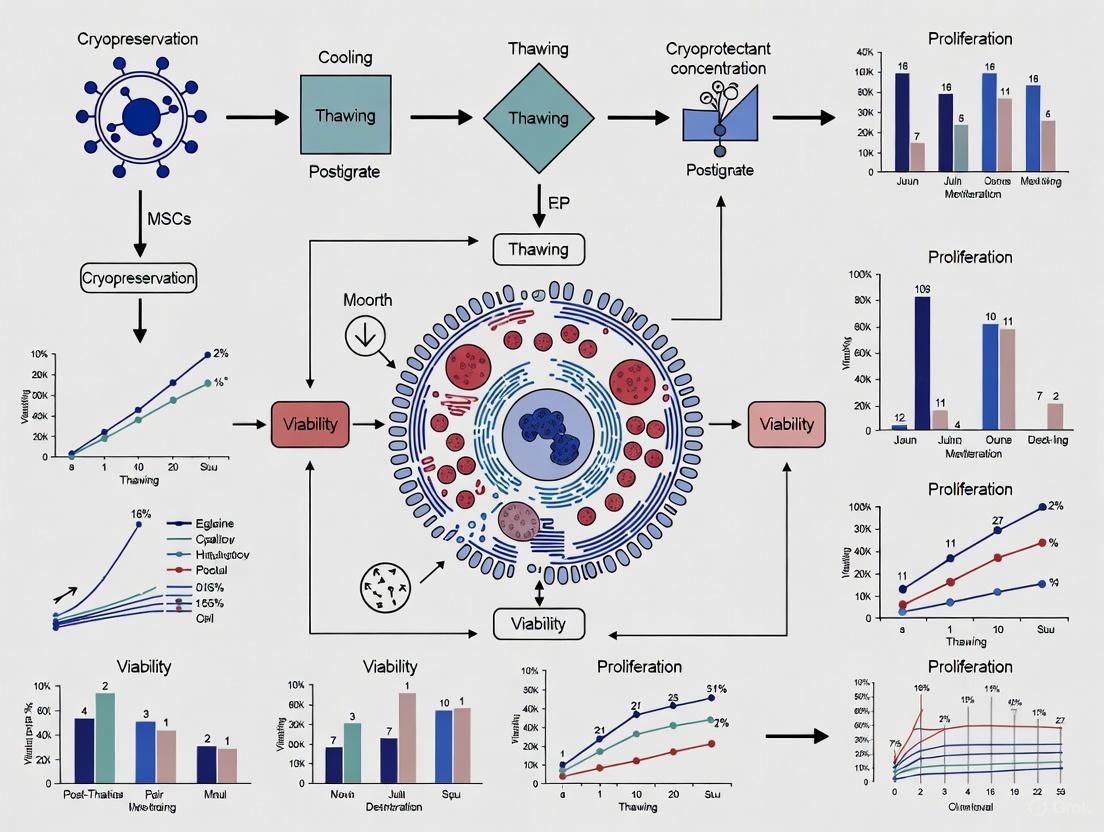
Optimizing Post-Thaw Viability of Cryopreserved MSCs: A Comprehensive Guide for Translational Research
This article provides a systematic review of evidence-based strategies to enhance the post-thaw viability, recovery, and functionality of cryopreserved Mesenchymal Stromal Cells (MSCs) for clinical applications.
Strategies for Reducing DMSO Toxicity in MSC Cryopreservation: From Foundational Science to Clinical Application
This comprehensive review addresses the critical challenge of dimethyl sulfoxide (DMSO) toxicity in mesenchymal stromal cell (MSC) cryopreservation, a key bottleneck in clinical cell therapy applications.
Cryopreservation of MSCs Expanded in Hollow Fiber Bioreactors: A Guide to Scalable, Clinical-Grade Production
The transition of mesenchymal stromal cell (MSC) therapies from research to clinical application requires large-scale, reproducible manufacturing.
Optimizing Cooling Rates for MSC Cryopreservation: A Guide to Maximizing Cell Viability and Therapeutic Potential
This article provides a comprehensive guide for researchers and drug development professionals on optimizing cooling rates in the cryopreservation of Mesenchymal Stem/Stromal Cells (MSCs).
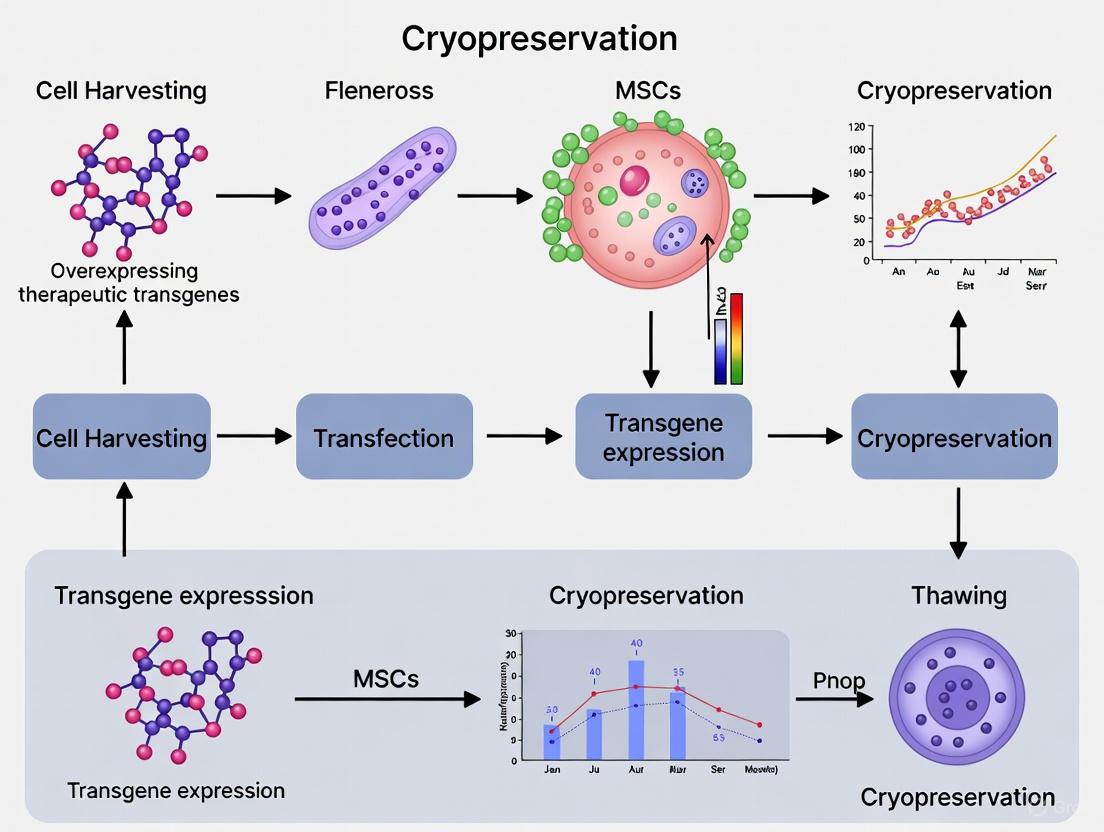
Preserving Potency: A Comprehensive Guide to Cryopreserving Engineered MSCs for Advanced Therapies
The development of mesenchymal stem cells (MSCs) overexpressing therapeutic transgenes represents a frontier in regenerative medicine and oncology.
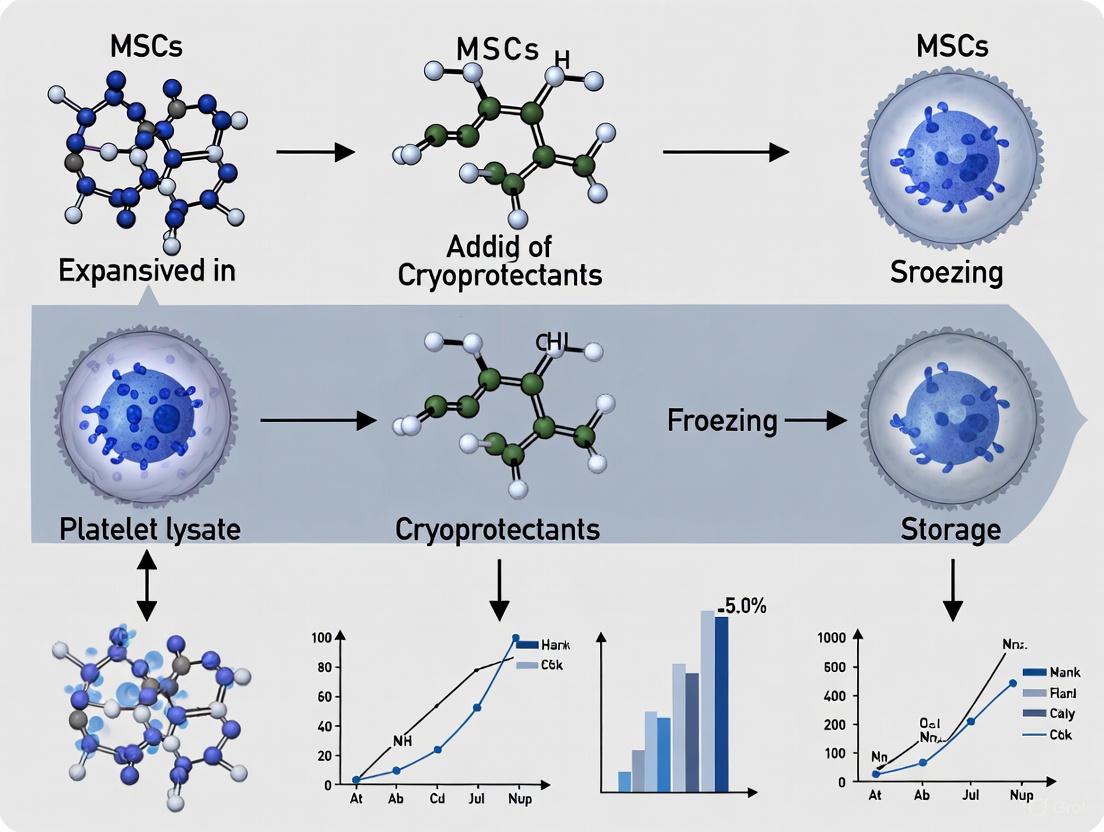
Optimizing MSC Cryopreservation in Platelet Lysate Cultures: A GMP-Compliant Guide for Clinical Translation
This article provides a comprehensive analysis of cryopreserving mesenchymal stromal/stem cells (MSCs) expanded in human platelet lysate (PL), a defined xeno-free alternative to fetal bovine serum (FBS).
Post-Thaw Acclimation for MSC Functional Recovery: A Protocol for Regaining Potency in Clinical Applications
Cryopreservation is essential for providing off-the-shelf mesenchymal stromal cell (MSC) therapies, but the freeze-thaw process significantly impairs cellular function, potentially compromising therapeutic efficacy.
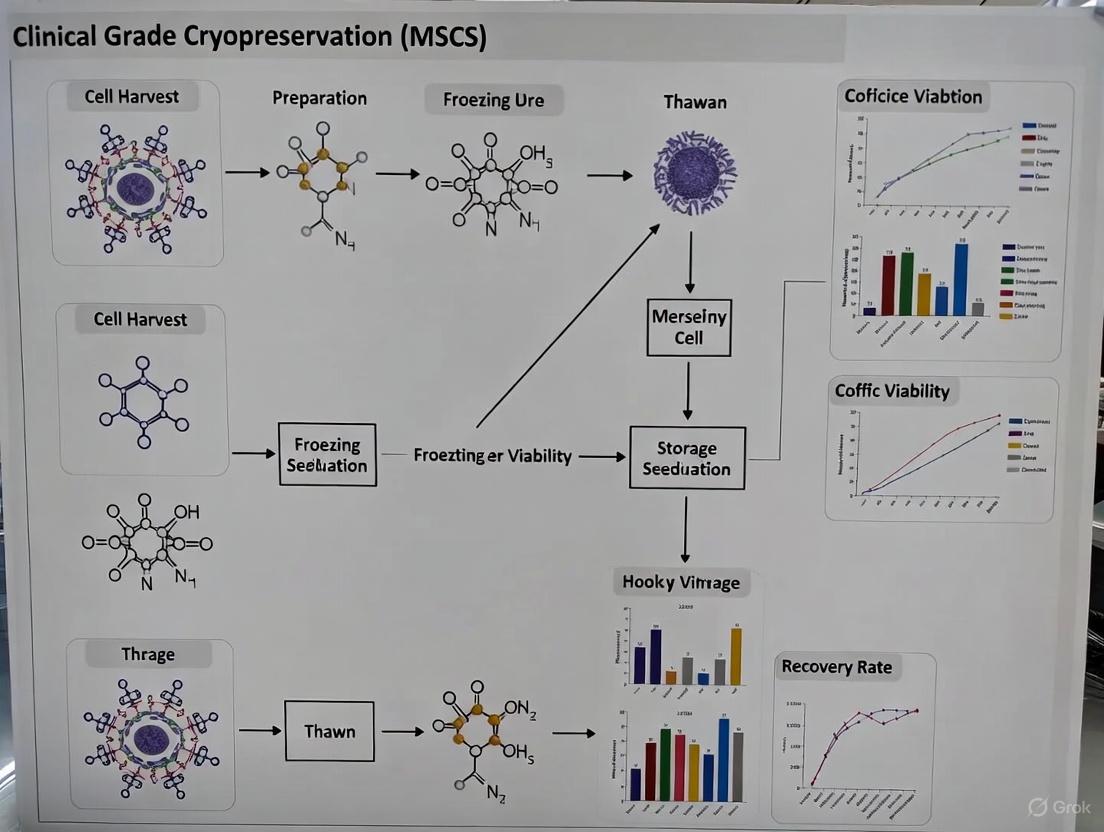
Clinical-Grade Cryopreservation of Allogeneic Mesenchymal Stromal Cells: Protocols, Challenges, and Functional Validation
The transition of allogeneic Mesenchymal Stromal Cell (MSC) therapies from research to clinical practice hinges on robust cryopreservation protocols that ensure cell viability, functionality, and therapeutic potency upon thawing.
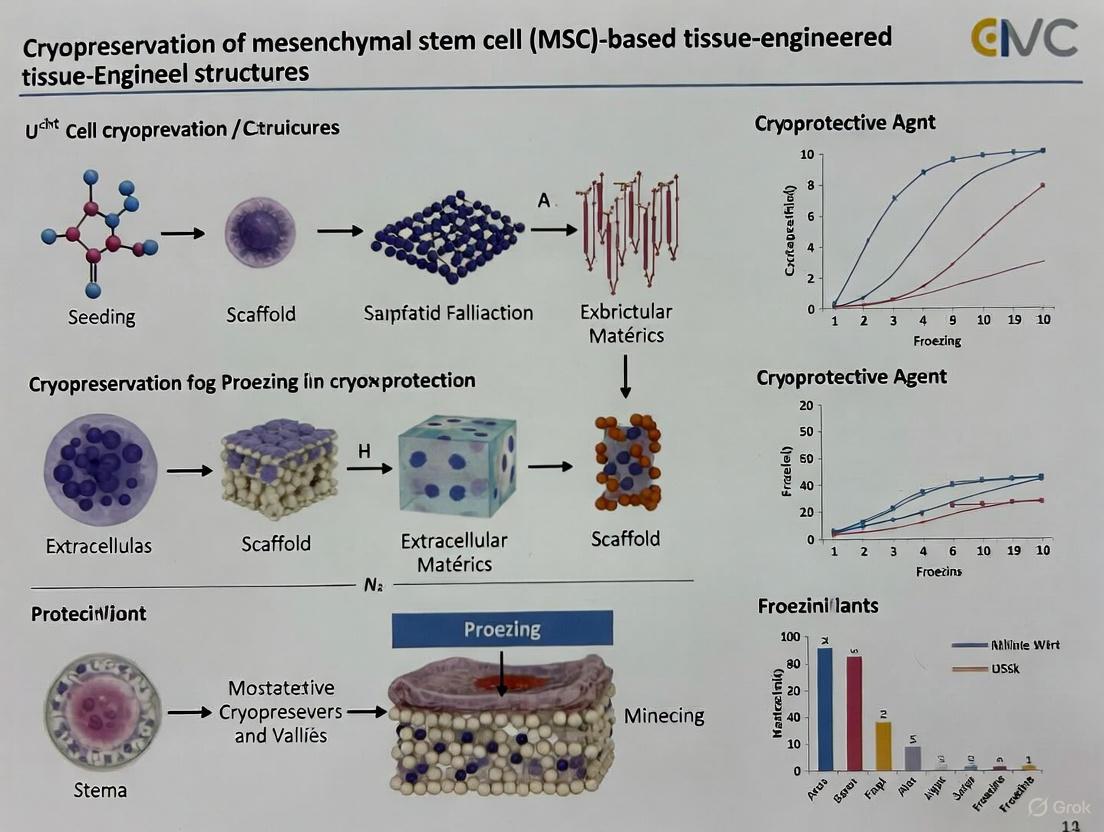
Cryopreservation of MSC-Based Tissue-Engineered Structures: Protocols, Challenges, and Clinical Translation
This comprehensive review addresses the critical process of cryopreserving mesenchymal stem cell (MSC)-based tissue-engineered structures, a pivotal step for clinical translation in regenerative medicine.